
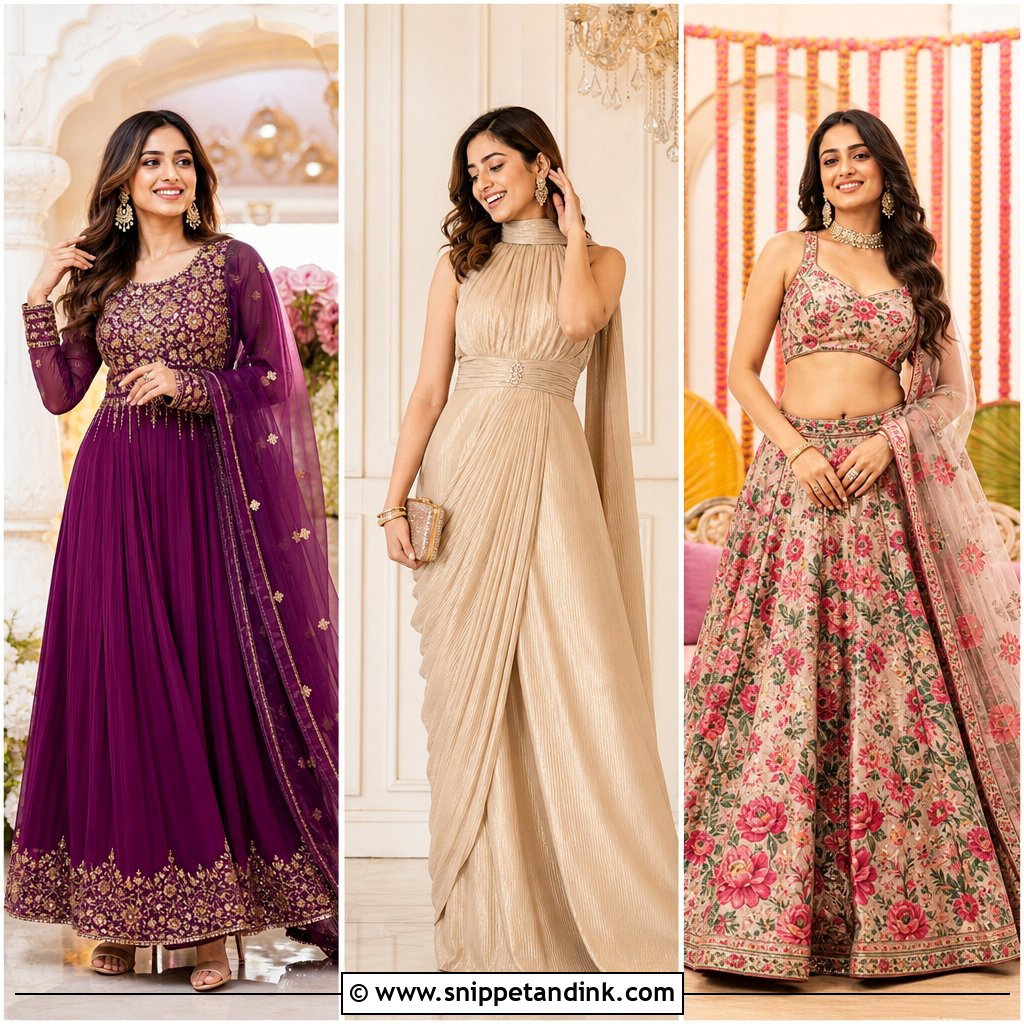
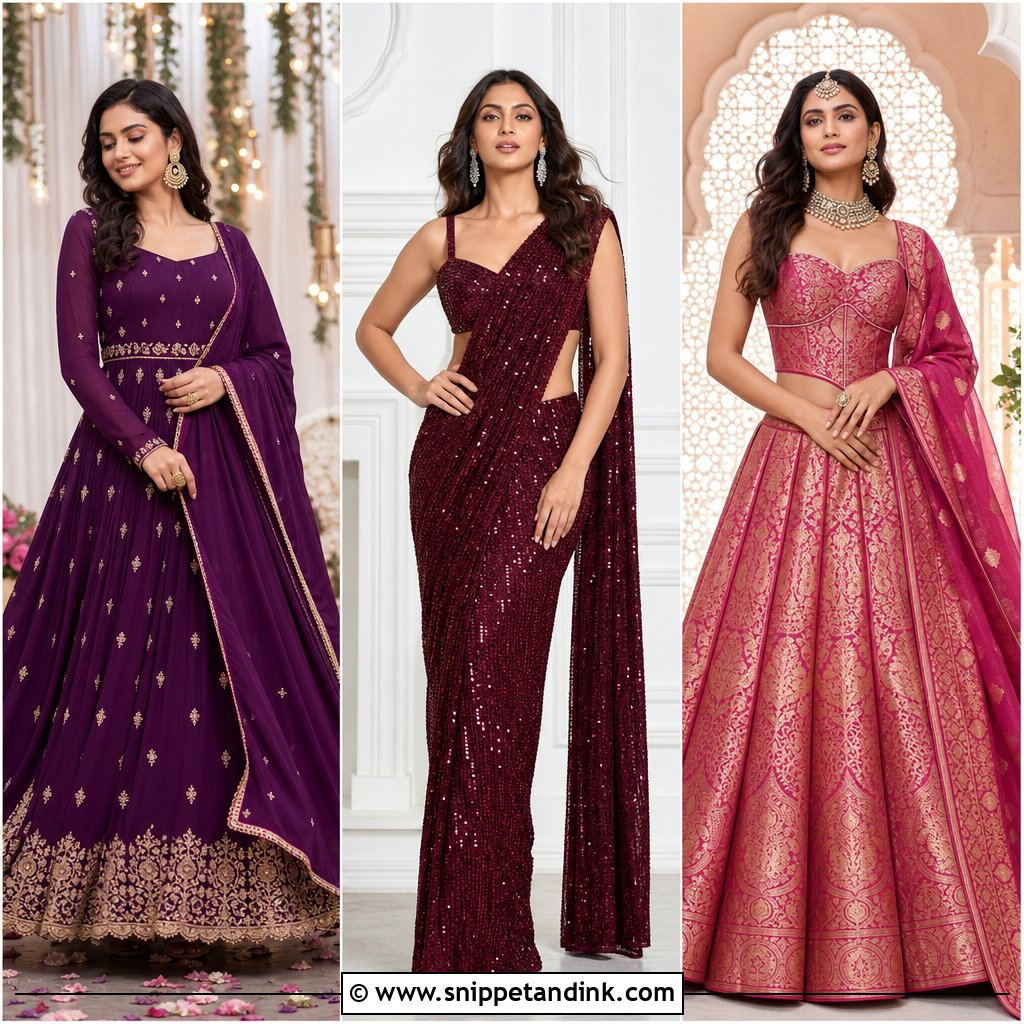
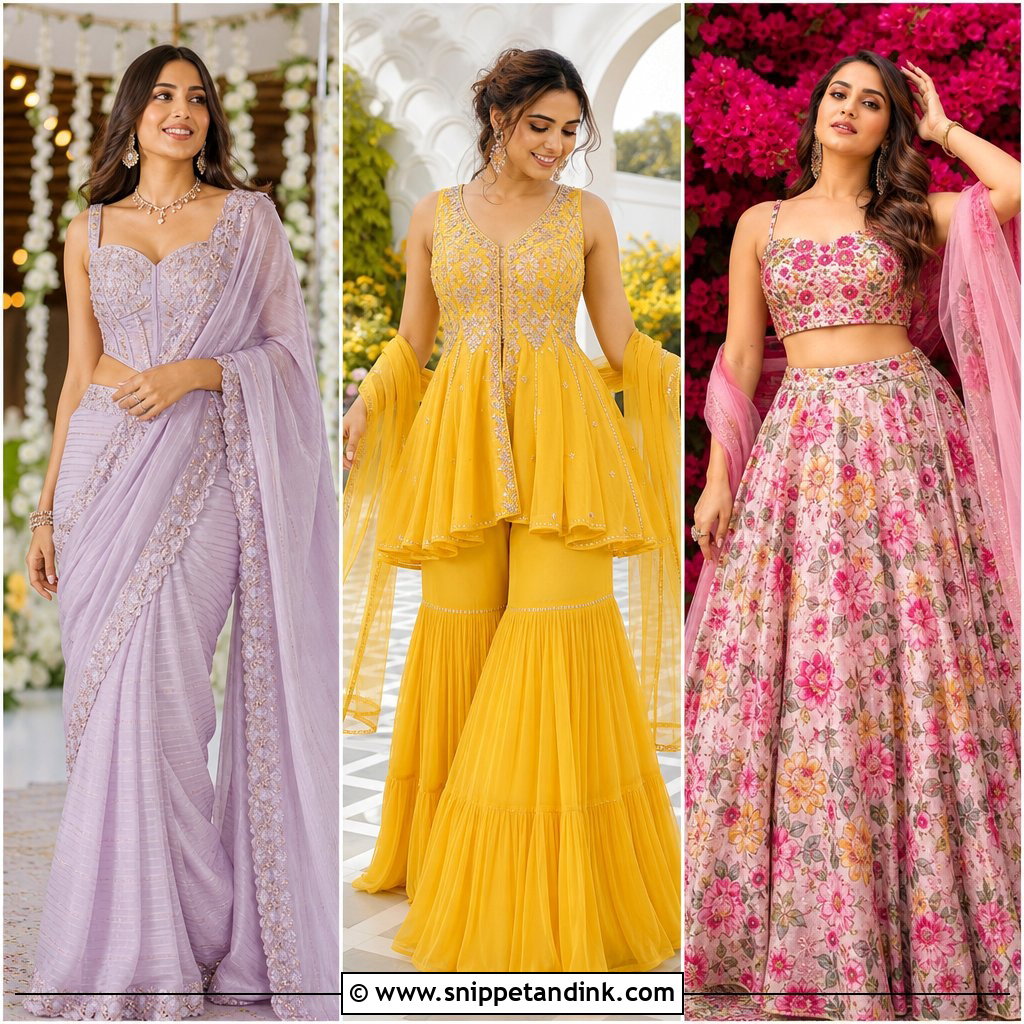
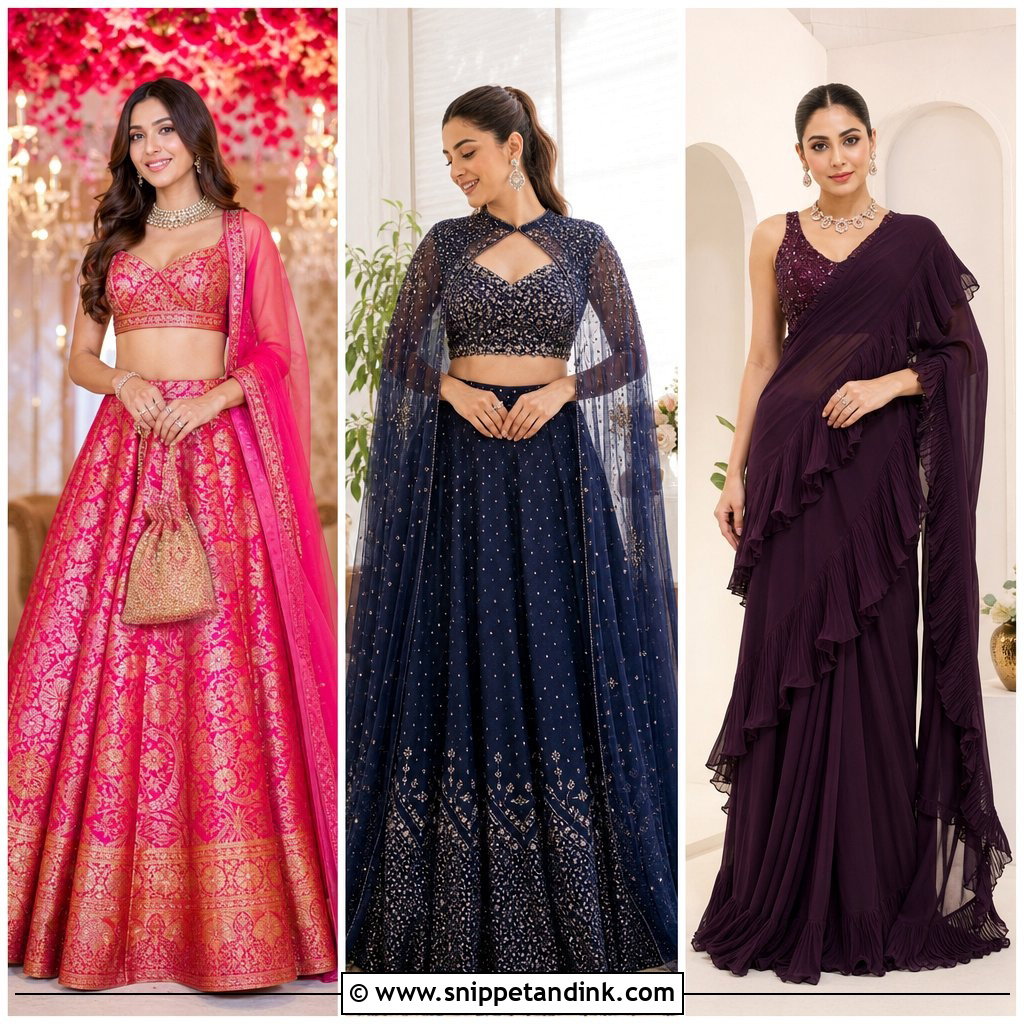
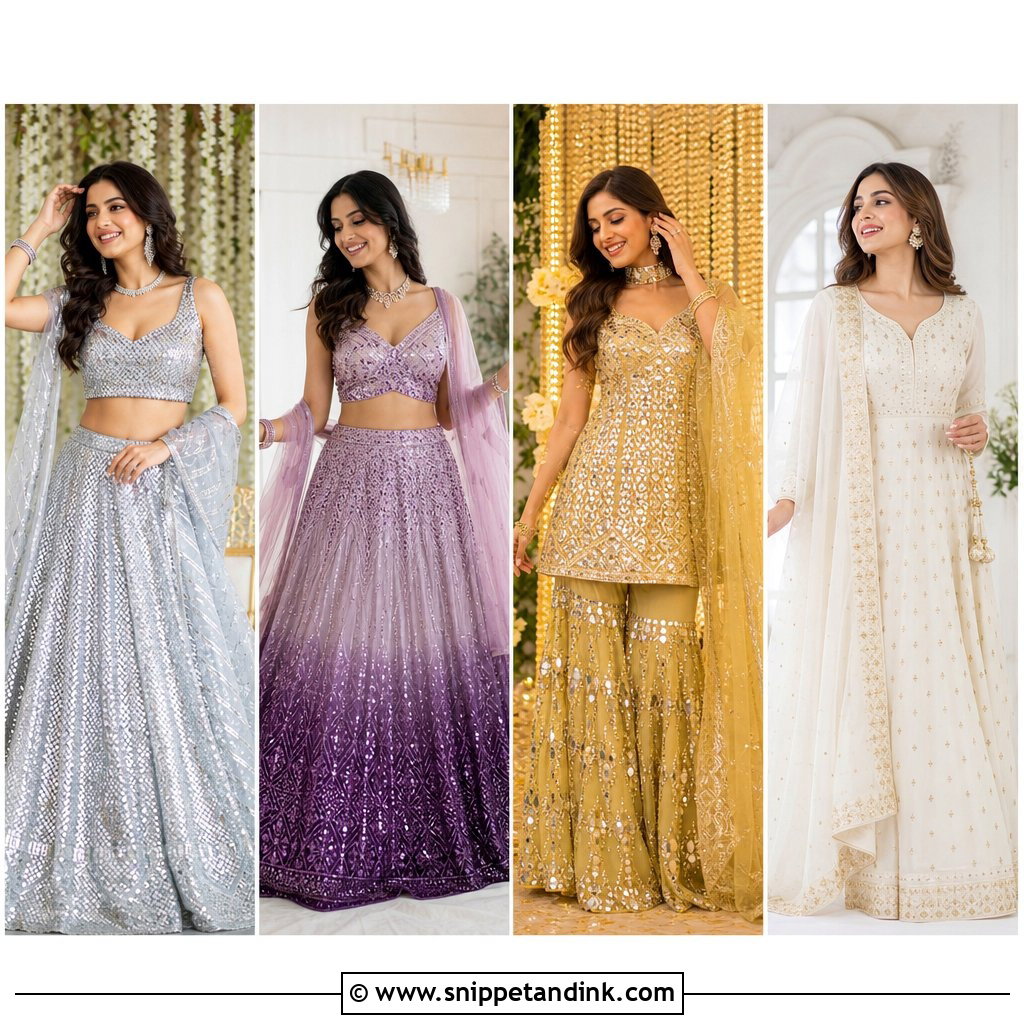
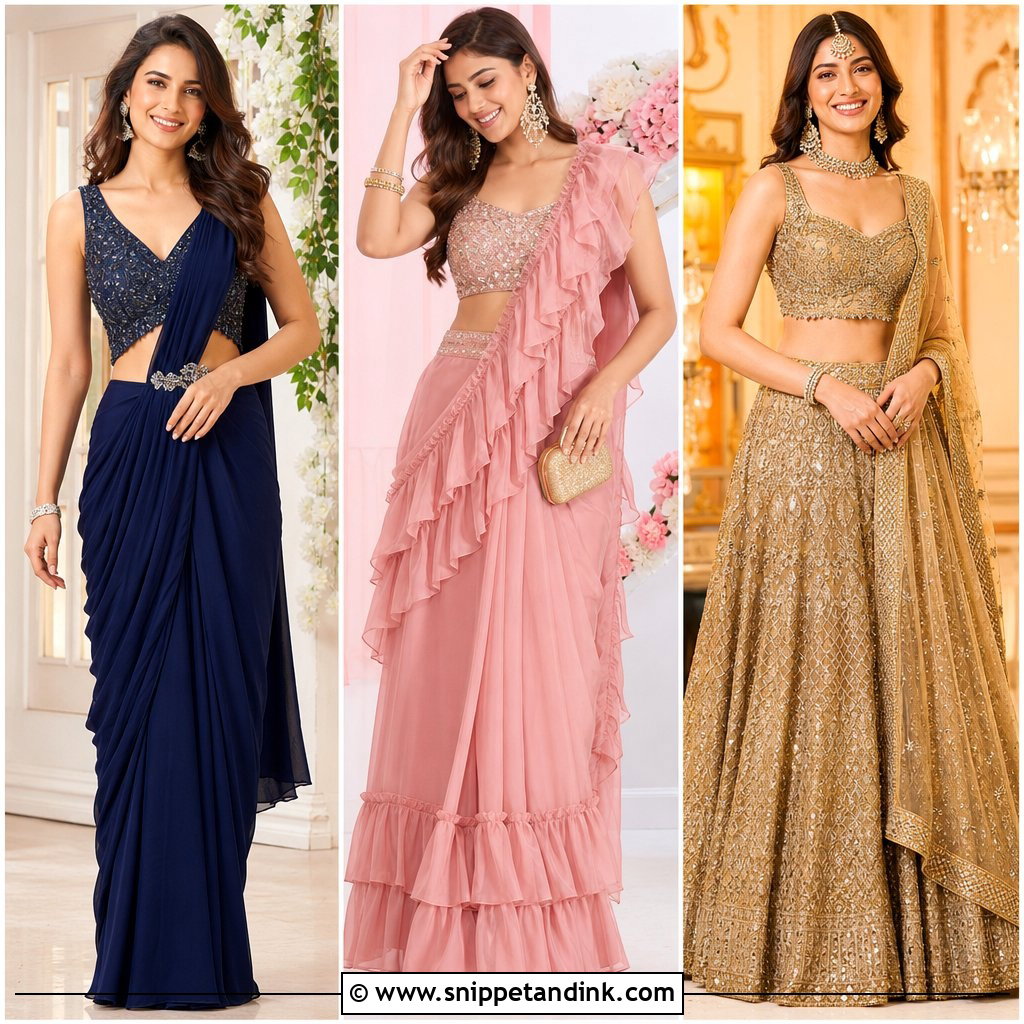
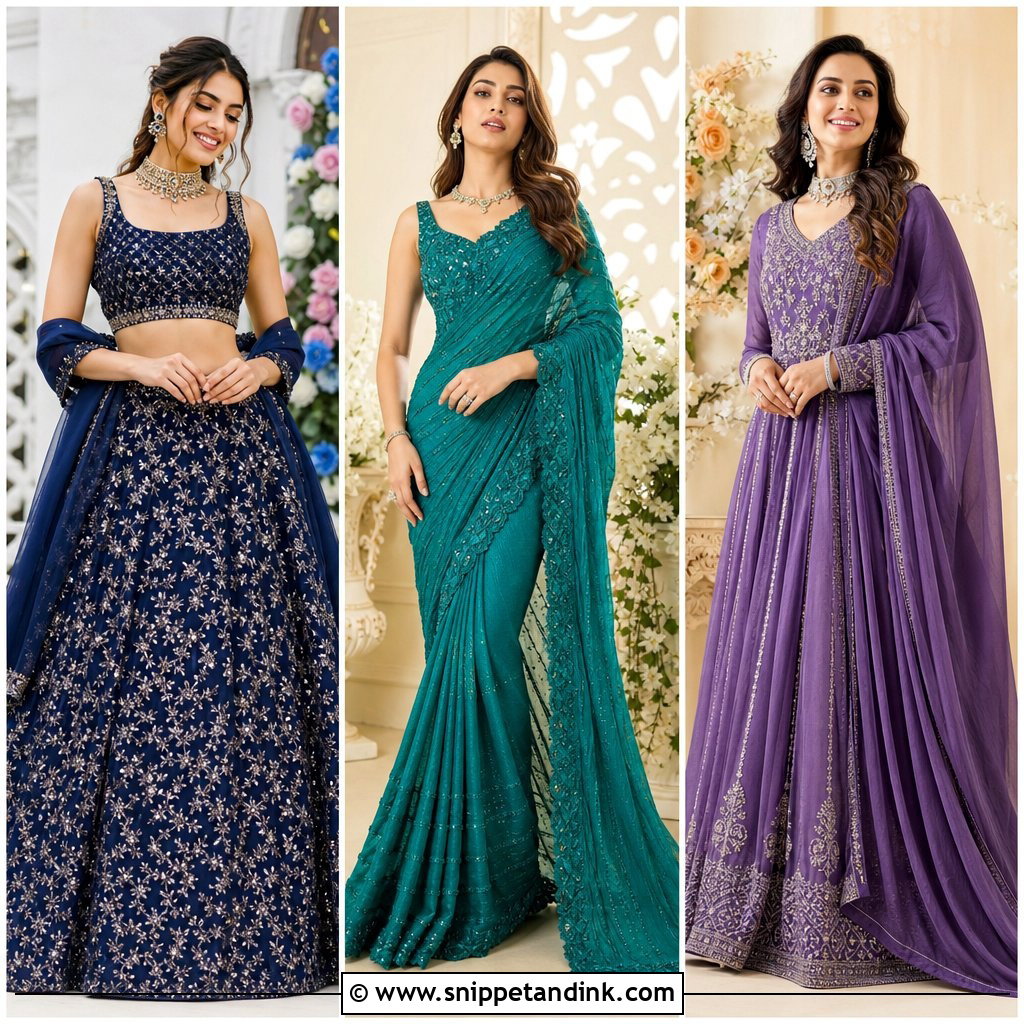
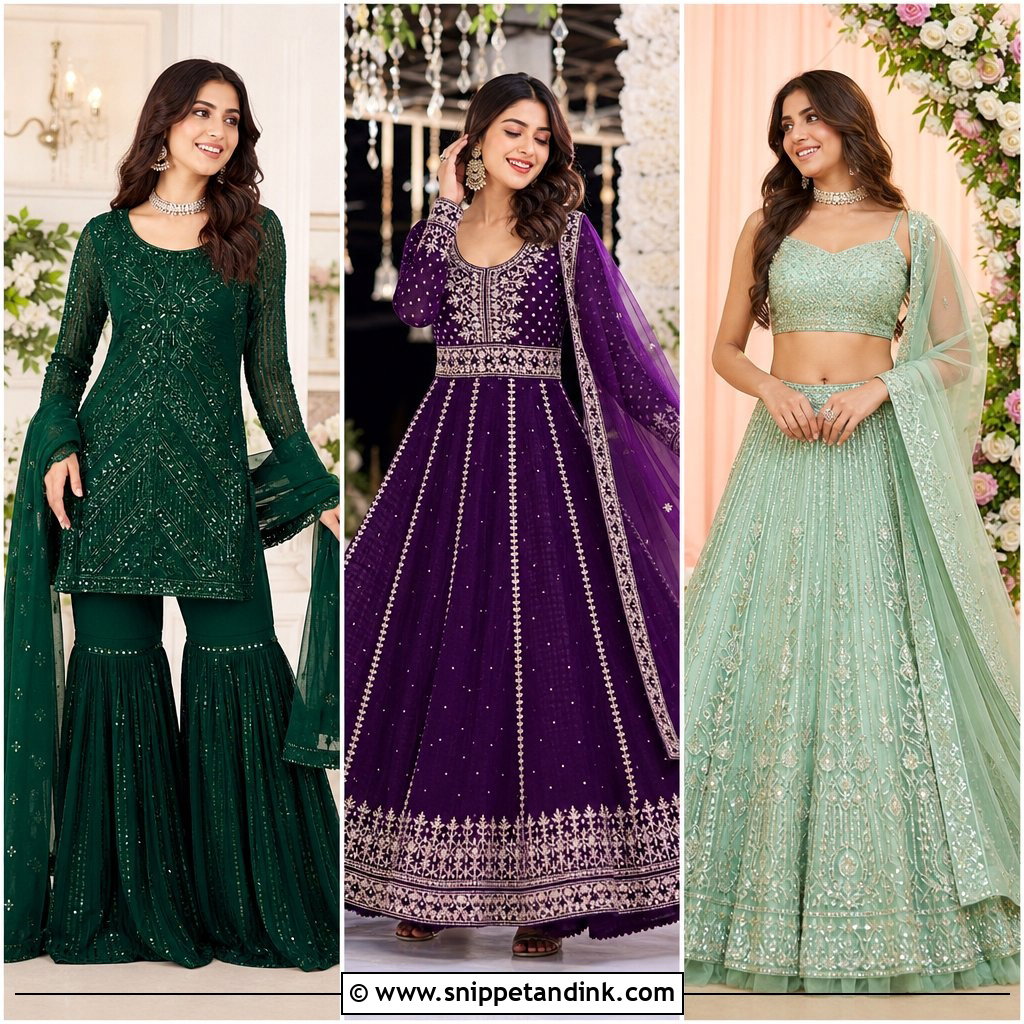
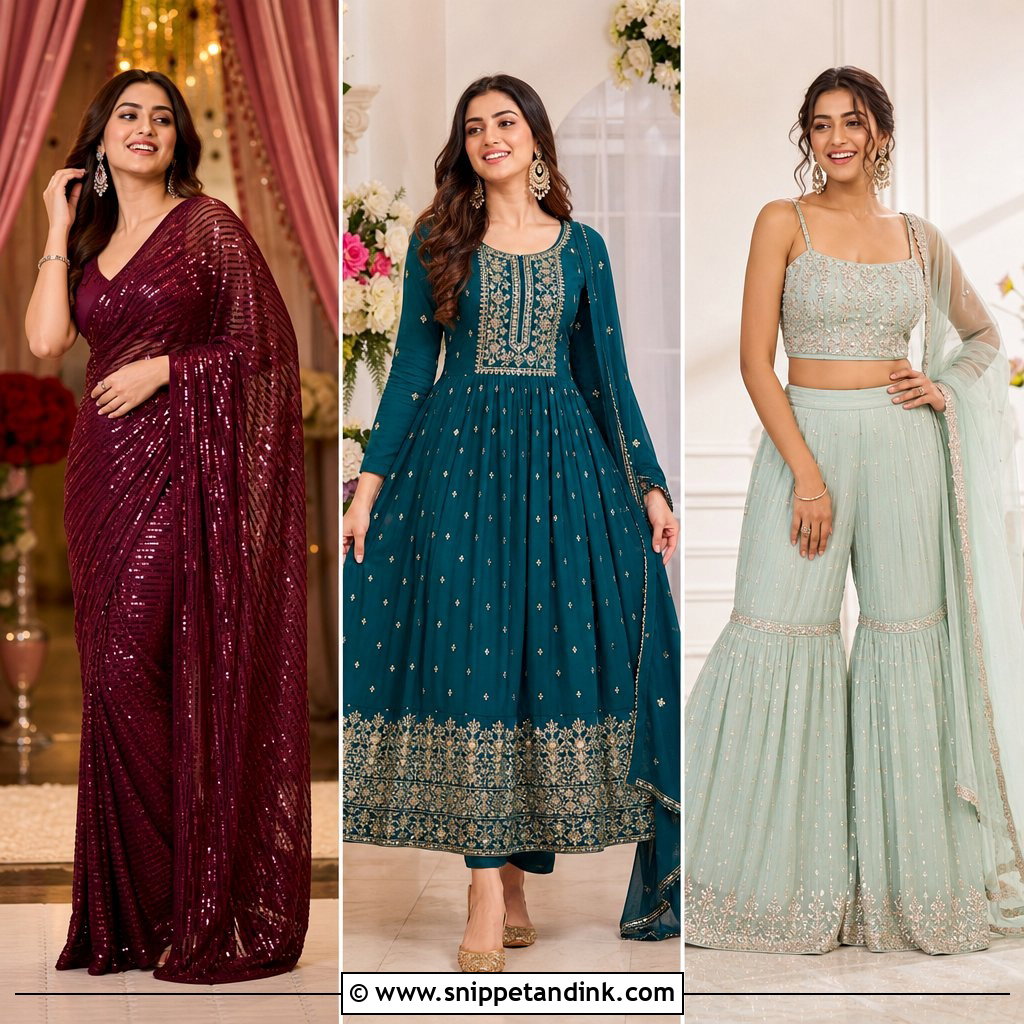
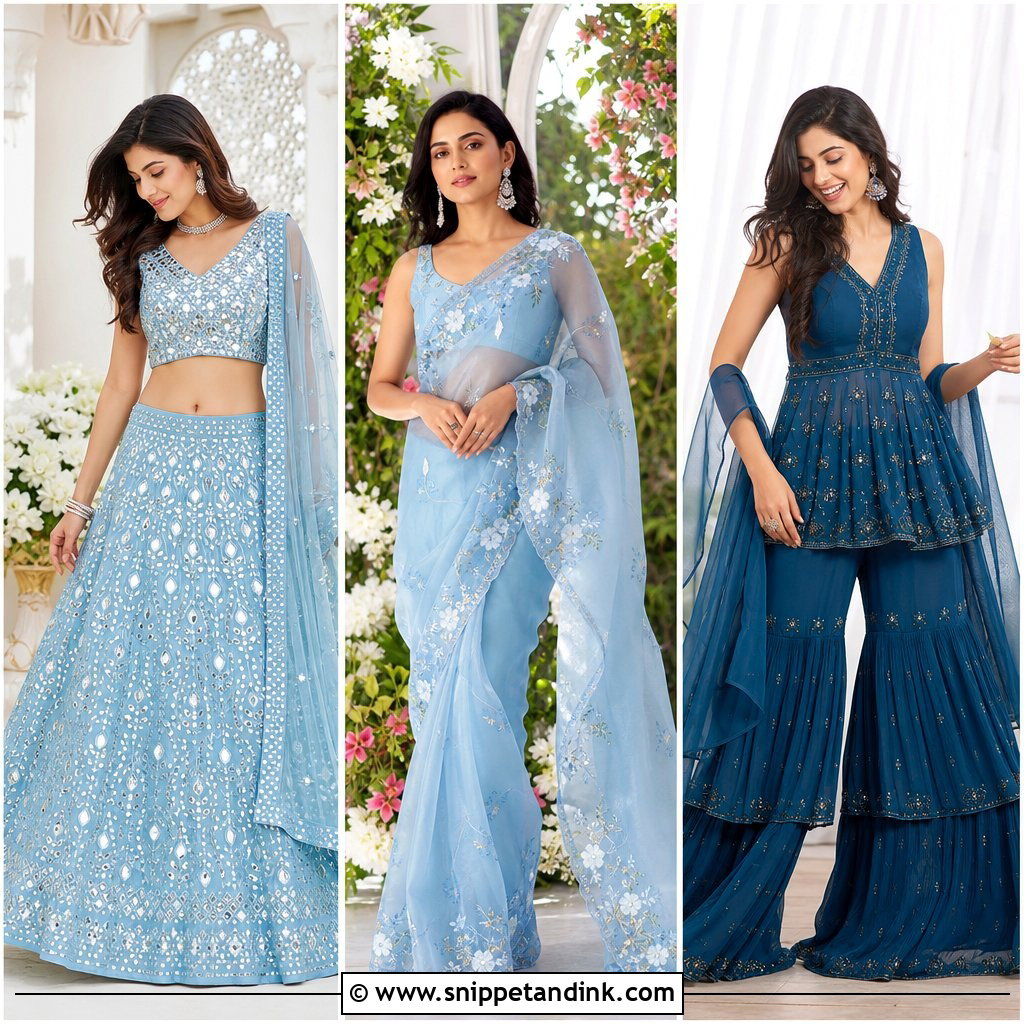
A sangeet outfit is the one you’ll perform in. There’s choreography, there are spins, someone will pull you onto the floor for every song, and the outfit either moves with you or fights you all night. So I start with movement and work outward. Lehengas, shararas, ghararas, Anarkalis, sarees and jewel-toned sets all suit a dance-filled evening as long as their weight and length are under control, and traditional gota work sits alongside capes, jackets and draped dupattas in the looks below. For each of the twenty, I’ve noted the color, accessories, makeup and footwear I’d pair with it, with an eye on what stays secure when you dance.
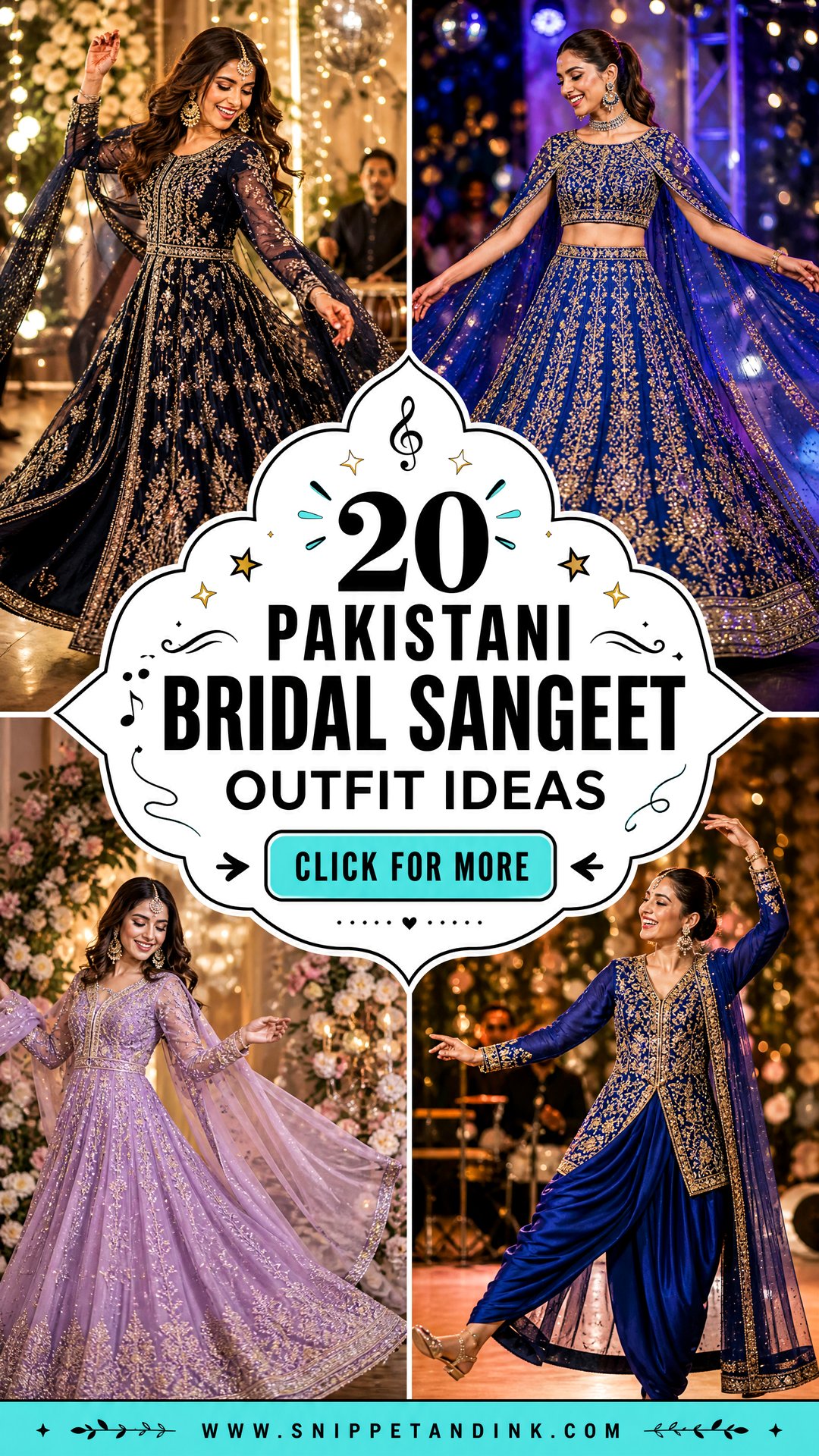
Rehearse the Choreography in Your Actual Outfit
Group routines are usually practiced in leggings and trainers, then performed in a lehenga with a can-can, heels and a dupatta. That jump is where things go wrong: a turn that worked in the studio catches the hem, and an arm movement pulls the dupatta off. I ask brides to book at least one rehearsal in the real outfit, or as close to it as possible, well before the sangeet.
- Do every spin. If the skirt wraps around your legs or you step on the hem, have it shortened slightly or the can-can softened.
- Raise both arms above your head. Blouse hooks and side ties show their weak points here.
- Run the routine in your event shoes. If a step really needs flats, plan a quick change instead of risking a twisted ankle.
- Tell your choreographer which moves the outfit won’t allow, so the routine changes rather than you struggling.
Jewelry that survives a routine
Heavy earrings swing and drag on the lobe during fast moves, so hook jhumkas to ear chains or supports pinned into the hair. Pin the tikka at the parting and on both sides so it doesn’t slide. Wear bangles that fit snugly, because loose ones fly off in big arm movements.
1. Emerald Green Sangeet Lehenga Choli
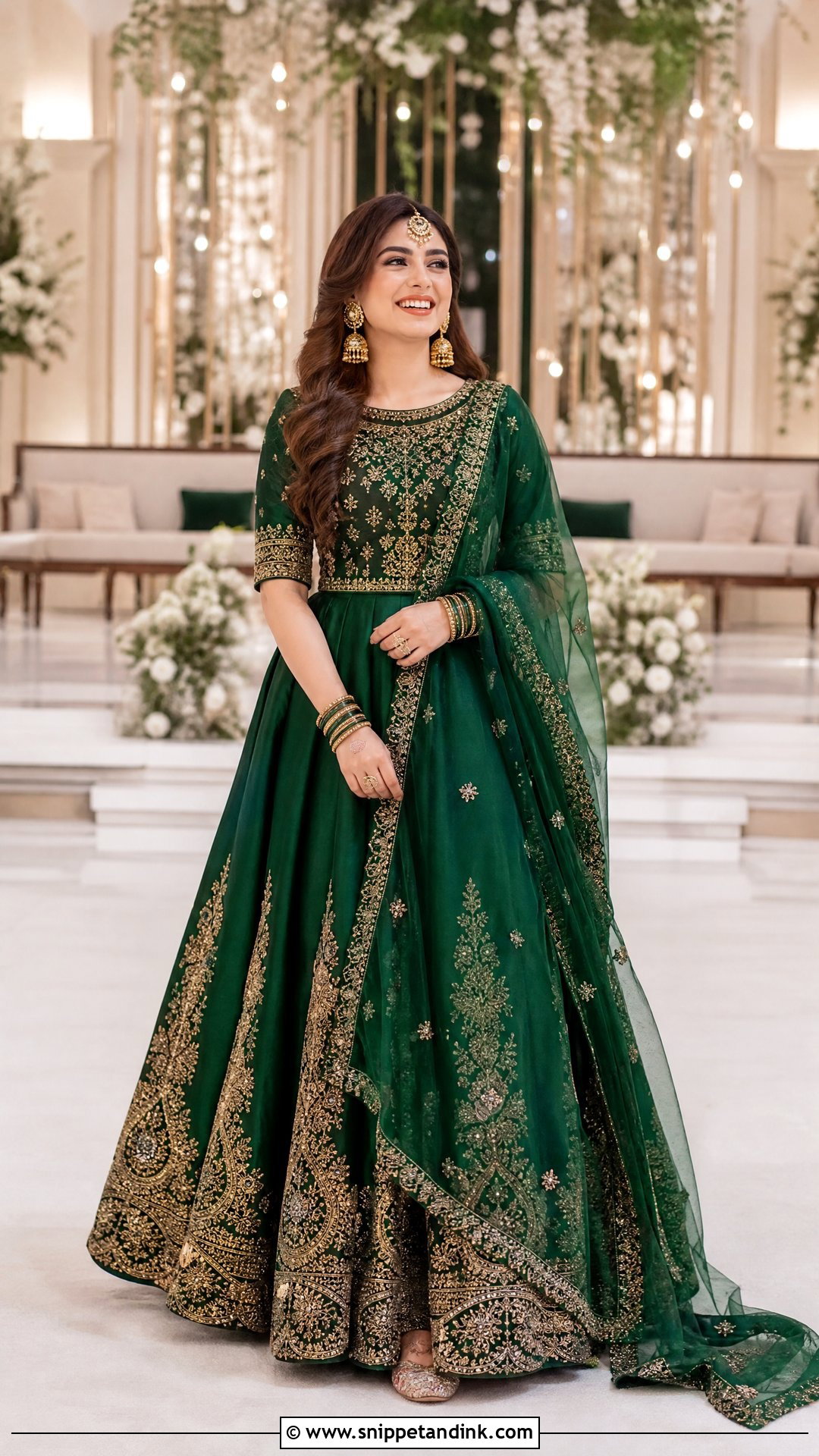
Emerald keeps red free for the main ceremony while still reading as bridal. I’d pick lightweight velvet or raw silk for the skirt and keep the antique gold embroidery around the hem, where its weight helps the skirt swing out in a turn. A fitted blouse with elbow sleeves gives support through a full evening of dancing. Drape the sheer green dupatta over one shoulder and pin it at the waist so it can’t unravel mid-routine. Antique gold jhumkas, stacked bangles and a delicate maang tikka finish it. Gold block heels or cushioned khussas, soft bronze eyes and a warm rose lip.
2. Fuchsia Pink Sangeet Sharara Set
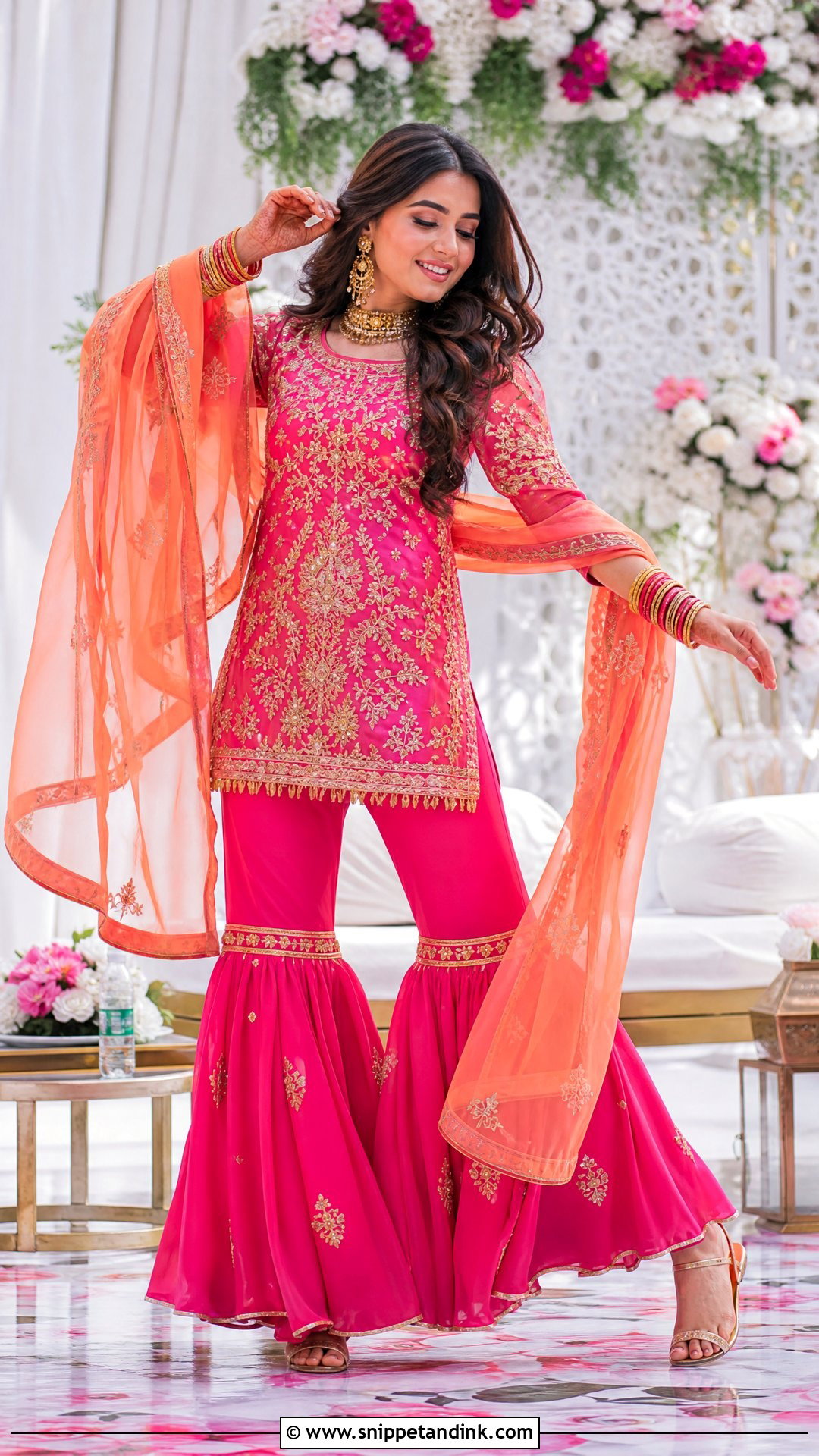
Fuchsia reads loudly on camera, which suits a night built on energy. A short embroidered kurti over a well-flared sharara is my first pick for a bride with a big group routine, because the legs are completely free. Gold zardozi, sequins and small mirrors make it bridal without much weight. Add a light organza dupatta in matching pink or contrasting orange. A choker and earrings at the neck, and slim bangles rather than a heavy stack, since glass bangles crack on a hard clap. Padded gold sandals with ankle straps, luminous skin, a berry lip and a sleek ponytail with small floral pins.
3. Navy Blue Sangeet Peshwas Outfit
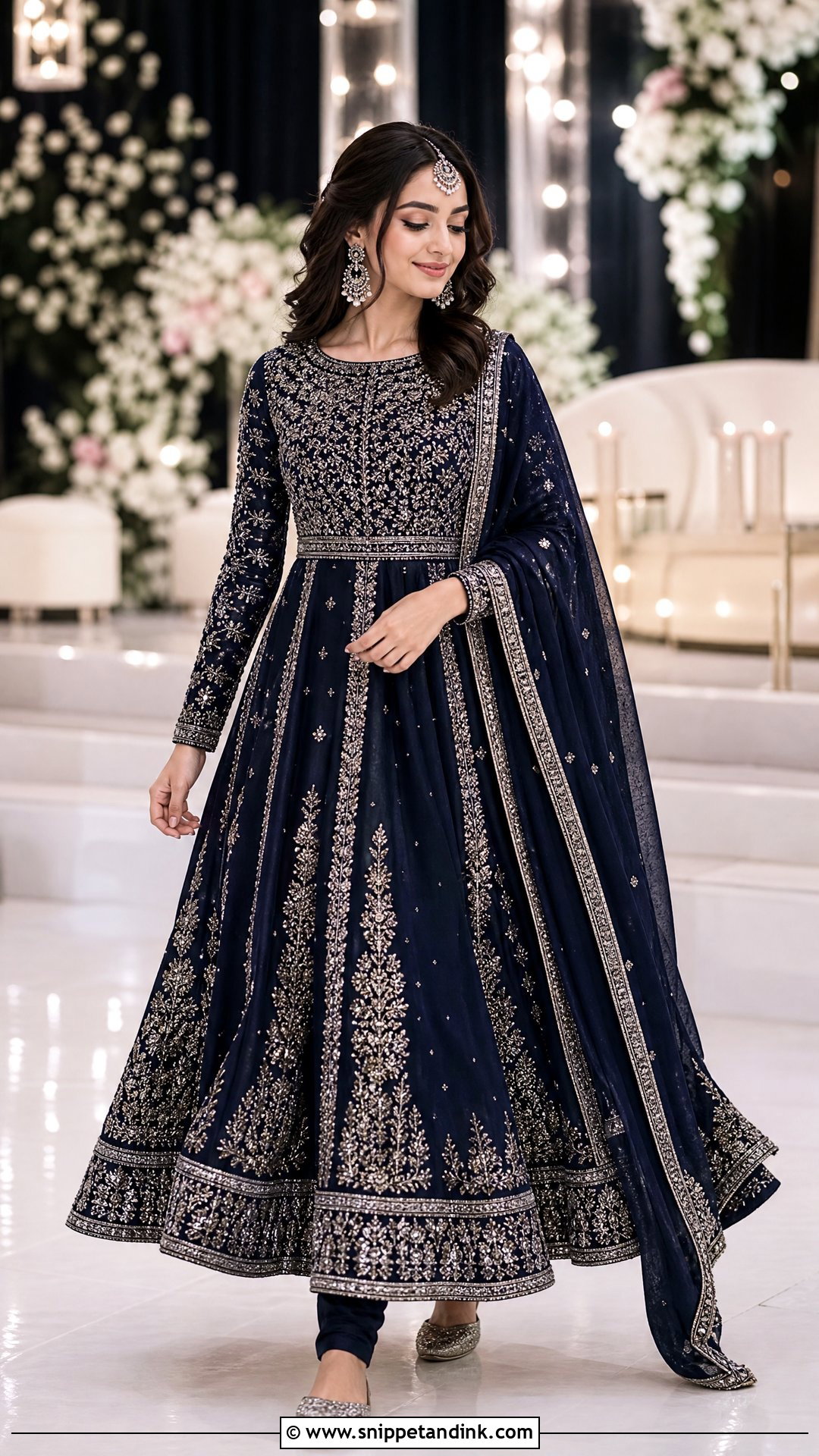
Navy is a smart evening choice because dark colors hide the marks a long night of dancing leaves. A peshwas with a fitted bodice and many light panels spreads into a circle when you spin, and silver or muted gold embroidery on those panels catches the light as they open. Wear fitted trousers underneath and a soft net dupatta over one arm. Crystal earrings, a slim tikka and silver bangles brighten the dark base. Pointed metallic khussas sit comfortably under the long hem. A low braided bun or soft waves depending on the neckline, silver-blue eyes and a neutral pink lip.
4. Mustard Yellow Sangeet Gharara Outfit
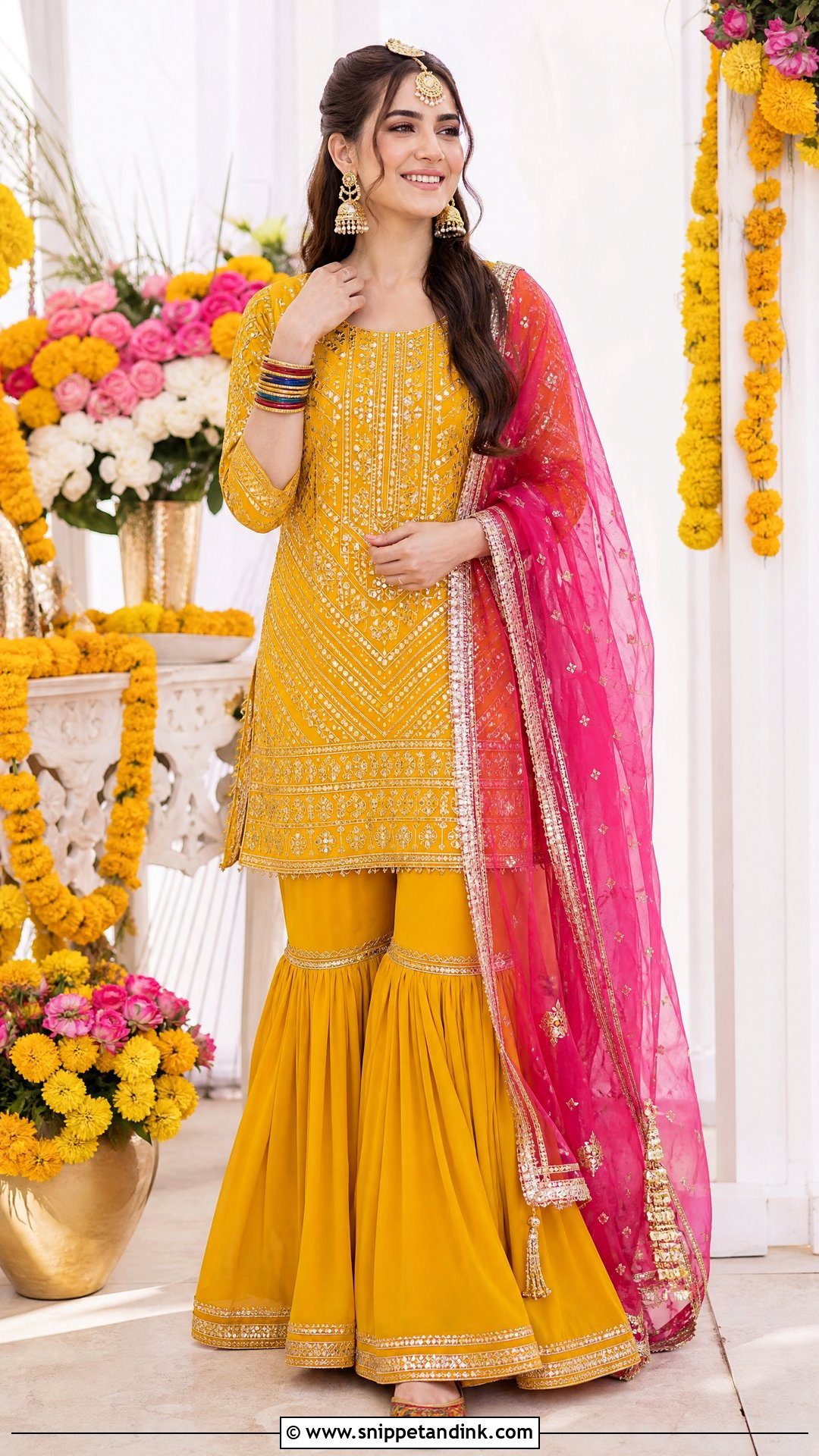
A mustard yellow gharara is the most traditional piece in this set, and also the fussiest about choreography. The knee bands that give it its shape limit how wide you can step, so I’d warn your choreographer early and keep the moves to sways, turns and arm work rather than lunges. Wear a knee-length kameez on top, with gota patti, kiran edging and small florals for texture. A hot pink or bottle green dupatta adds color. Jhumkas, a small passa and bangles. Cushioned khussas, a center-parted braid or low bun, golden eyeshadow and a coral lip.
5. Plum Velvet Sangeet Lehenga
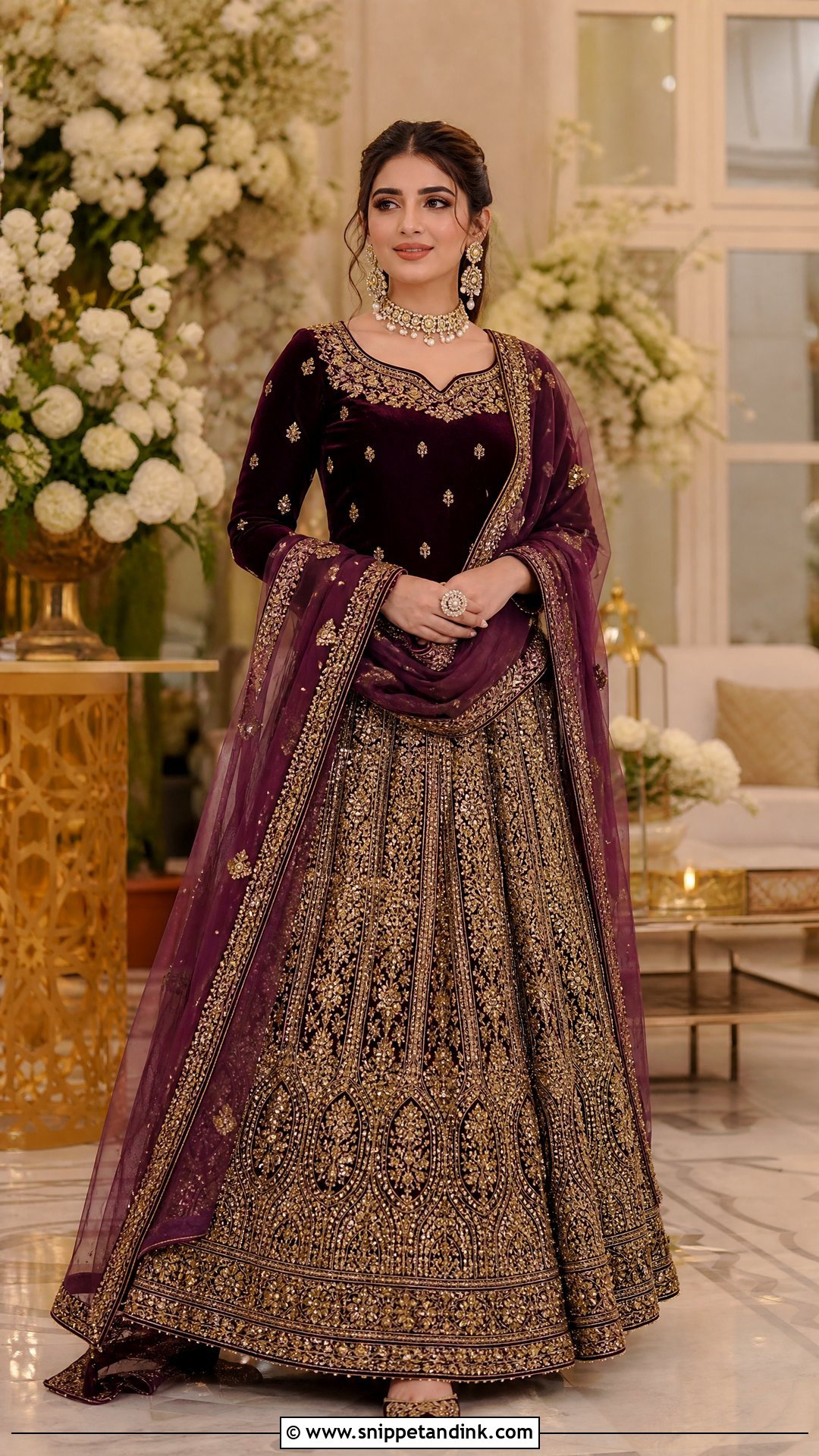
Velvet is heavy and warm. Plum velvet works only on a cool night or in a properly cooled hall, and only with controlled skirt volume, because a huge velvet lehenga is exhausting by the third song. Keep the antique gold motifs to the hem and waistband. Pair it with a structured blouse and a light net dupatta rather than another heavy layer. A kundan choker, matching earrings and one statement ring. Platform heels with wide straps for balance, or velvet khussas. Polished waves swept to one side, plum-toned eyes and a muted berry lip.
6. Ivory Mirror Work Sangeet Lehenga
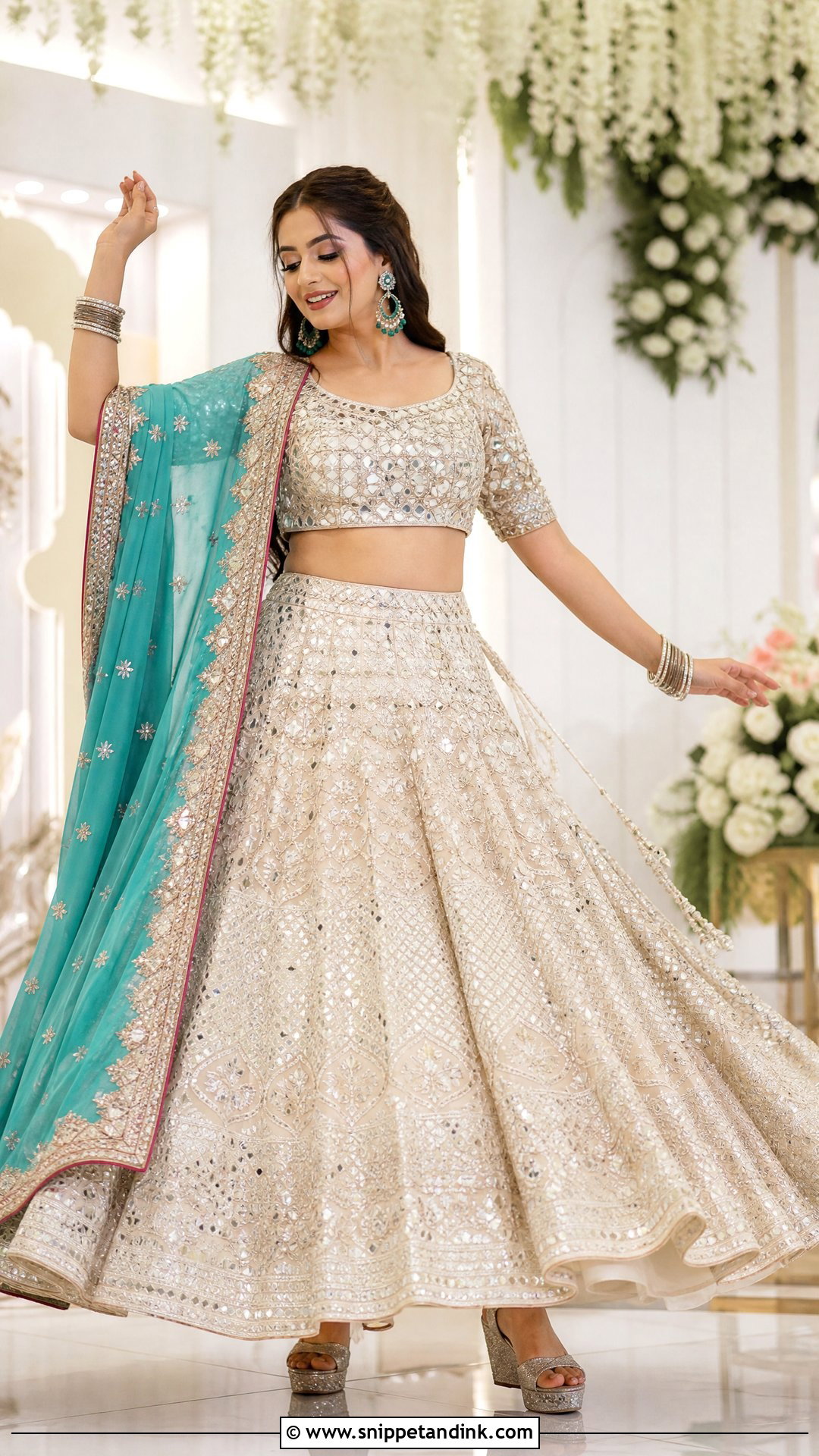
Mirror work is heavy for its size, and on an ivory lehenga it can drag a light skirt out of shape. I’d ask for the mirrors to be spaced out and backed on a firm lining, with a fluid skirt and fitted waist rather than a stiff bridal build. The ivory blouse needs secure straps or sleeves. A turquoise, pink or multicolored dupatta brings the color, and emerald or colorful stone jewelry stops the neutral going flat. Silver wedges, metallic juttis or low block heels. A braided ponytail stays put while you dance. Champagne shimmer, defined liner and a raspberry lip for contrast.
7. Teal Sangeet Angrakha Anarkali
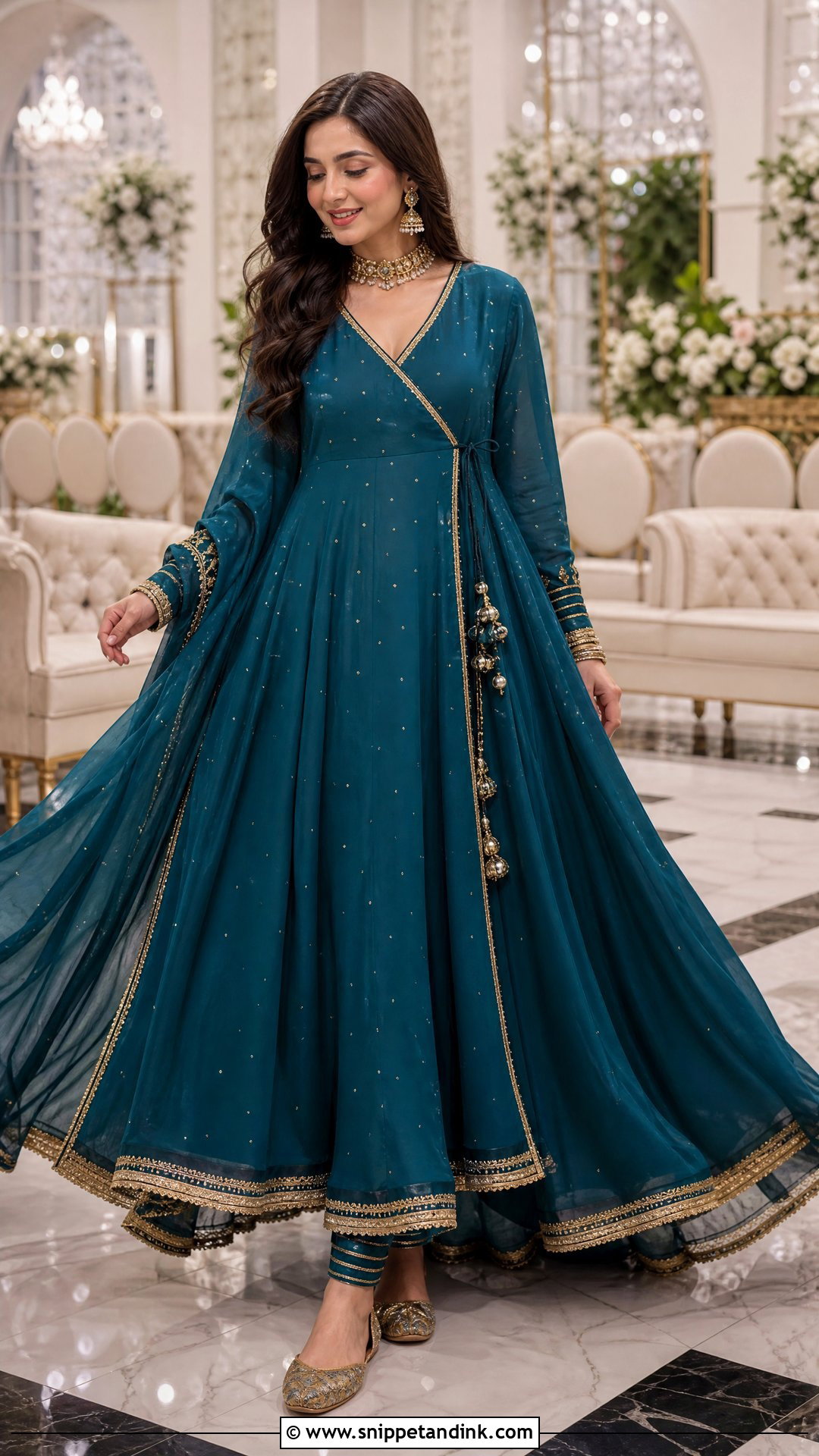
An angrakha ties at the side, and during a dance that tie takes real strain. I check for a hidden inner fastening as well as the outer tie, plus a well-fitted inner layer so the wrap never opens. Gold piping, small tassels and florals define the diagonal neckline on teal. Narrow trousers underneath, and a sheer dupatta across the arms or pinned discreetly at one shoulder. A gold choker, medium jhumkas and a few statement bangles; you don’t need jewelry everywhere. Embellished khussas under the floor-length flare. A low bun with floral accessories, bronze eyes and a satin nude-rose lip.
8. Coral Peplum Sangeet Sharara
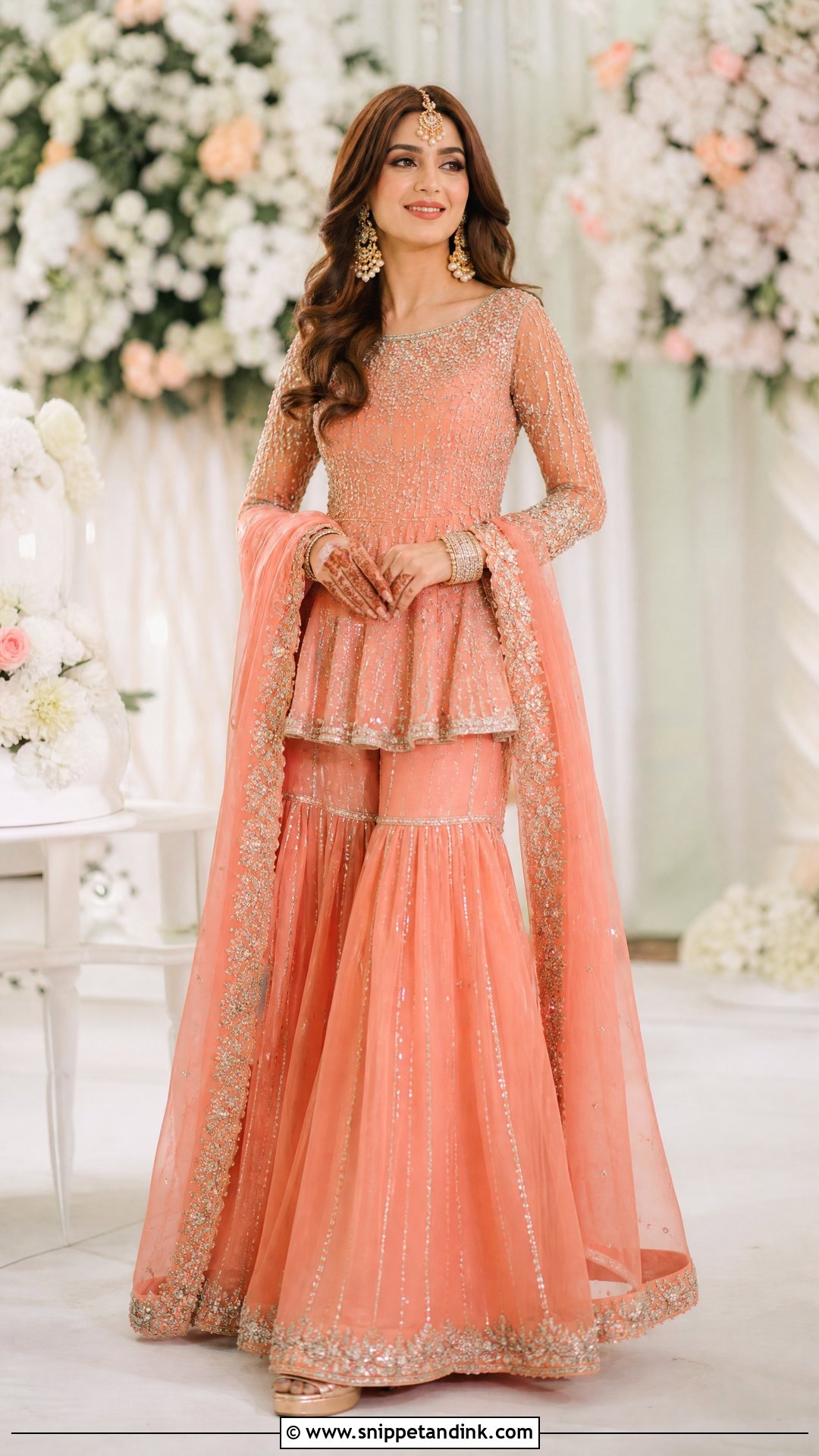
The peplum should end near the natural waist or the top of the hip. Any lower and it fights the volume of a wide sharara; any higher and it looks like a crop top. On coral, tonal threadwork, pearls and gold sequins are enough. Drape a matching organza dupatta around the elbows so the structured top stays visible. Pearl-and-kundan earrings, a slim forehead ornament and coordinated bangles. Gold platform sandals give height with more stability than narrow heels. Soft curls or a textured ponytail, warm gold eyeshadow, coral blush and a rose-coral lip.
9. Black And Gold Sangeet Saree Outfit
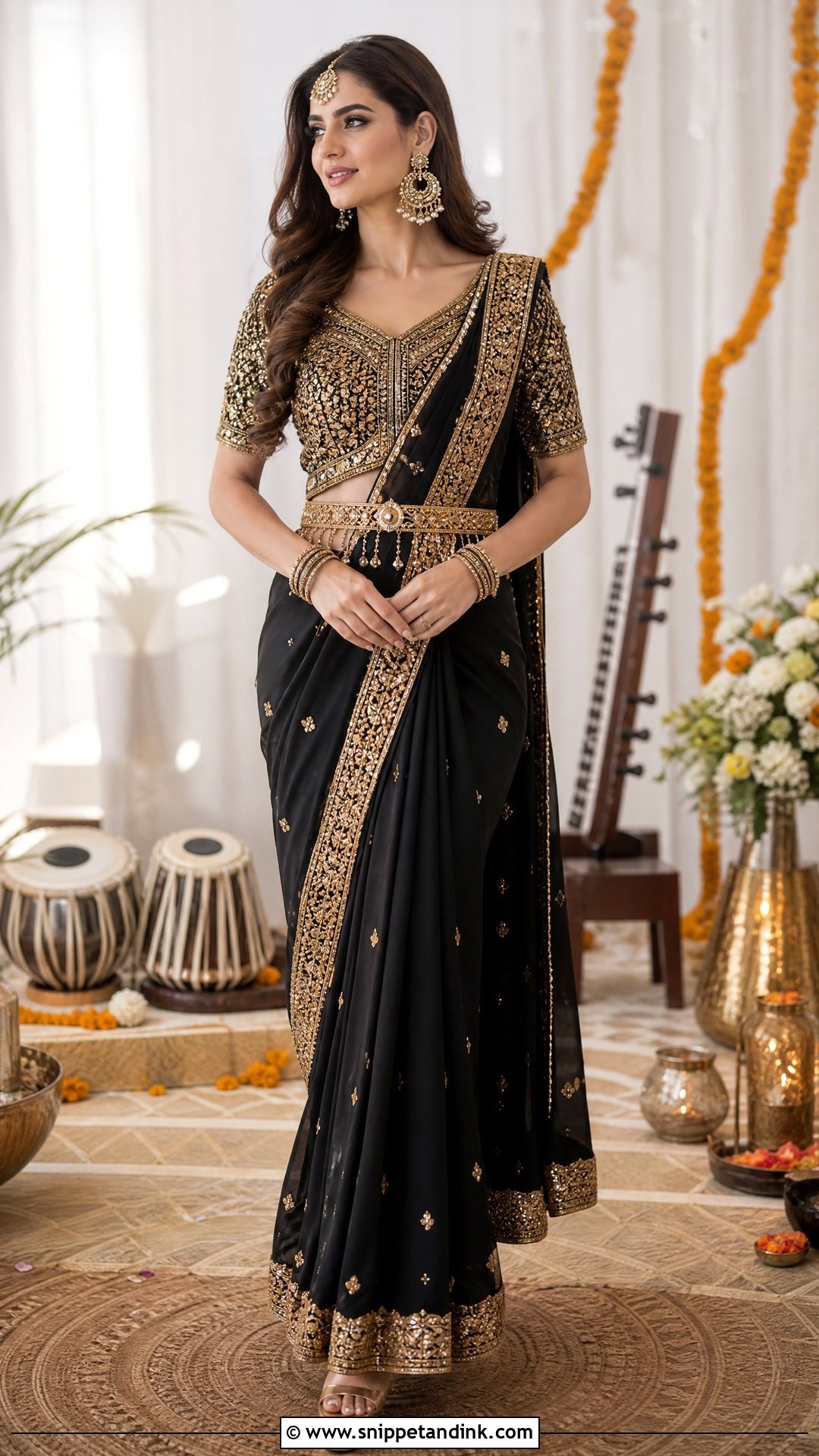
Black at a sangeet is a confident choice, and worth checking with family first, since some households still avoid black at wedding events. If it’s welcome, choose a lightweight pre-draped saree or have the pleats professionally stitched in place, because a loose drape won’t survive choreography. Add a supportive gold embroidered blouse with comfortable sleeves and a decorative belt to hold the drape and mark the waist. Chandbali earrings, gold bangles and a small tikka instead of a heavy necklace. Block heels with ankle support, a smooth ponytail or polished waves, bronze smoky eyes and a deep rose lip.
10. Royal Blue Cape Sangeet Lehenga
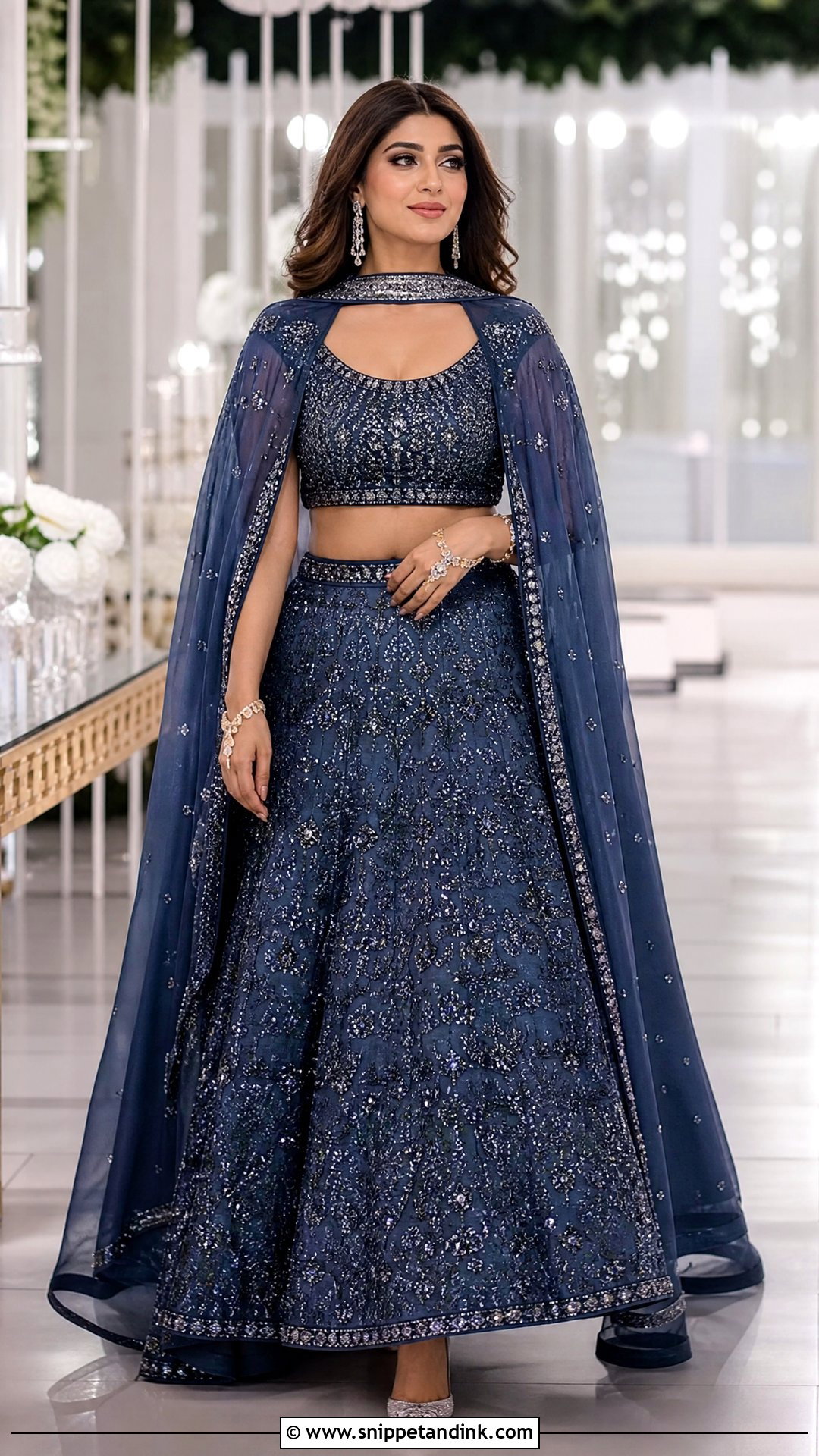
A cape solves the most annoying sangeet problem: a dupatta that slides off every time you raise your arms. Fixed at the shoulders, a sheer embroidered cape stays where it is through any routine. Start with a moderately flared lehenga and fitted blouse in the same royal blue. Silver beadwork, crystals and tonal sequins sparkle under event lighting. Long crystal earrings, a delicate hand accessory and one bold cocktail ring. Silver block heels or glittering juttis. I’d pull the hair into a high ponytail so it can’t tangle in the cape’s beading. Cool silver eyeshadow, defined liner and a mauve lip.
11. Magenta Sangeet Long Shirt With Gharara
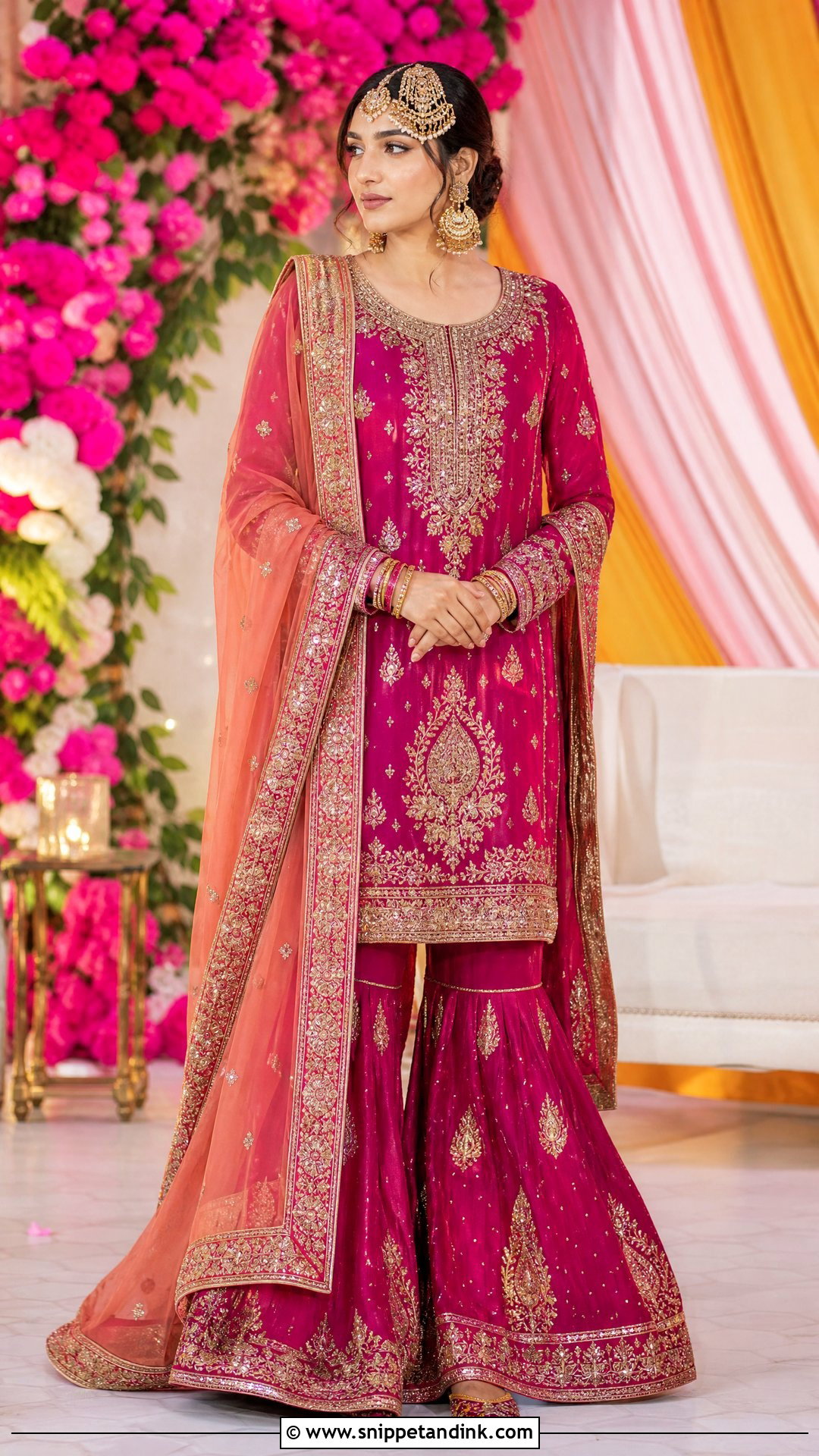
A long shirt over a gharara gives the most coverage of anything here. The side slits on the magenta shirt should open high enough to show the gharara’s knee band as you walk; if they stop short, the gharara’s whole shape disappears. Gold embroidery at the neckline, cuffs, hem and gharara bands. A peach or orange dupatta pinned diagonally keeps the arms free. A passa, gold jhumkas and stacked bangles. Embroidered khussas are the only sensible footwear with this silhouette. A center-parted low bun, gold eyeliner accents and a rich magenta lip.
12. Champagne Gold Sangeet Pishwas
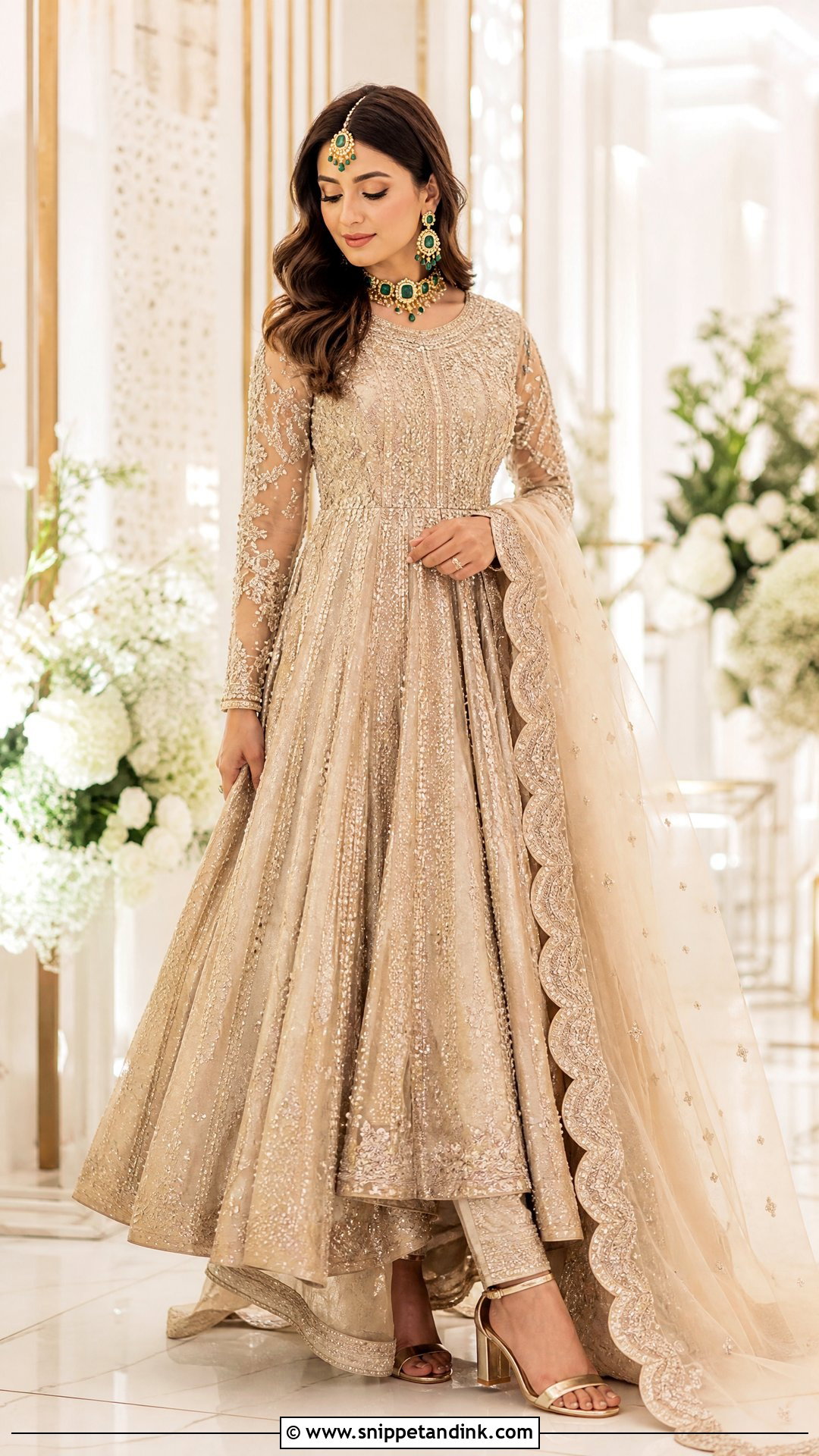
Champagne gold is the understated pick in this list. Choose a floor-length pishwas with a fitted bodice and enough panels for movement, but not so many that it bulks out at the waist. Tonal embroidery, pearls, crystals and fine metallic thread give it dimension. Narrow trousers and a sheer dupatta with a scalloped border. A neutral base is the ideal setting for colored stones, so I’d bring in emerald or ruby jewelry. Metallic wedges, block heels or champagne khussas. A softly twisted bun, warm brown eyeshadow and a rosy nude lip; on a pale outfit, defined brows and lashes keep your features from fading in photos.
13. Multicolor Sangeet Patchwork Lehenga
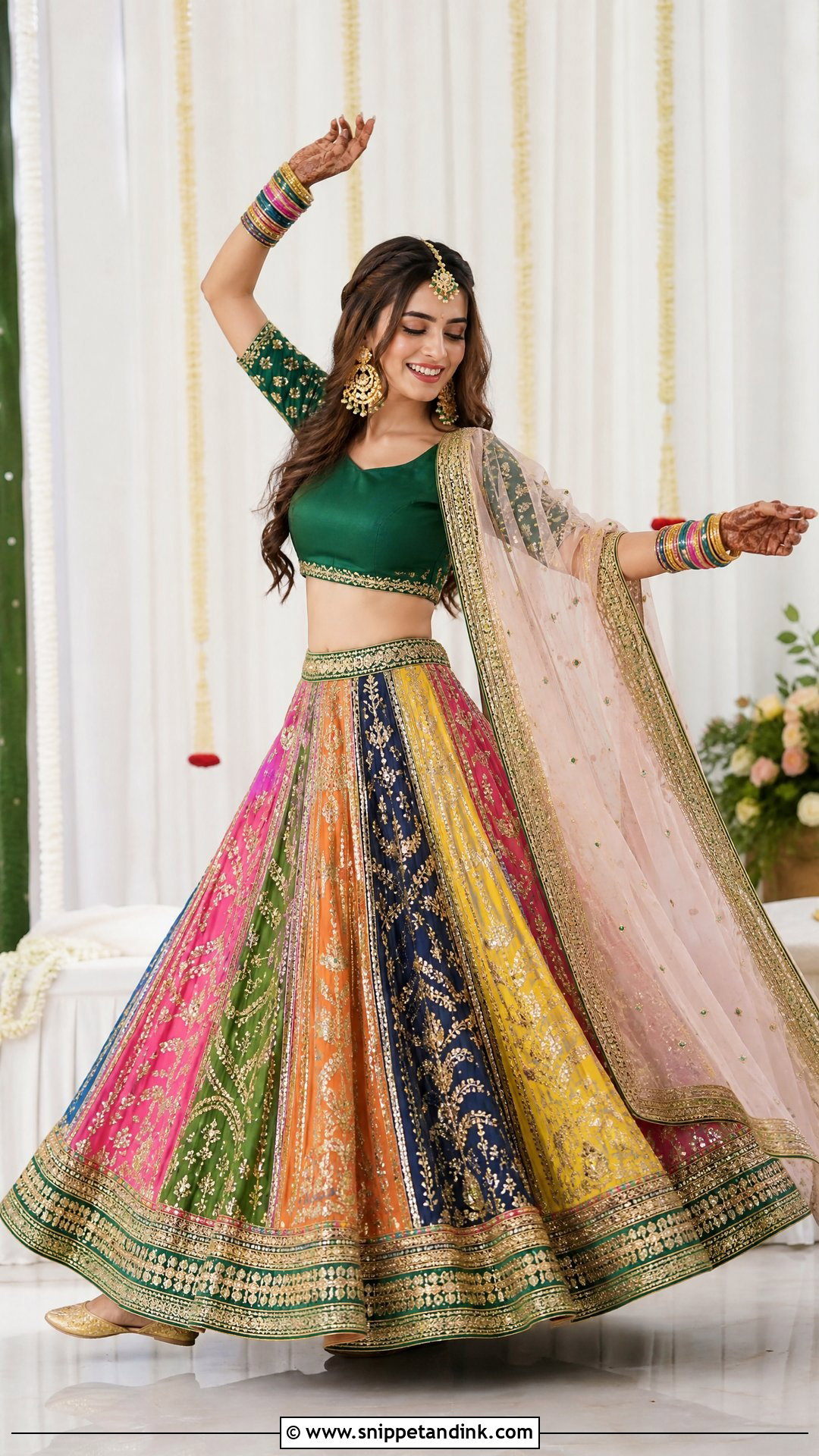
Pattern and color do all the work on a multicolor patchwork lehenga, so everything else should stay calm. Panels of pink, orange, green, blue and yellow, joined with gota trim or embroidery, look best balanced evenly around the hem. Choose a solid blouse in one dominant shade, green or fuchsia, and a light net dupatta with multicolored edging. Colorful bangles, gold earrings and a small tikka. Neutral gold khussas. A long braid finished with fabric tassels swings nicely in a dance. Gold eyeshadow and a pink lip taken from one of the panels.
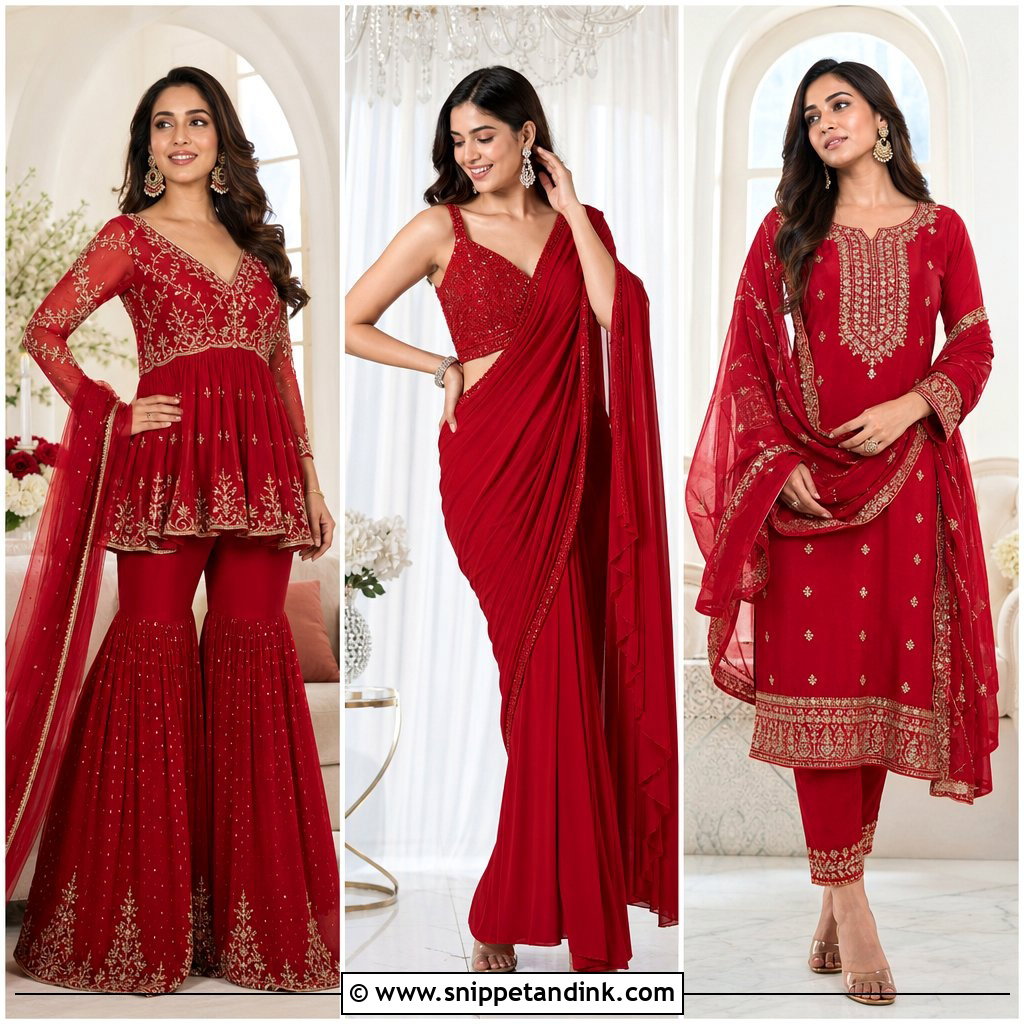
14. Red Jacket Sangeet Lehenga
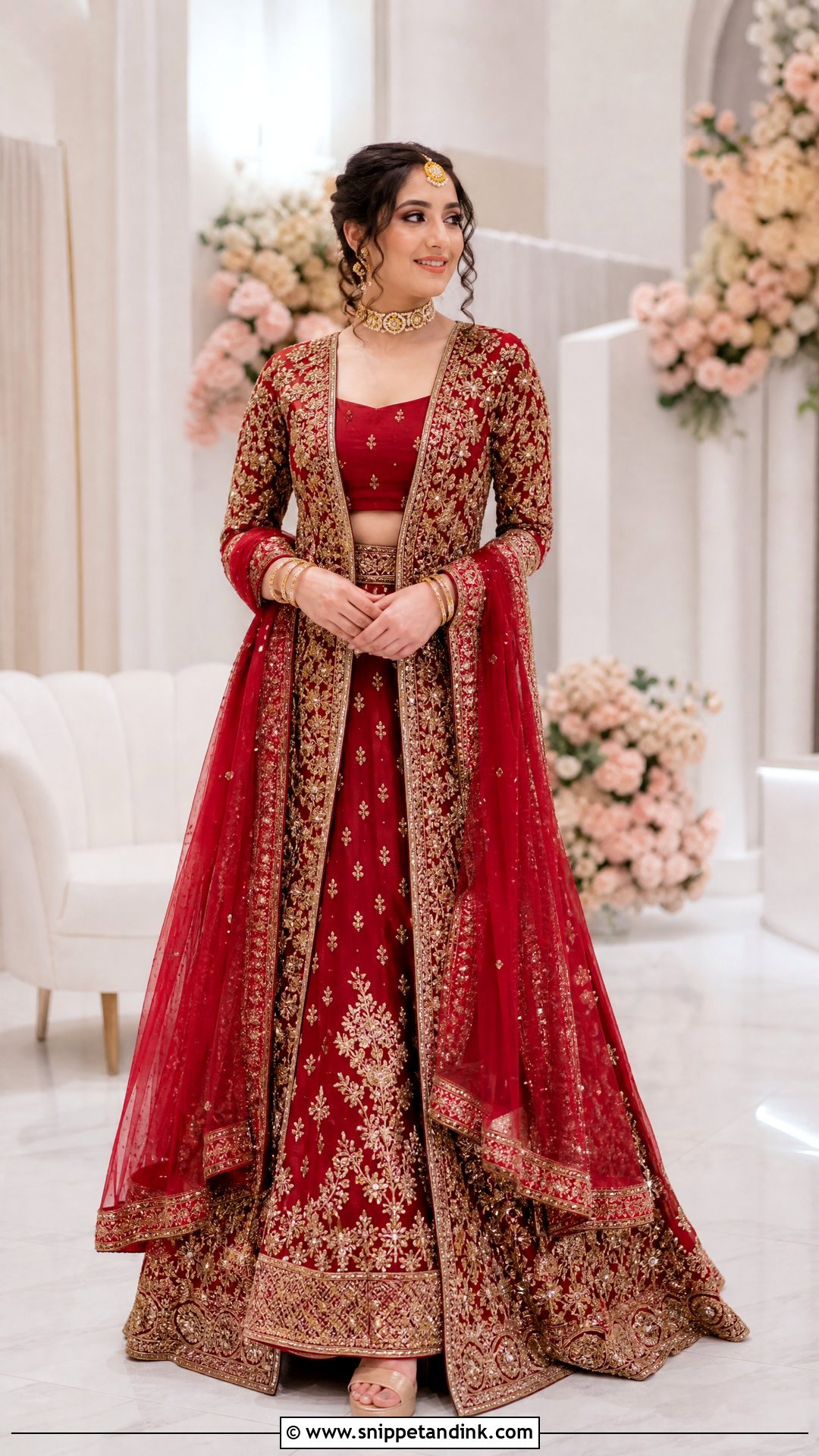
Here’s red in a new shape: a simple flowing skirt and fitted blouse under a long open-front embroidered jacket. Deep red, ruby or vermilion pairs with antique gold, dull silver or tonal beadwork. The jacket already adds weight and coverage, so I’d keep the dupatta very light or leave it off. A jacket also heats you up quickly once you’re dancing, so check that it’s lined in something breathable. A choker, studs or jhumkas and a few red-and-gold bangles. Platform sandals under the long skirt. A low ponytail or smooth bun so the jacket’s neckline shows, winged liner and a classic red lip.
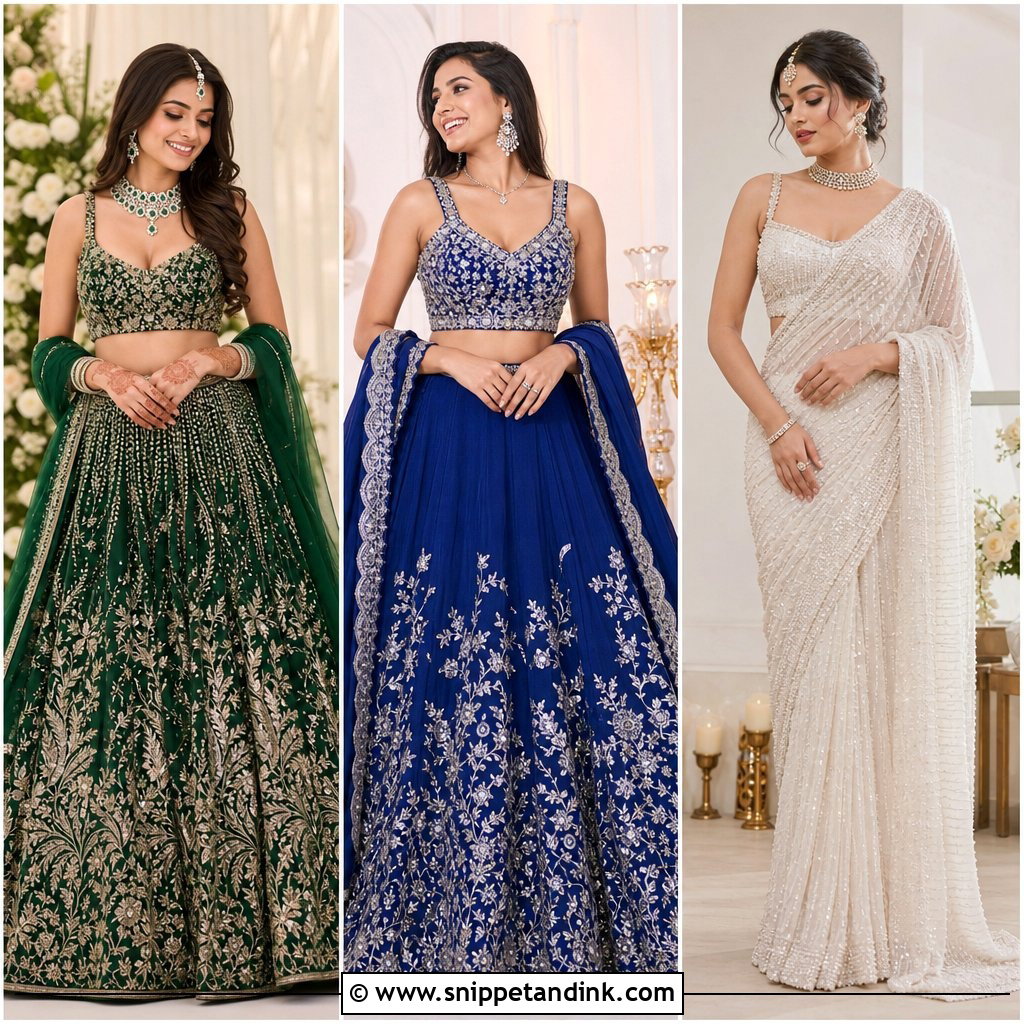
15. Lilac Organza Sangeet Anarkali
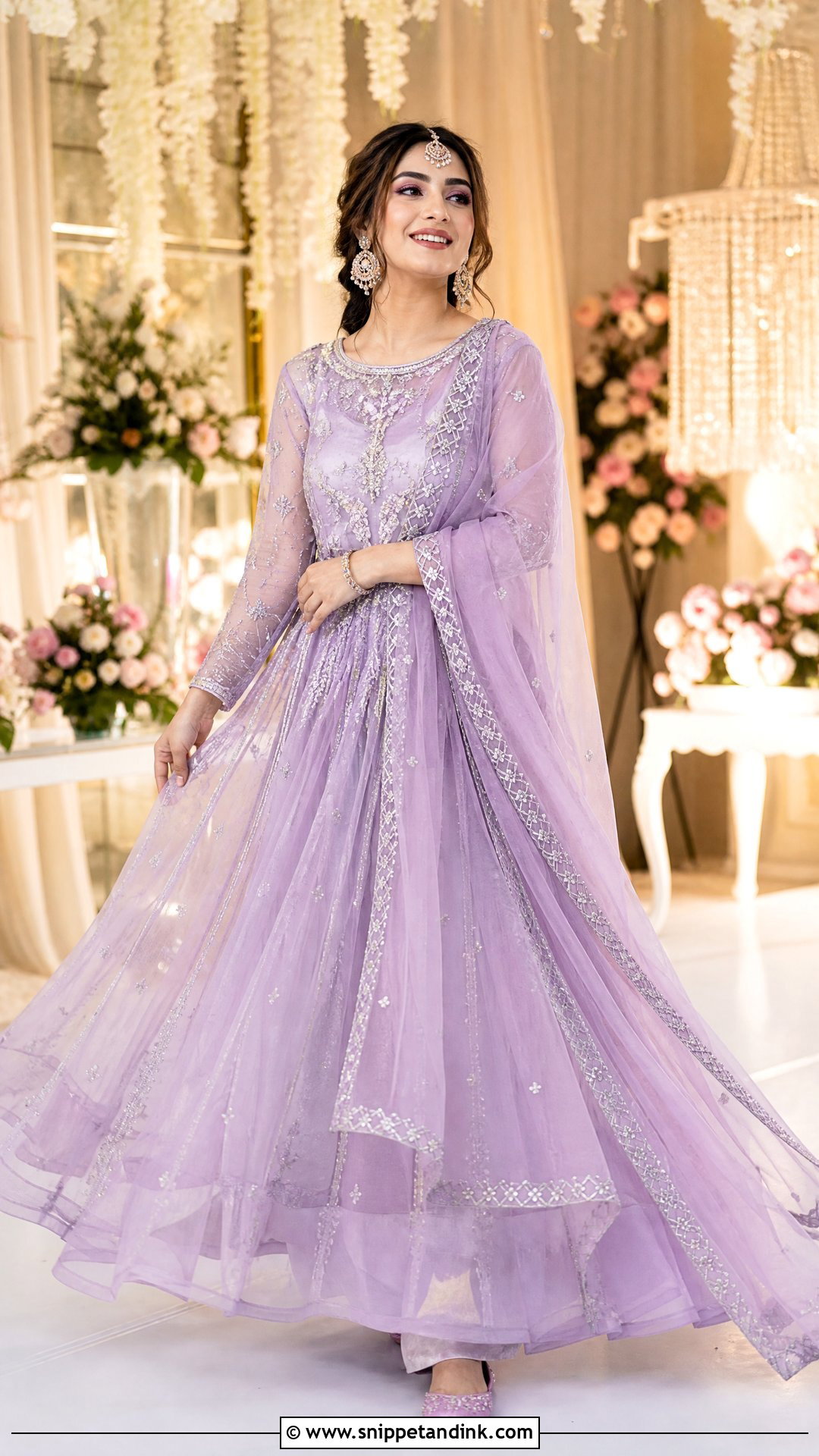
Organza layered over a structured lining is what gives a lilac Anarkali its float. The lining needs to be fully opaque and the organza seams finished cleanly, because organza scratches wherever it rubs bare skin all evening. Silver embroidery, pearls and scattered sequins glow as the skirt moves. Fitted trousers, and a matching dupatta over both arms or pinned at one shoulder. Crystal earrings, a silver tikka and a slim bracelet. Silver wedges or embroidered lilac juttis. Soft waves, a braided half-up style or a low bun. Lavender-gray eyeshadow, rosy cheeks and a cool pink lip.
16. Rust Orange Sangeet Lehenga Choli
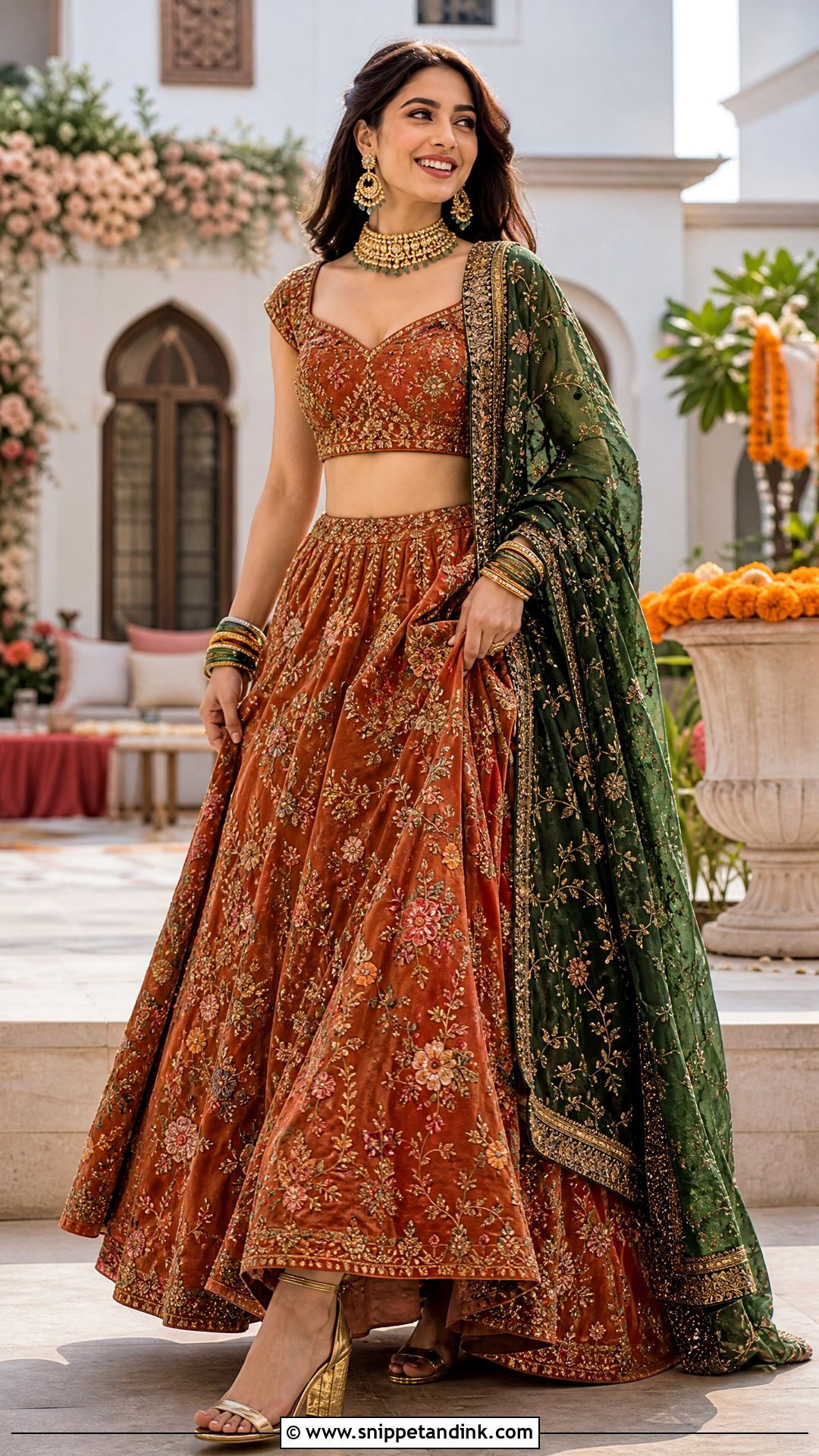
Rust is warm and earthy, and antique gold sits on it naturally at a nighttime sangeet. A medium flare is the right amount: enough for turns, not so much that you lose sight of your feet in a fast step. Floral embroidery and a defined waistband on the lehenga, and a fitted choli with sleeves and a back closure you can trust, since weak hooks pop when you raise your arms overhead. A deep green, maroon or rust dupatta pinned across one shoulder. Antique earrings, a small choker and mixed gold-and-green bangles. Brown or gold block heels, or khussas. Textured waves or a floral bun. Bronze eyeshadow, terracotta blush and a brick-rose lip.
17. Mint Green Sangeet Front-Open Maxi
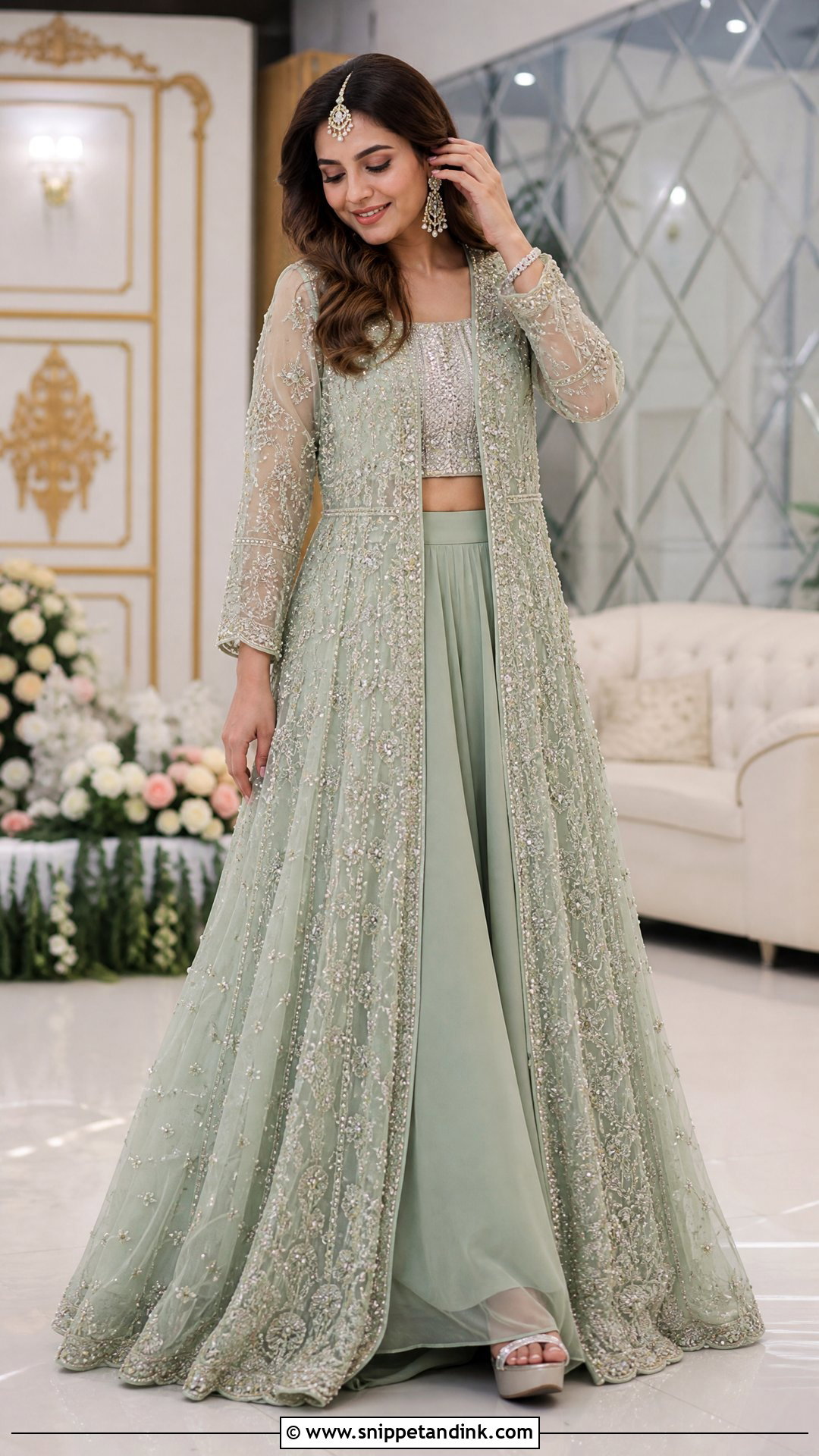
A front-open maxi gives the layered look of a jacket and lehenga in one garment. The long embroidered outer dress goes over a fitted blouse and a flowing skirt or wide-leg trousers. Keep the inner pieces close in color to the mint so the opening looks deliberate. Silver, pearl or pastel florals suit it. Crystal drop earrings, a pearl tikka and a delicate bracelet. Silver platform heels or pastel juttis for long stretches of standing. A sleek low bun, soft taupe eyes, pink blush and a rose lip. If you’ll dance in it, tack the front edges together at the waist on the inside; open panels flap wildly in a spin.
18. Silver Gray Sangeet Draped Saree
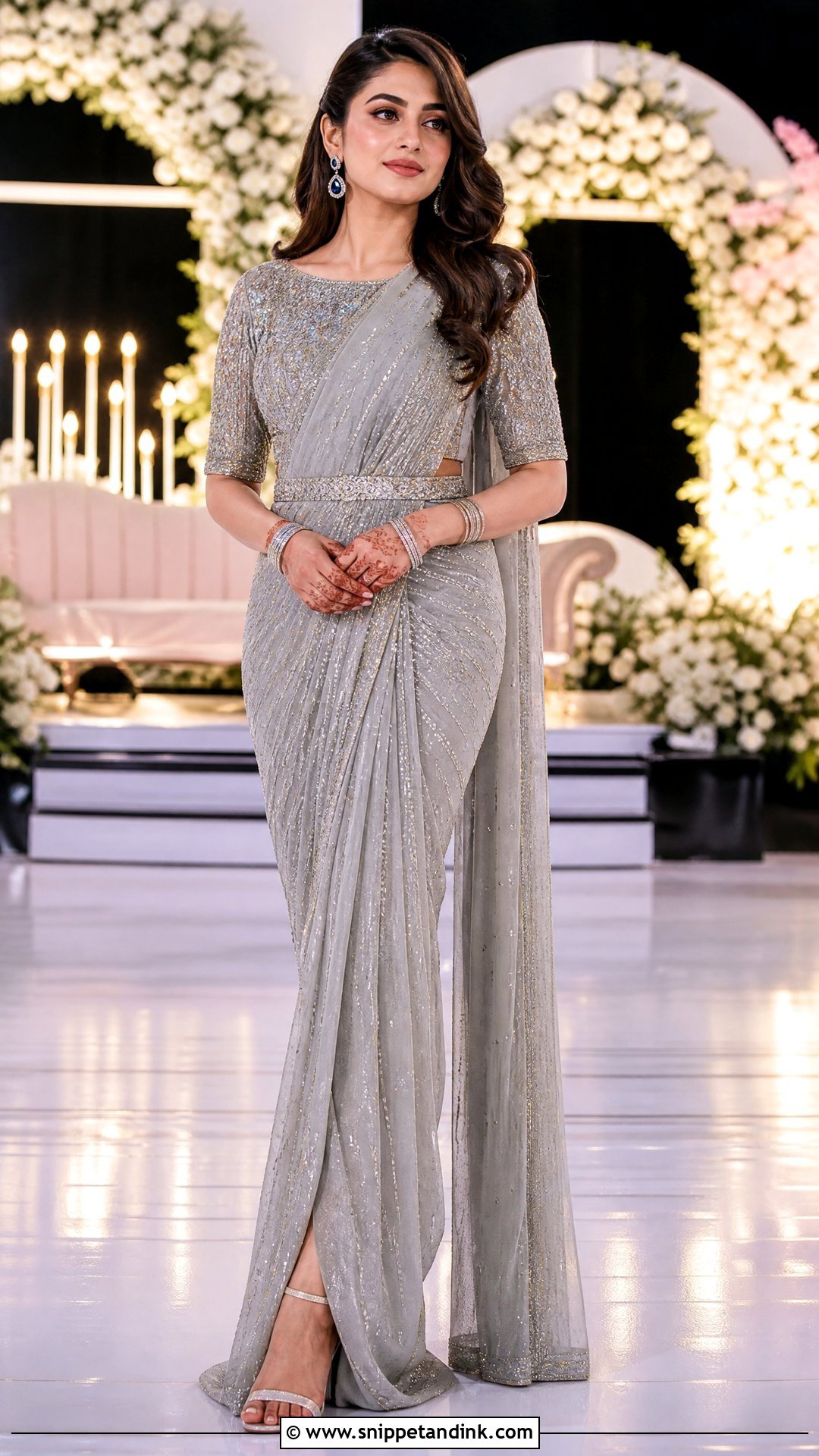
A pre-stitched or pre-pleated saree is the only kind I’d put a dancing bride in, and silver gray holds up well under evening lights. Choose a lightweight fabric, a fitted blouse with crystals, sequins or silver threadwork, and a slim embellished belt to anchor the drape. Bring in color through sapphire, emerald or ruby earrings, or stay monochrome with crystals. Silver block heels with ankle straps. A high bun or straight ponytail. Gray liner, luminous highlighter and a berry lip keep the cool palette from washing you out.
19. Maroon Sangeet Farshi Gharara
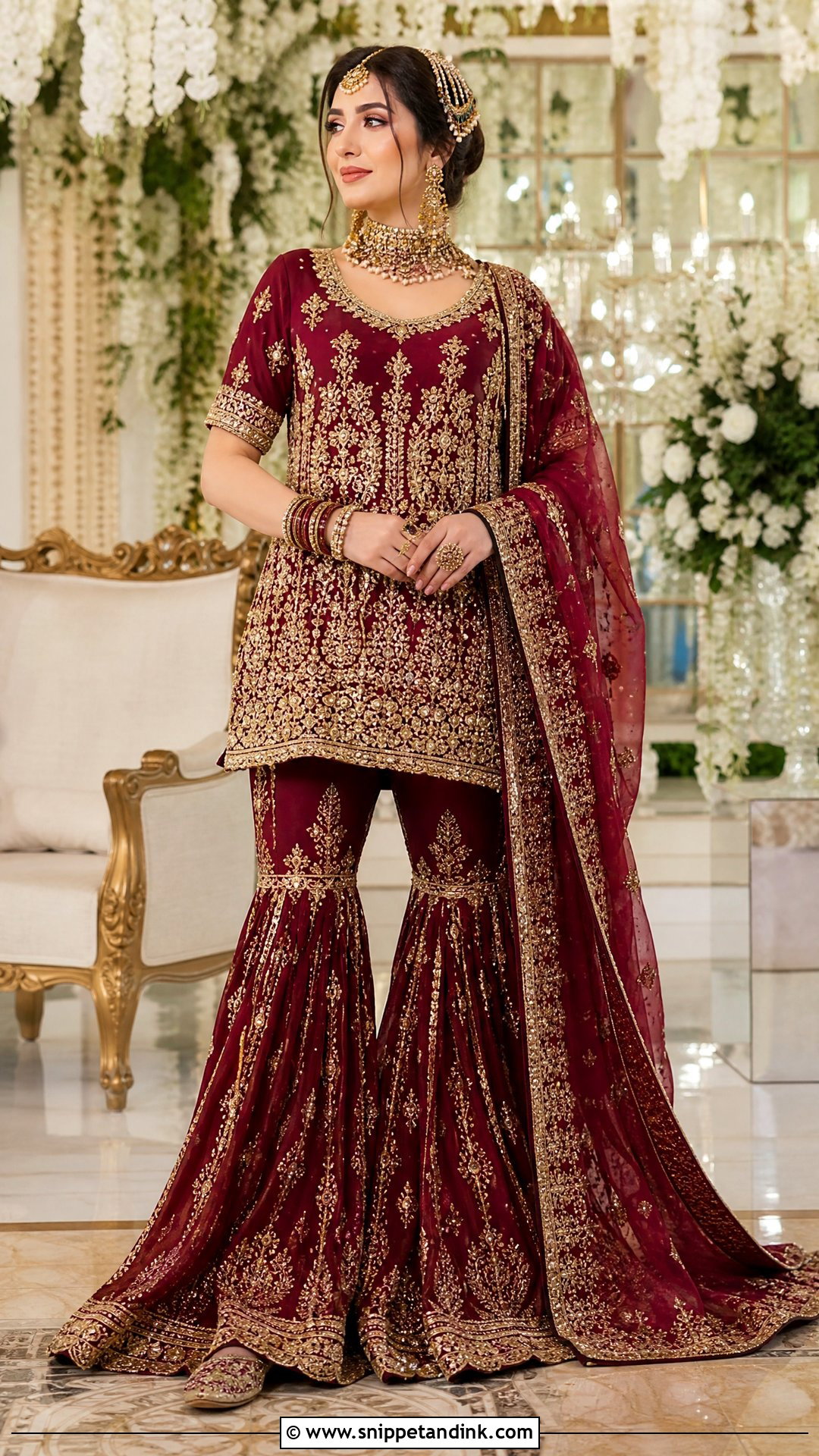
A maroon farshi gharara is the most regal outfit here and the hardest to dance in, since its lower flare runs well past your feet. I’d wear it for the entrance and family performances and consider changing for the group dancing. A short or knee-length kameez keeps the gharara construction visible. Antique gold embroidery, dabka and sequins at the neckline, sleeves and knee bands. Drape the dupatta over one shoulder and secure it at the opposite wrist. A choker, jhumkas, passa and maroon bangles; wear them all together for an hour before the day, because the combined weight adds up. Padded khussas, a smooth low bun, kohl-lined eyes and a deep rose lip.
20. Cobalt Blue Sangeet Dhoti Shalwar Outfit
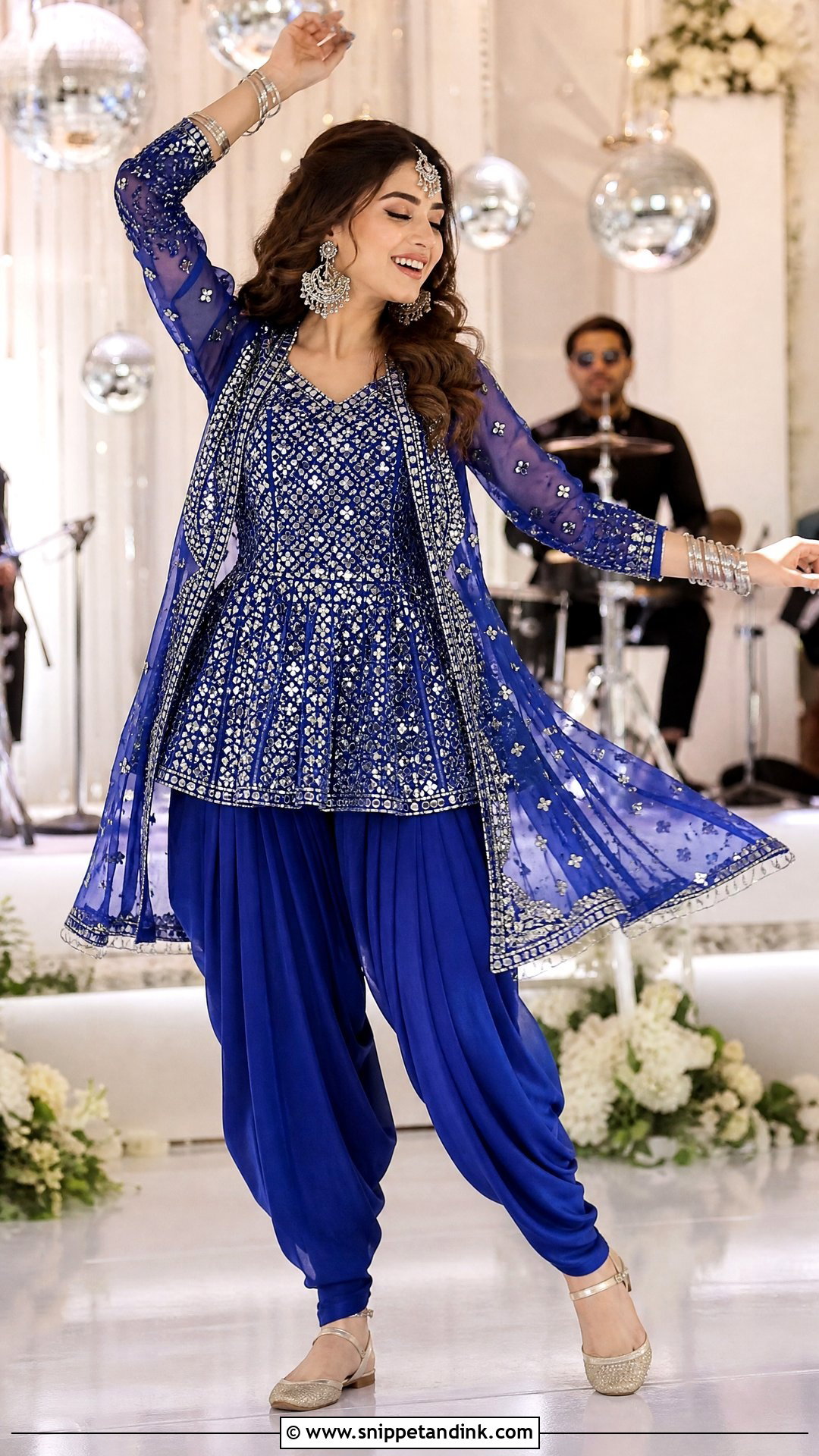
For pure freedom of movement, a cobalt blue dhoti shalwar outfit is hard to beat. Draped pants go under a fitted embellished kurti or structured peplum, with a long sheer jacket on top for bridal drama and coverage that leaves the legs free. Silver embroidery, mirrors and crystal tassels catch the light mid-performance. Statement earrings, a delicate tikka and silver bangles. Metallic sandals, low wedges or juttis that won’t catch the draped hem. A braided high ponytail, blue-gray metallic eyeshadow, defined lashes and a neutral mauve lip.
What Colored Dance-Floor Lighting Does to Your Outfit
Many sangeet venues use colored uplighting and moving stage lights. Under strong purple or blue light, a pastel outfit can lose its color almost entirely: mint looks gray and peach turns muddy. Saturated jewel tones like emerald, fuchsia and royal blue hold up much better, and gold and mirror work come alive under moving light.
- Ask your decorator what lighting colors are planned, and look at your fabric under similar light if you can.
- If you’ve chosen a pastel, ask for warm white light on the stage area during your performance.
- Have the photographer take some portraits away from the dance floor in neutral light, so the true color of the outfit is on record.
Makeup reacts too. Under colored light a very matte base can look flat while a little highlighter catches nicely, which is why I lean toward a soft glow for the sangeet rather than a fully matte finish.
Spin Once at the Fitting Before You Say Yes
The right sangeet outfit lets you walk in, greet guests and get through every dance without anyone fixing your dupatta between songs. A farshi gharara, a patchwork lehenga, a flowing peshwas, a cape or a pre-draped saree can all manage that if the silhouette suits how you’ll move. Book final fittings with your actual shoes, jewelry and underlayers, and test everything together. Pin the dupatta, weigh the embellishment and keep a pair of flat shoes within reach. Then pick the colors that make you want to get on the floor.
You'll Like These Ideas:


Leave a Reply