
The bridal sangeet is the one wedding event where I tell a bride to dress for her knees and shoulders first and her photos second. She will be on a stage, in a circle of aunts, on a dance floor, and sitting cross-legged for the family songs, often all within two hours. That changes what works: pre-draped sarees, mirror-work lehengas, shararas and cape gowns earn their place because they move without needing constant fixing. Below are 25 looks I would actually put a bride in, with notes on fabric weight, dupatta placement and the jewelry that will not catch on a partner’s sleeve mid-spin.
Put the Sangeet Outfit Through a Dance Rehearsal at the Fitting
I never sign off on a sangeet outfit after the bride has only stood in front of a mirror. At the final fitting I ask her to play the song she is performing and run the choreography, even half speed, in the full outfit and the actual shoes. Five minutes of that tells us more than an hour of pinning.
- Raise both arms above your head. If the blouse rides up or the waistband gaps, it needs a fix before the event, not tape on the night.
- Sit cross-legged on the floor. Lehenga hems, kurta slits and gharara knee joints all show their problems here.
- Spin twice. A skirt that wraps around your legs instead of flaring needs more volume or a lighter can-can layer.
- Have someone tug the dupatta lightly. If it slides off, it needs a second pin or a hidden loop.
- Hug someone. Sequins, mirrors and sharp kundan edges should not scratch a cheek or snag a sleeve.
Bring your choreographer’s song list with you if you can. A slow romantic number and a bhangra set make very different demands on the same lehenga, and a heavier skirt that looks wonderful for the first can exhaust you by the second.
1. Sequin Lehenga Sangeet Outfit
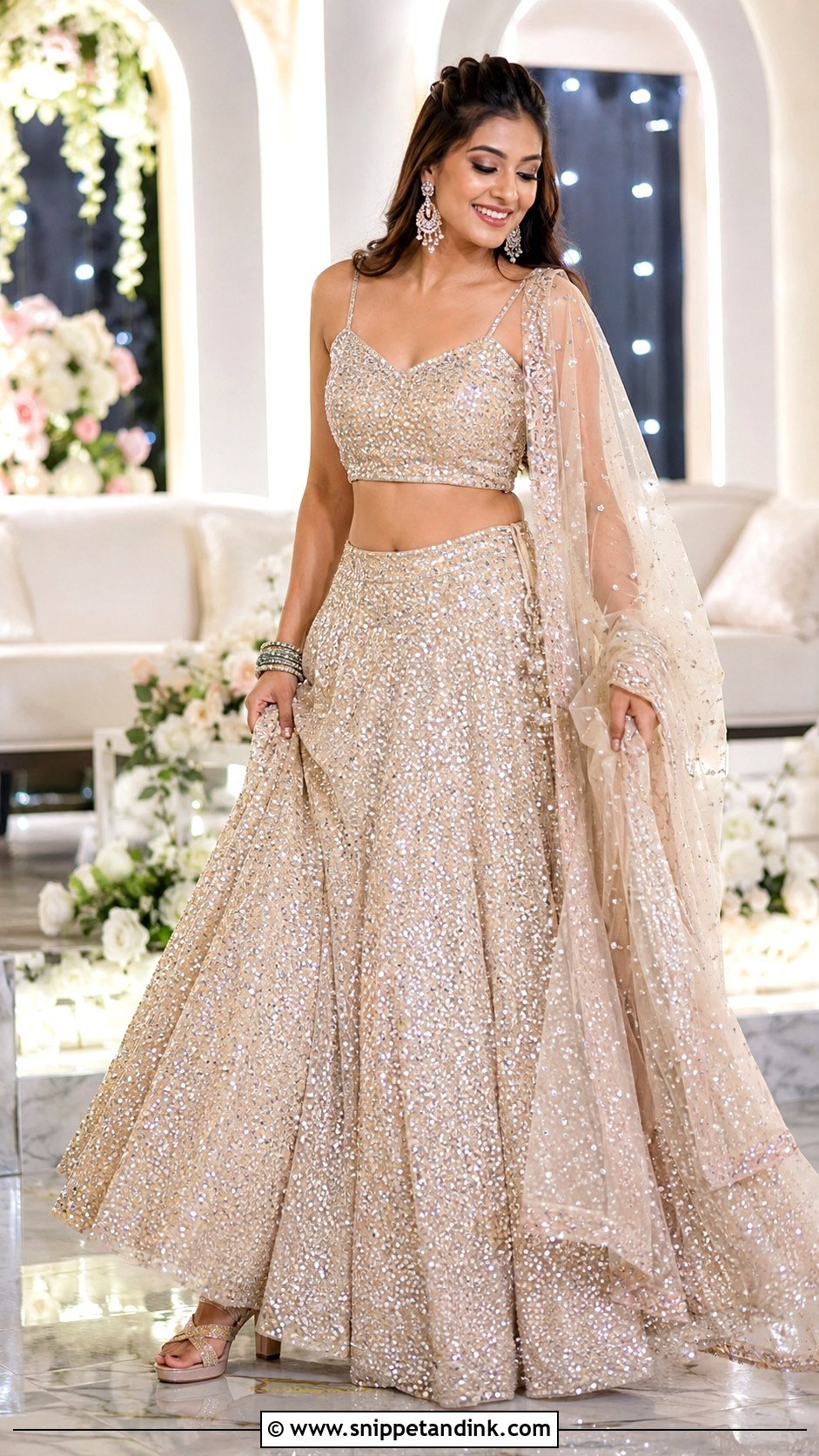
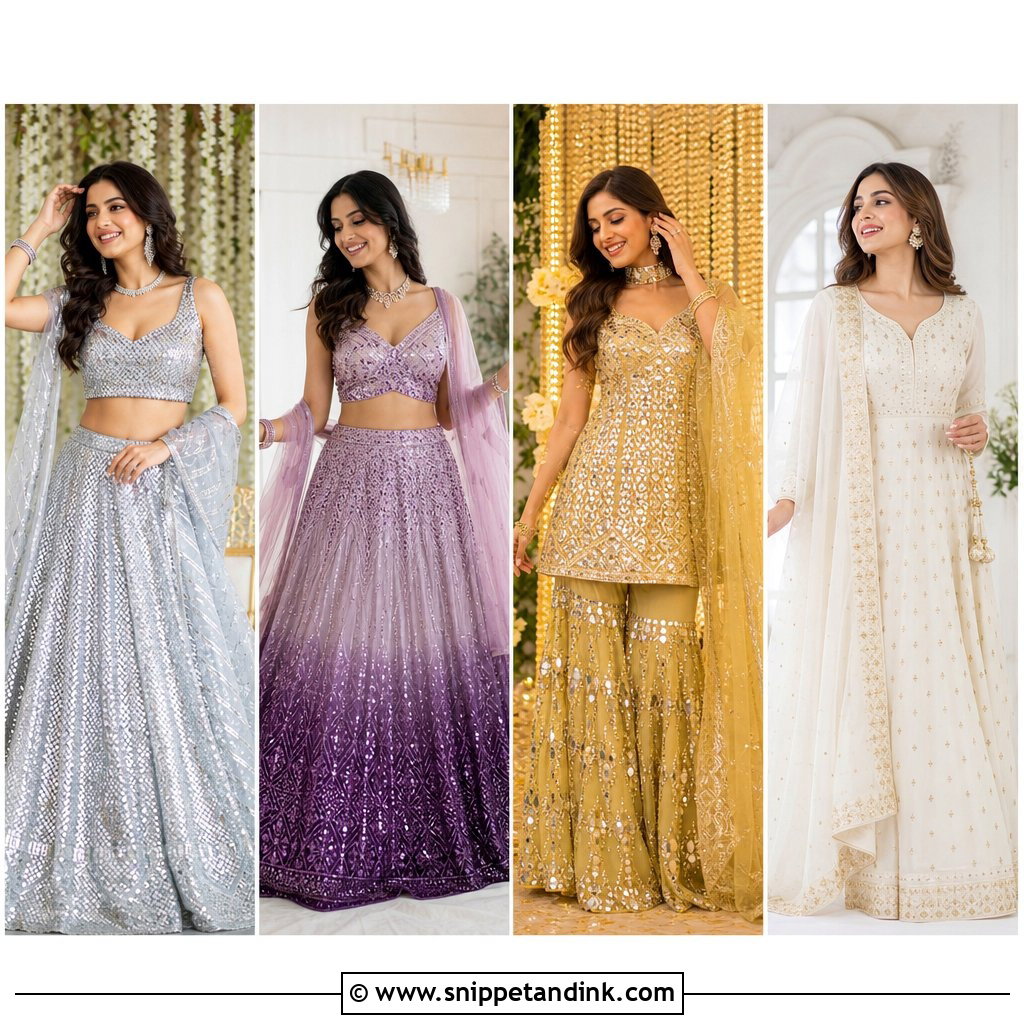
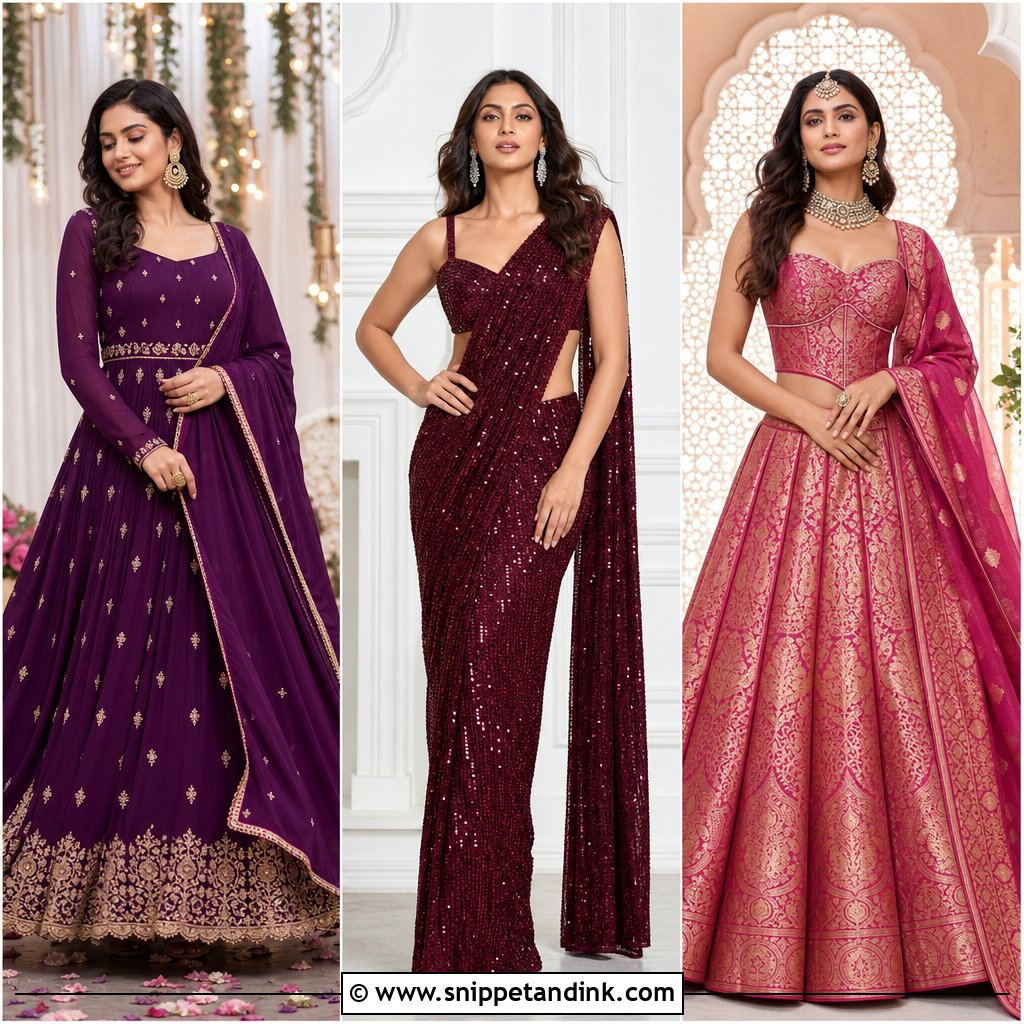
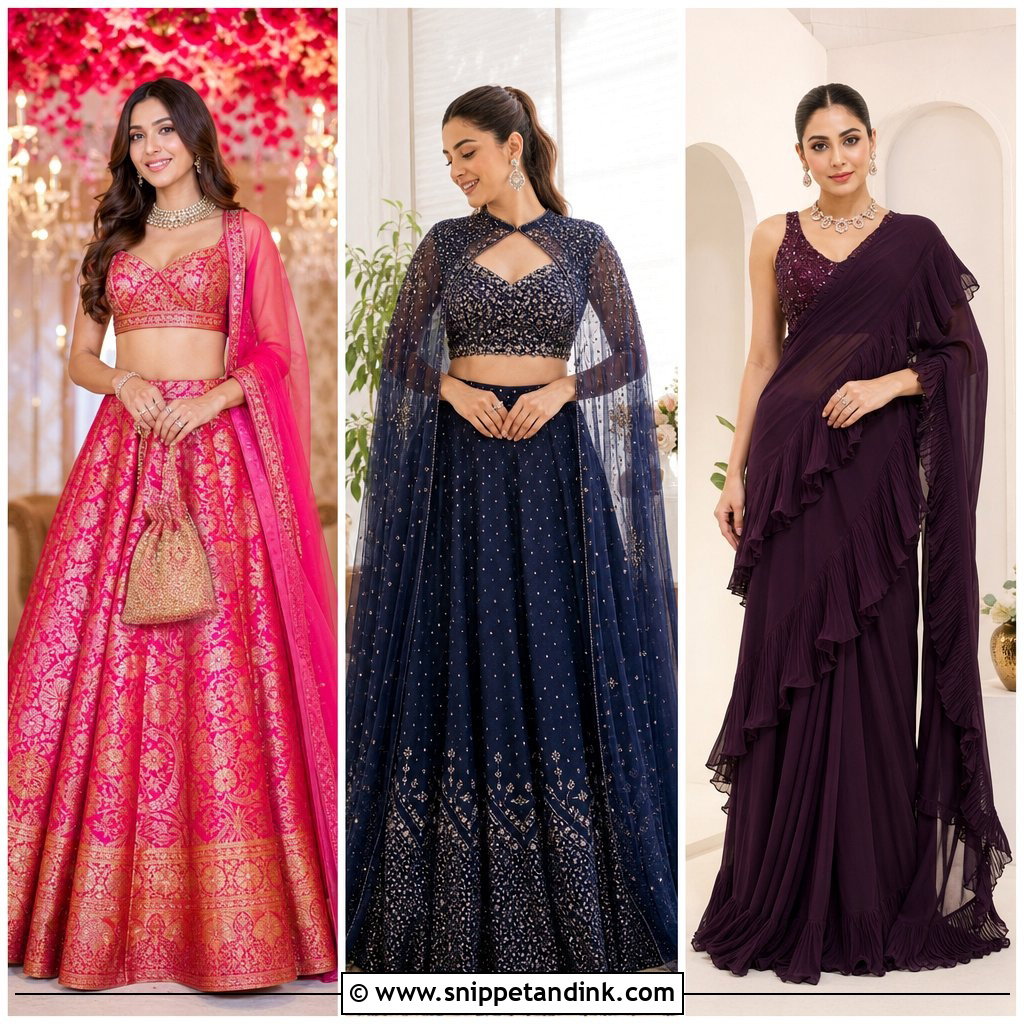
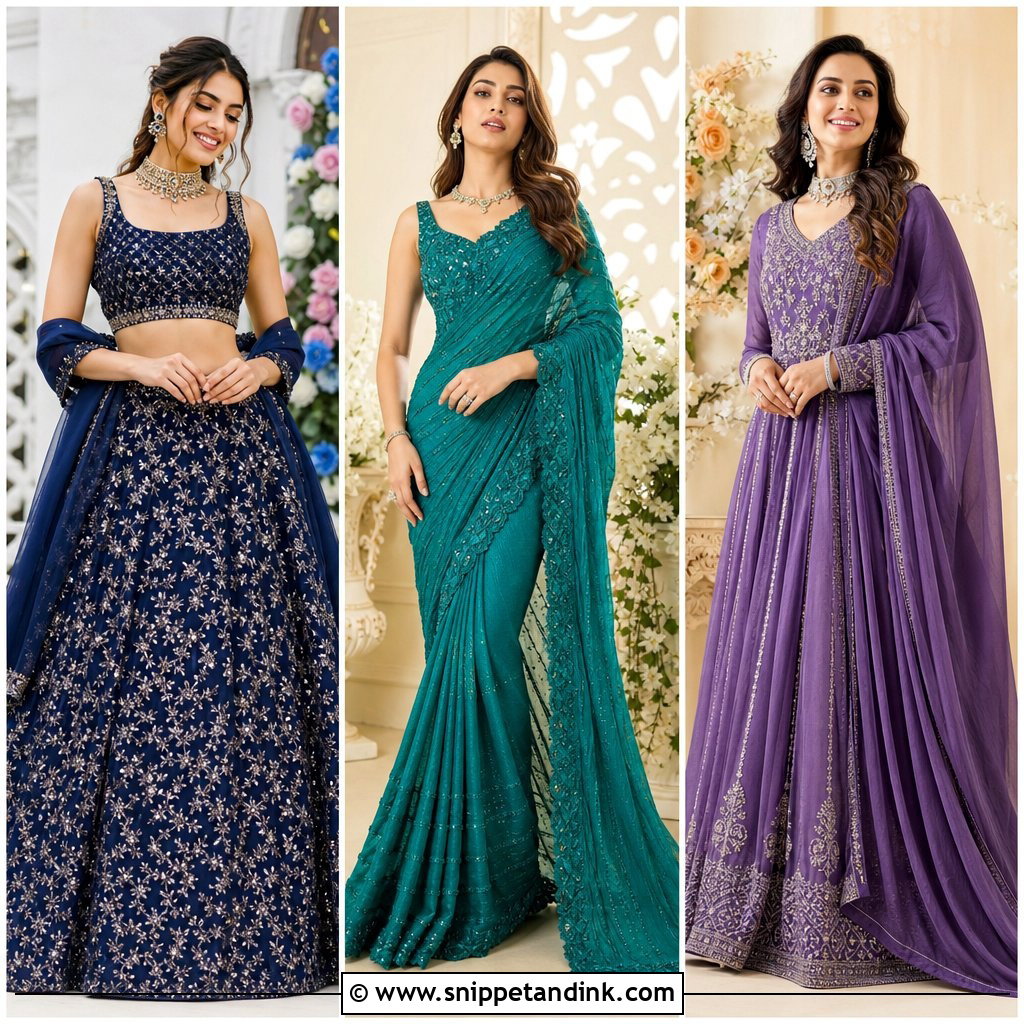
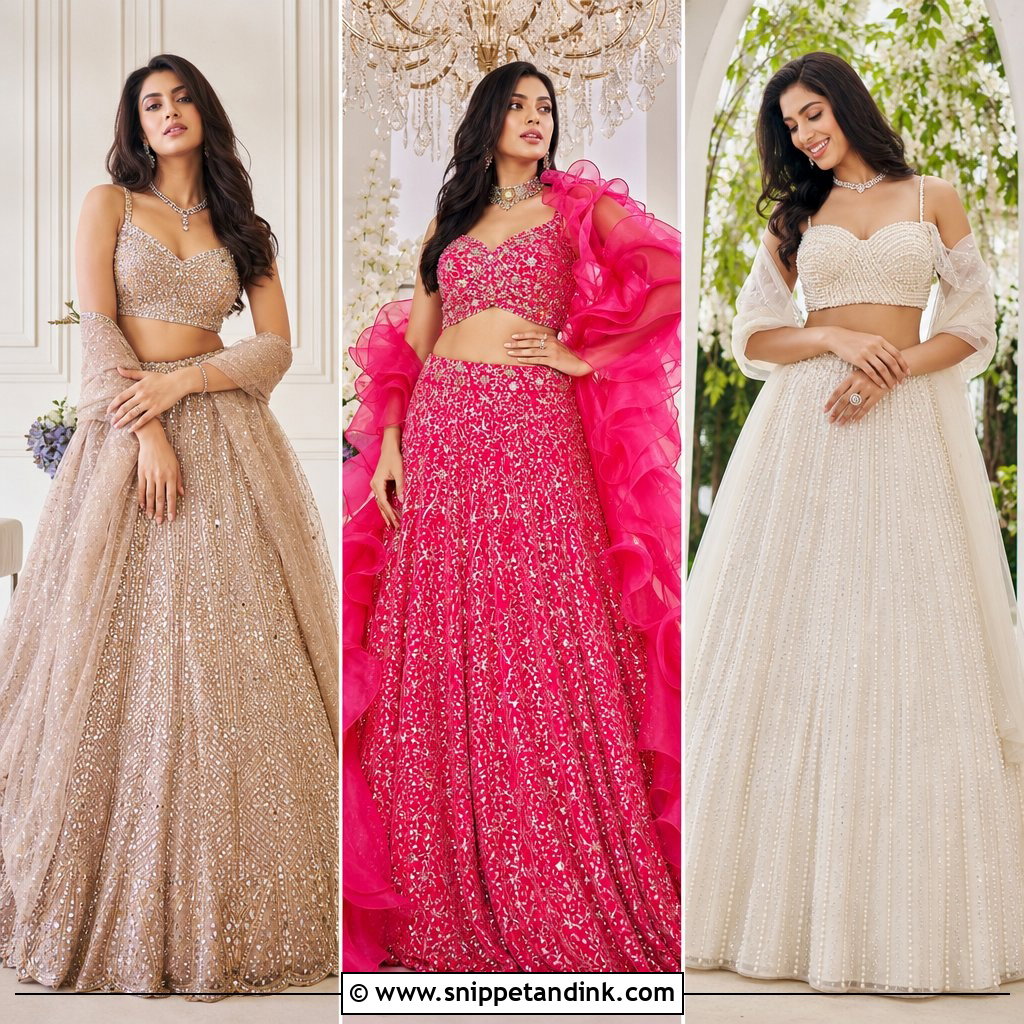
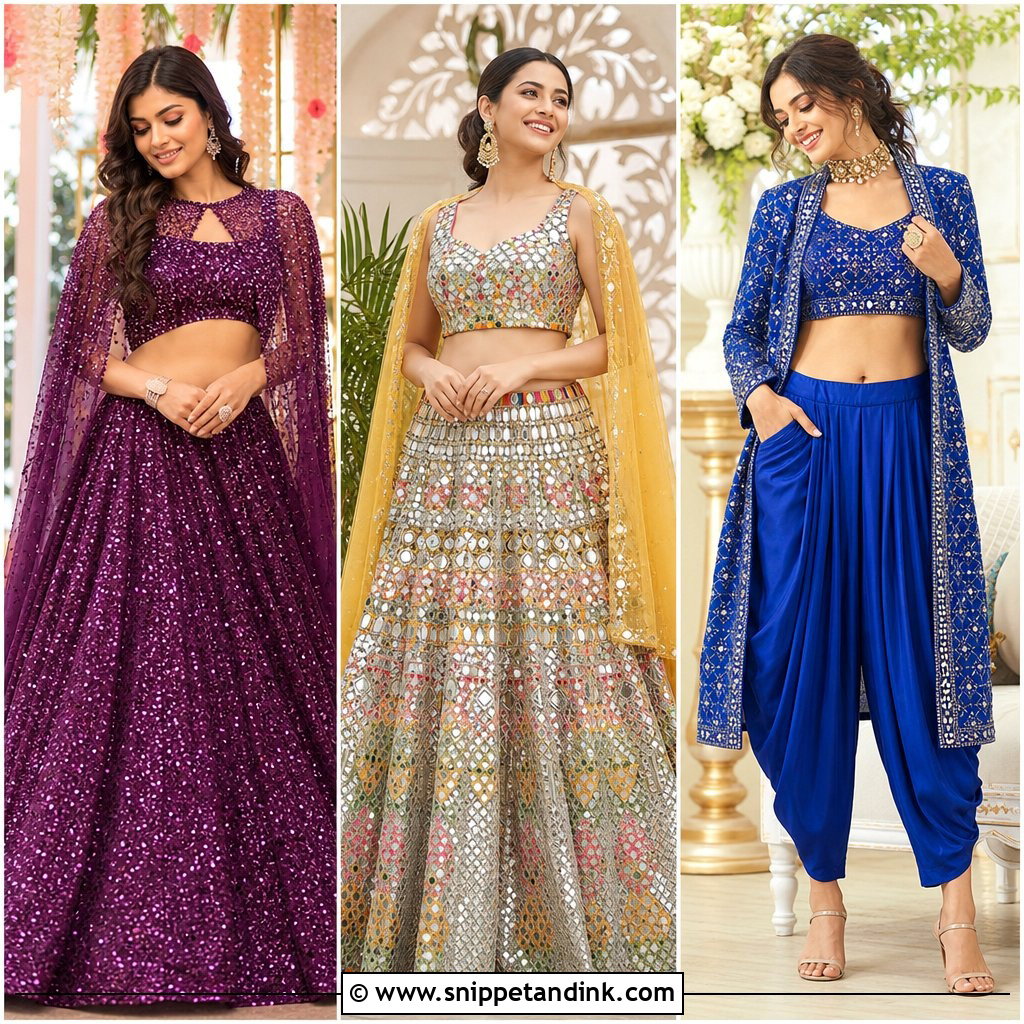
Sequins are the most dependable stage fabric I know, because they throw light back even when the venue lighting is poor. Champagne, silver, rose gold, emerald and deep navy all read well on camera. The thing I check first is the inside seam of the blouse: cheap sequin work is backed with a scratchy net that rubs the underarm raw by the third dance, so I ask for a soft lining. Keep the dupatta in net or organza and pin it at one shoulder so your hands are free. Crystal earrings, a few bangles and embellished block heels finish it, and I keep hair to soft waves or a sleek ponytail so nothing competes with the shine.
2. Mirror Work Lehenga Sangeet Outfit
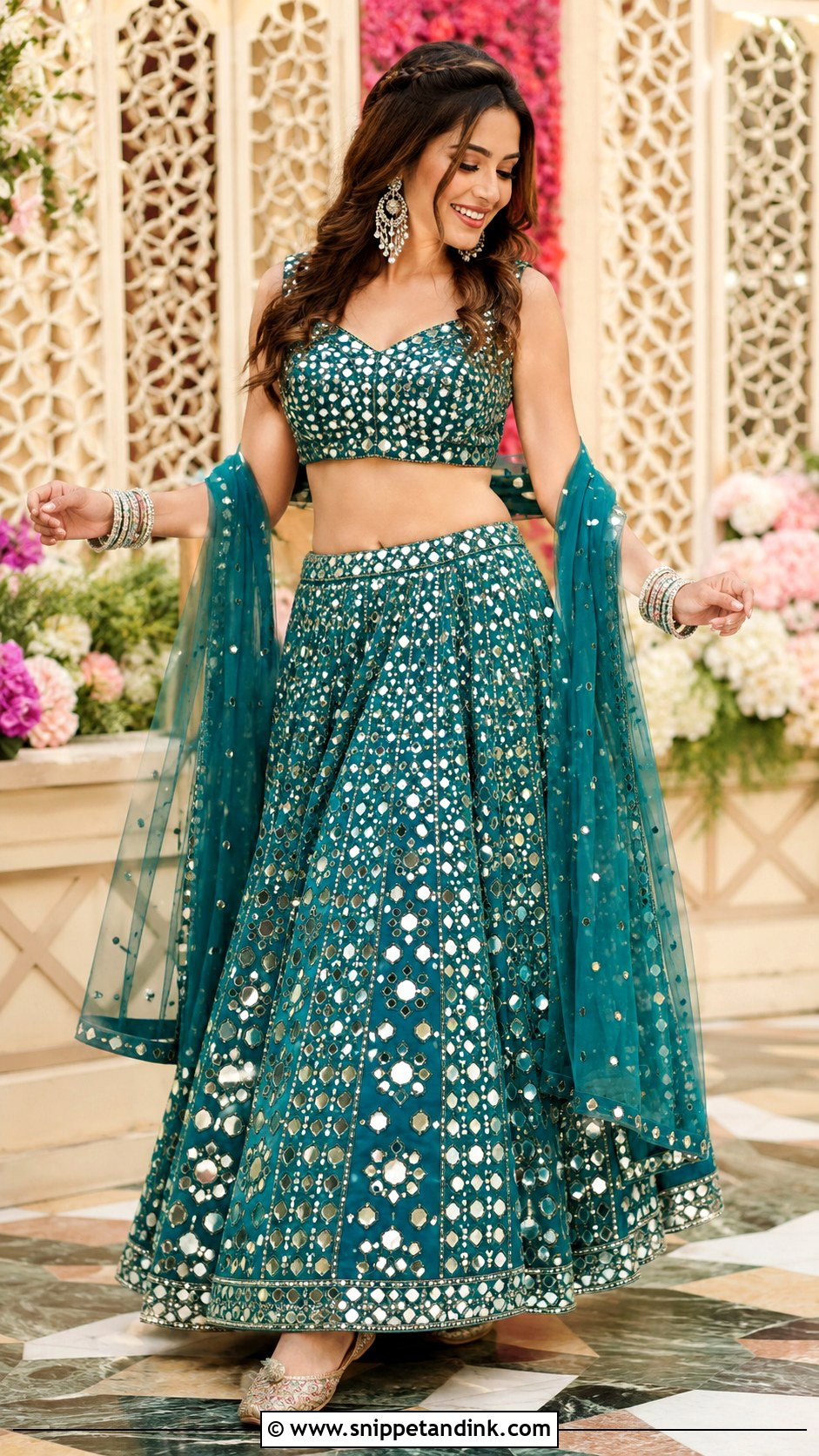
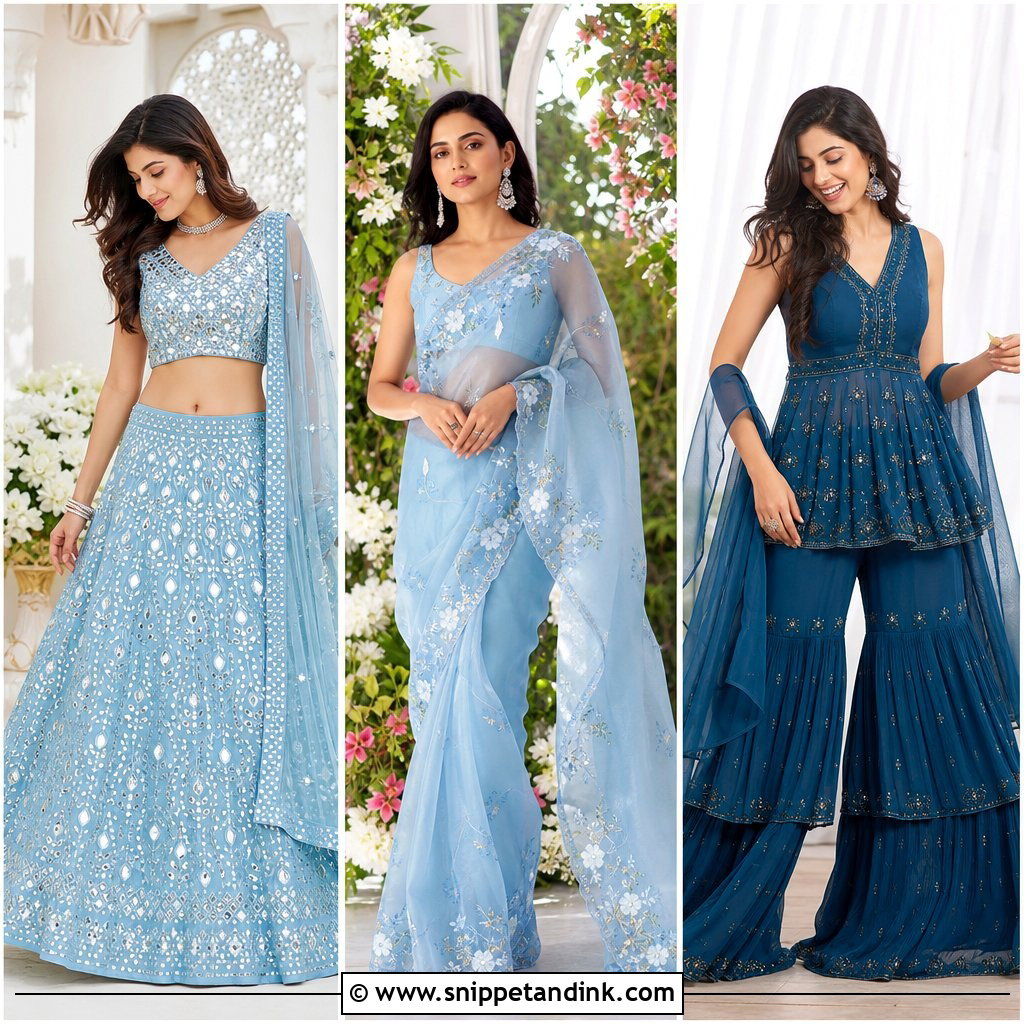
Mirror work is pure sangeet to me, folk in origin and made for movement. The catch is weight: real glass mirrors are heavier than they look, so I steer brides toward a georgette or light silk base in fuchsia, teal, lime, ivory or sunset orange rather than a stiff raw silk. Check that each mirror is stitched down on all sides; a loose edge can scratch a dance partner or snag a dupatta. A cropped mirror blouse with a matching skirt and a sheer dupatta keeps it airy. Oxidized silver leans folk, kundan leans bridal. Juttis or low heels, and a braid with a few hair accessories.
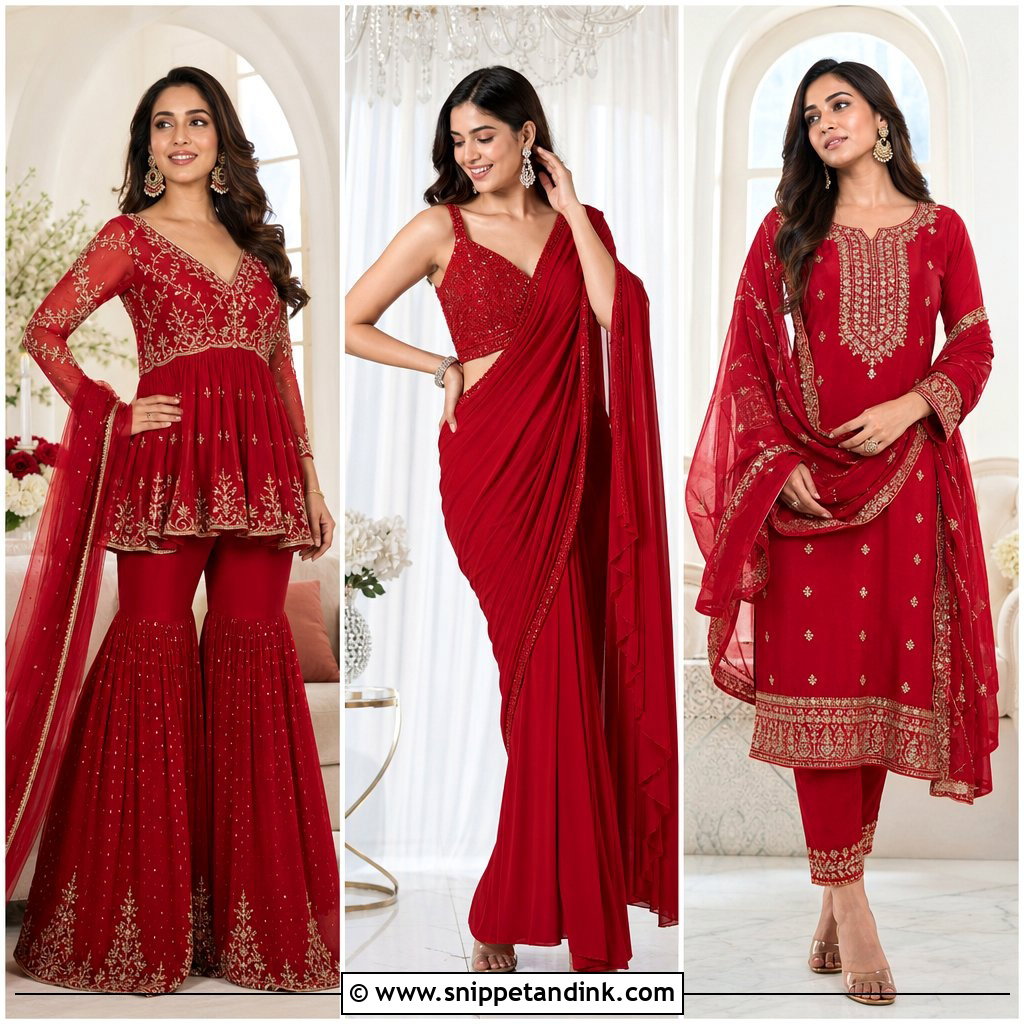
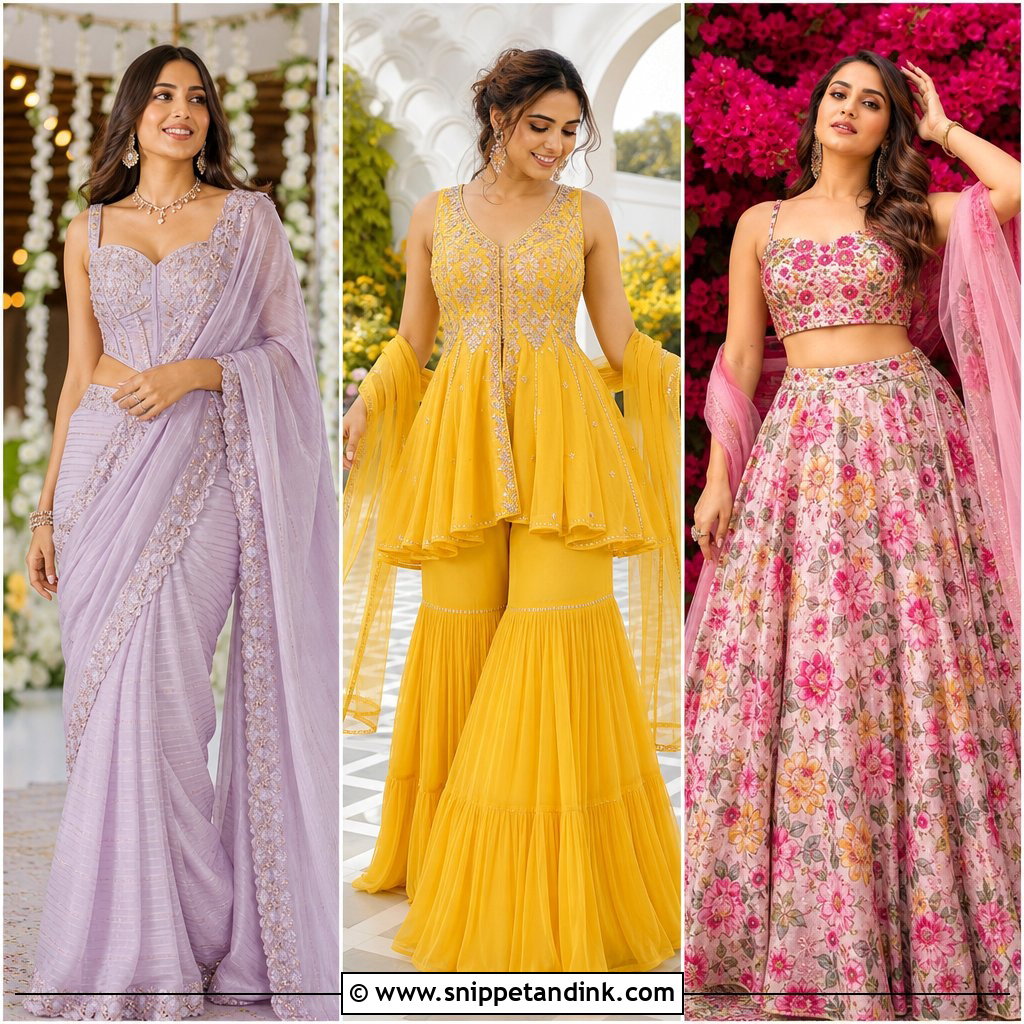
3. Pre Draped Saree Sangeet Outfit
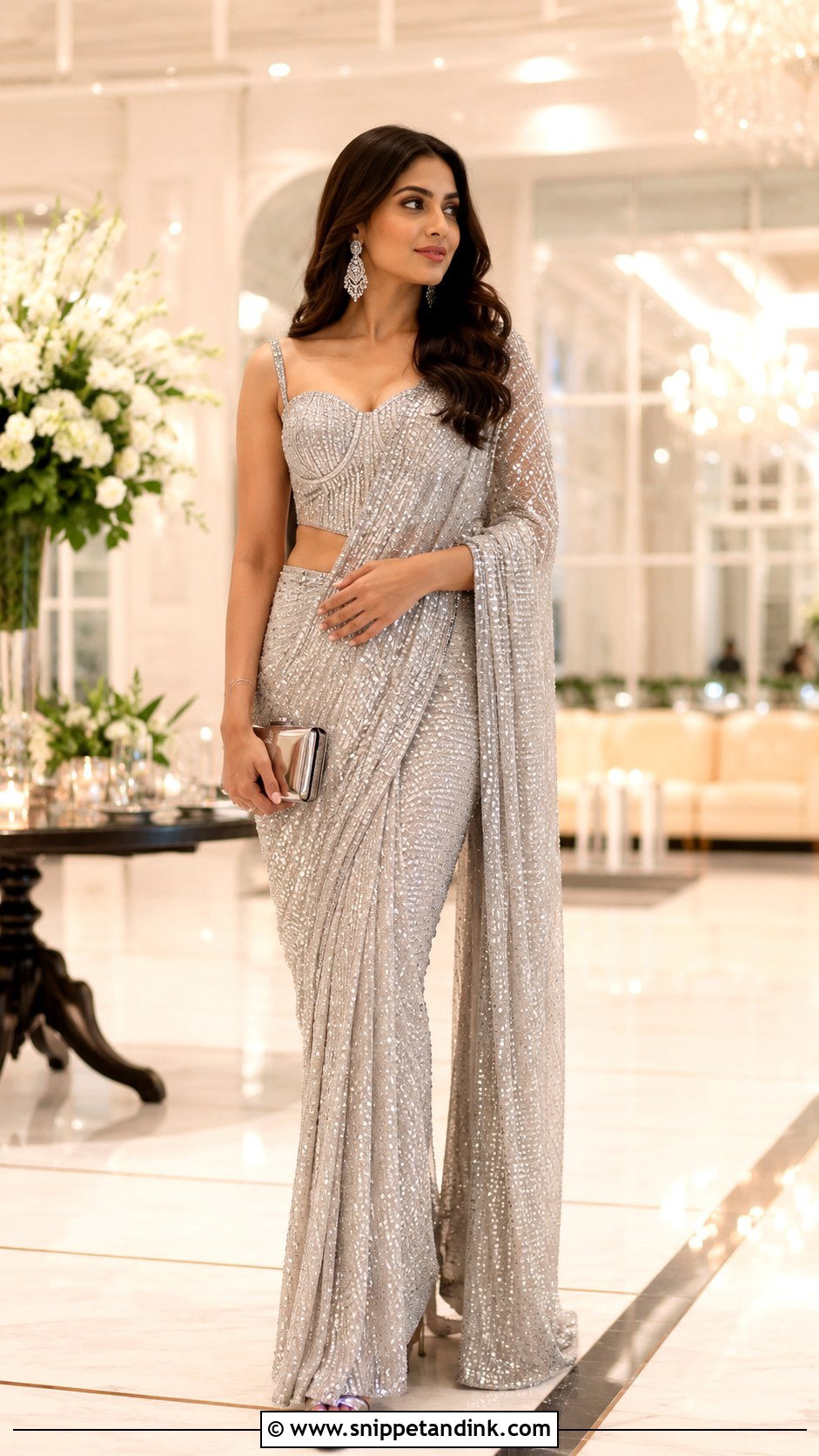
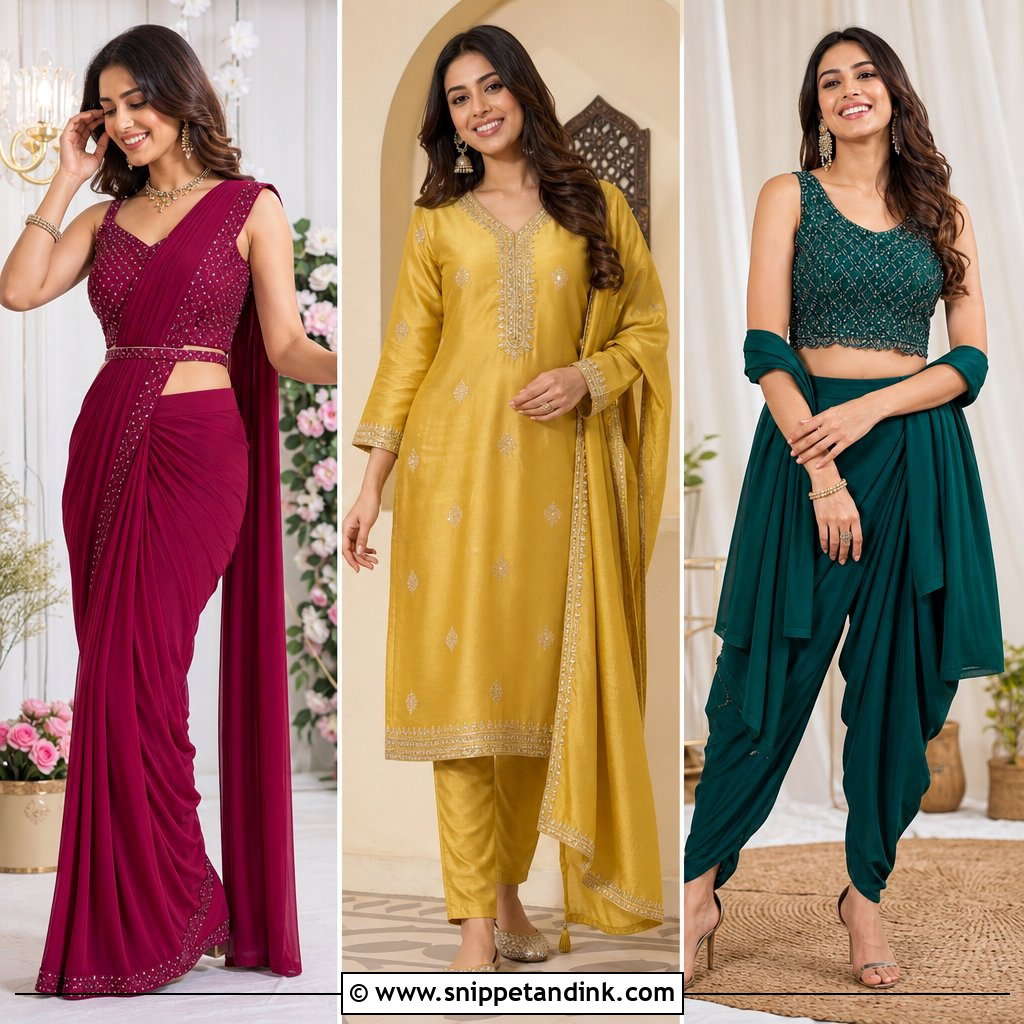
For a bride who loves a saree but has never danced in one, the pre-draped version is the answer I give most often. The pleats are stitched in, so they cannot fan open when you kick or sit. Sequin, satin, chiffon and metallic jersey all come pre-draped; jersey is the most forgiving if your choreography involves floor work. A corset, halter or embroidered full-sleeve blouse gives it a bridal finish. I always have the bride sit, stand and raise both arms at the fitting, because the pallu on some pre-drapes pulls the shoulder seam when the arm goes up. Statement earrings, a slim clutch and metallic heels, and it suits cocktail-style evenings especially well.
4. Ruffle Saree Sangeet Outfit
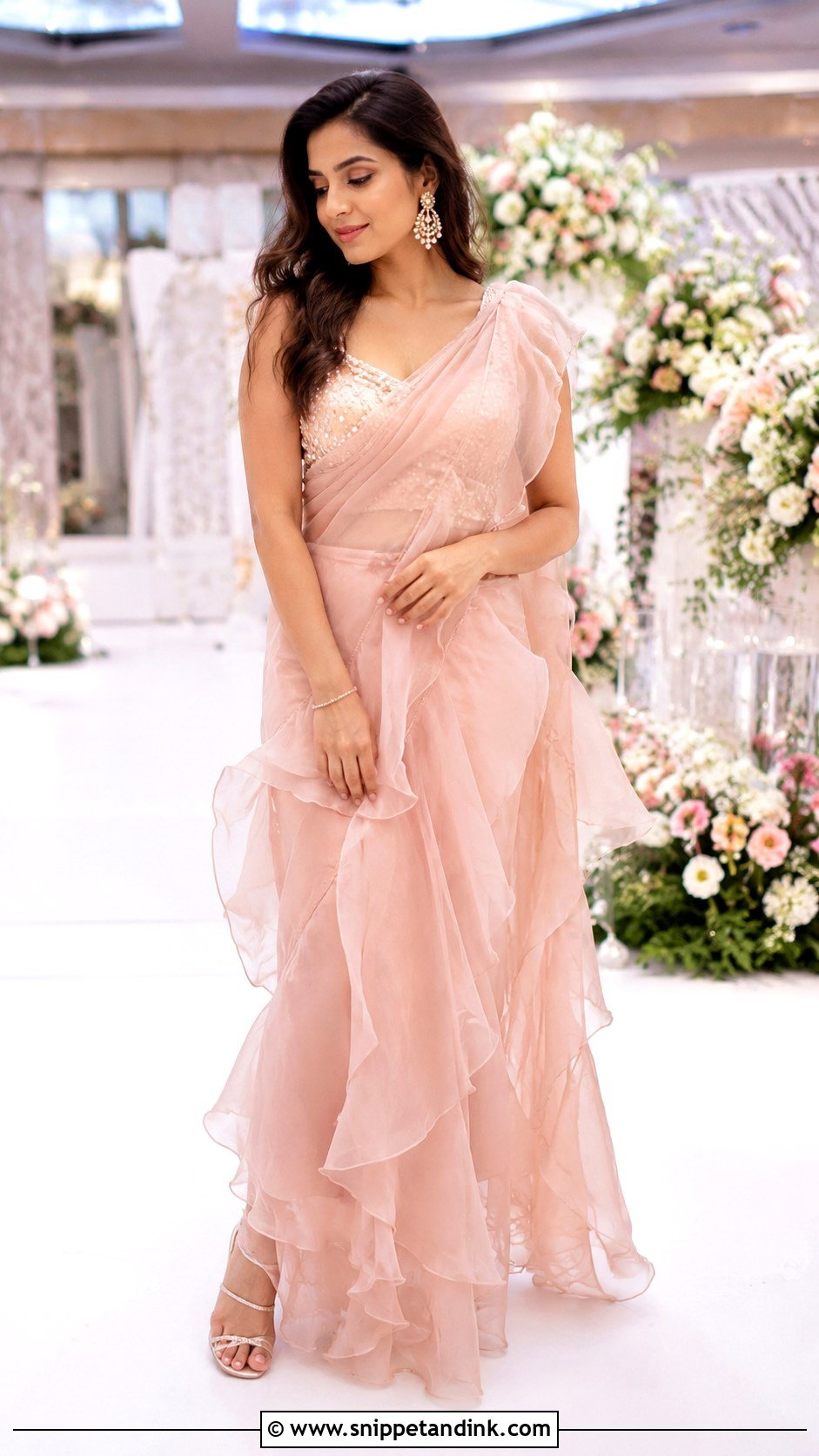
Ruffles look best in motion, so this saree belongs on a bride who intends to twirl. The fabric choice decides everything: organza ruffles stand away from the body and hold their shape, while georgette and chiffon ruffles collapse into soft waves. I avoid layered ruffles on petite brides in heavy fabric because the volume swallows them. Blush, powder blue, lavender, coral and ivory suit the texture. A mirror-work bustier or pearl blouse gives it sangeet weight, with chandelier earrings, a thin bracelet and strappy heels. A soft bun or side-swept waves keeps the neckline clear of ruffles.
5. Cape Lehenga Sangeet Outfit
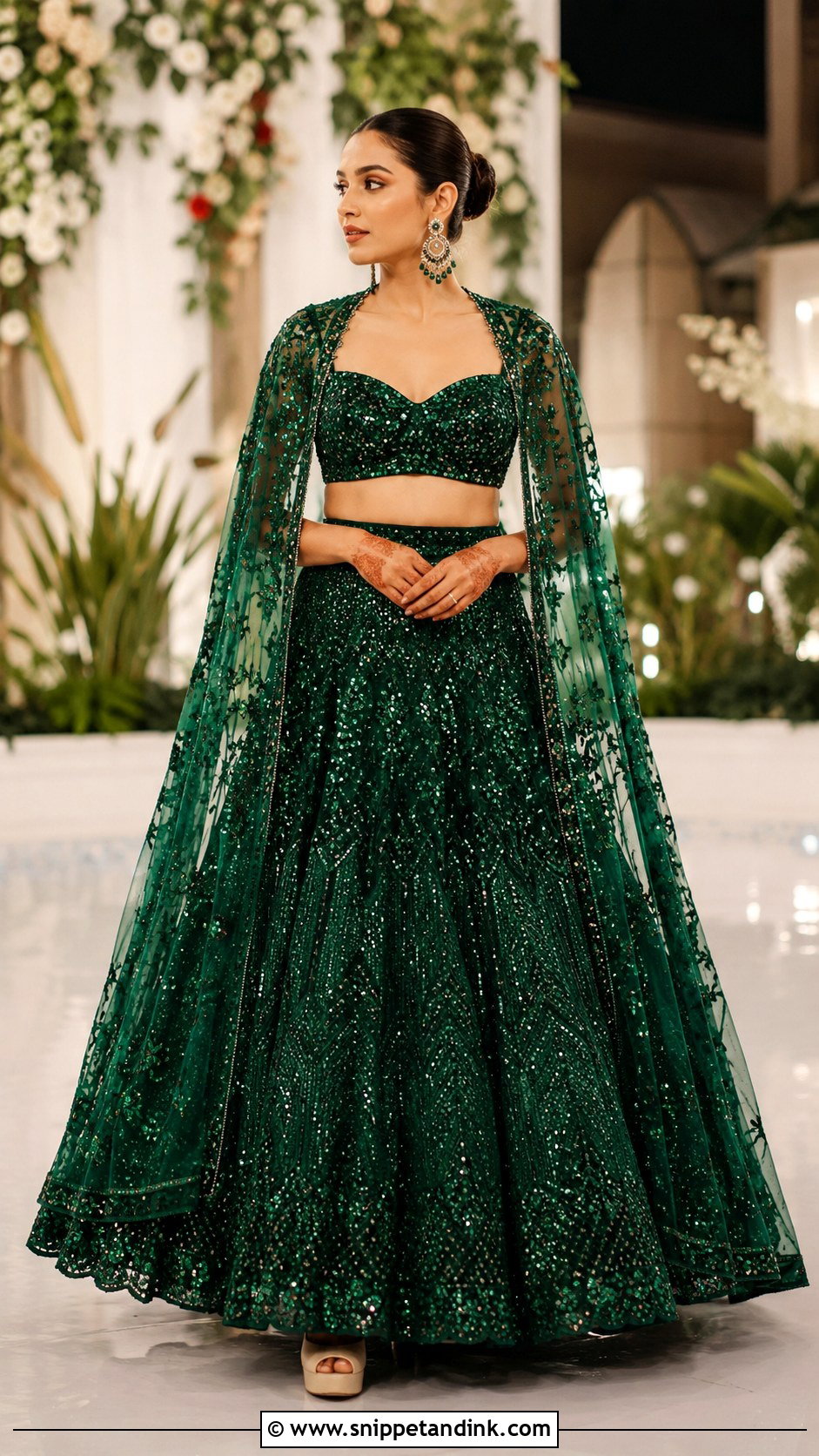
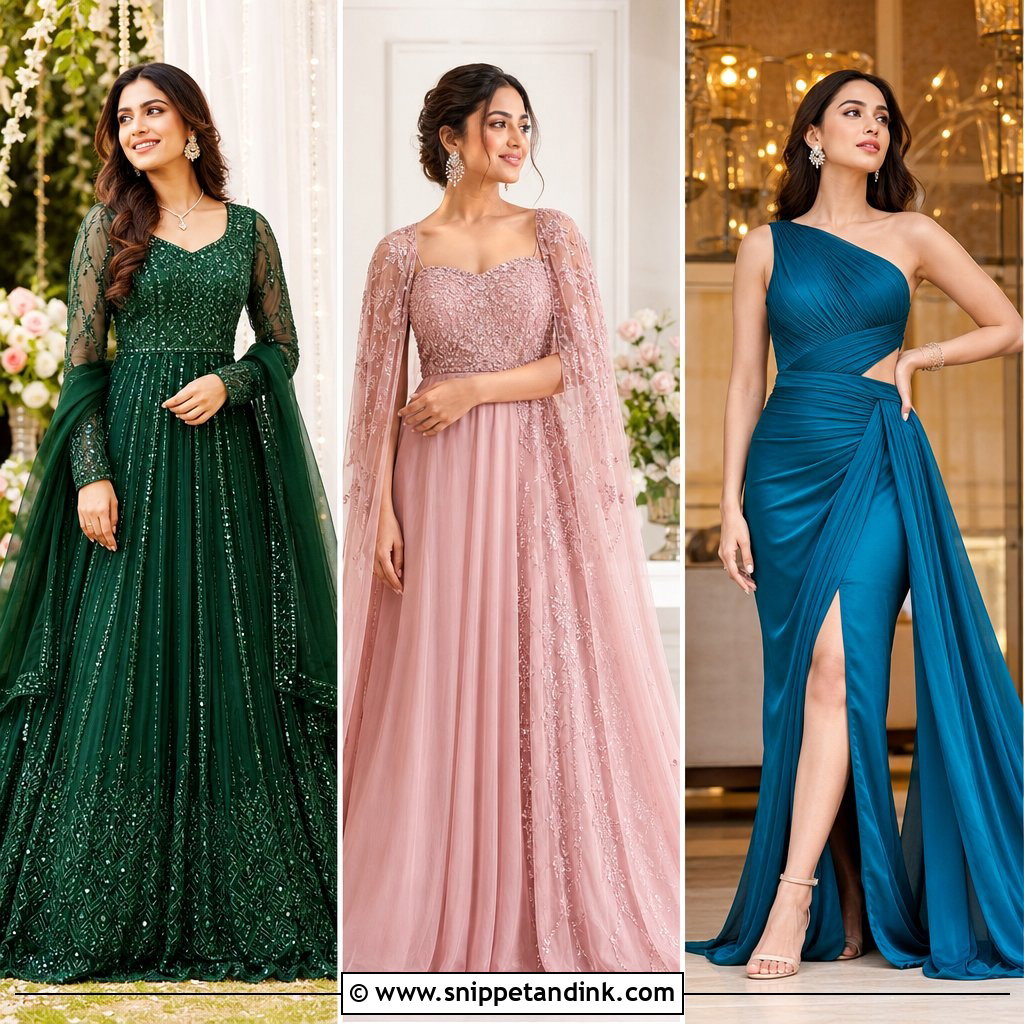
A cape solves the dupatta problem outright. It gives coverage and a proper entrance while leaving both hands free. I pair a flowy embroidered or sequinned skirt with a fitted blouse and a sheer cape falling from the shoulders; scattered embellishment on the cape reads lighter, heavy embroidery reads bridal. One fitting note: a cape attached at the shoulder seam can drag the blouse back when you lift your arms, so ask for a hidden hook at the bra strap line. The cape frames the neck, so skip the necklace and wear statement earrings. Platform heels, dewy skin and a sleek bun or polished waves.
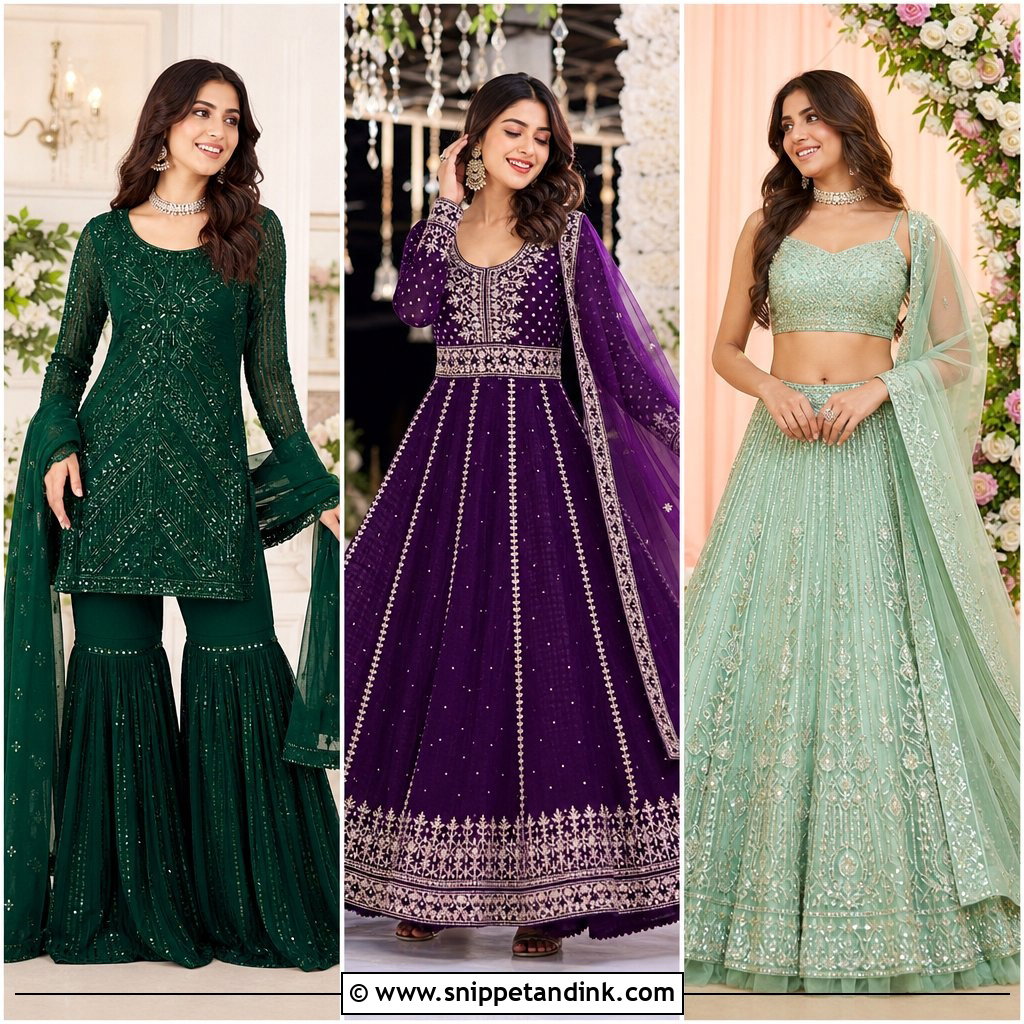
6. Sharara Sangeet Outfit
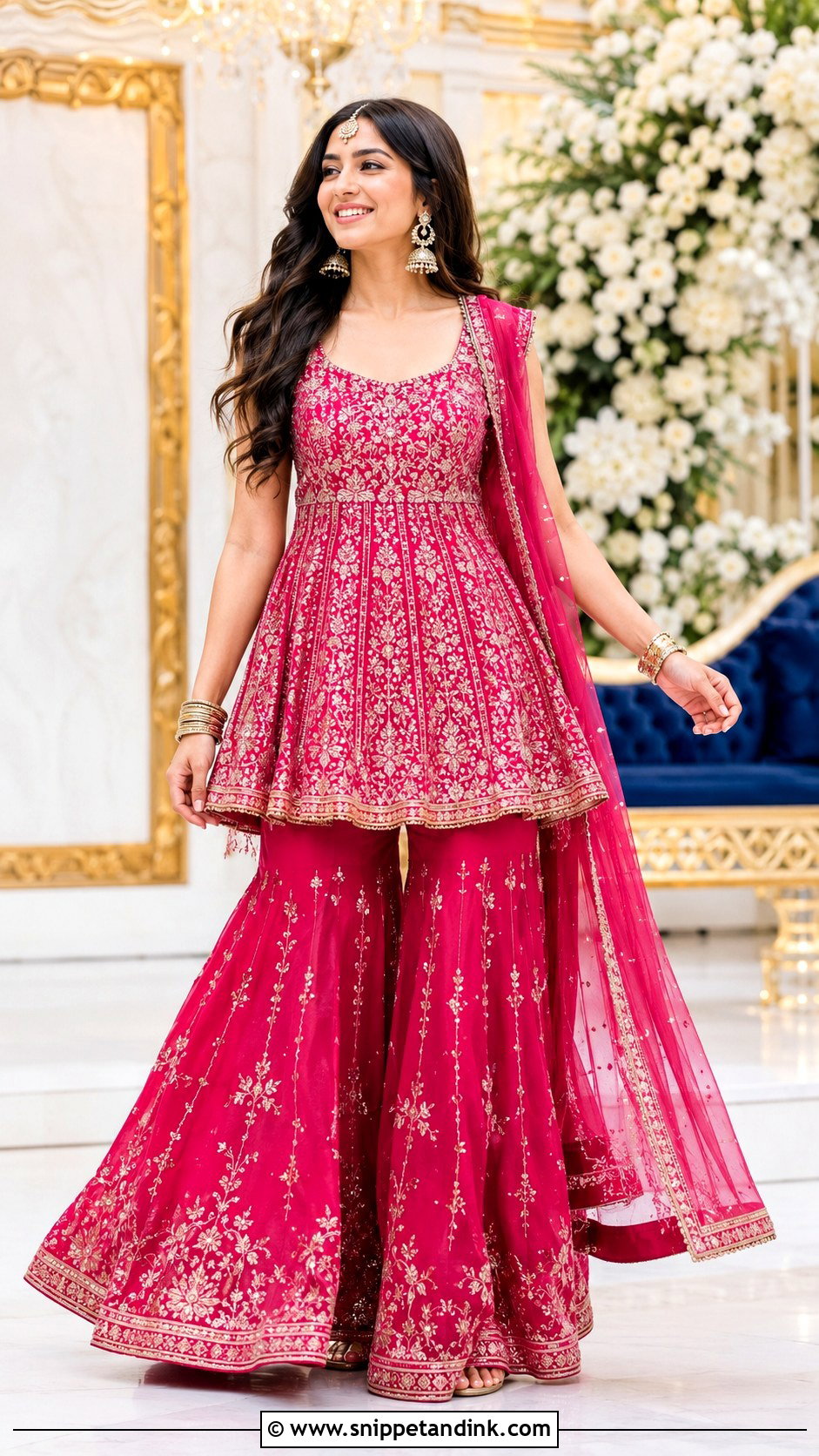
Shararas are what I recommend when the choreography is serious. The wide legs give you lehenga drama, yet you can lunge and kick without stepping on a hem. Pair a short embellished kurti or peplum top with flared sharara pants in silk, georgette or brocade; mirror, gota patti, zari and sequins all suit it. Watch where the flare starts. A flare that opens cleanly at the knee looks intentional, while one that starts mid-thigh can make the legs look short, and a kurti that marks the waist fixes most of that. Drape the dupatta over one shoulder or pin it across the front, then add jhumkas, bangles and juttis.
7. Gharara Sangeet Outfit
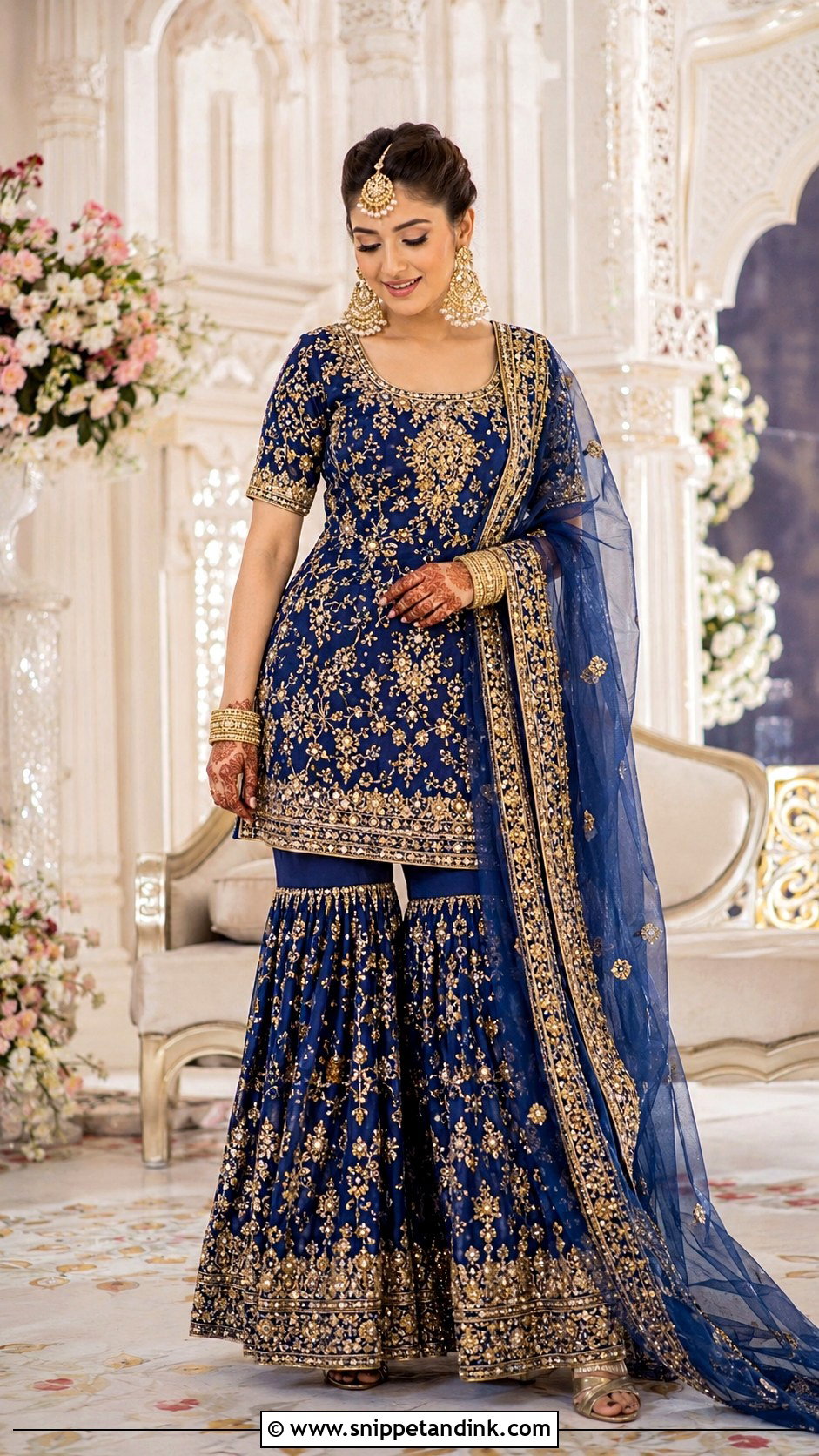
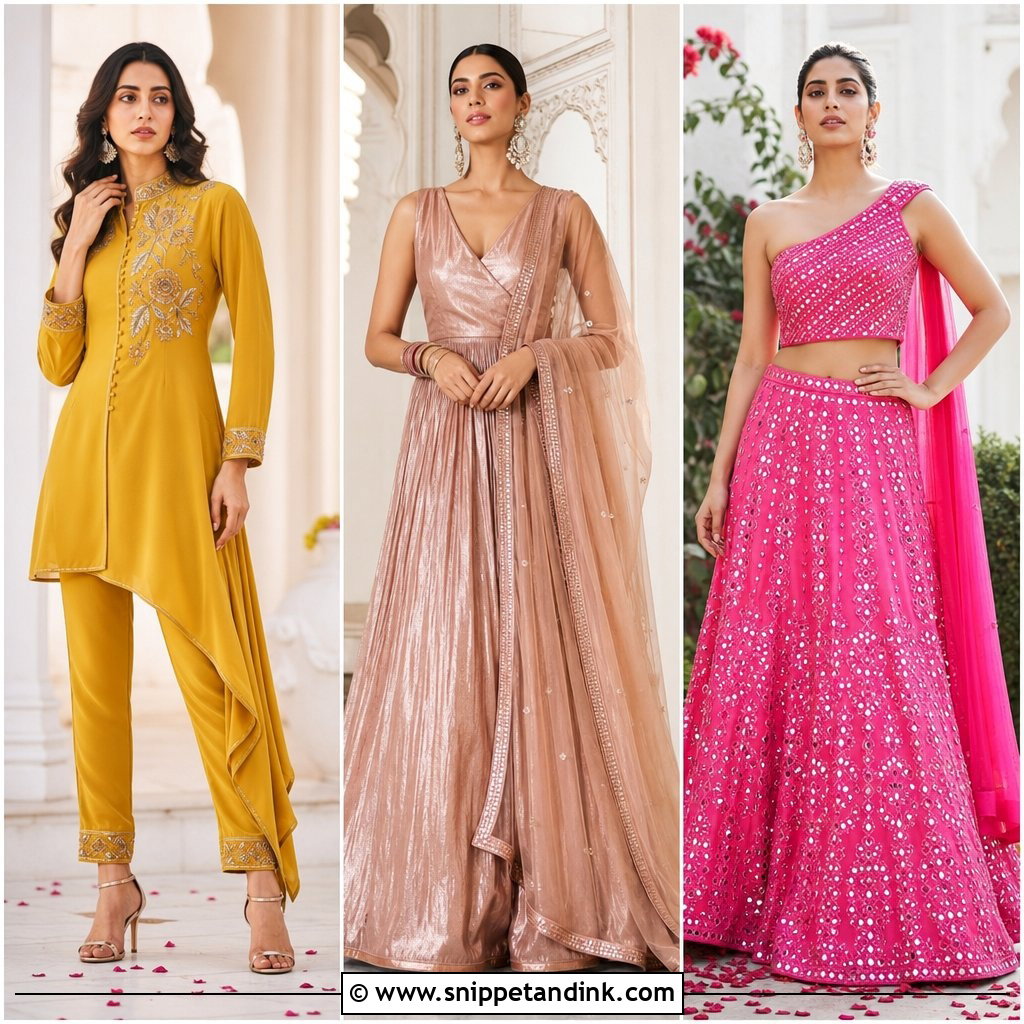
The gharara has an older, almost courtly feel because of its signature: fitted to the knee, then a gathered flare joined by a decorated band. That knee joint is where I look first at a fitting. If it sits too high it bunches when you sit, too low and you cannot take a full stride. Zari, resham or gota work with a short kurti and a light dupatta is the classic route, in emerald, maroon, mustard, rani pink or royal blue. Ivory with gold or blush with pearls softens it. A passa, chandbalis and stacked bangles finish it. Keep the dupatta light, because this silhouette already carries a lot of fabric below the knee.
8. Anarkali Sangeet Outfit
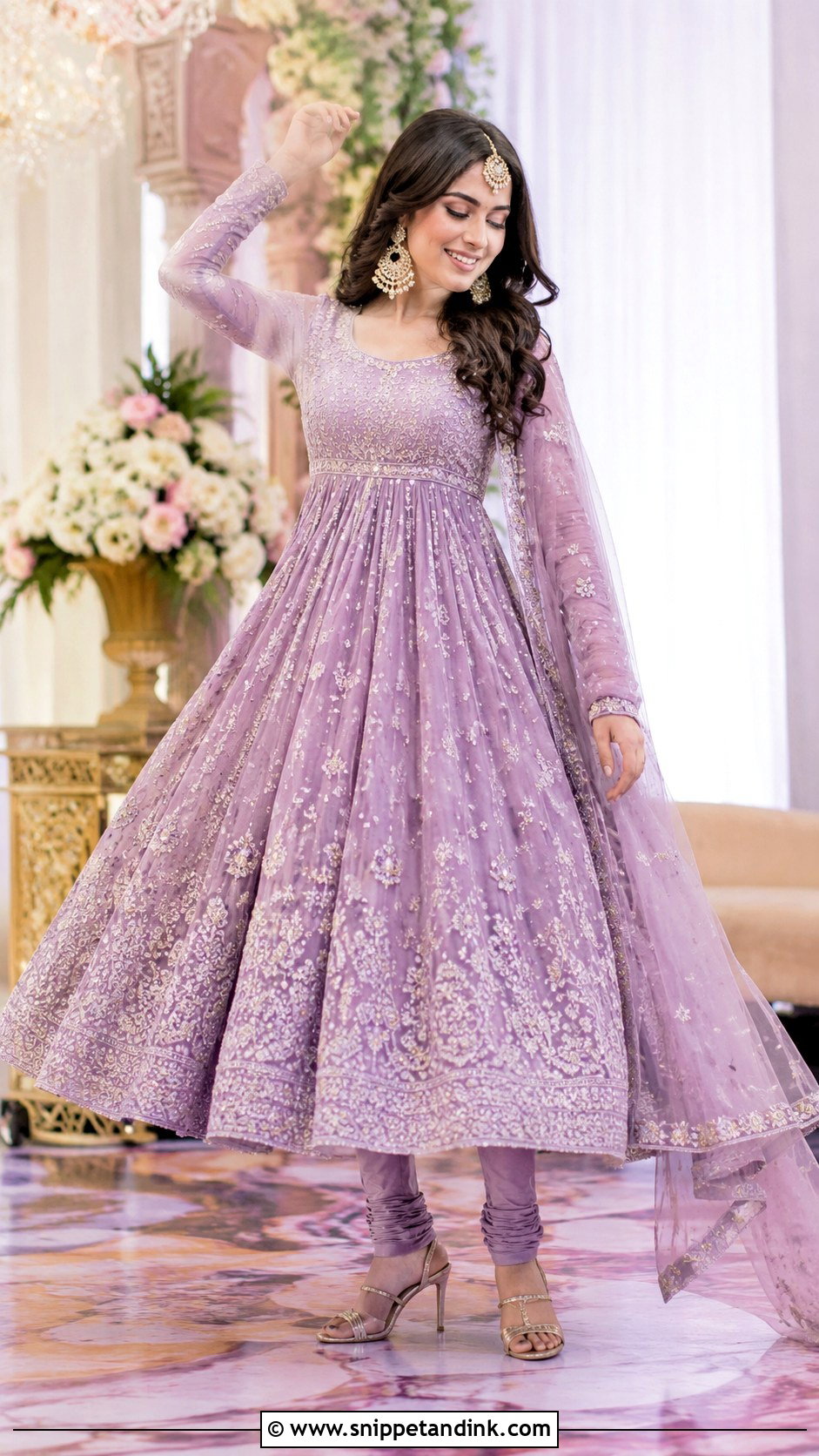
Brides who would rather not show the midriff often come to me asking for an Anarkali, and the spin is the bonus. A floor-length Anarkali with sequin, zardozi, mirror or thread embroidery has enough presence for the bride. Fabric matters for the twirl: georgette and organza flare out generously, heavy silk barely lifts. Count the kalis too, since more panels give a fuller circle when you turn. Churidar or slim trousers, a sheer dupatta pinned lightly at one shoulder, kundan earrings, a maang tikka and heels you can actually turn in.
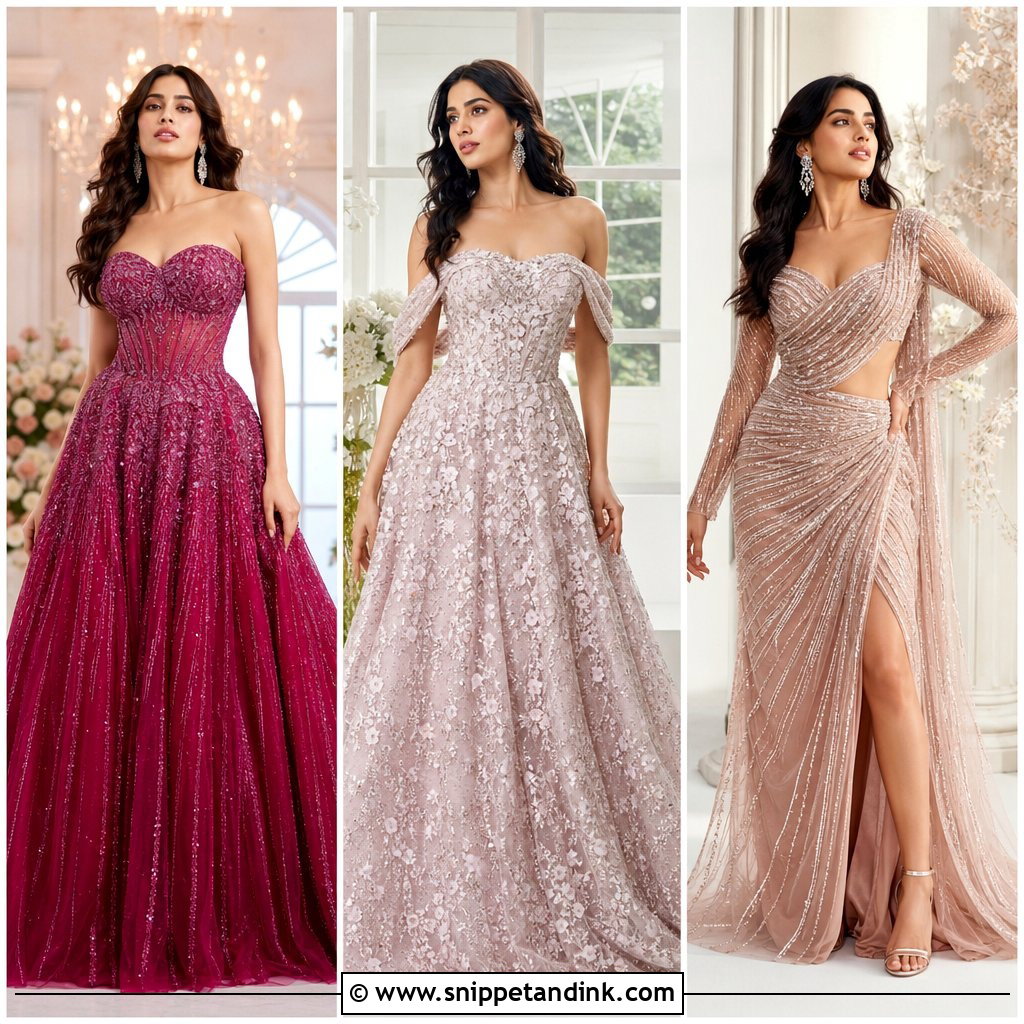
9. Indo Western Gown Sangeet Outfit
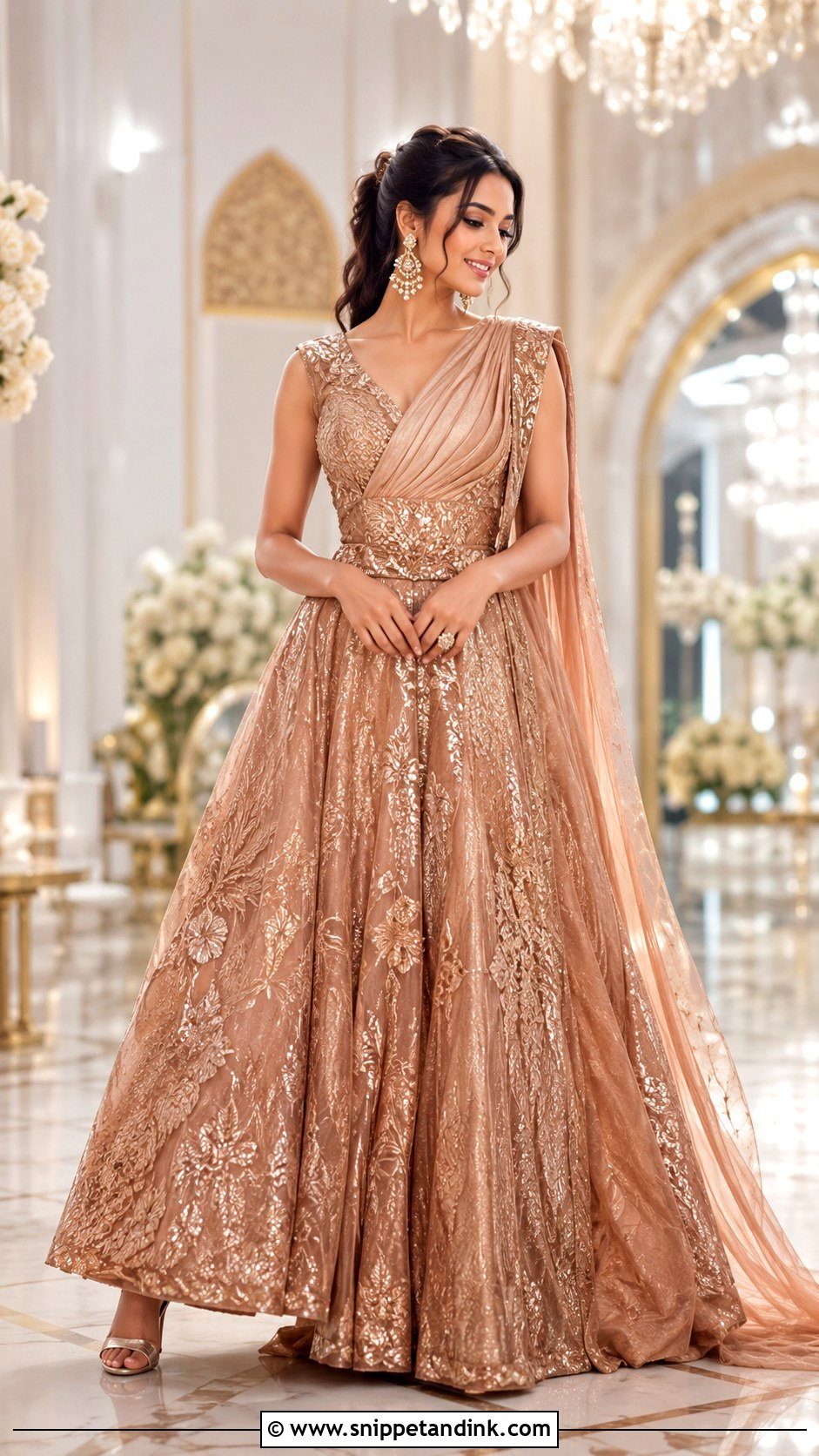
An Indo western gown is my go-to for a ballroom sangeet or a destination evening with a more western dress code. I look for one Indian detail carried properly, such as mirror accents, cape sleeves, a draped bodice or a lehenga-style skirt, rather than five half-hearted ones. Metallics, jewel tones and pastels all work; let the venue’s lighting decide. A fitted bodice with a flowing skirt gives structure and still moves. Statement earrings, a cocktail ring and sleek heels, and drop the necklace if the neckline is worked. The bodice boning is what I test: sit down in it before you buy, because some gowns dig in hard at the hip.
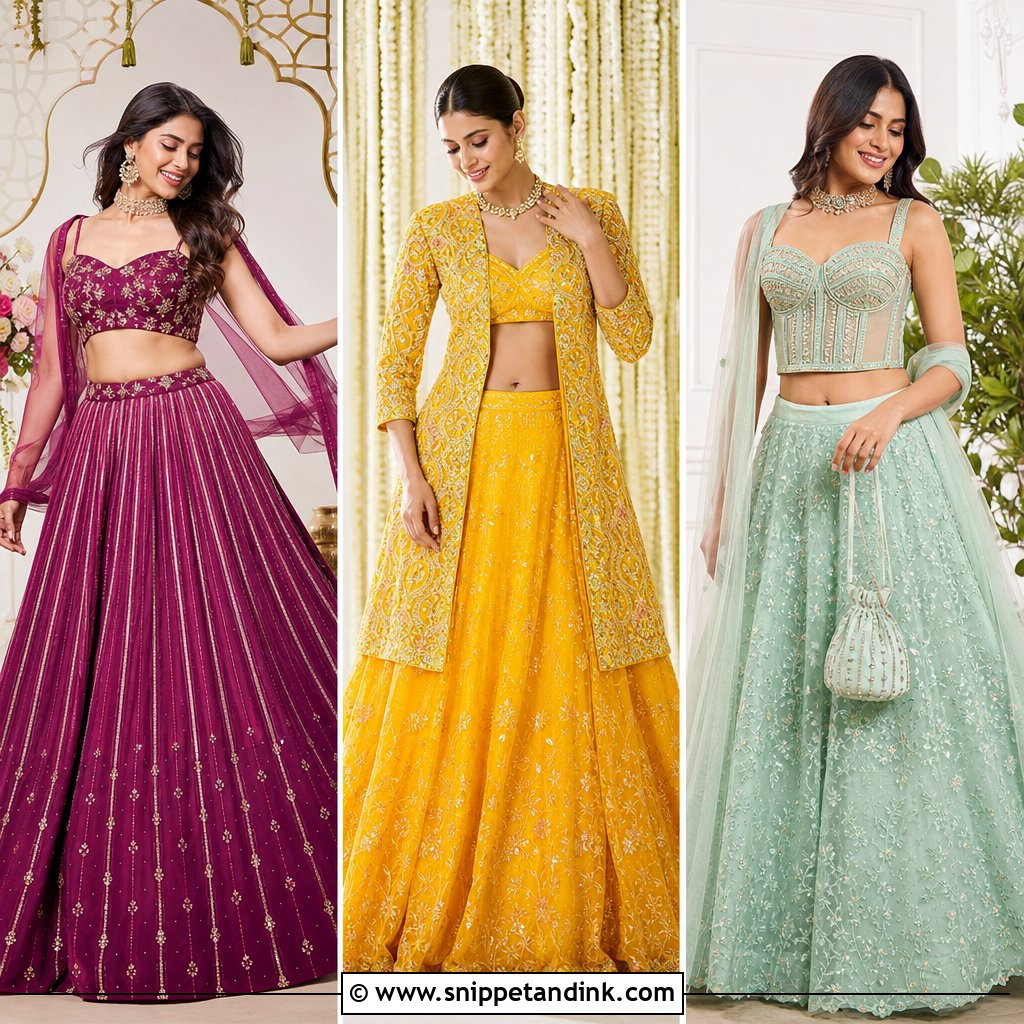
10. Jacket Lehenga Sangeet Outfit
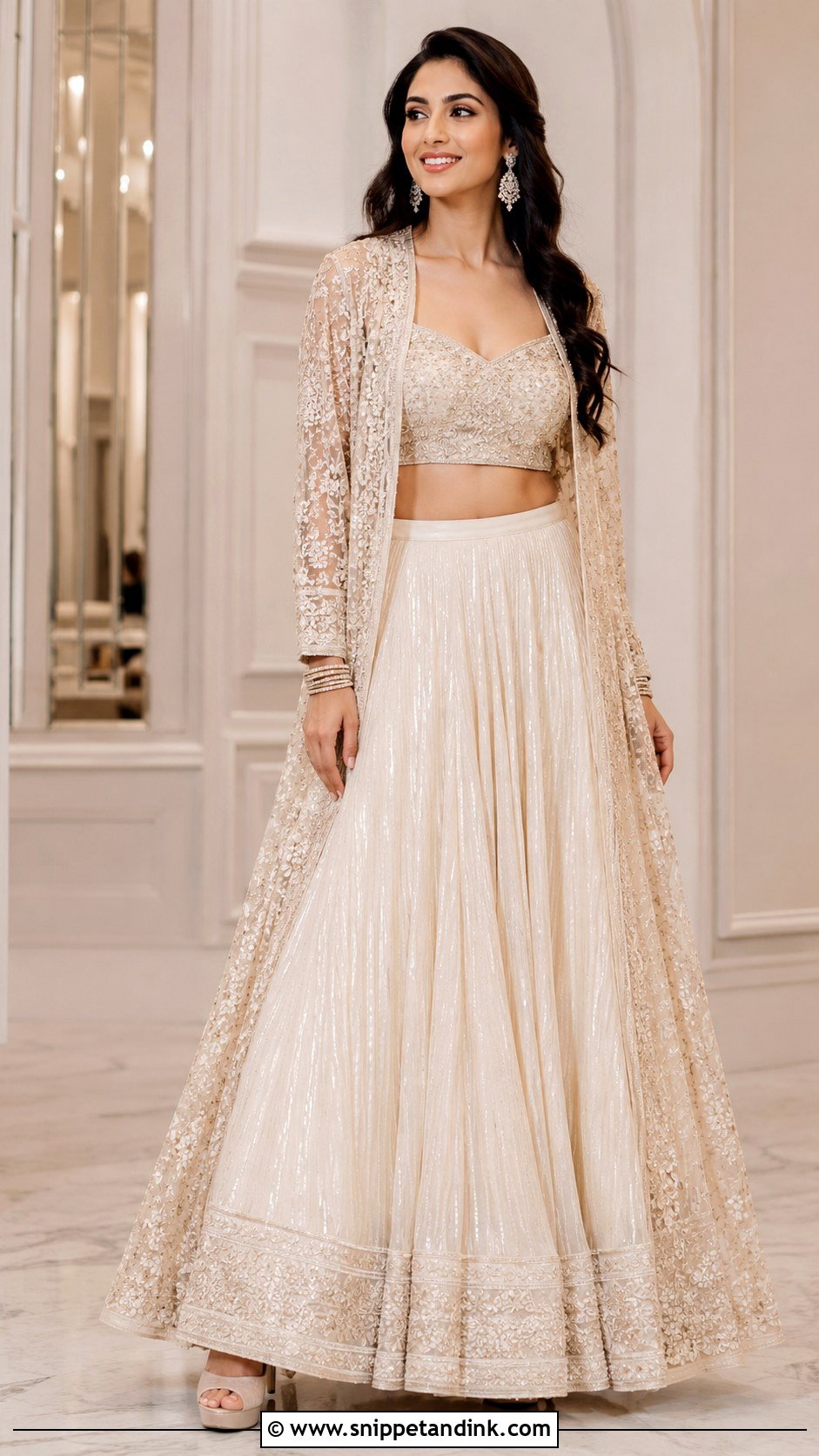
Swapping the dupatta for an embroidered jacket makes the whole outfit easier to dance in, since nothing slides off your shoulder. A flared or A-line skirt with a crop top sits under a long sheer jacket, a short structured one or a heavily worked open jacket. Ivory, gold, black, emerald and deep wine all suit this layering. Vertical embroidery on a long jacket draws the eye up and lengthens the frame, which petite brides appreciate. I ask that the jacket armholes be cut a little higher than off-the-rack, otherwise the whole jacket lifts when you raise your arms. Sleek earrings, a bracelet stack, stable heels and defined eyes for evening light.
11. Metallic Lehenga Sangeet Outfit
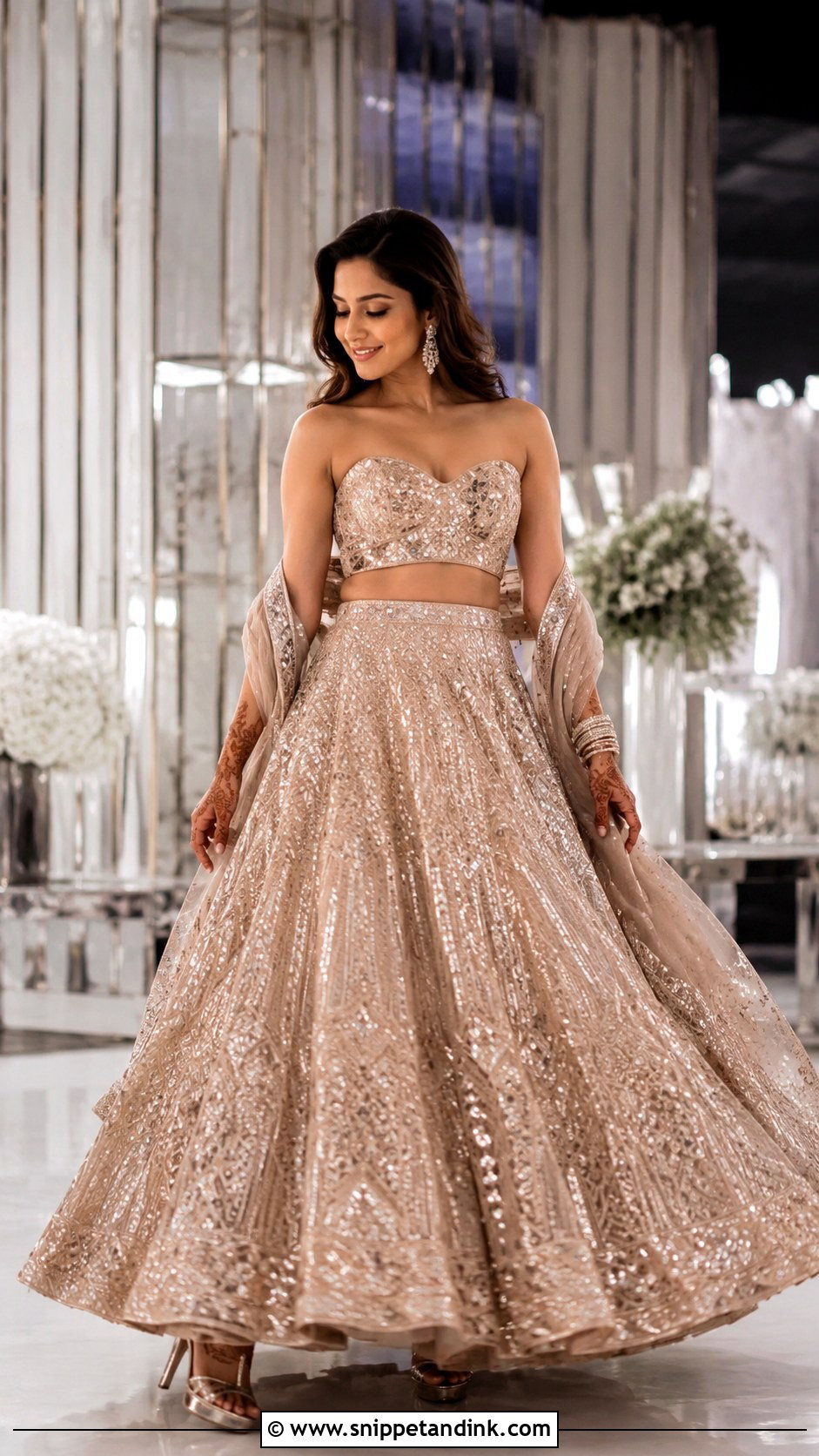
Metallics are made for a loud, late sangeet. Gold, silver, bronze, pewter and champagne pick up every stage light. I prefer metallic threadwork or sequins over foil prints, because foil can crack along the fold lines after a long night of sitting and dancing. Balance the shine with a clean blouse cut, sweetheart, square or full-sleeve. Going without a dupatta is completely reasonable here. Diamond-style jewelry, sleek bangles and metallic heels keep it cohesive. With this much reflection, I keep hair smooth, makeup luminous and allow one standout accessory only.
12. Pastel Lehenga Sangeet Outfit
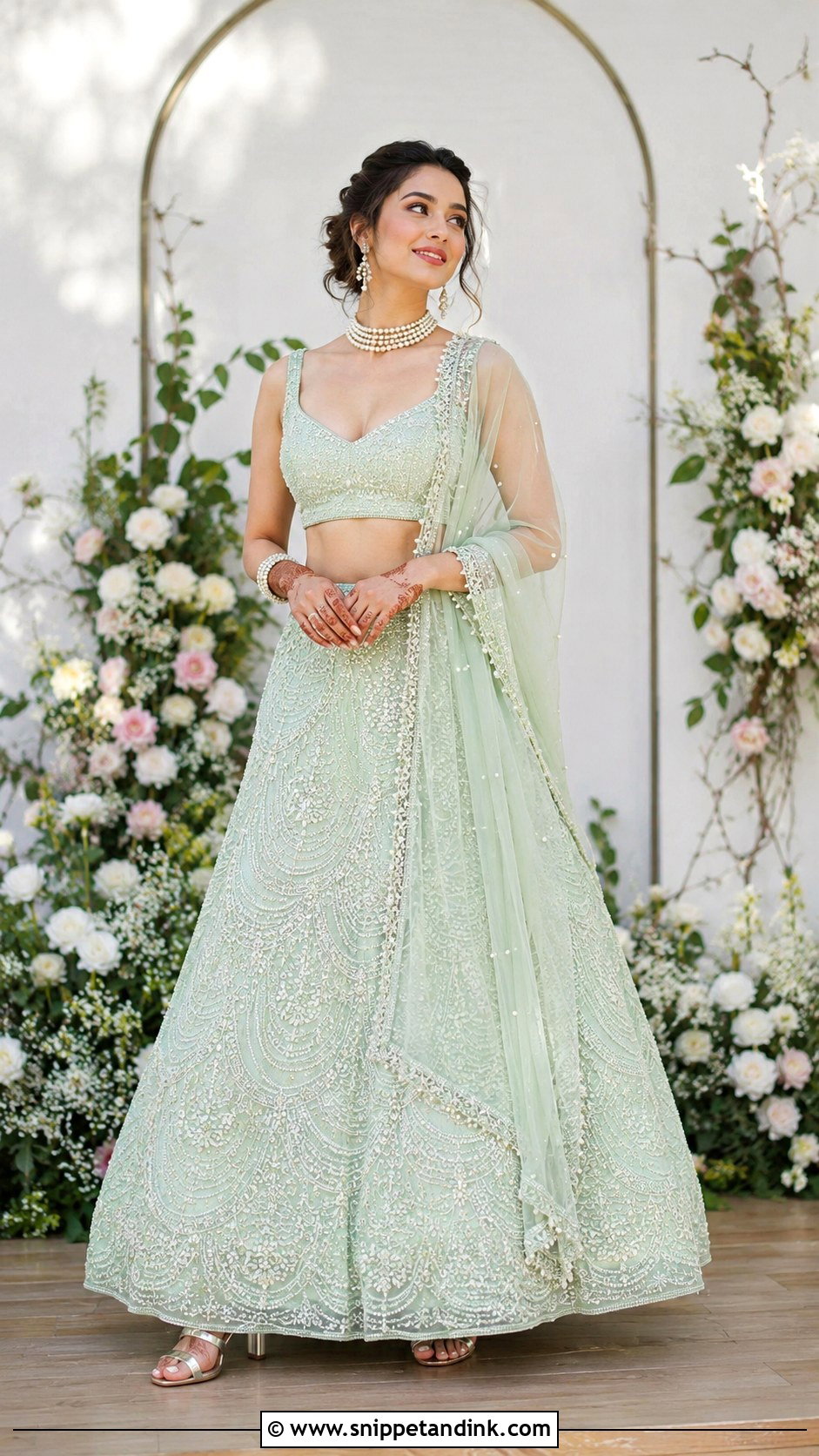
Pastels read soft but can turn flat under warm indoor bulbs, which is the first thing I warn brides about. Blush, mint, powder blue, lavender, peach and sage need texture to hold up at night, so I choose pearl work, sequins, floral embroidery or tone-on-tone threadwork over a plain dyed base. A matching blouse and airy dupatta keep it light. Pearl, polki or delicate kundan pieces suit the palette, with nude or metallic heels. Pastels truly shine at garden and daytime-to-evening sangeets. Keep makeup glowing, with rosy cheeks and a glossy lip.
13. Velvet Lehenga Sangeet Outfit
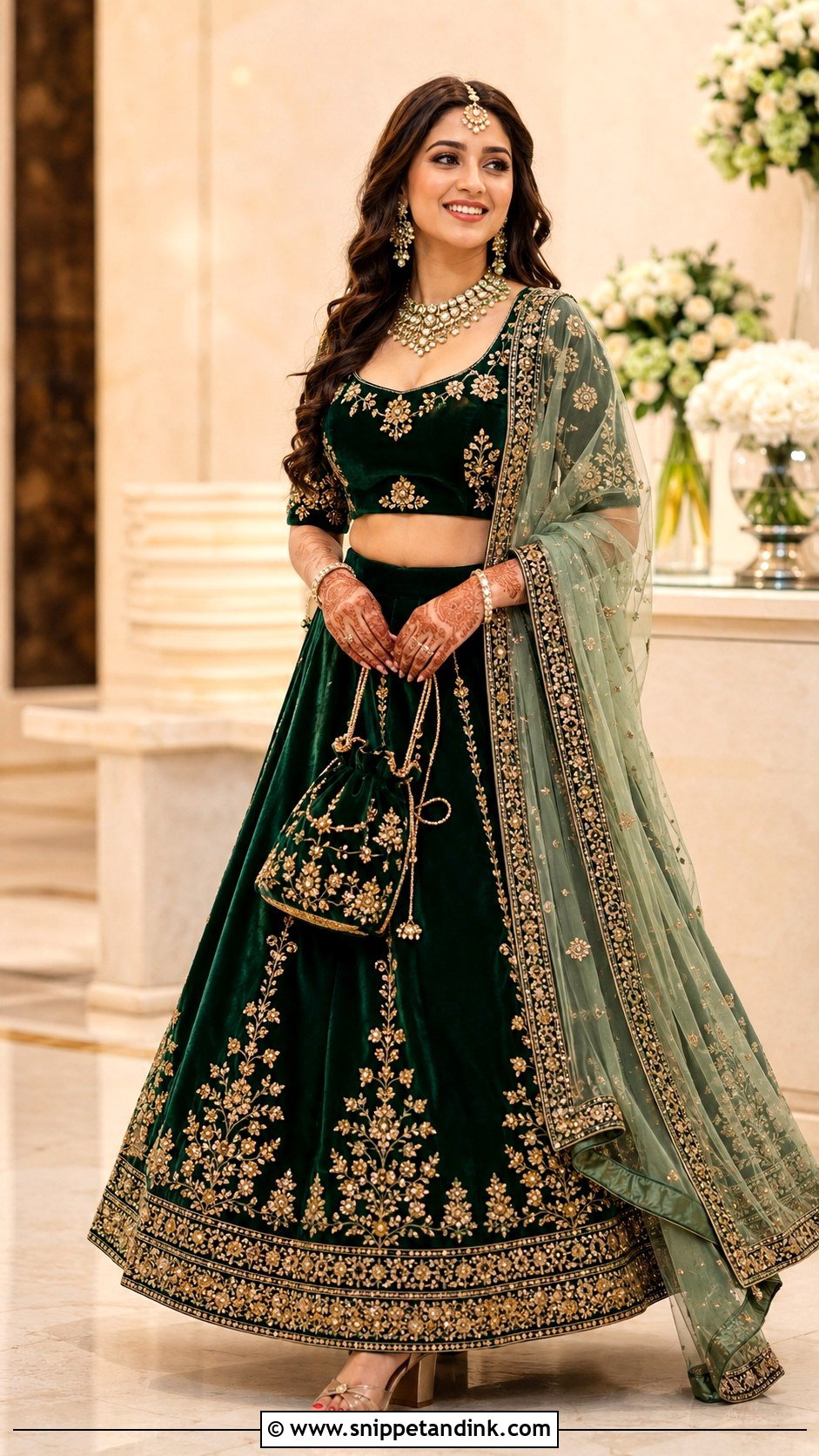
Velvet is the fabric I reserve for cool-weather sangeets. In a warm, packed hall it is simply too hot to dance in, however rich it looks. Its pile gives depth, so even modest embroidery looks luxurious in emerald, ruby, sapphire, plum or midnight blue. Never let every piece be velvet; a velvet skirt with a lighter blouse and dupatta keeps the weight manageable. Zardozi, dabka and antique gold embroidery sit well on the pile. Polki or kundan, a potli bag and comfortable heels finish it. Velvet also marks easily where it is crushed, so I tell brides to stand rather than sit in the car to the venue.
14. Banarasi Lehenga Sangeet Outfit
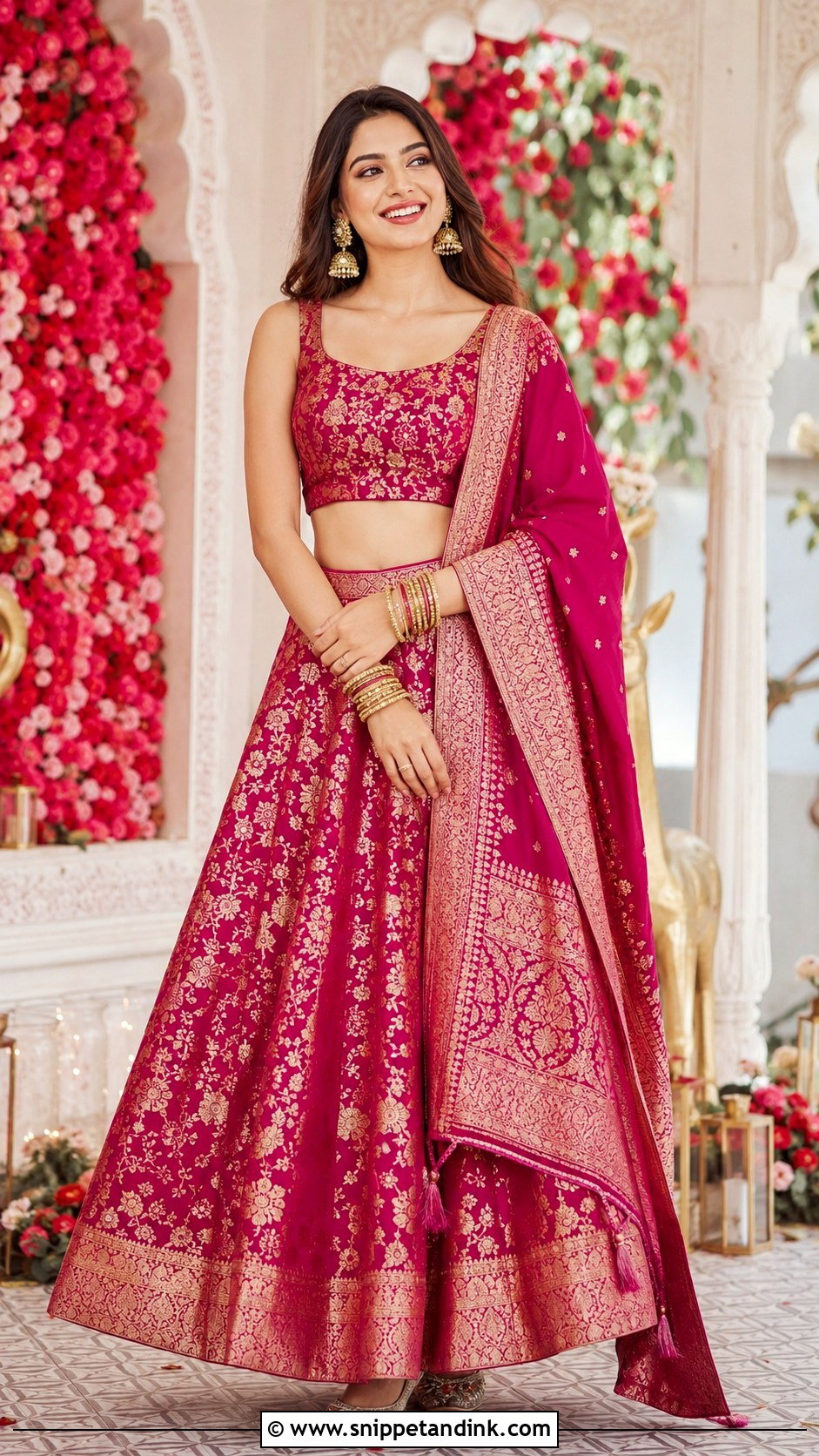
A woven Banarasi lehenga carries its richness in the weave, so it needs very little added embellishment. I choose the brighter shades for a sangeet: magenta, royal blue, emerald, mustard or deep purple. A sleeveless silk blouse, a back-tie blouse or an embroidered crop top keeps it young. A light dupatta with a zari border is enough. Gold jewelry is the natural partner, with jhumkas, bangles and a slim maang tikka, plus embroidered heels or juttis. Banarasi silk is stiffer than georgette, so the skirt moves in a structured swing rather than a flutter. It holds pleats sharply in family portraits, which many brides love.
15. Floral Lehenga Sangeet Outfit
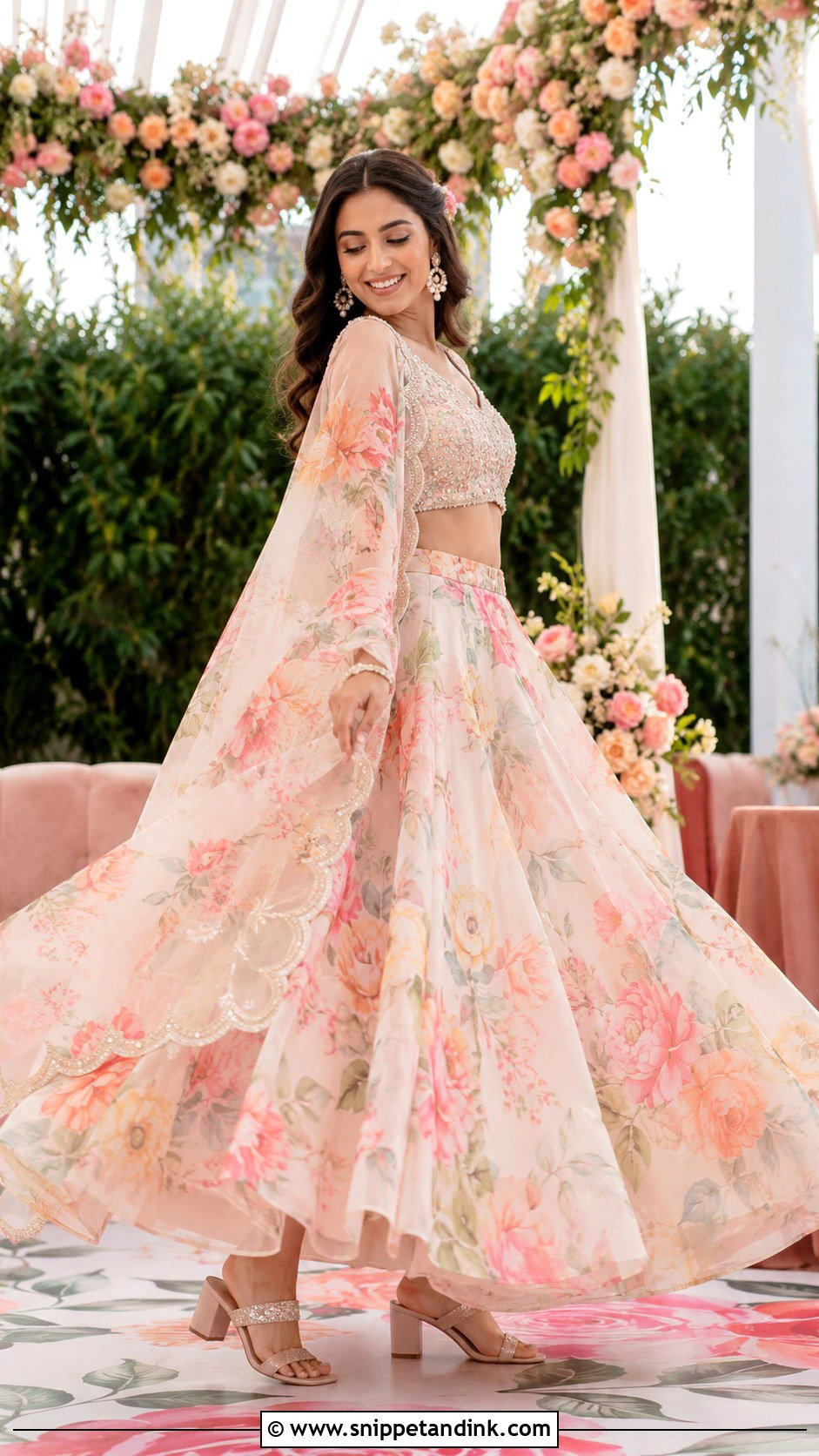
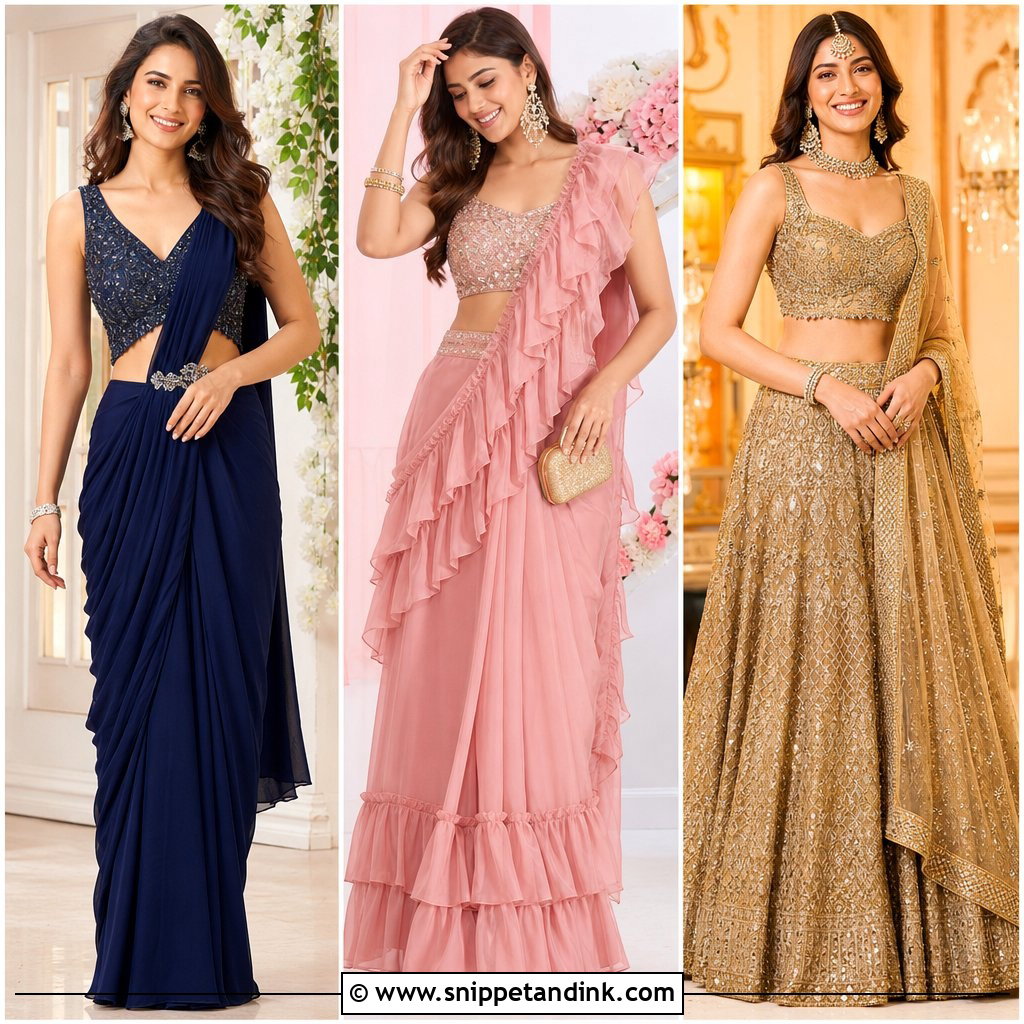
Florals are lighter in spirit than heavy bridal embroidery, which is exactly why some brides want them for the sangeet. Printed silk, organza or embroidered floral motifs work in brights or pastels. A floral skirt with a solid embellished blouse is easier on the eye than an all-over print, which can look busy across a full-length photo. A sheer dupatta with a scalloped border or scattered sequins brings back the sparkle. Pearl, kundan or small gemstone pieces depending on the palette, and block heels or wedges for dancing. Garden and destination venues suit this one best.
16. White And Gold Sangeet Outfit
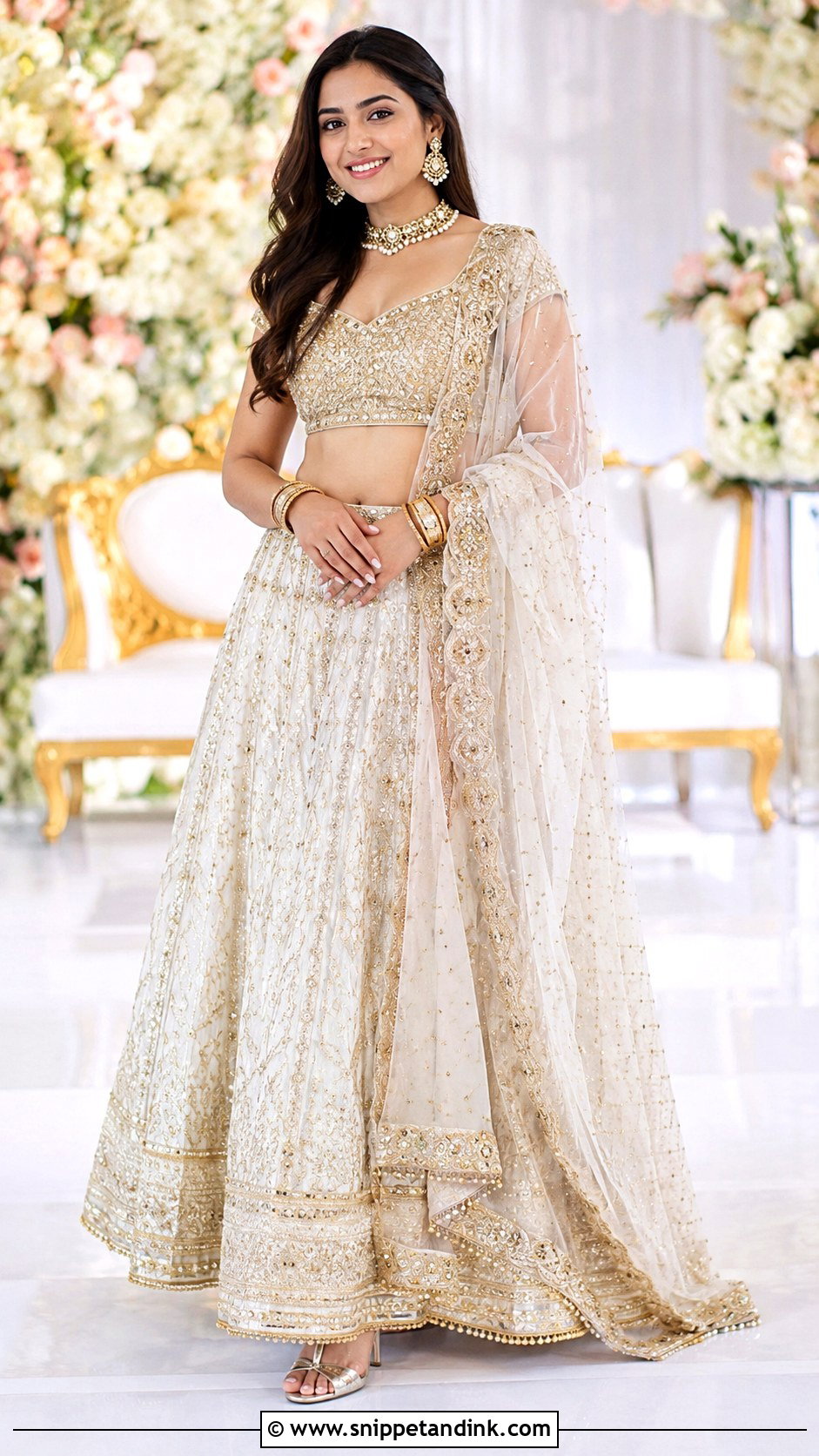
Ivory and gold can slide into plain very quickly, so texture does all the work here. Choose an ivory lehenga, saree, sharara or gown carried by gold zari, sequins, pearls or mirror work. A gold blouse with an ivory skirt is one of my favorite combinations; an ivory saree with a heavily worked blouse is quieter. Kundan, gold bangles and metallic heels finish it, and a soft dupatta or cape adds movement. Practical warning: ivory shows every turmeric smear and drink spill, and sangeets are messy, so keep a stain pen in the bridesmaid’s bag. Warm, glowing makeup with defined eyes and a nude or rose lip.
17. Black Lehenga Sangeet Outfit
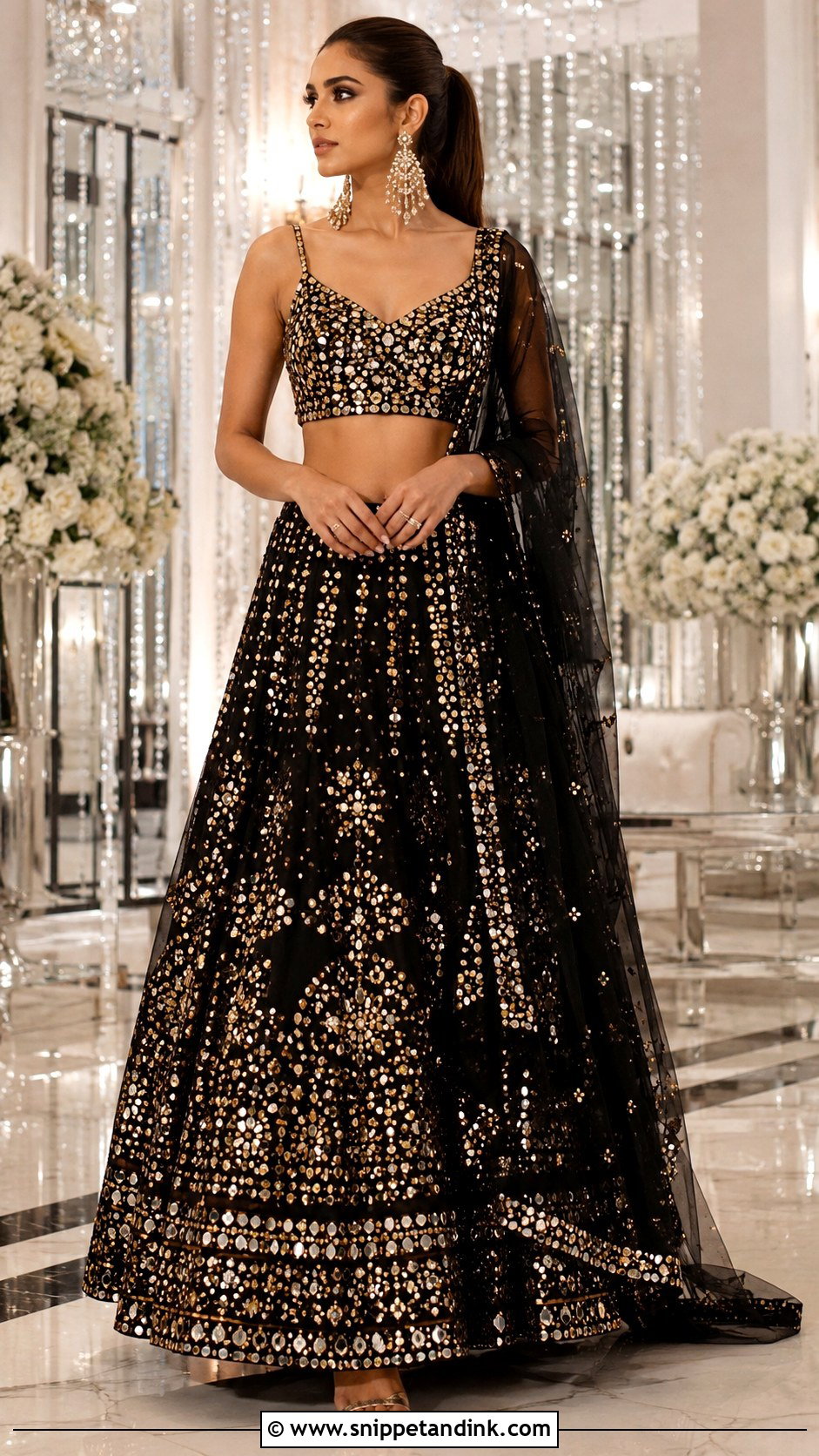
Some families still avoid black at wedding events, so I always ask the bride to check before she falls for a black lehenga. Where it is welcome, it looks striking at night. I want gold, silver, mirror or multicolor embroidery on it so it reads as celebration, not evening wear. A fitted blouse, flared skirt and sheer dupatta is the classic shape; a corset blouse or cape modernizes it. Statement earrings, a sleek bracelet and metallic heels lift the dark. Smoky eyes with a softer lip, and a sleek ponytail or polished waves.
18. Red Sangeet Lehenga Outfit
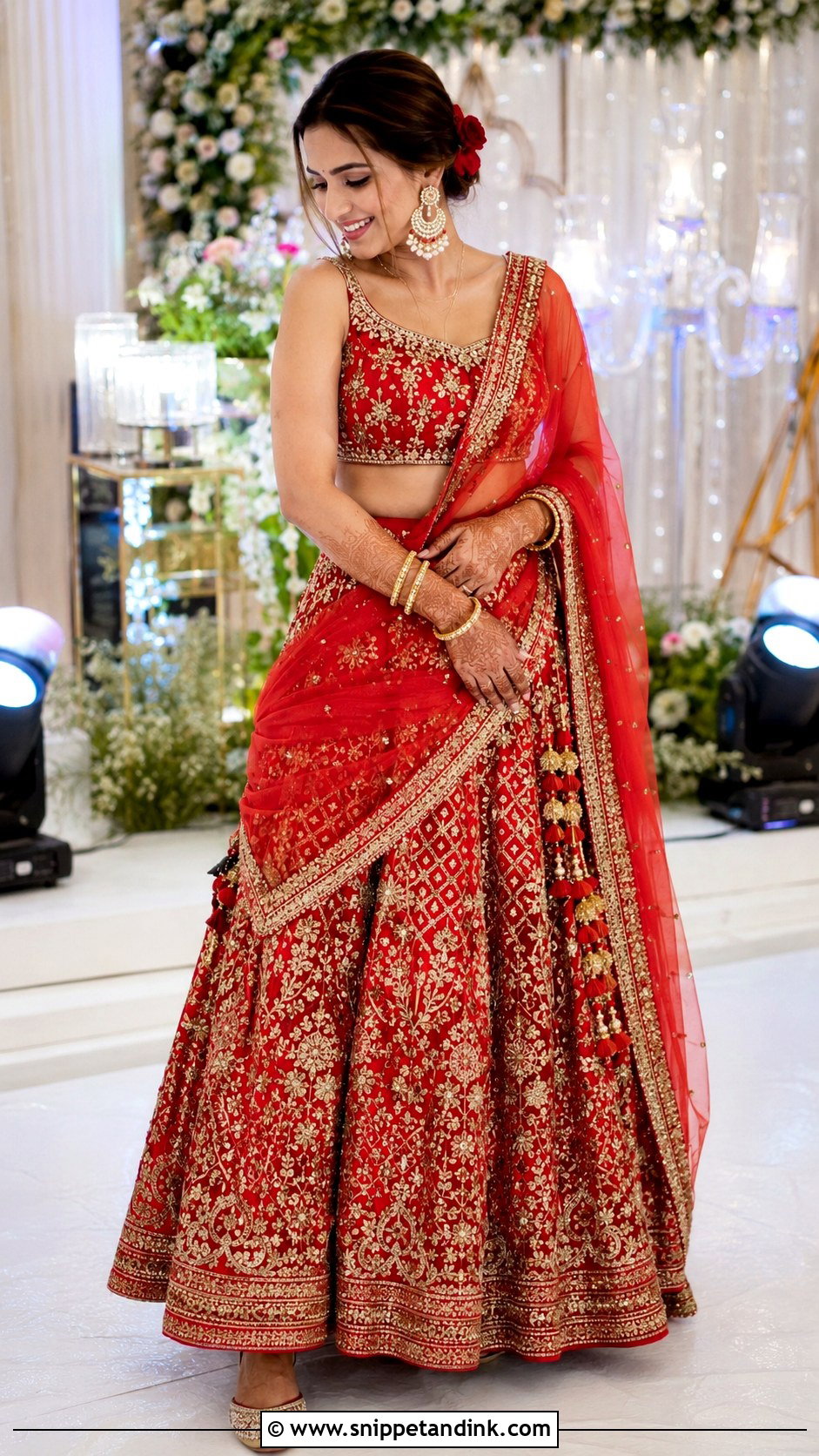
Red for the sangeet works when it is a lighter cousin of the wedding outfit, not a second copy of it. I swap heavy zardozi for sequins, mirror work, thread embroidery or tonal embellishment so it dances well and photographs differently from the ceremony. A matching blouse and a soft dupatta pinned at the shoulder keep it simple. Gold, kundan or polki all sit naturally against red. For a modern twist, a sleek bun, winged liner and a minimal necklace. Gold heels or embellished juttis. If your wedding lehenga is also red, ask your designer to keep the two shades clearly apart, or the albums blur together.
19. Pink Lehenga Sangeet Outfit
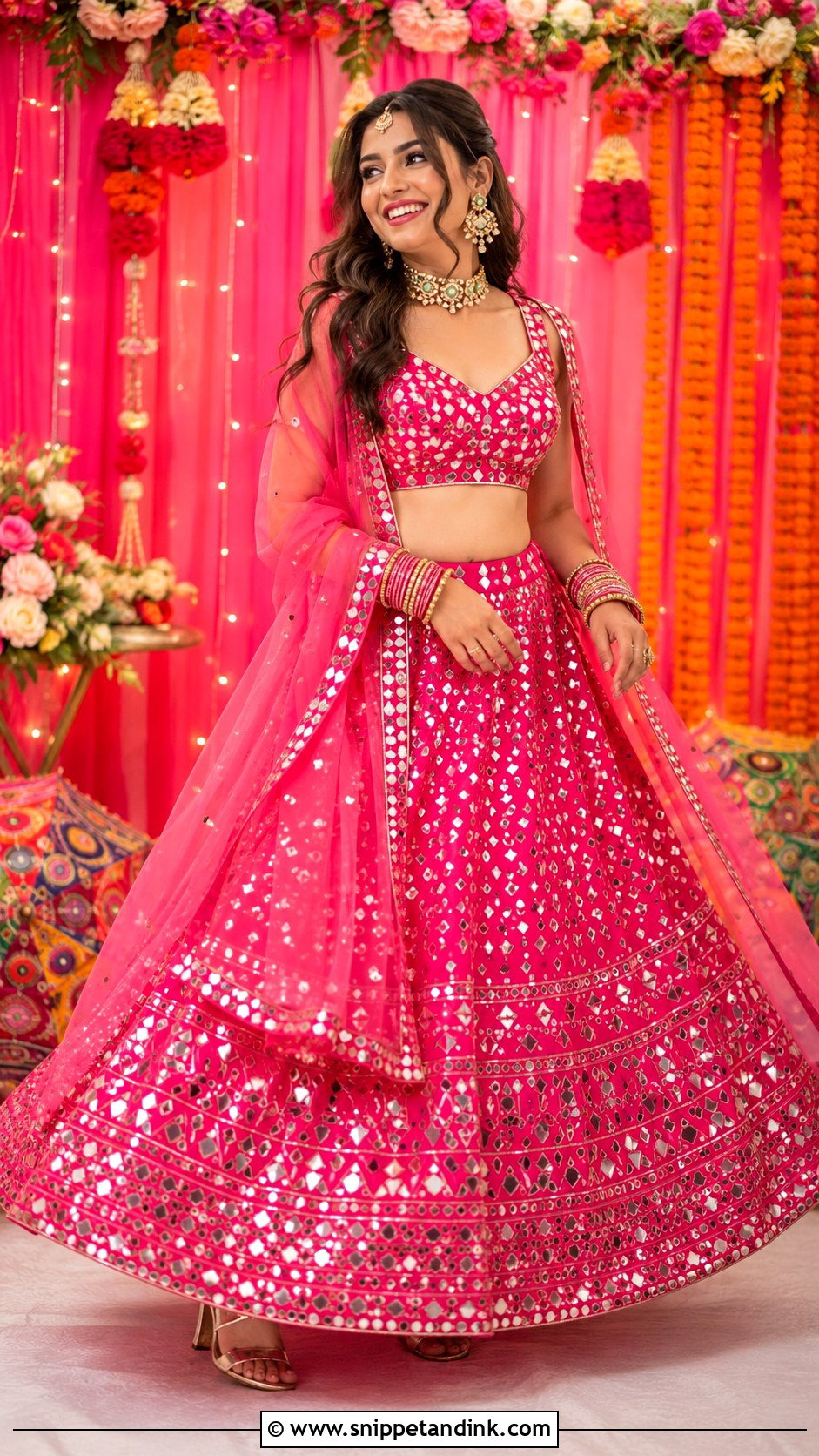
Pink is the shade I see flatter the widest range of skin tones, from soft blush to bright rani. Blush with pearls is gentle; hot pink with mirror work is loud and fun. A matching blouse and light dupatta is easy, while a contrasting dupatta in orange, gold or red gives a traditional pop. Kundan earrings, bangles and soft metallic heels finish it. Pink loves dewy makeup, rosy cheeks and glossy lips. Loose waves or a half-up style keeps it dance-ready, though I pin half-up styles more firmly than usual because the first fast song shakes them loose.
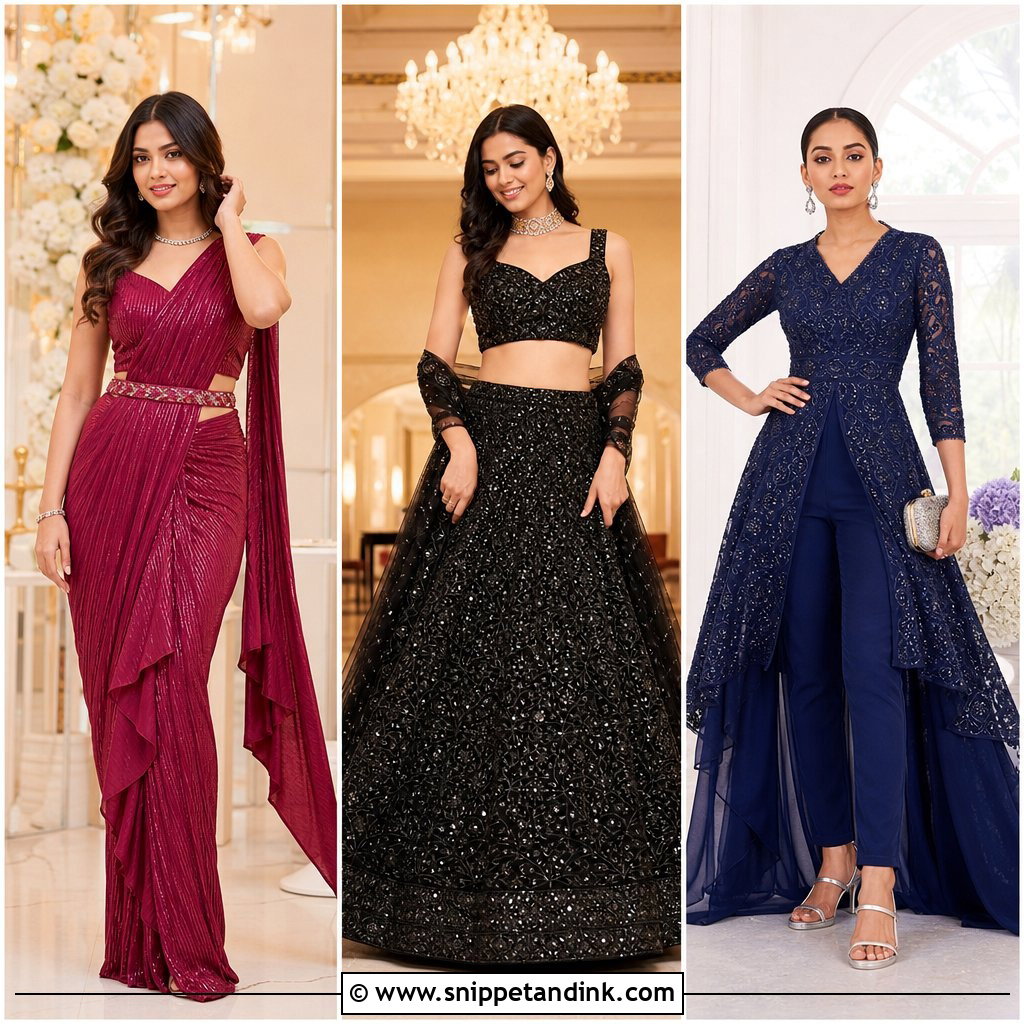
20. Green Lehenga Sangeet Outfit
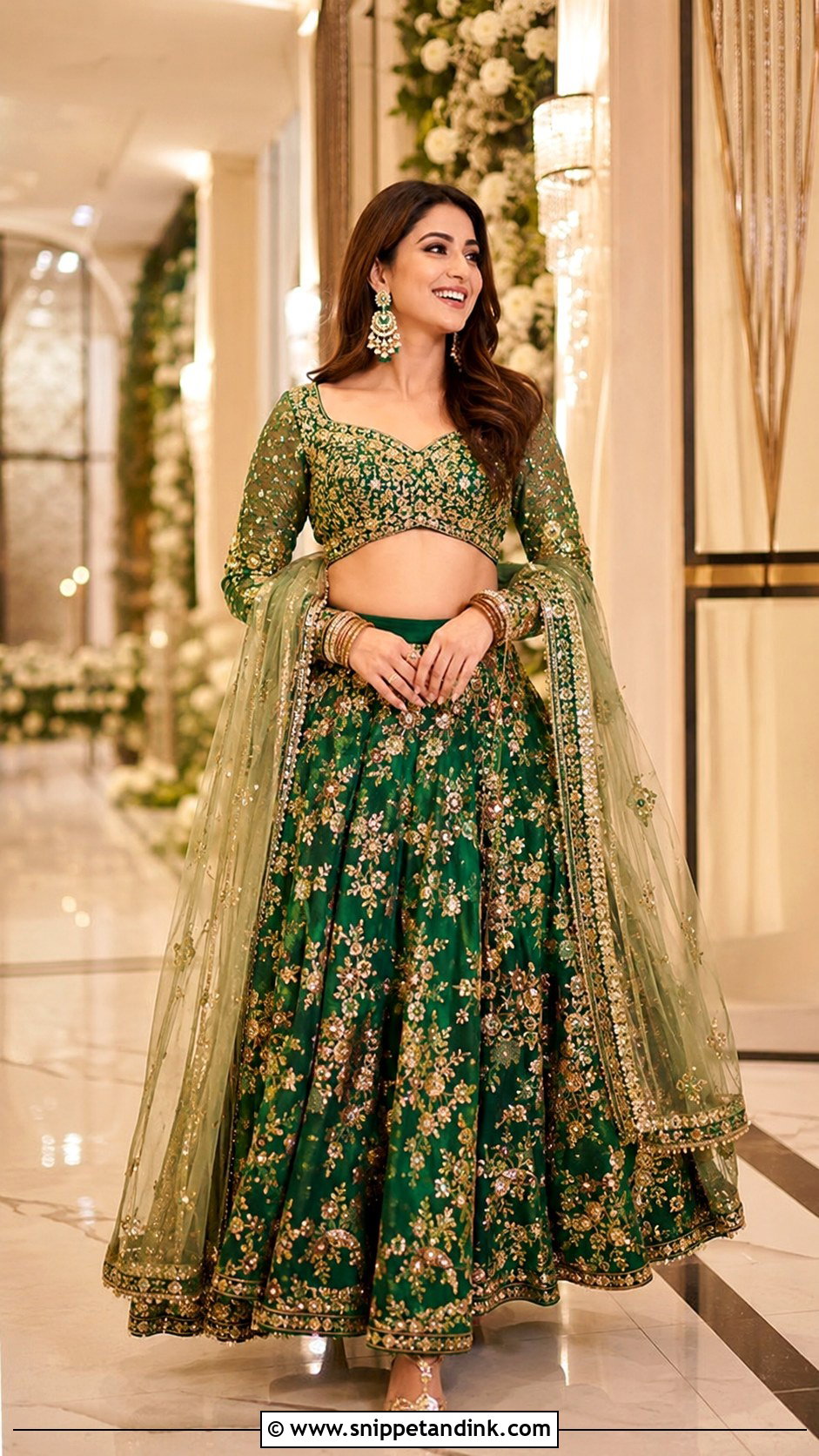
Green still surprises guests at a sangeet, which is half its charm. Emerald gives a regal evening look, mint reads fresh, and mehendi green is the traditional nod. Choose gold, silver, pearl or mirror embroidery based on mood. A tonal blouse looks sleek; a gold or pink blouse adds contrast. Polki, green stone earrings or antique gold pieces suit it. Keep the dupatta light and well pinned. The neckline should decide the hair: a braided bun for a high or boat neck, curls or a sleek ponytail when there is open shoulder to show.
21. Blue Lehenga Sangeet Outfit
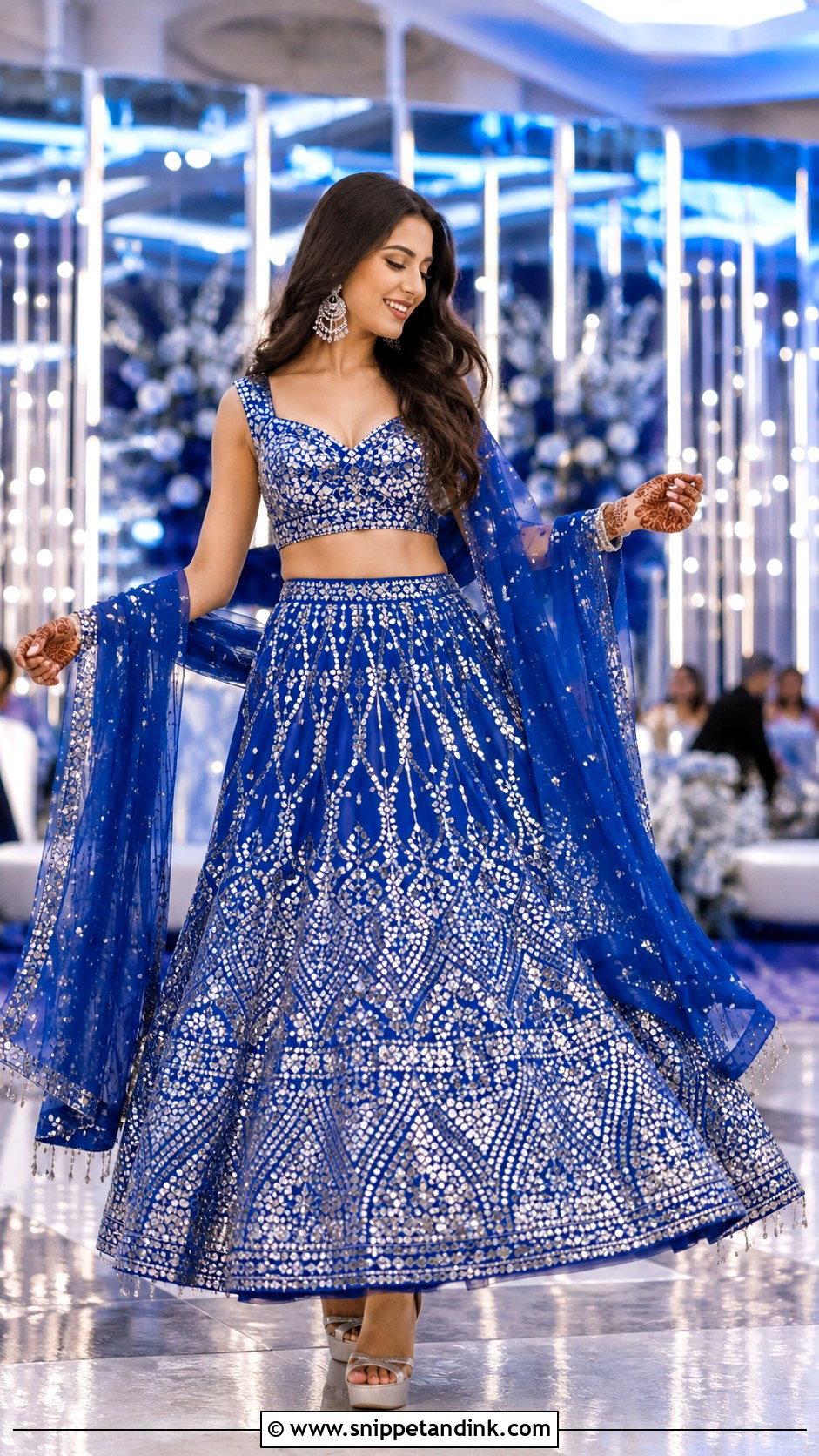
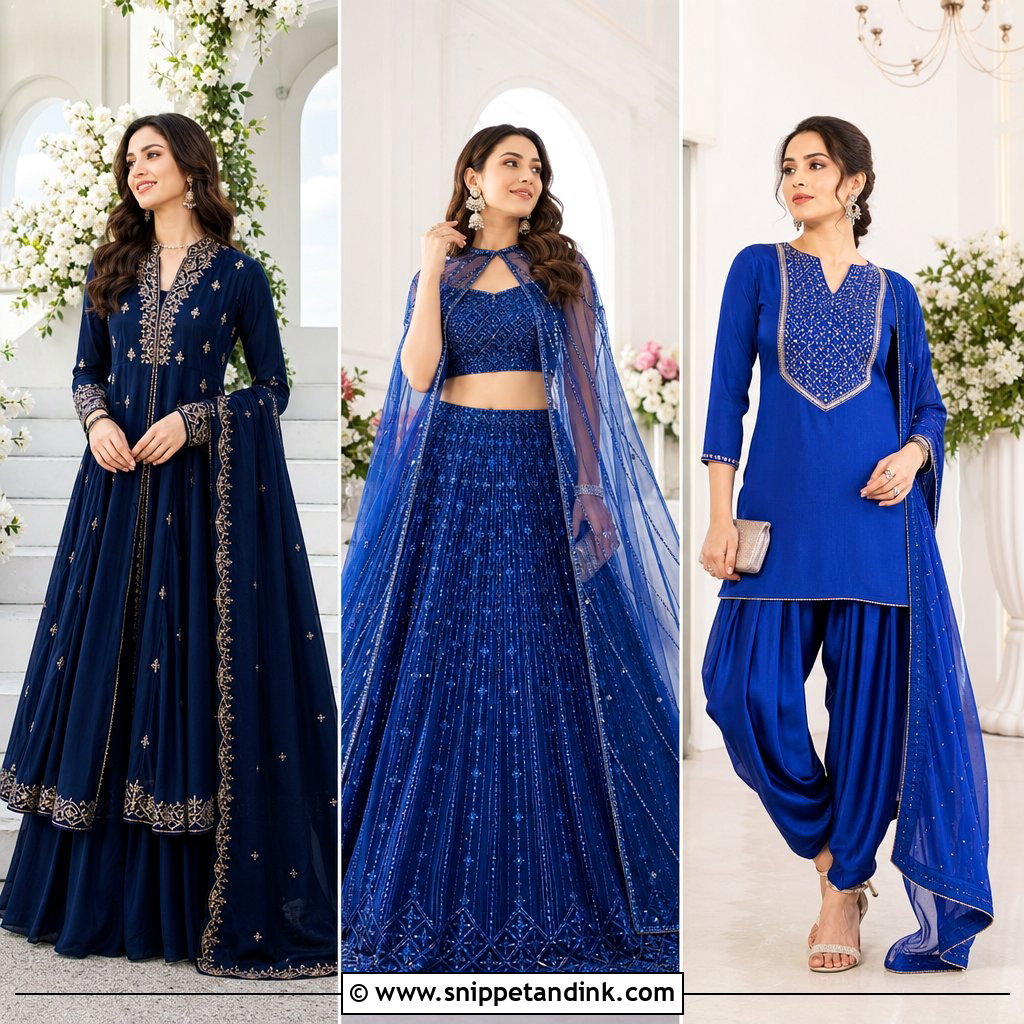
Blue is bold without reading strictly traditional. Royal blue, cobalt, powder blue, and midnight blue all work for a sangeet, especially with silver, pearl or mirror embellishment. Darker blues hold up under evening lights; pastel blue suits a softer, earlier event. I check deep blues in daylight and under warm light at the fitting, because some navy dyes turn almost black indoors. Diamond-style jewelry, silver heels and a small potli. If the blouse is heavily worked, skip the necklace. Smoky eyes and a pink lip, and a skirt light enough to twirl.
22. Crop Top Skirt Sangeet Outfit
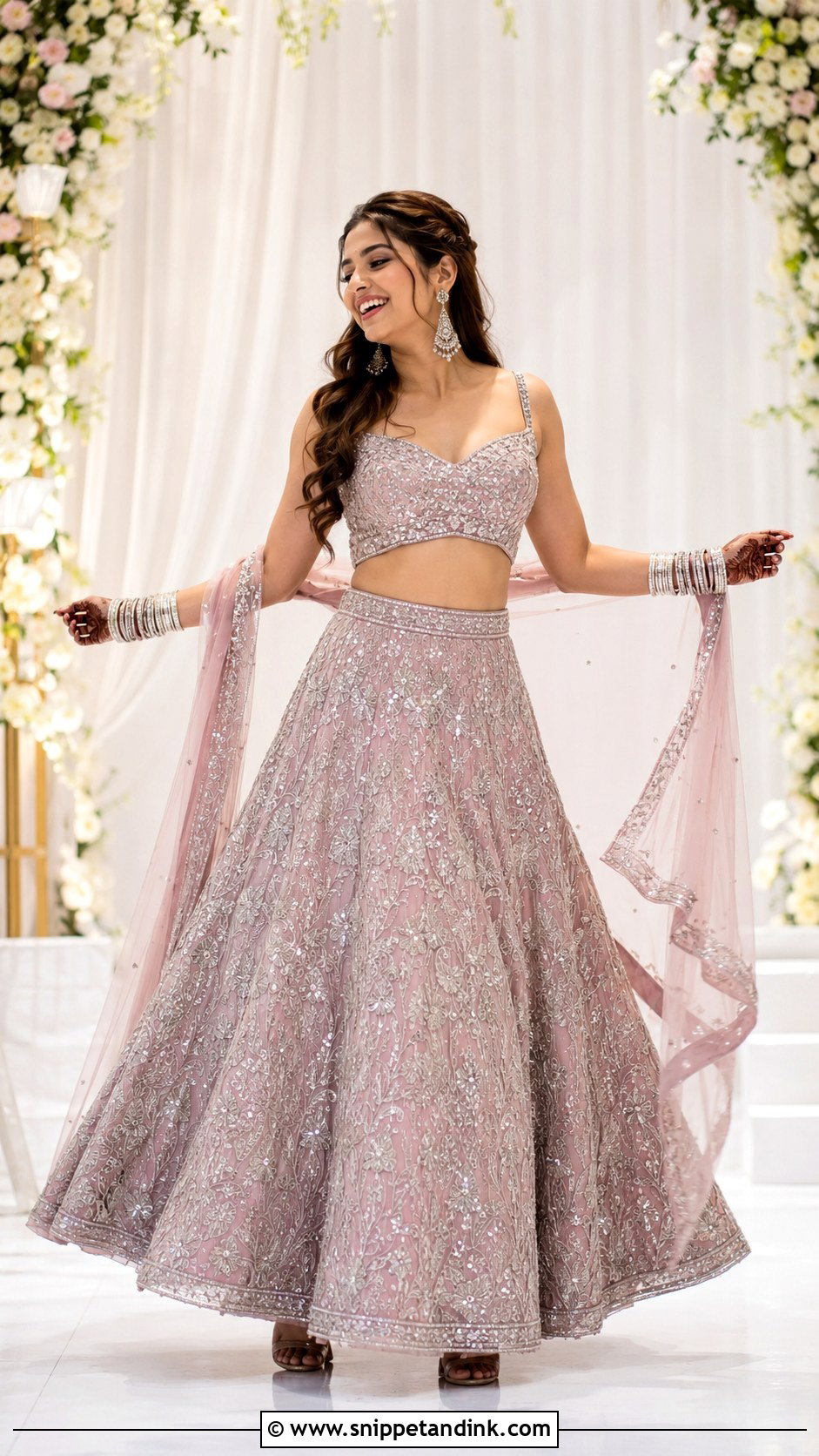
The crop top and skirt is a lehenga with fewer rules, and it is the easiest outfit to dance in on this list. A high-waisted embroidered skirt with a structured crop top in silk, satin, georgette or organza covers most needs; the top can be a bustier, peplum crop or long-sleeve embroidered piece. Add a sheer dupatta, cape or scarf if you want coverage. My one firm rule is that the skirt waistband must be fitted with the top on, so the gap stays the same width when you lift your arms. Statement earrings, stacked bracelets, comfortable heels and clean, polished hair.
23. Dhoti Pants Sangeet Outfit
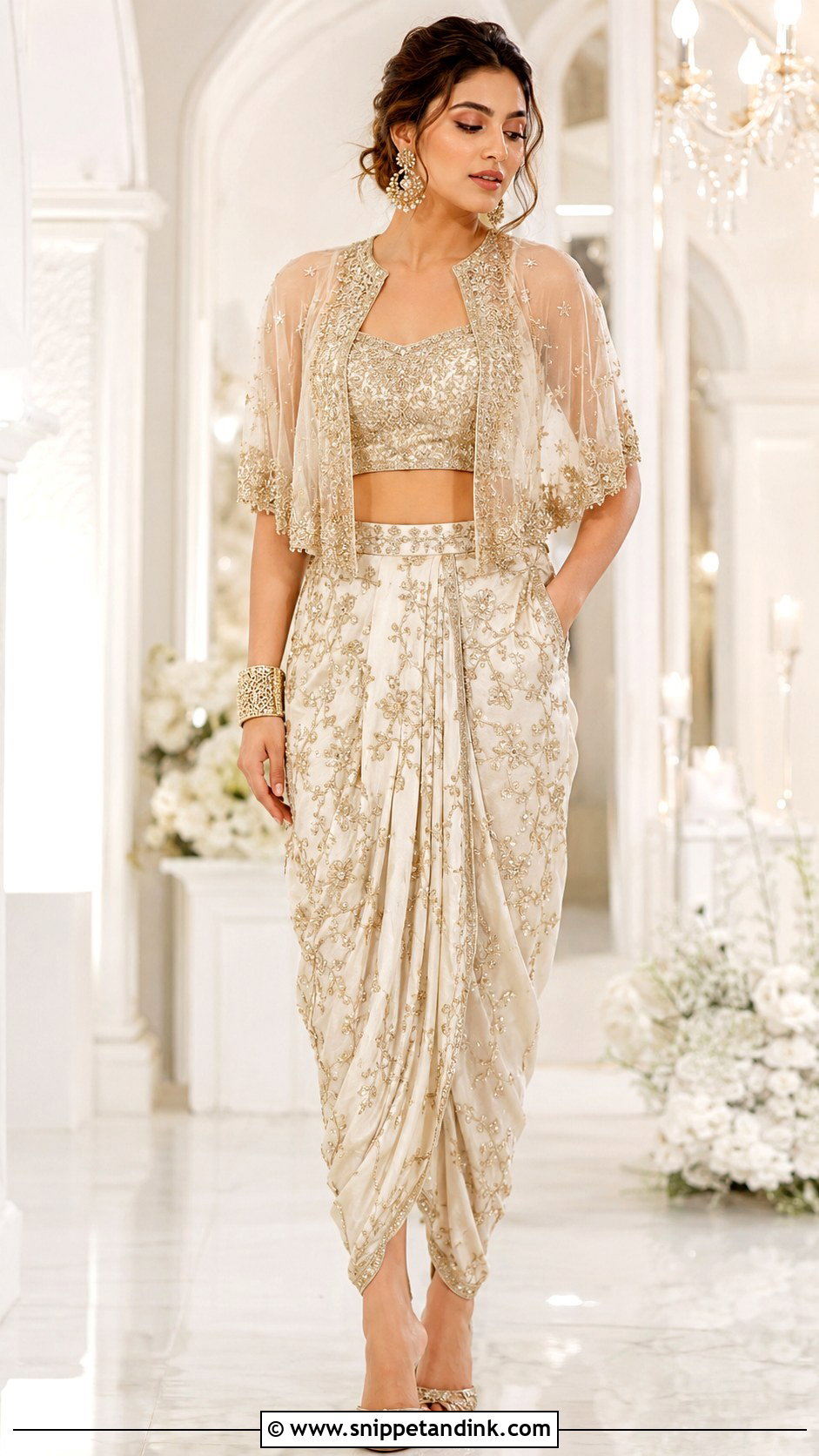
Dhoti pants are the most practical Indo-western option for a bride doing floor-heavy choreography, since there is no skirt hem to trip on. Pair embroidered dhotis with a fitted blouse, peplum top, cape or short jacket. Silk, satin, brocade or light crepe all hold the drape; crepe falls the cleanest. Ivory and gold, teal, magenta, black and champagne all set a strong sangeet mood. Statement earrings, a cuff and embellished heels or juttis. A cape or jacket brings back the bridal feel. I keep makeup defined and hair sleek, otherwise the modern silhouette can read like a guest outfit.
24. Long Kurta Lehenga Sangeet Outfit
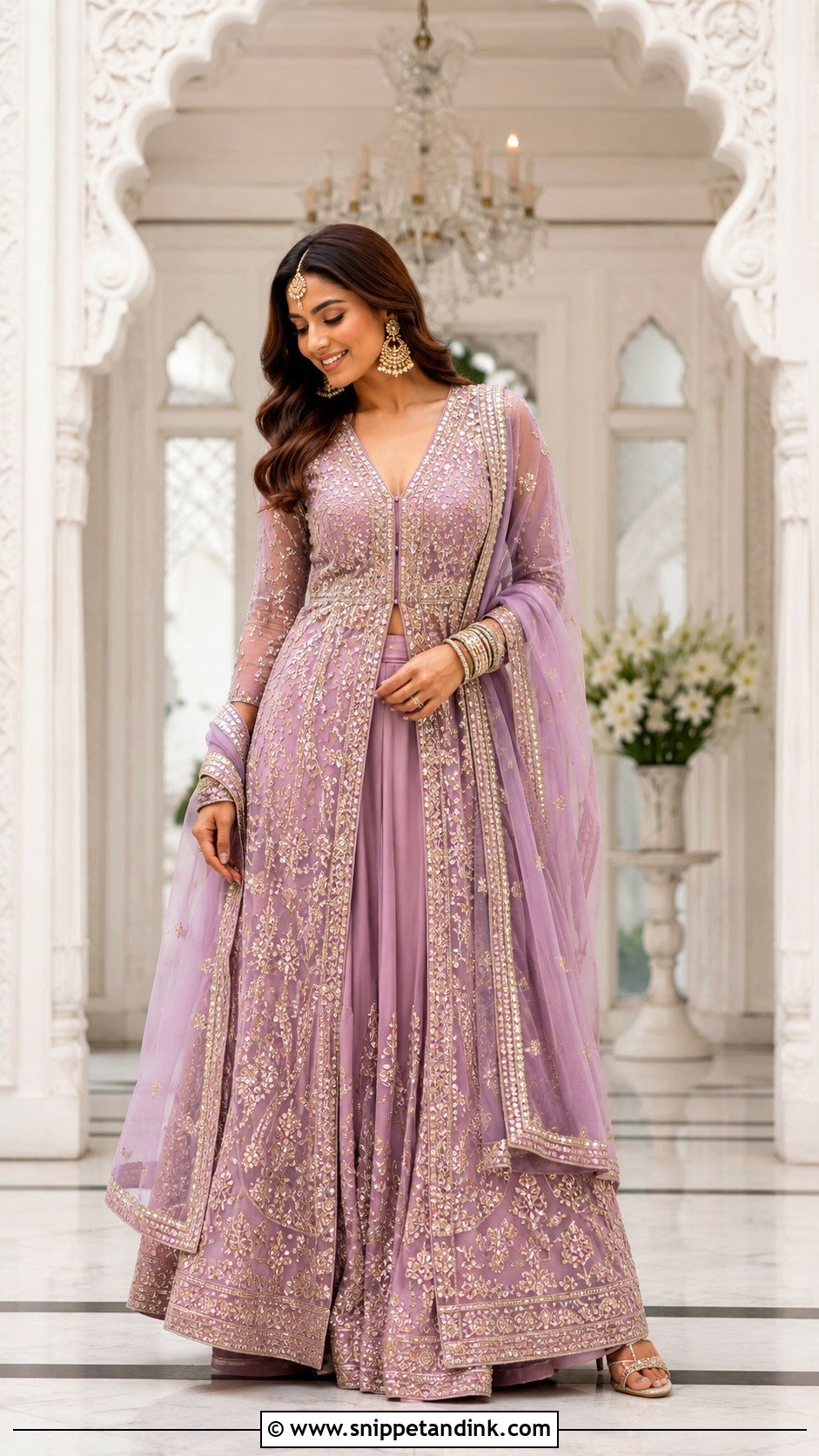
A long kurta over a lehenga skirt gives coverage without losing volume, and brides who dislike short blouses are usually relieved to see it. A front-slit embroidered kurta over a flared skirt shows the skirt as you walk; a straight long kurta over a lighter lehenga is quieter. Silk, georgette, brocade or net, chosen by formality. Drape the dupatta over one shoulder or around the arms. Chandbalis, bangles and embellished heels. I check that the kurta slit sits a little above the knee, or it pulls tight when you sit cross-legged for the songs. It is a natural winter pick, with the extra layer helping on cold evenings.
25. Trail Lehenga Sangeet Outfit
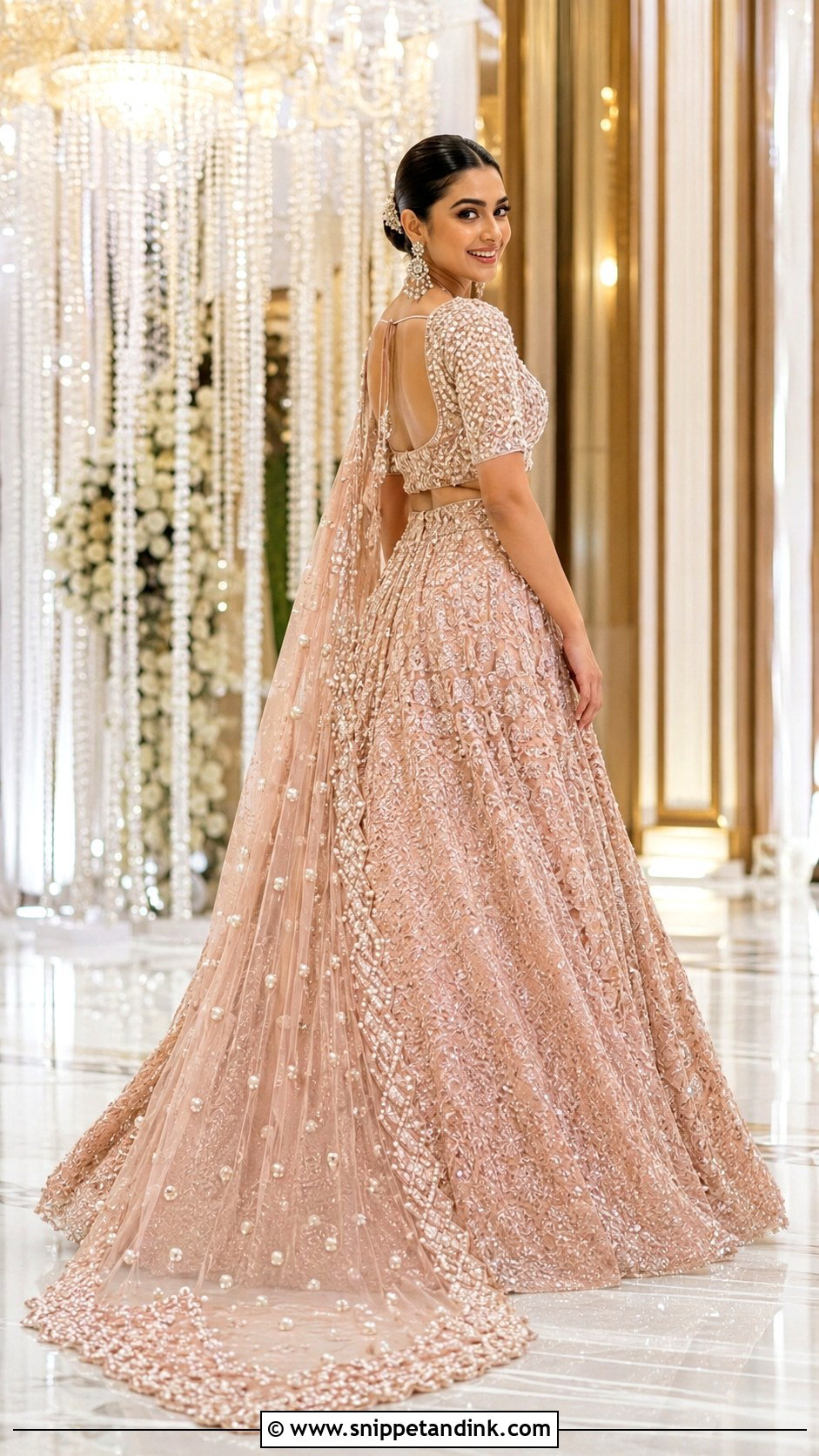
A trail makes the entrance, and then it becomes a liability the moment the dhol starts. That is why I only recommend a detachable trail or a very lightweight one you can loop over your wrist. A fitted blouse, flared skirt and trailing dupatta or attached overskirt look cinematic in a grand venue. Metallic embroidery, sequins, pearls and tone-on-tone work all suit it. Keep jewelry restrained, since the outfit already carries the drama. Wear heels with ankle support, and assign one person to manage the trail through the entrance. A sleek bun, glowing makeup and one statement earring are enough.
Airing and Packing Mirror and Sequin Work the Morning After
Sangeets usually fall a day or two before the wedding, so the outfit often has to survive a hotel room and a suitcase before anyone has time to care for it properly. What you do that night decides whether it can be worn again.
That night
Hang the blouse and skirt inside out on padded hangers, away from the bathroom steam, so the sweat in the lining dries before it sets. Do not fold sequin or mirror work while it is warm and damp. Velvet should hang freely so the pile can recover where you sat.
Packing
Wrap embellished panels in clean white muslin or acid-free tissue and fold as few times as you can, with the worked side facing inward. Plastic garment bags trap moisture, which tarnishes zari and dulls mirror backs, so I use breathable cotton covers instead. Heavy embroidery should never sit under the weight of other clothes.
Stains
Blot, never rub, and leave turmeric, oil and colored drinks for a dry cleaner who handles embroidered Indian wear. Point out every mark when you drop it off. Home stain removers can lift dye from silk and leave a ring that is harder to fix than the original spill.
Dress for the Last Song, Not Just the Entrance
The outfit that wins the night is the one you forget you are wearing. You should be able to dance, laugh, hug relatives and sit on the floor without tugging at anything. Every silhouette here can work if the fabric weight, fit, dupatta, shoes and jewelry are planned around how you will move. In a grand venue, go bolder with shine and structure; at an intimate sangeet, softer embroidery and lighter layers feel right. Above all, wear the one you were smiling in at the fitting.
You'll Like These Ideas:


Leave a Reply