
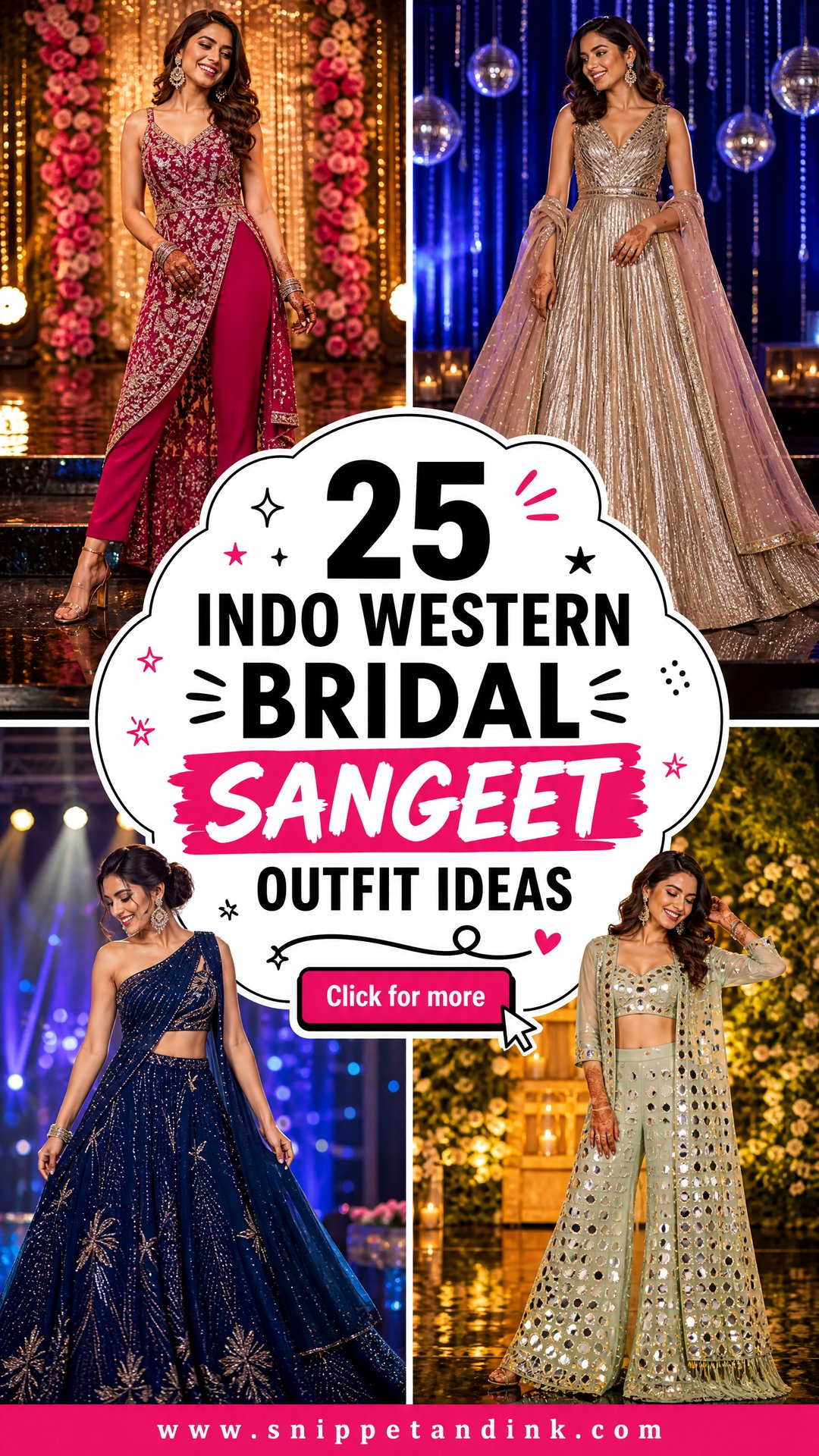
A sangeet outfit has a harder job than any other bridal look: it has to read as bridal on a stage, survive a rehearsed dance and still be comfortable at one in the morning. That is why so many brides I dress move toward fusion here, with cape lehengas, pre-draped saris, embroidered jumpsuits, jackets and co-ords that keep Indian handwork but drop the heavy layers. My order of priorities never changes: a neckline that stays put, tailoring that supports you, a lining that breathes and embellishment you can move in. Colour comes after that, and it should suit the stage lights and sit well next to your partner’s outfit.
Run the Choreography in Full Costume, Twice
Most sangeet outfit problems only appear once the music starts. I ask every bride to bring her choreography to the final fitting and to do this checklist in the outfit, shoes and main jewellery.
- Do the hardest move in the routine three times in a row: a spin, a deep bend or a jump. Watch for necklines shifting, zips pulling and hems catching.
- Raise both arms above your head and hold them there. Blouses and jackets that pass a mirror check often ride up here.
- Sit on a low chair, then stand up quickly without using your hands. You will do this many times as performances change over.
- Walk up and down a few stairs in your shoes. Stage steps are often narrow and the lights make it hard to see the edge.
- Have someone film you from the front and back. Embellishment that looks even in the mirror can bunch at the back.
Then do it again a week before the event, after final alterations, because a few centimetres taken in at the waist can change how everything moves. If you’re performing more than once, a second, lighter outfit for the later dances is a sensible plan, not an indulgence.
1. Indo Western Cape Lehenga
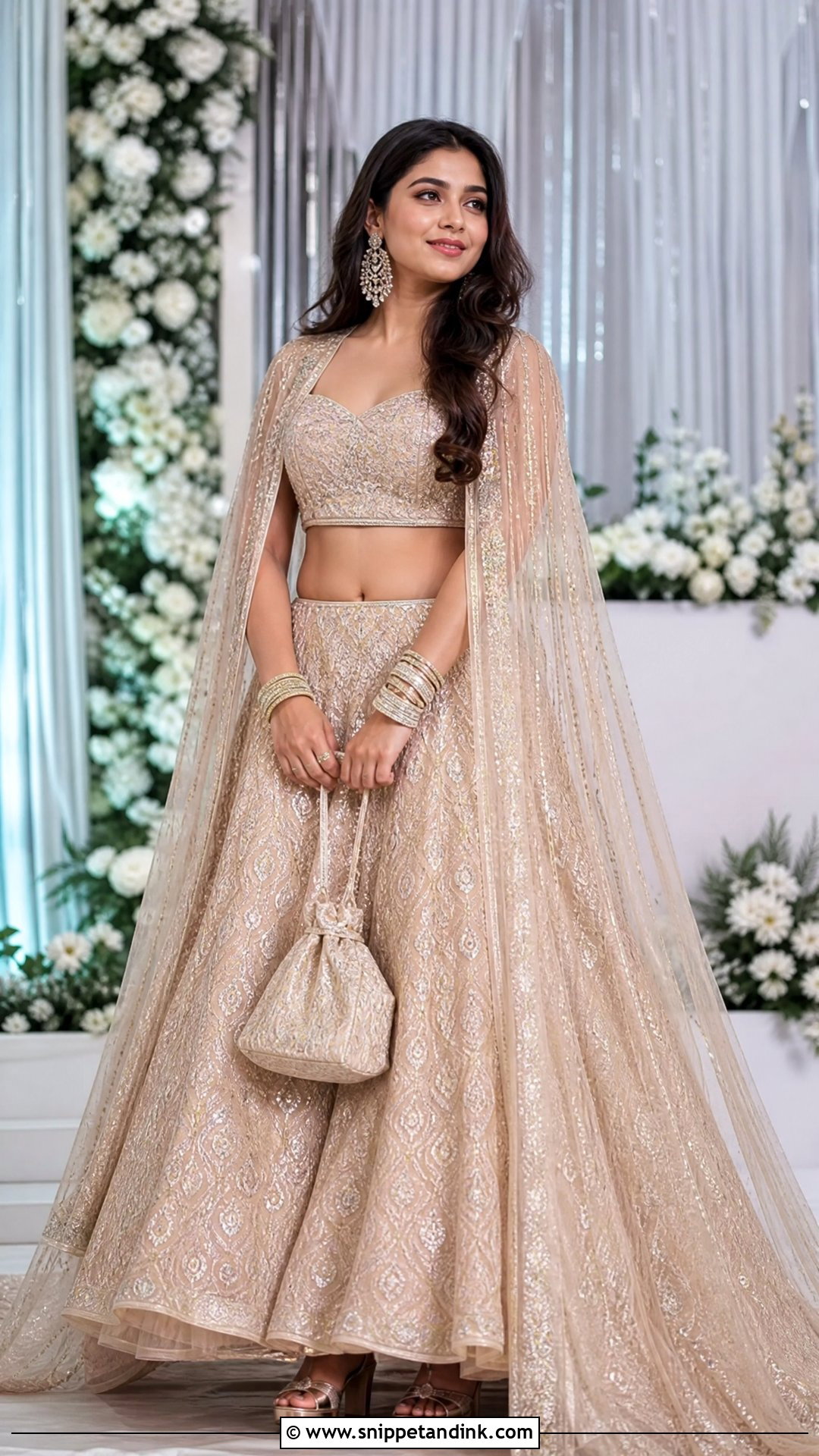
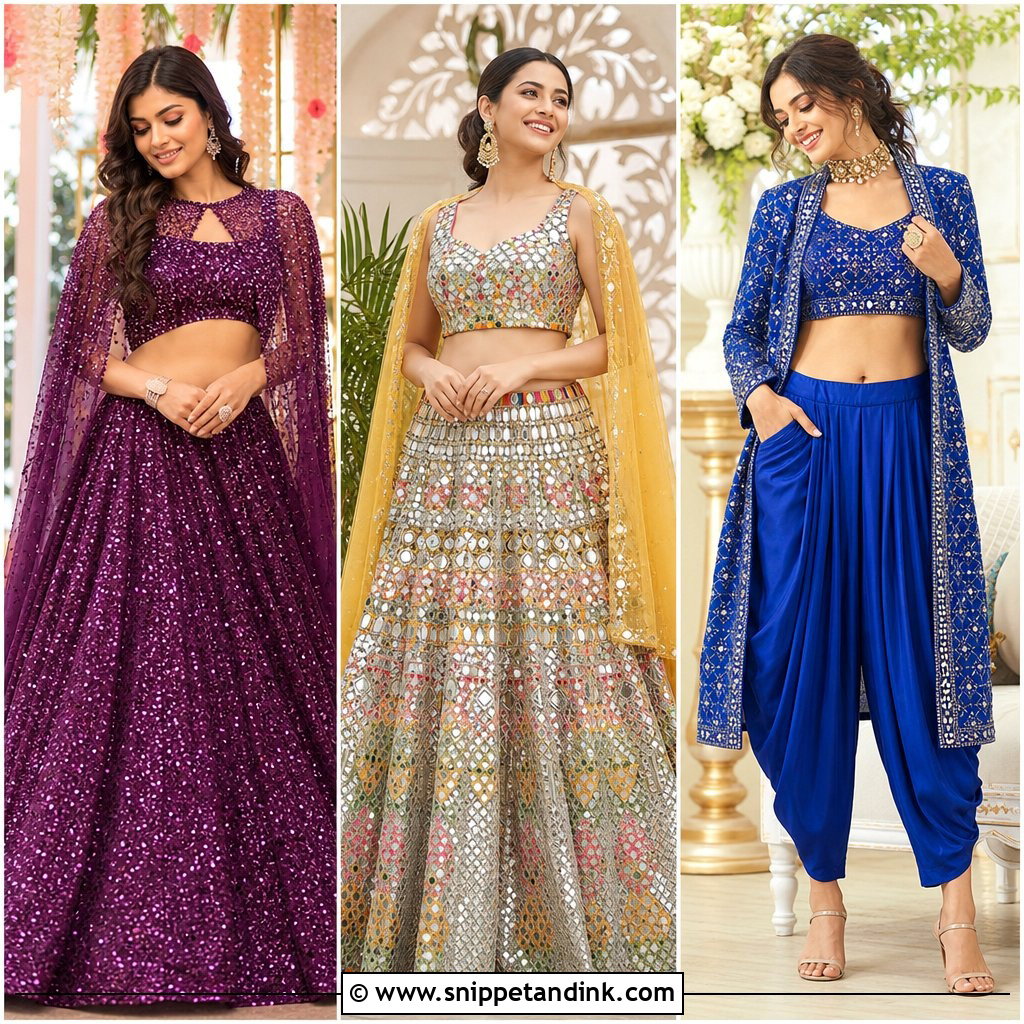
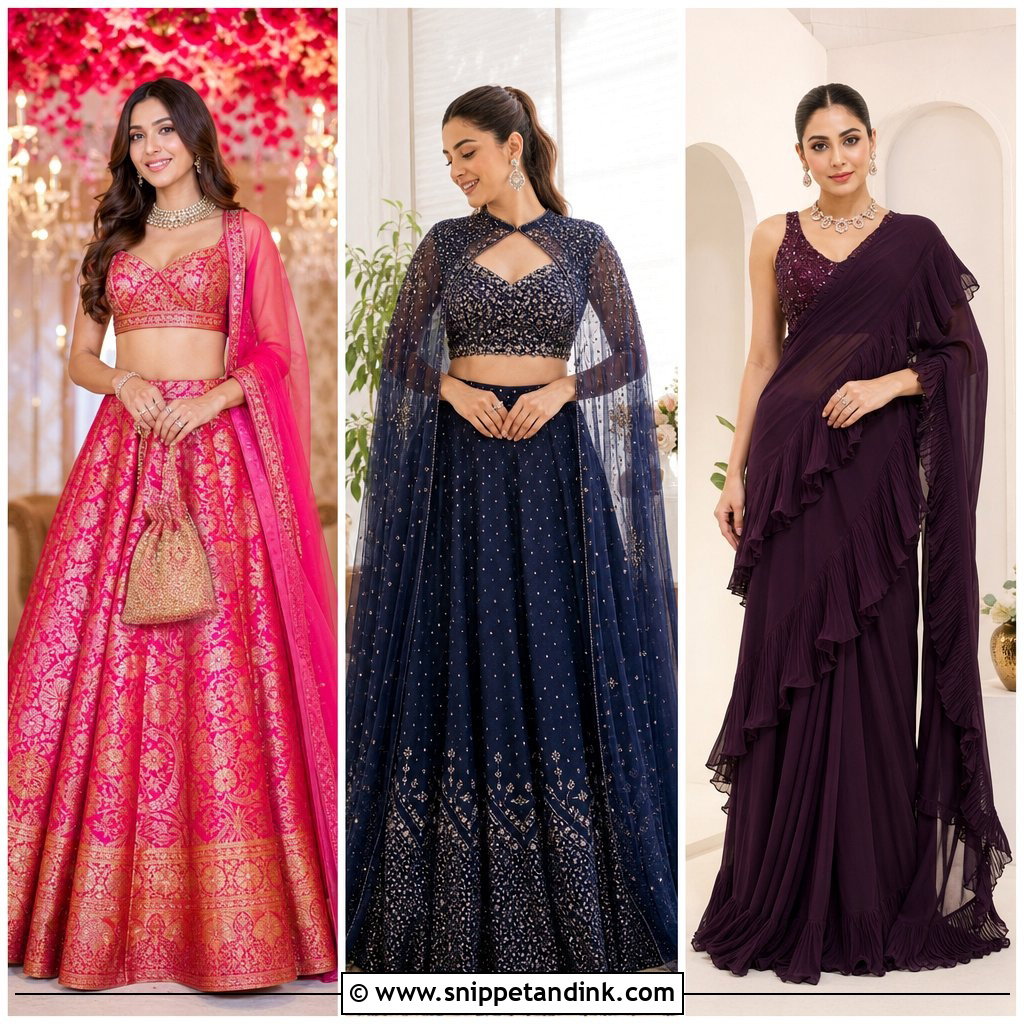
The cape replaces the dupatta, and that is the whole appeal. Under it goes a fitted embroidered blouse and a light flared skirt in georgette, tulle or silk organza. The cape must be anchored firmly at the shoulder seams, because a sequinned floor-length cape is heavier than it looks and will drag the blouse backwards if it is only tacked at the neckline. Champagne, emerald, midnight blue and plum hold up under evening light. Chandeliers, bangles, platform heels and a potli finish it. For a fuller bust, I’d pick a higher blouse neck with an open-front cape.
2. Indo Western Pre-Draped Saree Gown
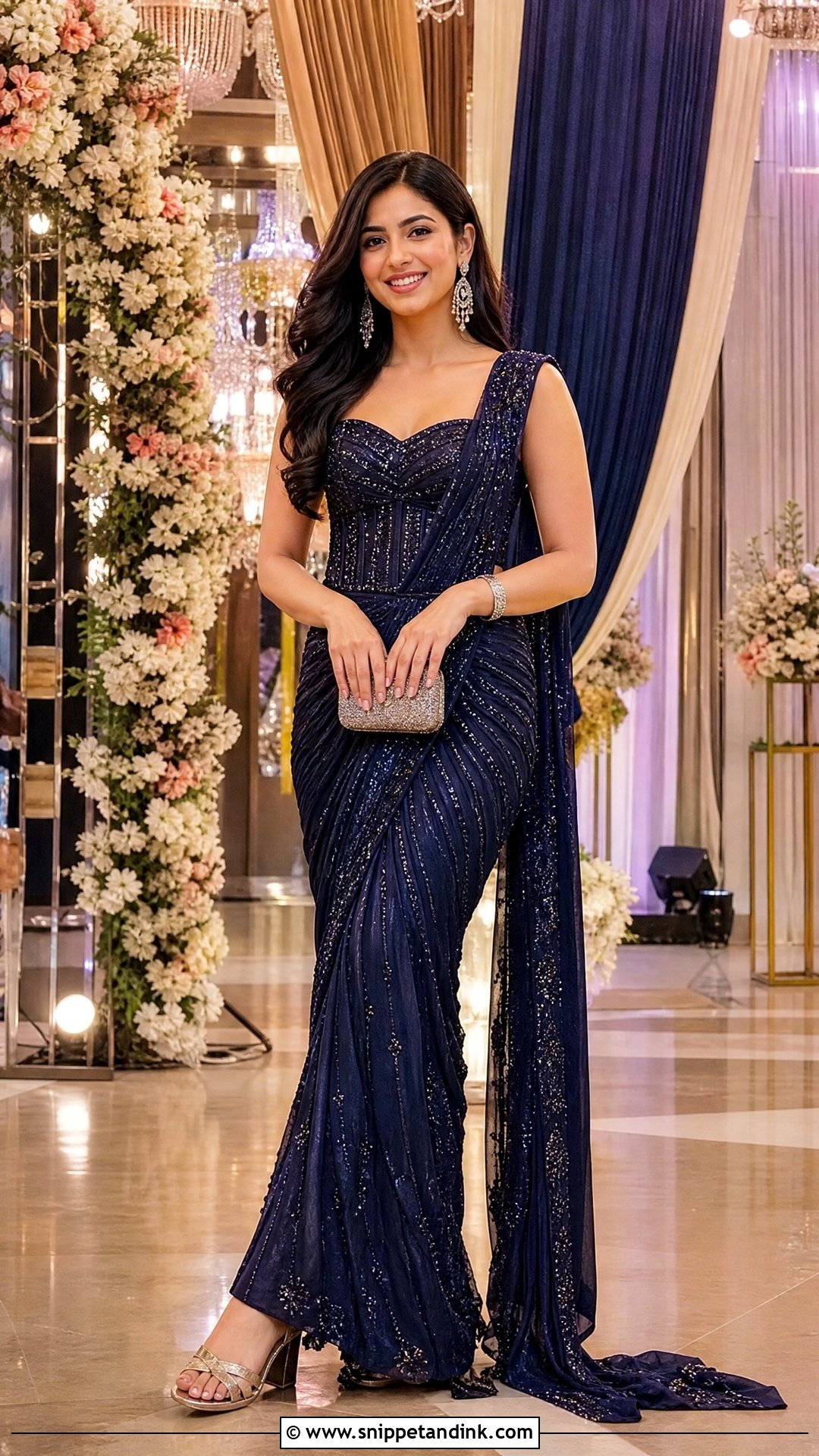
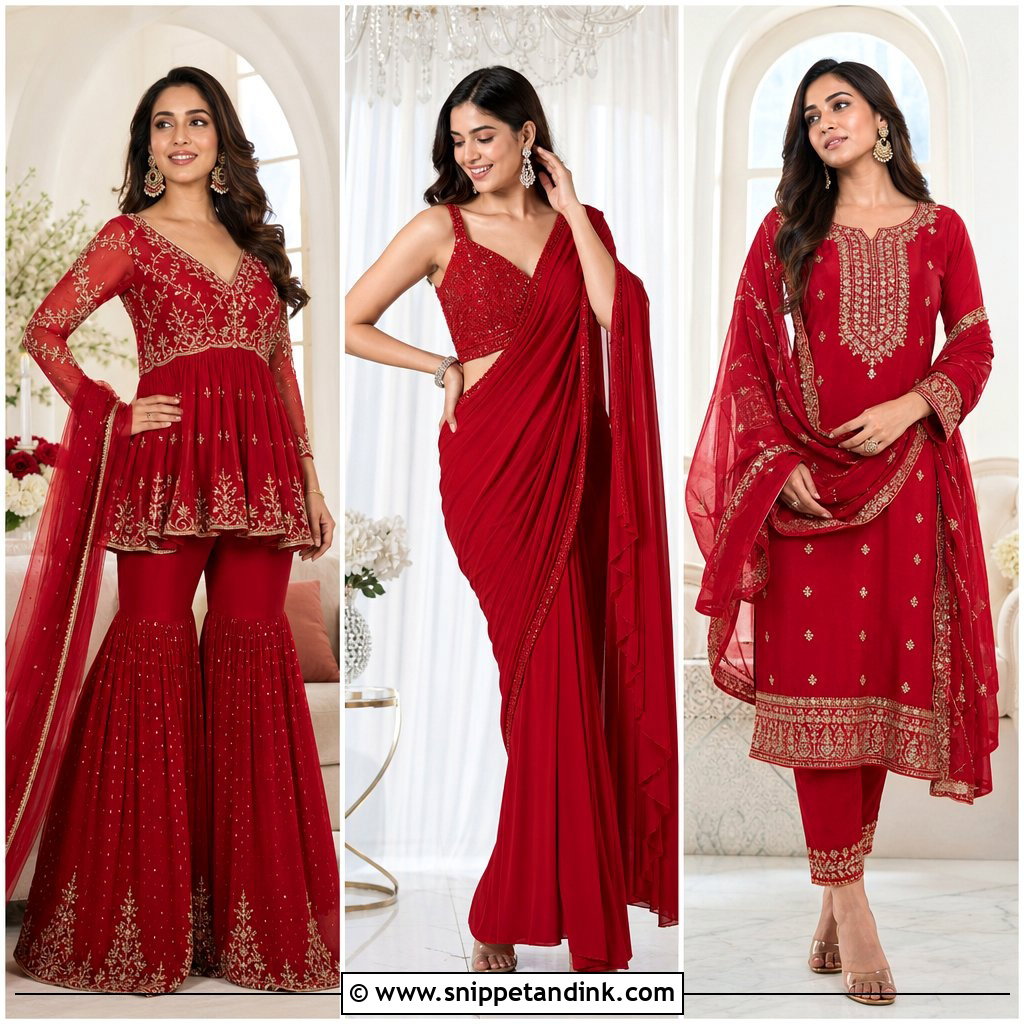
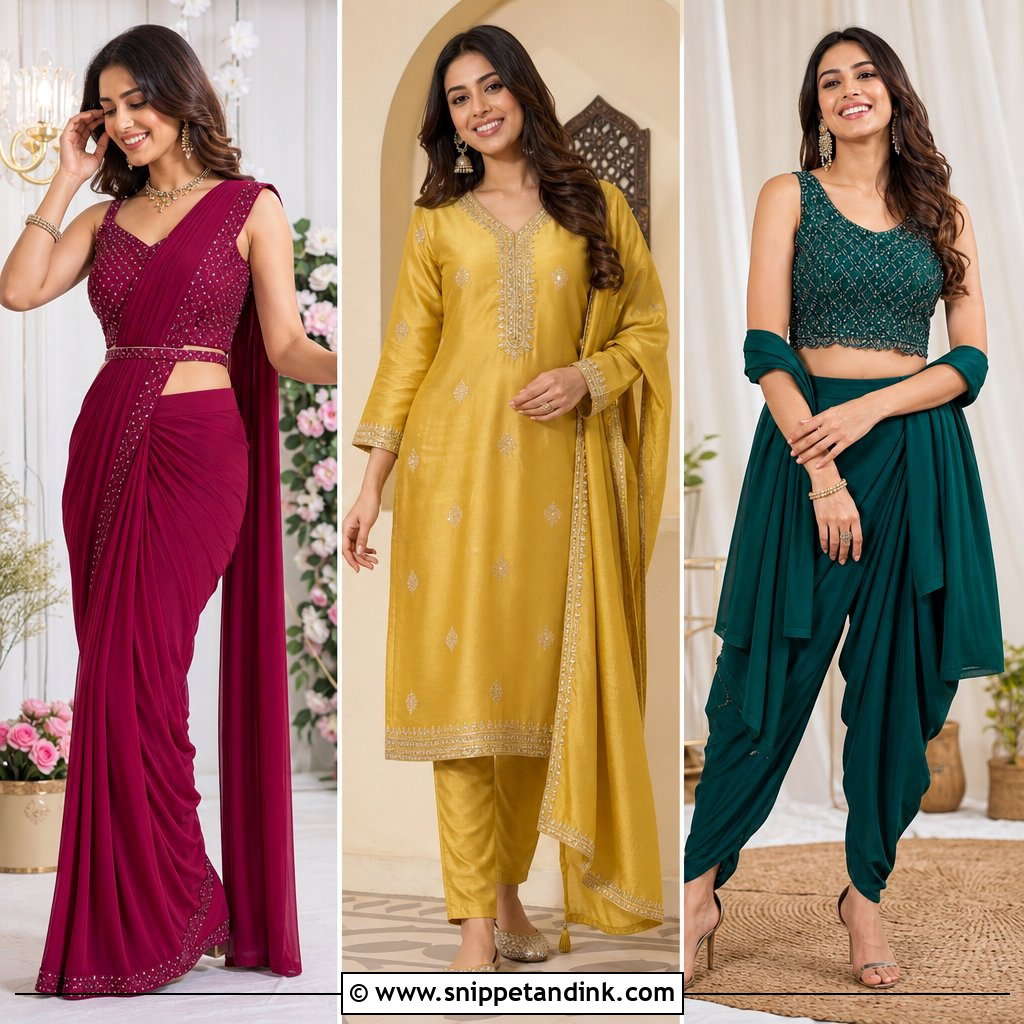
Pre-stitched pleats and an attached pallu give you the line of a sari with none of the re-draping. Look for a defined waist and a pallu sewn or hooked in at the shoulder, not just pinned. A corset bodice or structured one-shoulder blouse makes it modern, and crystal or fine sequin work adds shine without bulk. The weak spot is the skirt: pre-draped gowns are often cut slim through the knee. Sit, squat and do your hardest dance step in it at the fitting, and ask for a hidden slit or a godet if it pulls. Statement earrings, block heels and polished waves complete it.
3. Indo Western Bridal Jumpsuit With Cape
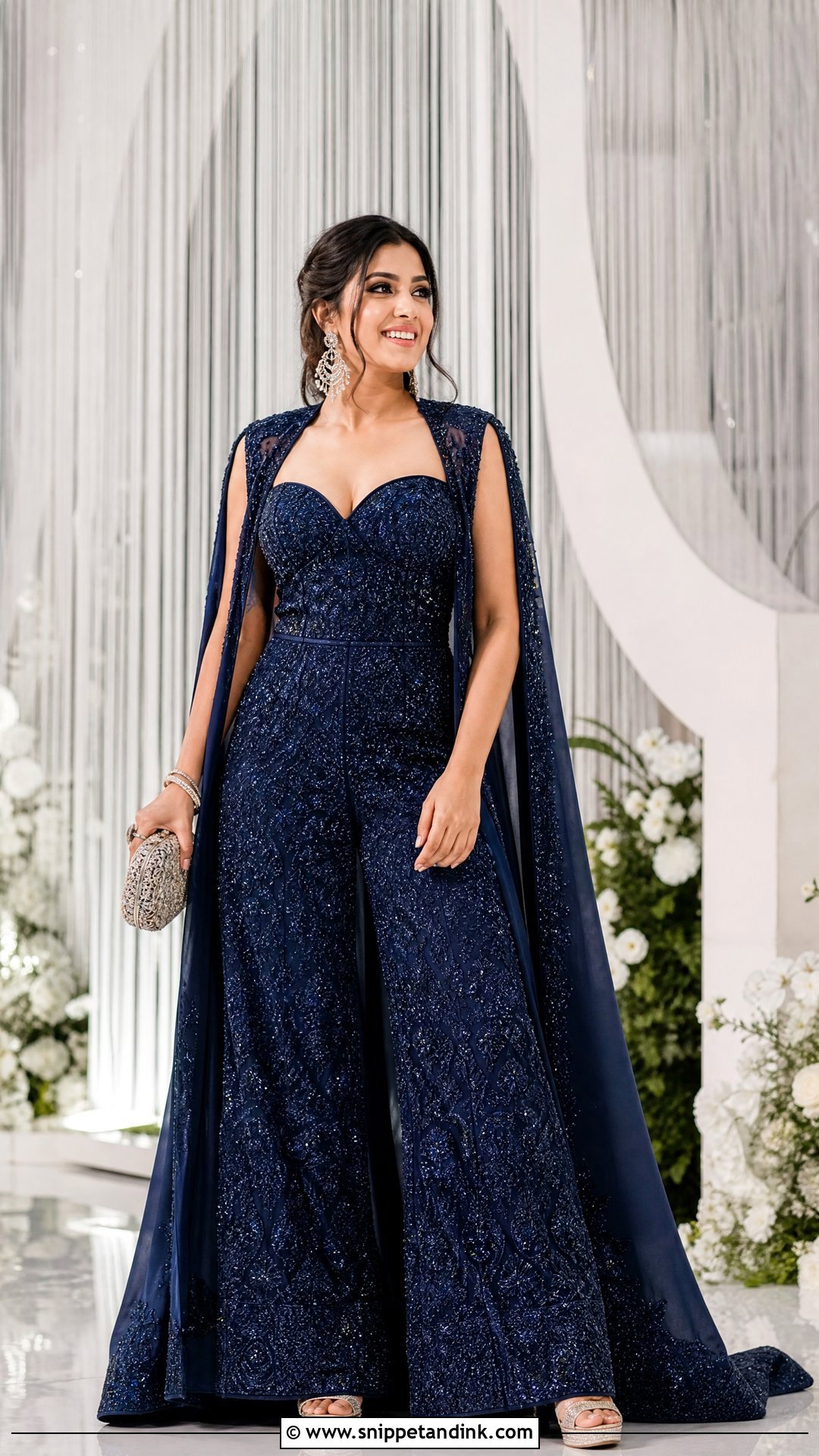
For a bride doing a high-energy routine, an embroidered jumpsuit is hard to beat. Wide legs, a supportive bodice and a defined waist give a long line, while zari, mirror or sequin work keeps it bridal. A detachable shoulder cape or back panel adds movement for photos. My fitting checks: the crotch depth must allow a deep lunge, the back zip needs a hook and eye at the top so it can’t creep down, and the trouser hem should almost skim the floor in your actual sandals. Sapphire, ruby and amethyst look rich at night. Bathroom trips are the real drawback, so plan for a helper.
4. Indo Western Peplum Top With Dhoti Pants
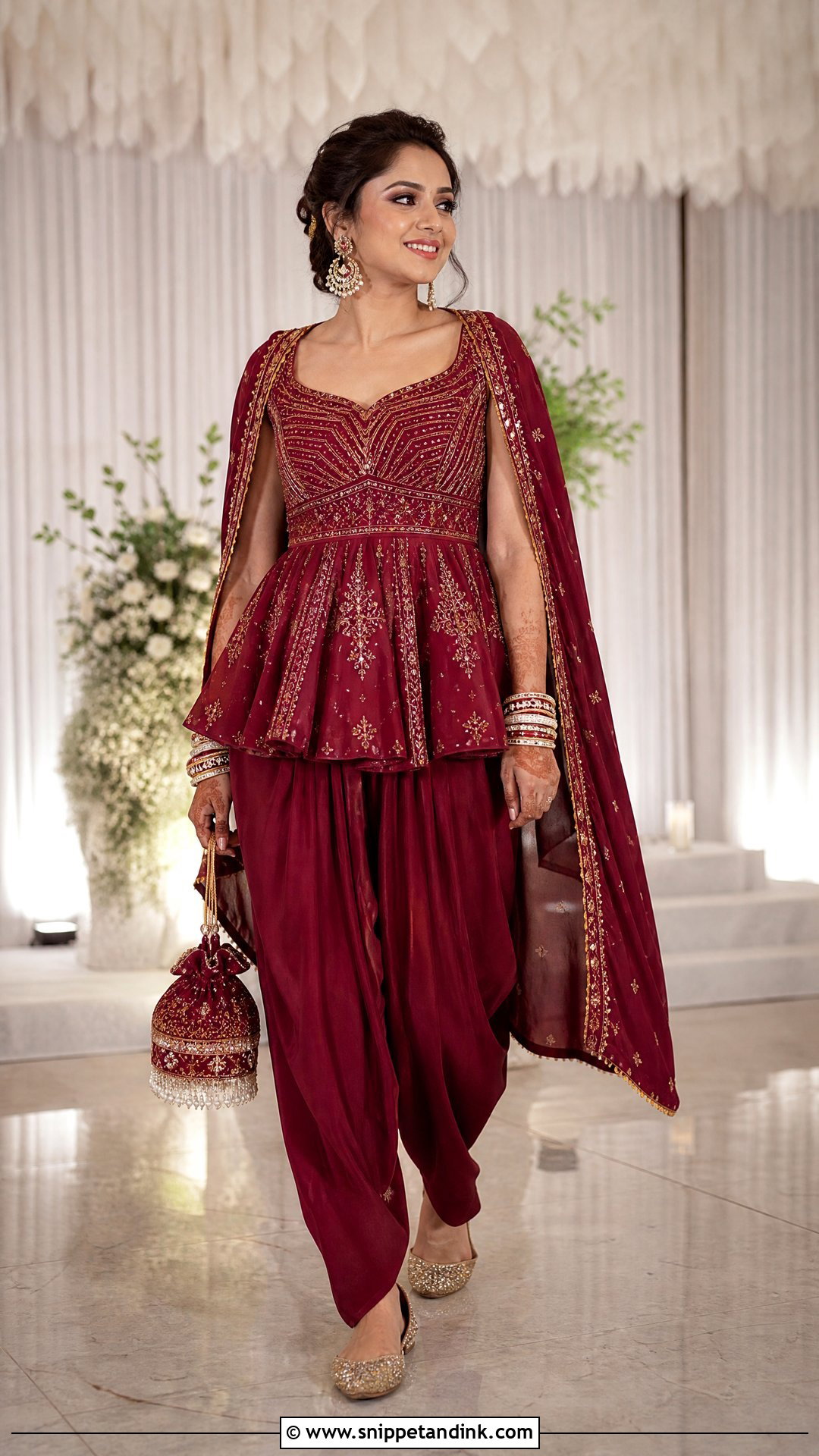
Structured on top and fluid below, a peplum top and dhoti pants keep the legs covered while letting you move freely. The peplum should fit closely through the ribcage before it flares; if the flare starts too high, it hides the waist entirely. Satin, crepe or light silk dhotis fold better than stiff fabrics. Embroidery at the neckline, waist and cuffs, a slim shoulder drape, chandbalis, metallic juttis and a few bangles finish the look. On a petite frame I keep the peplum short so it doesn’t cut the leg line in half.
5. Indo Western Jacket Lehenga
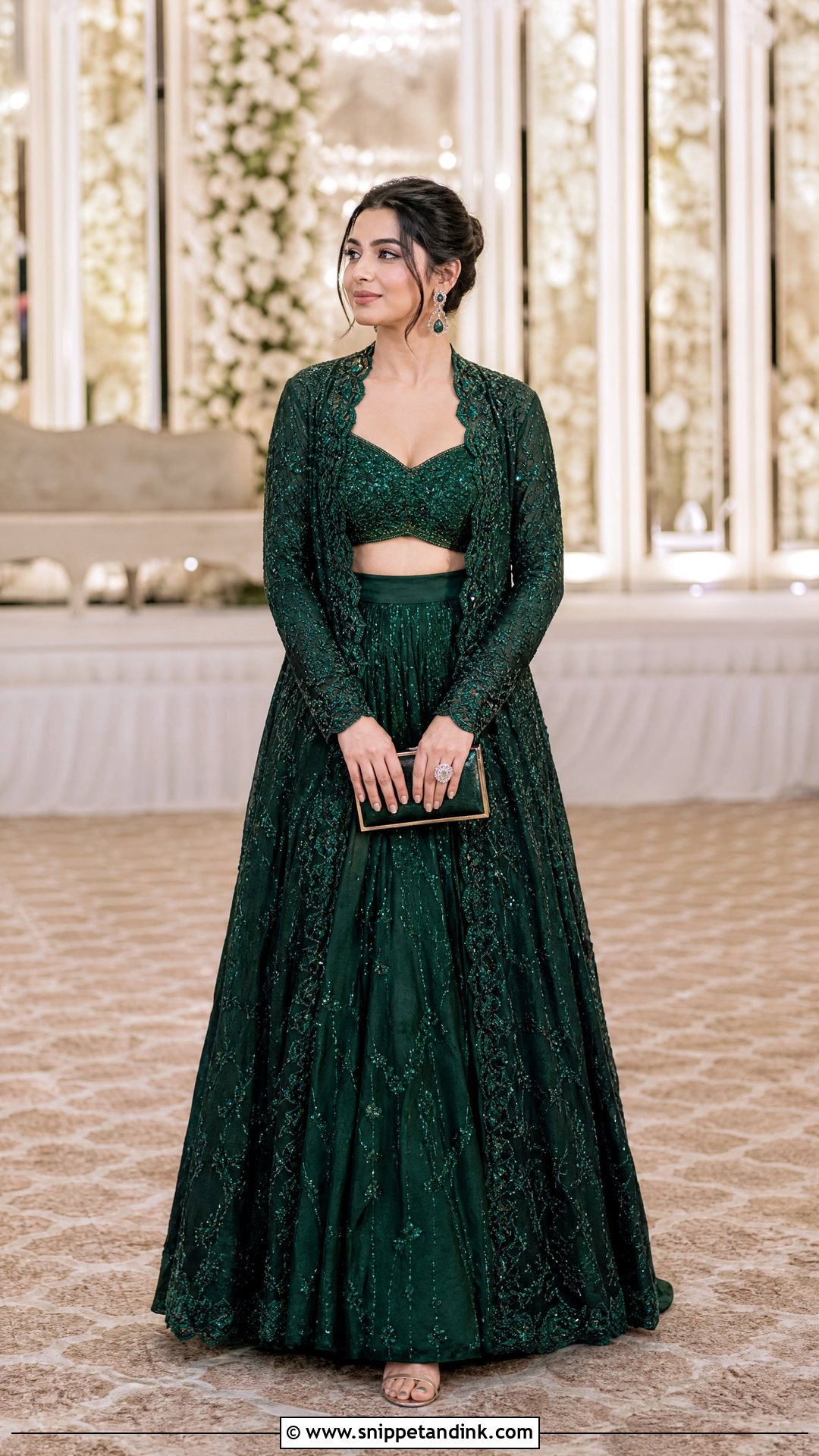
A long embroidered jacket turns a familiar lehenga into something architectural. Keep the blouse plain and the skirt controlled in volume, then layer an open-front jacket that ends between calf and floor. Vertical embroidery down the front edges adds height. Metallic over jewel tones gives contrast; one colour throughout looks more formal. Skip the necklace if the jacket neckline is worked. The practical bonus I point out to every bride: wear the jacket for the entrance and photos, then take it off and you are already in a lighter dance outfit.
6. Indo Western Corset Top With Lehenga Skirt
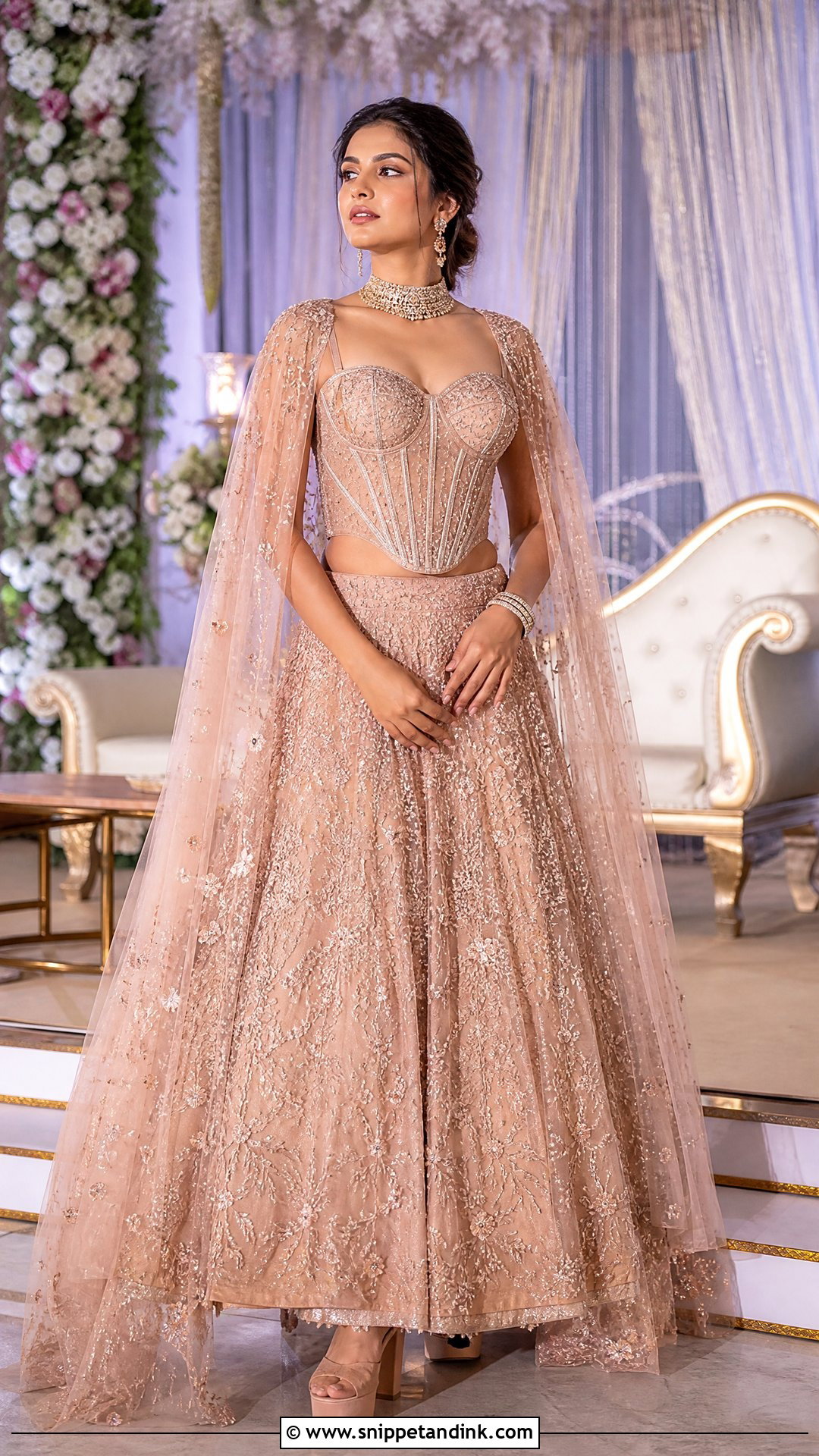
Fashion corsets that lace tight are built for standing still, not for a sangeet. What I want for a bride is a properly boned, fitted bodice with internal support that holds you up without restricting breathing. Embroidery, pearls or traditional motifs link it to the lehenga skirt, and repeating one motif across both pieces makes the set look planned. A high-waisted skirt with flowing panels balances the structure. Raise both arms over your head in the fitting room; if the bodice shifts, it needs straps or silicone grip tape inside. A choker, small drops, platform heels and an optional sheer cape finish it.
7. Indo Western Sharara Set With Cape
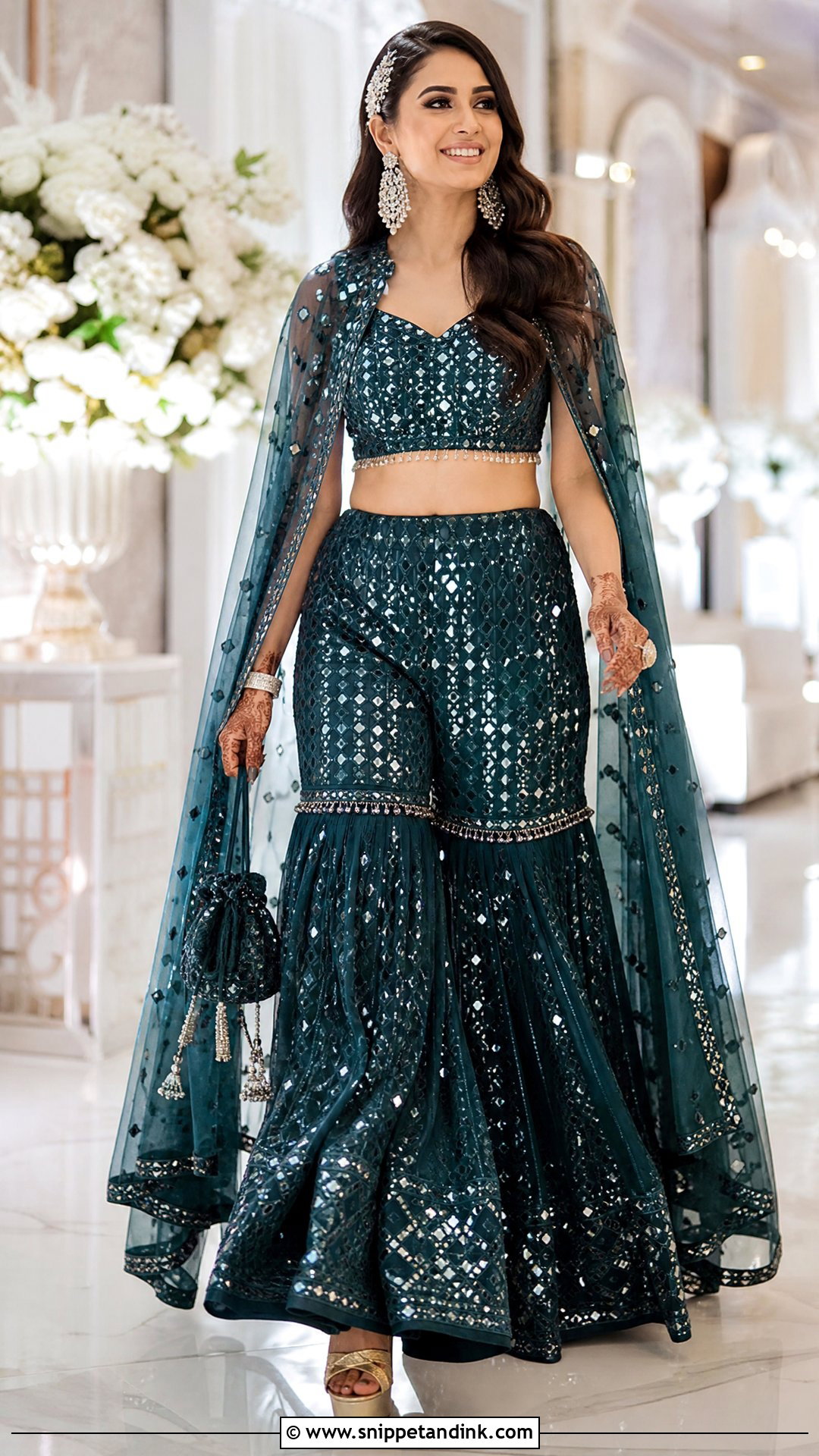
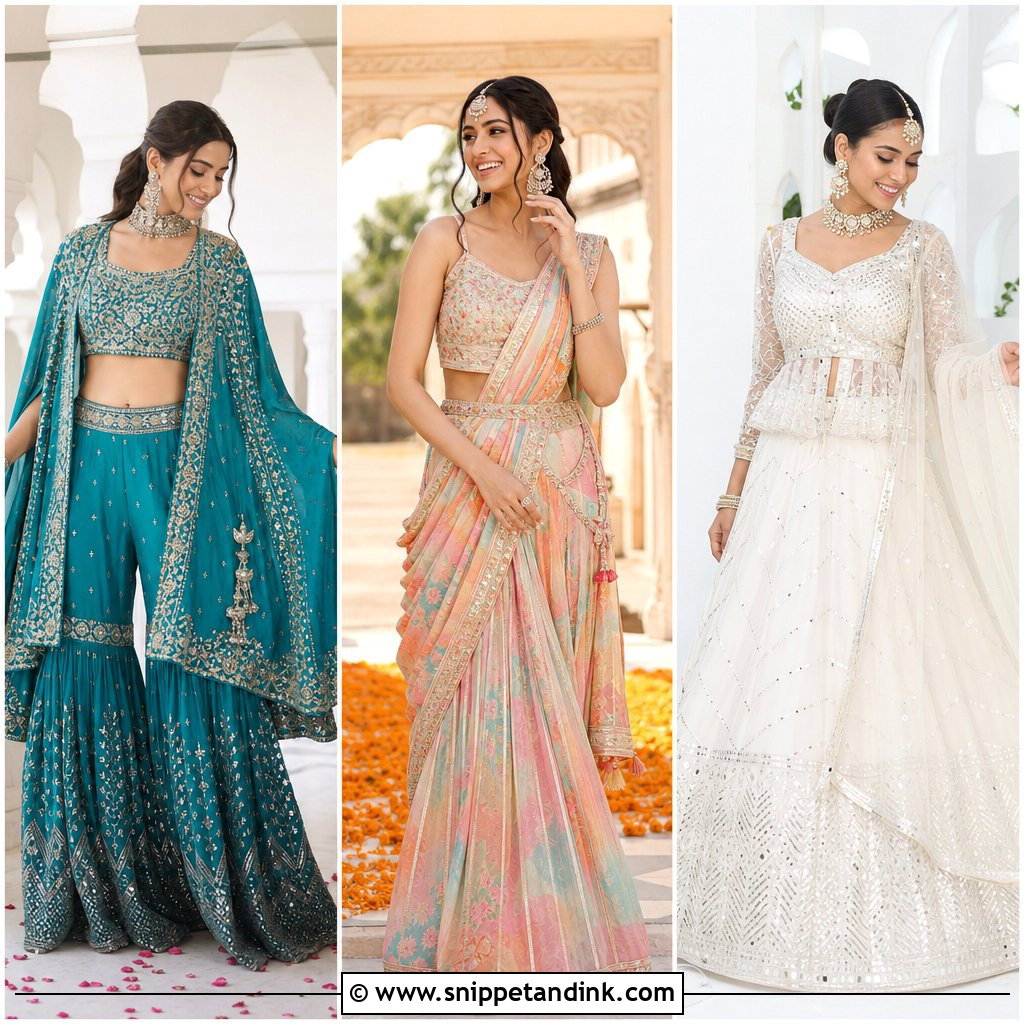
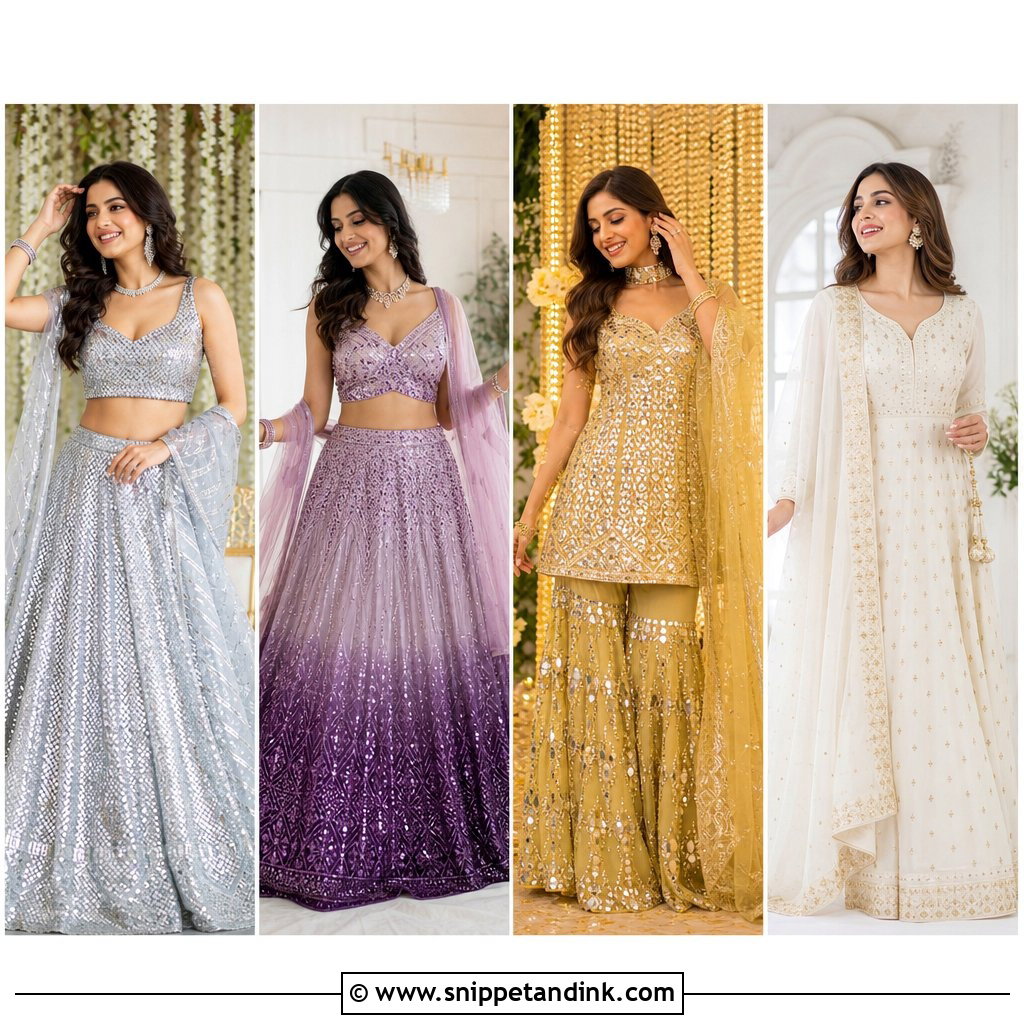
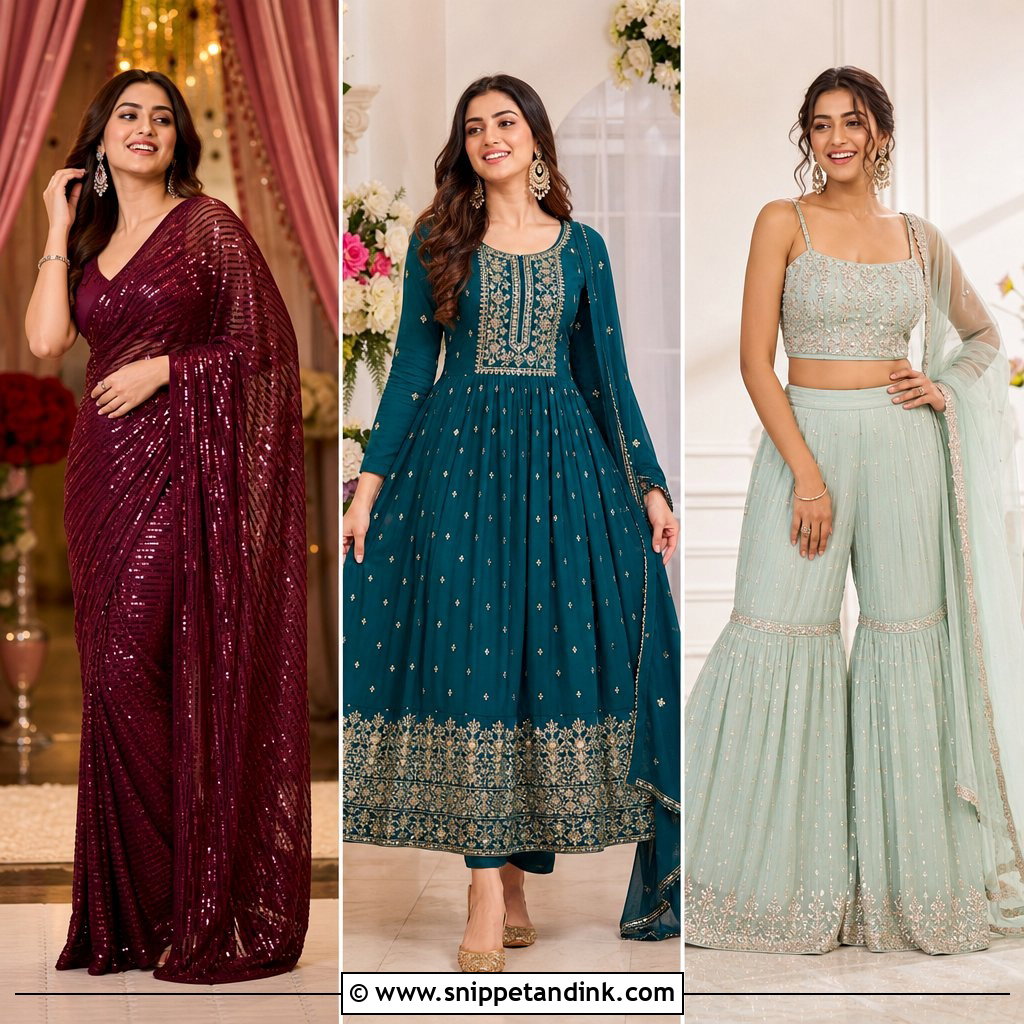
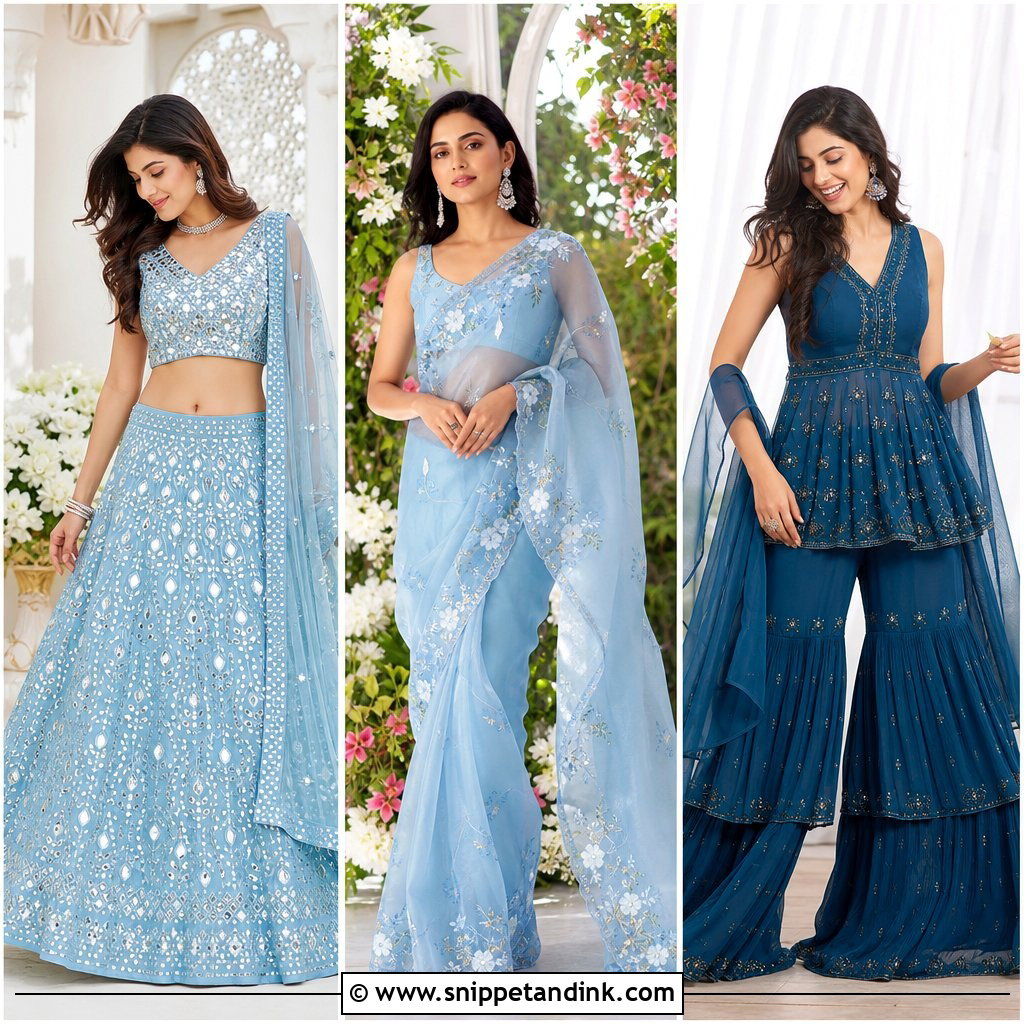
Comfort and volume come together in a bridal sharara set, especially when a sheer cape takes the place of the dupatta and leaves both hands free. High-waisted flared pants under a crop top or hip-length structured blouse work best. Mirror work, metallic thread and scattered crystals catch the light. Deep teal, berry, navy and antique gold are strong evening colours. Cut the cape a little shorter than the sharara hem, otherwise the two tangle at your ankles mid-spin. For more coverage, a longer blouse with side slits works well.
8. Indo Western Pant Saree
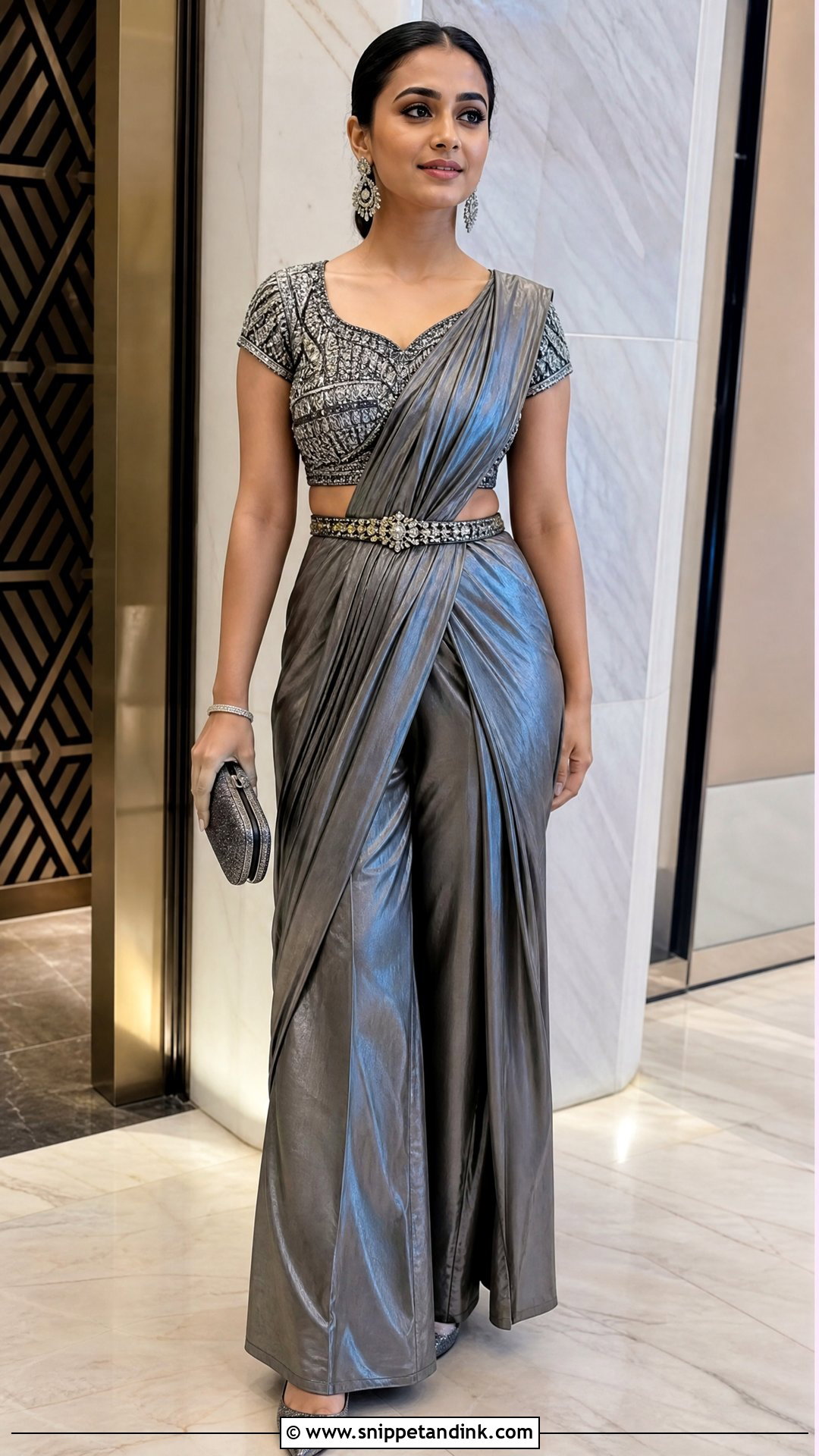
Pleats are the first thing to come loose in a dance routine, which is why the pant saree works so well for performing brides. Slim, straight or softly flared trousers replace the pleats, and a light sari panel drapes across the body, either pinned or pre-stitched. A jewelled belt defines the waist and stops the drape from shifting. Satin, crepe or georgette with embroidery only along the border keeps it light. Shoulder-grazing earrings, pointed block heels and a sleek clutch are enough. Monochrome metallics and deep jewel tones suit it, and black can work where the family is comfortable with it.
9. Indo Western Draped Skirt With Bustier
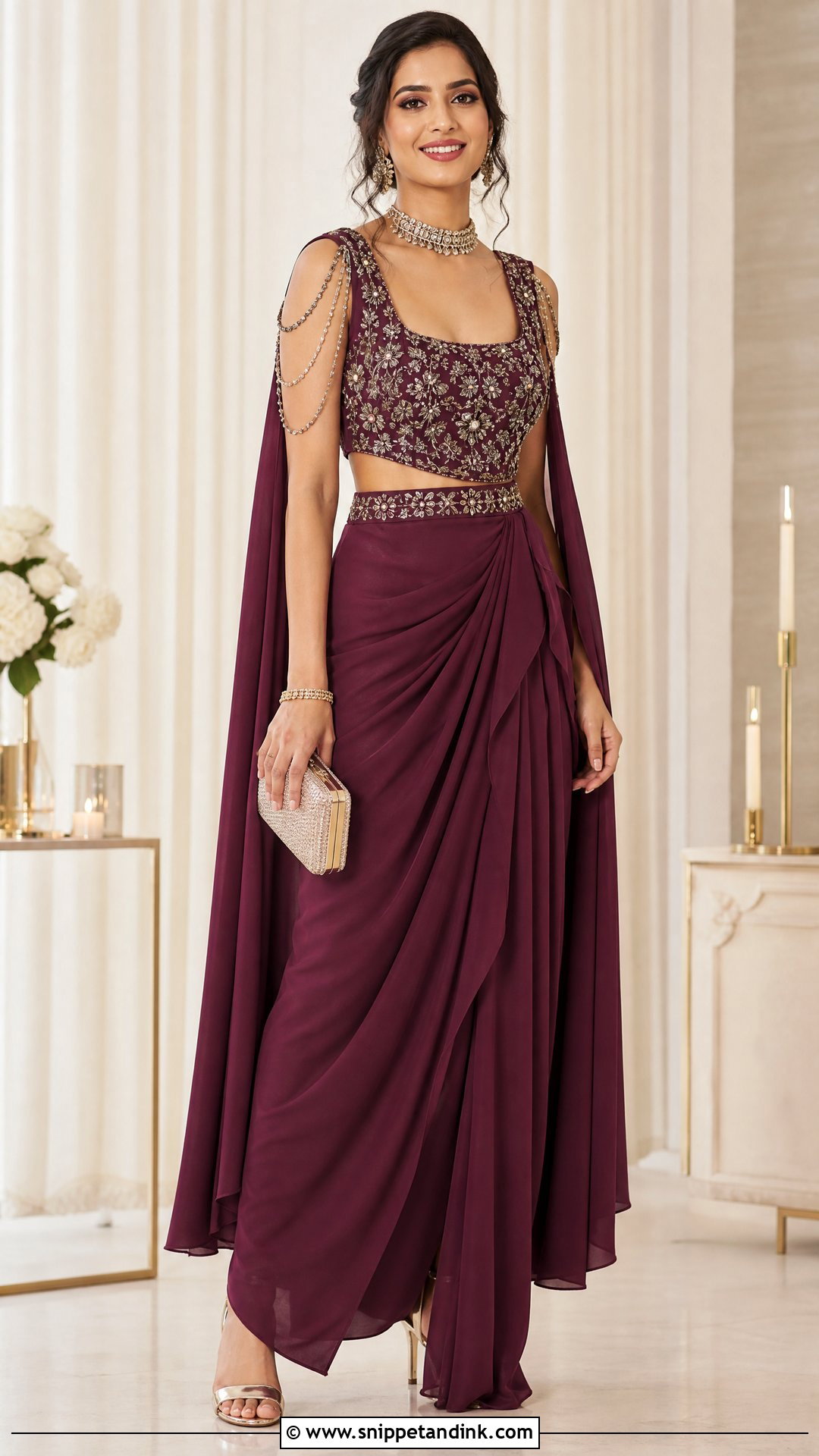
A draped skirt and embroidered bustier give you sari folds without the full drape. Look for a high-waisted skirt with gathers, a slit or an asymmetric overlay so you can move. I’m strict about the bustier: secure straps, proper cups and enough length to stay tucked when you twist. Handwork or mirror embroidery keeps it from reading too Western. If you prefer less midriff, raise the skirt waist or extend the bodice. A collar necklace, small earrings and metallic heels finish it.
10. Indo Western Asymmetrical Kurta With Pants
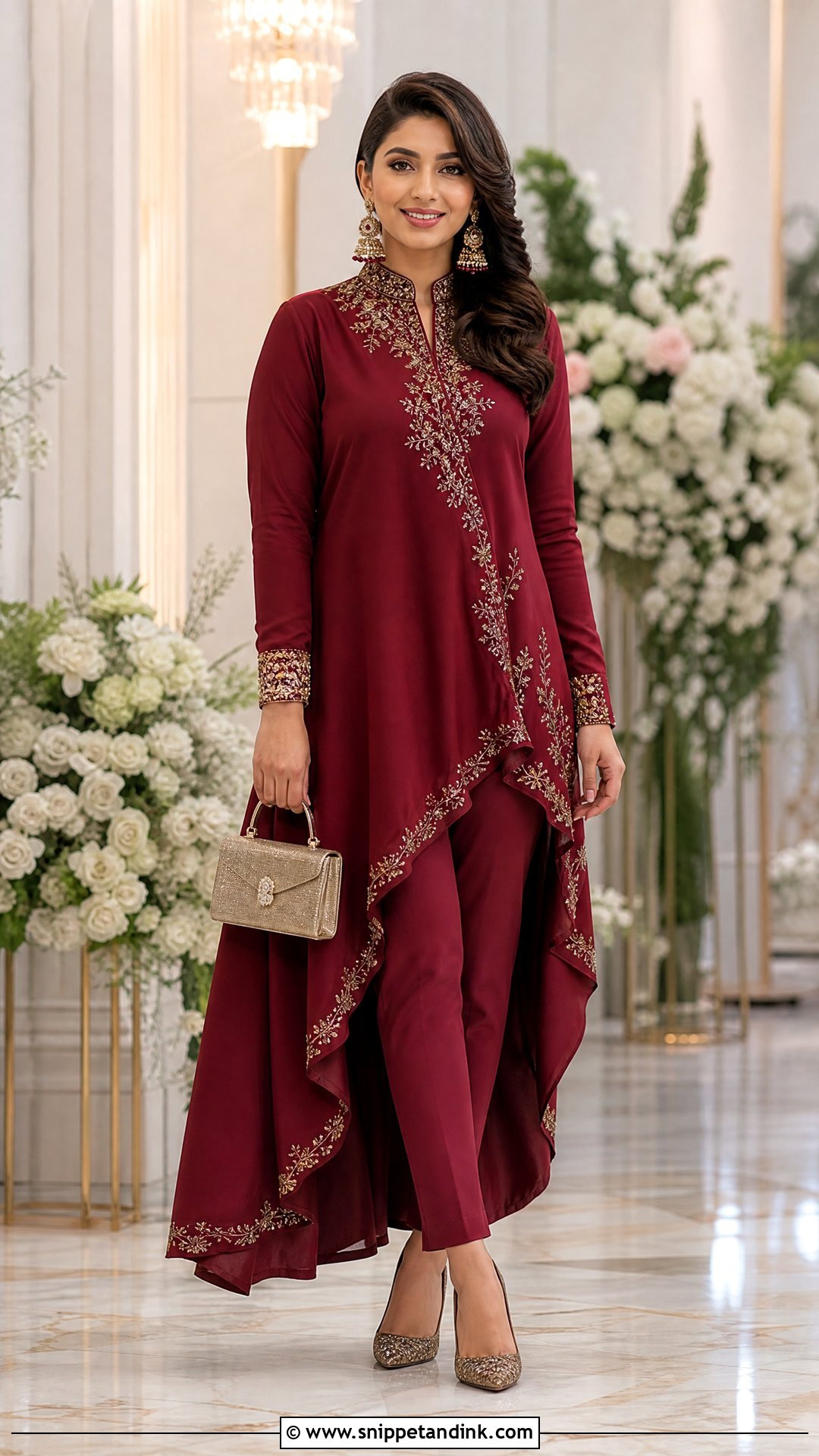
An asymmetric kurta over tailored pants is the quietest look here, and the most comfortable. A high-low hem, diagonal drape or one-sided train adds interest; slim cigarette pants or slight flares balance it. Keep the embroidery at the bodice and shoulder so the lower part stays light. The long side of the hem must clear the floor in your final shoes, or you will step on it the first time you turn. Tonal burgundy, navy or emerald with modern jhumkas, a cuff and pointed pumps gives it enough bridal weight, and a side-swept style shows off the neckline.
11. Indo Western Ruffle Saree With Belt
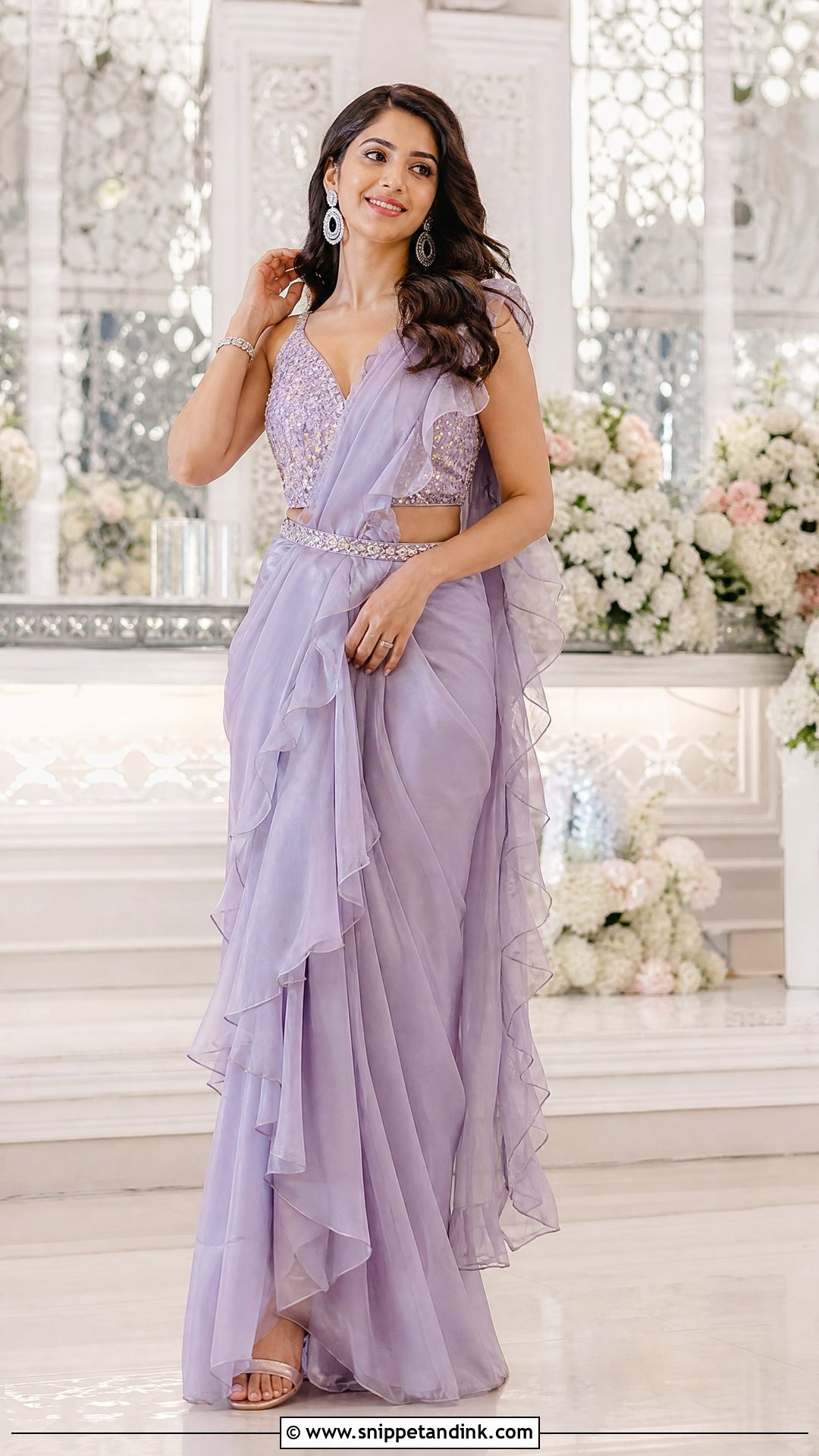
Ruffles add movement without heavy embroidery. A pre-draped georgette or organza sari with ruffles at the border or pallu, over a fitted sequin blouse or one-shoulder top, is the core. Since the ruffles and the blouse both add a lot of detail, I keep jewellery to crystal earrings and a slim bracelet. A metallic belt holds the waist so pleats don’t shift. Petite brides look best with narrow ruffles; taller brides can carry wider layers. Shorten the pallu if it trails, because ruffled edges catch on chair legs and stage decor.
12. Indo Western Palazzo Set With Long Jacket
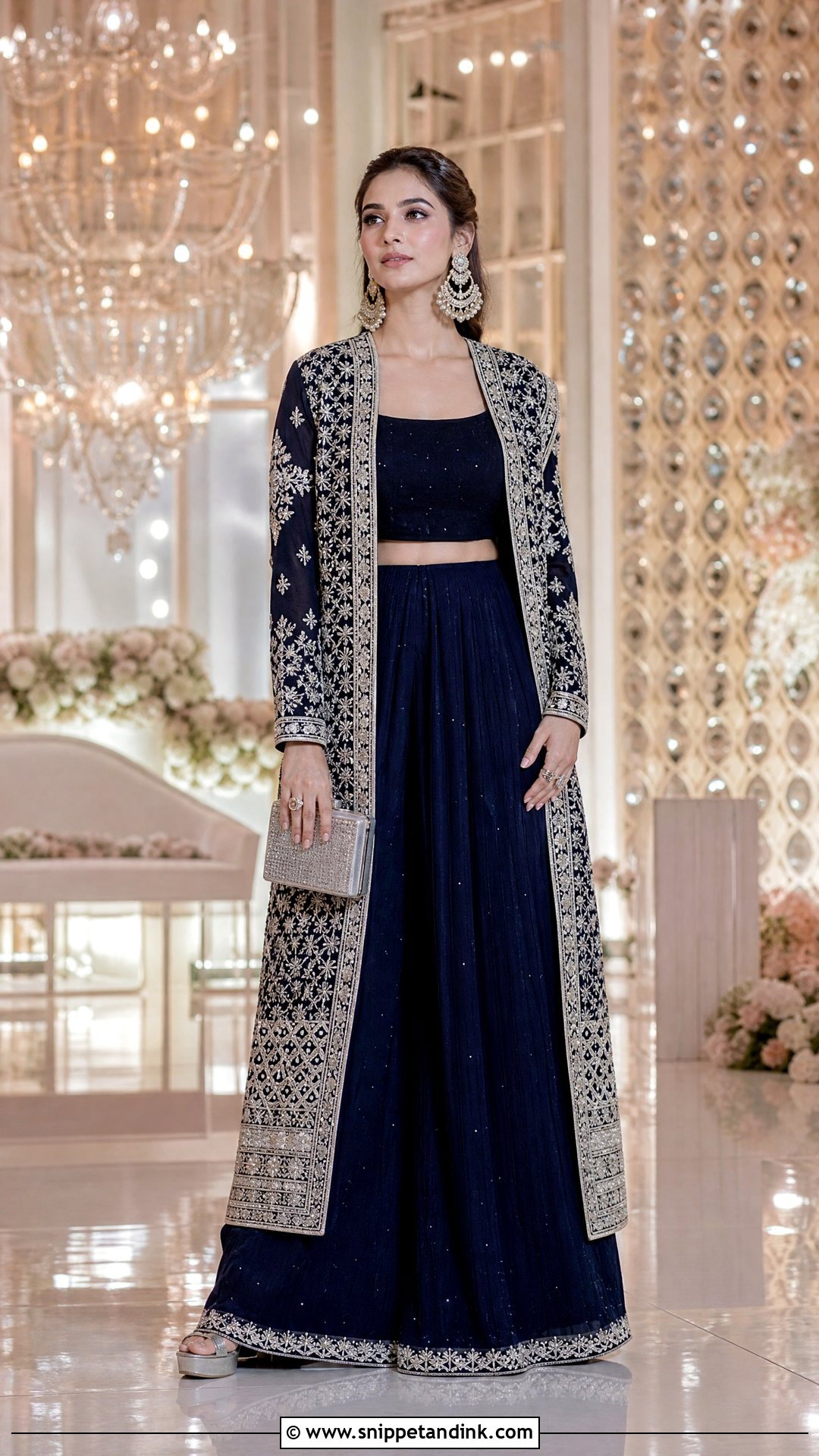
Wide-leg palazzo pants and a long jacket move almost like a lehenga at a fraction of the weight. A fitted blouse or sleeveless crop top goes under an embroidered open-front jacket. A clean shoulder and waist stop the layers from bulking up. Let the jacket carry the metallic work while the palazzos stay plain silk, crepe or georgette. Chandbalis, stacked rings, platform heels and a box clutch suit it. To look taller, I match the blouse and pants in one colour and let only the jacket contrast; and the palazzo hem must sit clear of the floor in your heels.
13. Indo Western Metallic Gown With Dupatta
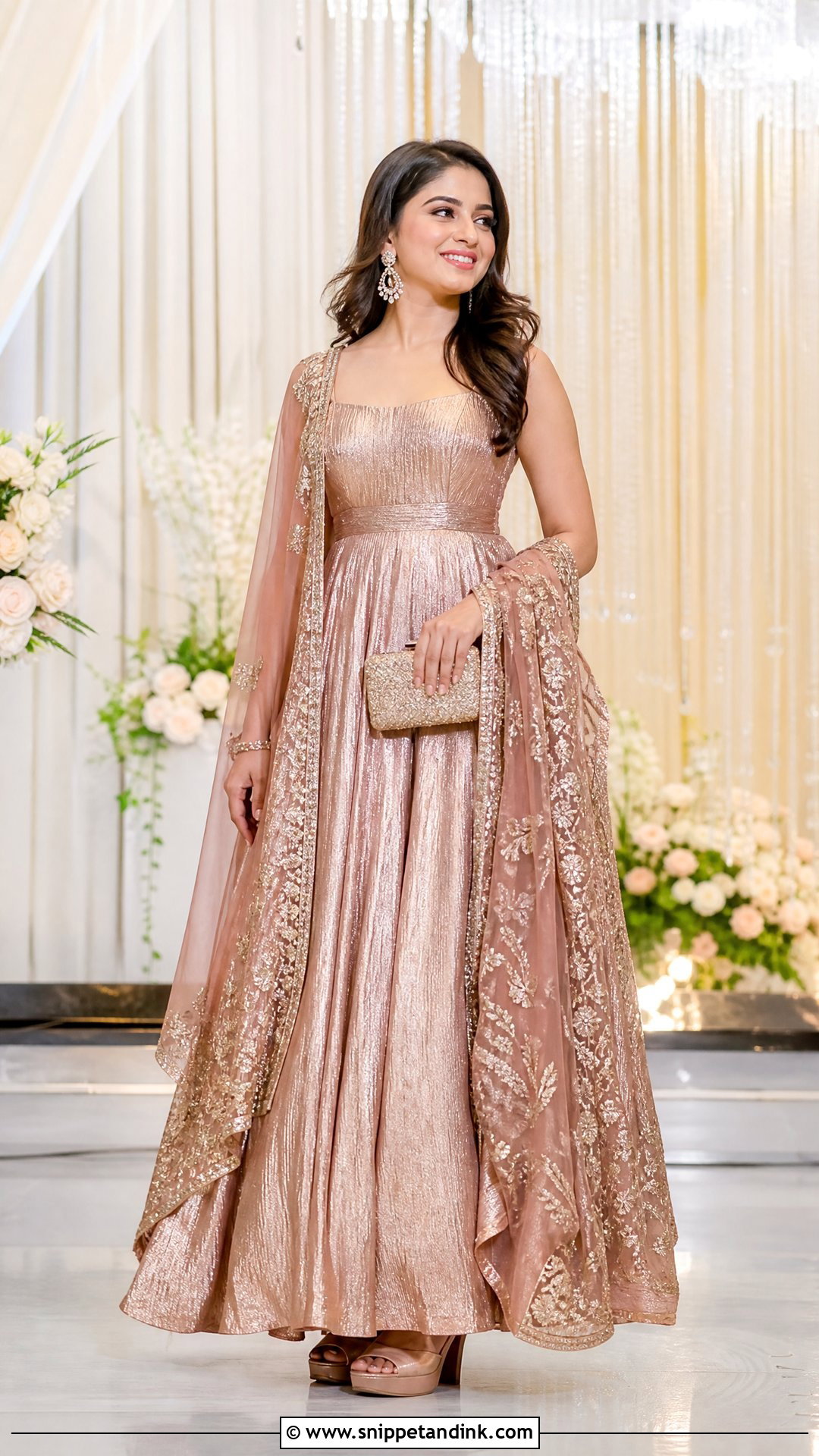
Silver, champagne, rose gold and pewter reflect stage light well, so a metallic gown with an embroidered dupatta gives red-carpet shine with an Indian anchor. Pick a fitted bodice and a gently flared skirt rather than a tight mermaid if you plan to perform. The dupatta goes over one shoulder and needs two hidden pins, one at the shoulder and one at the waist at the back. Reflective fabric bounces light onto your face, so I’d keep makeup softer and jewellery minimal. Mixed tones in your accessories look richer than matching everything exactly.
14. Indo Western Blazer With Lehenga Skirt
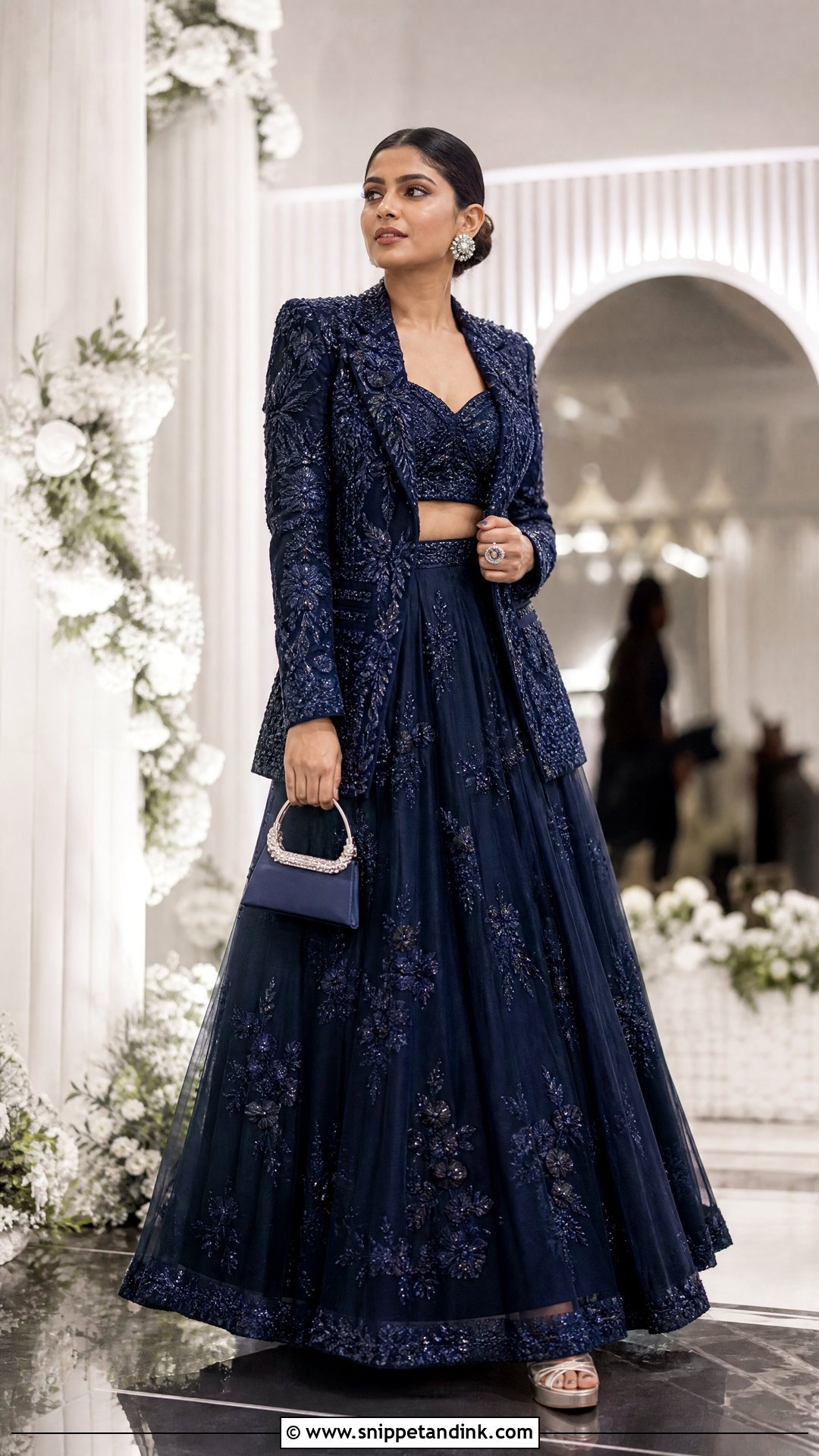
Pairing a tailored blazer with a lehenga skirt surprises people, which is the point. A fitted single-breasted jacket with embroidery on the lapels, shoulders or cuffs goes over a bustier, bralette blouse or fitted camisole. Keep the skirt light so the shoulder line doesn’t feel corporate. Ivory and gold, wine, sapphire or magenta in one colour looks deliberate. Blazers restrict the arms more than any other piece here, so I either leave it open for the dance or ask for a little stretch through the back. It should stop at the waist or upper hip.
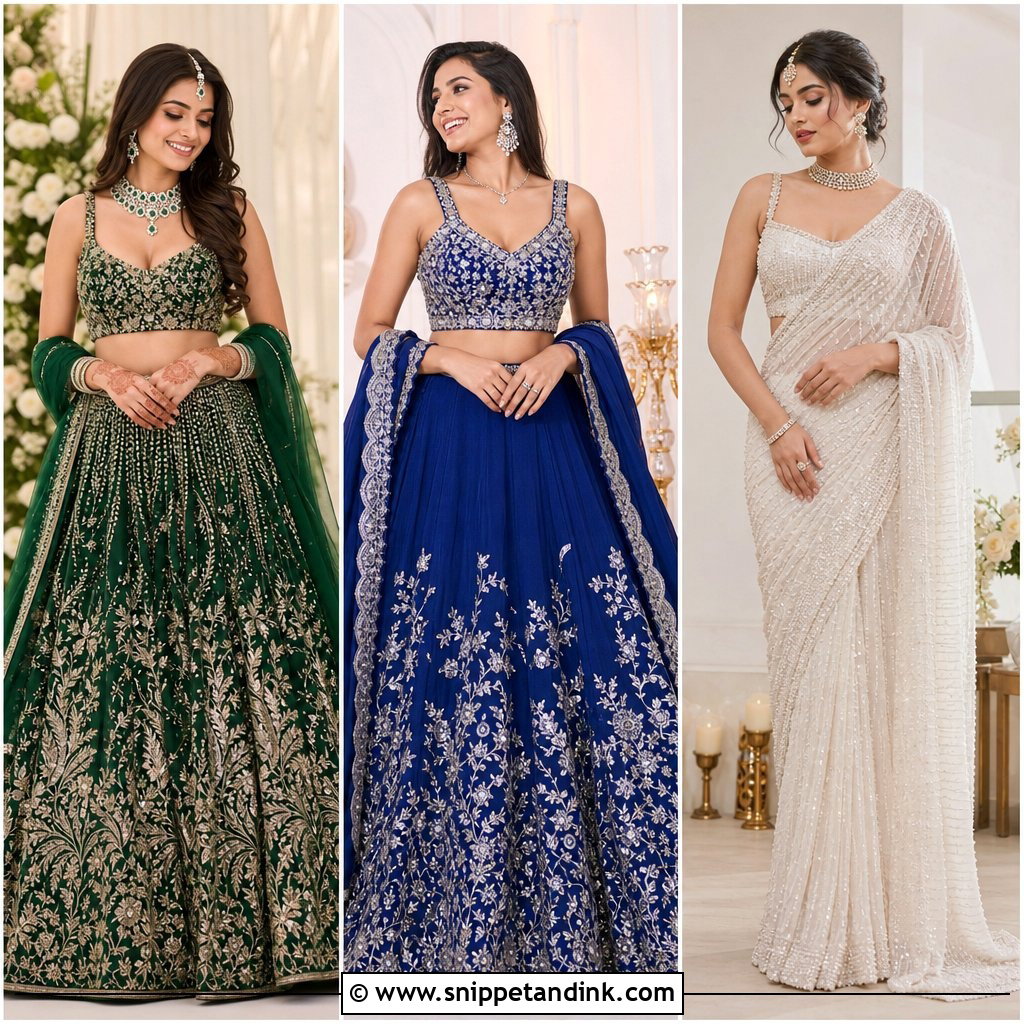
15. Indo Western Fishtail Skirt With Cape Blouse
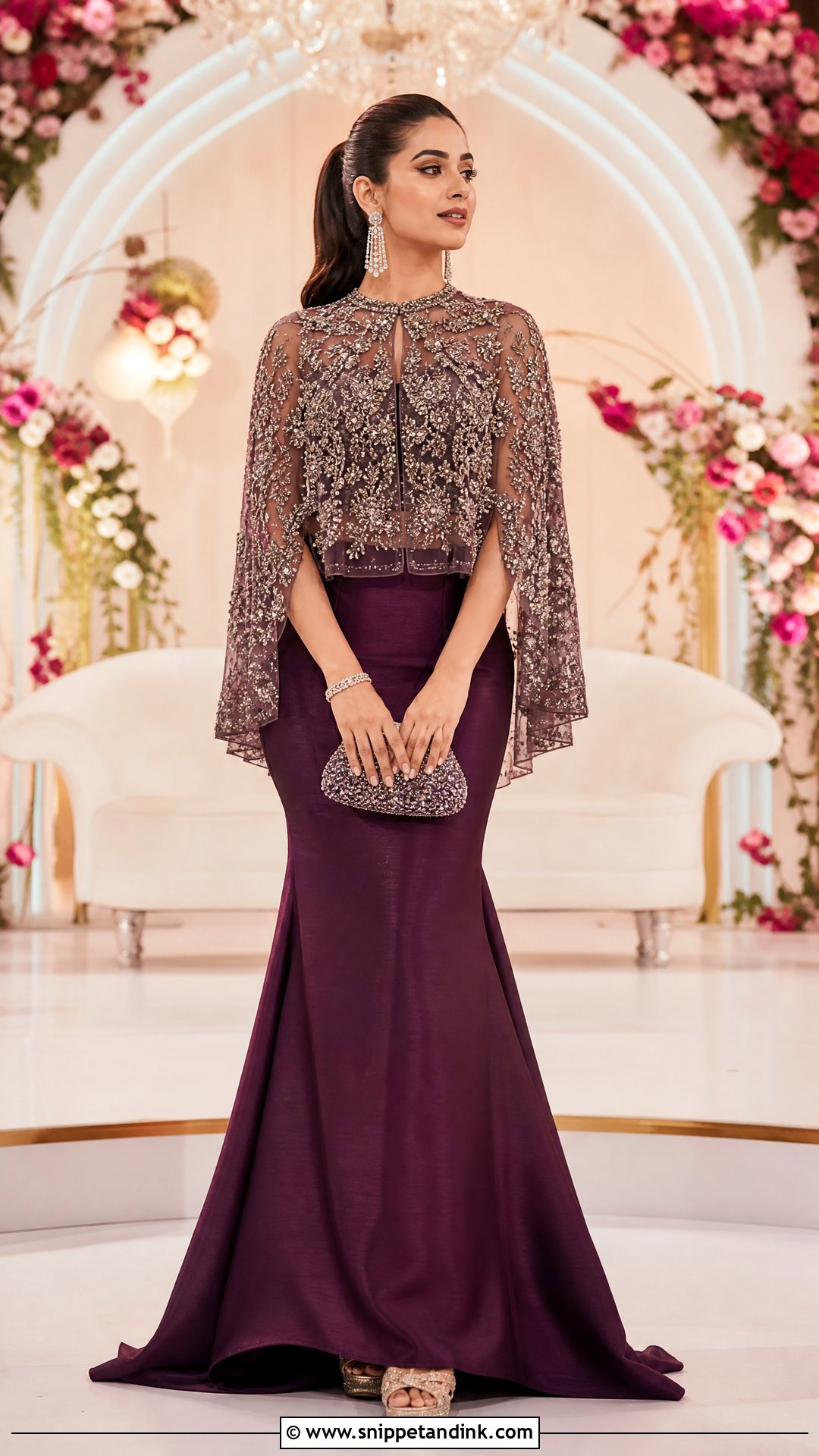
Fishtails look sculpted standing still and fight you once you start moving. Ask for a skirt that fits through the hips, flares at the knee and has a back slit or some stretch, and try your choreography in it before final alterations. A relaxed fishtail is far more practical than a tight one. A fitted blouse with sheer cape sleeves softens the top, and putting the embellishment above the waist draws the eye up. Long crystal earrings, a slim bracelet, platform sandals and a sleek ponytail finish it.
16. Indo Western Anarkali Gown With Belt
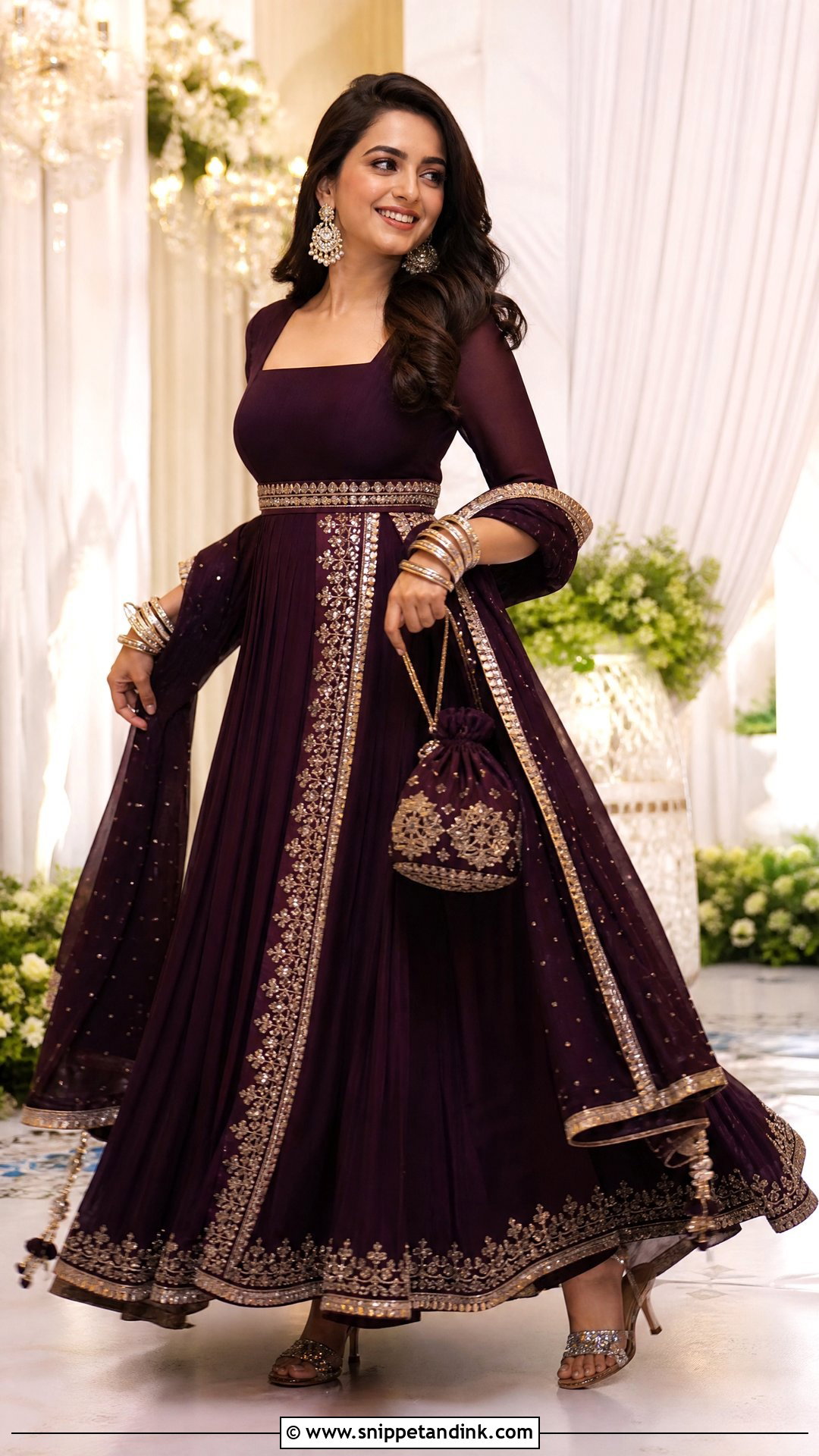
An Anarkali with a structured bodice and a jewelled belt at the natural waist looks modern and opens well on turns. A square neck, corset seaming or asymmetric shoulder updates the shape. Keep embroidery on the bodice, sleeves or hem so the panels stay light enough to swirl. The belt is doing real work here, controlling the volume, so I fit the belt and gown together. Sheer fitted sleeves add coverage. Hem it while wearing the exact shoes, since an Anarkali that touches the floor gets stepped on the moment you spin.
17. Indo Western Crop Top With Flared Pants
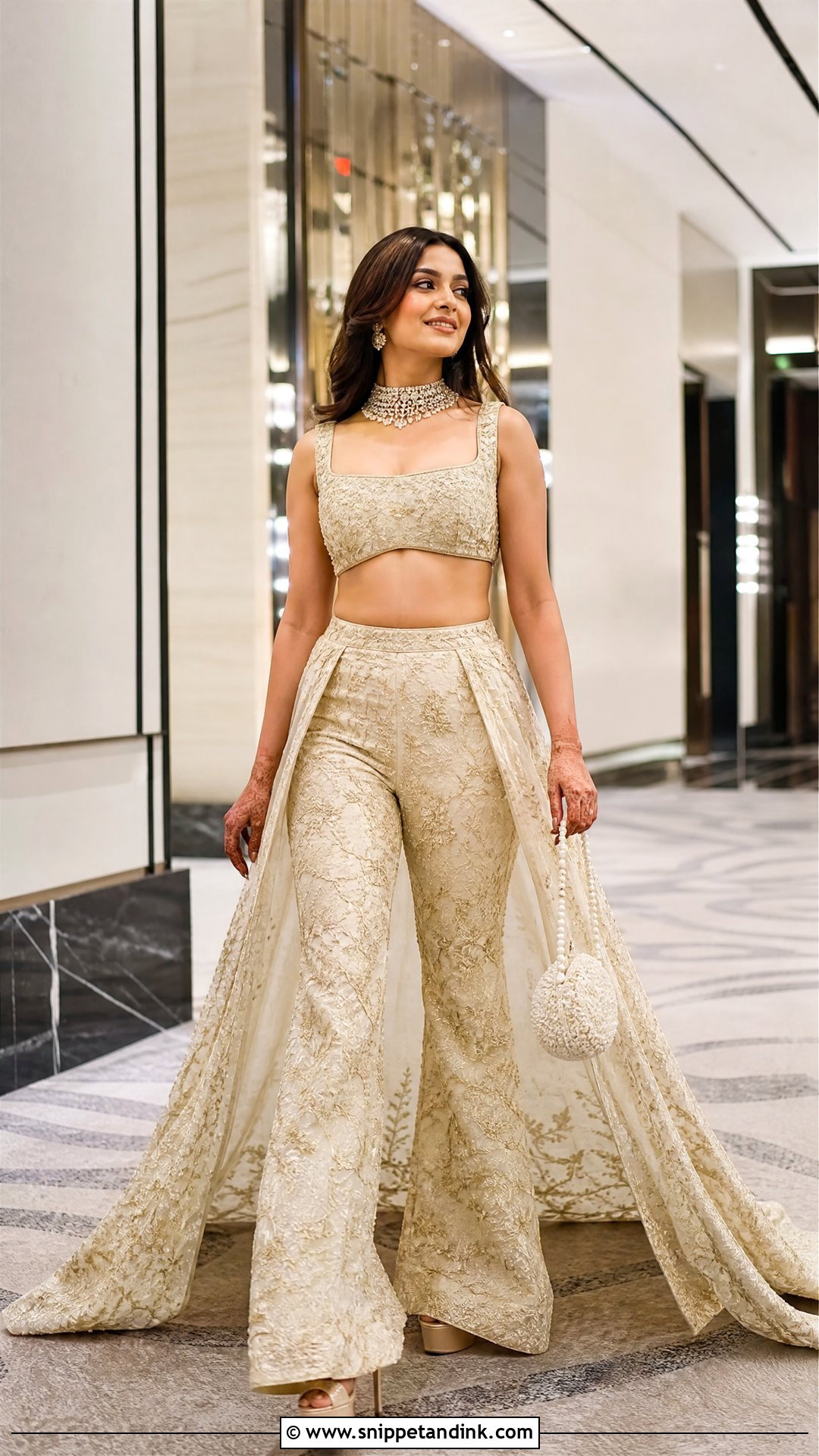
A crop top and flared pants give the impact of a lehenga with much less fabric. High-waisted trousers should be smooth through the hips before they open into a wide flare. The top can carry mirror work, sequins or pearls, and an attached back train adds drama. A shoulder scarf gives coverage without a full dupatta. One colour from top to hem looks tallest. Hem the flares long enough for a clean line but short enough not to catch your heel, which is a fine balance I always settle with the shoes on.
18. Indo Western One-Shoulder Lehenga
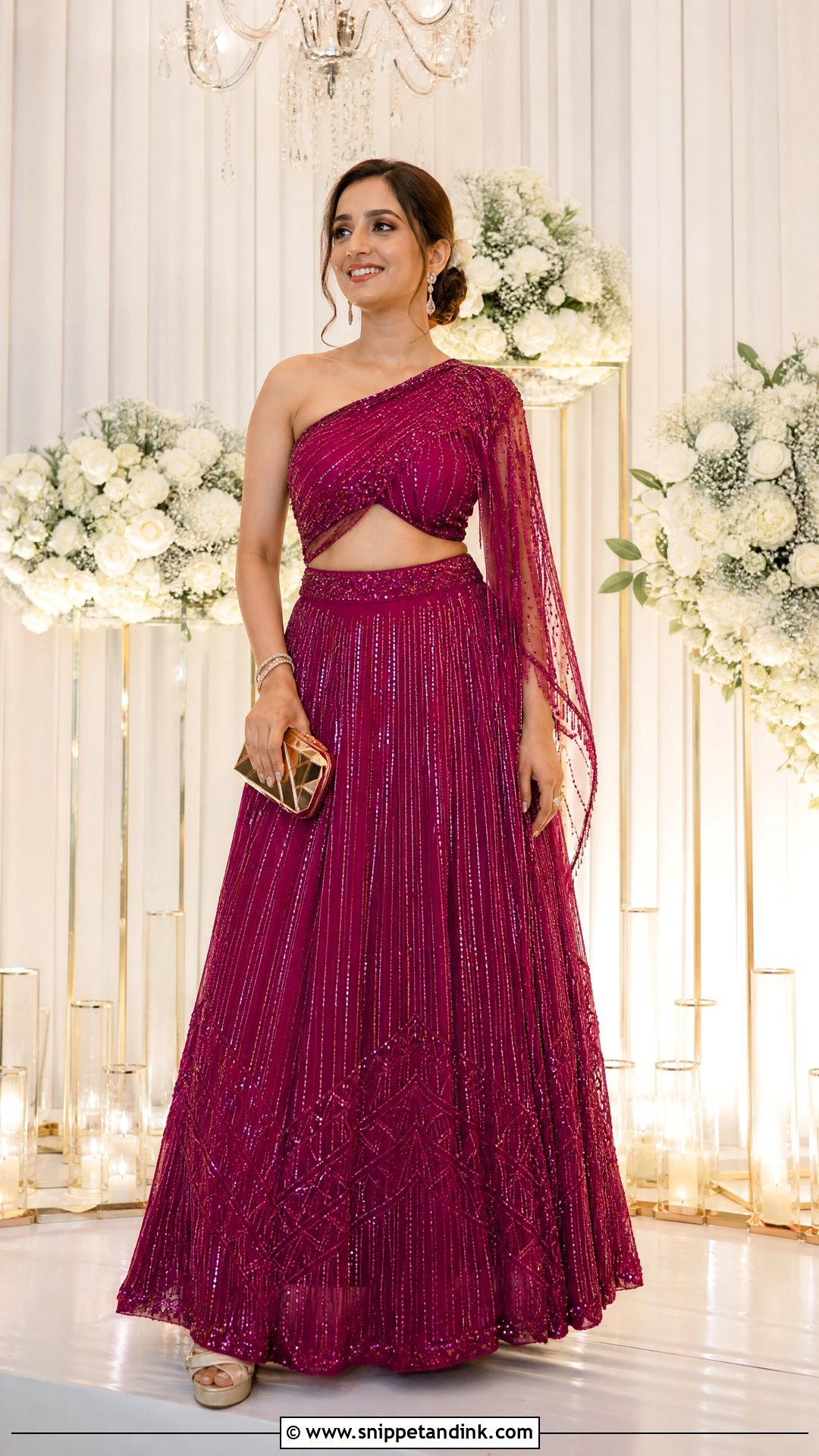
One-shoulder blouses give a lehenga instant eveningwear polish, and they need serious internal support. I ask for boning on the strapless side and silicone grip tape along the neckline, then have the bride jump and spin in the fitting room. The shoulder can extend into a short cape or attached pallu, removing the dupatta. A light skirt with tonal embroidery balances a detailed blouse. Sweep the hair away from the decorated shoulder and keep to sleek drops, a few bracelets and platform sandals.
19. Indo Western Saree With Structured Jacket
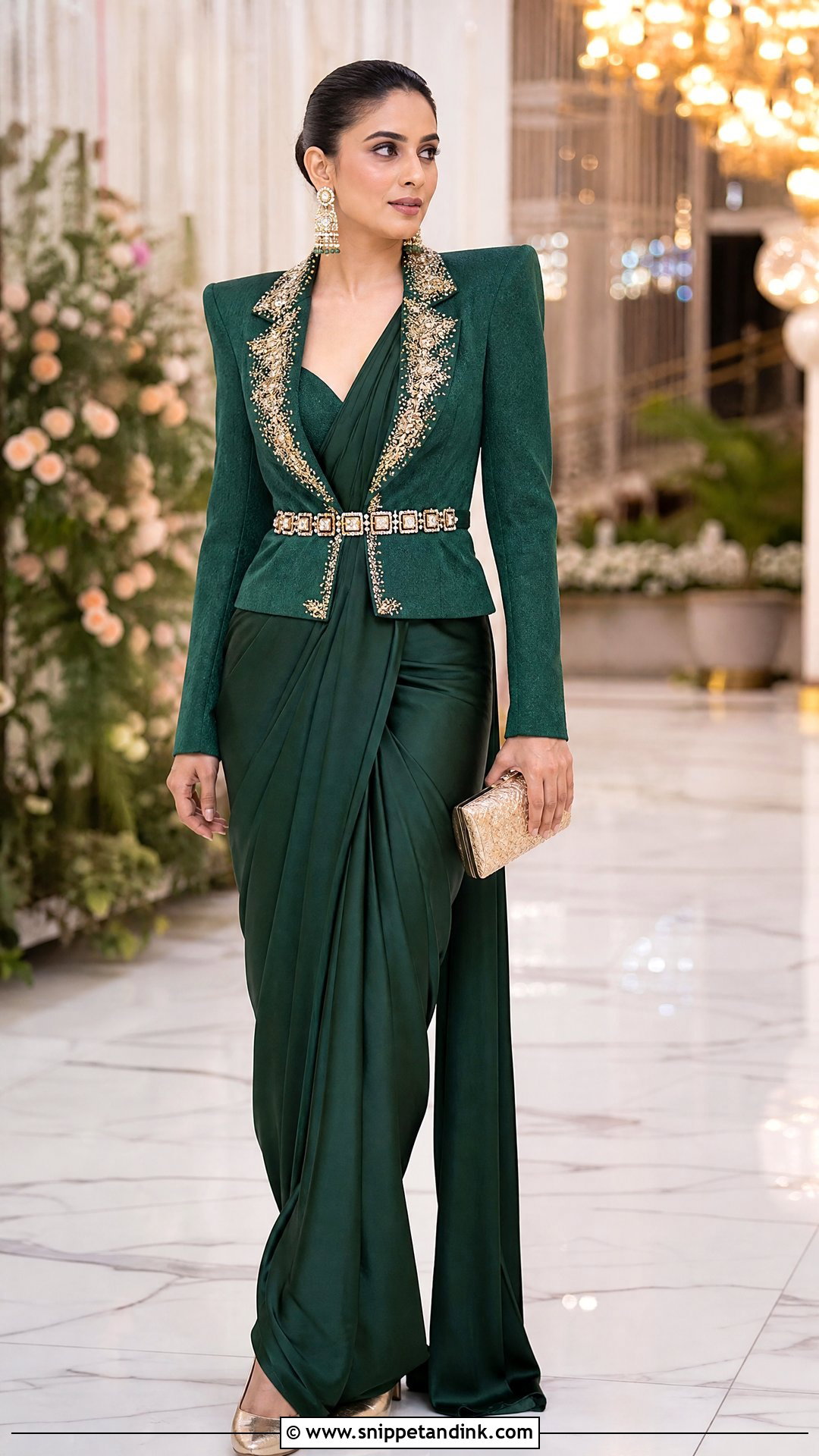
A structured cropped jacket over a pre-draped or neatly pleated sari makes a formal sangeet entrance. Satin, crepe or light silk works under it. Waist length shows the pleats; a slightly longer jacket covers more of the torso. Repeat one metallic accent across jacket, border and belt. Tuck and pin the pallu under the jacket so it stays neat, and check that you can lift your arms fully. Skip the necklace if the collar is worked, and add statement earrings and block-heel pumps.
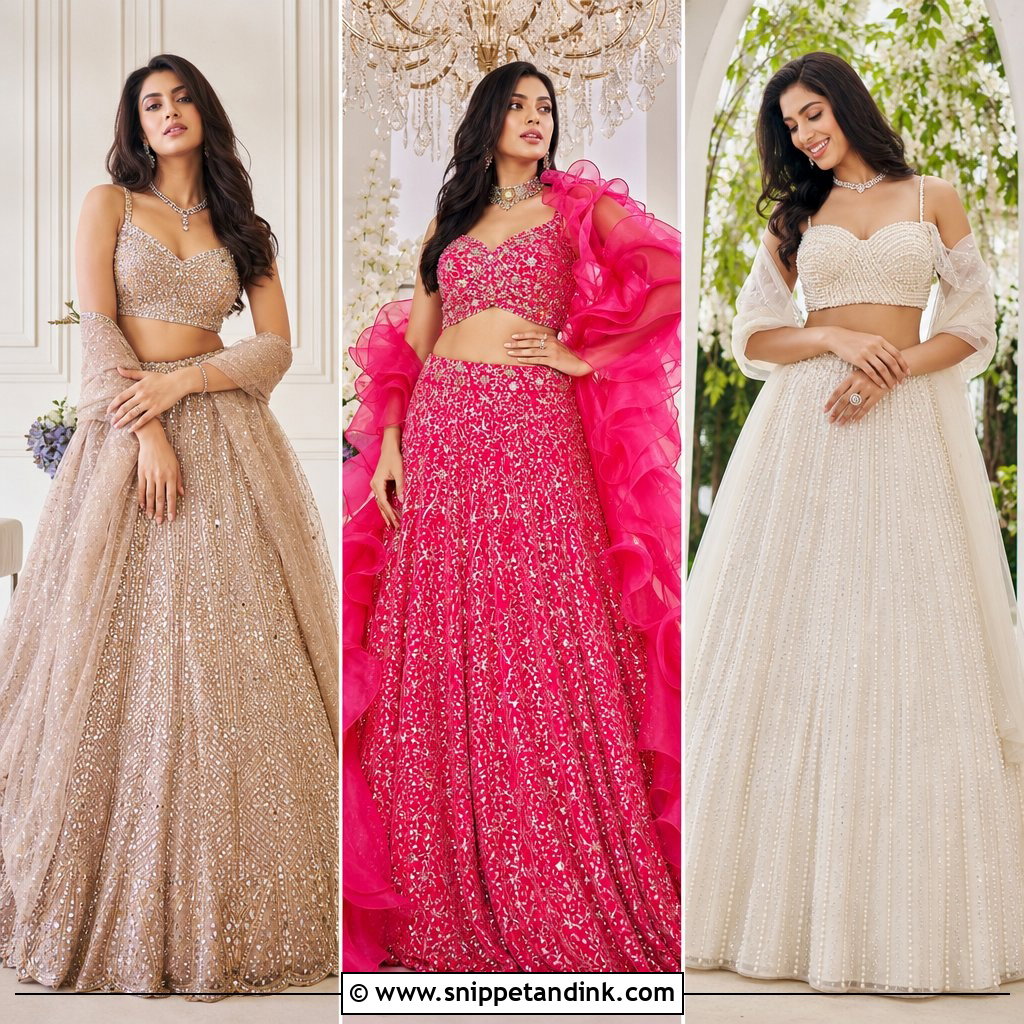
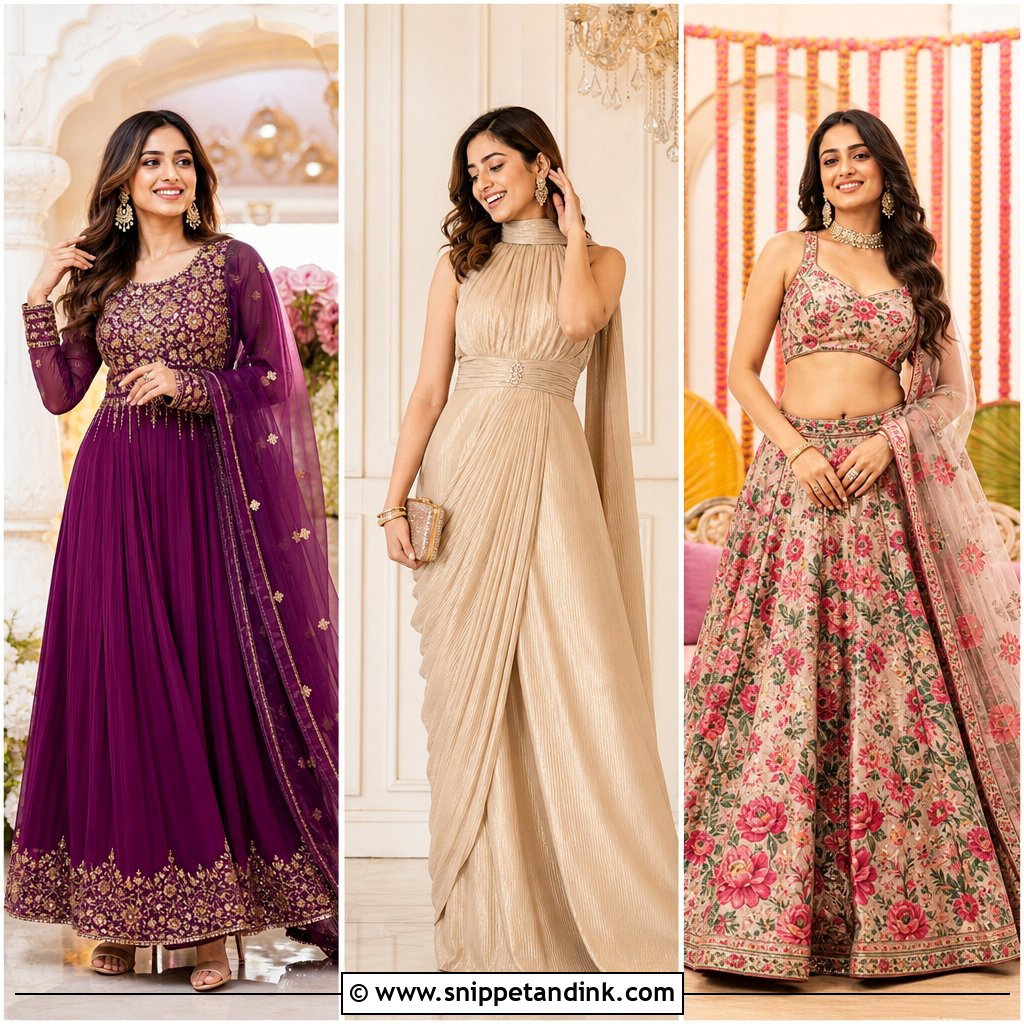
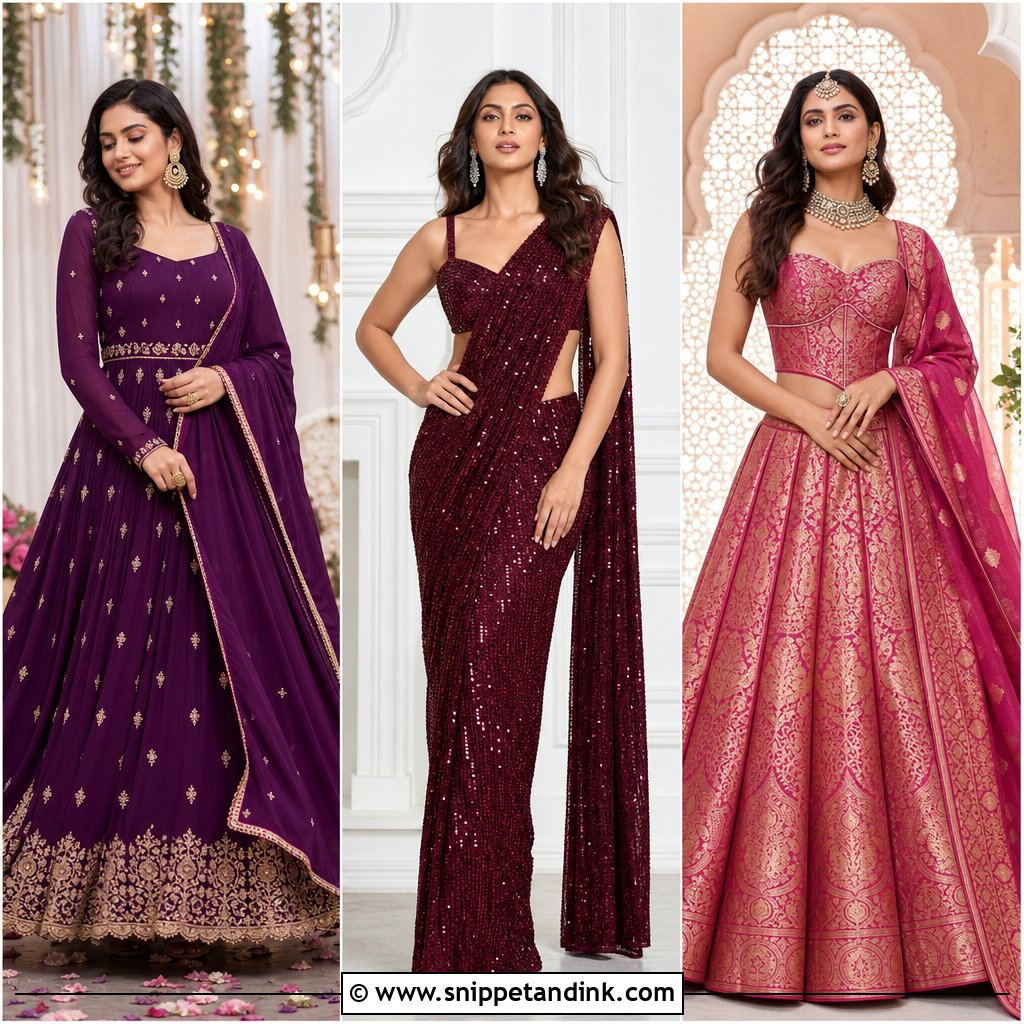
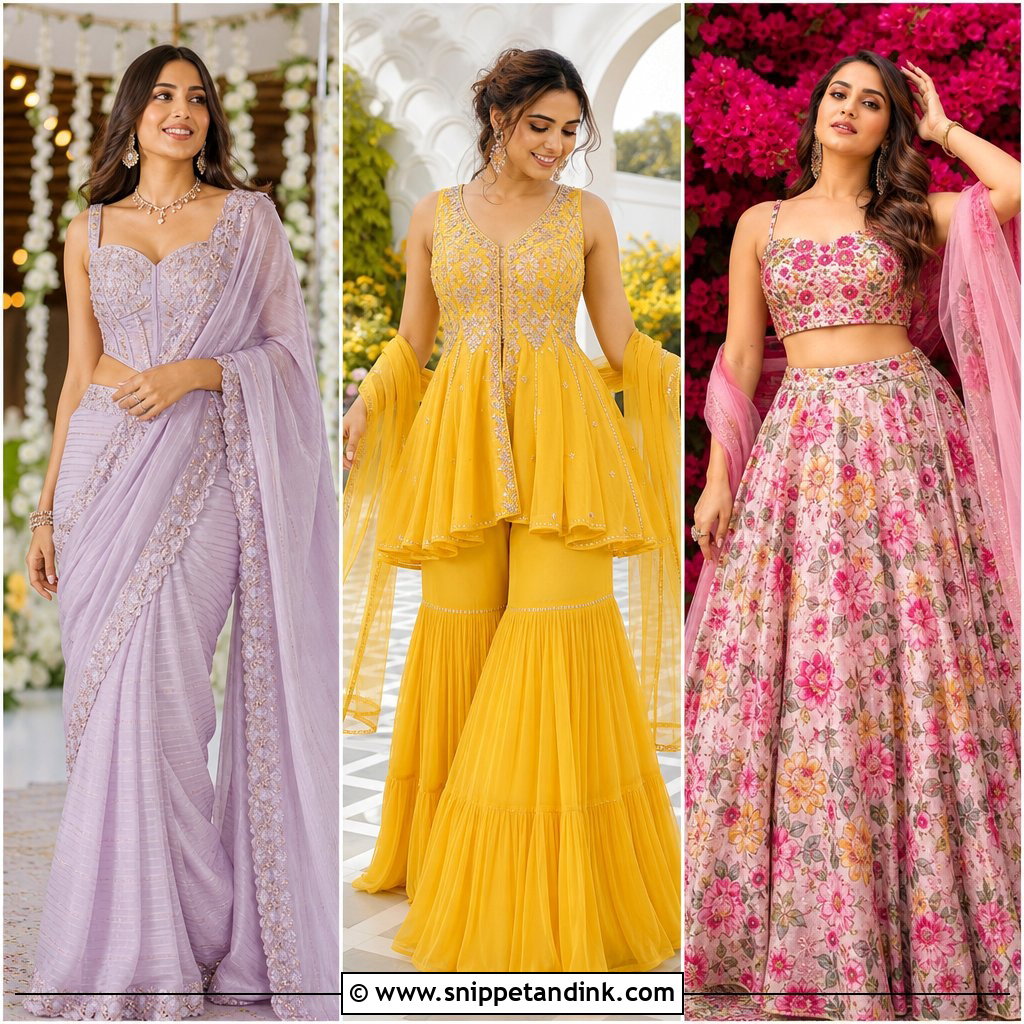
20. Indo Western Mirror Work Co-Ord Set
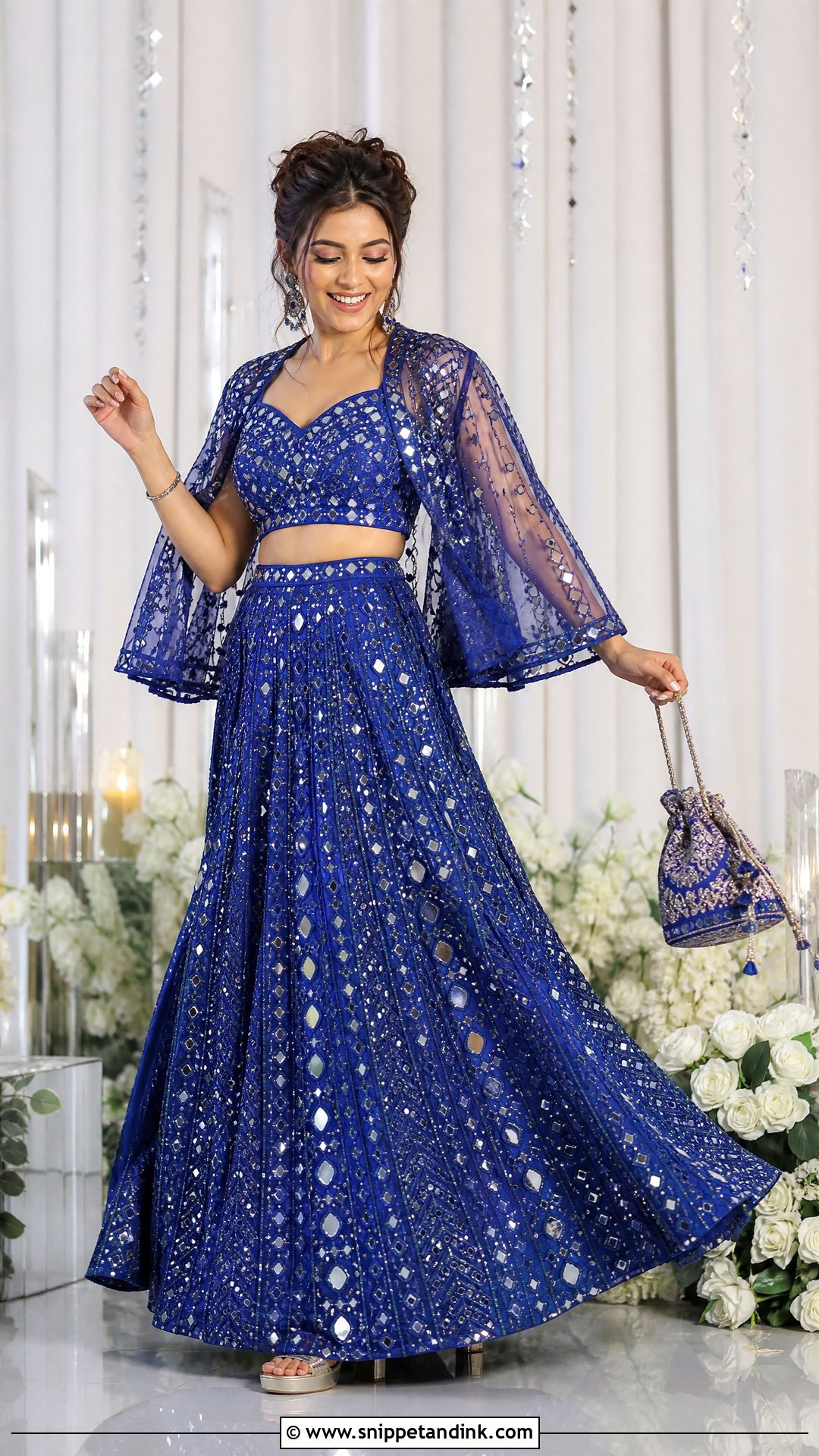
Mirror work bounces stage light everywhere, so a co-ord set can replace several heavy layers. Pair a fitted blouse with a midi or floor skirt, or with wide-leg pants. A sheer cropped cape or embroidered shrug adds bridal weight. Small mirrors are lighter and snag less than big ones, and every embellished area should have a soft lining underneath; mirror edges rub skin raw over a long night. Cobalt, fuchsia, emerald and violet suit it, with simple earrings, platform sandals and a potli, and very little extra jewellery.
21. Indo Western High-Low Tunic With Dhoti Pants
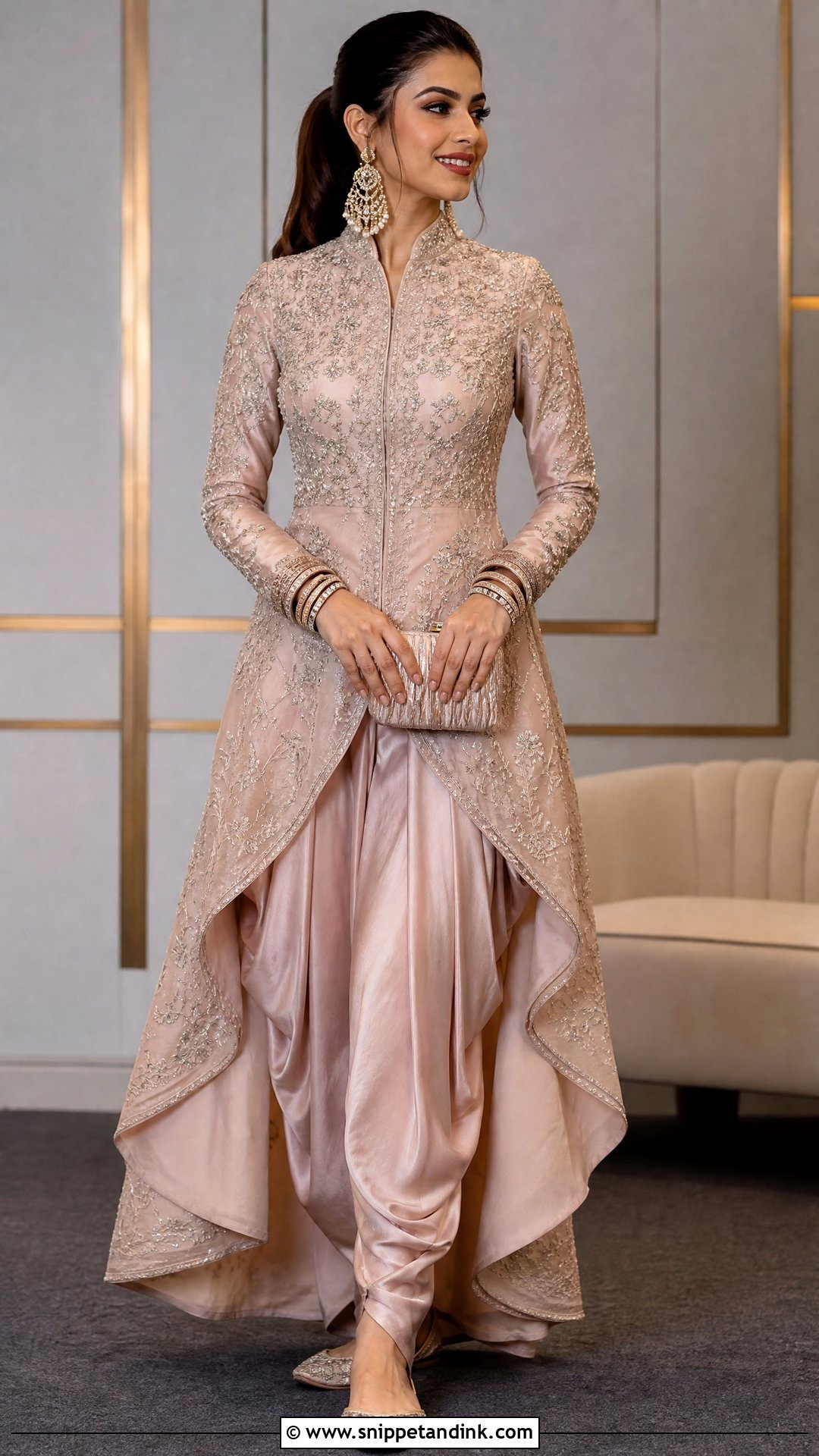
A short front and long back show off dhoti draping while keeping the drama of a train. Fit the tunic through the upper body, put embroidery at the neckline and waist, and leave the lower section plain. The back panel should hang a few inches above the floor so a quick step back doesn’t trap it under your heel. Taller brides can carry a longer train. Chandeliers, stacked cuffs, embellished juttis and a sleek bun or high ponytail balance the volume below.
22. Indo Western Sequin Pants With Peplum Top
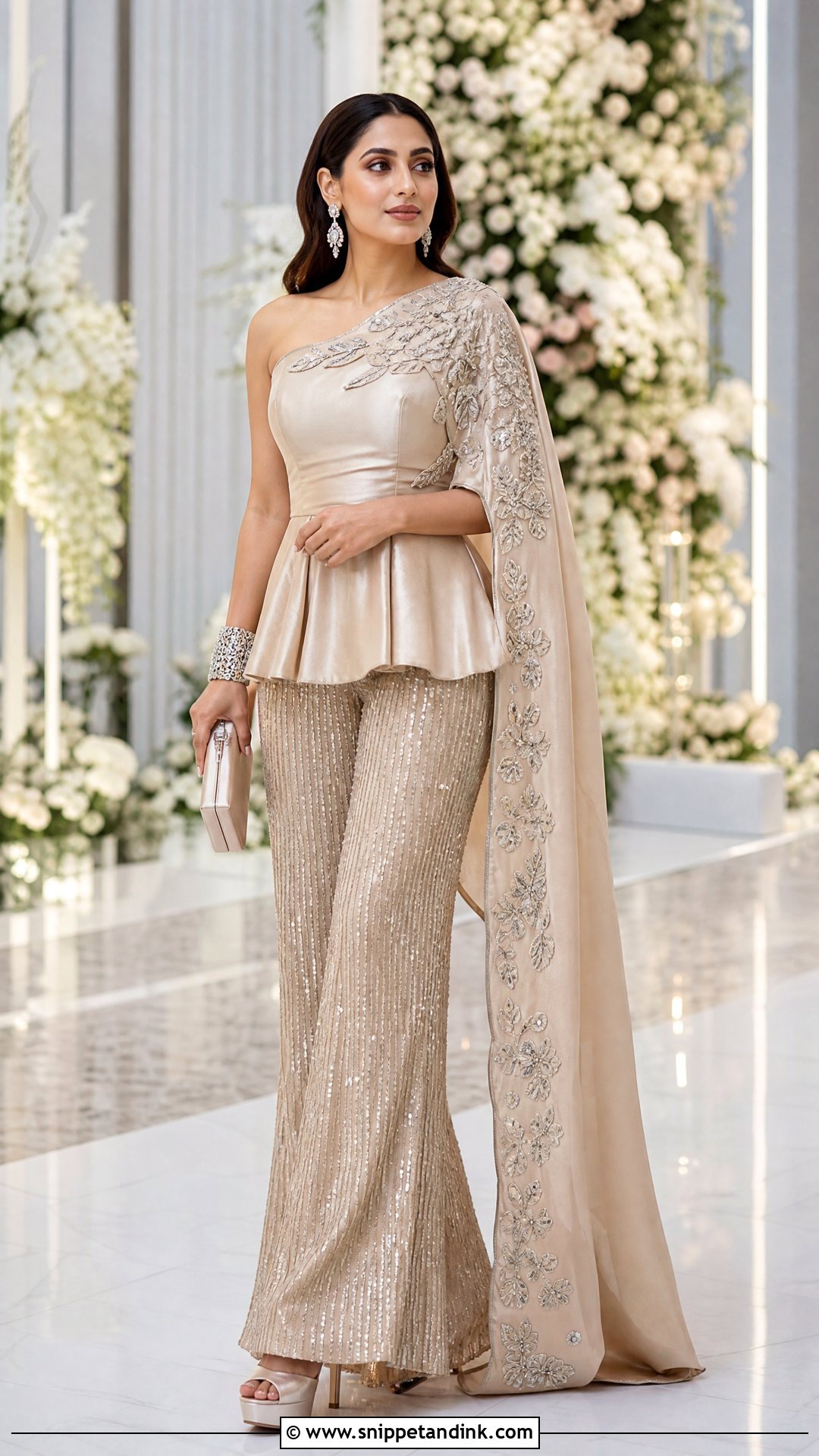
Sequin trousers under a structured peplum give sparkle with complete freedom for leg-heavy choreography. The pants need a smooth full lining or the sequins will scratch your legs through the evening. Choose a straight or gently flared cut, and a peplum with an embroidered neckline or a one-shoulder drape. One colour throughout lengthens the line. Skip loose bracelets, which catch on sequins. For less shine, keep the sequins on the pants and switch to a satin top.
23. Indo Western Velvet Skirt With Corset Jacket
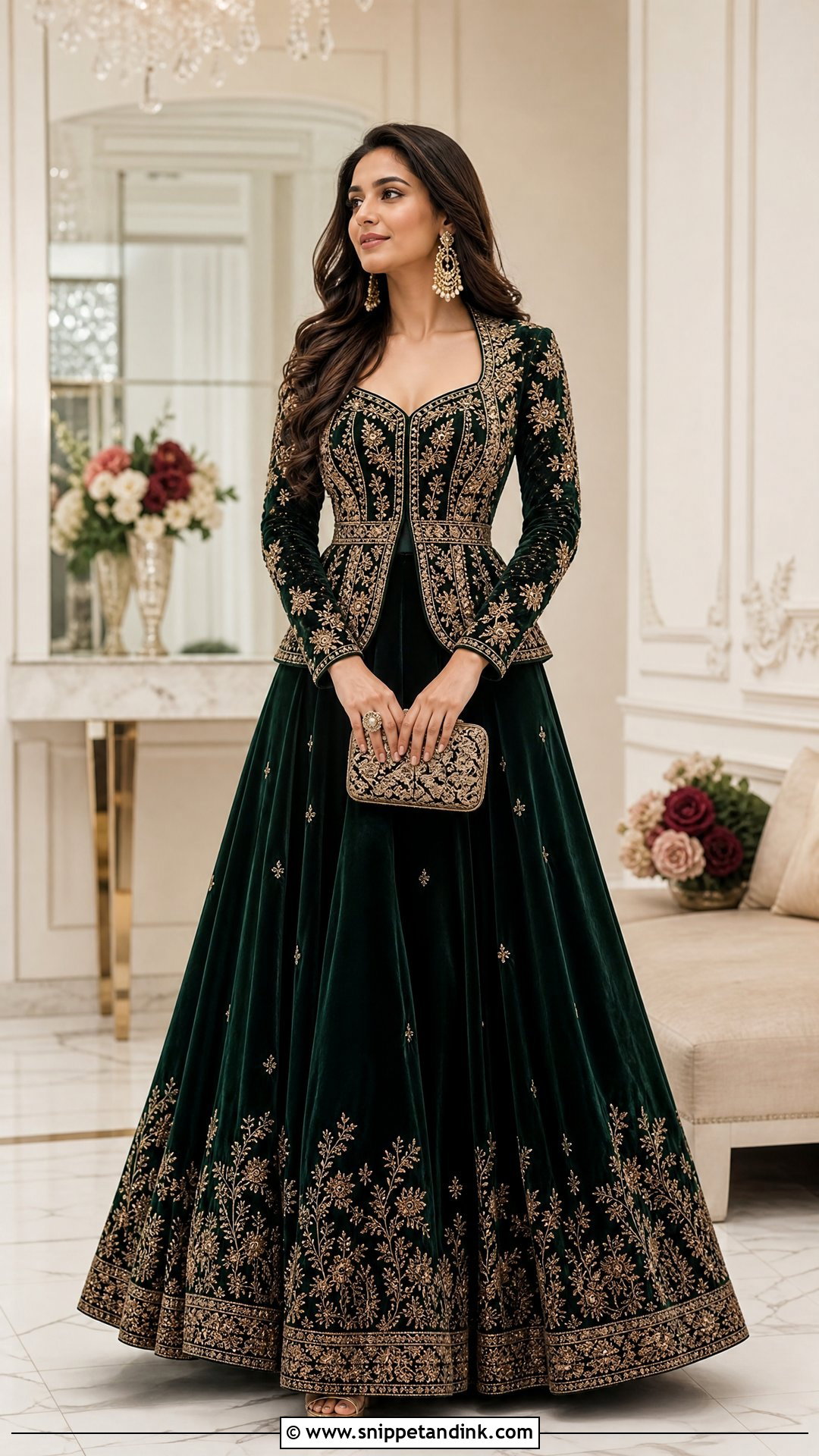
Velvet makes sense for a winter sangeet or a heavily air-conditioned hall, and almost nowhere else. A gently flared velvet skirt is enough, since the pile already looks heavy. Pair it with a corset jacket with a front closure and gold or silver embroidery in burgundy, forest green, navy or aubergine. Velvet traps heat once you start dancing, so I ask for a breathable cotton lining and nothing extra underneath. A waist-length jacket keeps the proportions clean. Antique-finish earrings, a cocktail ring and a brocade clutch suit it.
24. Indo Western Organza Skirt With Bodysuit
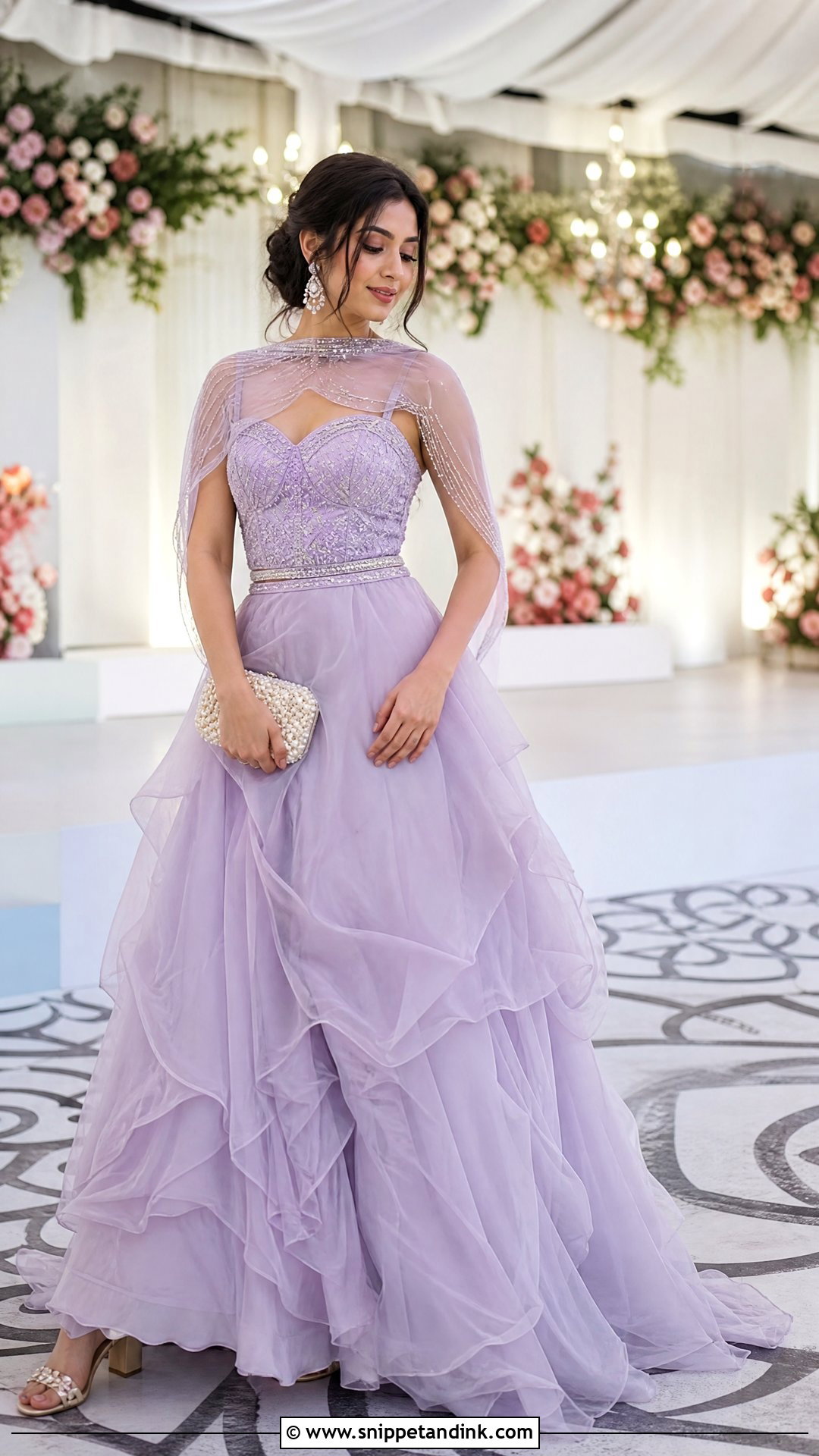
A bodysuit solves the problem of a blouse riding up mid-dance, since it stays tucked into the skirt. Pair an embellished bodysuit (pearls, threadwork, sequins or an illusion neckline) with a layered organza skirt that has controlled volume and a lining so it isn’t see-through. A detachable cape or slim belt links the two. Check that the skirt waistband sits flat over the bodysuit snaps; bulky closures show through organza. Lavender, powder blue, blush and mint feel soft, while navy or berry has more contrast at night.
25. Indo Western Draped Gown With Dupatta
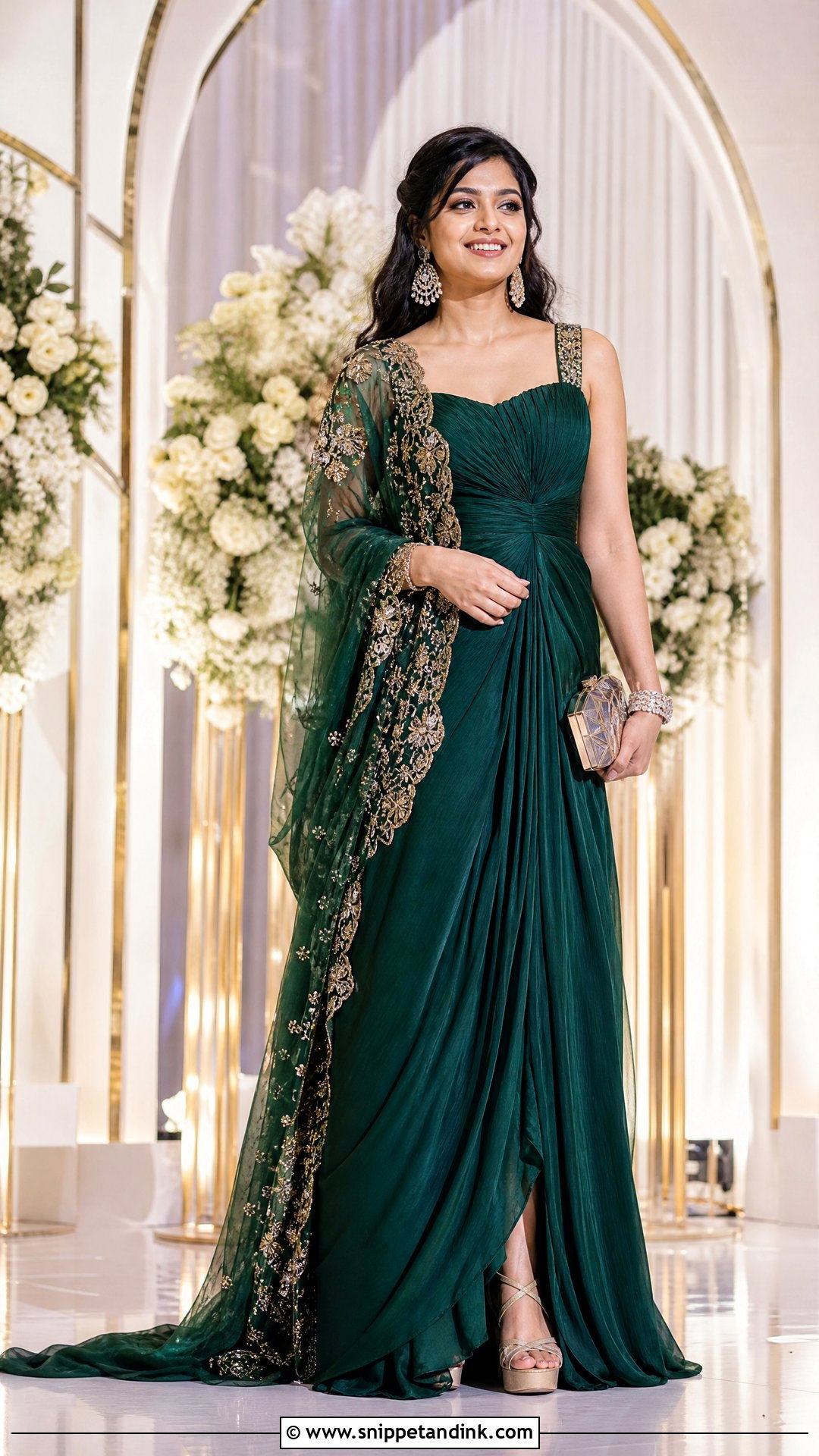
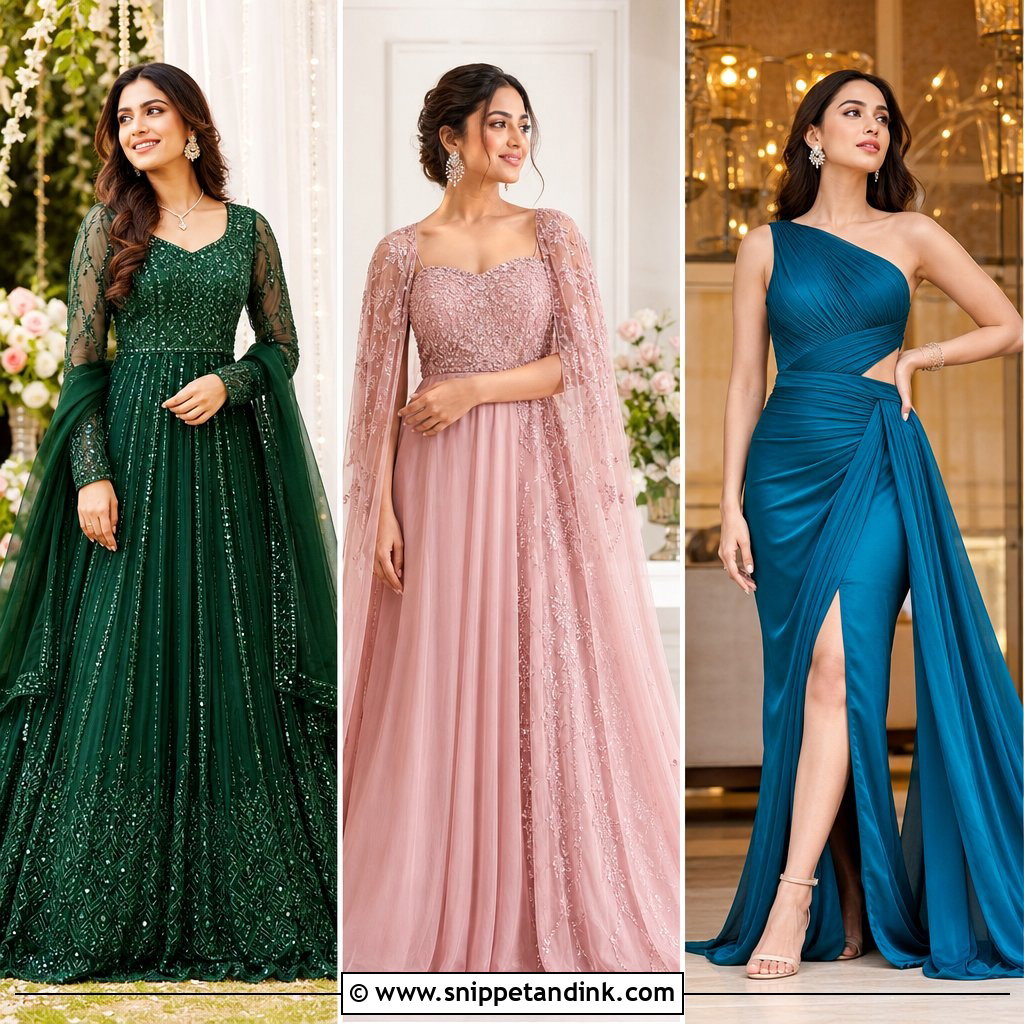
A draped gown with a traditional dupatta suits brides who want one clean line. Look for gathers at the waist, a sculpted bodice and a skirt wide enough for dancing. The embroidered dupatta goes over one shoulder, pinned at the shoulder and at the waist. Emerald, plum, midnight blue and ruby give a luxurious sangeet palette, with metallic accents for the evening. Keep the front hem slightly off the floor, especially if there is a train at the back. A statement necklace or long earrings and platform sandals finish it.
Coordinating With Your Partner Without Twinning
On stage you will be photographed side by side, so your partner’s outfit is part of your look. Exact matching tends to flatten both outfits in photos. I’d rather link the two through one shared element.
- Share one colour: if your lehenga is emerald, an emerald pocket square, safa or embroidery on an ivory sherwani or bandhgala ties you together.
- Match the metal: gold zari with gold buttons, silver with silver. Mixed metals across a couple look accidental.
- Balance the weight: a heavily worked bridal outfit next to a plain suit looks unbalanced, so add some embroidery or texture to his side.
- Check the stage backdrop: if the wall is hot pink florals, a pink outfit will disappear into it in photos.
Sangeet stages usually have strong coloured lighting, and warm amber and purple washes change how fabric reads. Ask the decor team what lighting they plan, and look at your fabric swatches under a similar coloured bulb if you can. Pastels often look washed out under colour, while jewel tones and metallics hold up well.
Fusion That Survives the Last Song
The fusion outfits that work best combine Indian handwork, bridal impact and real movement. A cape lehenga, pant saree, embroidered jumpsuit, jacket set or draped gown can all work, and tailoring will make the biggest difference to every one of them. Think about the venue, the stage lights, the season and your choreography before you choose fabric or volume. Then do the whole routine in the finished outfit and shoes. If you can get through it without tugging at anything, you are ready for the stage.
You'll Like These Ideas:


Leave a Reply