
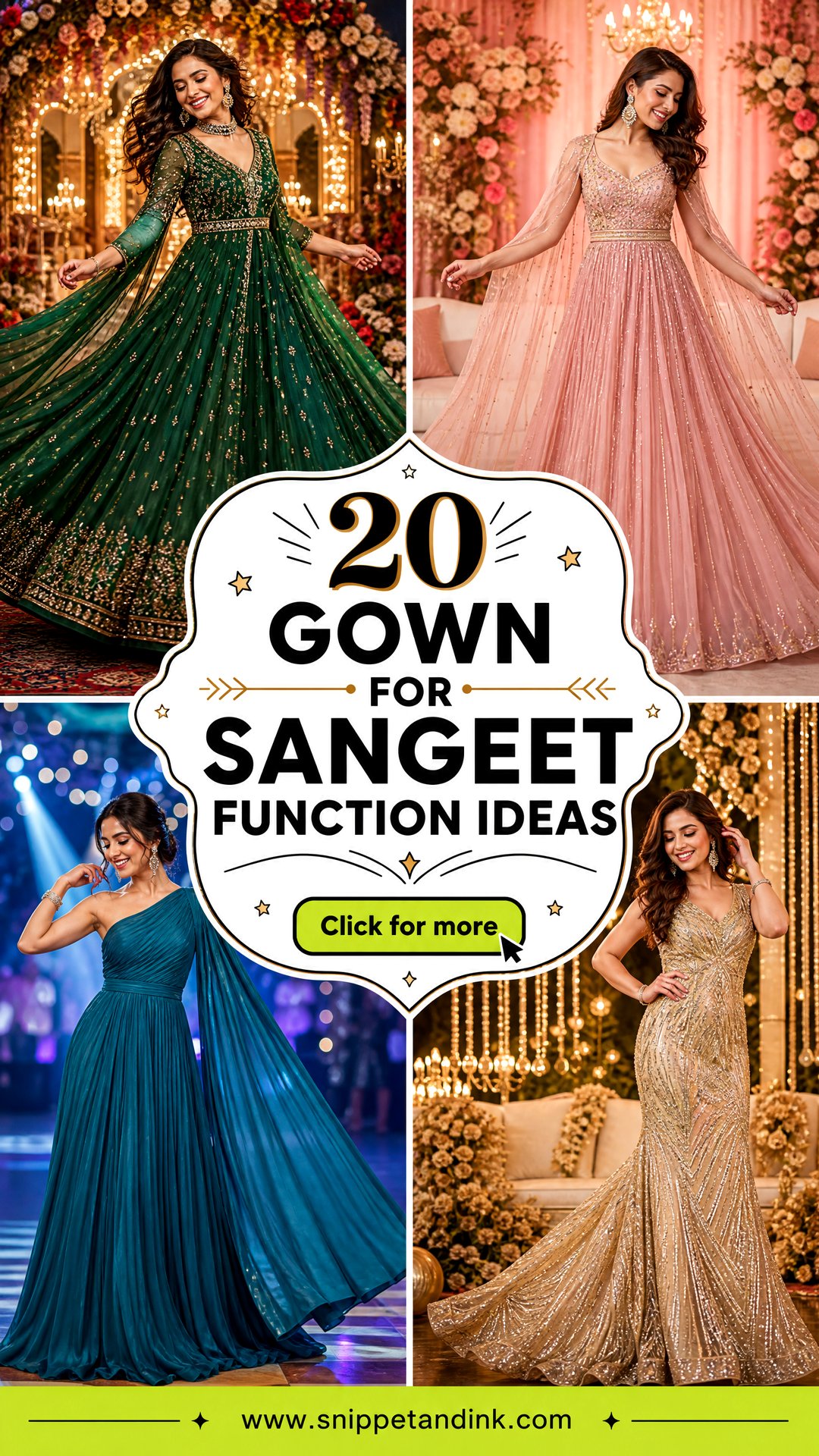
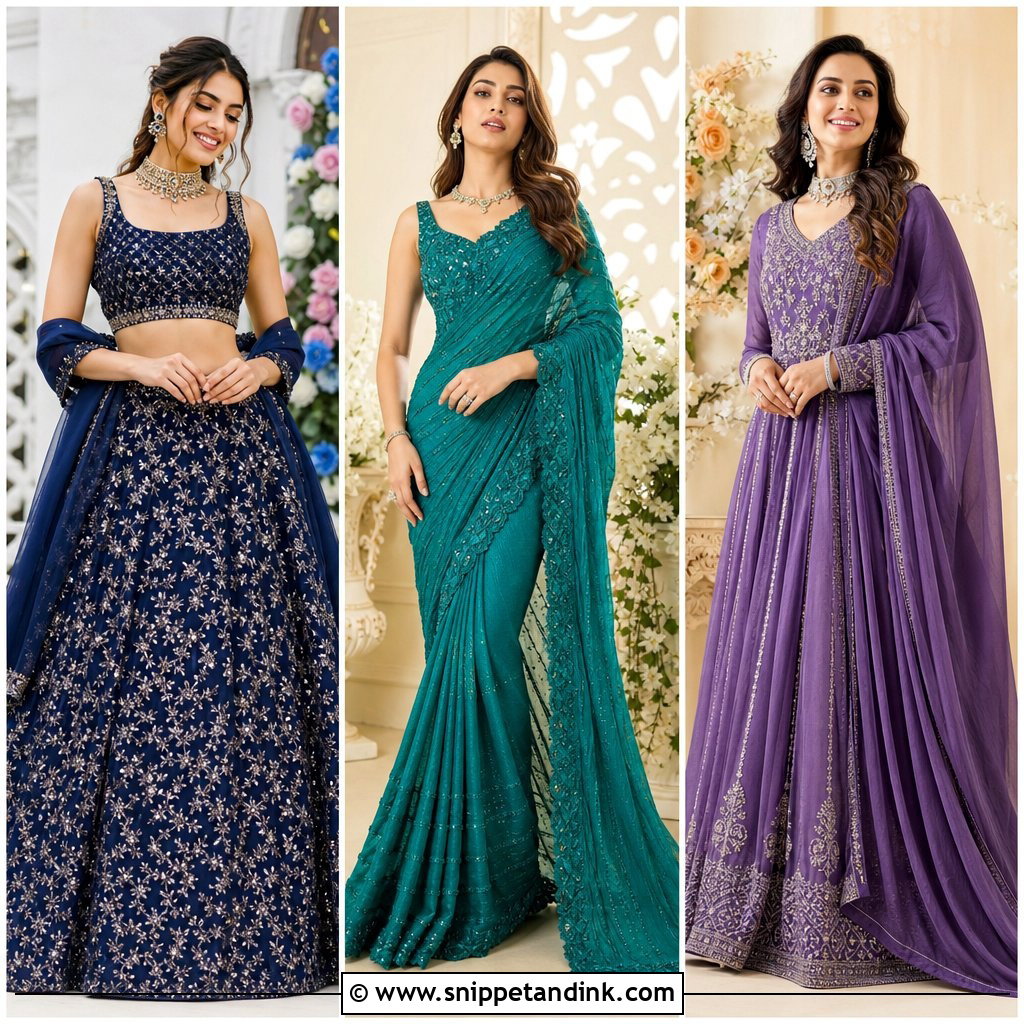
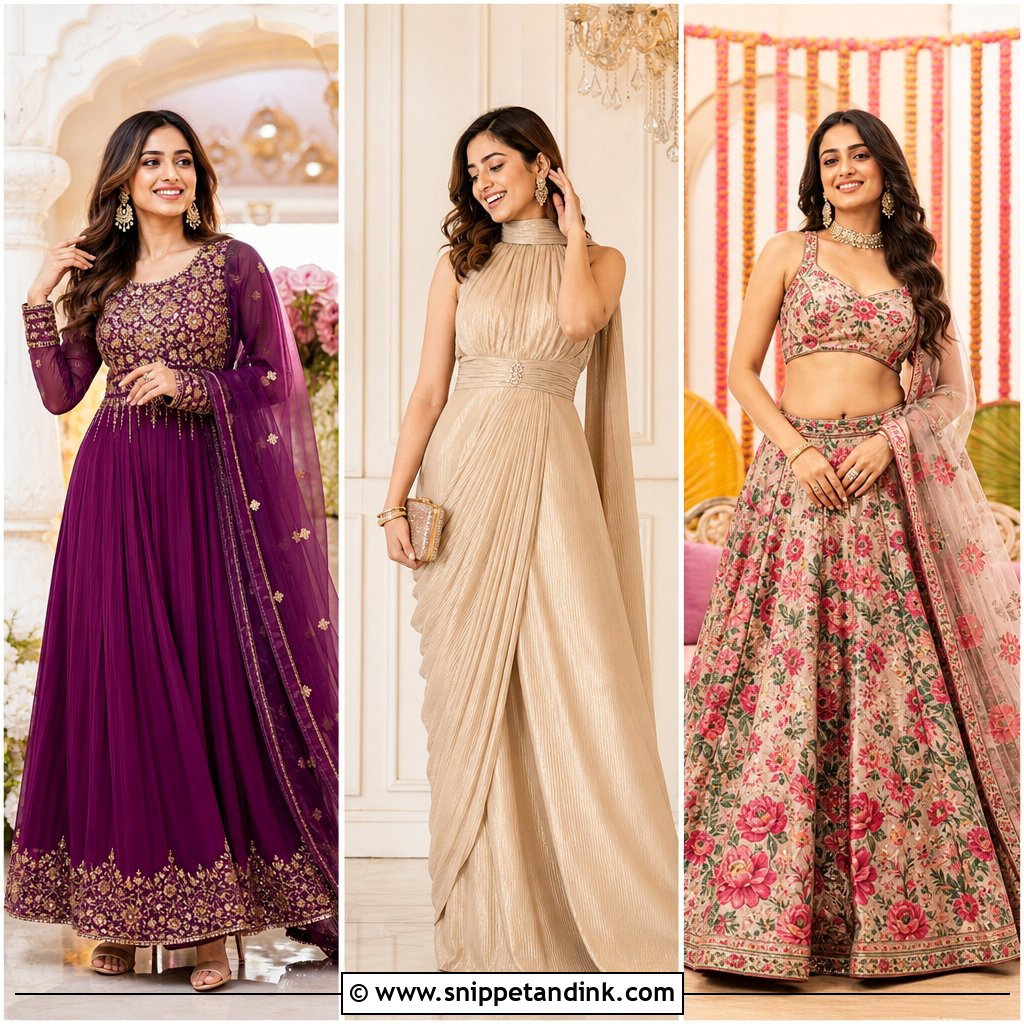
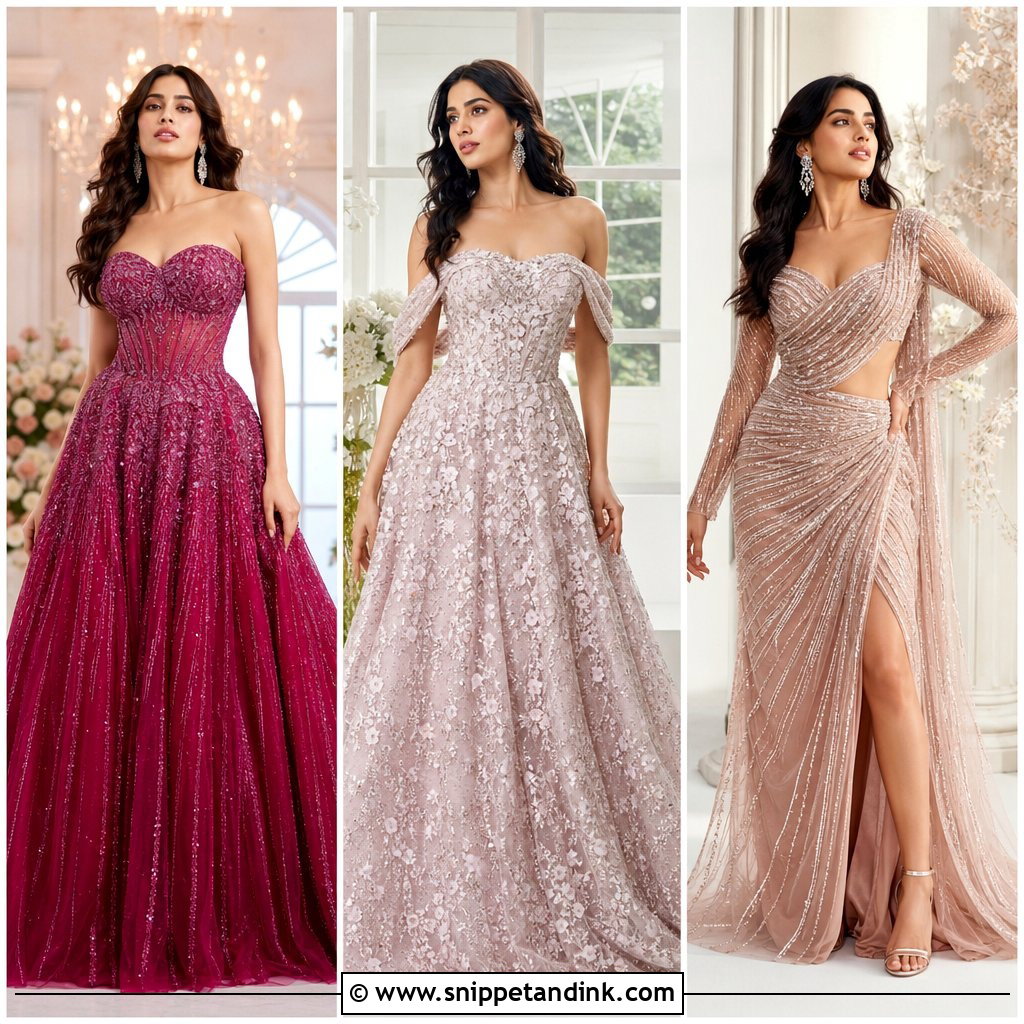
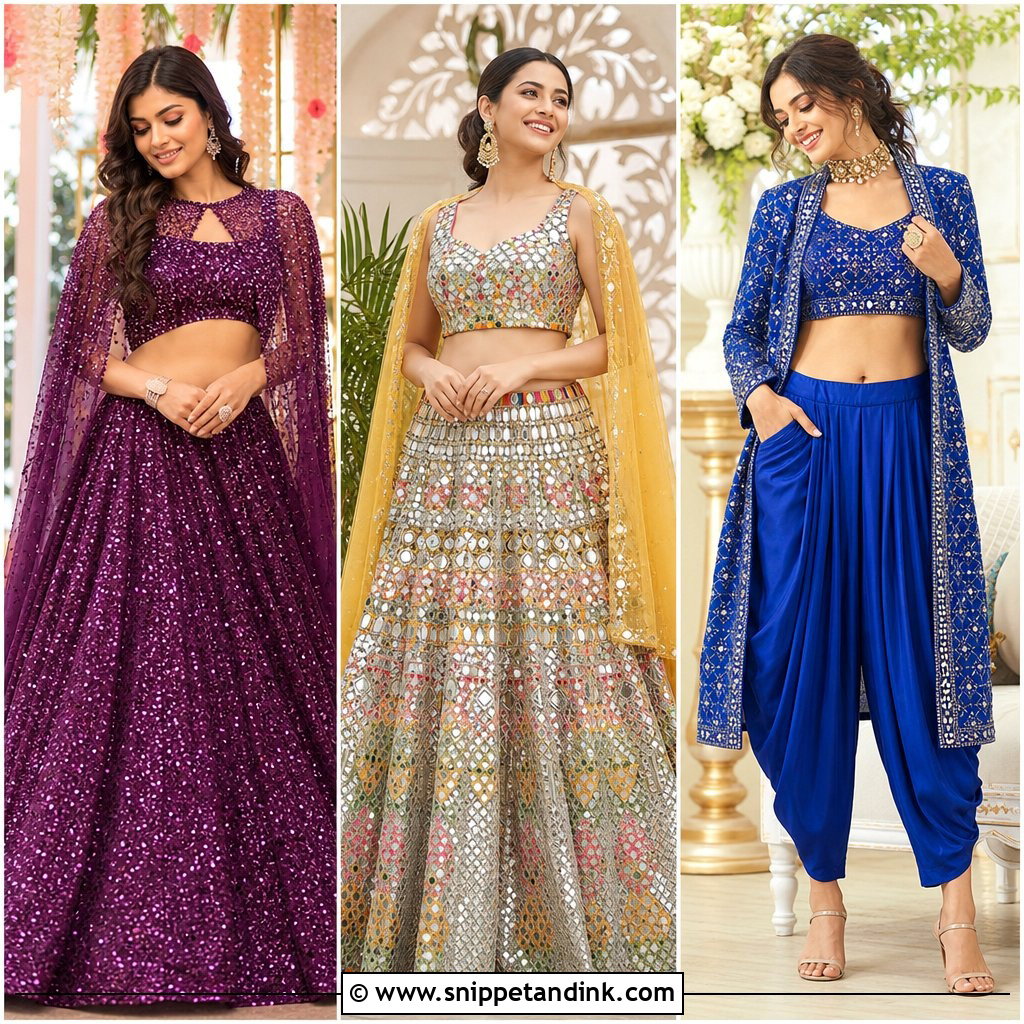
A sangeet gown has a harder job than most evening dresses. It has to catch the light under stage lamps and fairy lights, survive a rehearsed dance routine, and still let you sit on the floor for a family song or bend to touch an elder’s feet. Sequins, mirror work, fluid drapes, light layers, jewel tones and Indo-Western cuts all earn their place below. Your role matters too: the bride can carry heavy embroidery or a train, while a guest usually looks better in something softer with lighter accessories. The twenty looks run from fitted sparkle to traditional Anarkali designs, each with the styling I’d pair with it.
Spin, Sit, Lift: Testing a Sangeet Gown Against Your Choreography
Most families rehearse their sangeet performances for weeks, usually in jeans. The gown turns up at the end, and that’s when the problems appear. I ask anyone performing to wear the real outfit to at least one full rehearsal, or at minimum the real shoes and a skirt of similar fullness.
- Spin twice. The skirt should flare and settle without wrapping around your legs or catching a heel.
- Raise both arms over your head. The bodice should stay where it is, and sleeves shouldn’t cut into the underarm.
- Sit on the floor, then stand up without help. Plenty of routines include it, and narrow skirts make it a struggle.
- Lean back into a dip. Listen for strained seams and feel for boning that digs in.
- Dance for ten minutes under warm light. Heavy embroidery and velvet heat up faster than people expect.
If something fails, a tailor can often fix it in a week or two with a hidden elastic at the waist, a slit in the lining or a shorter hem. Anything bigger, like swapping a mermaid for an A-line, means a different gown, which is why the test should happen early.
1. Silver Sequin Gown for Sangeet Function
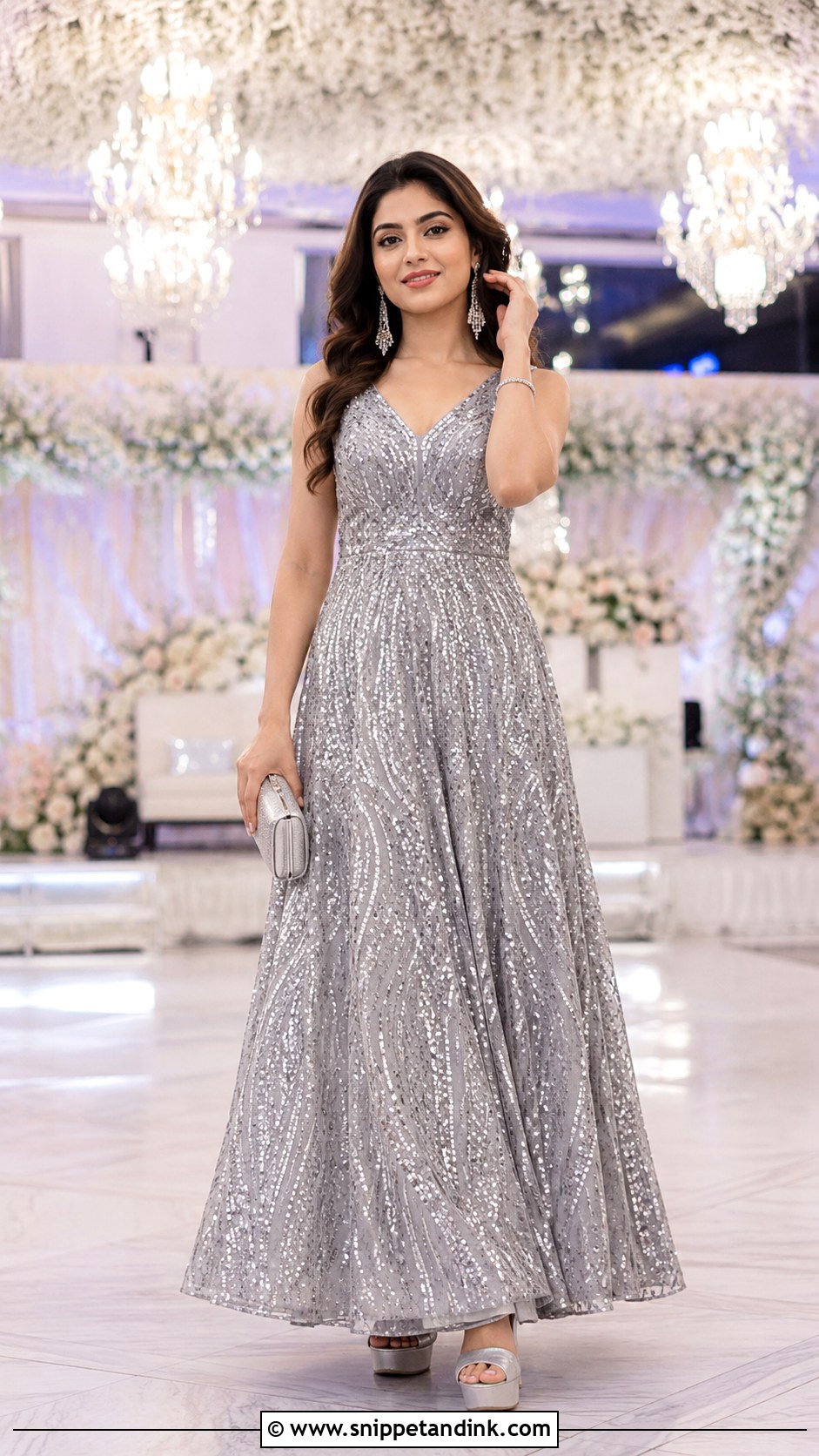
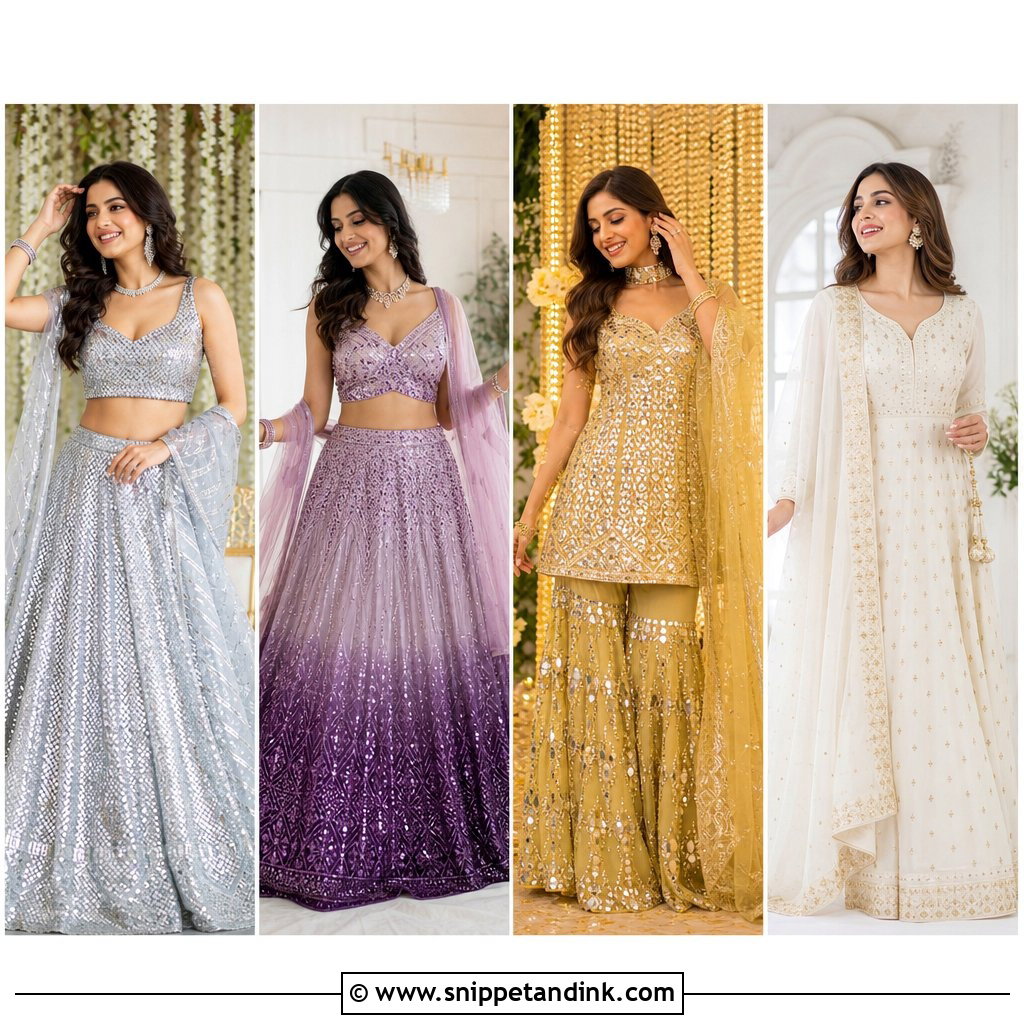
Silver sequins are the easiest way to shine at night, and the hardest fabric to dance in if the gown is cut too close. I steer dancers toward an A-line or gentle flare with a fitted V-neck bodice, which defines the waist and still leaves room to spin. A light net overlay over the sequins softens the glare and moves well when you turn. Silver block heels, crystal drops and a small metallic clutch are enough, since the gown is already doing the necklace’s job. Brides can go heavier with embroidery and a short train, while guests look right in scattered sequins or embellished panels rather than full coverage.
2. Navy Blue Velvet Gown for Sangeet Function
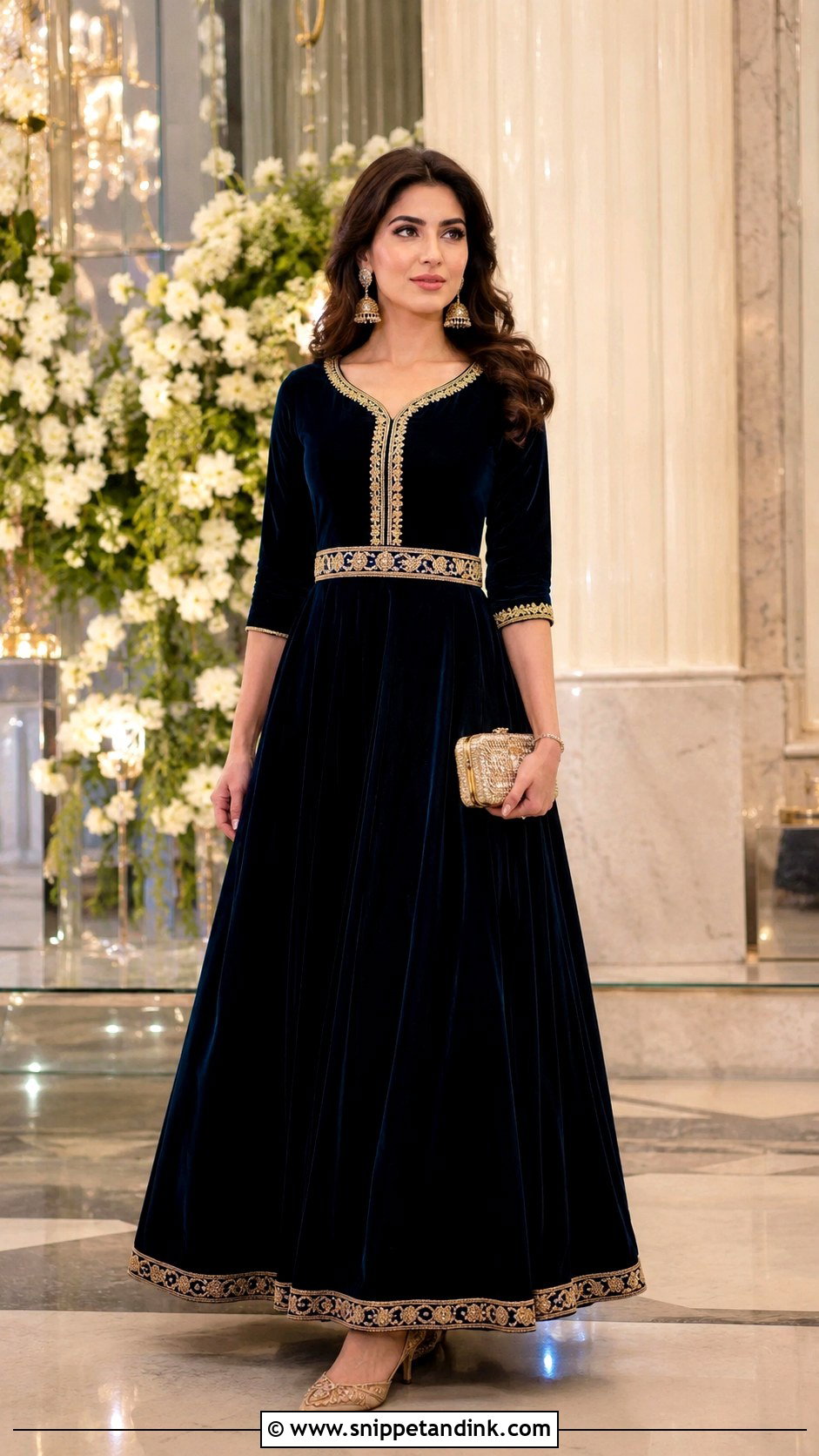
Velvet is a winter fabric, and in a warm hall it turns into a sauna within one routine. For a cool-weather sangeet in a hotel ballroom, though, navy velvet looks rich without needing much embroidery. Look for a structured bodice, full-length skirt and three-quarter sleeves, with gold zari at the neckline or cuffs to bring the Western cut closer to tradition. If you’re dancing, choose stretch velvet or a lighter blend; rigid velvet resists every arm movement. Antique gold earrings, a matching bracelet and embroidered heels suit it, while an oversized necklace or heavily worked bag would only add weight. A deep side part, a low bun and soft eye definition finish it.
3. Emerald Green Anarkali Gown for Sangeet Function
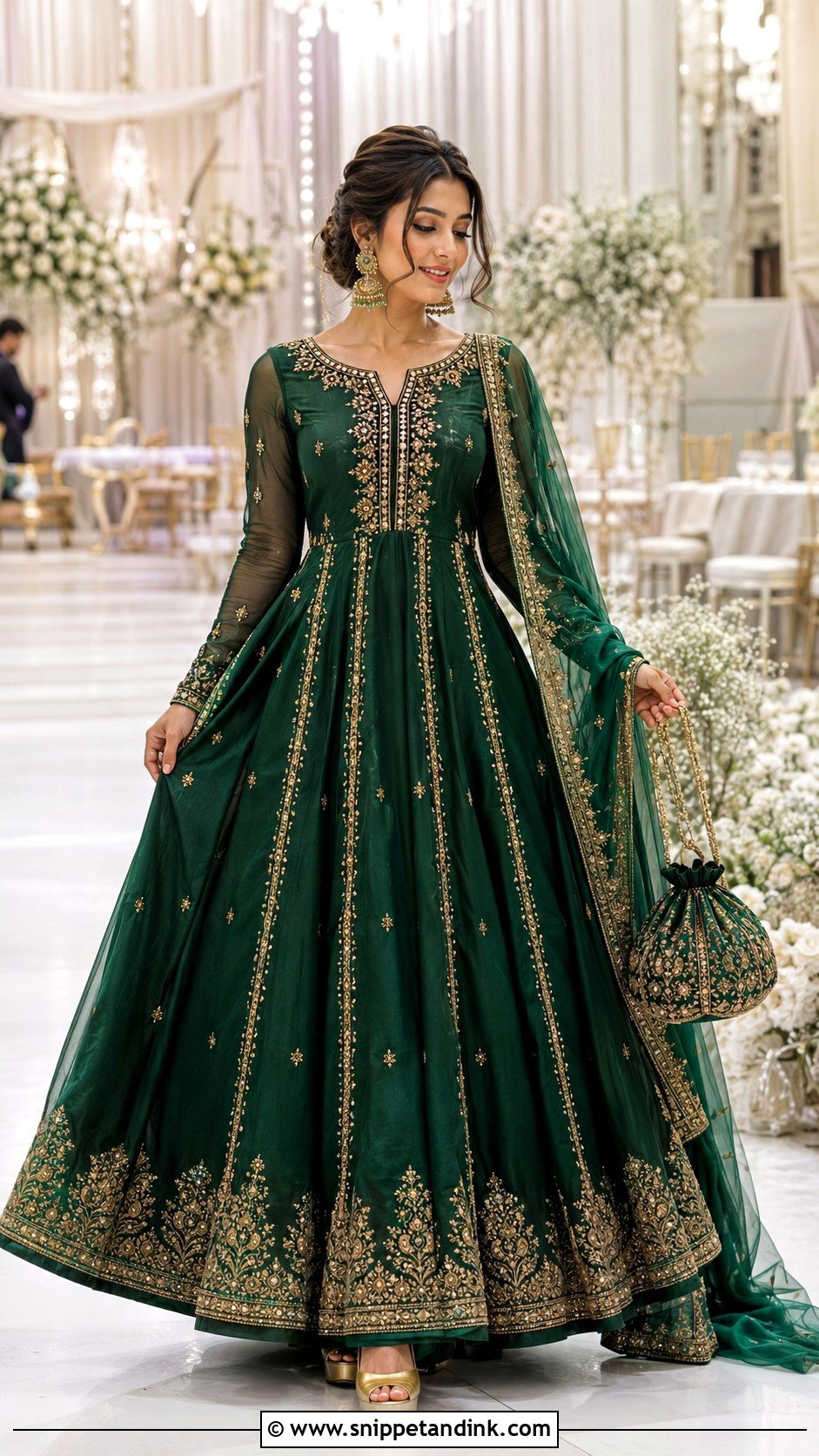
The Anarkali is the most dance-friendly traditional silhouette there is, because the paneled skirt flares open the moment you turn. In emerald, keep the gold threadwork, small sequins or zari motifs near the neckline and hem, where they catch the movement. A matching sheer dupatta pinned over one shoulder looks finished in photographs, but I’d unpin it before a performance, because a loose dupatta caught under someone’s foot is a real hazard. Gold jhumkas, comfortable platform heels and a compact potli bag complete it. Sheer embroidered sleeves and a higher back add coverage for anyone who wants it, and soft curls with warm makeup suit the deep green.
4. Blush Pink Cape Gown for Sangeet Function
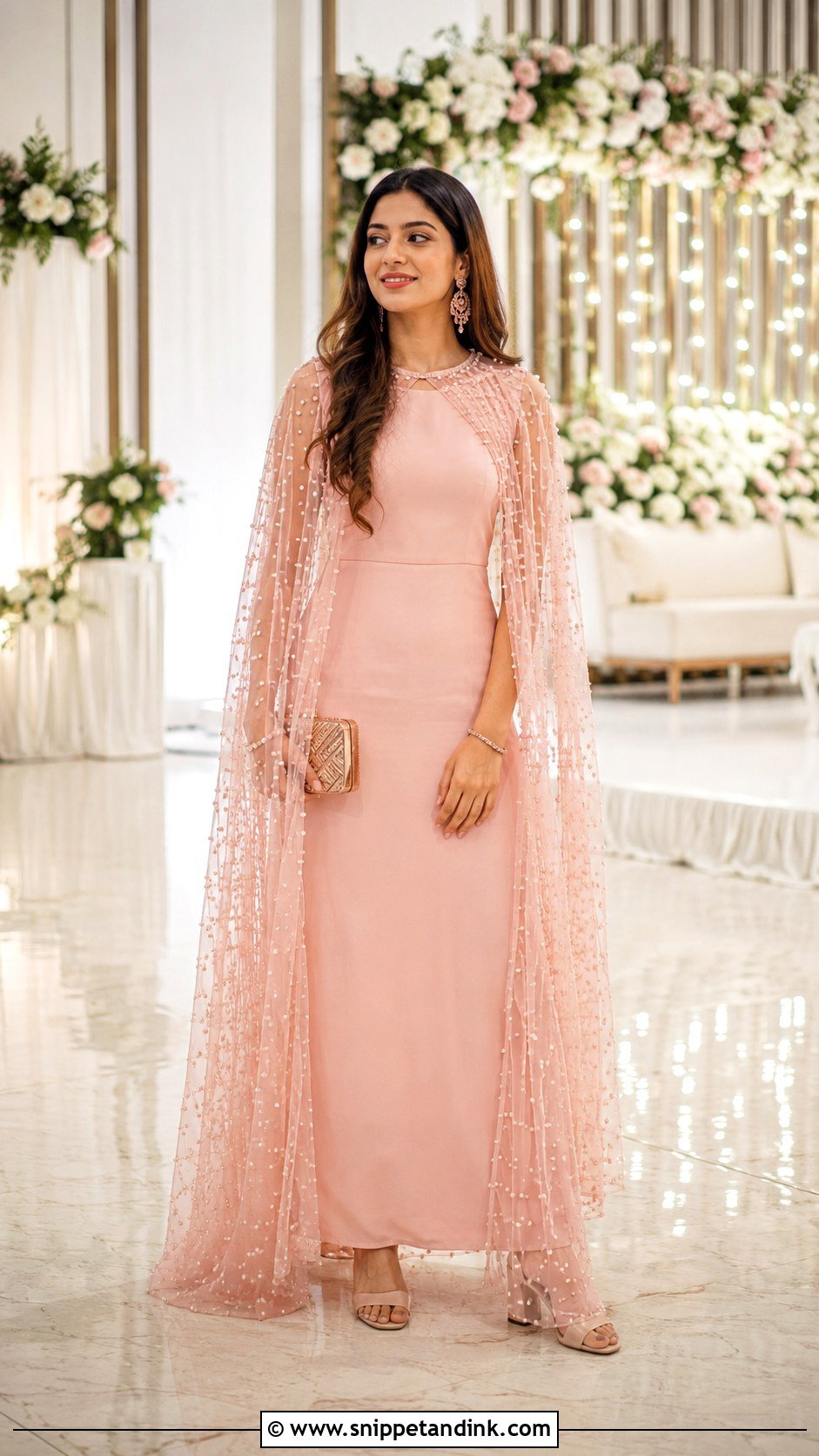
A sheer cape over a fitted or lightly flared inner gown gives you movement without a dupatta to manage. Pearls, sequins or tonal embroidery on the cape keep it festive, and the length should follow your height: waist-length on a petite frame, longer for drama on a tall one. The detail I check is the arm opening. A cape stitched too tight at the shoulder tugs the neckline every time you raise your arms in a routine. Nude block heels, rose-gold earrings and a structured mini clutch work, with no necklace if the cape is worked near the shoulders. A loose updo or smooth low ponytail, and bridesmaids or guests can wear it without competing with the bride.
5. Royal Blue Mirror Work Gown for Sangeet Function
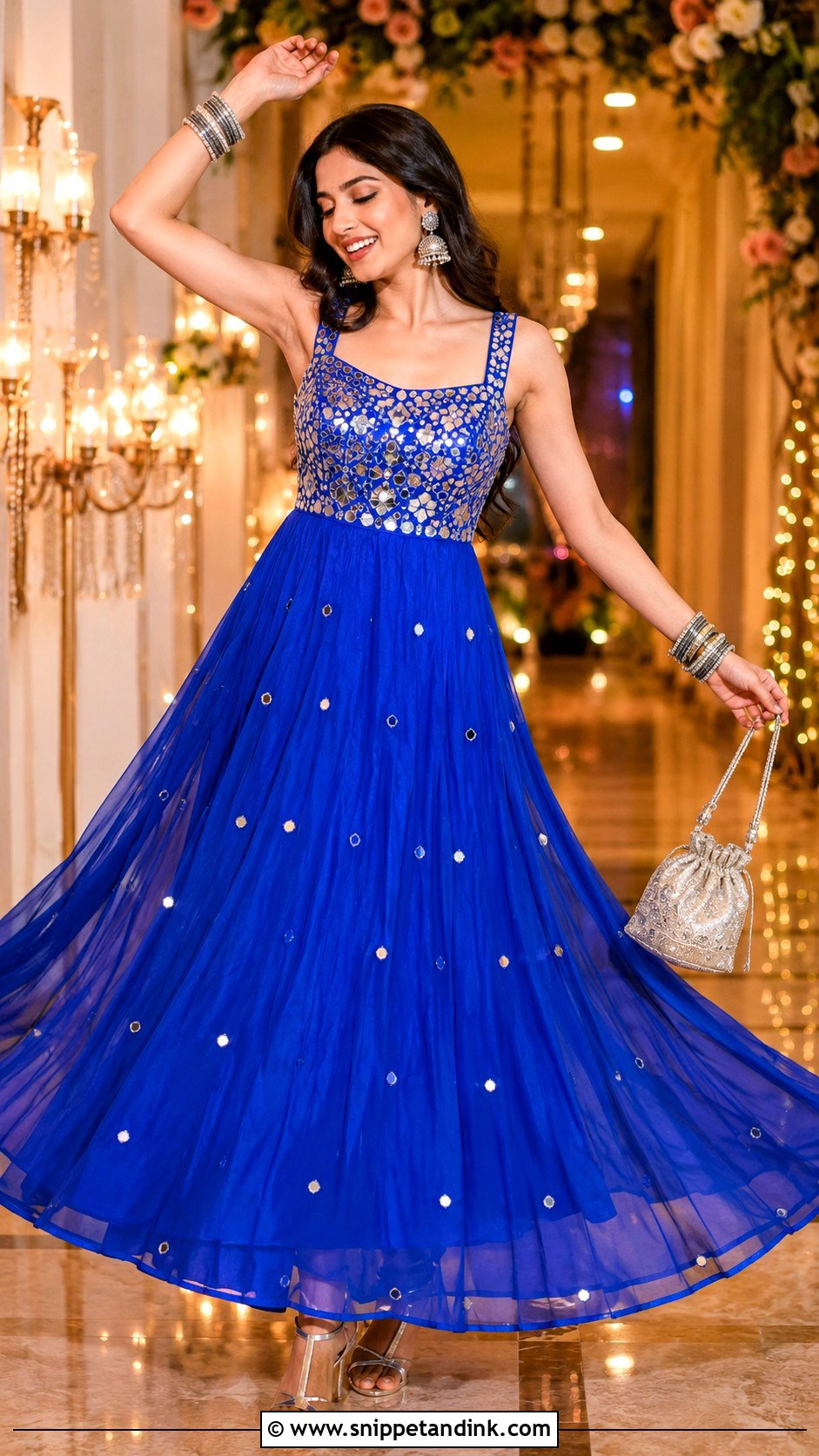
Mirror work was made for a sangeet. Each piece throws back the stage light as you move, so the gown seems to flicker through a dance. It is also heavy, which is why I prefer the mirrors concentrated on the bodice with lighter work on the skirt. Check that every mirror is stitched down firmly; a loose edge can snag a partner’s outfit or scratch your arm mid-routine. A sleeveless or cap-sleeve neckline keeps it modern, and a flared skirt adds swing. Silver jhumkas, stacked bangles and low silver heels with cushioned soles suit the royal blue. Carry either a mirror-work potli or a plain metallic clutch, not both, and wear a braided ponytail that holds up to dancing.
6. Burgundy Off-Shoulder Gown for Sangeet Function
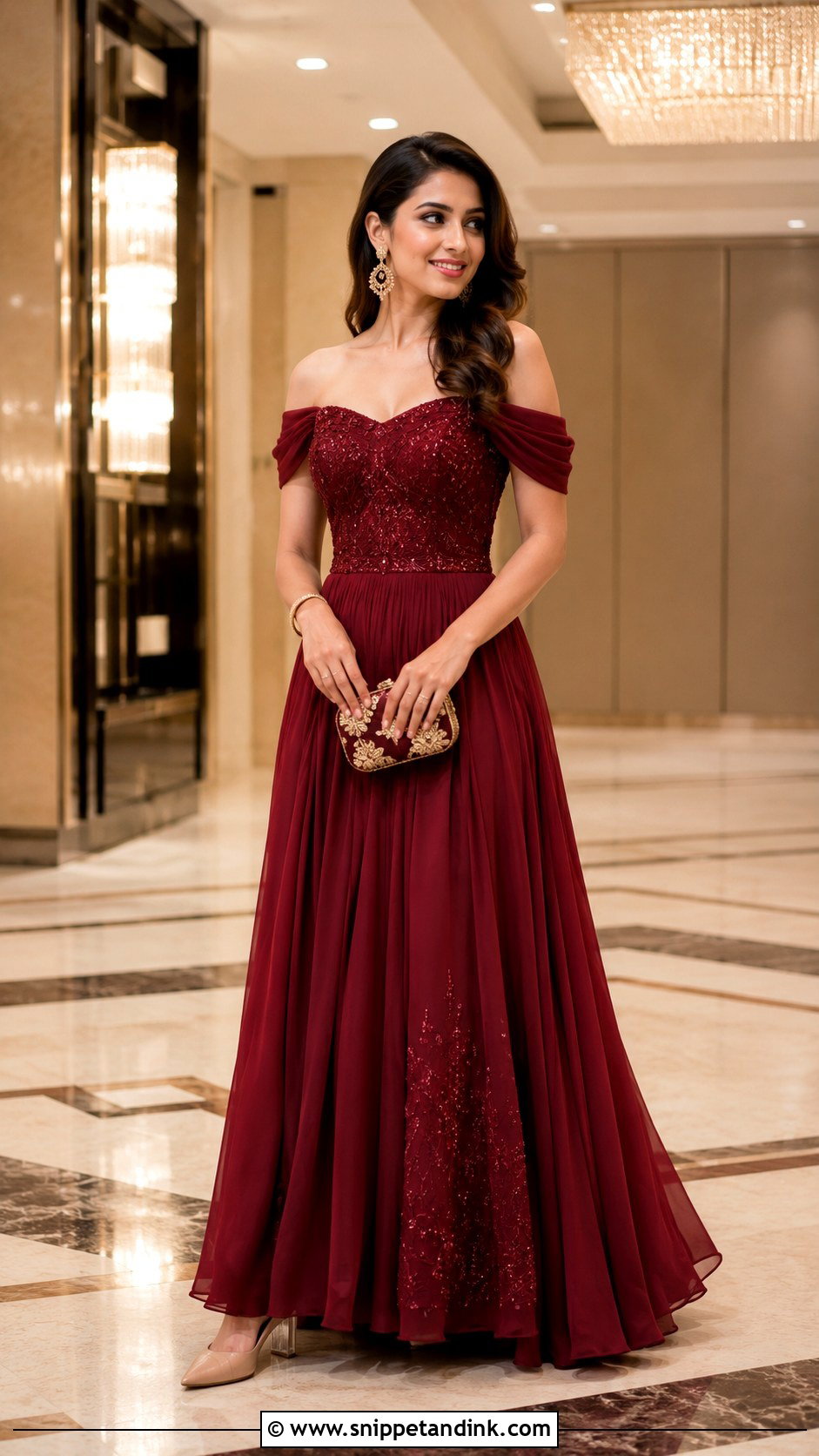
Off-shoulder necklines slip when you dance, and a sangeet involves a lot of dancing. So with deep burgundy I’d look for inner boning, hidden straps or detachable sheer sleeves before anything else. A flowing A-line or circular skirt is kinder over a long evening than a narrow cut, and tonal beadwork on the bodice adds dimension without fighting the color. Gold statement earrings, a slim bracelet, pointed block heels and a small embroidered clutch are plenty. Side-swept hair shows off the shoulders; a neat updo is more formal. Defined eyes and a muted rose lip balance the dark shade.
7. Lavender Ruffle Gown for Sangeet Function
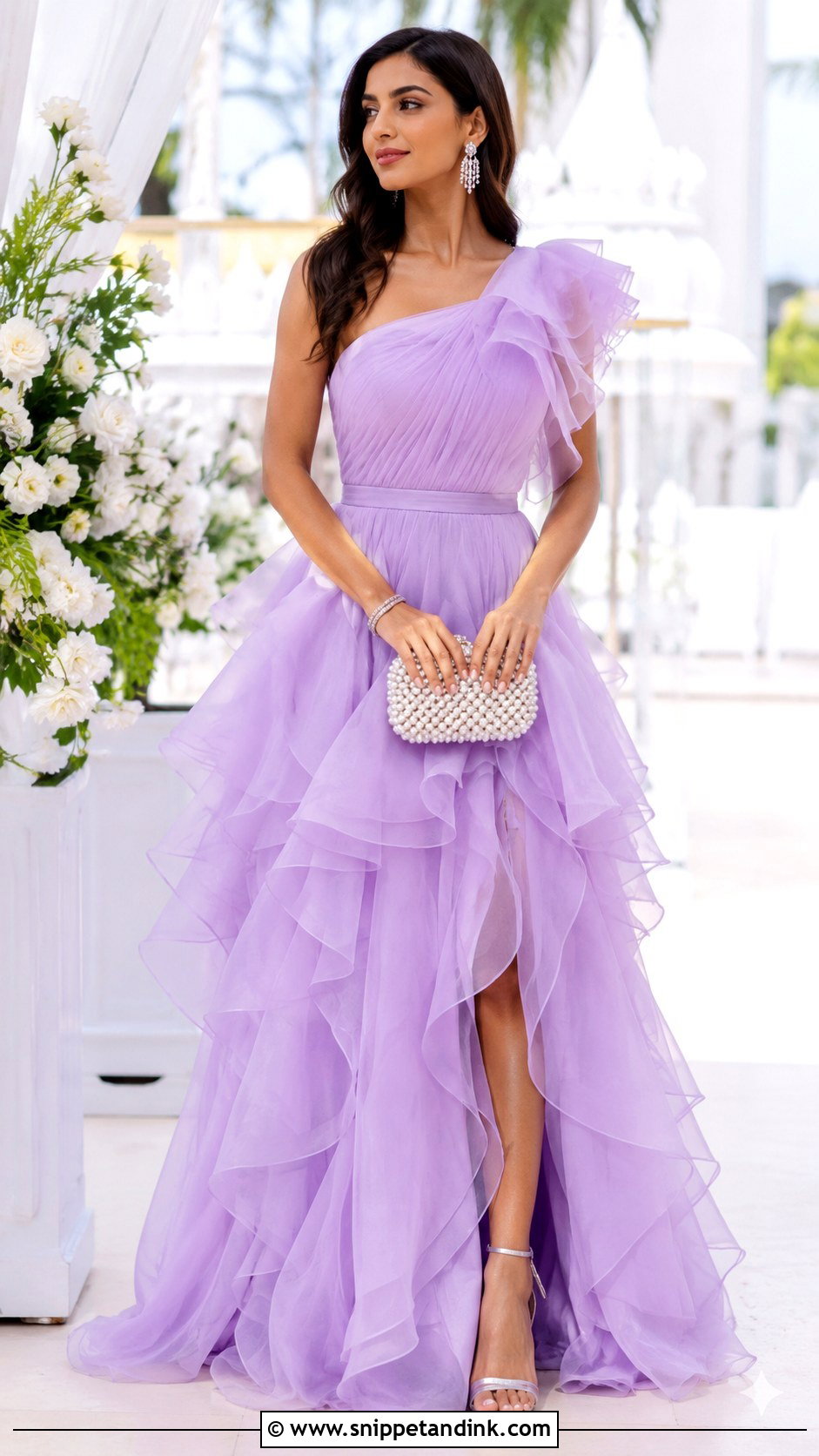
Ruffles look playful when they’re controlled and chaotic when they aren’t. A lavender ruffle gown works best with the ruffles along one shoulder, the waist or the skirt, held in by a defined waistband so a petite frame isn’t swallowed. Organza, tulle or georgette keep the skirt airy. Insist on a soft lining, because net and organza ruffles feel scratchy against bare legs after a couple of hours. Crystal earrings, silver sandals, a lilac or pearl clutch and one delicate bracelet are enough. Wear a half-up style or textured low bun. It suits day-to-evening events, destination weddings and coordinated bridesmaid groups.
8. Black and Gold Gown for Sangeet Function
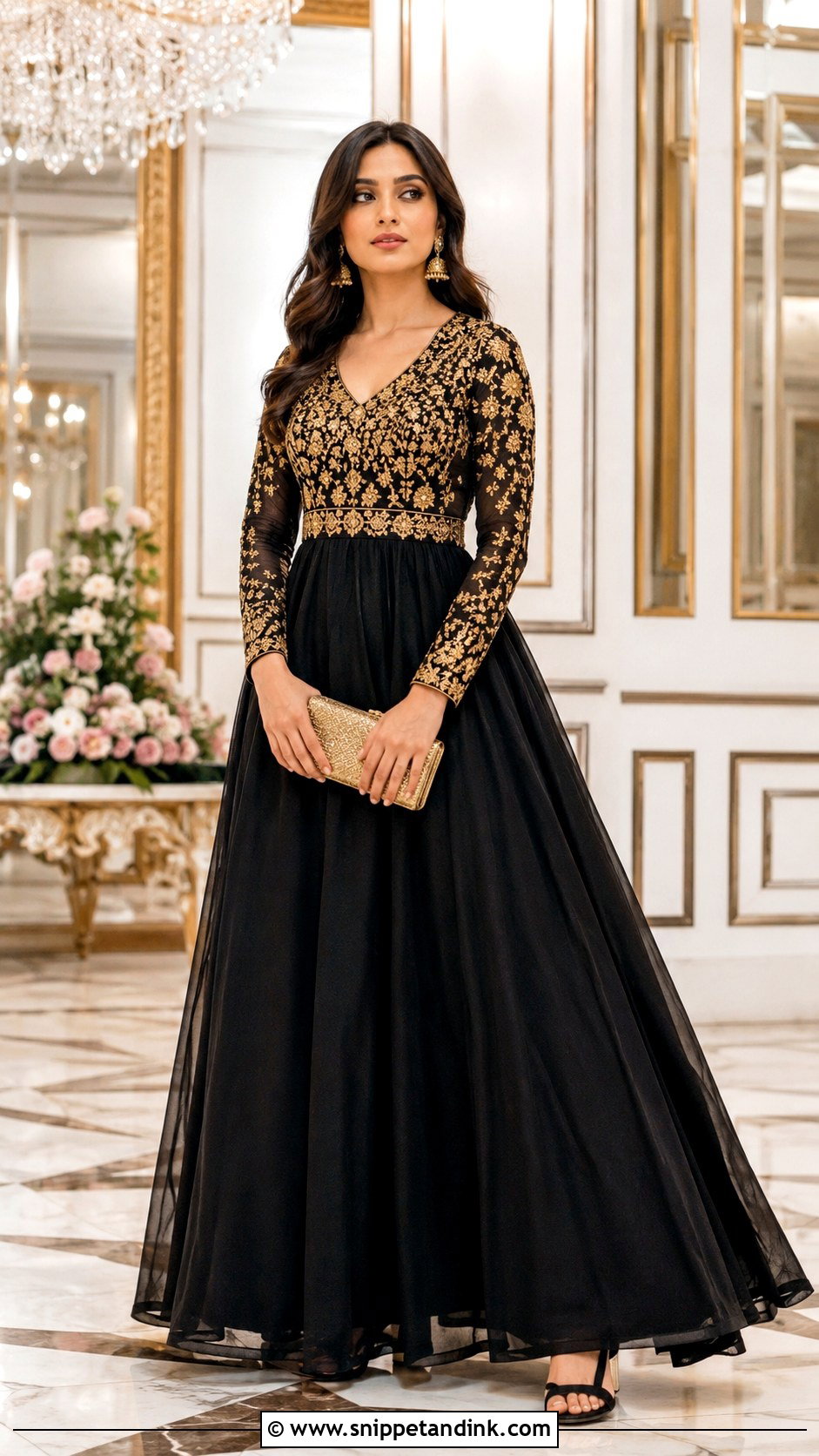
Ask before you wear black. Some families consider it unlucky at wedding functions and others don’t mind at all, and the bride or her mother will tell you honestly. If it’s welcome, black with gold embroidery across the bodice, waist or border is one of the most striking evening combinations. A modest V-neck and sweeping A-line skirt keep it comfortable. Antique gold earrings, black block heels and a compact gold clutch, with one or two statement pieces rather than an ornate necklace, big earrings and heavy bangles all at once. A sleek bun, gold eye makeup and a neutral lip suit a formal hotel sangeet.
9. Red Indo-Western Gown for Sangeet Function
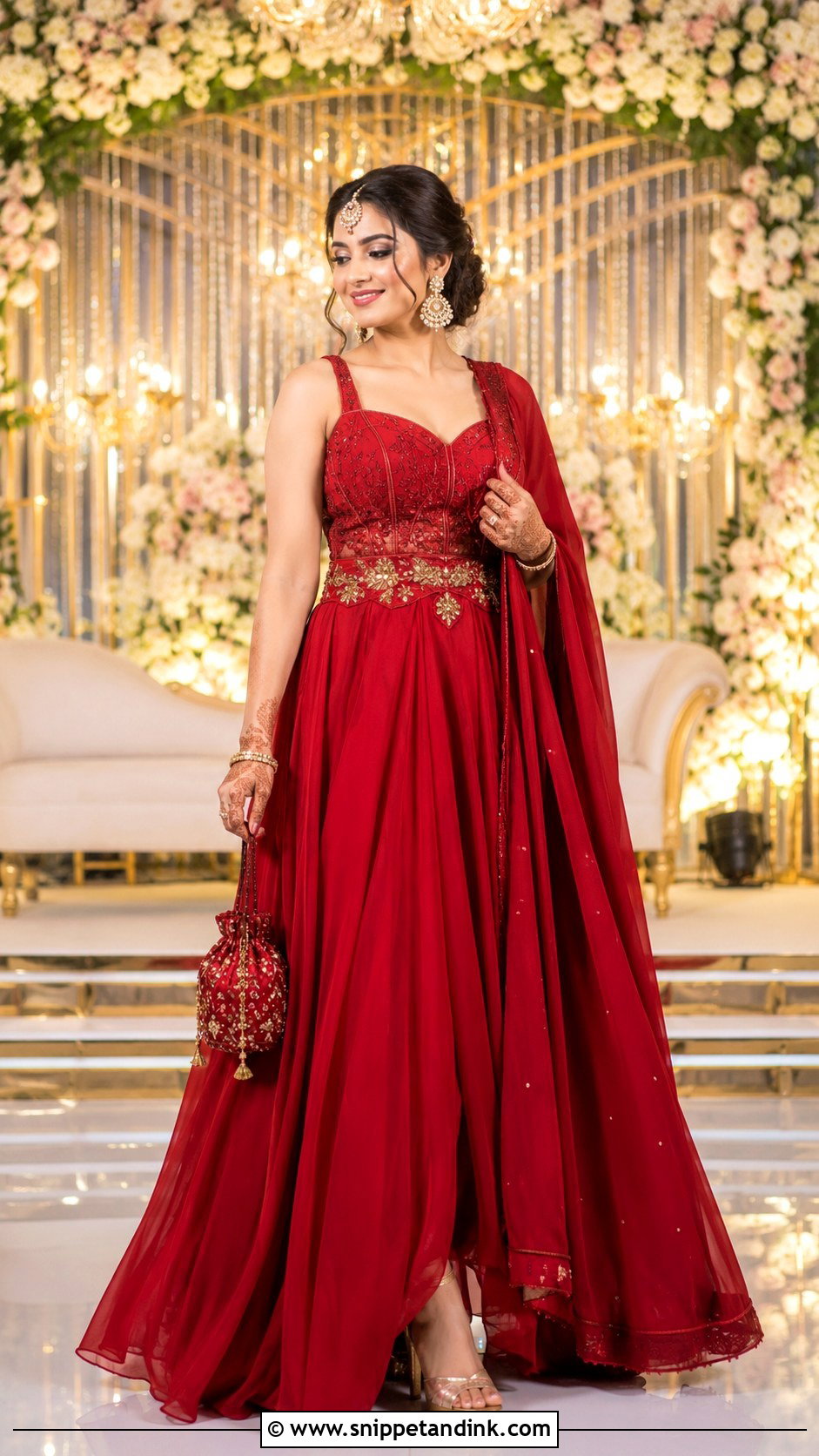
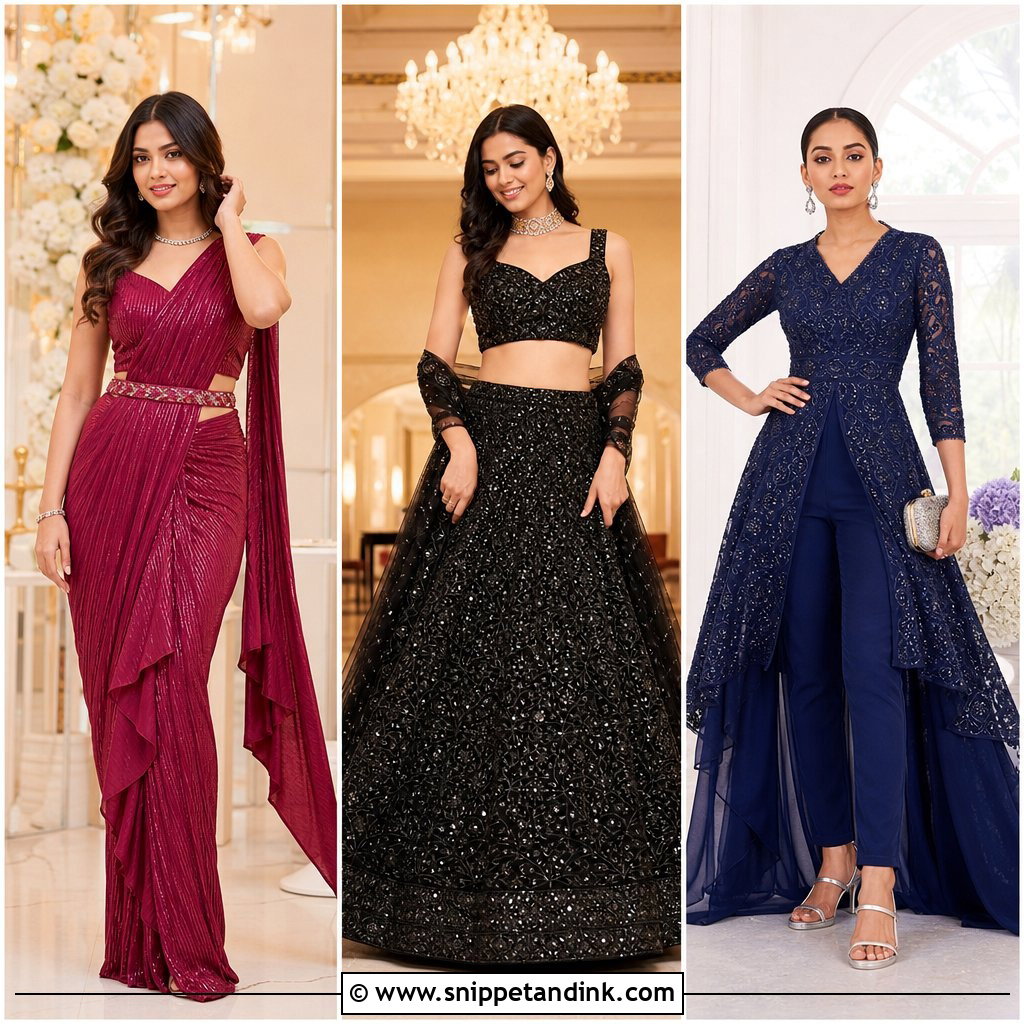
Red is the bride’s color in many families, so a red Indo-Western gown on a guest needs a lighter hand: simpler embroidery, fewer accessories and a quick check with the bride first. On the bride herself, it is a clean modern take on tradition. A corset-style bodice with secure coverage, an embroidered waist and a full skirt, plus fabric draped over one shoulder like a pallu, leaves both arms free to dance. Kundan earrings, a delicate maang tikka, metallic heels and a small red or gold potli complete it. Before the function, sit down and raise your arms in the gown. A structured bodice that rides up in the fitting room will ride up on stage.
10. Ivory Floral Gown for Sangeet Function
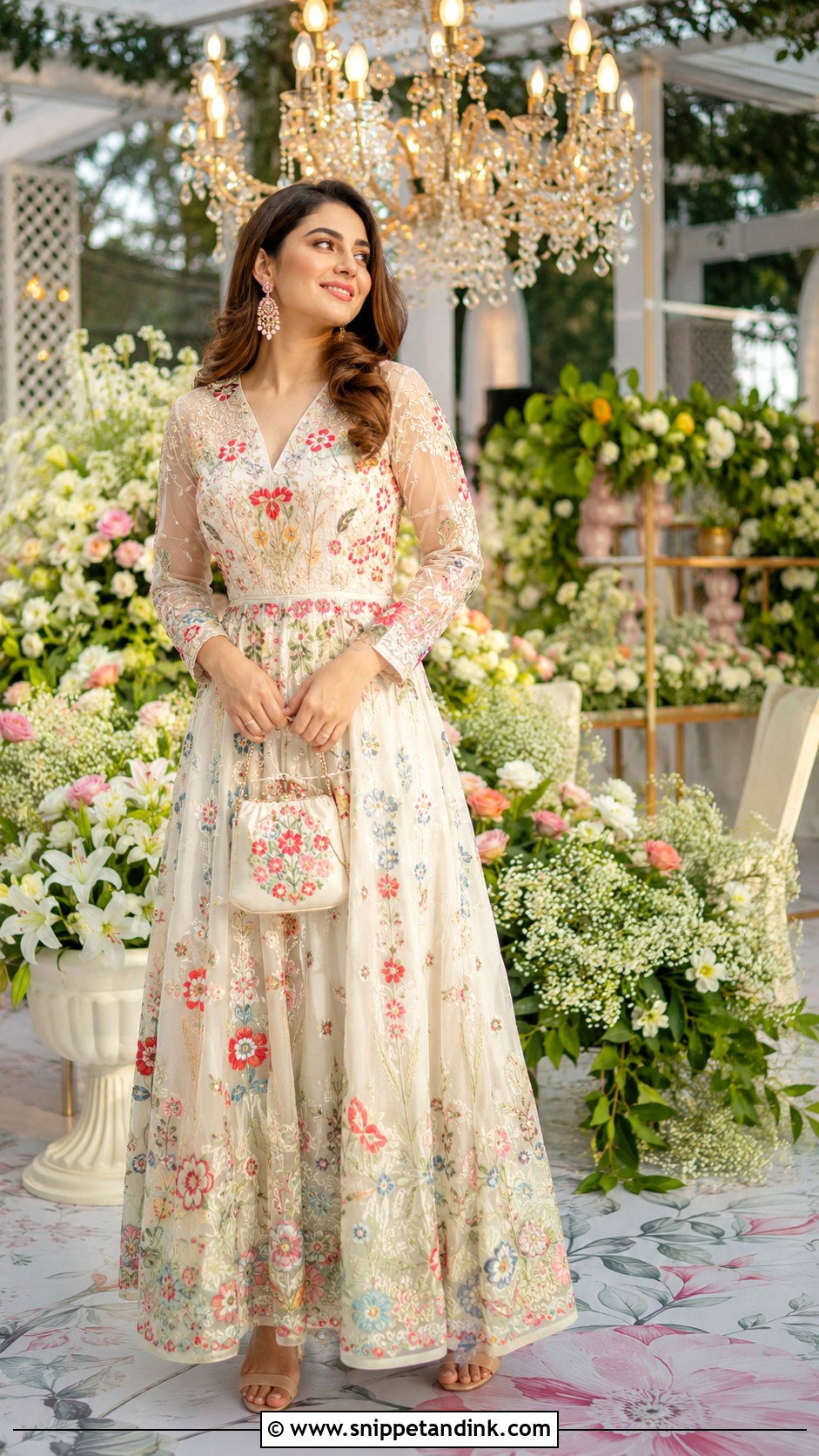
Ivory is the color I double-check most. Some brides wear ivory or white at the sangeet, and arriving in the same shade is awkward, so ask. If it’s clear, colorful threadwork in pink, green, lavender or blue keeps an ivory gown festive rather than bridal. Spread the embroidery evenly; a heavy cluster on one side looks lopsided in group photos. A fitted waist and flowing skirt, with sheer sleeves for coverage, suit garden venues and indoor halls alike. Pastel earrings, nude heels and a small embroidered bag, with soft waves and fresh makeup to match the light palette.
11. Teal One-Shoulder Gown for Sangeet Function
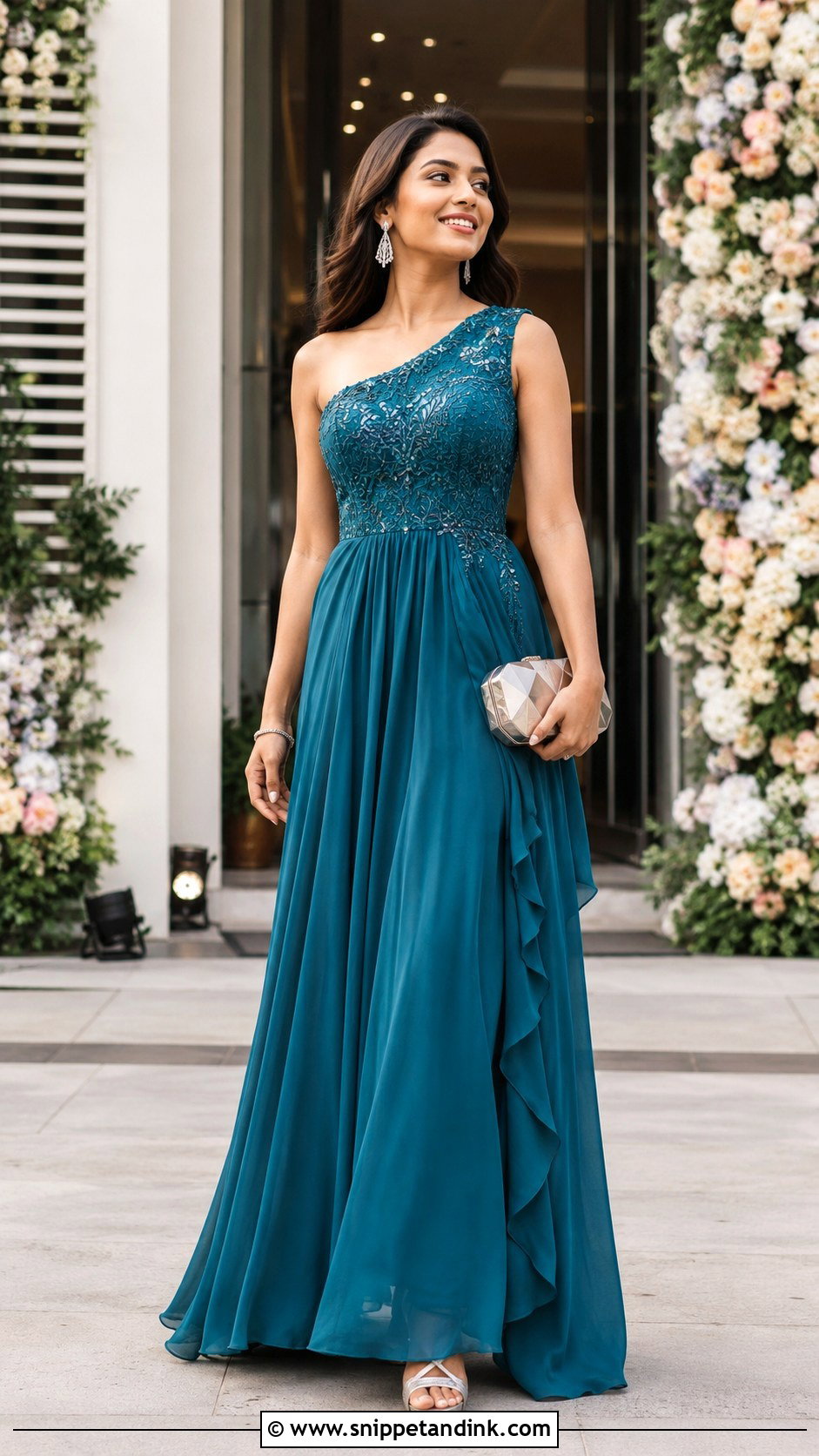
Teal sits between blue and green, and it keeps its color under the warm, tinted lights many sangeet stages use. A one-shoulder neckline needs a secure inner structure, though, because dance moves pull the single strap sideways. Concentrate embroidery or sequins along the shoulder and keep the skirt plain and flowing. Silver drop earrings, a crystal bracelet, metallic block heels and a structured clutch, with no necklace to compete with the neckline. A sleek ponytail feels youthful, a side bun more formal. Guests can keep the beadwork minimal, while the bride’s sister might want a more detailed bodice and a layered skirt.
12. Peach Pleated Gown for Sangeet Function
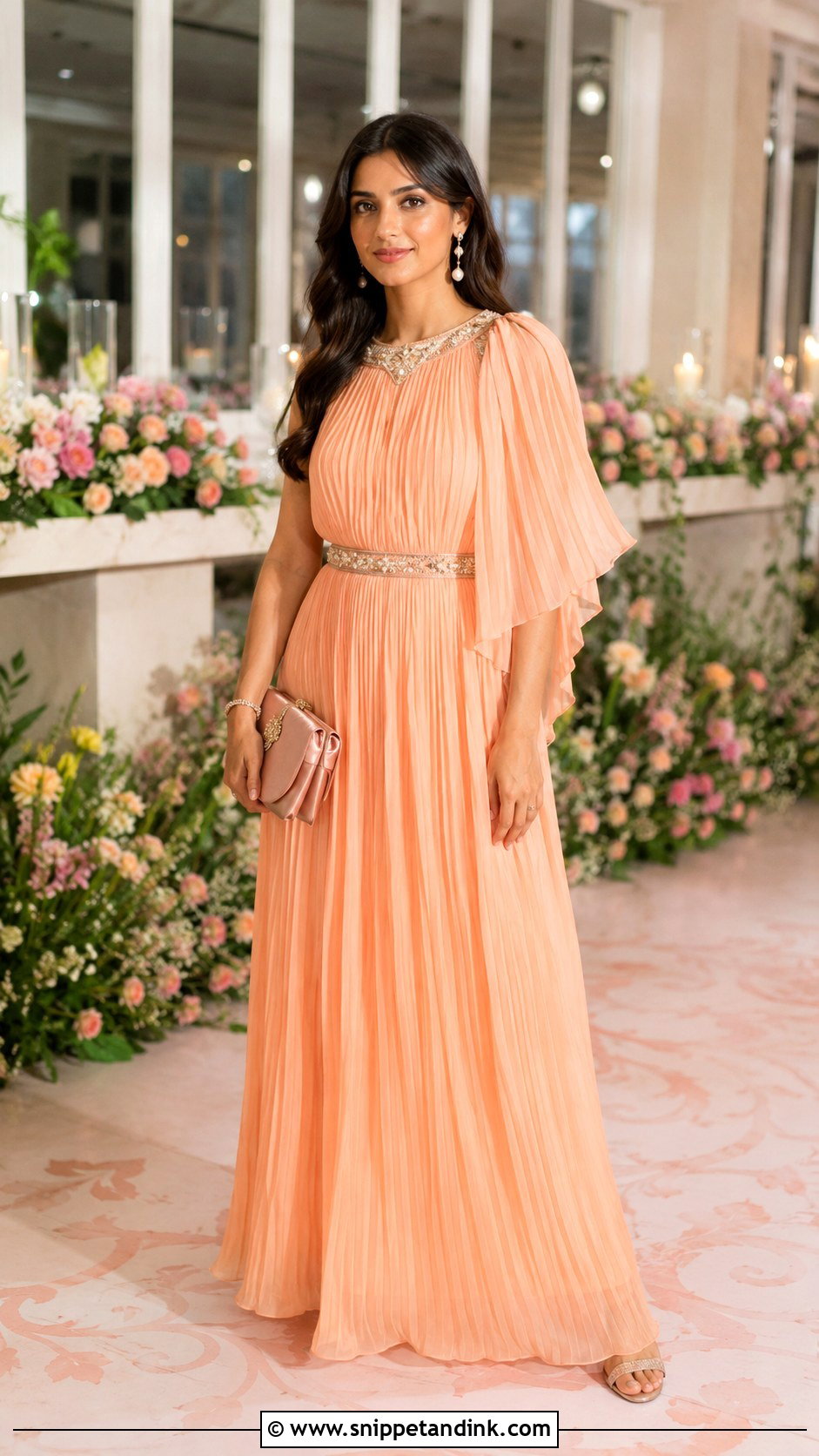
Pleats give movement without the weight of dense embroidery, which matters in a warm hall. Choose wrinkle-resistant georgette or chiffon, because pleats crushed in a car or suitcase rarely recover by evening. A gathered skirt, defined waist and embellished neckline keep peach festive, and a pleated cape sleeve or draped shoulder panel adds an Indo-Western touch with light arm coverage. A narrow embroidered belt in the same shade sharpens the waist. Rose-gold sandals, pearl drops, a slim bangle and a satin clutch. Set the hem slightly above the floor so you won’t trip mid-step, and wear soft curls or a braided low bun.
13. Champagne Saree Gown for Sangeet Function
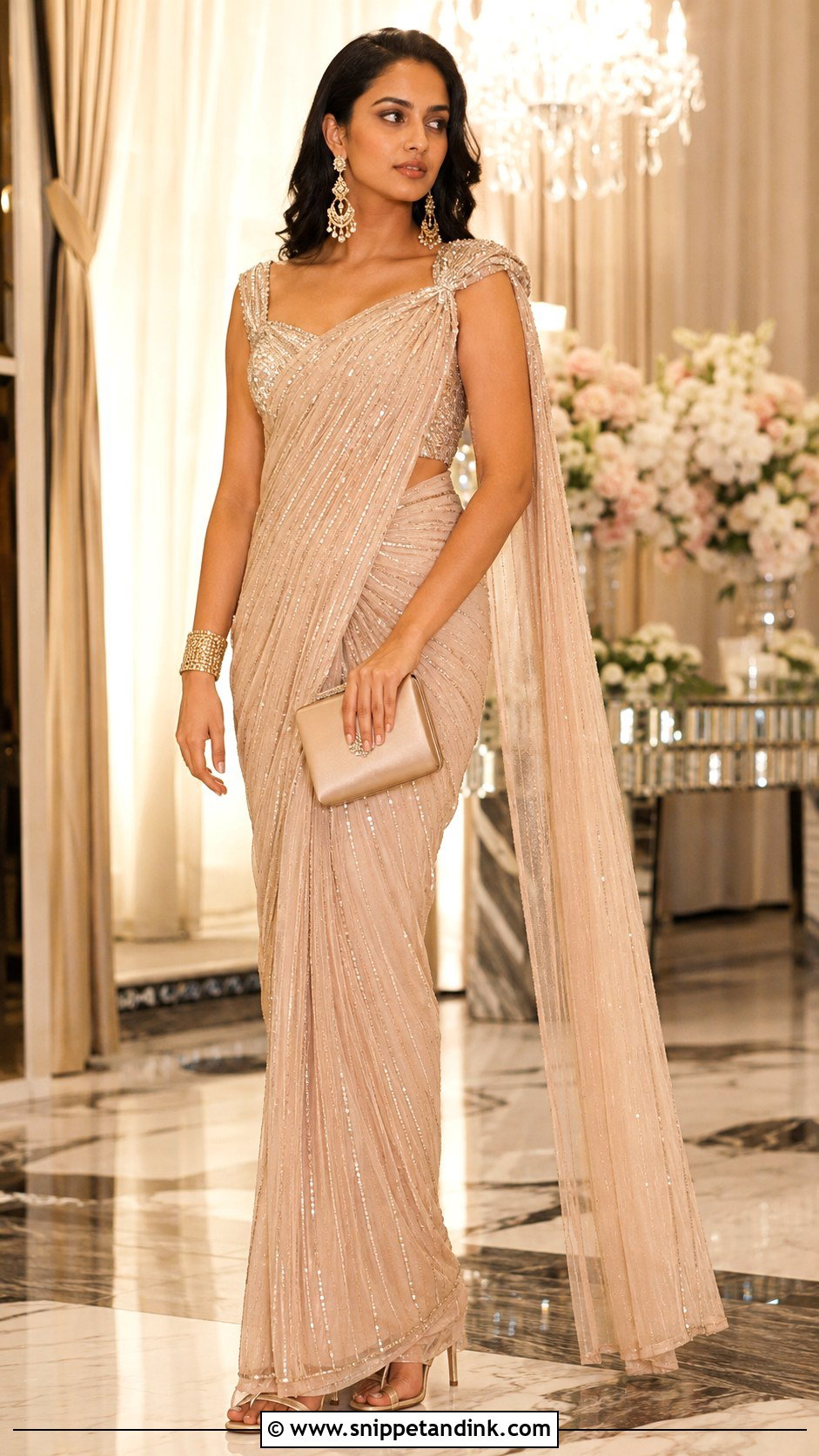
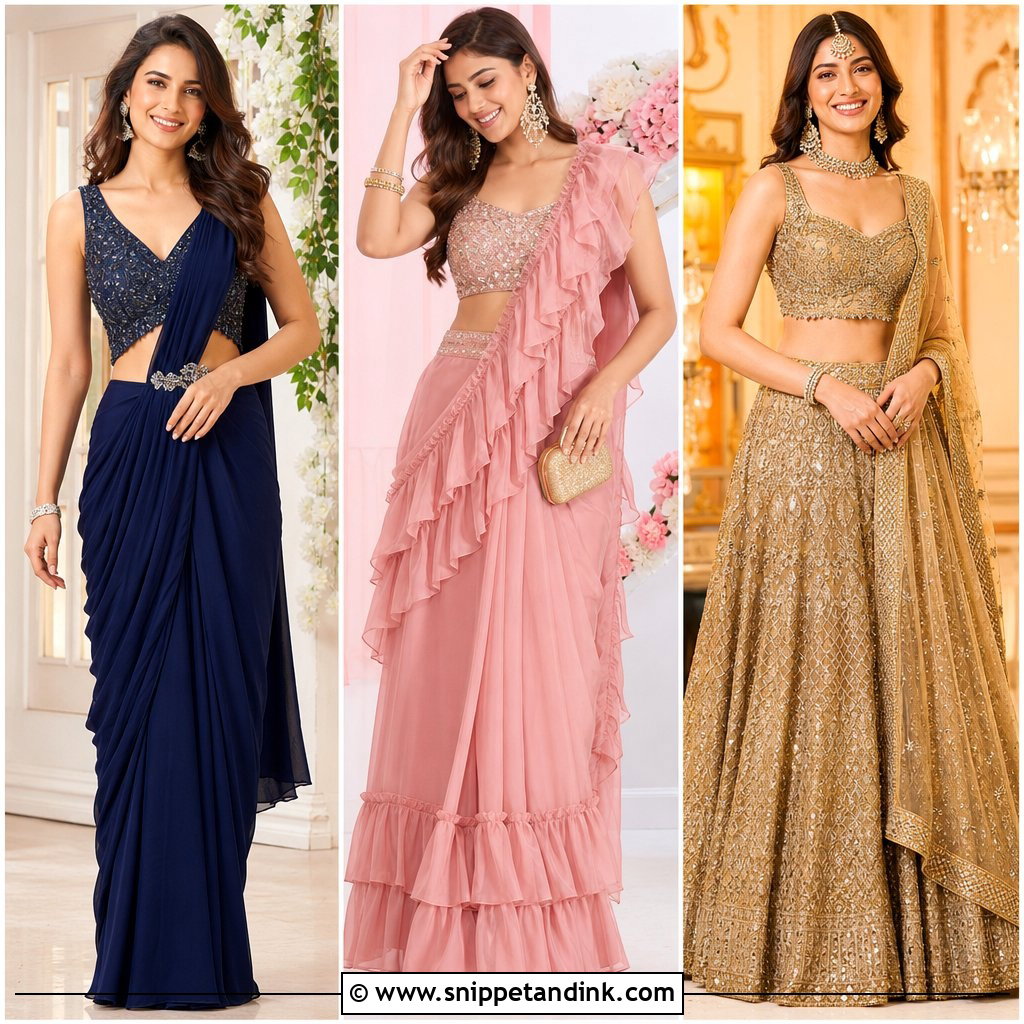
A saree gown gives you the drape without an hour of pleating and pinning, and without the risk of pleats coming loose mid-dance. The best designs have a secure fitted base, a softly pleated front and an attached shoulder drape that stays put all evening. In champagne, beadwork and metallic thread that blend into the fabric look richer than high contrast. Statement earrings, one cuff, neutral metallic heels and a satin clutch are enough, and a sleek low bun keeps the drape visible. Petite women carry a narrow drape best; taller women can take a longer pallu effect. Tuck two small safety pins in your clutch in case the shoulder loosens.
14. Fuchsia Jacket Gown for Sangeet Function
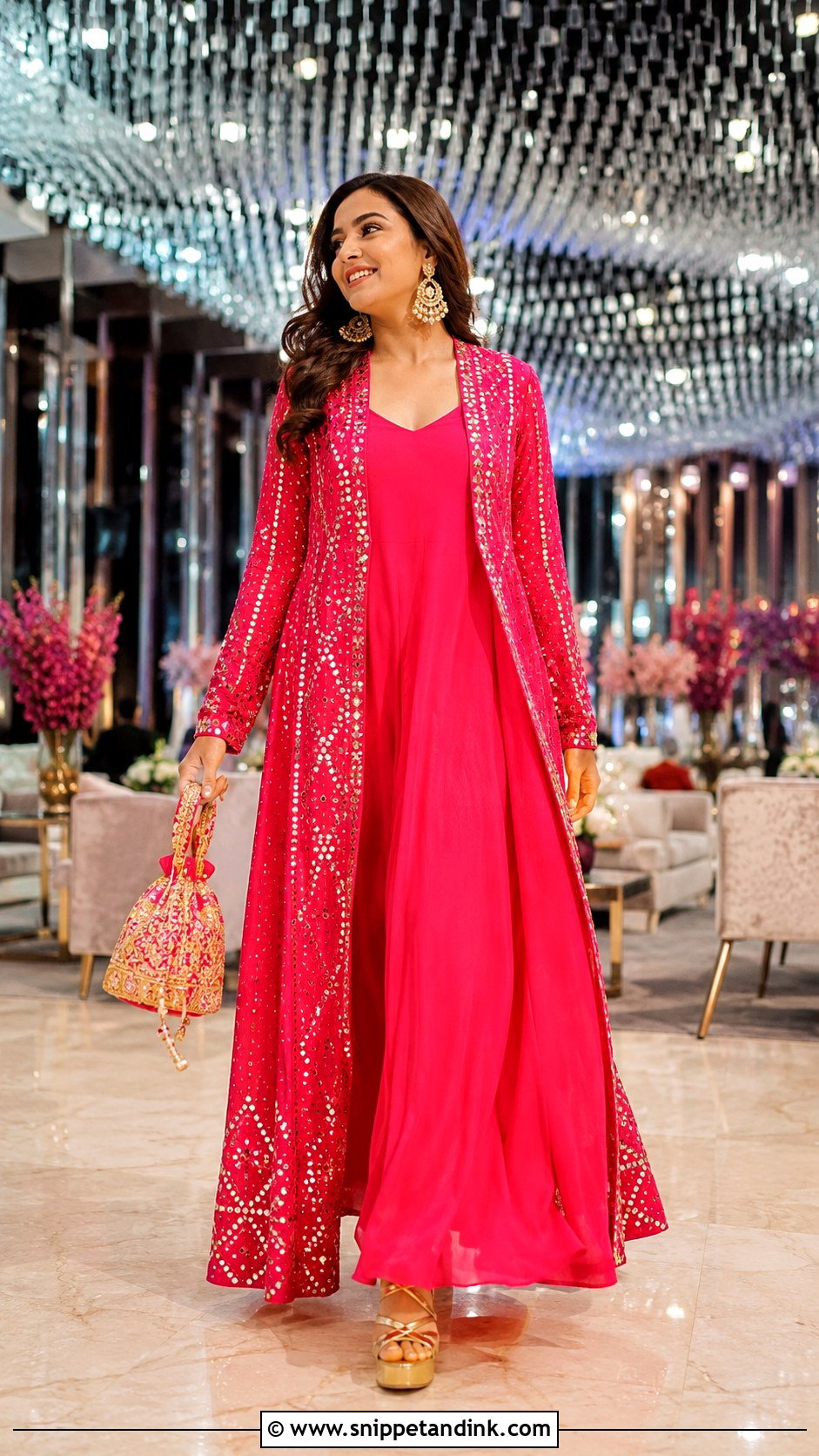
Jackets are my answer to the dupatta problem. A cropped, waist-length or floor-length embroidered jacket over a plain fuchsia gown gives you coverage and movement without loose fabric to trip on. Short jackets define the waist, while long open-front versions swing with every turn, which looks wonderful in a group performance. If the jacket carries mirror work, sequins or dense thread embroidery, keep the inner gown plain with a simple neckline. Gold earrings, comfortable platforms and a bright potli with restrained decoration. A high ponytail or loose curls.
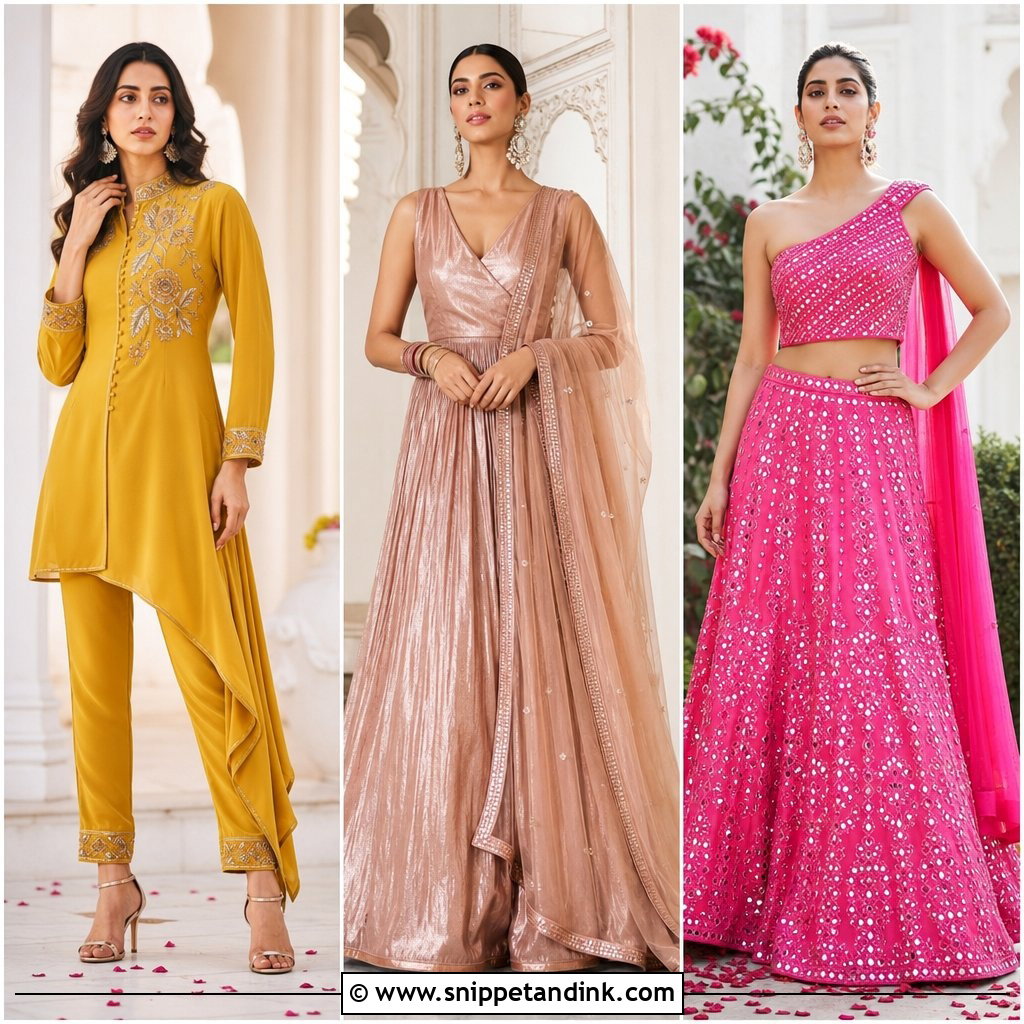
15. Mint Green Organza Gown for Sangeet Function
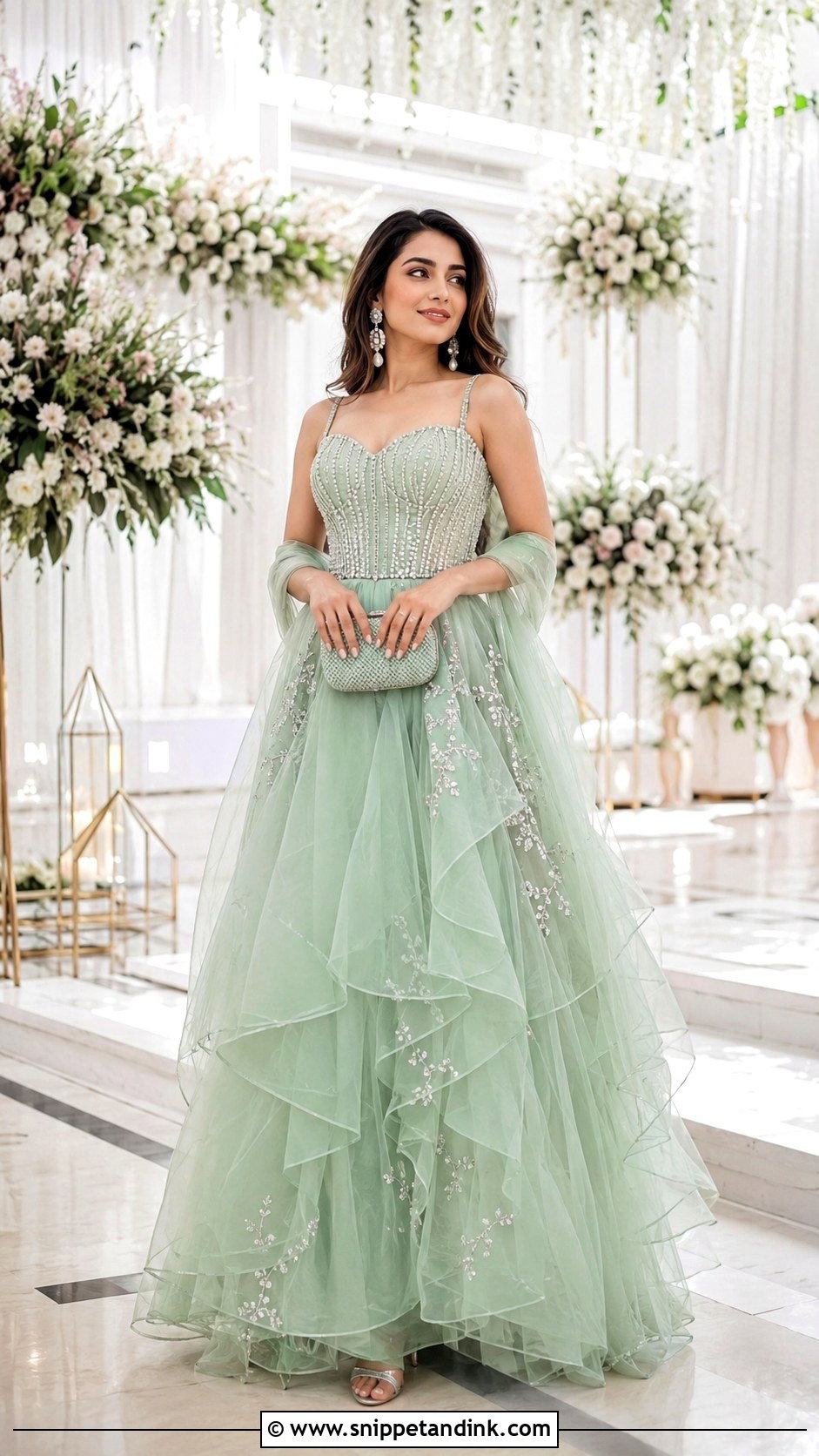
Organza holds its shape, which is lovely for volume and tiring for dancing: too many layers and the skirt fights you on every turn. I’d keep a mint organza gown to a smooth fitted bodice and a moderate layered skirt from the natural waist, with floral appliqué, pearls or fine silver embroidery to make it feel like an occasion. Organza edges can scratch, so check for a soft lining and neatly finished seams. Pearl earrings, silver block heels and a small mint or ivory clutch, with a soft bun and a few face-framing pieces. It suits spring celebrations, destination weddings and bridesmaids in coordinated pastels.
16. Plum Peplum Gown for Sangeet Function
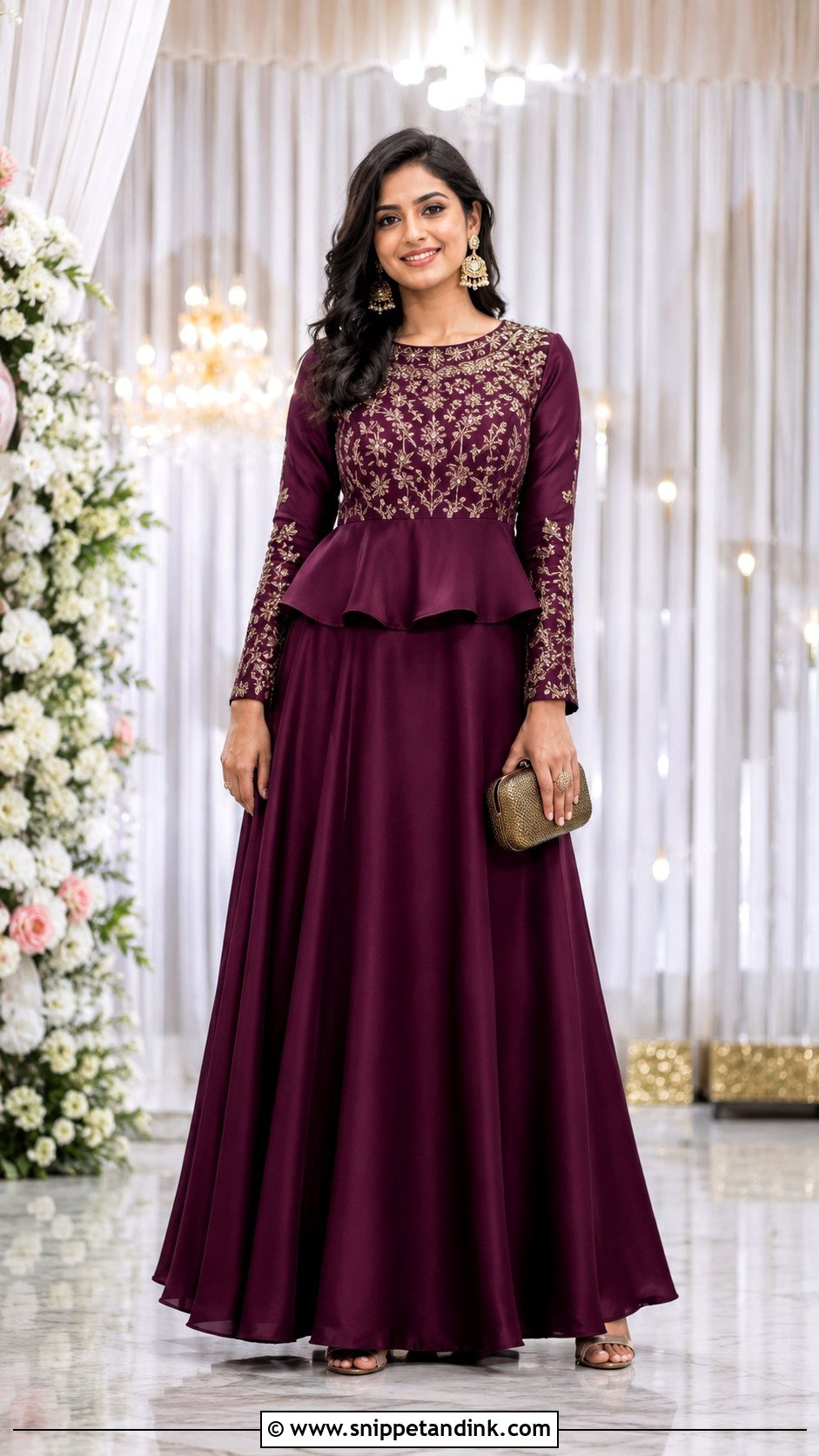
A peplum adds shape at the waist, and its length decides how much. A short peplum gives subtle definition, while a longer asymmetrical overlay covers the hips for anyone who prefers that. Position it at the natural waist over an embroidered fitted top, with the lower skirt falling in a smooth A-line. Don’t pair a heavily flared peplum with a huge skirt; the two volumes fight each other and make the gown awkward to move in. Antique gold earrings, a matching ring, comfortable heels and a structured clutch, with a low ponytail or side-parted waves. Plum is a strong evening and cool-season choice.
17. Gold Mermaid Gown for Sangeet Function
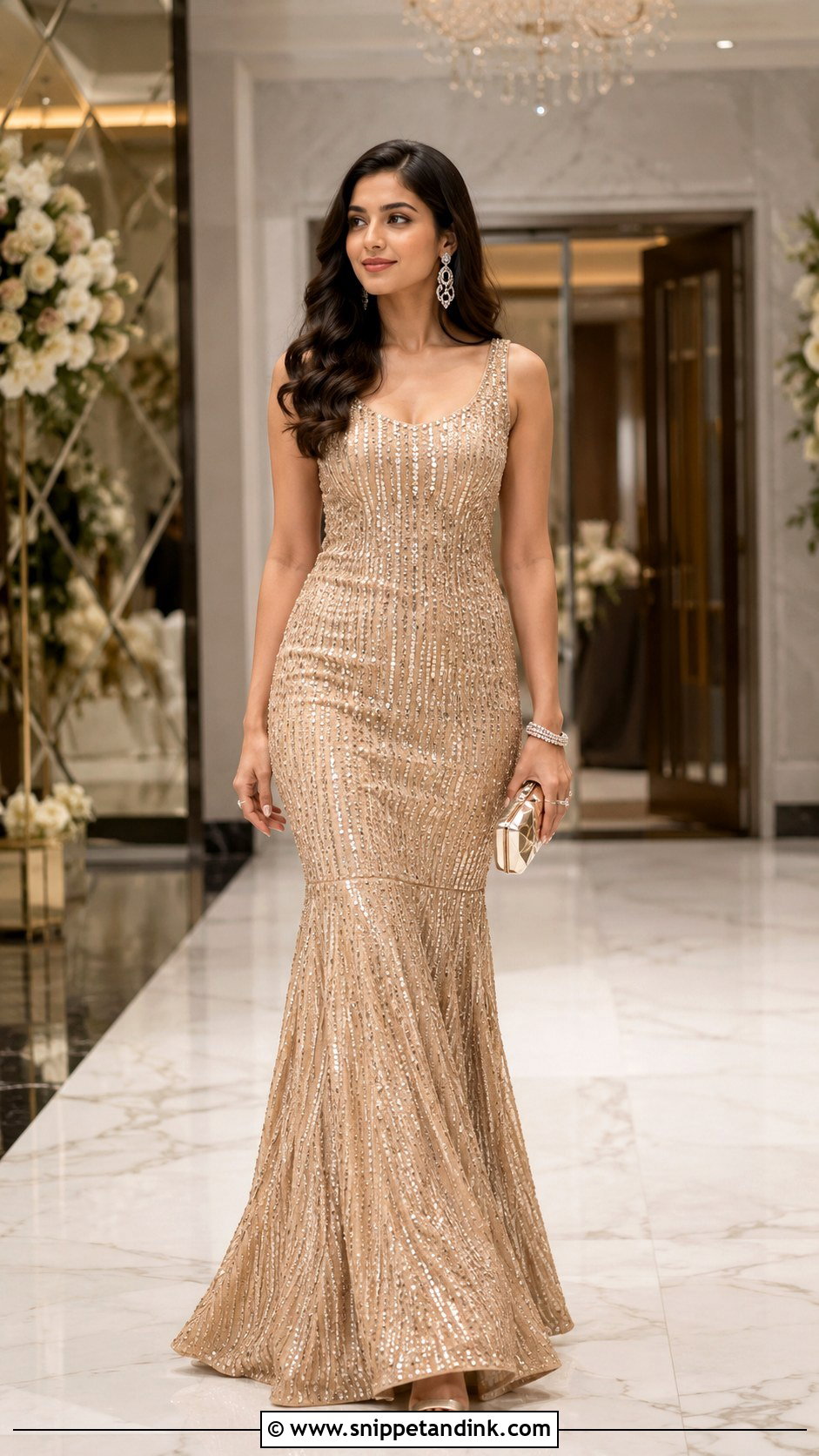
This is the one gown here I’d steer you away from for an energetic routine, because a mermaid restricts your stride however well it’s cut. For a bride, sister or close relative who is mostly hosting, though, gold is pure glamour. Choose one that follows the body gently and flares above or around the knee, and ask for stretch lining, a back slit or a wider flare to improve mobility. Tonal sequins, beads or embroidery add depth without bringing in extra colors. Crystal earrings, neutral-gold heels, a small metallic clutch and a sleek bun or polished waves, with jewelry kept streamlined.
18. Powder Blue Layered Gown for Sangeet Function
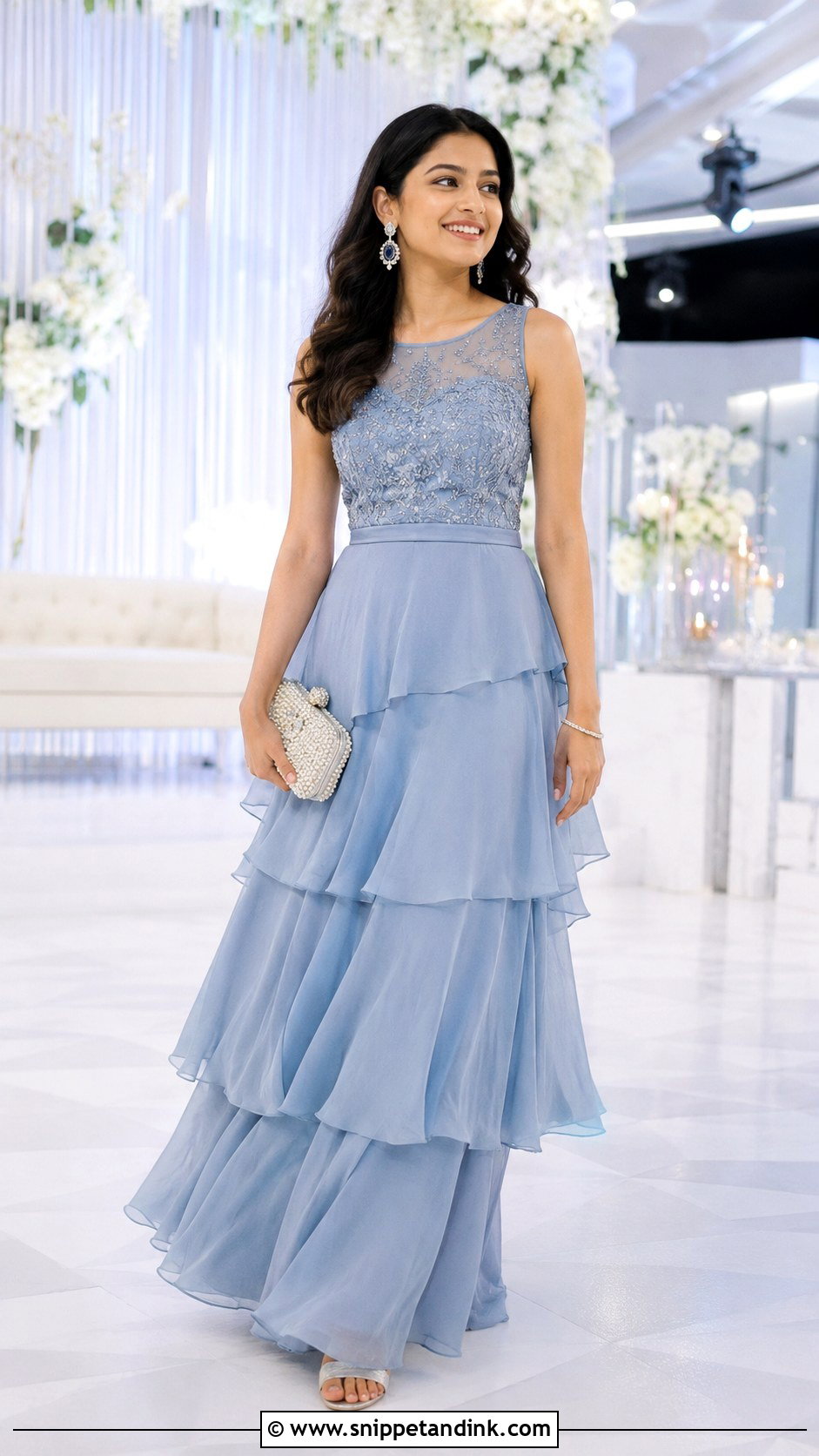
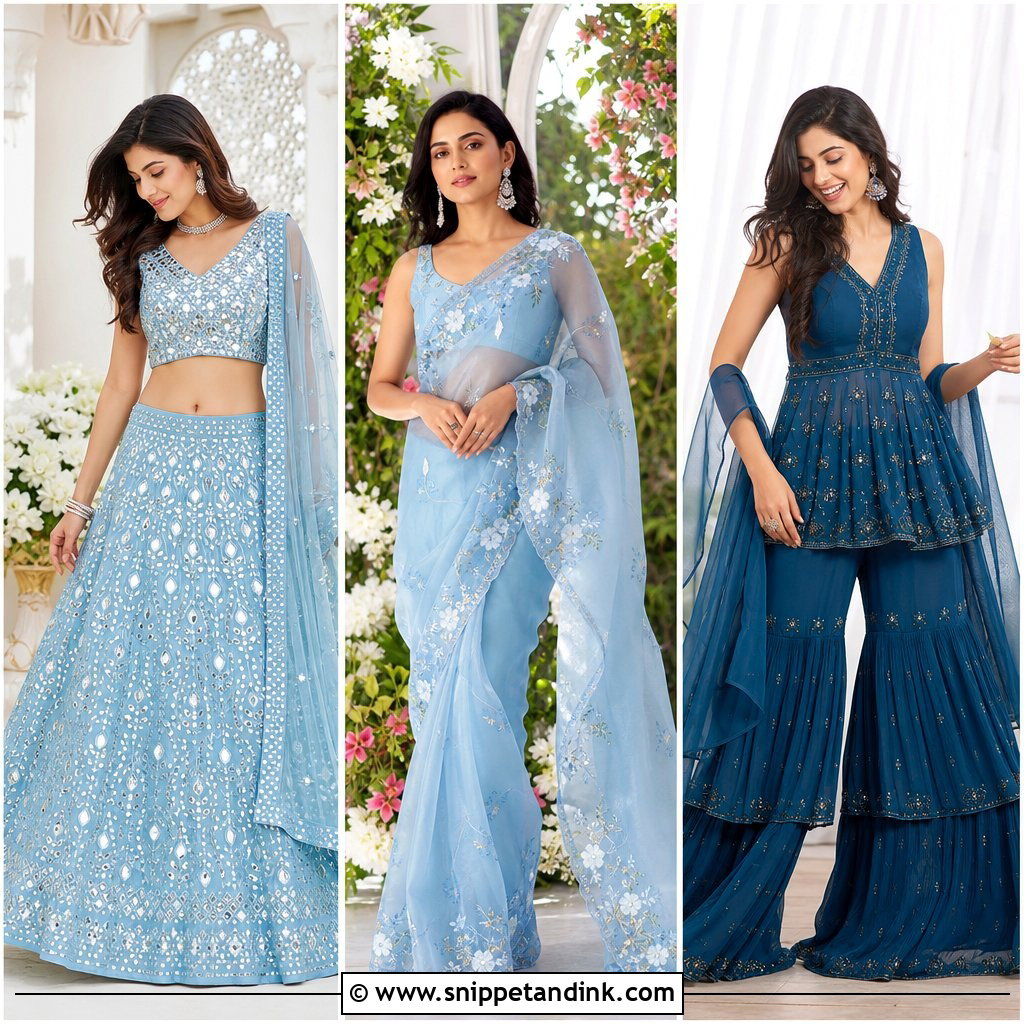
Tiers make a skirt feel light, but every layer adds weight at the hem, so count them. Broad, limited tiers in georgette or tulle move freely when you turn, while many narrow ruffled tiers look fussy and drag. A fitted embroidered bodice with a clearly defined waist keeps the layers from looking shapeless, and vertical detailing lengthens the line. Silver sandals, blue stone earrings, a slim bracelet and a pearl or crystal clutch. Half-up hair or a smooth ponytail keeps powder blue modern, and it suits bridesmaids, teenage guests and anyone drawn to soft colors.
19. Multicolor Printed Gown for Sangeet Function
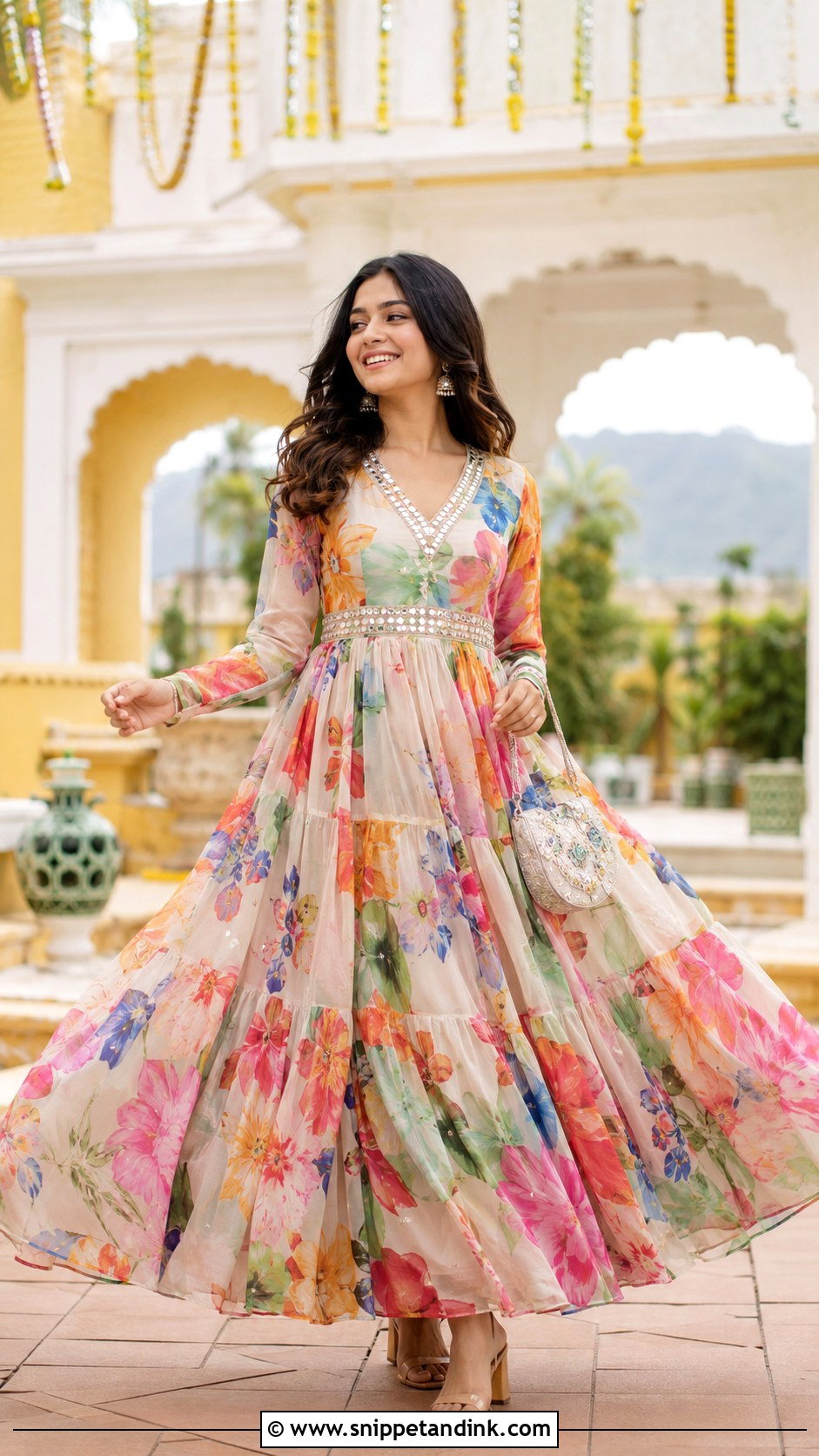
Print is the relaxed route to a cheerful sangeet outfit, and a practical one outdoors, because breathable crepe, chiffon or georgette prints stay cooler than heavy embroidery. Floral, bandhani-inspired or geometric motifs in a coordinated palette work best. An embroidered waistband, mirror-work neckline or worked cuffs make the print formal enough for the evening. Pull your accessories from the pattern: one-color heels, simple jhumkas and a small bag in a secondary shade. A braided ponytail or relaxed waves, and simple makeup, since the print already carries several colors.
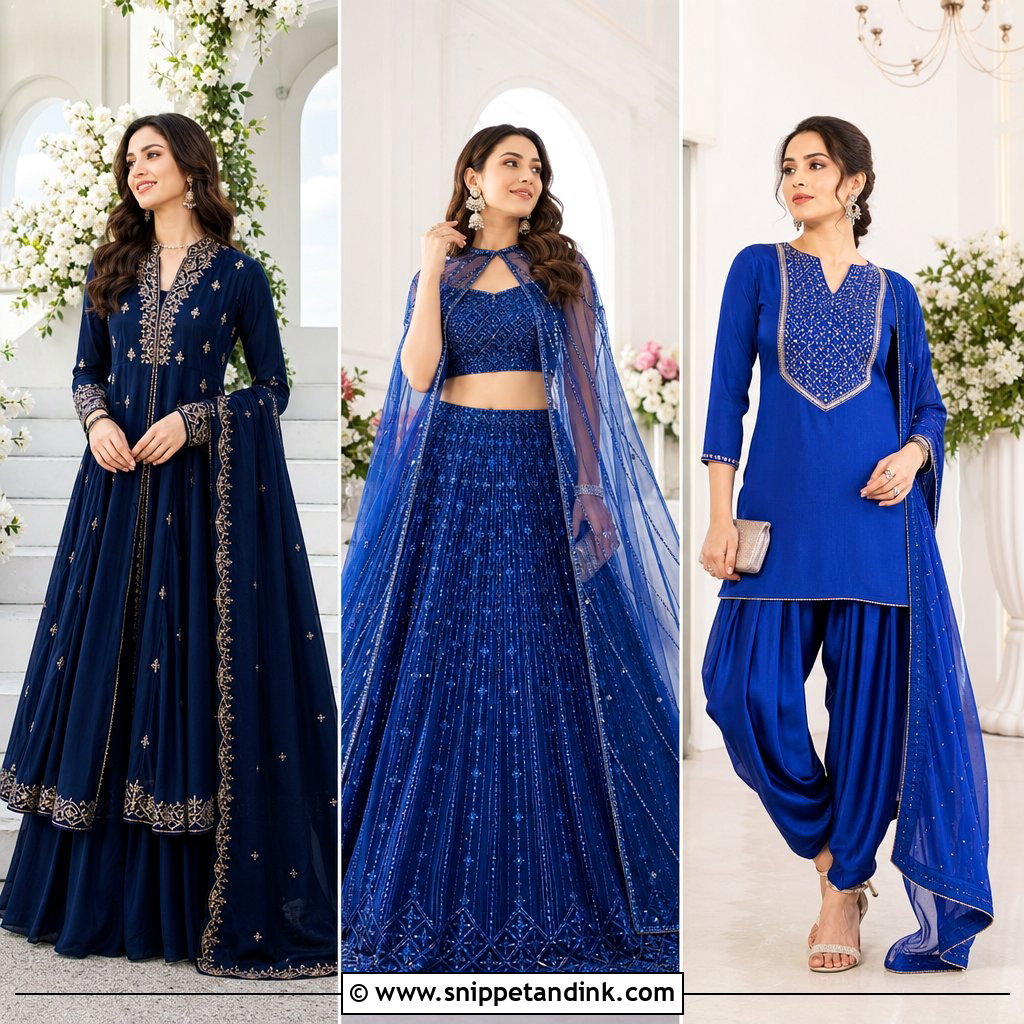
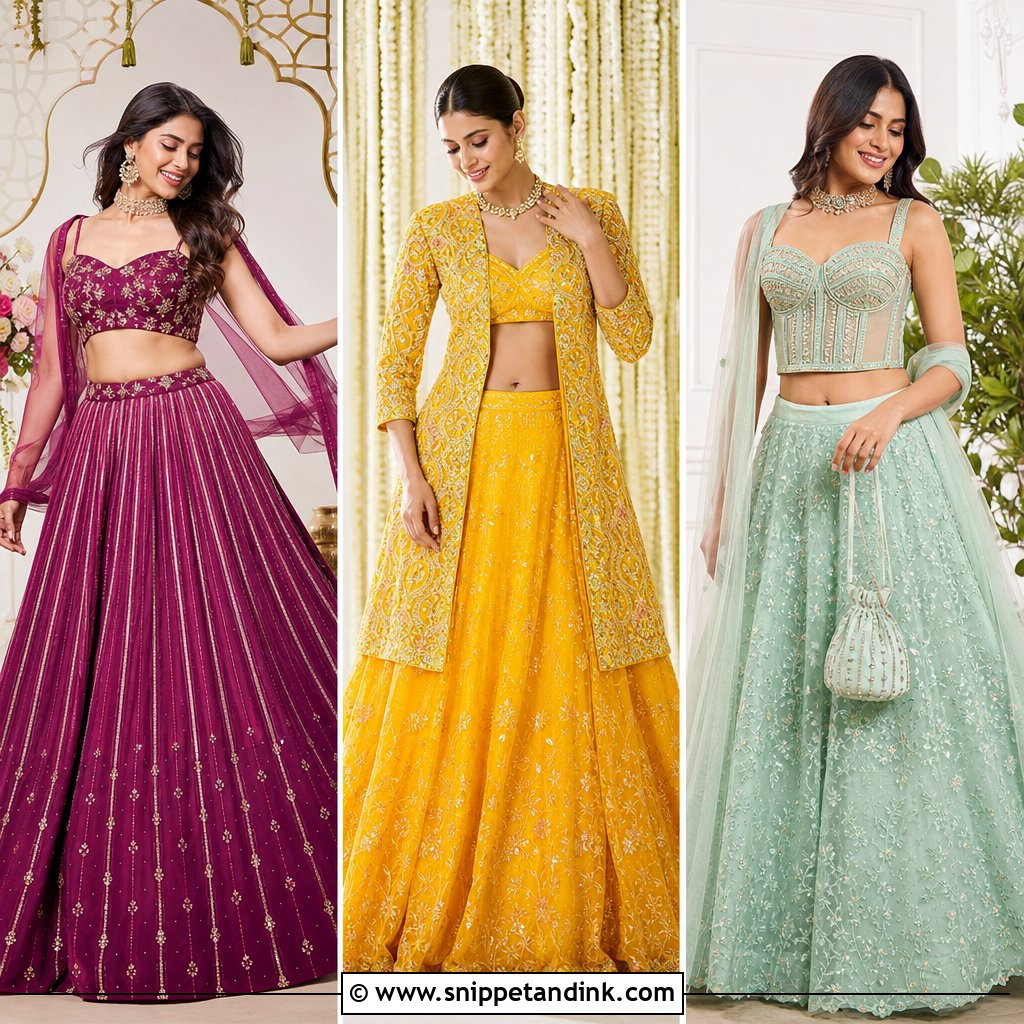
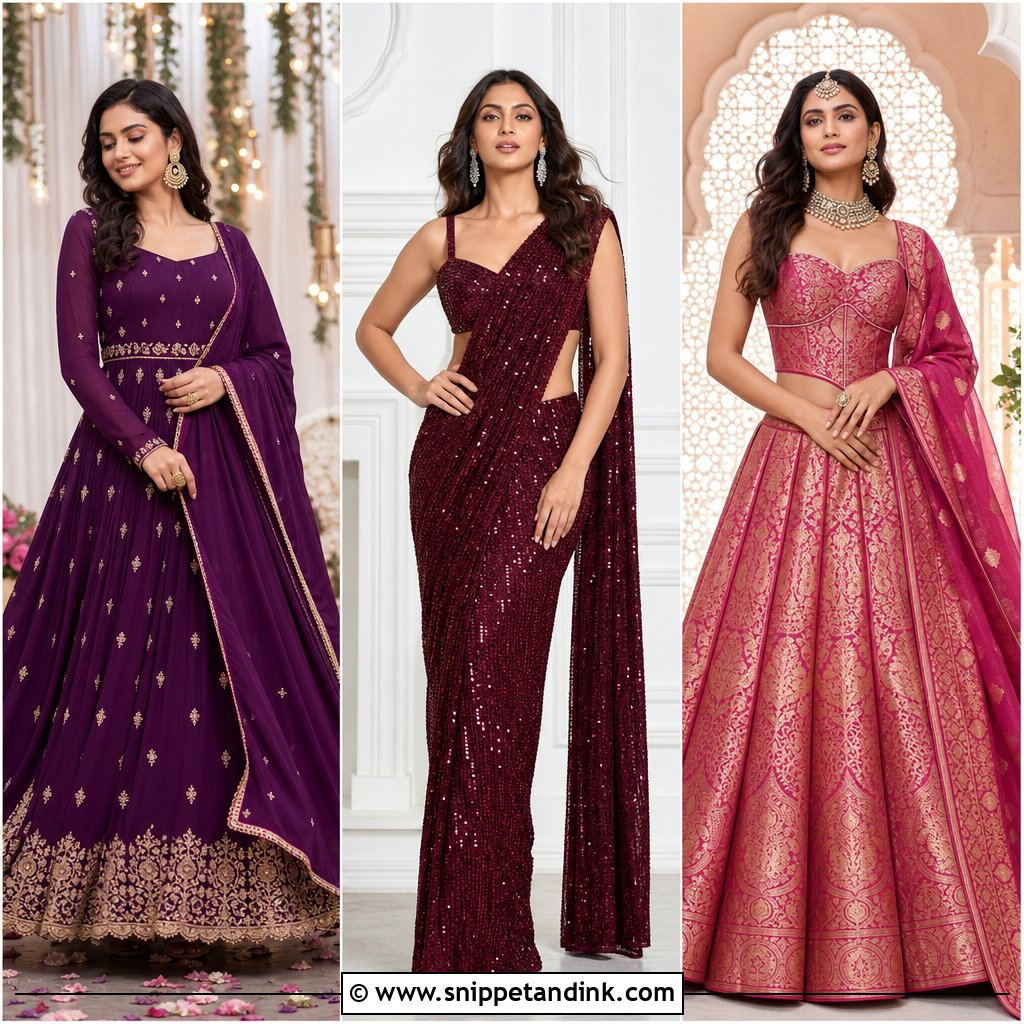
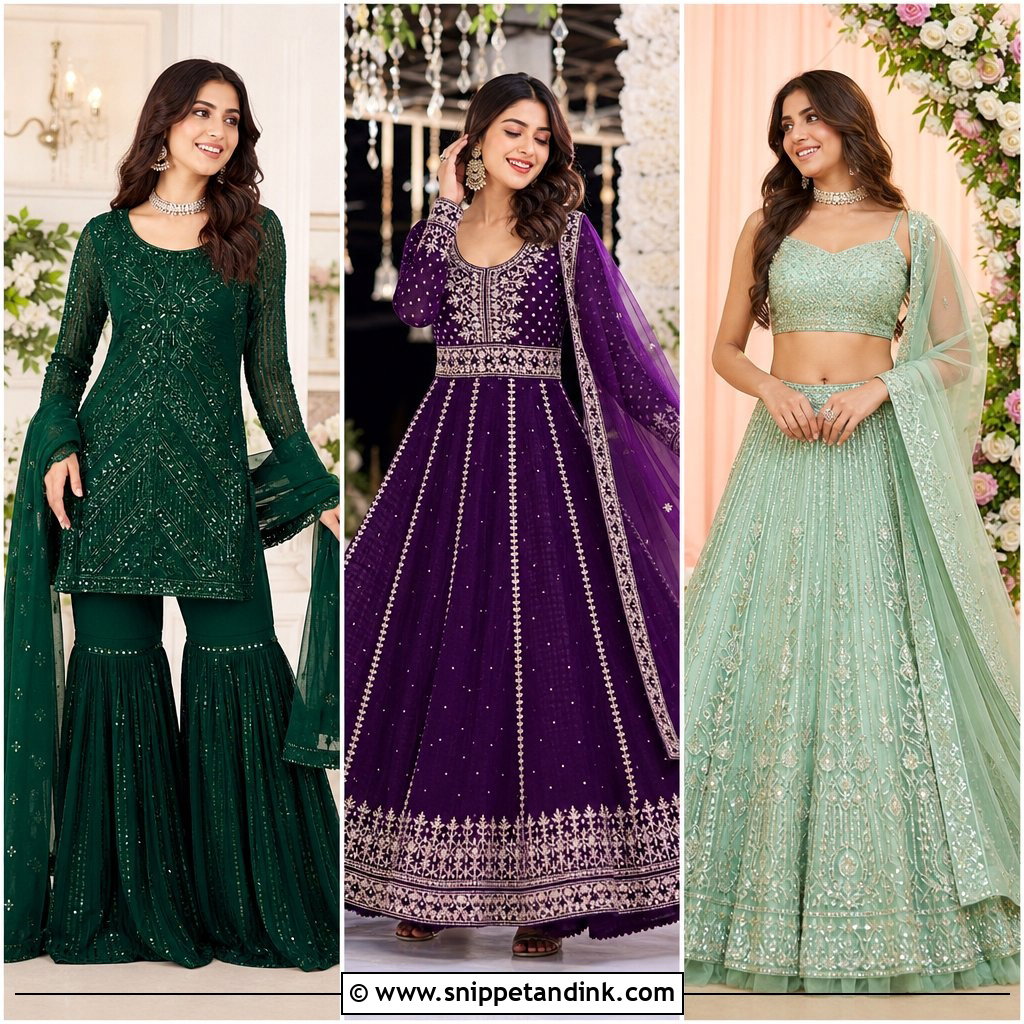
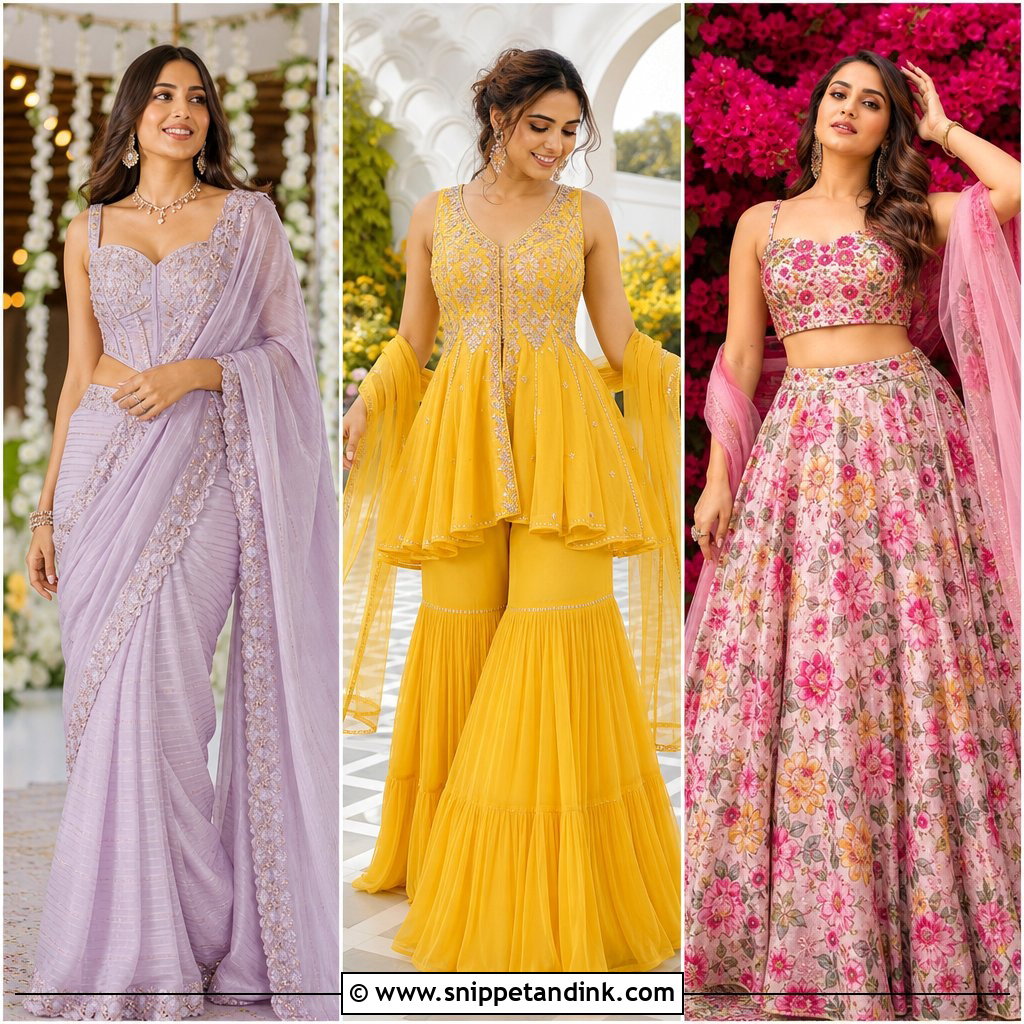
20. Maroon Bridal Gown for Sangeet Function
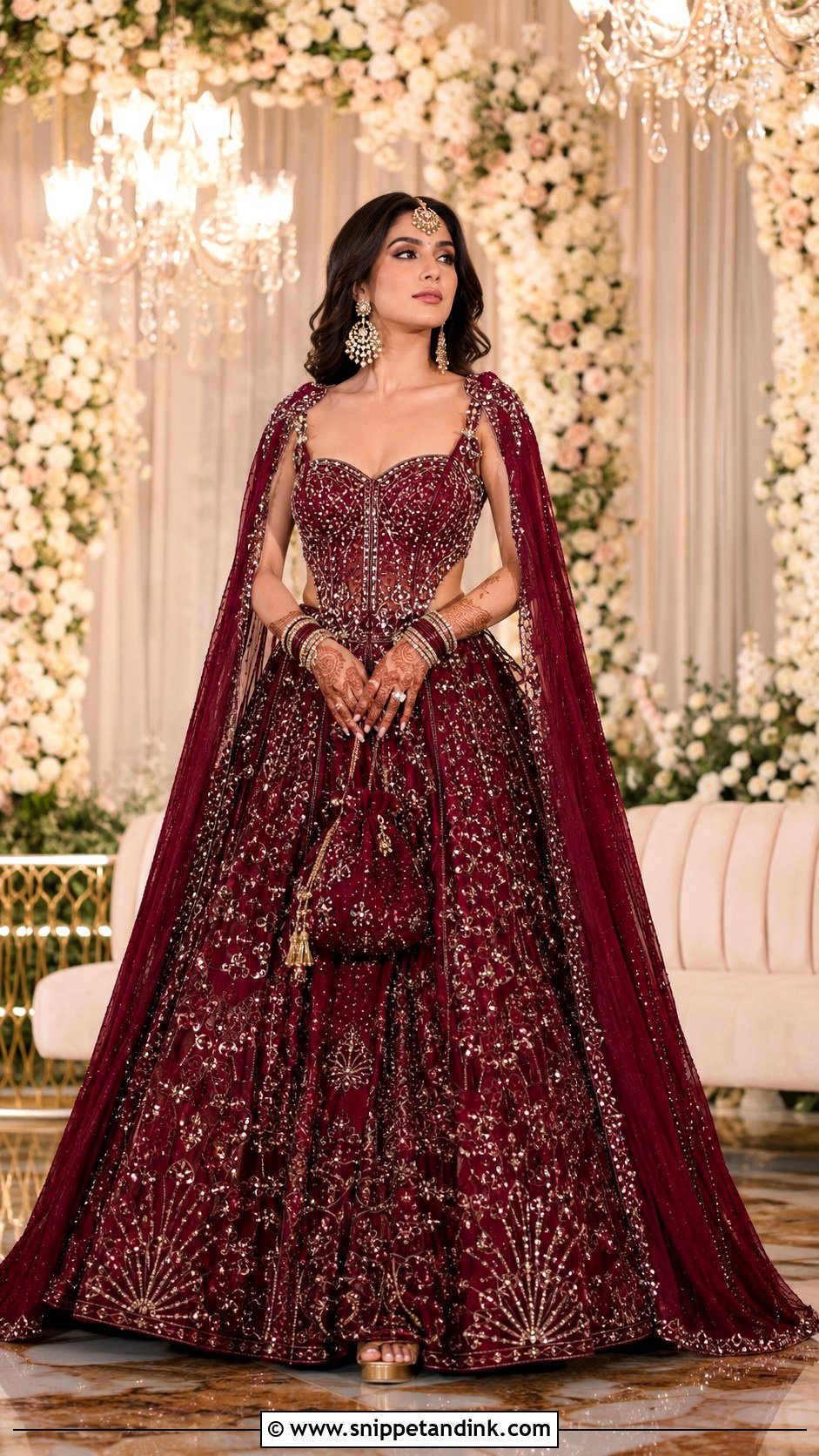
For the bride, maroon gives traditional richness in a modern shape: a structured bodice, full circular skirt, and a detachable train or shoulder drape for the entrance. Put the zari, beadwork or sequins around the bodice and border and leave the center panels lighter, so the skirt stays flexible when you move. Before your own performance, take off the train and pin any loose drape. Kundan earrings, a maang tikka, stacked bangles, cushioned platform heels and an embroidered potli complete it, with a low bun and subtle hair accessories. Good internal support and a light lining let you enjoy the night instead of adjusting the gown.
Should the Family Match, or Just Agree?
Coordinated families look wonderful in group photographs, but identical gowns rarely suit everyone’s coloring or shape. What works better is agreement on a palette and a level of formality.
Settling a palette without dictating a dress
Many brides pick two or three colors for the sangeet and share them with the family early. Within those, each person chooses the silhouette that suits her. The bride’s outfit should stay the most heavily worked, so sisters and cousins can sit in her color family while keeping their embroidery a step lighter.
Colors worth asking about first
- Red and deep maroon, which many families keep for the bride.
- Ivory and white, if the bride is wearing a pale outfit herself.
- Black, which some families avoid at wedding functions.
- The exact shade the bride has chosen, unless she has asked the group to match her.
A two-line message to the bride or her mother settles all of this. Nobody minds being asked, and it can save you a second shopping trip.
Dressing for the Dance Floor and the Family Photo
Your role in the celebration should guide the gown, and comfort should carry you from the first photograph to the last song. The twenty looks here cover sparkle, tradition, pastels, prints, structure and drape, for brides and guests alike. Weigh the venue, dress code, weather and how much you’ll dance. Test the neckline, lining, hem and shoes before the night, and secure any cape, train or drape so it can’t tangle a routine. Balance a heavily worked gown with quiet accessories, or give a plain one presence with a single statement piece.
You'll Like These Ideas:


Leave a Reply