
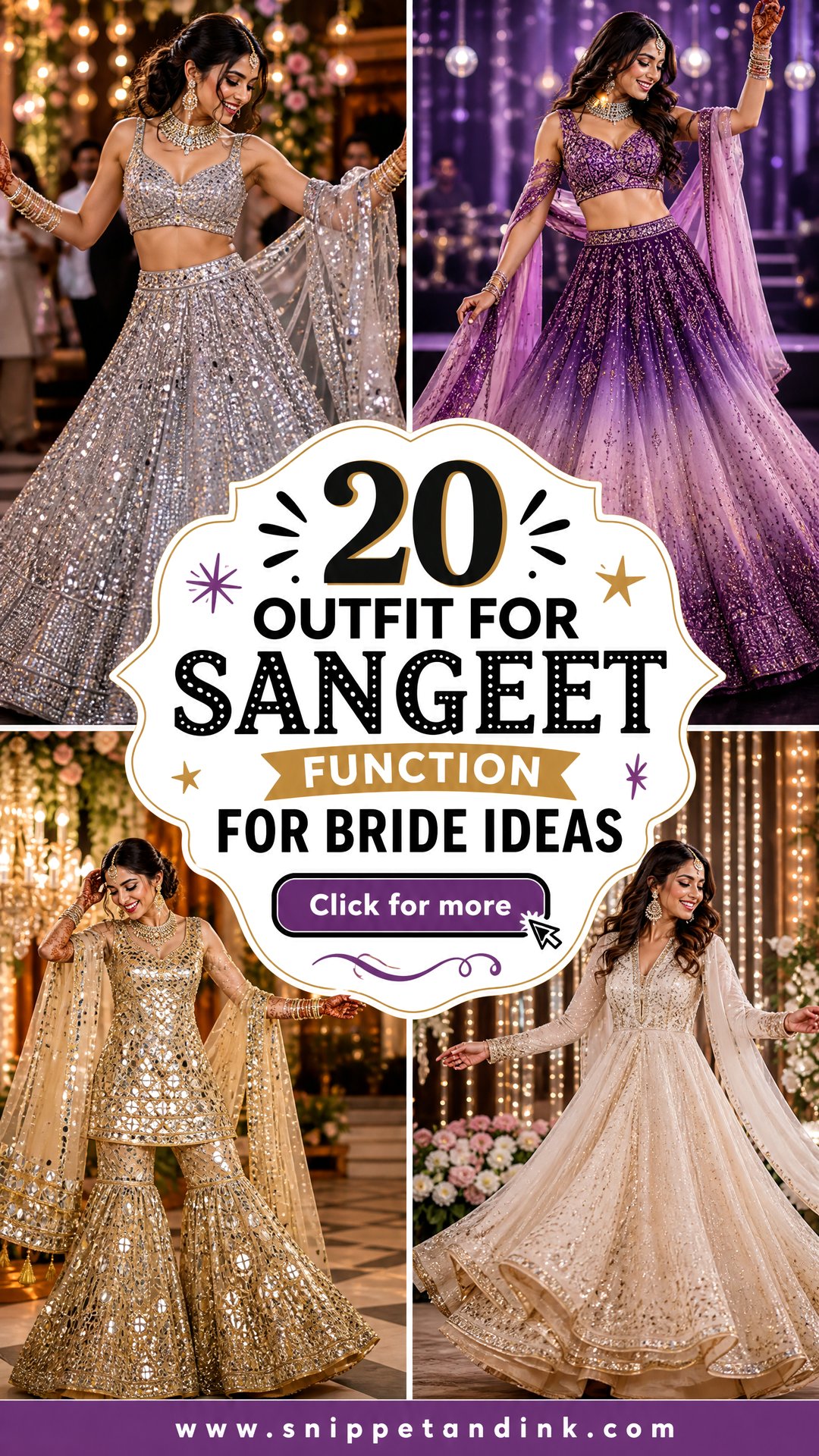
A sangeet outfit has a harder job than the wedding outfit. It has to catch the stage lights, survive rehearsed choreography and still look bridal in a crowd of cousins who are also dressed up. When I style a bride for this night, the first conversation is never about color. It’s about how much she plans to dance, how long she’ll be on her feet and whether she can lift her arms above her head in the blouse. Lehengas are the classic answer, but pre-draped sarees, shararas, gowns and fusion sets often move better. I’ve paired each look below with jewelry, shoes and hair so you can picture the whole outfit, and you’ll find more Outfit for Sangeet Function ideas if you want to compare everyday guest styling too.
How Heavy a Lehenga Can Be Before It Stops You Dancing
Bridal lehengas vary enormously in weight, and a skirt that feels fine for a ten-minute trial can drag on your hips by the third song. Most of the weight sits in the embroidery and the cancan layers underneath. When I shortlist sangeet outfits, I lift the skirt on the hanger before I look at the color. If it already feels heavy in my hands, it will feel twice as heavy after an hour of dancing.
Here’s what I ask a bride to test at every fitting:
- Spin twice and stop. A skirt with heavy hem embroidery keeps swinging after you stop, which pulls on the waistband.
- Raise both arms above your head. If the blouse rides up or digs under the arms, it needs more ease or a different armhole.
- Sit on a low chair. Many sangeets have floor seating or low sofas, and stiff cancan can push the skirt up at the front.
- Walk up two steps holding nothing. Stages have stairs, and you’ll want at least one hand free.
- Check the closure. Hooks pop under strain; a hidden zip with a hook at the top holds better through choreography.
If the outfit fails more than one of these, change the construction rather than the color. A lighter cancan, a lining instead of a second net layer, or embroidery moved from the hem to the waist band can make the same design much easier to dance in.
1. Silver Sequin Lehenga for Sangeet Bride
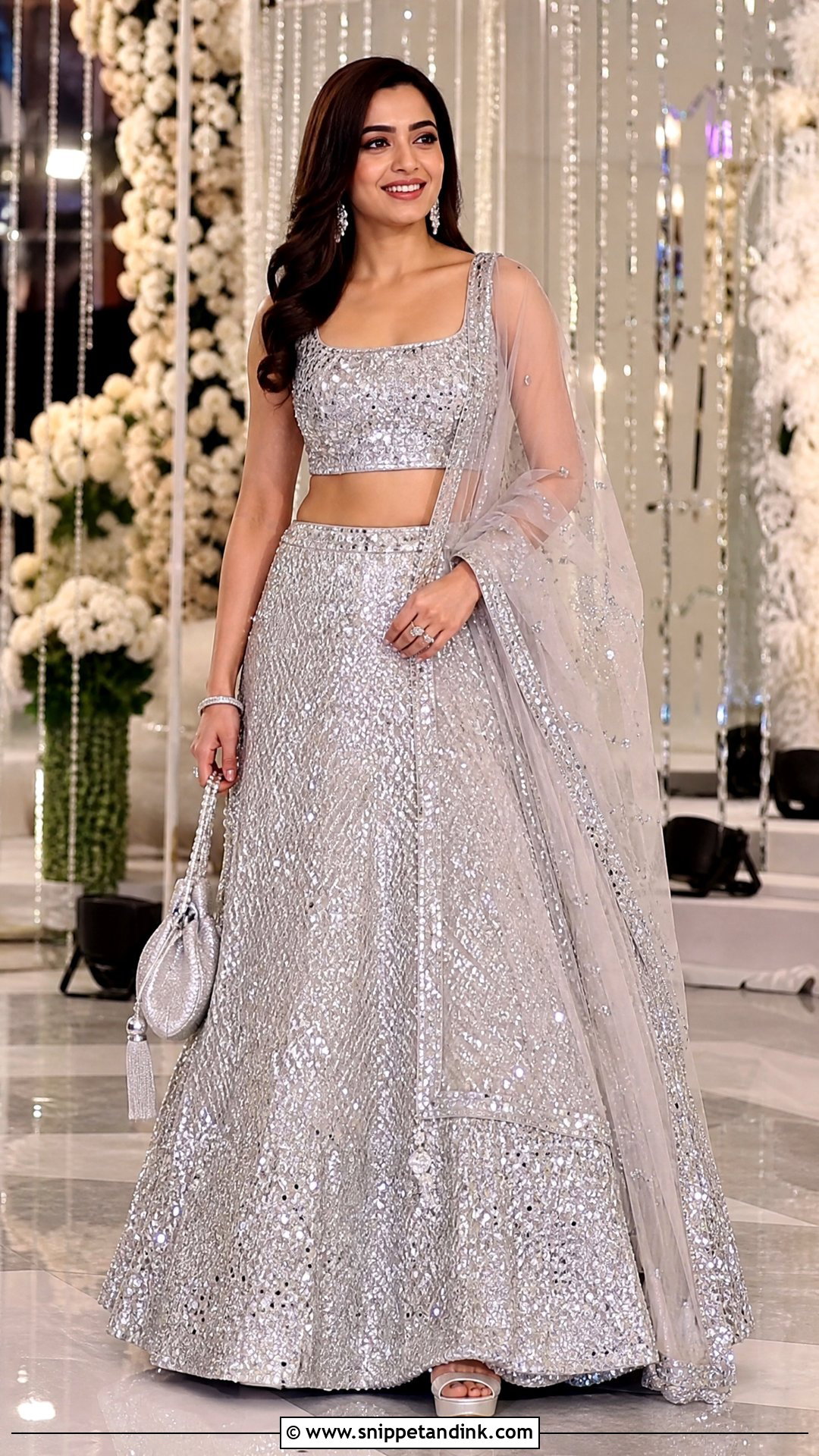
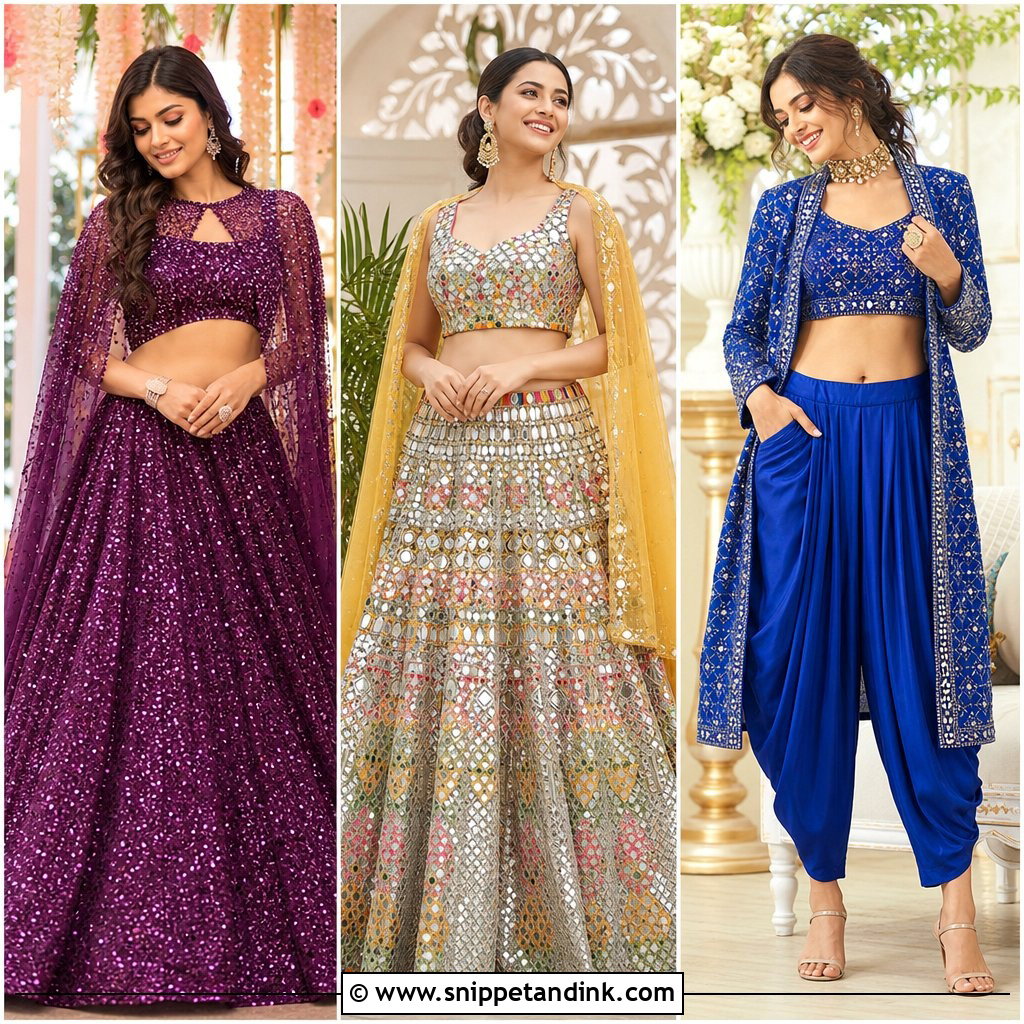
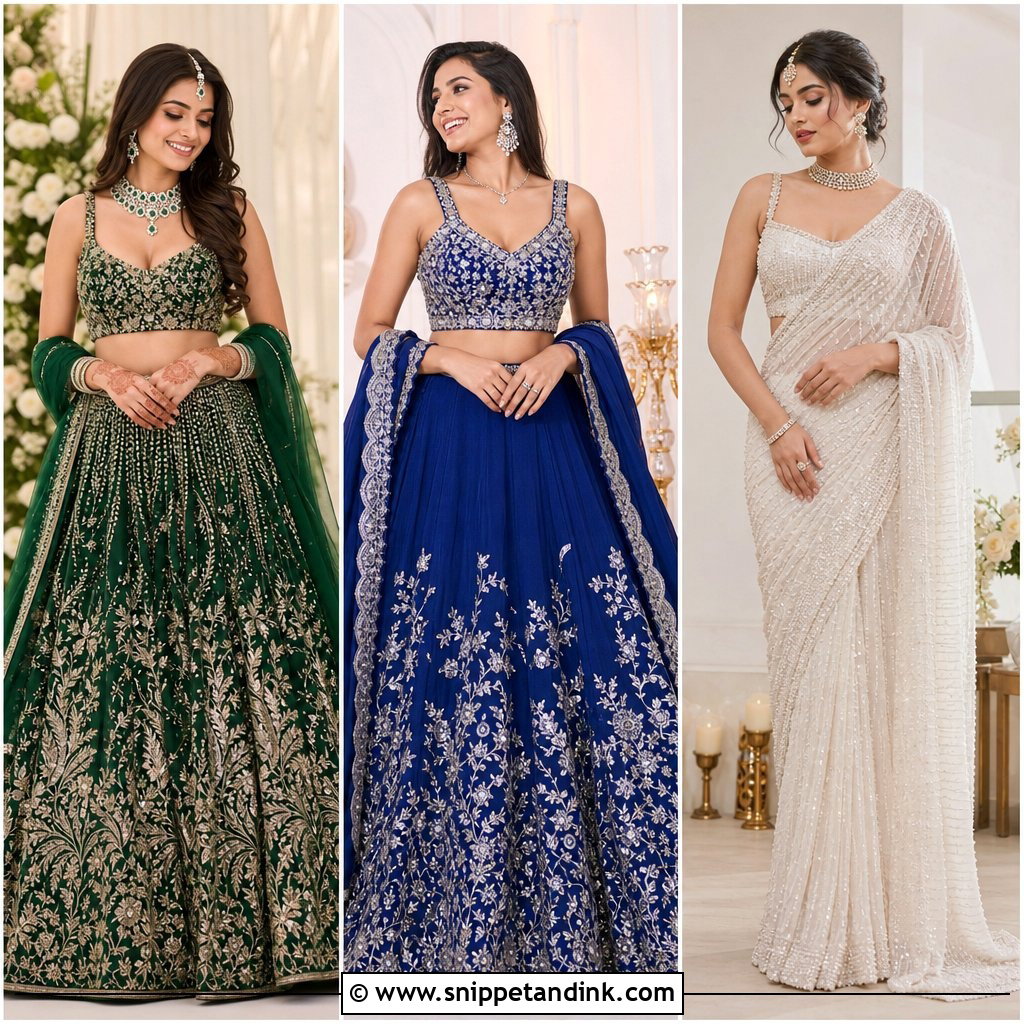
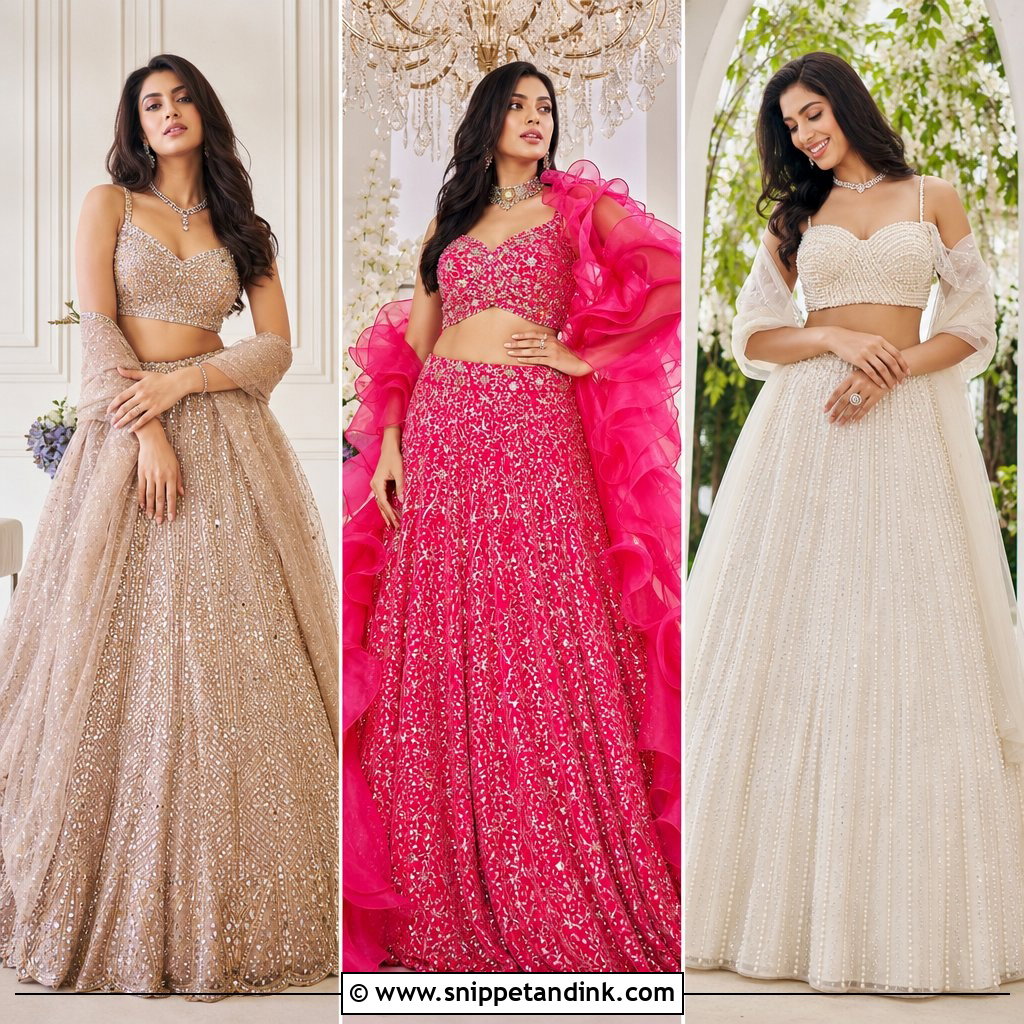
Sequins on a silver sequin lehenga throw light back at every camera on the dance floor, which is exactly why brides love it. The catch is weight. Dense sequin panels add up quickly, so I look for embellishment spread evenly across the skirt rather than a heavy band at the hem that swings like a pendulum when you turn. Pair it with a fitted blouse on supportive straps and a net dupatta pinned over one shoulder. Diamond-style drops and a small crystal potli are enough jewelry here. One thing I always check: sequins scratch the inner arm, so ask your tailor to line the blouse sleeves or keep the arm edges clean.
2. Champagne Gold Lehenga for Sangeet Bride
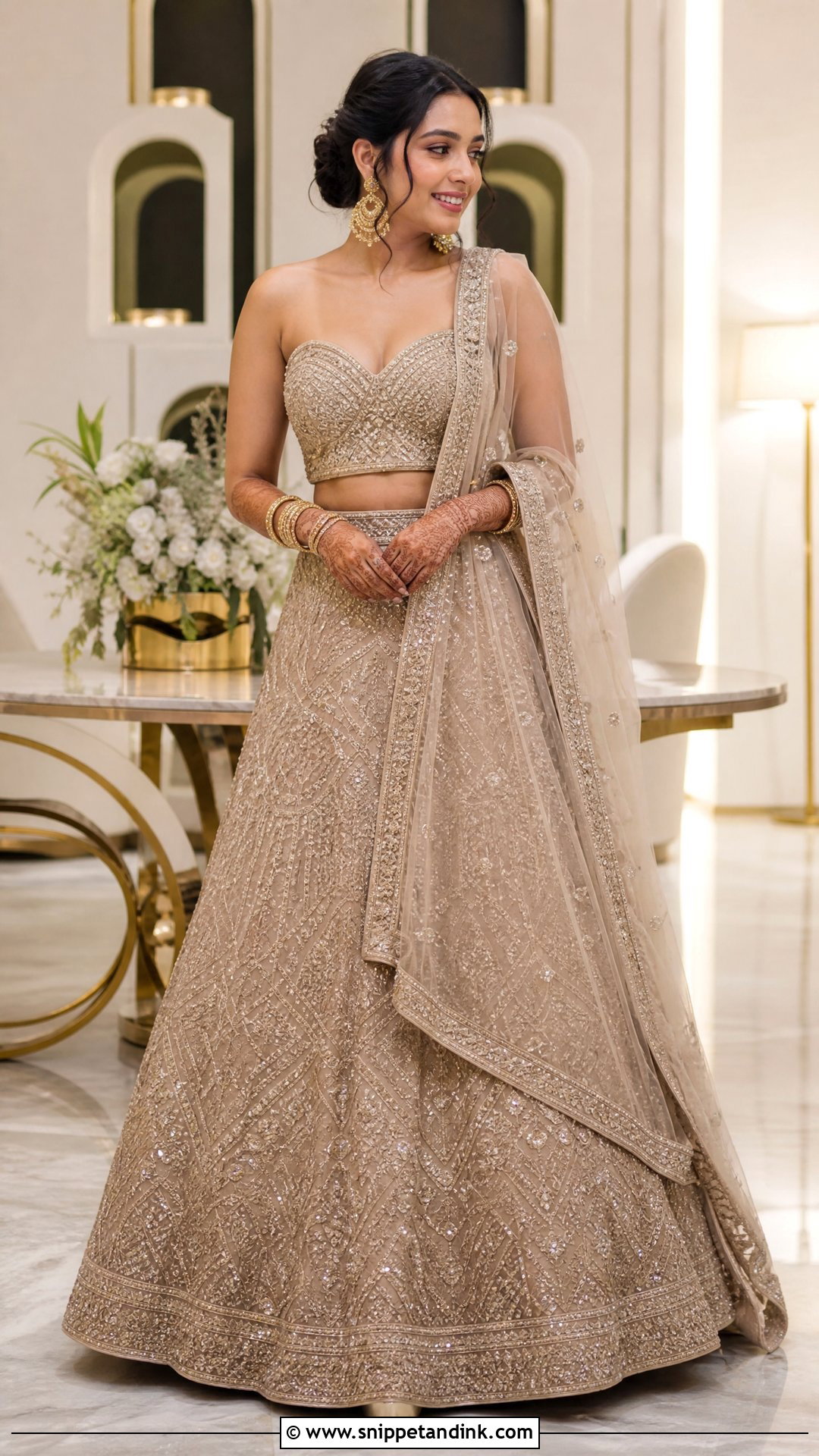
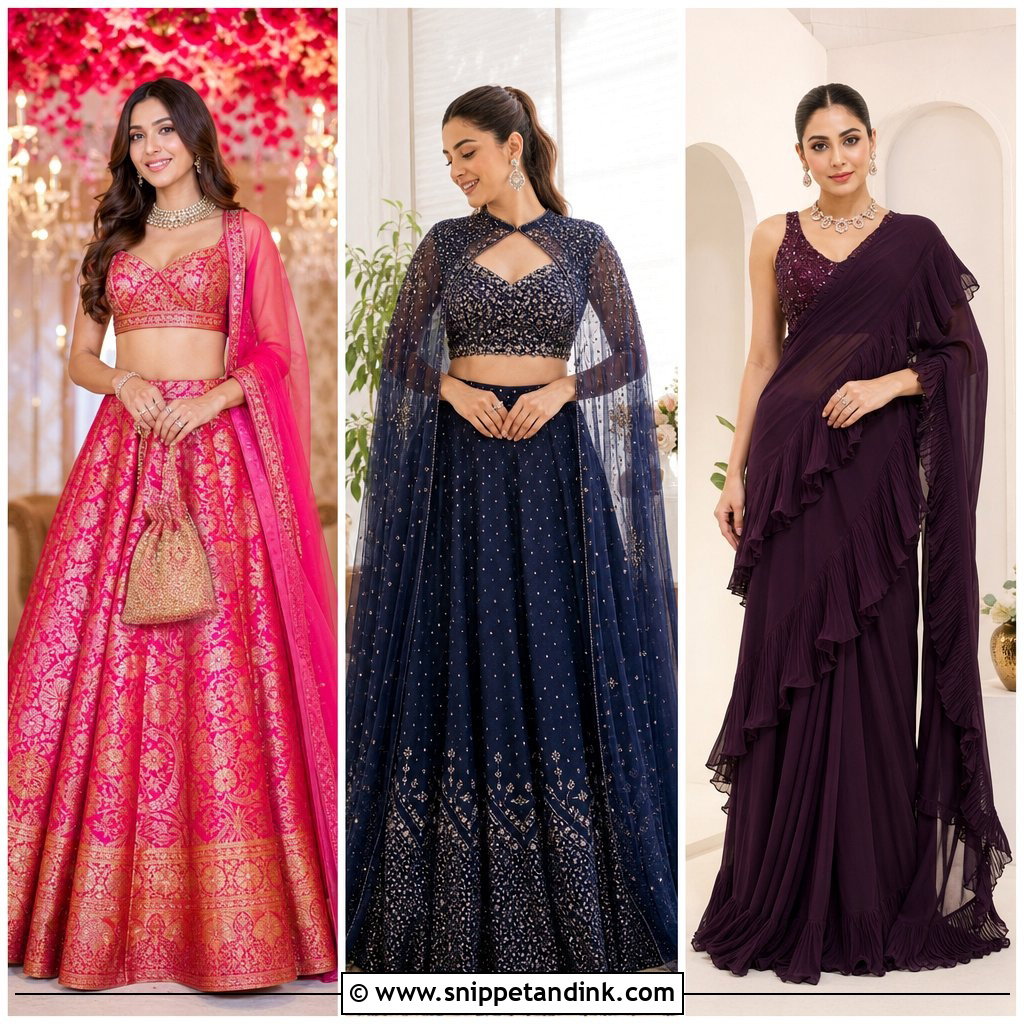
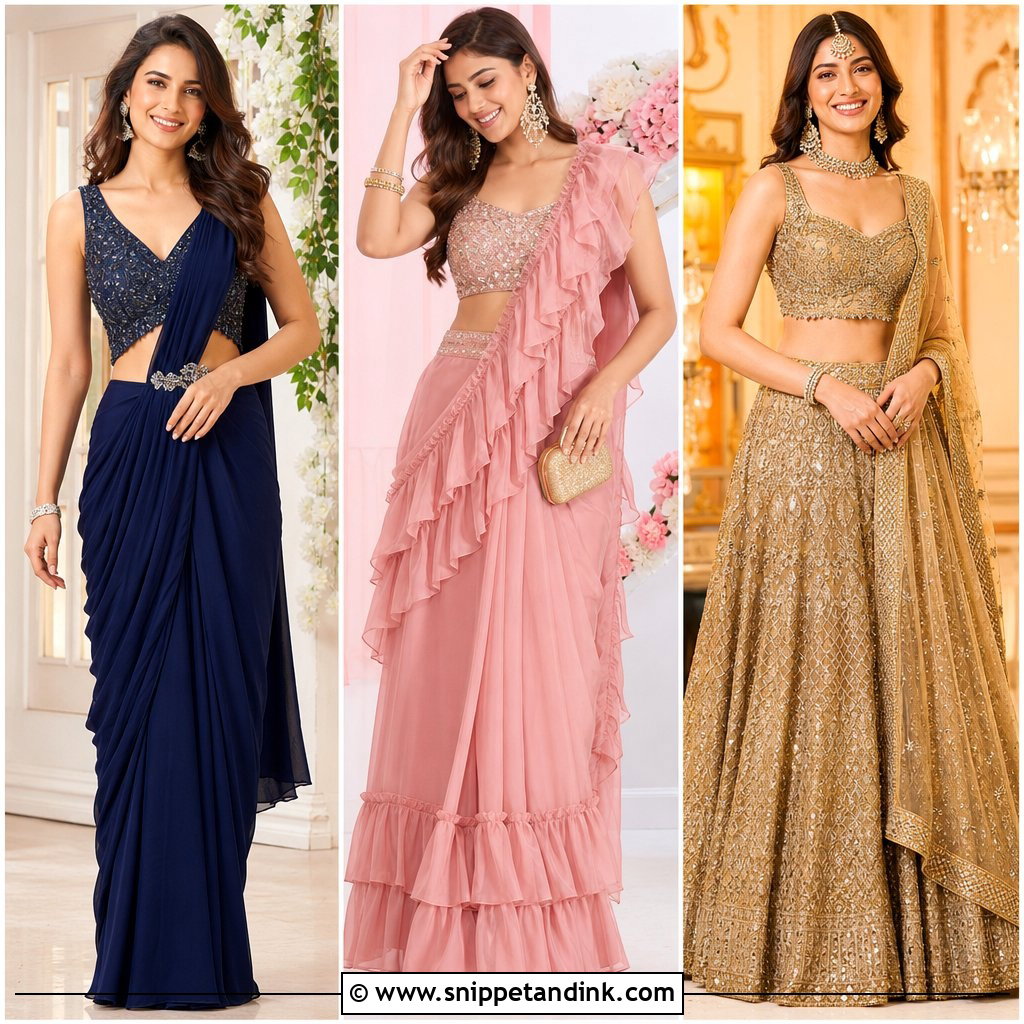
Champagne gold reads richer than yellow gold under warm stage lighting without swallowing the bride. I’d choose tonal beadwork and thread embroidery over contrast stones, because the muted shade relies on texture to look festive. A sweetheart blouse gives the skirt a clear bridal shape. For performances, pin the sheer dupatta at the shoulder and loop the far end around your wrist with a small elastic, so your hands stay free. Antique gold earrings and one statement ring finish it. Platform heels balance better than stilettos, and a textured low bun with a few metallic pins keeps the palette warm.
3. Emerald Green Velvet Lehenga for Sangeet Bride
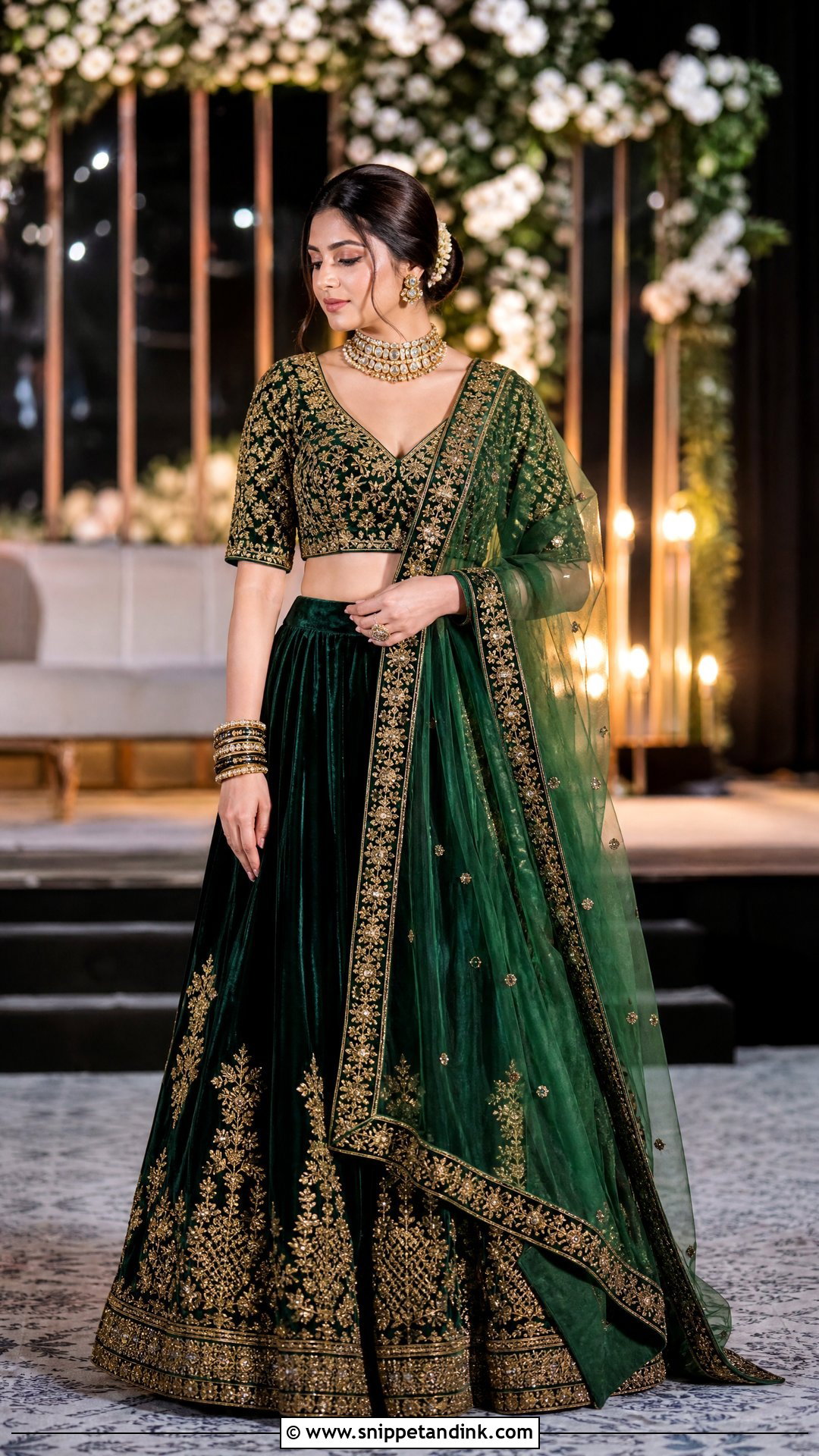
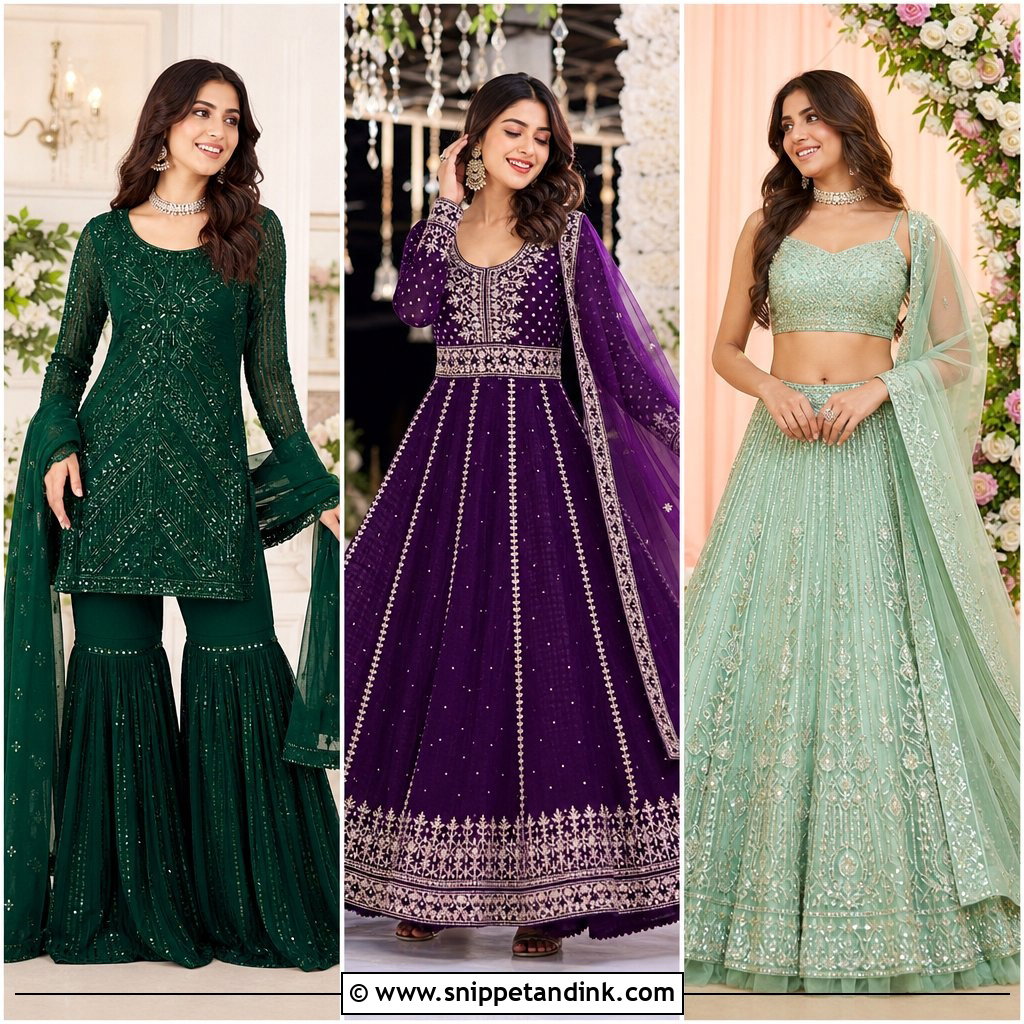
Velvet is the one fabric I’m cautious about for a sangeet. It photographs with real depth in emerald, but it holds heat, and a packed dance floor gets warm fast. I only recommend it for winter evenings or air-conditioned halls. Keep the skirt moderately flared and skip extra layers of stiff cancan, since velvet already has body of its own. An organza dupatta lightens the top half, and kundan earrings with a slim choker sit well against gold zari. Embroidered juttis handle long performances. Velvet also crushes where you sit, so steam it on the hanger the afternoon of the event, not the night before.
4. Royal Blue Mirror Work Lehenga for Sangeet Bride
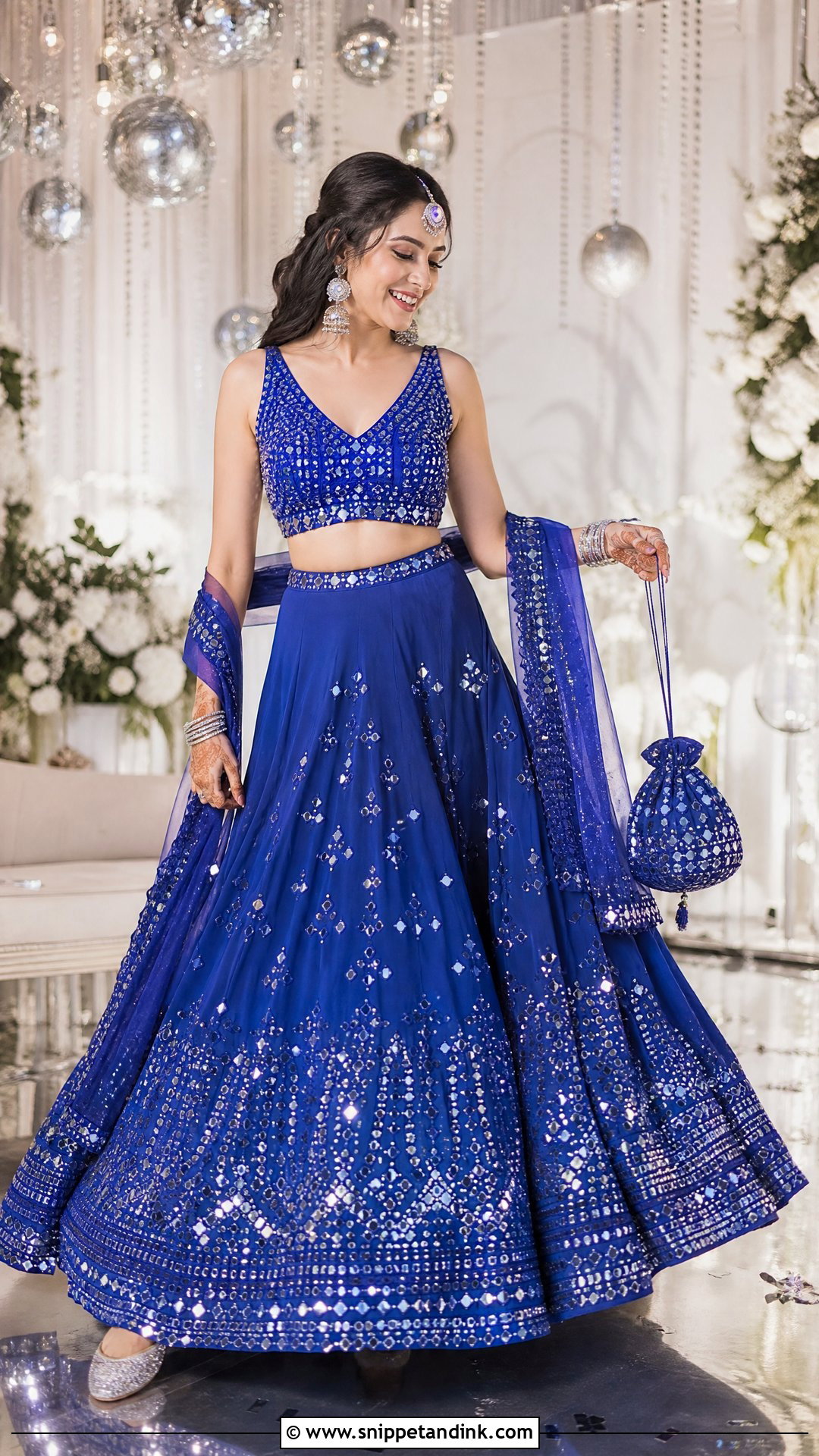
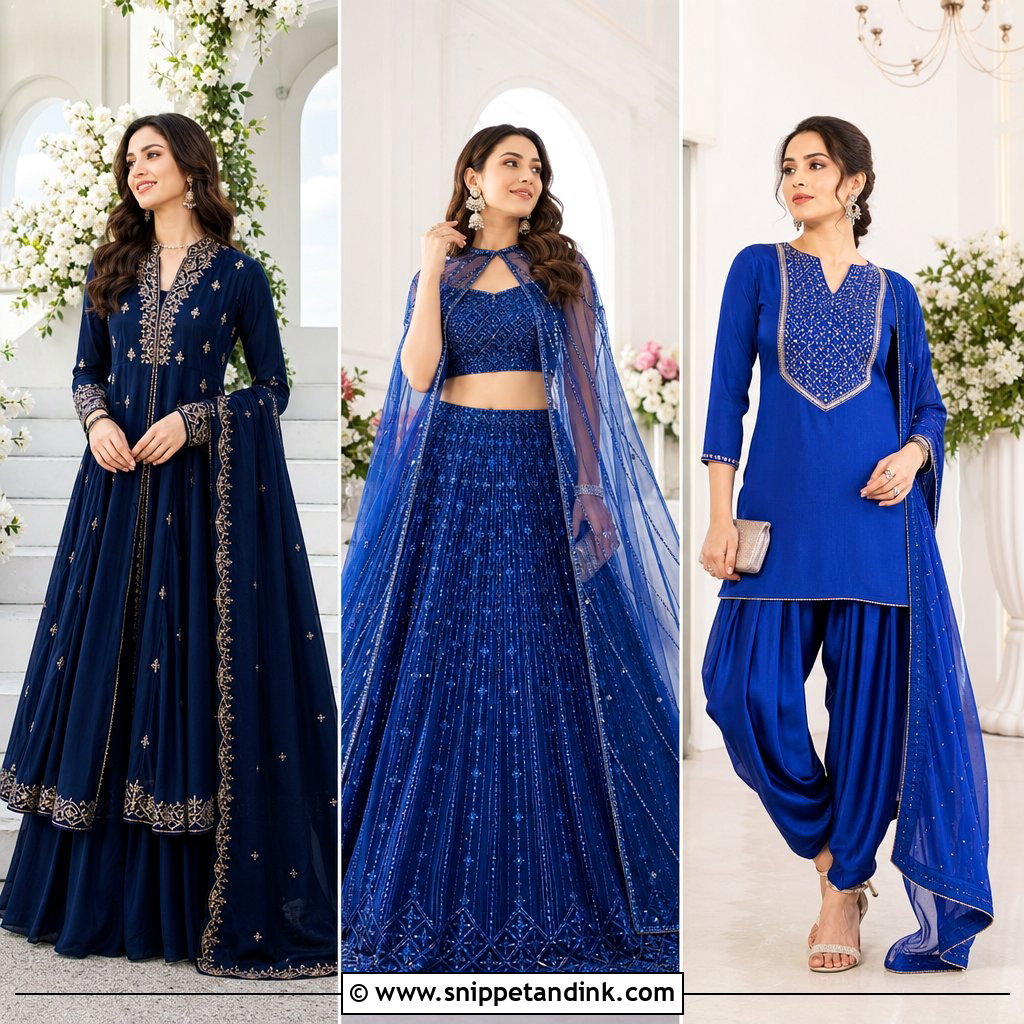
Royal blue holds its color under colored stage lights better than most pastels, so it stays recognizable in group shots. Georgette with mirror work is my pick here. Mirrors give real sparkle with far less weight than stone embroidery, and the skirt moves freely. A sleeveless blouse on wide straps supports you through a long routine. Silver jhumkas and a mirror-work potli echo the skirt. If you’re performing more than one number, wear cushioned juttis and tie your hair into a high ponytail so it doesn’t stick to your neck. Pick a transfer-resistant lip, because you’ll be hugging half the room.
5. Fuchsia Pink Lehenga for Sangeet Bride
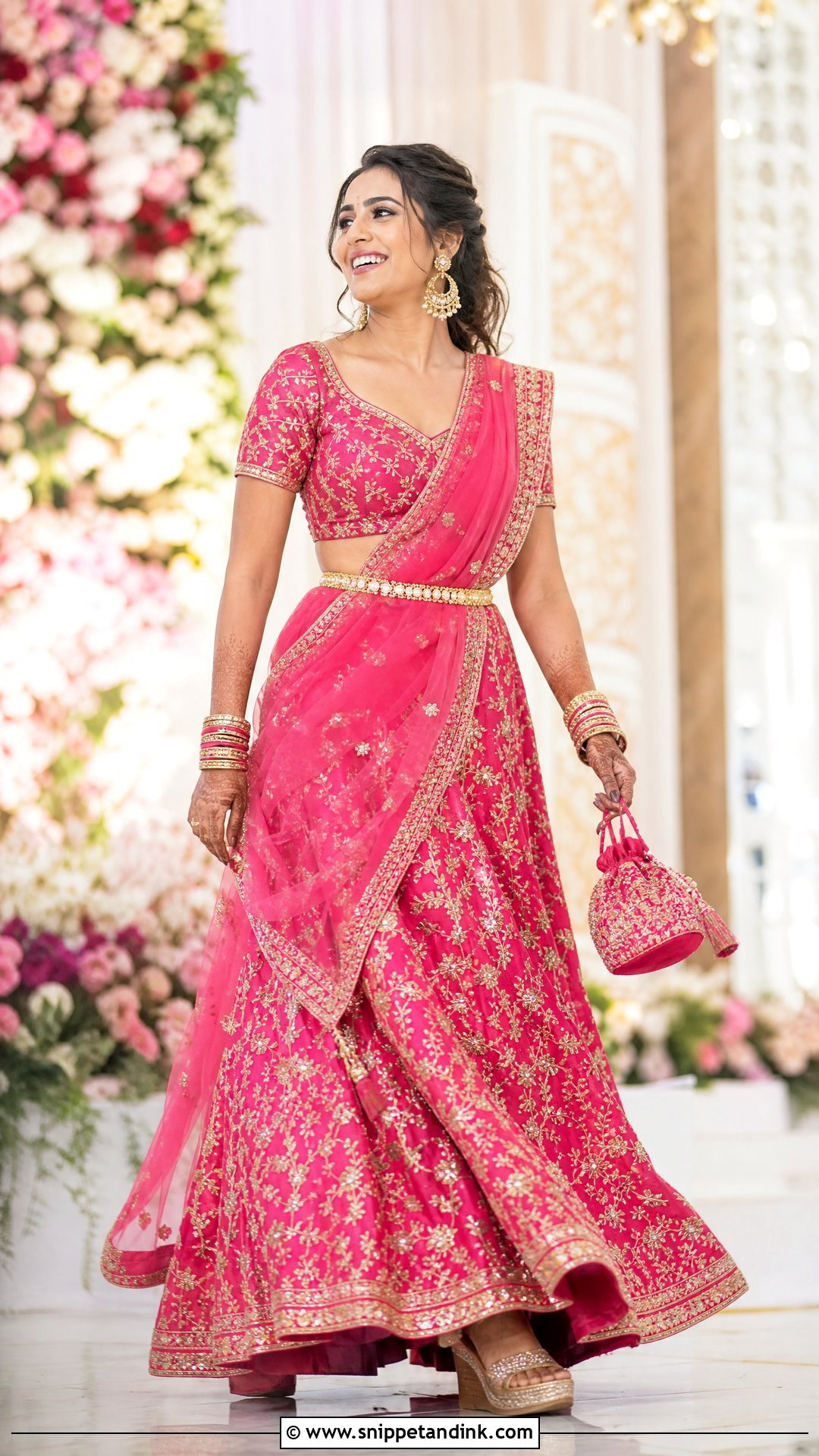
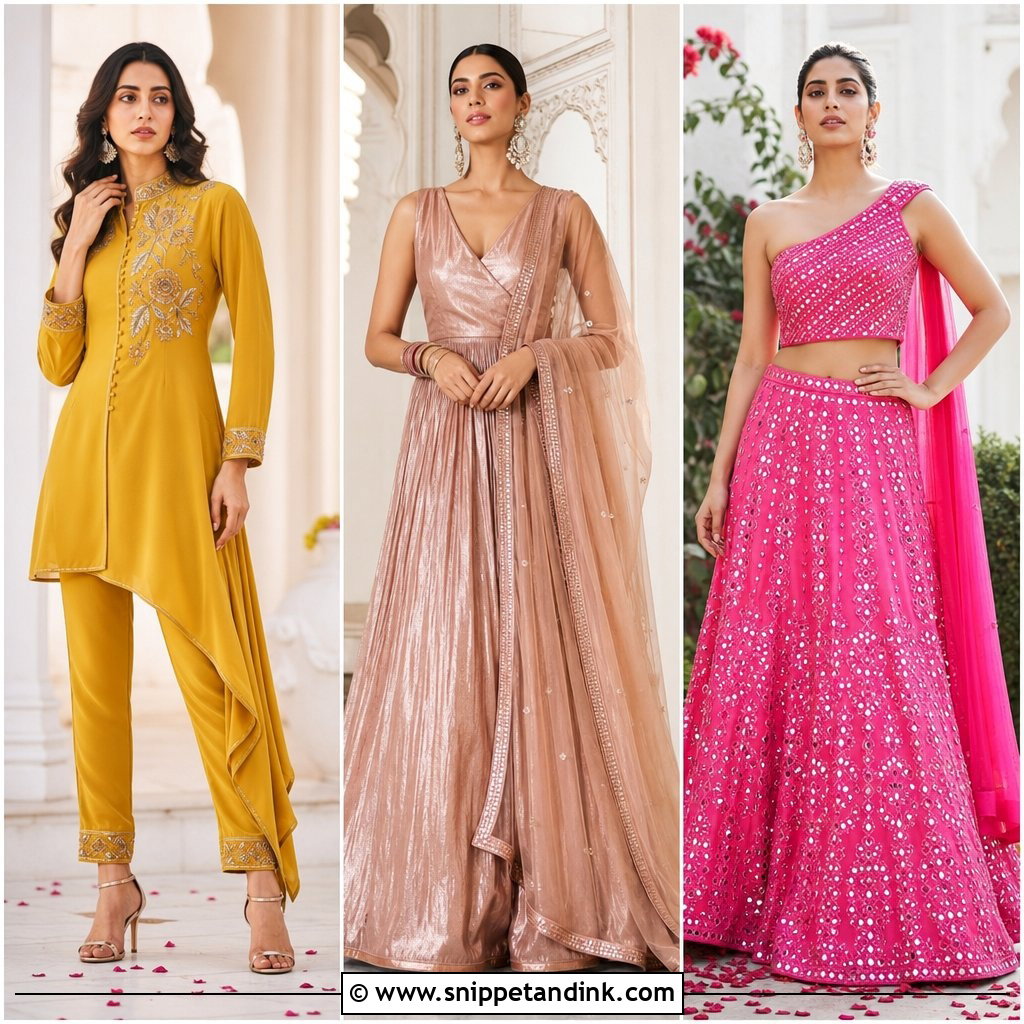
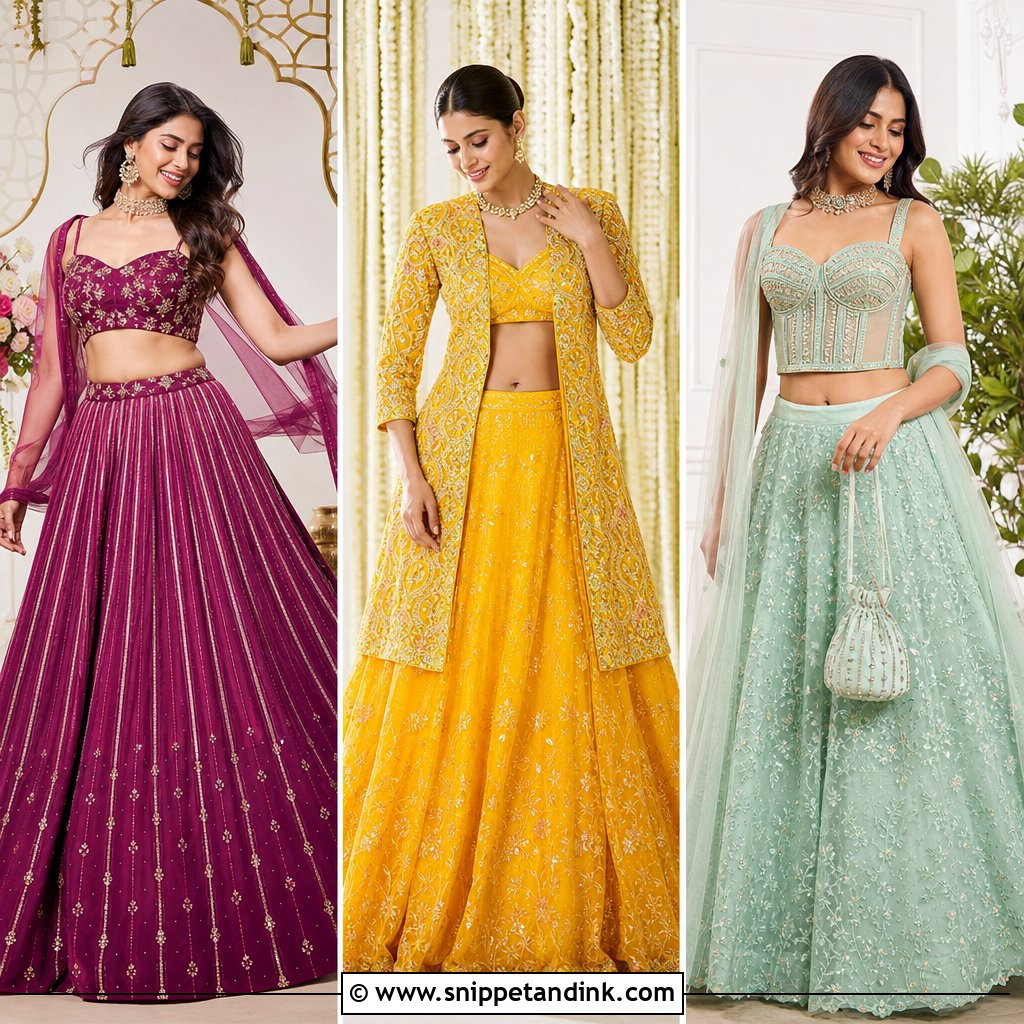
Fuchsia gives a bride a strong presence without repeating the red of the wedding day. I like embroidery concentrated at the border and blouse on this one, which leaves the main skirt light enough to spin in. A slim embellished belt does double duty: it defines the waist and anchors the dupatta so it can’t slide off mid-step. Gold chandbalis and colorful bangles keep the mood festive. Wedge sandals or padded juttis are kinder than stilettos on a wooden stage. Soft curls with one side pinned back frame the face, and warm gold eyes balance the bright pink.
6. Black and Gold Lehenga for Sangeet Bride
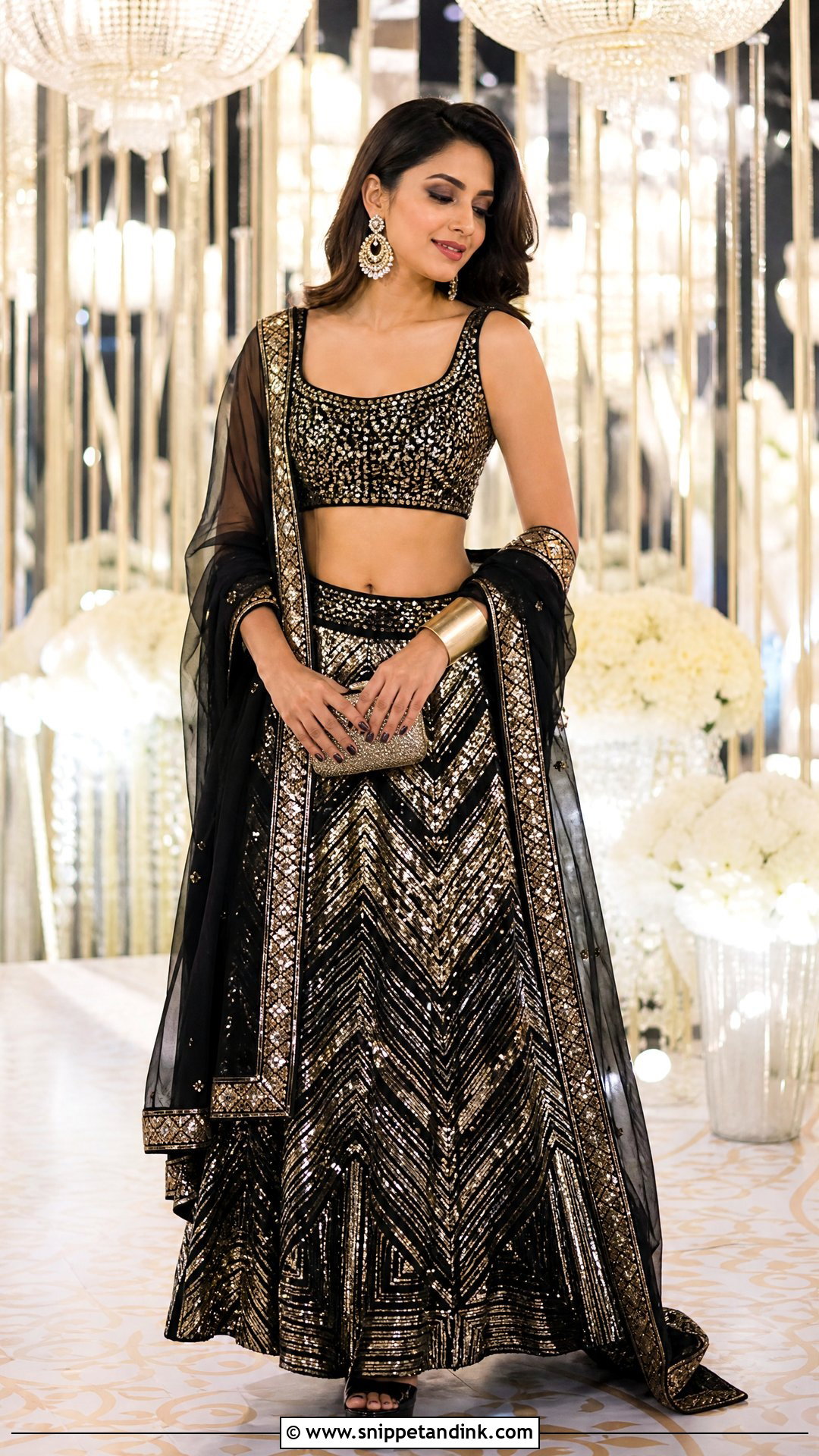
Black at a sangeet is a family conversation before it’s a styling one, since some households avoid it at wedding functions. If yours is comfortable with it, black and gold looks dramatic under evening light. I prefer scattered gold sequins or geometric metallic motifs to solid gold panels, so the black still reads as black. A fitted blouse on wide straps and a sheer black dupatta with a narrow gold border keep it wearable. Platform heels look sharp for the entrance, but bring embellished flats if the night is choreography-heavy. Bronzed cheeks and a deep neutral lip stop the face from looking washed out against so much dark fabric.
7. Ombre Purple Lehenga for Sangeet Bride
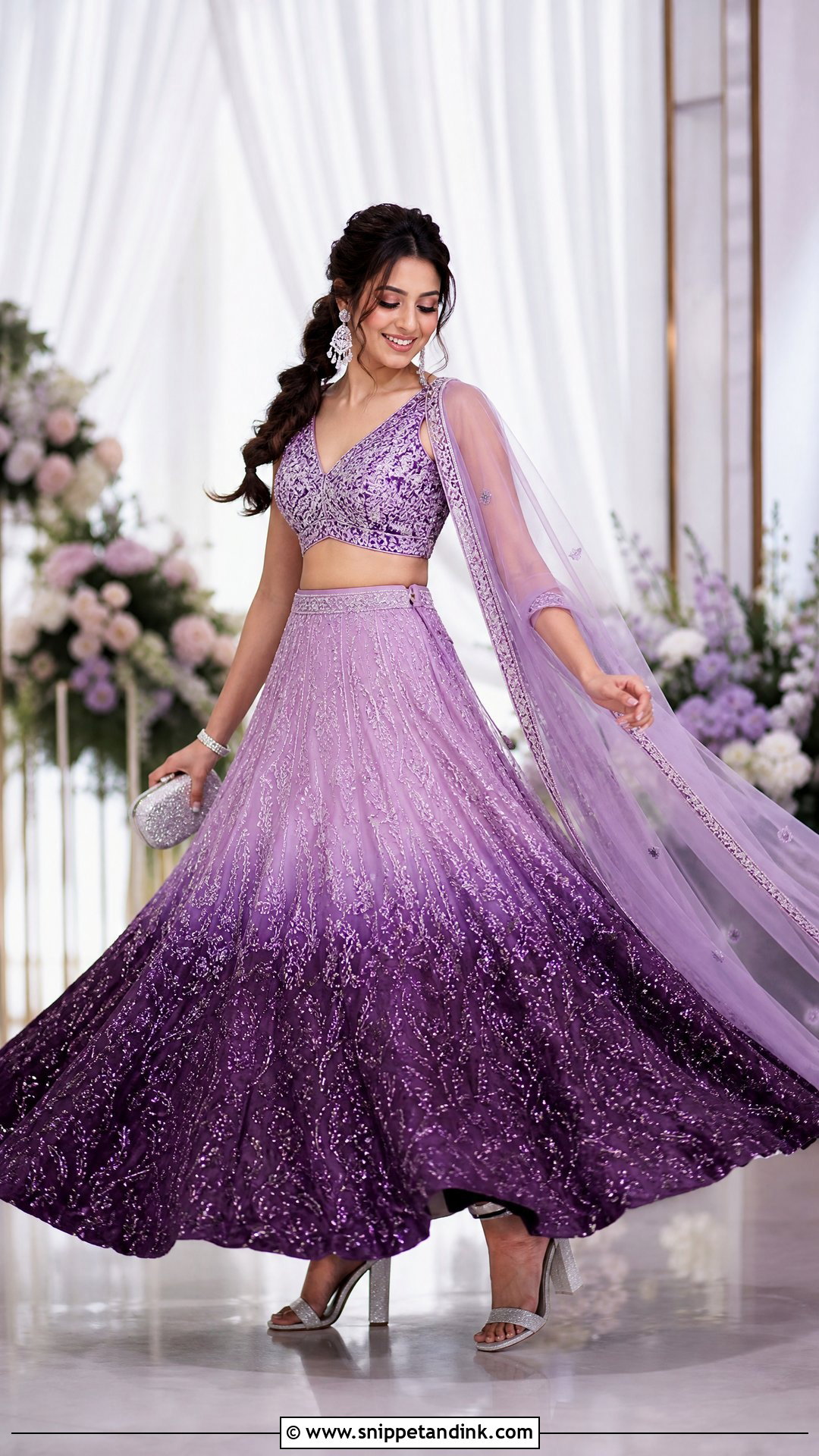
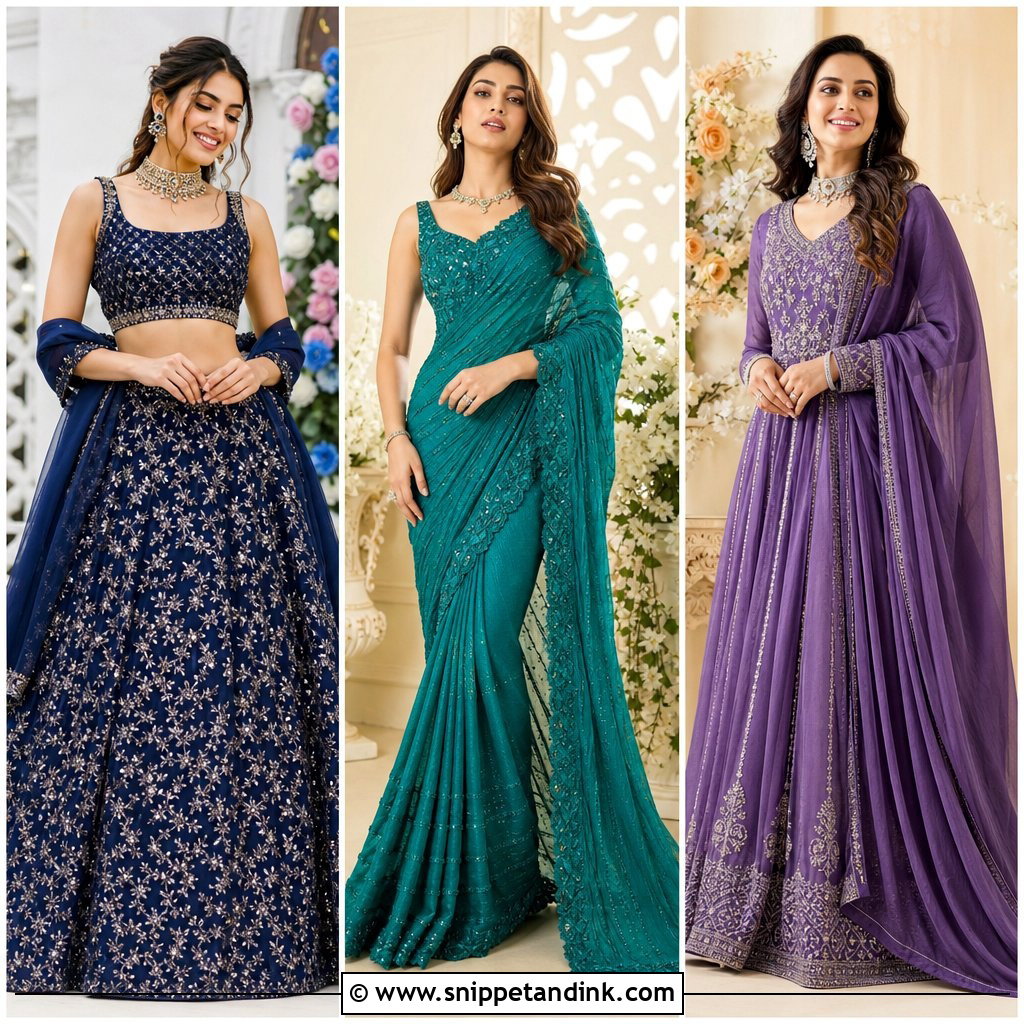
An ombre skirt gives you movement without depending on heavy embroidery. The fade from lavender at the waist to plum at the hem also draws the eye downward, which helps balance a bride who is petite on top. Scattered crystals catch light along the gradient. I’d pair it with a plum blouse and a sheer lavender dupatta fixed at the shoulder, then crystal earrings and a silver clutch to keep the palette cool. Block heels for the entrance, flats for dancing. A soft braided ponytail suits the color shift, and mauve eye makeup ties everything together.
8. Pastel Pink Floral Lehenga for Sangeet Bride
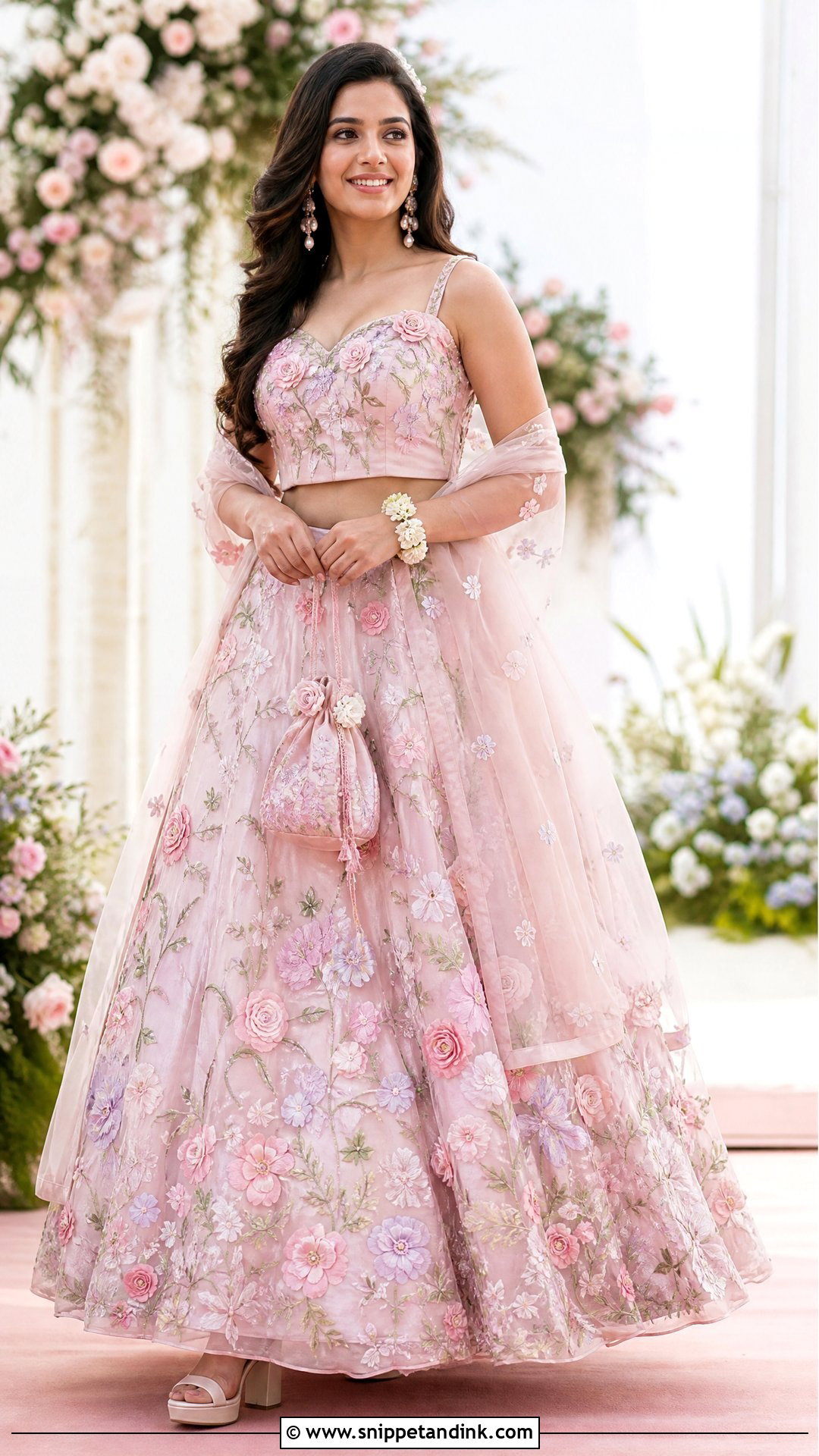
Pastels can disappear under strong evening lighting, so I usually save a pastel pink floral lehenga for daytime or garden sangeets where natural light shows the detail. Organza or light silk with dimensional flowers looks fresh, but it needs a structured blouse or the whole outfit drifts toward casual. Pin the dupatta behind one shoulder with two crossed safety pins, not one. Pearl earrings and a blush potli are enough. Keep jewelry moderate, because large pieces compete with the appliqued flowers. Loose waves or a low floral bun finish it.
9. Red Ruffle Saree for Sangeet Bride
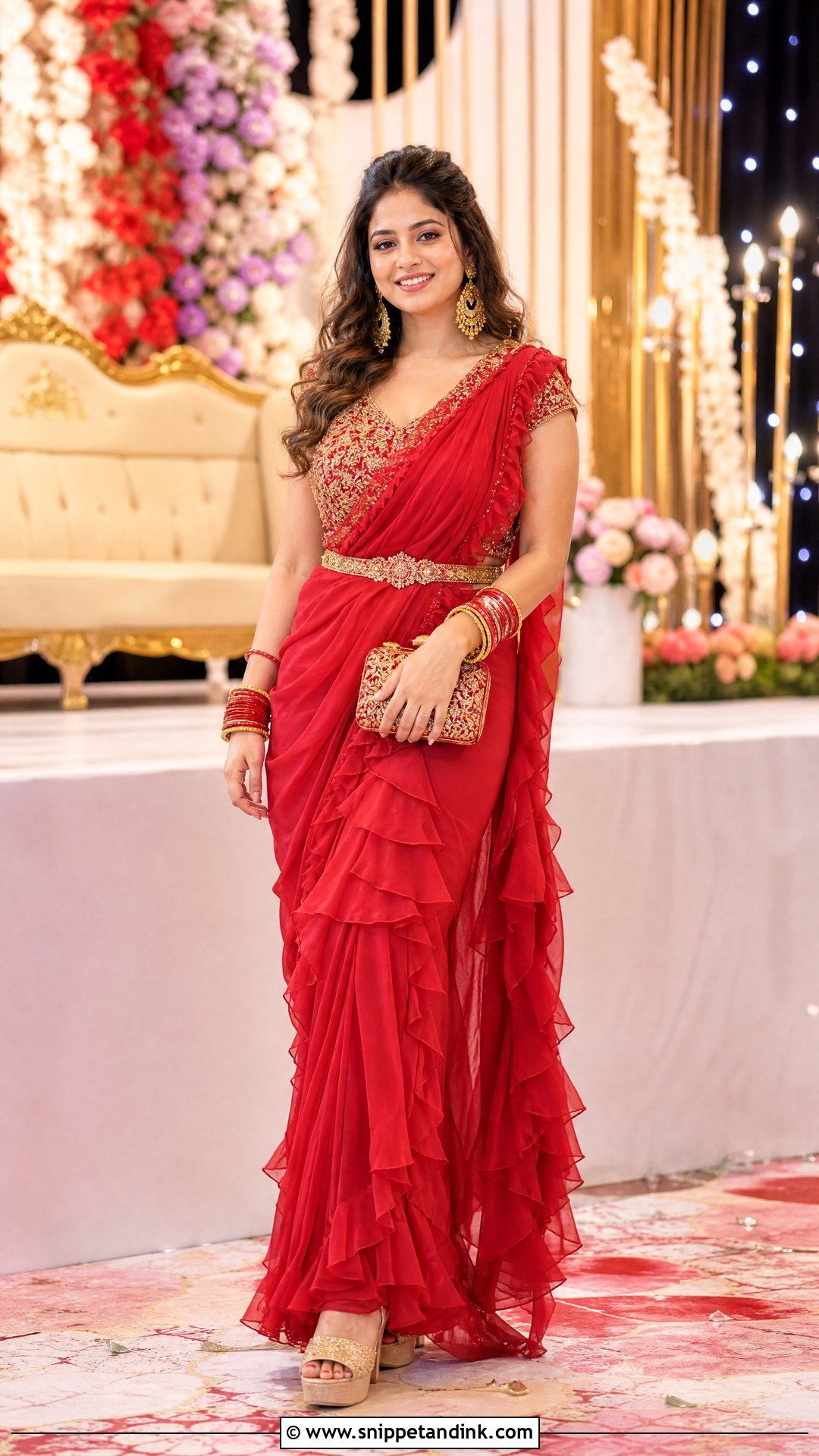
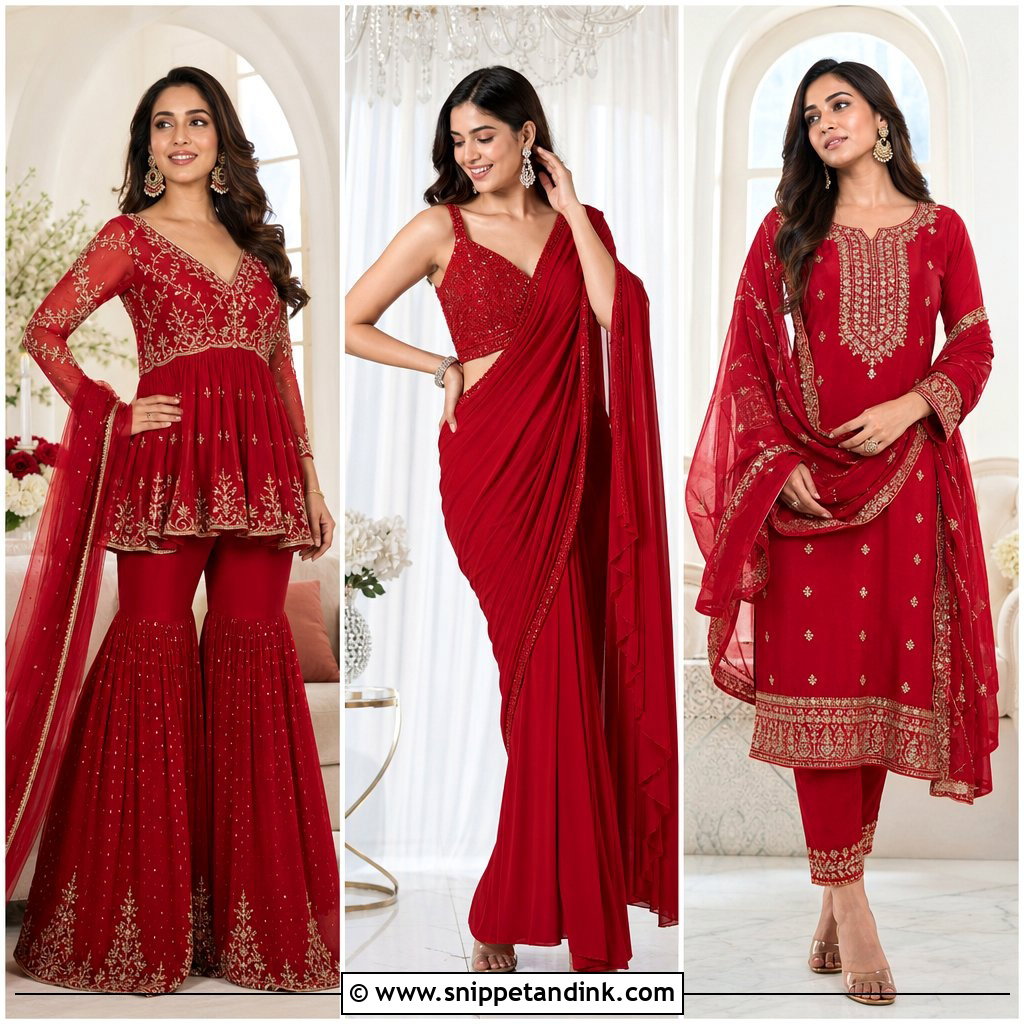
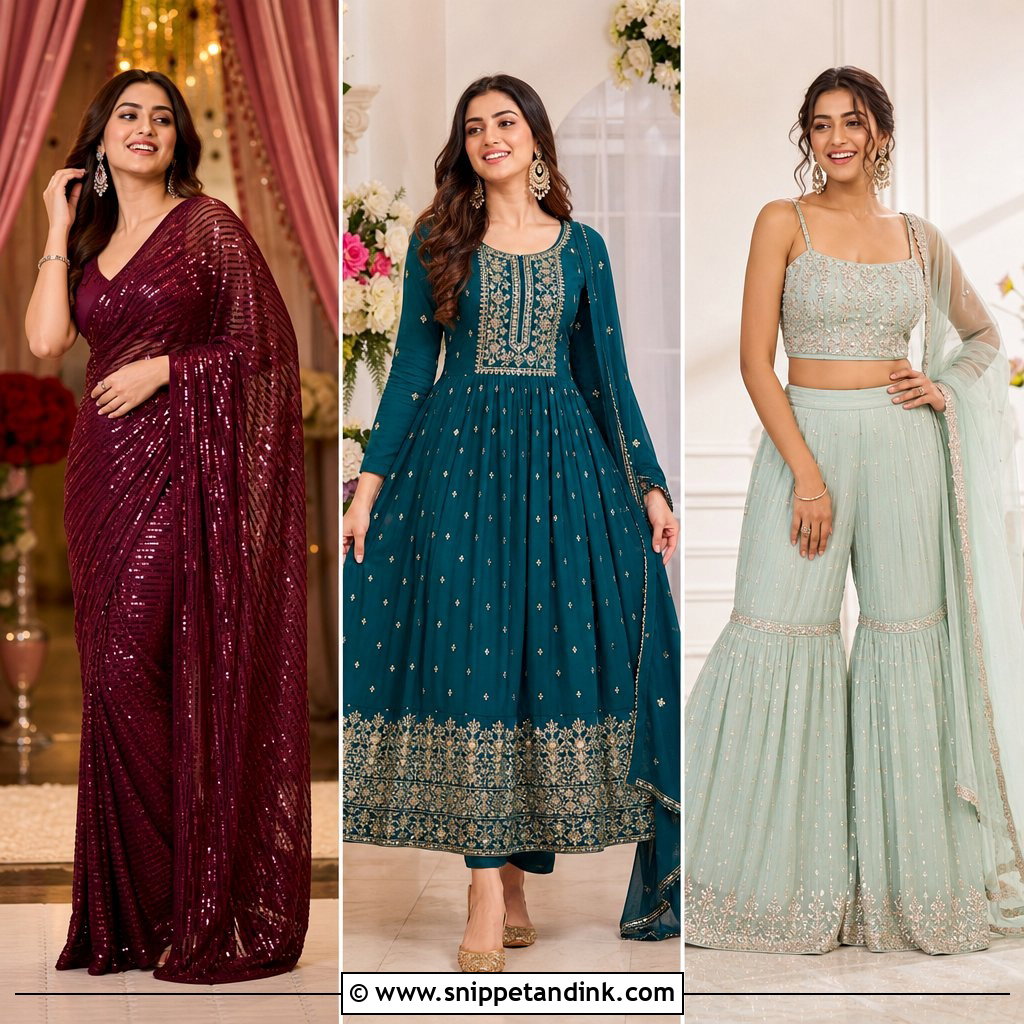
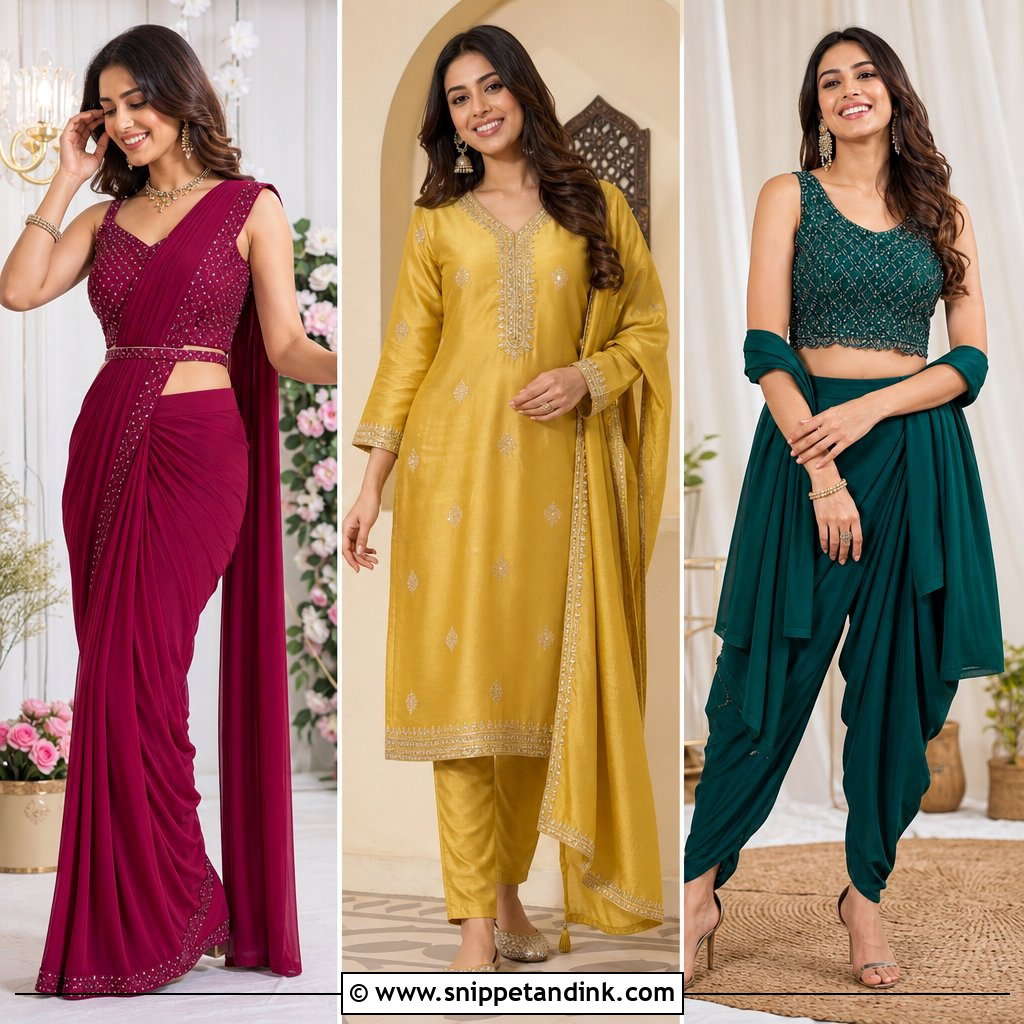
A red ruffle saree keeps the bridal red while feeling lighter and more playful than a full lehenga. Buy it pre-stitched in georgette or chiffon. Loose pleats work open during a dance, and I’d rather not be re-pleating a bride backstage between songs. A supportive blouse and a slim belt hold the drape in place. Kundan earrings and red and gold bangles are plenty with all that ruffle movement. Gold platforms stay mostly hidden under the hem, and a sleek bun balances the volume around the legs.
10. Metallic Pre-Draped Saree for Sangeet Bride
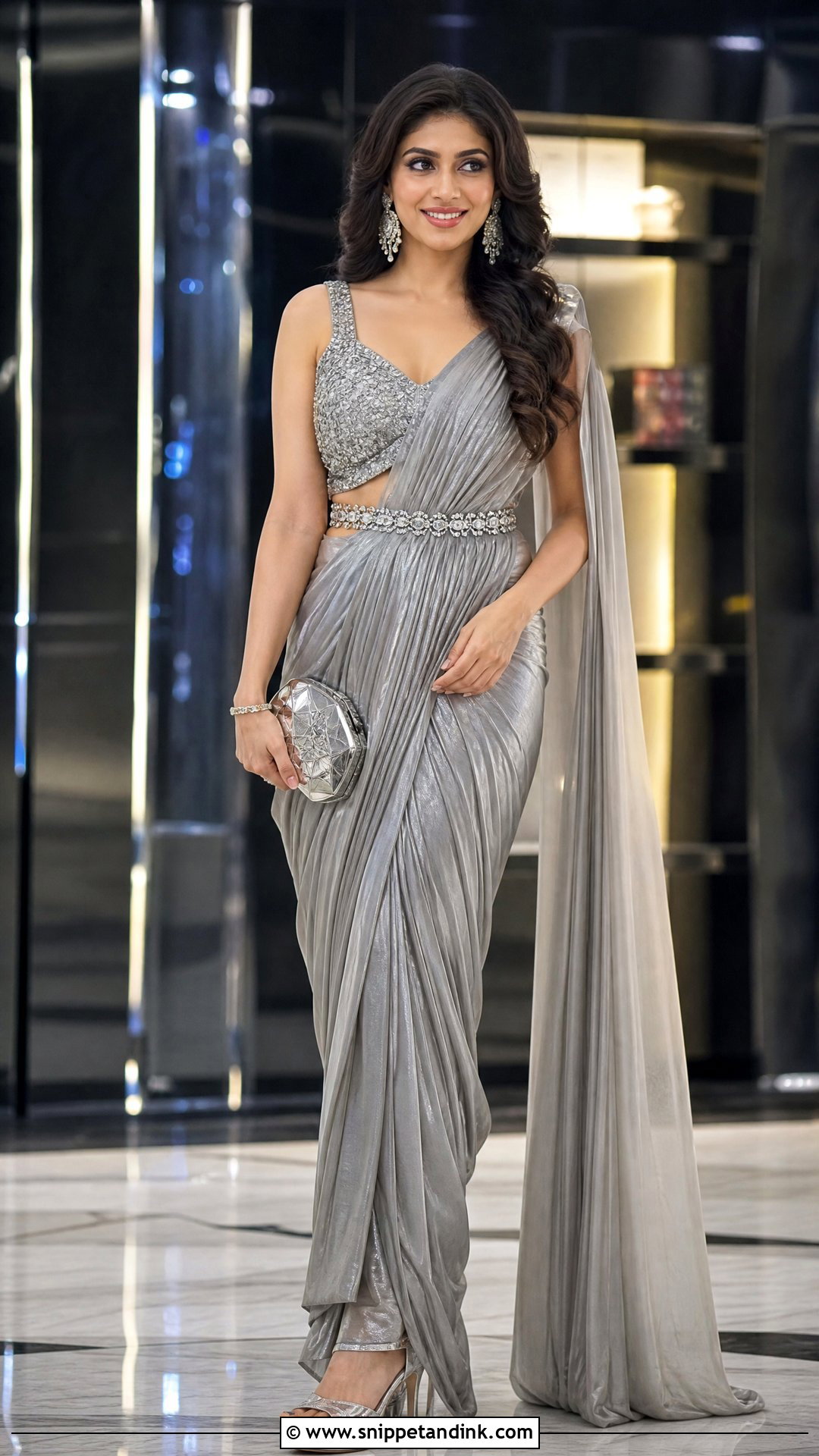
Metallic pre-draped sarees are the easiest glamour on this list because there’s no heavy skirt to carry. Pewter and rose gold reflect stage light well; very bright silver can blow out in flash photos, so I’d choose a slightly muted metallic. A structured sequin blouse and a narrow belt keep the pleats secure. Choose statement earrings and one bracelet rather than piling on jewelry, which fights with the reflective fabric. Before the event, sit down and stand up in it several times. Stitched pleats sometimes pull at the hip when you sit, and that’s an easy fix for a tailor a week out, not on the night.
11. Cape Saree for Sangeet Bride
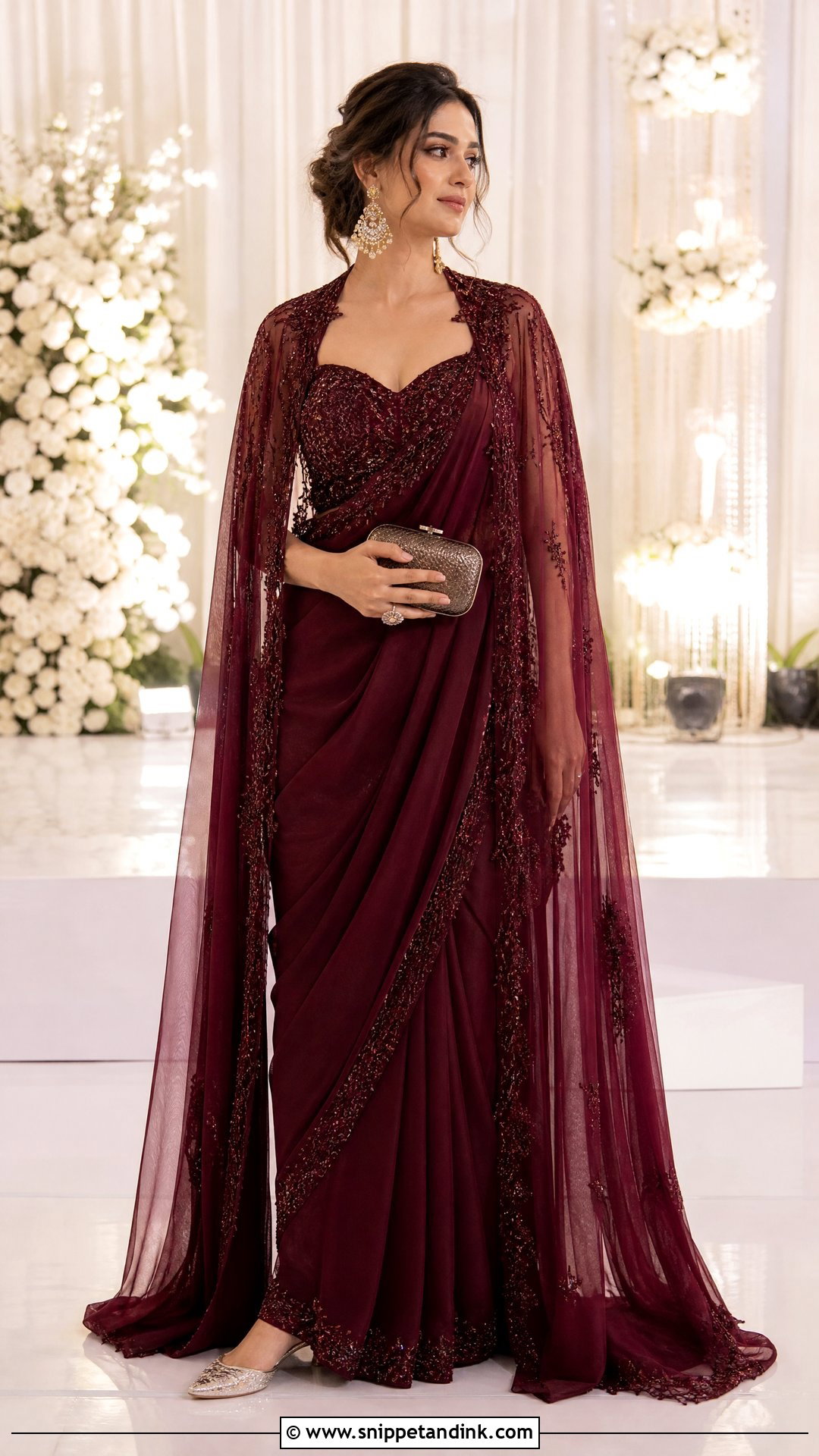
A cape saree replaces the loose pallu with a layer that stays where you put it, which is exactly what you want during choreography. Wine, navy and muted gold all work as the base. Add a matching blouse and a sheer cape with crystals or fine embroidery. I insist the cape stops a few inches above the floor; anything longer gets stepped on by you or by a cousin behind you. Chandelier earrings and a cocktail ring are the only jewelry it needs. A center-parted low bun keeps the neckline and cape in view.
12. Gold Mirror Work Sharara for Sangeet Bride
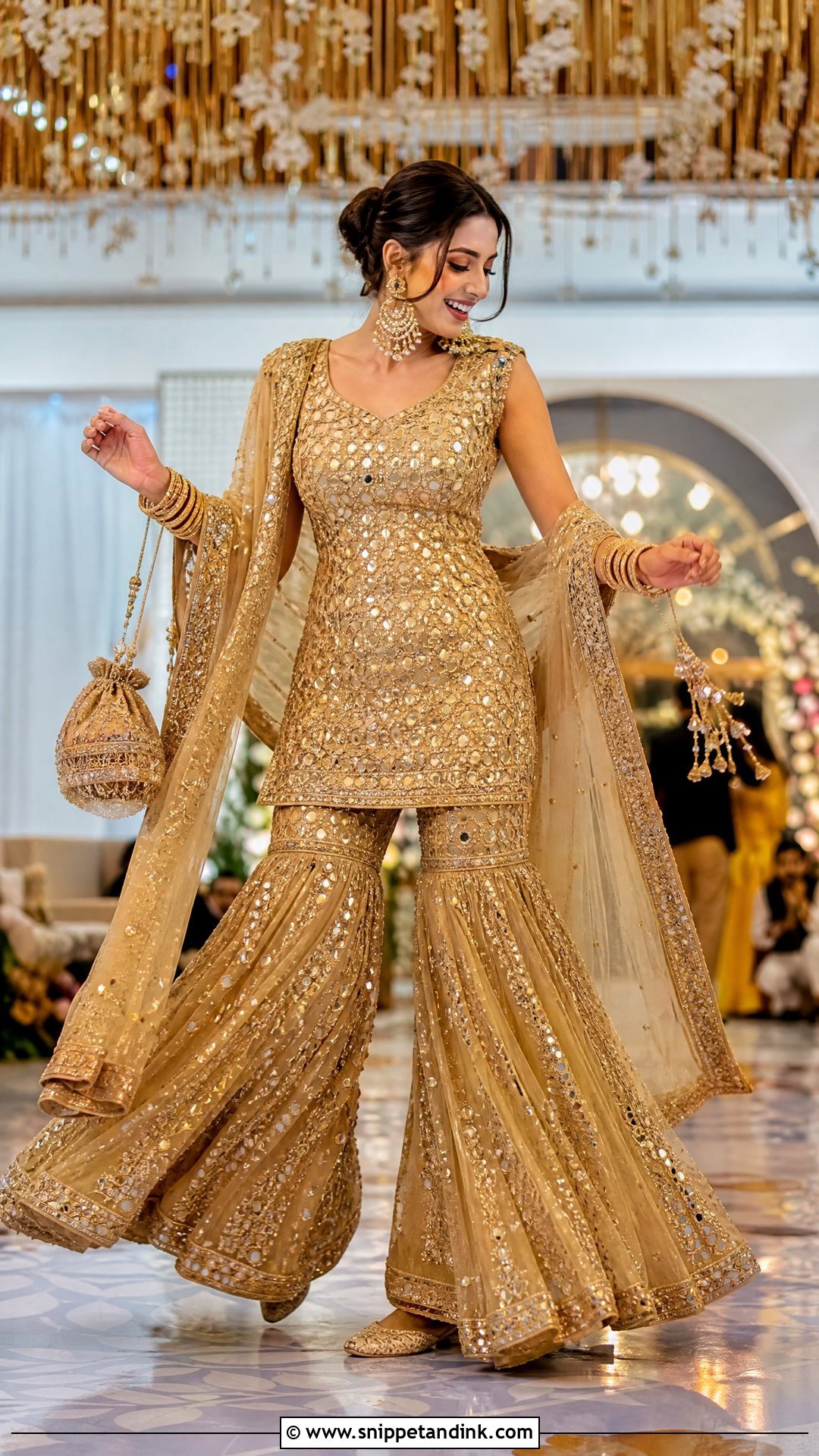
A sharara gives you lehenga-level volume with the freedom of separate legs, so jumps and turns are no problem. The short fitted kurti and wide fluid pants are the right proportions here. Drape the dupatta around the elbows or diagonally across the body with hidden pins. Kundan jhumkas and a mirror-work potli suit the gold. Juttis are the practical shoe since the flare covers most of it anyway. The fitting detail I never skip: have the pants hemmed while you wear the exact shoes, because a sharara that’s an inch too long catches under the foot on the first spin.
13. Wine Gharara for Sangeet Bride
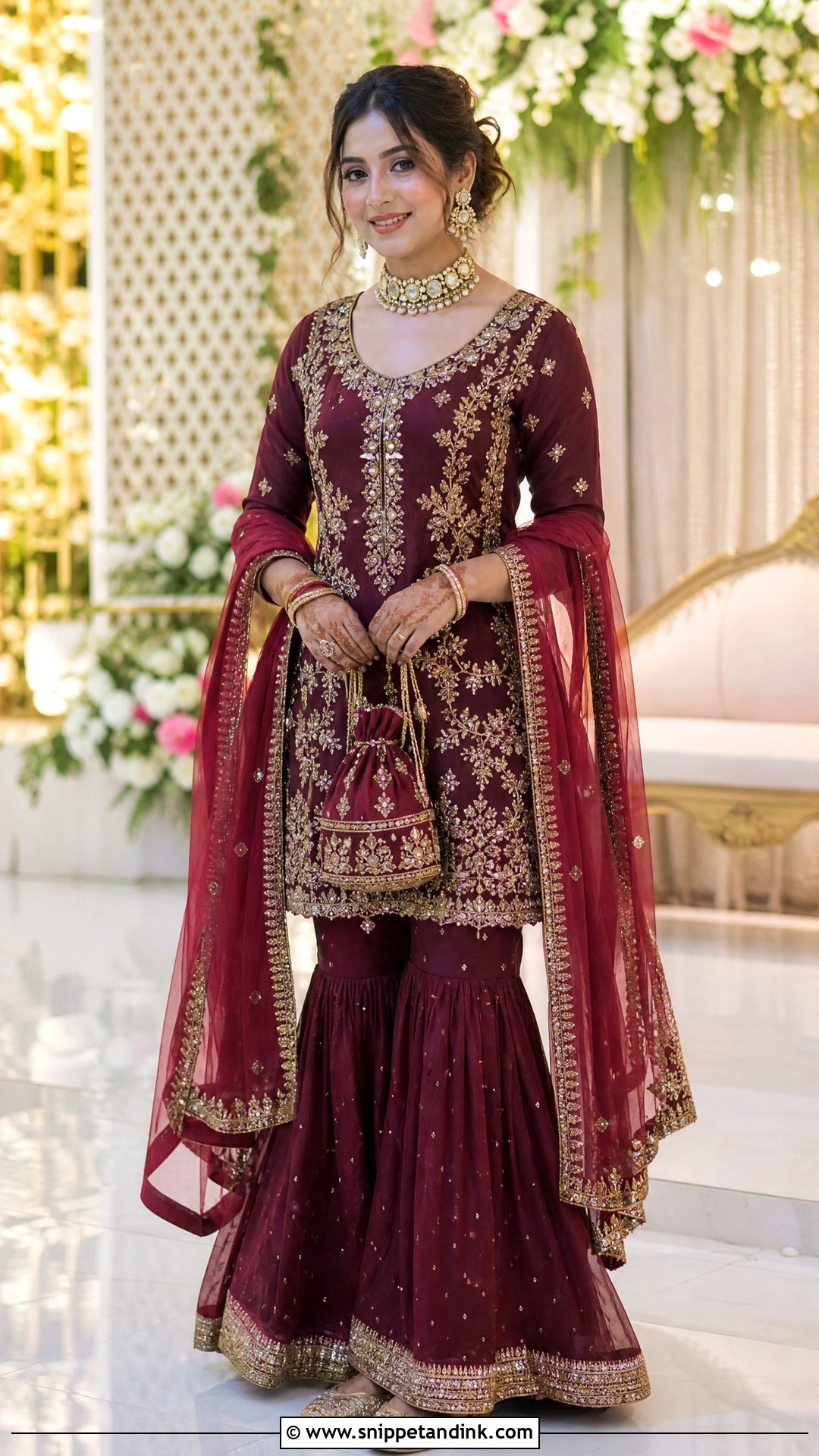
The gharara’s defined seam just above the knee is what sets it apart from a sharara, and it’s also what makes it swing so well when you move. Wine suits an evening function and pairs naturally with antique gold embroidery. Choose a fitted short kurti and a light dupatta so the pants stay the focus. A kundan choker and slim bangles are enough. Gold juttis keep it traditional. In my experience, the dupatta is what goes wrong on gharara looks, so pin it at the shoulder and at the back of the waist, and check both pins after every performance.
14. Teal Peplum Sharara for Sangeet Bride
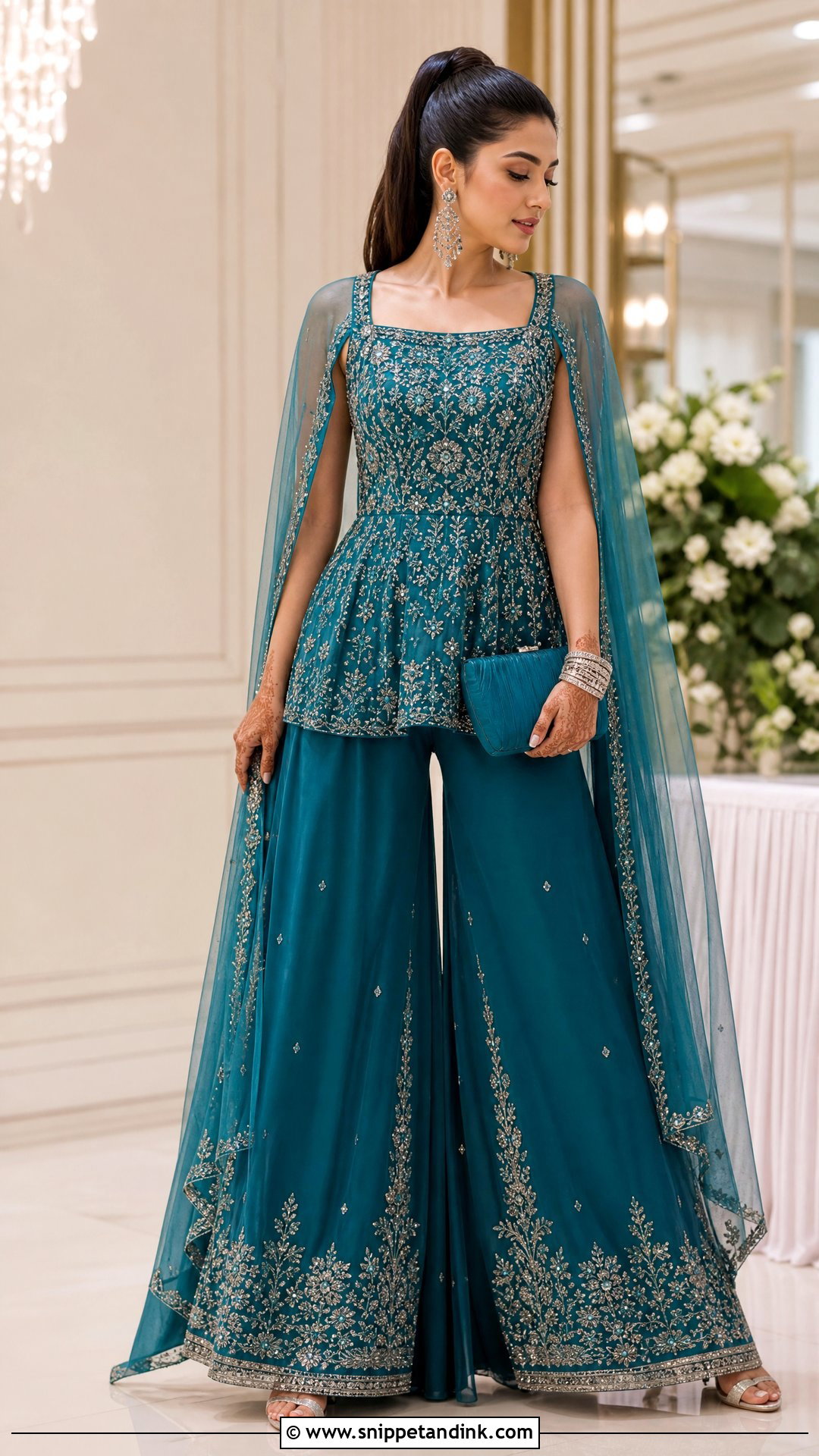
A peplum top gives more waist and midriff coverage than a crop blouse, which many brides prefer when they’ll be bending and twisting on stage. Teal looks modern with silver embroidery. Keep the embellishment on the sharara pants toward the lower half so the outfit doesn’t feel top-heavy. A sheer dupatta over one shoulder adds tradition. Silver earrings and crystal bangles are the easy pairing here. The peplum should skim, not cling. If it rides up when you raise your arms, the bodice is too short in the torso, and that’s worth fixing at the fitting.
15. Ivory Anarkali for Sangeet Bride
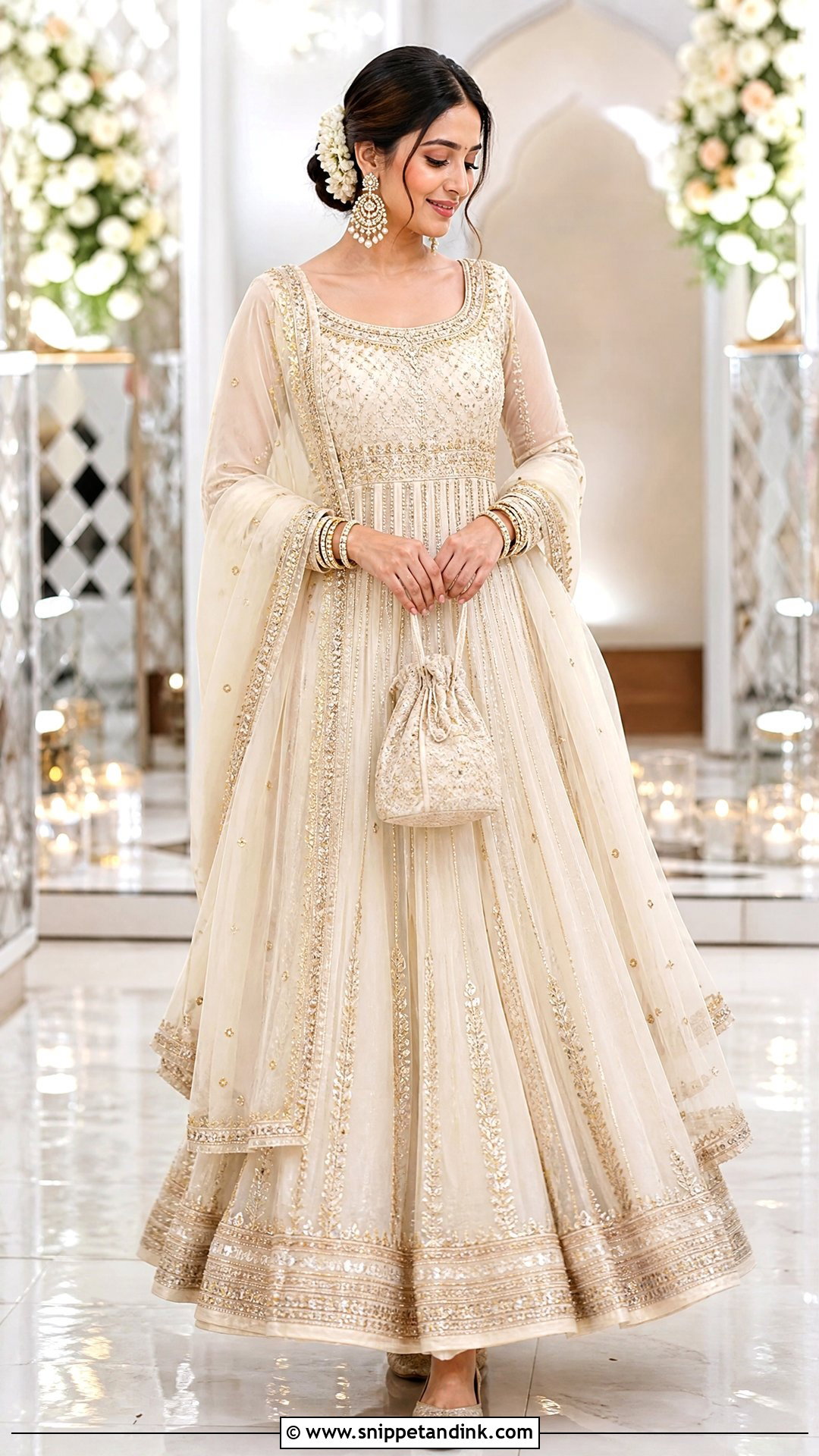
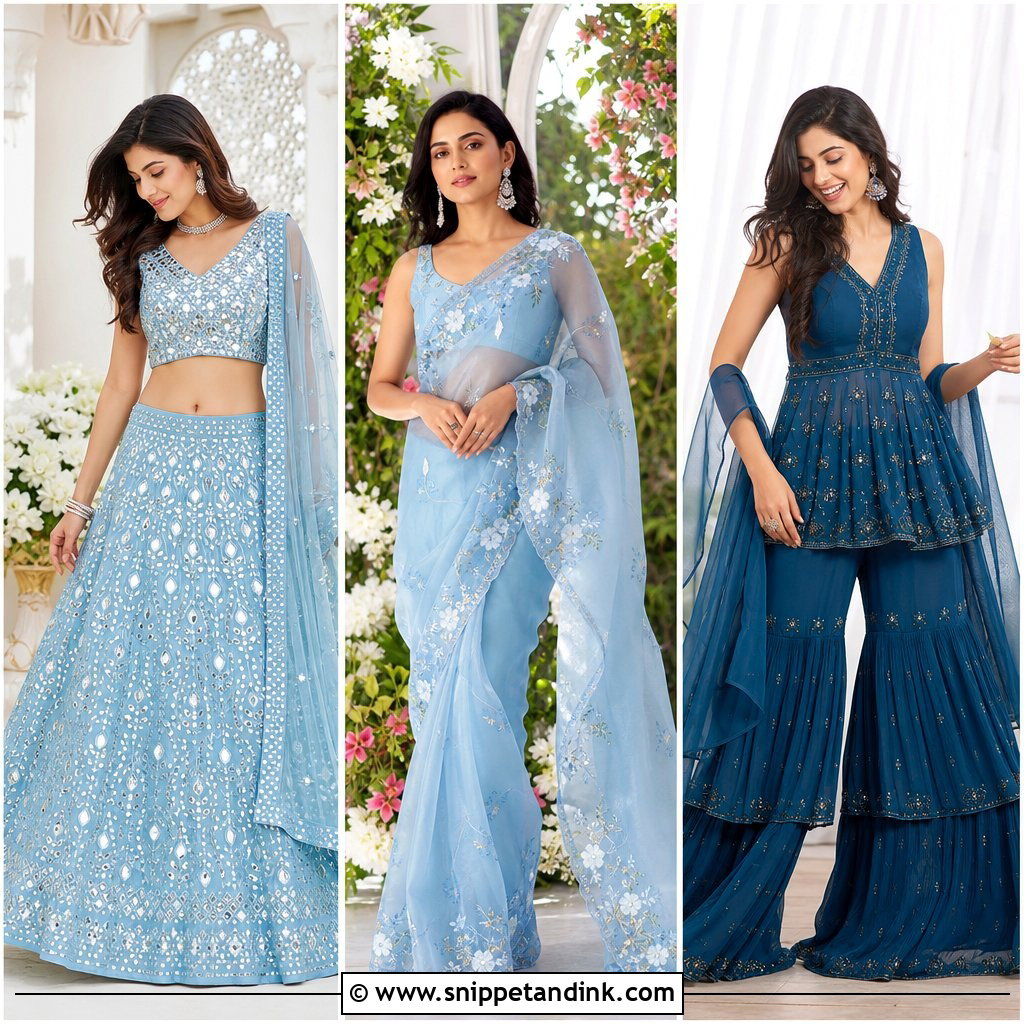
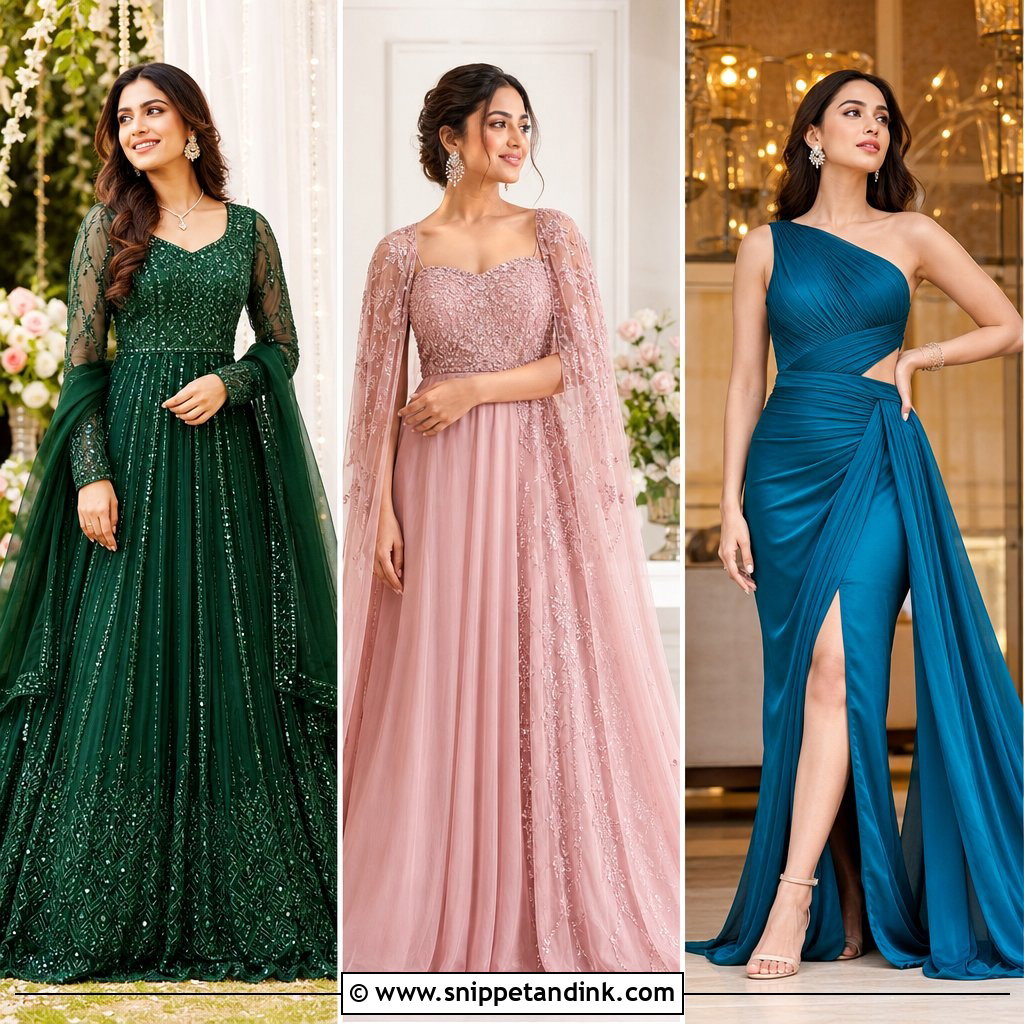
Ivory Anarkalis move well because all the flare comes from one long flowing panel, and they give generous coverage. Gold, pearl or crystal work spread across bodice and hem keeps the ivory from looking plain under evening light. Add a sheer dupatta around the elbows, pearl-and-kundan earrings and an ivory potli. Metallic juttis stay hidden under the long hem. Here’s the one fitting point I fuss over: an Anarkali hem needs to clear the floor in your dancing shoes, because a floor-length flare wraps around the ankles mid-turn. Pale fabric also shows makeup marks, so dress before the final powder.
16. Navy Blue Jacket Lehenga for Sangeet Bride
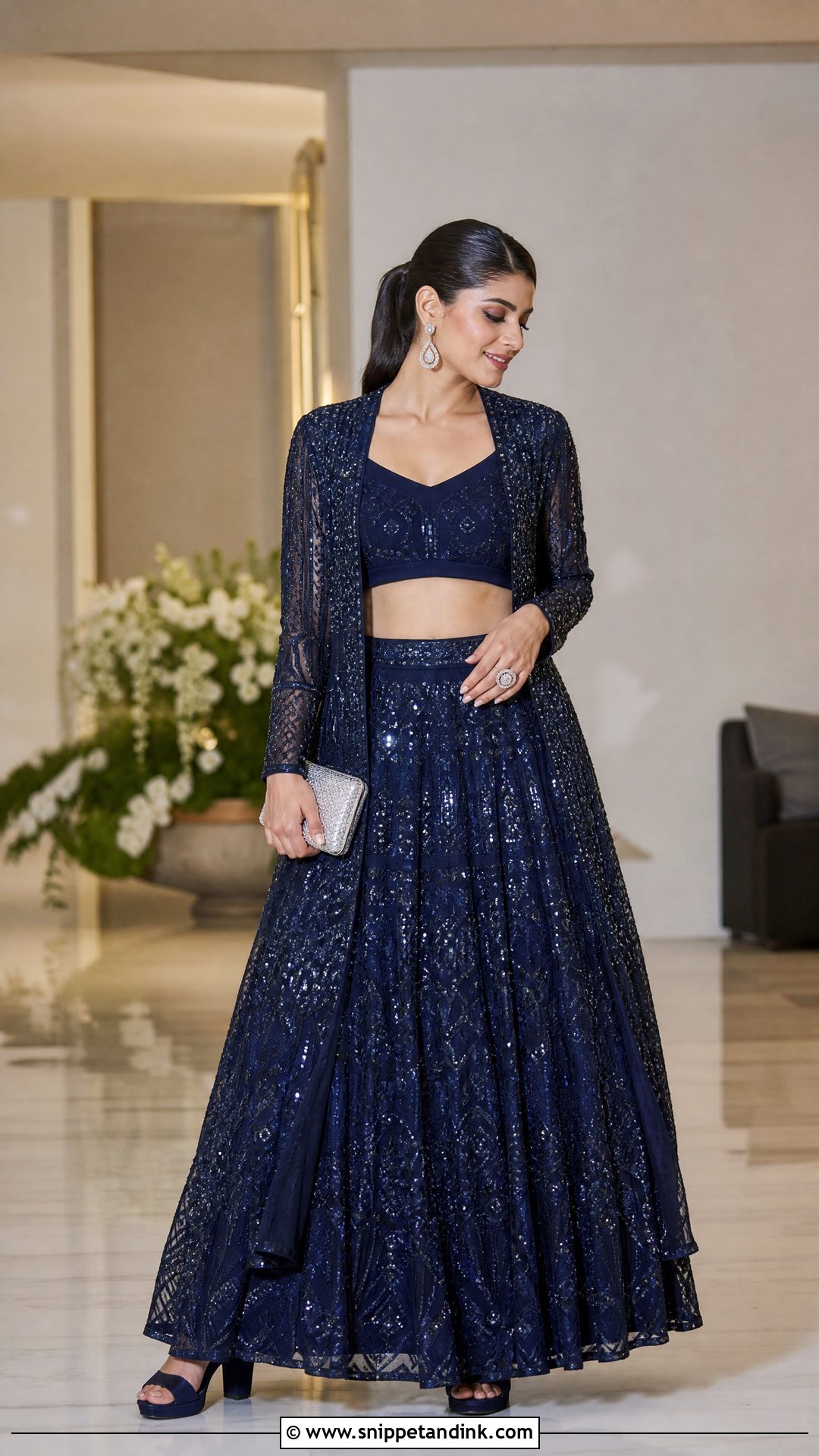
A jacket lehenga gives coverage and polish without adding weight to the skirt. Start with a moderately flared skirt and a sleeveless blouse in matching fabric, then add a long sheer jacket with sequins or metallic threadwork. Wear it open so the outfit underneath still shows. I check two things on every jacket: that the hem sits above the floor and that the armholes are cut high enough to lift your arms without the whole jacket rising. Crystal earrings and a silver clutch suit the navy. A sleek ponytail matches the clean lines.
17. Rose Gold Bridal Gown for Sangeet
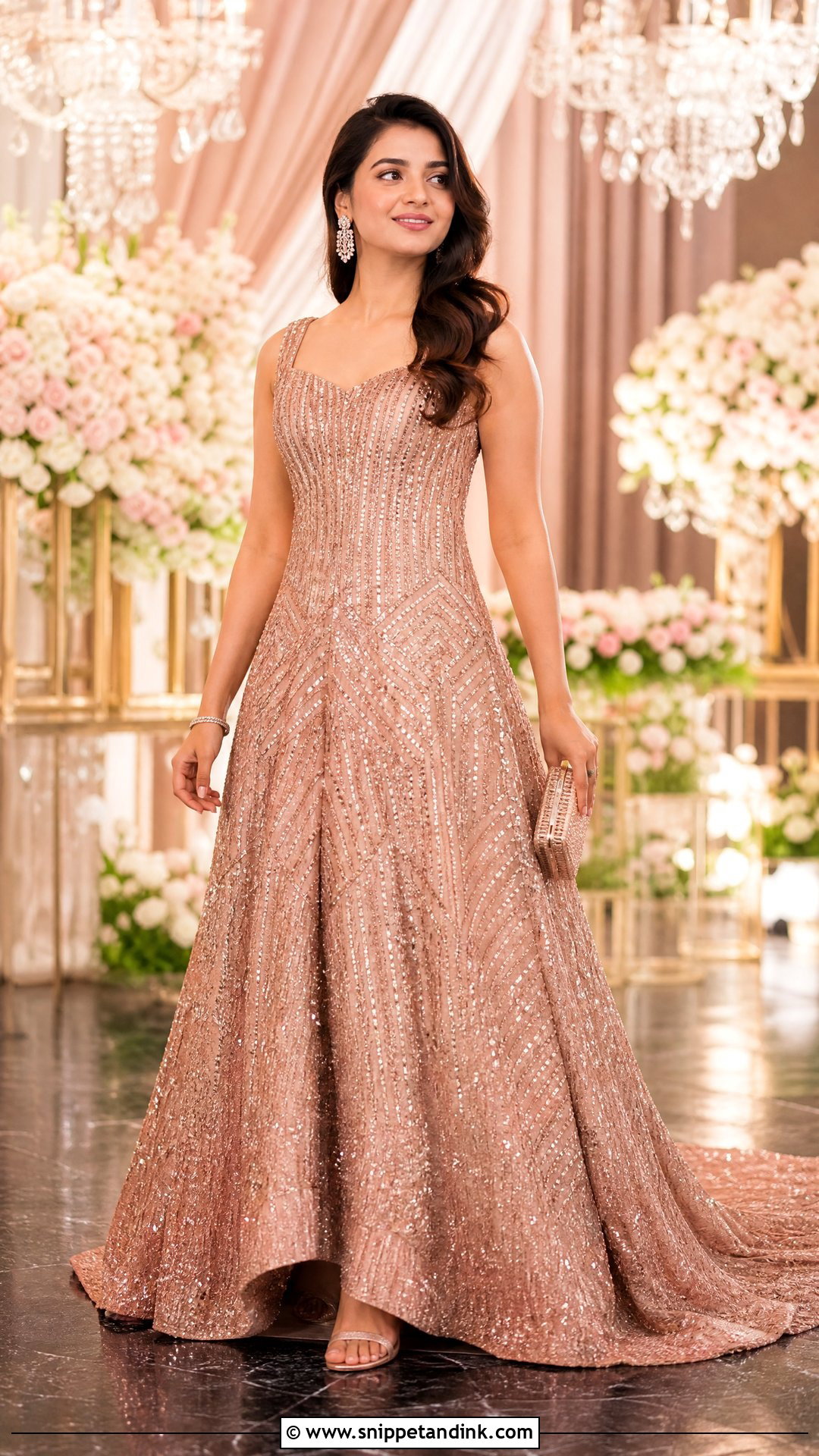
A rose-gold gown is the simplest outfit to get into on the night. One piece, one zip, done. Choose an A-line or gently flared shape with sequins or metallic embroidery. A strapless bodice looks elegant standing still but tends to slip during energetic dancing, so I’d go with secure straps. Keep any train short, detachable or fitted with a wrist loop. Crystal earrings and a structured clutch finish it without fuss. Block heels for the entrance, matching flats nearby. Hollywood waves or a smooth low bun both suit the light-reflective fabric.
18. Burgundy Indo-Western Gown for Sangeet Bride
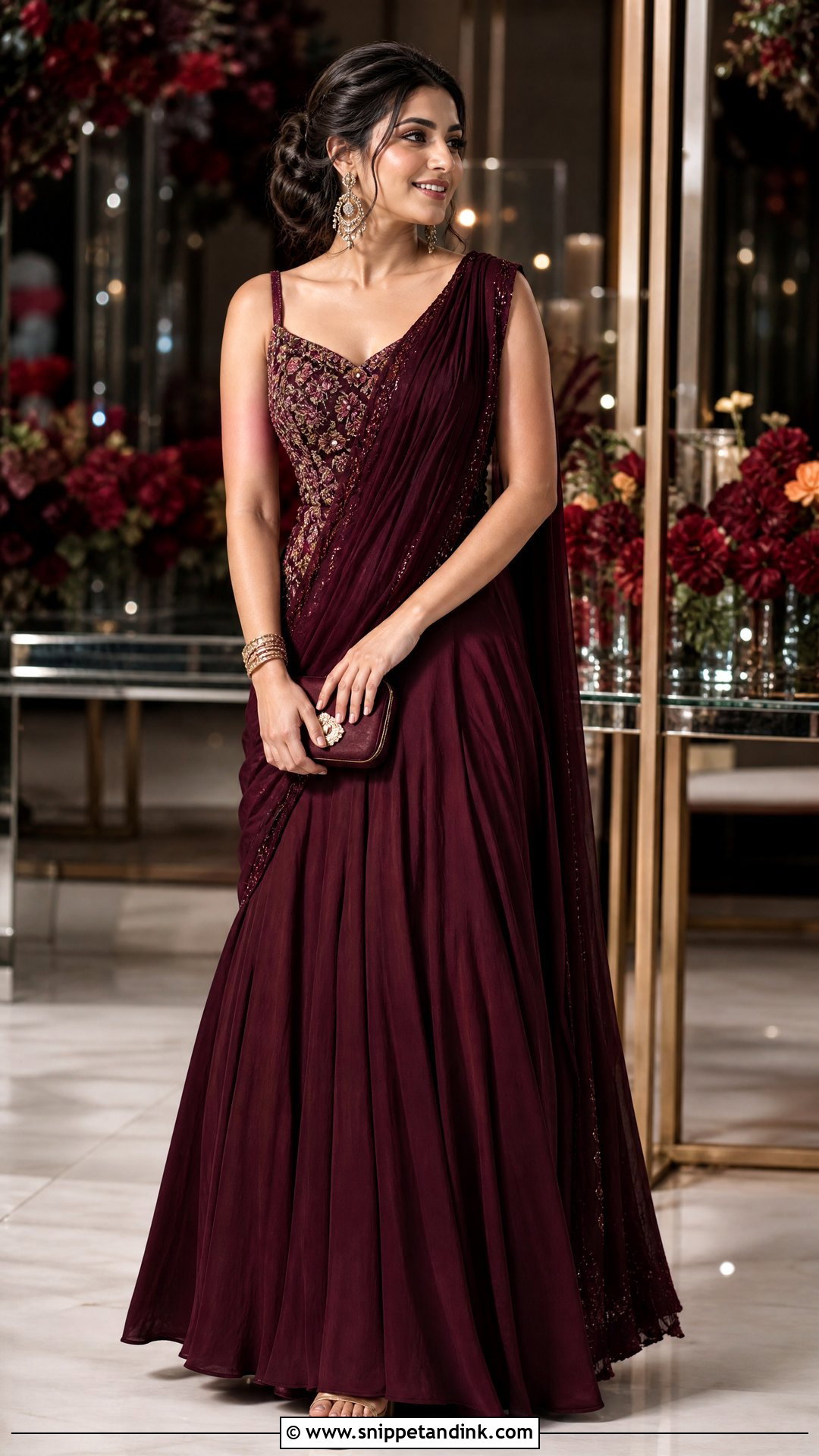
A burgundy Indo-Western gown gives you eveningwear ease with Indian handwork on top. Look for a fitted embroidered bodice and an attached drape that falls like a pallu. Gold zardozi is what makes the deep burgundy read bridal rather than cocktail. Antique gold earrings and a cuff suit it. Gold wedges are steadier than narrow heels. If the drape is long, ask your designer to add a hidden loop or snap so you can fasten it at the hip before your main performance.
19. Embellished Jumpsuit with Cape for Sangeet Bride
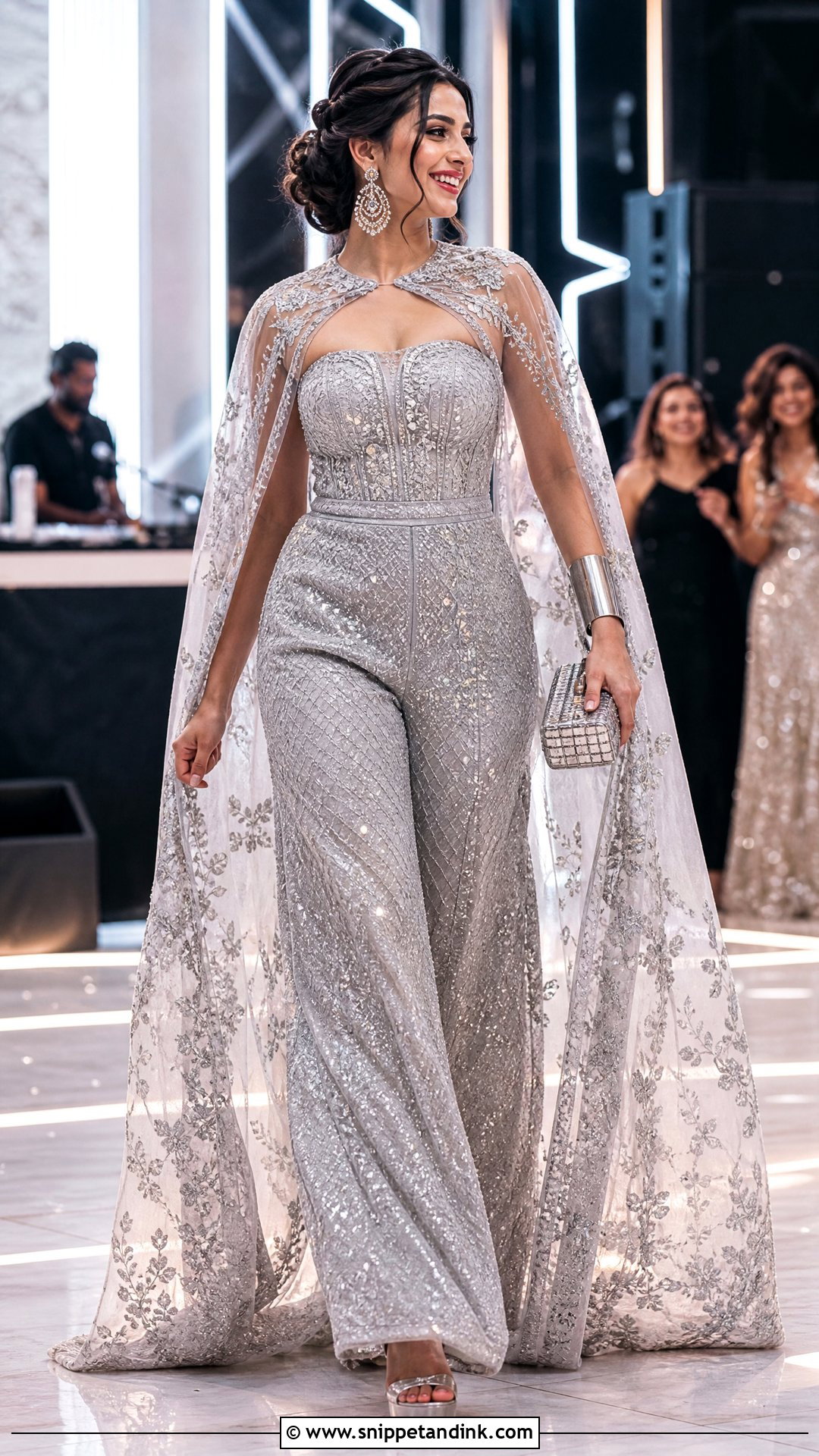
Jumpsuits are for the bride who’s doing a full routine and wants nothing in her way. Stretch-friendly fabric matters more than anything else here; a woven jumpsuit with no give will pull at the seat when you bend. Wide-leg pants and a structured bodice look bridal with mirror work or beading. A removable sheer cape at the shoulders creates a big entrance, then comes off for dancing. Add statement earrings and a cuff. Platform sandals lengthen the trouser line. Before the night, do your whole choreography in it at the final fitting and watch for gaping at the bodice.
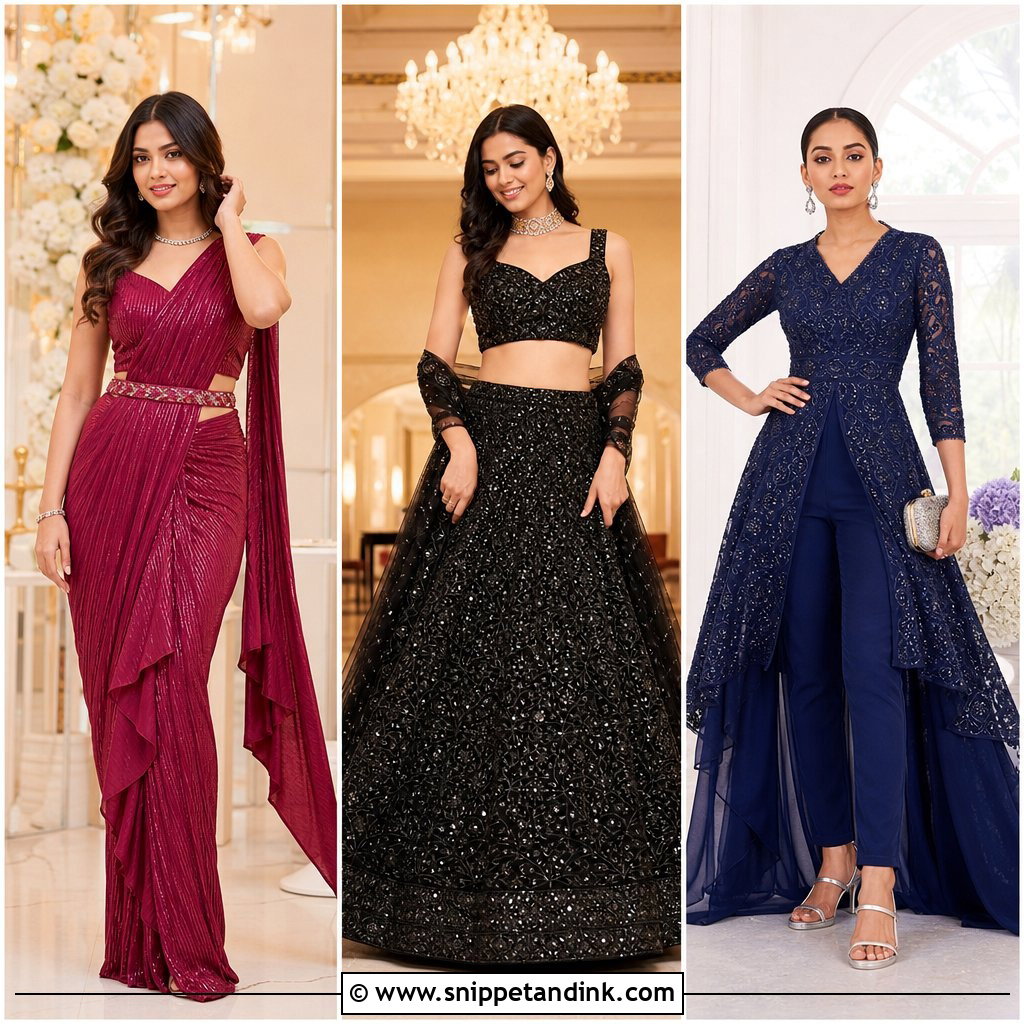
20. Dhoti Skirt and Crop Top for Sangeet Bride
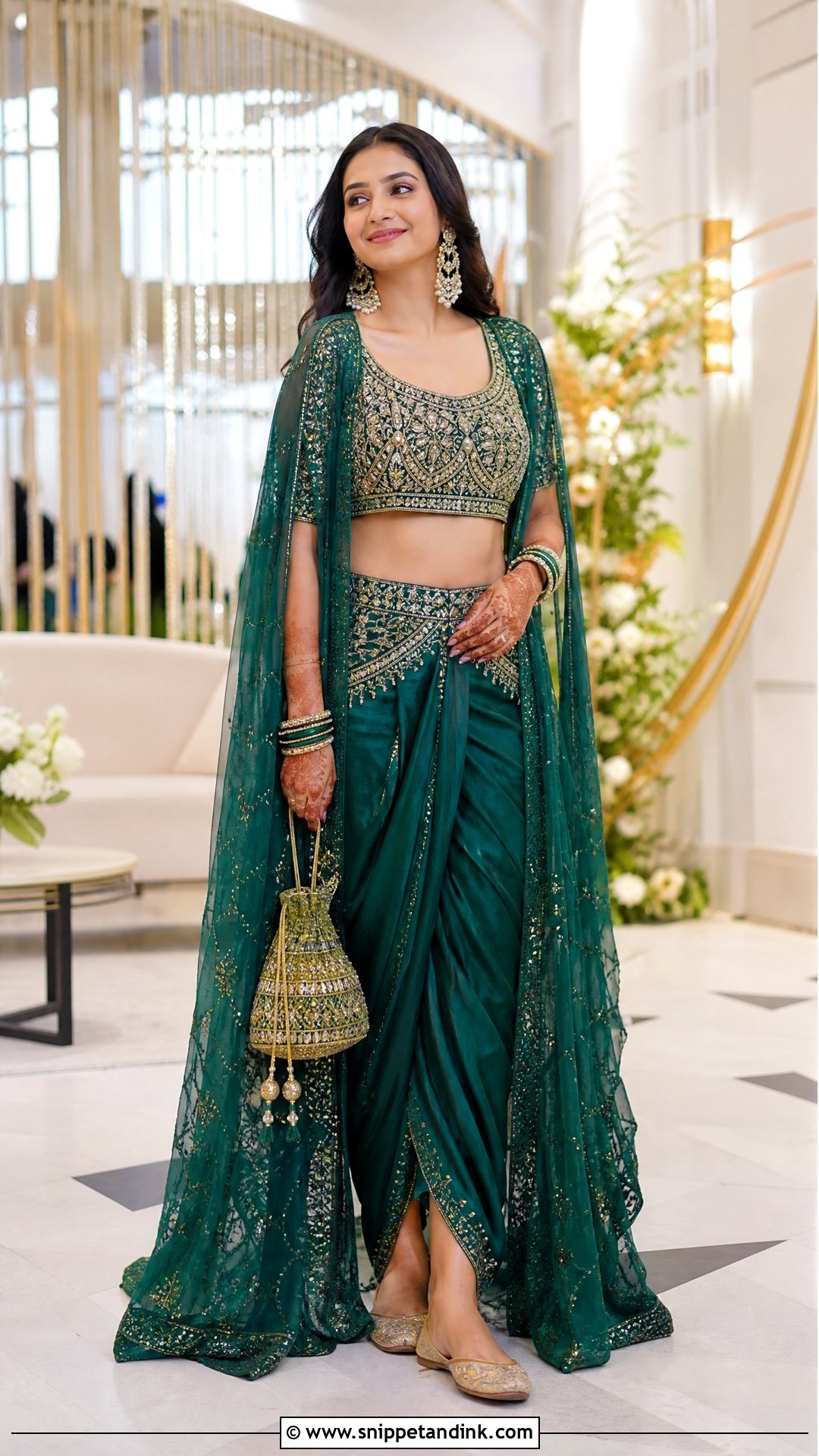
A dhoti skirt and crop top give the most leg freedom of any outfit here. Pre-draped dhoti skirts in satin or georgette hold their folds; silk is crisper but creases where you sit. The crop top should carry the embellishment so the skirt stays light. A short jacket or shoulder drape adds bridal weight to the look. Jewel tones suit evening events best. Statement earrings and stacked bangles are enough, with juttis or block heels on your feet. A braided ponytail keeps hair out of your face through fast steps.
Sequins, Mirrors and Velvet Under Stage Lighting
Sangeet lighting is rarely flattering by default. Venues often use colored LED washes, and photographers add flash on top. Each surface reacts differently, and I factor that in when a bride is torn between two outfits.
- Sequins give the most sparkle on video but can create hot spots in flash photos. Matte or tonal sequins behave better than mirror-bright ones.
- Mirror work catches light in small flashes rather than a blanket shine, so it reads well both in person and in photos.
- Velvet absorbs light and photographs as deep, rich color, but under pink or purple LED washes it can look almost black.
- Pastels and ivory shift with colored lighting. Ask the venue what color wash they plan, or request warm white for your entrance.
A Realistic Timeline for a Made-to-Order Sangeet Outfit
Custom bridal lehengas from established designers commonly take three to six months, and heavily hand-embroidered pieces can take longer. Ready-to-wear and pre-draped options are faster but still need alterations. I’d plan backward from the event like this:
- Settle the outfit four to six months out if it’s custom, so there’s room for one full remake if something goes wrong.
- Have your first fitting about six weeks before, wearing the shoes you’ll actually dance in.
- Book the final fitting roughly two weeks out and rehearse your choreography in it there.
- Collect the outfit a few days early and pack a small kit: safety pins, a needle and matching thread, fabric tape and a spare dupatta pin.
Timelines vary by designer and season, and wedding-season months book up fast, so confirm dates in writing when you place the order.
Dress for the Dance Floor First, the Photos Second
Every outfit above can look right in a photo. The ones that work at a sangeet are the ones you forget about once the music starts. Think about the venue, the lighting and your choreography before you settle on fabric and shape. Lehengas give classic volume; shararas, pre-draped sarees, gowns and jumpsuits move more freely. Whatever you pick, do one full rehearsal in the complete outfit, shoes, jewelry and pinned drape included. Sit, walk, raise your arms and run through your steps. If something tugs, slips or scratches, you’ll find it then instead of on stage.
You'll Like These Ideas:


Leave a Reply