
Sangeet outfits get judged on the dance floor, not on the hanger. It’s a night of music, family performances and hours of moving, and I fit every sangeet look by asking the client to spin, raise her arms and sit down in it before anything else. The options below include traditional lehengas, modern sarees, Anarkalis, sharara sets and Indo-Western pieces. Georgette, crepe, chiffon and organza move without weighing you down, and mirror work or sequins pick up the evening lights. Secure draping and shoes you can dance in matter more than any embellishment. Check the invitation for a color theme before you buy, since many families set one for this night.
Dressing as Part of a Performance Group Without Looking Like a Uniform
Many guests at a sangeet are also performers, whether it’s the bride’s cousins, the groom’s friends or an aunties’ number. Groups often want to coordinate, and I get asked how to do that without everyone looking like matching costumes.
- Agree on a color family, not one exact shade. Three or four tones of pink, or jewel tones with gold, look planned in photos and still let people choose their own cut.
- Let each person pick a silhouette that suits her body and dance style: shararas for the energetic ones, Anarkalis or sarees for those who prefer slower steps.
- Match one detail across the group, such as mirror work, gota trim or the same earring style. It ties everyone together on stage.
- Check with the couple first. The bride’s sangeet look and the family’s chosen palette come before the group’s plan.
Do settle this early. A group decision made a week before the event leaves no time for blouse stitching or alterations, and someone always ends up in a last-minute compromise.
1. Sequin Lehenga for Sangeet
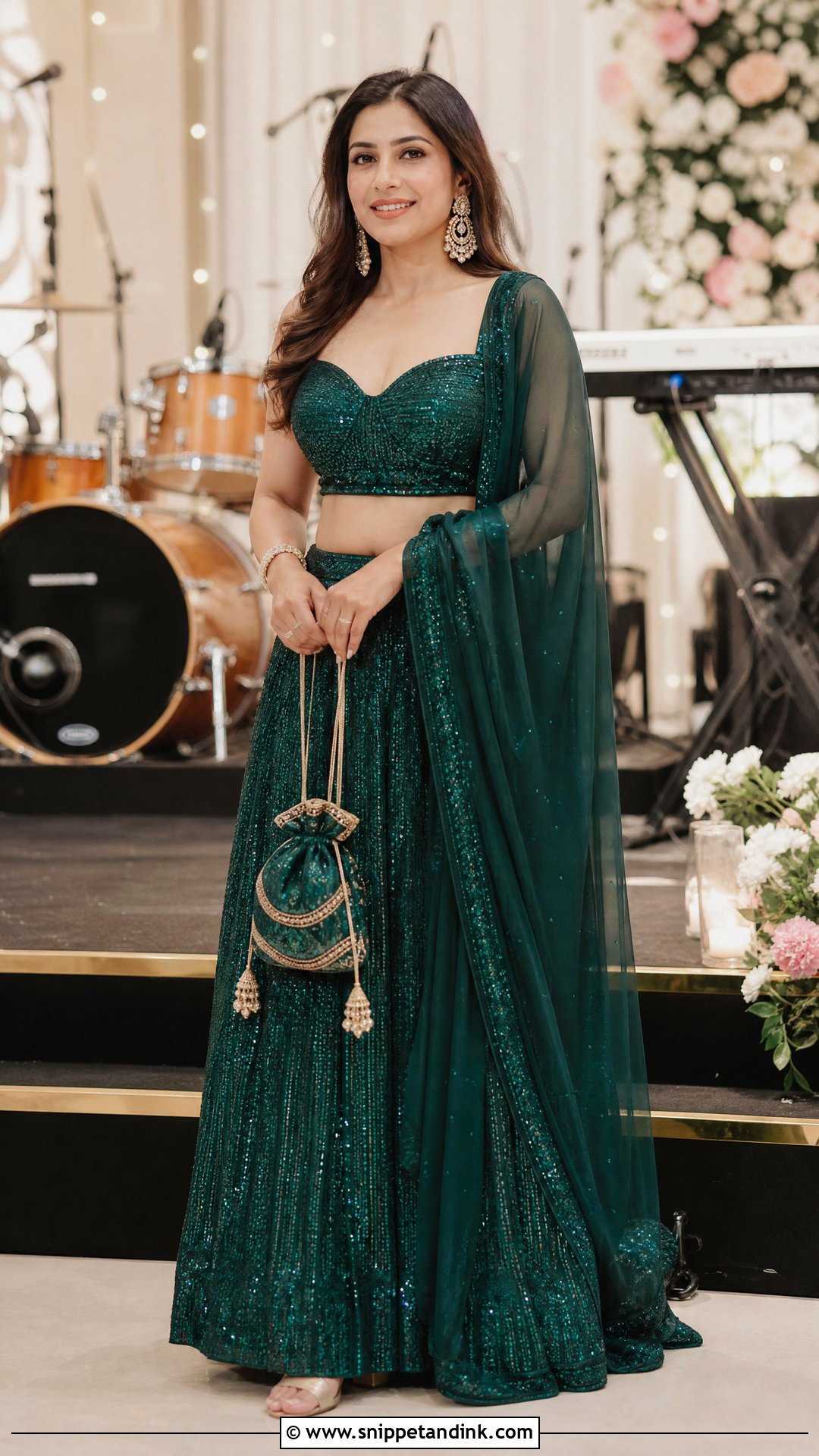
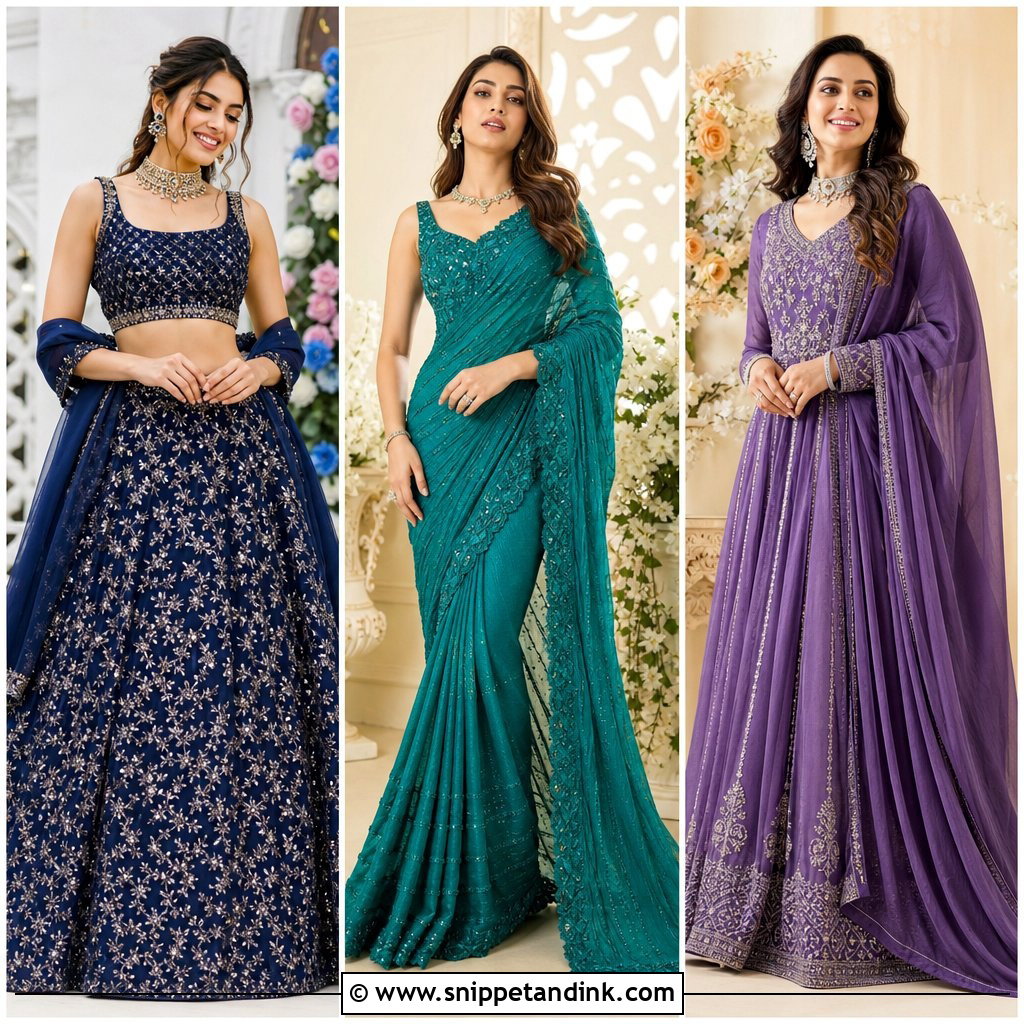
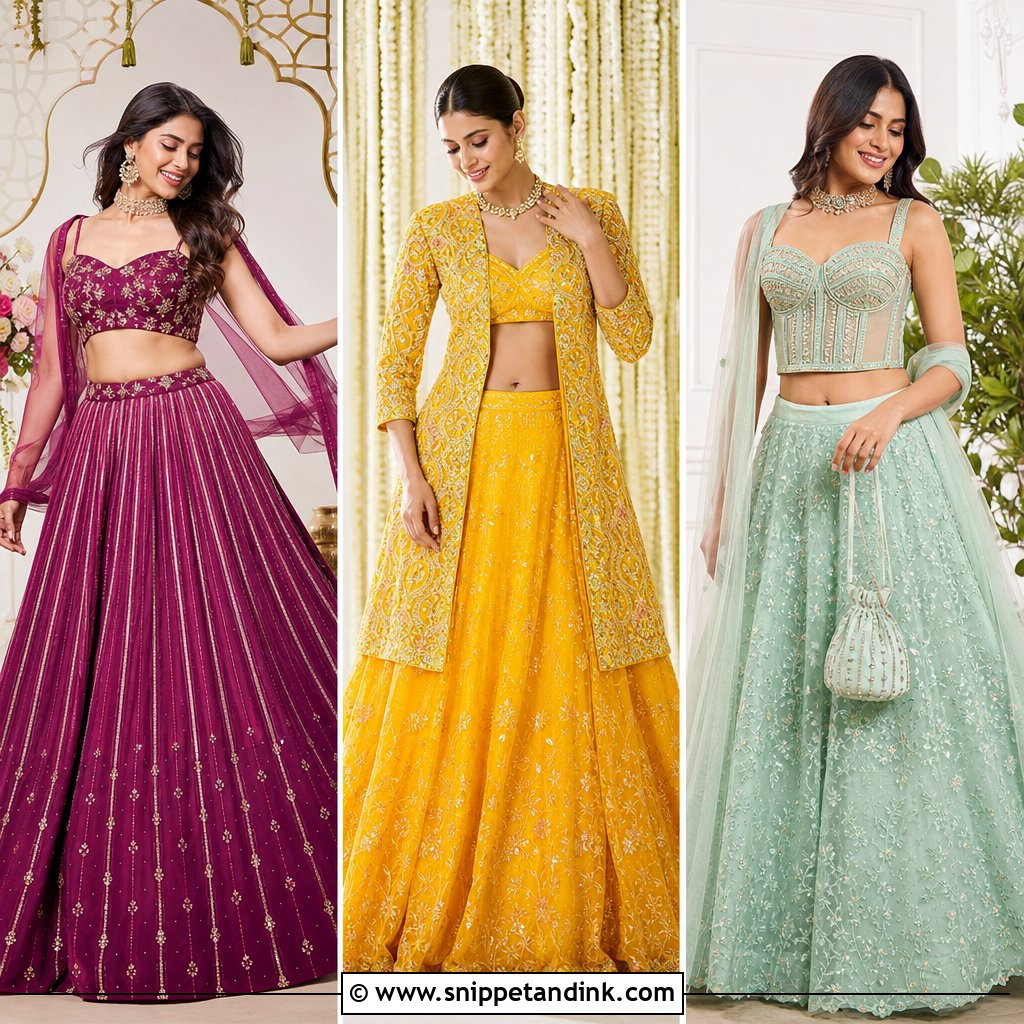
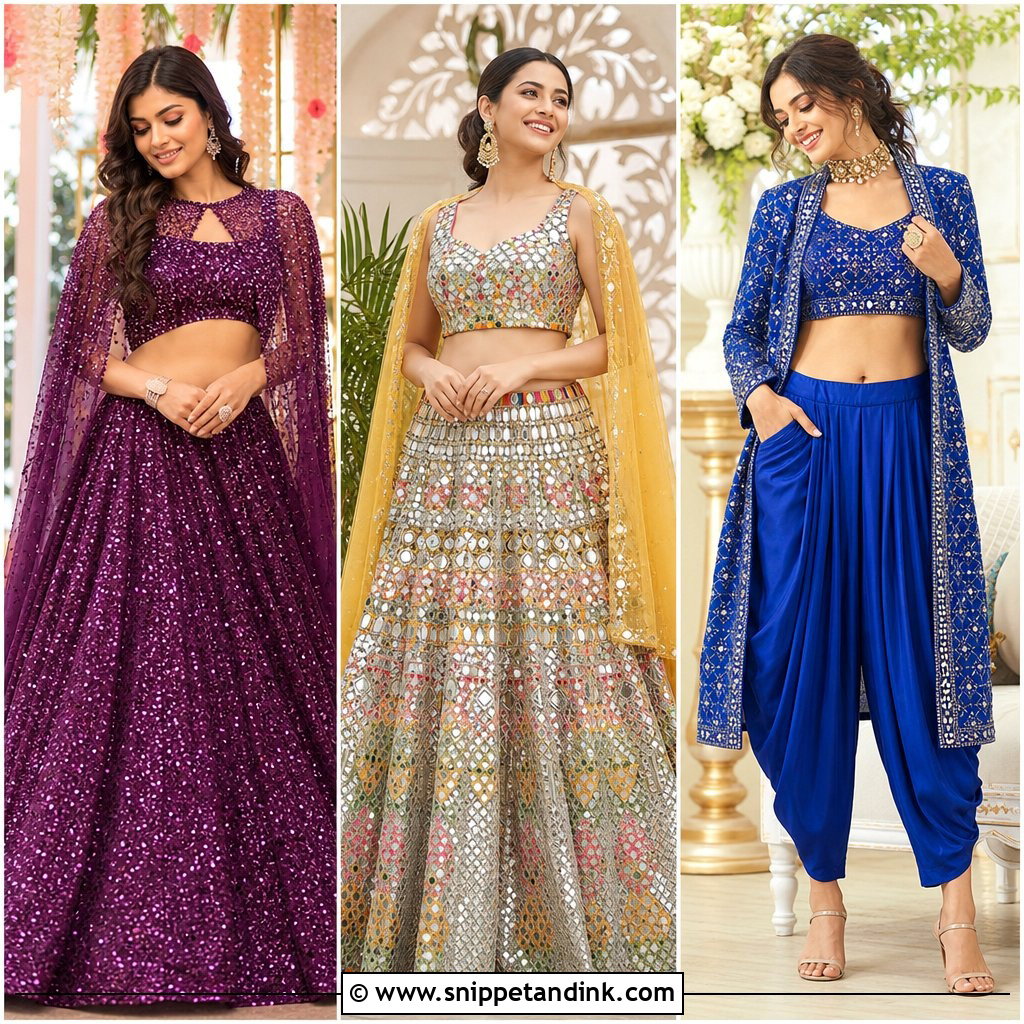
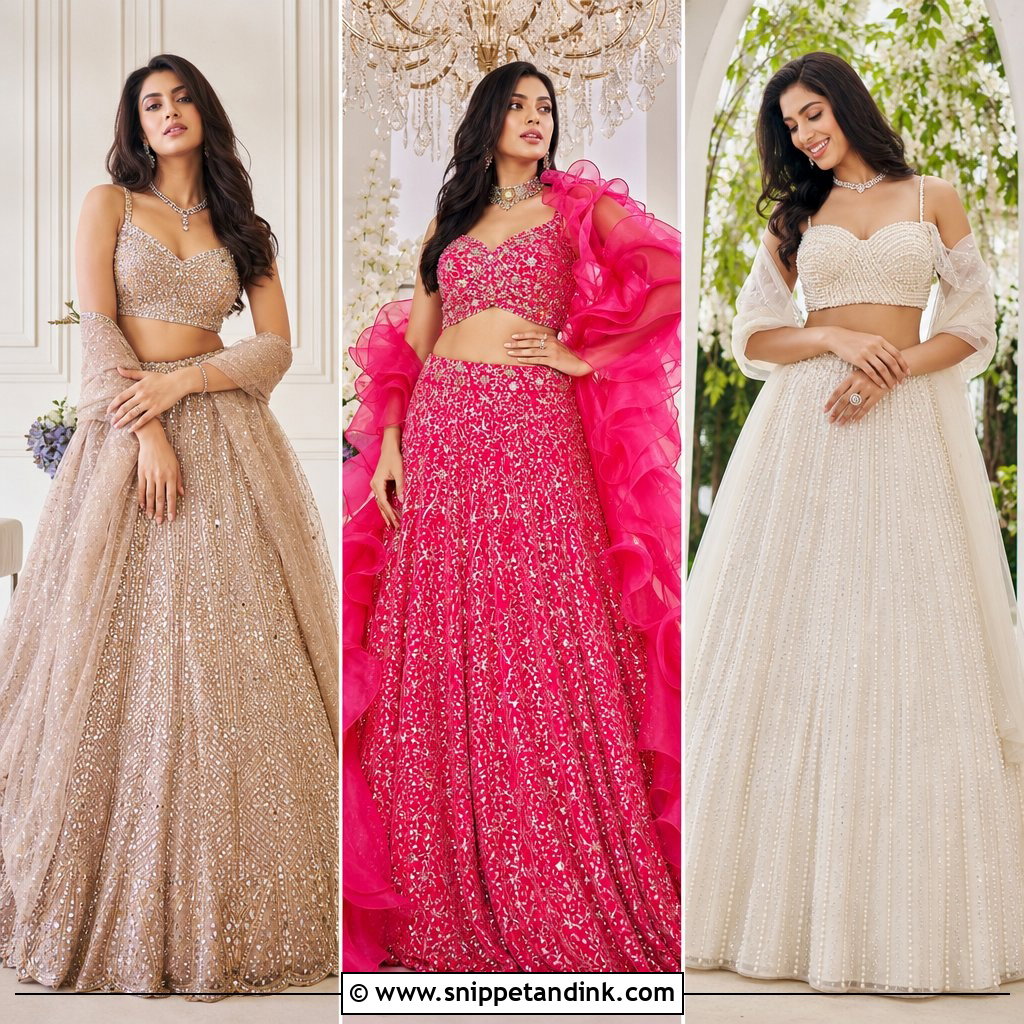
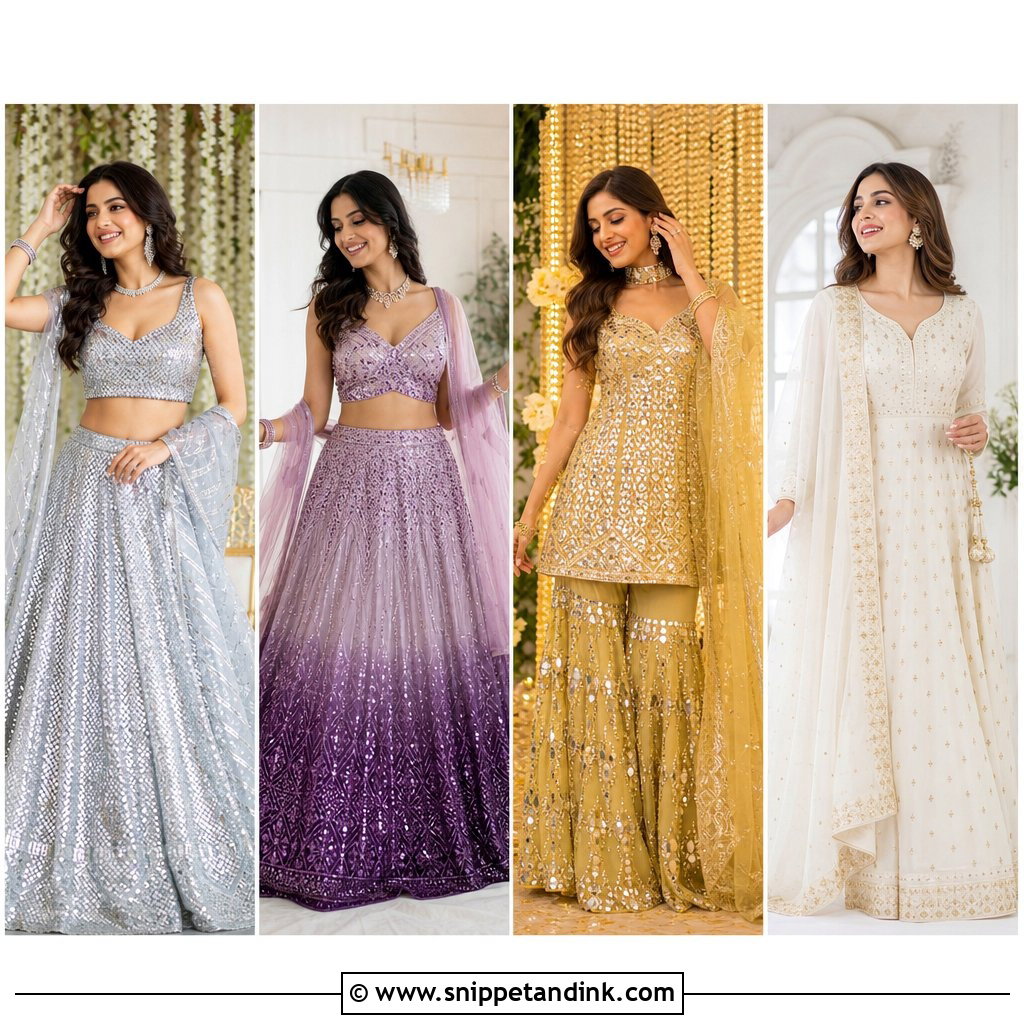
Sequins are the obvious sangeet choice, and they’re also the heaviest. A fully sequined lehenga in thick fabric can weigh far more than you’d guess, and that weight sits on your waist for hours of dancing. I steer clients toward a lightweight georgette base where the sequins are scattered or concentrated at the hem. Navy, emerald and silver catch light well. Keep the flare moderate. With that much sparkle, skip the heavy necklace and wear strong earrings. Pin the dupatta at the shoulder and the waist if you’re in any choreographed number.
2. Mirror Work Sharara for Sangeet
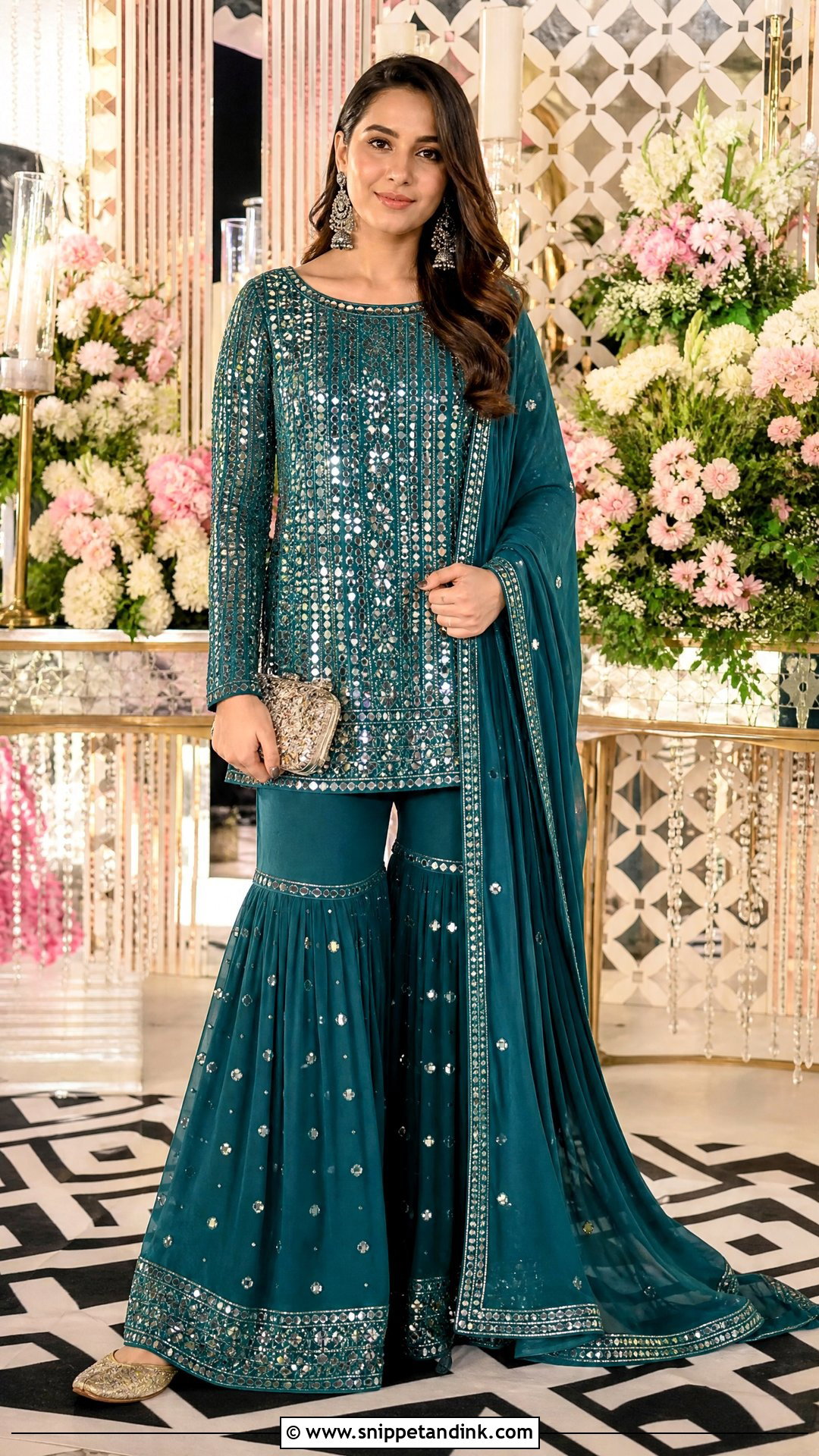
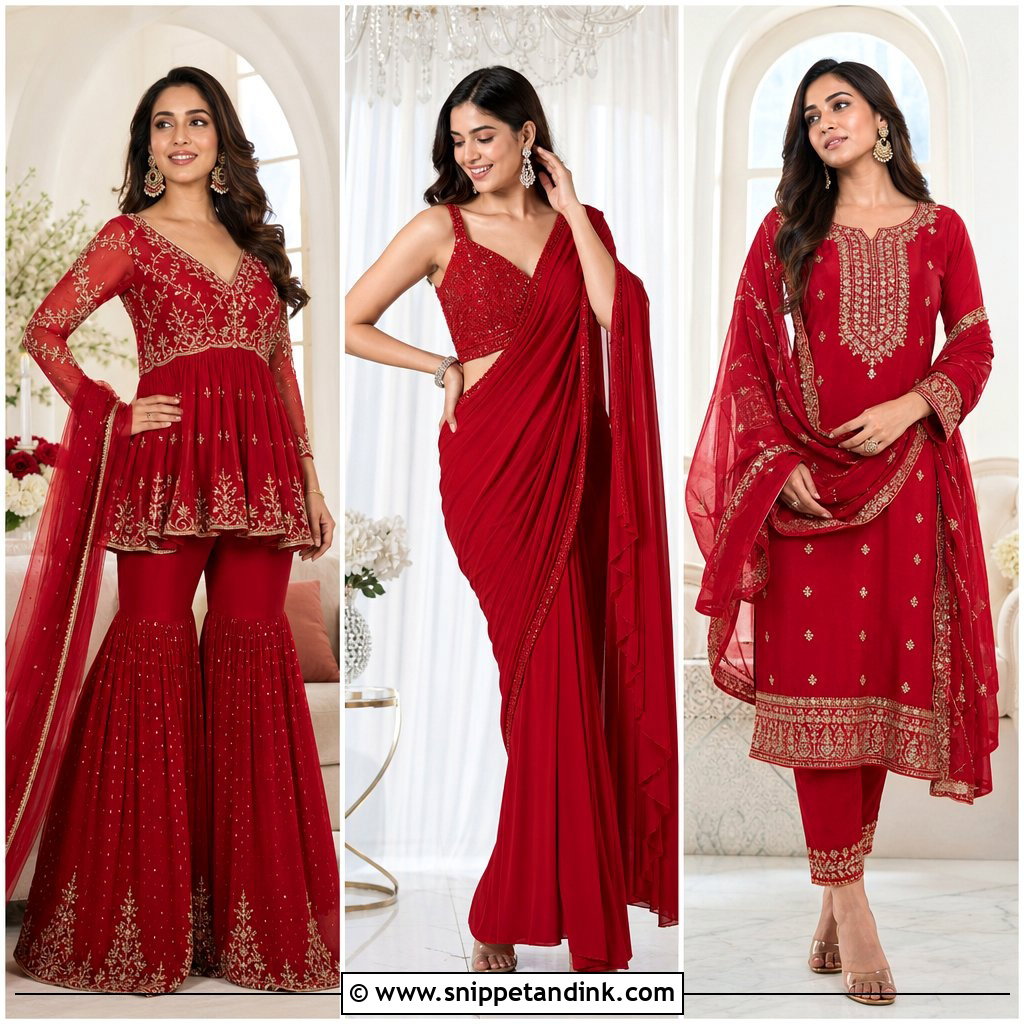
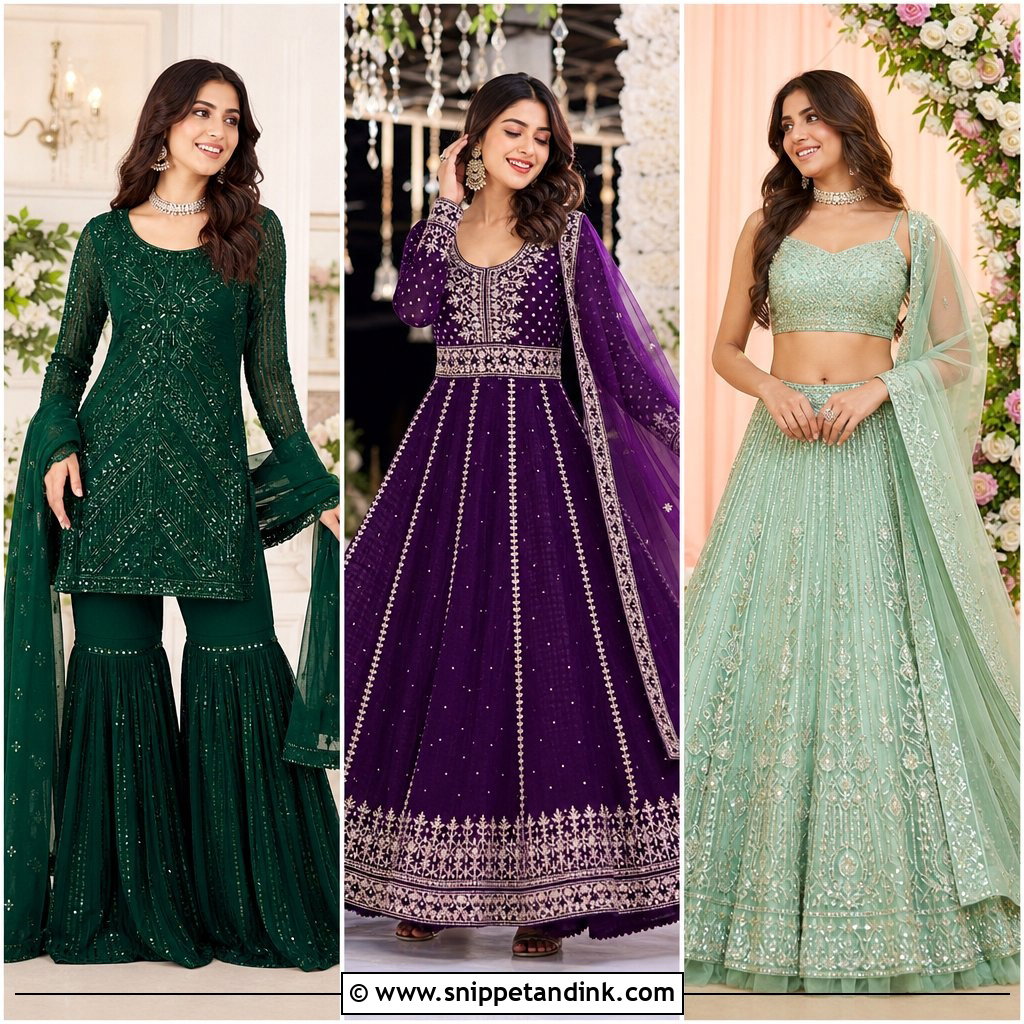
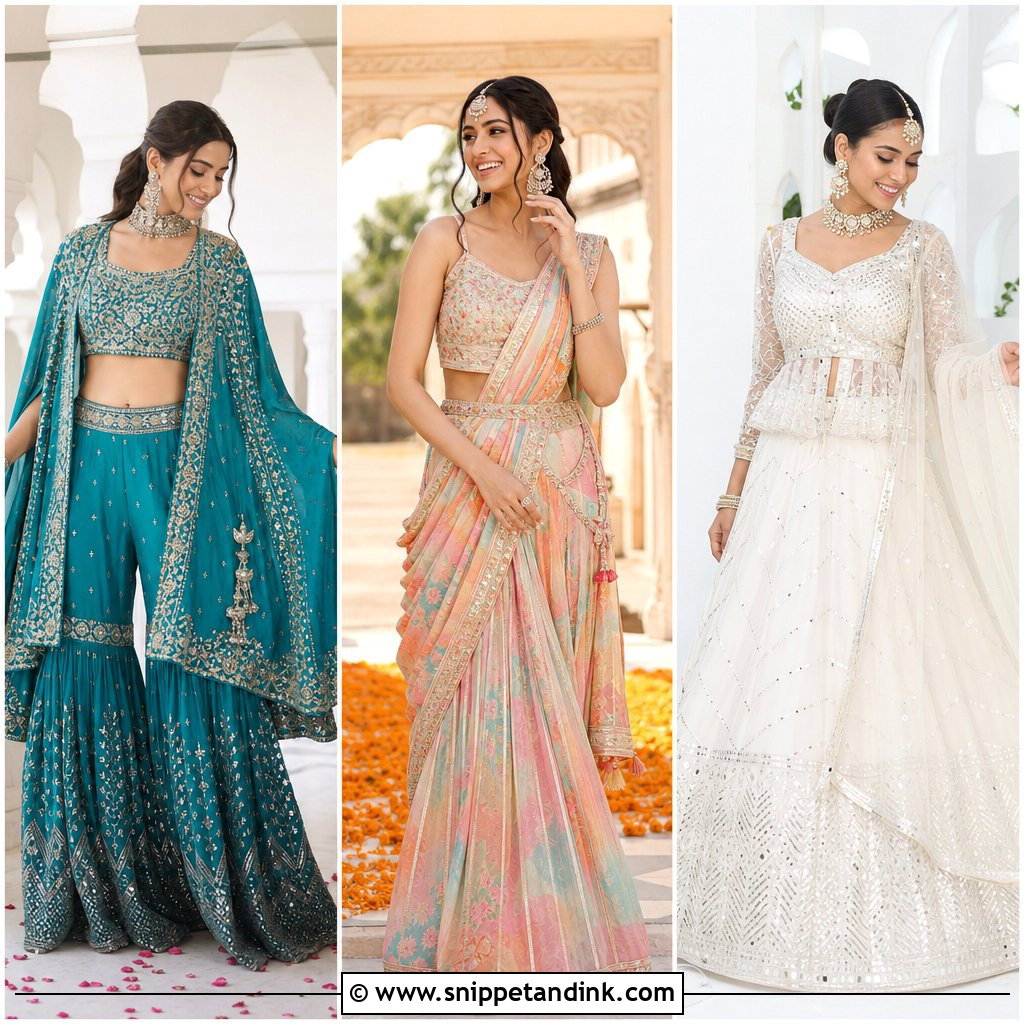
A mirror work sharara gives you the volume of a lehenga with legs free to move, which is why it’s one of the easiest outfits to dance in. A short kurti in teal, hot pink or mustard over flared sharara pants keeps the shape visible. The thing I check on every mirror piece is the back of the work: poorly finished mirrors have sharp edges that scratch at the armhole and inner wrist after an hour. Run your fingers over the inside before buying. Oxidized silver earrings suit mirror work better than gold. Want more coverage? Choose a longer kurti with elbow sleeves.
3. Embroidered Anarkali for Sangeet
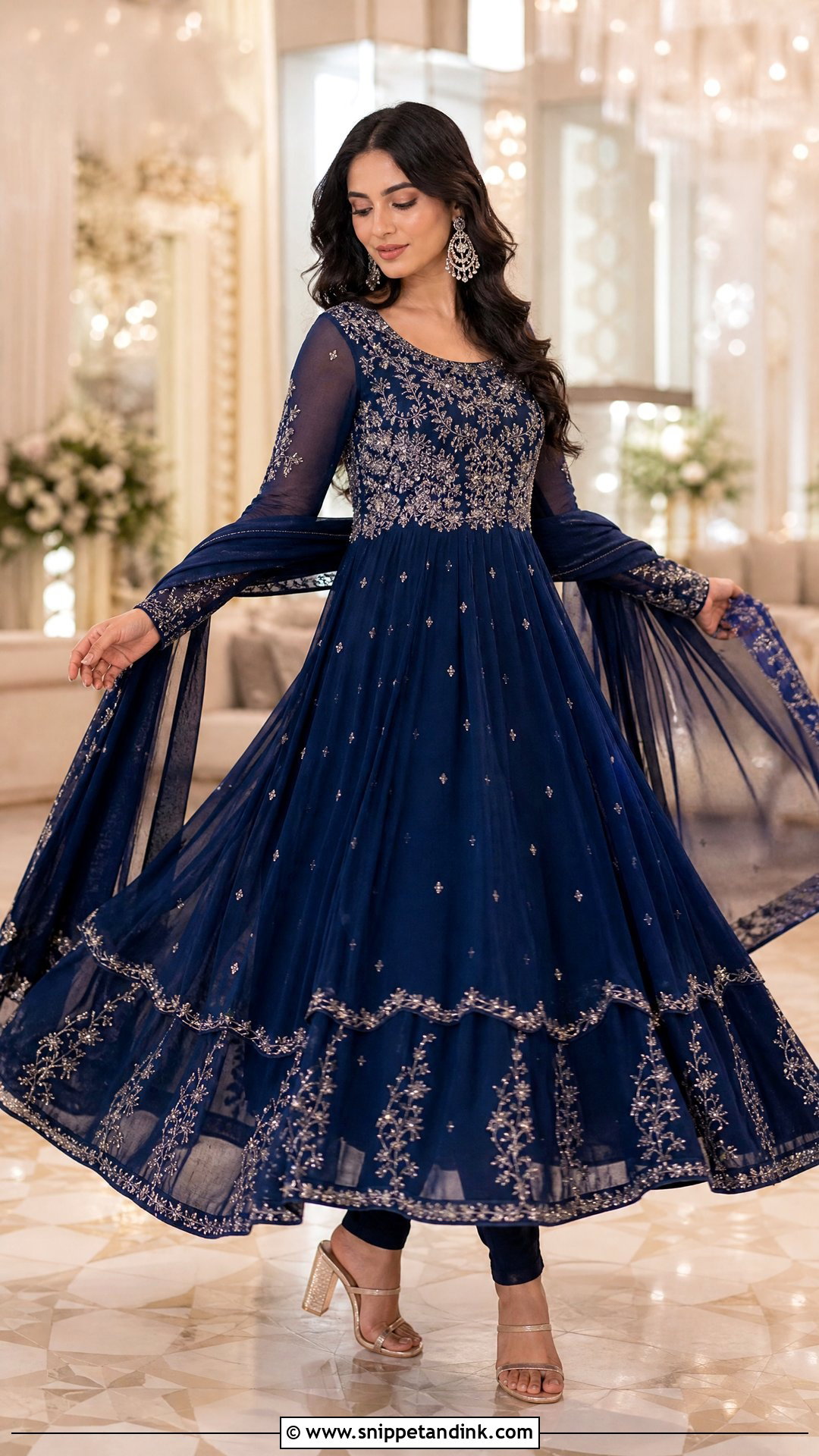
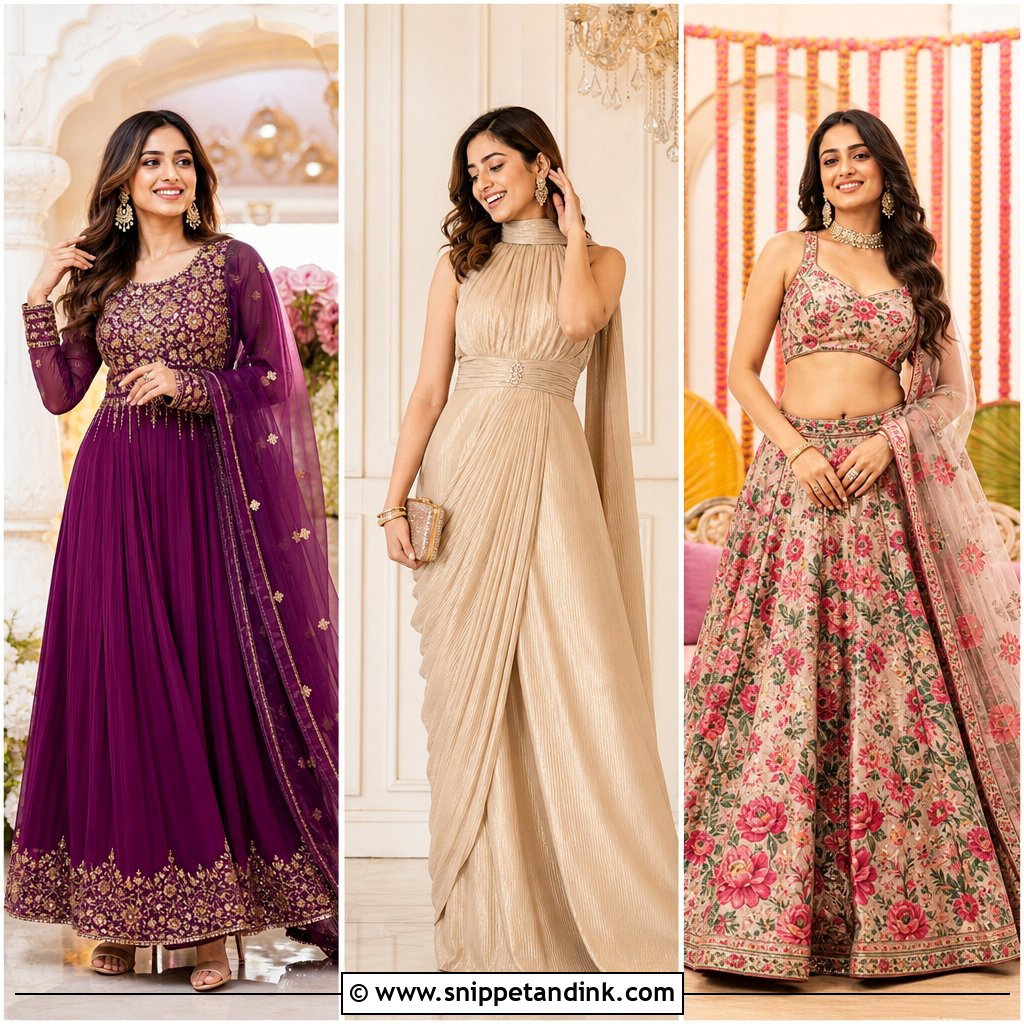
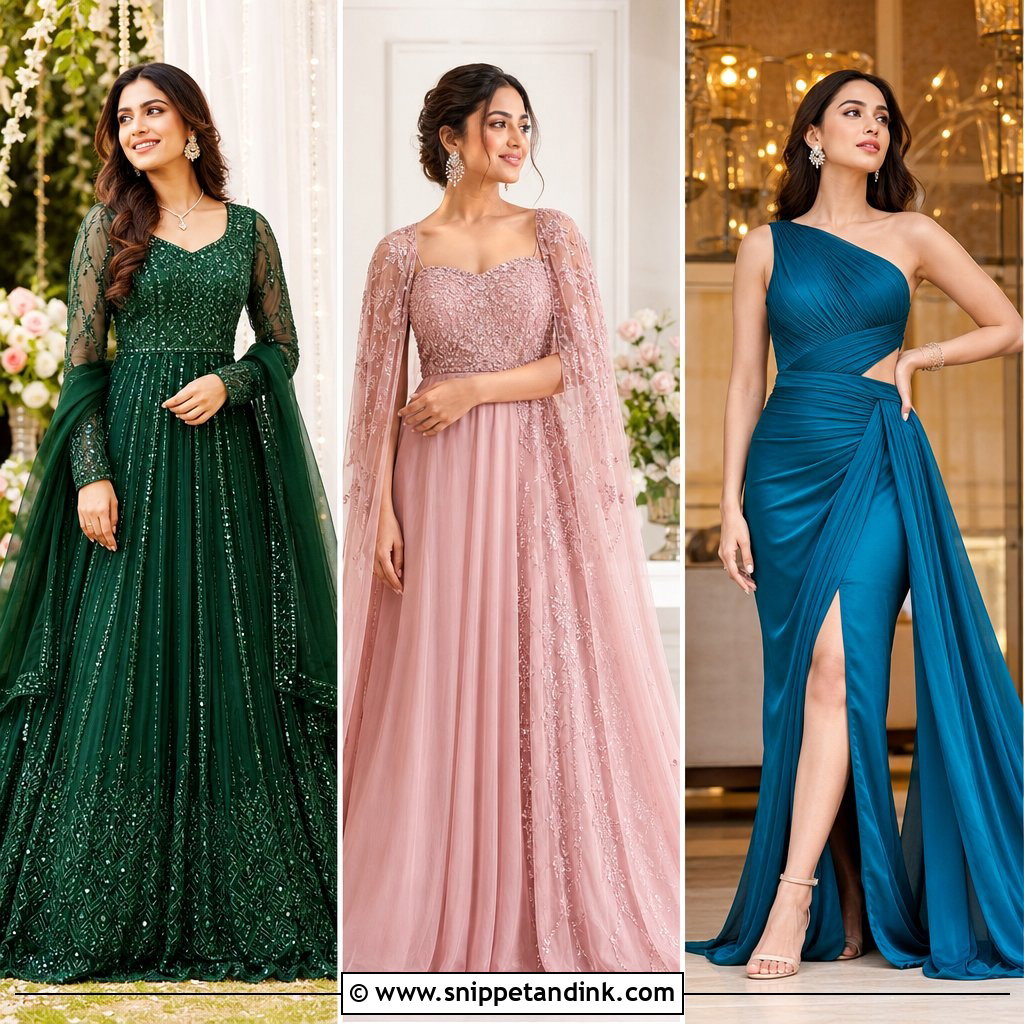
No separate skirt, no separate blouse, no waistband to keep adjusting: an embroidered Anarkali is one piece and very easy to manage. A floor-length georgette or silk-blend with a fitted bodice and wide hem swirls well when you turn. Wine, sapphire and magenta glow under warm lights. The risk is the hem. Wide Anarkali hems wrap around the ankle during a spin and you can step on them, so I take the length up slightly for dancers and ask clients to practice a few turns at home. Slim churidars and block heels underneath keep you steady.
4. Pre-Draped Saree for Sangeet
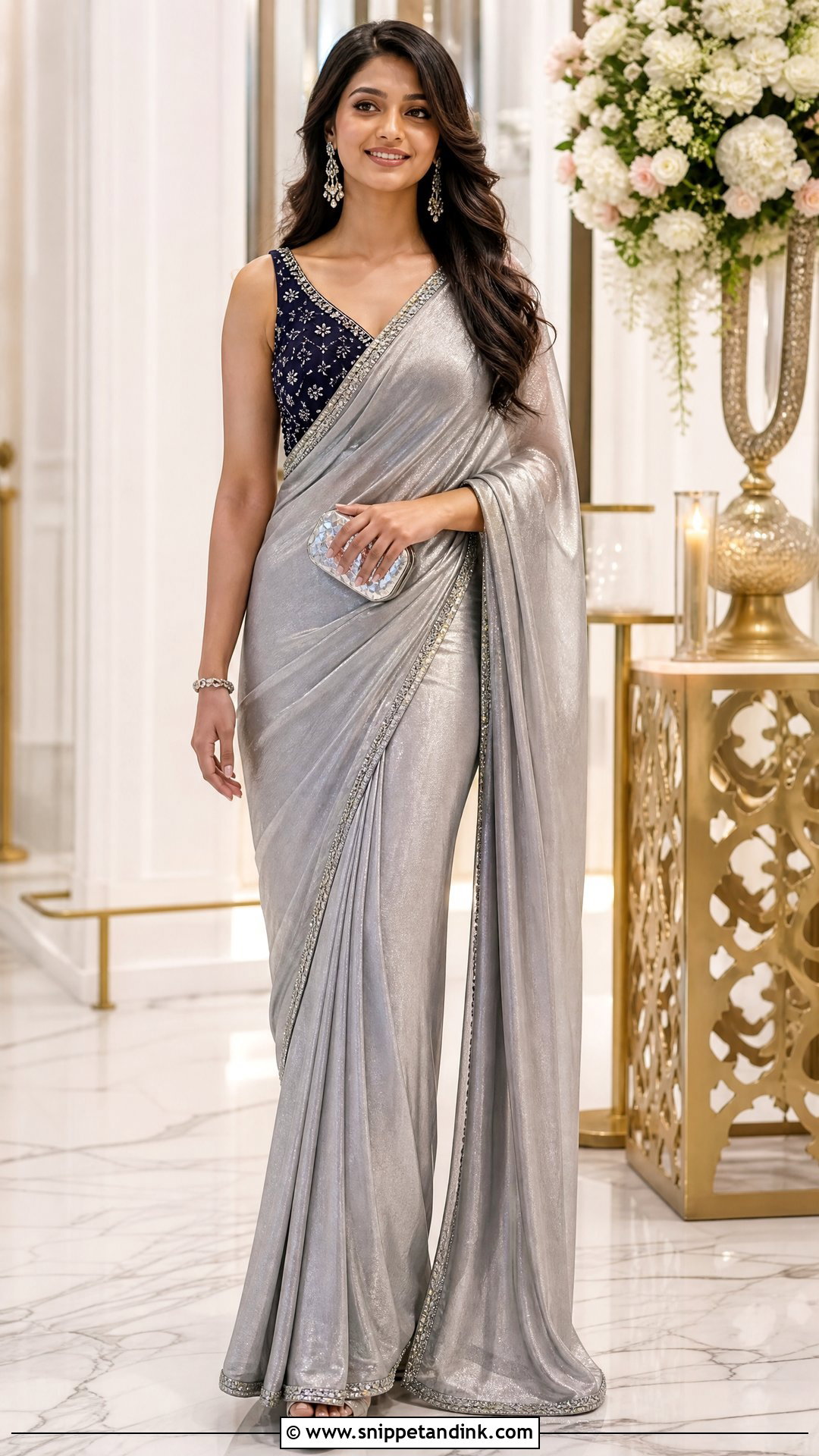
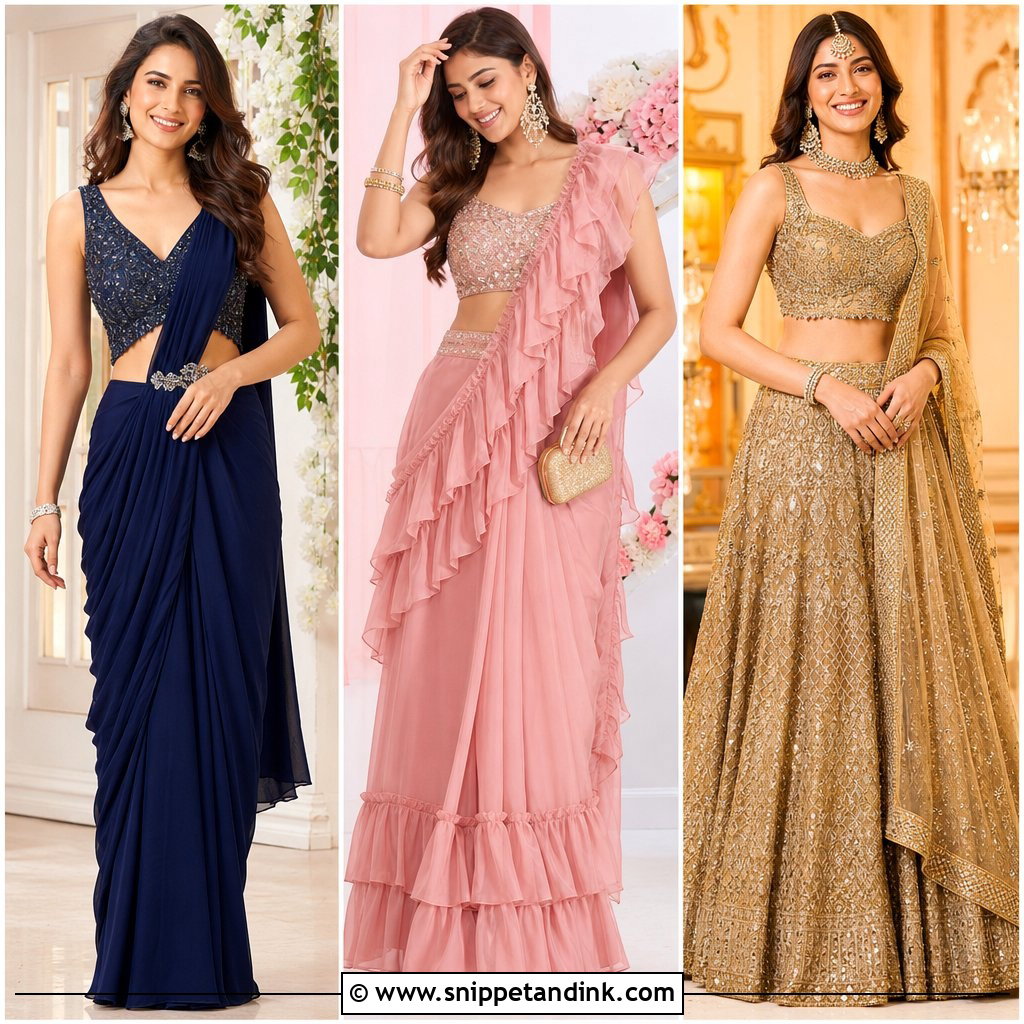
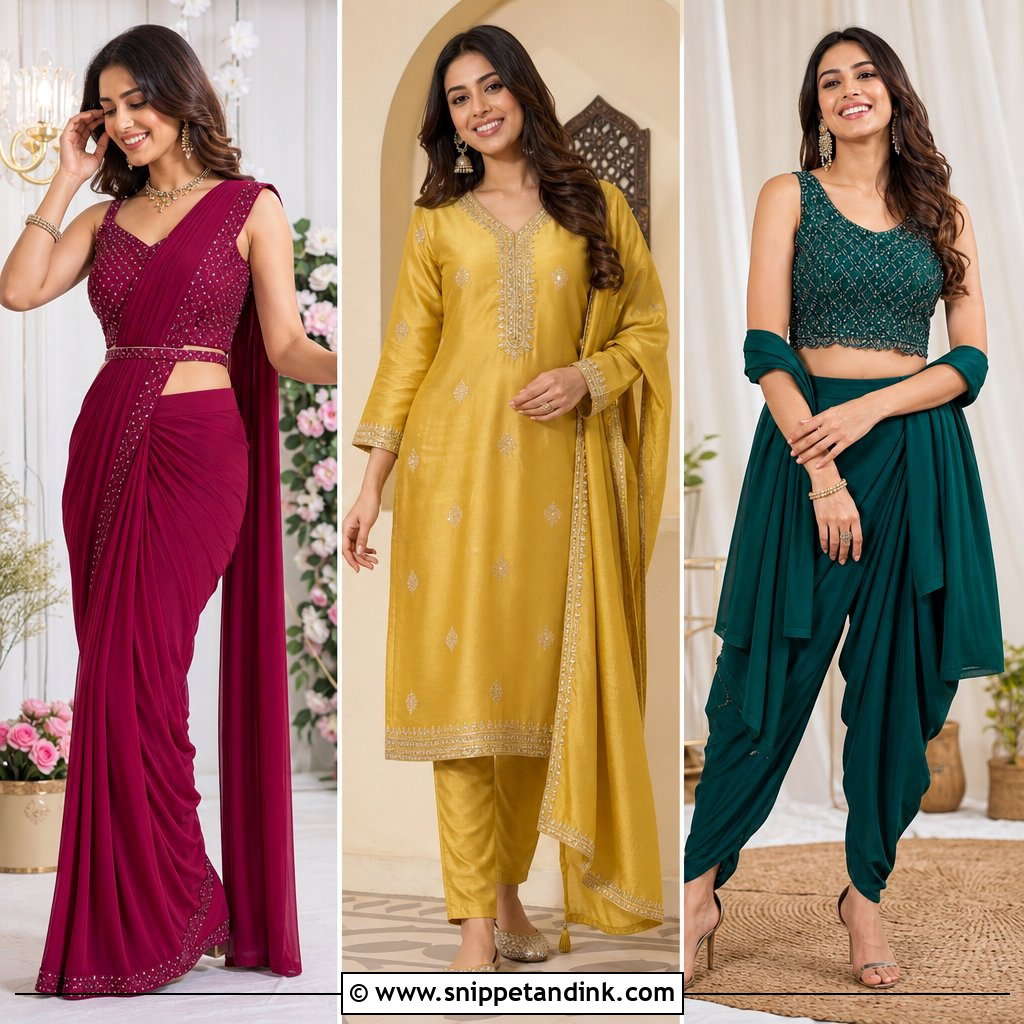
Pre-draped sarees exist for exactly this kind of night. The pleats are stitched, the pallu is fixed, and nothing loosens during a fast number. Crepe or georgette in midnight blue, berry or emerald works well in evening light. Your blouse needs to let you lift your arms fully, since sangeet choreography often involves raised hands. Proportion matters with borders: a narrow border tends to suit petite frames, while taller women can carry a longer, bolder pallu. Test the side zip and waist hook before you leave; those are the two parts that fail under strain.
5. Cape Lehenga for Sangeet
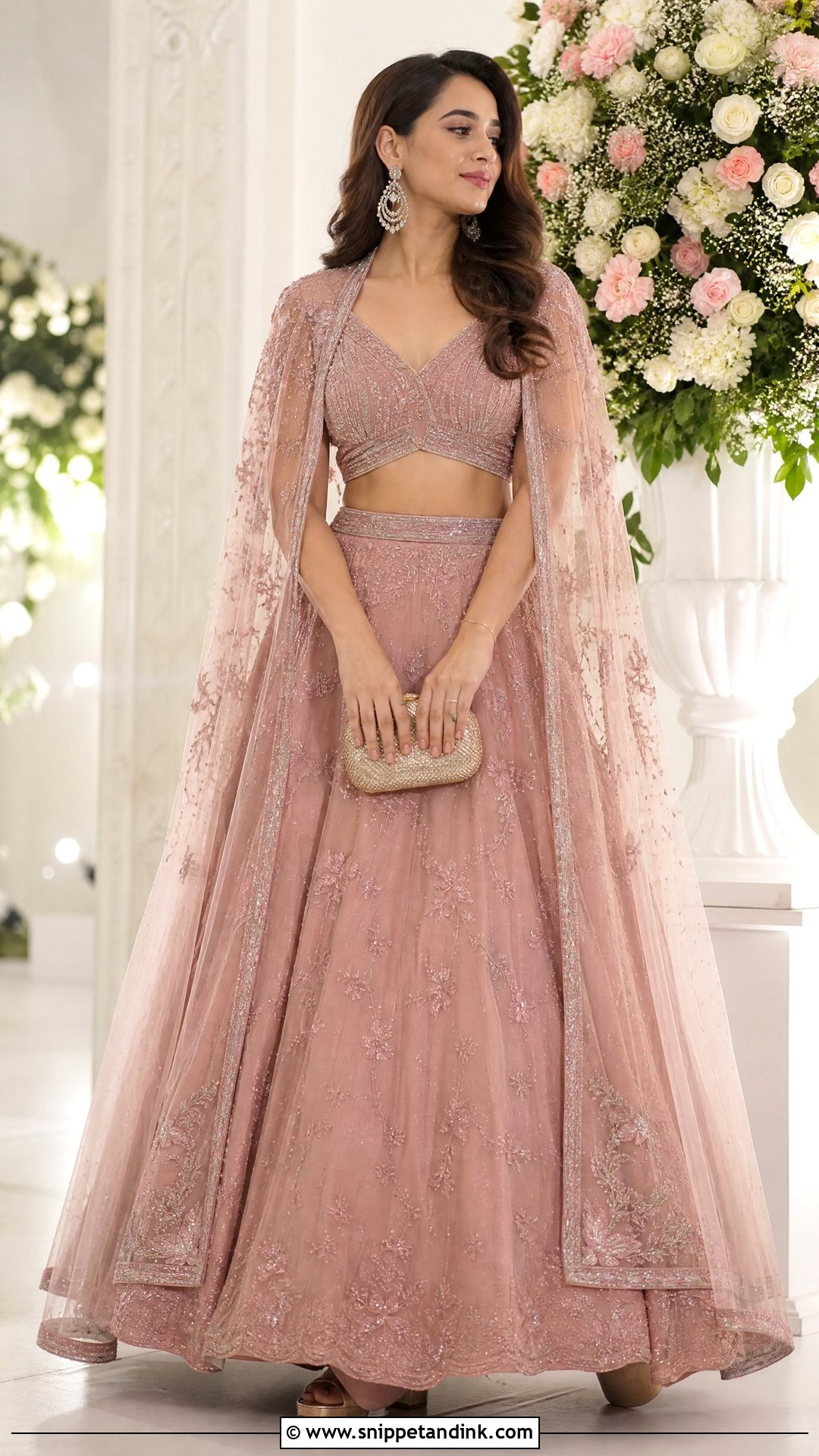
A cape replaces the dupatta, and for a dancer that is a real advantage. Over a solid or lightly embroidered skirt and fitted blouse, a sheer embellished cape adds movement without anything to pin or hold. Waist-length capes define the shape; longer ones give more coverage. Champagne and deep violet look rich at night. Skip a large necklace under a busy cape neckline. My rule on length: the cape should finish above the skirt hem, or it ends up under your heel on the first spin and brushing into other guests as you pass.
6. Crop Top and Palazzo Set for Sangeet
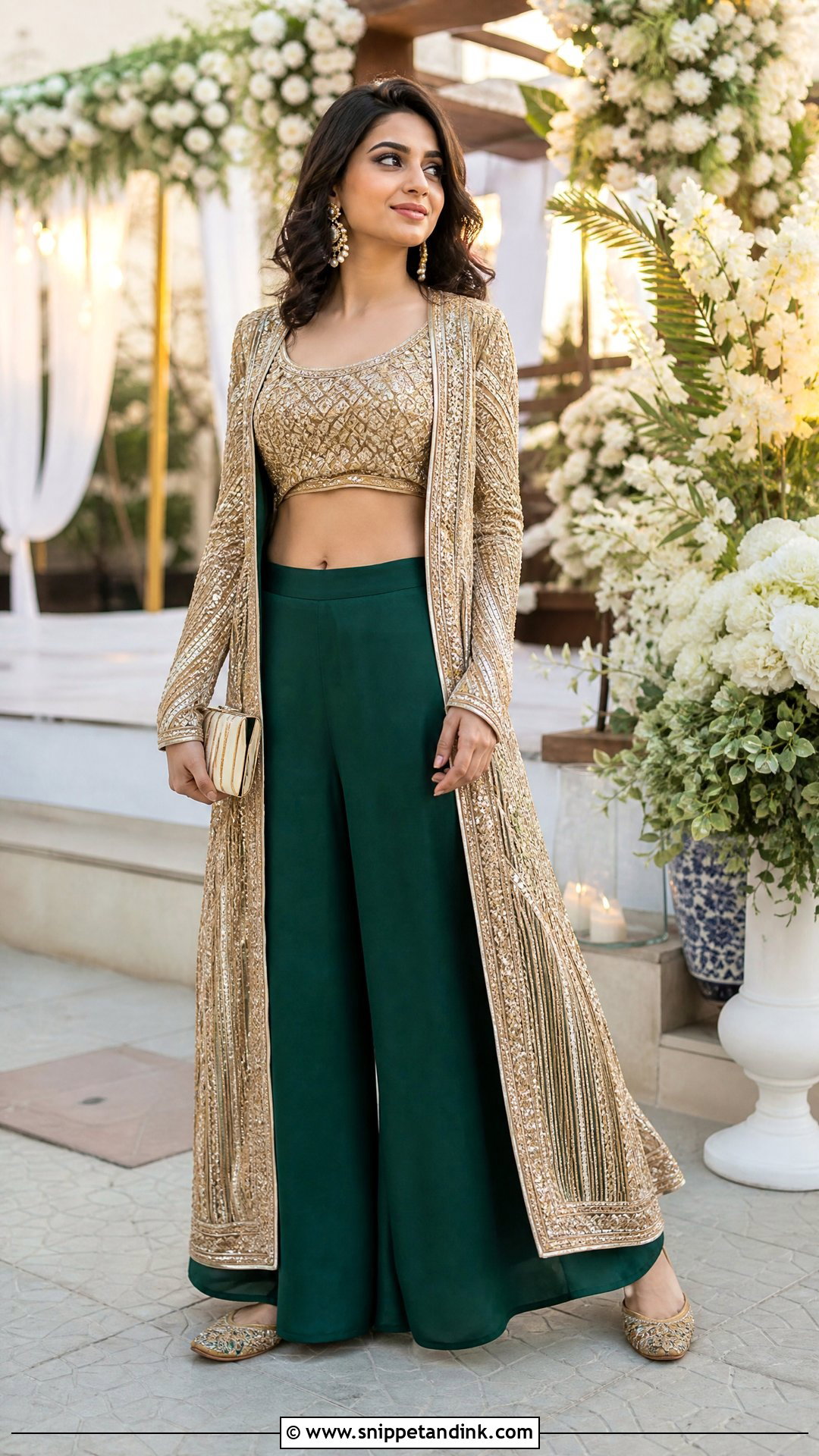
Palazzos move freely, and with an embroidered crop top and a long open jacket they make a complete Indo-Western sangeet outfit. Crepe or silk-blend keeps the leg fluid. Emerald with gold or navy with silver are easy pairings. The long jacket adds a vertical line and covers the waist and hips if you’d prefer. I check the hem with the actual shoes: wide palazzos should finish just above the floor, because they’re easy to tread on in the back during footwork. Keep bracelets minimal if the jacket cuffs are embellished, as the two catch on each other.
7. Jacket Lehenga for Sangeet
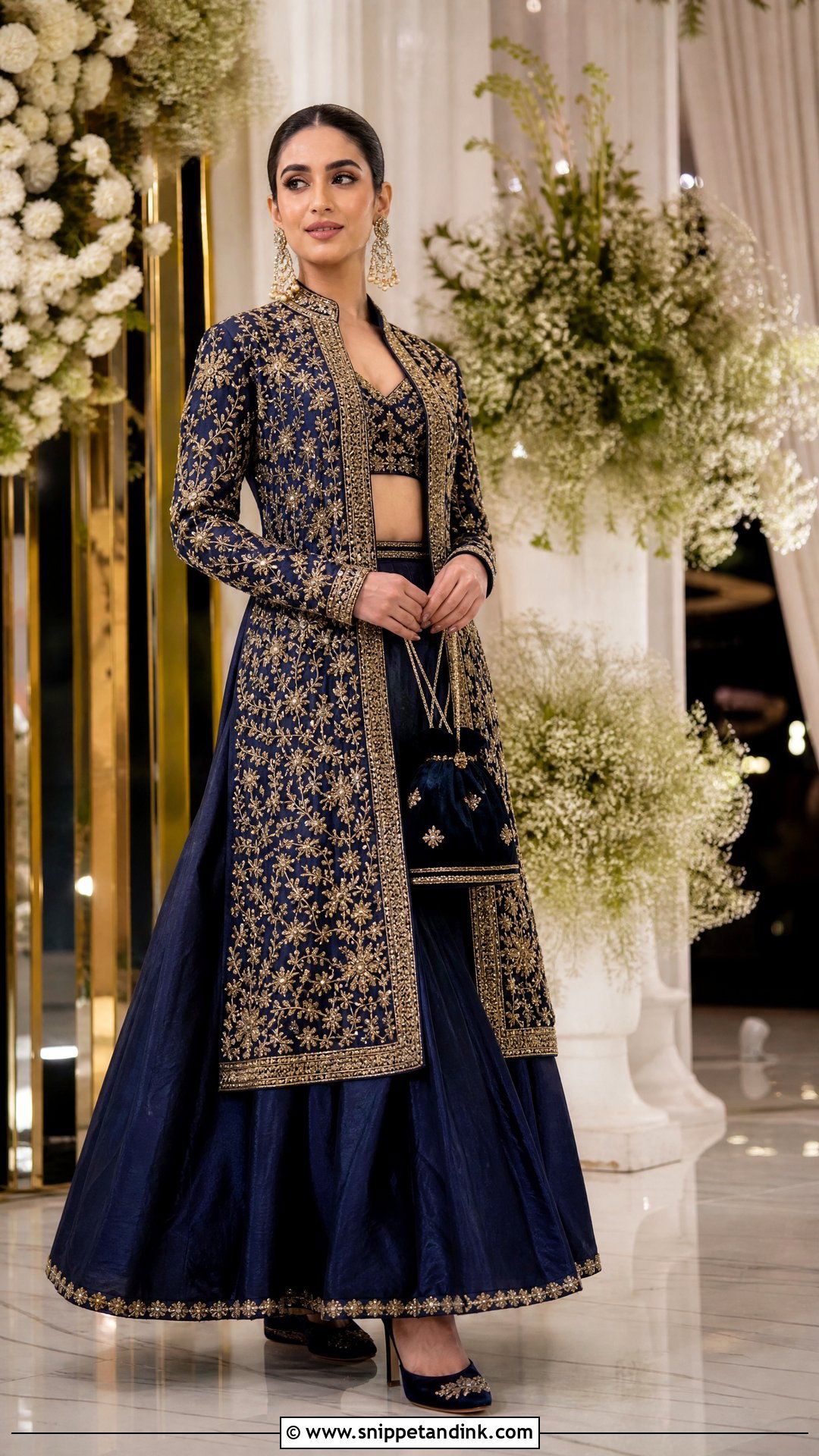
Winter sangeets held outdoors or in big halls get cold between performances, and a jacket lehenga solves it. A flared skirt and simple blouse under an embroidered longline jacket gives warmth with festive detail. Velvet looks rich, but I’d choose silk-blend or brocade for the jacket if you’re dancing, because velvet traps heat fast once you’re moving. Side slits in the jacket let the skirt swing. Maroon and aubergine suit the season. Venues are often heated indoors, so pick a jacket you can take off without the outfit looking unfinished underneath.
8. Saree With Corset Blouse for Sangeet
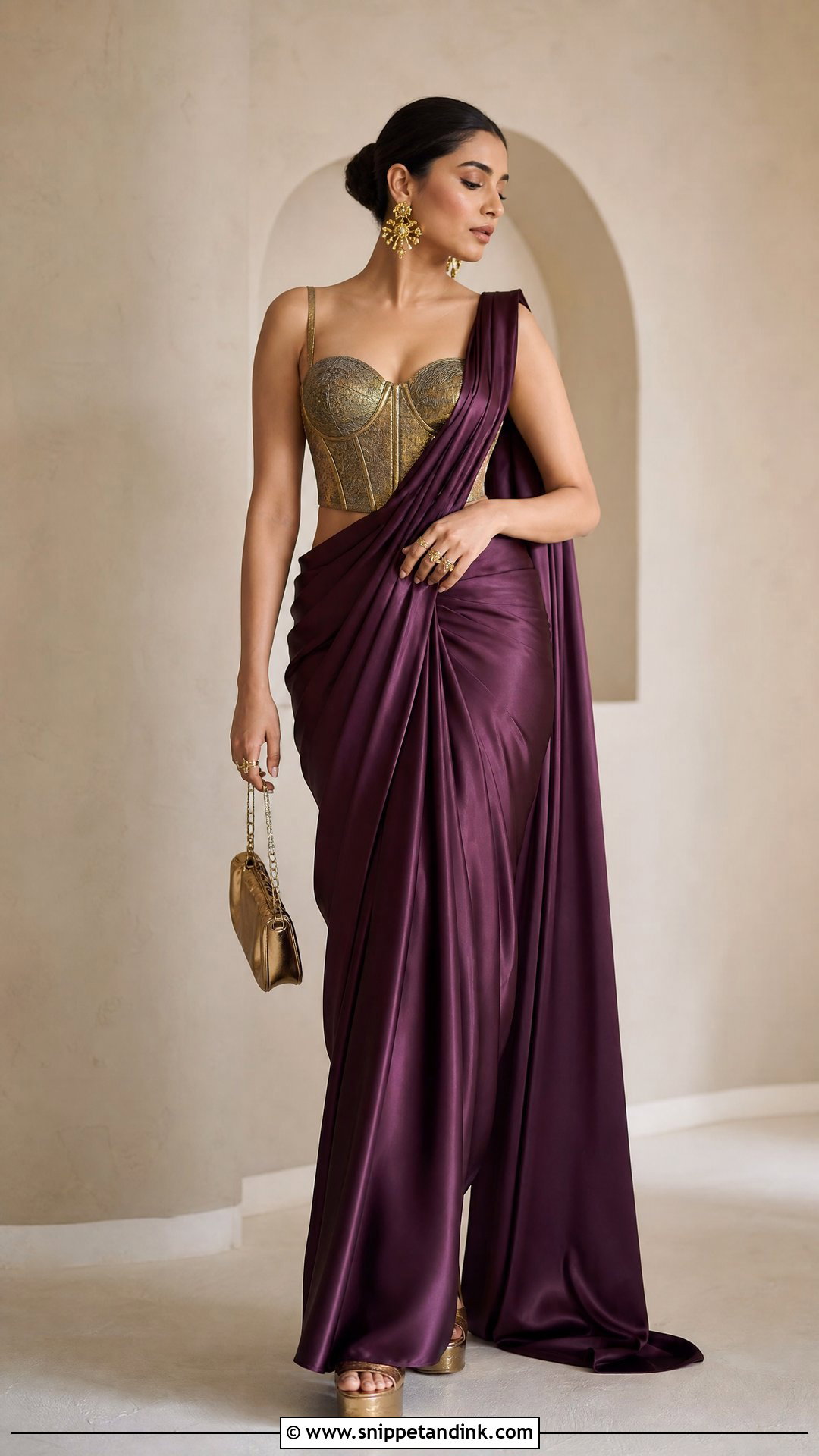
Pairing a fluid saree with a structured corset blouse is a strong modern sangeet look, and the blouse is where it succeeds or fails. A good corset blouse supports you with flexible boning and still lets you breathe deeply and raise your arms. A tightly boned one will feel unbearable by the second performance. Chiffon, satin or georgette sarees fall close to the body and contrast nicely with the structure. Plum with gold, or teal with silver, is my go-to pairing. Platform heels keep the hem off the floor, and a petticoat with a zip holds pleats more reliably than a drawstring that loosens.
9. Peplum Sharara for Sangeet
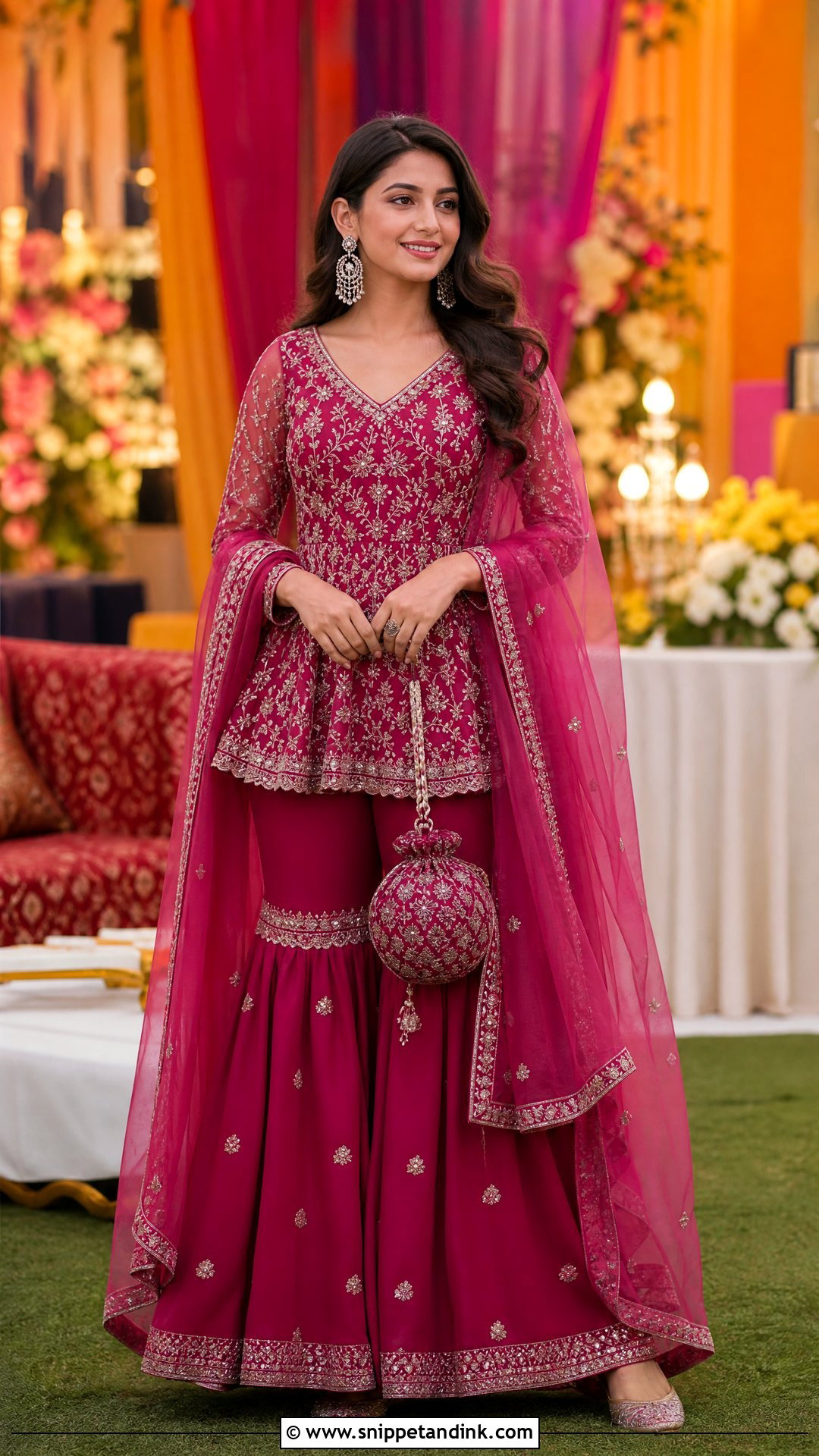
Peplum tops balance sharara volume by nipping in the waist. Choose a set with embroidery at the neckline, waist and lower flare, which shapes the silhouette without covering every inch. The peplum should finish around the upper hip; any longer and it fights the pants for attention. A square or modest V neck frames earrings. Jewel tones go with gold, pastels with silver and pearl. If you’re performing, swap a long dupatta for a short, light one pinned at the shoulder, or skip it entirely. A long dupatta during choreography is how people trip.
10. Dhoti Pants and Kurta for Sangeet
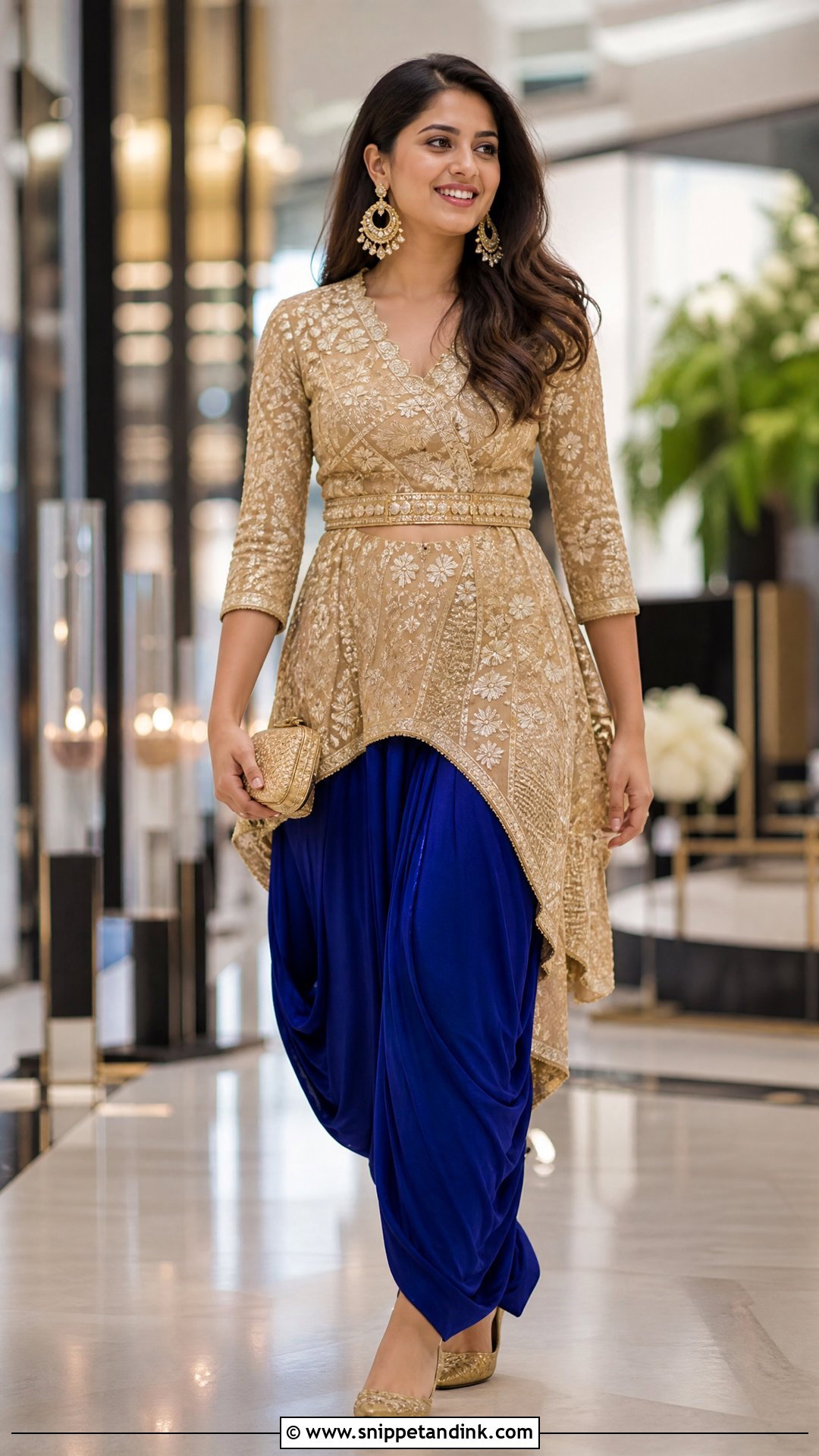
Dhoti pants with an asymmetrical kurta look fashion-forward and still read as Indian occasion wear. The draped dhoti pants taper at the ankle, so there’s no fabric near your feet, which dancers appreciate. A sleeveless embroidered kurta, one-shoulder top or fitted peplum each change the coverage. Coral, cobalt and antique gold feel festive. A short cape or cropped jacket can replace the dupatta. Sit, step and squat in the dhoti before the night; the drape at the inner leg is where these pants pull or gape on some figures.
11. Floral Lehenga for Sangeet
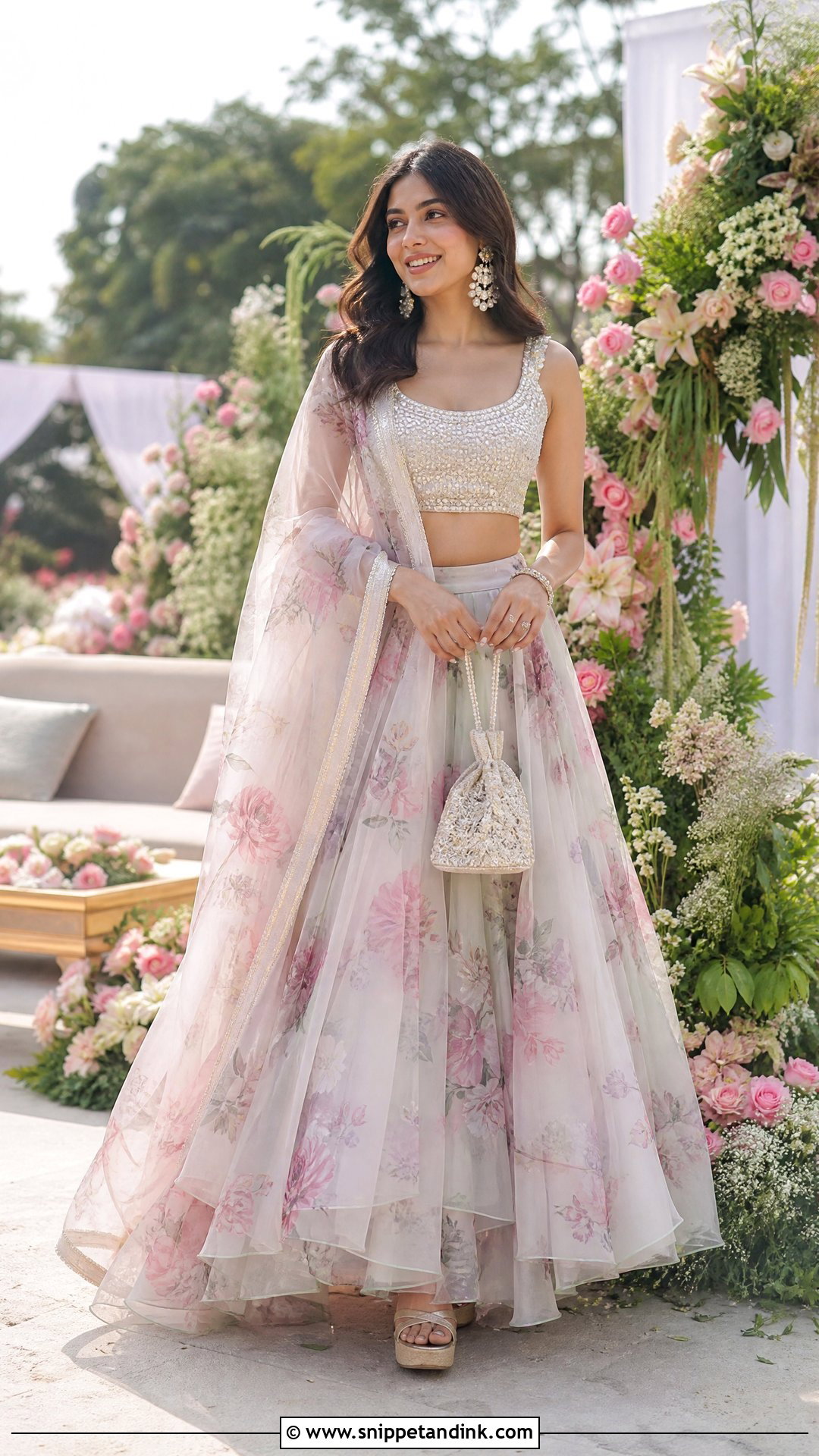
Floral lehengas make sense for daytime, outdoor and destination sangeets, where heavy evening embellishment looks out of place in sunlight. A light organza or georgette skirt with printed flowers and minimal embroidery stays cool. Pastel florals go with pearls; brighter prints with enamel earrings. On a lawn, wedges or broad block heels stop you sinking. Because a print can look casual next to embroidered outfits, I add one dressier detail, a beaded blouse or a metallic border, so it sits right among the other guests. Keep the accessories small; a busy print plus big jewelry gets noisy.
12. Velvet Lehenga for Winter Sangeet
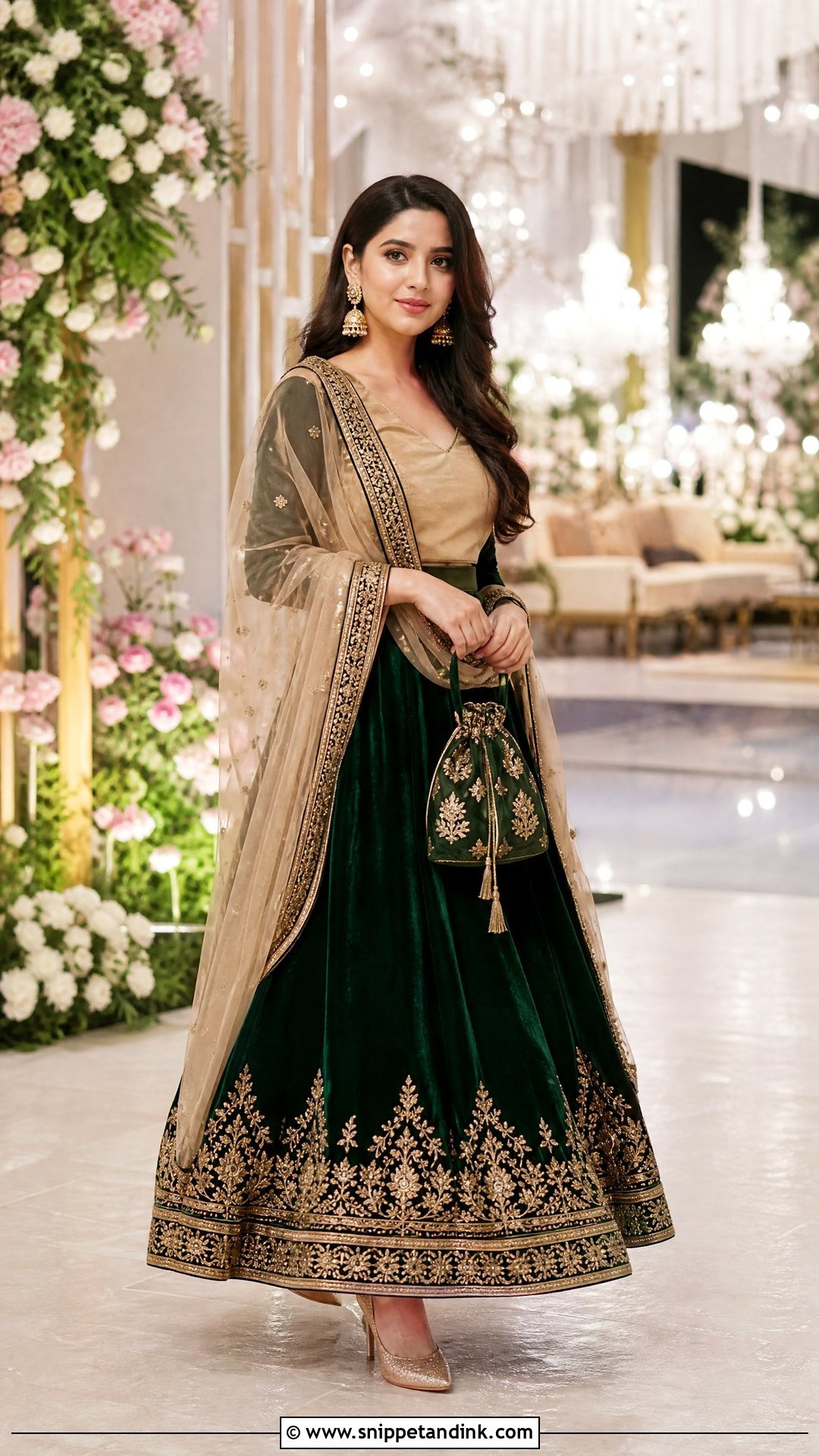
Velvet suits a cold sangeet; it’s warm and looks regal under evening lights. Choose a streamlined burgundy or navy skirt with embroidery at the border rather than all over, and pair it with a raw-silk blouse and a light net dupatta so the whole outfit isn’t heavy. Velvet already looks formal, so a little jewelry is enough. Check that the skirt has room through the hip and a smooth lining, since velvet against velvet drags. I’d skip this one for a heated indoor hall; dancing in thick velvet in a warm room gets uncomfortable quickly.
13. One-Shoulder Lehenga for Sangeet
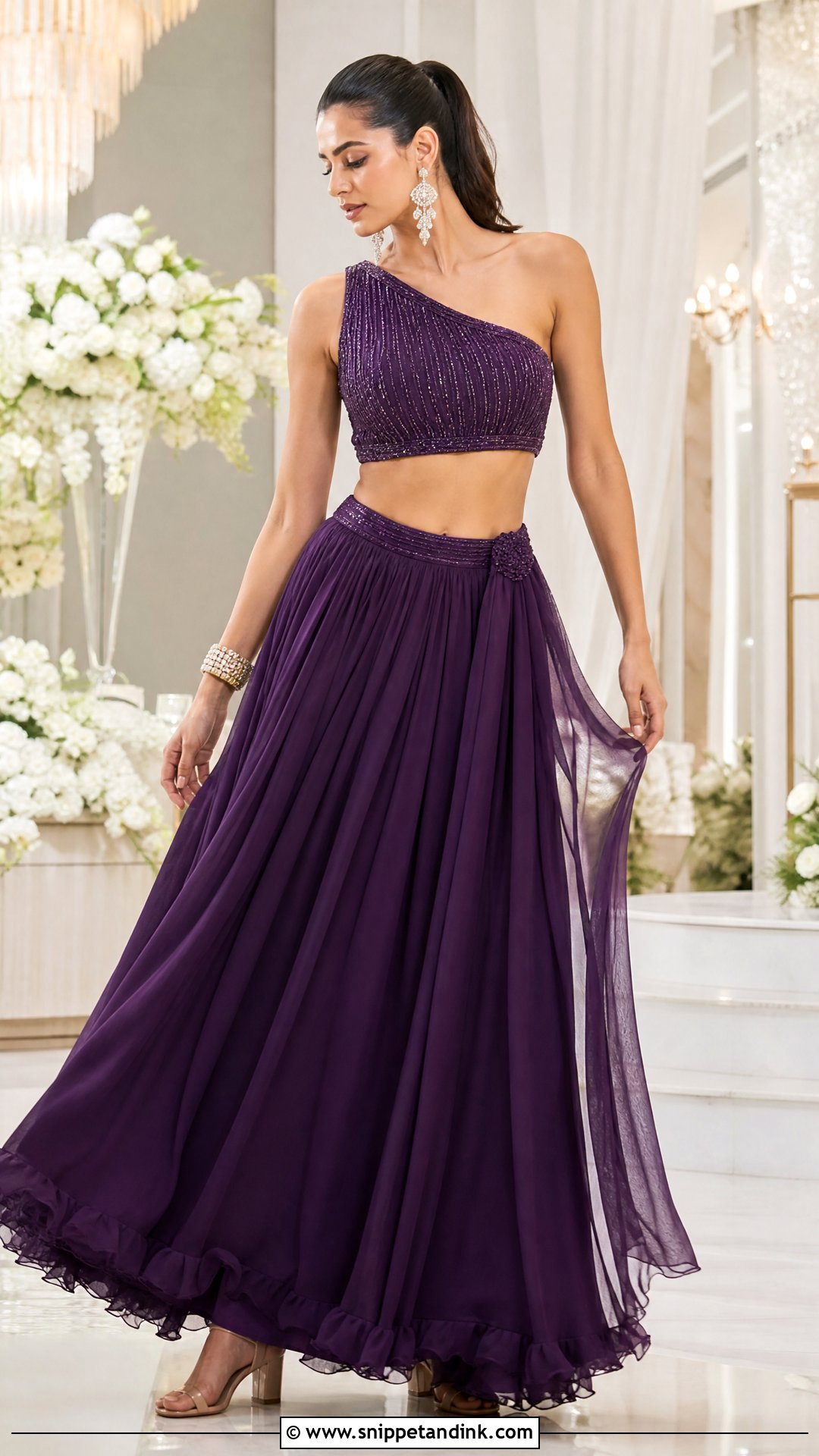
A one-shoulder blouse updates a classic lehenga, but it needs fitting care. The single strap carries all the tension, and if it’s even slightly loose the blouse slides with every arm movement. During fittings I have clients raise both arms and clap overhead, as they would during a song. A shoulder-draped dupatta hides the neckline, so attach a light one at the waist instead, or choose a built-in cape. Put a cuff on the bare arm for balance. A sleek ponytail keeps the neckline in view, and block heels with ankle support steady a full skirt.
14. Gharara Suit for Sangeet
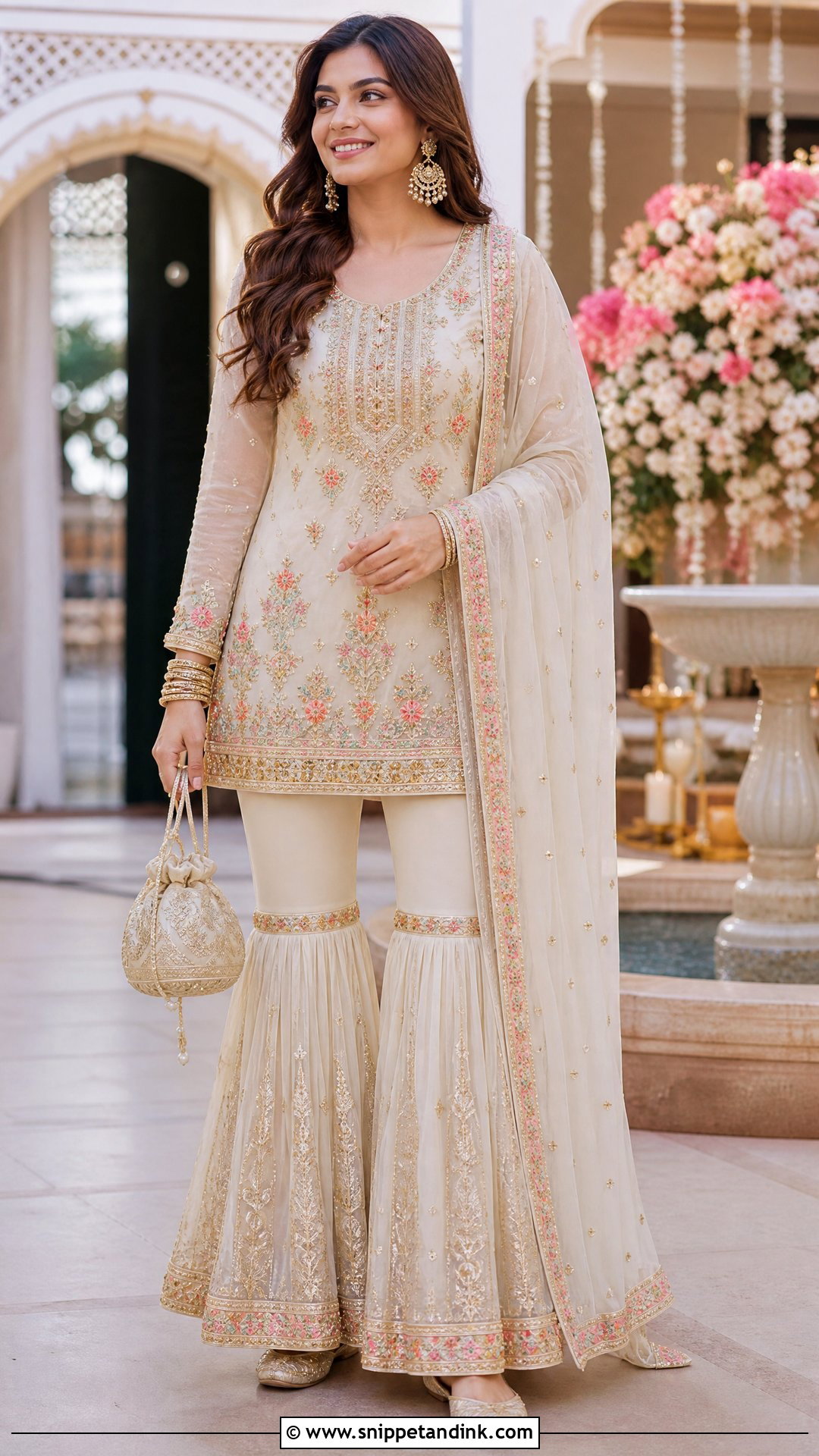
Ghararas are fitted to the knee and then flare out in panels, and that knee joint is the part to check. The seam where the flare starts should sit right on or just below the knee and allow a deep bend; if it’s too tight, every dance step will pull. Brocade, silk blend and georgette give the flare structure. Pair with a short embroidered kurti and a light dupatta over one shoulder. Ivory with colorful embroidery or emerald with gold both look traditional. A passa or jhumkas suit the look, and embroidered juttis peek out nicely below the hem.
15. Ruffle Saree for Sangeet
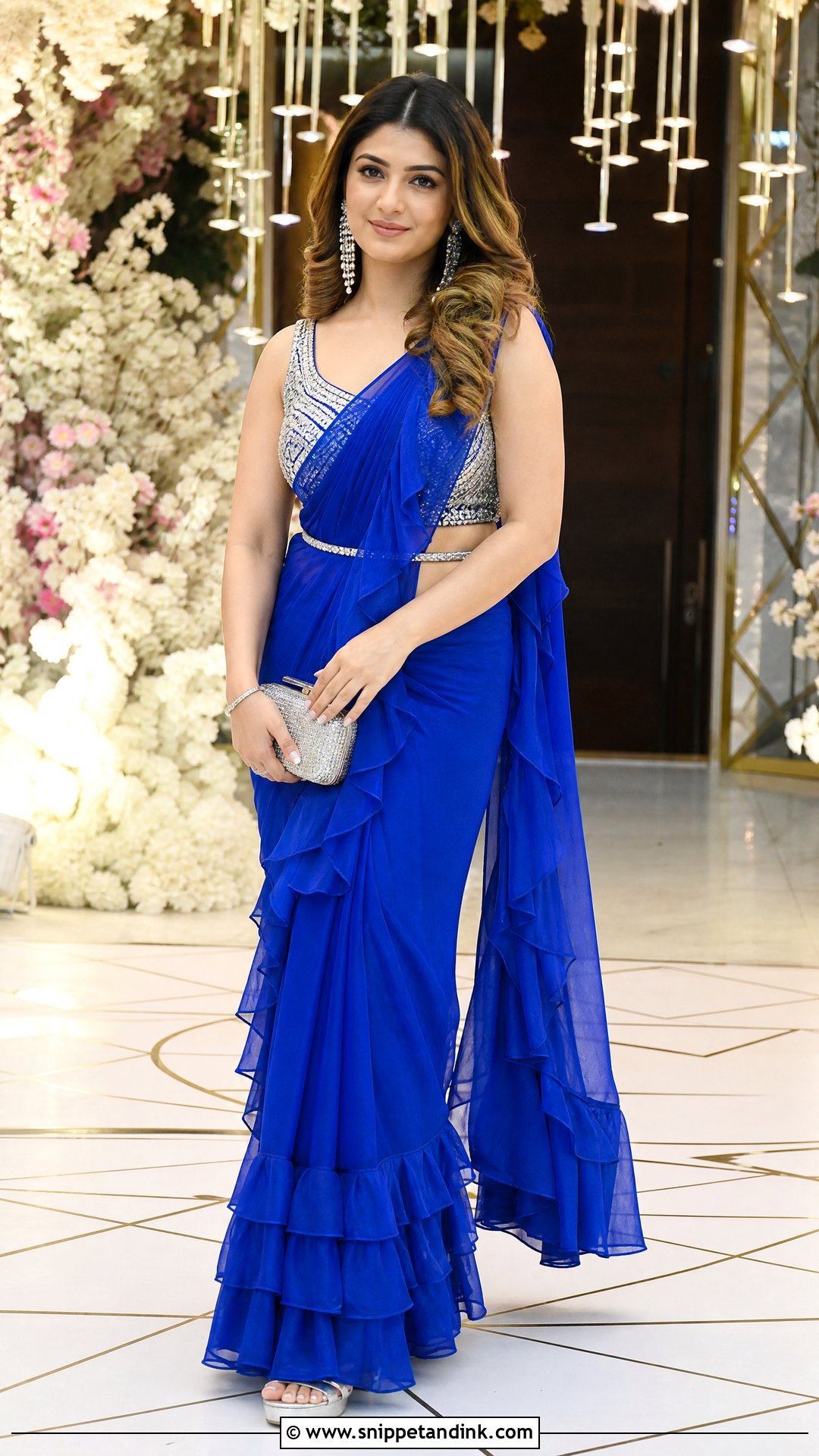
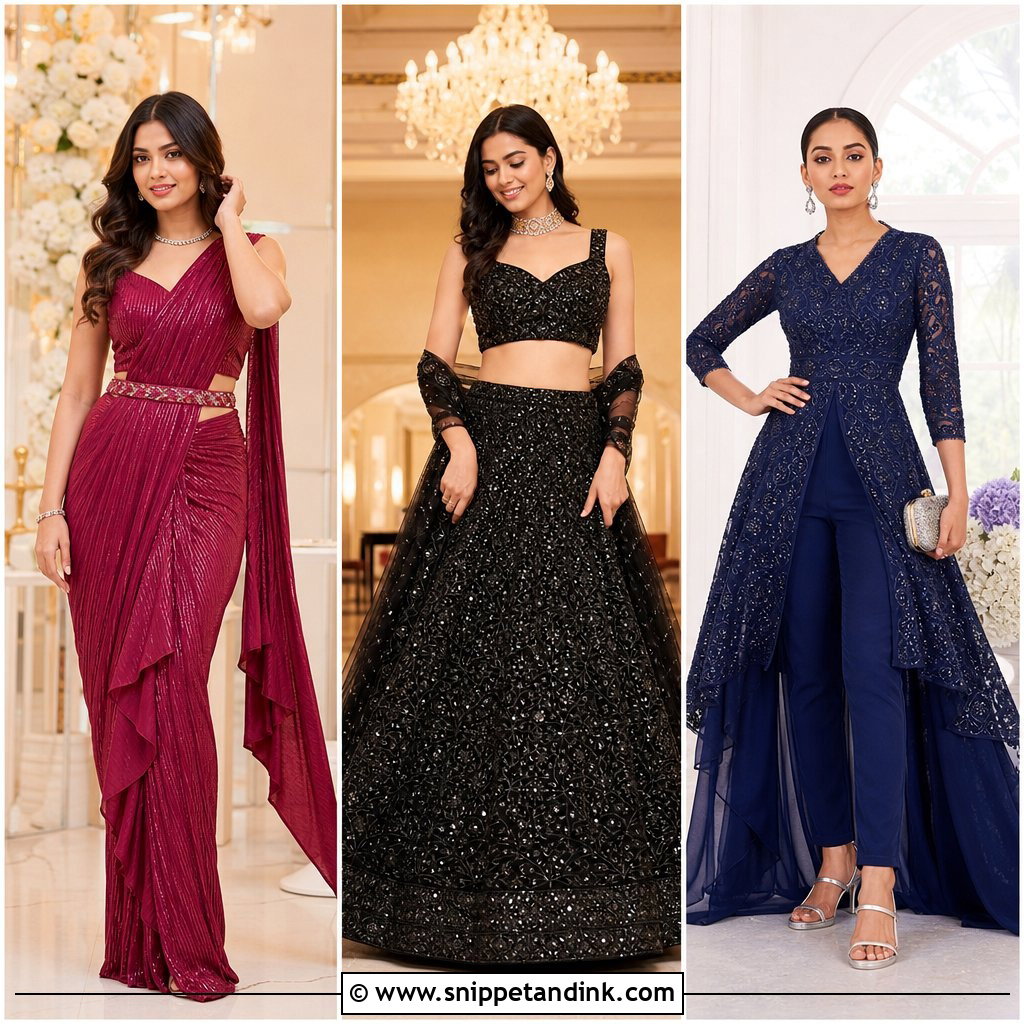
Ruffle sarees feel playful and look great in motion. Choose a pre-stitched or easy-drape version with ruffled edges in chiffon or georgette, and keep the color solid; the ruffles provide enough detail. Cobalt, raspberry and lavender suit metallic accessories. A slim belt holds the drape and defines the waist, which is especially useful once you start dancing. Ruffled pallus get bulky over the shoulder, so I pleat them neatly and pin near the blouse before any group photo. Sleek hair keeps the outfit from feeling busy.
16. Indo-Western Gown for Sangeet
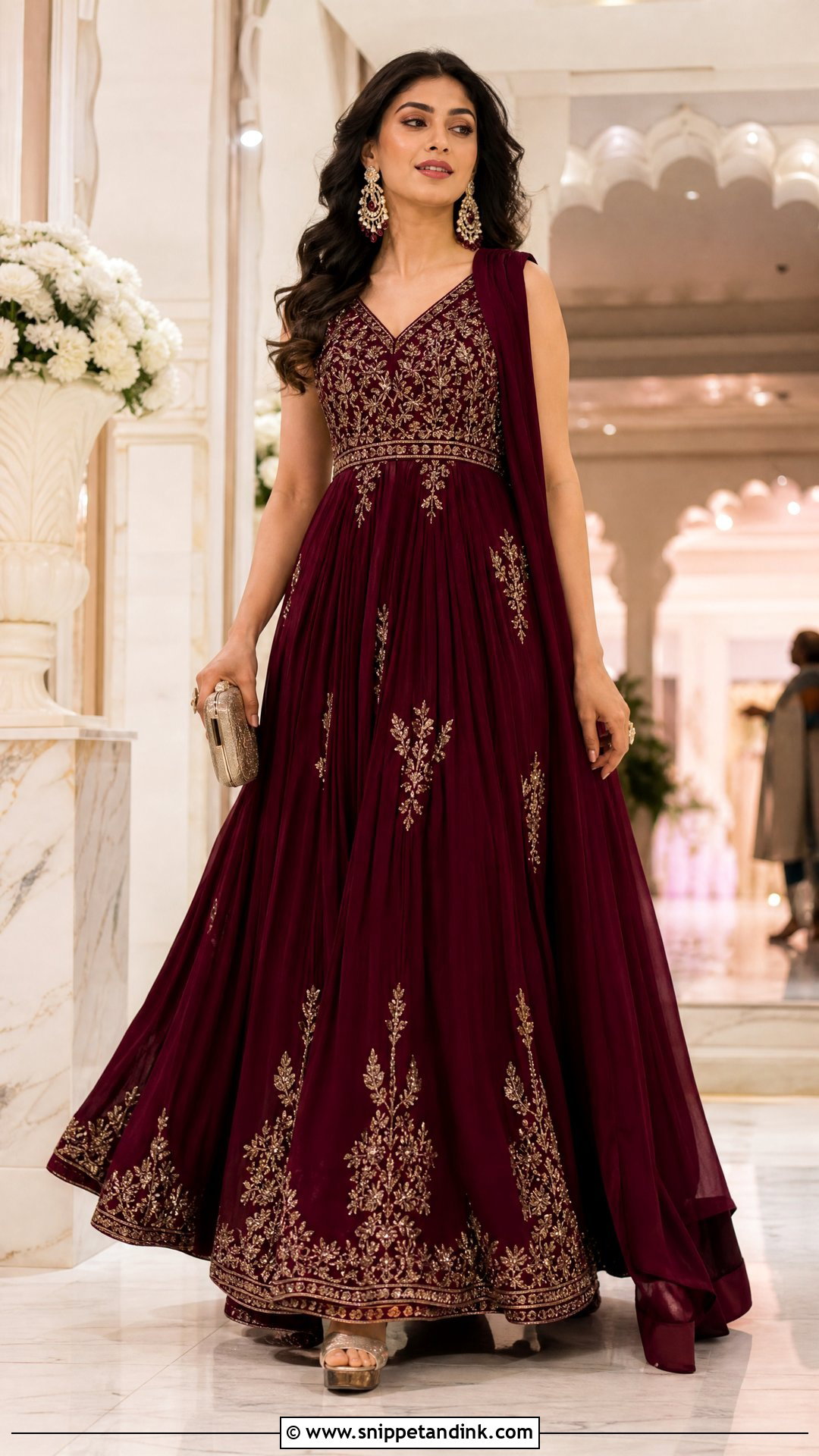
Indo-Western gowns are a single piece, which makes them simple to wear, but train length is the trap. Sangeet guests move constantly between performances, dinner tables and family photos, and a long train gets stepped on and dirty within the hour. Look for a floor-length gown with zari, mirror work or a draped panel, a defined waist and no train at all. Navy or wine suits evening; coral is brighter. Test the zip and armholes by lifting your arms. A removable dupatta lets you add tradition only when you want it.
17. Banarasi Skirt and Silk Blouse for Sangeet
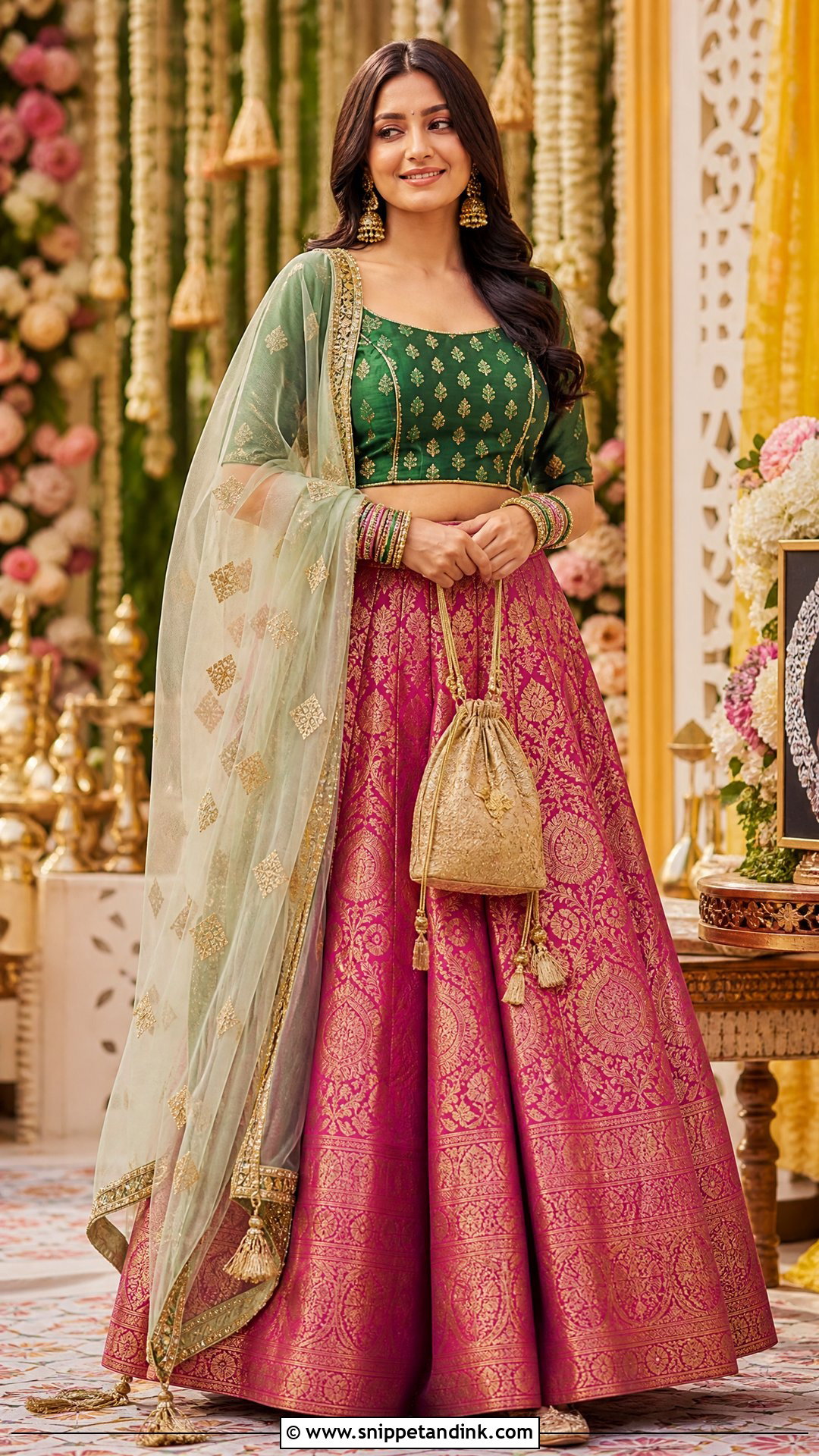
A Banarasi skirt shows off a woven textile in a way that’s easier to dance in than a full Banarasi saree. Pair it with a solid raw-silk blouse and a light organza dupatta so the weave is the focus. Magenta or royal blue with antique gold jewelry is a classic pairing. Woven Banarasi is heavier and stiffer than georgette, so choose a controlled flare and a breathable lining. I’d also ask the tailor for a wider waistband with a hook and an extra button; a heavy skirt pulls a narrow waistband down while you move. Cushioned juttis suit it best.
18. Draped Skirt and Blouse for Sangeet
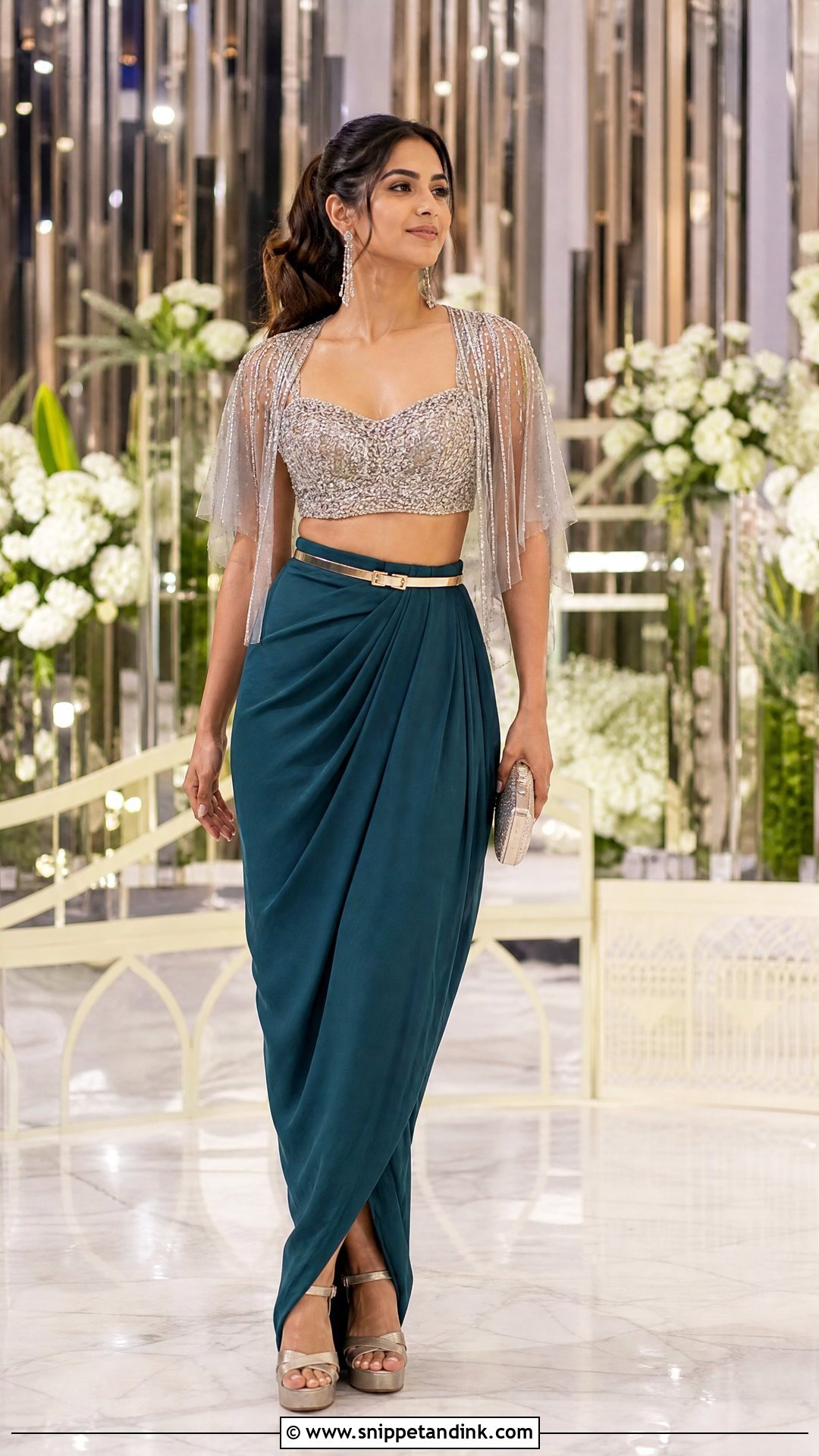
Draped skirts give the look of a saree with none of the pleating. Stretch crepe, satin or georgette moves well, paired with an embellished crop blouse and an optional sheer cape. Monochrome looks long; a contrasting blouse feels livelier. Check the walking room at the hem, as some draped skirts are narrow at the ankle and restrict your stride on the dance floor. If the drape gathers at one hip, balance it with jewelry or a cape on the other side. Platform sandals and modern drop earrings keep the look current.
19. Kurta and Cigarette Pants for Sangeet
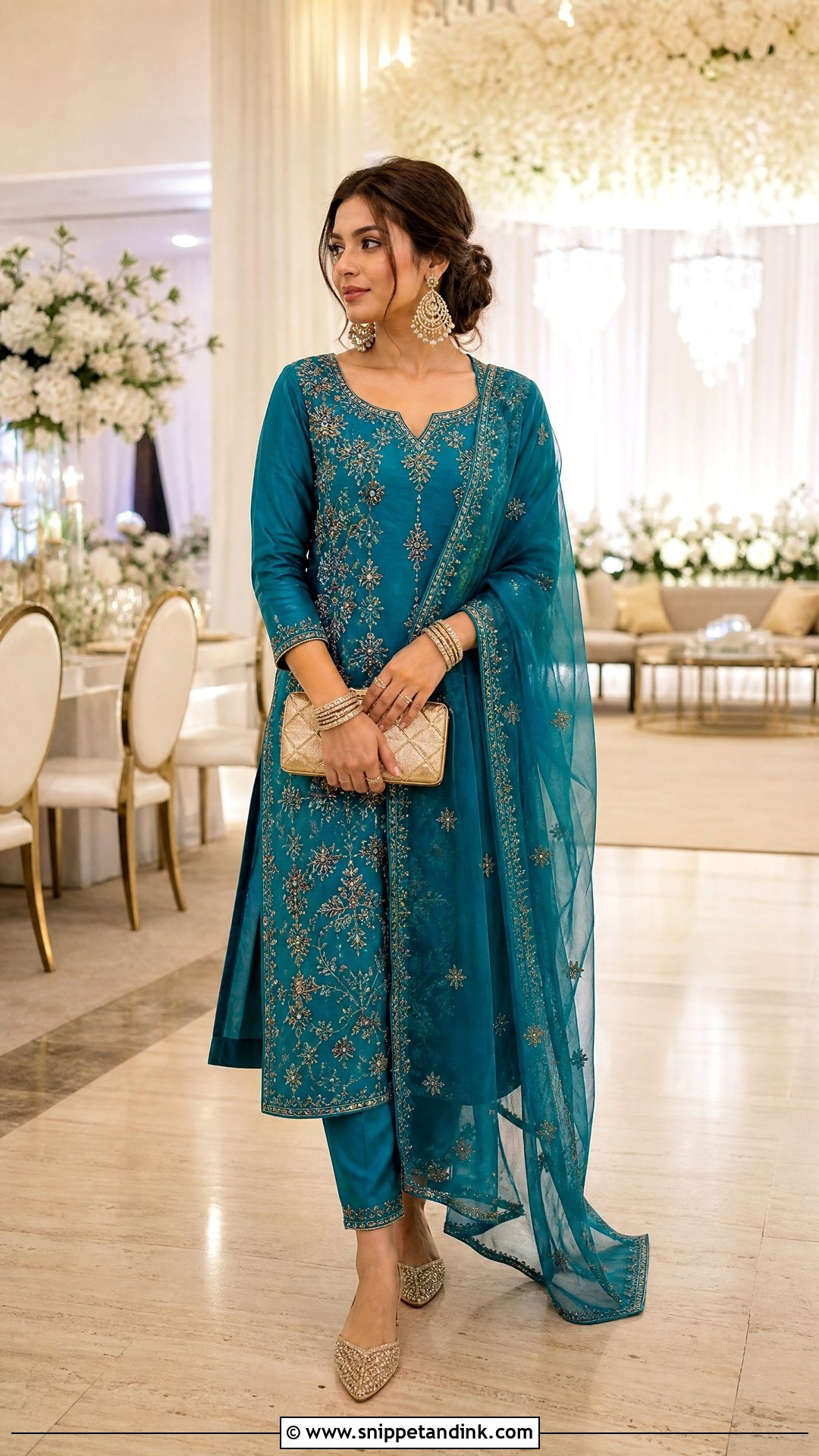
Not every sangeet look needs flare. A heavily embroidered straight kurta with cigarette pants is easy to wear for hours, and I suggest it to guests who don’t plan to perform. Side slits, a defined neckline and detailed cuffs keep it festive. Deep turquoise or ruby suits evening. Shorter guests can match pants and shoes for a longer line. The slits should be deep enough to sit cross-legged if the seating is low. Drape the dupatta over both arms when you’re not dancing, and pin it at one shoulder when you are.
20. Metallic Co-Ord Set for Sangeet
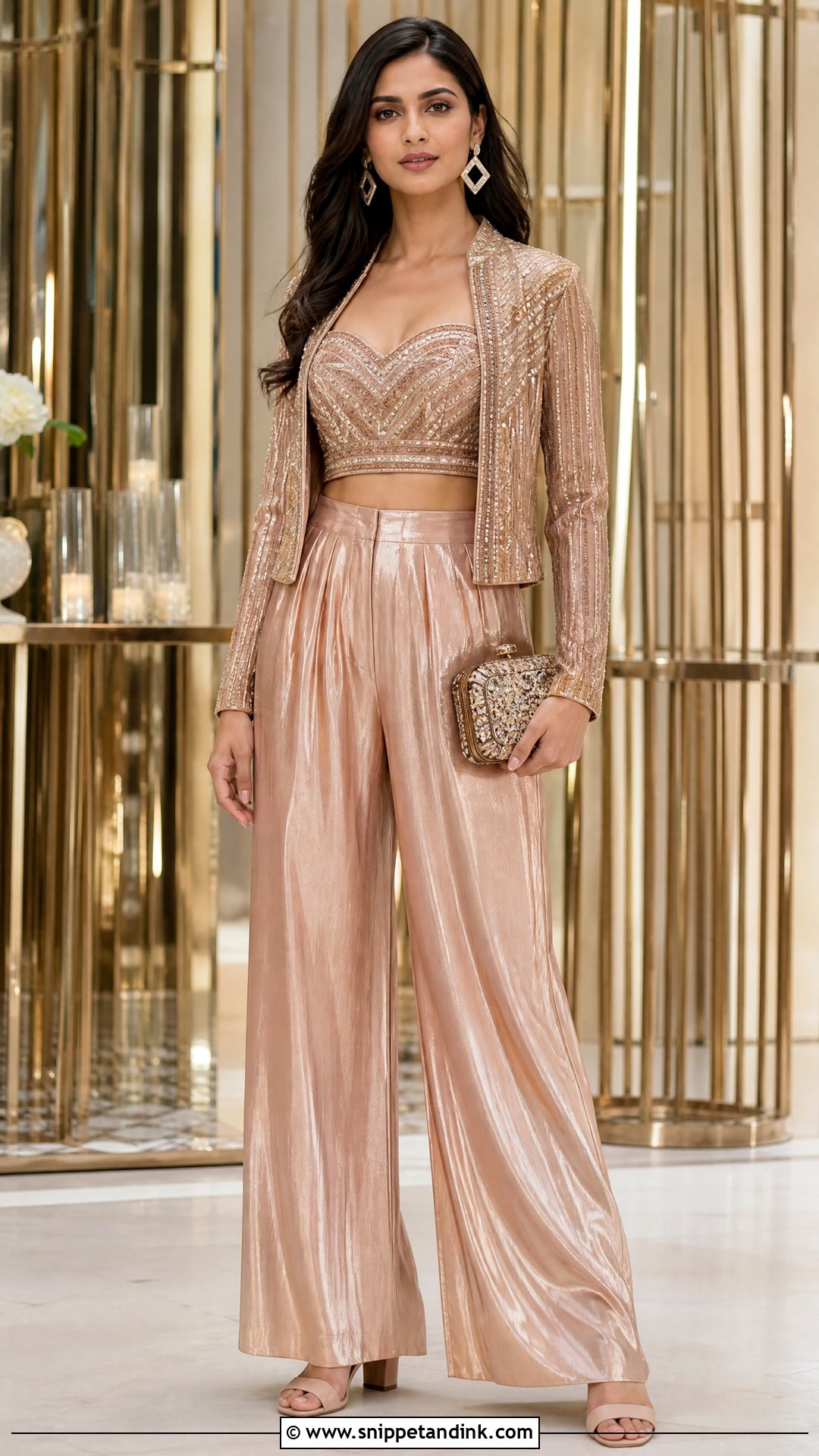
Metallic co-ords suit modern or cocktail-style sangeets where the invitation leans Indo-Western. Wide-leg pants or a draped skirt with a fitted blouse and cropped jacket make a full look. Champagne, bronze and rose gold reflect stage lights, so keep the shape clean and pick a single statement, earrings or a jeweled clutch, not both. Fabric matters here: stiff metallics crackle and crease at the elbows and knees, while soft lamé or metallic-thread fabrics bend with you. Neutral block heels stretch the leg line under long pants.
Rehearse the Choreography in the Real Outfit
Most dance practices happen in jeans and sneakers, and then the outfit appears on the night. I always ask performers to do at least one full run-through in the complete look, shoes and dupatta included. It shows problems no fitting room will.
- Spin twice in each direction. If the hem wraps your ankle or you step on it, shorten it or pick lower-flare fabric.
- Do every arm movement in the routine. Watch for blouse riding up, a strap slipping or the dupatta falling.
- Squat, kneel or sit on the floor if the choreography includes it. Seams at the hip and knee show their limits here.
- Dance in the shoes for a full song. New juttis and heels need breaking in, and blisters halfway through the night are common.
Sweat, Heat and Silk Under the Lights
Stage lights and a crowded floor get warm, and silk and satin blouses show sweat marks quickly, especially in lighter colors. I ask tailors to stitch in thin underarm shields on blouses for dancers. Darker shades and prints hide damp patches better than pastels. Carry blotting papers and a small fan in the potli, and let the outfit air on a hanger overnight before folding it, so moisture doesn’t set into the fabric or tarnish the zari.
Stage Lights, Long Nights and an Outfit That Keeps Up
The sangeet outfit that wins is the one you forget you’re wearing once the music starts. Lehengas, ghararas, kurta sets and metallic separates can all get you there. Think about the venue, the weather, the dress code and your part in the performances, then choose light fabric, secure draping, a smooth lining and shoes you can dance in. Let color and sparkle show your personality without upstaging the couple, and respect any palette the family has asked for. Then put it on at home and dance, sit and lift your arms in it. Anything that bothers you in your living room will bother you more at midnight.
You'll Like These Ideas:


Leave a Reply