
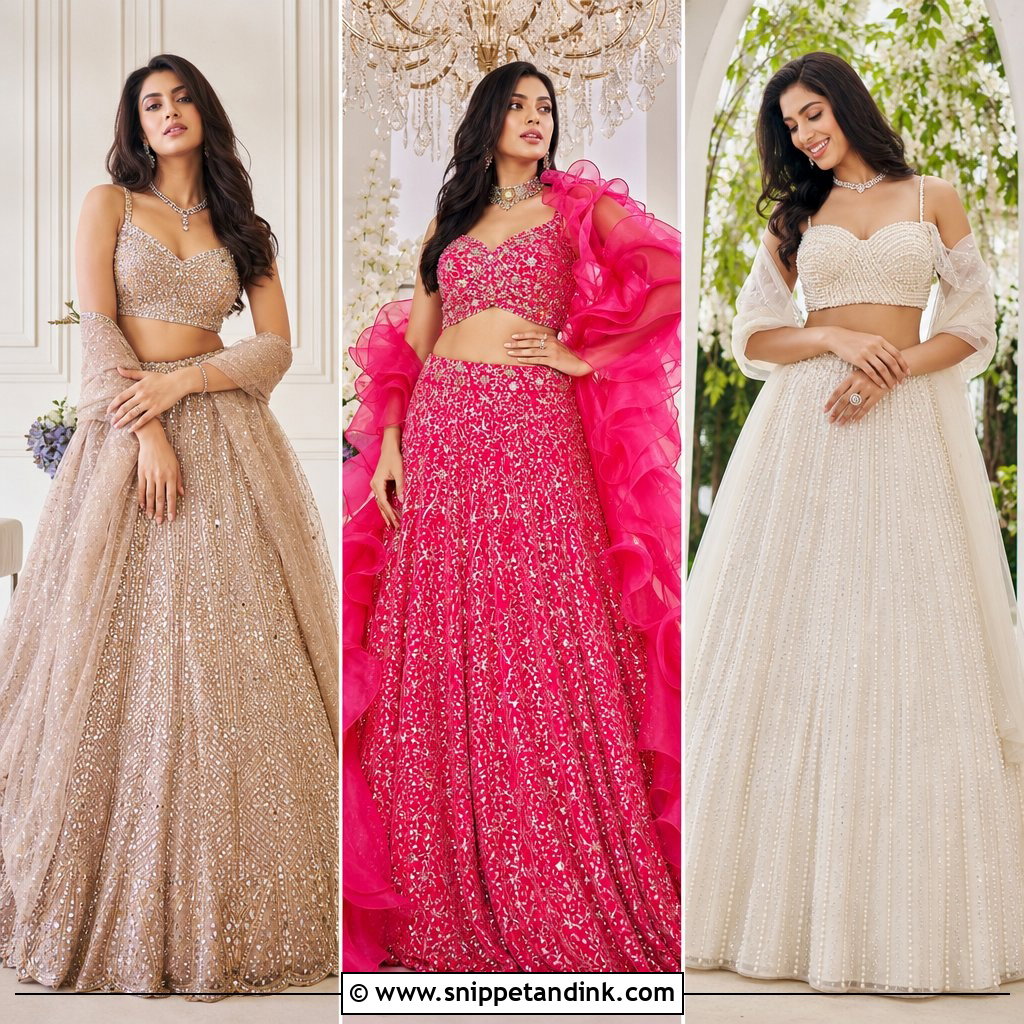
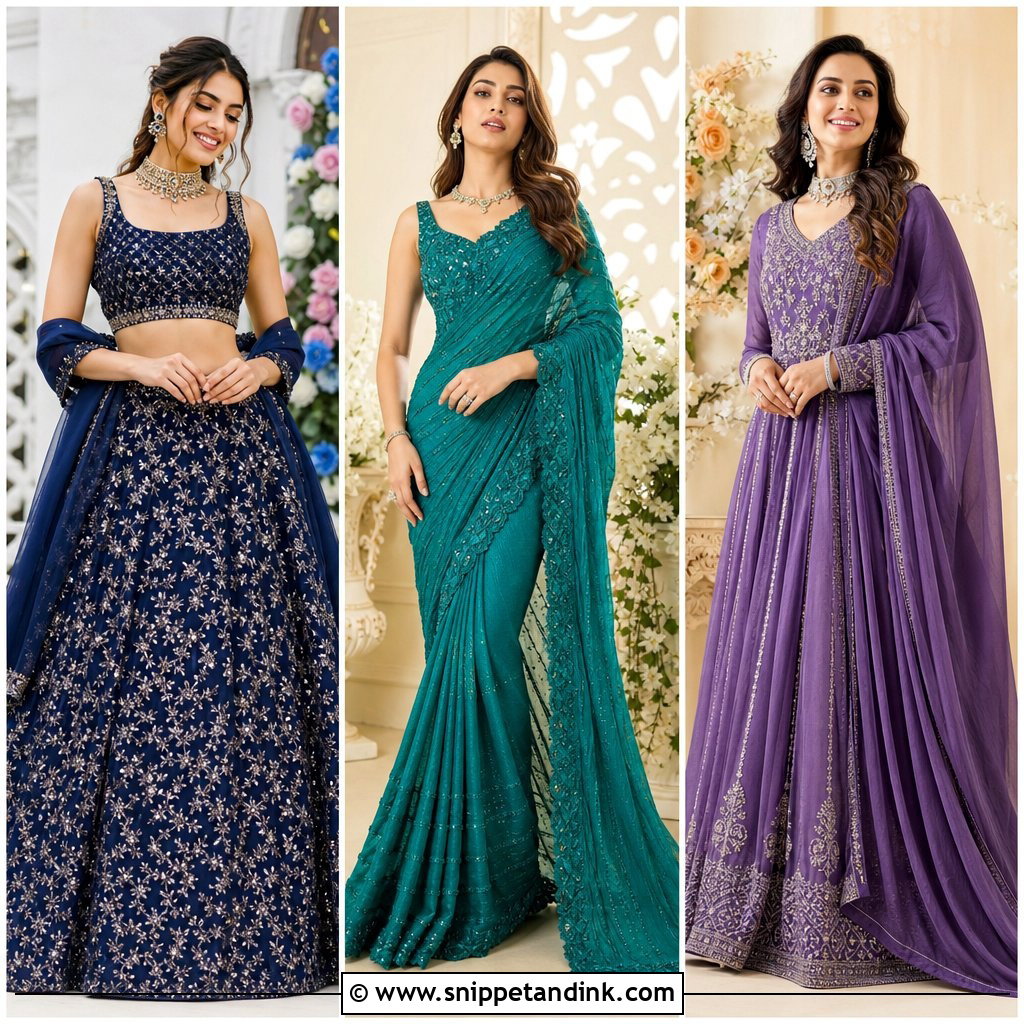
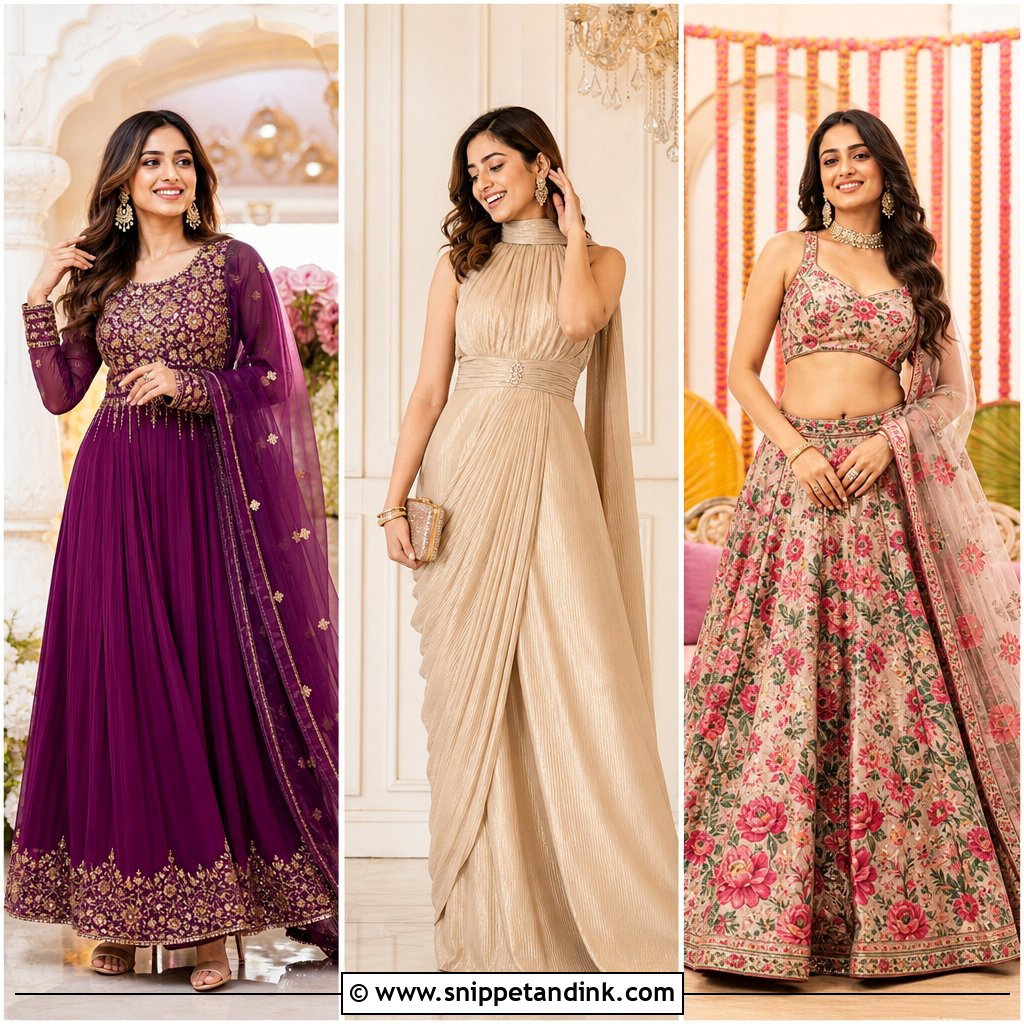
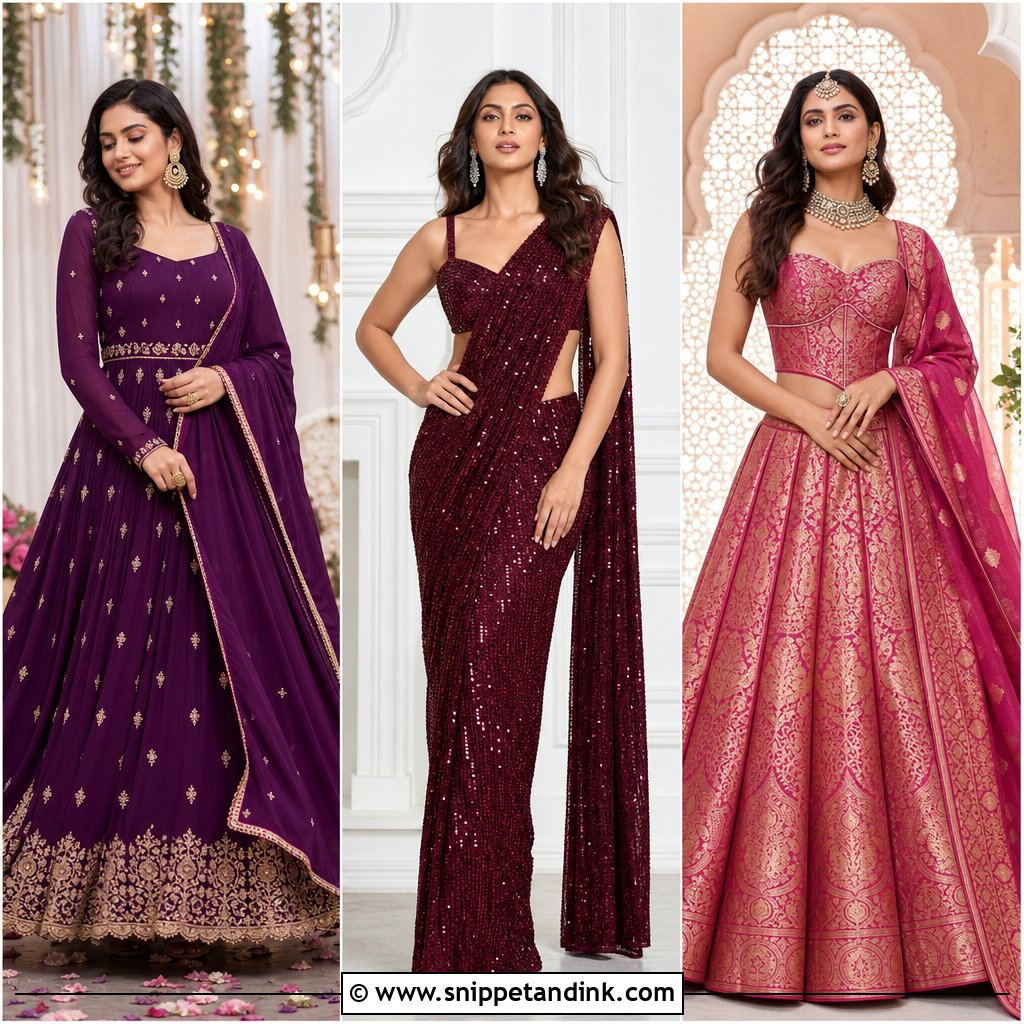
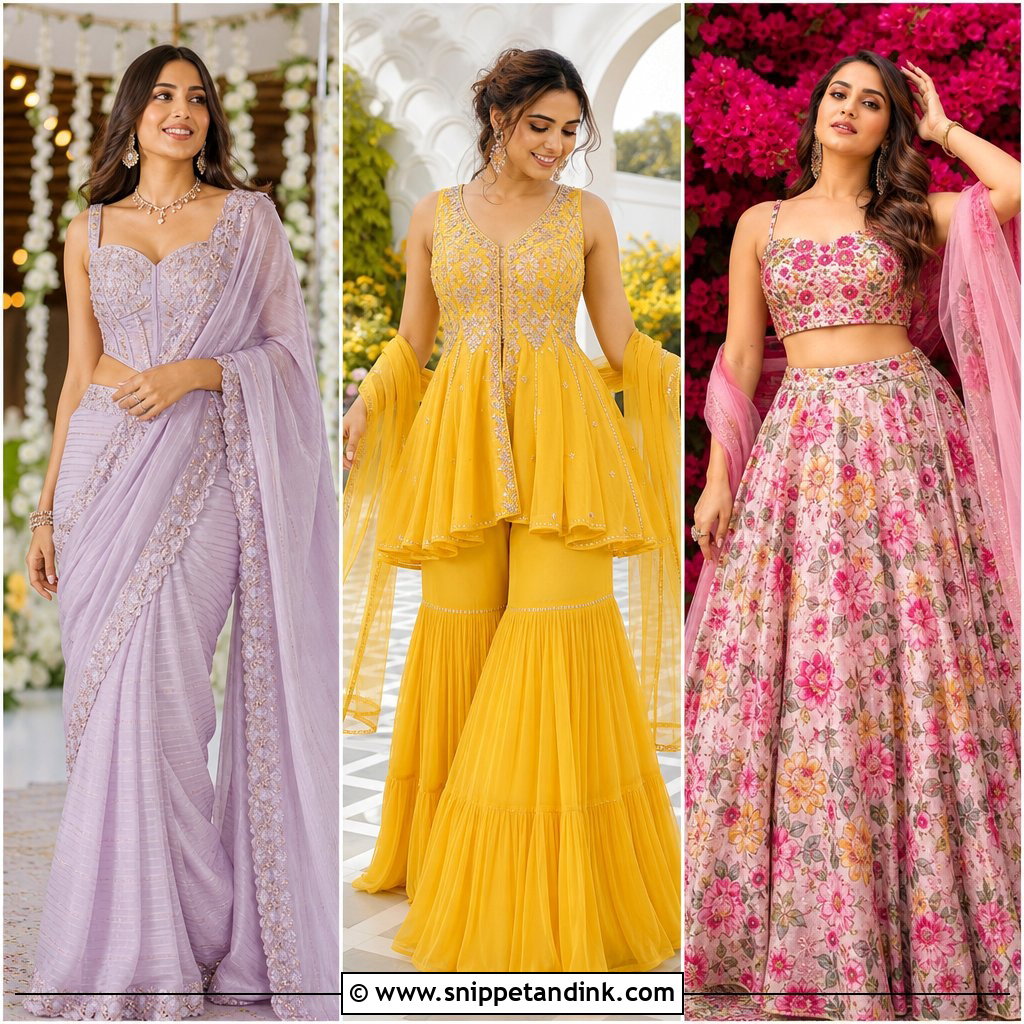
Your sangeet outfit has a different job from your wedding outfit. It still has to look bridal, but you’ll be dancing in it, sitting through other people’s performances and hugging half the room, so it can’t weigh what a ceremony lehenga does. Brides now have a wide field to pick from: sequins, mirror work, jewel tones, pre-draped sarees, shararas, sculpted gowns and modern fusion sets. Metallic lehengas, ruffled sarees and dance-friendly shararas have been especially popular with my brides lately. What should decide it is your venue, your choreography and the mood you want for the night. Below are the looks I’d put on a rail for a bride, each with what I’d check before saying yes.
How Much Weight You Can Actually Dance In
Weight is the factor brides underestimate most. Heavily embroidered bridal lehengas can weigh several kilos once you add the can-can, lining and dupatta, and nearly all of it hangs from your waistband. That’s fine for a ceremony where you’re mostly seated. It’s tiring for two or three songs of choreography.
At a shop, I ask brides to hold the skirt up by its waistband in one hand for a minute. If your arm is tired, your waist will be too by the end of the night. Then I check a few construction details:
- Can-can: one soft layer, or none for georgette and organza skirts.
- Waistband: a broad band with a drawstring or hook-and-eye spreads weight better than a narrow one.
- Embroidery placement: heavy work at the hem swings and pulls; heavy work at the waist sits still and is easier to carry.
- Dupatta: a light net or organza one rather than a second heavily worked piece.
If your heart is set on a heavier piece, wear it for the entrance and family photos, then switch to something lighter for your performance.
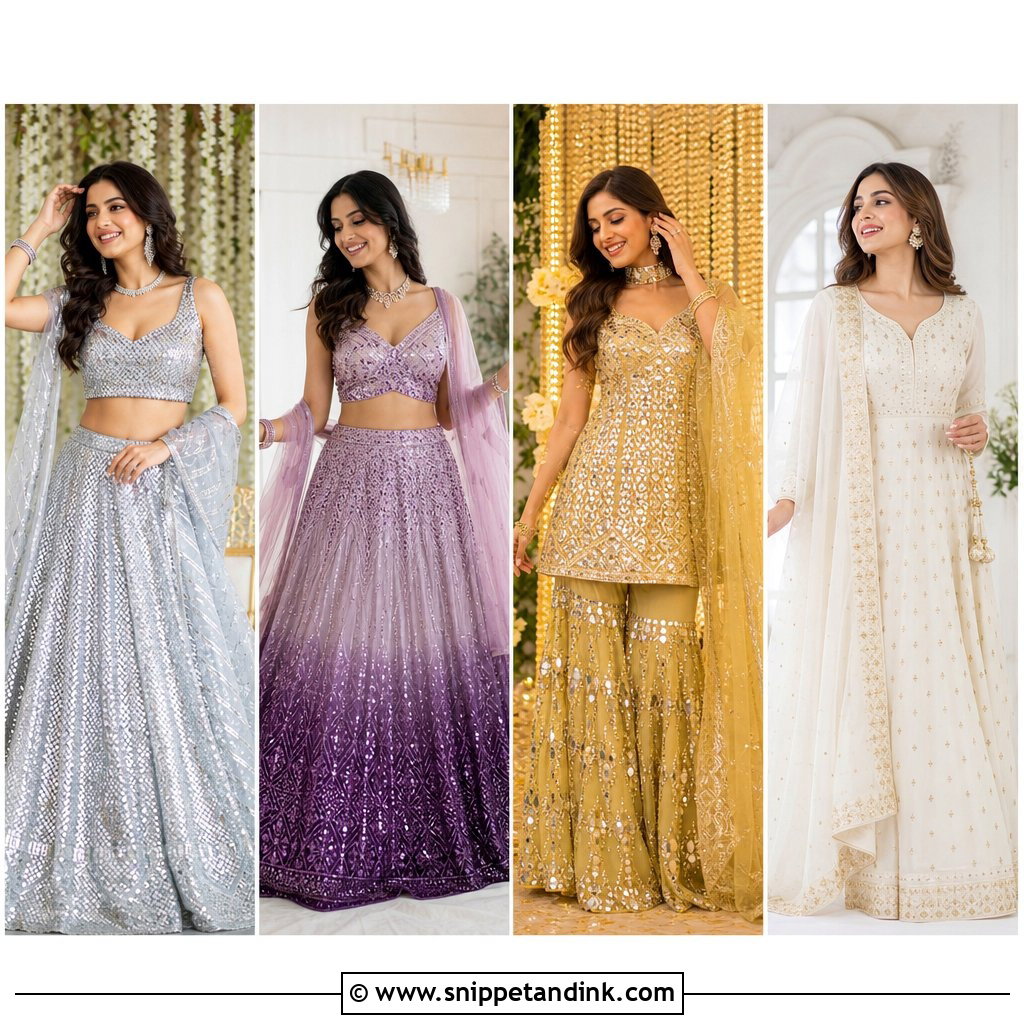
1. Silver Sequin Sangeet Lehenga
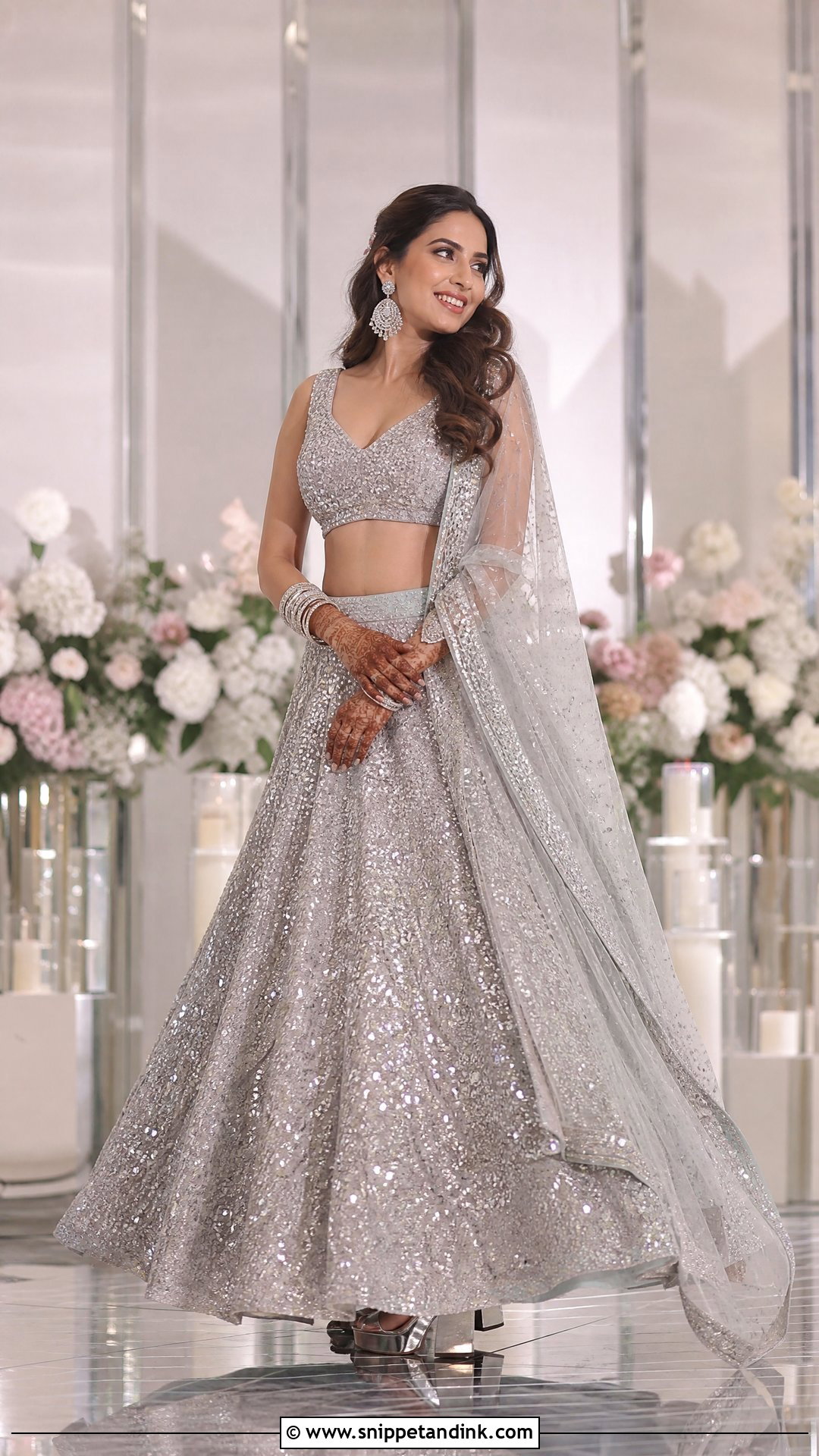
Silver sequins are made for a stage. Under spotlights they throw light back at the camera in a way gold rarely does. I’d ask for balanced sequin placement on a net or georgette skirt; dense all-over sequins add surprising weight and stiffen the skirt so it no longer swings. Your blouse needs secure straps or a supportive sleeve if you’re dancing. Pin a soft grey dupatta at one shoulder to free your arms. Because the outfit already sparkles, I’d keep hair sleek and skin luminous rather than adding glitter makeup.
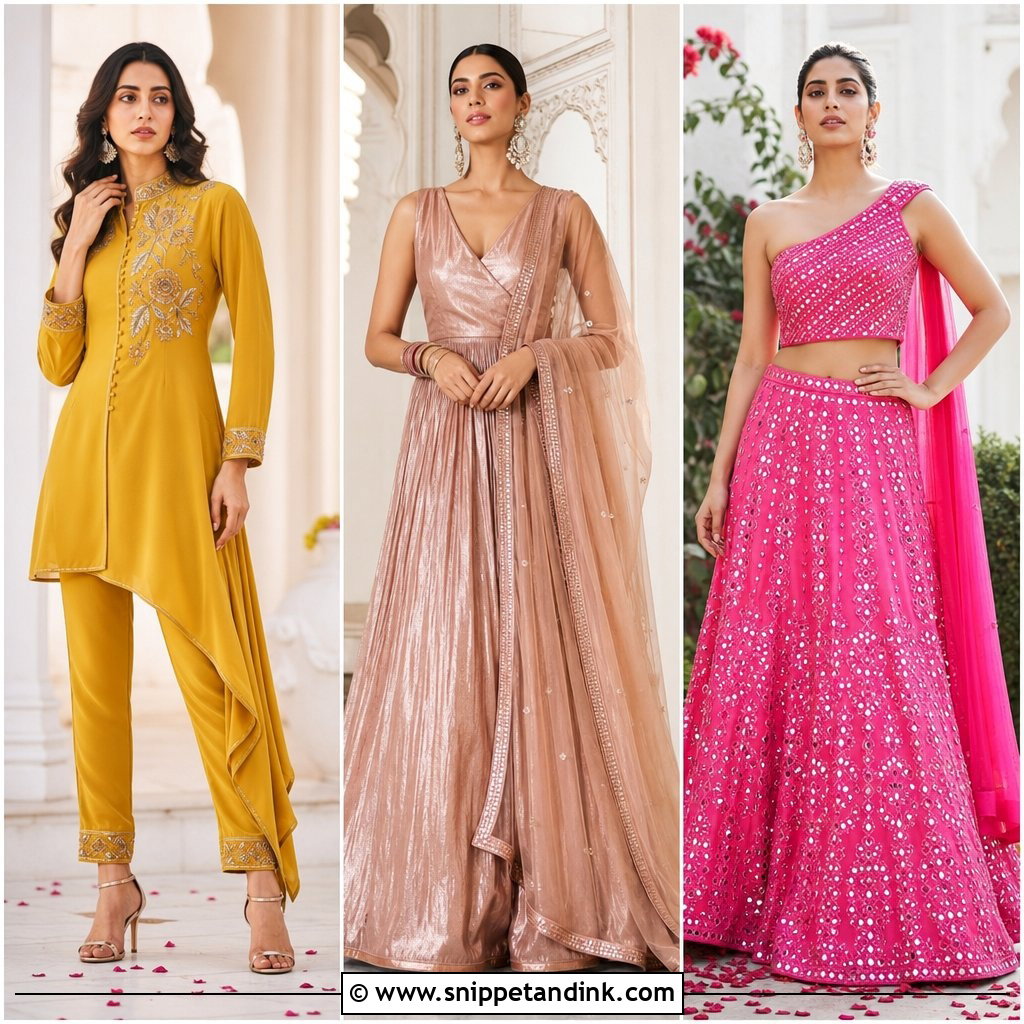
2. Mirror Work Sangeet Lehenga
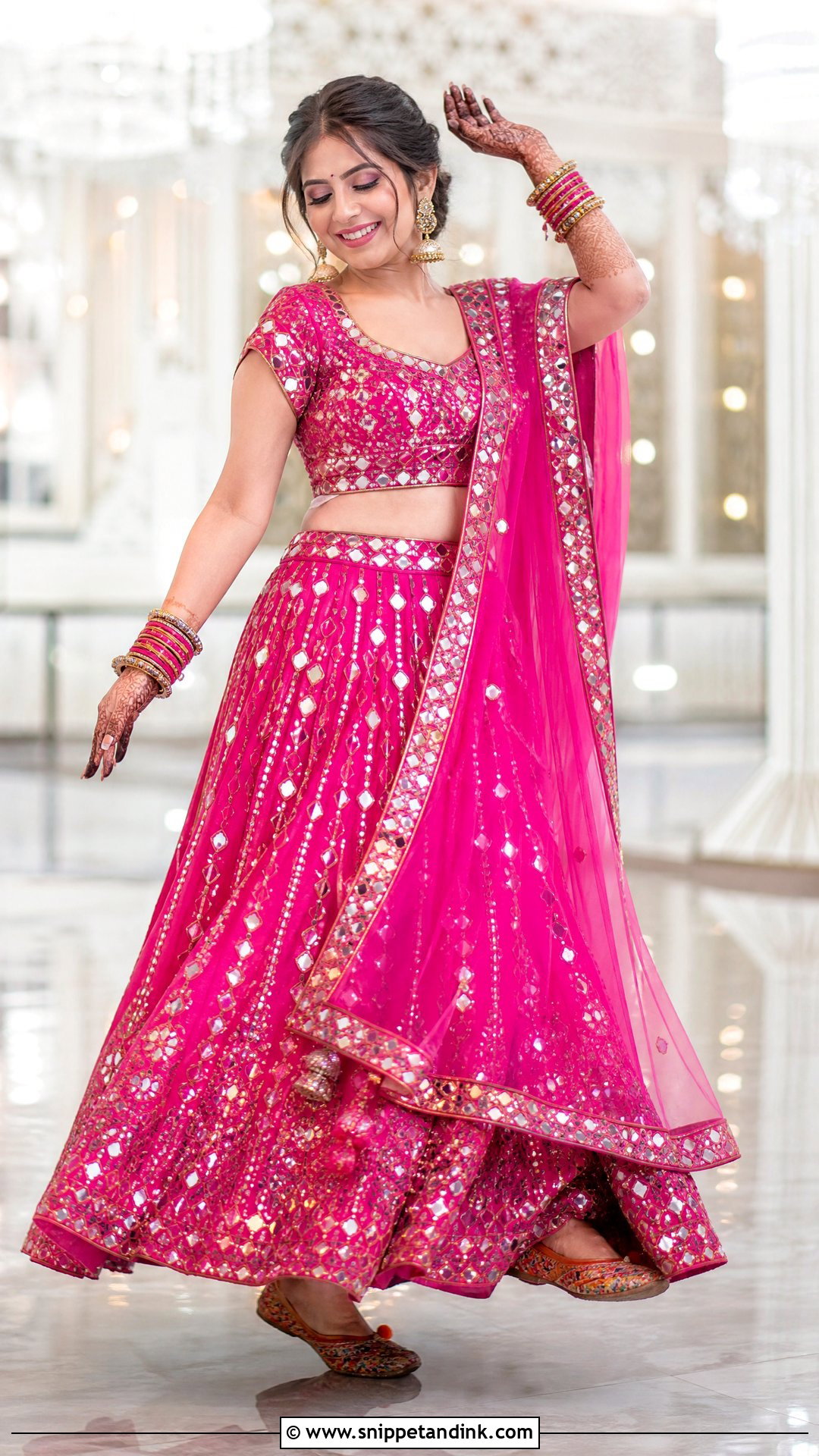
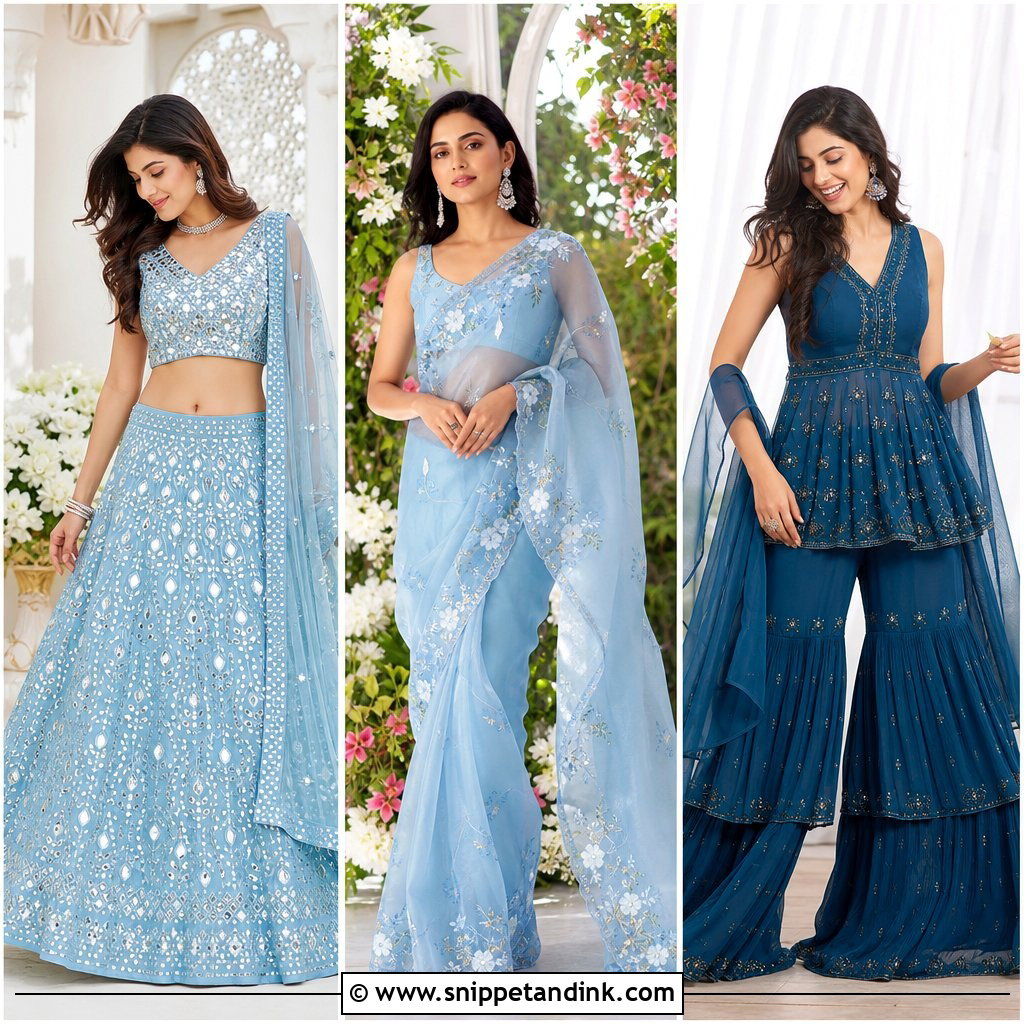
Mirror work is traditional craft that looks made for a dance floor, since every turn catches the light. A mirror work Sangeet lehenga in fuchsia or cobalt makes the mirrors pop more than a pale base does. Mirrors are stitched on individually and add real weight, so I always lift the skirt on the hanger before a bride tries it; if it feels heavy in one hand, it’ll feel twice that by the third song. Wear the dupatta diagonally and secure it at the waist. With this much going on, keep hair smooth and accessories few.
3. Ombre Sangeet Lehenga
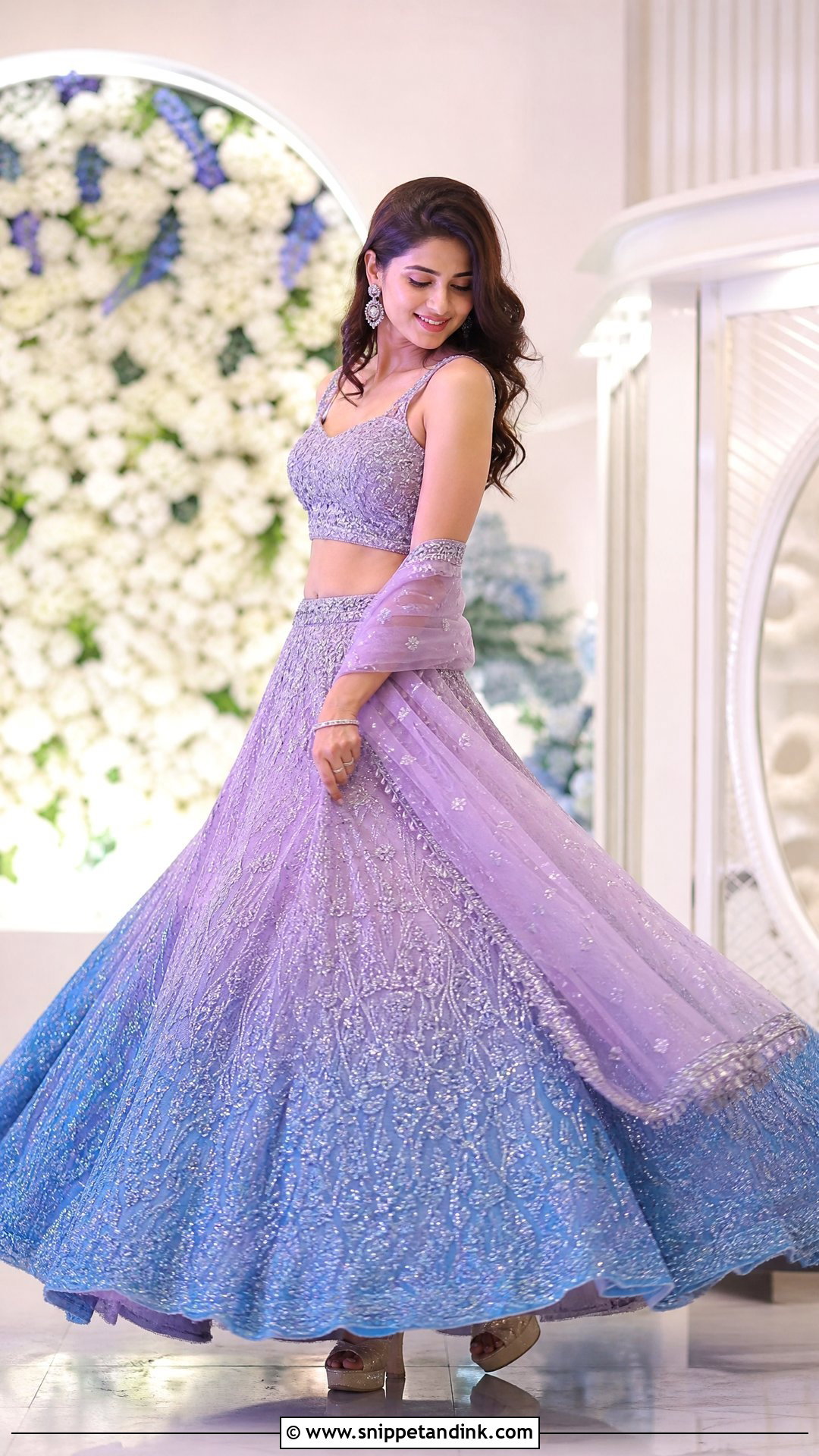
Ombre is at its best in motion. As the skirt turns, the shades shift, so you get a different mix of colour in every frame. Lavender into blue or blush into coral both read well on a bride. Ask for generous flare but very little can-can; a stiff petticoat under ombre georgette flattens the gradient and adds heat. A blouse with light embellishment can tie both shades together. A sheer dupatta in the paler tone keeps the outfit airy, and soft waves suit the gentle palette.
4. Velvet Sangeet Lehenga
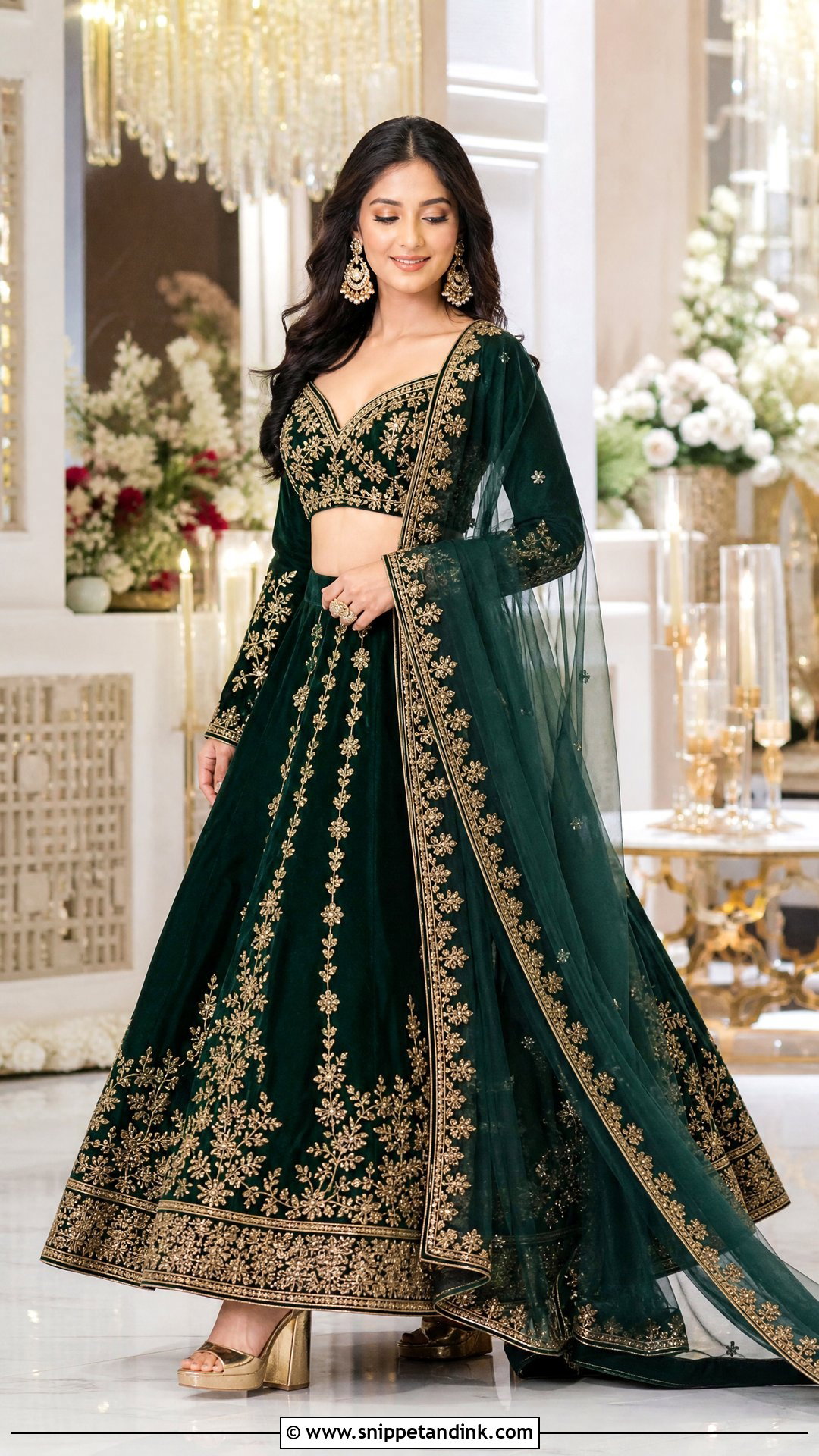
Winter sangeets are where velvet shines. Deep emerald or burgundy velvet gives a bride a regal presence in an evening venue. Velvet is heavy, though, and embroidery on velvet is heavier still, so I recommend placing zari or beadwork only where it shows: the hem, the waist and the blouse. A lighter net dupatta stops the outfit looking dense. Velvet absorbs light, so slightly luminous makeup balances it better than heavy glitter. This also reads clearly different from most wedding-day lehengas, which helps keep your photos varied.
5. Floral Organza Sangeet Lehenga
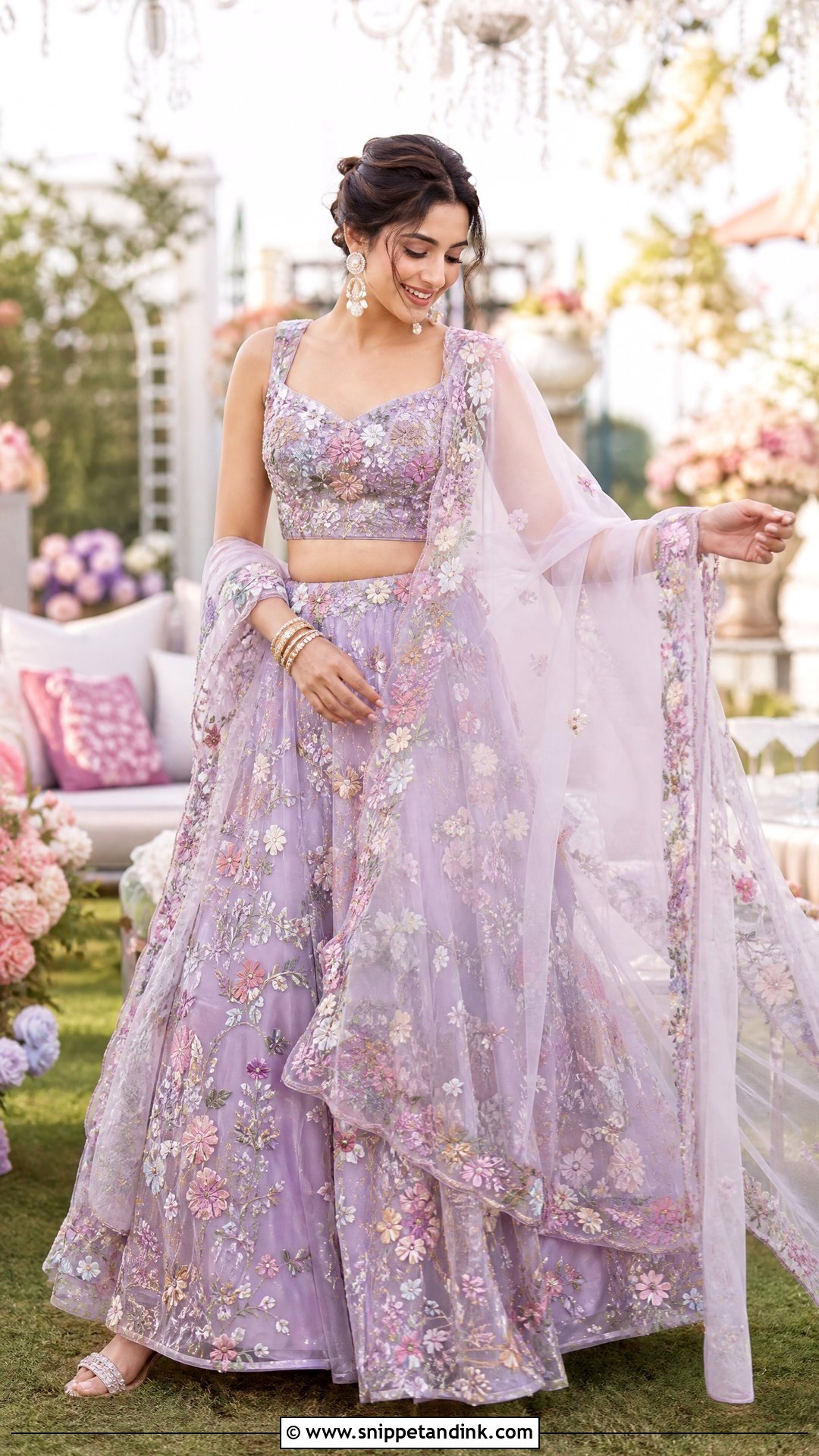
Flowers suit a daytime sangeet or a garden venue. A floral organza Sangeet lehenga stays light, and a structured blouse gives it definition beside the airy skirt. Coordinated florals are easier on the eye than a busy mix of motifs. Organza holds its own shape, so minimal can-can is needed, which also keeps you cooler during a long routine. Fresh flowers in your bun can echo the print, but pick sturdy blooms; delicate petals wilt in the heat of a crowded room within a couple of hours.
6. Banarasi Silk Sangeet Lehenga
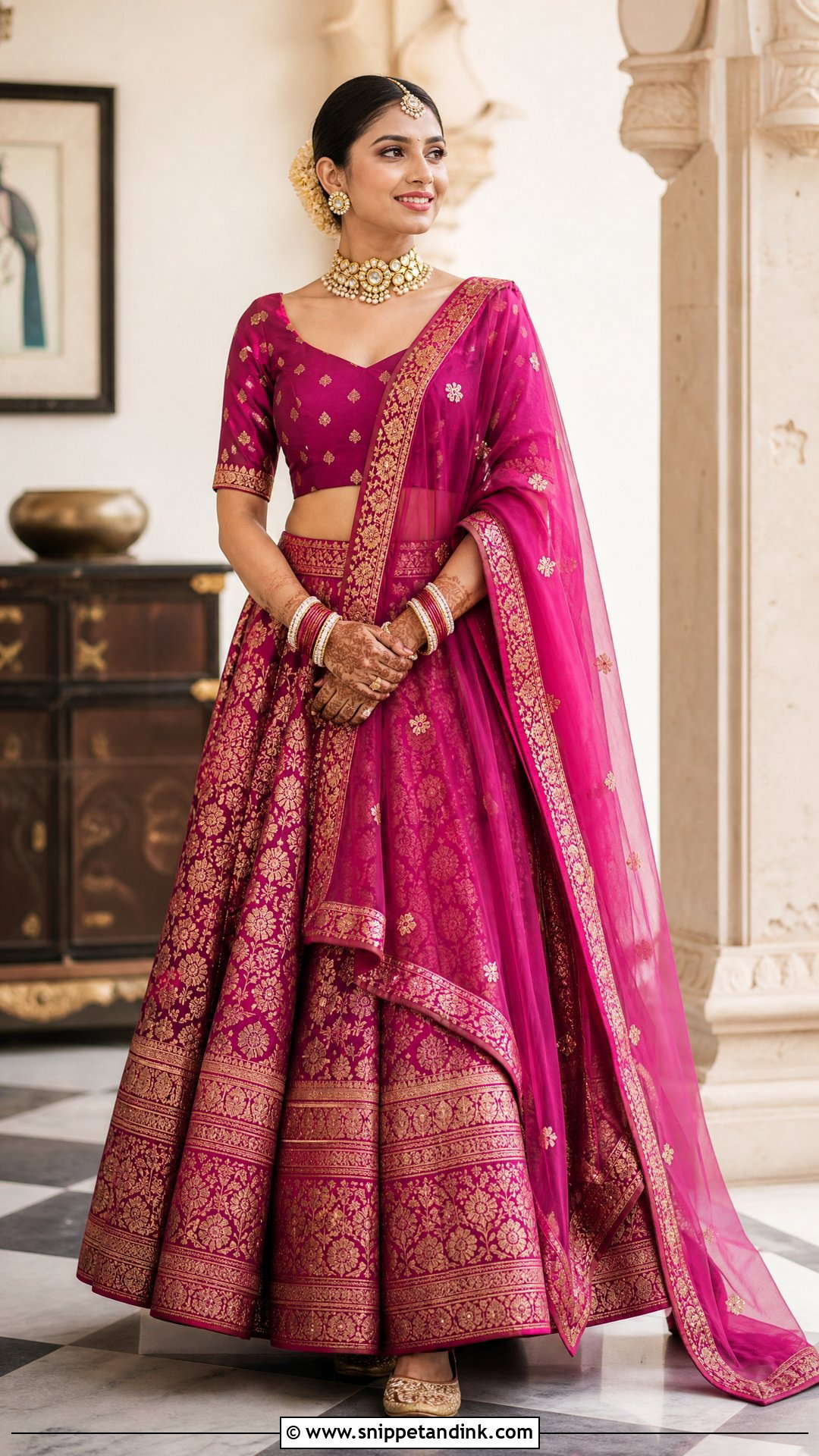
Woven Banarasi silk has a glow that embroidery can’t copy. Magenta or royal blue with woven motifs feels traditional and bridal. Silk is heavier than georgette, so I’d keep the flare moderate and pair it with a light organza dupatta instead of another heavy silk one. A contrasting raw silk blouse gives structure for dancing. One honest caution: pure silk shows sweat marks, so if you’ll be performing hard, ask about dress shields in the blouse. The upside is longevity; Banarasi pieces are among the most rewearable things a bride owns.
7. Fishtail Sangeet Lehenga
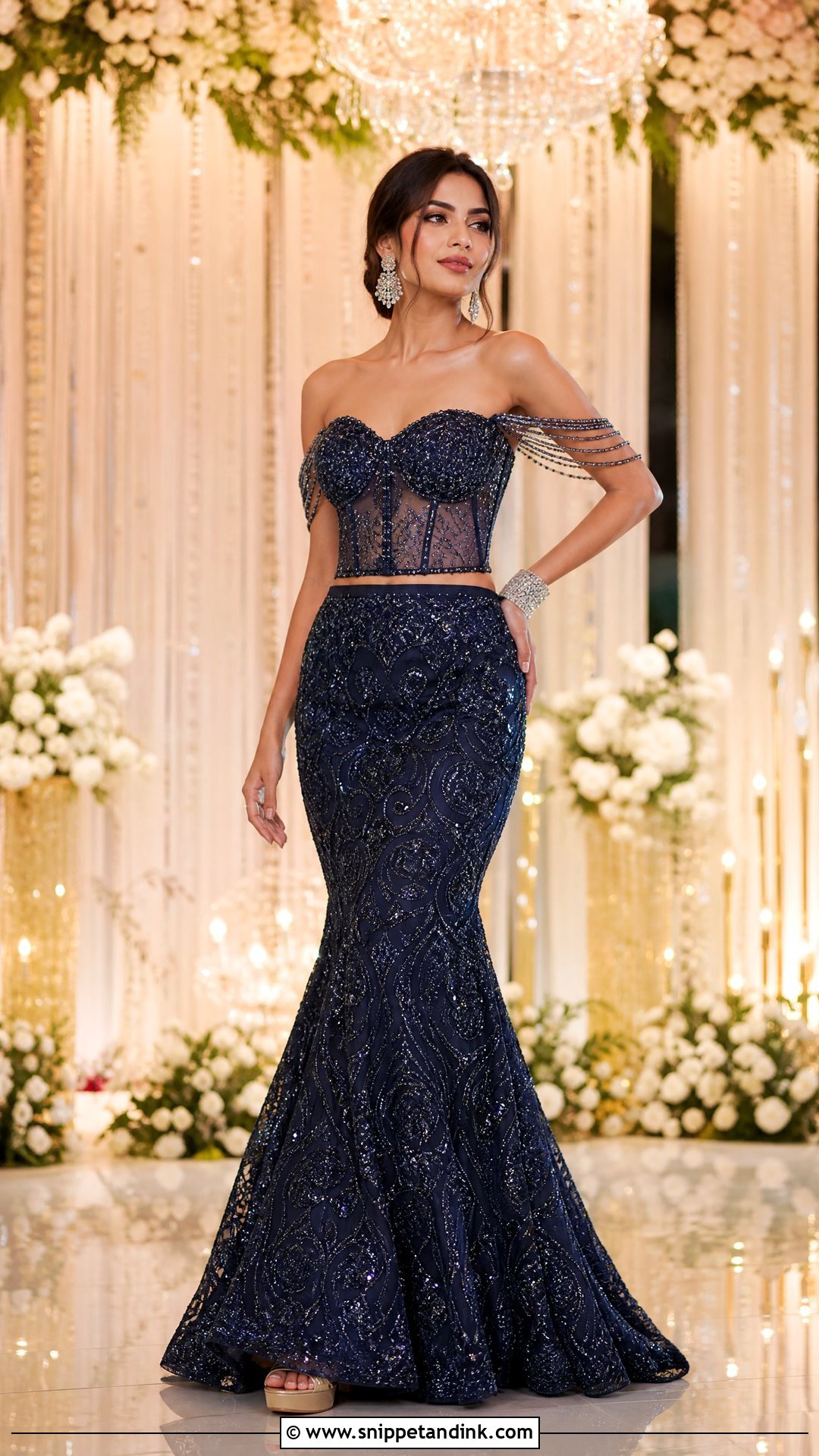
A fishtail lehenga makes an entrance unlike anything else, fitted through the hips and flaring below the knee. The trade-off is movement. Walking space at the knee and some stretch in the fabric are essential if you have choreography. I always ask brides to sit, turn and do their trickiest step in it before the final fitting. Pair it with a secure corset blouse and swap the long dupatta for a short shoulder drape. If your routine has deep bends or kneeling, I’d honestly suggest a different silhouette for the performance and saving the fishtail for your entrance.
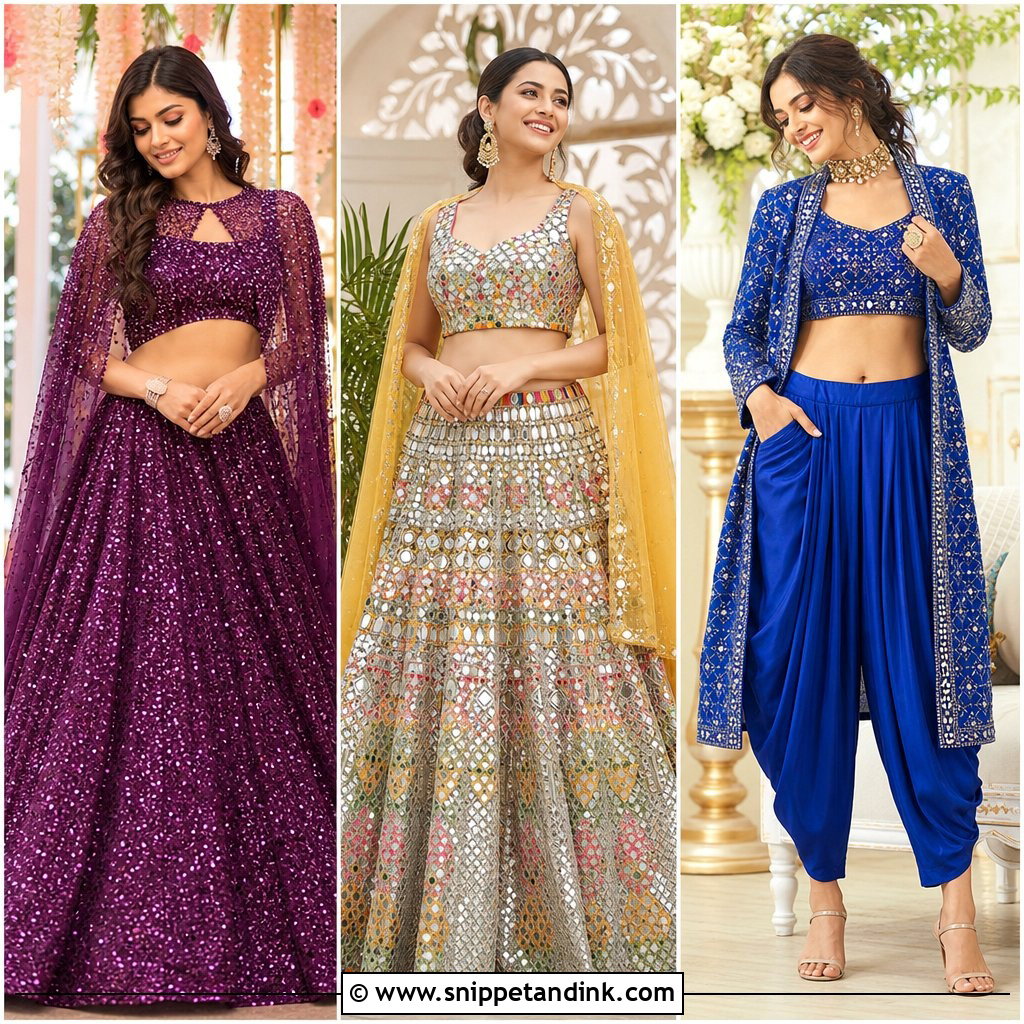
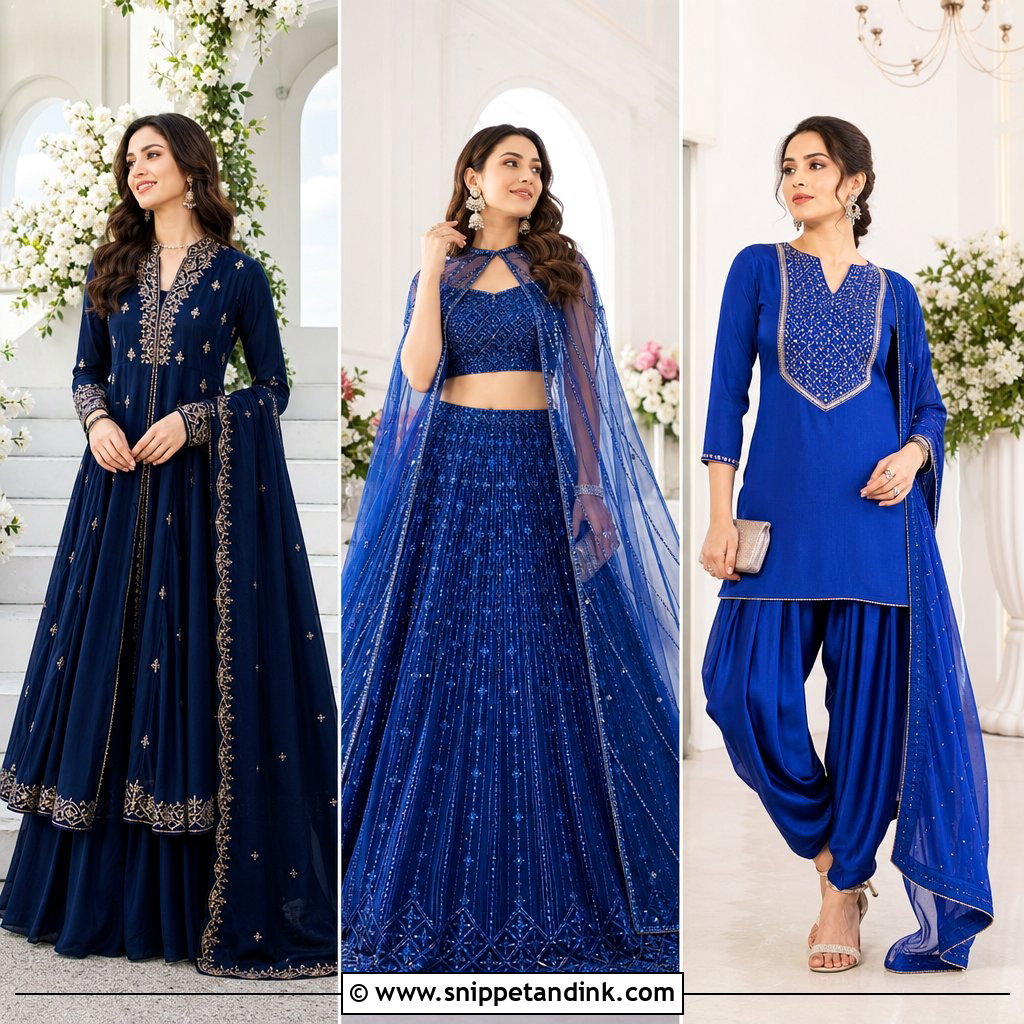
8. Cape Sangeet Lehenga
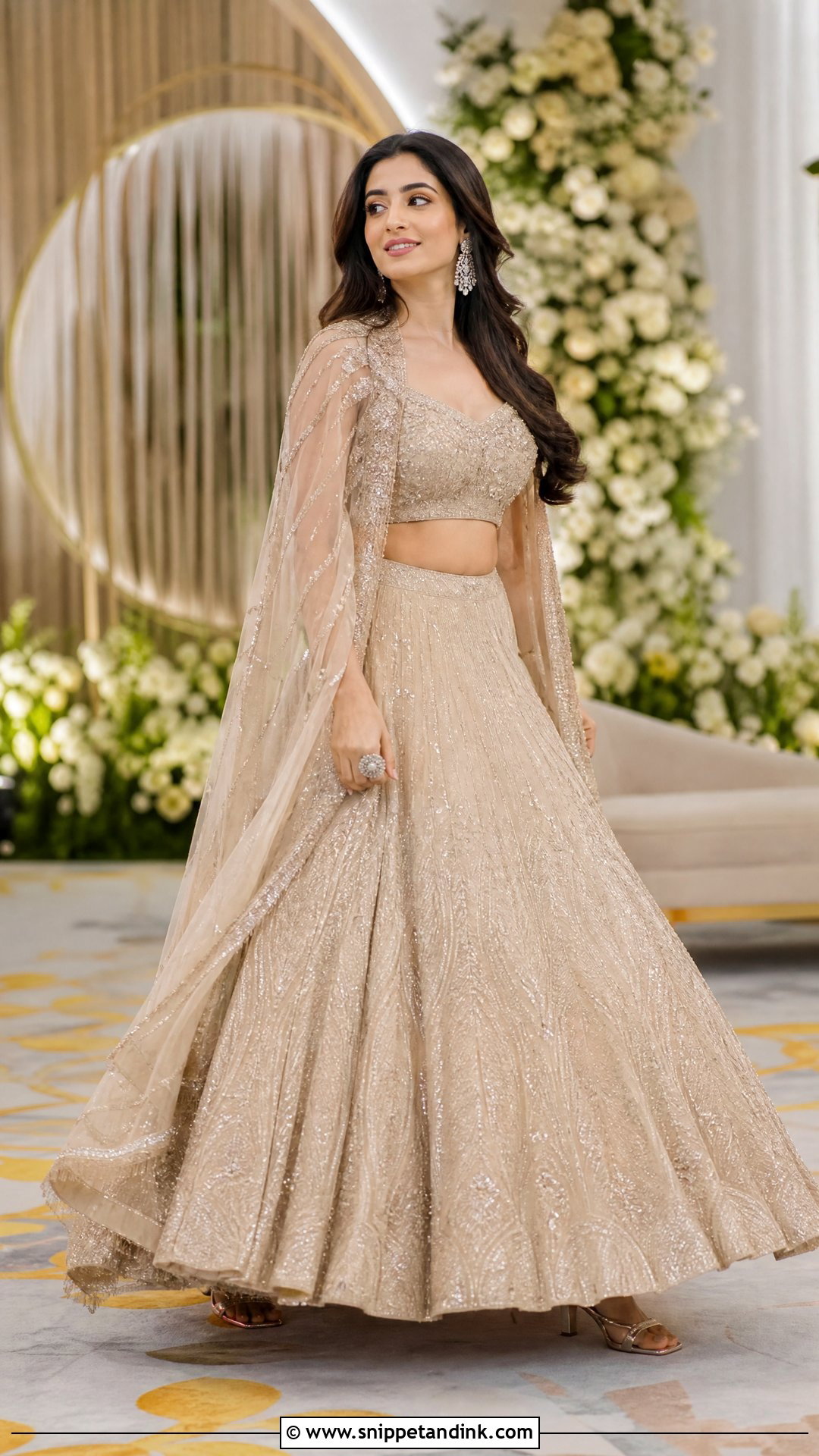
Capes replace dupatta draping with a layer that stays fixed, so there’s nothing to re-pin between songs. A lightweight sheer cape with beads or embroidery matching the blouse looks deliberate. Waist length is easiest to dance in, while a longer cape looks dramatic for an entrance and can be unhooked afterwards if it’s detachable. A fitted blouse underneath prevents bulk. Keep the neck relatively clear and hair low so the cape’s neckline shows.
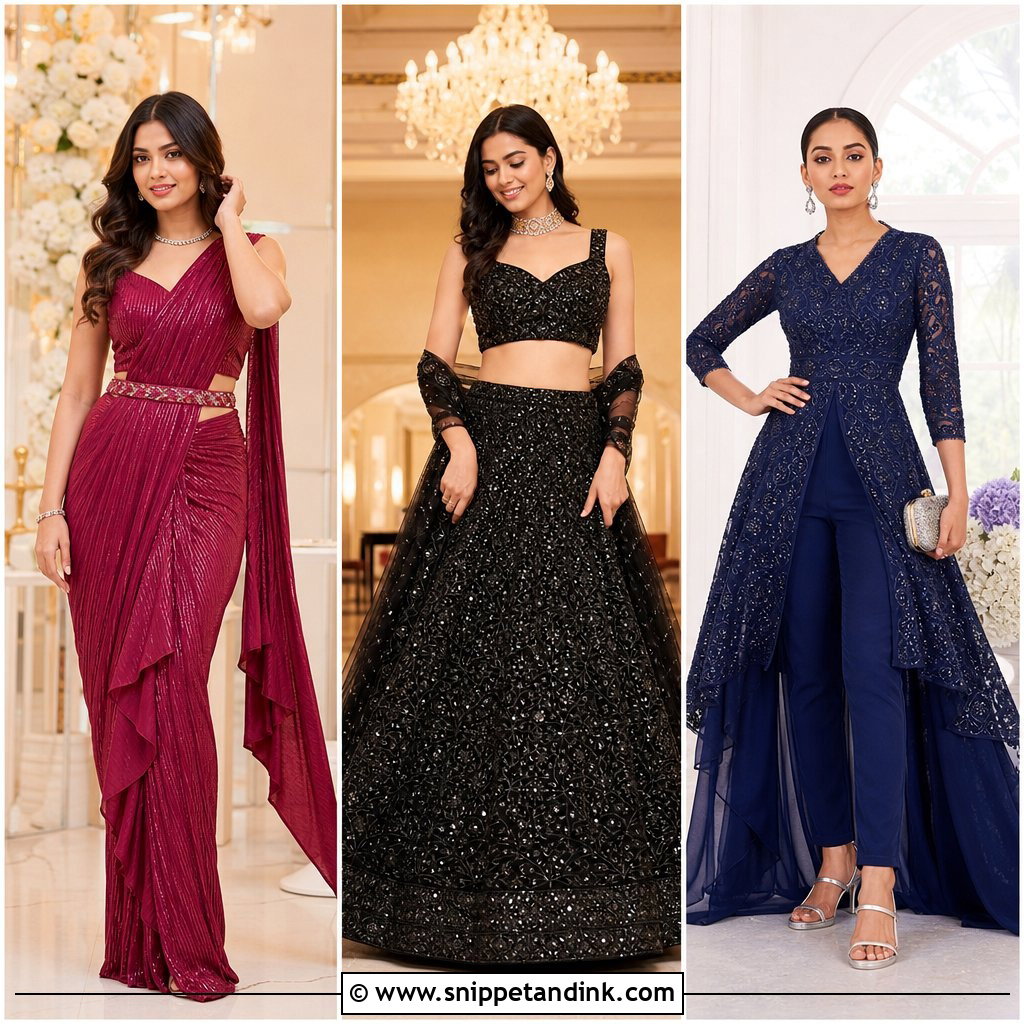
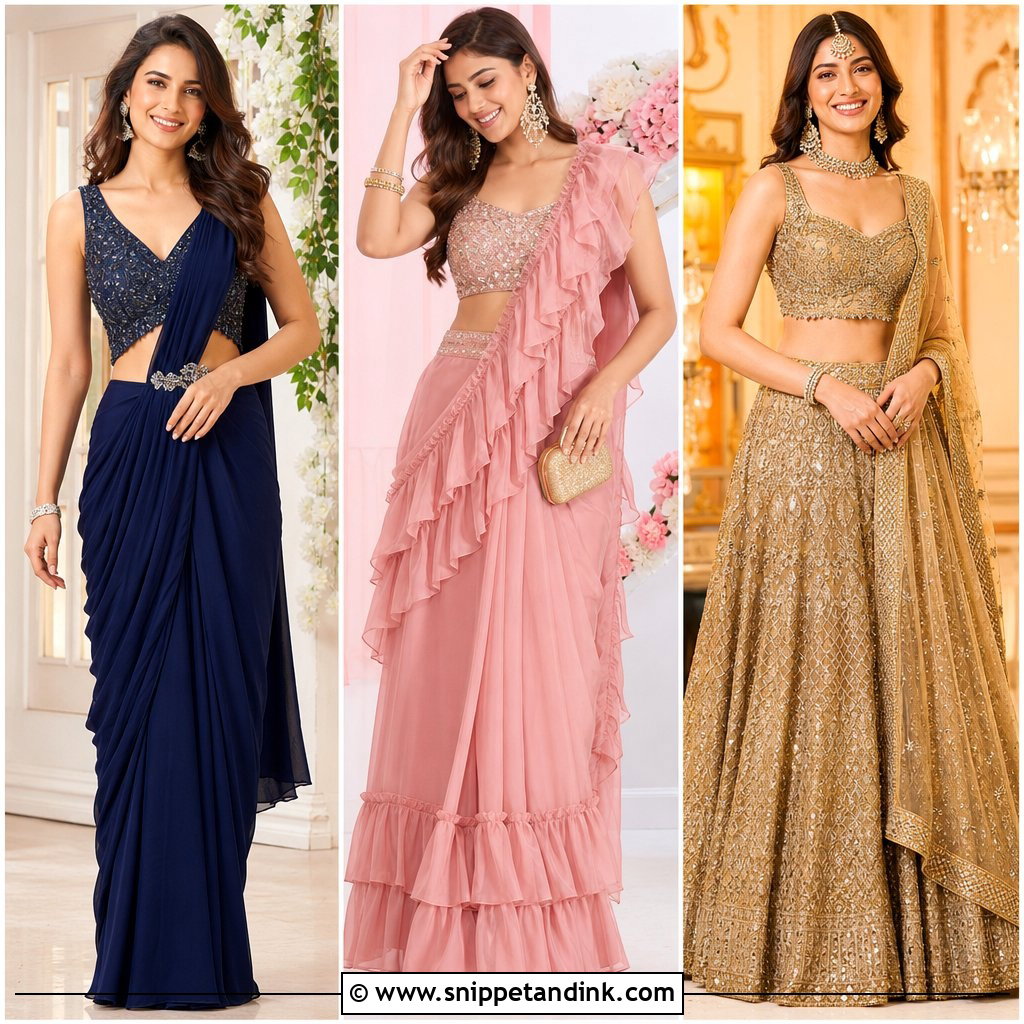
9. Ruffle Saree Sangeet Outfit
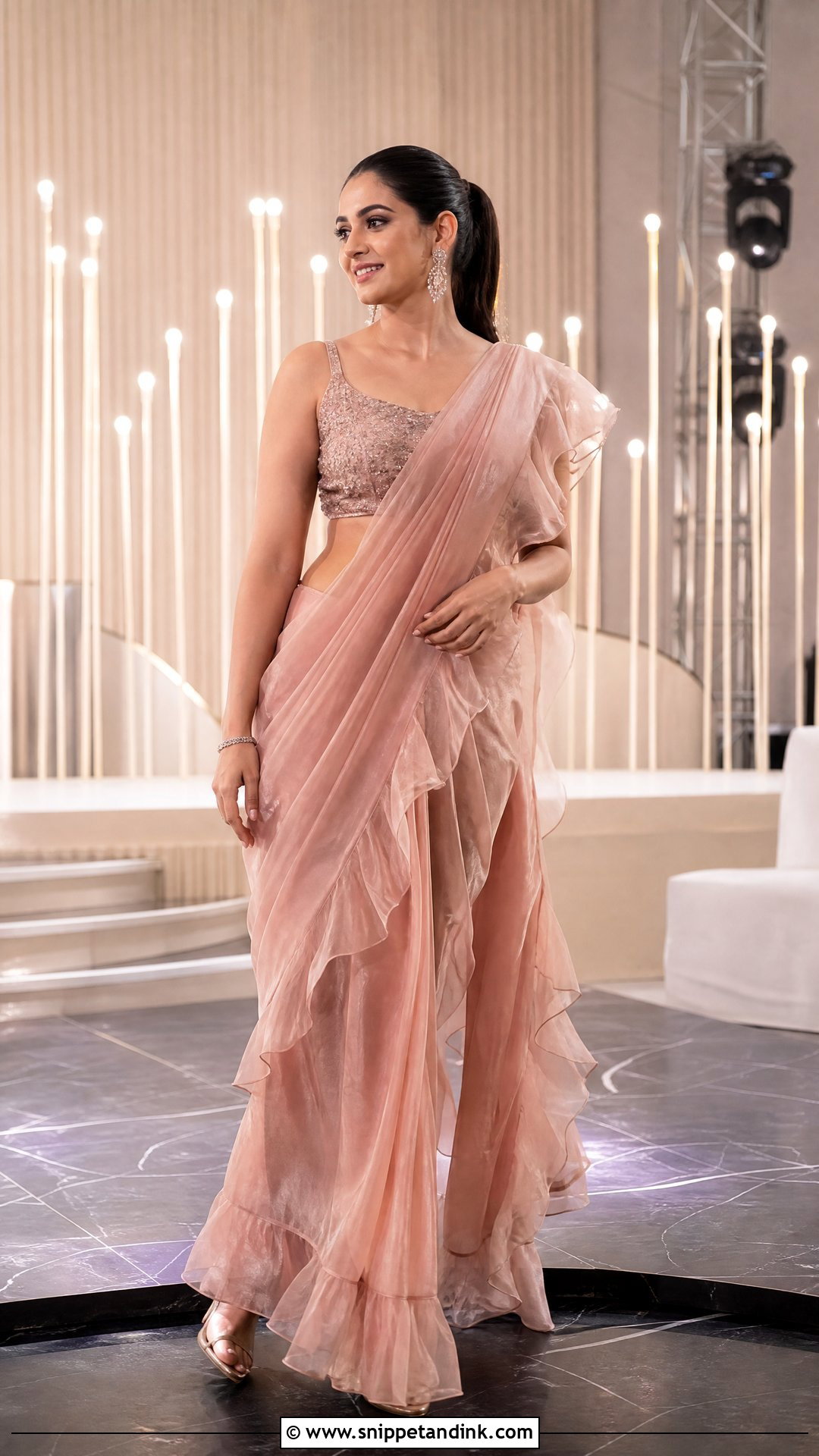
A ruffle saree gives you movement without the weight of a heavily embroidered lehenga. Organza, chiffon or georgette keeps the ruffles soft. Pair it with a fitted sequin blouse or a structured corset blouse, whichever you’re comfortable in. Ruffled and pre-draped sarees have become a regular sight at sangeets, and for a bride who plans to dance a lot, I’d strongly suggest having the saree pre-stitched. Hidden pins still go in the pleats and pallu before you perform. A controlled ponytail keeps hair off the ruffles.
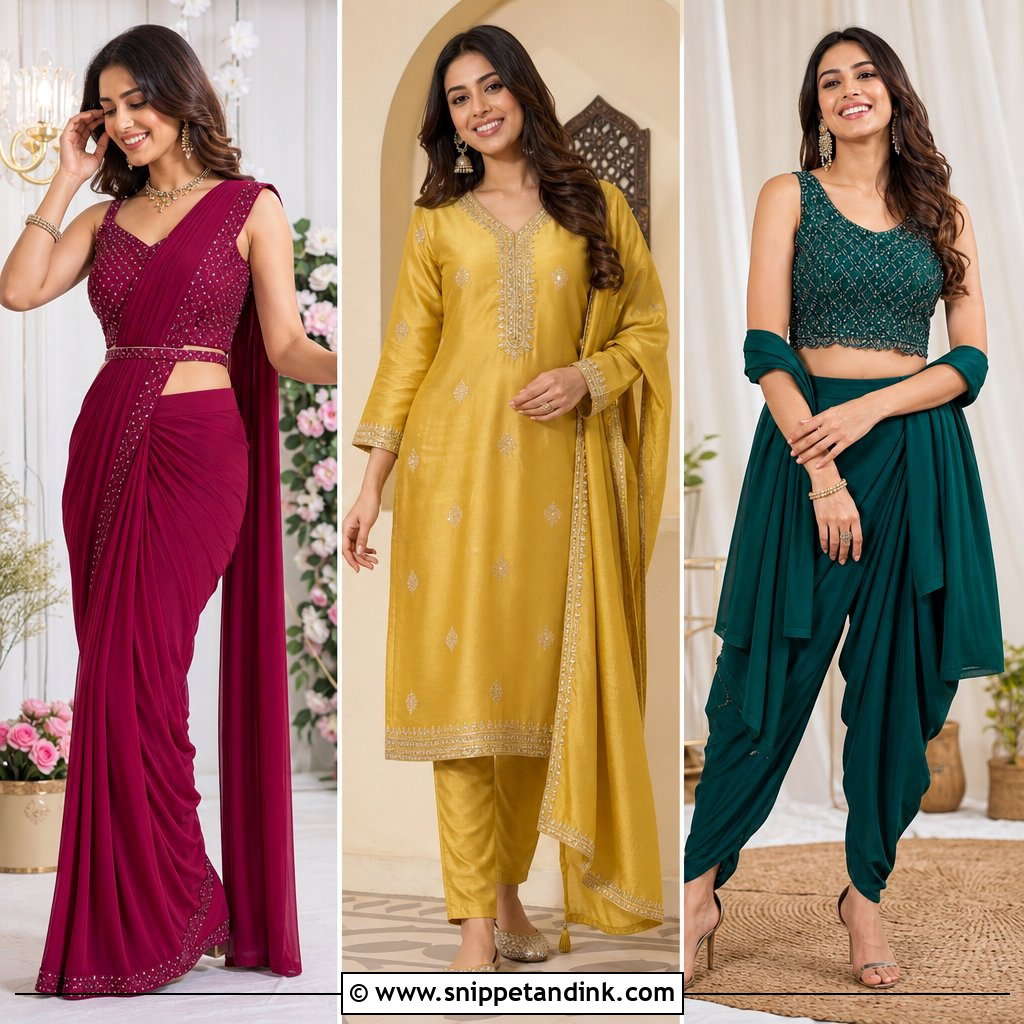
10. Pre-Draped Sangeet Saree
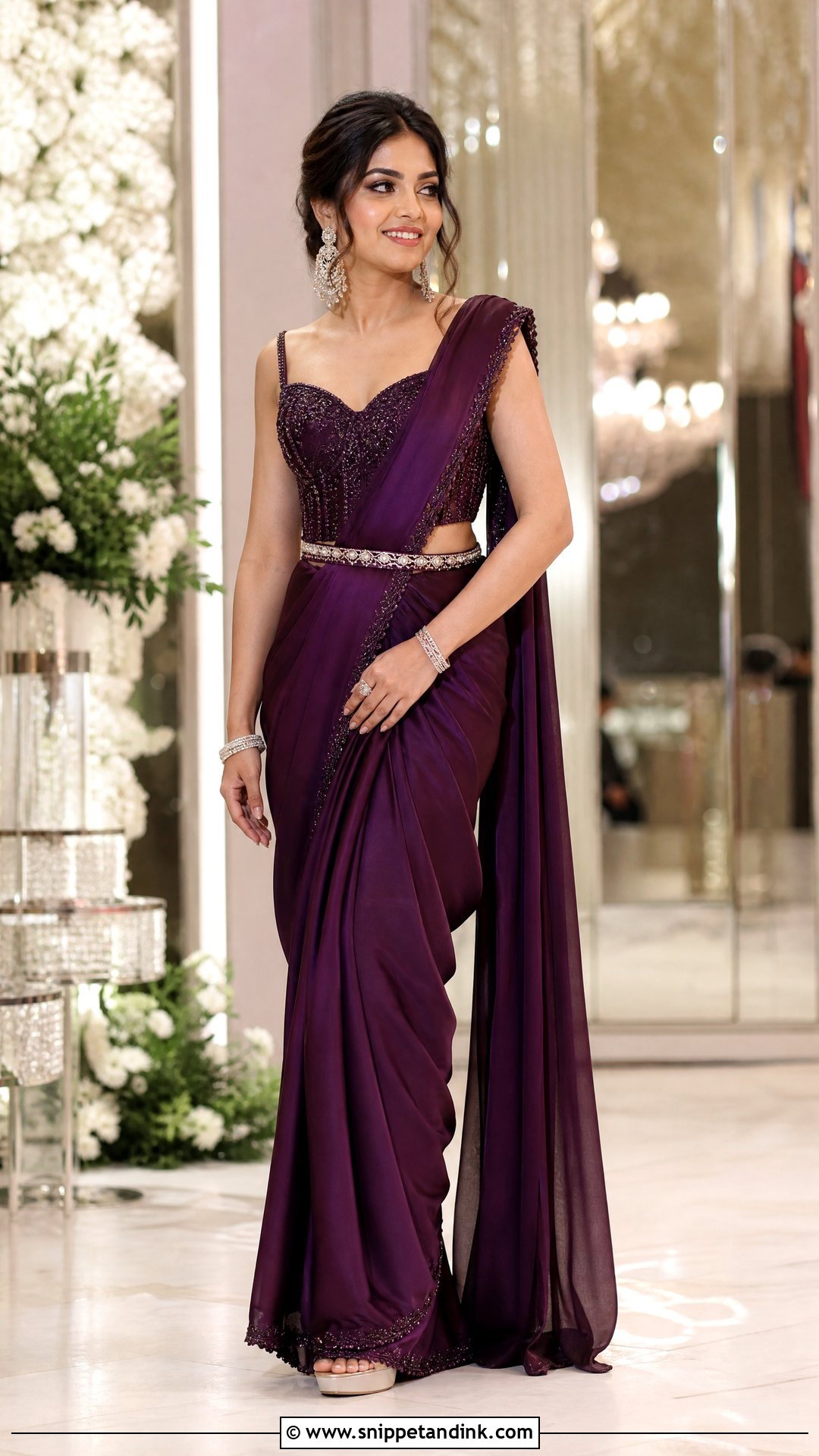
Pre-draped sarees end the constant pleat check. Look for a secured waist, a comfortable zip and a light pallu. Champagne or midnight blue looks rich at night. A slim belt can steady the drape, but it shouldn’t pinch, since you’ll be sitting through dinner and speeches too. The hem must be set for your exact shoes, so take them to every fitting. I’d also test it seated; some pre-draped sarees are cut for standing and pull tight across the thighs when you sit.
11. Metallic Saree With Corset Blouse
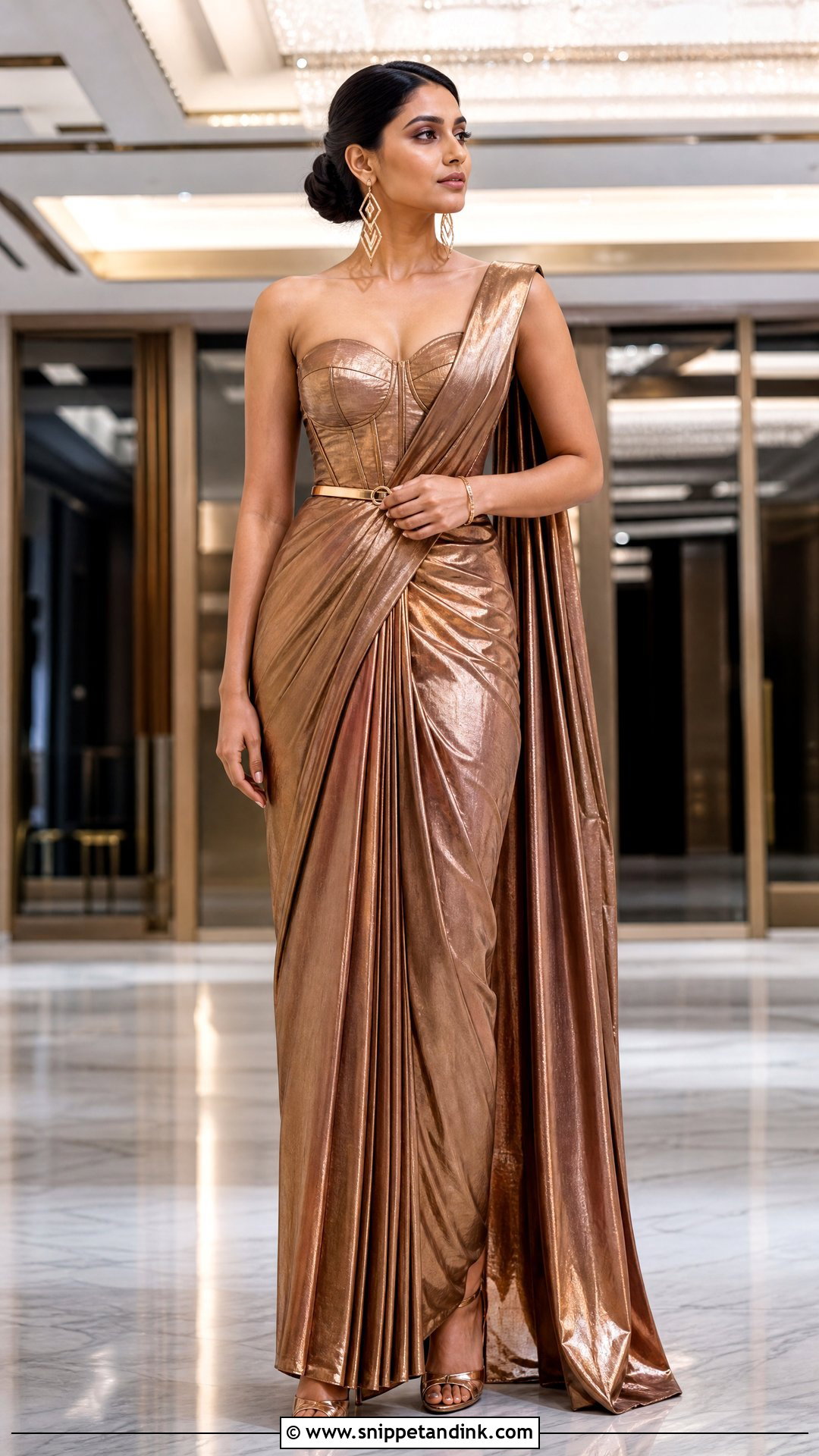
Metallic fabric and a corset blouse make for a fashion-forward bride. Tissue or a fluid metallic in pewter or rose gold drapes well. The corset is the part to get right. It needs proper internal boning and a fit that holds without you tugging at it, and that usually means at least two fittings. Keep embellishment minimal, as the fabric is already reflective. Tissue creases sharply, so ask your stylist to steam it on you just before you go out. Ballrooms with modern décor suit this look.
12. Mirror Work Sangeet Sharara
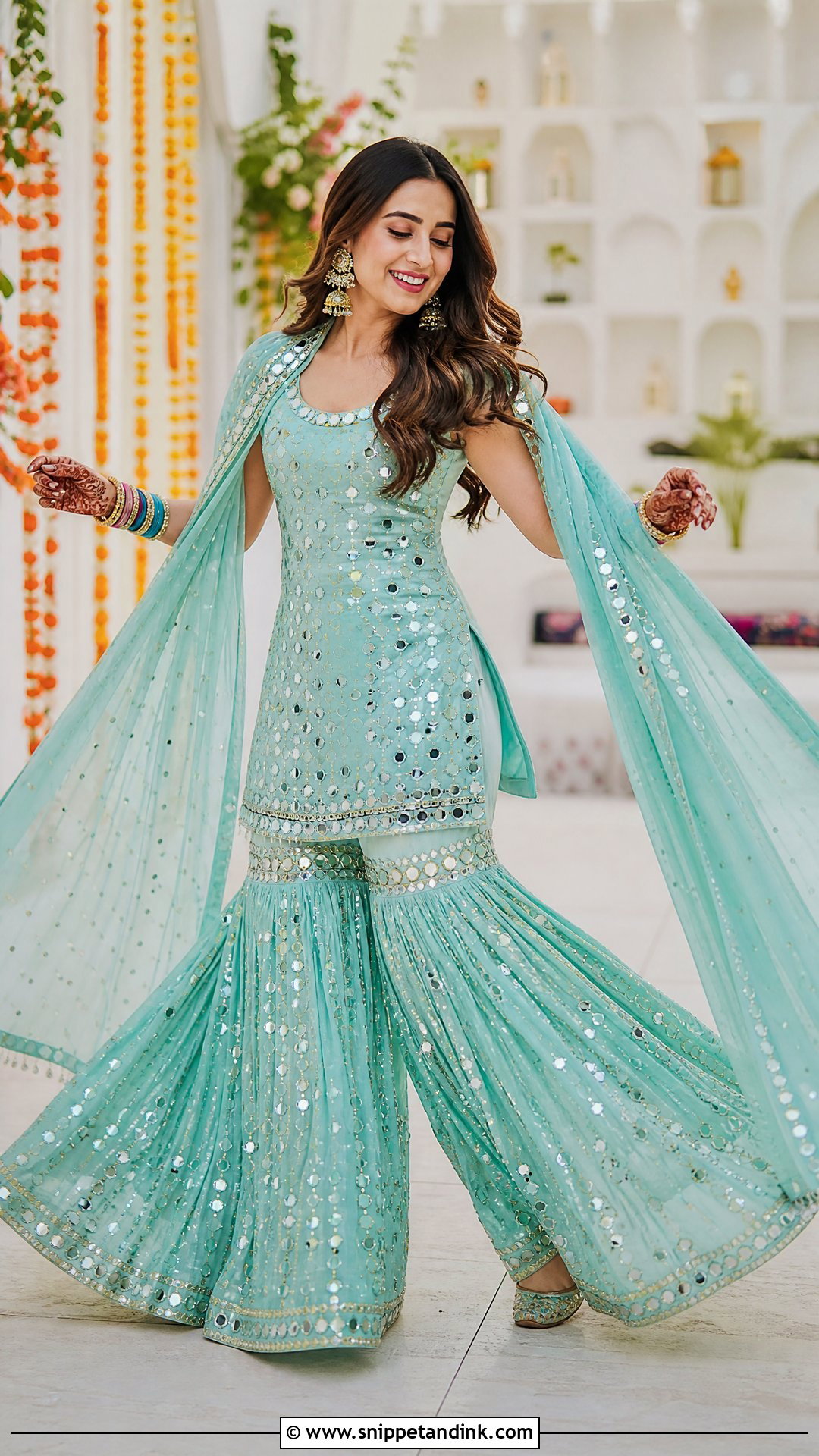
Wide sharara pants give a bride freedom that many fitted skirts can’t. A mirror work sharara in ivory and gold or a deep jewel tone pairs well with a short fitted kurti or a peplum top. Shararas have stayed popular at sangeets because the wide legs show movement while letting you dance comfortably. Check the hem in your shoes; it should skim the floor without covering them. Quick footwork in a sharara that’s even slightly long is how brides trip. A braided ponytail keeps the look youthful.
13. Embroidered Sangeet Gharara
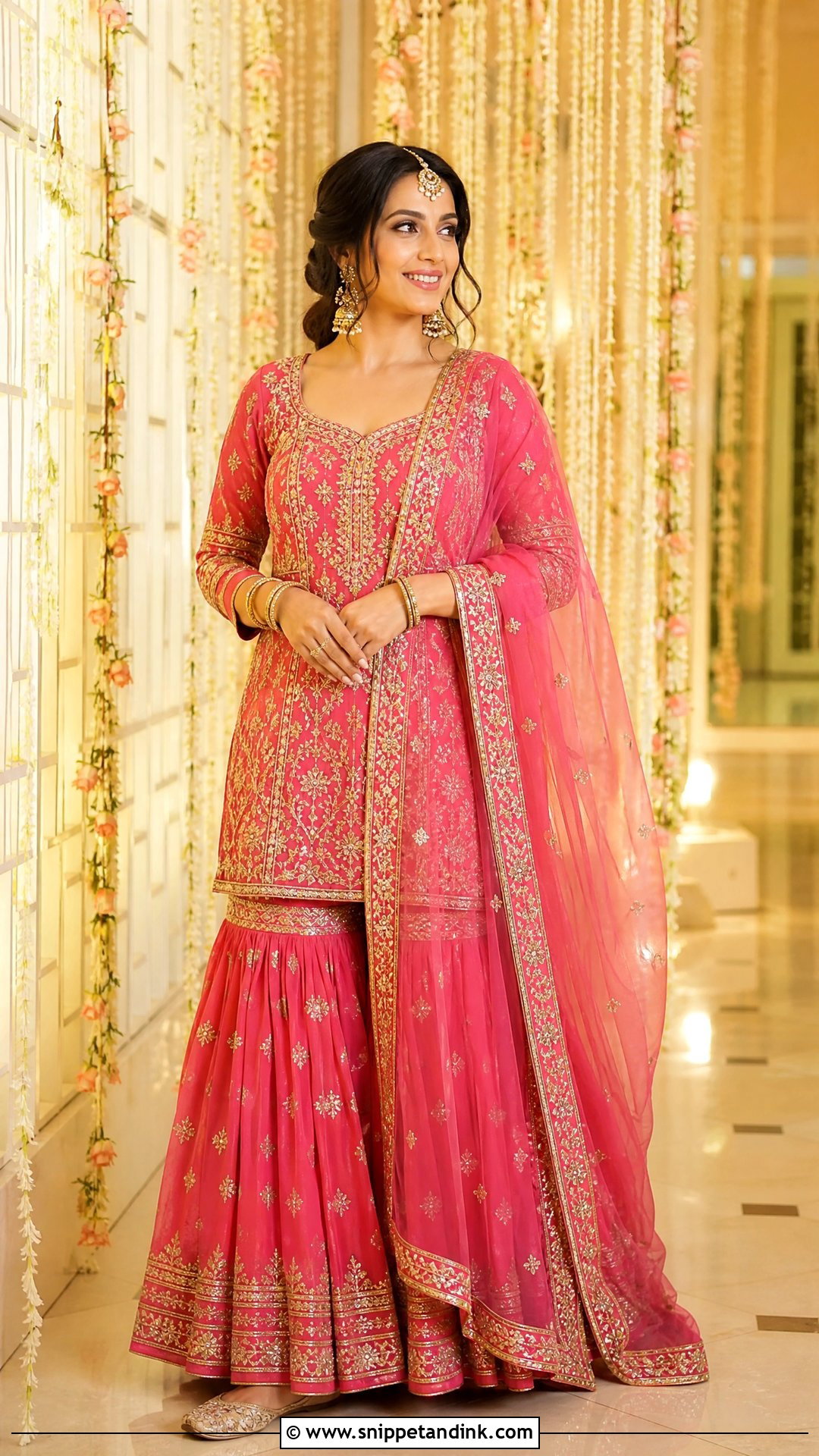
A traditional gharara is defined by its knee seam, fitted above and flared below. For a sangeet, georgette or light silk with gota or zari is easier to carry than heavy brocade. Pair it with a knee-length kurti and a sheer dupatta. The fitting point I’m strict about is that knee seam. If it’s tight, you can’t climb stage steps or sit comfortably, and the flare pulls oddly as you walk. Rich pink and bottle green feel classic; powder blue is a softer reading of the same shape.
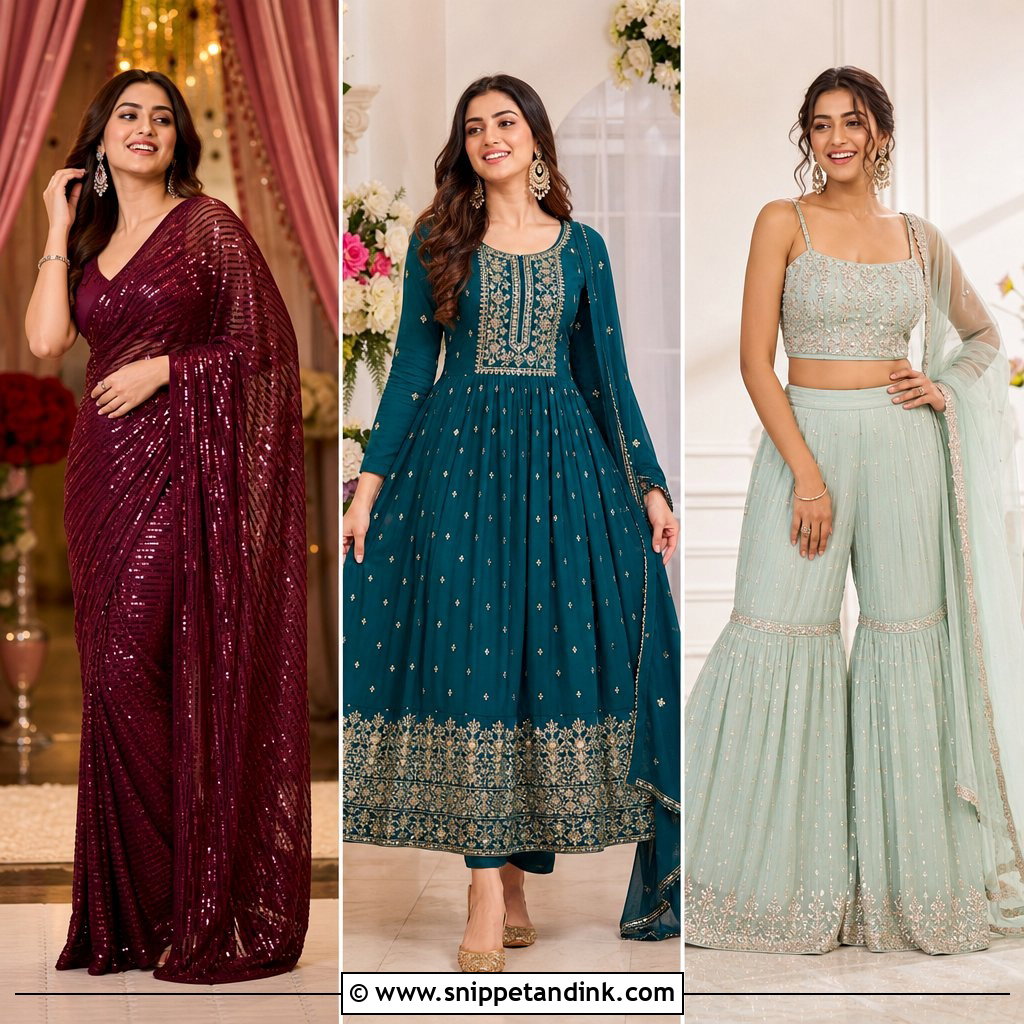
14. Embellished Sangeet Anarkali
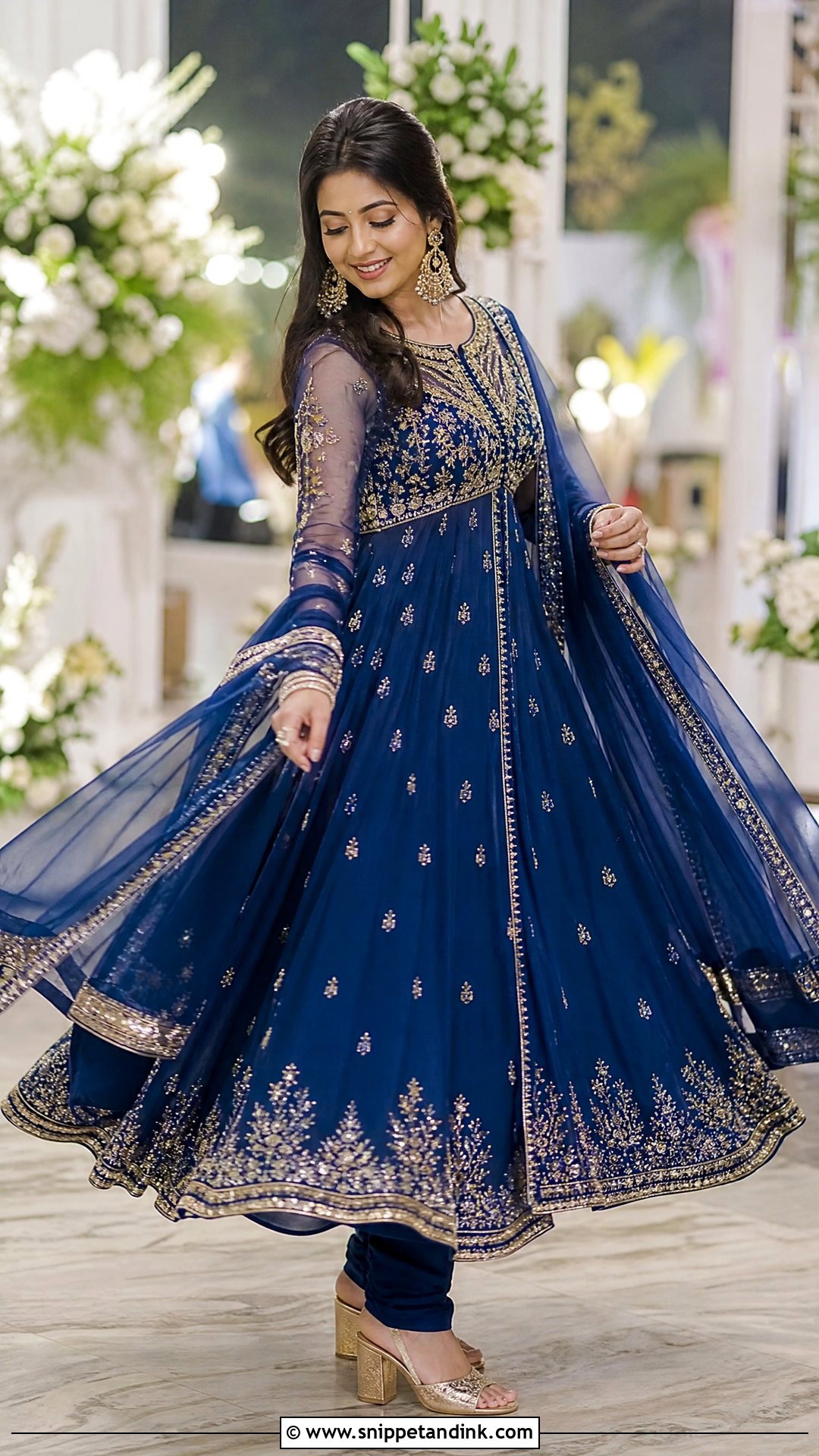
An Anarkali swirls on every turn and gives full coverage of the midriff, which suits brides who’d rather not show it. Choose a floor-length cut fitted through the bust with flare starting at the waist. Georgette or chiffon layers are much lighter than brocade. Embroidery at the neckline and hem gives a bridal finish. If the neckline is heavily worked, skip the necklace and wear bangles. The hem should clear your shoes, since Anarkalis have a lot of fabric to step on during a spin.
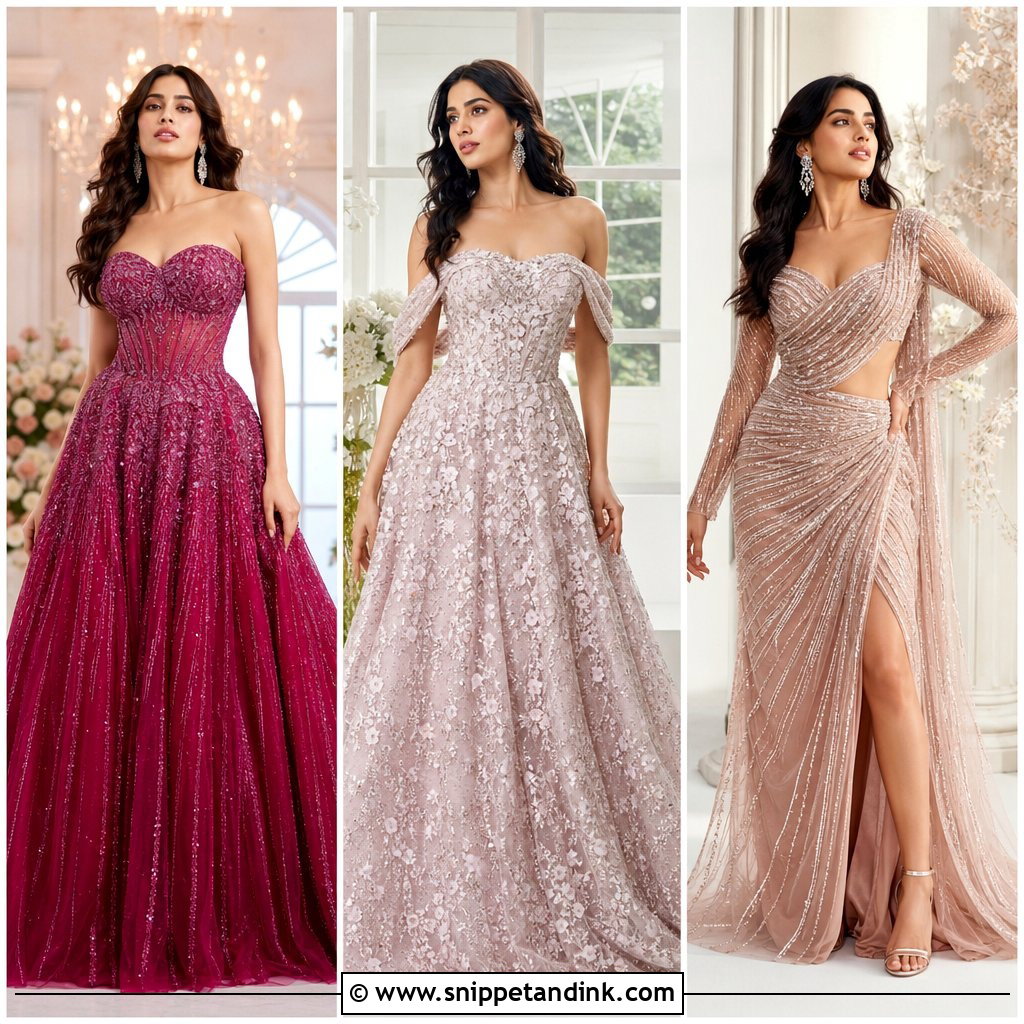
15. Indo-Western Sangeet Gown
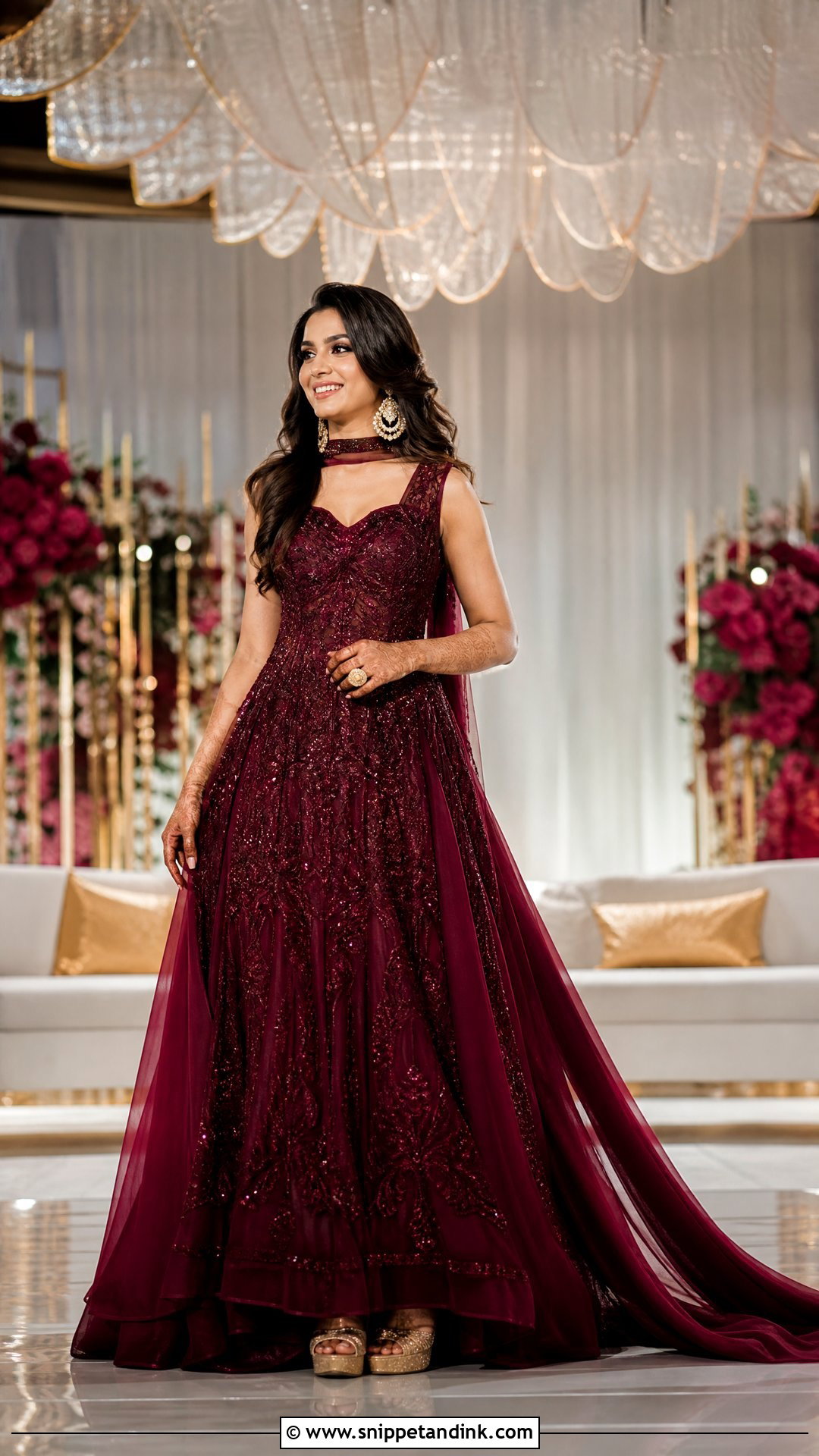
Gowns make sense for a sangeet in a hotel ballroom. An Indo-Western Sangeet gown combines evening-gown drama with zardozi, sequins or beadwork on the bodice. Tulle, georgette or soft net give a flowing skirt. A long train looks wonderful at your entrance but is a hazard on a dance floor, so ask for a detachable train or bustle points and practise putting them up. No dupatta to manage all night is a real bonus.
16. Embroidered Sangeet Jumpsuit With Cape
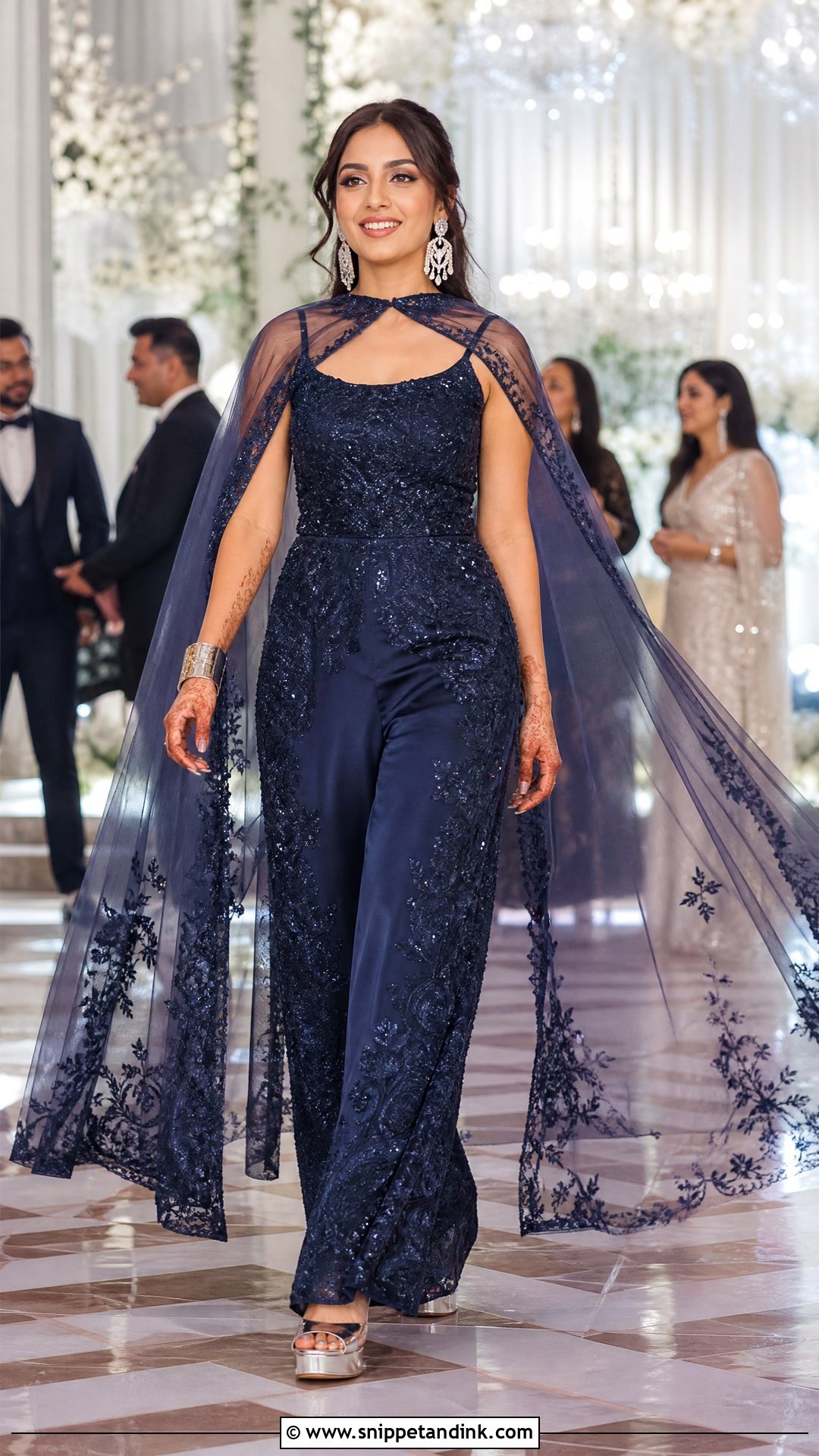
If your choreography is energetic, a jumpsuit gives you complete freedom. Choose a wide leg, a defined waist and a bodice that stays put through every move. A detachable cape at the shoulders makes the entrance; remove it before the dance. Ask your tailor for a hidden zip and a stretch lining, which make a big difference to how a jumpsuit feels after hours of wear. The trousers should nearly reach the floor without dragging. This stands clearly apart from your other bridal outfits while still looking formal on stage.
17. Peplum Top With Dhoti Pants
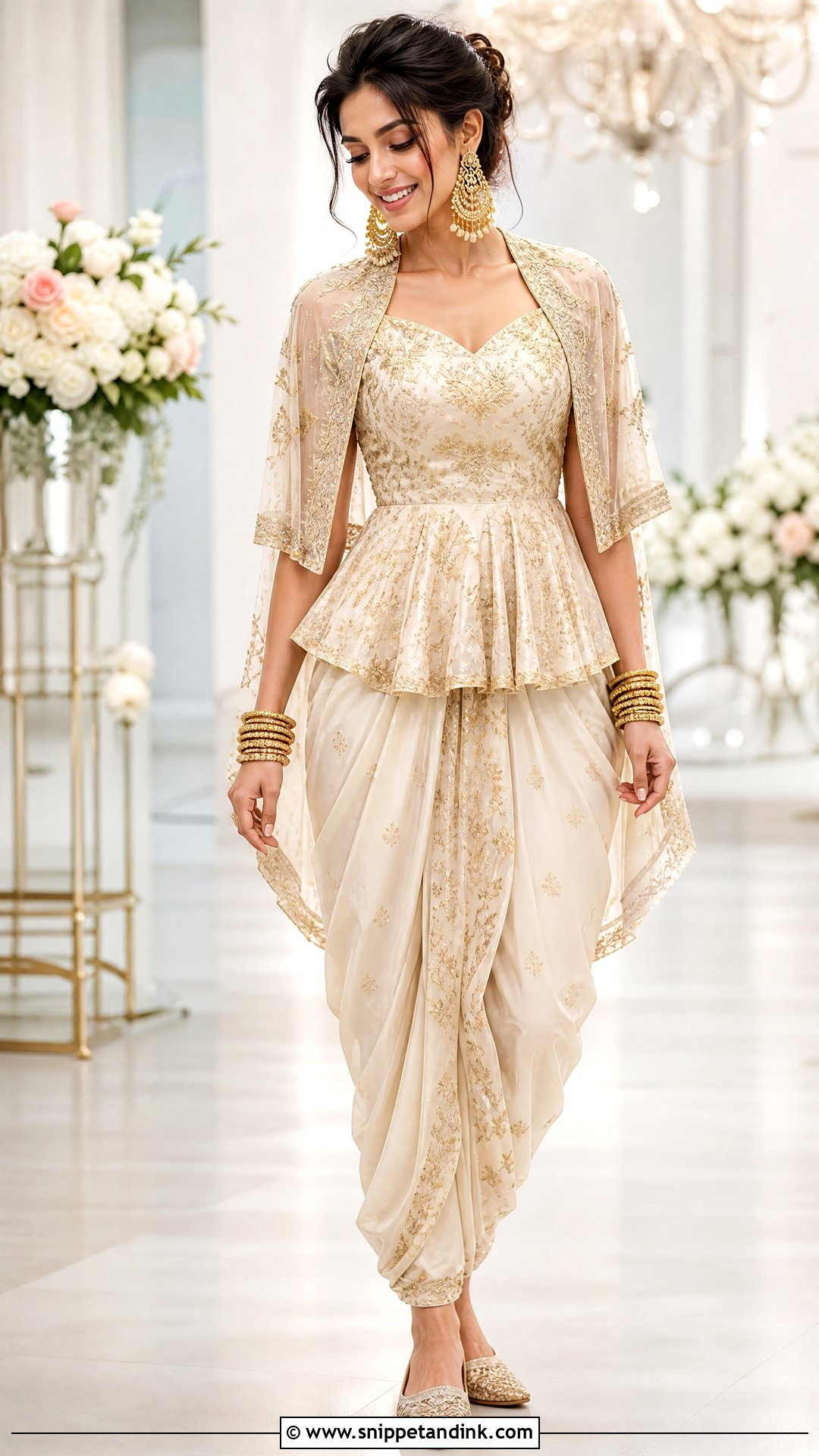
Fusion works well in a peplum top with dhoti pants. The peplum should end near the upper hip so it balances the volume of the draped pants. A short cape adds movement without any pinning. Dhoti pants need room through the crotch and hip for dance steps, and the peplum must sit smoothly when you raise your arms; if it rides up, ask for a slightly longer bodice. Jewel tones look regal, ivory and gold more modern.
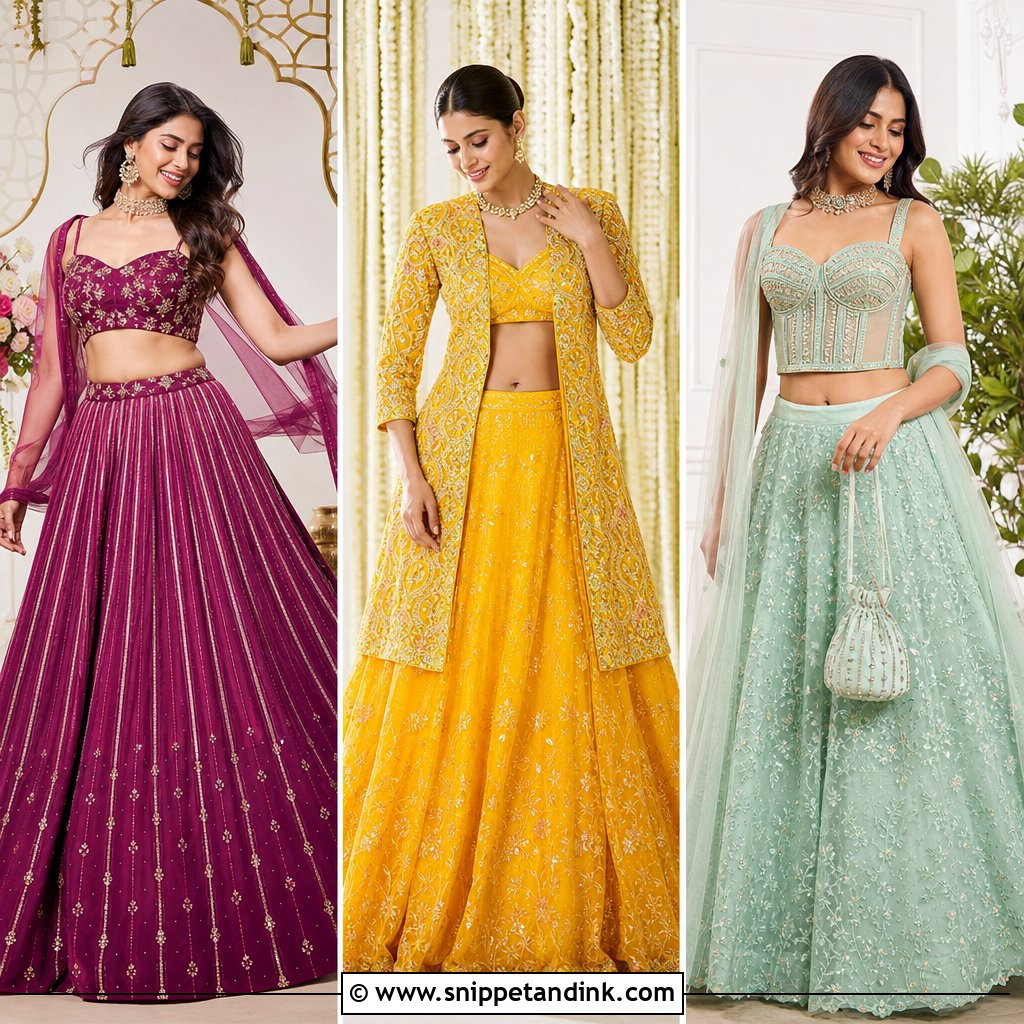
18. Sangeet Skirt With Crop Top And Jacket
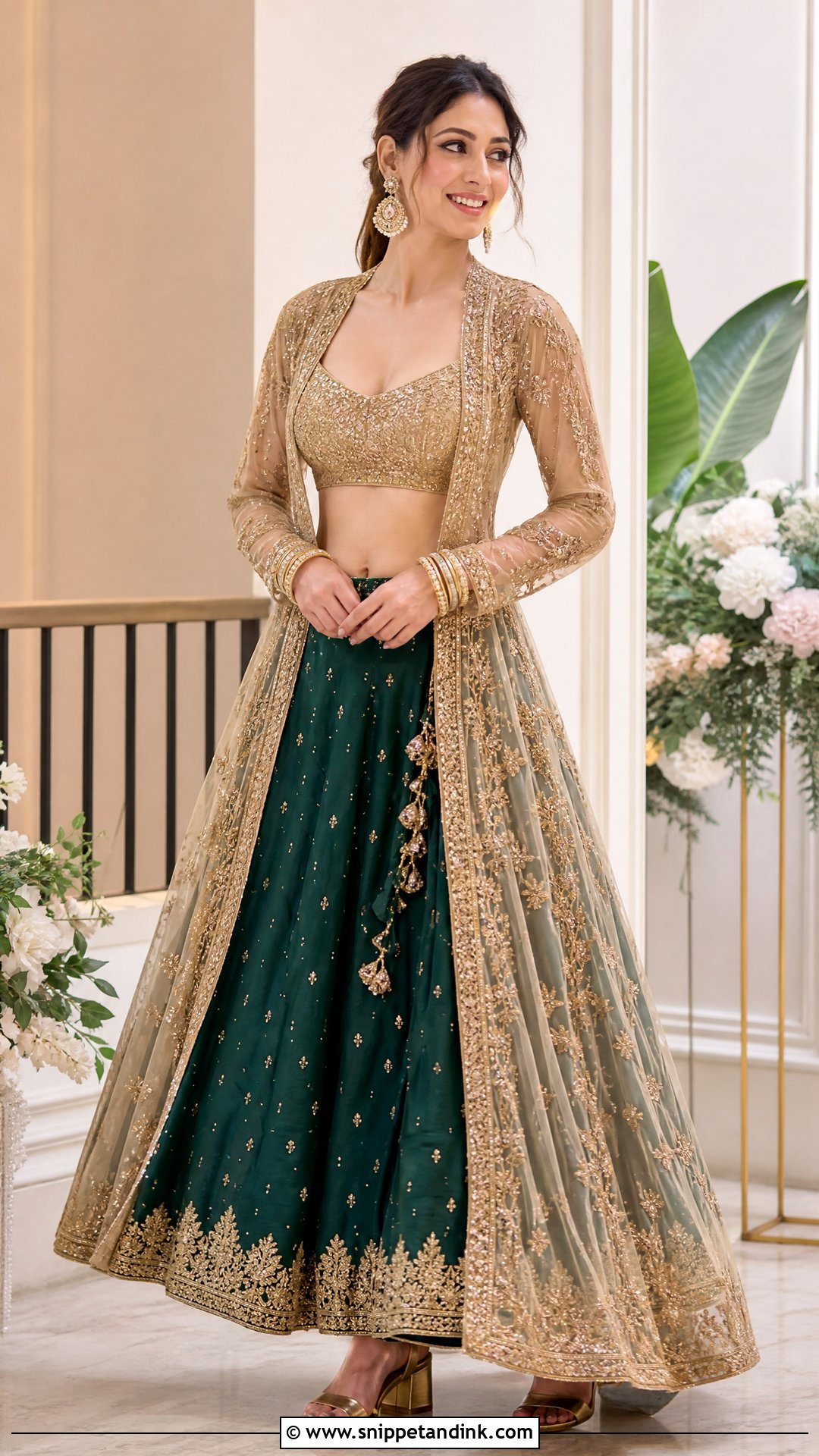
Three pieces give you three looks in one evening. A light circular skirt that turns well, a supportive crop top and a sheer embroidered jacket to the knee or ankle can be worn together for the entrance, then the jacket comes off for the dance. Skip the dupatta, since the jacket covers the same ground. Keep jacket sleeves close-fitting at the wrist so they don’t swing into your hands mid-choreography. Navy with silver or emerald with antique gold are elegant combinations.
19. Sangeet Pant Saree
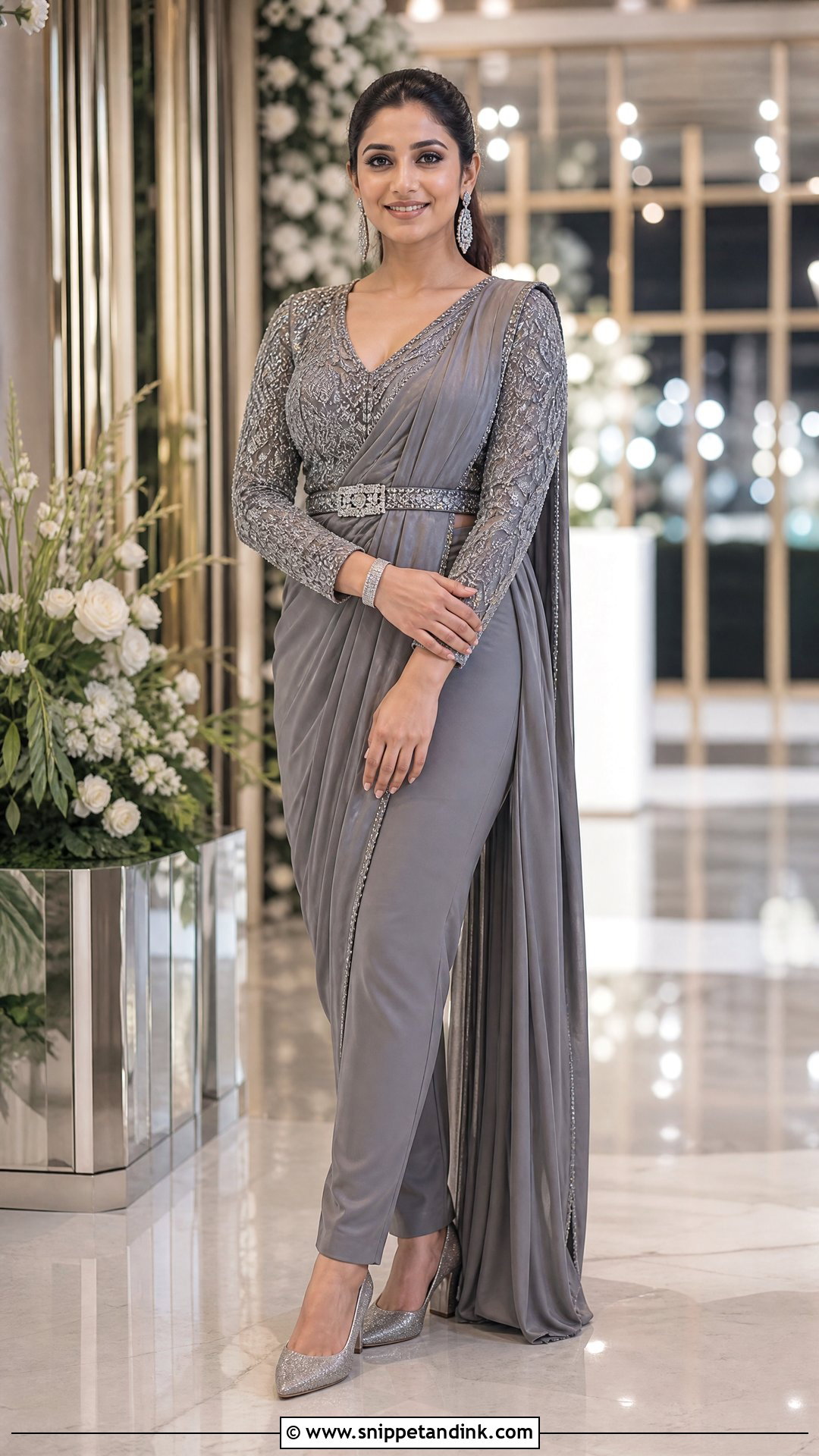
Pant sarees combine the look of a drape with the stability of trousers. Tapered or gently flared pants pair with a fitted blouse and a pre-attached pallu across the body. Embellished borders or a metallic fabric make it bridal rather than a guest look. A slim belt holds the drape. Because the pants make steps and turns easier, this is one of my top picks for brides with detailed routines. The pallu must end above the floor so it can’t wrap round your legs, and a single colour throughout lengthens the whole silhouette.
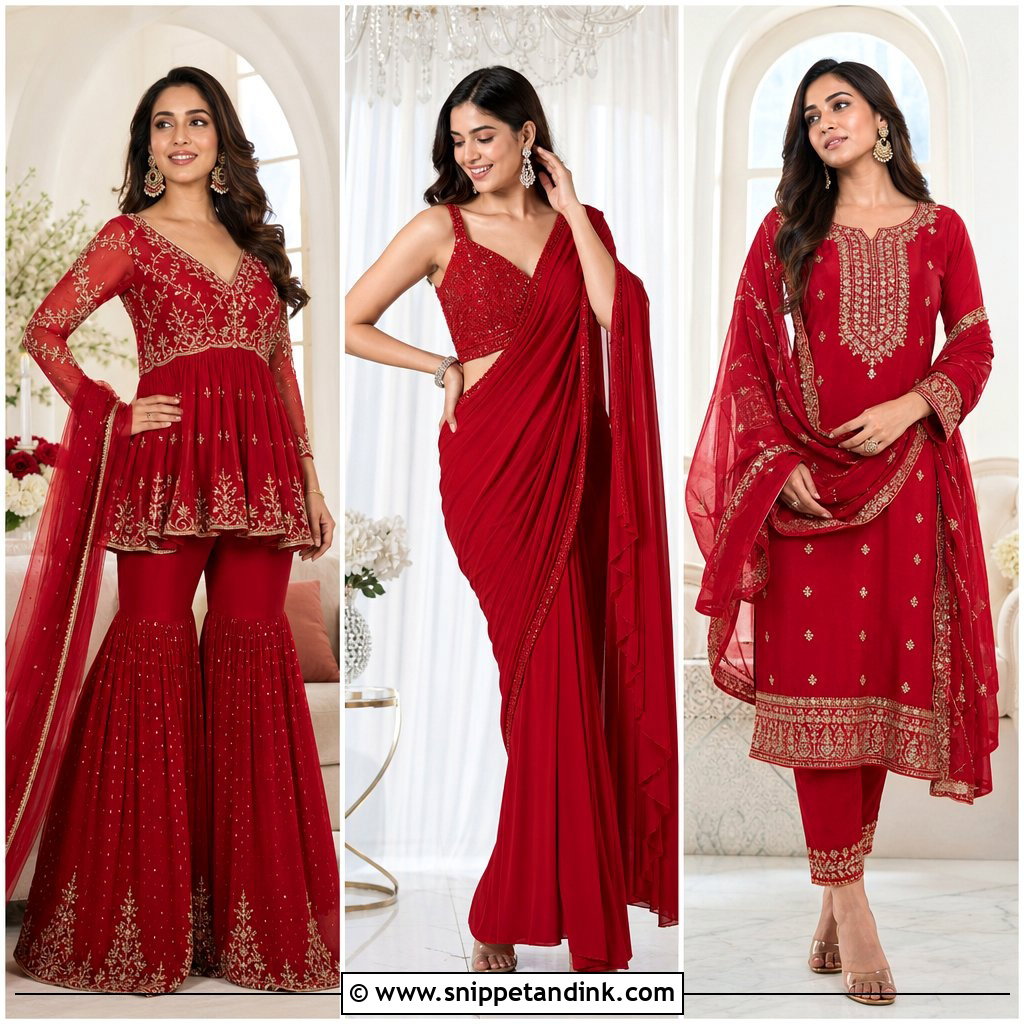
20. Sangeet Co-Ord Set With Long Jacket
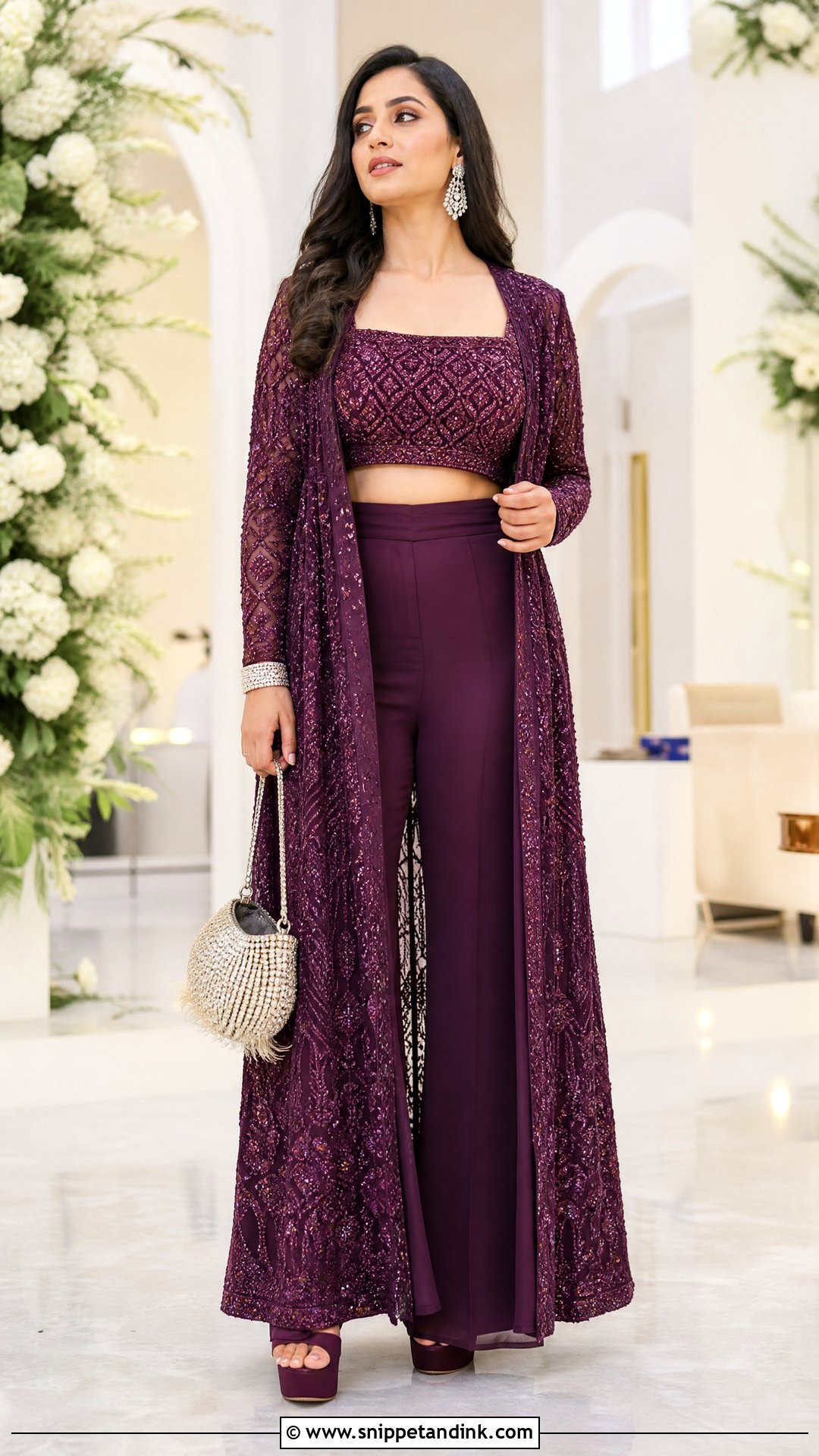
A co-ord set under a long statement jacket gives a relaxed bridal finish. Wide-leg pants and a fitted blouse form the base; the embroidered floor-length jacket adds the ceremony. Keep all three pieces in one colour family so they read as one outfit. I’d ask for stretch lining and light embroidery throughout, as a long jacket with dense work gets heavy and pulls on your shoulders. Wear the jacket open for dancing and belted for the entrance. Separates like these are also among the most rewearable bridal pieces.
Making the Sangeet Photos Look Different From the Wedding Photos
When I plan a bride’s wardrobe across all her events, I lay the sangeet and wedding outfits side by side. If both are red lehengas with gold embroidery, your albums will look like one long day. A change in colour family, silhouette or metal is enough to separate them. A bride in a red ceremony lehenga might choose silver sequins, an ombre or a pant saree for the sangeet.
Jewellery helps too. If your wedding set is heavy kundan or polki, try diamond-look or crystal pieces for the sangeet, or a lighter version of your bridal set without the necklace.
Planning a quick change after the performance
Many brides change once the choreography is over, into something lighter for dancing late into the night. If you do, set aside a room close to the hall, keep the second outfit steamed and ready on a hanger with its shoes and earrings, and ask a sister or friend to help with hooks. Fifteen minutes is enough when everything is laid out; it can take forty when nothing is.
The Outfit That Lets You Enjoy Your Own Party
The best bridal sangeet look strikes a balance between impact and comfort. Sequins and metallics give sparkle, while shararas, Anarkalis, jumpsuits and co-ords give more freedom on the dance floor. Before deciding, sit, walk, turn and raise your arms in the outfit. Secure drapes, supportive tailoring, sensible hems and comfortable shoes do more for your night than any trend. Let the colours suit the venue, and choose what feels like you rather than what’s in this season. A sangeet is the one wedding event where you’re meant to let loose, so dress to do exactly that.
You'll Like These Ideas:


Leave a Reply