
A sangeet is the one wedding event where your outfit has to survive actual exercise. Red suits the mood, and the options here run from traditional lehengas and dance-friendly shararas to sarees and modern Indo-Western combinations. When I style for a sangeet, I judge everything by how it moves: fabric weight, how the drape is secured, whether the blouse supports you mid-spin, and shoes you can dance in. Brides can go fully red and heavily worked; guests usually do better with lighter embroidery or contrasting accessories. Maroon, ruby, scarlet or vermilion, there’s a red for every skin tone below.
Rehearse the Choreography in the Outfit Itself
Most sangeet wardrobe disasters happen because the outfit was tried on in front of a mirror but never danced in. A blouse that fits perfectly standing still can ride up the moment you lift your arms, and a skirt that looks light on a hanger can drag after ten spins.
I ask everyone performing to wear the full outfit, shoes included, for at least one complete run of their routine about two weeks before the event. That leaves time for the tailor to fix what fails.
- Arms overhead for ten seconds: does the blouse lift or the cape pull?
- Three fast spins: does the skirt hem or dupatta wrap around your legs?
- A deep bend or floor move: do the pleats or waistband shift?
- Shoes on the actual floor type if you can: marble and polished wood are slippery, so scuff the soles lightly or add grip pads.
Closures fail first. Hooks on a blouse back strain hardest during arm moves, so I ask tailors for a hidden zip with a hook above it, or a double row of hooks. Dori ties look pretty, but double-knot them and tuck the tassels in so they don’t swing into your partner’s face.
1. Red Sequin Sangeet Lehenga
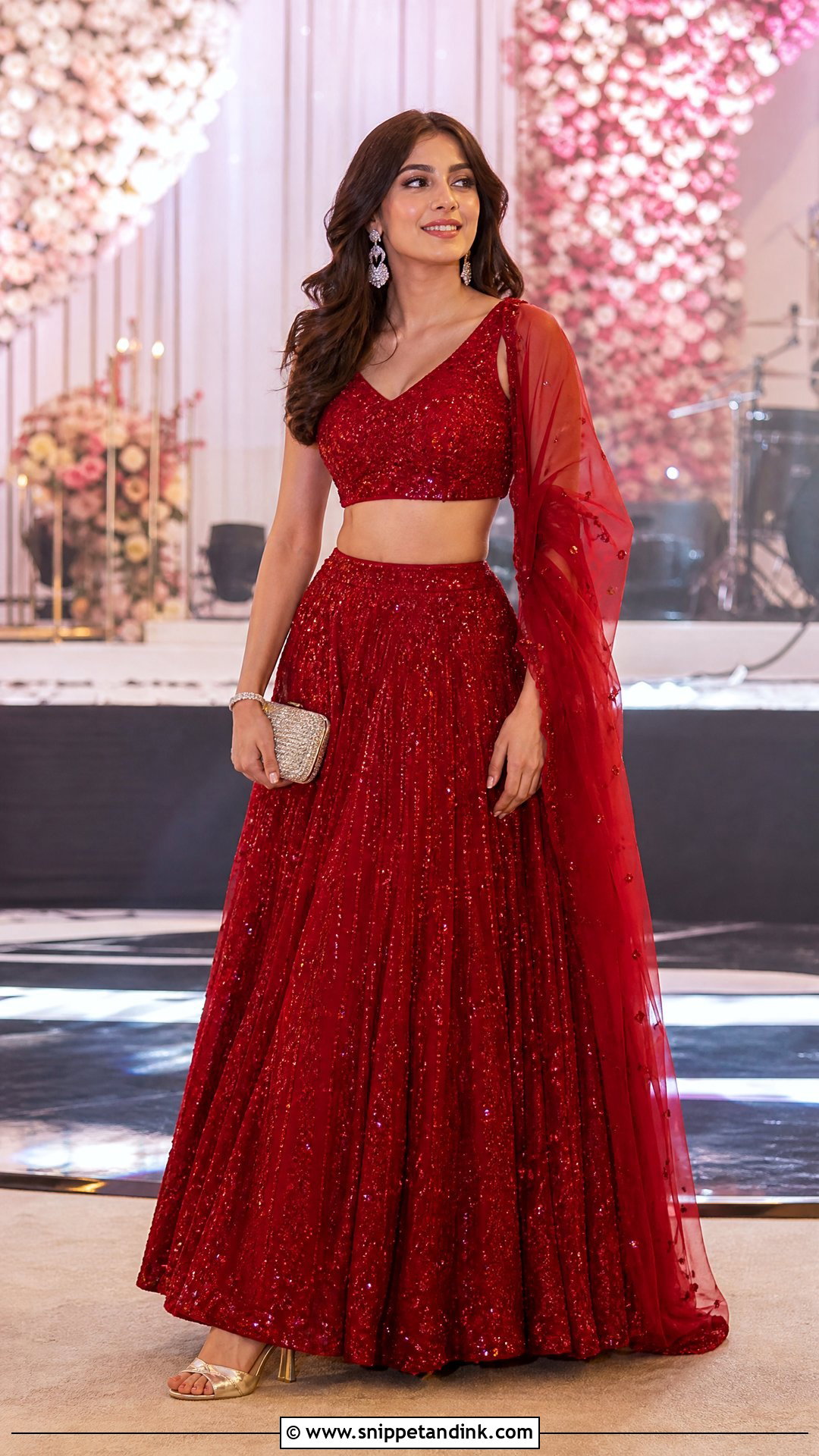
Sequins are made for a dance floor, since every turn throws light. The weight is the catch. I choose georgette skirts with sequins spaced evenly, because a densely sequined skirt can be surprisingly heavy and swings out of time with you. A high waist and soft flare keep you mobile; a fitted sleeveless blouse and a sheer dupatta pinned to one shoulder finish it. Metallic block heels, crystal earrings and a silver clutch. Sequins can scratch the inner arm, so ask for a soft lining at the blouse sides.
2. Red Velvet Sangeet Lehenga
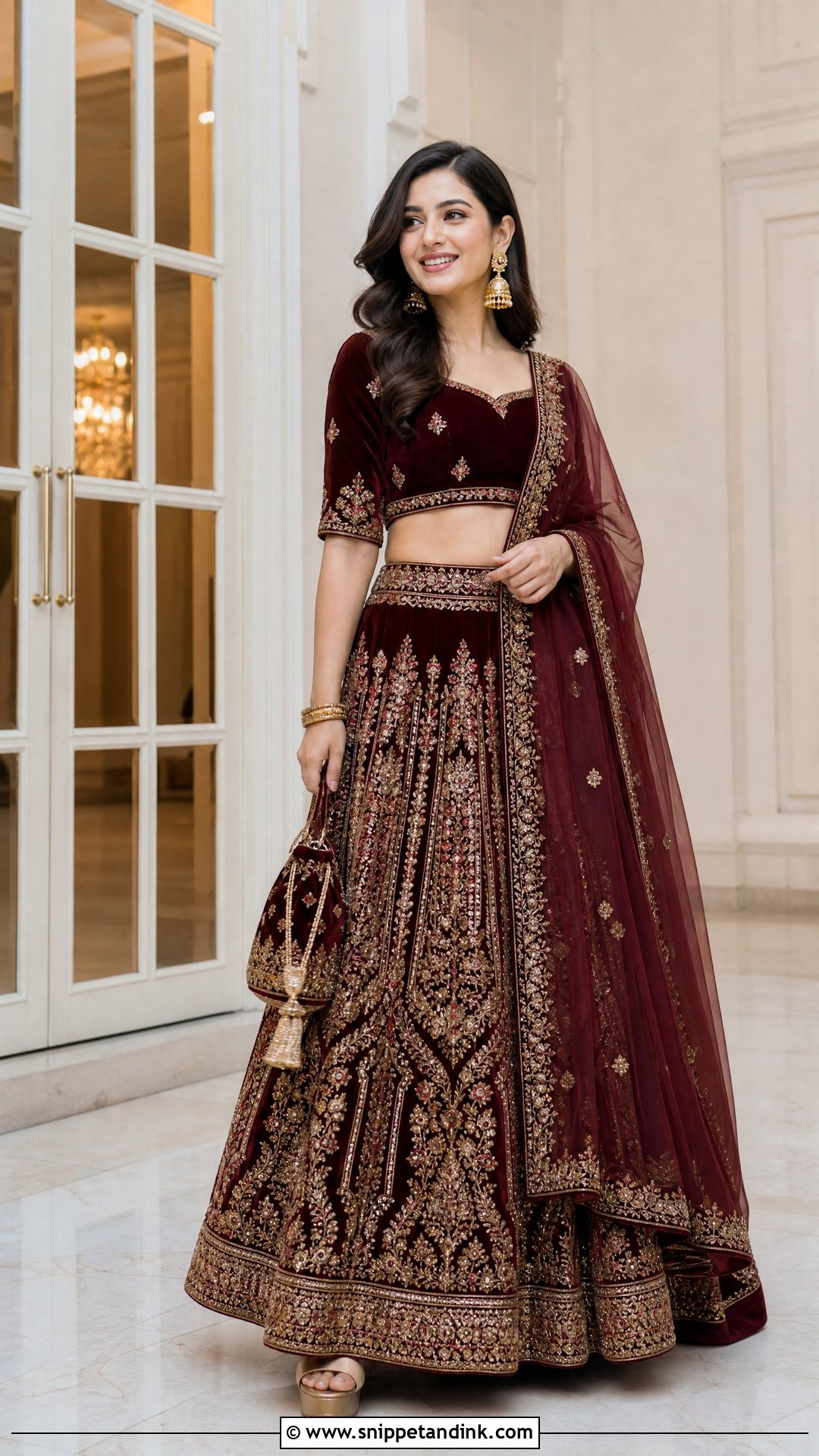
Velvet in winter feels luxurious, and in a packed dance hall it gets hot within one song. If you love it, go burgundy or wine red with gold kept to the hem, and insist on a breathable cotton lining and as few skirt layers as possible. A velvet blouse with elbow sleeves, a light net dupatta pinned at one shoulder, gold jhumkas and platform sandals complete it. Keep the necklace delicate if the neckline is worked. I’d only suggest this for a cool evening venue.
3. Red Mirror Work Sangeet Lehenga
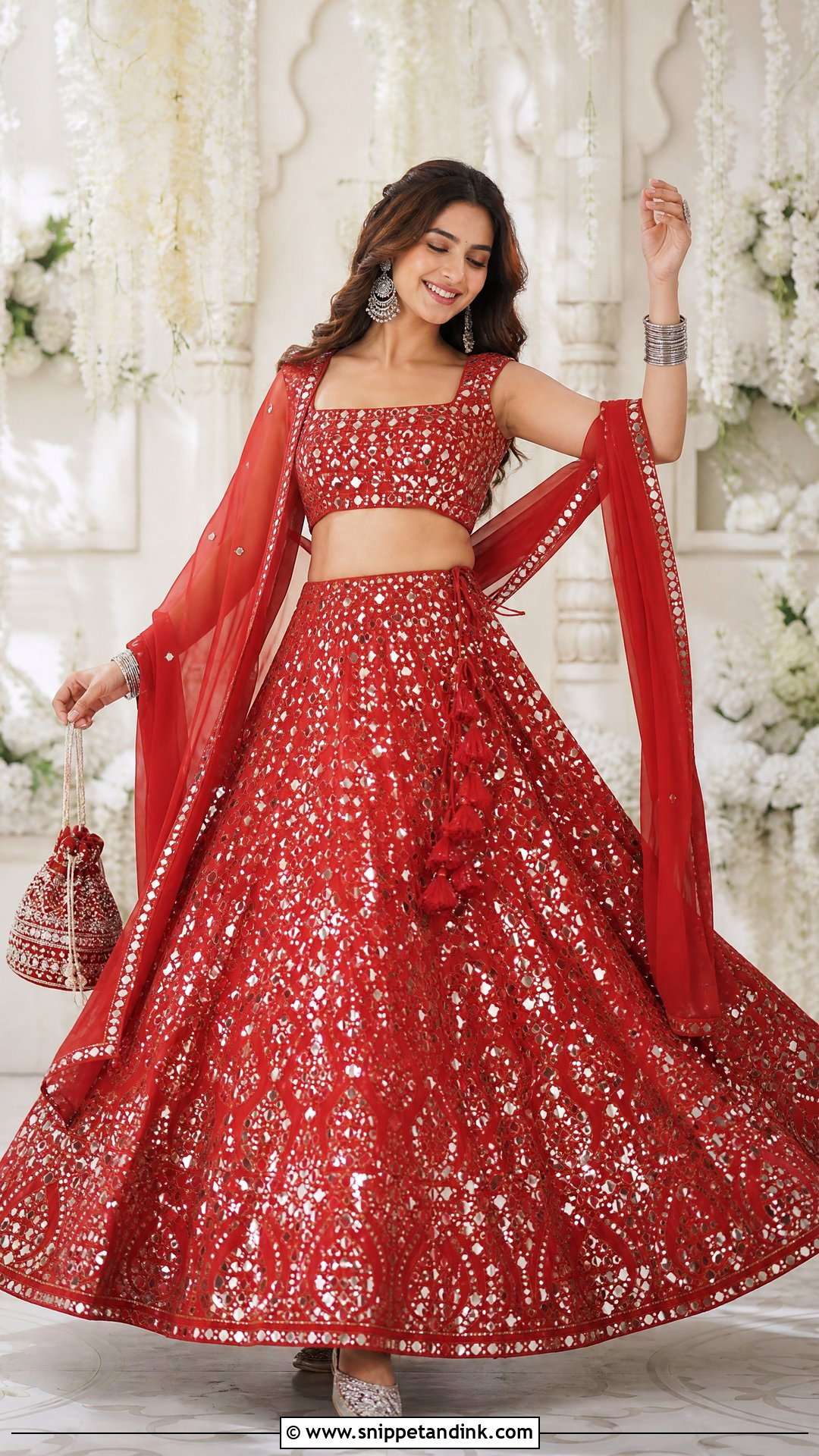
Mirror work is the most playful sparkle option, and it’s lighter than sequins when the mirrors are small and well spaced. Pair a flowing skirt with a square-neck blouse that actually supports you while dancing; for a fuller bust, I add wider straps and raise the back slightly. A chiffon dupatta with a mirror border keeps weight down. Silver earrings, stacked bangles, cushioned juttis and a braided ponytail. Guests should keep the mirrors small, while the bride or close family can go heavier with a statement tikka.
4. Red Cape Sangeet Lehenga
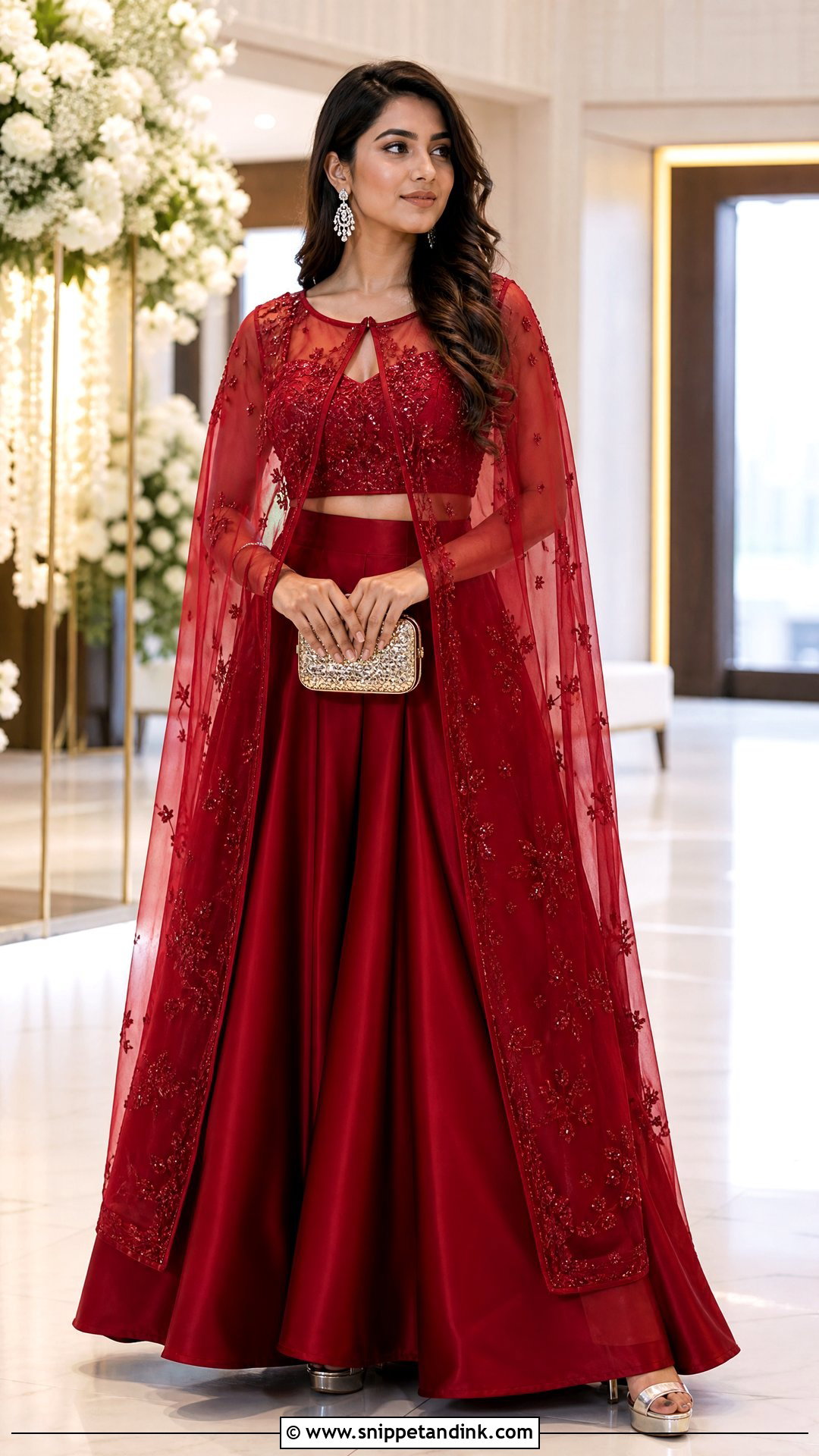
Tired of chasing a dupatta all night? A cape solves that, because it’s fixed at the shoulders and moves with you. Choose a plain satin or georgette skirt, a fitted embroidered blouse and a sheer knee-length cape that opens at the front so the waist still shows. Crystal drops, a structured clutch, block heels and a low ponytail; keep the neckline bare. Petite figures suit a cape that ends at the hip. Before you commit, raise both arms above your head in it; some cape sleeves pull the whole blouse up.
5. Red Crop Top Sangeet Lehenga
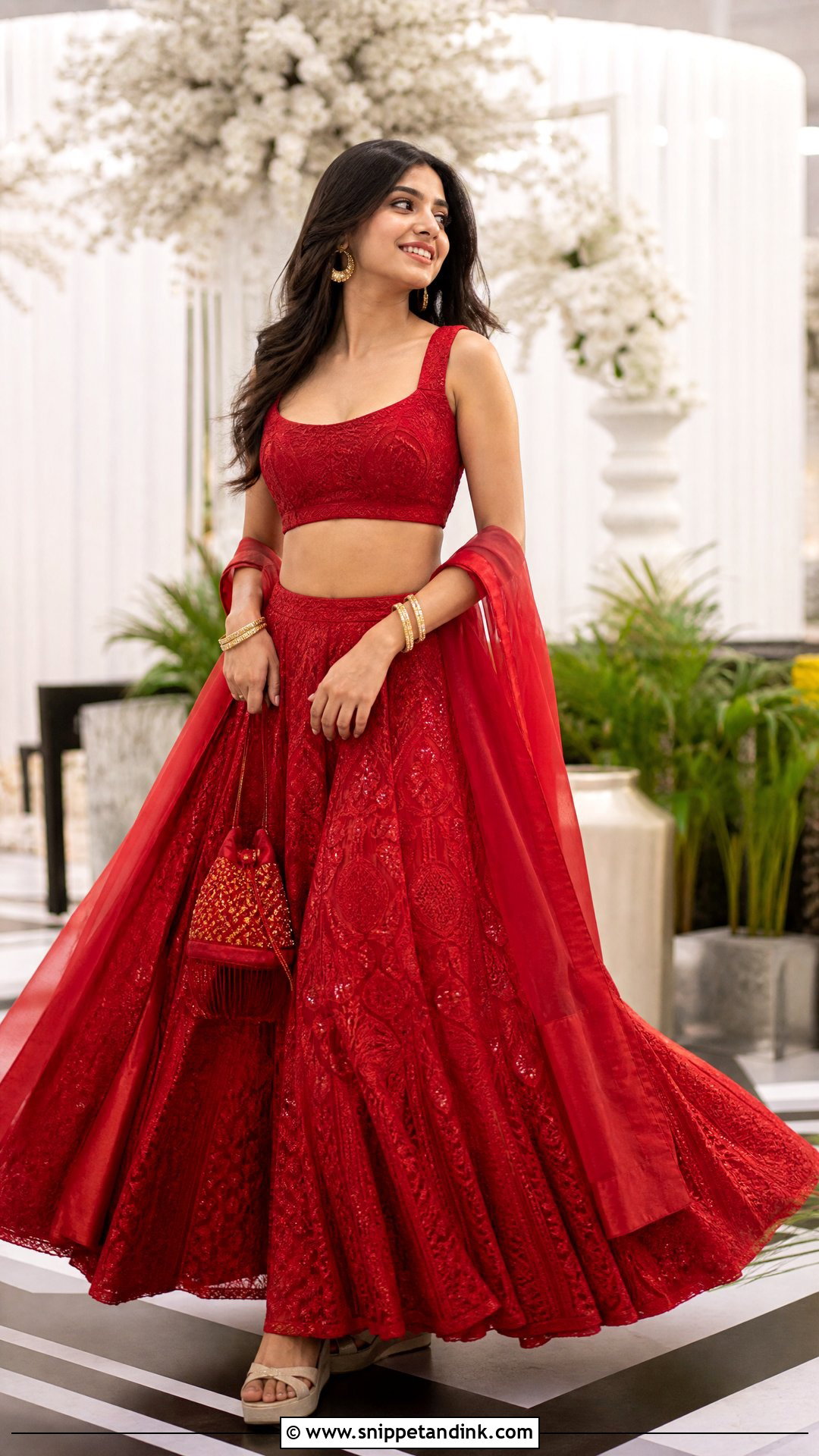
A crop top with a full skirt keeps the volume below and frees up the upper body. Tonal embroidery or narrow gold borders on the skirt, then a structured crop top with a scoop, halter or modest V. Skip the dupatta, or wrap a light scarf around one arm. The crop top should sit close without pressing on the ribs; if you can’t take a deep breath in it, you won’t last the choreography. An adjustable skirt waist is worth asking for. Gold hoops, a potli, wedges and a high ponytail suit sisters, bridesmaids and young guests.
6. Red Sharara Sangeet Outfit
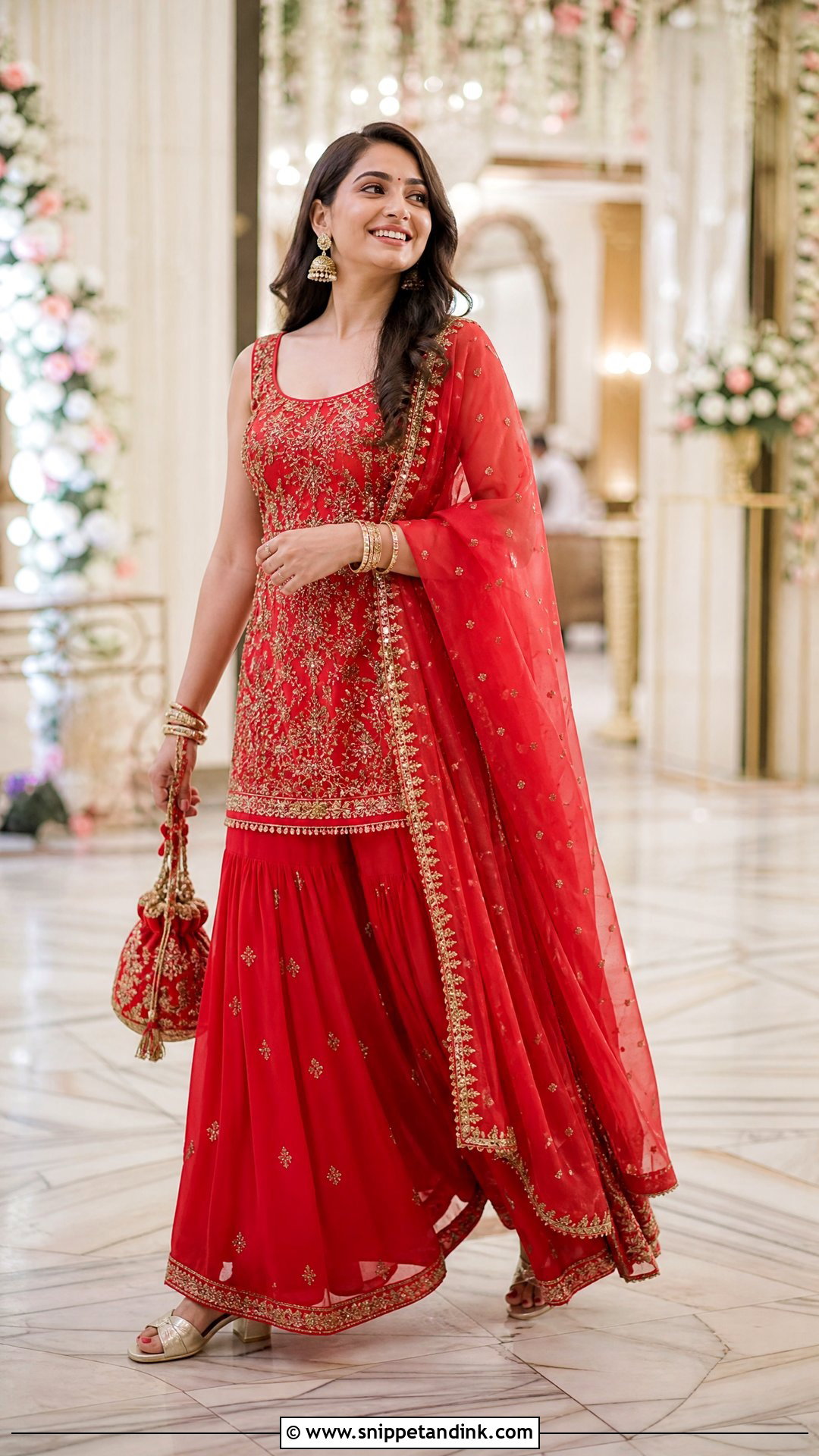
Shararas flare from the thigh, so your knees are free, and that makes them one of my favourite things to dance in. Choose a short kurti to the upper thigh; a V or curved hem lengthens the line. Pin a light organza dupatta behind both shoulders so your hands stay free. Georgette or crepe pants move without bulk. Gold jhumkas, bangles, an embroidered potli and low block heels or cushioned juttis finish it. For more coverage, take the kurti a little longer with side slits.
7. Red Peplum Sharara Sangeet Outfit
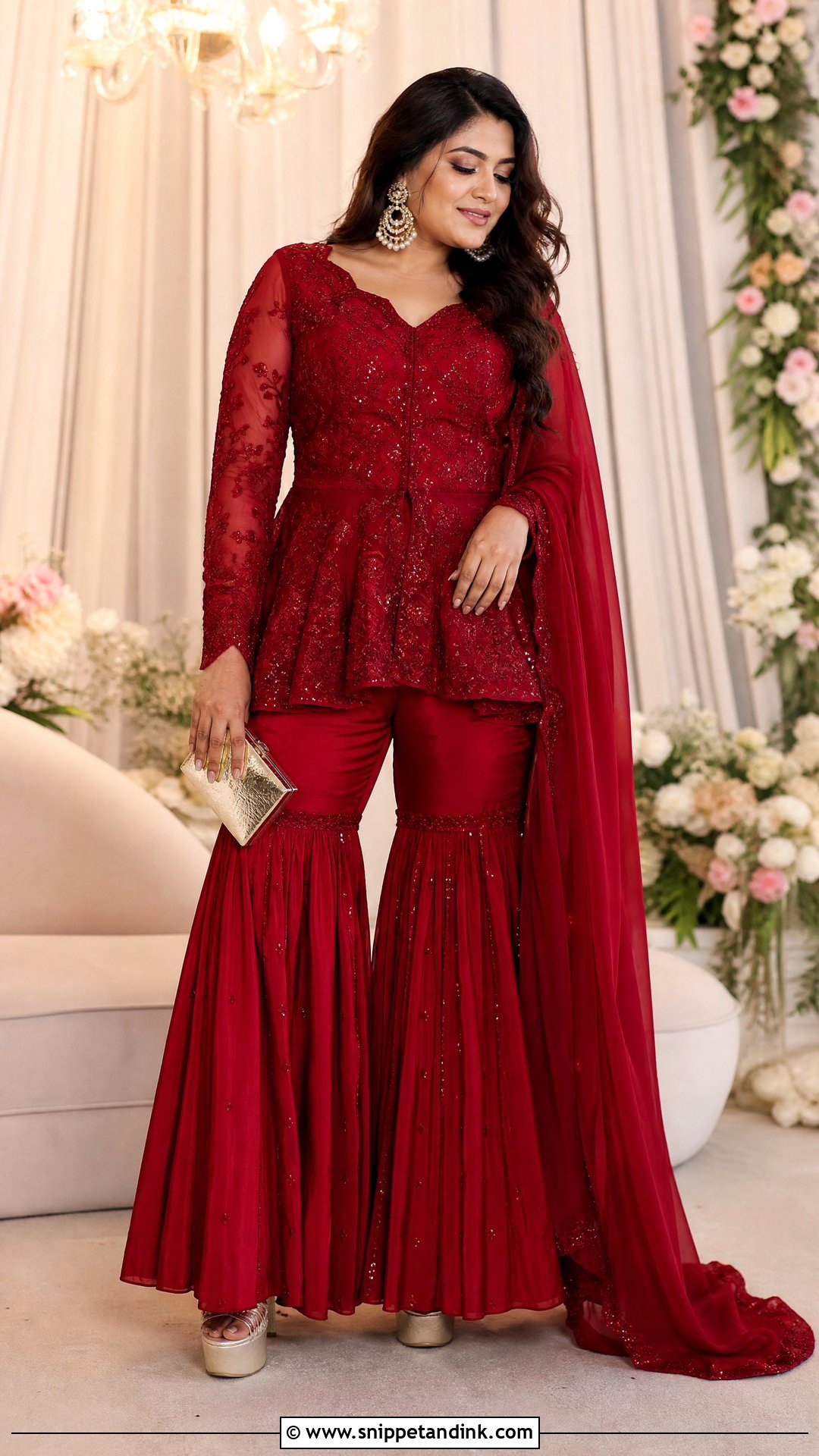
A fitted peplum top and flared sharara pants give you a defined waist and full freedom below. I’d keep the embroidery on the ruby peplum’s neck, waist and sleeves, with plain georgette pants flaring under the knee. Make sure the peplum seam sits at your natural waist; set lower, it lands across the stomach and widens you. A dupatta over one arm is optional. Chandelier earrings, a metallic clutch and stable platforms complete it. Tonal work feels modern, gold zari more traditional.
8. Red Gharara Sangeet Outfit
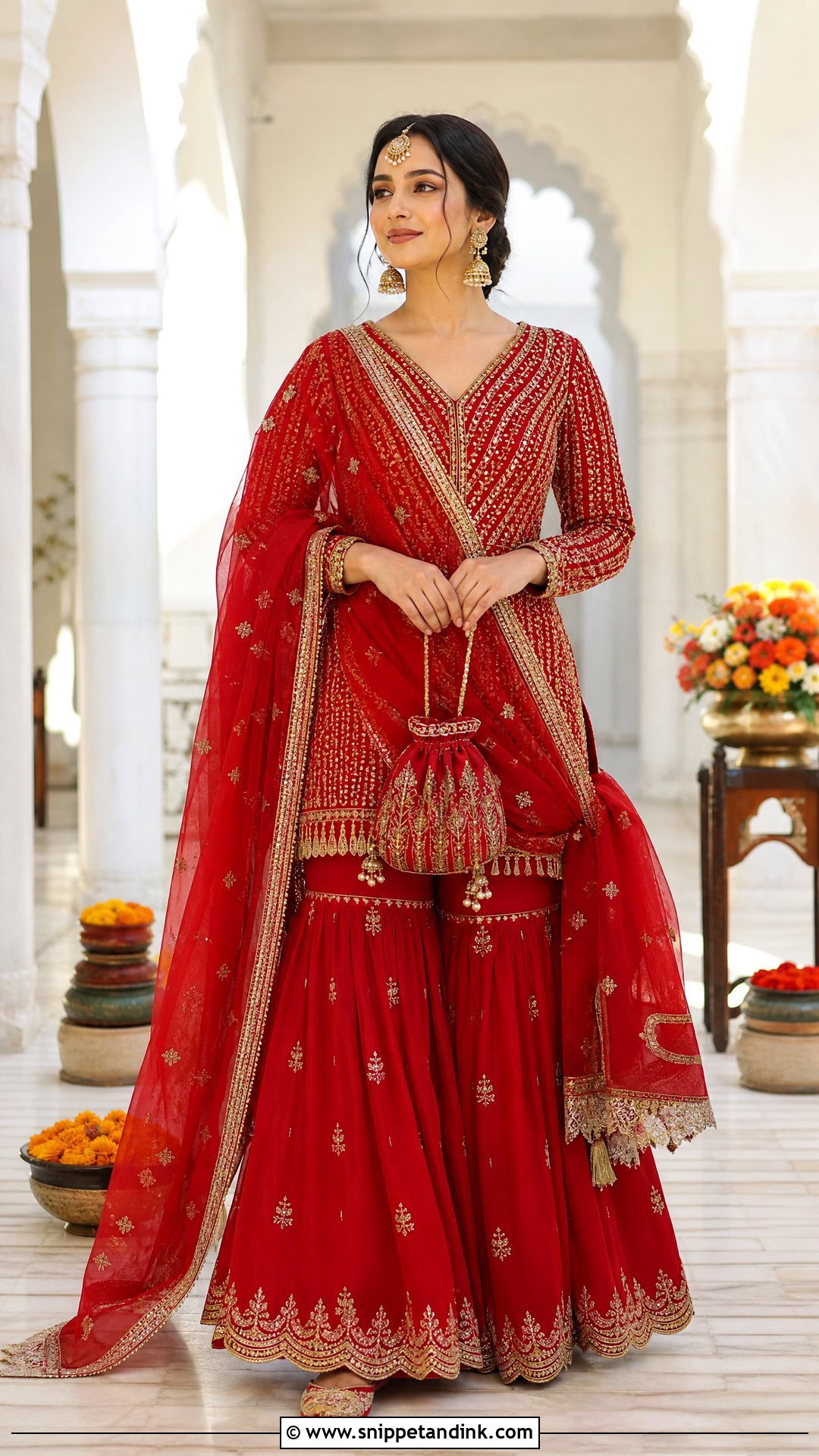
The gharara’s knee seam gives it a classic, slightly old-world shape that’s fun to dance in once you know where to lift. Choose a fitted short kurti with gota, zari or beads and a light net dupatta across the torso, pinned discreetly. Soft fabric at the knee band matters; a stiff band digs in every time you sit. Keep kurti and pants in one red to lengthen you. Jhumkas, a small tikka, a potli and flat juttis suit it. Guests can switch to a blush or antique-gold dupatta.
9. Red Anarkali Sangeet Outfit
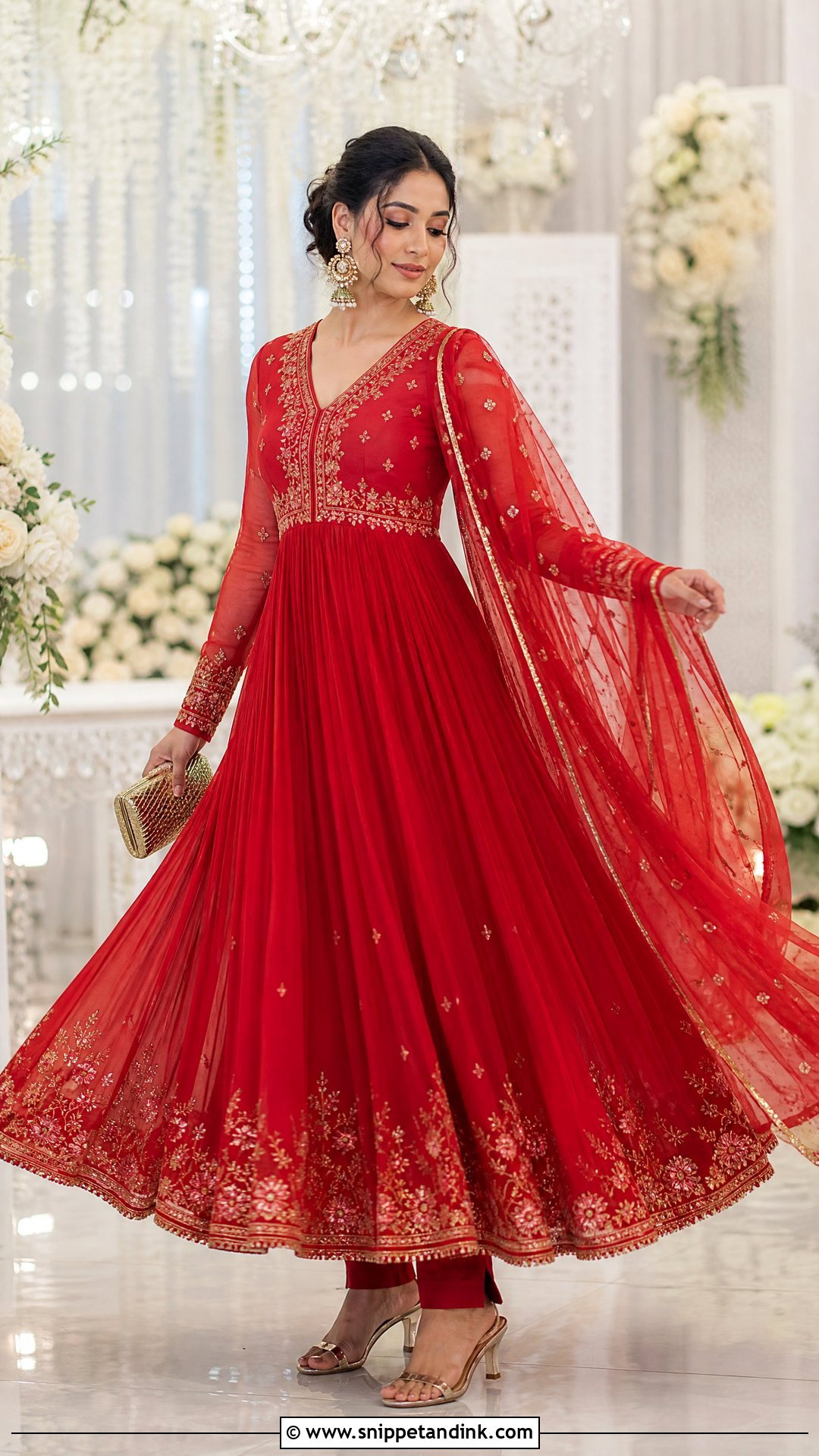
An Anarkali gives graceful movement and full coverage in one piece. A floor-skimming georgette red Anarkali with a fitted bodice and a light, generous flare twirls well. Have the hem lifted about an inch off the floor, because during group dances the person beside you will step on anything that trails. Straight pants underneath, a sheer dupatta pinned at one shoulder, kundan earrings and kitten heels. With a worked neckline, skip the heavy necklace and let earrings and bangles carry it.
10. Red Jacket Anarkali Sangeet Outfit
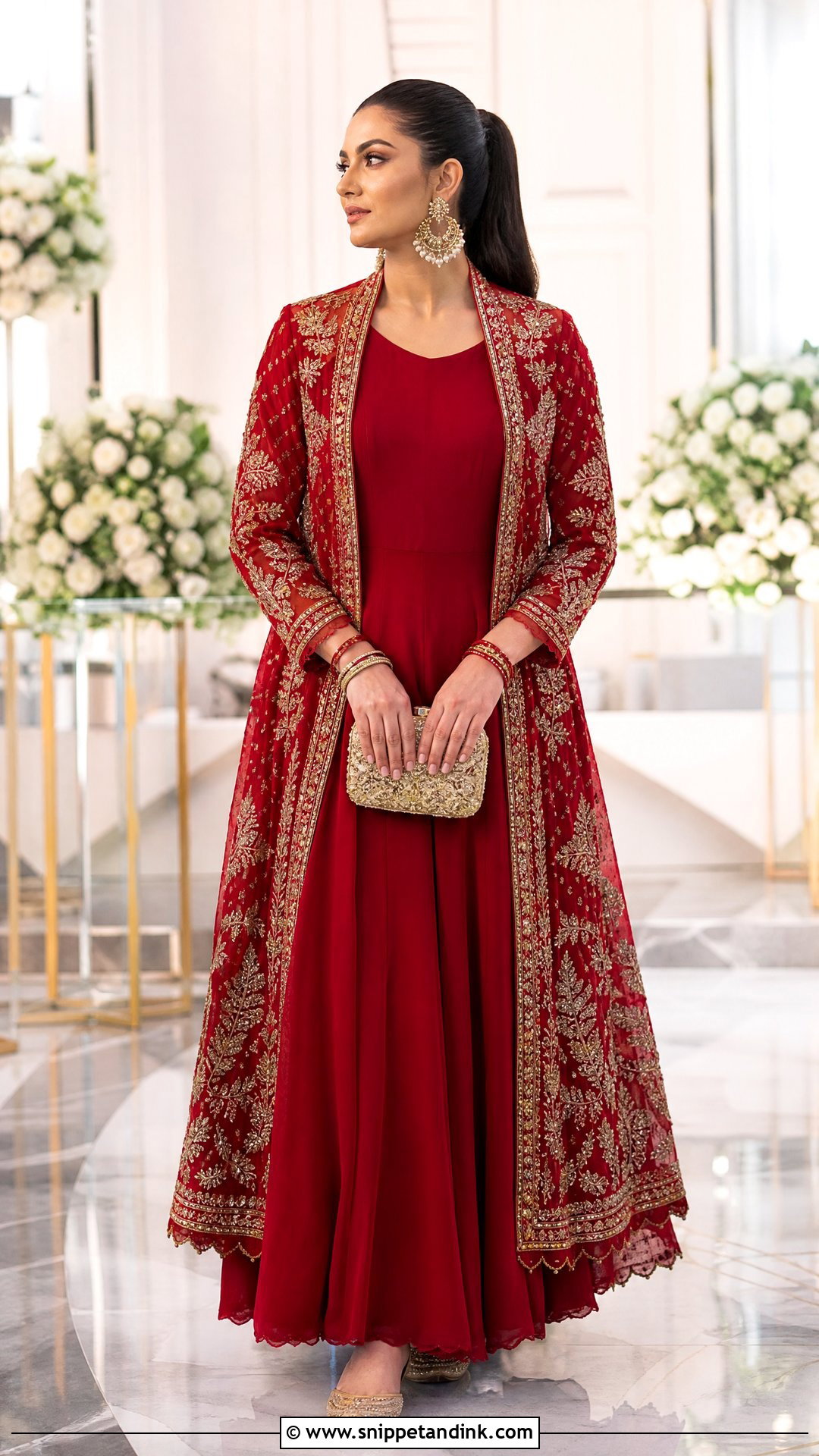
A jacket over a plain Anarkali adds structure and covers the arms without a dupatta. Start with a sleeveless crepe or georgette Anarkali, then layer an open-front jacket in tonal threadwork, sequins or restrained gold. The open front gives a long vertical line. Statement earrings, a bracelet stack, pointed juttis and a box clutch; no dupatta. Knee length suits petite frames. The jacket must stay light; a heavy one pulls across the shoulders every time you raise your arms.
11. Red Pre-Draped Sangeet Saree
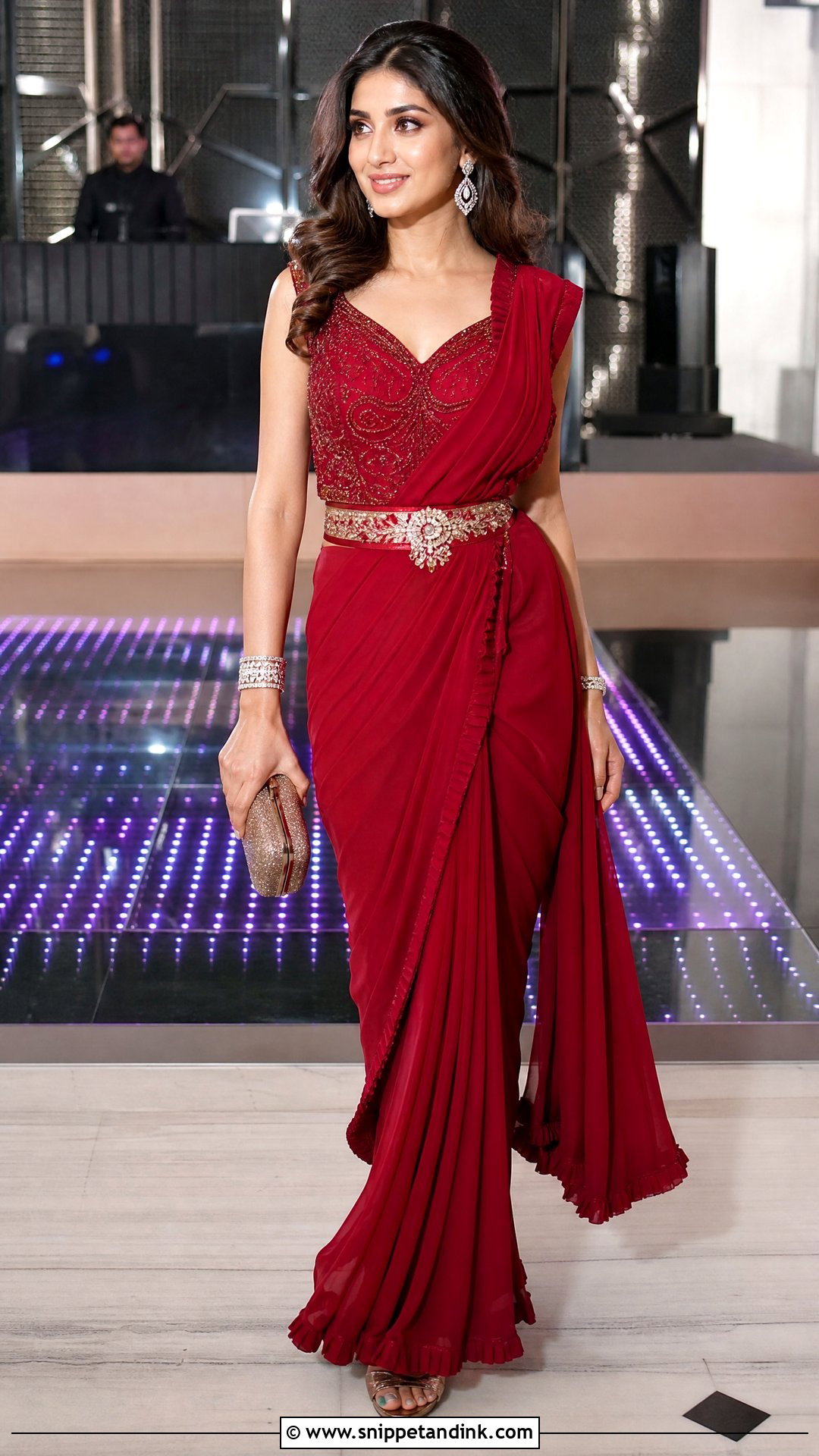
A pre-draped saree is the answer for anyone who loves sarees and fears a pallu coming loose mid-dance. Choose georgette or crepe with stitched pleats and a firmly attached pallu, and a supportive blouse with wider straps or short sleeves. A slim belt holds the drape and shapes the waist. Hem it so the front of your shoe just shows, which keeps your toes off the pleats. Crystal earrings, bangles, a small clutch and low heels. Brides can go heavier on the pallu; guests do well with tonal sequins.
12. Red Ruffle Sangeet Saree
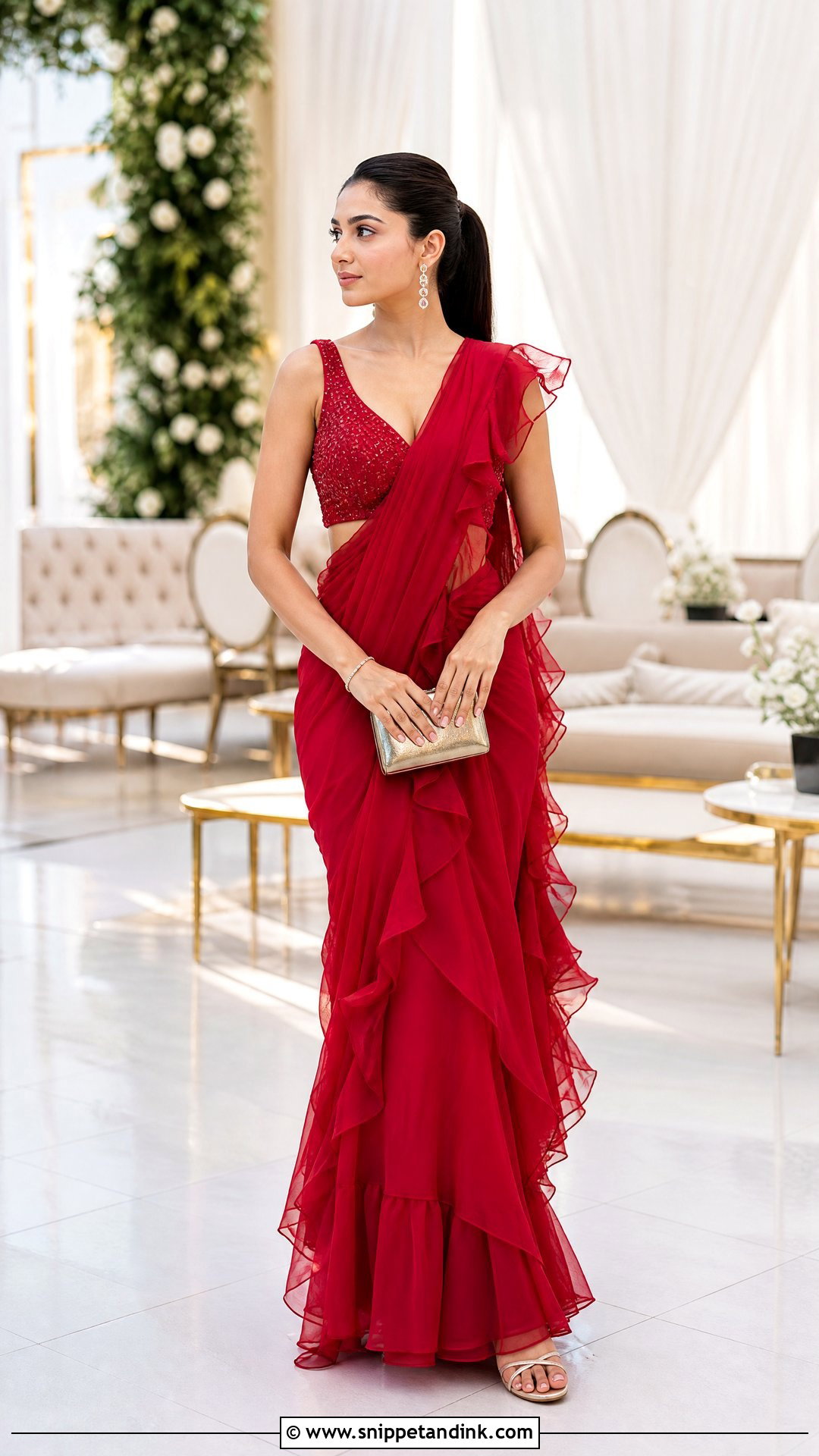
Ruffles add movement without heavy embroidery, and they bounce nicely during a dance. A light chiffon or georgette saree with neat ruffles along the hem and pallu, and a sleeveless blouse in the same red. Pin the pallu at both shoulder and waist so the ruffles don’t flick into your steps. With that much volume, I keep the jewellery and hair sleek: shoulder-grazing earrings and a ponytail. Petite women should choose small ruffles; big tiers can swamp a short frame.
13. Red Organza Sangeet Saree
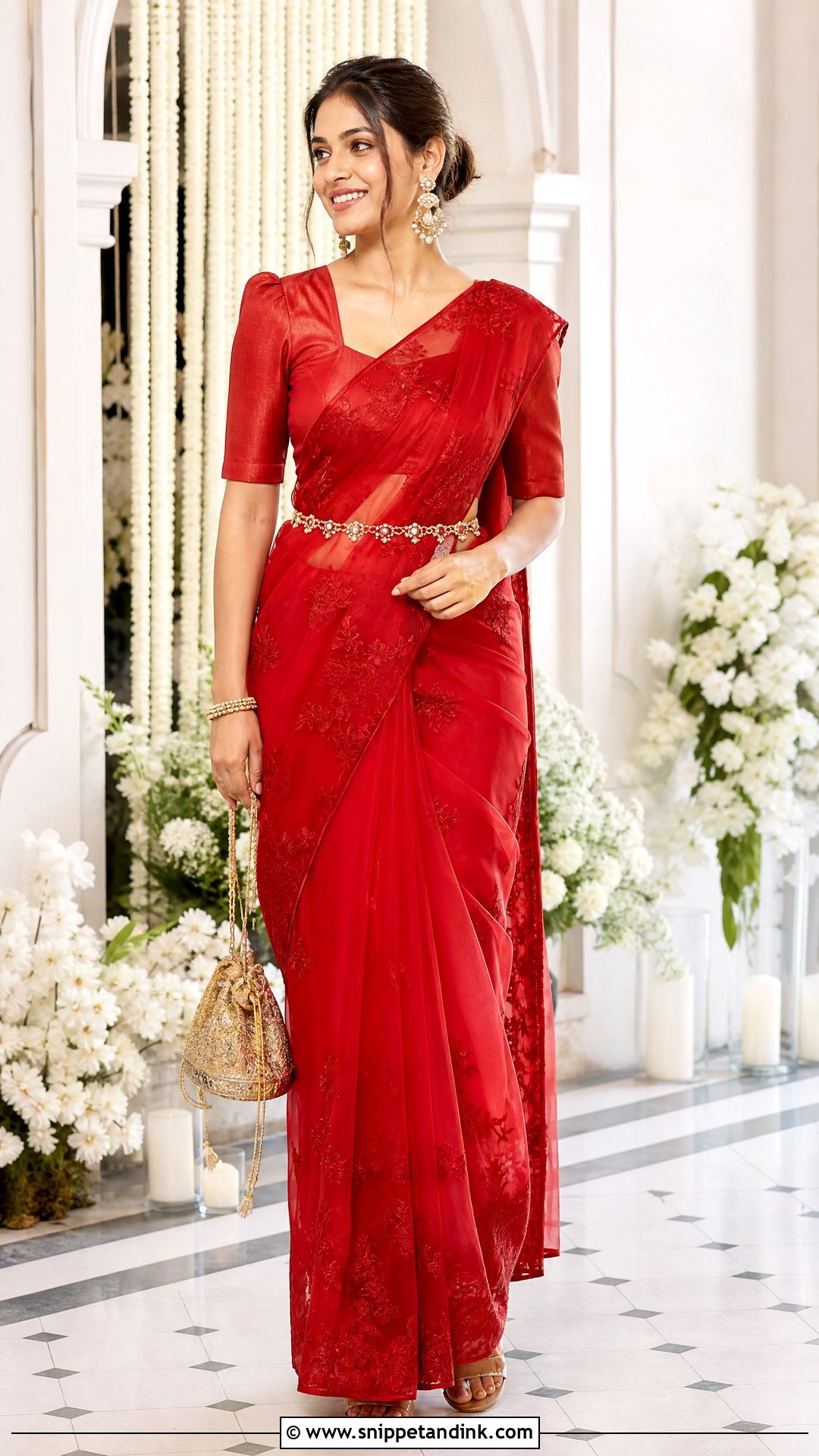
Organza holds a crisp shape and catches light with a soft glow. The catch is that it doesn’t flow, so I’d steer you to it only if your dance is gentle rather than full choreography. Choose scattered sequins or a fine floral border, with a structured silk blouse in red or antique gold. Keep pleats narrow and freshly pressed, since organza puffs out when the pleats are wide. A waist belt holds the drape. Pearl-and-kundan earrings, a small potli, low block heels and a neat bun finish it.
14. Red Saree Gown Sangeet Outfit
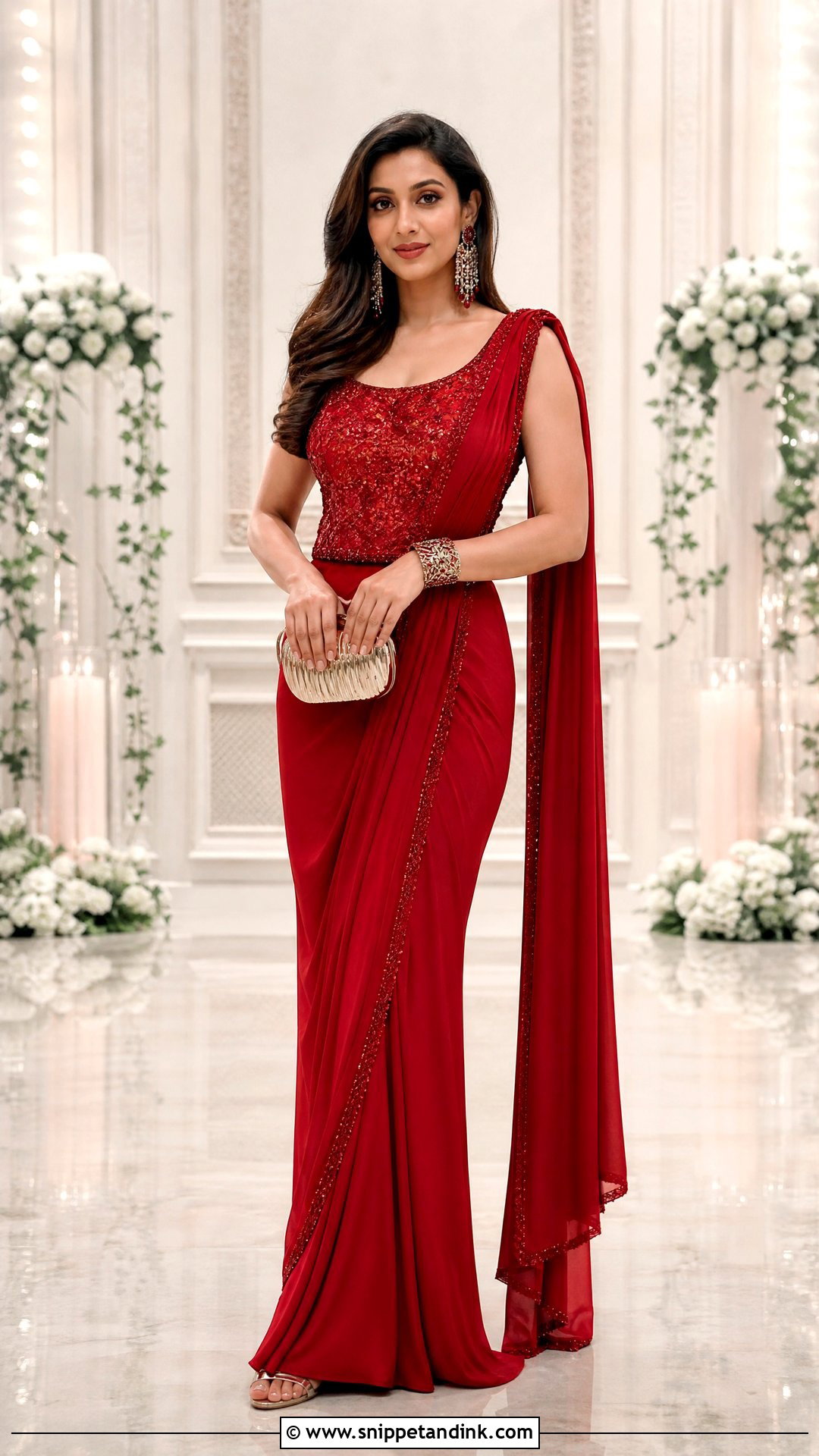
A saree gown looks like a saree and wears like a dress. The drape is stitched onto a fitted bodice and flared skirt, so nothing unravels. Choose stretch crepe, georgette or light satin. Long earrings, a jewelled cuff, a hard clutch and supportive block heels suit it, with a side ponytail to show the asymmetric neckline. Since there’s little embroidery to distract, the fit at bust and waist has to be precise. Sheer sleeves or a longer attached pallu add coverage.
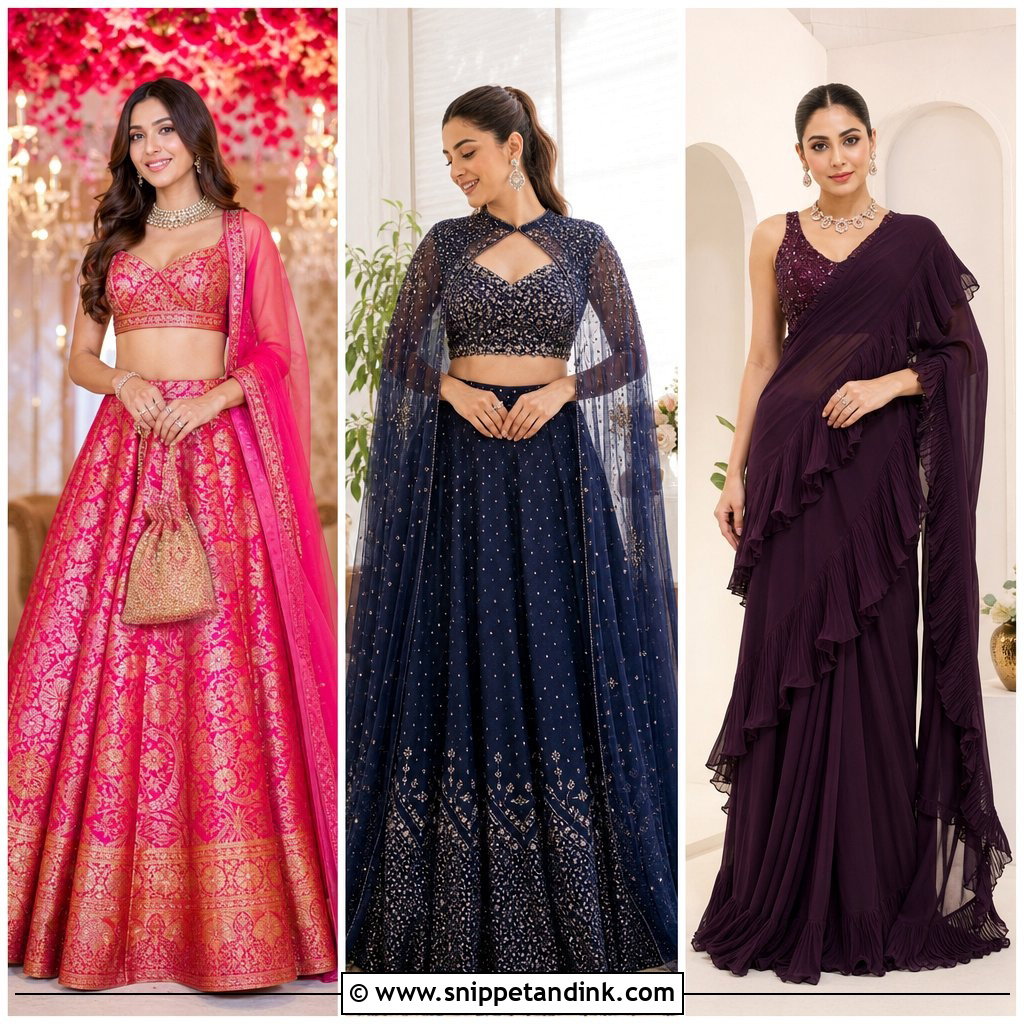
15. Red Indo-Western Sangeet Gown
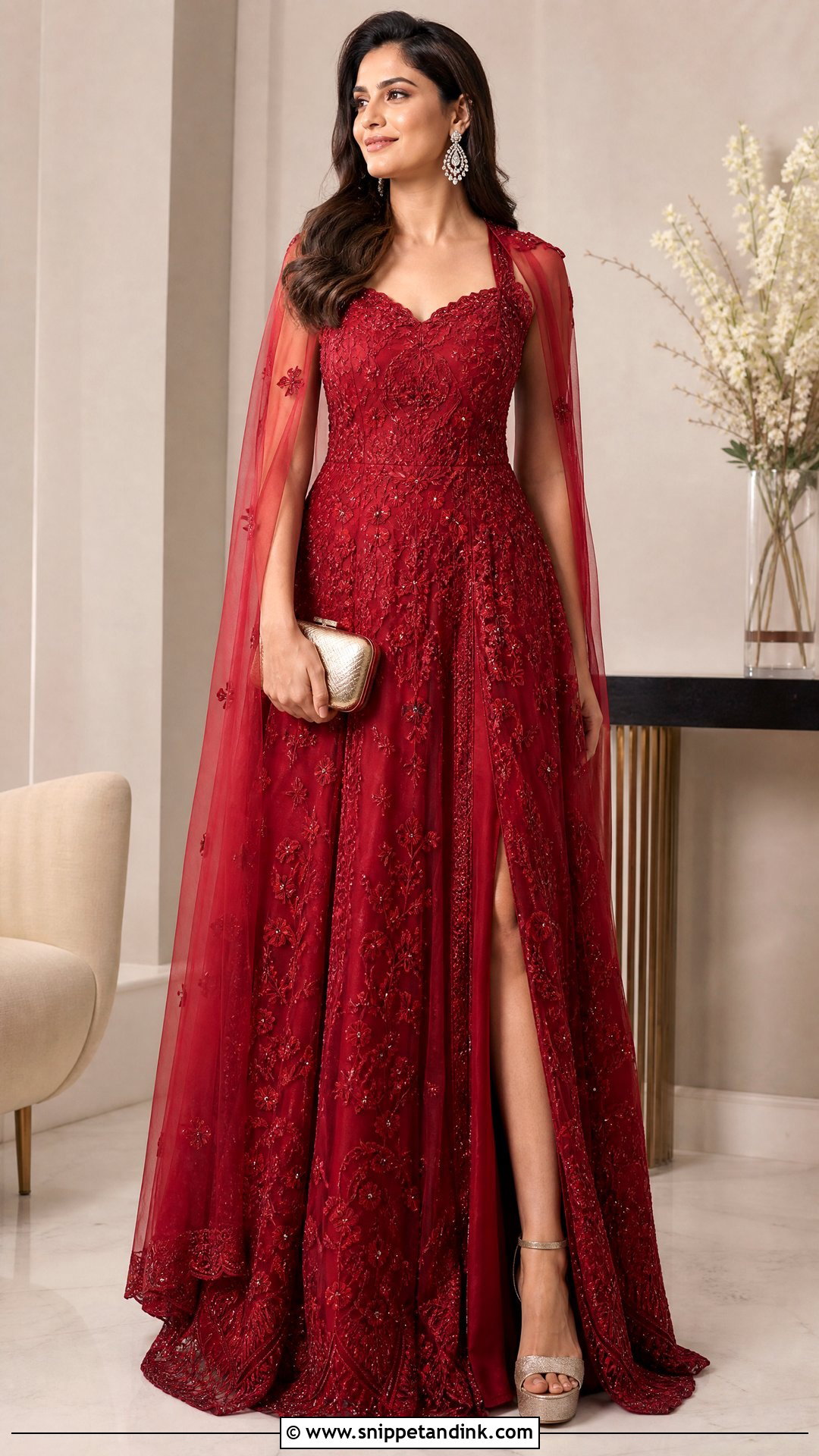
An Indo-Western gown suits a sangeet with a cocktail-style dress code. Look for Indian embroidery at the bodice, waist or shoulders, and an A-line skirt or side slit. A tight mermaid cut looks great standing still, but you can’t dance in it. Platform heels, statement earrings and a metallic clutch; a sheer cape if the gown is simple. Guests should keep away from bridal-level detail and trains. Sit, walk and raise your arms in it before the day to test the lining and neckline.
16. Red Dhoti Pant Sangeet Outfit
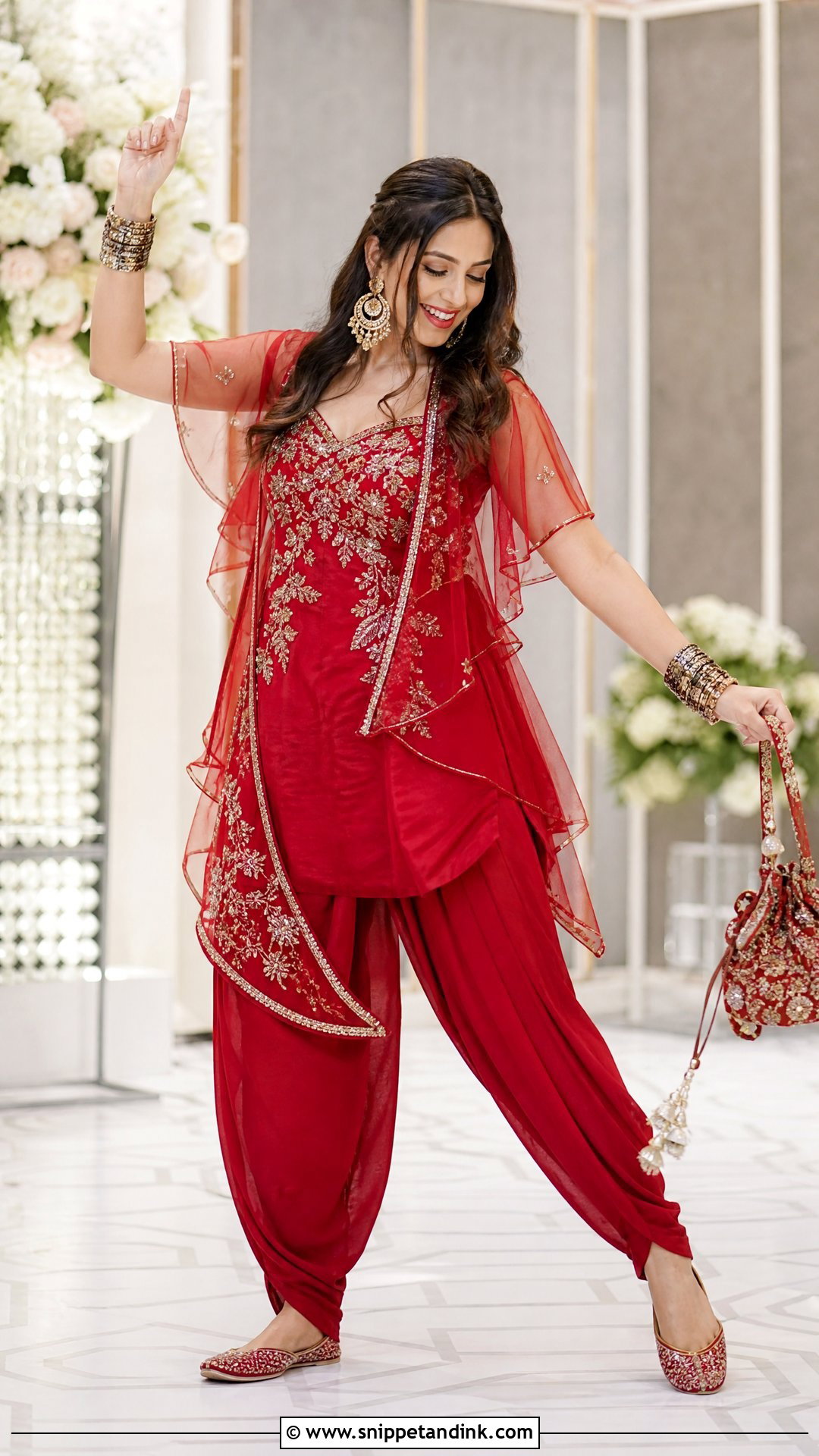
Draped dhoti pants are probably the most dance-proof bottom on this list; the drape gives your legs complete freedom. Pair them with a fitted embroidered crop top or a hip-length asymmetric kurta, and add a short cape or jacket if you want a layer. The pants should taper at the ankle without gripping the thighs. Large earrings, stacked cuffs, a potli and embellished flats suit the sporty mood. Keep the outfit in one red family and bring contrast through gold, silver or emerald jewellery.
17. Red Palazzo Cape Sangeet Outfit
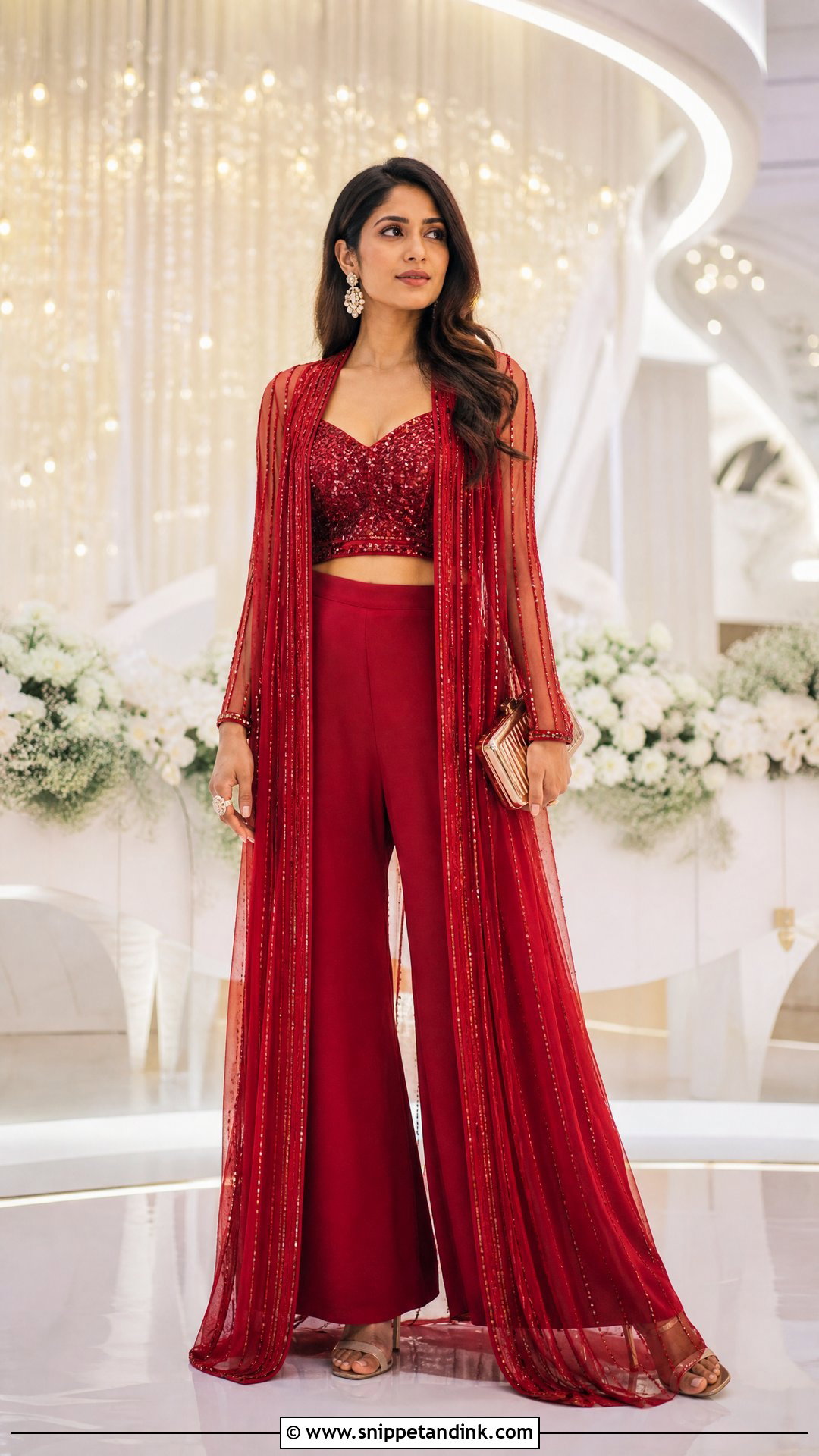
Palazzos with a sheer cape are comfortable for hours and look long and elegant. Start with high-waisted crepe or georgette palazzos, a fitted embellished blouse and a cape open at the front. Keep the cape above the floor, because a trailing one gets trodden on in group dances. Crystal earrings, a structured mini bag and stable heels. Curvier figures look good with a little shoulder structure on the cape; petite women should go shorter. Tonal sequins look refined, gold embroidery more traditional.
18. Red Embroidered Sangeet Jumpsuit
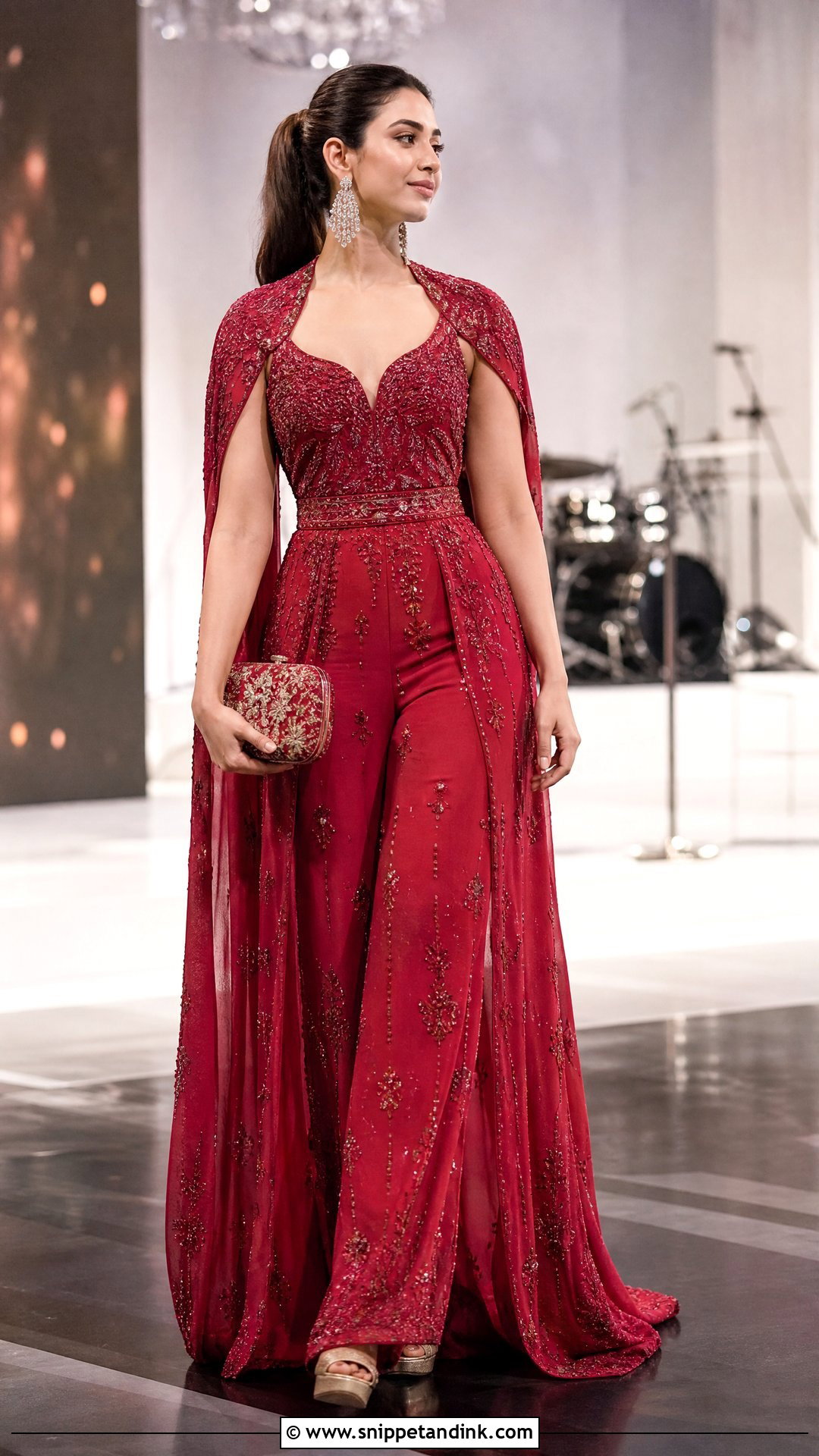
A red embroidered jumpsuit is a practical swap for a lehenga or saree. Choose wide legs, a defined waist and a supportive fitted bodice with beadwork, mirrors or zari at the neckline. A detachable cape adds movement in photos. Make sure the hem clears the floor in your shoes and that the zip is one you can reach alone, because jumpsuits mean full undressing for every bathroom trip. Chandelier earrings, an embellished clutch, platforms and a polished ponytail finish it.
19. Red Corset Lehenga Sangeet Outfit
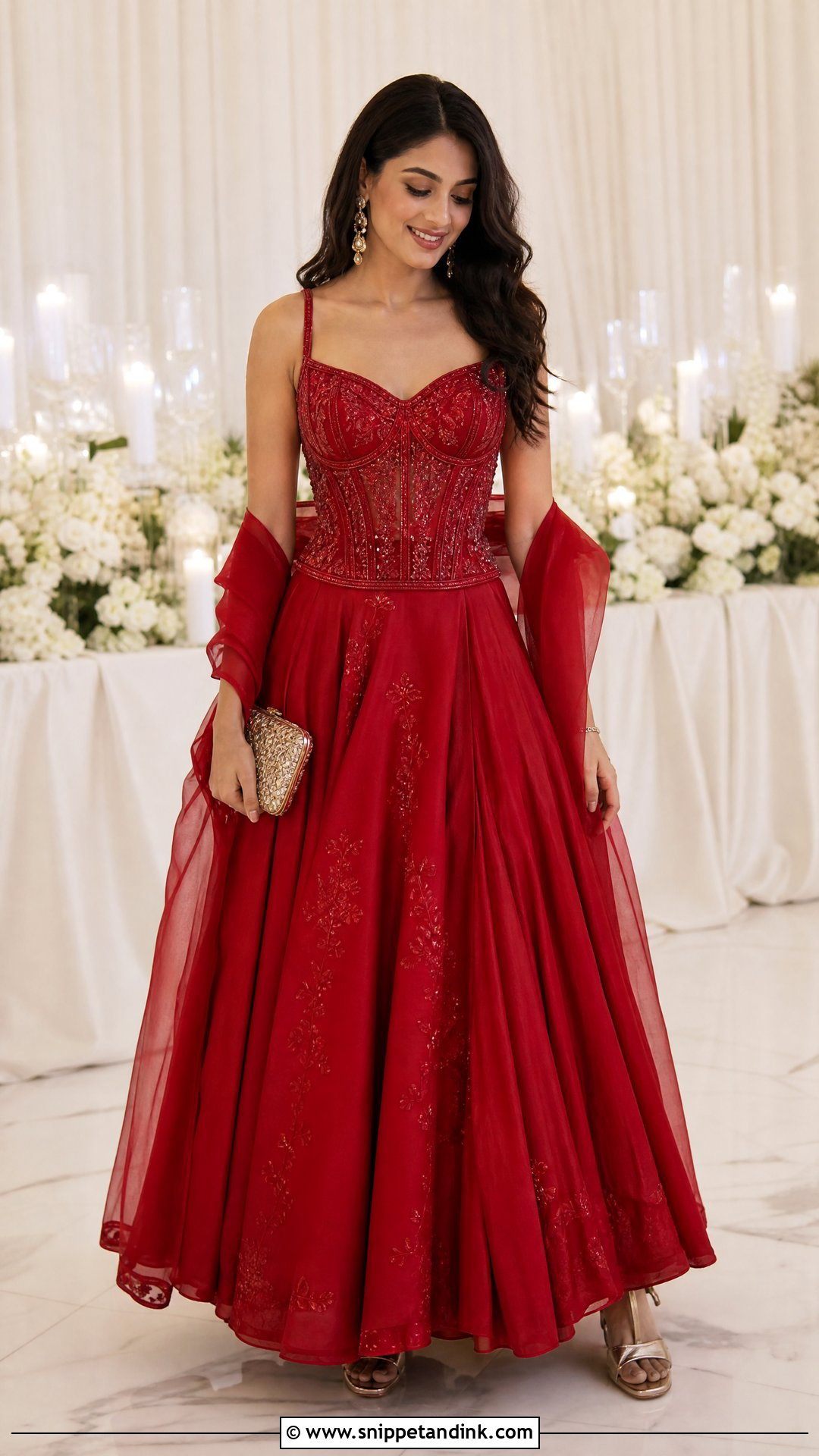
A corset blouse shapes the body and pairs well with a light A-line or circular lehenga. I’d only choose one with flexible boning and secure straps, and never laced so tight that you can’t breathe deeply, sit or dance. Wrap the dupatta round the arms, drape it on one shoulder, or leave it off for demanding choreography. Drop earrings, a bracelet, a compact clutch and block heels. A soft updo shows the shoulders. For more coverage, add a waist-length cape or sheer sleeves.
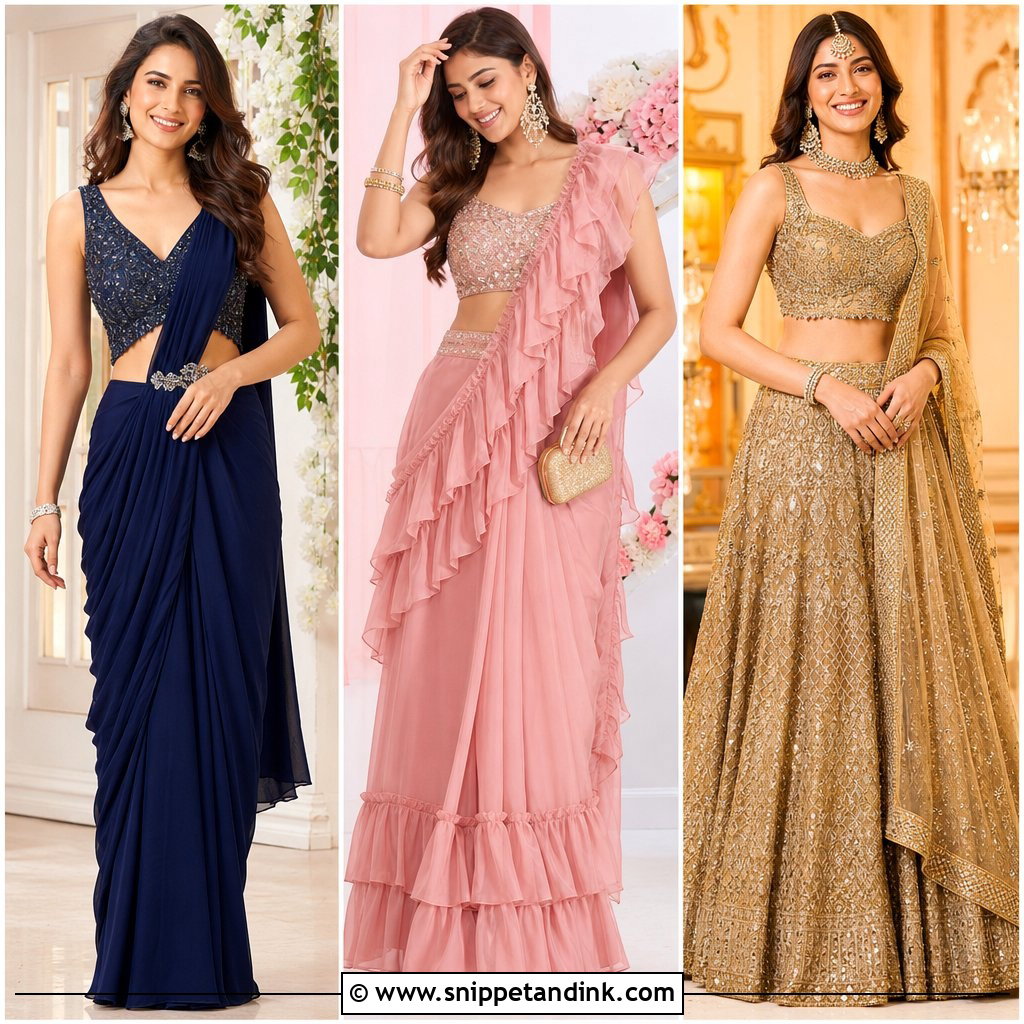
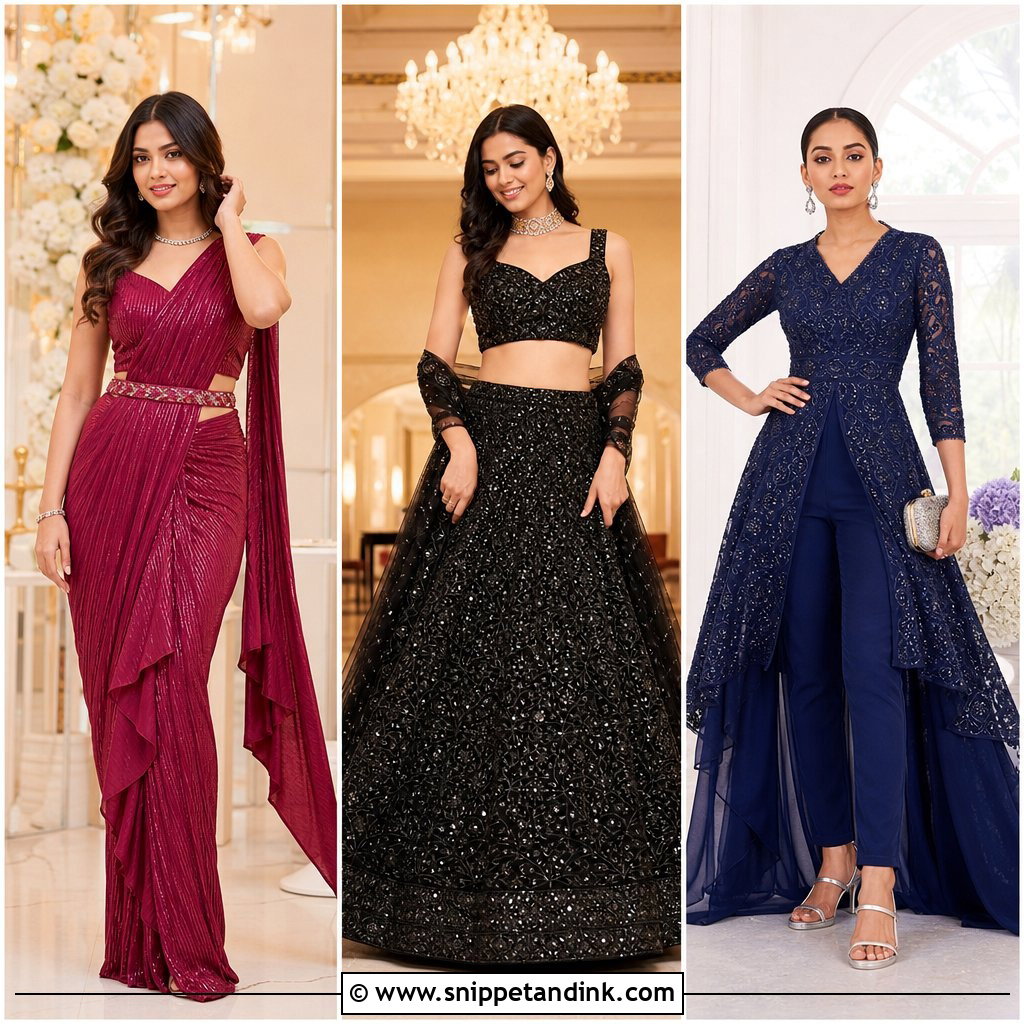
20. Red And Gold Sangeet Salwar Suit
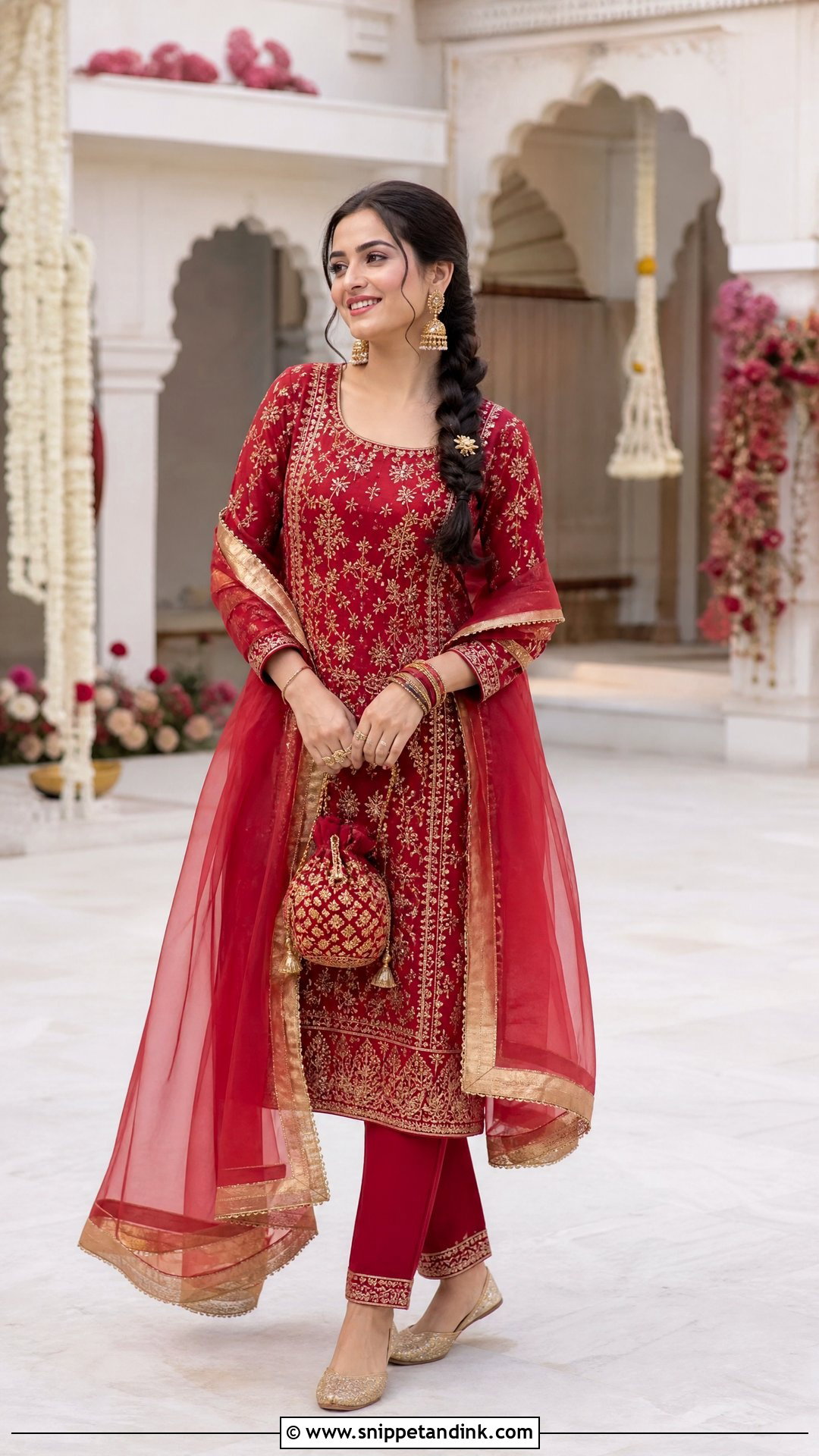
Comfort, coverage and tradition all sit in a red and gold salwar suit. A straight or gently flared kameez with gold at the neck, cuffs and hem, paired with cigarette pants for a clean line or a Patiala for movement. Pin the gold-edged dupatta before the dancing starts. Jhumkas, slim bangles, a potli and cushioned juttis complete it. Keep the kameez hem above the ankle so it doesn’t catch your steps. This suits every age and body type, and it’s easy to adjust through sleeves, neckline and trouser shape.
Is Red Fine for a Guest at the Sangeet?
Often, yes, but ask first. In many families red is the bride’s colour for the main ceremony and is welcome at a sangeet. Others prefer guests to avoid it entirely, or the bride may already be wearing red that night and would rather not share it. A quick message to the bride or her sister settles it.
If red is fine, I keep guests clearly below bridal level: lighter embroidery, no heavy dupatta over the head, smaller jewellery, and a red that differs from the bride’s own shade. Maroon or rust next to her scarlet reads as respectful.
Heat, Sweat and a Small Fix-It Pouch
Two hours of dancing under lights will test any fabric. Sweat-shield pads in the blouse protect silk and embroidery from salt marks. Pack a pouch with safety pins, fashion tape, a mini sewing kit, blotting papers and a spare pair of flat juttis. When a hook pops mid-performance, the person holding that pouch saves the night.
Can You Spin in It Twice Without Fixing Anything?
Every outfit above trades a little impact for movement, or the other way round, and the sangeet is the night to lean toward movement. Sequin lehengas sparkle; shararas, jumpsuits and dhotis give the most freedom. Pre-draped sarees and saree gowns look elegant with no pinning panic. Brides can go elaborate. Guests should check first that red is welcome, then choose lighter work or contrasting jewellery. Whatever you pick, rehearse in it, secure the drape and wear shoes you can stand in for hours.
You'll Like These Ideas:


Leave a Reply