
Most couples I dress for a Nikah are balancing three opinions at once: their own, their parents’, and whatever the venue expects. Shia weddings add things that general wedding styling tends to ignore, like a calendar that rules out certain months, ceremonies where you sit on the floor, and elders who notice whether a sleeve reaches the wrist. The ideas below cover the Nikah itself, engagement and anniversary portraits, Eid and quieter family days. For each one I’ve added what I’d actually check at a fitting, because modest outfits succeed or fail on fabric and fit far more than on color.
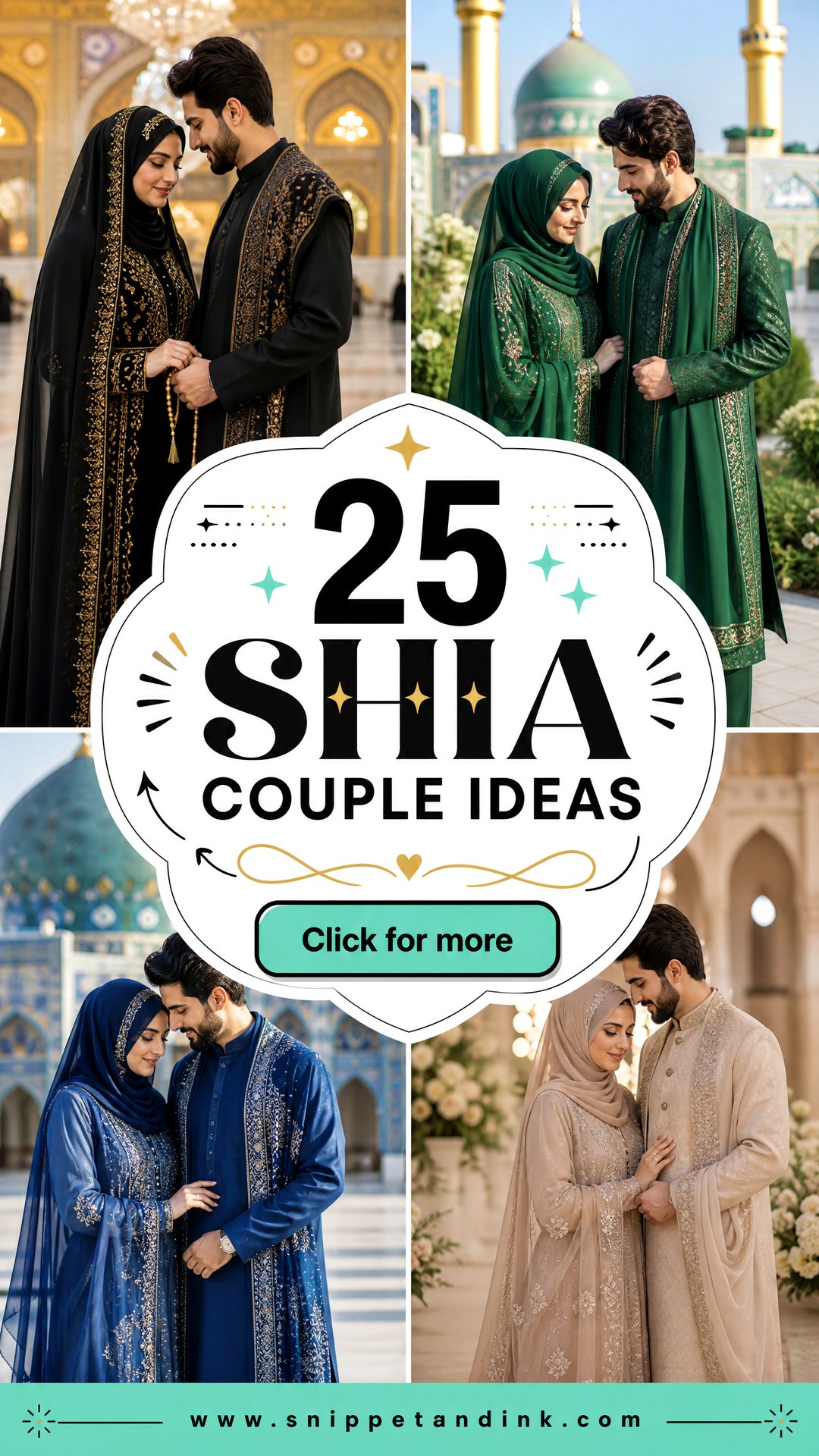
Muharram, Imambargahs and the Questions Elders Ask First
Before anyone picks a color, I ask two questions: when is the event, and where will you be sitting? Shia families generally avoid weddings and celebrations during Muharram and Safar, the months of mourning for Imam Husayn, and many also keep other anniversaries of the Imams free of festivities. That shapes outfits as much as dates. A bright engagement shoot booked in those weeks can upset relatives, and black, which some couples love for evening portraits, is the color many of those same relatives wear to majlis.
If the Nikah is in a mosque or imambargah
Shoes come off at the door, so her outfit has to look finished barefoot or in socks. I hem floor-length pieces for flat feet rather than heels, and I remind the groom to wear dark socks he’s happy to be photographed in. Expect floor seating or low cushions, separate seating for women and men in many venues, and long recitations. Sleeves to the wrist, hems to the ankle and a hijab that stays put when she lowers her head are the basics I check.
Ask about cameras before writing a shot list
Some families welcome a photographer everywhere. Others want no cameras in the women’s section or during the recitation itself. I find out early, then plan the couple portraits for afterward, outside the prayer hall, where nobody has to feel uneasy.
1. Shia Nikah Couple Outfit
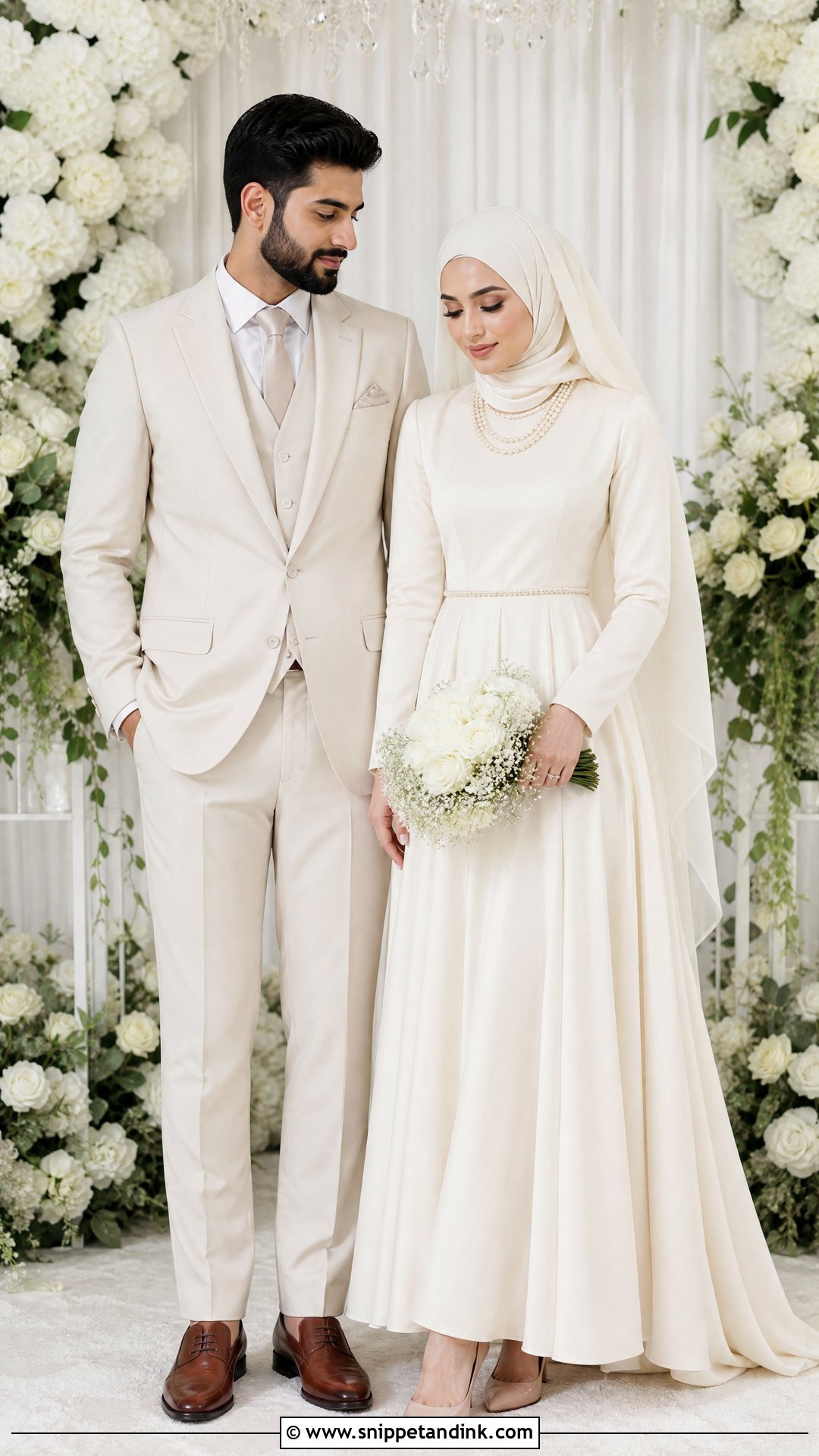
For the Nikah I start with how she’ll sit. Many ceremonies keep the bride seated through the recitation, sometimes on a low divan or floor cushions, so I’d choose an ivory A-line gown, a modest maxi or an embroidered abaya over anything cut close through the knee. A matching hijab, pearl studs, a fine bracelet and a small bouquet are plenty. He can wear cream, beige or charcoal, and the two outfits connect through one accent (ivory, gold or a soft green) rather than identical fabric. Bright indoor light or a simple floral stage suits this pairing, and soft makeup keeps her face from competing with the embroidery.
2. Shia Engagement Couple Outfit
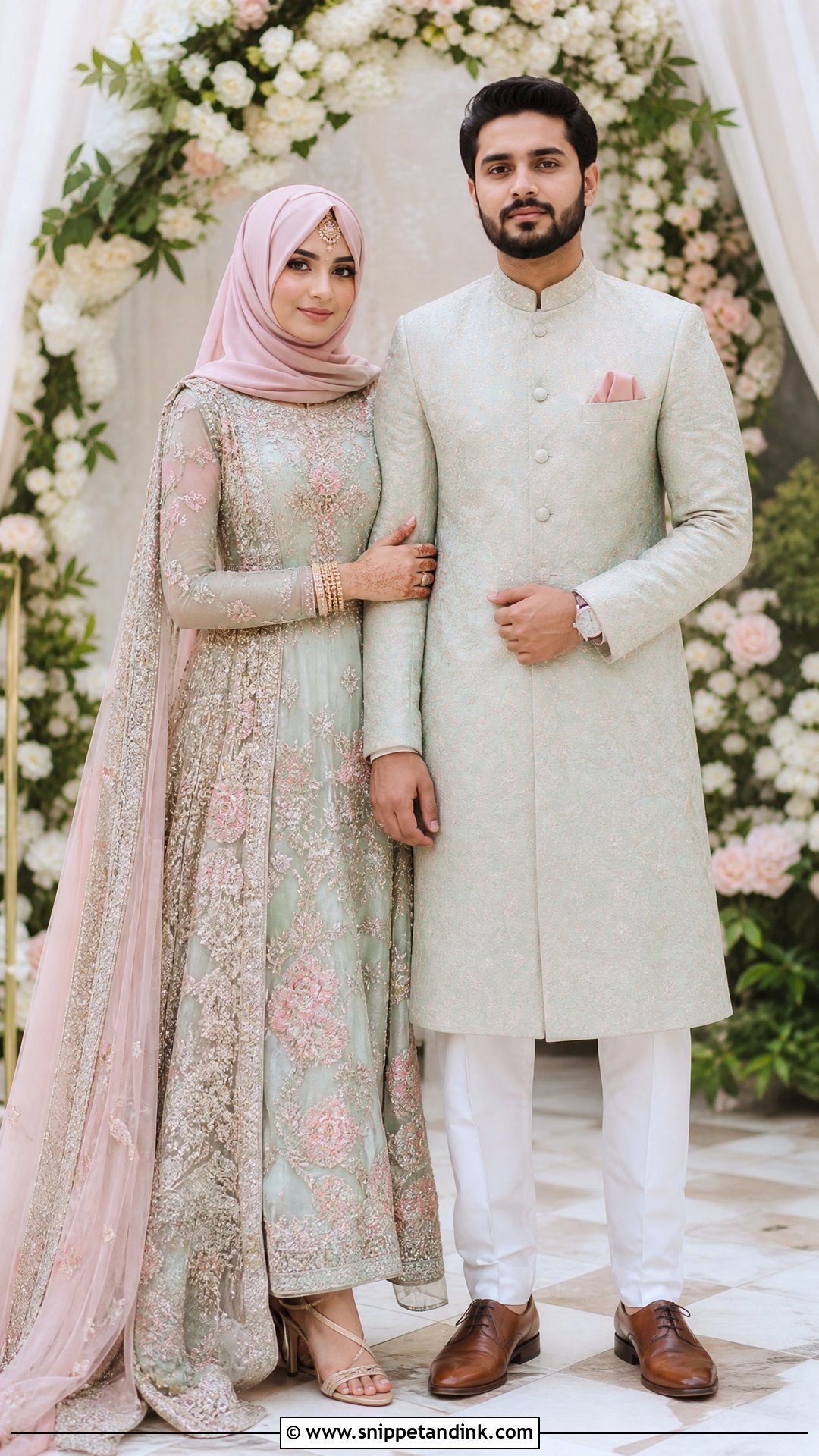
Engagements are where I let couples bring in color. A pastel lehenga, a long embroidered dress or a full-sleeved kaftan with a coordinated hijab or dupatta gives her room to play, and he can answer in a tailored sherwani, a dress shirt with trousers, or a suit in a neighboring shade. Soft pink, sage, champagne, dusty blue and lavender all read well on camera. One thing I always ask: will the photographer use flash indoors? Pastel net and organza go almost white under strong flash, so if the answer is yes I pick the deeper version of the shade. His pocket square can echo her color, and a small clutch with simple jewelry finishes her side.
3. Shia Wedding Couple Outfit
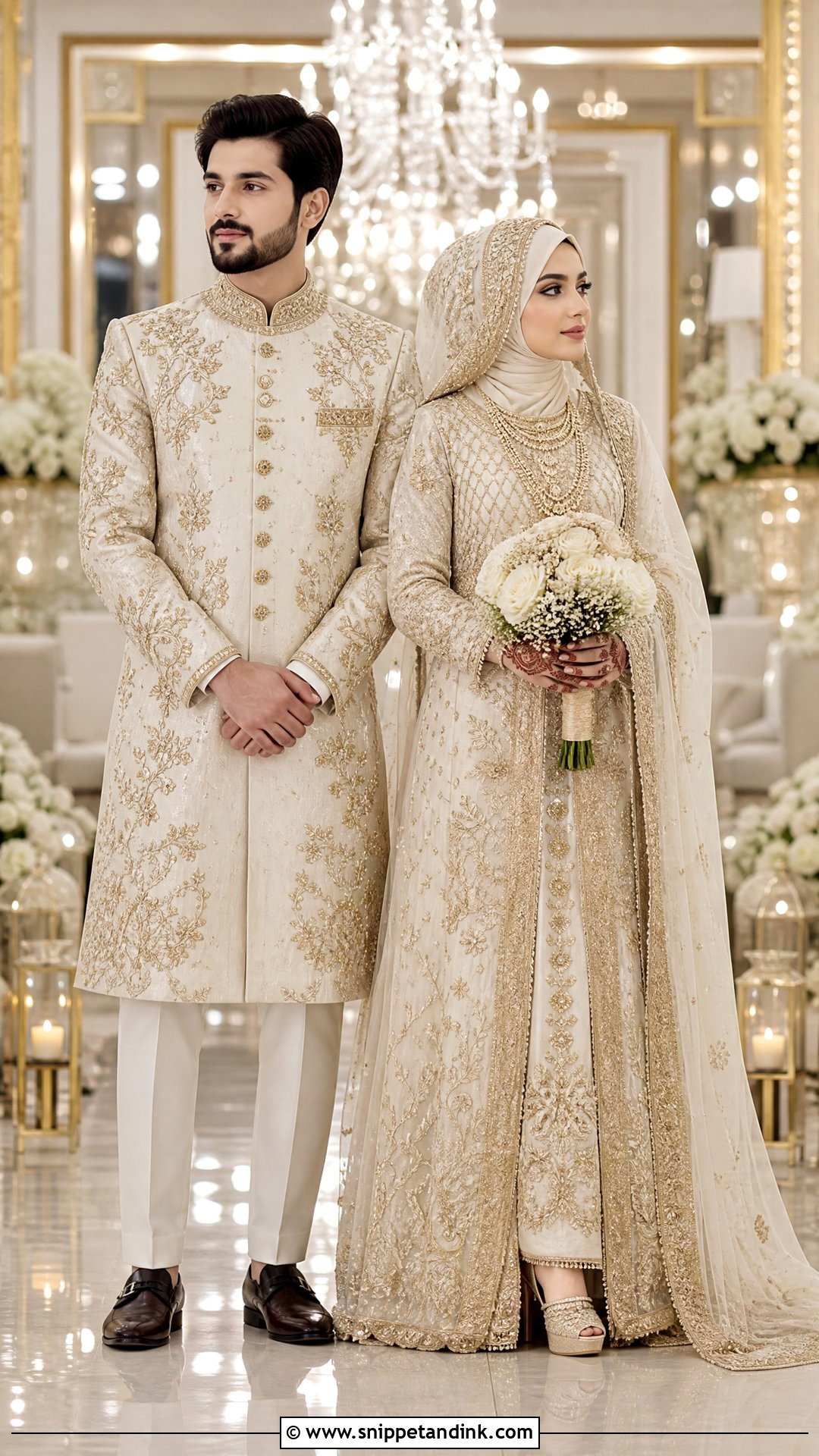
The main wedding is usually the heaviest outfit she’ll ever wear: a long-sleeve gown, an embroidered lehenga, a modest saree drape or an abaya-inspired dress worn with a veil or hijab. Silk, chiffon, organza and brocade carry the sense of occasion, but brocade and dense zari add real weight, so at the final fitting I have the bride stay fully dressed for twenty minutes before I sign off. The groom can go sherwani, tuxedo or formal suit. Gold, ivory, maroon, emerald and champagne are dependable, and I tie the two looks together by repeating one detail, usually the tone of the embroidery thread. Formal is right here. Overwhelming isn’t.
4. Shia Anniversary Couple Outfit
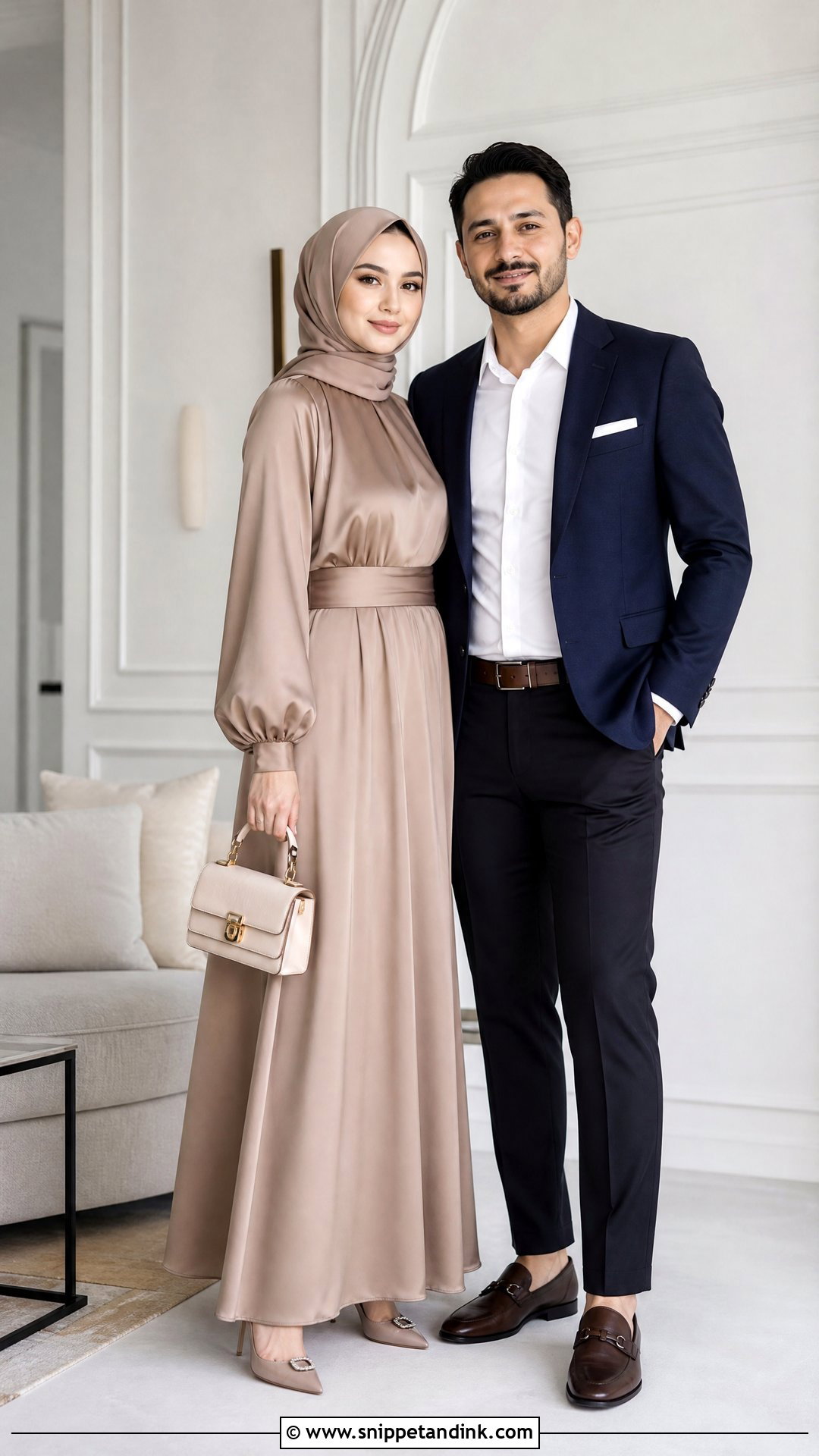
Anniversary portraits should look like two people who’ve built a life together, not a re-run of the wedding. A modest satin maxi, a tailored abaya or a long skirt with a blouse and soft hijab suits her; a button-down, blazer, trousers and loafers suits him. I lean on cream, taupe, navy, olive and soft brown. Satin is the fabric I’d watch: it creases across the lap the moment she sits down for dinner, so for an evening that starts at a restaurant I’d move her into crepe. A structured bag, simple jewelry and polished shoes finish the look.
5. Shia Couple Photoshoot Outfit
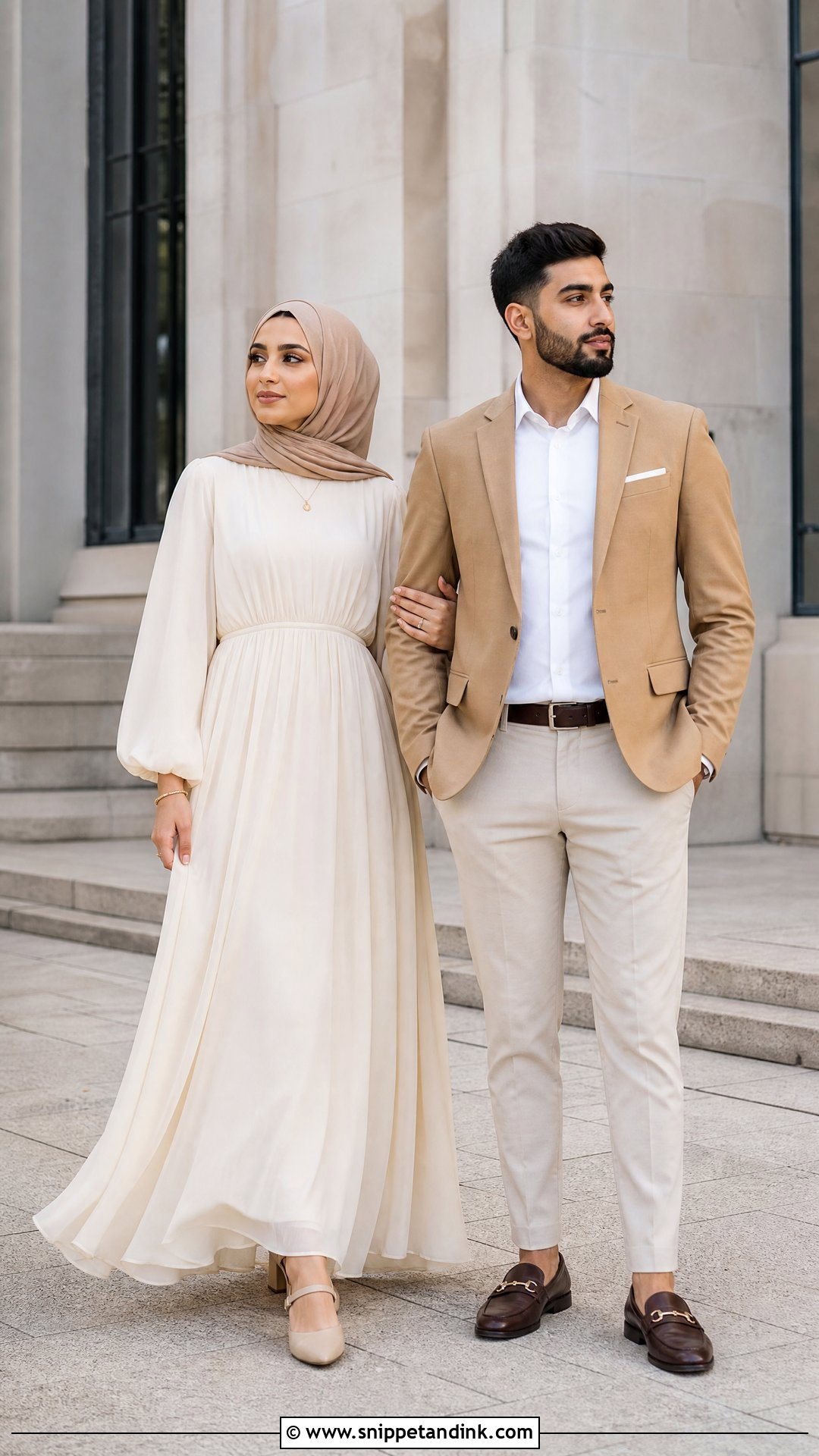
A good Shia couple photoshoot outfit has to survive two hours of walking, sitting on steps and being told to turn left. She can wear a flowy maxi, a pleated skirt outfit or a long tunic with wide-leg pants; he can wear fitted trousers, a crisp shirt and a blazer or light jacket. Match the palette to the location: beige and white for city streets, green and cream in parks, navy and gray against stone. Only one of you should wear embroidery or print. I also have brides test their hijab outside the day before, because pinned chiffon that looks neat indoors can whip across the face on a windy rooftop.
6. Shia Casual Couple Outfit
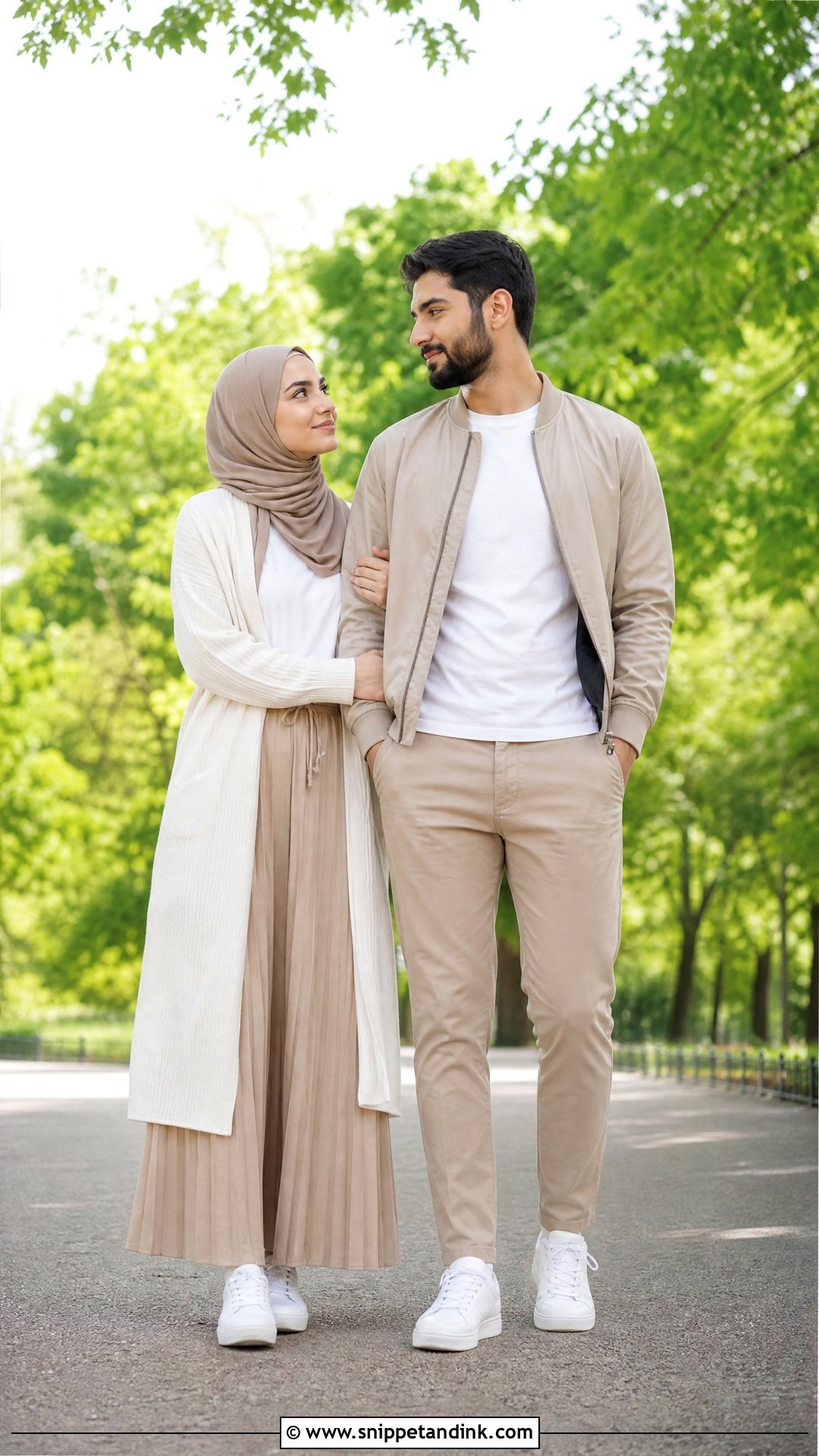
Not every portrait needs to be formal. She can pair a long cardigan with a relaxed maxi skirt, a modest top, sneakers and a neutral hijab, and he can wear chinos, a crewneck or button-down, a casual jacket and white sneakers. Earth tones, denim blue, cream, gray and olive suit a park walk, a café or a bookstore. Casual outfits go wrong when each person dresses from a different color family. Lay both outfits on the bed together before you leave the house; if they look like two strangers’ laundry, swap one piece.
7. Shia Traditional Couple Outfit
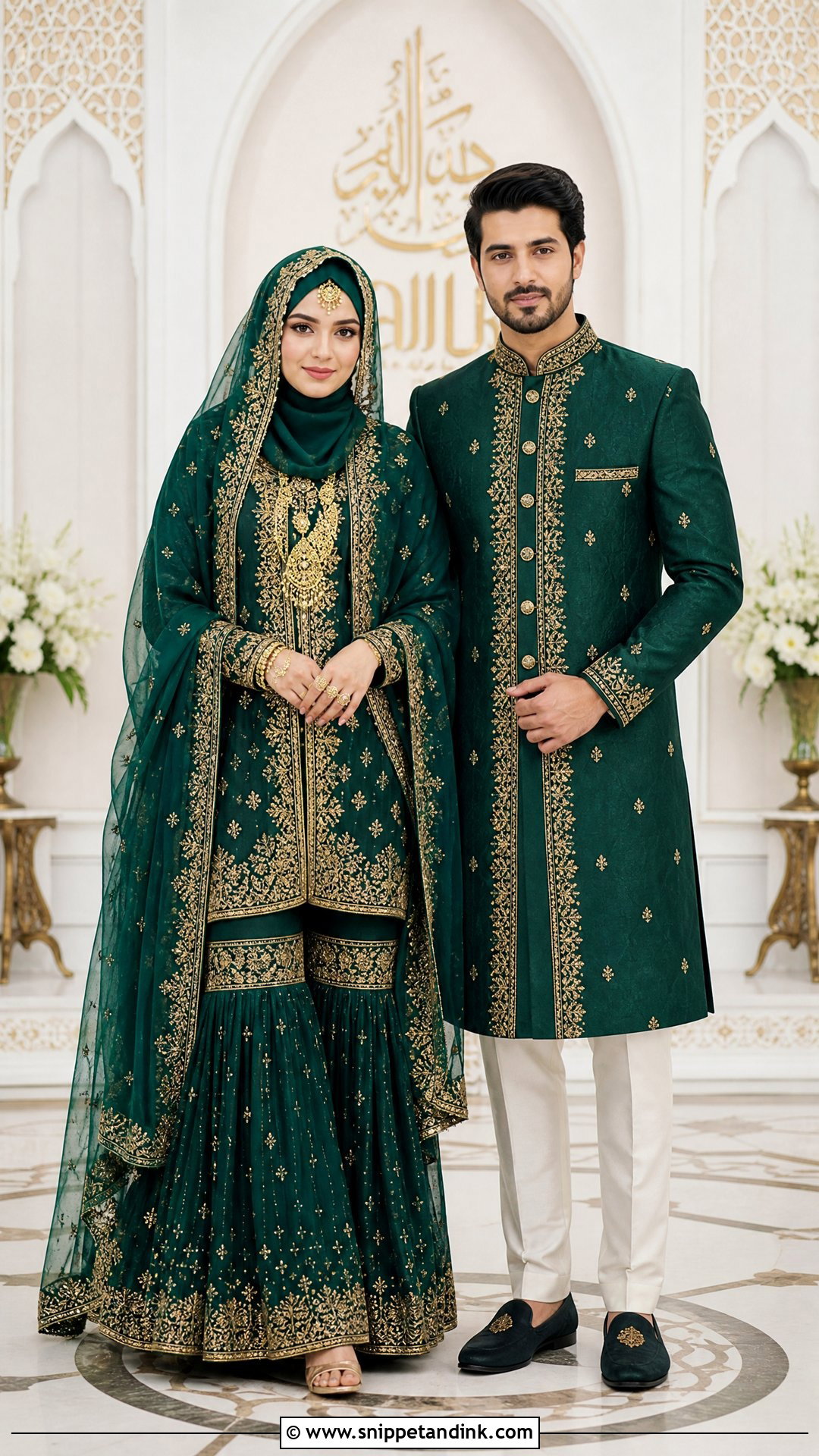
A traditional Shia couple outfit depends on where the family’s roots are. She might wear a modest lehenga, gharara, abaya, jilbab, kaftan or embroidered long dress; he might wear a sherwani, thobe, kurta pajama, waistcoat or traditional robe. What I watch is balance. A gharara thick with gota work beside a plain kurta looks as though the groom forgot, so when hers is heavily embellished I add subtle embroidery or a coordinated stole to his. Emerald, burgundy, navy, gold and ivory sit well in family settings. A gharara also needs practice, since the flared legs catch on heels and stair edges, so I’d have her walk a staircase in it at the fitting.
8. Shia Modest Couple Outfit
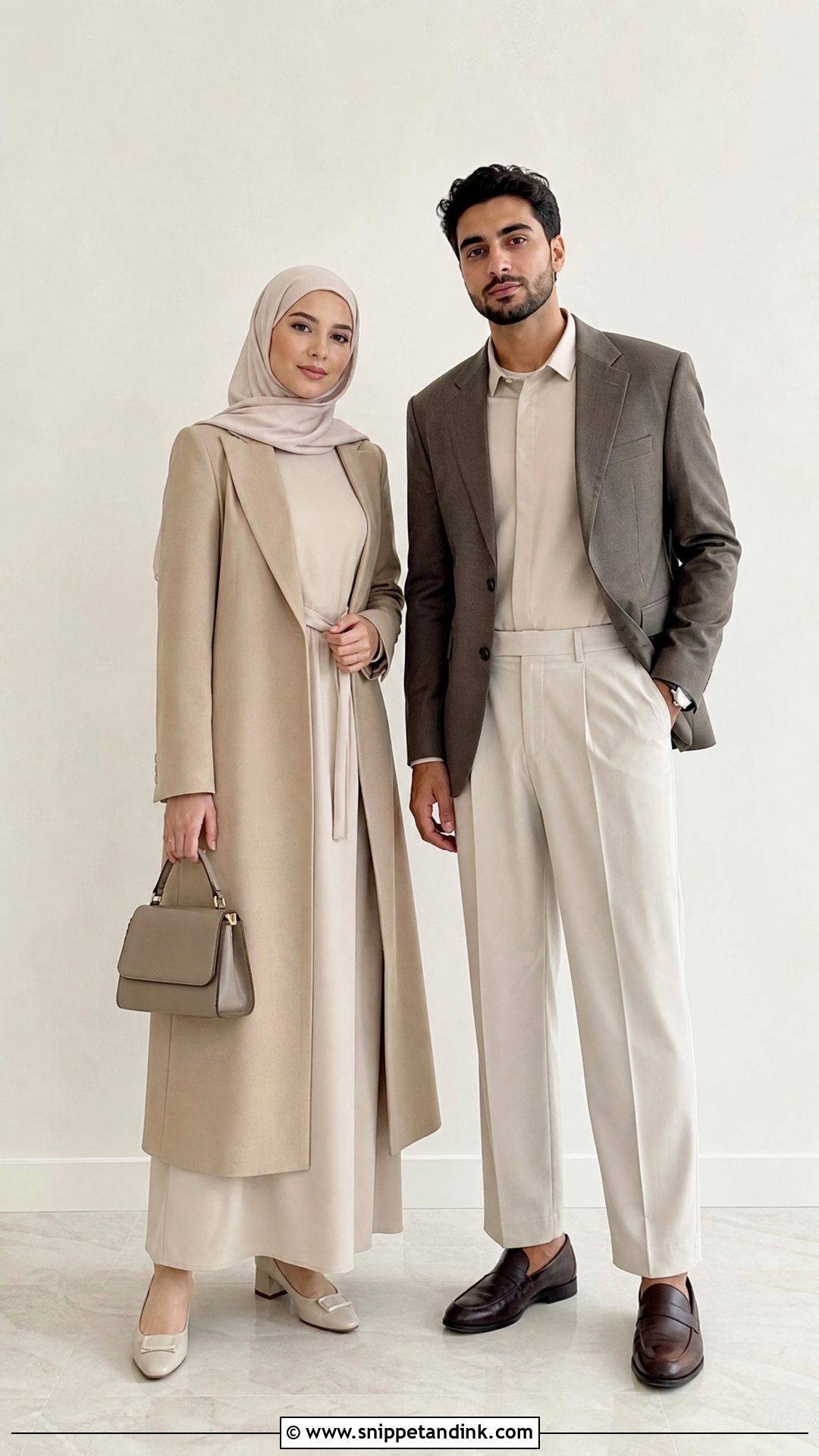
Modest dressing is mostly about proportion. A high-neck maxi, a long abaya, a tunic with wide-leg pants or a layered skirt gives her coverage, while loose tailored trousers, a long-sleeve shirt, a blazer or a kurta does the same for him. Nothing tight, nothing sheer, nothing she can’t kneel in. My test is simple: arms up, then sit down. If a sleeve slides above the wrist or a hem rides up past the ankle, I add a fitted inner sleeve or let the hem down. Cream, gray, black, beige and muted blue coordinate easily, and a shared scarf or shoe color quietly links the two looks.
9. Shia Black Couple Outfit
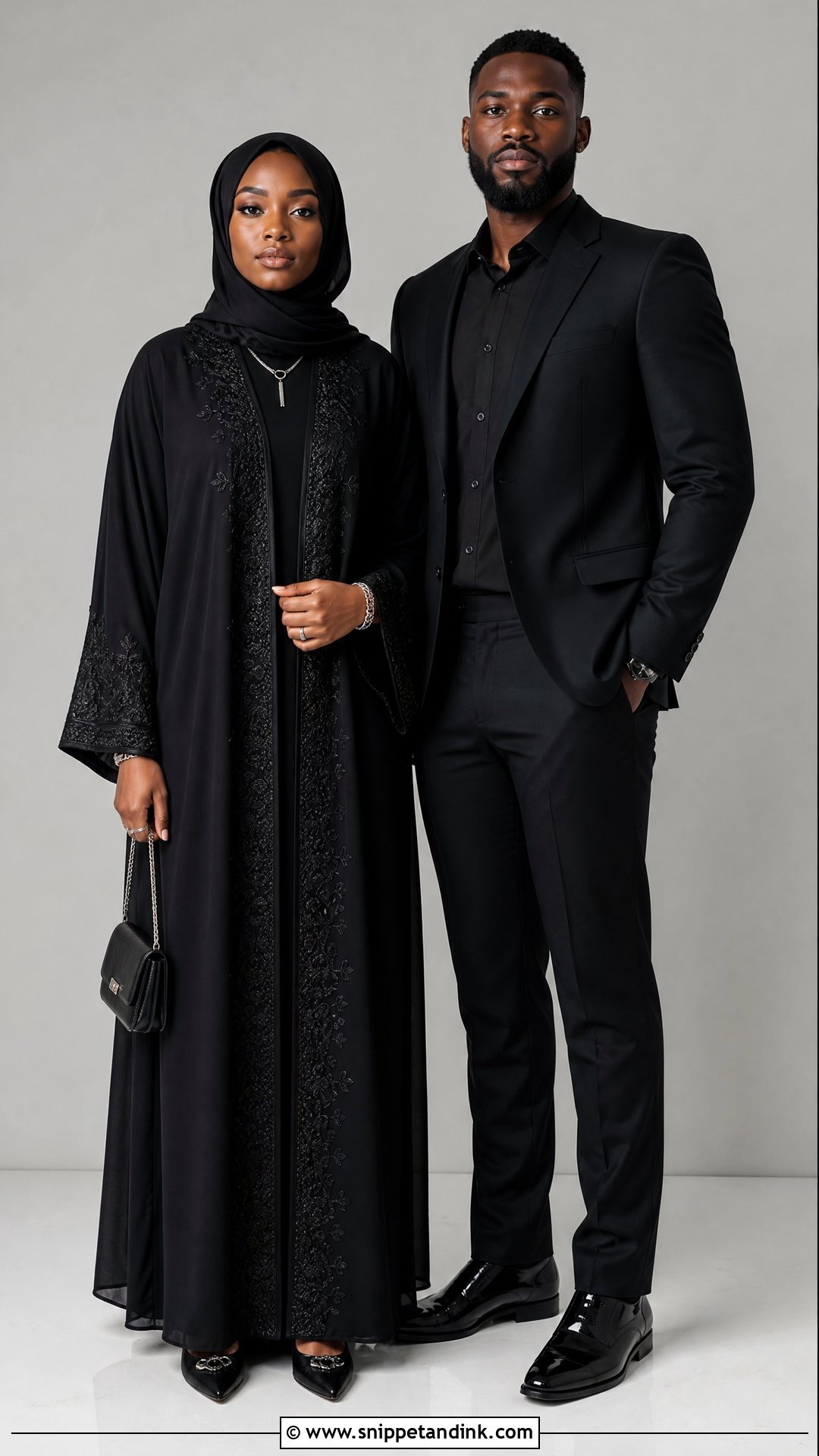
Black is a weightier choice in a Shia family than in most. Many families wear black for Muharram and other mourning gatherings, so I’d check with the elders before planning black for a celebratory portrait; for some it reads as majlis dress, for others it’s simply formal. If it’s welcome, a black abaya with subtle embroidery, a long black dress under a structured coat, or a maxi skirt with a modest blouse works for her, with a black suit, kurta or dark trousers for him. Black flattens quickly on camera, so I add texture through satin, crepe, wool, lace trim or matte embroidery. Silver, pearl or deep green accessories lift it, and the makeup should stay restrained.
10. Shia White Couple Outfit
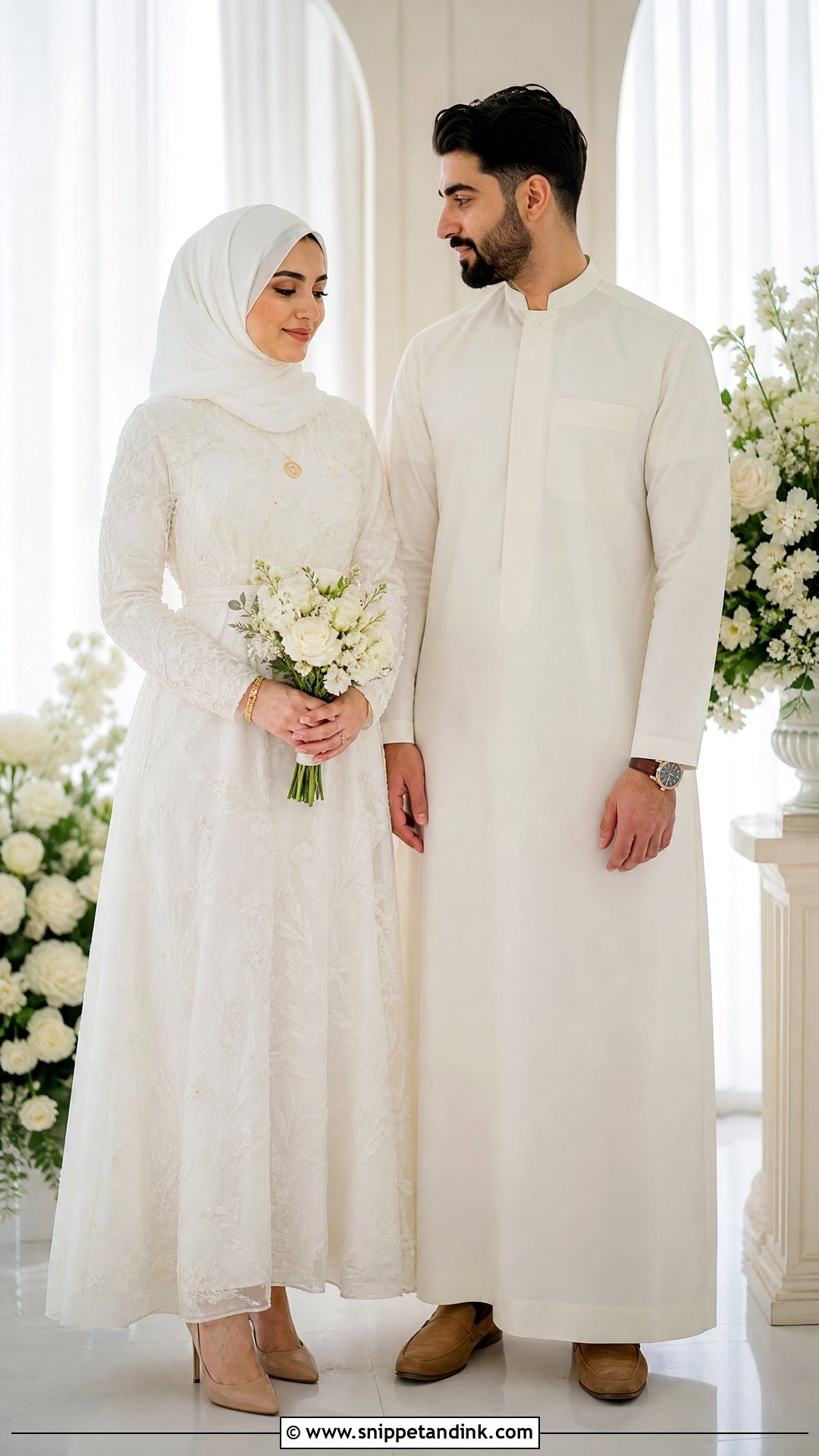
White suits a Nikah or a quiet portrait, but plain white turns into a flat shape on camera, especially in direct sun where detail blows out. I’d choose a white maxi, a modest bridal gown, an ivory abaya or a long skirt set that has embroidery, pleats, lace or layering so the light has something to catch. He can wear a white thobe, an ivory sherwani or a light suit with tan shoes. Hold the two whites side by side before buying anything: a blue-white thobe next to a cream gown makes the gown look yellowed. Soft gold jewelry, a bouquet or prayer beads in the hands add meaning without clutter.
11. Shia Green Couple Outfit
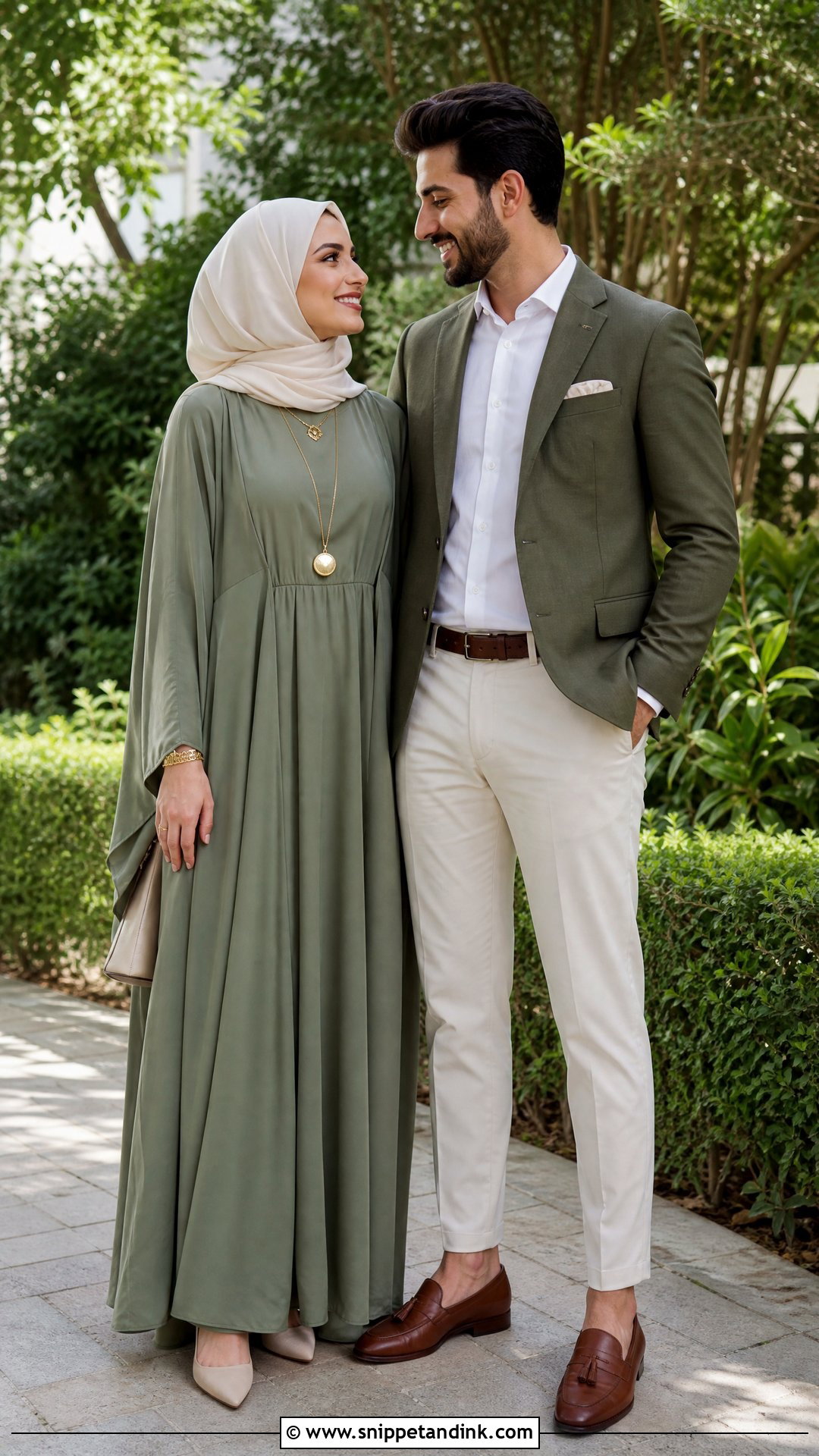
Green carries real meaning for many Shia families, and in some communities it’s linked with descendants of the Prophet’s household, so it’s usually well received. Pick one green to lead: a sage abaya, an emerald maxi or an olive embroidered outfit with a cream hijab for her, a dark green sherwani, an olive blazer or cream with green accents for him. Support it with ivory, beige, gold or brown. Two different strong greens on one couple clash more than people expect, so if his sherwani is bottle green I keep hers in sage, or move her to ivory with green embroidery. Gardens and traditional rooms suit it best.
12. Shia Blue Couple Outfit
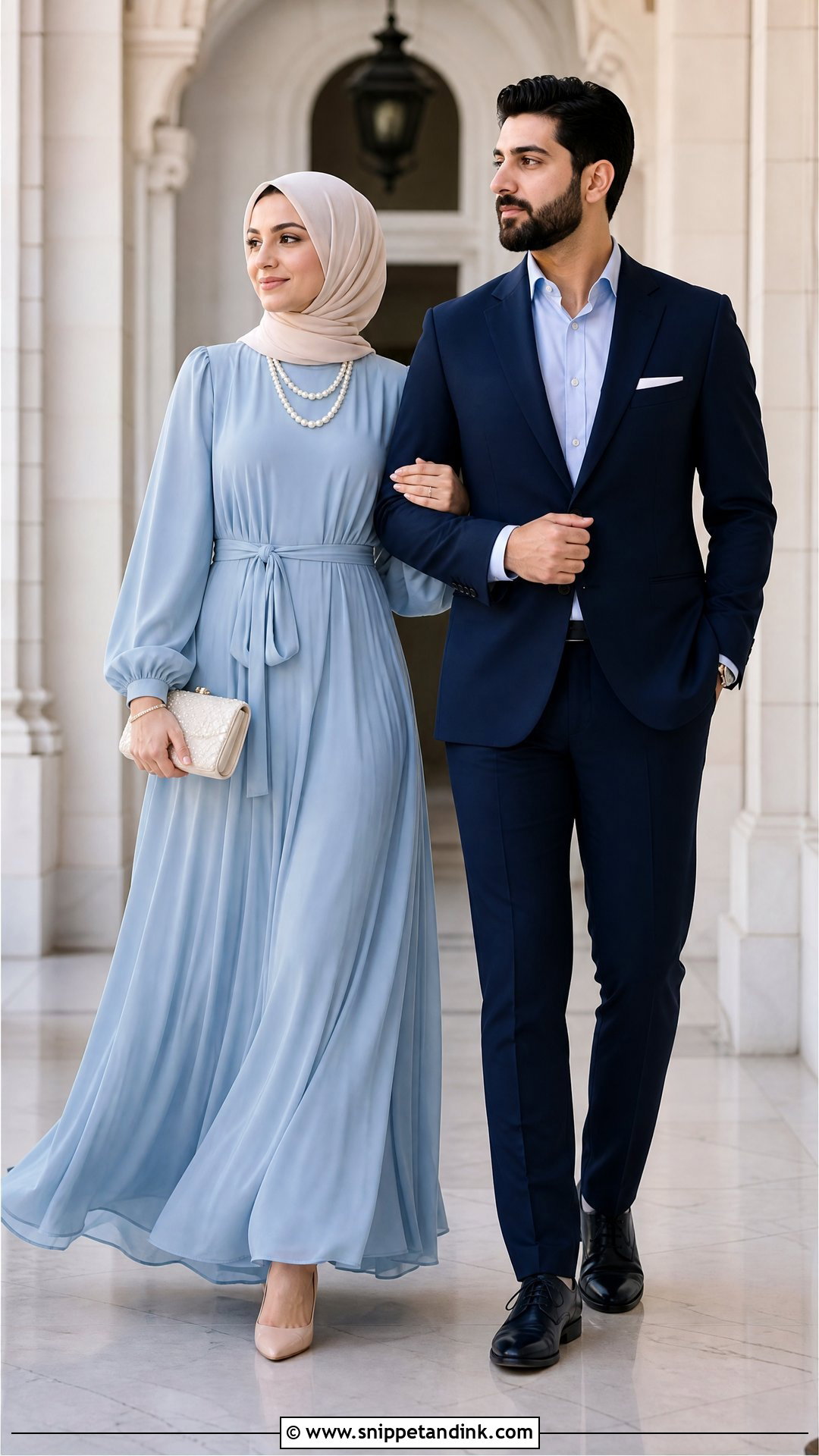
Blue is the easiest color I dress couples in, because it agrees with almost every background: white walls, greenery, stone, the sea. She can wear a powder blue dress, a navy abaya or an embroidered blue lehenga with a neutral hijab, and he can wear a navy suit, a blue kurta or a light shirt with dark trousers. Silver, cream, gray and pearl keep it refined. The trap is navy beside black. In evening photos a navy suit next to a black abaya just looks like a mismatched black, so keep the two outfits clearly different in depth.
13. Shia Beige Couple Outfit
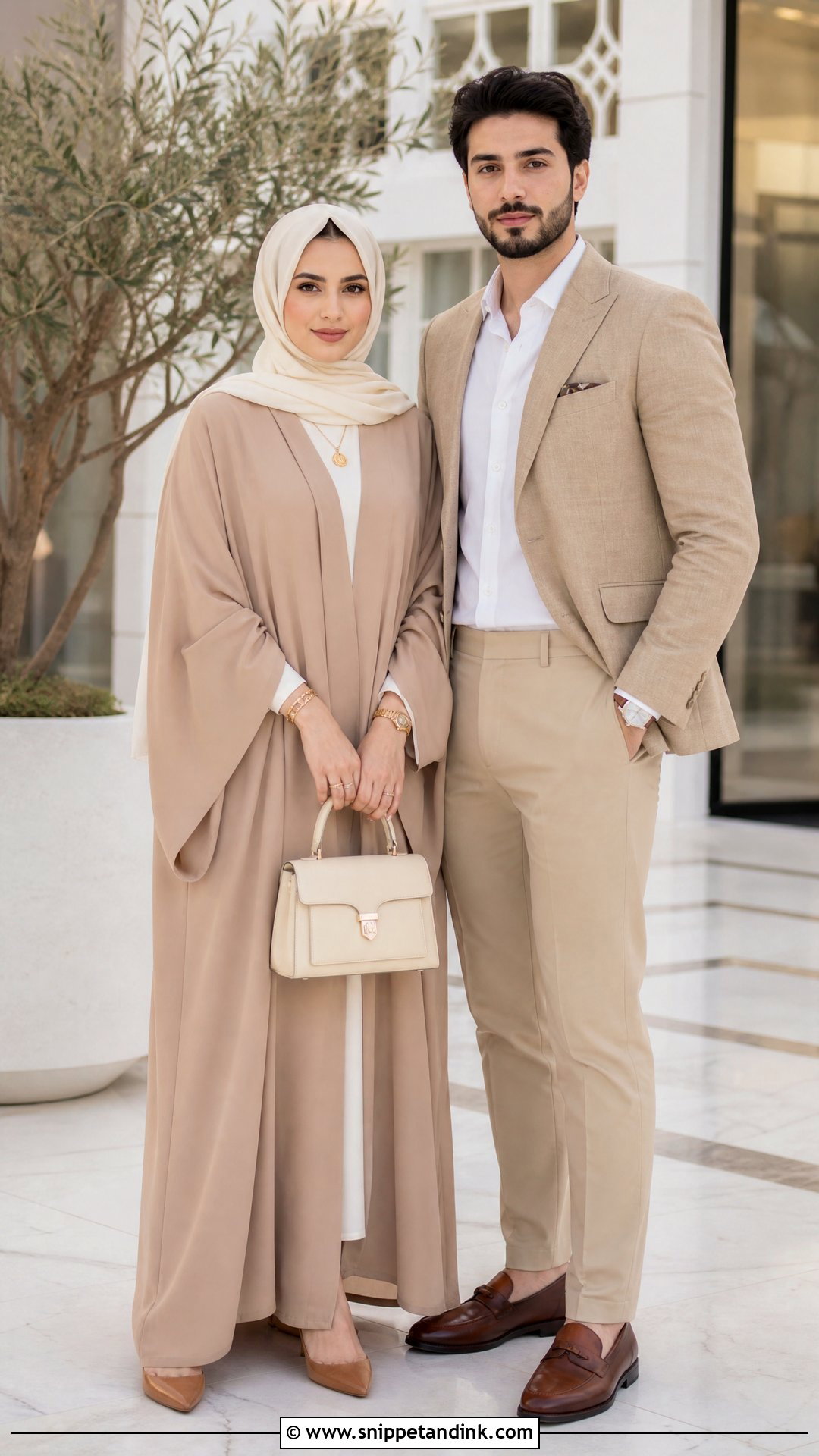
Beige is understated, and it’s also the color most likely to wash both of you out. She can wear a beige abaya, a long knit dress, a modest satin set or a flowy skirt with a cream hijab; he can wear beige trousers, a white shirt, a tan blazer or a light traditional outfit. I build it in layers of beige, ivory, camel and taupe so the outfits don’t merge into one flat block. If her skin has olive or golden undertones, a cream hijab near the face is kinder than sand. Gold jewelry, brown loafers or a classic watch add the detail, and city portraits or daytime gatherings suit it.
14. Shia Pastel Couple Outfit
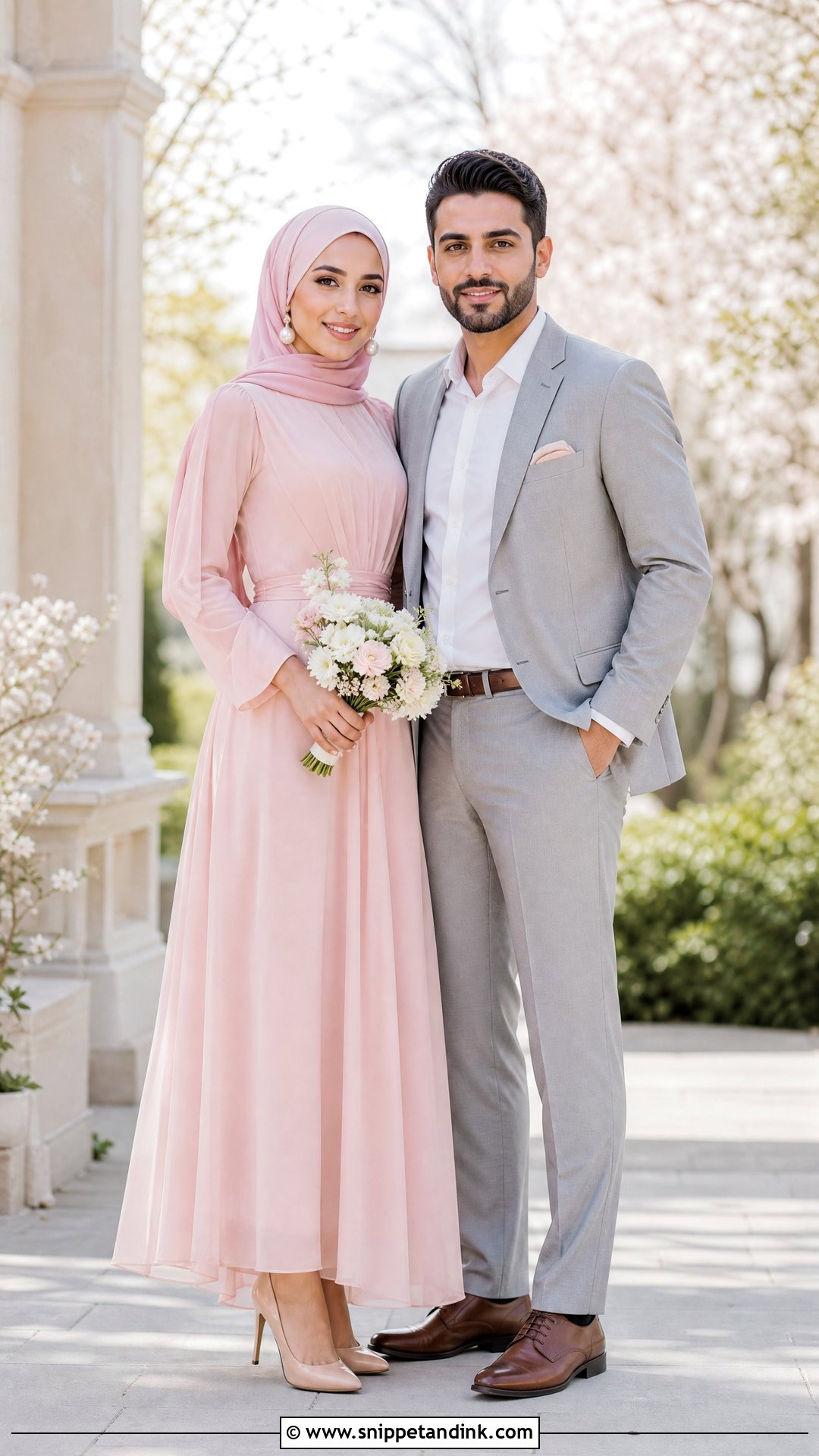
Pastels need one rule: one of you carries the stronger shade and the other stays quiet. That might be blush, lavender, mint or powder blue for her with a coordinated hijab, and a light gray suit, cream kurta or pale shirt for him, or the reverse. Two strong pastels side by side start to look like costumes. Pearl earrings, nude shoes, a soft clutch or a small boutonniere finish it. I use pastels mostly for spring gatherings and garden portraits, because they need daylight to look clean.
15. Shia Matching Couple Outfit
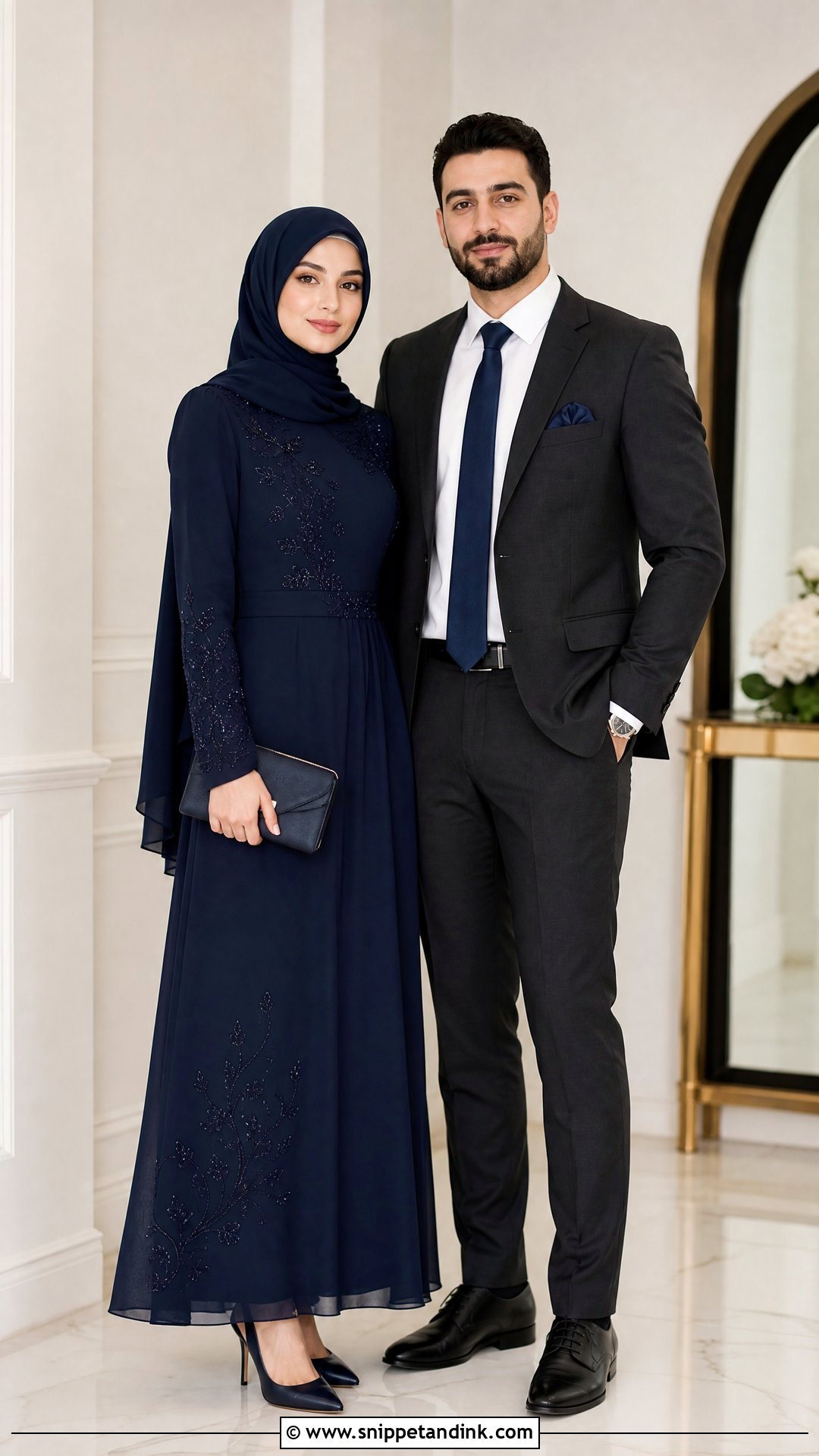
Matching works when it’s coordinated, not identical. She wears one main color in a dress or abaya, and he repeats it in a tie, pocket square, waistcoat, scarf or embroidery. For traditional events a matching dupatta and groom’s stole do this neatly; for modern portraits, shared accents in beige, navy, black or sage are subtler. The same print head to toe on both people is something I’d keep for very traditional events only. When the groom’s stole has to match her dupatta, I ask her tailor for an extra half meter of the dupatta fabric at the start, because finding the same dye lot later is close to impossible.
16. Shia Home Ceremony Couple Outfit
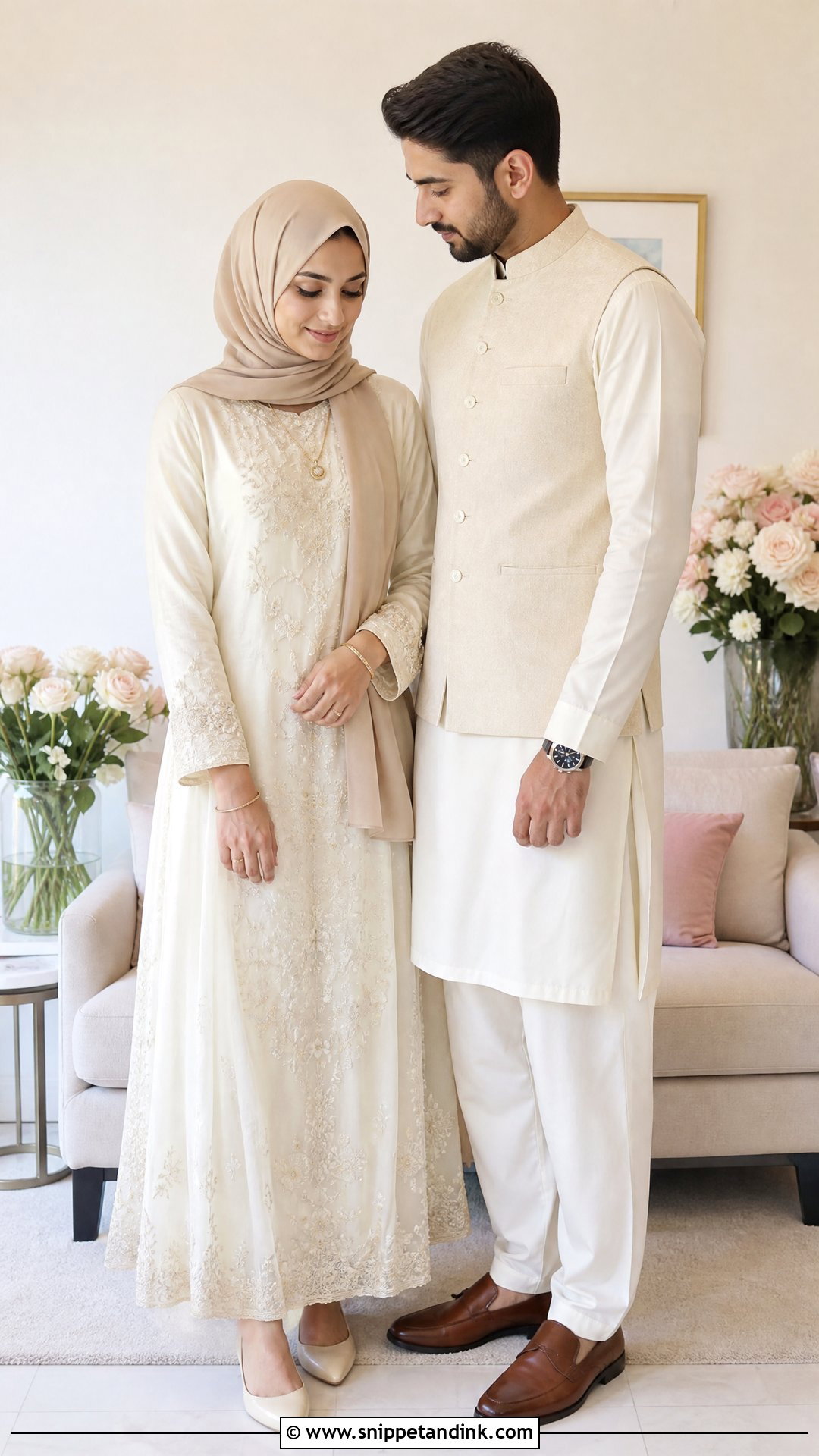
Home ceremonies are warm, crowded and photographed from about a meter away, so finish matters more than drama. She can wear a modest embroidered dress, a soft abaya or a long skirt set with a neat hijab; he can wear a kurta pajama, a dress shirt with trousers or a light blazer. I push breathable fabrics hard here. A living room with forty relatives and the curtains drawn heats up fast, and polyester georgette holds that heat. Ivory, rose, sage, beige and pale gold sit well indoors. Keep accessories simple so they don’t fight the furniture, and clear one wall for a clean backdrop for intimate Nikahs, engagement visits or family blessings.
17. Shia Garden Couple Outfit
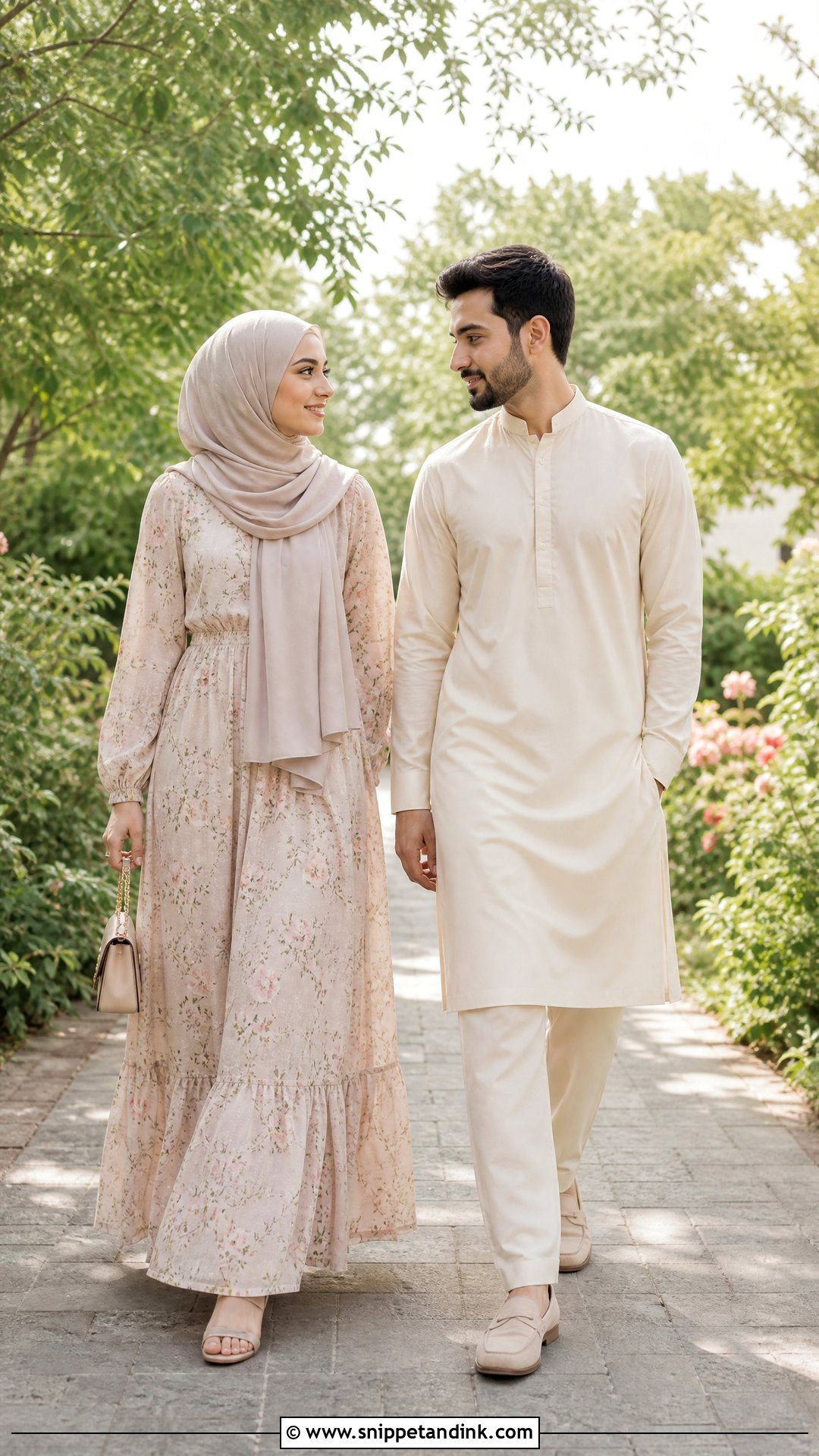
Garden portraits need clothes that move and shoes that cope with grass. A flowy maxi, a pastel abaya or a floral embroidered outfit suits her, and a light suit, cream kurta or linen-style shirt with trousers suits him. Green, white, blush, beige and sky blue sit well outdoors, while tiny busy prints turn to noise at a distance. Stilettos sink into lawns, so I steer brides toward block heels or embellished flats, and I warn grooms that new leather soles slip on damp stone paths. A soft scarf, delicate jewelry and natural makeup complete her side.
18. Shia Studio Couple Outfit
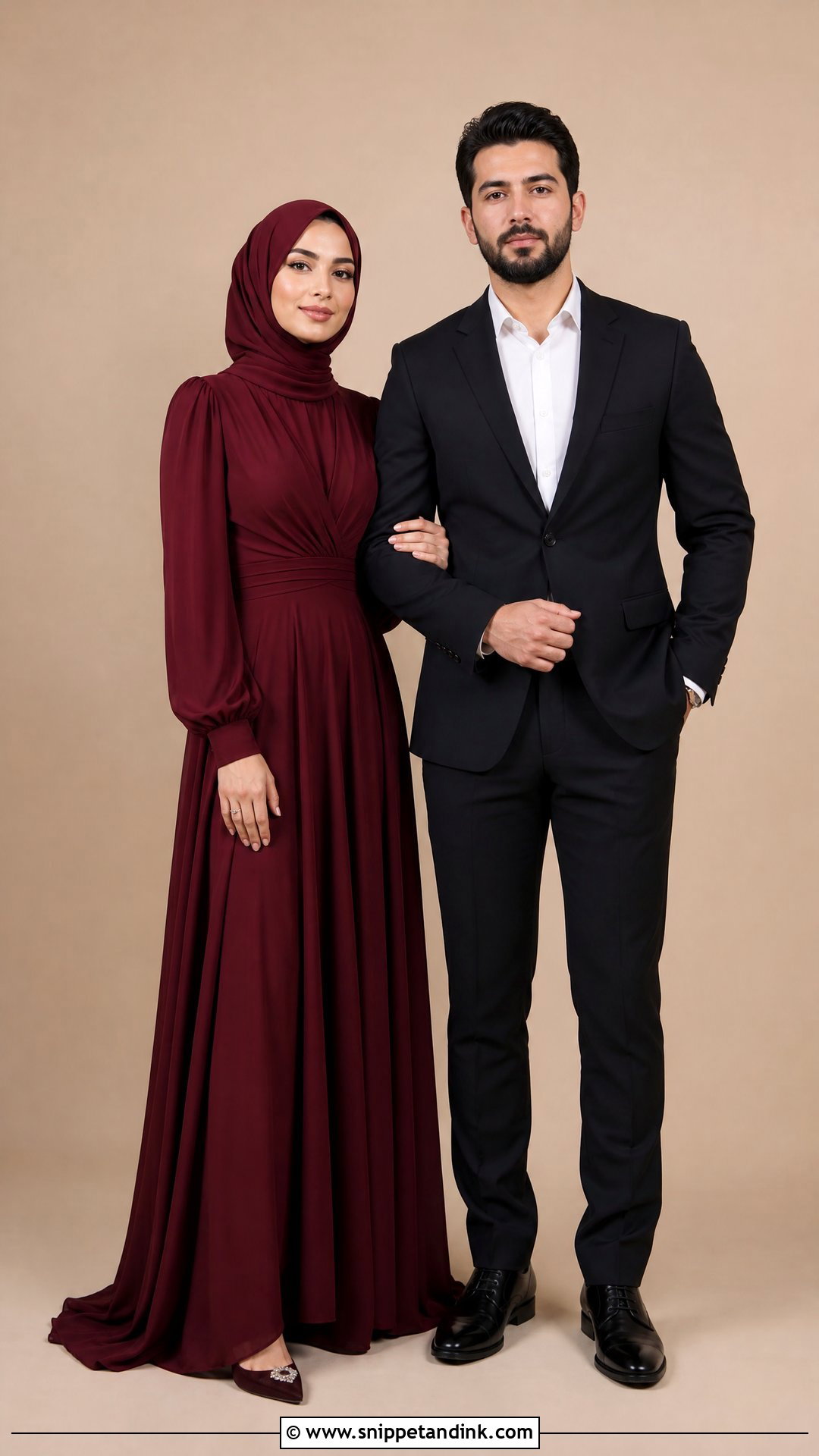
In a studio nothing distracts from the clothes, so every wrinkle and pull line shows. She can wear a solid modest gown, an abaya or a tailored two-piece; he can wear a suit, a kurta or a smart shirt and trousers. I choose fabrics that resist creasing, steam everything on site, and check each color against the backdrop paper the photographer plans to use, since an ivory abaya against plain white paper simply disappears. Black, ivory, navy, emerald, beige and burgundy are reliable. One statement accessory is enough. Check the fit seated as well as standing, because every studio session includes seated poses.
19. Shia City Couple Outfit
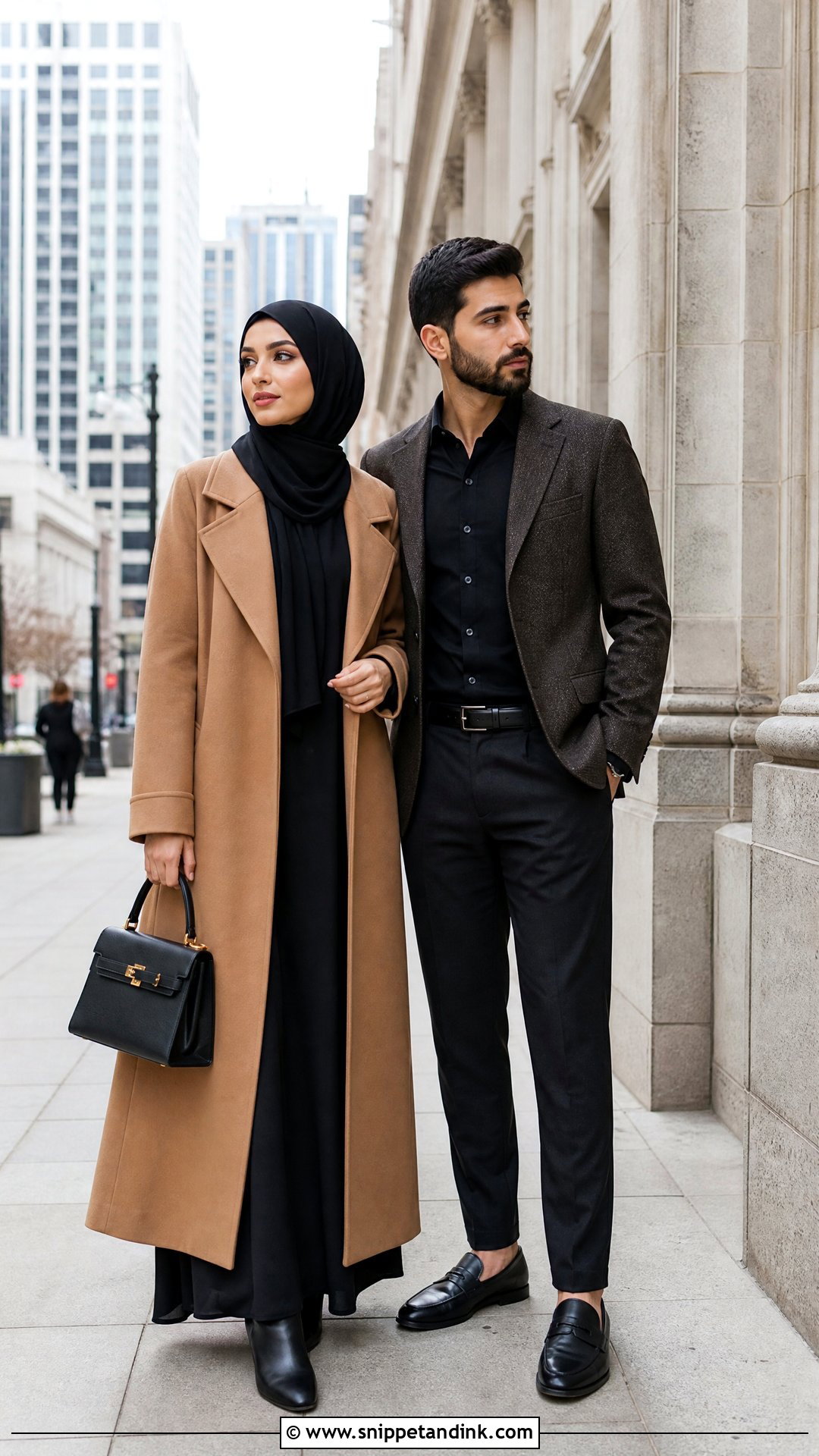
City outfits want structure. She can wear a long coat over a maxi dress, a tailored abaya, or wide-leg trousers with a long tunic and hijab, and he can wear a blazer, dress pants, loafers and a clean button-down. Black, camel, gray, navy and cream look right against streets and buildings, with sunglasses, a structured bag or a minimal watch as the finishing piece. City sessions mean a lot of walking between spots. I’d have her break in her shoes the week before, and I put a small pin kit in the groom’s pocket for when wind catches her hijab at a street corner.
20. Shia Travel Couple Outfit
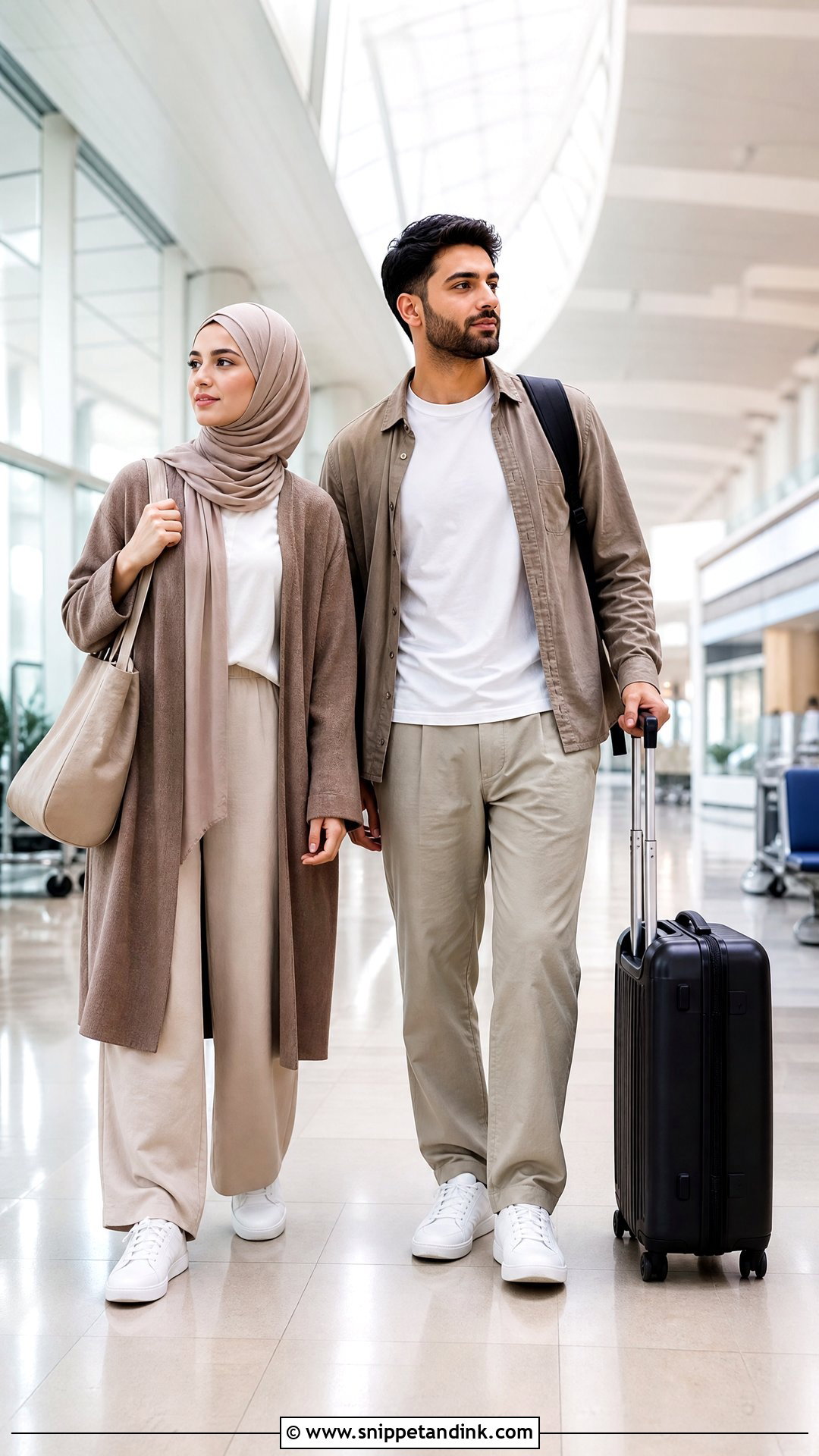
Travel portraits are about looking put together after a long day of moving. She can wear a long cardigan, loose trousers, comfortable sneakers and a breathable hijab; he can wear jogger-style trousers, a clean overshirt or hoodie and sneakers. Coordinate through neutral layers, outerwear or even luggage tones. Wrinkle resistance matters most: a jersey hijab comes out of a bag ready to wear, while chiffon needs a steamer you won’t have in a train station. Beige, black, gray, olive and navy hide travel wear well, and a crossbody bag, tote, cap or light scarf earns its place in both the suitcase and the photos.
21. Shia Eid Couple Outfit
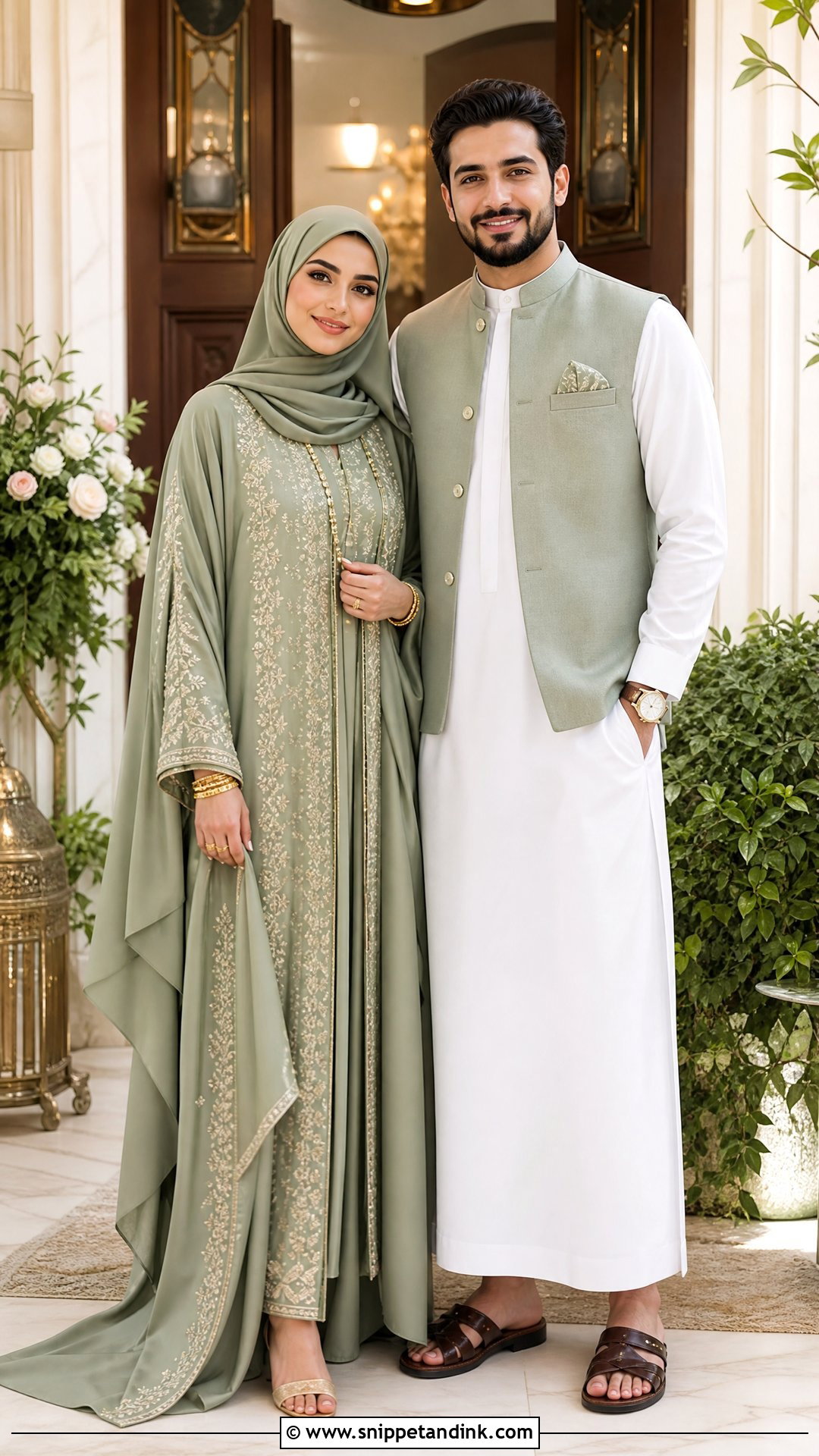
An Eid couple outfit has to last from morning prayers through a whole day of family visits. She can wear an embroidered abaya, a long dress, a kaftan or a traditional outfit with her hijab; he can wear a thobe, a kurta pajama, a sherwani-style waistcoat or a dress shirt with trousers. Jewel tones, white, gold, sage, navy and soft pastels all suit Eid, coordinated through embroidery, color or fabric texture. Because the day includes prayer, I’d avoid a hijab style that needs full re-pinning after every wudu, and heavy zari is miserable by the fourth house on a warm day. Light fragrance and neat grooming do the rest.
22. Shia Family Gathering Couple Outfit
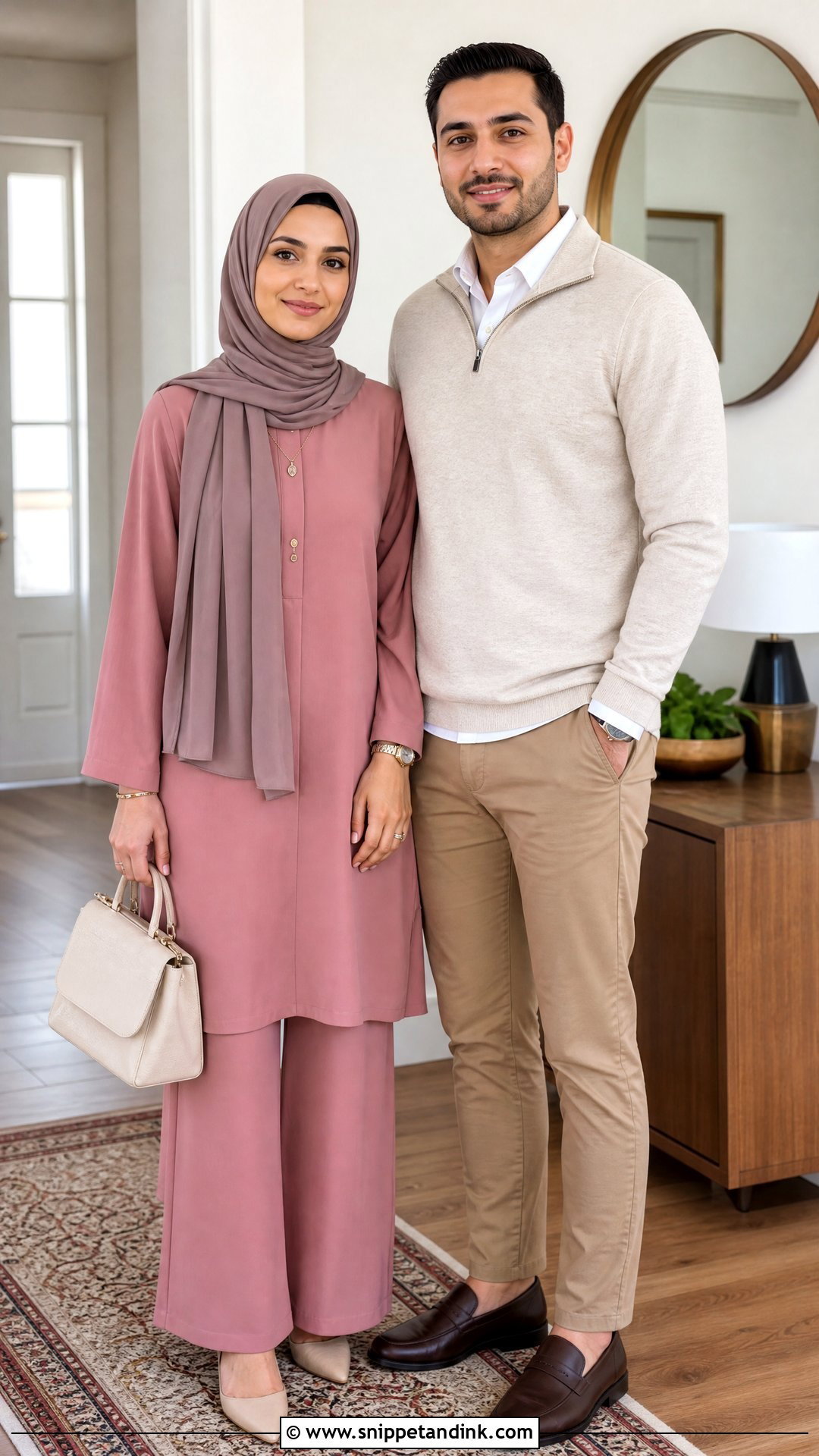
Family visits, especially the first ones after an engagement, are where elders quietly form opinions. She can wear a long tunic with trousers, a maxi dress or a simple abaya with a coordinated hijab; he can wear a collared shirt, a kurta, chinos or a neat sweater with trousers. Cream, olive, navy, dusty rose, gray and brown feel calm and friendly. Test one thing at home: can she sit down on a floor cushion and get back up without adjusting anything? Many gatherings seat people exactly that way. Simple jewelry, clean shoes and tidy layers are enough for dinners and small celebrations.
23. Shia Winter Couple Outfit
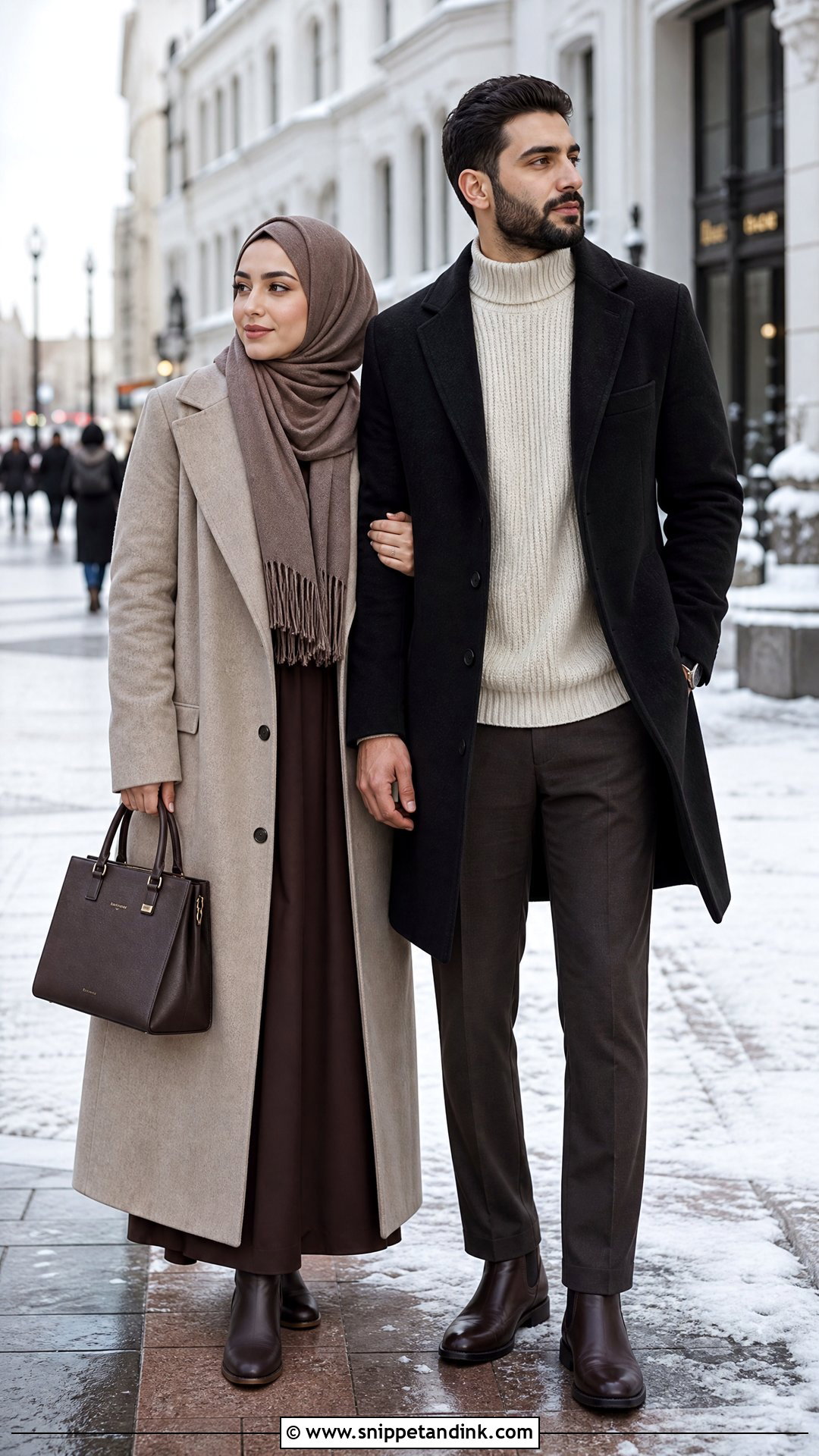
In winter the coat is the outfit, because it’s what shows in nearly every outdoor frame. She can wear a long wool coat over a maxi dress, sweater dress or abaya, with boots and a thicker hijab; he can wear a tailored coat, a knit sweater, trousers and leather boots. Burgundy, forest green, charcoal, camel and navy suit cold weather. I coordinate the two coats first and build everything else around them. Wool rubbing against a long hijab collects lint and static, so a lint roller goes in my bag for every cold-weather session.
24. Shia Summer Couple Outfit
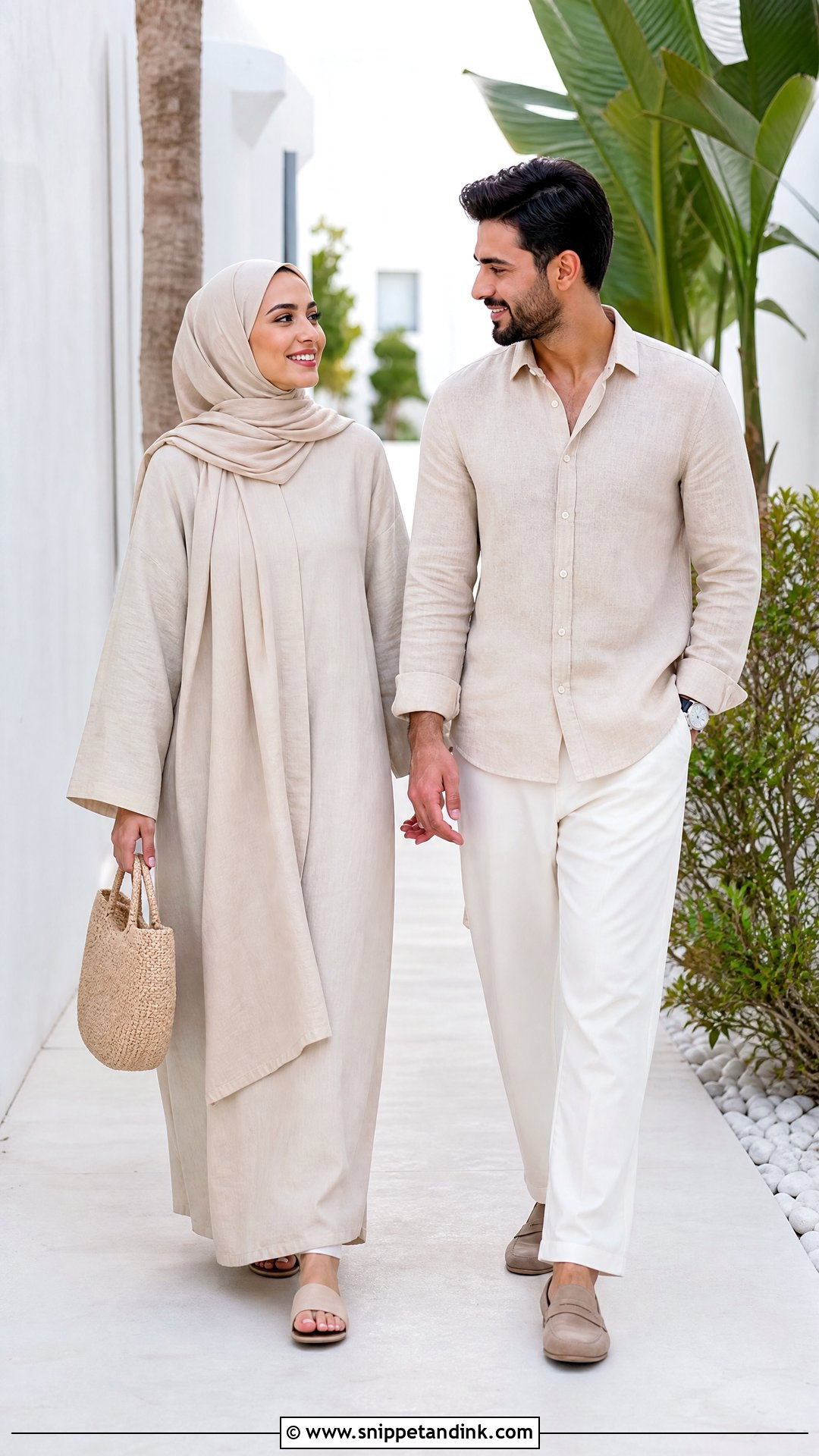
Summer is the hardest season for modest dressing, and fabric decides whether a couple looks relaxed or wilted. She can wear a linen abaya, a cotton maxi, a loose tunic set or a flowy skirt with a lightweight hijab; he can wear a linen shirt, cotton trousers, a light kurta or breathable separates. White, beige, sky blue, sage and soft gray look fresh on camera. Light linen can turn see-through when backlit, and photographers love shooting into the sun, so I hold every summer piece up to a window at the fitting and add a slip or inner layer where needed. Sandals, loafers or clean sneakers complete it.
25. Shia Simple Couple Outfit
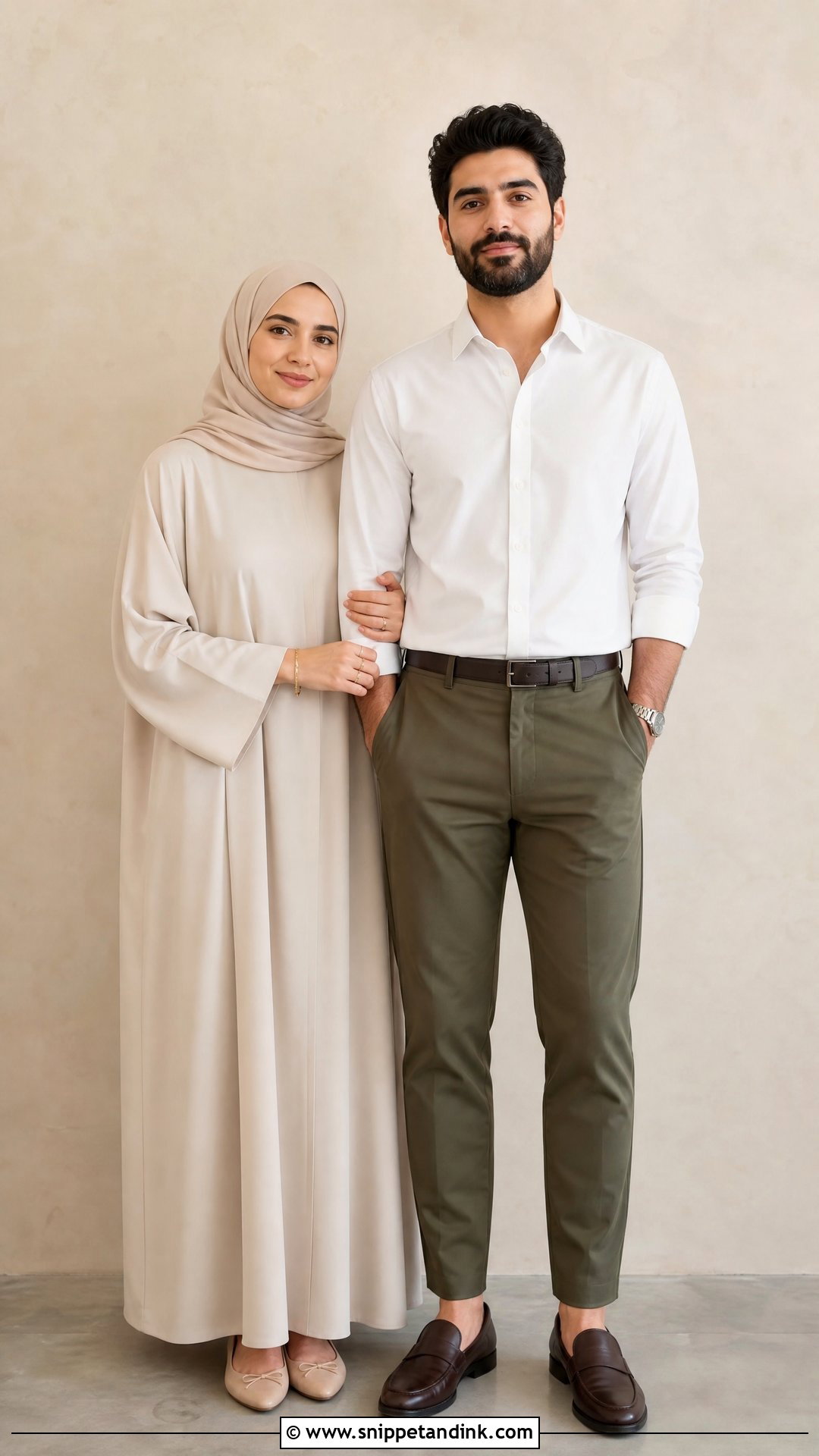
Simple outfits put all the attention on fit, which is why they’re harder than they look. She can wear a plain abaya, a modest maxi or a long skirt with a clean blouse and hijab; he can wear a crisp shirt and trousers or a simple kurta with polished shoes. Two colors are plenty: black and cream, navy and beige, white and olive. With no embroidery to distract, a sleeve that’s slightly long or a hem that collapses onto the shoe is the first thing a camera sees. Here a small tailoring visit is worth more than any new accessory.
Chiffon, Jersey or Silk Under the Camera
The hijab sits closest to the face, so its fabric shows in every close-up. This is how the common ones behave across a long day:
- Chiffon and georgette drape softly and look formal, but they slide on hair. I always put an underscarf or bonnet cap beneath them so the pins have something to grip.
- Jersey stays where you put it and needs very few pins, which makes it my pick for travel, Eid visits and long days. Next to heavy embroidery it can look a little casual.
- Satin and silk catch light and look rich in the evening, but they show pin holes and creases, and flash can turn the forehead area shiny white.
- Modal and cotton voile breathe in summer heat and photograph matte, a good middle ground for garden and daytime sessions.
Whatever the fabric, I do the full pinning at the trial and have the bride leave it on for a few hours. Magnetic pins are gentler on delicate silk than straight pins, and a couple of safety pins hidden at the nape hold far better than extra pins at the temple.
Her Tailor, His Tailor and the Swatch That Connects Them
Most couples shop separately. Her outfit is often custom-made with embroidery, his is bought or tailored somewhere else, and the color match happens by luck. I’d rather not leave it to luck:
- Order her outfit first. Heavily embroidered bridal pieces often need a few months from fabric to final fitting, and the timing varies a lot by tailor and season.
- Ask her tailor for a fabric swatch and a short length of the embroidery thread or trim, and take both to his fittings.
- Compare colors by a window in daylight, not under shop lighting, which shifts creams and greens.
- Schedule his final fitting a week or two after hers, so a pocket square or stole can still be changed.
- Do one joint try-on, both fully dressed, sitting and standing, before the event week.
Two Outfits, One Color Thread and the Family’s Blessing
None of these ideas depends on how much the outfits cost. A couple looks right together when both outfits suit the occasion, share one color thread, fit when sitting as well as standing, and sit comfortably with what the family expects. Start with the event, check the calendar and the venue, then build head to toe. Torn between two options? Try both on together, take a phone photo near a window, and keep the one that still looks like the two of you.
You'll Like These Ideas:


Leave a Reply