
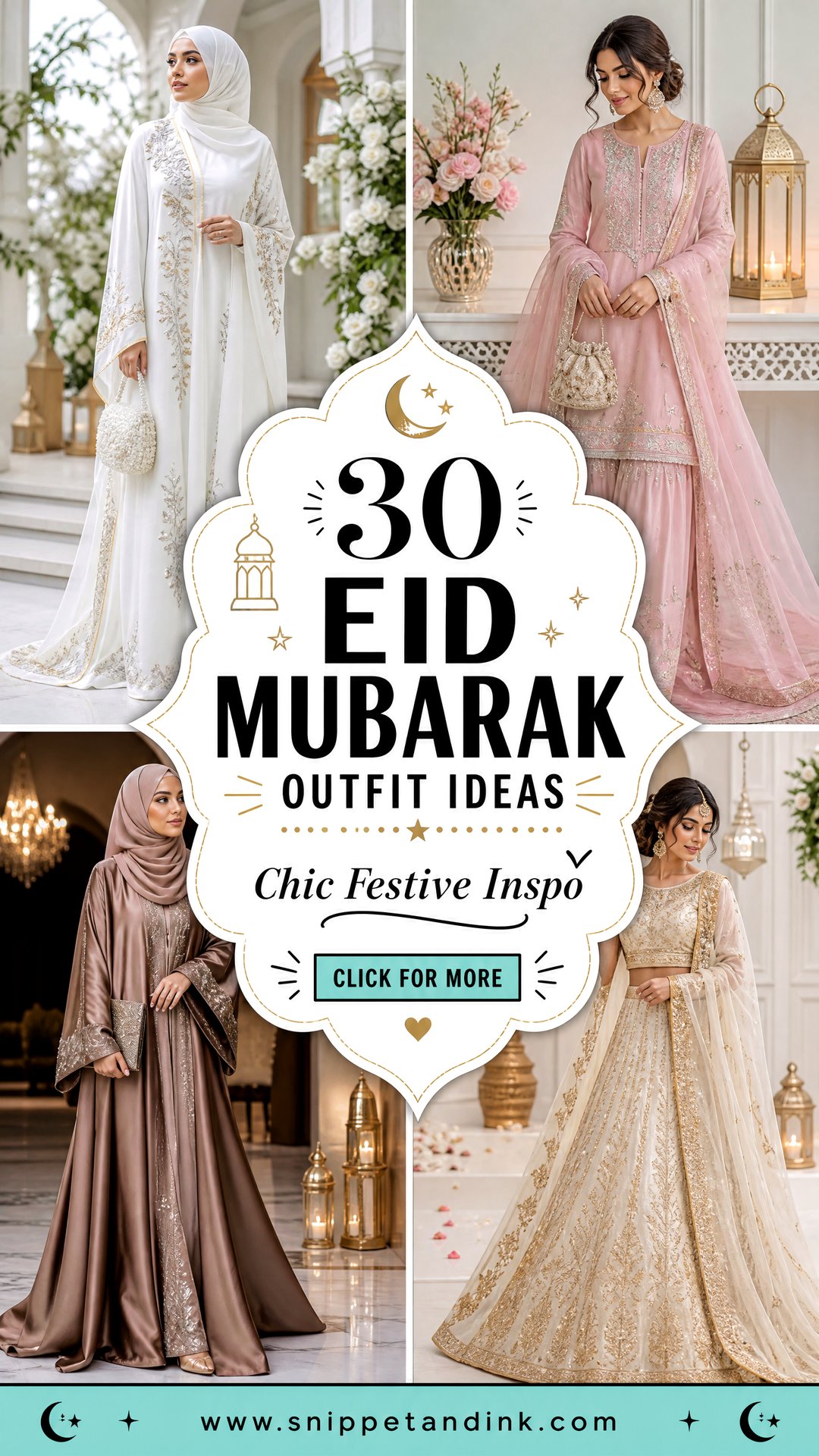
Eid asks one outfit to do a long day’s work. It has to be right for the prayer line in the morning, hold up through hugs and plates of sheer khurma at three different houses, and still look fresh in the family photo after dinner. When I style modest clients for Eid, I think about that whole day rather than the first ten minutes. These thirty outfits run from embroidered abayas and salwar kameez to shararas, satin dresses and co-ords, with notes on fabric, coverage and the small fitting details that decide if you’re still comfortable at hour eight.
Will It Work on the Prayer Mat? A Five-Minute Fitting Test
Most Eid outfits are bought standing in front of a mirror and worn kneeling. Before anything goes in the bag, I ask clients to go through the movements of salah in it at home. It takes five minutes and catches nearly every problem.
- Raise both hands to your ears. Sleeves should still cover the wrist, and a fitted bodice shouldn’t pull across the back.
- Bow from the waist. Check whether the neckline gapes or a sheer dupatta slides forward.
- Go down into sujood. Hems should still cover the ankles, and wide trousers shouldn’t ride up your calves.
- Sit back on your heels. A gharara or narrow skirt tells you straight away if it’s too tight at the knee.
- Stand up without using your hands. If you step on the hem, it needs shortening or a slightly higher shoe.
Prayer grounds are often outside on grass or carpet, so leave delicate heels in the car and bring flats you can slip off and on quickly.
1. White Embroidered Abaya Outfit
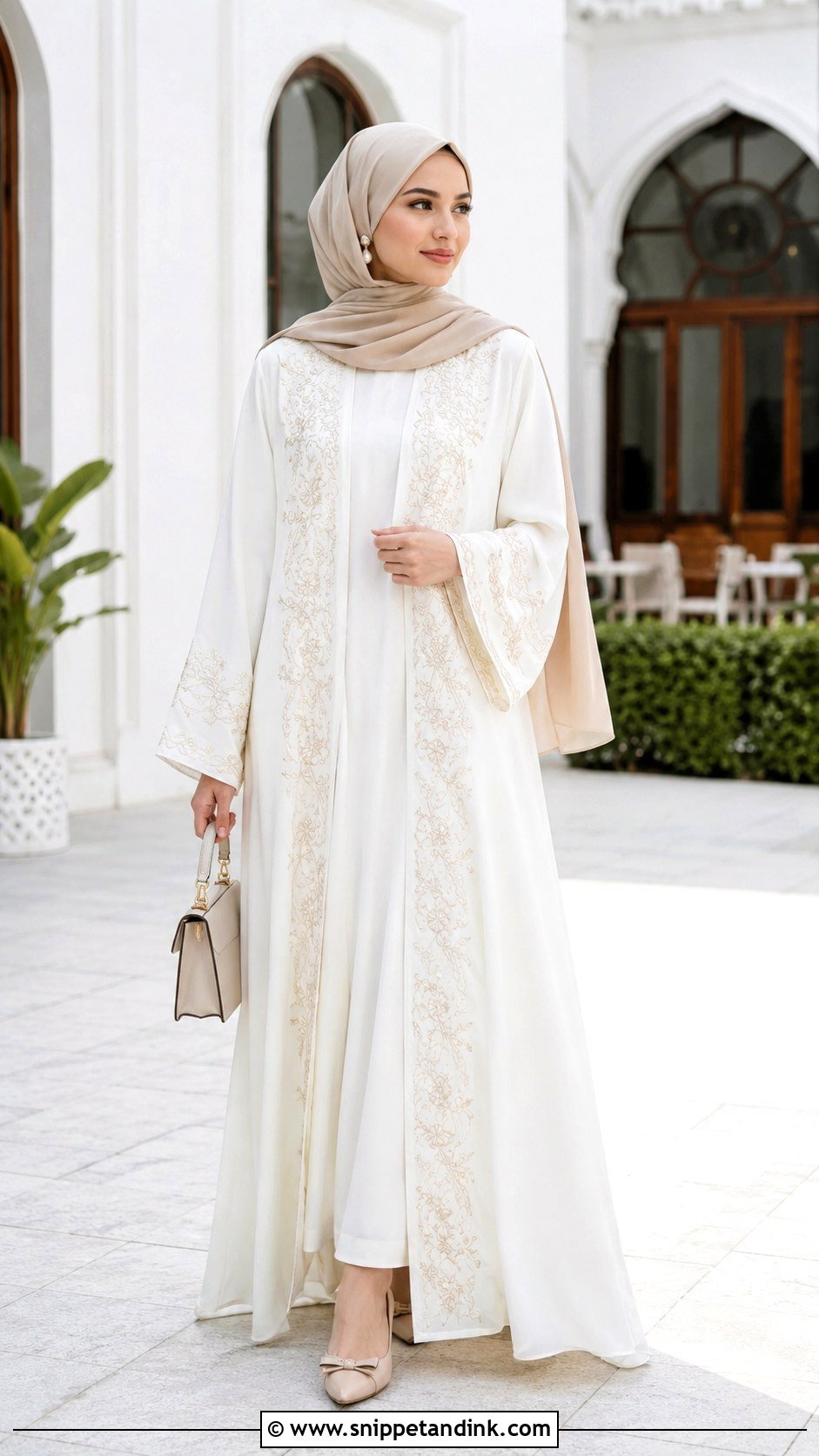
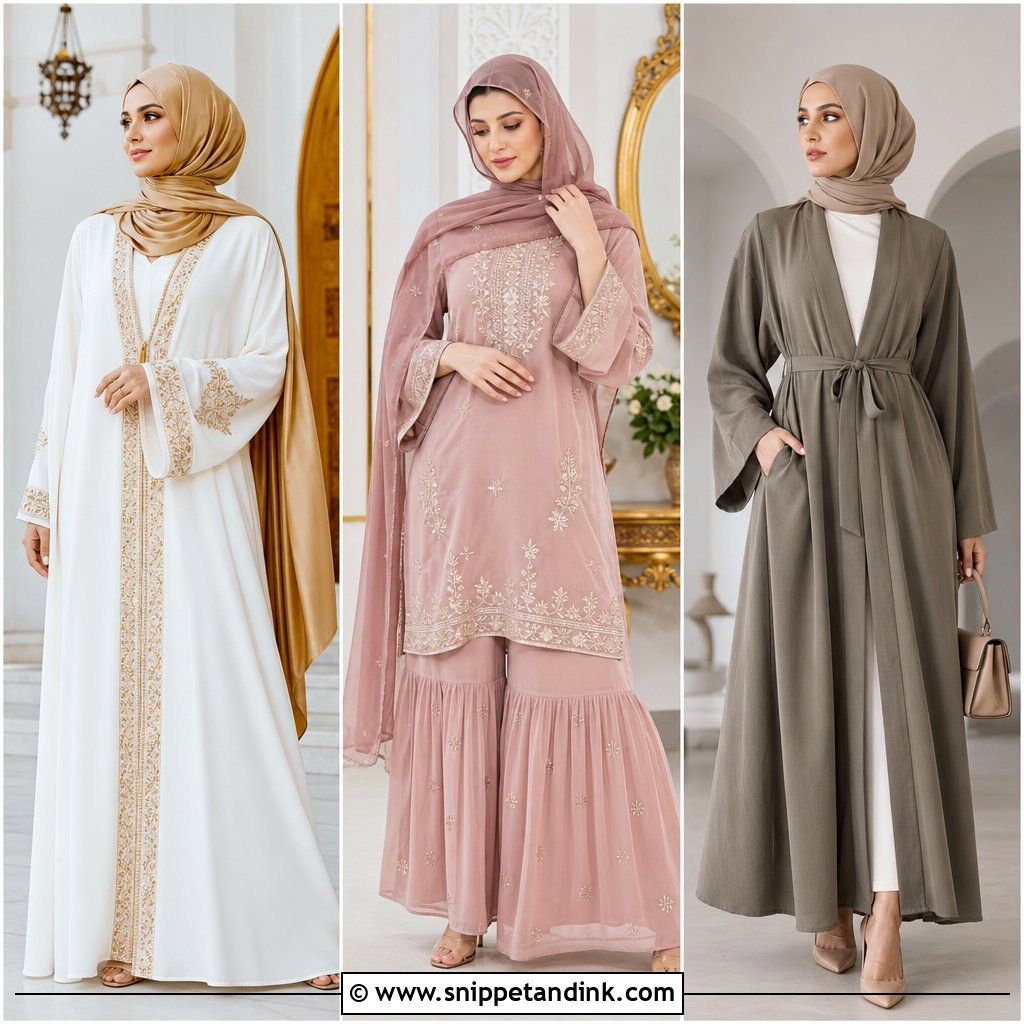
White on Eid morning feels right in a way few colours do. A white embroidered abaya outfit with fine threadwork or pearl buttons at the cuff looks clean in daylight and reads well in photos. The thing I check first is opacity: hold the abaya up to a window, because thin white crepe shows the inner dress seams. A matching inner dress solves it. Champagne or soft gold in the hijab keeps the white from looking stark, and low block heels carry you from the prayer ground to the first family visit.
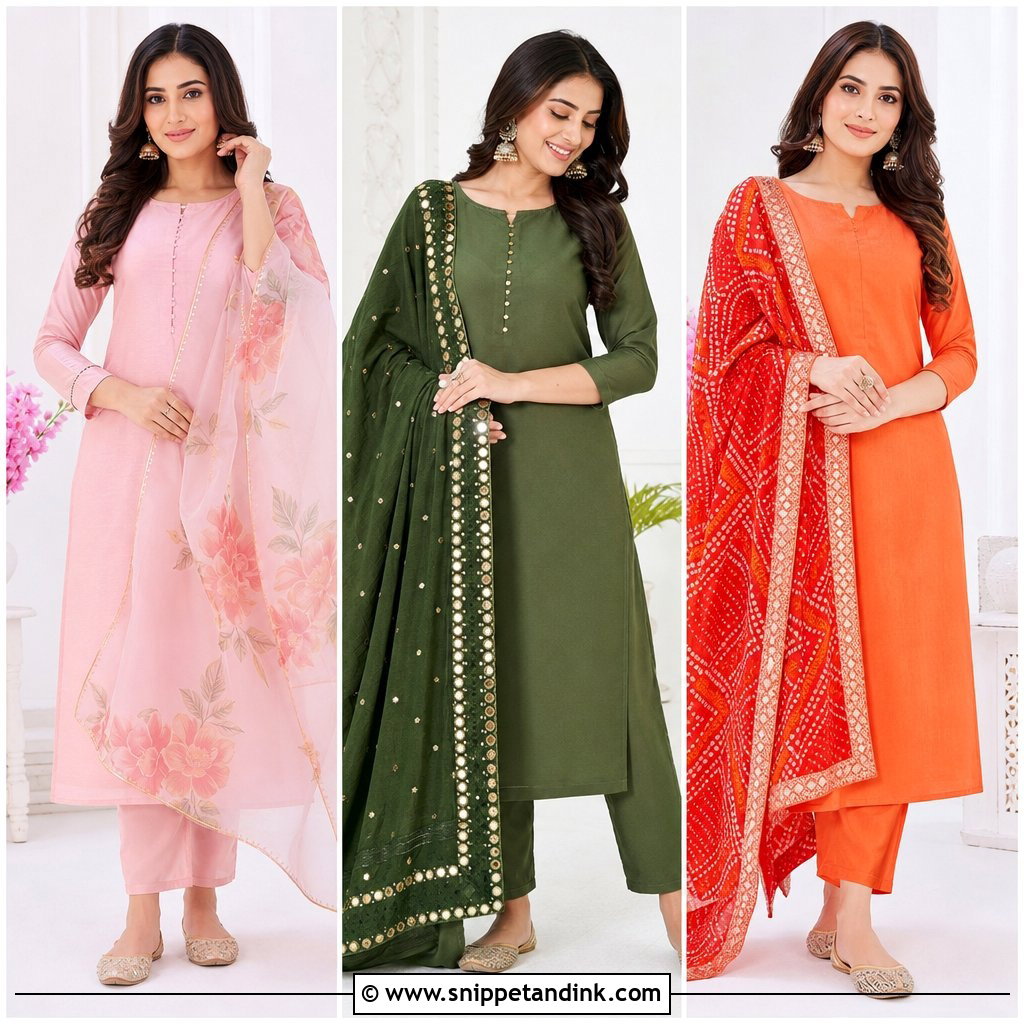
2. Pastel Pink Salwar Kameez Outfit
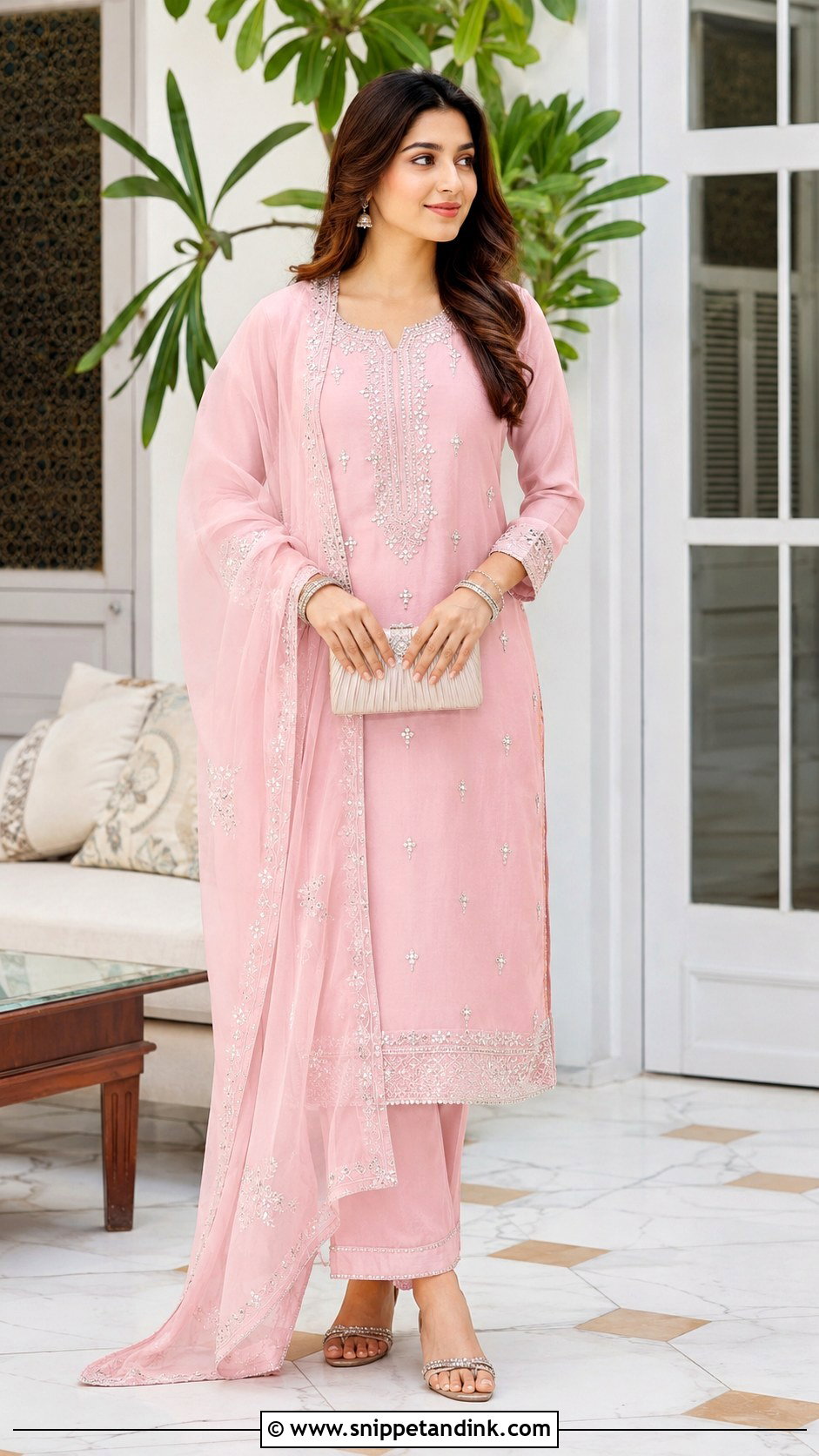
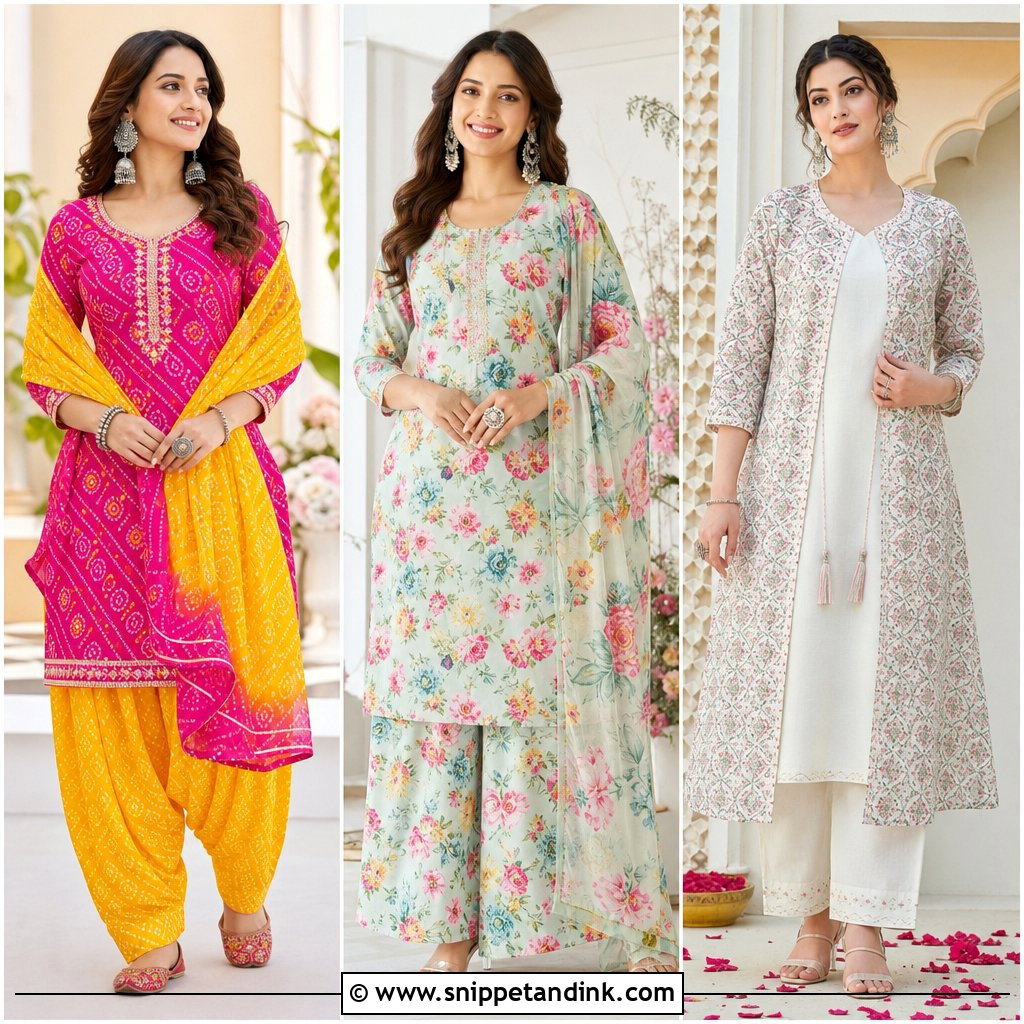
Pastel pink is the salwar kameez colour I see most at Eid lunches, and with reason: it suits warm and cool skin alike if you pick a dusty pink rather than a candy one. A straight or gently flared kameez with embroidery at the neckline and cuffs is enough. Tapered trousers look sharper, while a classic salwar is easier to sit cross-legged in on a floor cushion. Add a sheer dupatta with scattered motifs, small jhumkas and nude heels or embellished flats.
3. Sage Green Open Abaya Outfit
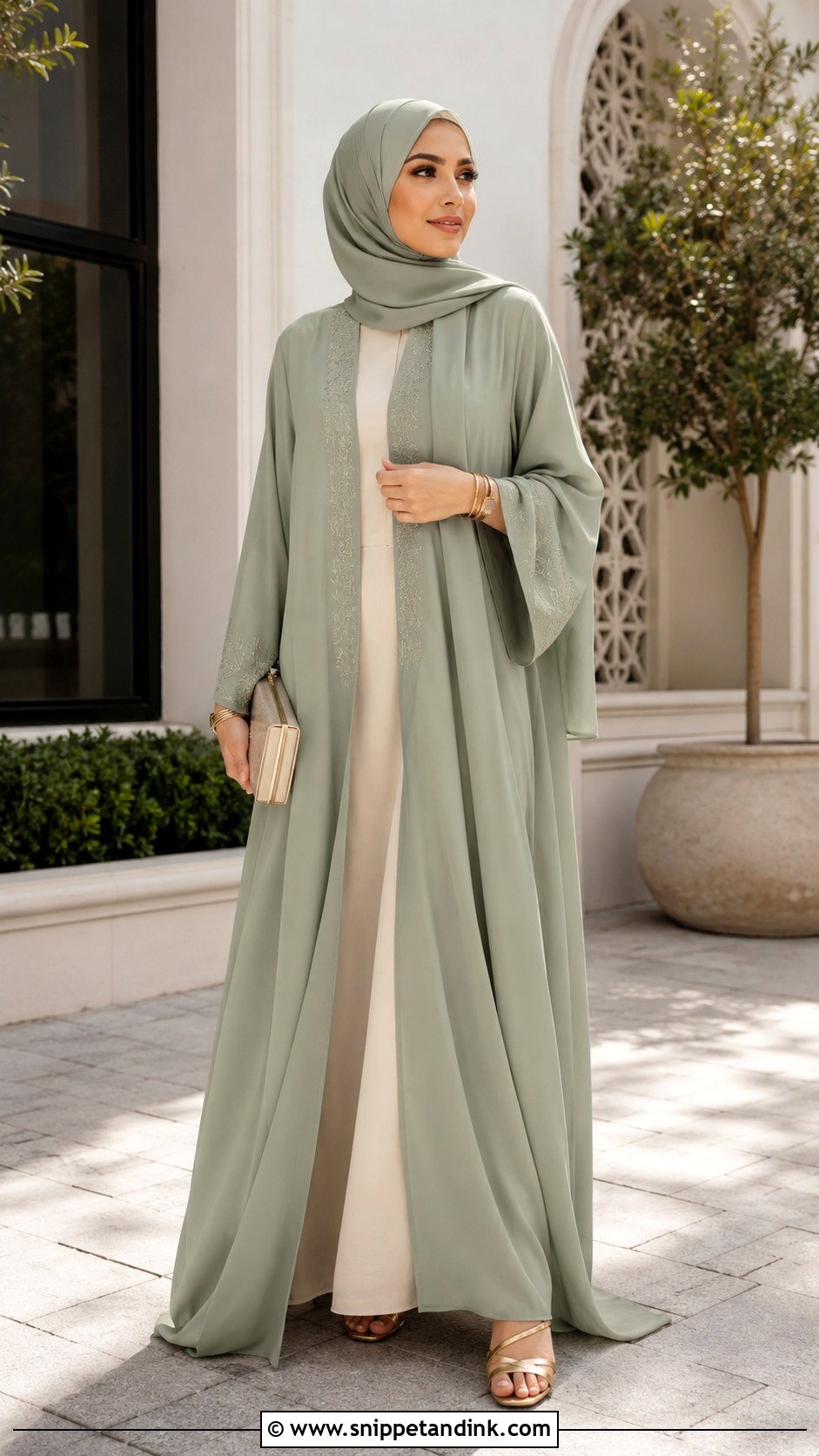
Sage green is calm, which is exactly why it photographs well among a room of bright Eid colours. Layer an open sage abaya over a cream or white inner dress. Crepe and chiffon drape best; stiff satin in sage can look slightly grey indoors under warm bulbs, so I test it under the lighting you’ll actually be in. A matching hijab gives a tonal look, cream gives softer contrast. Gold sandals and thin bangles are plenty. The layers come off easily for a warm dinner, so it carries from prayer to evening.
4. Champagne Satin Maxi Dress Outfit
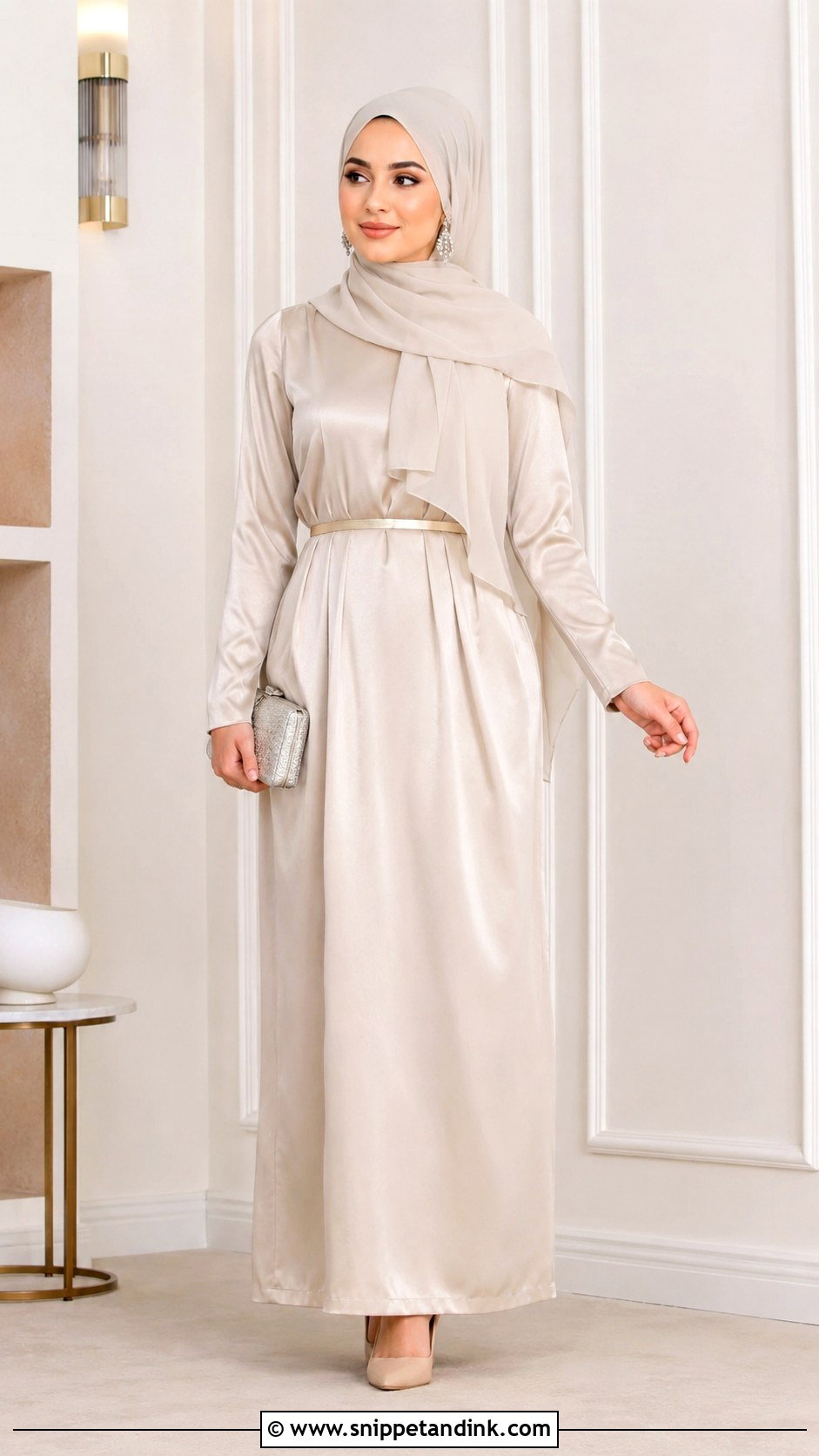
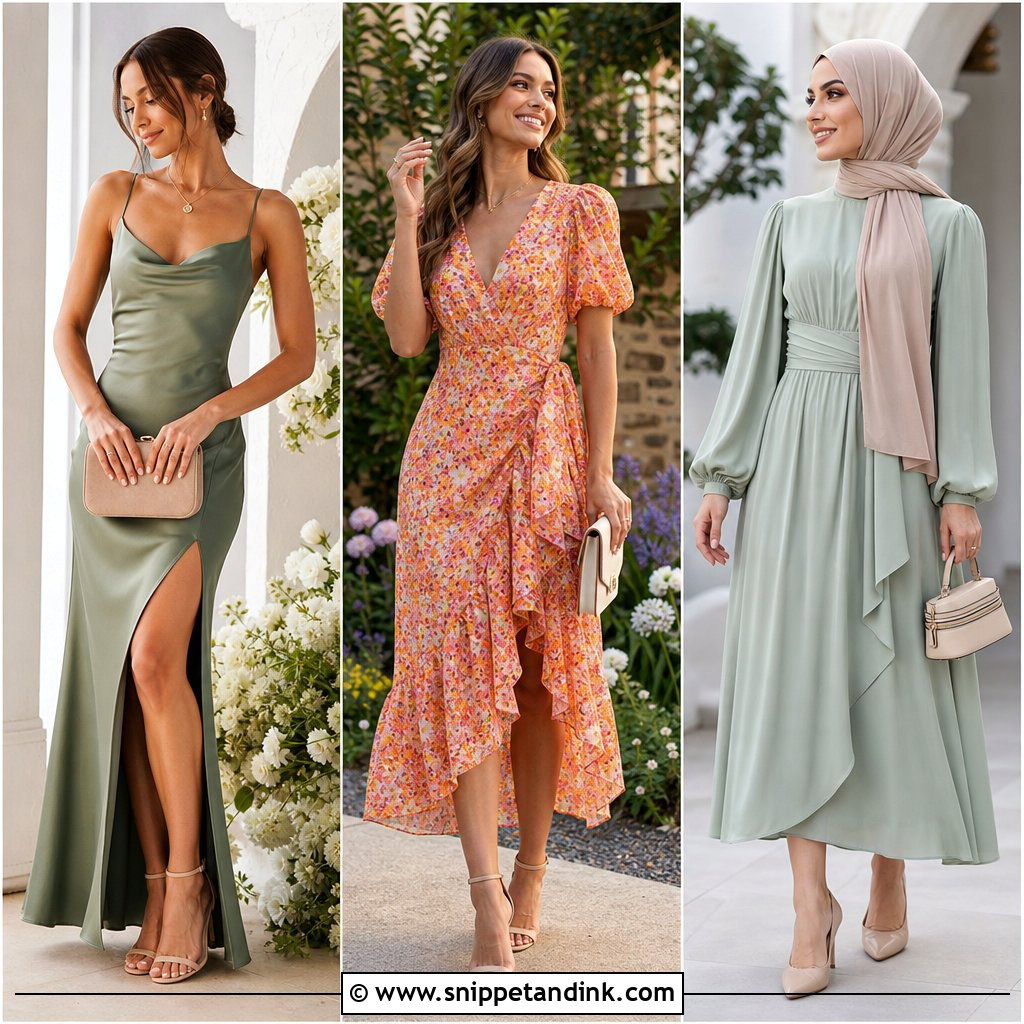
Champagne satin brings festive shine without a stitch of embroidery. Go for long sleeves, a modest neckline and a cut that skims rather than clings, because satin highlights every line underneath. I always suggest a slip or a smooth inner layer with it. A chiffon hijab in ivory or taupe softens the sheen. If you want shape, a slim belt in the same colour family works better than a contrast one. This is an evening outfit to me: satin creases at the hip once you’ve sat through a long lunch.
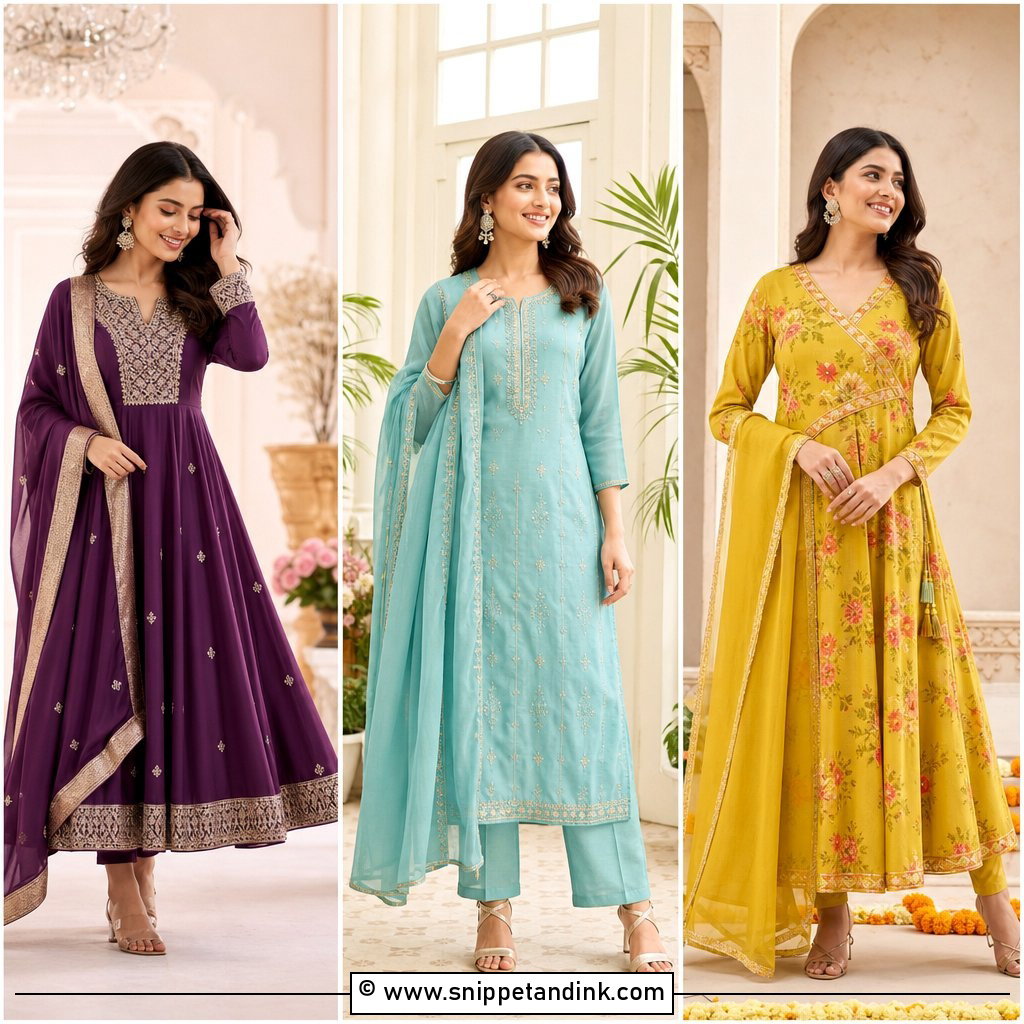
5. Floral Anarkali Suit Outfit
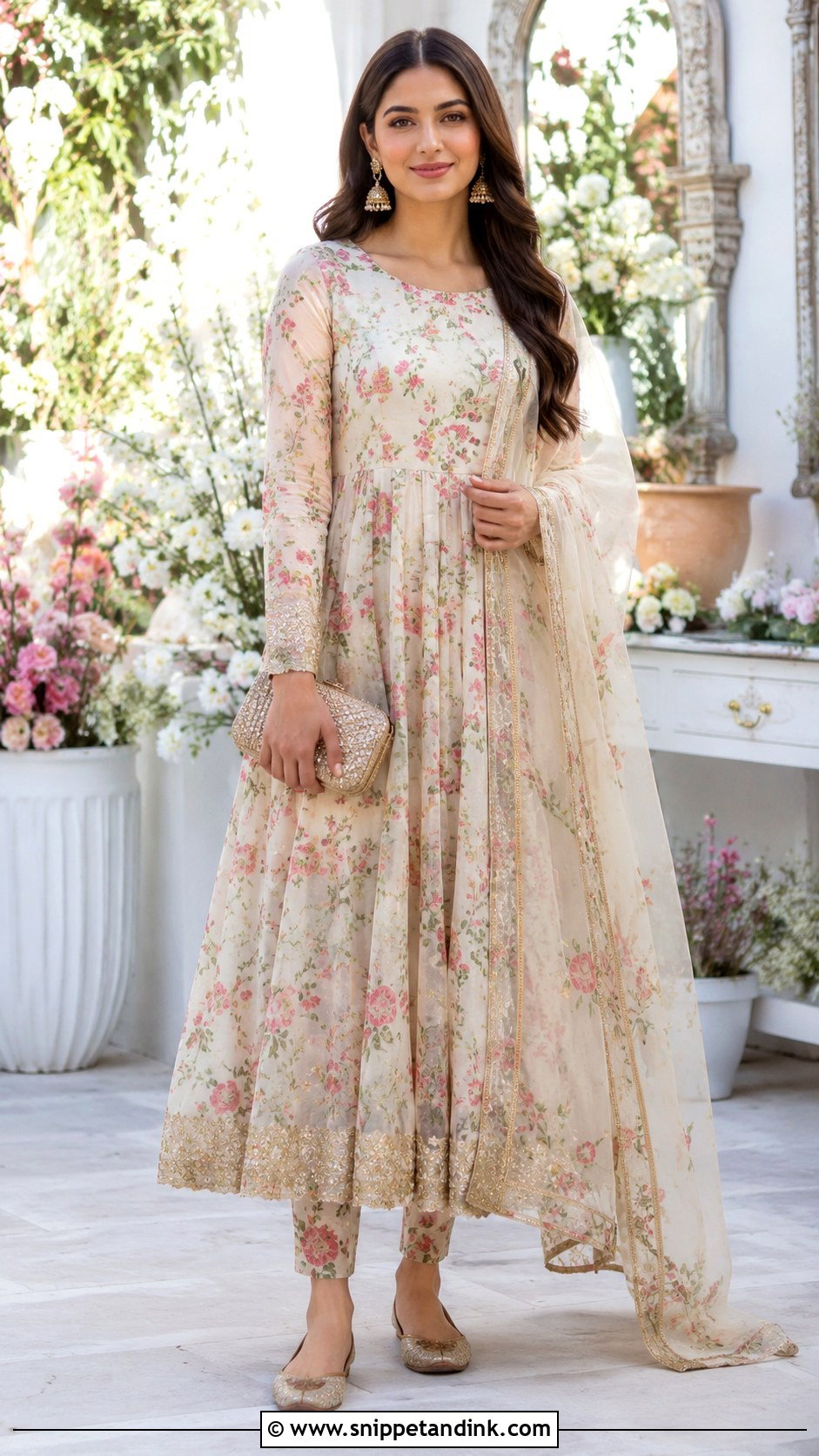
A floral Anarkali suit outfit moves the moment you walk, and the fitted bodice with a flared skirt flatters a wide range of shapes. Blush, mint and powder blue florals suit a spring or summer Eid; emerald or maroon with gold reads richer in winter. Pair it with churidar or slim trousers. Volume at the hem needs a little lift underneath, so I suggest wedges or embellished flats with a slight platform rather than completely flat sandals, which can let the hem drag.
6. Black Abaya With Gold Accessories Outfit
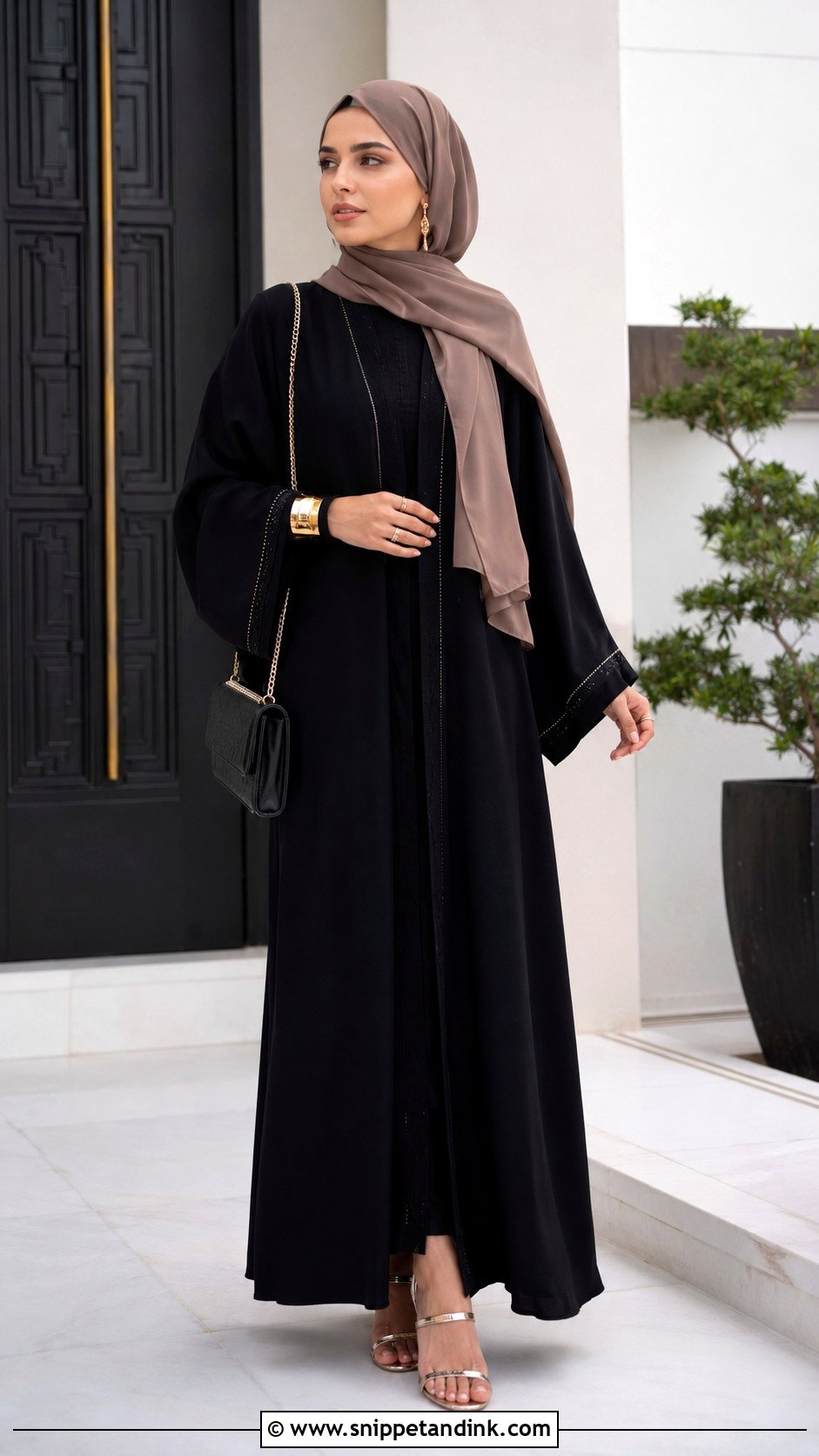
A black abaya is the backbone of many modest wardrobes, and gold is the simplest way to make it feel like Eid. Pick a clean cut with soft sleeves or a thread of gold embroidery. A black inner dress looks sleek, a beige one adds a lighter line at the opening. The balance I aim for is two gold pieces at most, maybe a cuff and earrings, plus a chain-strap bag. Black does attract lint and pet hair, so keep a lint roller by the door before you leave for prayer.
7. Emerald Green Kaftan Outfit
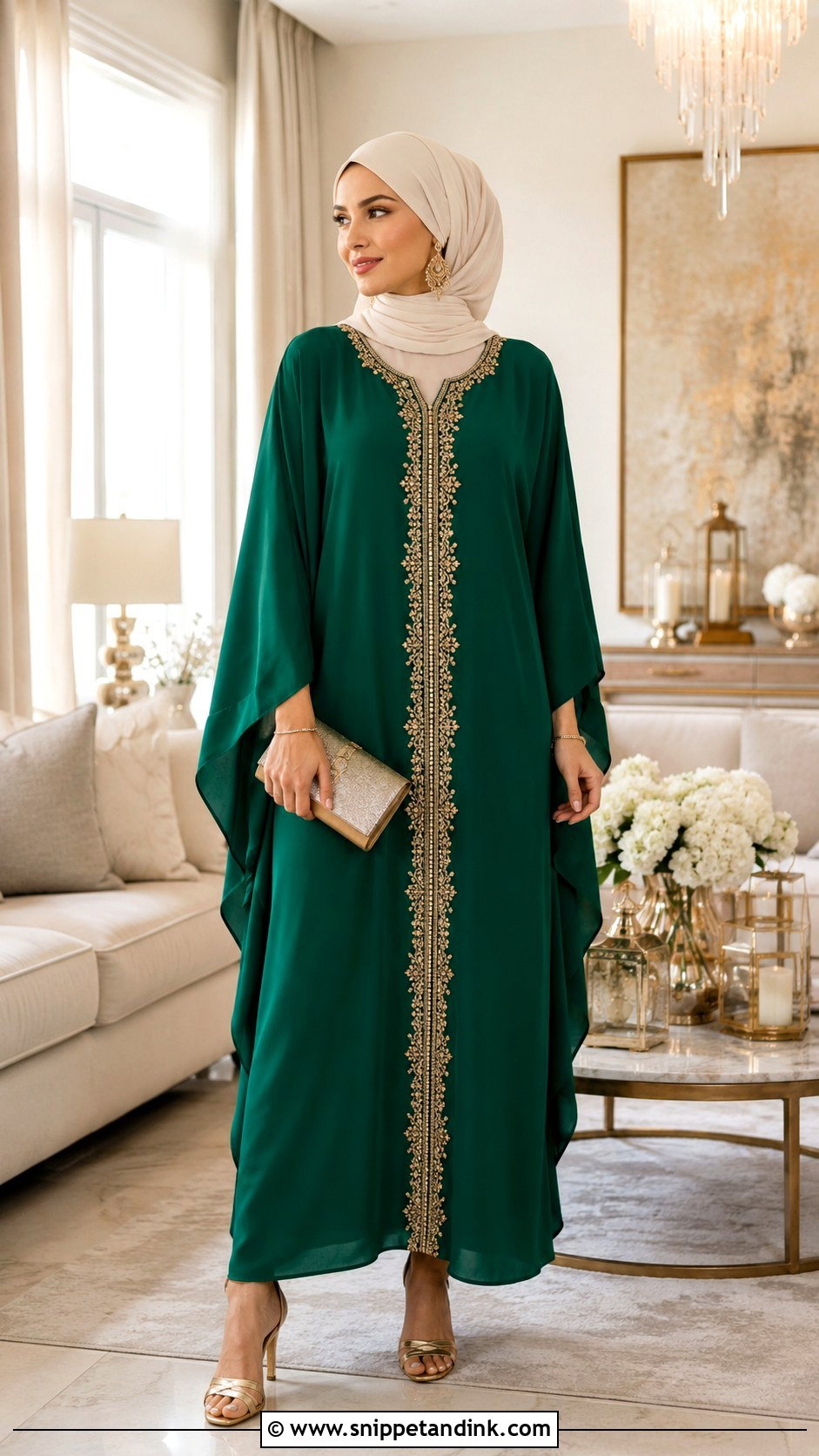
A kaftan is my favourite outfit for the woman hosting Eid at home. You’re lifting dishes, greeting guests and sitting on the floor with children, and nothing pulls. Emerald gives it richness. Choose one with a defined neckline or light embellishment at the centre so it doesn’t read as loungewear. Very loose kaftans can swamp a petite frame, which is where a soft tie belt or an inner slip helps. Gold heels or embellished flats, a metallic clutch and one bold pair of earrings.
8. Ivory Lehenga Choli Outfit
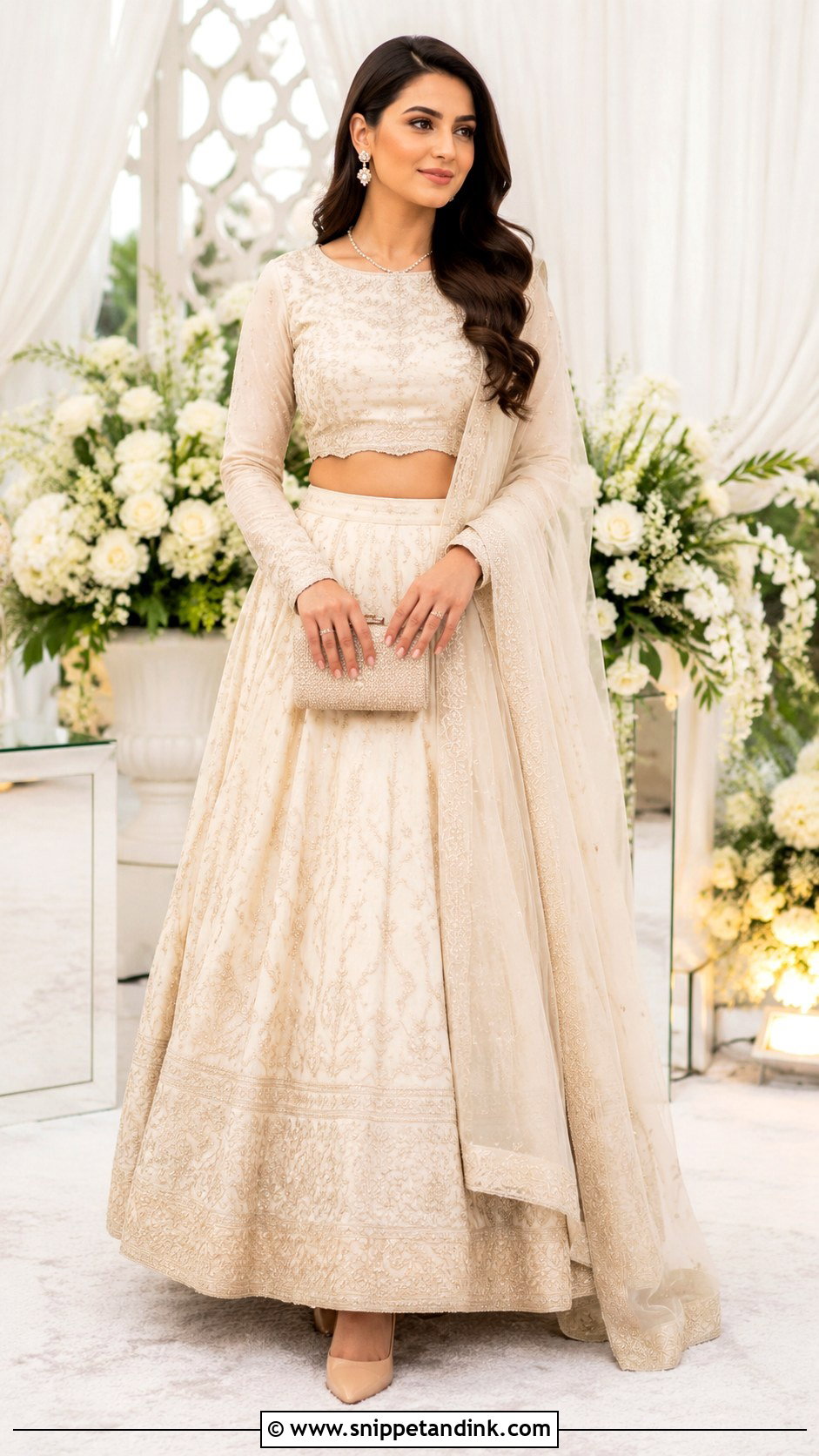
Ivory lehengas suit a larger Eid party or the family portrait. A long-sleeved choli or longer blouse keeps the coverage right, and the dupatta can be draped across the front rather than off one shoulder. Embroidery, mirror work or tonal beading give enough detail. Ivory is unforgiving with food, so I’d pin the dupatta out of the way before the biryani comes round. Pearls, nude heels and a small clutch keep it soft, and ivory takes gold, rose gold or pastel accents equally well.
9. Navy Blue Sharara Suit Outfit
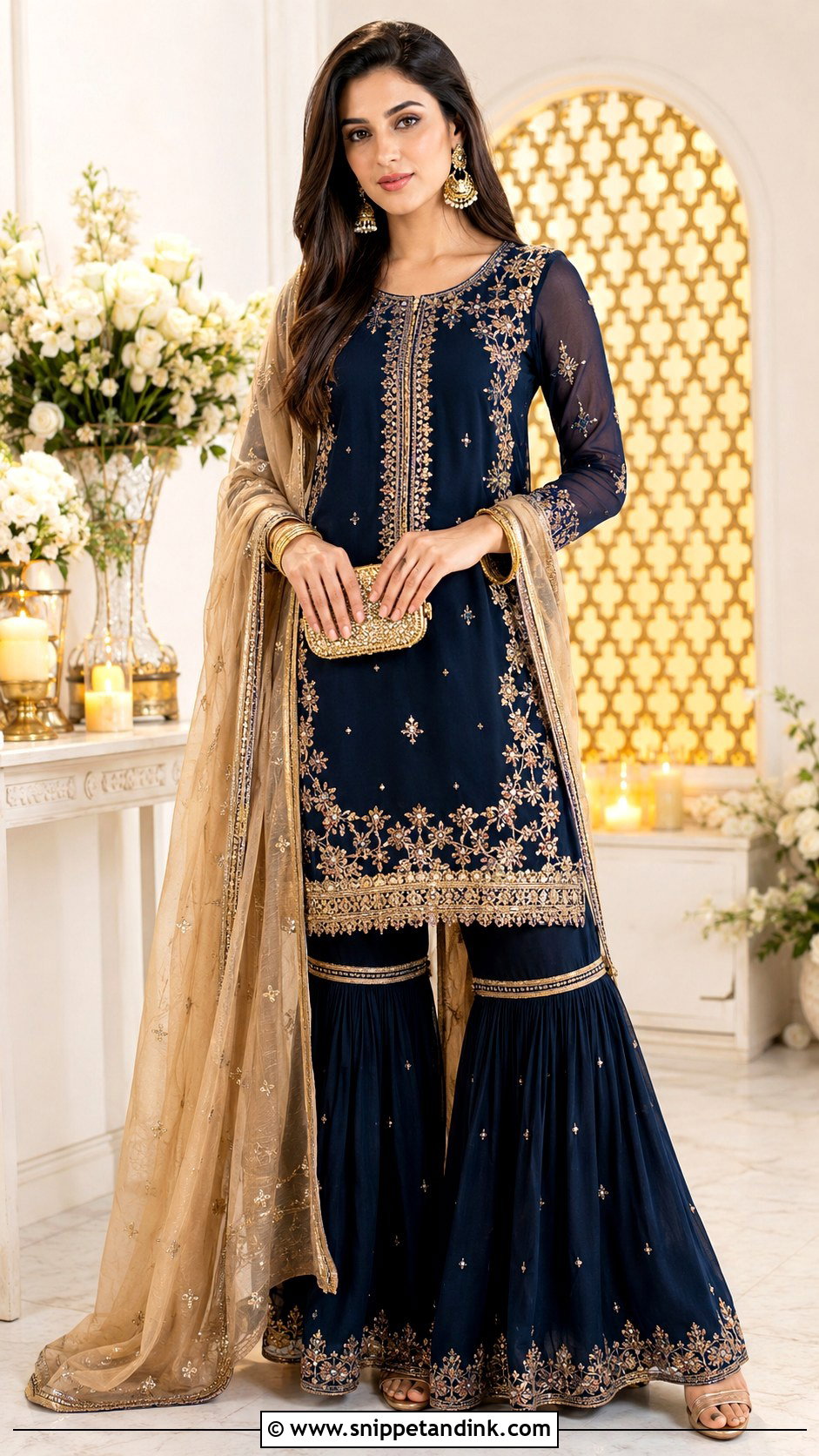
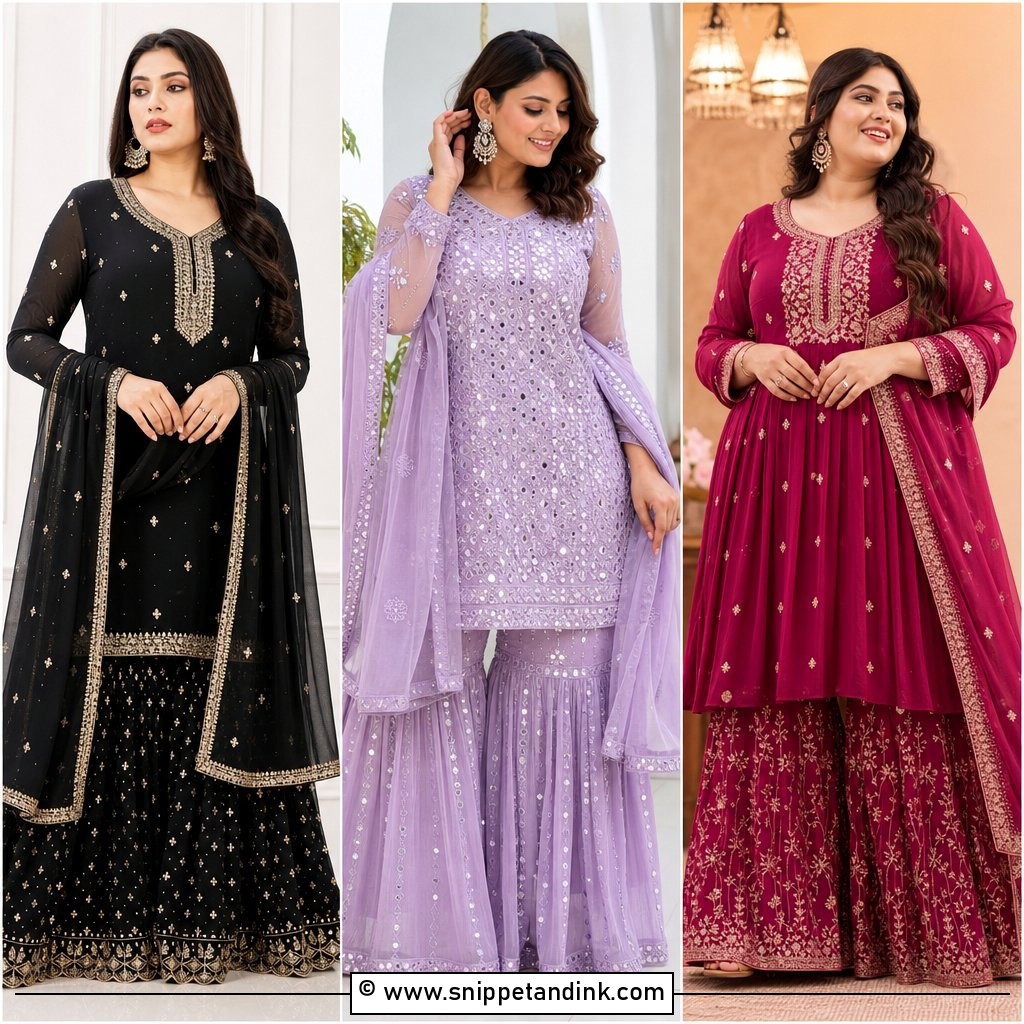
Navy is one of the most forgiving colours I dress clients in: it works in daylight and under evening lights, and it flatters almost every skin tone. A short or mid-length embroidered kameez over wide sharara pants gives real movement. The flare can start at the knee or the thigh; knee flares look more dramatic but take more fabric to walk in. Because sharara pants pool at the floor, I add a little height with block heels or wedges to keep the hem clean. A navy, gold or champagne dupatta and stacked bangles finish this regal take on traditional South Asian dress.
10. Cream Co-Ord Set Outfit
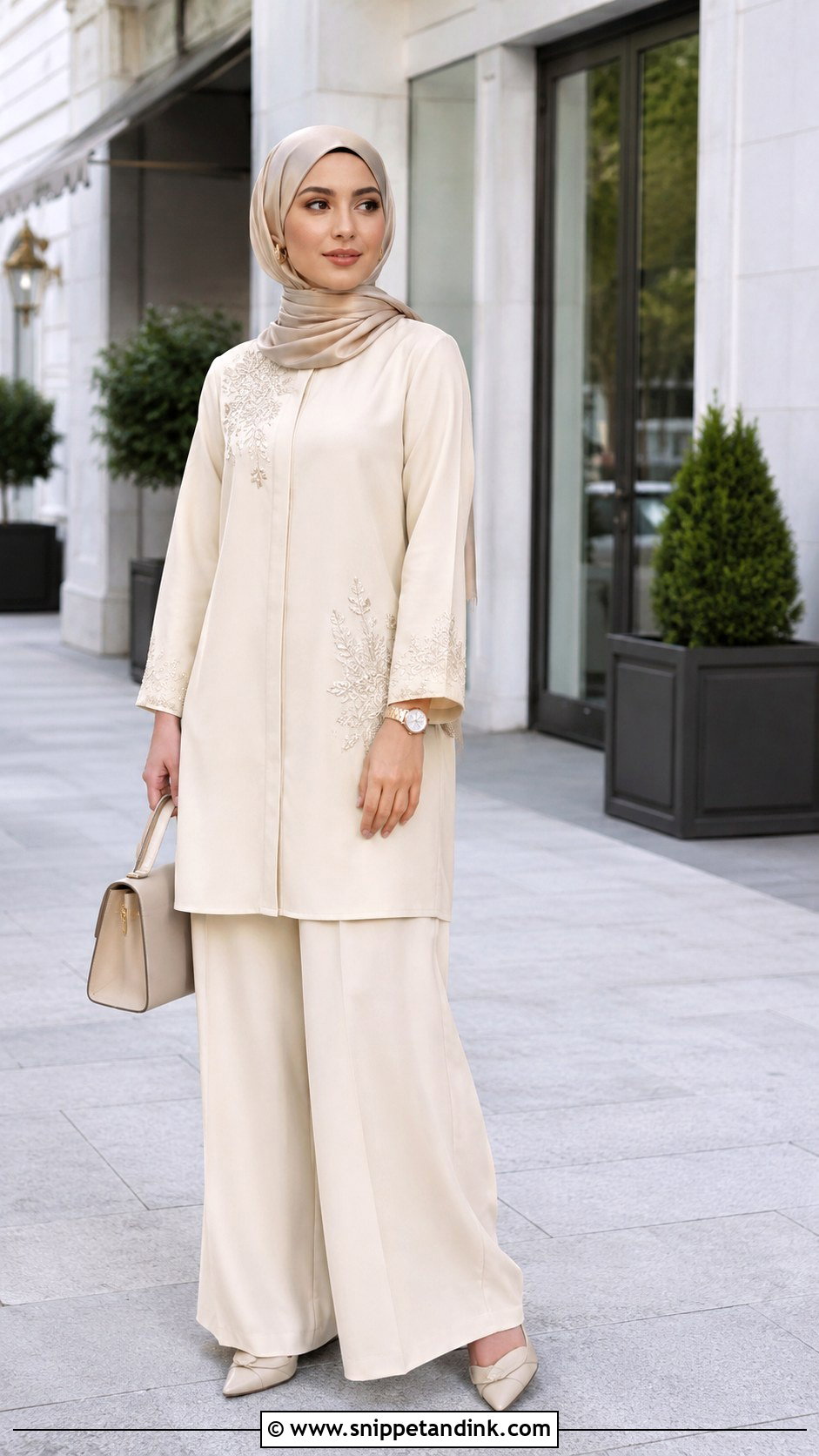
A cream co-ord is for the woman who likes a simple wardrobe but still wants Eid to feel set apart. A long tunic with wide-leg trousers is the easiest version; a structured top with a longline vest looks sharper. Matching pieces do most of the styling for you. The fabric is what makes it festive, so I’d choose a silk blend or a textured crepe over plain cotton. Beige or mocha in the hijab, pointed flats or slingbacks, a watch and small gold hoops.
11. Lavender Maxi Dress Outfit
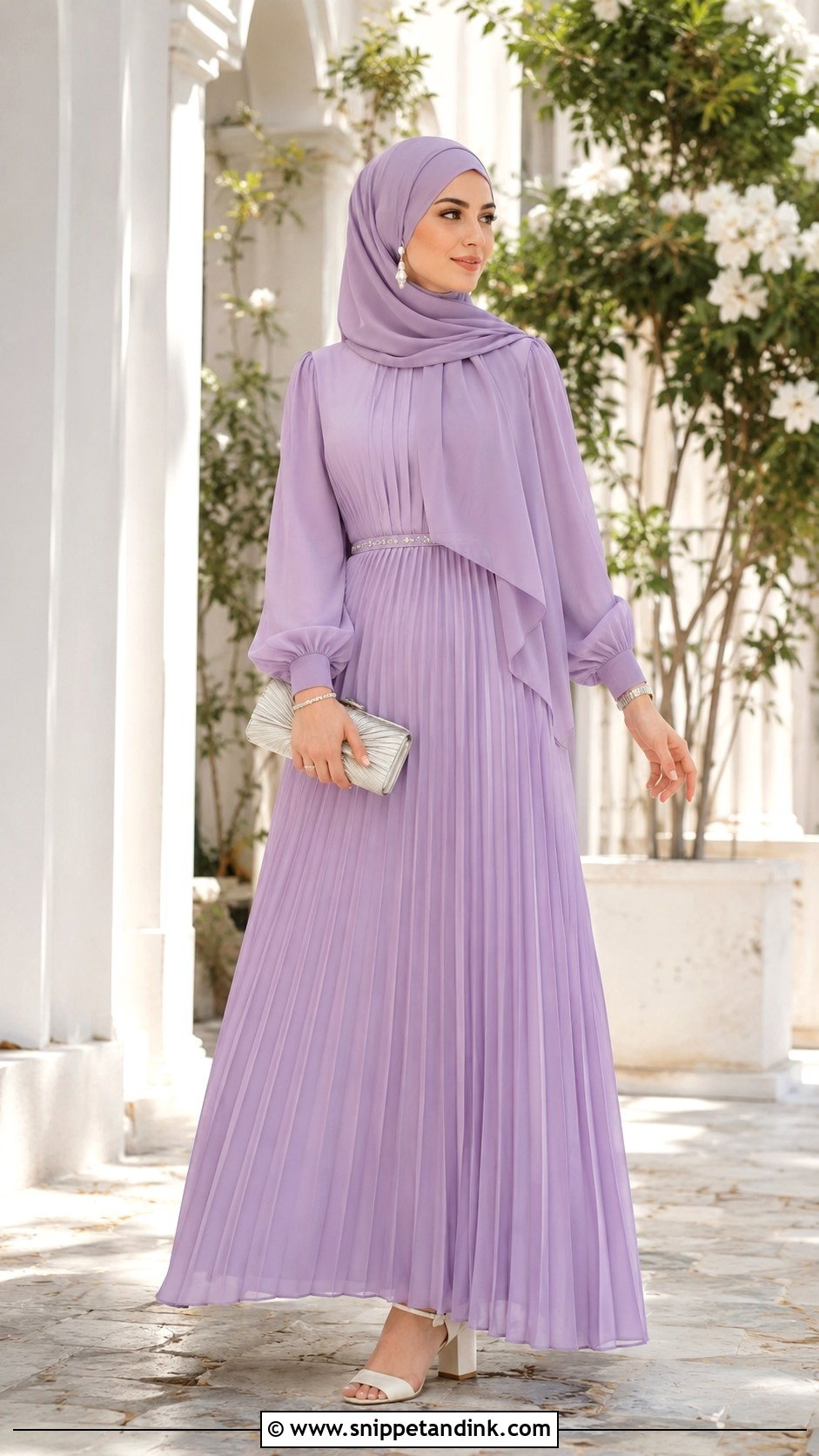
Lavender is fresh and gentle, and it sits best with silver, pearl and soft grey rather than gold. Look for a long-sleeved maxi with soft pleats or tiers. A matching chiffon hijab gives a tonal effect, while ivory brightens it. I like it for daytime visits and outdoor photos, since lavender can turn slightly blue under some indoor lighting. It also rewears easily for other modest occasions, which matters if you’re buying one new outfit a year.
12. Velvet Kurta With Trousers Outfit
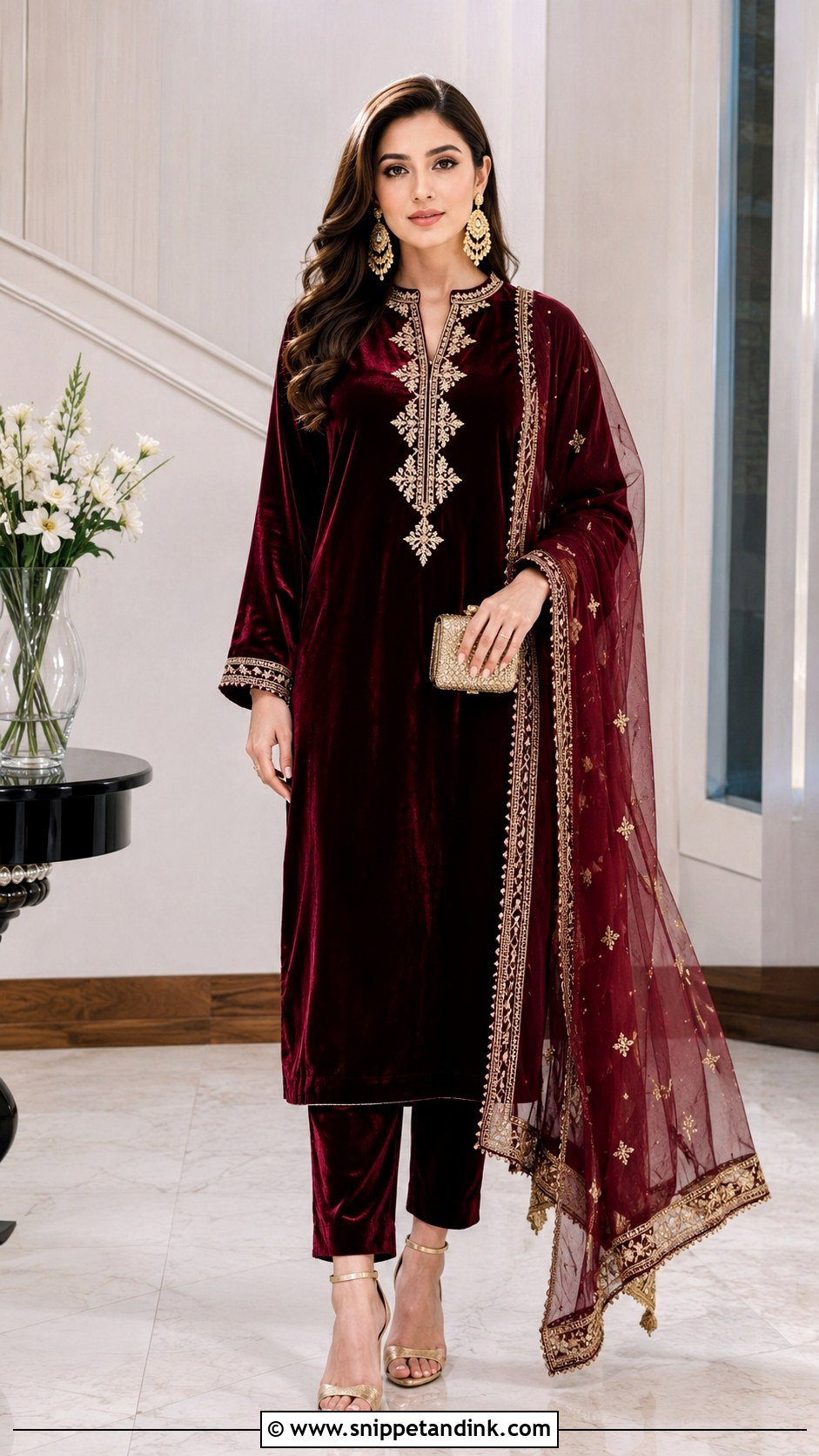
Velvet is the Eid choice when the festival falls in cooler months or the evening is formal. Burgundy, emerald, plum and deep teal all have that inner glow velvet gives. A straight velvet kurta with embroidery at the neckline or sleeves needs very little else. Velvet marks easily when pressed, so steam it from the back, never iron the pile. A chiffon dupatta lightens the heavy texture, and cigarette or tapered trousers in the same family keep the line long.
13. Beige Abaya Dress Outfit
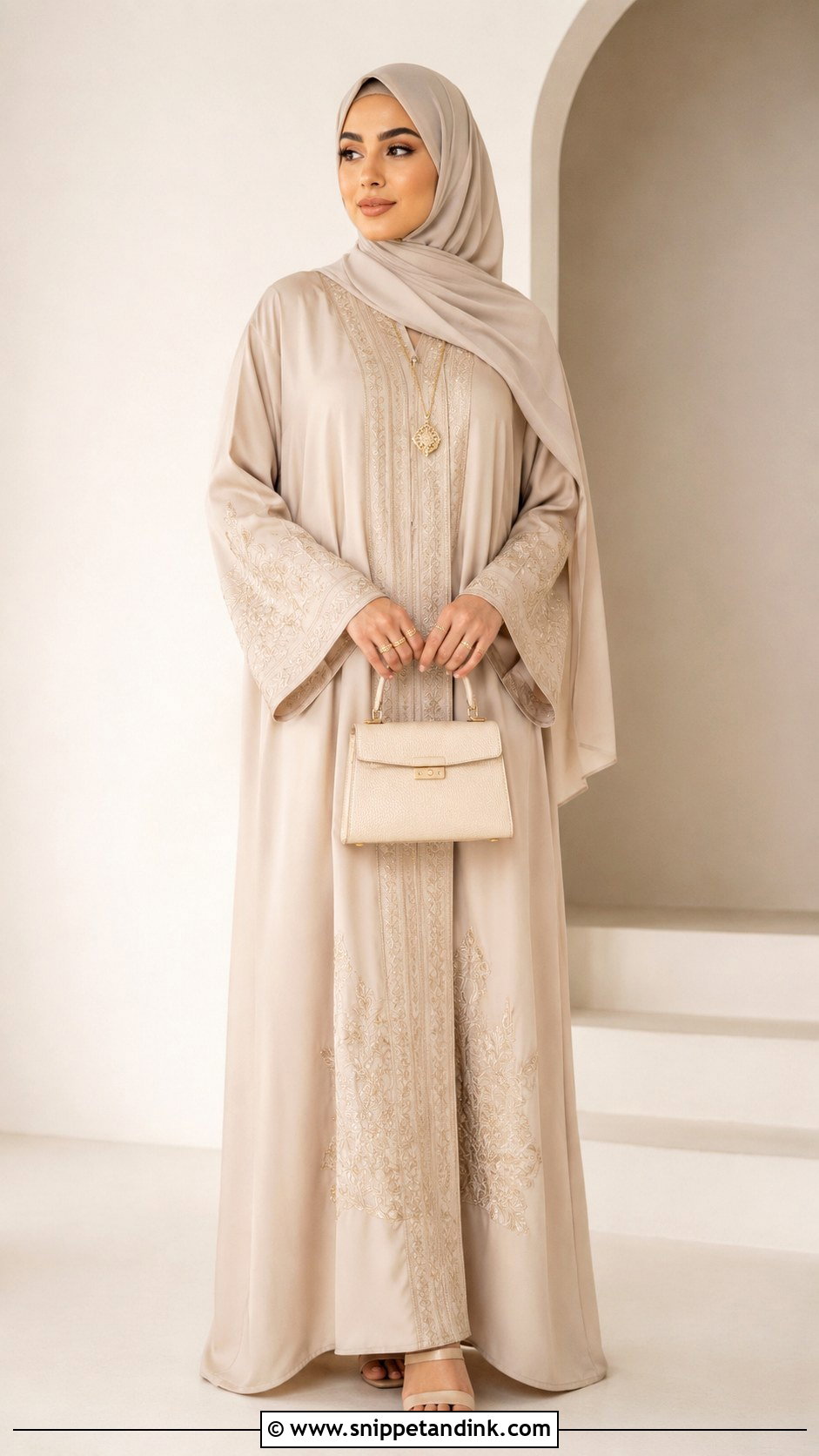
A closed abaya dress in beige is the quietest outfit here and one of the most versatile. Look for an A-line or relaxed straight cut with pleated sleeves, tonal embroidery or a waist tie. Beige can flatten olive and deeper skin tones if it’s too yellow, so I steer those clients toward a pinkish sand or a warm taupe instead. A matching hijab looks monochrome; chocolate brown or olive adds depth. Nude sandals, a top-handle bag and gold jewellery.
14. Powder Blue Pakistani Suit Outfit
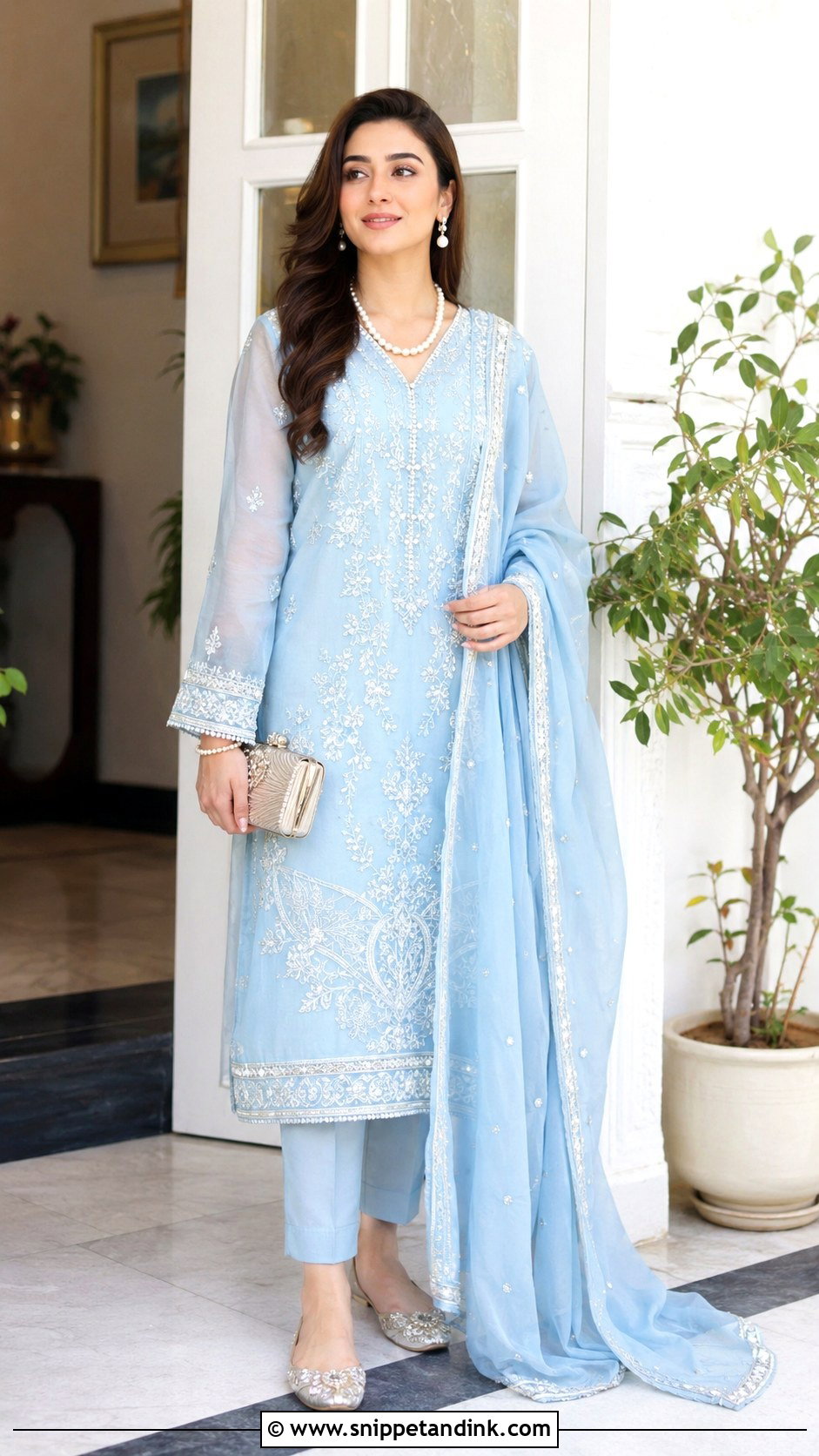
A powder blue Pakistani suit outfit is made for a sunny Eid day. Long straight kameez with embroidery, lace trim or mirror detailing, matching trousers and a bordered dupatta. Silver jewellery sits naturally with powder blue, and pearls look fresh too. The comfort is real: straight cuts let you sit, stand and walk all day without readjusting. I’d only skip it if you run warm, since lined lawn or chiffon versions can get stuffy by afternoon.
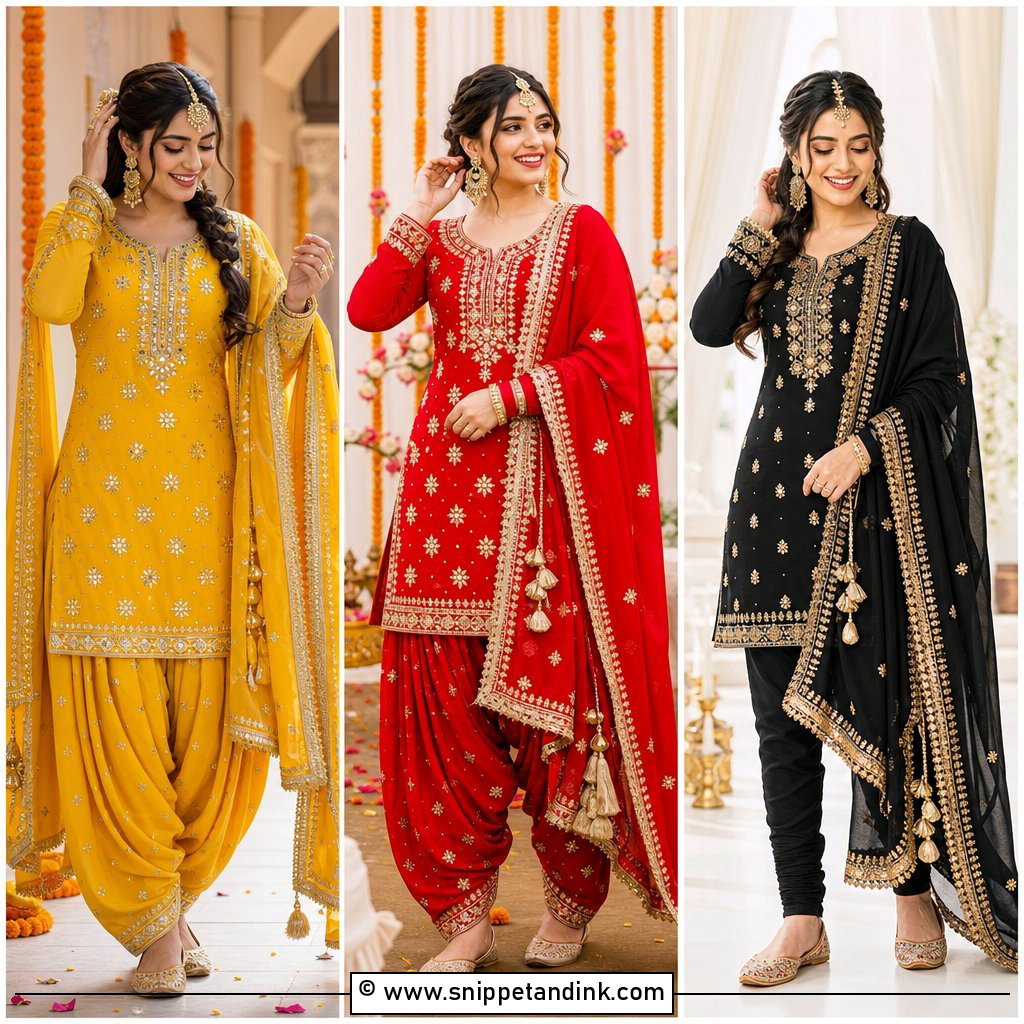
15. Rose Gold Saree Outfit
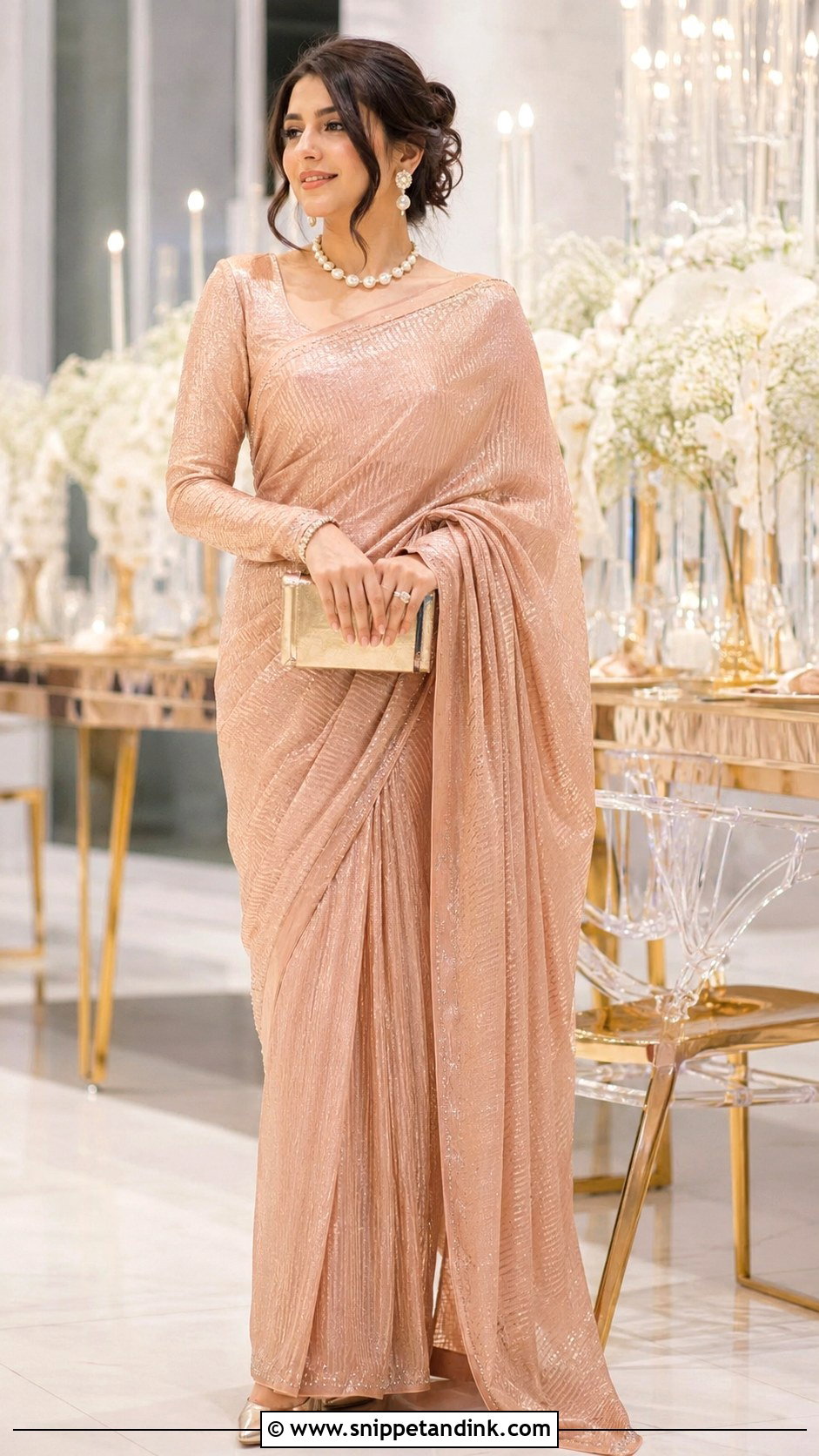
Rose gold gives shine without the boldness of yellow gold. A lightweight satin, chiffon or organza saree with a sleeved blouse works for formal Eid dinners. For extra coverage, wear a longline blouse or spread the pallu fully across the front and pin it at the shoulder and waist. Rose gold reflects light upward onto the face, so I keep makeup soft and skip heavy highlighter. Champagne heels, pearls and a metallic clutch keep the saree as the focus.
16. Mint Green Jumpsuit With Long Jacket Outfit
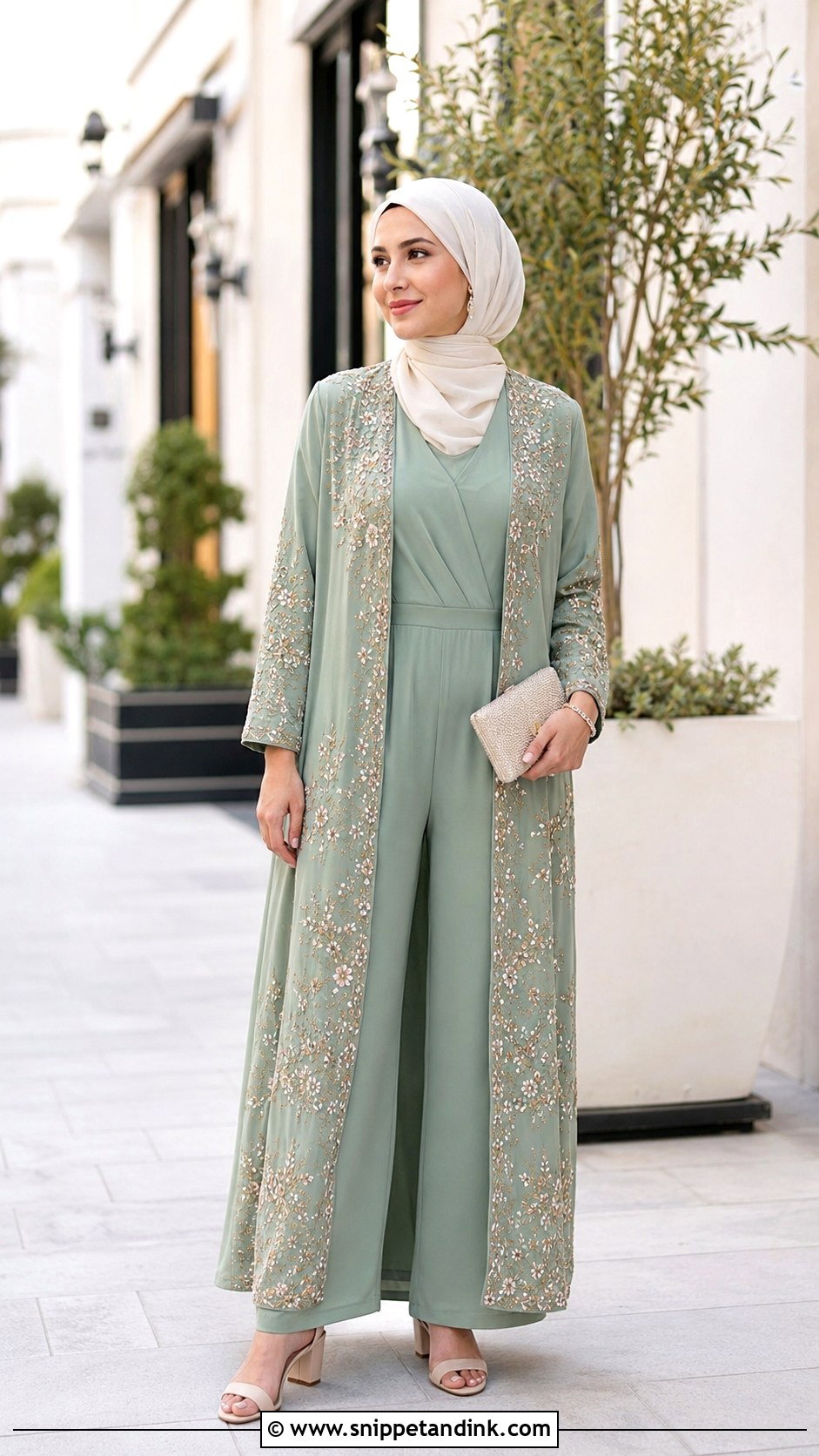
A wide-leg jumpsuit under a long jacket gives modern lines with full coverage. Mint is fresh, and the jacket, sheer, embroidered or lightly embellished, is what makes it festive. A practical warning I give every client: a one-piece jumpsuit makes bathroom breaks awkward at a crowded family home, and even more so before prayer when you need to make wudu. Two-piece versions that look like a jumpsuit solve it. Block heels or wedges help the wide legs fall cleanly.
17. Maroon Anarkali Outfit
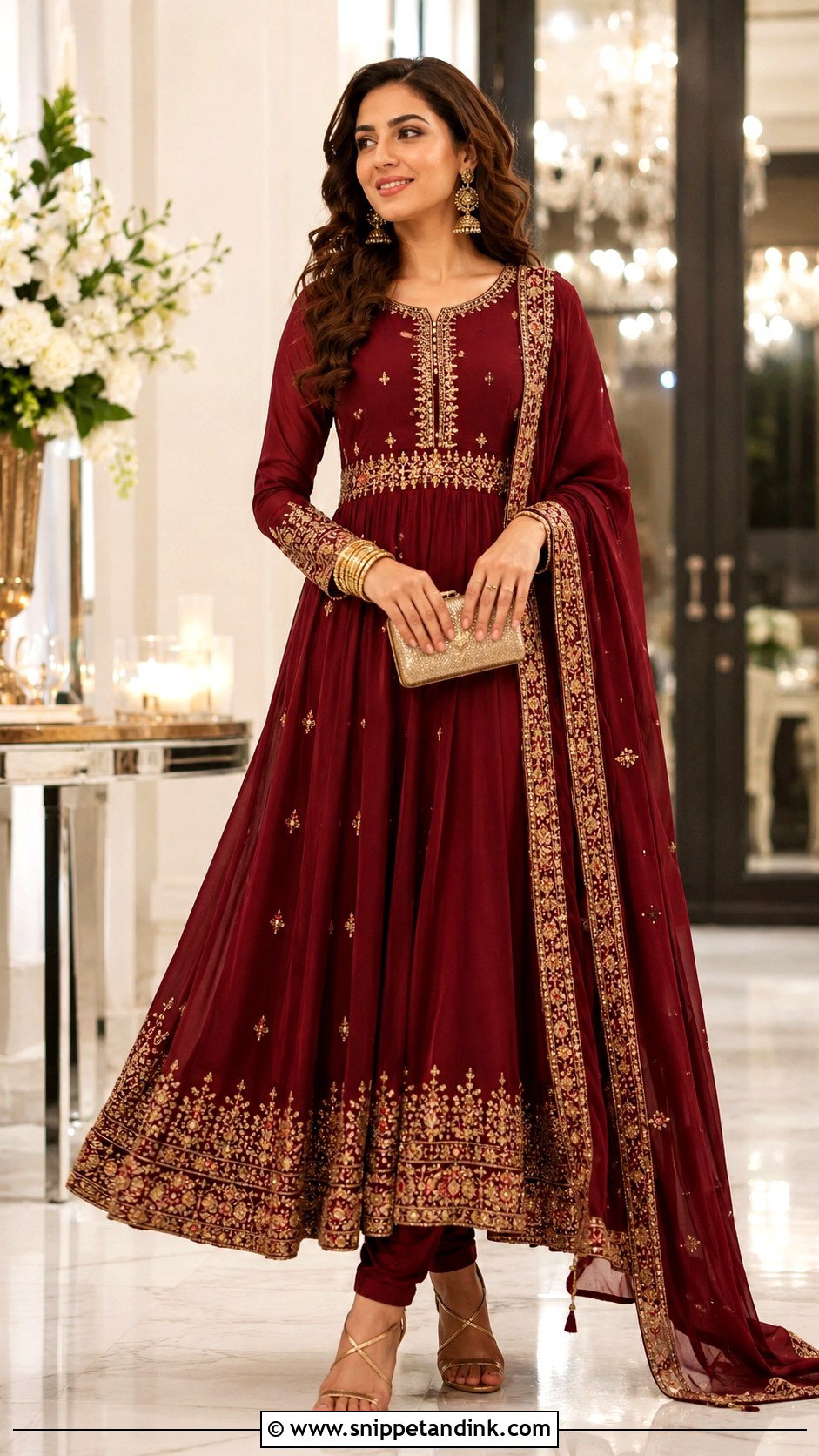
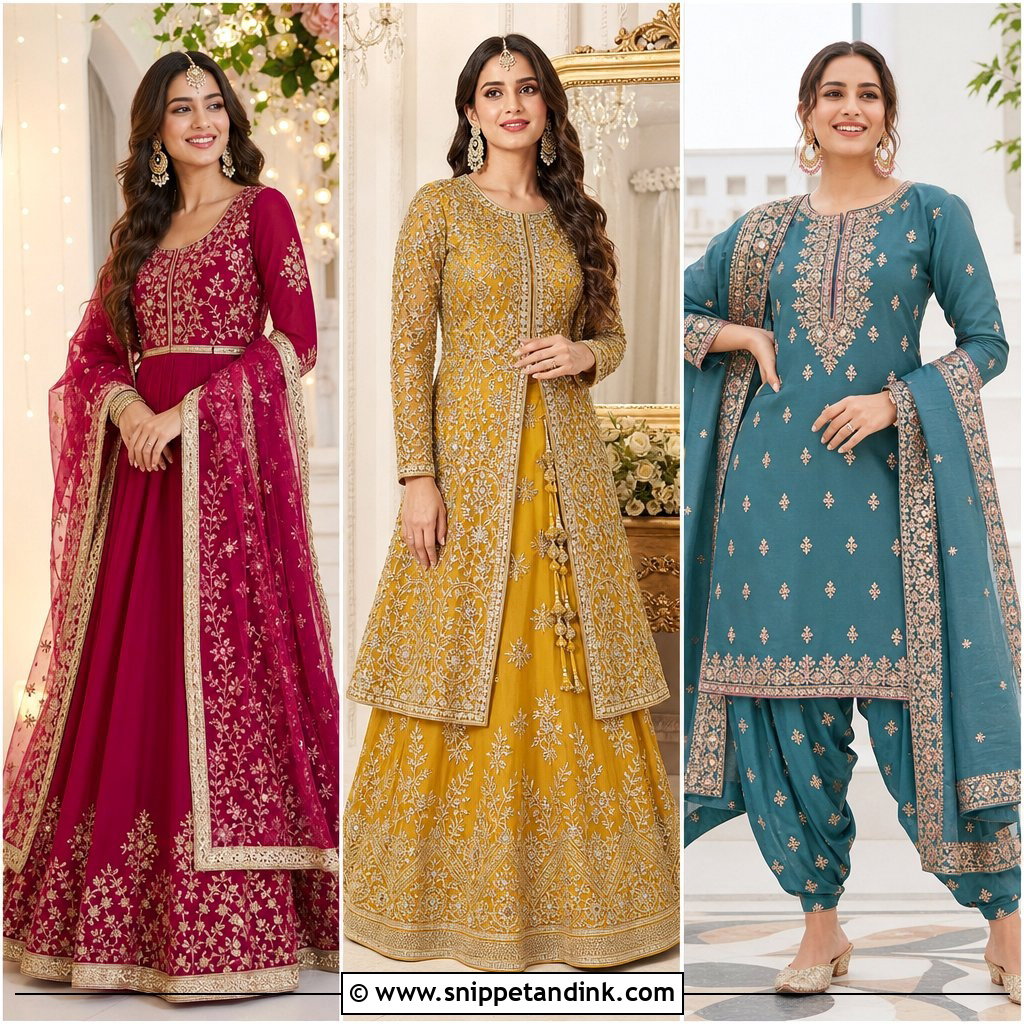
Maroon is a rich, traditional colour that flatters almost every age at an Eid evening. Choose a flowing Anarkali with long sleeves and gold or tonal embroidery, slim pants and a matching dupatta. Because the colour is already strong, I keep accessories in gold and neutrals only, and a neutral clutch. Maroon dyes can bleed onto light skin in summer heat on cheaper fabrics, so a quick damp-cloth test on the inside seam before wearing is worth doing.
18. White Kurta With Palazzo Pants Outfit
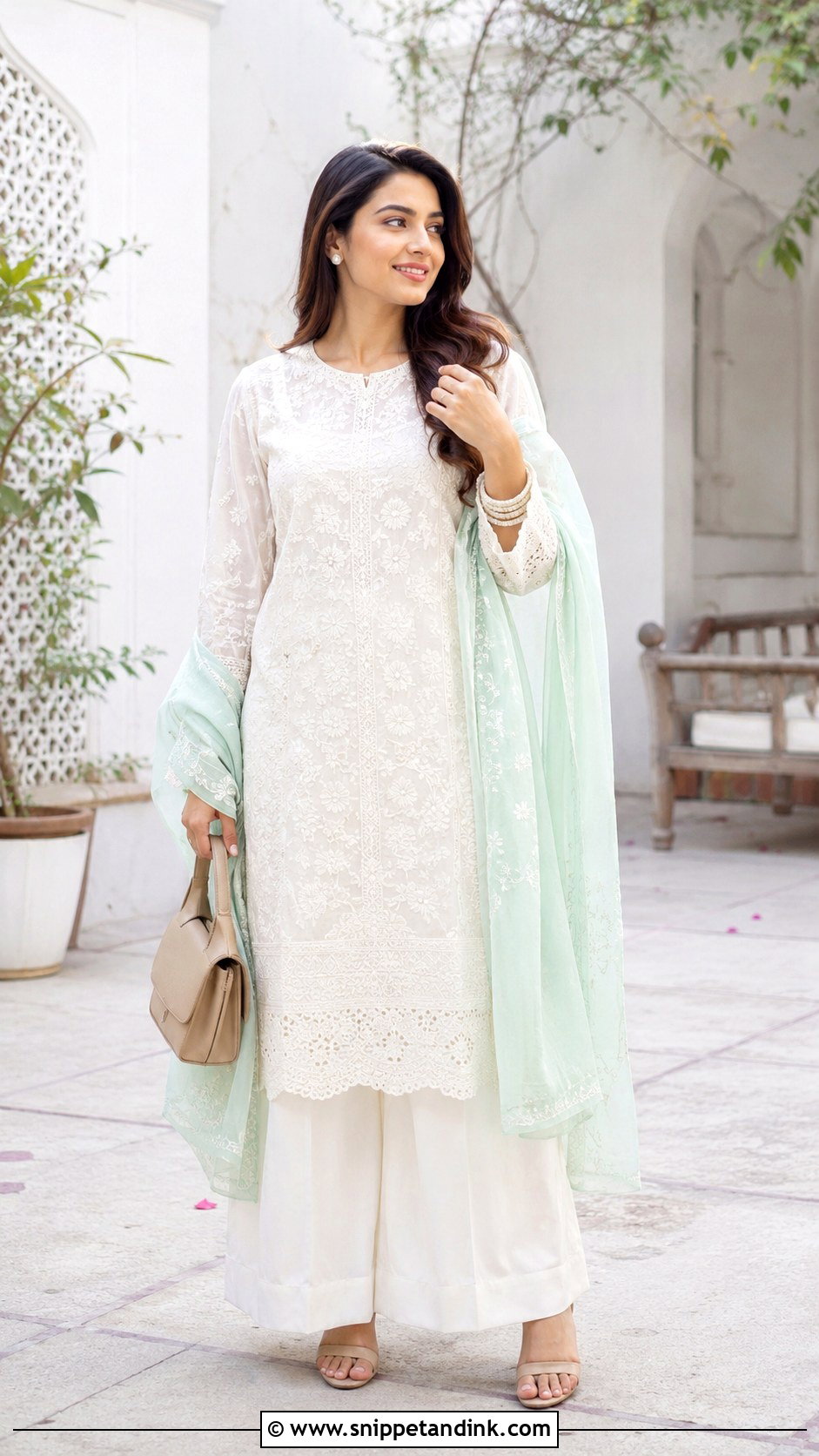
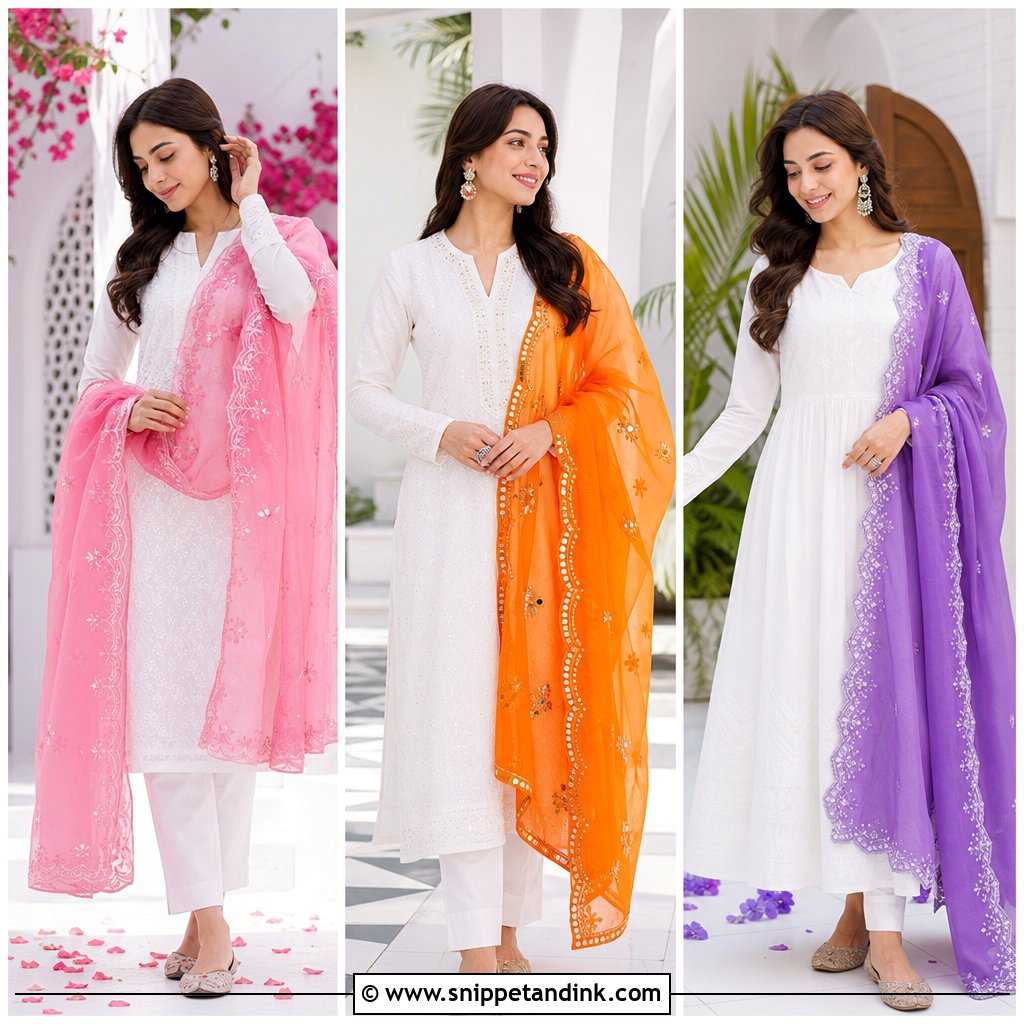
A white kurta with palazzo pants outfit is the one I suggest for a hot Eid. Embroidered, lace-inset or cutwork kurtas in white or ivory over wide palazzos let air move. Cutwork needs an inner layer for modest coverage, so check that before the day. A coloured dupatta in mint, blush or sky blue brings festivity to the white base. Metallic flats or low heels keep you practical for visiting family, and the white base takes almost any accessory you own.
19. Mocha Satin Abaya Outfit
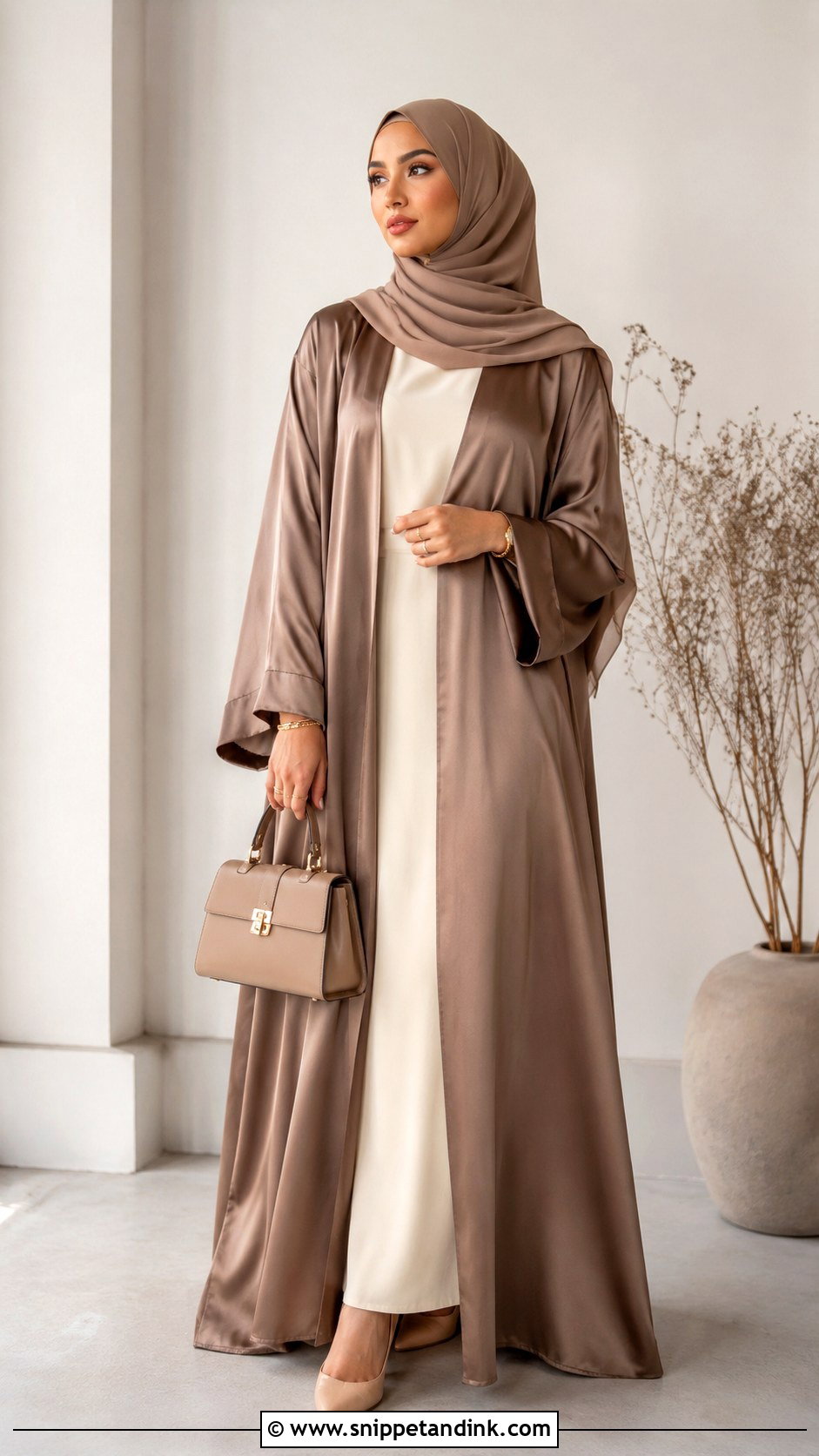
Mocha satin feels warm and current, and it’s one of the most forgiving neutrals for different skin tones. Pick an open or closed abaya in mocha or cocoa. A cream inner dress brightens it; a matching brown base gives a tonal, quieter look. Satin’s shine means you don’t need embroidery. One fitting note: satin abayas that fall straight from the shoulder can look shapeless, so I look for one with a slight waist definition or a tie. Taupe or ivory hijab, nude heels and gold jewellery.

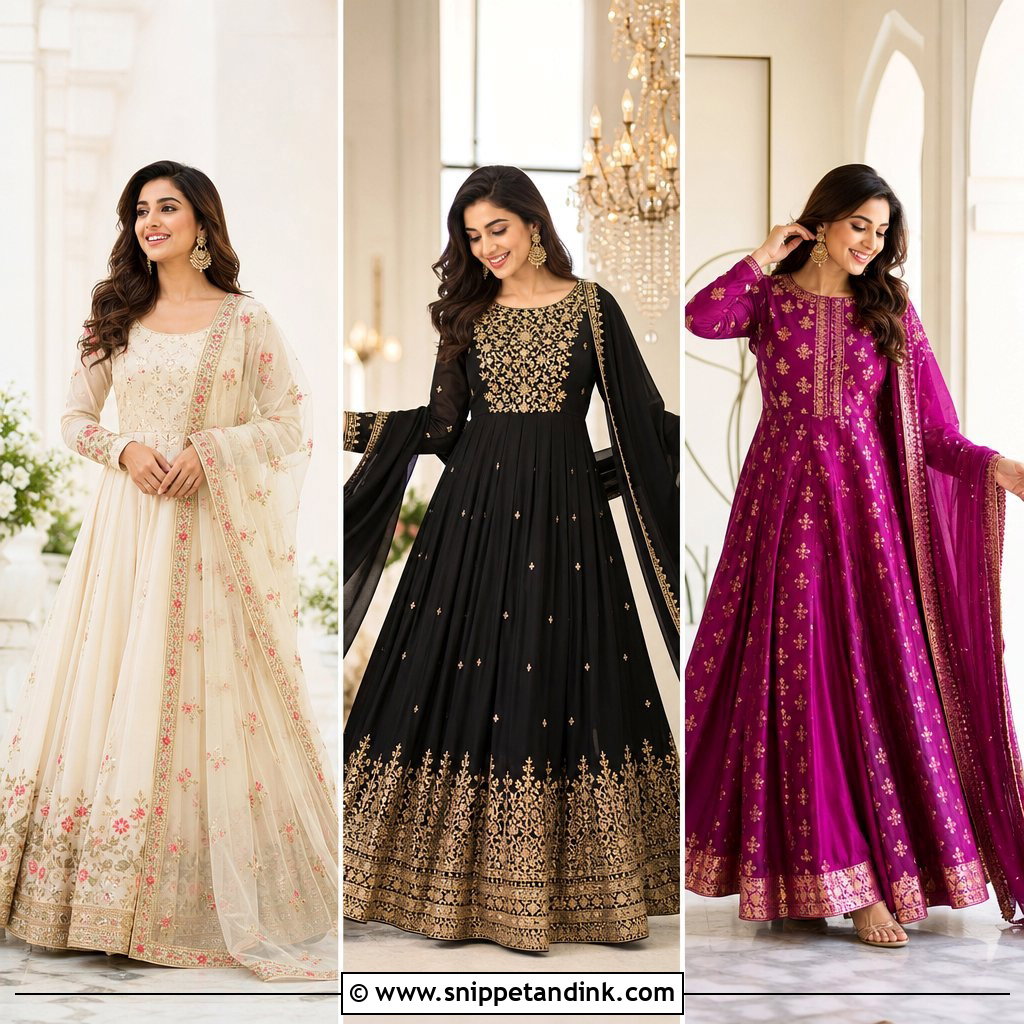
20. Peach Gharara Suit Outfit
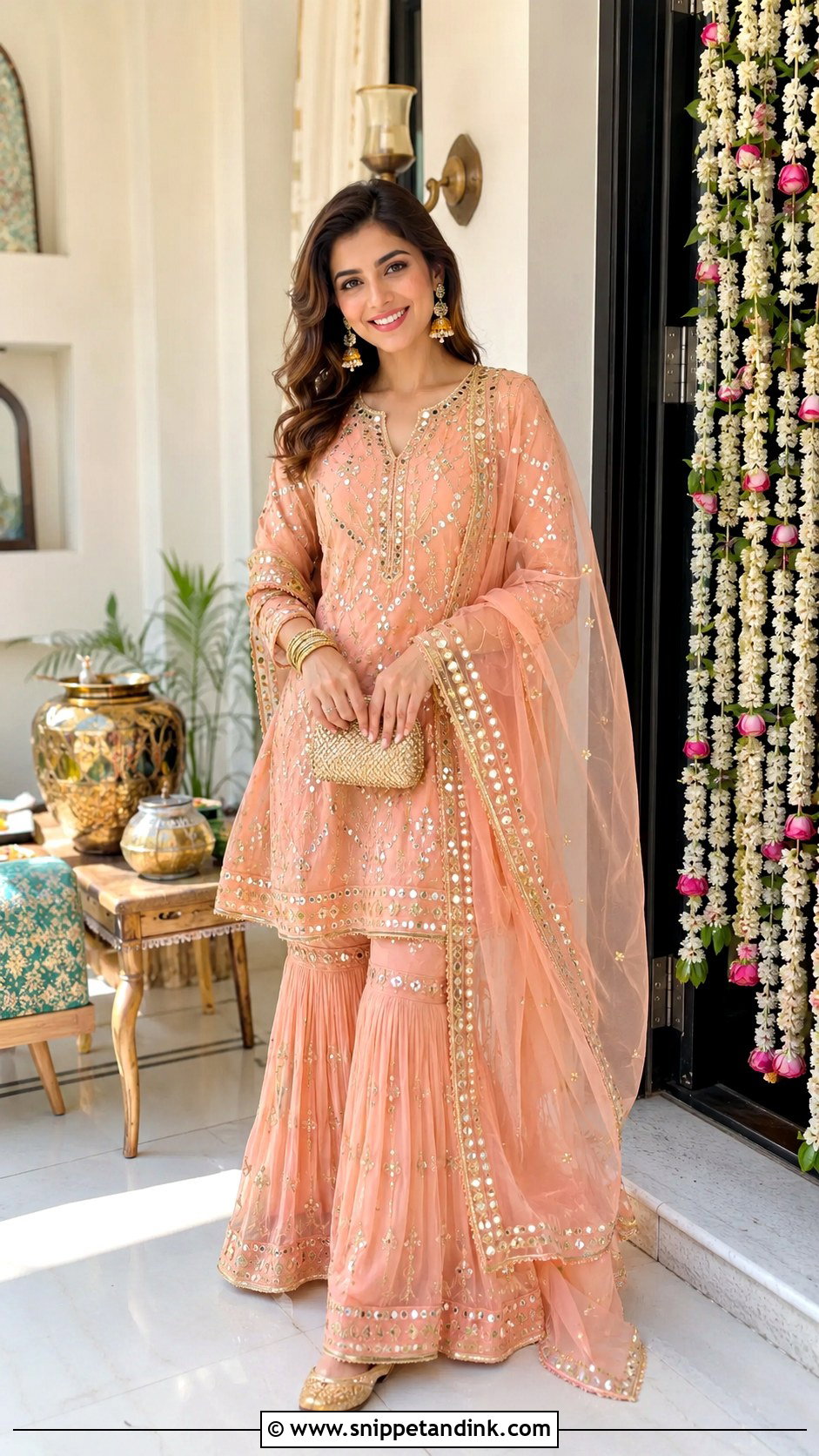
Peach is cheerful without shouting, and a gharara gives it personality. A short or mid-length embroidered kameez over gharara pants, with the knee joint usually hidden under a gota band, plus a sheer bordered dupatta. Ghararas narrow your stride at the knee, so I’d avoid one if you’re walking a long way to Eid prayer. Gold, ivory and soft pink accessories suit peach. Block heels or embellished sandals help the flare hang right.
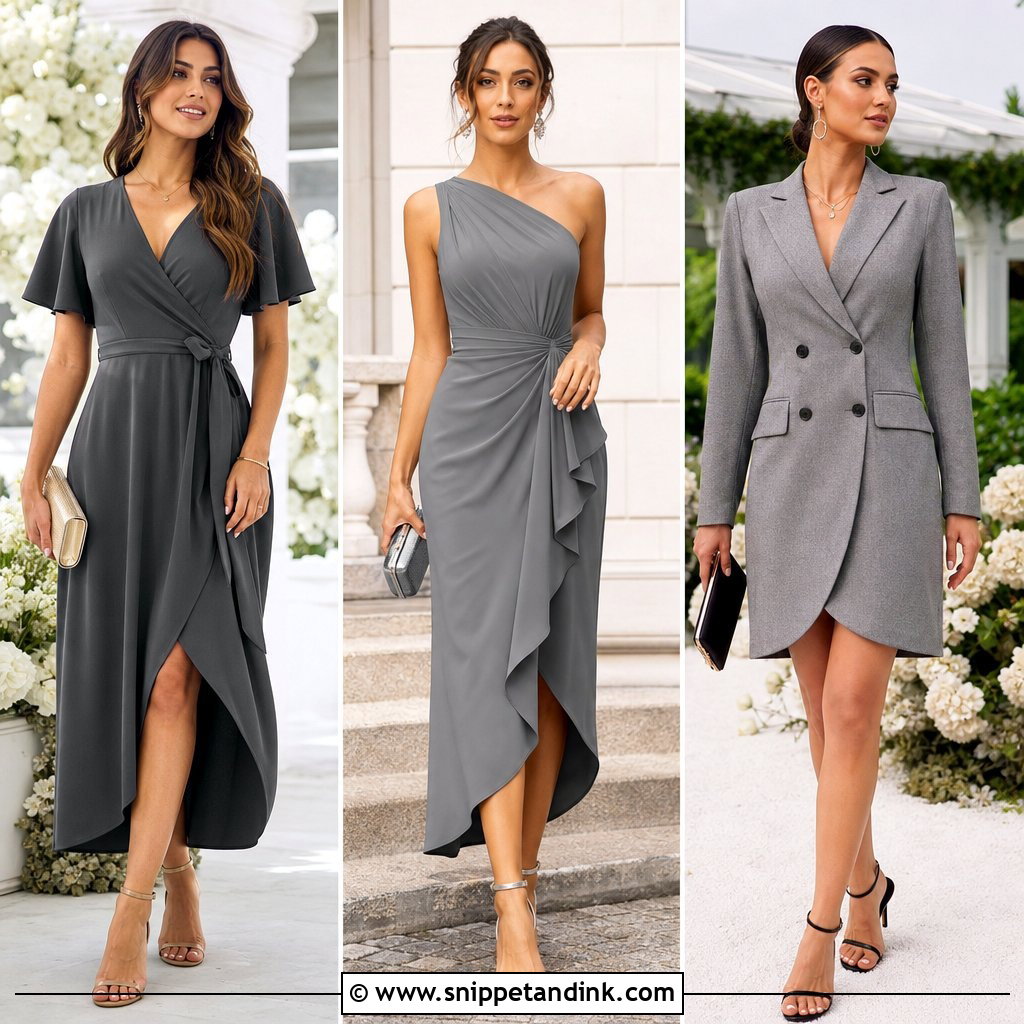
21. Silver Grey Modest Dress Outfit
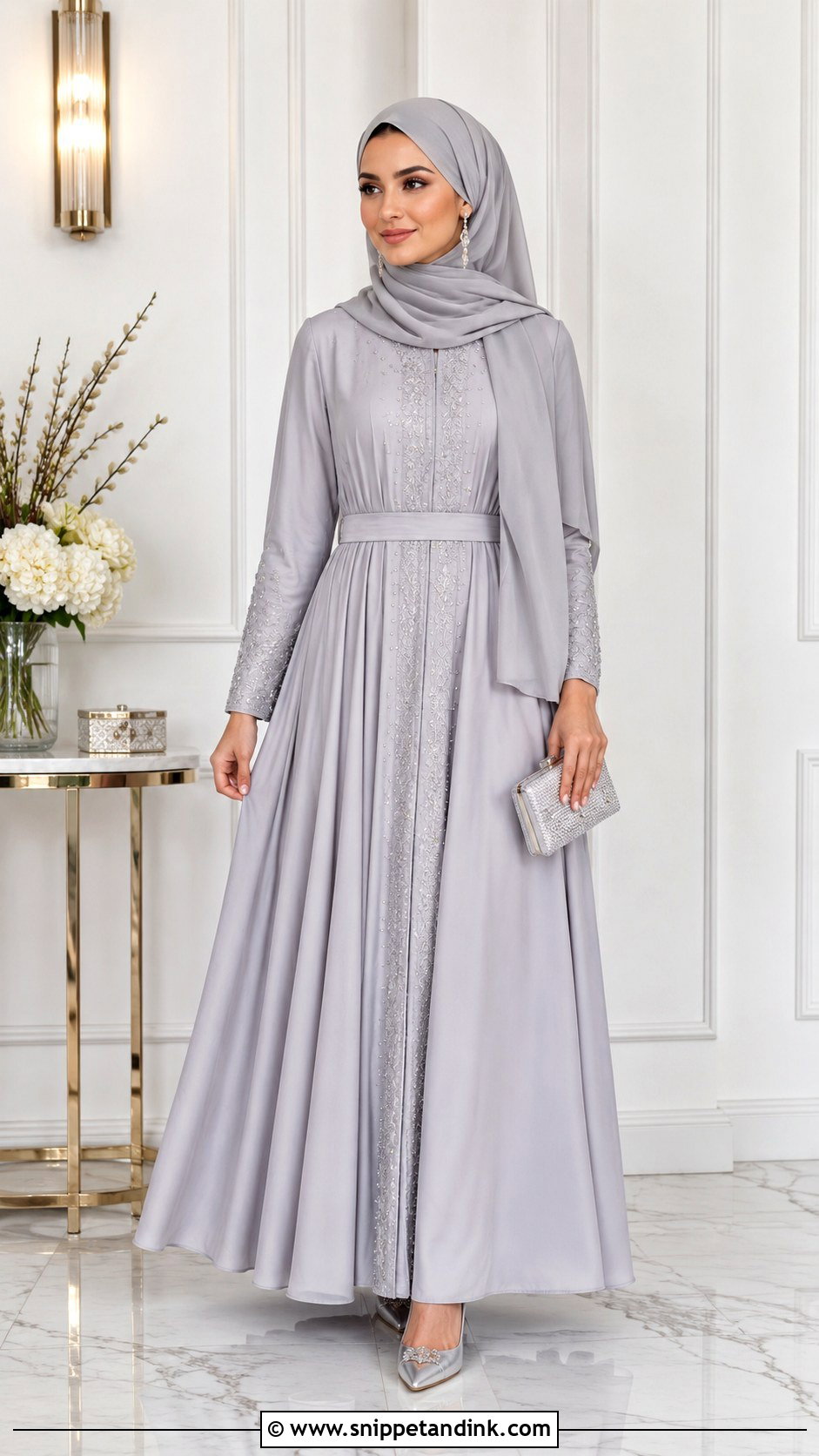
Silver grey is cool, dressy and refreshingly different from beige or black. A long dress with sleeves and soft pleats in satin or chiffon reads formal; jersey makes it relaxed. A matching grey hijab looks sleek, ivory brightens the face. Grey can drain some complexions, so I hold it up to the client’s face first and, if it greys her out, move to a warmer pewter. Silver heels, pearl earrings and a small clutch for evening gatherings.
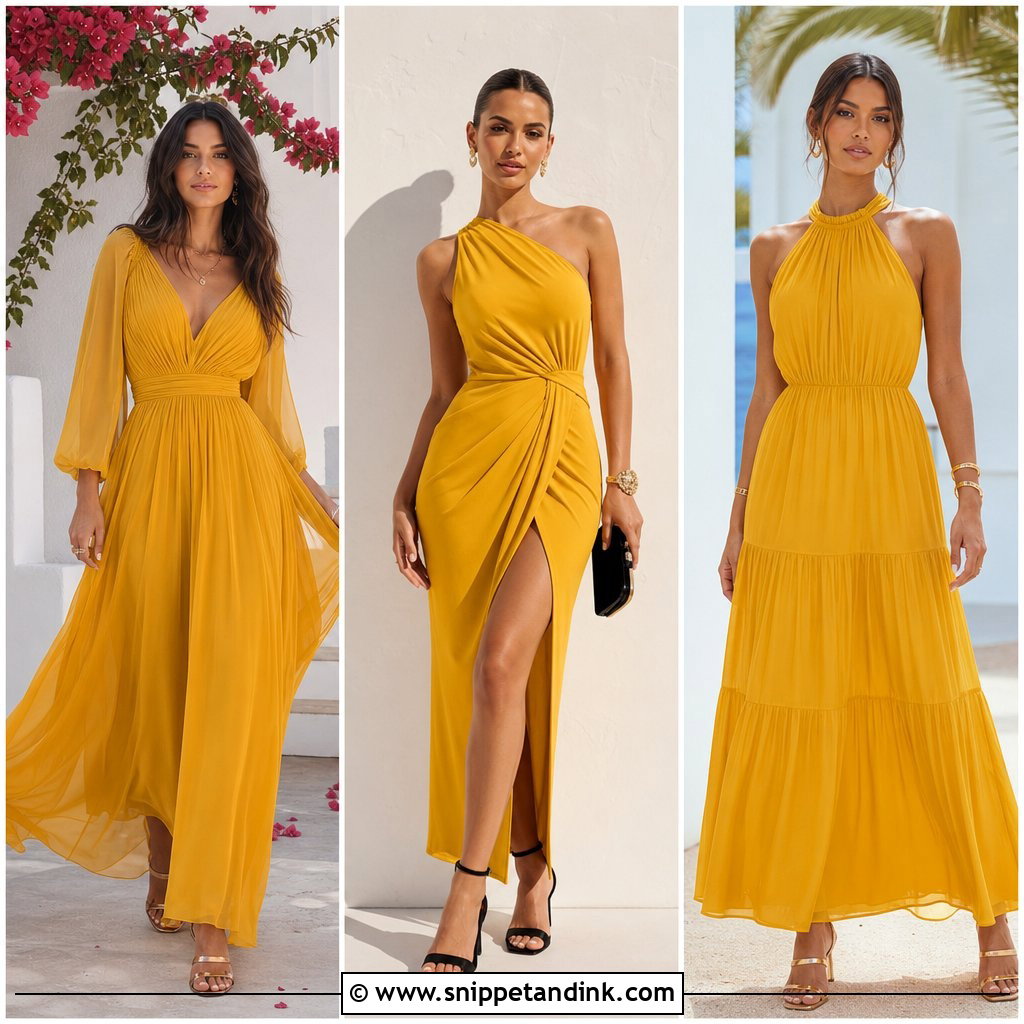
22. Yellow Chikankari Kurta Outfit
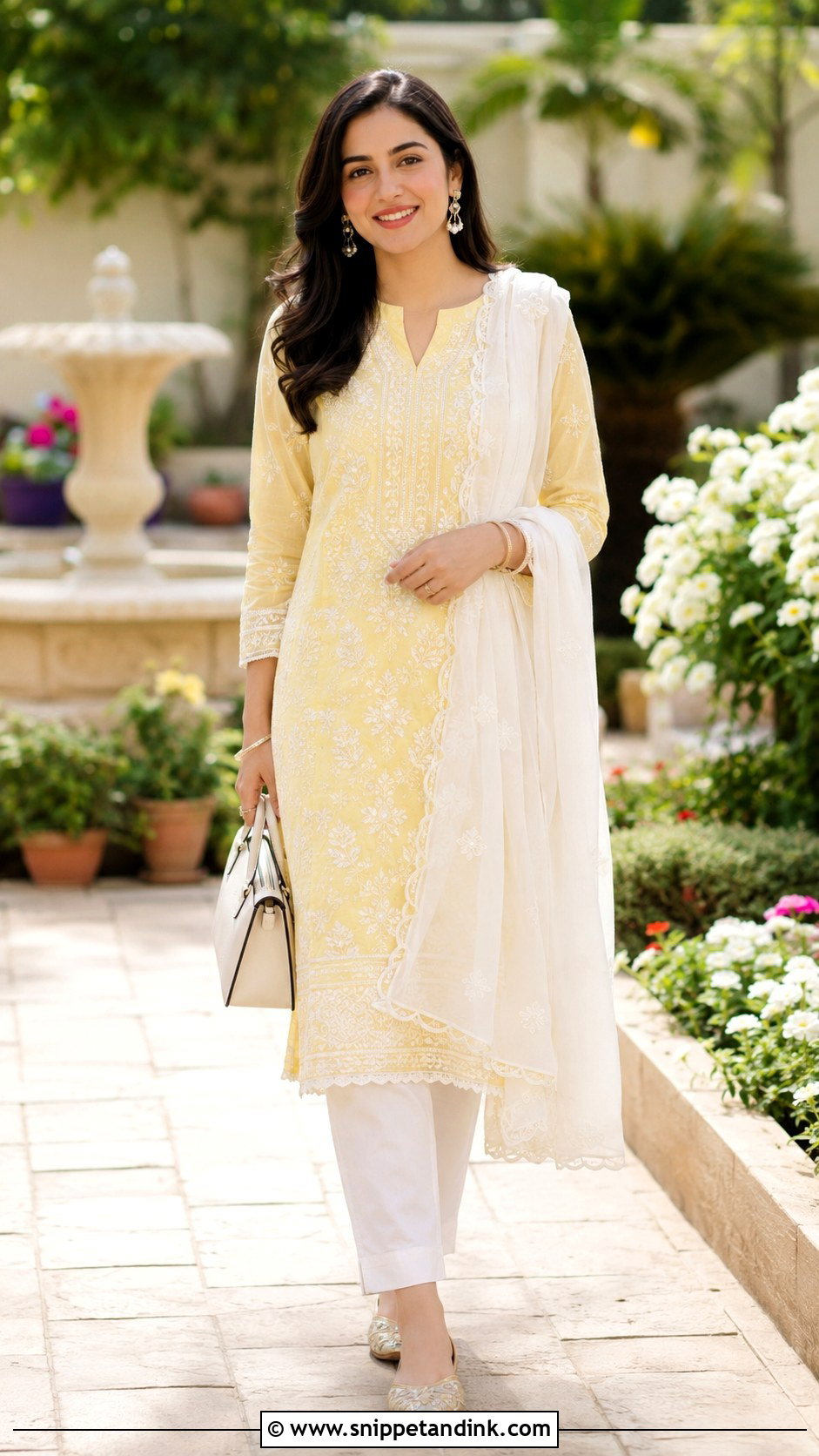
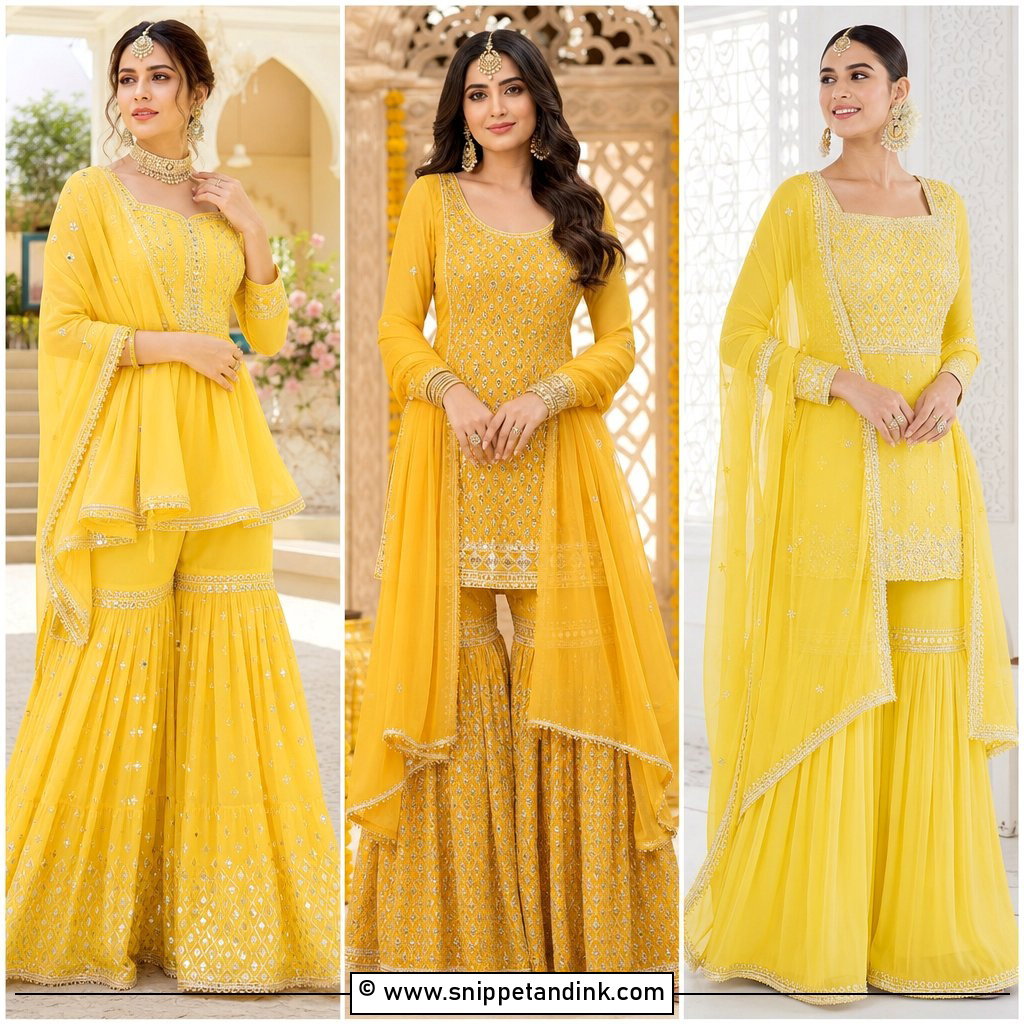
Yellow chikankari is pure daytime Eid. The white hand-embroidery on soft yellow cotton or georgette looks bright in sun and breathes through a full day of visits. Pair it with white trousers or palazzos and a white or yellow dupatta. Chikankari on fine fabric is often semi-sheer, so an inner slip or camisole is essential for coverage. White flats or light gold juttis, pearl earrings and simple bangles are all it needs.
23. Blush Pink Abaya With Matching Hijab Outfit
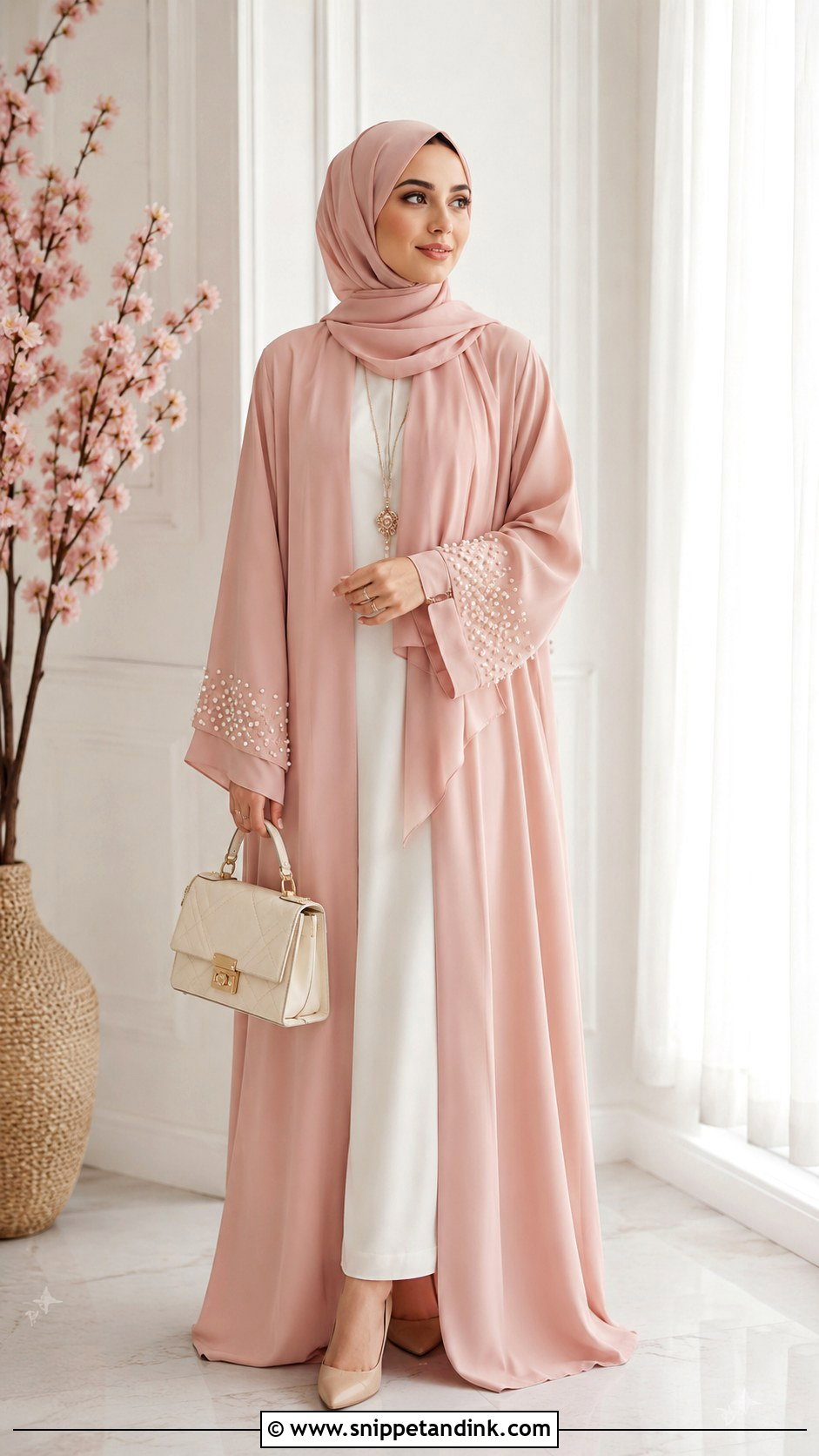
Blush pink with a matching hijab gives one smooth line from head to hem. Look for small details like pearl cuffs, sleeve embroidery or a soft waist tie, over a matching or ivory inner dress. Matching hijab and abaya shades rarely come from the same dye lot, so I buy them together or bring the abaya when choosing the scarf. Nude heels, rose gold jewellery and a cream handbag. A removable belt gives you two looks: shaped for photos, loose for a long meal.
24. Teal Indo Western Outfit
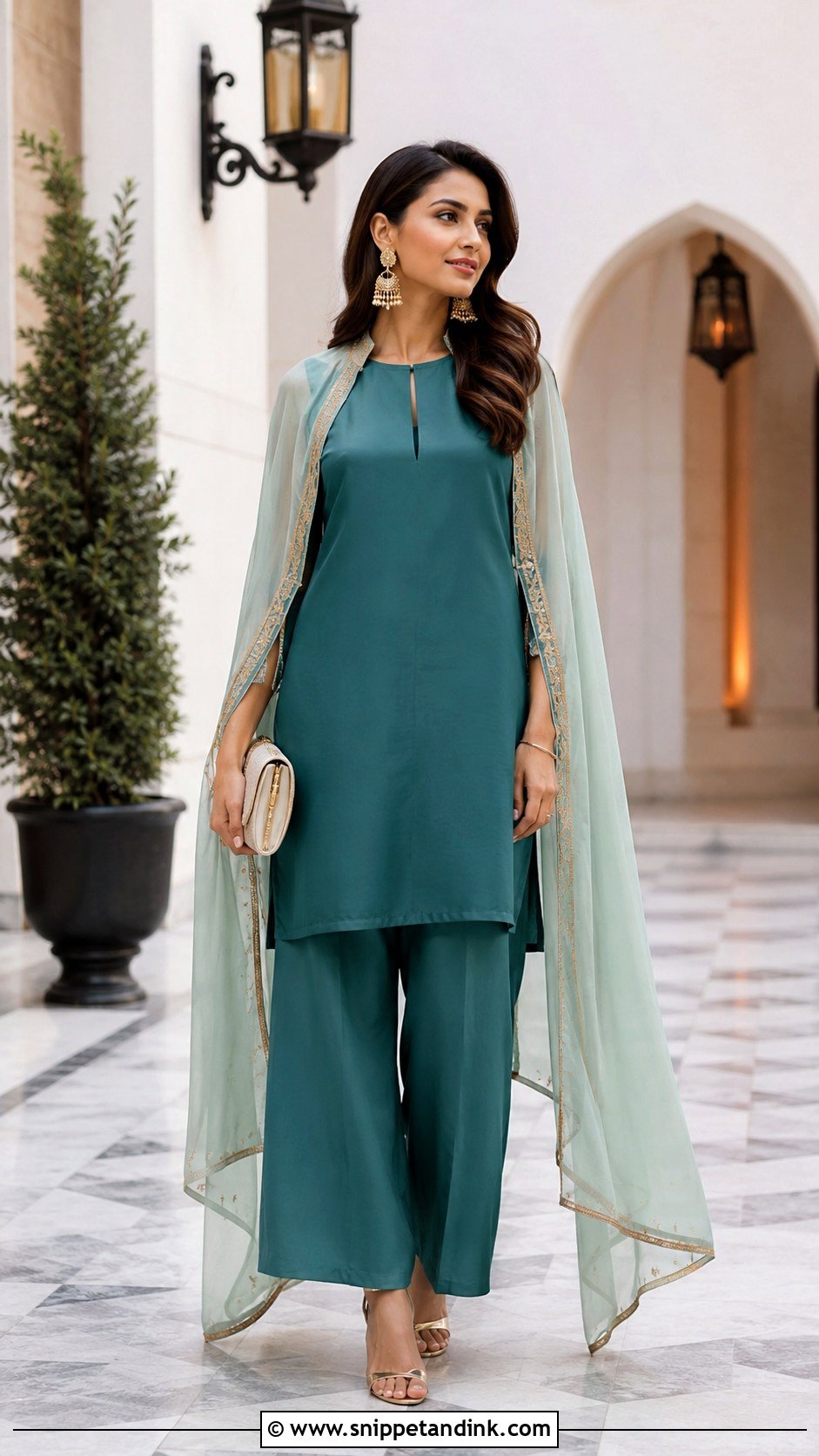
A teal Indo western outfit suits the woman who wants something different from a classic suit. Long tunic with wide trousers, a draped cape set or a modest peplum with flowing pants all work. Teal sits beautifully with gold, champagne or ivory. Cape sets look modern but check the cape length when you raise your arms: short capes ride up and expose the sleeve line. Add a matching dupatta or scarf for tradition, metallic heels and clean statement earrings.
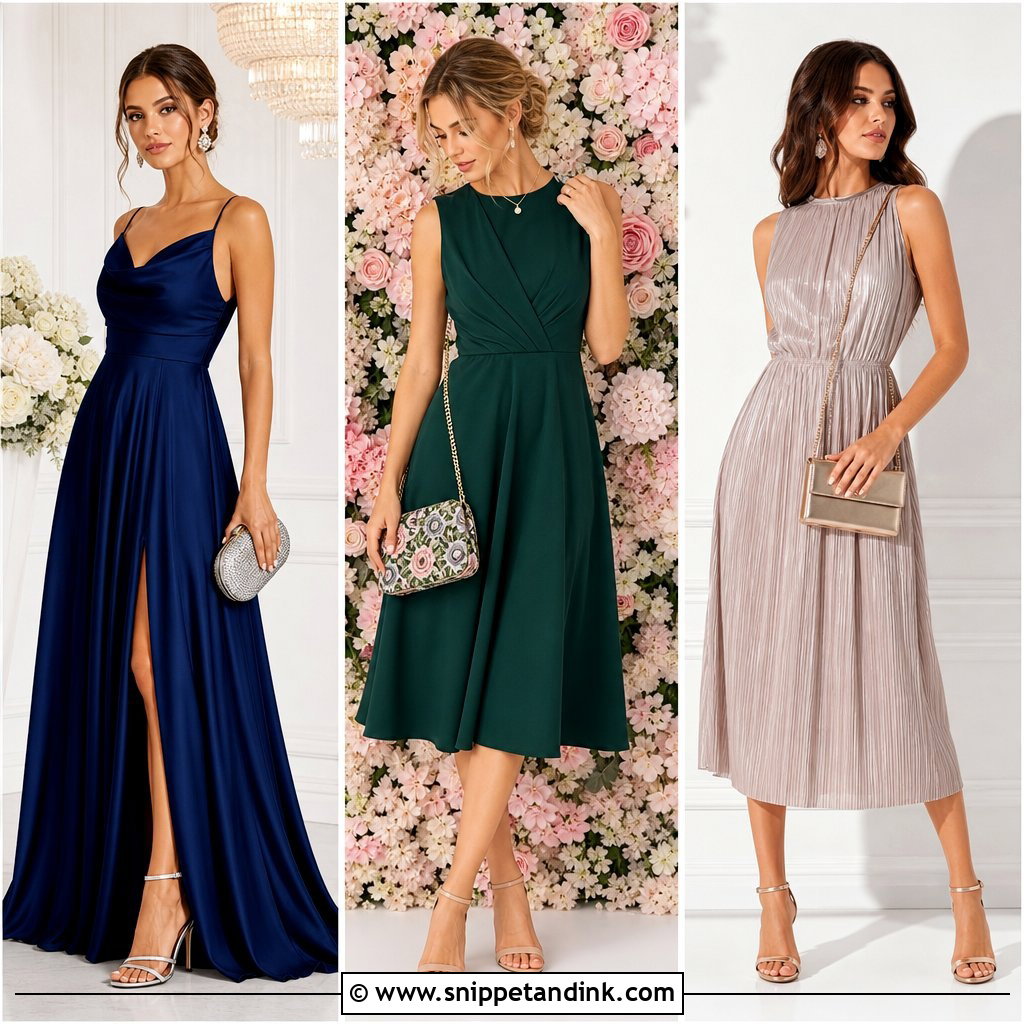
25. Cream And Gold Lehenga Outfit
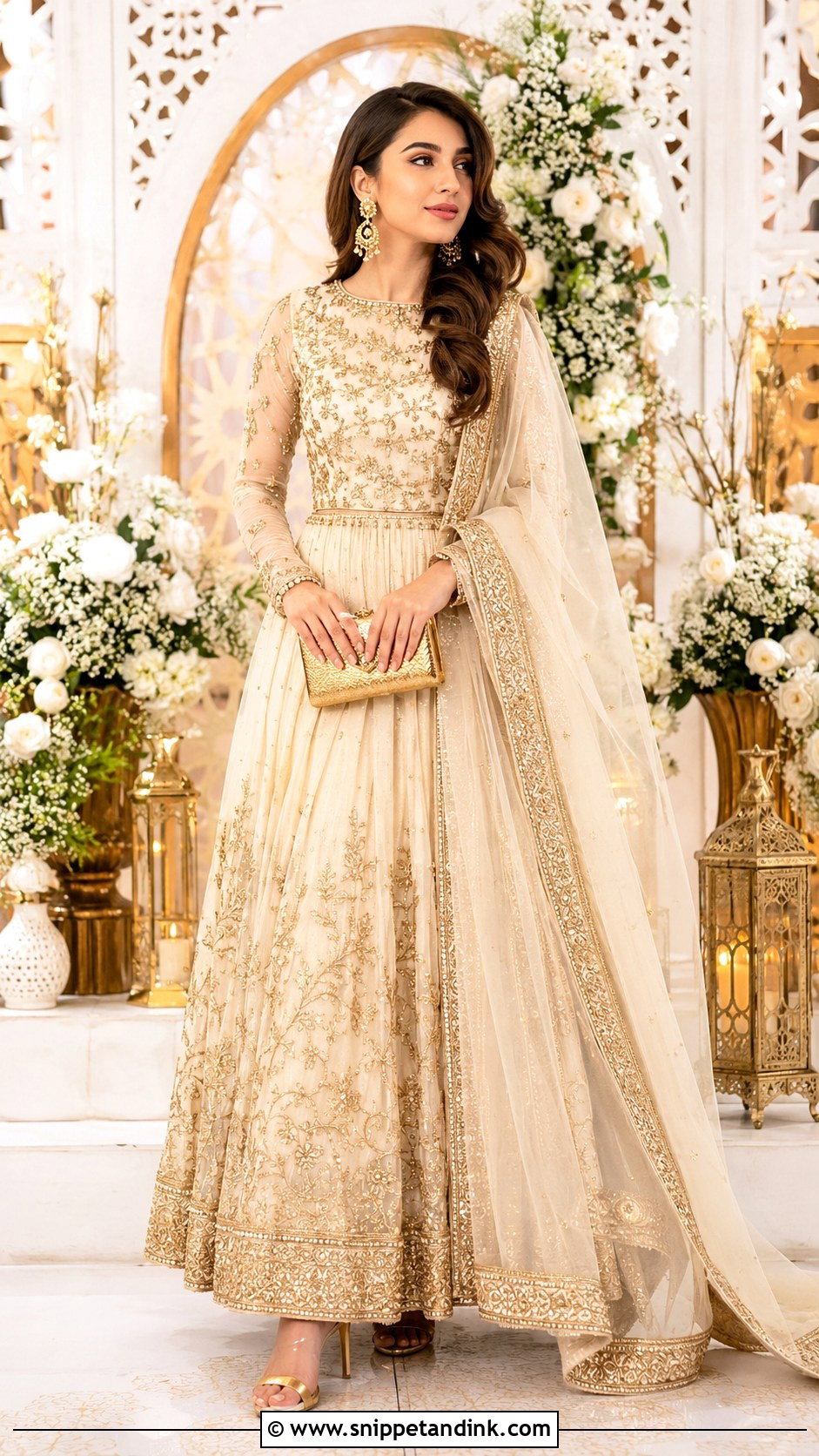
Cream and gold is the classic festive palette. A cream skirt with gold zari or embroidery, a modest long choli and a sheer cream dupatta with a gold border give coverage and softness. I keep makeup balanced so the embroidery stays the focus, and choose jewellery in the same gold tone as the zari; mixing antique gold with bright gold makes one look tired. It works across seasons and suits a big family gathering or a formal Eid dinner.
26. Olive Green Maxi Skirt Outfit
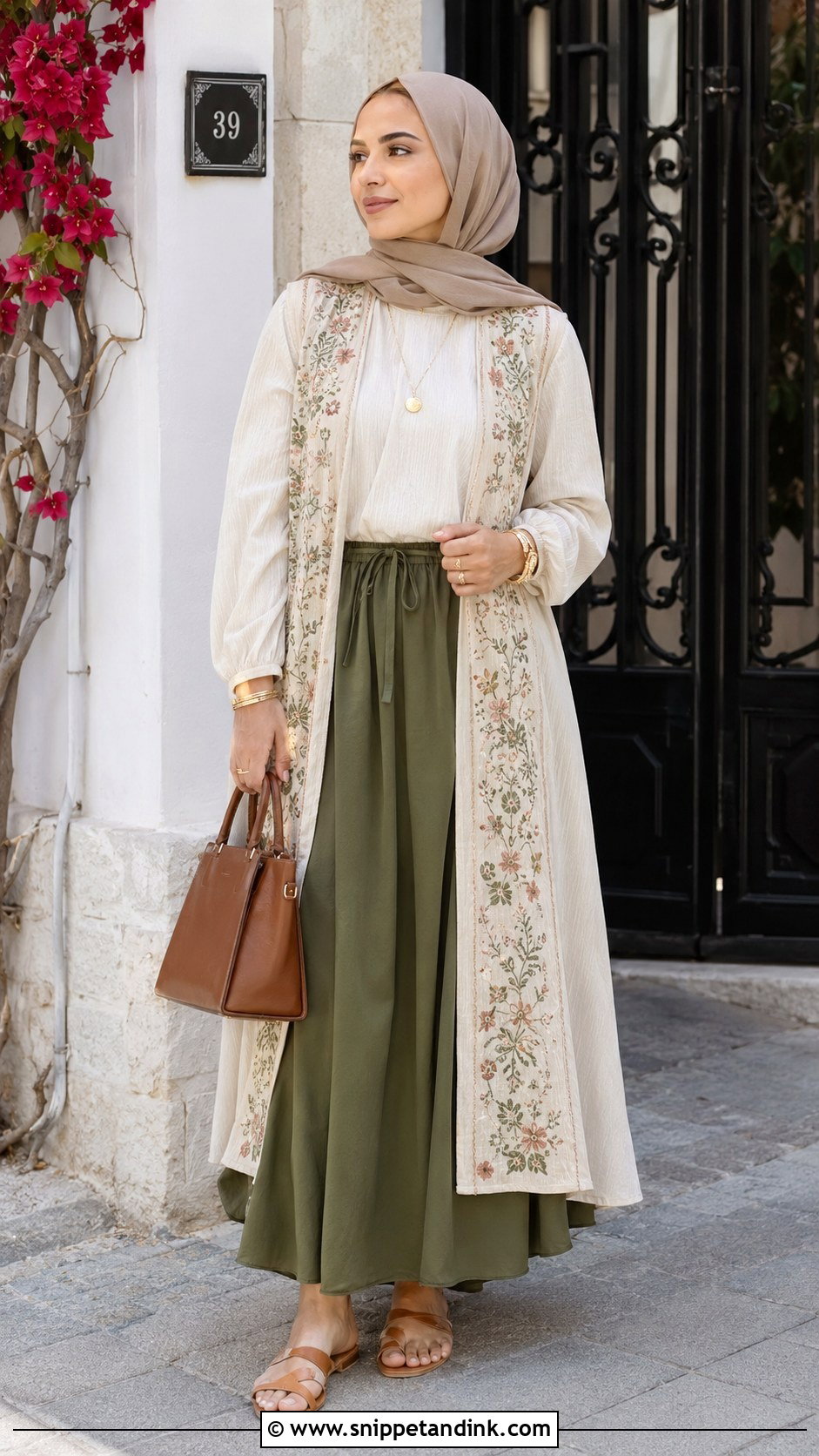
An olive green maxi skirt outfit is for the woman who prefers separates. Pair a flowing olive skirt with a cream blouse, long tunic or modest knit, and add an embroidered jacket or long vest for structure. Separates handle temperature changes between a cool mosque and a warm living room better than any dress. Beige, cream or matching olive hijab, tan sandals or low block heels, gold jewellery and a structured brown bag.
27. Lilac Sharara Outfit
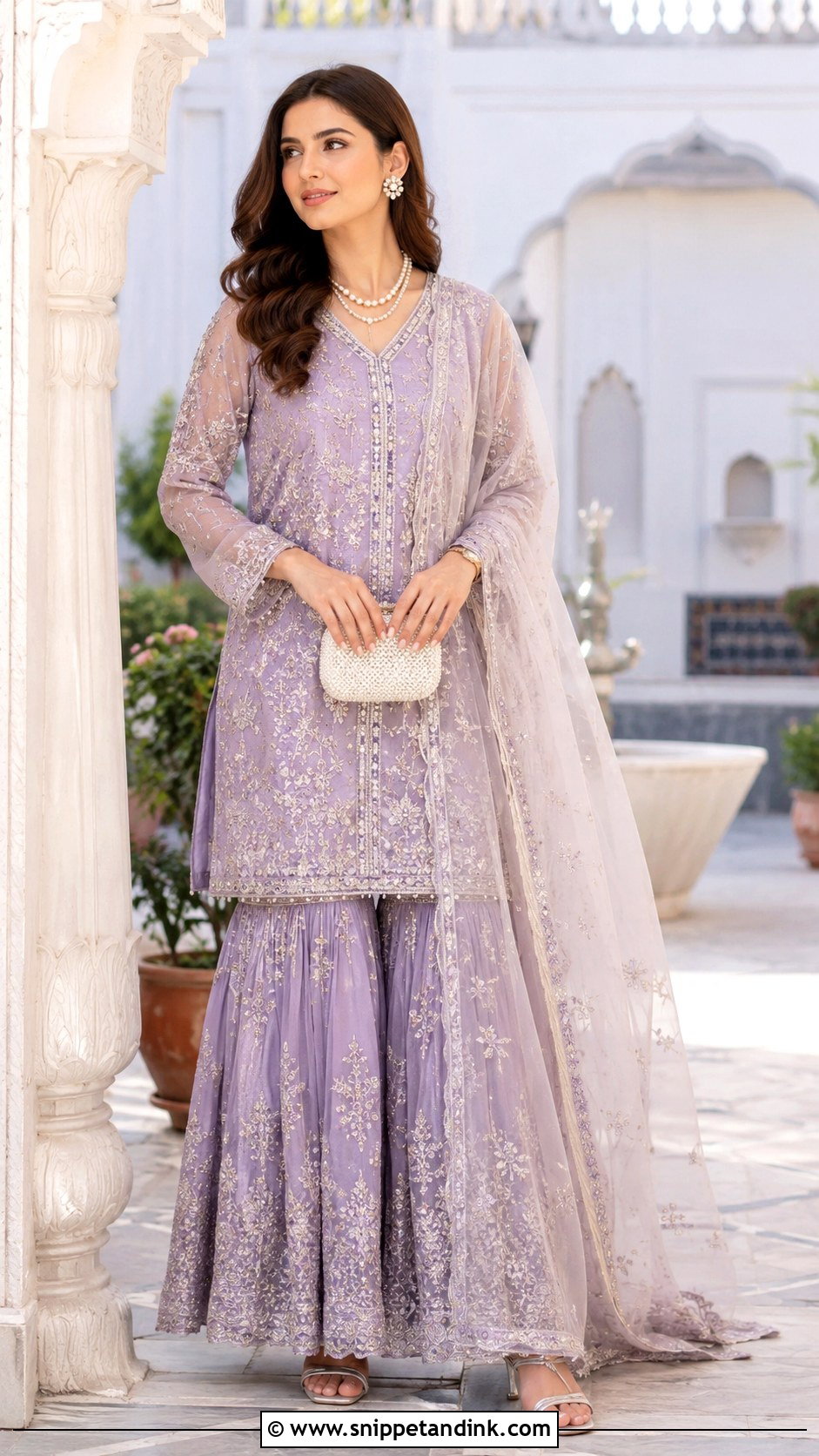
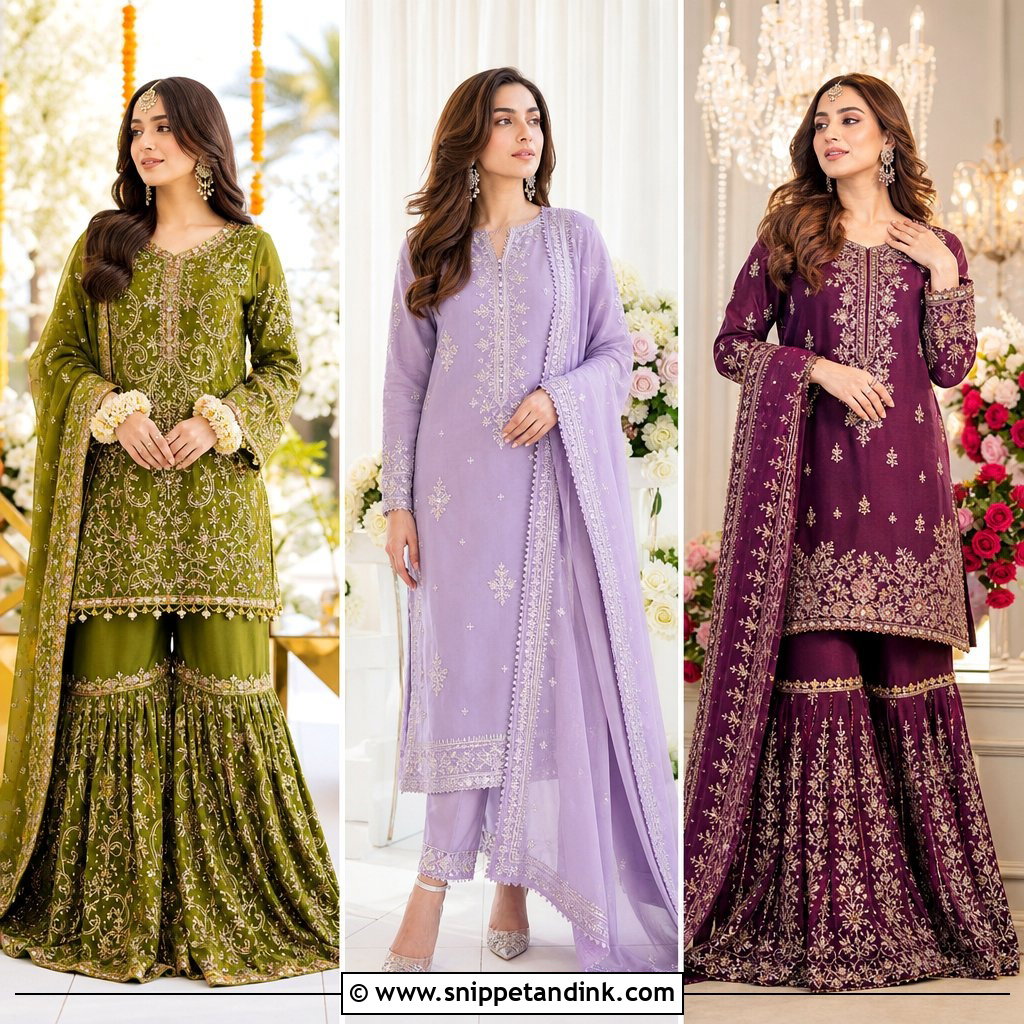
Lilac is gentle and modern, and a sharara gives it swing. A lilac kameez with light beadwork, matching sharara pants and a sheer dupatta in lilac, ivory or silver. Delicate colours look washed out next to heavy gold, so I keep this one in pearls and silver. Lilac reads best in daylight, making it a good choice for daytime gatherings and family photos outdoors.
28. Chocolate Brown Kaftan Outfit
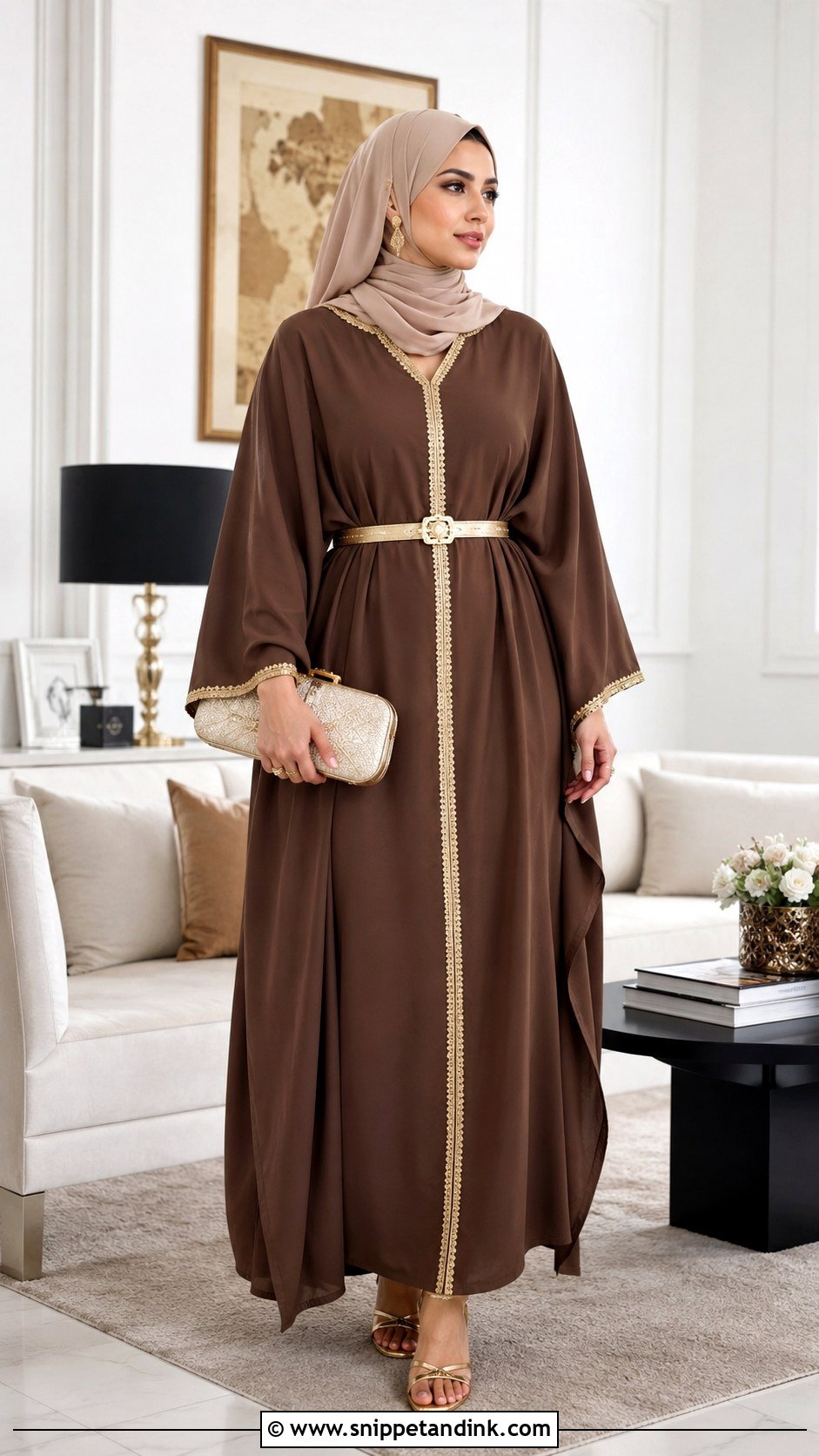
Chocolate brown in a kaftan looks rich and keeps you completely comfortable through a long meal or a drive between houses. Choose gold trim, subtle embroidery or a defined neckline so it doesn’t look like loungewear. A matching belt adds a waist if you want one. Brown absorbs heat in strong sun, so I’d save this for an evening or an indoor Eid. Gold sandals, a cream clutch and gold jewellery, with a beige, ivory or brown hijab.
29. Printed Maxi Dress With Hijab Outfit
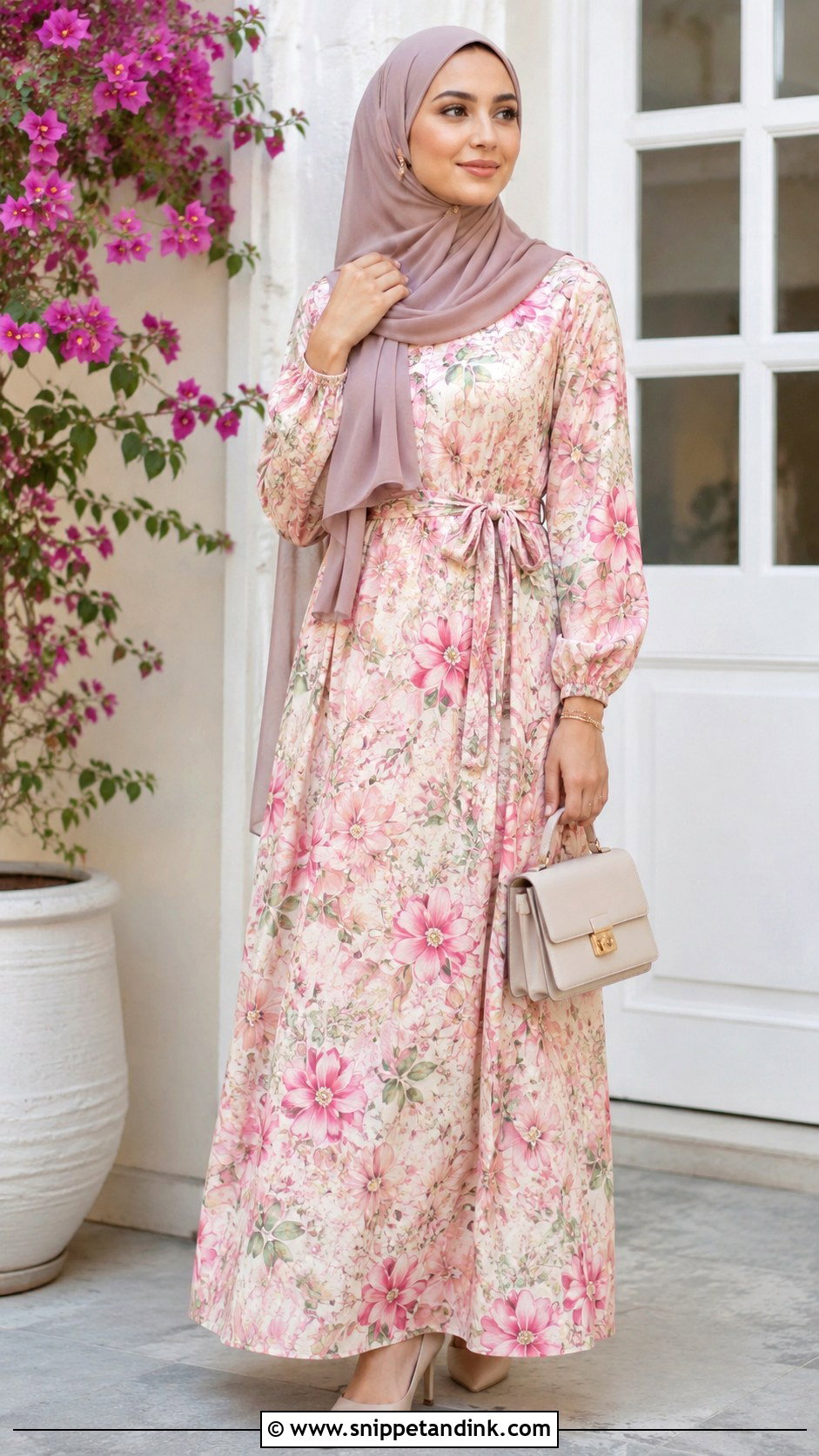
A printed maxi is the easy route to colour. Long sleeves, a modest neckline and a festive print, whether florals, paisley or soft geometrics. The trick I use: pull one colour from the print for the hijab, ideally a secondary shade rather than the dominant one, so the outfit feels connected without becoming a single block. Keep jewellery minimal against a busy print and add a structured bag for polish.
30. Dusty Blue Abaya Set Outfit
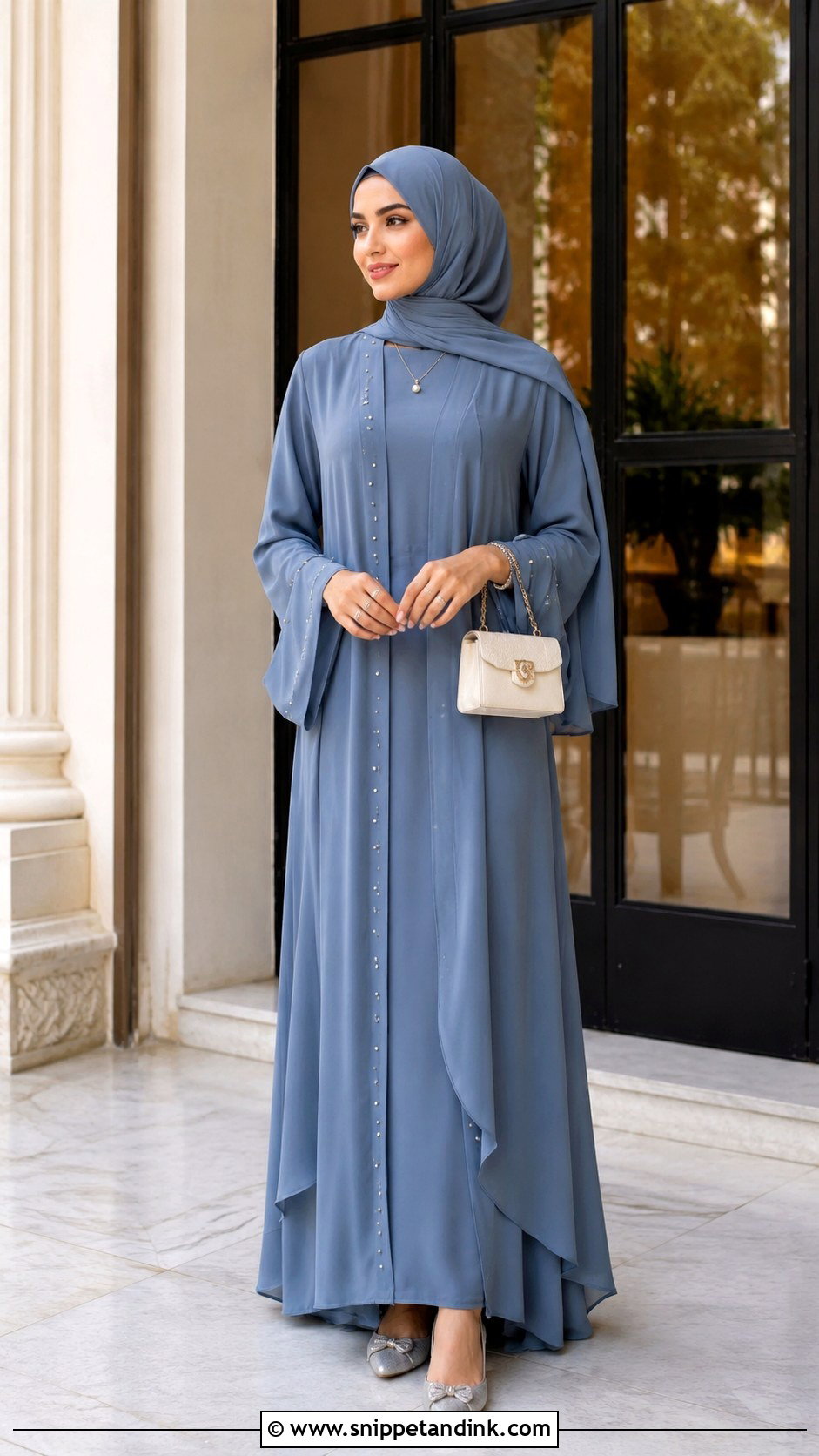
Dusty blue is calm, flattering and less expected than the usual neutrals. A coordinated abaya set with inner dress, open abaya and matching hijab gives a polished look with almost no styling. Look for cuff embroidery, pearl buttons or a clean belt. Coordinated sets are cut generously, so check the sleeve length; sleeves that cover the wrist when standing often ride up when you raise your hands for takbir. Silver flats or ivory sandals, pearls and a small cream bag.
A Chiffon Hijab That Stays Put From Morning Salah to Dinner
Chiffon and satin scarves look the most festive and slip the most. The fix is underneath, not on top. A cotton or jersey underscarf gives the outer layer something to grip, and it stops satin sliding back off the crown after the first round of hugs.
- Use straight pins at the temple and under the chin, and a magnet or a safety pin at the shoulder where the scarf takes weight.
- Pin the drape to the abaya or kameez at the shoulder so it doesn’t pull when children grab it.
- Avoid heavily beaded scarves for prayer; the beads press into the forehead in sujood.
- Carry two spare pins and a tiny mirror. A hijab adjusted after every visit lasts all day.
Putting satin and chiffon away afterwards
Spot-clean food marks the same night with cold water and a drop of gentle detergent, since oil sets fast in satin. Hang abayas on padded hangers rather than folding, steam out creases instead of ironing directly, and store embroidered pieces in a cotton bag, not plastic, so the threadwork doesn’t yellow before next Eid.
One Statement Piece, Then Build Out From It
An Eid outfit succeeds when you forget about it by mid-morning. Start with the piece you want people to notice, whether that’s the embroidered abaya, the sharara or the satin dress, then build the hijab or dupatta, shoes, bag and jewellery around it so nothing competes. Test it in prayer positions and on a floor cushion before the day. A simple outfit chosen this way feels more festive by evening than an elaborate one you’ve been tugging at since breakfast. Eid Mubarak.
You'll Like These Ideas:




Leave a Reply