
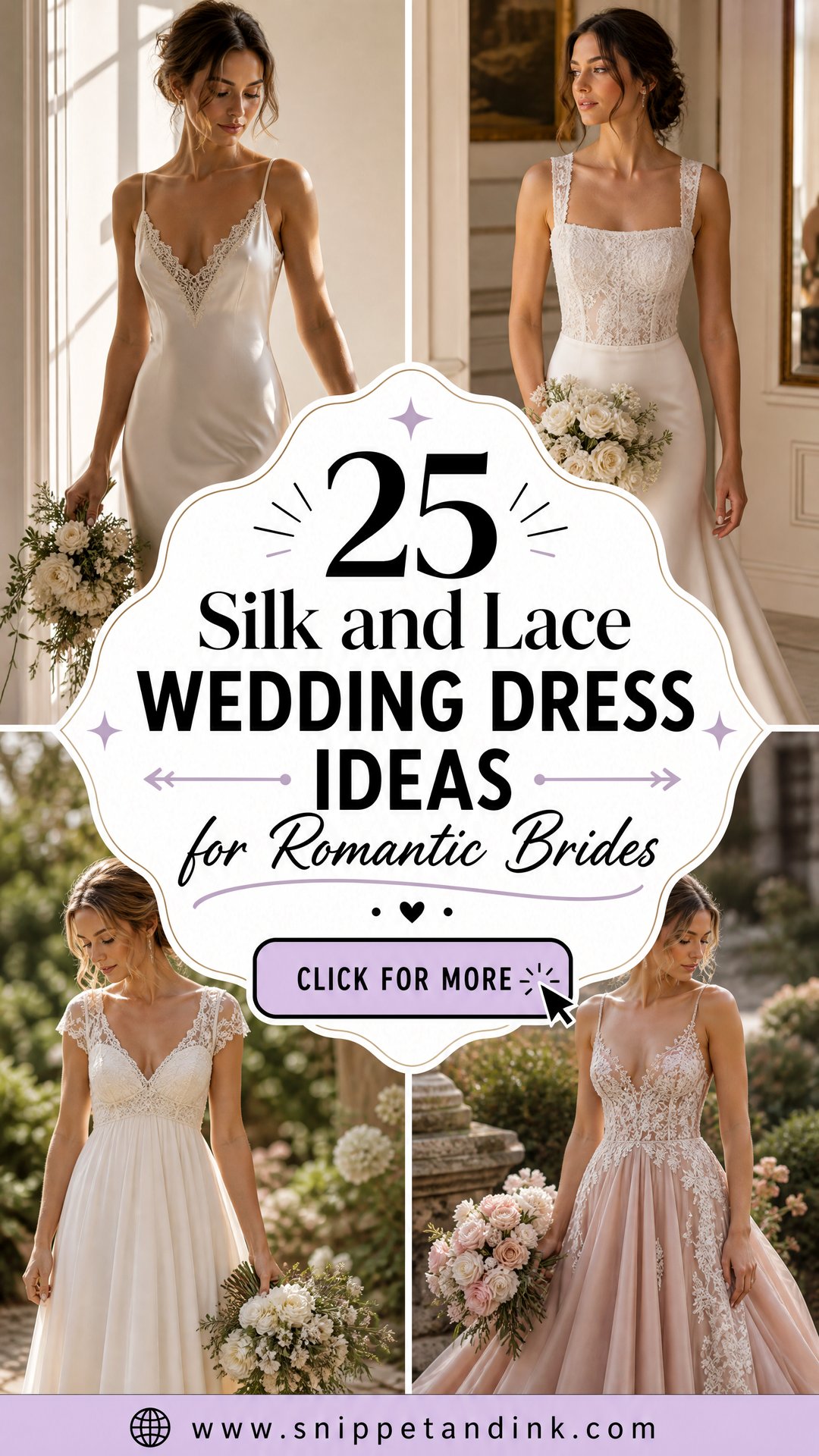
Silk and lace do opposite jobs on a gown, and that is exactly why they work together. Silk carries the movement and the light; lace gives the eye something to rest on up close. Designers right now lean on lace overlays, scattered appliqués, sculpted waists and sheer panels set over clean silk, so the range is wider than it used to be. In fittings I always start with the silhouette and the venue, then decide where the lace should sit, because lace placed in the wrong spot fights the shape instead of finishing it. Below are the combinations I see brides reach for most, from a bare slip to a full ball gown, with what I’d check on each before you commit.
Which Silks and Laces Behave Well Together
The labels on bridal gowns say silk and lace, but those words cover fabrics that act nothing alike. Before I pull samples for a bride, I ask how she wants the skirt to move, because that decides the silk, and the silk then narrows the lace.
The silk underneath
- Charmeuse is fluid and shiny on one side. It’s what slip and bias-cut gowns are made from, and it shows every seam and line beneath it.
- Crepe is matte with a slight grain. It drapes well on sheaths and columns and hides small creases better than satin weaves.
- Mikado and faille are heavier and hold a shape on their own, which is why ball gowns and structured A-lines use them. They also add real weight to the waist seam.
- Silk satin sits in between: lustrous, with enough body for an A-line, but it marks if you sit on it for an hour.
The lace on top
Fine Chantilly is light and soft, so it suits charmeuse and crepe without dragging them down. Corded Alençon has outlined motifs and more body, and it pairs well with satin and mikado. Guipure has no net backing at all and is heavy; on a fluid silk it can pull the fabric out of shape, so I’d only put it on a structured skirt or a lined bodice. If a sample looks odd and you can’t say why, it is often a heavy lace sitting on a silk too light to carry it.
1. Silk And Lace A-Line Wedding Dress
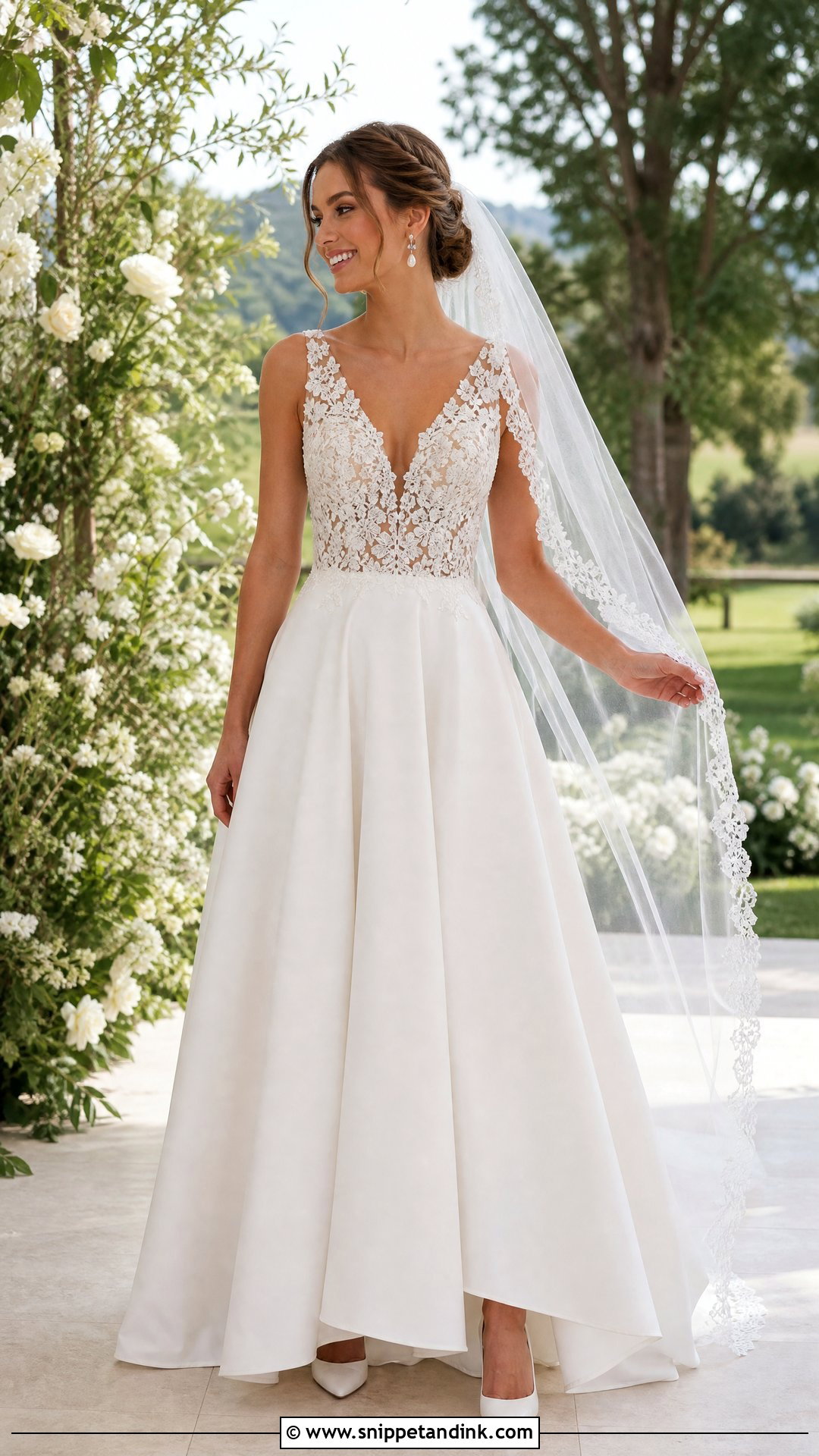
An A-line is the shape I suggest first to brides who have no idea where to start, because it forgives almost every body and every venue. The version that works best pairs a fitted lace bodice with a silk skirt that drops from the natural waist without extra gathers, so the silk can swing when you walk. Keep the neckline soft, a shallow V or scoop, and let narrow straps do the supporting. Pearl drops, ivory pointed pumps and a fingertip veil edged in the same lace are enough. I’d keep the bouquet compact and structured; a loose, trailing arrangement covers the very bodice you paid for.
2. Silk And Lace Ball Gown Wedding Dress
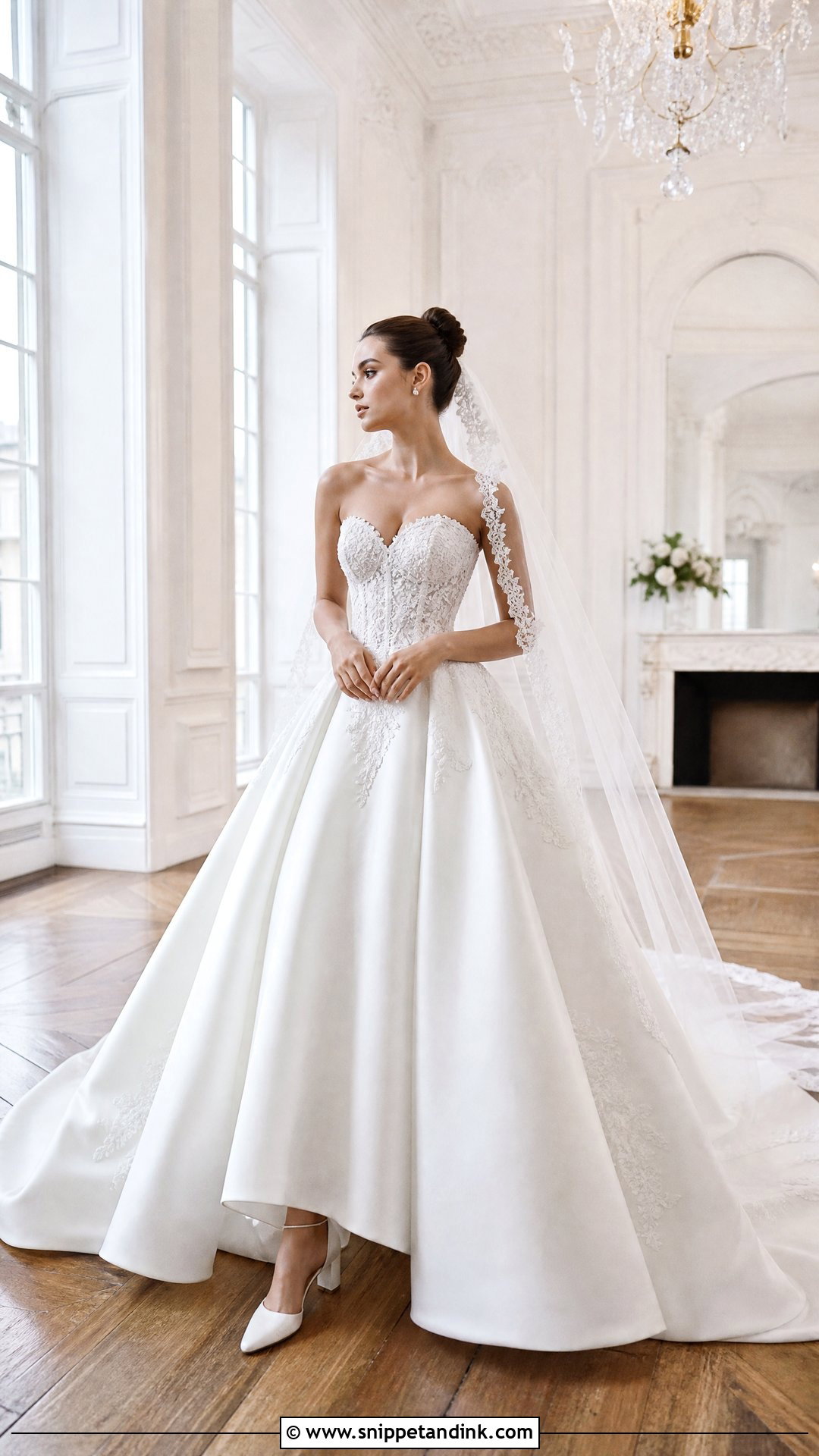
A full silk skirt under a lace bodice is the most formal thing on this list, and it needs a room big enough to hold it. Ballrooms, hotels, estates and museum halls suit the scale; a small restaurant does not. The thing I watch at fittings is weight: a heavy silk skirt pulls on the waist seam all day, so the bodice needs proper boning and a waist stay to carry it. Floral lace on top softens the volume, and a portrait or sweetheart neckline keeps the shoulders from disappearing. Add a cathedral veil, pearl studs, satin block heels no one will see, and a smooth bun. Round blooms with very little greenery echo the skirt’s outline.
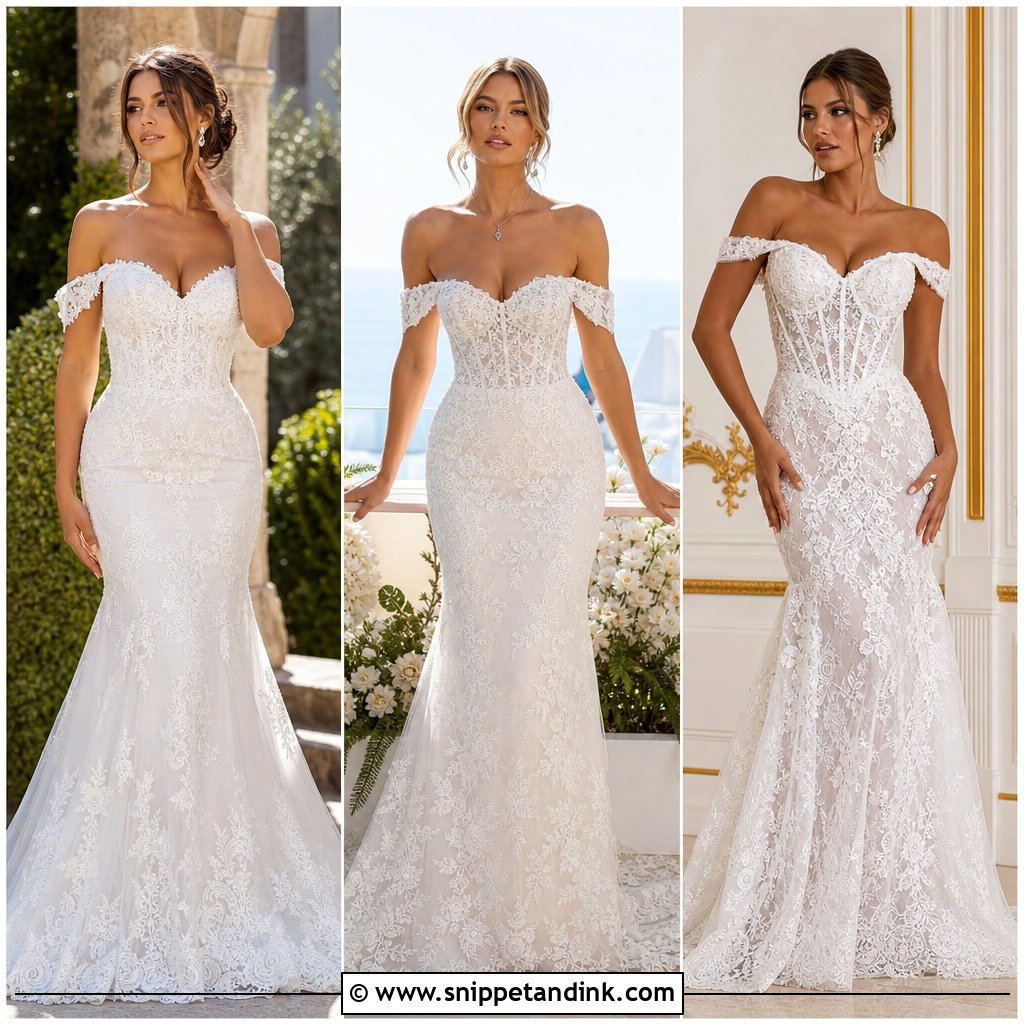
3. Silk And Lace Mermaid Wedding Dress
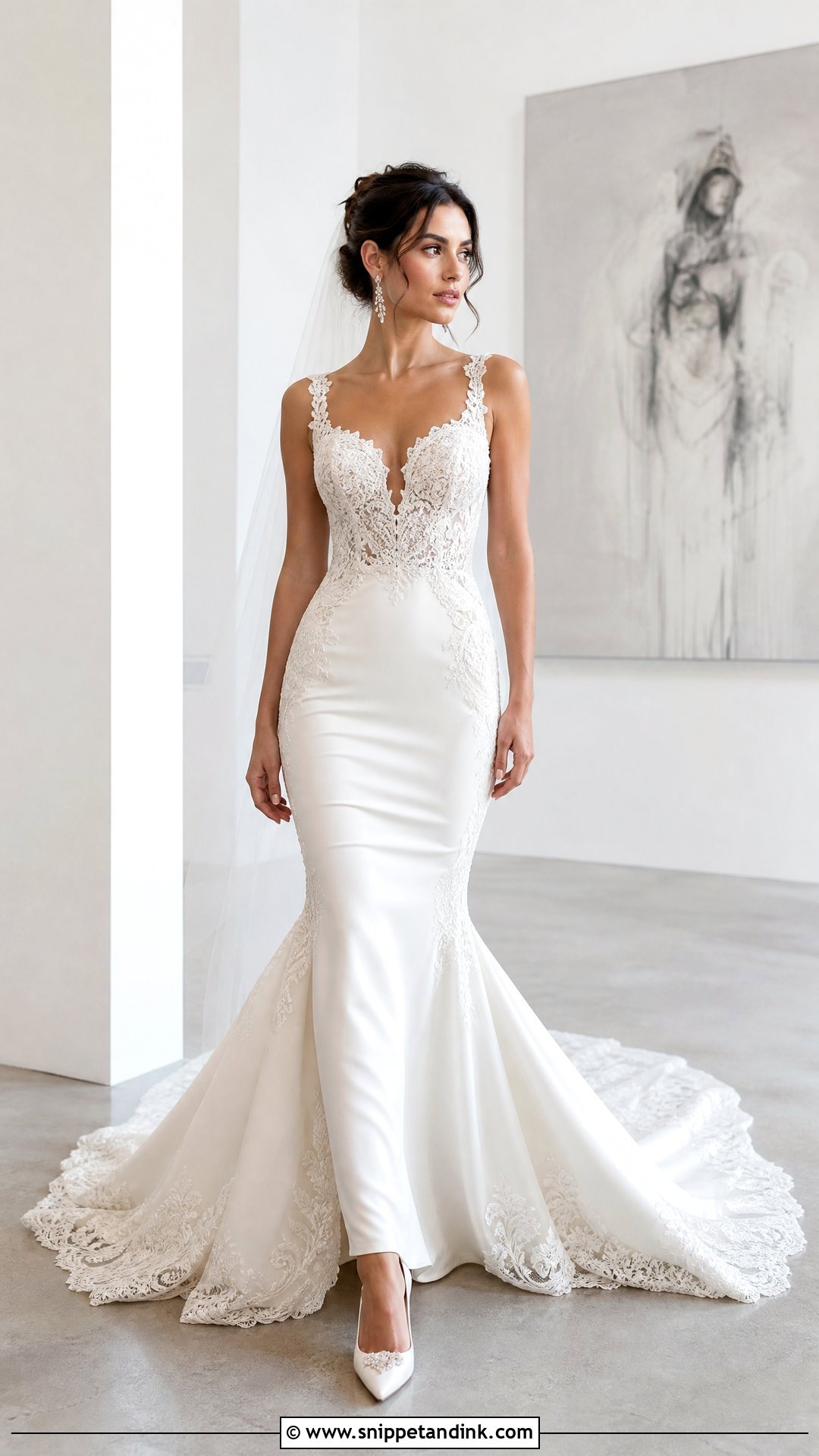
Mermaid gowns live or die by where the flare starts. Too high and you can’t climb a step; too low and it reads as a column that hobbles you. I look for a lace bodice that follows the torso and a silk skirt that opens around the knee, with appliqués trailing over the waist seam so the two fabrics feel joined rather than stitched together. A clean silk train catches the light better than one covered in lace. Slim drops, a simple veil and heels with an ankle strap keep you steady. At every fitting, sit down, climb a stair and take a few dance steps before anyone pins the hem.
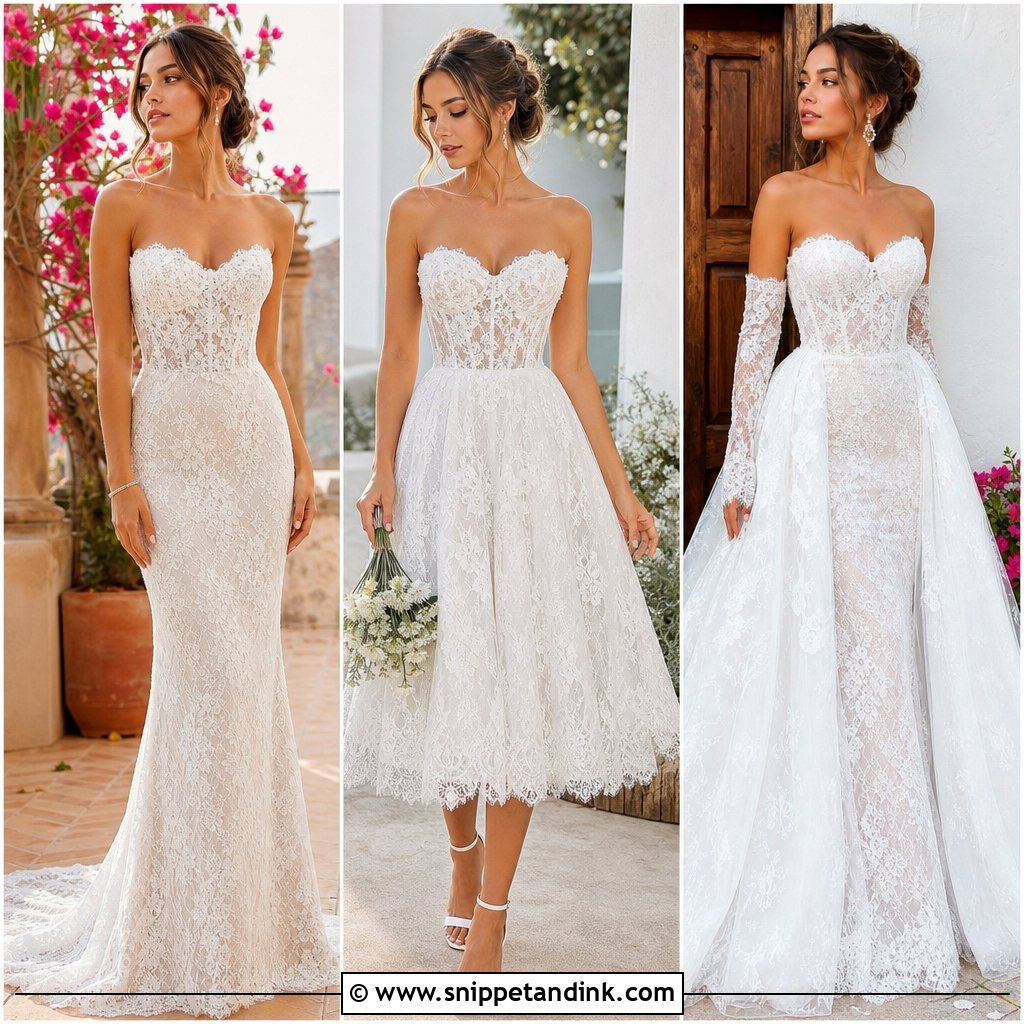
4. Silk And Lace Sheath Wedding Dress
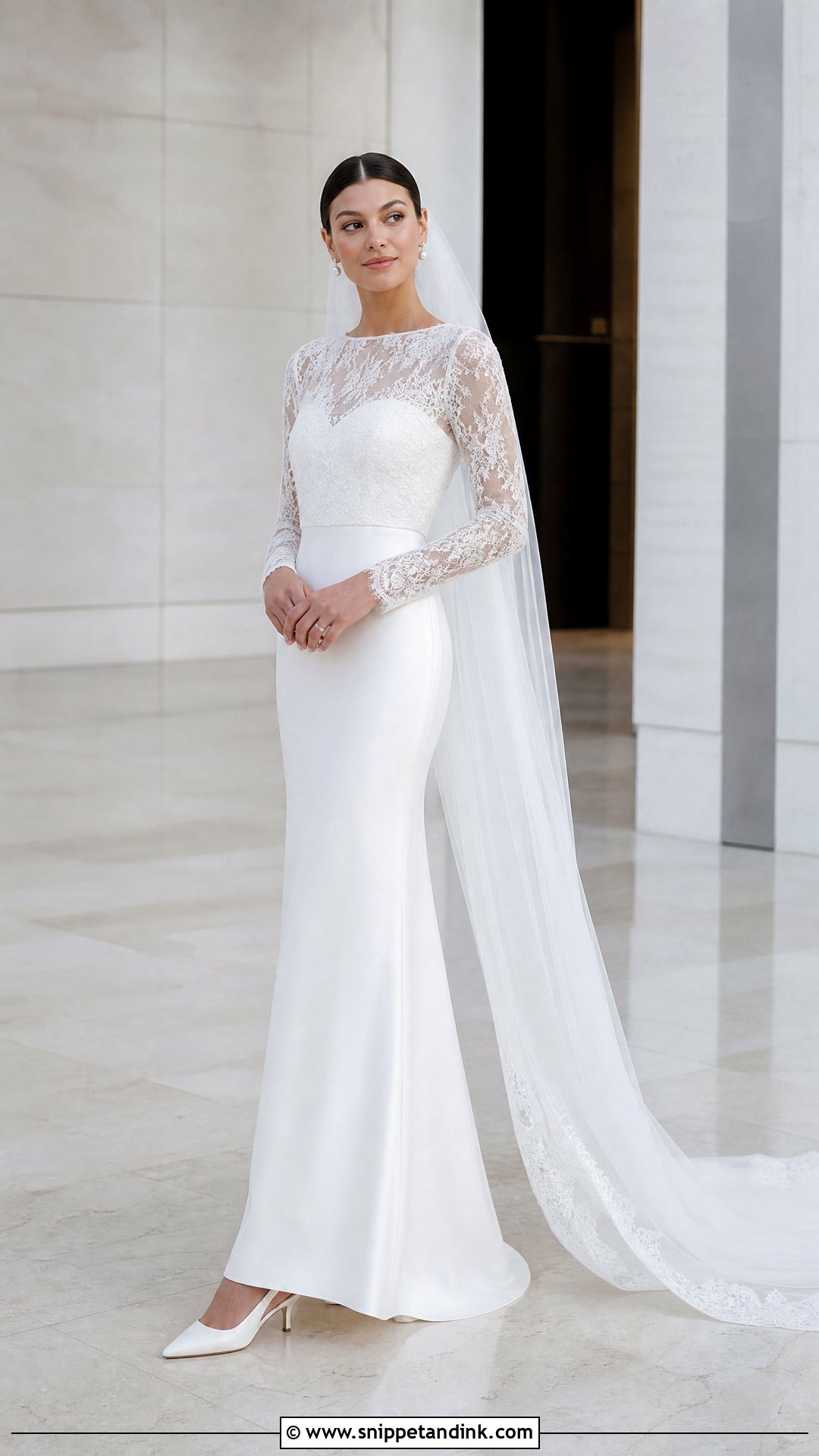
A sheath is honest: every line underneath it shows. That makes it a great choice for an intimate or modern wedding and a poor one if you want structure to do the work for you. The silk should skim, not cling, and the lace belongs in one place only, the sleeves, a yoke or a lightly embroidered bodice. Pearl studs, slingbacks and a chapel veil tucked under a low bun keep the vertical line clean, and a long-stemmed bouquet repeats it. For cooler months I like it under a tailored ivory coat. Settle your undergarments before the final fitting, because the hem and side seams get set around them.
5. Silk Slip Wedding Dress With Lace Trim
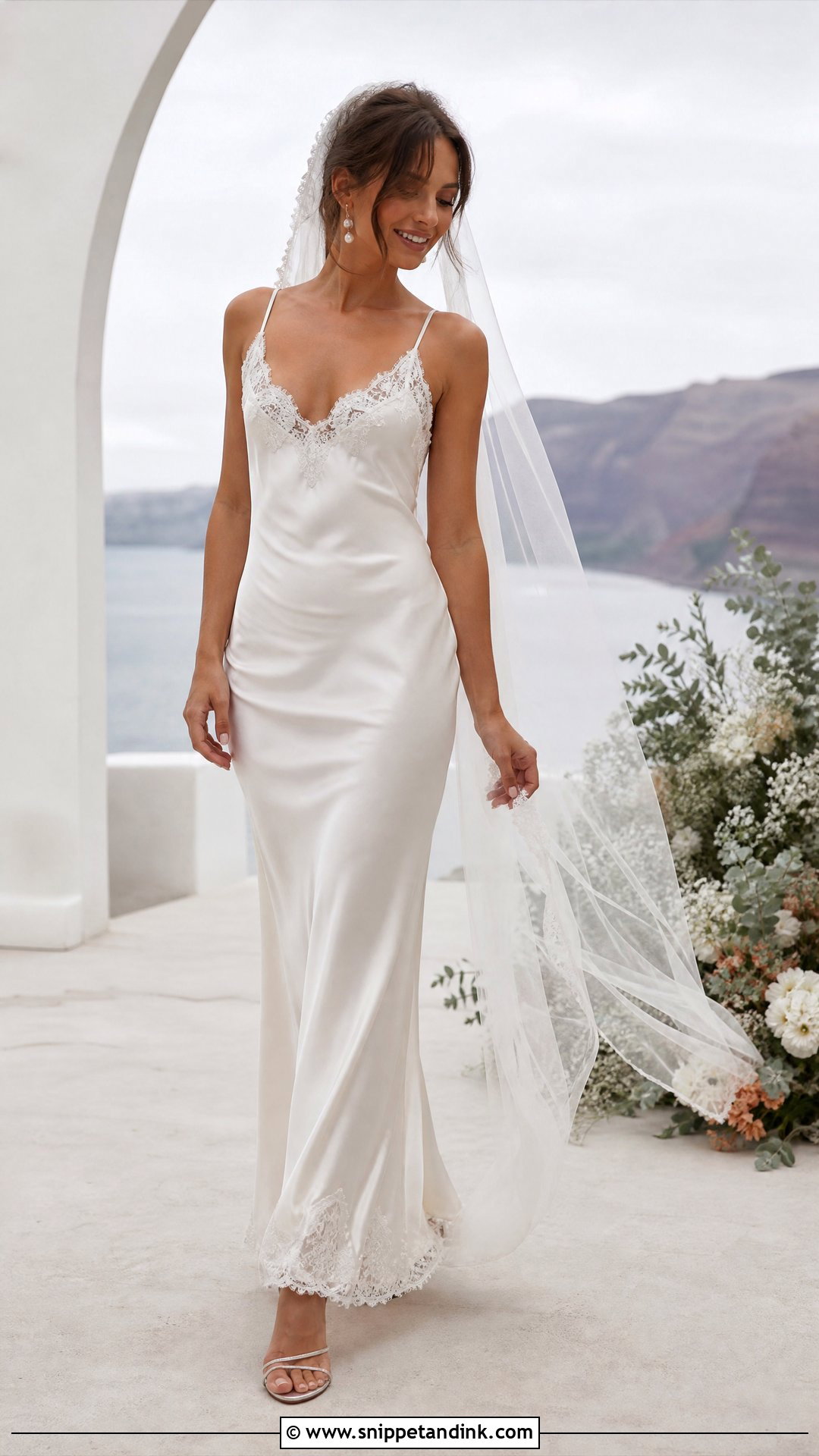
The silk slip wedding dress with lace trim is the gown I see underestimated most. Because it’s cut on the bias, the fabric stretches and settles differently on every body, so off-the-rack rarely looks the way it does on the hanger. Lace along the neckline, back or hem gives it a faint vintage edge, and a soft cowl adds depth to the silk. Spaghetti straps, kitten-heel sandals, small pearls and a sheer fingertip veil keep it light. Book a seamstress who has worked with bias cuts, and wear smooth, flat-edged undergarments to every appointment. Courthouse ceremonies, gardens, the coast and restaurant receptions all suit it.
6. Long Sleeve Silk And Lace Wedding Dress
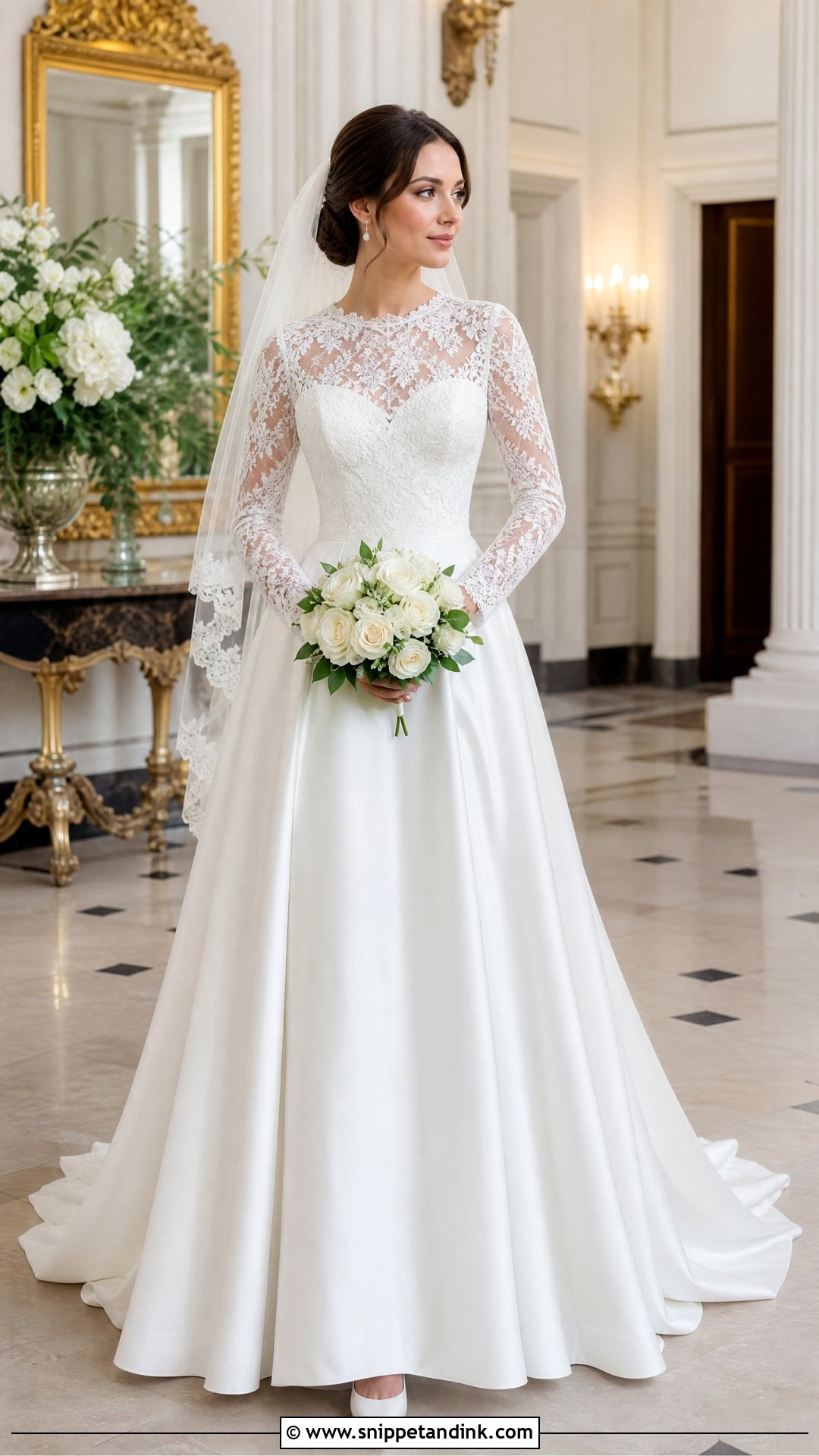
Long lace sleeves on a silk skirt give coverage without tipping into fussy. The detail I check first is the elbow: lace with a little stretch lets you hug people and lift a glass, while stiff lace pulls at the shoulder seam the moment you bend your arm. Motifs should be placed so they don’t break awkwardly at the wrist. The bodice can flow into an A-line or a column. Closed-toe pumps, pearl earrings and a lace-edged veil suit it, and a centre-parted low bun shows off the sleeves in profile. It is a natural autumn and winter gown, though a fine lace still works in mild weather. Skip bracelets; the cuffs will snag on them.
7. Off Shoulder Silk And Lace Wedding Dress
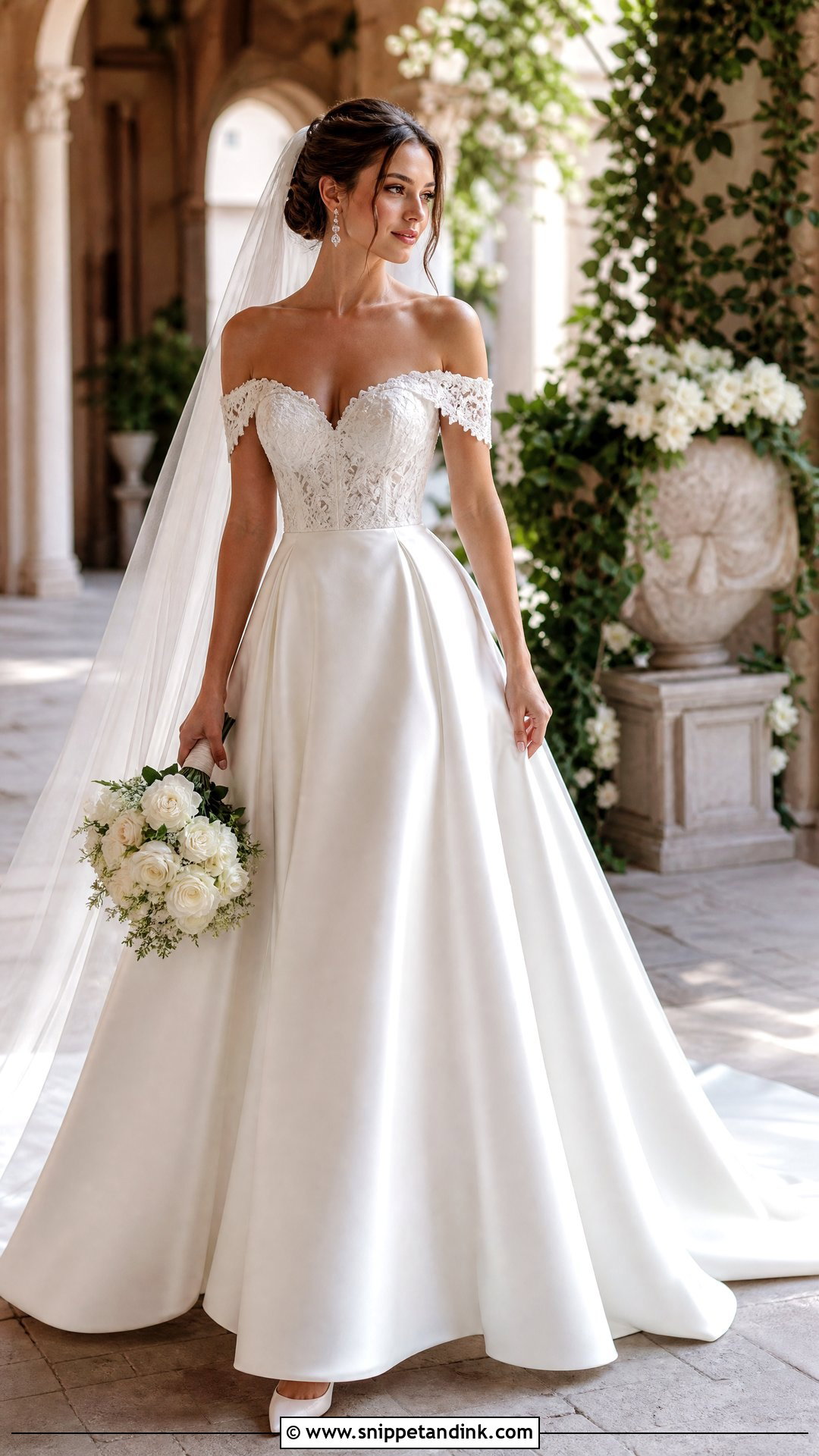
Off-the-shoulder necklines rely entirely on what is built inside the bodice. If the boning and grip tape aren’t right, the neckline creeps up every time you lift your arms, and you spend the reception tugging it back. So I always have brides reach forward and raise both arms during fittings. A fitted lace bodice frames the collarbone well, paired with either a flowing A-line or a fuller ball skirt, depending on how formal the venue is. Wear your hair up so the shoulder line stays clear. Small drops and a thin bracelet are plenty, with no necklace if the lace is busy, and a long plain veil.
8. Strapless Silk And Lace Wedding Dress
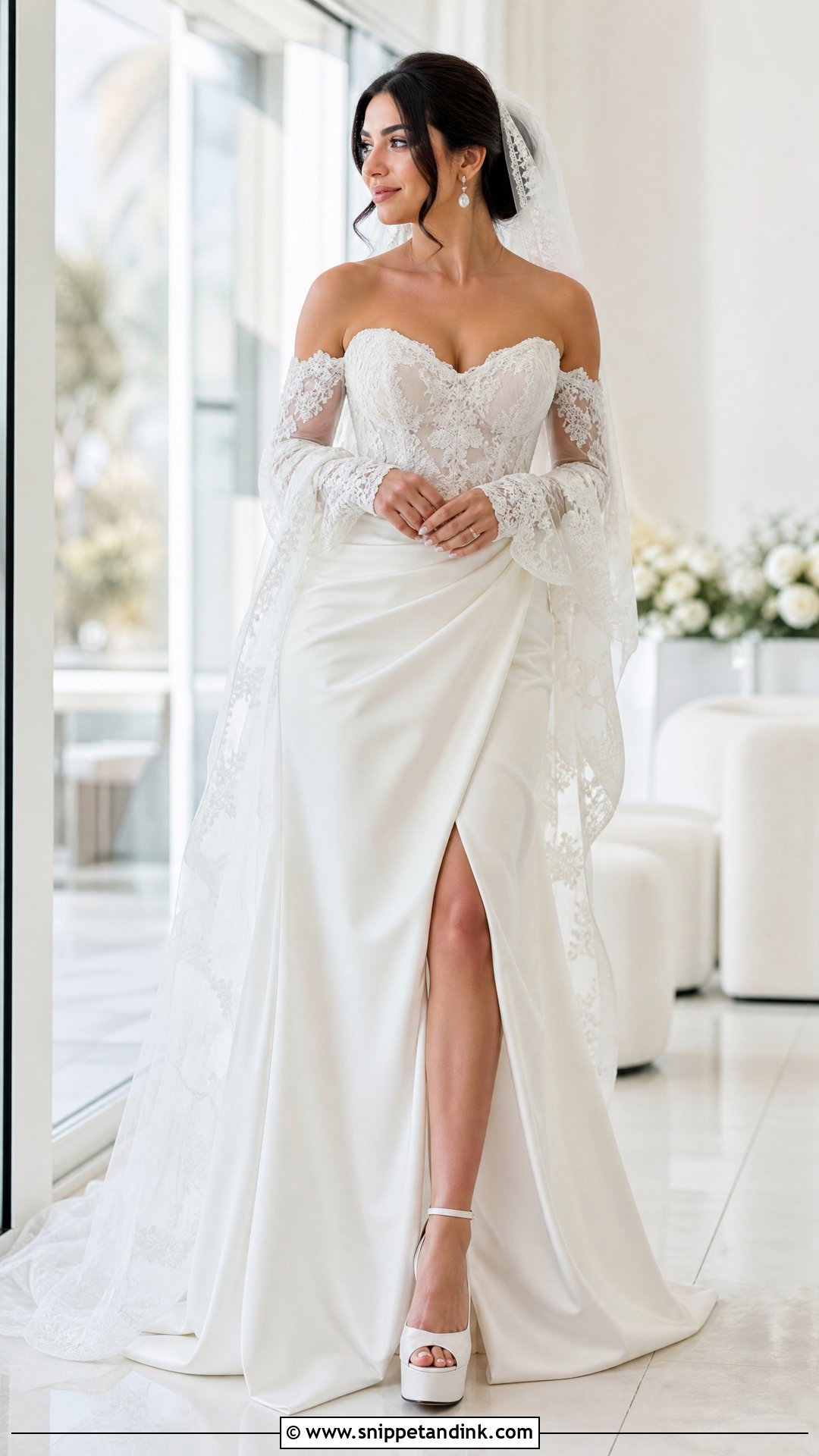
Most strapless trouble starts with brides asking for the bodice to be tighter. Tightness at the top doesn’t hold a dress up; a well-fitted waist and a structured corset do, and they let you breathe. A corset-style lace bodice with a straight or gently curved neckline works over a structured silk skirt, and visible seaming reads modern while a full lining reads classic. A sheer lace bolero gives you a covered ceremony look and a bare reception look without changing dresses. Pearl studs, a simple pendant, platform heels, a chapel veil and an updo finish it. Walk, sit and dance in it before the last fitting.
9. Square Neck Silk And Lace Wedding Dress
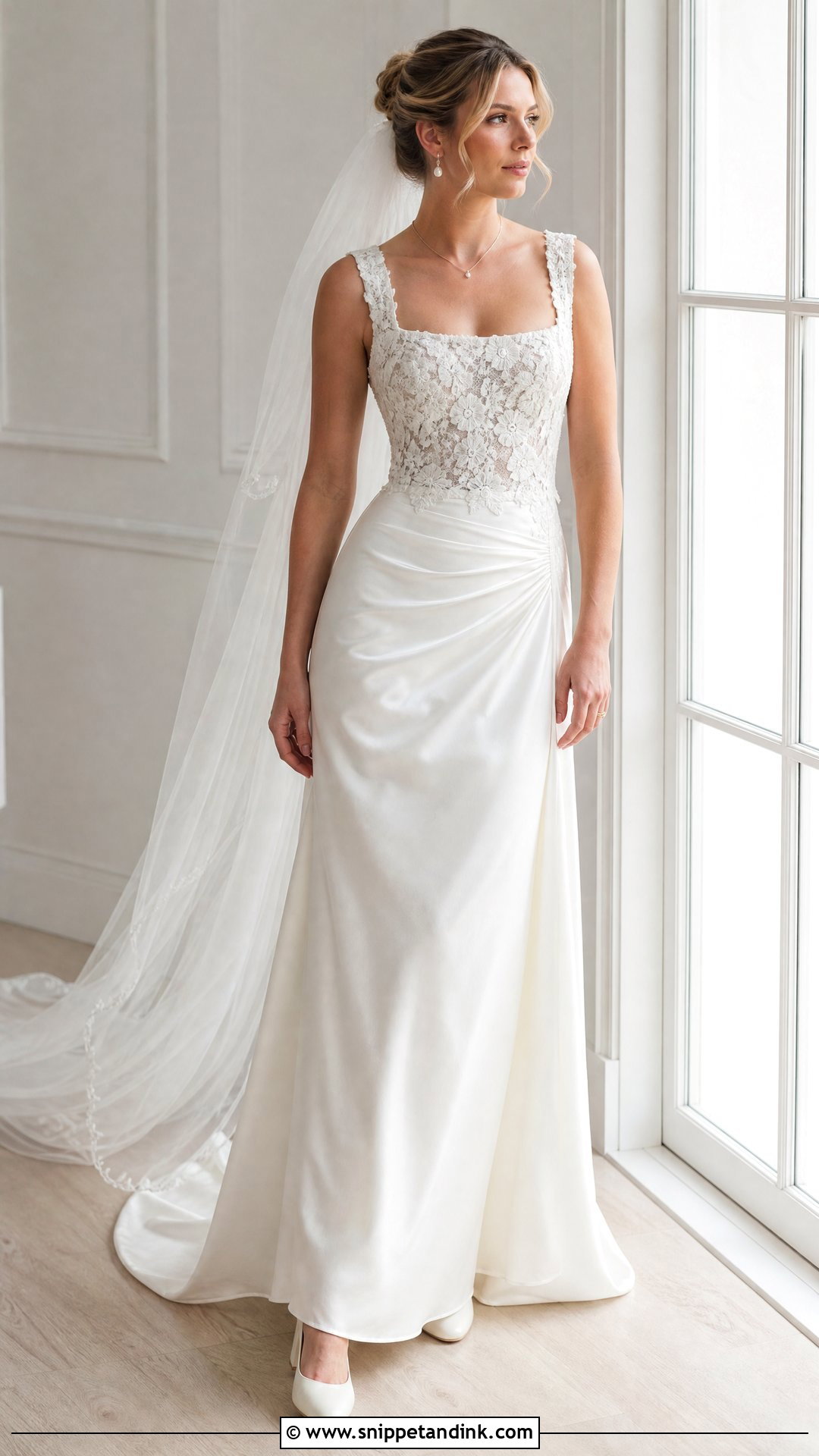
I like a square neckline with floral lace because the straight edge stops all those curves from getting sugary. Wide straps or short sleeves anchor it, and a softly draped silk skirt balances the geometry above. The fit to watch is the corners: a square neck that gapes near the strap or underarm looks sloppy in every photograph, so have your seamstress check it with your arms moving. A fine chain, pearl earrings, low block heels and a gathered veil suit it. A soft bun or half-up hair keeps it from feeling period-costume. Choose a neat bouquet held low enough to leave the bodice visible.
10. High Neck Silk And Lace Wedding Dress
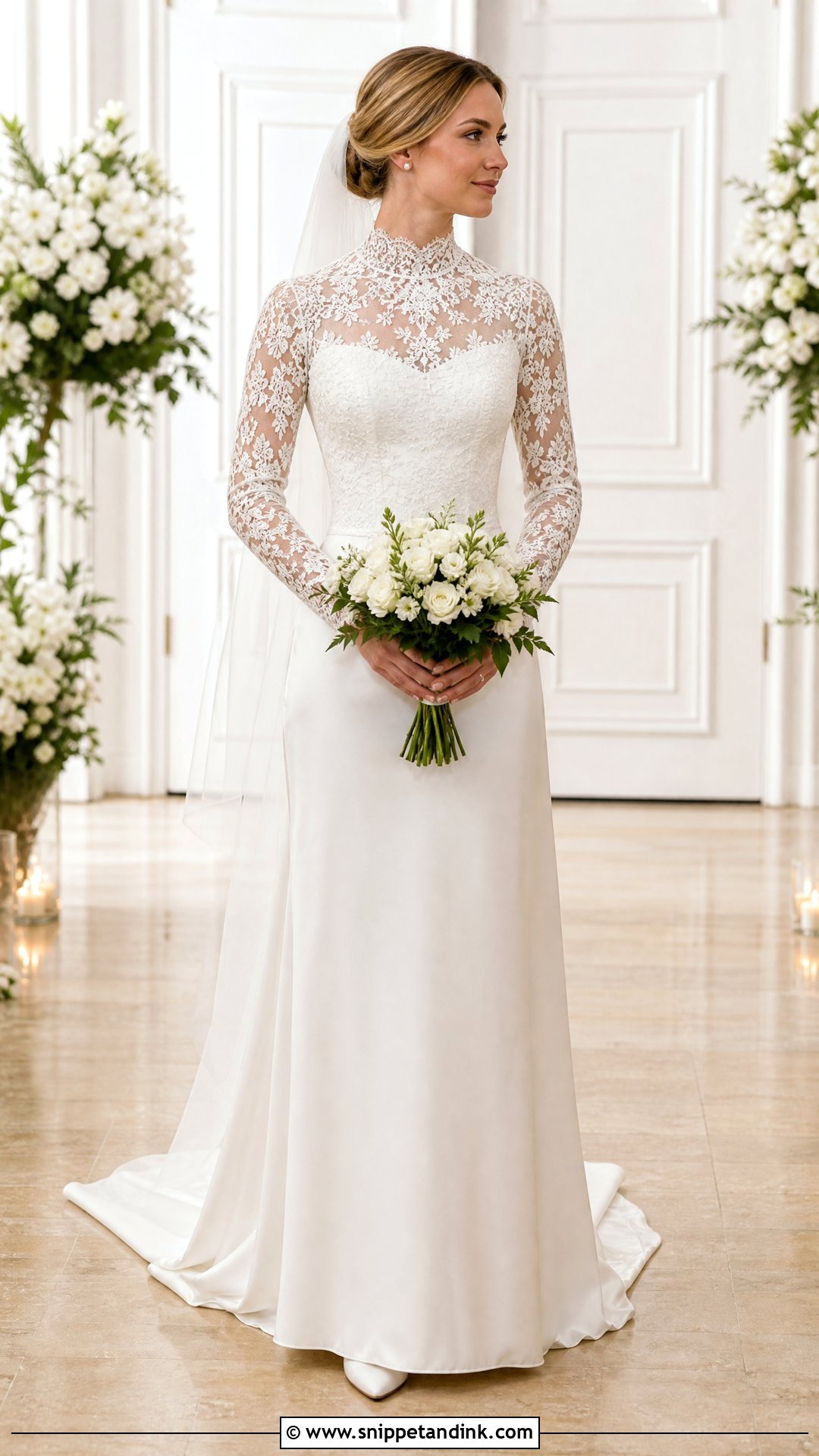
A sheer lace high neck over a lined bodice covers a lot and still looks light, provided the lace is soft. Stiff or heavily corded lace at the throat scratches and pulls when you turn your head, which you do constantly at a wedding. I always ask brides to look over each shoulder at the fitting and tell me honestly if anything rubs. Keep the skirt plain silk so the top half has room to be the detail. Sleeveless suits summer; fitted sleeves suit colder months. Skip the necklace entirely, wear pearl studs and closed-toe heels, and tuck the veil under a smooth low bun.
11. Sweetheart Silk And Lace Wedding Dress
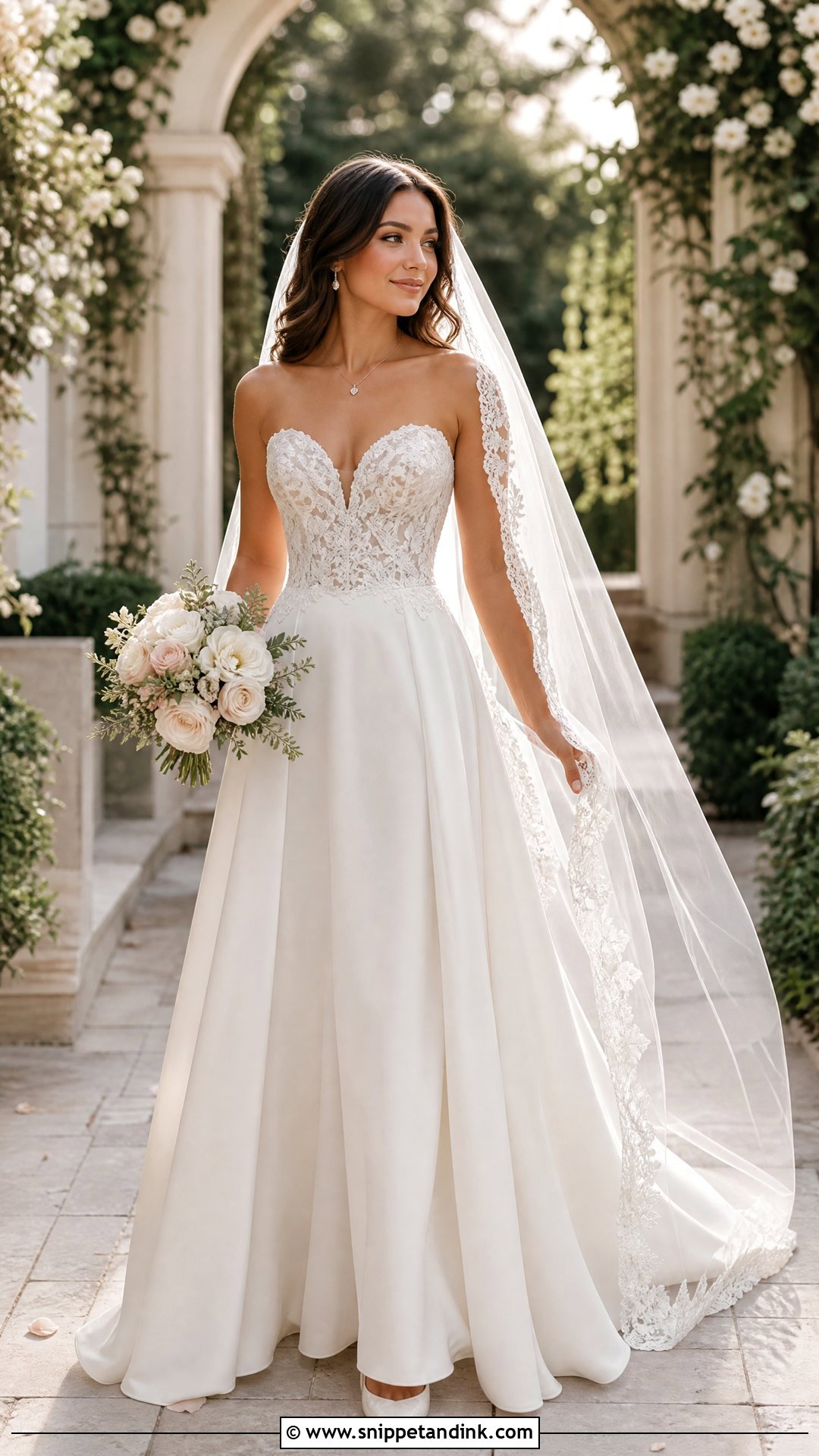
Sweetheart bodices draw the eye to the neckline, so the cups need real support and a clearly defined waist below them. The same lace top changes character with the skirt: a fluid A-line keeps it soft, a full ball skirt makes it formal. Gaping at the dip of the sweetheart is the most common fit issue I see, and it’s usually fixed by taking in the side seams rather than the centre. A short pendant, small earrings, pointed heels and a veil with a narrow lace border suit it. Side-swept waves echo the curve. If you want more coverage, detachable lace straps are an easy addition. Hold the bouquet below the waist in portraits.
12. Halter Silk And Lace Wedding Dress
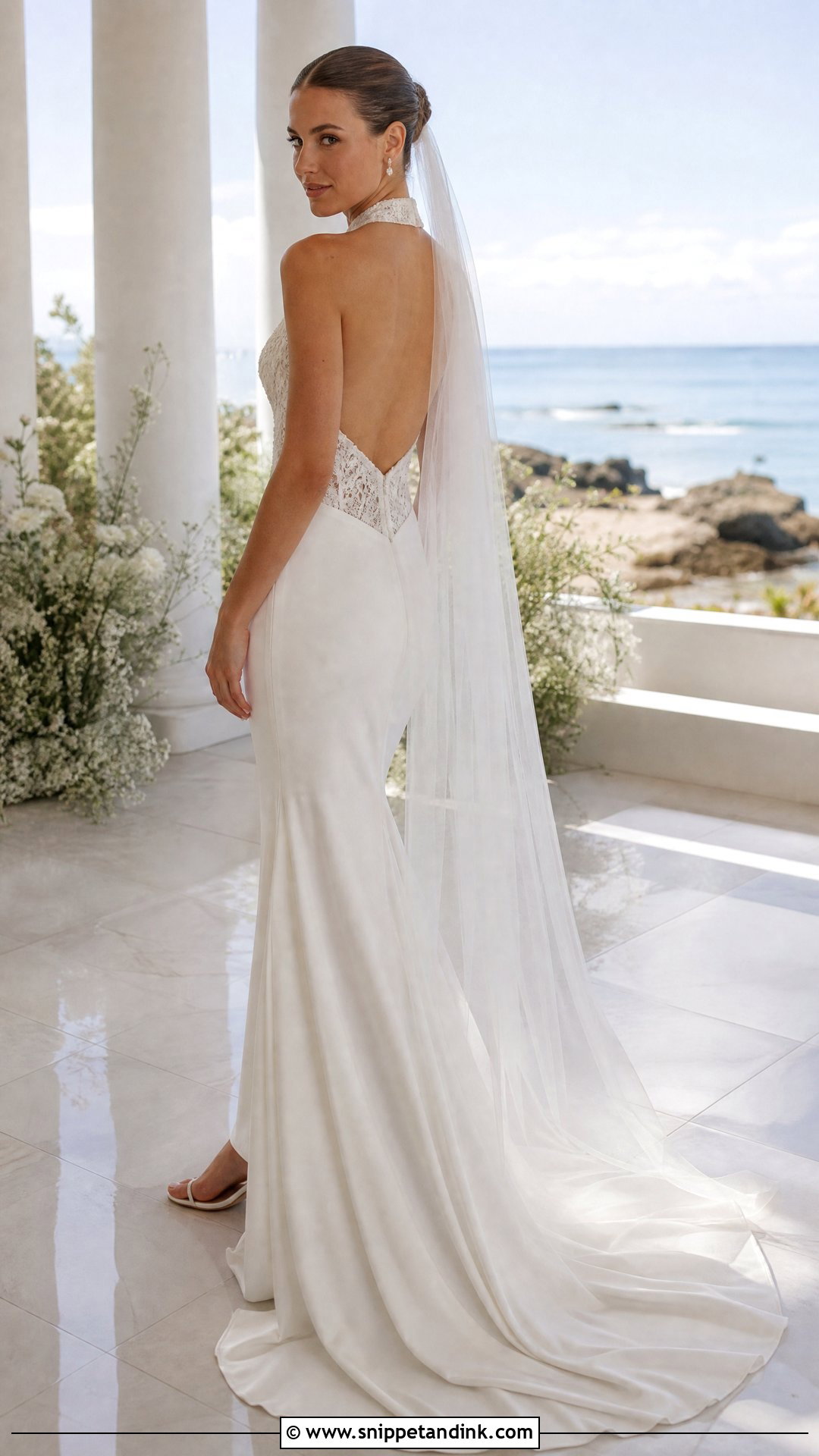
A halter silk and lace wedding dress looks sleek, but I’m cautious with it for one reason: if the support comes from the strap, your neck carries the weight of the bodice all day. A well-made halter holds the bust from inside, with the strap only finishing the line. Lace over the bust gives coverage, a fluid silk skirt keeps it graceful, and an open or keyhole back adds interest without any extra trim. Small earrings, a polished bun, slim ivory sandals and a plain chapel veil pinned below the hair are enough. It suits modern, coastal and destination weddings well. No necklace.
13. Backless Silk And Lace Wedding Dress
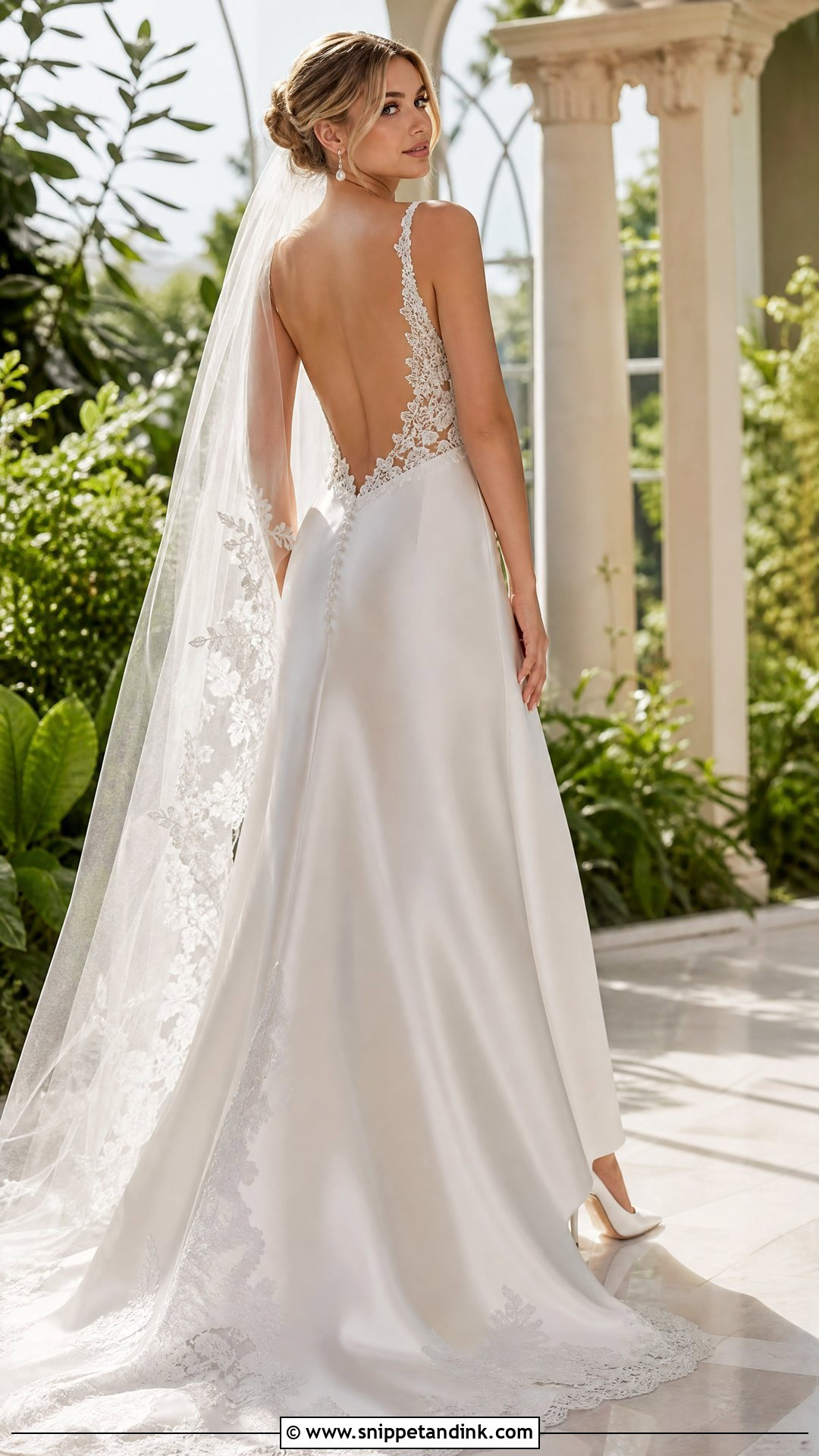
Plan the bra before you plan anything else on a backless gown. Many need cups sewn into the lining, and that has to happen early in alterations, not at the last fitting. A silk column or A-line with lace edging around the open back makes a lovely reveal as you walk away down the aisle. Thin lace straps, covered buttons or a sheer illusion panel add stability without closing it up. Wear a low bun, small pearls and slim heels, and choose a veil you can take off after the ceremony. A necklace will twist round to the back, so skip it. Bend, sit and reach at the fitting.
14. Basque Waist Silk And Lace Wedding Dress
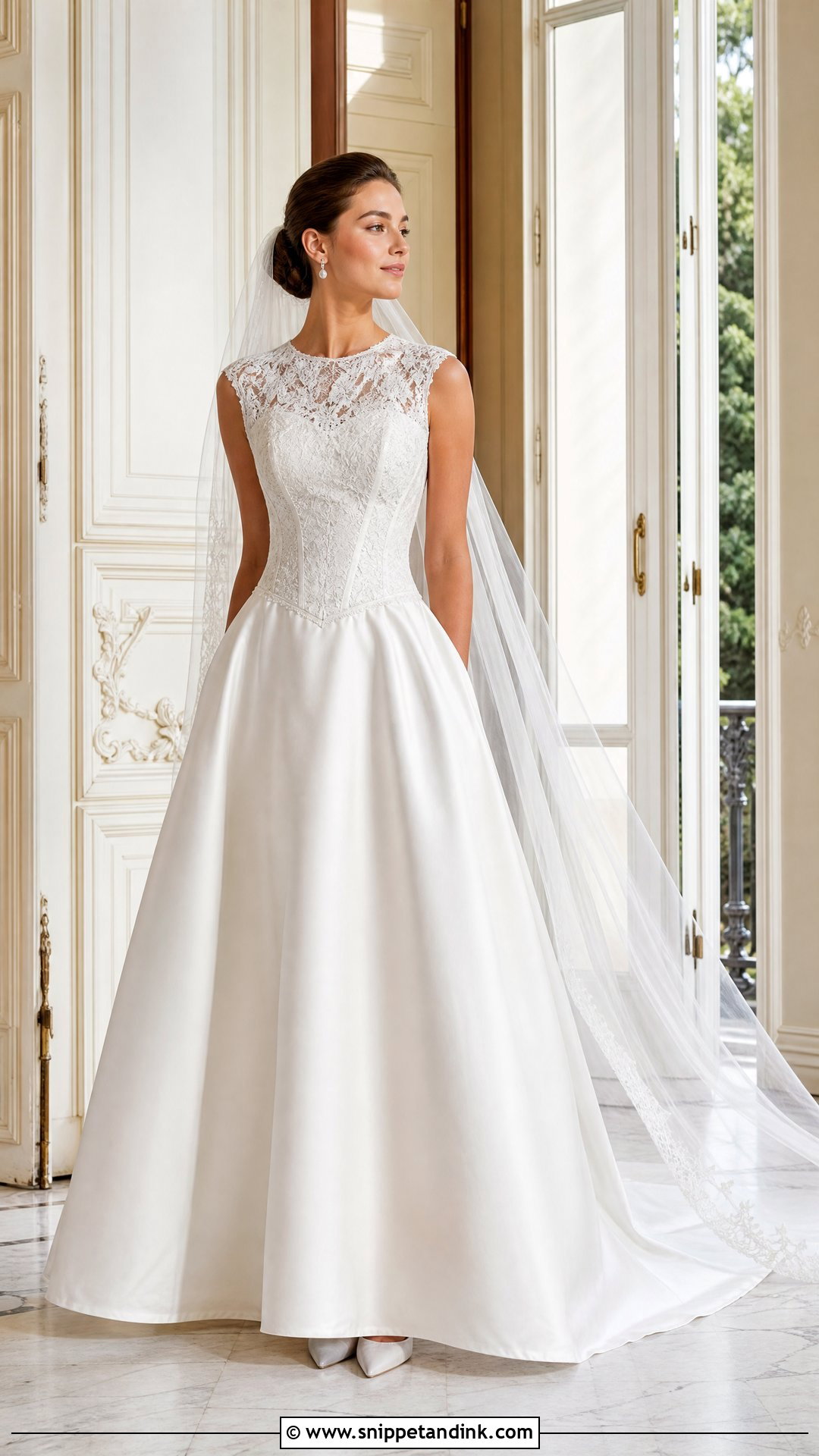
The point of a basque waist sits below the natural waist, and where exactly it lands decides whether the gown flatters you or shortens your legs. I mark it on the body at the first fitting, because moving the point half an inch up or down can change the whole proportion. A structured lace bodice over a full silk skirt shows the V most clearly. Straight, scoop and off-shoulder necklines all balance it. Pearl drops, a smooth cathedral veil, closed-toe pumps and a classic bun keep it formal. Carry a compact bouquet that stays above the point, and make sure you can breathe and sit comfortably.
15. Drop Waist Silk And Lace Wedding Dress
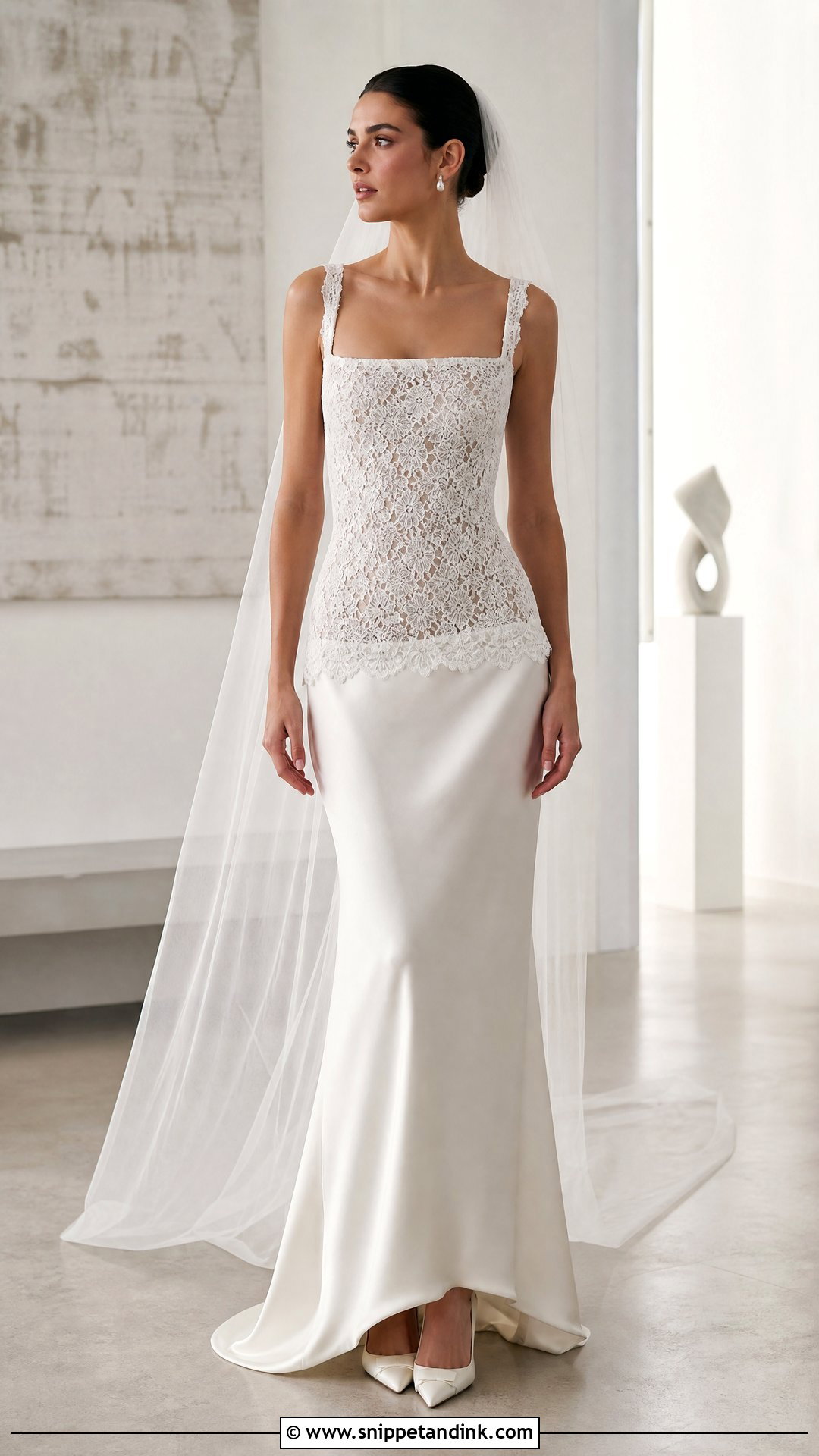
Drop waists are less forgiving than they look. The seam sits on the upper hip, which means it moves every time you sit, and if it isn’t fitted precisely it bunches into ridges. Get that right and the long lace torso into a silk skirt has a lean, sculpted look that feels very current. Wide straps with a straight neckline read modern; a scoop is softer. Simple earrings, pointed pumps, a plain veil and sleek hair tucked behind the ears keep attention on the line. Hold the bouquet at hip level, beside the seam rather than over it.
16. Empire Waist Silk And Lace Wedding Dress
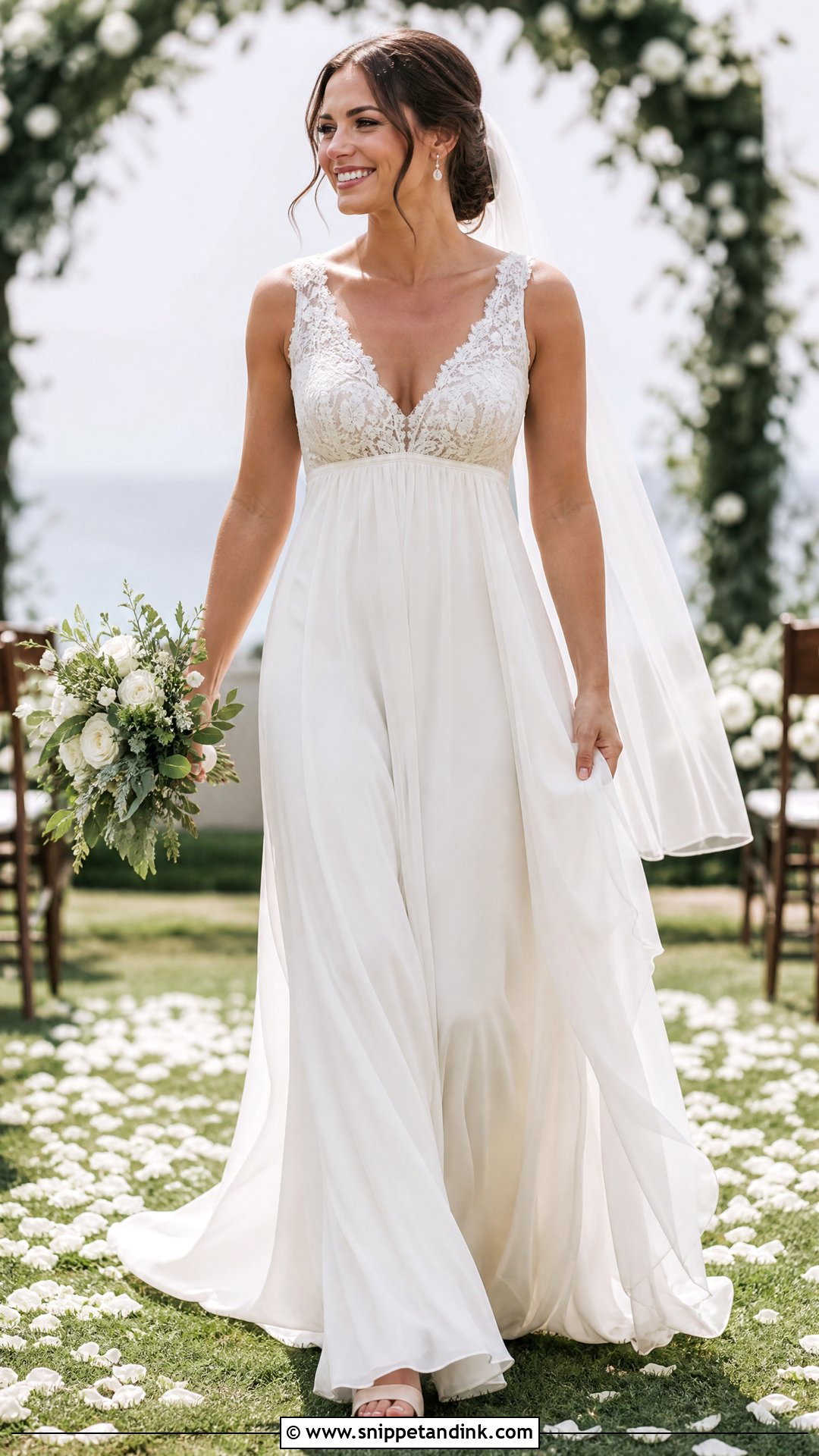
Empire waists are the easiest gowns on this list to wear for a long day, because nothing constricts below the bust. A fitted lace top on supportive straps sits over a lightweight silk skirt that falls straight to the floor. Resist adding a wide belt under the bust; it chops the line in half. A narrow lace edge or a covered seam is enough. Delicate drops, low sandals and a sheer veil that moves with the skirt suit it, with loose waves or a braided updo. One practical warning: light silk drags easily, so have the hem set while you’re wearing the exact shoes.
17. Tea Length Silk And Lace Wedding Dress
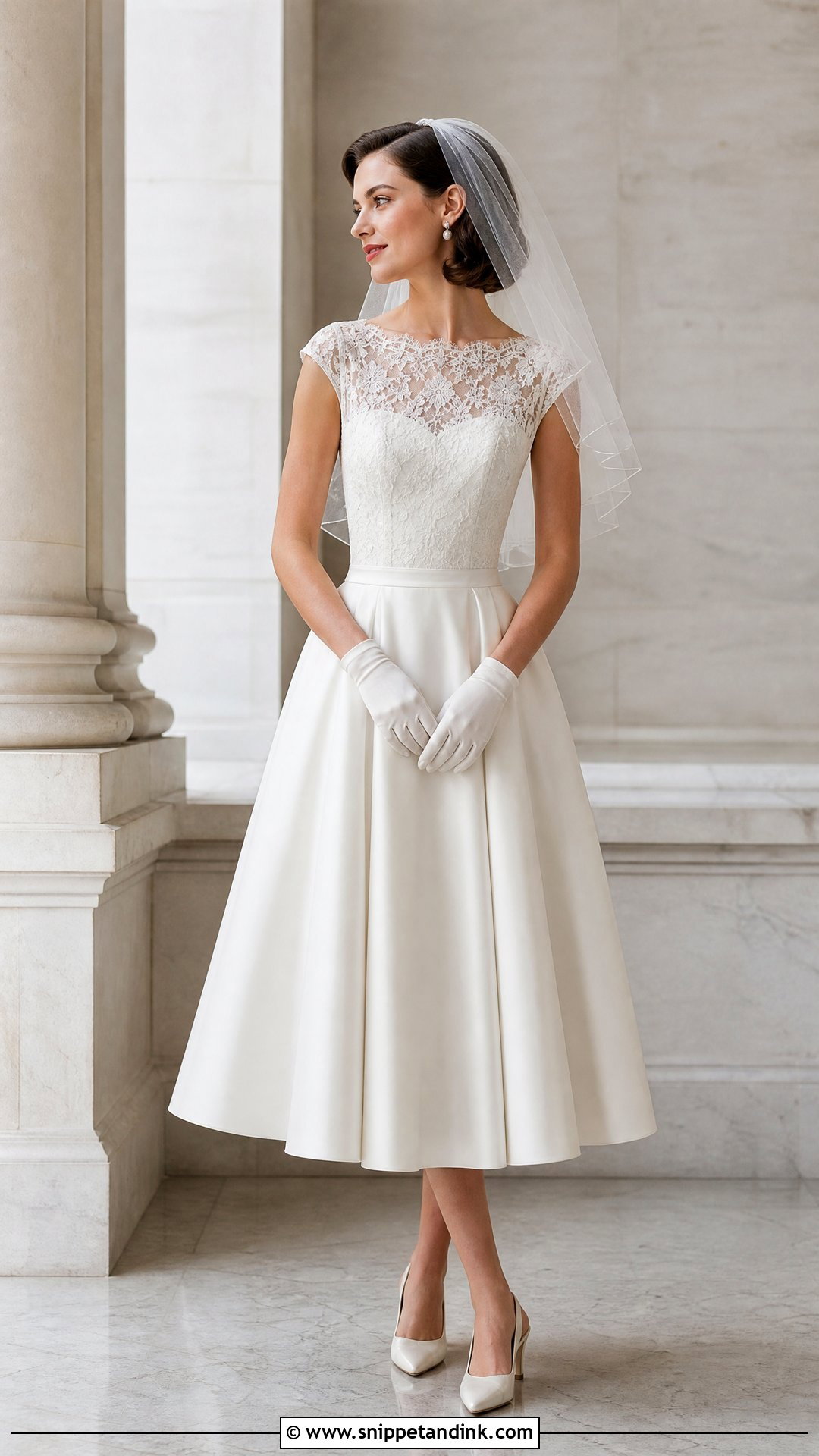
Tea length shows your shoes, so pick them before the hem is set, not after. A fitted lace bodice with a structured silk skirt ending somewhere between knee and ankle has an easy vintage feel, and slingbacks, low pumps or embellished flats all suit it. Add pearl earrings, short gloves if you like them, and a birdcage or fingertip veil. A neat bun or a curled bob keeps the proportions right. The hem height matters more than on a floor-length gown: an inch can make the difference between a flattering line across the calf and one that cuts it at its widest. Courthouse, daytime, garden and small receptions are its natural setting.
18. Short Silk And Lace Wedding Dress
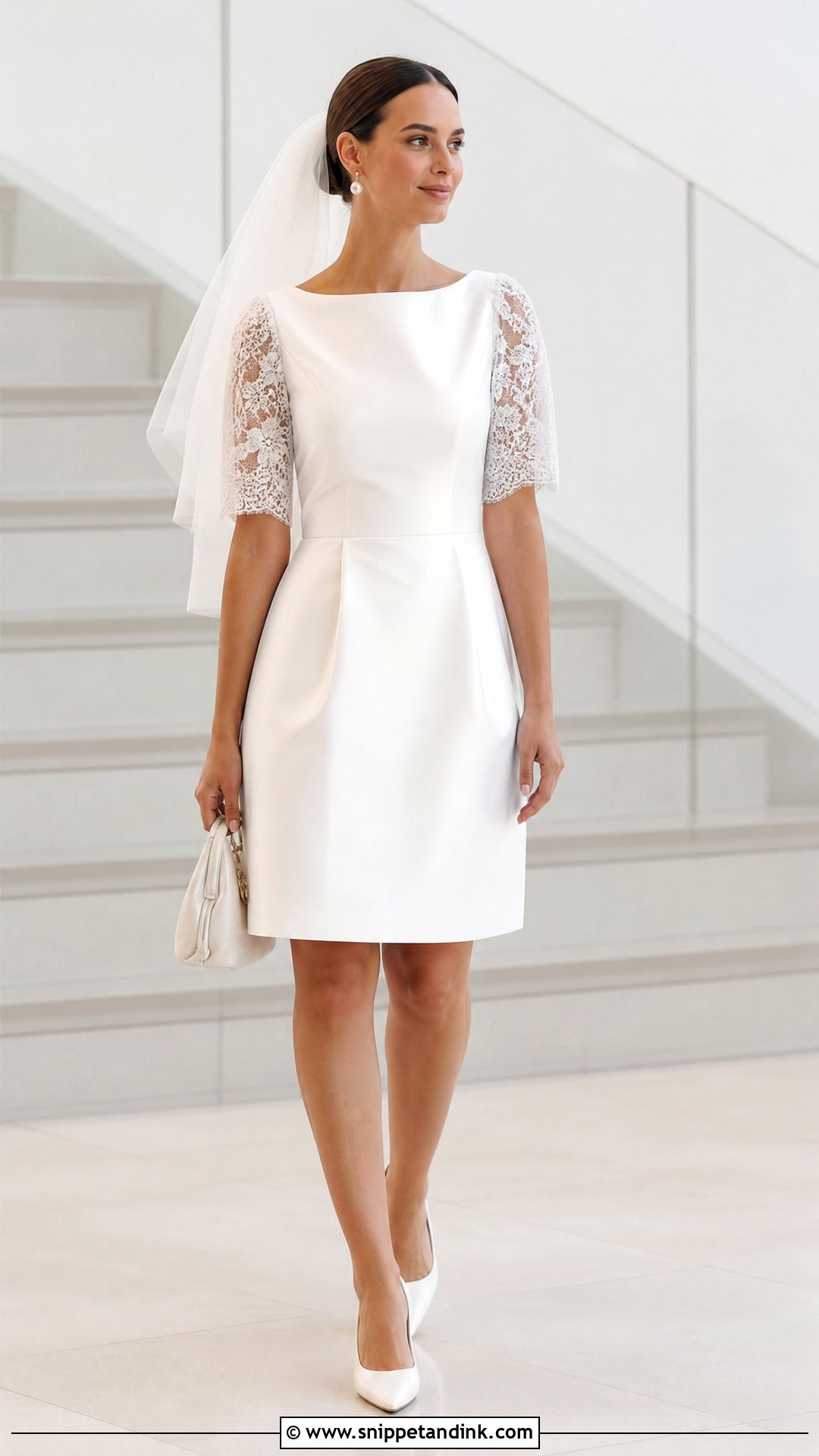
Short gowns get looked at from the legs up, which is why I make brides sit down in front of a mirror before we settle the length. A structured silk mini or knee-length dress with lace sleeves, a lace neckline or a sheer overlay stays polished if the waist is fitted and the hem is clean. It suits civil ceremonies, relaxed weddings and a reception change. Pointed pumps, pearl earrings, a small structured bag and a short veil or bow finish it. In cold weather, sheer tights and a tailored ivory coat work well. Keep every accessory deliberate; with less fabric, each one shows more.
19. Cape Sleeve Silk And Lace Wedding Dress
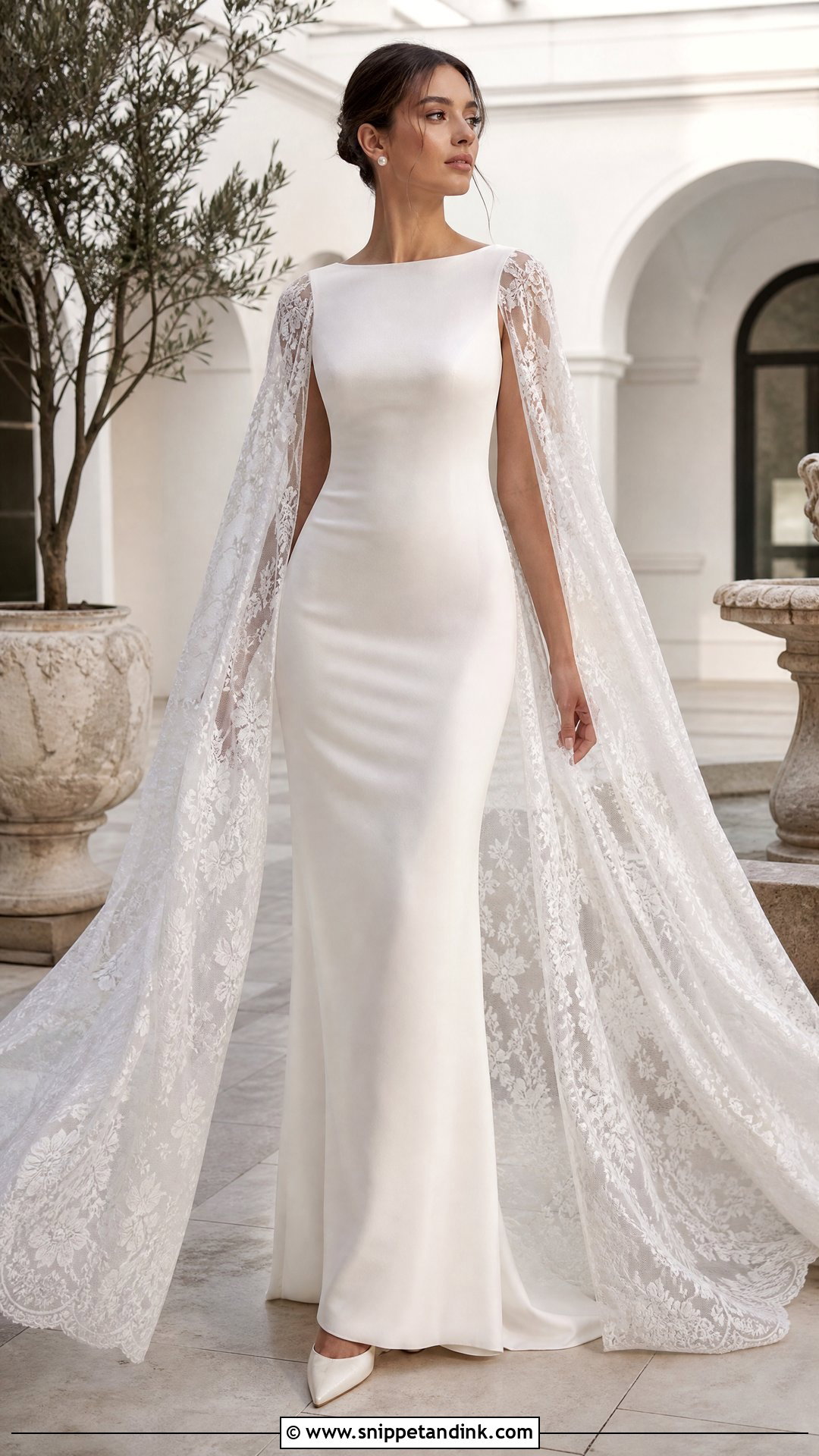
Capes move on their own, which is half their charm and all of their risk outdoors. A plain silk column or A-line with lace cape panels at the shoulder can fall to the elbow, the wrist or the floor. Floor-length capes need a hidden wrist loop so you can lift them on stairs and in wind; ask for one at alterations. Pearl studs, pointed heels and an updo keep the shoulders clear. If the cape becomes a train, I usually drop the veil altogether; with shorter panels, a minimal fingertip veil is fine. Bracelets and large earrings catch the lace, so leave them out. Practise walking outside before the day.

20. Silk And Lace Wedding Dress With Overskirt
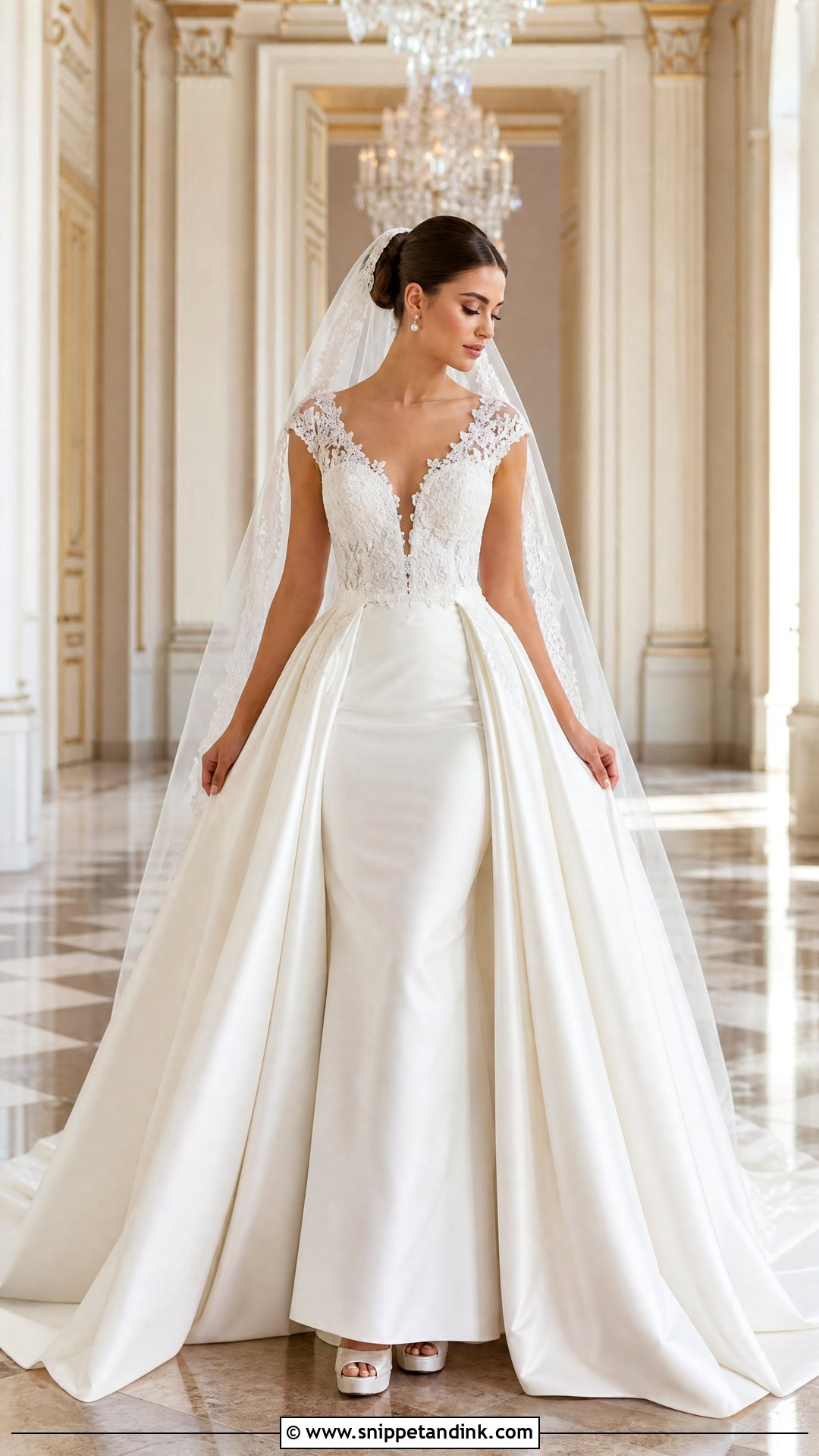
A detachable overskirt gives you two gowns: volume for the ceremony, a fitted silk dress with lace panels for dancing. Its success depends almost entirely on the fastenings. Hooks and snaps at the waist must lie flat from every angle and the overskirt shouldn’t twist as you walk, so check it in a three-way mirror. Pair it with a chapel veil, pearl earrings, platform heels and a bun, then switch to a shorter veil or a hair comb once the skirt comes off. Rehearse the removal with whoever will help you on the day. It should take a couple of minutes, not twenty.
21. Floral Lace And Silk Wedding Dress
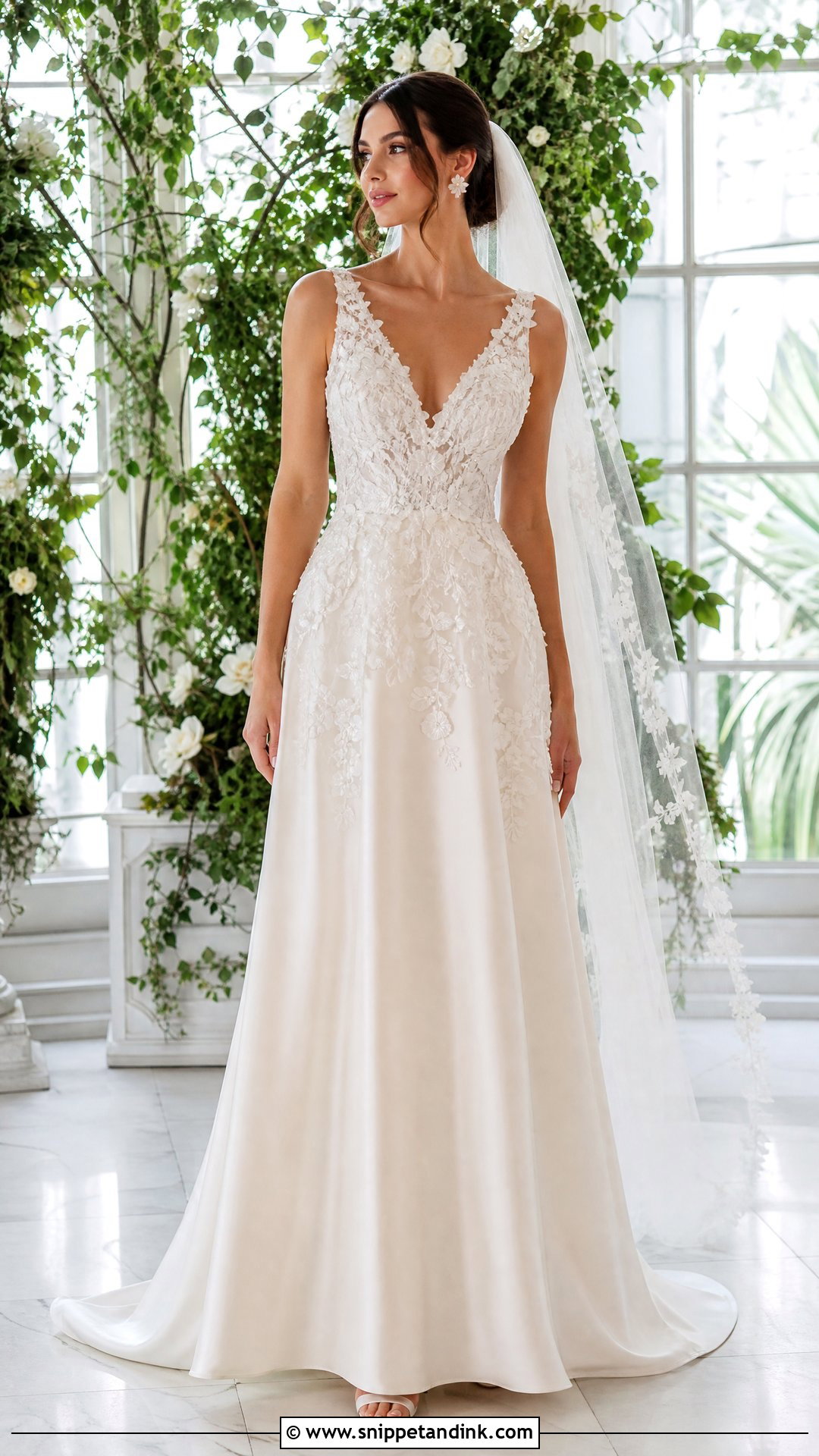
Appliqué spacing changes the whole mood. Scattered flowers on a silk base read airy, while dense clusters feel ornate, so decide which you want before falling for a sample. I look closely at where motifs meet seams and darts: a flower sliced in half at the centre front is the giveaway of a rushed alteration, and good seamstresses lift and re-stitch motifs over the seam instead. Concentrate the lace around the bodice, waist or upper skirt. Small floral earrings, plain ivory heels, a veil with a few matching motifs and a soft updo suit it. Choose a bouquet in one or two colours.
22. Vintage Silk And Lace Wedding Dress
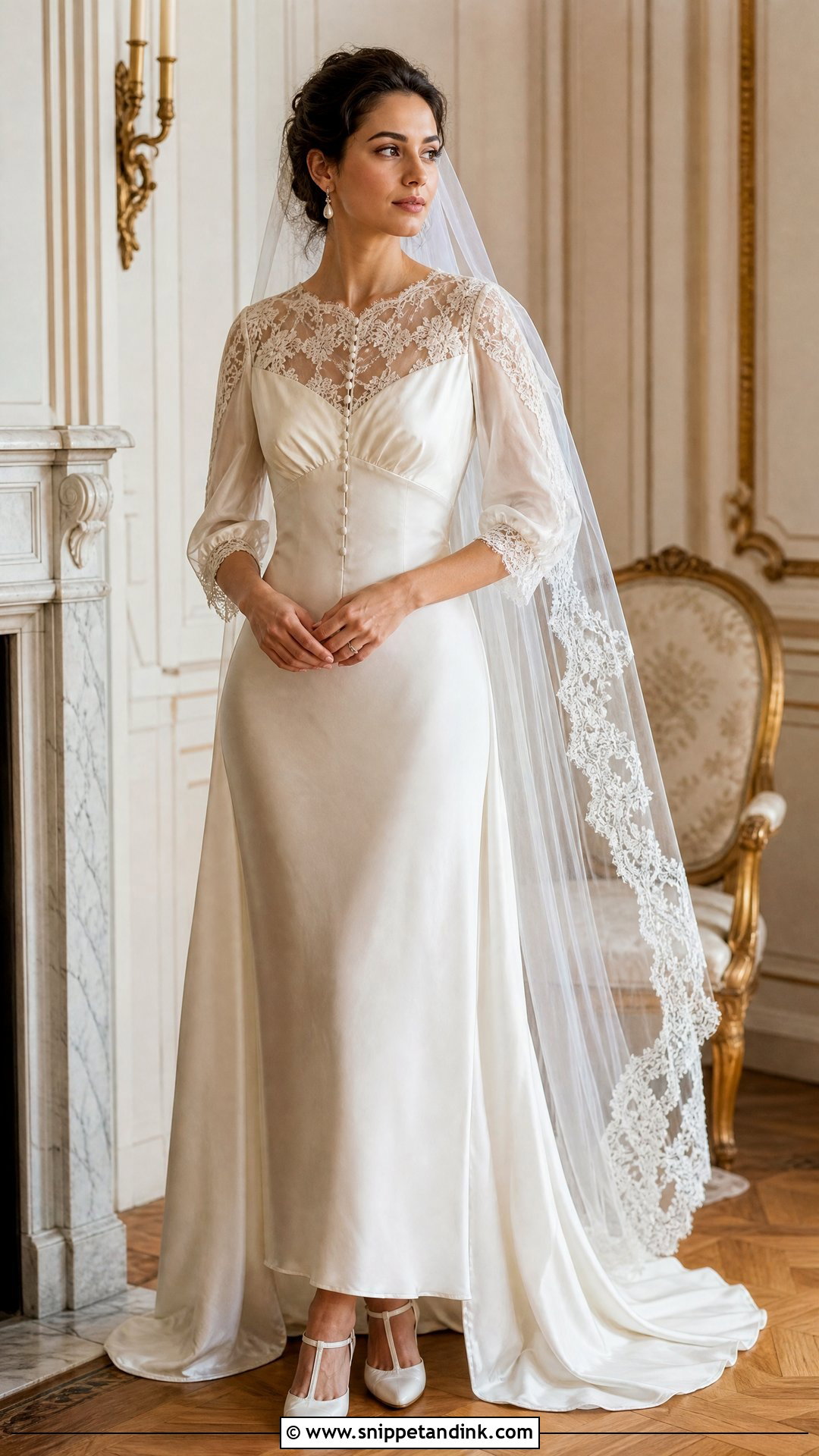
Vintage-inspired gowns slide into costume when they borrow from three decades at once. Pick one era and let it lead. Pair 1930s-style draping with restrained lace, for example, rather than adding a big collar and puffed sleeves on top. A bias-cut silk skirt, a lace yoke, covered buttons and softly shaped sleeves are the core. Ivory or a light cream suits the mood far better than bright white, which can look harsh against older-style lace. T-strap heels, pearl earrings, a lace-edged veil, waved hair pinned off the face and a small ribbon-tied bouquet complete it.
23. Boho Silk And Lace Wedding Dress
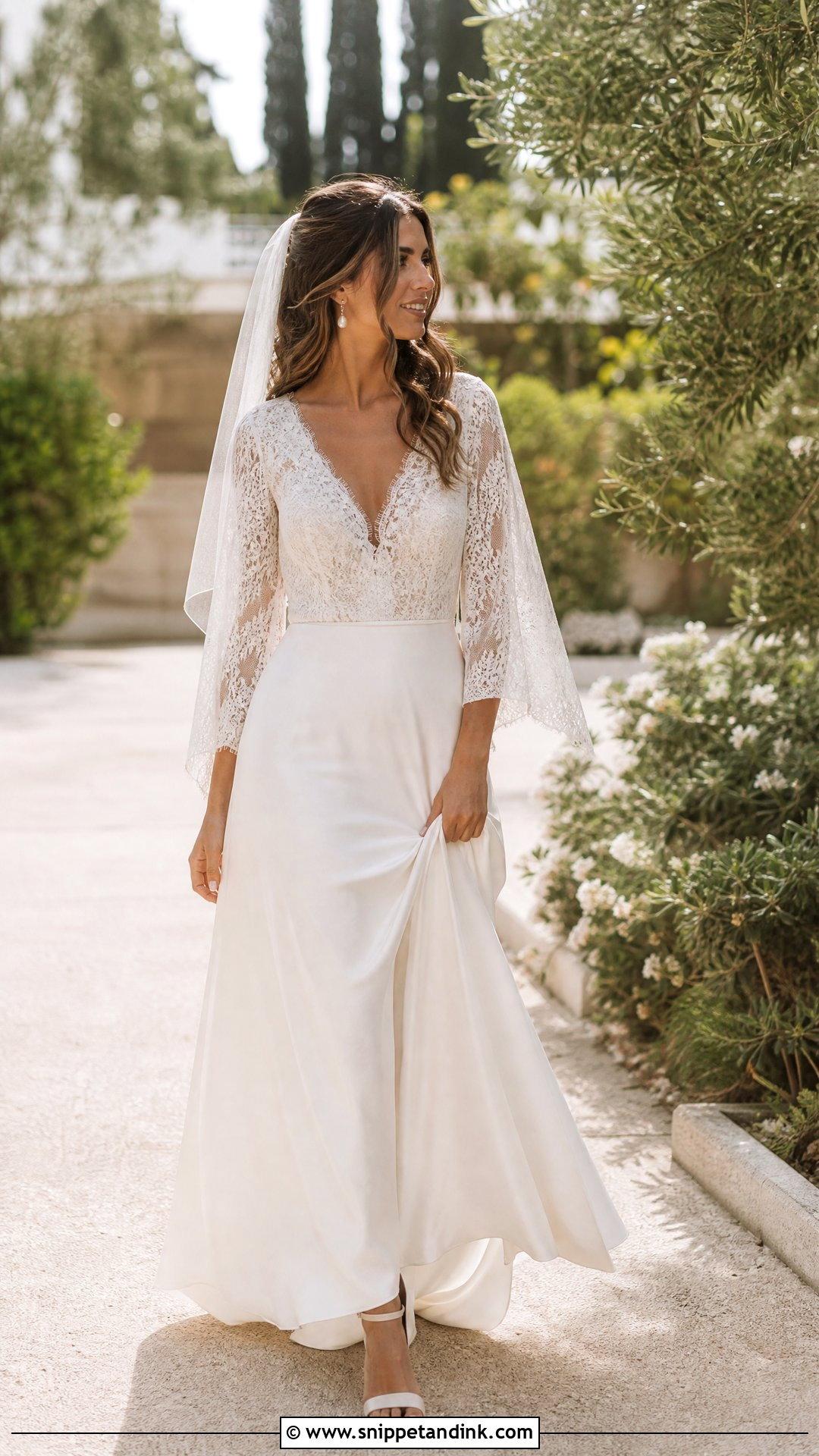
Boho doesn’t mean unstyled, and most of the boho gowns I see go wrong by being too loose and too long for the setting. A fluid silk skirt under a soft lace bodice, open sleeves or scalloped edges should follow the body without heavy corsetry. Outdoors, choose a train short enough to move over grass and stone without dragging half the garden down the aisle. Breathable lining and lace with some give at the arms matter on a warm day. Block-heel sandals sink less in lawns, and small gold or pearl earrings plus a light veil under loose waves suit it. Keep the bouquet relaxed but not wider than your shoulders.
24. Plus Size Silk And Lace Wedding Dress
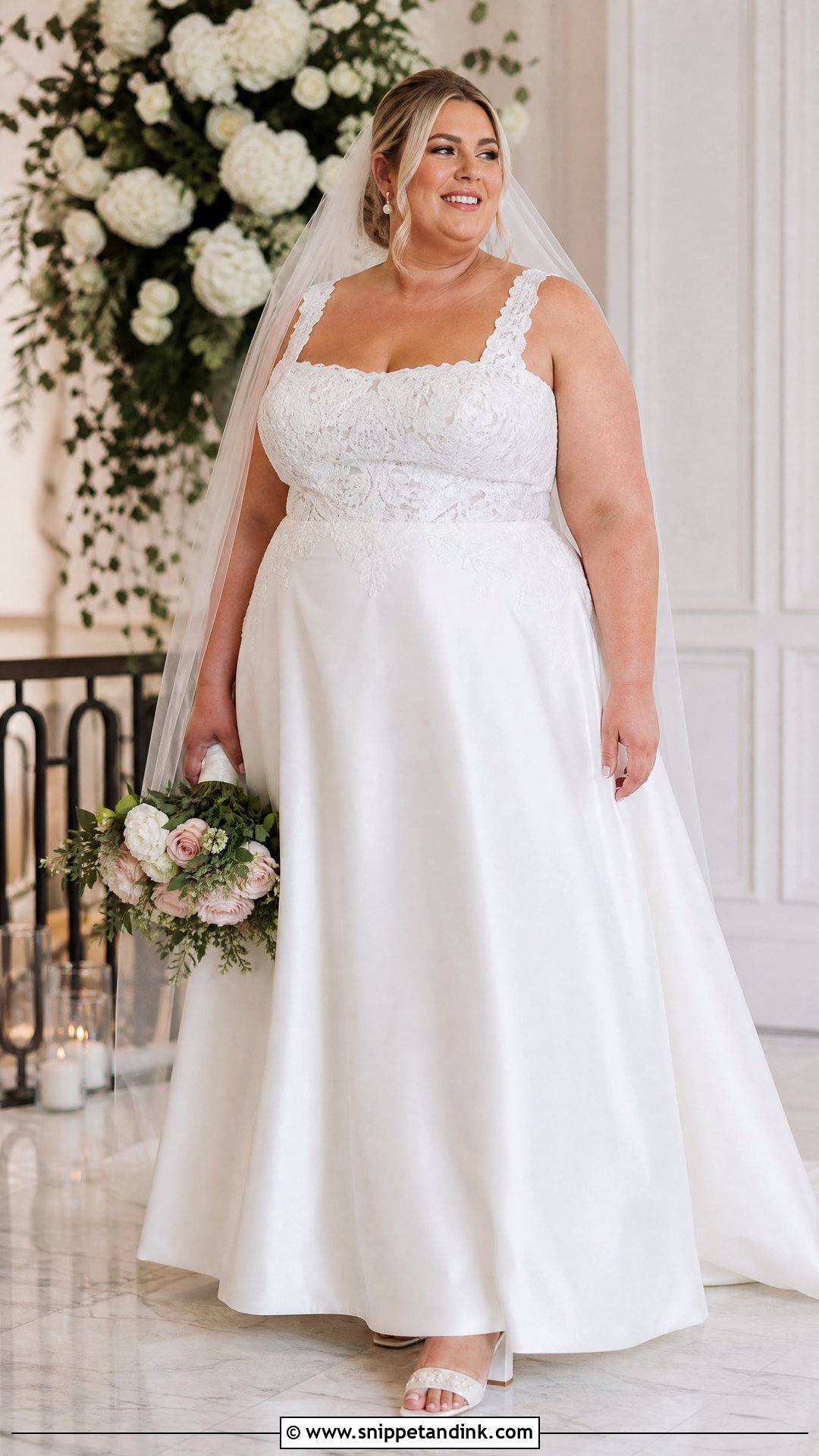
My advice to plus-size brides is to ignore the old rules about which silhouette you are allowed to wear and focus entirely on fit. A skilled bridal seamstress can rework cups, straps, waist placement and boning to suit your proportions, and that matters far more than the cut on the label. An A-line with a supportive lace bodice, defined waist and flowing silk skirt is a strong starting point, as are wider straps, a square neck or draped sleeves. Choose stable block heels, pearl earrings, a chapel veil and hair that leaves the neckline open. Wear your real shoes and undergarments to every fitting, then sit, lift your arms and breathe deeply.
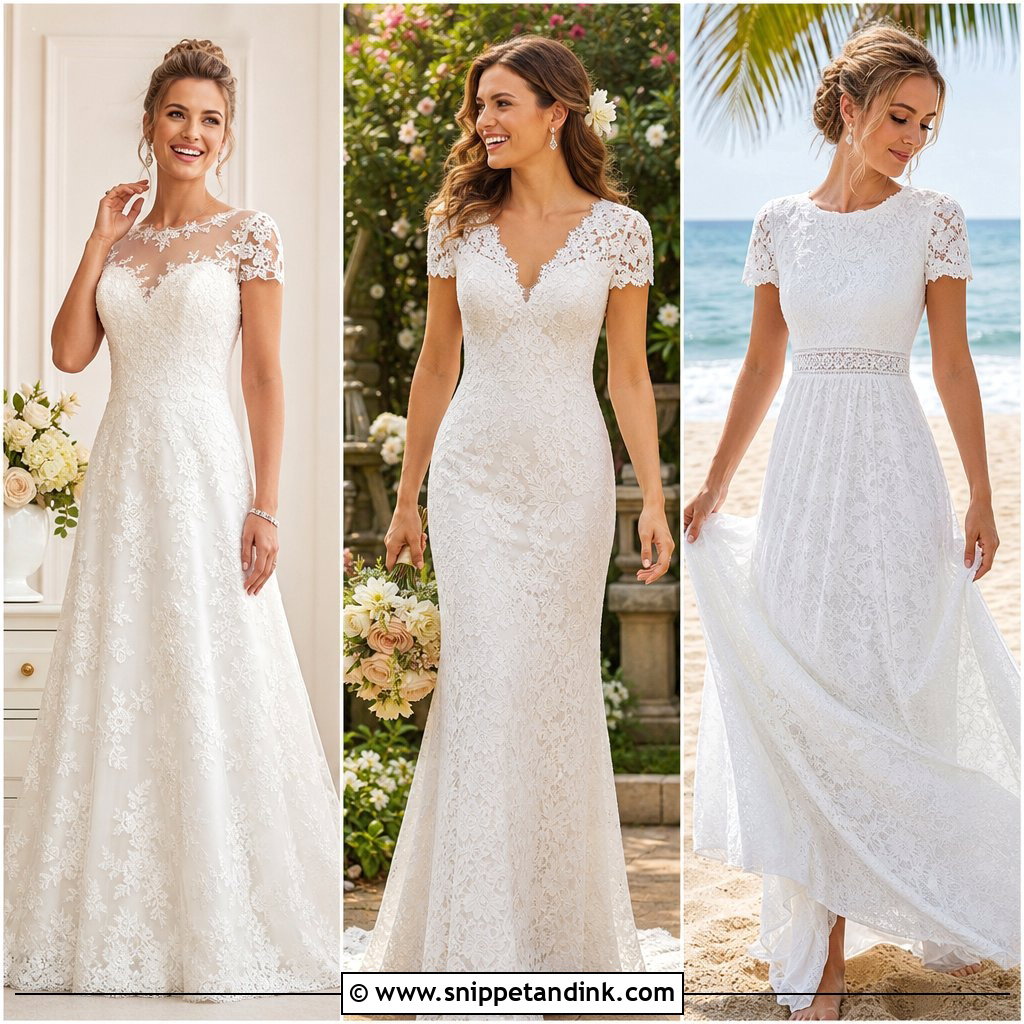
25. Blush Silk And Lace Wedding Dress
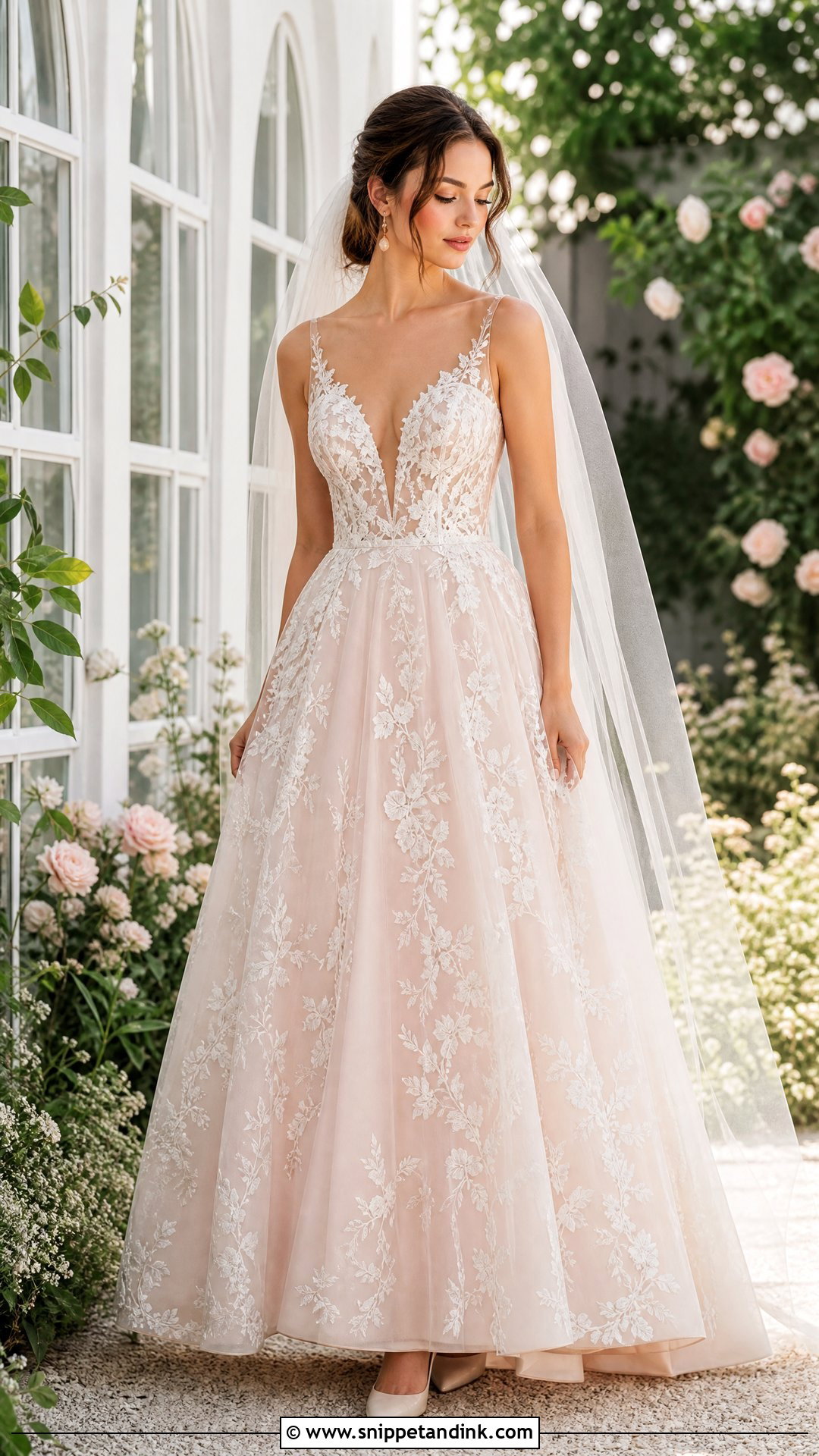
Blush lining under ivory lace gives colour without competing with the pattern. Always judge it in daylight before ordering; indoor bulbs and shop lighting push pink toward beige or peach, and the shade you approve under them is rarely the one you see outside. The pairing works on an A-line, a fitted column or a soft ball gown. Match the veil to the lace, not the lining, or it turns pink in photographs. Ivory heels, rose-toned pearls and a low bun or polished waves keep it grown-up. An ivory bouquet with small pink accents ties it together.
Silk Creases and Water Spots on the Morning Itself
Silk is the more delicate half of this pairing on the day. It creases in the car, marks with water and shows a sitting wrinkle across the lap within minutes. Very little of that is a disaster if someone knows how to handle it.
- Steam, never iron. Hold the steamer a hand’s width from the fabric and work from the inside of the skirt where you can. Lace needs no steaming at all; heat flattens raised motifs.
- Keep water off it. A drip on charmeuse or satin dries to a visible ring. Blot with a dry white cloth and leave it alone rather than rubbing.
- Hang the gown by its inner loops, not the shoulders, so the weight of the skirt doesn’t stretch straps or lace sleeves overnight.
- Spread the skirt out behind you when you sit for the meal. Bunching it under you is how the deep creases in portraits happen.
- Pack a small kit: white chalk for light marks on lace, a few safety pins, clear thread and a needle, and a lint roller.
After the wedding, get the gown to a specialist cleaner within a few weeks. Sugar from champagne or cake can be invisible on silk at first and then yellow as it ages, which no amount of later cleaning fully reverses. Store it flat or folded in acid-free tissue, away from light, rather than in the plastic bag it came home in.
A Gown You Forget You Are Wearing by the Second Hour
The right silk and lace gown should let you move, eat, hug and dance without thinking about it. Start with the silhouette, then decide where the lace sits, how heavy the silk is, and how much structure you want inside. Bring your actual shoes and undergarments to every fitting, and test each dress sitting as well as standing. Let accessories frame the gown’s best feature rather than cover it. A plain slip, a soft A-line, a fitted mermaid or a full ball gown can all work; the one to buy is the one you forget you’re wearing by the second hour.
You'll Like These Ideas:







Leave a Reply