
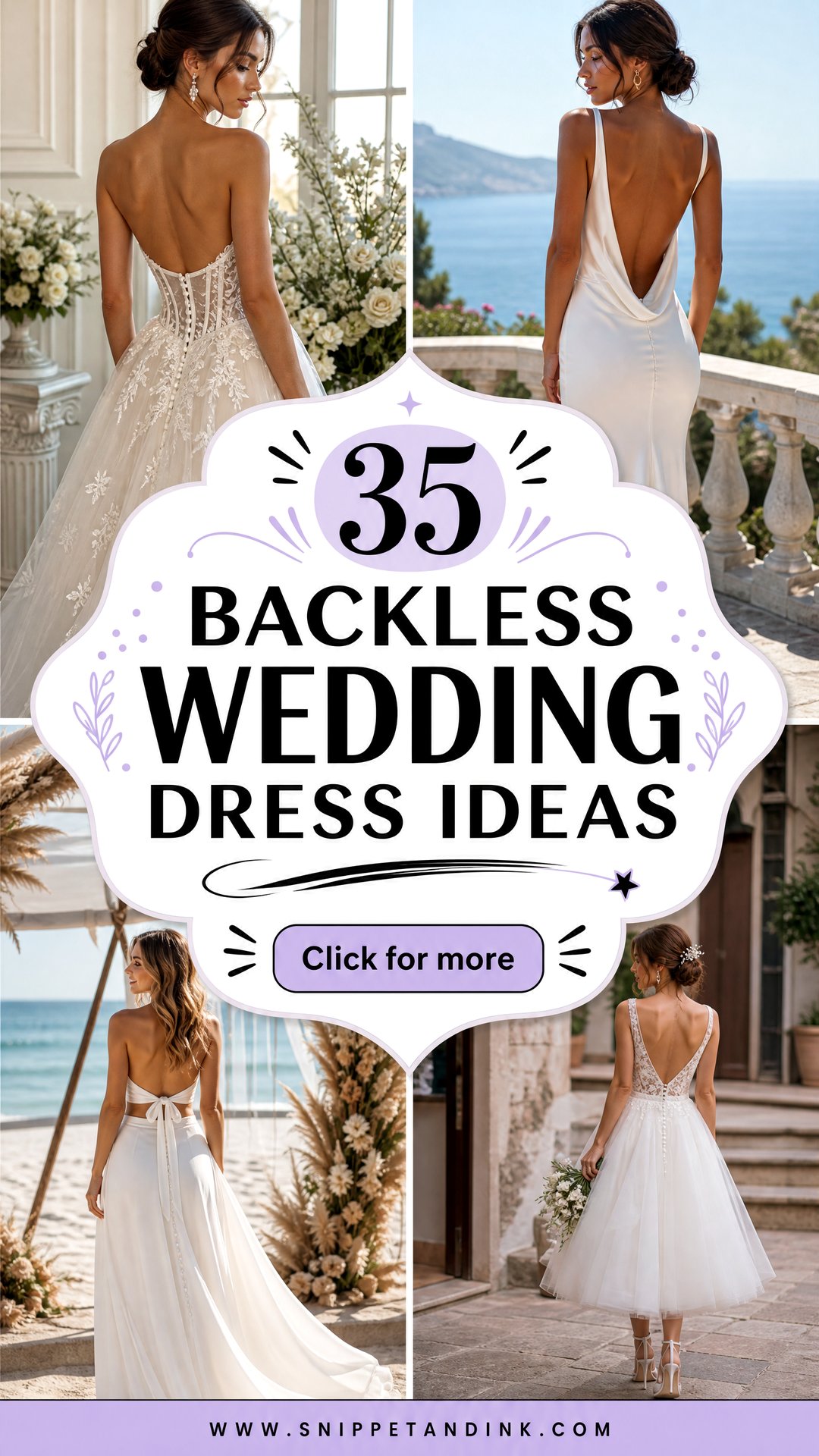
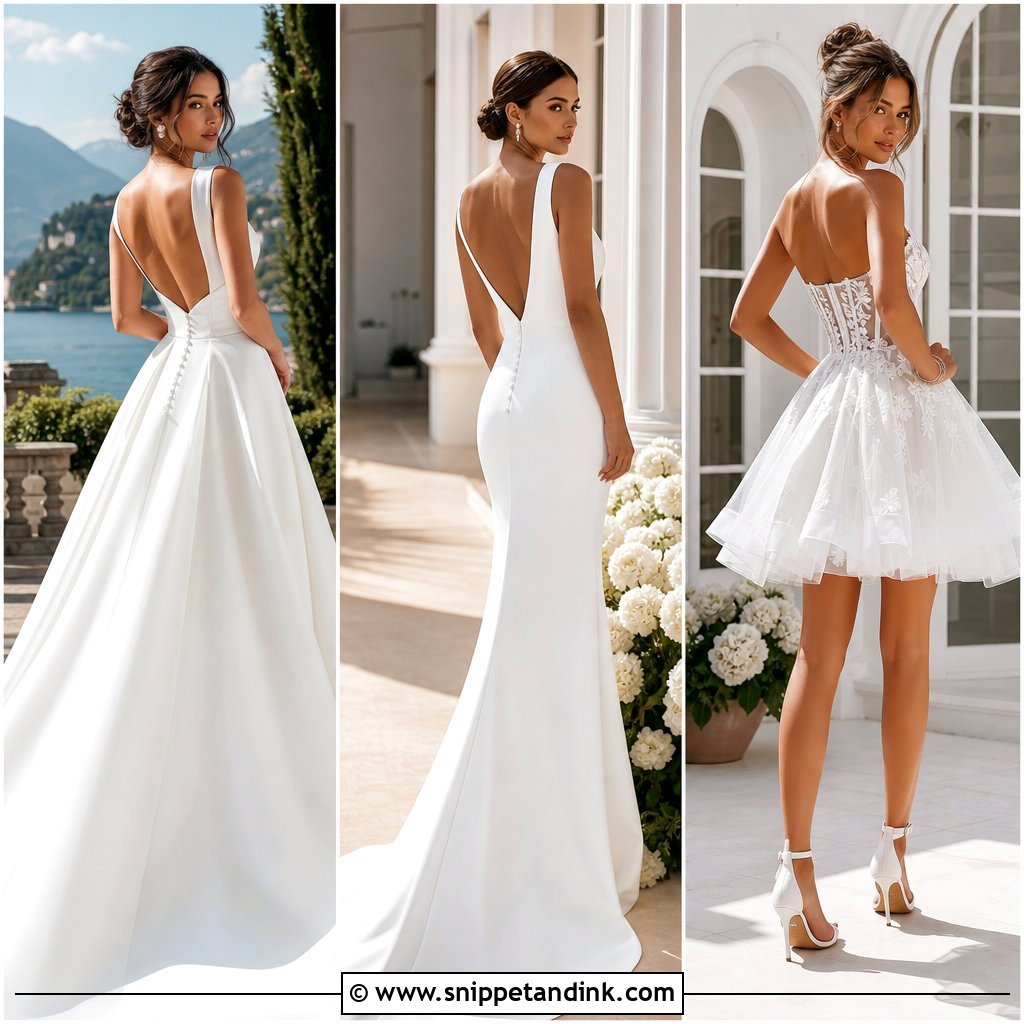
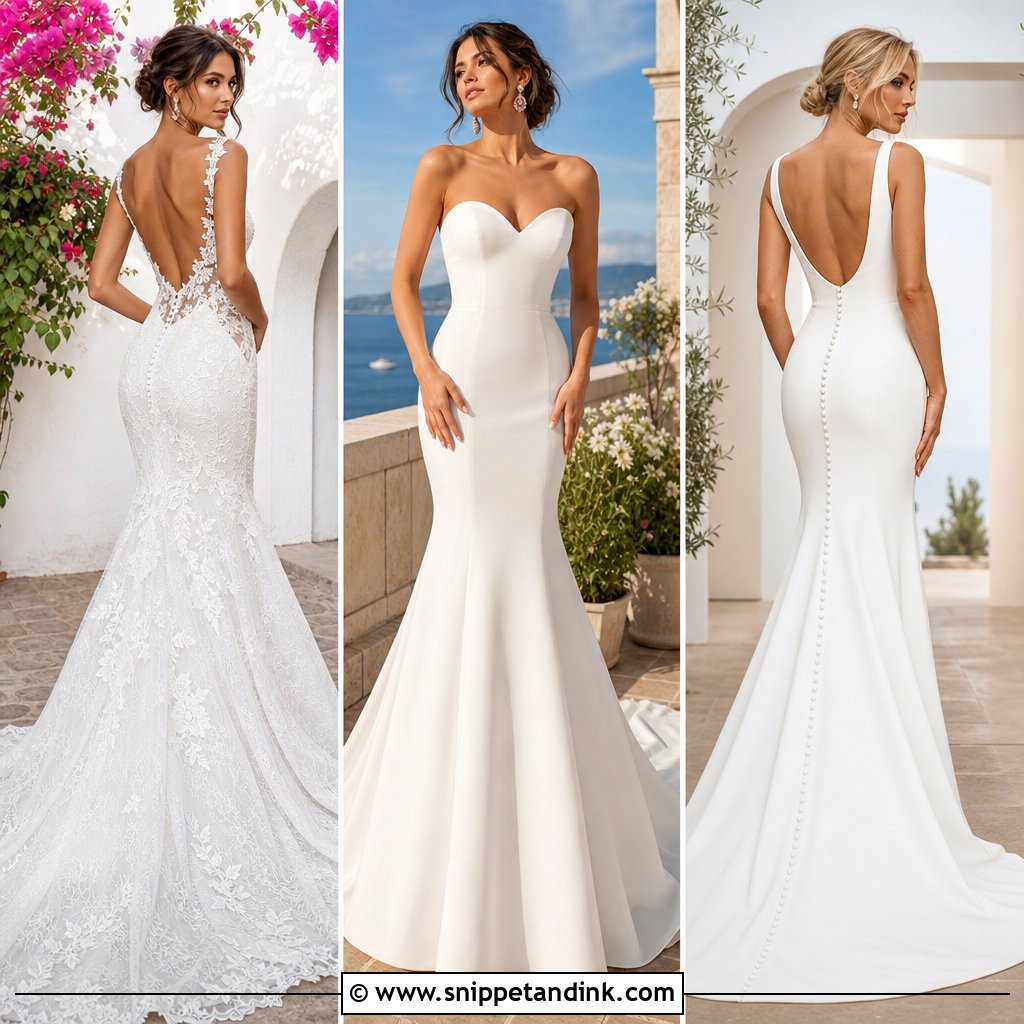
An open back is the part of a wedding dress your guests stare at longest, because for most of the ceremony they are looking at you from behind. That is why I treat the back as the real neckline when I pull gowns for a bride. The shape of the opening, where it stops on the spine and what holds the bodice up without straps doing all the work decides whether the dress looks intentional or just low. Below are thirty-five ways the open back shows up, from bias-cut satin slips to lace mermaids, long sleeves, corset bodices and capes, with notes on what each one asks of your body, your underwear and your fittings.
What Holds You Up When There Is No Bra Band
The first question every bride asks me about an open back is what to wear underneath. The honest answer depends on how low the opening goes and how much support you need, and the best fix is almost always built into the dress, not bought separately.
- Sewn-in cups: your seamstress stitches moulded cups into the bodice lining at the first or second fitting. This is the method I trust most for a deep back.
- Corset or boned bodice: the dress itself shapes and lifts, so you need nothing extra. Common in ball gowns, mermaids and corset styles.
- Low-back converters and plunge bras: these drop the band to the waist. They work when the opening ends above the small of your back.
- Adhesive bras and body tape: good for small busts and short wear. Humidity and warmth weaken the adhesive, so I keep spares on hand.
Bring whatever you plan to wear to every fitting from the second one onward. A change of underwear between fittings changes how the bodice sits, and the seamstress has to start again.
Testing the Opening at the Fitting
I ask brides to sit, raise both arms, bend to pick something off the floor and hug me. If the edge of the back lifts away from your skin during any of those, it needs adjusting. A strip of clear elastic or a tiny tack inside the lining often fixes it without changing how the dress looks.
1. Backless Satin Slip Wedding Dress
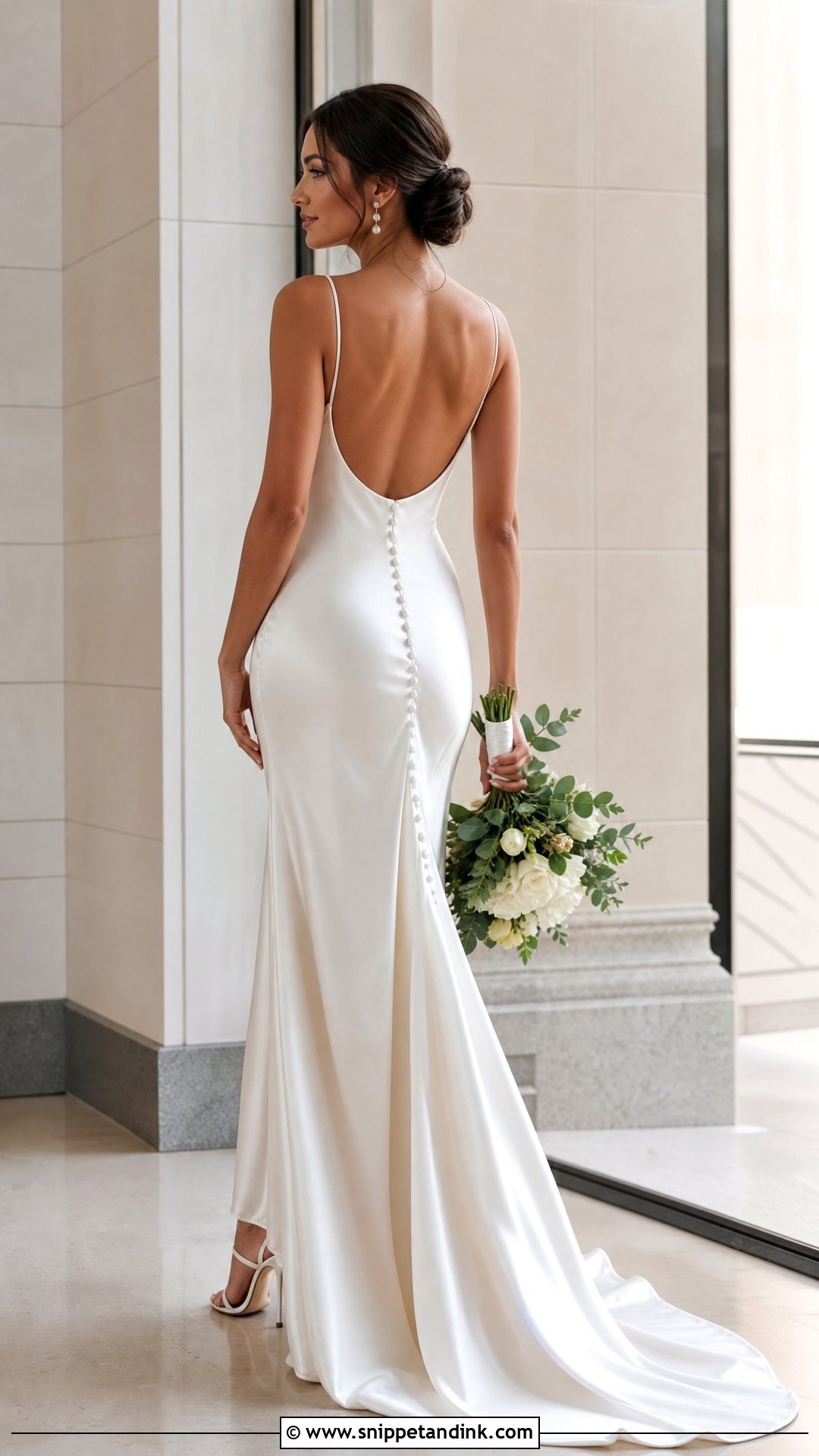
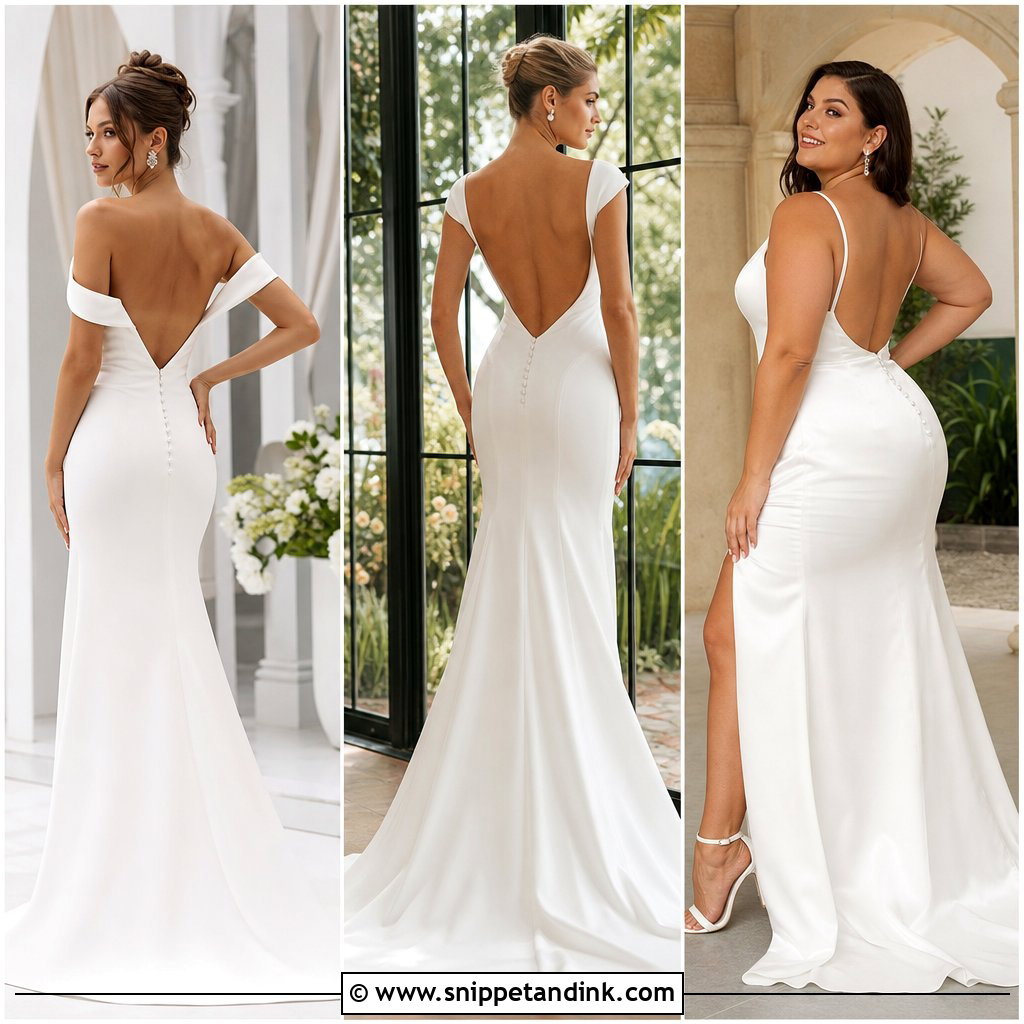
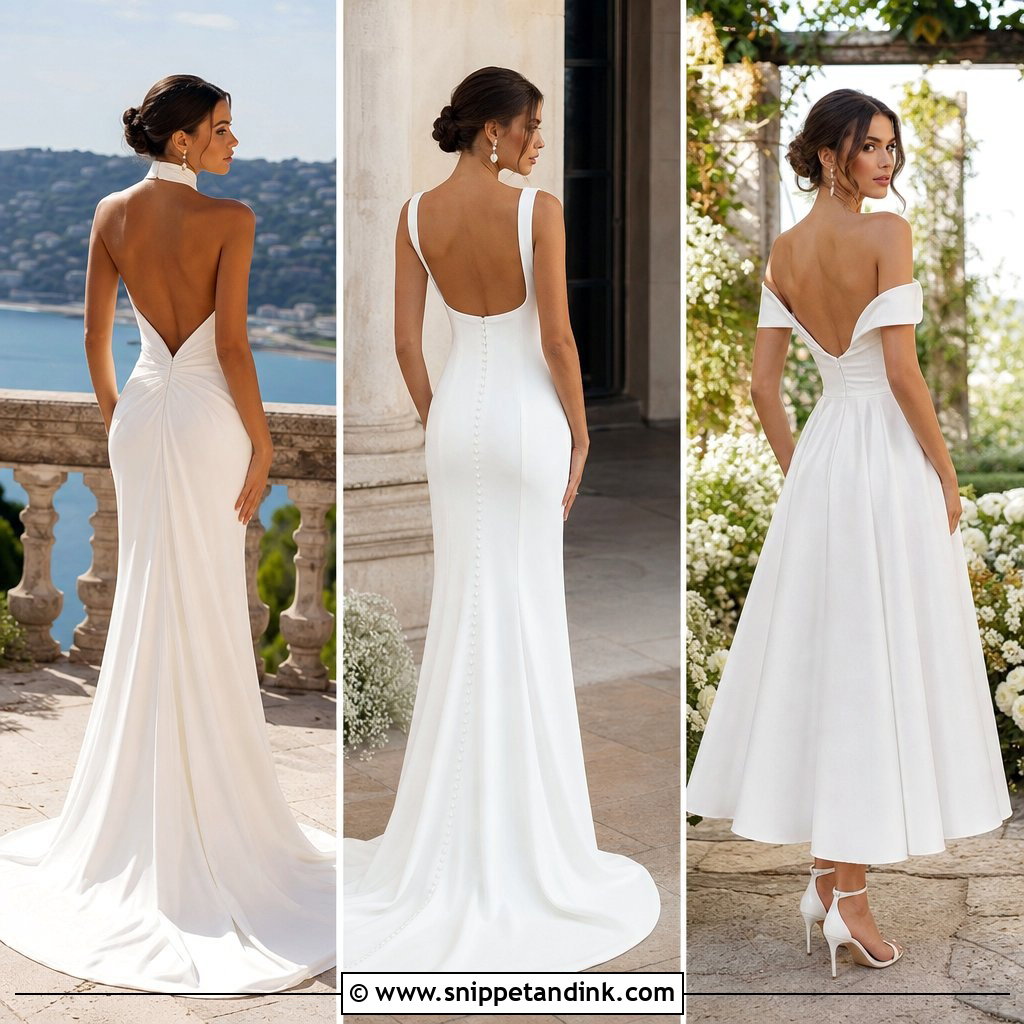
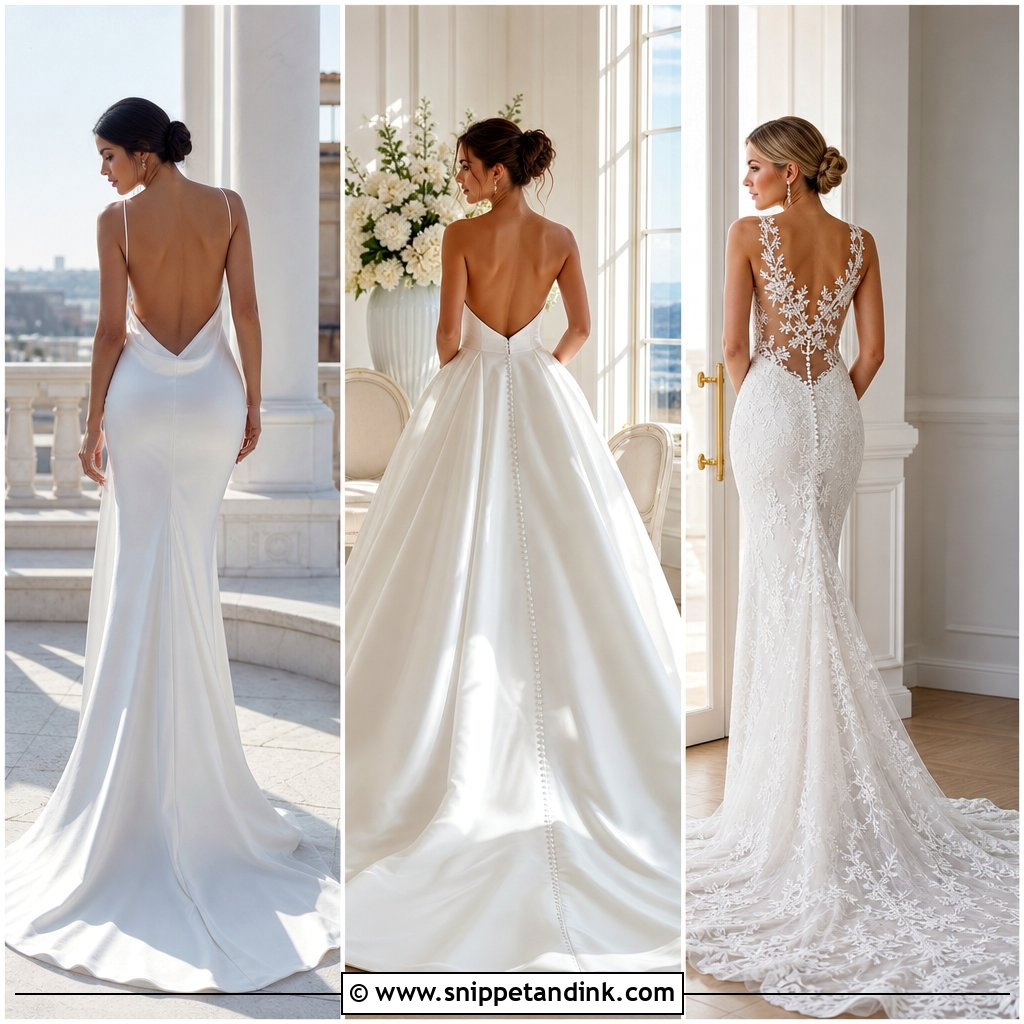
A backless satin slip wedding dress is the most honest gown on this list: satin cut on the bias shows every seam, every line and every bit of support underneath. When I fit one, I pin the straps first and the back drape second, because a strap that is a few millimetres too long makes the scoop fall open at the sides. It suits a city hall or hotel ceremony where you can move freely and sit on a padded chair rather than a damp bench. A sheer cape or tailored blazer over it for the vows, removed for portraits, is a smart way to keep the reveal for later.
2. Backless Lace Mermaid Wedding Dress
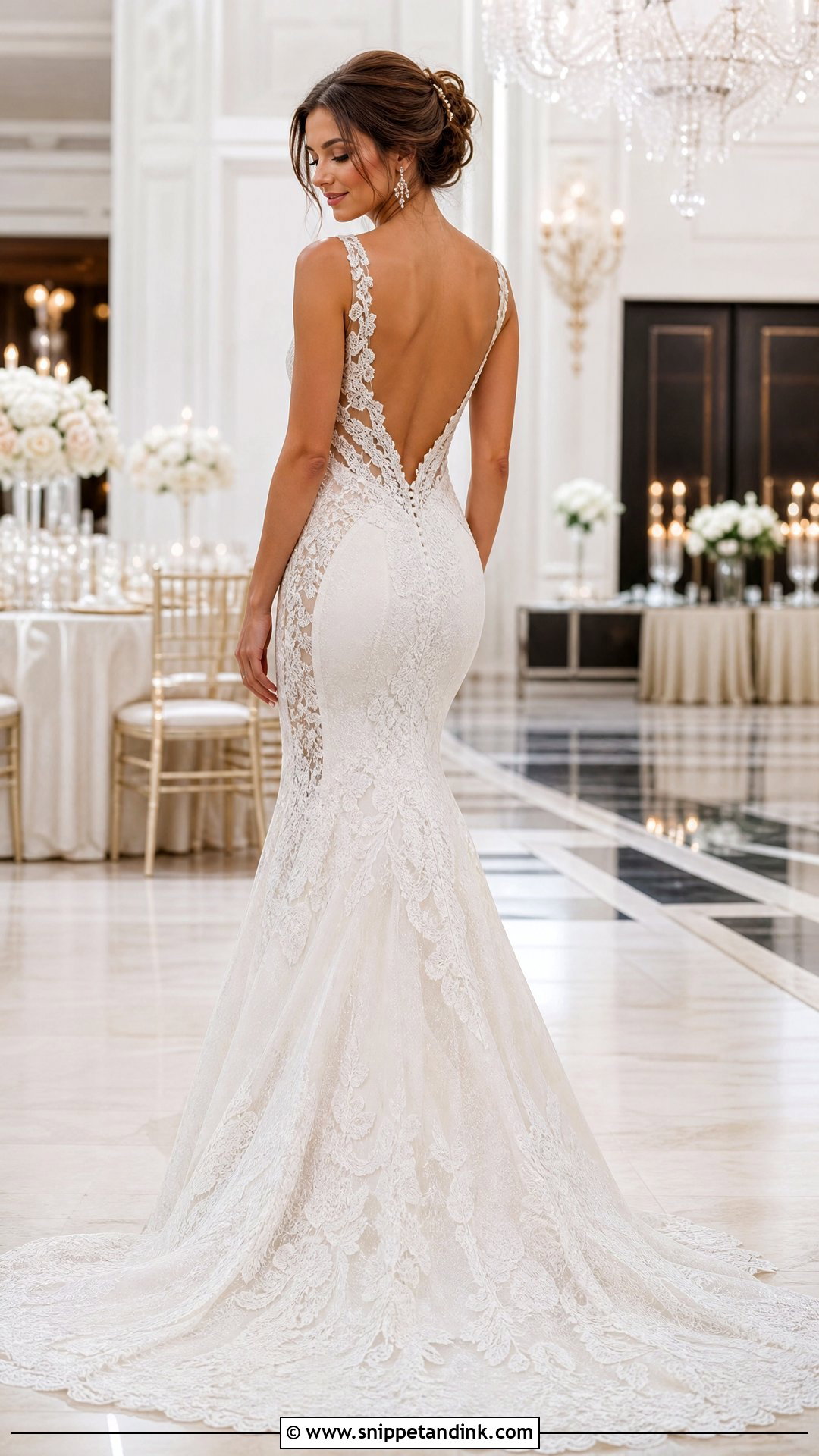
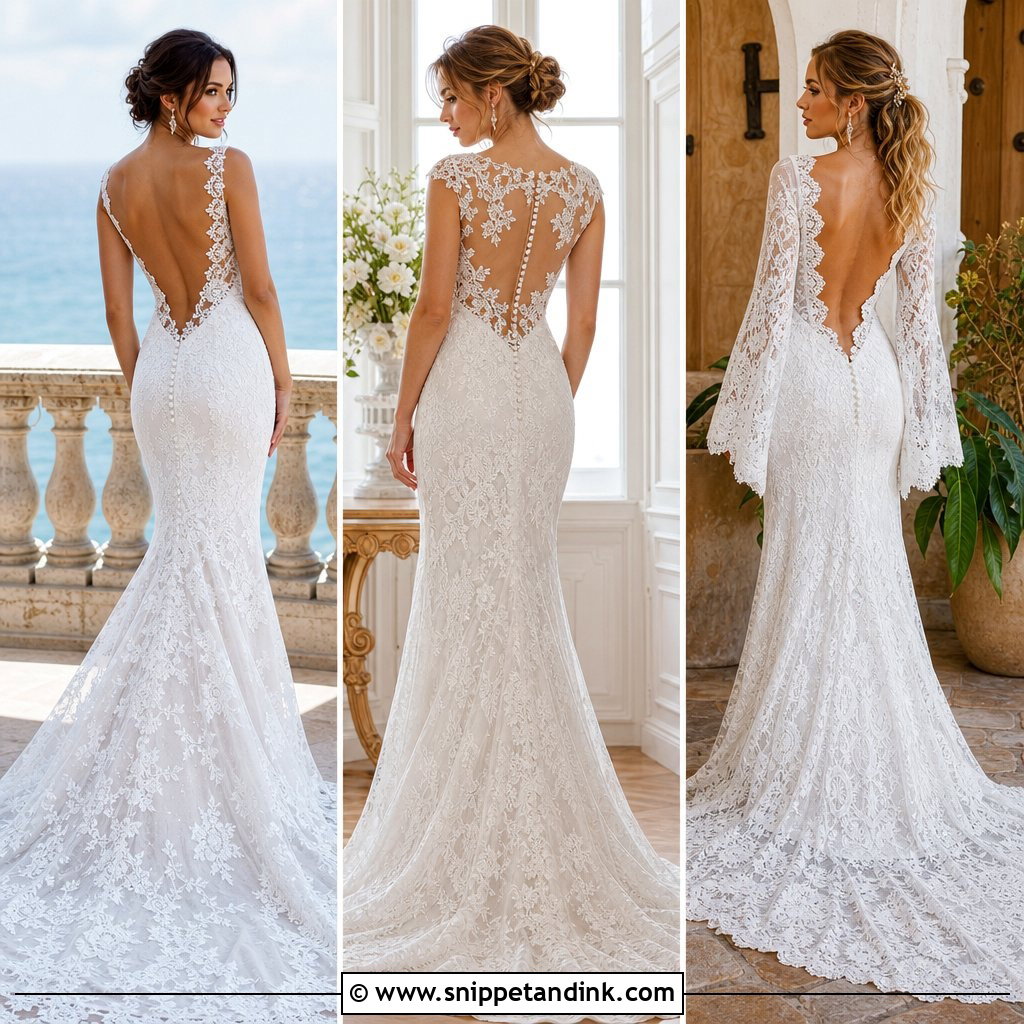
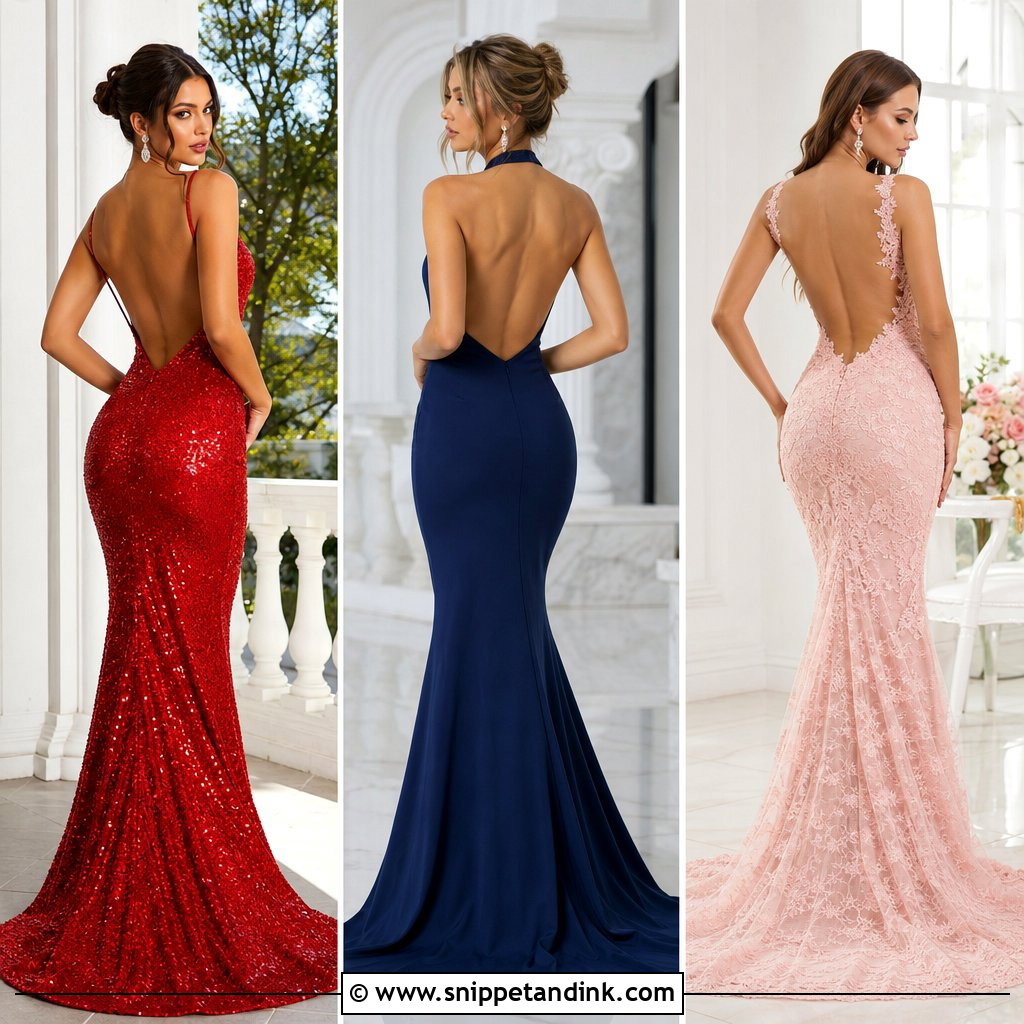
A backless lace mermaid wedding dress puts the drama low, at the knee flare, so the open back has to be framed or the whole silhouette looks bottom-heavy. I look for scalloped lace that follows the edge of the opening; a raw cut edge on a deep V-back tends to curl and stretch after a few hours of wear. Mermaids also restrict your stride, so walk the length of the bridal salon in it, sit on the edge of a chair, and check that the boning holds the bodice against your ribs when you lean forward to sign the register.
3. Backless A Line Wedding Dress
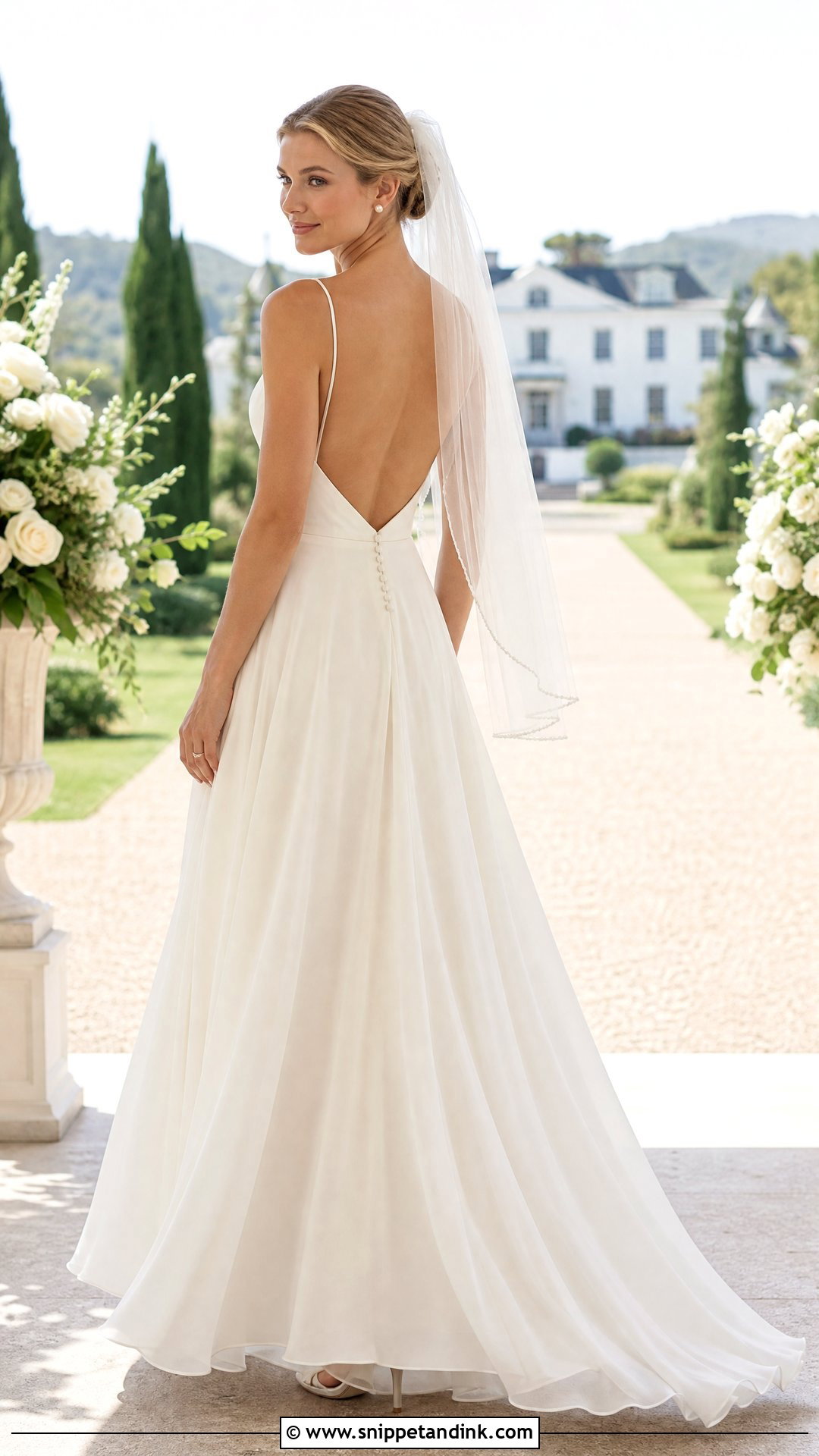
Of all the shapes here, the open-back A-line is the one I see brides forget they are wearing by the second hour. The skirt leaves the body at the waist, so nothing pulls the back opening downward when you sit. Chiffon moves the most, satin holds a crisper skirt, lace adds pattern behind you. My one caution is the veil: a fingertip length that lands mid-back hides the opening completely in the processional, so ask your stylist to set the comb lower or choose a sheer, raw-edge tulle you can see through.
4. Backless Long Sleeve Wedding Dress
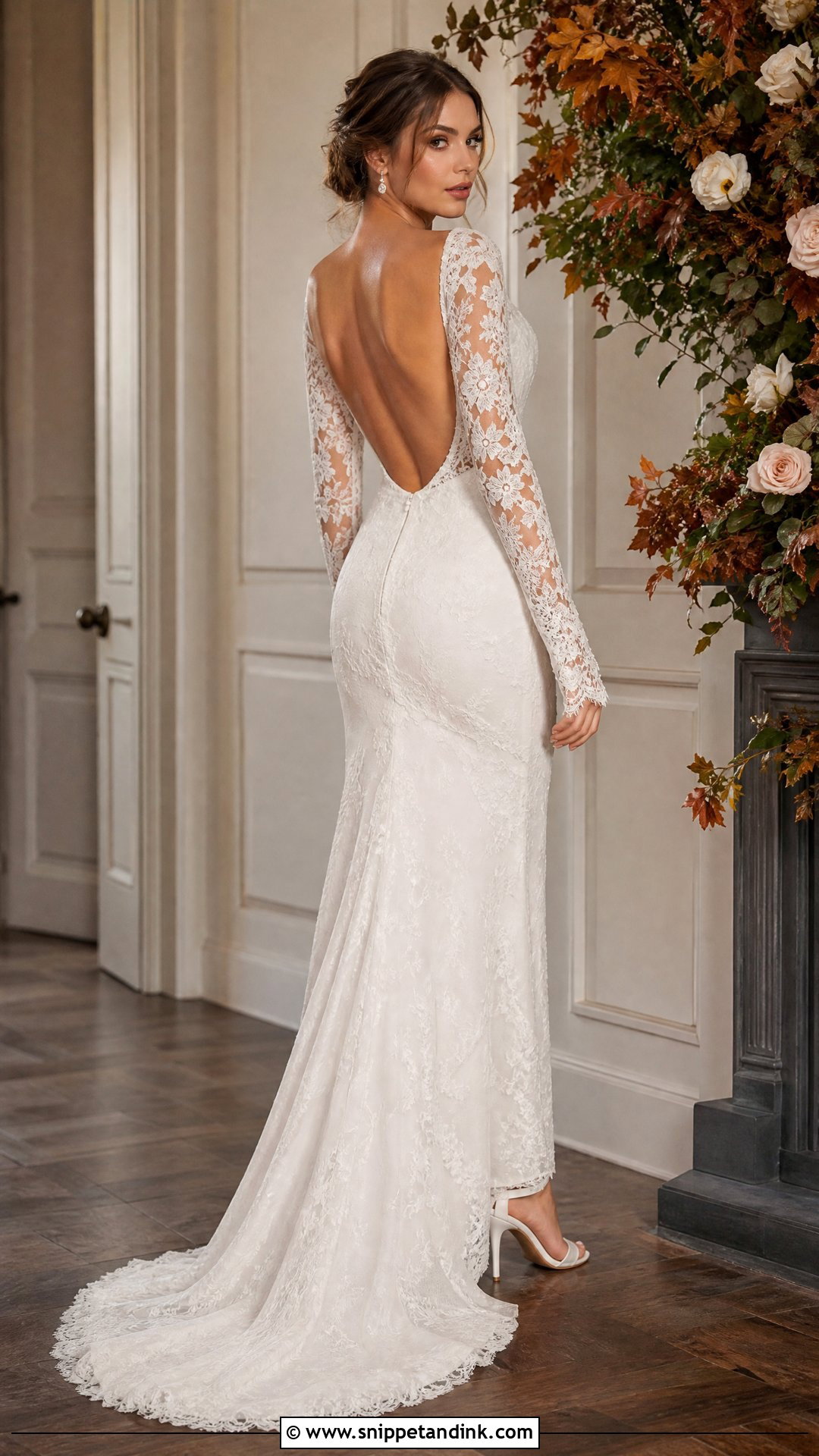
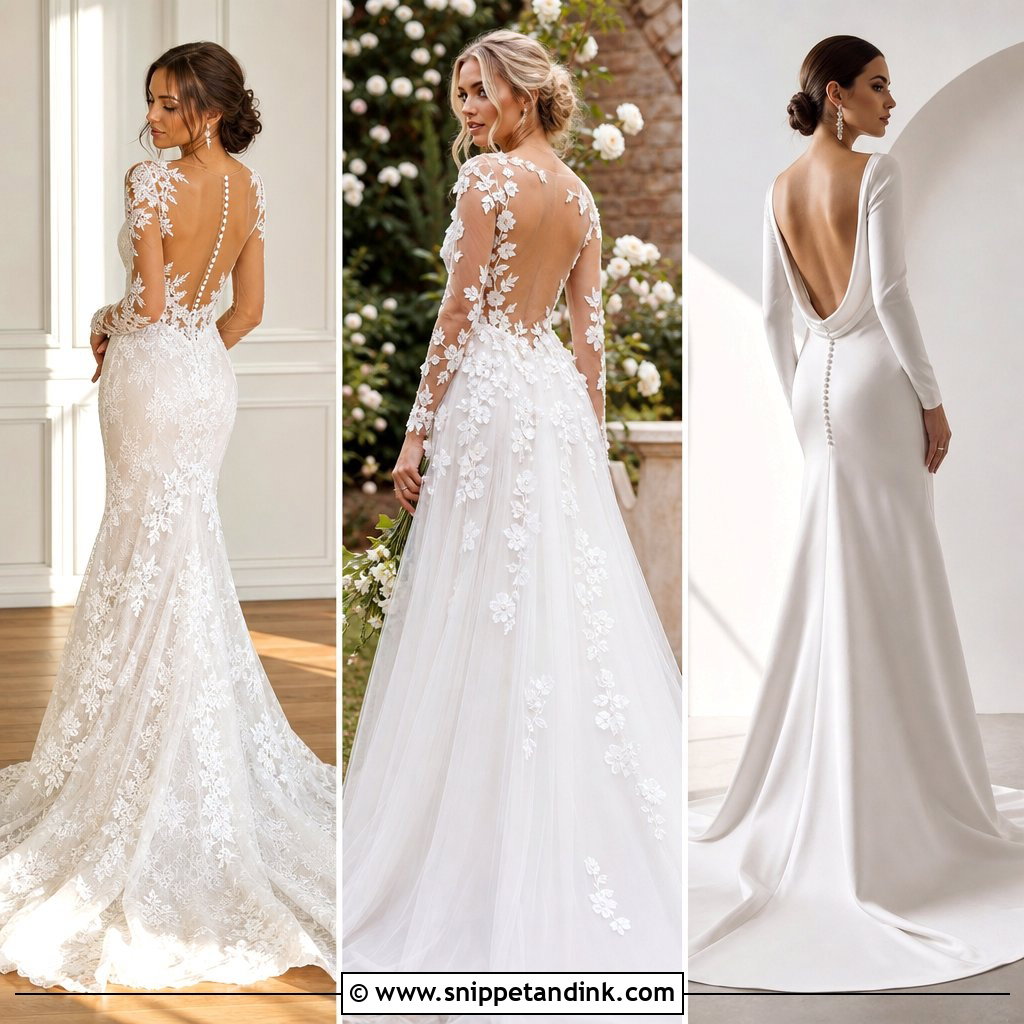
A backless long sleeve wedding dress gives you a covered, almost formal front and then a surprise when you turn. The thing I check first is the armhole. Sleeves anchored to an open back have nothing across the shoulder blades to stop them pulling forward, so a tight sleeve will drag the whole back edge toward your arms when you hug someone. Crepe sleeves read sleek, lace reads romantic, and both suit autumn and winter evening weddings. Keep hair in a low chignon or sleek ponytail so the line from neck to waist stays clean in your exit photos.
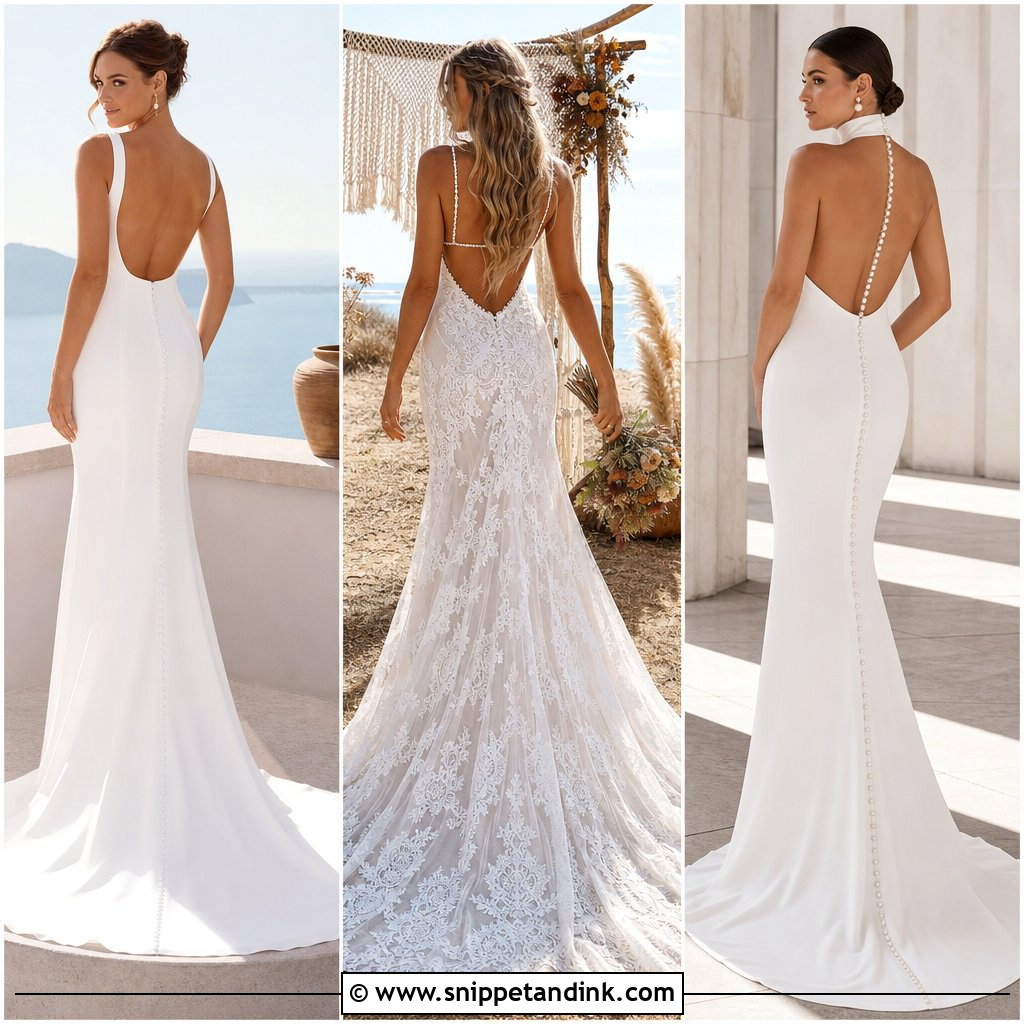
5. Backless Boho Wedding Dress
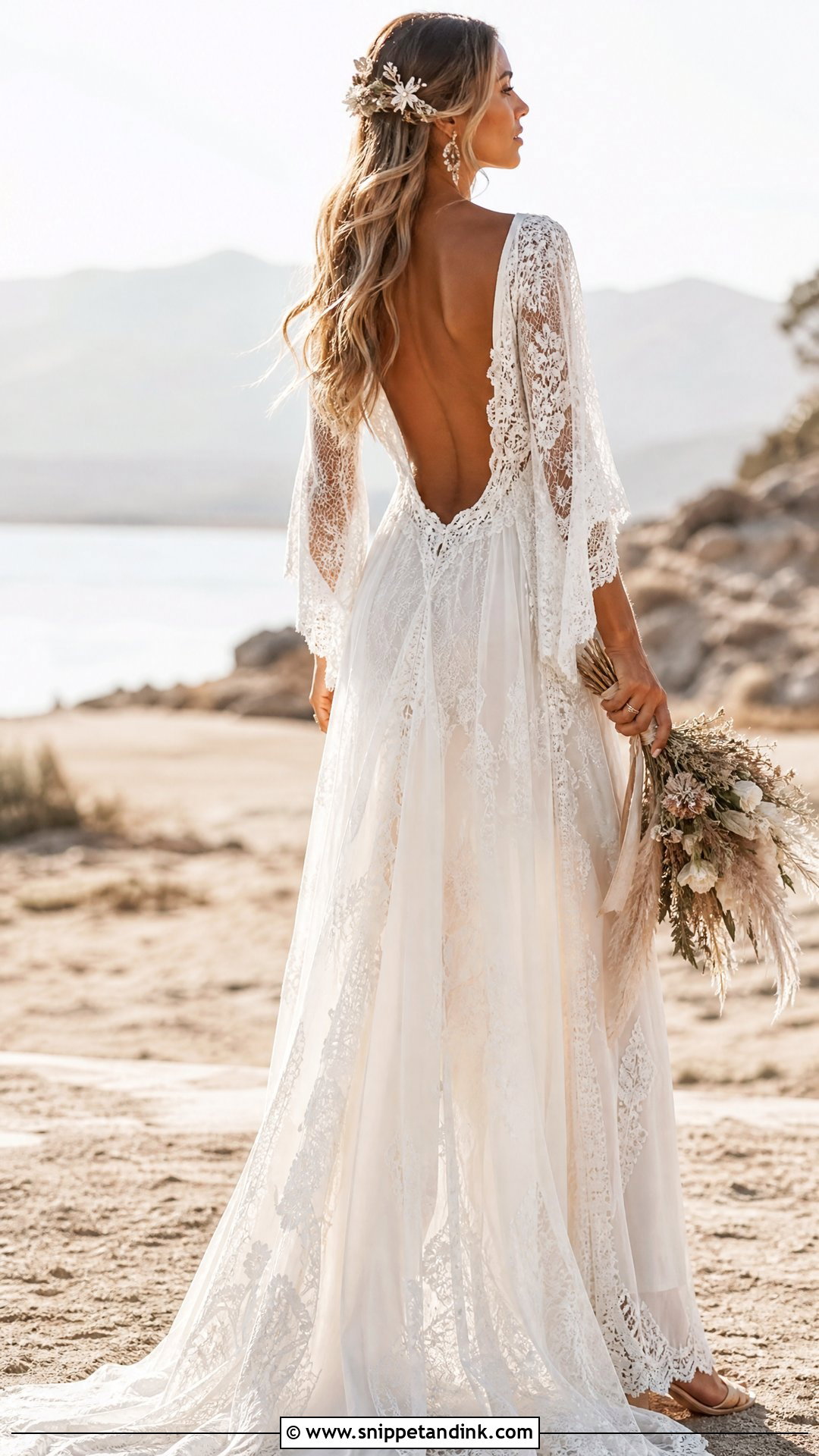
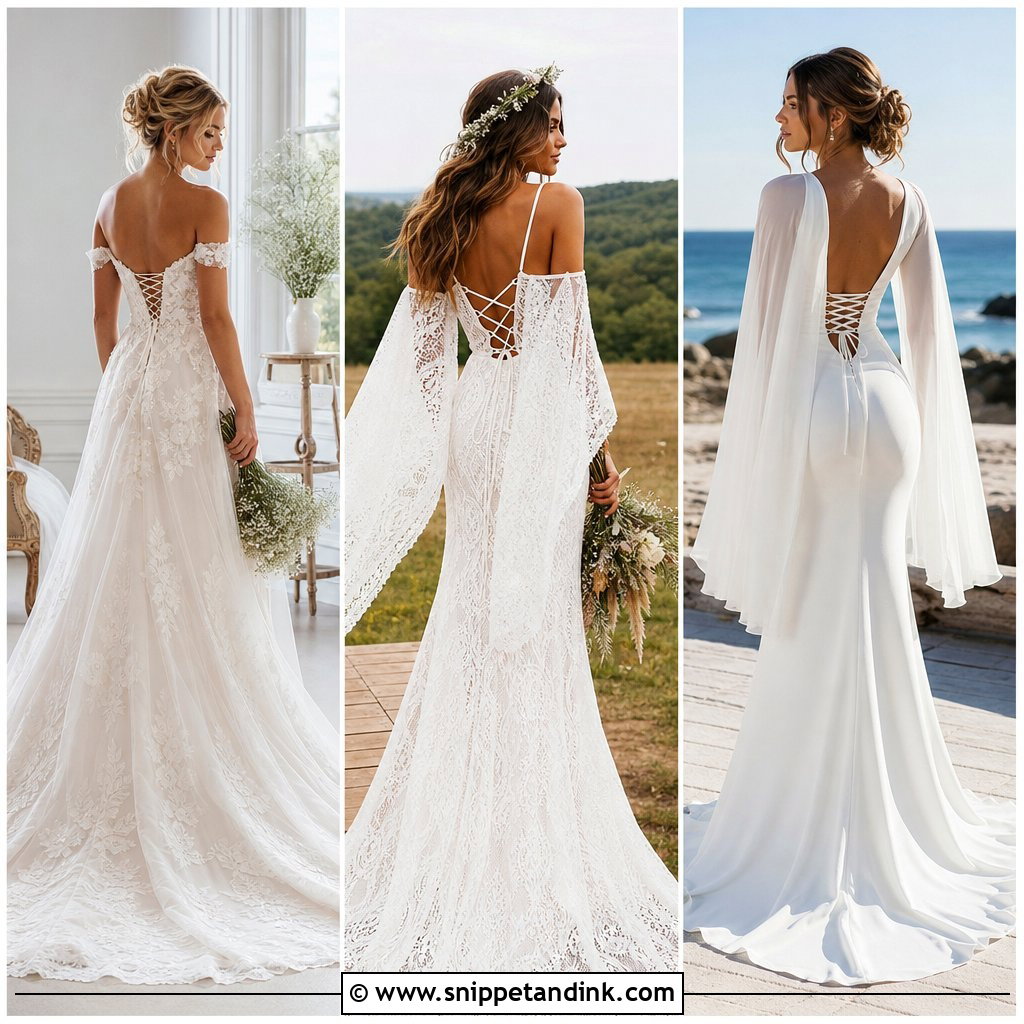
A backless boho wedding dress works because its fabrics are forgiving: soft lace, crochet trim and light crepe stretch a little with you instead of gaping. That same softness means the open back rarely has internal structure, so I’d steer fuller busts toward versions with a lined, cupped front. On sand or a desert path, flat sandals or block heels keep you from tipping the skirt into the dirt. A single flower comb or woven clutch is plenty; this dress falls apart visually when it is over-accessorised.
6. Backless Crepe Wedding Dress
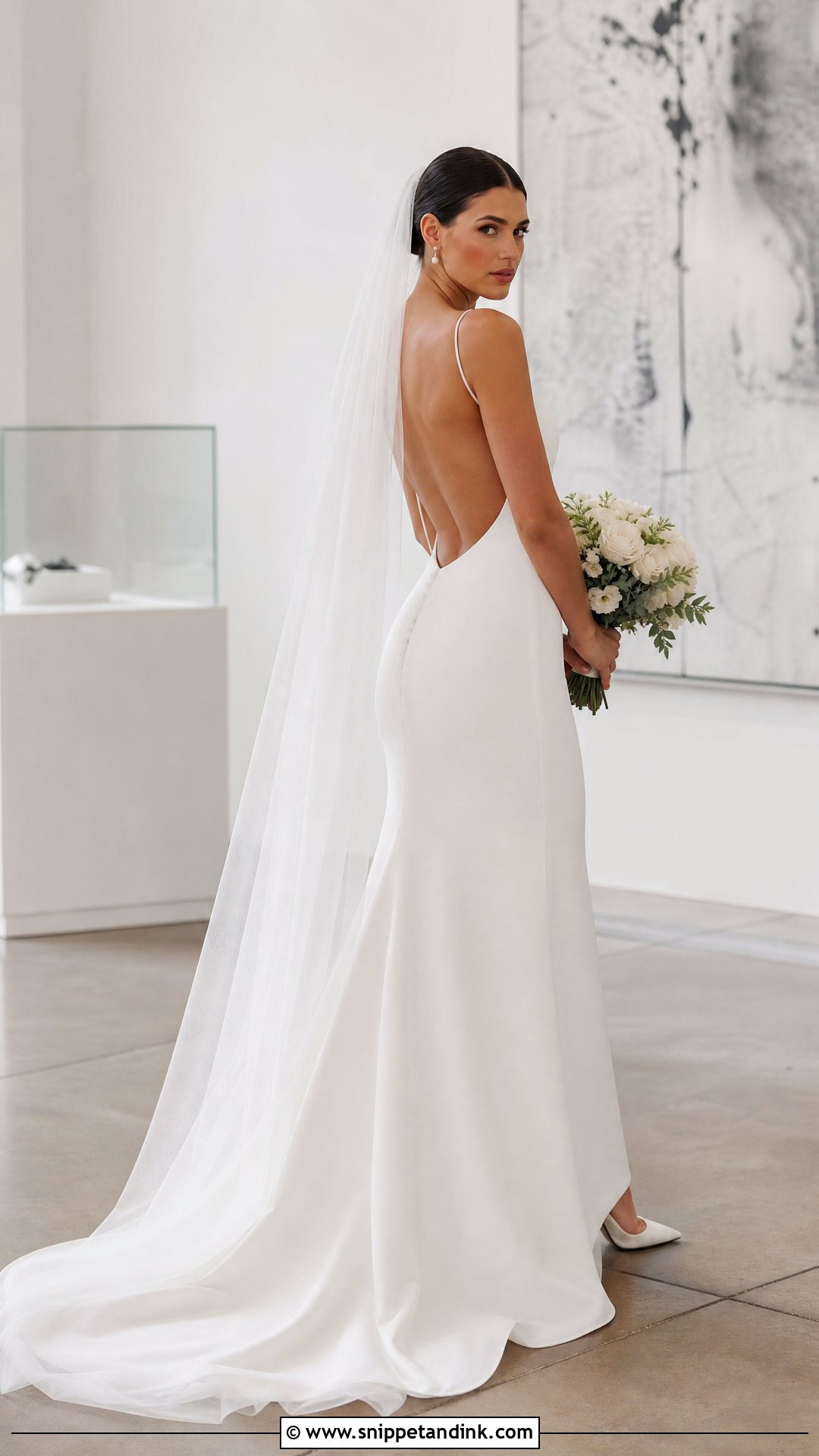
Crepe is matte and heavy, so it shows the body underneath honestly and hides nothing about the cut. That is exactly why I love it for an open back on a minimalist bride, and why the tailoring bill matters more than the price tag. The waist, the high hip and the edges of the back opening all need precise alterations; one millimetre of looseness reads as a ripple in crepe. A long plain veil and pointed heels finish it for a gallery, modern chapel or black-tie evening.
7. Backless Ball Gown Wedding Dress
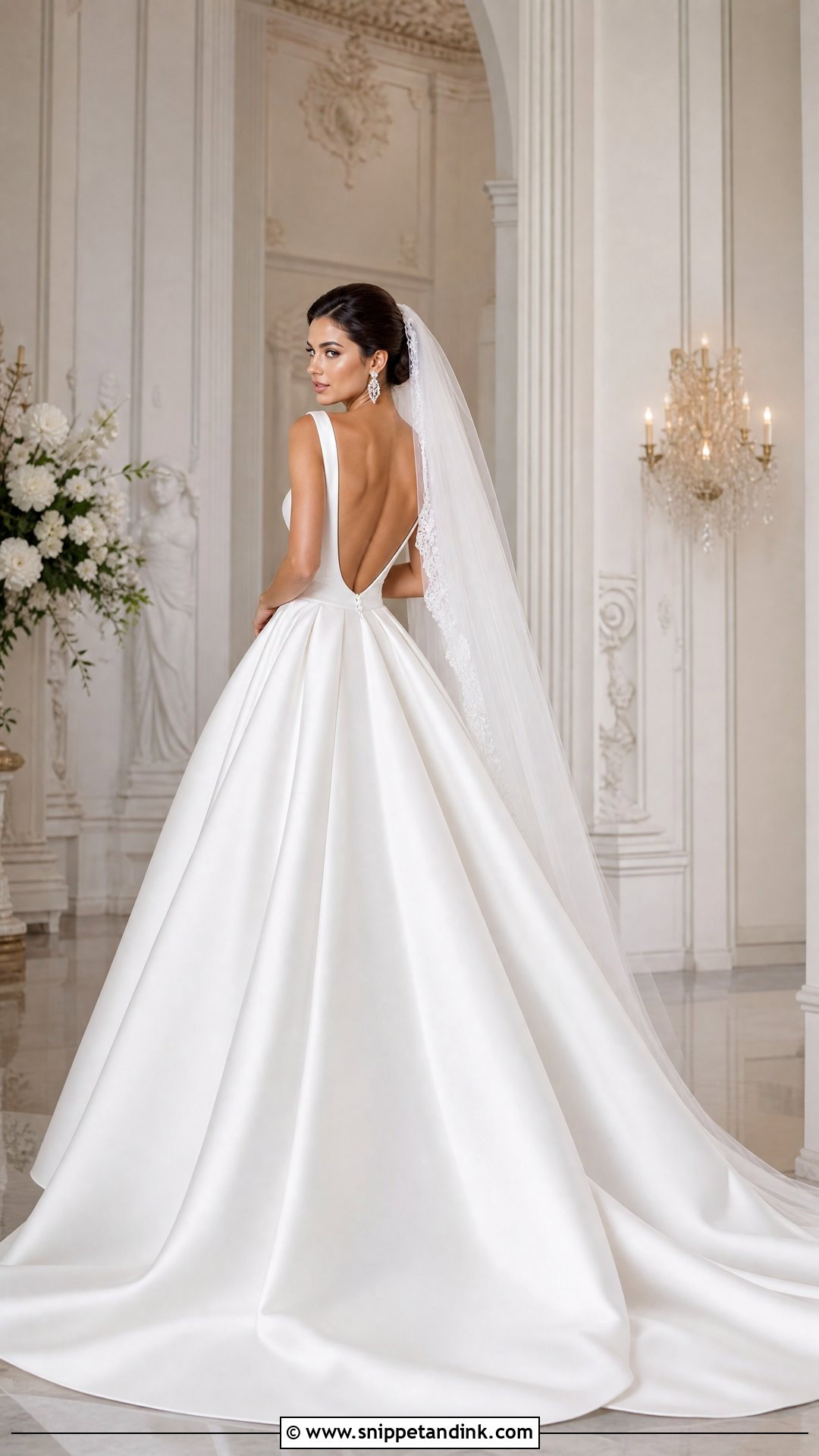
A full skirt balances an open back better than anything else, because the eye drops to all that volume and the bare skin reads as a detail rather than exposure. The catch is weight. A satin or layered tulle ball gown pulls down on the bodice all day, so the corsetry has to be built into the dress, not left to straps. In a grand venue with a long aisle, a cathedral veil and a neat updo give you the full entrance. Practise turning around in it; the skirt keeps moving after you stop.
8. Backless Tulle Wedding Dress
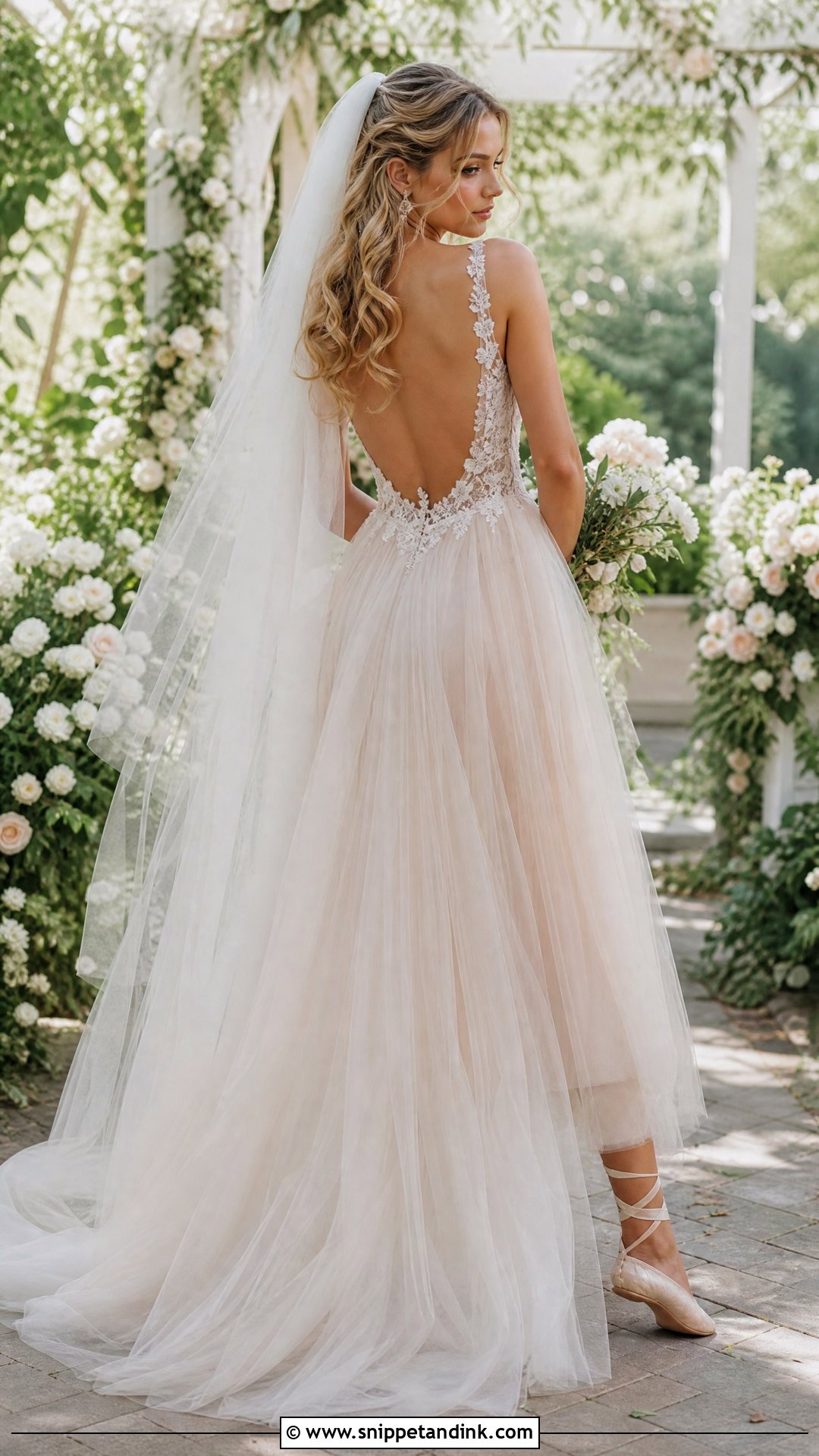
Tulle feels like nothing on the hanger and a lot more by hour eight, once the layers have collected under you every time you sit. For an open back, I look for a bodice with illusion mesh or fine straps that carry the skirt’s weight across the shoulders. Lace appliqués scattered over that mesh disguise it well. Keep the accessories fine, a sheer veil and soft curls, and choose a clearly defined waist so a full tulle skirt does not swallow your frame in garden photos.
9. Backless Square Neck Wedding Dress
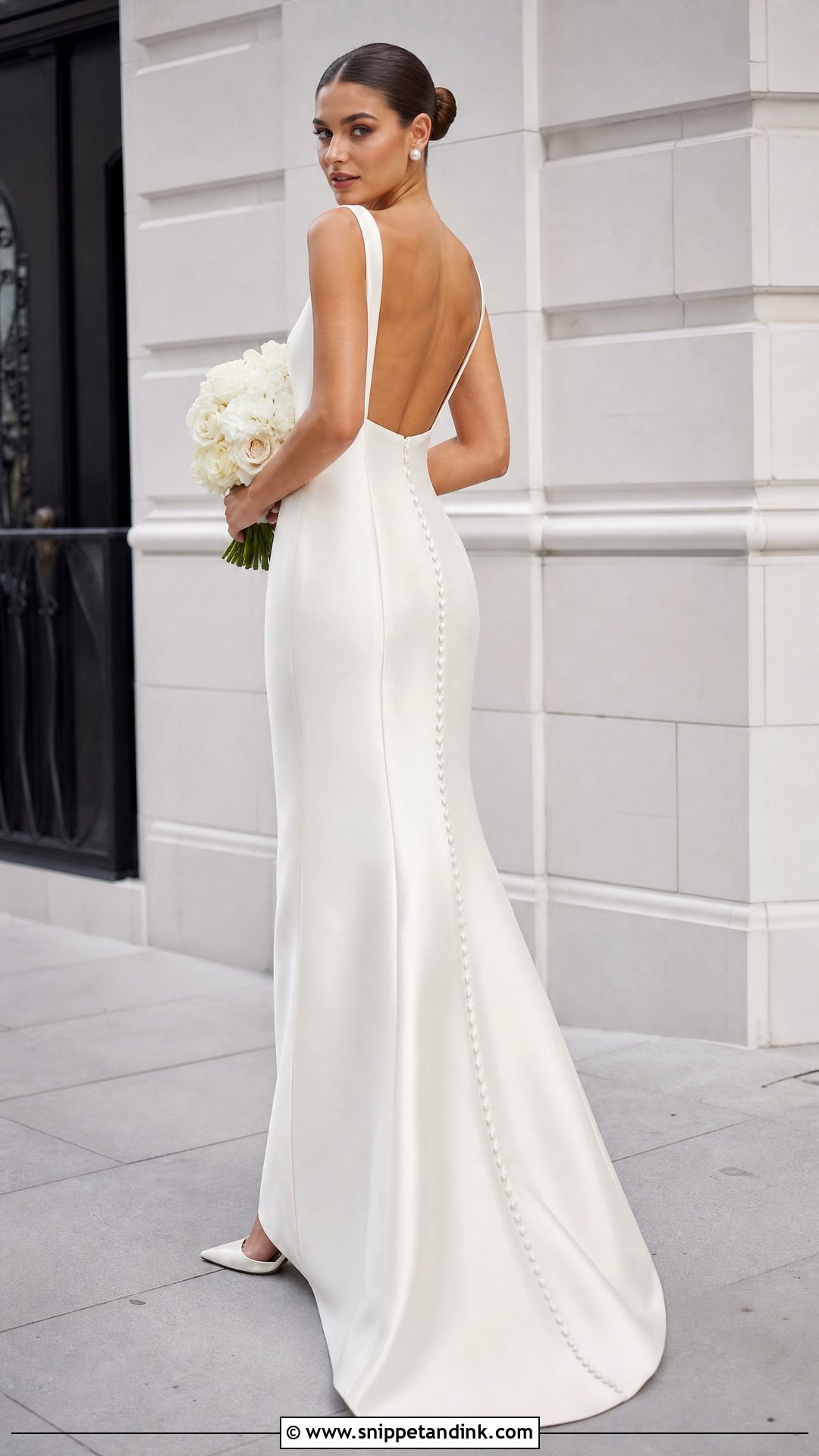
A square neckline needs a fabric that holds an edge, so this one belongs in satin, mikado or a firm crepe, not chiffon. I usually recommend wider straps here. They let the back sit lower without the dress sliding off the shoulders, and they give you somewhere to anchor a hidden bra strap if you need one. Paired with a low bun, pearl studs and a plain veil, it suits museum venues and city ceremonies without looking tied to one trend.
10. Backless V Neck Wedding Dress
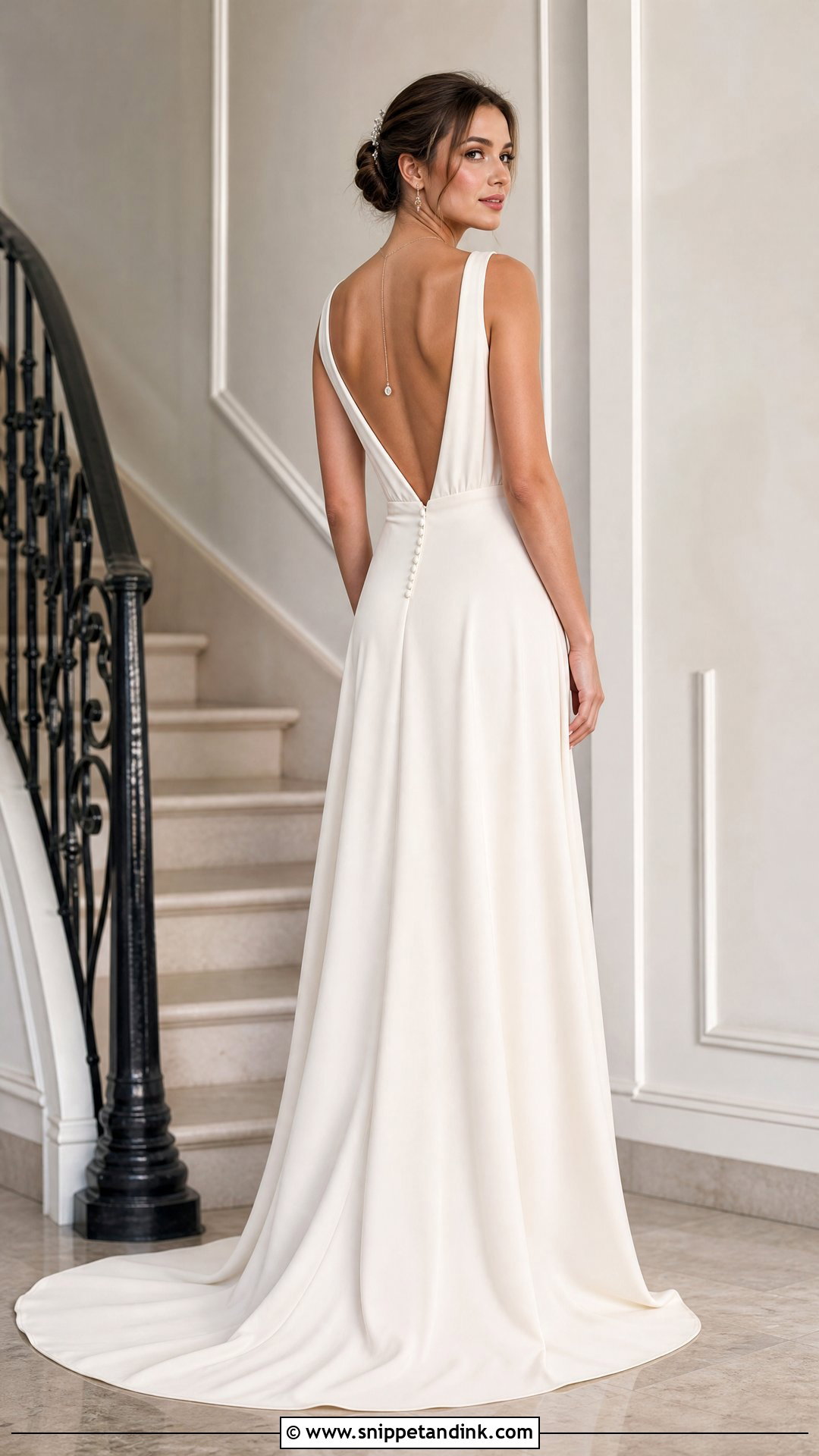
When the V at the front mirrors a V at the back, the dress draws one long vertical line through your body, which lengthens most frames. The risk is gaping at both points at once. I have a seamstress tack a thin clear elastic or a strip of illusion mesh across the back V if a bride plans to dance hard. It reads soft in lace and sharp in satin or crepe. A fine pendant works here because the front neckline has room for it.
11. Backless Halter Wedding Dress
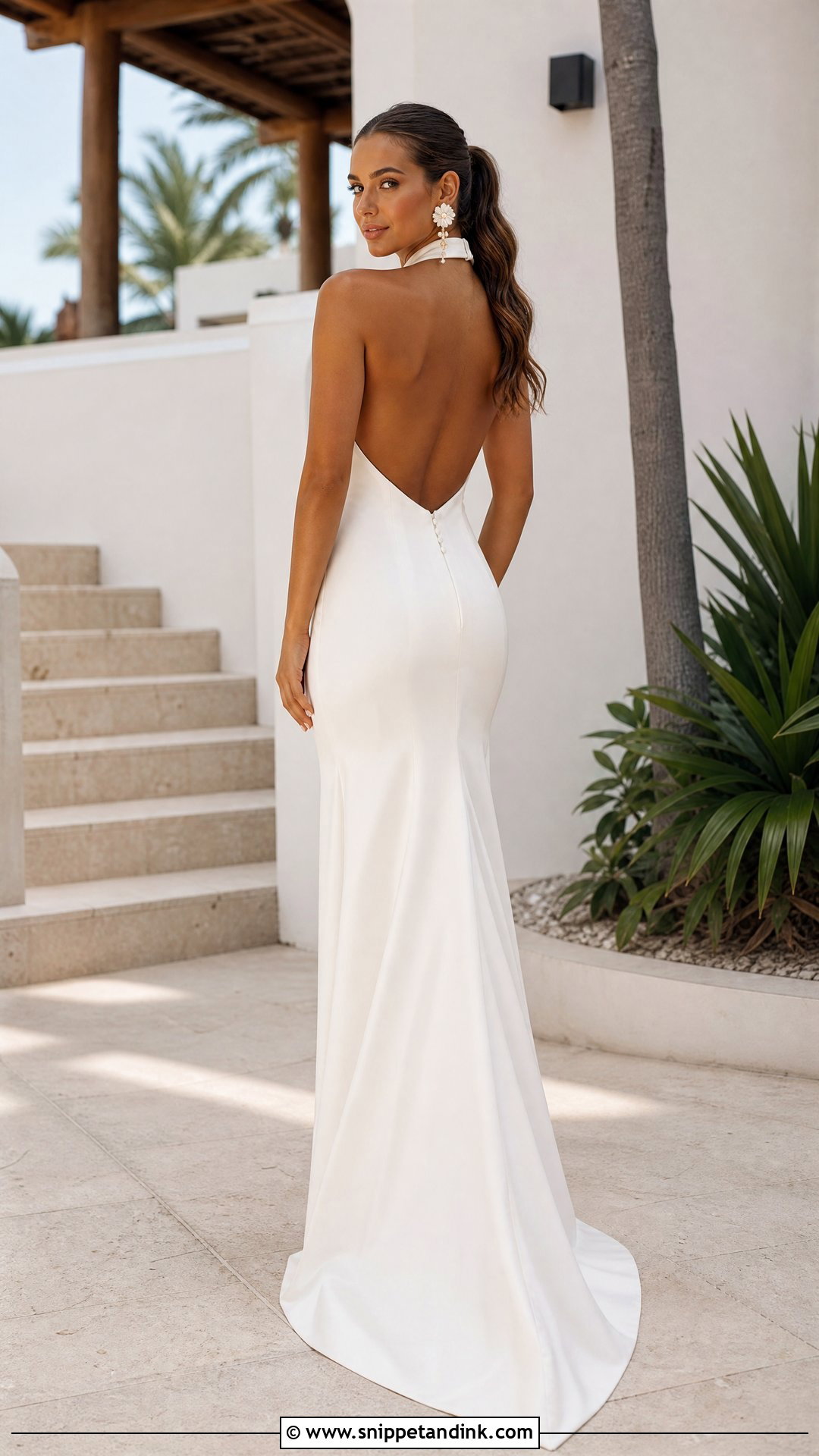
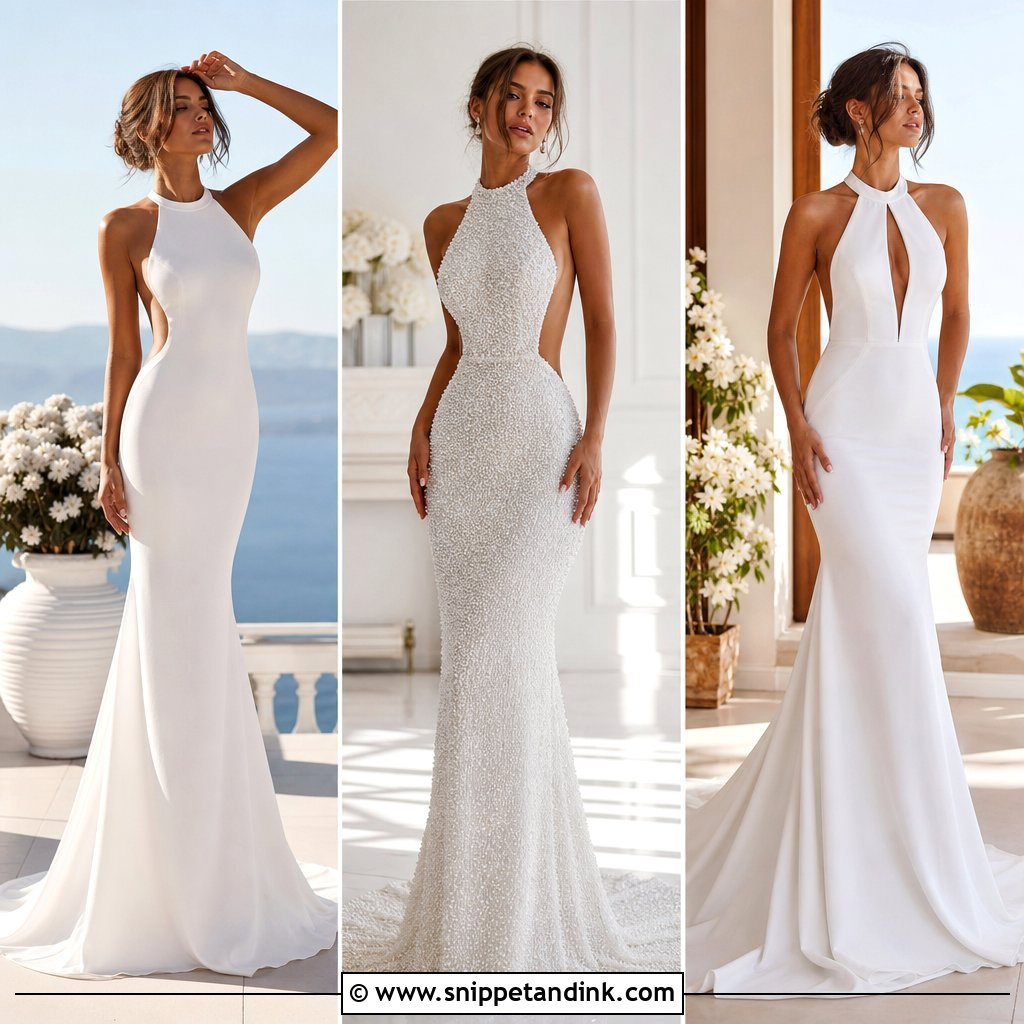
Halters move the weight of the dress onto your neck instead of your shoulders, which is why they hold up well on an open back but can ache by evening if the strap is narrow. I always check where the halter fastens: a hook and bar at the nape is easier to rescue than a tied bow that loosens. Lift the hair or sweep it to one side so the shape stays visible, and skip the necklace; earrings carry this neckline better. It suits beach and destination ceremonies where a lighter dress matters.
12. Backless Cowl Back Wedding Dress
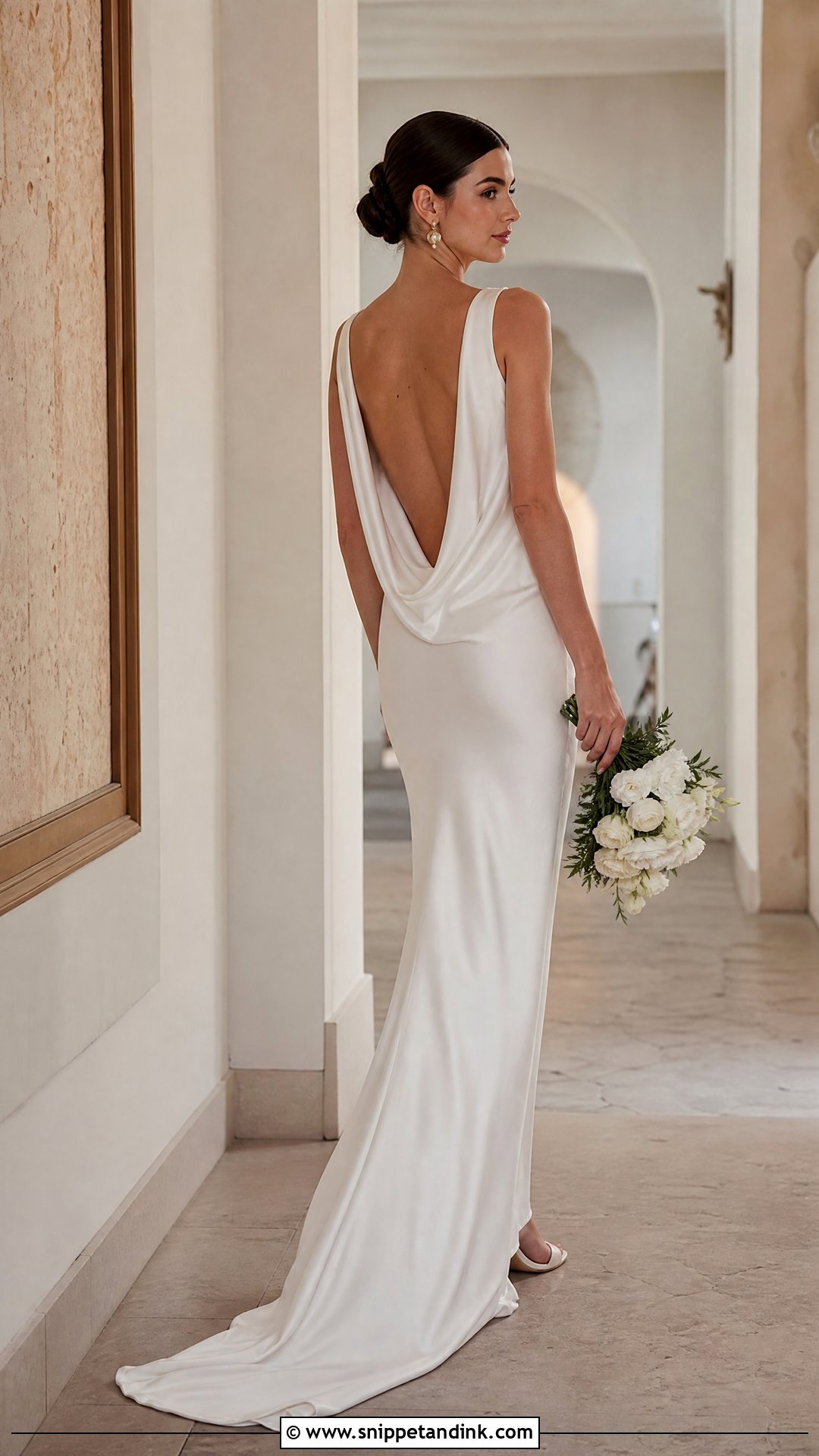
A backless cowl back wedding dress lets fabric fall into soft folds across the lower back instead of cutting a sharp line, so it feels less exposed while still showing skin. The drape only works in fluid fabric cut on the bias: silk, charmeuse or a good satin. Stiffer fabric just juts out. I’d warn against carrying anything over your shoulder in this dress, because a bag strap flattens the cowl in every candid. A sleek bun and vintage earrings suit it for an intimate evening ceremony.
13. Backless Illusion Lace Wedding Dress
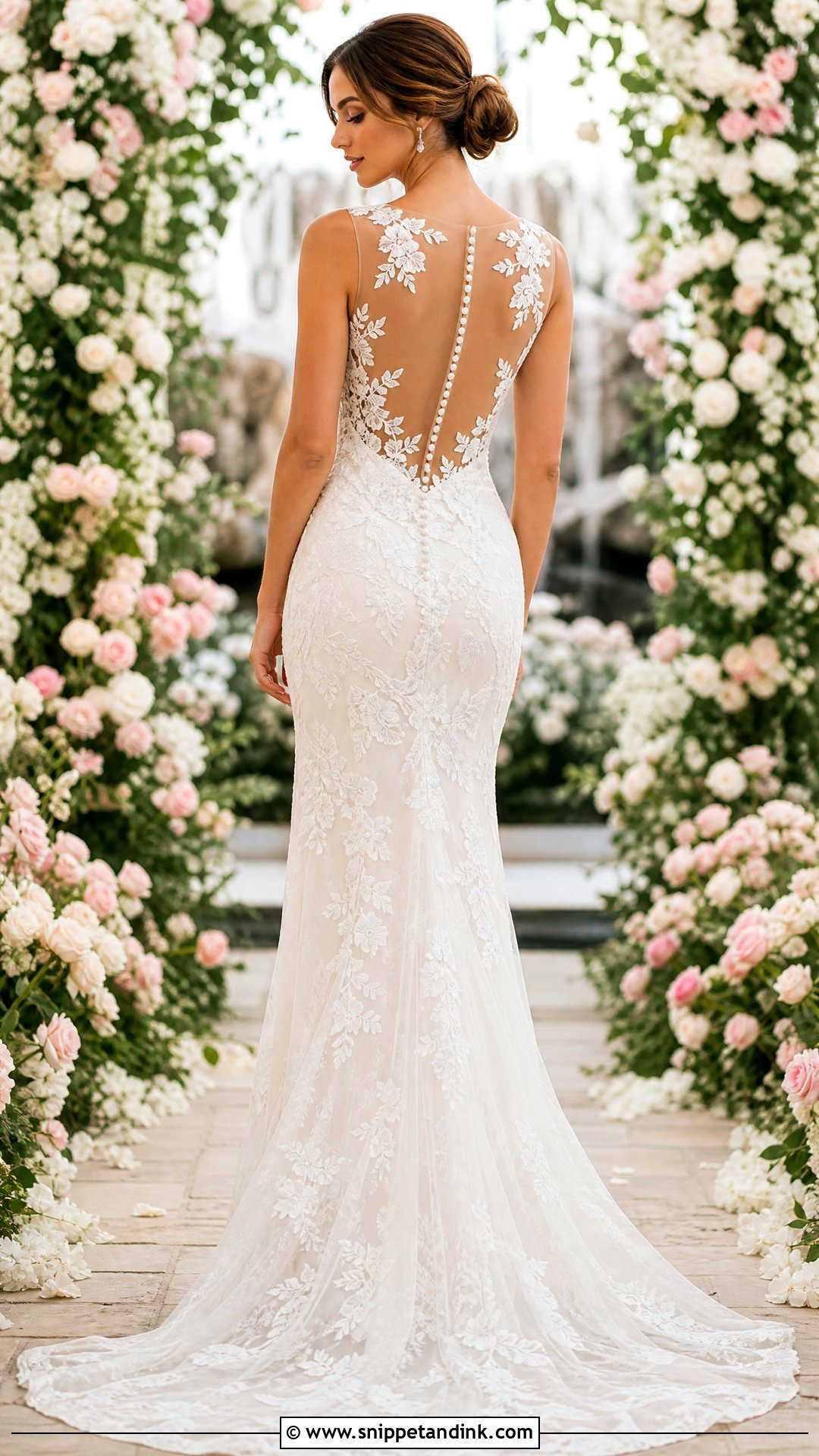
Illusion lace is my usual answer for a bride who wants the open-back look but plans to dance all night. The sheer mesh carries the bodice’s weight, so the lace can sit wherever it looks best on the spine or shoulder blades. Ask to see the mesh in daylight against your own skin tone, because the wrong shade of tulle shows up as a grey or pink panel in photos. Wear your hair up so the pattern is readable; a small bracelet and earrings are enough.
14. Backless Keyhole Wedding Dress
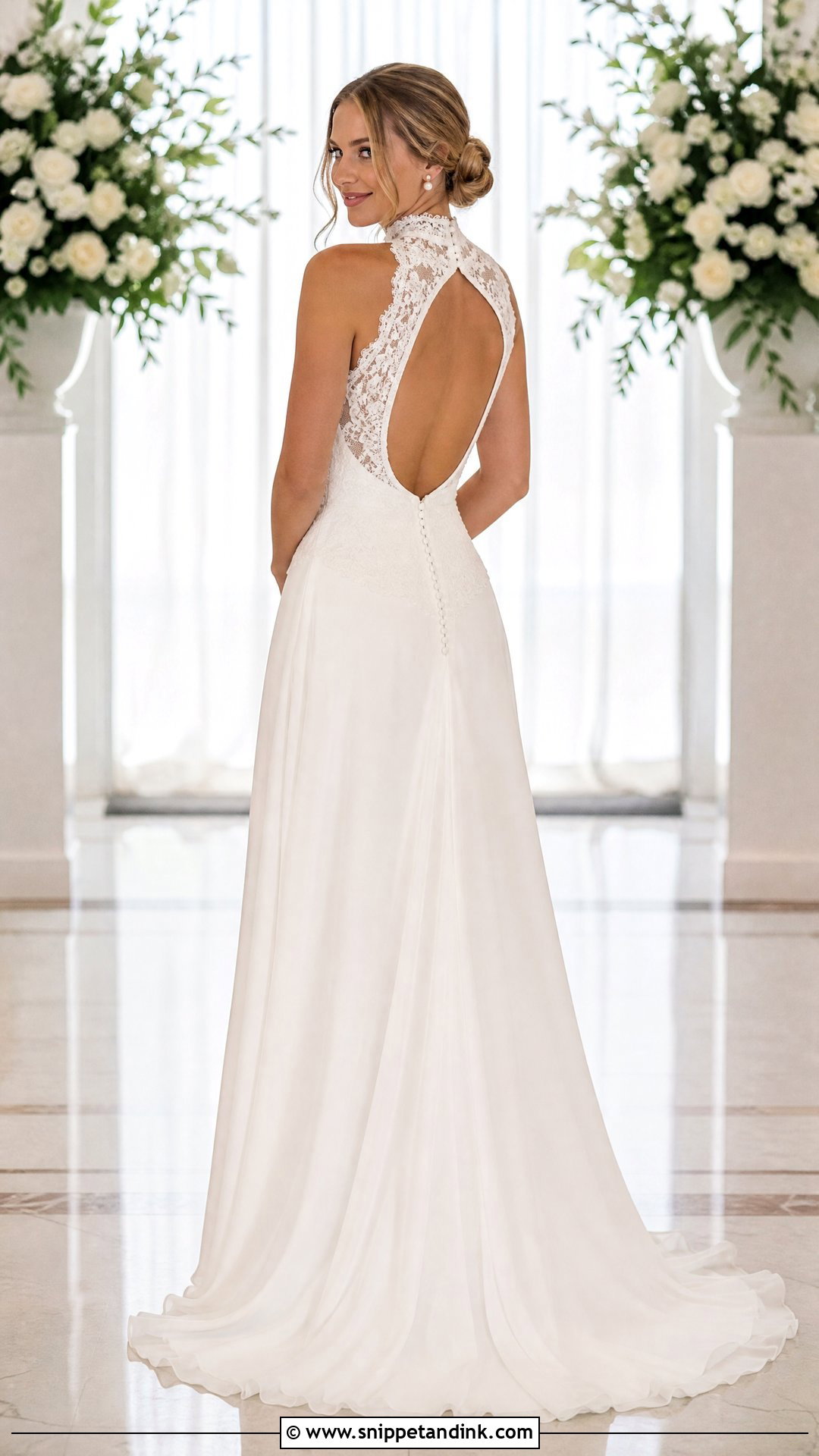
A backless keyhole wedding dress gives you a contained opening, round or teardrop, while the rest of the back stays closed and secure. It is my go-to recommendation when a bride wants back interest but needs to wear a normal bra, since a keyhole set high on the shoulder blades often clears a low-back bra band. It pairs naturally with a high neck or a fitted lace bodice. A low bun keeps the shape visible from the pews.


15. Backless Corset Wedding Dress
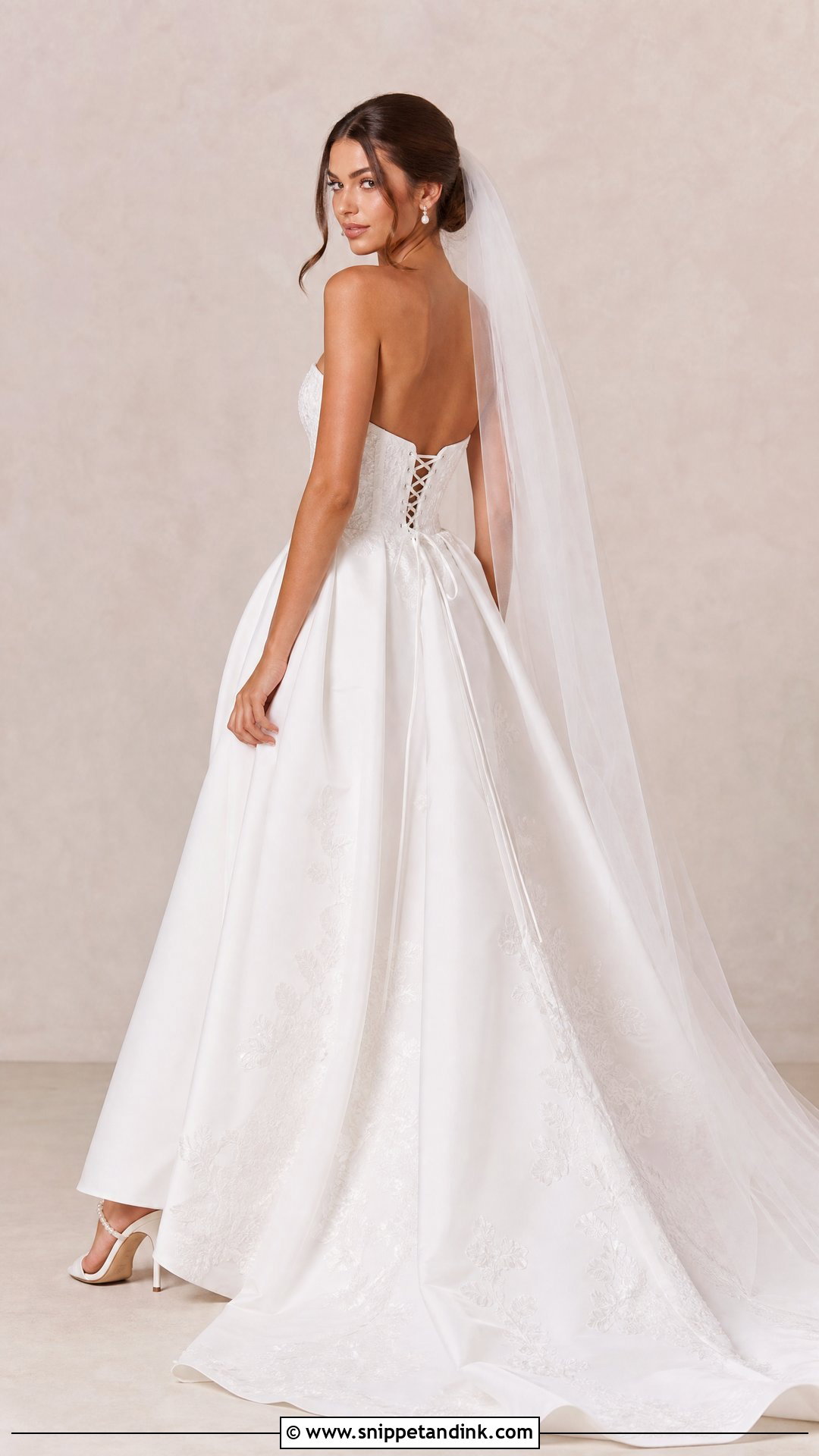
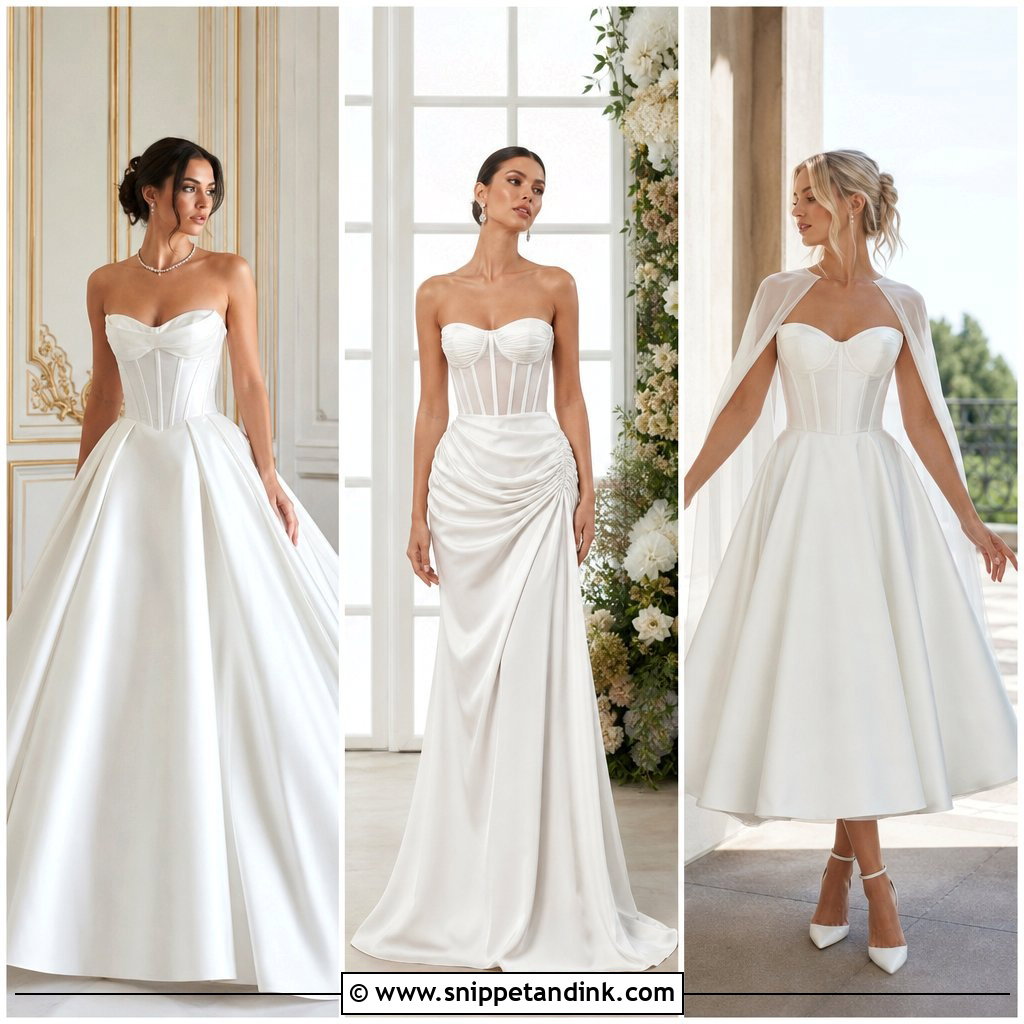
A visible corset bodice does real structural work, which makes it one of the more supportive ways to wear an open back. The boning shapes the waist and holds the edges of the opening flat, even when you bend. At the fitting, I check two things: that you can sit and breathe deeply without the top edge digging under your arms, and that lacing, if there is any, does not sit directly on your spine. Soft waves and a veil anchored low under the hair let the corset stay the focus.
16. Backless Beaded Wedding Dress
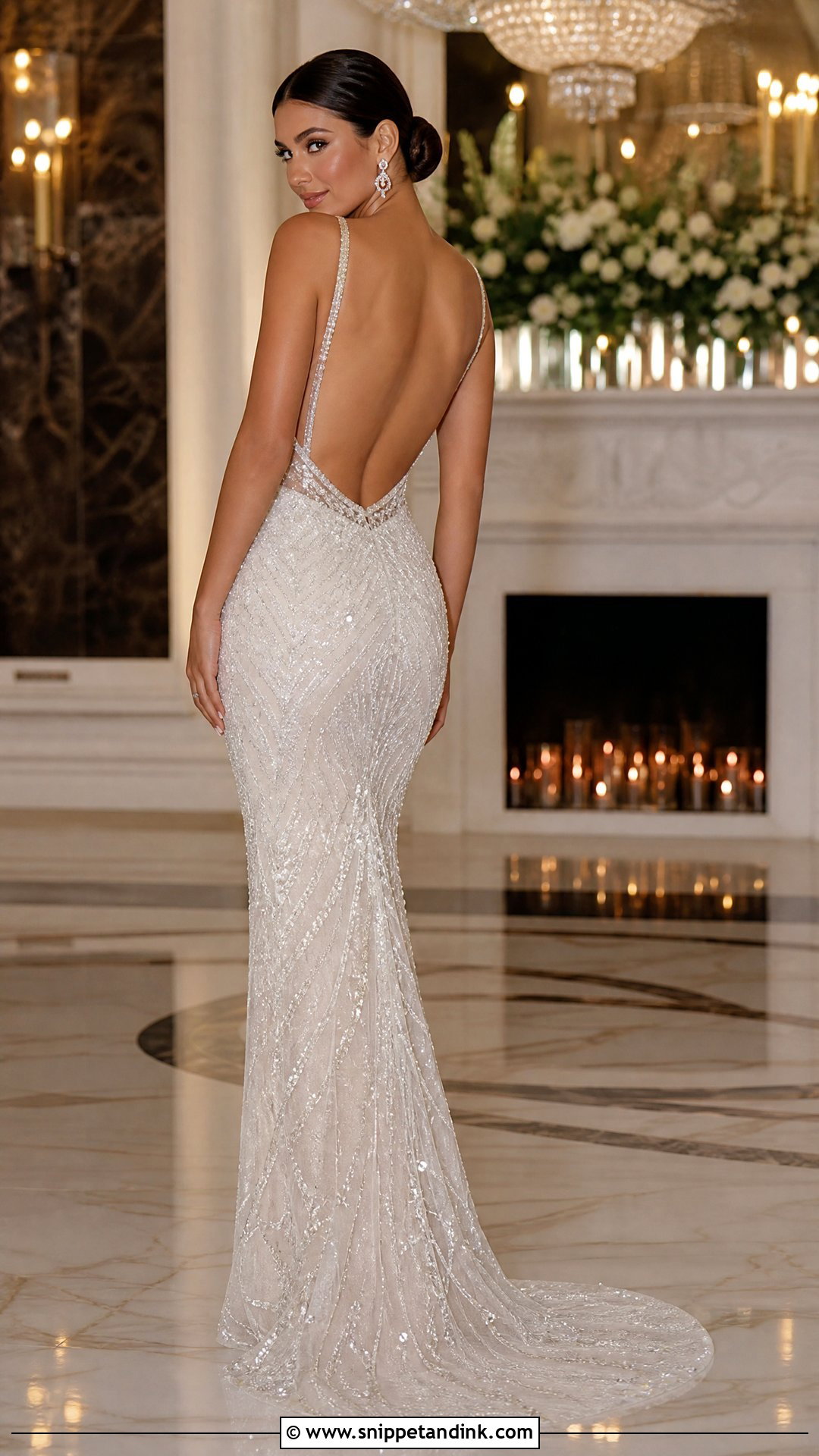
Beading catches light from every candle and uplighter in a ballroom, so this is a dress for evening weddings. The practical issue is the back edge. Beads and sequins stitched right up to the opening can scratch and snag the skin on your inner arms after hours of hugging. I look for a smooth bound edge or a soft lining that runs a few millimetres past the beadwork. Keep accessories quiet: crystal studs and metallic heels are plenty against all that shine.
17. Backless Floral Applique Wedding Dress
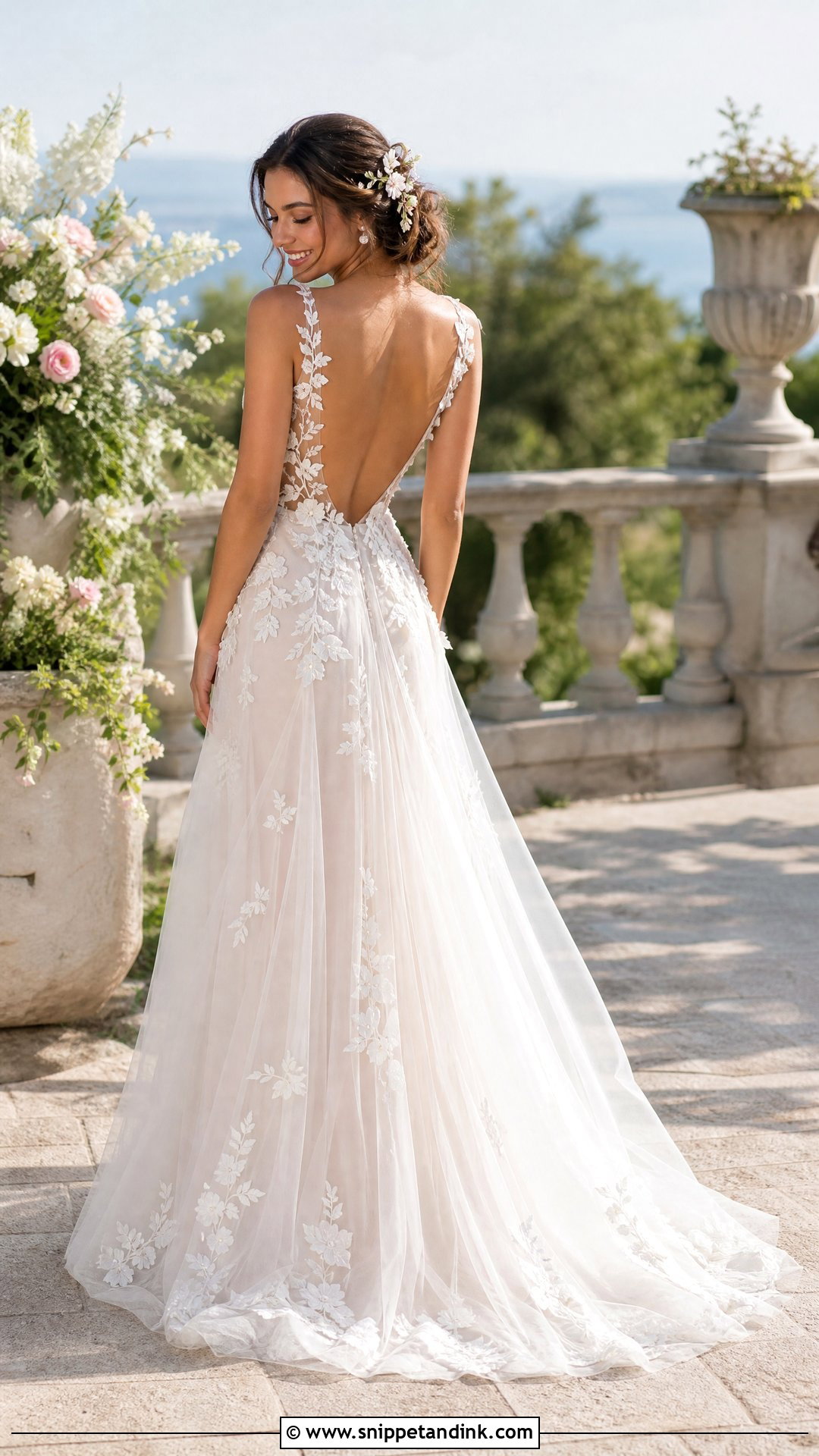
Three-dimensional appliqués let the dress cover some skin while still reading as open-backed, because the flowers sit on sheer mesh and trail down the spine. They suit spring and garden weddings especially well. I’d keep the bouquet looser and smaller than you might expect; a dense round bouquet against a heavily flowered back starts to look like a pattern clash in full-length photos. Soft curls and a few floral hair pins tie it together.
18. Backless Off Shoulder Wedding Dress
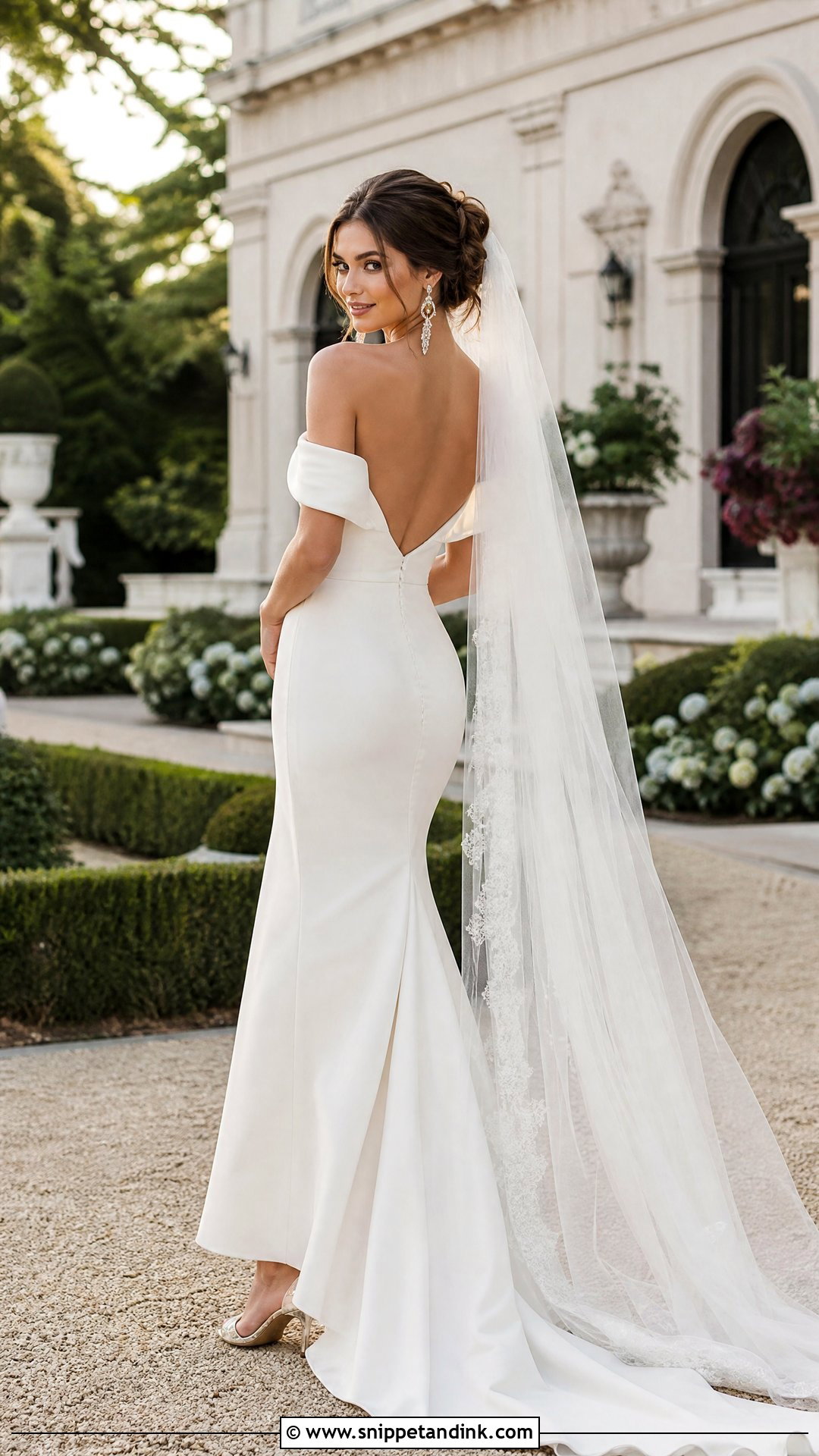
An off-shoulder neckline with an open back leaves the bodice with very little to hold onto, so the fit around your ribcage has to be close. When I fit this style, I ask brides to raise both arms as if hugging a tall relative. If the neckline slides up toward the shoulders, the bodice needs taking in. Lace, satin, crepe and mikado all work. Wear hair up or half-up, and choose drop earrings over a necklace so the shoulders stay clear.
19. Backless Spaghetti Strap Wedding Dress
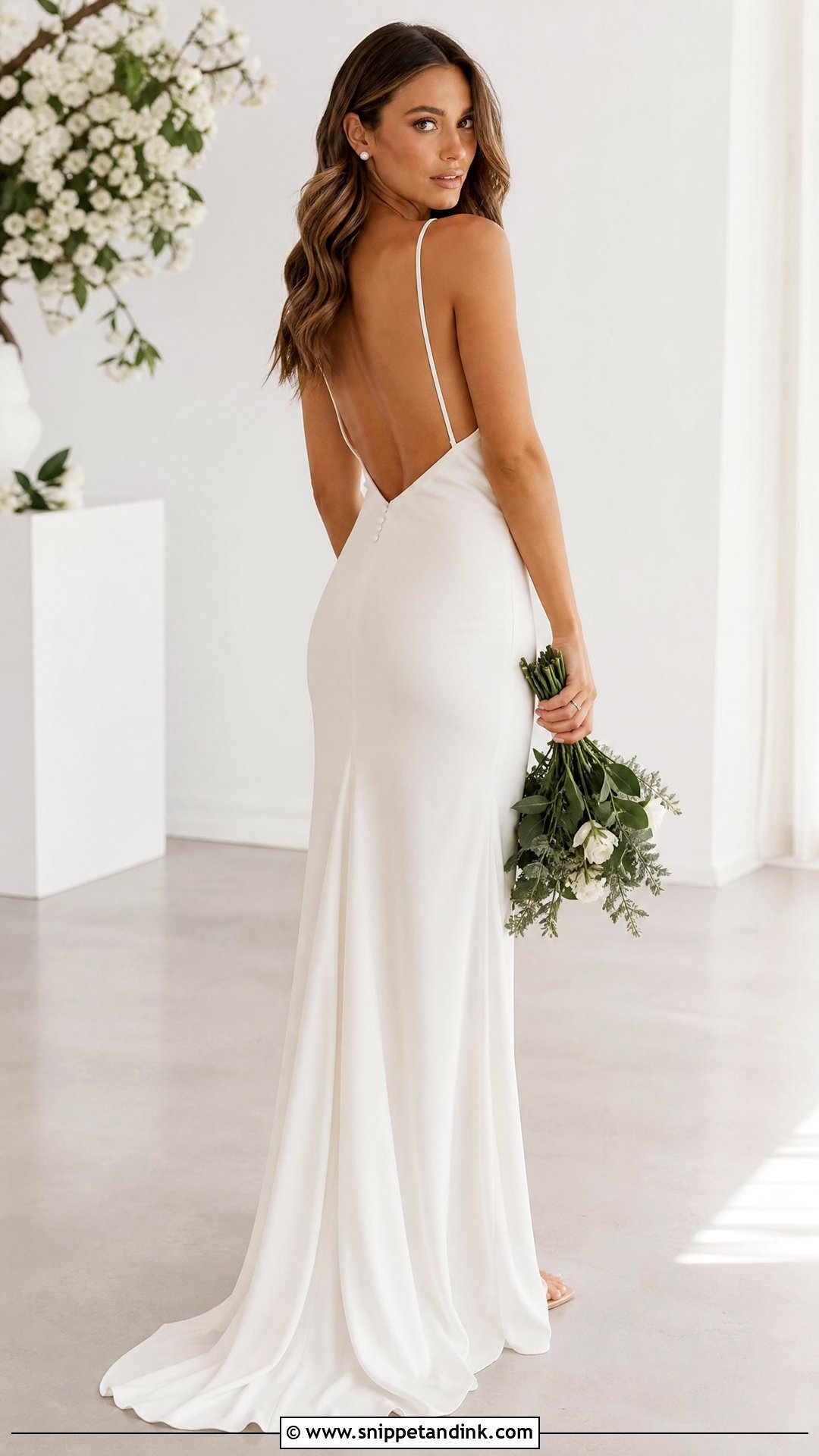
Spaghetti straps carry almost no weight, which is why they belong on light fabrics: slips, fitted crepe, airy A-lines for summer or the beach. If the dress has any real heft, I’d ask for adjustable straps or straps that connect into a built-in bodice, otherwise they cut into the shoulders by the speeches. The straps should sit close to the neck, not near the edge of your shoulder, or they will slip all evening. Barely-there sandals and soft waves keep the look light.
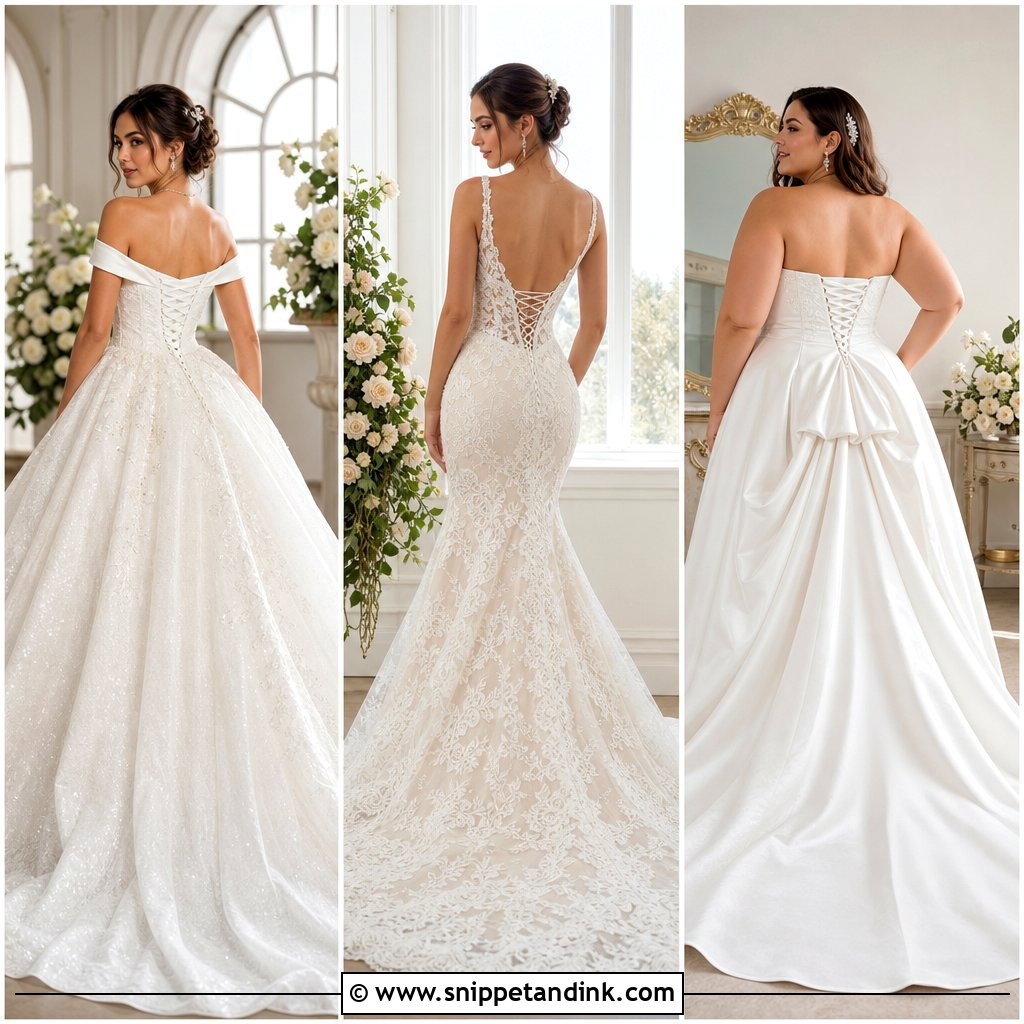
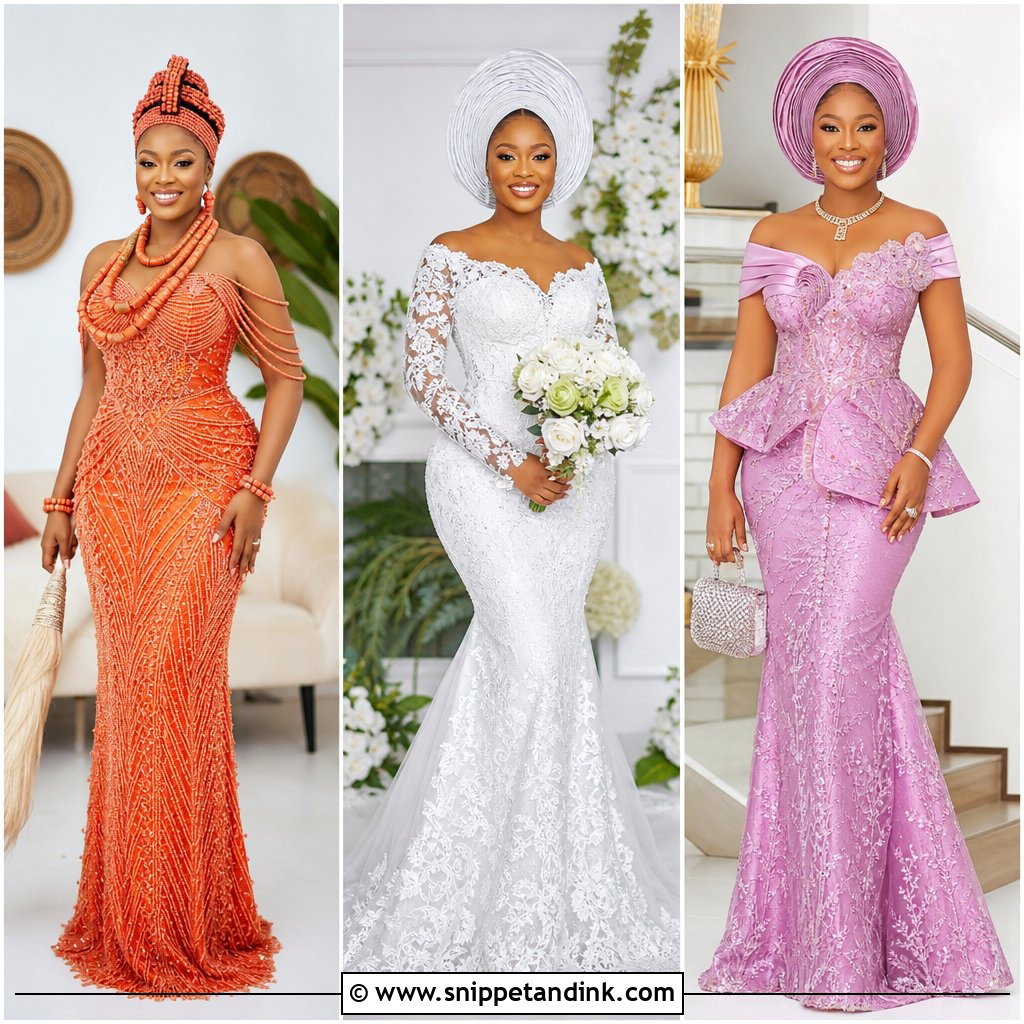
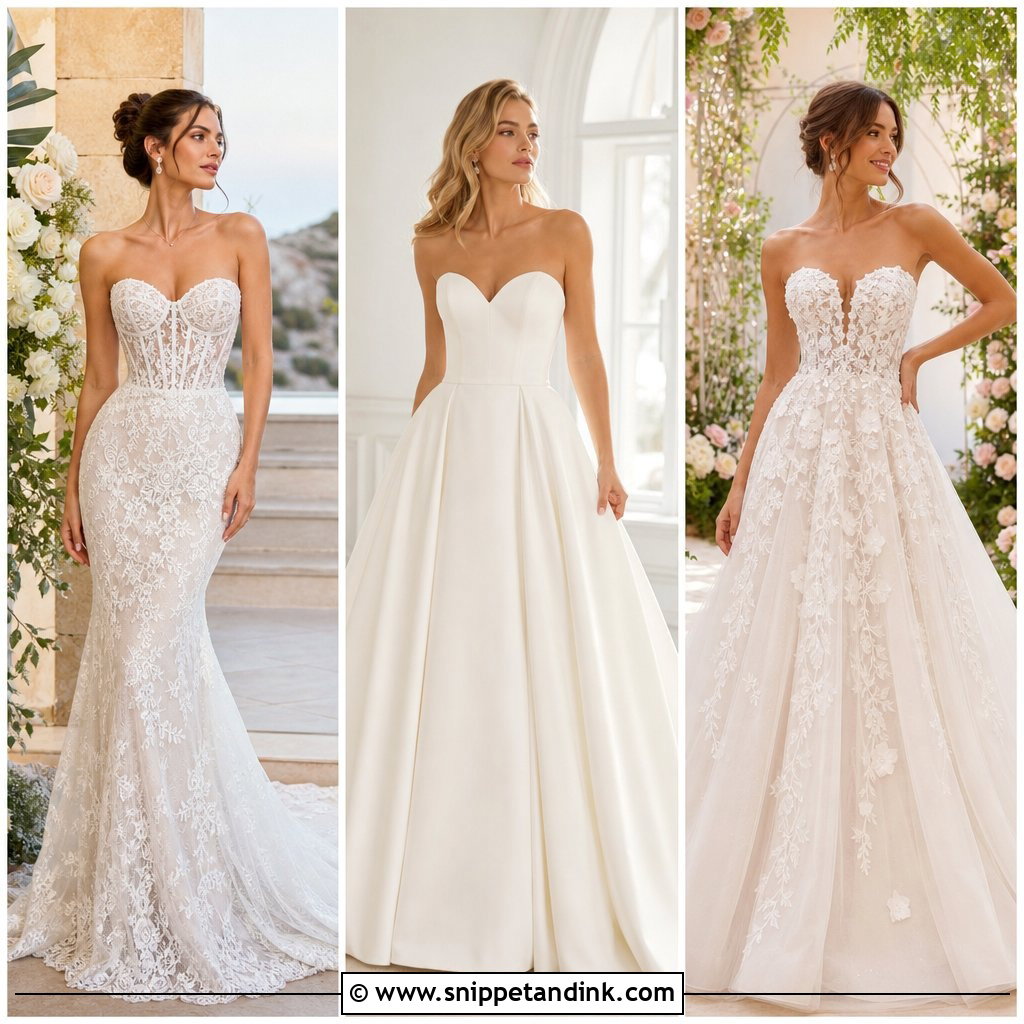
20. Backless High Neck Wedding Dress
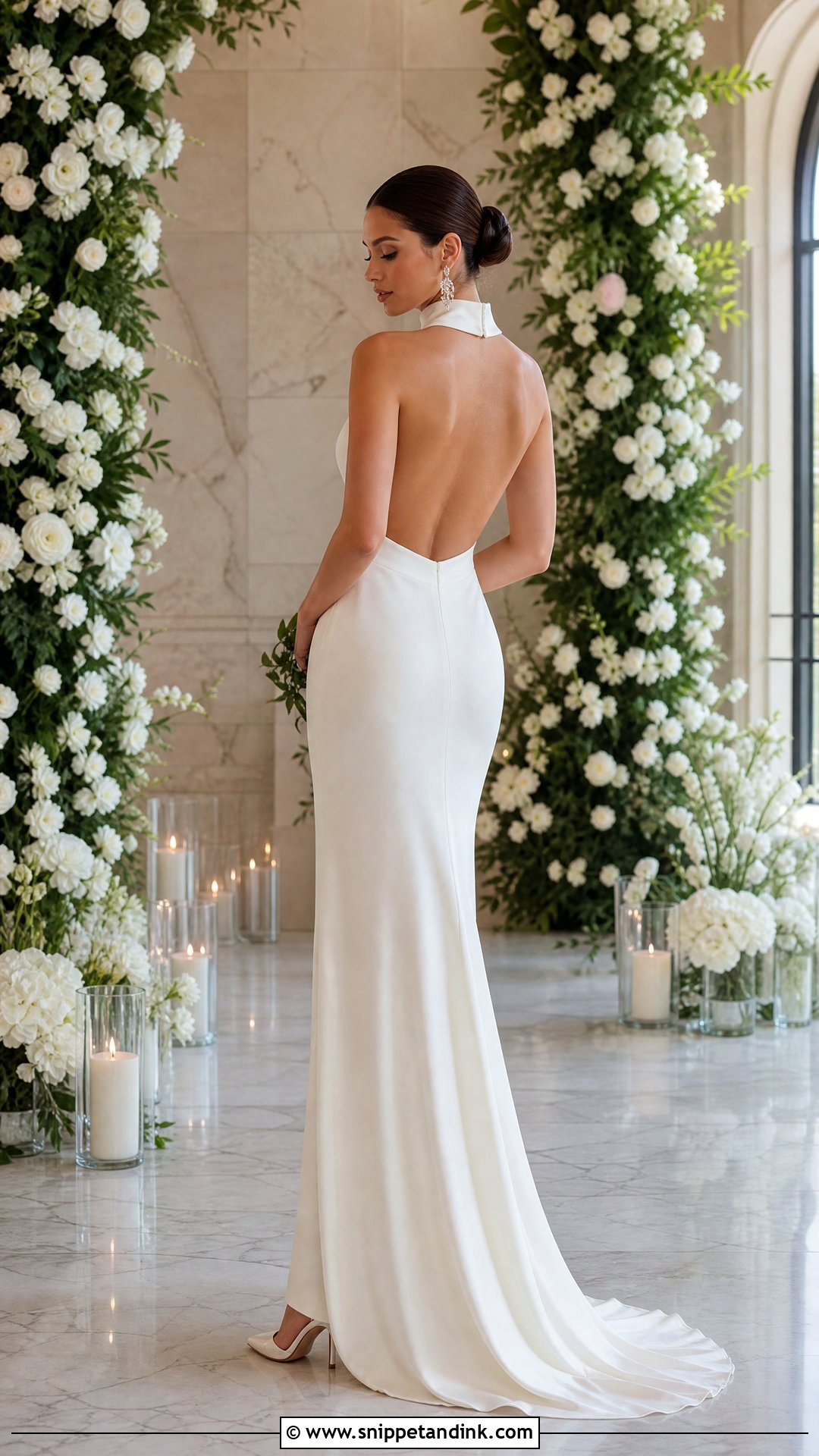
A covered front and a deep back is one of the most modest-to-bold contrasts in bridal. A high neck in lace or crepe gives the front a formal, almost tailored line, which is why this design feels right for autumn and formal venues. Since the neckline sits on the throat, skip the necklace and let earrings do the work. My test for a high neck is turning your head fully side to side; if the collar rubs or pulls the back opening sideways, it needs a tiny release at the neck seam.
21. Backless Beach Wedding Dress
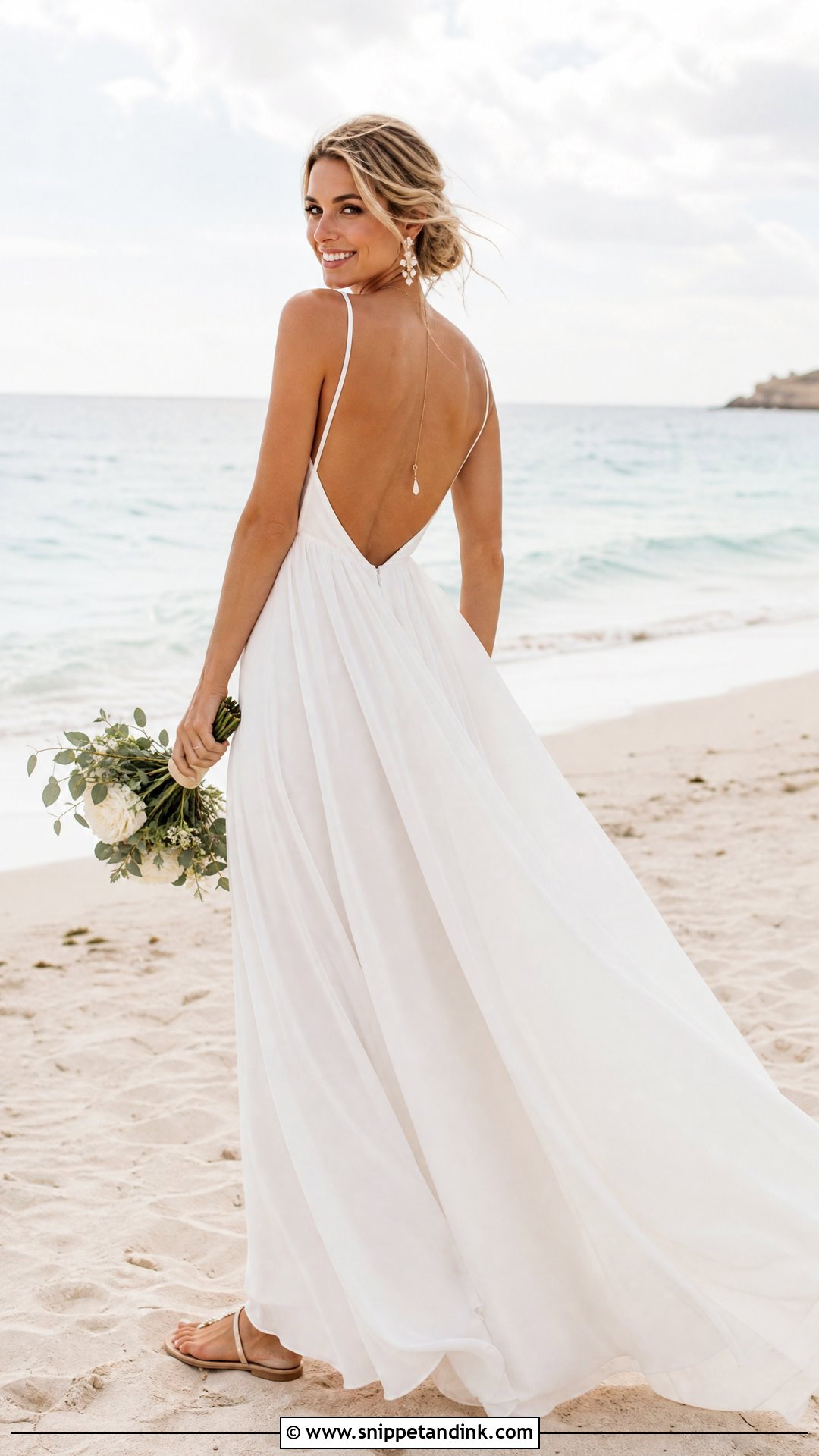
On a beach, the dress fights wind, salt air and sand, so lightness matters more than structure. Chiffon, soft lace and silk blends move in coastal wind and dry fast if they meet a wave. I’d avoid a long, heavy train; it drags sand into every fold and gets darker at the hem by sunset. Flat or barefoot sandals, hair secured with a clip rather than loose pins, and a small bouquet keep the whole look relaxed. Bring a spare body tape strip in your clutch, since humidity weakens adhesives.
22. Backless Garden Wedding Dress
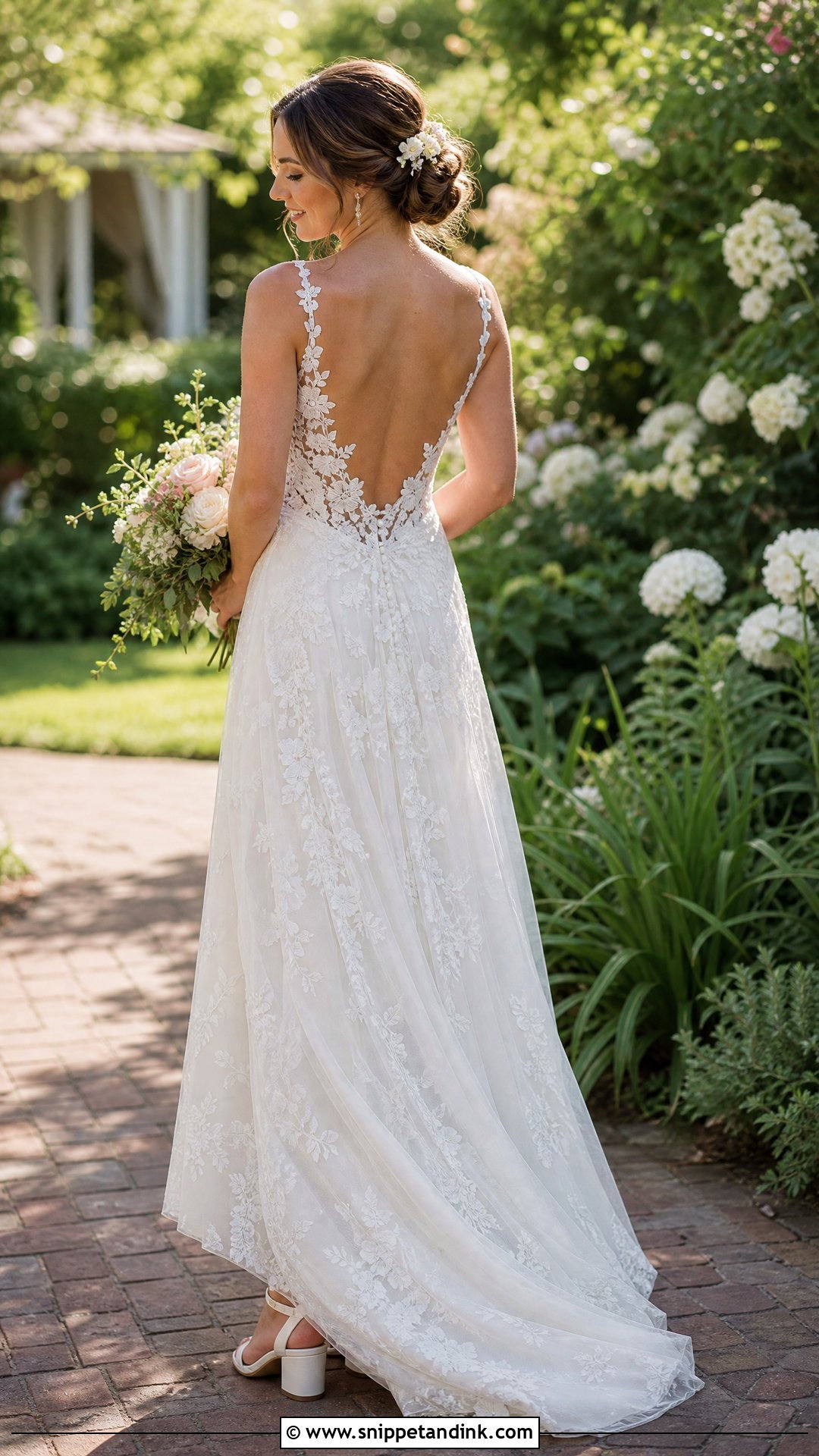
Grass, gravel and garden paths are hard on long hems and stilettos, which makes A-line and sheath silhouettes the practical shapes for a garden wedding. Floral lace and soft tulle suit the setting naturally. I’d always do a walk-through in your actual shoes on the venue’s lawn if you can, because heels sink and a dress pinned to stiletto length suddenly drags once you wear block heels. A low bun with floral pins keeps the open back visible during the ceremony.
23. Backless Minimalist Wedding Dress
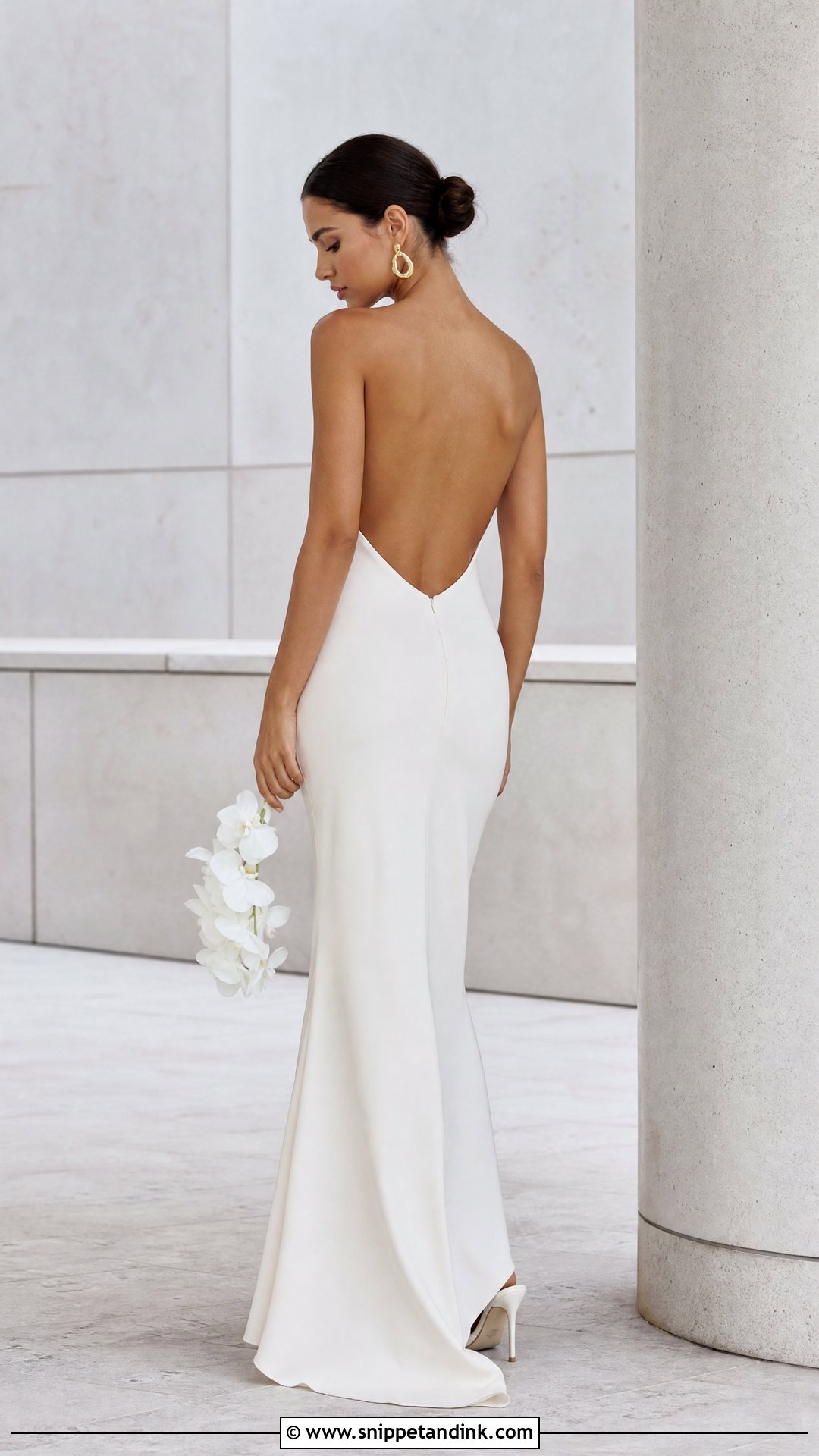
With no lace or beading to look at, the eye goes straight to the fit, and the back opening becomes the entire design. That makes alterations the most important line in your budget for a minimalist gown. Satin, crepe and mikado hold the precise shape this needs. Watch for one detail at the fitting: the side seams. If they twist toward the back when you walk, the opening will look crooked from the aisle. A sleek bun, sculptural earrings and a long plain veil finish it.
24. Backless Vintage Wedding Dress
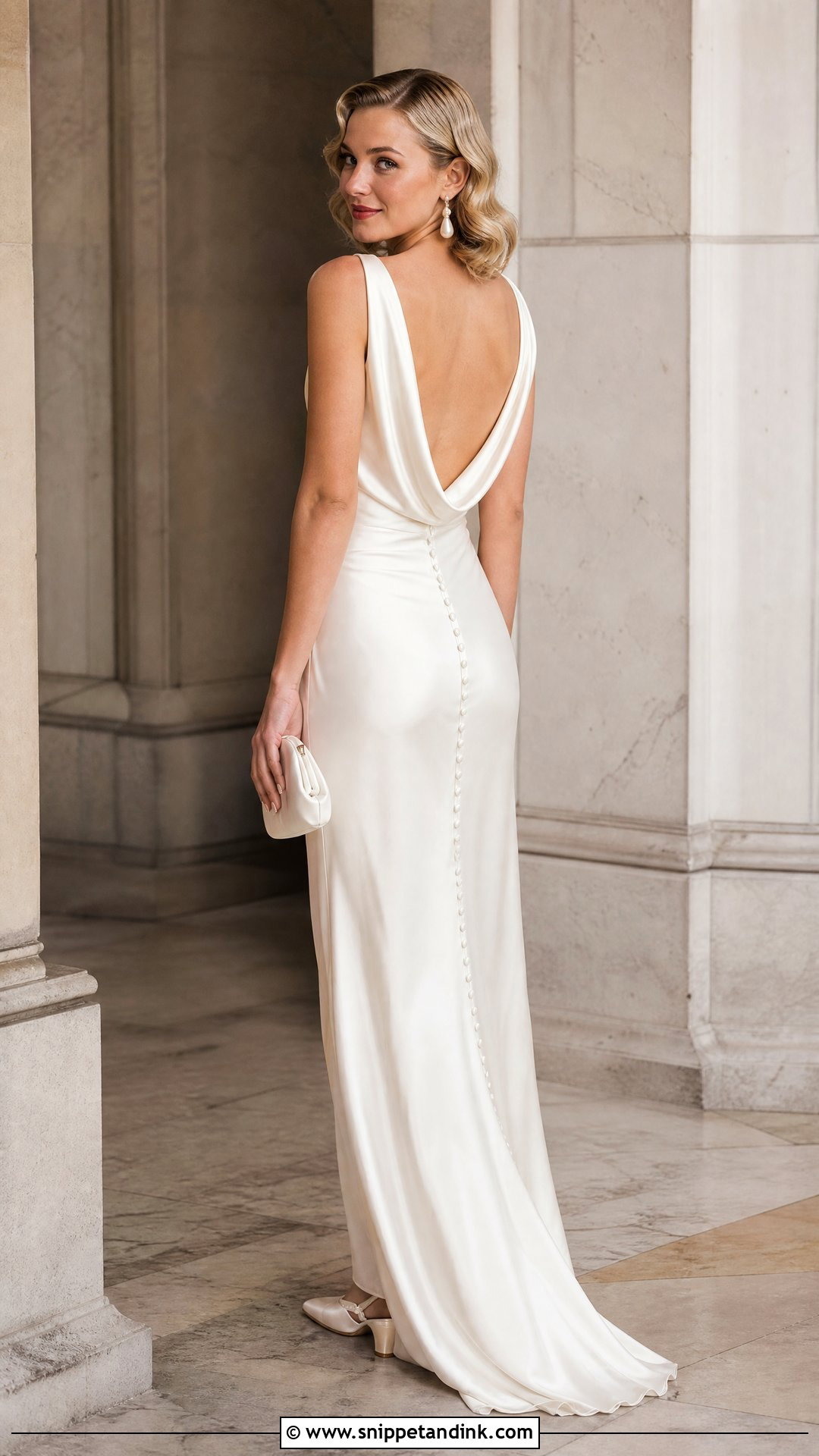
A backless vintage wedding dress borrows from earlier decades: lace sleeves, cowl backs, bias-cut satin, covered buttons and delicate beading. If you are buying a true vintage piece, have the seams and lace checked by a seamstress before alterations begin, because old thread and fragile lace can split under tension at the back edge. Finger waves, pearl earrings and low block heels support the period feel without tipping into costume. A lace-trimmed veil works if it stays sheer enough to show the back.
25. Backless Sheath Wedding Dress
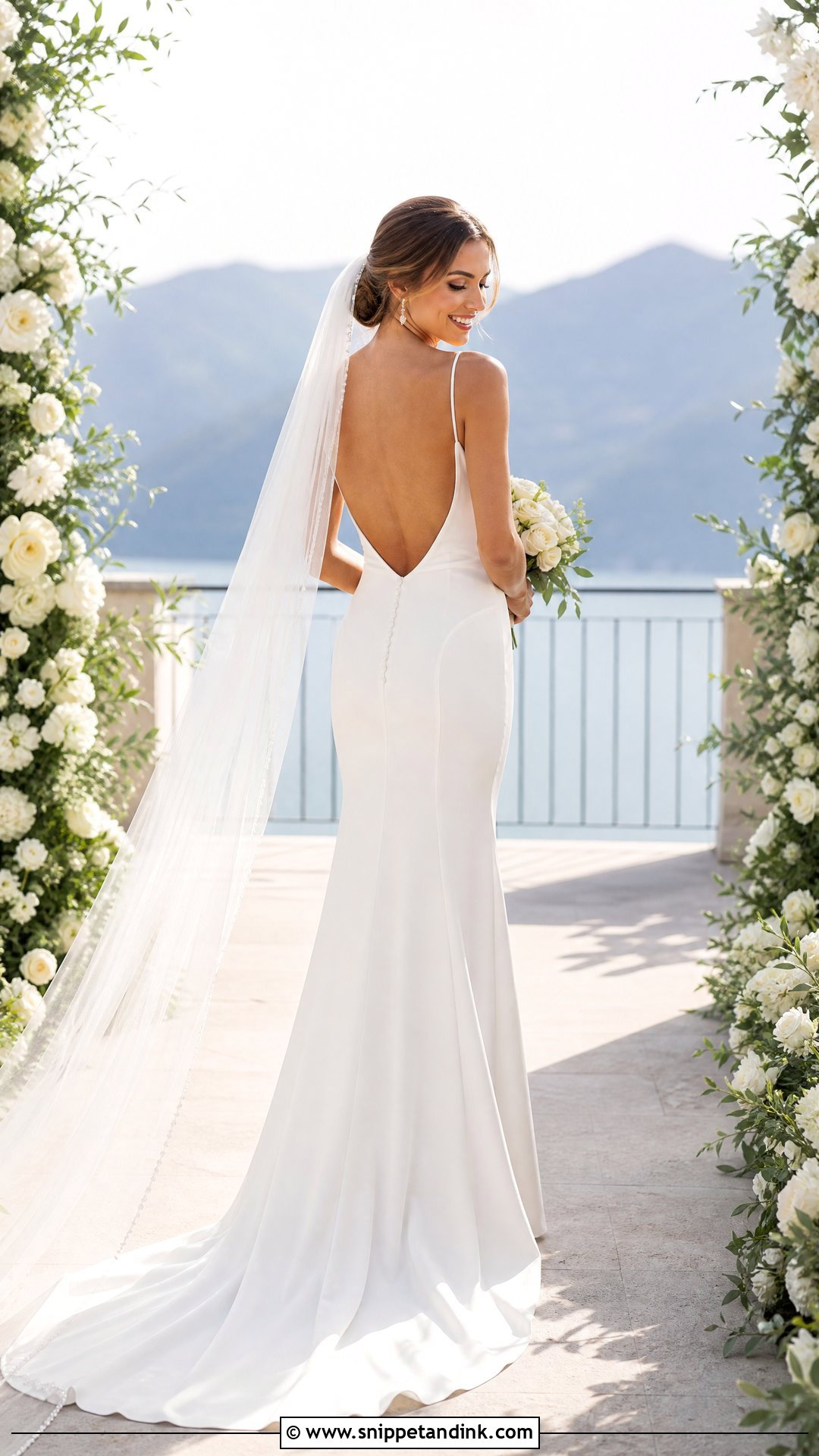
A sheath follows the body in a narrow column, closer than an A-line but freer at the knee than a mermaid. That makes it easy to walk, sit and dance in. The open back is the only real drama, so the fabric has to drape smoothly over your hips and seat. In thin crepe or satin I check for underwear lines in natural light before anything else. A veil set just below the crown leaves the back opening visible as you walk away.
26. Backless Fit And Flare Wedding Dress
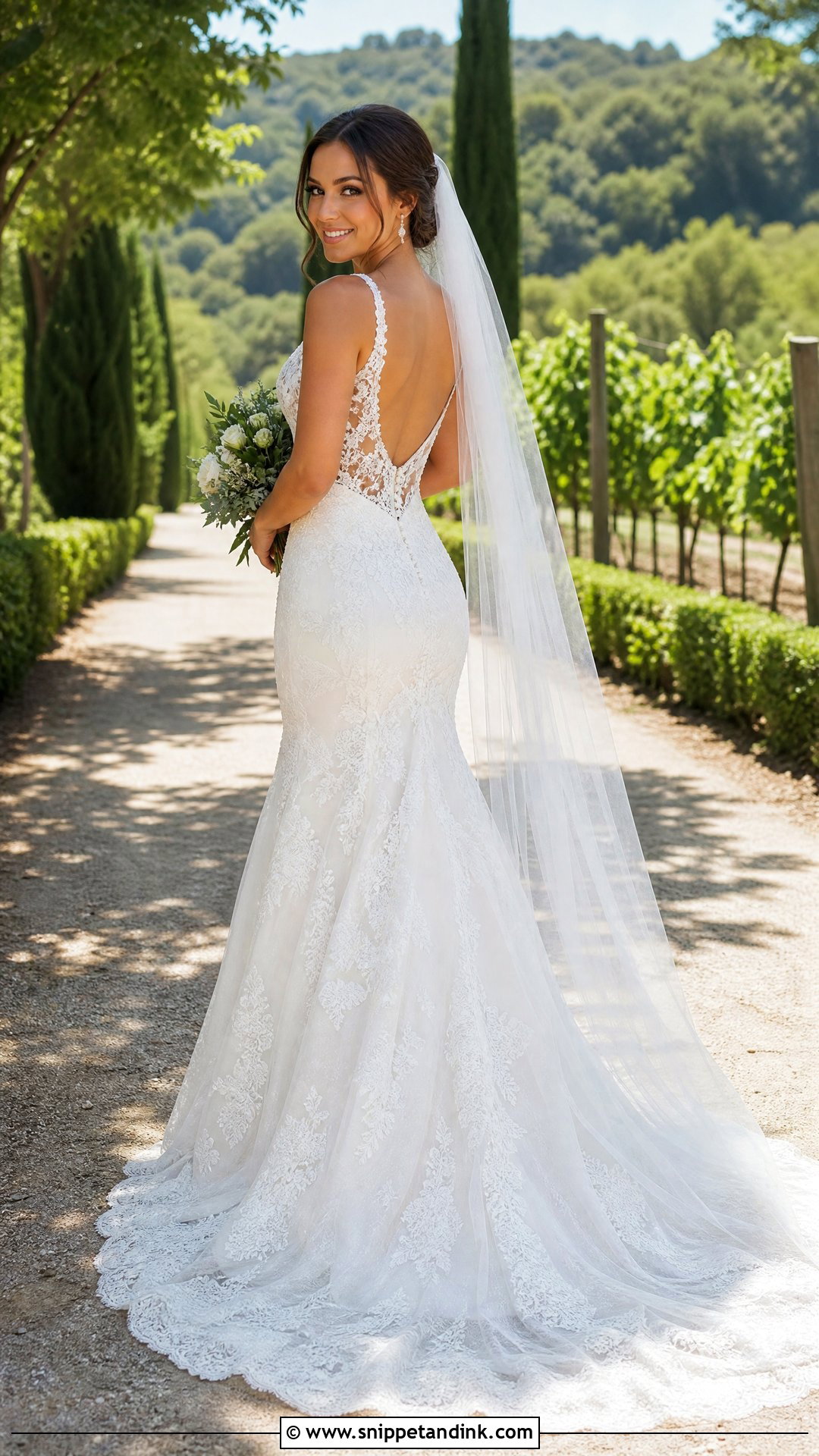
Fit and flare is fitted through the hips and opens higher than a mermaid, usually mid-thigh, so you get shape without the hobbled stride. For the back, a deep V, an illusion panel or a row of covered buttons below the opening all suit it. One thing brides overlook: the flare point should sit where your legs naturally bend, or the skirt will crease at the same spot every time you sit. Lace leans romantic, crepe or satin leans modern.
27. Backless Short Wedding Dress
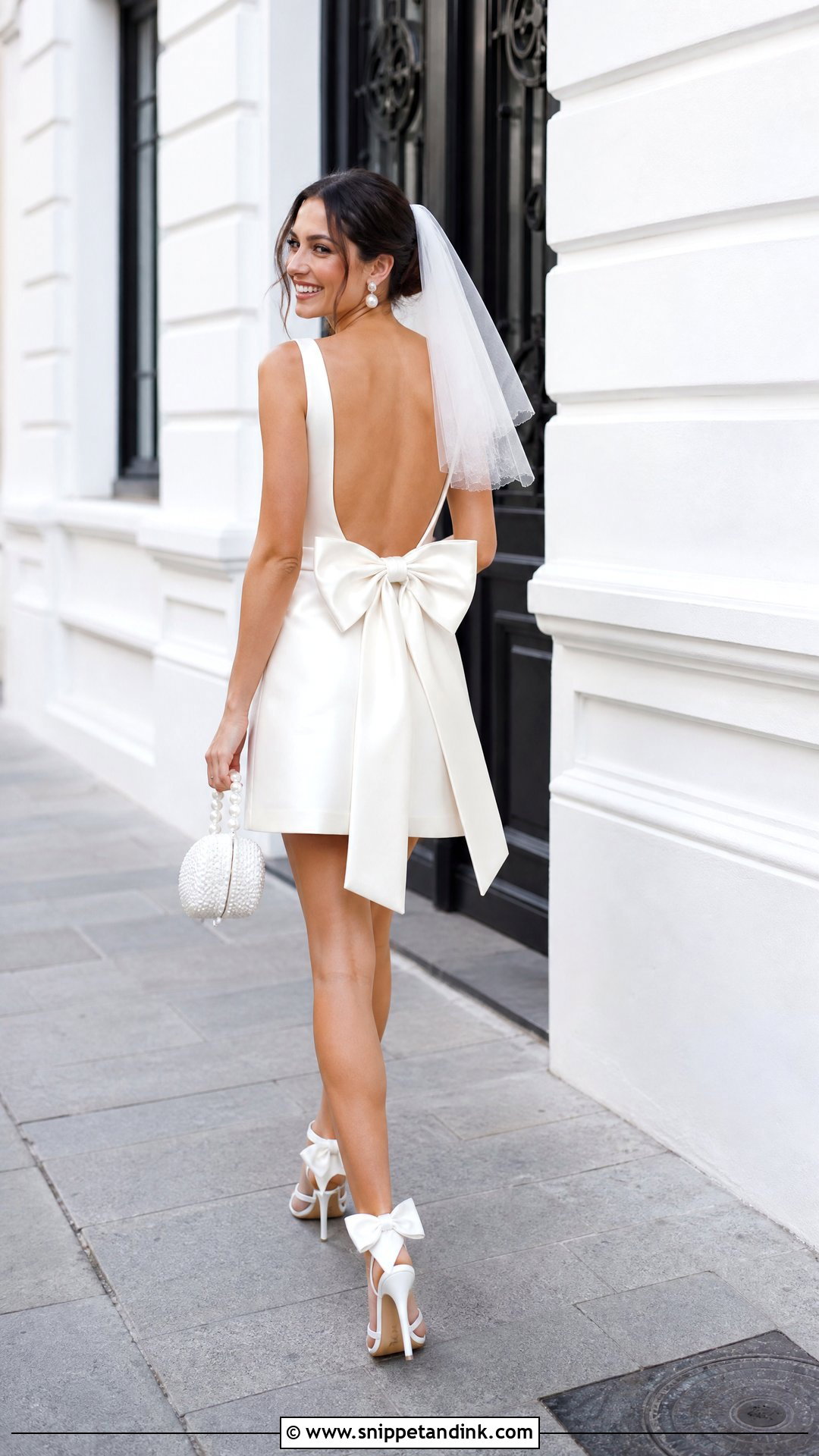
A short open-back dress is the easiest outfit on this list to move in, which is why I suggest it for civil ceremonies, after-parties and small celebrations. Mini, midi and tea-length each change the formality: tea length reads most bridal. Because the hem is short, shoes become part of the look, so pick them with care. A bow, gloves or a short veil makes it read as a wedding dress rather than a party dress.
28. Backless Two Piece Wedding Dress
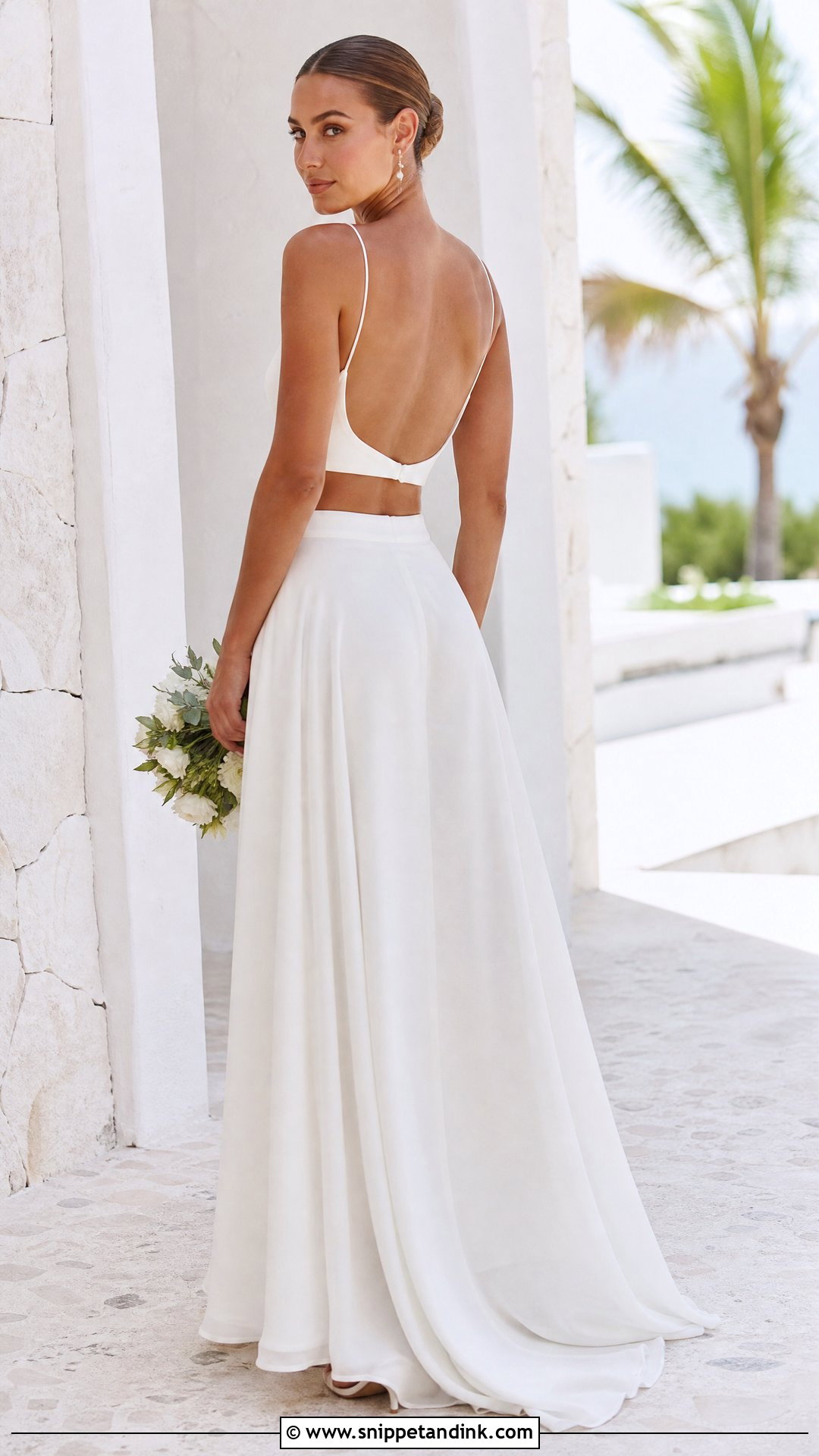
A two-piece pairs a bridal top with an open back and a matching skirt. It suits destination ceremonies and brides who want something less traditional, and you can sometimes re-wear the skirt or top later. I’d choose a high-waisted skirt so only a sliver of skin, or none, shows at the waist, and ask the seamstress to add a small hook or loop that keeps the top from riding up when you raise your arms. Fabric quality matters here because the two pieces have to match exactly in colour under camera flash.
29. Backless Wedding Dress With Bow
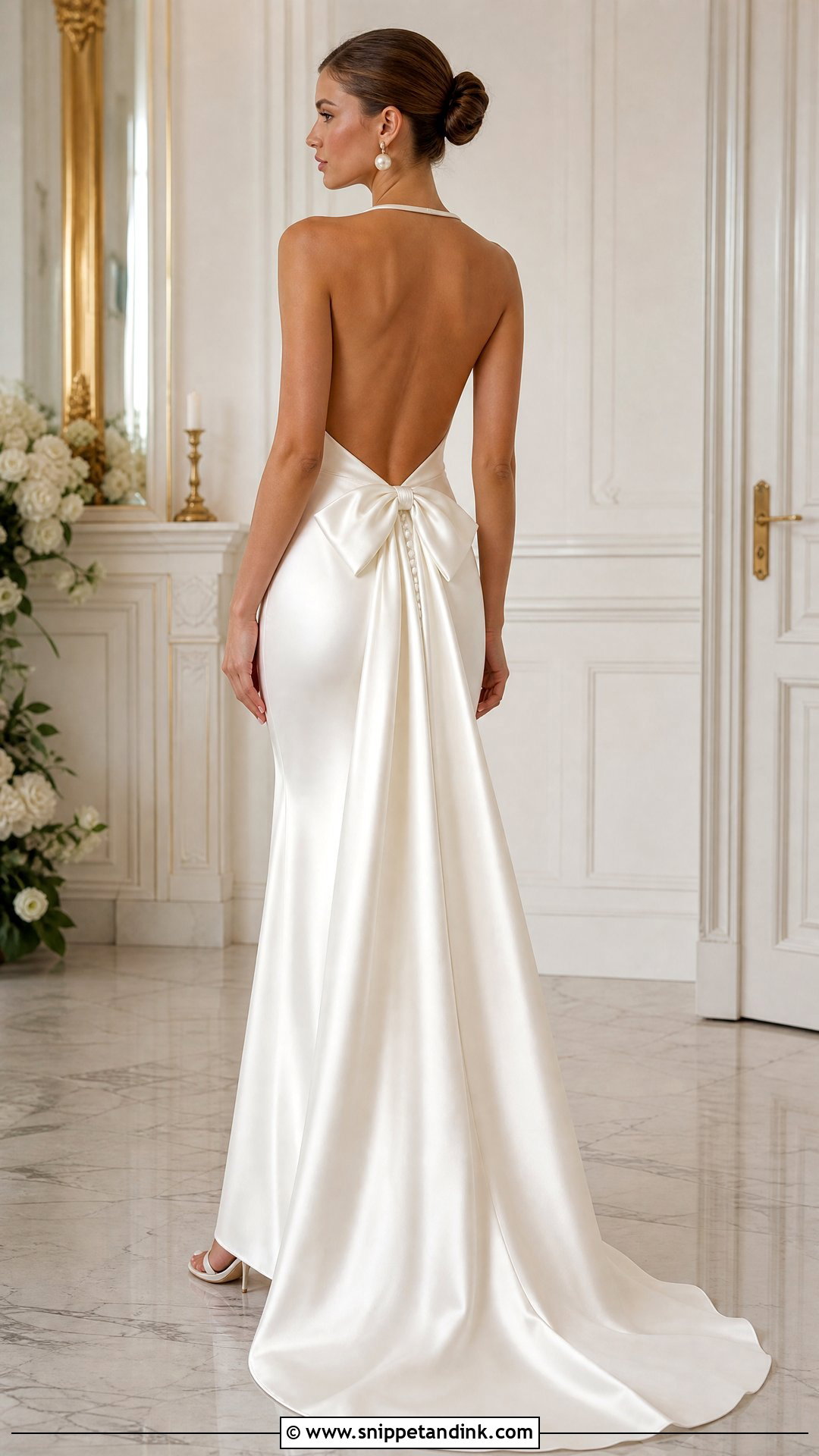
A bow set at the base of the opening, the waist or the shoulders softens a backless dress and gives the eye a clear focal point. Satin, mikado and organza hold a bow’s loops crisply; crepe gives a softer, slightly droopy bow. Check whether the bow is sewn flat or left loose, since a loose bow gets crushed against the chair back during dinner. Smooth hair and pearl earrings keep the rest of the look calm so the bow stays the one detail people notice.
30. Backless Wedding Dress With Train
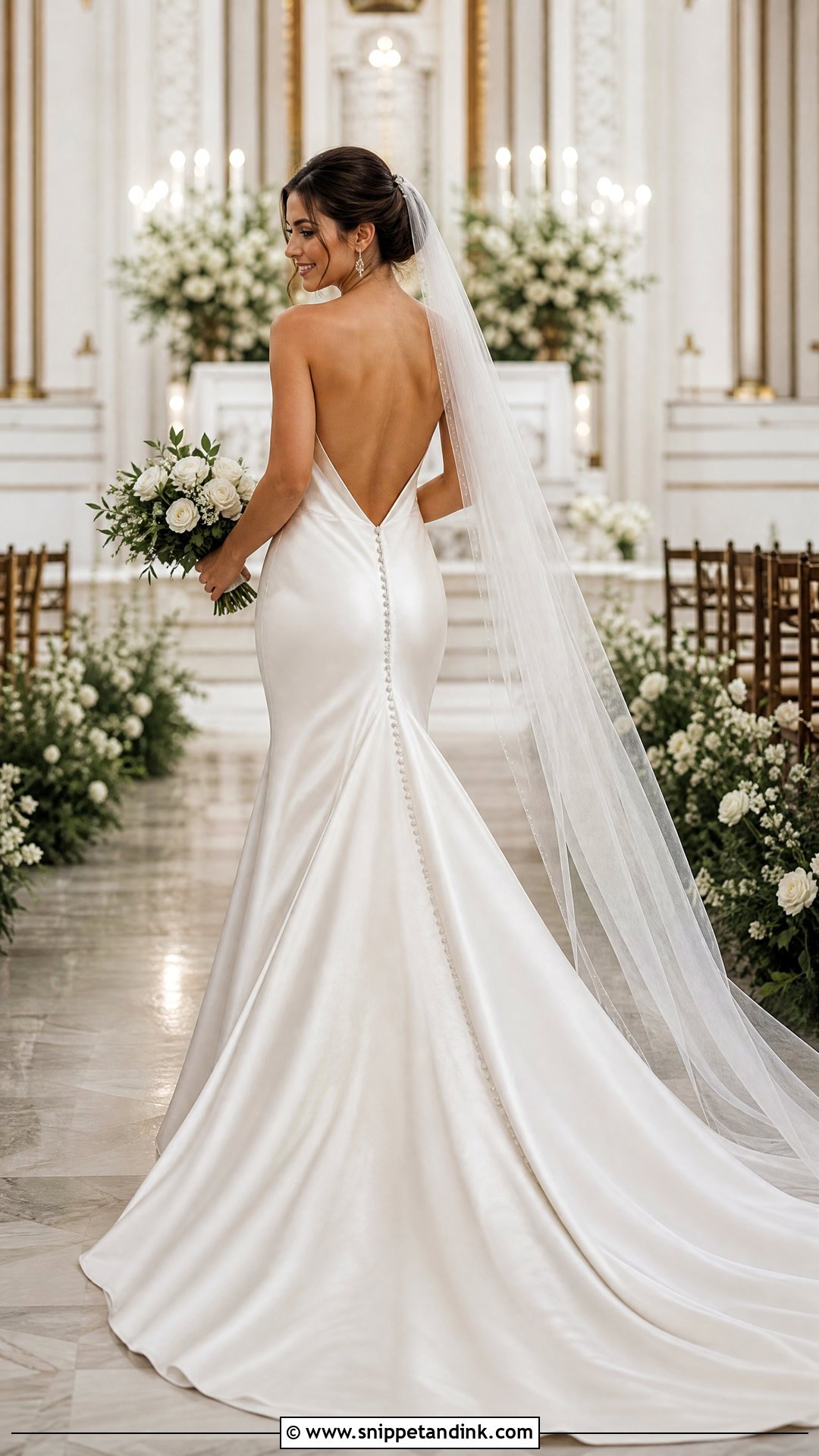
A train behind an open back creates a long line from your shoulder blades to the floor, which is what makes the aisle shot so memorable. Chapel length is manageable; a cathedral train needs a grand room and a helper. Practise the bustle with whoever will be doing it before the day, because bustle points are confusing in a dim reception room. A long veil should be sheer enough that the back still shows through it in the processional.
31. Backless Plus Size Wedding Dress
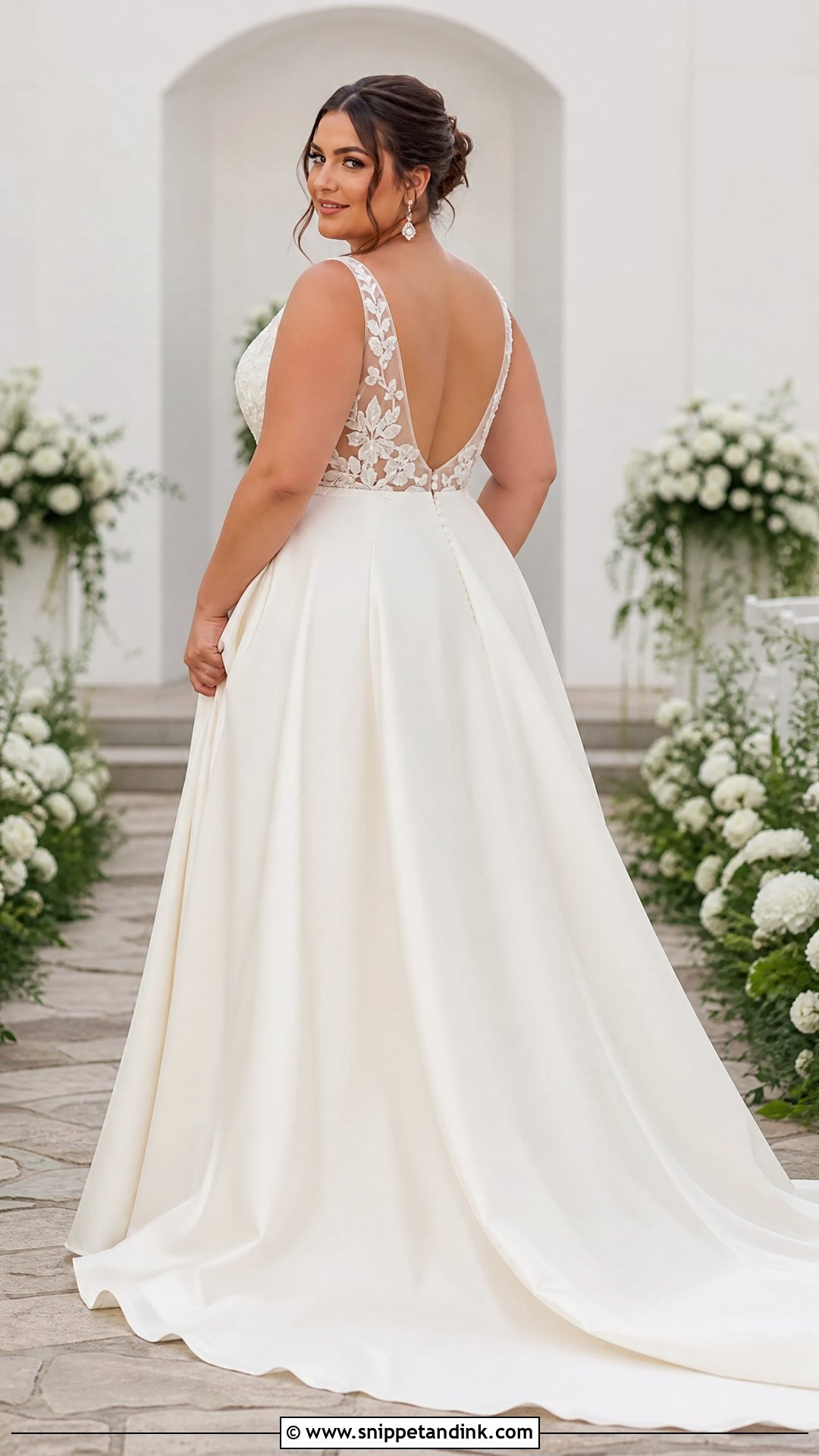
For a plus-size bride, the open back needs proper engineering inside the dress: firm straps, a lined bodice, boning or a corset, and often illusion panels that carry weight while the skin still shows. A-line, fit-and-flare and ball gown silhouettes all work beautifully. I’d ask your consultant for gowns with built-in cups and a back band hidden in the lining; it changes how secure you feel when you dance. You do not need to hide your body. Choose the fabric that feels most like you, then let the fit do the rest.
32. Backless Petite Wedding Dress
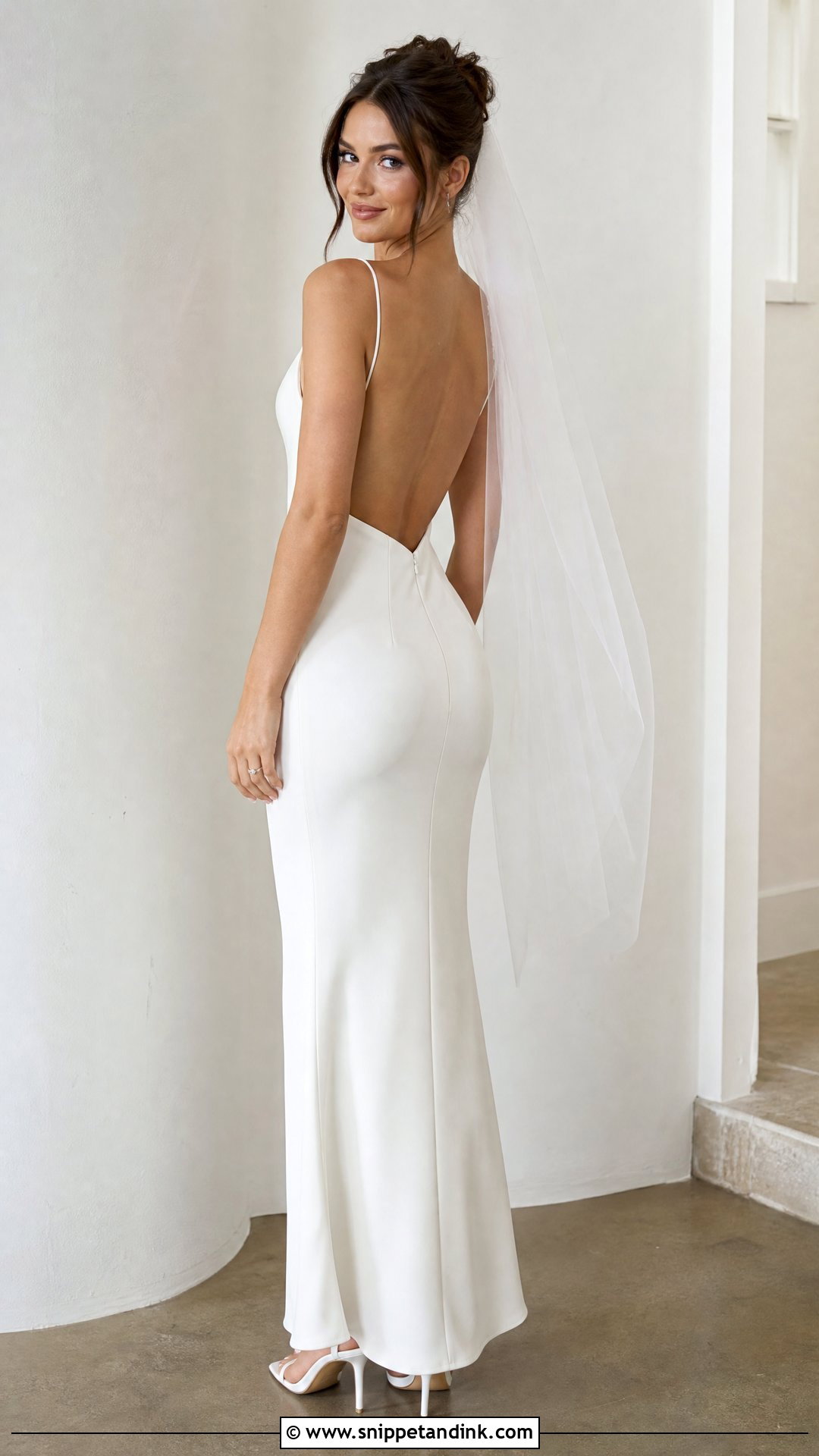
On a petite frame, a deep open back actually helps, because it carries the eye down a long vertical line. Simple sheath, slip or A-line silhouettes with vertical seams and lighter fabrics usually suit best. Heavy trains can overwhelm a shorter bride unless they are shortened properly, which is a bigger alteration than it sounds. Nude or matching heels extend the leg line, and keeping accessories proportional, a small comb and a narrow veil, avoids drowning the dress.
33. Backless Wedding Dress With Detachable Sleeves
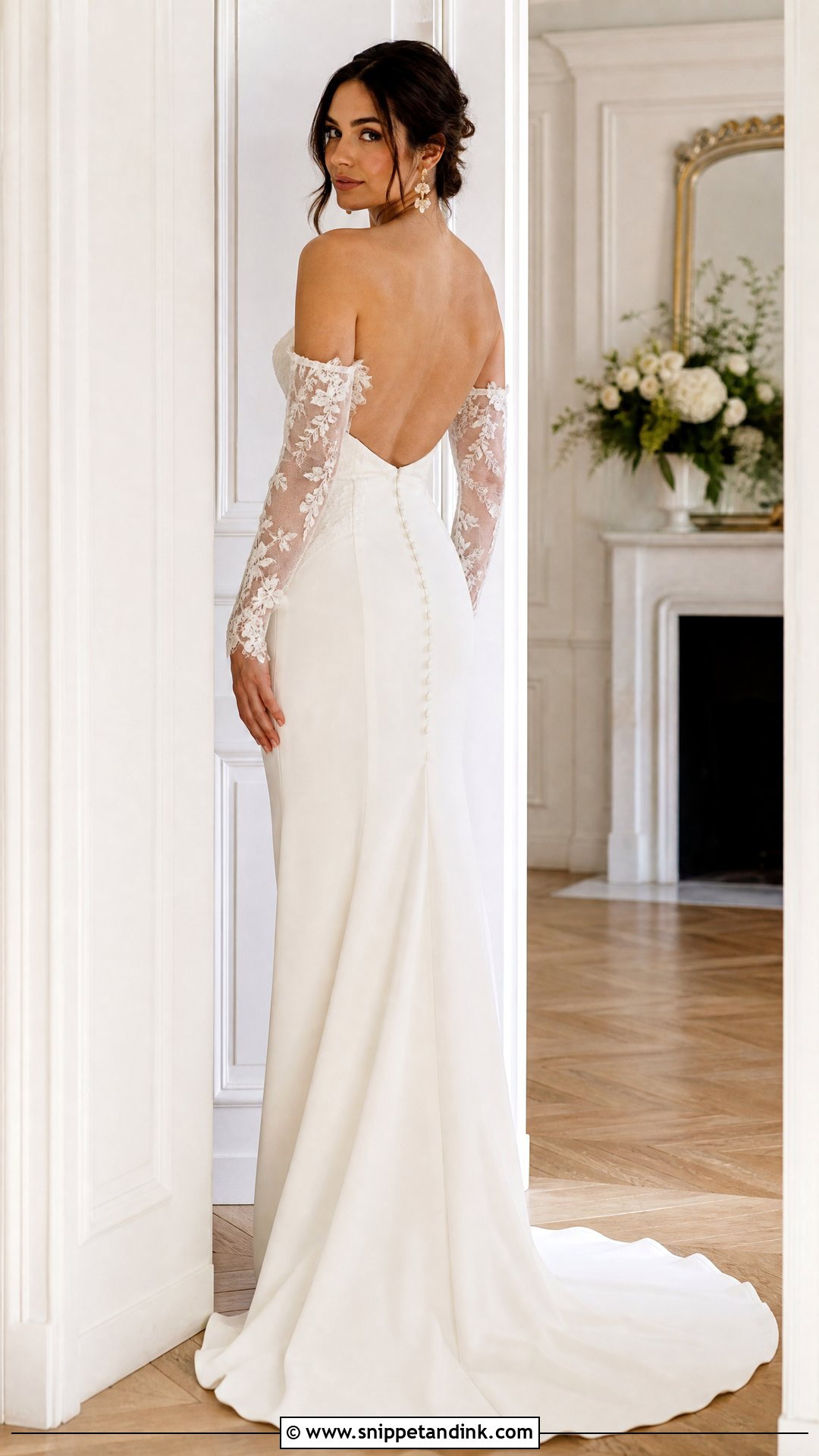
Detachable sleeves give you coverage for a religious ceremony and bare arms for dancing, which is why I suggest them for brides with two distinct dress codes in one day. Sheer, lace, puffed or draped sleeves all clip or button into the bodice. Test the attachment: button loops hold better than snaps, which can pop when you raise your arms. Have someone practise removing them before the day so it takes two minutes, not ten.
34. Backless Wedding Dress With Cape
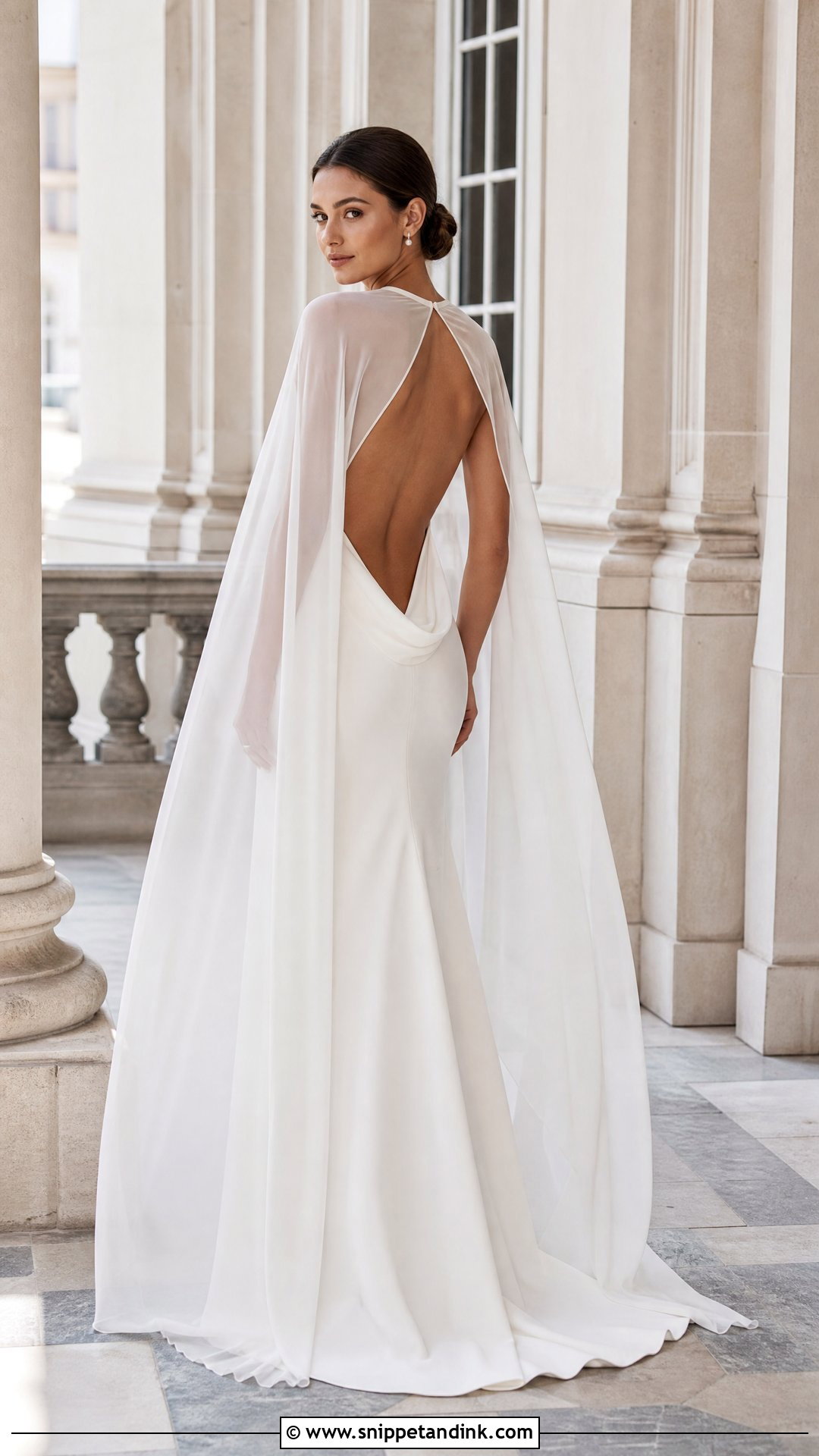
A cape attached at the shoulders or back straps moves as you walk and only reveals the open back when it shifts, which makes for great movement in photos. A sheer cape suits a breezy outdoor ceremony; crepe reads architectural. I’d check its length against the dress train, because a cape that ends a few inches above the hem looks like an alteration mistake. With a cape, you often do not need a veil, and smooth hair keeps the shoulder line clean.
35. Backless Reception Wedding Dress
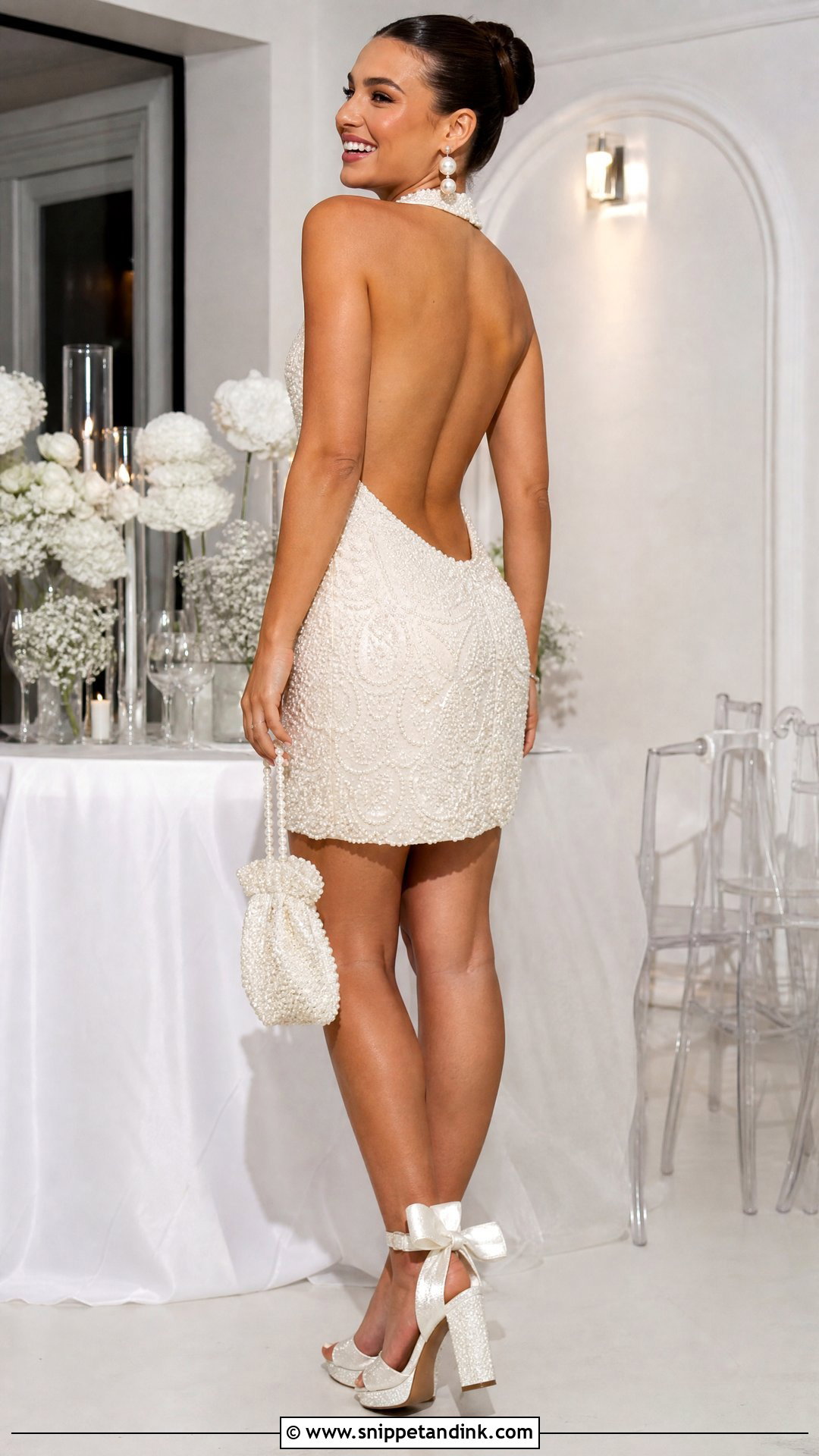
Changing into a lighter dress after the ceremony makes sense when your main gown has a heavy train or a stiff corset bodice. A short satin slip, a beaded sheath or a midi with an open back keeps you bridal for dinner and dancing. Pick a fabric you can sit in for hours without constant tugging. I’d plan where you will change and who will help, since an open back usually means hooks or buttons you cannot reach yourself.
Your Back Gets Photographed More Than You Think
During the vows, the processional and the first dance, cameras are behind you as much as in front, so the skin on your back deserves the same planning as your face.
- Tan lines show sharply in flash photography. If you sunbathe before the wedding, wear a backless top or skip it in the final weeks.
- Self-tan and body makeup can transfer onto ivory satin or lace, especially where the dress edge rubs. Apply well ahead and test with a white cloth.
- Gentle exfoliation in the weeks before helps, but avoid anything harsh or new in the last few days in case of redness.
- Ask your hairstylist where pins and loose strands will fall; a stray hair across bare skin shows up in every close shot.
On the day, I tuck a small kit into the getting-ready room: spare body tape, a lint roller, safety pins and a soft cloth for any makeup smudges on the fabric edge. Most open-back problems are solved in under a minute if someone has them close.
The Back Is Where the Fit Shows
An open back works across almost every silhouette here, from a bias slip to a full ball gown, and the right one is the dress that still sits flat against your spine after you have hugged a hundred guests. Before you commit, sit, lift your arms, bend forward and walk in it. Then plan the support, the hair and the veil around the back, because that is the view most people will remember from your ceremony.
You'll Like These Ideas:



Leave a Reply