
A full silk skirt does something no other fabric does: it moves slowly. When a bride in a silk ballgown turns, the skirt follows a beat later, and the light runs across every fold. That quality is why brides fall for these gowns and also why they’re harder to live in than they look. The designs below run from clean strapless shapes to long sleeves, basque waists, bows and one-shoulder necklines, and many current collections lean into long waistlines, generous volume and soft draping. I’ve written each one as a whole outfit, with the veil, jewelry, shoes, hair and flowers, plus the fitting detail I’d watch for on that particular cut.
Doorways, Car Seats and Bathroom Stalls in a Full Silk Skirt
Nobody plans a ballgown around a car, but the car is usually the first problem. A full skirt with a petticoat can be wider than a standard car door, and silk creases badly when it is crushed onto a seat for half an hour.
- Ask your transport company for a vehicle with a wide rear door and enough room to sit with the skirt lifted around you. Climb in bottom first, then gather the skirt in after you.
- Measure the narrowest doorway and staircase between the bridal suite and the aisle. If the venue has tight corners, a petticoat with removable layers helps.
- Practice the bathroom at your last fitting. The easiest method is facing the toilet with a helper holding the skirt up from behind, or stepping into the skirt hem and gathering it upward.
Weight is the other surprise. Mikado and duchess satin skirts with a petticoat can feel heavy after several hours, and most of that weight sits on your waist. I always make sure there is a waist stay inside, so the bodice isn’t carrying the skirt.
1. Strapless Silk Wedding Dress Ballgown
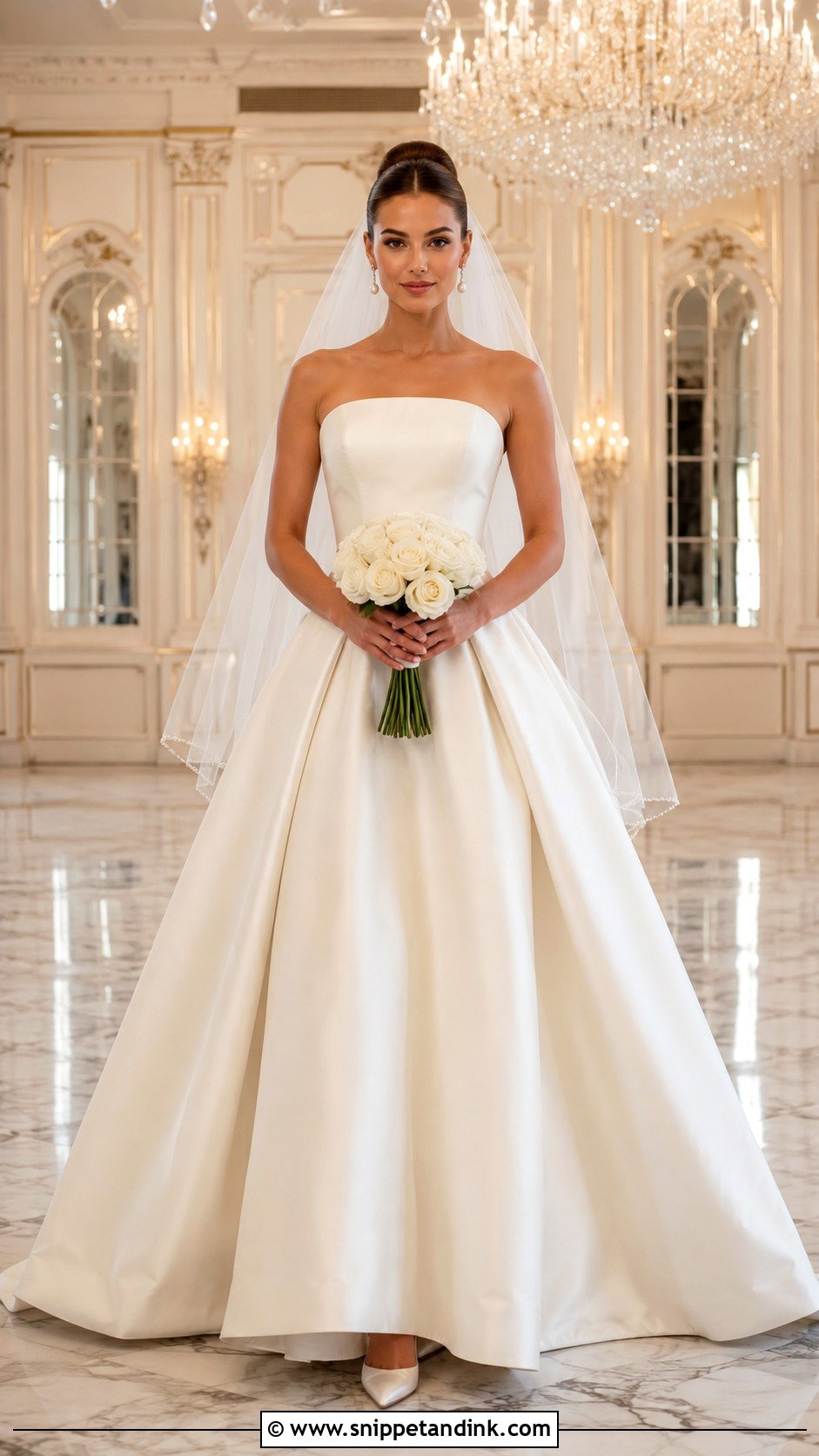
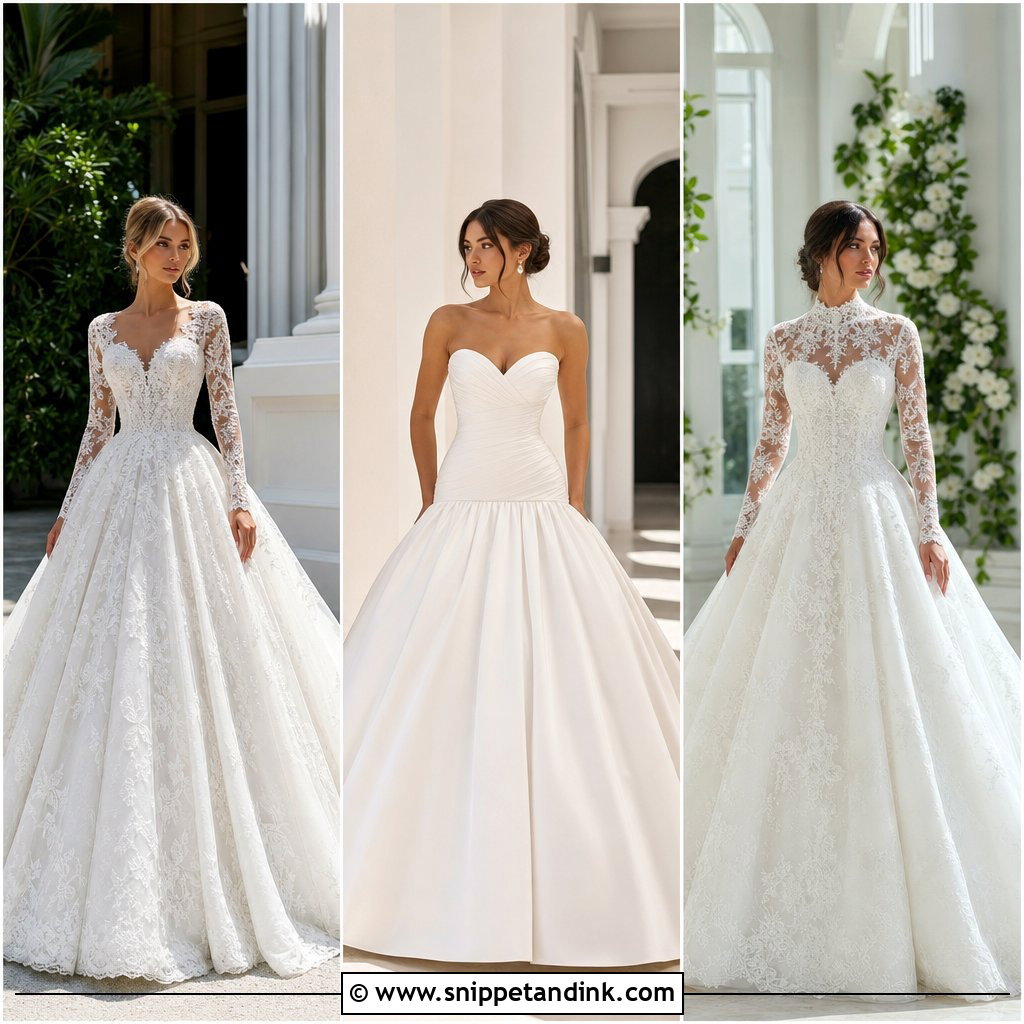
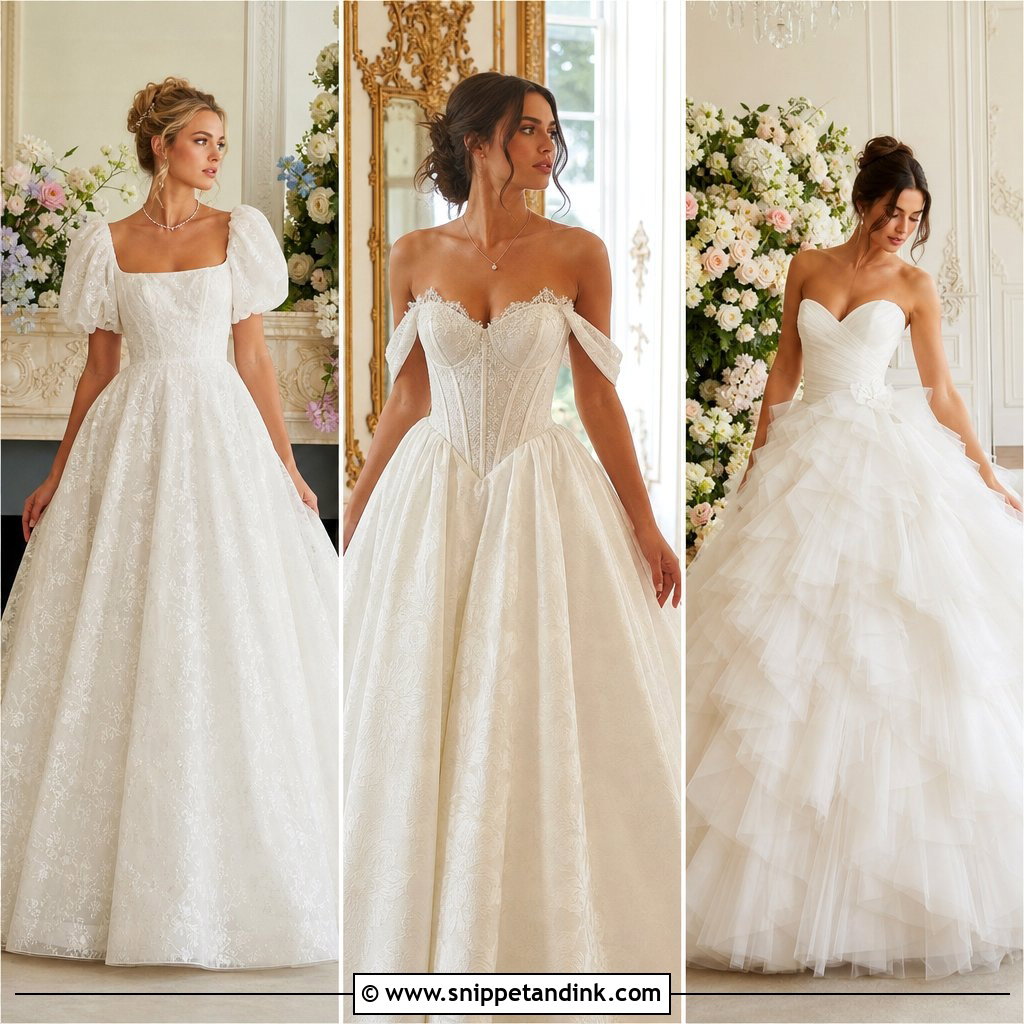
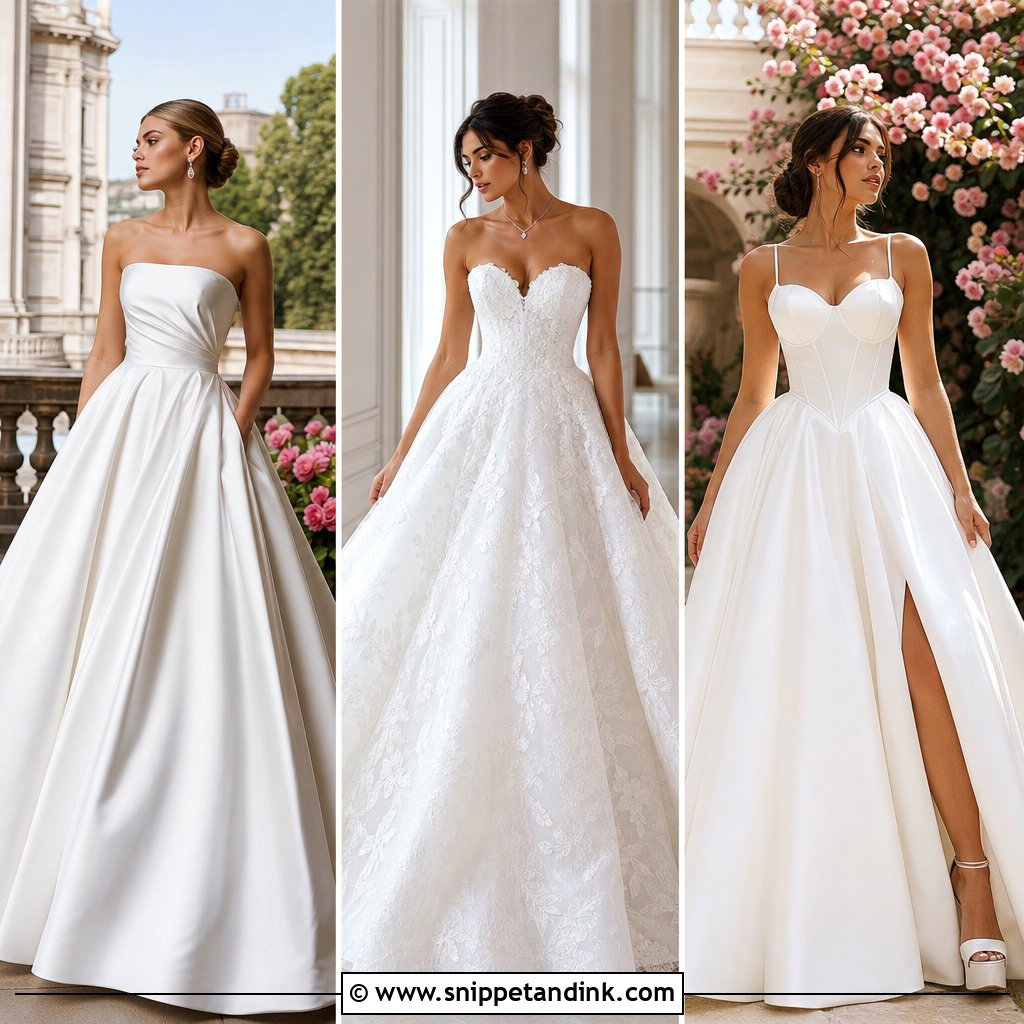
Strapless is where most brides start, and the bodice decides everything. I want internal boning and a waist stay, a grosgrain band inside that takes the weight of the skirt off your ribs, because a full silk skirt can be surprisingly heavy. Soft box pleats from a fitted natural waist hold their shape and still sway. Pearl drops, pointed ivory pumps and a fingertip veil with a plain edge. A sleek bun shows the neckline, and white roses or calla lilies keep the bouquet compact. A ballroom or historic estate is its natural home.
2. Off Shoulder Silk Wedding Dress Ballgown
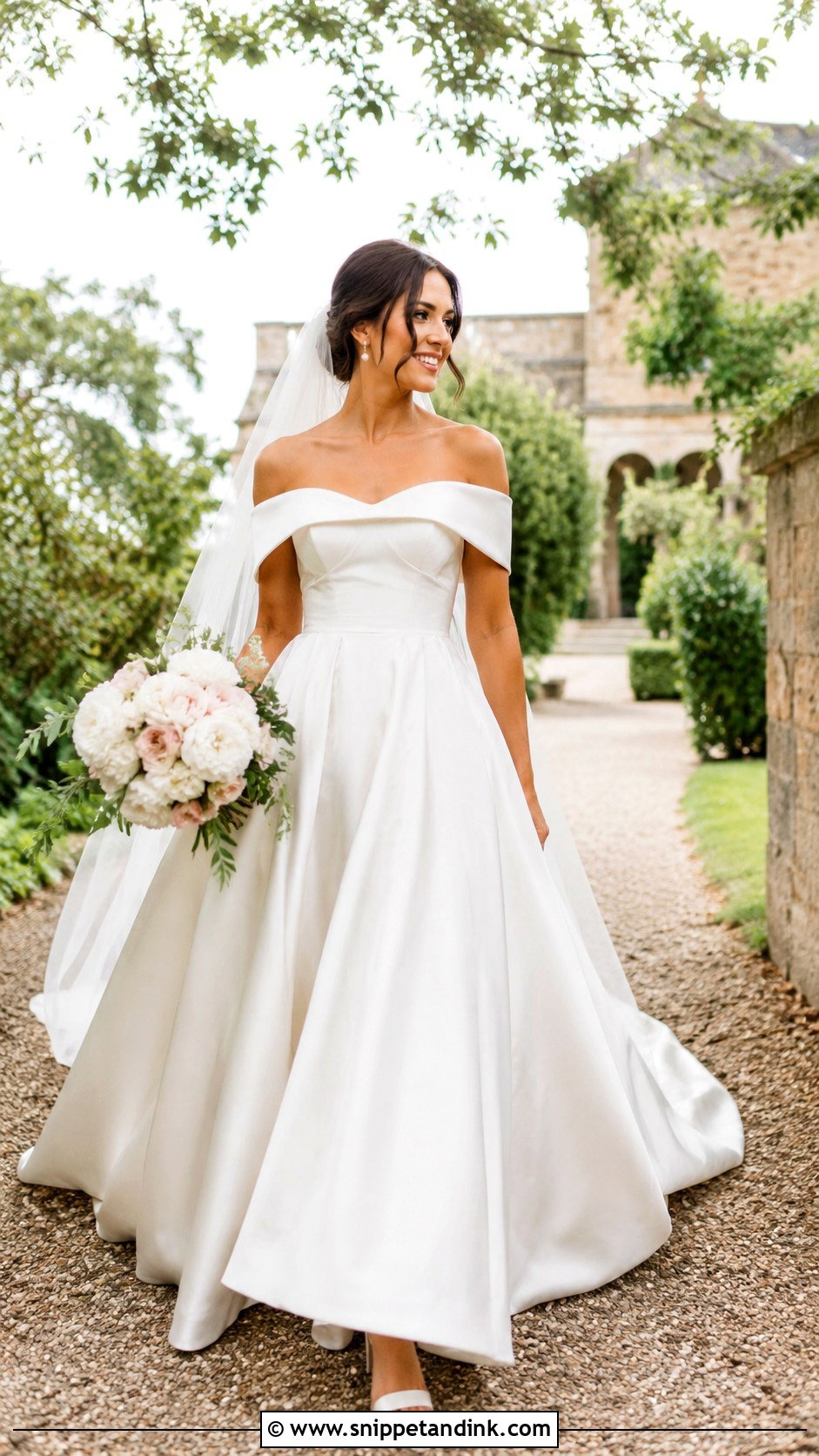
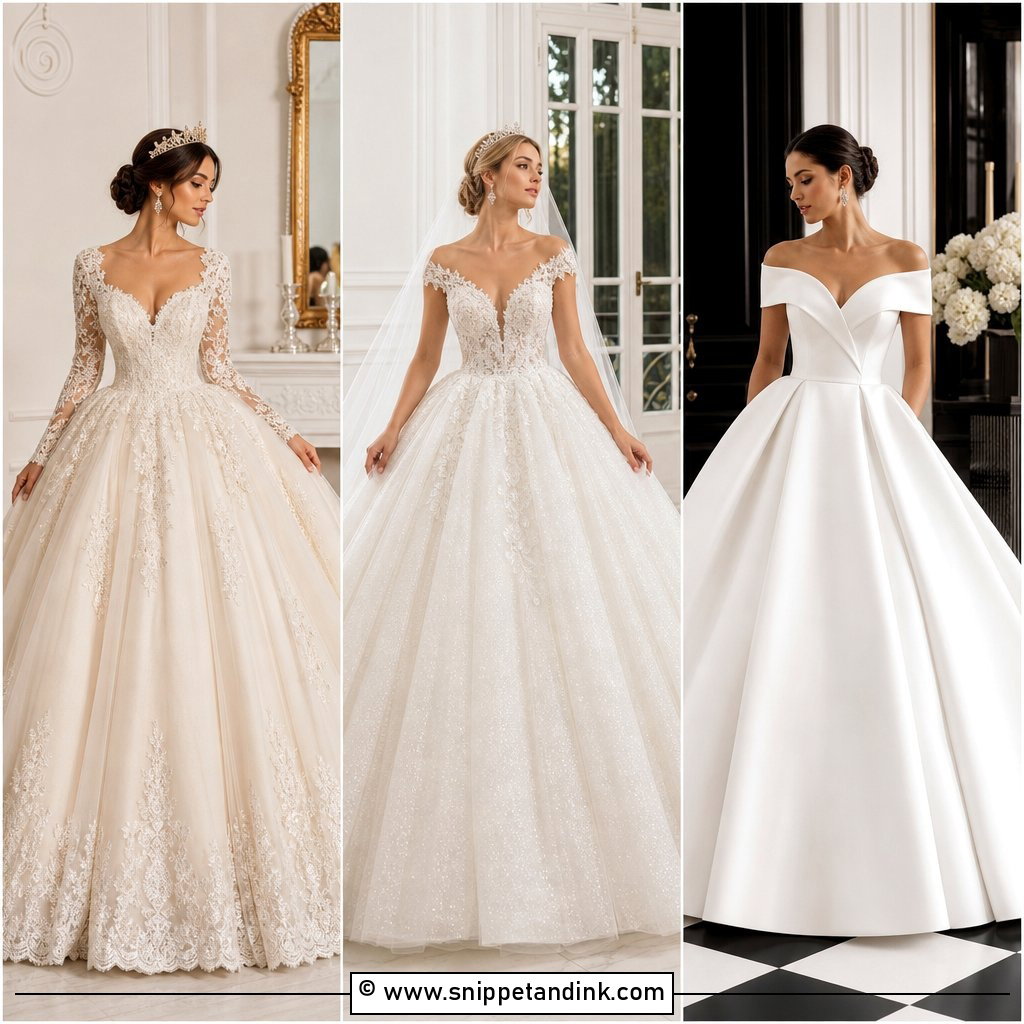
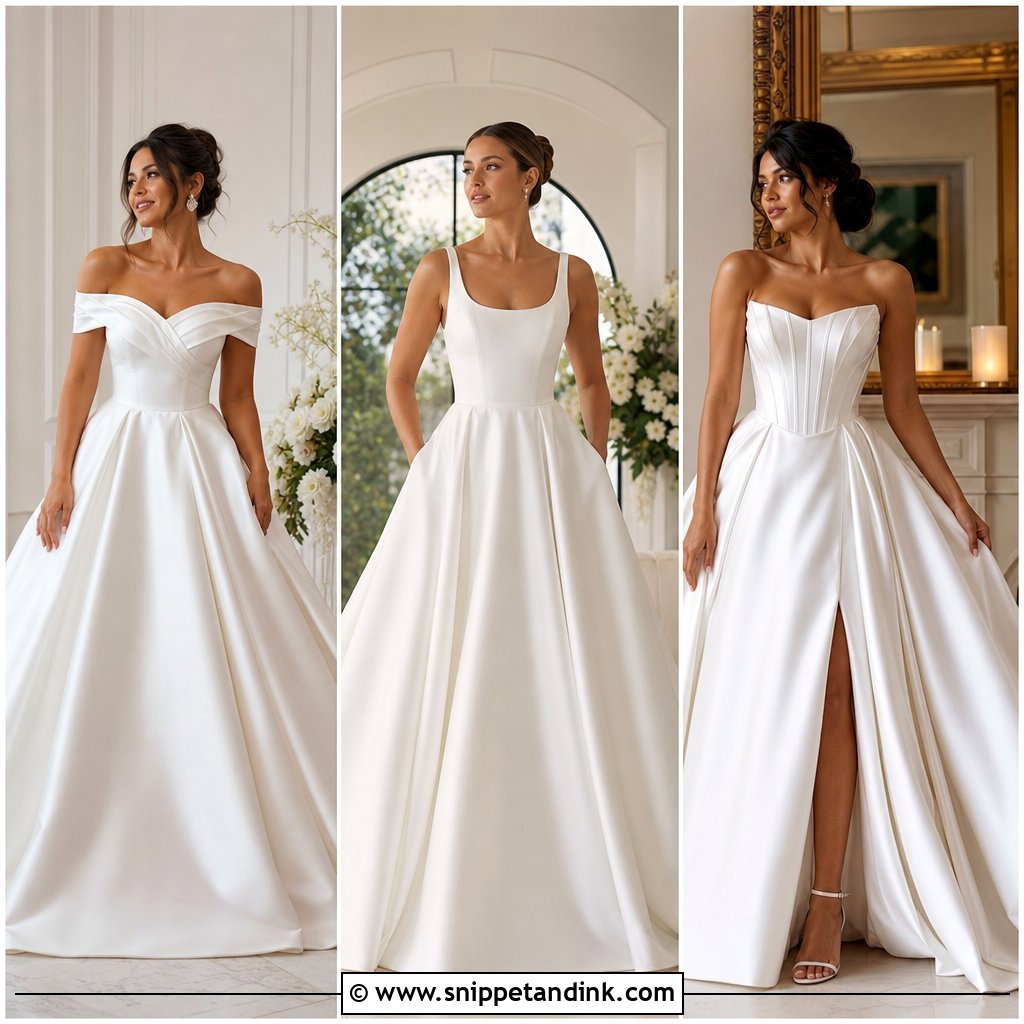
An off-shoulder band only works if it stays on the arms. Before anything else, I ask the bride to lift her arms as if she’s hugging her mother; if the band rides up, the fitter adds gripper elastic or attaches it more firmly to the corset. Controlled skirt volume balances the bare neckline into an hourglass. A fine pendant, pearl studs and satin block heels for walking on grass. A low chignon or side-swept waves keep the shoulders clear, with the chapel veil pinned beneath. Loose peonies and greenery suit a garden estate or conservatory.
3. Long Sleeve Silk Wedding Dress Ballgown
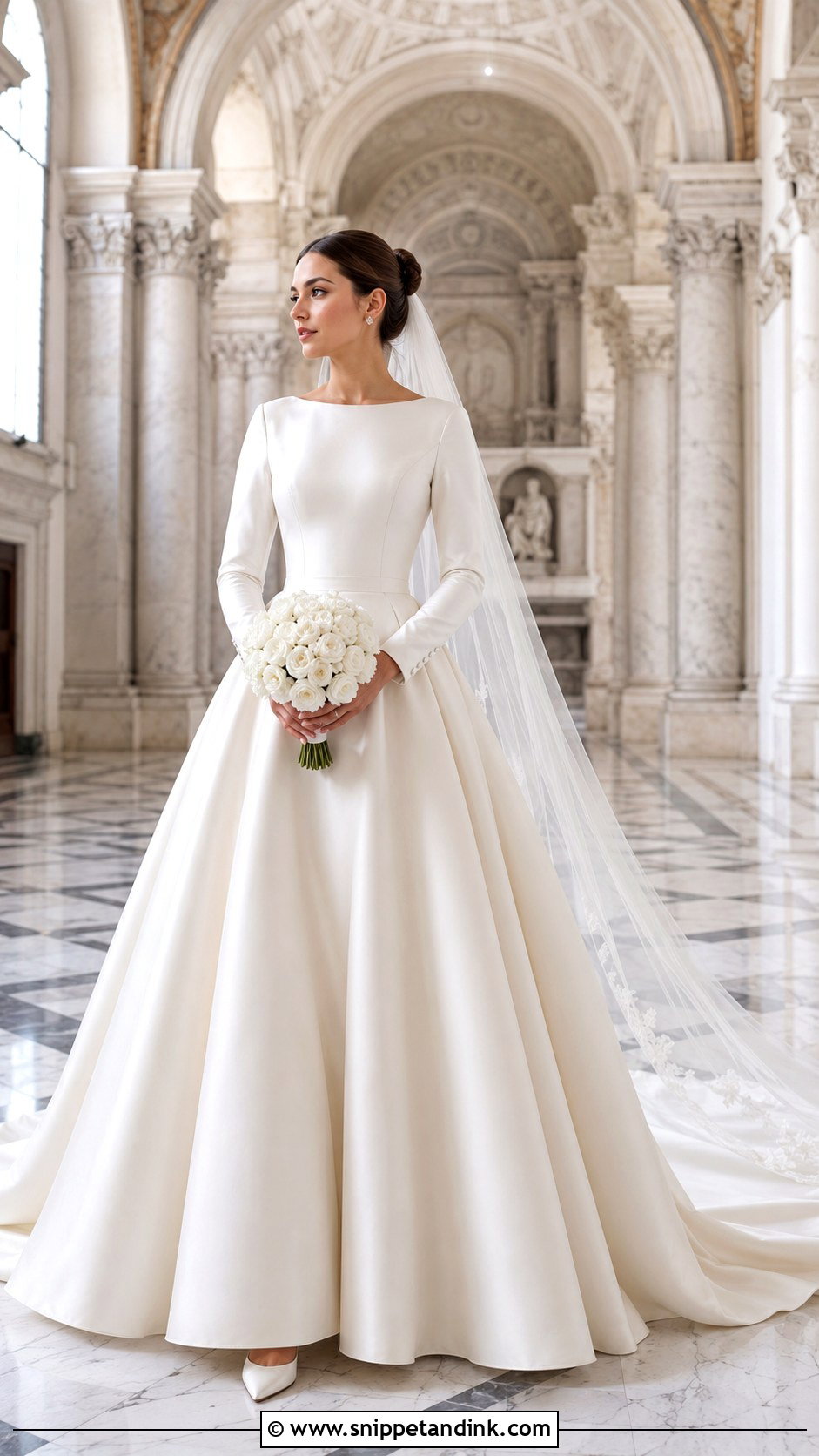
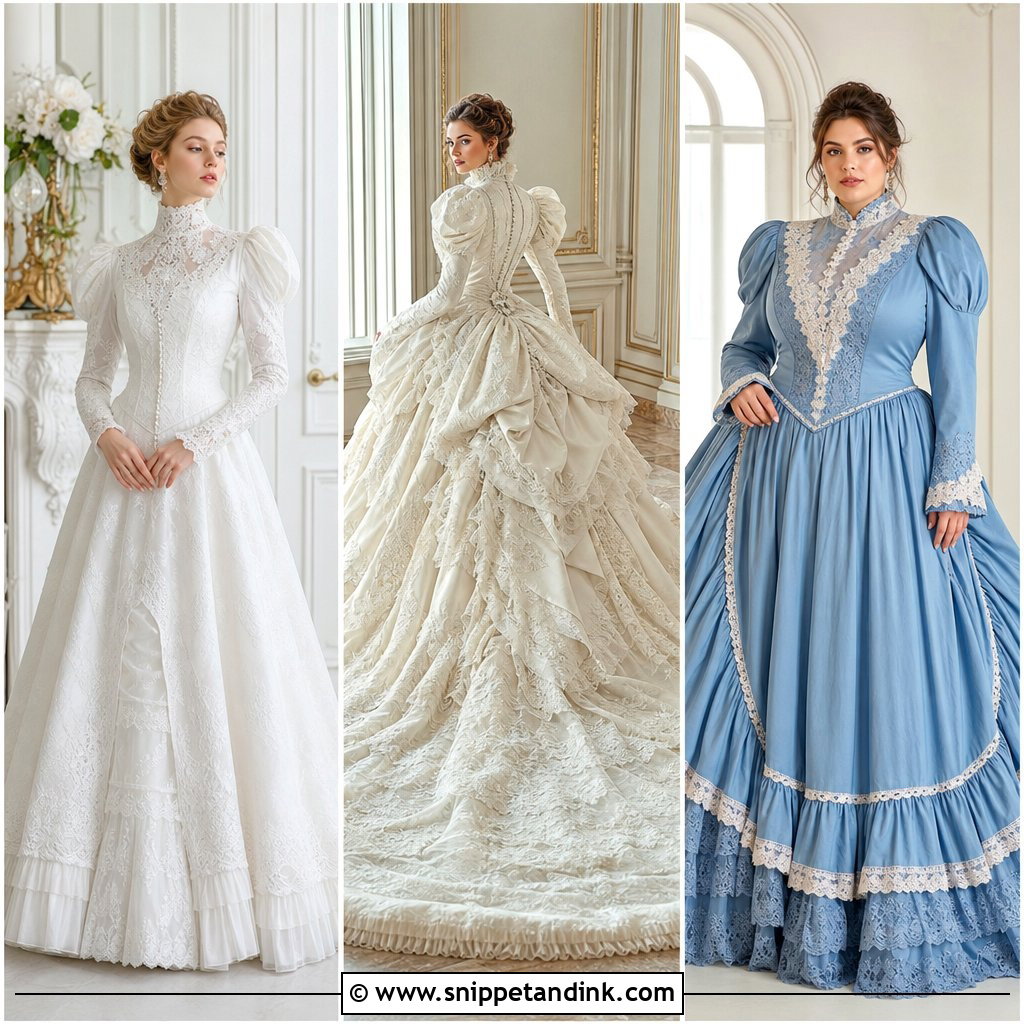
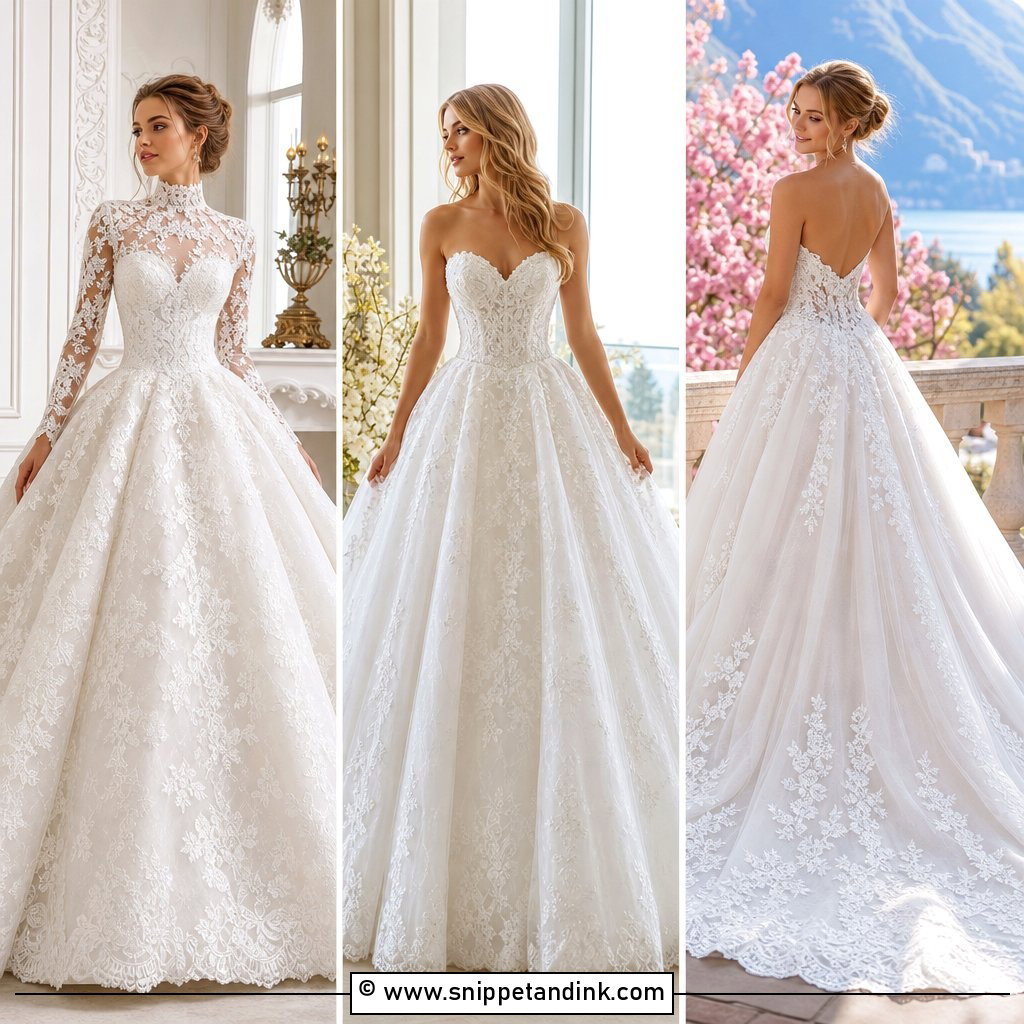
For a cool-weather wedding, a long-sleeve silk wedding dress ballgown gives coverage and still feels formal. Fitted silk sleeves with wrist buttons look sharp but can bind when you raise your arms, so I check the armhole height and ask for a gusset or slightly looser sleeve if hugging is uncomfortable. A bateau or shallow V keeps it from feeling closed in. Crystal studs, a plain cathedral veil and closed ivory pumps; a center-parted bun. A tailored coat or silk cape handles outdoor portraits. Winter, grand staircases, old architecture: that’s where it shines.
4. Square Neck Silk Wedding Dress Ballgown
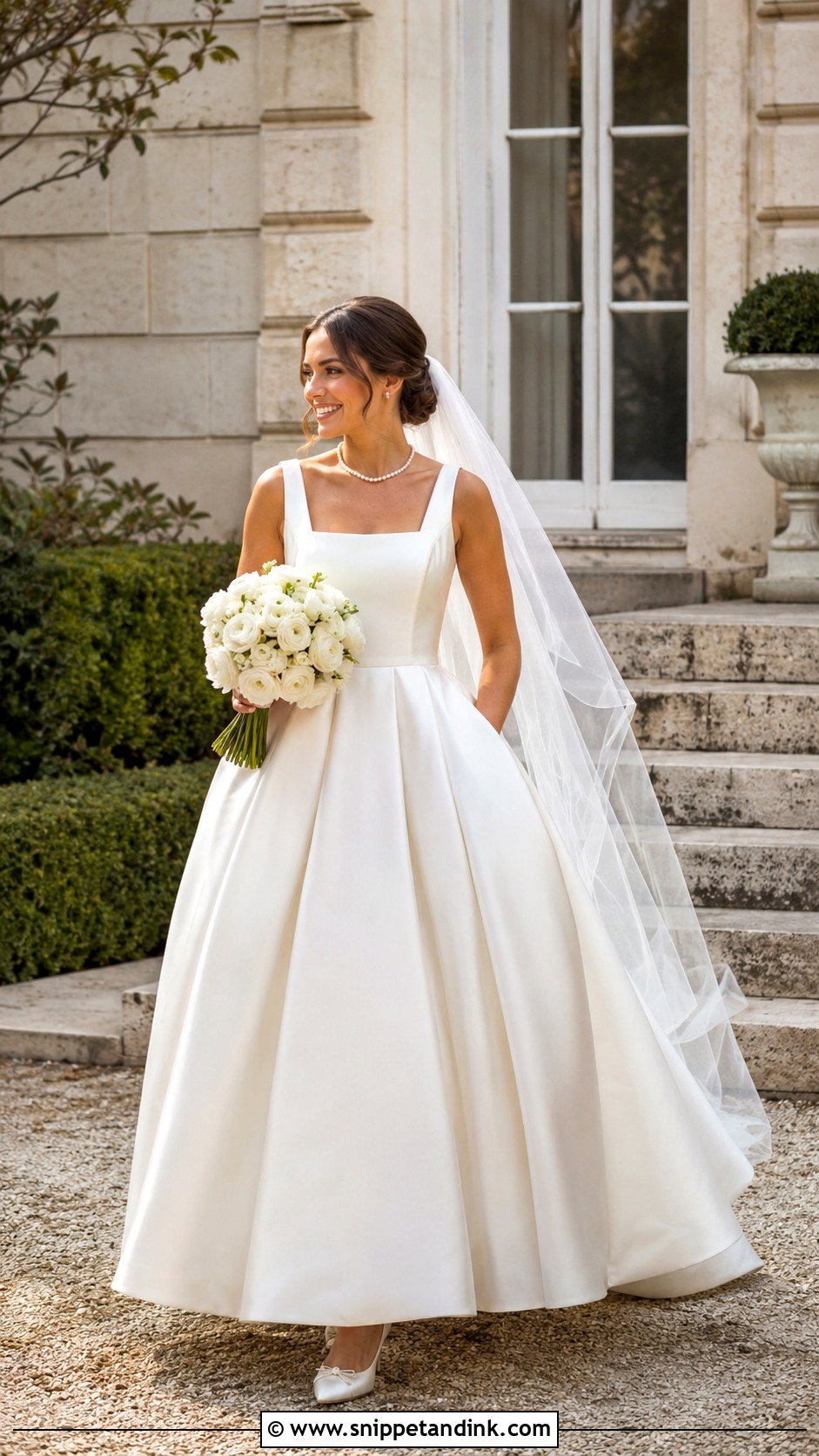
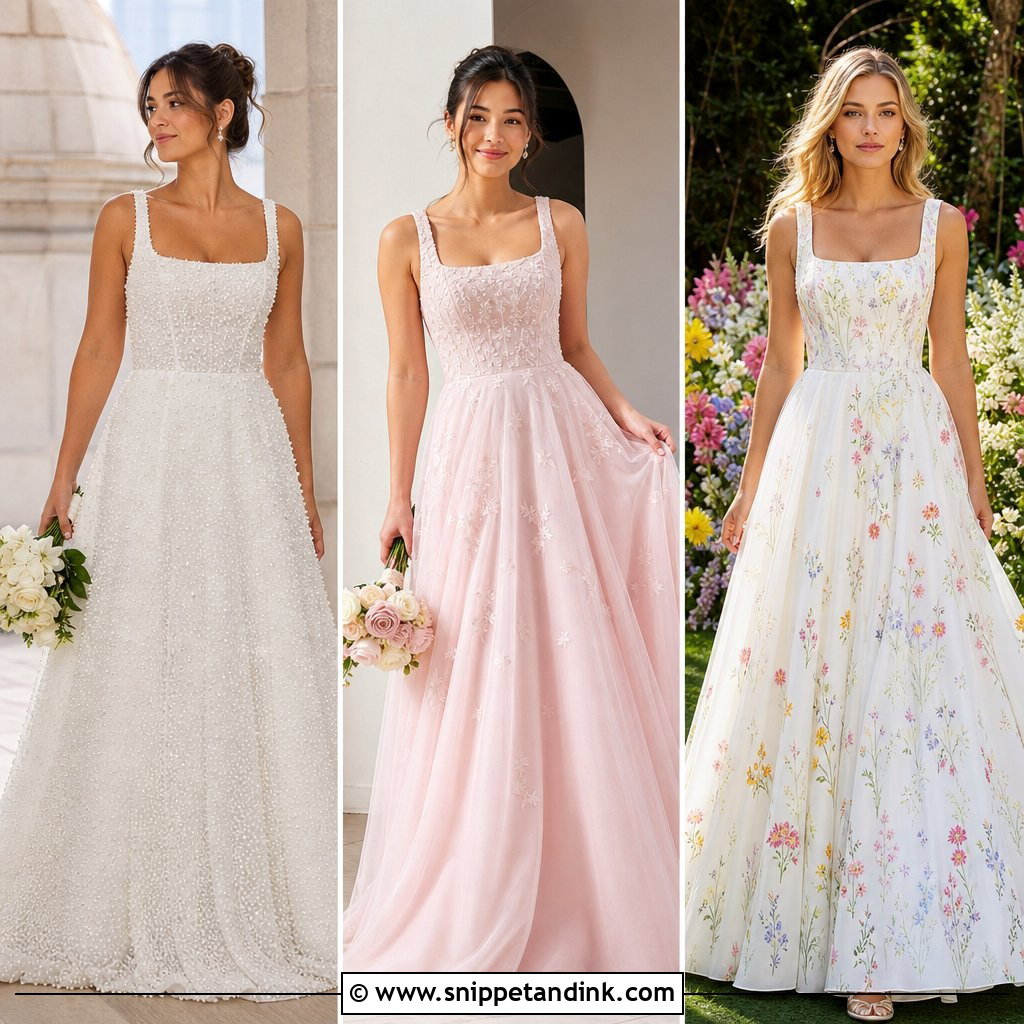
Square necklines have a slightly vintage character, and on a ballgown the wide straps make it far more secure than strapless. I’d check where the straps land, though: too close to the shoulder edge and they slide off when you turn. A natural waist with deep pleats gives crisp volume. A short pearl necklace with matching earrings and pointed slingbacks. A soft updo with a few face-framing pieces, a sheer chapel veil, and a round bouquet of ranunculus and roses. Modest without being prim, it suits museums and historic houses.
5. Sweetheart Corset Silk Wedding Dress Ballgown
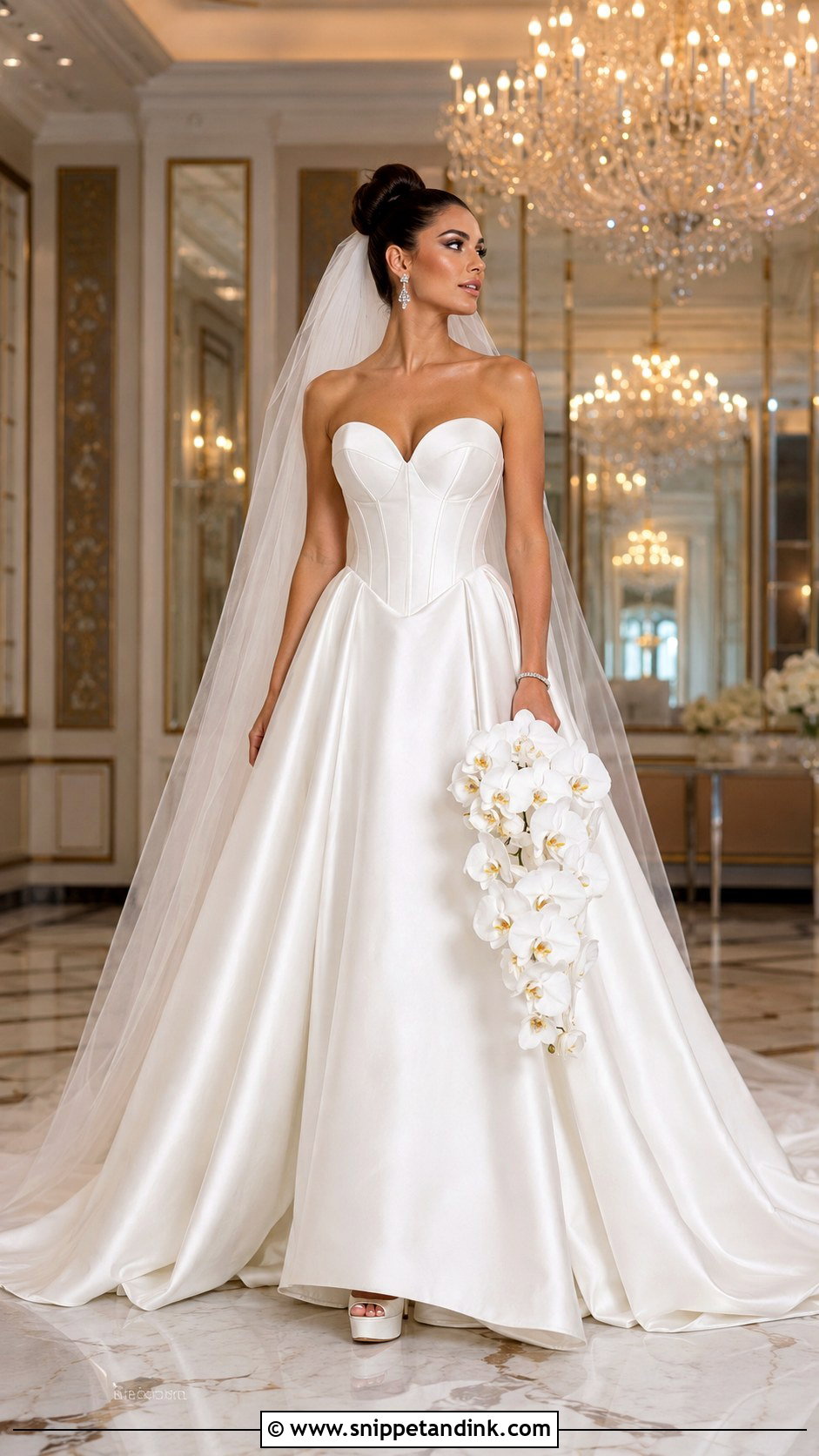
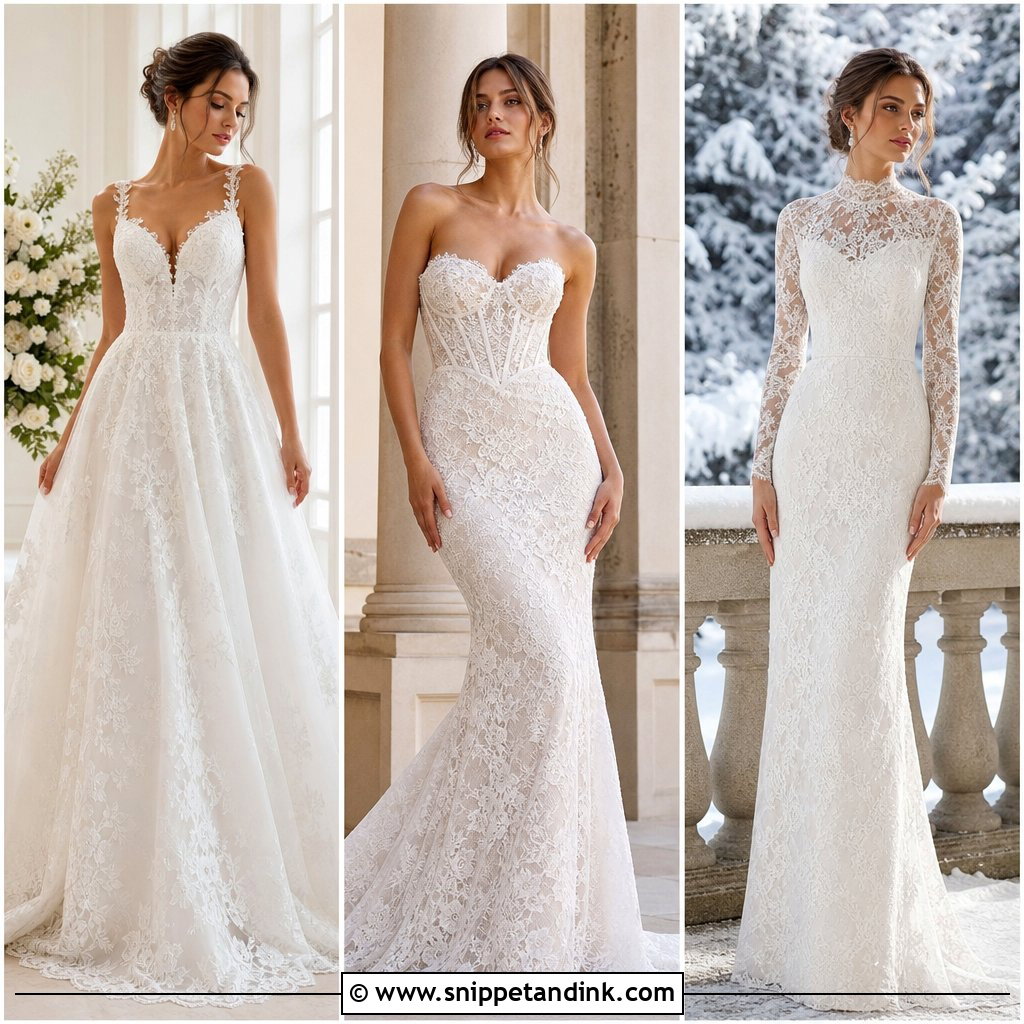
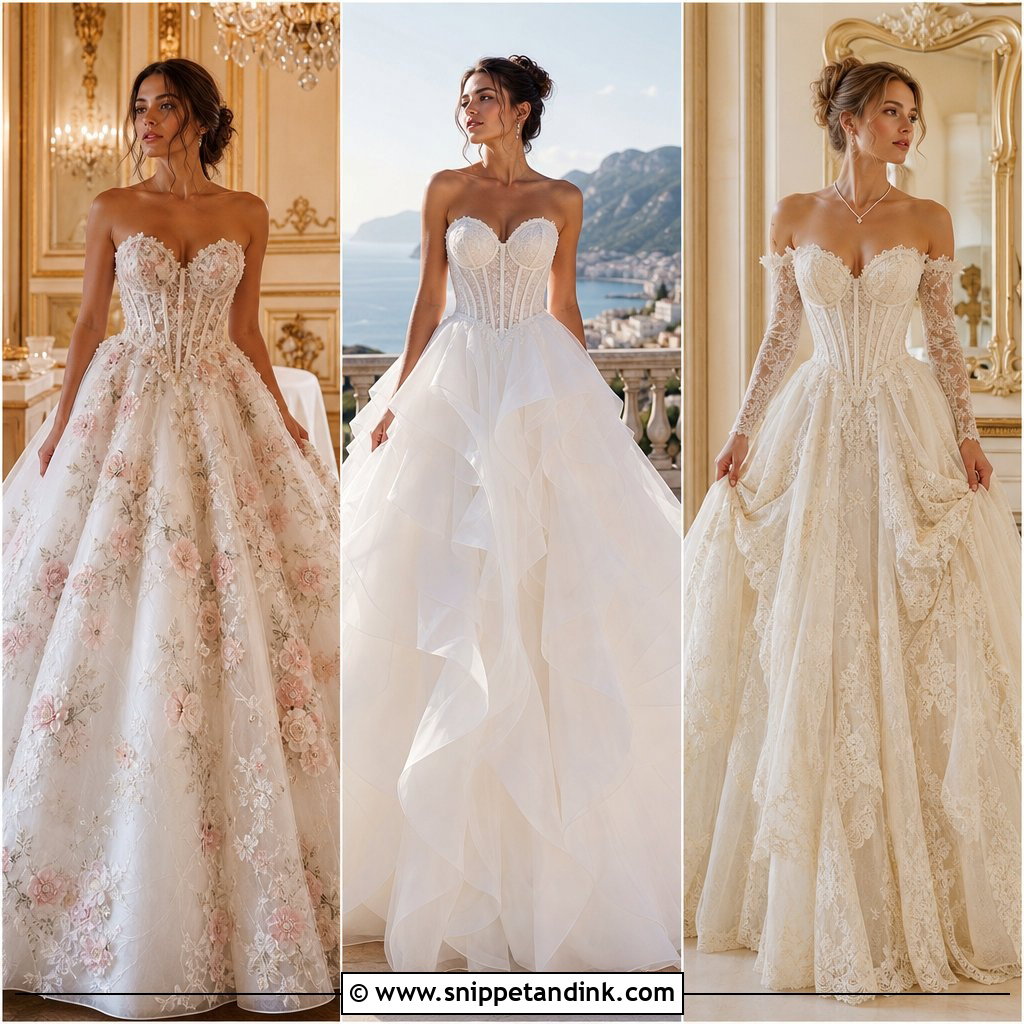
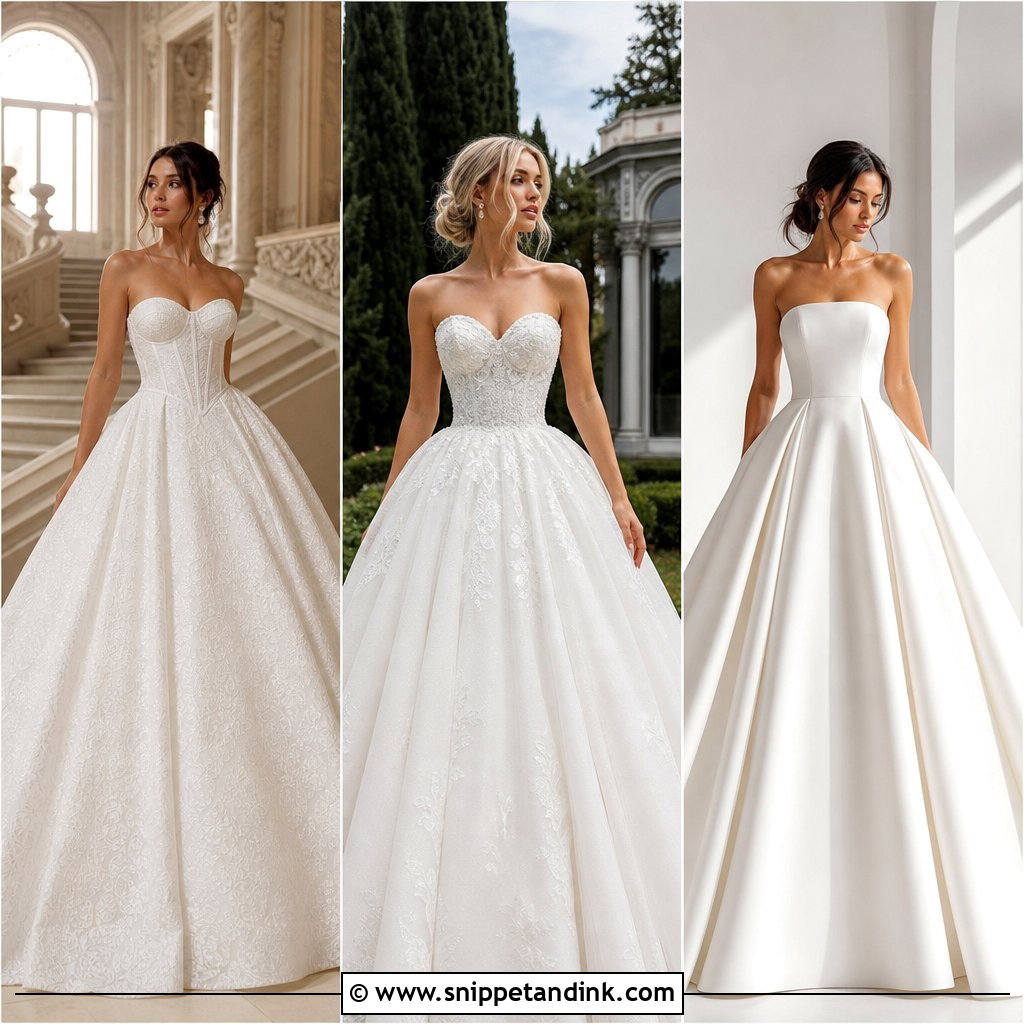
A sweetheart corset silk wedding dress ballgown pairs a romantic neckline with the support a heavy skirt needs. Clean paneling and subtle boning look better than visible cups. Where I’d pay attention: the dip of the sweetheart should sit at the center of your bust, and on a smaller chest it can gape, which a fitter fixes by shaping the cups, not just by taking in the sides. A skirt from the natural waist with a long train, crystal drops, a tennis bracelet and platform heels hidden under the hem. A high bun and cathedral veil. Cascading orchids and roses for a wide-aisle ballroom.
6. Basque Waist Silk Wedding Dress Ballgown
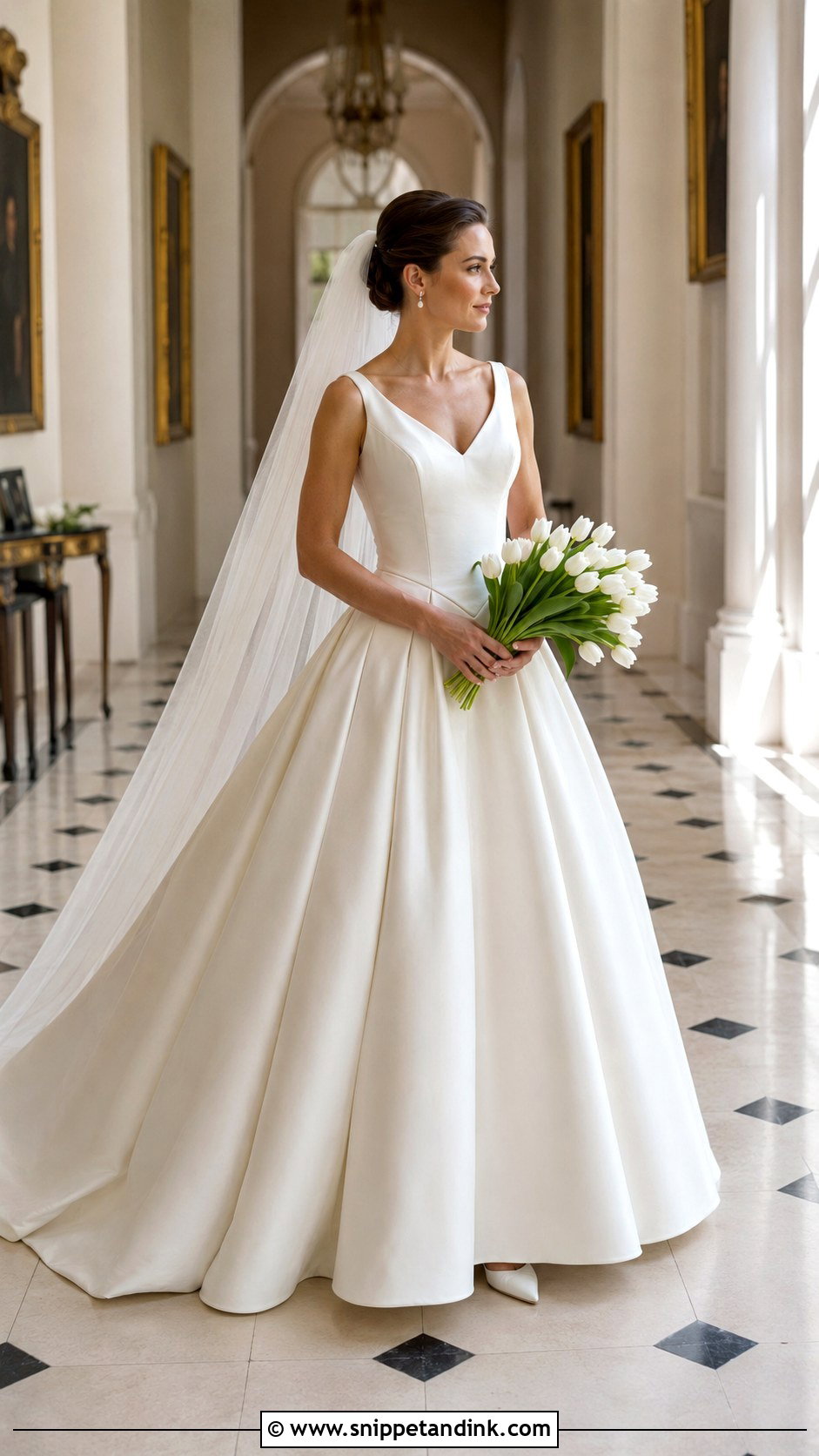
Few shapes lengthen the body like a basque waist. The V-shaped point carries the eye down before the silk opens into a big skirt. Minimal seaming on the bodice and broad pleats keep it refined. Accessories should stay out of the way: pearl button earrings, satin pumps, a thin bracelet. A soft French twist and a long plain veil. Tulips or calla lilies repeat the long line. One caution: on a short torso the point can sit very close to the hips, so I compare a couple of point depths in the mirror before committing.
7. Drop Waist Silk Wedding Dress Ballgown
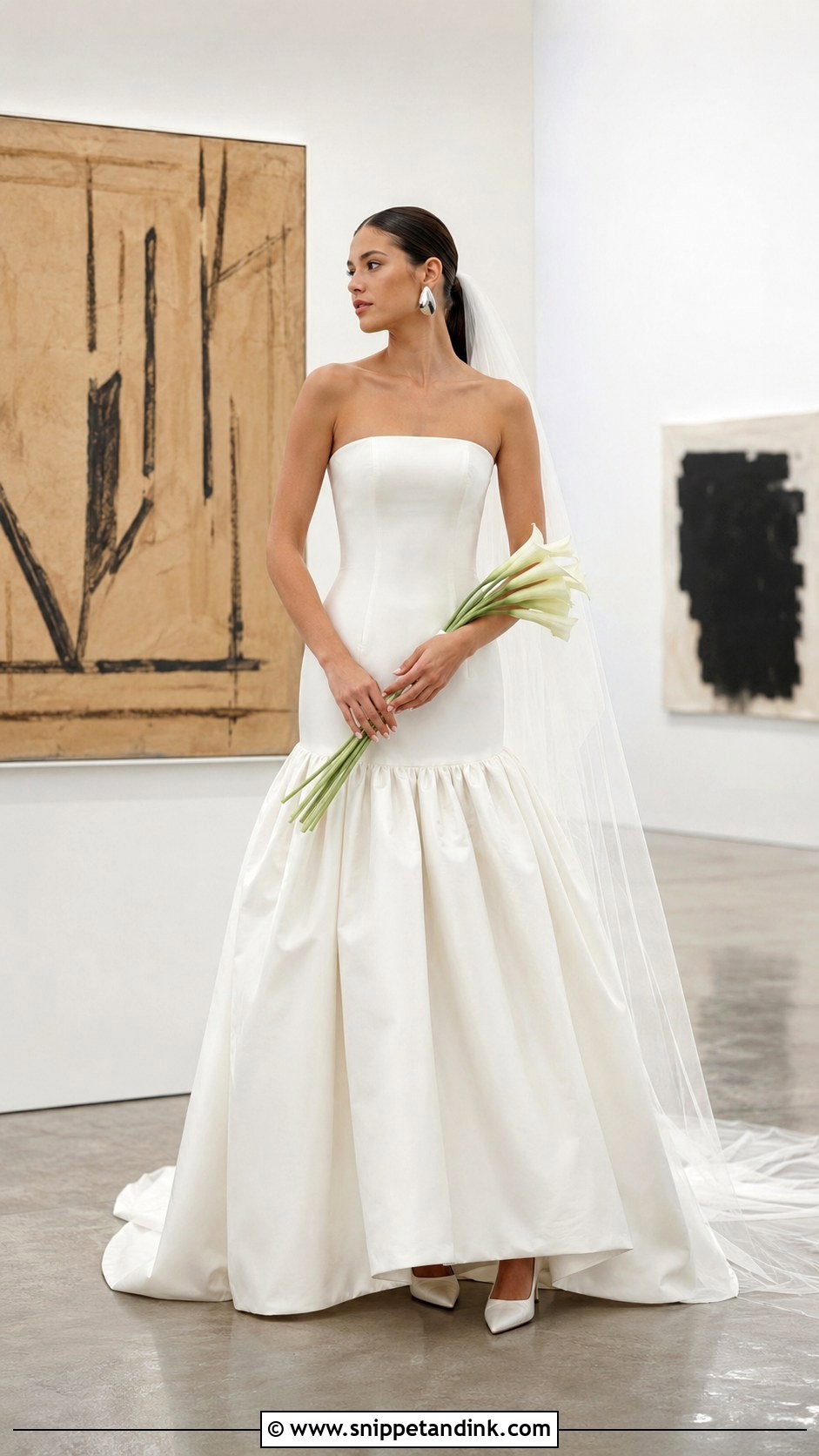
A drop-waist silk wedding dress ballgown moves the seam below the natural waist, so the bodice runs longer and the skirt opens around the hips. It is fashion-forward, and it is unforgiving about length: if the bodice ends even an inch in the wrong spot, it looks like the dress is slipping. A scoop or strapless neckline balances it. Sculptural earrings, pointed kitten heels and a sleek low ponytail. A light cathedral veil adds movement without bulk. No ornate necklace or big headpiece. It belongs in galleries and modern architectural spaces.
8. High Neck Silk Wedding Dress Ballgown
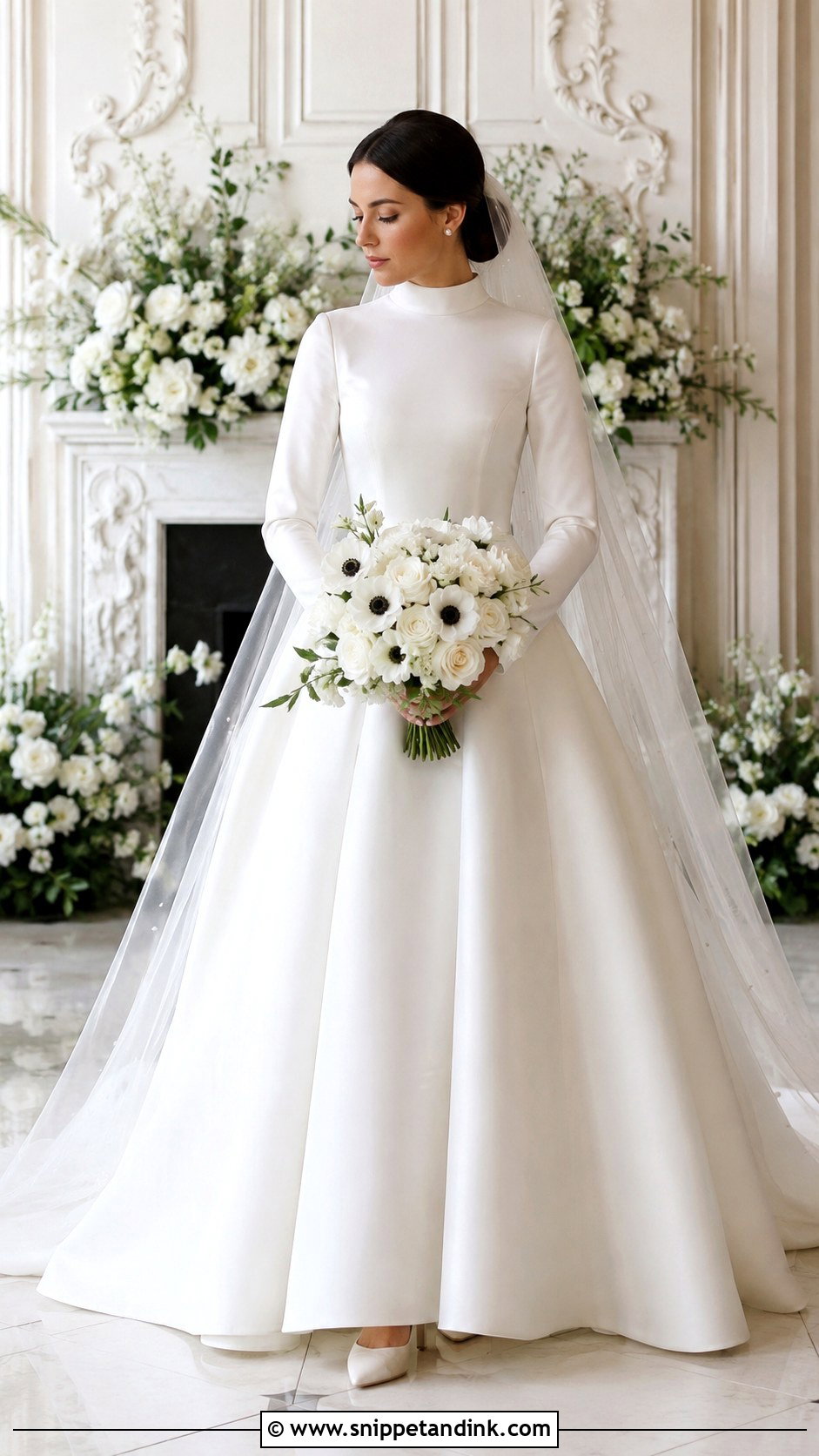
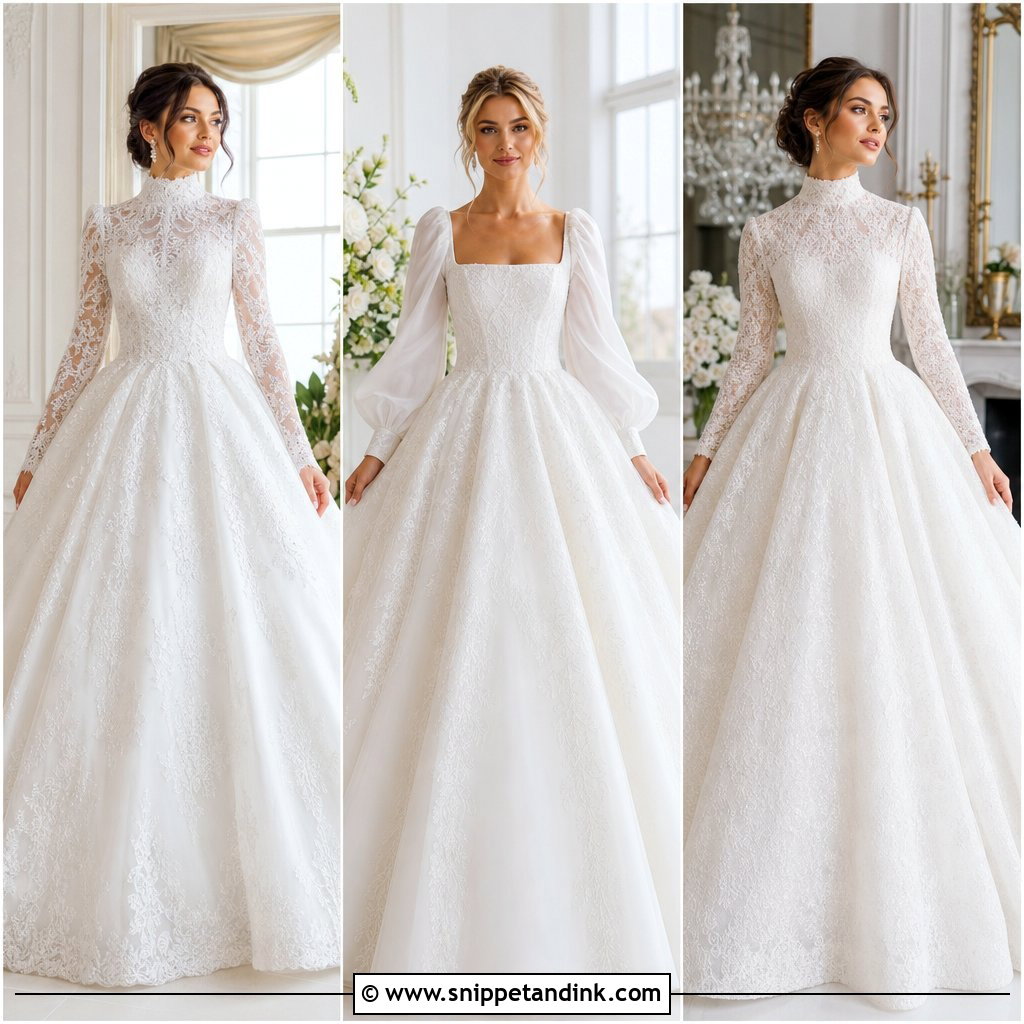
Modest and commanding at once, a high neck draws attention upward while the full skirt brings the drama. A soft mock neck or gathered collar on clean shoulders keeps it from feeling stiff. I always test a high neck with the bride’s head turned and tilted down, since silk collars can rub or crease at the throat over a long day. Pearl studs, closed pumps and a polished low bun; skip the necklace. A sheer cathedral veil under the bun or a long silk cape at the shoulders. Anemones and roses for a formal indoor wedding in a cooler season.
9. V Neck Silk Wedding Dress Ballgown
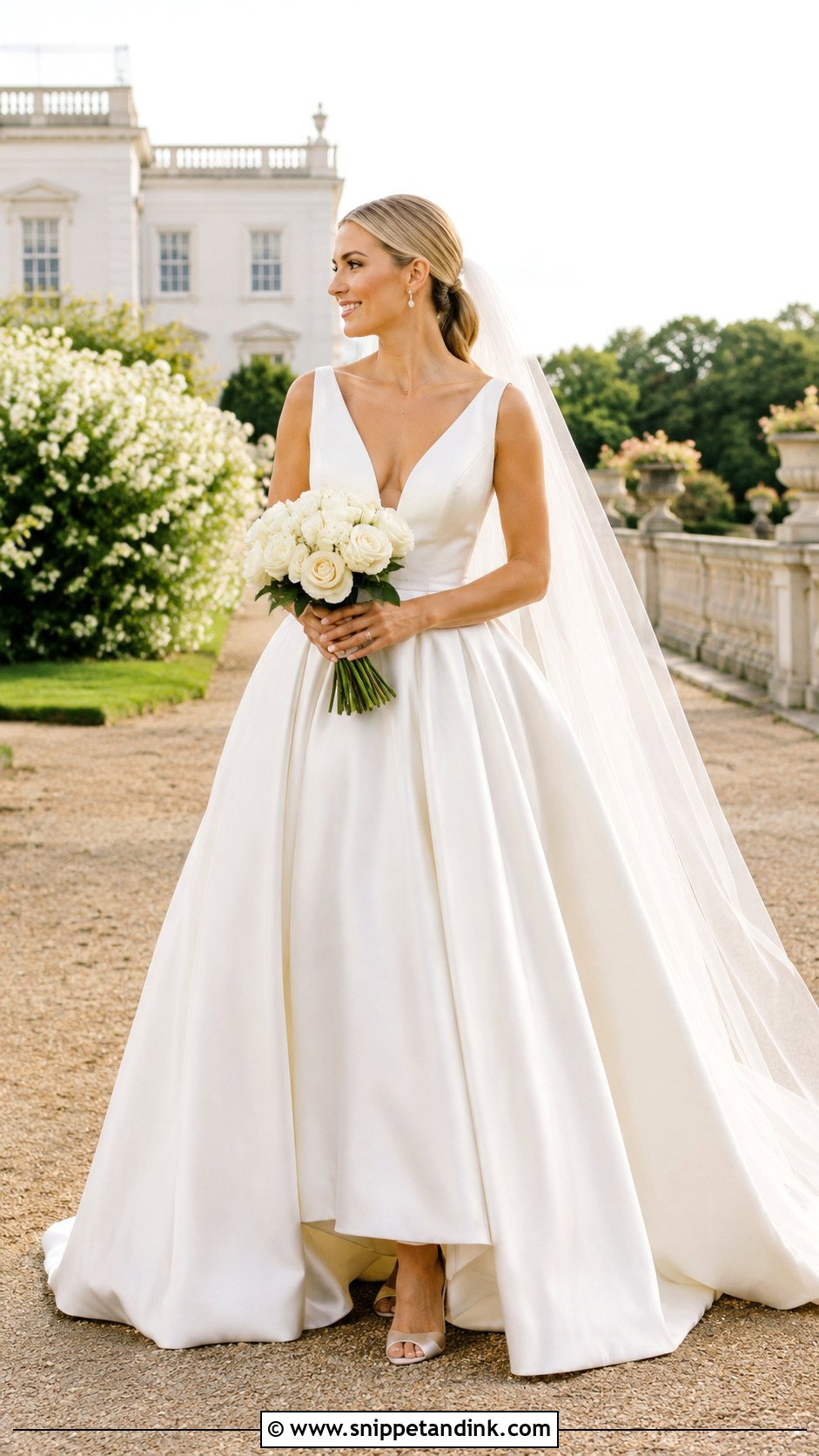
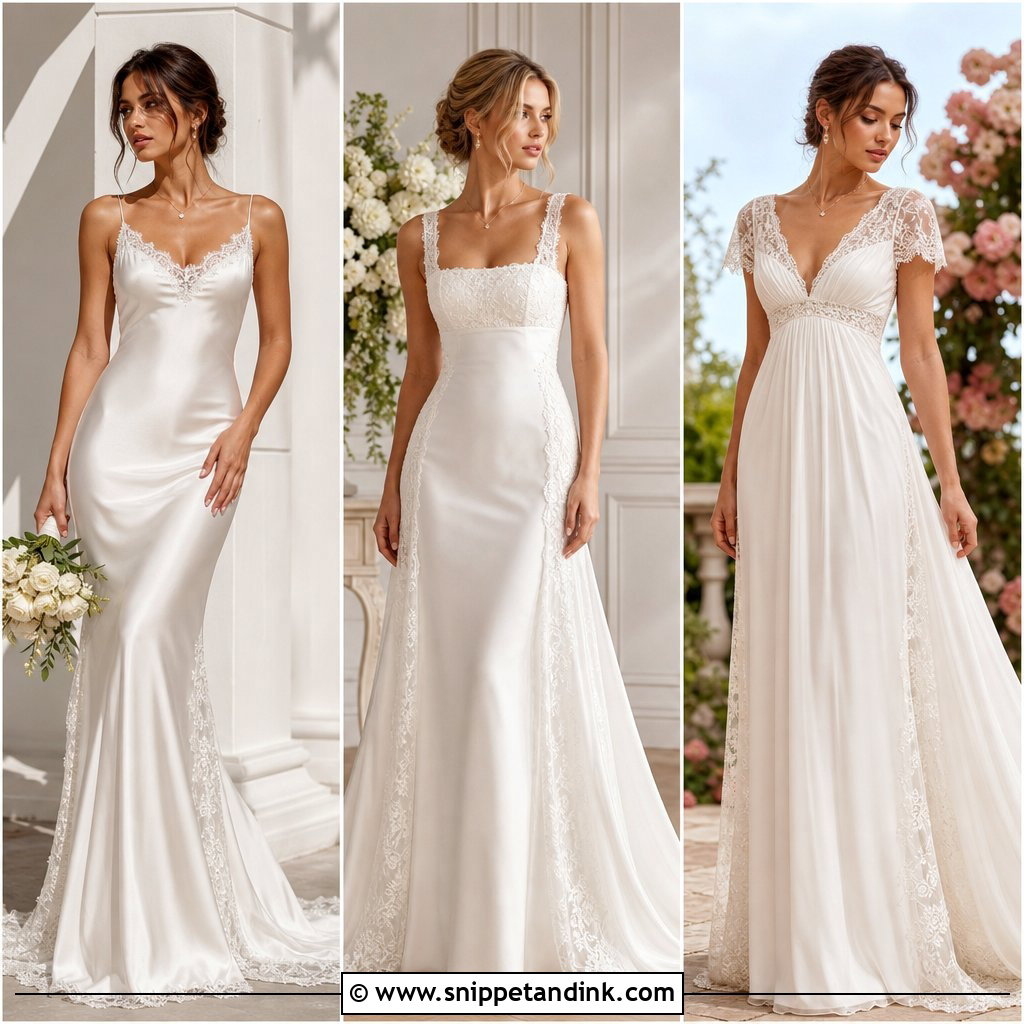
A V-neck lengthens the upper body if the depth is right. Wide straps, a structured bodice and a moderate V stay comfortable when you move; a deep plunge on silk needs fashion tape and an honest conversation about how much you’ll be bending to hug relatives. A full pleated skirt and defined waist balance it. A fine pendant, small diamond or crystal earrings and slingbacks. Waves gathered into a low ponytail soften the structure. A chapel veil and garden roses carry it from an outdoor ceremony to an indoor reception.
10. One Shoulder Silk Wedding Dress Ballgown
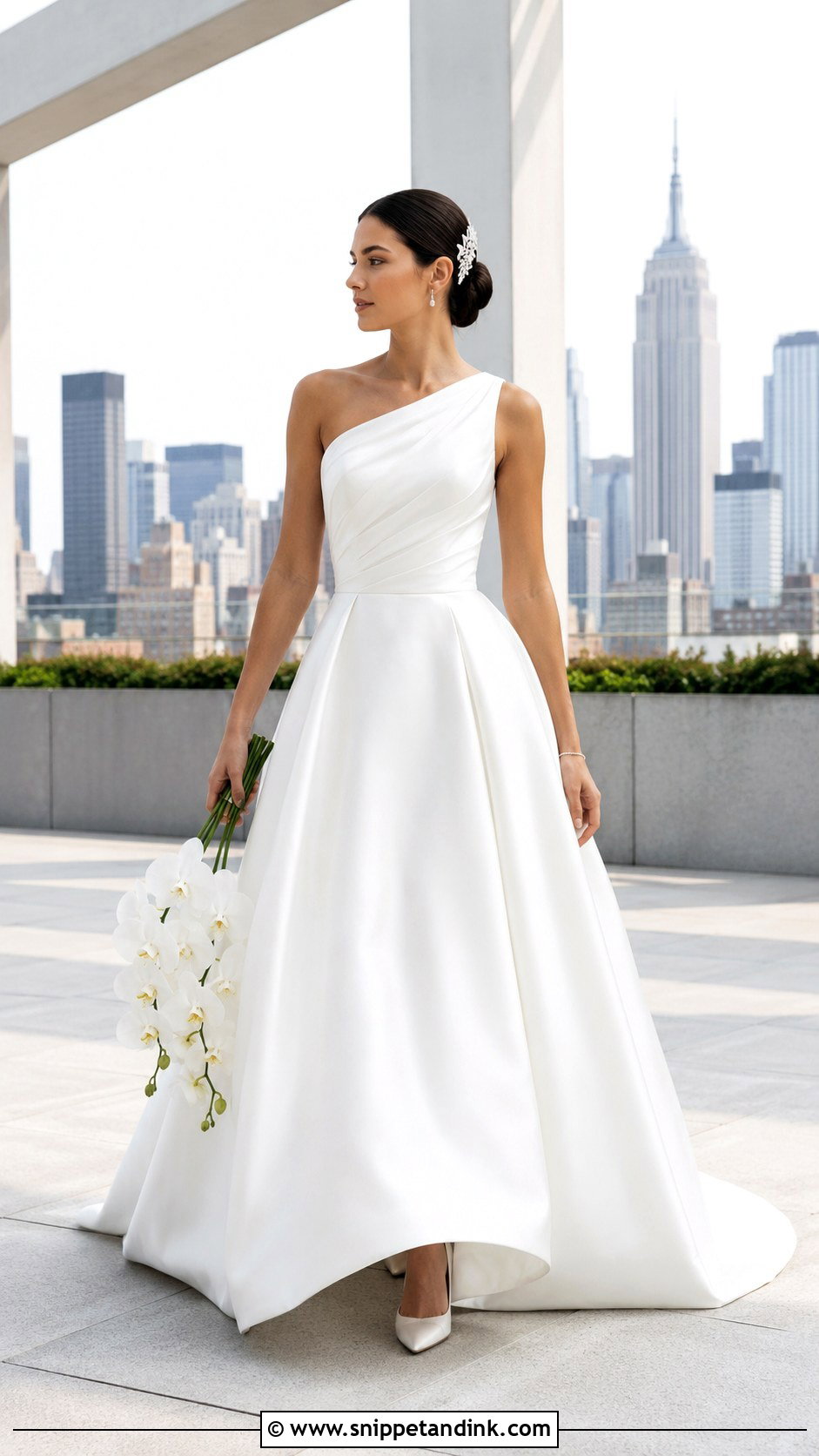
Can an asymmetrical neckline modernize a ballgown? It does, with the skirt left smooth. A fitted bodice with diagonal draping and a broad shoulder strap gives real support, which matters here because a single strap carries a lot of skirt weight on one side. I check that the opposite side of the bodice doesn’t pull down after a few minutes of walking. Leave that bare shoulder free of jewelry. Pointed pumps, a slim bracelet and a clean low bun; a sculptural comb instead of a veil. Long-stemmed orchids for a rooftop or gallery.
11. Silk Mikado Wedding Dress Ballgown
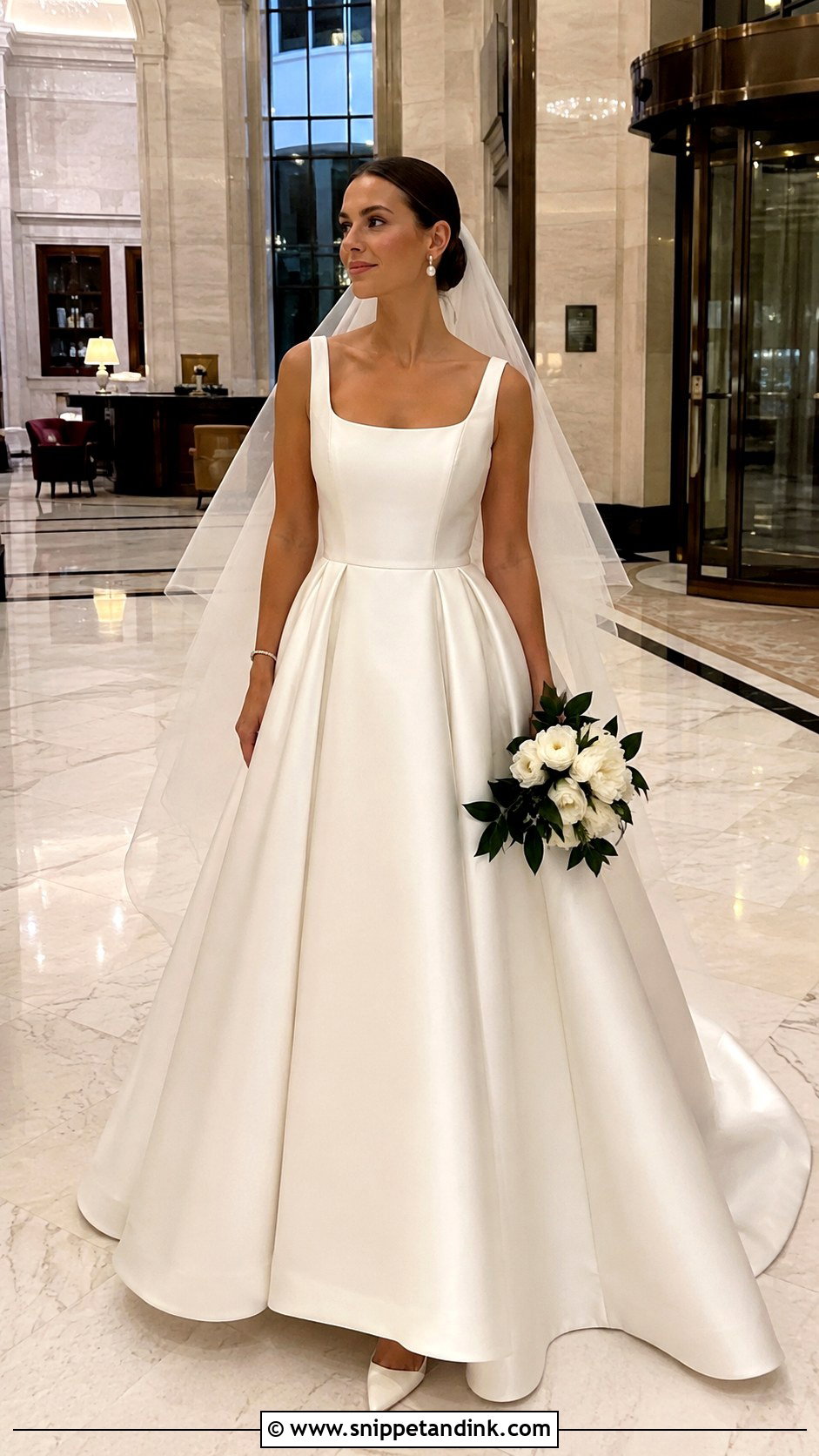
Silk mikado is the fabric I suggest when a bride wants the skirt to hold its outline by itself. It is heavy and crisp, and deep pleats stand out from the waist instead of collapsing. Because of that body, it needs almost no embellishment. A sleeveless bodice with broad straps, pearl earrings, a narrow bracelet and classic pumps. A smooth bun and plain long veil. White flowers with deep green leaves give contrast. Have the hem set so only the toe of your shoe shows as you walk; mikado won’t drape over a too-long hem, it will kick out.
12. Silk Satin Wedding Dress Ballgown
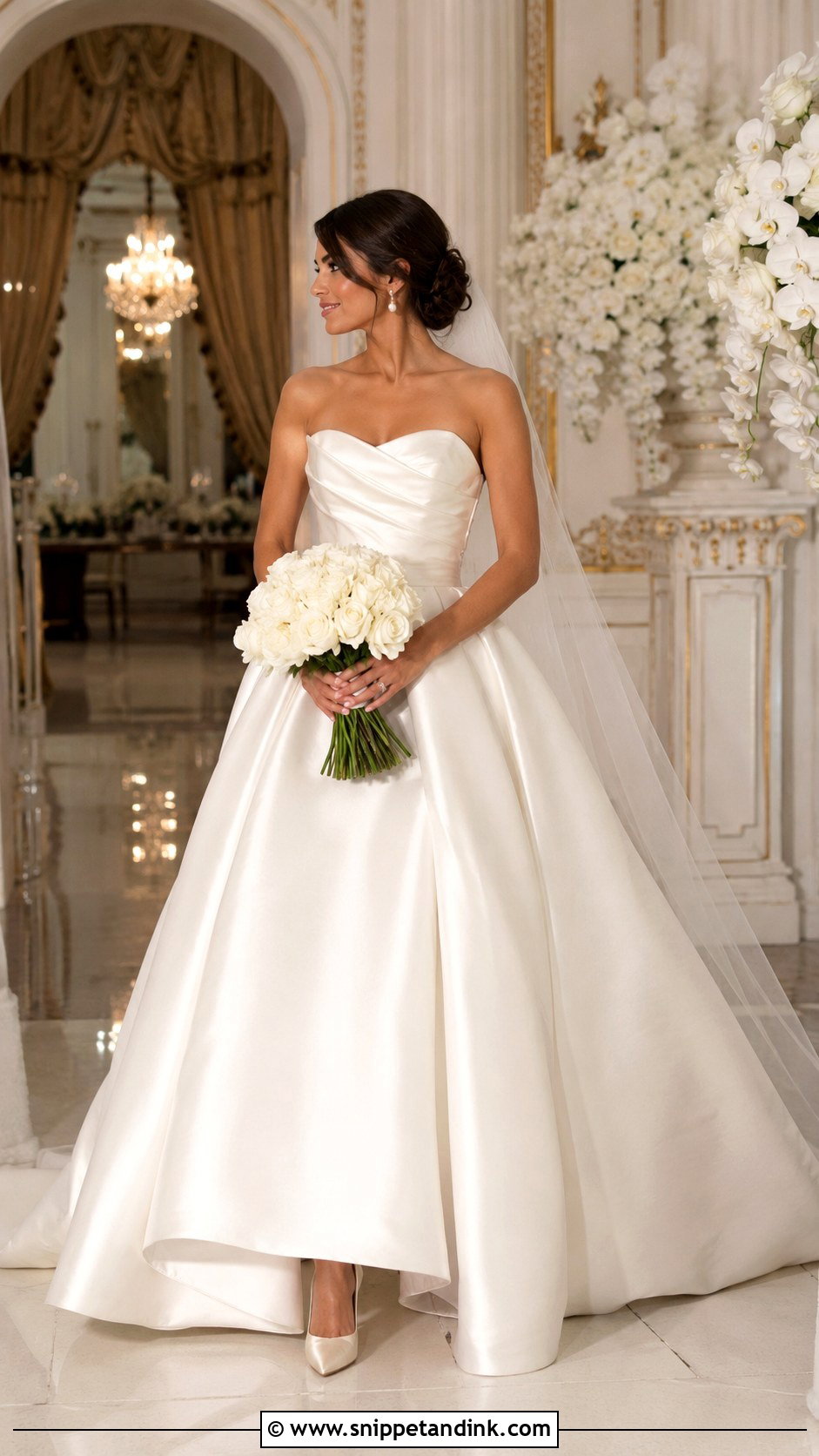
Silk satin has the smoothest surface and the brightest glow of the fabrics here. That same shine shows every pulled seam and every crease, so precise tailoring matters more than embellishment. A softly draped strapless bodice over a skirt that falls in broad folds. Pearl drops, ivory satin heels and a fine cathedral veil; a low bun with a side part. White roses with neatly wrapped stems. During fittings, look at the dress under indoor and outdoor light, and in a photo with flash, because satin can bounce light hard. Evening ballrooms suit it best.
13. Silk Organza Wedding Dress Ballgown
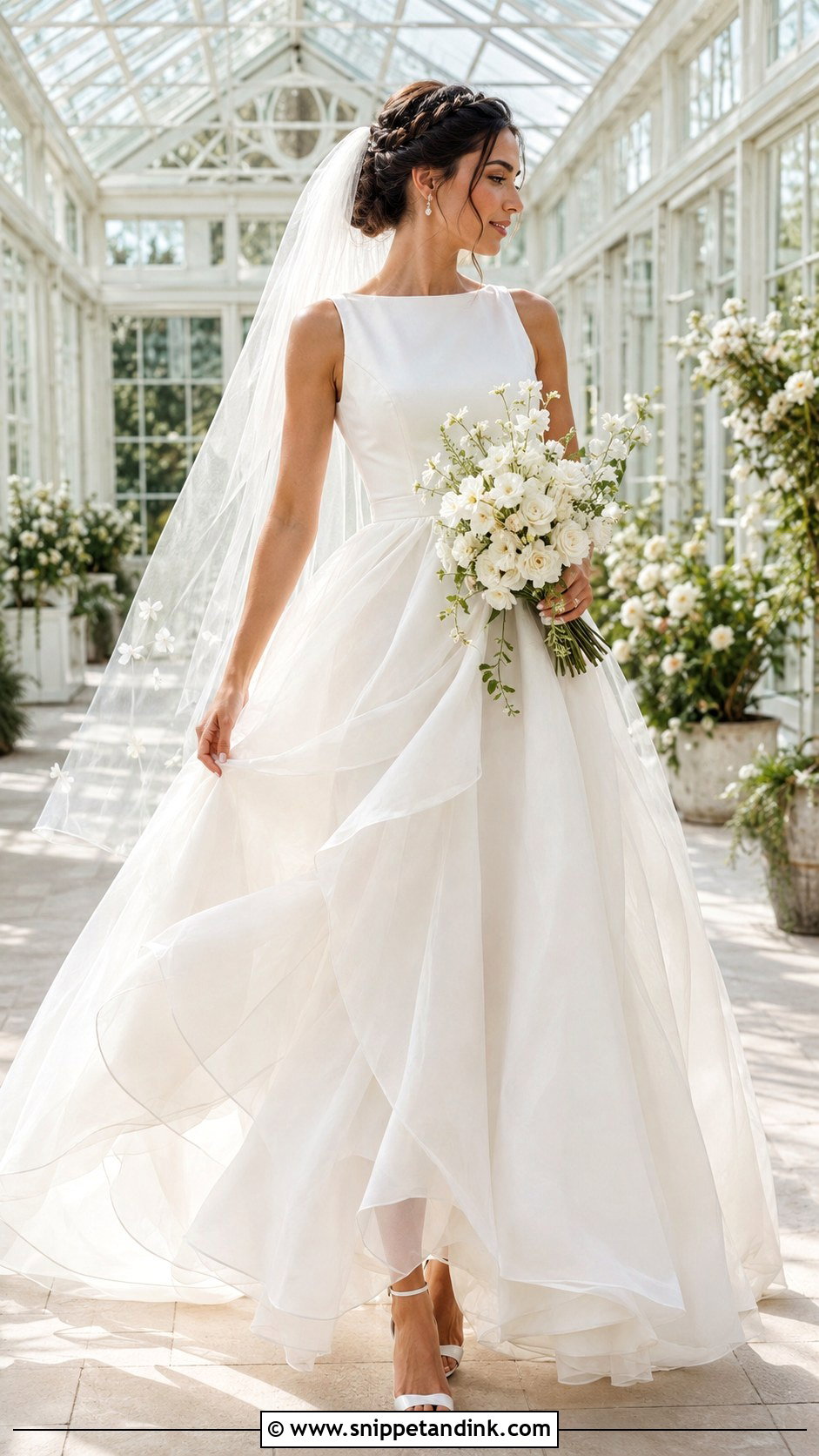
Silk organza gives you volume without visual weight. A fitted bodice over an opaque lining for coverage, with the skirt in soft tiers or gathered panels. Organza is crisp but delicate: it snags on beaded shoes, brooches and bouquet wire, so I suggest a bouquet with smooth ribbon-wrapped stems and plain ankle-strap heels. Crystal studs and a sheer fingertip veil. A soft braided updo stays put through a long day. Sweet peas, roses and fine greenery. Skip heavy beading, which flattens the floating effect. Spring and summer gardens or glass conservatories are made for it.
14. Silk Dupioni Wedding Dress Ballgown
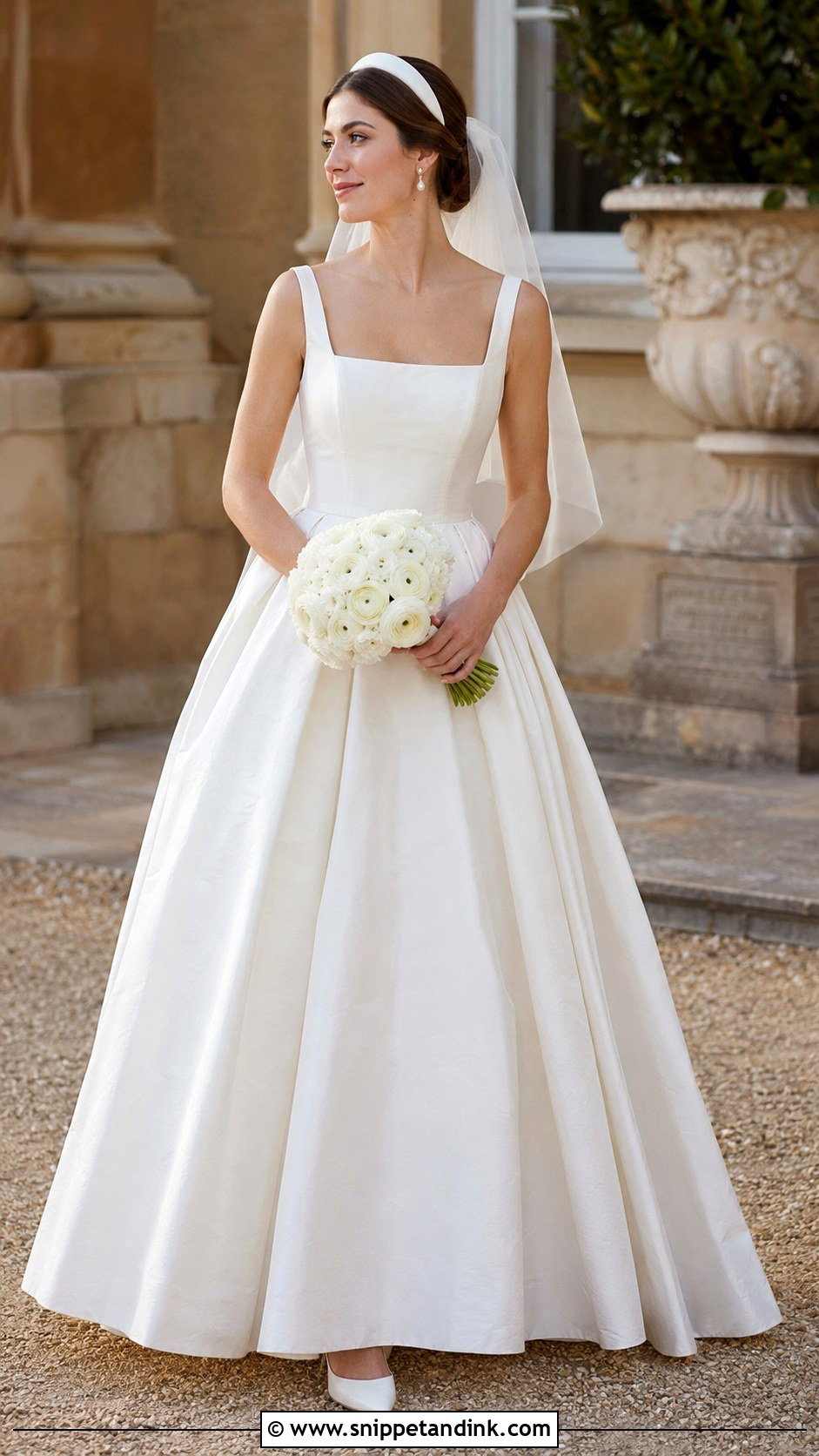
Dupioni has slubs, small irregular ridges in the weave, which give a plain silhouette depth. It’s less glossy than satin and more casual, and it does wrinkle, so I don’t recommend it if you’ll be sitting through a long dinner in it before portraits. A structured square-neck bodice, natural waist and wide inverted pleats. Plain pearl earrings, a slim silk headband and pointed pumps. A shoulder-length veil and a smooth low chignon. Roses or ranunculus. Historic venues and daytime ceremonies suit its handcrafted look.

15. Pleated Silk Wedding Dress Ballgown
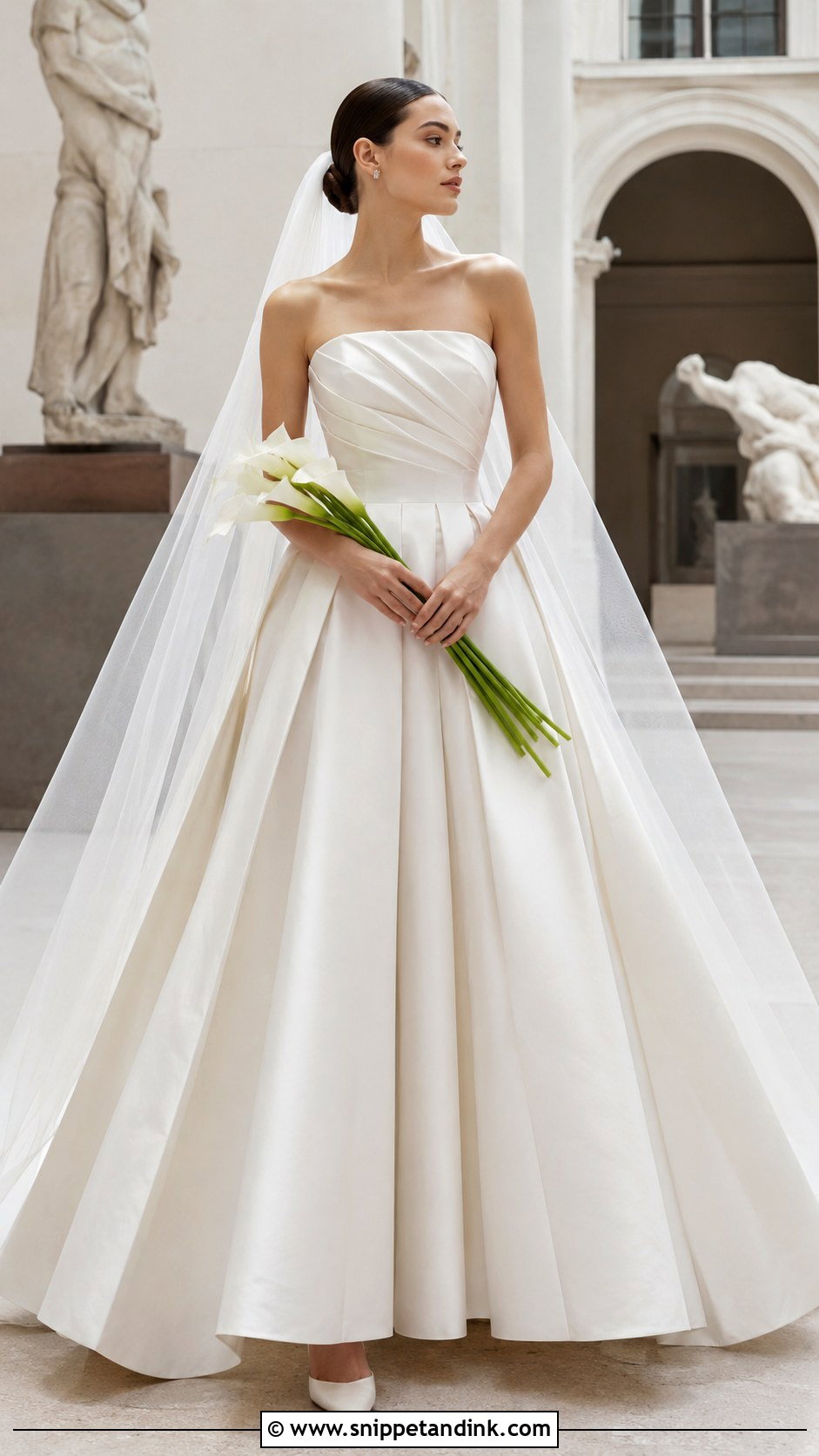
Pleating turns a simple gown sculptural. Diagonal pleats across the bodice define the waist, while wide box pleats in the skirt control the volume. With this much detail, a strapless or sleeveless neckline keeps it from feeling busy. Small crystal earrings, pointed heels and a plain chapel veil; a sleek bun so the pleats show from every side. Long-stemmed calla lilies. The thing to test at fittings is sitting: pleats that lie flat while standing can buckle across the lap, so sit, stand and walk before the final press.
16. Bow Back Silk Wedding Dress Ballgown
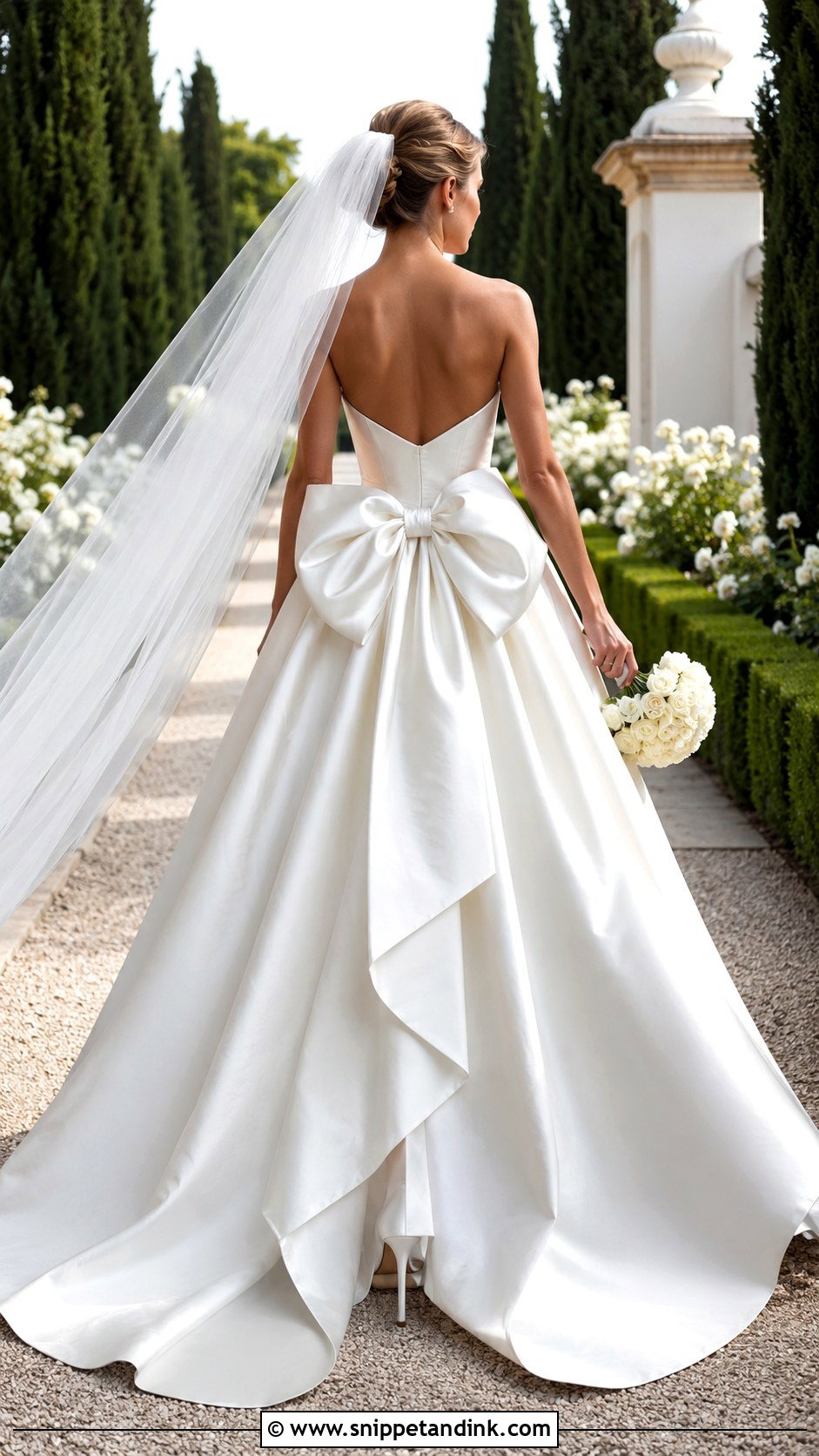
A back bow gives a clean silk gown one playful focal point. Keep the bodice and skirt simple so the bow looks intentional. Large silk bows need interfacing, otherwise they wilt by the evening, and I like them detachable so you can remove them before dancing. Pearl studs and satin pumps. Place the long veil above or below the bow depending on its size, and wear your hair up so the back is visible. A compact rose bouquet held at your side won’t compete. Traditional estates and formal gardens suit it, where guests see the back as you walk.
17. Pearl Embellished Silk Wedding Dress Ballgown
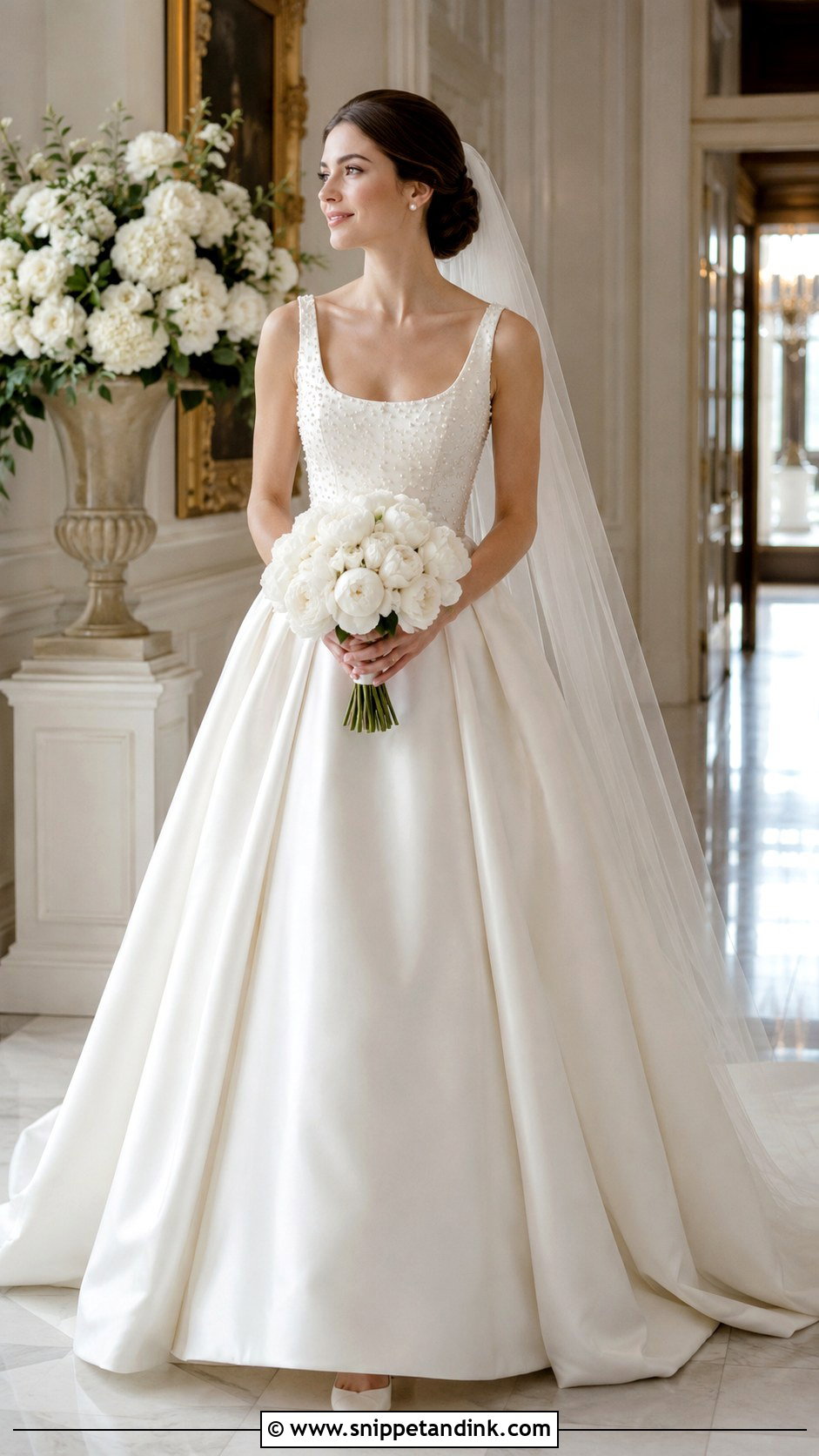
Tiny pearls add dimension, but they also add weight and catch points. I prefer them concentrated at the neckline, waist or bodice rather than across the whole skirt, where they snag veils and pull the silk. A softly structured scoop-neck bodice and a full skirt give a calm base. Simple pearl studs, a quiet bracelet and closed heels; skip the pearl necklace if the bodice is beaded. A sheer chapel veil with a plain edge and a low twisted bun. Peonies or roses. Clean and classic in a formal indoor venue.
18. Floral Applique Silk Wedding Dress Ballgown
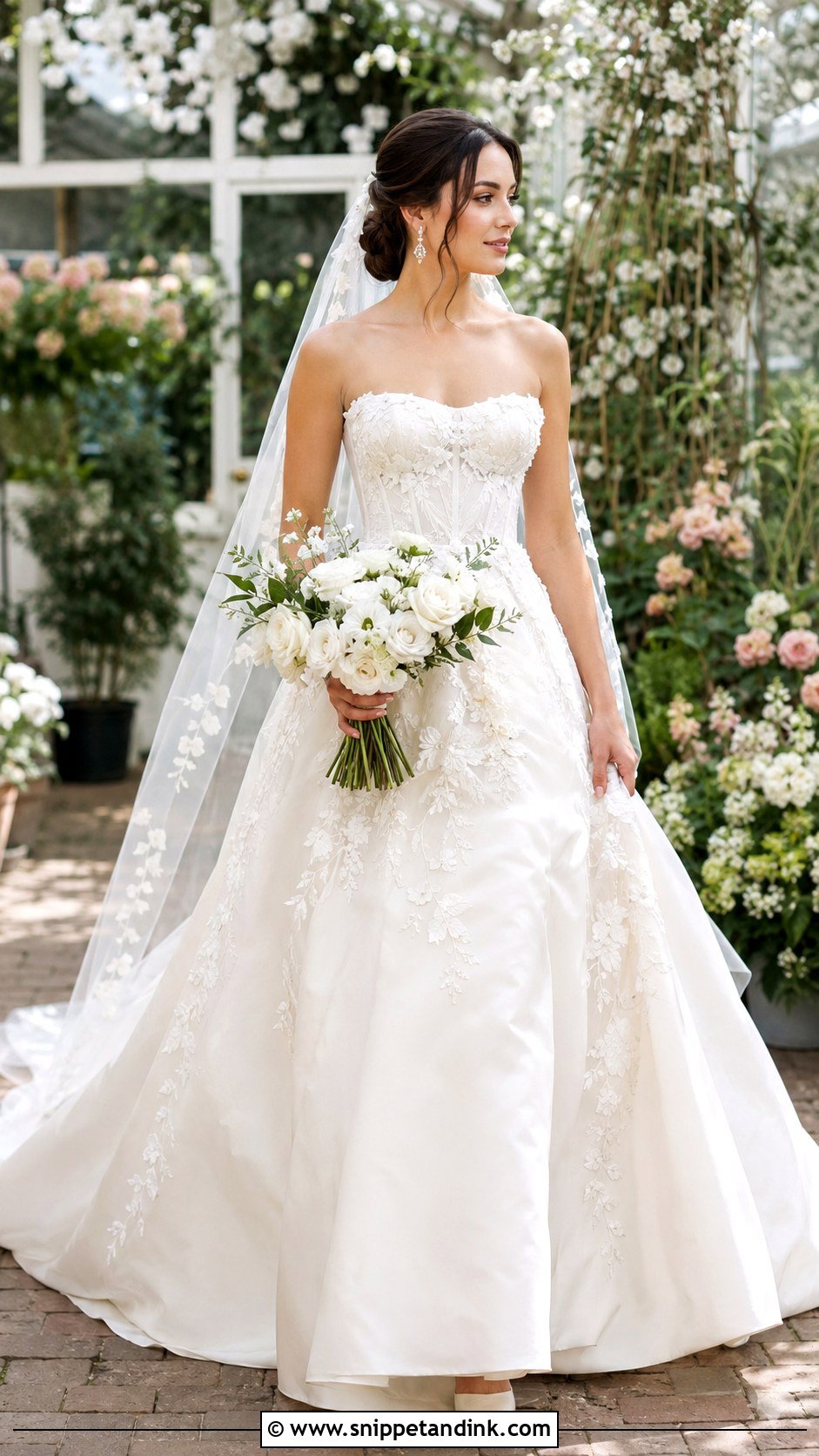
Floral appliqués soften the structure of a silk skirt, as long as they’re placed rather than scattered. Neckline, waist or upper skirt is plenty over a strapless corset bodice. Ask whether the appliqués are hand-sewn on top or built into the seams: loose ones can be moved during alterations, which helps if your fitting shifts a motif somewhere awkward. Small crystal earrings, ivory pumps and a veil with a few matching appliqués near the hem. Soft waves pinned into a low updo. Choose flowers that echo the motifs without copying them, for a garden or spring estate wedding.
19. Detachable Sleeve Silk Wedding Dress Ballgown
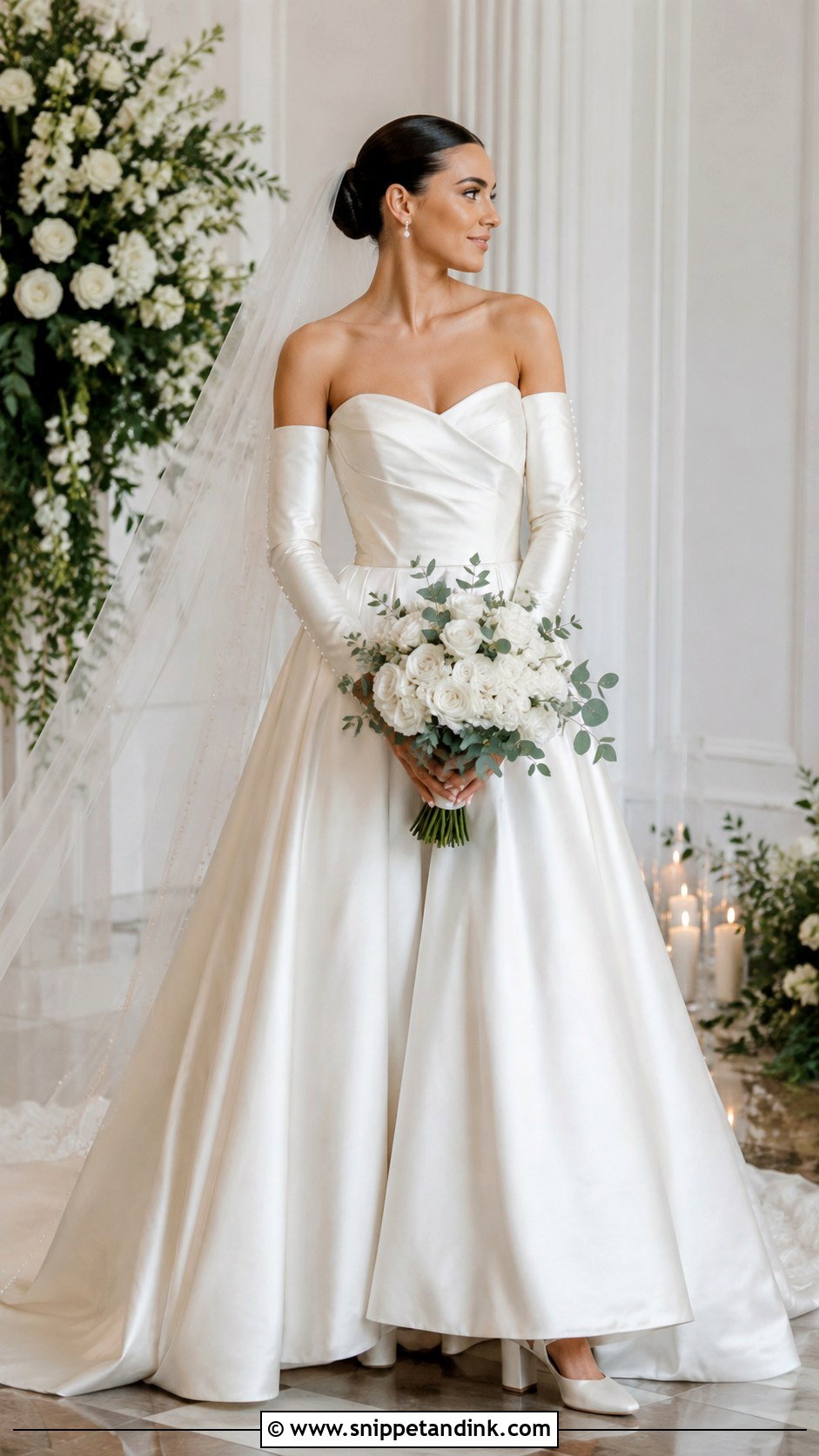
Detachable sleeves give one silk gown two looks. Fitted long sleeves or draped off-shoulder bands attach to a strapless bodice for the ceremony, then come off for dancing. The attachment points are the weak spot; I ask for hidden snaps or hooks under the top edge and test removing them with the person who’ll help on the day. Pearl drops, block heels and a chapel veil first; a decorative comb in the same bun later. A classic white rose bouquet. It handles changing temperatures without the cost of a second dress.
20. Cape Veil Silk Wedding Dress Ballgown
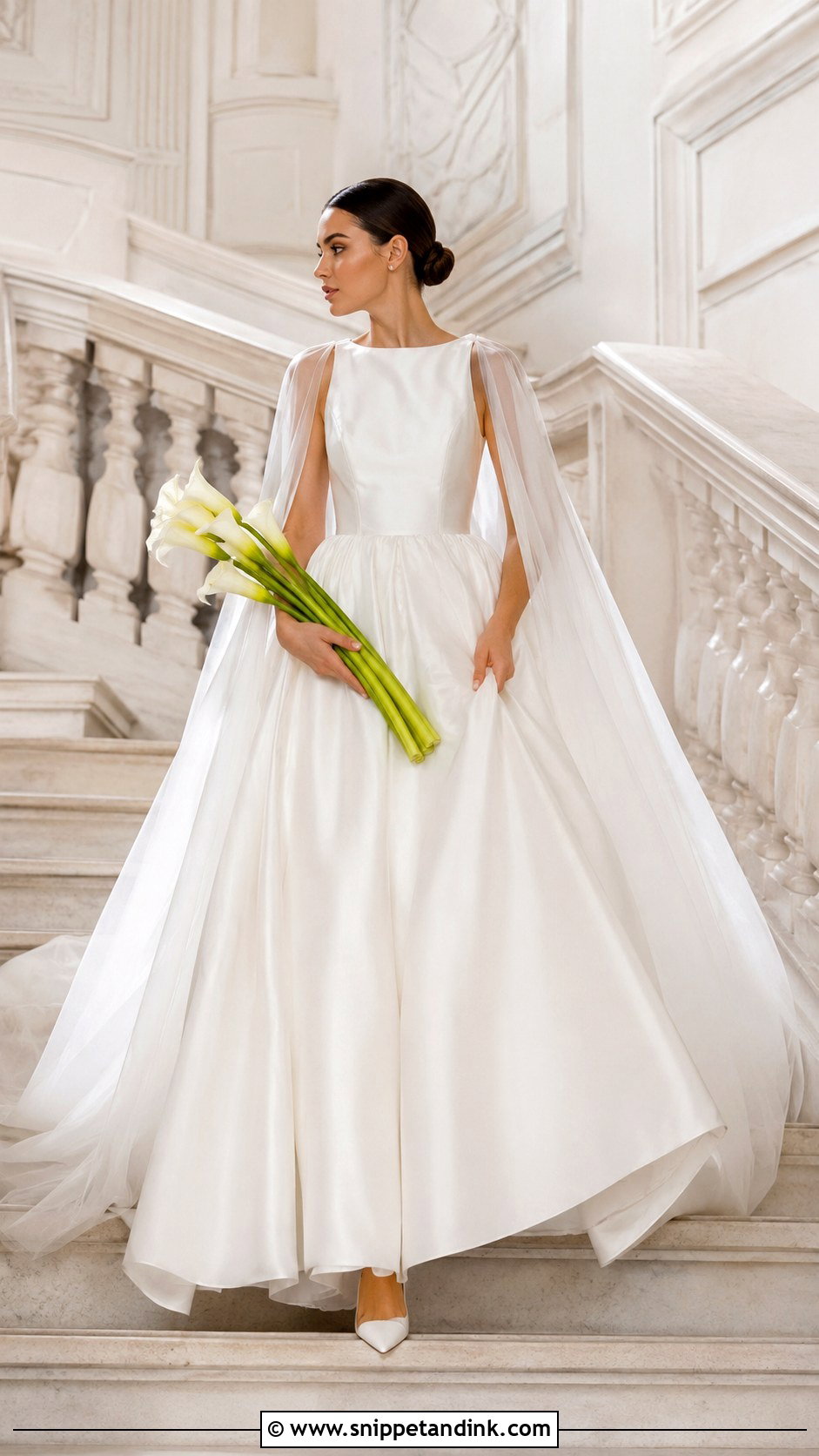
A cape veil makes a plain silk ballgown look dramatic from head to toe. Start with a clean sleeveless or strapless gown with an unembellished skirt, then attach a light sheer cape at the shoulders so it flows behind without covering the waist. Capes hook onto the dress or clip at the shoulder seams, and a heavy one drags the neckline backward, so I’d keep it in fine tulle or chiffon. Crystal studs, pointed heels and a smooth low bun; no veil or necklace. Narrow orchids or calla lilies. Take it off for dinner. Grand stairwells and wide aisles show it off.
Petticoats, Hoops and Whatever Is Under the Silk
Much of a ballgown’s shape comes from what you can’t see. Many gowns have net layers built in, but some rely on a separate petticoat, and the choice changes both the look and how you move.
- Tulle or net petticoats give a soft, rounded fullness and move with you. Several layers can feel warm in summer.
- Hoop skirts give the widest, most even bell shape, but they swing when you sit and need practice on stairs. I rarely suggest them for outdoor or dance-heavy weddings.
- A built-in crinoline layer keeps things simple because there is nothing extra to put on, but you can’t adjust the volume later.
Bring the exact petticoat to every fitting. The hem is set over it, and swapping petticoats after the final fitting can leave the dress too short or dragging.
A Fitting Calendar That Leaves Time for Pleats and Hems
Made-to-order silk gowns often take several months to arrive, so many brides order roughly six to nine months before the wedding; timing varies widely by designer, so ask when you order. Once it arrives, alterations on a full silk skirt usually need two or three fittings.
- First fitting, around two to three months out: the bodice is taken in and the overall length set.
- Second fitting: hem, bustle and any sleeves or straps. Bring your shoes and petticoat.
- Final fitting, one to two weeks before: try everything together and have your helper learn the bustle.
Pleated and gathered skirts take longer to alter than plain ones, because the pleats must be removed and reset at the waist. If your gown is heavily pleated, allow more time, and keep your weight as steady as you can after the first fitting.
Test the Gown the Way You’ll Actually Use It
A silk ballgown should feel like you, and still be comfortable and practical for your venue. Neckline, waist placement, fabric, sleeves and small details change the full-skirt silhouette completely, as you’ve seen above. When trying on, walk, sit, turn and raise your arms. Look at the fabric in several kinds of light, and bring shoes at your real heel height. Choose accessories only after the dress so they support its best features. A minimal Mikado gown, a floral appliqué design and a dramatic cape veil all work when the styling serves the dress instead of competing with it.
You'll Like These Ideas:




Leave a Reply