
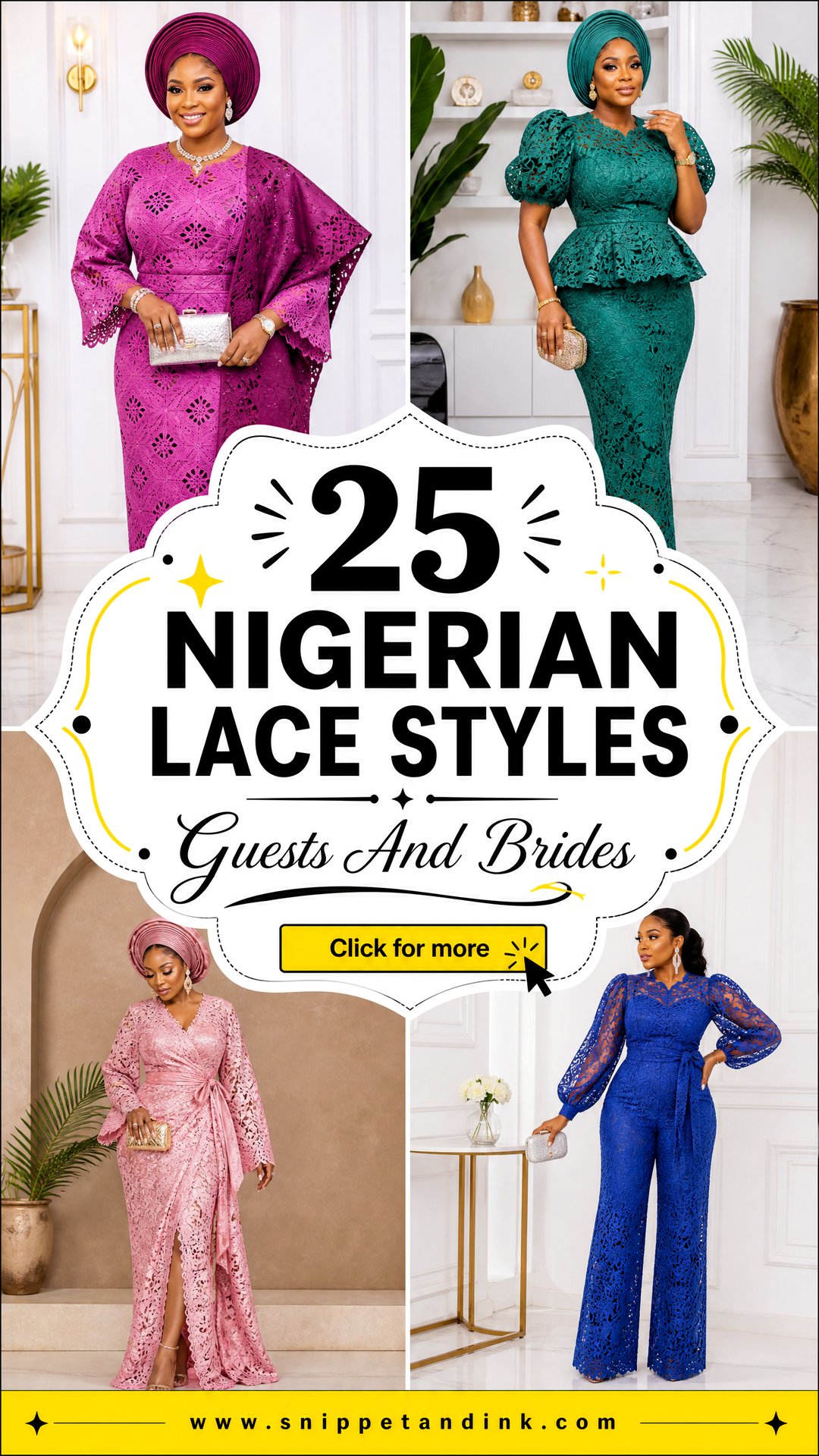
Nigerian wedding fashion is bold, and it is built around family and celebration as much as personal taste. Lace stays the favourite fabric for aso ebi because it reads festive from across a hall and a good tailor can shape it to almost any figure. When I style a guest or a bride for a Nigerian wedding, the lace is only the starting point. The gown shape, the sleeves, the gele, the shoes and the clutch all have to survive a long ceremony and an even longer reception. Here are 25 lace styles, from corset gowns to iro and buba, with notes on how each one wears through the day.
From Aso Ebi Fabric to a Finished Gown
Most aso ebi lace reaches you as a folded length of fabric with a deadline attached. How it turns into a gown that fits on the day depends on a few decisions made in the first week, not the last.
Check the length before you choose a style
Lace is usually sold in set lengths, and a fitted gown with a flare, sleeves or a train eats far more fabric than a simple buba. Take the lace to your tailor before you settle on a picture. A good tailor will tell you honestly whether the style fits the yardage or whether you need extra fabric or a plain lining fabric to stretch it.
Pick the lining with the lace in hand
The lining changes the colour of lace more than people expect. Nude lining makes cord lace look lighter and shows the pattern; a matched lining makes it read as one solid colour. Hold both options under daylight and under indoor light before cutting, because many halls use warm lighting that shifts the shade.
Ask for pattern placement
Good lace work places the large motifs deliberately: centred on the bodice, matched at side seams, scallops used as a finished hem or sleeve edge. Cheap work cuts straight through motifs. Ask your tailor where the motifs will land, and book at least two fittings, with the last one close enough to the wedding that weight changes do not undo it.
1. Nigerian Lace Mermaid Gown
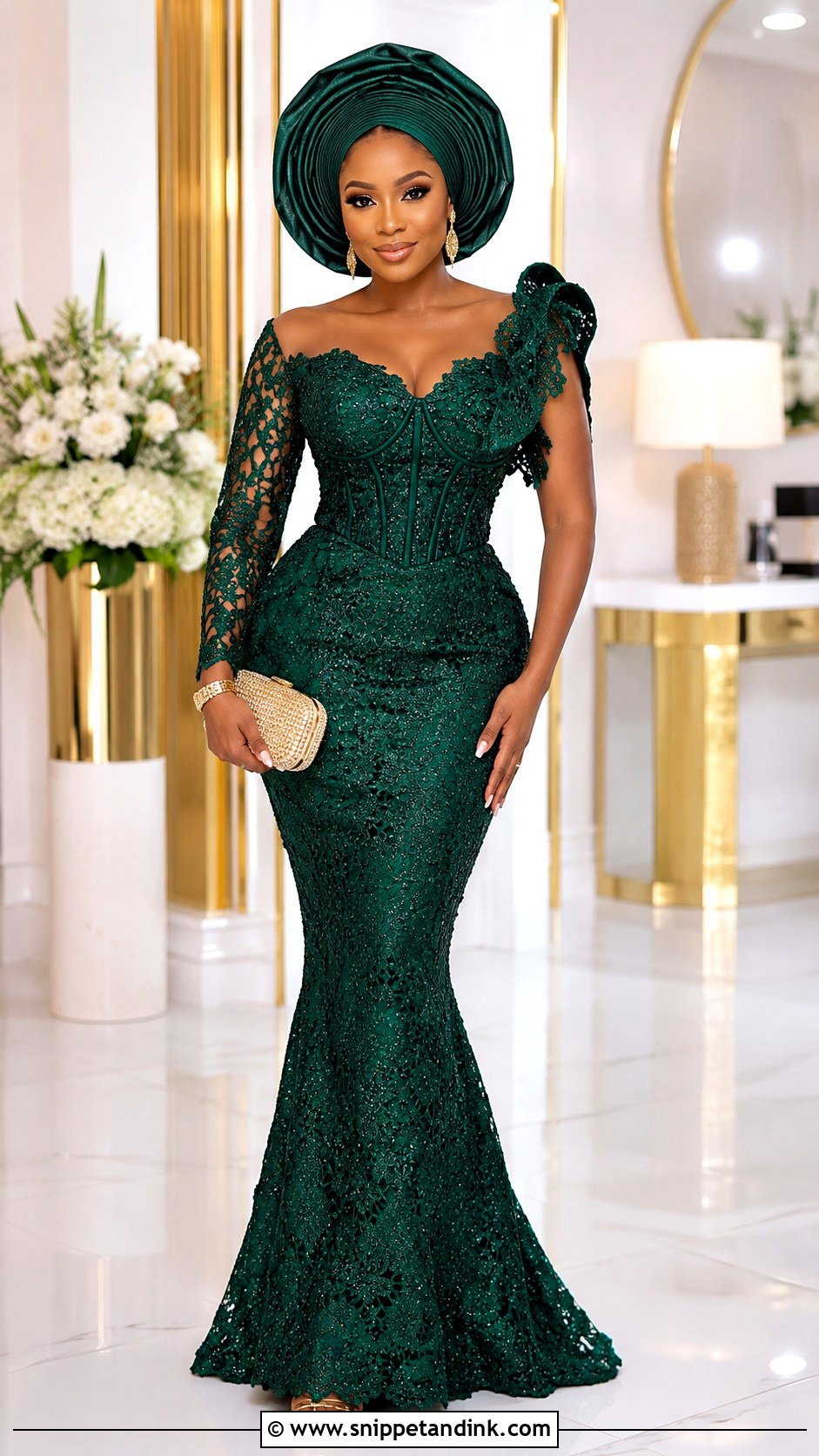
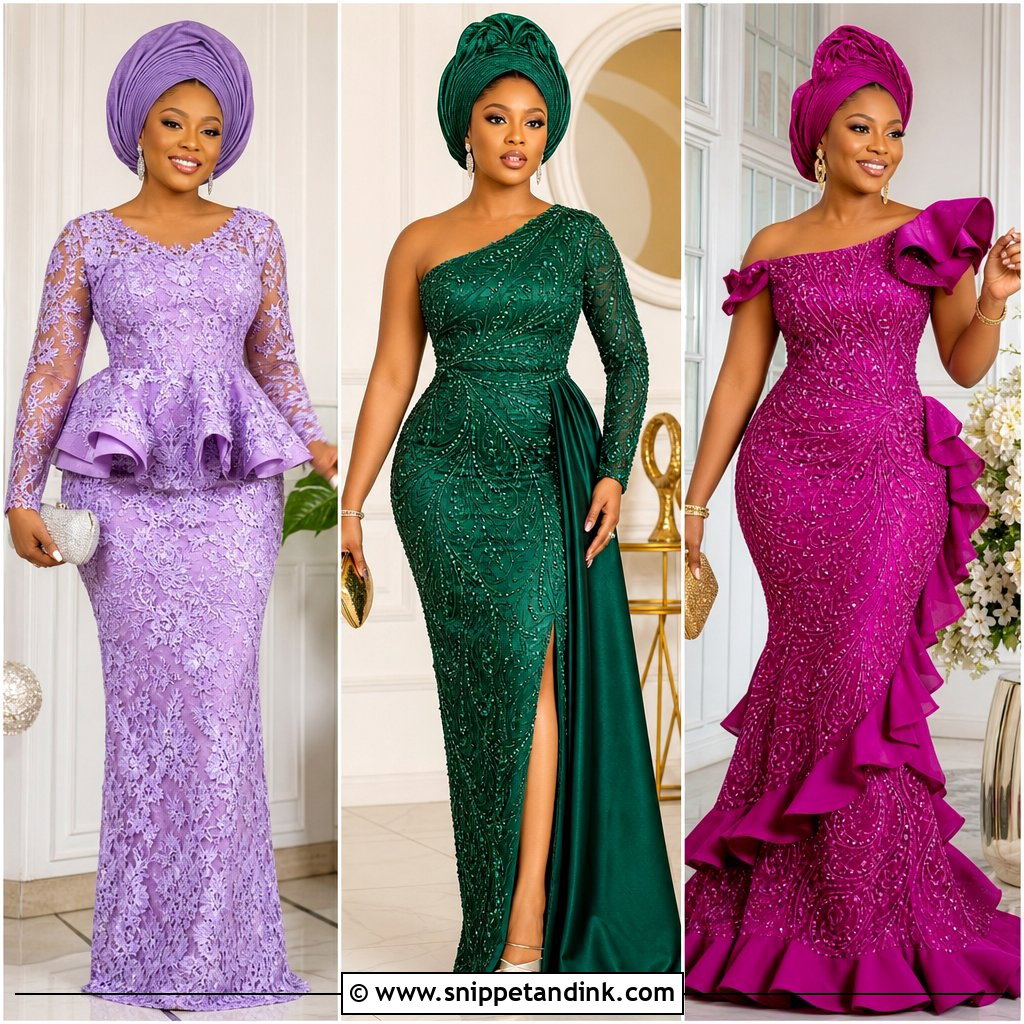
The mermaid is the aso ebi silhouette I see most, and it earns that: a fitted bodice marks the waist and the flare gives movement when you dance. For a formal wedding I would cut it in cord lace, beaded lace or sequined lace, with a sweetheart or a modest illusion neckline. The fit point that matters is where the flare starts. Set it too high and you will shuffle all night; I ask tailors to drop the flare just below the knee and add a back slit. Finish with a structured gele, drop earrings, a small clutch and heeled sandals.
2. Nigerian Lace Corset Gown
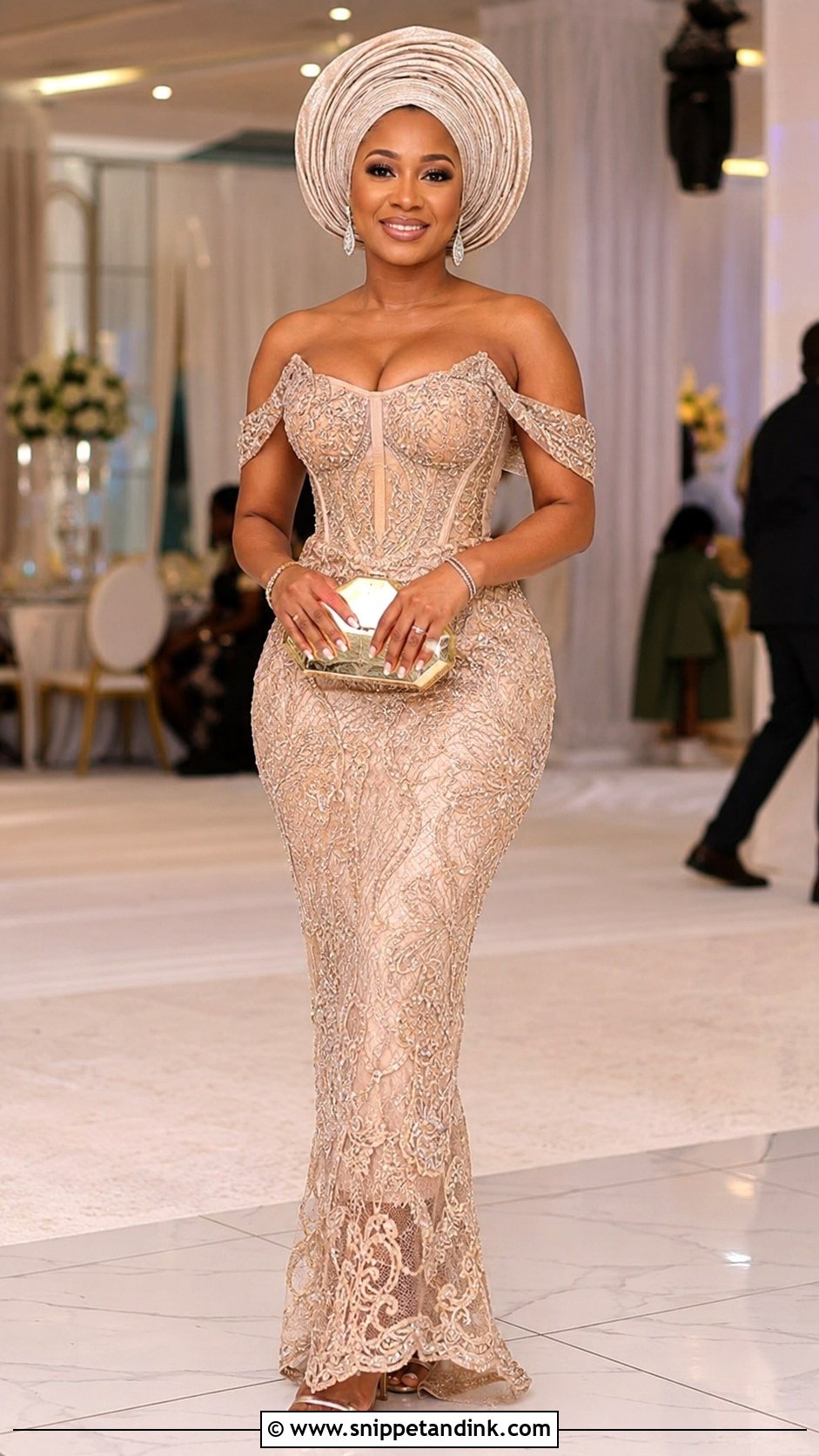
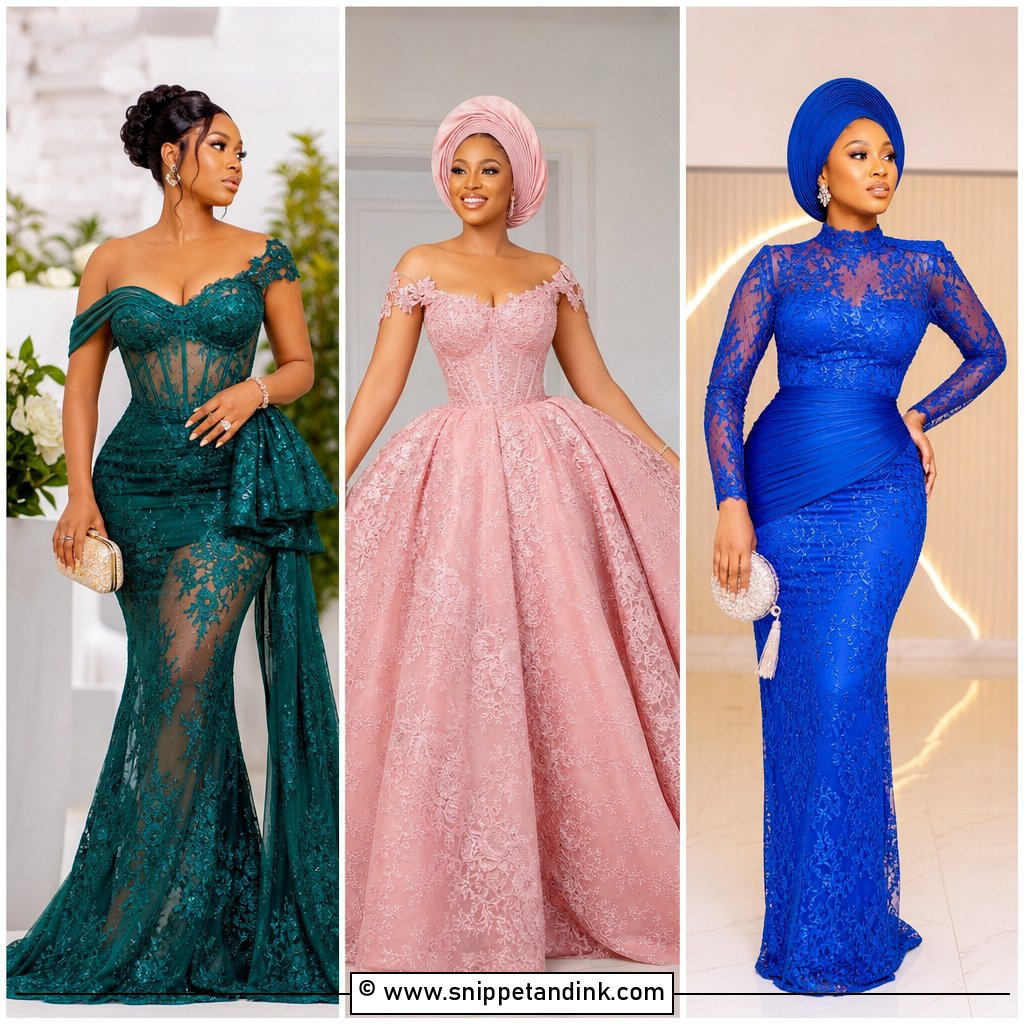
A corset bodice supports the bust and sculpts the waist, giving lace a clean, modern shape. French lace, beaded lace and luxury cord lace all take boning well. Pair it with a mermaid, straight or softly flared skirt. Here is what I watch at fittings: a corset cut for standing can dig in under the ribs once you sit through a long ceremony, so do one fitting seated. The lining should be neat enough that the lace pattern stays visible over the boning channels. A matching gele, metallic clutch and slim heels complete it.
3. Nigerian Lace Off Shoulder Gown
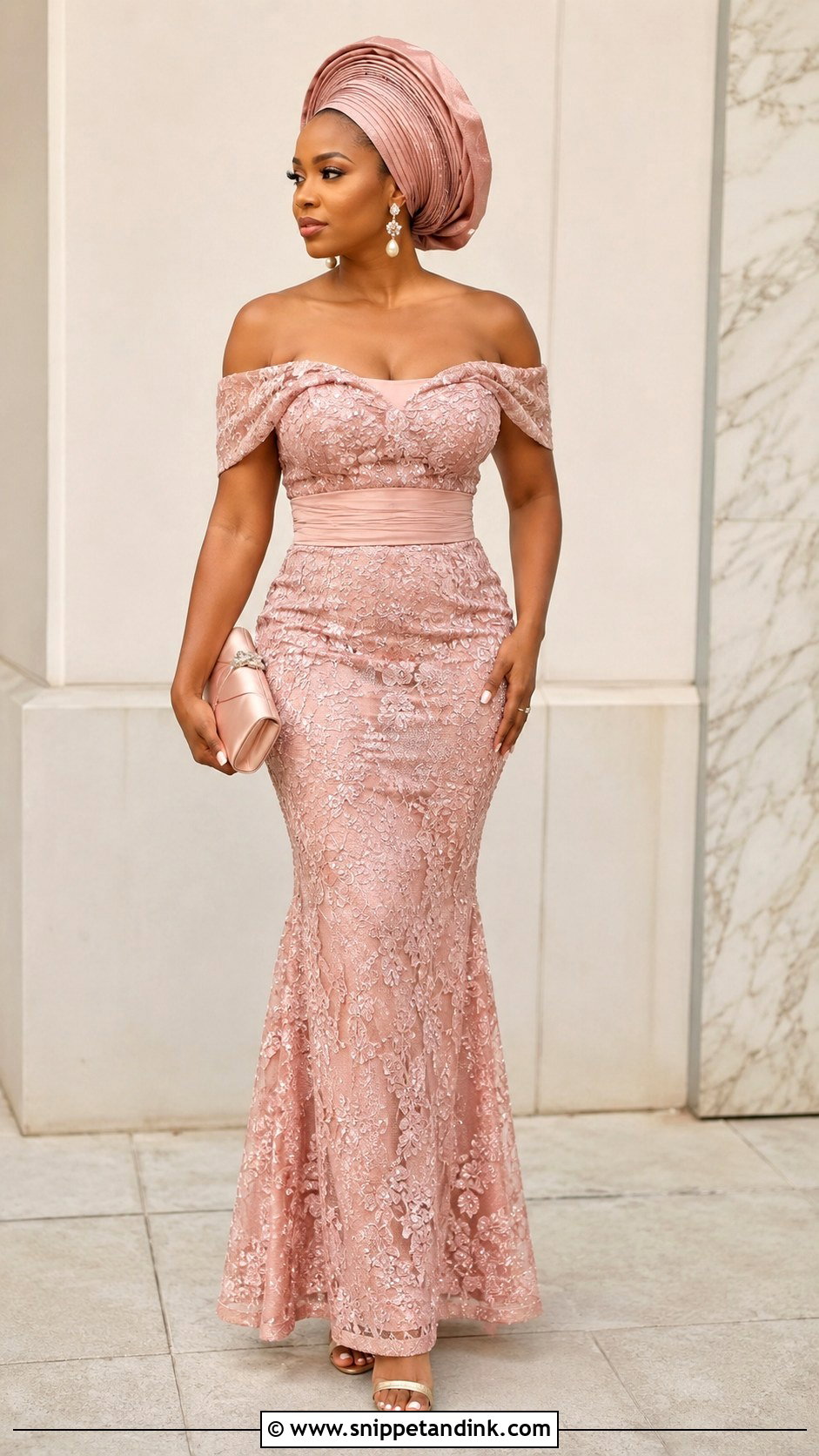
Off-shoulder lace frames the collarbone and leaves room for statement earrings under a tall gele. It can be cut as a mermaid, A-line or straight gown with a back slit, and it looks rich in emerald, champagne, wine, blush, navy and gold. The weak point is the sleeve band. Without silicone grip or an inner corset holding it, an off-shoulder line creeps up every time you lift your arms to dance, so I insist on internal structure. Add a beaded clutch, heeled sandals and soft makeup; it works well across an aso ebi group.
4. Nigerian Lace One Shoulder Gown
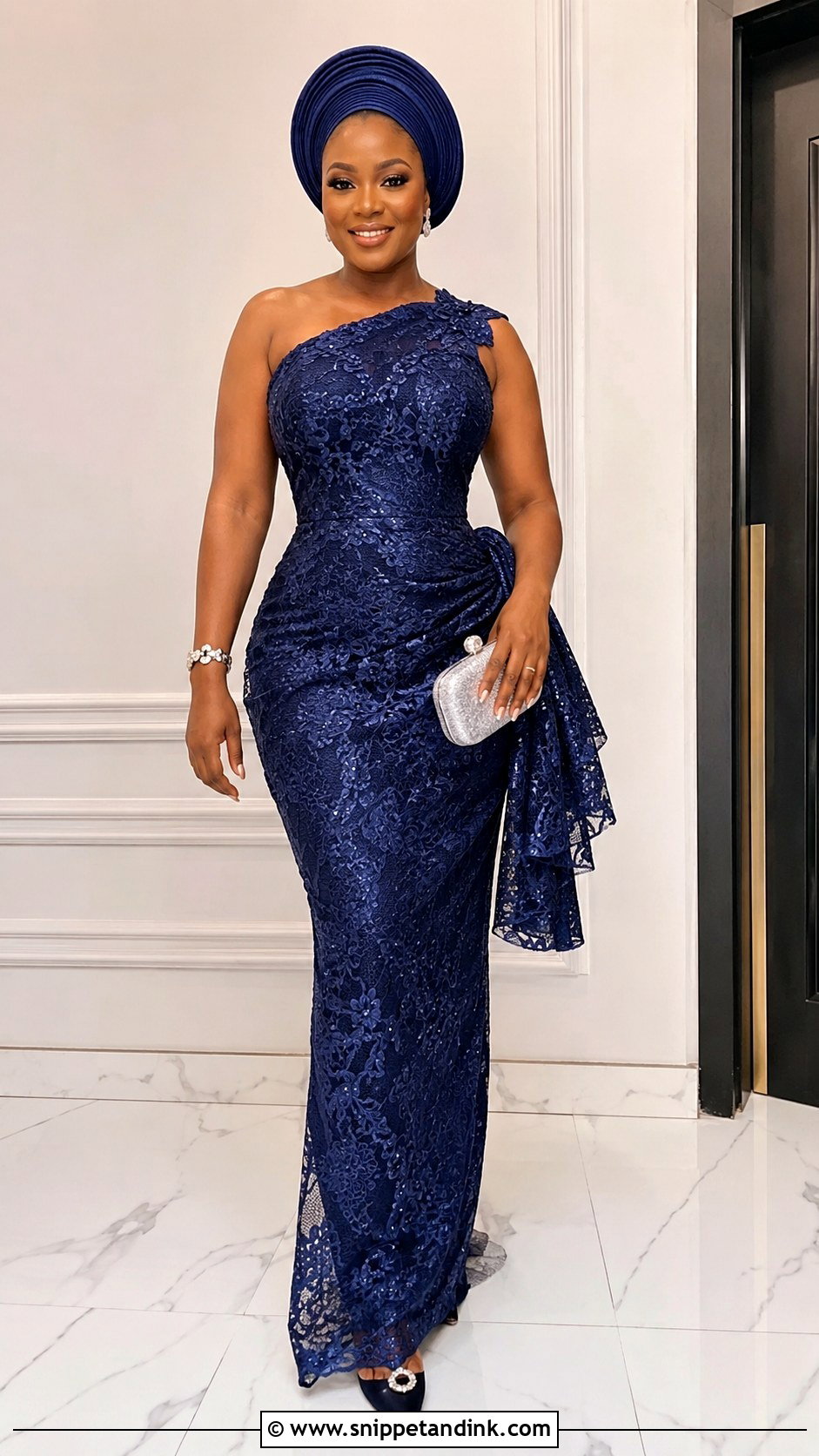
One bare shoulder gives lace a sharper, modern edge while staying formal enough for a Nigerian wedding. A fitted skirt, mermaid hem or side drape suits it. Because the neckline already draws the eye, I keep jewelry to one bold bracelet or clean drop earrings, never a heavy necklace that fights the asymmetry. A neat gele or a low bun shows the shoulder; a gele tied too wide will hide it. Pointed heels and a compact clutch keep it sleek.
5. Nigerian Lace Gown With Statement Sleeves
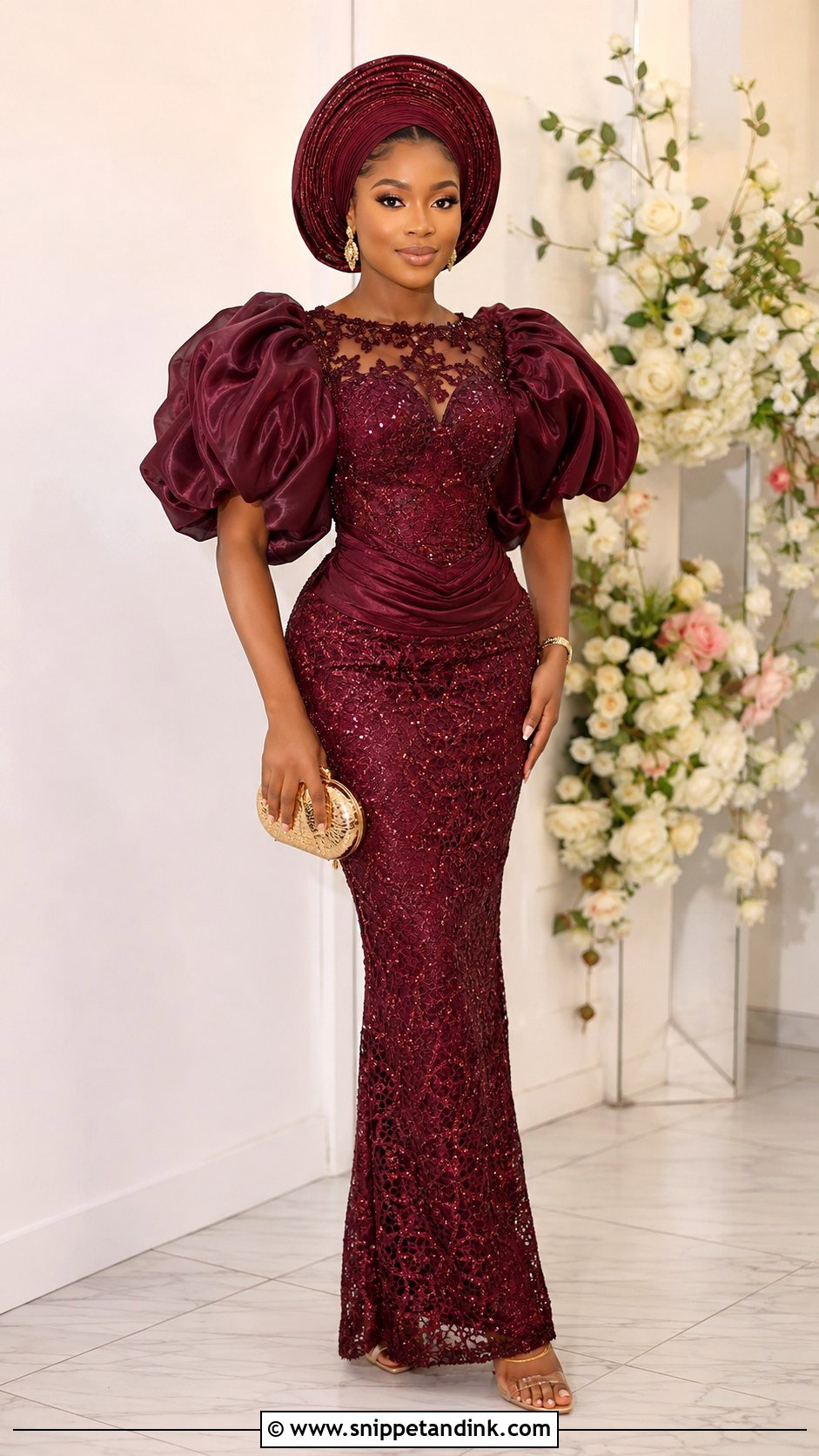
Sleeves can be the whole story: puff, bishop, ruffle or detachable organza. My rule is balance. Dramatic sleeves need a clean, fitted skirt; a simple gown can carry bigger sleeves. Plain lace, cord lace or lace mixed with tulle all work. Big puff sleeves must be lined with stiff net or they collapse by the reception, and they make hugging awkward, so try a full arm lift at the fitting. Add a sculpted gele, small clutch and elegant heels. Sleeves also give you arm coverage without looking dated.
6. Nigerian Lace Bubu Gown
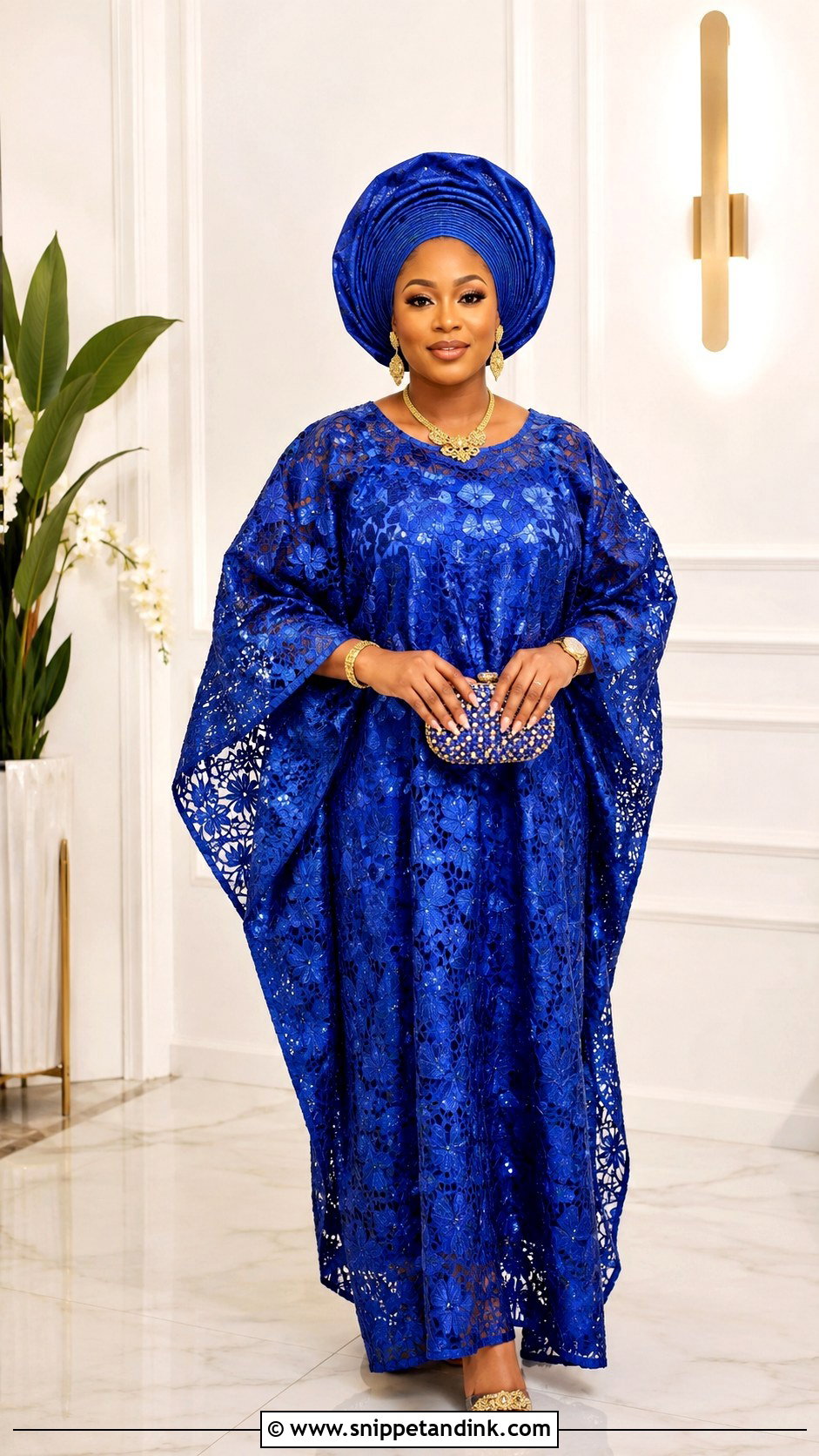
Bubu is comfort and dignity in one garment. The loose shape moves freely, suits many bodies and ages, and stays cool through a long celebration. For a wedding I choose lace with beading, embroidery or scalloped edges so it reads special, and a matching inner slip so nothing shows through in flash photos. A subtle waist tie or side panel adds shape if you want it. Pair it with a bold gele, layered bracelets and embellished sandals or heels. Mothers and aunties often ask me for this, and it never looks underdressed.
7. Nigerian Lace Kaftan Gown
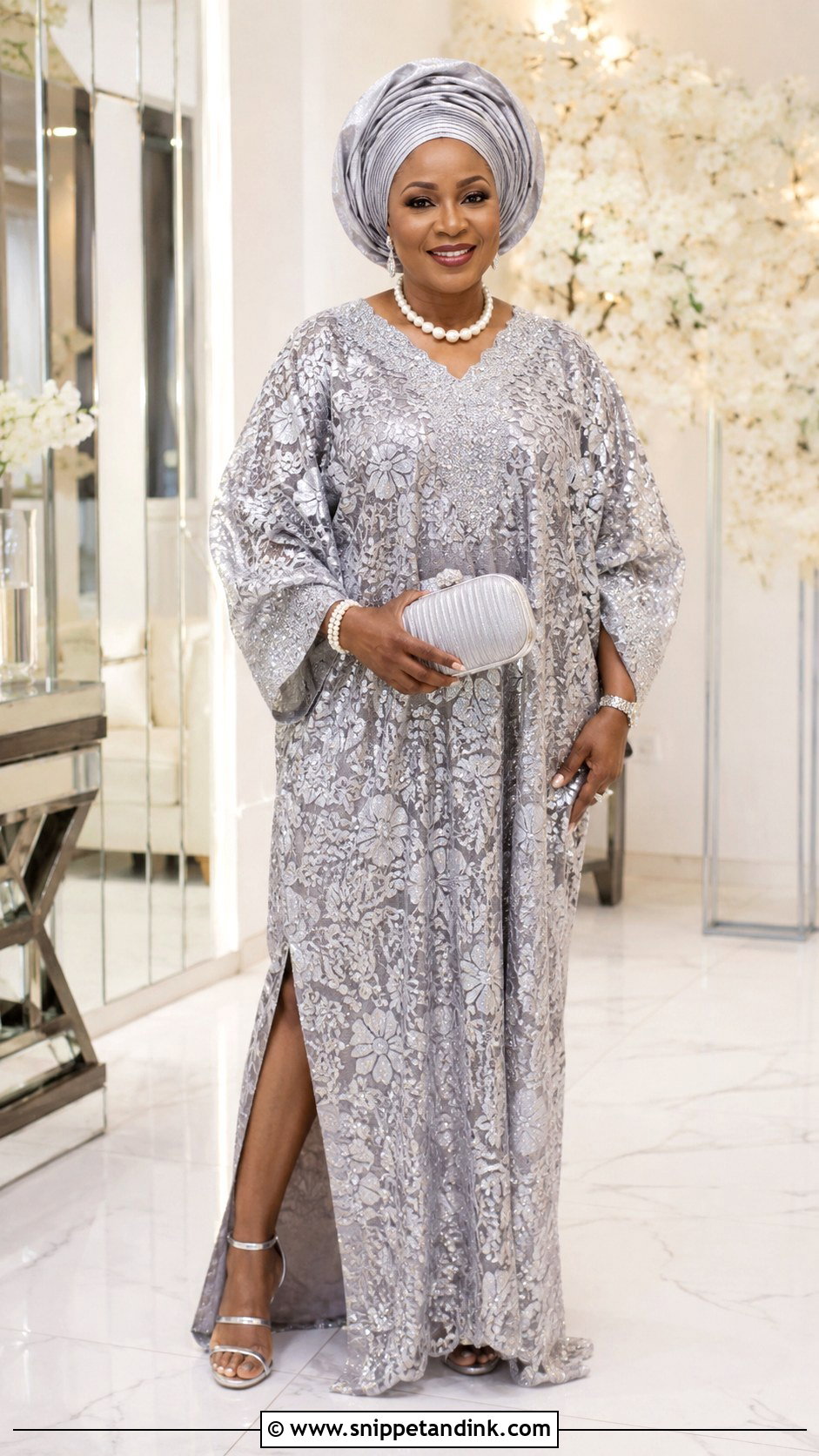
A kaftan is less fitted than a mermaid but looks just as dressed when the lace is rich and the seams are clean. A straight cut with side slits, a V-neck or an embellished front panel all suit it. I like kaftans for outdoor receptions because air moves through them, which matters in heat. The tailoring detail I care about is the side slit: finish it with a facing so the lace does not fray or roll. Add a matching gele, metallic heels, a hard-case clutch and pearl or crystal jewelry.
8. Nigerian Lace Iro And Buba
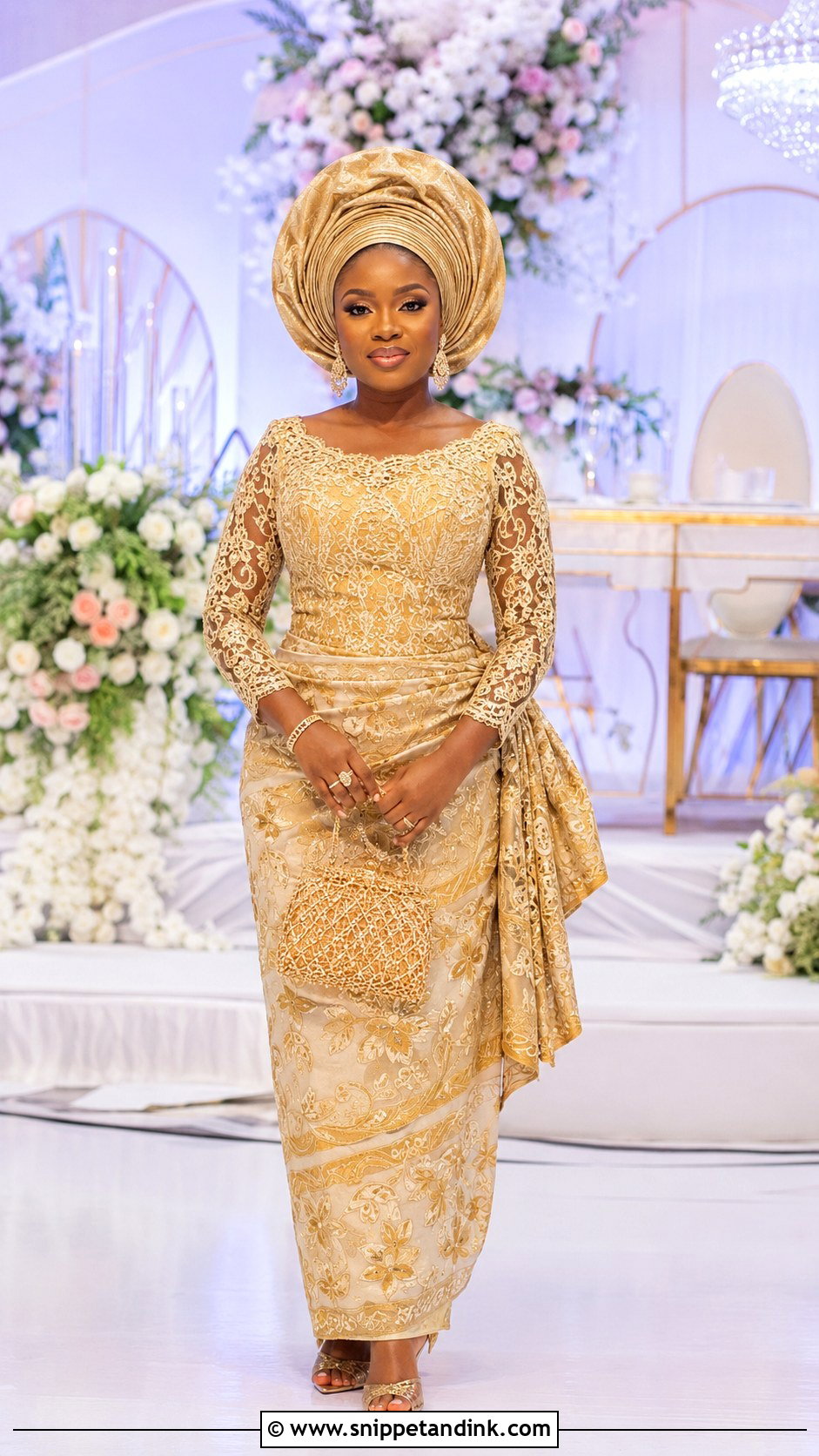
Iro and buba never looks out of place at a Nigerian wedding. The wrapper gives the traditional shape and the buba adds coverage. Modern versions bring wider sleeves, embellished necks and scalloped lace edges. The practical issue is the iro itself: it has to be tied firmly and tucked so it does not loosen while you dance, and I tell first-timers to practise the tie at home. Pair it with a large gele, beaded purse, statement earrings and heeled mules or sandals; choose a fitted buba for a cleaner line or a looser one for the classic feel.
9. Nigerian Lace Skirt And Blouse
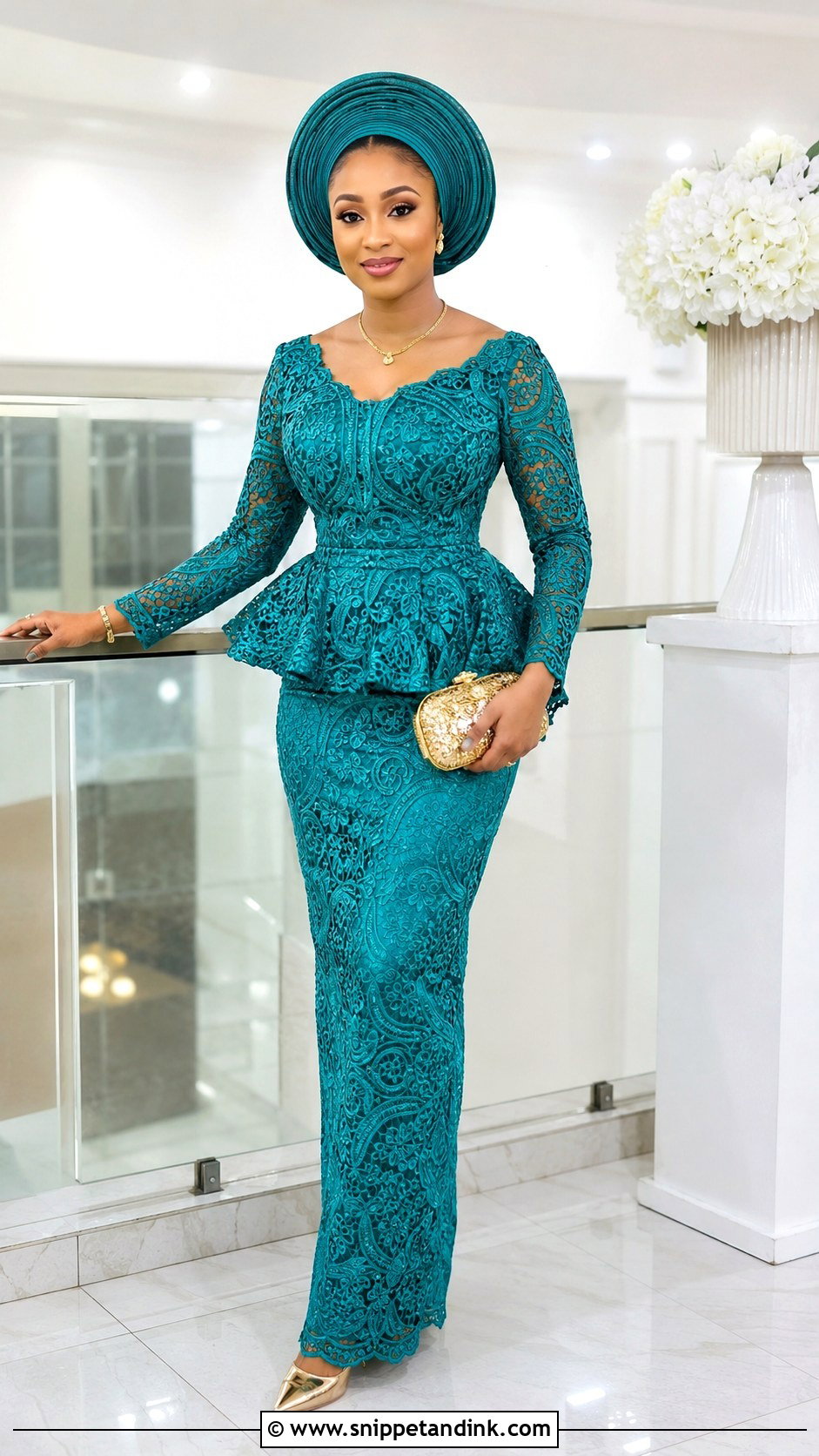
Separates give you options. The blouse can be peplum, fitted, wrap or off-shoulder; the skirt straight, flared, mermaid or wrapper-style. That flexibility suits anyone who prefers separates but still wants a coordinated aso ebi look. A gele in the same colour family, a small clutch and elegant heels keep it formal. A peplum defines the waist; a straight blouse looks cleaner. Ask the tailor to cut both from the same part of the lace so the pattern scale matches, and you can wear each piece again later.
10. Nigerian Lace Peplum Top And Wrapper
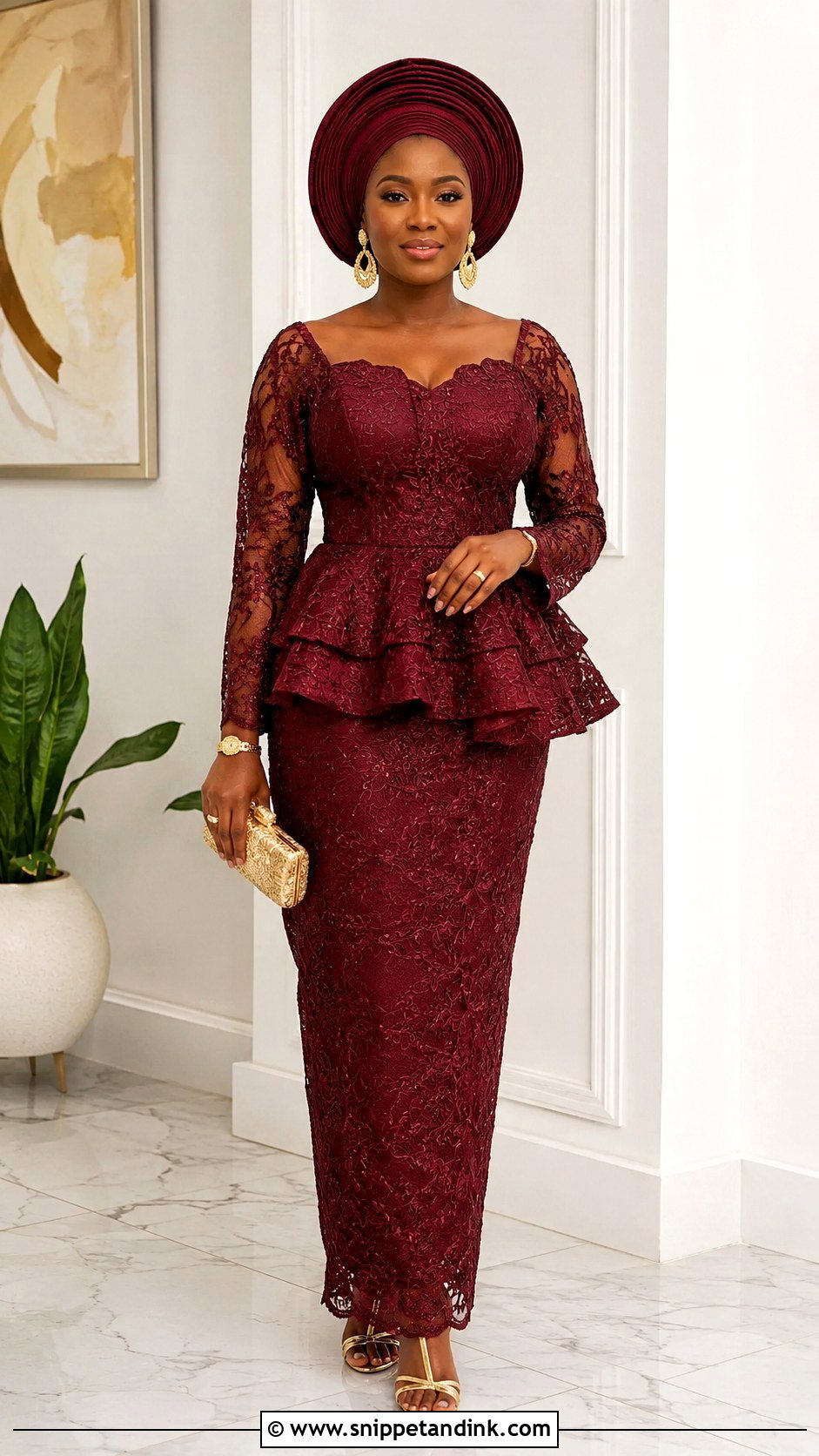
A peplum over a wrapper keeps the outfit rooted in tradition while adding shape at the waist and a little volume over the hips. Cord lace, guipure or beaded lace hold the flare best. Stiffness is the decision to make: a soft peplum drapes, a stiff interfaced one stands out and reads more dramatic, and a layered or asymmetric peplum goes further still. I ask that the peplum be lined in a colour that matches the wrapper, because it flips up when you sit. Add a structured gele, bold earrings, a metallic clutch and comfortable heels.
11. Nigerian Lace A Line Gown
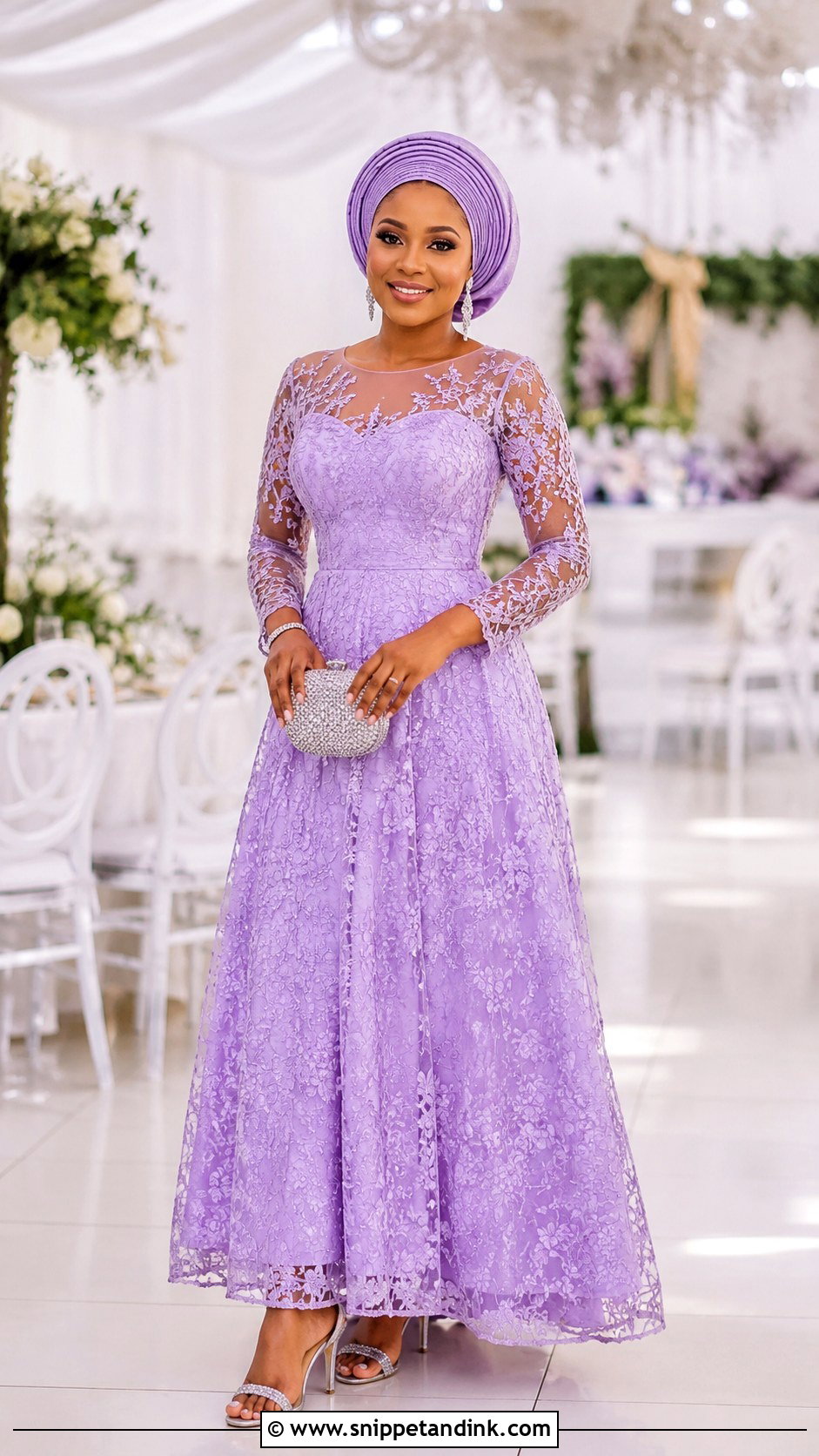
An A-line fits through the bodice and widens gently from the waist, so it flatters most figures without any tightness. Pick lace with a defined pattern so the skirt looks full and rich rather than flat. A round, illusion or boat neckline suits it. This is the cut I recommend for daytime weddings and for anyone who will be on their feet serving or greeting all day. A neat gele, pointed heels and a beaded clutch finish it.
12. Nigerian Lace Ball Gown
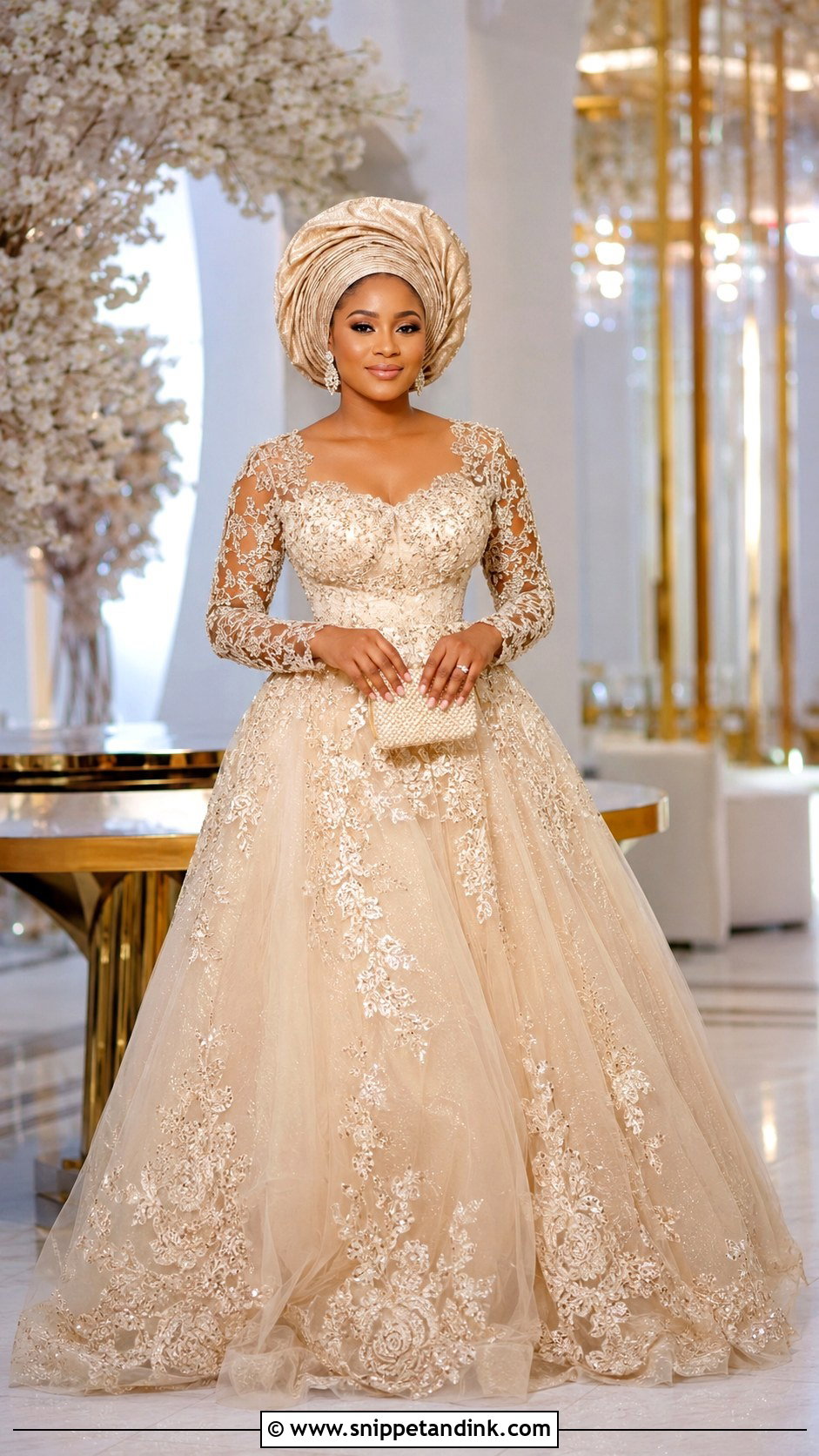
A full lace ball gown makes a royal entrance at a grand evening wedding, especially under a structured gele. The trap is weight. Heavy lace over a full skirt gets tiring fast, so I build it with lighter lace, tulle overlays or lace appliqué over a lighter base. Keep the waist well defined or the shape gets lost. Add delicate jewelry, a small clutch and heels you can walk in under all that skirt. It suits close family, bridesmaids in coordinated lace and large receptions.
13. Nigerian Lace High Low Gown
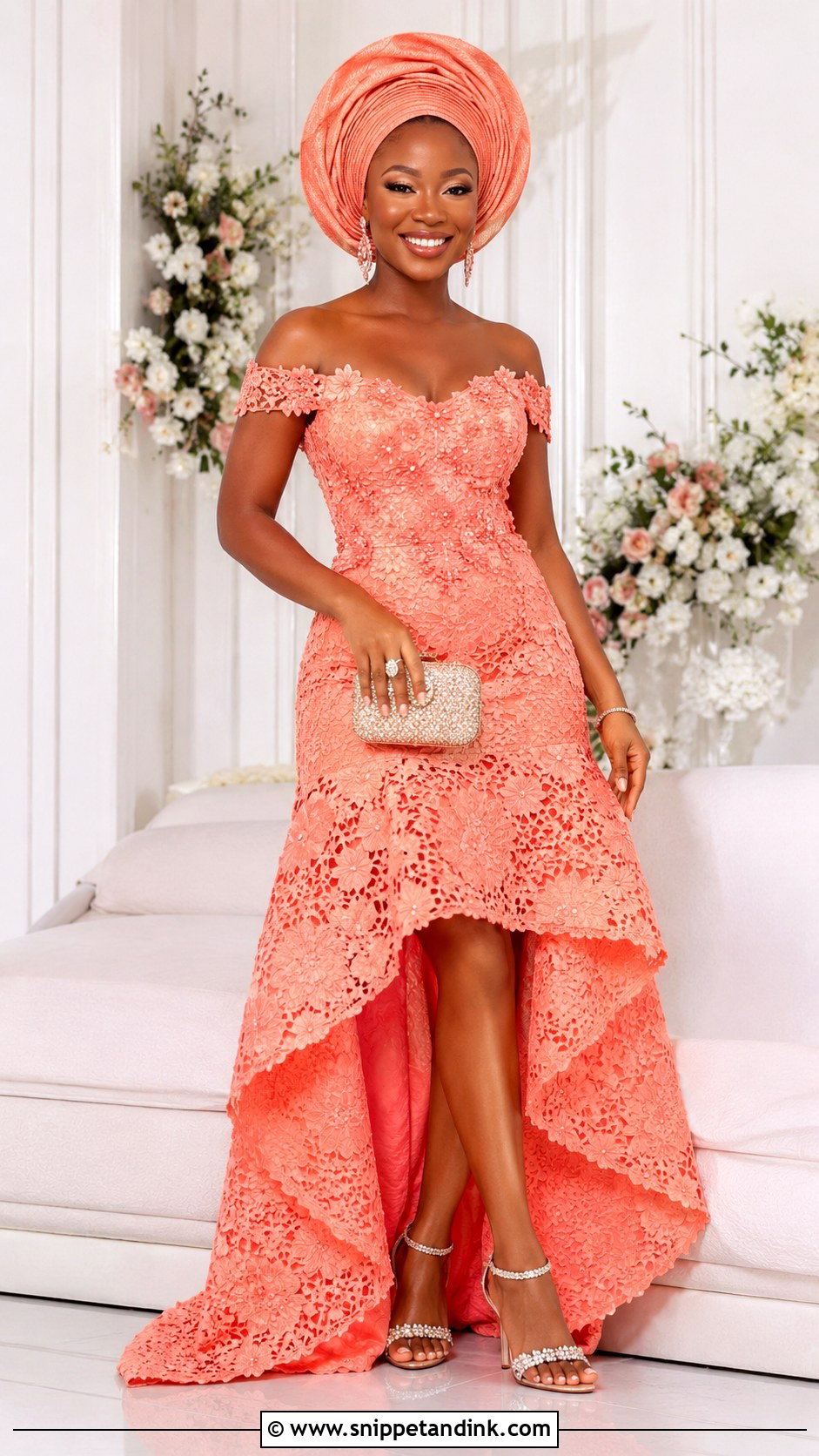
High-low hems show your shoes in front and add drama at the back. Off-shoulder, corset or plain fitted tops all suit the cut. Because the shoes are on display all night, choose them properly and break them in. The hem has to be finished cleanly where the lace curves, since a poorly faced high-low edge flips up and shows the lining. A medium gele, crystal earrings and a small clutch complete it. You can dance without holding the skirt, which is the real advantage.
14. Nigerian Lace Wrap Gown
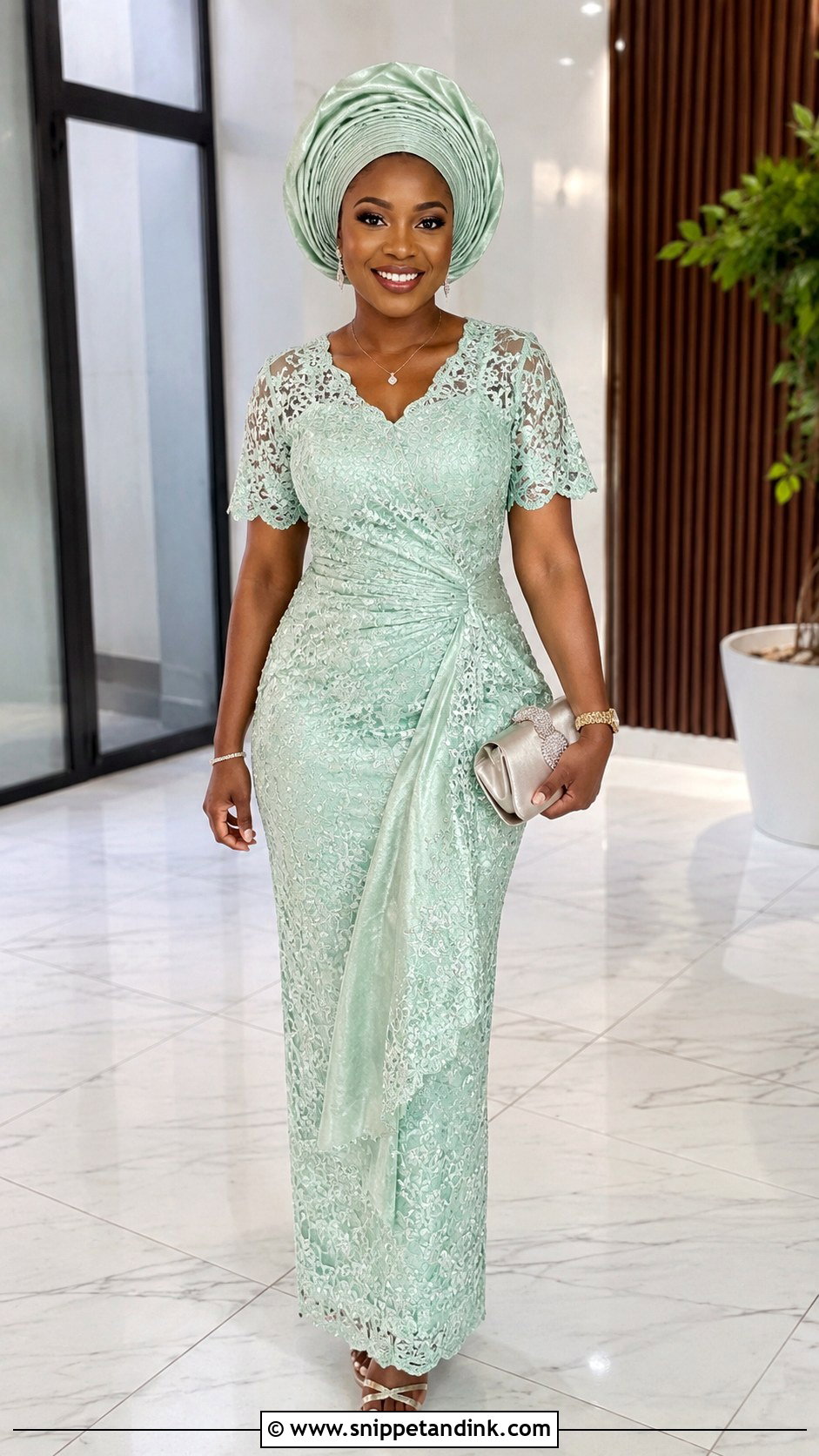
A wrap gives a waistline without a corset, so it is one of the most comfortable fitted shapes. For it to sit neatly, the lace needs some body; a very soft lace slips open at the neck as you move. I add a hidden snap at the wrap point every time. A V-neck front pairs with layered necklaces or long earrings, and a higher wrap sits better with a gele. Heeled sandals, a satin clutch and smooth underlining finish it.

15. Nigerian Lace Cape Gown
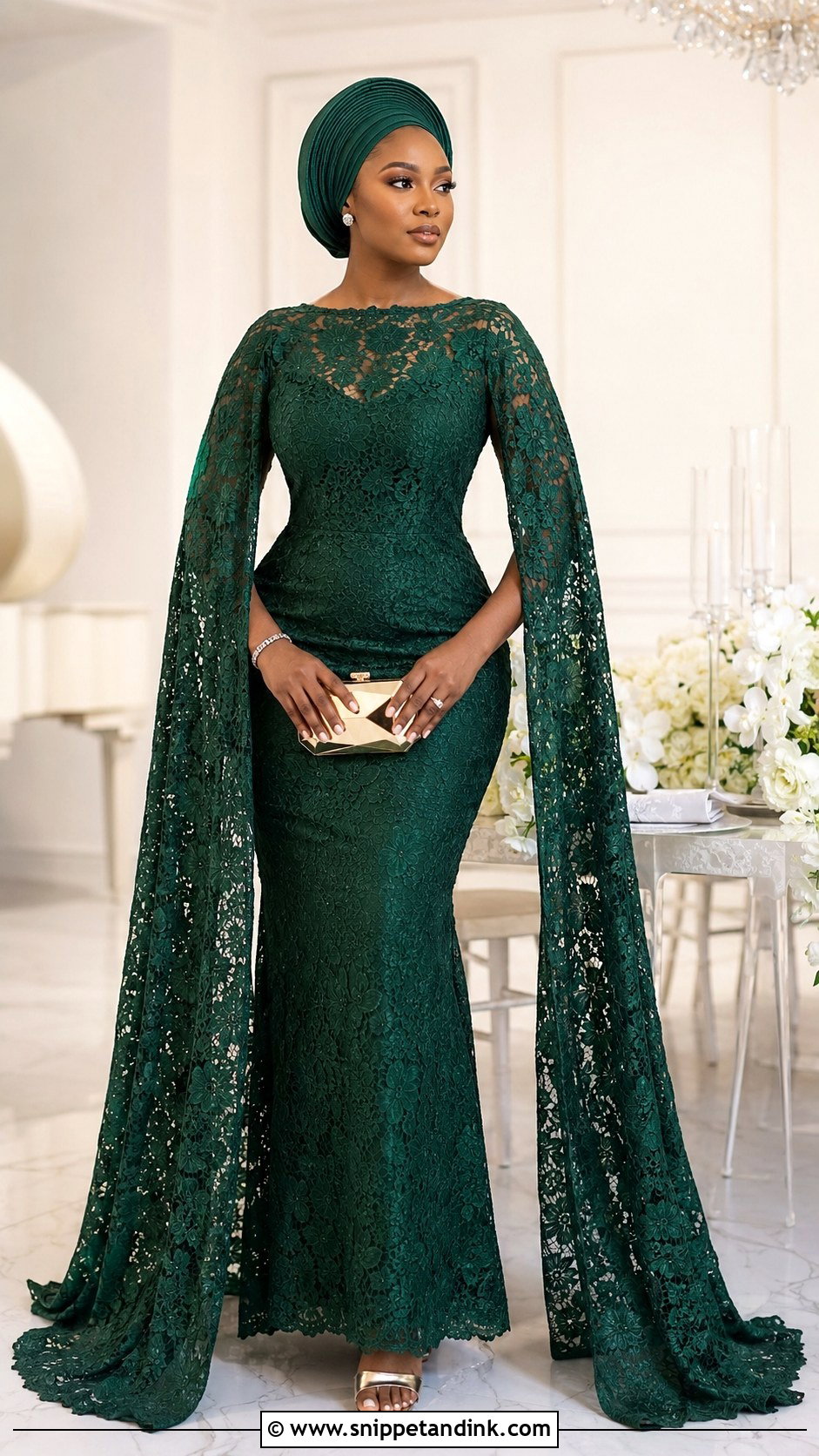
A cape adds drama without heavy jewelry. It can attach at the shoulders, fall from the back or sit as a removable overlay. Keep the gown beneath it fitted or straight so the cape stays the feature. Ivory, gold, teal, burgundy and deep green lace all look regal here. I prefer a detachable cape for long receptions; it gives arm coverage for the ceremony and comes off when the dancing starts. A simple gele, stud earrings and a structured clutch keep it balanced.
16. Nigerian Lace Gown With Train
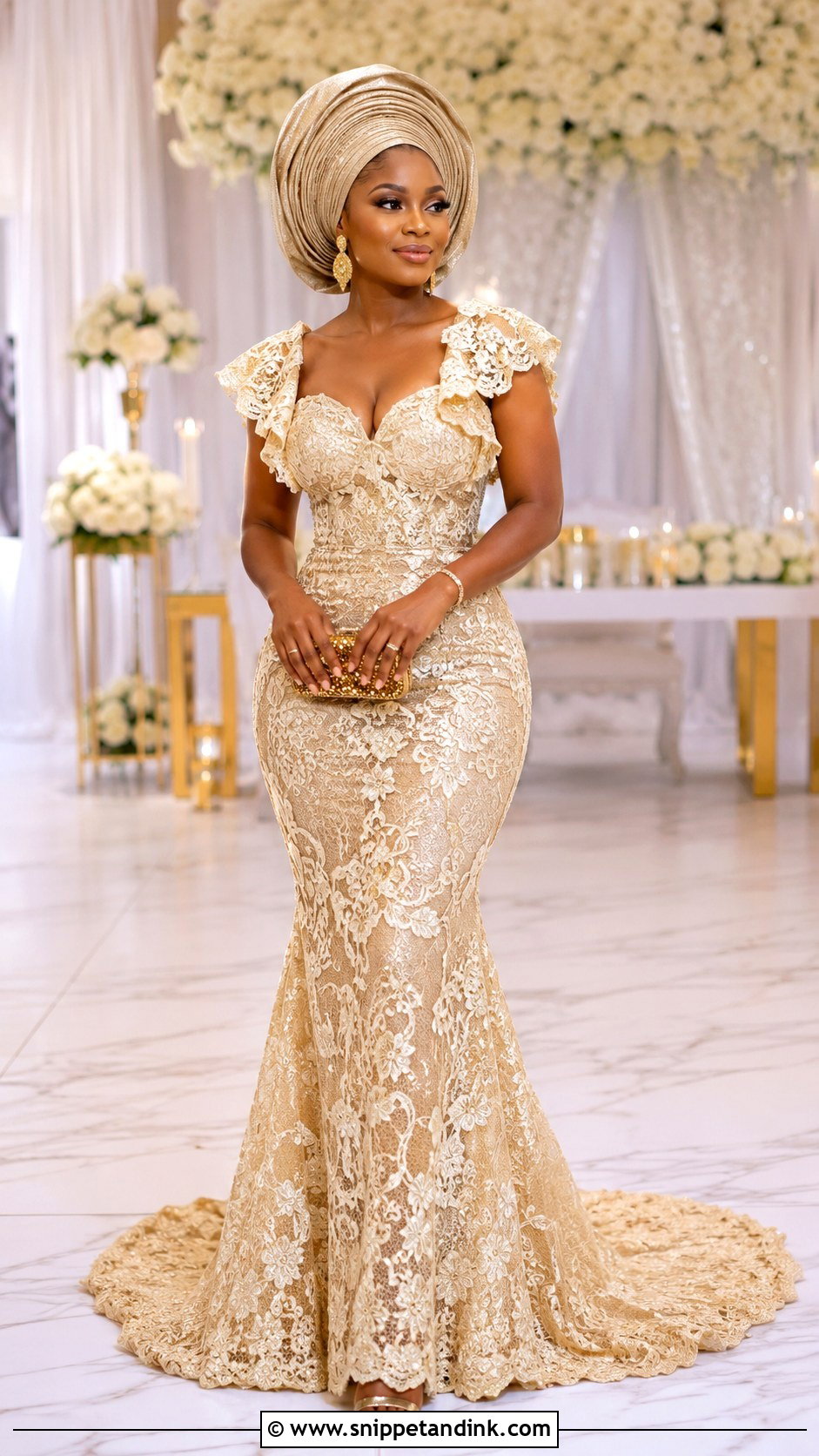
A train adds luxury behind the gown and makes for strong photos. For a guest, I keep it moderate unless you are in the wedding party, because a long train gets stepped on in crowded halls. A detachable train solves that, coming off before the dancing. It pairs with a corset bodice, mermaid skirt or straight gown. Ask for a finished hem and a wrist loop, so the lace does not drag across the floor. Add a clean gele, statement earrings, slim heels and a small clutch.
17. Nigerian Lace Two Piece Set
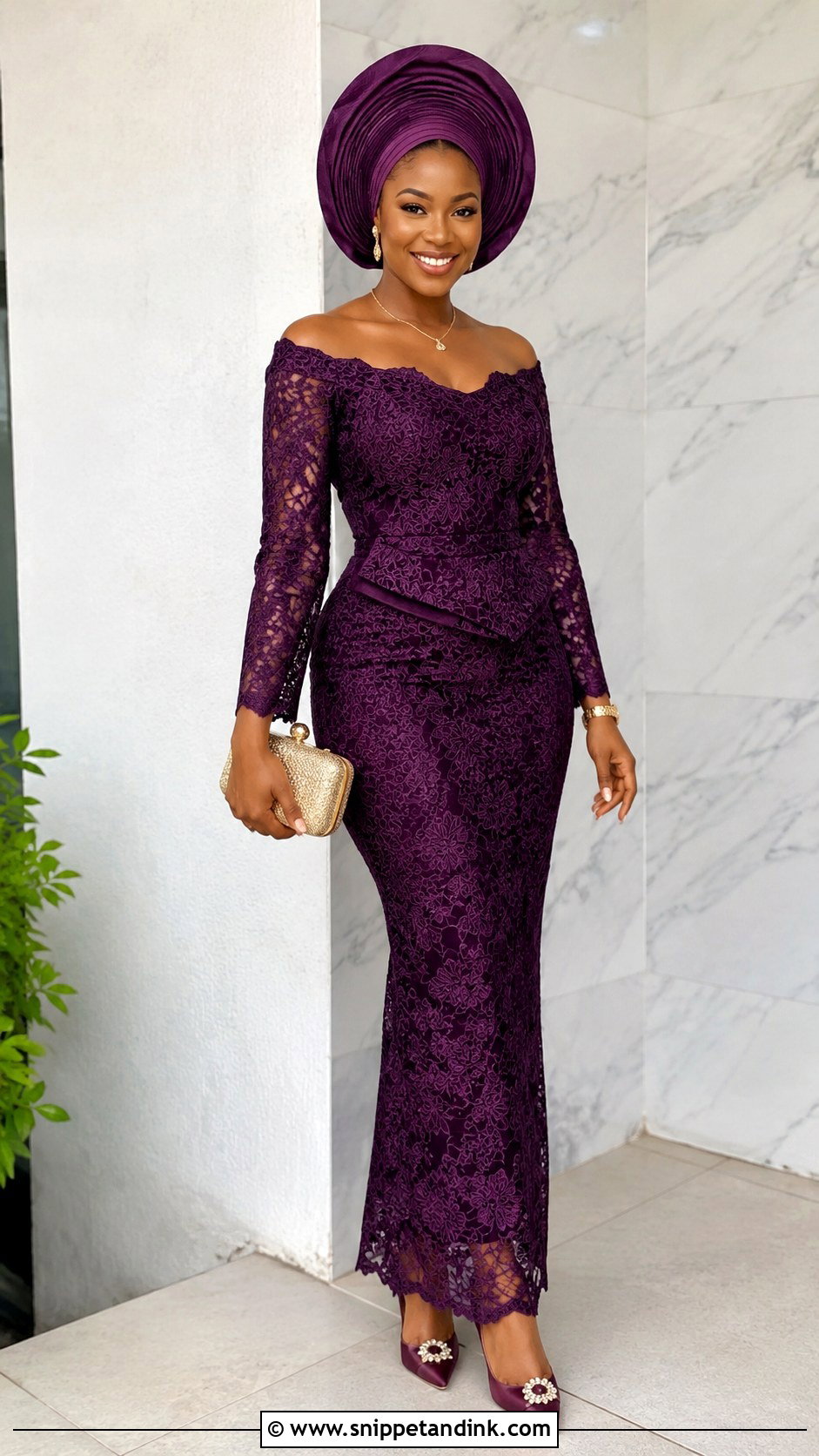
A two-piece can be a crop blouse with a high-waist skirt, a peplum with a straight skirt, or a long blouse over wide-leg lace trousers. What keeps it formal is fabric, fit and accessories, so I treat it as seriously as a gown: matching gele, pointed heels, clutch and neat jewelry. Top and bottom can be fitted separately, which helps if your bust and hips sit in different sizes. Both pieces work again afterwards, while still reading as aso ebi on the day.
18. Nigerian Lace Jumpsuit
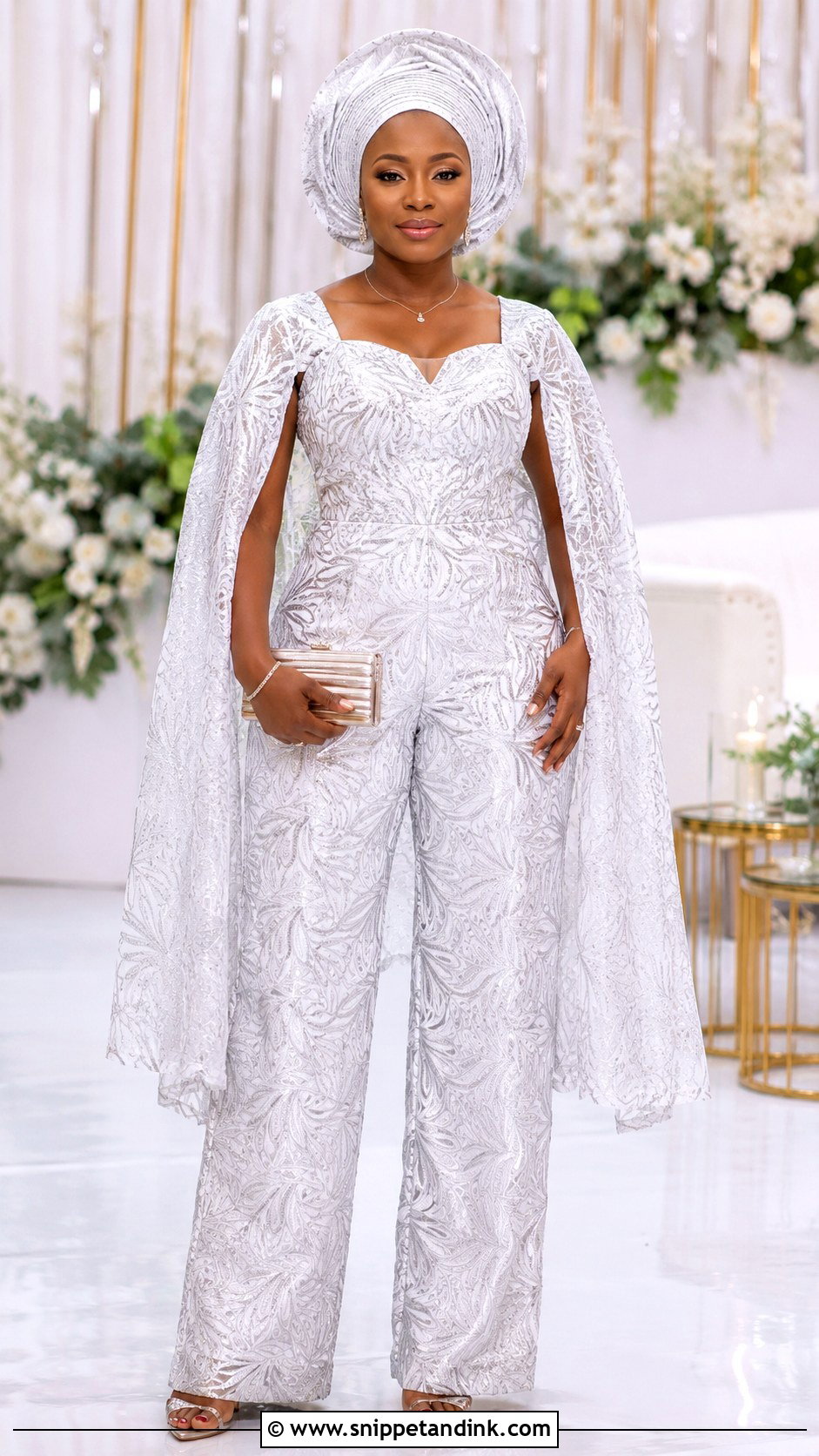
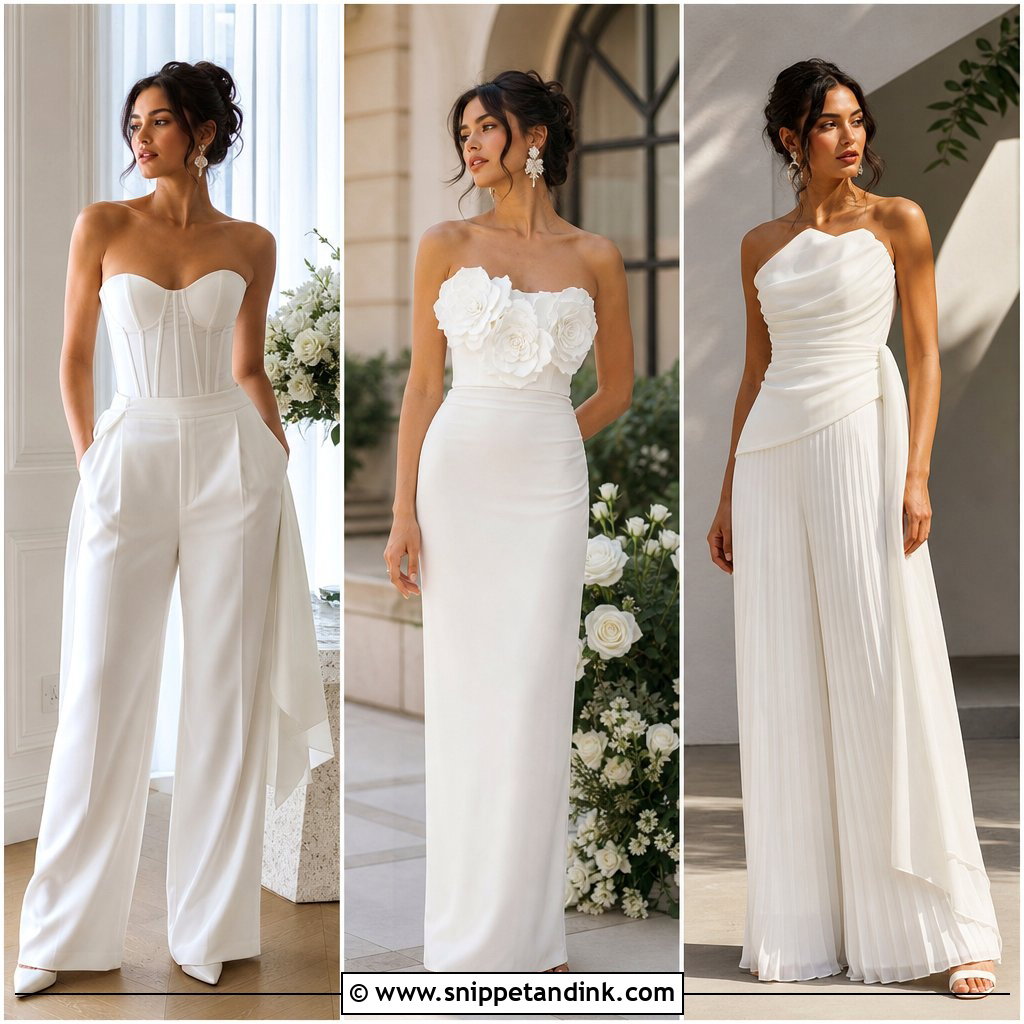
A Nigerian lace jumpsuit suits women who would rather wear trousers. A wide leg in lined lace with a fitted bodice looks dressiest, and a cape sleeve, peplum waist or beaded neckline adds formality. The length should just cover the heel of your shoe. Jumpsuits mean a full undress for the restroom, so I ask for a long back zip that you can manage alone. Style it with a gele, metallic heels, a box clutch and polished earrings for receptions and civil celebrations.
19. Nigerian Lace Blazer And Trousers
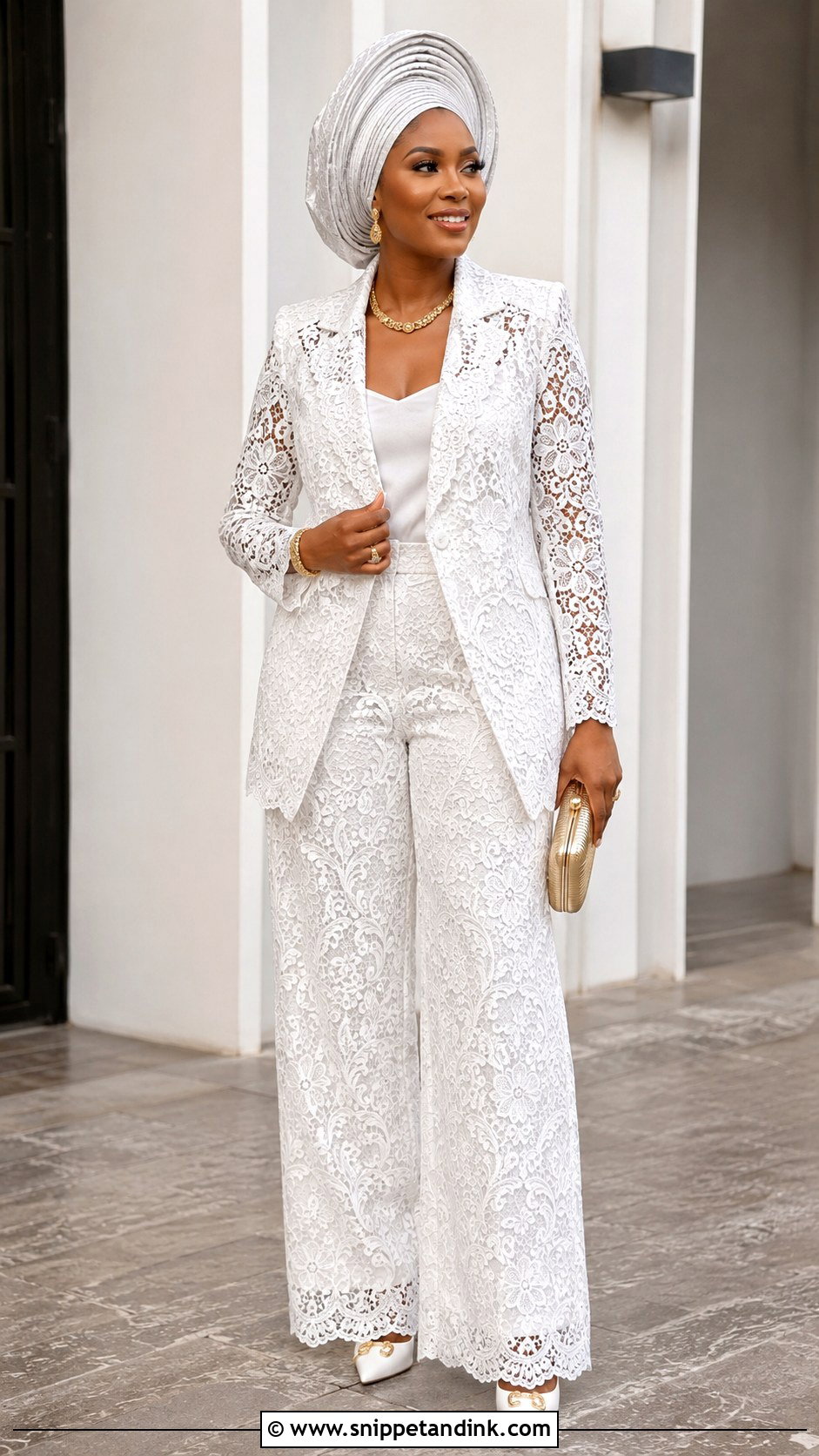
A lace blazer and trousers suits women who love tailored fashion. The blazer can be embroidered lace over a camisole or lined bodice, with straight, flared or wide-leg trousers. Lace is soft, so a blazer needs interfacing at the lapels and shoulders or it looks limp; I always check that with the tailor. A strong lining colour shows the pattern clearly. Pointed heels, a sleek clutch and gold or silver jewelry make it formal; a gele leans traditional, a low bun modern.
20. Nigerian Lace Short Gown
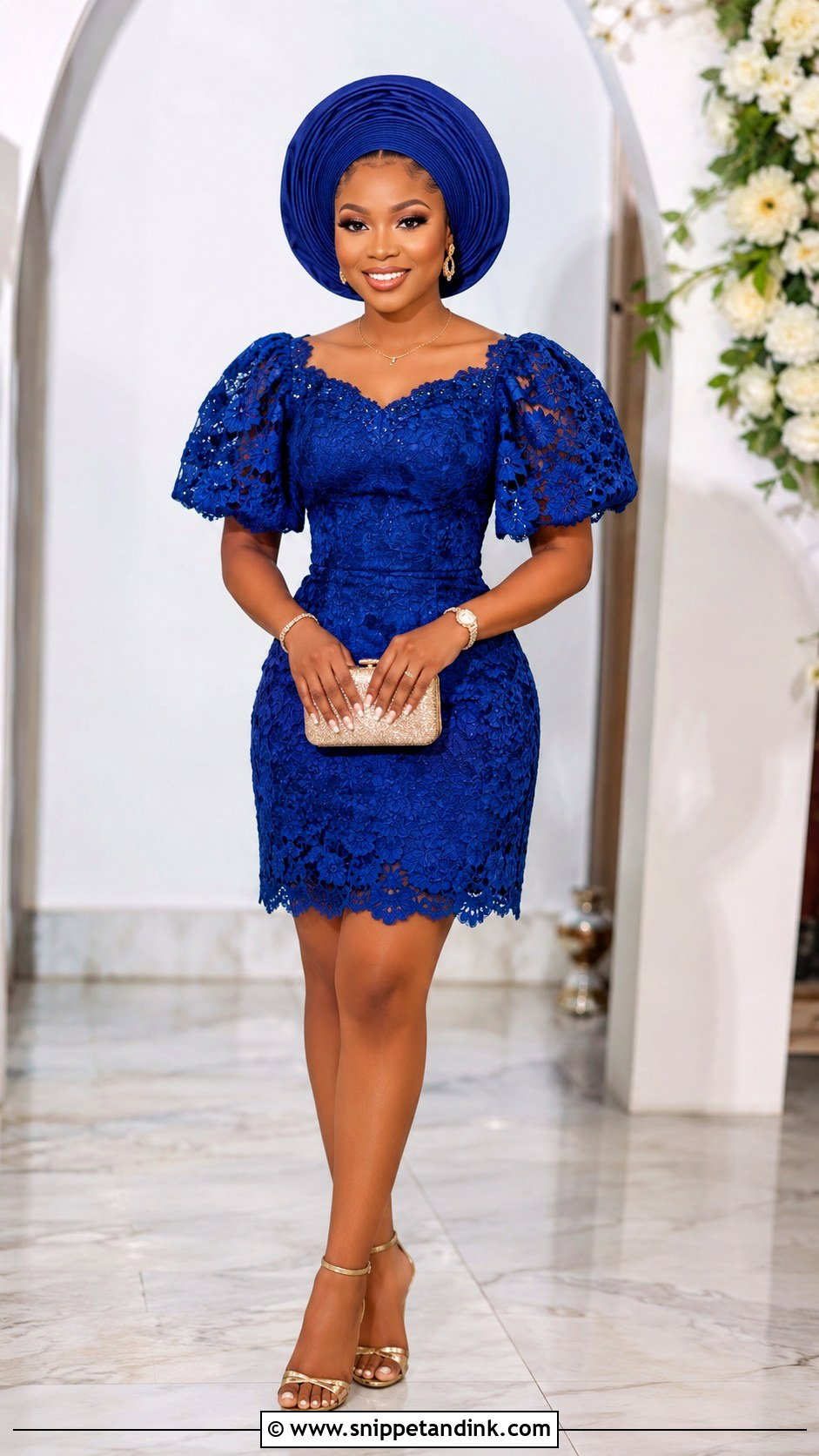
Short lace can be wedding-appropriate if the cut is polished and the fabric is rich. Knee-length or just below is the safest length for formal events. Puff sleeves, a peplum or a flared hem keep it dressy. I avoid overly tight tailoring here; a short, tight lace dress rides up when you sit and reads more nightclub than wedding. Add a gele, heeled sandals, a small clutch and simple jewelry. It suits younger guests, after-parties and less formal receptions, and you can dance freely.
21. Nigerian Lace Midi Gown
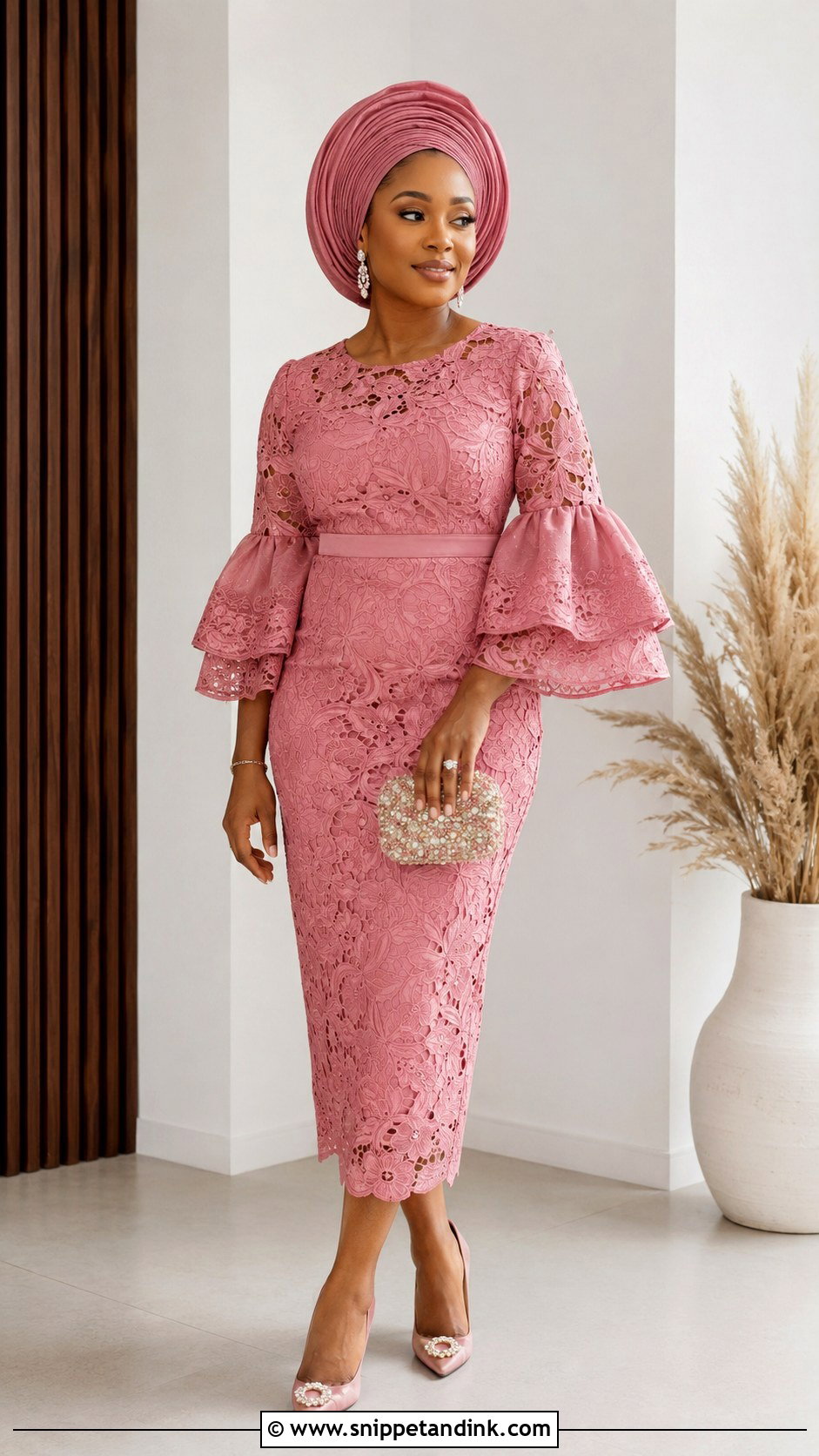
Midi length sits below the knee or at mid-calf and shows off your heels without a long hem. Fitted, A-line, wrap or pencil cuts all work. I pick lace with beading or embroidery so it still feels festive enough for a Nigerian celebration, since a plain midi can look like office wear. Exactly where the hem lands matters, so try it with the shoes you plan to wear. A medium gele, small clutch and elegant earrings complete it, and it fits registry ceremonies and daytime weddings well.
22. Nigerian Lace Gown With Gele
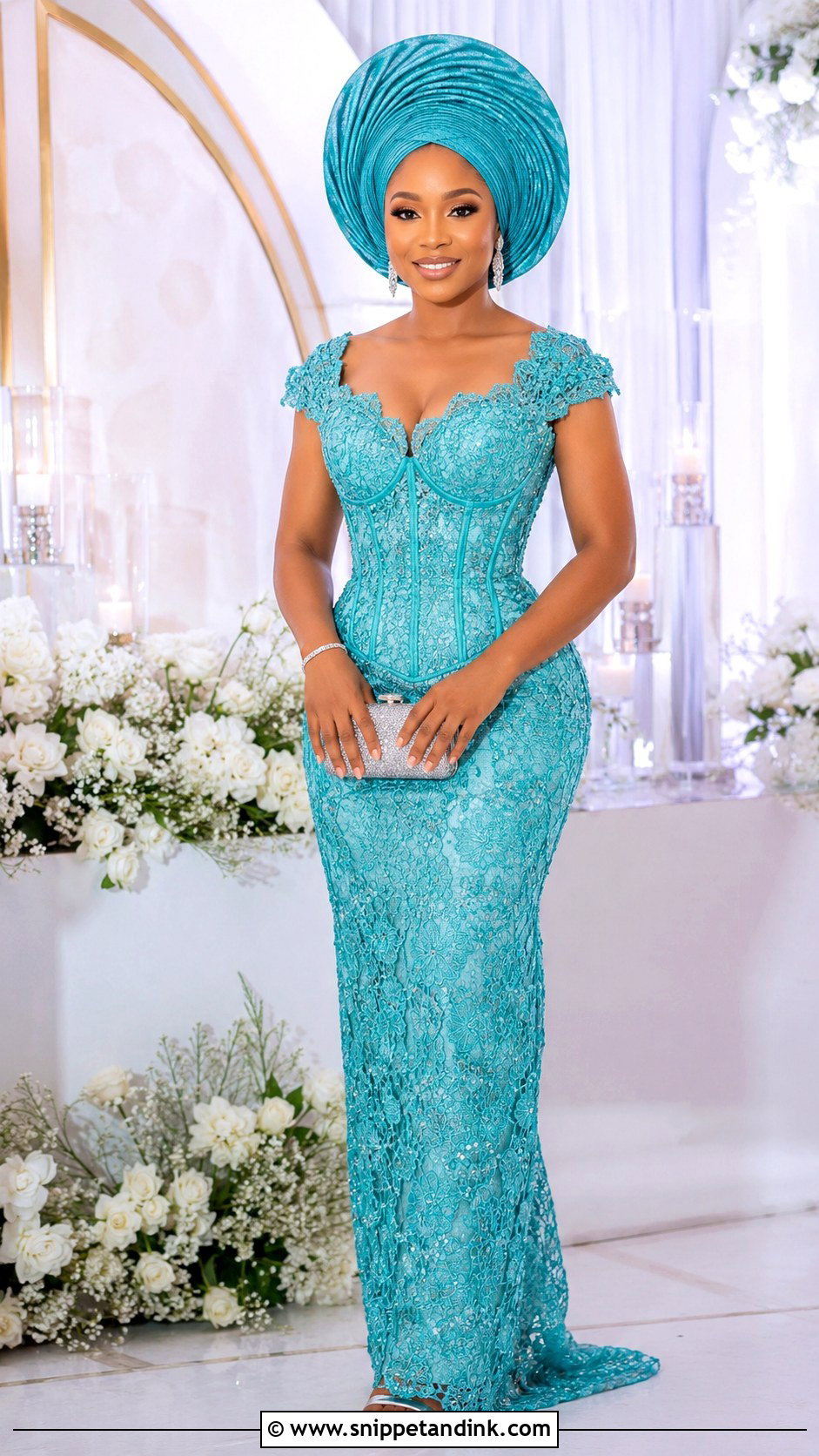
Lace and gele together make the full classic look: height and colour from the gele, texture from the lace. The gown can be mermaid, straight, A-line or corset, but the gele has to balance the neckline and sleeves. Heavy sleeves call for a cleaner gele shape; a simple gown can take a dramatic one. Book your gele tier early on the morning, because the good ones are busy, and sit for it before you put the gown on. Match clutch, heels and jewelry to the tone of the lace.
23. Nigerian Lace Gown With Aso Oke
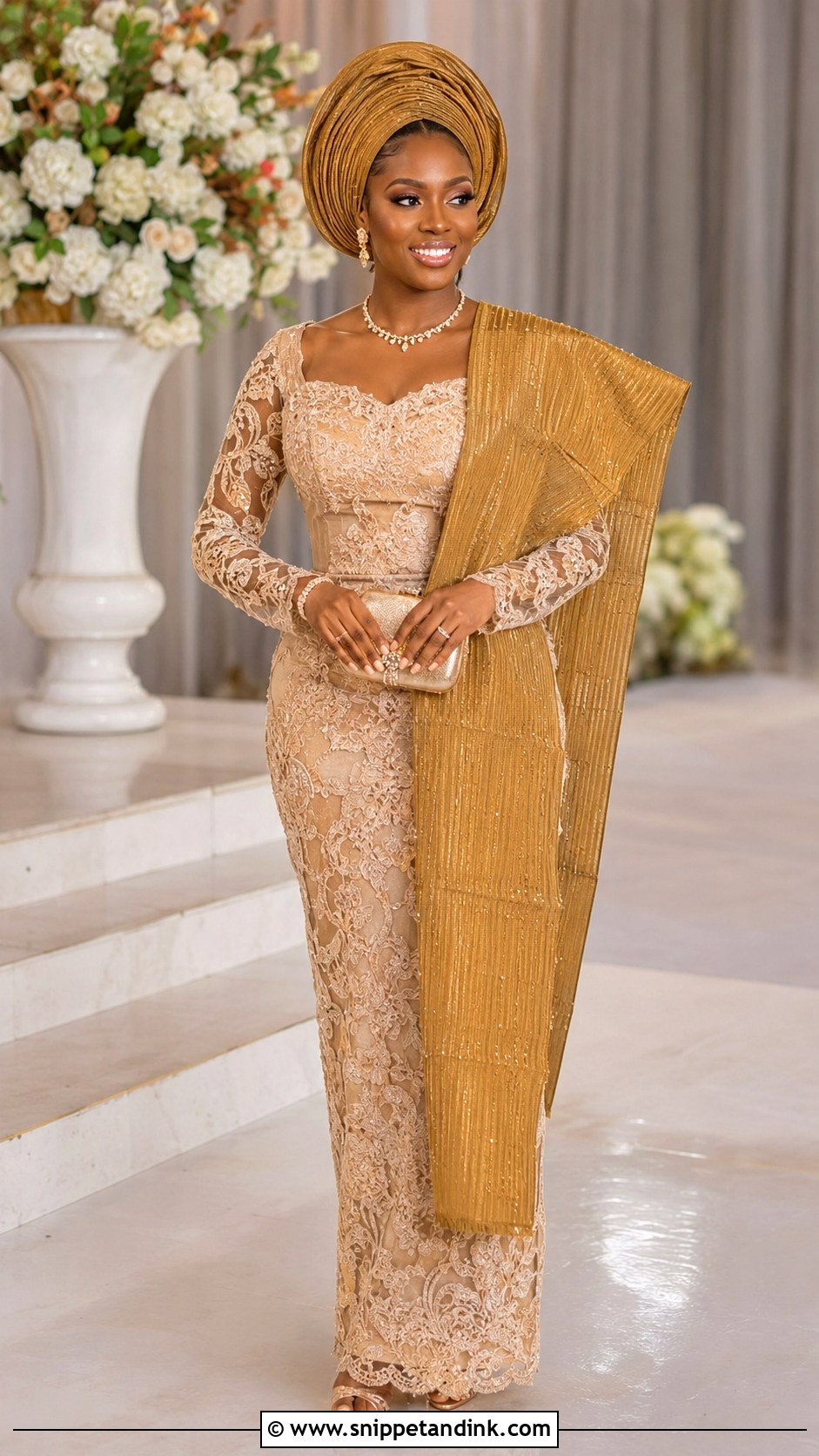
Aso oke paired with lace gives a rich traditional finish, especially at Yoruba weddings and formal family celebrations. The aso oke can appear as gele, ipele, waistband, sash or shoulder detail, adding structure against the soft lace. Colour pairings matter: champagne lace with gold aso oke, navy with silver, or emerald with tonal green. Aso oke is stiff and heavier than lace, so I keep an ipele draped on one shoulder secured with a hidden pin. Simple shoes and clutch let the textiles lead, which is why it suits mothers, sisters and bridesmaids.
24. Nigerian Lace Gown With Beaded Details
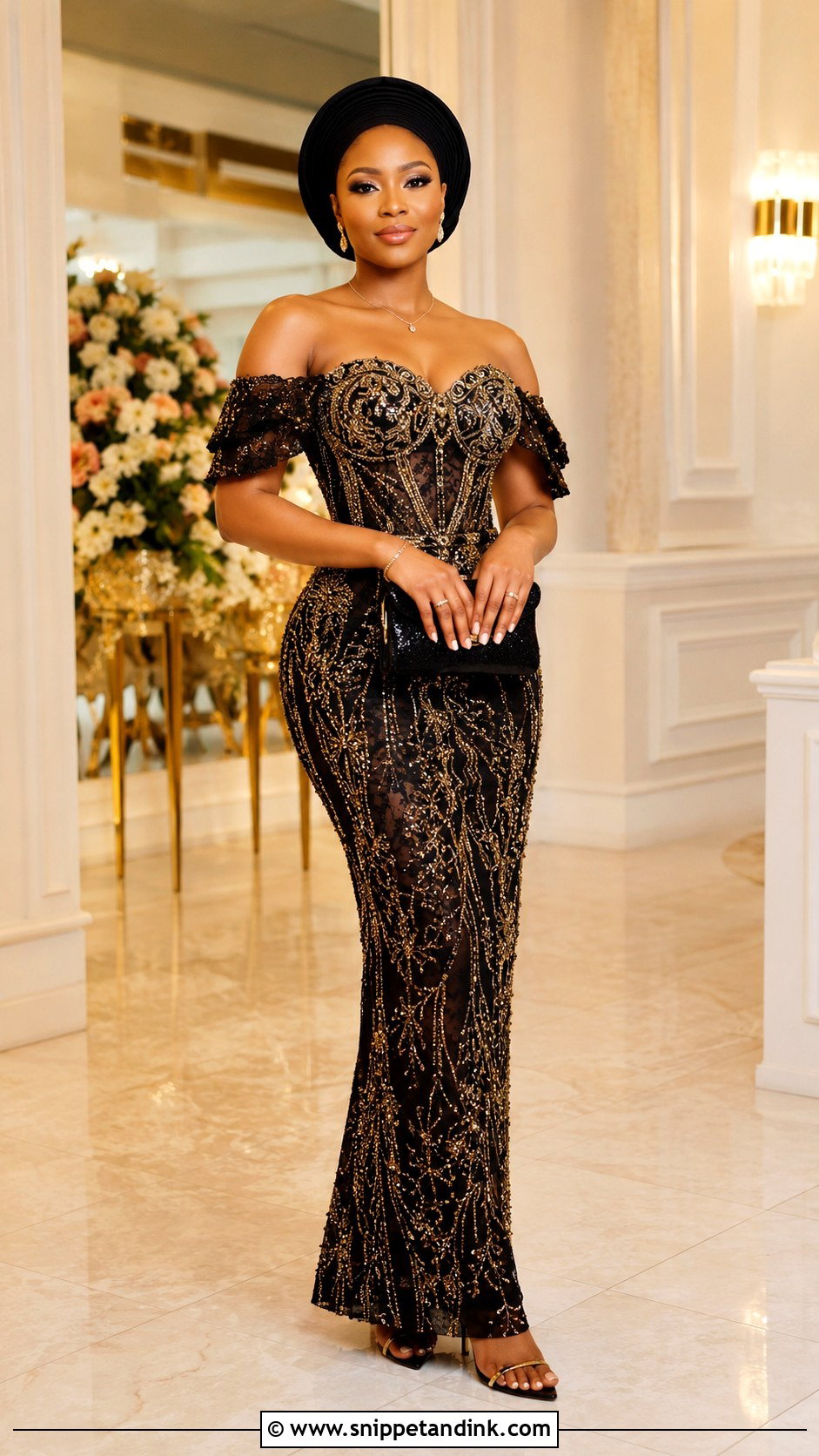
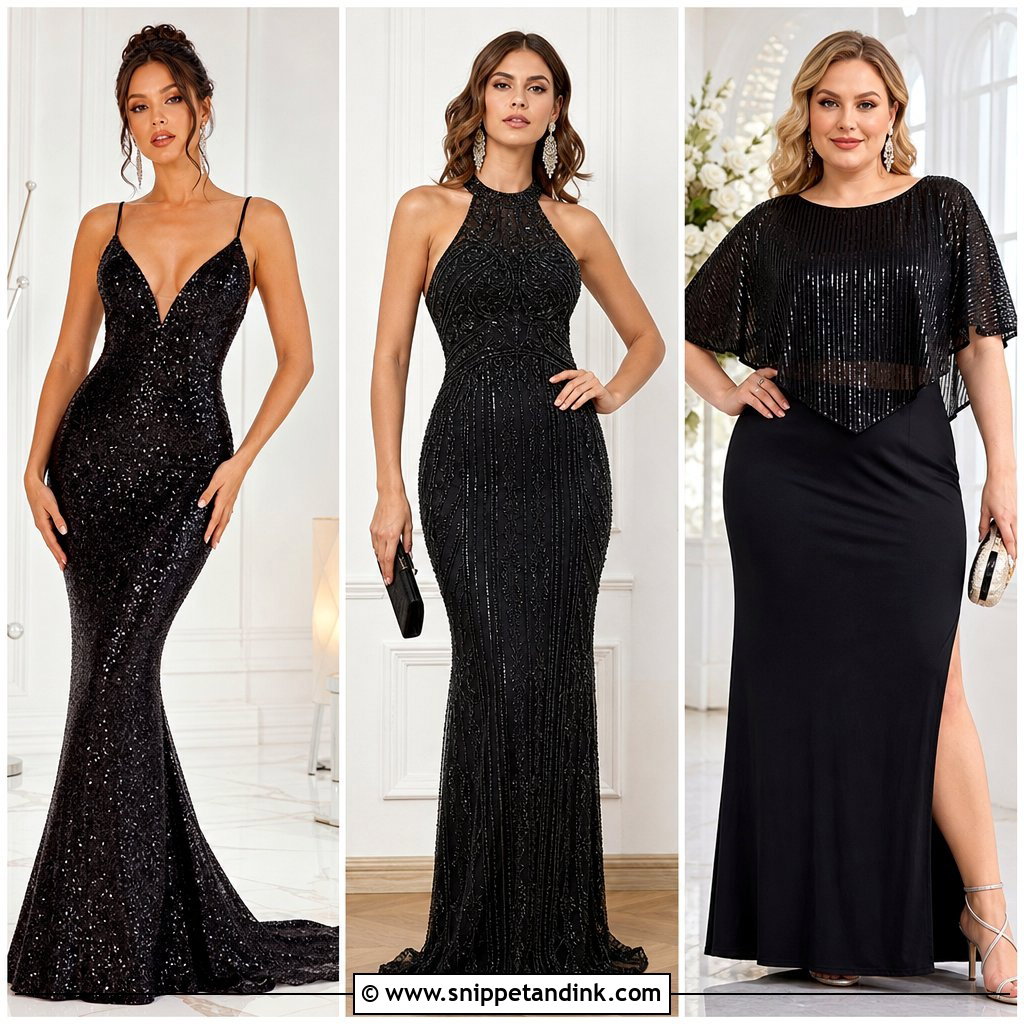
Beading makes lace look richer at the neckline, sleeves, waist, hem or all over. Beads add weight, so I choose a comfortable silhouette and firm lining; a fitted, mermaid or straight gown lets the beadwork lie flat on the body. Check the seams before you leave the house, since loose beads near the underarm snag and drop off as you move. Keep everything else simple with a plain gele, slim heels, a hard clutch and minimal jewelry. It shines at evening receptions under hall lighting.
25. Nigerian Lace Gown For Plus Size
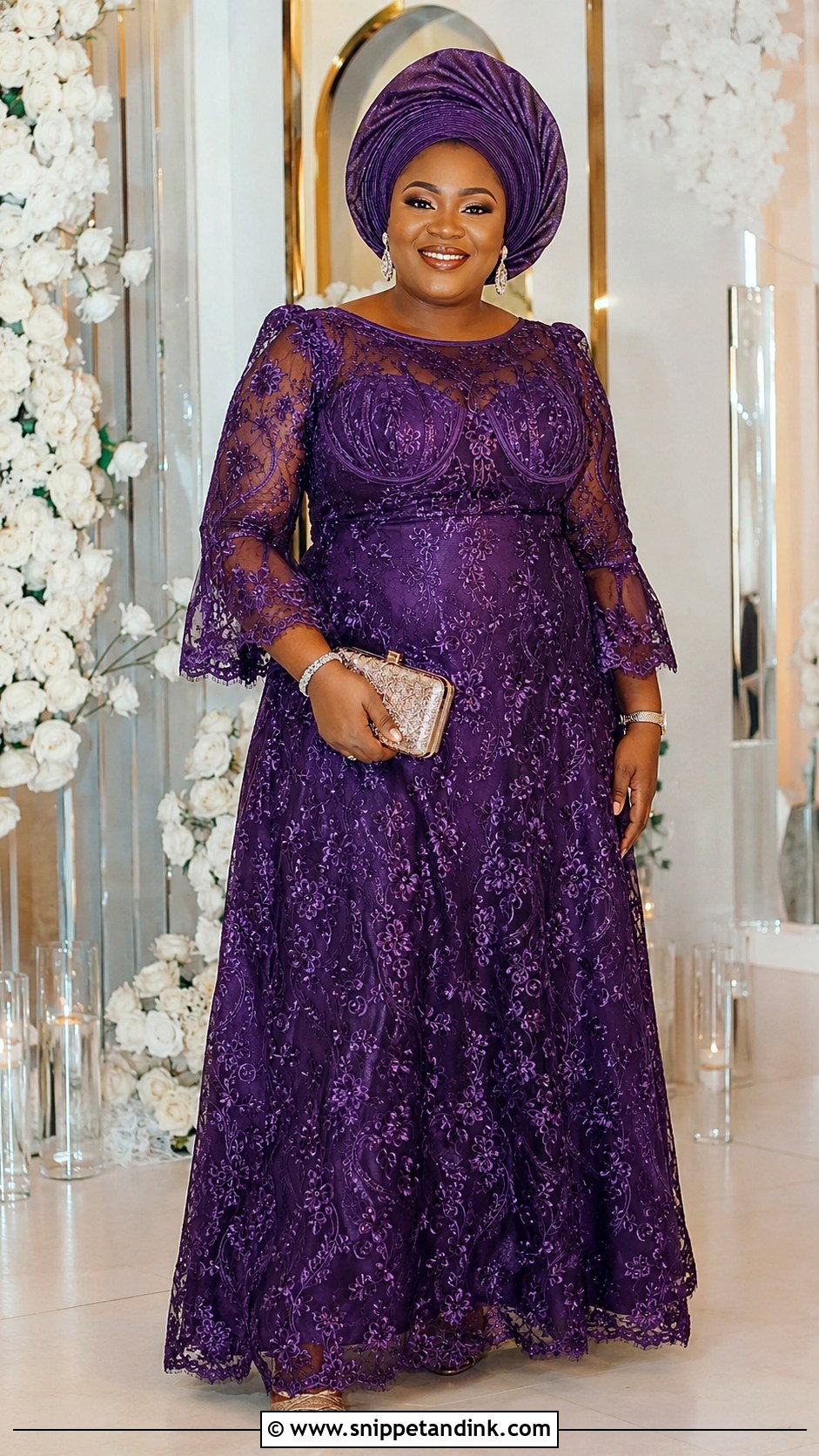
Plus size lace needs strong tailoring and smooth lining, and a silhouette that works with your body. A-line, wrap, empire waist, peplum sets and well-structured mermaids all suit. A medium or large lace pattern sits in better proportion than a tiny one. I ask tailors for ease at the arms, bust, hips and knees, because lace has little stretch and a gown that is perfect standing can pull when you sit or dance. A well-tied gele, stable heels and a structured clutch complete it.
Aso Ebi Manners Every Guest Should Know
Wearing the couple’s chosen fabric is a sign of support, and families notice how it is done. A few habits keep you on the right side of everyone.
- Buy and pay for the fabric through whoever the family appointed, and do it before their deadline. Late orders can mean the lace has run out.
- Wear it to the event it was chosen for. Some families pick one fabric for the traditional ceremony and another for the reception, so ask.
- Do not dye or mix the lace with a clashing colour. Creativity belongs in the style and the gele, not in changing the shade the couple picked.
- Avoid styles that compete with the bride, such as a long white-looking train or a full bridal veil.
- Bring the gele already tied or arrive early to the gele tier, so you are not late to the entrance procession.
After the wedding, hand wash plain lace in cool water or take beaded and cord lace to a dry cleaner who knows embellished fabric. Never wring beaded lace; press water out with a towel and dry it flat so the beads do not pull the threads.
Lace, Gele and a Tailor Who Has Enough Time
Lace is the start, not the whole outfit. The right style depends on the wedding setting, your comfort, your figure and the role you play on the day. A corset mermaid gown brings drama, while a bubu, kaftan or iro and buba gives ease. Two-piece sets, jumpsuits and lace suits offer modern alternatives. Finish with the right gele, shoes, clutch and jewelry, and give your tailor enough time to get the fit right.
You'll Like These Ideas:



Leave a Reply