
A plain gown is harder to get right than a beaded one. With no lace to distract the eye, the cut, the fabric and the fit carry everything, and a pucker at a seam or a ripple across the hip is the first thing anyone sees. When it does work, a smooth satin column or a crisp square-neck crepe looks every bit as considered as an ornate dress. Many brides I dress now ask for exactly this: a simple shape with one detail that matters. The 25 gowns below suit city halls, gardens, destination ceremonies and formal rooms, and for each I’ve noted what to style it with and what to check at the fitting.
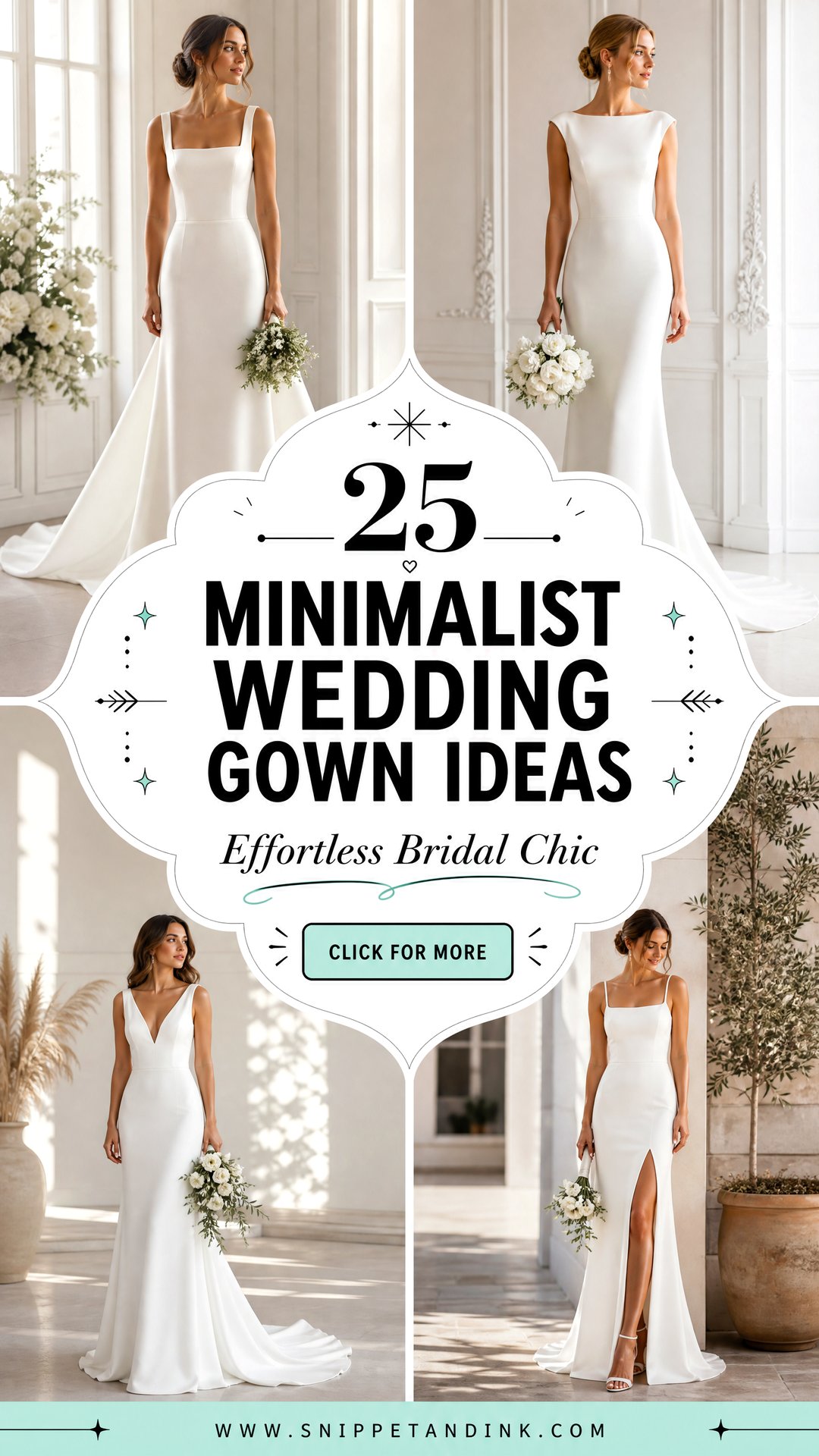
In a Plain Dress, the Fabric Is the Design
With no embellishment to hide behind, I judge a minimal gown by how its fabric behaves over a long day. Here’s how the four I use most actually wear:
Crepe
Matte, slightly textured and forgiving. It resists creasing better than satin and hides small fitting flaws. It can look flat under dim reception lighting, which some brides love and others don’t.
Satin
It glows, and it shows everything: water marks, seat creases, the edge of underwear. Heavier satins behave far better than thin, shiny ones, so feel the weight before you fall for the color.
Mikado
Stiff, with a soft sheen. It holds architectural shapes and stays crisp in photos, but it’s warm to wear in summer heat and creases sharply where it folds.
Silk charmeuse
Fluid and light, ideal for slips and cowls. It marks easily with water and sweat, so keep tissues away from it and blot rather than rub.
In the shop, turn the gown inside out. Clean, finished seams and a full lining tell you more about quality than the label does.
1. Satin Column Wedding Gown
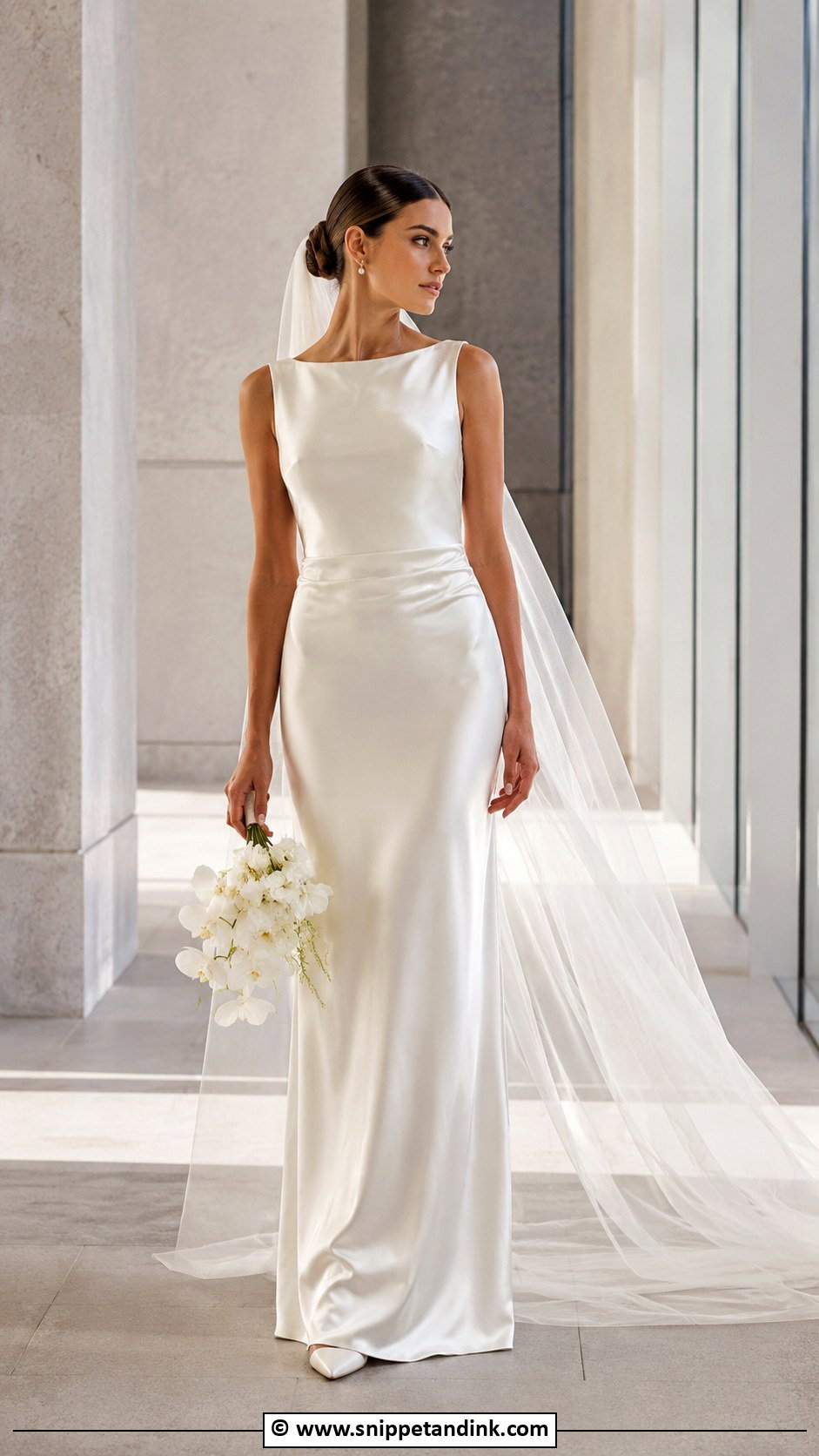
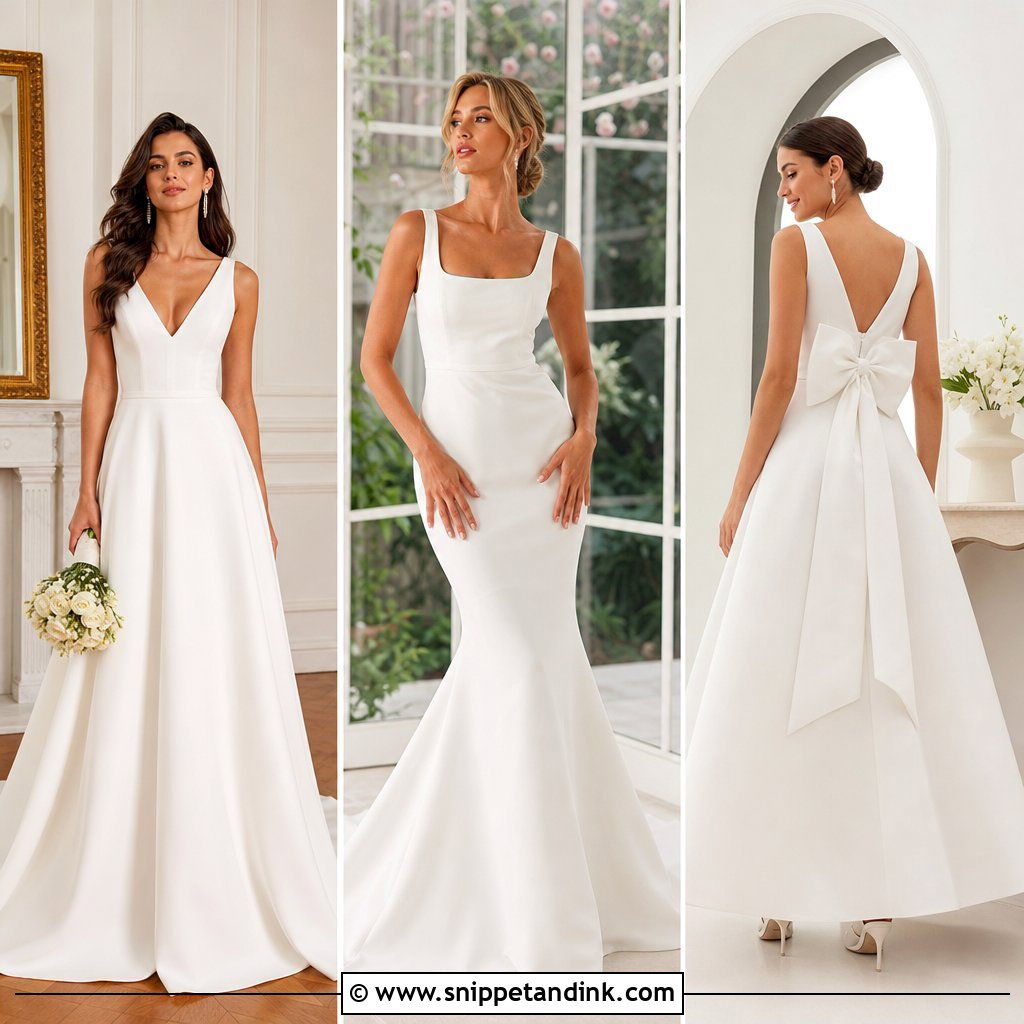
The column is the cleanest silhouette there is, and the least forgiving. It falls straight from neckline to hem, so any pull across the hips or twist at the side seam shows immediately, especially in satin, which catches light along every ripple. I fit these with the bride standing still, then walking, because a column that looks perfect static can ride up when you move. Pointed ivory heels, a sleek low bun and small studs suit it. A long plain veil adds ceremony drama without breaking the line.
2. Square Neck Wedding Gown
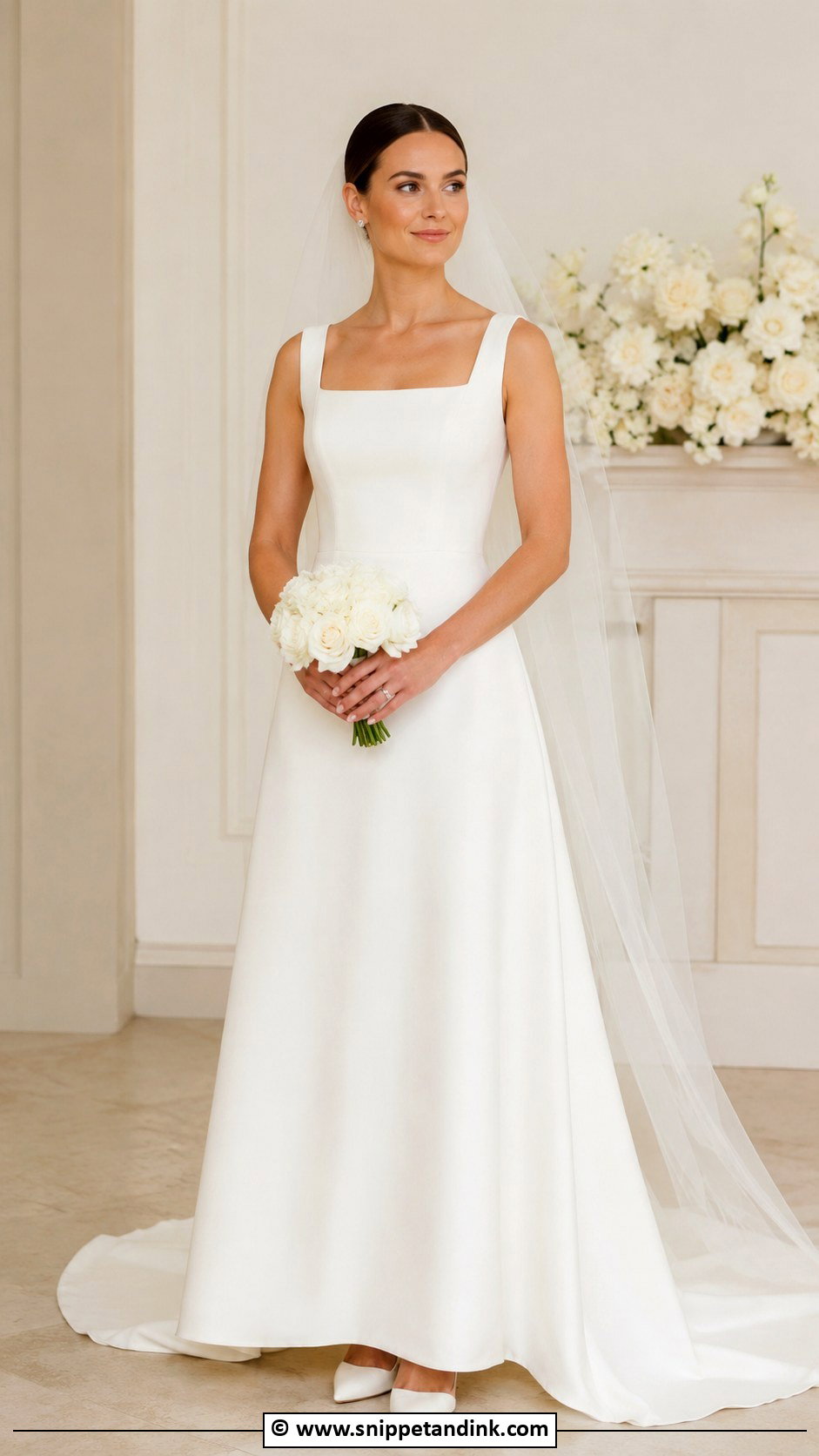
Square necks frame the collarbone with structure but without severity. In crepe, mikado or satin they stay crisp; in a soft fabric the corners can droop, so look for a neckline with a bit of interfacing inside. The shape works over a fitted skirt or an A-line, which makes it adaptable to most figures. A middle-part bun and barely-there earrings keep the attention on the neckline. If you want softness, a sheer plain veil or a small tulle bow at the back of the hair adds it.
3. Strapless Wedding Gown
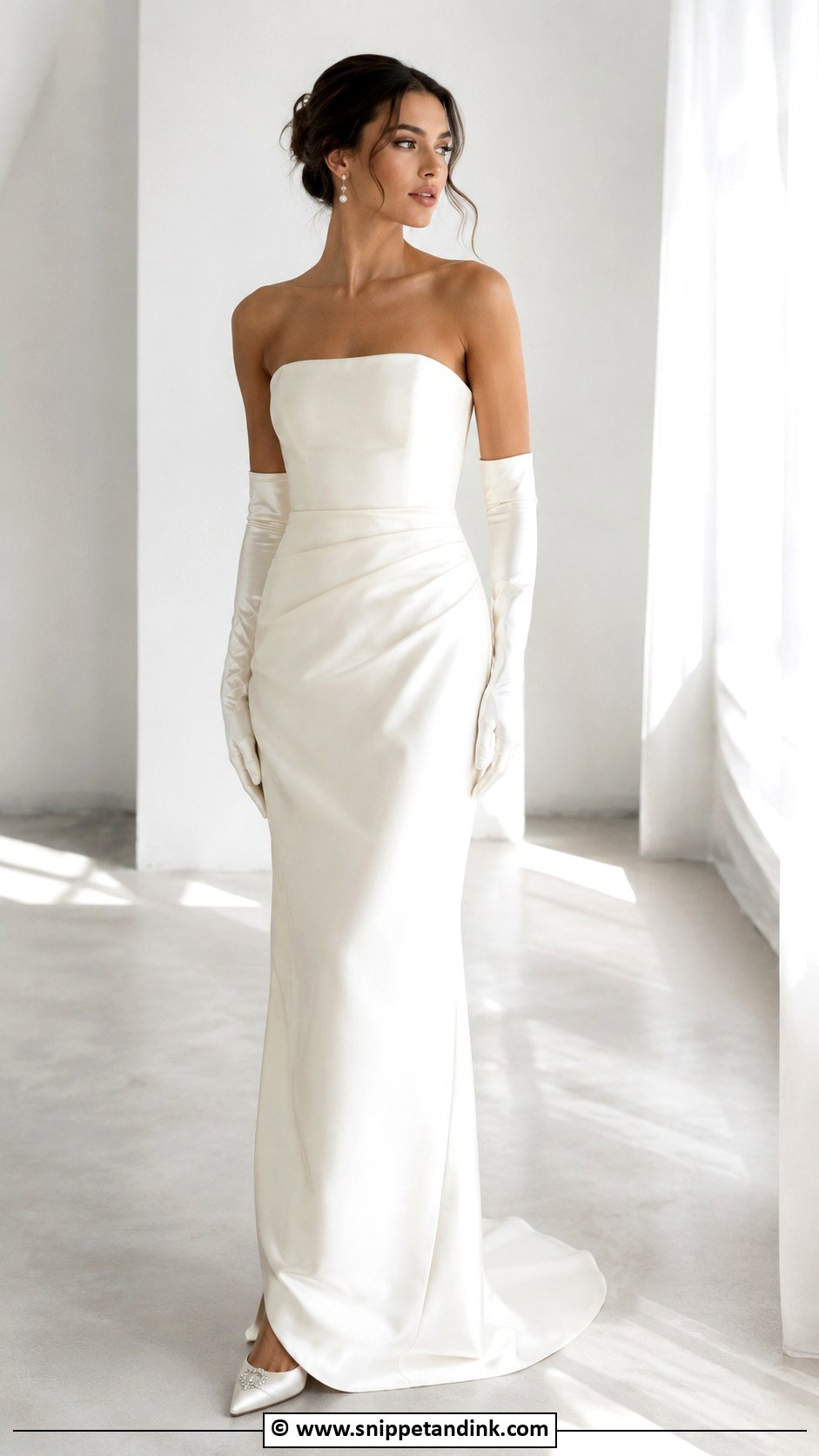
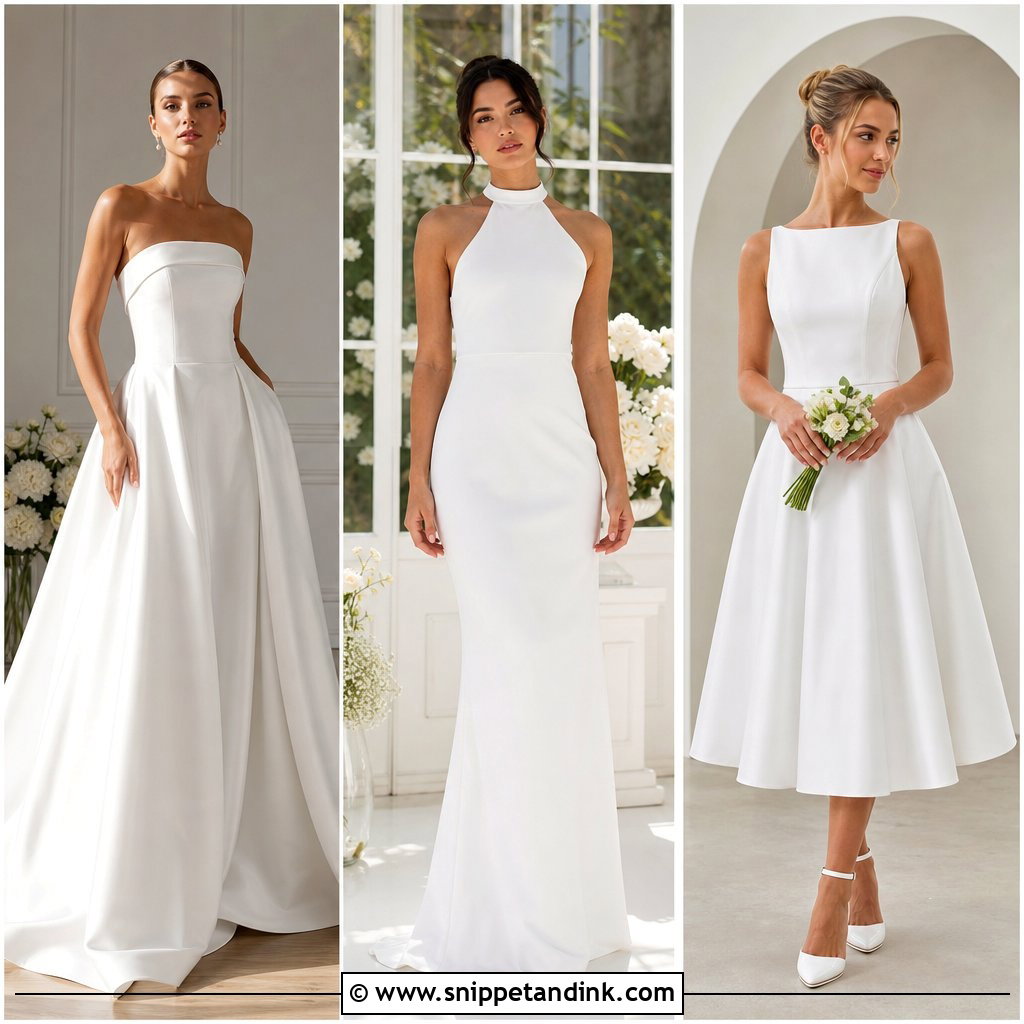
Strapless only looks chic if it stays up without you thinking about it. The bodice needs internal boning and, ideally, a grip waistband stitched inside so the weight of the skirt hangs from your waist rather than your bust. I have brides raise their arms, bend and sit at every fitting. Once support is sorted, the open neckline suits a polished updo and simple drop earrings, and long satin gloves bring a fashion edge if you like it.
4. Crepe A Line Wedding Gown
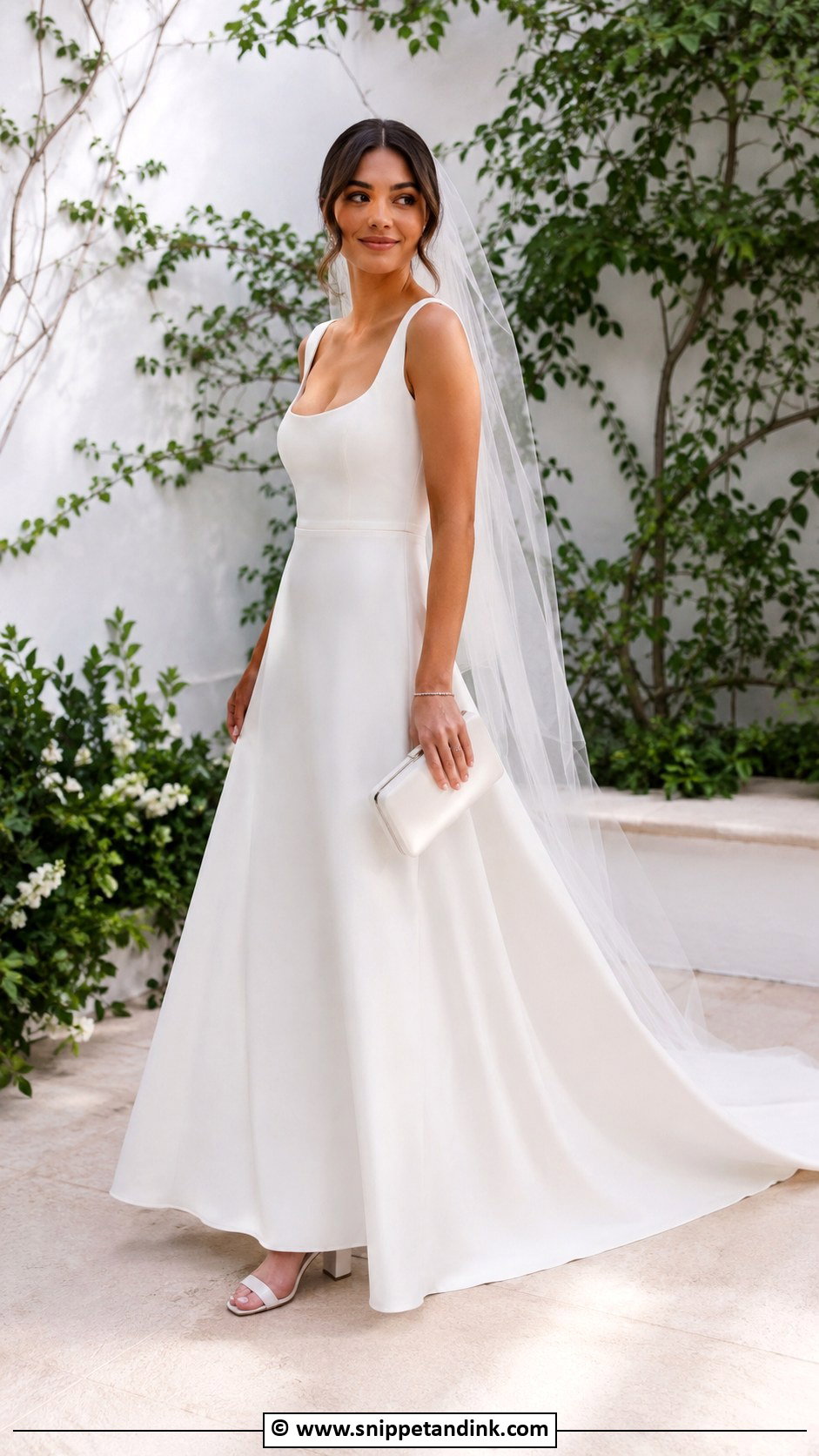
Crepe is my answer for the bride who wants to move. Its matte surface reads modern, it doesn’t shine at the seams, and an A-line skirt in crepe swings away from the body without needing petticoats. The fitted bodice defines the waist; the rest is comfort. Block heel sandals help on lawns and at resort venues. A loose low chignon or a clean center part keeps the styling as quiet as the dress.
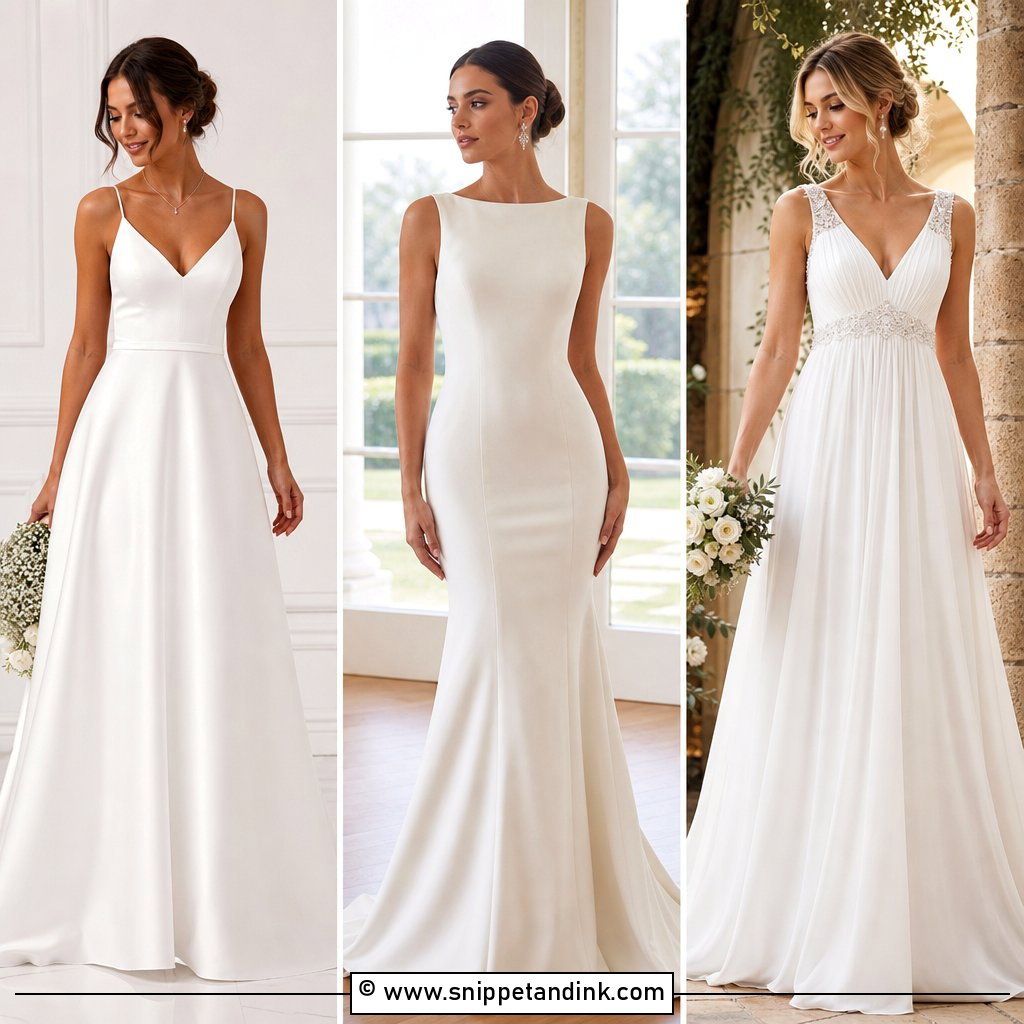
5. Silk Slip Wedding Gown
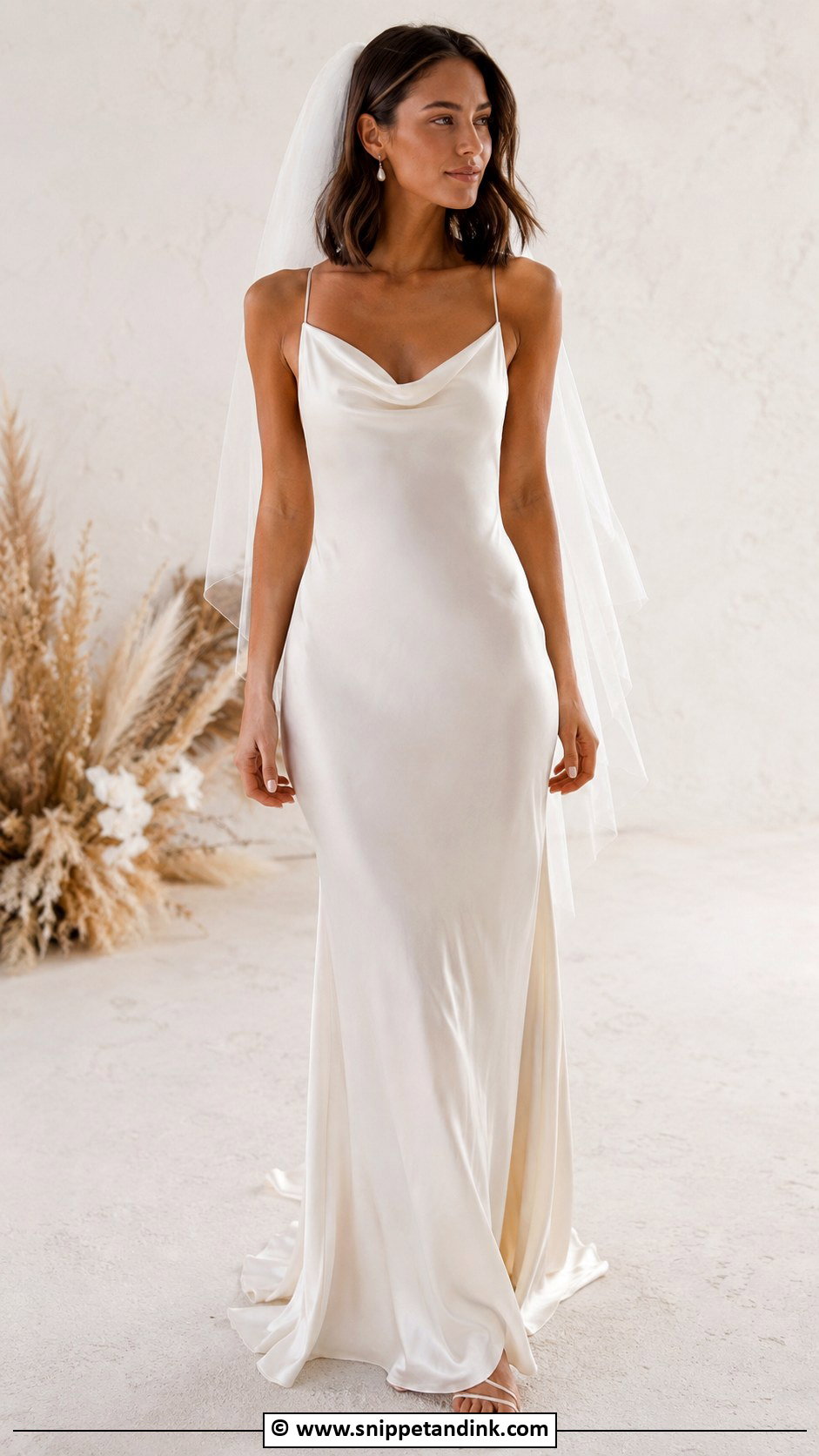
A silk slip wedding gown is the most relaxed minimal option and the one where fabric quality matters most. Bias cut drapes and moves with you, but thin silk clings and shows every line underneath, so I look for silk satin or charmeuse with real weight. Strappy heels and a soft shoulder-length veil suit intimate and beach weddings. If the back is low, wear your hair up. Steam it on a hanger the morning of; bias silk creases fast in a suitcase.
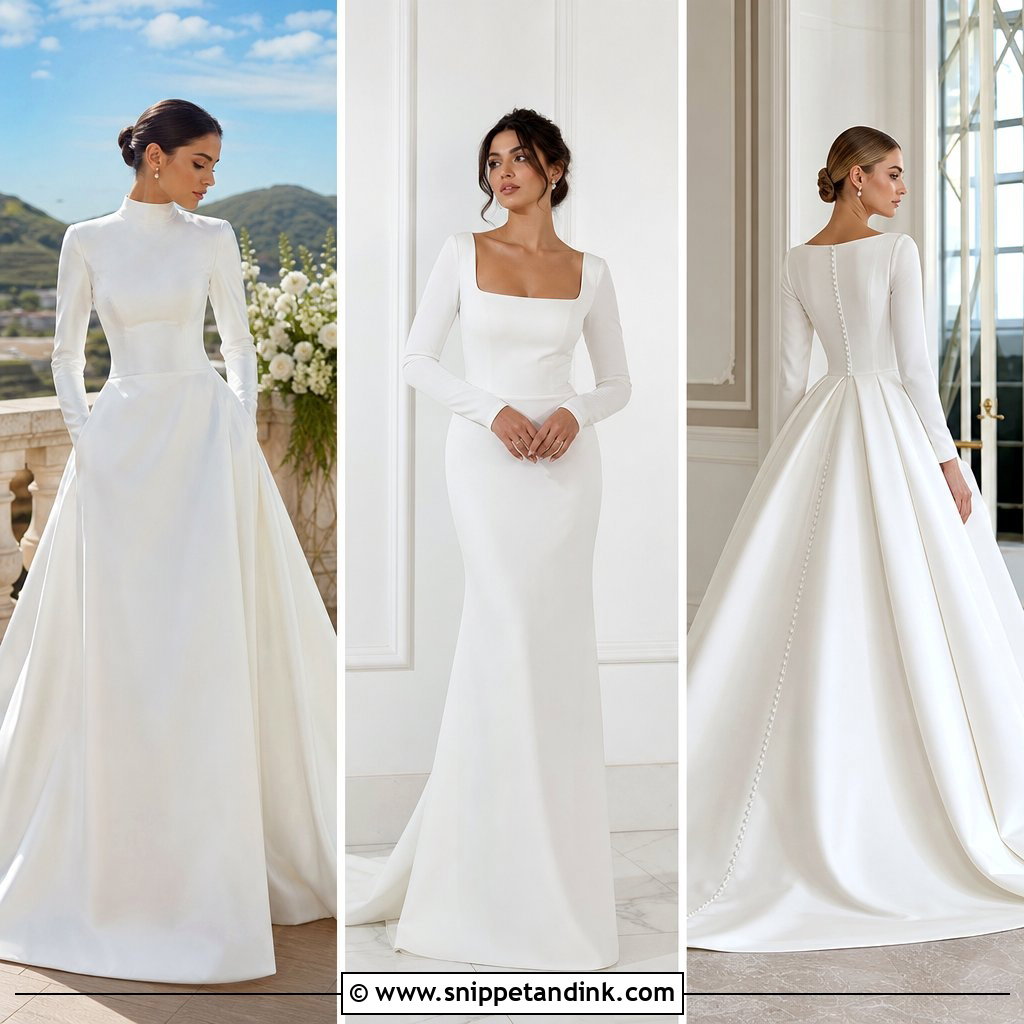
6. High Neck Wedding Gown
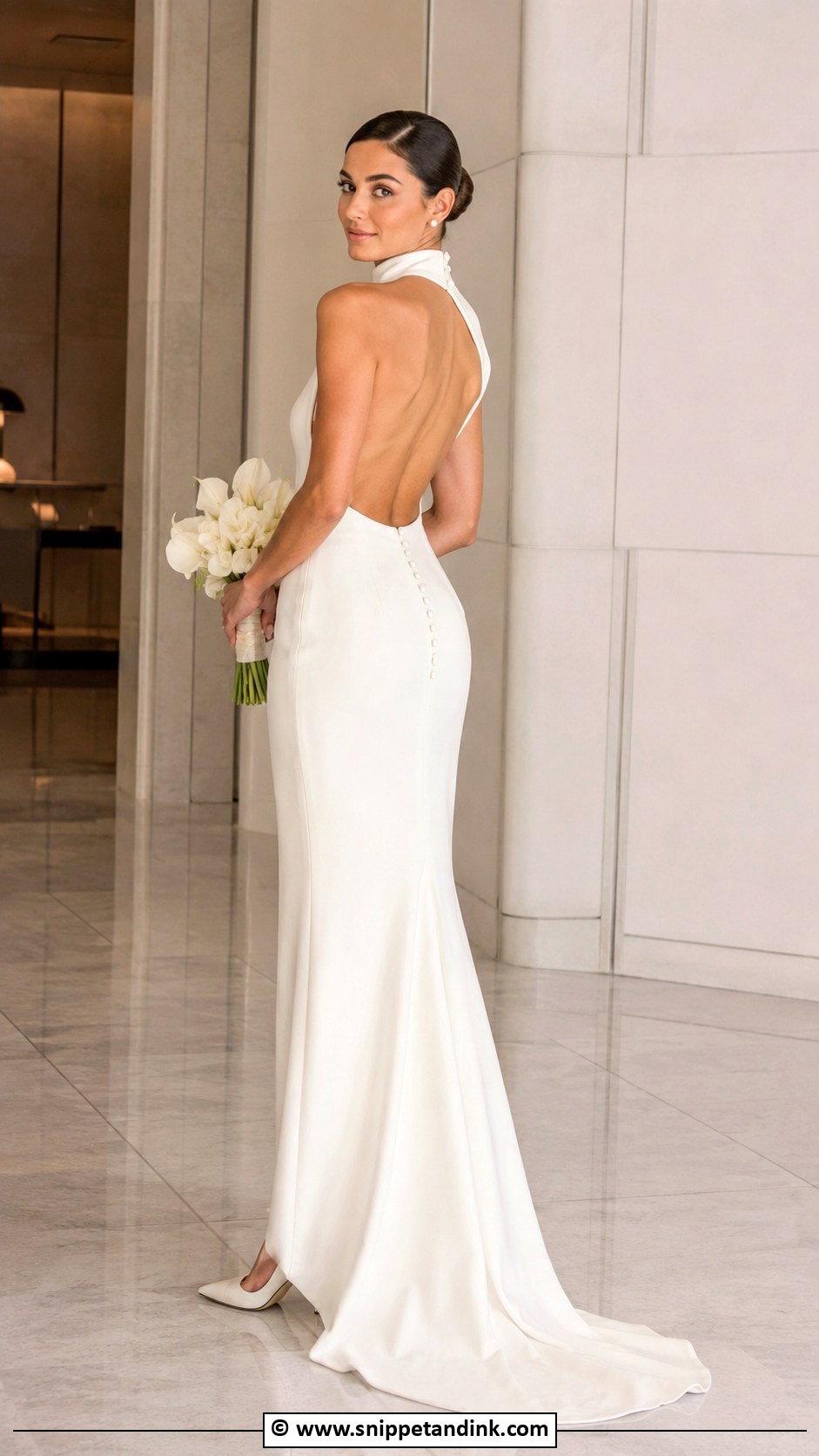
High necks create a long, graceful line and make accessories almost unnecessary. Clean crepe, satin or matte mikado hold the shape best. The fitting detail to watch is the neck itself: too tight and you’ll feel it every time you turn your head, too loose and it buckles. A smooth bun, small earrings and pointed heels are plenty. For contrast, look for an open back or a subtle side slit. It’s a natural fit for cooler seasons and formal venues.
7. Long Sleeve Wedding Gown
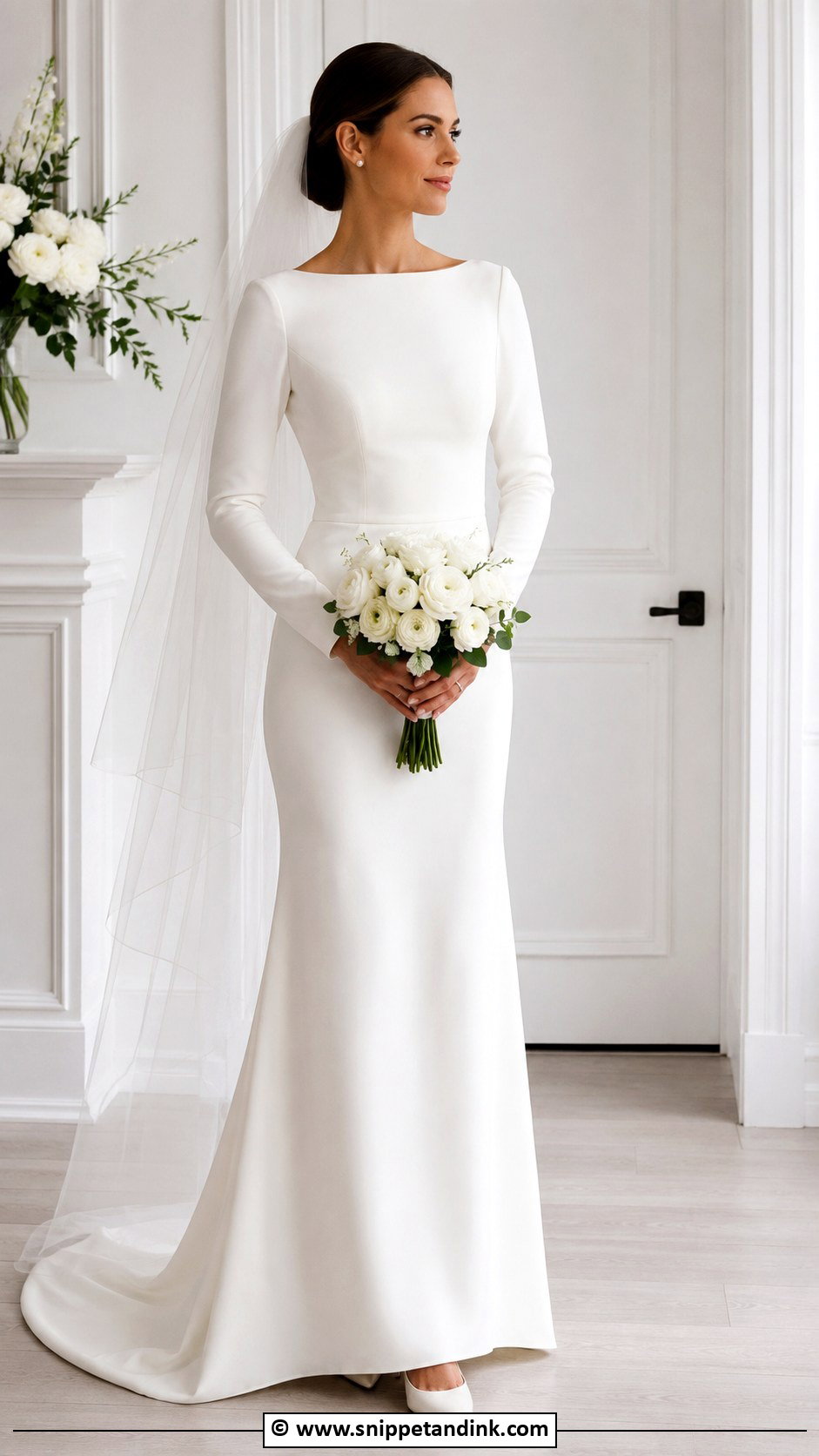
Sleeves stay minimal when they’re smooth and fitted, in crepe, satin or plain sheer tulle with no lace. The coverage is complete enough that you need very little else: a low bun, pearl studs, simple pumps. I always check arm movement on a long-sleeve gown, because a sleeve set too low in the armhole stops you hugging anyone or lifting your bouquet. A bateau, V or square neck keeps it from looking old-fashioned. Fall, winter and formal indoor weddings suit it best.
8. Off Shoulder Wedding Gown
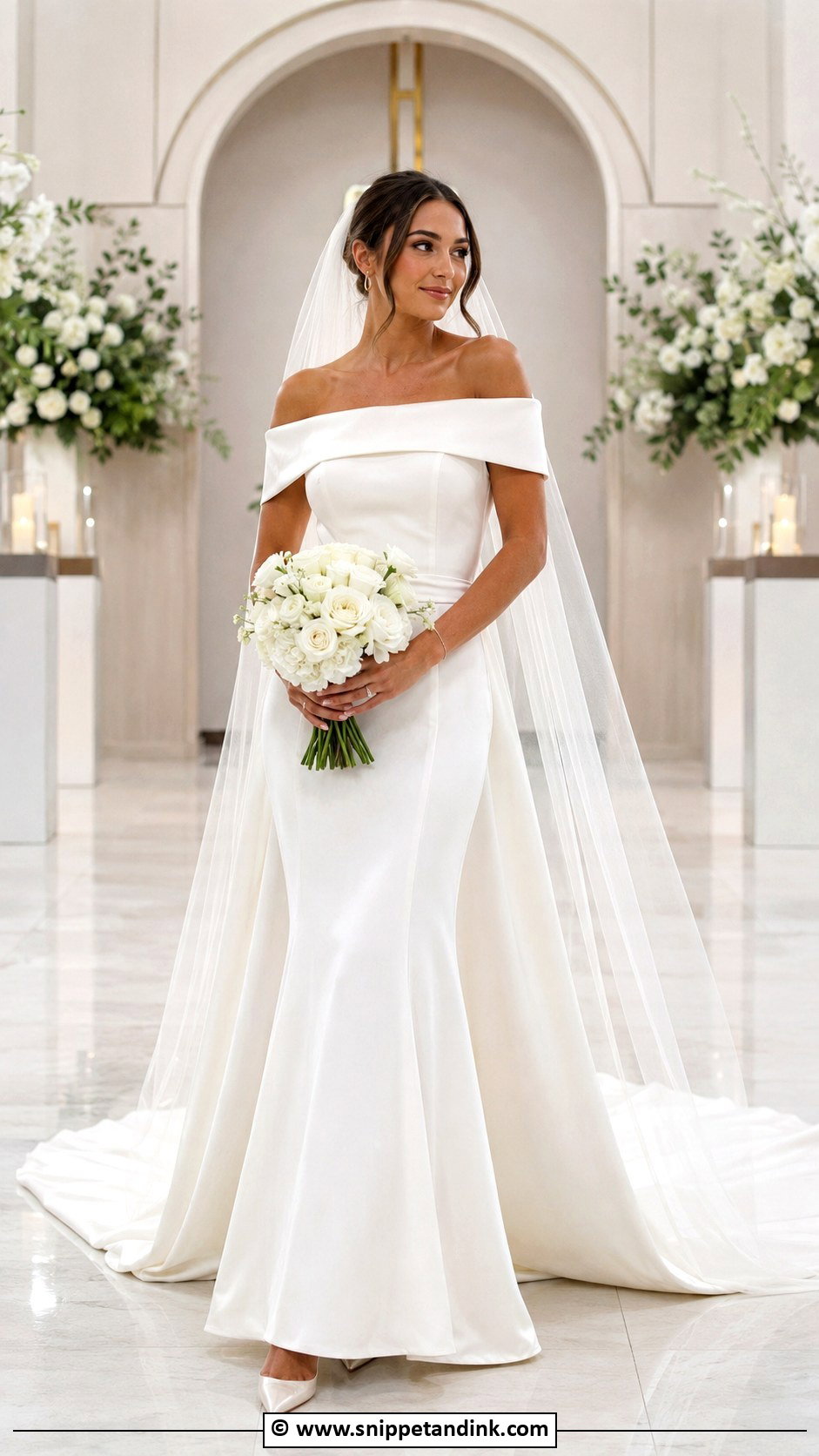
An off-shoulder neckline gives softness without decoration, but it restricts how high you can lift your arms. Before you commit, try reaching up as if fixing your veil; if the neckline climbs or digs, it needs adjusting. Smooth satin or crepe keeps the foldover crisp. A sleek bun, small hoops and pointed heels finish it, and a plain cathedral veil adds drama for the aisle. It suits a bride after something romantic but not fussy.
9. Minimalist Ball Gown Wedding Gown
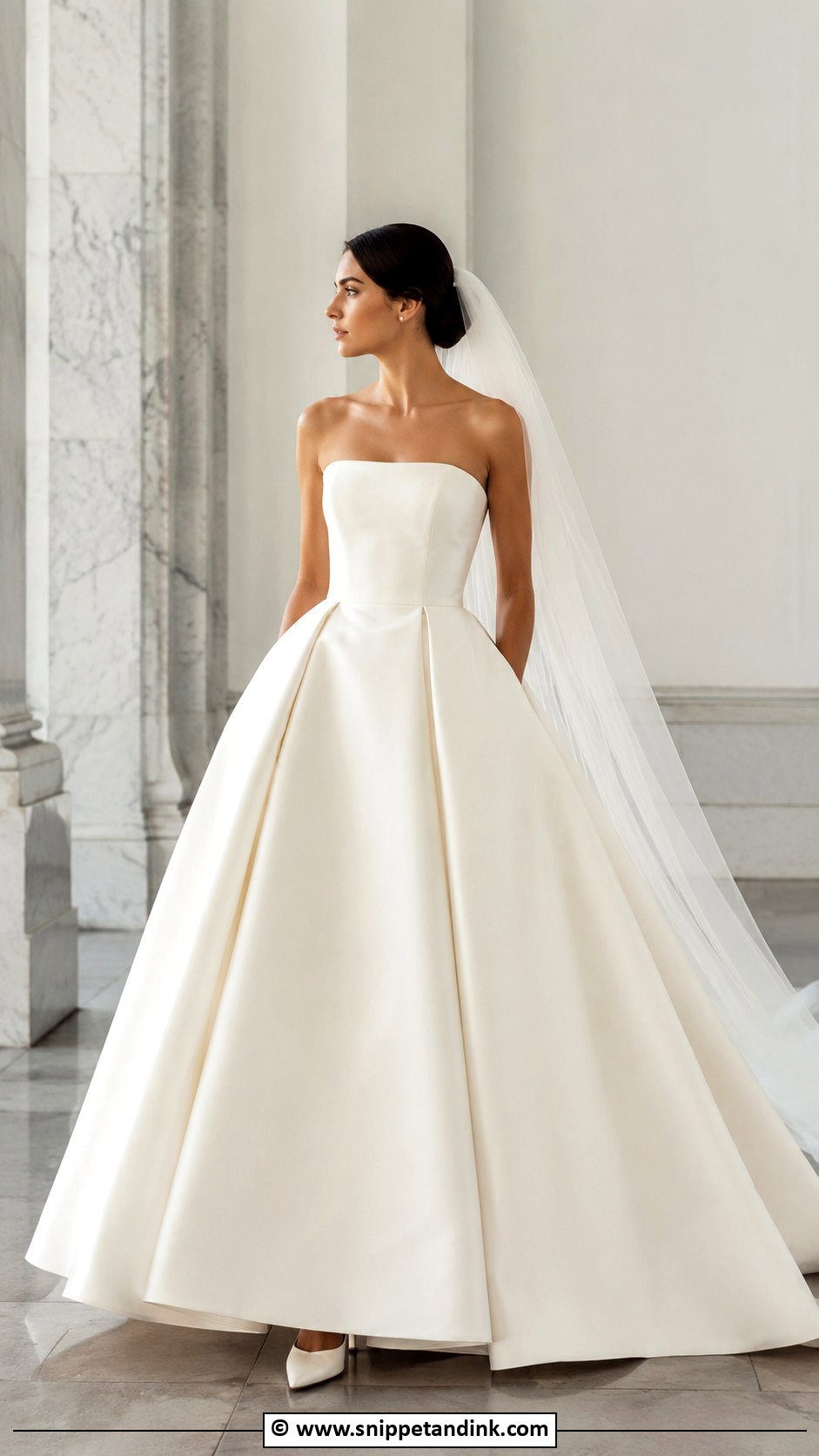
Volume without sparkle comes from fabric weight. A clean bodice with a full mikado or satin skirt stands out because the fabric is heavy enough to hold its own shape, usually with a layer of netting underneath. Keep everything else tiny: simple pumps, a smooth veil, small studs. A strapless, square or bateau neckline stops it tipping into traditional. Grand venues and statement entrances are where it belongs. Practice sitting and climbing stairs in it before the day.
10. Bateau Neck Wedding Gown
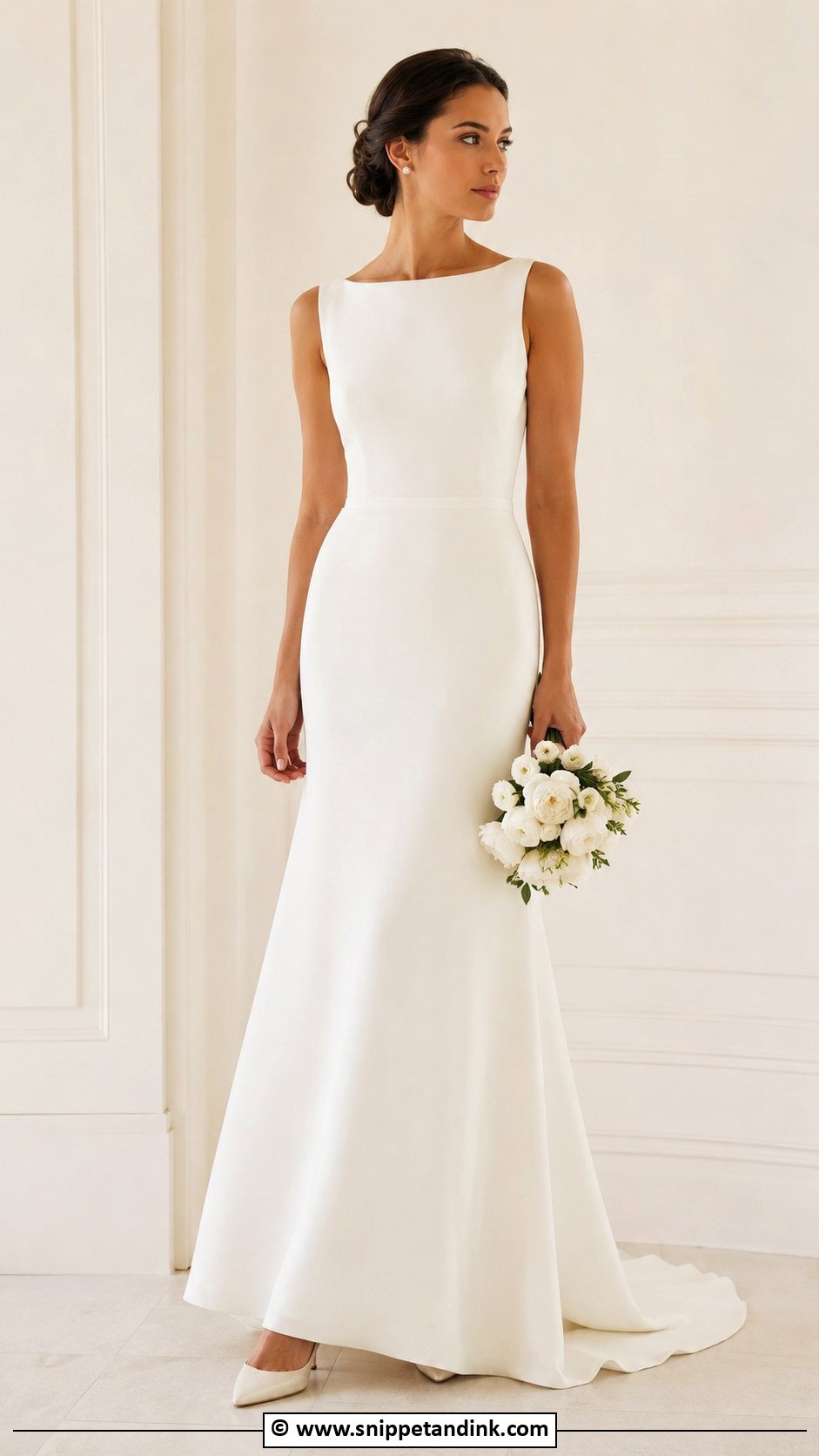
The bateau neckline runs wide across the collarbone, giving coverage while still showing shape. It looks best over a fitted crepe skirt or a soft A-line. Since the neckline is high, skip necklaces altogether; pearl studs and a low twist are enough. Pointed slingbacks keep the feet light. I’d suggest it to a bride with narrow or sloping shoulders, because the horizontal line visually widens them. Courthouse weddings and formal ceremonies suit it well.
11. Halter Wedding Gown
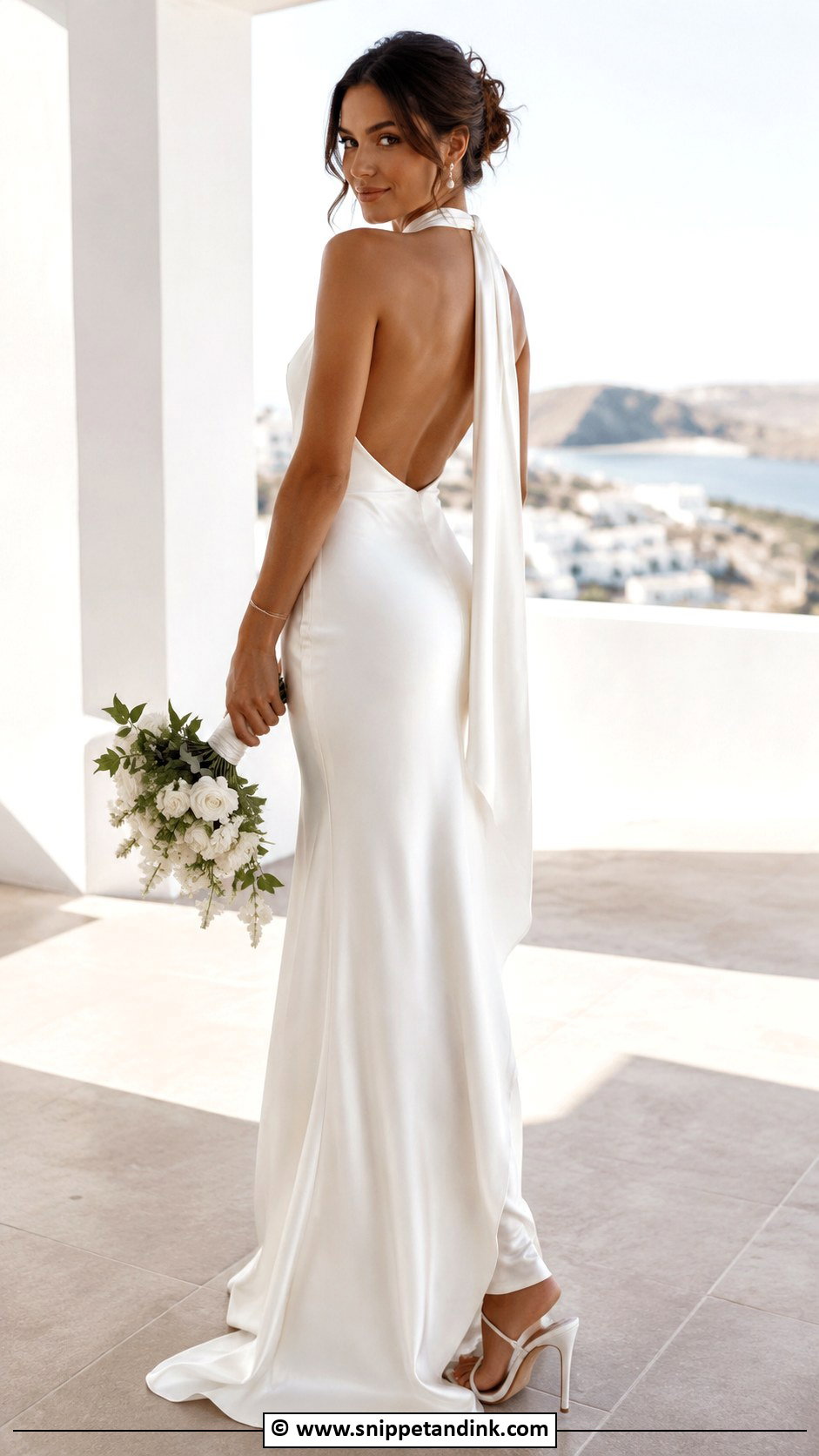
Halters draw the eye upward and sculpt the shoulders. Satin, crepe or jersey give the cleanest finish, and a low bun or sleek ponytail keeps the neckline in view. The weak point is the strap at the back of the neck. If the bodice is heavy, all that weight hangs there, and by the evening it aches. A well-made halter has support built into the bodice so the strap is mostly for shape. Warm-weather and destination weddings are the natural setting.
12. Backless Wedding Gown
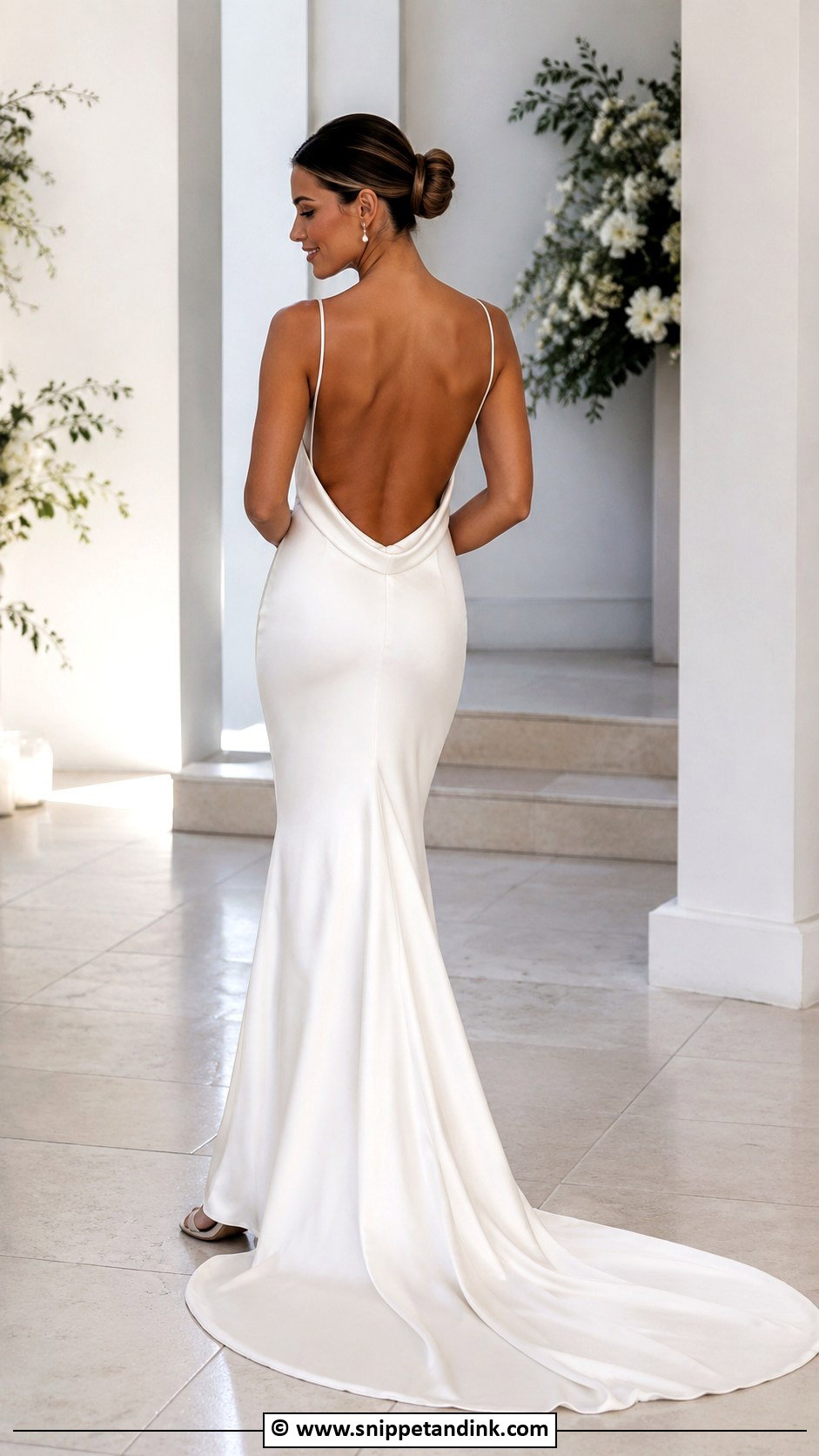
A backless wedding gown can be completely plain from the front and quietly dramatic as you walk away up the aisle. Satin slips, crepe columns and fitted sheaths all suit an open back. Wear your hair up or swept to one side, keep jewelry to small earrings, and let a long veil frame the back for the ceremony before it comes off for the reception. Support is the honest problem: most brides need cups sewn into the gown or adhesive options tested well before the day.
13. Cowl Neck Wedding Gown
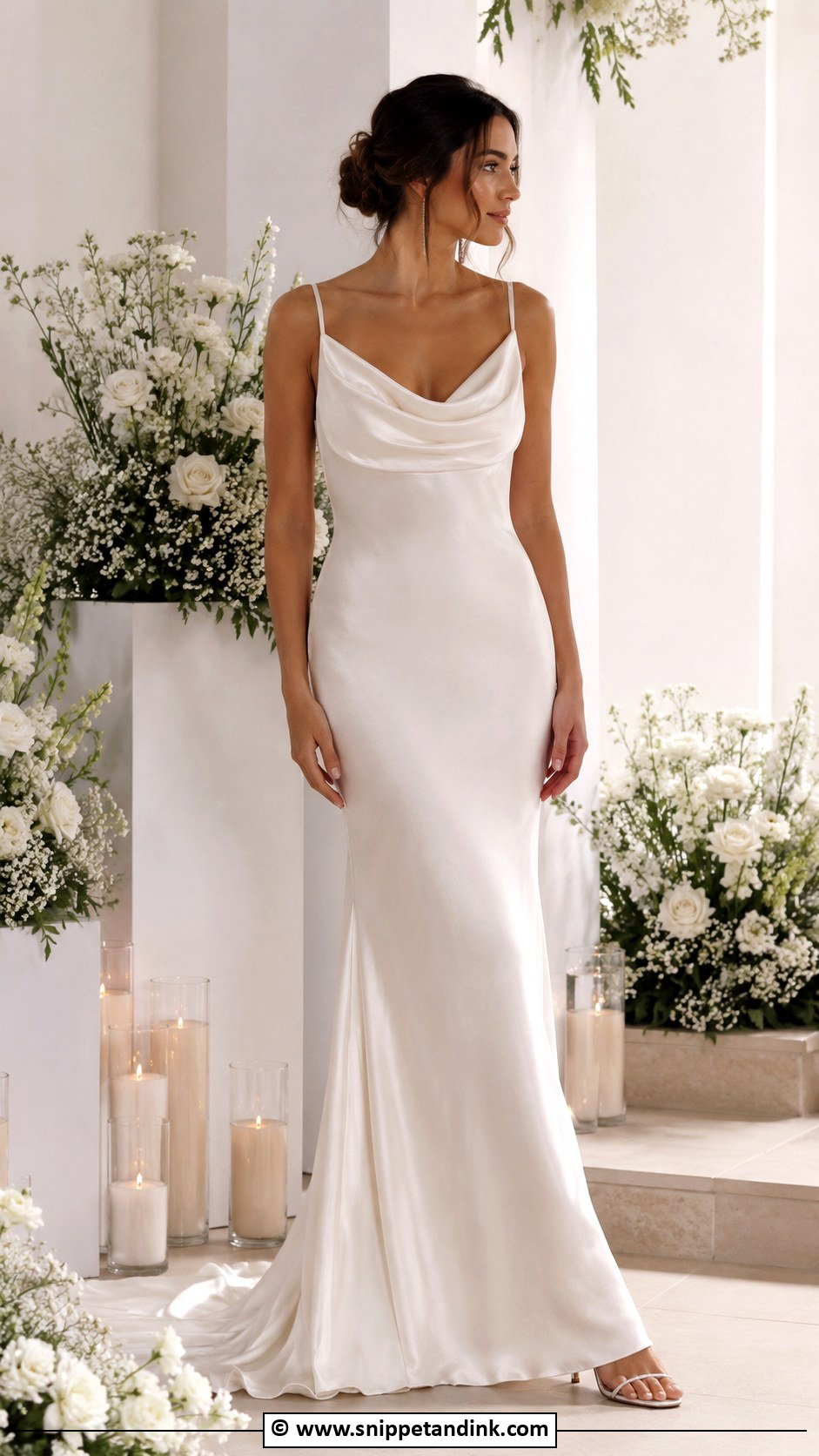
A cowl neck adds interest through drape alone. It’s found on slip dresses and bias-cut satin, and it needs a fluid fabric such as silk satin or charmeuse to fall in soft folds rather than stiff ones. Too thin a fabric and the drape collapses flat; too heavy and it gapes. I check the cowl with the bride leaning forward, since that’s when it can reveal more than intended. Soft waves or a loose bun and fine earrings suit it at beach and evening weddings.
14. One Shoulder Wedding Gown
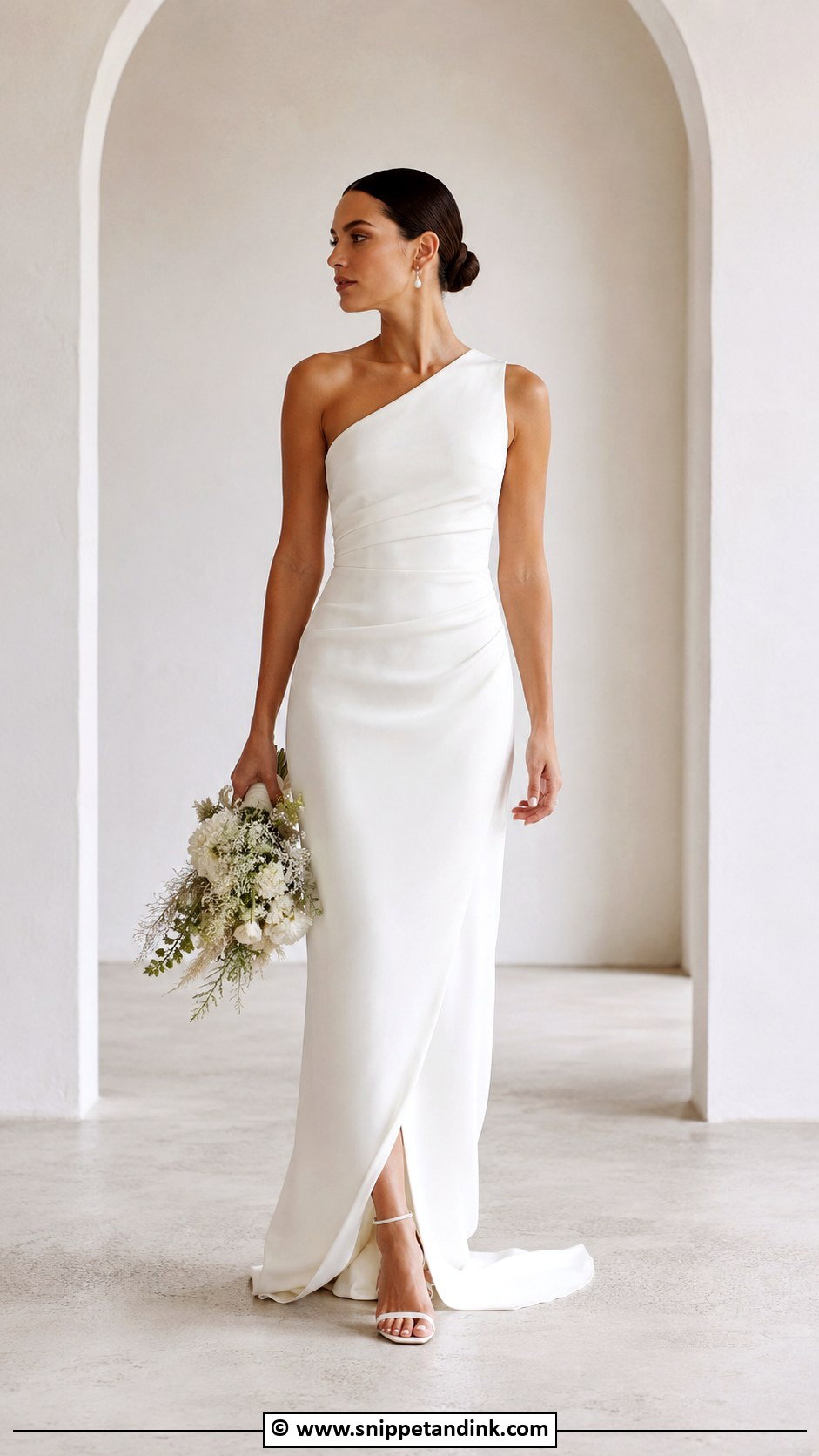
One-shoulder gowns feel slightly architectural, and the asymmetry does all the decorating. Crepe, satin or structured mikado hold the line. Skip the necklace and keep the upper body clean, with sleek hair and simple earrings. A straight skirt makes it city-chic; a soft A-line makes it more romantic. The single strap has to be anchored firmly, or the bodice slips toward the bare side as you dance.
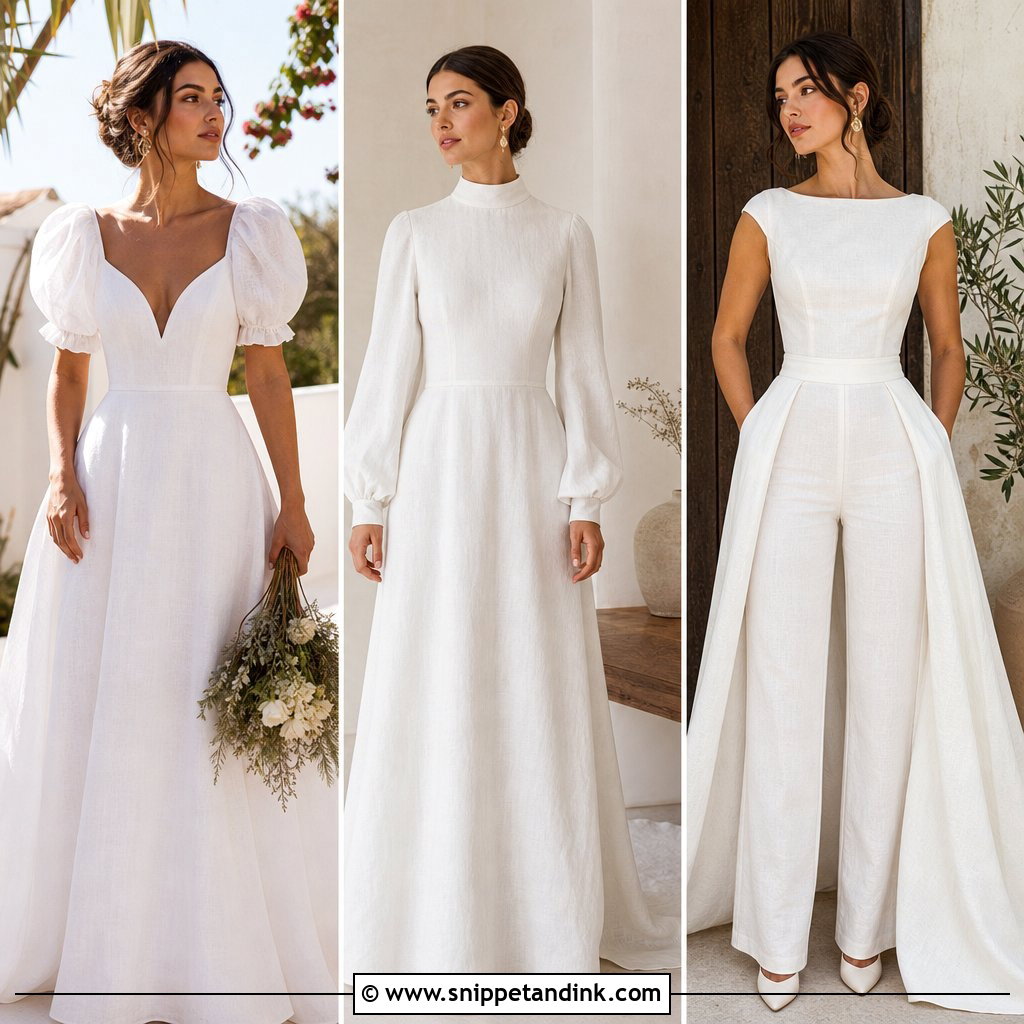
15. V Neck Wedding Gown
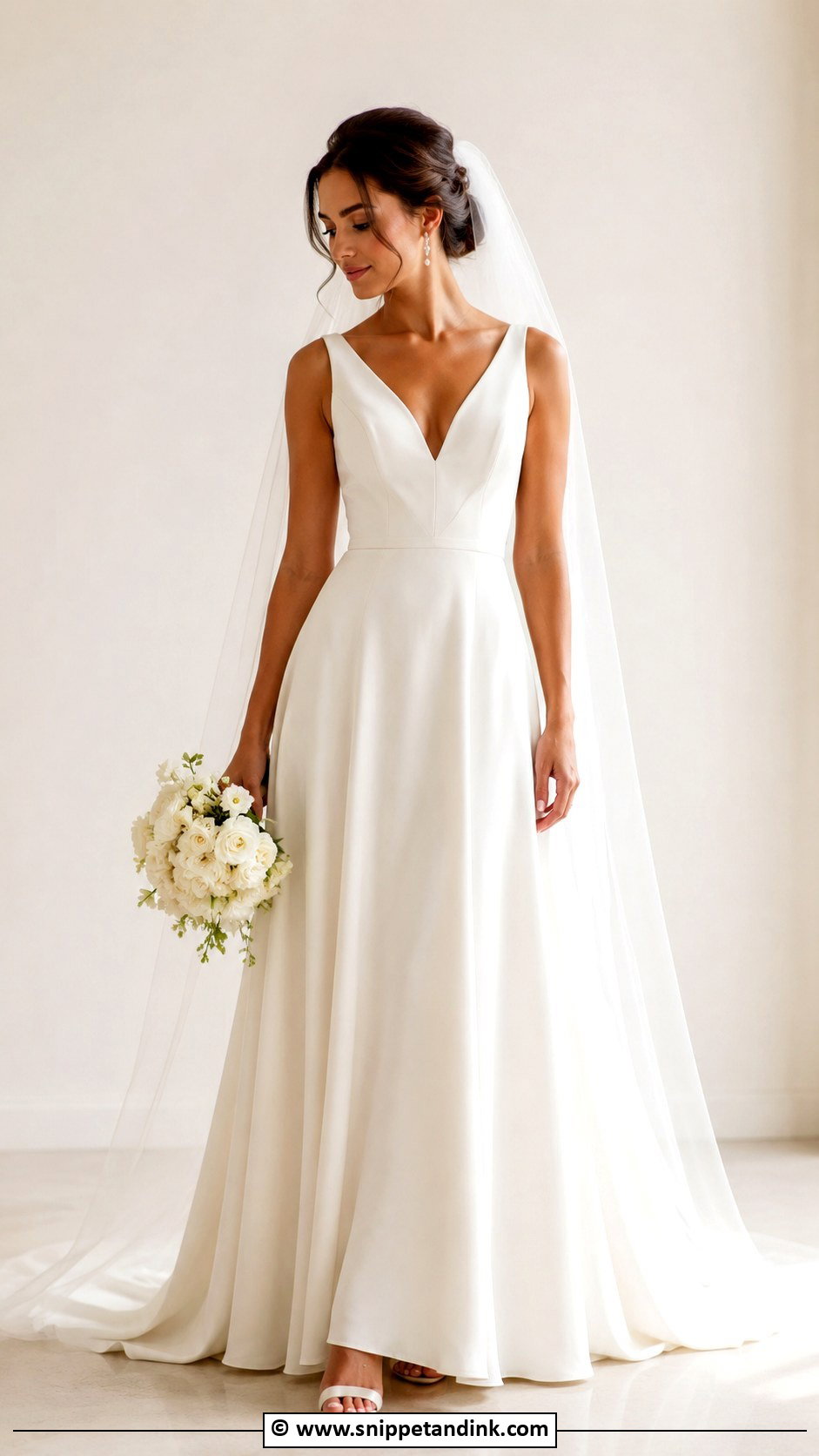
A V-neck lengthens the upper body and flatters a wide range of figures. Plain crepe, satin or silk with no lace trim keeps it minimal, over a fitted, A-line or sheath skirt. With a deep V, I add a fine mesh panel or stitch-in cups so nothing shifts during the ceremony. Delicate drop earrings echo the neckline’s shape. Clean ivory heels and a smooth veil complete it.
16. Corset Bodice Wedding Gown
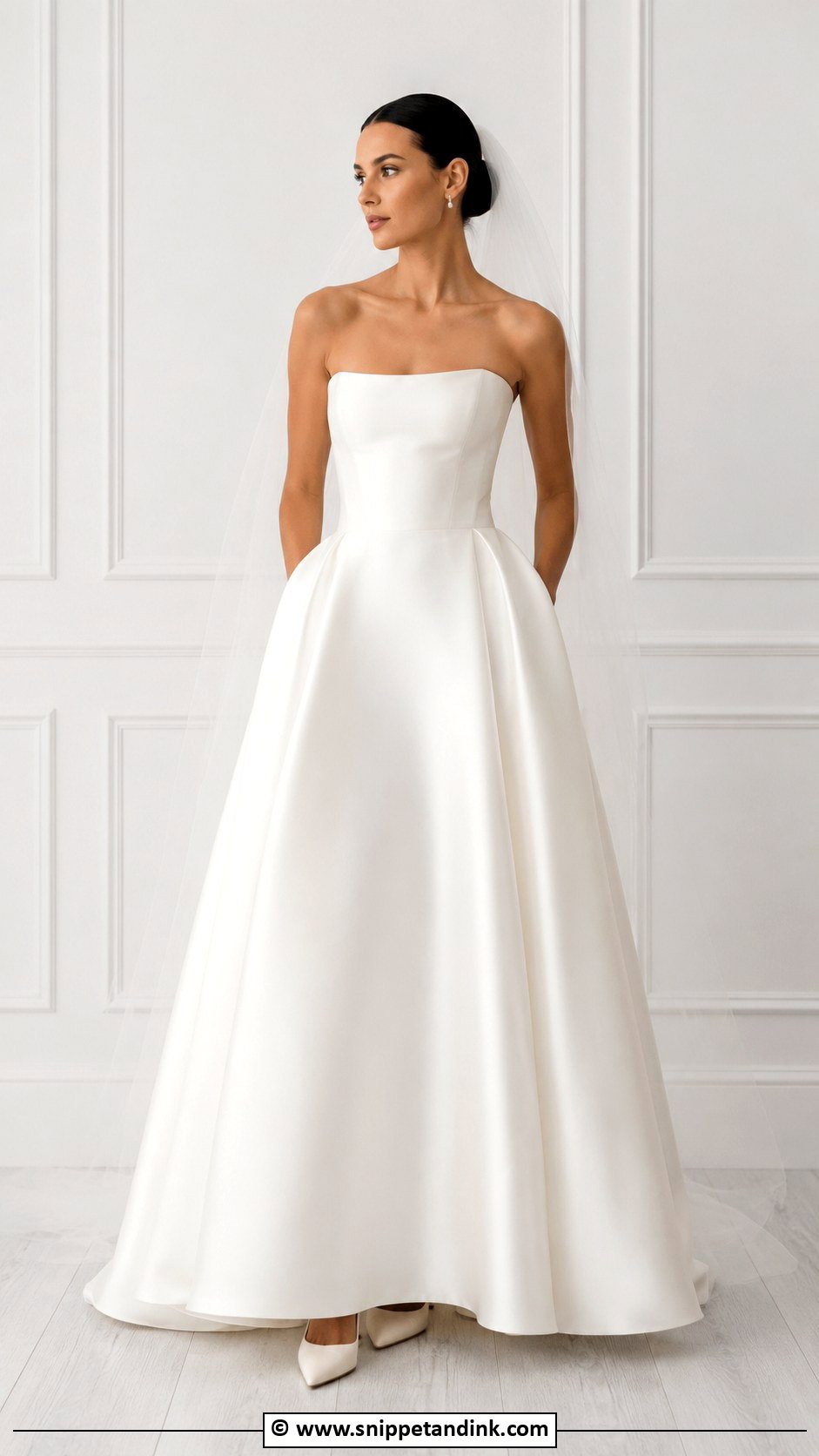
A corset bodice can still read as minimal if the boning sits inside the dress rather than on show. Satin or mikado gives the smoothest surface. The fitted bodice defines the waist and the plain skirt does the rest. It’s a practical choice for brides who need real support. A straight or gentle scoop neckline modernizes it. Fit is everything: a corset that’s half an inch too big will ripple at the seams, and one that’s too tight bulges at the top edge.
17. Scoop Neck Wedding Gown
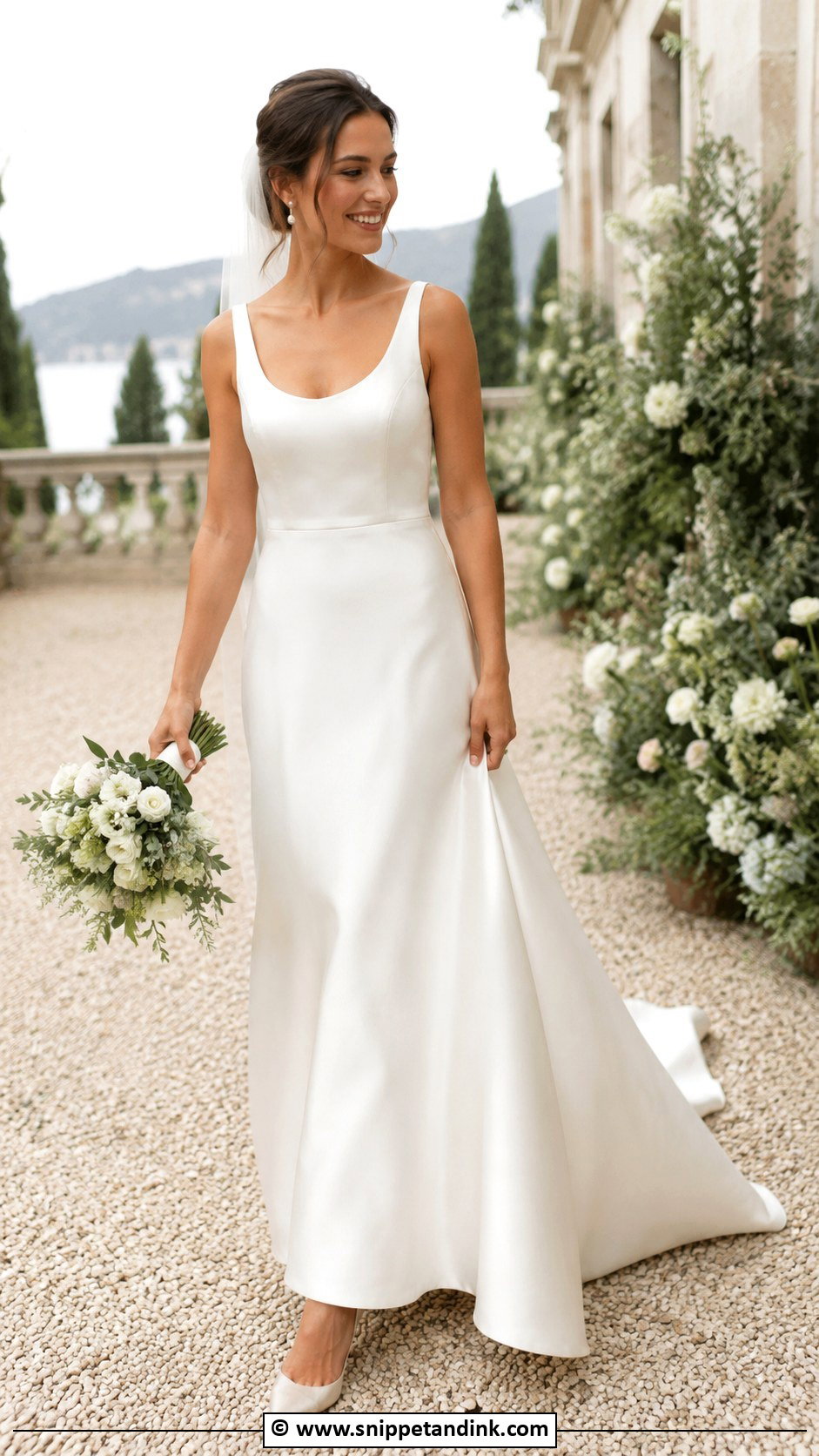
Scoop necks bring softness to a simple gown and are kind to most necklines and bust sizes. Soft satin, crepe or stretch mikado keep the finish smooth. Loose waves, a low veil and small pearl earrings fit the mood. It’s the shape I suggest to a bride who finds sharper necklines too severe. Outdoor ceremonies and small celebrations suit it, and light accessories keep the look fresh.
18. Sheath Wedding Gown
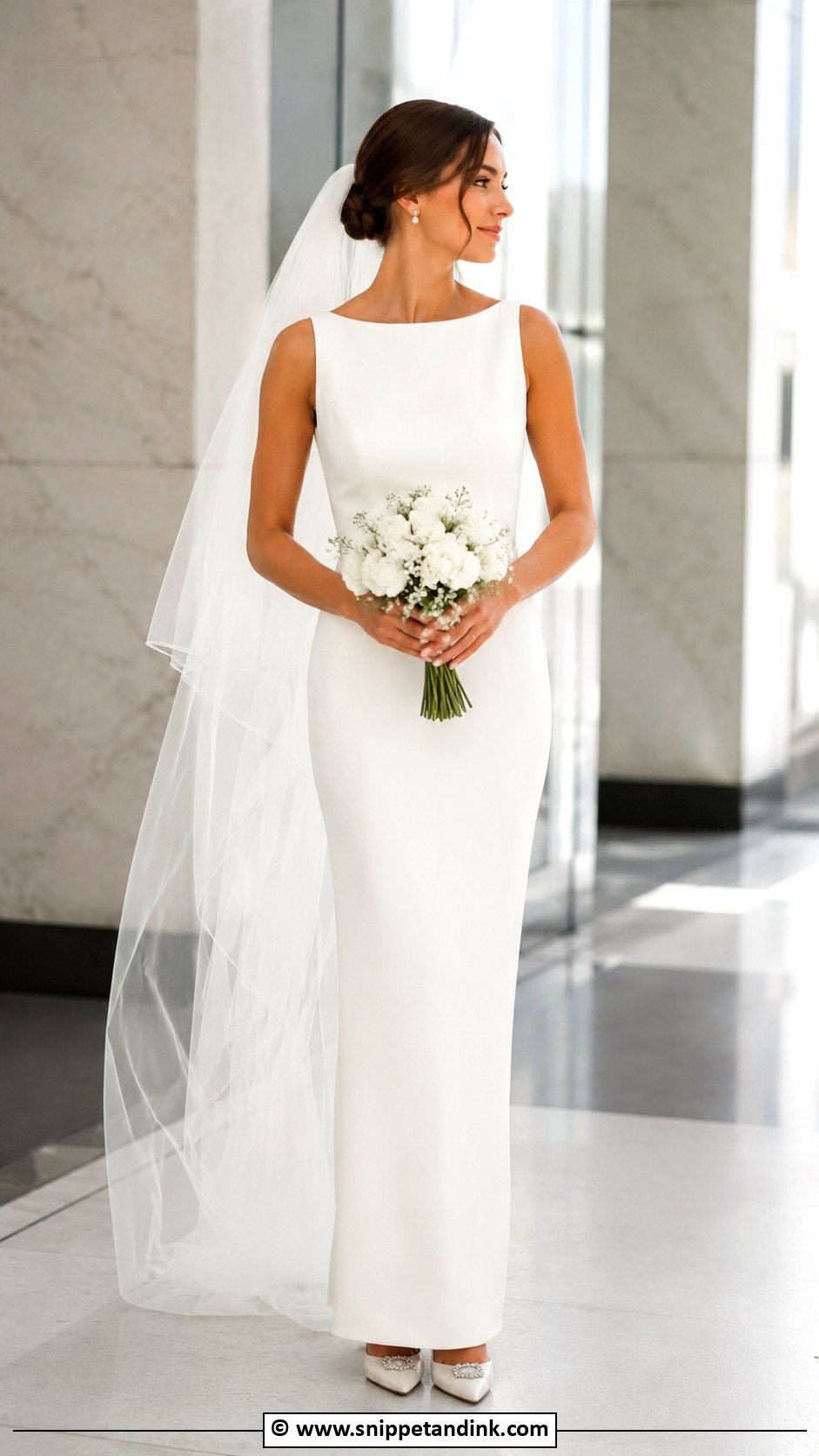
A sheath wedding gown follows the body more closely than an A-line but stops short of a mermaid’s grip. That makes it graceful and easy to walk in, though it does show what’s underneath, so check for seam lines and visible lining edges in a full-length mirror under bright light. Crepe, satin or silk with a smooth lining works best. Good alterations are essential on a narrow cut: the hem, waist and bust should sit exactly right. Pointed heels and understated earrings finish it.
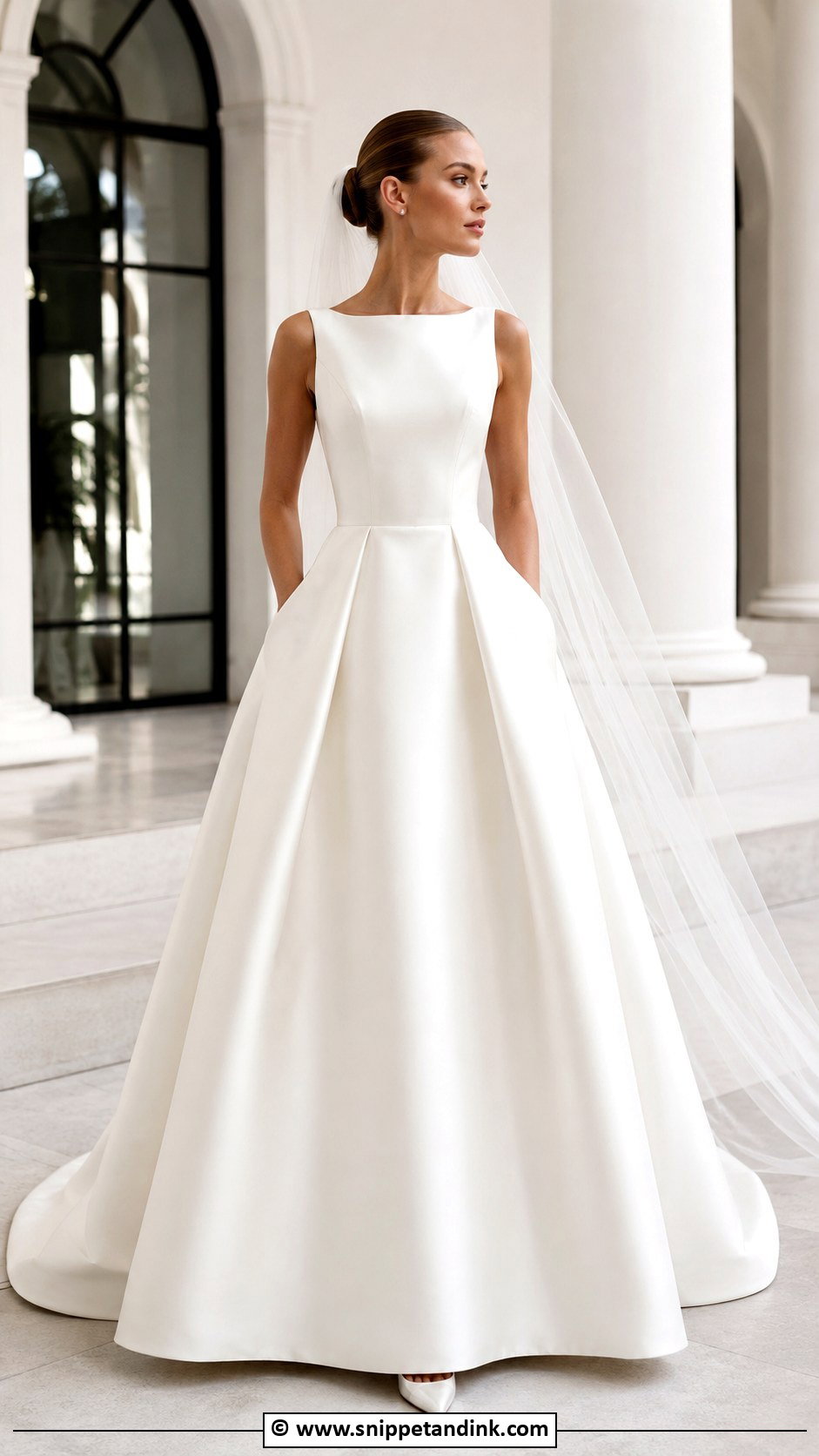
19. Mikado Wedding Gown
Mikado is the fabric of structured minimalism. It has a subtle sheen and enough body to hold crisp ball gown, A-line and column shapes without much help. Because it’s naturally polished, a plain veil, a neat bun and clean heels are all it wants. One thing to know: mikado creases sharply if you sit on it carelessly, so smooth the skirt under you each time you sit. It’s luxurious without looking ornate.
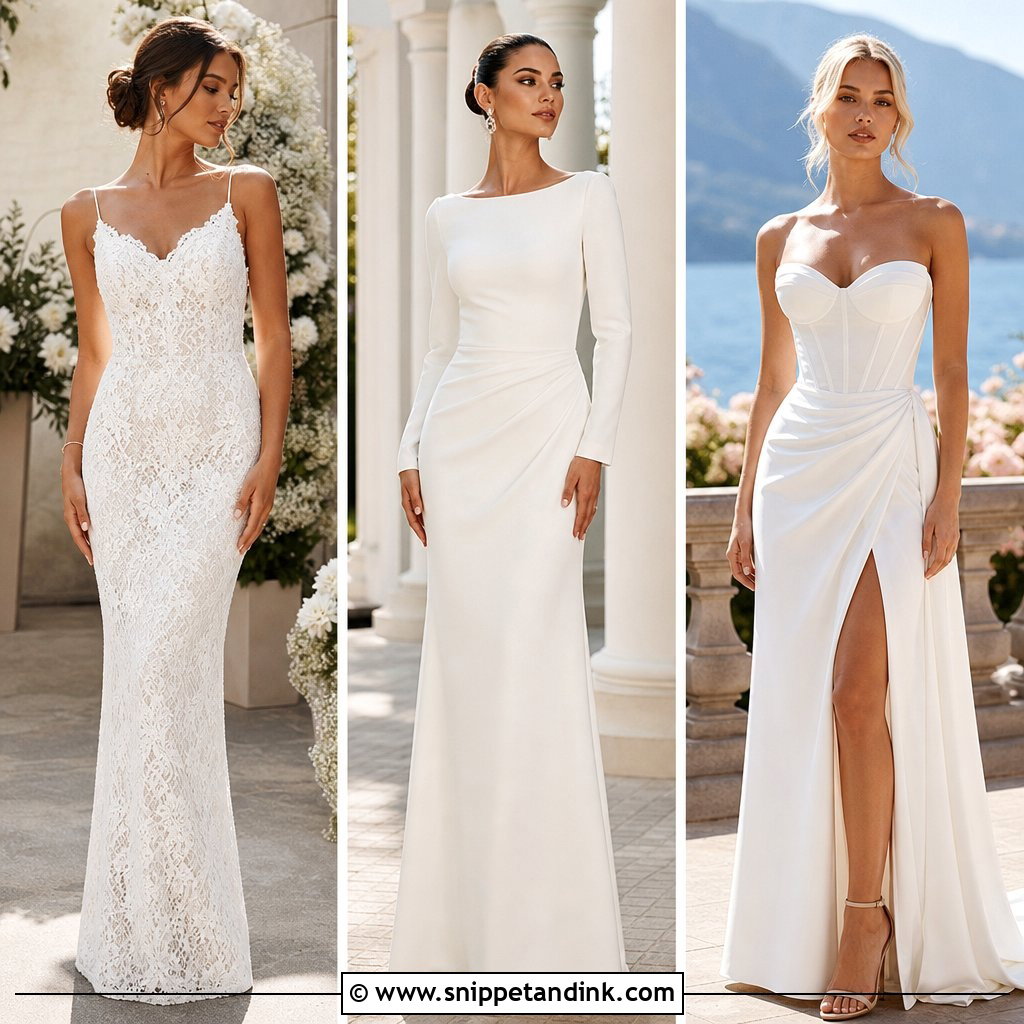
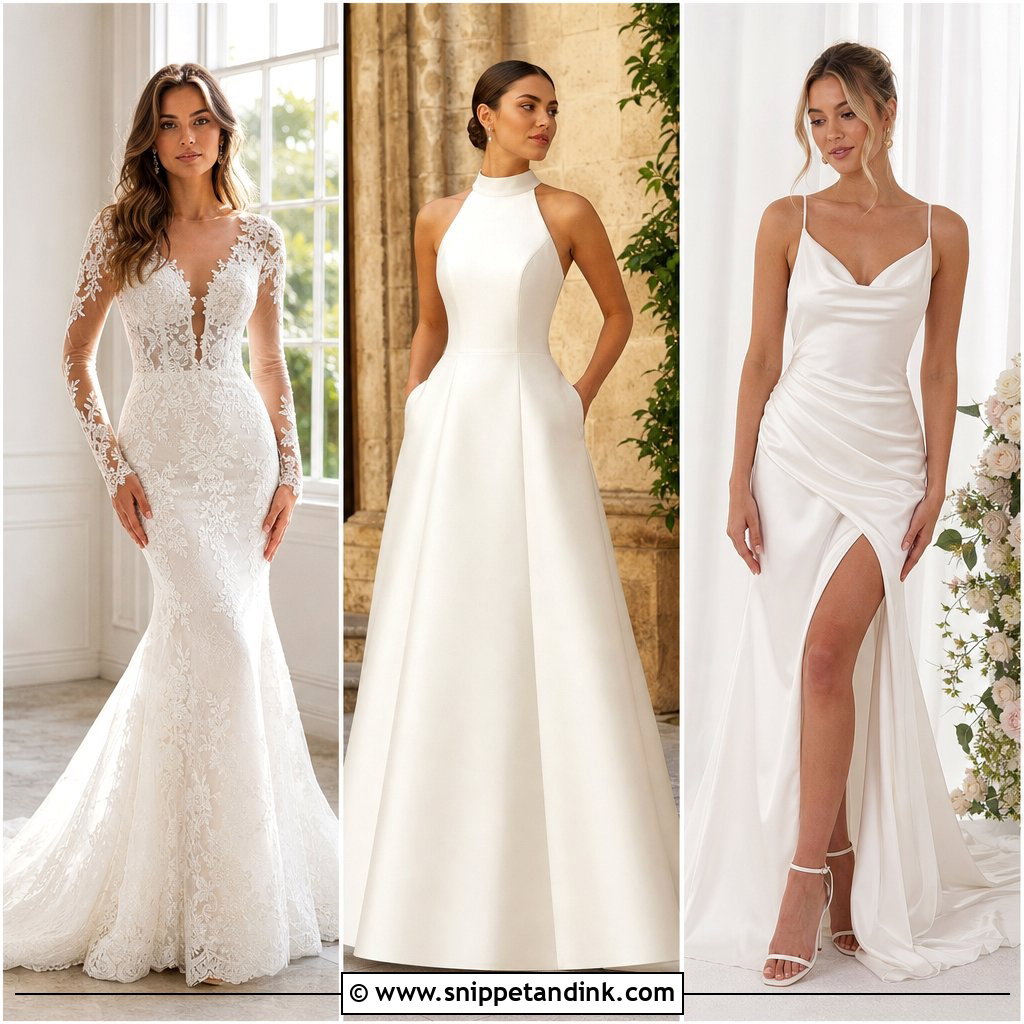


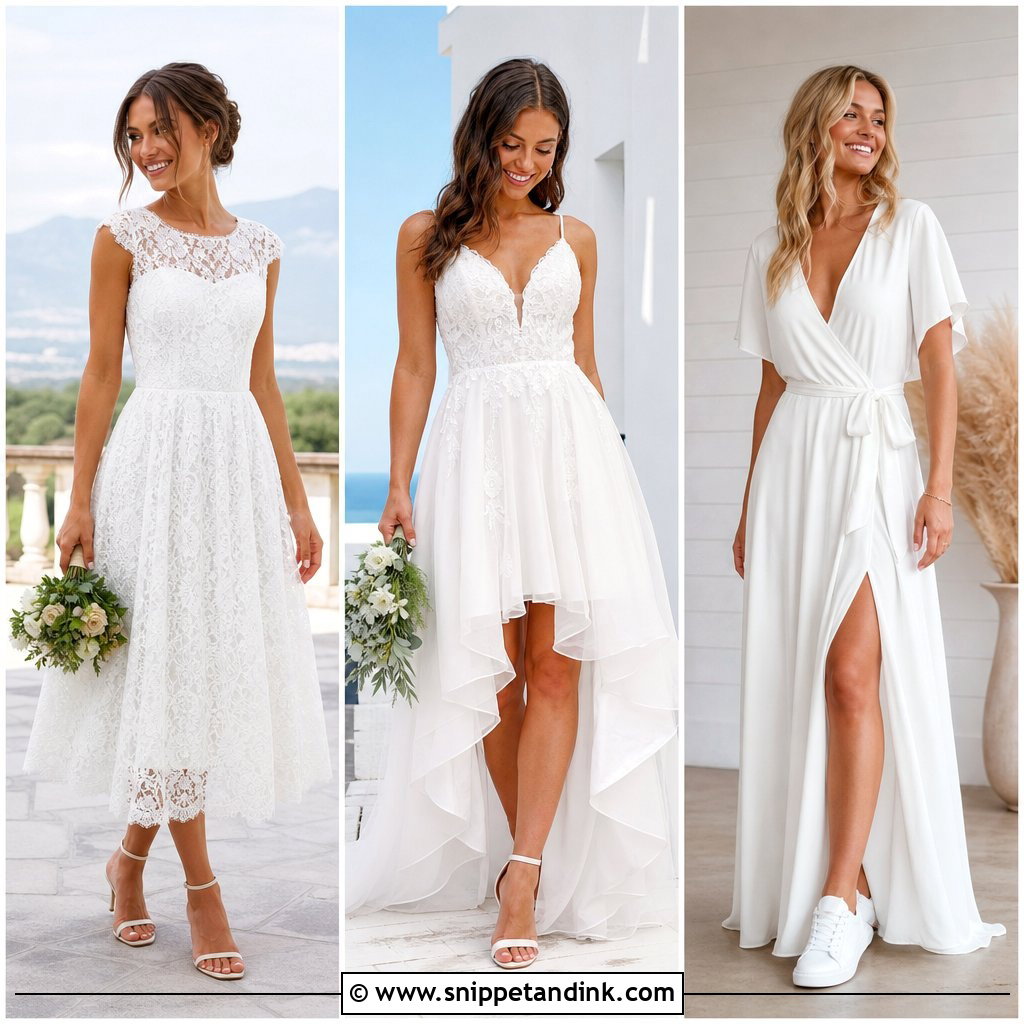
20. Tea Length Wedding Gown
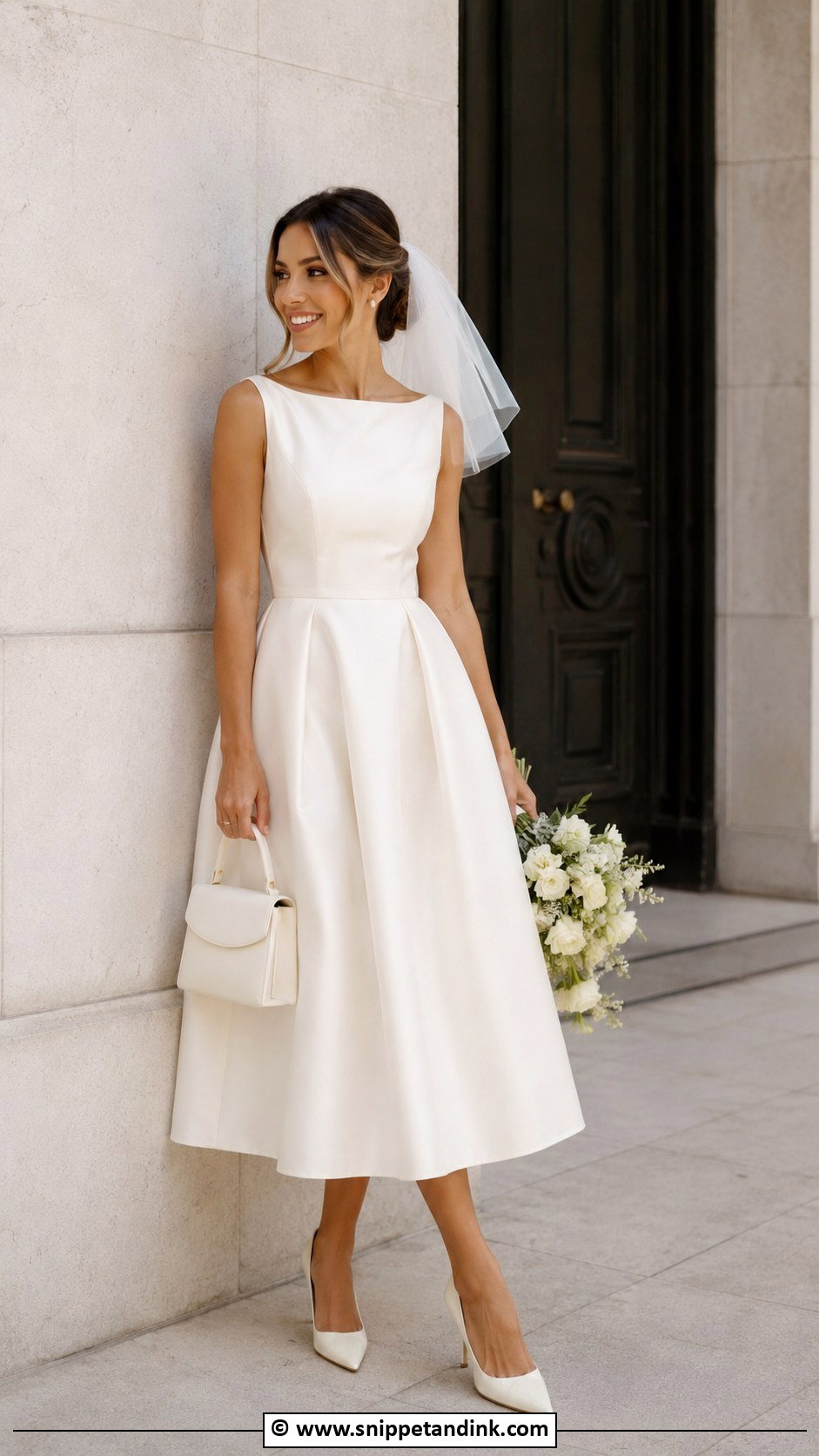
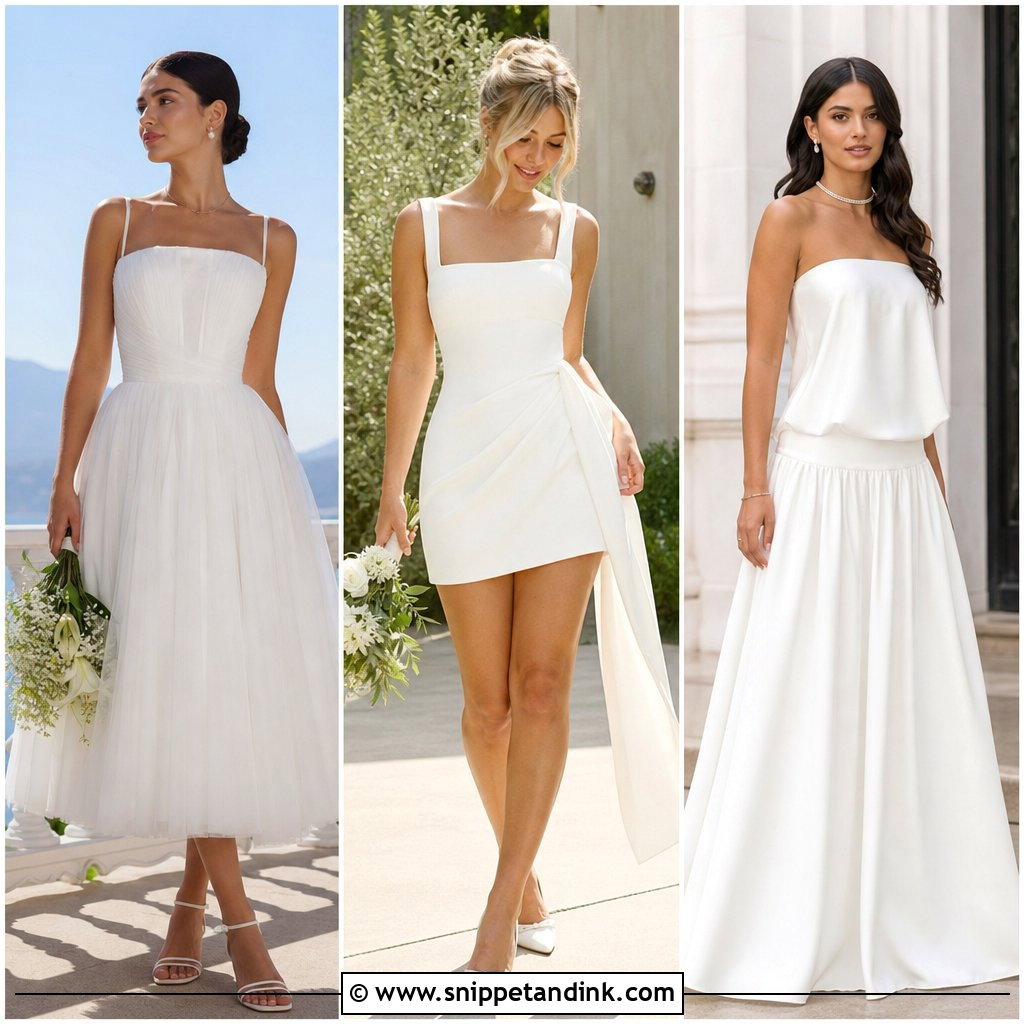
A tea length wedding gown ends between knee and ankle, which makes it playful and very practical. Courthouse weddings, garden ceremonies and relaxed receptions suit it, and so does a second outfit after a long ceremony gown. Your shoes will be seen, so choose them as carefully as the dress: pointed pumps, slingbacks or a simple ankle strap. A short veil and pearl studs finish it. Satin, crepe and mikado all hold the hem cleanly.
21. Drop Waist Wedding Gown
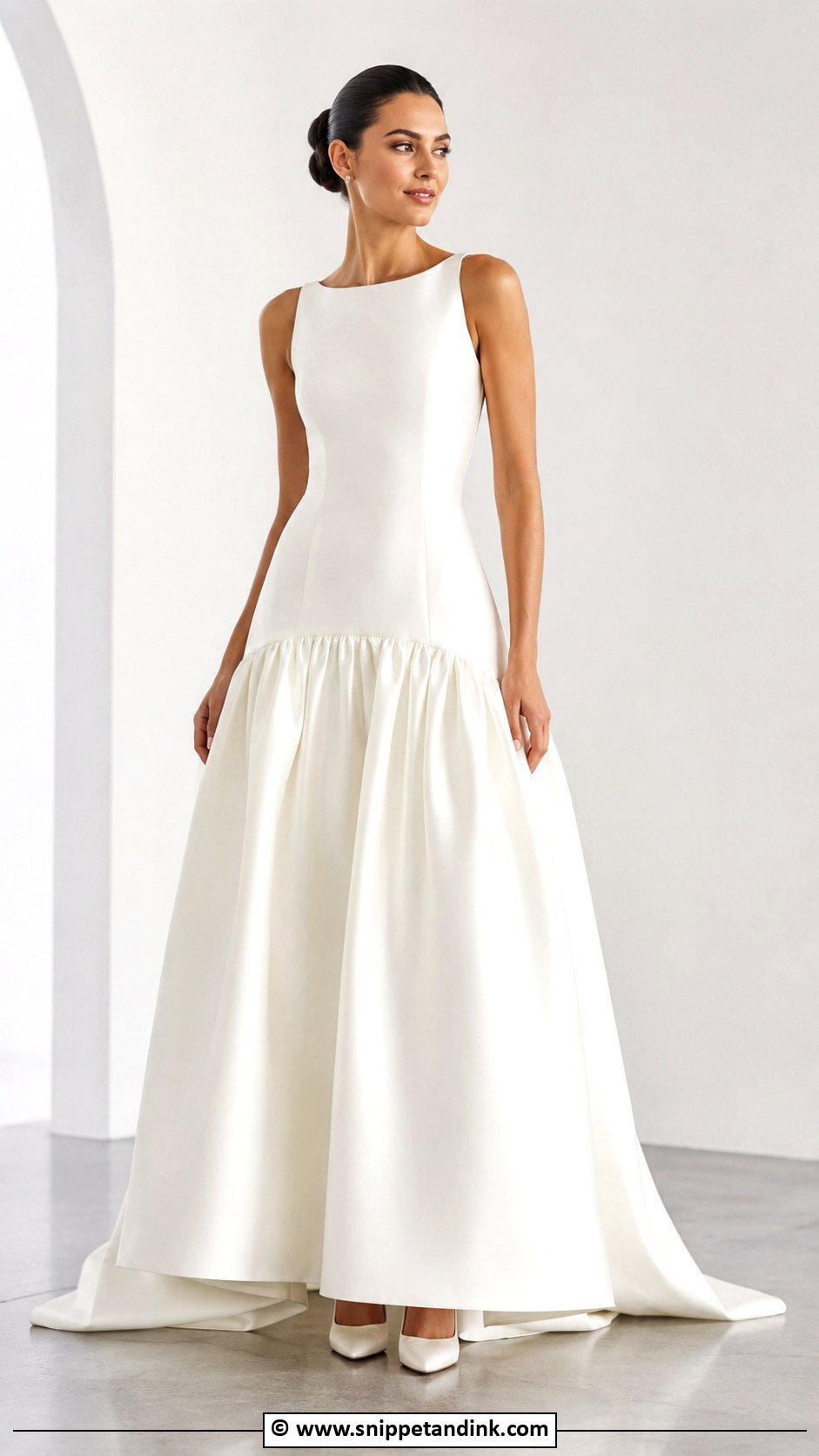
A drop waist moves the waistline down toward the hips, lengthening the torso before the skirt begins. In smooth satin or mikado with a clean neckline, it reads fashion-forward rather than vintage. It suits long-waisted brides naturally; on a shorter torso the seam has to be placed very carefully, or the legs look shortened. Sleek hair, small earrings and simple heels let the shape speak. It’s different, but still refined.
22. Simple Wedding Gown With Bow
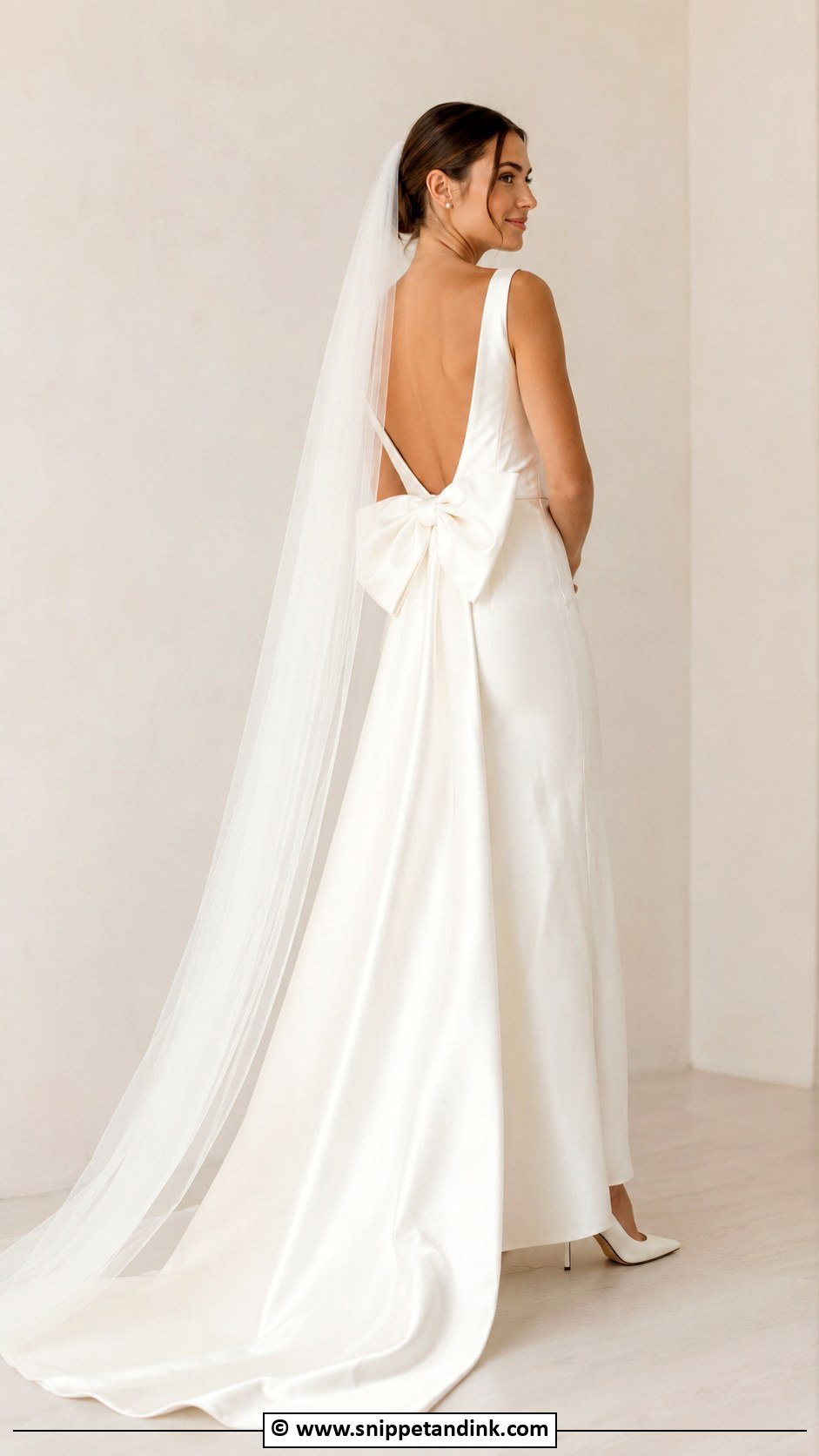
A bow gives a plain gown one charming focal point. Back, shoulder or waist bows all work, as long as the rest of the design stays clean. The bow needs some structure inside it, usually interfacing, or it wilts and flattens by the reception. Pair it with simple earrings, a smooth veil and classic heels. Leave other accessories out, since the bow is the detail. It’s a sweet, modern touch that stays polished.
23. Simple Wedding Gown With Slit
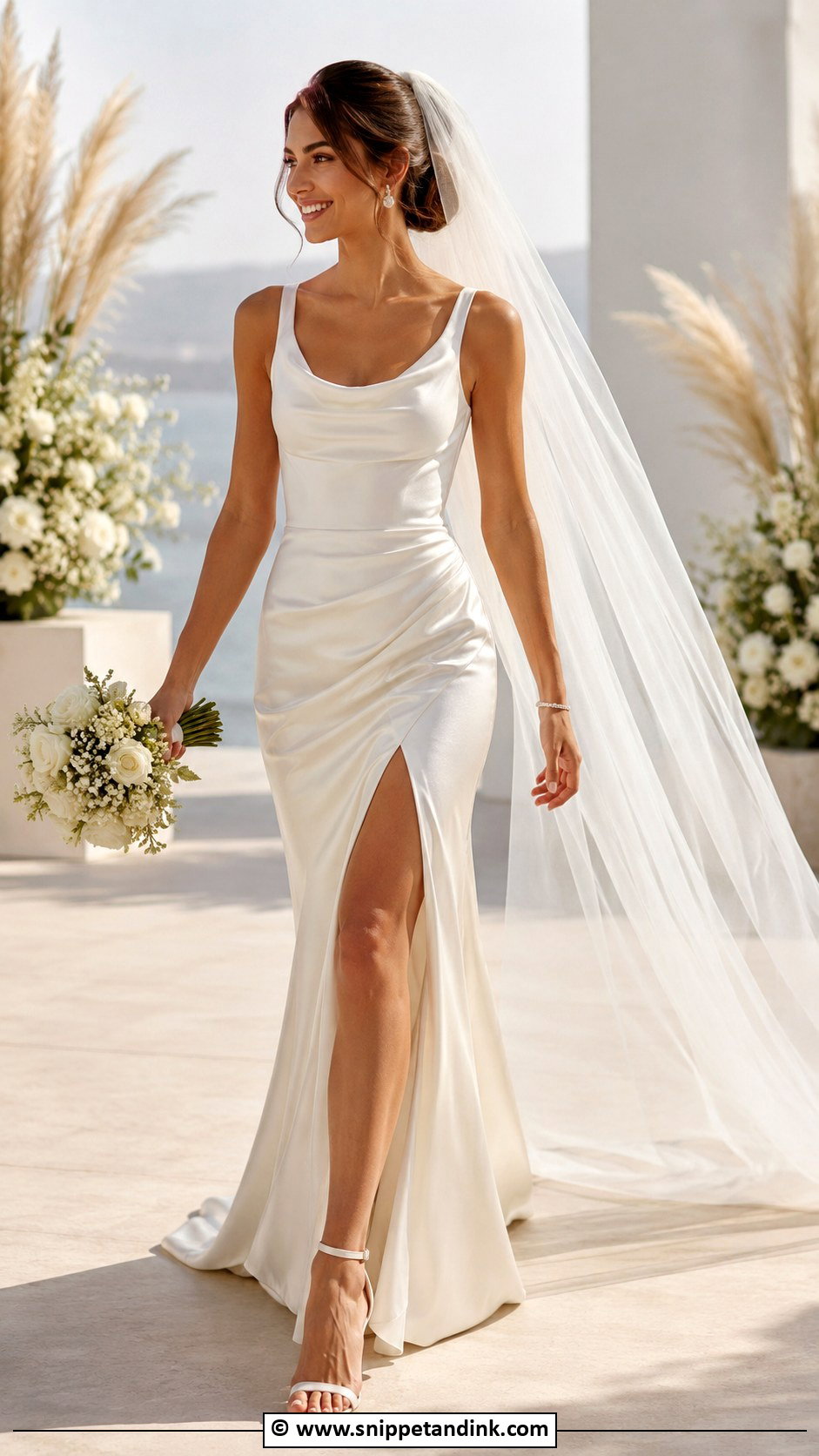
A slit adds movement to a straight or A-line skirt in satin, crepe or silk and gives your shoes a moment in photos. I measure the slit with the bride seated and walking, because a slit that looks modest standing can open well above the knee when you sit. Elegant heels, a simple bracelet and minimal earrings keep it refined. Outdoor weddings, destination ceremonies and reception gowns are the natural places for it.
24. Minimalist Mermaid Wedding Gown
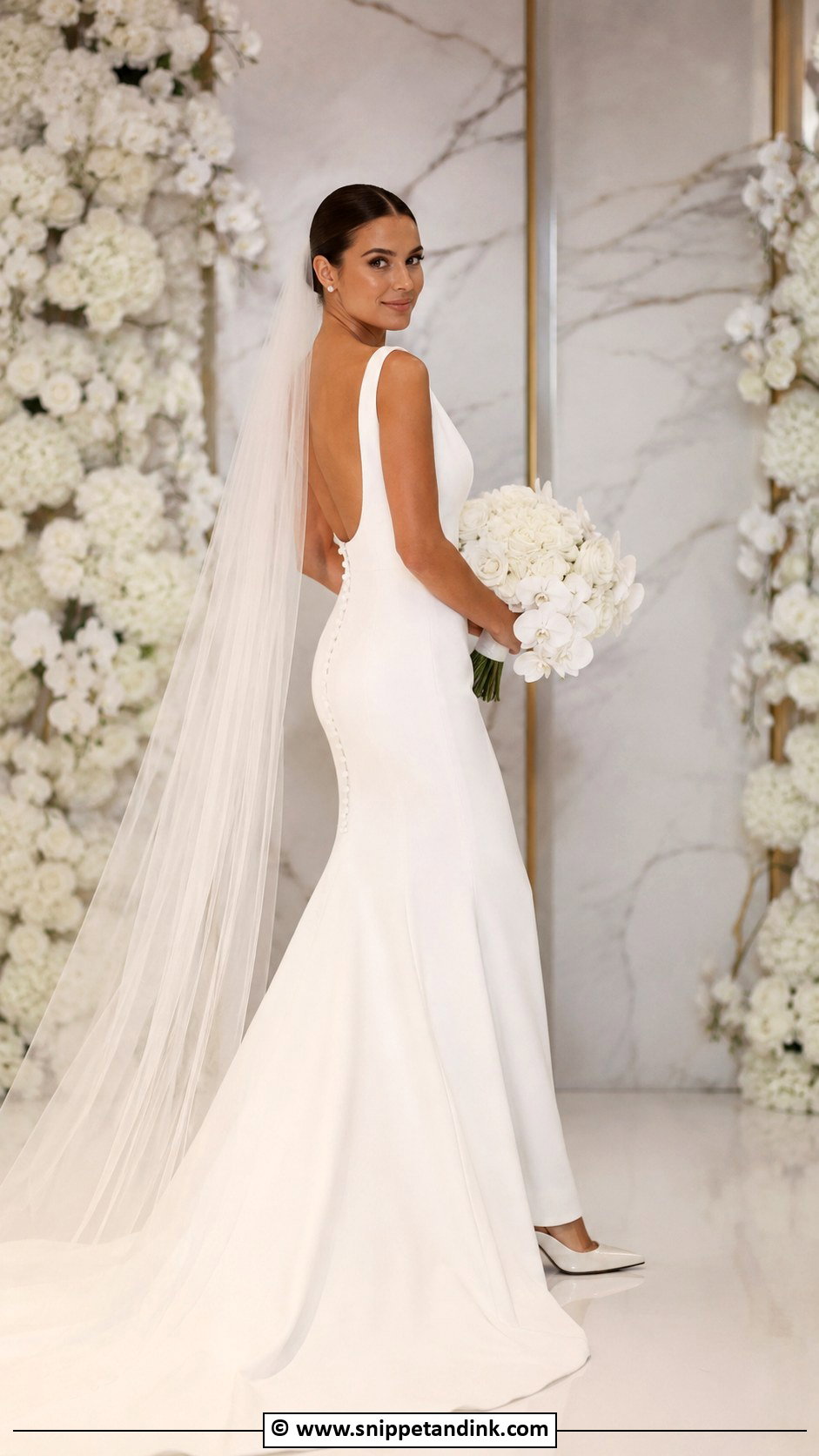
A mermaid fits through the body and flares near the knee or lower thigh. Without lace or beading, the shape becomes the whole story, so crepe or satin with a smooth finish shows it best. Where the flare starts decides how easily you can walk and sit; a lower flare looks dramatic and restricts your stride. Every seam affects the line, which is why this style usually needs more alteration appointments than any other. Simple heels, a long veil and sleek hair keep it elegant.
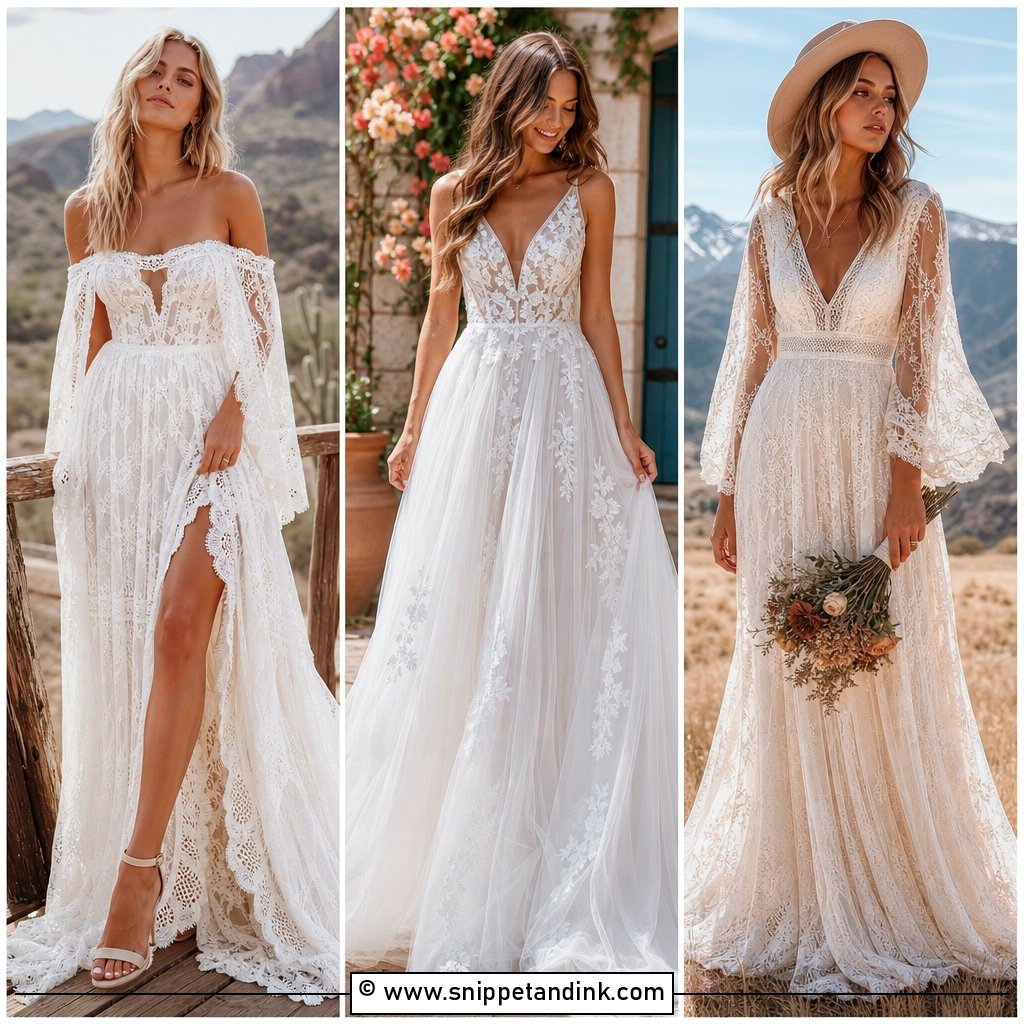
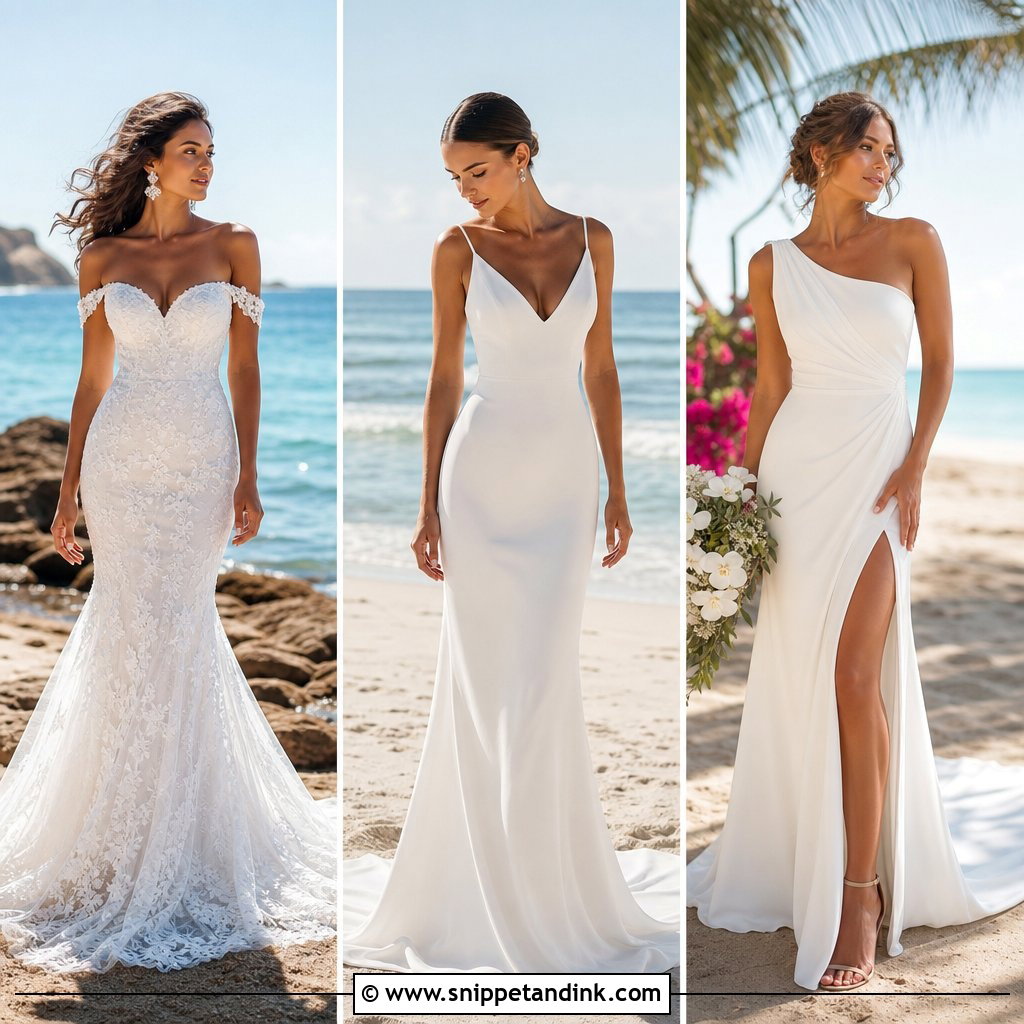
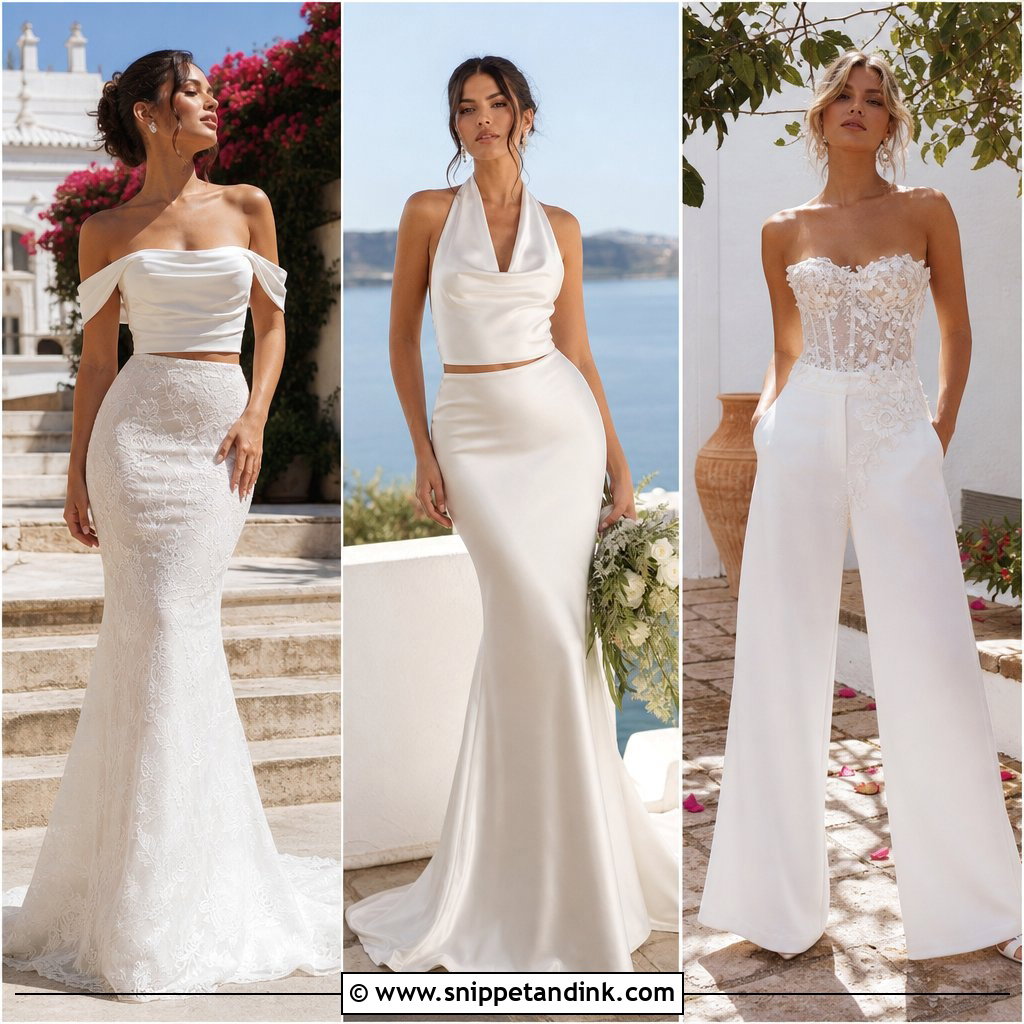
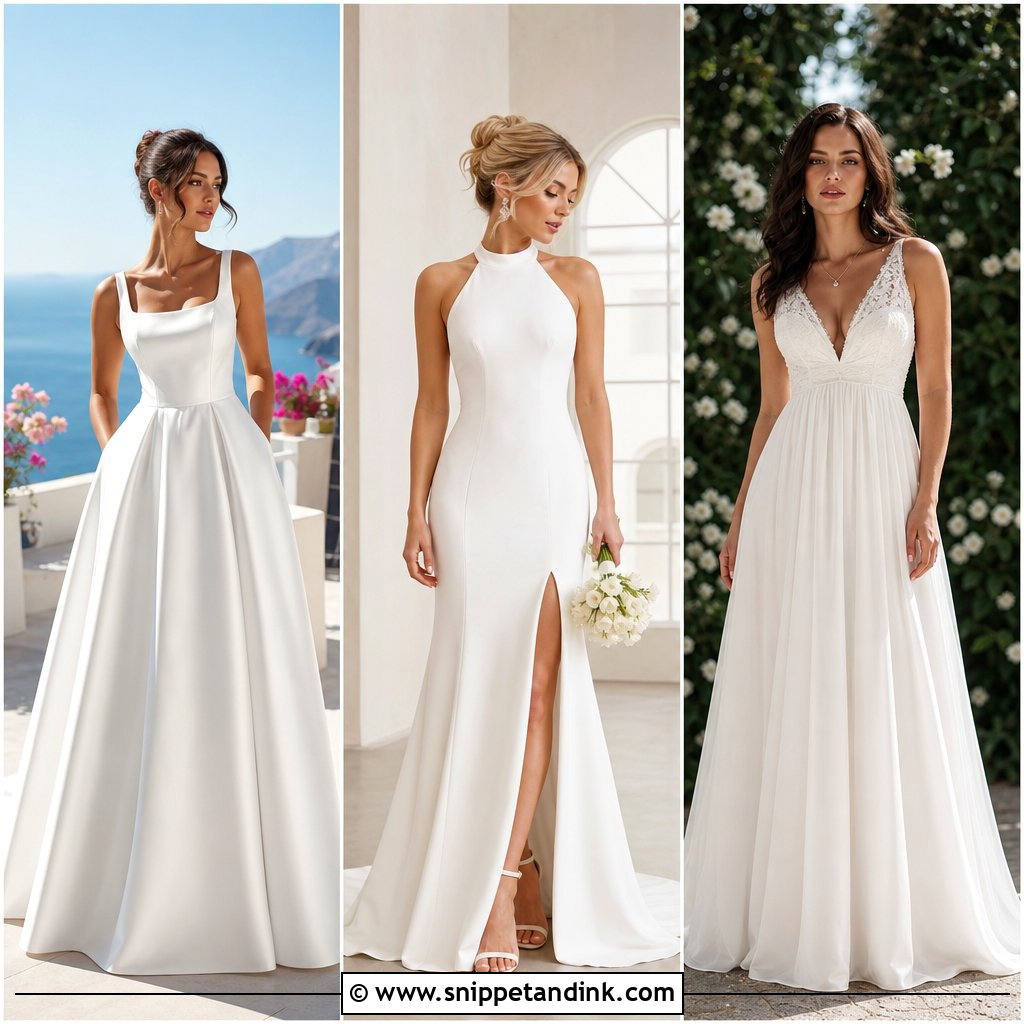
25. Courthouse Wedding Gown
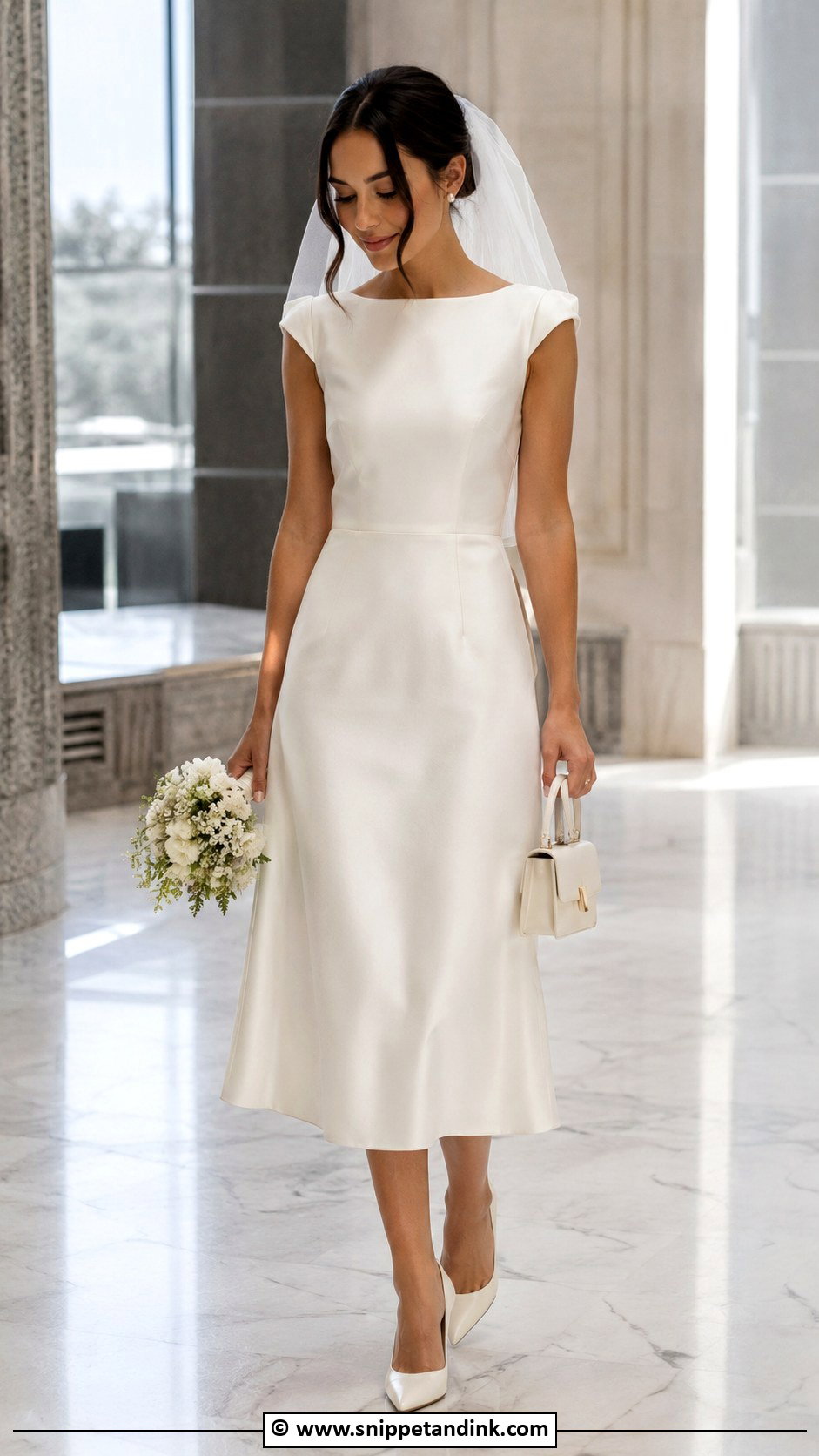
A courthouse wedding gown should be comfortable, polished and easy to move in, since you’ll likely be standing in a hallway, signing papers and walking city streets for photos. A satin midi, a crepe sheath, a tea-length dress or a simple slip all suit the setting. Pointed pumps, a small bouquet and a structured mini bag complete it. A short veil or a hair bow makes it read bridal without adding volume. It works equally well for elopements and civil ceremonies.
What Goes Under a Minimal Gown, and the Morning Routine That Keeps It Smooth
Underwear is the part of a simple dress nobody plans for until the first fitting. Bring your actual bra and shapewear to every appointment, because the dress is altered around them. For backless, plunging or strapless styles, ask your seamstress about sewing cups directly into the gown; it’s often more secure than anything adhesive. Choose smooth, skin-tone pieces rather than white, which shows through ivory.
On the morning itself, a few habits protect the clean finish:
- Hang the gown the night before, inside its bag, from a high door so the skirt falls free.
- Steam it lightly from the inside or at a distance. Never press satin or silk directly, and test the steamer on a hem allowance first.
- Put the dress on after makeup is finished, with a scarf over your face as you step into it.
- Each time you sit, smooth the skirt beneath you and avoid crossing your legs, which leaves a sharp crease across satin and mikado.
Plain Fabric, Careful Fit, Very Few Extras
A gown doesn’t need heavy detail to look memorable. What makes a simple dress striking is its neckline, the quality of the fabric and how precisely it fits. Satin columns, crepe A-lines, silk slips, mikado shapes and courthouse midis can all work. Spend your budget on good fabric and good alterations, then choose shoes, a veil and a hairstyle that support the dress rather than compete with it.
You'll Like These Ideas:







Leave a Reply