
Most of the dresses on a bridal salon rail are ivory, even the ones brides call white. The reason is practical: a creamy undertone is kinder to most complexions than optical white, and it holds detail in photos instead of blowing out to a flat bright patch. Ivory also suits every style, from plain satin to lace to a full ball gown. What actually separates a good choice from a so-so one is the fabric, the neckline, where the waist sits, and the train length for your venue. Accessories should back the dress up rather than fight it; pearls, neutral heels, delicate veils and real flowers rarely go wrong. Here are twenty complete looks, with what I’d check at the fitting for each.
Holding Three Shades of Ivory Against Your Face
Ivory isn’t one colour. Bridal fabrics sold under that name run from almost white with a faint warmth, sometimes called diamond white or silk white, through classic ivory to deeper cream and champagne. Which one flatters you depends far more on your skin’s undertone than on how fair or deep your skin is.
My test is simple and takes five minutes at the salon:
- Go with a bare or nearly bare face, since foundation hides exactly what you’re looking for.
- Ask for swatches or samples in a pale, a mid and a deep ivory, and stand by a window rather than under the shop lights.
- Hold each one just under your chin and look at your skin, not the fabric.
- The wrong shade makes you look tired, sallow or slightly grey around the mouth and eyes. The right one makes your skin look clearer without you knowing why.
As a rough guide, warmer and olive undertones usually come alive in mid to deep ivory, while very cool, pink-toned skin can look ruddy next to deep cream and often prefers the lightest shades. Deep skin tones tend to suit almost every ivory, with champagne and gold-tinged versions especially rich. Treat this as a starting point; your own face in daylight is the real answer.
1. Ivory Satin Ball Gown Wedding Dress
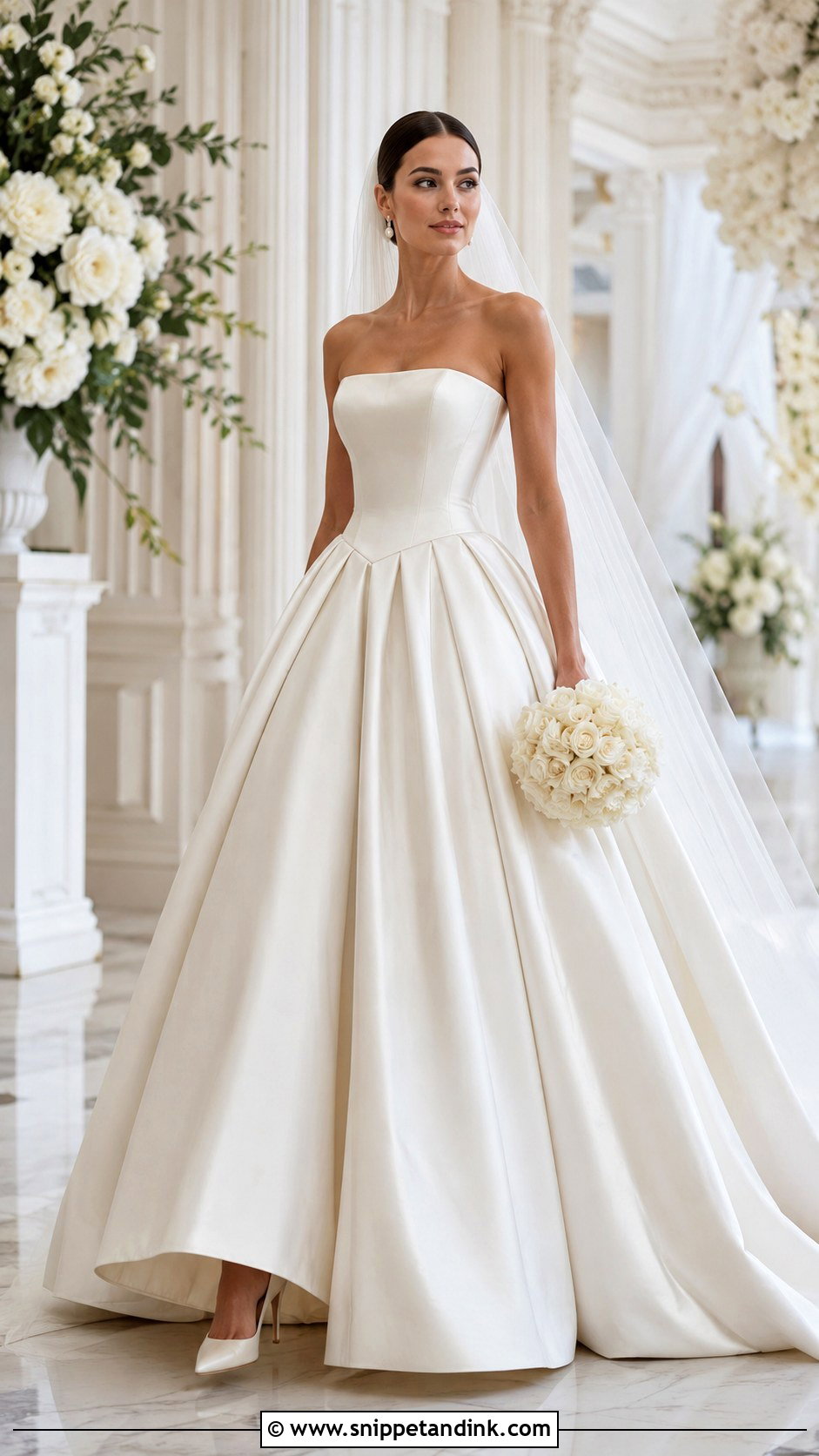
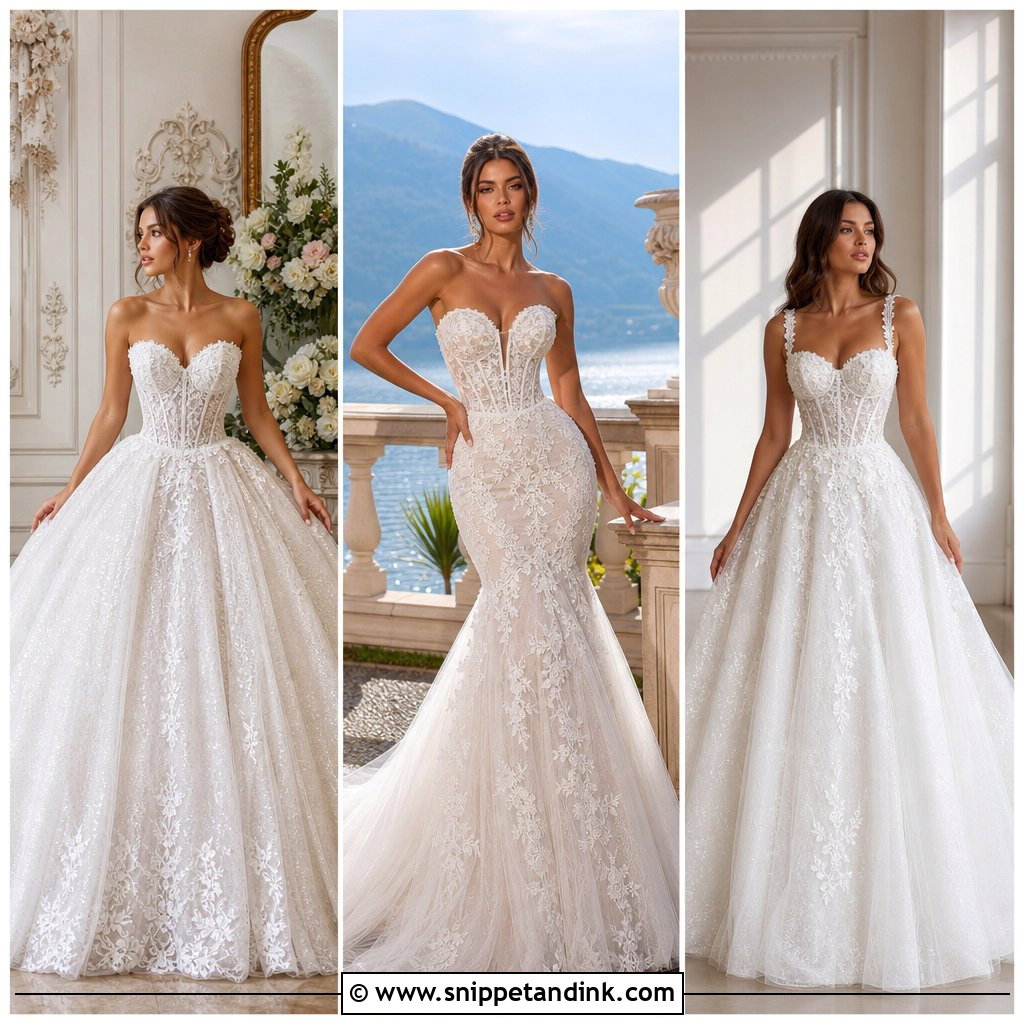
A satin ball gown is still the most traditional silhouette there is, and it needs a fabric with backbone. Crisp satin or mikado holds the skirt’s shape; a soft satin will droop by evening. Balance the volume with a fitted bodice, strapless, square or softly scooped, and consider a basque waist for definition. Ask for pockets in the side seams. You’ll use them. Pointed pumps, pearl drops and a raw-edge cathedral veil suit it, with a small bouquet of white roses. Measure your aisle before you fall for one; some barn and chapel aisles are narrower than a full skirt.
2. Ivory Lace A-Line Wedding Dress
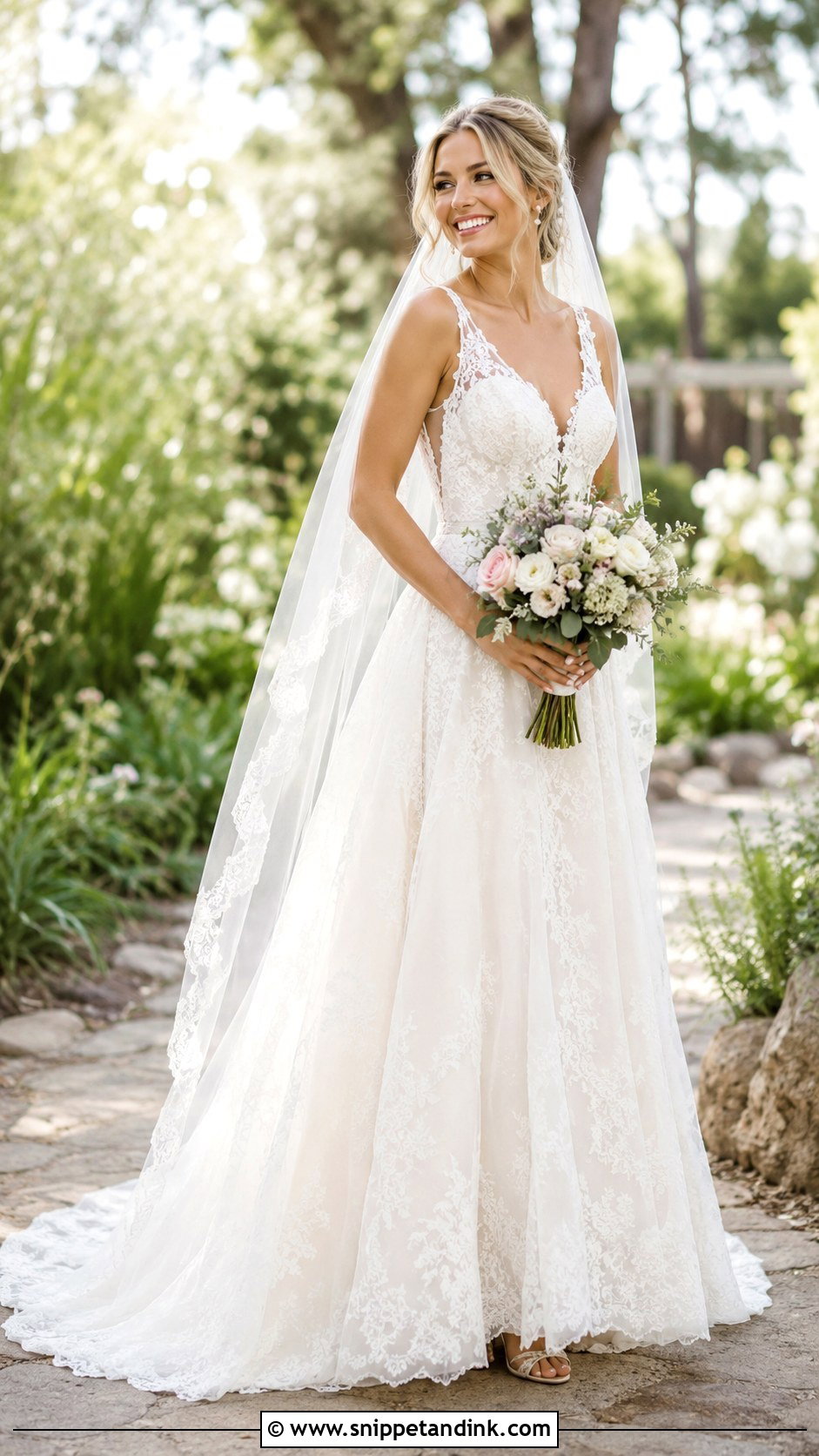
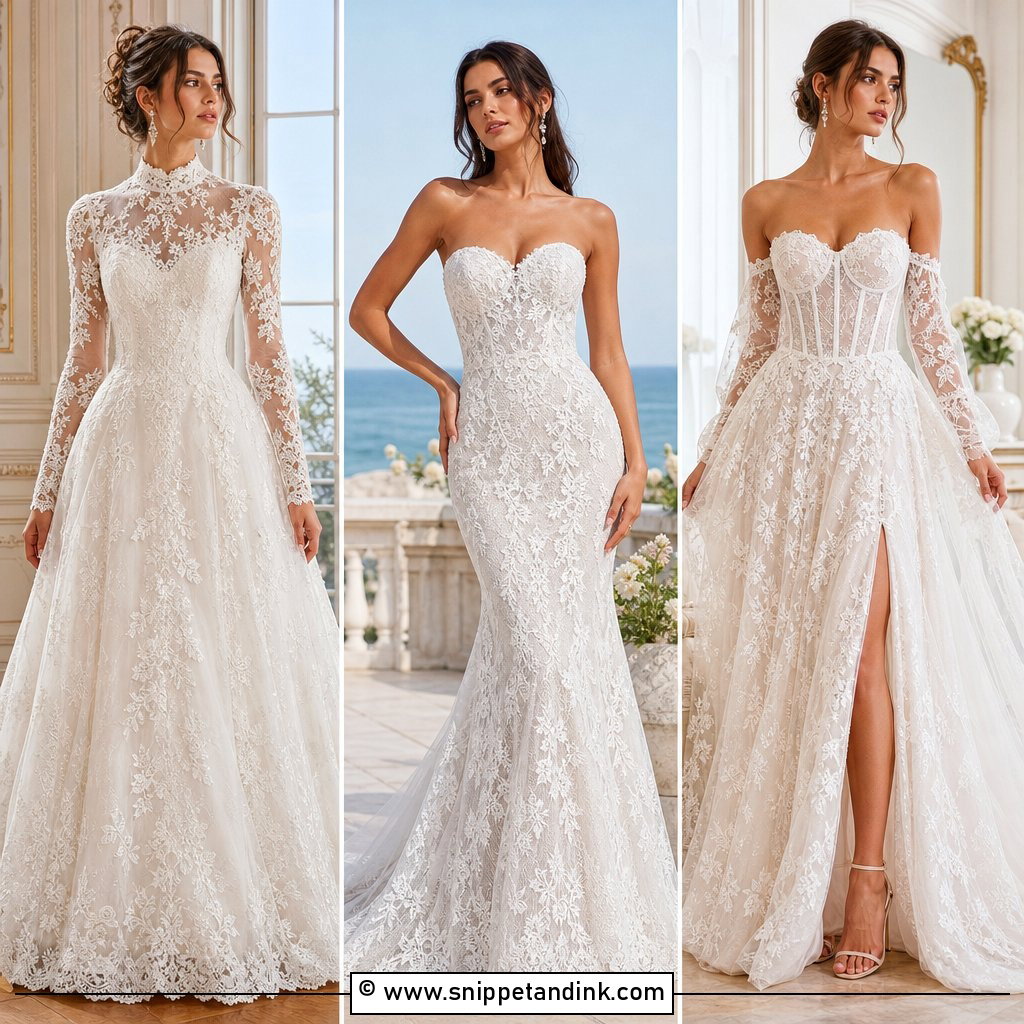
Lace on an A-line is romantic without tipping into formal. A fitted bodice, a natural waist and a skirt that widens gradually keep the shape easy to wear. The lace type matters more than people think: Chantilly lace is fine and flat, while corded lace has a raised outline that gives more texture and a little more weight. A V-neck lengthens the upper body, and lace straps are comfortable for a long day. Low satin heels, pearl studs, a fingertip veil edged in matching lace and a loose updo suit it, with ranunculus and greenery.
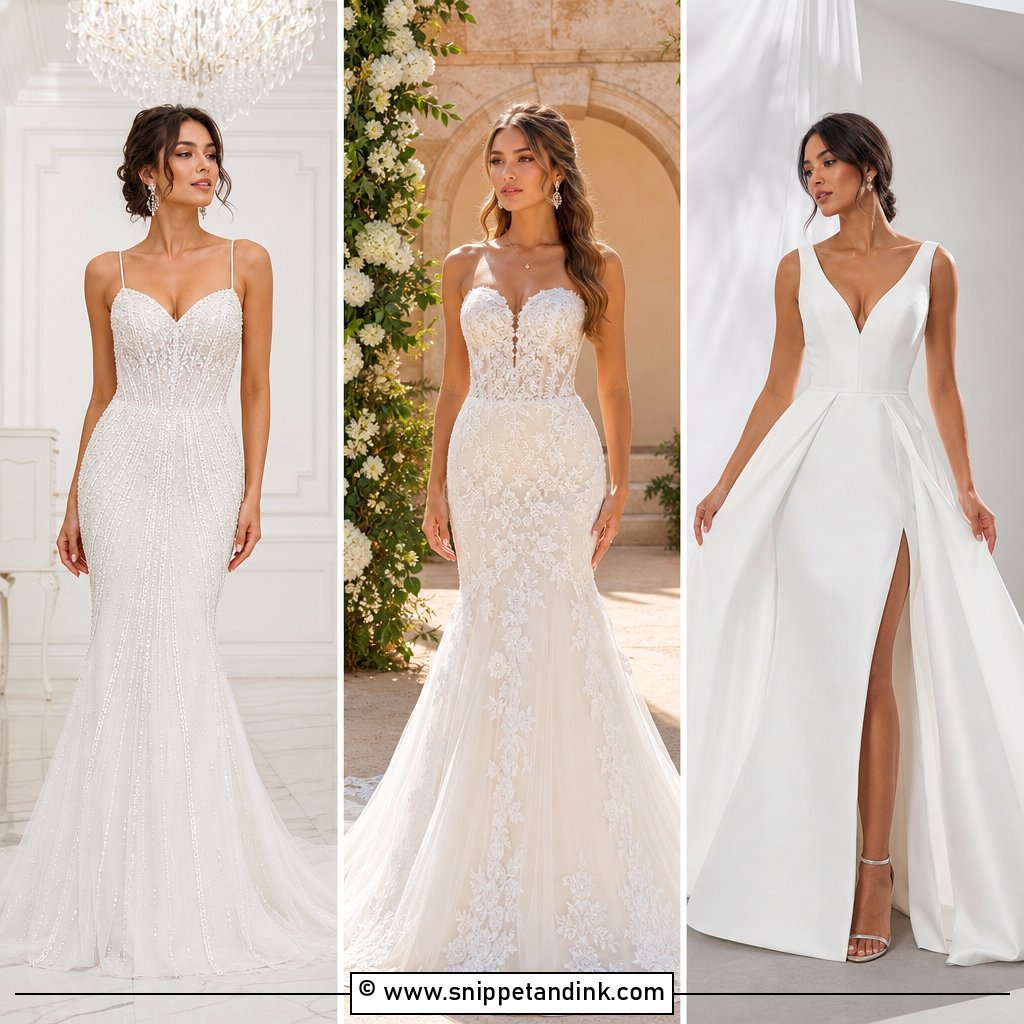
3. Ivory Mermaid Wedding Dress
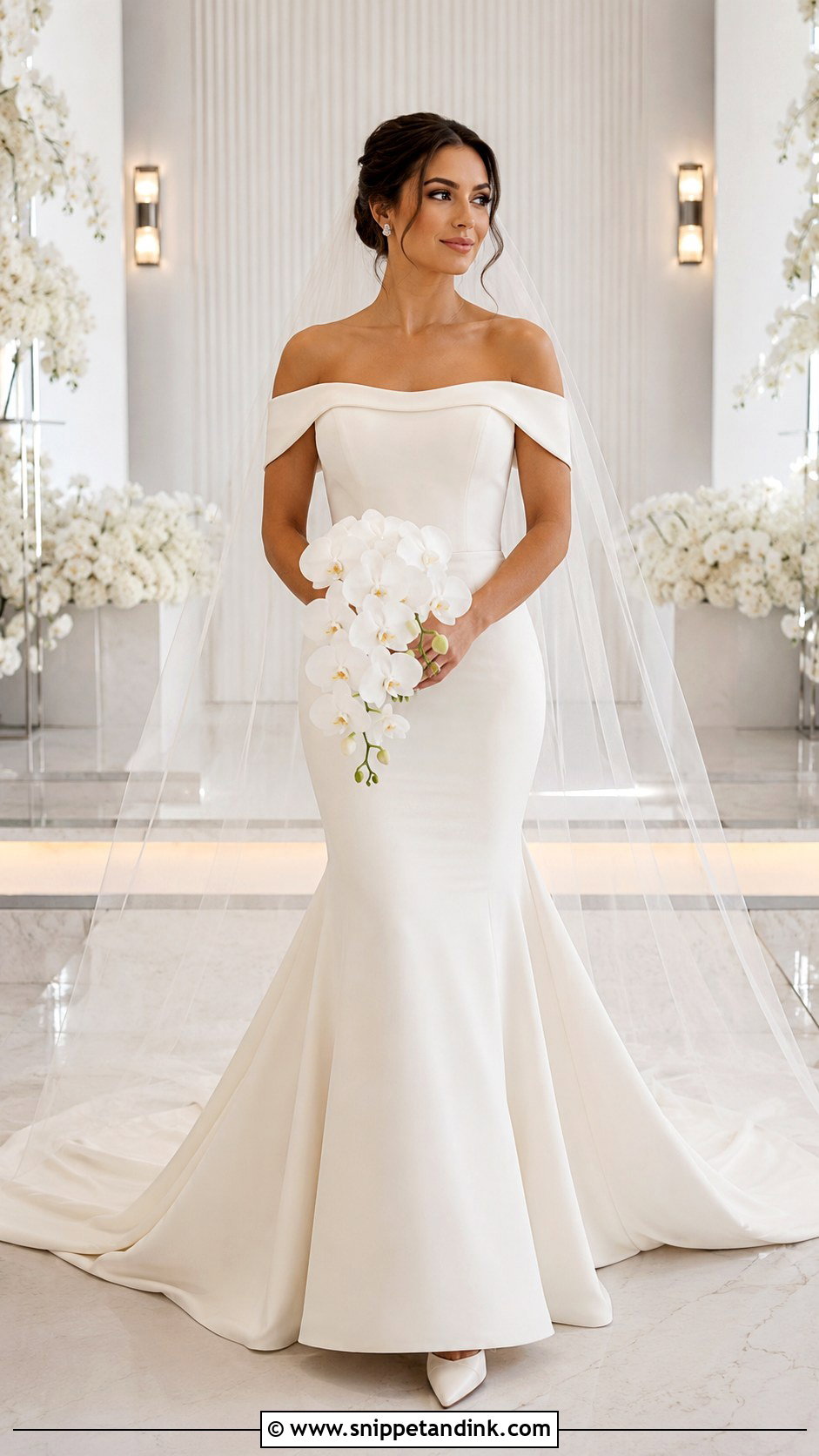
Mermaid gowns follow the body to the knee and then flare. They look dramatic and they’re demanding to wear. Satin, crepe and structured lace all suit the shape, though a fabric with a little stretch makes sitting and walking far easier. A sweetheart or off-shoulder neckline softens the fitted line. If you love a long train, ask about a detachable one so you can move freely later. Supportive pointed heels, a slim bracelet and sparkling studs keep it sleek, with a long veil, a neat bun and orchids or calla lilies. I always ask brides to climb a set of stairs in the sample before they order.
4. Ivory Long Sleeve Lace Wedding Dress
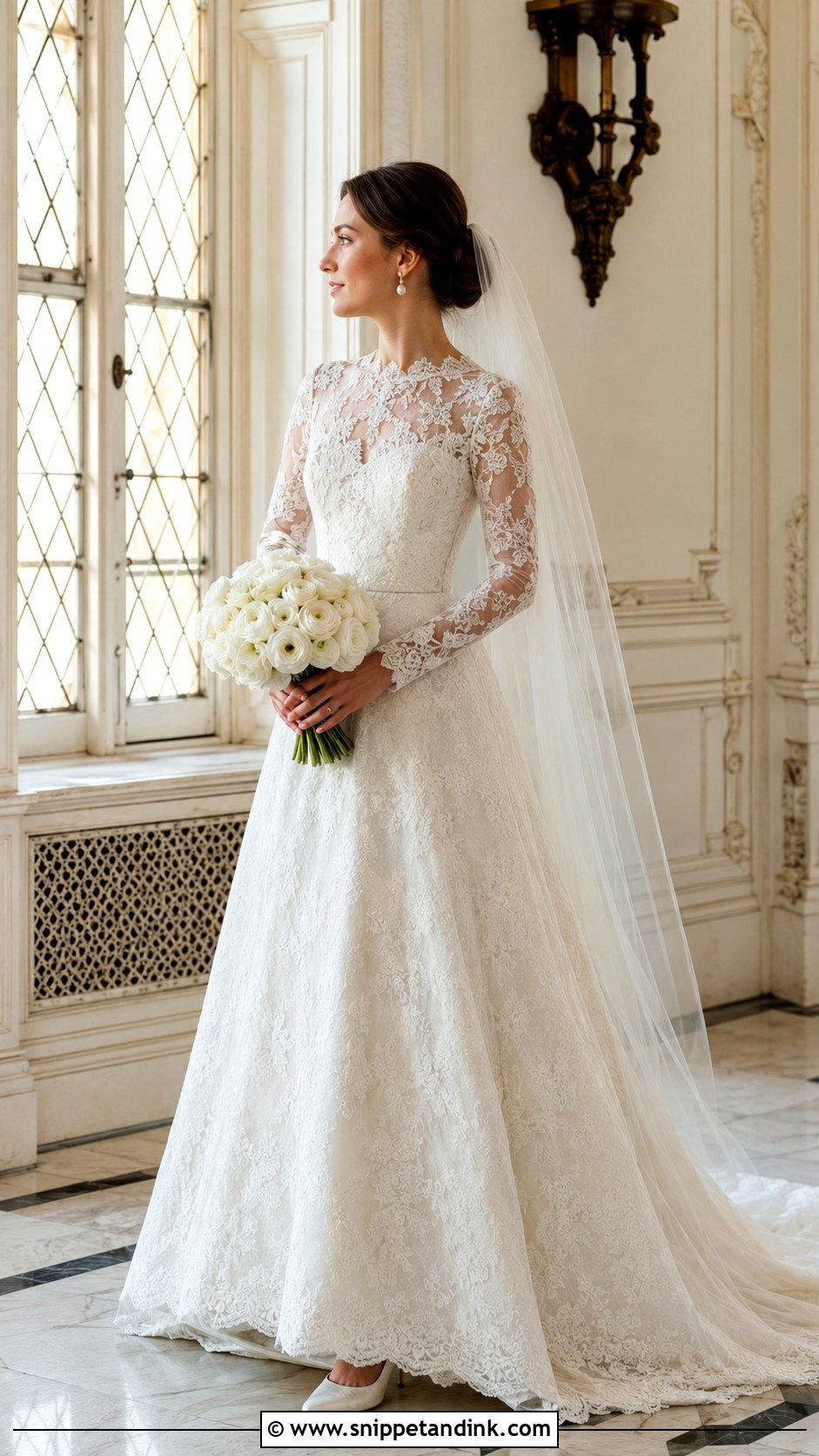
Long lace sleeves give coverage that still feels light. Sheer sleeves look soft; lined ones look more modest and structured. A fitted bodice with an A-line or gently flared skirt keeps the sleeves as the main feature, and covered buttons at the cuff and back add a classic touch. Closed-toe pumps, pearl earrings, a fine tulle veil longer than the train and a low chignon suit it. Skip the necklace if there’s appliqué at the neckline. Before you buy, fold your arms and reach forward; non-stretch lace sleeves can be surprisingly tight at the elbow. Cool-weather and formal venues suit it best.
5. Ivory Strapless Wedding Dress
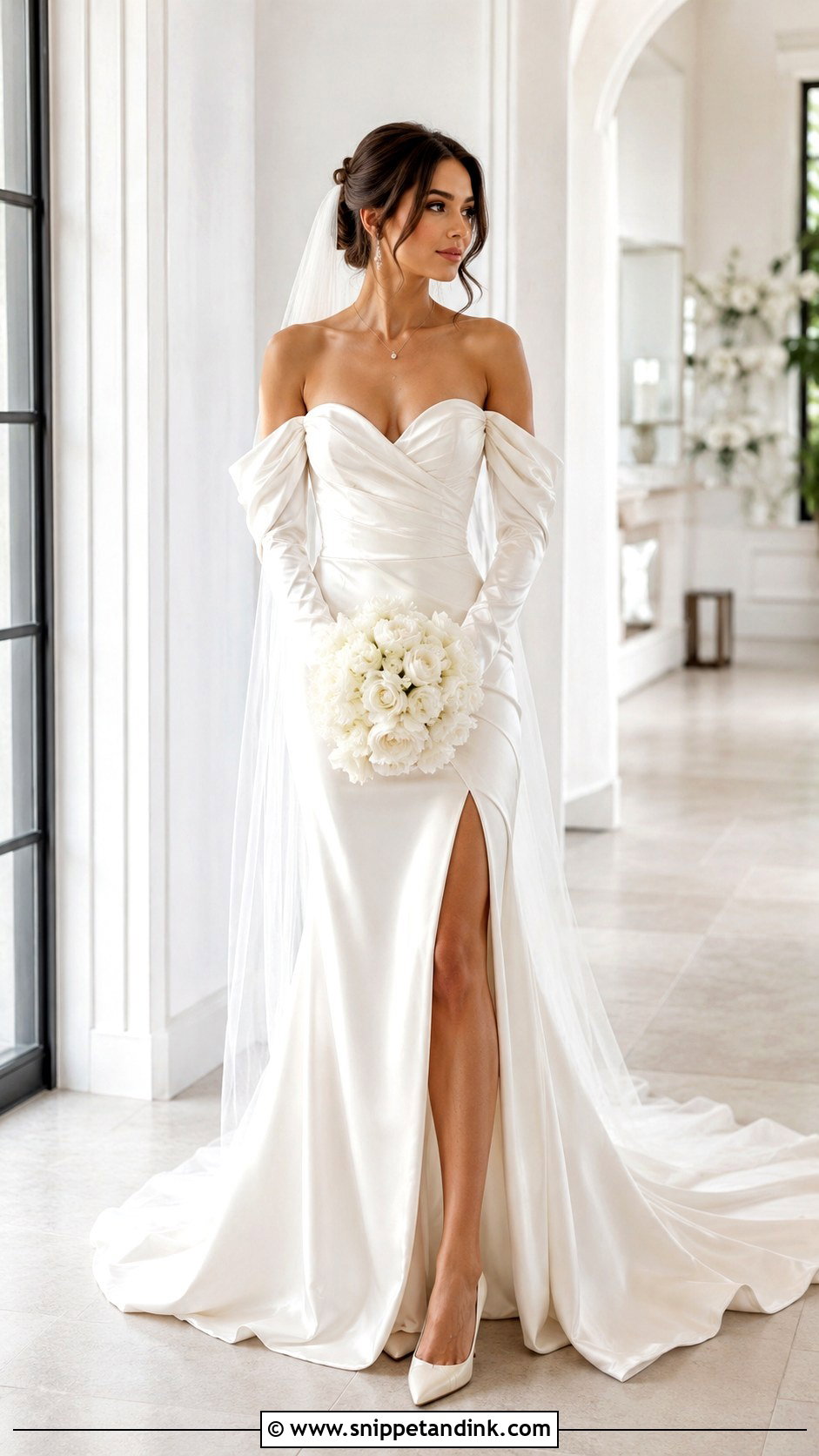
Strapless is the most adaptable bodice on this list. A straight neckline reads modern; a sweetheart neckline softer and more romantic. What keeps it up is internal boning, built-in cups and a waist fitted closely enough to anchor it, not the top edge gripping your chest. Satin looks sleek; lace or textured fabric adds depth. A tennis necklace, small drops and a chapel veil suit it, with pointed pumps. For a covered ceremony, add detachable off-shoulder sleeves or a sheer wrap. Do the jump test at your fitting: if a small bounce makes the bodice slip, it needs taking in.
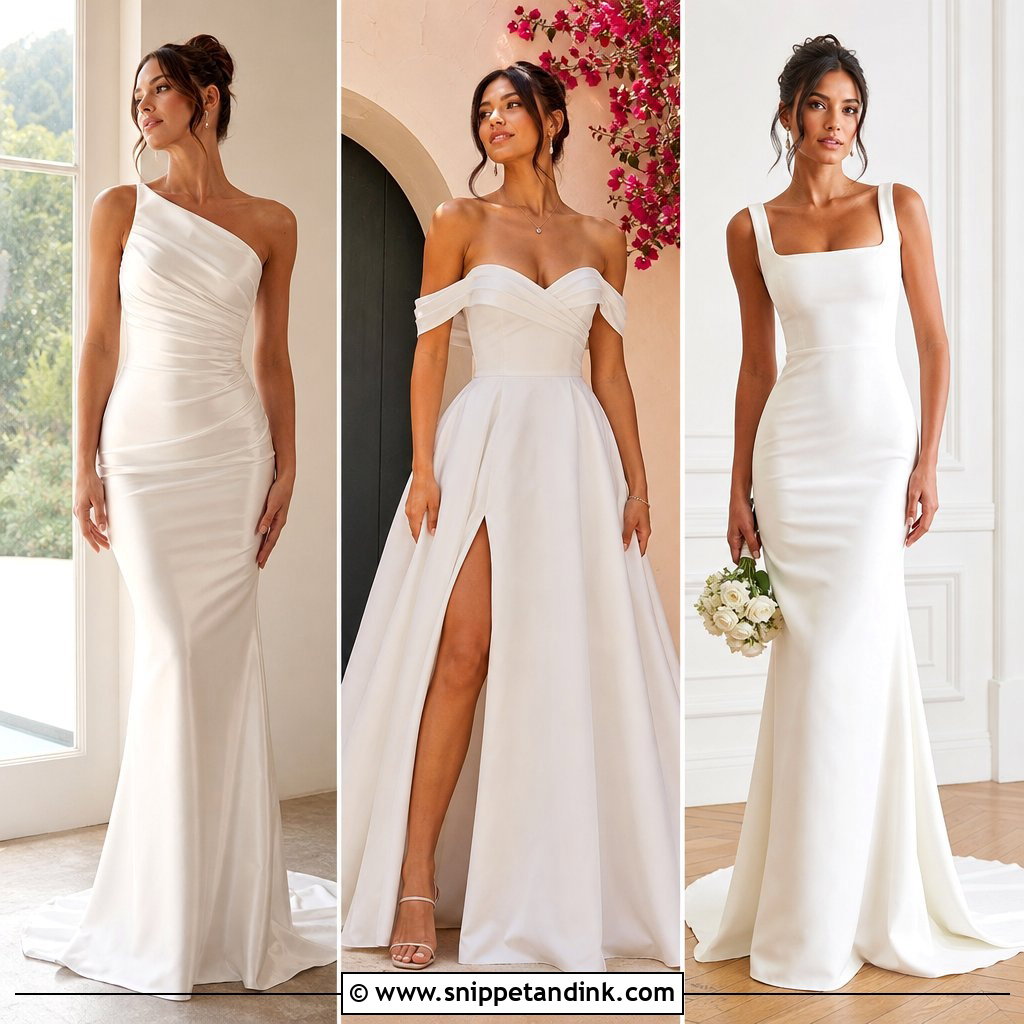
6. Ivory Off-The-Shoulder Wedding Dress
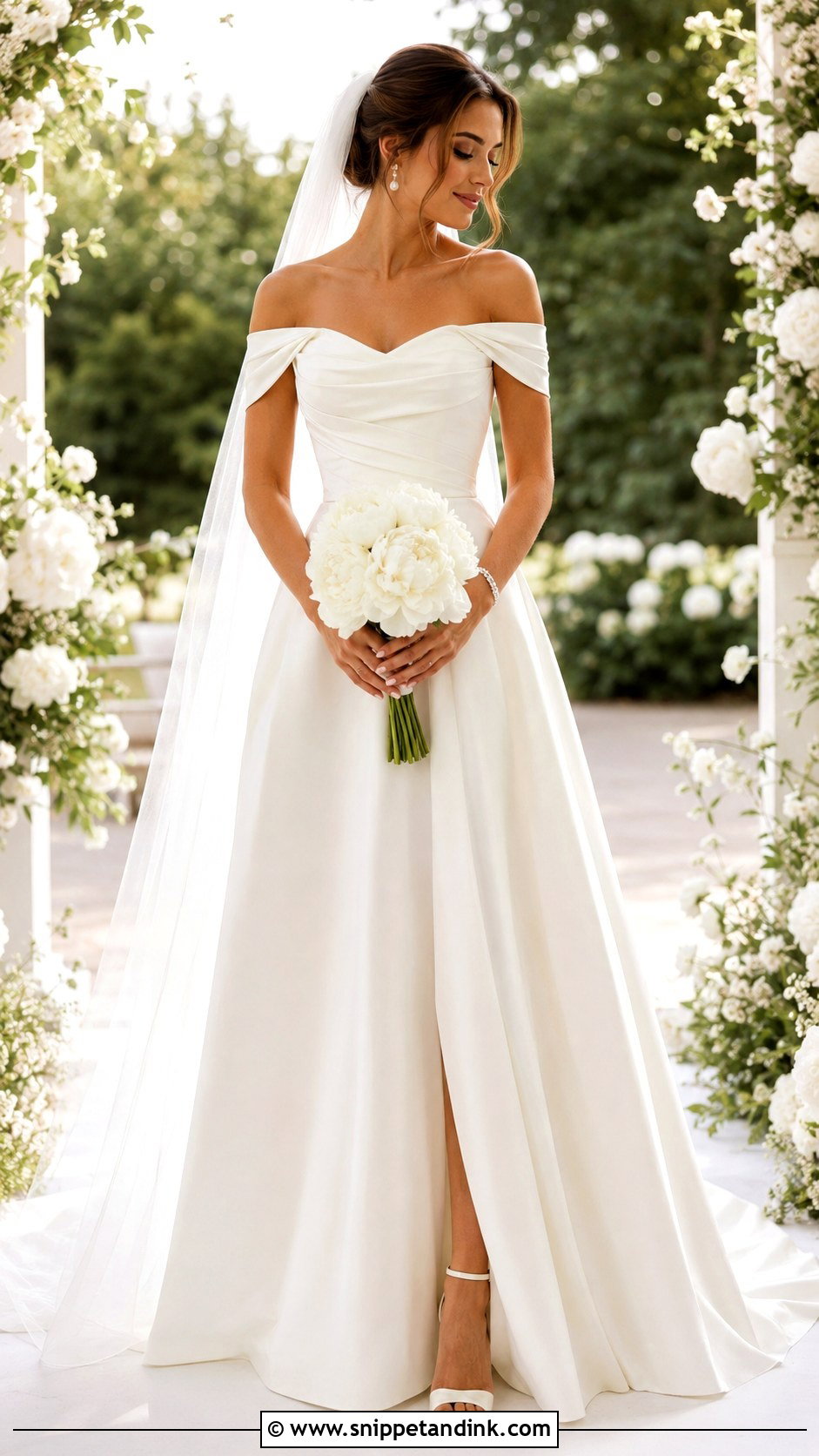
An off-shoulder neckline frames the collarbones and works with mermaid, A-line or full skirts. Draped satin bands look clean and modern; lace sleeves feel more traditional. I always check arm movement before anything else, since these bands sit across the upper arm and can limit how high you lift. Pearl or crystal earrings, a fine bracelet and satin heels suit it, with the veil under a low bun so the shoulders stay clear. Detachable bands let you go strapless later. White peonies or roses give soft volume.
7. Ivory Square Neck Wedding Dress
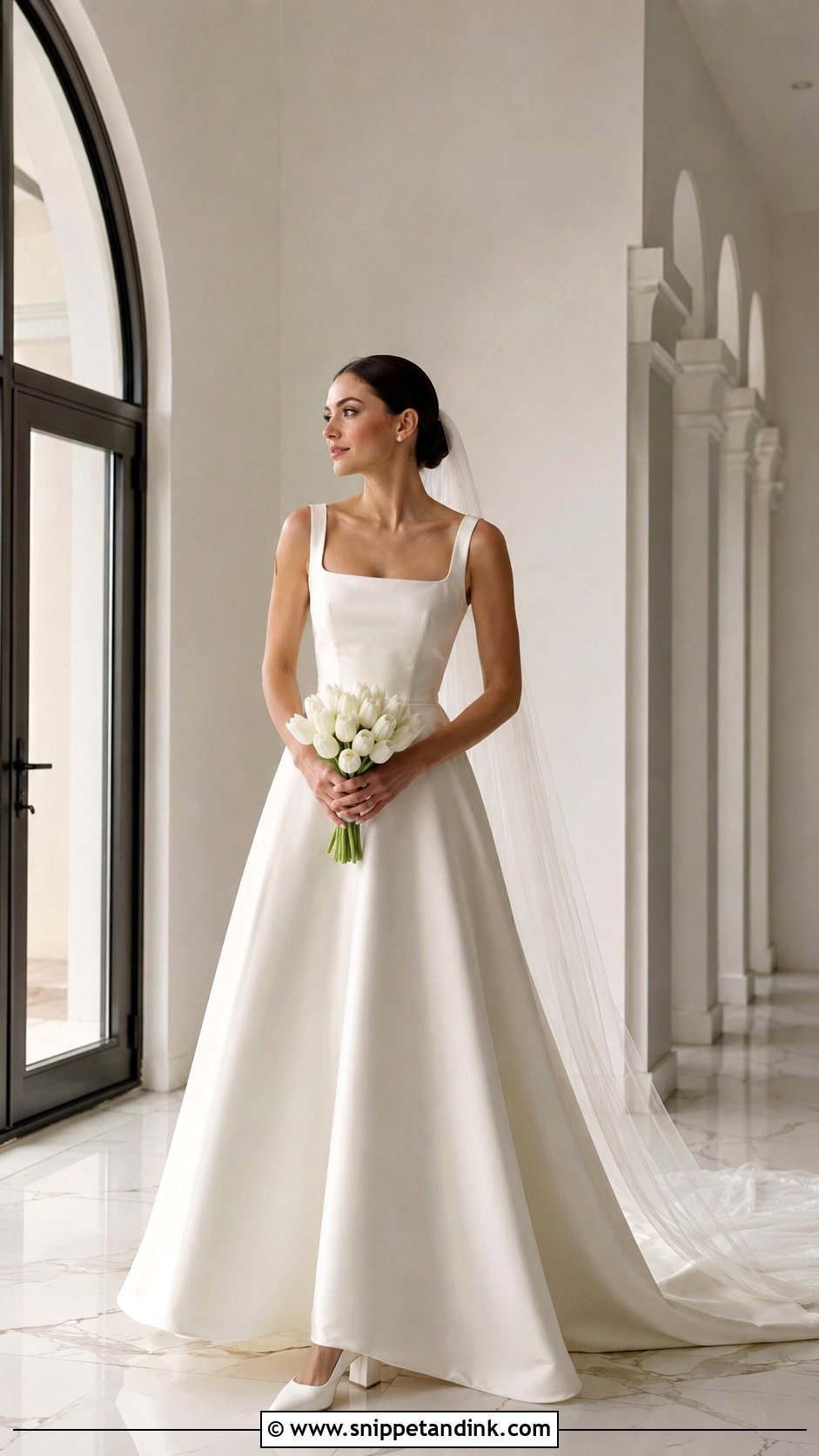
A square neck gives a crisp, slightly vintage shape. Wide straps provide support and the straight edge frames the collarbones. Crepe keeps it understated; satin adds shine; lace adds traditional texture. Over an A-line skirt it suits nearly every figure, and over a column it looks sharp. Pearl studs, a smooth bun and a narrow cathedral veil suit it, with block-heel pumps for long hours standing. White tulips keep the lines clean. If the neckline sits high, leave the necklace off. I check the corners in a mirror while the bride bends forward; on a square neck, any gape is easy to spot.
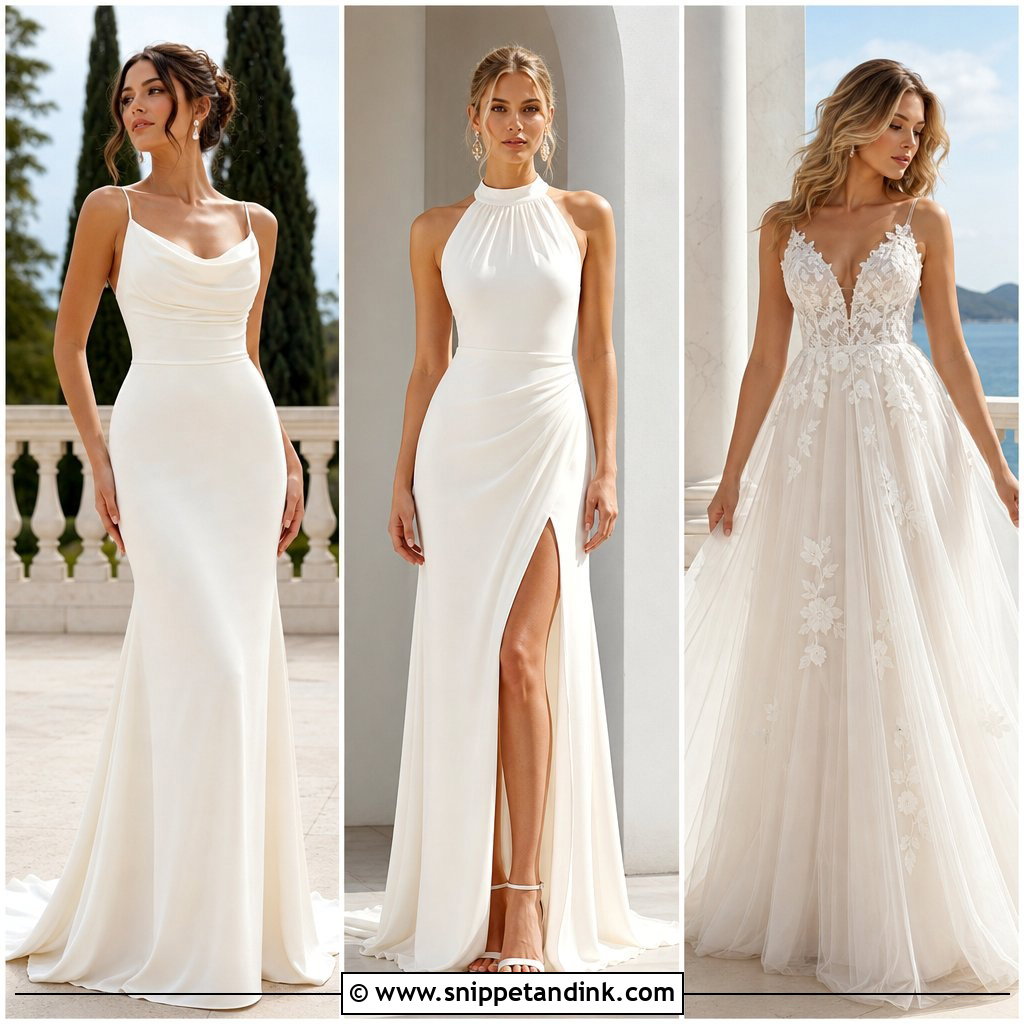
8. Ivory High Neck Wedding Dress
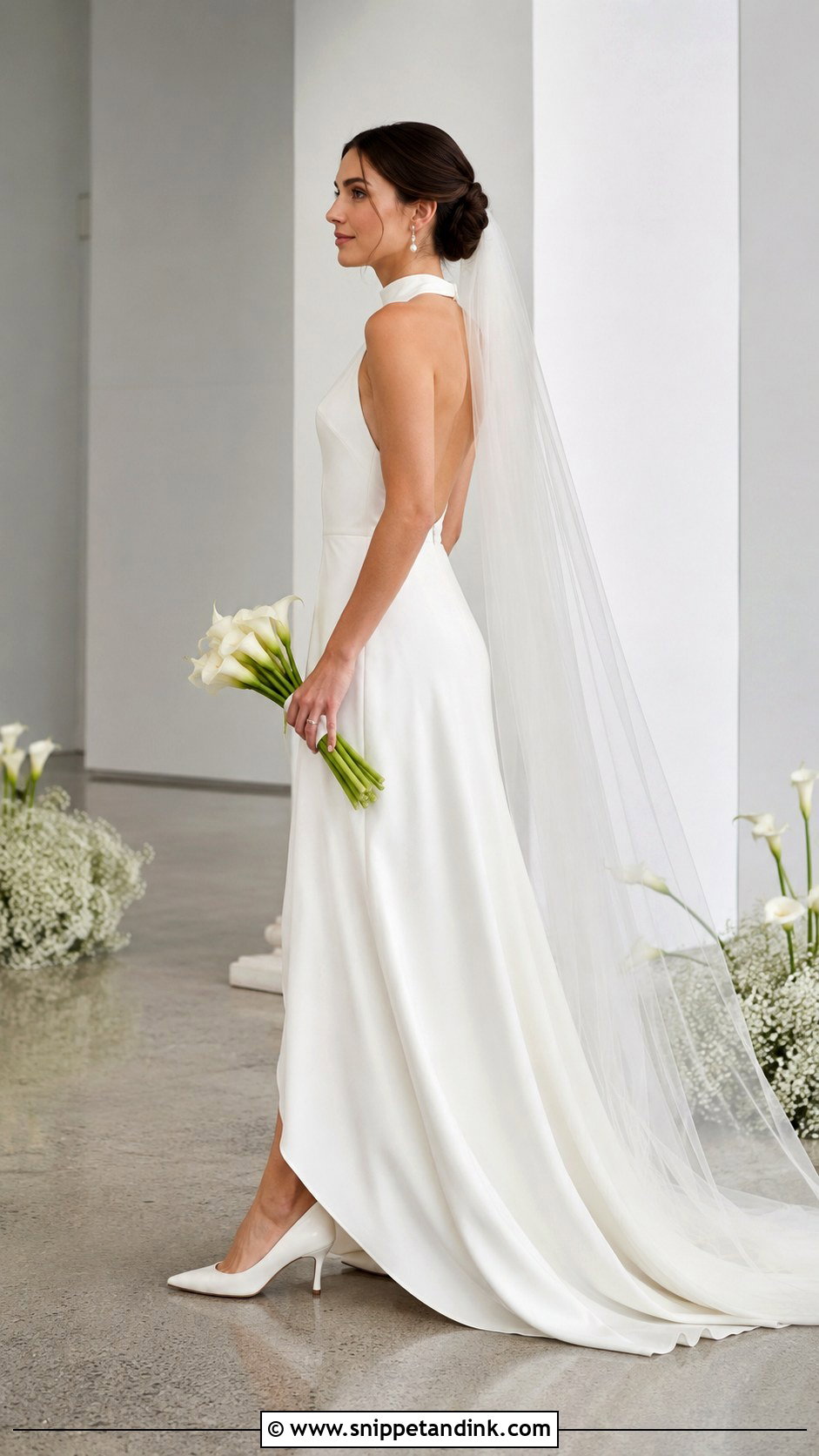
High necks offer coverage and a quietly modern look. Sheer lace at the throat keeps it light, while crepe or satin up to the collar is sleek and statuesque. Balance the covered front with an open back, a fitted waist or a soft skirt. Long sleeves make it formal; sleeveless is fresher for summer. Drop earrings, a low twisted bun and pointed heels suit it, with a bracelet in place of a necklace. Turn your head side to side at the fitting; a collar edge that scratches will bother you all day. Orchids or calla lilies echo the vertical line.
9. Ivory V-Neck Wedding Dress
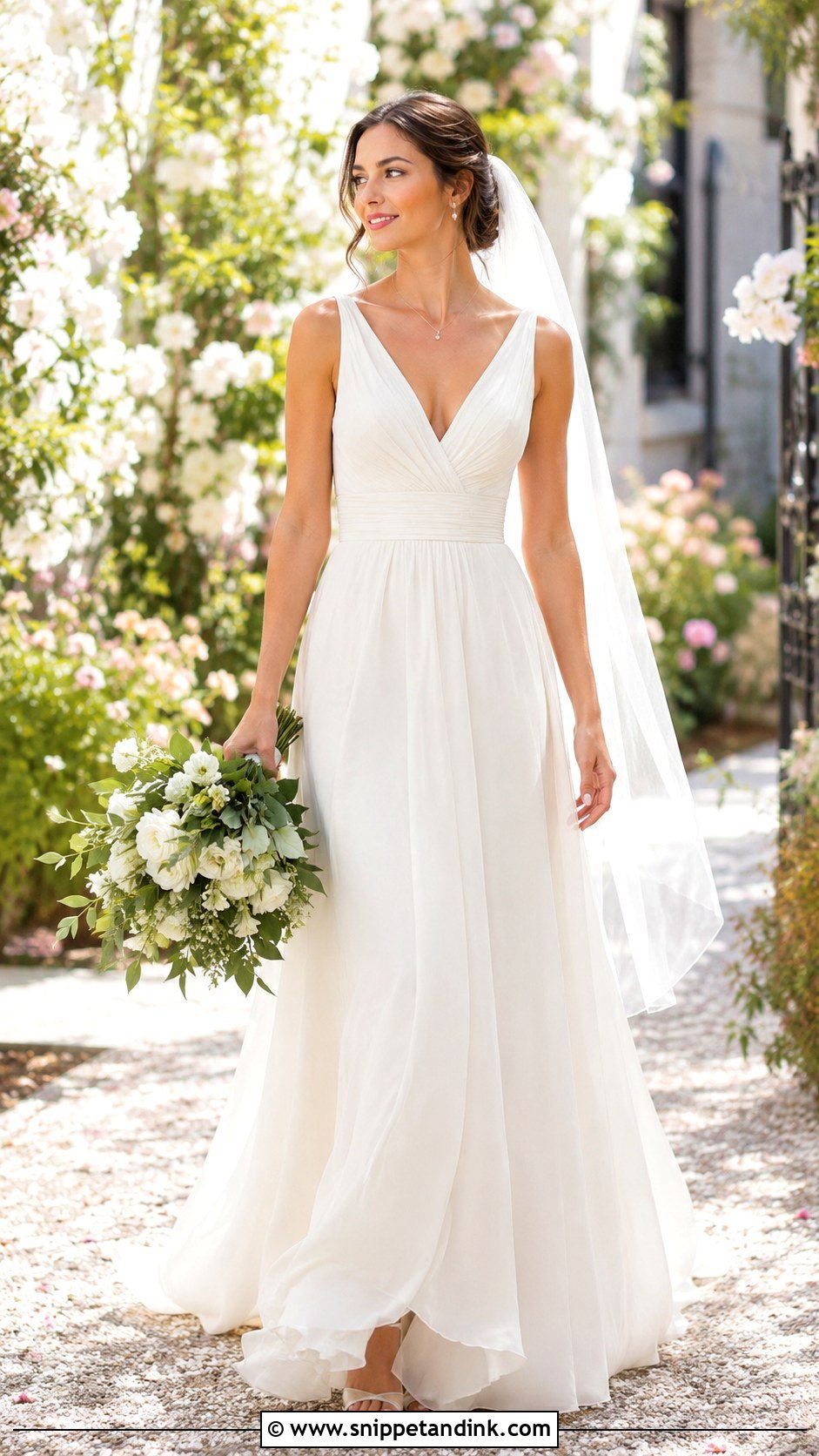
A V-neck lengthens the neck and the upper body, and the depth is entirely your call. A moderate V feels comfortable for most brides, while a deep plunge is a bolder statement that needs illusion tulle or a sewn-in panel to stay in place. Wide straps give support; fine straps feel lighter. Chiffon and tulle move freely; crepe defines the shape. A fine pendant, small earrings, heeled sandals and a fingertip veil keep it balanced, with soft waves or a loose updo and a white-and-green bouquet. Bend forward in the fitting room to see how much the neckline opens.
10. Ivory Sweetheart Neck Wedding Dress
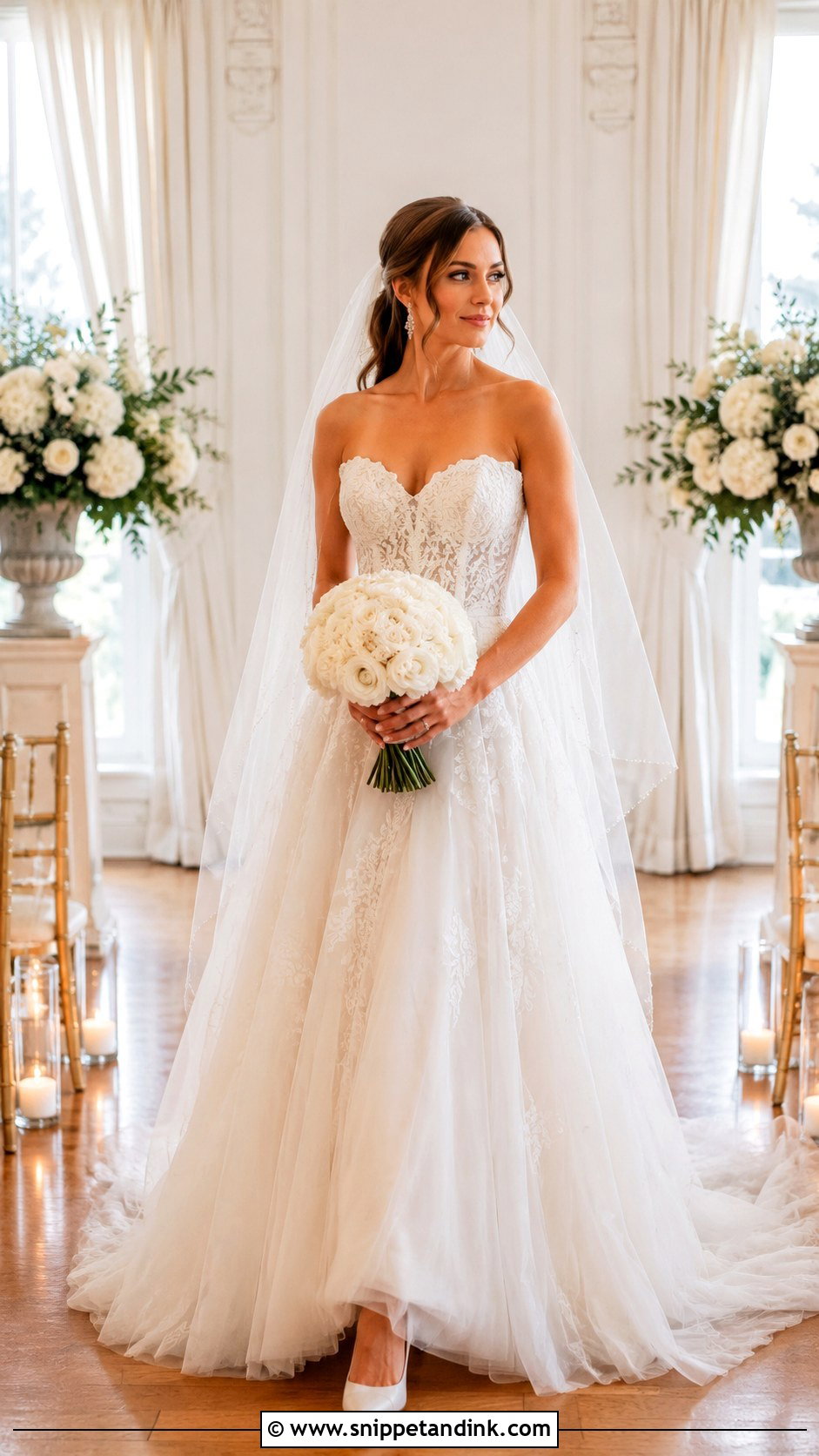
The sweetheart neckline follows the curve of the bust and pairs naturally with corsets, strapless bodices and detachable sleeves. Structured satin looks polished; floral lace looks softer. It must sit smoothly at the waist without pinching, and the centre dip should lie flat against the breastbone rather than standing away. Wear either a short pearl necklace or sparkling drops, not both, if the bodice is embellished. A soft tulle veil, classic ivory pumps and half-up hair suit it, with a round bouquet of roses and ranunculus that echoes the curves.
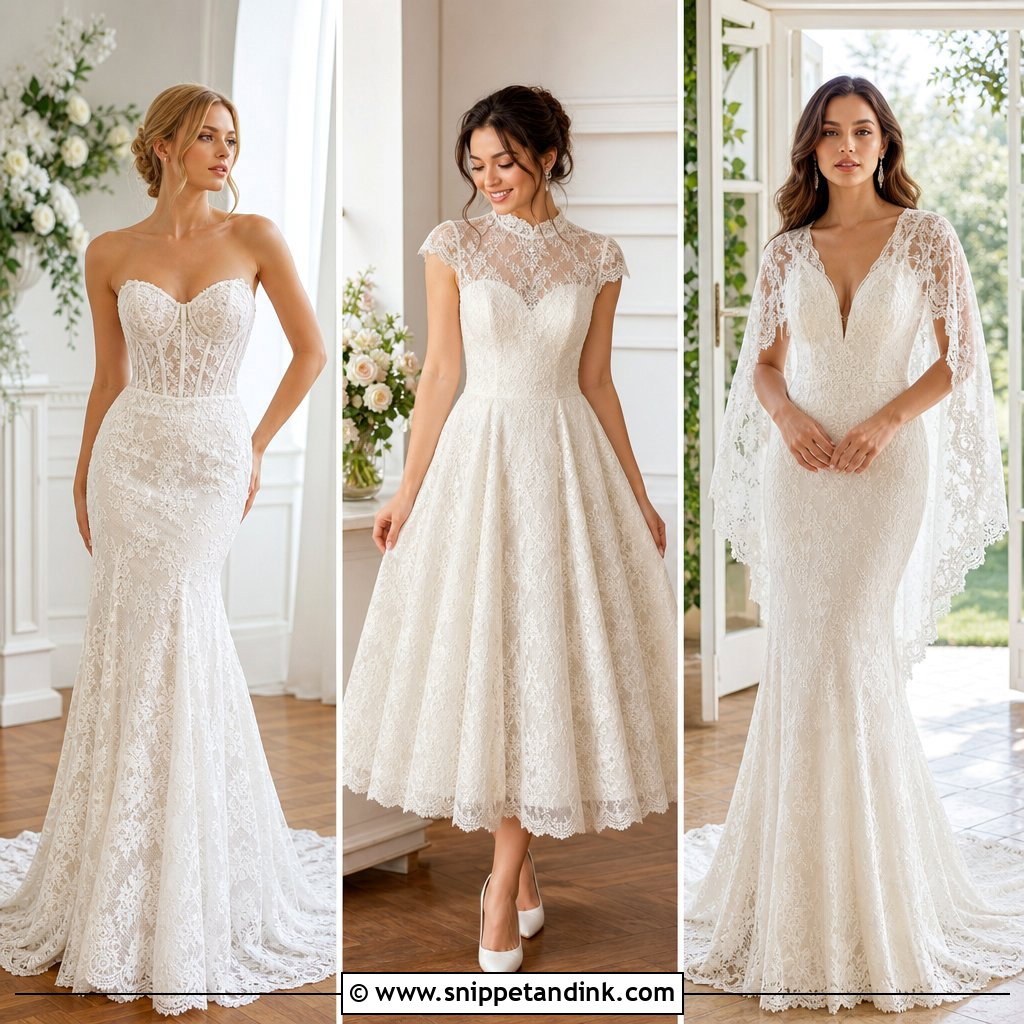
11. Ivory Corset Wedding Dress
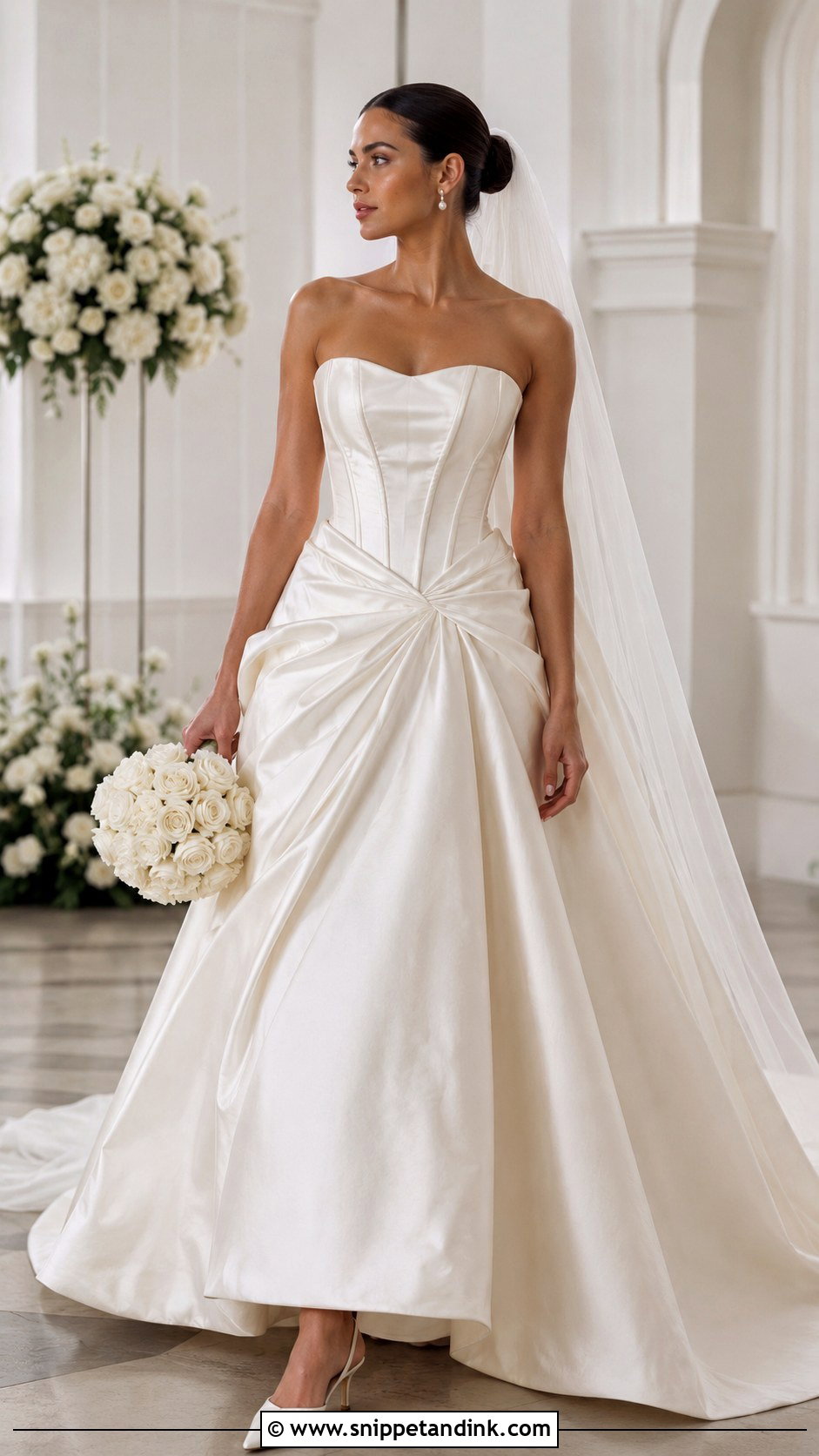
A corset makes the structure part of the design. Good boning, built-in cups and a secure back (lace-up or hook) mean the bodice supports you instead of squeezing. A basque waist extends the corset into a smooth transition to a full or gathered skirt. Satin draping looks refined, and a lace overlay adds texture. Pearl earrings, slingback heels, a long plain veil and a polished bun suit it. Ask for a matching lining under any sheer panels if you want more coverage. Sit for ten minutes at the fitting and eat something if you can; a corset tells the truth after a meal.
12. Ivory Basque Waist Wedding Dress
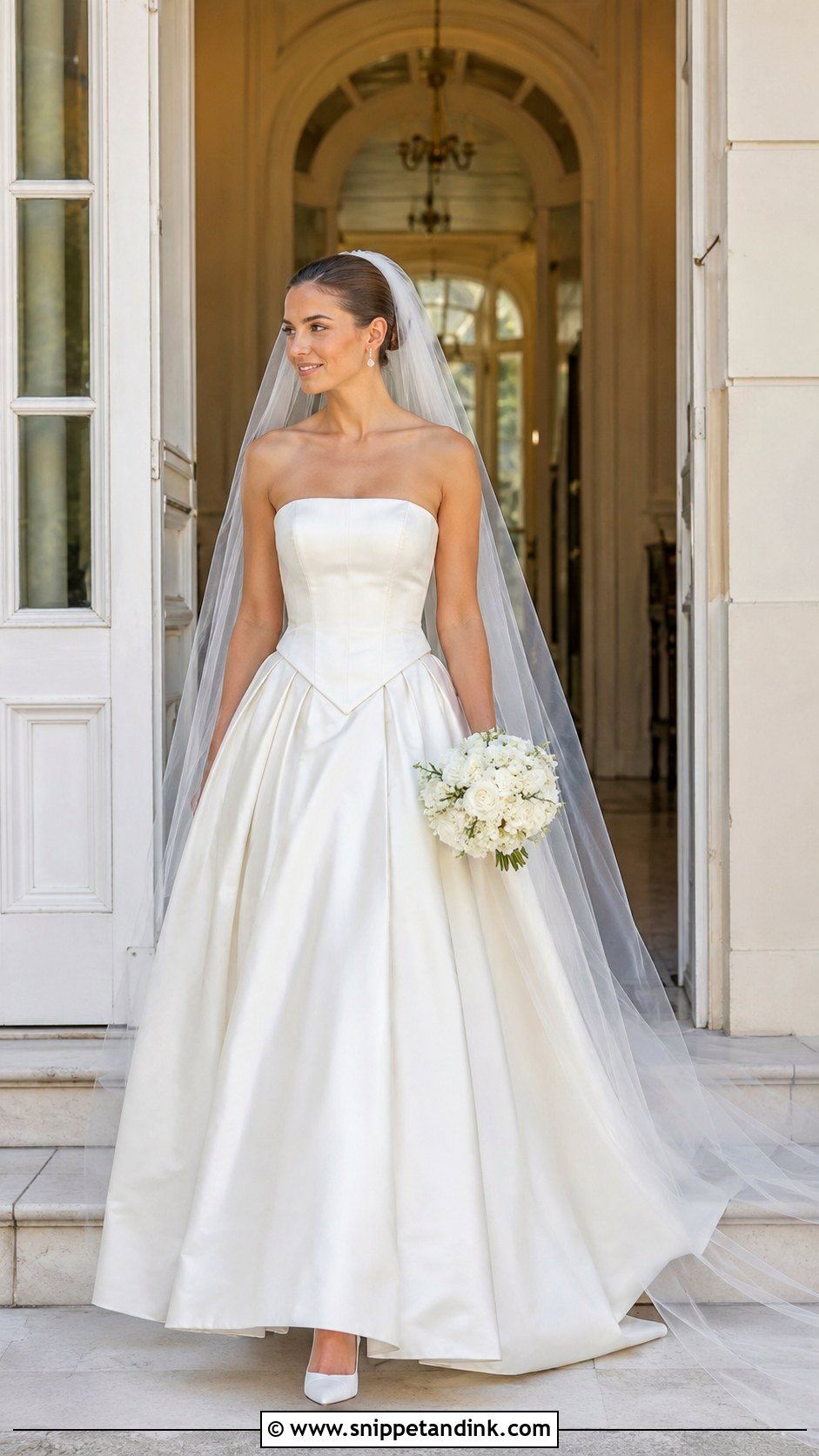
In a basque waist ivory wedding dress, the waistline dips to a point at the centre front, lengthening the torso. It sits best on a structured corset bodice with a full satin, tulle or lace skirt. Keep the fabric and embellishment simple so the shape stays clean. Strapless looks crisp; off-shoulder sleeves add romance. Almond-toe pumps, a cathedral veil and medium drop earrings suit it, with smooth, lifted hair and a compact bouquet. The point must lie flat and meet the skirt evenly, so plan on careful tailoring and sit down at each fitting.
13. Ivory Drop Waist Wedding Dress
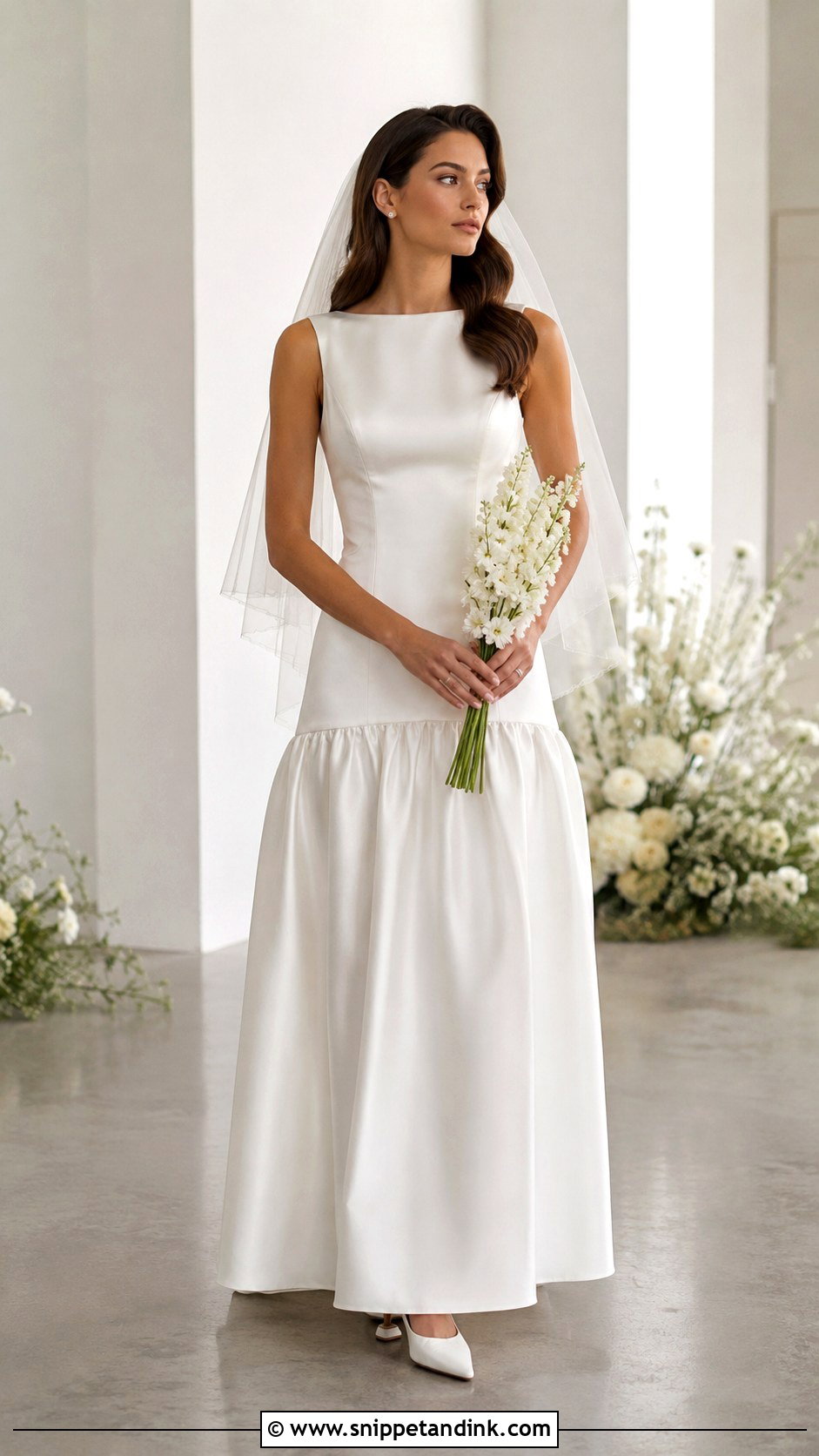
A drop waist carries the fitted bodice below the natural waist before the skirt opens, giving a long, slightly vintage line. Structured satin gives it definition, lace and tulle soften it. I generally suggest a modest drop rather than a very low seam, which makes walking and sitting harder and can shorten the legs visually. Pointed kitten heels, pearl studs and an elbow-length veil suit it, with a neat updo or smooth waves. Don’t add a belt at the natural waist; it fights the line the seam creates. A slim bouquet keeps the proportions.
14. Ivory Minimalist Crepe Wedding Dress
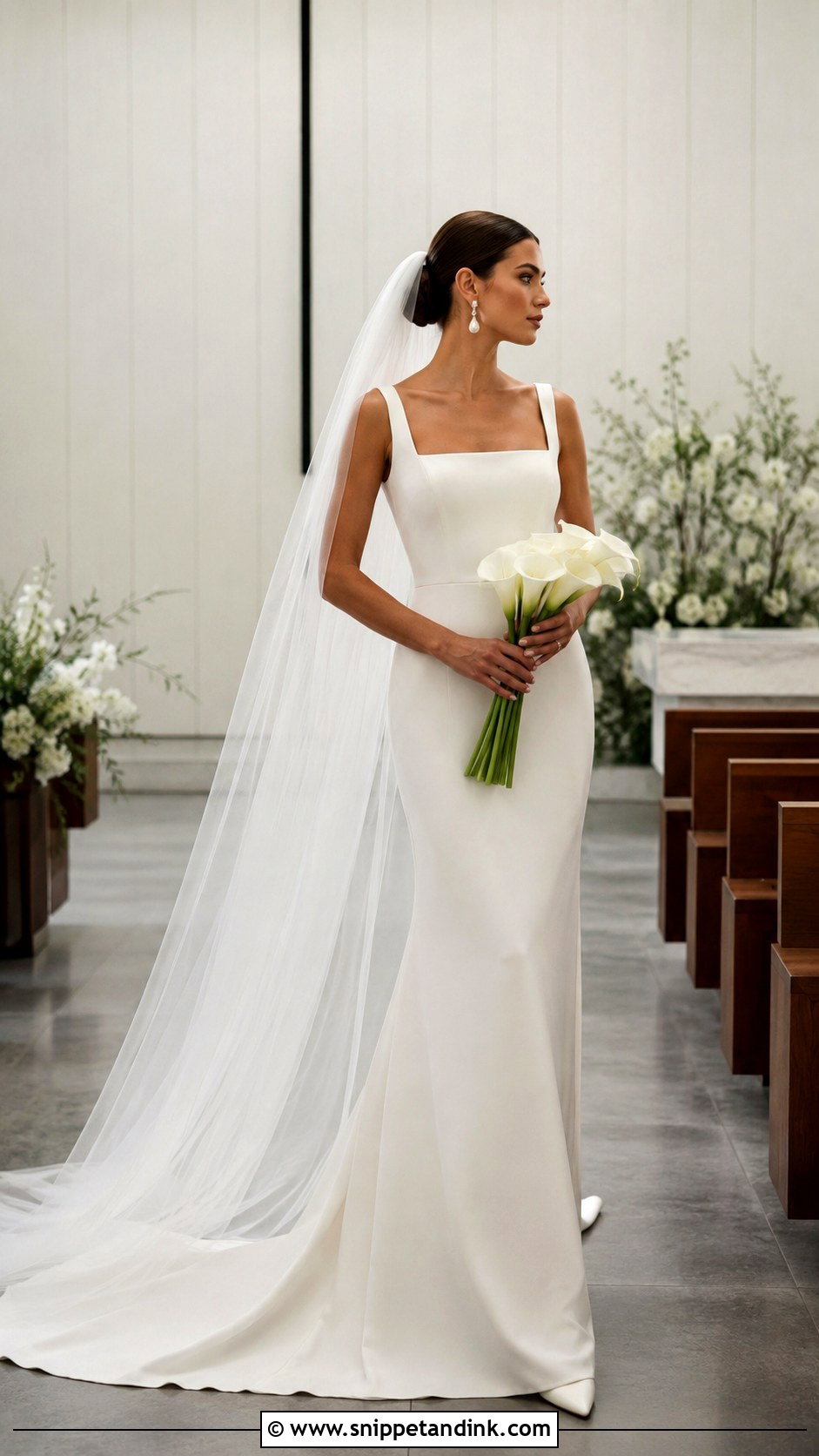
To me, plain ivory crepe is the most comfortable dress here and one of the hardest to get right, because there’s nothing to hide behind. A column, sheath or softly fitted shape lets the fabric fall cleanly. Small construction details, like a square neck, a gathered waist, covered buttons or an open back, keep it from looking plain. Sleek pumps, sculptural pearl earrings and a raw-edge cathedral veil suit it, with a low bun and calla lilies. Crepe shows every seam and underwear line, so wear smooth, supportive foundations to fittings and budget for precise alterations.
15. Ivory Silk Slip Wedding Dress
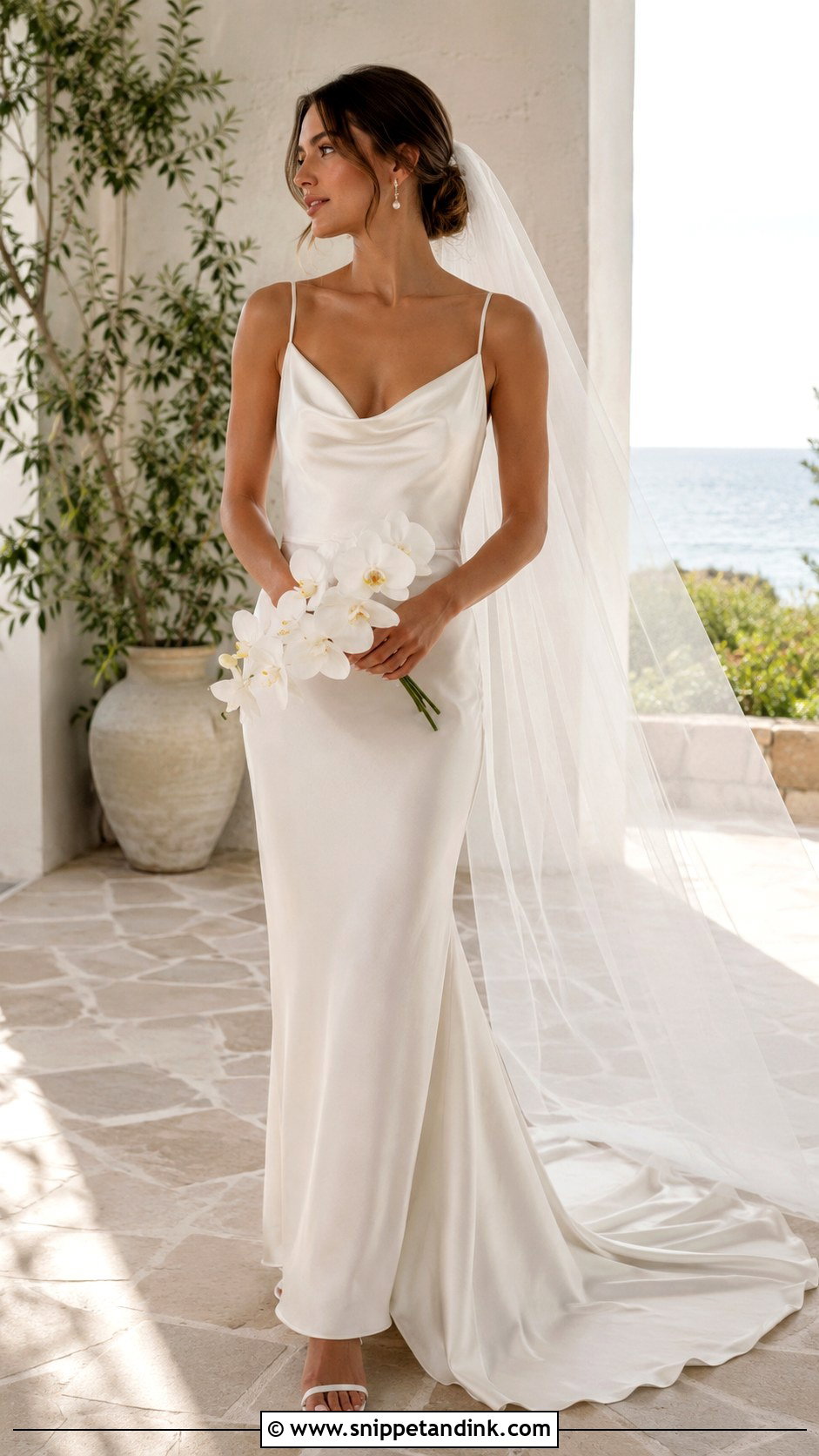
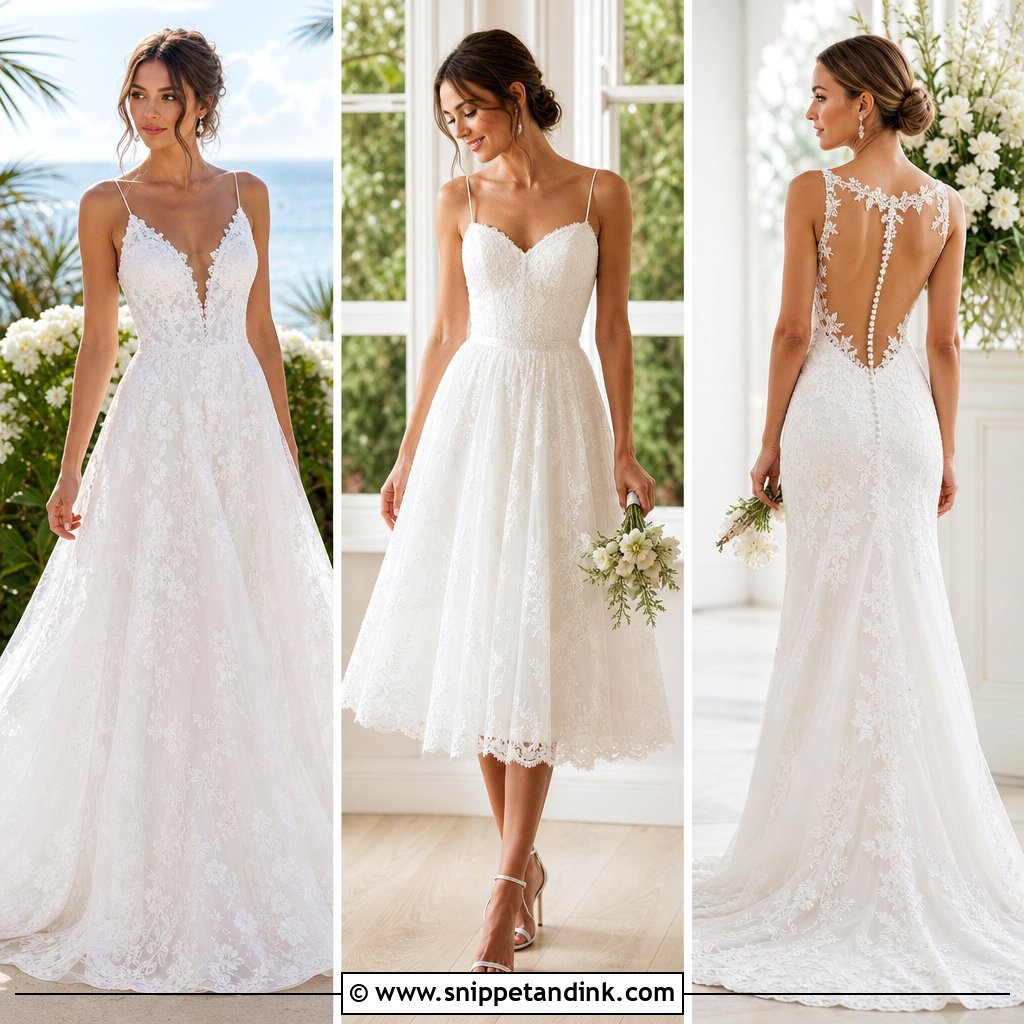
The silk slip is the most relaxed bridal look you can wear and still look dressed for a wedding. Cut on the bias, it follows the body without boning. I look for adjustable straps, a softly draped neckline and enough lining that it isn’t see-through in daylight, which is the slip dress’s main weakness. A low back or small train adds impact. Delicate heeled sandals, fine drop earrings and a sheer chapel veil suit it, with loose waves or a sleek bun. For a ceremony that calls for coverage, layer a lace cape or a chiffon wrap. White orchids add texture.
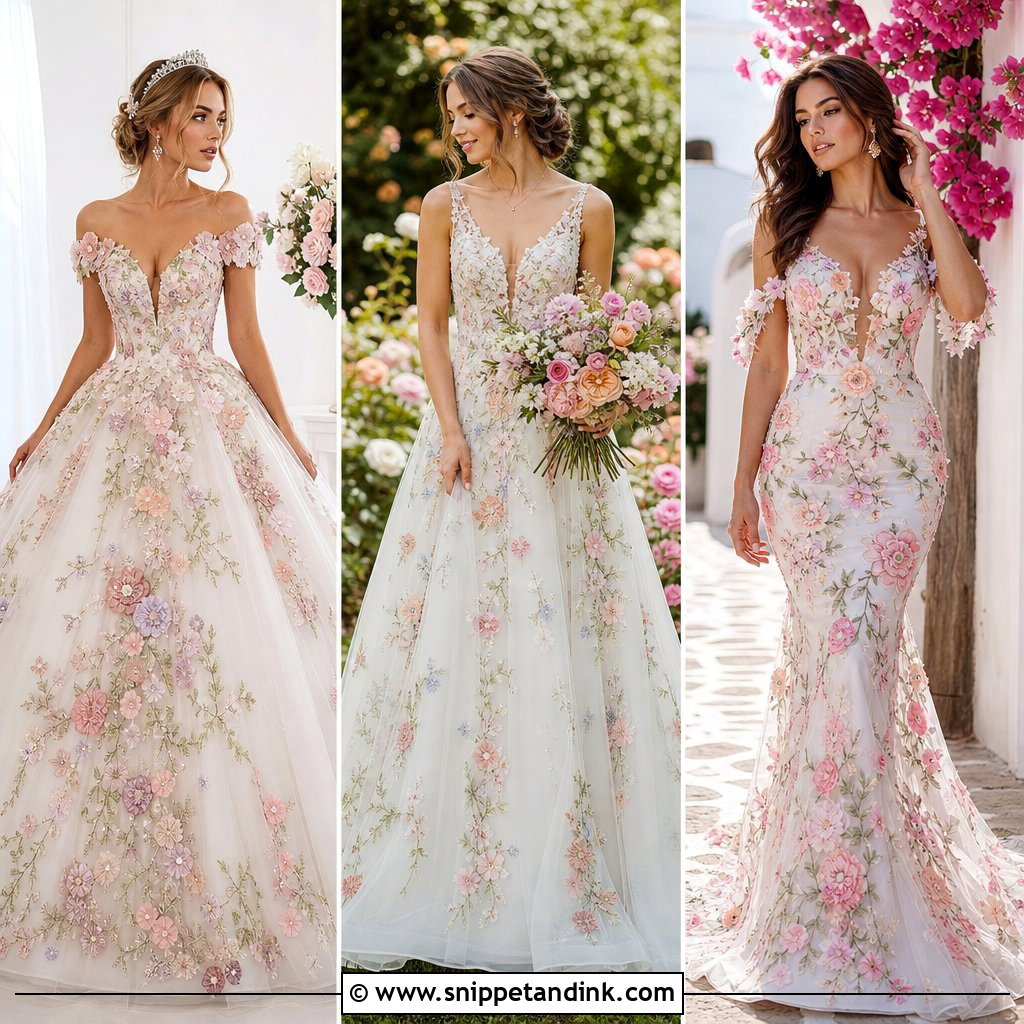
16. Ivory Floral Appliqué Wedding Dress
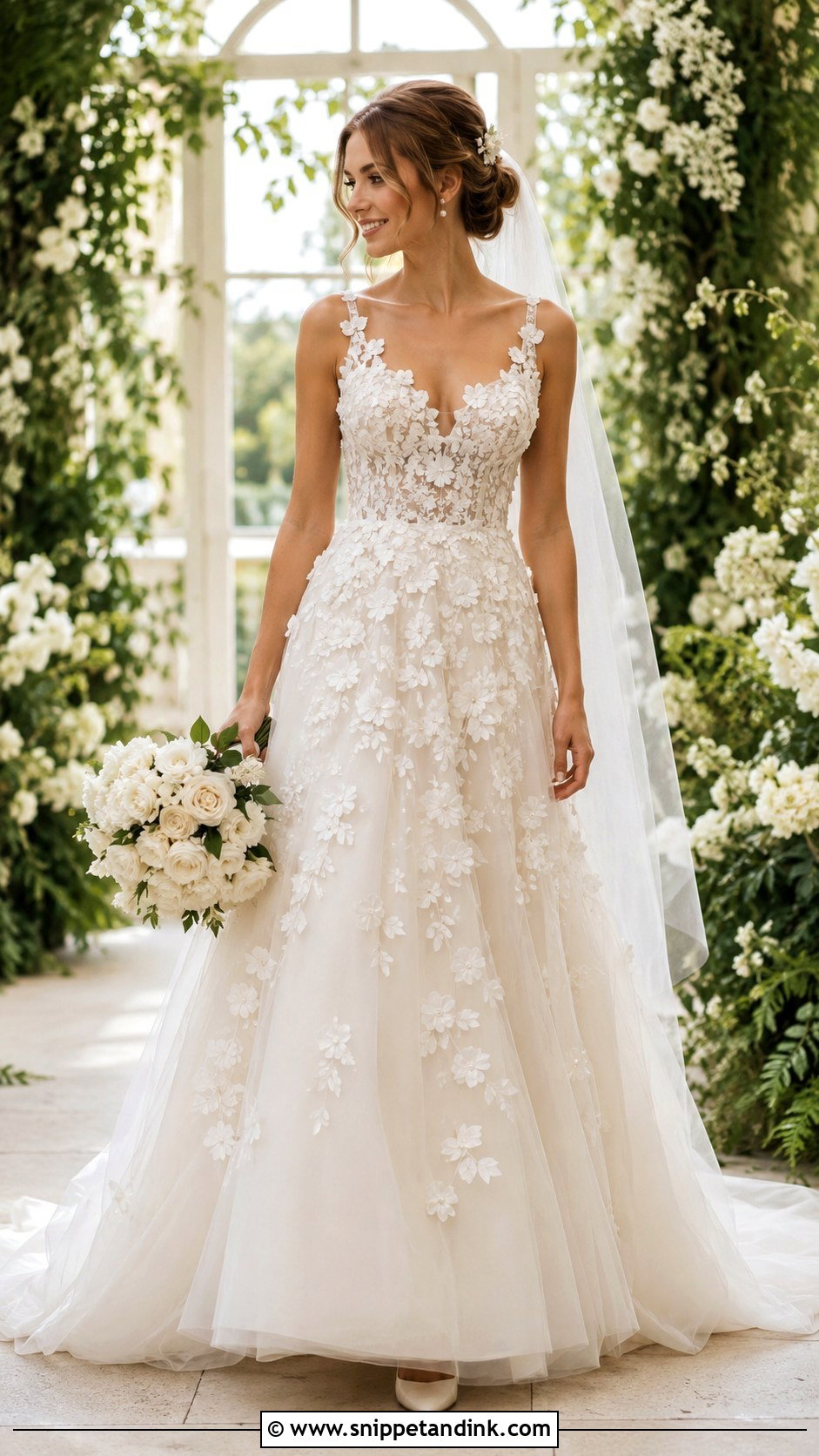
Raised floral appliqué gives a dress real texture. The flowers look best clustered on the bodice and scattered more thinly down an A-line or ball-gown skirt, which keeps the weight balanced. Sheer straps or a soft scoop neck leave the flowers on show. Simple pumps, tiny pearl earrings and a plain tulle veil are enough; a lace-edged veil just competes. A loose updo with one floral pin is plenty. Garden roses echo the theme. These petals crush easily, so hang the dress with space around it and don’t let it be packed tightly in transit.
17. Ivory Beaded Wedding Dress
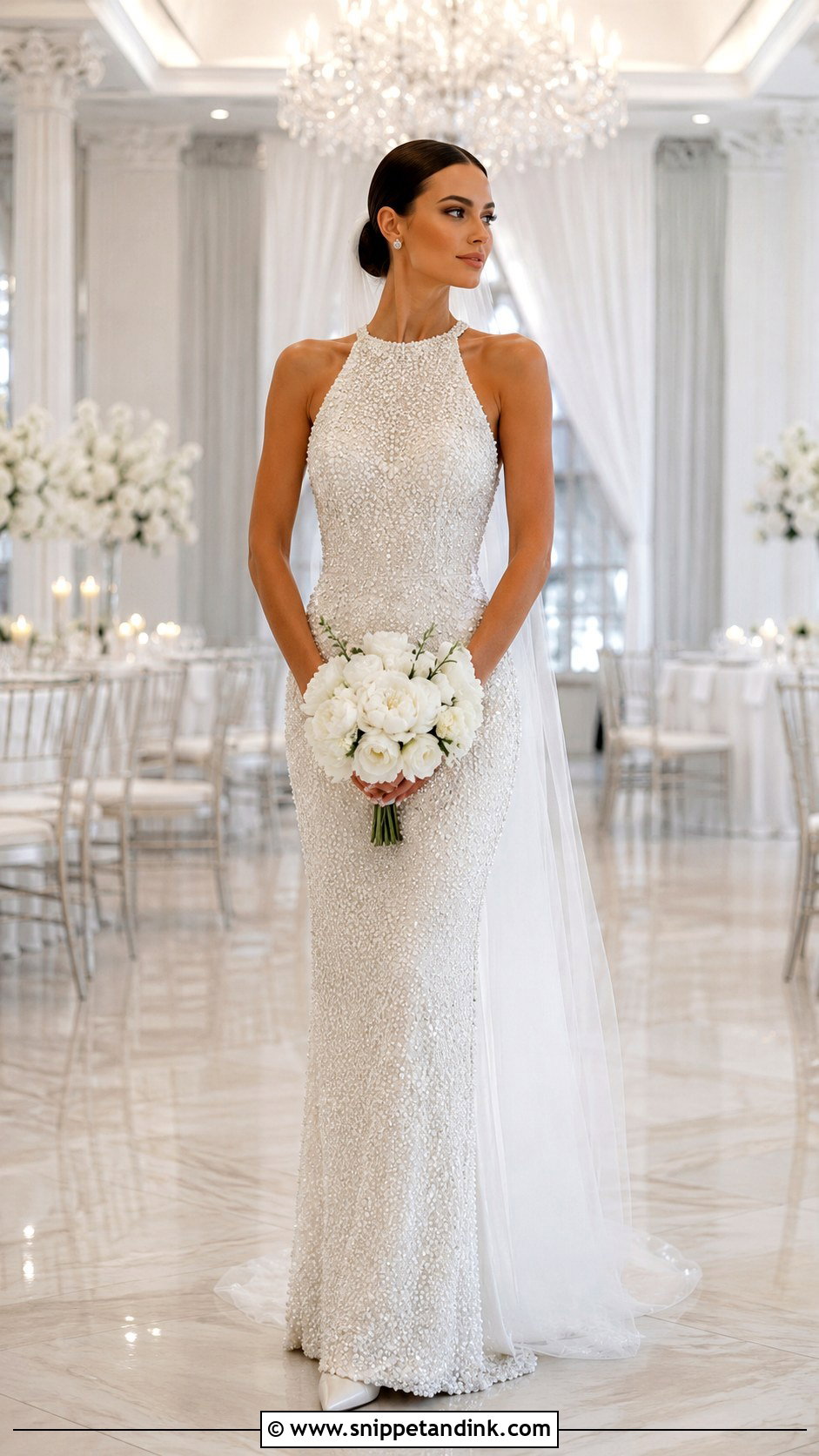
Beading on ivory catches light in a softer way than on bright white. Pearls, crystals or sequins can pick out the neckline or waist, or cover the whole gown. A fitted beaded sheath looks glamorous; an embellished A-line moves more gently. Keep accessories plain: crystal studs, satin heels and a veil with no decorated edge. A sleek bun lets the shoulders sparkle. Run your hand over the inside of the sleeves and bodice before buying. Rough bead backing scratches, especially at the underarm, and a lining can be added if needed. A simple white bouquet keeps the focus on the gown.
18. Ivory Tea Length Wedding Dress
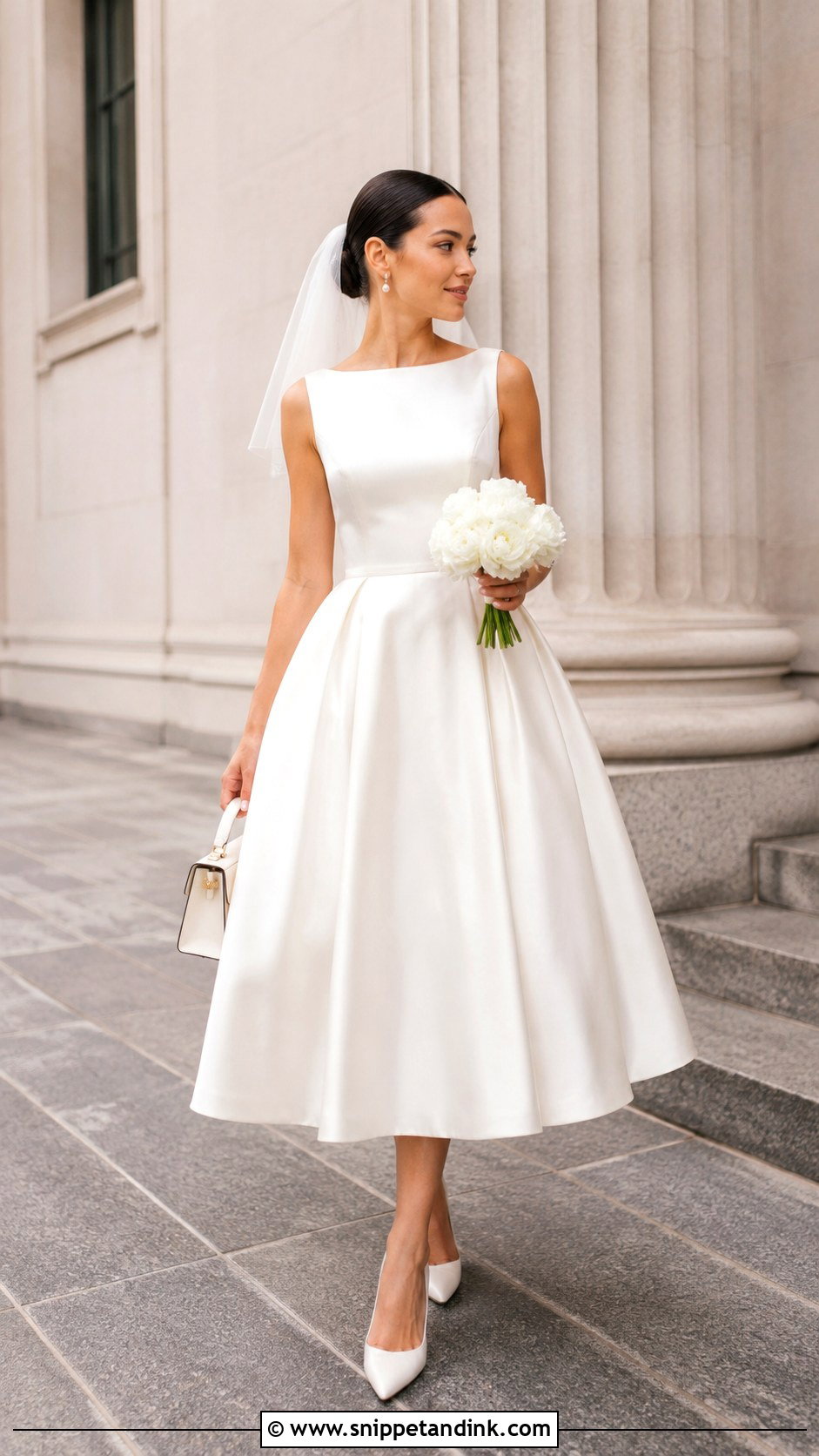
Tea length lands between the knee and ankle, so the shoes become part of the outfit. A fitted bodice with a full skirt is classic; a slim midi cut is more modern. Satin gives structure, lace a vintage feel, organza airy volume. Slingback pumps, pearl earrings and a short veil or a neat hair bow suit it. The hem has to land precisely, usually just below the widest part of the calf, so have it set in your wedding shoes. A small structured bag comes in handy after the ceremony. It suits courthouse weddings and smaller parties.
19. Ivory Wedding Dress With Detachable Overskirt
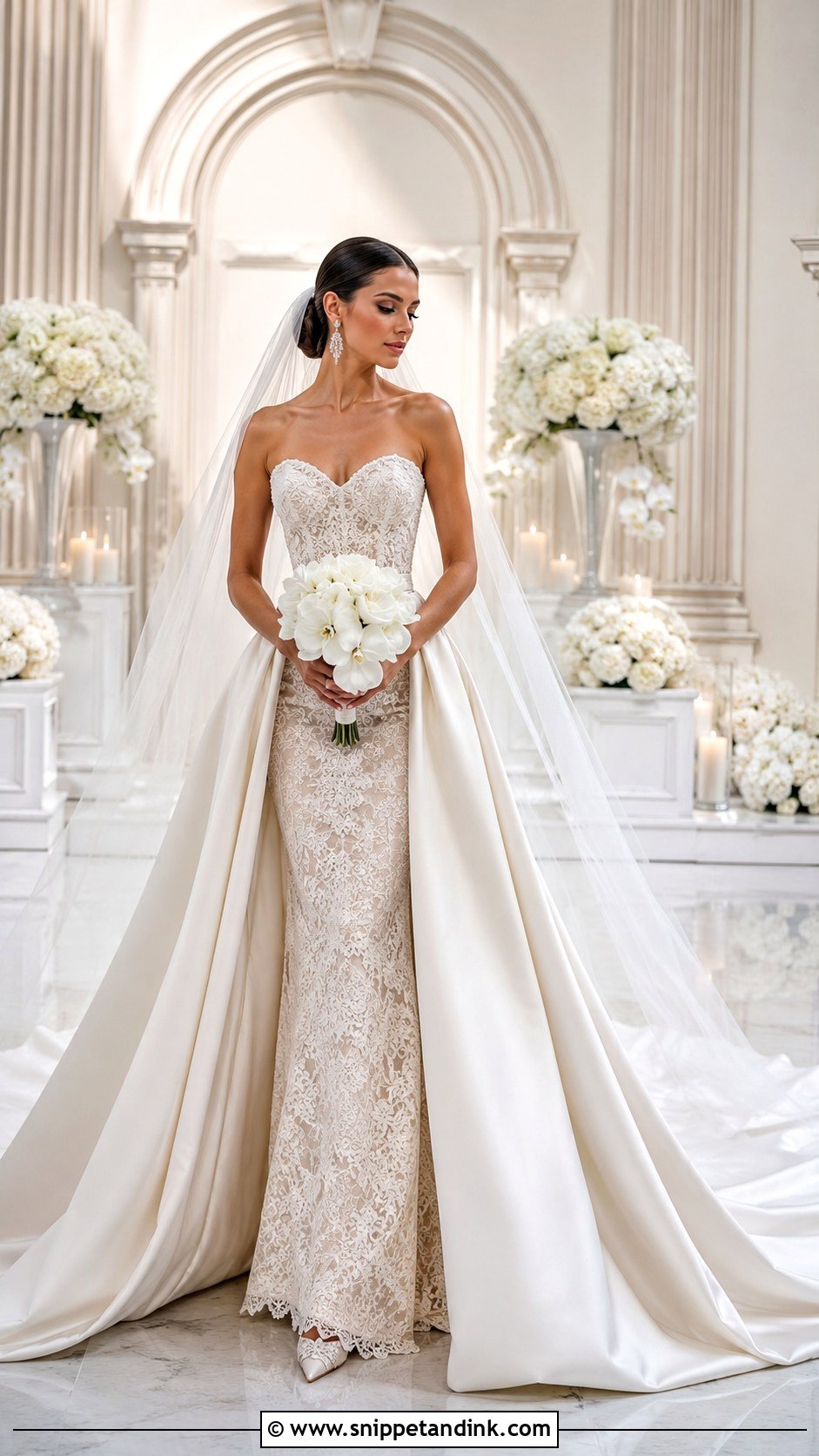
A detachable overskirt gives two dresses from one. You walk down the aisle in a full skirt with a sweeping train, then remove it to reveal a slimmer crepe, satin or lace gown for dancing. The waistband has to fasten securely and blend into the base dress with no visible ridge. Pointed pumps, statement earrings and a long veil suit the ceremony version; switch to smaller earrings or a shorter veil afterwards. One clean updo works for both. Hold a quick practice session with whoever will help you remove it, as the fastenings are often fiddly the first time.
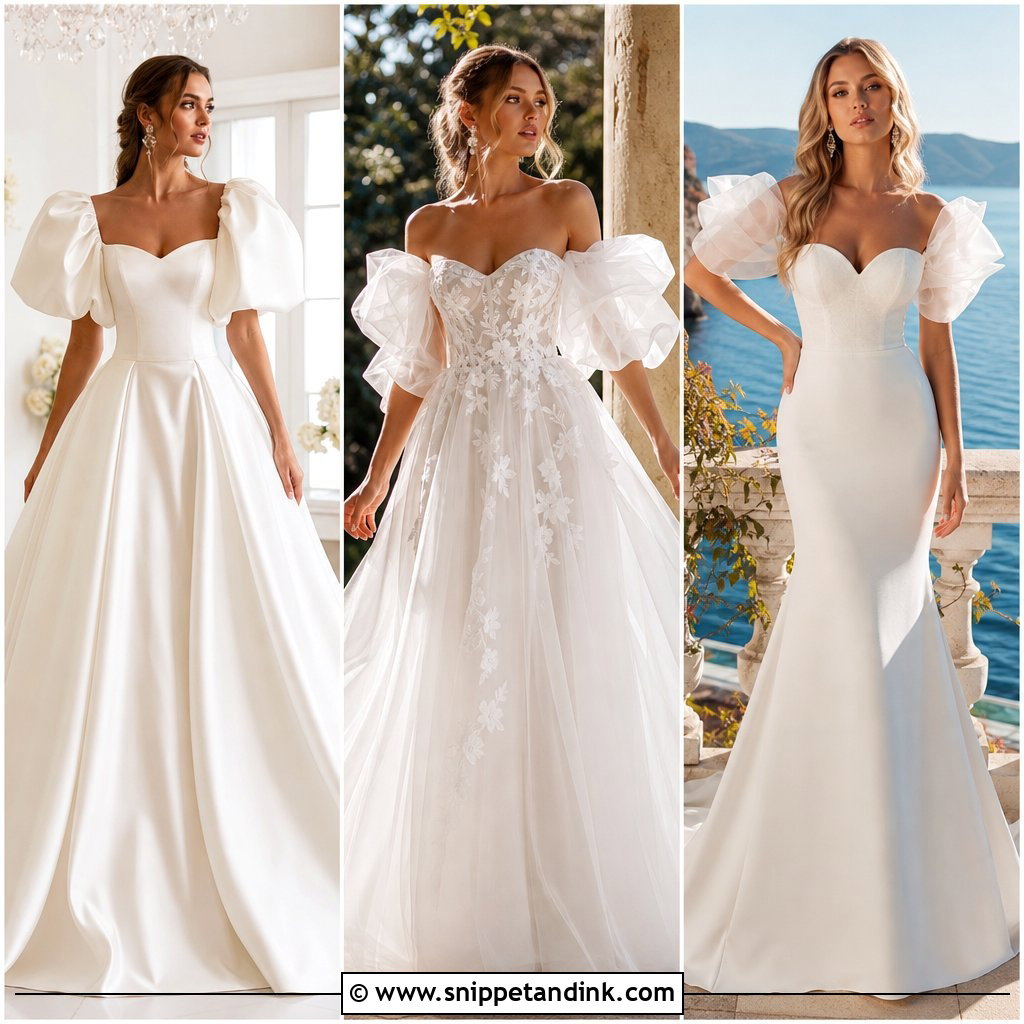
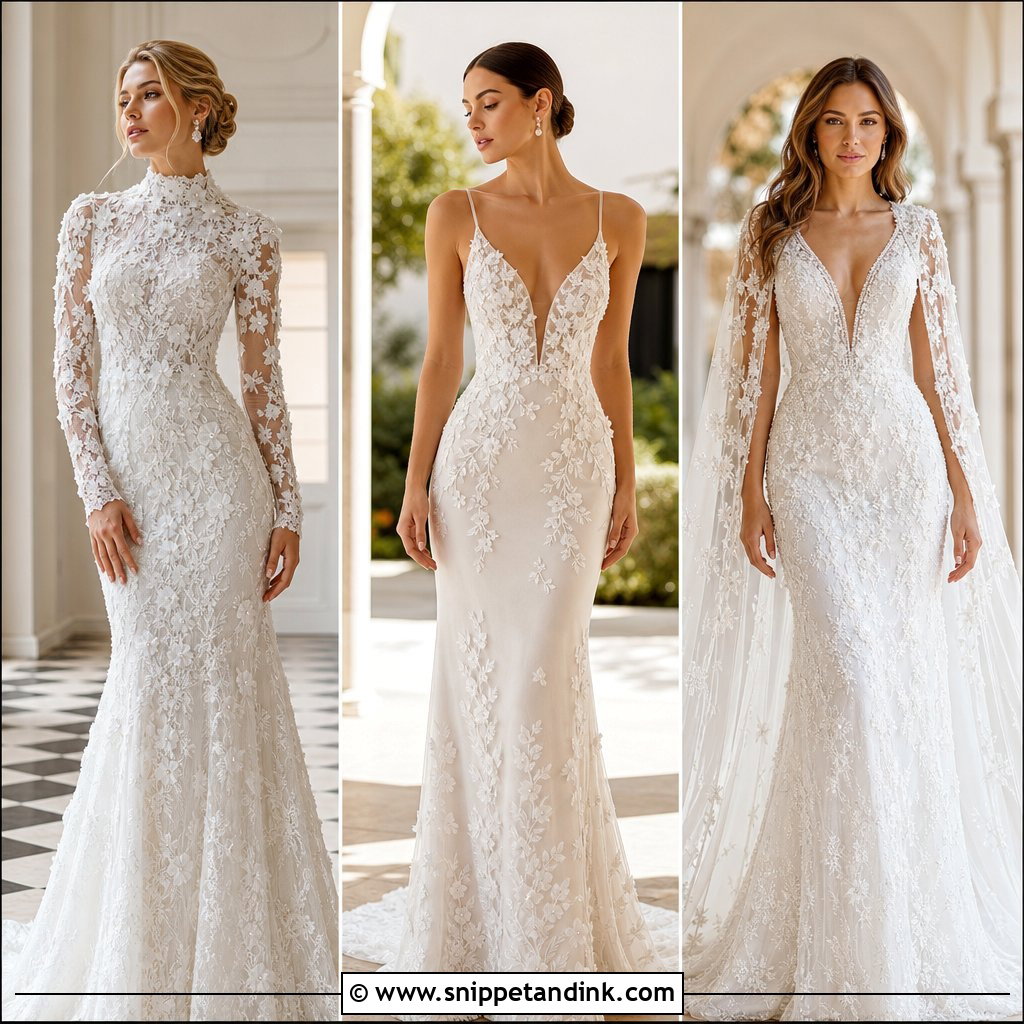
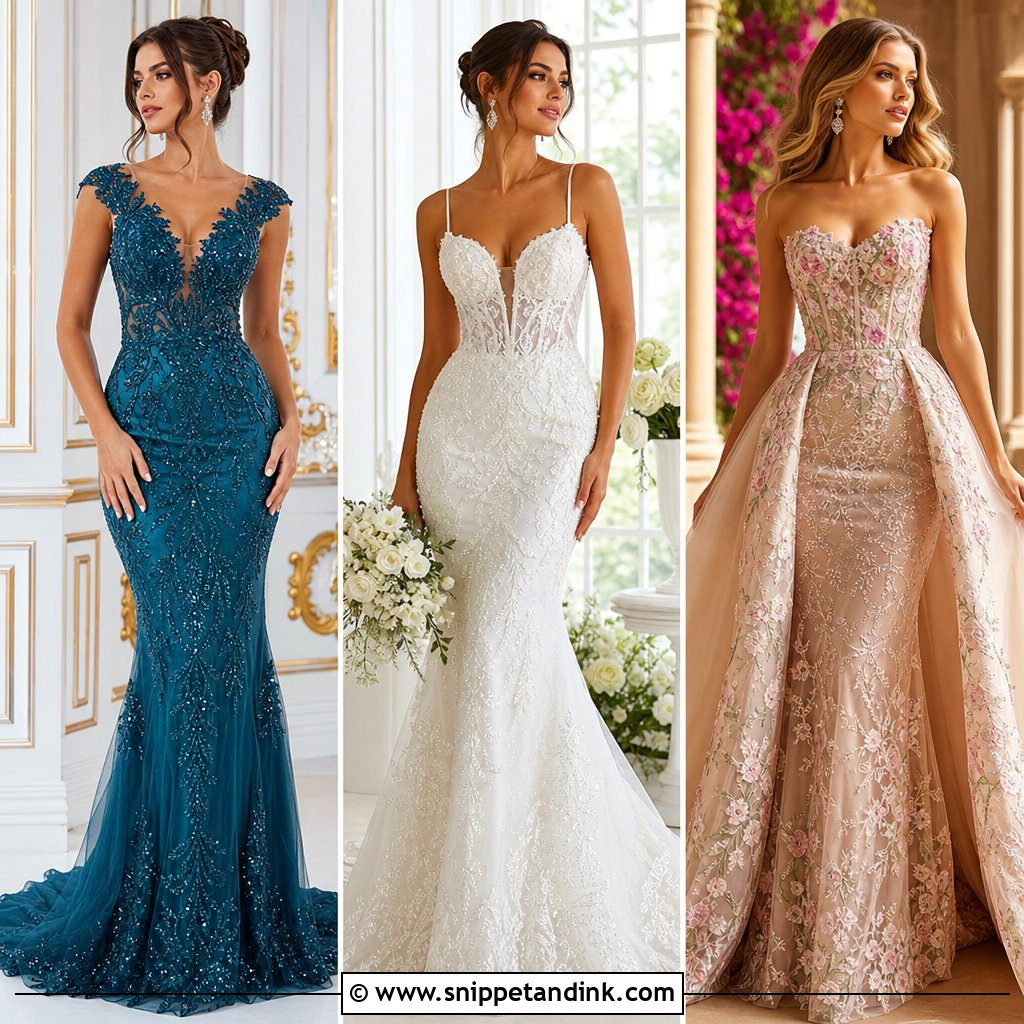
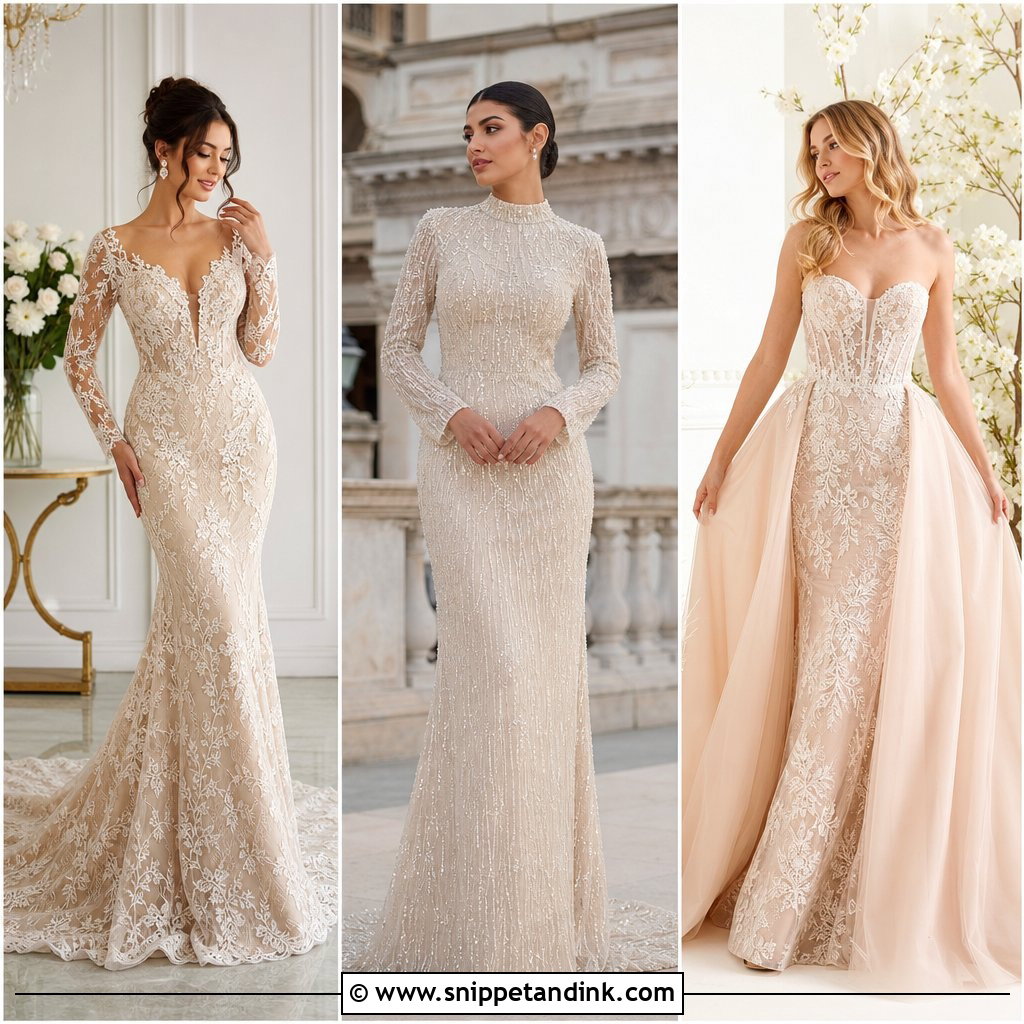
20. Ivory Wedding Dress With Bridal Cape
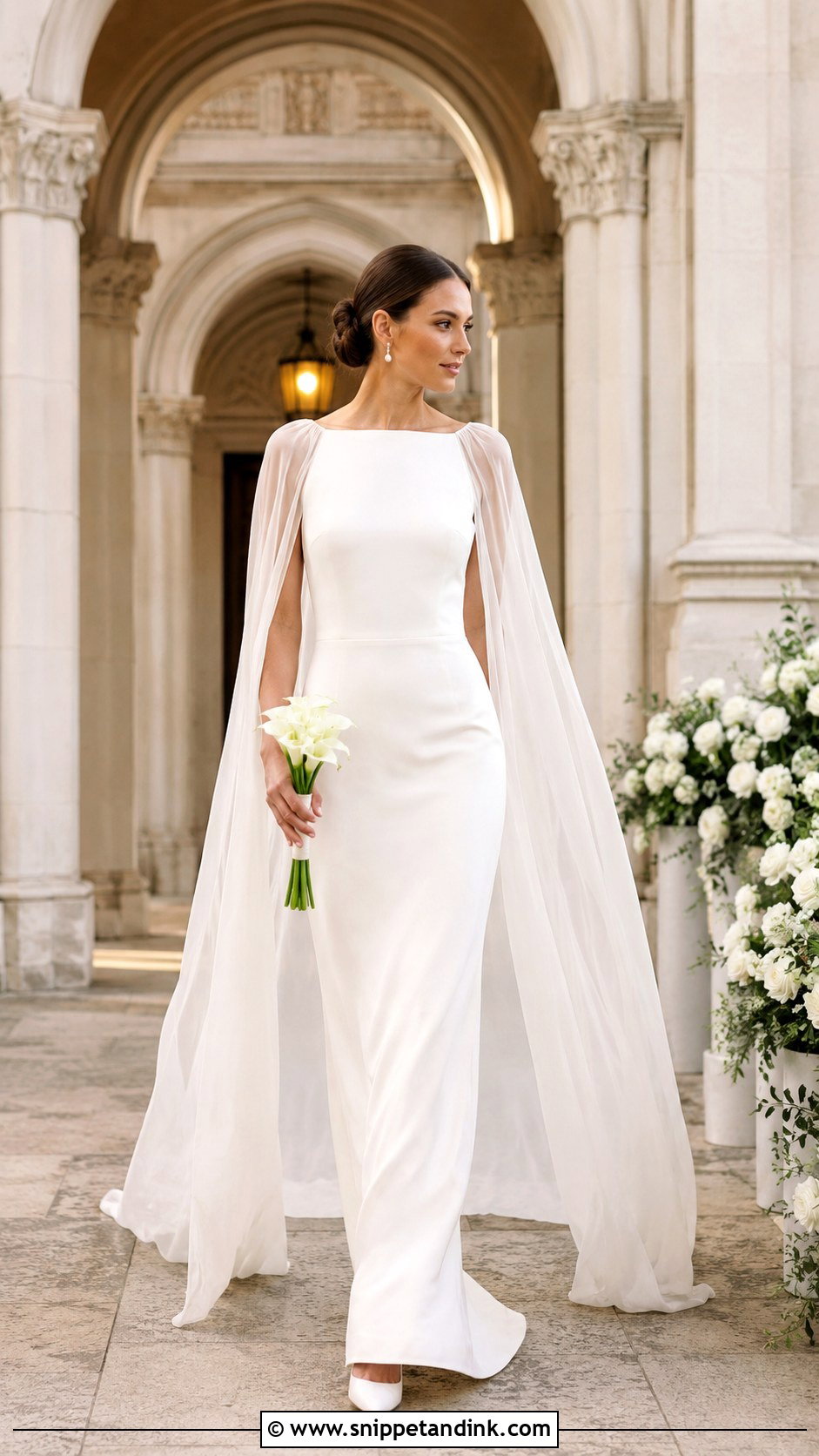
A bridal cape gives movement and shoulder coverage without sleeves. A sheer tulle or lace cape over a plain crepe gown looks soft; a satin cape over a structured column looks dramatic. It can hang from the shoulders, fasten at the neck or attach to the back of the dress. I’d match the cape length to your train so you aren’t tripping over two layers of fabric. Slim drop earrings, pointed heels and a polished low bun suit it. You’ll rarely need a veil as well; the cape does that job. A slender white bouquet keeps everything clean.
The Calendar Behind a Wedding Dress, From First Appointment to Final Fitting
The timing catches more brides out than the choice. Most gowns from bridal salons are made to order after you buy them, not taken off a rail, and that adds months.
- Start trying on dresses roughly nine to twelve months ahead if you can. It gives you time to change your mind once.
- Allow several months for a made-to-order gown to arrive; four to six is common, and some designers take longer, so ask the salon for their actual estimate in writing.
- Begin alterations about two to three months before the wedding. Most dresses need two or three fittings, and more for lace or beaded gowns where motifs are moved by hand.
- Hold the final fitting a couple of weeks before the day, wearing your shoes and underwear, and bring whoever will be bustling the train so they can learn it.
If you’re short on time, ask about sample dresses or ready-to-wear gowns, which you can take home quickly and alter straight away. Rush orders are often possible too, but they usually carry an extra charge and narrow your fabric options.
Ivory Is a Range, So Shop in Daylight
Silhouette, fabric, comfort and setting narrow the field faster than anything else. Satin ball gowns and basque waists are the formal end; crepe columns and silk slips the simpler one. Lace, appliqué, beading, sleeves, capes and detachable skirts are ways to add personality on top. Try at least one shape you’d normally skip, and in every dress walk, sit and lift your arms. Ivory ranges from soft cream to nearly white, so see the fabric by a window as well as under the shop lights. Then build the shoes, jewellery, flowers and veil around the dress, never over it.
You'll Like These Ideas:





Leave a Reply