
A Pakistani wedding hands the bride a different brief for every day of it. The mehndi wants color and freedom to dance, the nikkah wants modesty and calm, the baraat wants weight and gold, and the walima usually wants something lighter that still reads as bridal. I style each event as its own outfit, then check that the set hangs together across the week. What follows covers timeless red lehengas, ghararas, shararas, pishwas, Anarkalis, gowns, sarees and a velvet maxi, with the dupatta, jewelry and shoe choices I’d make for each, and the places they tend to go wrong.
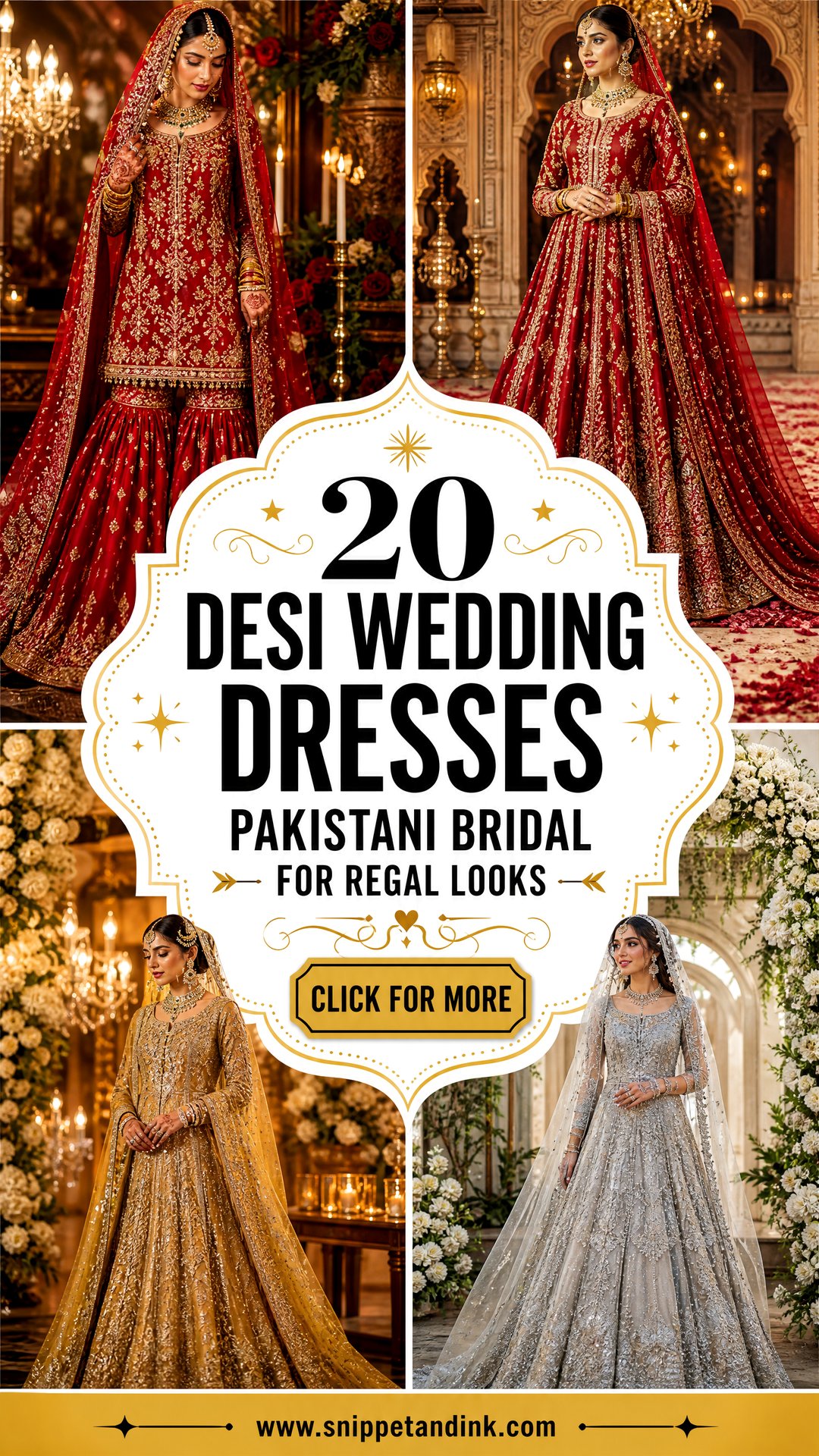
How a Baraat Dupatta Is Set, and Why It Slips
Most of the complaints I hear after a Pakistani wedding are about the dupatta: it slid back, it pulled the hair, it gave the bride a headache. It is set on the hair, not the head, so the base underneath decides how long it stays put.
- The hairstylist makes a firm, slightly flat bun at the crown or nape. Soft curls give pins nothing to grip.
- The tikka or matha patti goes on before the dupatta, so the dupatta’s edge can sit just behind it.
- The dupatta is folded at the front edge, then pinned into the bun with U-pins and bobby pins, not a single large safety pin.
- A second pin anchors it at each shoulder to stop the fabric pulling backward when you turn your head.
Heavy borders are the usual culprit. If your head dupatta has a wide embroidered edge all around, ask your designer to make that one lighter and move the weight to the shoulder dupatta. Your neck will thank you by the time the rukhsati comes.
1. Red Pakistani Bridal Lehenga
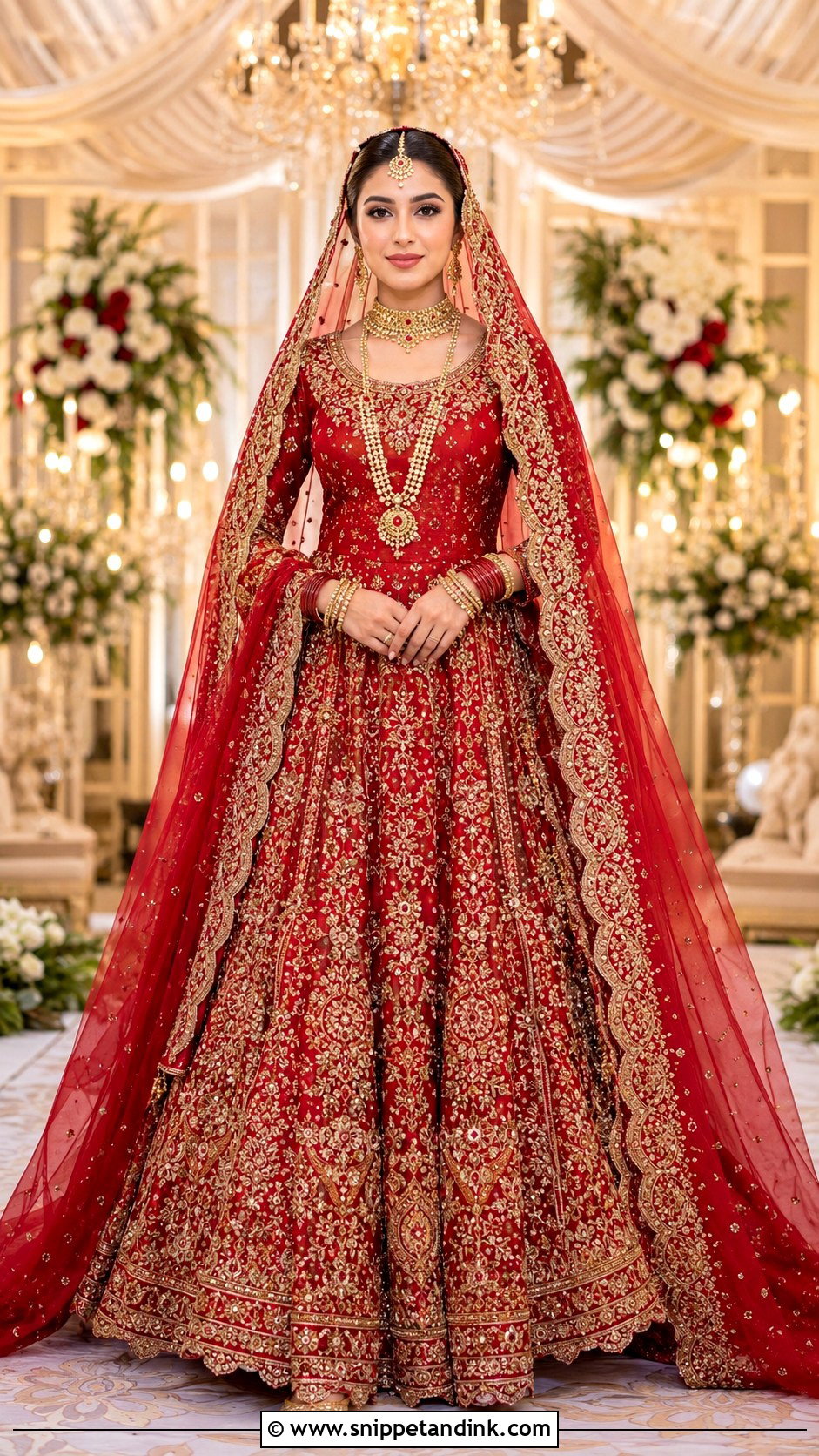
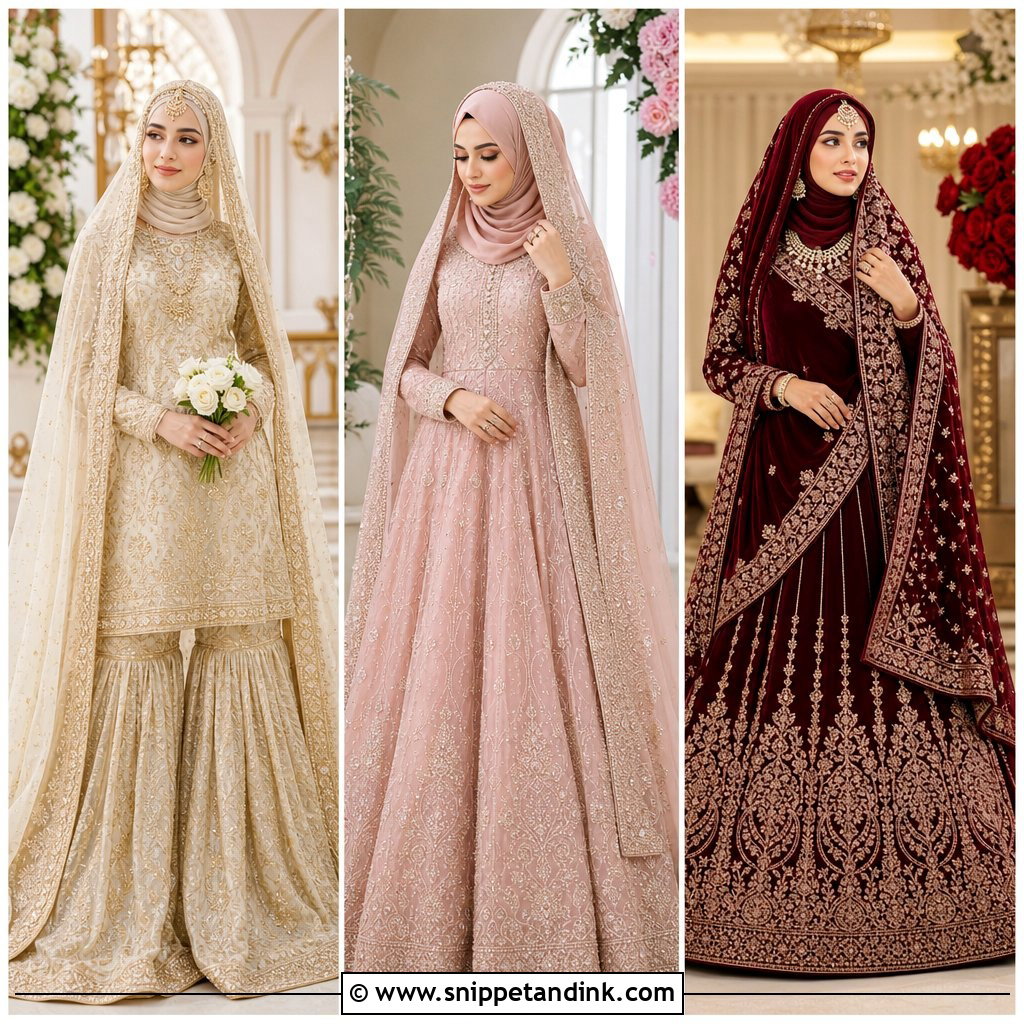
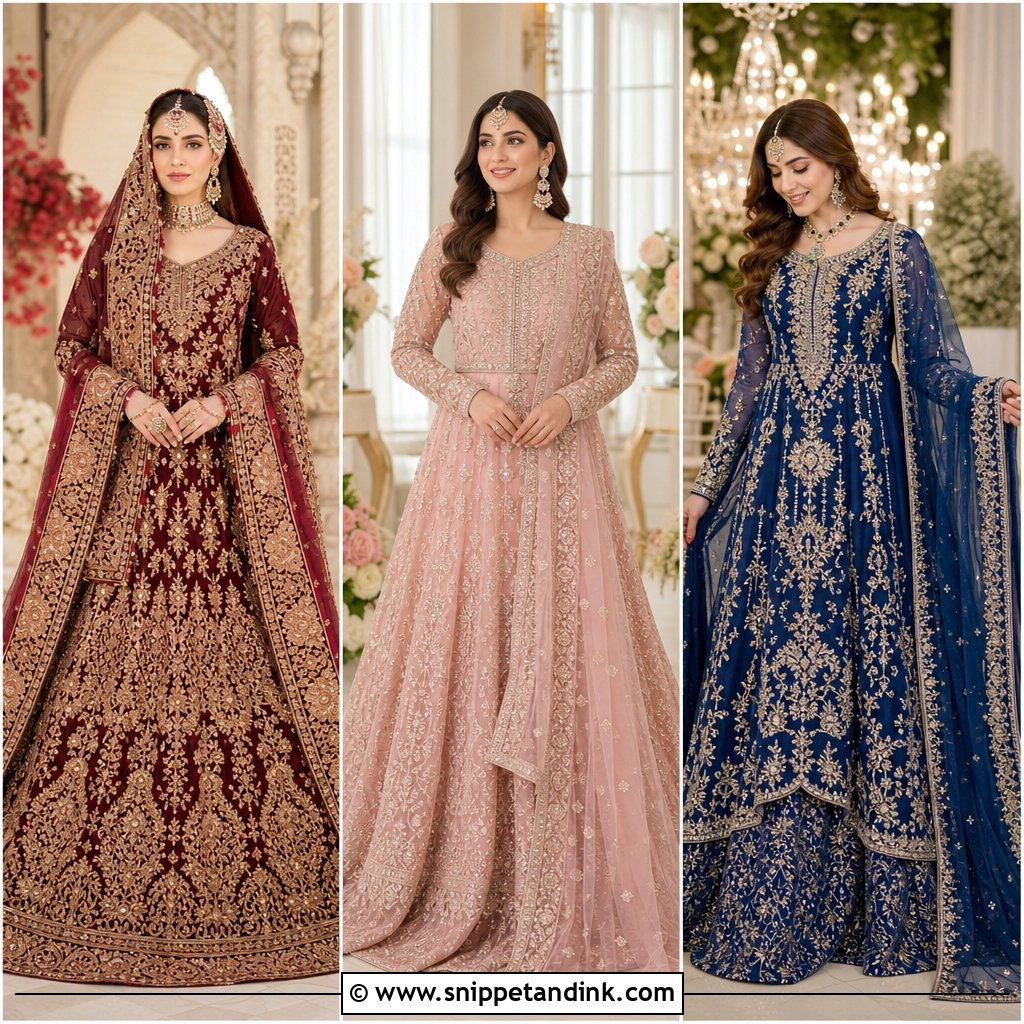
Deep red raw silk with zardozi, dabka and tilla is the baraat look most families still hope for, and it earns its reputation. What makes or breaks it is the dupatta arrangement. The scalloped red one framing the face should be the lighter of the two; the heavier, more worked dupatta goes across the shoulder where the body can carry it. A fitted long-sleeve blouse gives the structure that a heavy skirt needs above it. A center-parted bun is the best base for pinning, and it keeps the tikka straight. Gold choker, long necklace, jhumkas and khussas complete it.
2. Maroon Pakistani Bridal Lehenga
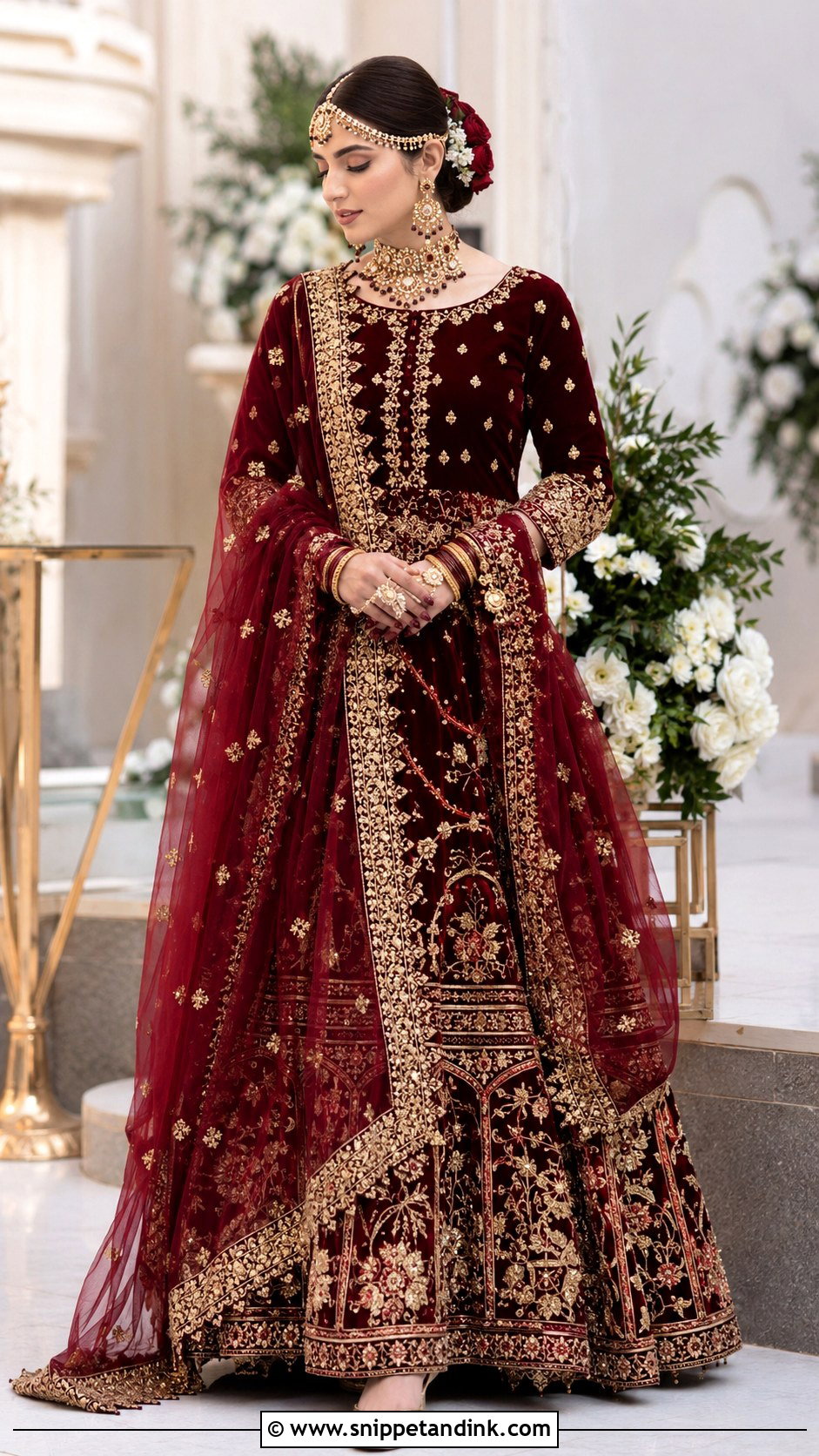
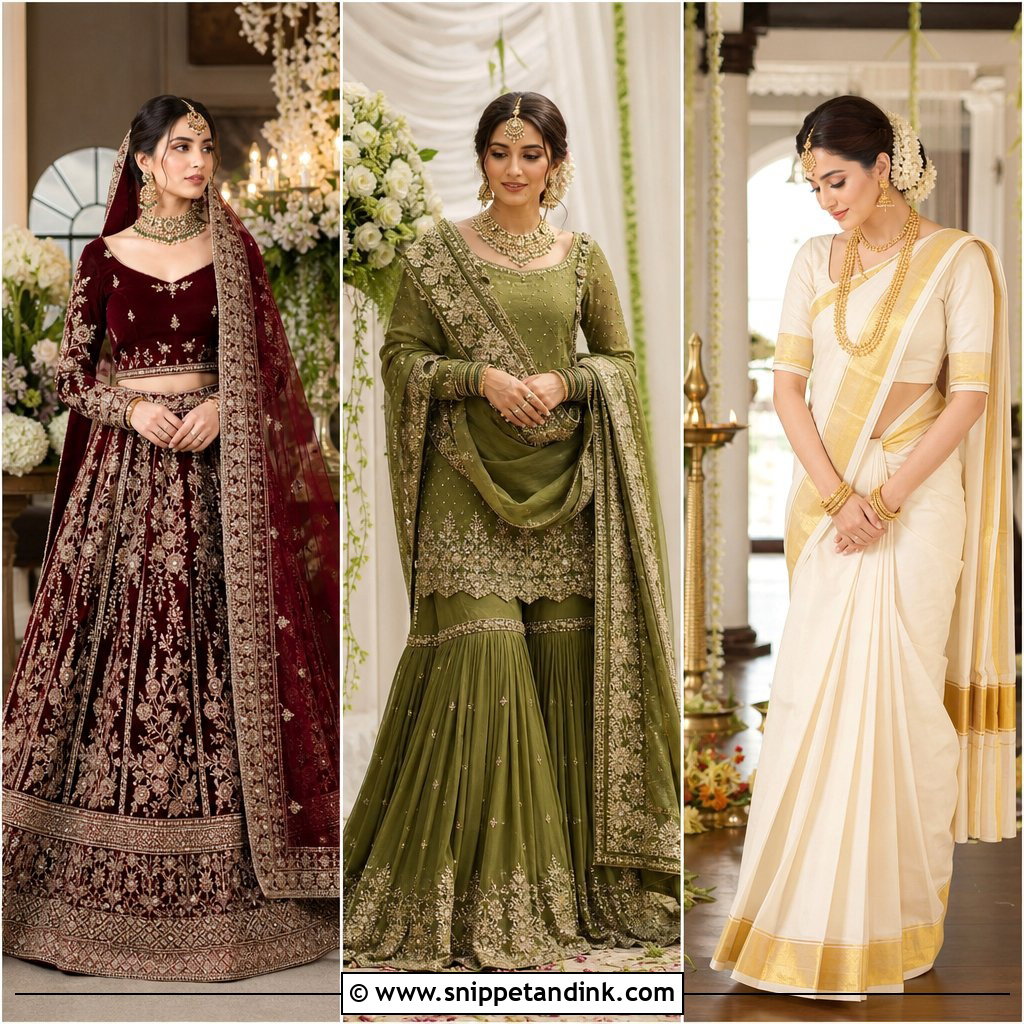
Maroon is my pick for a bride who finds traditional bridal red too bright for her skin or her taste. In velvet it looks richest at night and in winter; in raw silk it’s easier to wear through a long, crowded event. Keep the antique gold embroidery along the hem, panels and waistband, then let a sheer organza dupatta lift the density. Kundan, a statement matha patti and stacked bangles carry it. One caution: fresh flowers in the bun look soft against maroon, but they brown quickly under hot lights, so ask for them to be added just before you leave.
3. Ivory Pakistani Bridal Lehenga
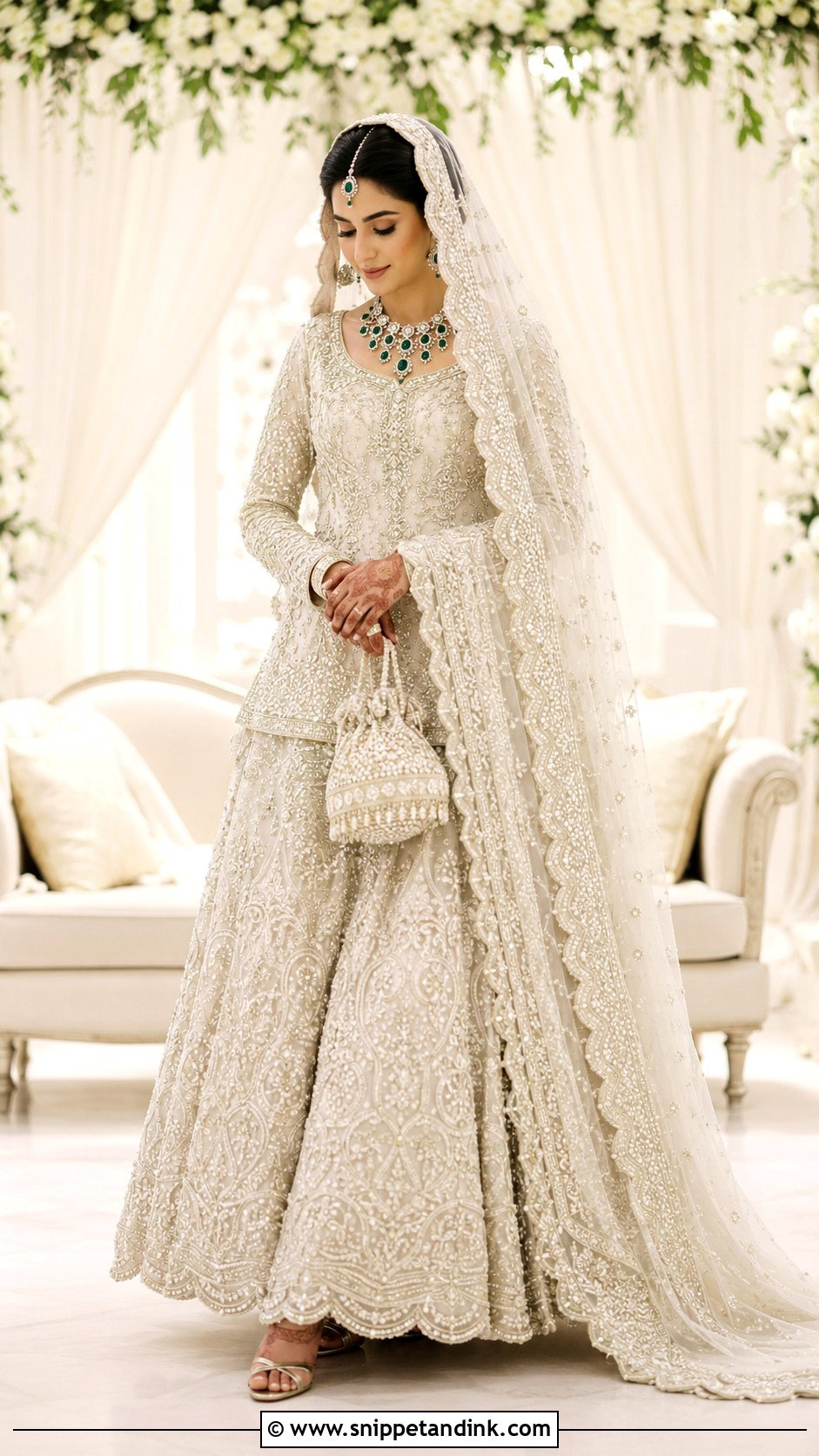
Ivory suits a daytime nikkah or a walima better than a night baraat, where it can disappear against white decor. I keep the embroidery tonal, pearls and silver-gold thread, because heavy contrasting work on ivory looks busy up close. A structured blouse matters more here than on red, since a pale fabric shows every wrinkle at the waist. Pearls keep it soft; emerald or ruby adds a single point of color. If you’ll cover your head for the nikkah, ask for full sleeves and a longer dupatta from the start rather than adding them later.
4. Gold Pakistani Bridal Lehenga
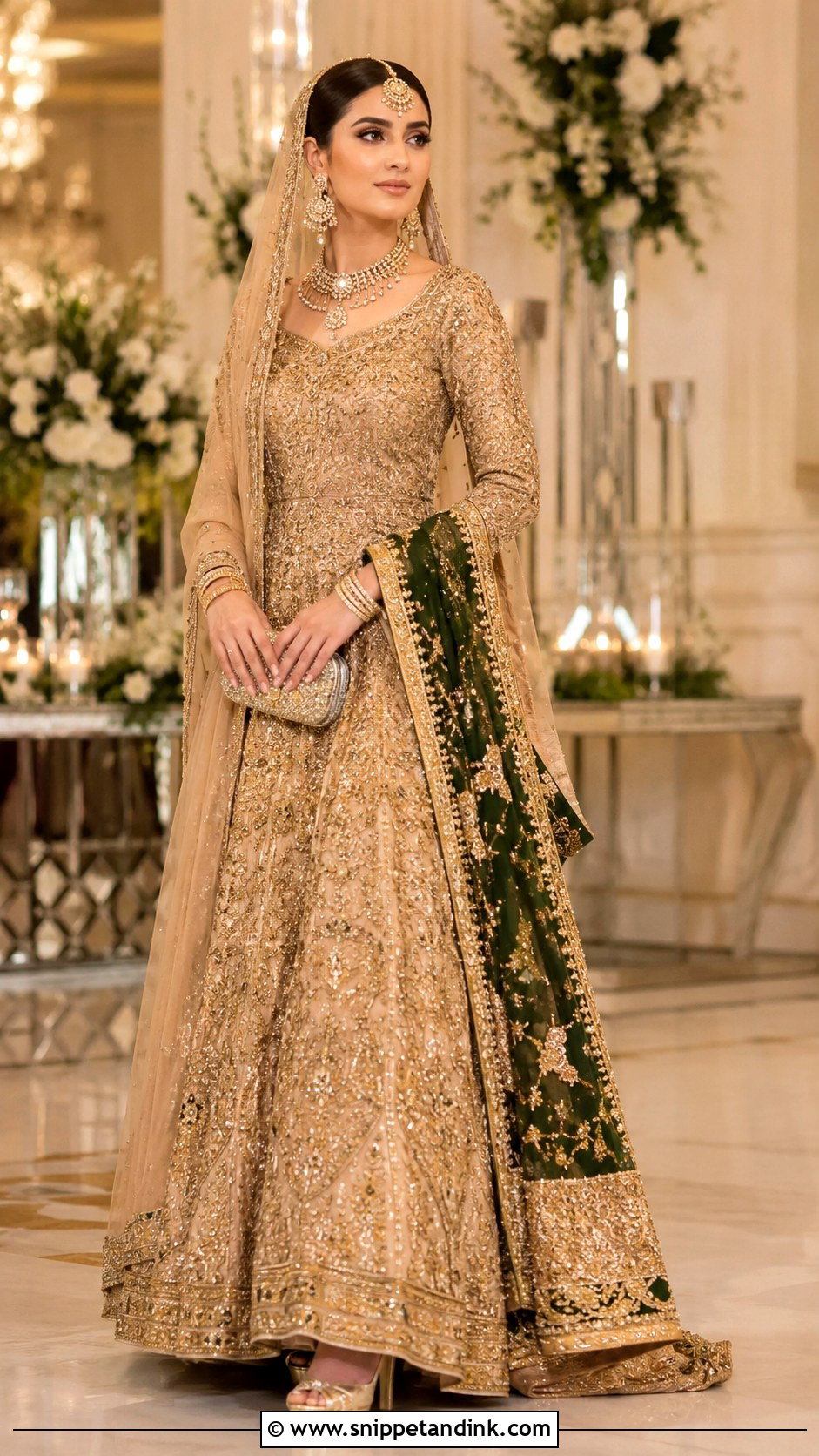
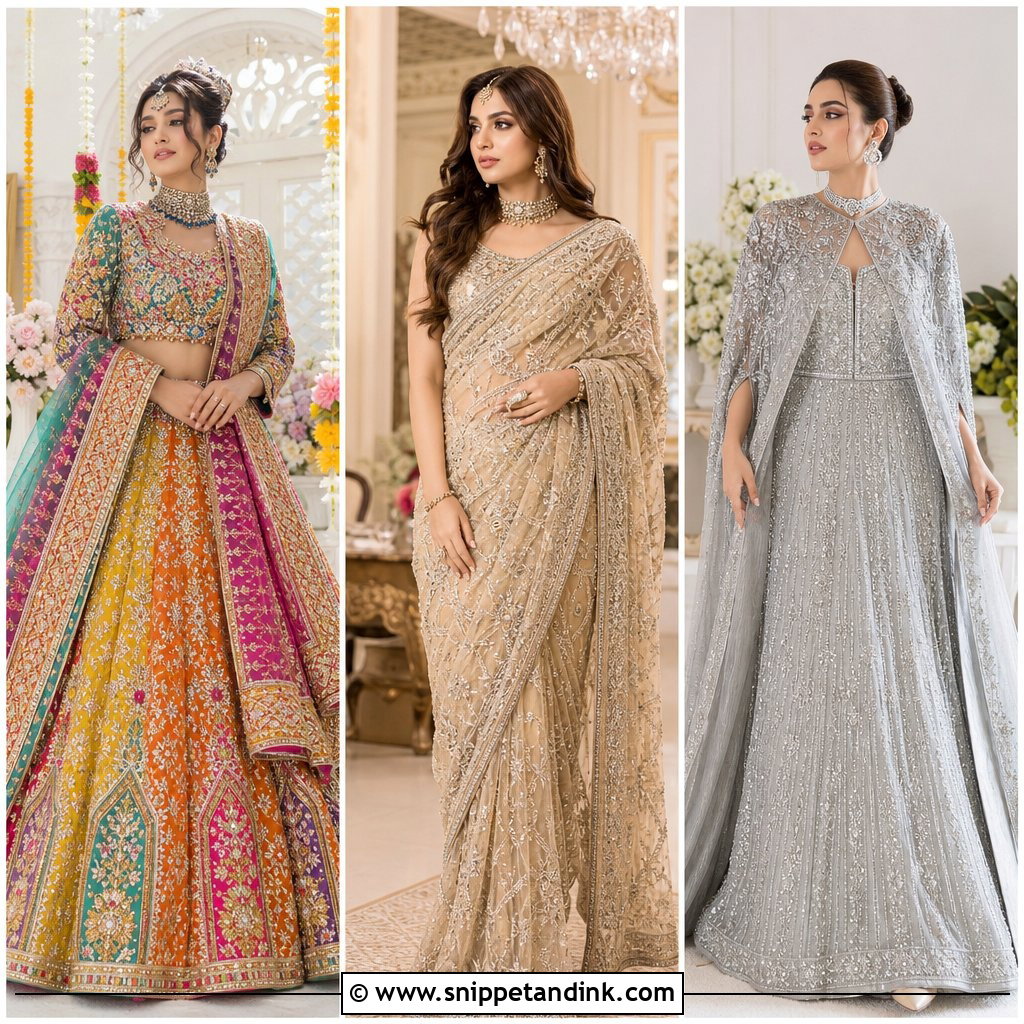
An all-gold lehenga has one weakness: under flash, a single flat metallic surface photographs like foil. I look for champagne or antique gold with several textures, beadwork against sequins against thread, so the eye has something to follow. A fitted blouse with sleeves grounds the shine. Then I add contrast through the shoulder dupatta in rust, red or deep green, while a sheer gold one goes over the head. Keep every metal in the same antique finish; bright yellow gold next to antique gold looks like two outfits. Comfortable platform heels help with a full skirt at an evening reception.
5. Pink Pakistani Bridal Lehenga
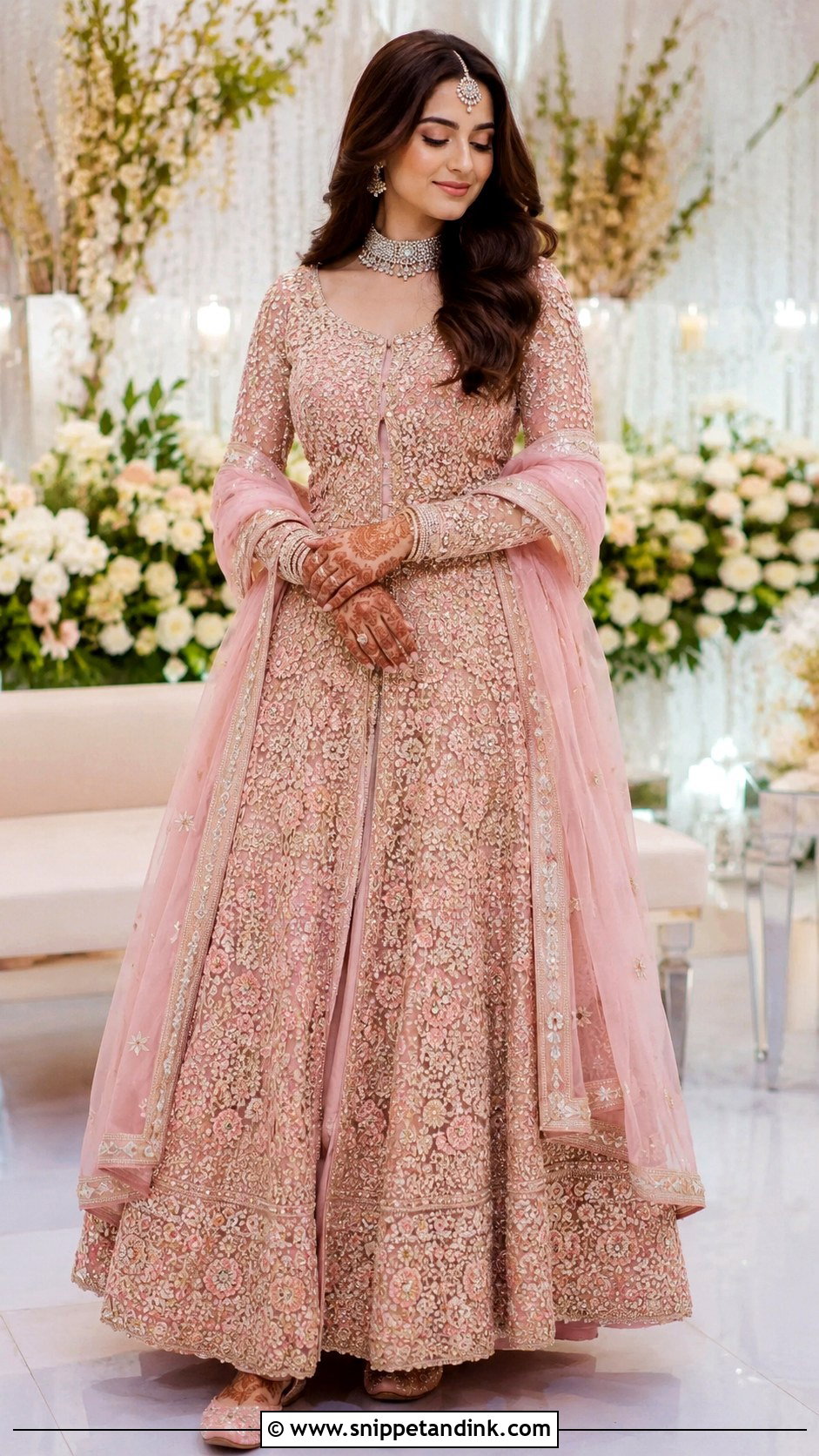
Blush and dusty pink suit a walima or daytime event, and they’re forgiving on most skin tones as long as the shade has a little warmth. A paneled lehenga with floral resham, pearls and touches of silver gives movement when you walk. I’d pin the dupatta so the neckline stays visible, since that’s where a diamond-style choker sits. The hairstyle decides the dupatta: loose waves only work with an open dupatta, while a textured bun is what holds one over the head. Pale pink heels or embellished juttis keep the color running to the floor.
6. Green Pakistani Bridal Lehenga
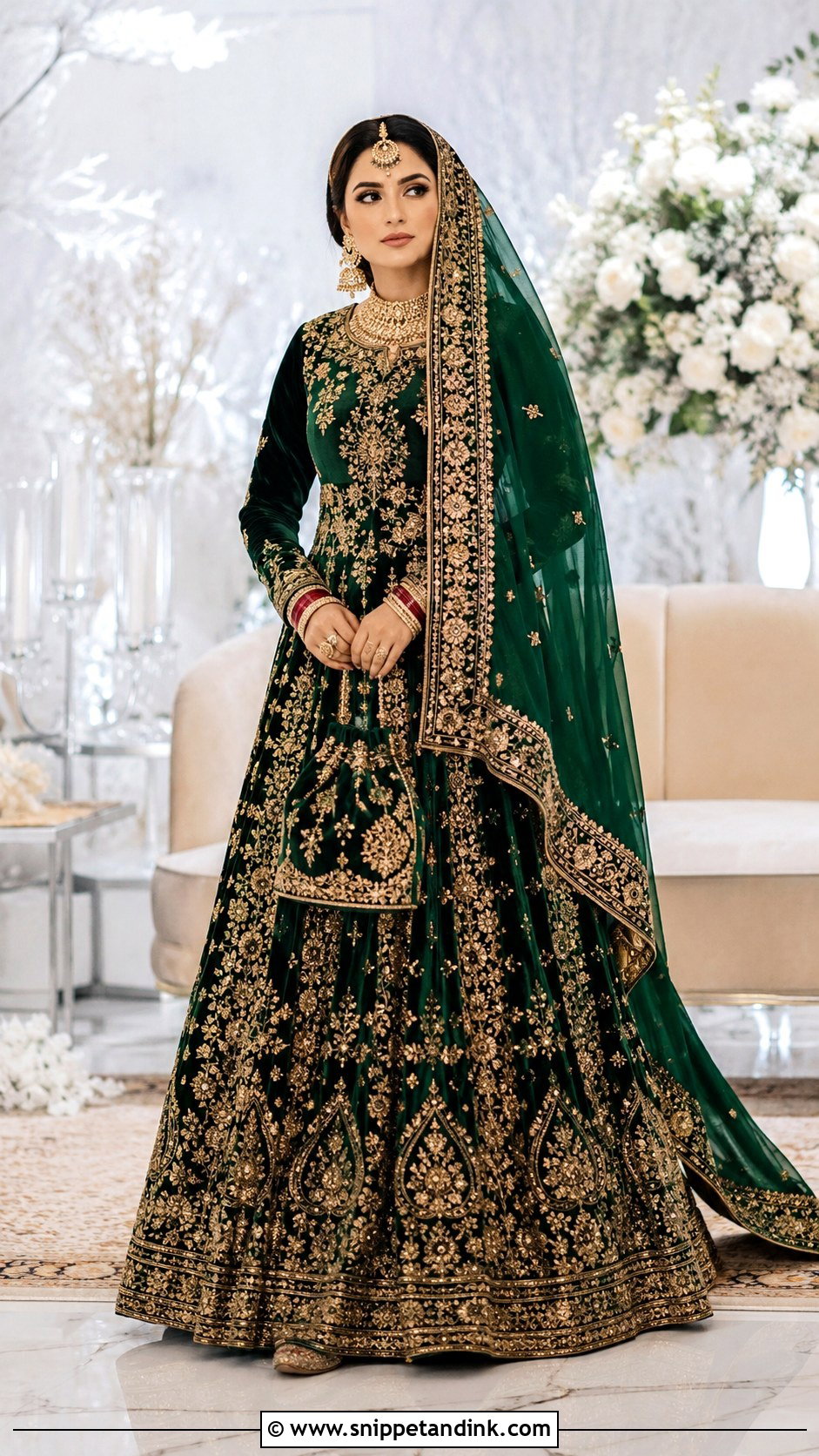
Emerald with antique gold and a few red accents is a heritage combination that works especially well for a winter baraat. The wide embroidered border on a sheer green dupatta draws attention to the face, which is exactly where you want it in close portraits. My rule with the red stones: echo them in the jewelry only if they already appear in the embroidery, or the accessories look borrowed from another outfit. A long-sleeve blouse gives the regal shape. Carry a small potli for lipstick and pins, and keep the makeup warm so it doesn’t fight the green.
7. White Pakistani Bridal Gharara
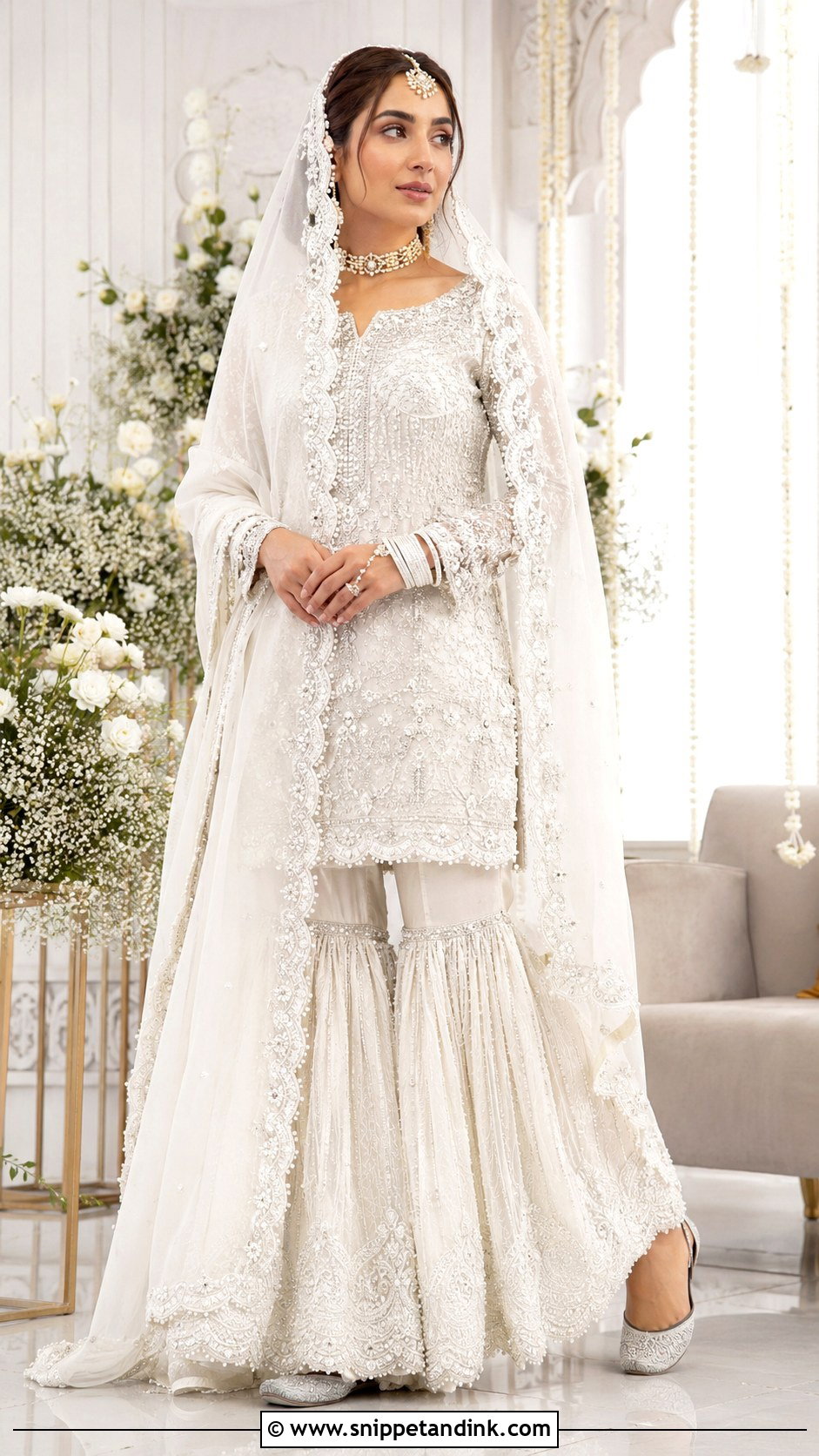
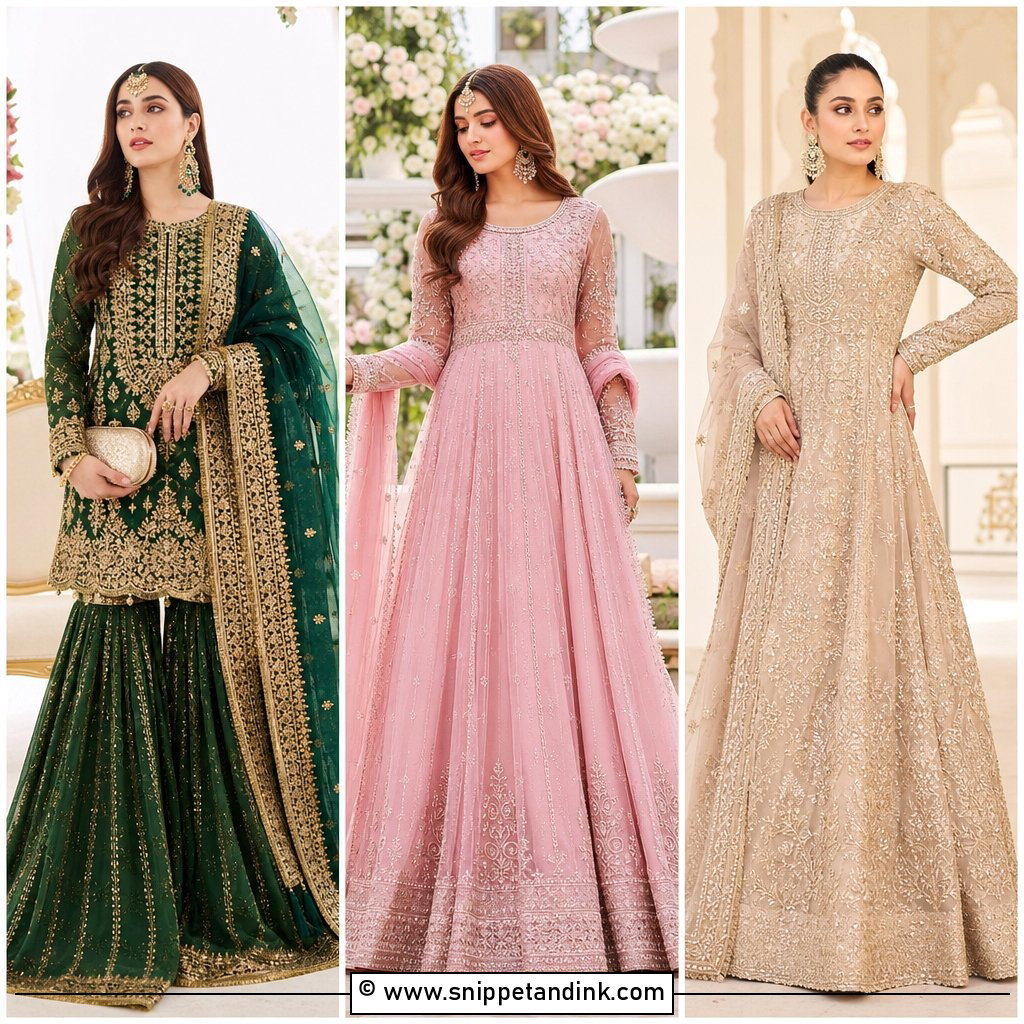
A white gharara is a modest, graceful choice for a nikkah, but it is a tailoring garment first. The trousers sit fitted to the knee, then the flare opens, and the gathered joint at the knee is where most ghararas fail; too high and it looks short, too tight and you feel it every time you sit. I fit it with the bride sitting cross-legged. Silk, organza or jamawar with pearl or muted gold handwork suits white. A scalloped dupatta over the head reads bridal. For depth, add a pale gold edge or a single green stone rather than several colors.
8. Red Pakistani Bridal Gharara
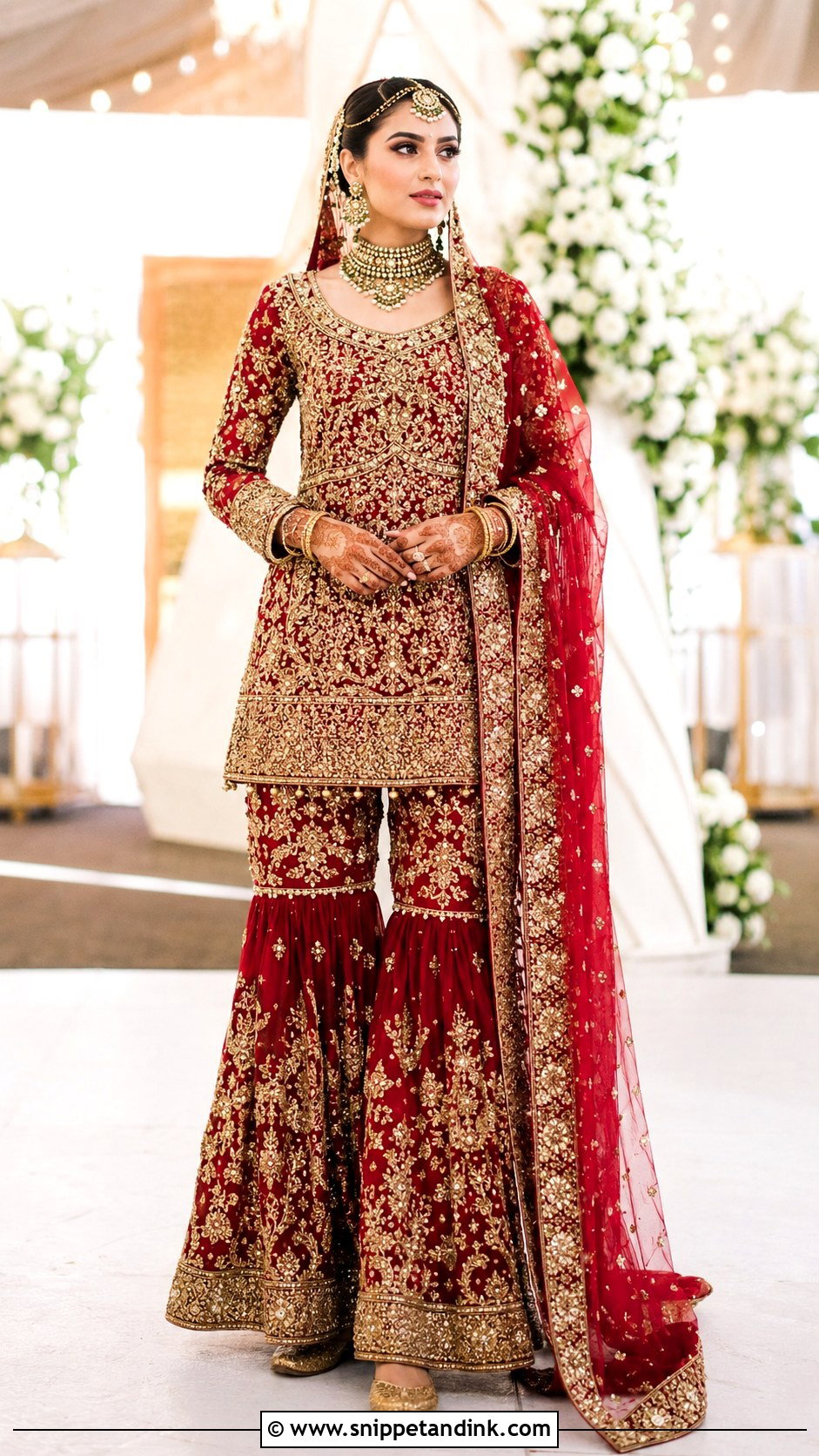
A red gharara is the baraat outfit I suggest when a bride is tired of seeing lehengas everywhere. The volume lives in the flare below the knee, so the kameez on top must be neatly fitted; an oversized kameez turns the whole silhouette into a tent. Ask for detailed gold work at the neckline, sleeves and hem of the kameez, then let the trousers carry the embroidered flare. A sheer red dupatta pinned over a smooth bun, polki, a matha patti and gold khussas finish it. Walk the length of a room at the fitting; ghararas take some practice to move in gracefully.
9. Pastel Pakistani Bridal Sharara
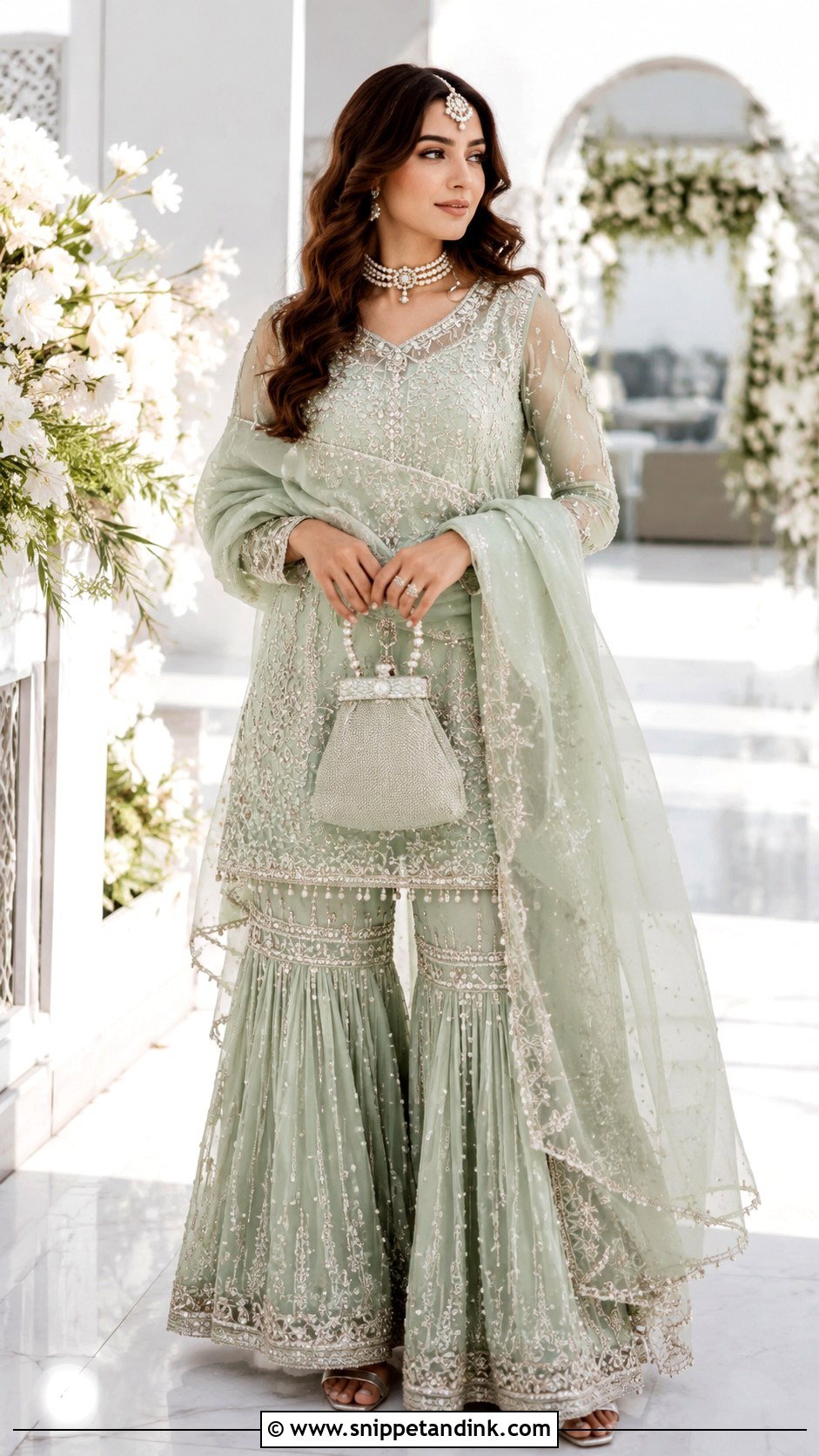
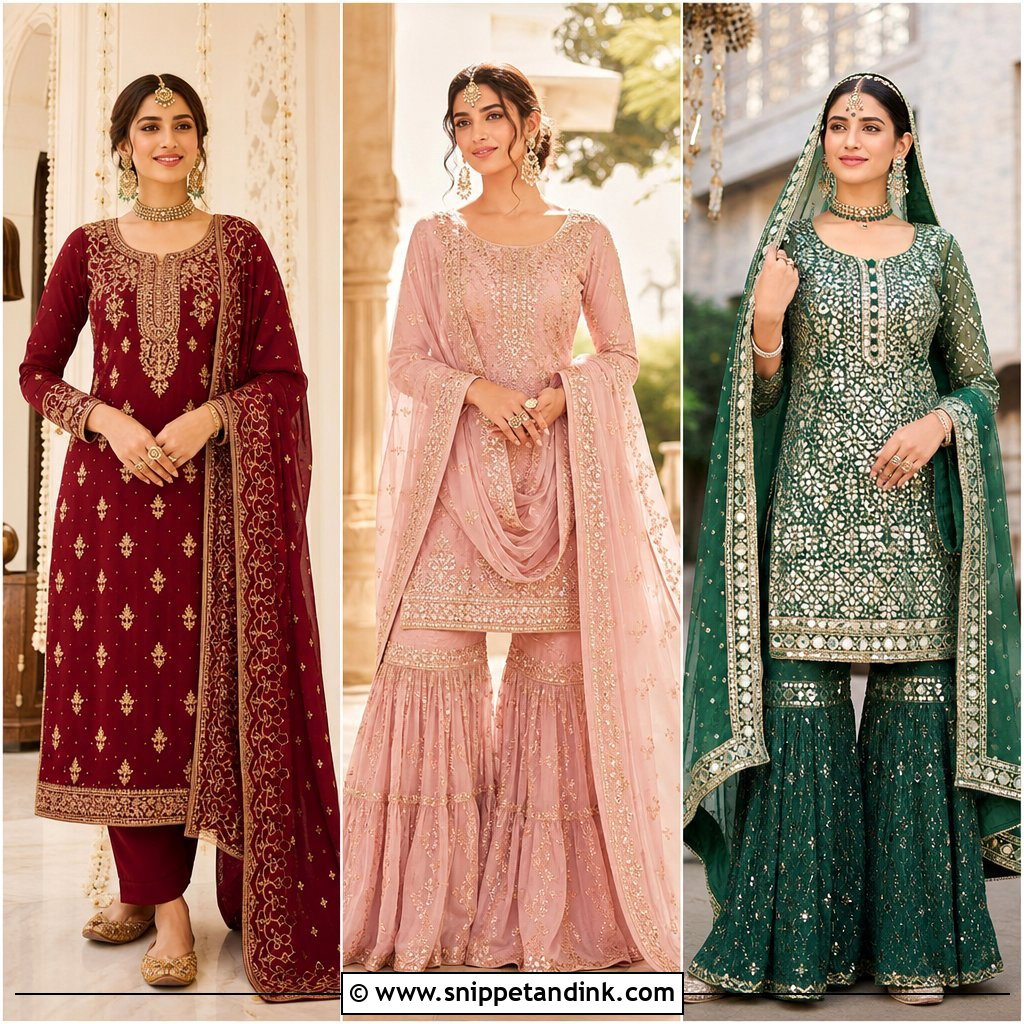
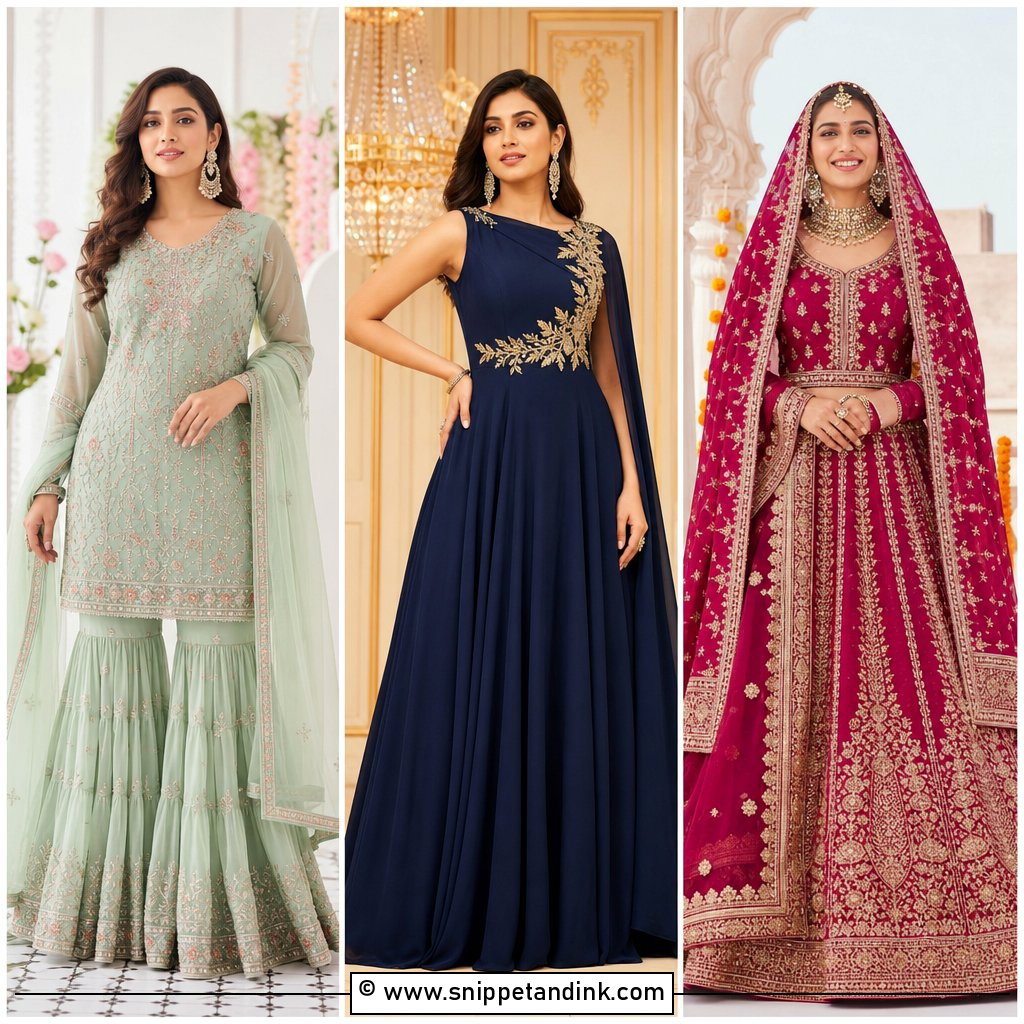
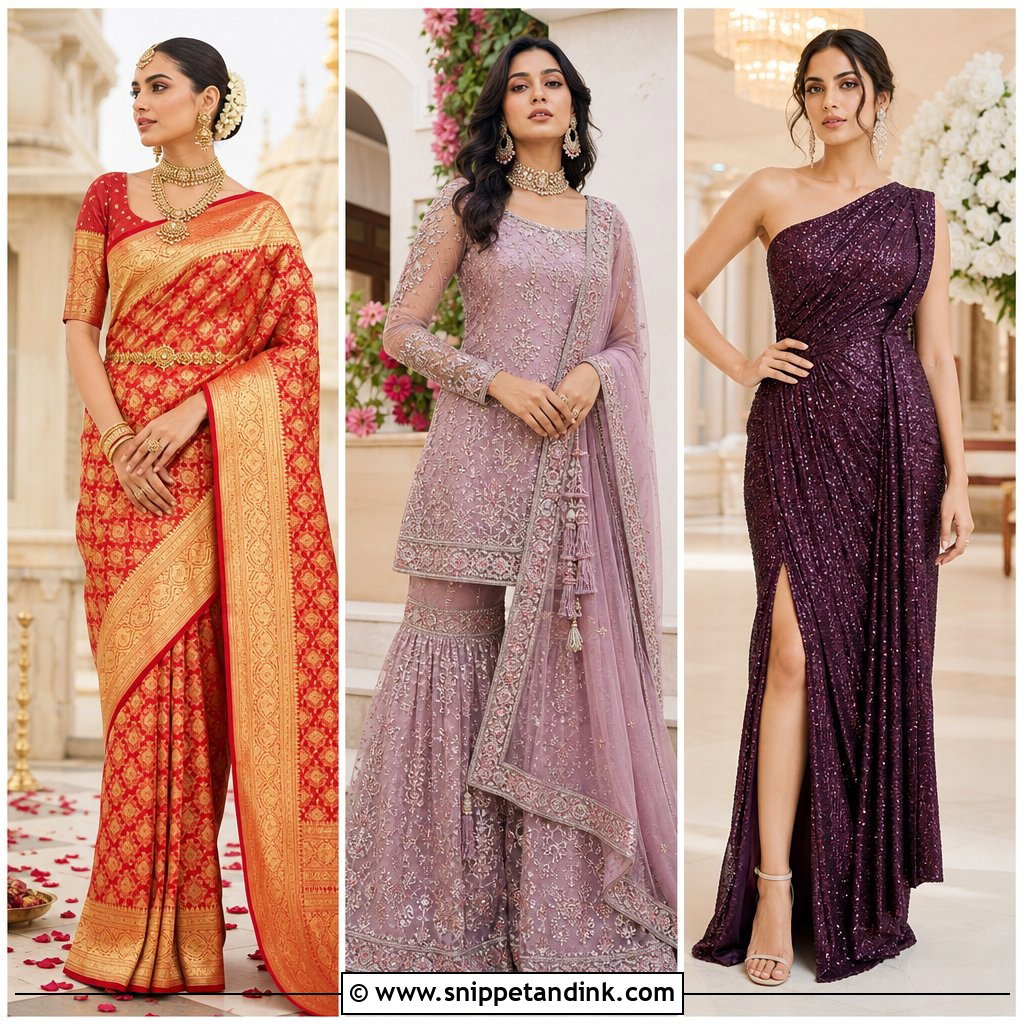
Pastel shararas are lighter to wear than any lehenga, which is why I like them for a nikkah or a small walima. Keeping the kameez, trousers and dupatta in one color gives a long, unbroken line that adds height. A bridal sharara in powder blue, mint, lavender or peach looks freshest with fine pearl work rather than heavy stones. Choose organza for the dupatta with only scattered embellishment, so it doesn’t drag. Full sleeves and a longer kameez add coverage without losing the shape.
10. Yellow Pakistani Bridal Sharara
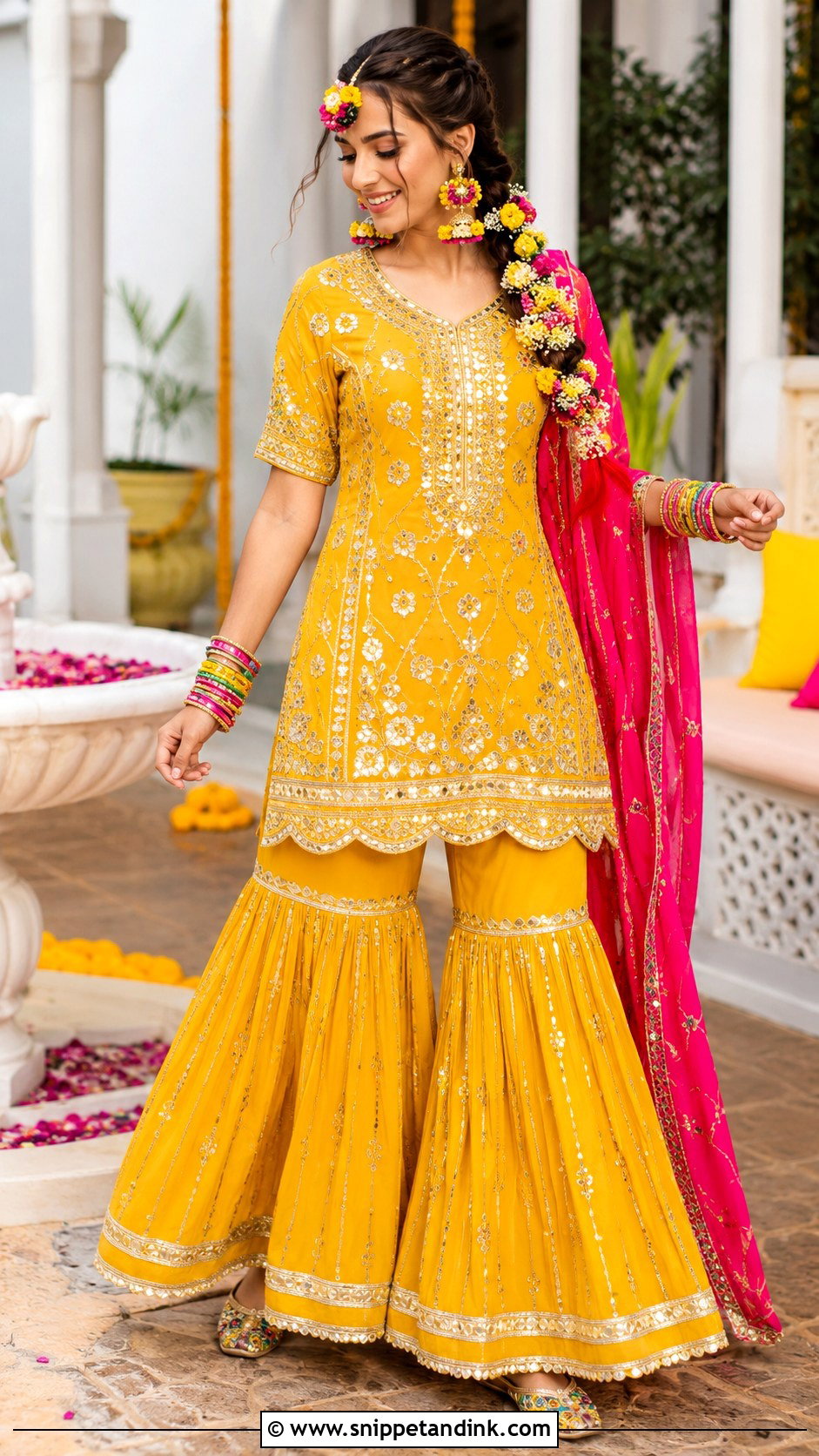
Mehndi is the event where the bride should be able to dance without thinking about her clothes. A short embroidered kameez over a flowing sharara with gota, mirror work or threadwork does that well. The contrast dupatta, green, orange or hot pink against yellow, is what gives the look its festive feel. I pin it at one shoulder so it can’t fall into your henna. Floral jewelry is lighter than metal and suits the mood. Skip heavy linings and can-can; the best yellow Pakistani bridal sharara is one you forget you’re wearing after the first hour.
11. Red Pakistani Bridal Pishwas
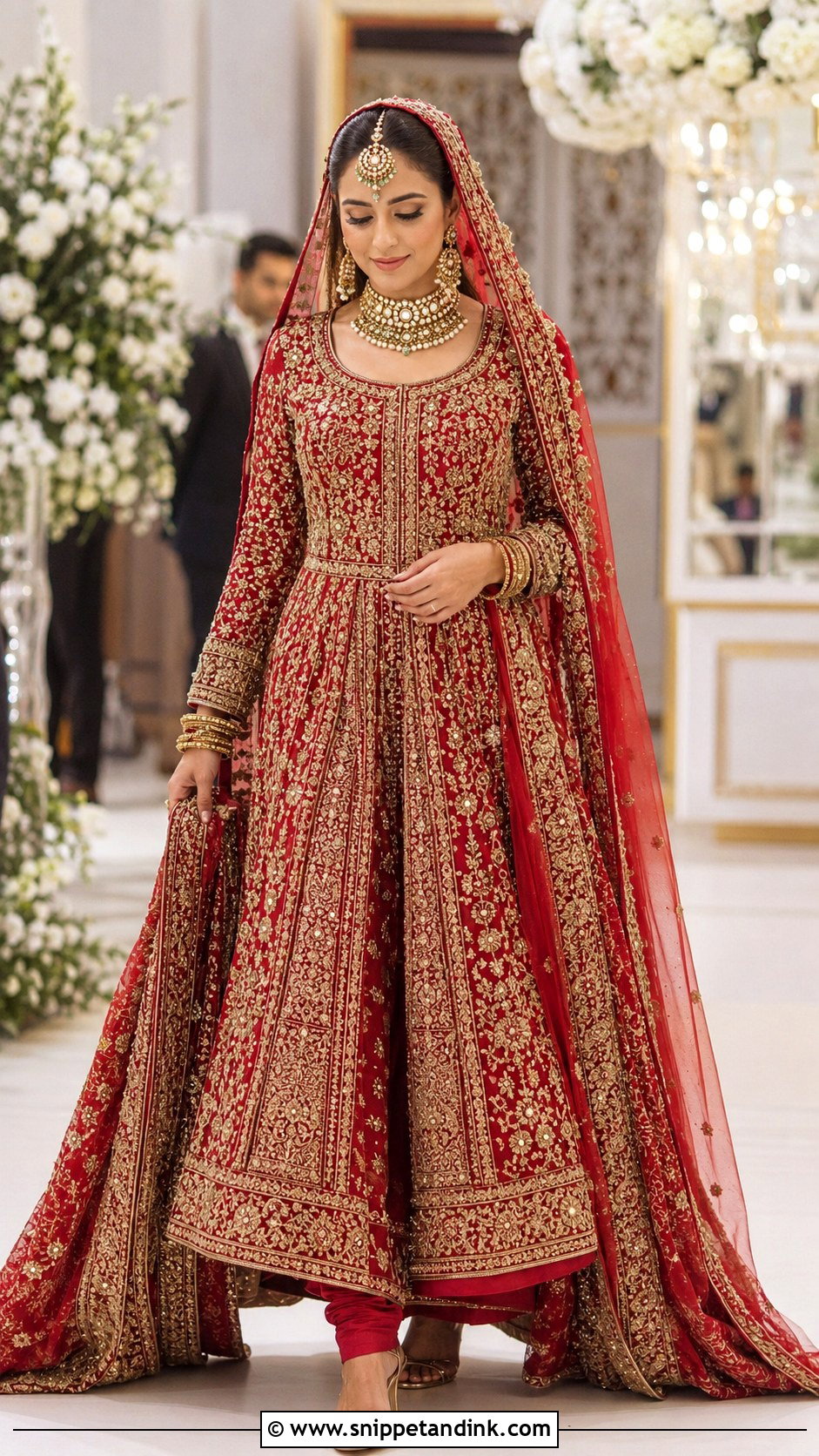
The pishwas gives you the swing of a full skirt with the coverage of a long dress, and in red it carries a baraat easily. The bodice fit is everything, because the panels hang from it; if it’s loose, the skirt drops and loses its shape. I fit it with jewelry on, since a heavy choker changes how the neckline sits. Gold work at the neckline, cuffs, waist and hem defines the outline. Fitted churidar underneath, a long dupatta over the head and one statement necklace rather than three. Check the hem in your actual heels.
12. Ivory Pakistani Bridal Pishwas
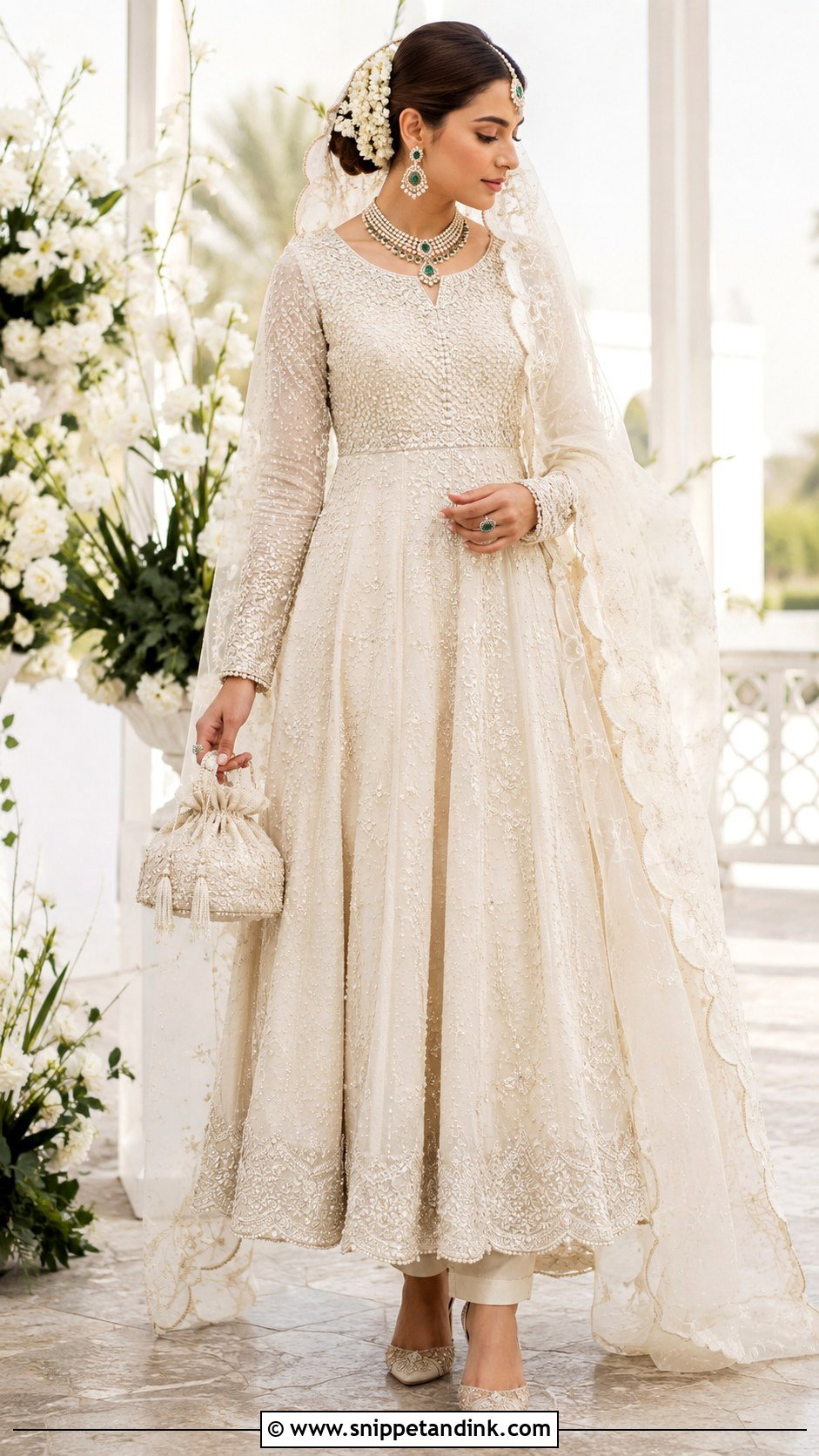
An ivory pishwas moves beautifully in daylight, and fine silver, pearl and champagne embroidery keeps it airy. I’d warn you about one thing: a wide ivory skirt picks up dust and grass at an outdoor nikkah, so plan the walk path or hold the hem. A fitted bodice, full sleeves and floor-length panels give the classic line. Straight trousers underneath, a scalloped organza dupatta over the head and pearl jewelry with one emerald accent finish it. Swap organza for raw silk in cold months; the fabric choice is how this outfit moves between seasons.
13. Gold Pakistani Bridal Anarkali
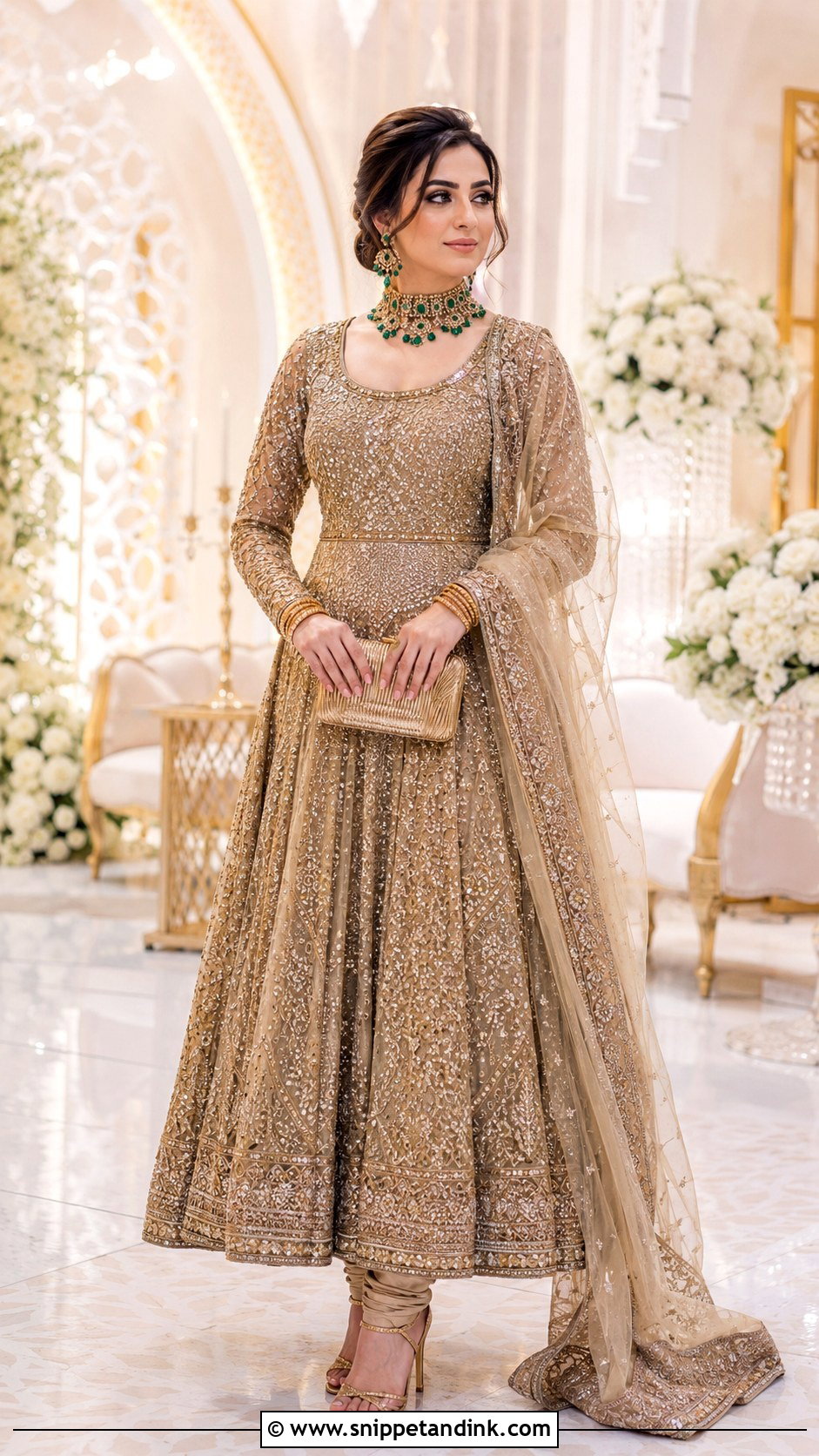
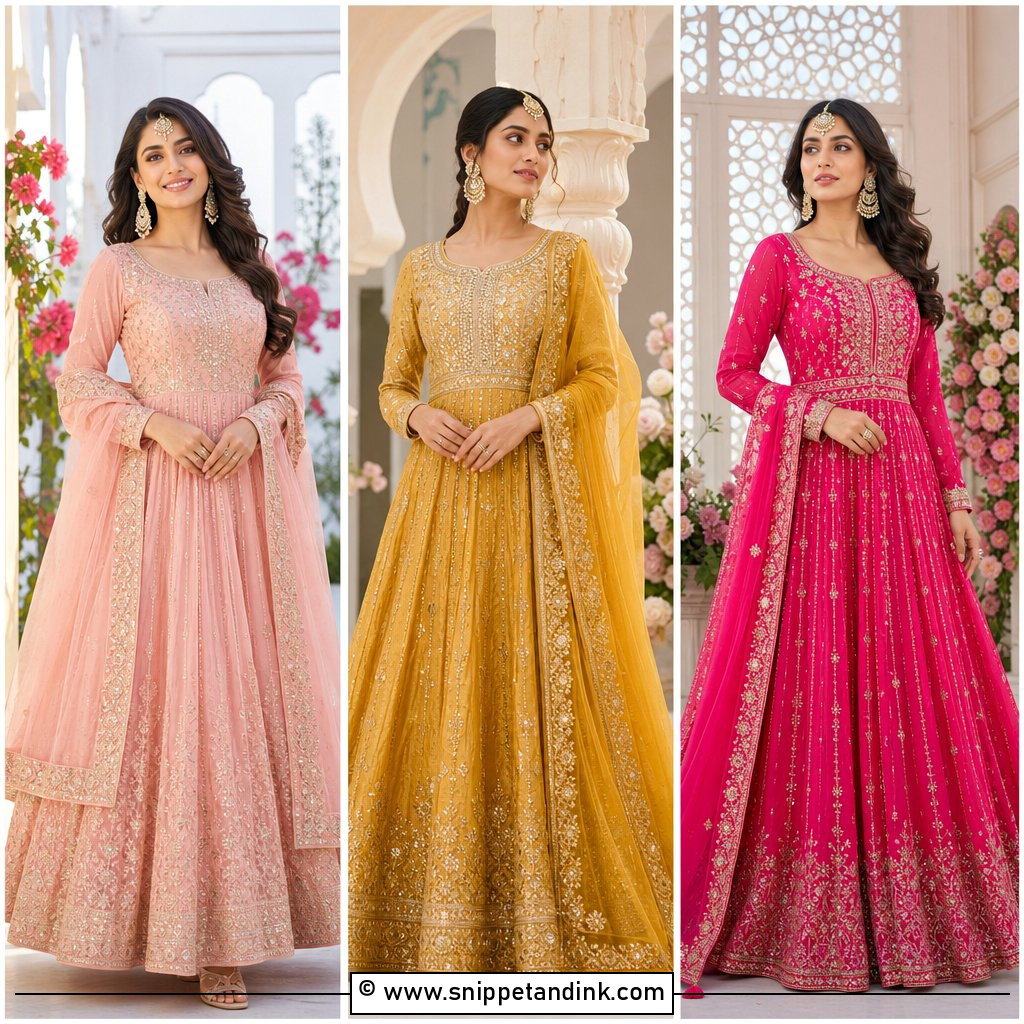
A gold Anarkali is long and lean, which suits a walima or reception where you’ll be standing and greeting for hours. The flare should be controlled, not a ballgown skirt; too much volume on an Anarkali loses the clean vertical line that makes it flattering. I like tonal sequins and antique thread for depth, and emerald jewelry for contrast. Fitted churidar underneath, a sheer dupatta over one shoulder or lightly on the head. Go easy on glitter makeup next to so much metallic thread; luminous skin works better.
14. Peach Pakistani Bridal Anarkali
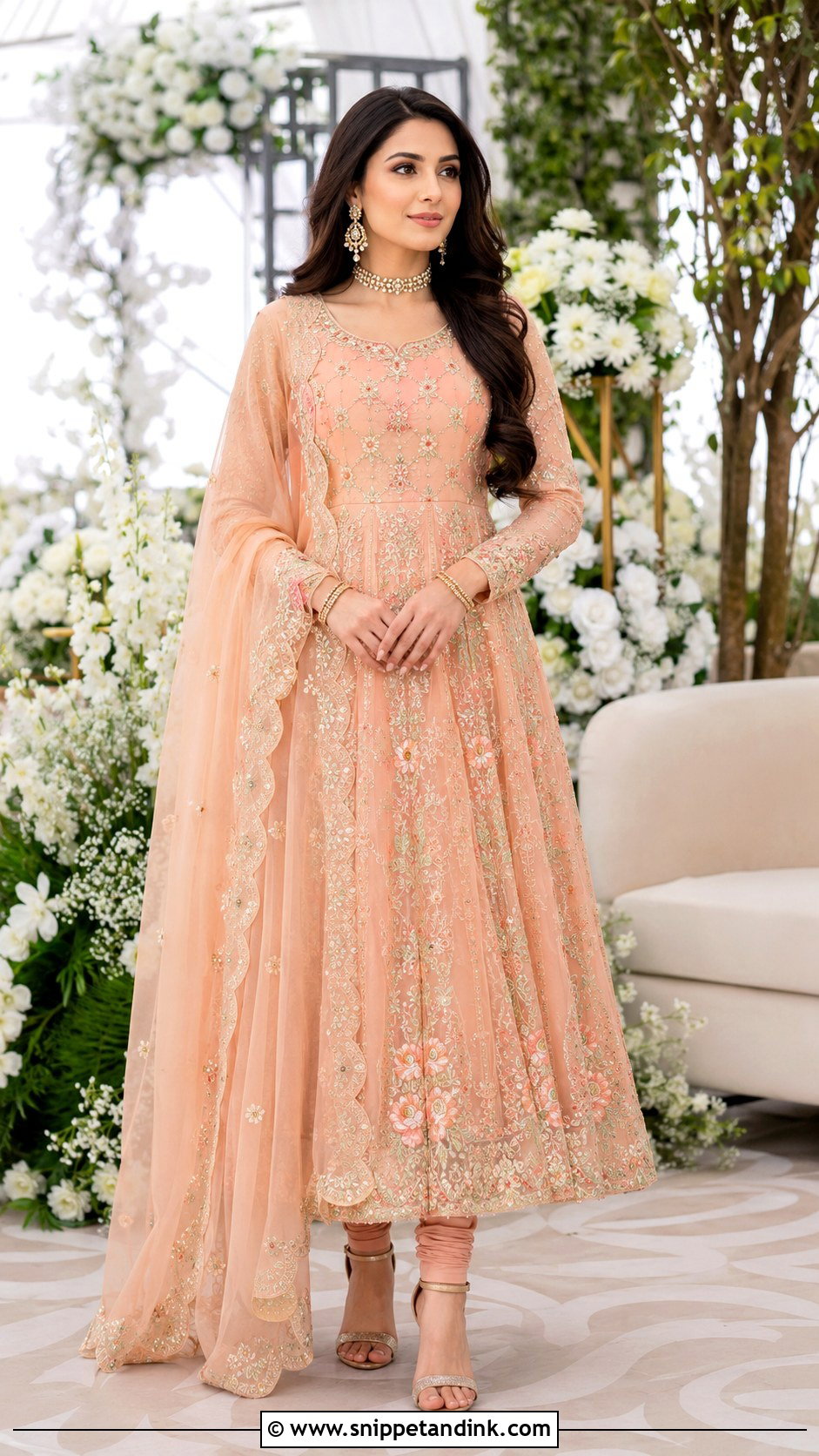
Peach warms the skin without the intensity of red, and in an Anarkali it suits a spring walima or a smaller celebration. The waistline placement is my main fitting concern: the flare should start at your natural waist or just above, or the dress looks shapeless when you sit. Floral threadwork, pearls and muted gold details keep the embellishment approachable. A scalloped matching dupatta, pearl drops and champagne heels finish it. Rosy makeup sits naturally with the peach rather than fighting it.
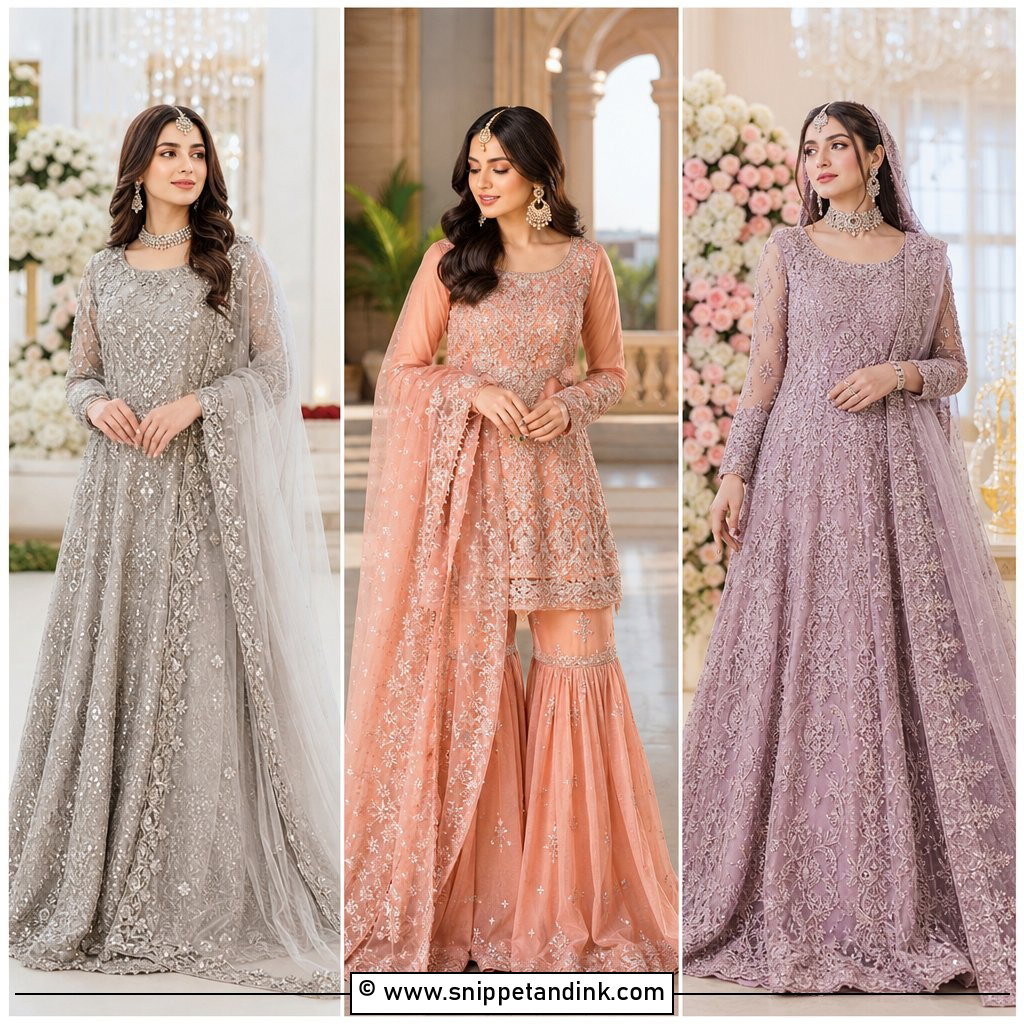


15. Silver Pakistani Bridal Gown
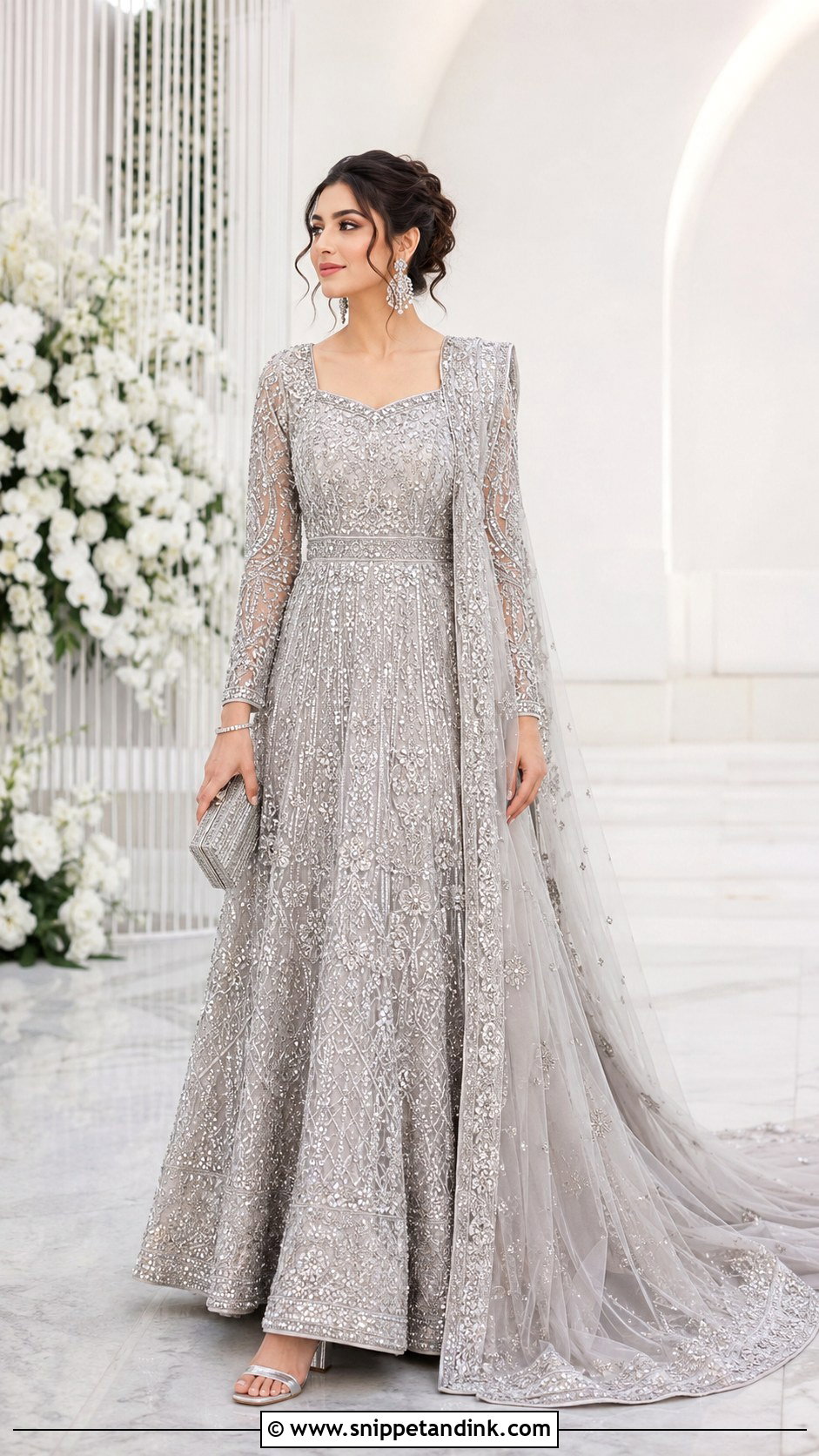
Silver gowns are a common walima choice when a bride wants a Western shape with Pakistani handwork. My strong advice is a detachable train. It looks dramatic in portraits, then comes off before you spend three hours greeting guests and being stepped on. An A-line with long sleeves and a defined waist suits most figures; heavy beadwork belongs on the bodice where it can be supported. A sheer silver dupatta can go over one shoulder or lightly over the hair. Keep the jewelry cool-toned to match: diamond-style, crystal, silver.
16. Powder Blue Pakistani Bridal Gown
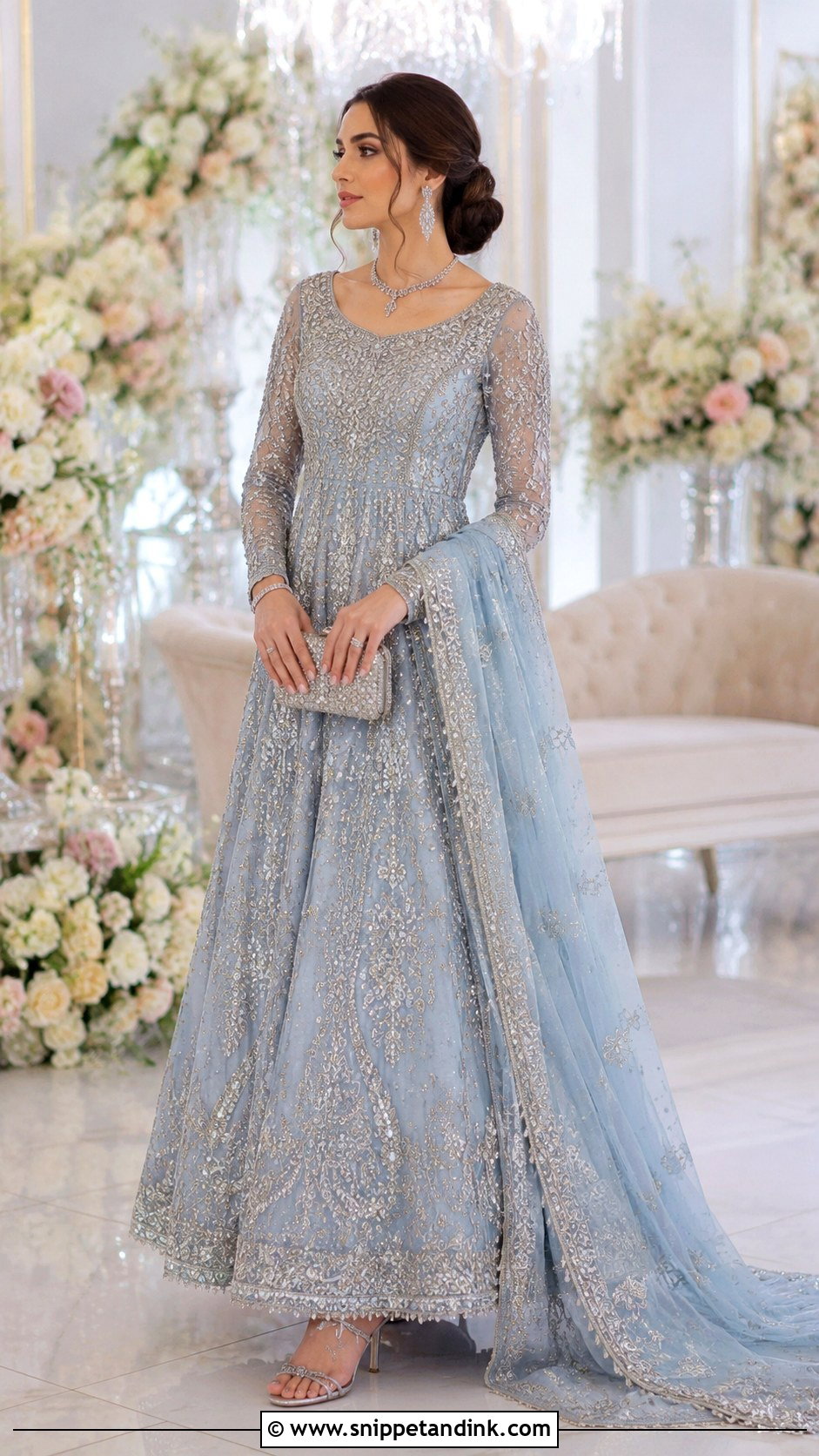
Powder blue is calm and refined, and it only works when the whole outfit stays tonal. Add a bright color and the soft blue suddenly looks washed out. I like embroidery that lightens toward the hem, which keeps the weight up near the face and the skirt moving freely. Long sheer sleeves give coverage without bulk. A matching organza dupatta, crystal drops and silver heels finish the look. Bright reception lighting suits this shade; very warm, yellow lighting can make it look grey, so check your venue’s lights if you can.
17. Red Pakistani Bridal Saree
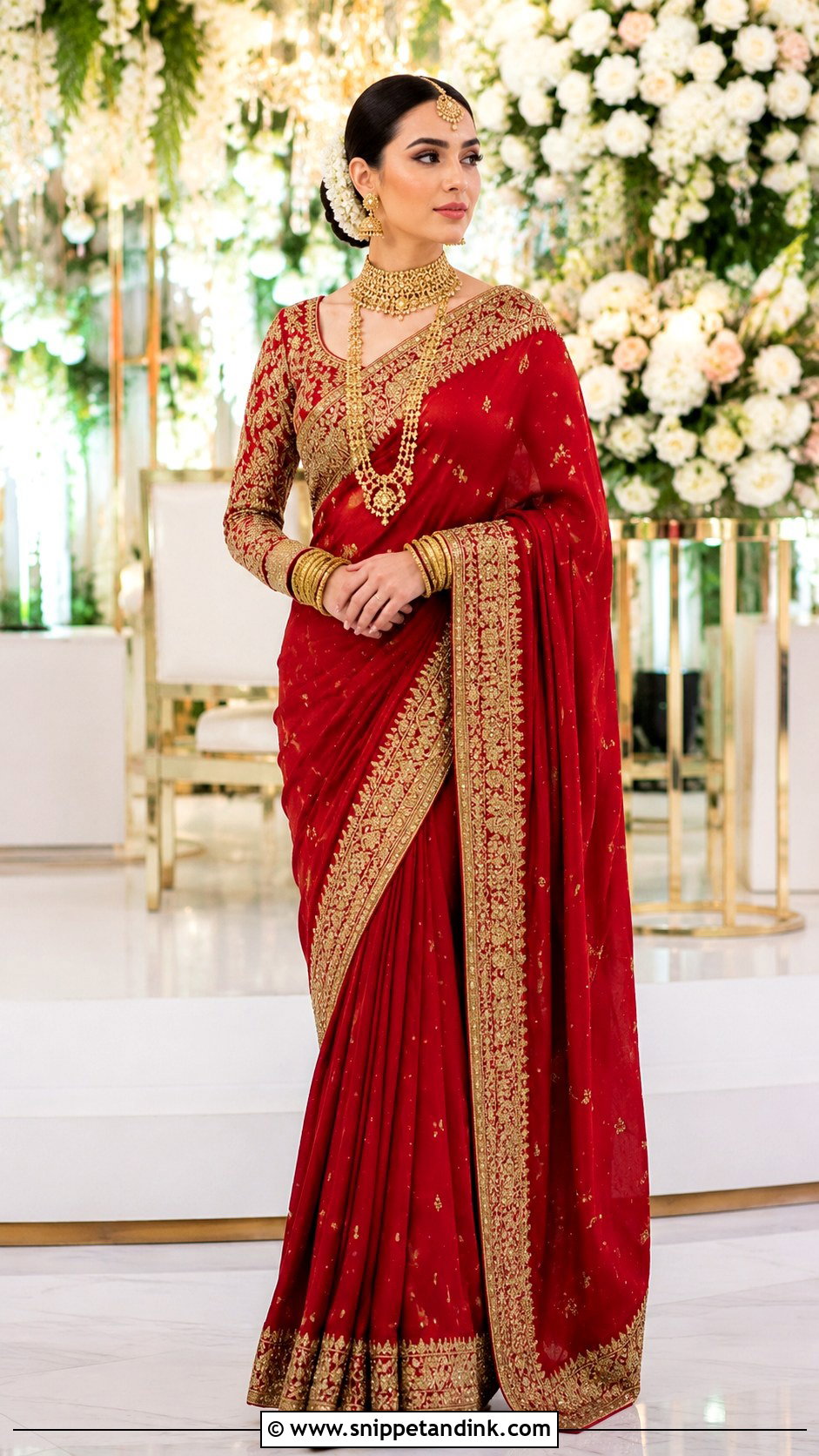
A red saree is sleeker than a layered lehenga, and that makes the drape the main event. Silk drapes fluidly, tissue and organza hold sharper pleats; I pick by how much movement the bride wants. A fitted full-sleeve blouse with a secure neckline lets a higher, more modest drape sit properly. I always pin the pallu at the shoulder and again lower, at the blouse, so it doesn’t slide during the ceremony. Gold choker, jhumkas, a tikka and a low bun with flowers complete it.
18. Ivory Pakistani Bridal Saree
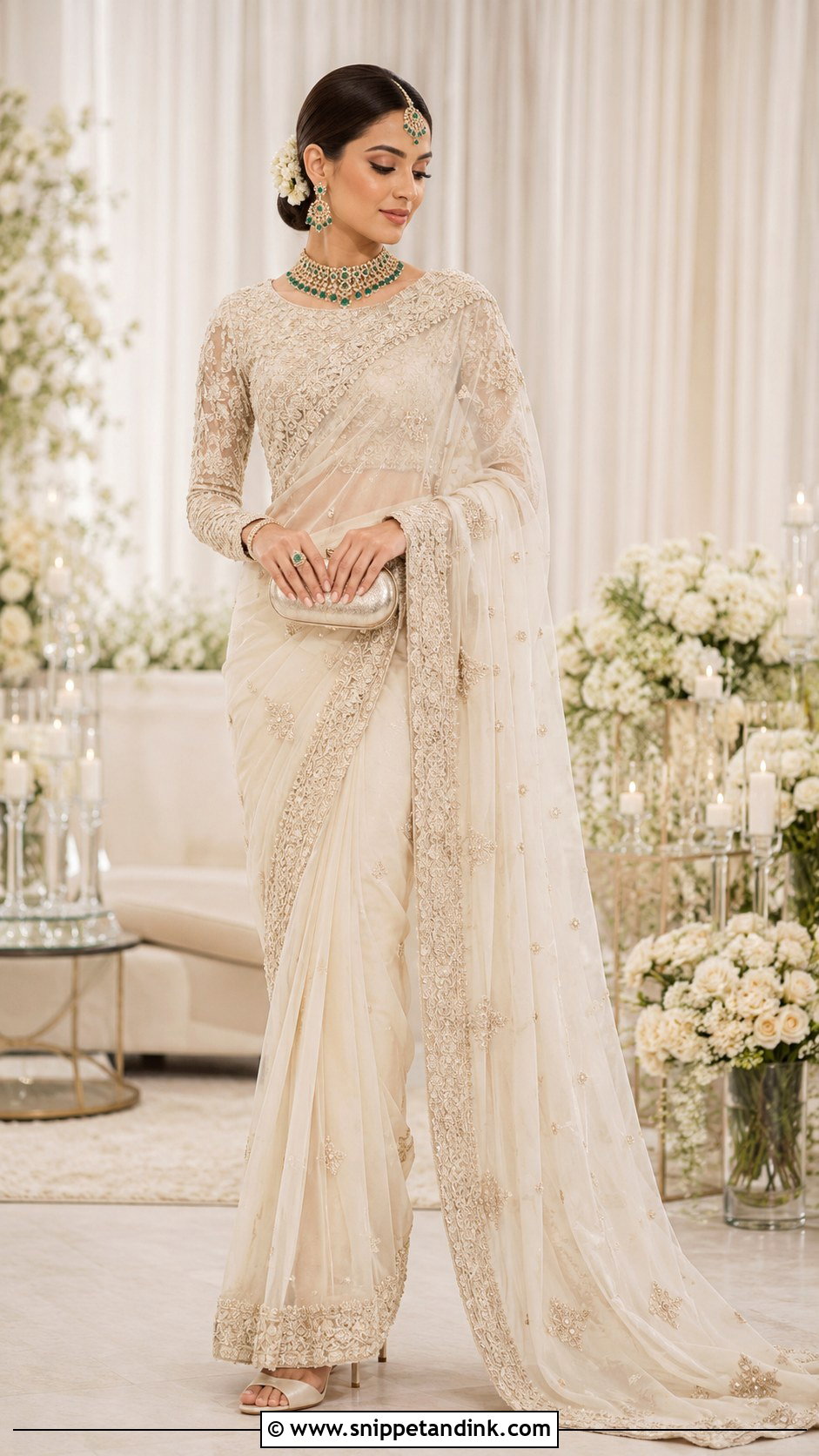
An ivory saree in organza looks structured and airy; in silk it falls closer to the body. Either way, I test the drape while the bride sits and walks, because a saree that skims nicely when standing can tighten across the knees when seated. Repeat the border embellishment on a long-sleeve blouse, but keep it lighter than the saree itself. A neat bun gives the pallu something to anchor to. Pearl jewelry with one emerald accent keeps the neutral palette from going flat.
19. Velvet Pakistani Bridal Maxi
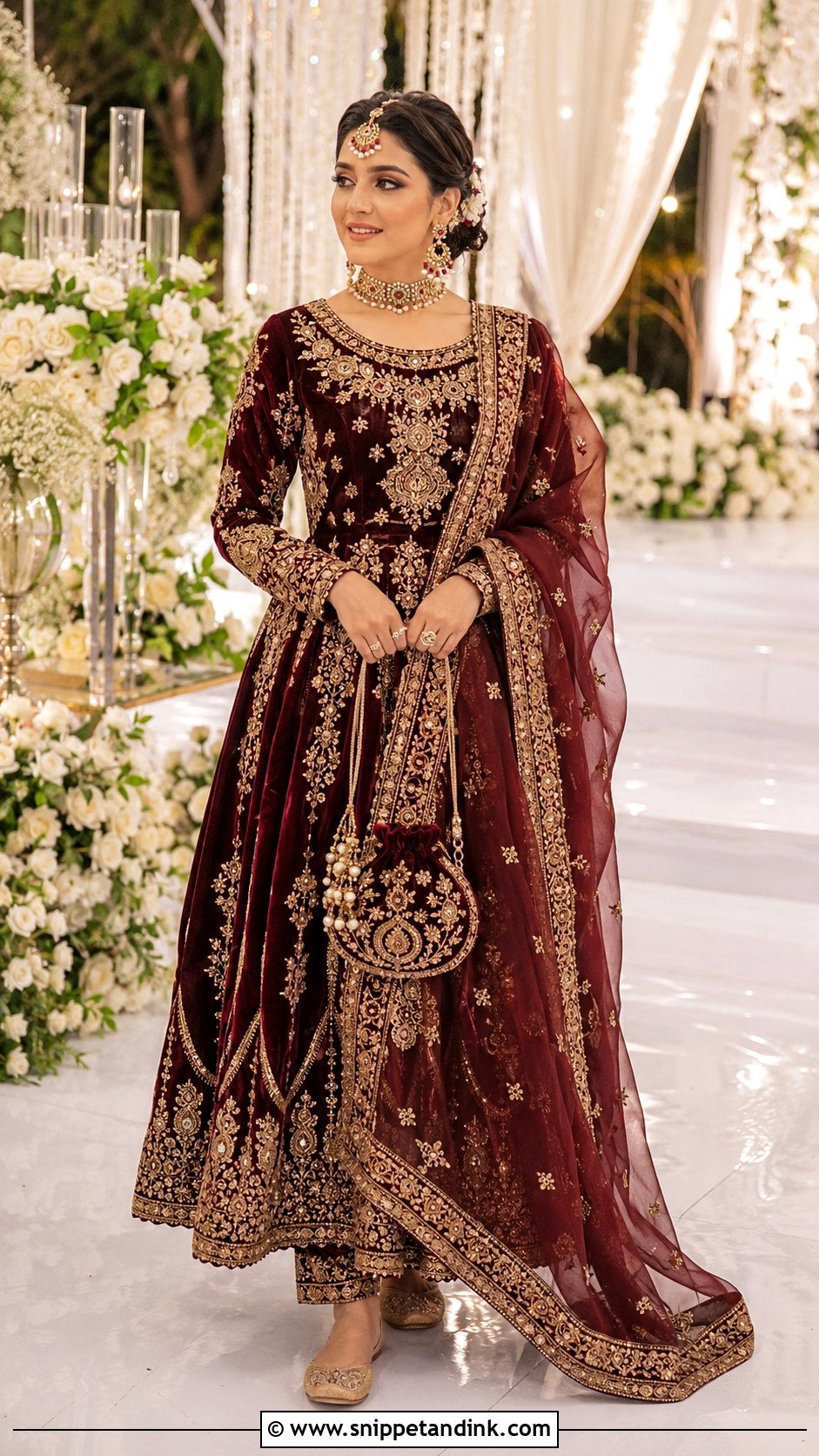
A velvet maxi is warm and heavy, so it belongs at an evening baraat or reception in cold weather, not a summer hall. A paneled or A-line cut keeps velvet from looking bulky. I concentrate the antique gold embroidery at the neckline, sleeves, waist and hem; covering every panel adds weight and fights the depth that velvet already has. Pair it with fitted trousers, a lighter organza dupatta, kundan and gold khussas. A small potli is plenty; a big handbag breaks the line.
20. Banarasi Pakistani Bridal Lehenga
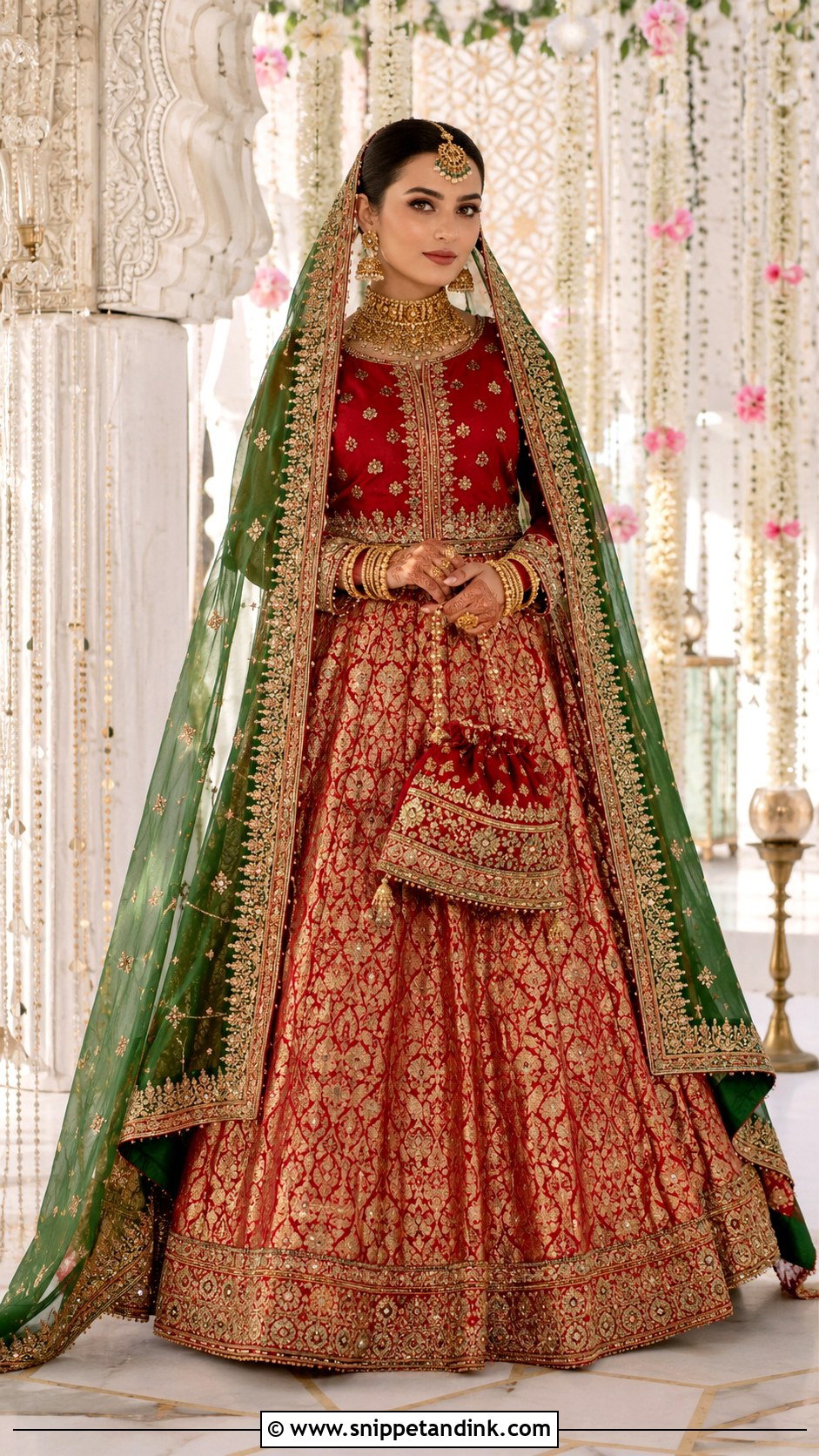
Banarasi weave brings its own pattern, so this is a lehenga where I keep the embroidery to the blouse and borders. A solid embroidered blouse over a red, pink, green or rust woven skirt balances the busy fabric. A contrasting organza dupatta goes over the head, a lighter matching one over the shoulder. Antique gold jewelry, jhumkas and khussas suit the heritage feel. One practical plus: a Banarasi skirt and blouse rewear well as separates after the wedding, which most heavily embroidered lehengas don’t.
Ordering From a Designer in Pakistan When You Live Abroad
Many brides outside Pakistan order their bridal wear from there, and it works well with a little care. Hand embroidery takes time, so lead times for a full bridal outfit commonly run several months, plus shipping. Order early enough that there’s room for one round of alterations near home.
Measurements and Color
Have a local tailor take your measurements rather than doing it yourself, and ask the designer for their measurement chart, since some want the blouse length or the lehenga waist taken a specific way. Ask for extra seam allowance in the blouse and waist so a local alteration is possible. Screen colors lie, especially with reds, maroons and golds, so ask for a fabric swatch or a video in daylight before approving.
Customs and Arrival
Import duties and handling fees vary by country and by the declared value, so check them before you agree to a shipping method. When the parcel arrives, unpack it straight away, hang everything and check for loose stones or broken threads while there’s still time to fix them.
Testing the Whole Outfit With Jewelry, Shoes and Dupatta in Place
Each of these outfits started from a question about the event: how long you’ll sit, how much you’ll dance, how much coverage you want, and what the weather will do. Answer those first, then pick a silhouette and color. At the final fitting, wear everything at once, including jewelry and shoes, and have someone set the dupatta exactly as they will on the day. Secure pins and comfortable shoes matter more by the tenth hour than any embroidery detail. The outfit that lets you stop thinking about it is the right one.
You'll Like These Ideas:






Leave a Reply