
Putting your names on the cake makes it yours before anyone takes a slice, and it turns the cake table into something guests stop to photograph. How the names go on matters as much as the wording. Some couples want a clean acrylic topper; others prefer piped names, edible gold letters, embossed initials or a monogram on the middle tier. I choose the method by looking at three things: the cake’s shape, its finish, and how far away most people will be when they read it. The twenty ideas below cover each approach, with notes on what works in practice.
Spell It Out for Your Baker, Letter by Letter
Most mistakes on name cakes aren’t design mistakes. They’re a missing accent, a nickname used instead of a full name, or an apostrophe where it doesn’t belong. I ask couples to send the exact wording typed out in writing, never read over the phone, and I send it back for a final yes before anything is cut or piped.
- The exact wording and spelling, including accents, hyphens and capital letters
- The order of the names, and the order of initials if you’re using a monogram
- The date in the format you want, matching your invitations
- A font name or a screenshot of lettering you like, plus the colour
- Where the names should sit: topper, top tier, front of a lower tier or a plaque
Sizing letters for the room, not the tasting table
Delicate script looks lovely at a tasting and vanishes from across a reception hall. If most guests will see the cake from their seats, I’d make the letters bolder and larger than feels natural up close, and save fine script for a topper that will mostly be photographed.
Custom toppers need lead time as well. Laser-cut acrylic and wood are made to order and then shipped, so order several weeks ahead and have it delivered to your baker rather than to you. That way it can be test-fitted on a cake board before the day.
1. First Name Wedding Cake Topper
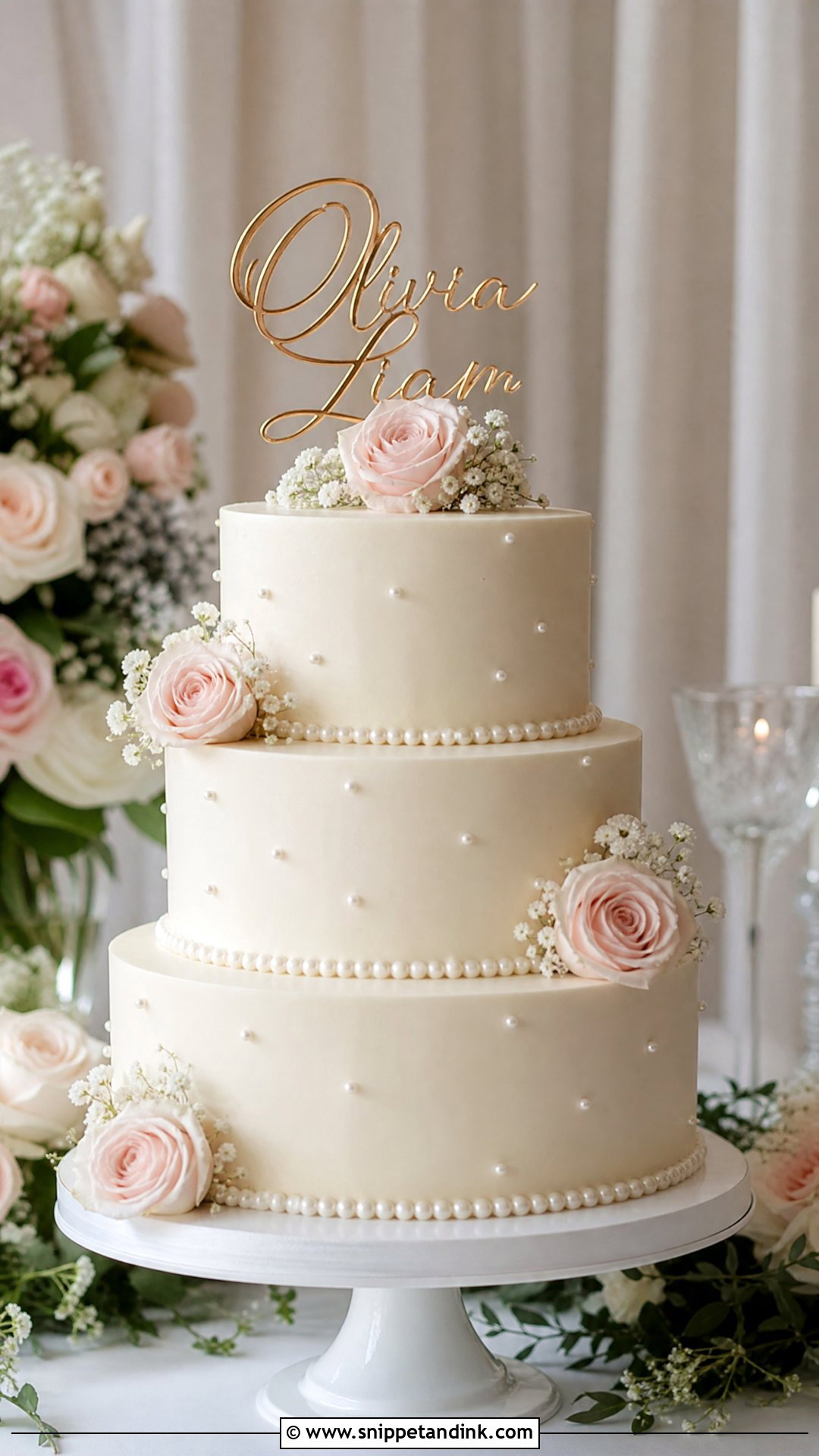
First names on a topper are the simplest way to personalise a cake without adding clutter. A topper sits best on a two- or three-tier cake with smooth buttercream or fondant, in acrylic, wood, gold metal or white script, and flowers that echo the bouquet frame it nicely. Keep the rest of the cake quiet so the names stay readable. One thing I always check is weight. A solid metal topper on soft buttercream can start to lean within an hour or two in a warm room, so I ask for long picks and push them into a supported tier rather than loose sponge.
2. Last Name Wedding Cake Topper
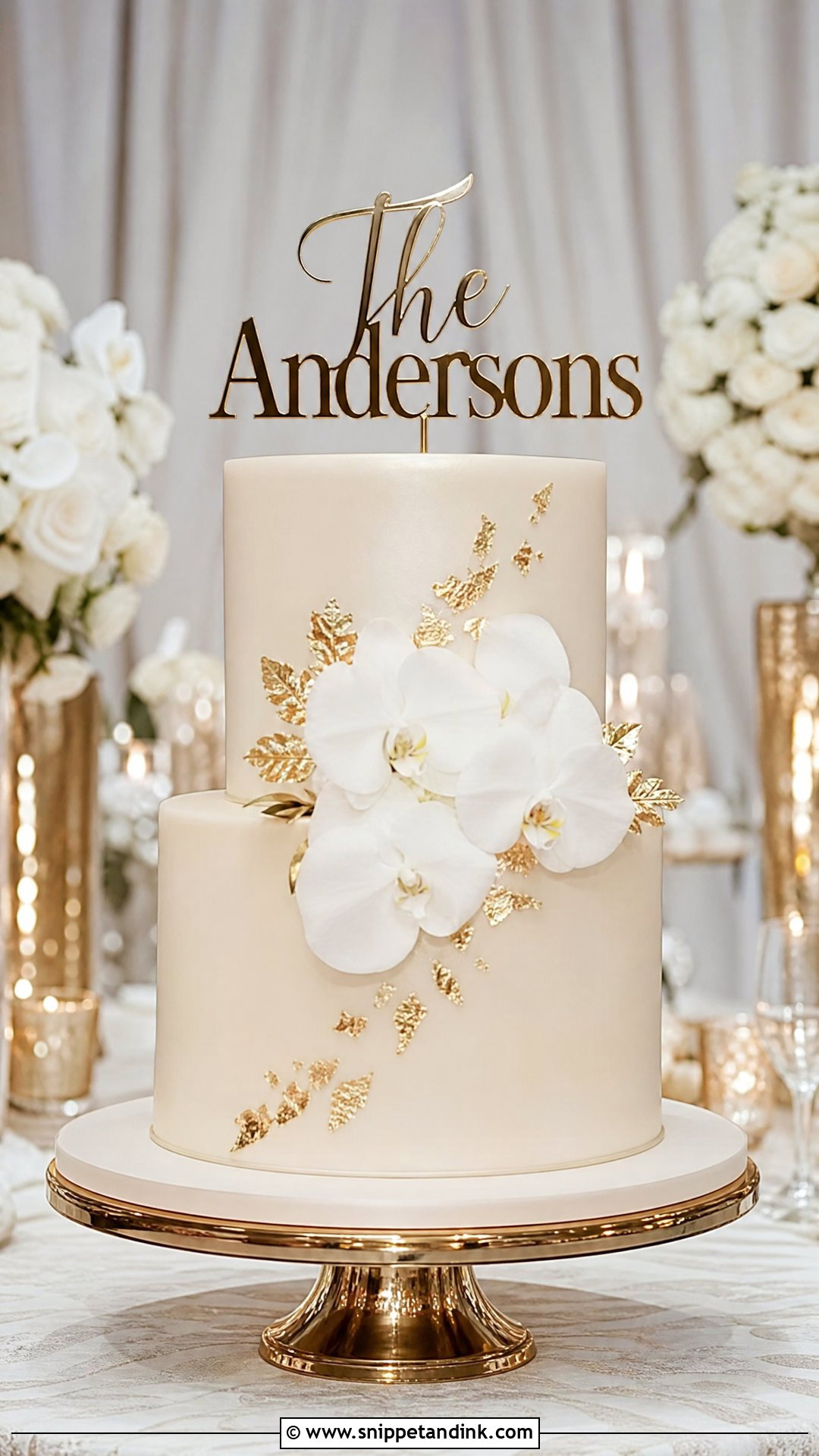
A surname topper gives the cake a classic married feel, for couples sharing one name or celebrating a new family name. Watch the punctuation. A family is “The Andersons” with no apostrophe, and surnames ending in s, ch or x take -es, as in “The Joneses”. It’s the error I see most on custom orders. On a tall white cake with smooth frosting, soft flowers and a touch of gold, short bold wording reads from across the room. Thin script feels elegant; block capitals feel modern. Place it on the top tier and keep flowers low around the base.
3. Couple Name Wedding Cake
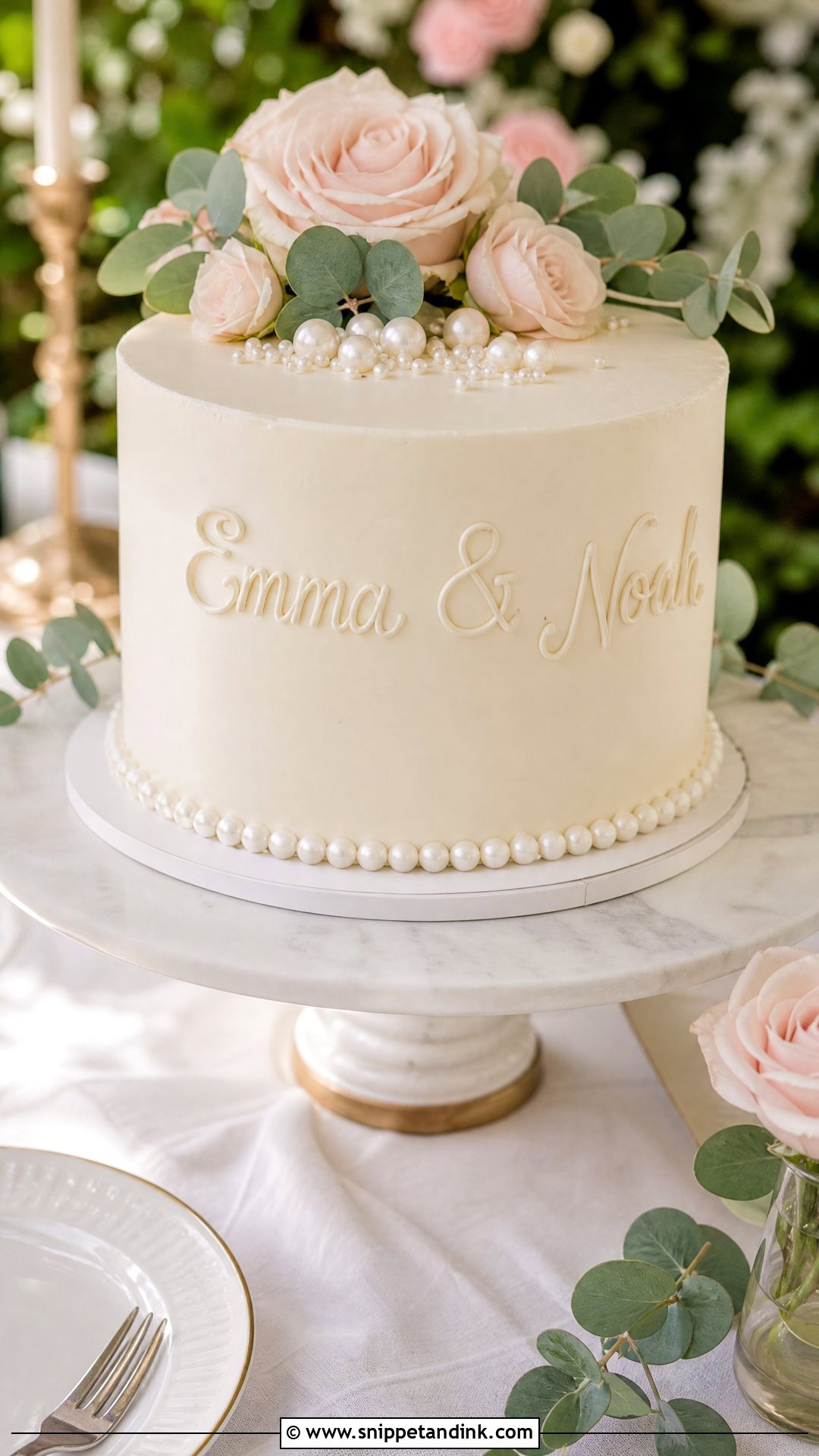
When both first names deserve equal weight, they can go directly onto the cake: piped on the front, written on a fondant plaque or applied as edible lettering. It suits a single-tier cutting cake as well as a three-tier statement cake, and “Emma & Noah” style wording stays clean. Soft buttercream texture, pearl details and fresh roses keep it romantic. If you have a wedding logo or an invitation font, send your baker the file so the cake ties into the rest of the day. Tell me which name goes first, too. Couples don’t always agree, and I’d rather know before I pipe.
4. Initials on Wedding Cake
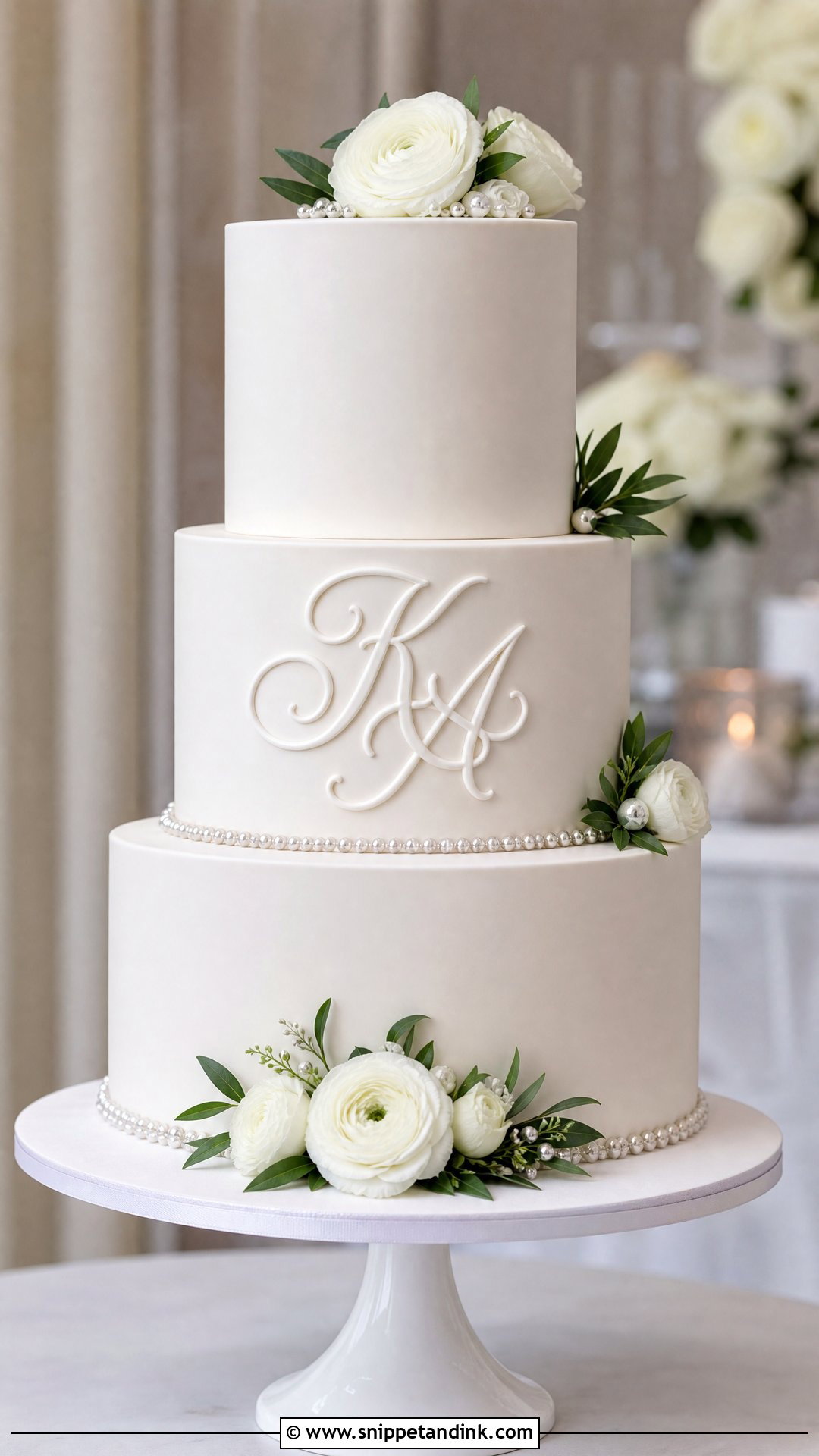
Initials on a wedding cake give you personalisation without full names on display, and they fit almost any theme. They can be a topper, a fondant medallion, hand-painted letters or piped buttercream. A three-letter monogram reads traditional; two first initials with an ampersand read modern. Initials need open space around them, so smooth white fondant or lightly textured buttercream works best. In a traditional three-letter couple’s monogram, the shared surname initial sits in the middle and larger, which surprises people, so confirm the order against your stationery. Greenery, small flowers or gold leaf finish it.
5. Monogram Wedding Cake
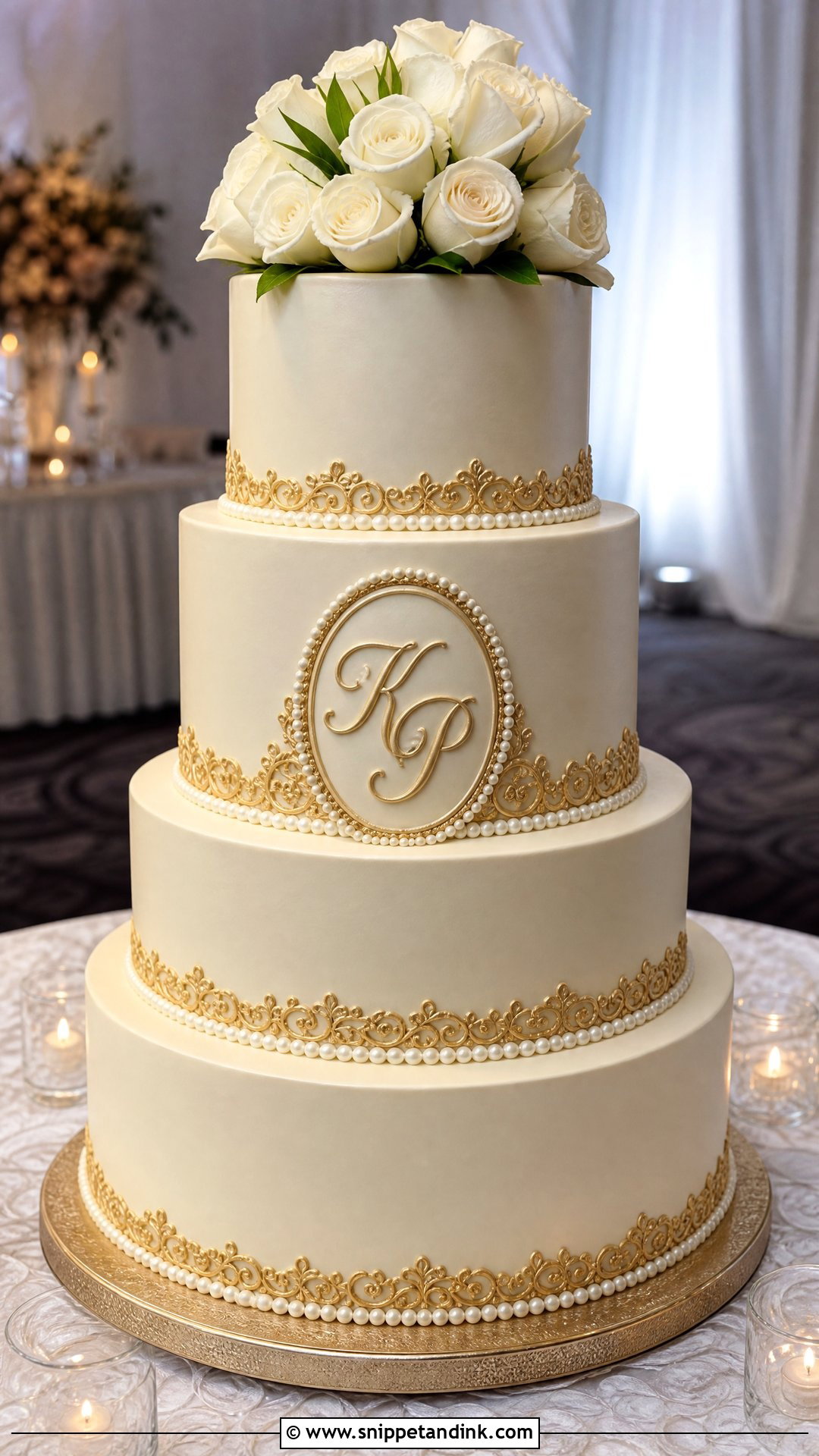
A monogram makes a formal focal point for black-tie weddings, hotel receptions and ballrooms. It can sit on the centre tier framed by piped borders or stand out as a raised fondant emblem. Some couples use one shared initial; others intertwine two in a custom design. Ivory, champagne, blush or white frosting lets it stand out, and gold, silver or pearl details add richness. For an intertwined monogram, I cut a stencil from the stationery artwork so the curves match exactly. Freehand versions of complex monograms rarely look as crisp.
6. Gold Name Wedding Cake Topper
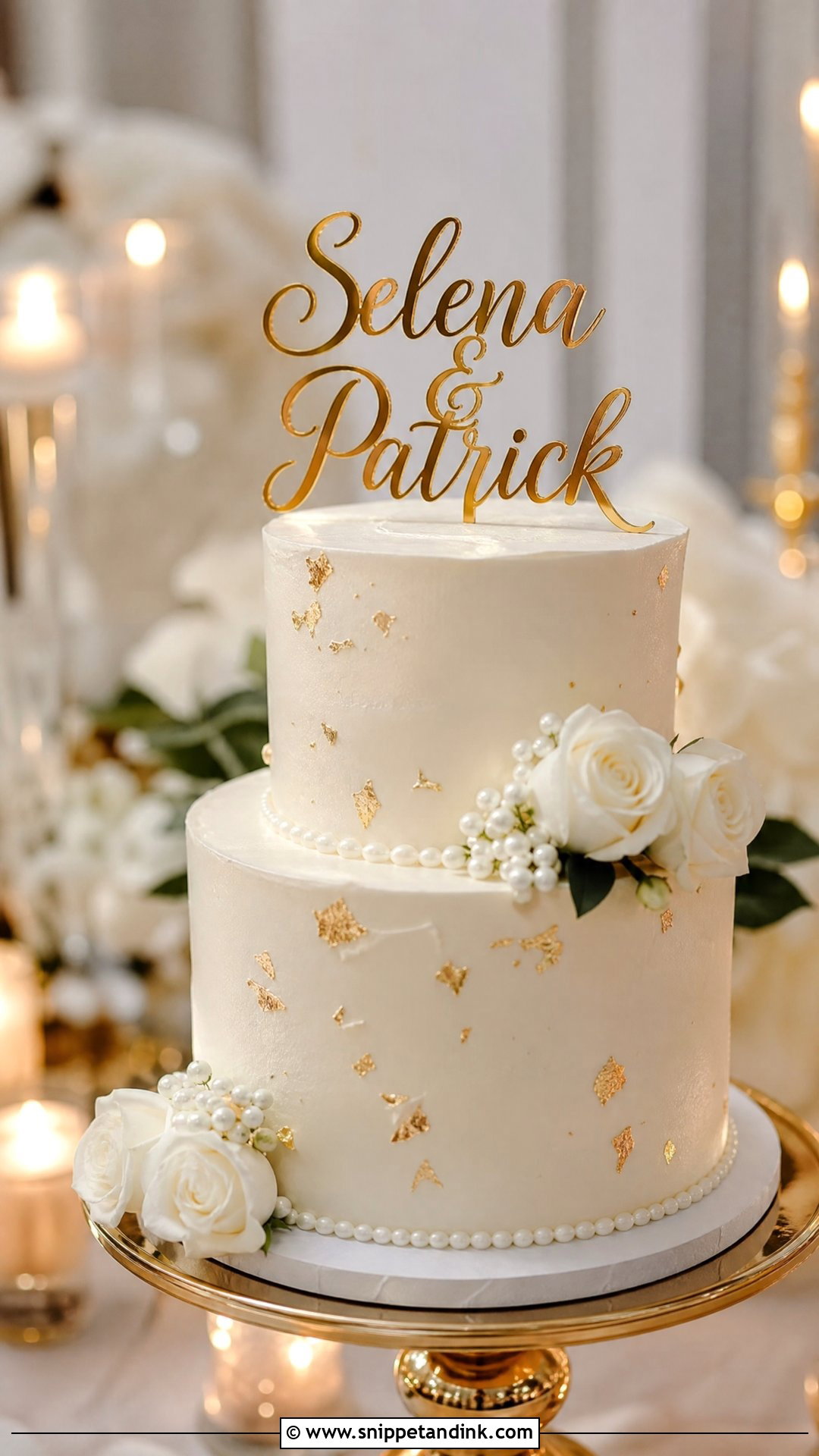
Gold names add warmth and shine with very little else on the cake. Gold script reads well against white buttercream, ivory fondant or soft blush frosting, balanced by simple florals, small pearls or a satin ribbon around the base. It suits round cakes, square cakes and tall single tiers. Mirrored gold acrylic reflects whatever is around it, and against a dim room it can photograph almost black, so for evening receptions I’d lean toward a brushed or glitter gold finish. Gold flatware, chargers or candlelight at the reception will pick up the same tone.
7. Acrylic Name Wedding Cake Topper
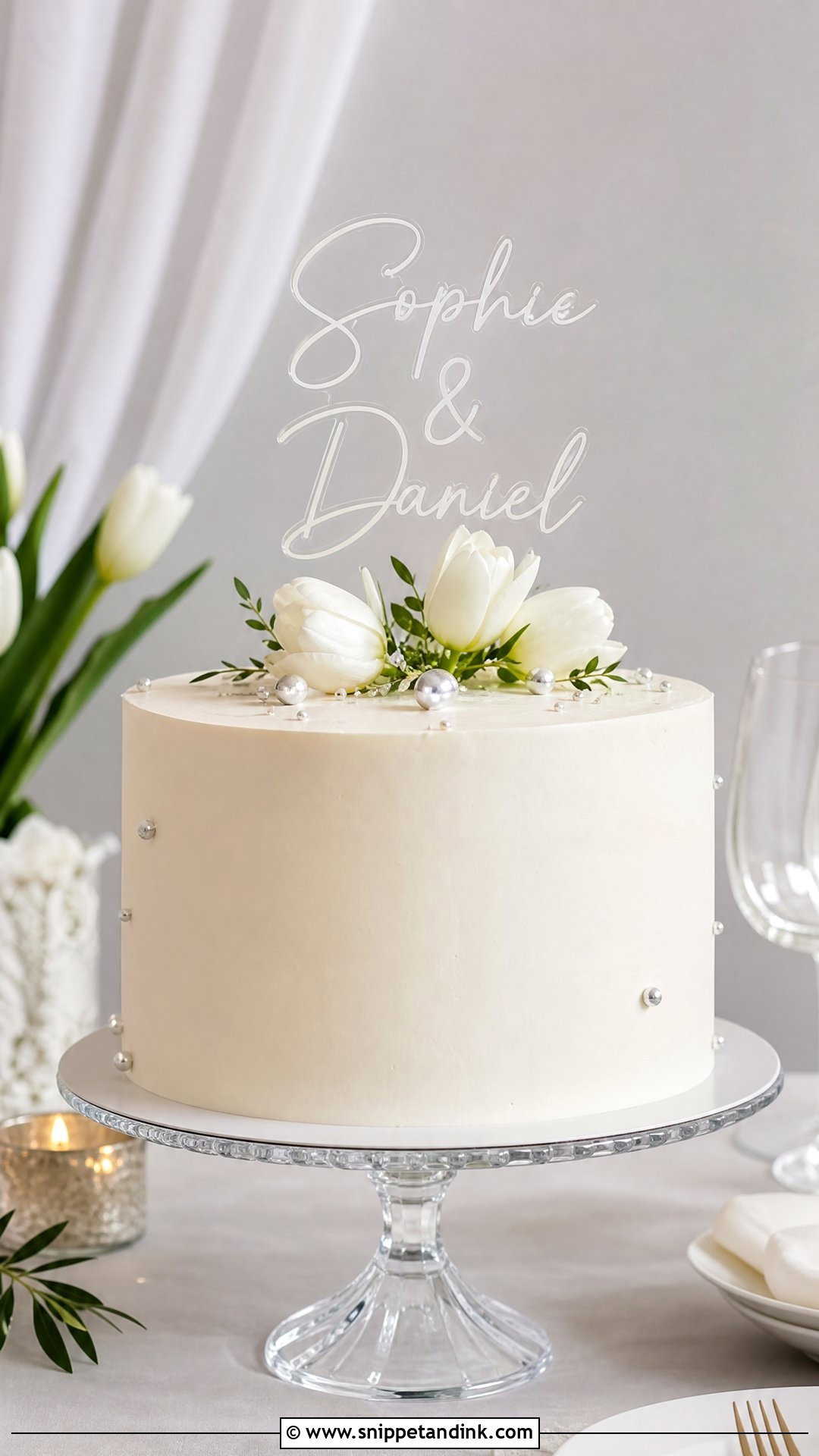
Acrylic toppers are light, which matters more than people think on a soft cake. Clear acrylic almost disappears, while white, black, gold or mirror acrylic makes the names stand out. It suits a smooth white cake with delicate flowers or a bold black-and-white design, and it survives as a keepsake. My main advice is about thickness. Very thin script lines can snap in the post and look spidery from a distance, so choose lettering with enough weight to read.
8. Wooden Name Wedding Cake Topper
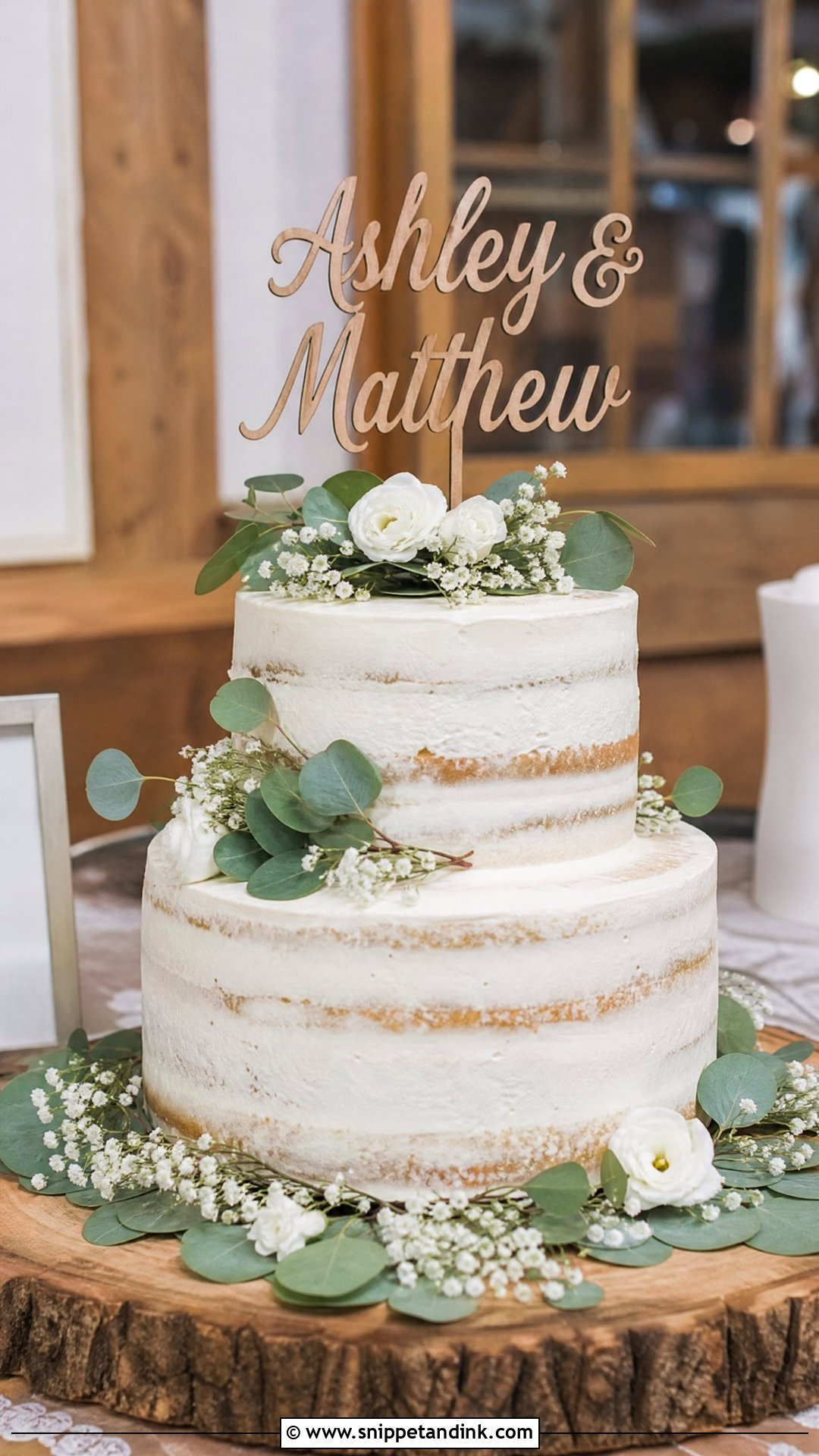
A wooden name wedding cake topper belongs at barn weddings, outdoor receptions, rustic venues and boho celebrations. The wood tone sits well against white frosting, semi-naked layers, eucalyptus and soft garden flowers, and it can carry first names, a surname or initials. Choose smooth edges and a simple font that doesn’t fight the cake’s texture. Raw wood can shed dust or splinters onto frosting, so I wrap the picks or ask for a sealed finish. A wooden cake stand, linen cloth and greenery garland complete the table.
9. Edible Name Wedding Cake
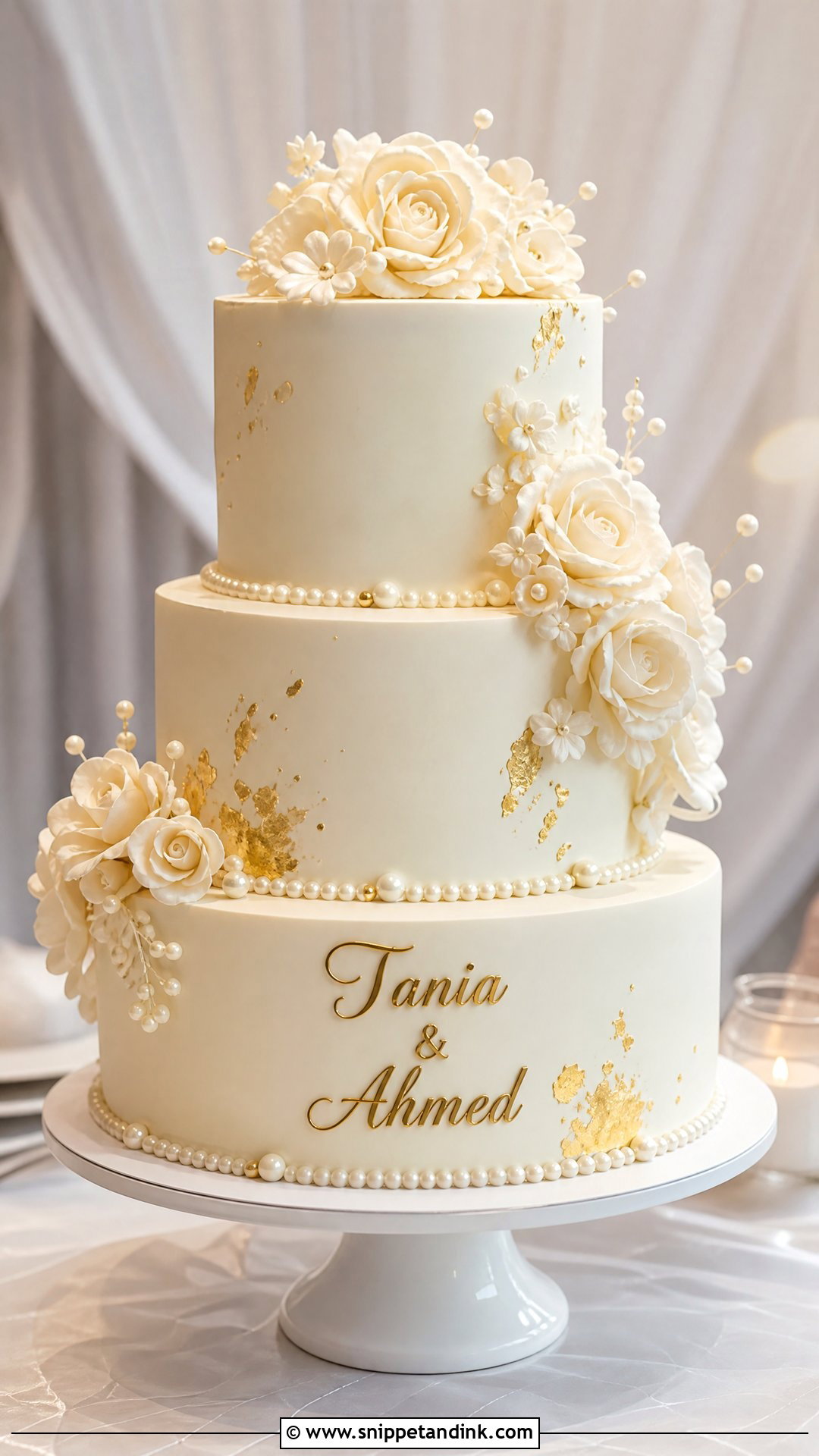
Edible lettering keeps everything food-safe and makes the names part of the cake rather than something sitting on it. Names can be cut from fondant or modelling chocolate, printed on edible paper, piped in royal icing or painted by hand. Up close, it looks like it belongs. Gold letters on ivory, white fondant names on blush or painted script on smooth buttercream all work. Two cautions from my side: edible paper softens and wrinkles on moist buttercream, so it goes on fondant or a dried sugar plaque, and some gold dusts are labelled non-toxic rather than edible, meaning they belong only on decorations that get removed. Ask which kind your baker uses.
10. Piped Name Wedding Cake
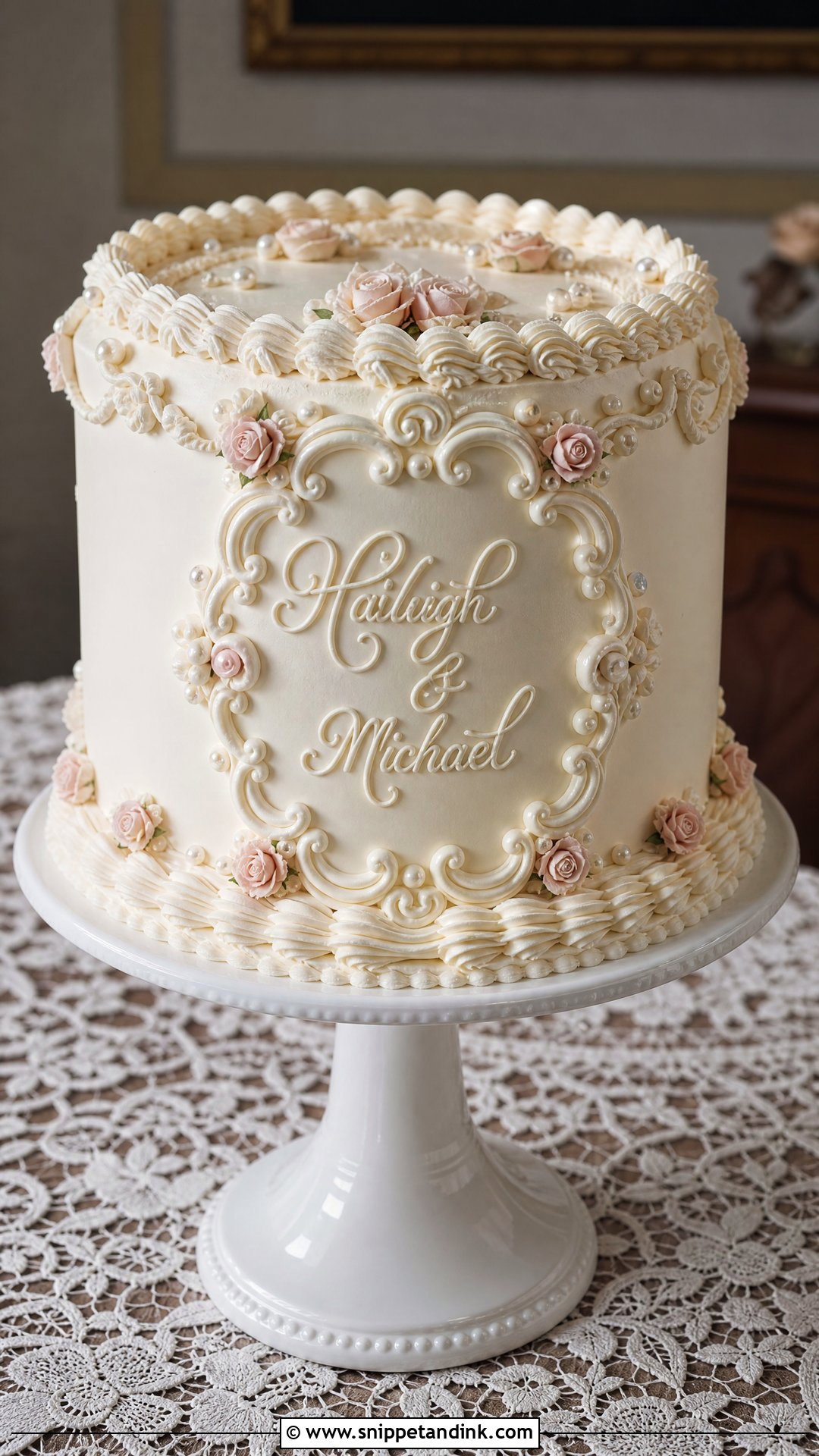
Piped names feel handmade and a little nostalgic. They can run across the front of the cake, sit inside a heart or fill a delicate frame, in buttercream or royal icing, and they suit vintage-style cakes with shell borders, pearls, ruffles or lace-inspired piping. Royal icing sets firm and keeps crisp edges; buttercream lettering is softer and blurs in a warm room. A contrasting colour helps the names stand out, and tiny buttercream blossoms finish the frame. Script is harder to pipe than it looks, so ask to see examples of your baker’s lettering.
11. Name and Date Wedding Cake
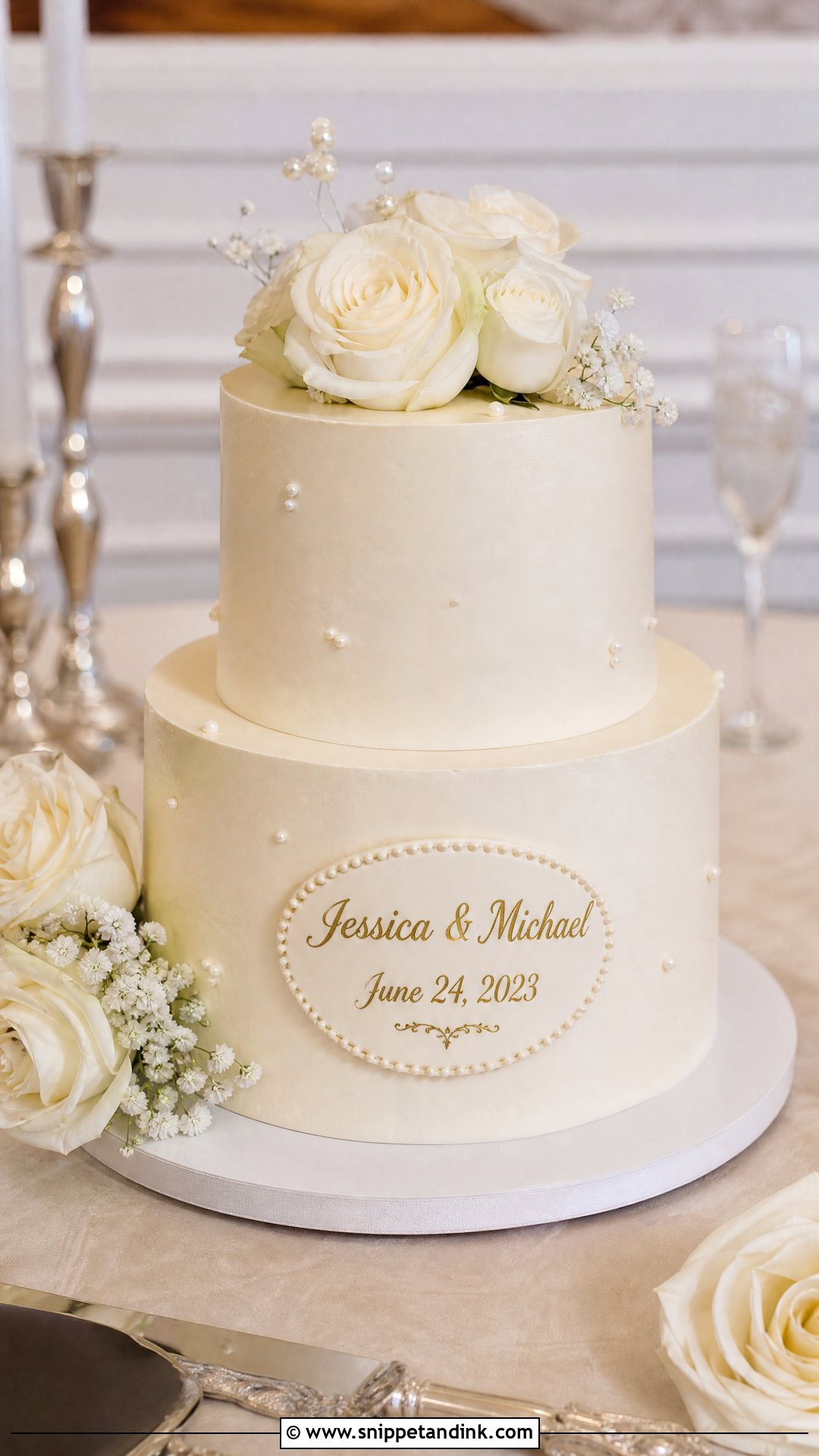
Adding the date under your names turns the cake into a small record of the day, on a topper, plaque or front-facing tier. Match the format to your invitations, either written out like “June 14, 2026” or in numerals like “06.14.26”. Numerals are compact but easily misread by guests used to day-first dates, so the written form is clearer for an international guest list. White cake with gold lettering reads classic, and black on ivory reads modern. Keep the flowers minimal so the words lead.
12. Name on Heart Wedding Cake
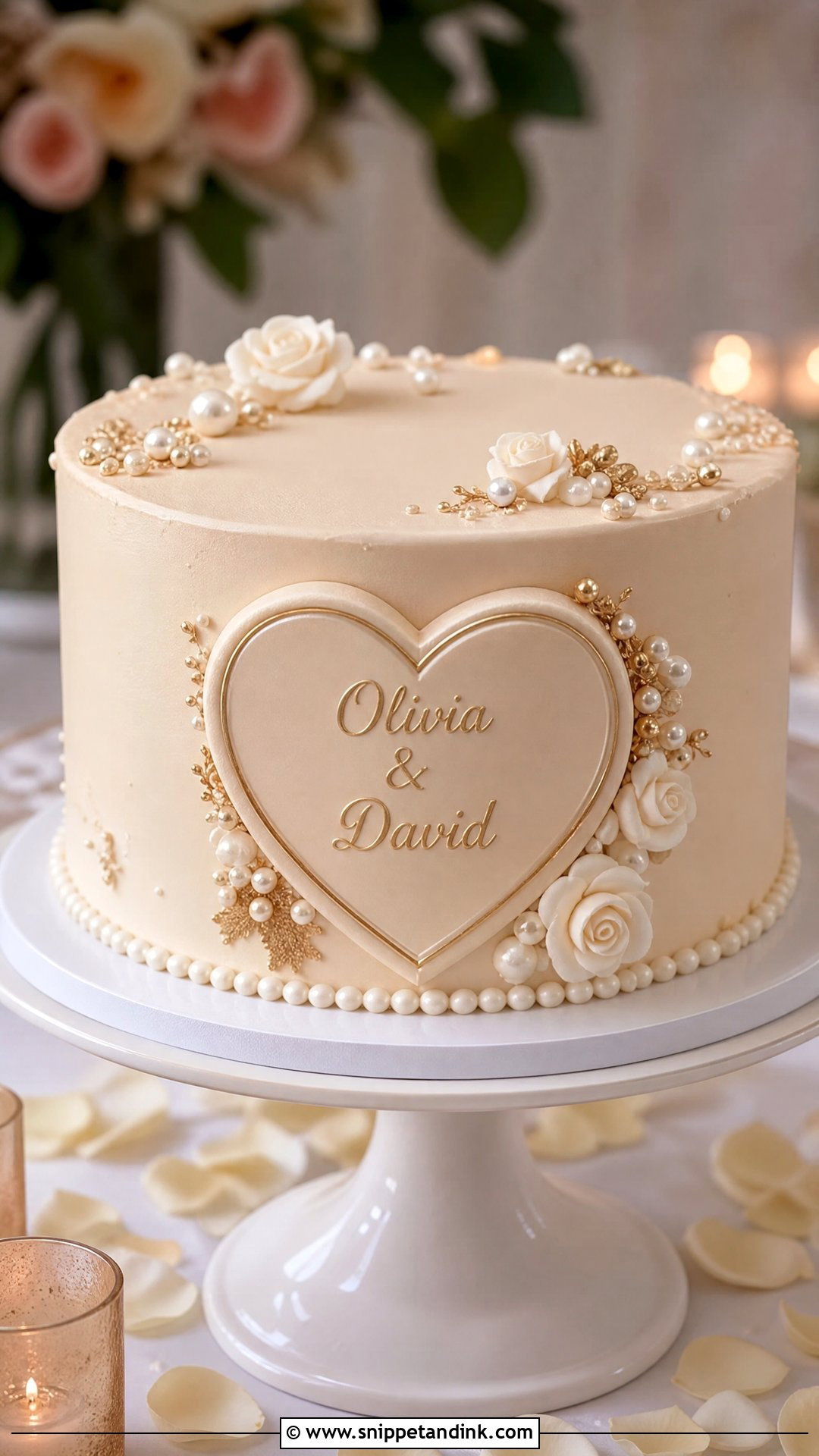
A heart frame keeps names romantic without being formal. It can be a fondant plaque, a piped buttercream outline, an acrylic topper or a raised edible detail on the front tier, and it suits smaller cakes, sweetheart cakes and softly floral reception cakes. Blush, ivory, pearl white or champagne keep it wedding-appropriate. Hearts can tip into playful, so I balance them with smooth frosting, tiny pearls, fresh roses or a plain stand. Long names squeeze awkwardly into a heart’s curve; if yours are long, initials may sit better.
13. Name on Floral Wedding Cake
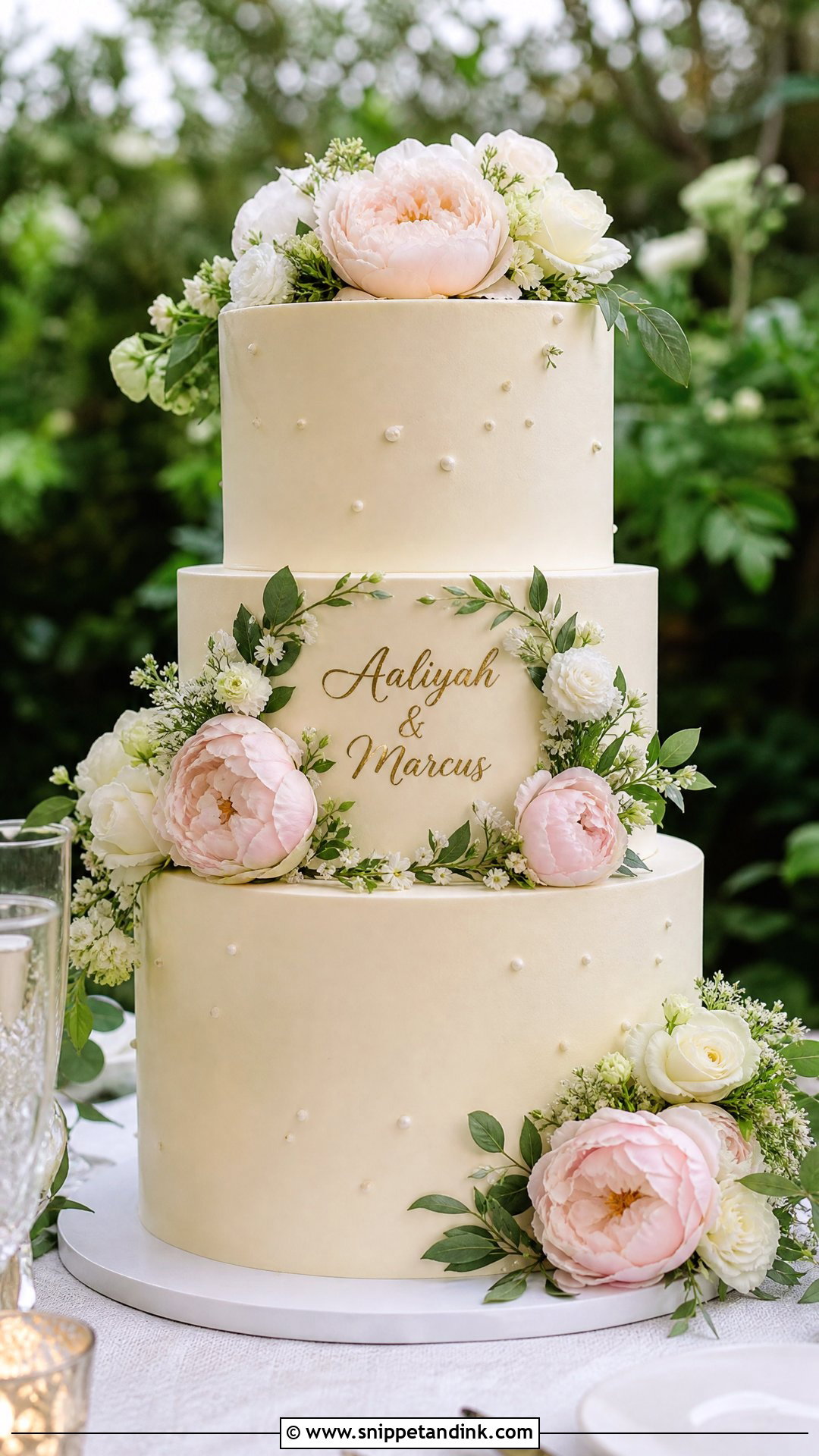
Names and flowers are a natural pairing. The names can sit on top as a topper, on a centre plaque or across the front tier, framed with fresh, sugar or pressed edible flowers. Garden weddings, spring receptions and romantic indoor venues suit it, particularly with flowers that echo the bouquet. Keep the lettering colour simple, such as gold, white or soft brown, so it doesn’t compete with the petals. I plan flower placement around the lettering, never the reverse, because flowers added last have a habit of covering the first letter.
14. Name on Pearl Wedding Cake
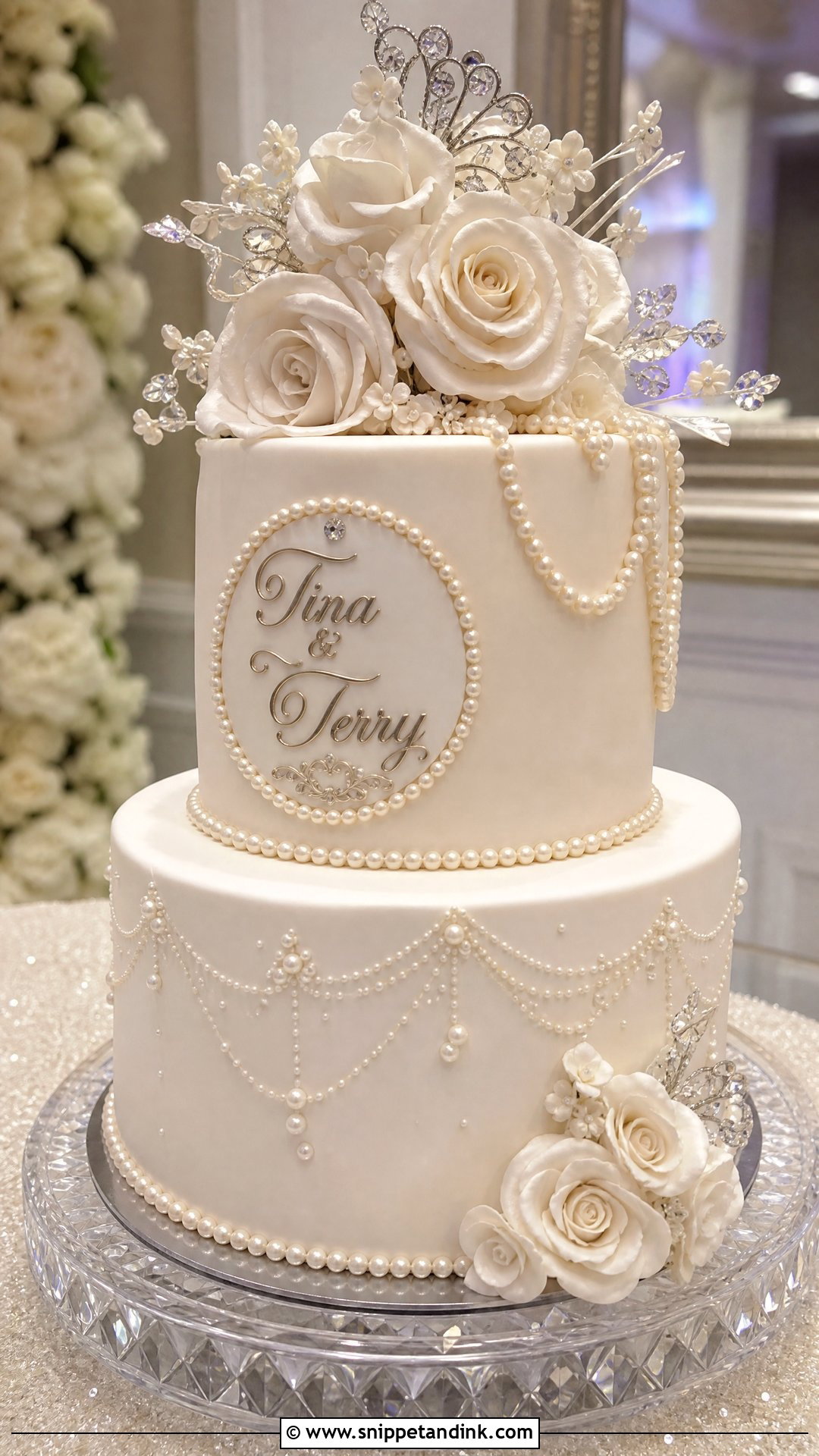
Pearls frame names neatly, whether around the lettering, along tier edges or as a soft border for a monogram. They sit best on ivory or white cakes with smooth buttercream or fondant, with names in gold, silver or white script. Formal receptions, church weddings and hotel ballrooms suit it. Put the names on one main tier rather than repeating them. Hard sugar pearls can be tough on teeth, so on any tier that’s going to be served, I use soft fondant pearls instead.
15. Name on Minimalist Wedding Cake
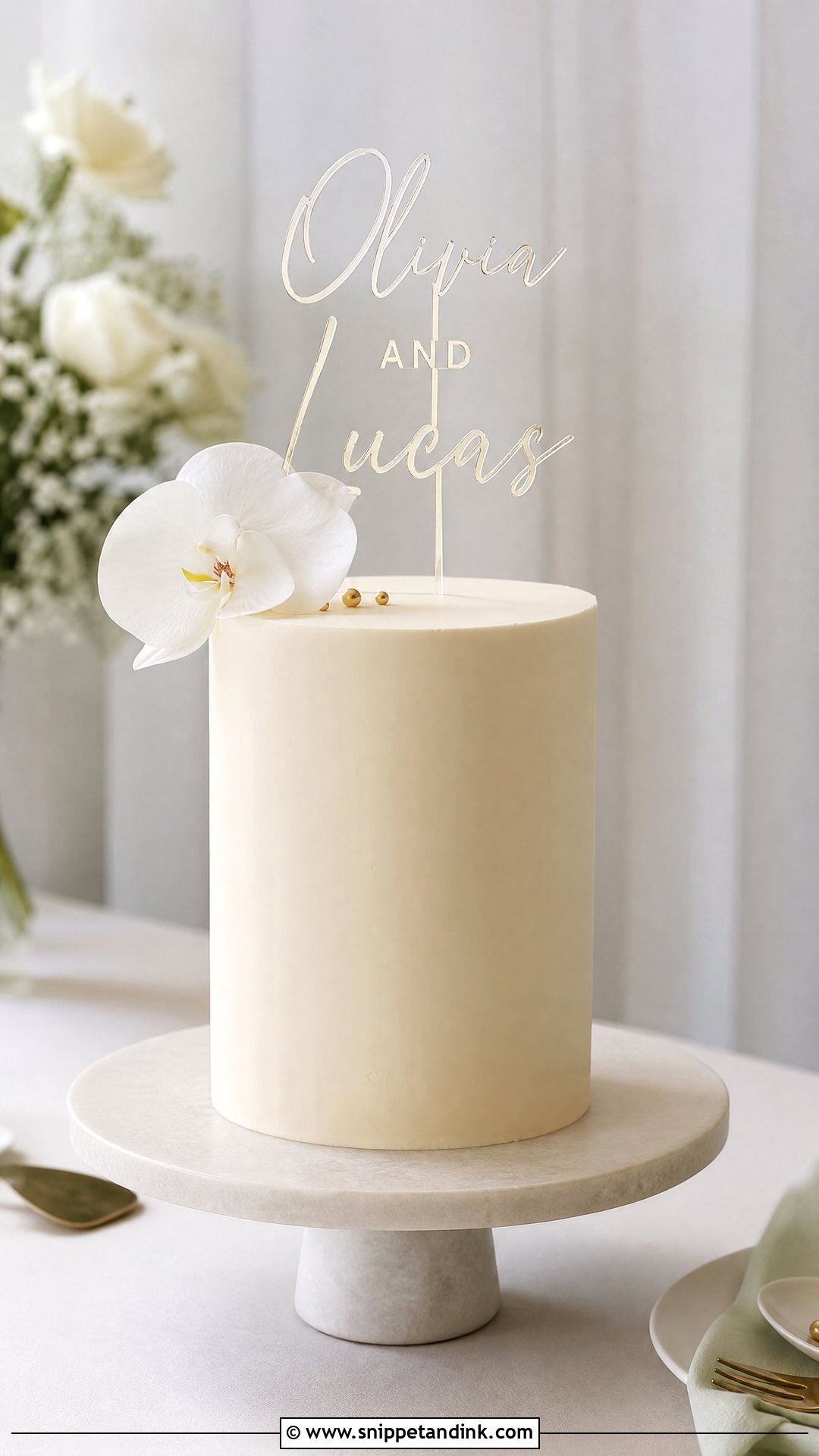
Minimal cakes depend on empty space, and that space is what makes the names look deliberate. Picture smooth white buttercream, one simple name topper and perhaps a single small flower. Thin acrylic script, small gold initials or a single-line name topper suit it; extra flowers, heavy piping and large decorations don’t. It fits courthouse weddings, intimate receptions, modern venues and neutral palettes. With so little else on the cake, every flaw in the frosting shows, so I’d only promise this look with sharp, smooth edges.
16. Name on Rustic Wedding Cake
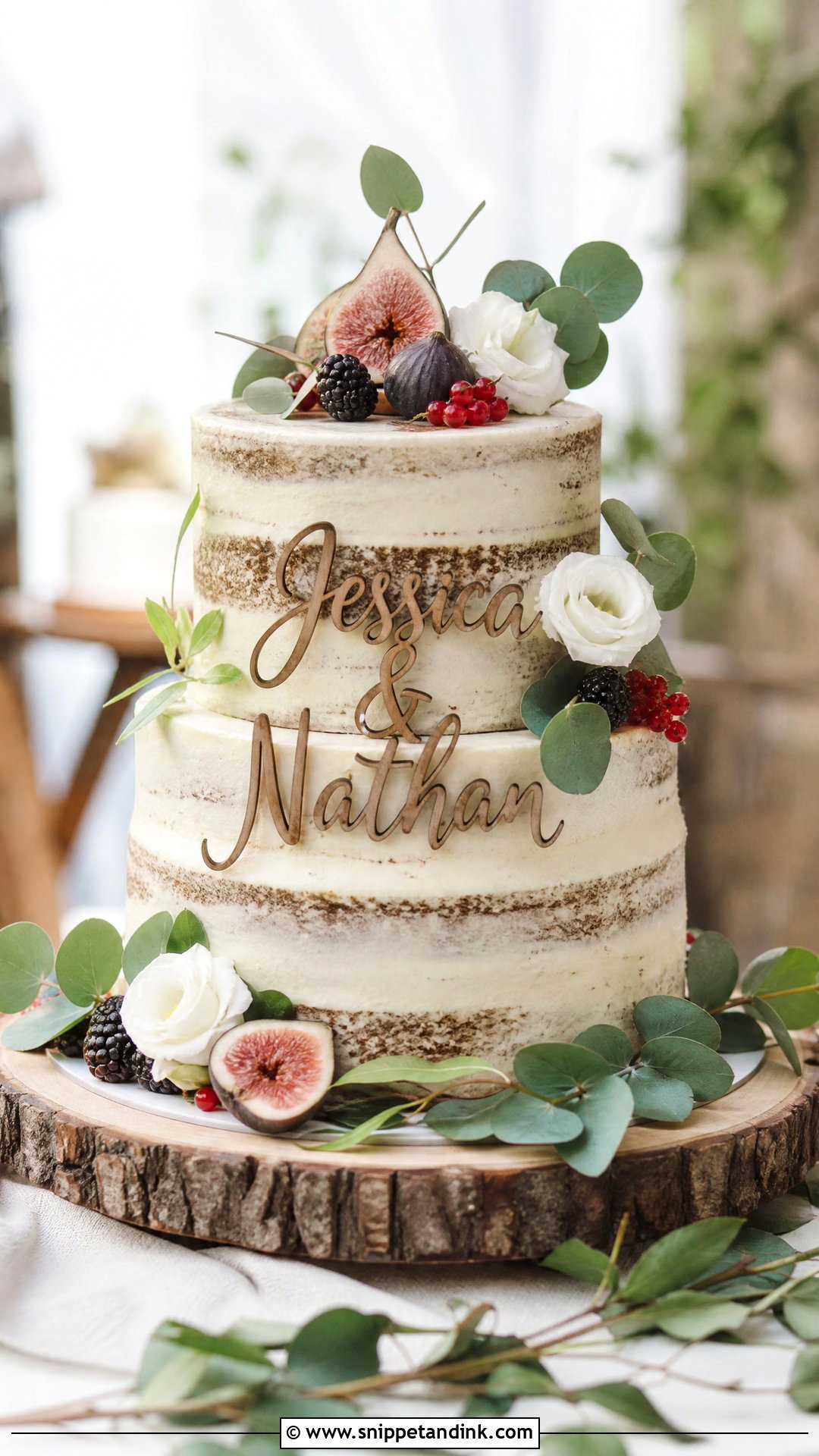
Rustic cakes usually mean semi-naked frosting, wood accents, greenery and a custom name topper, with vanilla, almond or spice sponge showing through soft buttercream. Names in wood, kraft-toned acrylic or dark brown edible lettering suit that palette. Greenery, small white flowers, figs or berries add a seasonal feel, and a wood slice or plain ceramic stand finishes it. That rough texture makes piped or painted names hard to read on the cake itself. On a rustic cake, I’d nearly always put the names on a topper.
17. Name on Modern Wedding Cake
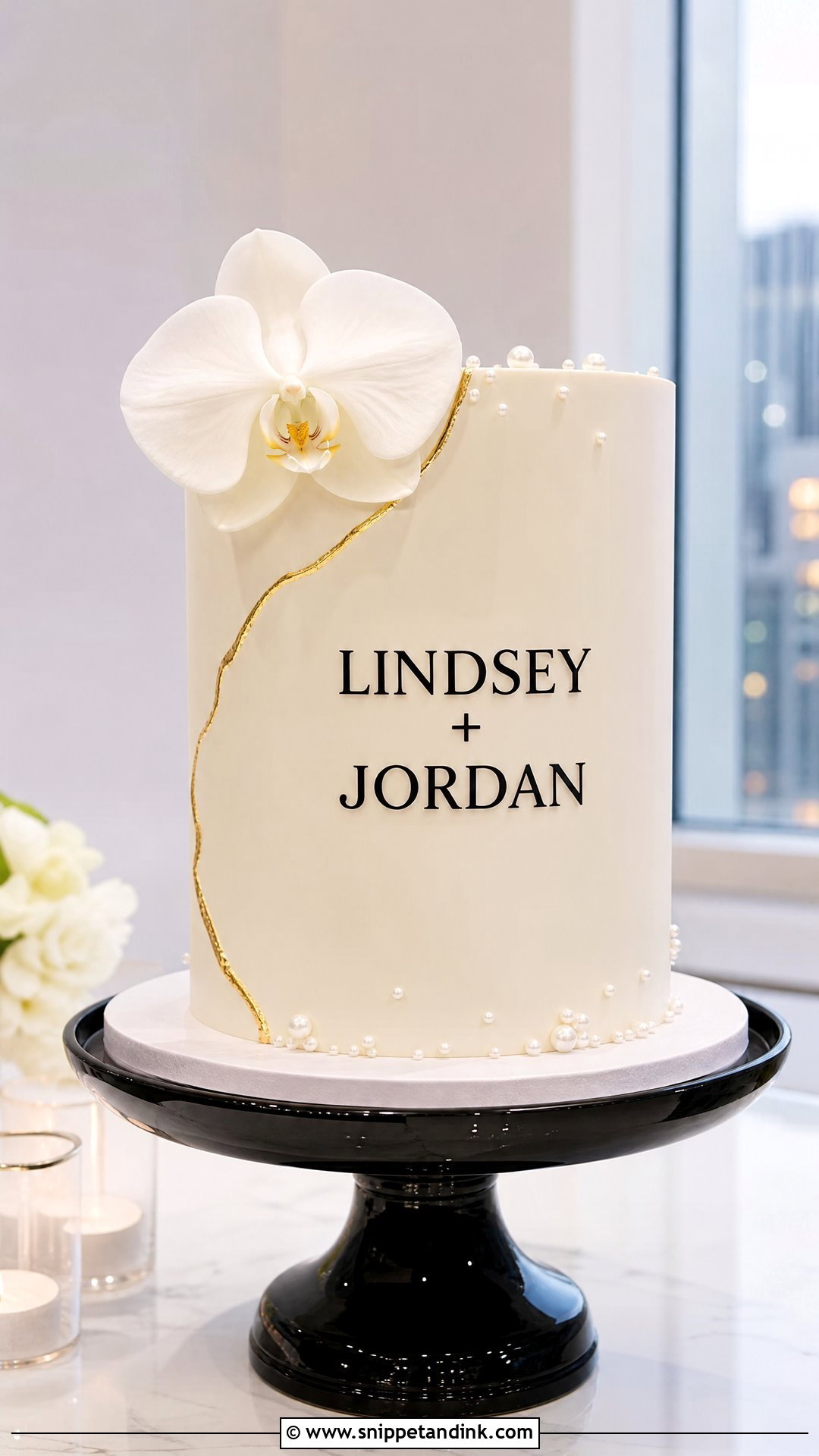
Modern cakes rely on clean shapes, strong contrast and sleek lettering: a tall single tier, stacked square tiers or a smooth round cake with sharp edges. Names in black acrylic, raised white-on-white lettering or metallic script suit it, alongside one statement detail such as a single orchid, a gold line or a sculptural fondant piece. City weddings, gallery venues and rooftop receptions suit the look. White-on-white lettering only reads when light hits it from the side, so ask where the cake table sits relative to the windows or spotlights.
18. Name on Vintage Wedding Cake
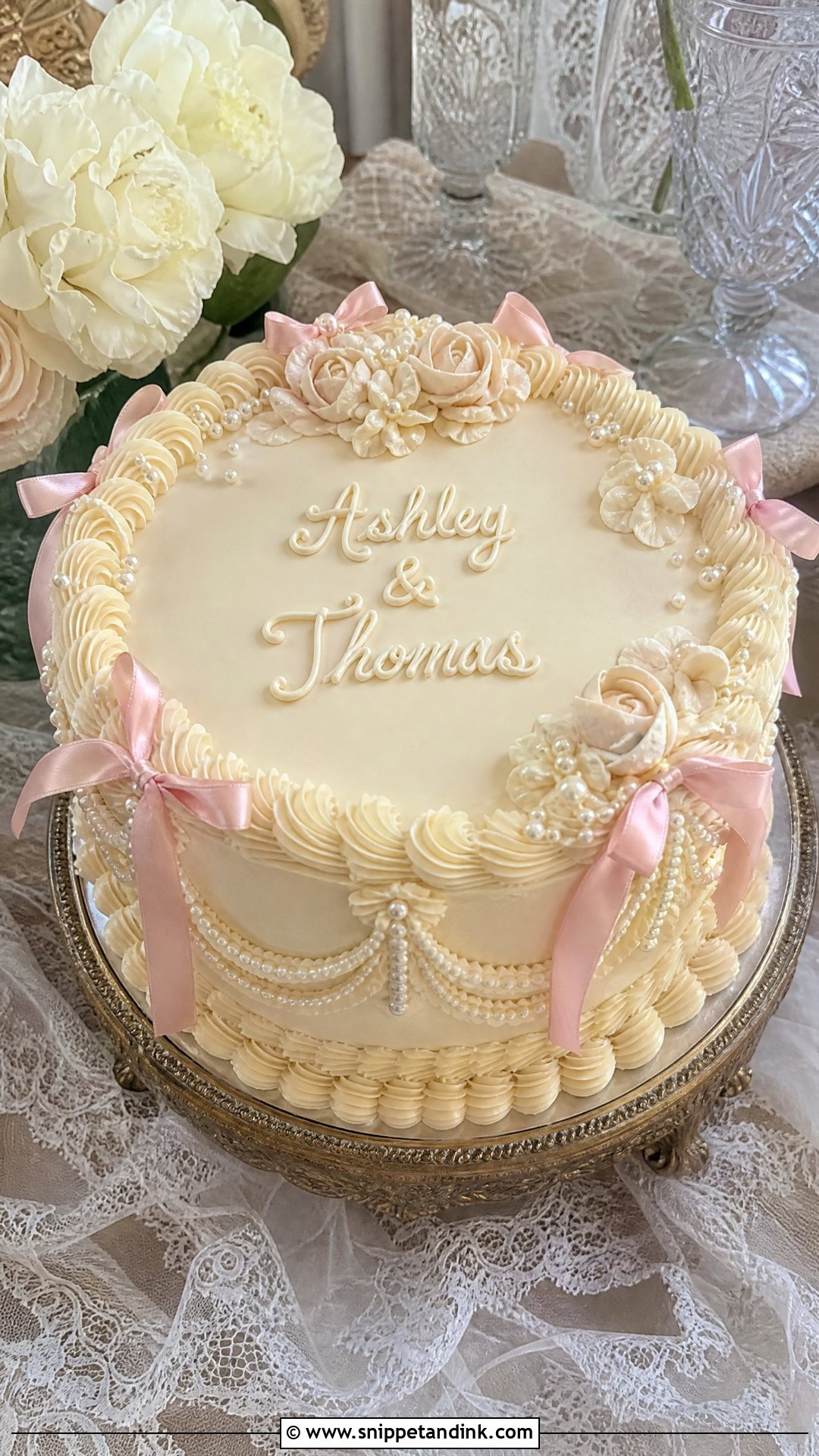
Vintage cakes are back: buttercream piping, shell borders, Lambeth-style overpiped swags, pearls and soft pastels. Names can be piped in the centre or set on a small plaque. Ivory frosting, blush details and delicate bows keep it romantic rather than sugary. It suits intimate receptions, historic venues and couples who love nostalgic photos. Keep the lettering neat and modest in size, because Lambeth piping already layers on a lot of texture and big names crowd it.
19. Name on Two Tier Wedding Cake
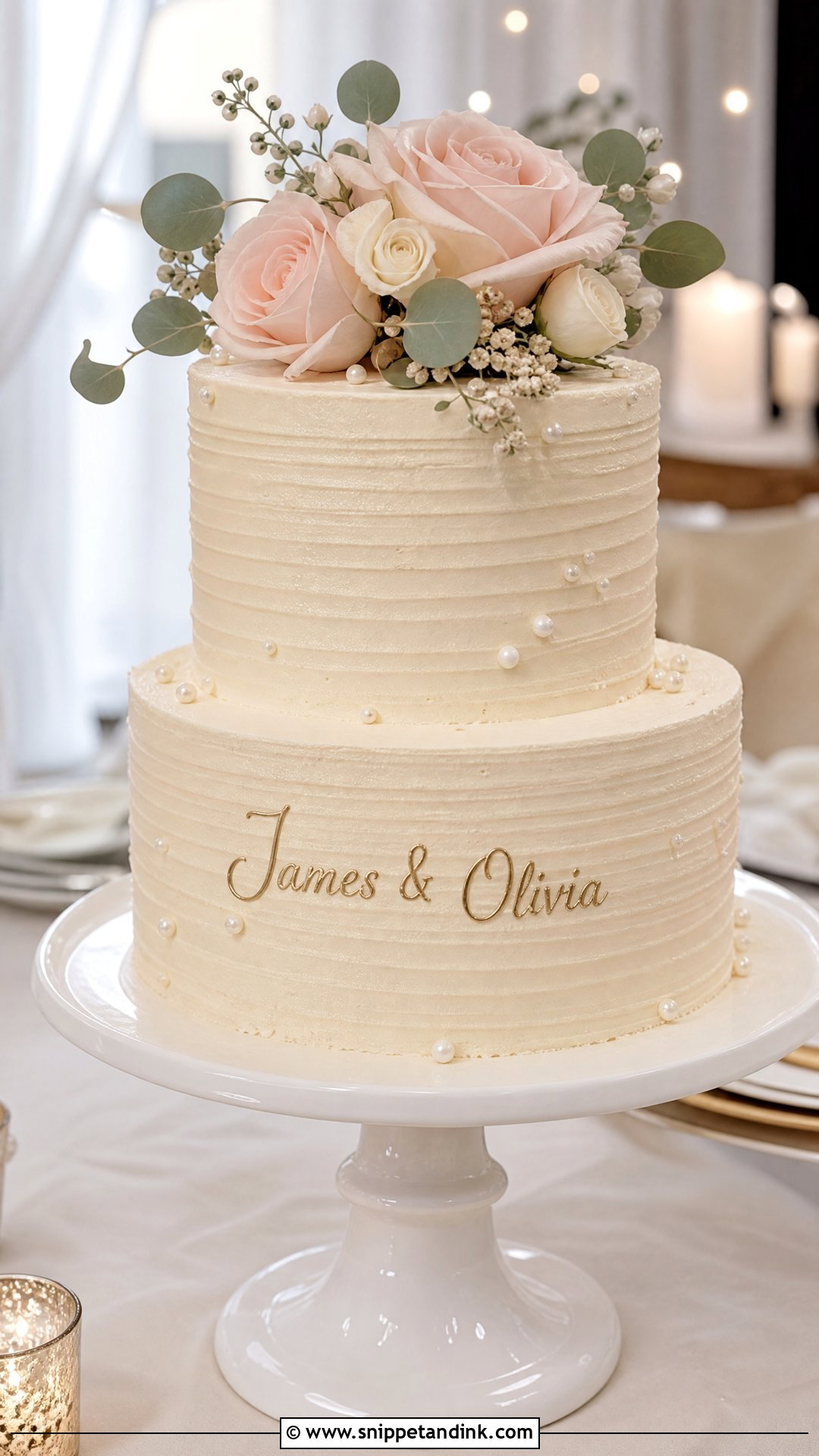
Two tiers give a cake height without bulk, which suits small to medium weddings. Names can sit on the top tier as a topper or run across the front of the lower tier as edible lettering. I like the second layout: the top tier holds the flowers, the bottom tier carries the names, and the lettering stays near eye level for guests. Smooth buttercream, soft ruffles or a subtle texture all work, and a simple stand adds height.
20. Name on Three Tier Wedding Cake
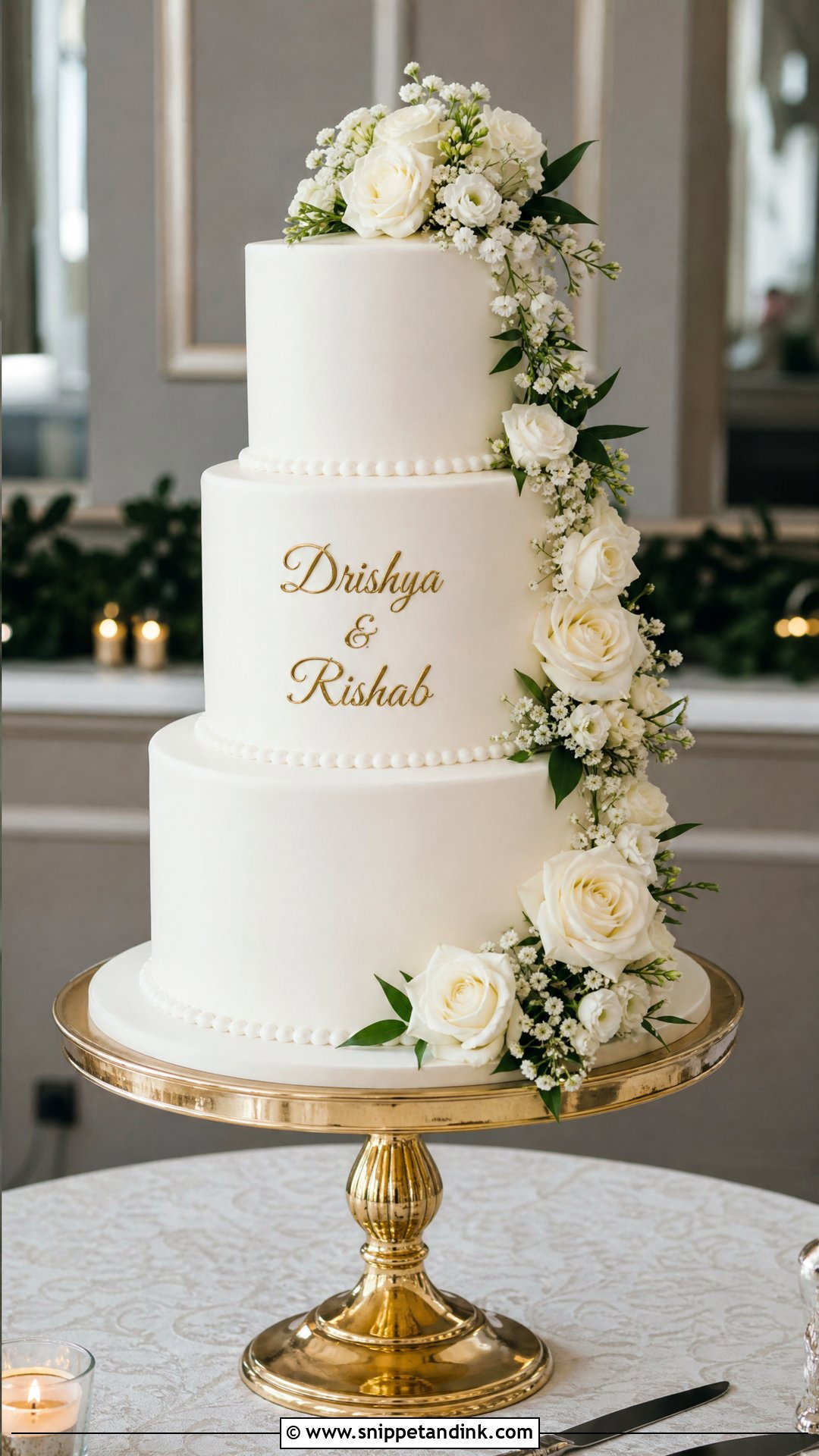
Three tiers leave room for flowers, texture and lettering without crowding. Put the names on the middle tier for balance, or use a topper to lift them above the cake. It suits formal receptions, bigger guest lists and dramatic cake tables. White or ivory frosting keeps it classic, with gold lettering for polish. Run the flowers in a gentle cascade that stops short of the names, so they stay visible from the front and in the cutting photos.
Acrylic, Wood and Sugar Plaques After the Reception
A topper is often the one piece of the cake you keep. Before the cutting, your planner or the venue staff should know to lift it off, wipe the picks and set it aside, or it disappears into the kitchen with the cake board.
Cleaning and storing each kind
- Acrylic: rinse in lukewarm soapy water and dry with a soft cloth. Skip alcohol and glass cleaners, which can leave fine cracks across the surface.
- Wood: wipe with a barely damp cloth and let it air dry, since soaking can warp thin lettering.
- Fondant or royal icing plaques: let them dry out completely, then store them in a box with tissue away from humidity. They last as a keepsake but aren’t for eating after months on a shelf.
- Metal: dry it straight after washing so the picks don’t tarnish.
If you’re saving the top tier for your first anniversary, take the topper off before it’s wrapped. Picks leave holes that let air into the cake, and toppers don’t come out of the freezer looking the way they went in.
Readable From Across the Room, Personal Up Close
Names can go onto a cake in a dozen ways, and none of them work in isolation. The lettering has to suit the whole cake: its texture, its height, where the flowers fall and how it reads from across the room. A small monogram sits well on a formal cake, while first names in acrylic suit a relaxed garden wedding. Edible lettering, piped names, gold initials or a custom topper can all look right, as long as somebody checks the spelling twice.
You'll Like These Ideas:





Leave a Reply