
A romantic cake doesn’t need hearts on every tier. Sometimes it’s a heart-shaped cake, sometimes it’s a single piped word, a cascade of blush roses or a red crumb that only shows when the first slice comes out. The ones that work in person and in photographs have one focal point and a short colour story, and they look finished from the side as well as the front. Below are twenty directions I talk couples through at tastings, from ornate vintage piping to a plain tier with one small detail, with the practical notes I’d give you before you order.
Turning a Saved Board Into an Order a Baker Can Quote
The most useful enquiry I get is short and specific. A screenshot folder of forty cakes isn’t. Before you contact anyone, narrow it down and gather the details that actually change the design and the price.
- Your guest count, and whether every guest gets a full slice or the cake is one dessert among several.
- The venue and the season. A summer tent, a cool church hall and a heated ballroom each call for different frostings.
- Two or three photos, with one sentence each on what you like: the piping, the colour, the bow. Bakers copy details, not entire cakes.
- Anything fixed, such as allergies, a flavour your family expects, or a monogram you’ve already used on invitations.
- A budget range. It lets a baker suggest where to simplify instead of quoting something you’ll turn down.
On timing, custom tiered cakes are usually booked several months ahead, and popular summer and autumn weekends fill first. Small single-tier cakes can sometimes be arranged later, but each baker’s calendar differs, so ask before you assume.
1. Heart Shaped Wedding Cake
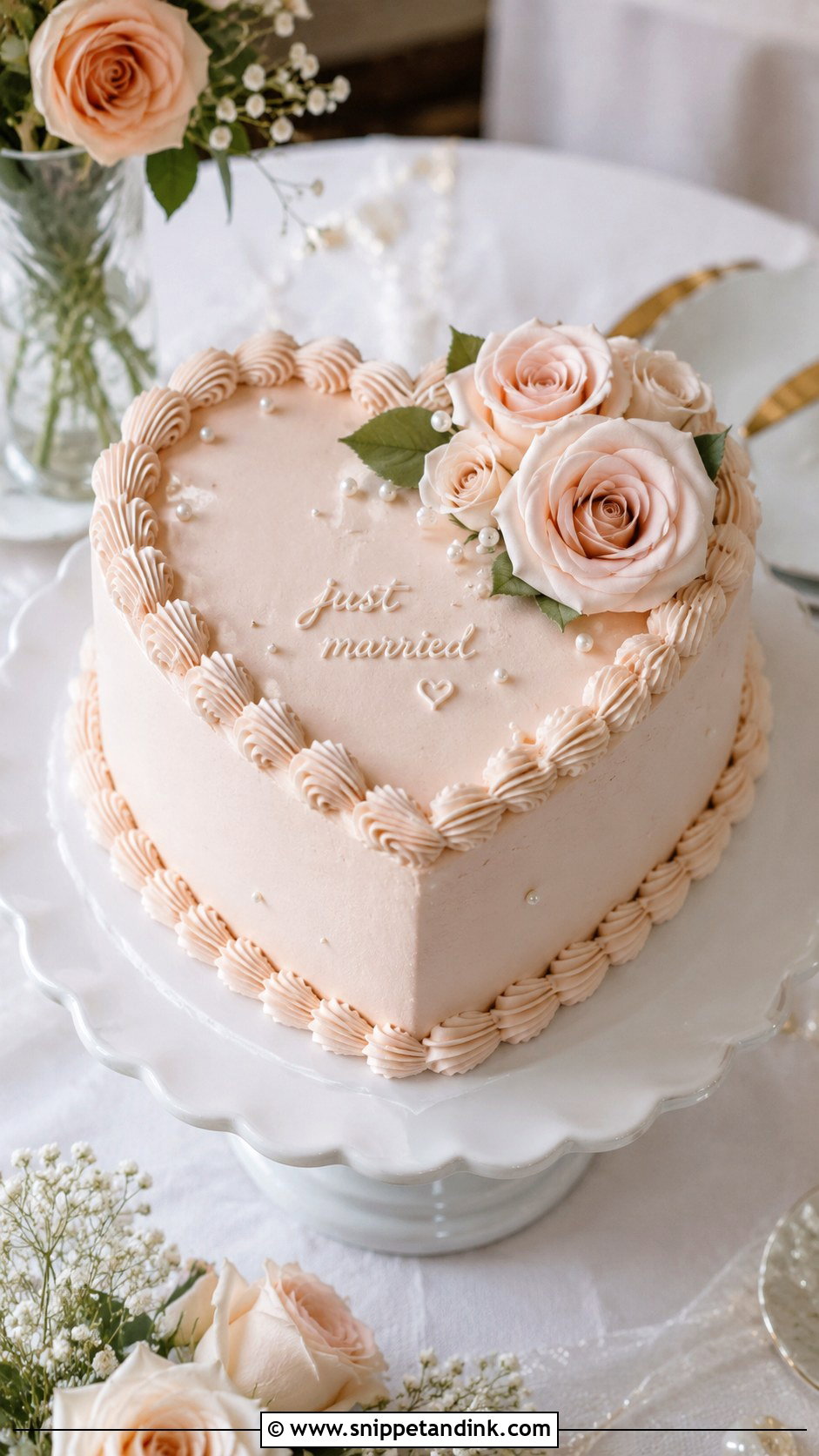
If you want the theme read in one glance, a heart shaped wedding cake does it. A single heart in smooth ivory with pale pink piping and a short message is the modern version; shell borders, pearls and cherries or sugar roses push it vintage. The flat top gives you more writing space than a round, so initials, a date or one word sit comfortably. Be aware that a heart serves fewer people than you’d guess from its width, so it suits small weddings or a sweetheart table best. A plain stand keeps attention on the outline.
2. Vintage Wedding Cake With Piping
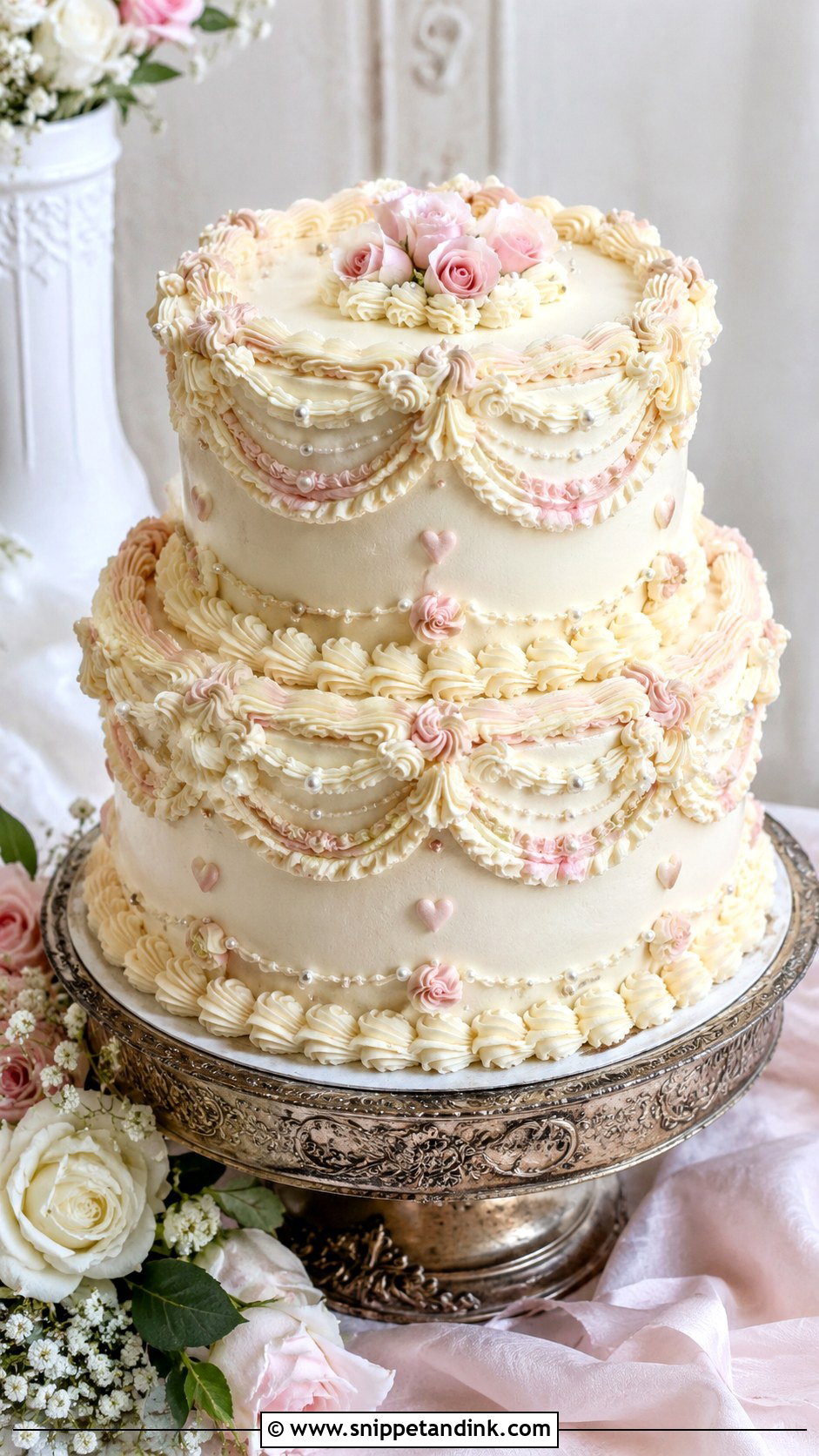
Buttercream piping in neat stacked layers (shells, scrolls, swags, small ruffles, tiny pearls) is what makes this vintage style. Two tiers is the height I like for it: enough room for the piping to breathe, not so tall that it starts to look like a wedding from a costume drama. My rule is one piping colour plus one accent. Ivory with blush, or champagne with pale blue, reads as old-fashioned charm; four colours reads as a birthday. A small heart topper or a fondant bow adds the love theme without more piping.
3. Romantic Floral Wedding Cake
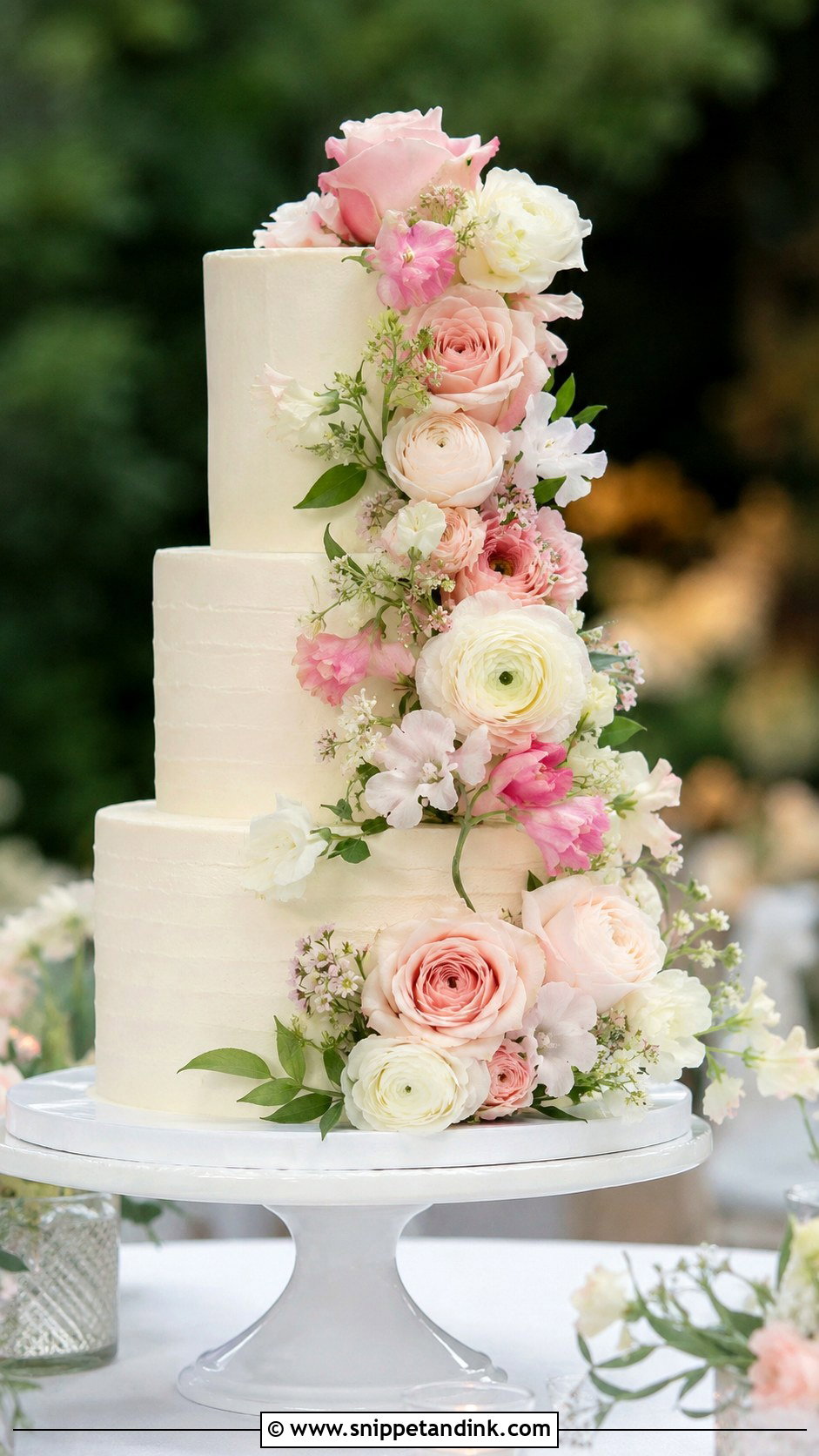
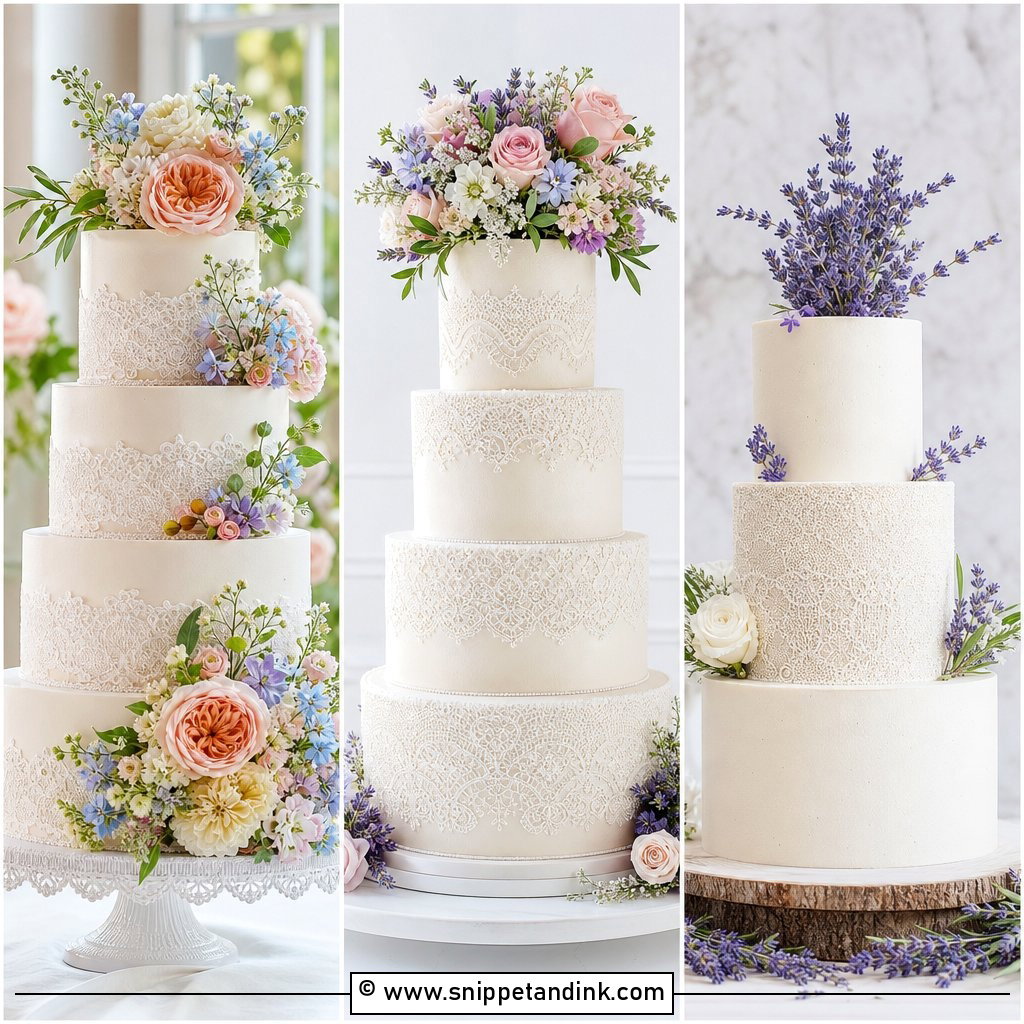
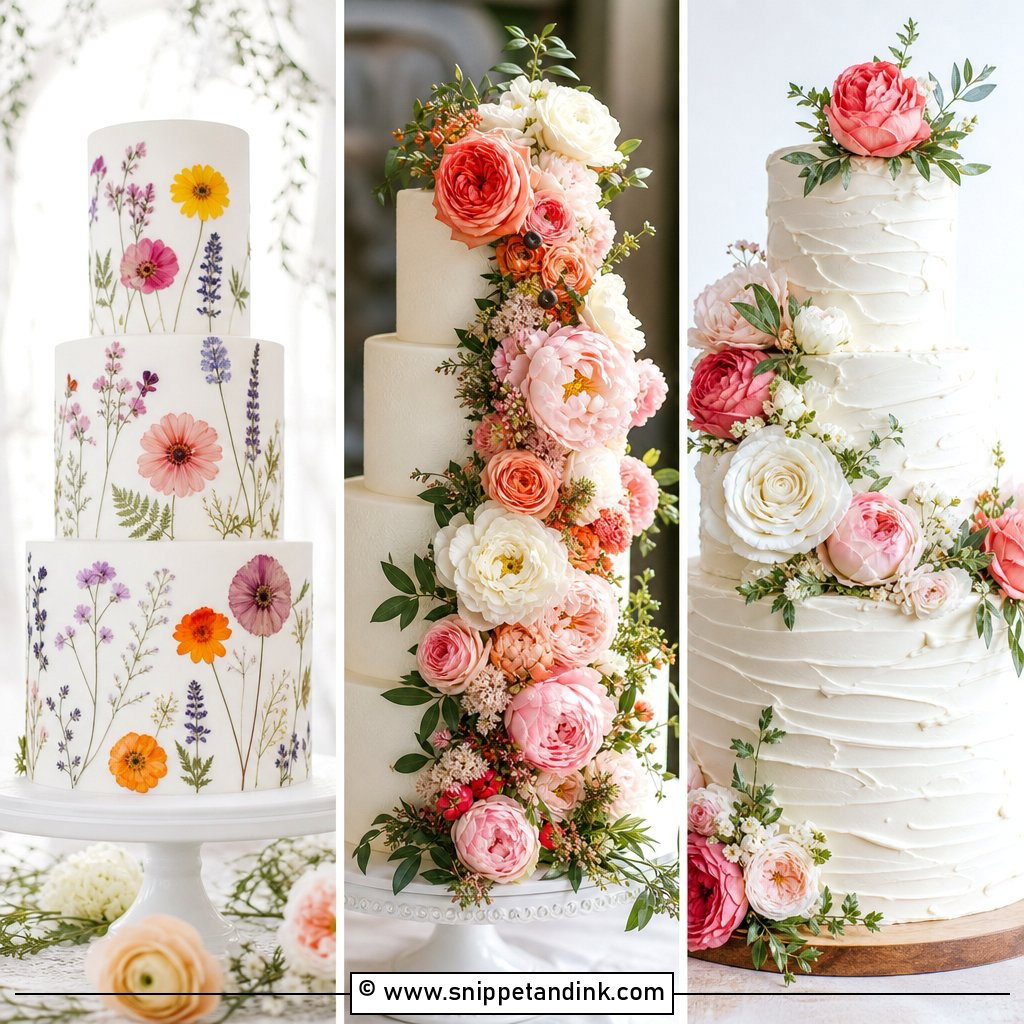
Flowers carry romance without spelling it out, which is why this is the design I suggest to couples who find hearts a bit much. Roses, ranunculus, peonies and sweet peas can drift diagonally across the tiers or ring the base like a wreath. I place fresh stems on the day, with every cut end wrapped or in a pick so no sap touches the frosting, and I check with your florist that nothing has been sprayed. Ivory buttercream behind blush, mauve or dusty rose blooms keeps it soft. Vanilla, almond, lemon or strawberry sit well under it.
4. Red Velvet Wedding Cake
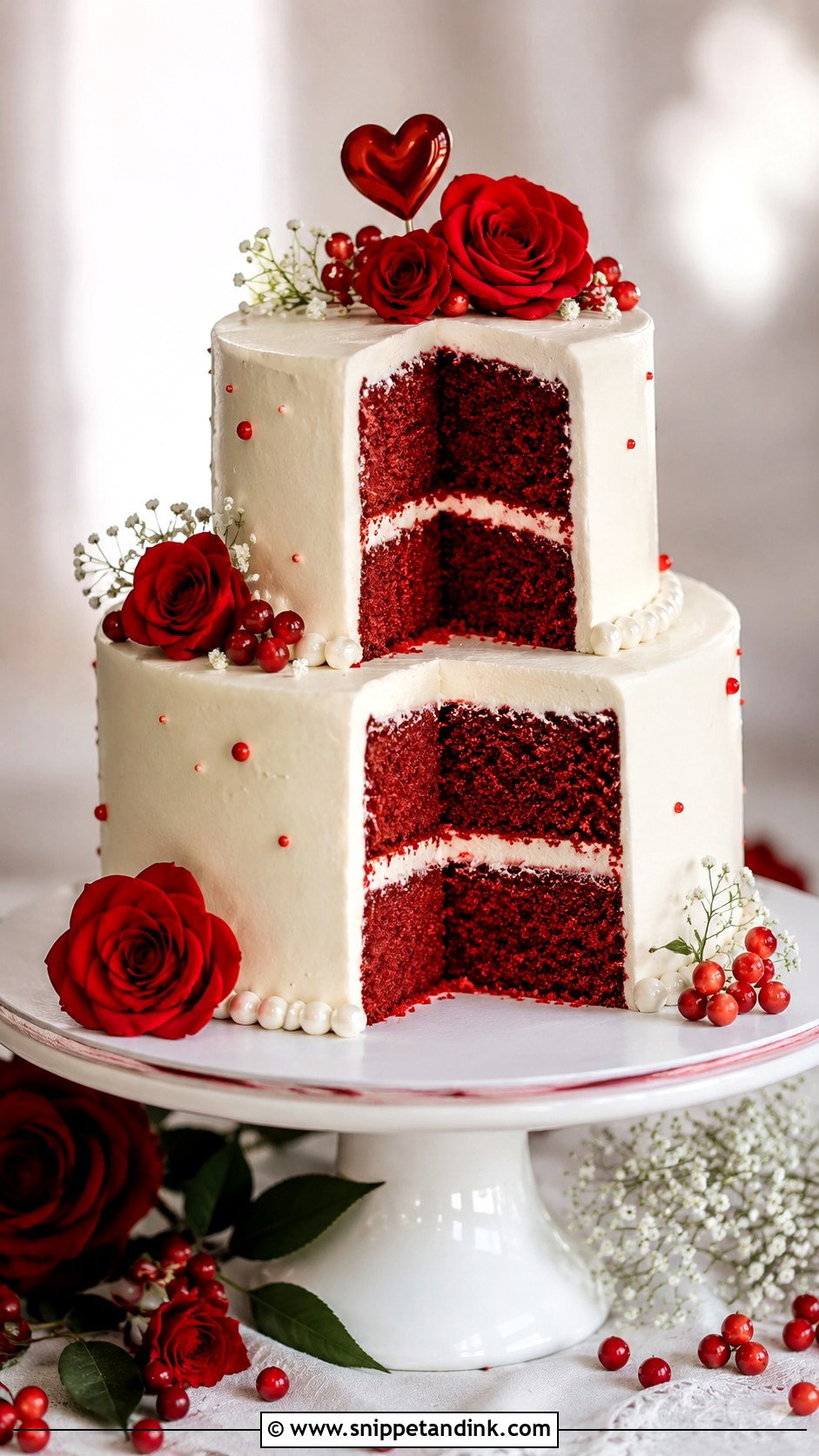
The surprise is inside. A Red velvet wedding cake can wear plain white on the outside, with red sugar roses, a pearl border or a small heart topper, and still reveal that deep red crumb at the cutting. The classic filling is cream cheese frosting, and it’s softer than buttercream, so on tiered cakes I use it between the layers and a firmer buttercream outside, with proper dowels. Cream cheese also needs to stay cool, which matters for long outdoor receptions. Fresh berries soften the look if the white feels too stark.
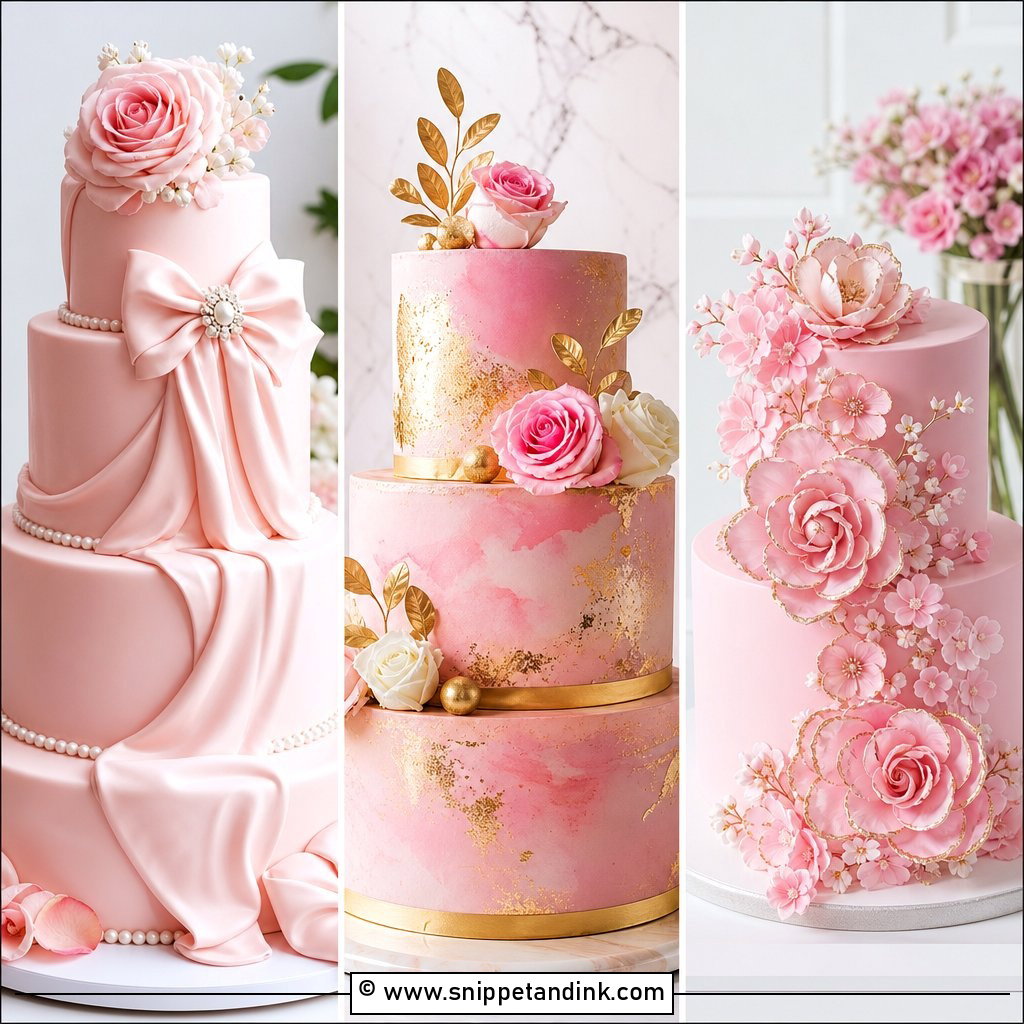
5. Blush Pink Wedding Cake
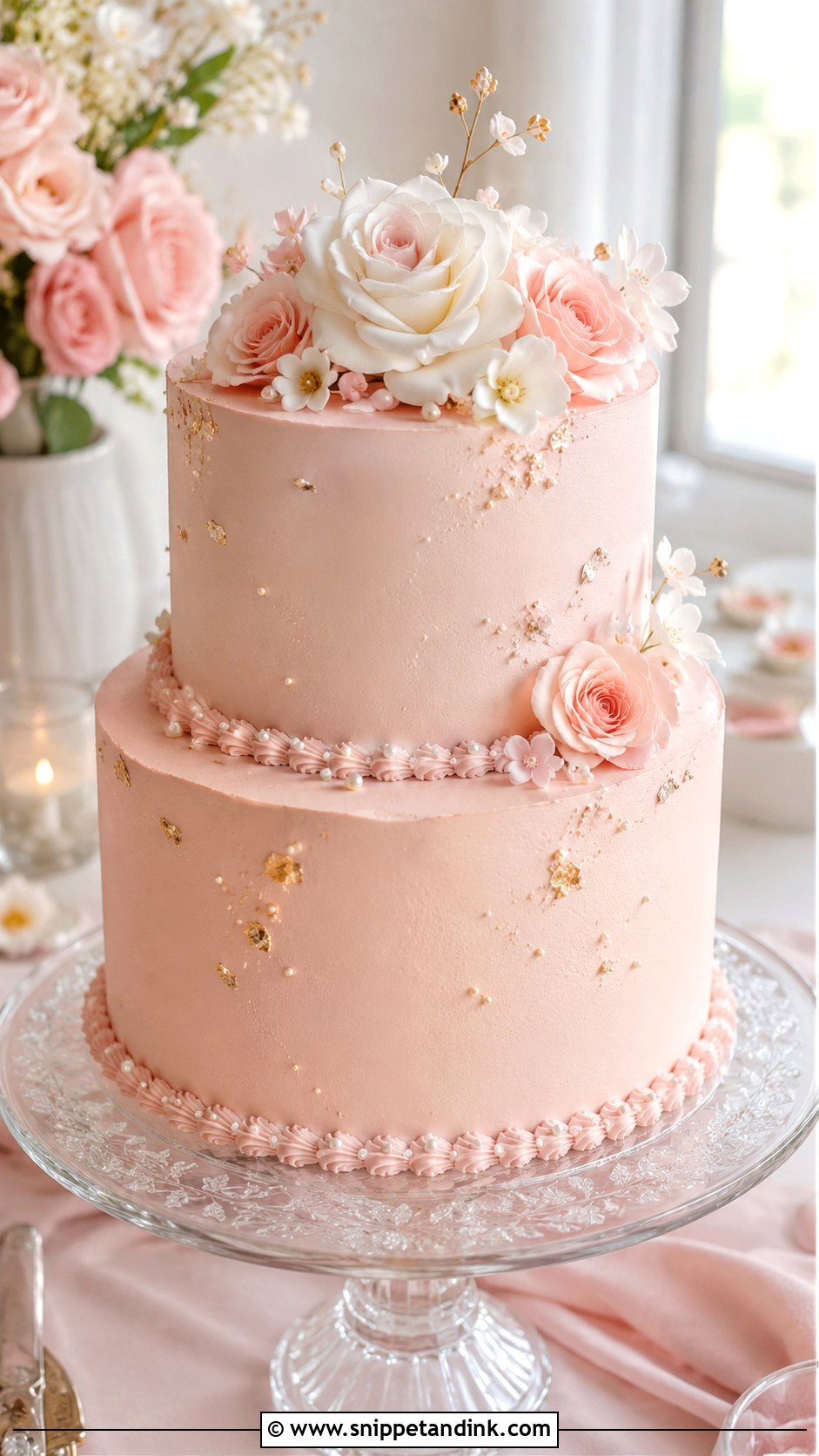
Blush can be barely there or a confident rose, and I always mix it in daylight, because warm reception lighting pulls pink toward peach. Smooth buttercream makes it modern; piped borders take it vintage. It pairs naturally with gold, white flowers, pearls and satin ribbon, though I’d pick one or two of those, not all four. A white or glass stand with a few stems at the base is plenty. Strawberry, raspberry or almond tie the flavour to the colour.
6. Pearl Wedding Cake
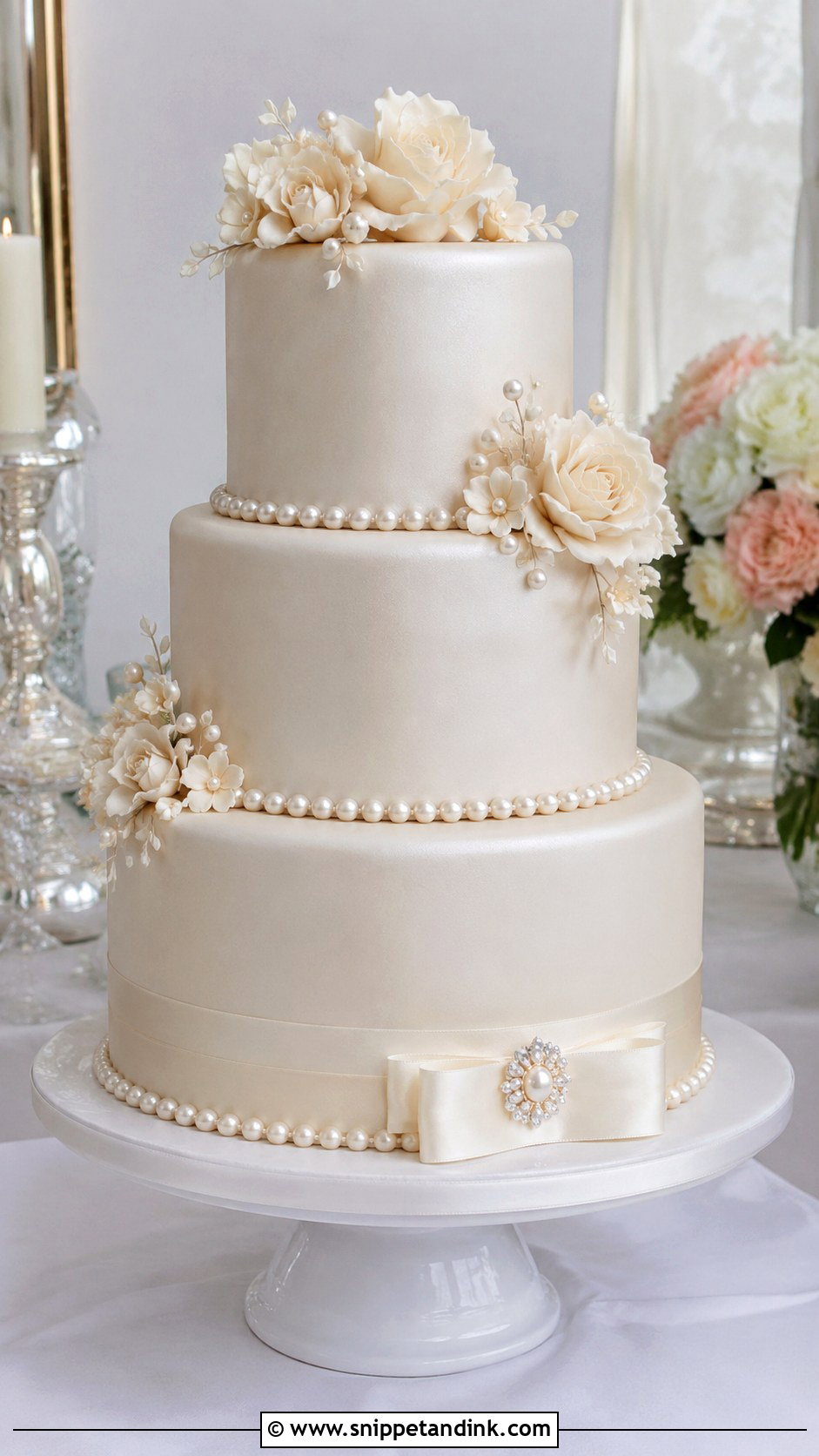
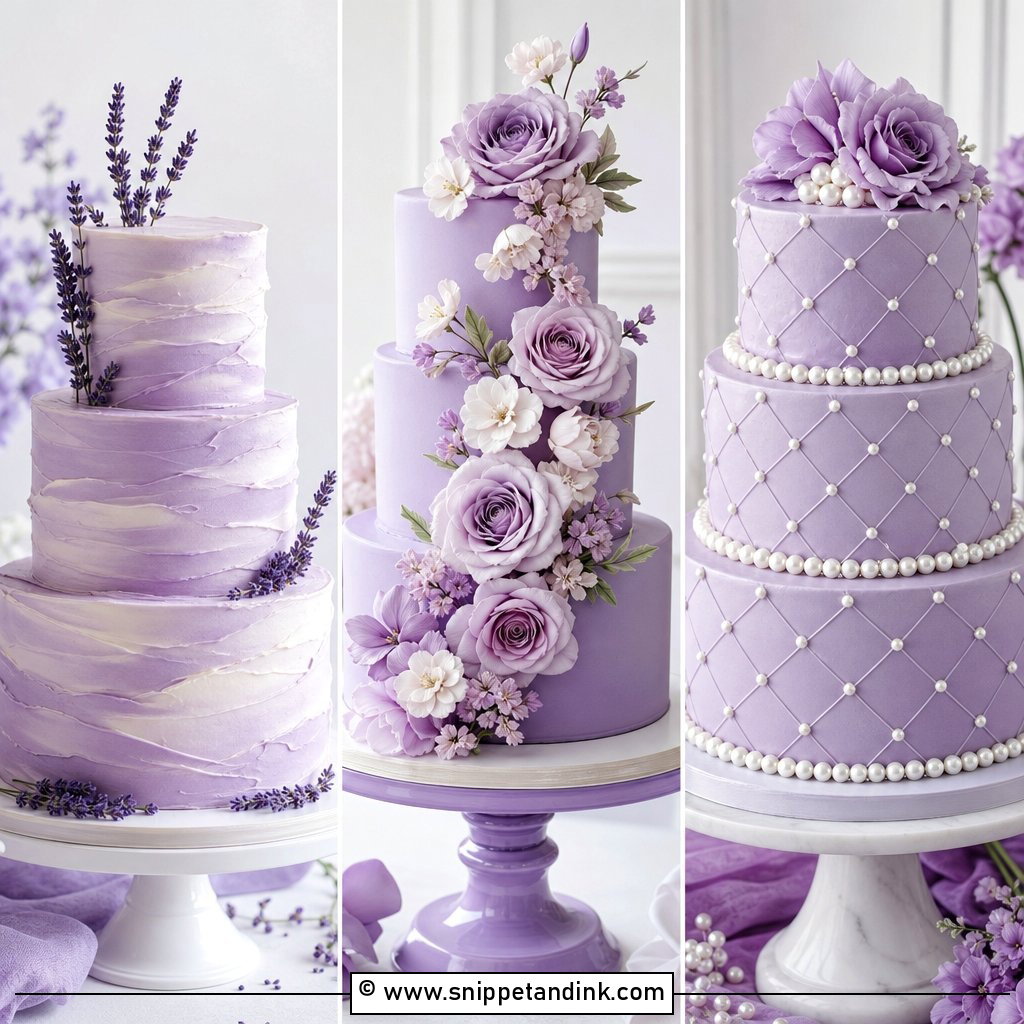
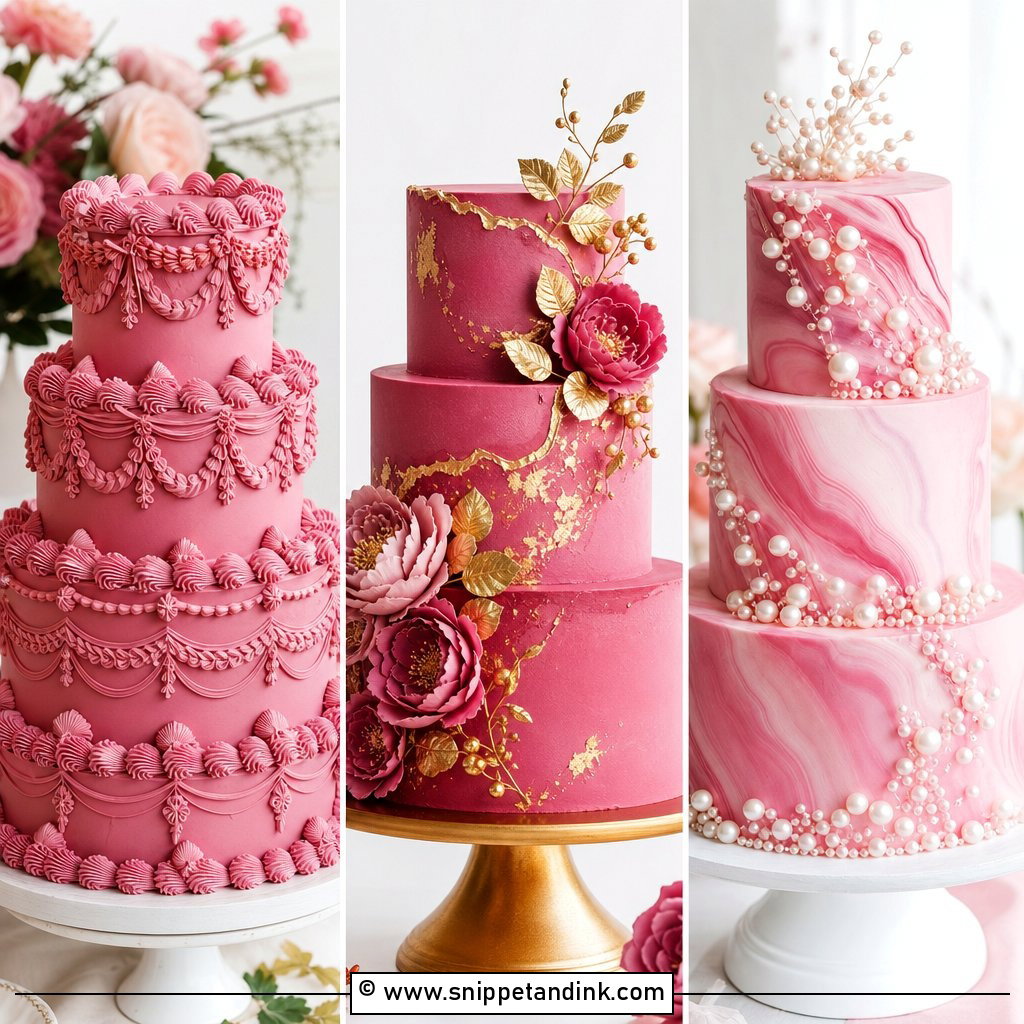
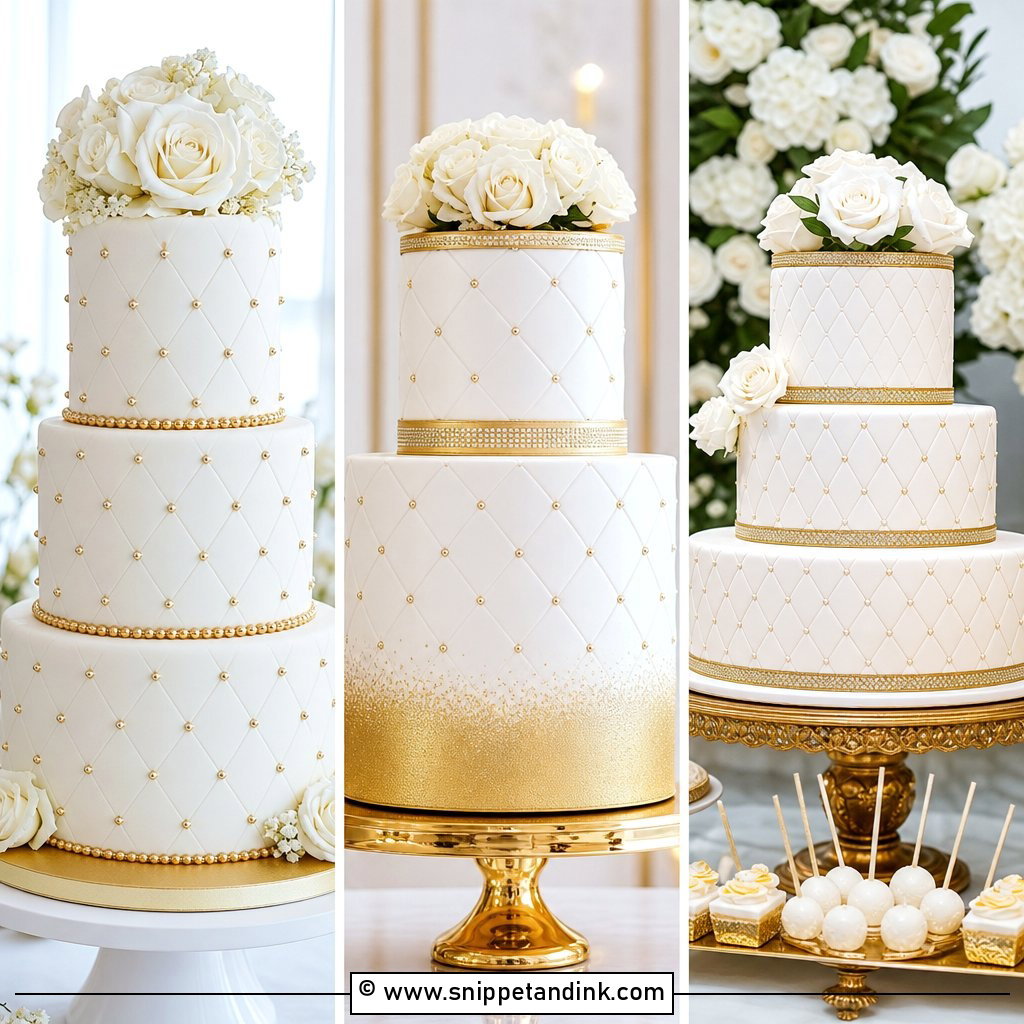
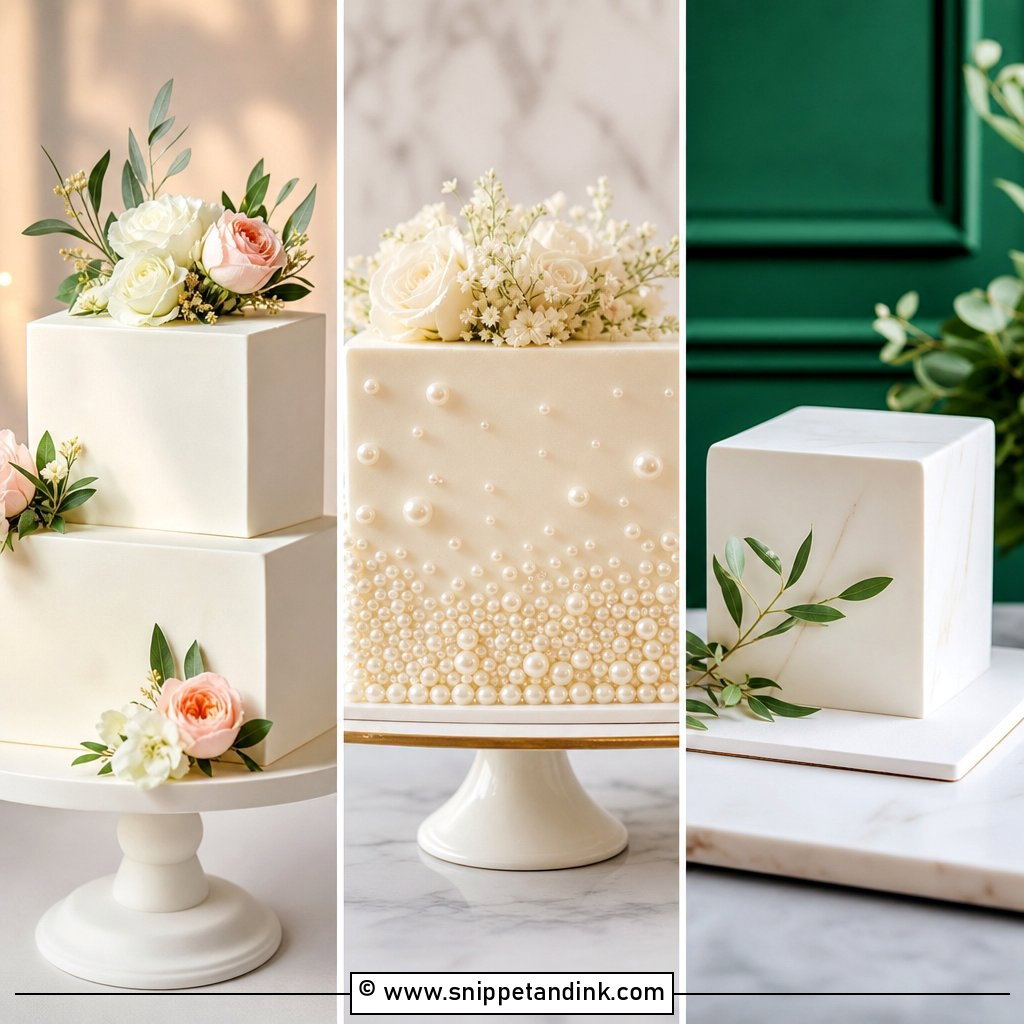
Pearls look graceful when they follow a plan: a tidy border at the base of each tier, a frame around a monogram, or a light scatter over smooth fondant. Mix those placements and the cake looks crowded fast. On tiers guests will eat, I use soft fondant or piped pearls brushed with edible lustre; hard sugar balls can crack a tooth. White or ivory keeps it bridal, champagne pearls warm it. Quilted fondant or one satin bow pairs well with them at a formal reception.
7. Wedding Cake With Bow
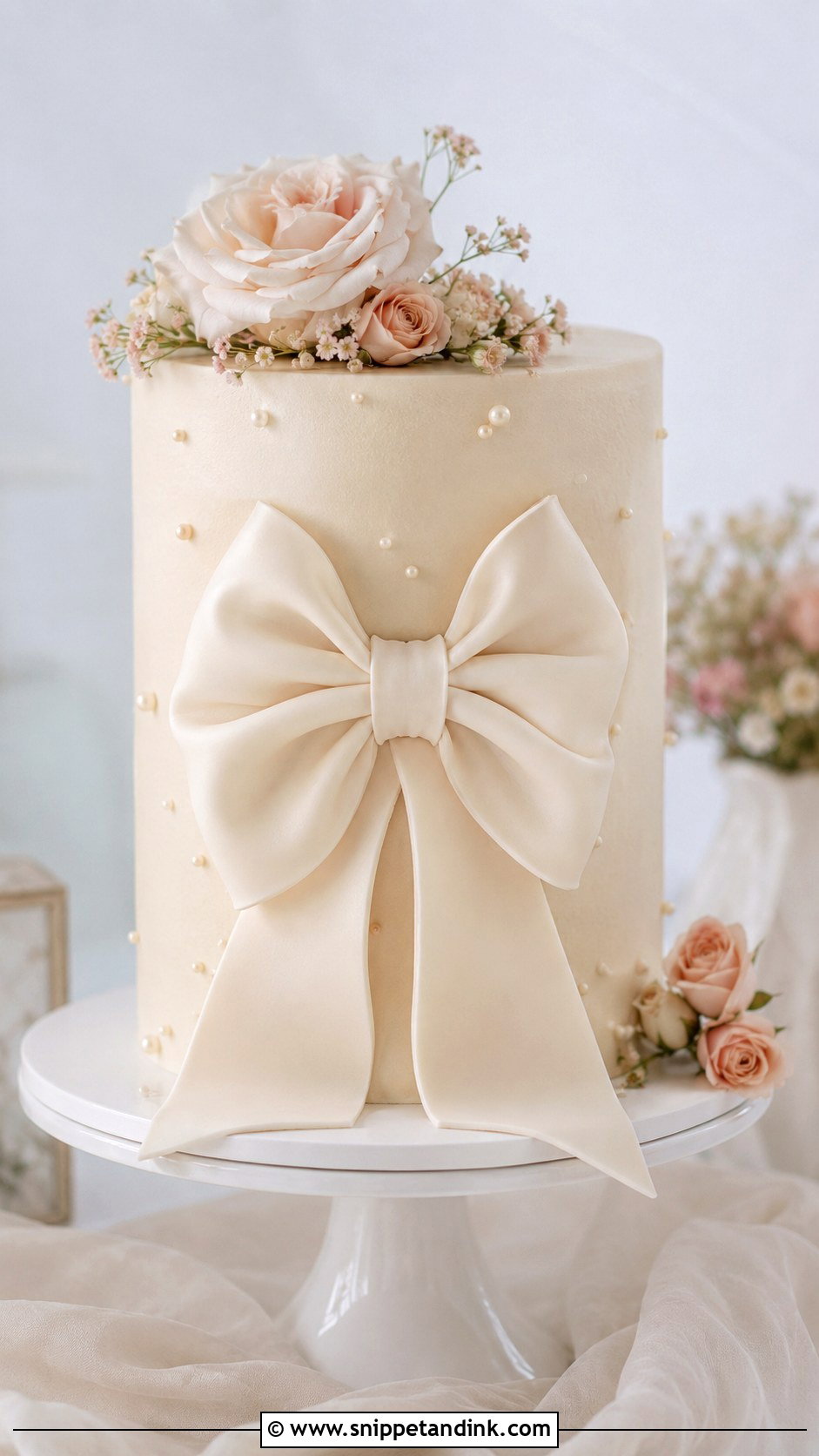
Bows come down to material. On a wedding cake with bow I’ll use fondant or gum paste when the loops need to hold for hours, wafer paper when I want something airy (it wilts in humid air, so it’s not for a summer barn), and real silk ribbon only on a fondant band or a cake board. One large bow on the front of a tall single tier looks modern; small bows on each tier look vintage. Ivory, blush and butter yellow all suit it, and the bow does the romantic talking, so keep the rest plain.
8. Lambeth Wedding Cake
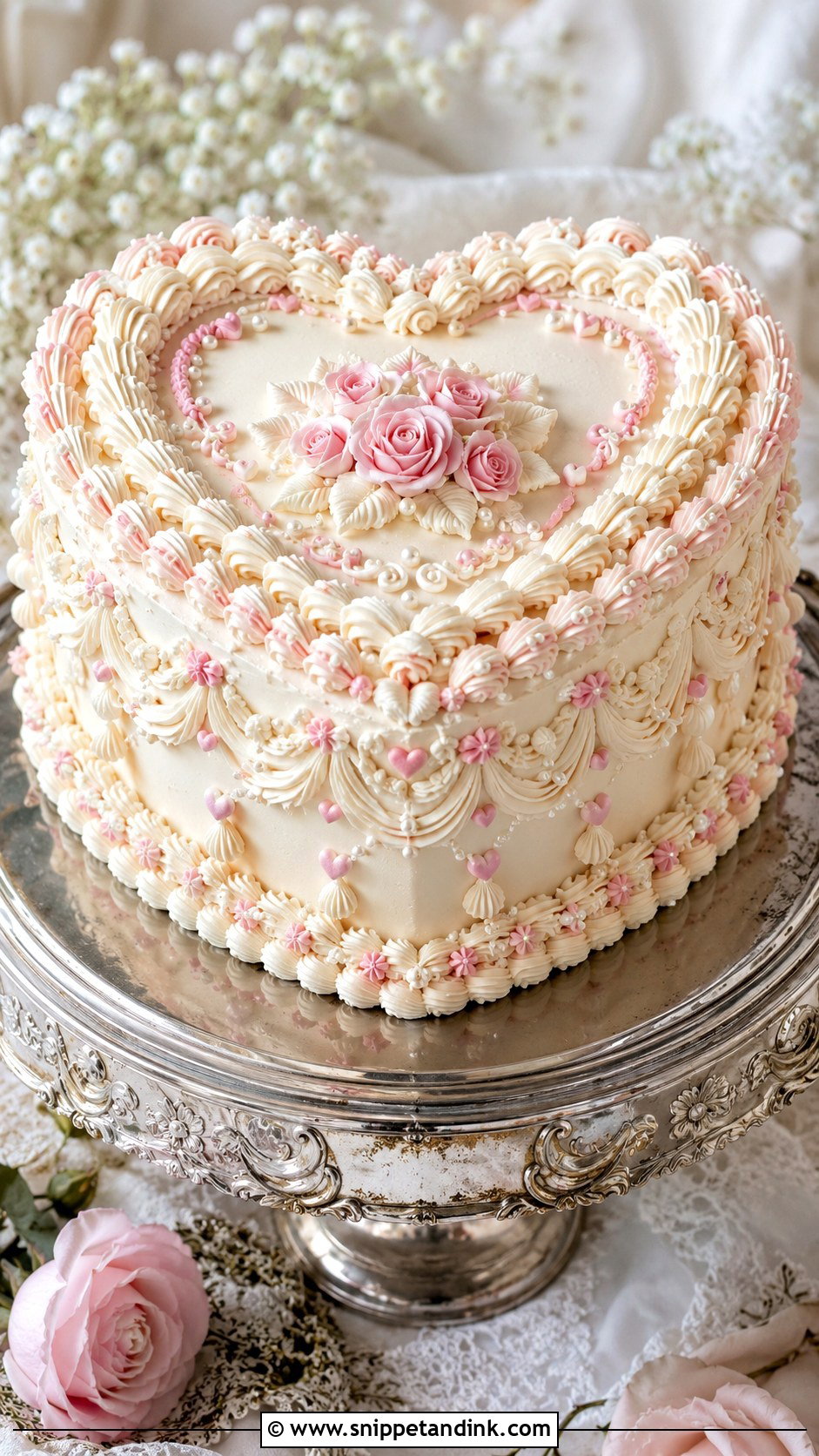
Ornate is the point here. A Lambeth wedding cake is built from layer upon layer of overpiping: shells, scrolls, garlands and raised borders that give texture from every angle. It takes real piping time, and that’s reflected in the price. Round and heart shapes both carry it well. For a wedding, I soften the colour to ivory with pale pink or champagne, then add tiny hearts, sugar roses or a small couple topper. Keep it out of the sun until serving; built-up buttercream is the first part of a cake to sag in heat.
9. Minimal Wedding Cake With Hearts
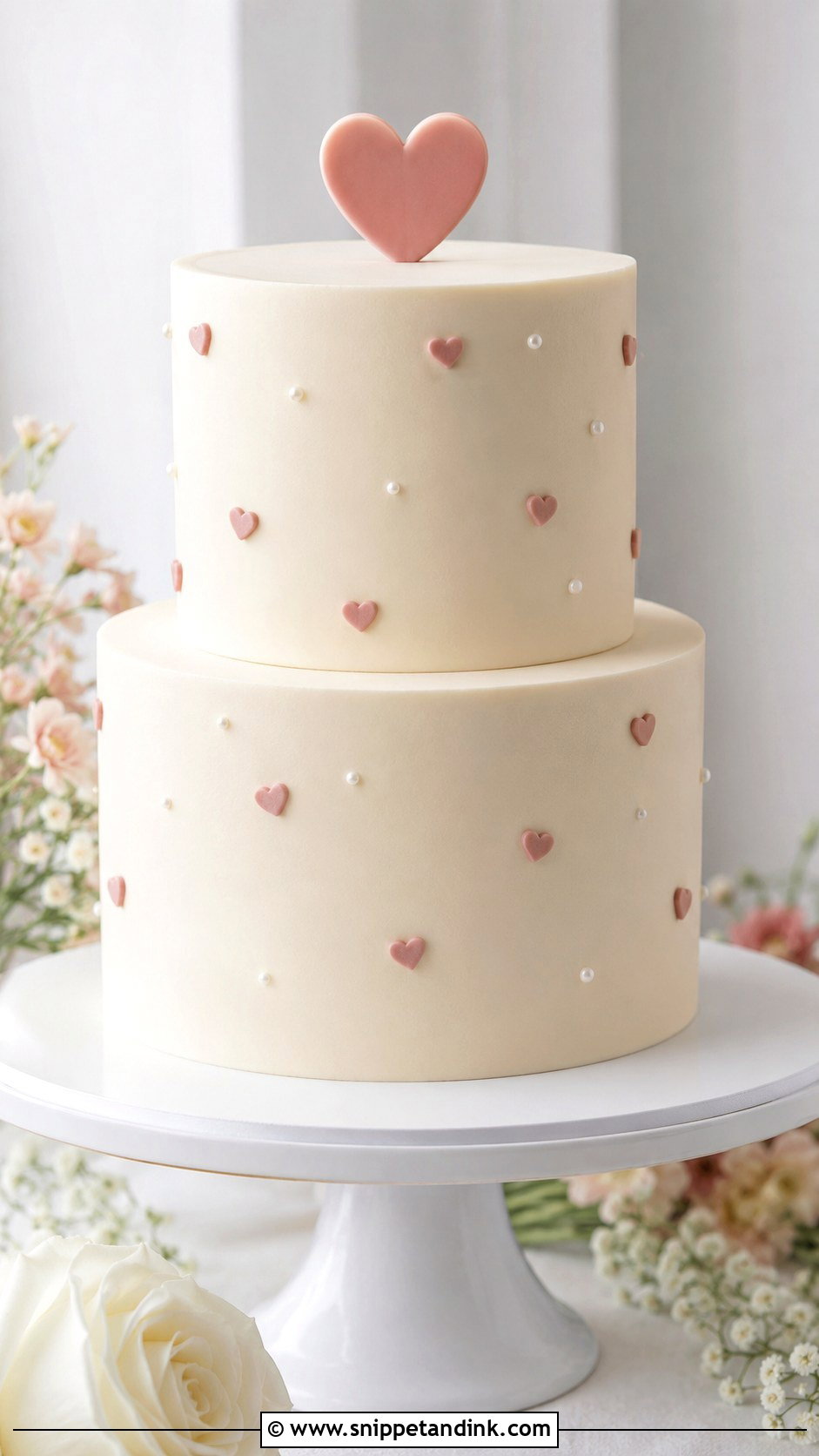
Small hearts on a smooth tier go a long way. I pipe them in a light scatter, cut them from thin fondant, or leave it to one topper, and I stop before the cake starts to look like a valentine. White or ivory with blush, cream or pale gold keeps it calm. One tier suits an intimate wedding; two give you more height for photos. Initials or one short word can sit beside the hearts if you want it personal. Every flaw shows on a cake this plain, so ask to see smooth finishes in your baker’s portfolio.
10. Two Tier Love Wedding Cake
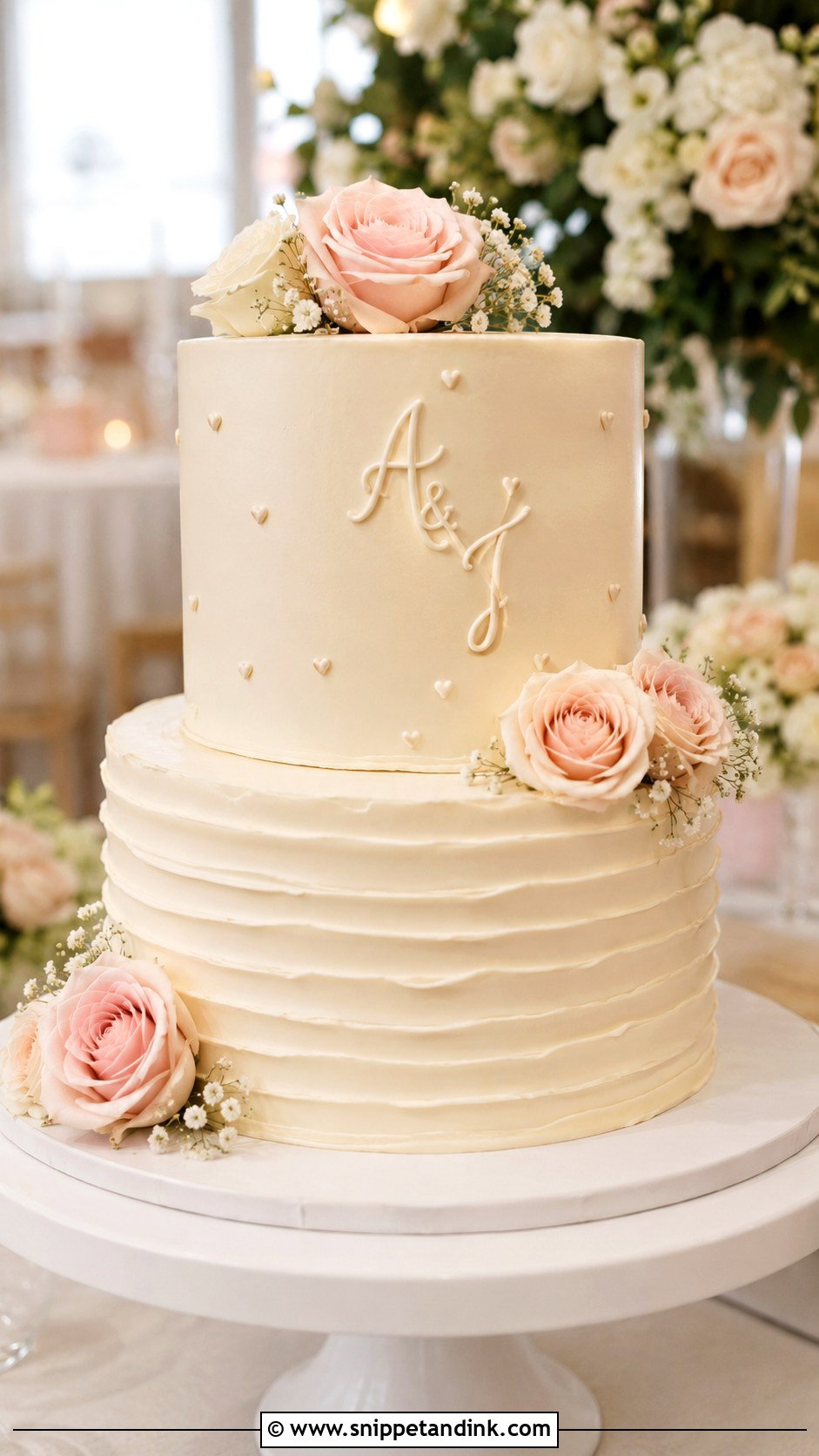
Two tiers is the size I’d recommend to most couples hosting up to a modest guest list. In a two tier love wedding cake the bottom can carry the texture (lace piping, soft ruffles) while the top holds the romantic detail, flowers, hearts or initials. It’s also a good moment to give each tier a different flavour, such as vanilla almond below and raspberry cream above. Two tiers travel more safely than three; I can usually deliver them stacked. A pretty stand, low flowers and soft light finish the table.
11. Three Tier Romantic Wedding Cake
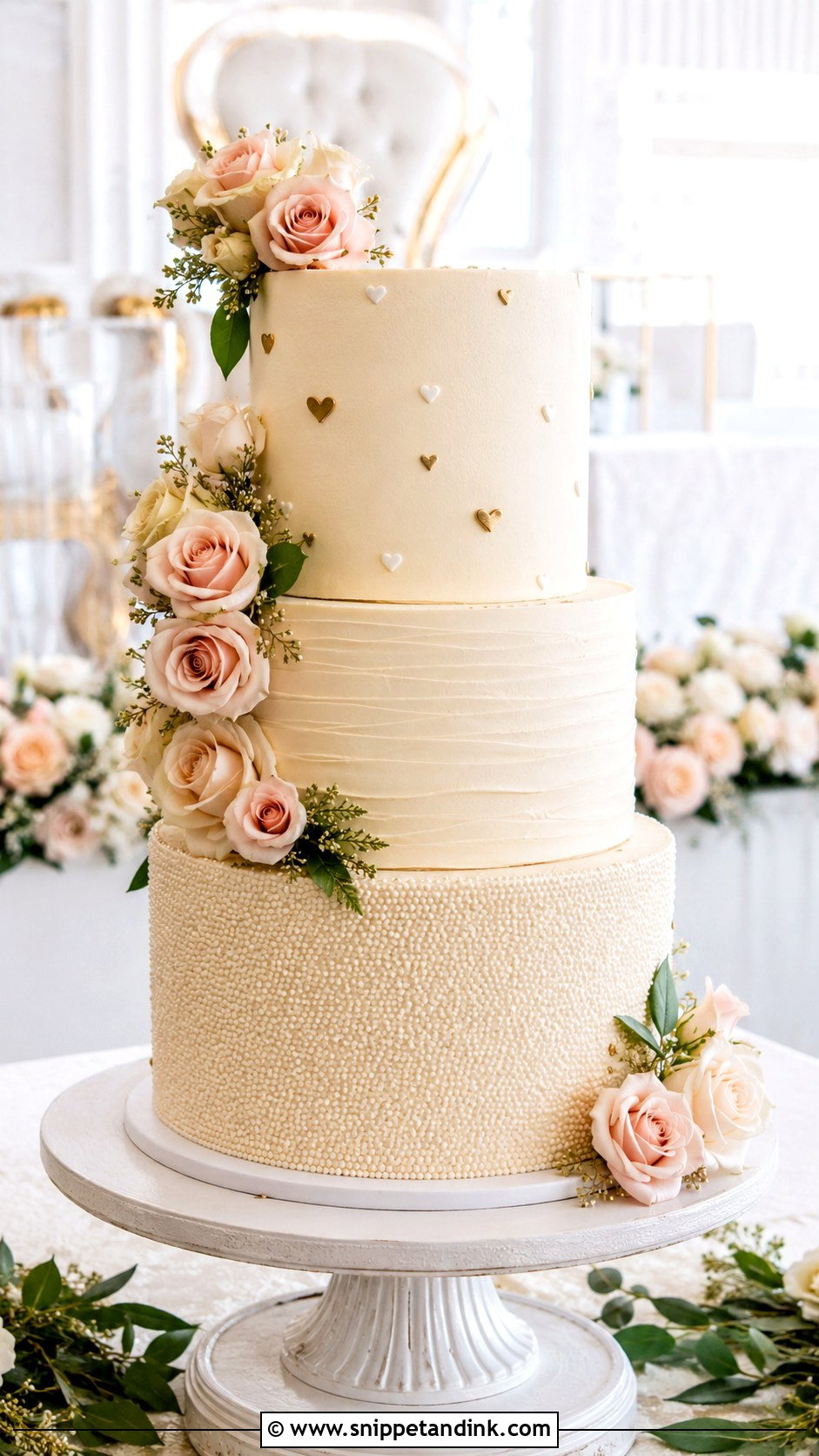
Three tiers turn the cake into part of the room’s decor. Each tier can carry its own finish (smooth on top, pearl texture in the middle, flowers at the base) as long as one romantic element repeats through all three, like small hearts or blush roses. Structure matters more at this height. I dowel every tier, often run a central support through the whole cake, and on longer drives I assemble at the venue rather than risk a stacked cake in a van. Vanilla, lemon, almond or a champagne buttercream work without extra decoration.
12. Wedding Cake With Love Quote
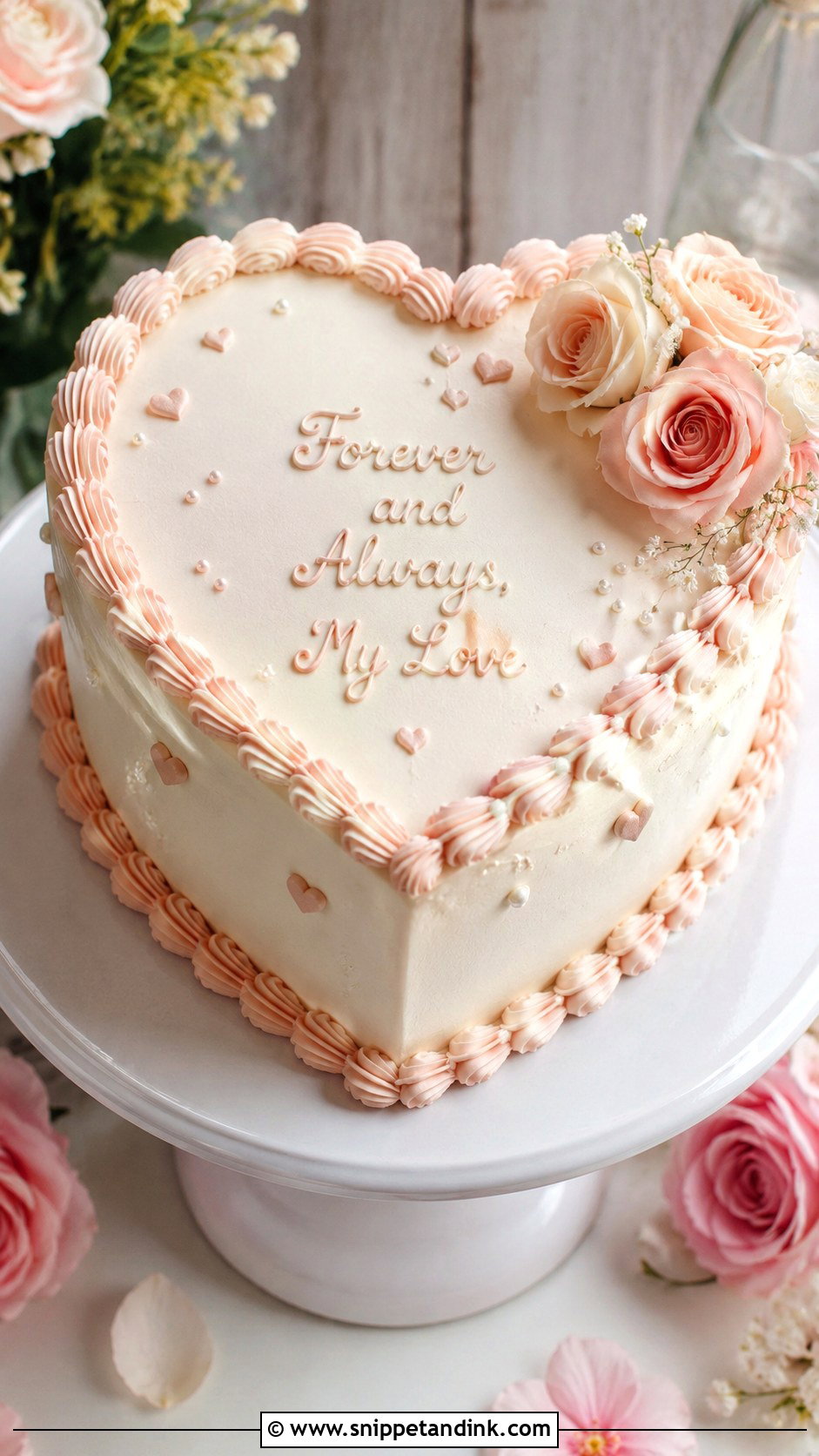
One short phrase is enough. Pipe it across the top, letter it onto a small fondant plaque, or run it along the front of a smooth tier, but keep the lettering simple enough to read from a few steps away. Black, gold, blush or white-on-white all work; white-on-white is the subtle option and shows best in raking light. A few flowers or pearls around the message make it look finished rather than written on. Send me the exact words in writing, spelled the way you want them, well before the week of the wedding.
13. Wedding Cake With Initials
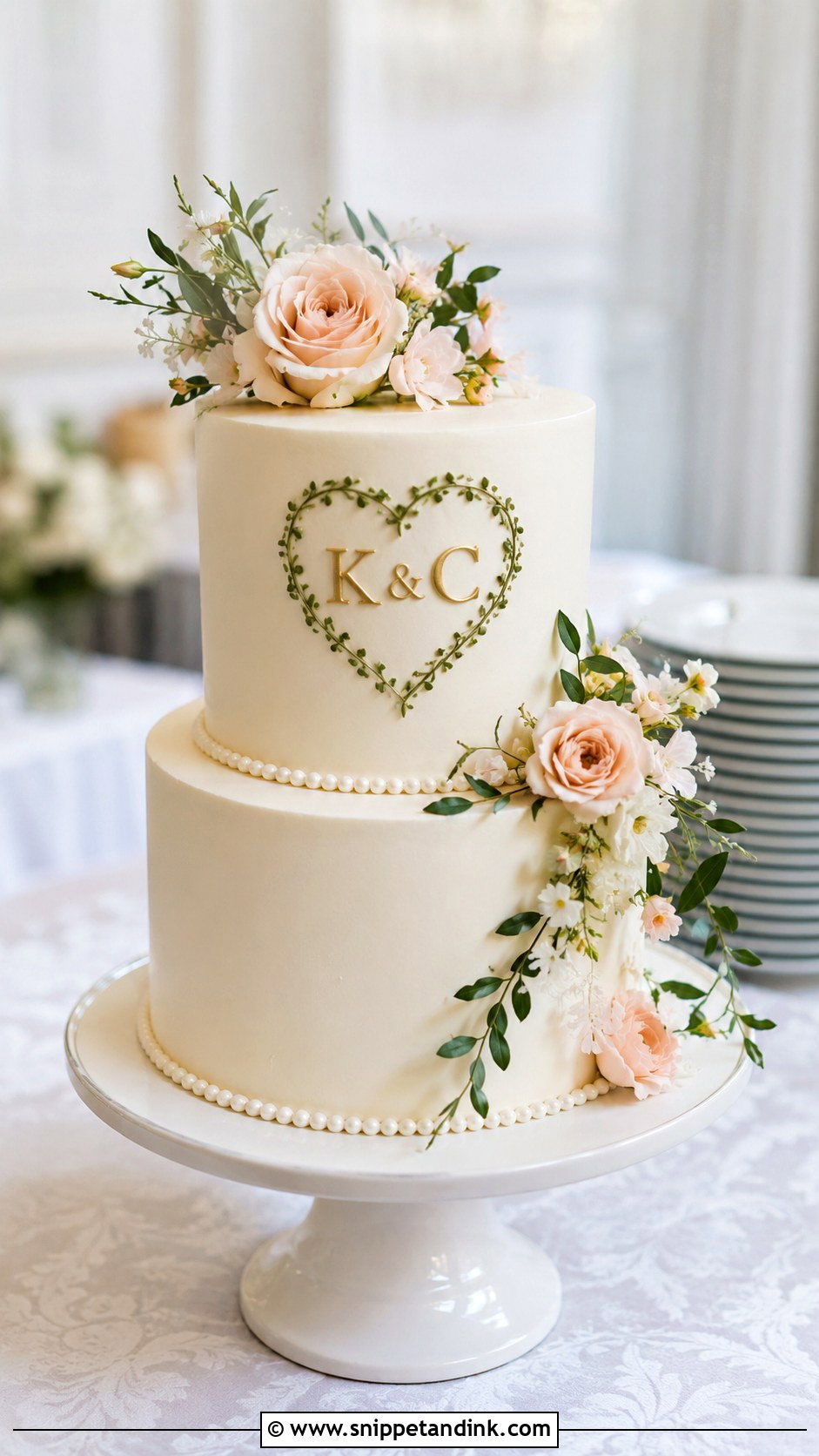
Initials make a cake personal without the commitment of a full quote. On a wedding cake with initials the monogram can be piped, painted in edible gold, cut from fondant or set on top as a topper. Framing it in a small heart, a floral wreath or a pearl ring adds the romance. Keep the cake around it smooth and understated. If your invitations use a particular typeface, send it over; matching the letterforms is one of the easiest ways to tie the cake to the rest of your stationery.
14. Rose Wedding Cake
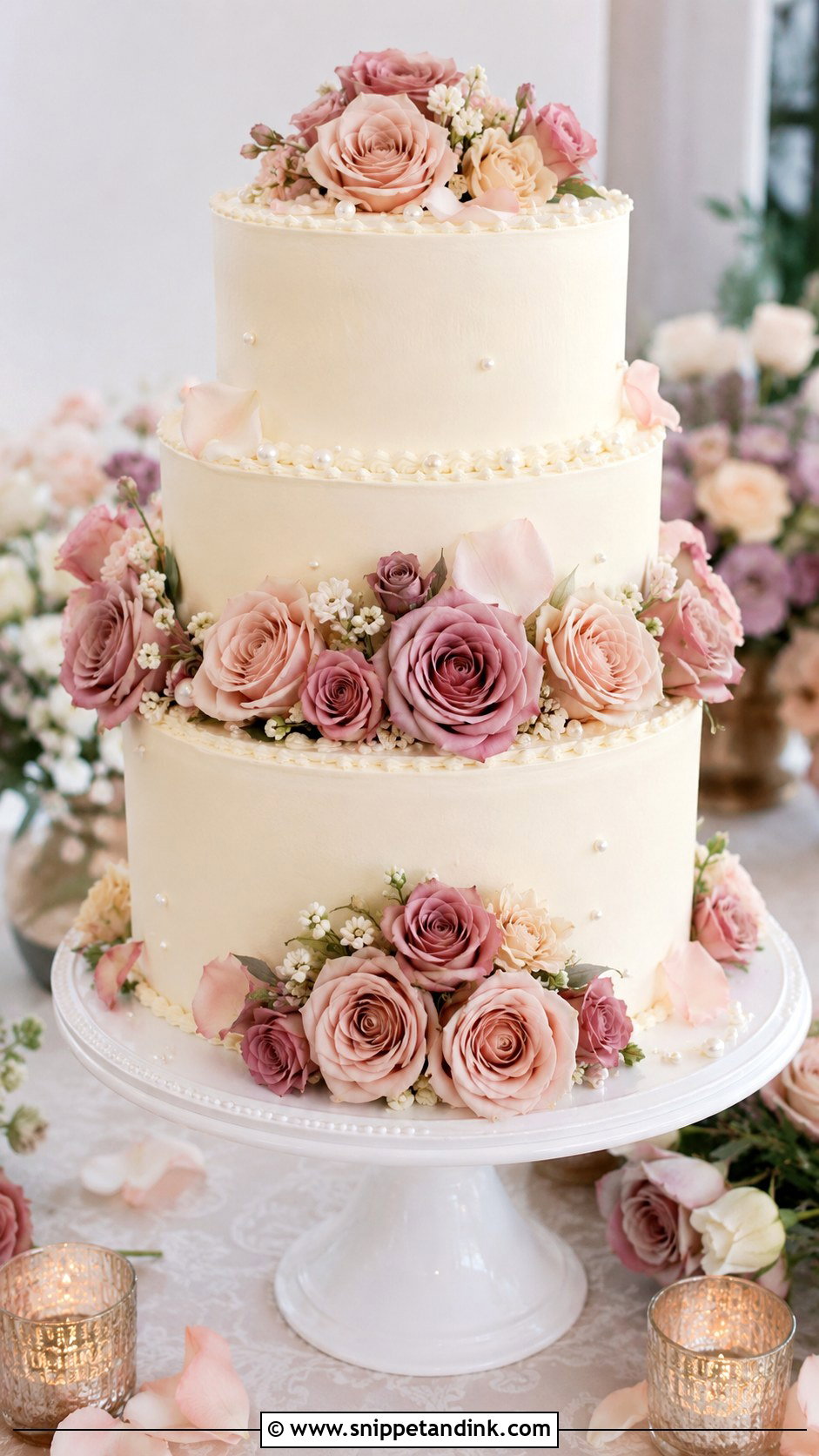
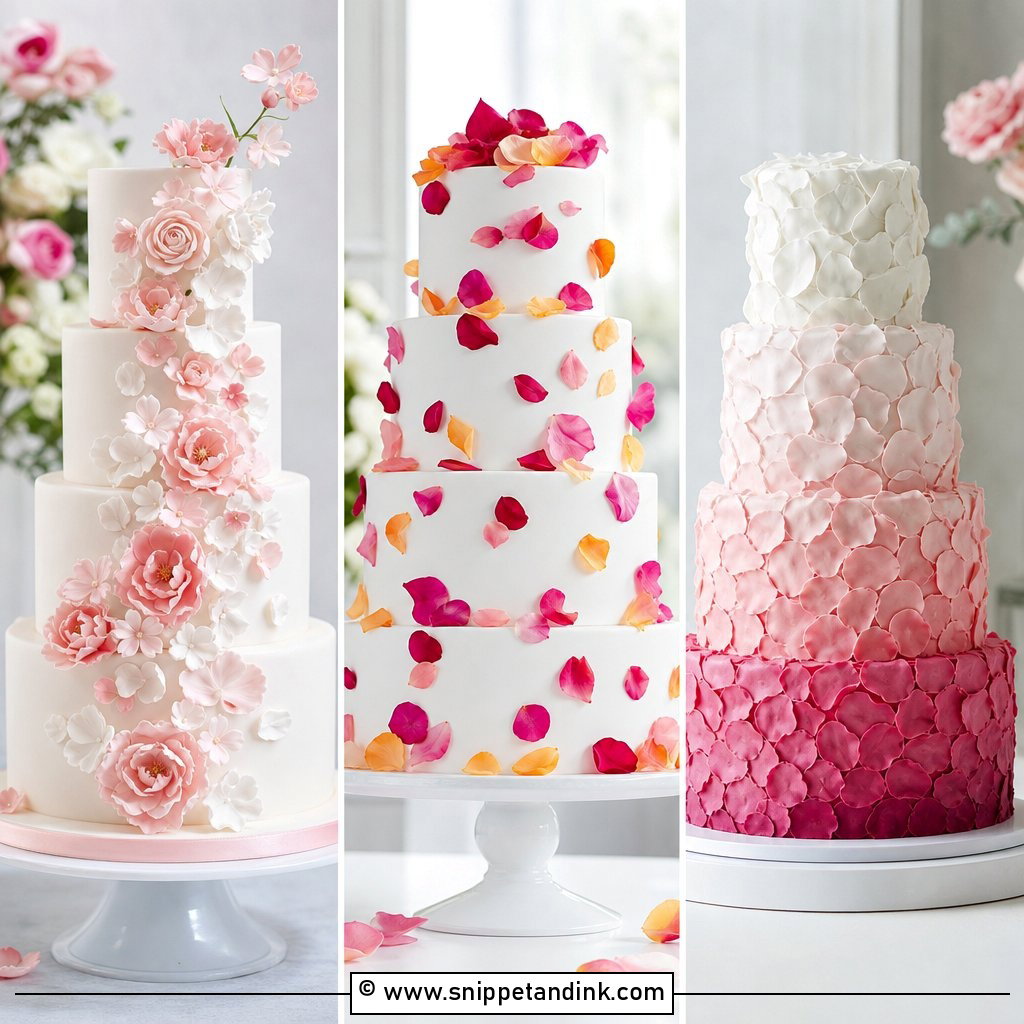
Roses are a classic for a reason, and placement decides how they read: gathered at the base, tucked between tiers, or a loose cascade down one side. Sugar roses are the option I’d choose for a long reception or a warm venue, because they look exactly the same at midnight as they did at three in the afternoon, and you can keep one afterwards. White cake with blush, red, peach or mauve roses is the traditional finish. If you’d like rose in the flavour too, a little rose water with raspberry or pistachio is subtle. Keep greenery light.

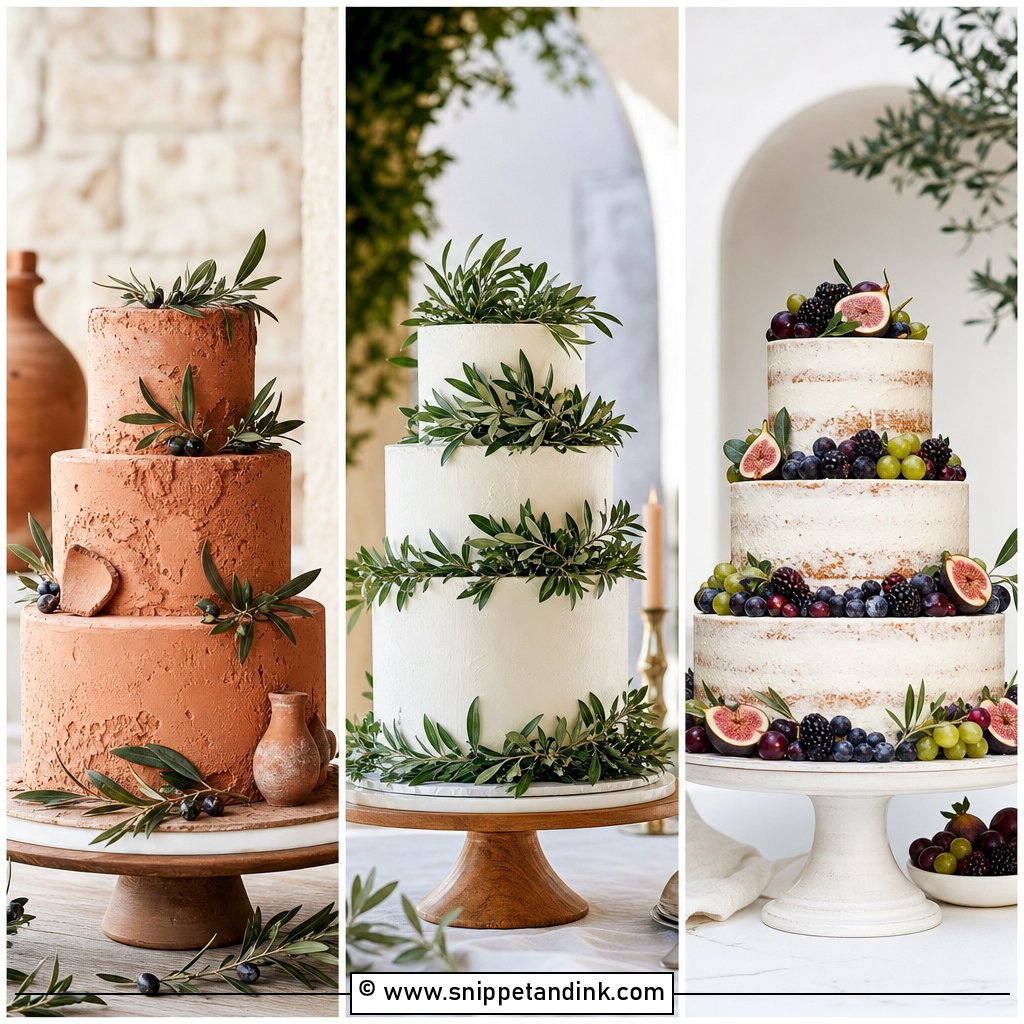
15. Strawberry Wedding Cake
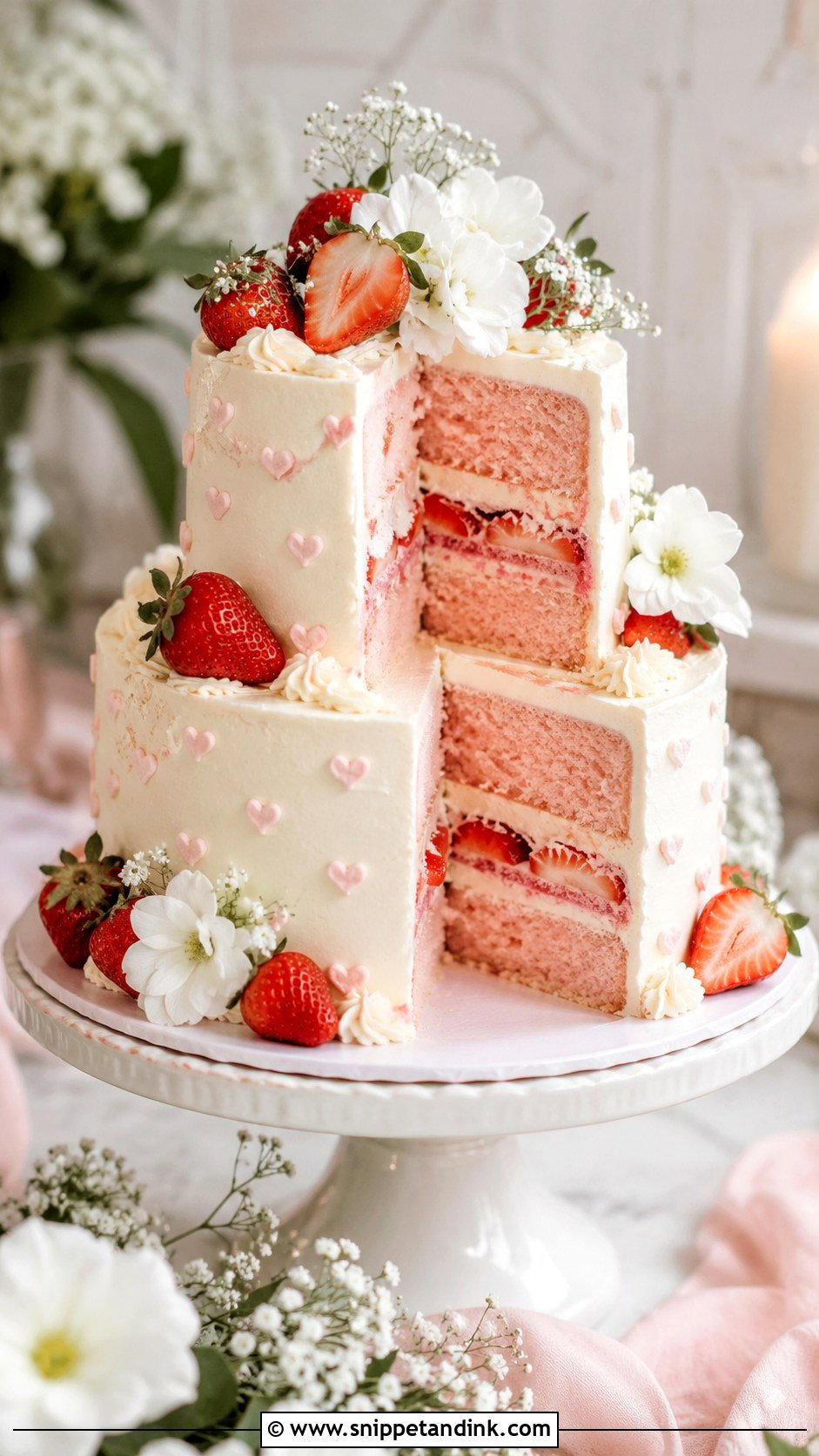
Strawberries look generous and can turn messy. Cut berries weep juice into frosting within a couple of hours, so I use whole berries on the outside and add them close to serving time. Inside, a strawberry sponge or vanilla with strawberry filling gives a pretty pink slice. Whipped cream frostings are lovely to eat but too soft to hold up tiers or survive a warm afternoon, so I’d use a stable buttercream or cream cheese outside. A few berry clusters, white flowers and tiny piped hearts keep it bridal. Neat placement beats a heaped pile every time.
16. Buttercream Wedding Cake With Ruffles
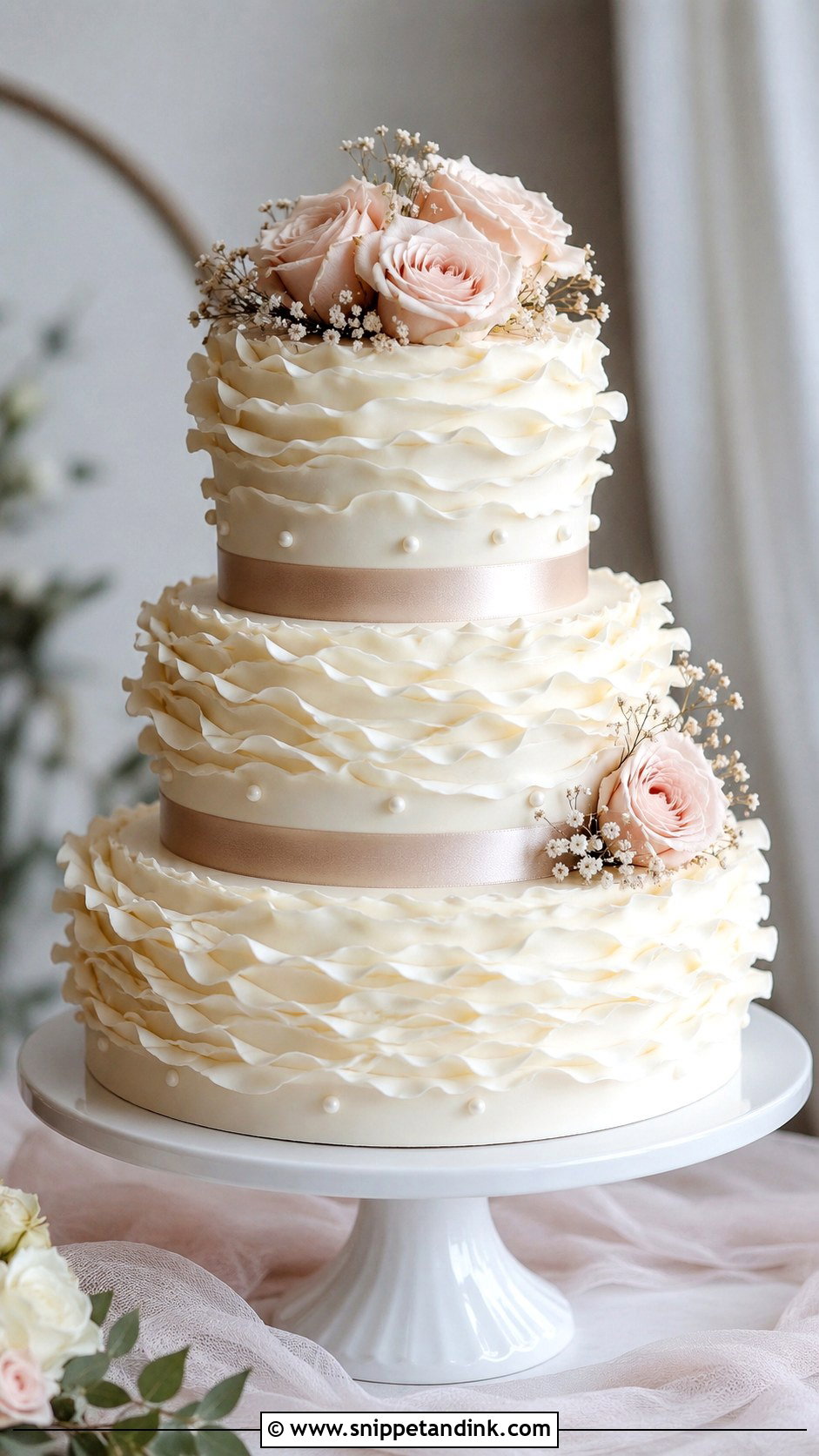
Ruffles wrap a tier like fabric. They can run horizontally around each tier, fall vertically for a sleeker look, or bunch near the base like petals. Ivory and blush are the easy wedding colours; pale peach and warm cream look softer in candlelight. Ruffles are already busy, so I add no more than a few roses, pearls or a ribbon. They’re quite forgiving to pipe and to photograph, since the movement hides small marks, but thin ruffles soften quickly in heat, so they need a cool room. Vanilla, coconut, lemon or almond suit the soft look.
17. Wedding Cake With Edible Flowers
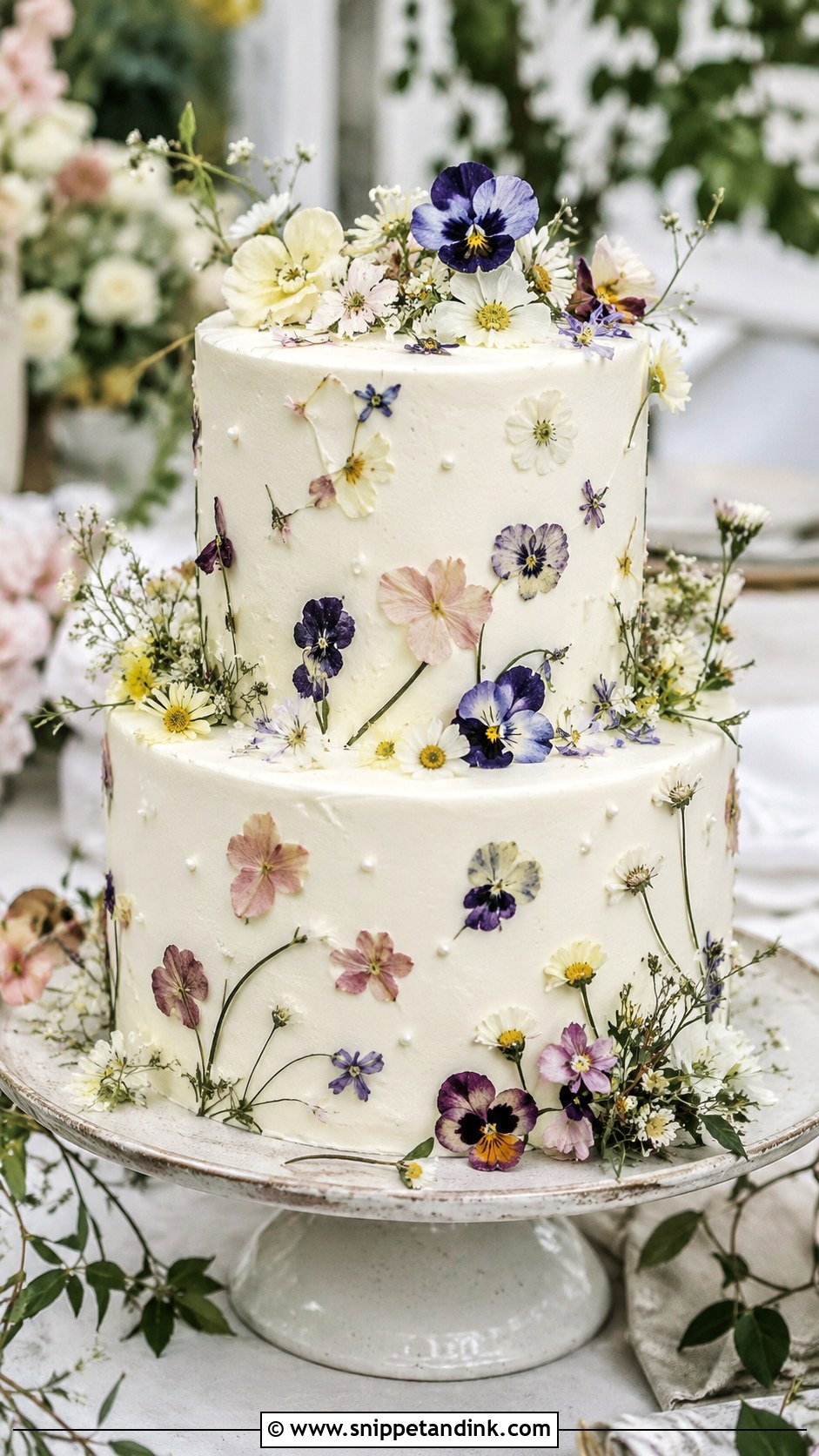
Pressed flowers lie flat against smooth buttercream like a botanical print; fresh edible blooms can be scattered loosely over the tiers. Pansies, violas, rose petals, chamomile and cornflowers all work. The catch is sourcing. Florist stock is often sprayed, so edible flowers need to come from a grower who sells them for food, and pressed petals go on as late as possible because they can darken against moist frosting. A pale base lets the colours show. Garden venues and relaxed receptions suit it, with lemon or vanilla inside.
18. Gold Heart Wedding Cake
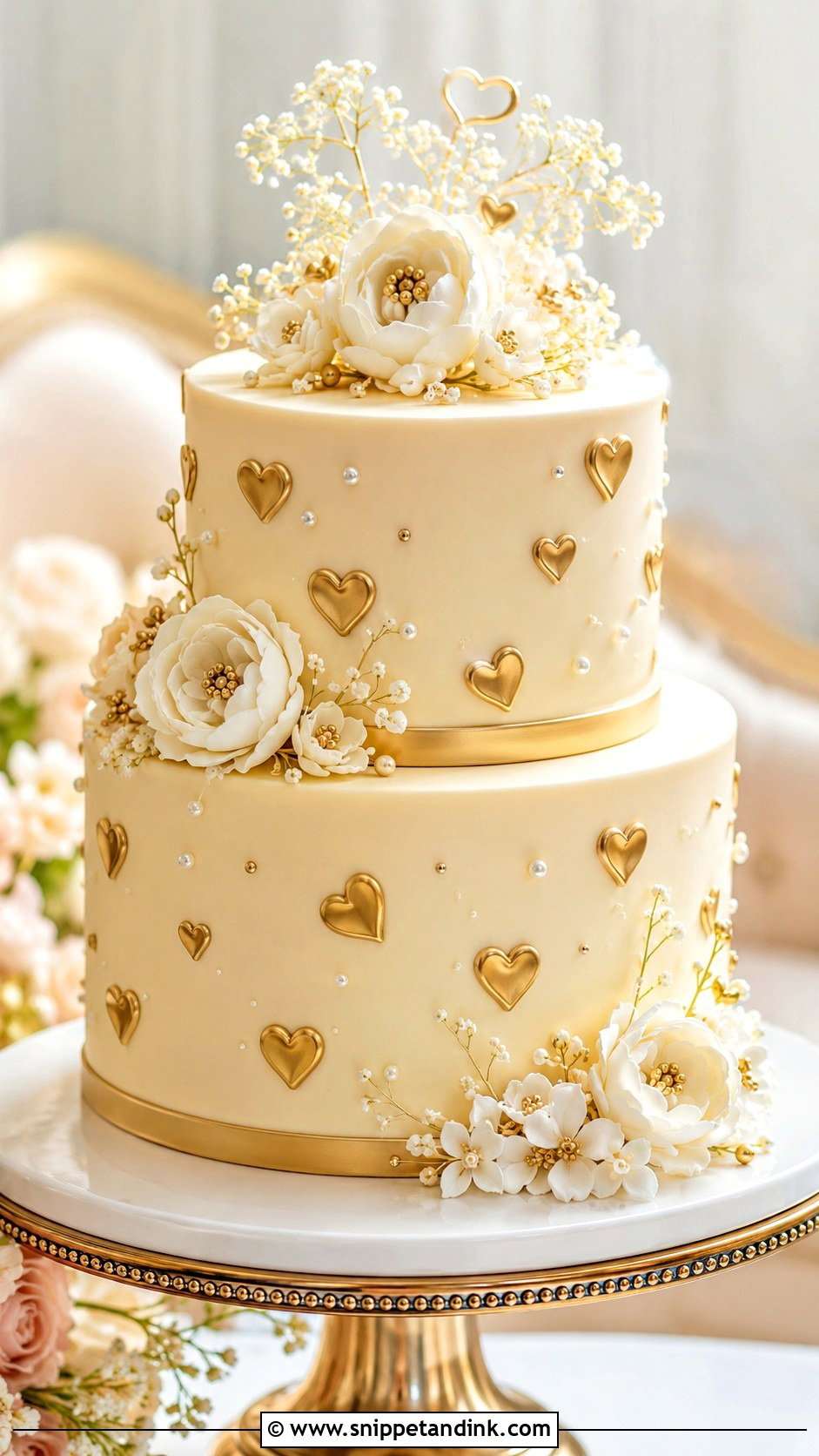
Gold reads as glamour only when there’s not much of it. Small painted hearts, a thin border at the base of each tier, a few flakes of leaf or a metallic heart topper are enough against ivory, white, blush or champagne. For anything on the eaten part of the cake I use edible gold leaf or edible-labelled paint, and keep display-only lustre dusts for toppers and boards. Ballrooms and evening receptions suit it. Vanilla bean, almond, caramel or chocolate under vanilla buttercream fit the richer mood.
19. Pink And Red Wedding Cake
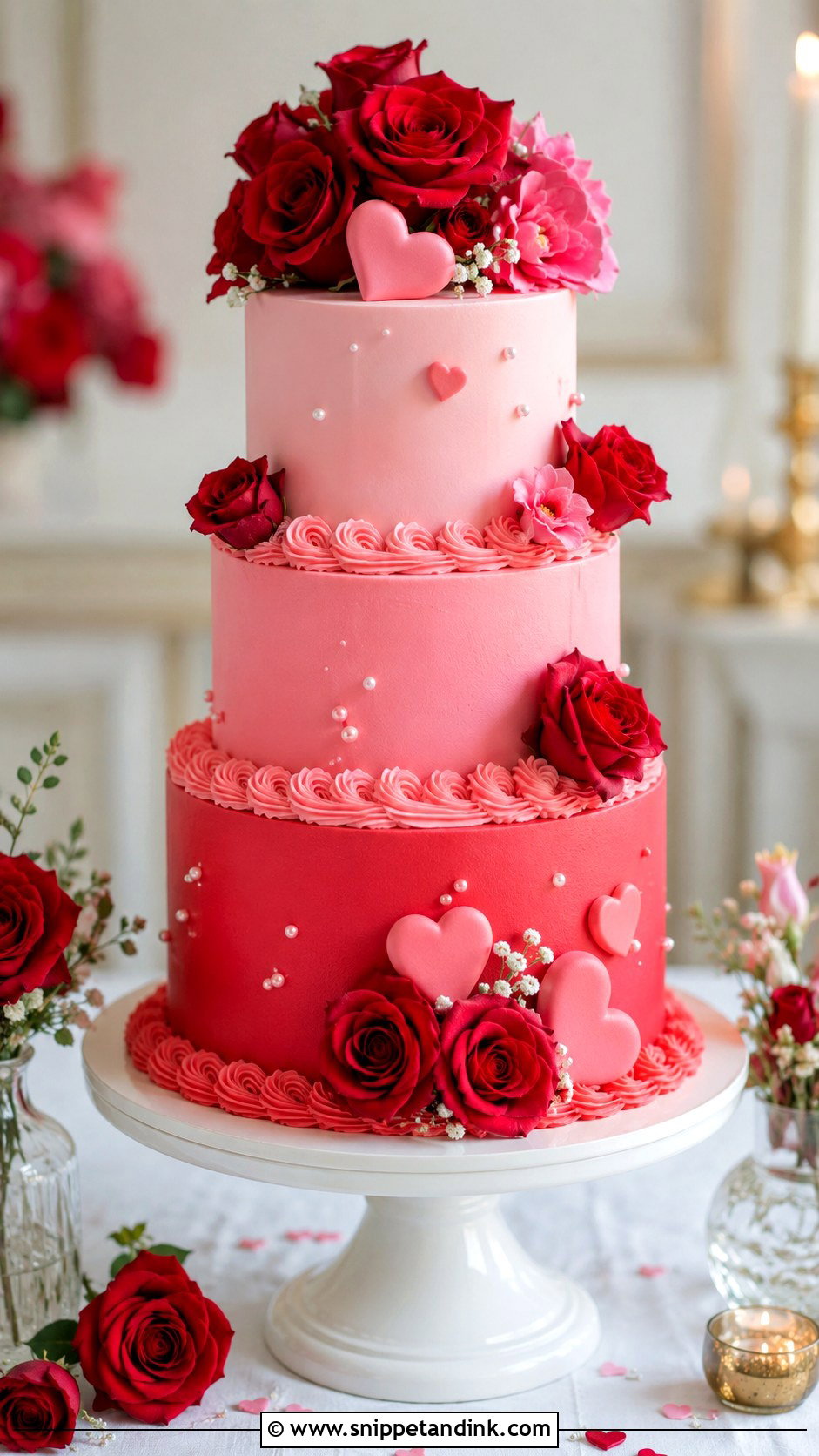
Pink and red is the loudest palette on this list, so it needs a plan. Blush buttercream with deep red roses is the safest. A white cake with pink and red heart details is playful. An ombre from pale pink at the top to berry red at the base looks dramatic, though red buttercream takes a lot of colour and darkens overnight, so I mix it a day early to see the true shade. Clean piping and soft flowers balance it. Strawberry, raspberry or red velvet carry the colour inside.
20. Simple Love Wedding Cake
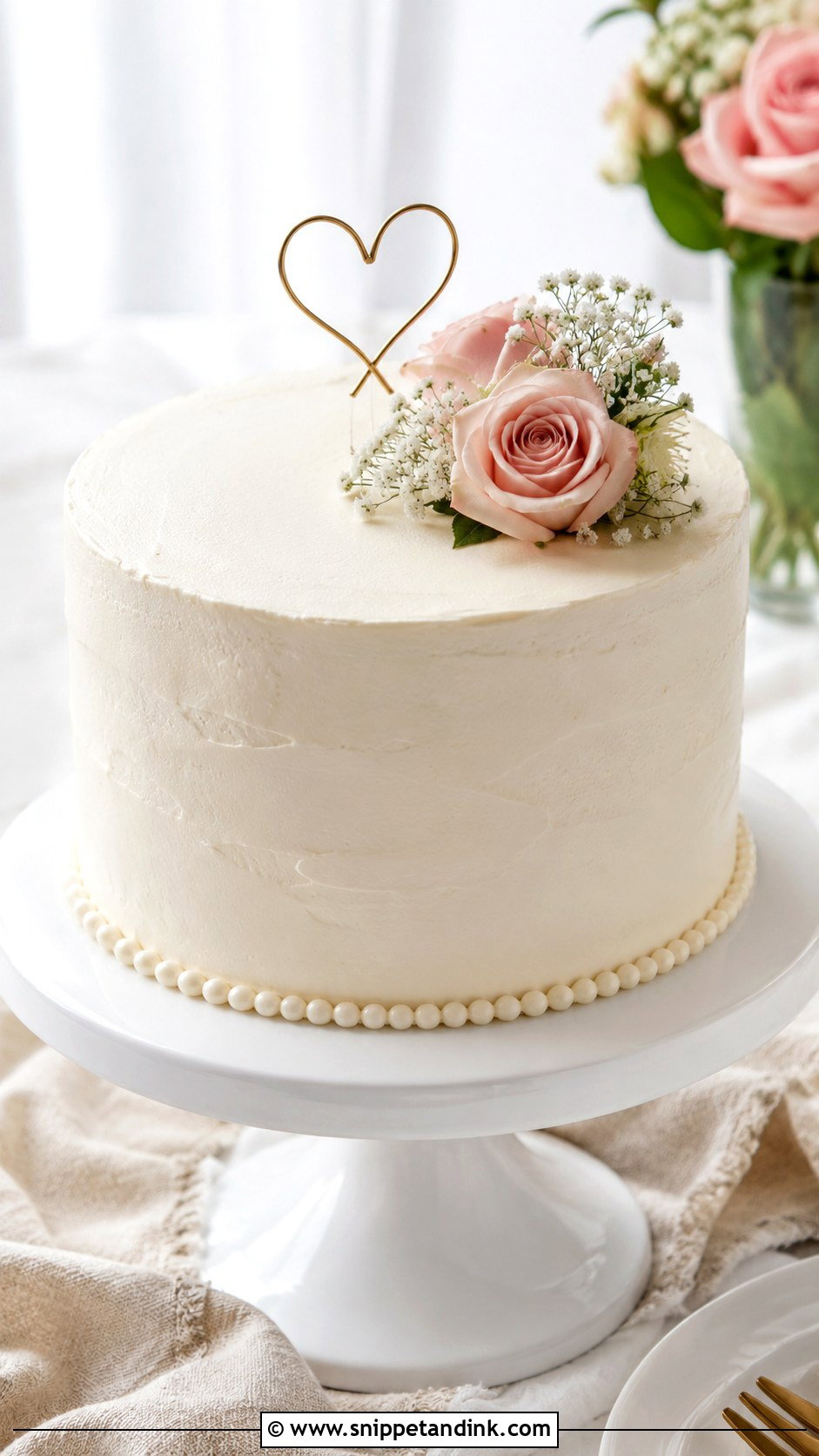
Simple is honest. A smooth single or two-tier cake with one heart topper, one short message, a soft buttercream texture or one small cluster of flowers can feel just as romantic as anything ornate. It also costs less, since there’s no sculpting or hours of piping. White, ivory, blush and pale champagne are dependable. The thing that makes or breaks it is finishing: sharp top edges, straight sides and a clean base border. A plain cake shows every shortcut, which is why it’s a good test of a baker.
How Many Words Actually Fit on a Top Tier
Love quotes are the request I most often have to trim. A small top tier fits a few words in clean lettering, and anything longer shrinks the letters until nobody can read them from their seat. A good test: if you can’t say it in one breath, it probably belongs on your signage, not the cake.
- Script lettering needs more space than print. Long names may only fit in a simple serif.
- The sides of a tier curve away, so long phrases wrap out of view in front-on photos. Keep text on the top or a flat plaque.
- Dark lettering on a pale cake reads best from a distance; white-on-white is for close-up photos only.
Fruit, Flowers and the Hours Between Delivery and Cutting
Several cakes here rely on fresh elements: strawberries, roses, pressed petals, cherries. They’re all at their best for a few hours, and a reception can run long. I place fruit and fresh blooms at the venue, not in my kitchen, and I ask the coordinator how long the cake will be on display before cutting.
If the cake will sit out through a long afternoon, sugar flowers and whole fruit are the safer choice. Cut fruit, wafer paper and whipped finishes are better kept for short displays in a cool room. Tell your baker the real timeline, including speeches that tend to overrun; it changes what I’d recommend.
One Romantic Detail, Done Properly, Beats Five
Hearts make the theme obvious; pearls, roses, bows, initials or a short quote say it more quietly. Start from the mood you want at the cake table, then let shape, colour, flavour and decoration follow it. Most cakes look stronger with one clear focal point than with a little of everything, and they’re easier for me to finish cleanly too. Save the designs you return to, notice what they share, and bring that, plus your guest count, to your tasting.
You'll Like These Ideas:






Leave a Reply