
Couples who describe their cake as ladylike usually mean the same handful of things: piping, pearls, bows, lace, pale color and a shape that looks dressed rather than built. It can lean vintage, pastel, garden or couture, but it should always look like it belongs next to the bride’s gown and flowers. I’ve gathered 25 designs in that spirit, from heart-shaped Lambeth cakes to a crepe cake for a small dinner, with a note on each about how it’s made and what to ask your baker before you commit.
Turning a Mood Board Into a Brief Your Baker Can Price
A screenshot of a cake is a starting point, not a brief. When couples come to me with a feminine look in mind, the details that actually change the design and the quote are rarely visible in the photo. Bring these to your first meeting and you’ll get an accurate price in one conversation instead of three.
- Guest count, and whether the cake is the only dessert or one of several
- A fabric swatch or close photo of the dress detail you’d like echoed: lace, pearls, a bow
- Your florist’s name and flower list, so fresh and sugar flowers can match
- Where the cake will stand, indoors or out, and how long before it’s cut
- Two or three flavors you love, and any allergies in the wedding party
Also tell your baker which part of the inspiration photo you love most. Often it’s one element, the piping or the color, and the rest can be simplified. That’s where budget is saved without losing the feel of the cake.
1. Vintage Heart Wedding Cake
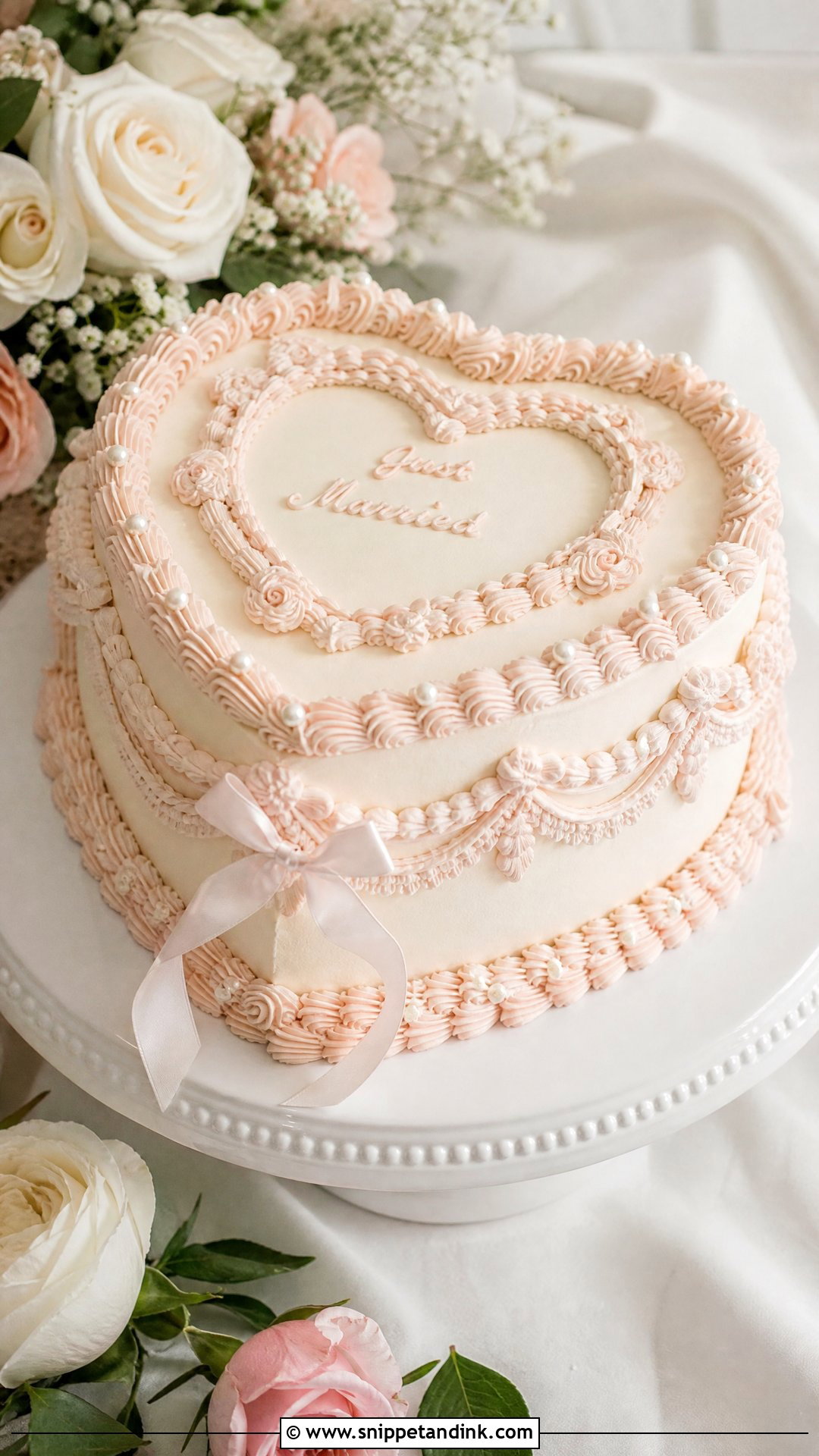
Heart shapes have come right back, and a vintage one is all about the piping, where piped borders, shell details and tiny rosettes give it that old bakery charm, in ivory, blush or pale pink buttercream, with pearls, small bows or sugar flowers added. It suits an intimate wedding, a courthouse celebration or a sweetheart table. A heart tin doesn’t cut as neatly as a round, and the point and the dip give odd-shaped slices, so I plan on fewer servings from it than from a round cake of the same width.
2. Pearl Wedding Cake
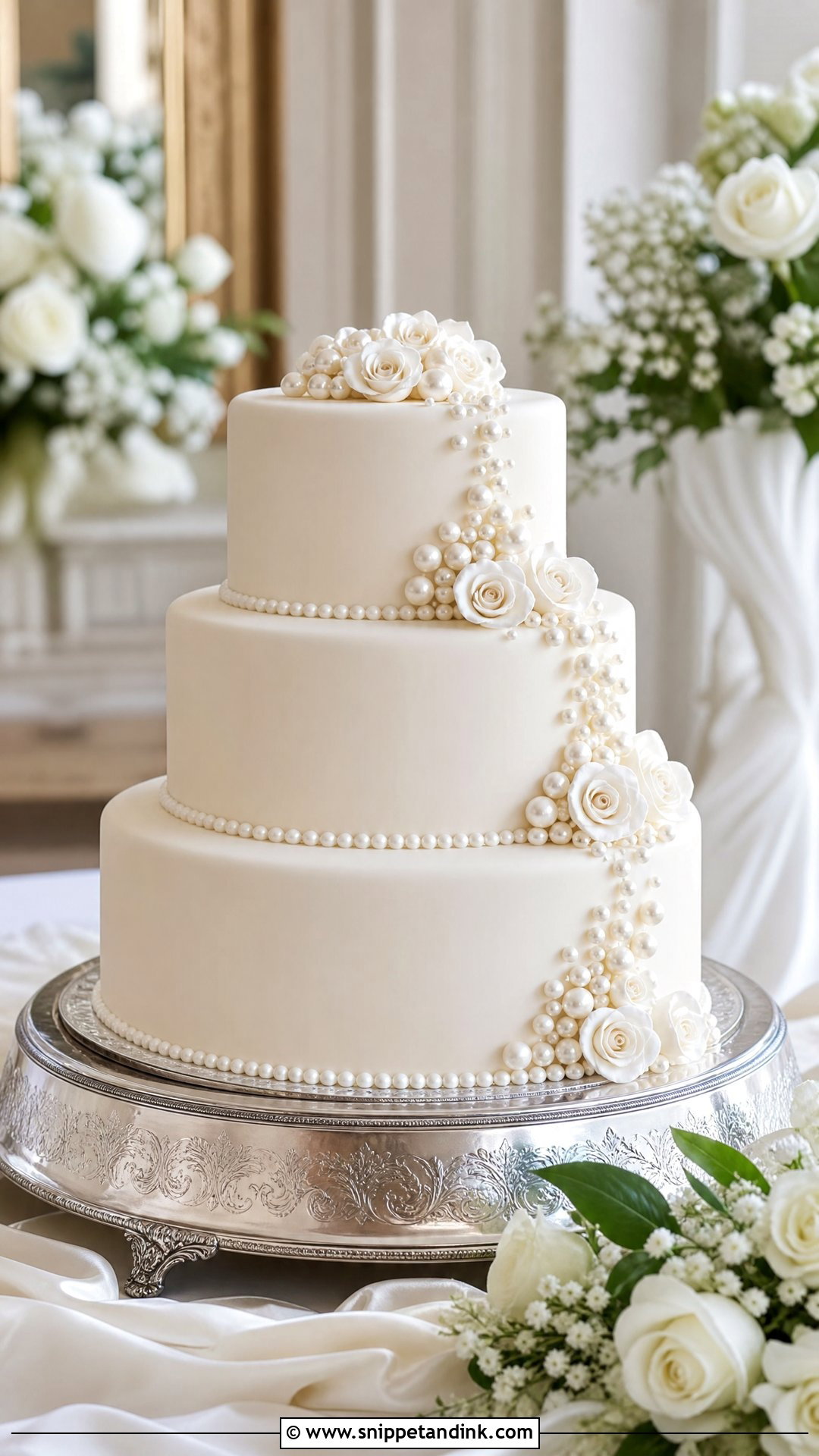
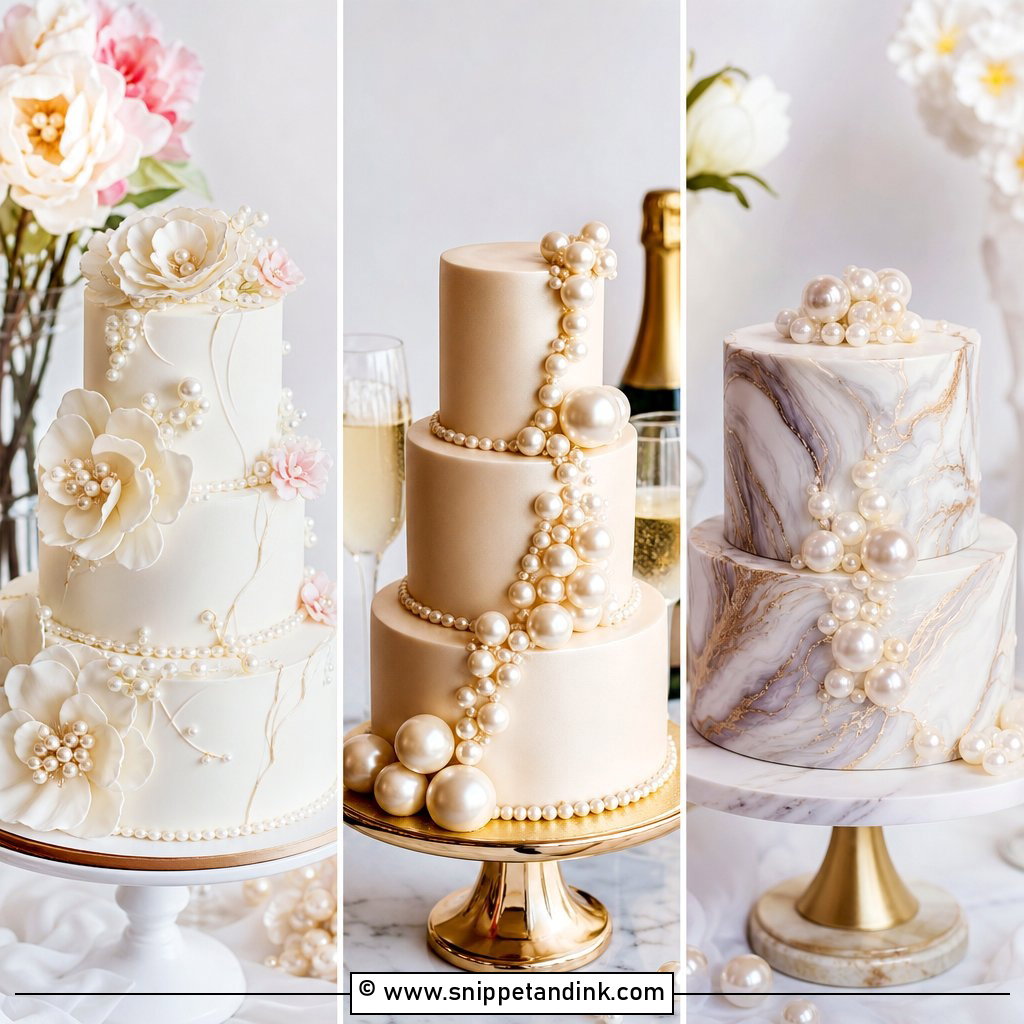
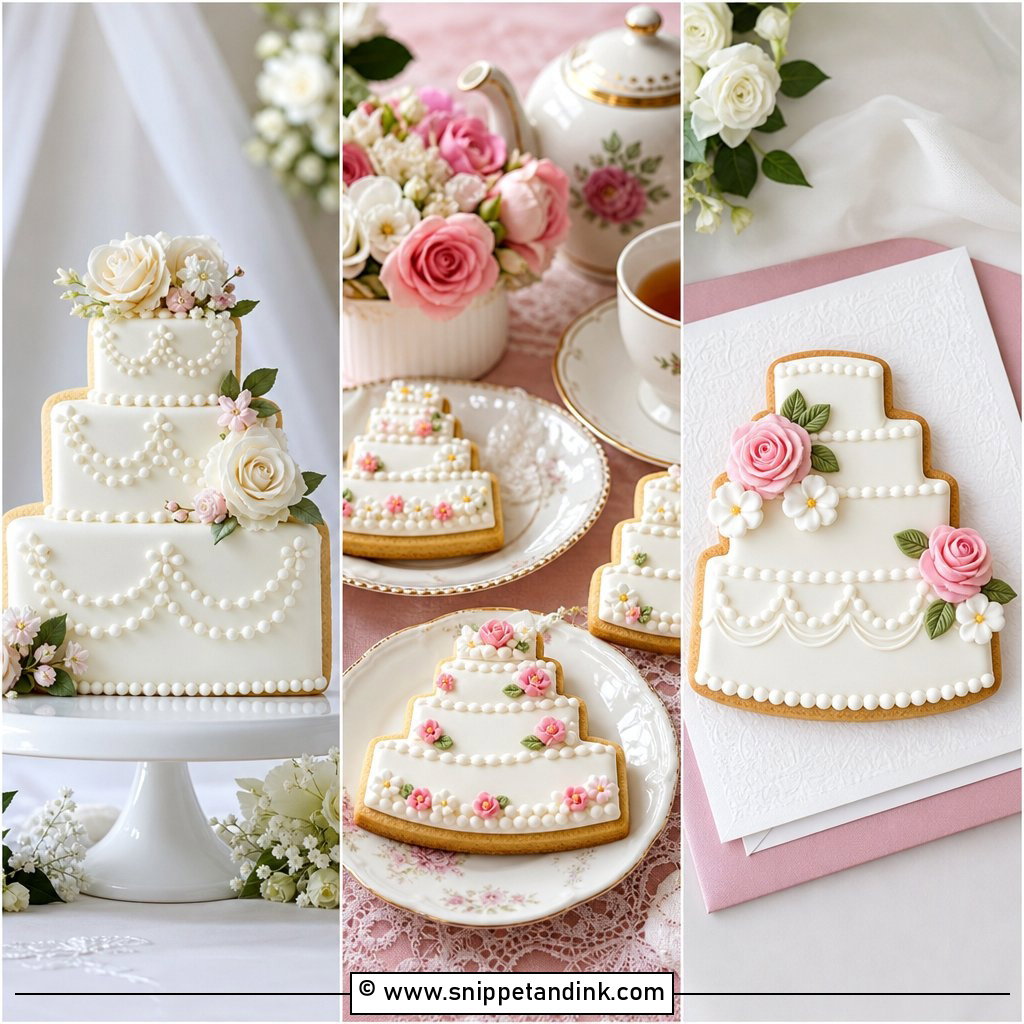
Pearls are the easiest way to link the cake to the dress, the veil or the jewelry. A smooth ivory buttercream or fondant gives them a clean background, and scattered edible pearls add soft sparkle; clusters and piped borders push it toward glamour. I place sugar pearls one at a time with tweezers and a dot of piping gel, so a pearl border is slower work than it looks. It reads expensive even when the rest of the design is simple.
3. Blush Pink Wedding Cake
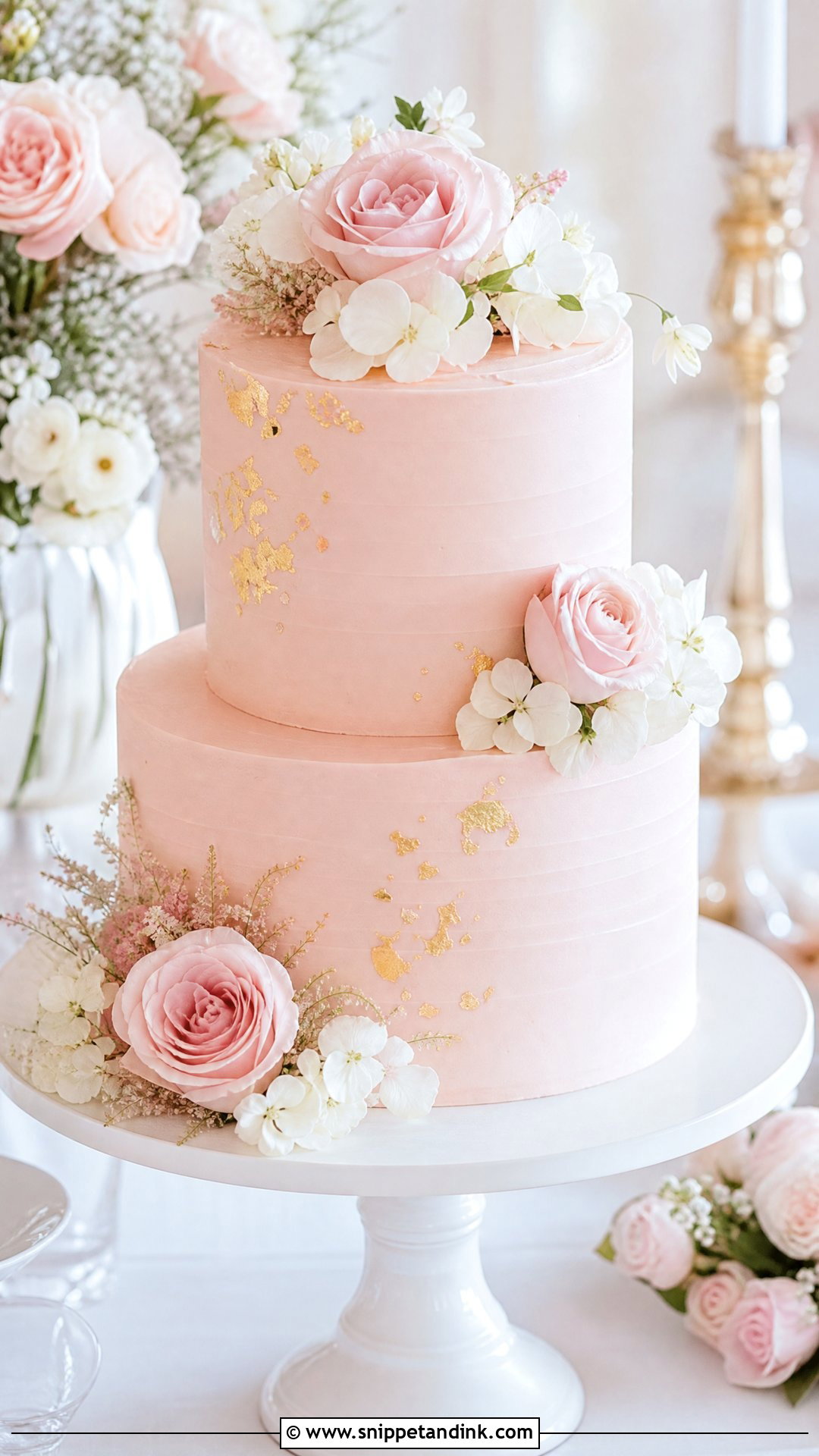
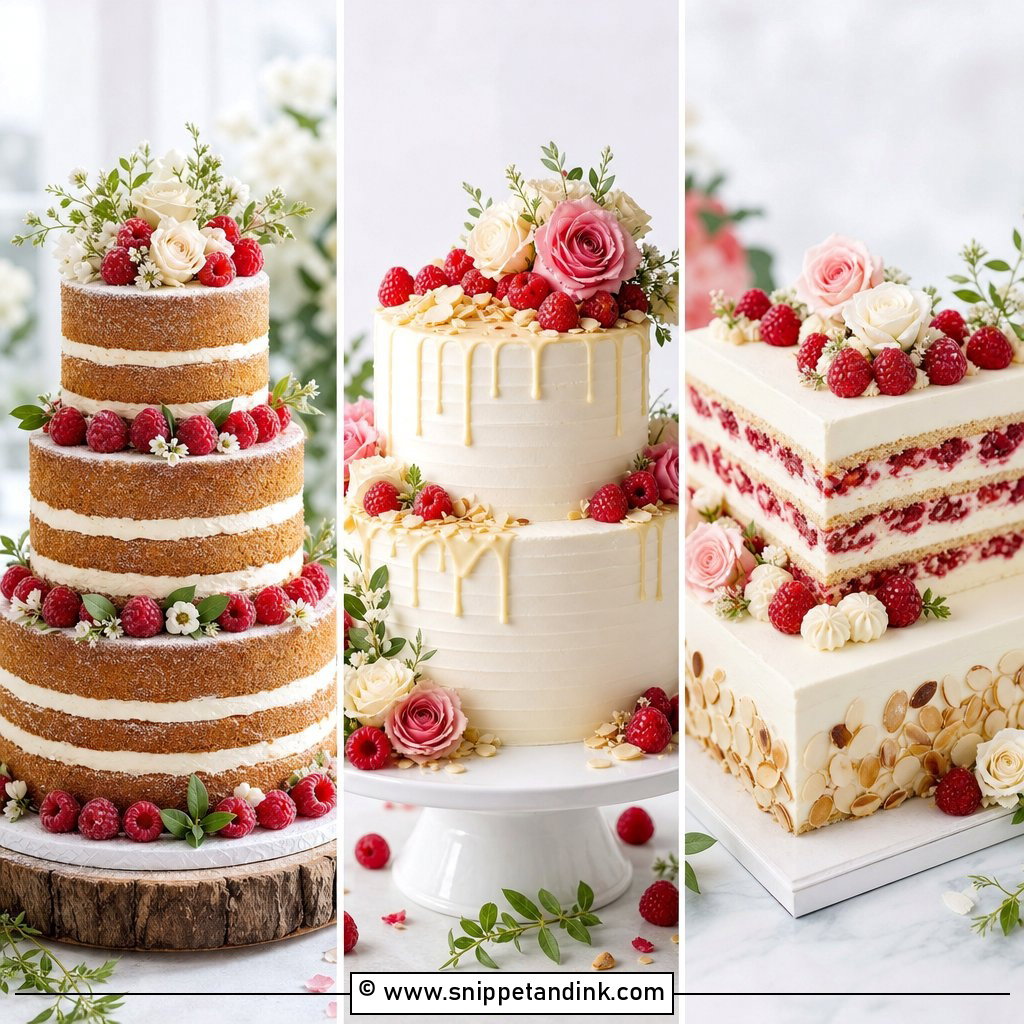
Blush warms a cake without shouting, and it sits easily beside roses, peonies, ranunculus or dried flowers. It can be smooth and modern, textured buttercream or crisp fondant, with gold, pearls or white sugar flowers to make it bridal. Strawberry, vanilla bean or raspberry fillings keep it light. Getting blush right is fussier than you’d think. A tiny drop too much pink gel and it turns bubblegum, so I mix it in daylight and match it against your florist’s swatch.
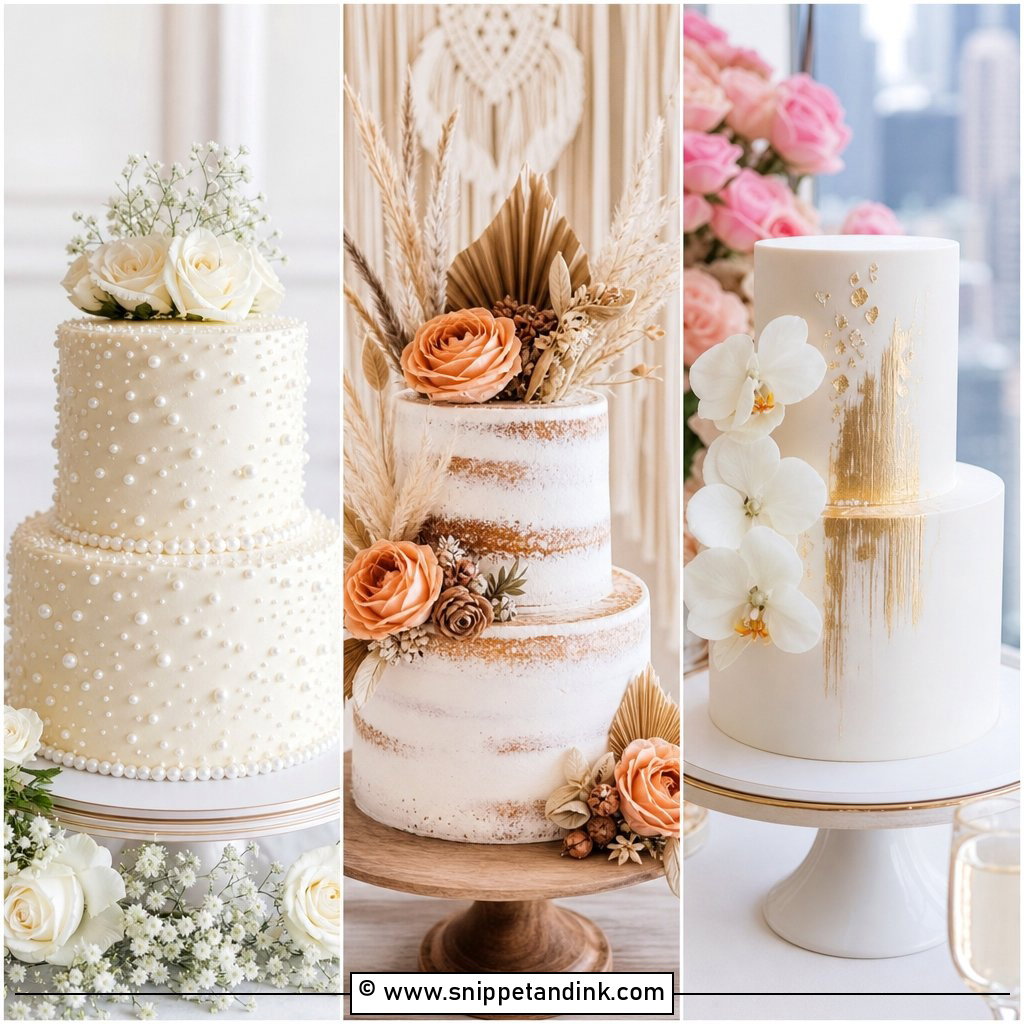
4. Lace Wedding Cake
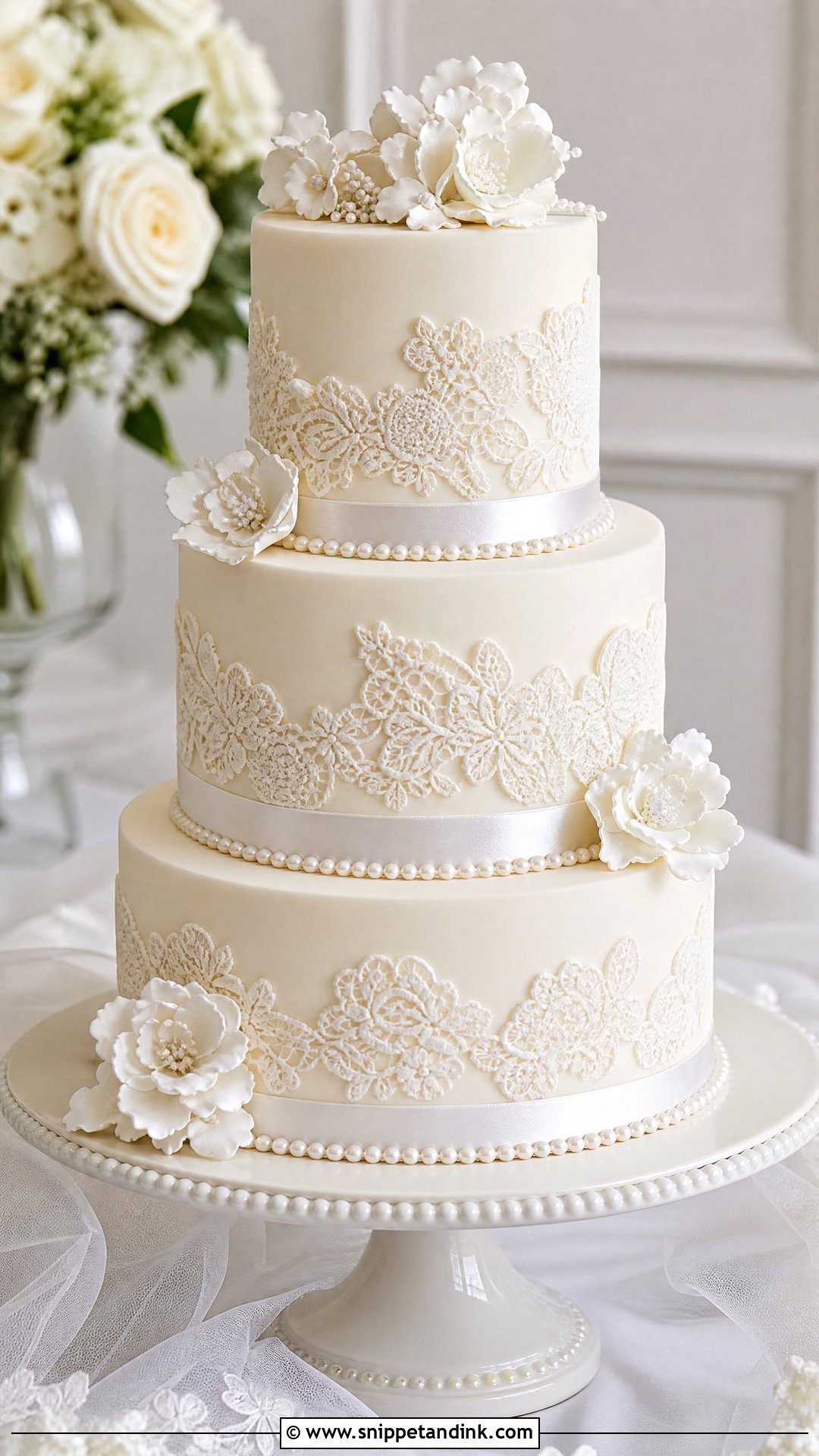
Lace echoes the gown without copying it too literally. It can be piped in royal icing, pressed into fondant or applied as edible appliqué. White on white is the classic; ivory over blush adds depth. Pearl borders or a satin ribbon round each tier finish it. Royal icing lace dries hard and crisp, which holds up in a warm room far better than buttercream lace, so it’s the one I recommend for a church wedding with a long gap before the reception.
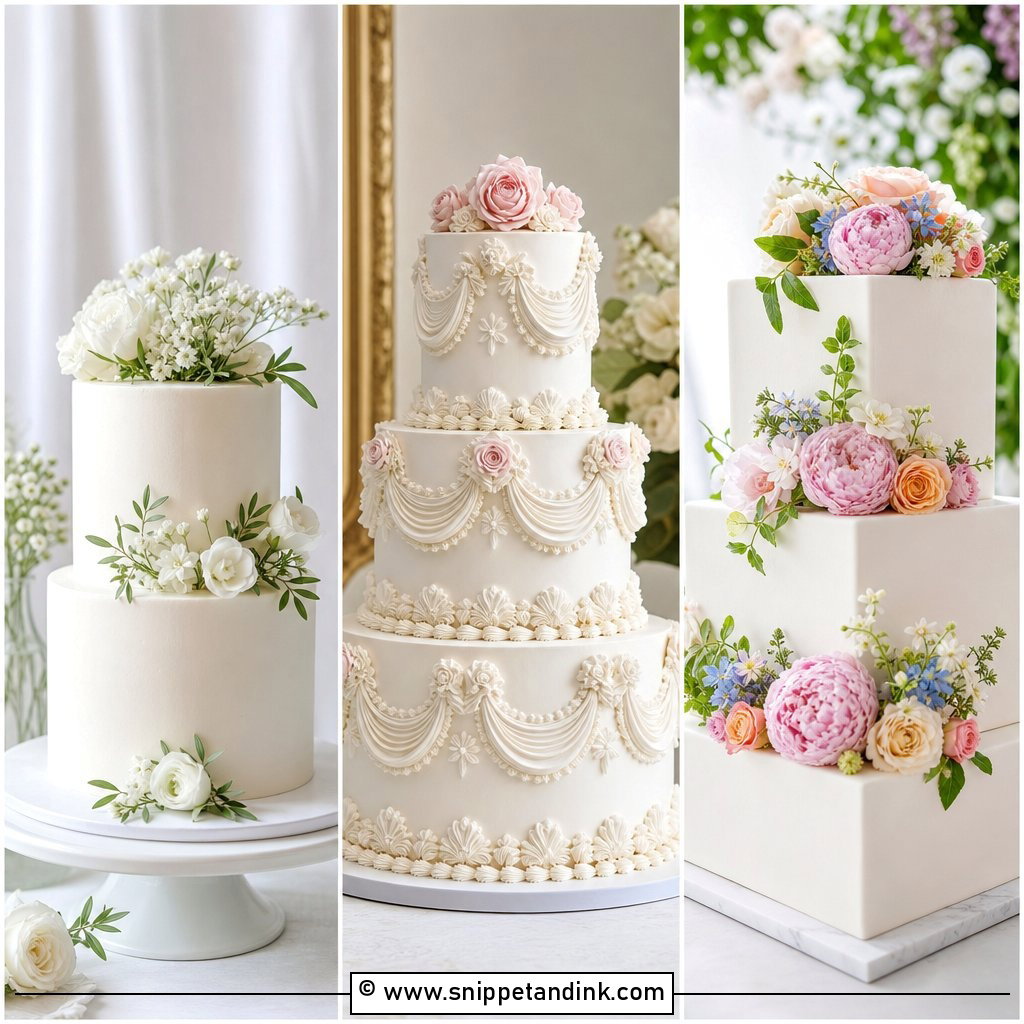
5. Floral Wedding Cake
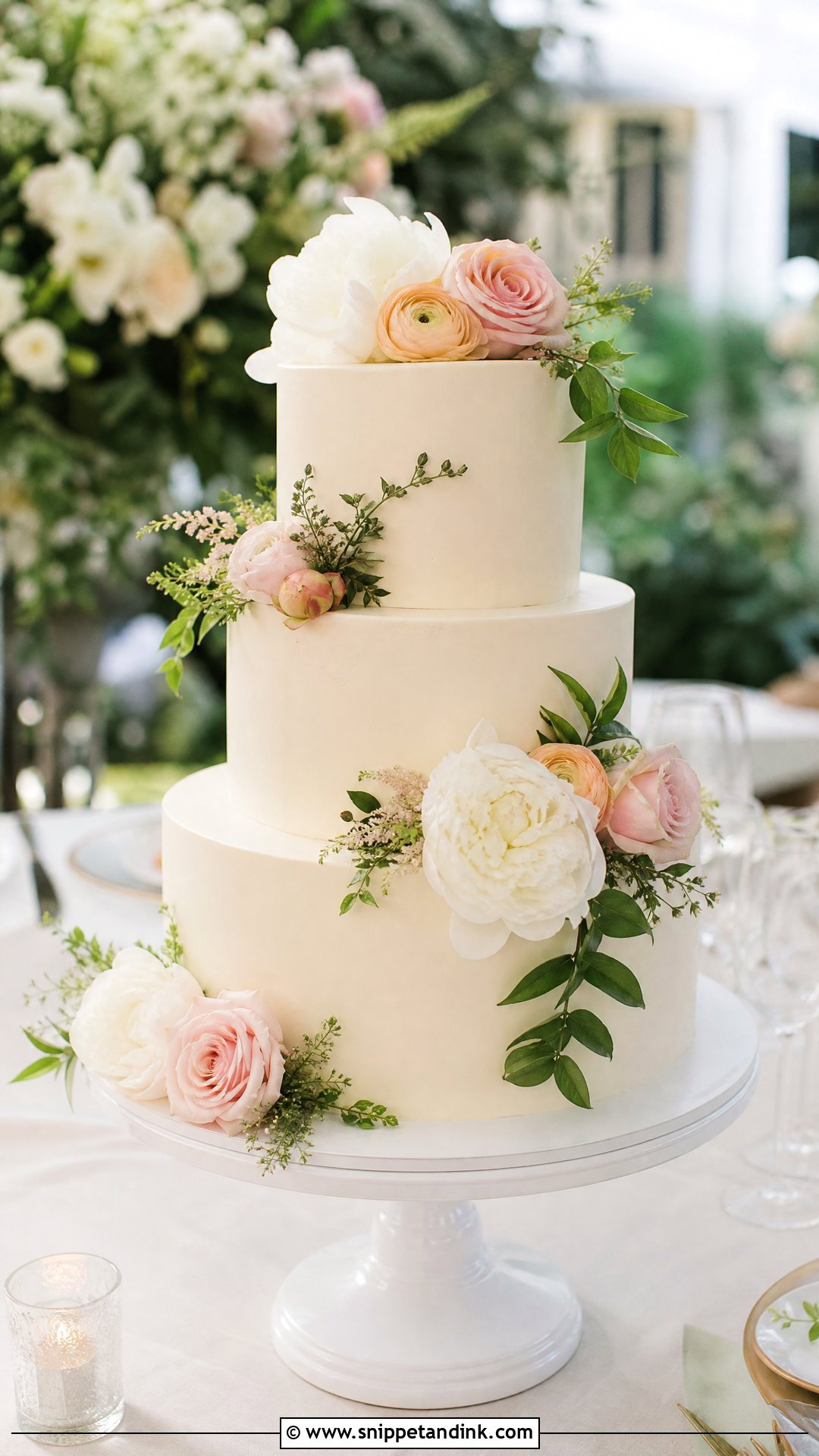
Fresh flowers turn a plain cake into a centerpiece. Soft blooms in blush, ivory, lavender, peach or pale yellow keep it gentle, and Roses, peonies, sweet peas, and ranunculus all have that bridal softness. They can cover the cake, run in a cascade or sit as a few clean clusters. Ask your florist for pesticide-free stems, and expect your baker to wrap each one and set it in a pick, because sprayed flowers shouldn’t touch anything guests will eat.
6. Bow Wedding Cake
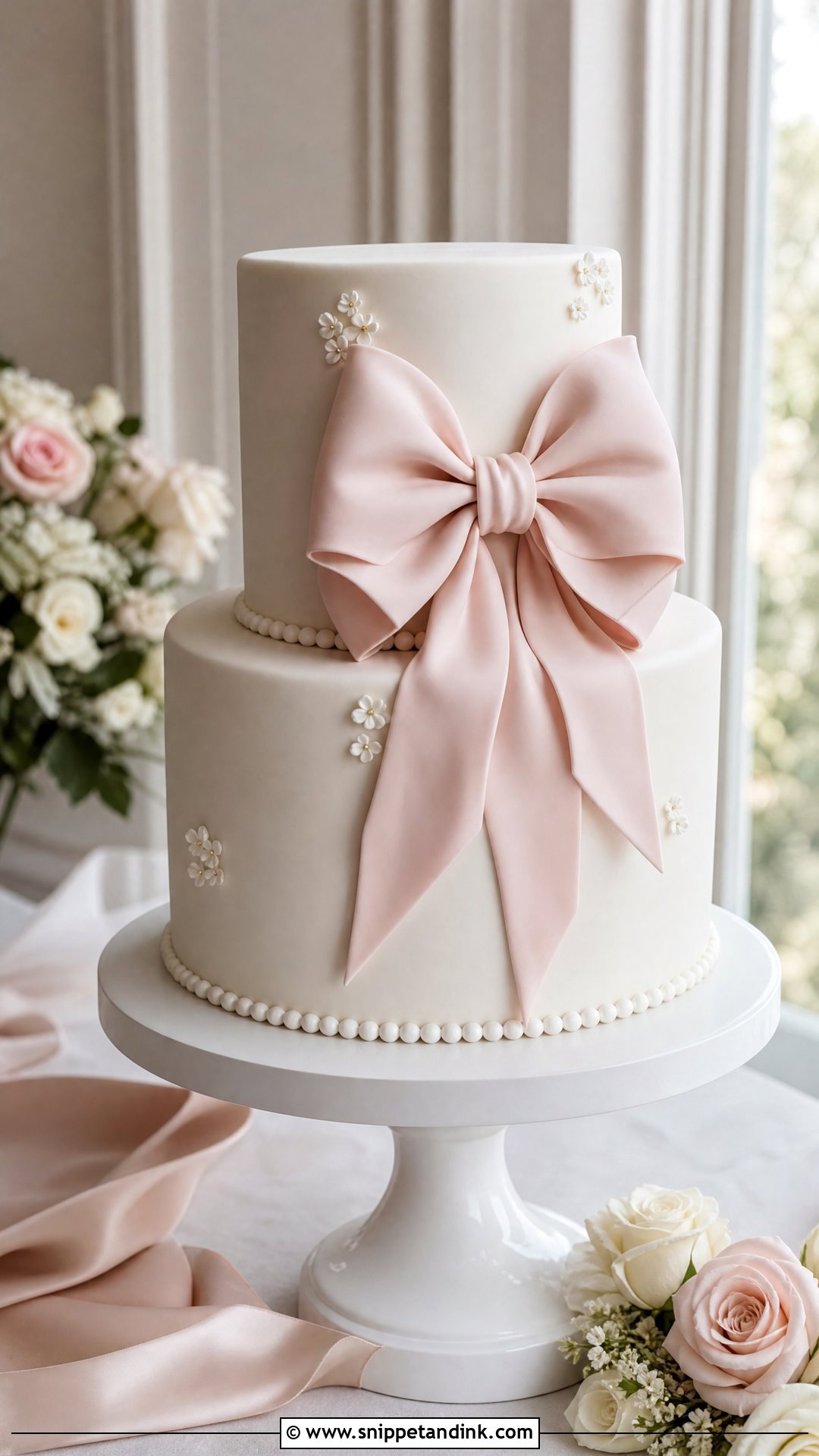
A bow can be one big sculptural statement on the front or a row of small ones around the tiers. Satin-look fondant bows feel couture; piped buttercream bows feel sweeter and older. White, blush, pale blue or champagne all suit it. Keep the rest quiet, smooth frosting and maybe a pearl edge, so the bow stays the focus. A large fondant bow is made days ahead and dried over supports so the loops hold their shape. Made the same day, it sags by the evening.
7. Lambeth Wedding Cake
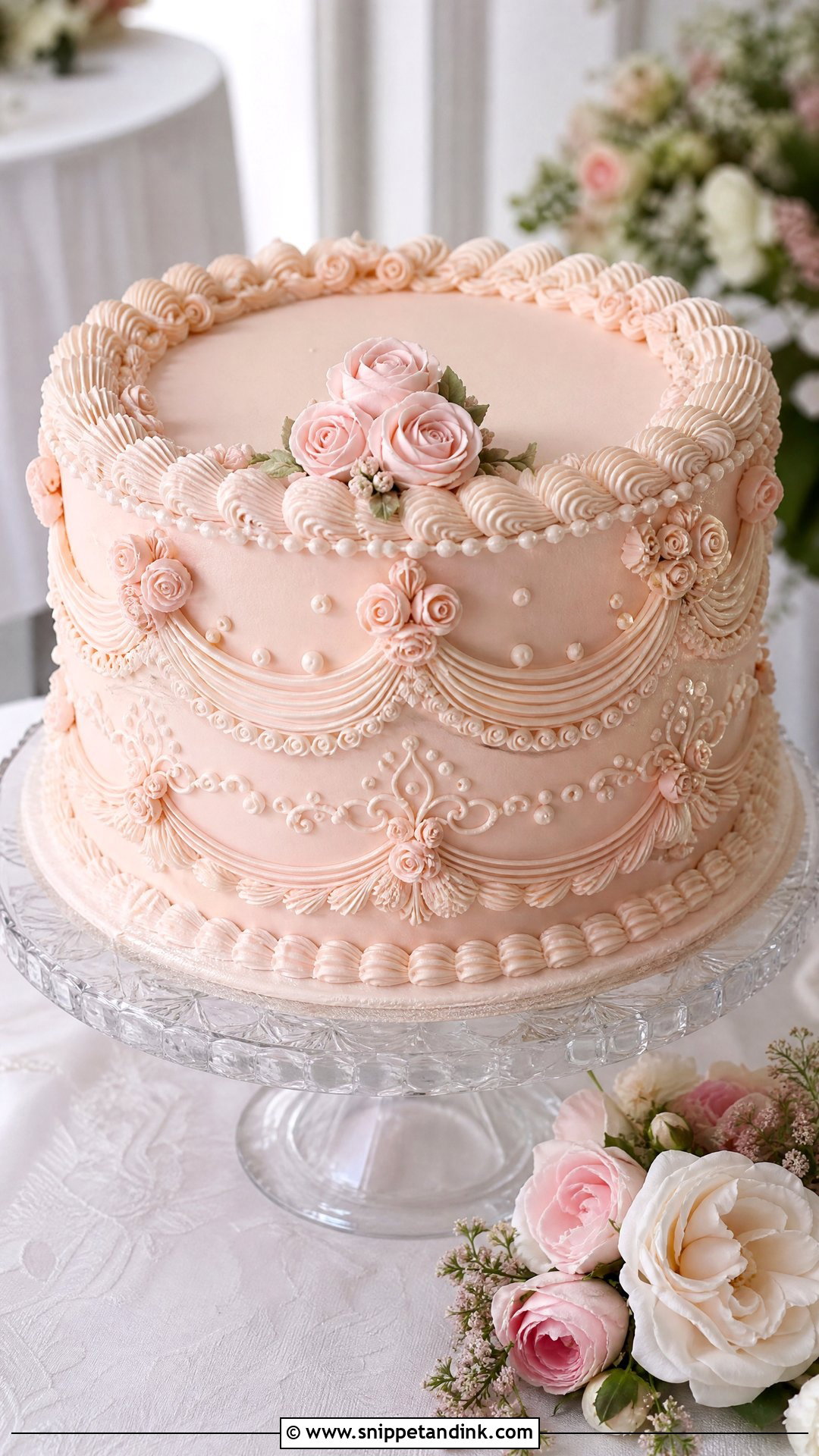
Lambeth piping is layer upon layer of over-piped borders, swags, shells, scrolls and rosettes, and it’s the most hours-heavy style on this list. In pastel pink it feels nostalgic; in ivory it turns formal. A heart shape makes it playful, a tall round tier makes it grand. Cherries give a retro bakery note, while pearls and sugar roses keep it wedding-ready. Ask your baker to show you Lambeth work they’ve actually done, because the layered piping exposes an unsteady hand immediately.
8. Garden Wedding Cake
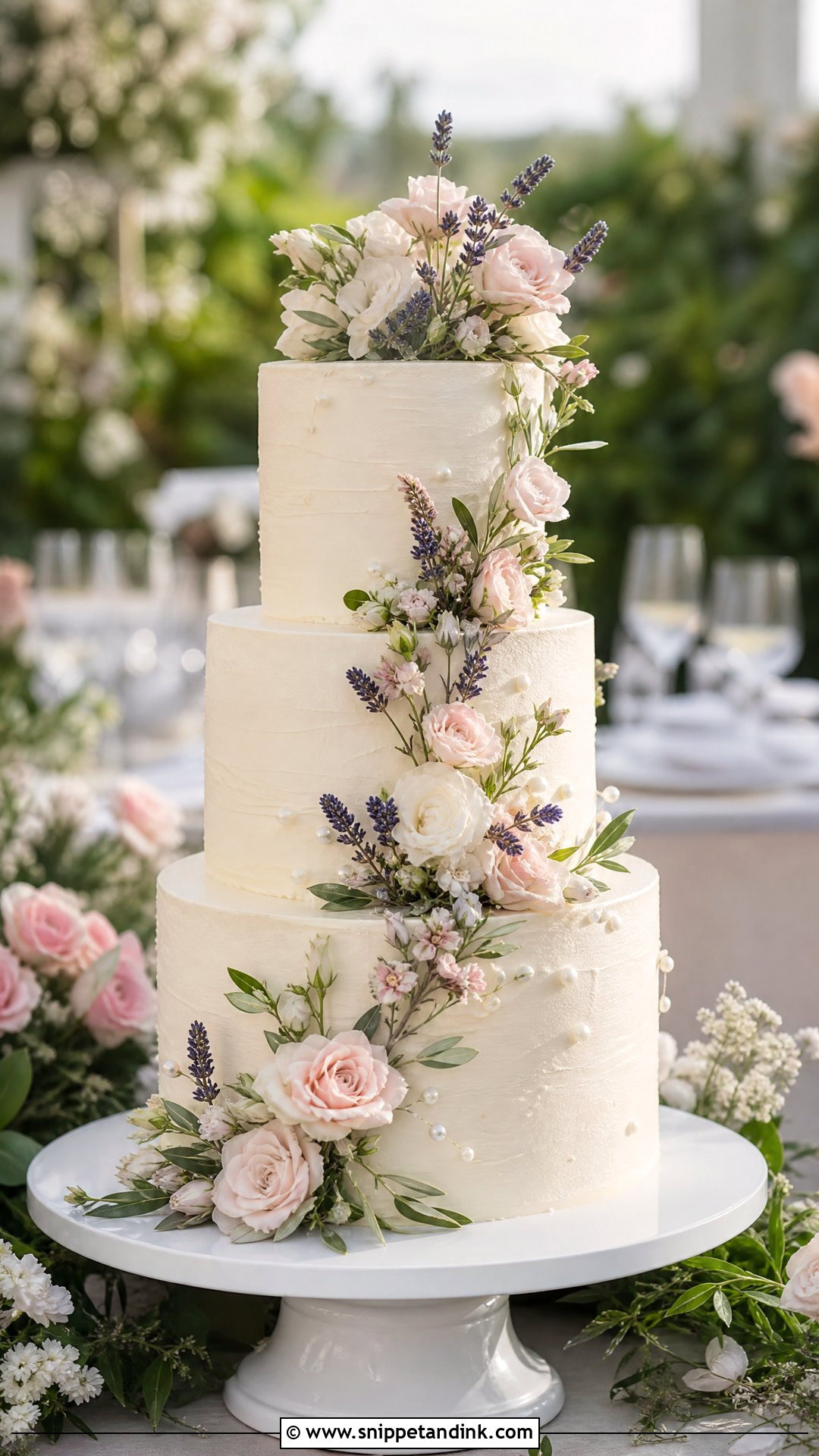
Garden cakes suit outdoor venues, tents and spring ceremonies. Smooth white buttercream with climbing flowers, pressed edible petals or greenery tucked between tiers keeps it fresh, in lavender, blush, ivory, sage and peach. Lemon, pistachio and berry fillings fit well. Dainty piping, pearl dots or tiny sugar butterflies near the flowers give it a more refined finish. Outdoors, I’d skip cream cheese and whipped cream fillings, which aren’t safe sitting out in the heat for hours.
9. Ruffle Wedding Cake
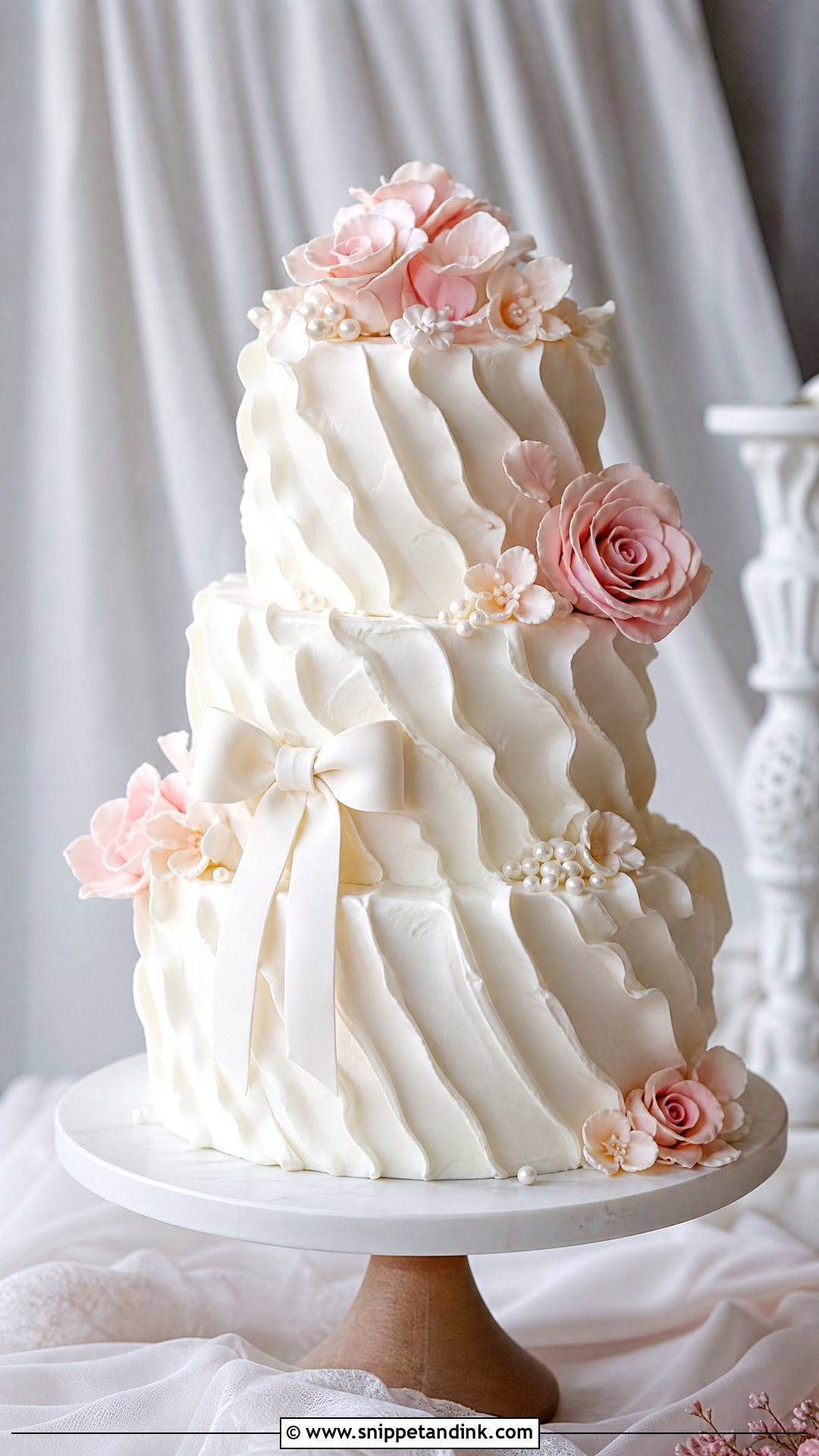
Ruffles borrow from the movement of a skirt. Fondant or buttercream is shaped into flowing layers, on the whole cake or on one tier for balance. White is timeless, blush romantic, ombre more modern. A few sugar flowers or a small bow finish it. Fondant ruffles are thin strips frilled with a ball tool and attached one row at a time, so a fully ruffled four-tier cake is a long day’s work and priced that way. Buttercream ruffles are quicker but softer in heat.
10. Rose Wedding Cake
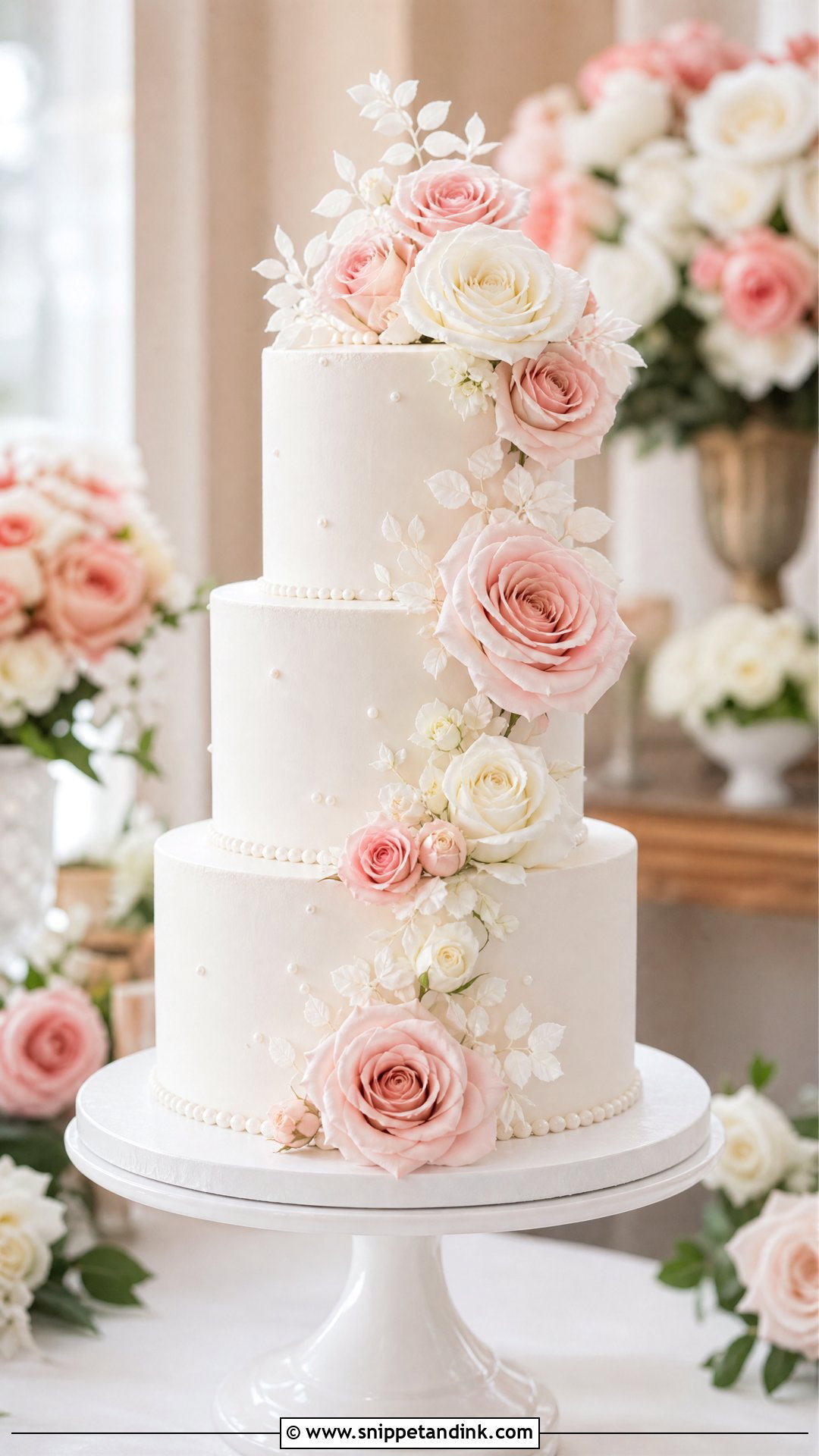
Roses can be fresh, sugar, piped in buttercream or painted by hand. A cascade down one side adds movement; a crown on top is simpler. White and blush are the safest, with dusty pink and peach close behind. Keep the base smooth so the roses stand out, and add pearl borders for softness. Piped buttercream roses are the most affordable version and taste good too, but they’re the first thing to droop in a warm marquee.
11. Butterfly Wedding Cake
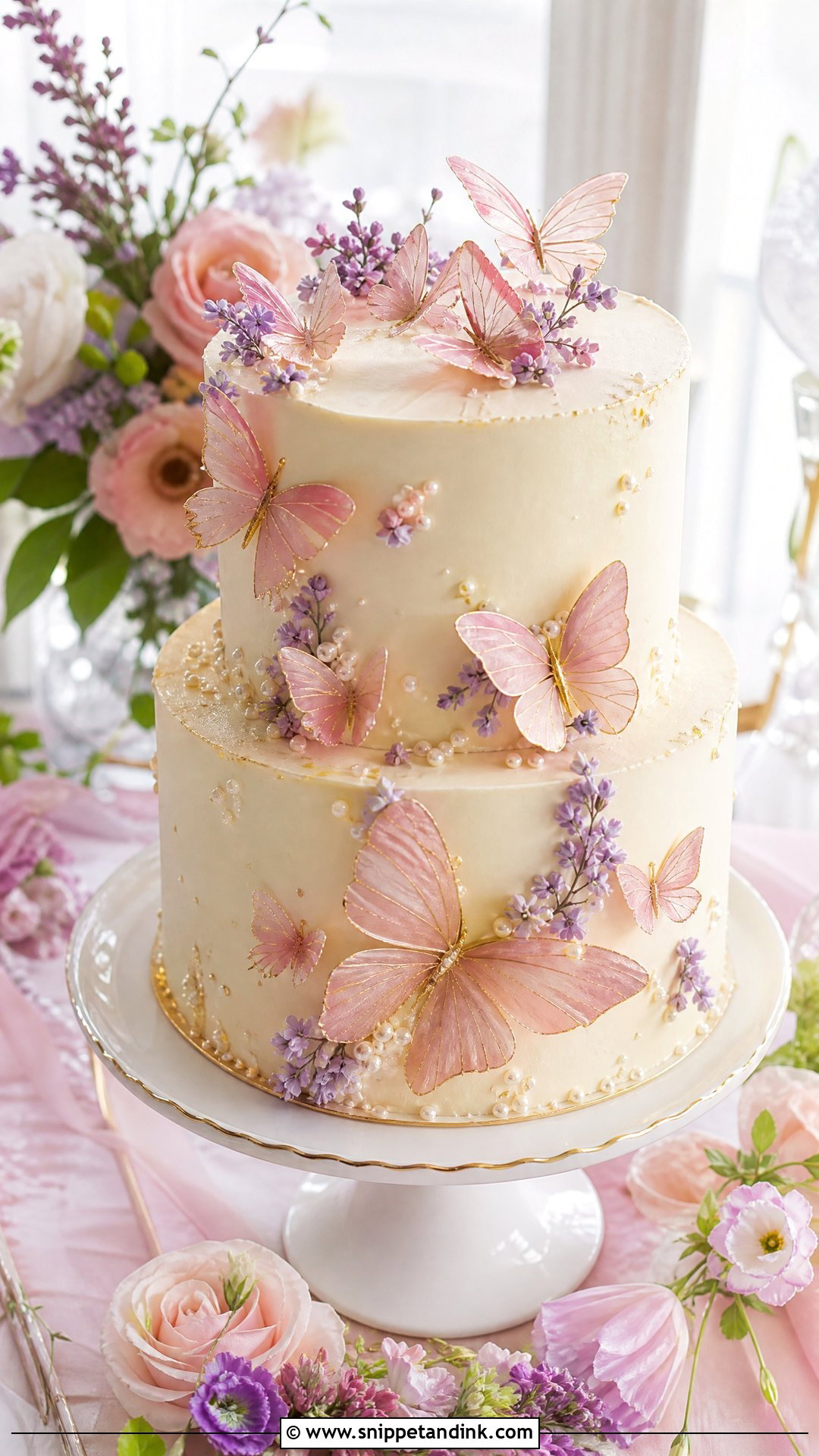
A butterfly wedding cake stays grown-up when the butterflies are pale and thin. I cut them from wafer paper in ivory, blush, lavender or soft gold and fold the wings so they look as if they’ve just landed. They can trail up the tiers, circle sugar flowers or sit along the edges of a smooth white or pale pink base. Wafer paper curls and goes limp in humidity, though, so on a humid day I’d swap to gelatin or isomalt wings, which hold their shape.
12. Gold Wedding Cake
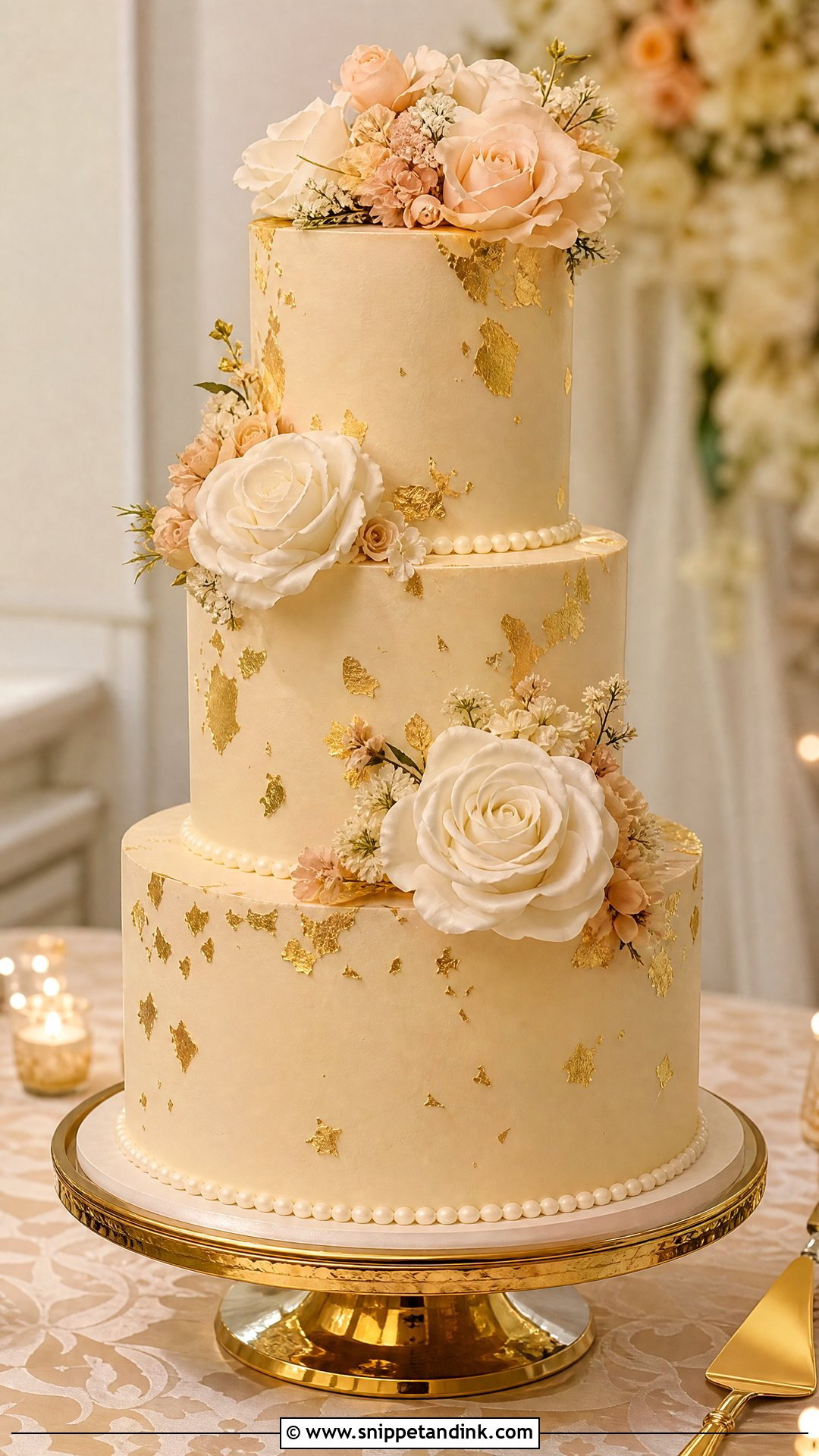
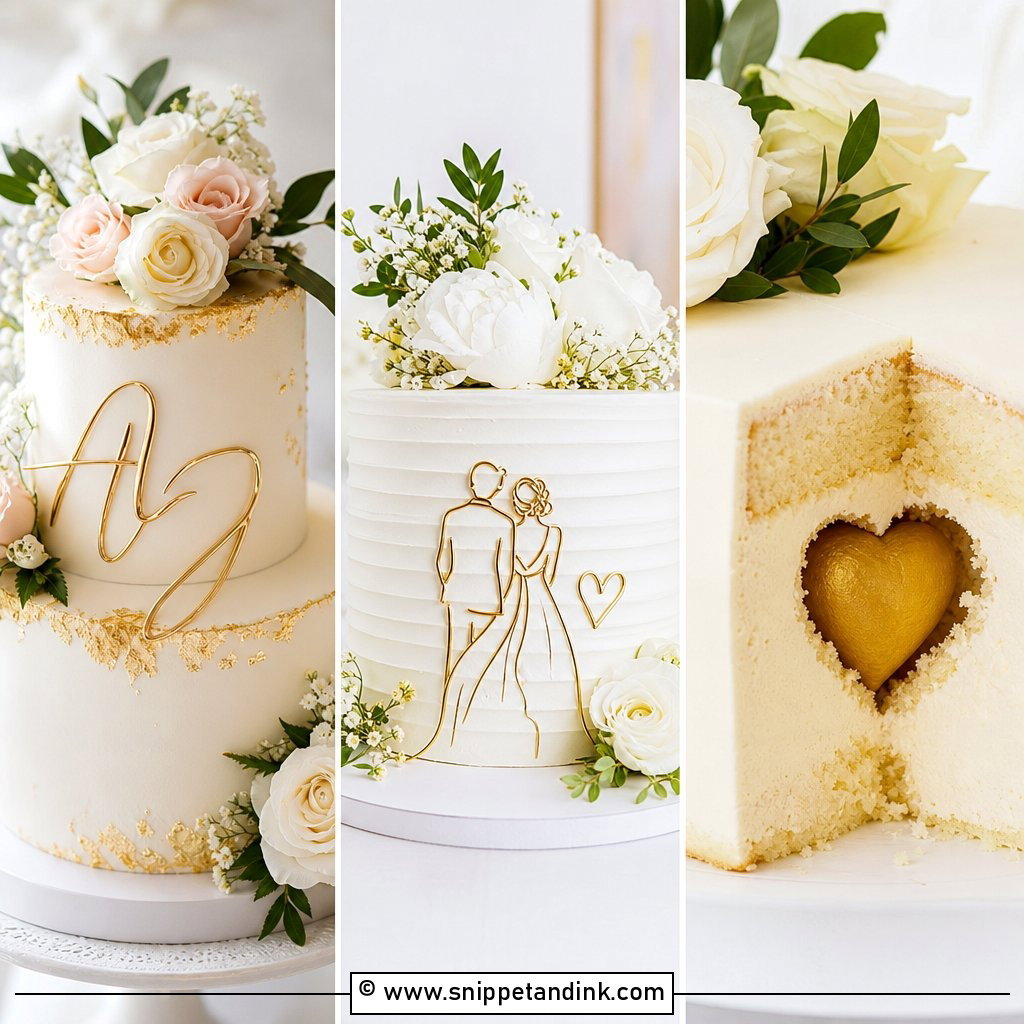
Gold works best in small doses. Champagne gold, brushed metallic edges or a few flakes of gold leaf make a simple cake look special, paired with ivory, blush, pearls or white flowers. A few gold details often look more expensive than a fully metallic cake. Evening receptions and ballrooms suit it, and caramel or honey sponges match its warmth. Gold leaf is applied with a dry brush onto a slightly tacky surface. In a humid room it can wrinkle, so this is usually a fondant job.
13. Minimal Wedding Cake
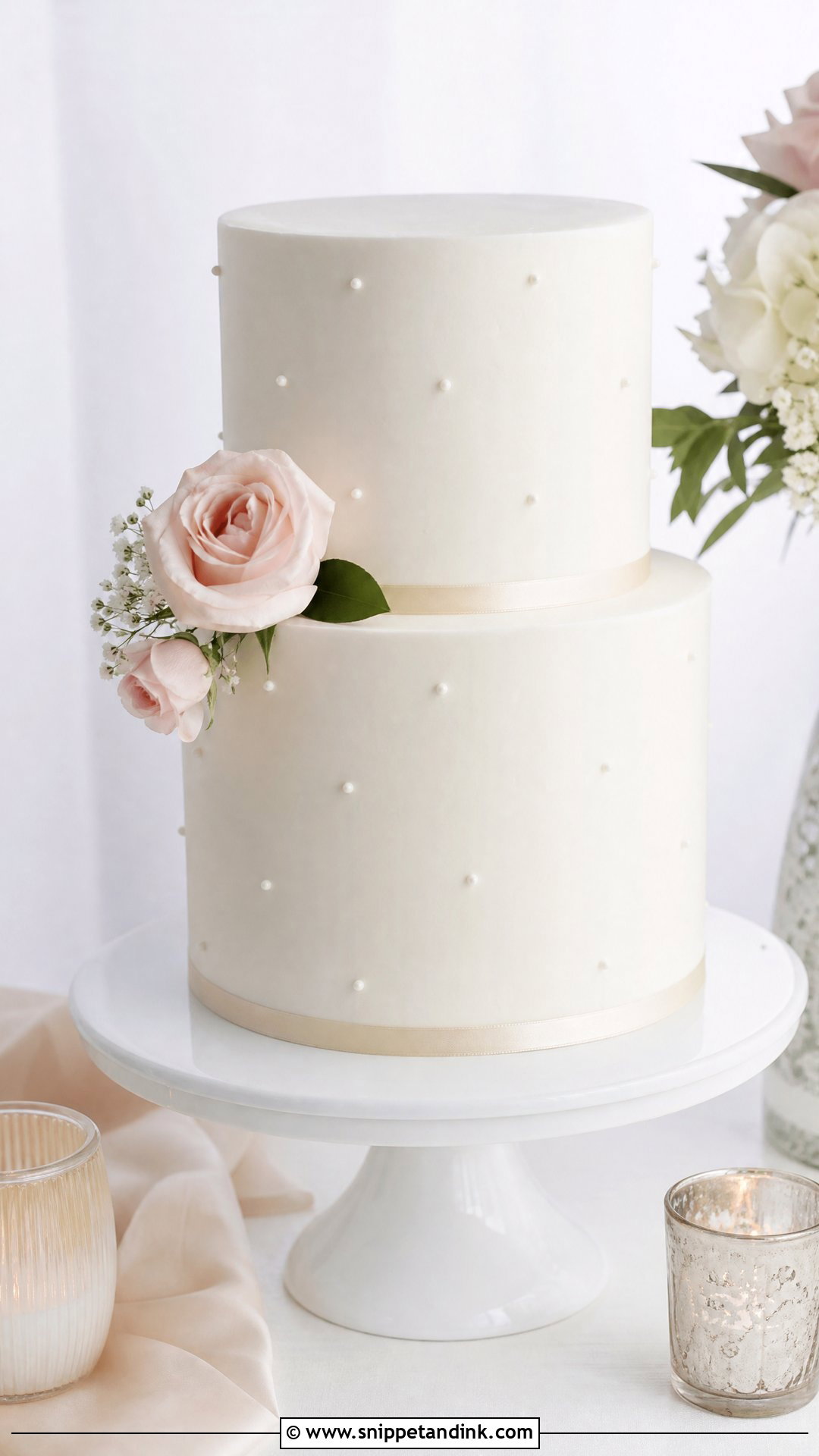
Minimal cakes leave nowhere to hide. One flower cluster or one silk-style bow on smooth ivory buttercream can look very stylish, but only if the sides are dead straight and the edges sharp. That finish is harder to get than any amount of decoration, so check your baker’s portfolio for clean edges. Small weddings and modern venues suit it. With so little on the outside, the flavor has to carry it: vanilla bean, lemon elderflower, almond or coconut.
14. Coquette Wedding Cake
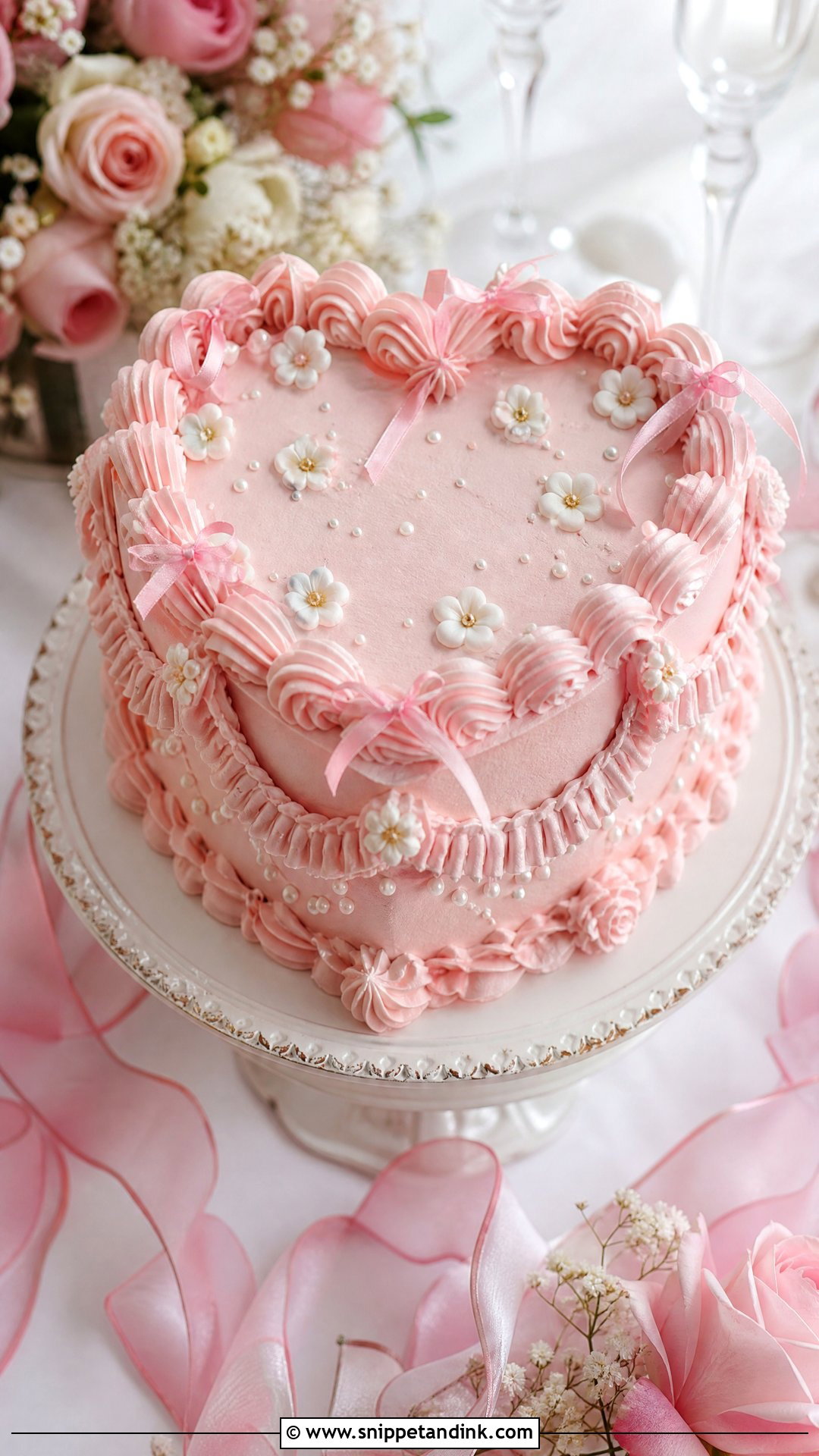
Coquette cakes are all tiny bows, pastel frosting, pearls and ruffled borders. Blush, ivory, butter yellow or pale blue all work, on a heart shape, a small tiered cake or a vintage round. Piped shells, rosettes or satin-look fondant ribbons keep it bridal rather than birthday. Strawberry, raspberry and almond flavors suit the look. The line between sweet and childish is thin, so I keep the bows small and the palette to two colors at most.
15. White Wedding Cake
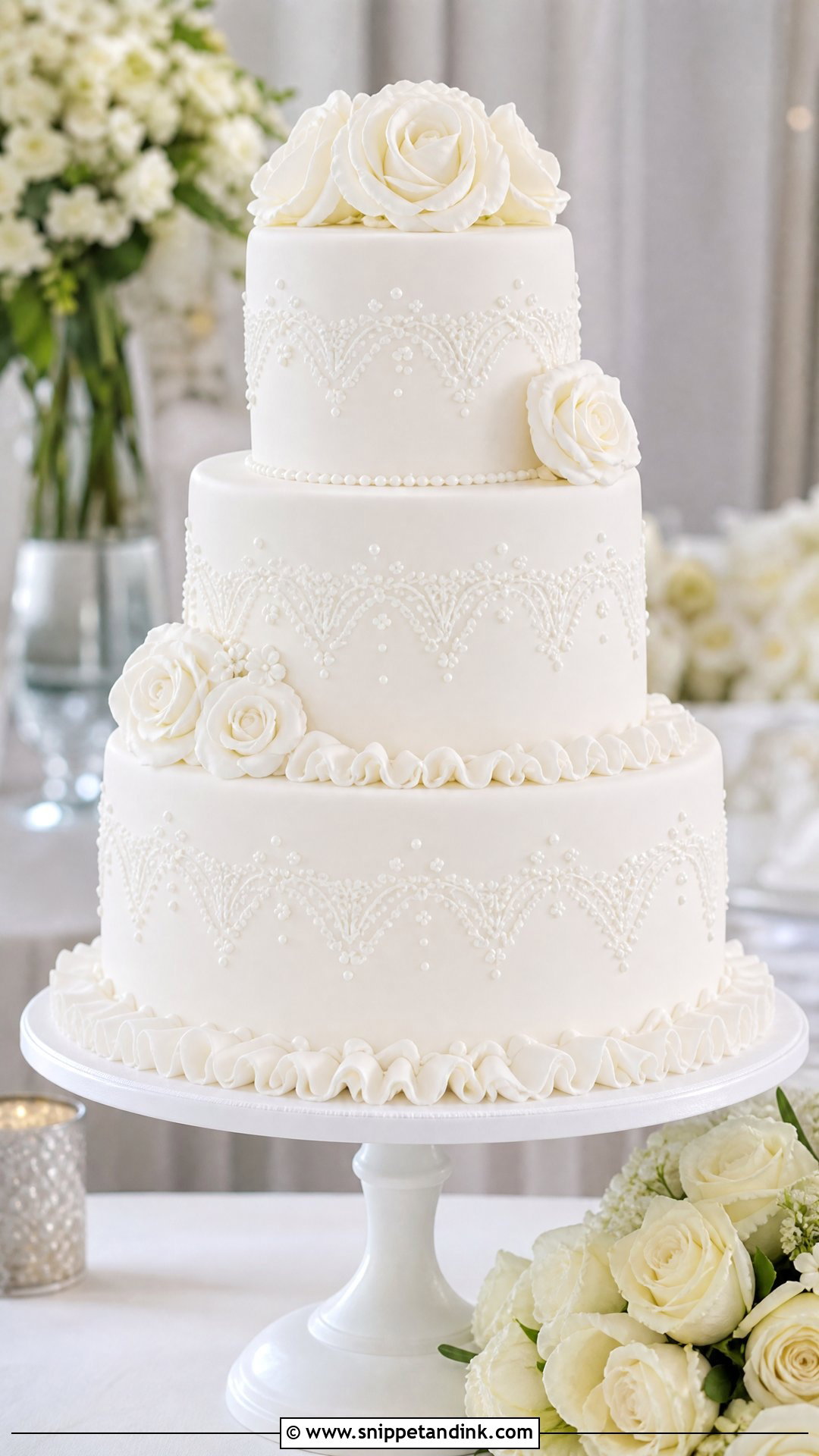
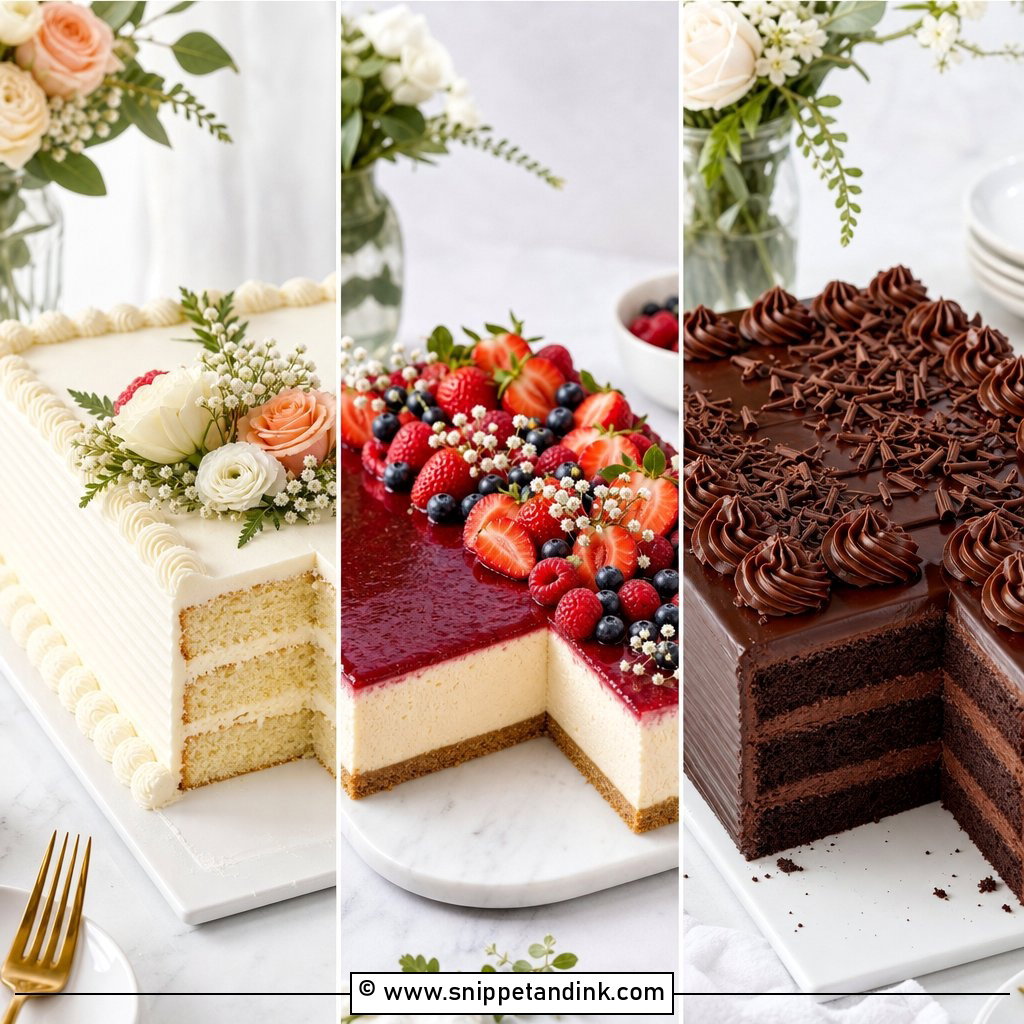
All-white is classic for a reason, and texture keeps it from looking plain. Pearl dots, lace piping, sugar roses, ruffles or a bow make it personal while staying white. It lets colorful flowers on the cake table carry the color. Inside, vanilla, almond, coconut or lemon. Bright white buttercream needs a touch of violet coloring to cancel the yellow from the butter, which is why some ‘white’ cakes look cream next to a white dress.
16. Pastel Wedding Cake
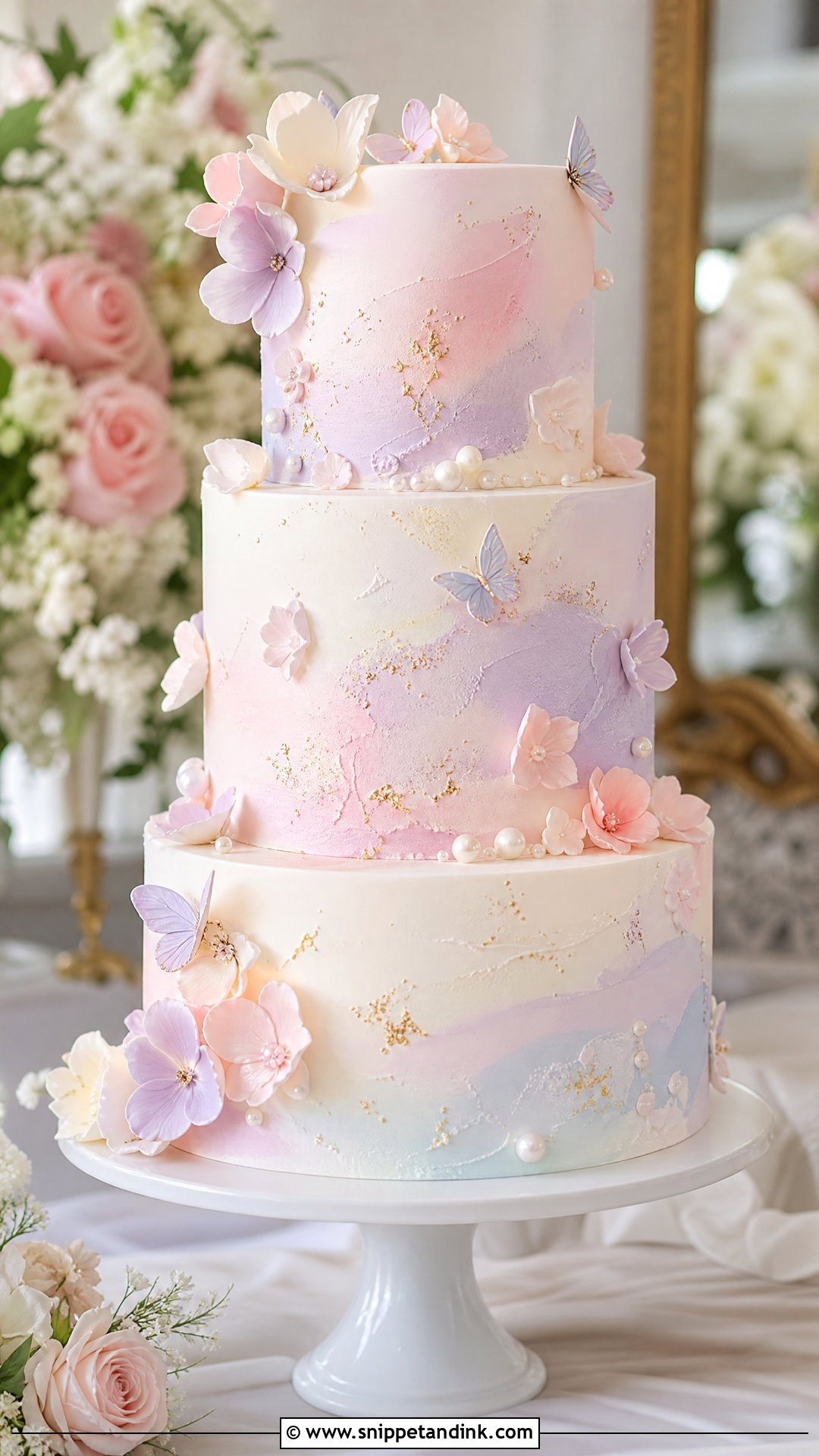
Pastels give a reception a dreamy, soft look. Blush, lavender, mint, peach, pale yellow and powder blue can be used alone or blended in a watercolor wash, with sugar flowers, wafer butterflies, pearls or soft piping. It’s a spring and garden-party favorite, with fruit fillings, lemon curd or strawberry buttercream. Pale lavender and powder blue are the hardest shades to keep true; they can drift grey under warm lighting, so I test a swatch under your venue’s light if I can.
17. Floral Cascade Wedding Cake
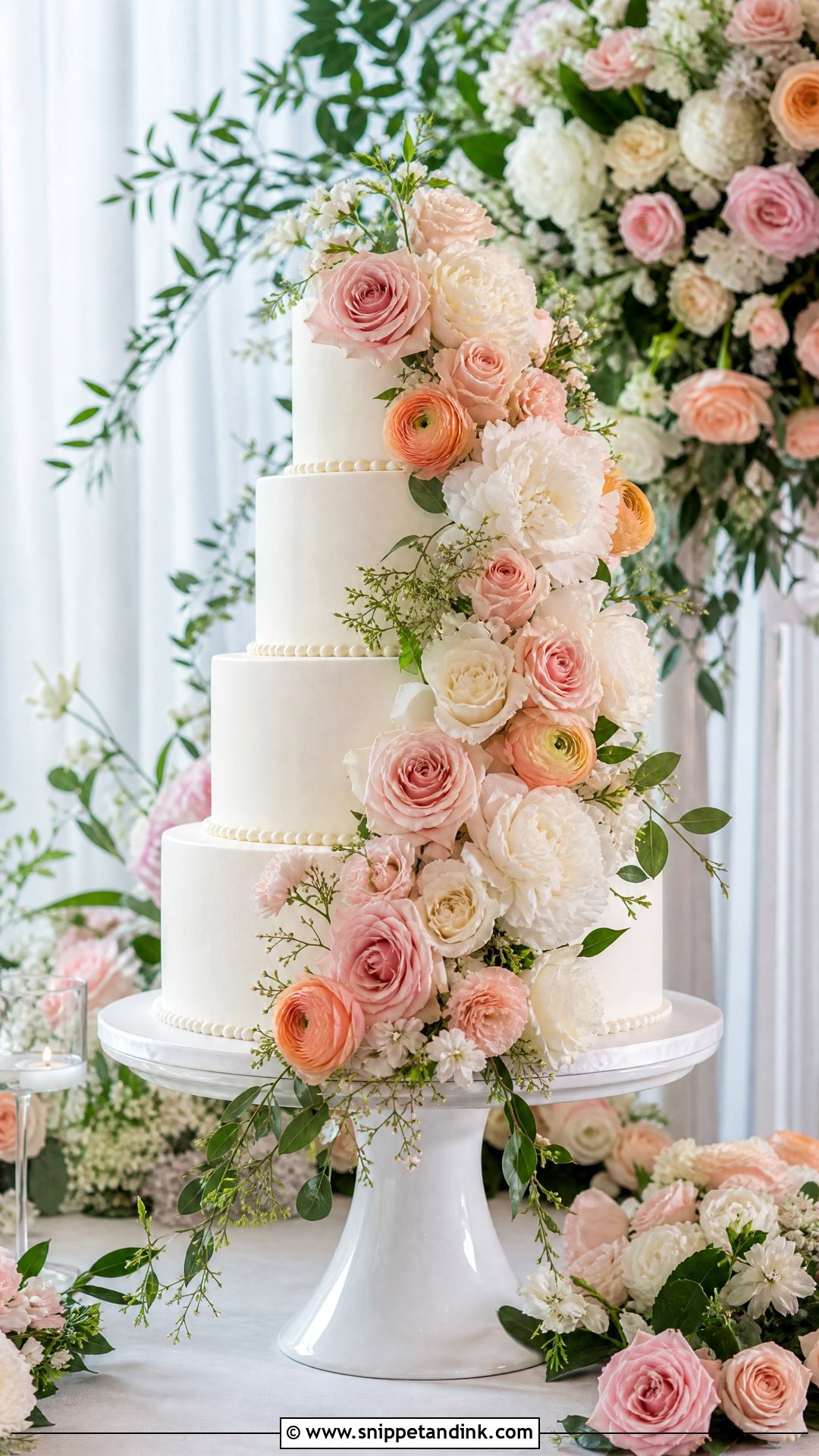
A floral cascade gives height and movement, starting near the top tier and flowing down like a bouquet. Soft roses, peonies, orchids, ranunculus or sweet peas in blush, ivory and peach keep it feminine, on a simple base so the flowers lead. It suits larger weddings and looks impressive in full-length photos with candles around the table. A long fresh cascade is heavy, so I build it on a hidden armature with stems wired in, rather than pushing them into the sponge, where they’d cause bulging and seepage.
18. Sugar Flower Wedding Cake
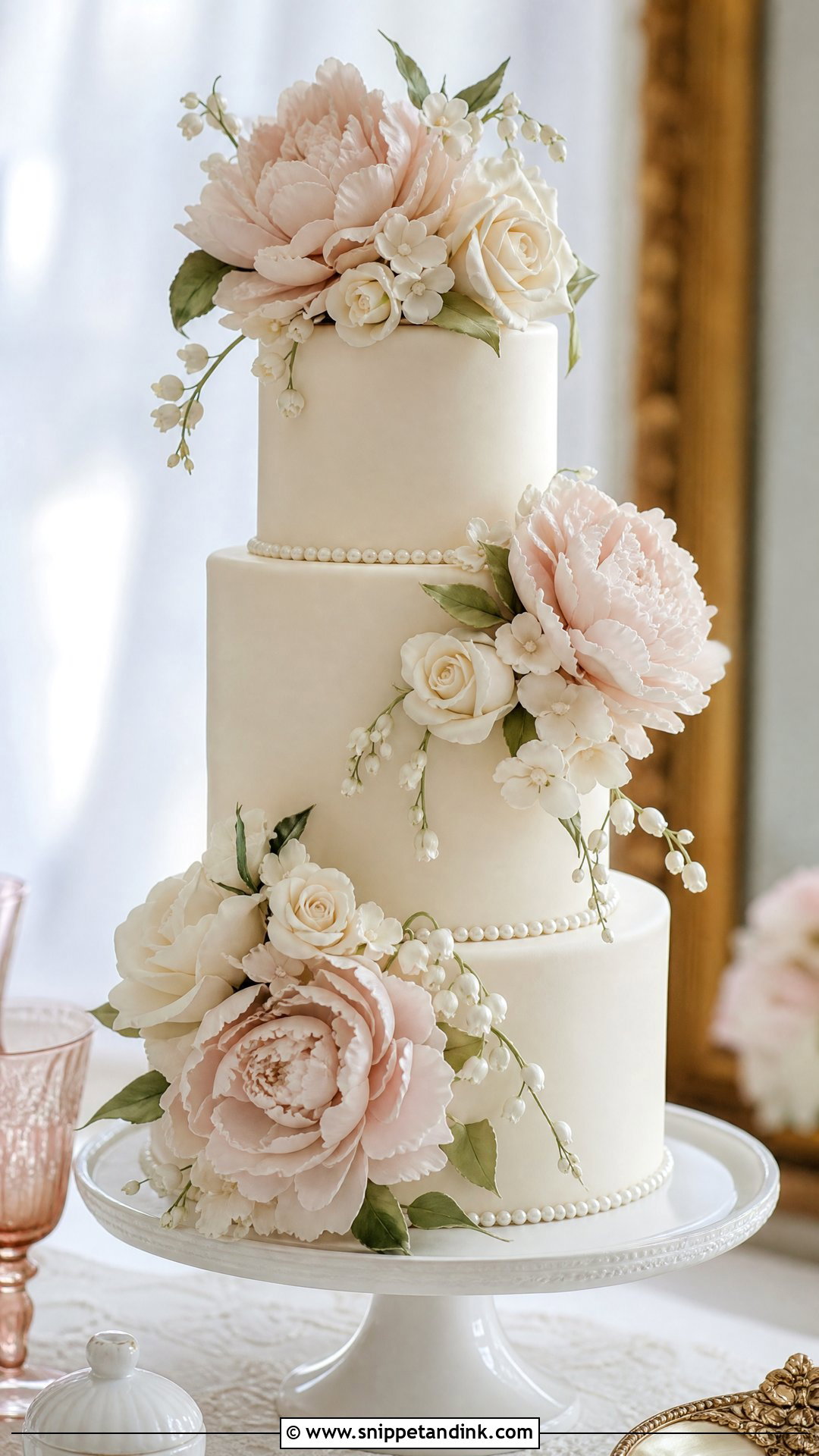
Sugar flowers give you complete control of color and shape, they don’t wilt, and they let you have peonies in October. Roses, peonies, lily of the valley, magnolias or gardenias in clusters, a soft cascade or around each tier, on smooth ivory or blush, look artistic. Lily of the valley is poisonous fresh, so sugar is the only way to have it on a cake. Each sugar bloom is wired petal by petal and dried, so order early. A big peony can take days from first petal to finished flower.
19. Monogram Wedding Cake
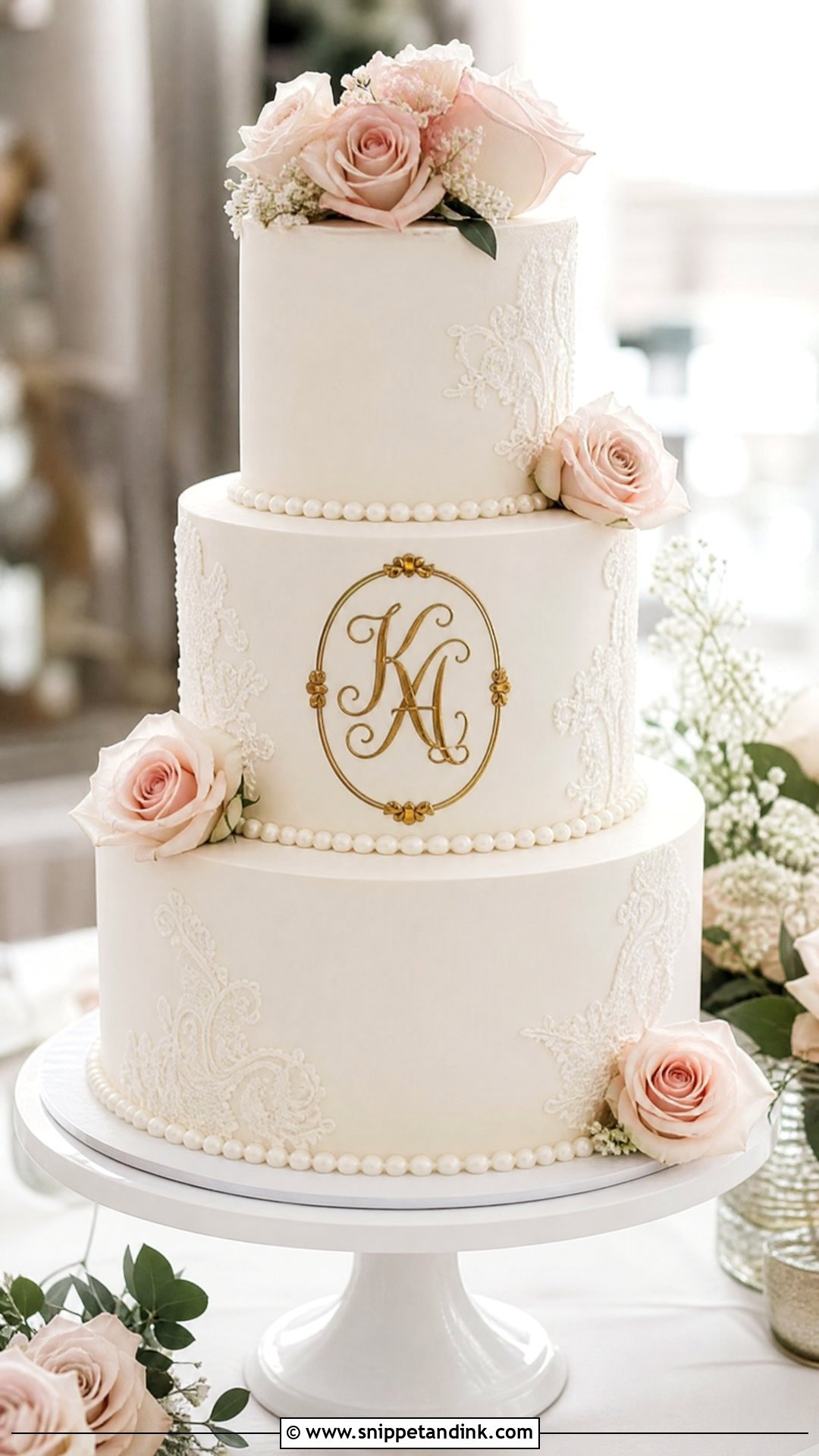
A monogram makes the cake personal: your initials, a new shared last initial or a small crest. Keep it delicate in gold, pearl or white piping, with smooth frosting, soft florals, lace or a satin ribbon at the base. Traditional weddings and estate venues suit it. Size matters here. It should read from a few steps away but not dominate the tier. I usually pipe it onto a sugar plaque first, so a wobble doesn’t ruin a whole tier.

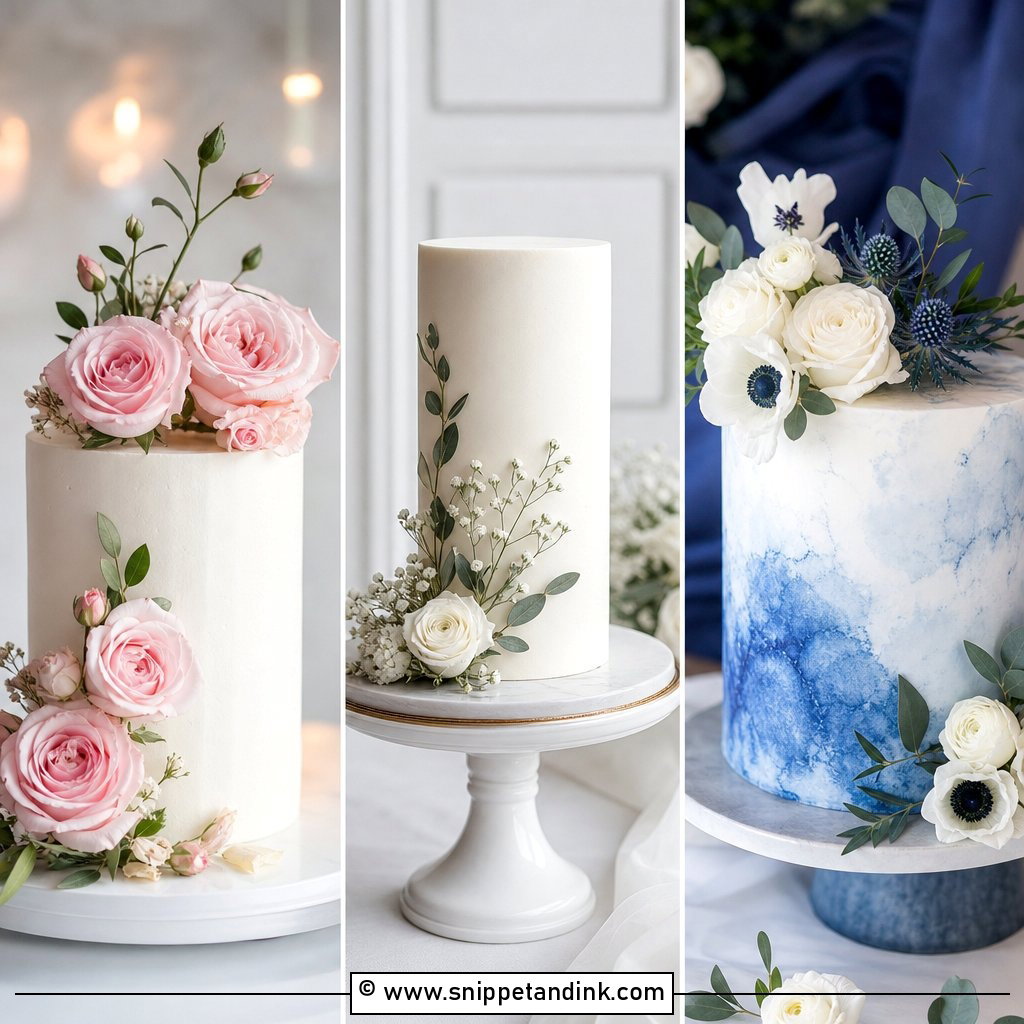
20. Pressed Flower Wedding Cake
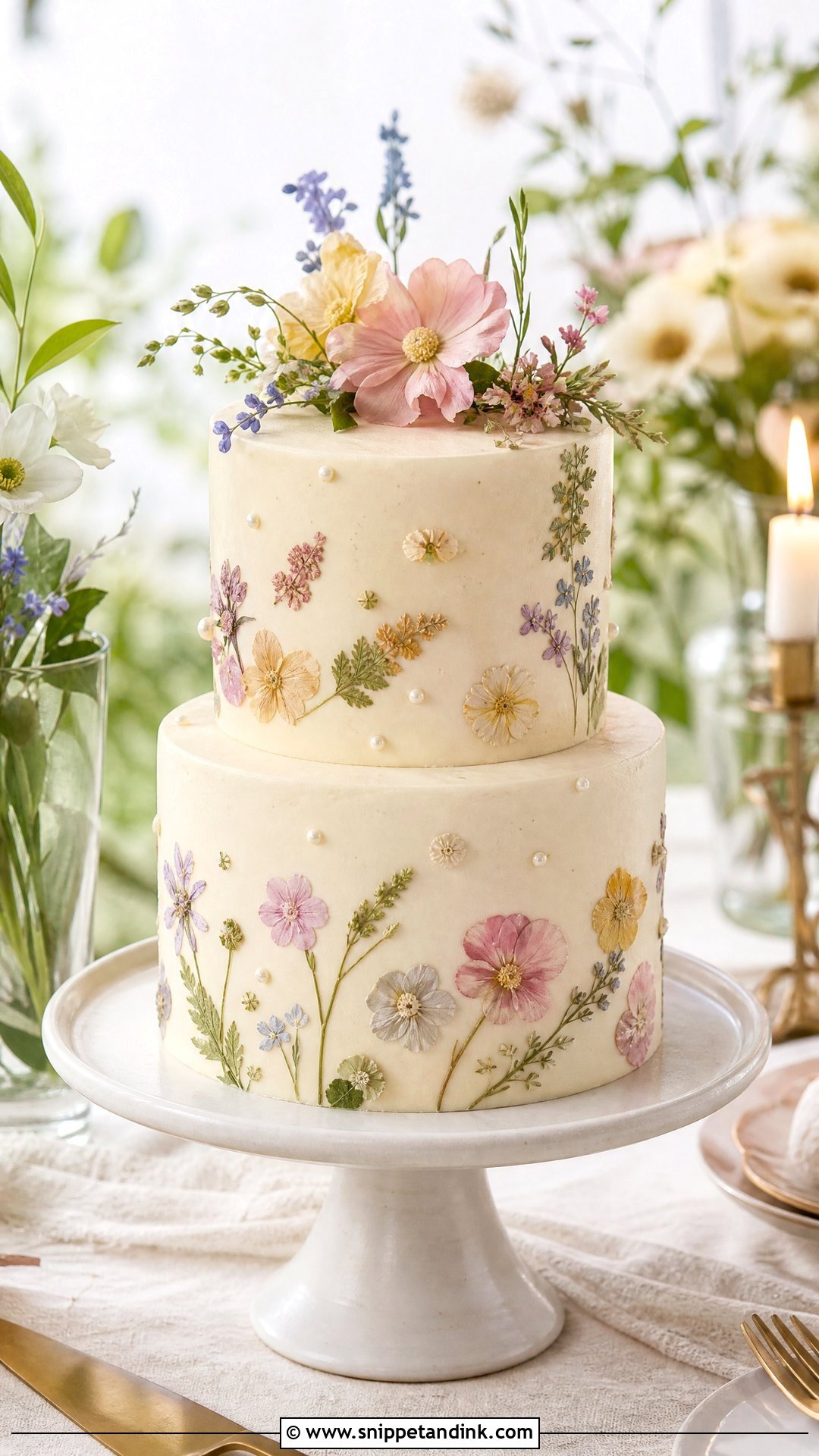
Pressed flowers lie flat against smooth buttercream for a soft garden effect. Keep the colors gentle, lavender, blush, pale yellow and soft blue, because too many bright ones make the cake look casual. One tier suits a small wedding; three feels romantic. Lemon, honey or lavender sponges fit well. The flowers must be edible varieties pressed for food use. Violas and pansies hold their color better than most, and I press them on close to delivery so moisture from the buttercream doesn’t wrinkle them.
21. Satin Bow Wedding Cake
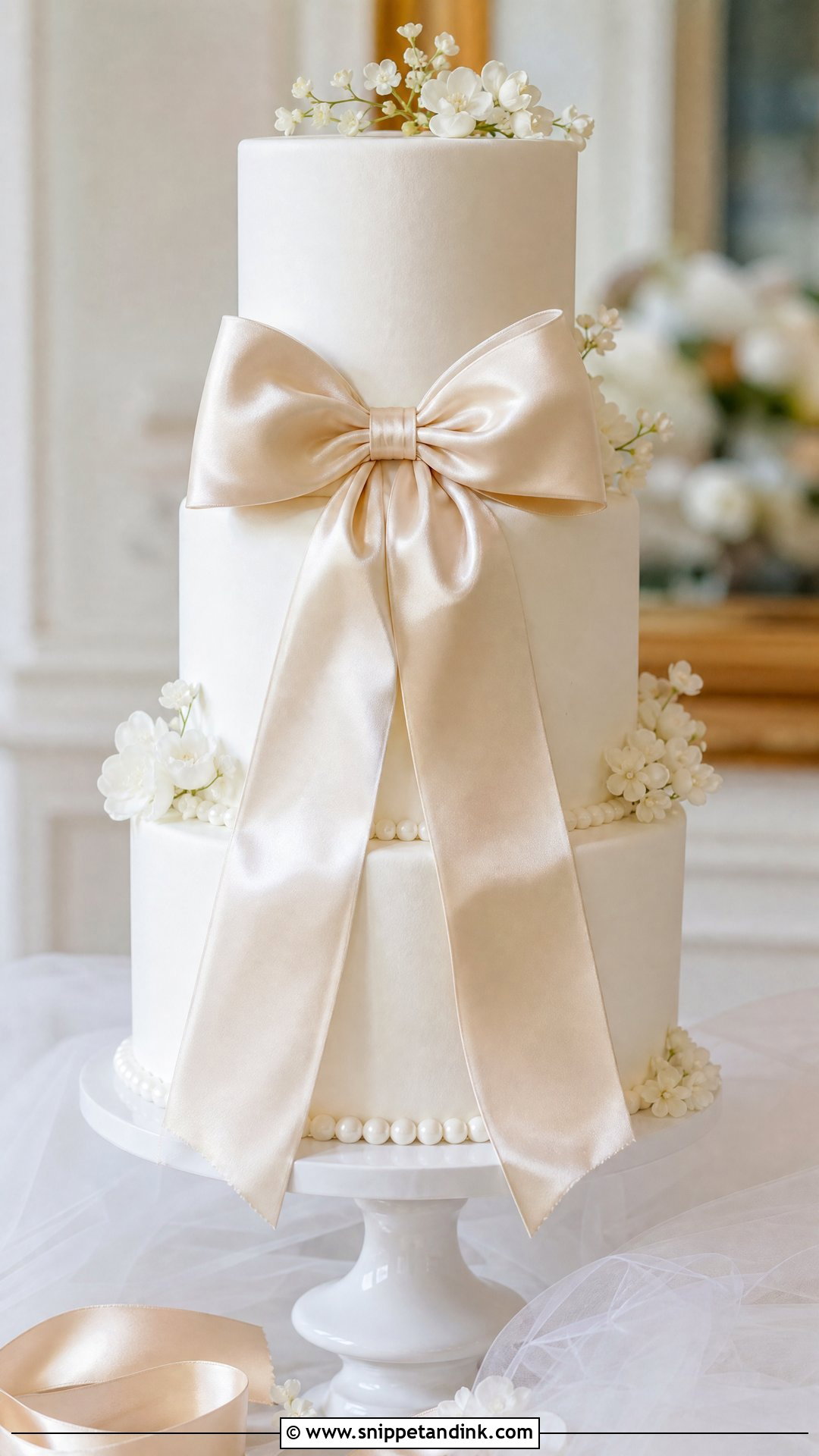
A satin bow brings bridal fashion to the dessert table. It can look like fabric while being made from fondant or gum paste; real ribbon is fine around the base as long as there’s a barrier strip, because buttercream grease soaks through and spots it. One large bow on the top tier is a statement; small ones on every tier are daintier. White, ivory, blush and champagne work best, with smooth frosting and very simple flowers. It suits a bride who cares about veils, gloves and shoes.
22. Tall Tier Wedding Cake
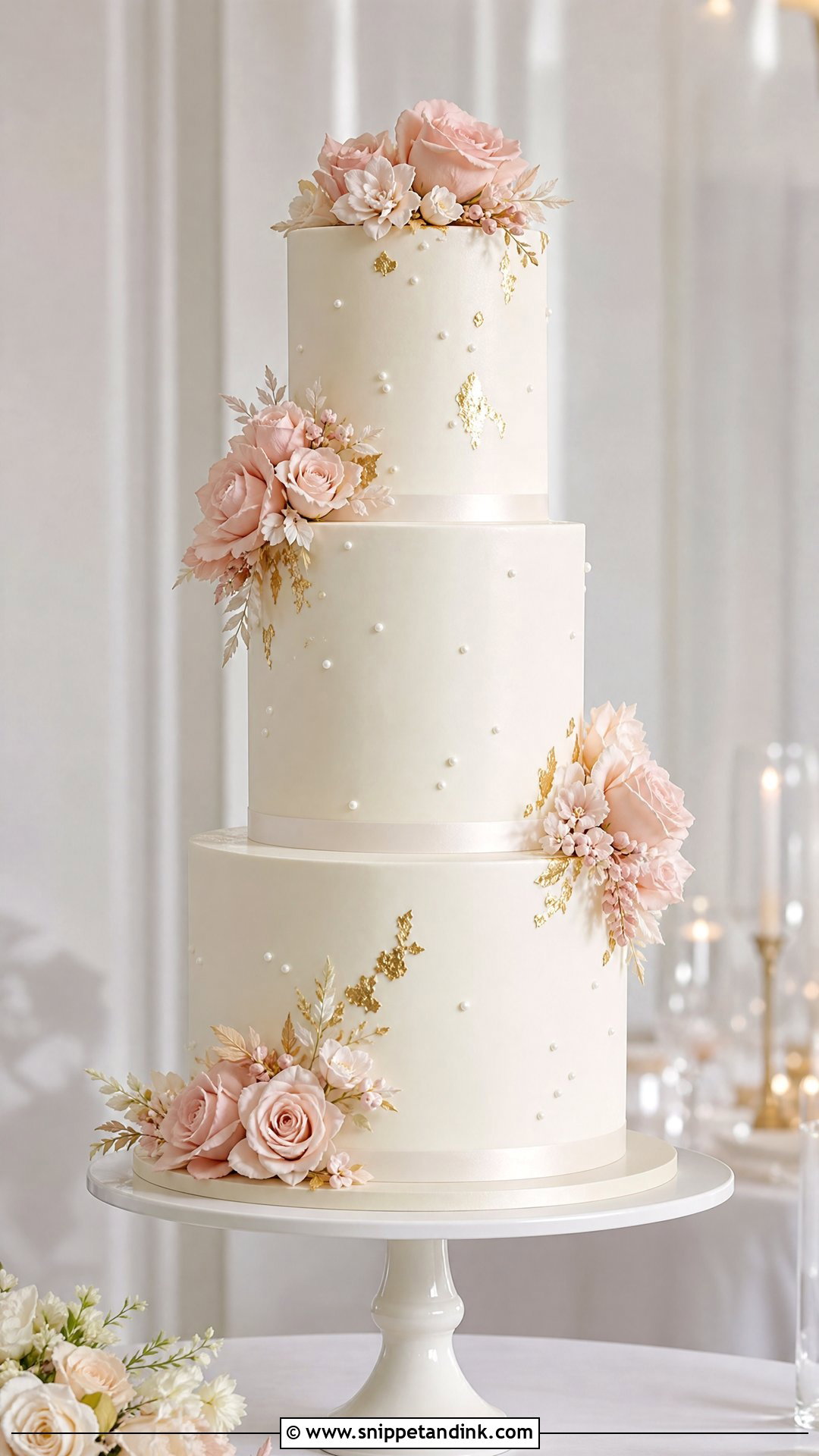
Extra-tall tiers, usually six inches or more instead of the standard four, give a graceful, modern shape and more room for flowers, lace or pearls. White or ivory with blush flowers looks refined, and the height helps in a large room. A tall tier is really two cakes stacked with a board between them, so it needs extra dowels and a baker who’s comfortable with the engineering. Choose sturdy sponges and fillings; a soft mousse can’t carry that height.
23. Watercolor Wedding Cake
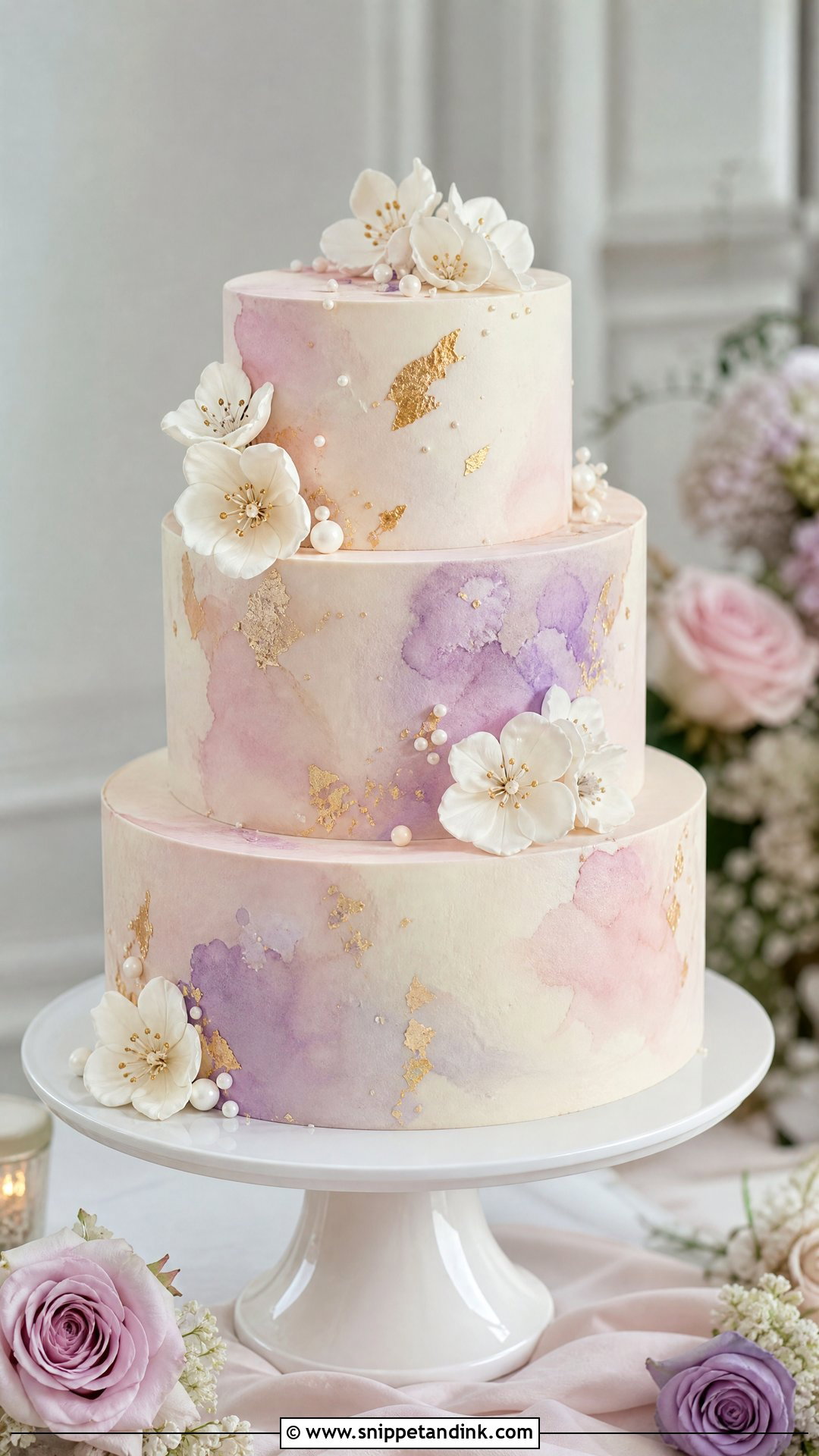
Watercolor cakes are painted in gentle washes, almost like painted silk. Blush, lavender, peach, champagne or pale blue keep it feminine, with sugar flowers, gold leaf, pearls or a smooth white top tier for structure. It can be subtle or quite colorful. On buttercream, the wash is made by smoothing tinted frosting into the base coat with a scraper; on fondant it’s hand-painted with diluted food color. Ask which finish your baker uses, since they look quite different up close.
24. Black And White Wedding Cake
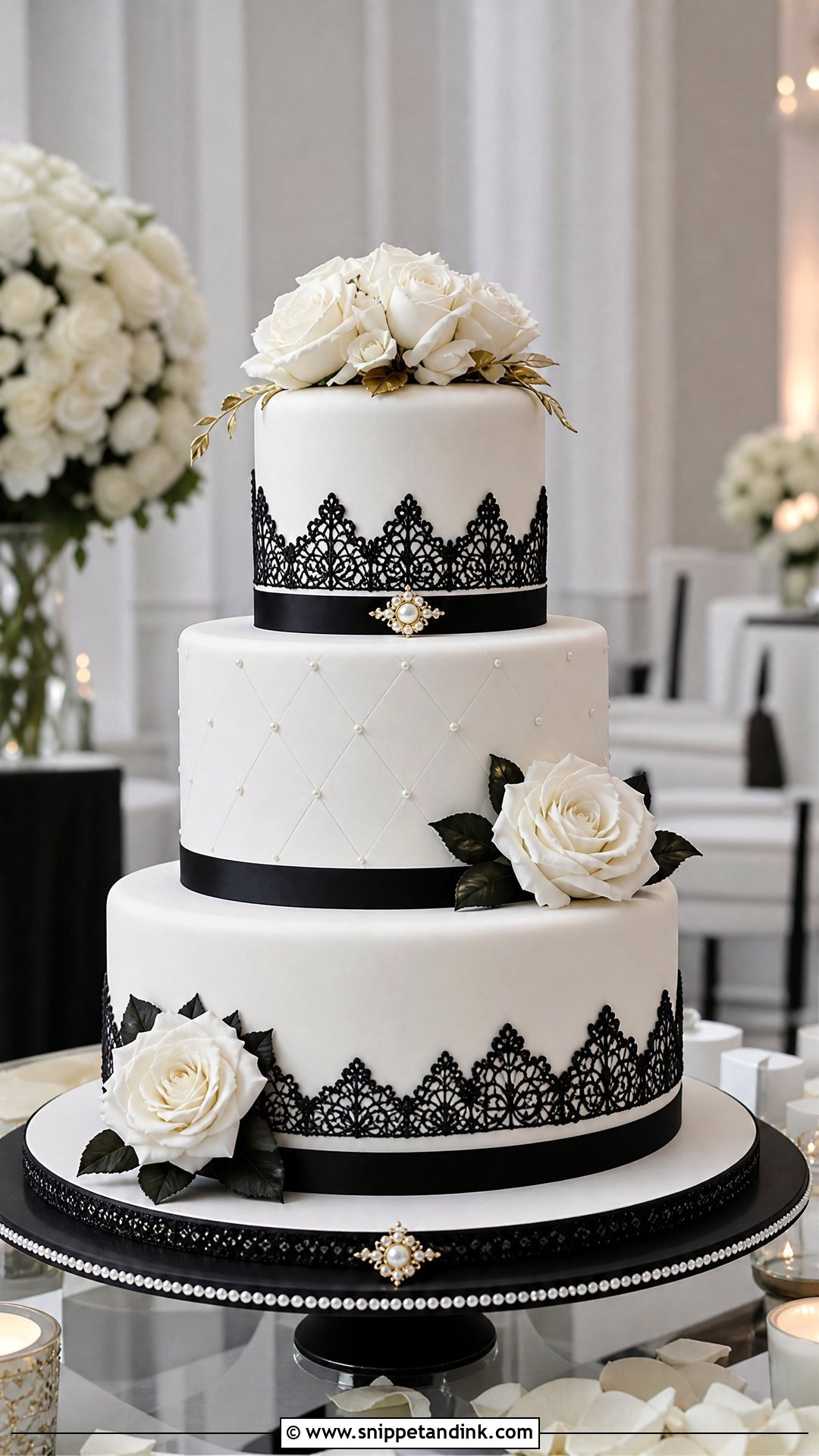
Black and white can still feel feminine when the black is thin. A white base with fine black ribbon, delicate black piping, lace or a small bow, plus pearls, white roses or a touch of gold, keeps it bridal. It suits modern weddings and anyone who loves a fashion look. Vanilla bean, chocolate or cookies and cream suit it inside. Black icing stains teeth and lips, so I keep the black to fine detail and never to a whole tier of buttercream.

25. Lady M Crepe Wedding Cake
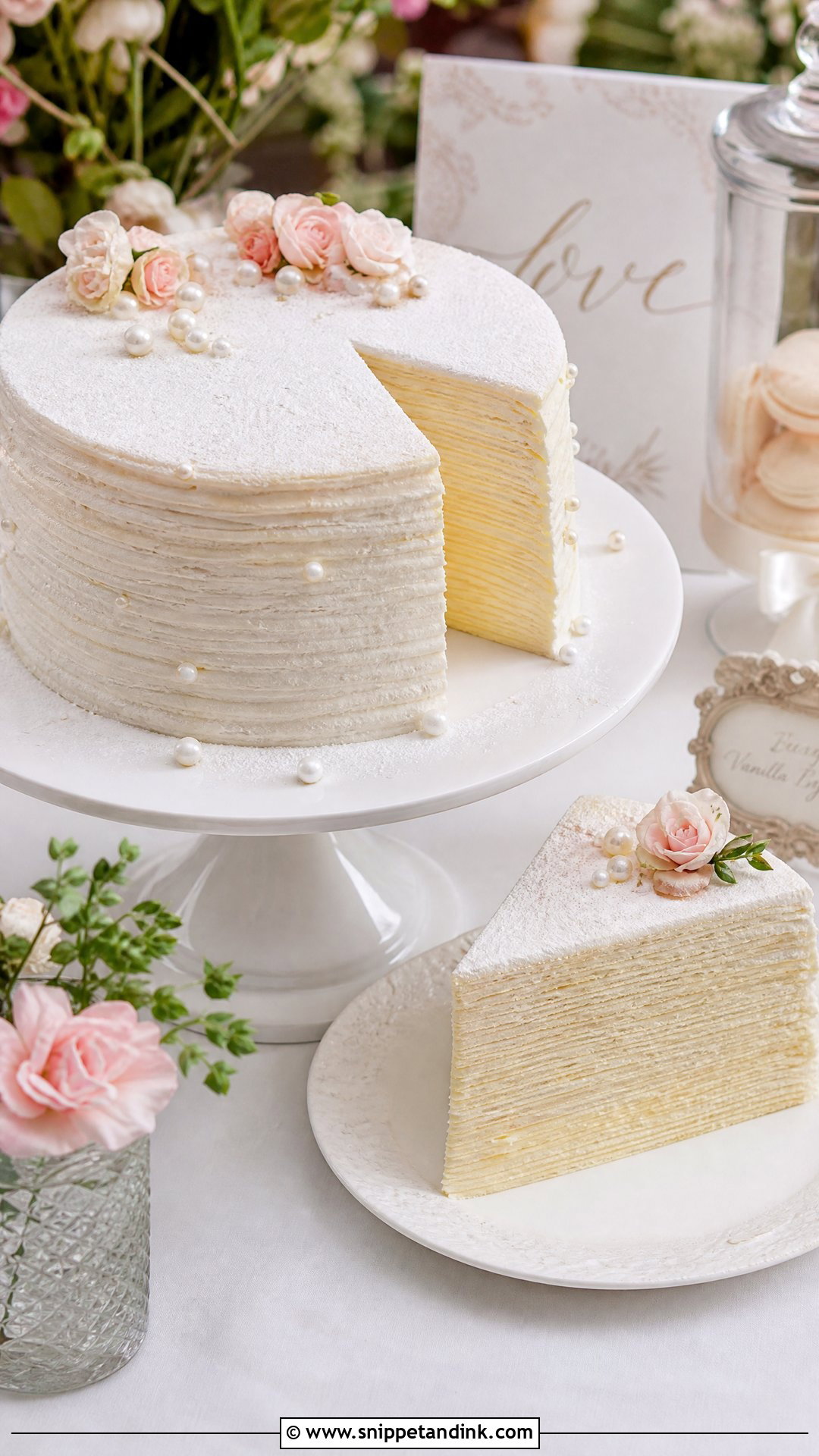
A Lady M-style crepe cake is a quiet, elegant alternative to a tiered cake. Dozens of thin crepes layered with light cream give that striped slice, and the outside stays simple with pale cream, powdered sugar, flowers or pearls. Vanilla, matcha, strawberry or rose cream all work. It isn’t built to stand out for hours. The cream needs to stay chilled, and the layers can’t be stacked into tall tiers, so I’d suggest it as a cutting cake for a small dinner, alongside other desserts.
Buttercream, Fondant or Ganache Under the Decoration
The coating under all those bows and pearls decides how the cake behaves on the day. Buttercream tastes best to most guests and takes piping beautifully, but it softens in heat and marks if anything touches it. Fondant gives the smooth, satin look that bows and gold leaf need, and it protects the cake from drying out, though plenty of guests peel it off. Ganache, chocolate and cream set firm, is excellent for sharp edges under fondant and handles warmth better than buttercream.
For an outdoor summer wedding, I’d lean toward a ganache base with fondant over it, or keep buttercream decoration simple and the cake out of the sun until cutting.
How Many Tiers Your Guest List Actually Needs
Wedding portions are cut as narrow fingers, much smaller than a birthday slice. As a rough guide, a three-tier round of six, eight and ten inches serves somewhere around seventy to ninety guests cut that way, and noticeably fewer if your caterer serves it as a plated dessert. Shapes change the maths: hearts give fewer neat portions, squares give more. If the design you love is bigger than your guest list, a smaller display cake plus a plain sheet cake in the kitchen is a common and sensible solution.
What Do Your Saved Cakes Have in Common?
A ladylike cake should look as if it was made for your wedding specifically. Vintage piping reads romantic, pearls and lace classic, bows fashionable, garden flowers fresh, minimal cakes modern. Before your consultation, lay out your favorite saved cakes and notice what keeps repeating, whether that’s a color, a shape or the same pearl border. That’s your real brief. Then talk through size, flavor, structure and which decorations are safe to eat, and the design will follow.
You'll Like These Ideas:






Leave a Reply