
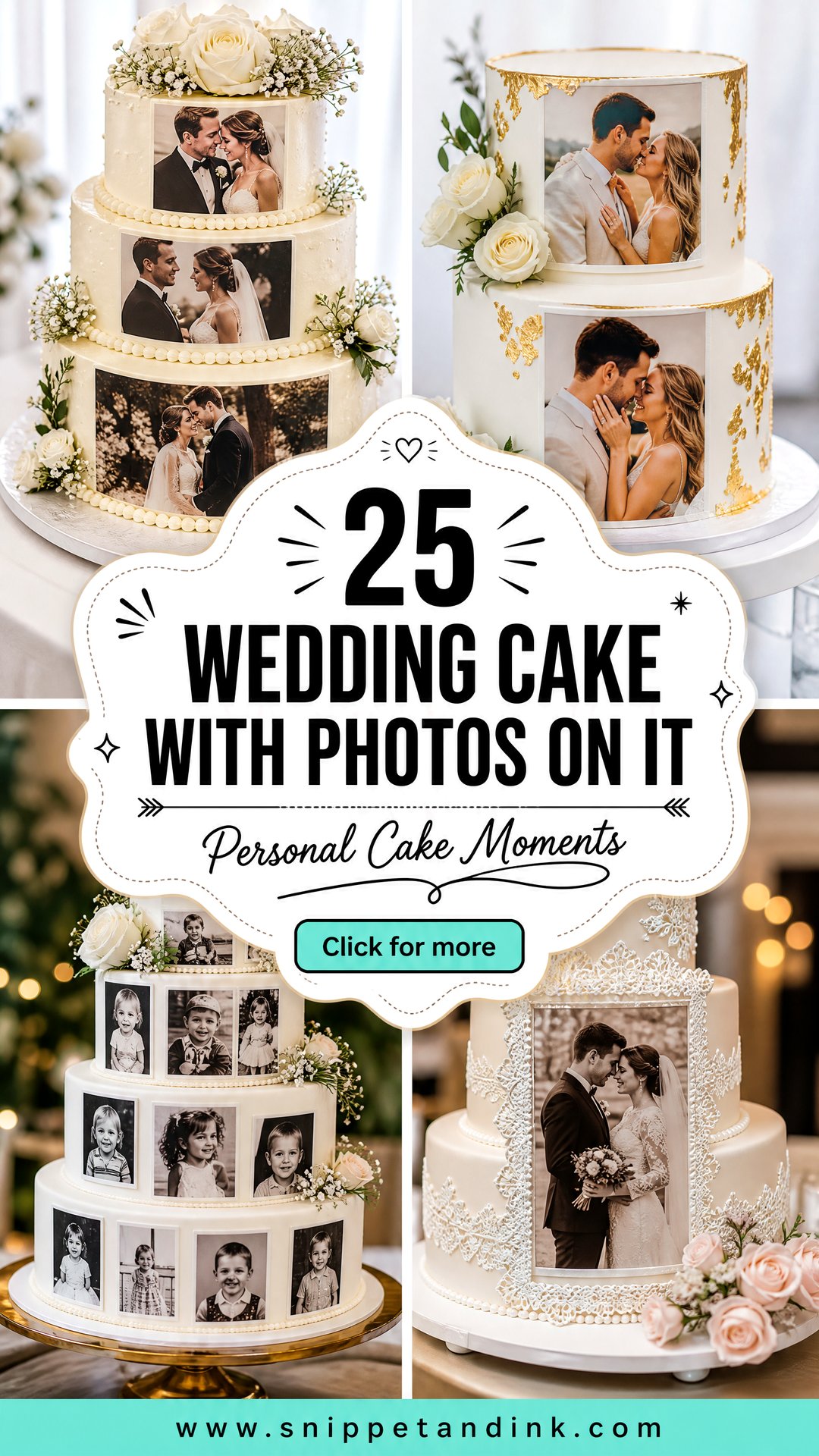
A cake can tell your story in a way guests take in at a glance. Photo cakes bring memories into the room: engagement pictures, childhood snapshots, family portraits, travel moments, even a scanned love note. Done well, they look elegant rather than novelty, with smooth buttercream, edible photo panels, vintage-style frames, fondant albums or clean tiers built around one strong image. I treat the photo like any other decoration. It needs space, some kind of frame and frosting that won’t spoil the print. Here are 25 ways to put a picture on a wedding cake, from a single portrait to a full sheet-cake collage.
Getting a Photo File Ready for Edible Ink
Edible printing isn’t the same as printing at a photo lab. The ink is food coloring and the paper is sugar or starch, and both soften the image a little. A good result starts with the file you send.
- Send the original, full-size image, not a screenshot or a picture saved from social media. Those are compressed and print soft.
- Pick photos with good light on faces and clear contrast. Edible ink tends to make dark areas murkier and pale areas washed out.
- Crop with the cake in mind. A wide landscape shot shrinks the faces to dots on a six-inch tier.
- Expect colors to shift slightly. Reds and skin tones vary most, so if accuracy matters, black-and-white or sepia is safer.
- Get permission for professional photos. Many printers want the photographer’s consent before they’ll print one.
Frosting sheet or wafer paper?
Frosting sheets give brighter, sharper prints and settle slightly into the surface, which hides their edges well. Wafer paper is lighter and more translucent, with softer color, and it can be painted and shaped for frames or transfers. Neither likes moisture, so whichever you choose, the print goes on as late in the process as possible.
1. Edible Photo Wedding Cake
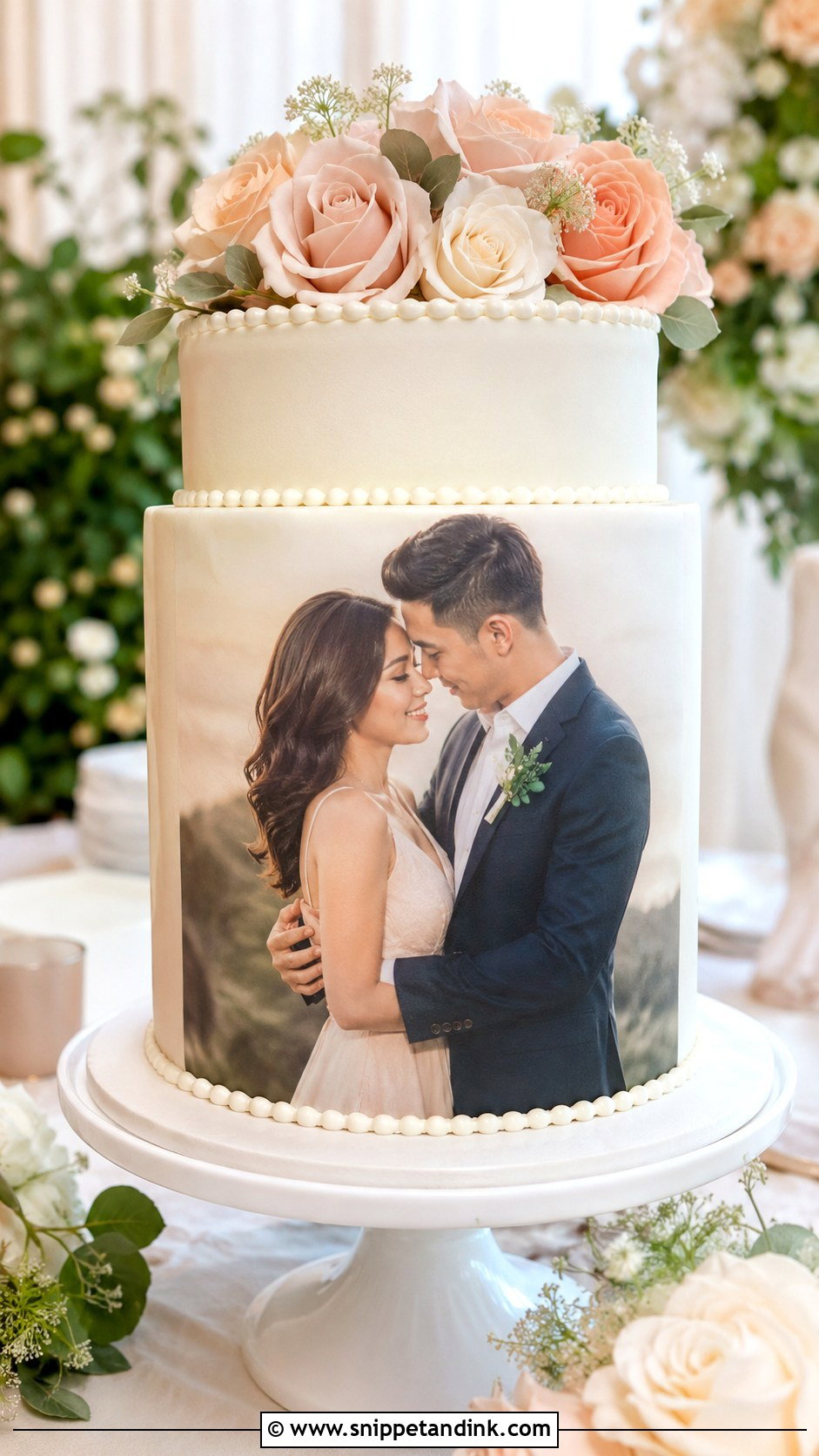
Printing a favorite picture straight onto the cake is the most direct route. The image goes onto an edible frosting sheet or wafer paper with food-safe ink, then onto fondant or well-crusted buttercream. One high-resolution photo with room around it works far better than several squeezed together. An engagement portrait, a black-and-white kiss photo or a soft outdoor shot all print well. Frosting sheets draw moisture from soft buttercream and can wrinkle, so I let the surface crust or chill before applying and put the image on as close to delivery as I can. White frosting, light piping, pearls or a few flowers do the rest.
2. Photo Frame Wedding Cake
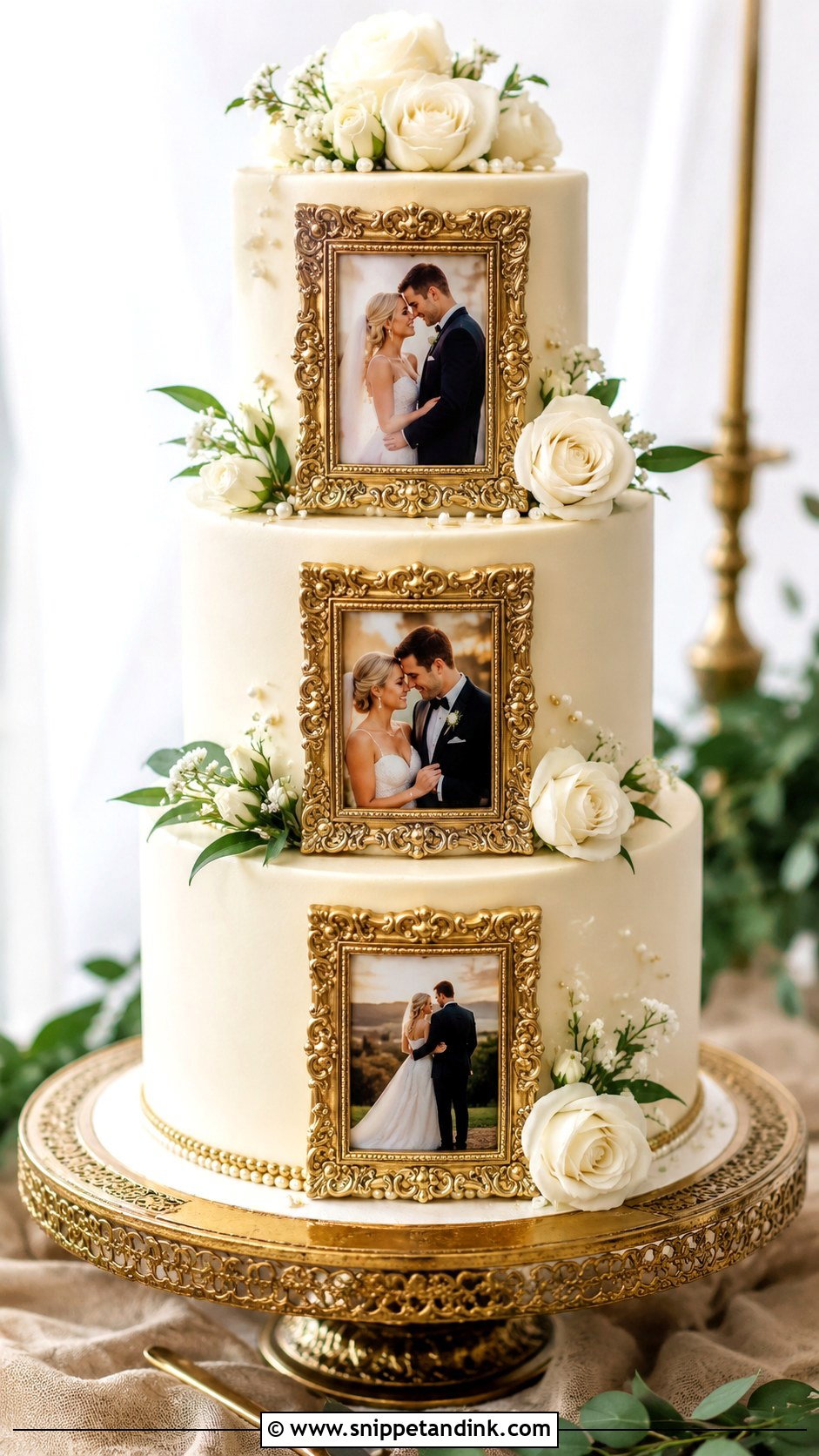
Framing turns each picture into a display piece rather than a flat print. Fondant frames, piped buttercream borders or thin edible gold edging all work, and a two- or three-tier cake can carry one image per tier: an engagement photo, a parents’ wedding photo and a favorite candid, say. Matching tones, all black-and-white or all sepia, keep the set from looking busy. I build the frame slightly proud of the photo so its edge hides the cut line of the sheet, which is never perfectly clean. Small sugar flowers near the frames keep it reading as a wedding cake rather than a collage.
3. Black And White Photo Wedding Cake
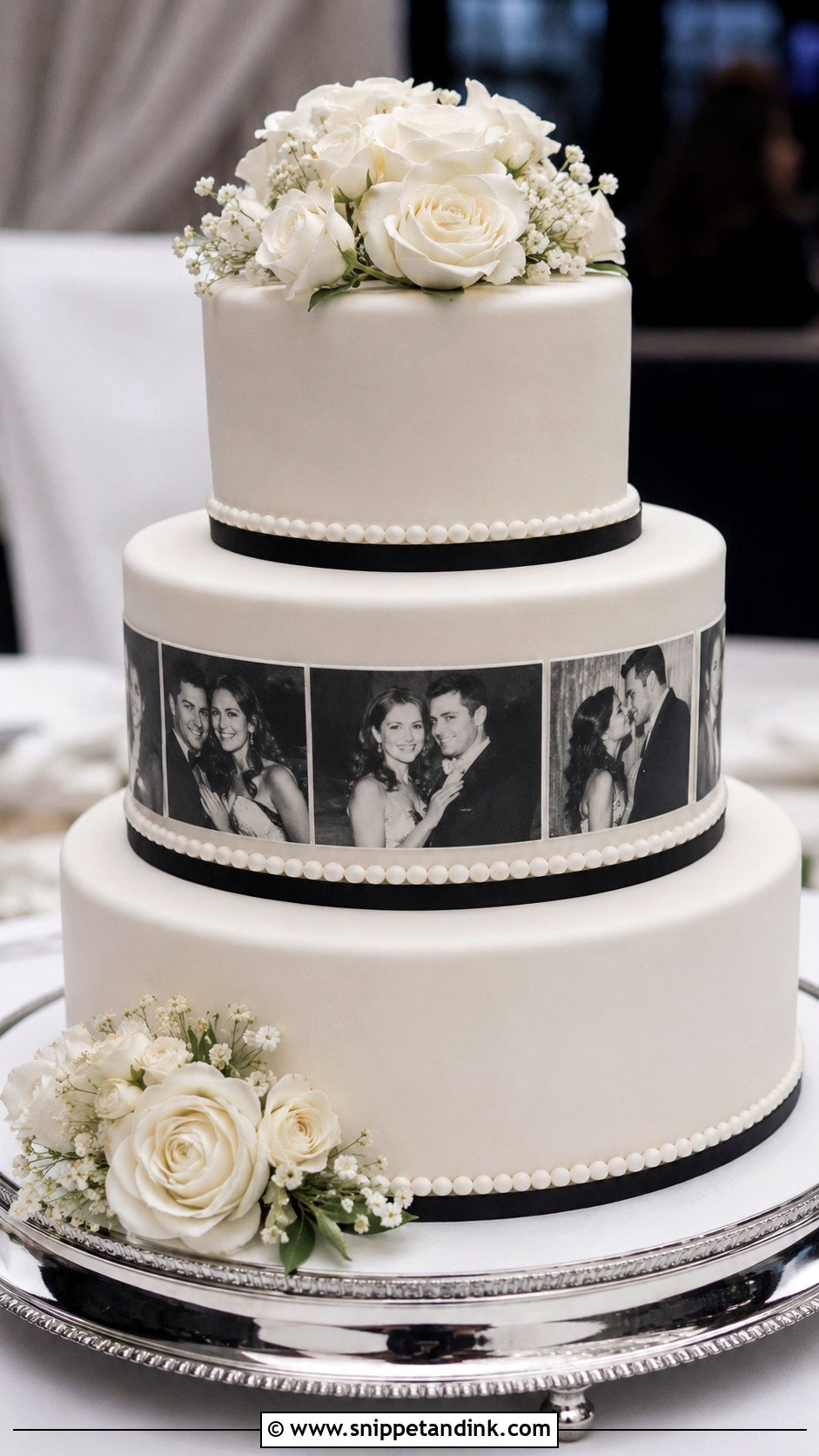
Black-and-white photos sit naturally against white frosting, ivory fondant and classic styling, which is why they rarely look out of place on a wedding cake. They suit couples who want sentiment without bright color on the dessert table, and they’re the safe choice for a neutral palette. One large portrait on the front tier or several smaller ones spaced evenly both work. Edible ink blacks print a little softer than a paper photo, so pick an image with strong contrast. Thin black piping, satin ribbon, pearl borders or white roses finish it.
4. Vintage Photo Wedding Cake
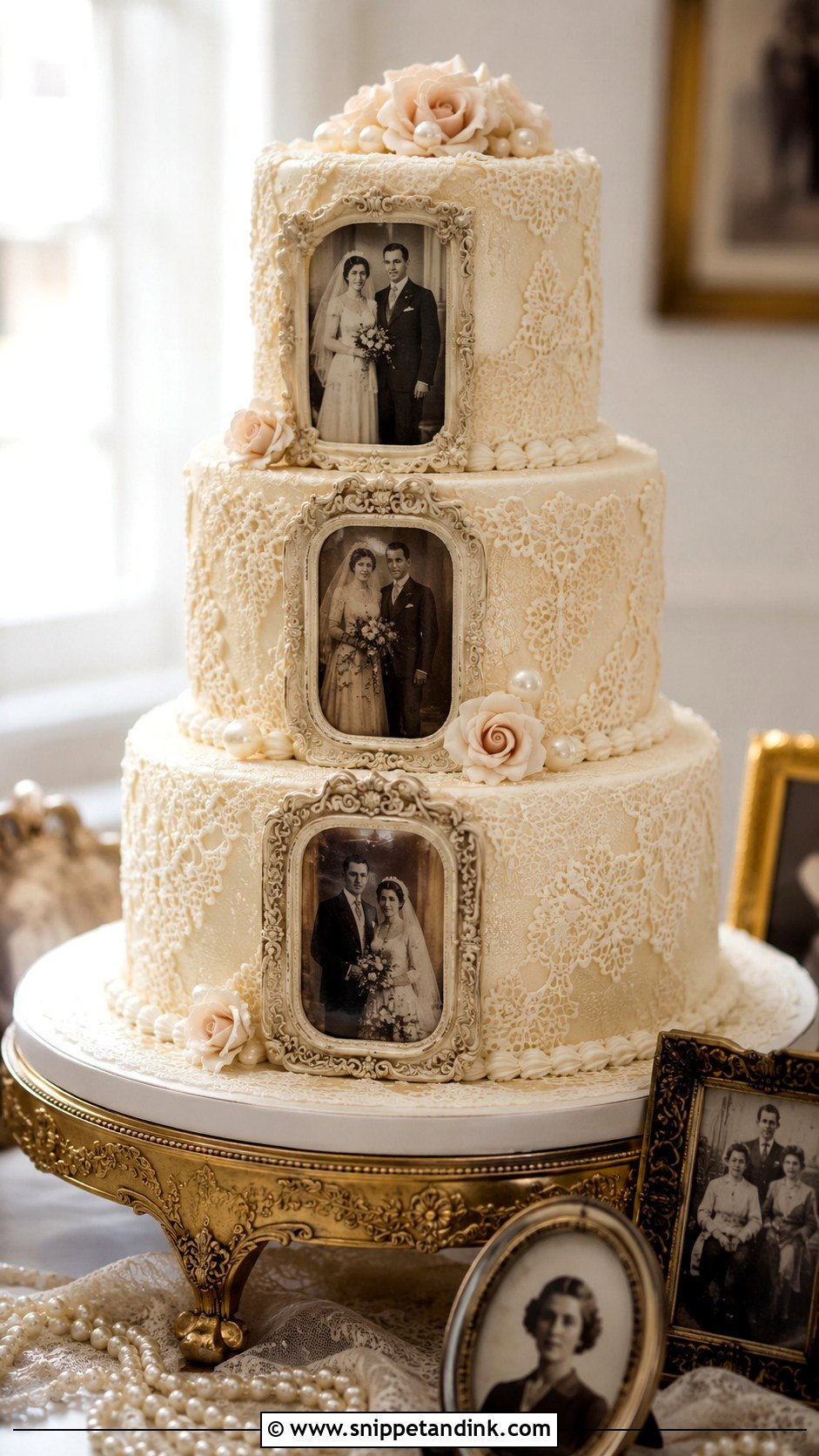
Old family pictures and heirloom styling belong on a cake as much as on a mantelpiece. Sepia-toned edible prints give a soft, aged effect, and photos of grandparents, parents or the couple in vintage-style poses make it deeply personal. Lace piping, ivory buttercream, fondant pearls or delicate ruffles keep the setting graceful. Old photos are often small and faded, so I ask for the best scan possible, and I’d rather print a two-inch image sharp than a five-inch one blurry. A gold stand or framed family photos alongside complete the scene at weddings that honor family history.
5. Engagement Photo Wedding Cake
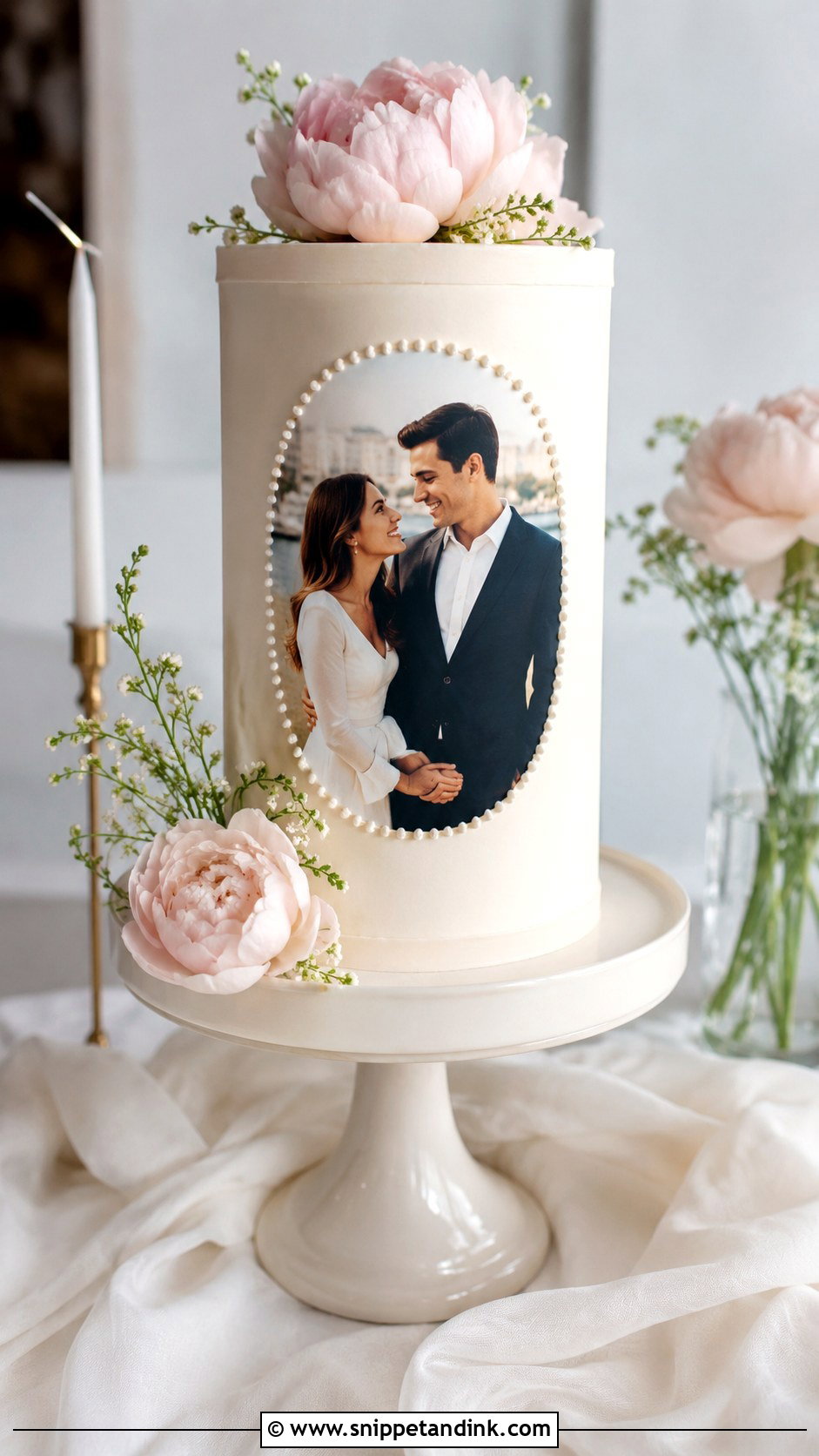
Engagement photos already tell the couple’s story, so they’re a natural fit. Pick the one whose mood matches the wedding: a beach proposal shot for a coastal cake, a city portrait for a modern reception. The print can sit on the front of a tall buttercream tier, framed with flowers or a clean fondant border. Professional engagement photos belong to the photographer as much as to you, and many cake printers ask for permission before printing one, so get a quick yes from your photographer early. Keep surrounding colors soft so the picture stays clear.
6. Wedding Cake With Photo Topper
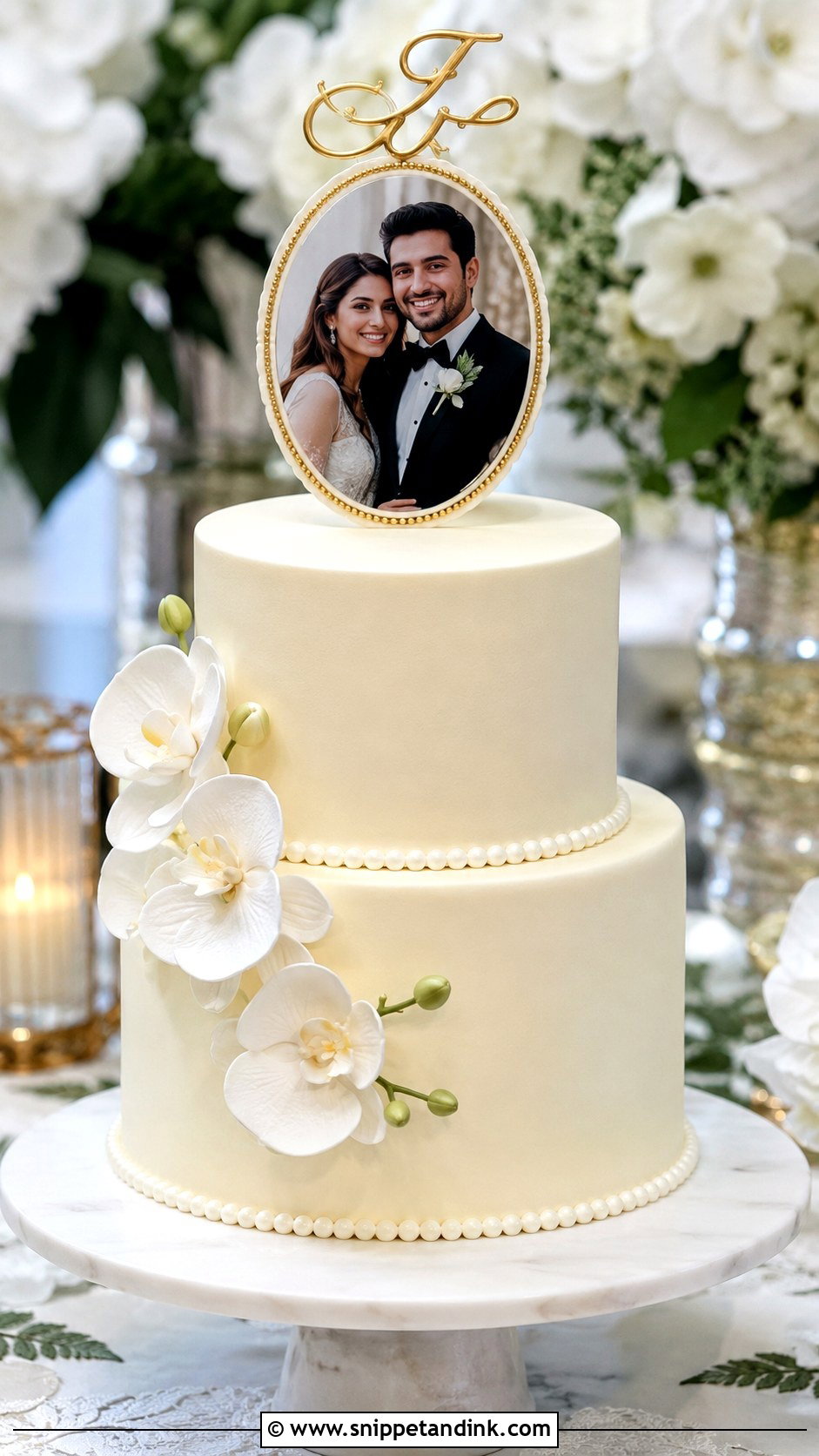
A topper keeps the picture on the cake without printing on the frosting. It might be an edible photo plaque, a printed acrylic-style topper or a fondant frame standing on the top tier. It adds height and leaves the sides clean, and it sits well with smooth buttercream, fondant tiers and fresh flowers. It can show the couple, a short quote with a small image or a favorite trip. Because it lifts off before slicing, I suggest it to couples who’d like to keep the image; a non-edible acrylic version can go home and into a frame.
7. Wedding Cake With Photo Collage
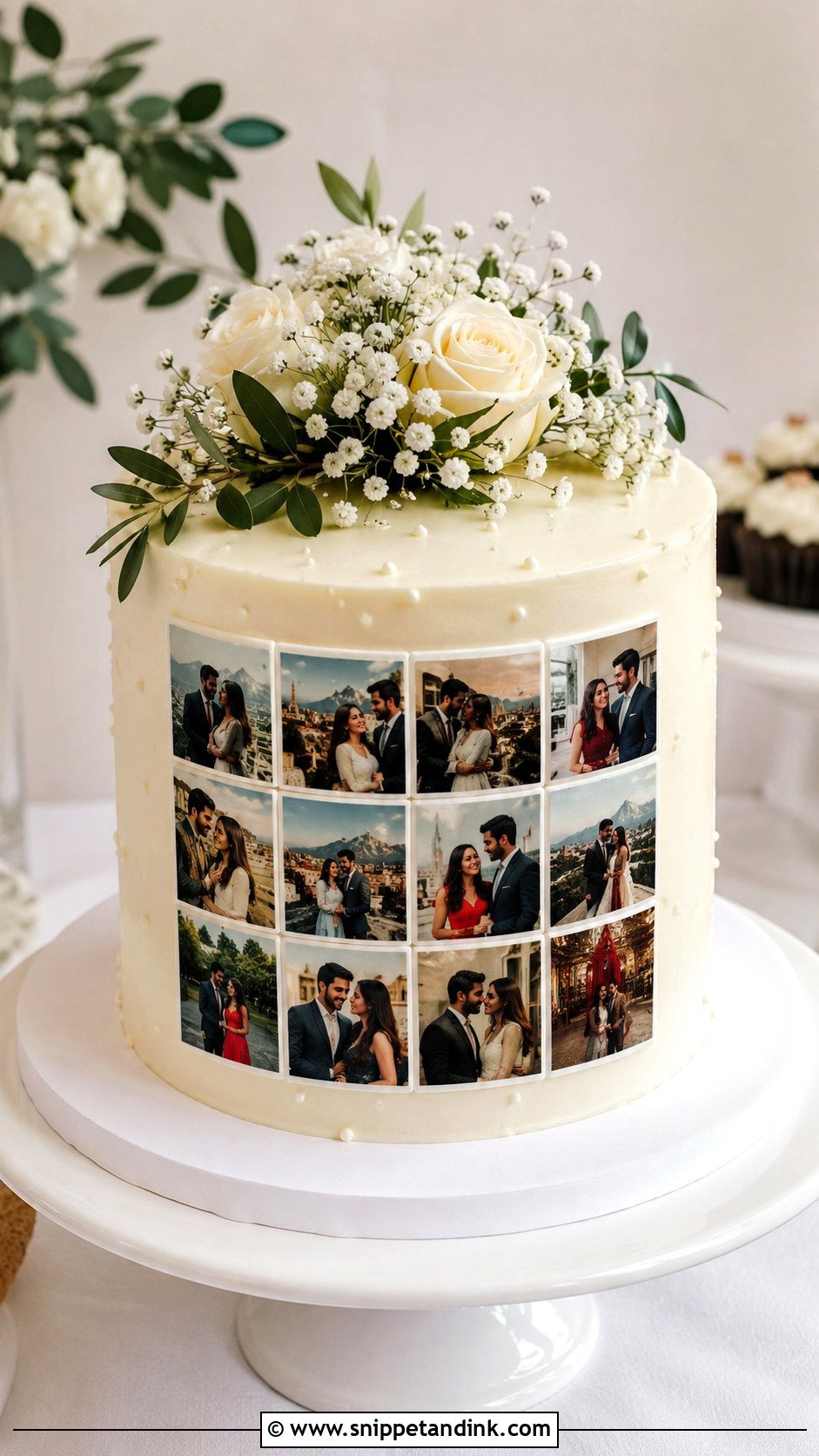
A collage is for couples who can’t pick one memory. It needs a layout, not a random mix: small photos spaced around one tier, or a clean vertical strip down the front. I edit the images to a matching filter and similar brightness before printing, because one dark photo among bright ones looks like a hole in the design. Childhood photos, proposal pictures, trips and candids can all go in. Keep the rest minimal with tiny pearls, greenery or simple flowers, and leave white space so it still looks like a wedding cake.
8. Wedding Cake With Family Photos
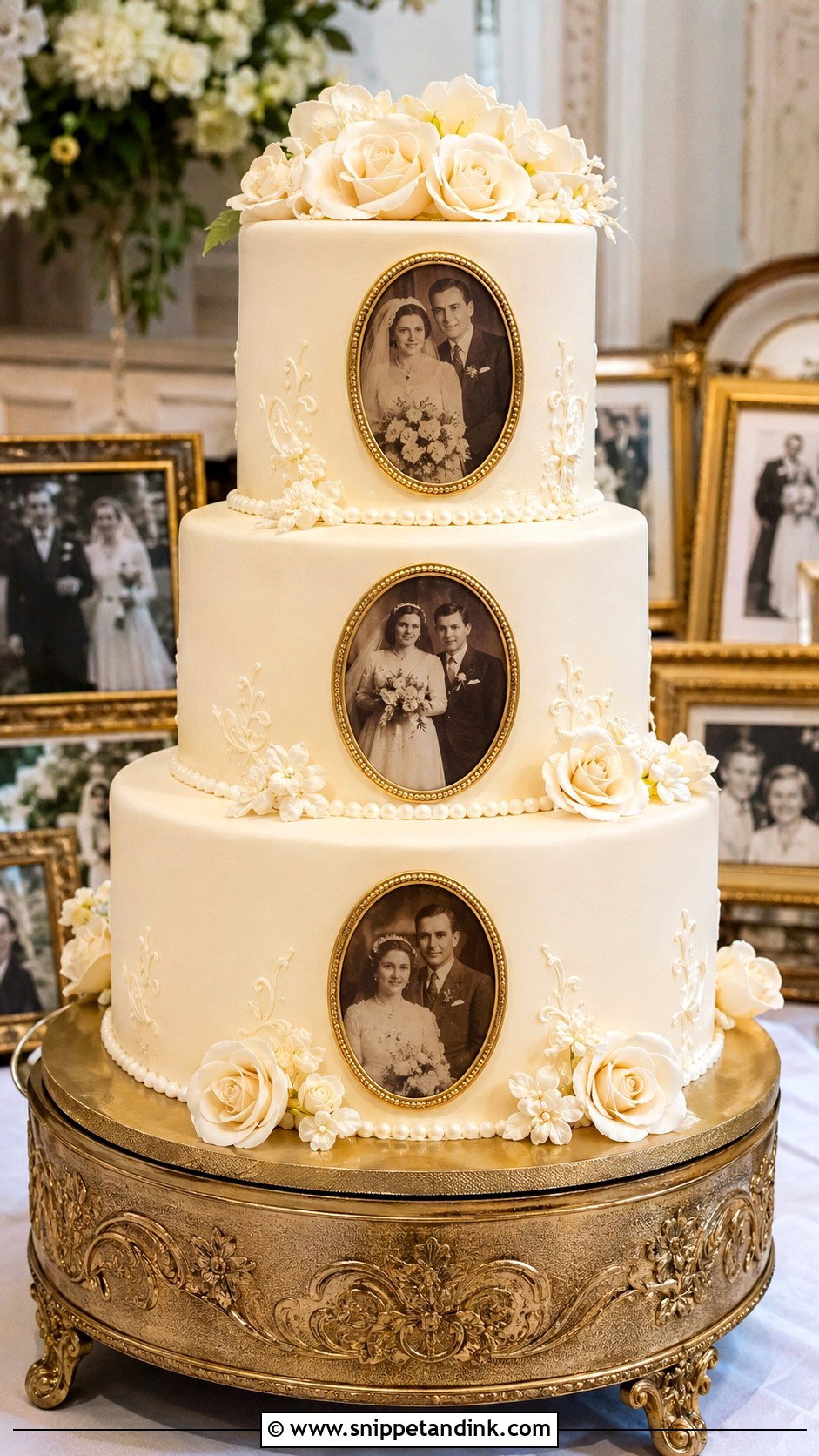
Family photos honor the people who shaped the couple. Older wedding pictures from parents or grandparents paired with a current photo of the two of you work well on three tiers, one generation per tier. Sepia or black-and-white keeps them unified, with ivory frosting, small sugar roses and soft piping. If anyone pictured has died, I’d talk it through with the family before the design is final, since some relatives find it moving and others would rather not see a loved one’s face cut. Handled with care, it’s often the cake guests talk about most.
9. Wedding Cake With Childhood Photos
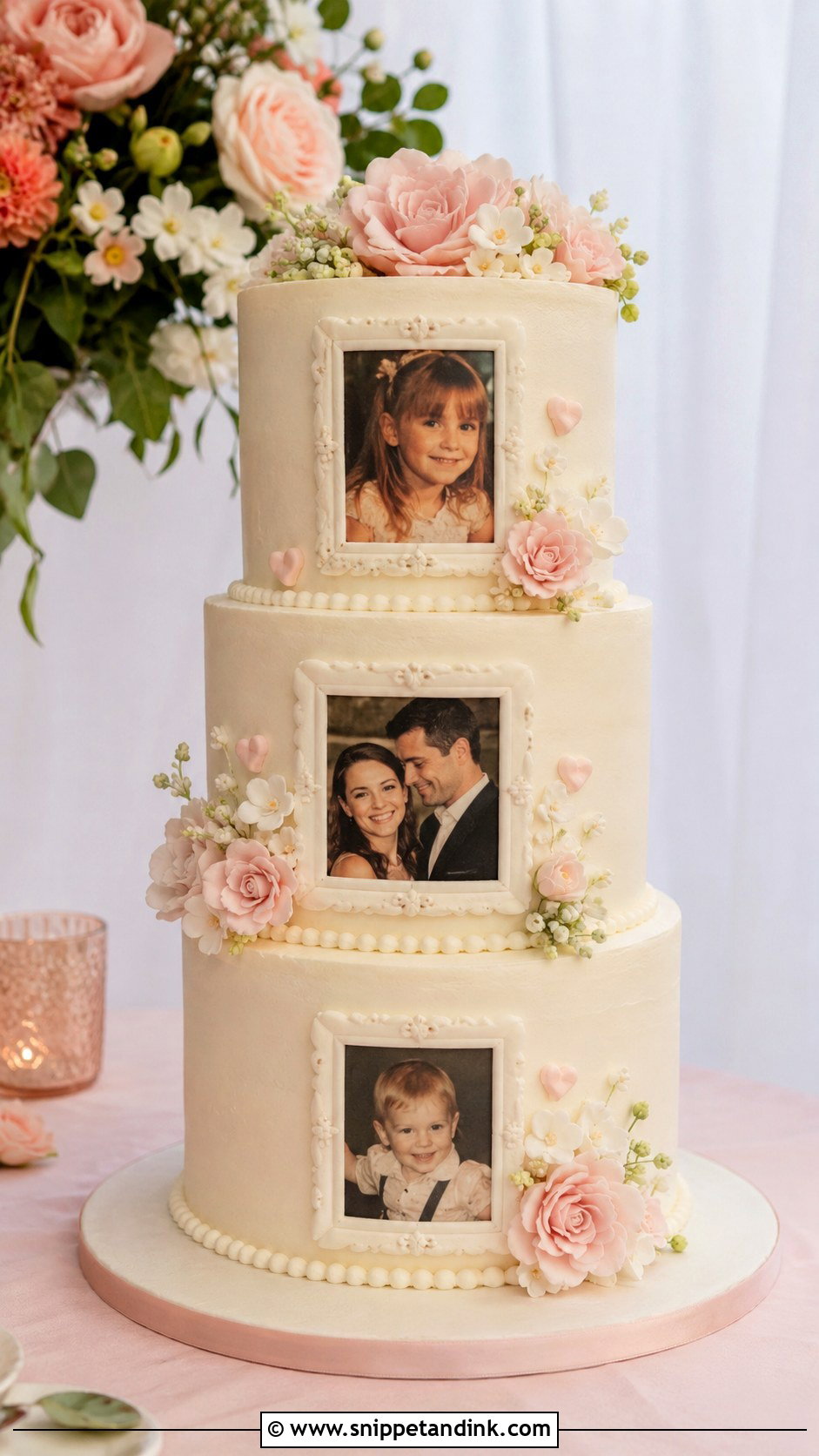
Childhood photos add warmth and a little humor, showing who each of you were before you met. A neat layout keeps it wedding-ready: one childhood photo of each person and one current photo of the couple, in edible frames or on separate tiers. Soft pastel flowers, ivory buttercream and delicate borders balance the fun. Old snapshots are often low resolution, so keep those images small. A little sign about growing up together makes a sweet companion on a relaxed, family-focused table.
10. Wedding Cake With Picture Strip
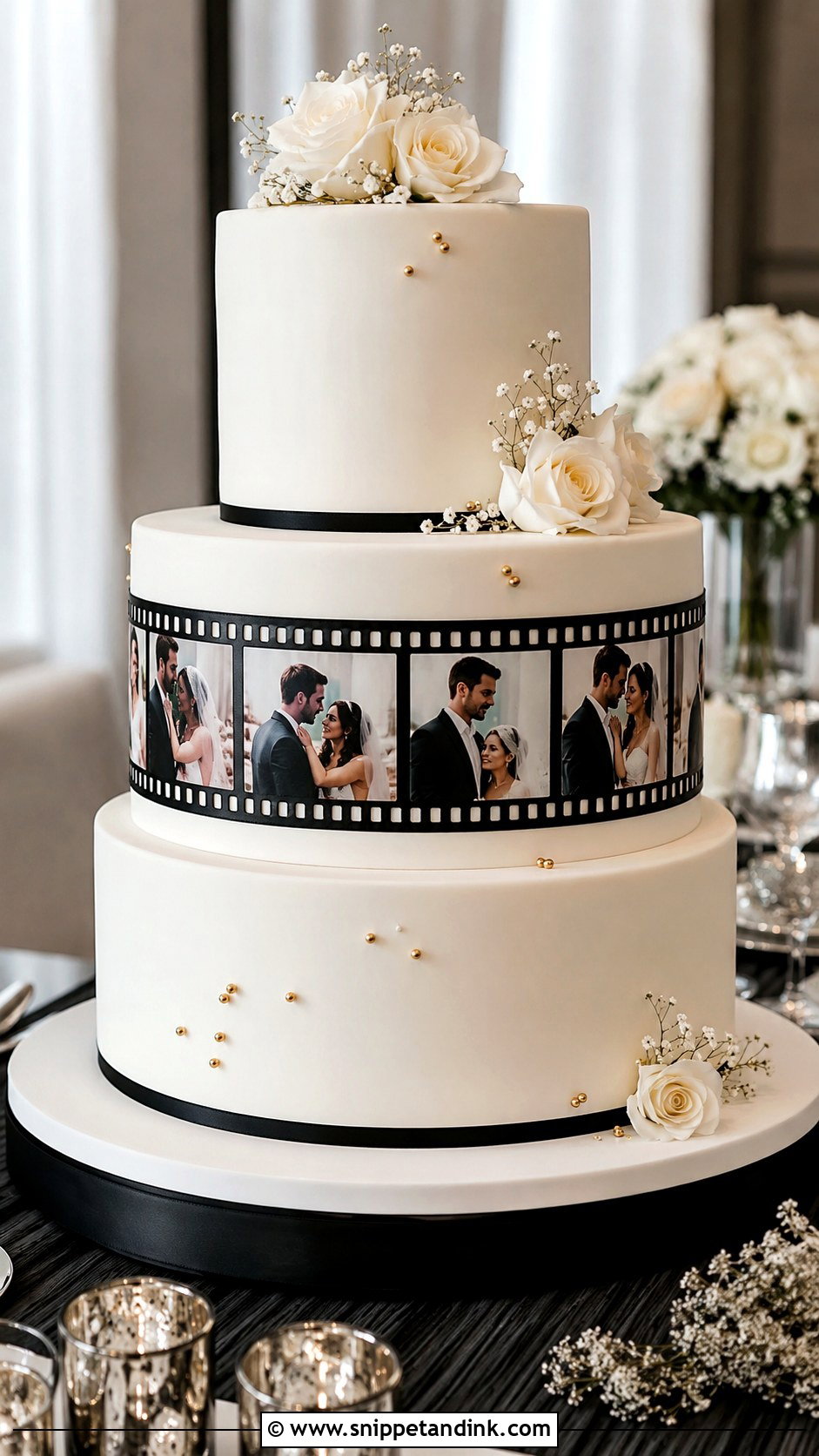
A picture strip keeps several photos organized, either as one clean band around a tier or as a film-strip column down the front. It’s tidy when you want more than one image without clutter. It suits engagement photos, candid laughs or travel memories in the same color tone. I print the whole strip as one sheet rather than separate squares, so the spacing stays even and there’s only one seam, which goes at the back. White fondant or smooth buttercream elsewhere, plus a thin black, gold or ivory border, finishes it.
11. Wedding Cake With Polaroid Photos
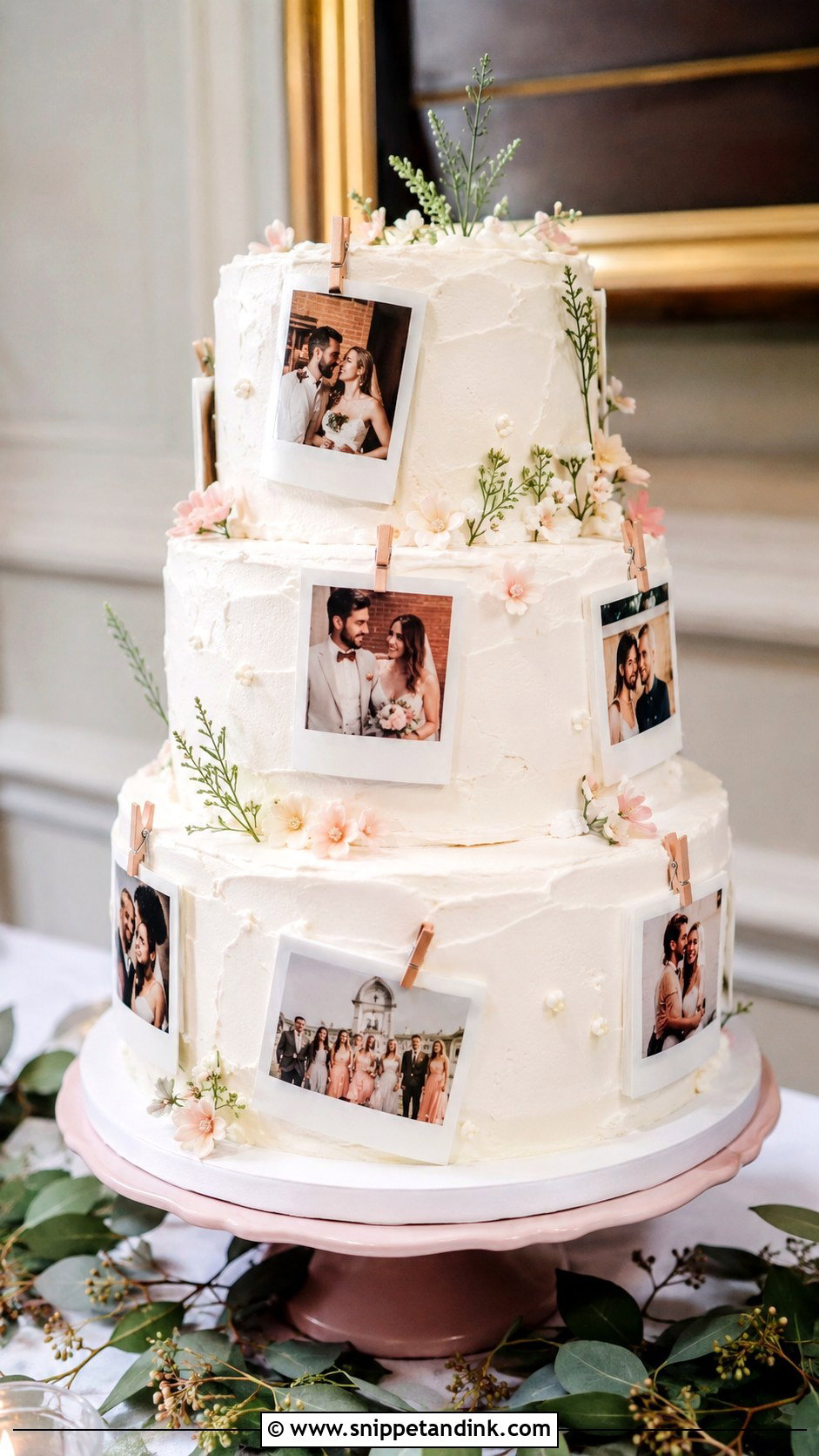
Instant-camera prints feel casual and full of personality. Edible prints shaped like little instant photos, white border included, can sit around the tiers with fondant clips or tiny piped edges. Candid snapshots from dates, trips, the proposal or an engagement shoot suit the format better than formal portraits. Limit the number and leave clean frosting between them, or it tips into scrapbook. I cut the frames from fondant and set the print inside, which gives that thick bottom border real depth. White buttercream, light florals and a simple stand keep it fresh.
12. Wedding Cake With Photo Album
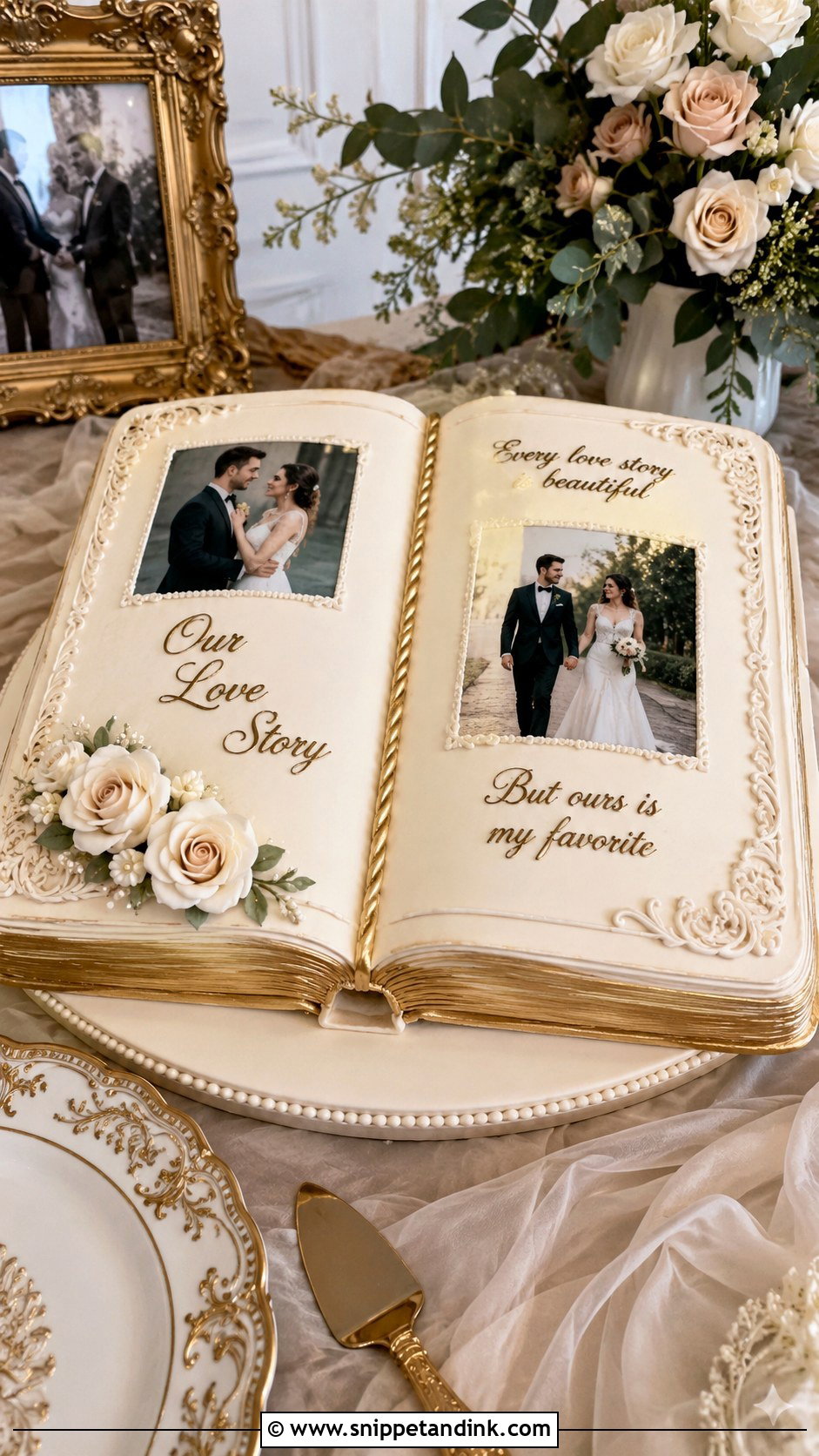
An album design turns the cake into a storybook. It can be carved like an open album, or fondant pages can fold across the front of a tier, with an edible photo on each page and piped captions, dates or tiny hearts. It suits a groom’s cake or a smaller display cake beside the main one. Carved album cakes are flat and wide, so they need a sturdy board and plenty of table space, and they cut like a sheet cake. Ivory, blush, champagne or light gold keep the palette soft.
13. Wedding Cake With Photo Plaque
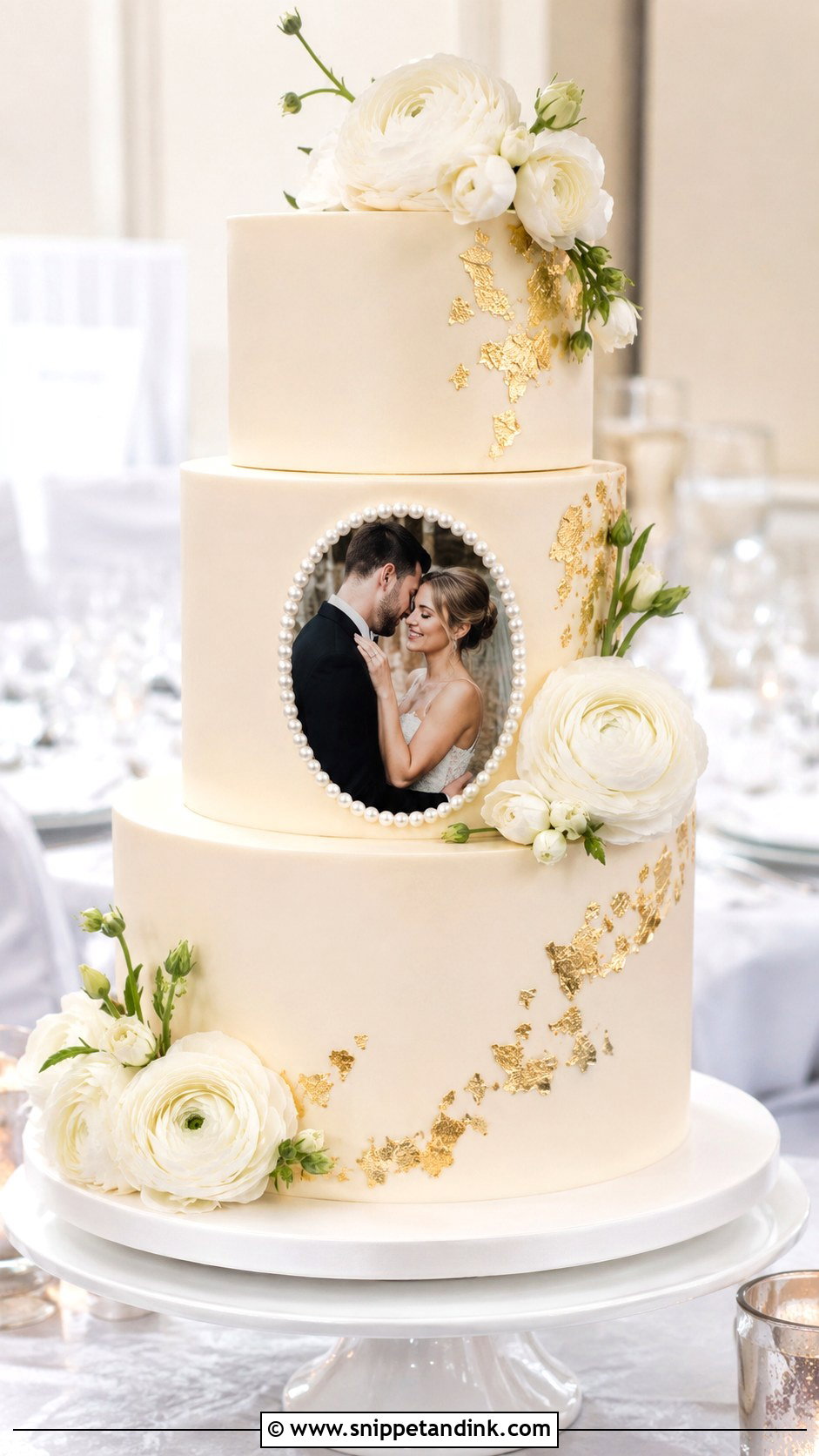
A plaque treats the image as a formal decoration. The print goes onto a fondant or chocolate plaque, then onto the cake or leaned gently against the front tier, which gives it structure and a clean edge. Oval, round, square and heart shapes all work. I make plaques a day or two ahead so they dry firm and don’t sag against the tier. Thin piping, edible pearls or a small floral cluster finish it. One meaningful picture without covering the whole cake is the whole appeal.
14. Wedding Cake With Photo Heart
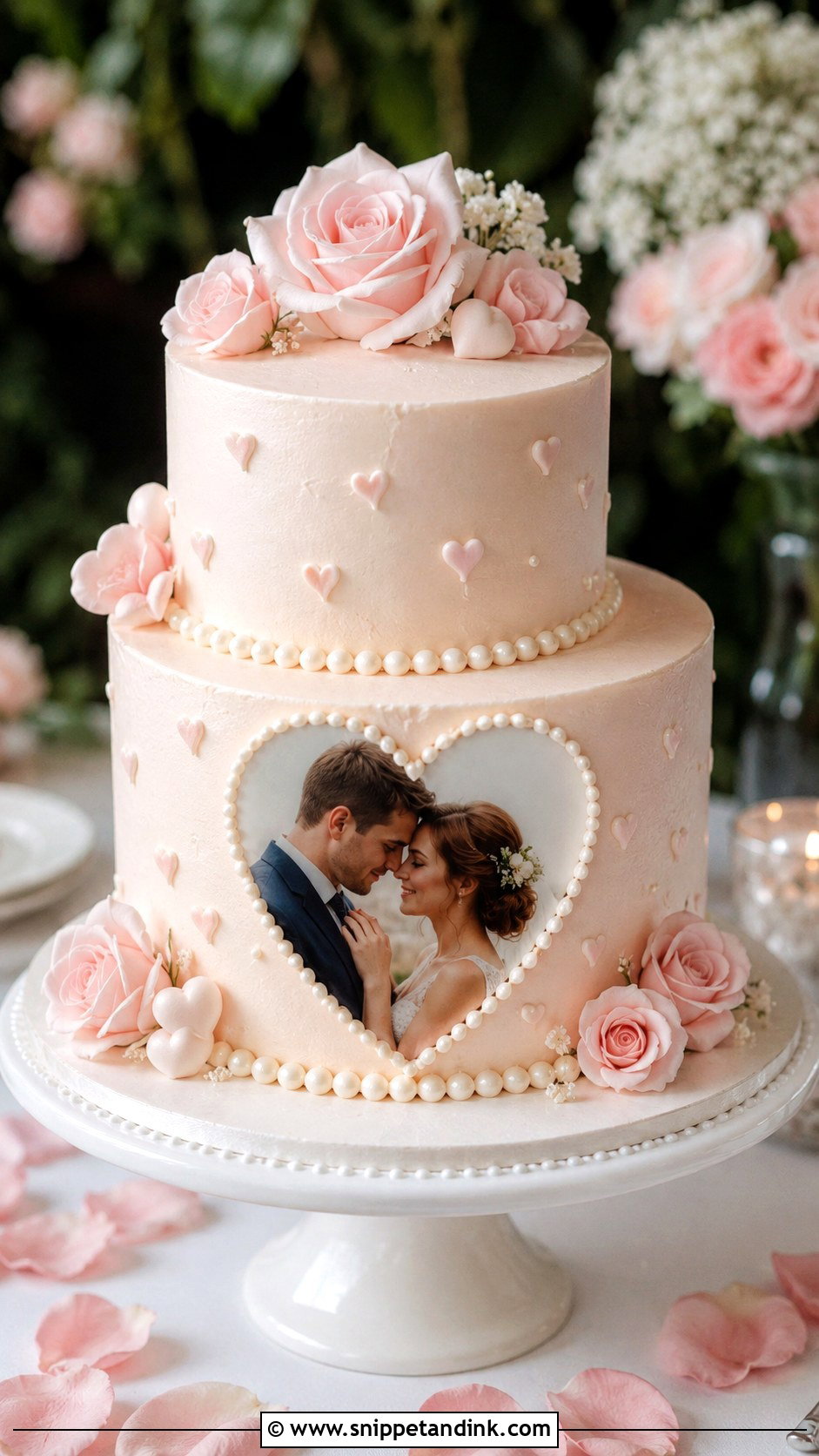
Cutting the print into a heart adds a romantic shape. One heart on the front of a tier, or several smaller ones circling the cake, both work if the rest stays soft: white buttercream, blush flowers, pearl borders or gentle ruffles. Choose a close portrait, because a heart crop trims the edges and a wide shot loses the faces. With muted colors it’s sweet rather than childish, and it suits garden weddings, romantic receptions and anniversary-style wedding themes.
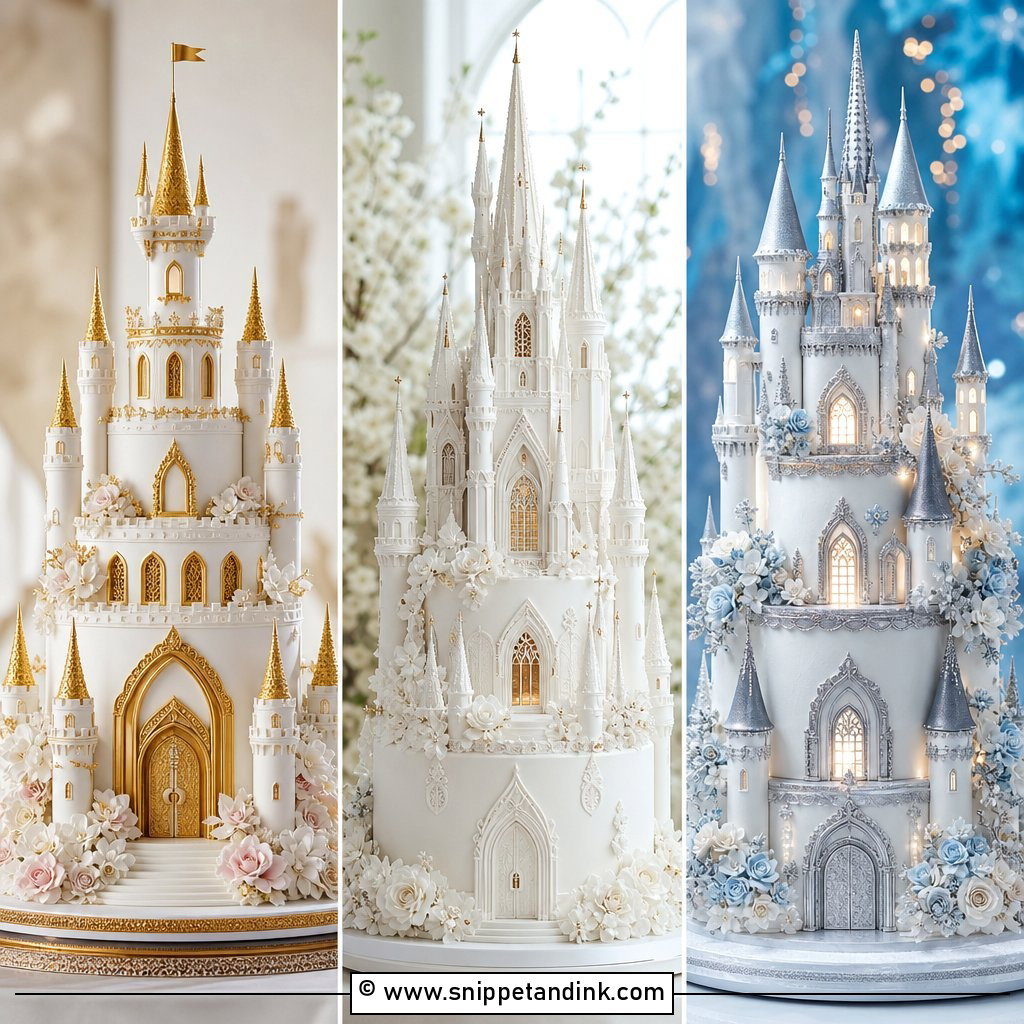
15. Wedding Cake With Photo Memory Wall
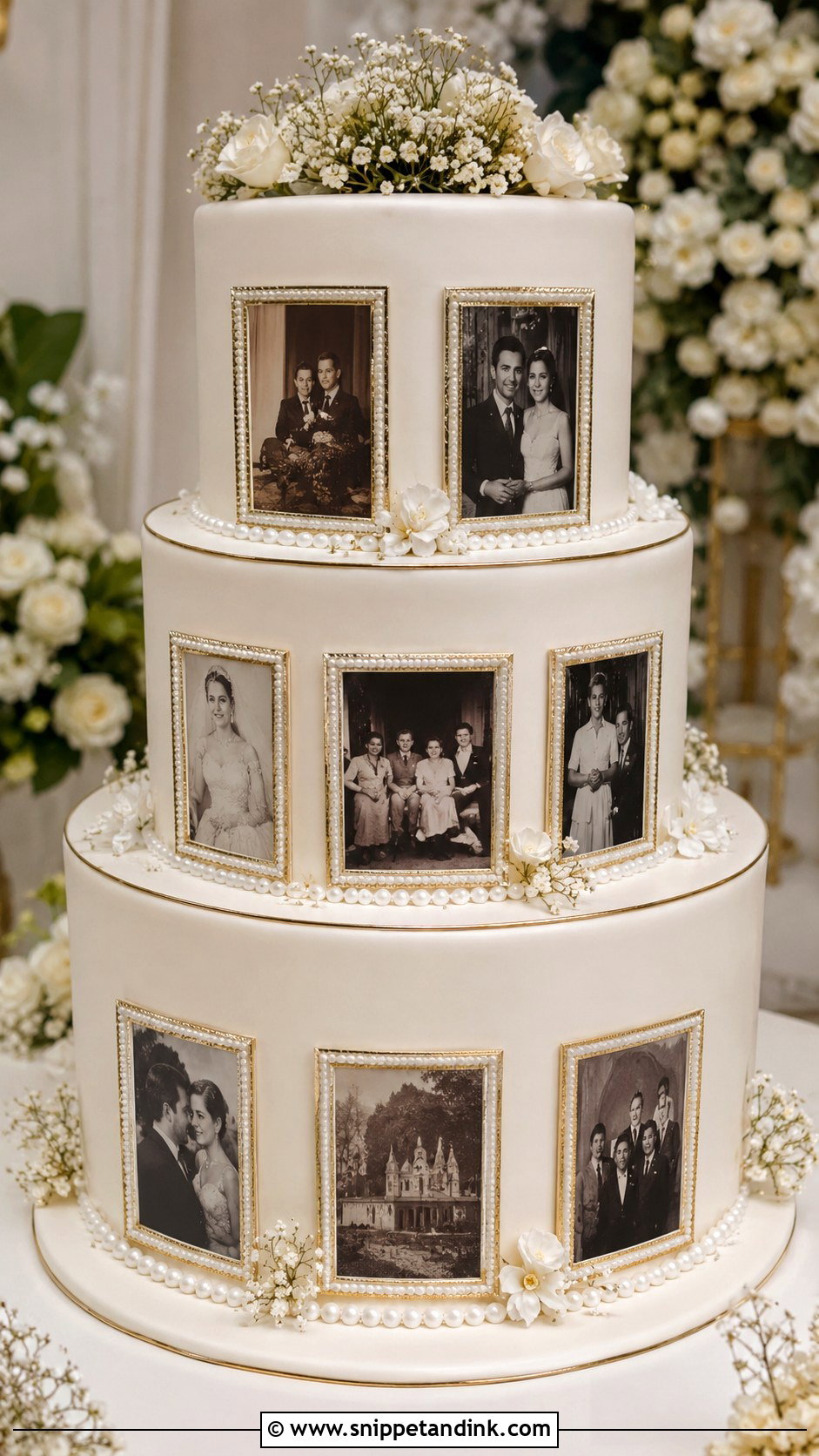
A memory wall gathers the photos on one front-facing section like a small gallery. It makes sense when the cake table backs onto a wall or backdrop, since guests see the whole story at once from the front. Balanced rows, matching borders and photos with similar lighting keep it neat. Smooth white fondant with fine gold lines, tiny florals or simple greenery suits it, and proposal, engagement, family and travel pictures can all go in. I map the grid on paper at the tier’s real size before printing, so every photo lands square.
16. Wedding Cake With Photo Ribbon
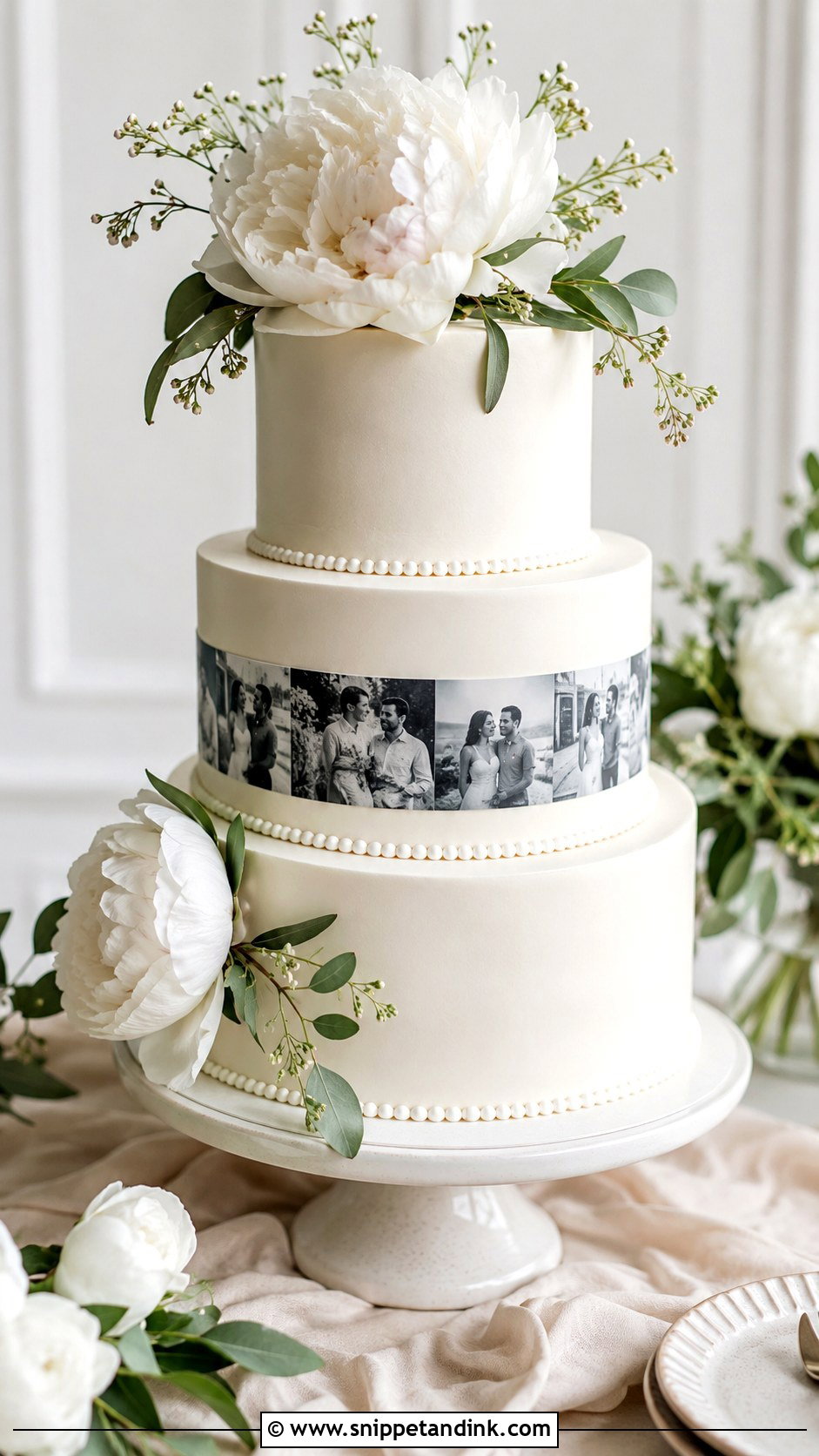
A wedding cake with a photo ribbon wraps small repeating pictures or a sequence of moments around a tier like a decorative band. It gives movement and detail without large images. Keep the width consistent and pick photos that still read when shrunk. Smooth fondant is the cleanest base, though firm, chilled buttercream also works. Wrapping a long strip around a round tier needs a confident hand, and I always start and finish at the back so the join hides from guests. A floral topper or pearl border keeps it bridal.
17. Wedding Cake With Photo Locket
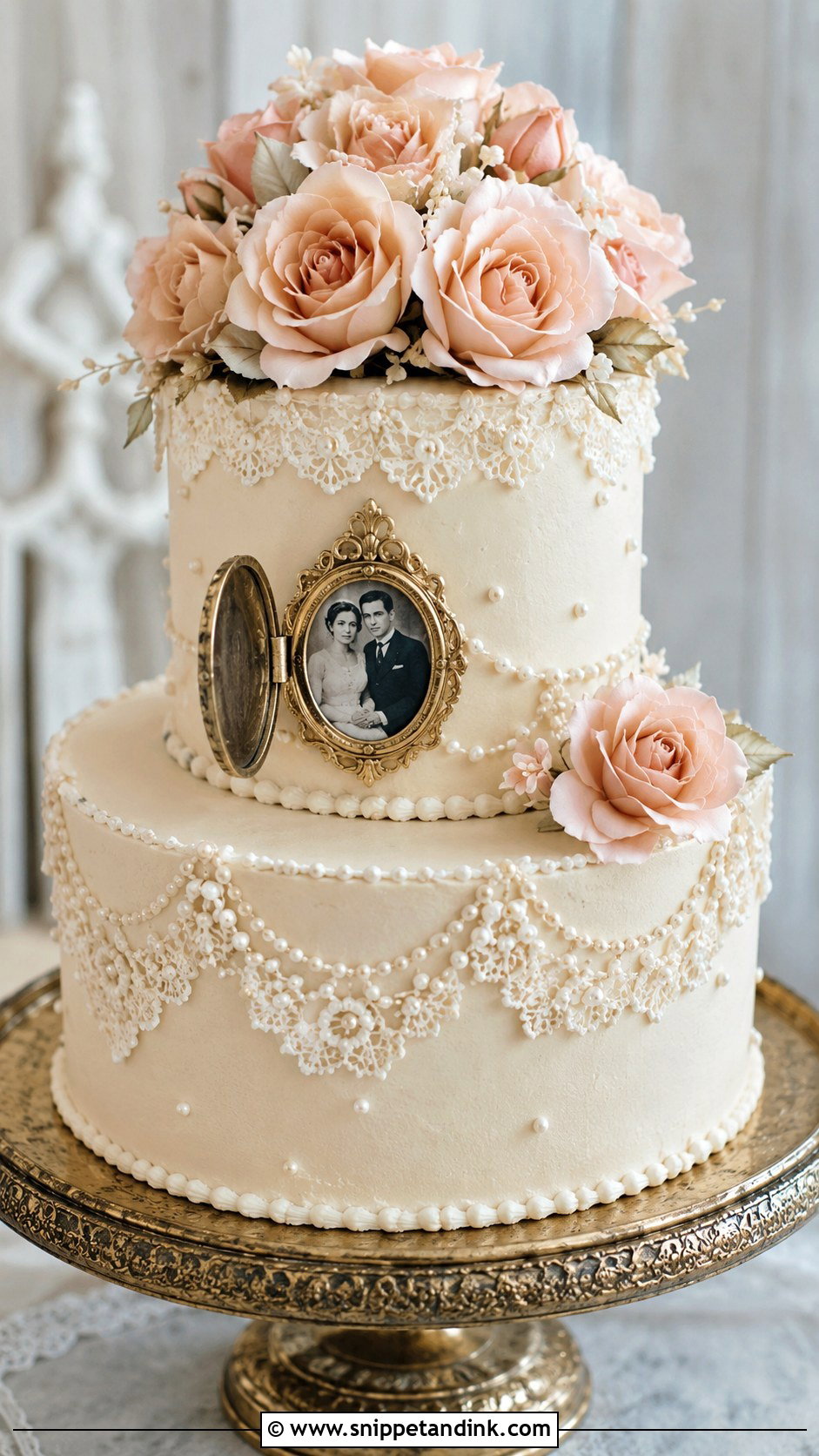
A locket suits a romantic or vintage wedding. The print sits inside an edible locket made from fondant, modeling chocolate or sugar paste, either hanging from the front tier like jewelry or resting as a plaque, with gold or pearl edging. It holds one couple portrait, or a photo honoring someone who can’t be there. Modeling chocolate keeps fine detail around the edge better than fondant and doesn’t crack as it’s shaped. Ivory or champagne frosting, small roses, lace piping or delicate leaves give the soft antique look.
18. Wedding Cake With Photo Silhouette
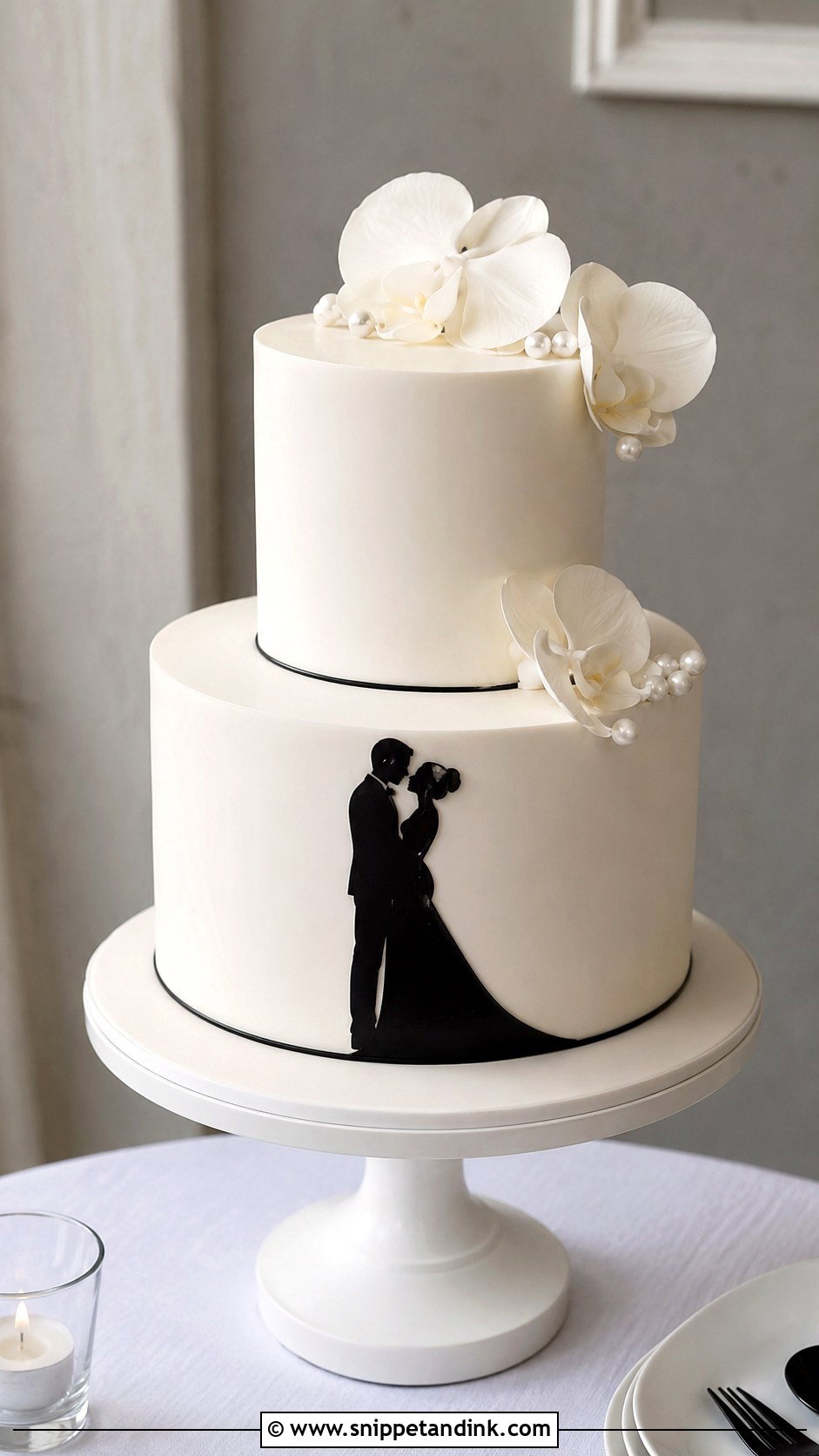
A silhouette uses a picture without showing the full image. A profile, kiss or dancing photo is traced into an edible silhouette and set on a white, ivory or blush tier for contrast. It’s artistic and clean, which suits minimalist weddings. The source photo matters here: clear outlines with space between faces and hands make a readable shape, while a tight hug turns into a blob. Keep the rest spare with thin piping, small flowers or smooth fondant, and match the silhouette to the stationery if you like.
19. Wedding Cake With Photo Transfer
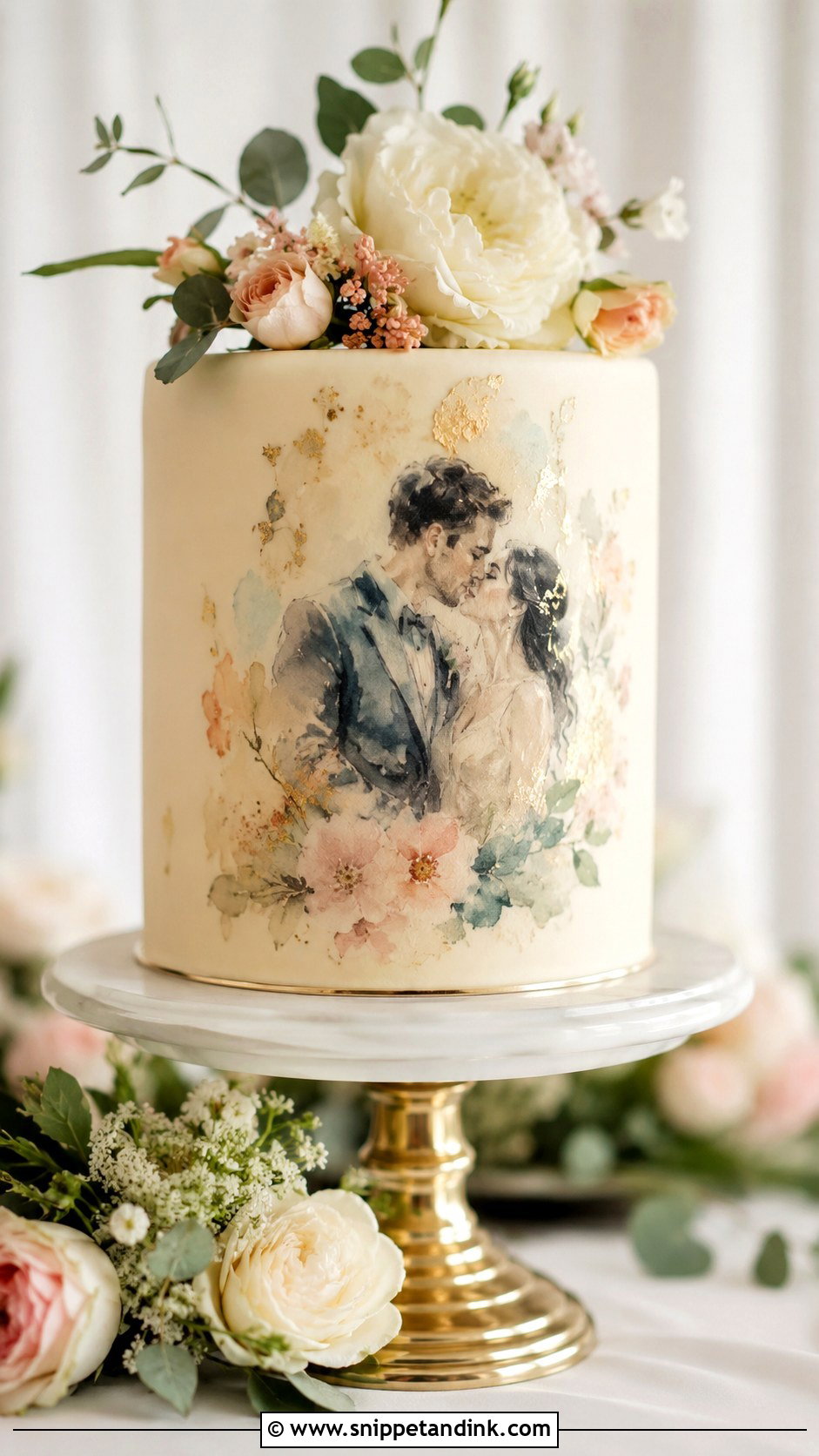
A transfer makes the picture look painted into the frosting rather than placed on it. The edges blend into the surface, so it suits watercolor florals, light fondant texture or romantic buttercream. A dreamy engagement portrait, a scenic proposal image or a soft close-up works; busy backgrounds don’t. To get the blended look, I print on wafer paper or a frosting sheet and paint the edges into the cake with thinned color, which takes practice to do well, so ask to see examples. Sugar flowers, gold touches or a simple topper finish it.
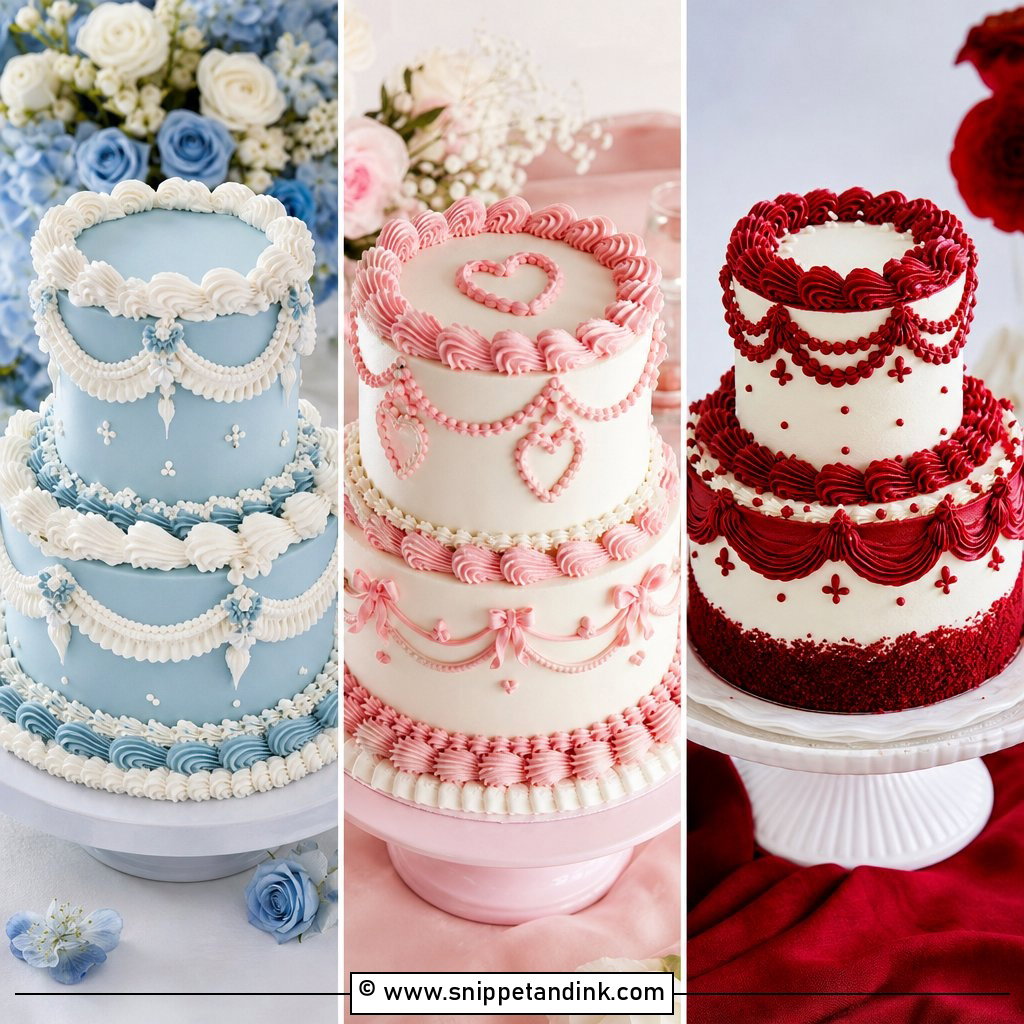
20. Wedding Cake With Photo And Flowers
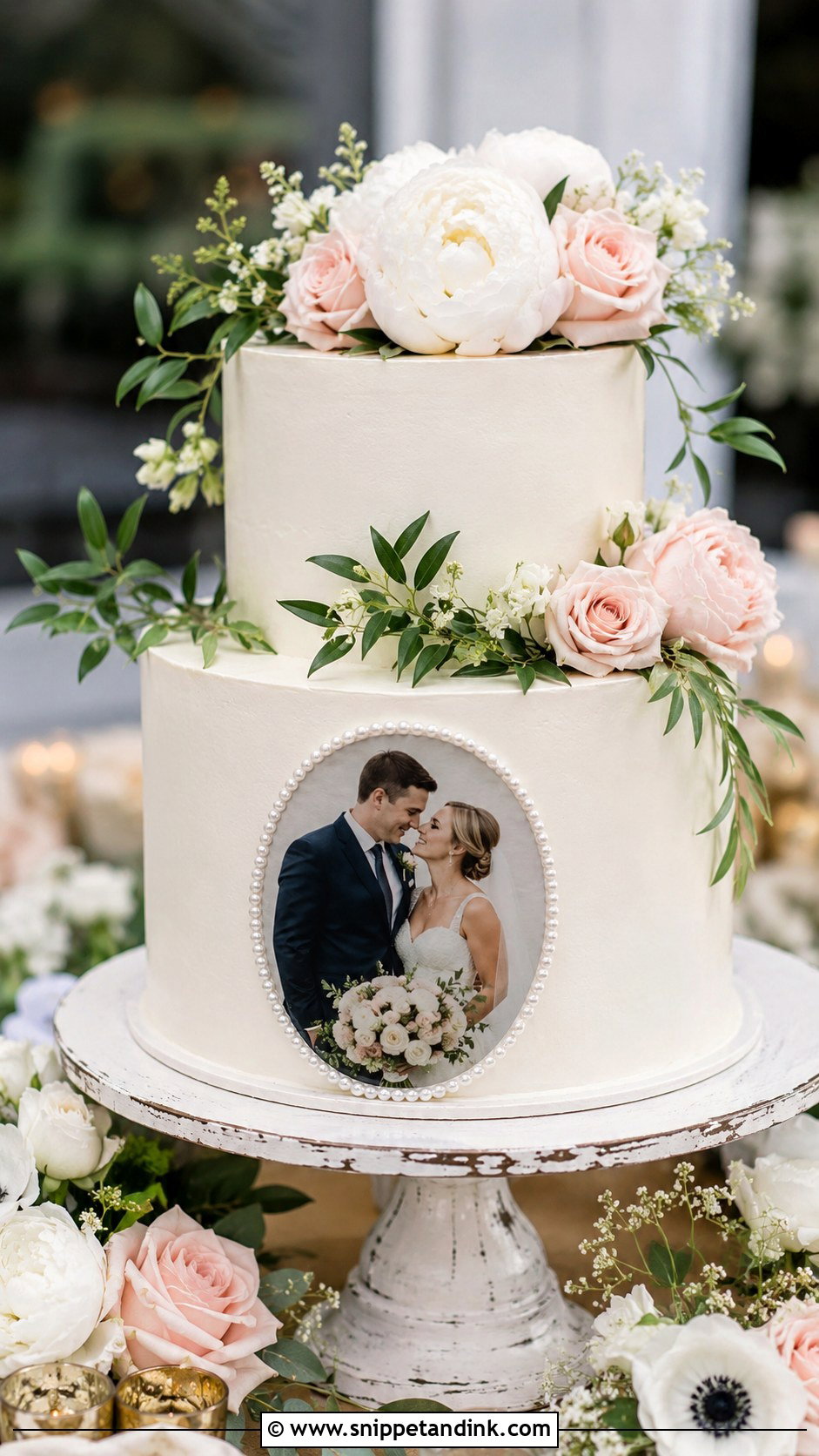
Flowers soften the edges of an edible print and link it to the room’s decor. Use food-safe fresh blooms or sugar flowers matched to the bouquet. I place the photo on the front of the main tier and bring flowers in along one side, never over the image, and I keep petals from resting on the print, since damp petals can make edible ink bleed. White, blush, peach and greenery all work. Smooth frosting keeps the photo crisp and the overall look classic.
21. Wedding Cake With Photo And Gold
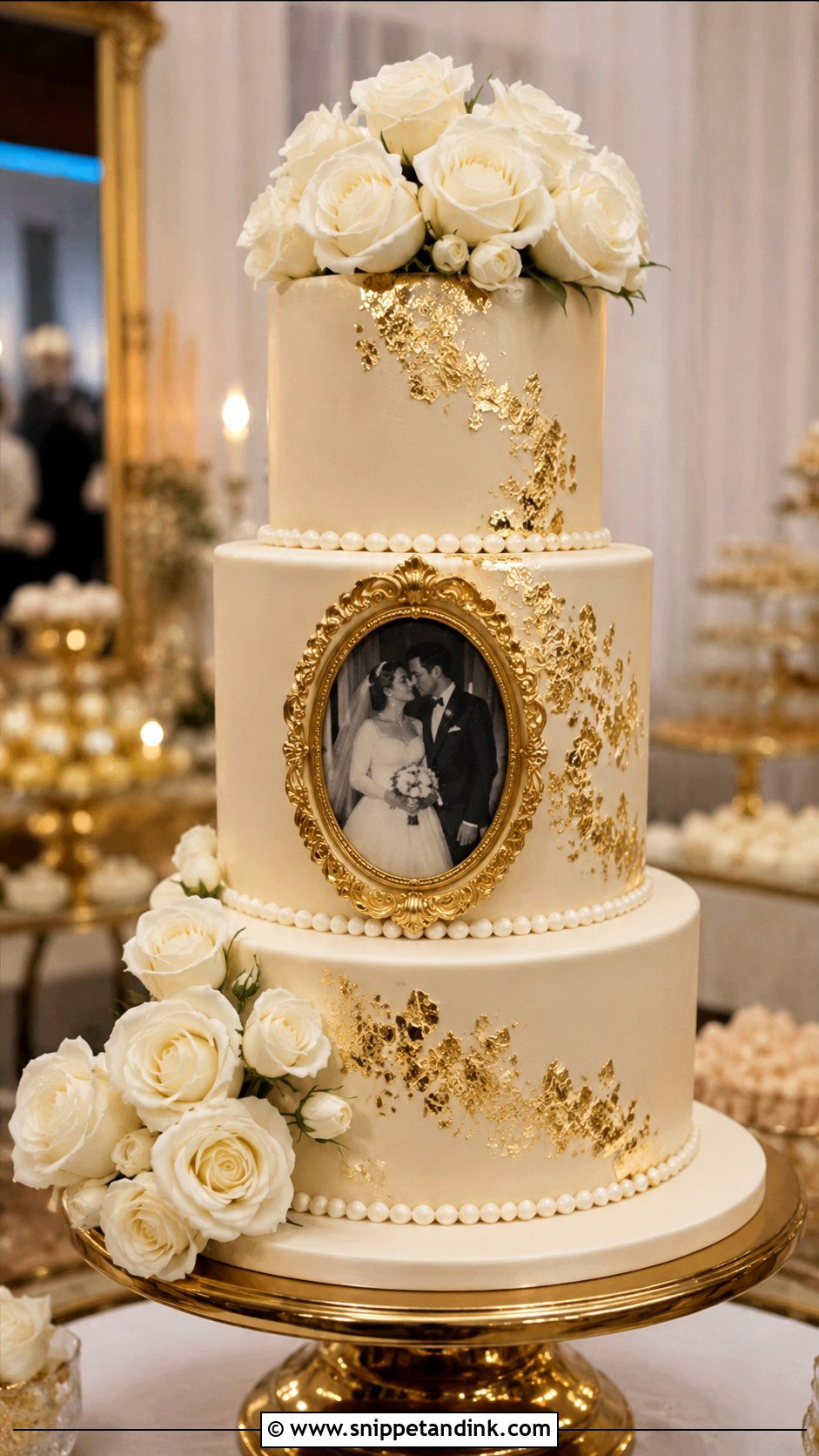
Gold makes a photo cake formal. It can frame the image, outline tiers or appear as light leaf accents; the trick is enough to frame the picture, not so much it glitters over it. Black-and-white or sepia photos sit well next to ivory frosting and metallic trim. One centered plaque or a small set of framed images, smooth fondant, pearl borders and a clean stand complete it. Edible gold paint takes a while to dry, so I paint frames before the print goes in, which avoids smudging gold across a face. Ballrooms and evening weddings suit it.
22. Wedding Cake With Photo And Pearls
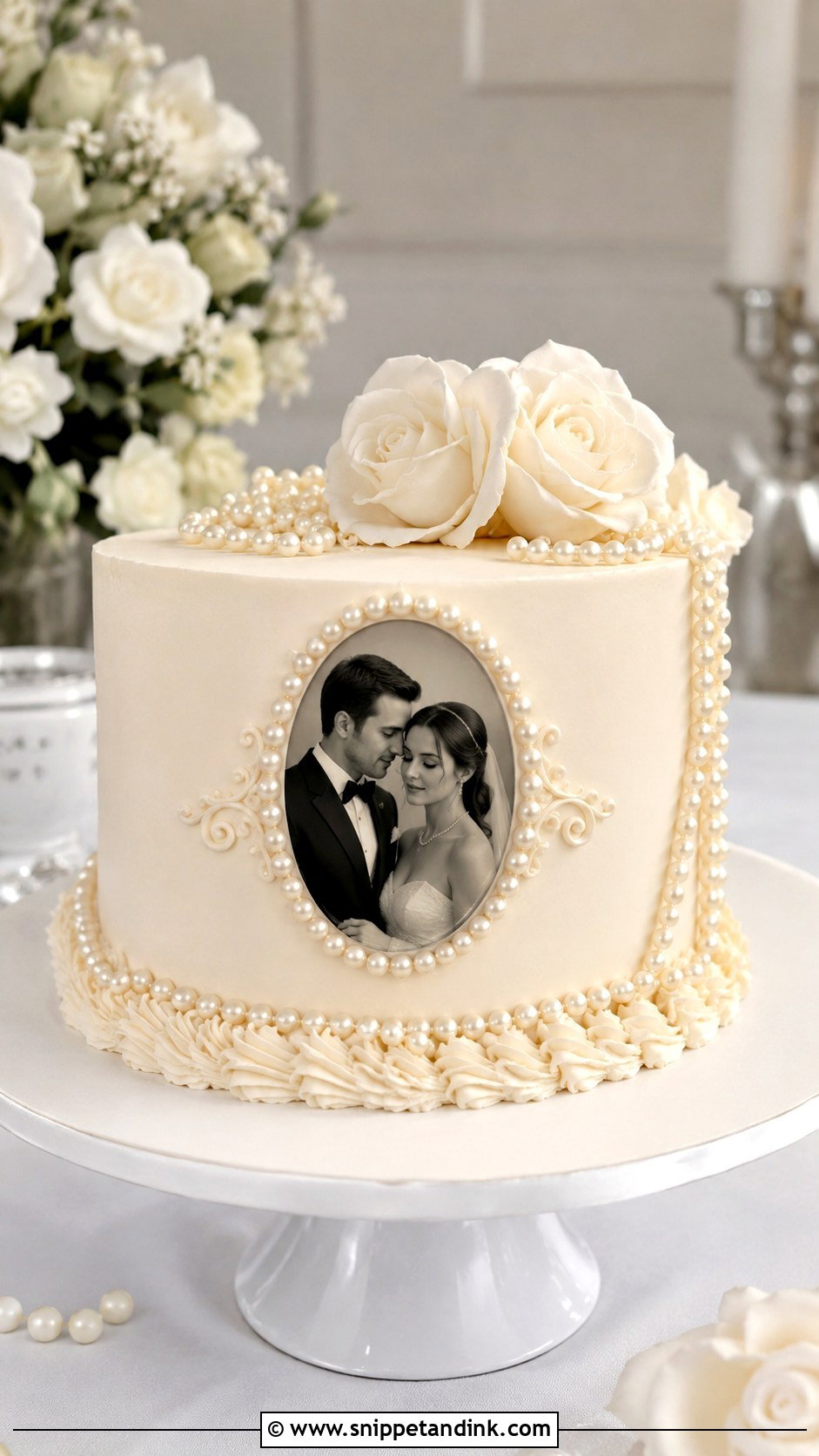
Pearls give a photo cake a soft bridal finish. They can outline the image, trim tier borders or form gentle patterns, and they suit one or two photos better than a busy collage. A romantic portrait in an oval or round edible frame, with ivory buttercream, satin-smooth fondant or light lace piping, completes it. Pearls catch light without competing with the picture. I set them with a dab of piping gel rather than pressing them into the print, which would dent the sheet. Classic gowns and pearl-themed details pair naturally.
23. Wedding Cake With Photo And Lace
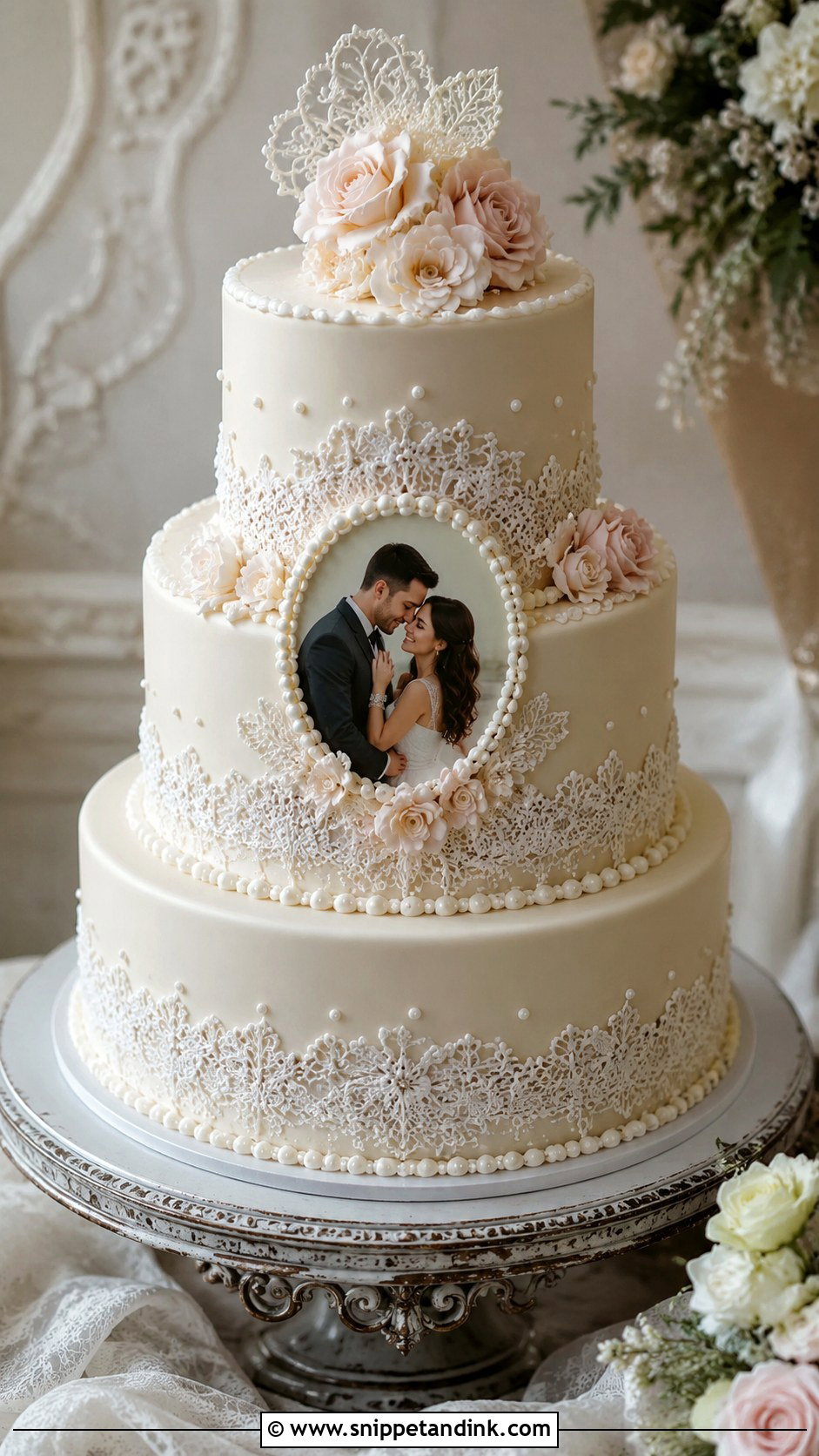
Lace and a photo make a delicate pairing that echoes bridal fashion. The lace can be piped, pressed into fondant or cut from edible lace sheets, and it needs a clean frame around the photo so it never crosses a face. Vintage portraits, black-and-white engagement photos or family wedding pictures suit it, with ivory, cream or blush frosting and a few tiny pearls or sugar flowers. Edible lace sheets go brittle in dry air and sticky in damp, so I apply them close to the event. Candles, fabric draping or a simple floral table suit the display.
24. Wedding Cake With Photo And Buttercream
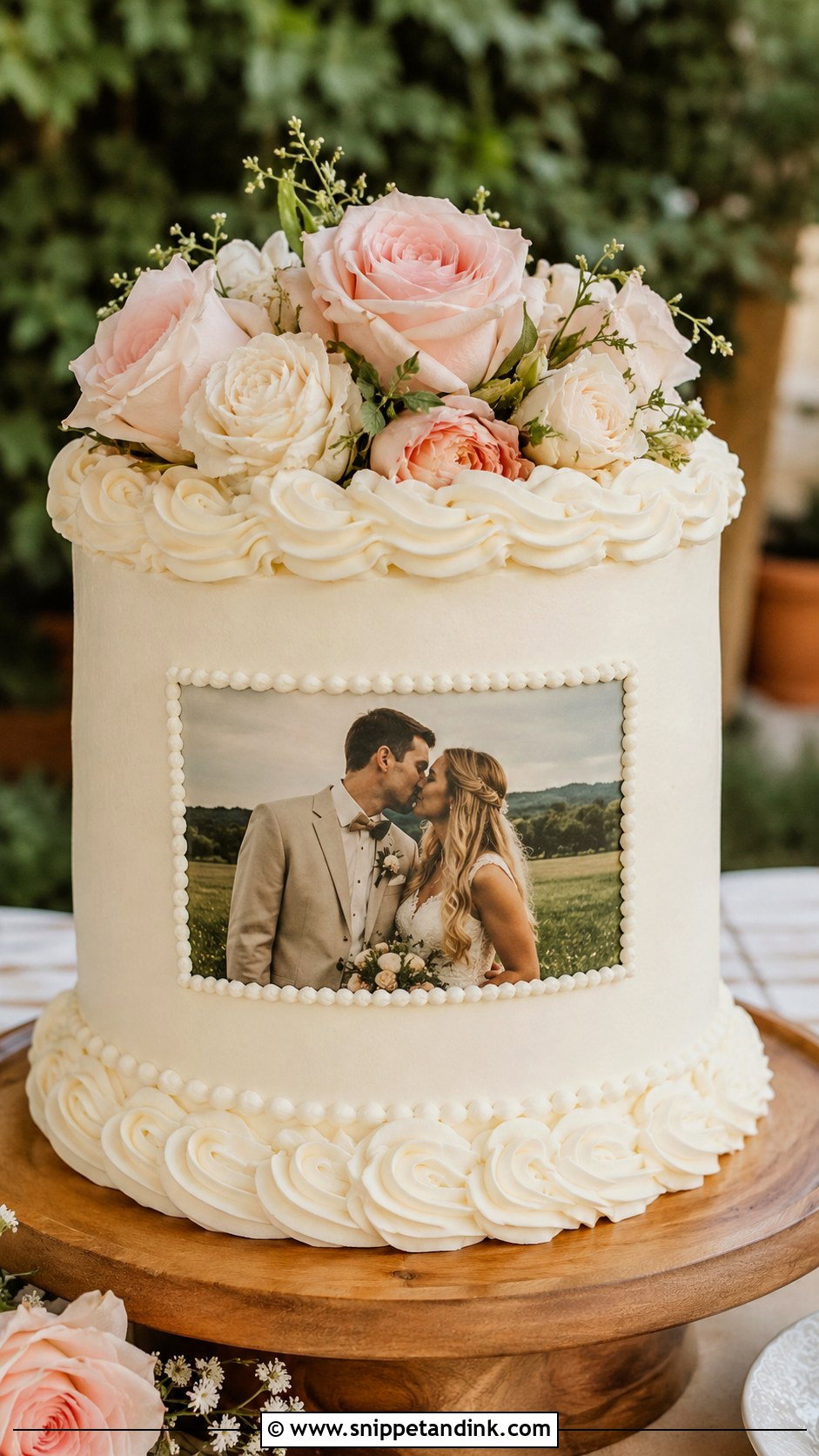
Buttercream gives a softer, more relaxed finish than fondant, and it can carry a photo if it’s prepared properly. Smooth the tier well and let it crust or chill before the print goes on, so the image sits flat and clear. One photo on the front tier, with piped borders, rosettes or light texture elsewhere, suits garden, barn, backyard and intimate venues. Choose a photo with clean contrast and skip very dark backgrounds, which print muddy. Once the image is on, keep the cake out of the fridge; condensation as it warms back up can make the ink run.

25. Wedding Cake With Photo Sheet Cake
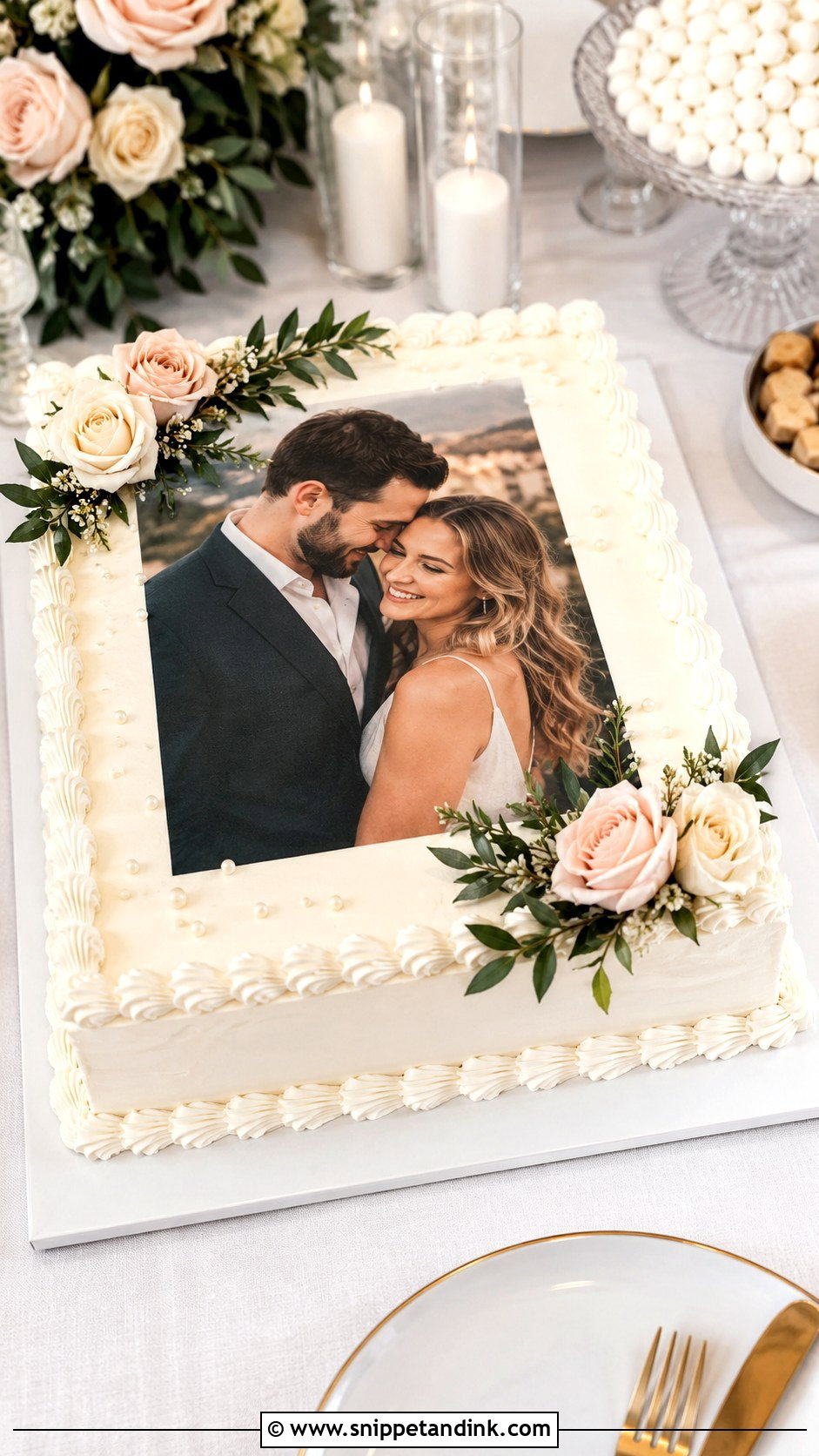
A sheet cake is practical, budget-friendly and still personal. It serves a bigger guest list and gives plenty of flat space for one large image, a collage or a framed layout, and flat surfaces are where edible prints look their best. Piped borders, fresh flowers, pearl accents or the reception palette make it wedding-ready. It can sit behind a smaller display cake or stand alone on a styled dessert table. If faces cover the whole top, decide where the first cuts go before the knife comes out. It cuts and serves easily at casual or modern weddings.
What Happens When the Knife Reaches the Photo
Couples rarely think about this until the day. A photo cake is still a cake, and at some point someone slices through a face. Most guests laugh, but a portrait of a late grandparent is different, and a little planning keeps the moment comfortable for everyone.
The simplest fix is to keep the most personal images off the part that gets served. Put them on a plaque or topper that lifts off, on the top tier you’re saving, or on a display cake while a kitchen cake feeds the guests. Ask the caterer to remove plaques before cutting and set them aside rather than clearing them away with the plates.
If photos are printed on tiers that will be served, tell the catering team which side to cut first and which pieces to plate last. A print on frosting can’t be peeled off and saved, so take a close-up photo of the cake before cutting; it’s the only lasting copy of the design. Acrylic toppers and dried fondant plaques, on the other hand, can be kept.
A Picture on a Cake Should Still Look Like Cake
Photos on a cake look tasteful when the design is planned with balance. Let the picture be the focal point and support it with clean frosting, a few flowers, a neat border or a quiet metallic accent. Choose images that are clear, well lit and genuinely important to you, and match their style to the wedding: black-and-white portraits, vintage family pictures, engagement photos or a playful collage. Laid out well, the cake becomes a small display of your story that guests stop to look at.
You'll Like These Ideas:









Leave a Reply