
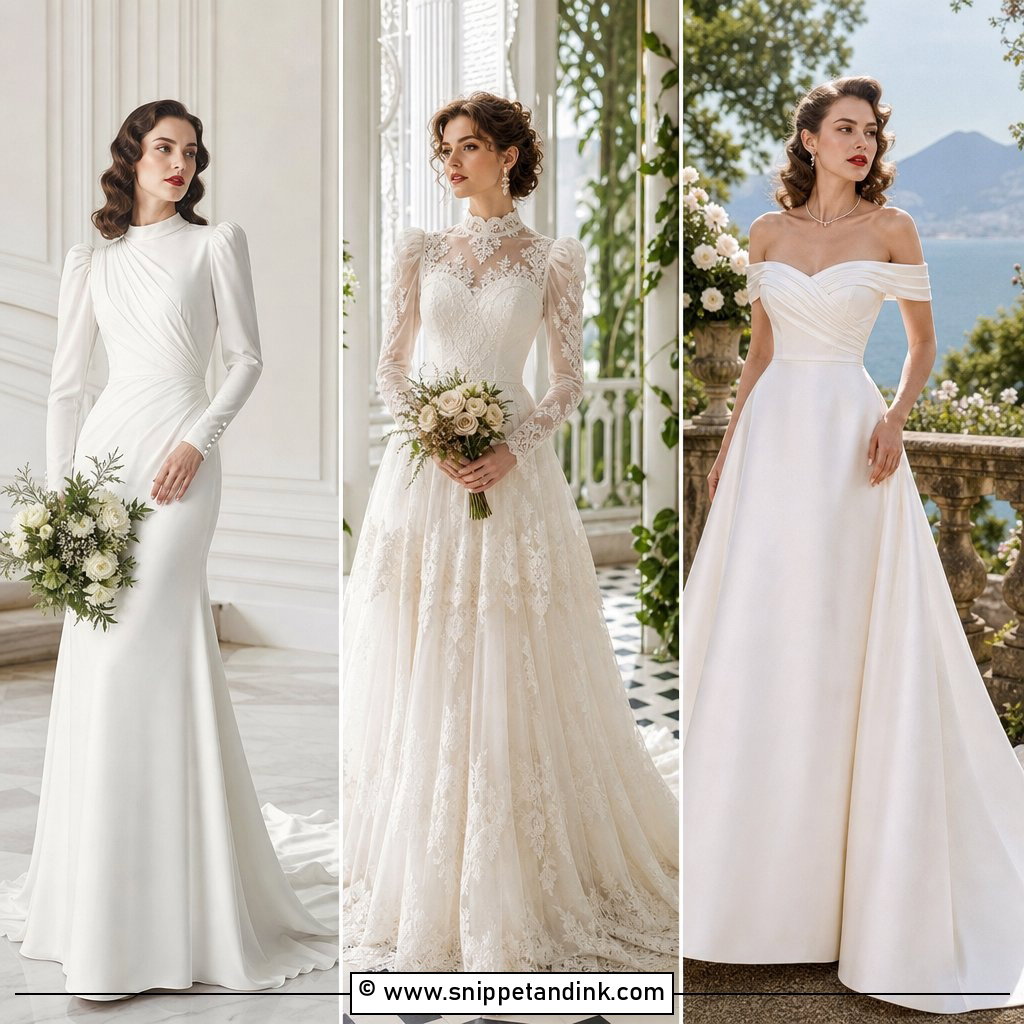
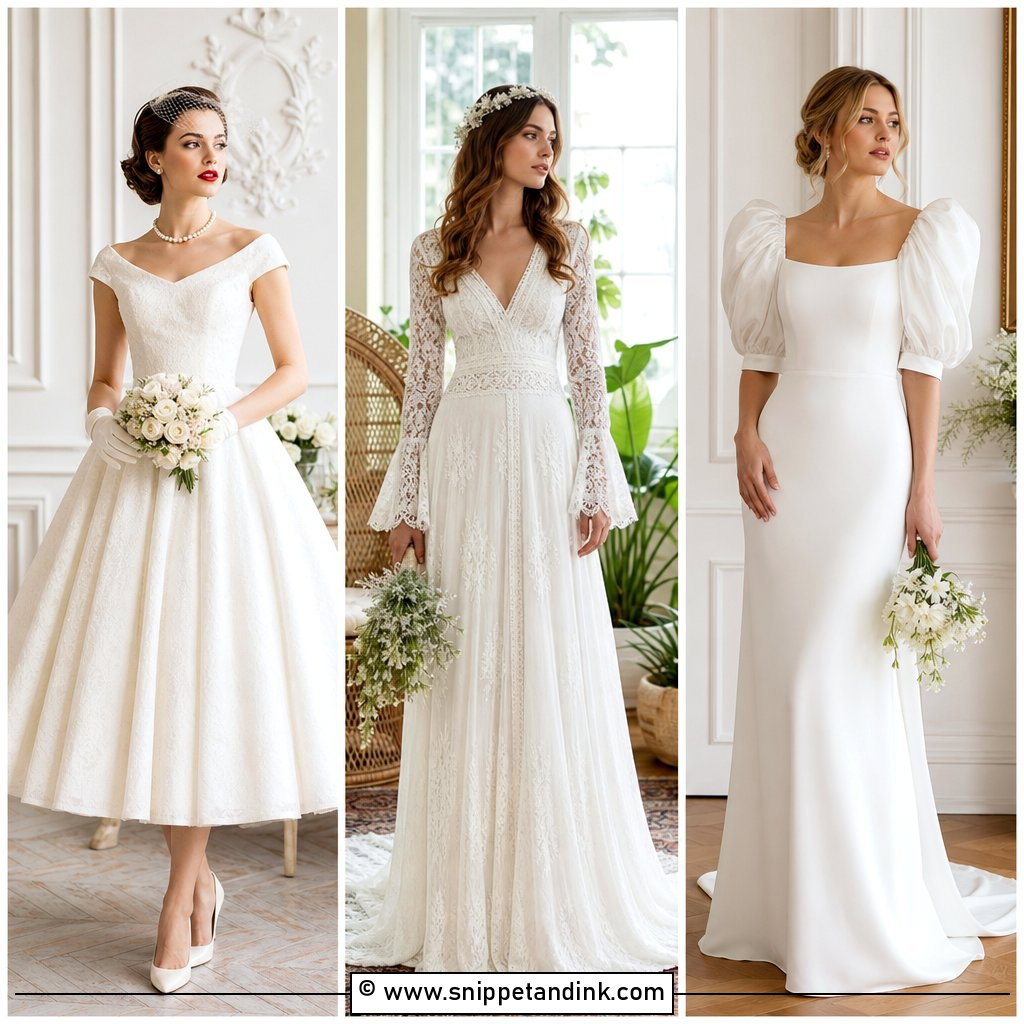
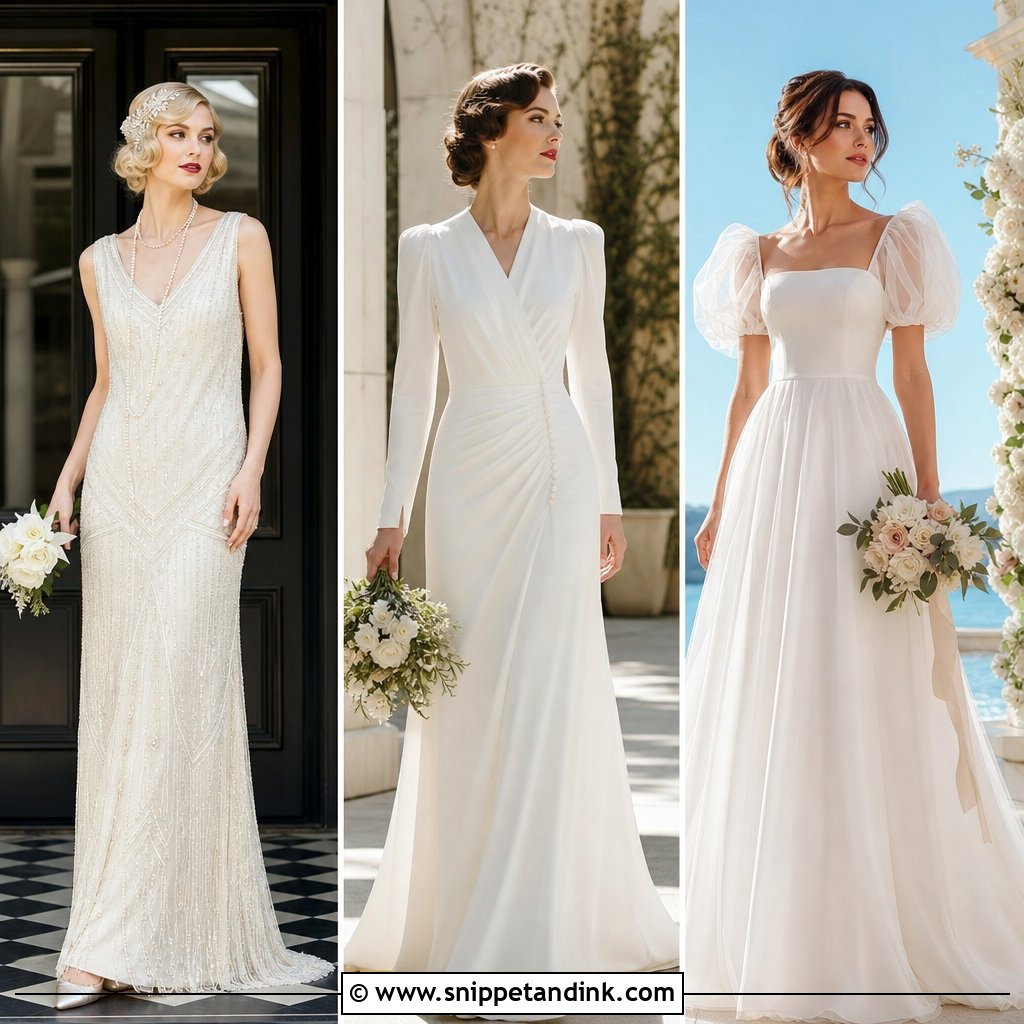
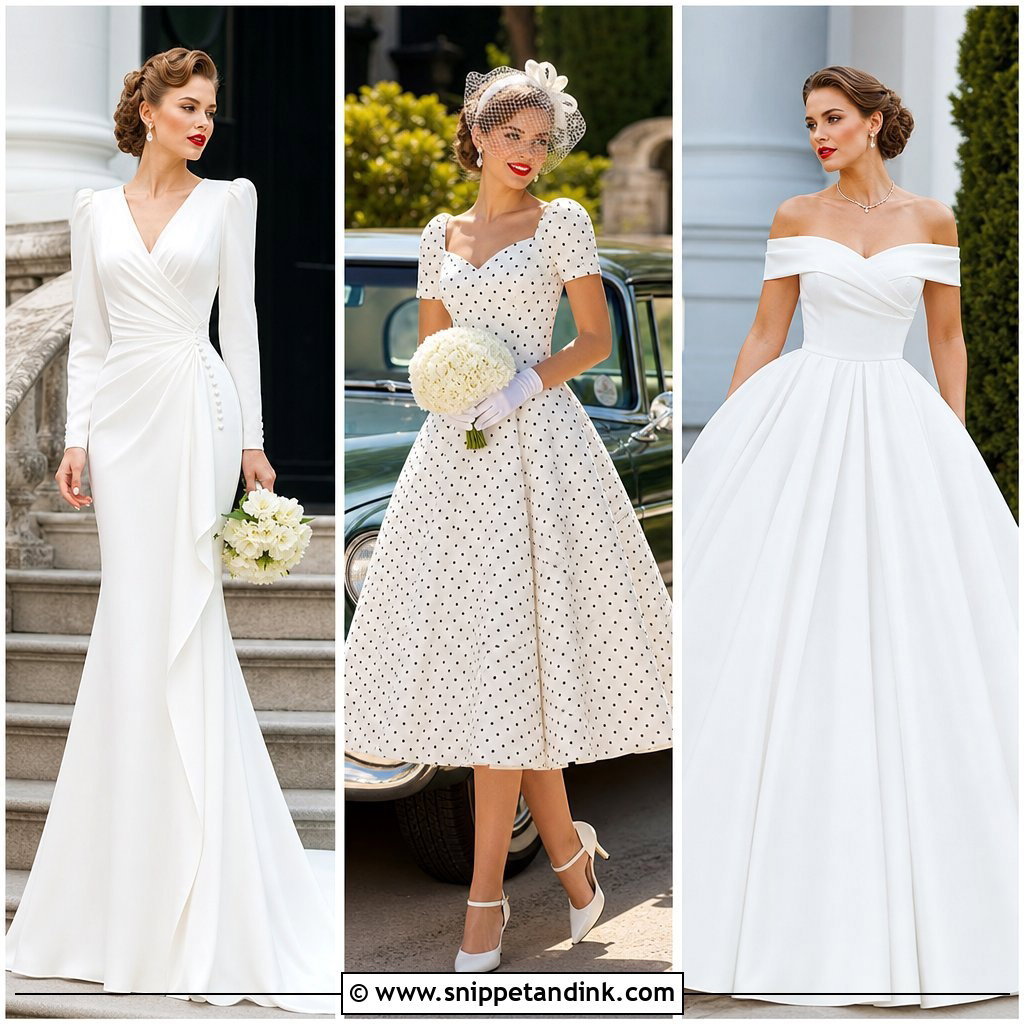
Bridal dress moved fast in the 1910s. Early in the decade you see Edwardian romance: high collars, fitted sleeves, raised waists and lace-covered bodices. Through the war years and after, gowns grew softer, straighter and shorter, and plenty of brides married in a suit. Layered skirts, satin trains, pearls, Juliet veils and gloves run through all of it. When I dress a vintage bride, I pick one moment in that decade and build around it instead of mixing every period detail at once. The twenty looks below move roughly from the formal early years to the simpler late ones, and for each I’ve noted the fitting point I’d watch.
Real Antique, Reproduction, or Simply Inspired?
Before you look at silhouettes, decide which of three routes you’re taking, because each one changes your timeline and budget. A genuine gown from the period is the romantic option and the riskiest. Many silks of that era were weighted with metallic salts to make them heavier and glossier, and over a century that treatment makes the fabric split along folds and stress points. An original that looks sound on the hanger can tear at the underarm the first time a bride lifts her arms, so I never let anyone dance in one untested.
A reproduction from a historical dressmaker gives you the correct cut in sound new fabric, but expect a long lead time and several fittings. A modern gown with period details, such as a raised waist, lace sleeves or a Juliet cap, is the easiest to alter and the most comfortable to wear for ten hours.
If you’re set on an original
- Hold the fabric up to a window and look for hairline splits along the folds
- Check underarms, waist and hem for old stains that cleaning may never lift
- Measure the bust and waist flat, since period sizing runs very small
- Ask how much seam allowance is left; many originals can’t be let out at all
- Plan for a textile conservator, not a regular dry cleaner, before and after the wedding
Some brides wear the antique for portraits only and change into a reproduction for the ceremony and dancing. That compromise protects the original and still gets it into the photographs.
1. High Neck Lace 1910s Wedding Dress
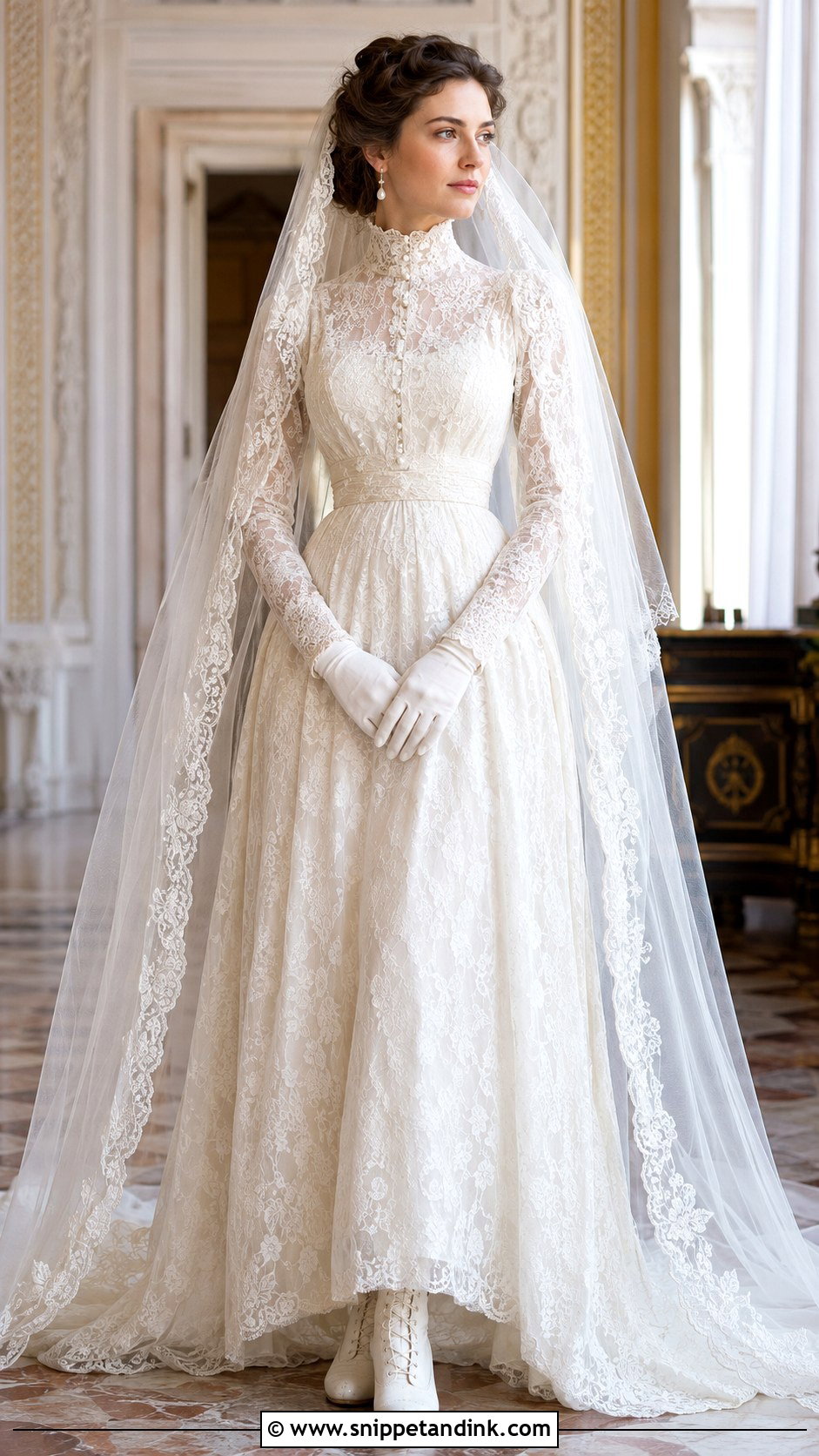
High necks and lace from collar to hem are the early-decade look most people picture. Start with a fitted ivory underdress covered in floral lace, long tapered sleeves closed with covered buttons, and a softly raised waist marked by a narrow satin sash. A cathedral veil set beneath a floral headpiece carries the drama at the back, with pearl drops, ivory gloves and low button boots. The collar is where I spend fitting time. It needs a finger’s width of room, because a boned lace collar touching the throat all day becomes the only thing you can think about.
2. Empire Waist 1910s Wedding Dress
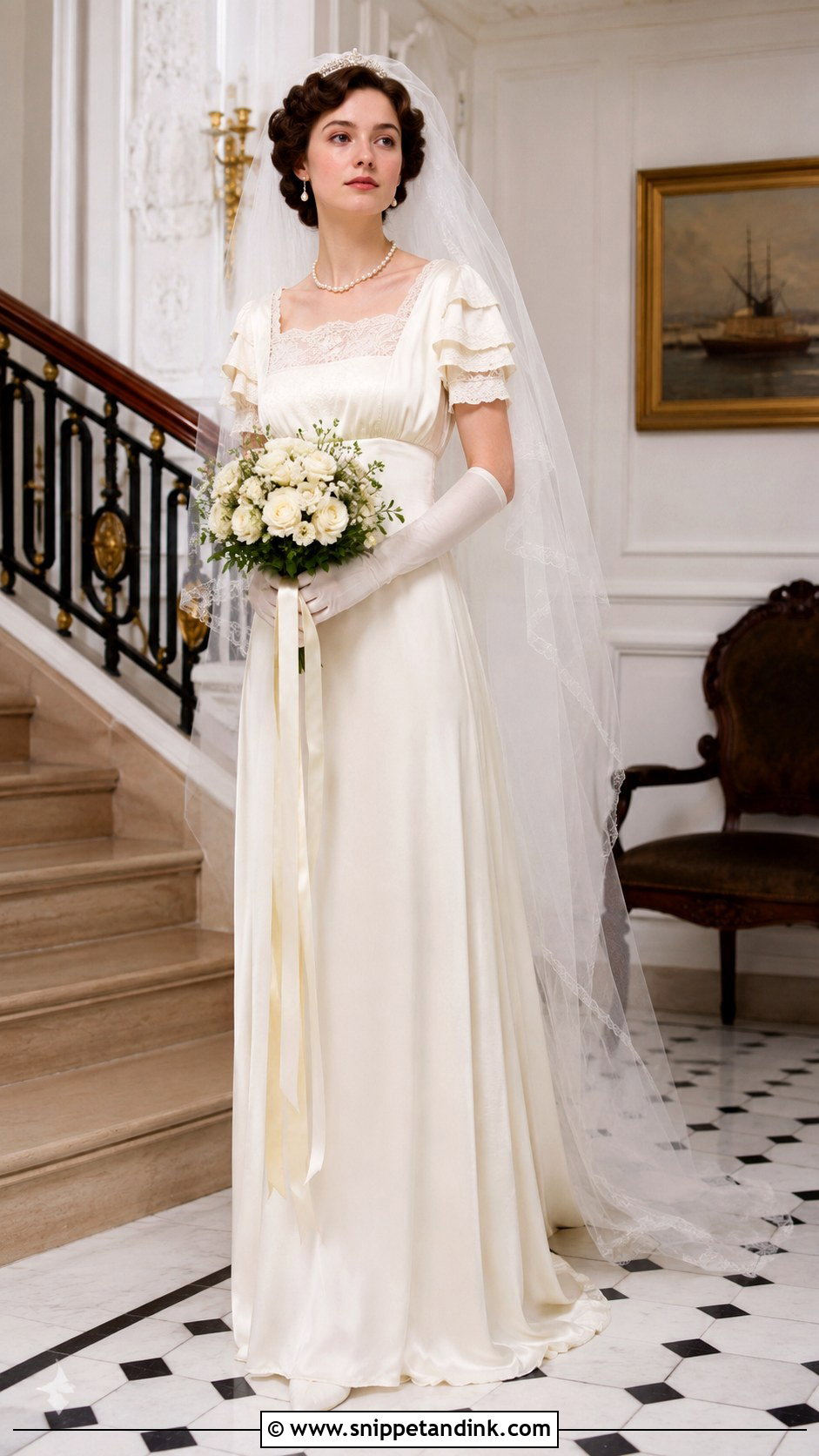
The raised-waist column of the Titanic years, around 1912, is one of the most comfortable shapes here. The seam sits just under the bust and the skirt falls slim and fluid, so silk crepe, chiffon or a light satin matters; anything stiffer stands away from the body and loses the line. A square lace neckline, short layered sleeves, elbow gloves, a long veil and a small ribbon-tied bouquet finish it, with low satin pumps. I suggest it to brides who want coverage through the midsection, since nothing grips the waist.
3. Satin Train 1910s Wedding Dress
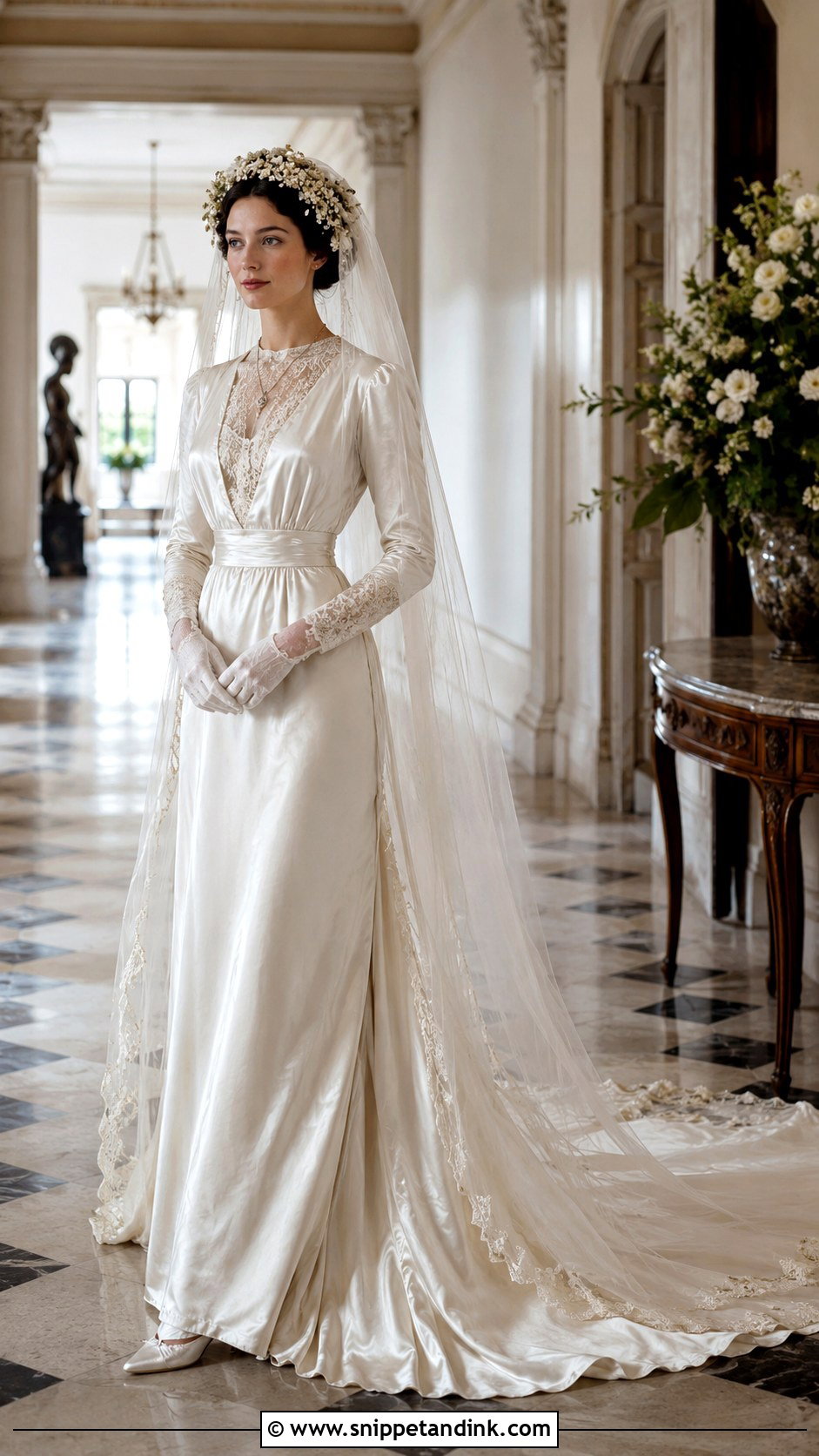
Ivory satin with a sweeping train is the formal end of the decade. A fitted upper bodice, raised waist and narrow skirt opening into the train need lace across the chest and sleeves, because plain satin on its own looks modern. Covered buttons down the back, a full tulle veil set in a wax-flower wreath, white gloves, a pearl pendant and pointed satin shoes complete it. Satin shows every pull. If the buttons strain even slightly at the back fitting, ask for the seams to be let out before they ripple in photos. A ballroom or estate suits it, and a simple structured bouquet keeps the train in focus.
4. Blouson Bodice 1910s Wedding Dress
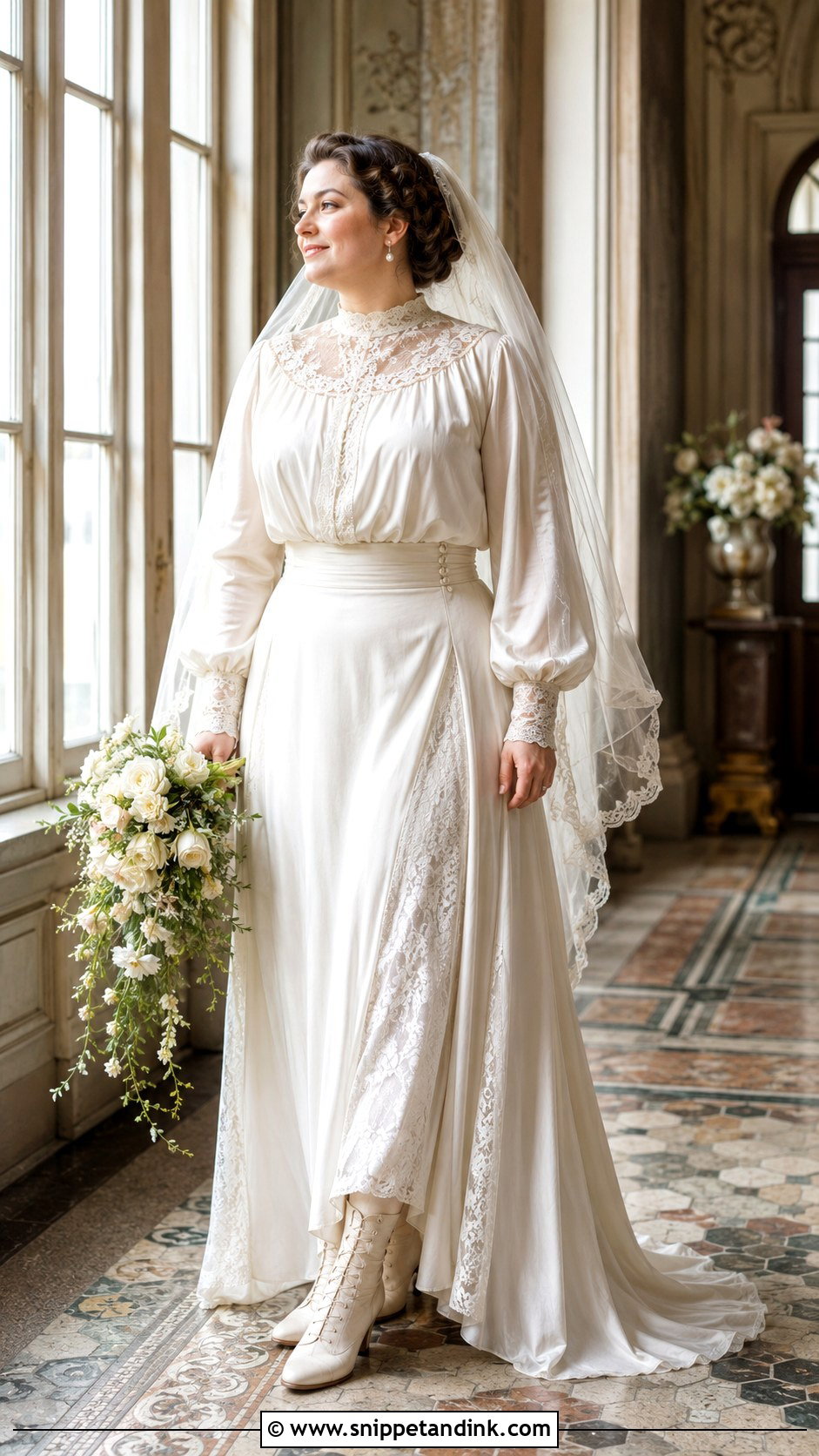
Blouson bodices drape loosely over the bust and gather into a narrow band, which makes them the most forgiving shape in this collection. Pair one with a softly flared A-line skirt in silk, satin or lined chiffon, and let lace inserts, pintucks and covered buttons supply the detail. A fingertip veil, pearl studs, ivory ankle boots and a small crescent bouquet finish it. If you love Edwardian fashion but need to move freely at the reception, start here. The blousing adapts well to petite, curvy and plus-size figures because the fit is controlled at the waistband, not across the bust.
5. Square Neck 1910s Wedding Dress
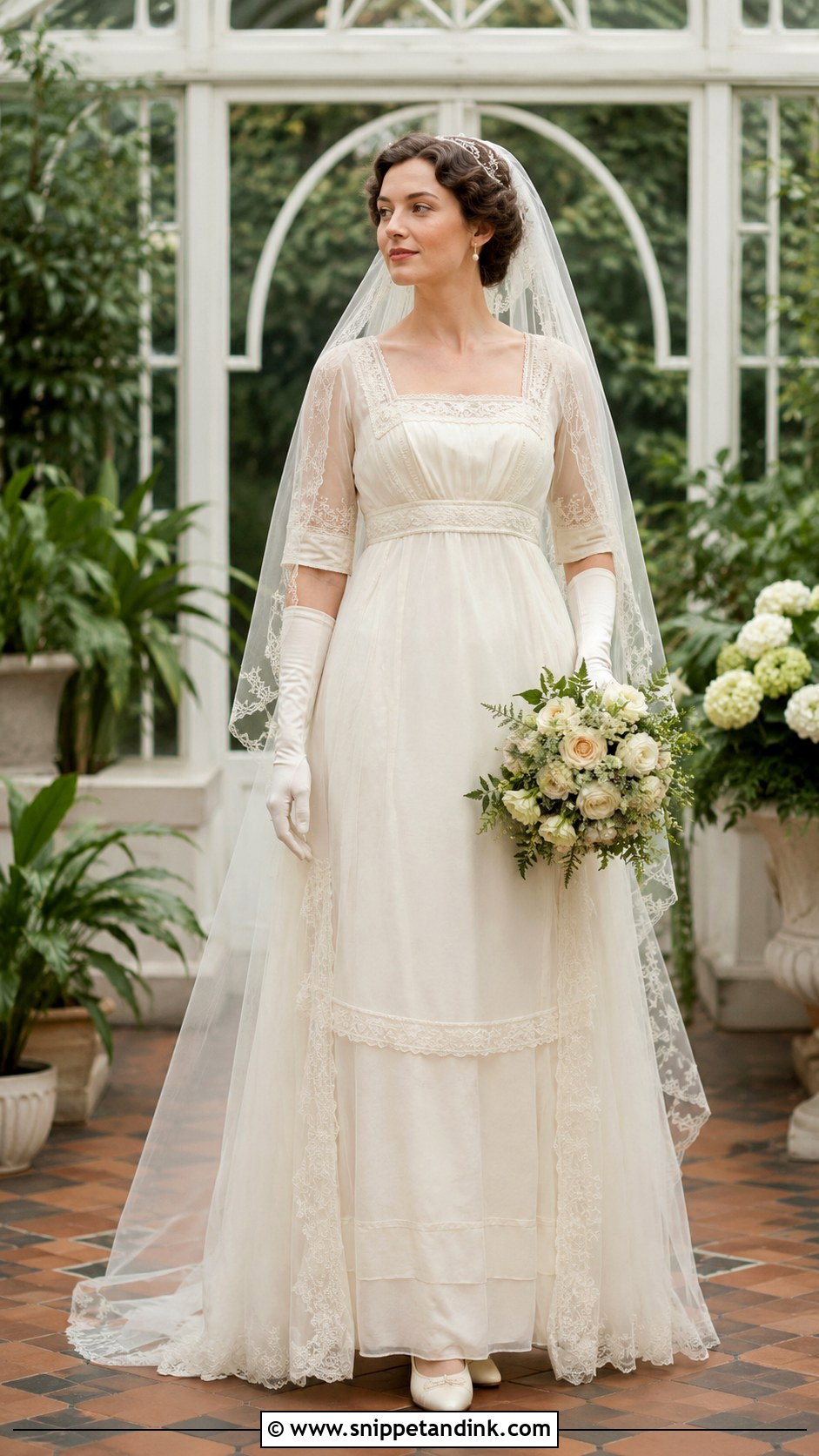
A square neckline is the quickest way to signal Titanic-era style. Frame it with embroidered lace, pearl trim or a sheer chiffon panel, and pair it with elbow sleeves, a raised waist and a skirt that falls straight in layers; a detachable chiffon overskirt adds movement for the ceremony. A lace-edged veil, fine gloves, pearl earrings and low ivory pumps complete it, with white garden flowers. I like this neckline on rounded shoulders, since the straight line squares them off and shows the collarbone. Sit down at the fitting, though. A square neck cut too long gapes forward the moment you lean.
6. Layered Chiffon 1910s Wedding Dress
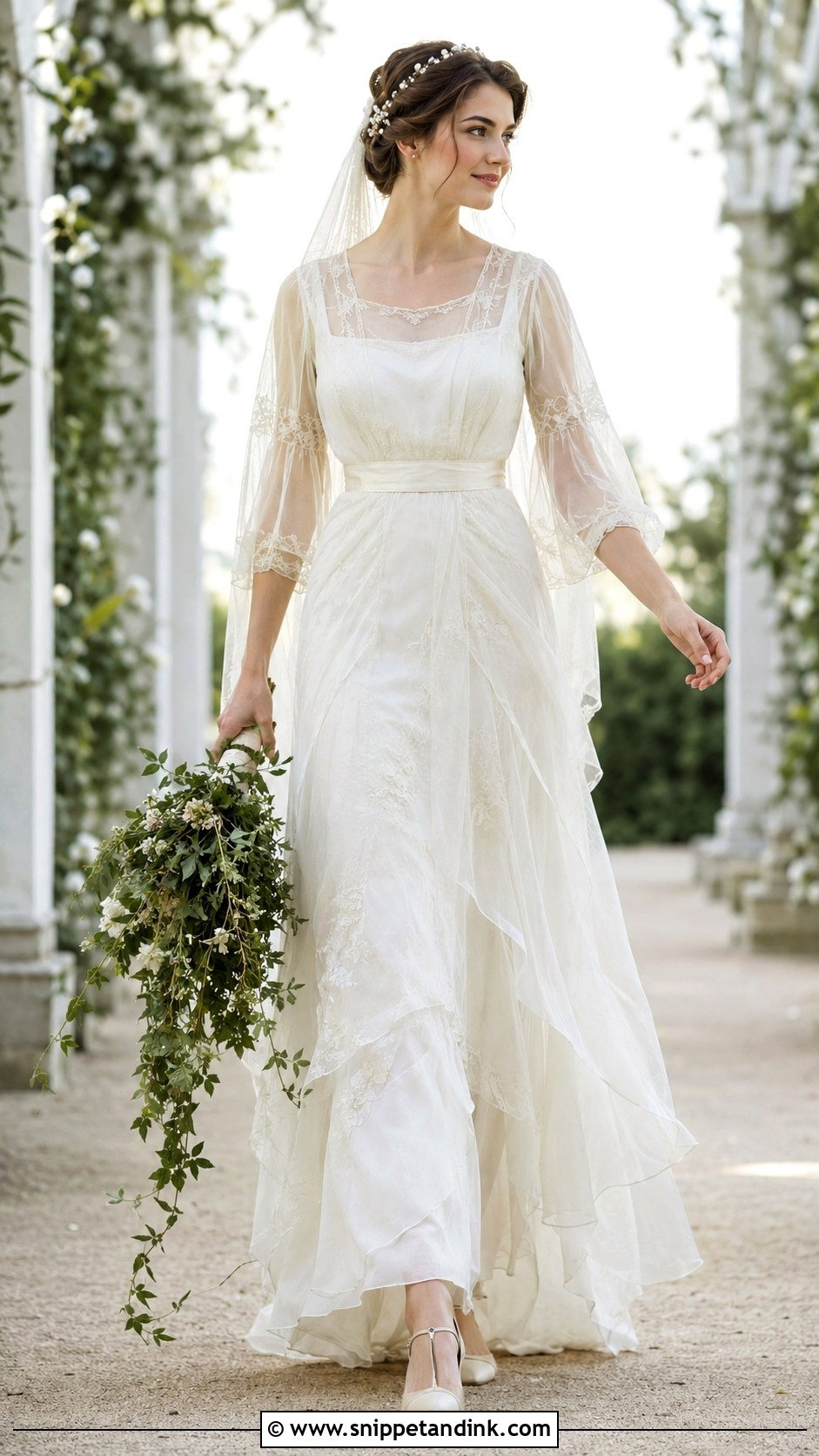
Layered chiffon over a column underdress moves with every step, which is both its appeal and its risk. Overlapping panels or a sheer tunic sit over the base, lace edges the sleeves and hem, and a pale satin waistband separates bodice from skirt. Add a veil that reaches the train, small pearl hairpins and cream satin shoes, and skip heavy jewelry. Chiffon frays and snags easily, so I check that every edge has been rolled or bound and that the lining stops it turning see-through in direct sun. It suits spring and summer far better than structured satin.
7. Bretelle Trim 1910s Wedding Dress
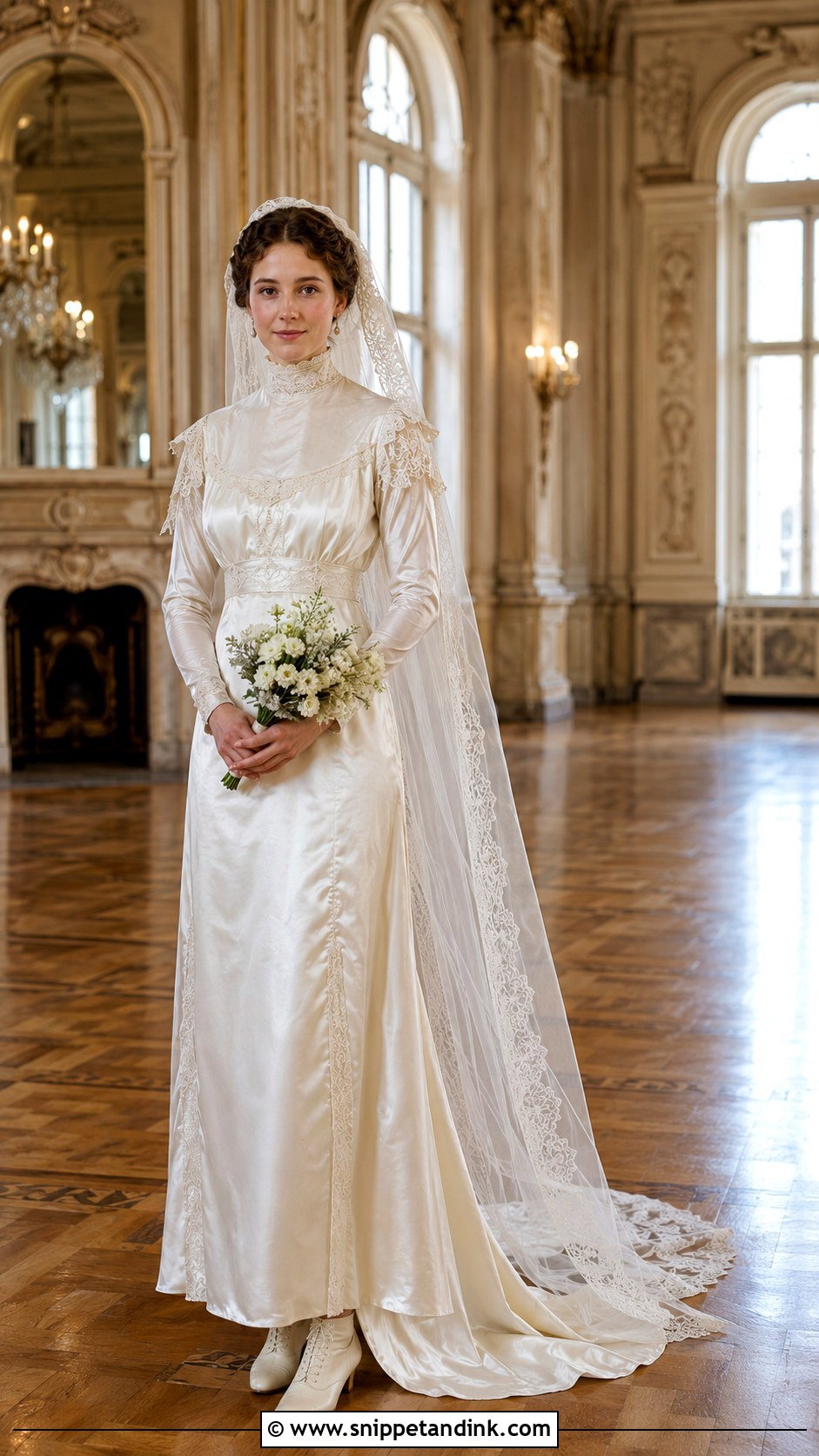
Bretelles are embellished bands running from the waist over the shoulders, and they’re one of the most distinctive early 1910s details. Worked in lace, embroidery or gathered satin, they frame the upper body; pair them with a high neck, slim sleeves and a slightly raised waist over a straight satin skirt with a short train. A long lace veil, button boots, pearl earrings and a compact bouquet keep everything else simple. Bretelles add width at the shoulder, which helps a narrow frame. On broad shoulders I’d have them angled in toward the neck so they don’t widen the line further.
8. Pearl Beaded 1910s Wedding Dress
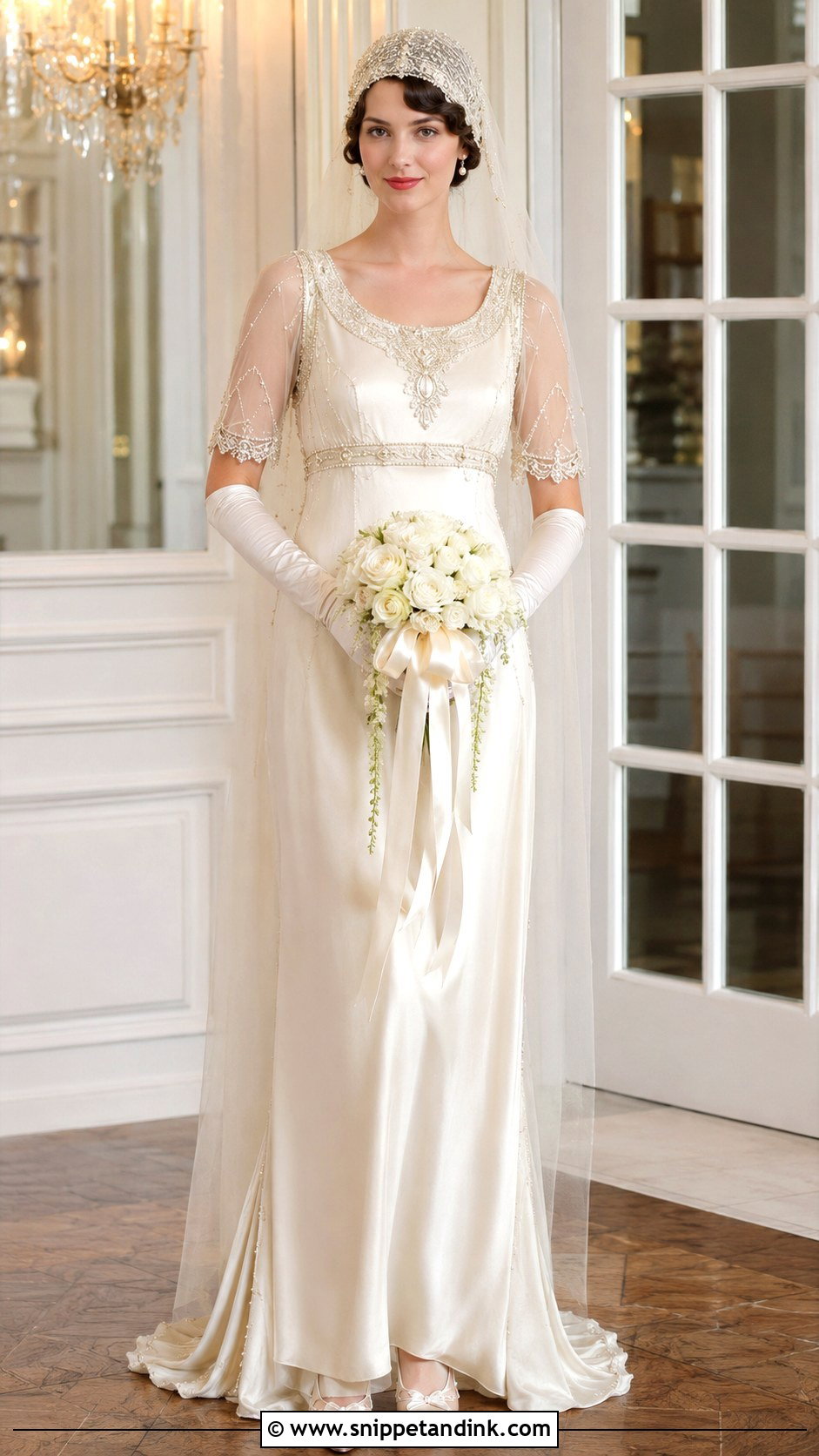
Pearl beading on an ivory silk column is my pick for an evening ceremony. Keep it to the neckline, shoulders, cuffs and waistband rather than the whole gown; that placement is truer to the period and keeps the dress light. Sheer elbow sleeves, a beaded Juliet cap veil, pearl drops, ivory gloves and satin pumps finish it, plus a small bouquet with ribbon streamers. Dense beading drags silk downward over a long day, so ask how the weight is supported inside. Under warm indoor light, pearls glow rather than glitter like modern crystal.
9. Scalloped Hem 1910s Wedding Dress
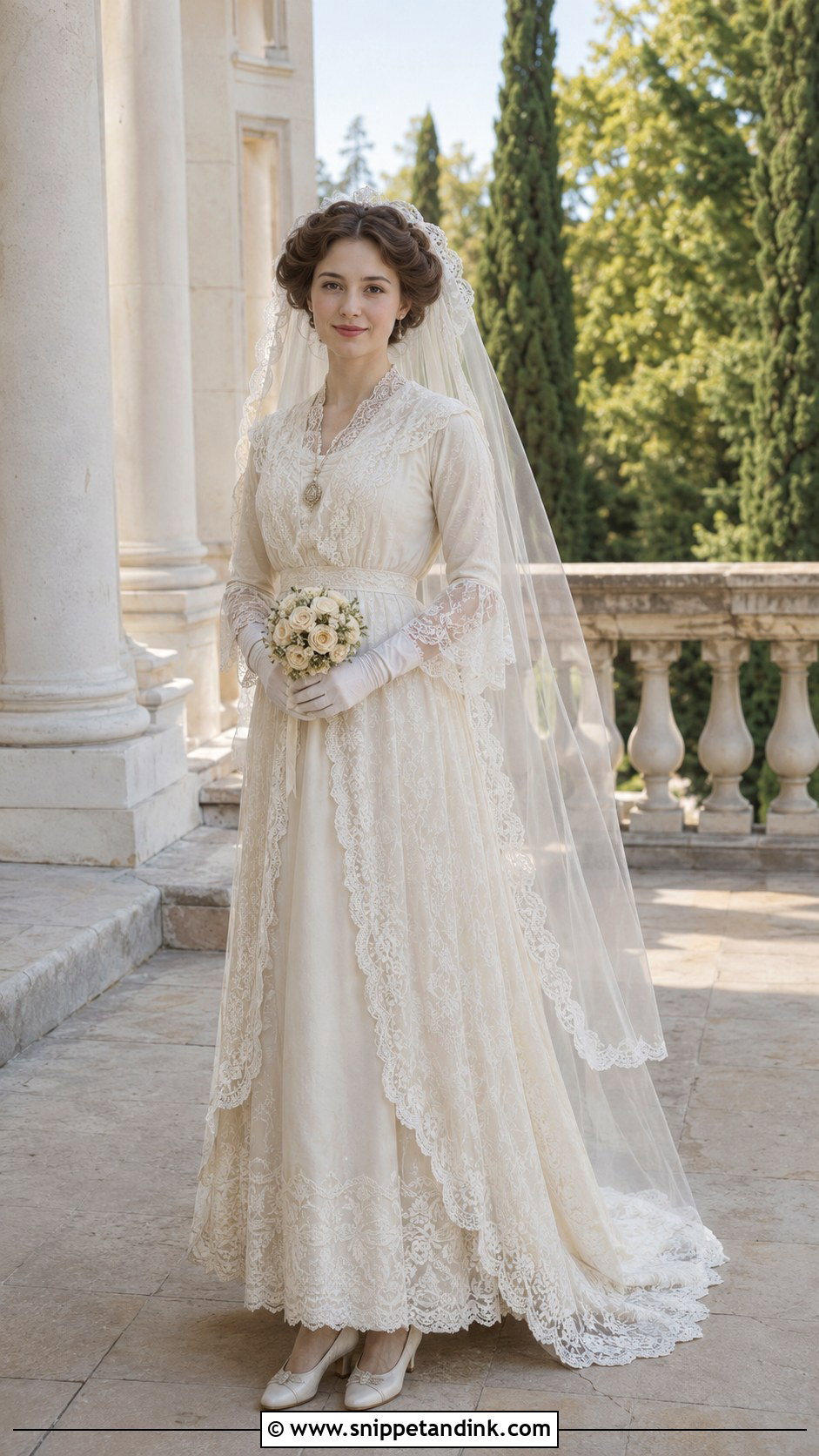
Scallops give a layered gown a soft edge and a little rhythm. An ankle-length satin underdress sits beneath a longer lace or chiffon layer with a scalloped hem, and the same curve repeats at the neckline and cuffs. A slim raised-waist bodice, a veil in matching lace, buttoned ivory shoes, short gloves and a cameo complete the outfit. The shorter hem shows your shoes, which makes this sensible for outdoor paths and small venues where a train would drag. When hemming, I measure the scallops from the floor in the actual wedding shoes, or the points end up uneven.
10. Floral Lace 1910s Wedding Dress
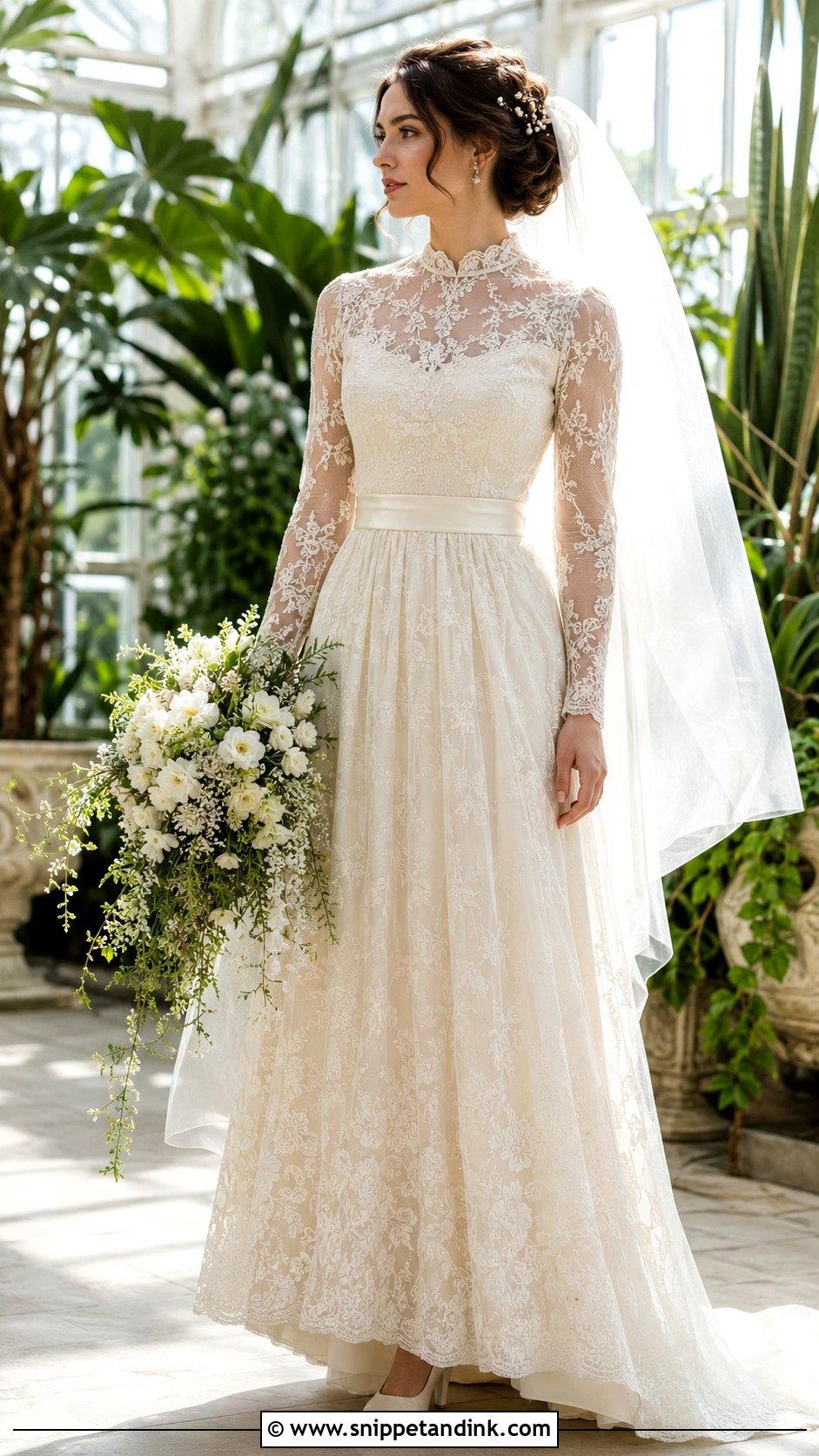
Large botanical lace motifs read expressive; small, tight patterns read delicate. I hold both against the bride before choosing, because the scale changes the whole personality of the dress. A full-length ivory gown with a lined bodice, sheer upper neckline, long sleeves and a gently gathered skirt carries either, with a satin belt at the natural or slightly raised waist. A plain tulle veil keeps the pattern clear in pictures, and pearl hairpins, ivory pumps and a loose white bouquet suit a garden or conservatory. Insist on a soft modern lining. Unlined lace itches against bare skin within the hour.
11. Short Sleeve 1910s Wedding Dress
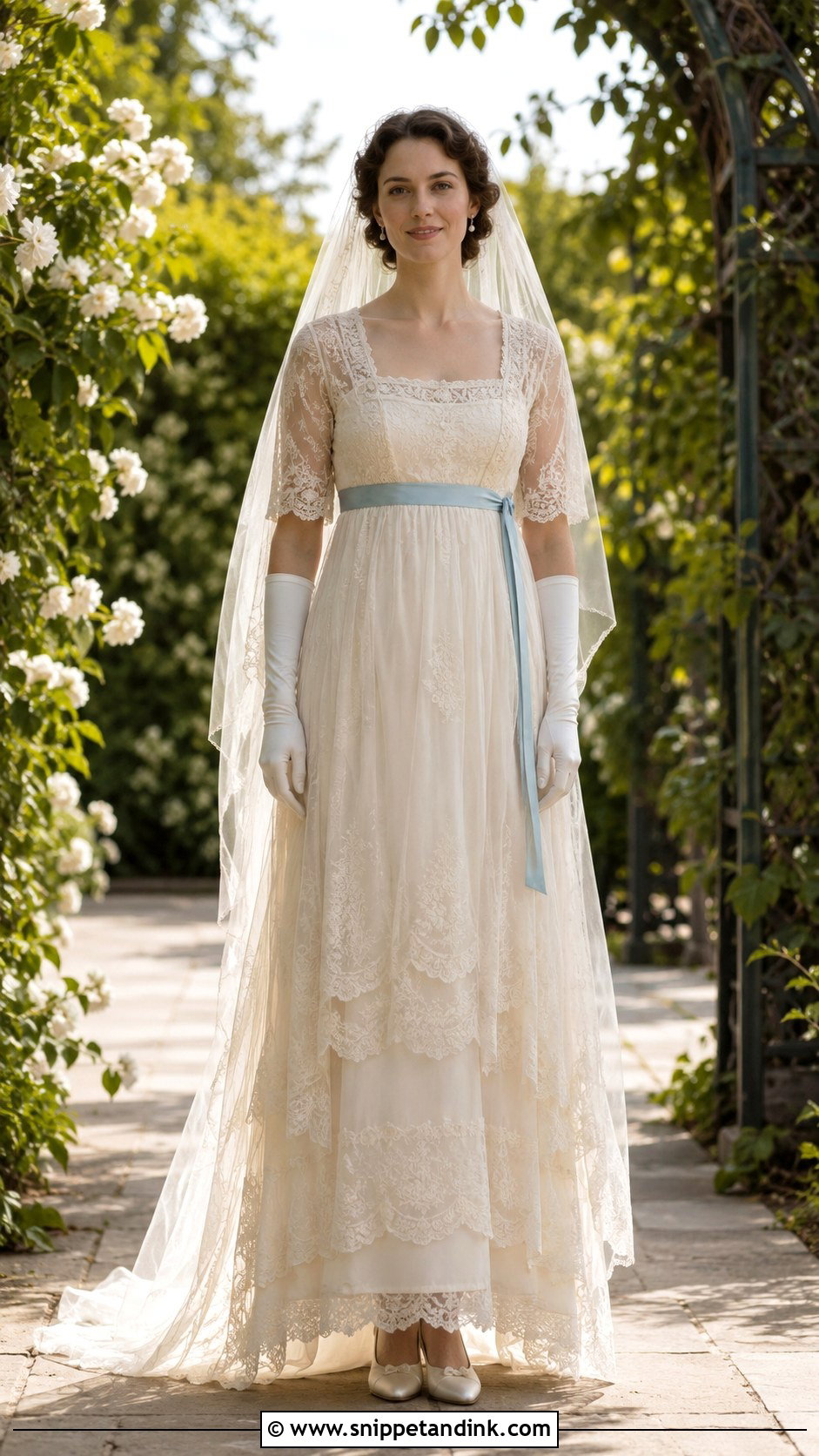
Short sleeves lighten a formal period gown for warm weather. Look for a square neckline, lace over the shoulders and sleeves that finish near the elbow, with a slim empire waist and a layered floor-length skirt. Long white gloves bring back the coverage of the era, and they come off for dinner and dancing. A lace Juliet veil, pearl earrings, low satin heels and a narrow sash in ivory, champagne or pale blue complete it. Buy gloves slightly roomy in the fingers; tight satin gloves are hard to peel off with warm, damp hands.
12. Tunic Layer 1910s Wedding Dress
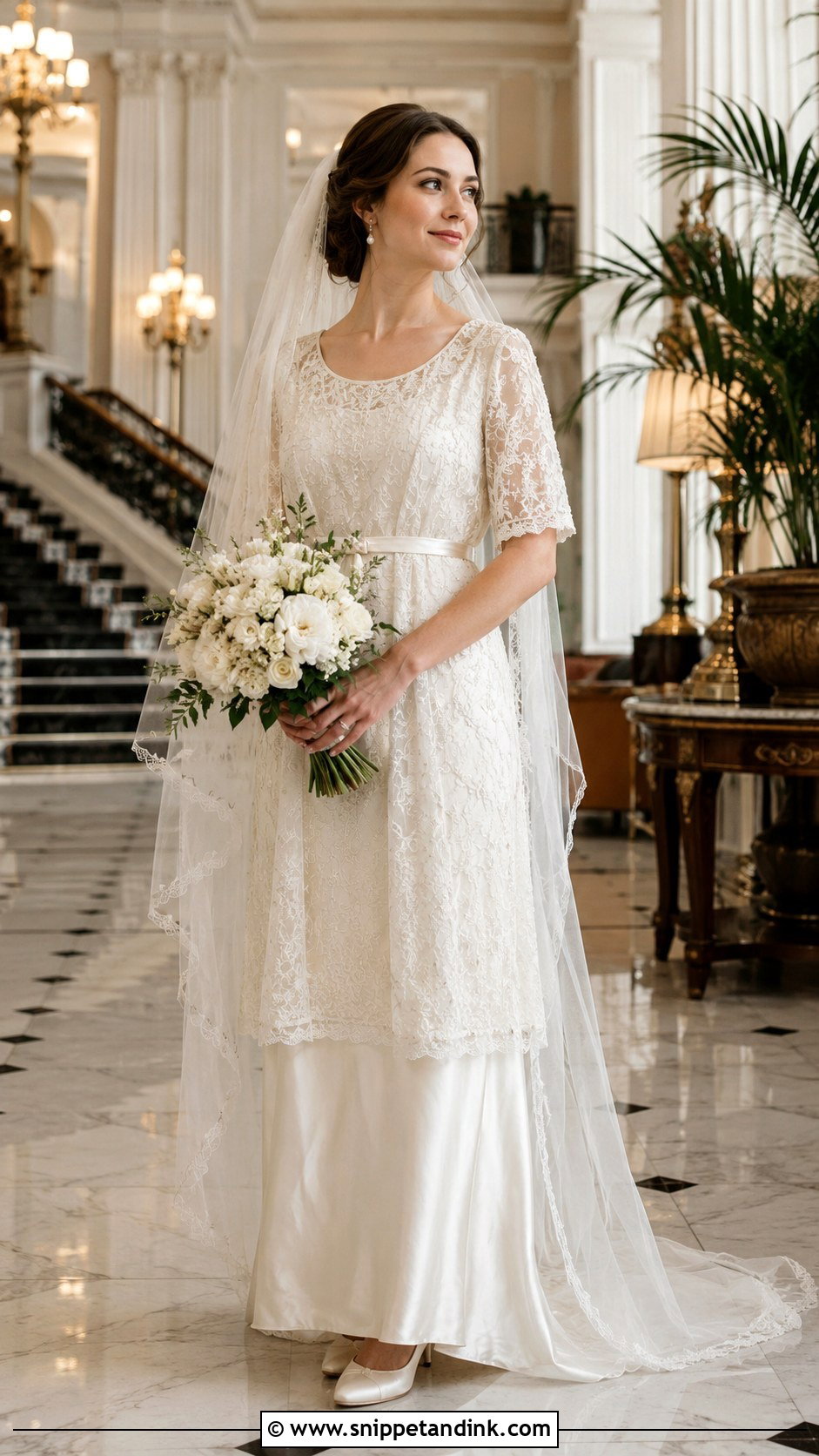
A lace tunic over a straight silk dress shows the decade’s shift toward layered, looser lines. The tunic falls from the raised waist to the knee or lower calf, visible as a layer without adding bulk. Pair a square or round neckline with soft elbow sleeves, decorative edging and a narrow sash, then a long veil, ivory shoes, a small structured bouquet, pearl earrings and a fine bracelet. Where the tunic ends matters more than people expect. I pin the hem at a few heights in front of the mirror, because stopping at the widest part of the calf shortens the leg.
13. Draped Silk 1910s Wedding Dress
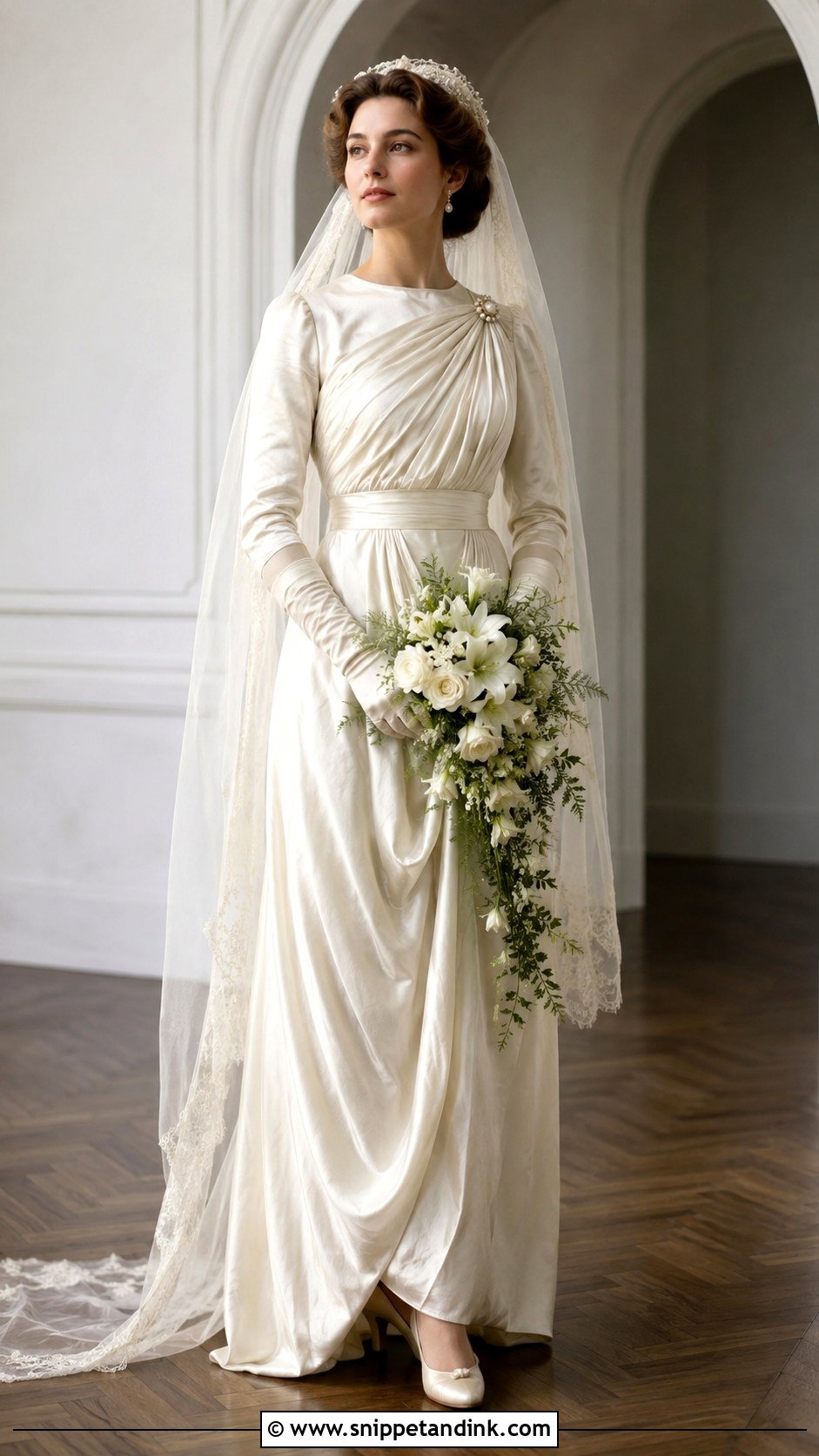
Diagonal draping across the bodice or skirt gives smooth ivory silk an artistic late-Edwardian look. Keep the neckline modest and the sleeves fitted so the drape stays the feature, and finish the raised waist with a fabric rose, antique brooch or pearl appliqué. A chapel veil, satin gloves, low curved heels and a narrow cascading bouquet that follows the diagonal complete it. Drapes live or die by how they’re anchored. A loose drape slides out of place the first time you sit, so I ask to see it tacked at several points inside.
14. Tea Dress 1910s Wedding Dress
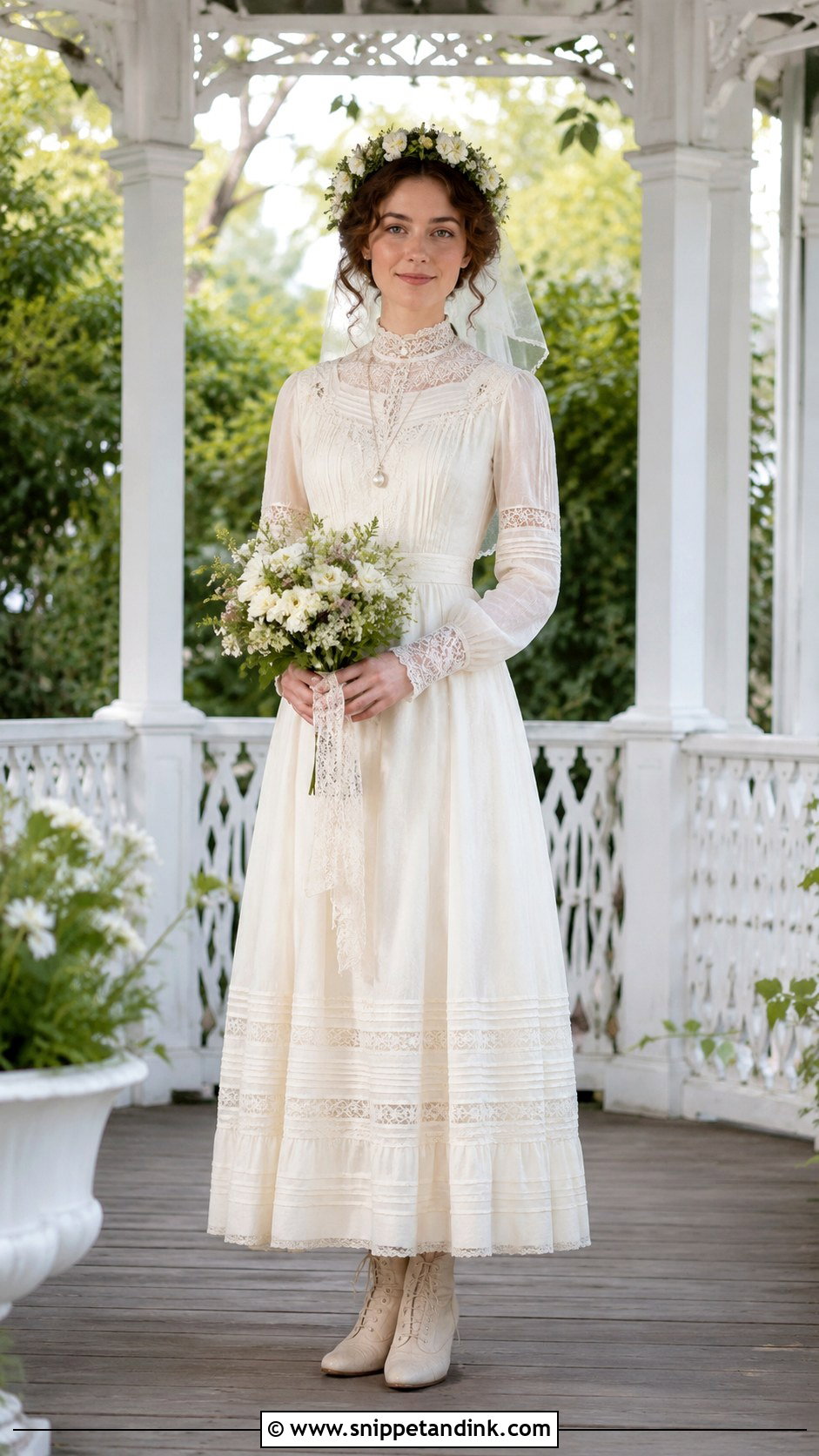
A tea dress in ivory cotton lawn or light silk suits a relaxed daytime wedding. Lace inserts, pintucks, a high neckline and full-length sleeves carry the period detail, and the ankle-length skirt shows the shoes. Pair it with lace-up boots, a short veil, a small floral wreath, a pearl pendant and a compact bouquet for a garden, porch, courthouse or home ceremony. Cotton lawn creases as soon as you sit, which is true to the era but obvious in photos, so I steam it on site rather than before the drive. It’s one of the few wedding dresses you can honestly wear again.
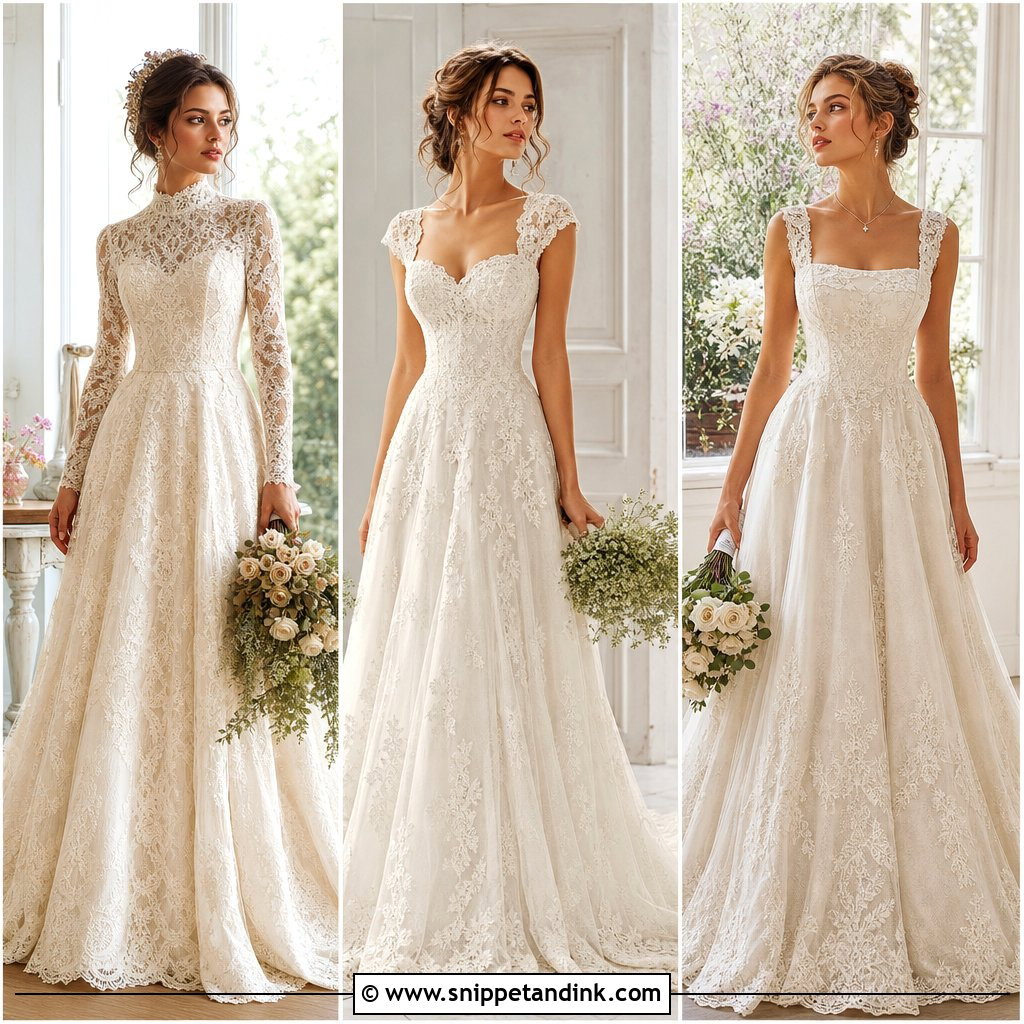
15. Tailored Suit 1910s Wedding Outfit
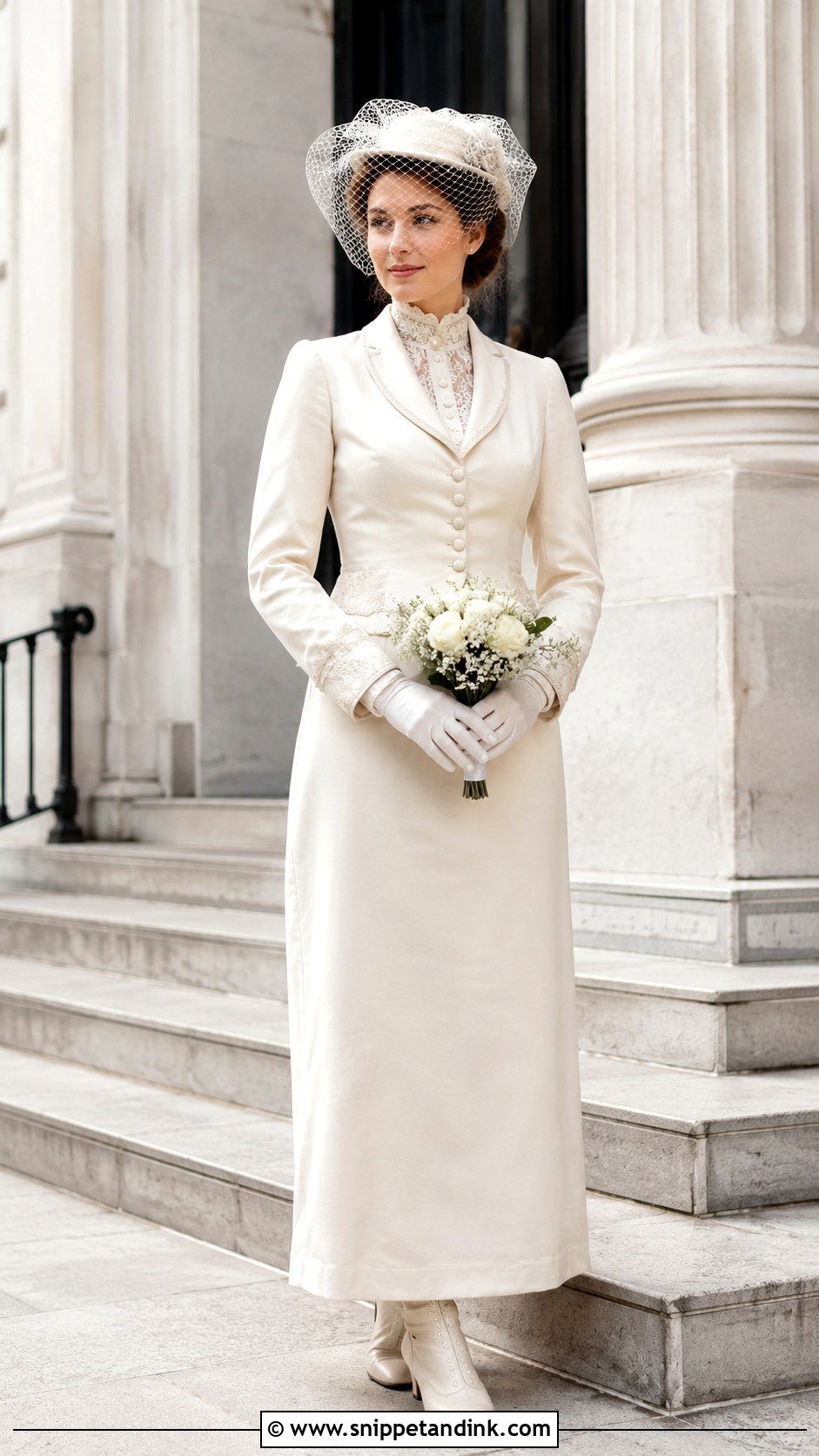
Plenty of 1910s brides married in a suit, particularly during the war years. A tailored ivory skirt suit pairs a long straight skirt, fitted jacket and high lace blouse with a gently raised waist, and covered buttons, narrow lapels and embroidered cuffs make it ceremonial. Add a small veiled hat, gloves, buttoned ankle boots and a compact bouquet. It suits a courthouse wedding, a ceremony abroad or a second marriage, and it’s warm in cool weather. Buy all three pieces together if you can. Ivories from different makers rarely match, and three slightly different whites look like an accident.
16. Winter Velvet 1910s Wedding Dress
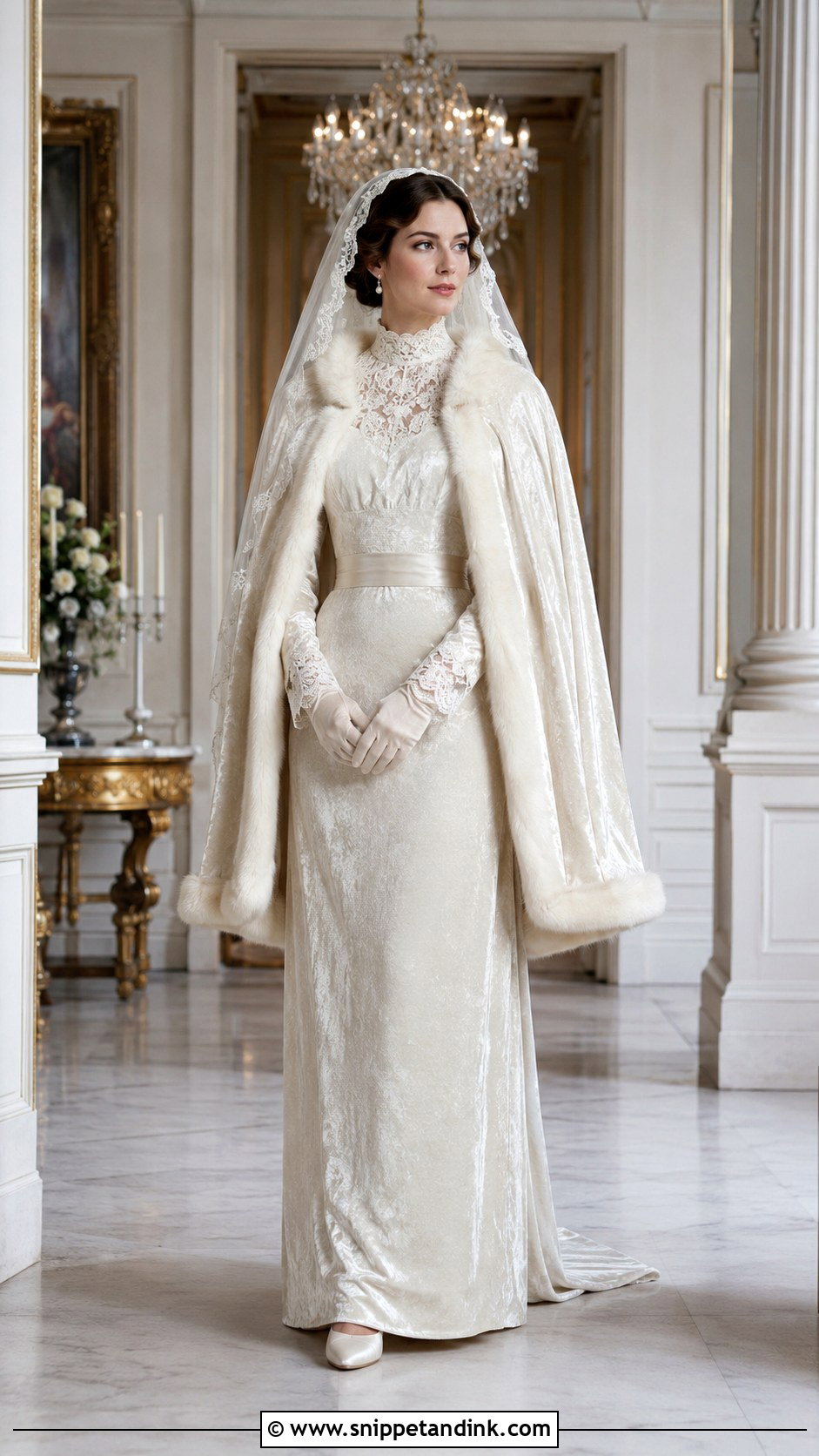
Ivory velvet makes a warm winter gown with strong period feel. Use it for a fitted bodice and straight skirt, then add lace at the high neck, cuffs and upper sleeves so it doesn’t feel heavy. A narrow satin waistband, faux-fur trimmed cape, elbow gloves, closed-toe ivory shoes and pearl studs complete it, with a lace veil under the cape that comes off for the reception. Velvet changes shade with the direction of the pile, so every panel has to be cut the same way. I check that in daylight before the final fitting, because a mismatched panel looks like a stain in photos.
17. War Crinoline 1910s Wedding Dress
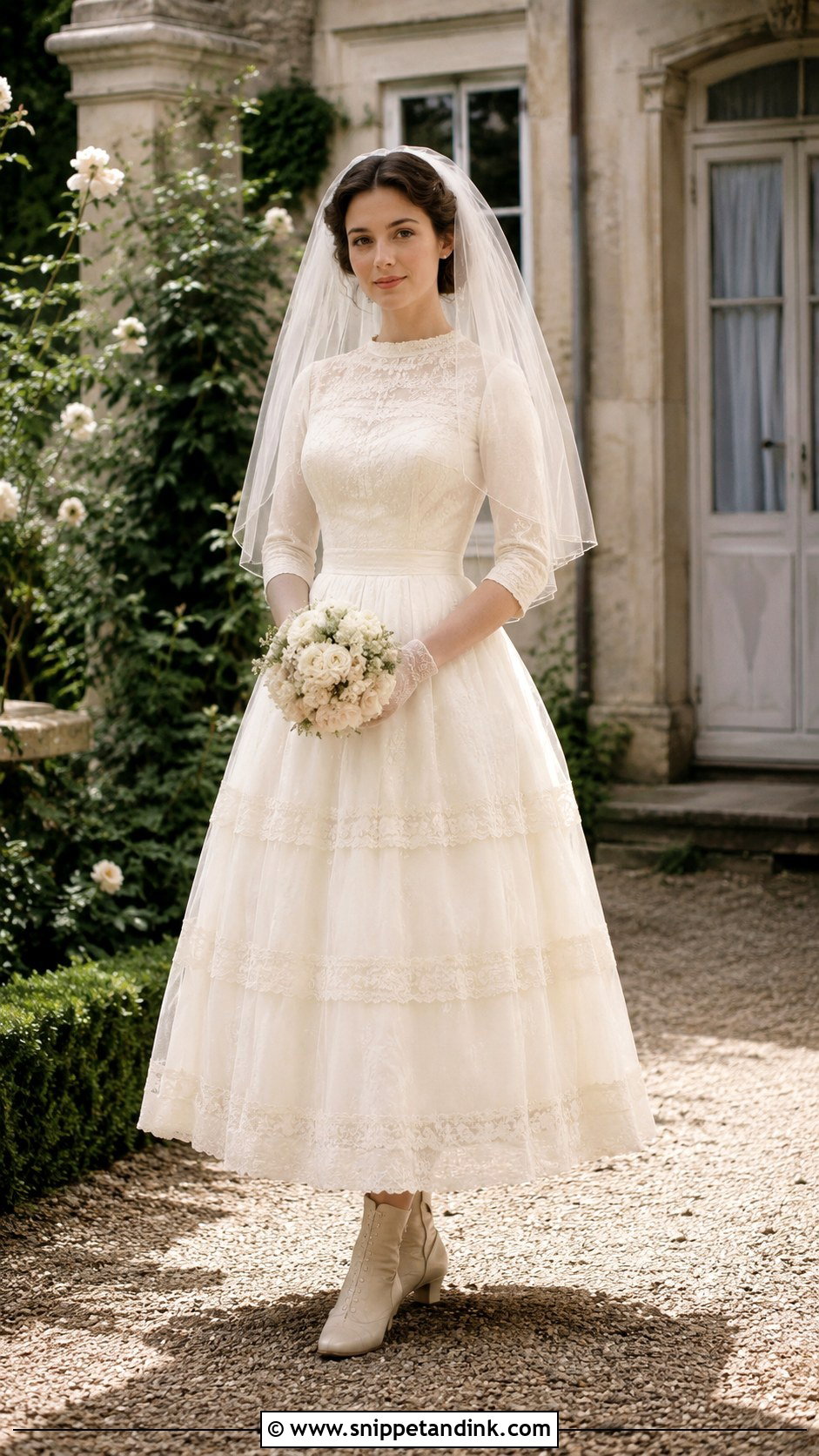
Around 1915 skirts briefly widened again, and this so-called war crinoline shape gives you volume without a modern ball gown. A fitted bodice with a modest neck, three-quarter sleeves and a defined natural waist sits over a skirt that spreads gently from the hips and stops above the floor, showing button shoes. Lace overlays or horizontal bands emphasize the rounded line. A shoulder-length veil, gloves and a small round bouquet keep it in proportion. I build the fullness with layered petticoats rather than a stiff hoop; a hoop makes it look like a costume rental.
18. Plus Size 1910s Wedding Dress
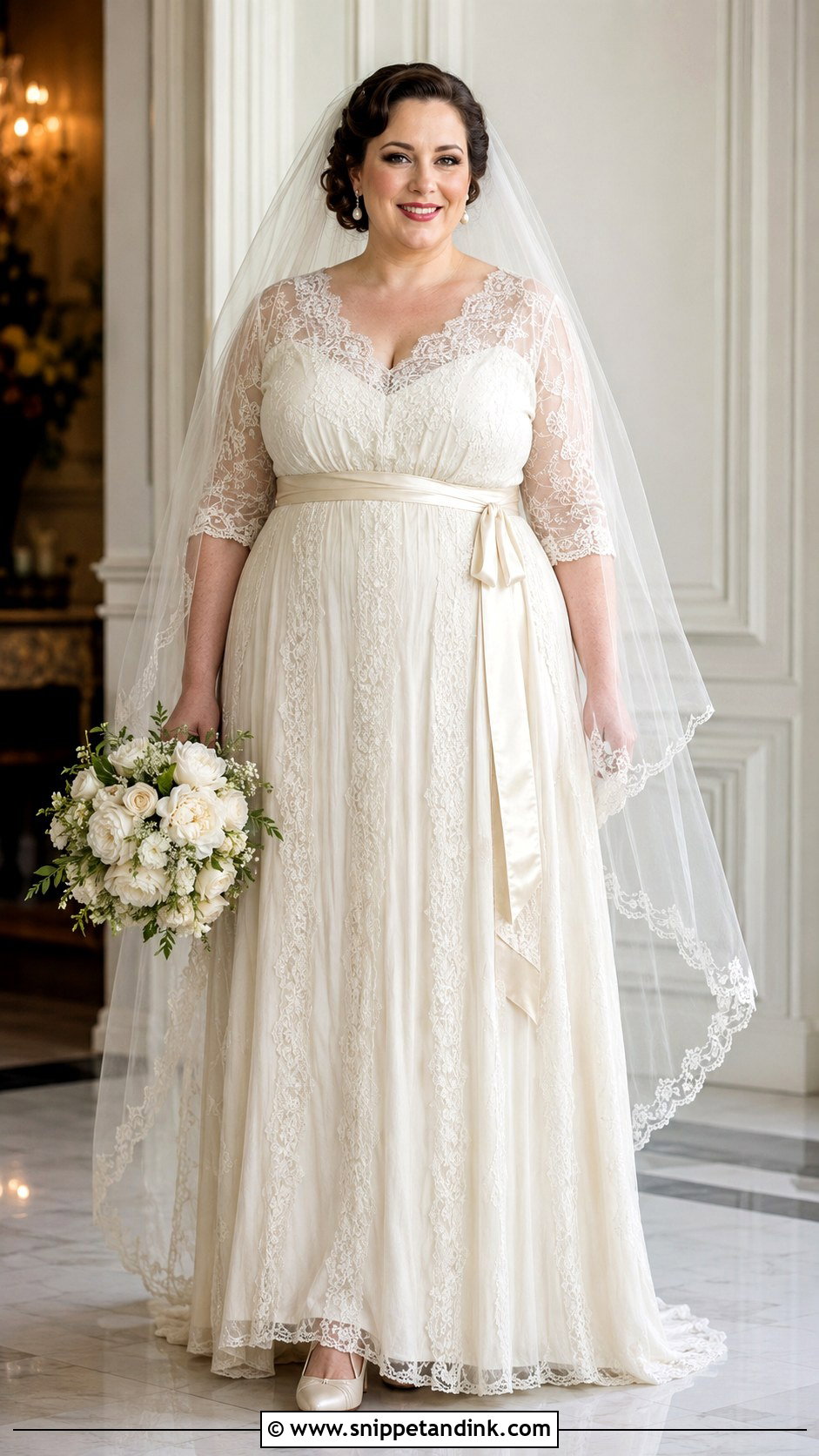
A raised waist suits many plus-size brides because it marks the narrowest point under the bust and lets the skirt fall from there. Choose a structured inner lining with a softly draped lace bodice, a V-shaped lace panel and elbow sleeves, and a skirt that skims before widening slightly near the hem. Skip heavy gathering at the waist; vertical lace panels and a narrow sash lengthen the line instead. A fingertip veil, supportive low heels, pearl earrings and a medium bouquet finish it. I’d always take custom sleeve width and good support over strict period construction, since the upper arm is where vintage-style patterns pinch first.
19. Simple Wartime 1910s Wedding Dress
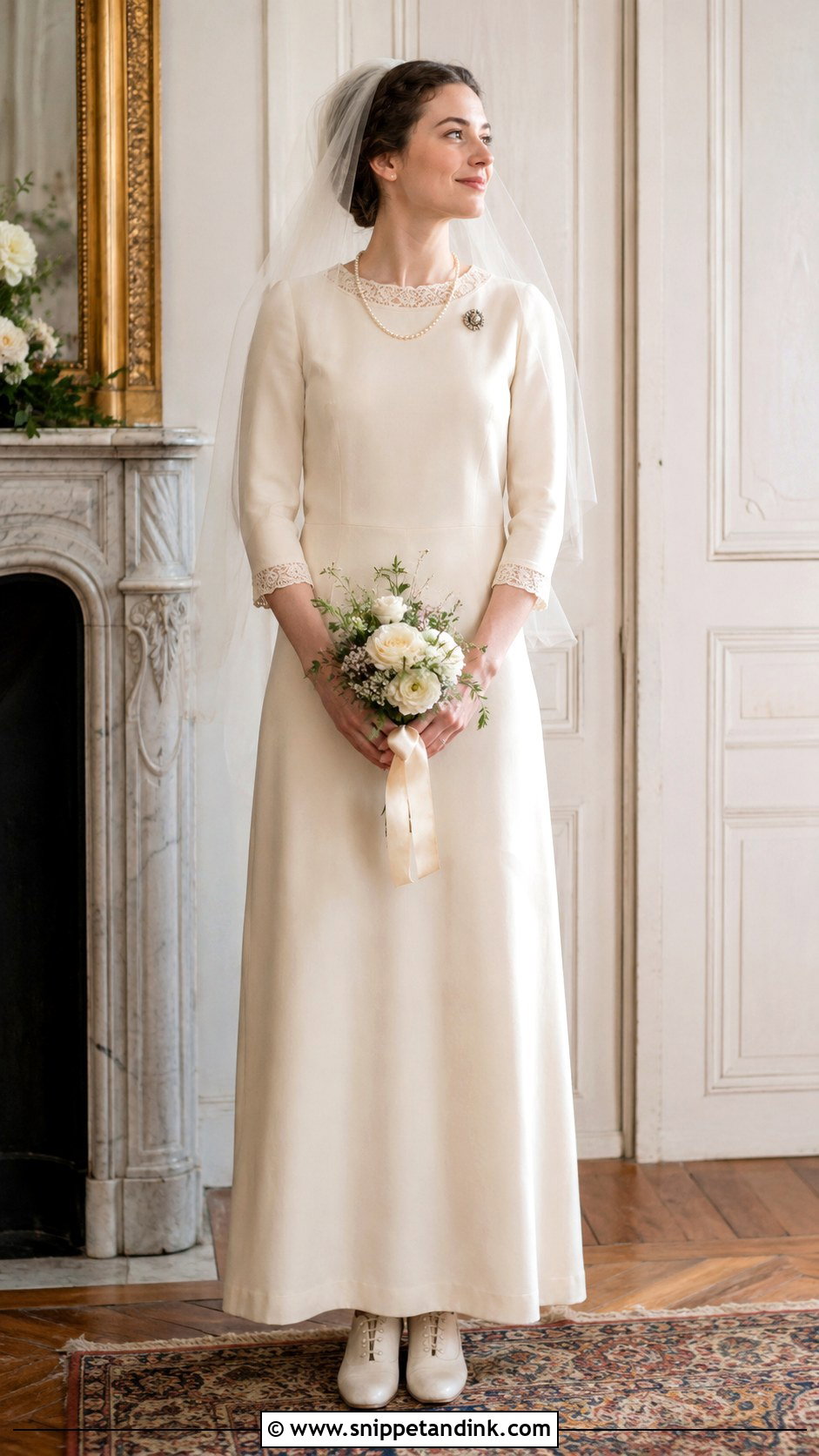
Later in the decade, many brides chose something plain that could be worn again. An ivory crepe gown with a modest round neck, three-quarter sleeves and ankle-length skirt captures that, with a narrow lace collar and matching cuffs as the only decoration. A short veil, small bouquet, low lace-up shoes and a family brooch or single strand of pearls complete it. Minimal designs leave nowhere to hide. Put the money into fabric weight and precise tailoring, because thin crepe clings and wrinkles while a heavier one hangs properly.
20. Late 1910s Ankle Length Wedding Dress
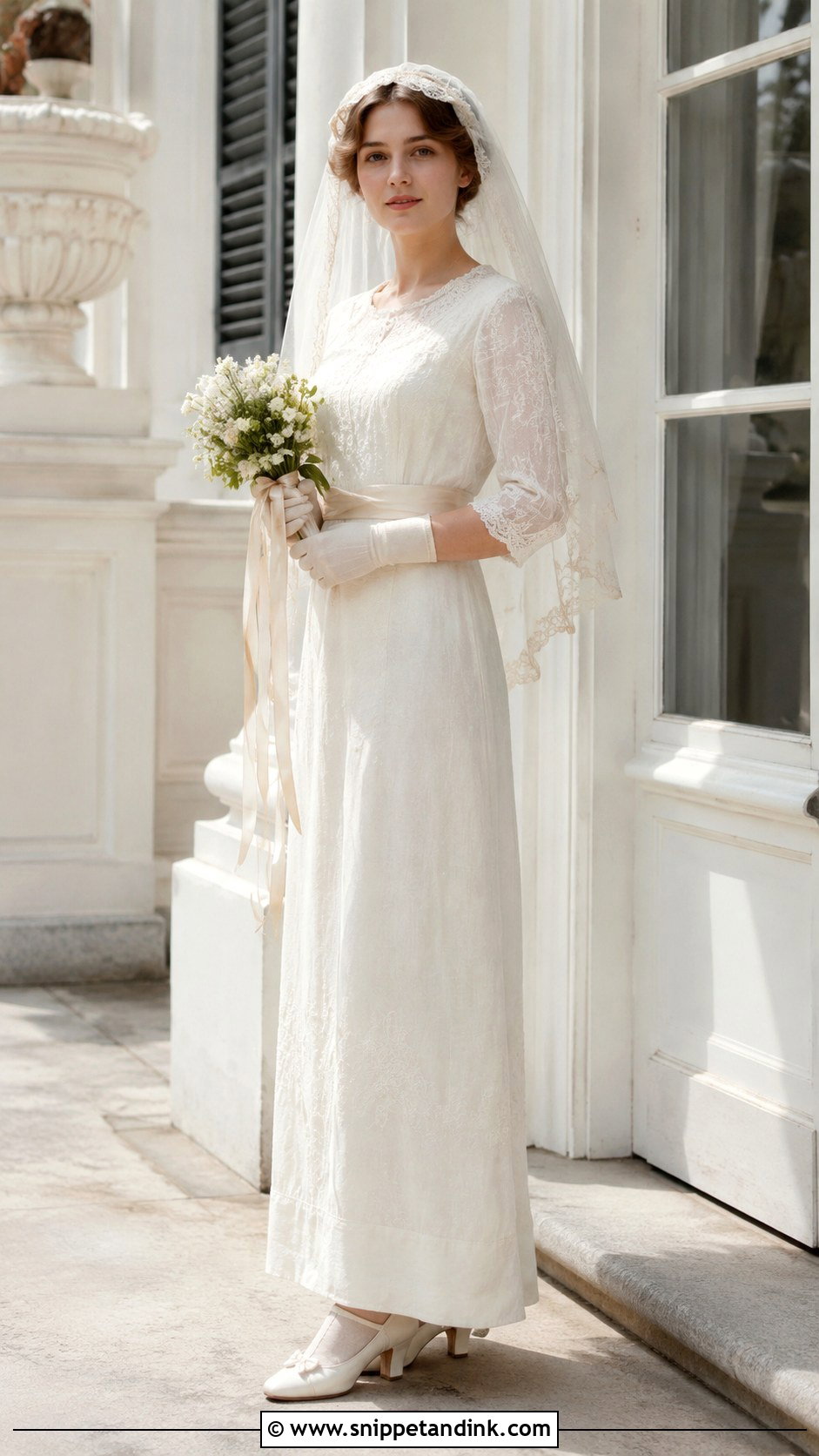
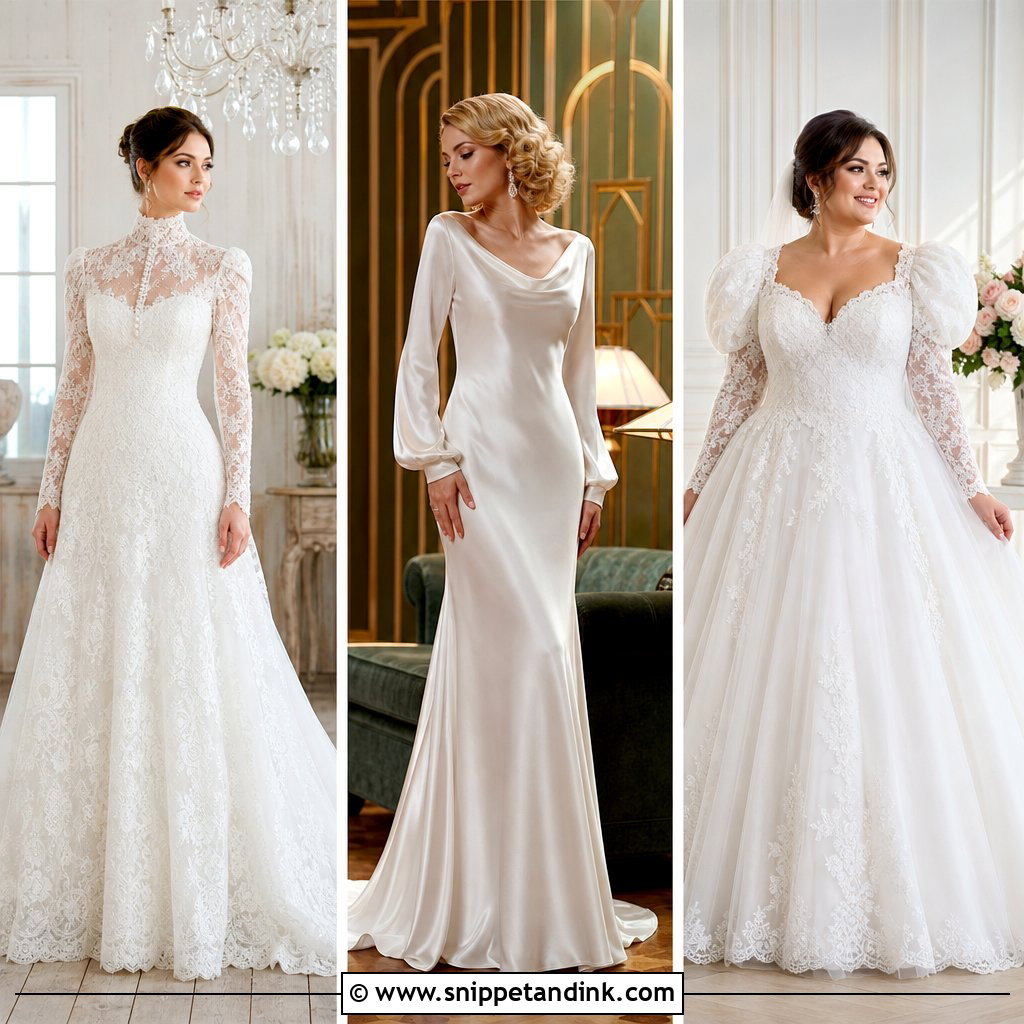
By the end of the 1910s, hems had risen to the ankle and the look grew lighter. Choose a straight ivory dress with a lightly defined waist, a simple lace bodice, three-quarter sleeves and a soft round neck, plus a narrow sash with a flat bow at the back. Button shoes, a fingertip veil, gloves and a compact bouquet tied with long ribbon finish it. This is the easiest period dress to dance in. The shoes are fully on show, so they need to match the dress tone exactly; I send brides shopping with a fabric swatch in their bag.
Hair, Underpinnings and Posture Make the Dress Look Period
A 1910s gown worn with a sleek modern bun and a push-up bra looks like a costume, however good the dress is. The silhouette of the decade starts underneath and finishes at the hairline.
Underneath the gown
Early in the decade, a long, straight corset smoothed the torso from bust to hip. You don’t need one, but a longline bra or a softly boned bodice gives the same unbroken column. Skip anything that lifts and rounds the bust high, since it fights the raised waist and pushes the seam out of place.
The hair
Period hair was full and soft around the face, gathered low at the nape or loosely at the crown, never scraped tight. Ask your stylist for a waved front and a relaxed low knot, and test it with the veil or Juliet cap at your trial, since a cap sits differently on volume than on flat hair.
Finally, practice moving in the whole outfit. High collars keep the chin level, long gloves change how you hold a glass, and a slim skirt shortens your stride. Twenty minutes walking around at home in the shoes and gloves is the best rehearsal I can recommend.
A Decade That Changed Shape Twice
Bridal fashion covered a lot of ground in those ten years: high collars and lace sleeves, satin trains, raised waists, layered tunics, fuller wartime skirts and, finally, ankle-length hems. The outfits that work best today borrow the silhouette and keep modern comfort, with breathable lining, shoes you can stand in for hours and a cut that suits your body rather than every restrictive original detail. Then let the veil, gloves, jewelry and bouquet tell the same story. Formal early Edwardian or plain late-decade tailoring, either can feel personal and polished.
You'll Like These Ideas:


Leave a Reply