
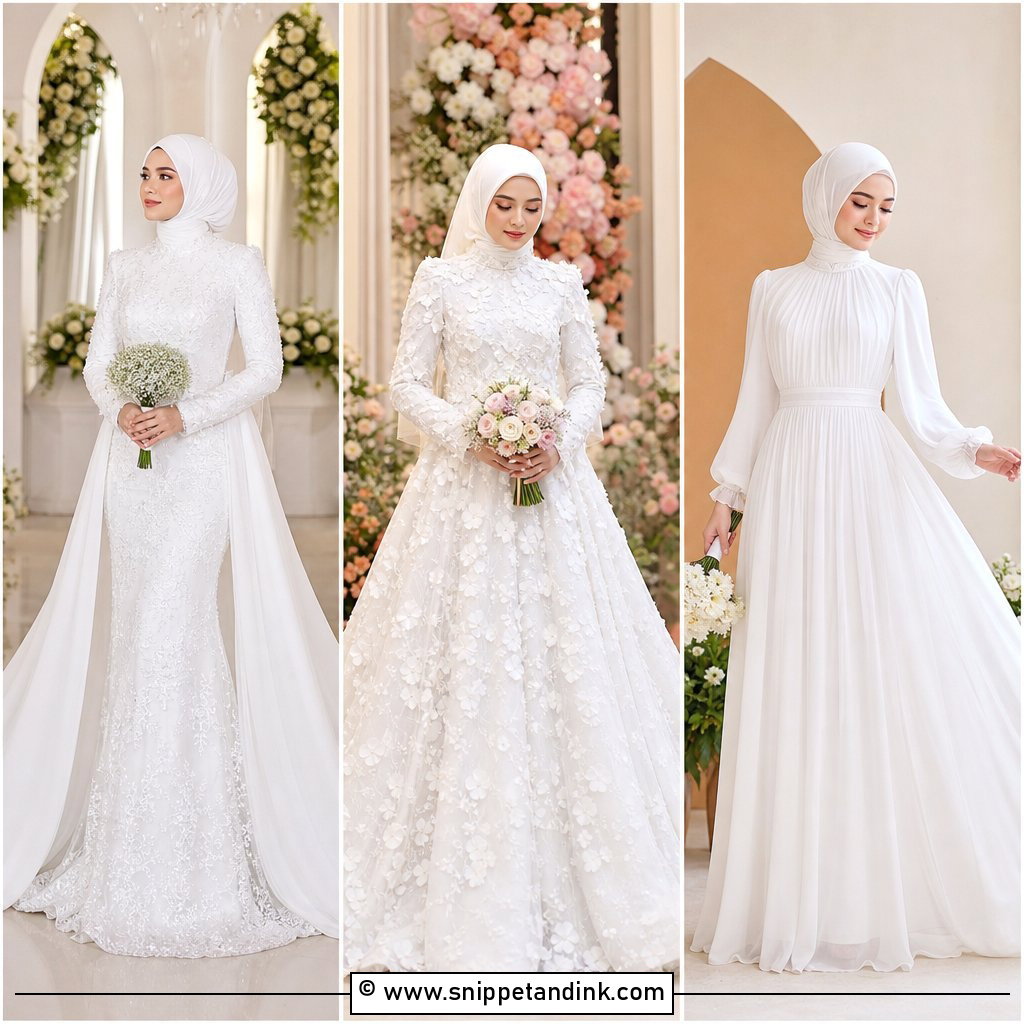
There’s no birthday after which a bride has to switch to a suit or a beige dress. When I dress women marrying in their forties, fifties and beyond, the conversation is the same one I have with anyone: what feels good on your body, what suits the venue, and how much structure you want holding you up for a long day. Fabric does a lot of that work. Crepe gives a clean line, lace softens, satin adds a polished sheen. Support, sleeves and a neckline that frames the face matter more than any rule about age. The twenty dresses below cover classic gowns, modern shapes, relaxed styles and a few soft colors, with the shoes and accessories I’d put with each.
Start With the Bra, Not the Dress
Most of the fitting problems I fix come from what’s underneath. A dress pinned around a bra that’s worn out, or tried on over whatever you happened to wear to the appointment, will be altered to the wrong shape. Get properly measured a few weeks before you shop and bring that bra, plus any shapewear you plan to wear, to every appointment.
- Ask whether the dress can have cups sewn into the bodice. For many brides that removes the need for a separate bra altogether.
- A longline bra spreads support across the ribcage and works well under fitted bodices and lower backs.
- Smoothing shorts or a light slip help a fluid fabric like crepe or satin glide instead of catching.
- Wear the actual shoes from the second fitting on. Heel height changes posture, and posture changes how a bodice sits.
Comfort counts for more than you’d think. If a garment pinches for twenty minutes in a fitting room, it will be the only thing you notice by the speeches.
1. Lace A-Line Wedding Dress
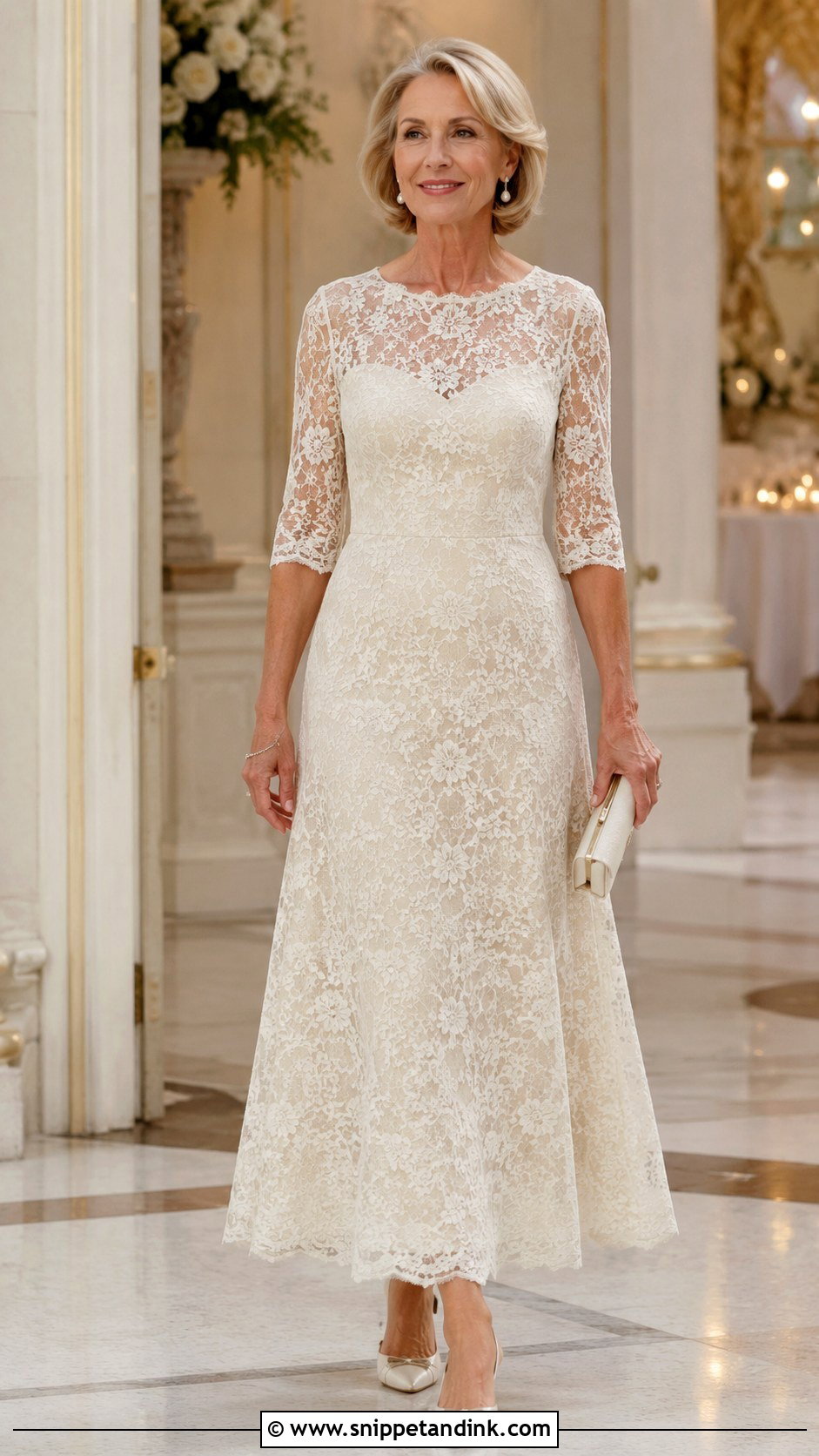
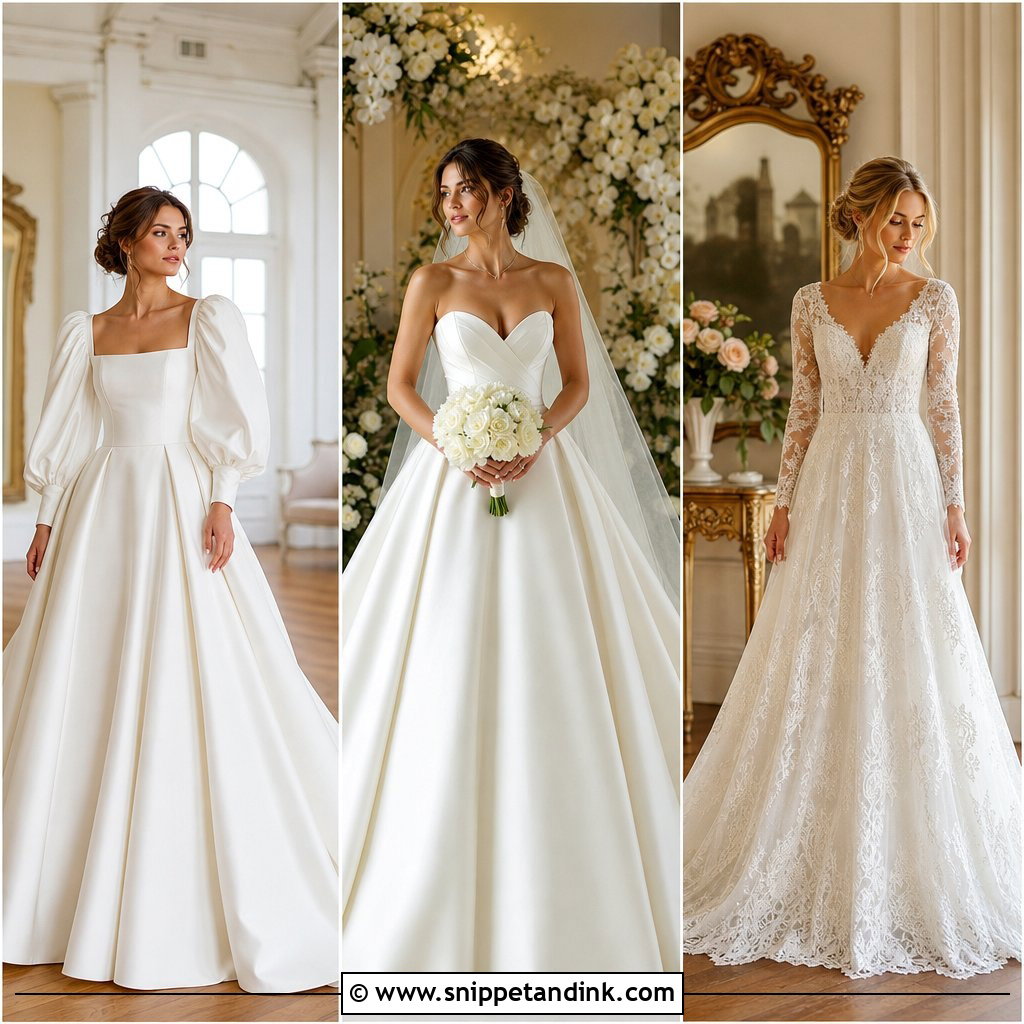
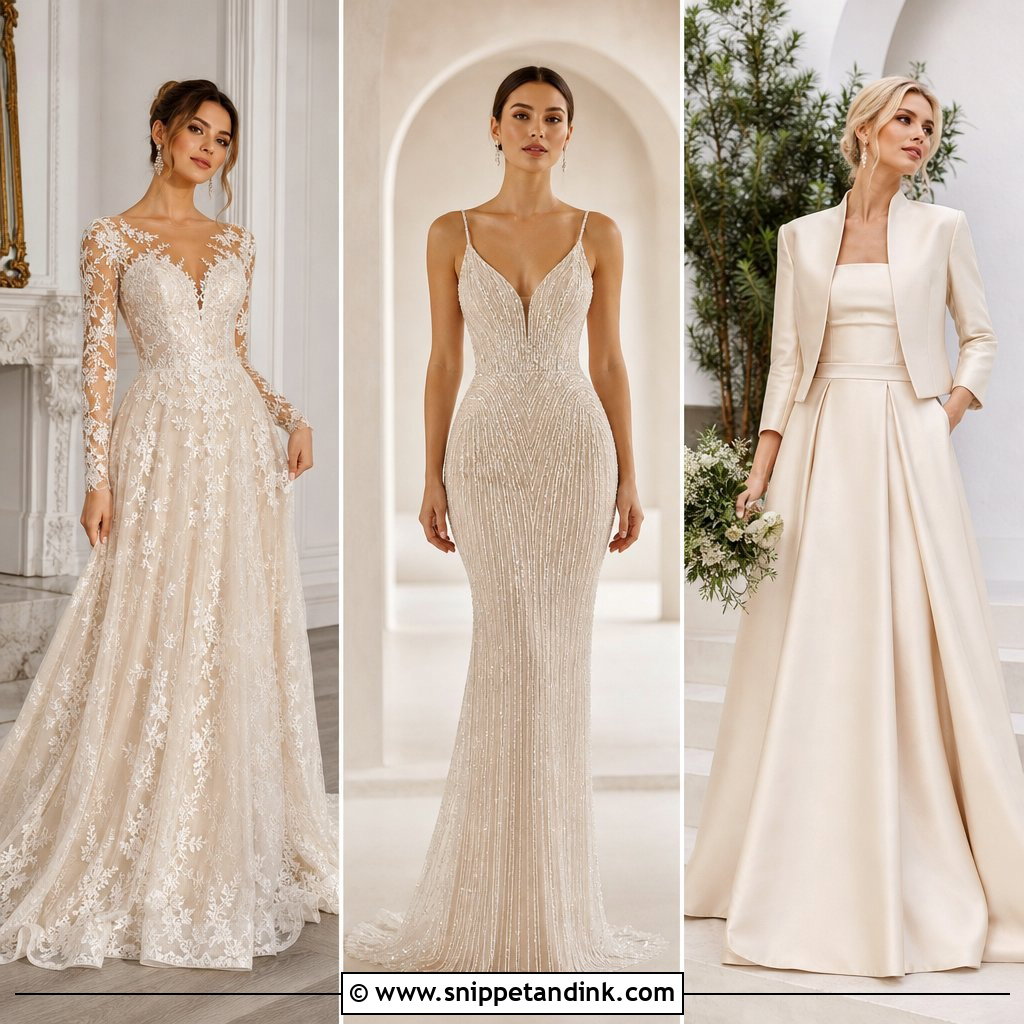
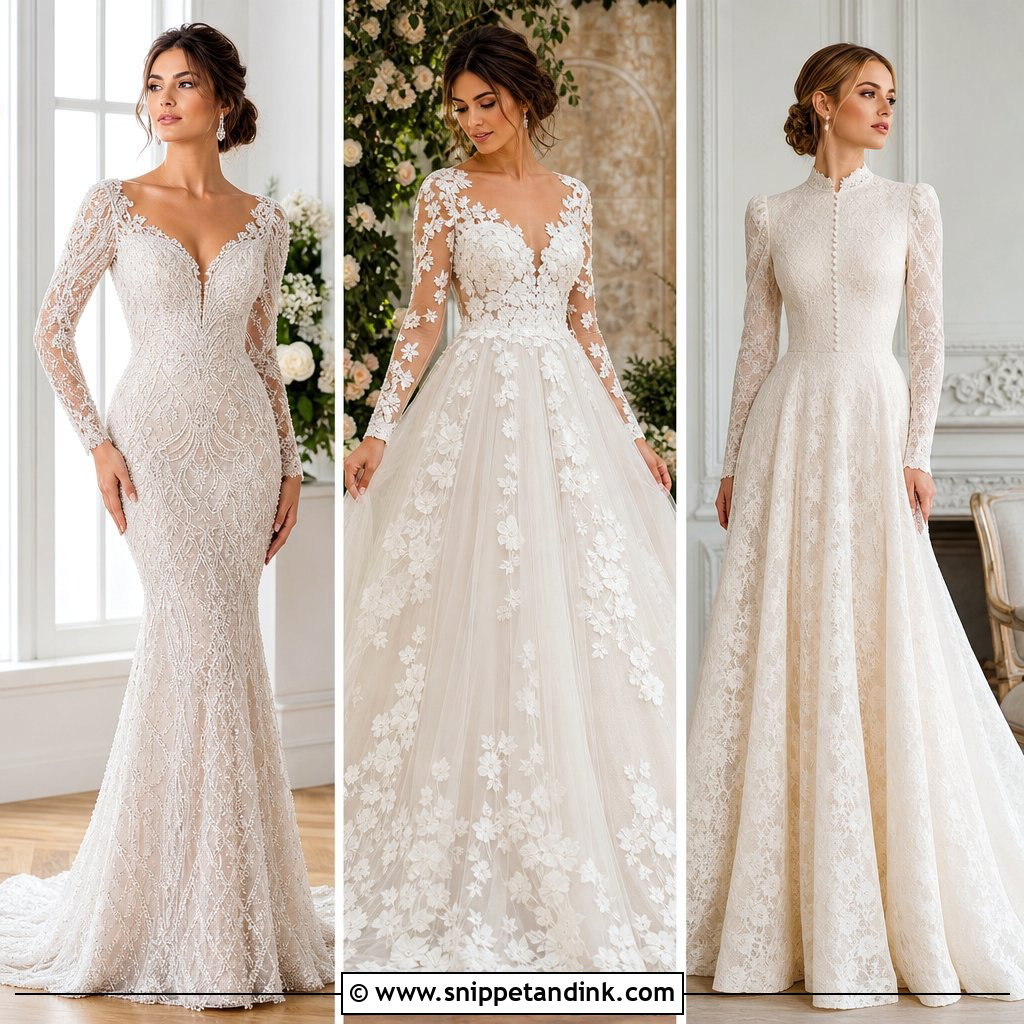
If I had to dress a bride I’d never met, this is the shape I’d bring. An A-line fits the upper body, then skims the waist and hips, so standing, walking and dancing all stay comfortable. Floral lace over a smooth lining gives depth; smaller motifs read quieter. A V-neckline lengthens the torso and sheer elbow sleeves add a little coverage without weight. Ask your seamstress for hidden bust support sewn into the bodice and a hem set to your actual shoes, not the sample heels. Pearl drops, an ivory clutch and pointed kitten heels suit it, with a fingertip veil for a traditional ceremony or a pearl comb if you’d rather skip one.
2. Long Sleeve Crepe Wedding Dress
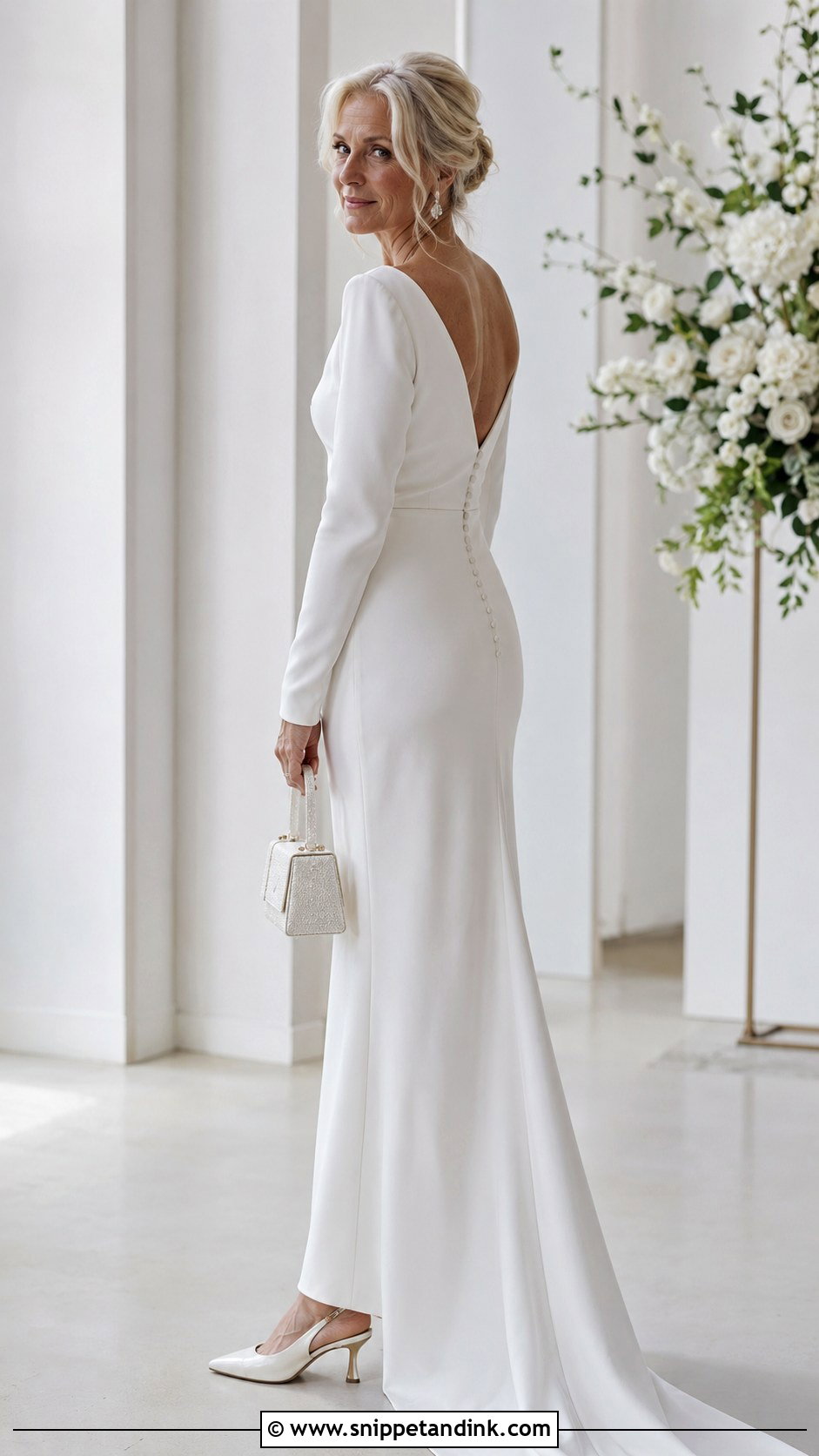
Crepe is unforgiving in one specific way: if the lining is too thin, it clings and shows every seam. A good long-sleeve crepe dress glides over the body because there’s a lightly structured lining underneath doing the shaping. Keep the neckline open, a bateau, V or soft square, so the sleeves don’t make the top half feel closed in. Sleeves that taper slightly toward the wrist look neater than loose fabric and stay out of your dinner. I’d style it with polished slingback heels, a structured mini bag and one strong accessory, crystal earrings or a silver cuff, never both. A low chignon shows off the neckline. Want more movement? Add a back slit, a small train or a row of covered buttons down the spine.
3. Tea-Length Wedding Dress
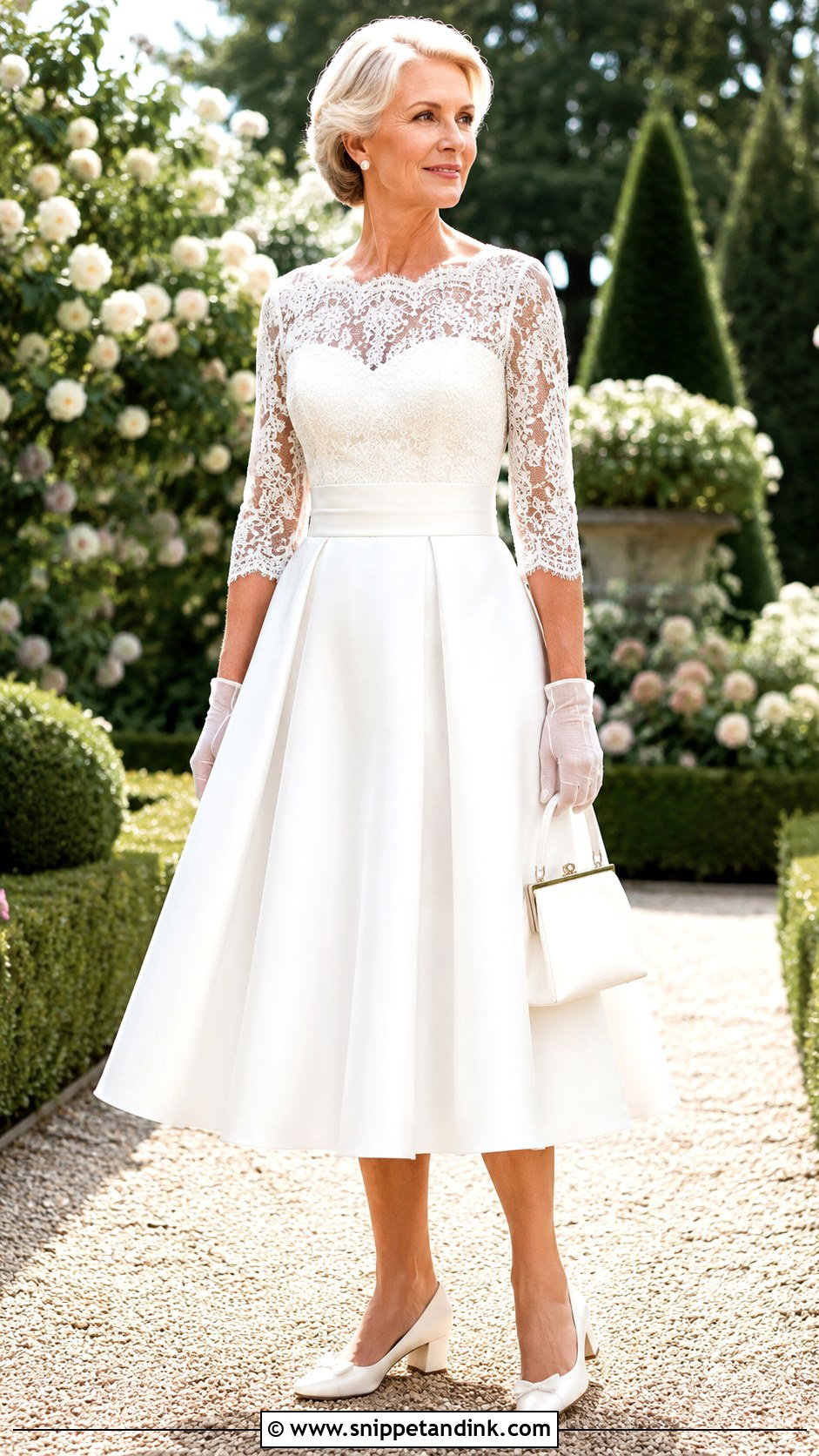
Tea length is the dress I suggest for a garden party, a restaurant reception or any daytime wedding where a floor-length gown would feel like too much. The hem falls between knee and ankle, which puts your shoes on show, so choose them first and wear them to every alteration. A fitted bodice and softly flared skirt give a classic proportion. Lace, mikado, organza and satin all hold the shape; soft chiffon tends to collapse at this length. Low block heels, short gloves, pearl studs and a small top-handle bag finish it. A birdcage veil leans vintage, while a floral hairpiece feels softer. Check the hem from the back and sides in a three-way mirror, because an uneven tea-length hem is obvious from every angle.
4. Satin Column Wedding Dress
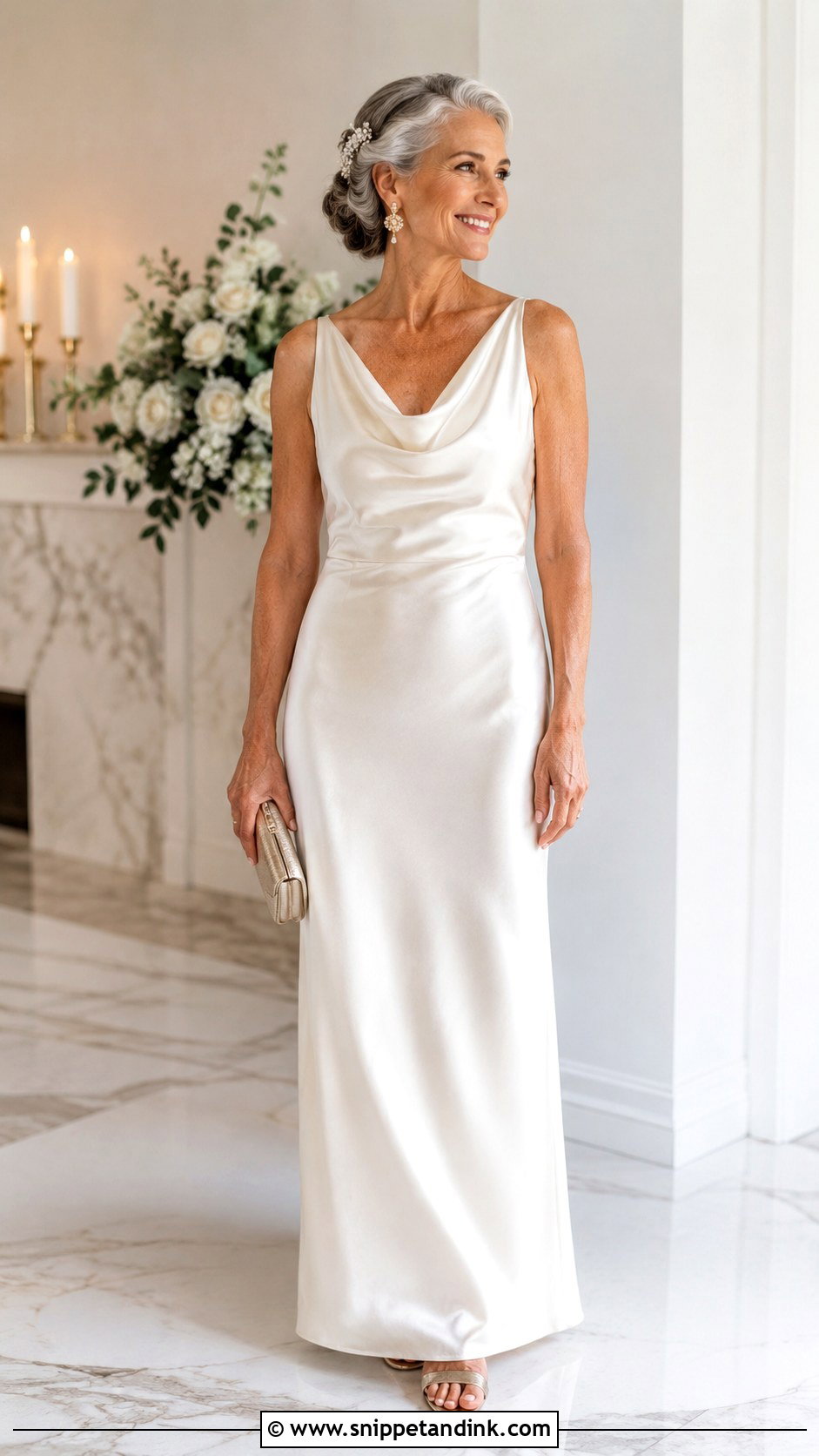
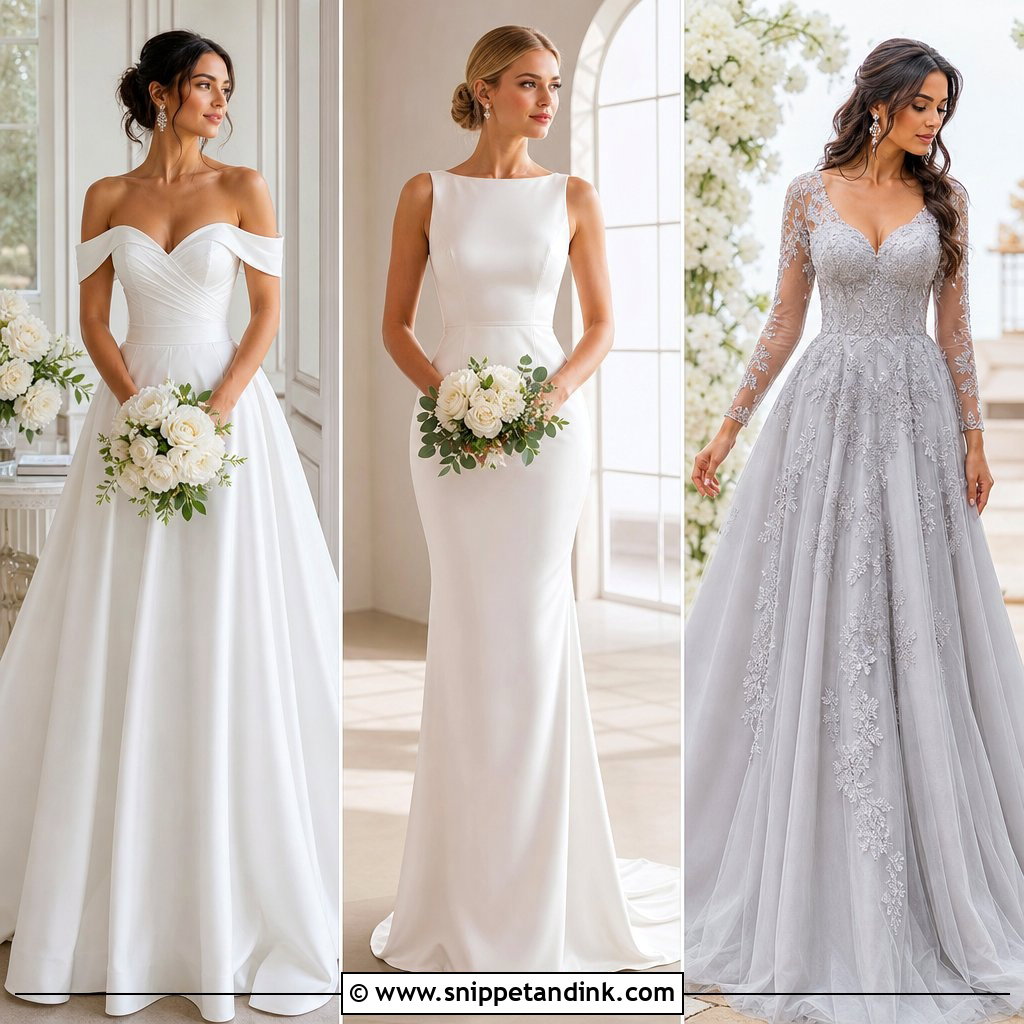
A satin column is for the bride who’d rather have one clean line than layers of lace. Bias-cut satin moves fluidly; a heavier, more structured satin holds its own shape and is kinder to anything you’d rather not have outlined. That’s the honest trade-off. Bias-cut satin shows undergarment lines, uneven seams and spare fabric far more readily, so it needs proper foundations and an expert alteration. A draped neckline softens the shoulders, while a V or portrait neckline frames the face. Metallic sandals, sculptural earrings and a sleek clutch keep it modern. Add a chapel veil for ceremony, or skip it and wear a jeweled comb with a polished bob or low twist.
5. Chiffon Empire Waist Wedding Dress
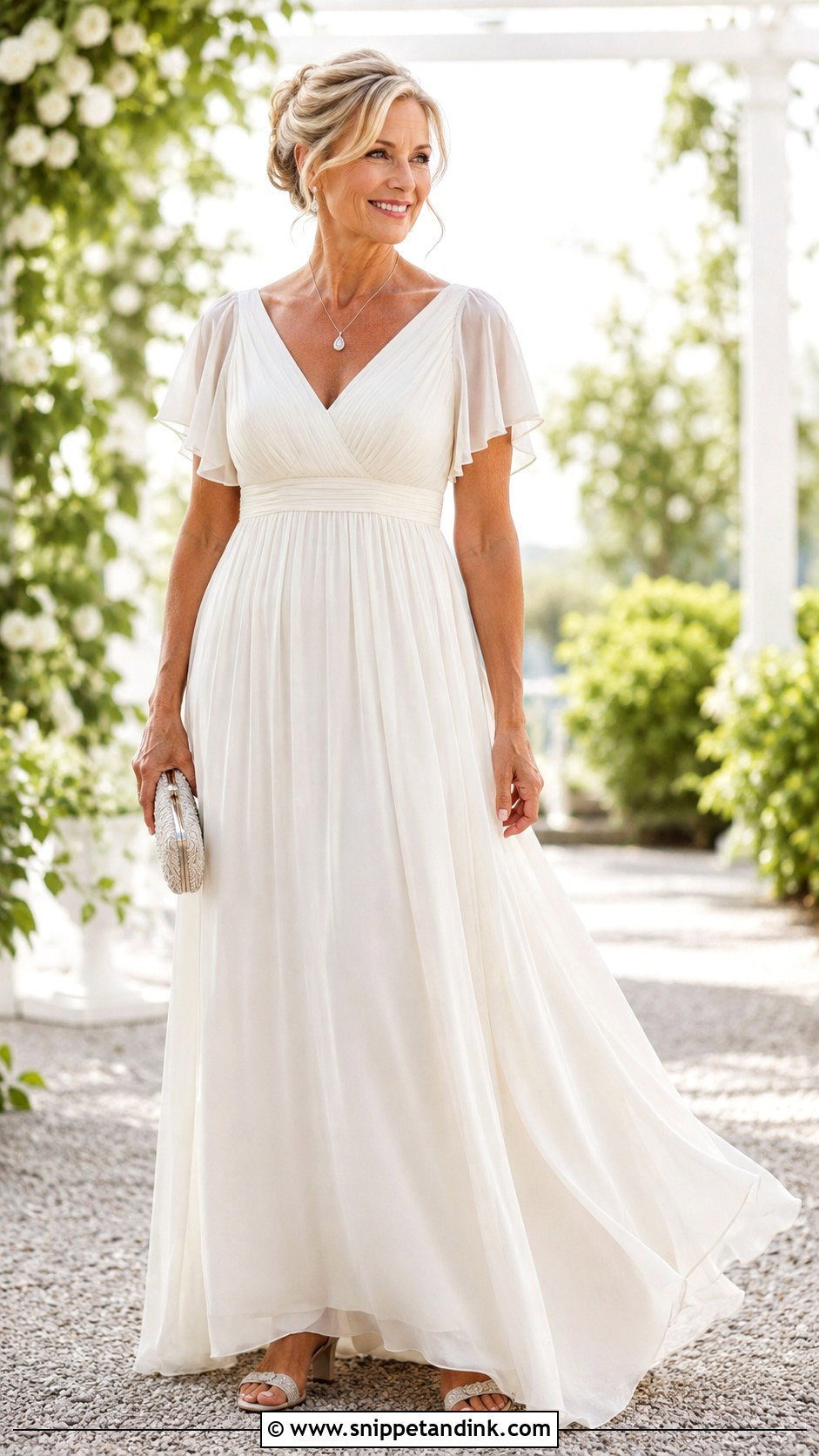
Chiffon makes an empire-waist wedding dress airy and easy to wear. The seam sits just under the bust and the skirt falls loosely over the midsection and hips, which is why so many brides marrying outdoors or somewhere warm feel at home in it. The risk is volume. Too many gathered layers under the bust can make the dress look like a nightgown, so look for controlled draping over a smooth lining, and a bodice with wider straps, flutter sleeves or a sheer overlay for support. Cushioned sandals, a fine pendant and a small beaded bag suit the mood, with a soft updo or shoulder-length waves. Outdoors, keep the hem just off the ground and skip a long train.
6. Off-the-Shoulder Wedding Dress
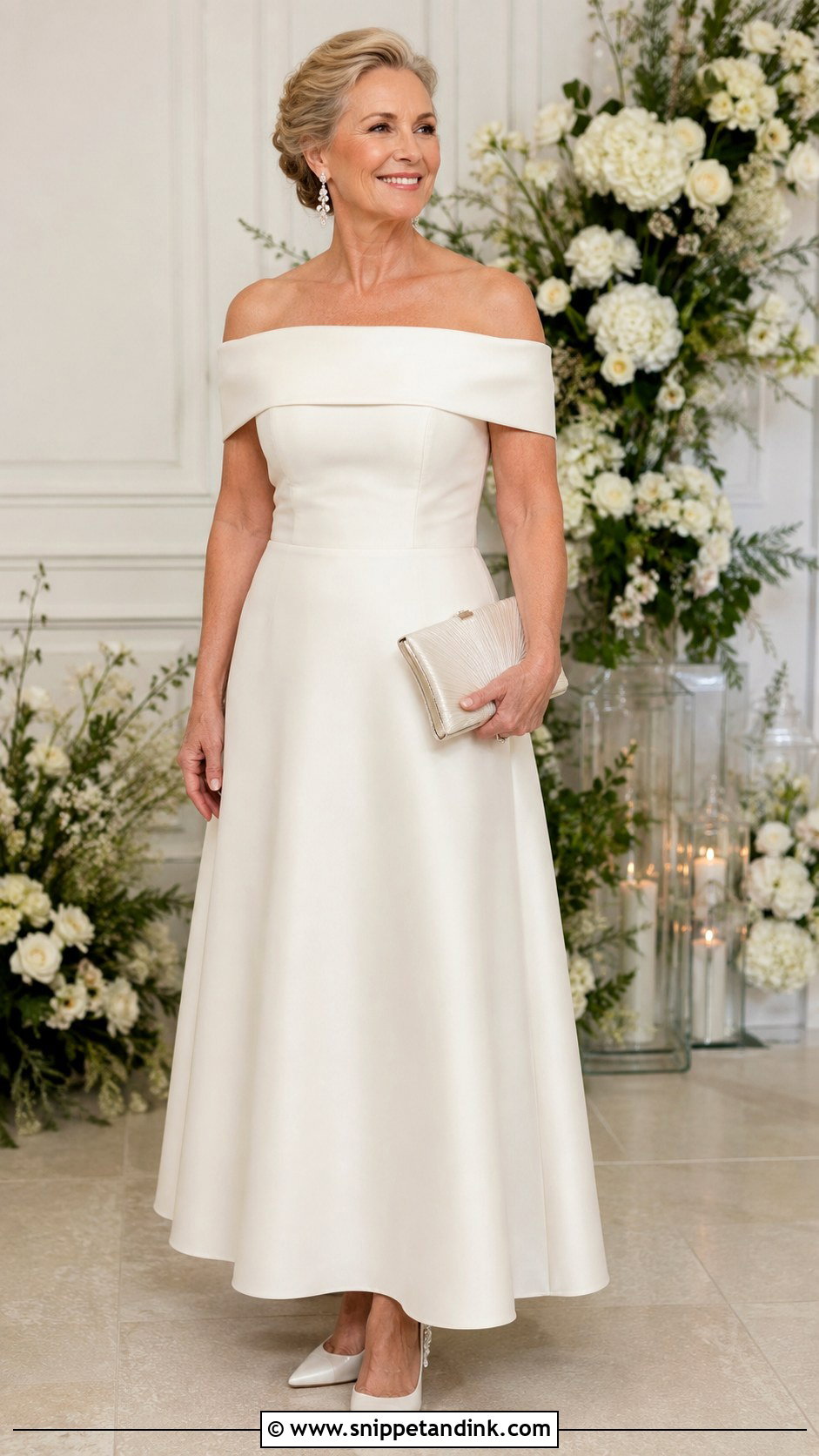
Off-the-shoulder necklines frame the face and collarbone well, but the cheaper versions rely on a tight elastic edge that digs in by mid-afternoon. I look for internal boning or discreet straps holding the neckline up instead. A folded satin band feels modern; lace sleeves feel softer. Balance the open top with an A-line, a fit-and-flare or a gently draped skirt. Only add a short necklace if there’s clear space between it and the neckline; otherwise drop earrings and a decorative comb do the job. Pointed pumps and a structured clutch finish it. At fittings, lift your arms, sit down and hug someone. The neckline should stay exactly where it is without stopping you moving.
7. High-Neck Lace Wedding Dress
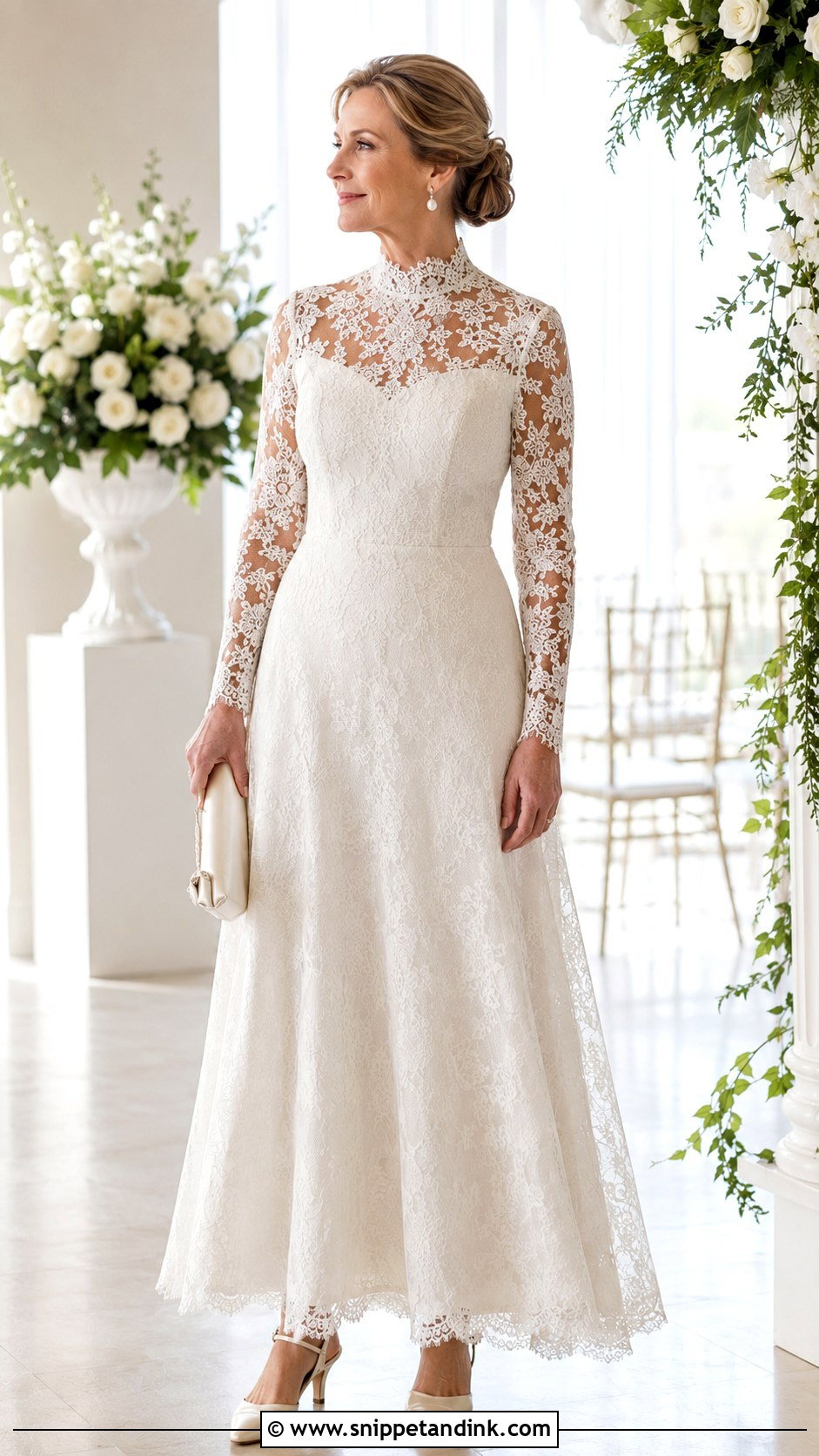
The best high-neck lace dresses are two layers working together: sheer lace around the neck and shoulders, and an opaque, supportive bodice underneath. Without that inner bodice the top half looks heavy and the lace starts to sag at the bust. Floral, eyelash or geometric lace all work, so let your own taste decide. A defined waist, a softly flowing skirt and fitted sleeves keep the outline neat. Pearl earrings, ivory slingbacks and a satin clutch are plenty, and no necklace. Sweep the hair into a low bun or a twist so the lace stays visible, and choose a veil with a plain edge so it doesn’t fight the lace pattern.
8. Wrap Wedding Dress
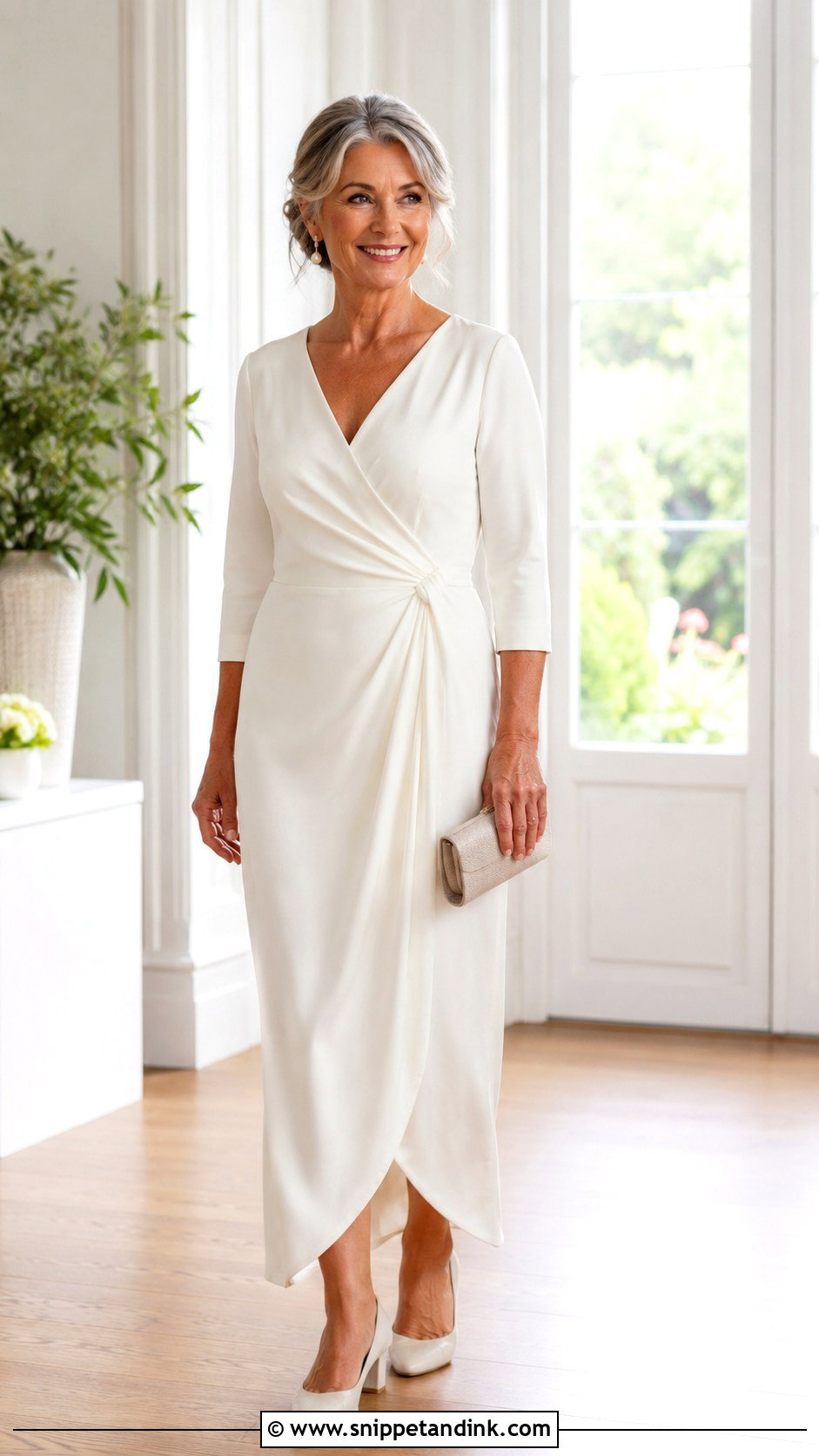
Wrap dresses adjust with you, which is why I like them for a long day that includes a big meal. The diagonal neckline draws a long line across the torso and the tie or structured waist gives definition. For a bridal version, stay with silk crepe, matte satin or lined chiffon; jersey reads too casual. The overlap at the front needs to be generous. Sit down in the fitting room and check nothing opens. Three-quarter sleeves leave room for a bracelet or a watch that means something to you. Add pearl or crystal earrings, block-heel pumps and a compact clutch. If the closure is a true tie, I always have a tailor add a hidden hook or snap so you never have to think about it.
9. Beaded Cape Wedding Dress
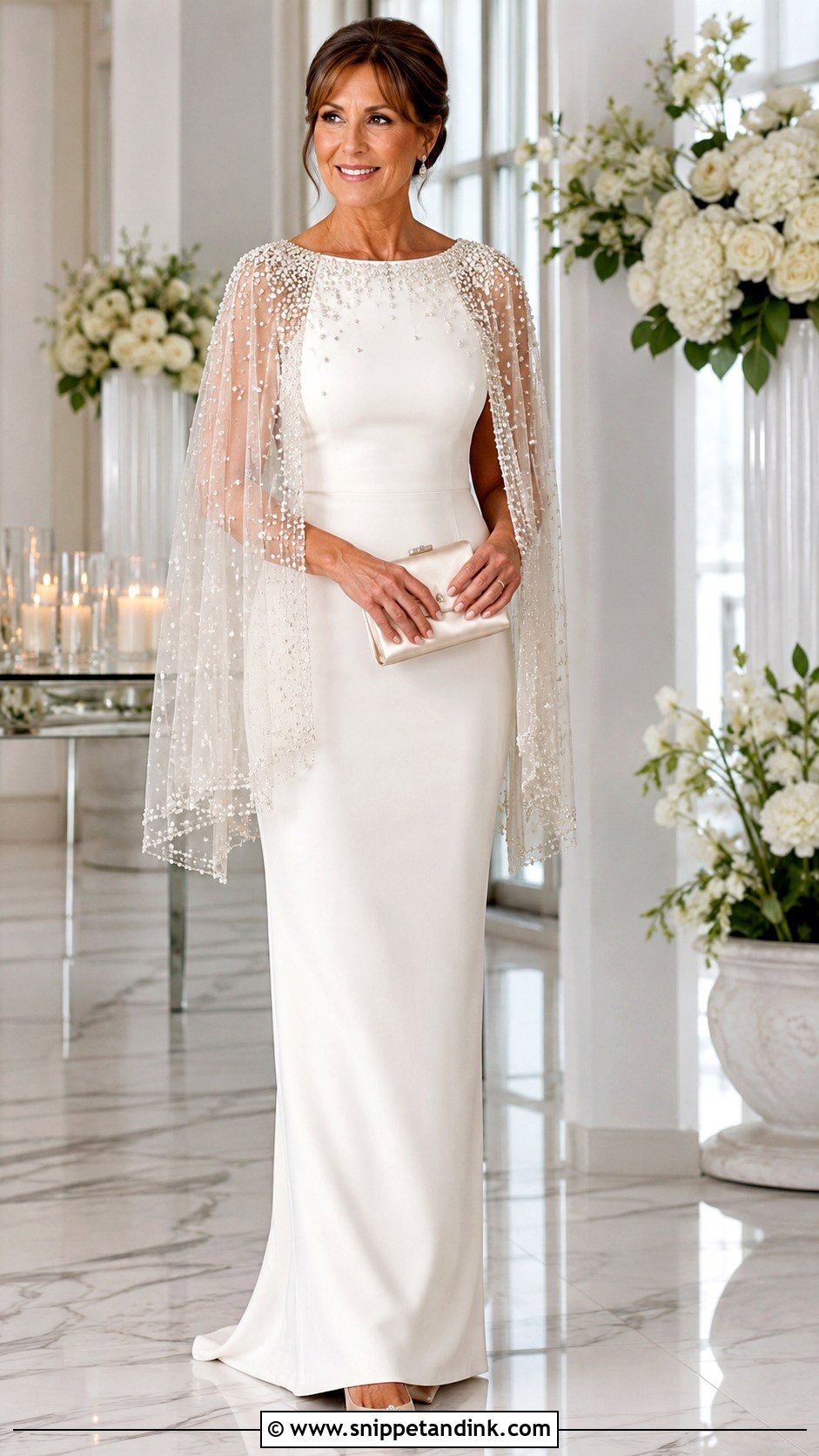
A beaded cape adds drama without committing you to an embellished gown. Start with a simple crepe, satin or chiffon dress, column or A-line, then layer a light cape scattered with crystals, pearls or tonal beads. It covers the shoulders and upper arms while the dress underneath still shows. Beads catch hair, so wear yours neatly up or smoothed back. Keep the rest restrained, small earrings, neutral heels and a smooth clutch. A fingertip or waist-length cape is easier to move in, and a longer one makes more of an entrance. Check where it attaches: hooks pulling on a delicate fabric will leave marks or tears by the end of the night.
10. Wedding Dress With Jacket
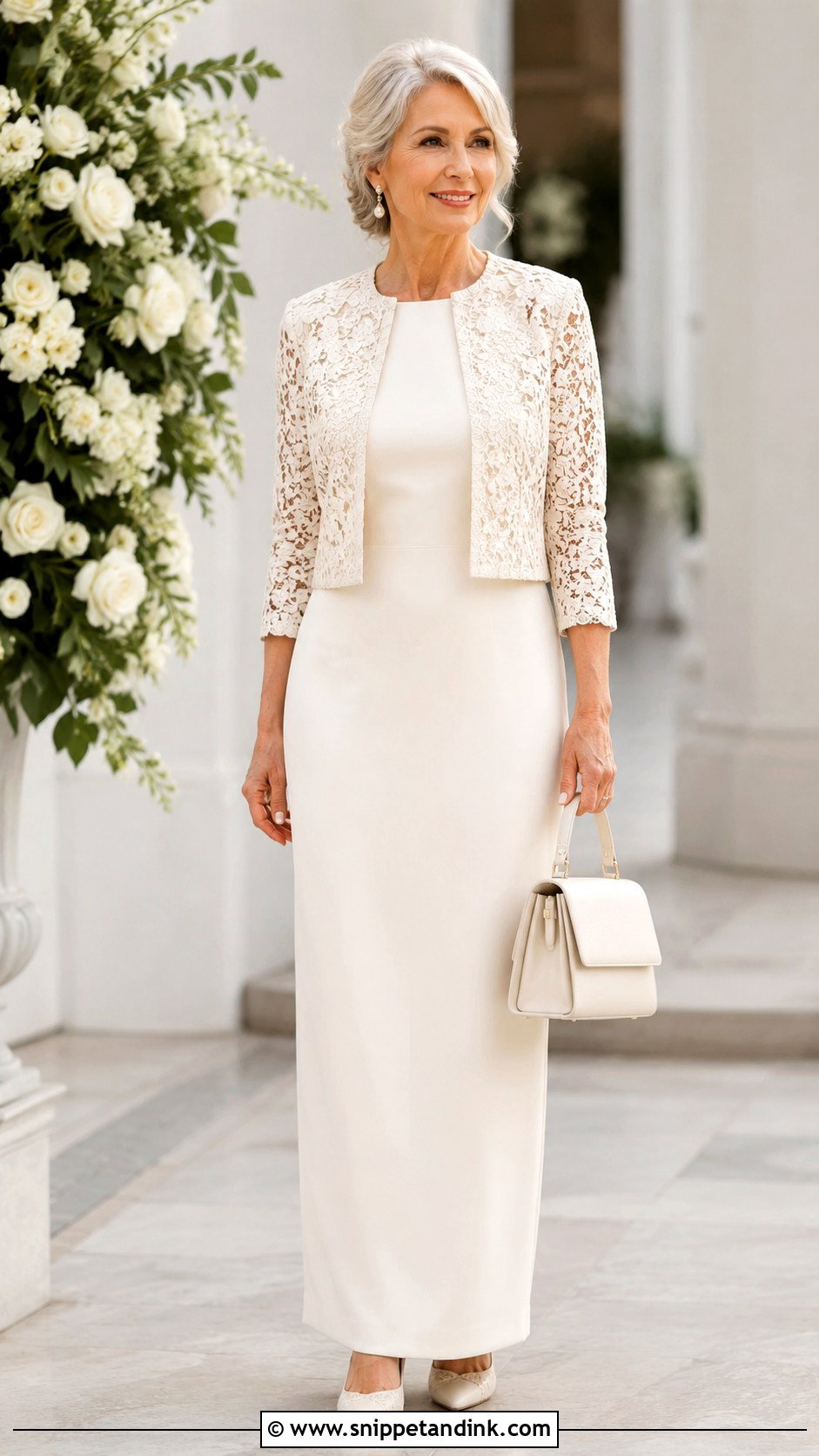
Temperatures change across a wedding day, and a jacket is the most graceful answer I know. Pair a simple sleeveless column or A-line with a cropped lace, crepe or satin jacket that stops near the natural waist; any longer and it cuts the body in an awkward place. Bracelet-length sleeves look polished and leave room for a favorite bracelet. Wear it for the ceremony, take it off for the reception. Pointed heels, pearl earrings and a structured bag finish it. The thing I check most is undertone, because bright white next to creamy ivory looks like a mistake. If you can, have both pieces made or altered by the same bridal specialist so they match exactly.
11. Floral Embroidered Wedding Dress
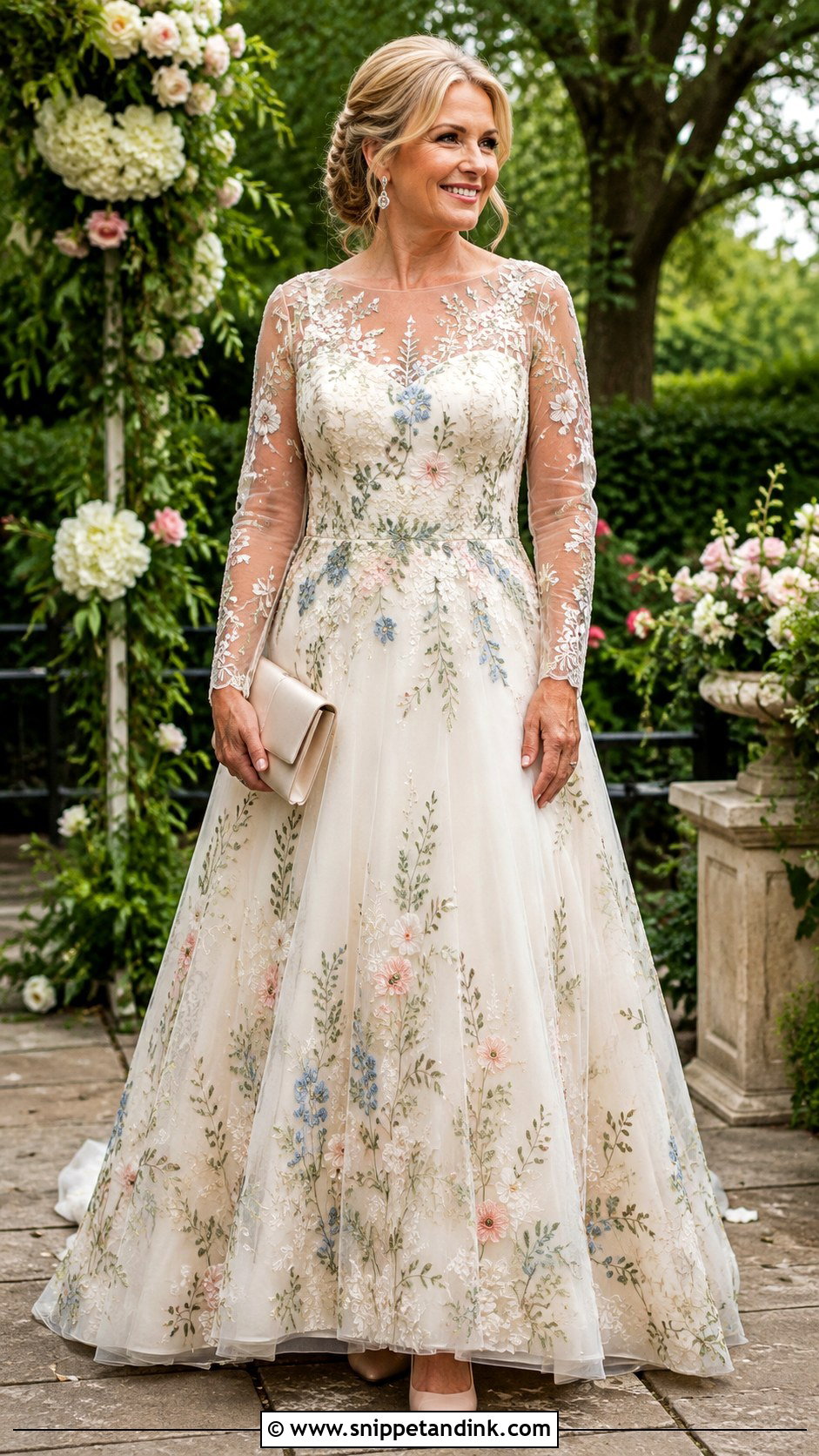
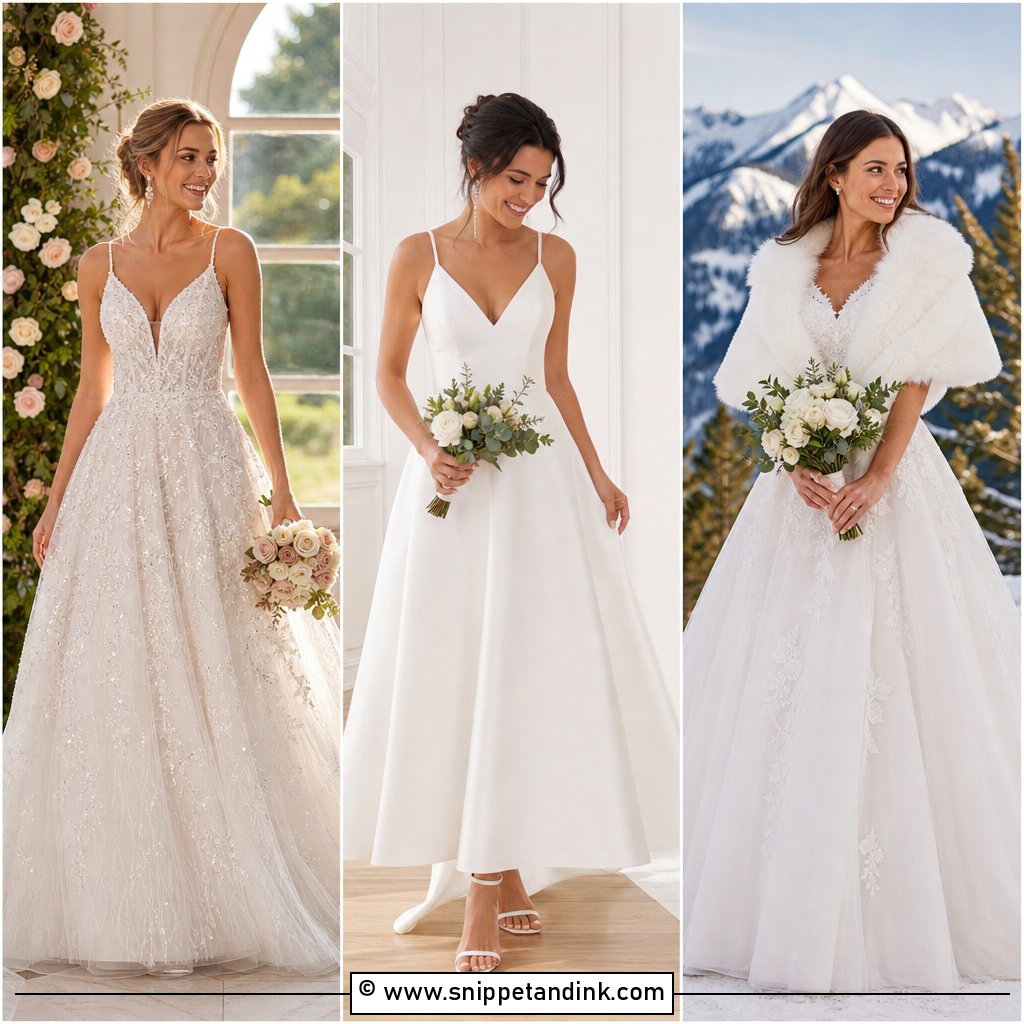
Embroidery lets you bring color into a bridal dress without giving up the bridal feel. On ivory tulle, flowers stitched in white, blush, pale blue or soft green read gently from a distance and in detail up close. An A-line gives the pattern space; on a fitted shape it bunches at the seams and looks crowded. Sheer embroidered sleeves or an embroidered neckline add coverage while staying light. Keep the accessories plain, neutral pumps and small gemstone earrings, and pick a satin clutch in one of the quieter thread colors. A plain veil is better than an embellished one here. It all suits a garden or outdoor ceremony with real greenery around you.
12. Blush Wedding Dress
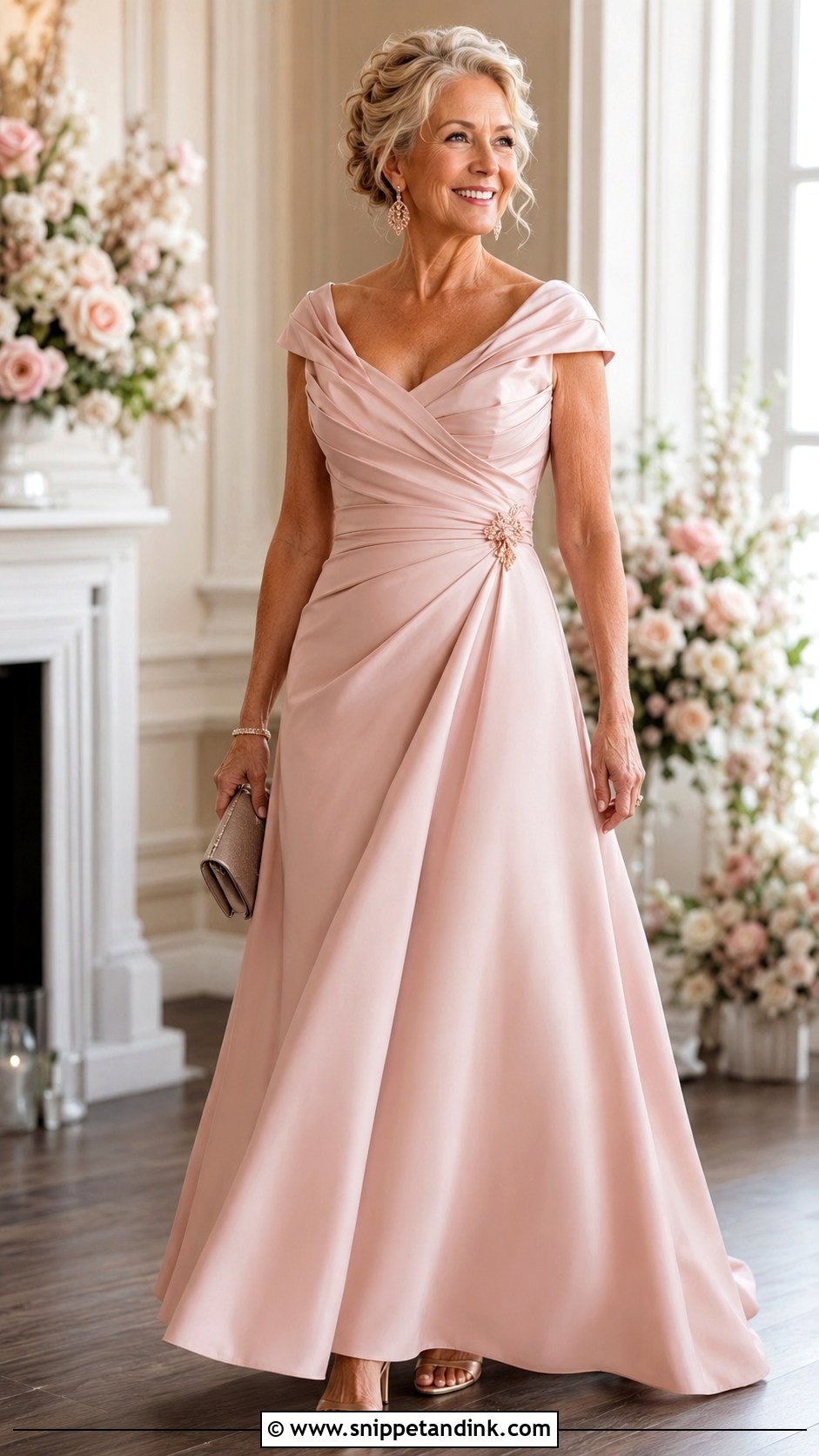
Blush can warm the complexion in a way white sometimes doesn’t, but the range is wide, from pale pink-beige to muted rose. I lay three or four tones against a bride’s skin in daylight before she commits; one will look healthy and another will look washed out. Satin makes blush formal, while chiffon and tulle keep it soft. Wrap, A-line or column all work, depending on how much structure you want. Champagne heels, rose-gold earrings and a neutral clutch suit the warmth. Ivory accessories give a gentle contrast, but bright white looks harsh against blush, including the veil, so keep any veil ivory with a minimal edge. Makeup in soft rose and neutral tones ties it together without looking matched.
13. Ivory Midi Wedding Dress
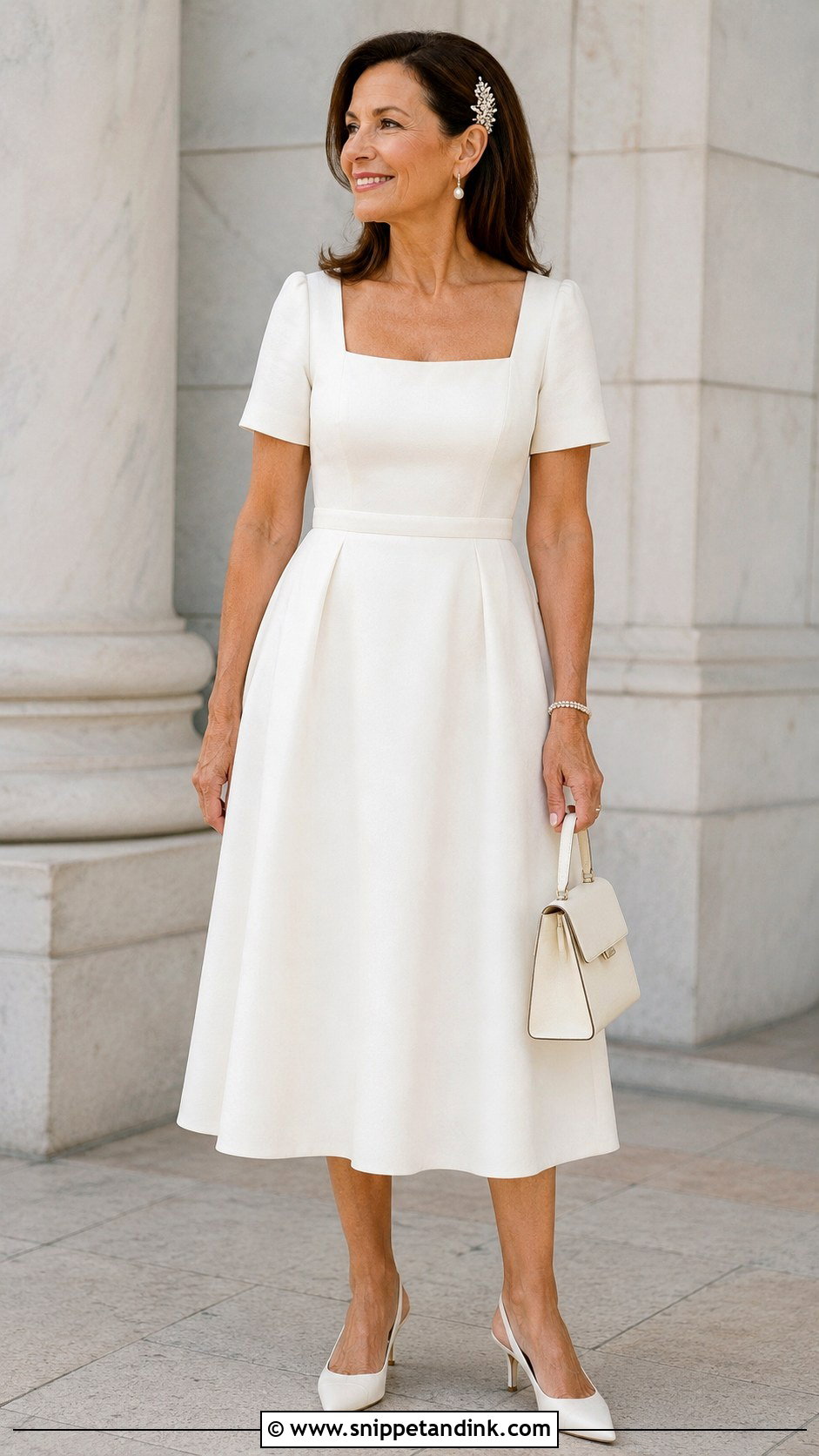
An ivory midi wedding dress works hard at a courthouse ceremony, a brunch or a small reception. The hem should land below the knee or at mid-calf; any shorter and it starts to look like a cocktail dress rather than a wedding one. Structured crepe, satin or jacquard with a defined waist and clean neckline holds its shape through a day of sitting. A square neck with short sleeves feels current; a V-neck with three-quarter sleeves is more classic. Slingback pumps, pearl earrings and a compact top-handle bag go with it. A short veil, a headband or a floral comb tells everyone you’re the bride. Your shoes are on view all day, so break them in at home first.
14. Boho Wedding Dress With Sleeves
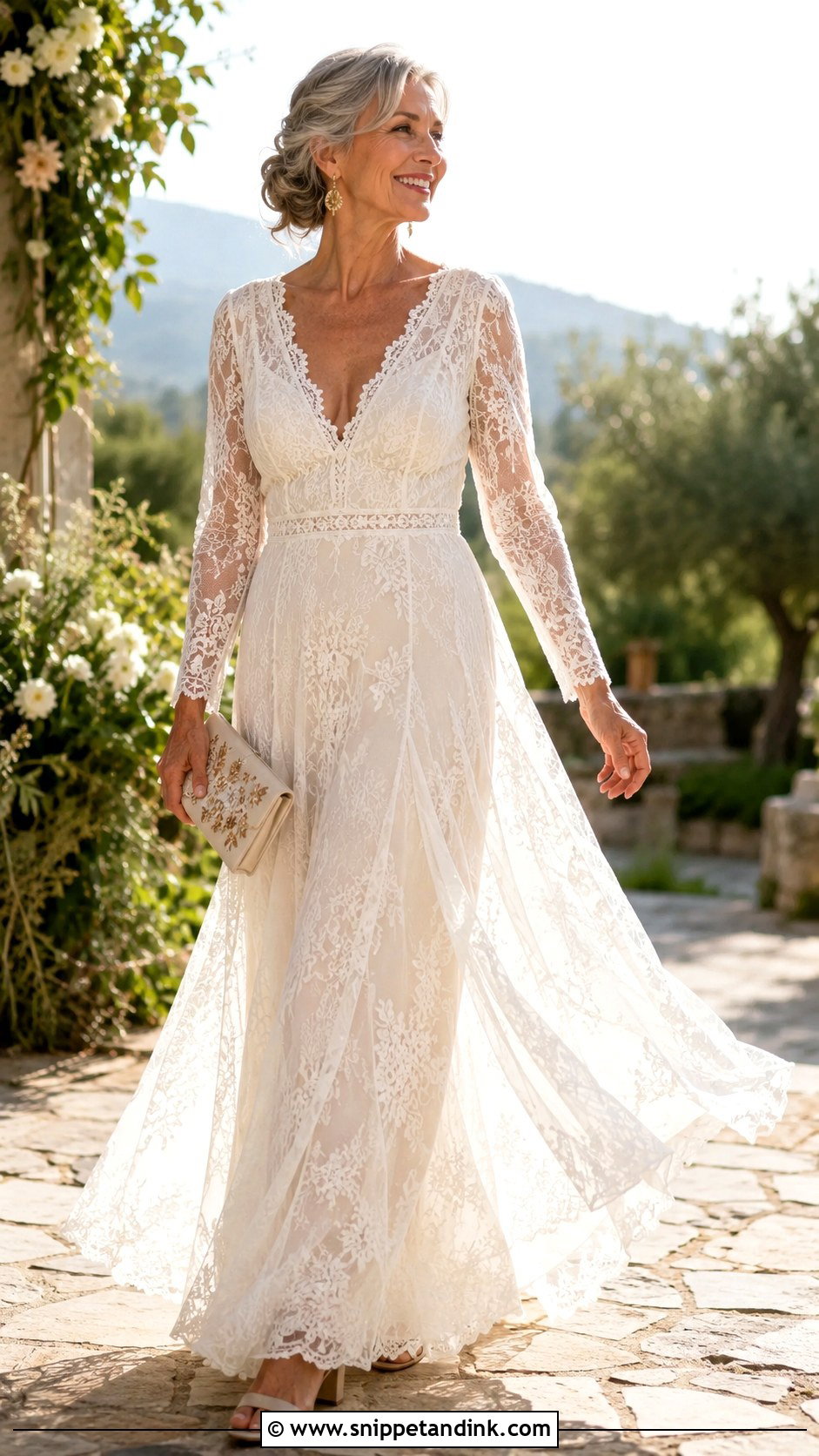
Sleeves on a boho dress need a practical check. Bell sleeves swing well in photos but trail through sauces at dinner, so if you love them, try eating a meal in a similar sleeve before you buy. Slim sheer sleeves are far easier to live in. Soft lace, embroidered tulle and lightweight chiffon suit this style better than stiff, heavily structured fabric, and a V-neck bodice with a defined waist keeps the loose textures from swallowing the figure. Low suede or leather block heels, fine gold earrings and a small woven clutch fit the mood, with fresh flowers or a comb in place of a veil. In bright daylight, open lace can go see-through, so check the lining outside, and keep the train short enough that it doesn’t sweep up the lawn.
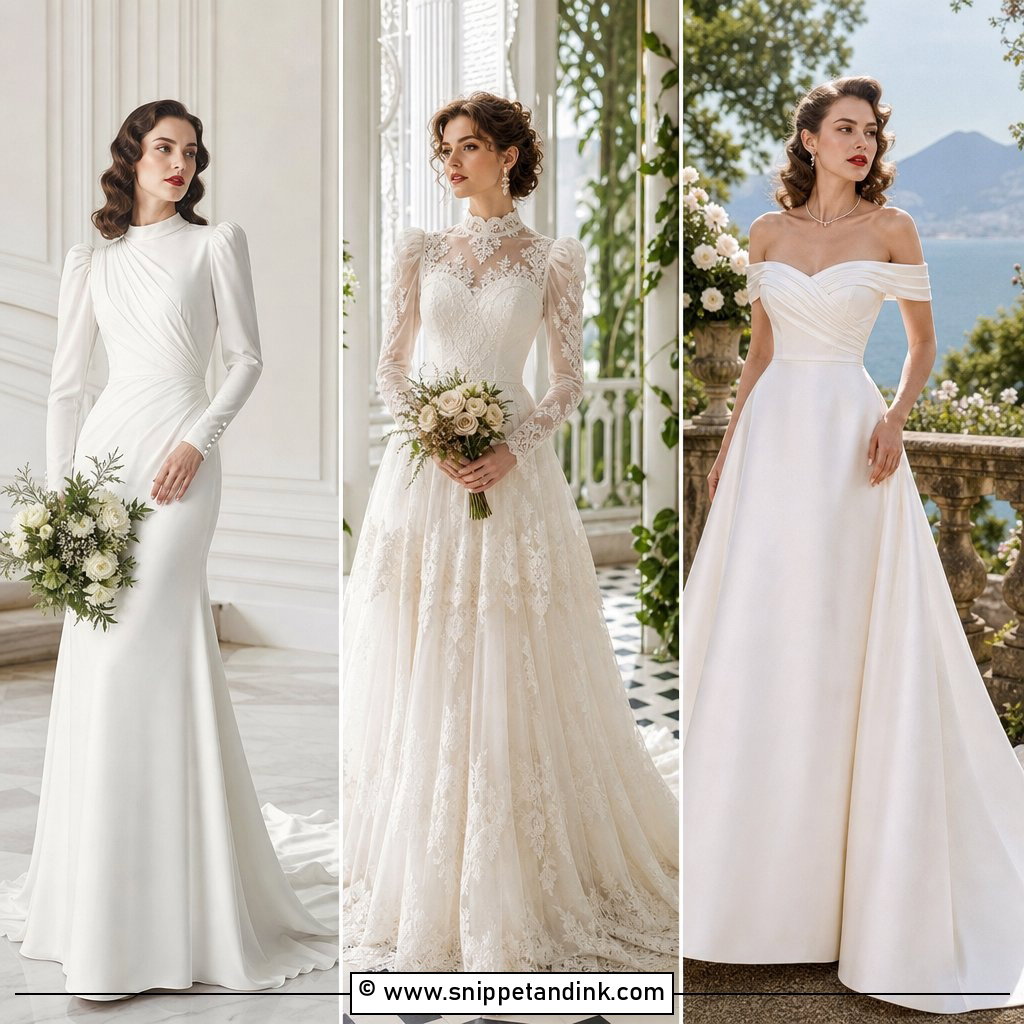
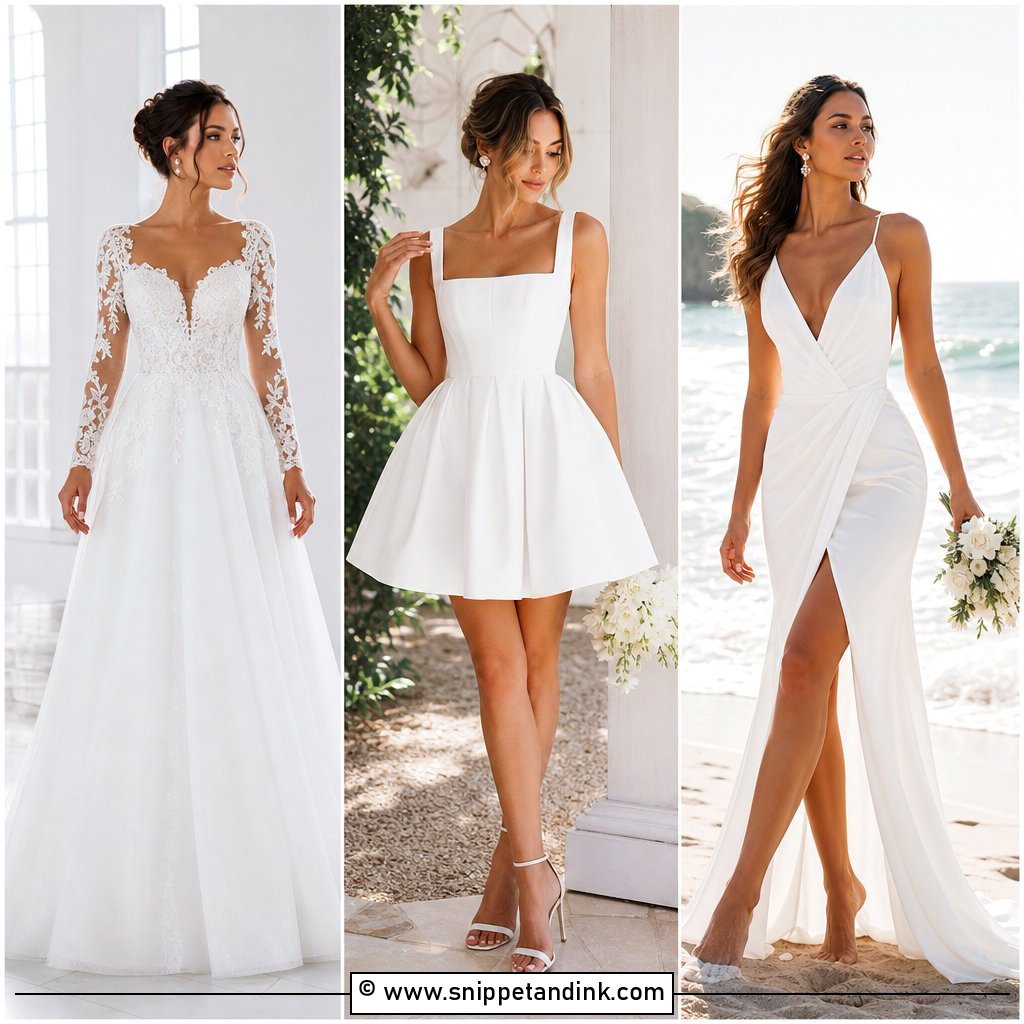
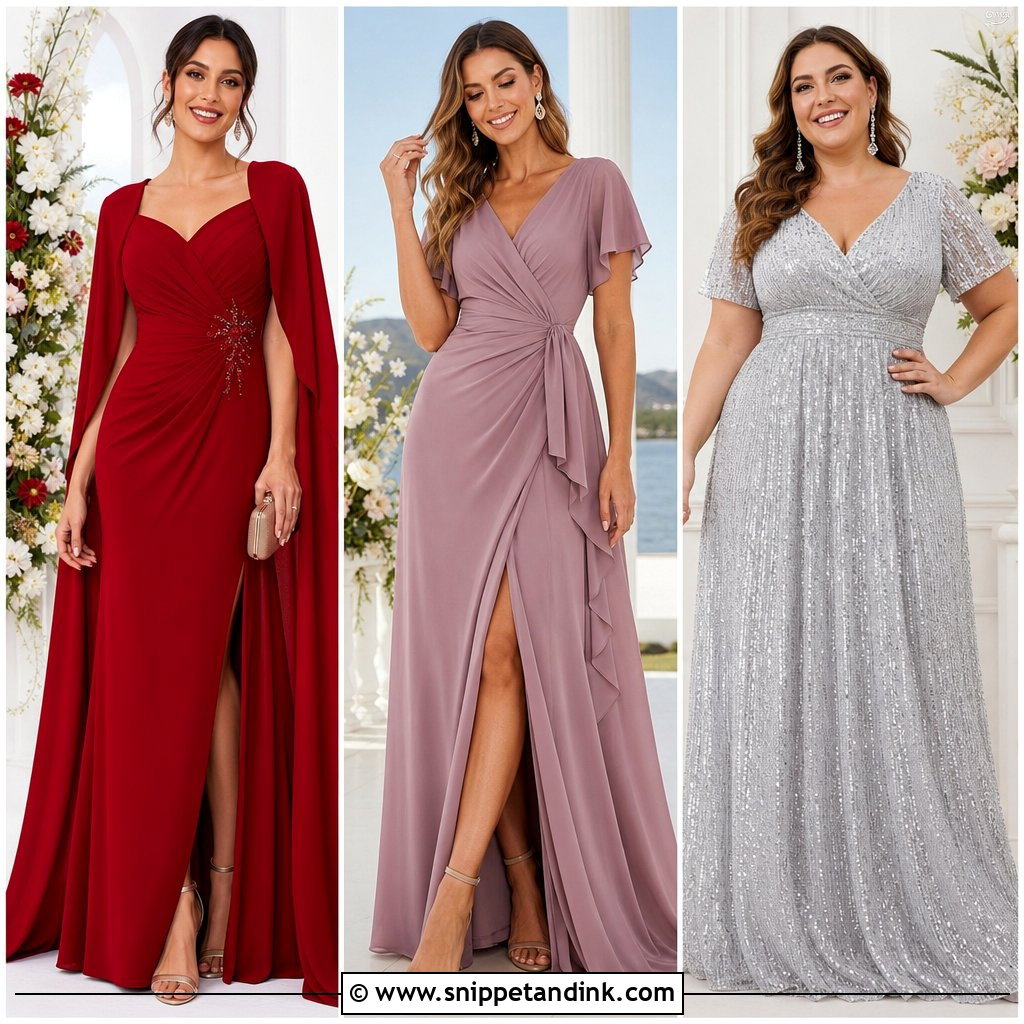
15. Plus Size A-Line Wedding Dress
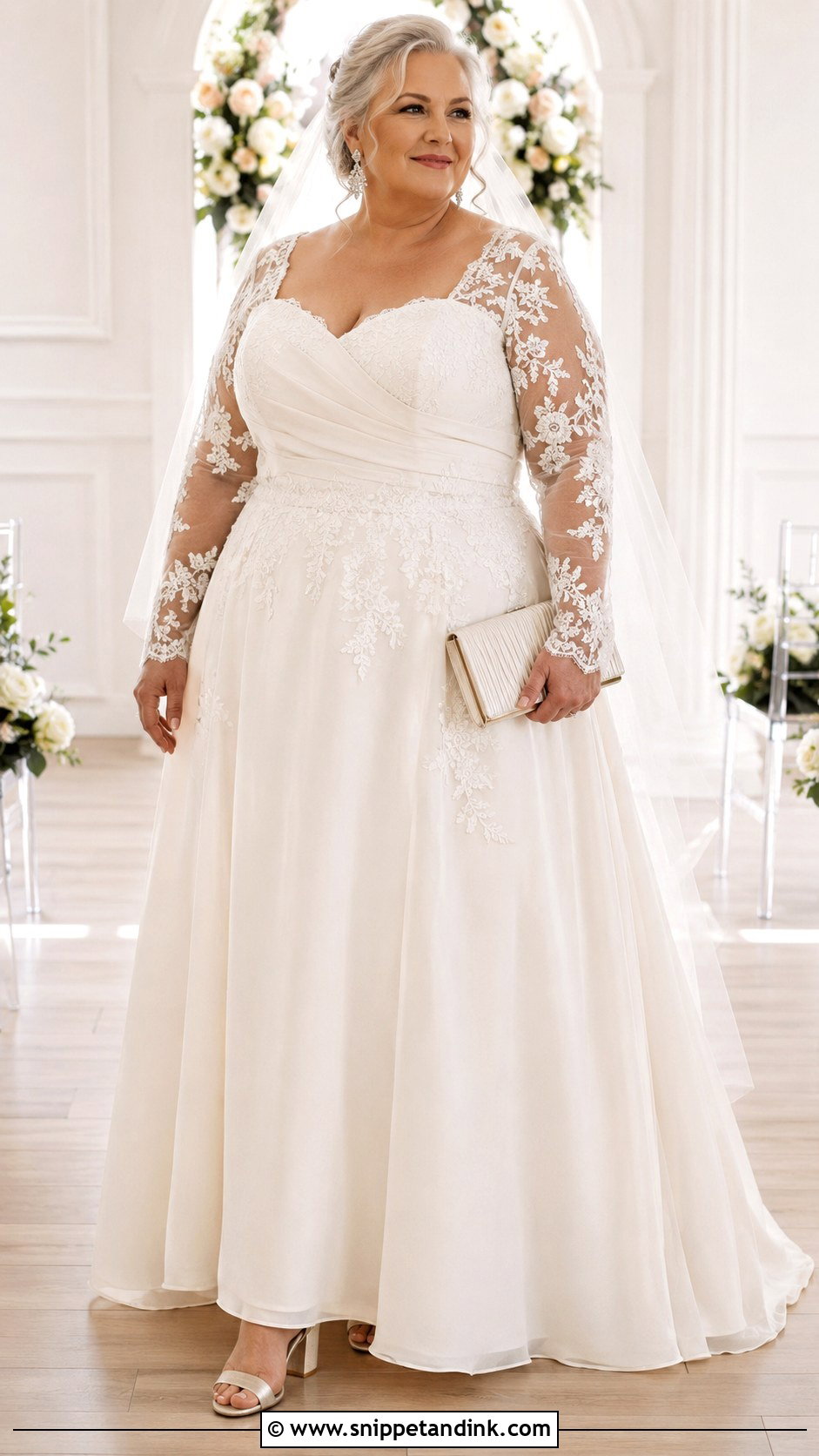
Support comes from construction, not extra fabric. In a plus size A-line I look for built-in cups, secure straps, boning and a defined waist; a dress that relies on more skirt for coverage usually just looks bigger. The skirt should flare out from the waist without heavy gathering at the seam. A V-neck or sweetheart frames the face, and lace sleeves or a removable topper give you coverage you can change your mind about. Stable block heels, statement earrings and a structured clutch finish it, plus a fingertip veil for a long vertical line. Ask the shop for samples close to your own size. Clipping a much smaller sample tells you very little about how the neckline and waist will actually sit.
16. Petite Sheath Wedding Dress
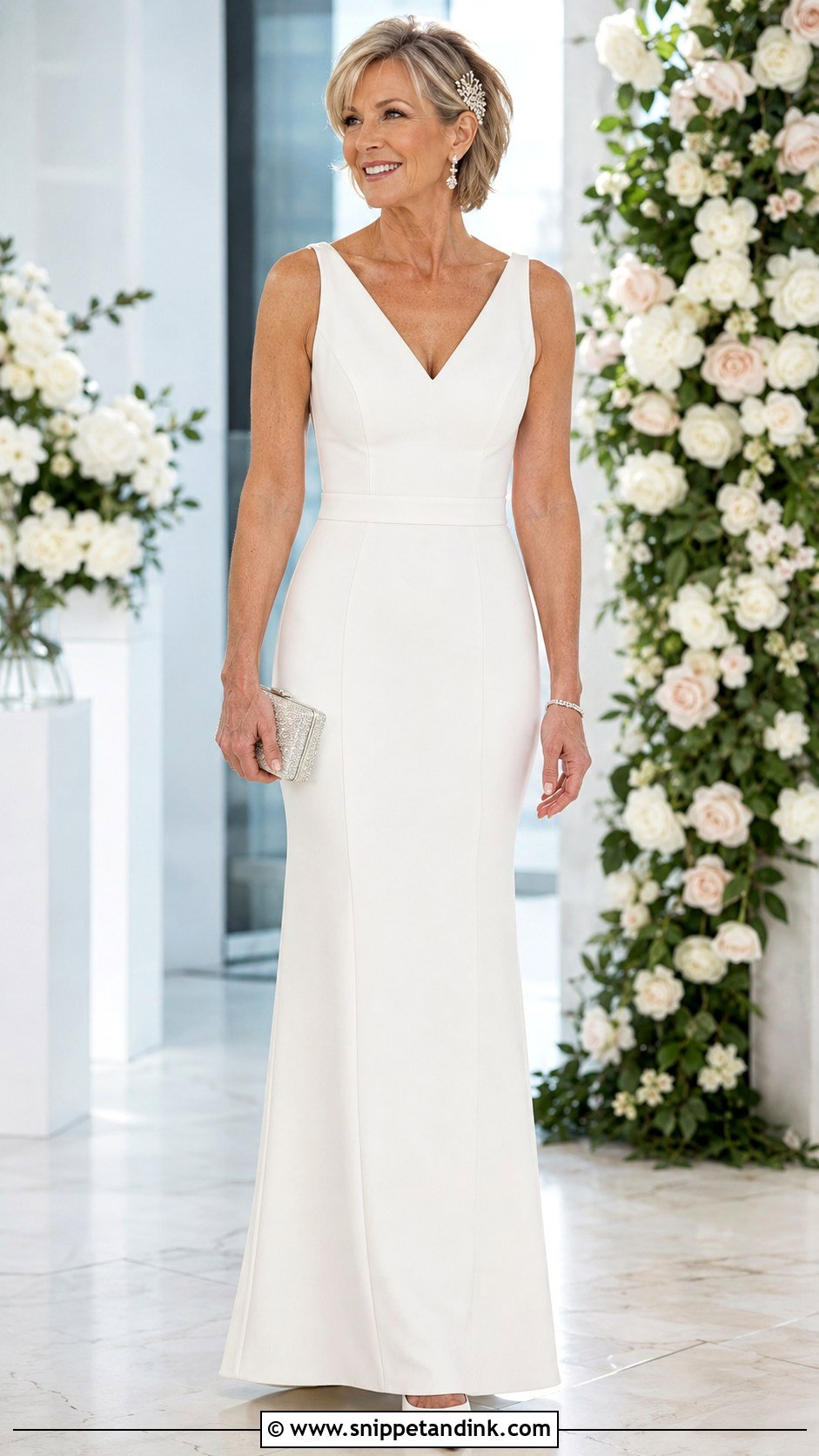
A petite sheath wedding dress keeps one clean line from top to hem, so a shorter frame isn’t lost under skirt volume. Vertical seams, a slightly raised waist or a V-neck all add length. Lightweight crepe, lace and satin work as long as the fabric is firm enough to lie smooth. Keep embellishment near the face or waist rather than spread across the whole gown. Pointed heels, fine earrings and a small clutch keep everything in proportion, with a short veil or narrow comb. One thing petite brides are often not told: alterations usually go beyond the hem. Ask whether the bodice, straps, waist and train can be adjusted too, because a sheath cut for a taller body puts the waist in the wrong place.
17. Beach Wedding Dress
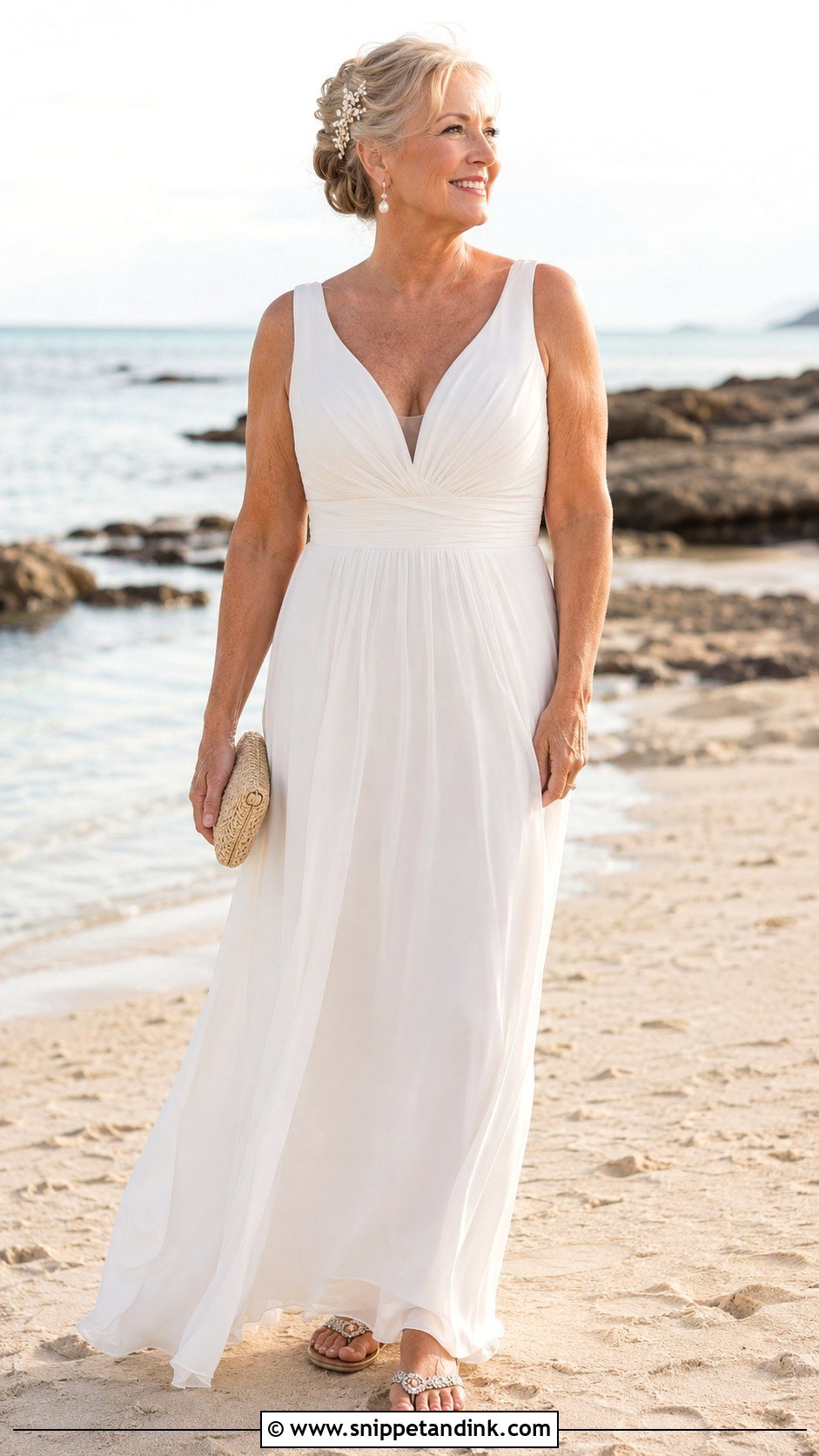
Sand and wind are the two things I plan a beach dress around. Lightweight chiffon, soft crepe or light lace in a simple A-line or column moves well; heavy trains, petticoats and layers that trap heat do not. Wider straps, short sleeves or a secure halter neckline stay put in a breeze far better than a loose strapless bodice. Embellished flat sandals, pearl drops and a small woven clutch suit the setting. A floral comb holds in wind; a long veil will wrap around your face, so save a short one for calm days. Have the hem set just clear of the sand, and if there’s any train at all, ask for a wrist loop.
18. City Hall Wedding Dress
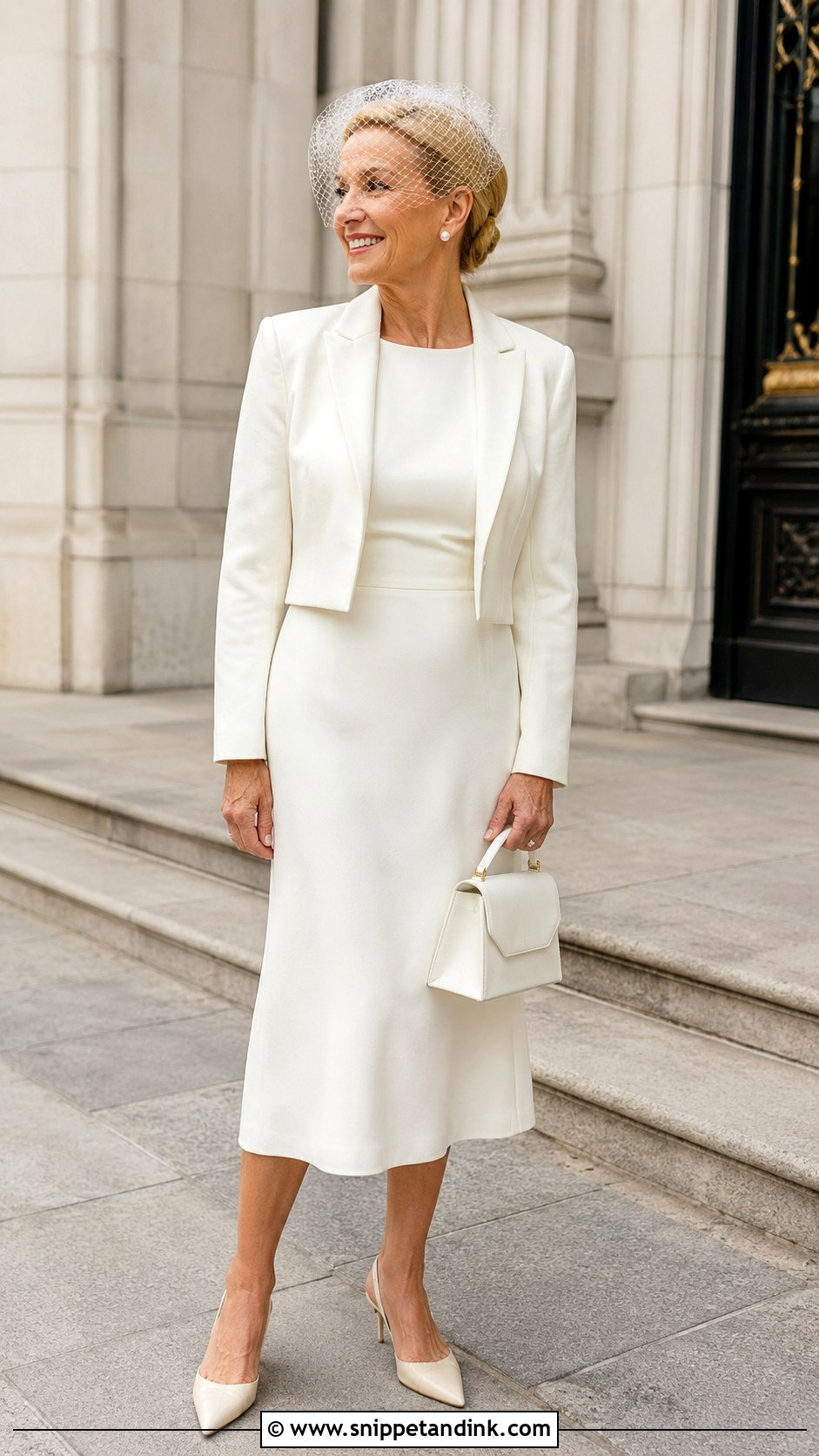
A city hall wedding dress can be simple and still look unmistakably bridal. A tailored ivory midi in crepe or satin is the base I use most, with a fitted waist, a clean neckline and sleeves that suit the season. City ceremonies involve more walking than people expect, often stairs, pavements and sometimes public transport, so secure shoes and a manageable hem matter more than height. Pointed slingbacks, a top-handle bag and pearl or crystal earrings finish it, with a cropped blazer or structured coat for arrivals and outdoor photos. A birdcage veil, satin headband or small bow adds personality. It’s also a good dress to choose with life after the wedding in mind, since it can be shortened, dyed or restyled.
19. Ball Gown Wedding Dress
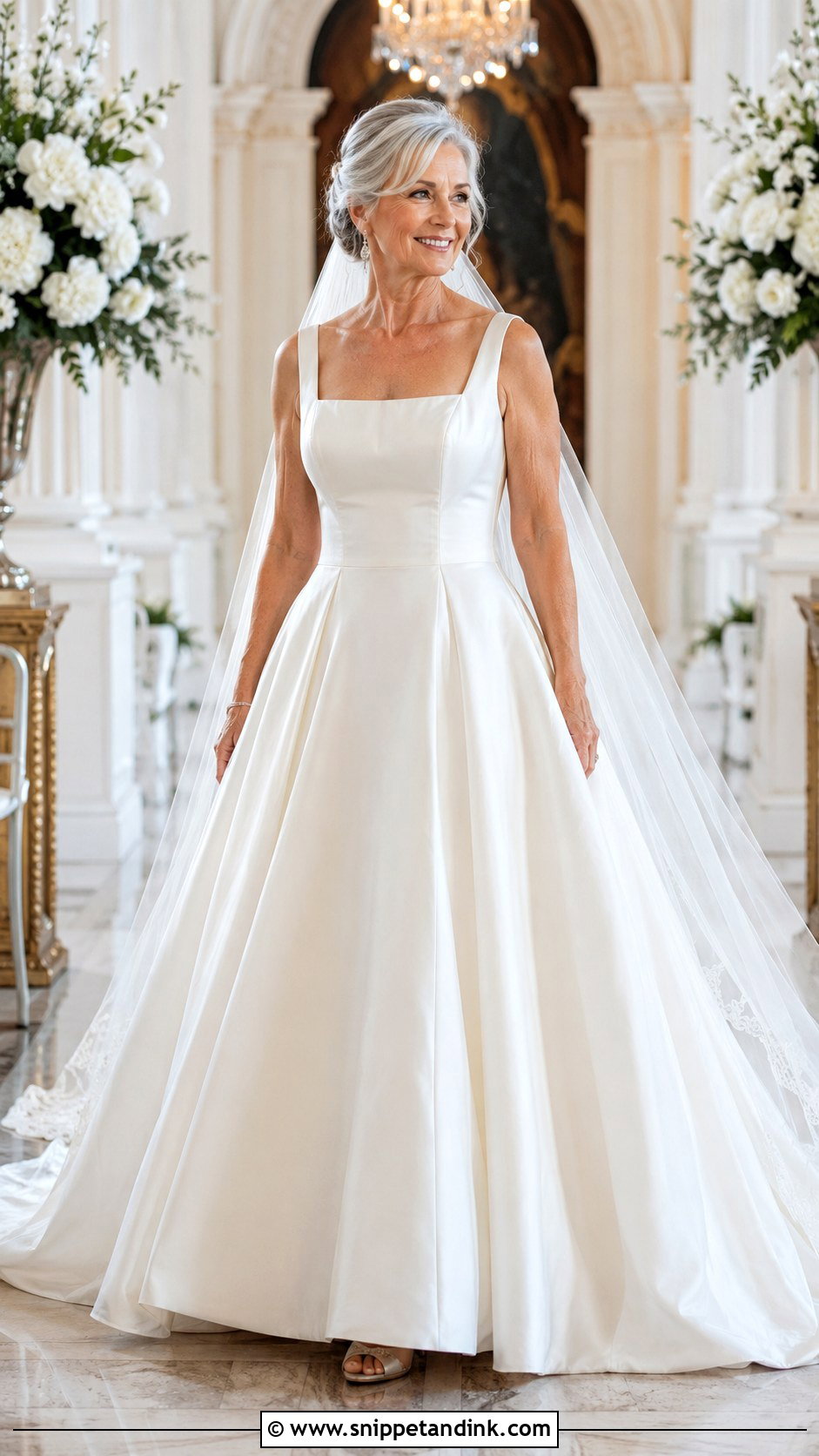
Yes, you can wear a ball gown. What matters is weight. A full skirt in heavy satin can feel like carrying a suitcase by the third hour, so I steer brides toward lightweight tulle, organza or mikado over a structured bodice with real straps. A V-neck, square or portrait neckline keeps the top in balance with the skirt. Cushioned heels, drop earrings and a simple veil that runs just past the train suit it. Leave your bag with someone during the ceremony. Practice sitting and walking before the final alteration, and insist on a bustle; without one, dinner, greetings and dancing all turn into managing the train.
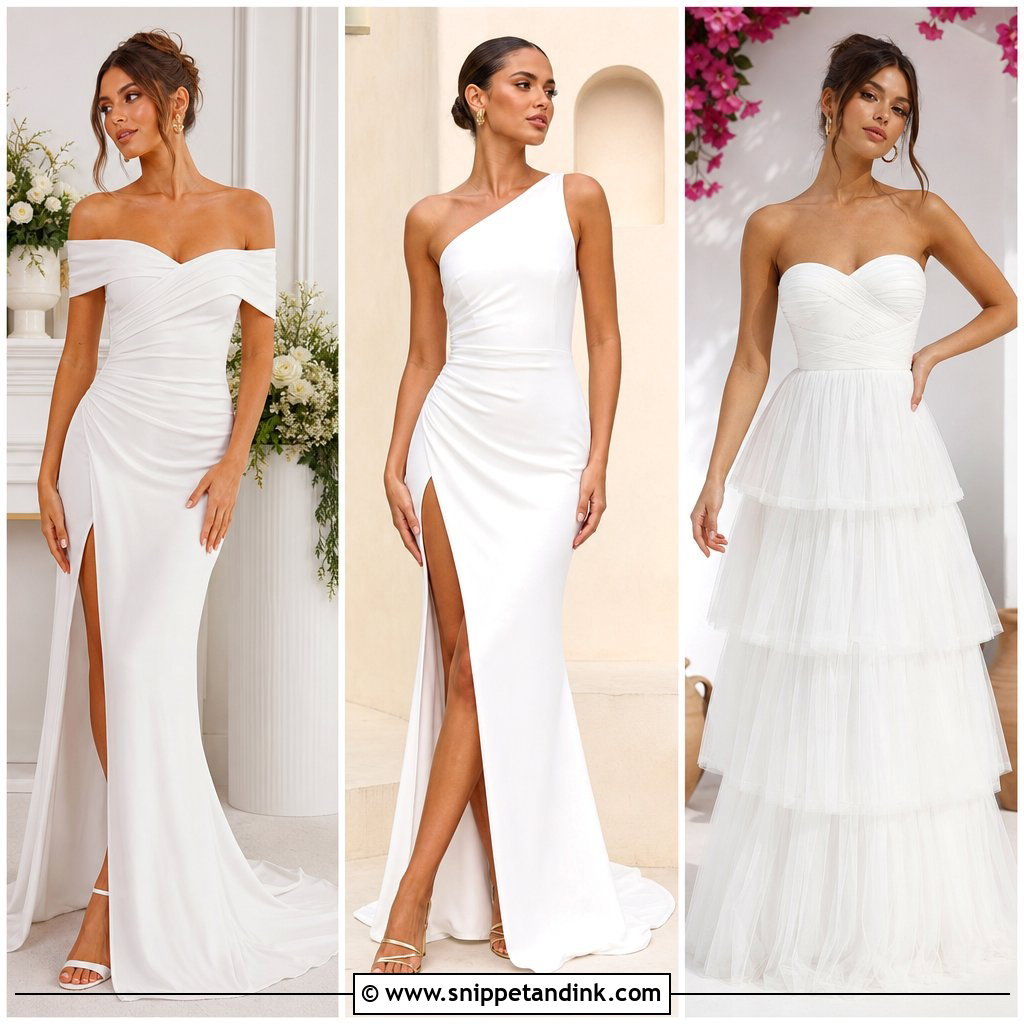


20. Minimalist Square-Neck Wedding Dress
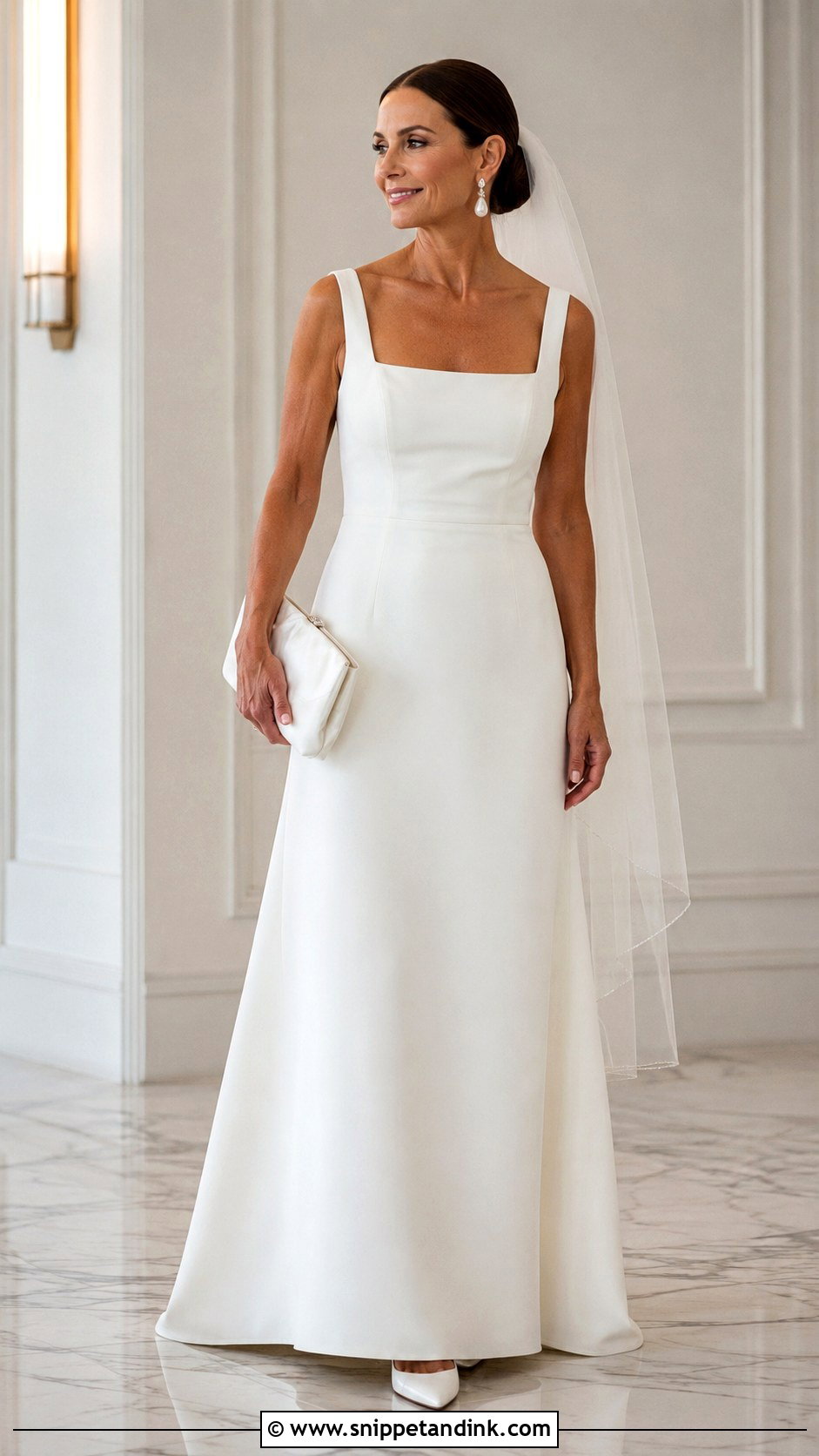
With no lace or sparkle to hide behind, a minimalist square-neck dress depends entirely on tailoring. Every dart, seam and hem is on display, so it’s worth paying for the best alterations you can find. The neckline frames the collarbone and pairs with wide straps, cap sleeves or fitted long sleeves. Smooth crepe, matte satin or structured mikado keeps the surface clean. An A-line moves; a column looks sharper. Sculptural earrings, pointed pumps and a compact satin clutch finish it, with a sleek bun, a smooth bob or tucked waves to keep the neckline clear. For one more bridal detail, add a plain cathedral veil or a fingertip veil edged in pearls.
Is White Still Right the Second Time Around?
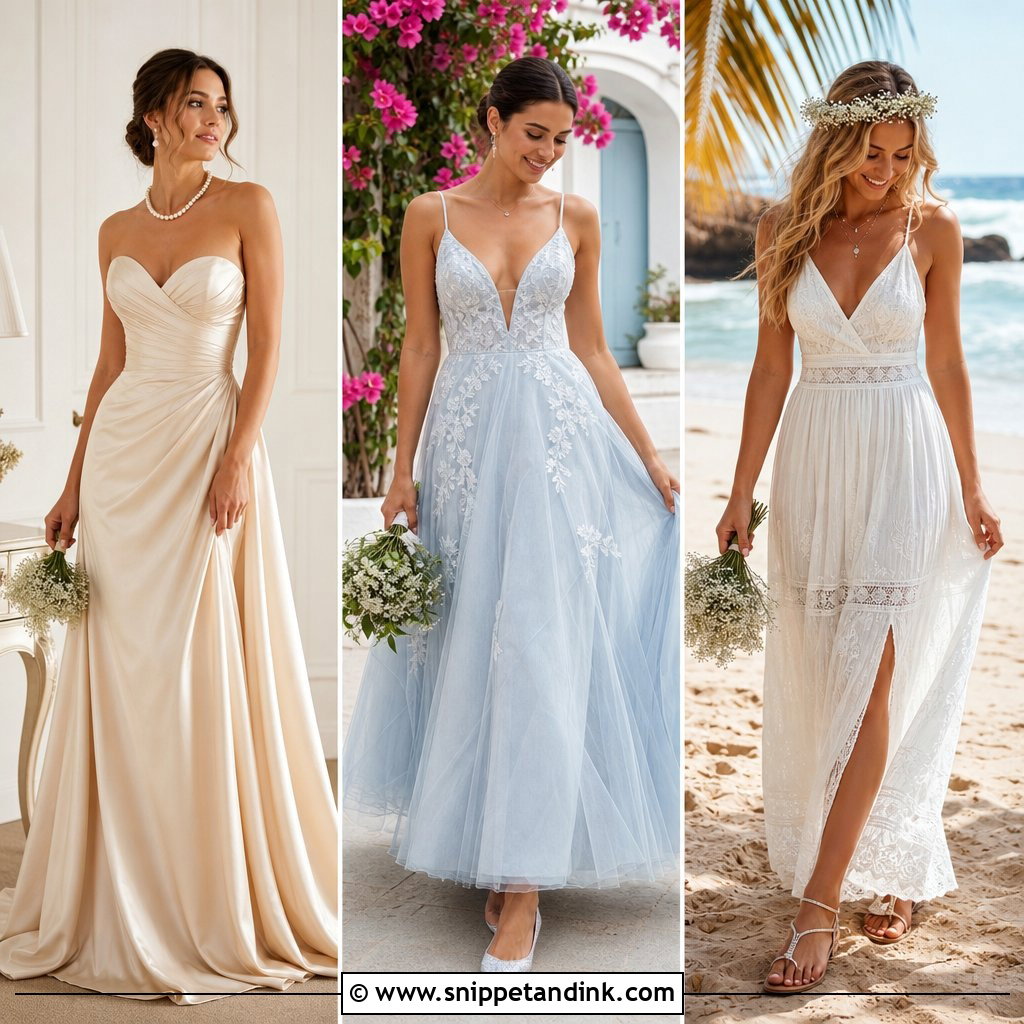
I’m asked this often, and my answer is always the same: wear the color you want. White and ivory are bridal colors, not a statement about anything else, and nobody at a modern wedding is keeping score. If white doesn’t feel like you, blush, champagne, pale blue or a soft grey all read as clearly bridal when the cut and fabric are right.
Veils are equally optional. Plenty of brides marrying again skip the face veil but still enjoy a short or chapel-length veil for the ceremony, then take it off before dinner. A jeweled comb, fresh flowers or a small hat do the same job for a bride who’d rather not wear one at all.
When the Wedding Is Only a Few Months Away
Made-to-order bridal gowns often take several months to arrive, and alterations usually need another six to eight weeks on top. Smaller, faster weddings are common later in life, so it helps to know the quicker routes. Many bridal shops sell samples off the rack, and some designers make ready-to-wear lines that ship in weeks. Eveningwear in ivory or a soft color is another honest option, especially for a midi, a jacket set or a city hall look. Whatever you choose, give yourself at least two fittings, and ask the shop up front how long their seamstress is booked out.
Your Age Isn’t a Dress Code
Lace, sleek crepe, embroidery, a full ball gown or a city midi are all open to you, and outdated age rules have no say in it. Start with the shape and fabric that make you stand a little taller in the mirror. Then weigh up the venue, the weather, your shoes, the support you need and how much coverage you want. A skilled seamstress can turn a dress that’s nearly right into one that feels like yours. Keep accessories in a supporting role, and buy the dress you can’t wait to put on.
You'll Like These Ideas:









Leave a Reply