
Silhouette is the decision that makes every other dress choice easier. Once you know the shape, the fabric, neckline and veil tend to fall into place. In appointments I watch brides change their minds about shape more than anything else, often because a dress they dismissed on the hanger moves completely differently on the body. Classic A-lines, ball gowns, mermaids and sheaths are still the backbone of most collections, alongside basque waists, columns, minis and removable overskirts. Below, each shape comes with how it fits, how it moves, and who I’d quietly steer toward something else.
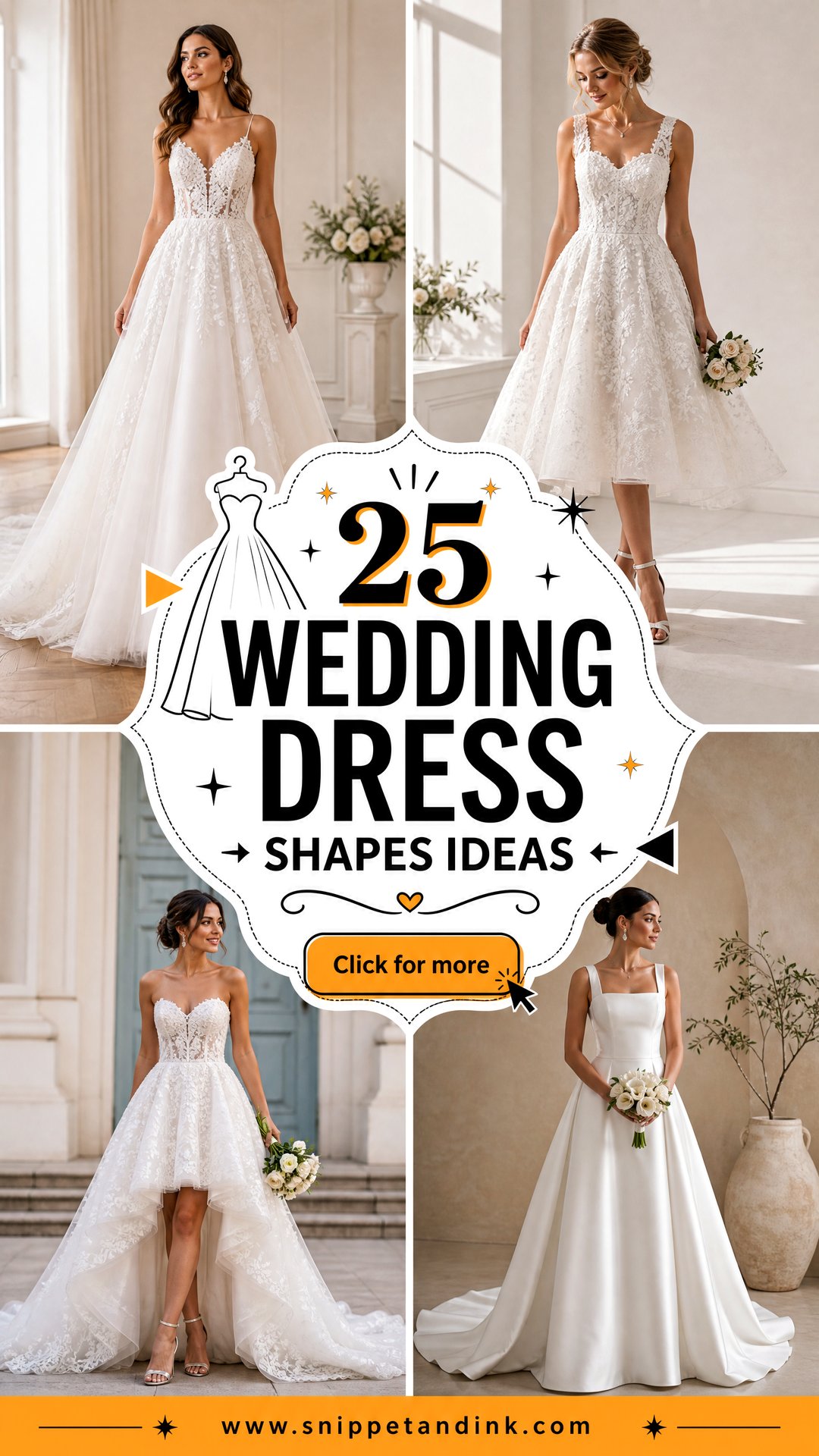
Try On the Shape You’d Never Pick
In a first appointment I don’t start with the dress a bride has saved on her phone. I pull three contrasting shapes, usually an A-line, a fitted trumpet and a sheath or column, so she can see her body in each before falling for any detail. The silhouette you photograph best in is often not the one you expected.
A few things make that comparison more useful:
- Wear or bring shoes at the heel height you plan to marry in. Hem length and posture both change with it.
- Wear nude, smooth underwear. Bold colours and thick seams show through samples and distract.
- Move in every dress. Walk, sit, lift your arms and turn around. Shape is about how a gown behaves, not how it stands still.
- Ask for the mirror to be at a distance. Guests see you from a few metres away, not from up close.
Sample dresses are often not your size and are clipped to fit, so judge the shape and how you feel in it, not the exact fit. That part comes later with the dressmaker.
1. A-Line Wedding Dress
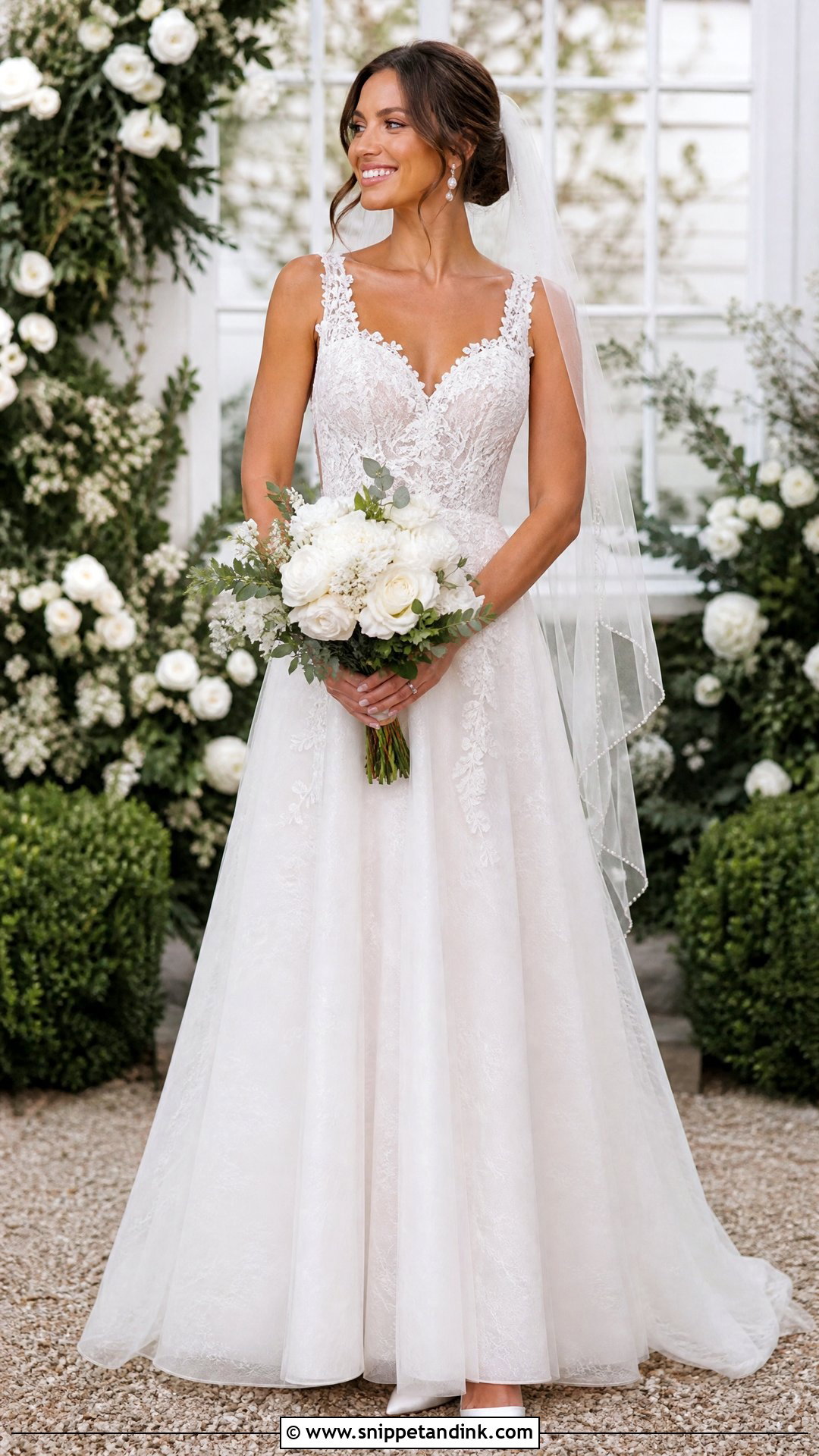
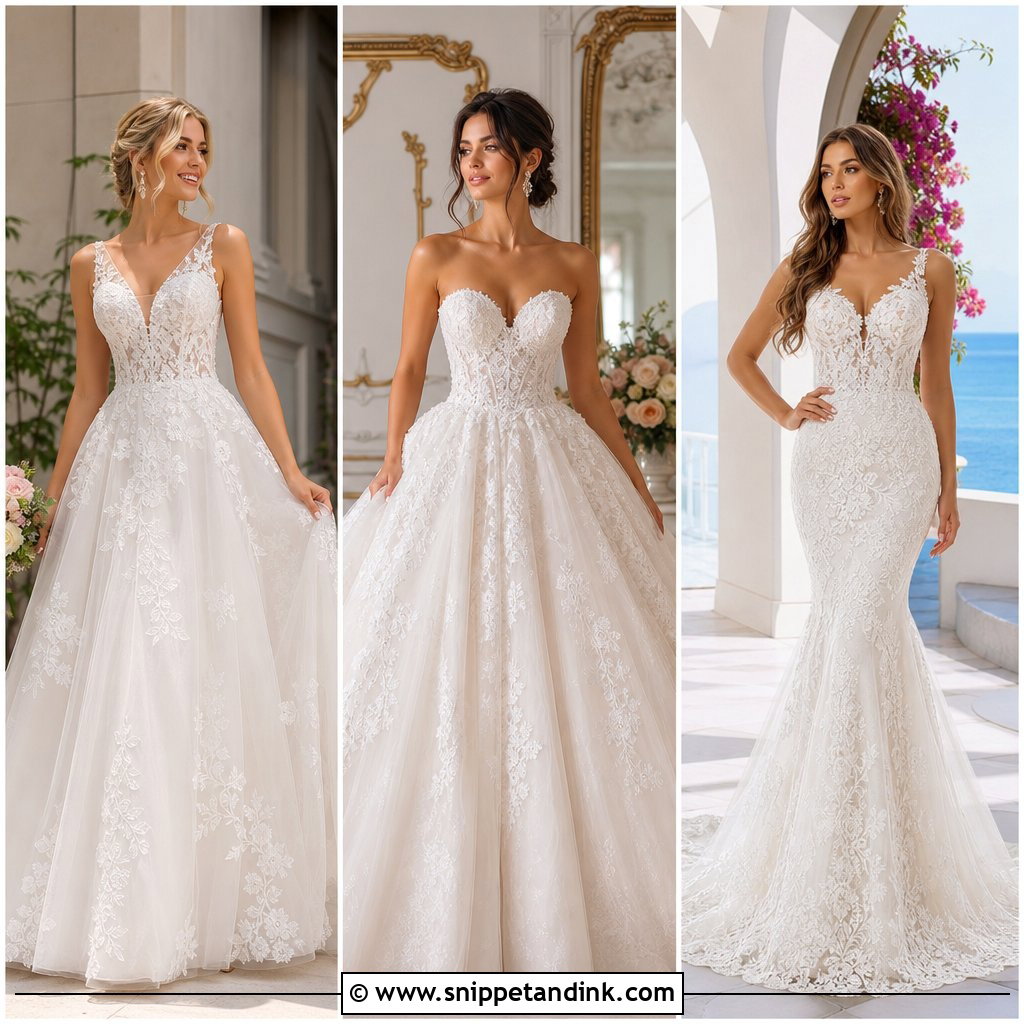
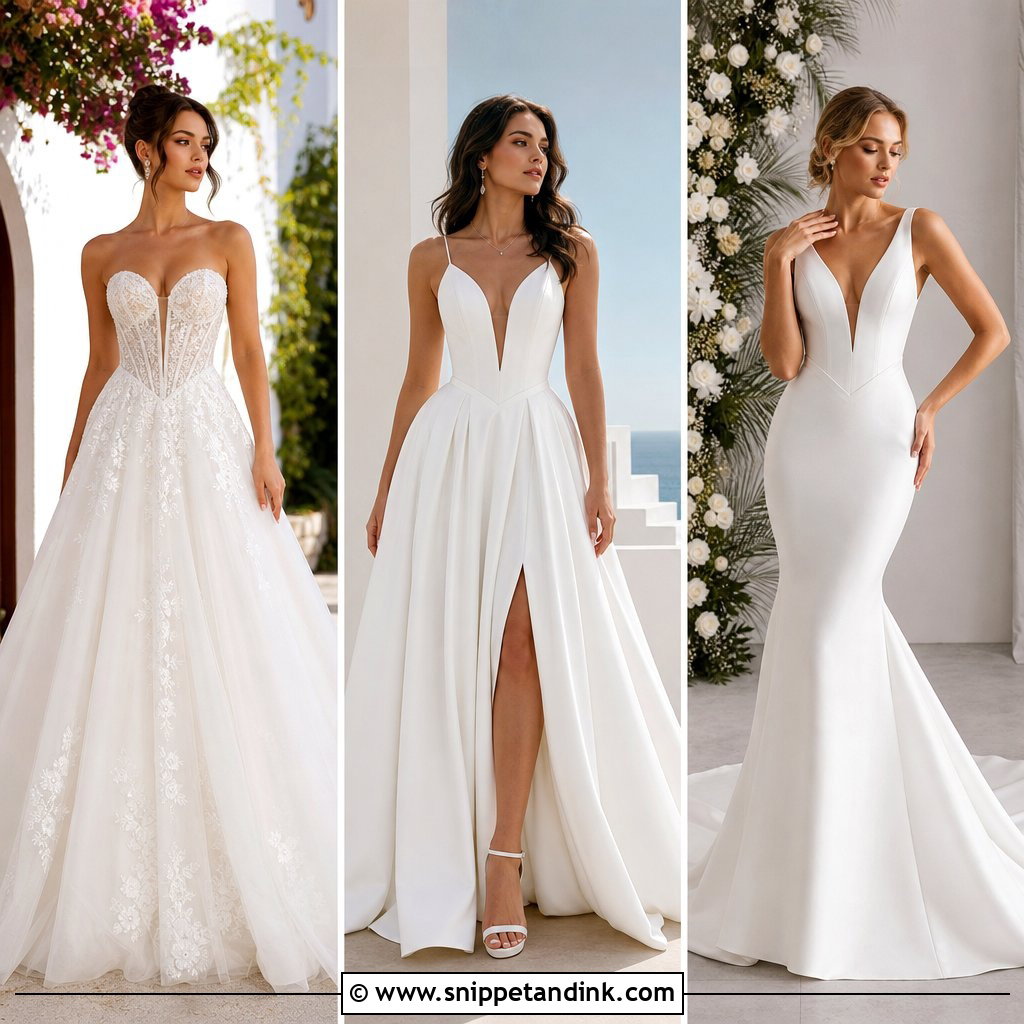
The A-line fits close through the bust and waist, then widens gradually to the hem. It’s the shape I put most brides in first, because it shows me where the waist sits and how they feel in something structured without being restrictive. Mikado and satin give a crisp line; chiffon, tulle and organza let it move. It also tolerates more alterations than almost any other cut, which is reassuring if your weight tends to shift before big events. A fingertip veil and pointed satin heels keep it classic.
2. Ball Gown Wedding Dress
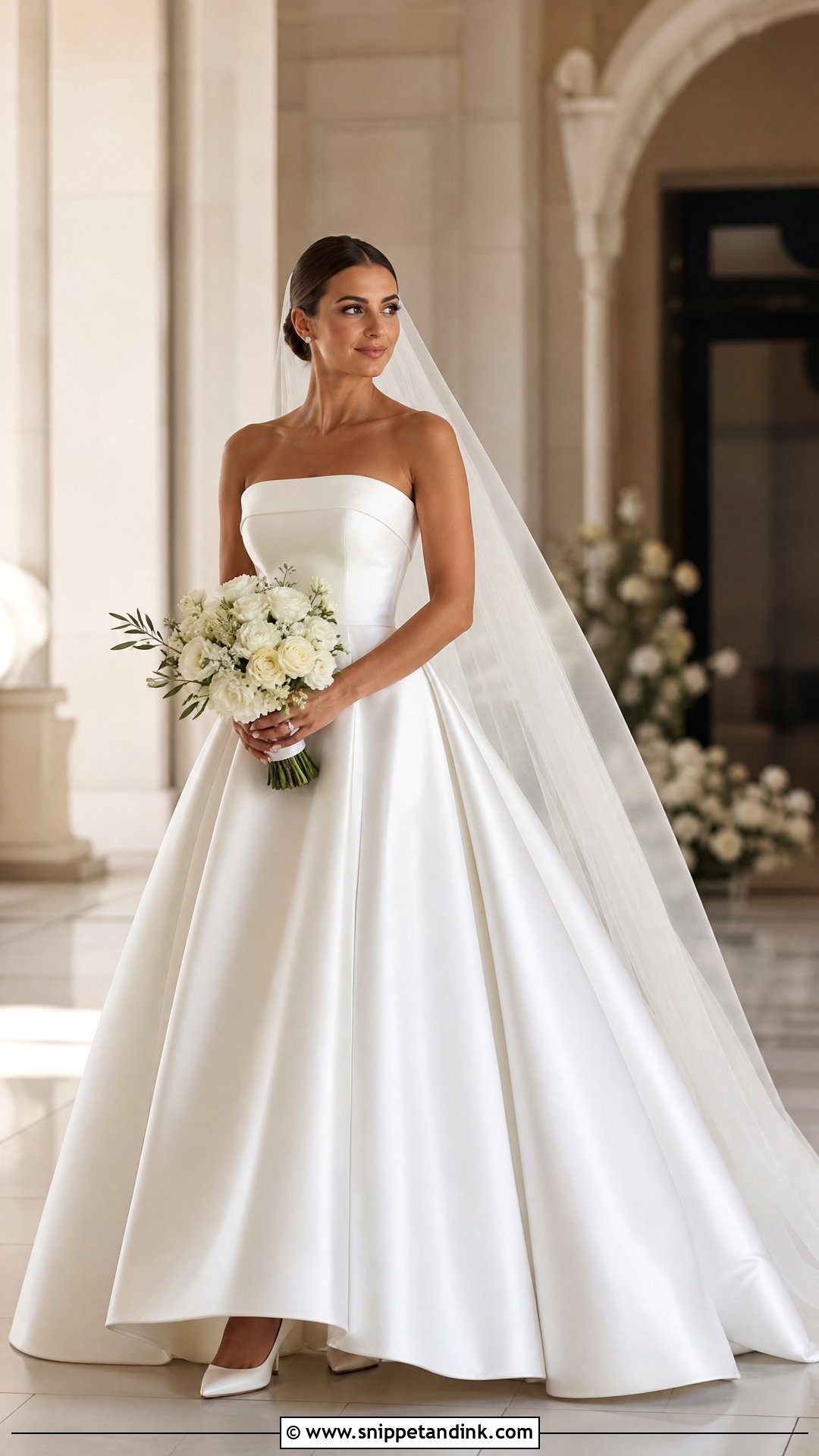
Ball gowns pair a fitted bodice with a full skirt, and they are heavier than most brides expect. Layers of tulle over a petticoat can weigh several kilograms, and that weight hangs from the waist all day. I ask anyone considering one to walk the length of the shop twice and sit down in it. For a modern finish, a clean strapless neckline, sleek bun and long veil let the volume speak. Satin, tulle, lace and organza each change the mood completely, so try at least two.
3. Mermaid Wedding Dress
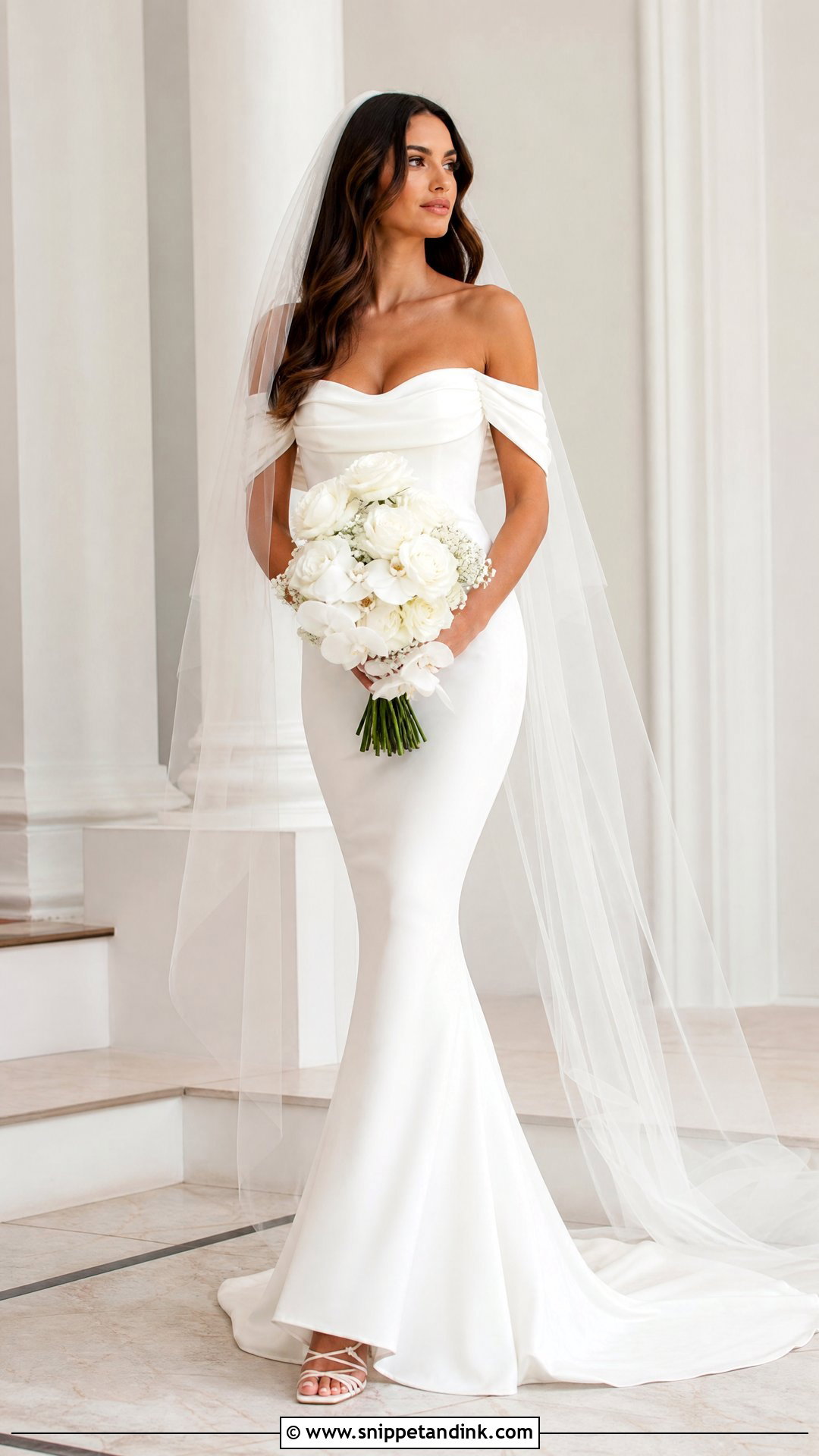
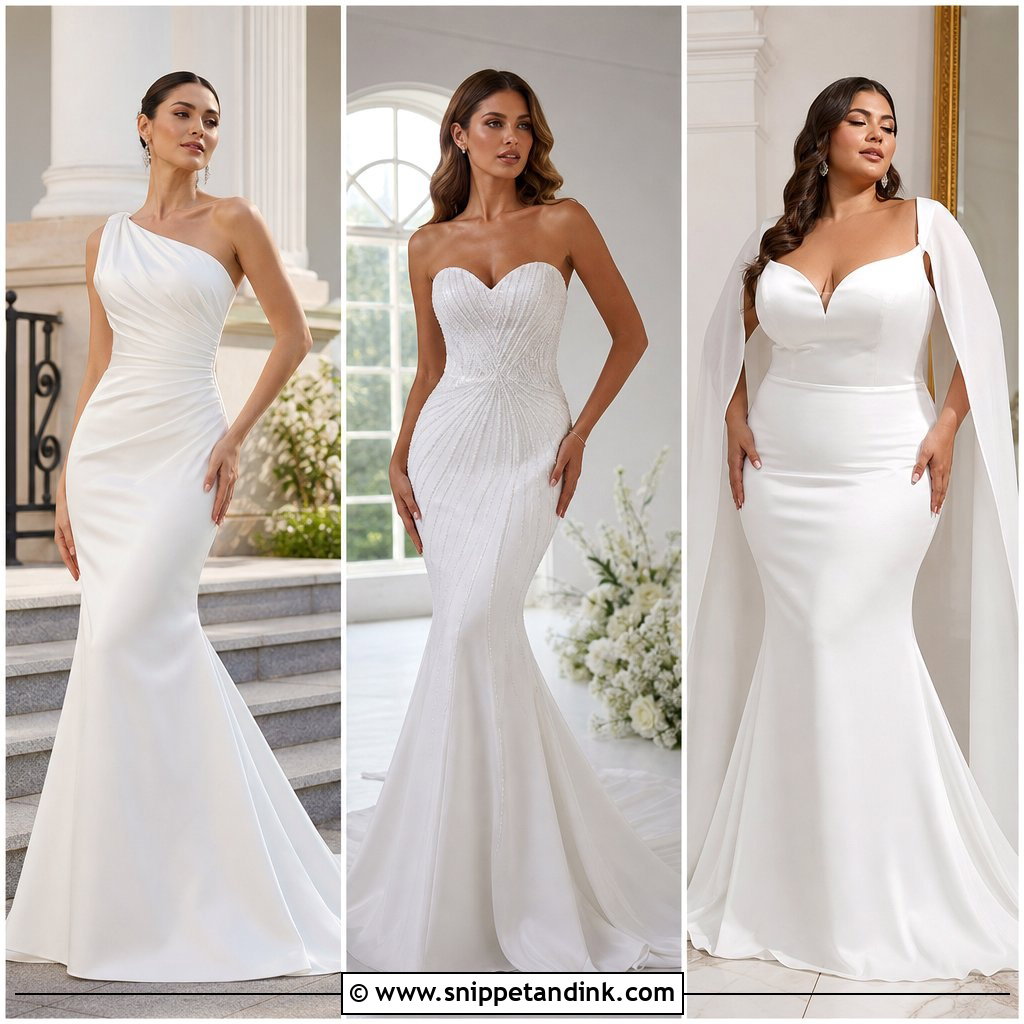
Mermaid gowns stay fitted through the hips and thighs, then flare at or below the knee. The fit has to be close to perfect, because there’s no ease to hide a seam that’s slightly off. Stairs, dancing and getting into a car all take practice, since the knees can only move so far apart. Stretch crepe is kinder than structured lace for comfort. If you love the shape but worry about movement, look at a trumpet first.
4. Trumpet Wedding Dress
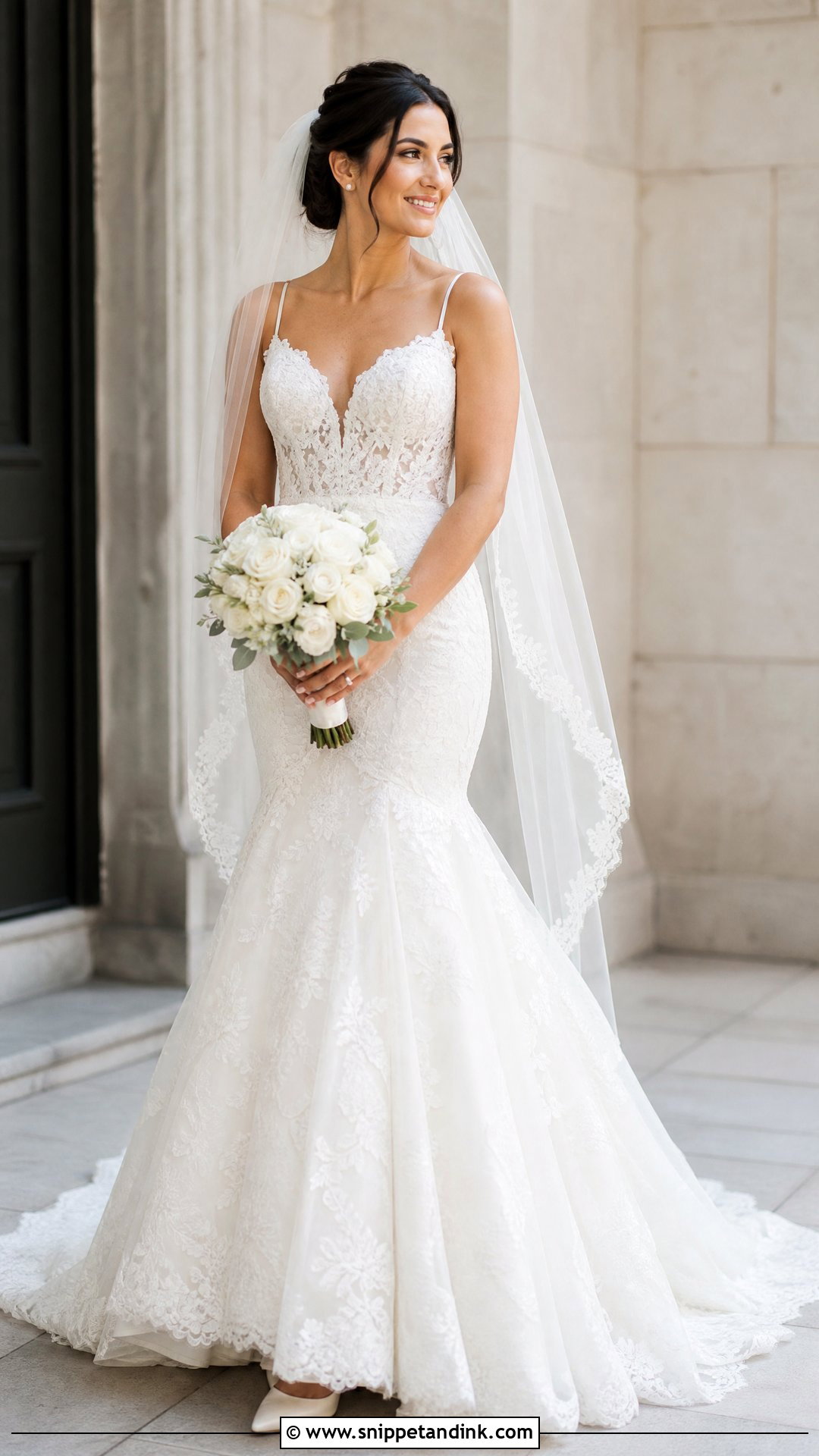
A trumpet wedding dress starts its flare around mid-thigh, which gives you a longer stride and a much easier time sitting down than a mermaid. It’s the compromise I recommend most often to brides who want curves without feeling trapped. Crepe looks clean and modern; lace softens the outline. A chapel veil and neat chignon suit it in formal settings, and it works in a city hall just as well.
5. Fit And Flare Wedding Dress
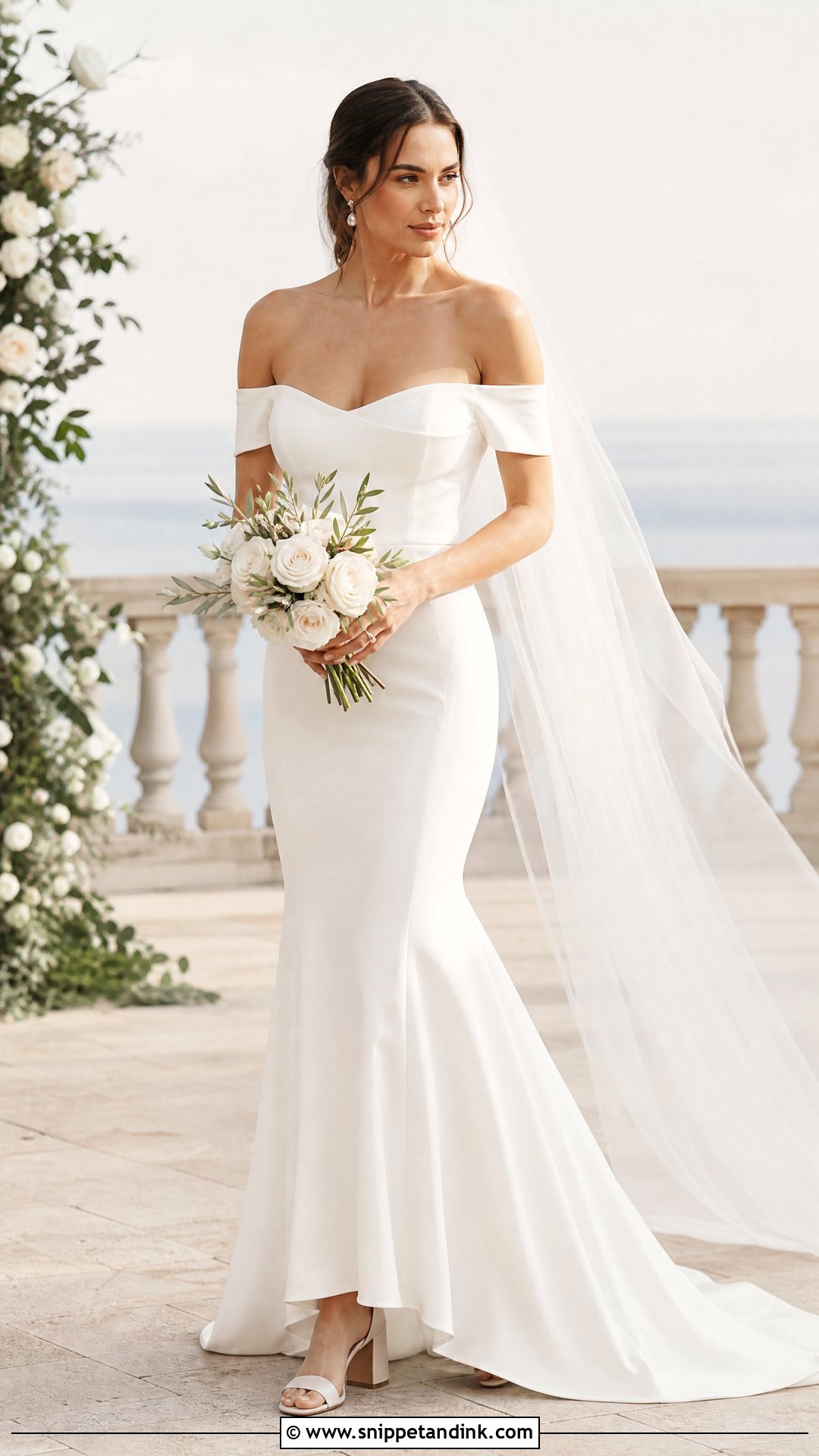
Fit and flare skims the body and widens just below the hips. It sits between mermaid and A-line: more shape than one, more freedom than the other. Off-shoulder, square, sweetheart, and illusion necklines all suit it. Lightweight lace or crepe works outdoors; satin or mikado gives indoor weddings a more formal finish. Block heels are a sensible match, since the flare is not wide enough to hide a wobble.
6. Sheath Wedding Dress
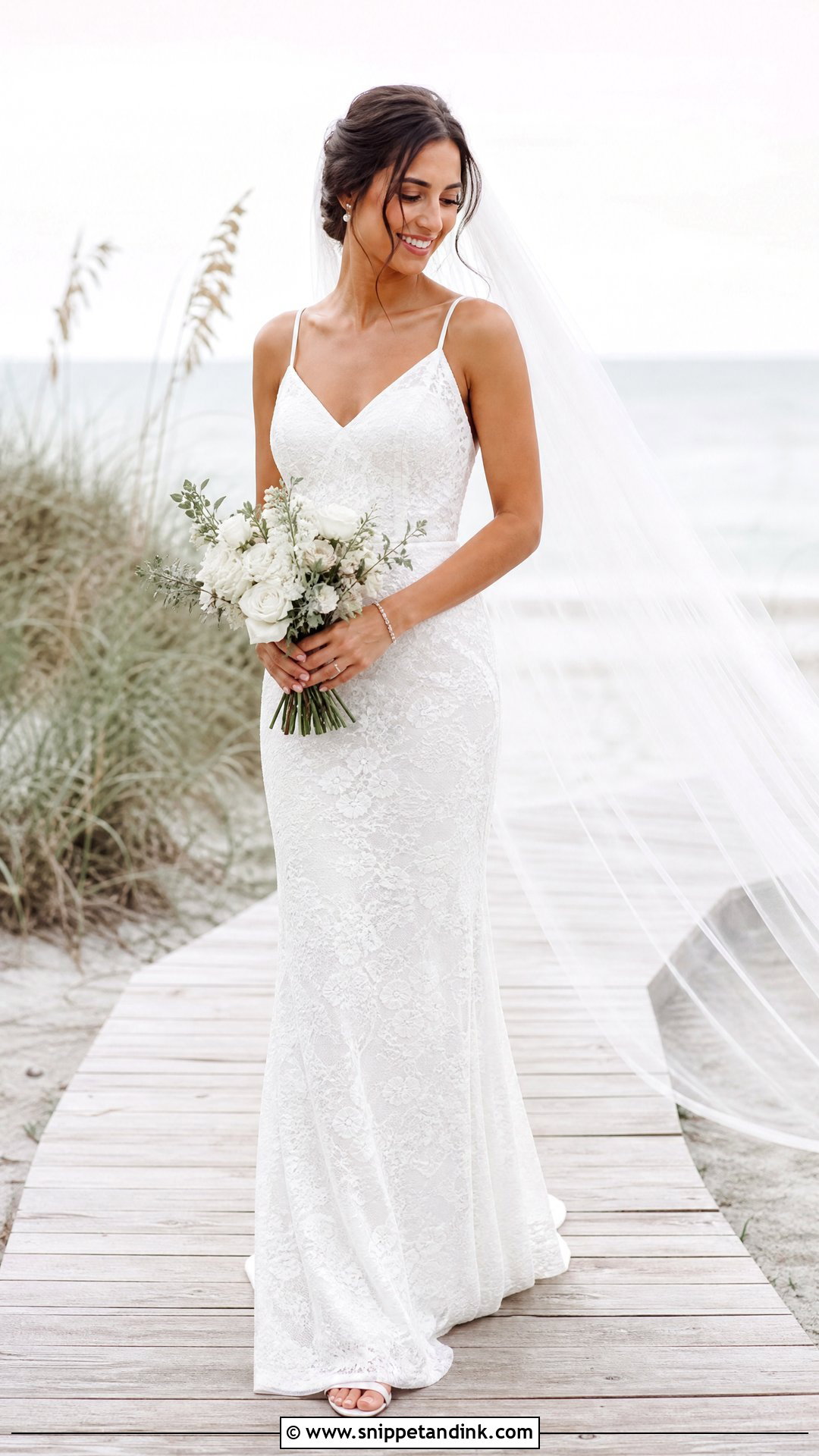
A sheath falls close to the body in a narrow line with very little flare. Honesty matters here: every lump in the undergarments and every uneven seam shows. I always fit a sheath with the actual bra and shapewear the bride will wear. It suits beach weddings, courthouse ceremonies and intimate dinners. Crepe looks smooth, lace romantic, satin quietly shiny. Capes, jackets and detachable trains layer easily over it if you want more for the ceremony.
7. Column Wedding Dress
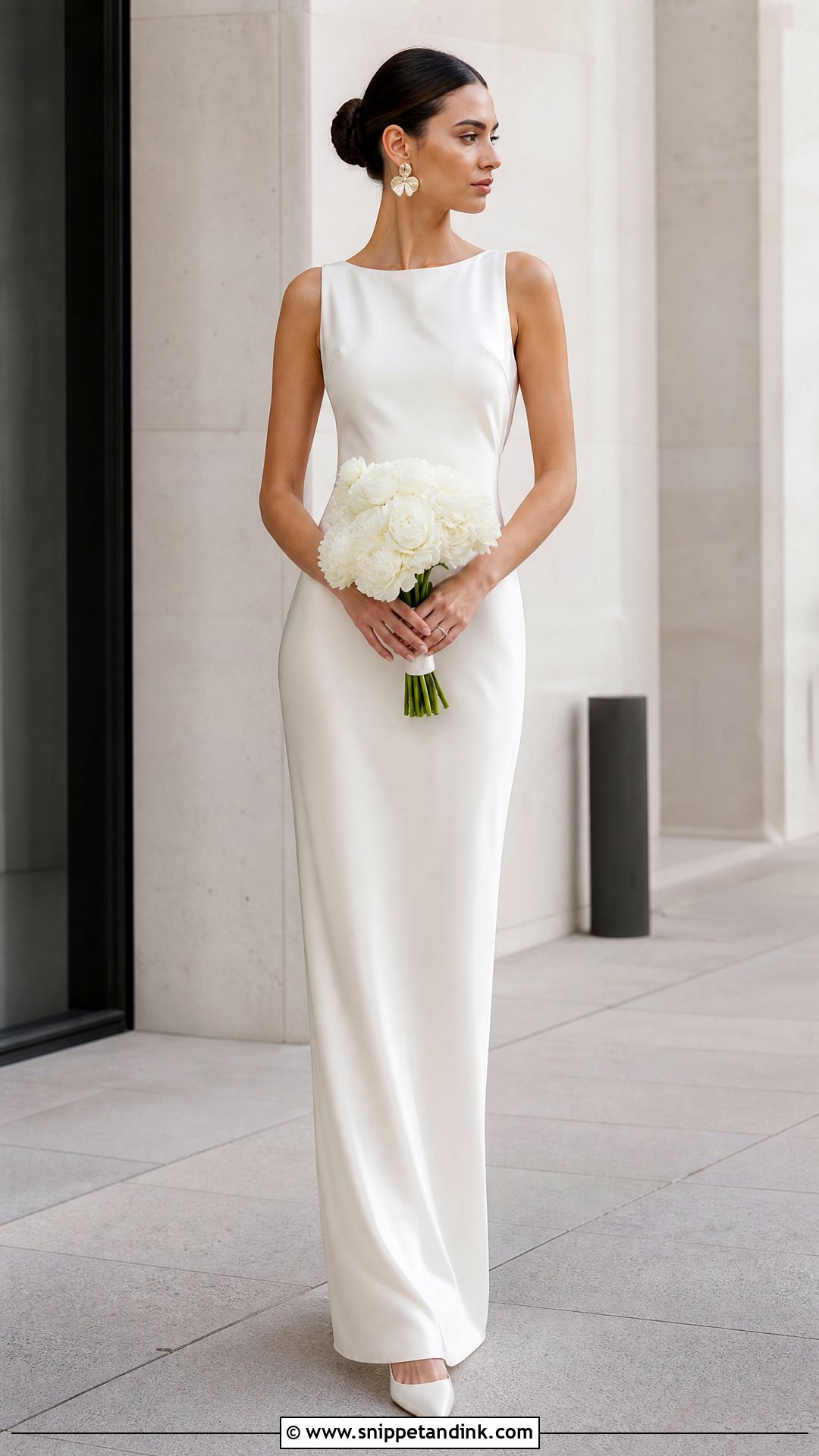
The column is straighter and often more structured than a sheath, running in one line from neckline to hem. It reads modern and editorial, and it needs very precise tailoring at the hem so it just kisses the floor in your shoes. Satin, crepe and silk blends keep the line smooth. Pointed heels and sculptural earrings suit it, as do city hotels and museum venues. A long walk across gravel is the one place I’d avoid it.
8. Empire Waist Wedding Dress
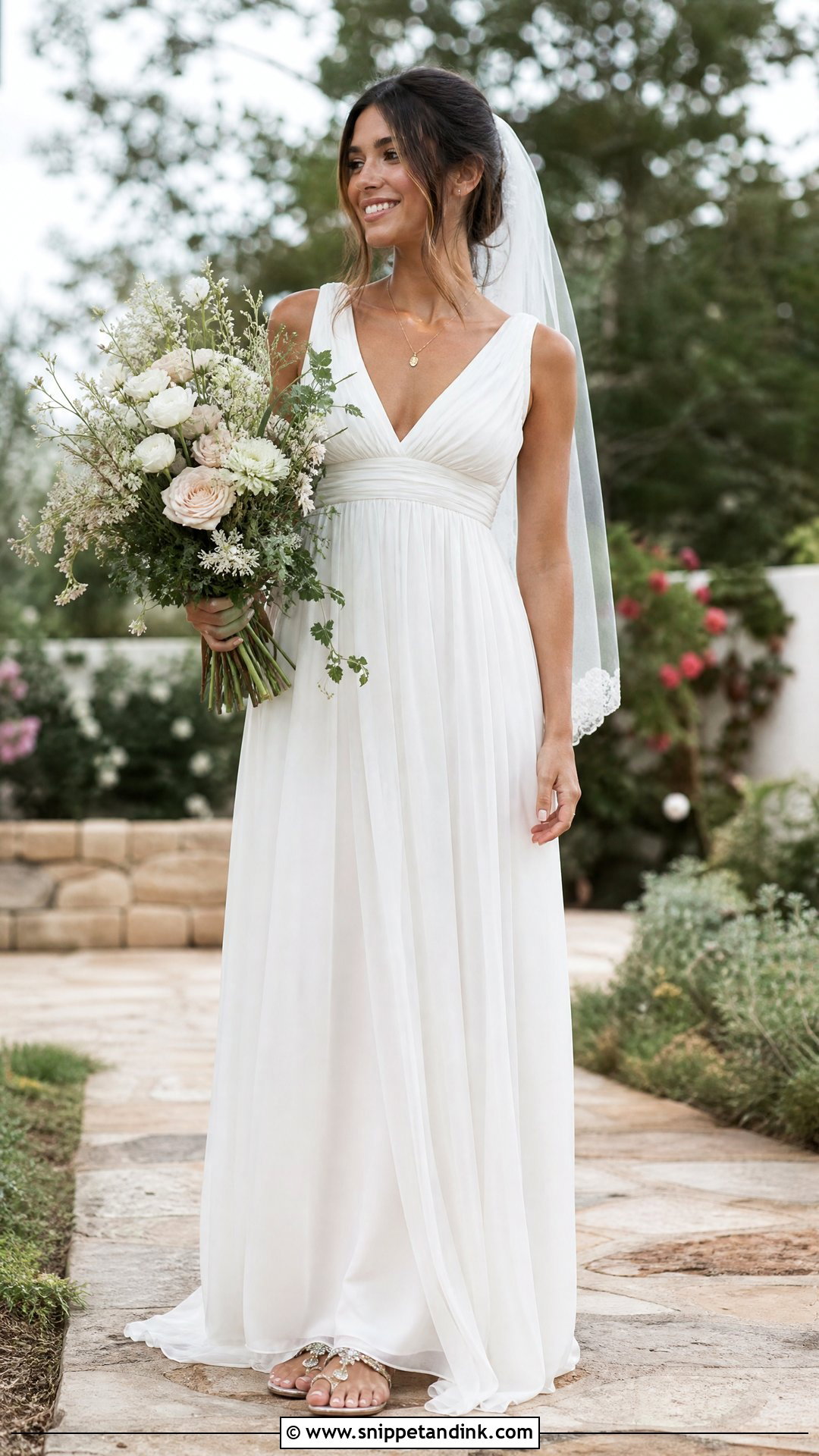
An empire waist sits just under the bust and lets the skirt fall loosely from there. Nothing presses on the stomach, so it’s one of the most comfortable shapes for a long, hot day and a popular choice for pregnant brides. Chiffon, silk and soft tulle make it float. Paired with a V-neck, the high waist can make legs look longer. Flat sandals and a sheer veil suit beach and garden ceremonies.
9. Drop Waist Wedding Dress
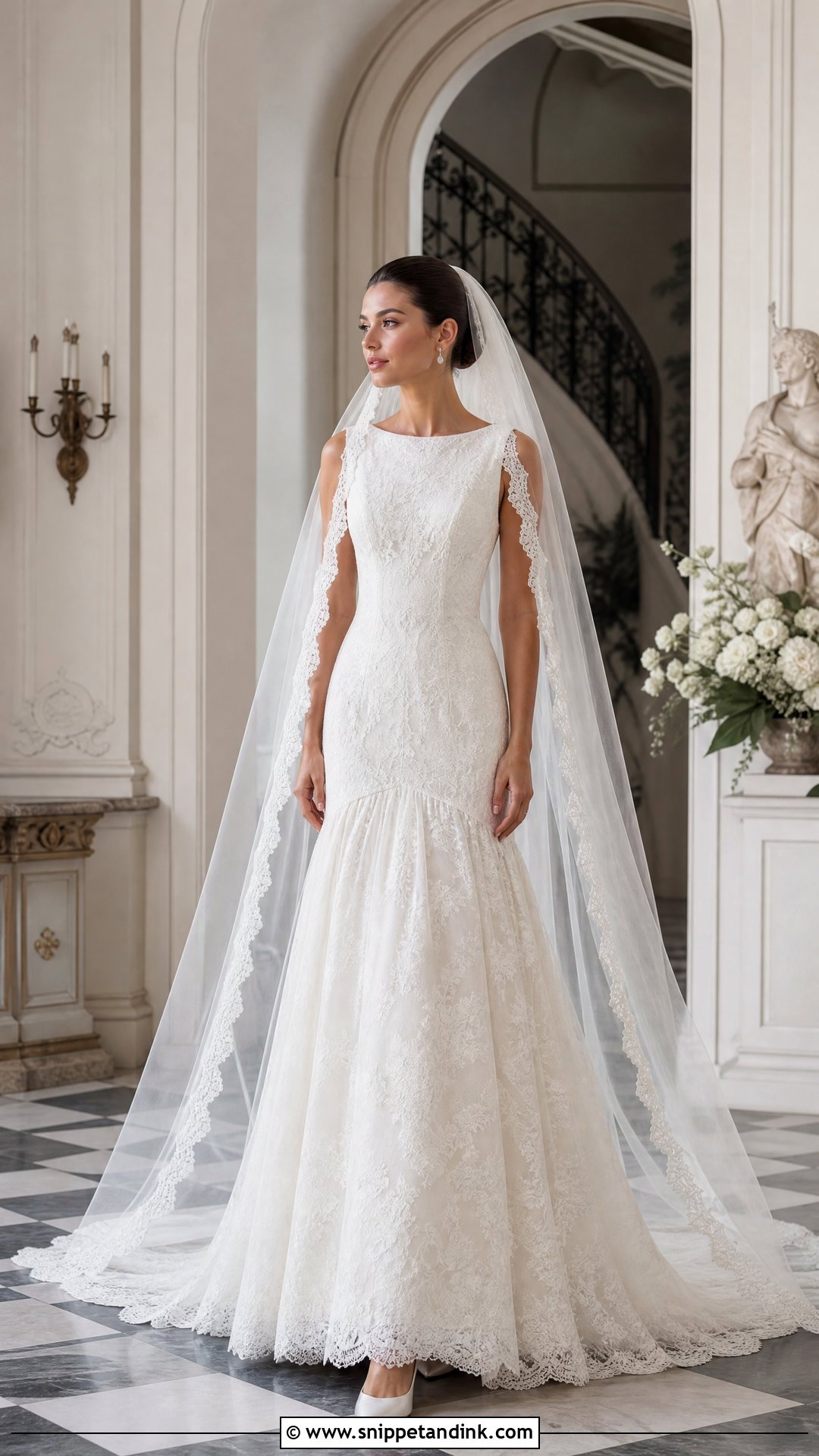
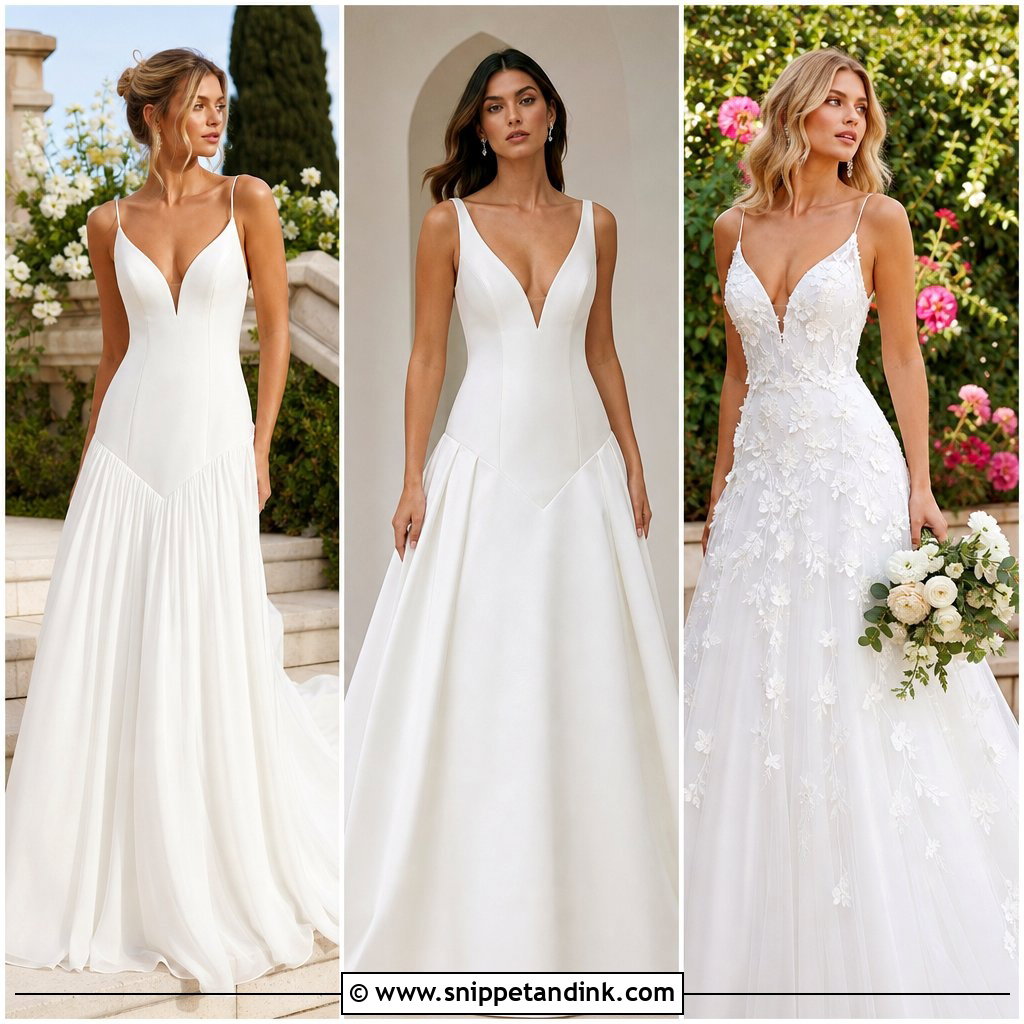
A drop waist extends the bodice to the upper hips before the skirt begins, lengthening the torso. It’s one of the trickier shapes to fit: on a shorter body, the dropped seam can cut the legs off, so I check where it lands against the hip bone. Structured satin, lace or taffeta defines it best. A slim skirt reads old-world; a full one feels formal. A sleek updo and minimal earrings keep attention on that long bodice line.
10. Basque Waist Wedding Dress
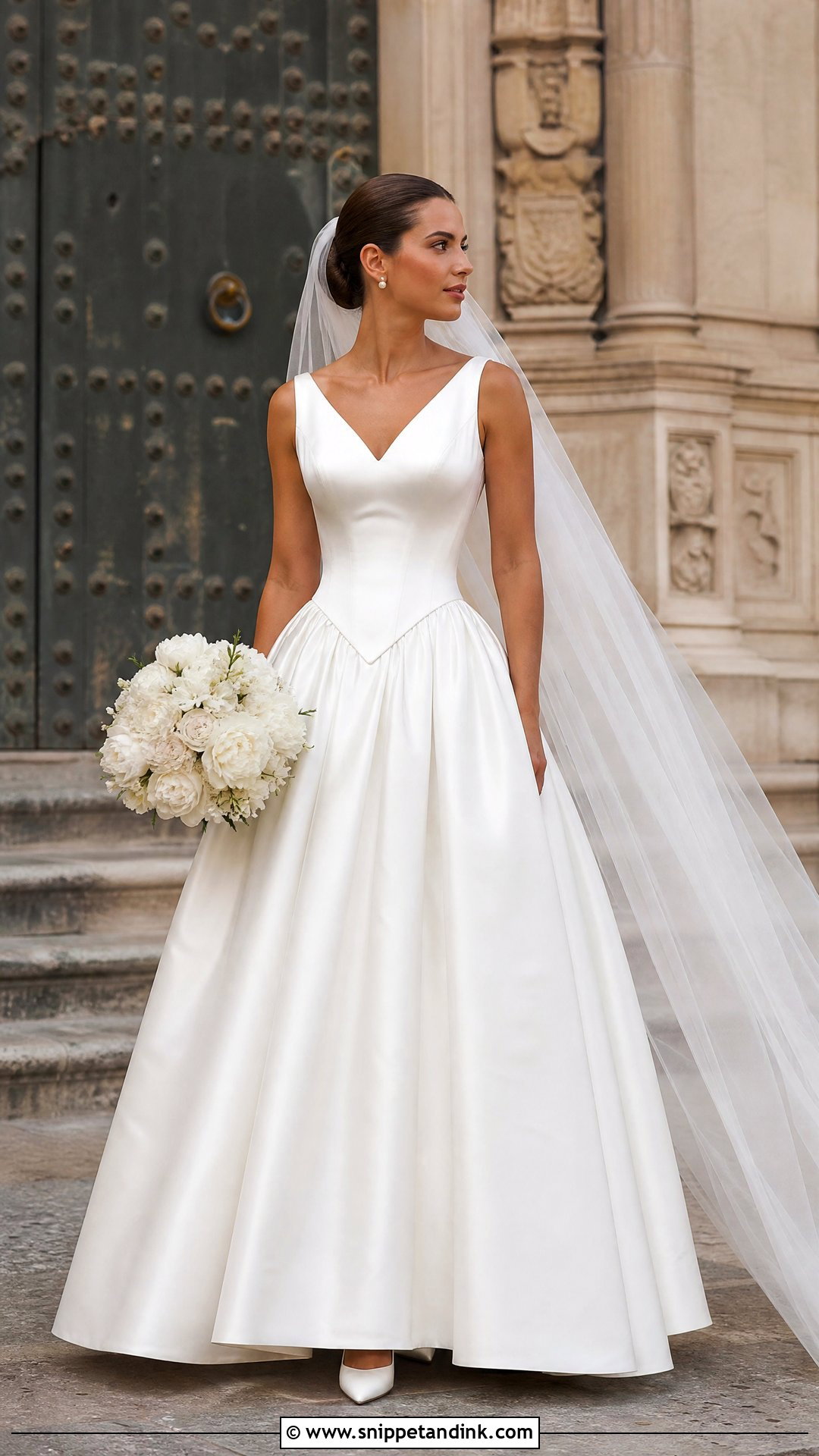
Basque waists dip into a soft V at the front, which lengthens the torso and sharpens the waist without any extra decoration. It’s having a real moment in bridal collections. Lace or tulle softens it; satin or mikado makes it regal. Paired with a full skirt, long veil and pearl studs, it feels right in historic venues. The point of the V should land just below your natural waist, so take note at the fitting if it rides up when you sit.
11. Princess Wedding Dress
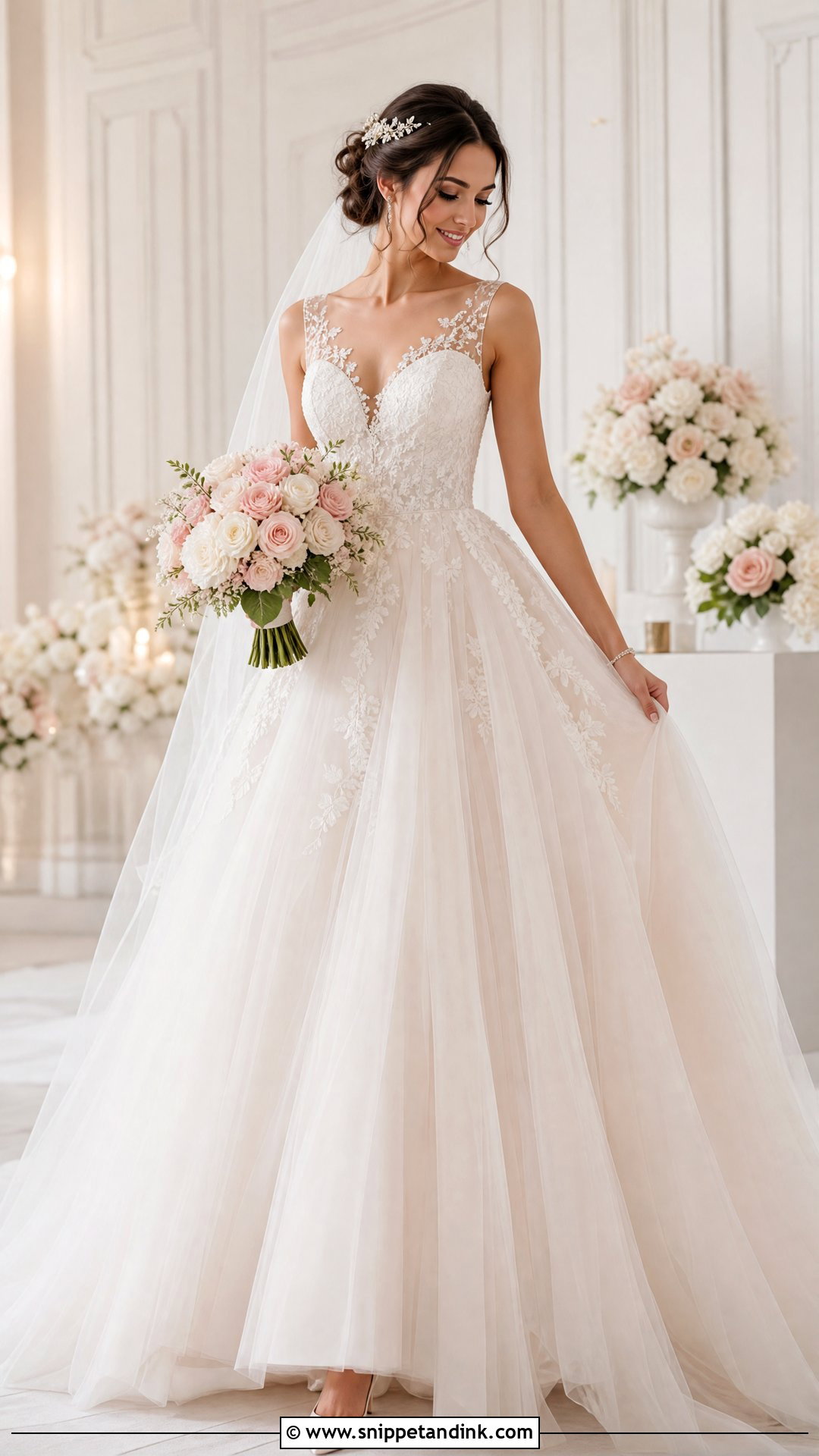
The princess label usually means a fitted bodice and full skirt, but softer than a classic ball gown: more tulle layers, fine lace, light sparkle. It can tip into costume, so I keep the extras restrained and let the skirt and neckline lead. A medium-length veil, a few crystal pins and satin pumps are plenty. Blush and white flowers sit well with the gentle colouring of most princess gowns.
12. Slip Wedding Dress
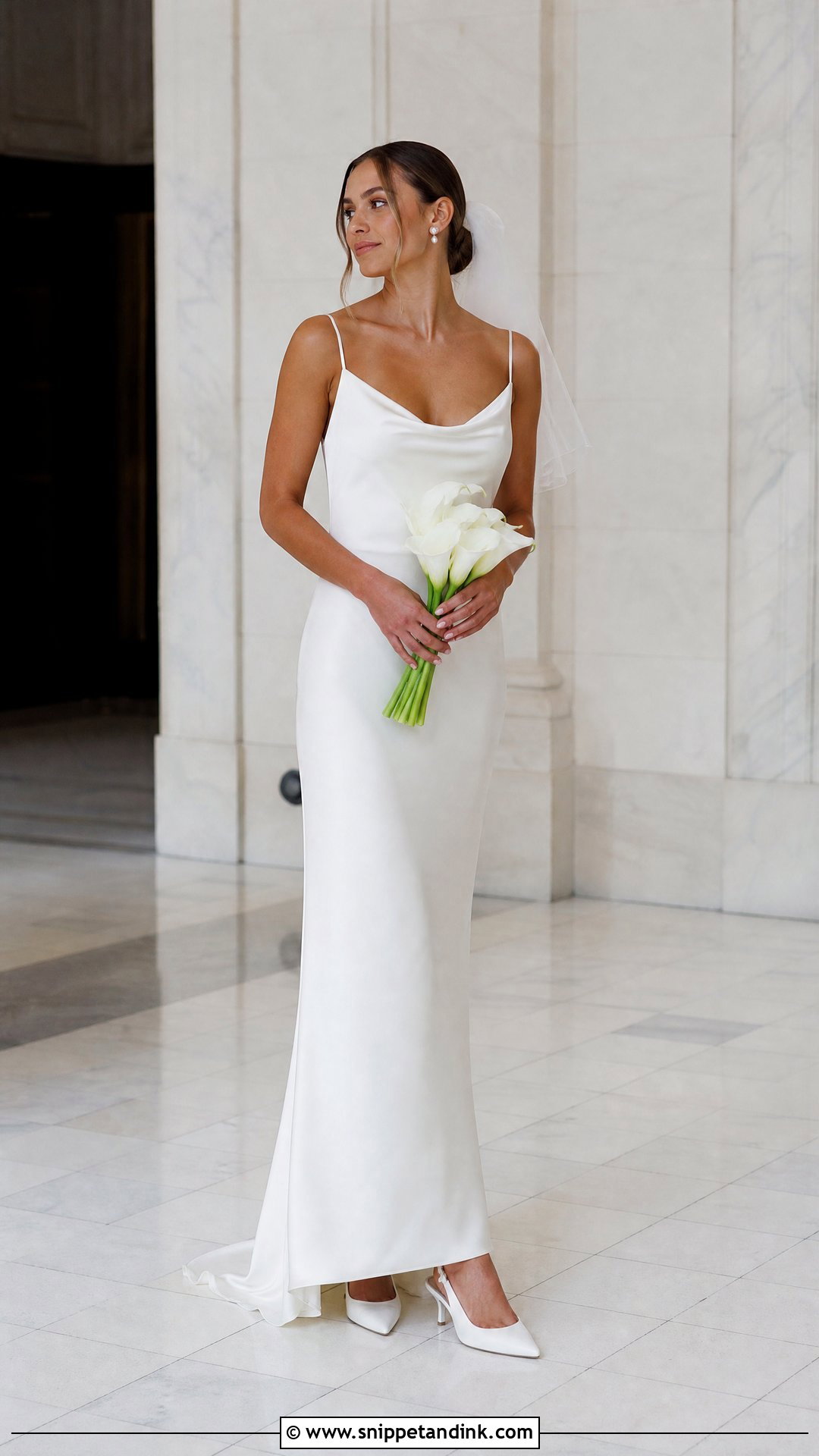
Slip dresses skim the body on thin straps in fluid satin, silk or charmeuse. They are cut on the bias, which makes them drape well but also cling, so fit and undergarments make or break them. I’d always do a sitting test in one, because bias-cut satin wrinkles across the lap. Slingback heels, a short veil and a clean bouquet suit it. Cooler outdoor ceremonies call for a tailored blazer or sheer scarf on top.
13. Mini Wedding Dress
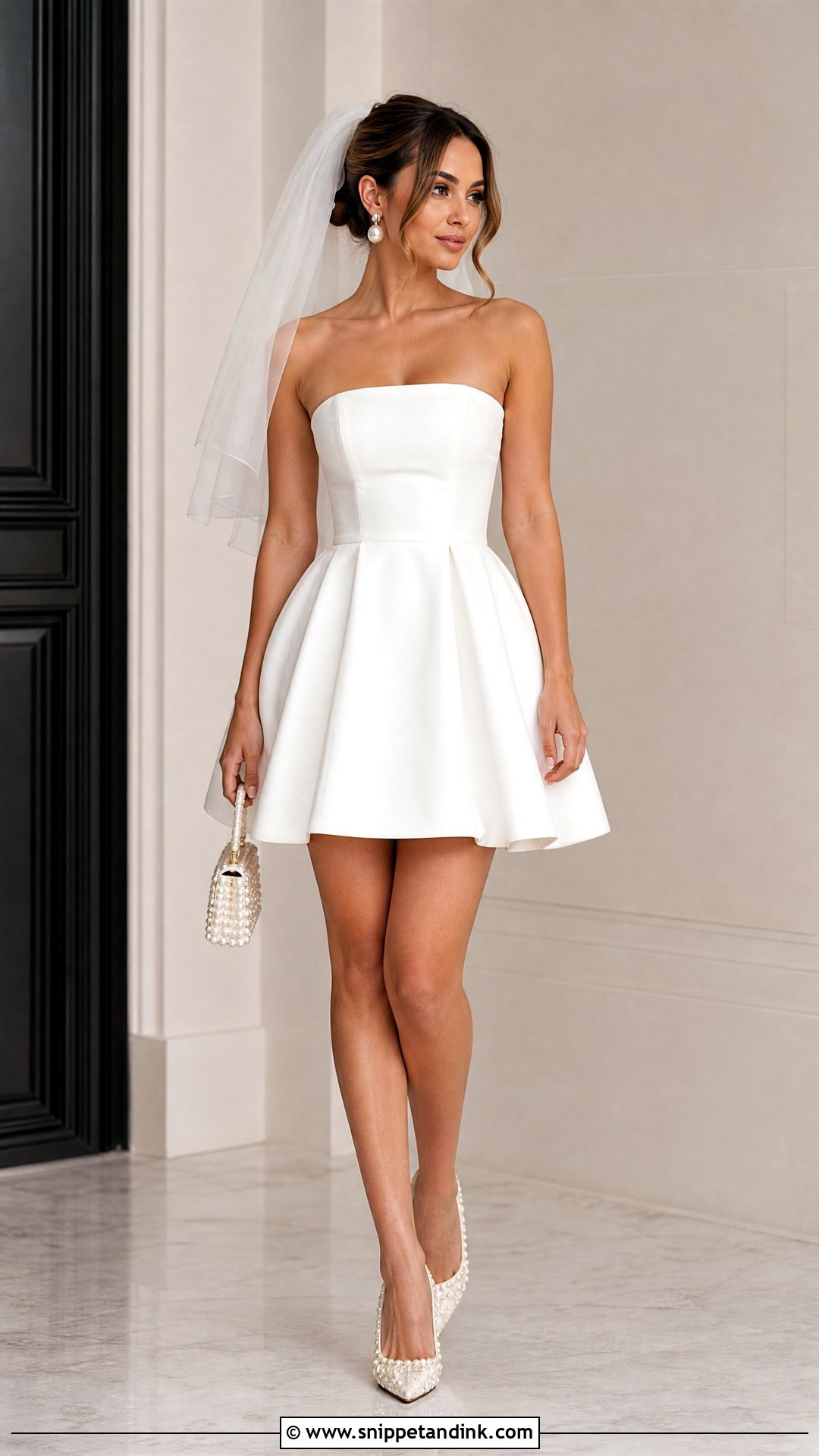
A mini wedding dress works for courthouse weddings, elopements and the after-party. The short hem puts your shoes on full display, so satin pumps, pearl heels or embellished flats deserve real thought. Long sleeves make a mini feel chic; feathers or bows make it festive. What keeps it bridal is fabric and finish rather than colour, so I look for crisp satin, crepe or structured lace over anything that could pass for a party dress.
14. Tea Length Wedding Dress
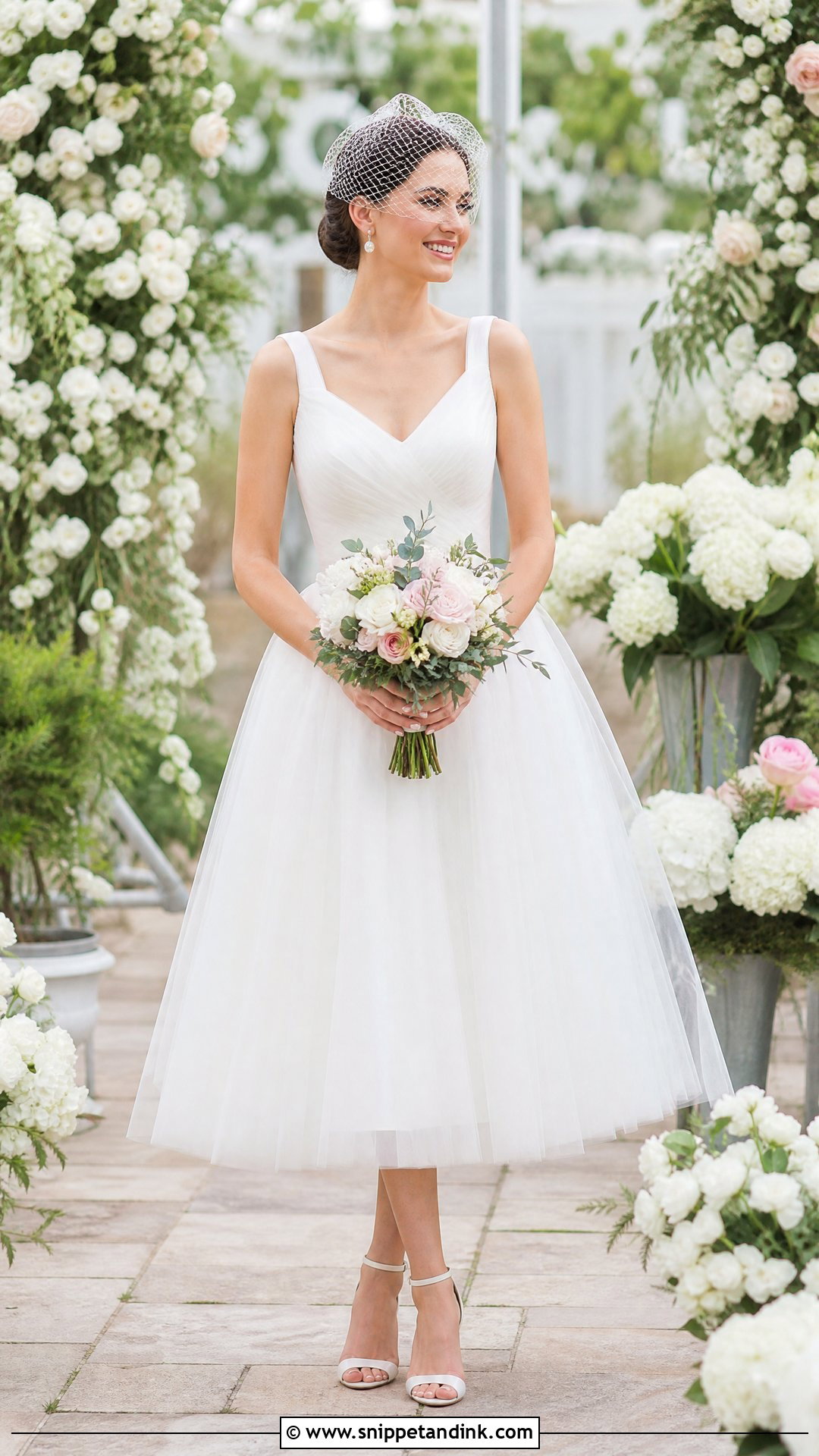
Tea length lands between knee and ankle and feels vintage without trying. It’s easy to dance in and practical for garden or brunch receptions. Because the hem sits on the calf, the shoes and the hem length have to be settled together; a pair of heels that’s a few centimetres taller changes where the skirt falls. Tulle feels retro, satin or jacquard more tailored. A birdcage veil and pearl earrings suit the era.
15. High Low Wedding Dress
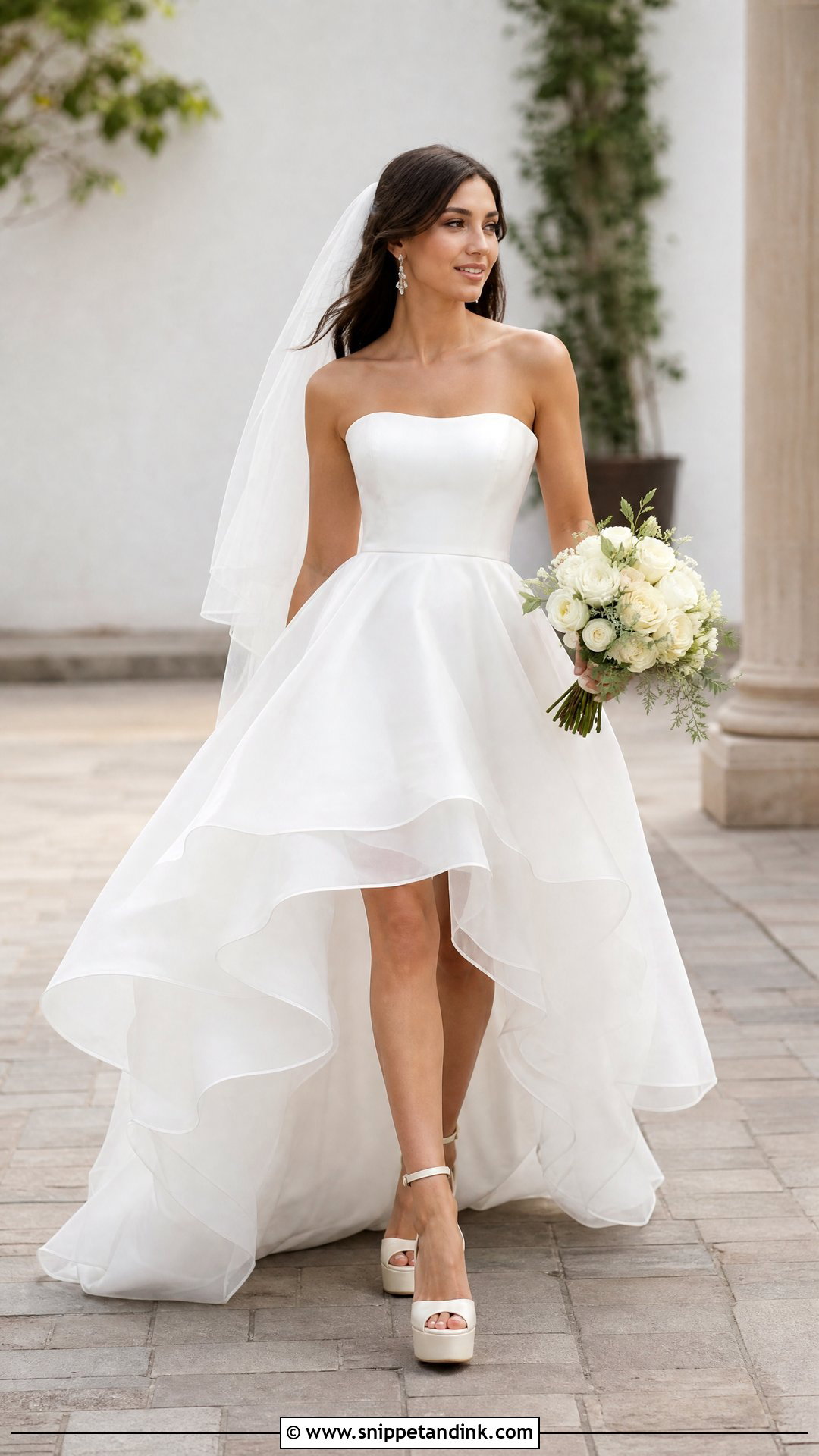
A high low wedding dress is shorter at the front and longer at the back, giving movement and a view of the shoes without a full train. The challenge is the length of the front hem. Too short reads cocktail; too long and it looks like a mistake. I mark it with the bride standing in her shoes, at a point that clears the ankle cleanly. Organza, tulle and satin hold the shape best, and a clean neckline balances a dramatic hem.
16. Two Piece Wedding Dress
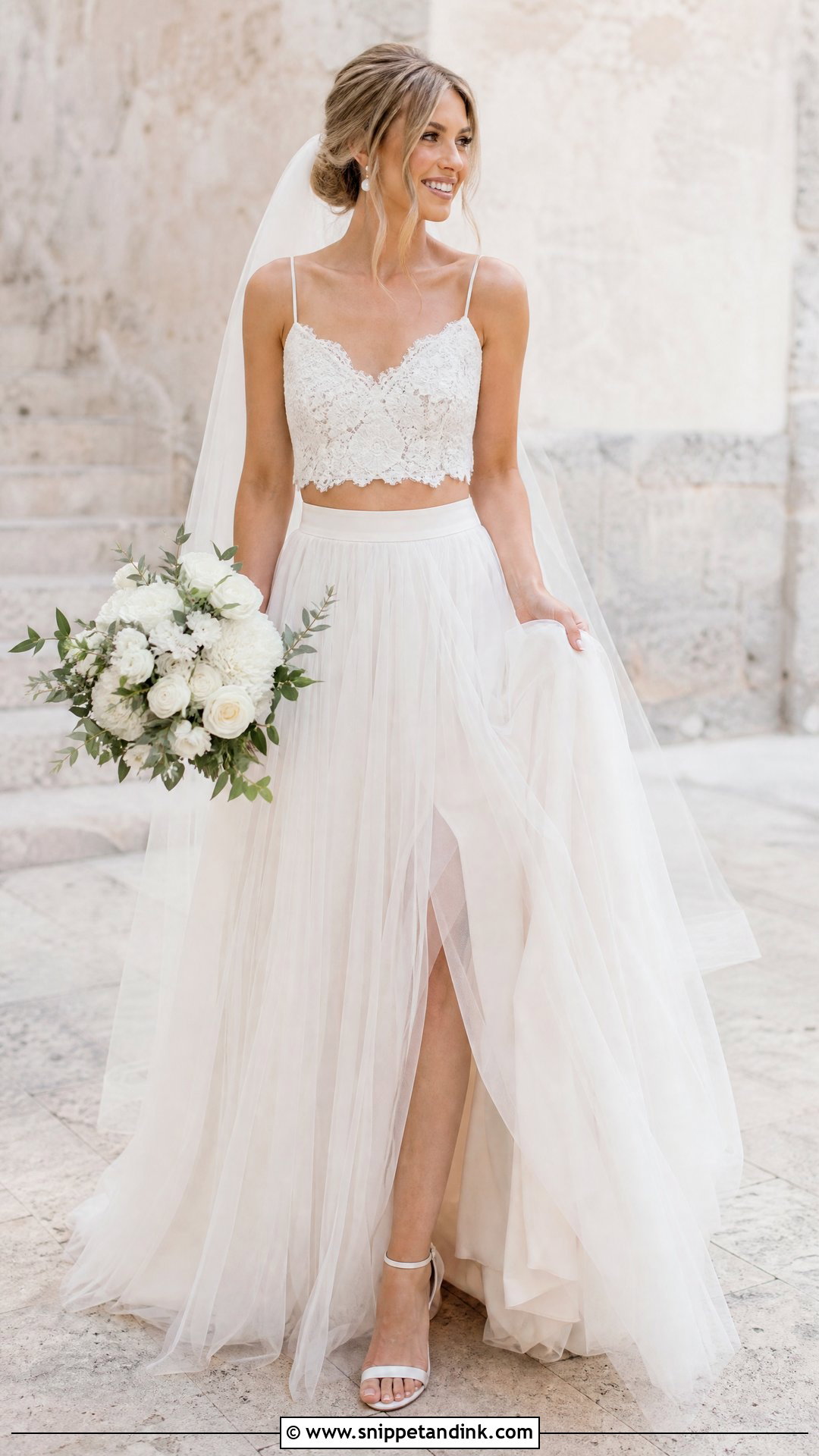
Two-piece dresses separate top and skirt, which solves a real fitting problem: if your top and bottom sizes differ, each piece can be bought and altered separately. A lace crop top with a high-waisted tulle skirt reads relaxed; structured satin over a slim skirt reads city. I check the gap between the pieces when the bride raises her arms, since a crop that shows a sliver of skin standing can show a lot more mid-dance. You can also swap one piece for the reception.
17. Corset Wedding Dress
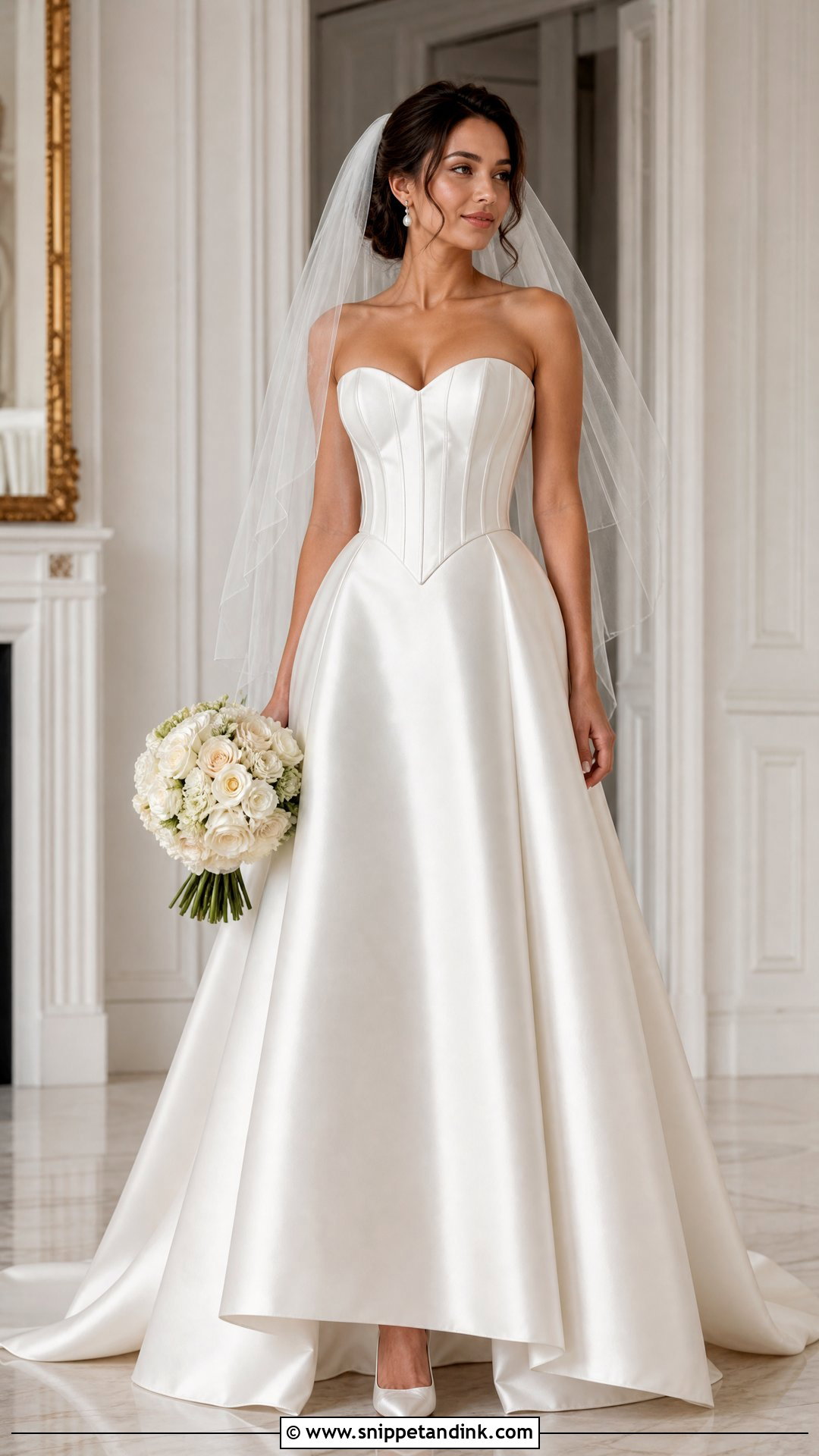
Corset bodices shape and support through internal boning. They should hold you firmly without pinching under the arms or digging into the hips when you sit. An A-line skirt makes the look timeless; a column skirt makes it editorial. Visible boning is a design statement, so the rest of the dress should stay simple. I’d lace a corset to its wedding-day tightness at the final fitting and keep it on for half an hour, because comfort changes after the first few minutes.
18. Off The Shoulder Wedding Dress
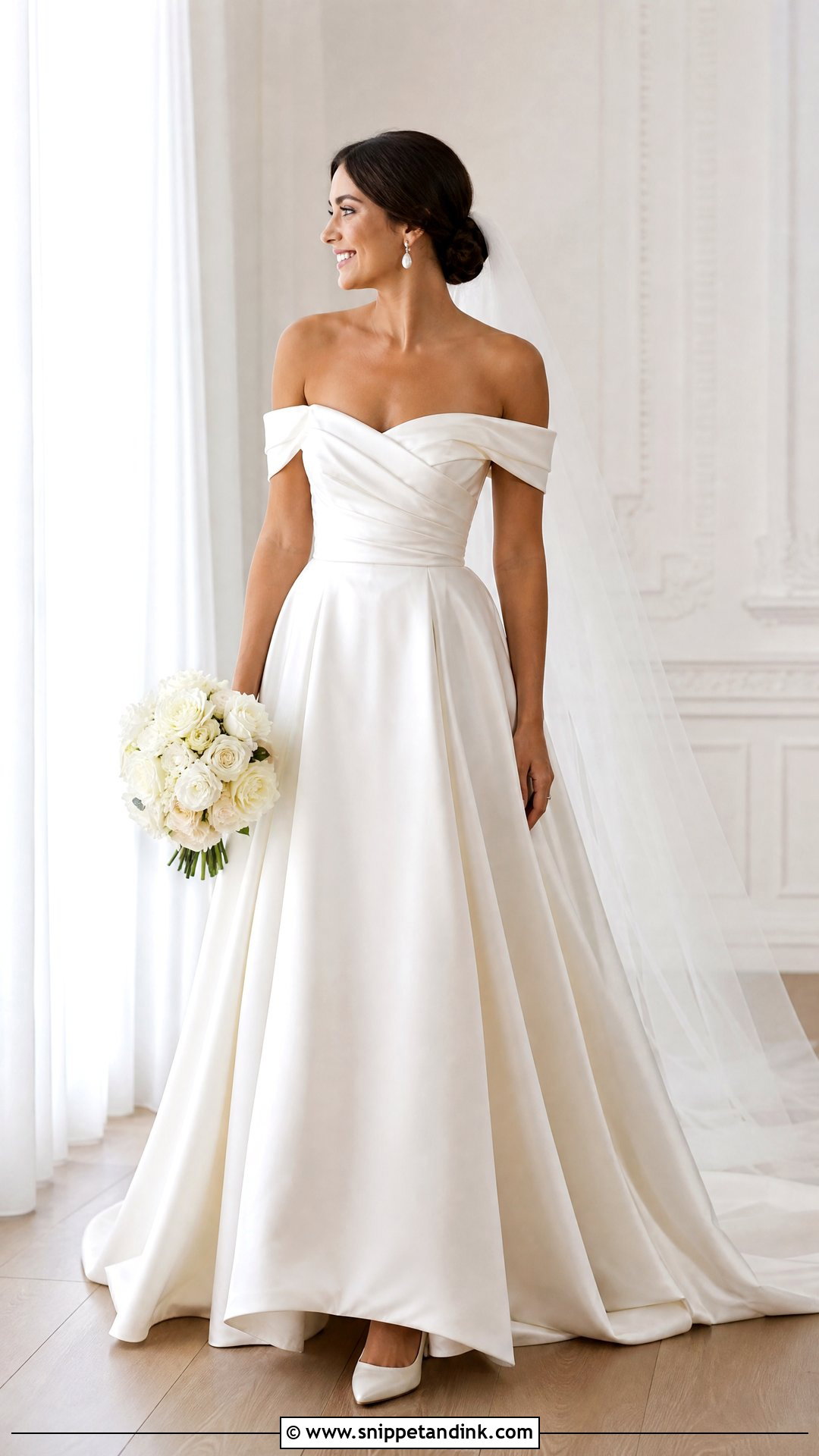
Off-shoulder necklines frame the collarbone and work with almost any skirt. They limit arm movement, though, and how much depends on how tight the band sits around the upper arm. Lift your arms at the fitting; if the bodice moves with them, it needs adjusting. A low bun and drop earrings keep the shoulder line clean, so skip the necklace.
19. Square Neck Wedding Dress
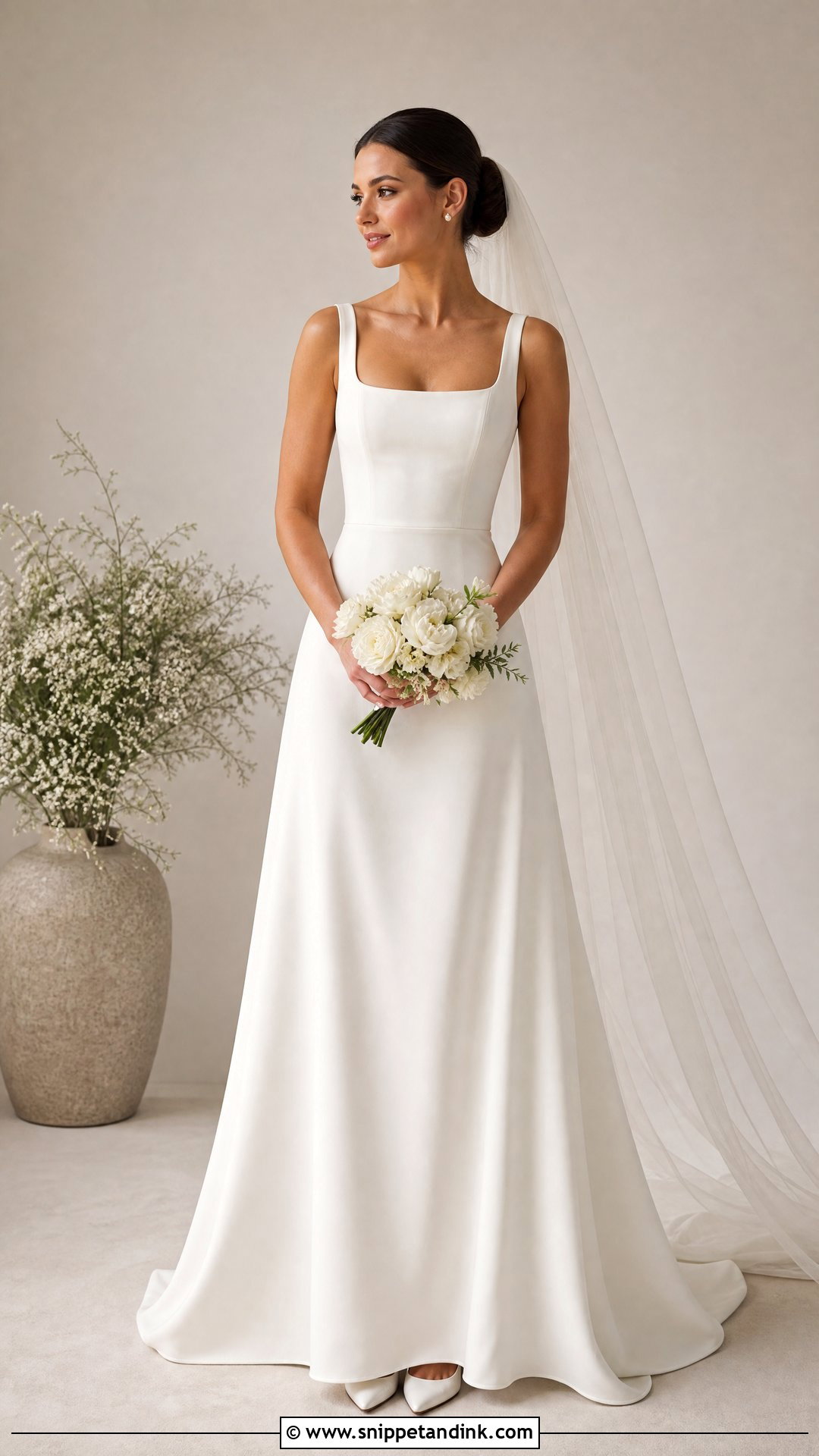
Square necklines are structured without fuss, and they suit fitted, A-line, column and ball gown shapes alike. They balance plain fabrics nicely. In crepe the look is modern; in lace it’s romantic. I check the corners at the fitting, since they can gape when you lean forward, and a small dart fixes it. Pearl studs and a smooth bun finish it neatly.
20. Halter Wedding Dress
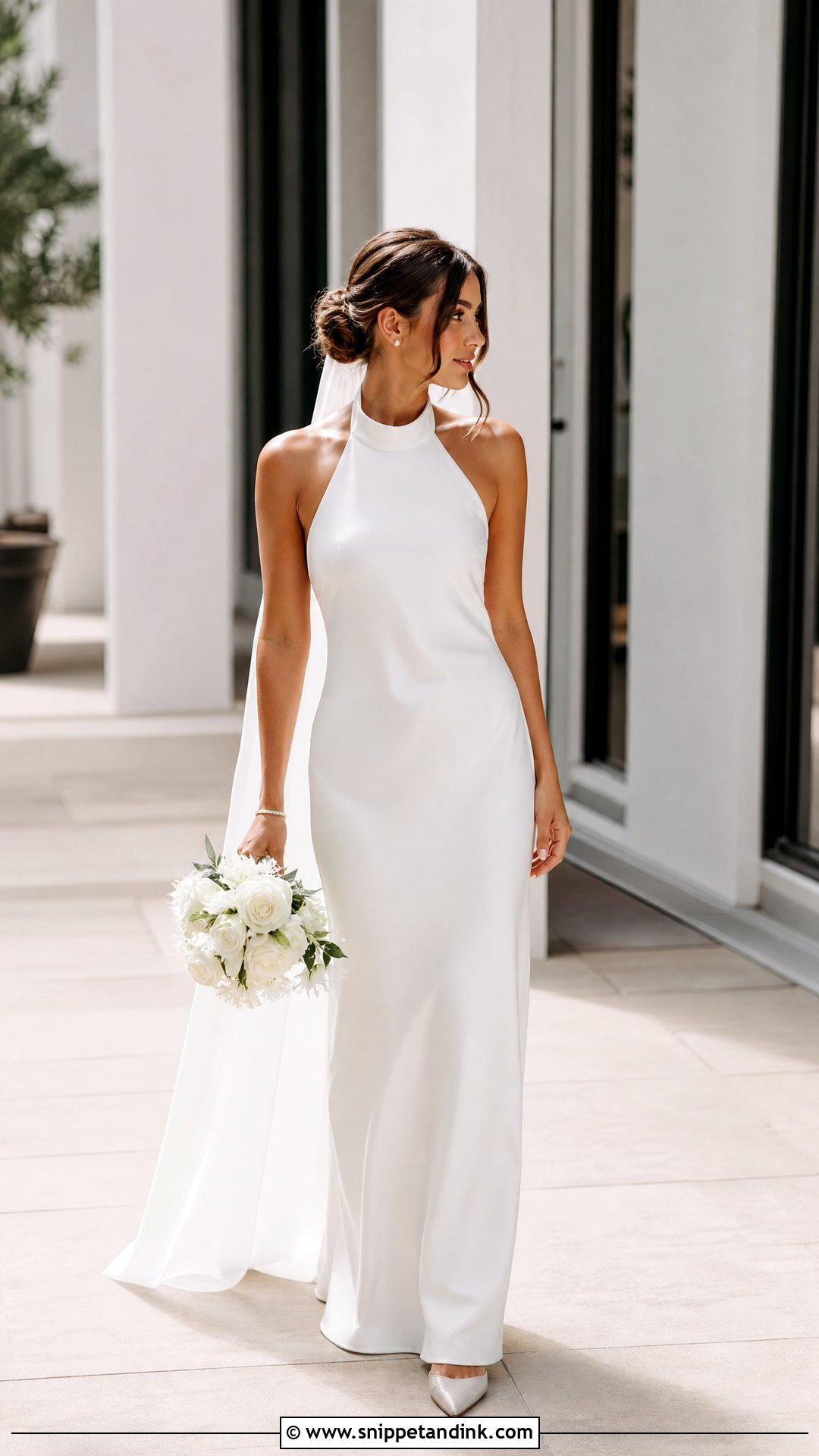
Halters pull the eye upward and give strong support from the neck rather than the shoulders, which many fuller-busted brides find comfortable. A satin halter column feels sleek; a lace halter A-line is softer. The neckline is the statement, so earrings or a bracelet are enough. I’d check the neck strap after an hour, since a halter that fits perfectly in the shop can start to pull on the neck over a long day if the bodice relies on it for all the support.
21. Long Sleeve Wedding Dress
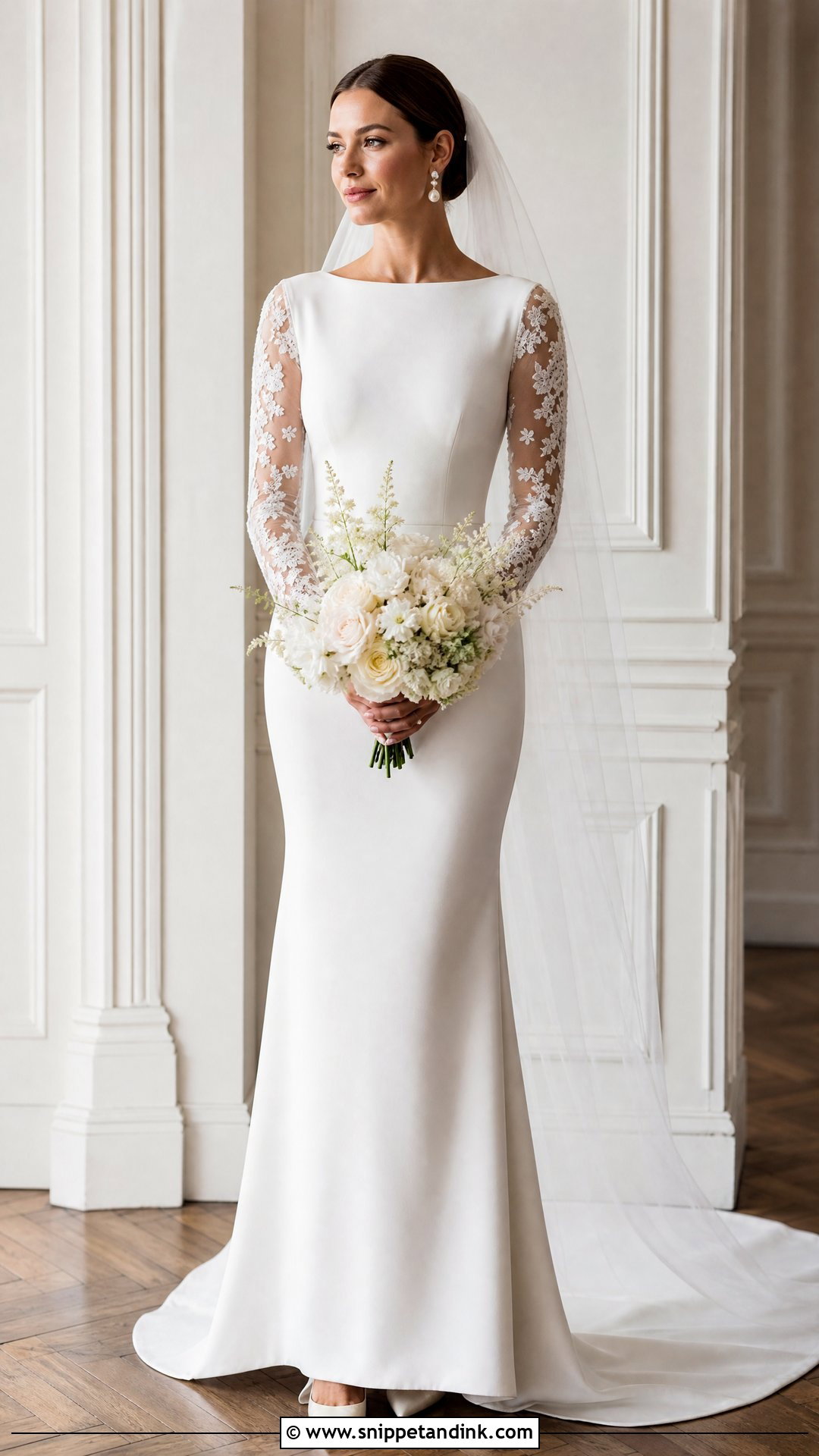
Long sleeves cover and frame at once. Sheer lace, fitted crepe, puffed organza and smooth satin each set a different mood. The fit at the armhole decides whether you can hug people; I ask brides to reach forward and cross their arms during fittings. Detailed lace sleeves call for simple jewellery; plain crepe can take a statement earring. They work on sheath, A-line, ball gown and fit and flare shapes, especially in cooler months.
22. One Shoulder Wedding Dress
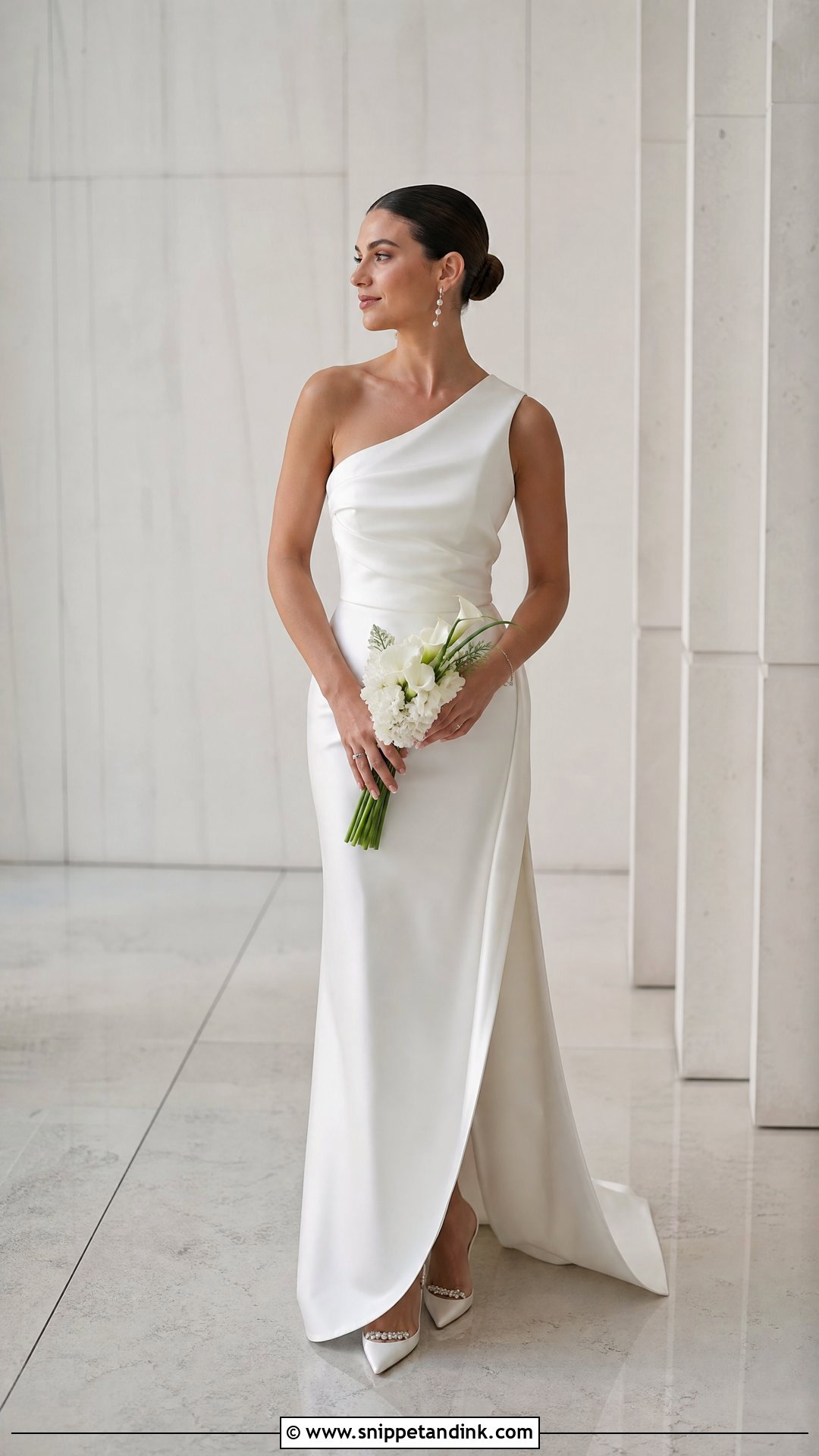
One-shoulder dresses create a diagonal line across the body, and that one detail becomes the focal point. Column, sheath, fit and flare and A-line shapes all carry it. Satin and crepe keep the line crisp; chiffon softens it. I’d keep the hair up and the earrings sleek so nothing competes with the shoulder. It’s a good alternative if strapless feels insecure but you still want bare skin.
23. Cape Wedding Dress
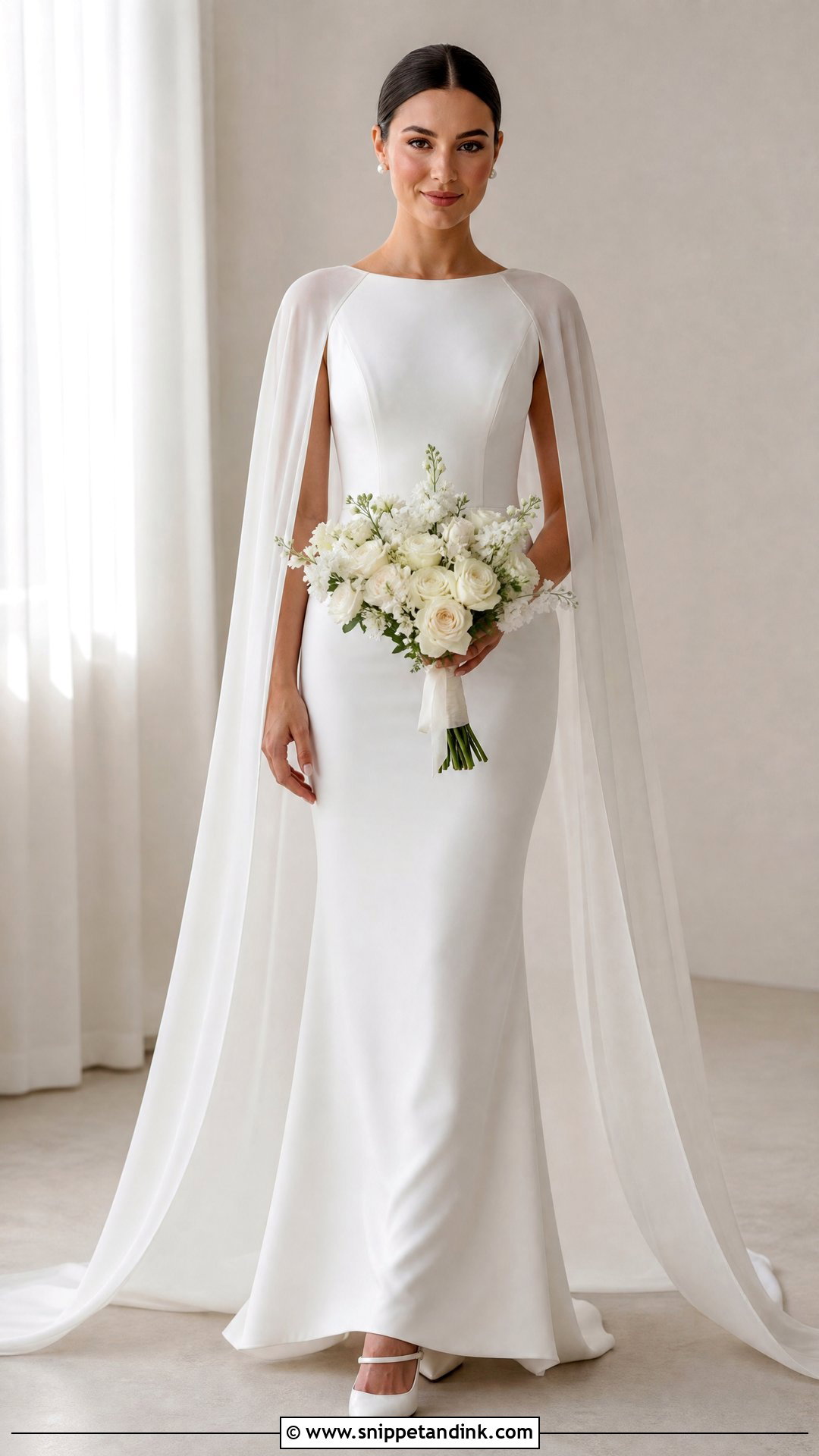
A cape gives you movement and drama without a veil to manage all day. It can be sheer, lace, beaded or plain crepe, and it may attach at the shoulders, neckline or back. Slim column, sheath or clean A-line gowns leave it room. Look at how it attaches: hooks under the shoulder seam are more secure than ties at the neck, which can pull. A removable cape gives you a ceremony look and a lighter reception one.
24. Overskirt Wedding Dress
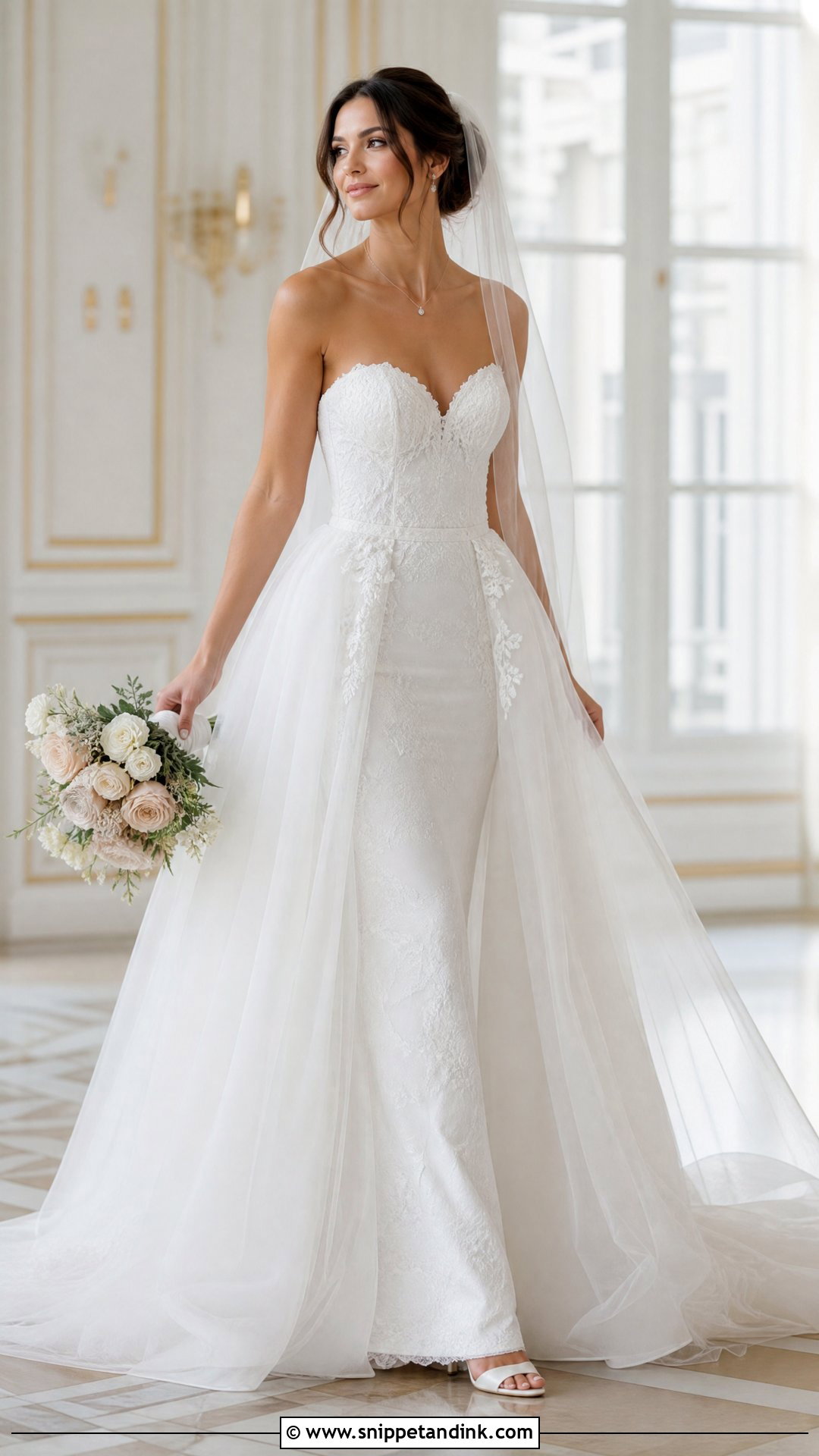
An overskirt sits over a slimmer base gown, so you get two looks from one dress. Usually the base is a sheath, column, mermaid or fit and flare, and the removable overskirt adds volume for the ceremony. Tulle feels romantic; mikado feels structured. The waistband of the overskirt adds bulk at your middle, so I check the fit of both layers together and separately at every fitting. Practise taking it off with whoever will help you on the day.
25. Jumpsuit Wedding Dress
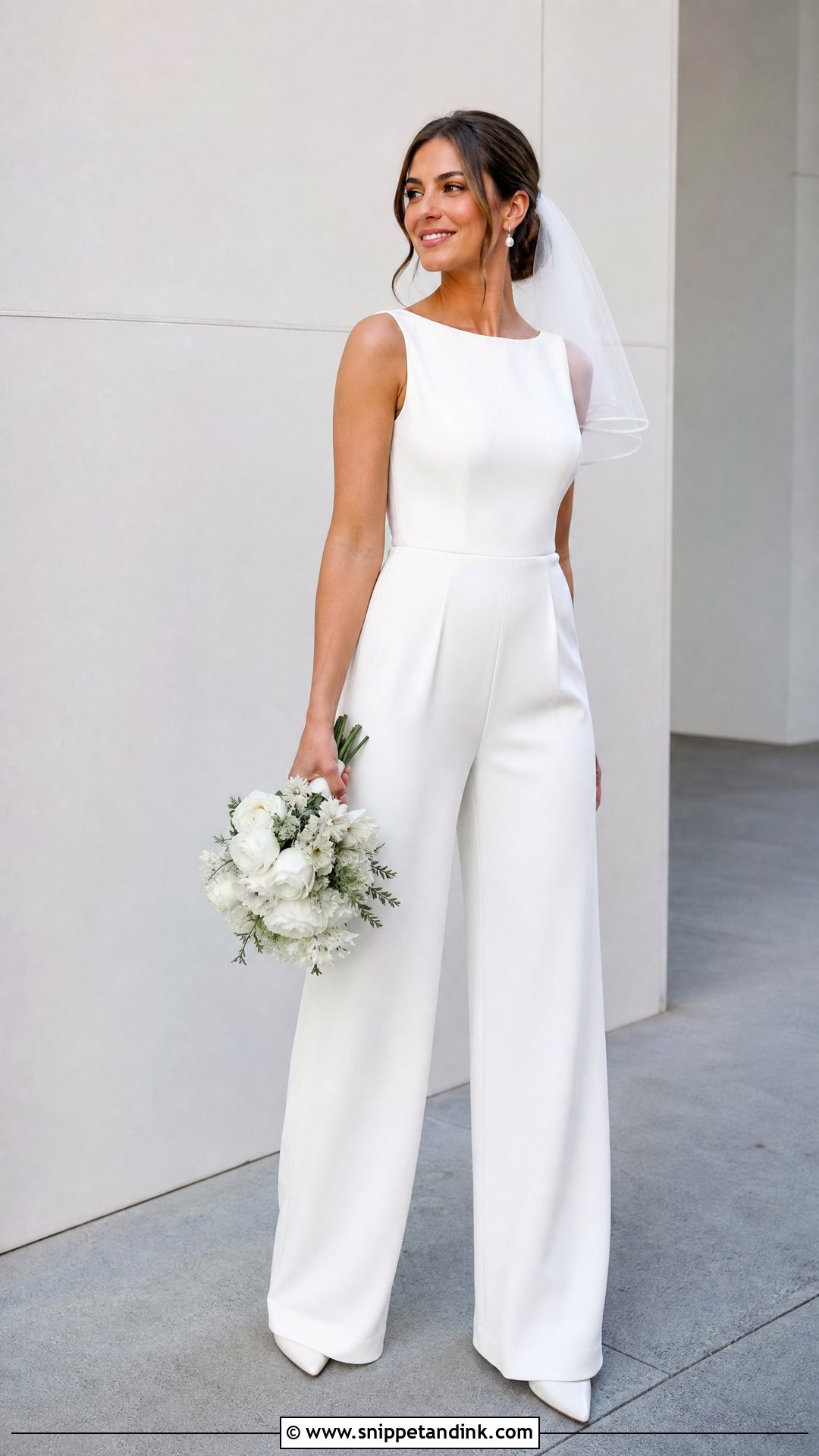
A bridal jumpsuit isn’t a dress, but many brides now ask about one alongside their gown options. A white wide-leg jumpsuit looks clean and confident. The fitting point people forget is the rise, the seam from front waist to back waist, which must be long enough to sit and dance in without pulling. Lace, crepe, satin and mikado all work. Pointed heels, a short veil or cape and a structured bouquet make it feel bridal for a courthouse or city wedding.
How Much Each Silhouette Can Be Altered
Every shape can be tailored, but some forgive much more than others. That matters if your measurements are between sizes or might change before the wedding.
- A-line, ball gown and empire waist: the most forgiving. The bodice takes in or lets out at the side seams, and the skirt rarely needs work beyond hemming and a bustle.
- Sheath, column and slip: easy to take in, harder to let out, since there’s often little spare fabric in the seams. Bias-cut slips need a dressmaker who knows the fabric.
- Mermaid and trumpet: the flare point is built into the pattern, so moving it is a major job. Choose the version where the flare already sits where you want it.
- Corset and basque: boning can be adjusted, but a bodice that is the wrong length in the torso is hard to fix. Make sure it sits right on you in the shop.
Months, Not Weeks: From Order to Final Fitting
Made-to-order gowns commonly take several months to arrive, and timings vary a lot between designers, so ask the shop for its own estimate before you sign. Alterations then usually need two or three fittings spread over the last couple of months. Heavily structured shapes like mermaids and corsets tend to need more fitting time than an A-line or sheath.
My advice is to settle on a silhouette early, even if the exact dress comes later. Knowing the shape narrows your shopping, lets you plan shoes and undergarments, and leaves room for the fittings that decide how the dress actually feels on the day.
The Silhouette That Feels Right When You Move
The right shape supports your body, suits your venue and still feels comfortable when you walk, sit and dance. Try more than one silhouette, including at least one you assume you’ll dislike. Pay attention to how the waist sits, how the fabric behaves and how the gown works with your shoes, veil and hair. From A-lines to jumpsuits, the list above is a starting point; your appointment is where the real choice gets made.
You'll Like These Ideas:





Leave a Reply