
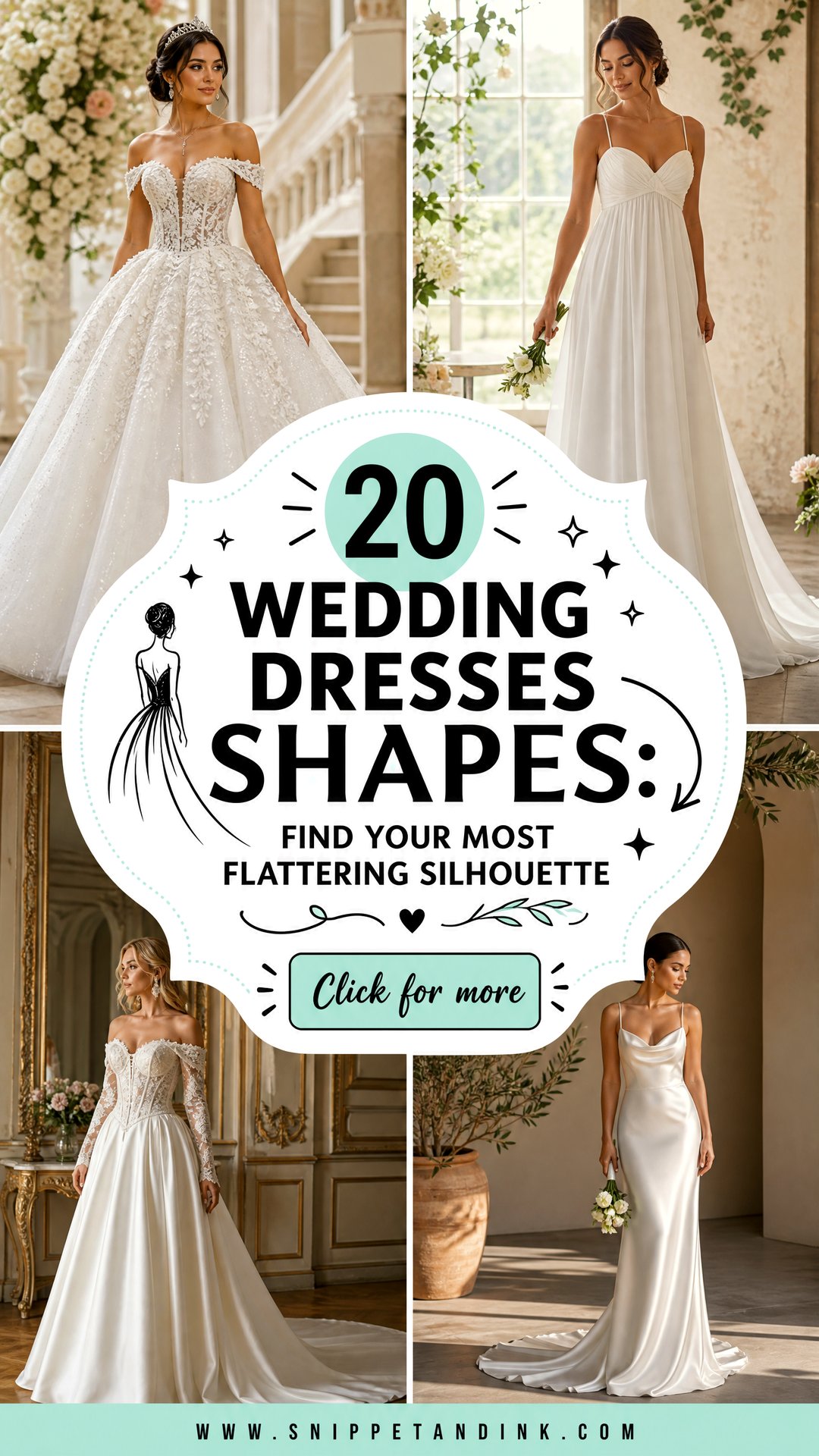
Learning the main bridal silhouettes gives you a shared language with your consultant before you set foot in a fitting room. A dress shape is the gown’s outline: where it hugs the body, where it releases and how the skirt falls. I don’t fit by body-type rules. Comfort, movement, venue and taste decide it, and fabric, waist placement, train length, sleeves and understructure all shift how a shape looks once it’s on. Below are twenty shapes, each with notes on how it is built and what I check when a bride tries it.
Reading a Sample Gown When It Isn’t Your Size
Bridal shops usually stock each design in one or two sample sizes, so the gown you try is often clipped at the back or left partly open. That’s normal, and it means learning to look past the clips. These are the things I watch while a bride tries contrasting shapes:
- Where the dress releases from your body. Waist, hip, thigh or knee, that one point decides most of how a shape reads on you.
- How it moves as you walk toward the mirror, not only how it looks standing still.
- Whether you keep hitching the bodice up. That usually means the support suits someone else’s frame, not that you need a smaller size.
- How it feels seated. Fitted shapes that are fine standing can be miserable at a dinner table.
Try one A-line, one fitted shape and one full skirt early in the appointment, even if you’re sure of your answer. The contrast teaches you more than five versions of the same outline.
1. A-Line Wedding Dress
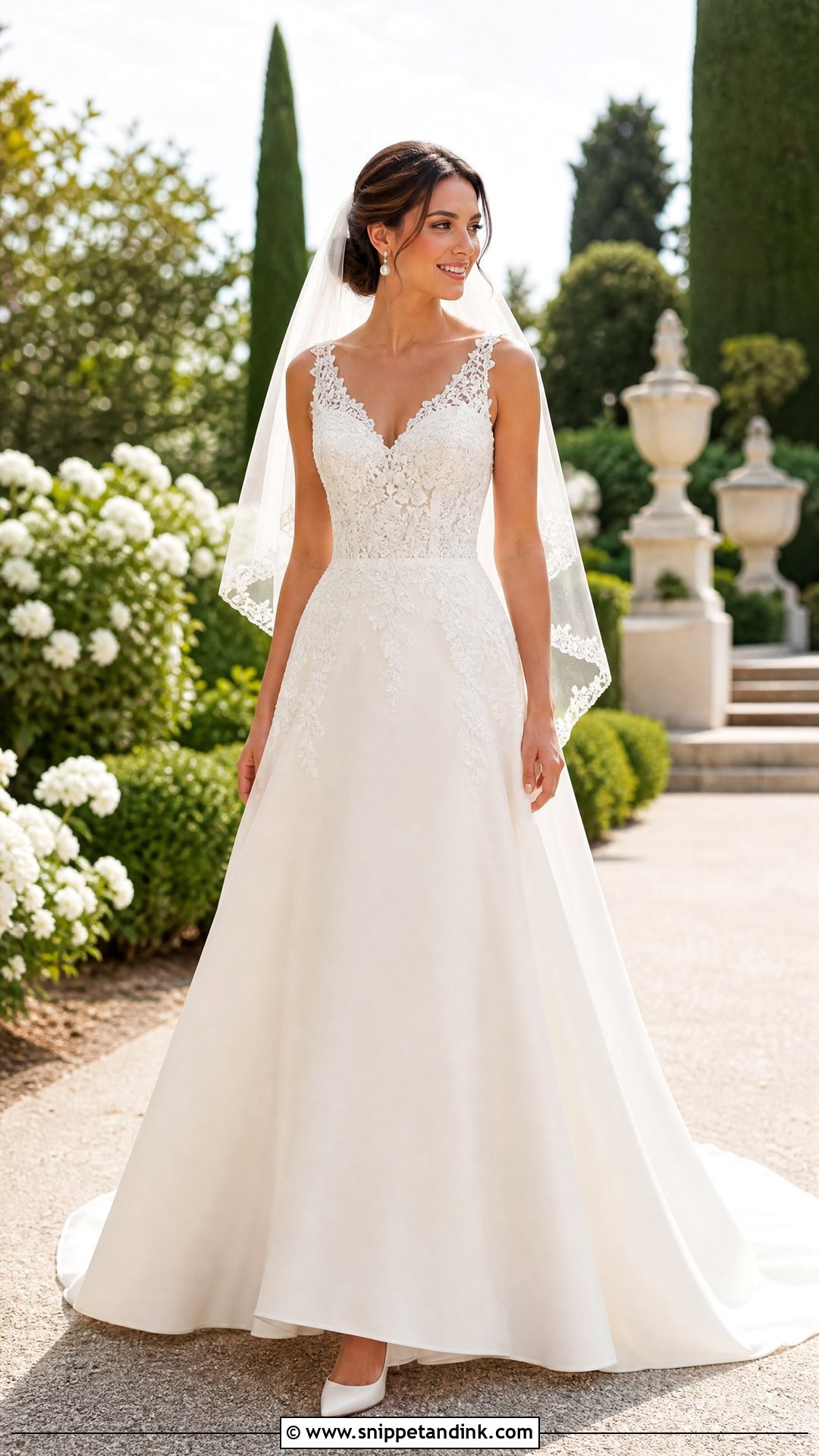
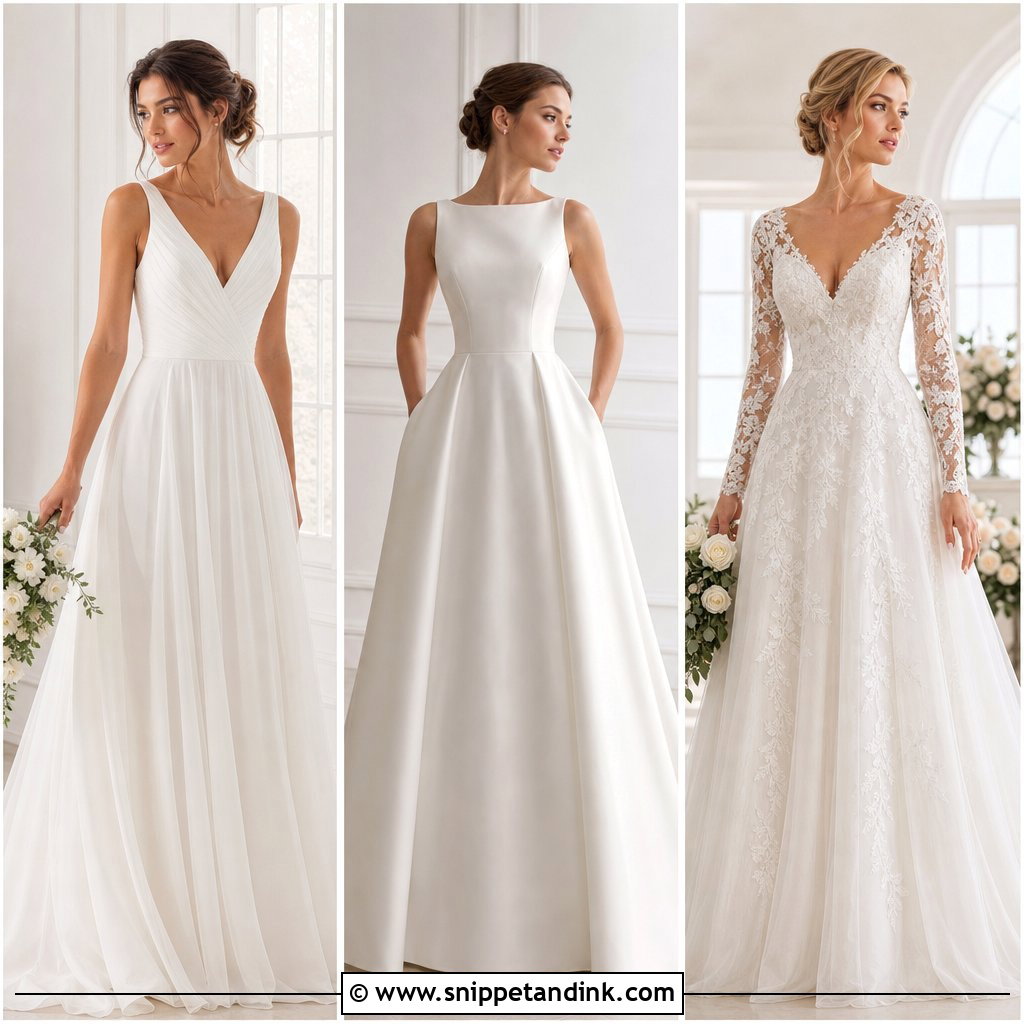
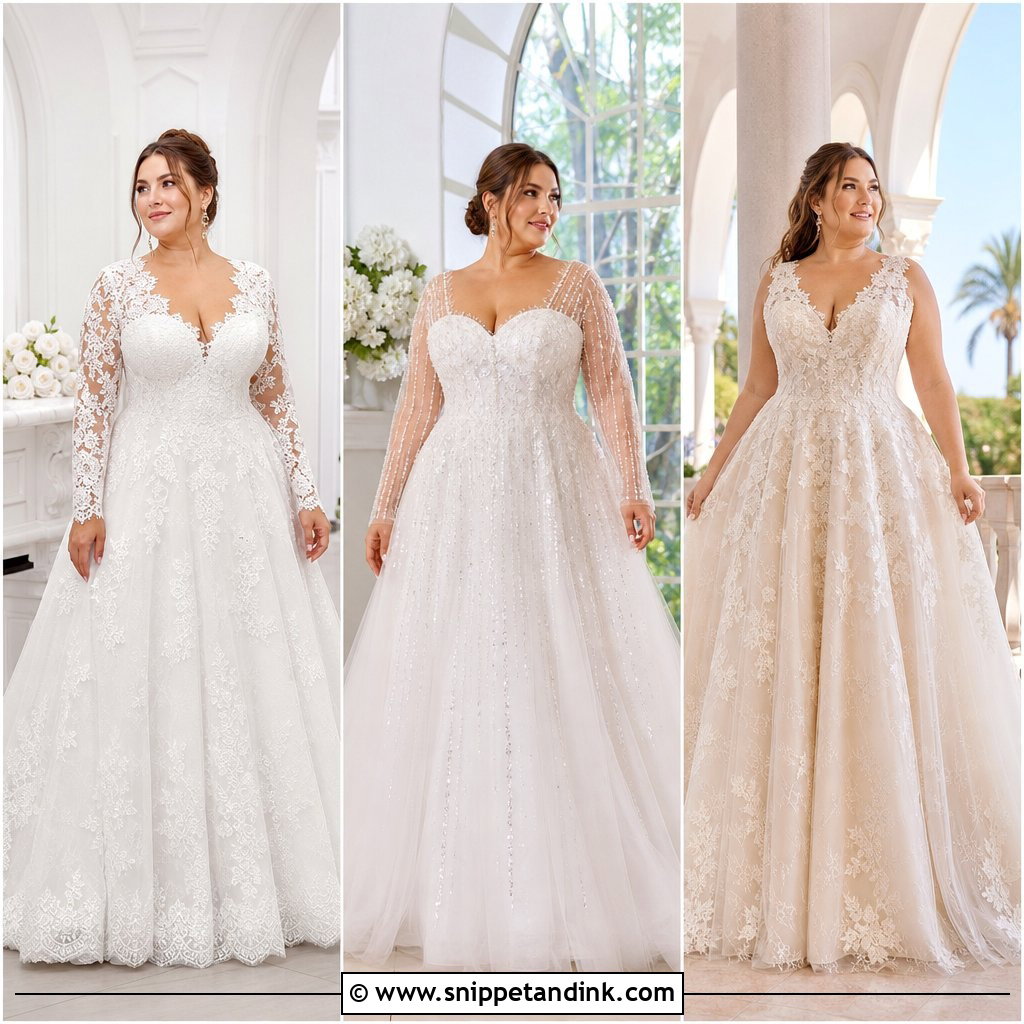
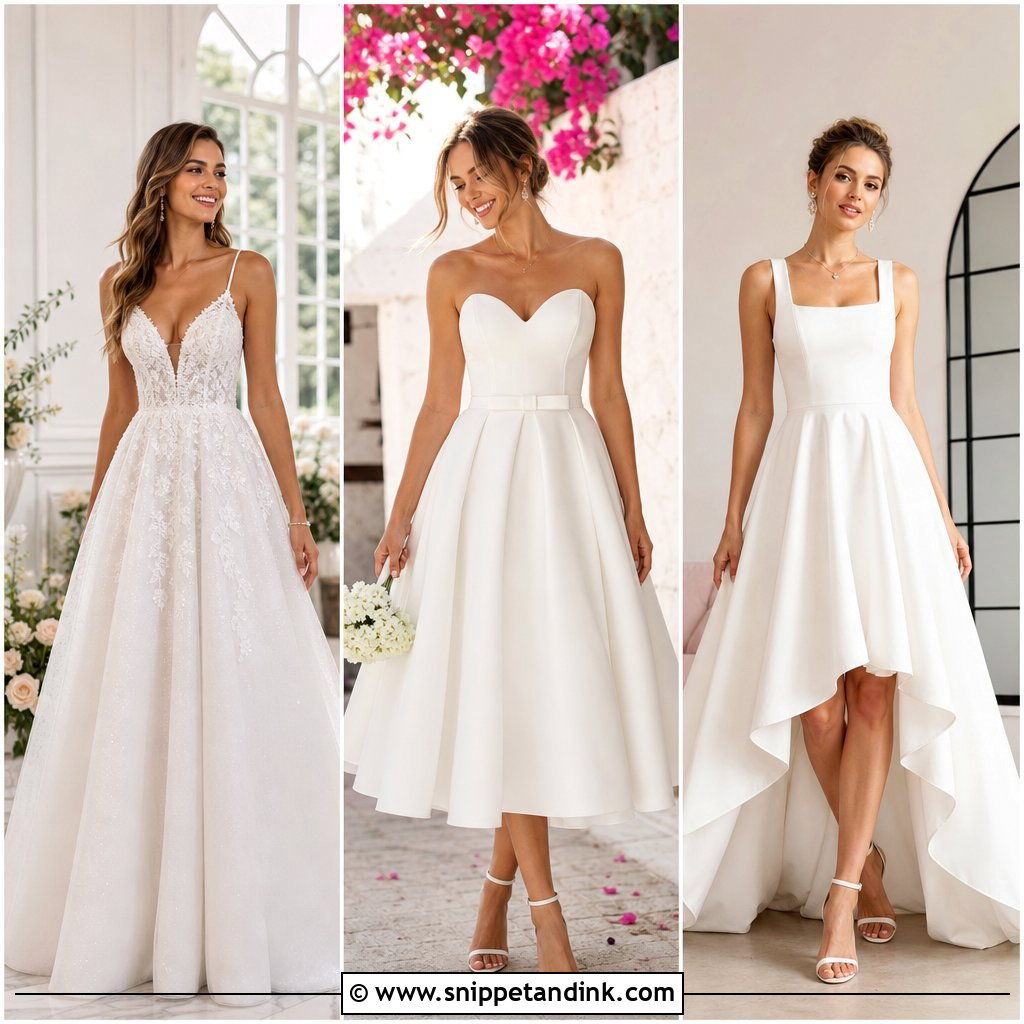
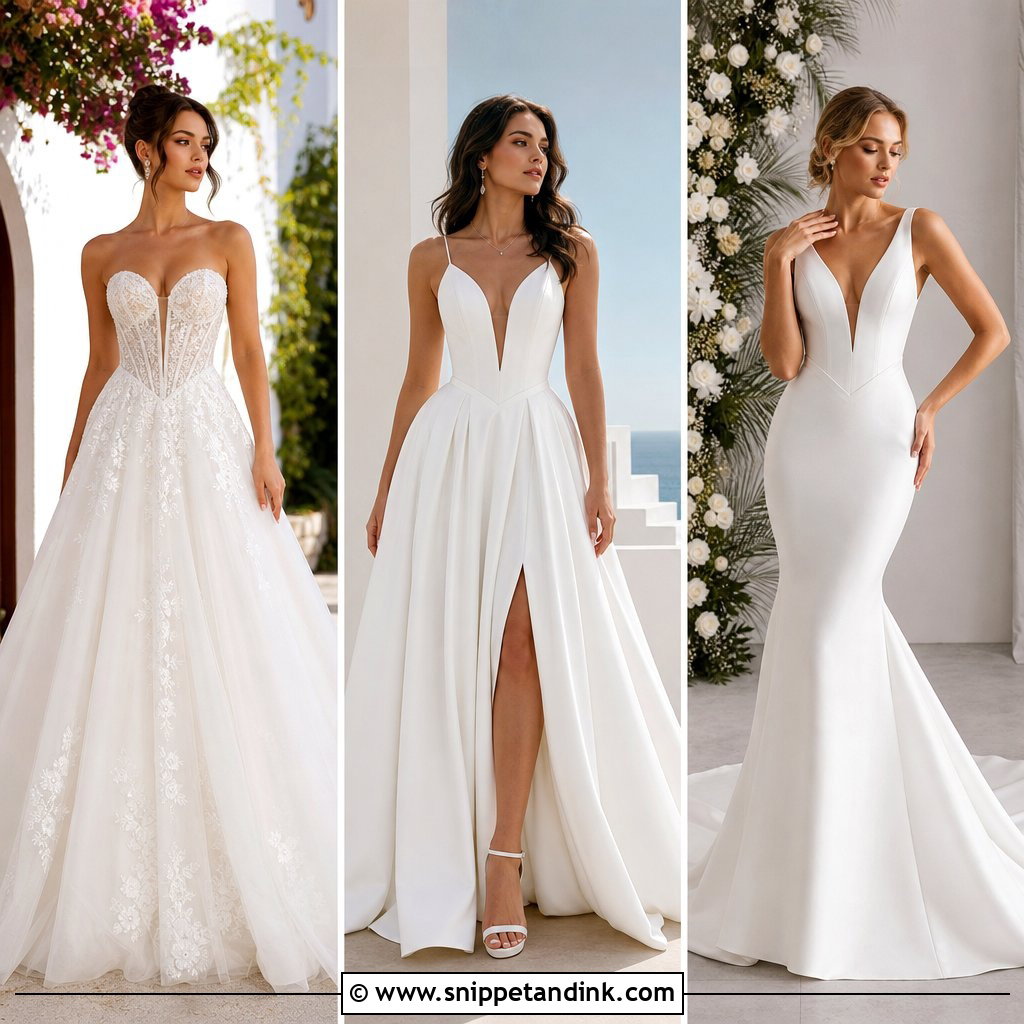
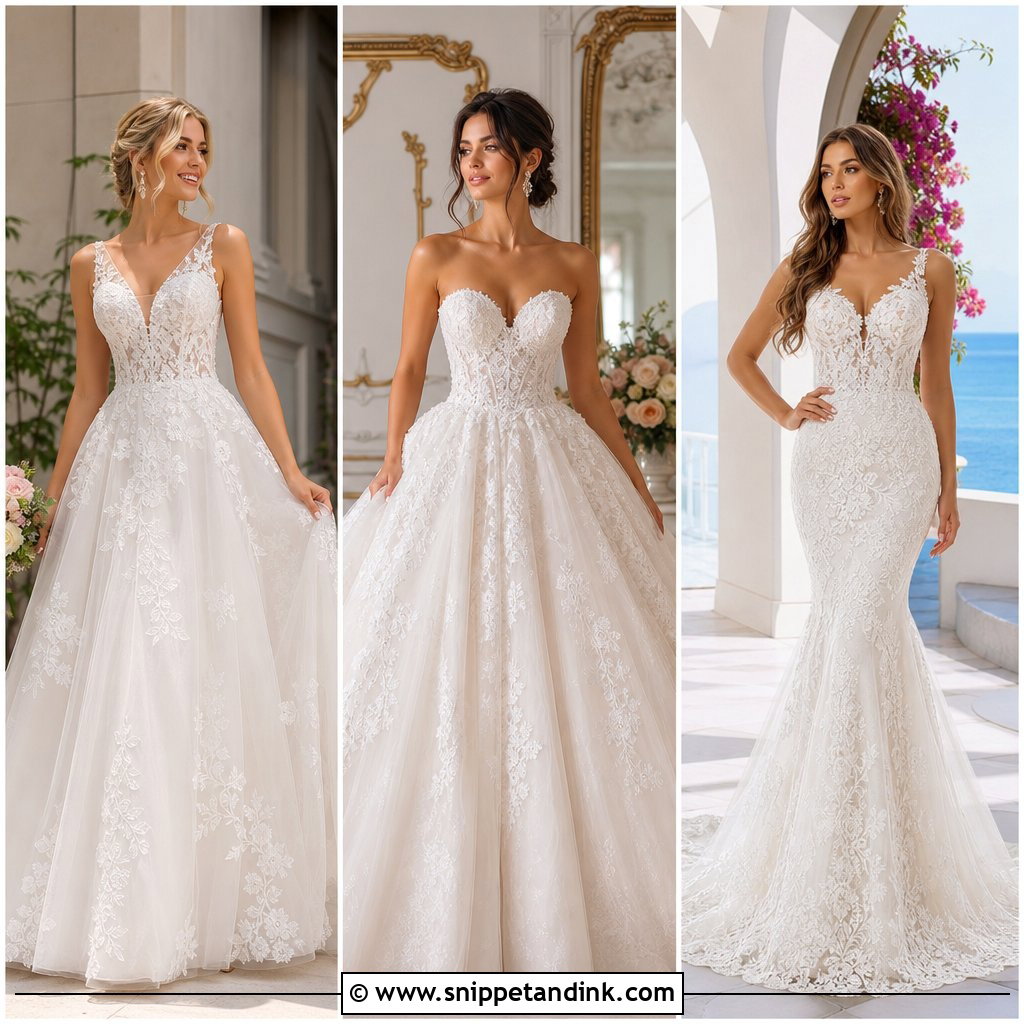
The A-line fits through the bodice and widens gradually to the floor, like a capital A. It moves more freely than a sheath and carries far less volume than a ball gown, which is why it’s the shape I pull first for brides who don’t know where to start. It takes almost any fabric: lace, chiffon, organza, satin or structured mikado. A V-neck lengthens the torso, and a square neckline looks cleaner and more modern. For an outdoor ceremony I’d choose a lighter skirt without heavy petticoat layers, since they trap heat. At alterations, I watch the waist seam for ripples and keep the hem just clear of the shoe so walking doesn’t flatten the flare. Pointed pumps, pearl earrings and a fingertip veil suit it.
2. Ball Gown Wedding Dress
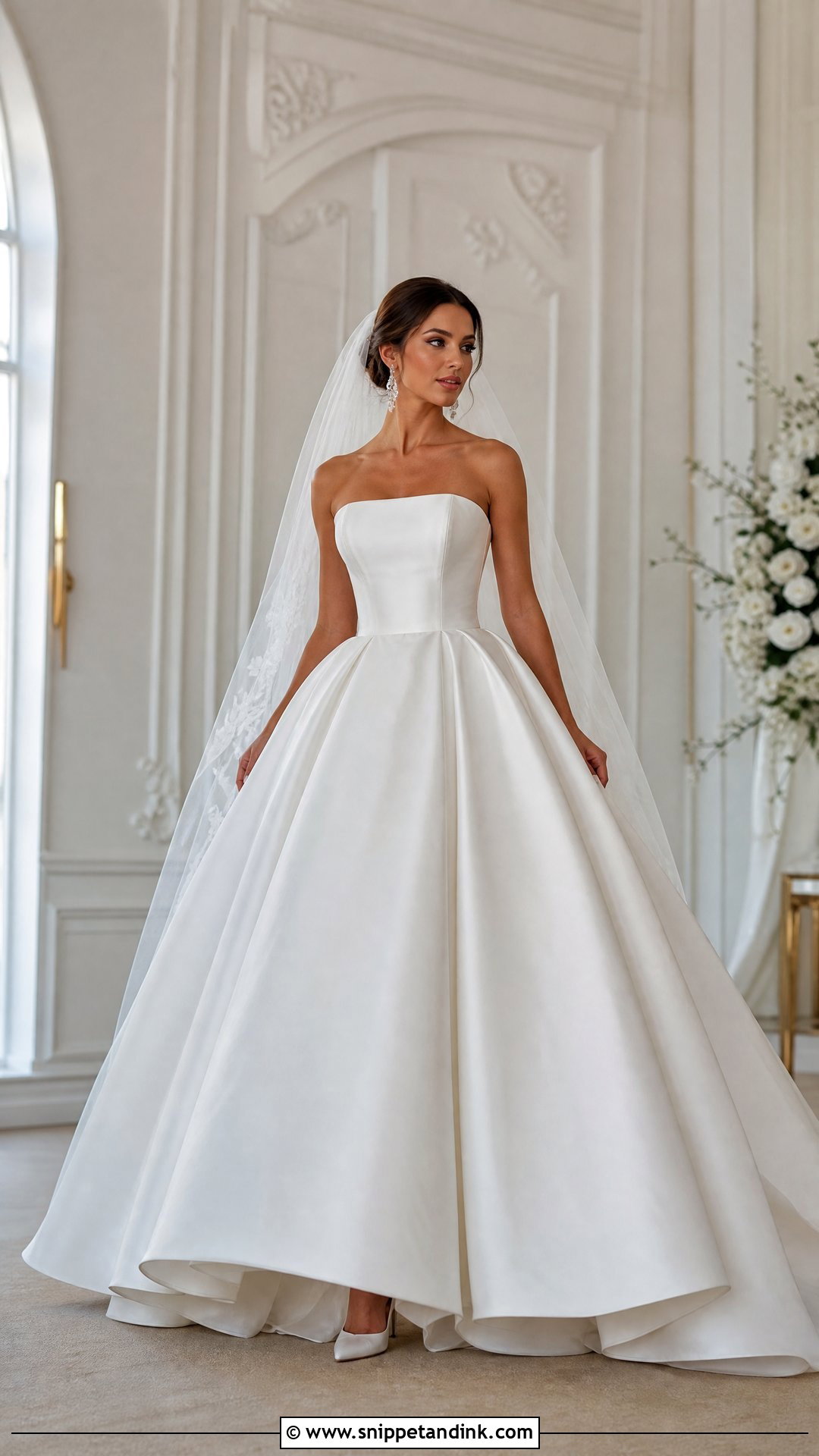
A ball gown is the strongest contrast on this list: a close bodice meeting a wide skirt held out by tulle, crinoline, pleats or layered fabric. That contrast is what defines the waist. Strapless and structured feels classic, while sleeves and a higher neck add coverage. Petite brides can absolutely wear one, but I keep the volume controlled and the fabric lighter so the skirt doesn’t swallow them. Practice sitting, turning and climbing stairs in the sample. The skirt needs far more room than you’d guess, especially getting through car doors and down narrow aisles. Keep jewelry simple and size the veil to the skirt.
3. Princess Wedding Dress
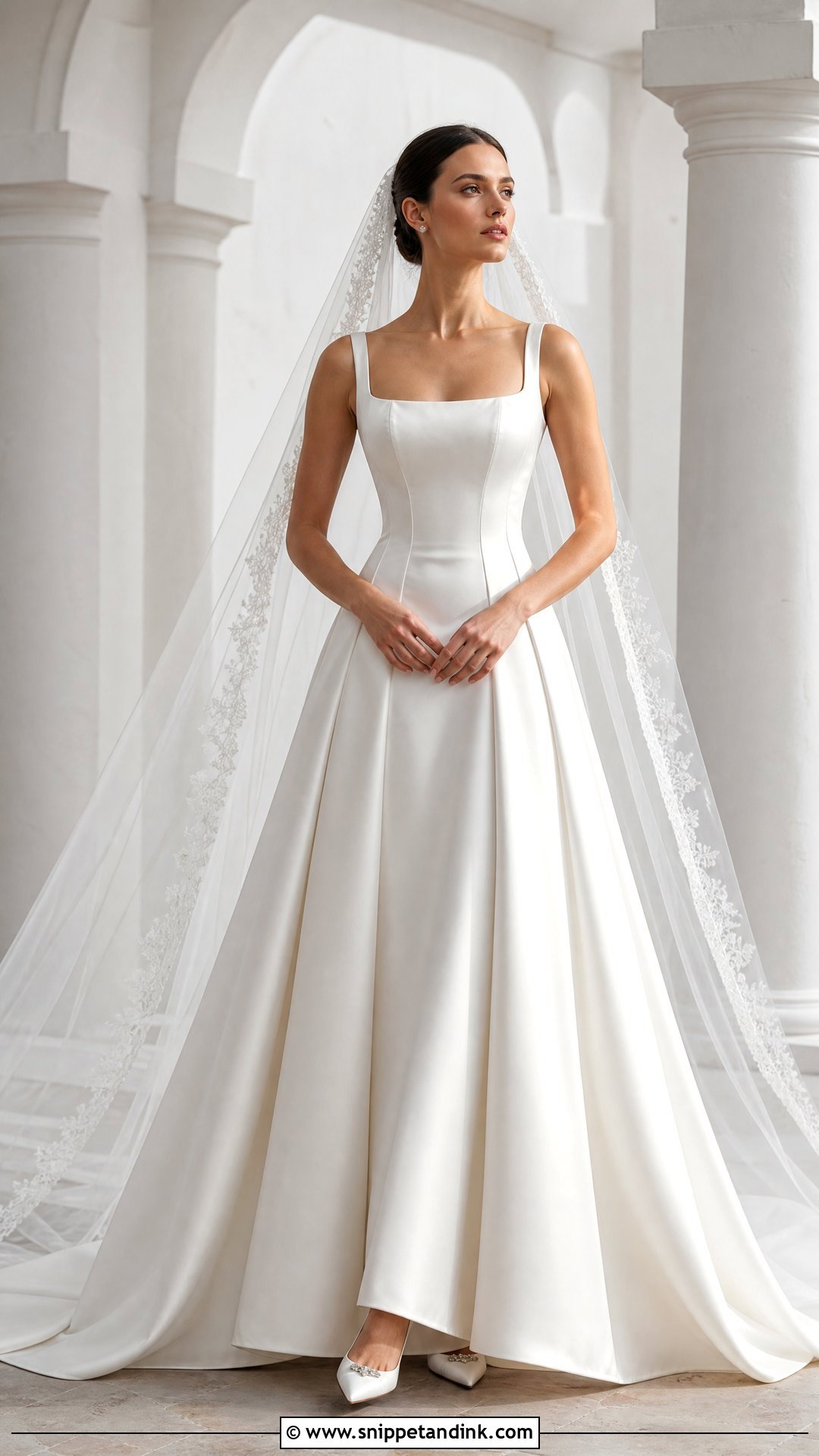
Long vertical seams give the princess wedding dress its streamlined look. Instead of a horizontal waist seam, the gown is shaped by panels running from bodice into skirt, contouring the torso before opening into a soft or moderately full hem. For a seamstress those panels are a gift, because each one can be taken in a little and the fit can be very precise. Smooth satin keeps it minimal; lace-covered panels add texture. Ask your tailor to check every panel line from the front, side and back, since a seam that wanders off center is obvious. A cathedral veil suits a formal setting, and a shorter veil lightens it.
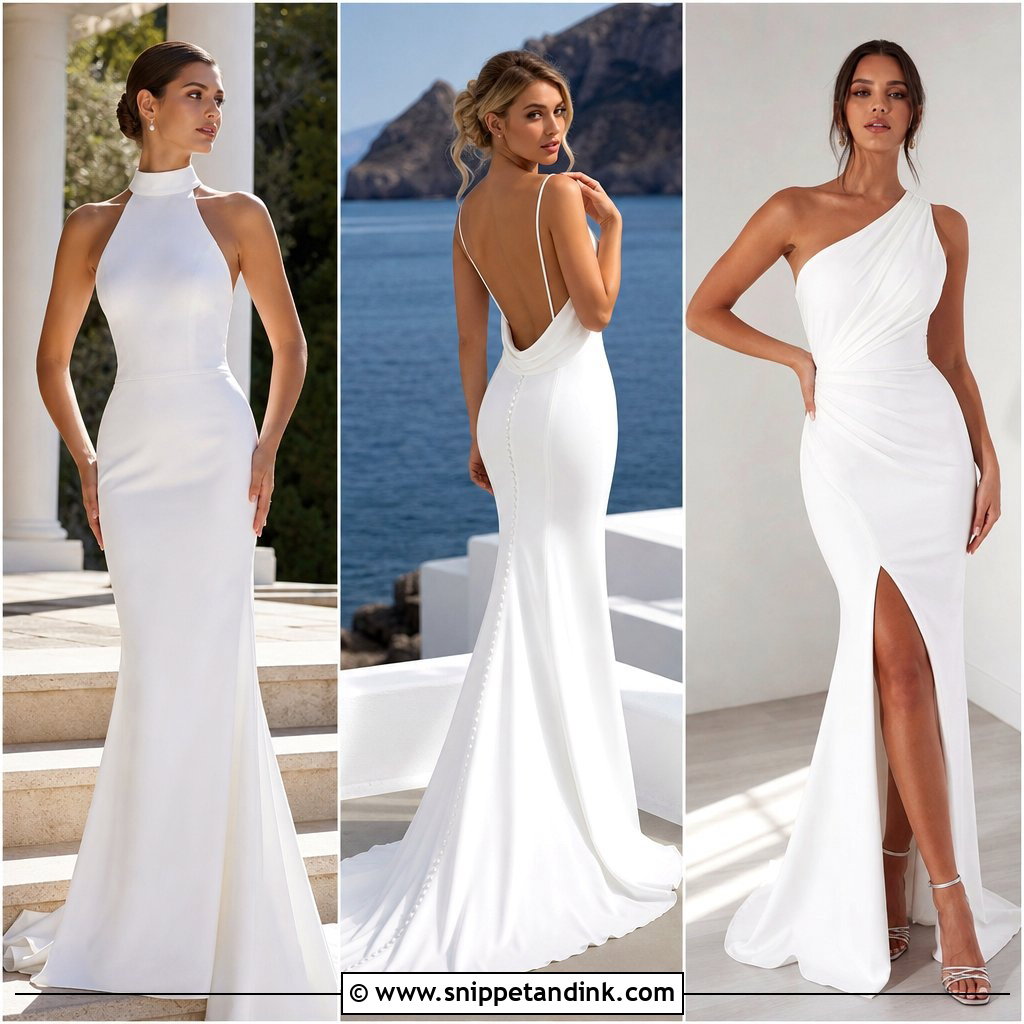
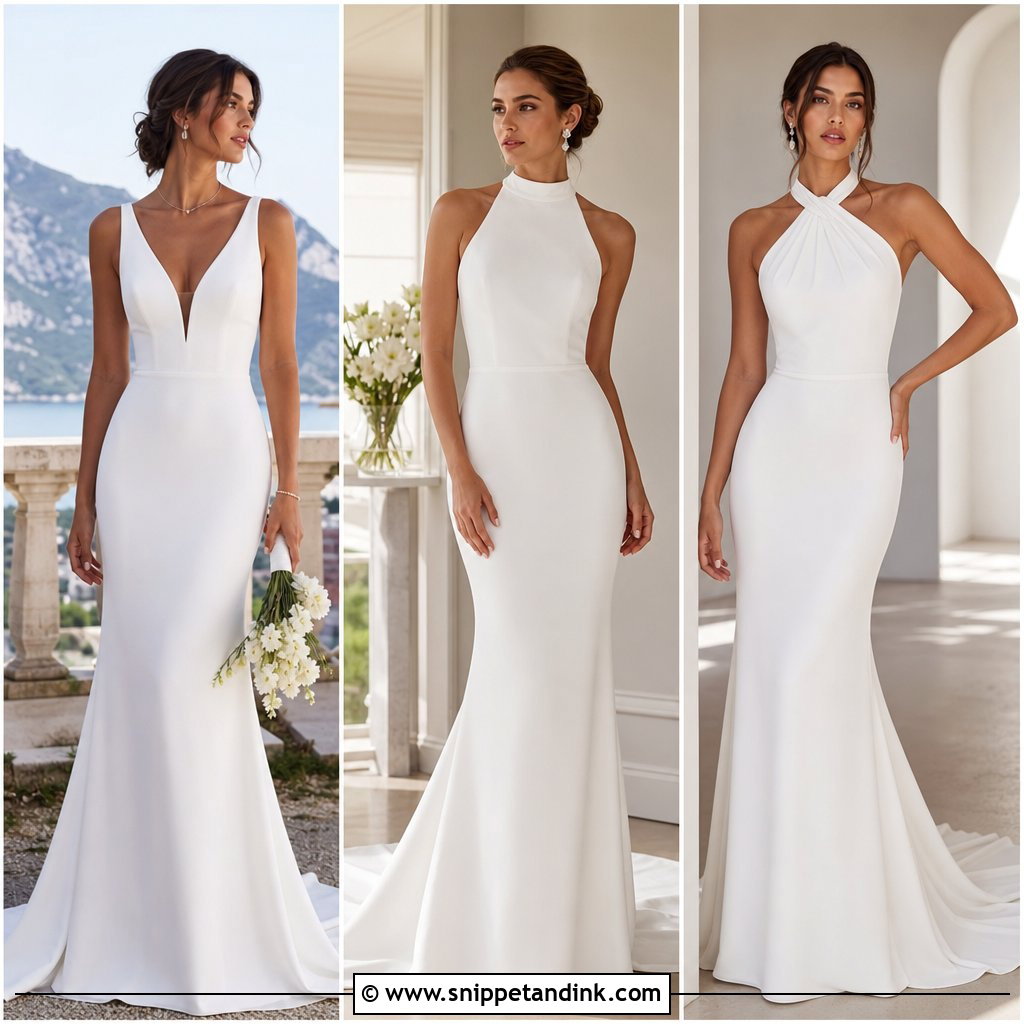
4. Mermaid Wedding Dress
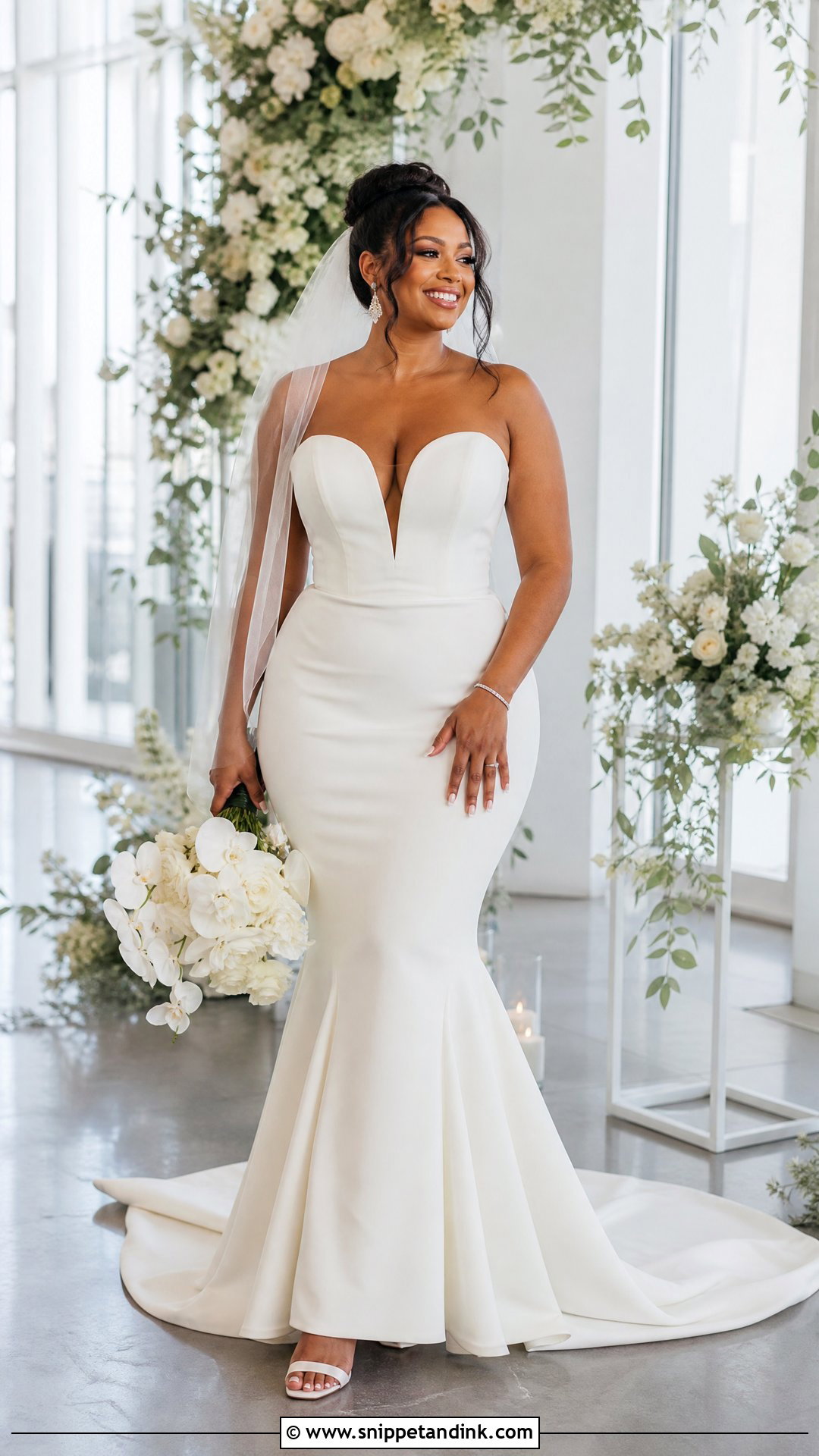
A mermaid follows the bust, waist, hips and thighs and flares only at or just below the knee. That low flare makes the shape bold, and it also limits your stride more than any other silhouette. In the fitting room I have brides take full steps, sit down and climb a step. Stretch crepe moves best; lace and tulle look softer but give less. Ignore the number on the label, because internal support and accurate tailoring decide how it sits. Sleek heels, drop earrings and a simple veil that doesn’t compete with the flare. A detachable overskirt adds ceremony drama and leaves the mermaid as a second look.
5. Trumpet Wedding Dress
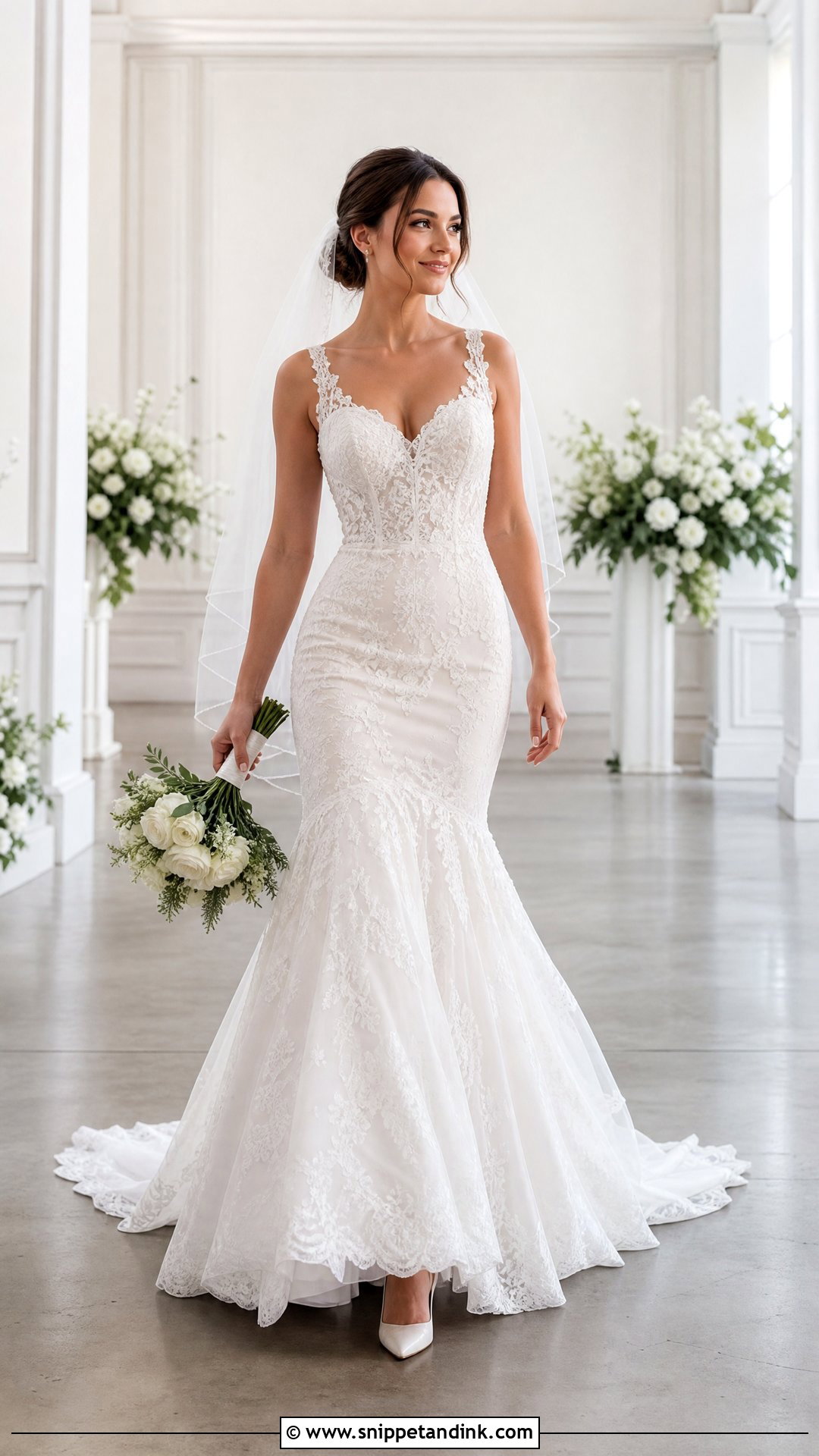
A trumpet looks like a mermaid at first glance, but the skirt opens higher, around the upper or mid-thigh. That earlier release is why I often point brides who love the mermaid look toward a trumpet: it still follows natural curves and gives noticeably more room to walk and dance. Crepe, satin, lace and light tulle each give a different degree of structure. A clean version takes statement earrings; an embellished one needs very little. During alterations I check from the side that the flare starts at the same height all the way round. The hem should swing, not collapse onto the shoes.
6. Fit-And-Flare Wedding Dress
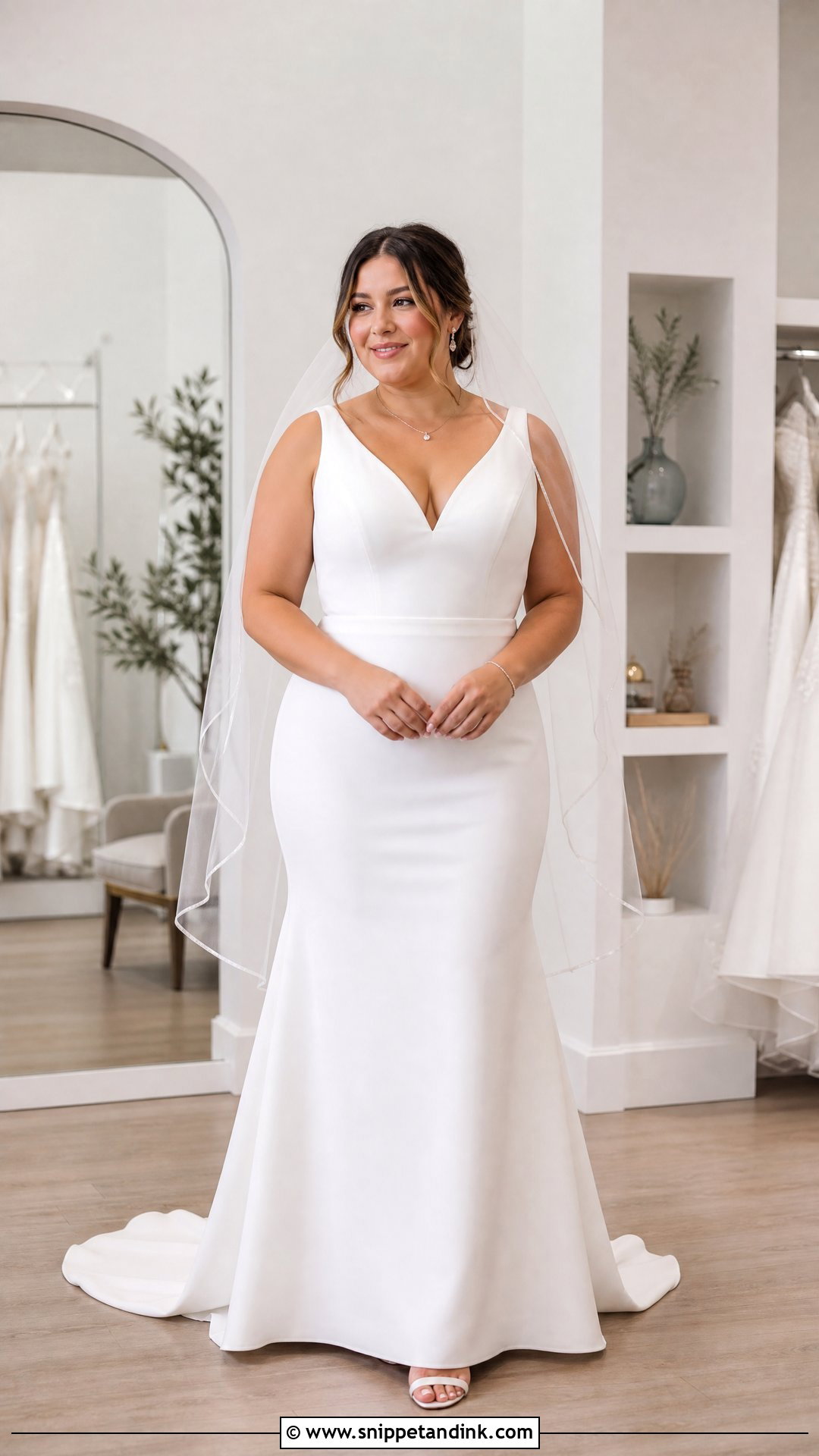
What if you want definition without the restriction of a true mermaid? Fit-and-flare follows the upper body and hips, then opens gradually. Where it opens varies a lot between designers, anywhere from below the hips to the upper thigh, and a few inches changes both comfort and look. When I put two side by side, I ask the bride to sit in both before she decides. Lace reads romantic, crepe modern, satin polished. A waist-length veil, delicate earrings, comfortable heels and a compact bouquet keep the outline visible.
7. Sheath Wedding Dress
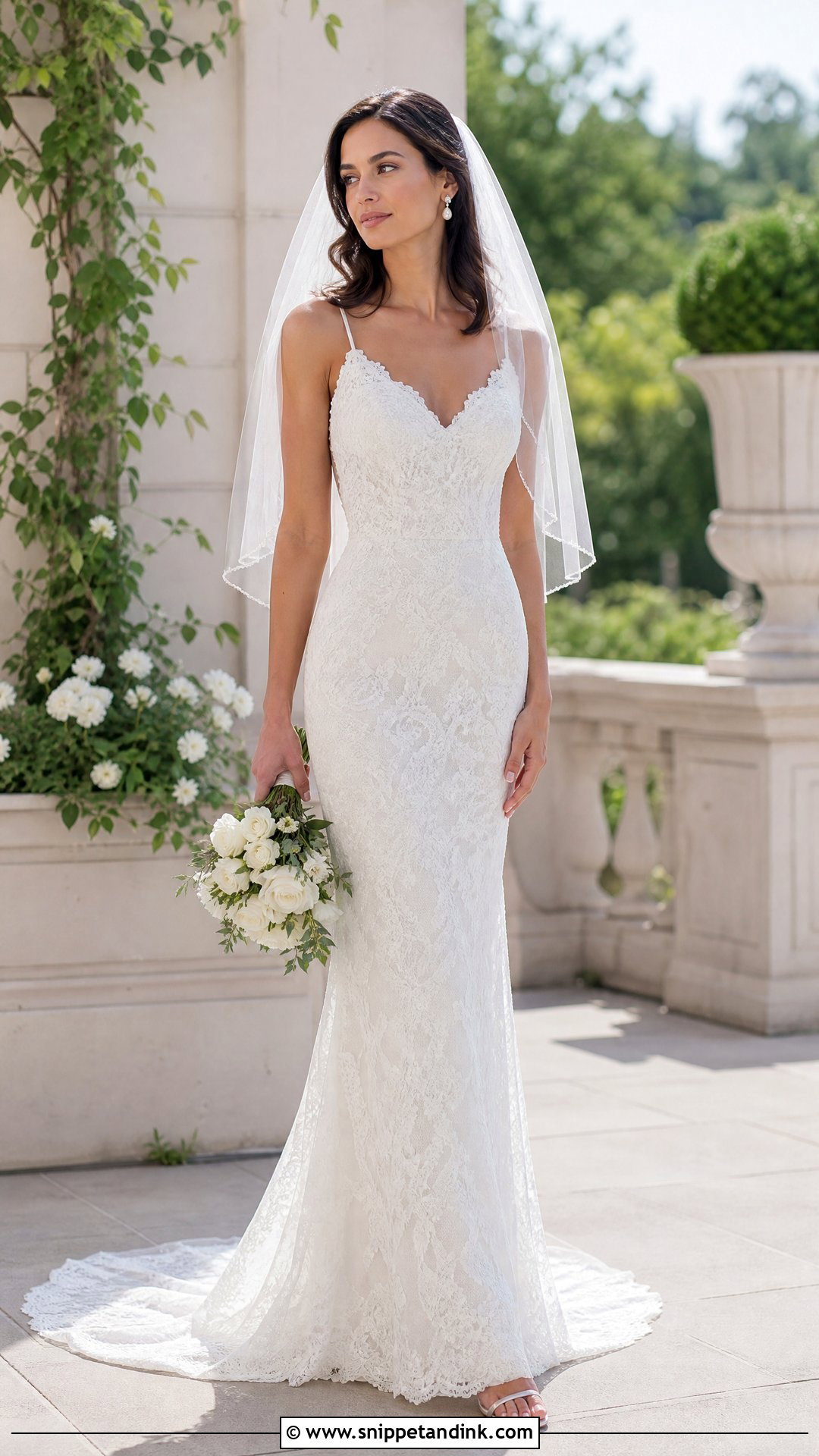
A sheath skims the body in a narrow line and falls fairly straight from hip to hem, with no structured skirt. There’s nothing to hide behind, so the way the fabric falls is the whole dress. Crepe looks smooth and modern, while lace or beading adds dimension without volume. Hemming and side-seam alterations matter more here than in any fuller gown, and smooth undergarments help some fabrics lie flat, though comfort comes first. It’s practical for an outdoor ceremony with a manageable train; if you can, walk on grass or gravel during a fitting. Slim heels, a shoulder-length veil and refined jewelry.
8. Column Wedding Dress
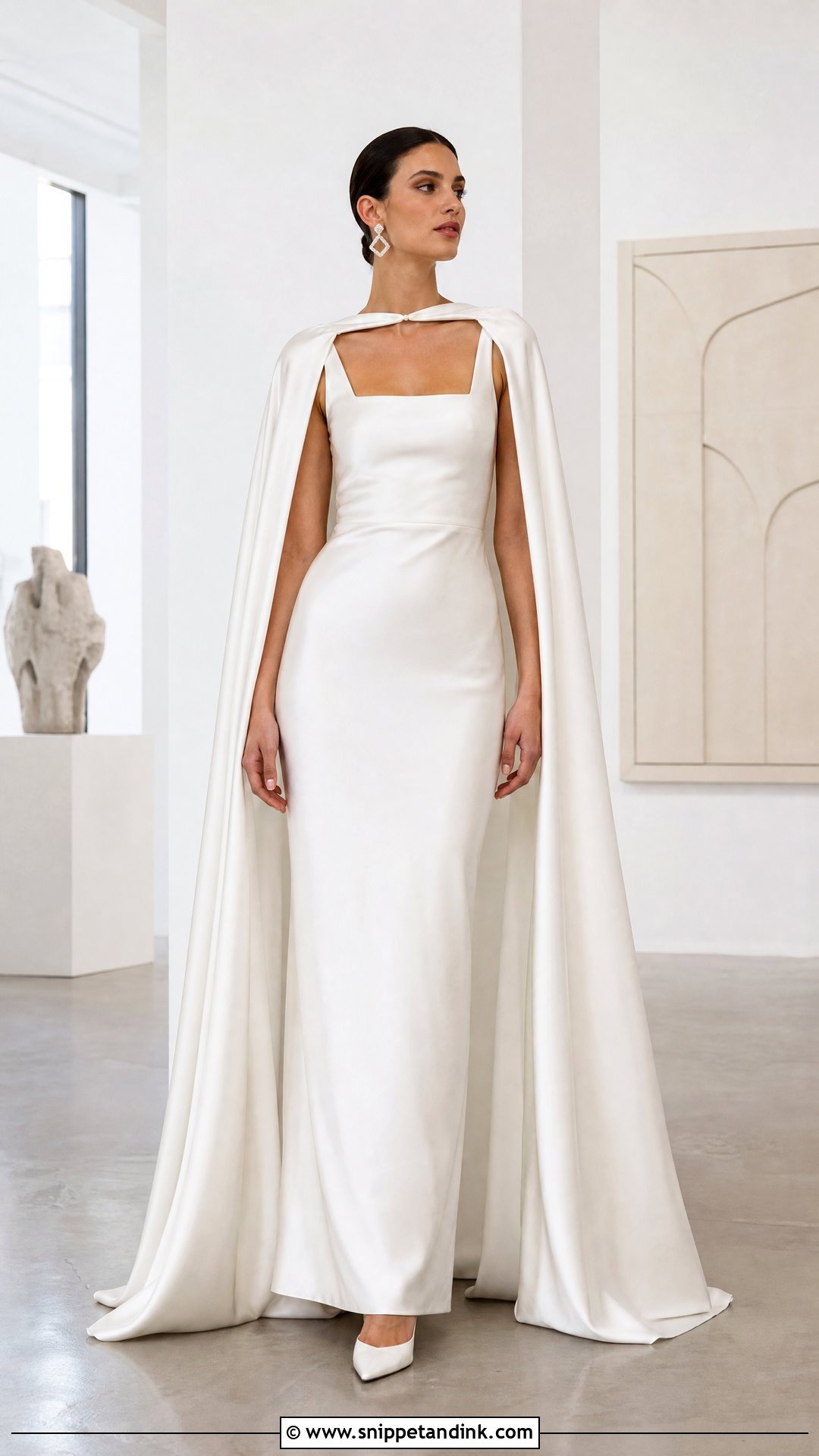
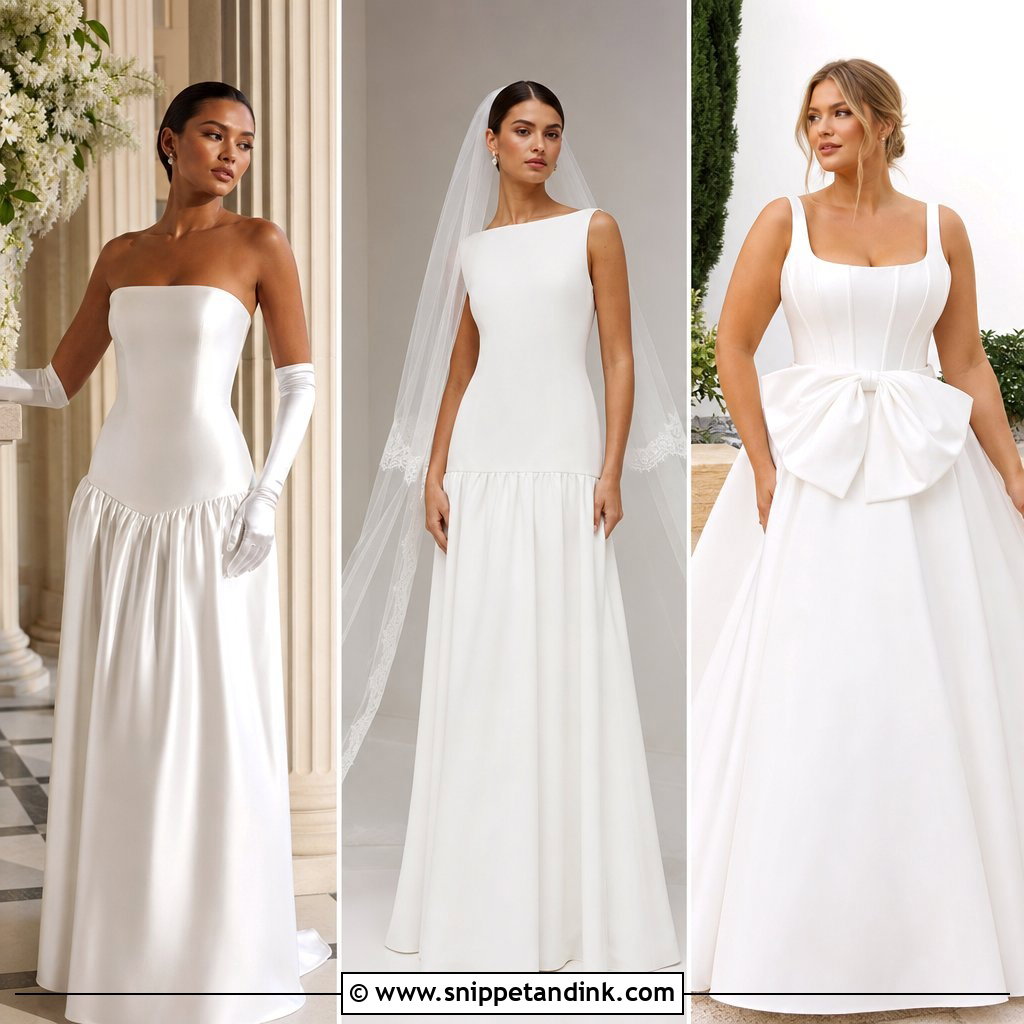
A column falls almost vertically from the neckline or hips and holds a straighter, more structured line than a soft sheath. Satin and crepe keep that line clean, and a square neckline, slim straps or long sleeves reinforce the architectural feel. The plainer the surface, the more visible any pulling or twist becomes, so I ask the tailor to watch the side seams and back vent while the bride walks, not while she stands still. A slit or hidden pleat adds mobility without breaking the narrow shape. Pointed shoes, geometric earrings and a crisp veil or detachable cape.
9. Empire Waist Wedding Dress
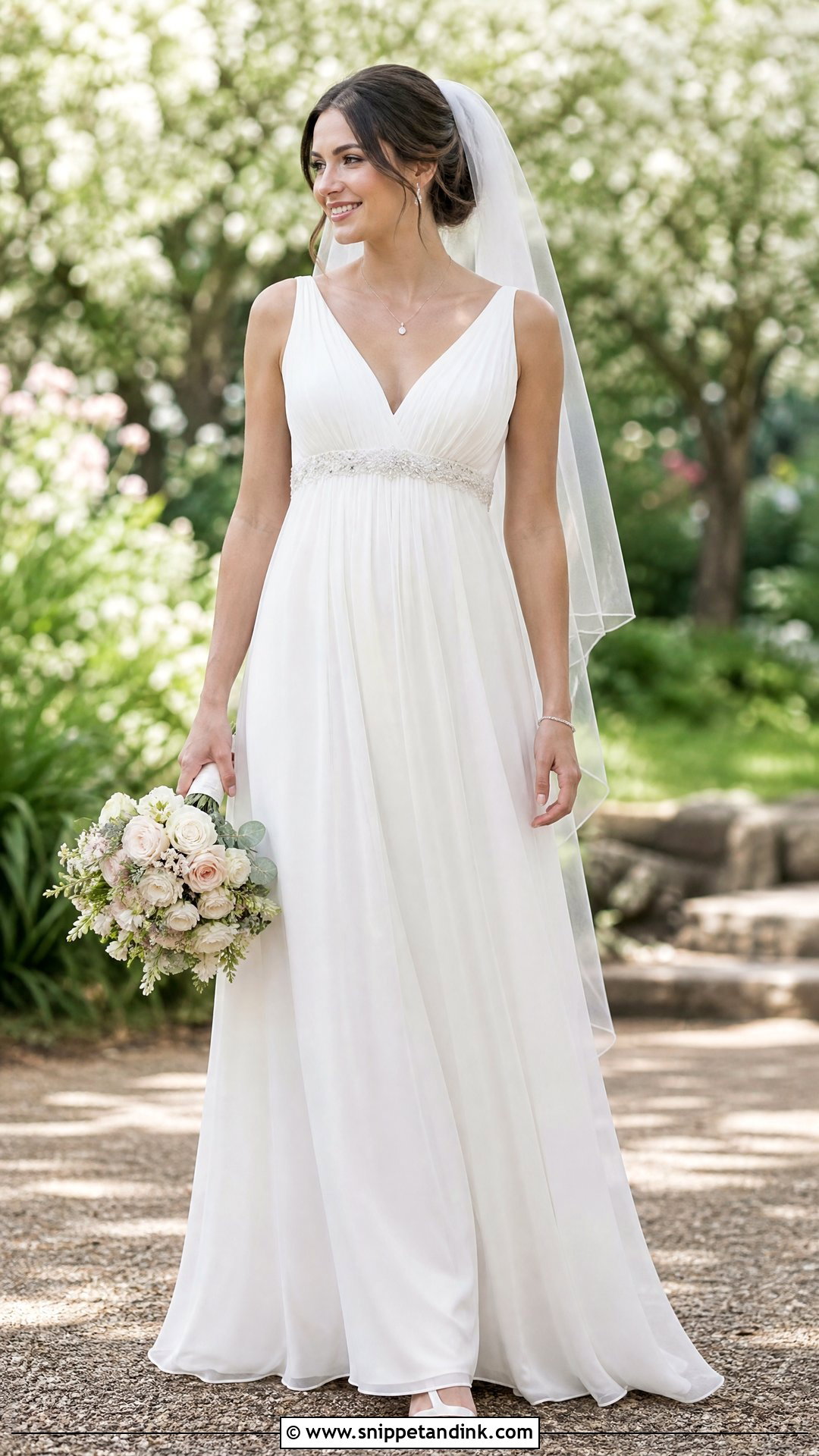
Empire waists sit directly under the bust, with the skirt falling away in one long, fluid line. Chiffon, georgette and light lace suit it because they drape without bulk; stiffer fabrics tent out from the seam. Everything hangs from that raised seam, so bust support is the first thing I sort out, often with sewn-in cups. In fittings I check the seam stays level and doesn’t creep upward when the arms lift. A delicate V-neck or softly gathered bodice, low heels, a light veil and fine jewelry. It’s also one of the most comfortable shapes to sit in through a long day.
10. Drop Waist Wedding Dress
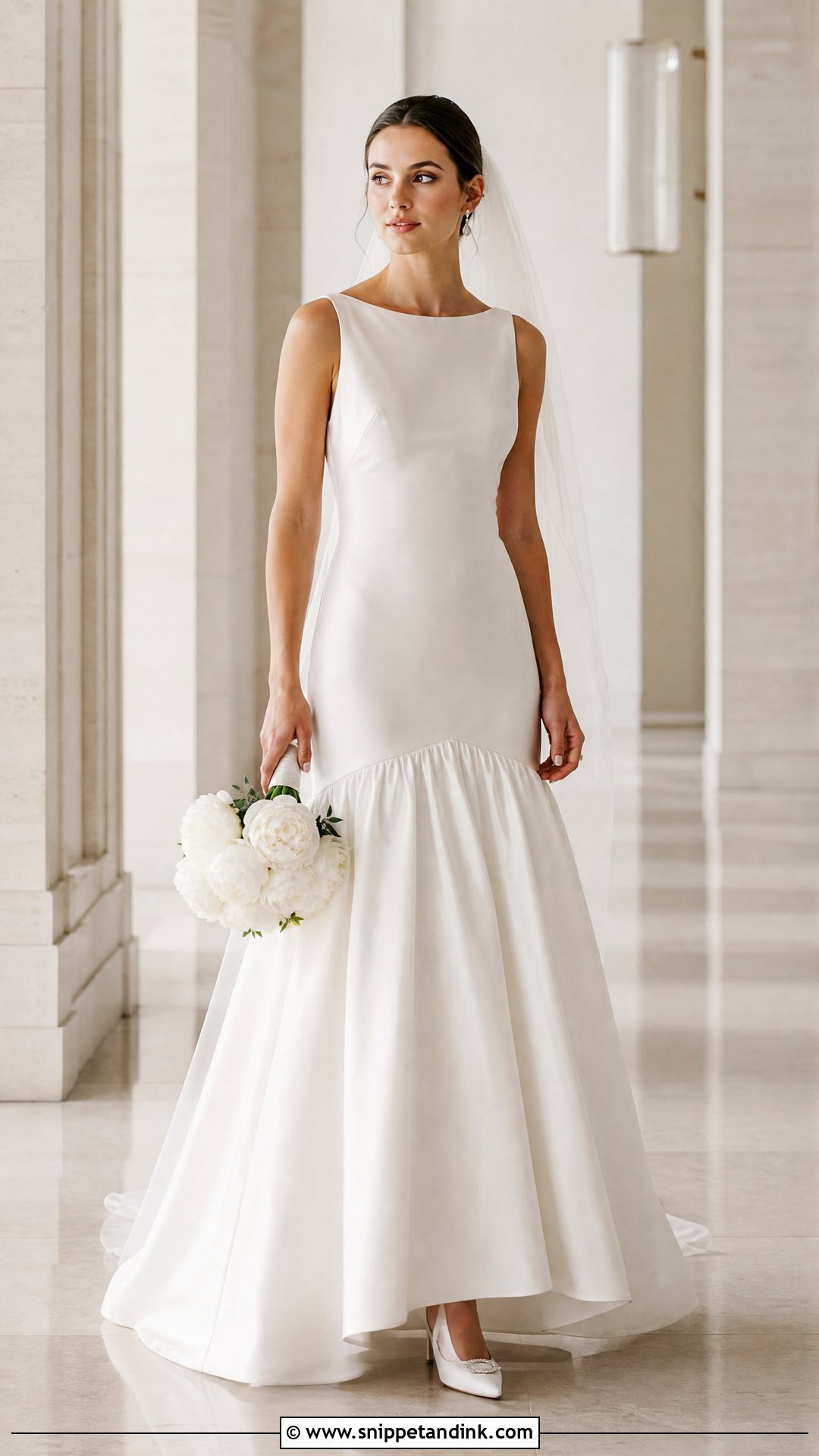
The drop waist extends the bodice past the natural waist and releases into the skirt around the upper hips, so the eye travels lower and the torso looks longer. Skirt volume makes it sleek or dramatic. Satin keeps the low seam crisp; lace blurs it. The one thing I insist on is sitting in it for several minutes, because a long bodice can bunch or press into the stomach once you’re seated. Through the waist and hips the fit should be smooth, with no horizontal pull lines. A simple veil, elegant pumps and earrings that echo the gown’s details.
11. Basque Waist Wedding Dress
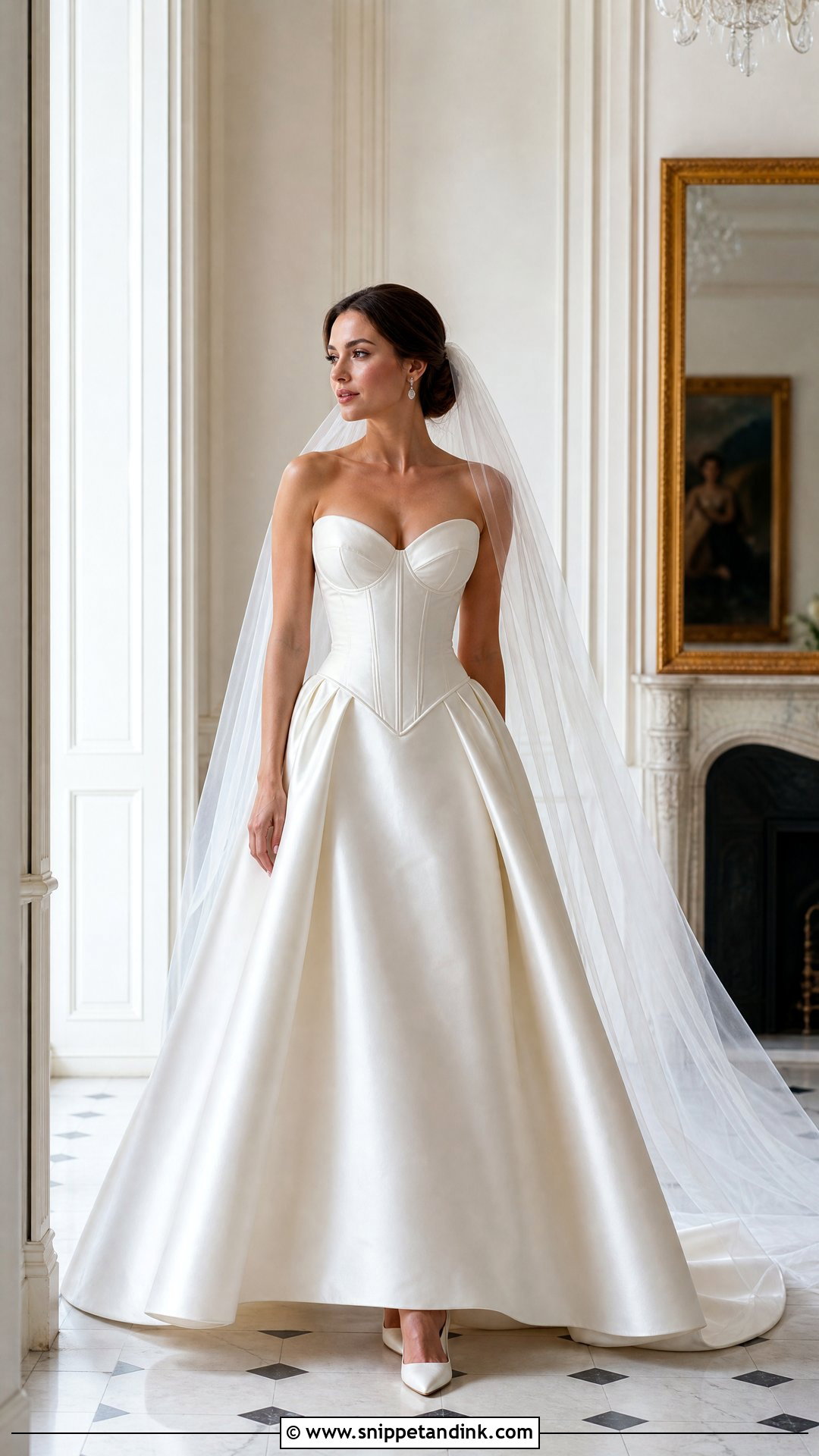
A basque waist dips into a V or U below the natural waist, pointing the eye to the center and making a sharp transition into the skirt. You’ll mostly see it on ball gowns and full A-lines, sometimes on slimmer cuts. Corset-style seaming gives it a historic, romantic feel without much decoration. The point has to be perfectly symmetrical, and even a small tilt shows, so I ask the alterations specialist to measure both sides. It should sit securely without digging in when you bend or sit, and a smooth lining helps. A long veil, classic earrings and supportive heels.
12. Natural Waist Wedding Dress
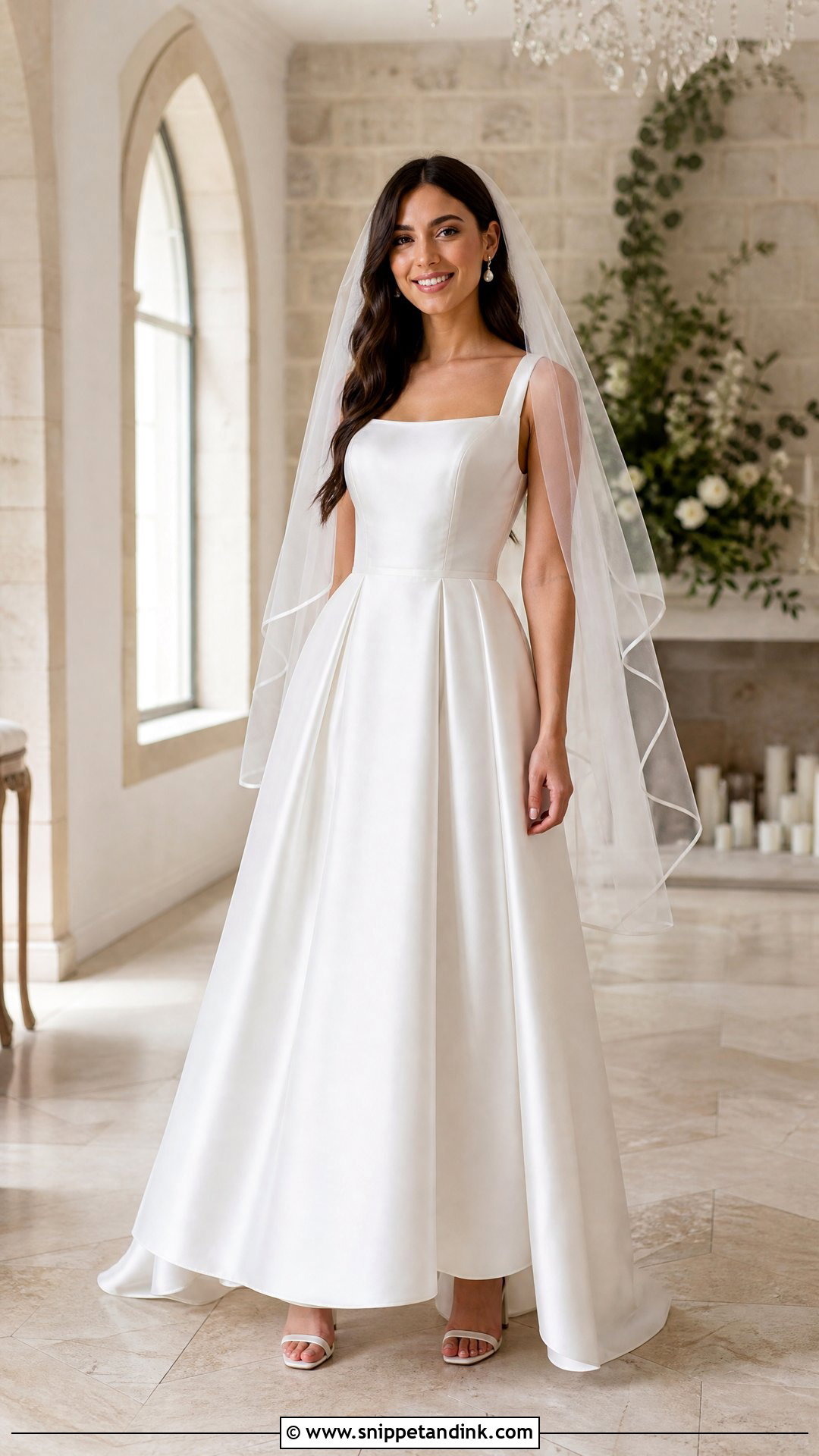
The natural waist puts the seam at the narrowest part of the torso, which is why this placement turns up across so many silhouettes. Below it the skirt can be gently flared, pleated, gathered or fully structured. A satin bodice over an A-line skirt is classic; tulle and lace soften it. A narrow belt can mark the seam if it doesn’t cut the dress in half visually. Watch the waist height after the straps are adjusted, because shortening straps lifts the seam with them. A fingertip veil, block heels and small pearl or crystal earrings.
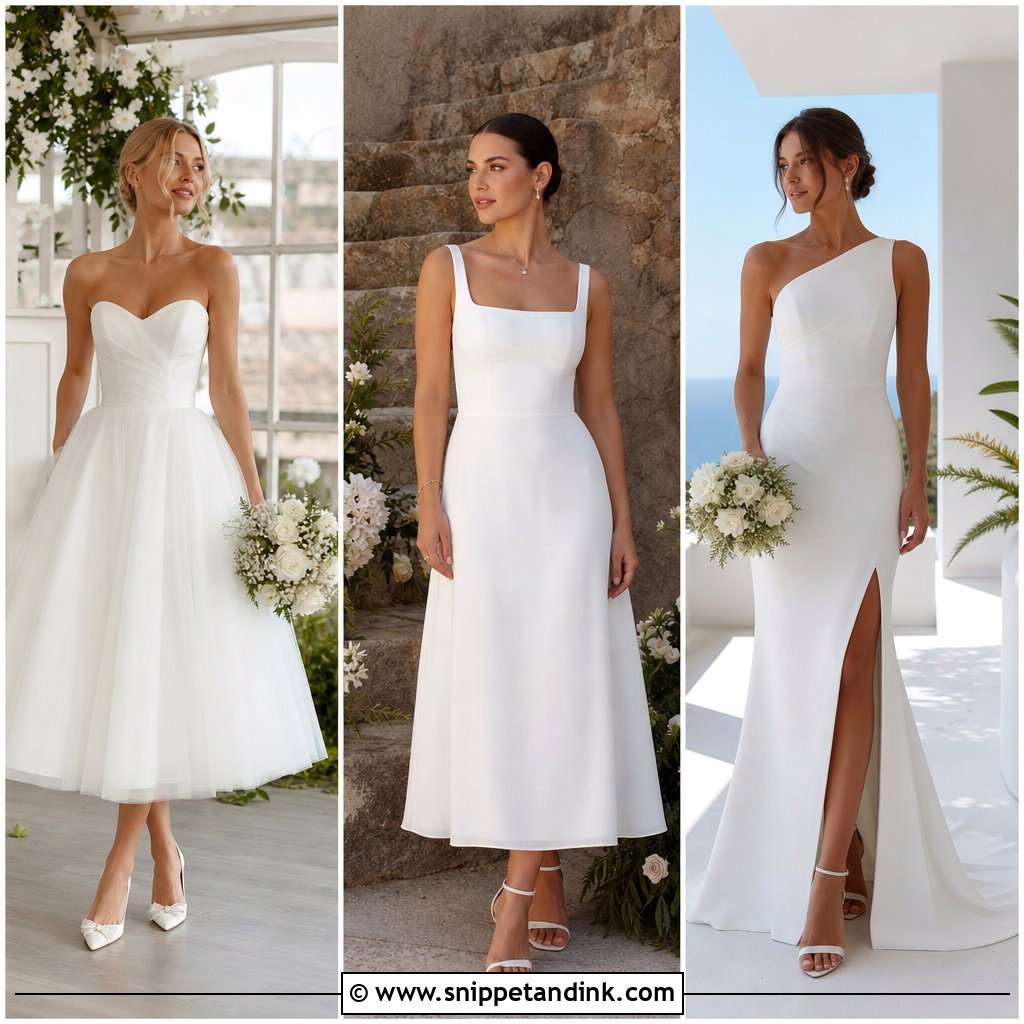
13. Tea-Length Wedding Dress
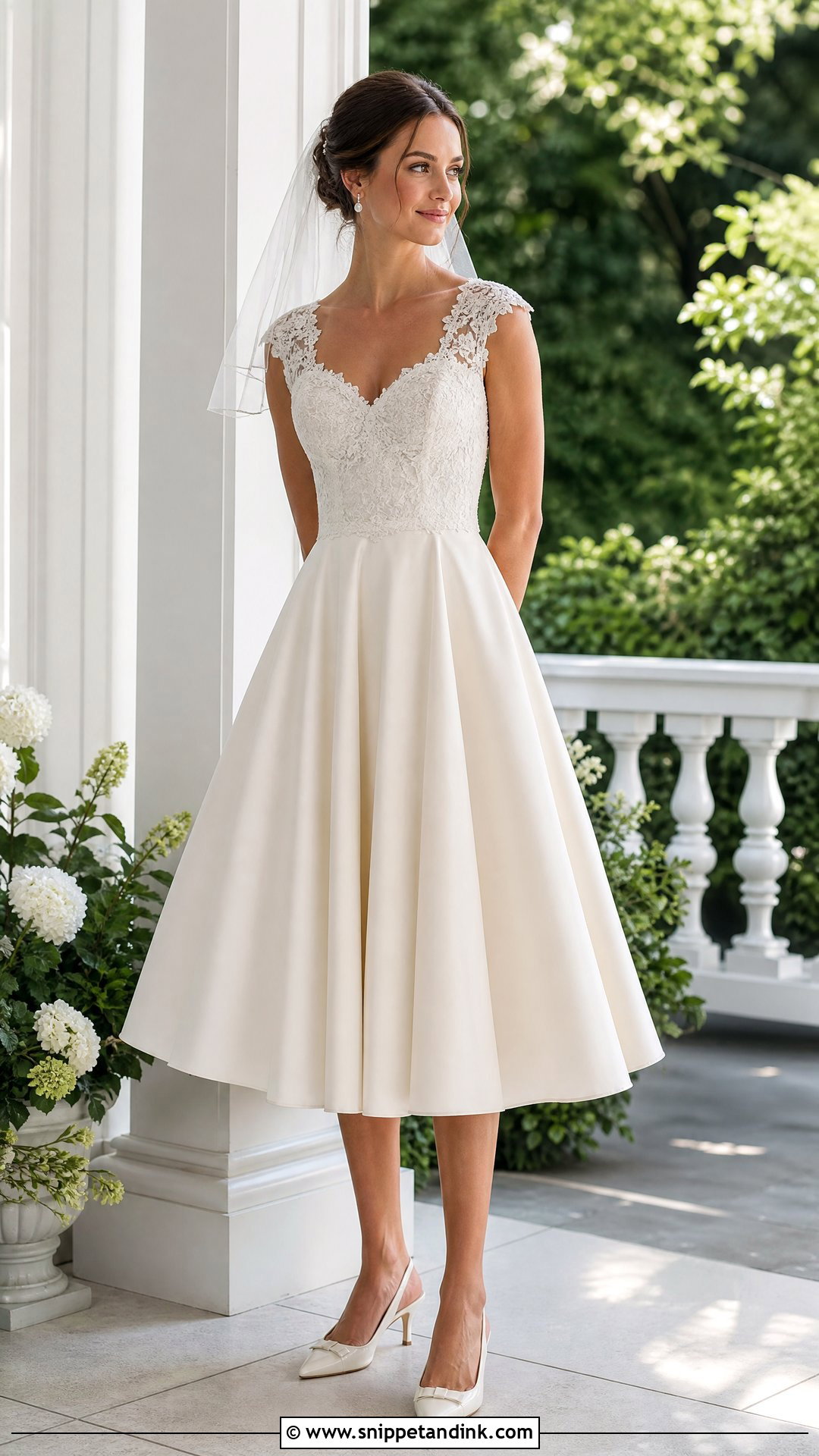
Tea length stops between knee and ankle, so your shoes join the outfit. The skirt can be full, softly flared or fairly straight; a fitted bodice with a full skirt reads vintage, and a simple crepe version reads modern. It’s practical wherever a long train would get in the way, like a garden party or a city wedding. View the hem only in your exact shoes, because a small change in heel height moves where the dress meets the leg and shifts the whole balance. Polished pumps, slingbacks or embellished flats, with a birdcage veil, short tulle veil or headband.
14. High-Low Wedding Dress
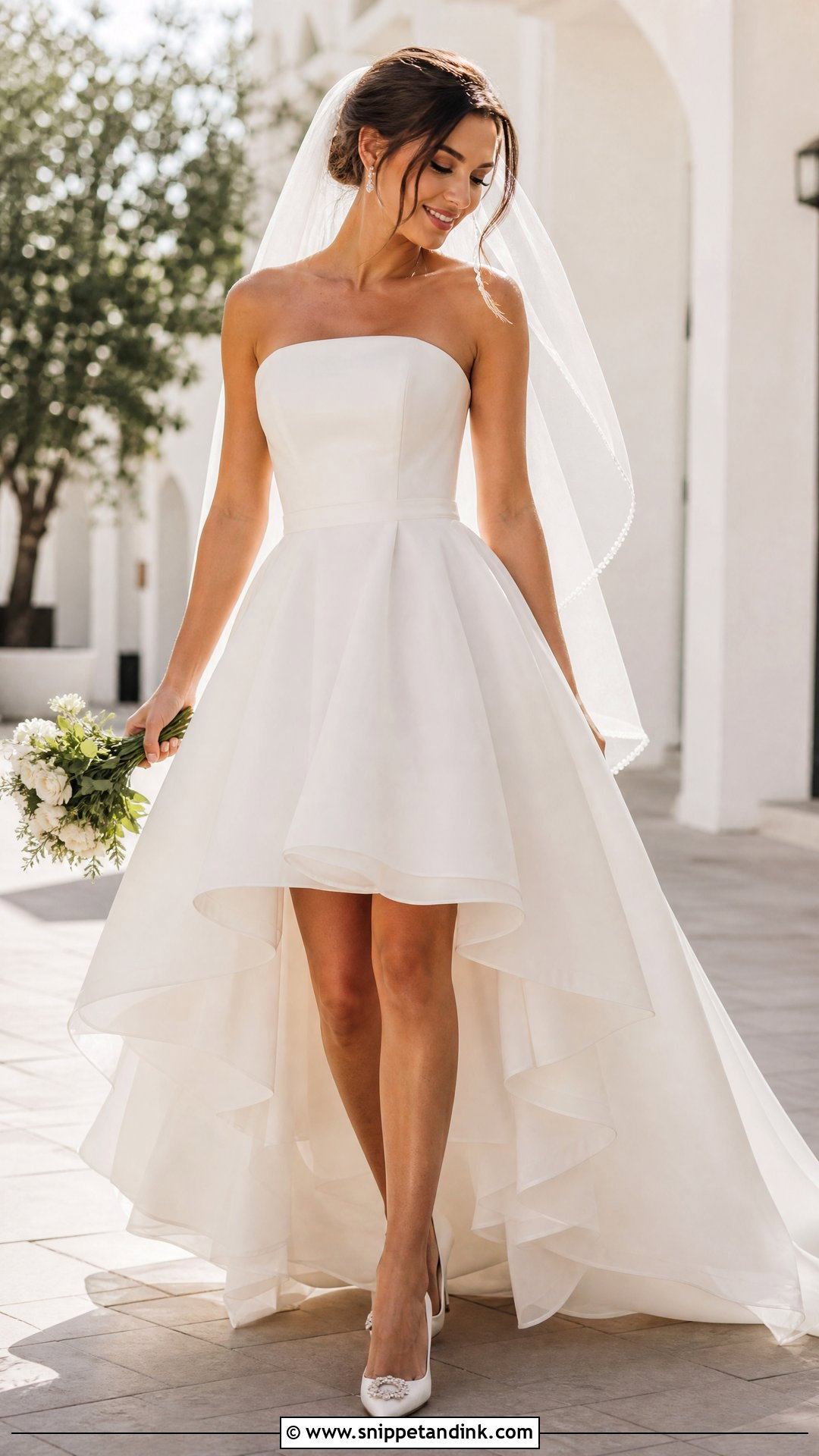
High-low gowns are shorter in front and longer behind, so you keep some drama while freeing your feet. The gap can be subtle, ankle in front and floor at the back, or bold, knee in front with a sweeping train. Structured fabric gives a crisp line; chiffon and organza move softly. Your shoes are on show from every angle. In the fitting I have brides walk forward, backward and up a few steps, because the transition between lengths can twist around the legs. The front should clear the shoes comfortably. Streamlined earrings and a simple veil keep the hem the focus.
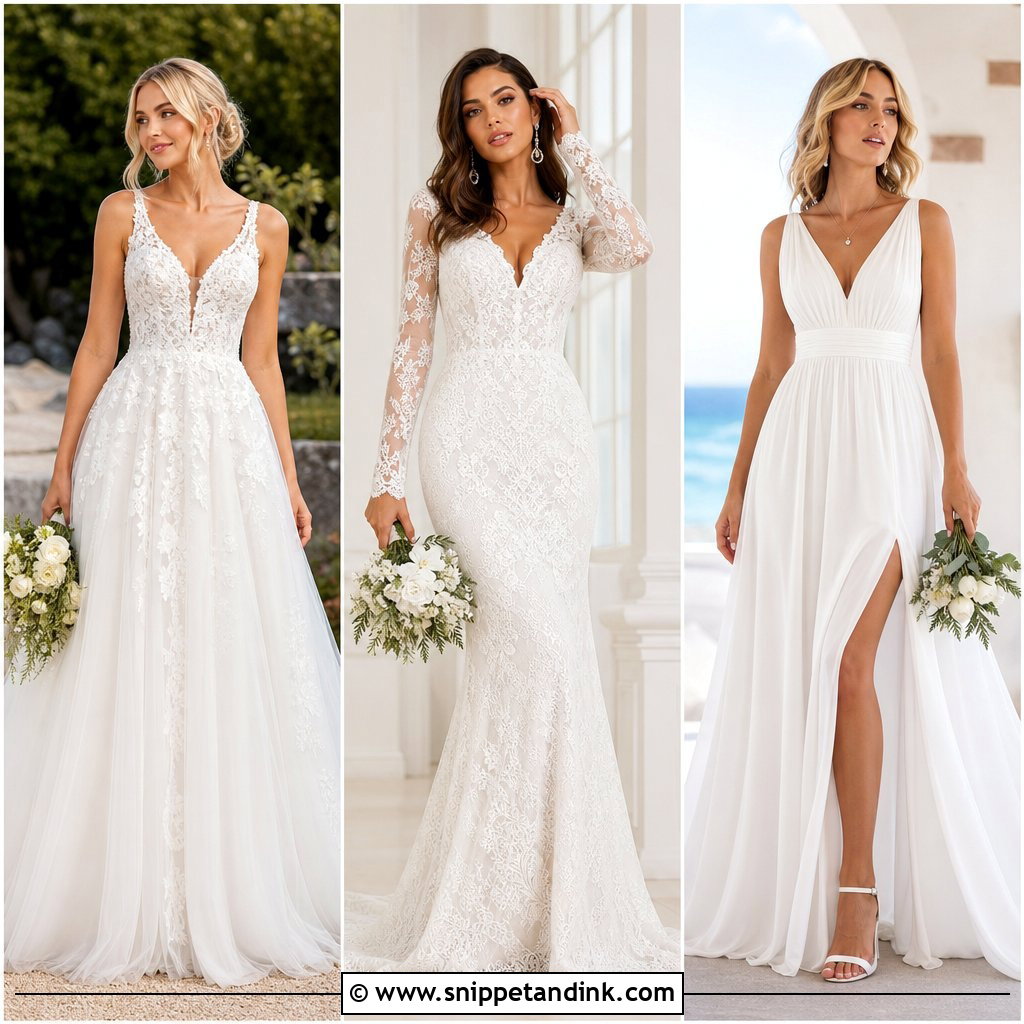
15. Midi Wedding Dress
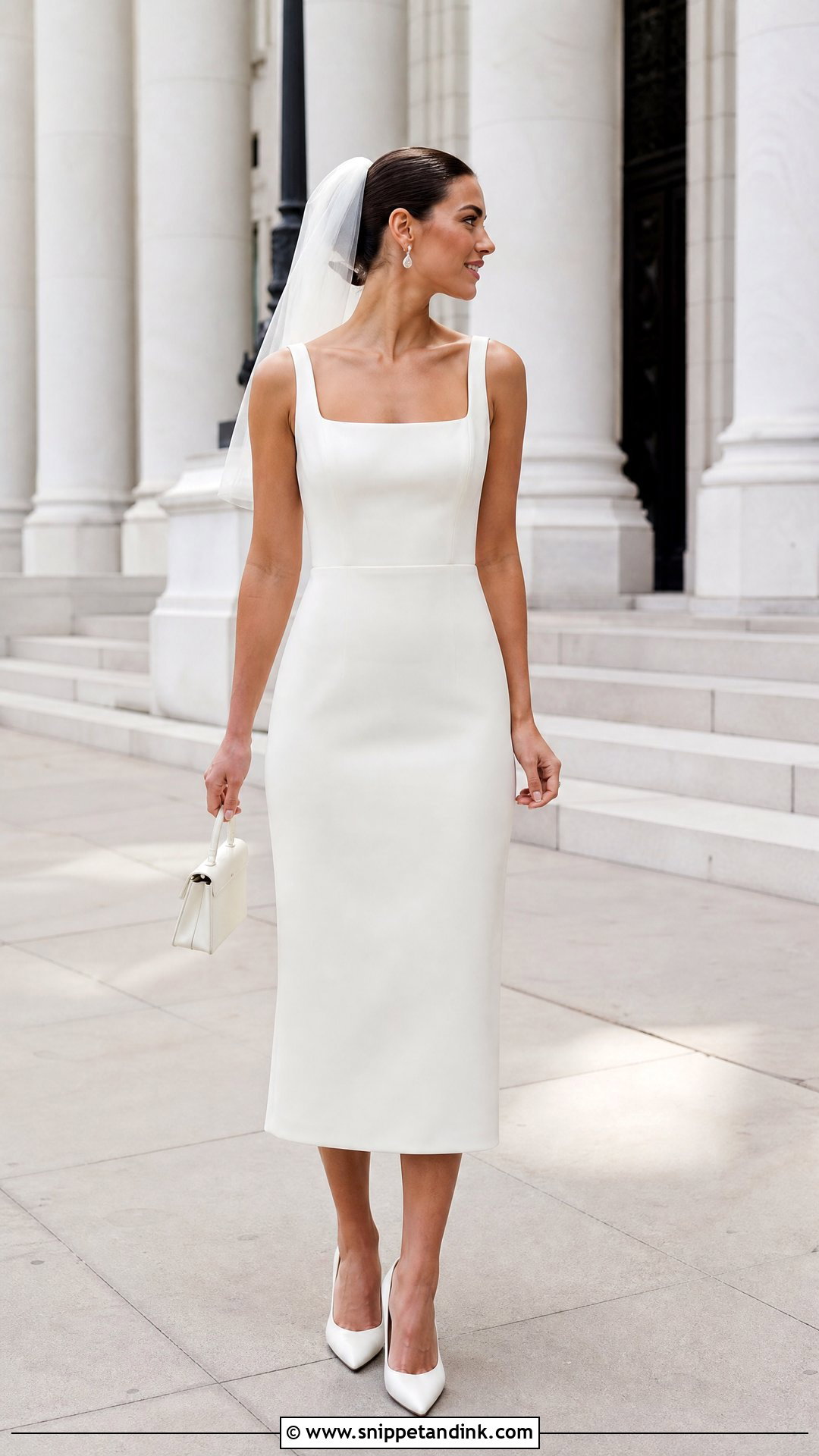
A midi falls below the knee and above the ankle and can be straight, bias-cut, fitted or softly flared, more variety than tea length usually offers. It suits minimalist ceremonies, courthouse weddings and second bridal looks. Where the hem ends is the detail I spend longest on. A hem that stops at the widest part of the calf shortens the leg, so we move it up or down on purpose. Bring the wedding shoes to every fitting. A sleek midi suits pointed pumps and a structured bag; a fuller one suits slingbacks and a short veil.
16. Mini Wedding Dress
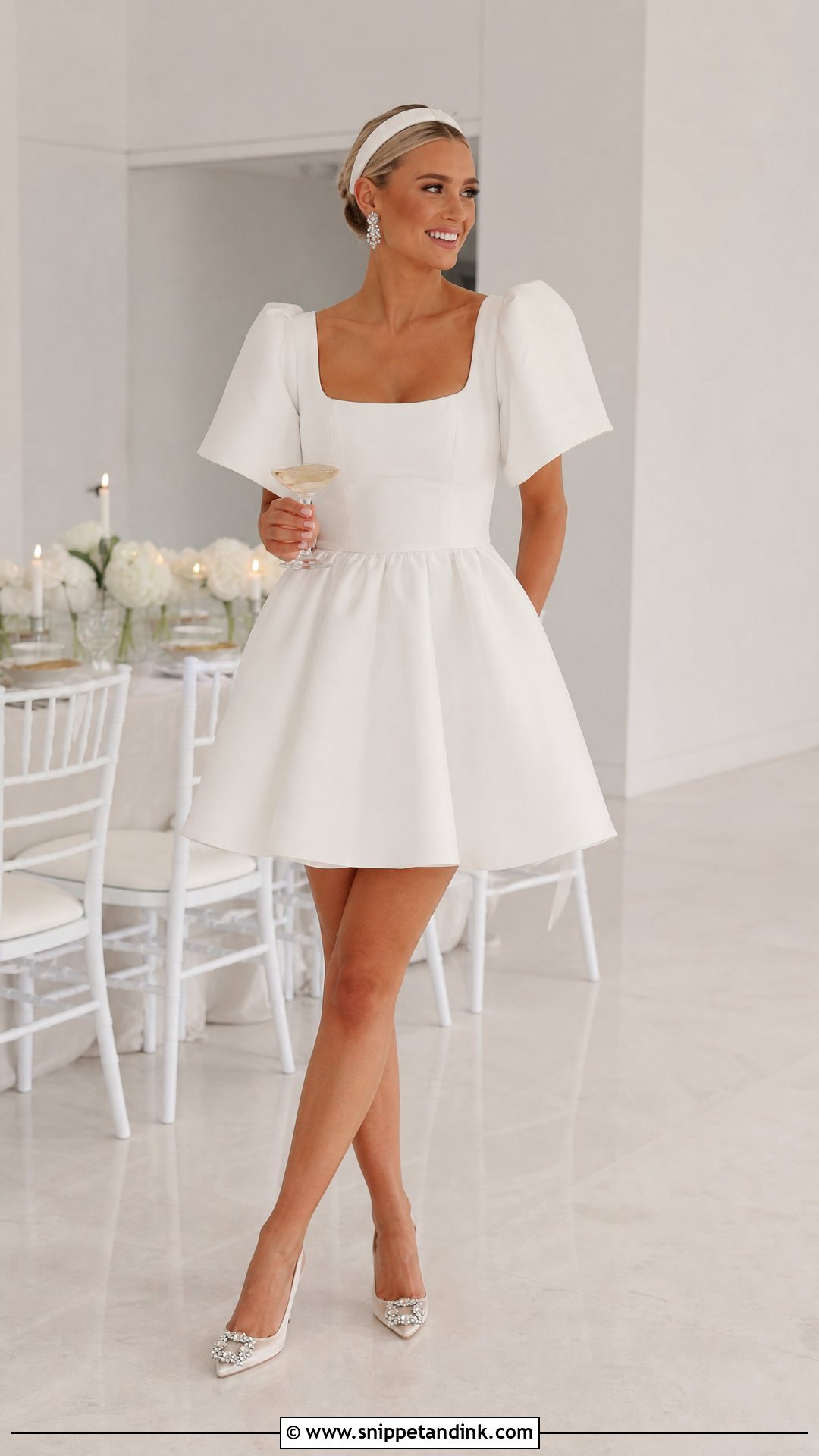
Mini wedding dresses finish above the knee and come as tailored shifts, fitted sheaths, flared skater shapes or structured designs with detachable trains. On so little fabric, details carry more weight, and a sculpted sleeve, a few appliqués or a bow becomes the focal point. A removable overskirt gives coverage for the ceremony and reveals the mini later. Check the hem while sitting, bending and raising your arms, and consider tailored shorts or a smooth lining underneath. Comfortable statement shoes, a small bouquet and a short veil or headband finish it.
17. Slip Wedding Dress
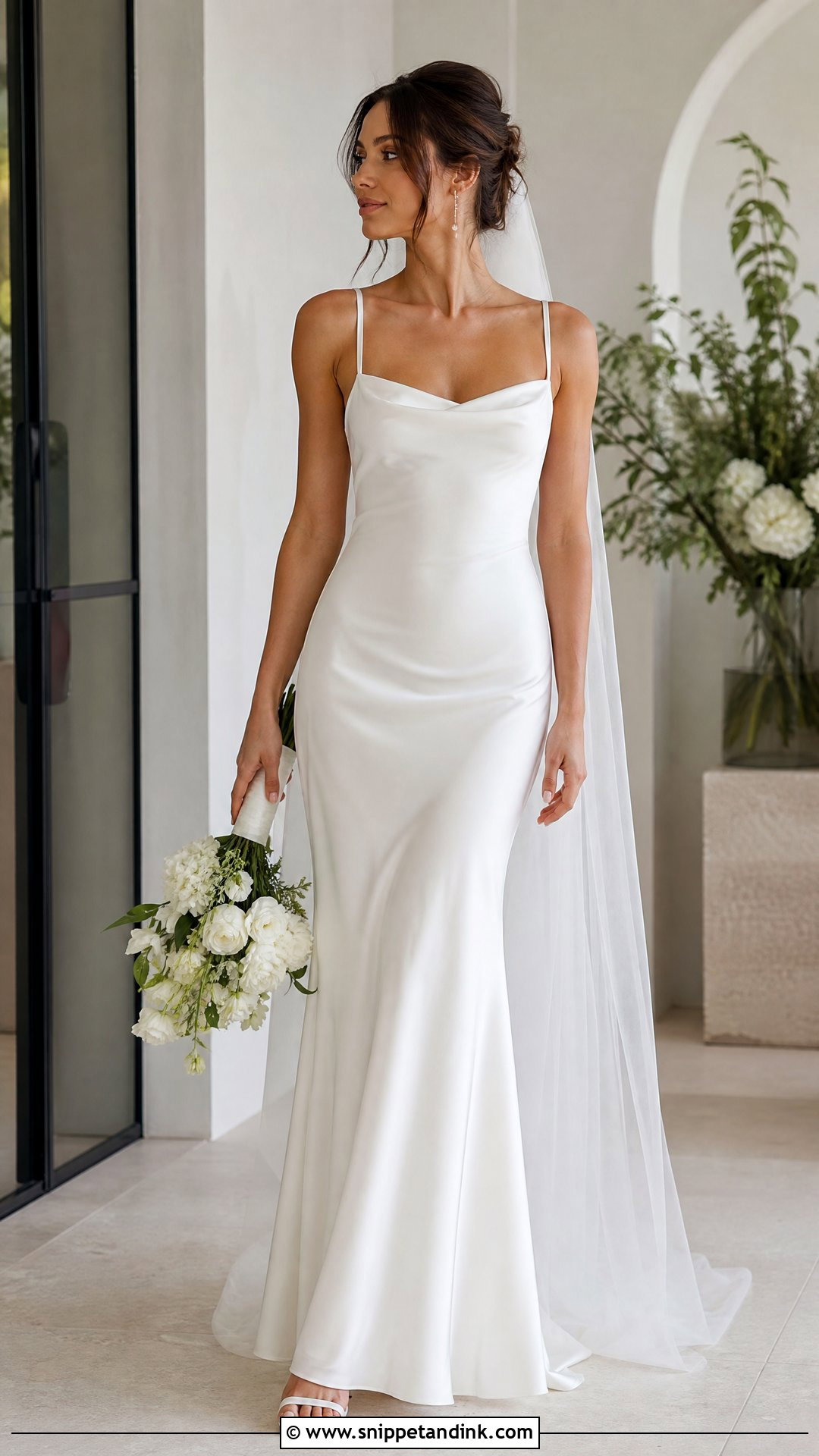
Slip dresses have slim straps, a softly fitted bodice and a skirt that falls close to the body with almost no internal structure. Satin, silk and crepe are usual, and a bias cut lets the fabric drape and give slightly as you move. Glossy fabric shows every small fit problem, so professional alterations really pay off here. Try several undergarments with the actual dress, since what disappears under crepe can show under satin. It should skim, never pull across hips or waist. A detachable cape, overskirt or tailored jacket adds coverage. Delicate sandals, fine earrings and a sheer veil.
18. Tiered Wedding Dress
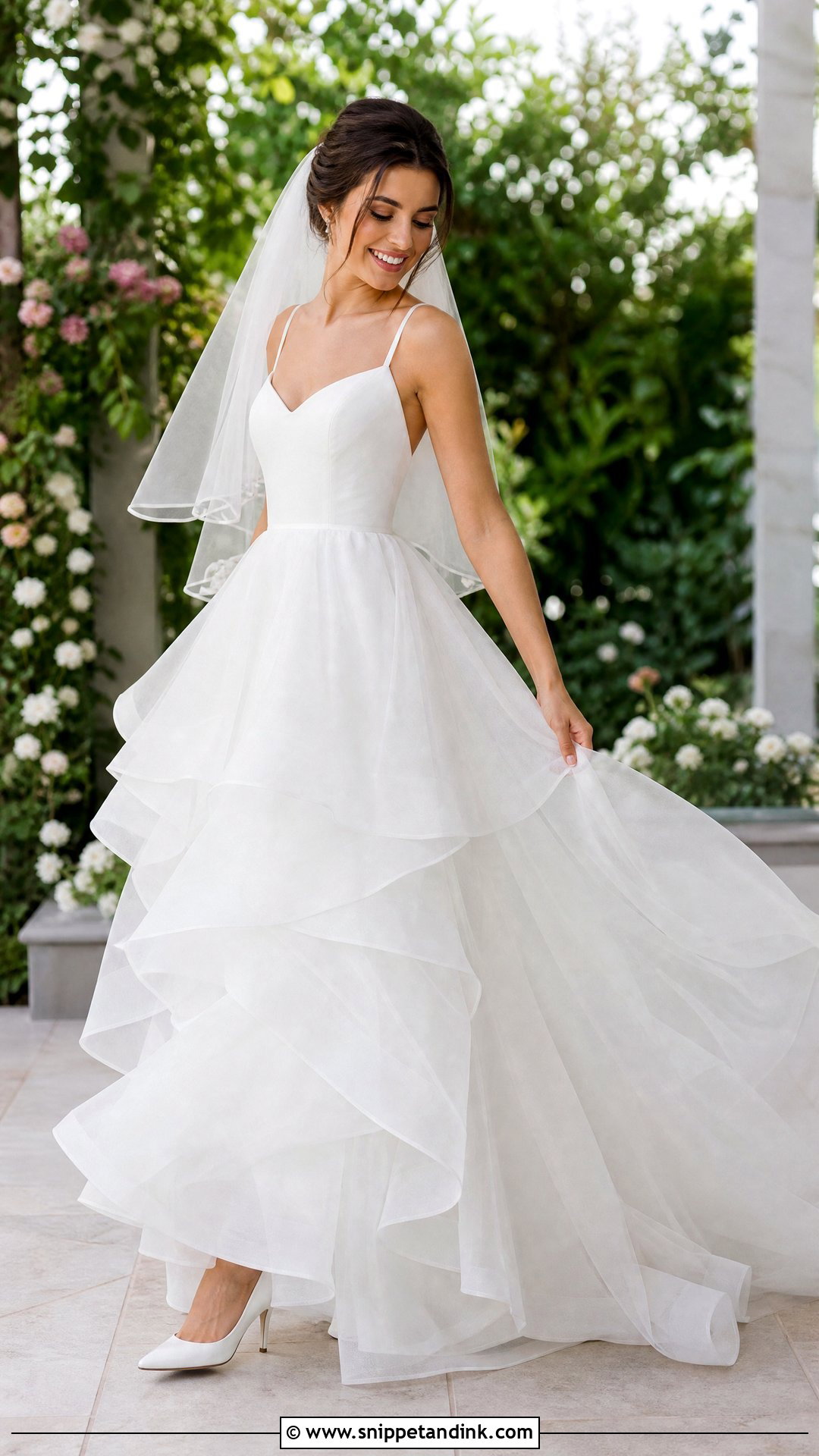
Tiered skirts build volume from stacked horizontal layers starting at the waist, hips or lower skirt. Tulle and organza make them airy; lace and ruffles add definition. Spacing changes everything: close tiers look fuller, wider sections calmer. With so much happening below, I keep the bodice clean and choose a lightweight veil without heavy edging. Walk and turn during alterations to see whether the layers separate naturally or fold under one another, and check that the bottom tier clears the shoes. Simple earrings and elegant shoes are plenty.
19. Peplum Wedding Dress
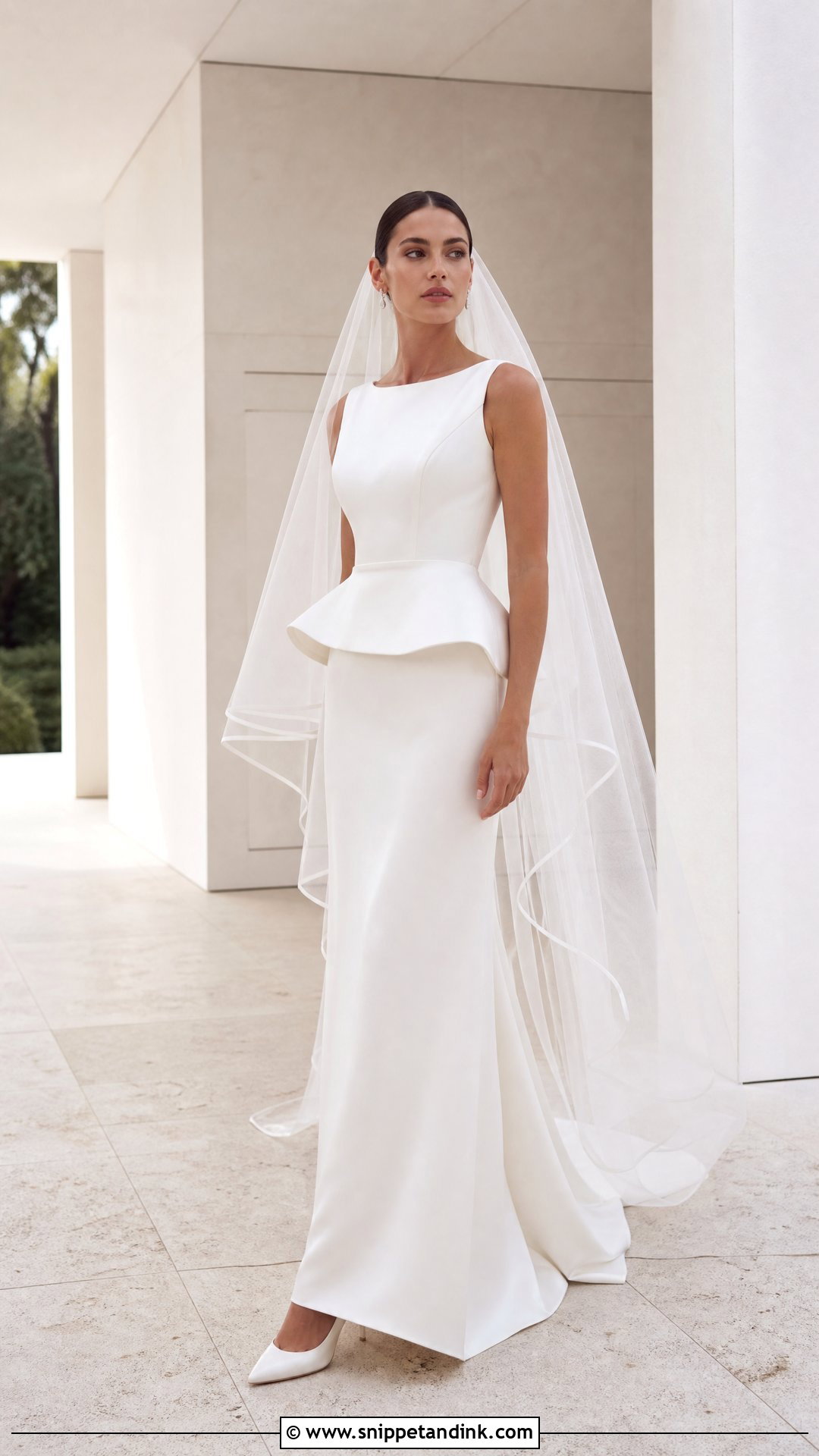
A peplum adds a short flared layer at the waist or upper hips, creating a sculptural break between bodice and skirt on a column, sheath, fit-and-flare or ball gown. Crisp satin makes it architectural; lace or tulle is softer. It has to sit evenly and keep its shape from every angle, and creases flatten it quickly, so press with care and store the gown hanging rather than folded. If the peplum is removable, try the dress both ways to be sure each looks finished. It gives a defined waist without a belt. Pointed heels, simple earrings and a clean veil.
20. Two-Piece Wedding Dress
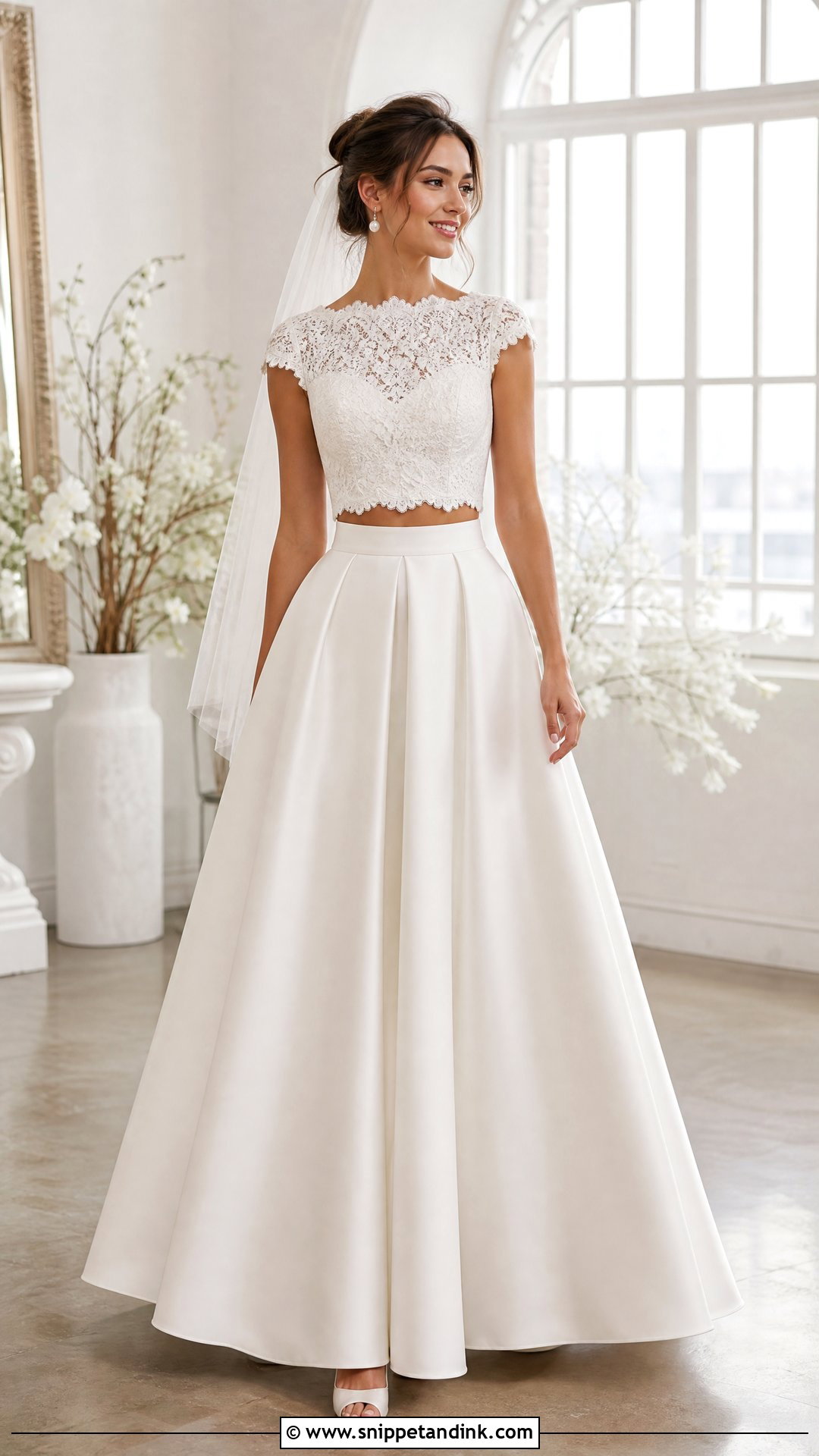
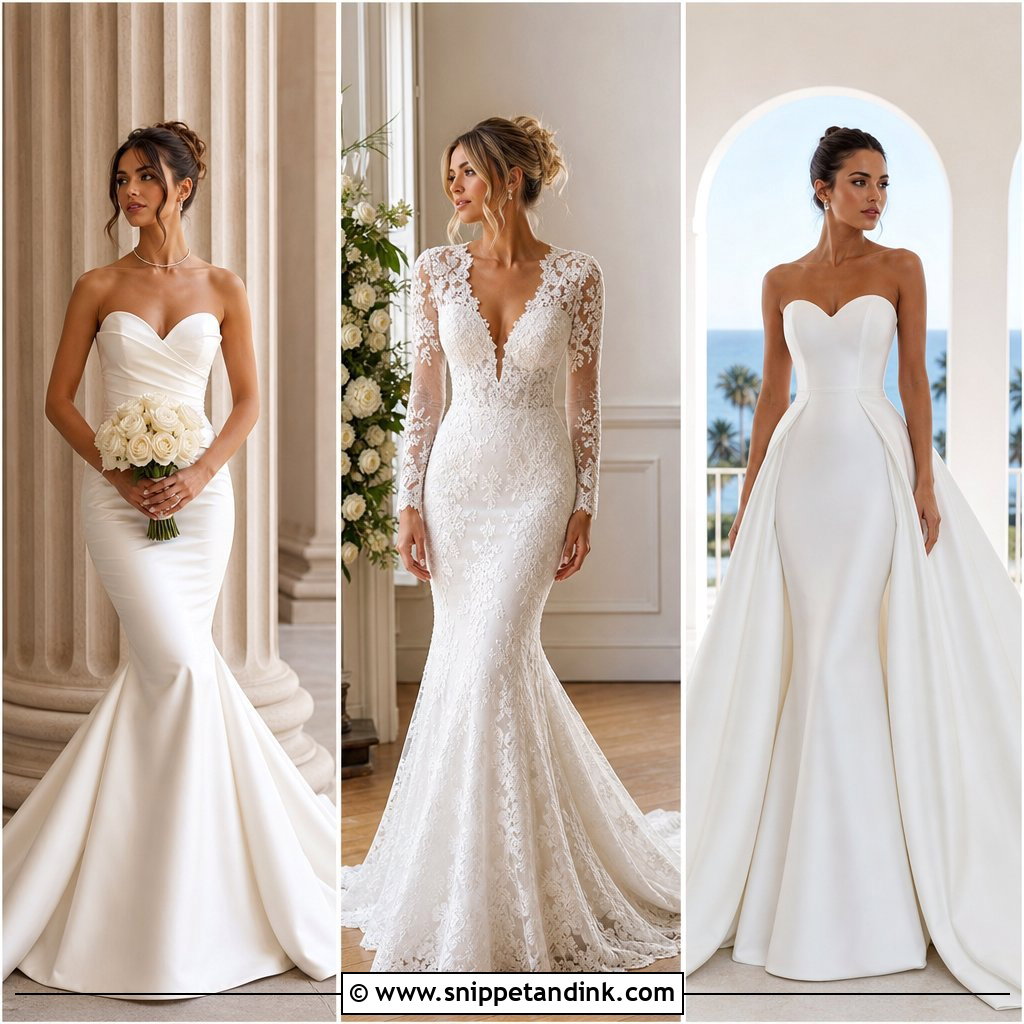
A two-piece splits the look into a top or bodice and a coordinated skirt, and depending on the pieces, the outline can mimic an A-line, ball gown, column or fitted shape. There may be a slim gap at the waist, or the pieces can overlap and read as one dress. The practical advantage is sizing: top and skirt can be ordered in different sizes, which makes fitting easier. Match fabric and shade carefully if you buy separately, because ivories vary between makers. Raise your arms, sit and turn at alterations to make sure both pieces stay put. Elegant heels, a veil and jewelry matched to the neckline.
Sand, Stairs and Long Aisles Change Which Shape Works
A silhouette that looks right in a fitting room can fight the venue. I ask about the ground, the stairs and the temperature before I pull anything.
Beach and lawn ceremonies
Long trains drag sand and grass, and a narrow mermaid makes every step on soft ground harder. A-lines, sheaths and high-low hems cope best, and a bustle keeps any train off the ground once the ceremony is over.
Old buildings with narrow stairs
Spiral or tight staircases turn a big ball gown into a two-person job. If your venue has them, practice lifting the front of the skirt with both hands and stepping with the ball of your foot first.
Summer heat
Layers of tulle and crinoline hold warmth against the legs. Chiffon empire gowns, slips and unlined sheaths breathe far better on a hot afternoon.
How Long Ordering and Fittings Usually Take
Made-to-order gowns commonly take several months to arrive, and many shops suggest ordering around eight to ten months ahead. Alterations usually start about two months before the wedding, over two or three fittings. Timelines vary by designer and season, so ask for the shop’s real dates before you fall for a dress. Boned, many-paneled shapes generally need more fitting time than a simple slip.
The Outline Is Only Half the Fit
Knowing these shapes makes appointments faster and conversations with your consultant clearer, but the decision is still personal. Once you’ve narrowed the outline, compare fabric weight, waist placement, support, hem length and train. Height, age and size shouldn’t rule anything out; good alterations change how almost any silhouette fits. Bring your shoes and undergarments, take photos from several angles where the shop allows it, and sit and walk in every finalist. The dress that wins is usually the one you forget you’re wearing by the second hour.
You'll Like These Ideas:


Leave a Reply