
Satin is the least forgiving fabric I fit, and a mermaid cut is the least forgiving shape, which is exactly why the pairing looks so striking when it is right. The gown hugs the bodice, waist and hips, then releases near the knee, and every seam on that journey shows under the sheen. Newer versions soften the drama with corset bodices, dropped waists, removable sleeves and flares cut lighter so you can actually walk. Accessories still matter. A plain veil lets detailed satin draping do the talking, while pearls, a crystal earring and a sleek heel suit the barer gowns. Below are twenty versions I would put in front of a bride, from ballroom formal to a garden ceremony, with notes on who each one suits and where it tends to go wrong.
Mapping the Knee Flare to Your Own Leg Length
The single fitting decision that makes a mermaid gown work is where the flare starts. A true mermaid opens at or just below the knee; a trumpet opens higher, around mid-thigh. On a petite bride, a flare set too low makes the legs look short and shortens her stride to a shuffle. On a tall bride, a flare set too high loses the sculpted line that drew her to the shape. I mark the knee with a pin while she stands in her wedding shoes, then we move the flare point up or down from there.
Which satin you are actually wearing
- Duchess satin is heavy and holds structure, so it suits corset bodices and clean flares, but it is warm in summer.
- Charmeuse is fluid and clingy. It drapes into cowls and ruching well and also shows every undergarment line.
- Crepe-back satin has a shiny face and a matte reverse, sits between the two in weight, and forgives a little more at the hip.
- Polyester satin resists water spotting better than silk and costs less, though it can look shinier in flash photos.
Plan on two or three fittings, with the first roughly two months before the wedding. Satin cannot hide a re-sewn seam well, since old needle holes can show, so I prefer to let a mermaid out rather than take it in hard and risk letting it out again later.
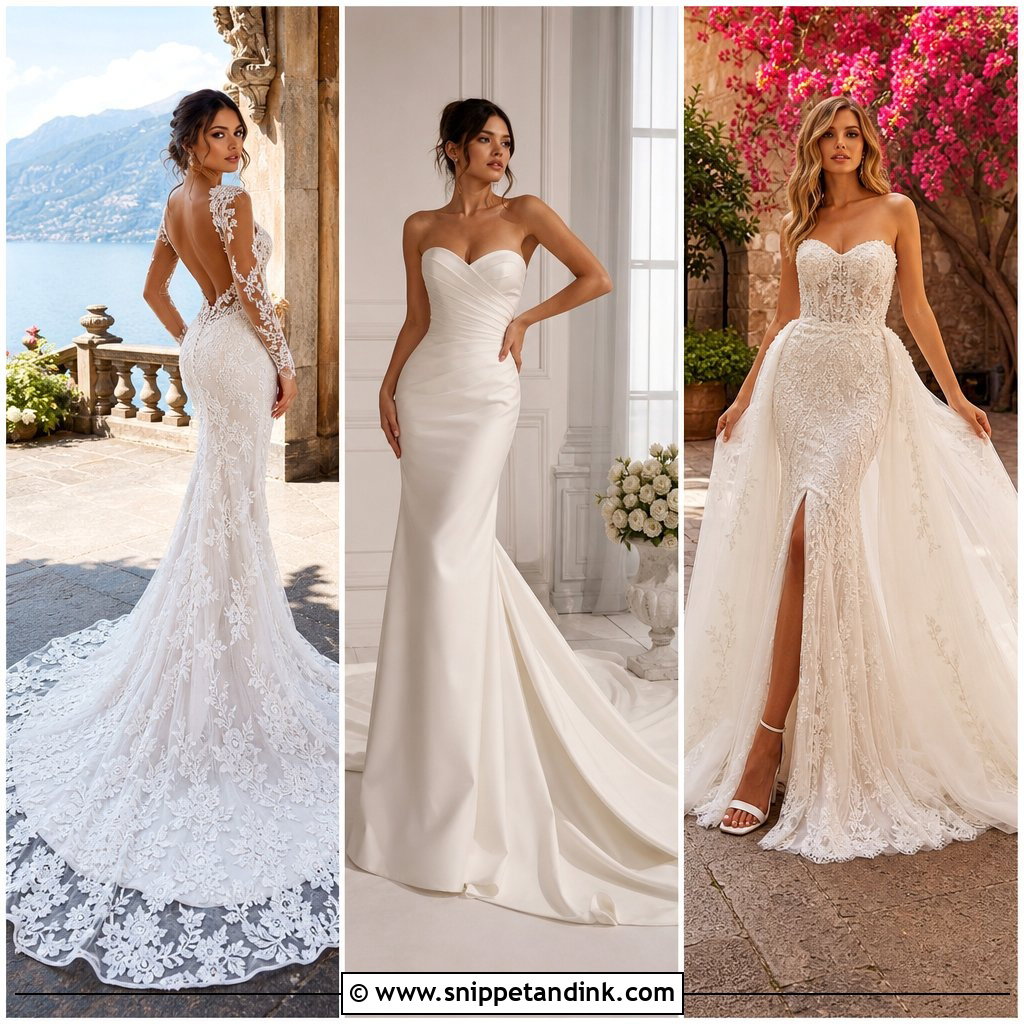
1. Strapless Sweetheart Satin Mermaid Wedding Gown
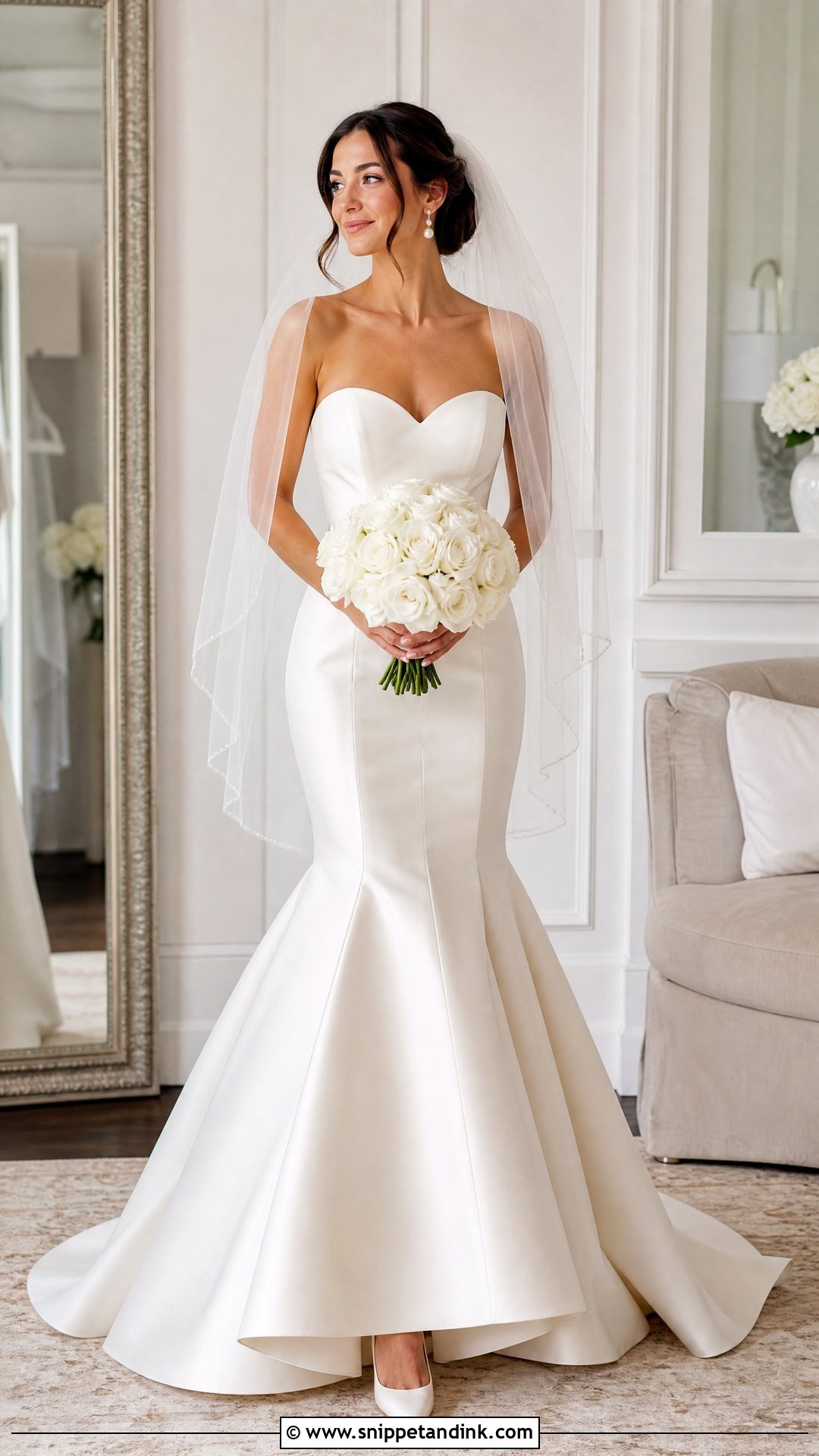
The sweetheart neckline is the one I see most, and the boning is what makes or breaks it. Without internal bones running up from the waist, a strapless satin bodice slides by the first dance, so I press on the side seams at the first try-on to feel for them. The ivory skirt should hug the hips and open into a rounded flare below the knee. A fingertip veil, pearl drops, pointed ivory pumps and a small white rose bouquet keep it clean, with the hair in a low chignon or soft side-parted waves. At alterations, sit, walk and do a few dance steps before anyone pins the hem.
2. Off Shoulder Satin Mermaid Wedding Gown
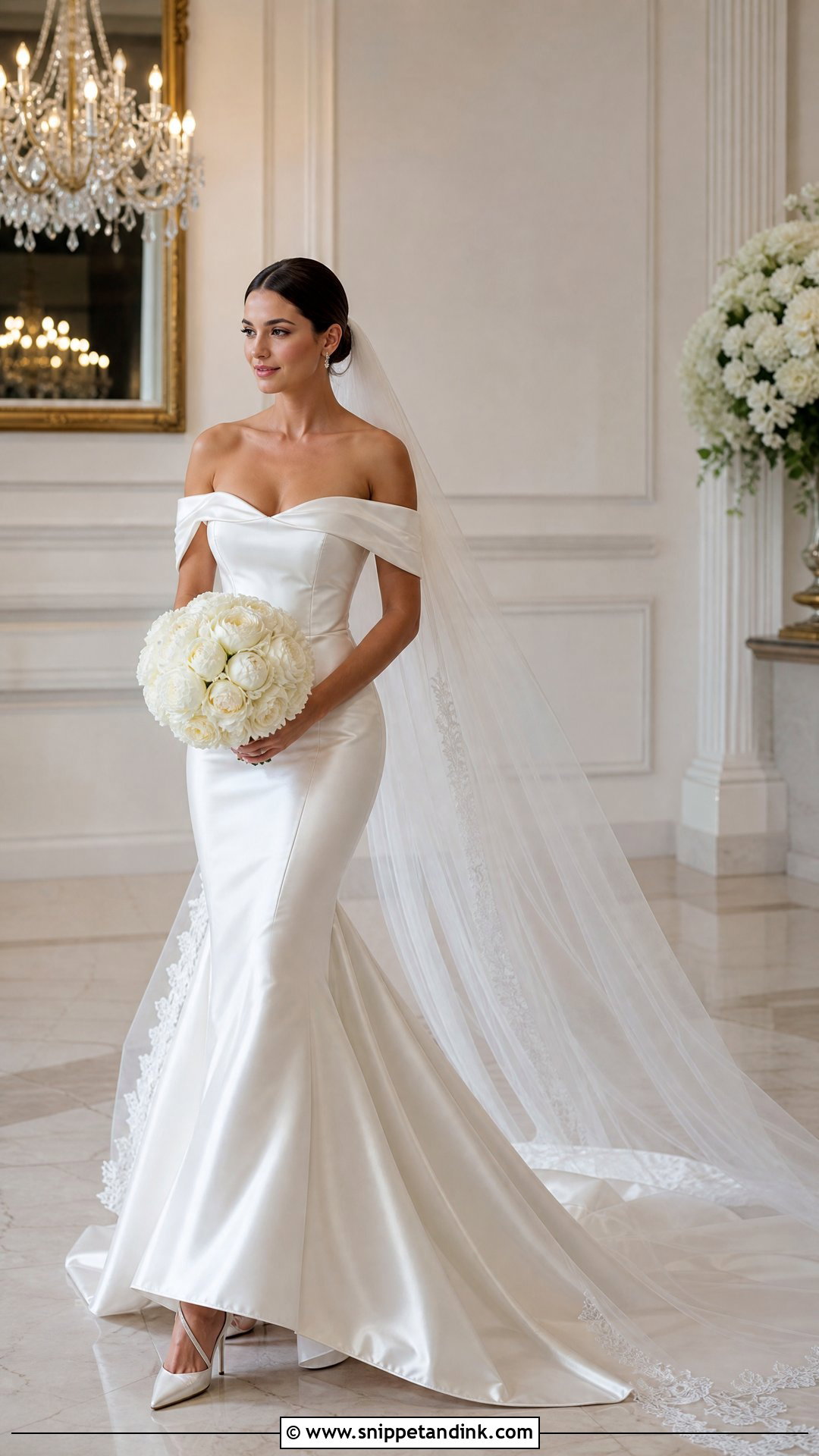
Draped bands across the shoulders frame the collarbone and give some upper arm coverage, which many brides want. The catch is movement. Off shoulder bands pin your arms lower than you expect, and I always ask a bride to hug me at the fitting, because that is when she discovers she cannot lift her arms for the reception. A seamstress can often reset the bands on hidden elastic or removable snaps. Pair it with a cathedral veil anchored under a smooth bun so the neckline stays visible, crystal studs, a fine tennis bracelet, satin slingbacks and a round bouquet of peonies or garden roses.
3. Square Neck Satin Mermaid Wedding Gown
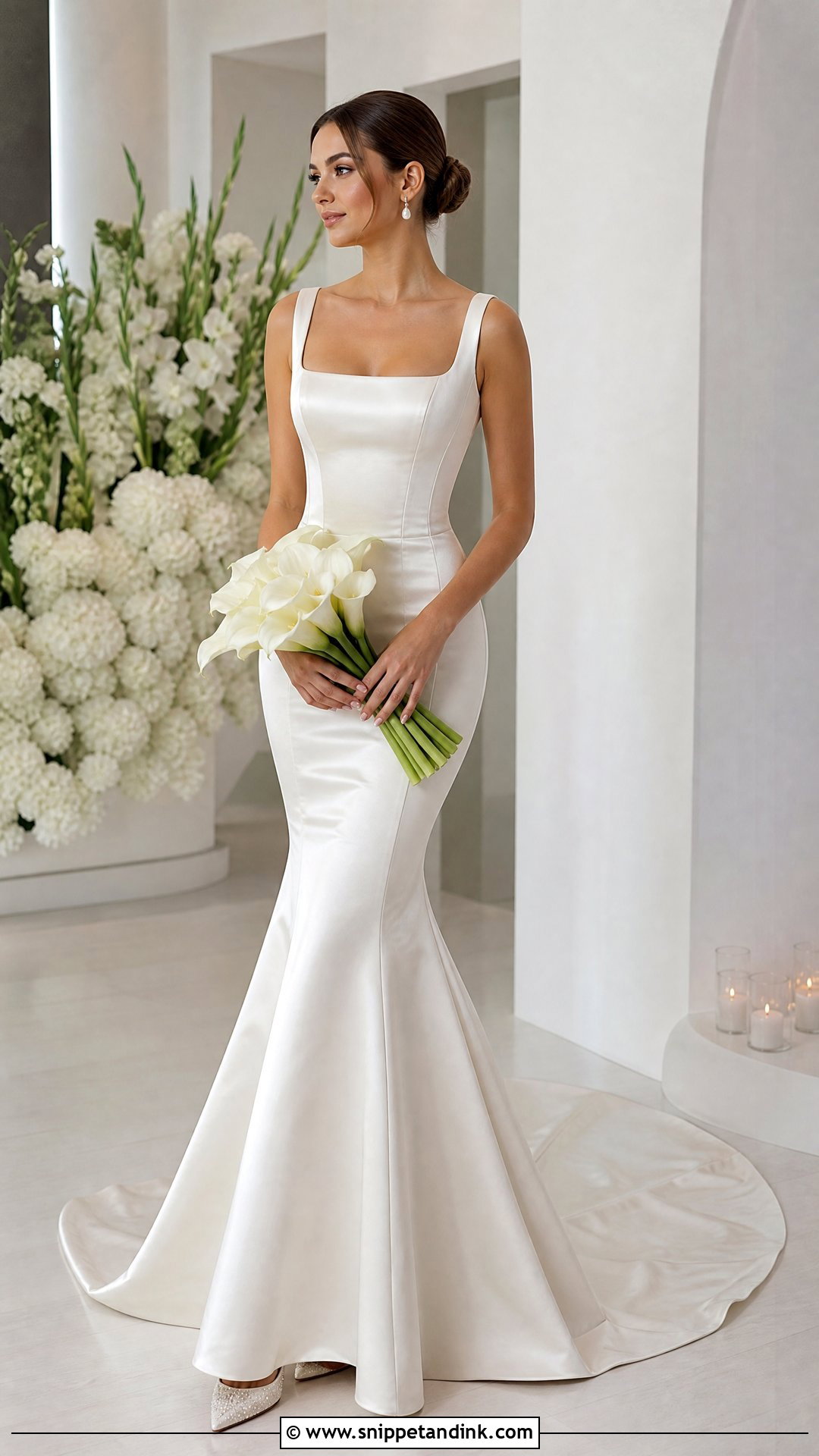
A square neckline turns the fitted silhouette architectural. Wide straps carry some of the bodice weight, and princess seams in medium-weight satin give a smooth line from bust to hip. I like a narrow chapel train here because a heavy one fights the simple construction. Pearl earrings, a neat low bun, pointed closed-toe heels and a structured calla lily bouquet suit the clean lines. If you want more coverage, ask for the neckline raised a little at the center rather than adding a lace insert, and keep the necklace minimal or skip it so the bodice shape stays the focus.
4. Halter Neck Satin Mermaid Wedding Gown
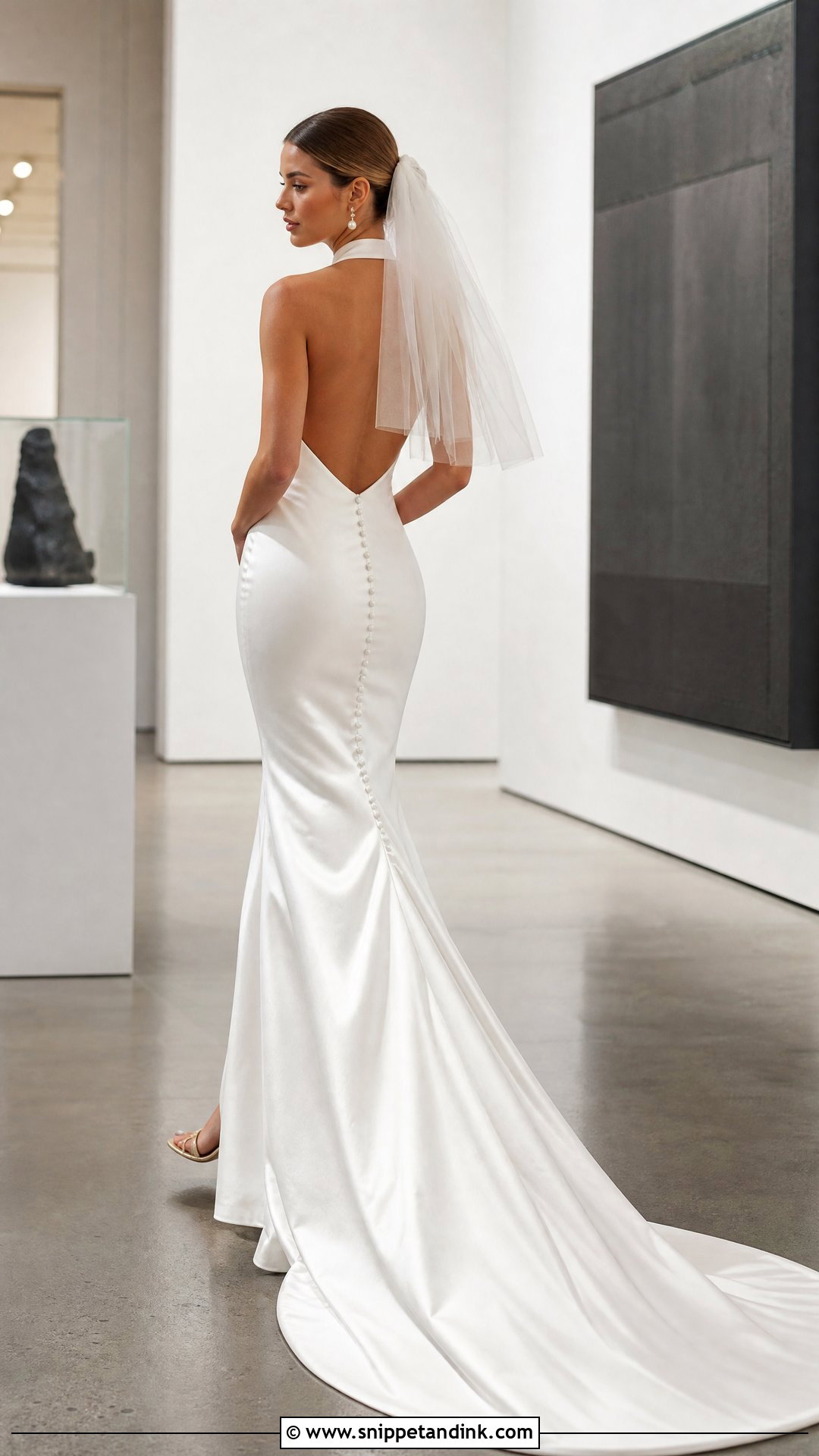
Halters lengthen the whole body because the eye travels from the neck straight down to the flare. The bodice can be a clean high neck or a gathered one that puts texture into the satin. The weak point is the strap around the neck: on a heavy skirt it drags, and by the evening some brides get a headache from it. I check that a good portion of the weight is carried by the bodice and back, not the neck tie. A sleek ponytail or polished bun keeps the neckline open, with drop earrings, a slim bracelet, metallic ivory sandals and a light chapel or shoulder-length veil. A low back with covered buttons balances the closed front.
5. One Shoulder Satin Mermaid Wedding Gown
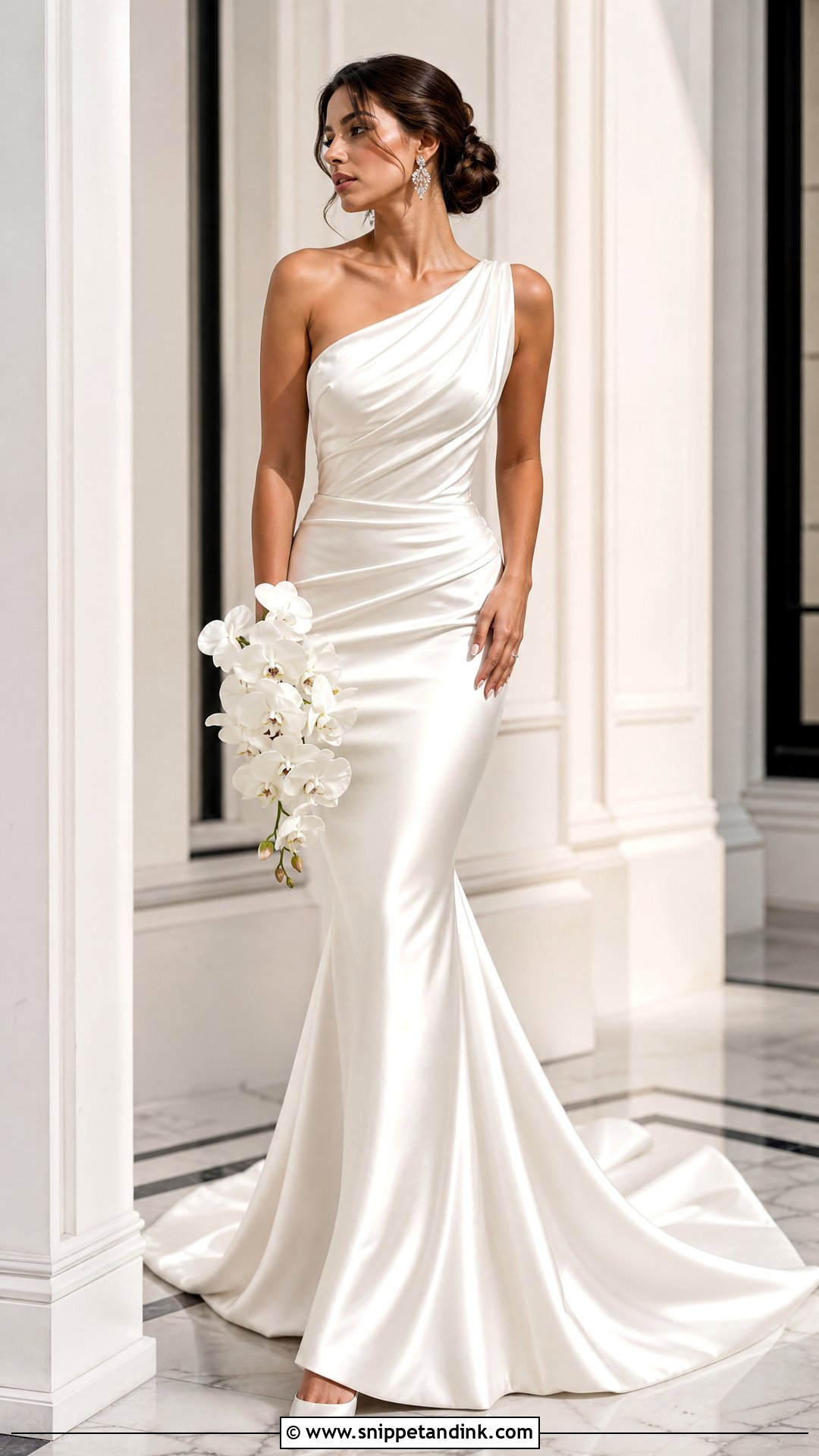
An asymmetrical neckline reads confident and modern straight away. I steer brides toward a wide draped strap, because a narrow one cuts into the shoulder and looks less bridal, especially where it melts into pleating across the bodice. Keep everything else quiet: a smooth fitted skirt and a chapel flare. A side-swept updo, crystal ear climbers and pointed satin heels finish it. Skip the necklace, since it breaks that diagonal line, and wear a slim bracelet or one ring instead. Attach a long sheer veil at the back of the hair so the asymmetry stays visible, and white orchids sit well against it.
6. Corset Satin Mermaid Wedding Gown
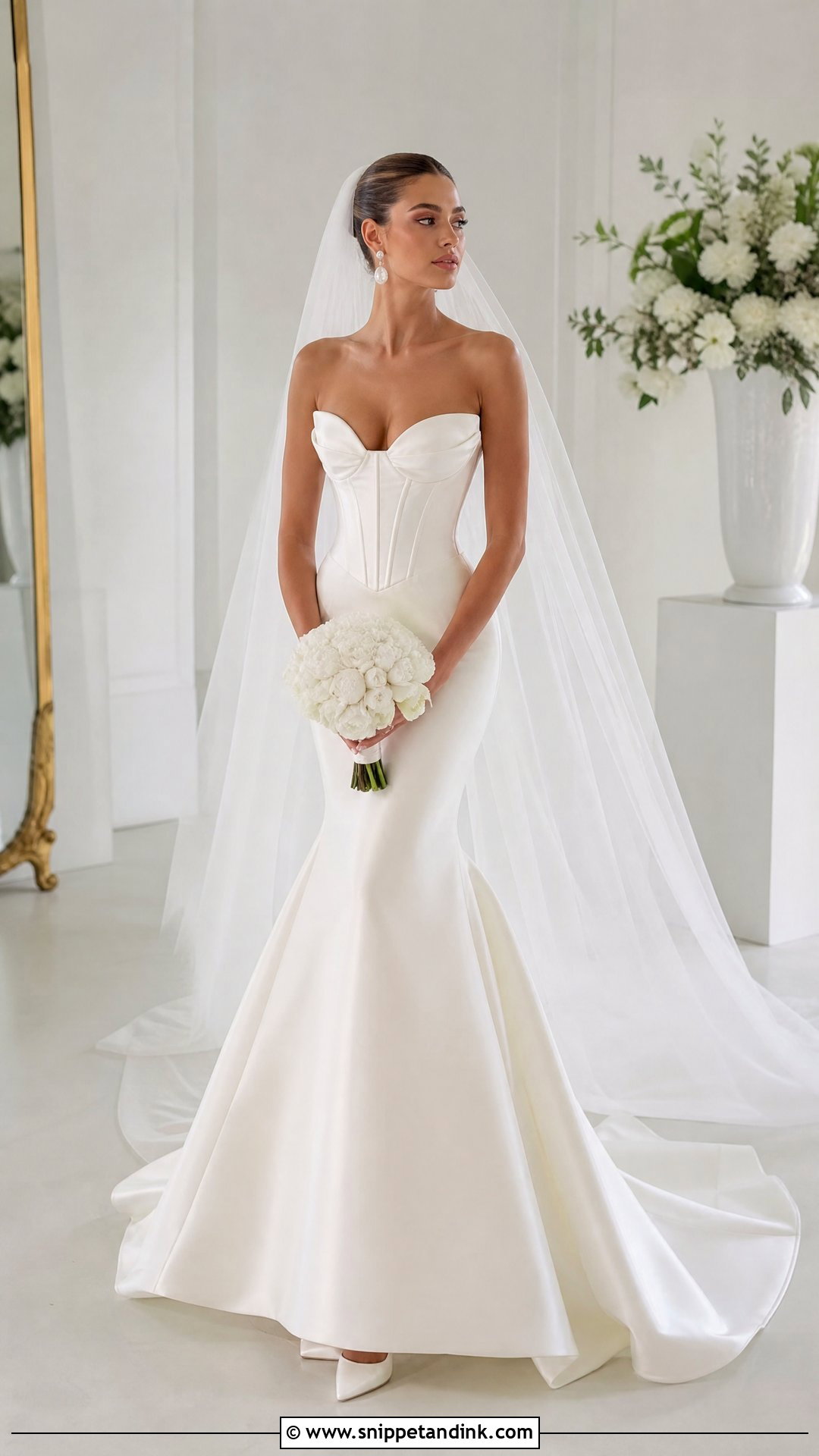
Visible boning, a curved neckline and a slightly long waist that runs into the fitted skirt give a corset gown its shape. A lace-up back gives you some room if your weight shifts before the wedding, while a hidden zipper looks cleaner. Here is the honest bit: I never let a bride size down into a corset hoping it will hold her in. A well-made one supports you and still lets you breathe, sit and eat. Have it professionally fitted, pair it with a plain cathedral veil, pearl-and-crystal earrings and closed-toe satin pumps, and keep the bouquet compact so the bodice shows in photos. Soft waves or a loose bun balance the structure.
7. Basque Waist Satin Mermaid Wedding Gown
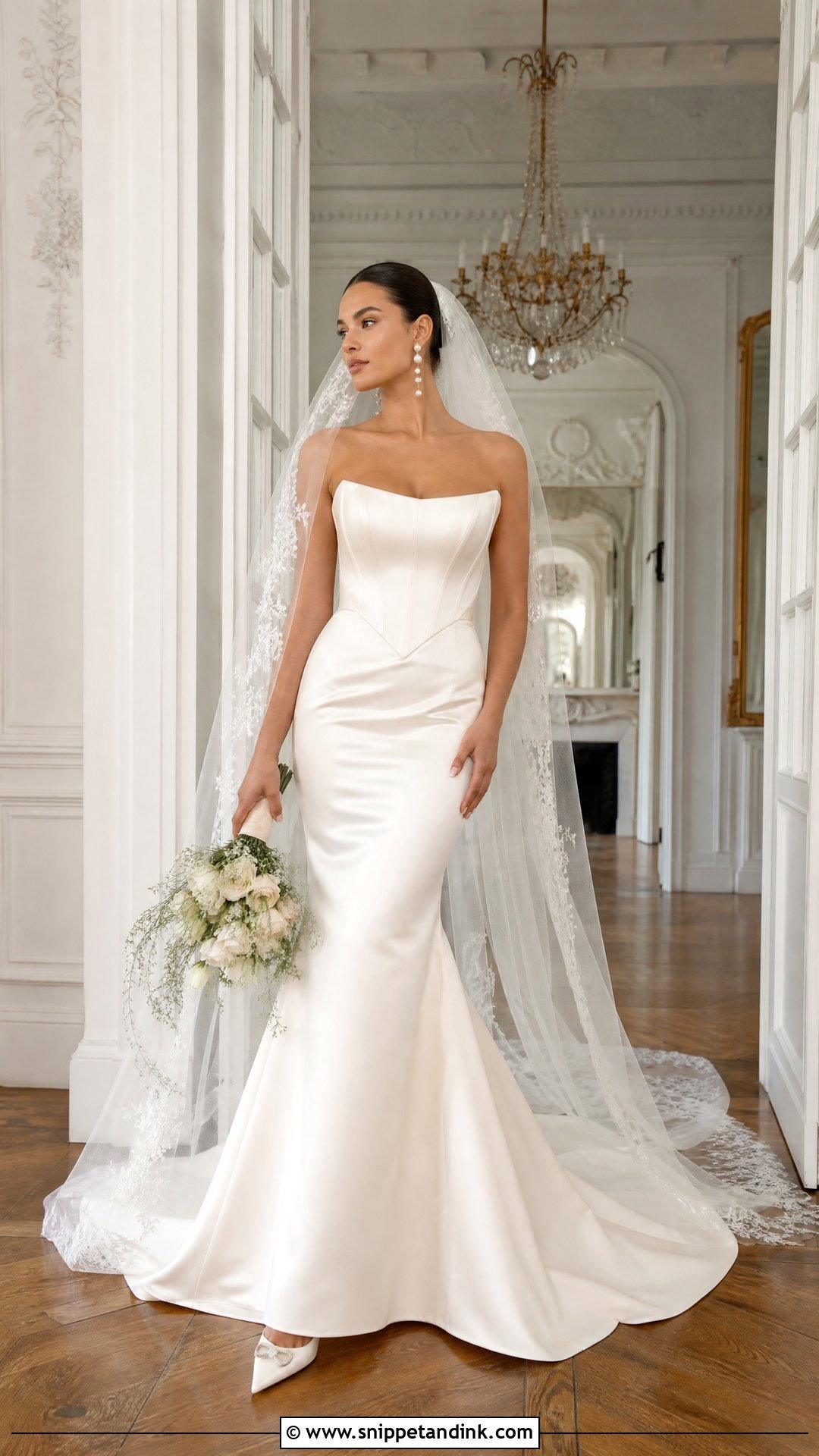
The basque waist dips to a point at center front, and that point lengthens the torso the way a couture bodice does. Smooth satin with almost no embellishment lets that construction read. Long pearl earrings, a center-parted bun, pointed heels and a cathedral veil with a simple finished edge suit it better than heavy lace. Roses with a little trailing greenery soften the structure. Waist placement changes the whole proportion, so this is a gown where alterations really count. At the fitting I watch the point when the bride sits; it should lie flat against the body, not fold or dig in.
8. Cowl Neck Satin Mermaid Wedding Gown
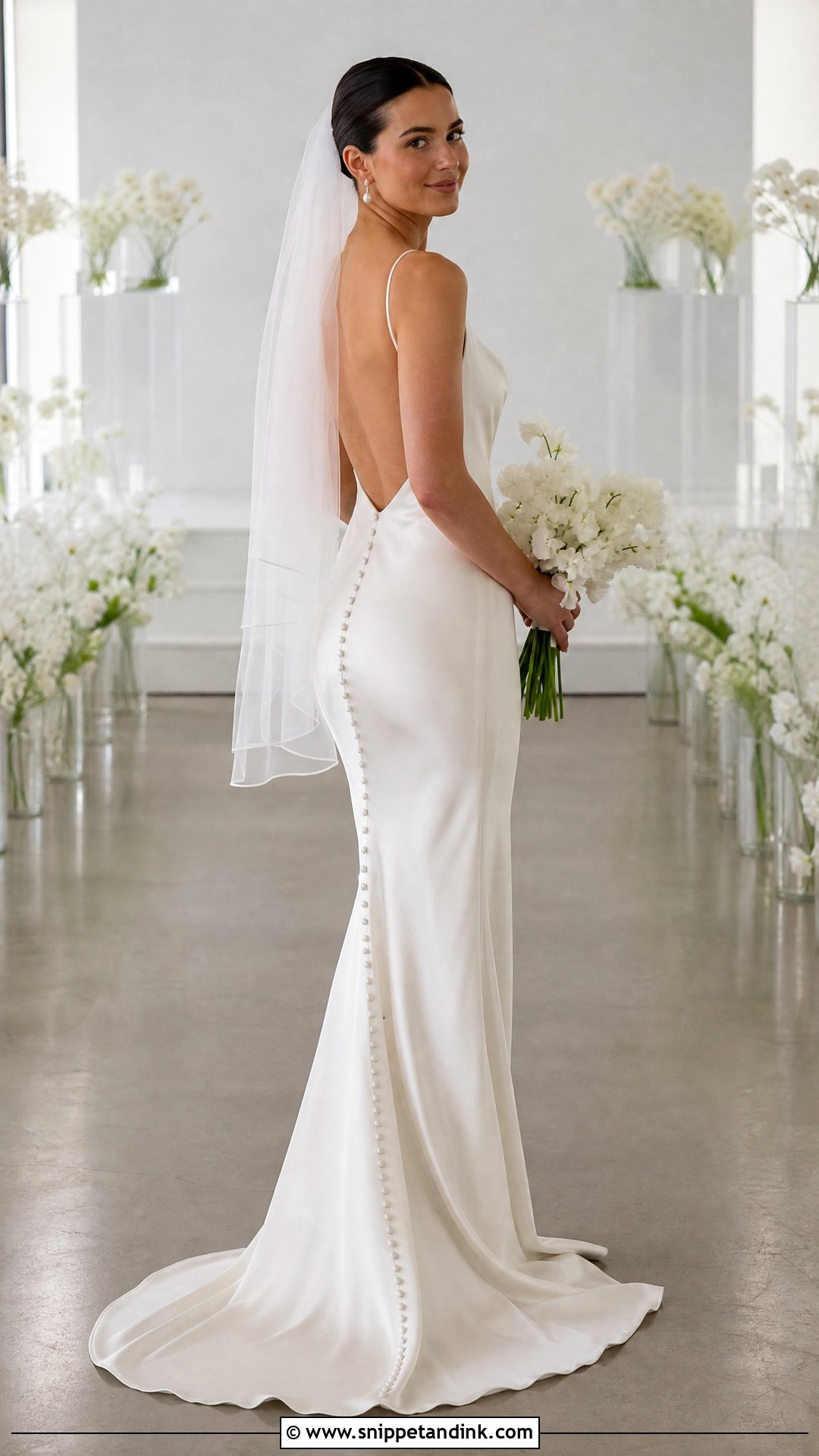
A cowl drapes softly at the neckline and makes a gentler alternative to a structured bodice. Slim straps and a close-fitting body suit it. The fabric matters more than usual: a fluid satin falls into the fold, a stiff one sticks out like a shelf. You still need hidden support inside so the drape looks relaxed without gaping when you lean forward. A low back with covered buttons and a short sweep train continue the quiet mood, with a neat bun, pearl drops, narrow-strap ivory heels and a sheer fingertip veil. Sweet peas and roses add light texture. Fashion tape helps the cowl stay put, but test it on your skin a week before, since some brides react to the adhesive.
9. Long Sleeve Satin Mermaid Wedding Gown
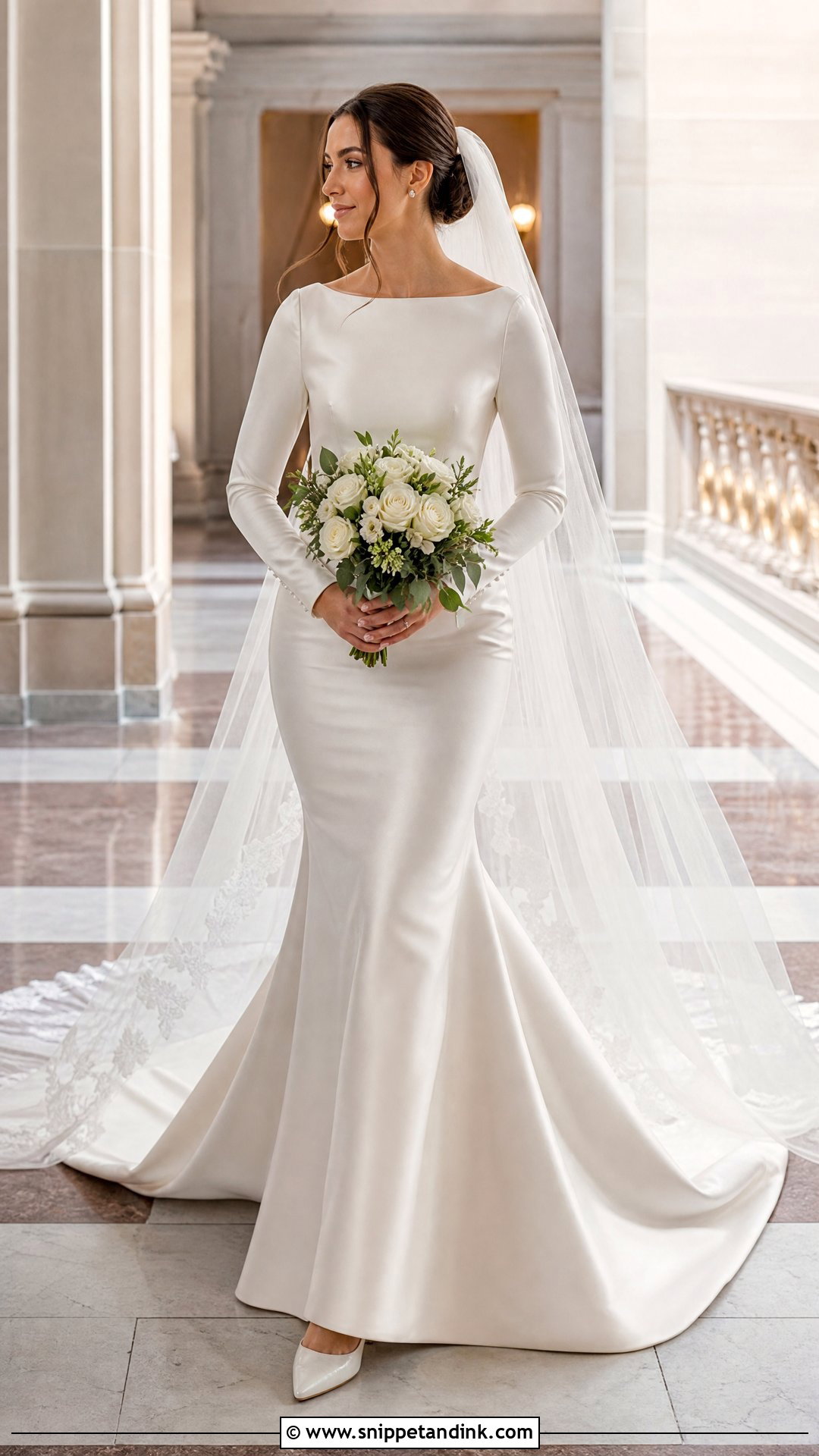
Long fitted sleeves in crisp satin make a formal, cool-weather gown. A bateau, square or modest V neckline balances the top while the skirt follows the body and flares below the knee. Satin sleeves have no stretch, so I ask for ease at the elbow and make the bride hold her bouquet up at chest height in the fitting. If she can’t, the sleeve gets let out. Pearl studs, a low chignon, ivory pumps and a cathedral veil keep it classic. Outdoors, a faux fur wrap or tailored bridal coat adds warmth without touching the gown. Covered buttons at the wrist are traditional and make the sleeves much easier to get on.
10. Detachable Sleeve Satin Mermaid Wedding Gown
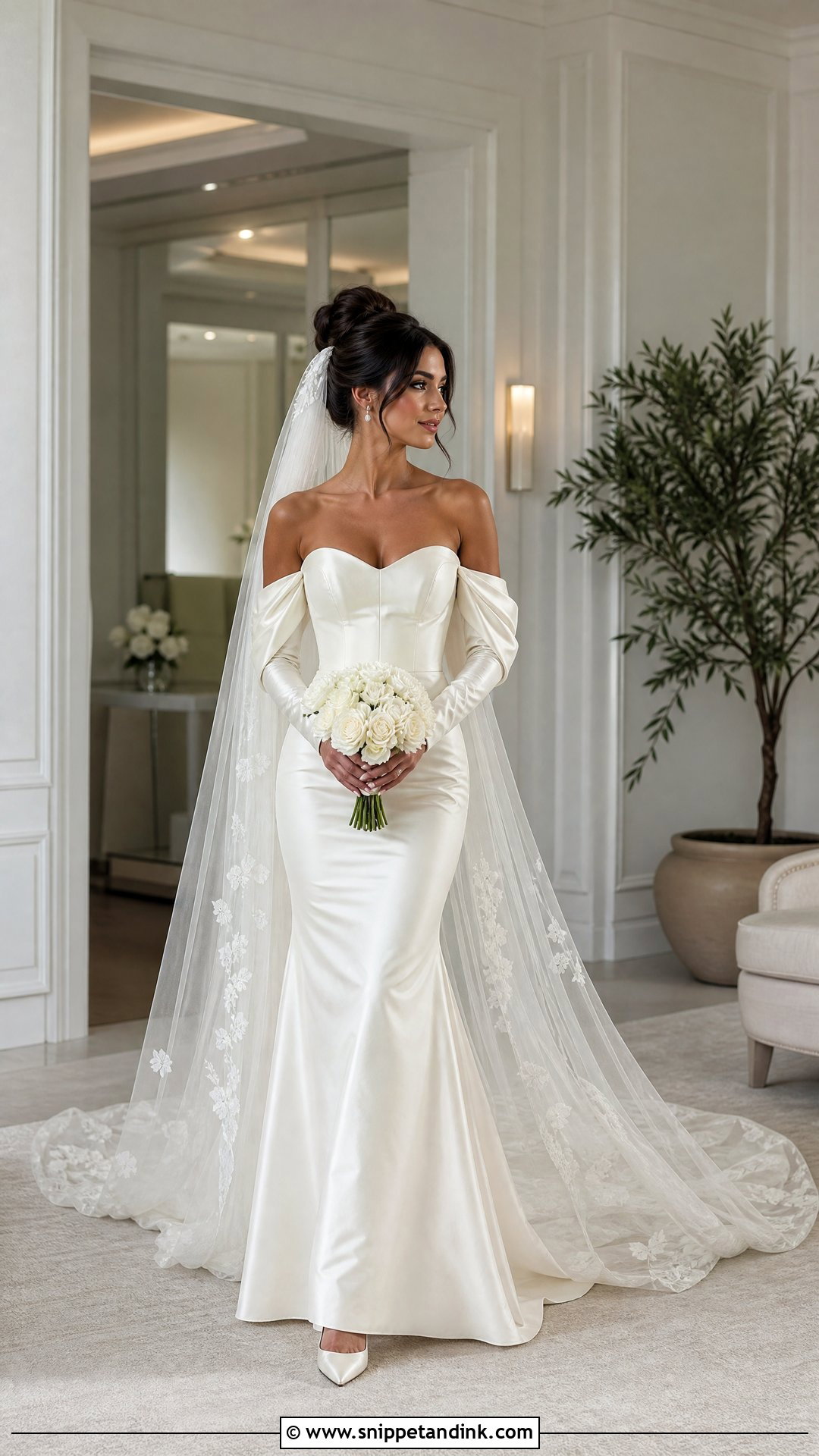
Detachable sleeves give you two looks from one dress. Start with a strapless or sleeveless gown and add draped satin sleeves for the aisle: off shoulder ones read soft, fitted opera-length ones read dramatic. Wear the ceremony version with a cathedral veil, pearl earrings and pointed satin heels, then take the sleeves off after the formal photos and switch to a shorter veil or a sparkly comb. The detail I always check is the attachment. Snaps or loops should sit hidden under the neckline, because satin shows every bump, and a seamstress can usually tuck them into the lining.
11. Bow Back Satin Mermaid Wedding Gown
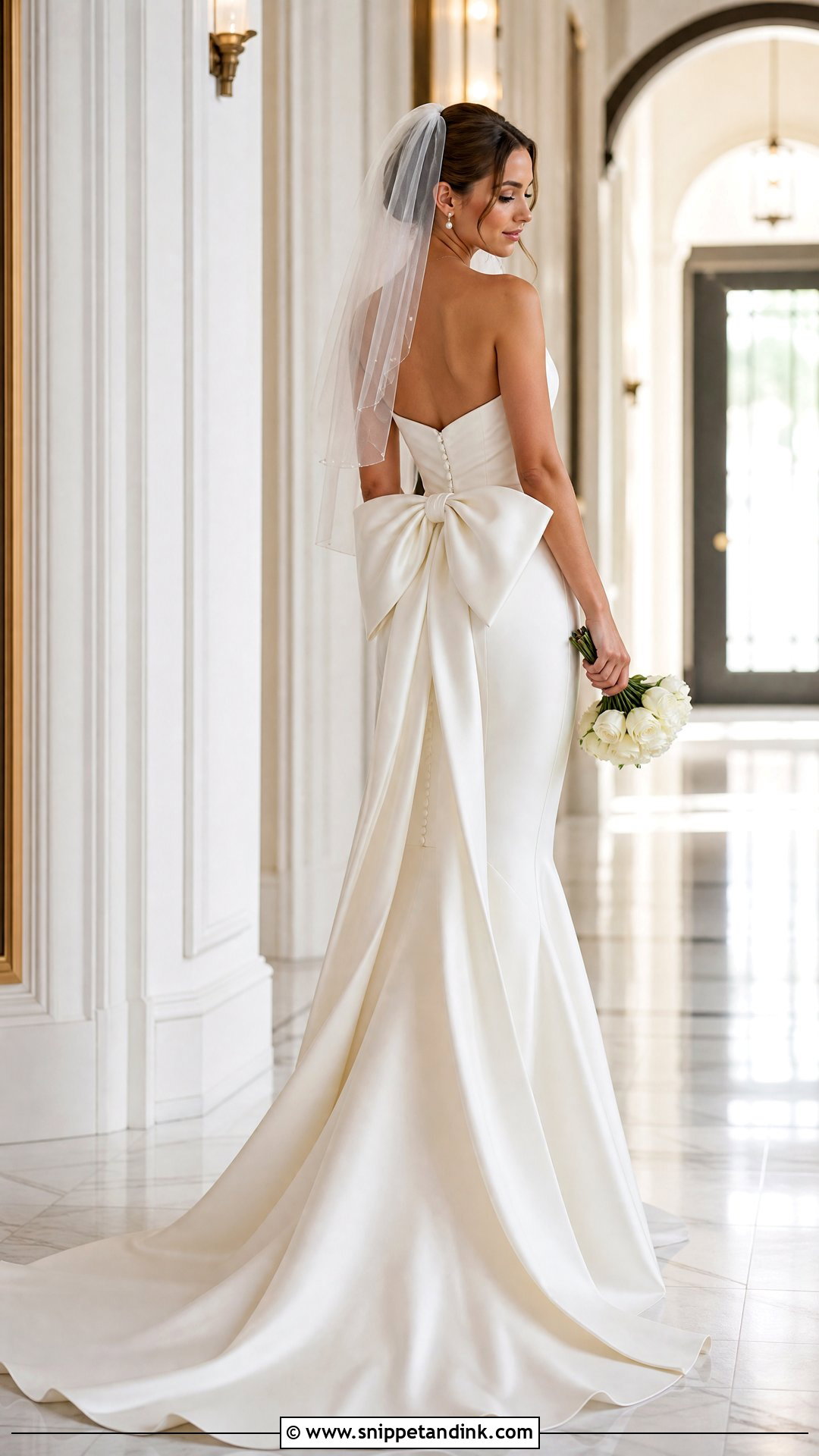
A bow adds personality without covering the whole gown in decoration. I prefer a structured detachable bow at the waist or top of the train, where it pulls the eye to the fitted shape, and long tails move well down the aisle. Keep the front plain, strapless or a clean square neck, with pearl studs, a sleek bun and closed-toe ivory heels. A plain chapel veil can fall over the bow, or go shorter to show it. Take the bow off before dancing. It adds weight to the back of the skirt, and guests will step on the tails.
12. Button Back Satin Mermaid Wedding Gown
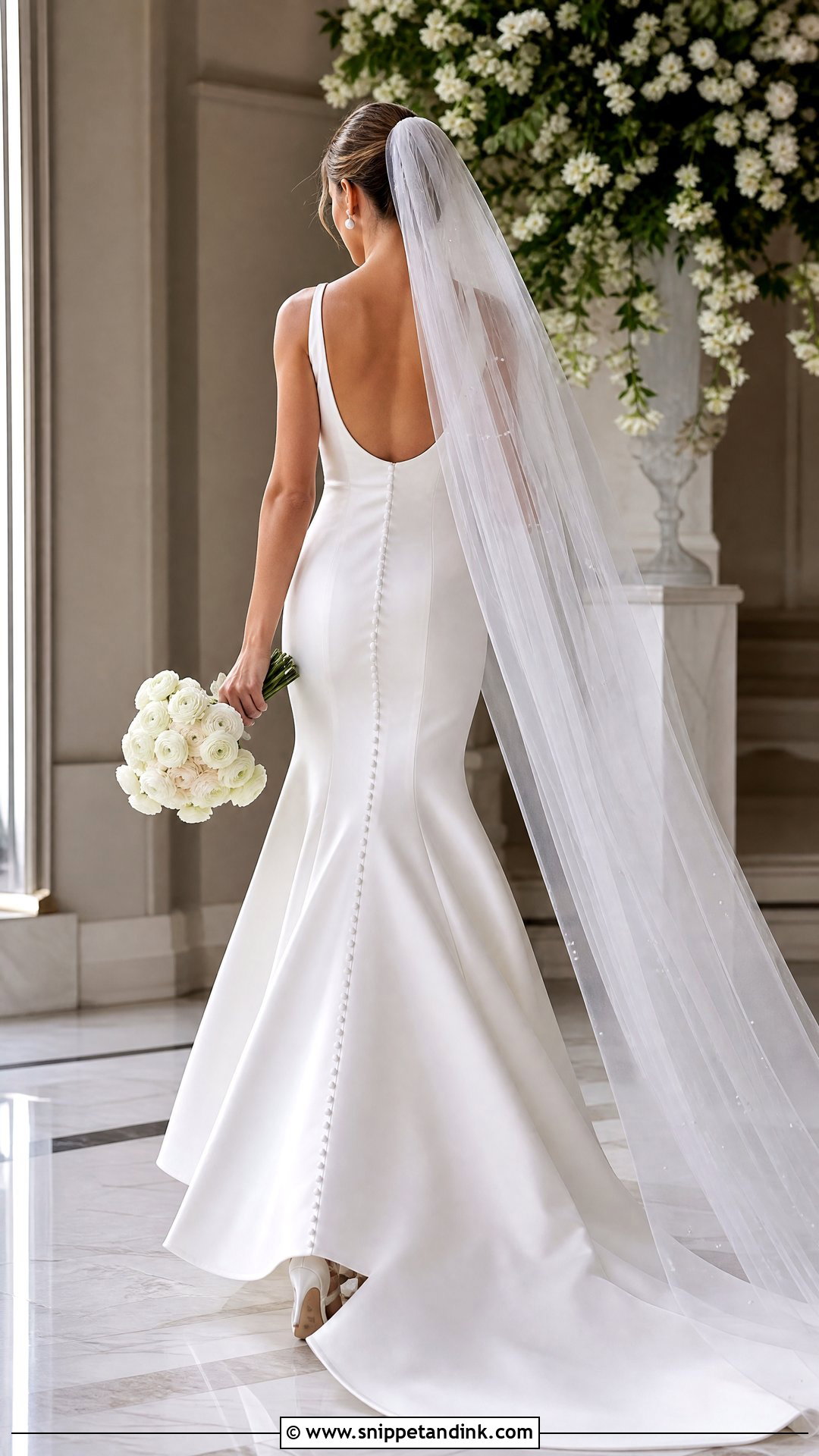
Covered buttons running from the top of the bodice down past the hips make the back as interesting as the front. A low scoop back reads romantic, a higher one gives support. Most of the time those buttons are decorative over a hidden zipper, and I tell brides that is a good thing: thirty loops take a long time on a wedding morning, and a zipper gives a smoother, more secure fit through satin. Wear a simple cathedral veil above a polished bun so the buttons show through, with pearl earrings, a fine bracelet, pointed pumps and ranunculus with roses.
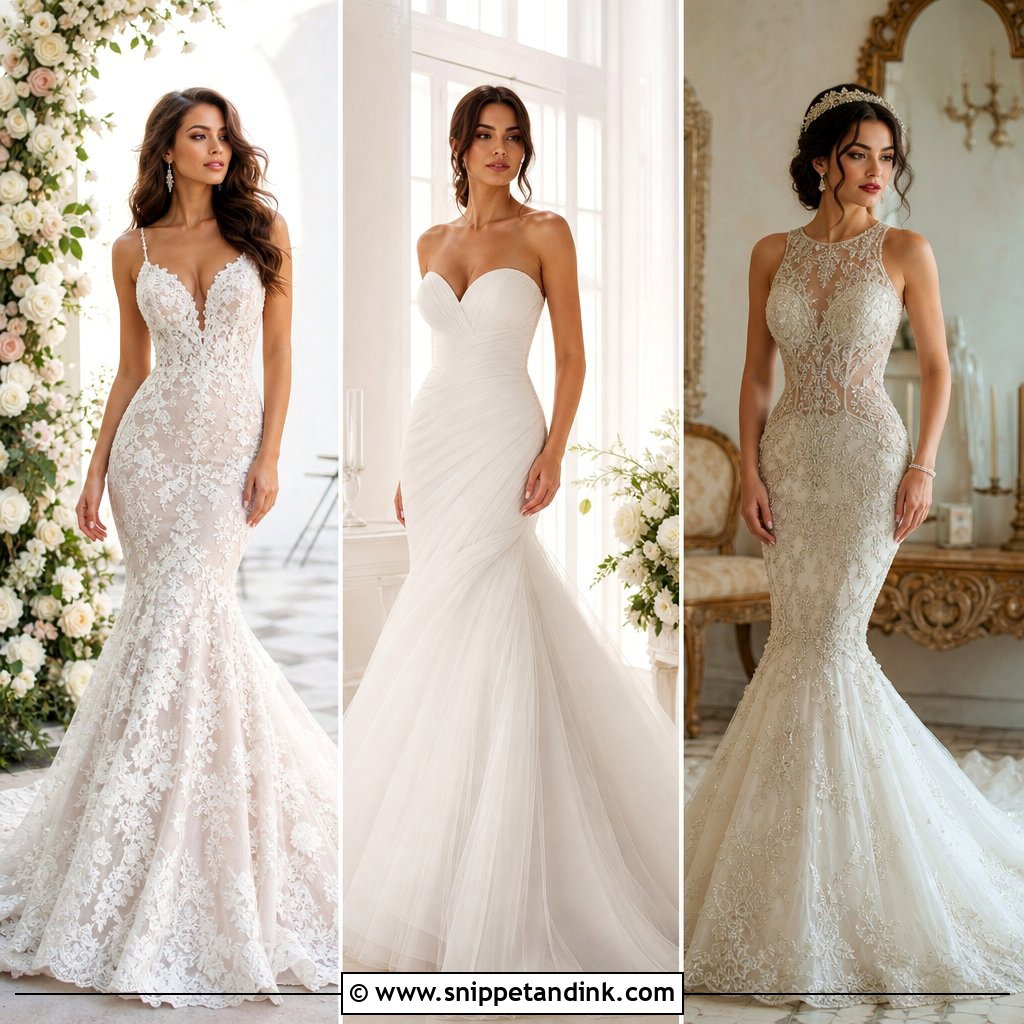
13. Lace Applique Satin Mermaid Wedding Gown
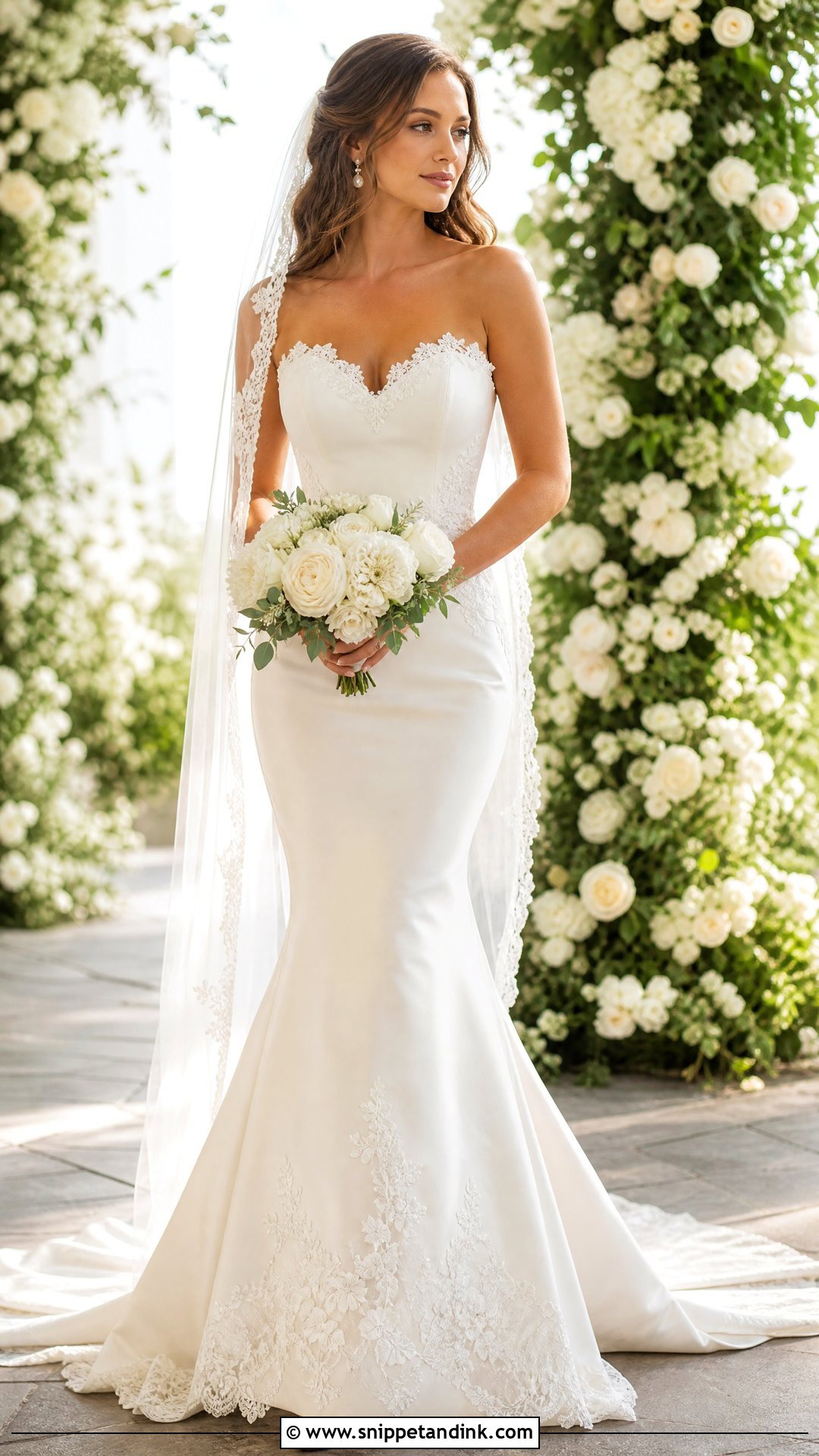
Lace appliqués soften the slick surface, but placement is everything. I like them around the neckline, waist or flare, never covering every inch, so the satin keeps its sheen. A strapless sweetheart bodice takes appliqués that seem to trail down onto the skirt. Add a lace-edged fingertip veil, pearl earrings, ivory satin heels and loose waves or a low bun. After any alteration, run your hand over the appliqué edges at the hips. A tight seam lifts them, and raised edges catch the veil all day.
14. Beaded Satin Mermaid Wedding Gown
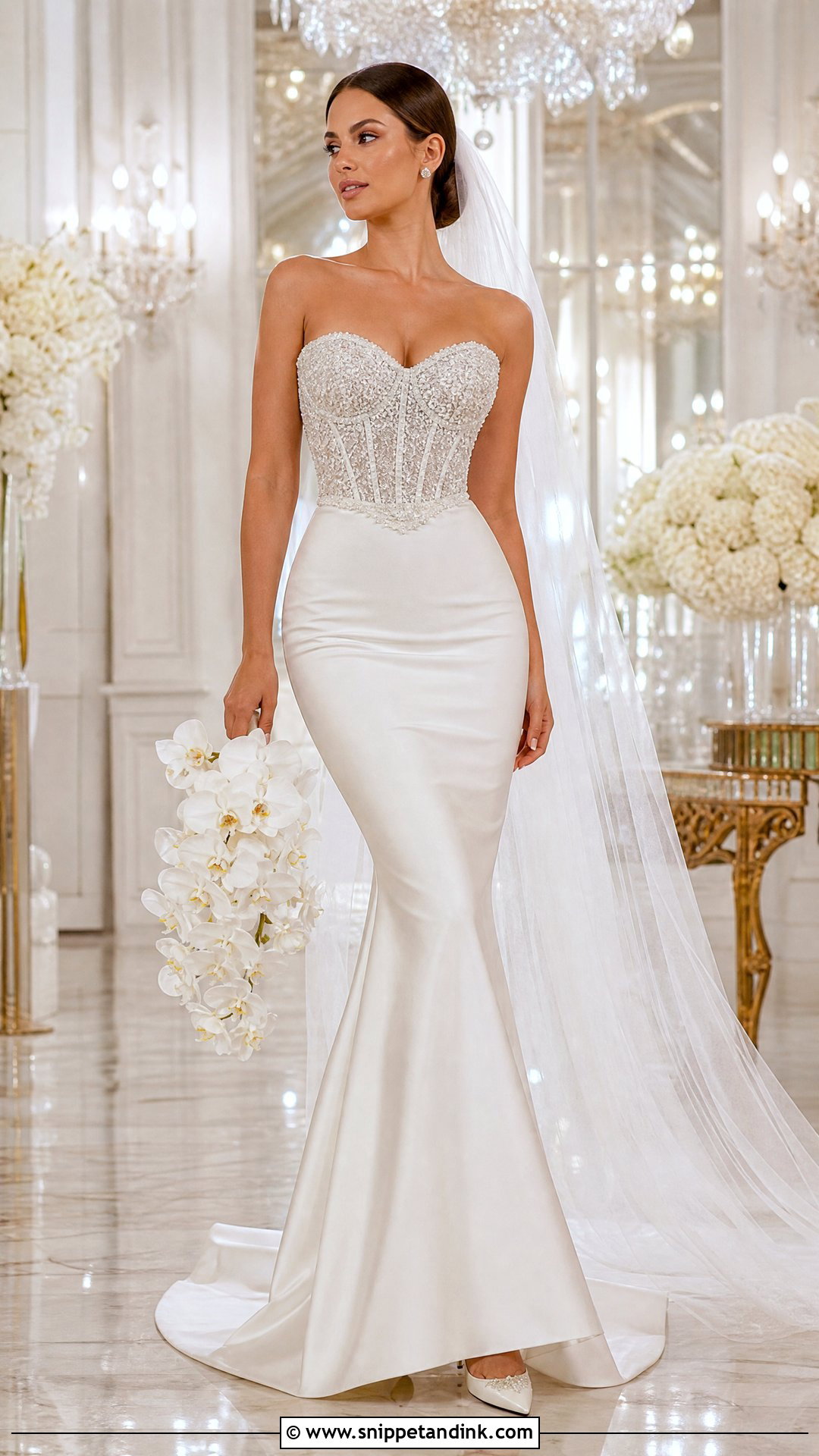
Crystal or pearl beading on smooth satin gives controlled sparkle, and I keep it on the neckline, corset seams or upper bodice. Beading the skirt of a fitted gown adds weight right where the flare needs to swing. Crystal studs, a sleek updo, pointed satin pumps and a plain sheer veil keep the beadwork in charge, and orchids suit the polished mood. Before you buy, lift your arms: beads under the arm scratch over a long day. Store it flat or hanging in a breathable cotton bag, because cheap plastic bags snag beads and trap moisture.
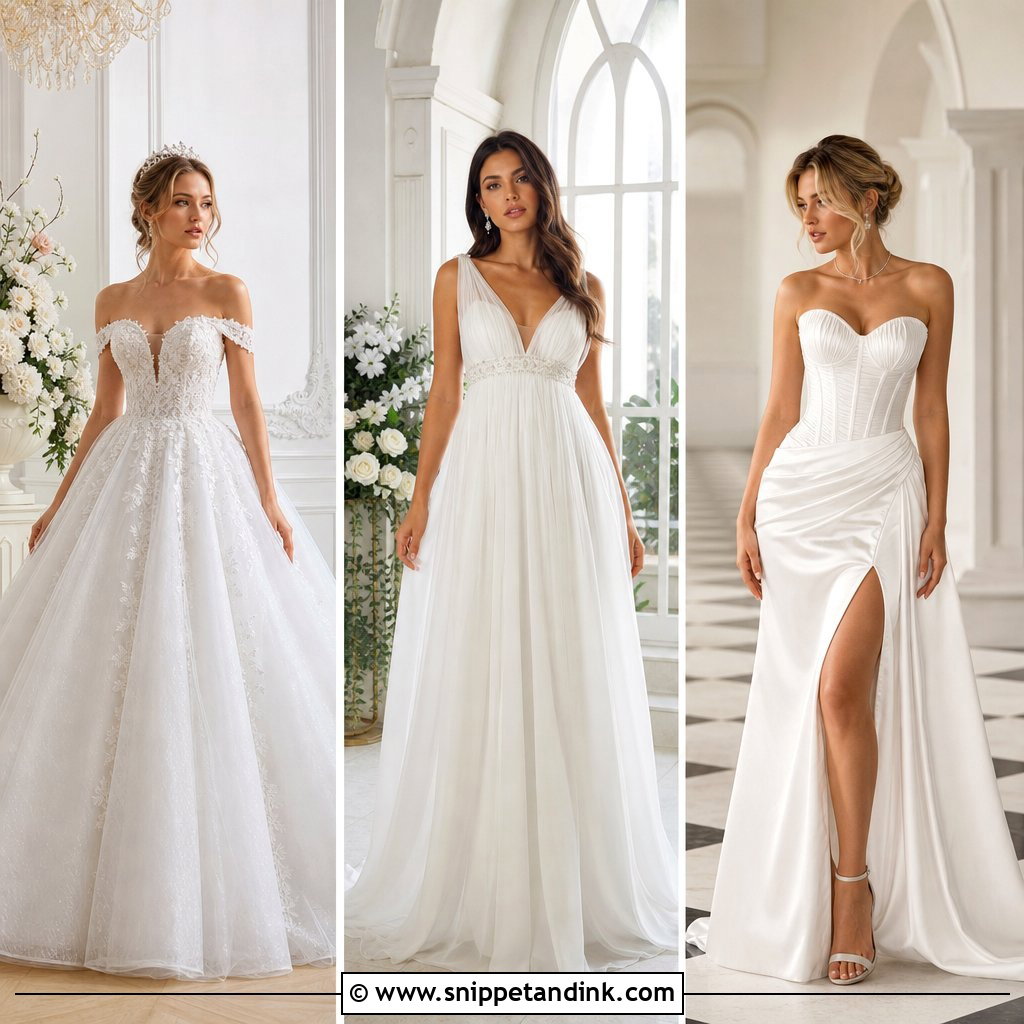
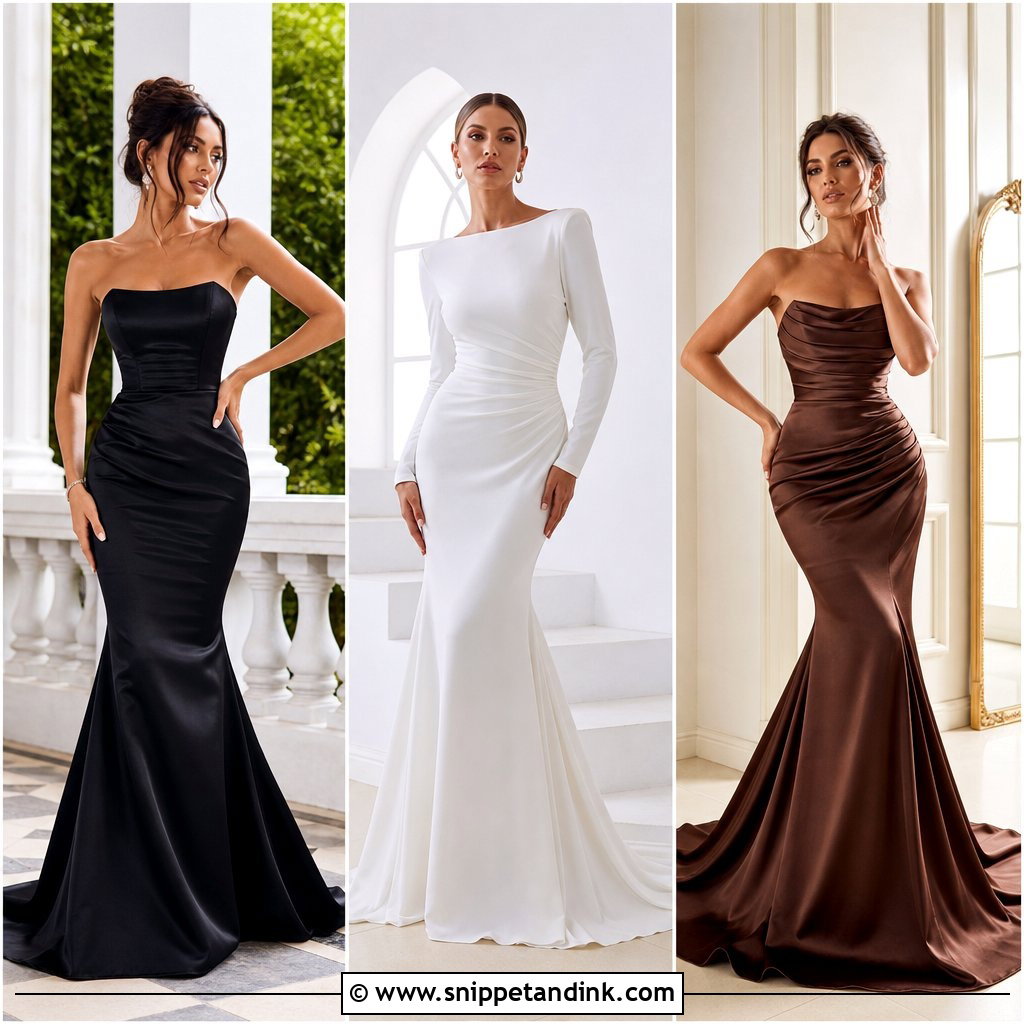
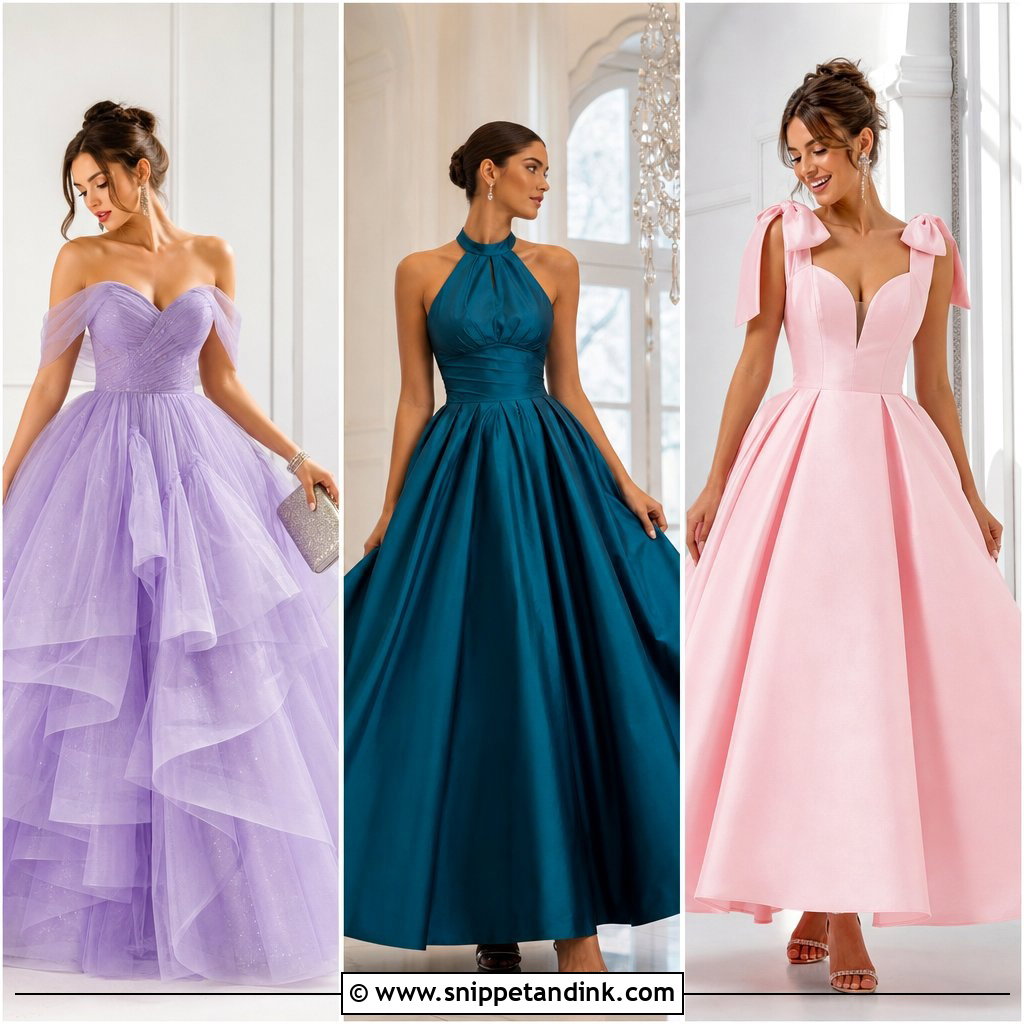
15. Minimalist Satin Mermaid Wedding Gown
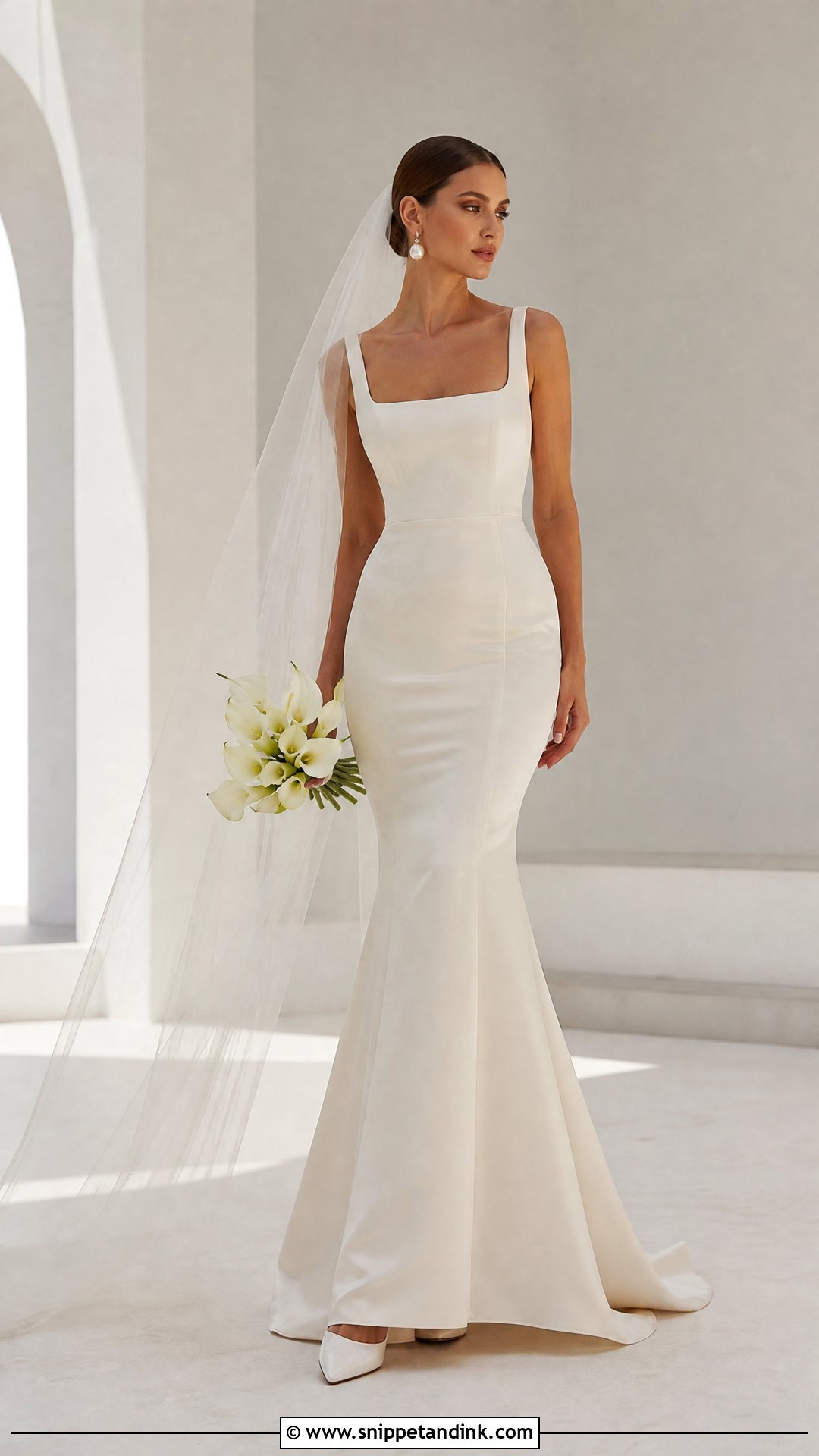
With no lace or beading to hide anything, a minimal gown is pure tailoring. A clean strapless, square or bateau bodice and a flare that starts at the right point near the knee are the whole design. This is the dress where I spend the most fitting time, because plain satin shows a puckered seam from across the room. Smooth, line-free underwear and the actual shoes at every fitting decide whether the fabric falls smoothly. Style it with sculptural pearl earrings, a smooth bun, pointed ivory heels and a cathedral veil with a raw or narrow edge. One flower, like calla lilies, keeps the bouquet as spare as the dress.
16. Ruched Satin Mermaid Wedding Gown
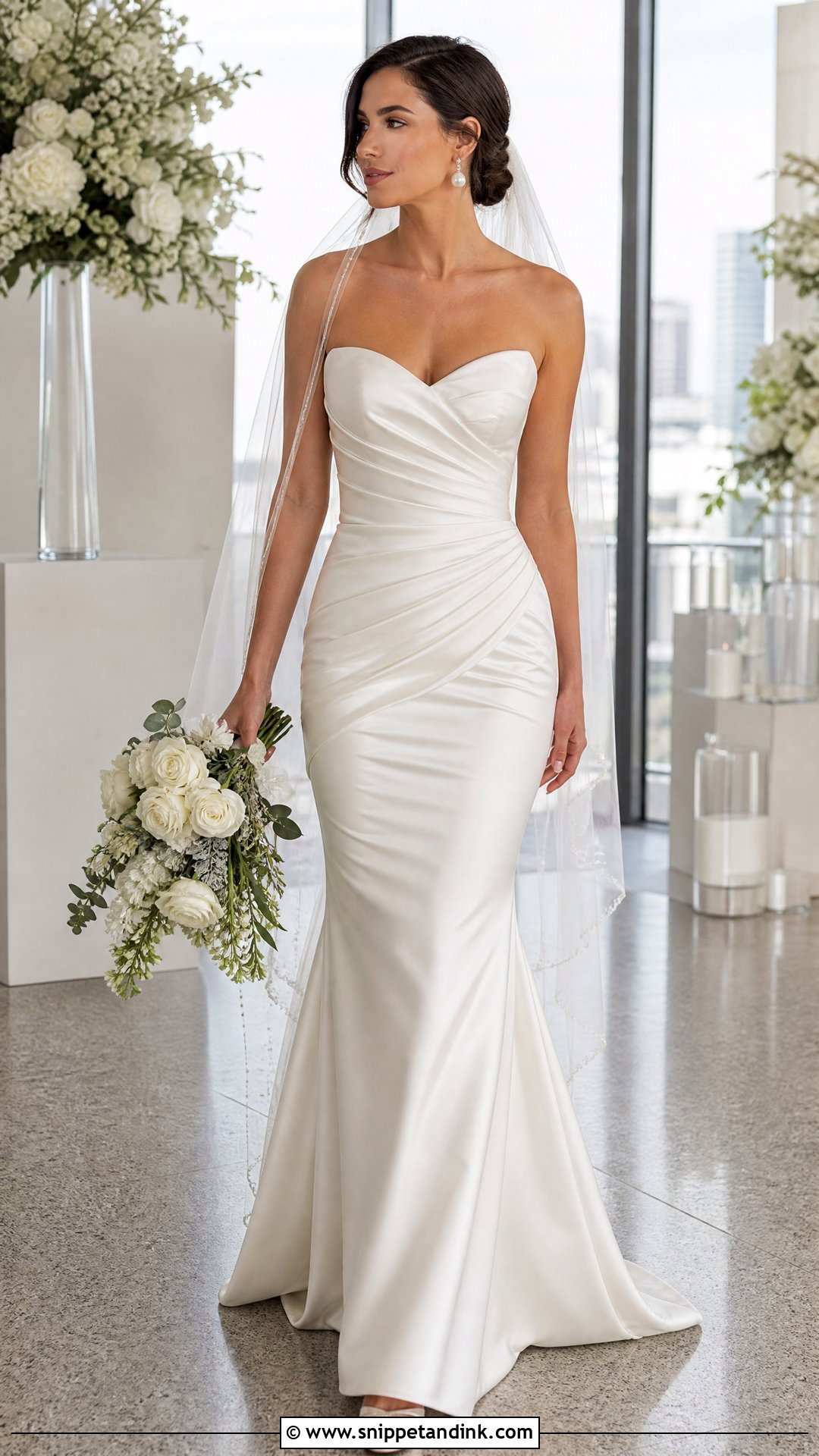
Ruching brings texture to satin. Diagonal gathers across the waist pull the eye inward, and gathering around the hips is more relaxed than a completely smooth skirt. Look for controlled pleats lying flat, not bulky layers. In fittings I make the bride stand, sit and walk while I watch each fold: good ruching stays put, bad ruching twists and pulls across the stomach. A plain fingertip veil, pearl drops, pointed satin heels and a side-parted updo that echoes the diagonal draping finish it, with loose roses and a little greenery.
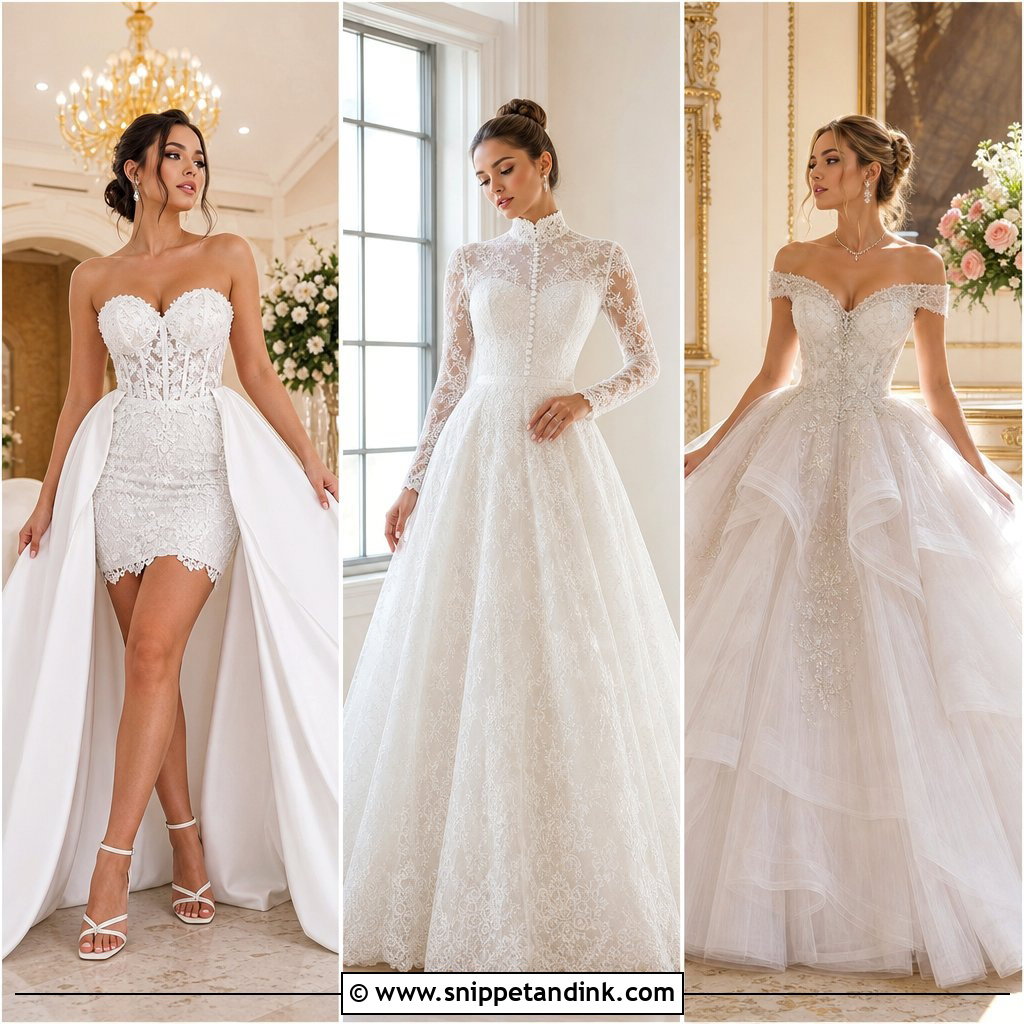
17. Satin Mermaid Wedding Gown With Overskirt
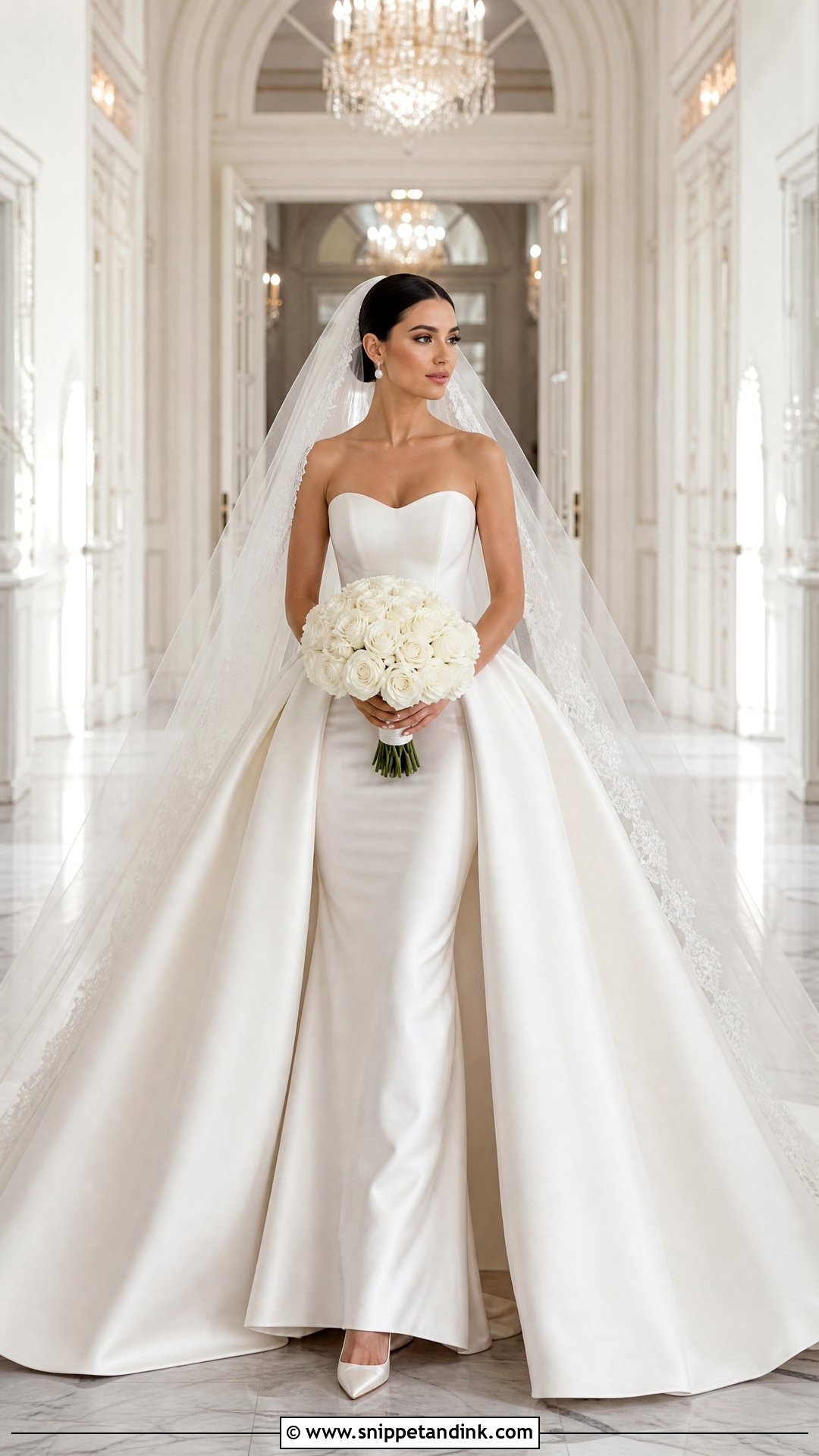
A detachable overskirt gives you the volume of an A-line or ball gown at the ceremony and the mermaid underneath for portraits and dancing. Match the satin exactly; a slightly different white looks like a mistake in daylight photos. The waistband should lie flat with no gap at the back. Wear a cathedral veil, pearl earrings and pointed ivory pumps for the ceremony, then swap to a crystal comb after. Practice the removal before the day. The hooks are usually hidden, and whoever is helping you should have done it at least once with the actual skirt.
18. Satin Mermaid Wedding Gown With Cape Veil
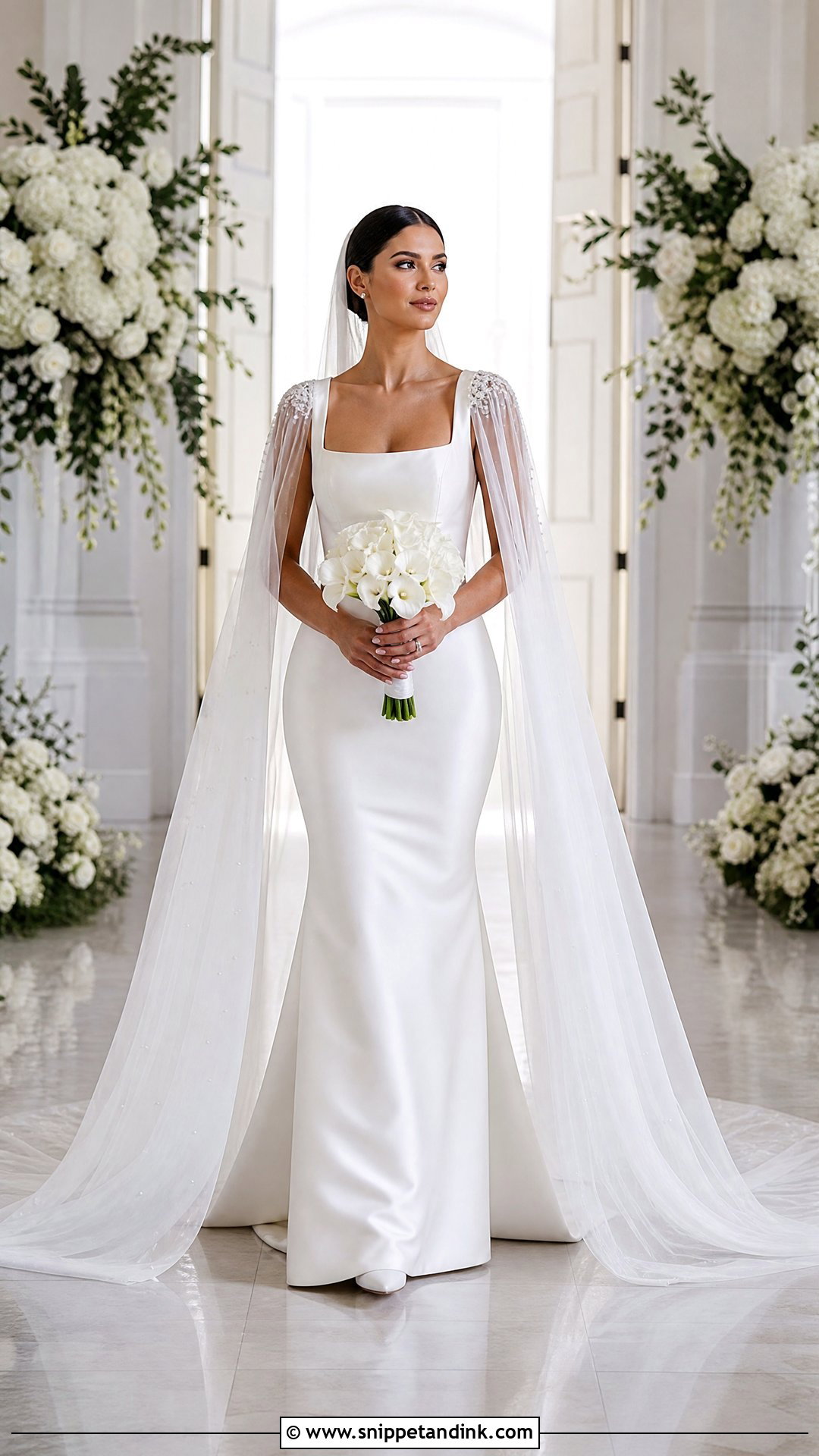
A cape veil hangs from the shoulders, so it leaves both the hair and the neckline open while adding a long vertical line behind the fitted skirt. It works on strapless, square neck or sleeveless gowns, falling into a cathedral-length train. A polished bun, pearl studs and closed-toe heels suit it, and skip the necklace if the cape has decorative clasps at the collarbone. Choose a light cape that detaches after the ceremony. I test the fasteners on the gown itself, because heavy clips pull satin into a little pucker that shows in every photo.
19. Satin Mermaid Wedding Gown With Cathedral Veil
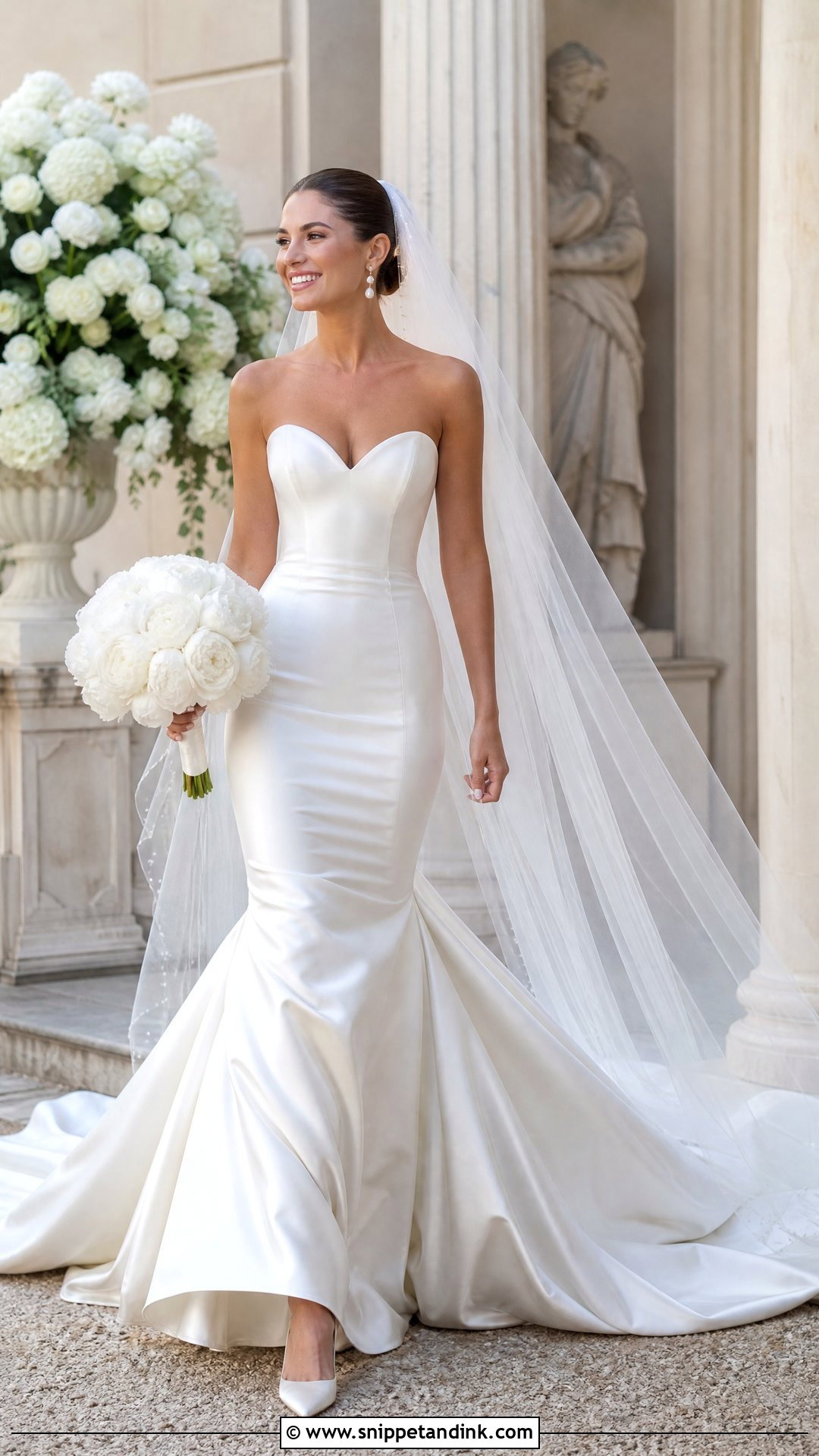
A long veil behind a sculpted gown feels ceremonial in a way short veils don’t. Use a plain veil for a minimal gown, or a narrow lace edge if the dress has subtle appliqués, and place it under a low bun to show the hair and upper back. Pearl drops, pointed satin pumps and round white peonies complete it. The veil should run past the train without swallowing the flare. Bring both to the alteration appointment so the hem and veil can be compared side by side, and plan a small bustle or wrist loop for after the ceremony.
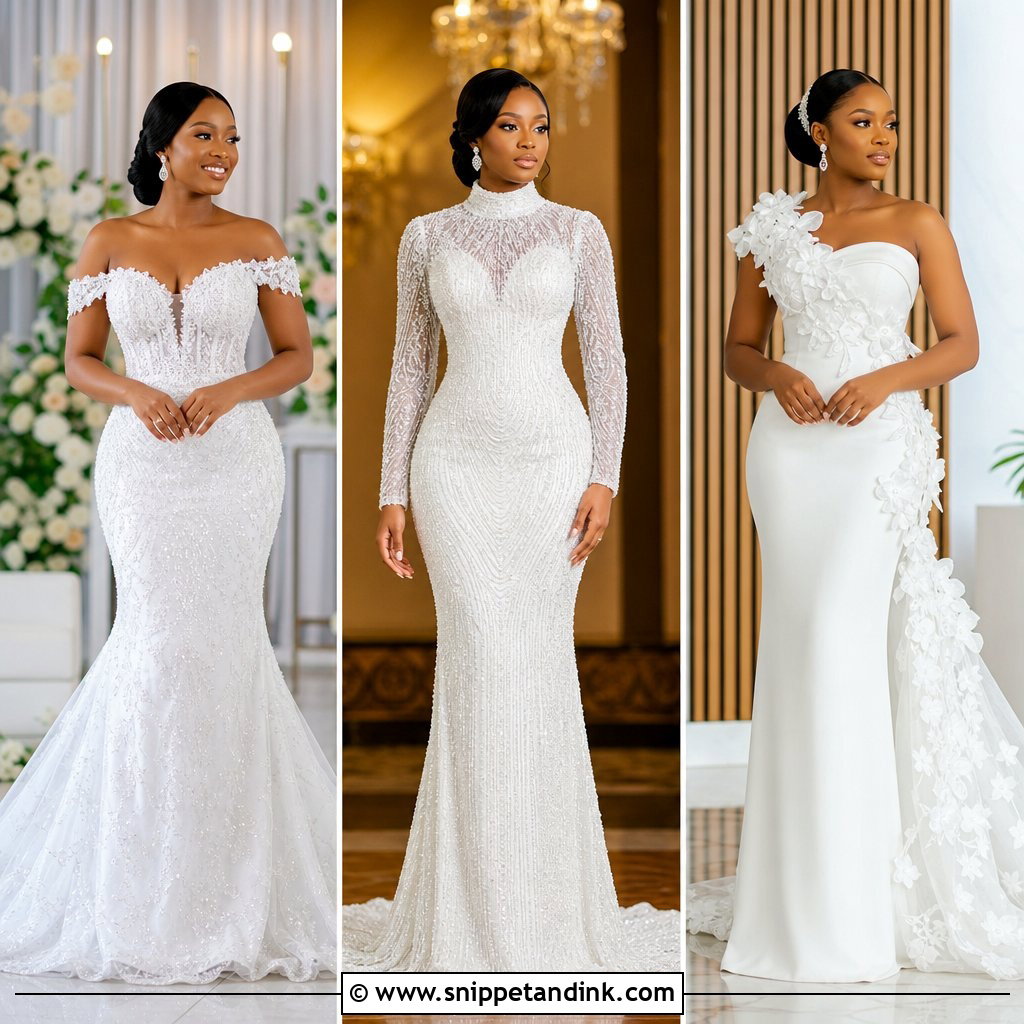

20. Plus Size Satin Mermaid Wedding Gown
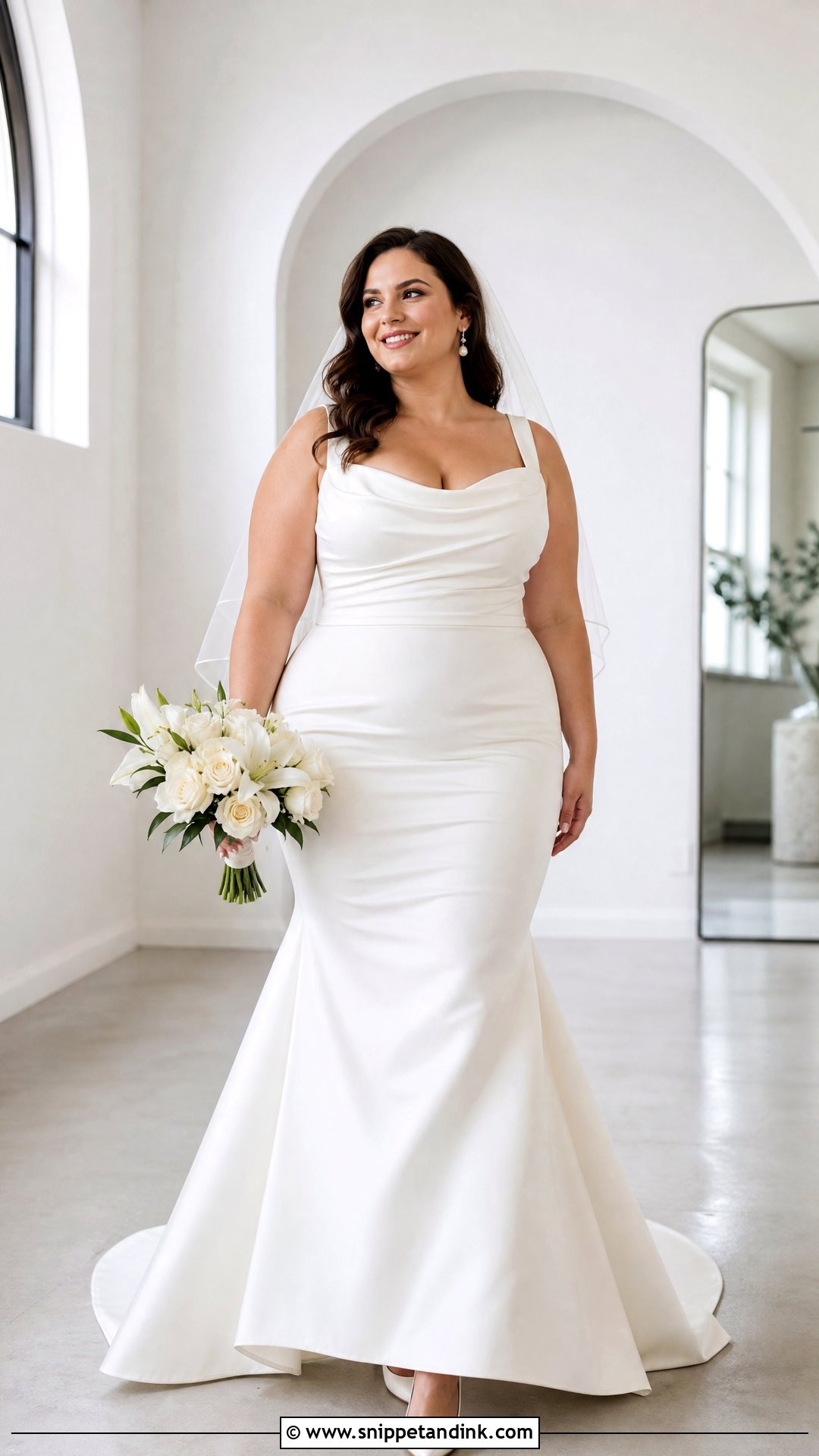
A plus size satin mermaid wedding gown works when support and proportion lead the design. I look for secure straps or a properly reinforced strapless edge, built-in cups and seams that follow the body. The flare can sit just above or below the knee, and moving it a couple of inches changes how comfortable the walk feels. Ruching, a basque waist or a draped neckline add definition without hiding anything. Order to your largest measurement and tailor the rest; never size down as motivation. Finish with a fingertip veil, pearl earrings, block-heel pumps and a medium bouquet so you can sit, walk and dance with confidence.
Satin Creases, Water Spots and a Long Seated Dinner
Satin wrinkles at the lap the moment you sit, and a mermaid is fitted exactly there. I tell brides to expect creases across the thighs after the car ride and the ceremony. A handheld steamer kept a hand’s width from the fabric, run from the inside where possible, lifts most of them in a few minutes. Never let anyone iron satin directly on the day; a hot iron leaves a shine mark that does not come out.
- Water leaves rings on silk satin. Blot a spill with a dry white cloth and leave it; rubbing spreads the mark.
- A French bustle, tied from underneath, suits satin because no hooks show on the smooth outer face.
- Get into the car seat first, then swing your legs in together, so the knee seam is not forced to stretch.
- Keep a white chalk stick for small makeup marks on ivory; it hides foundation until photos are done.
After the wedding, take the gown to a cleaner who handles bridal satin within a few weeks, before sugar from champagne or cake browns into the fibers, and store it in a breathable box away from light.
Your Last Fitting Should Feel Like a Dance Floor
The right satin mermaid dress gives you drama and lets you move. Necklines, sleeves, draping, trains and removable pieces change its character completely, and simple accessories let the satin lead while pearls, lace and long veils add ceremony. At the final fitting, sit, turn, walk and raise both arms before you sign off on the alterations. Bring the shoes and underwear you will actually wear. If the gown passes that test, it will pass the day.
You'll Like These Ideas:



Leave a Reply