
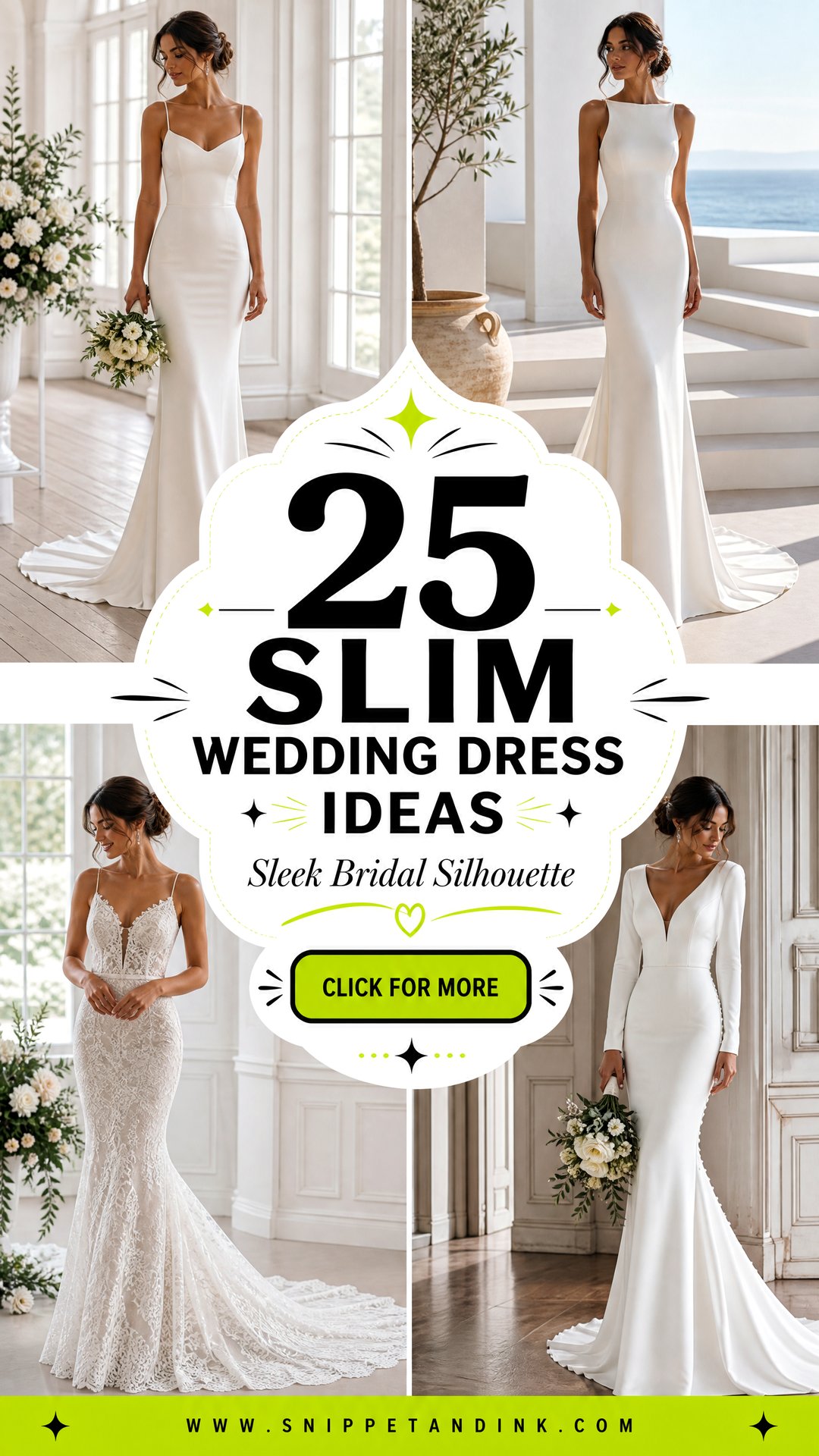
“Slim” covers more shapes than most brides expect when they first walk into a salon. It can mean a sheath gown, a straight column, a soft fit-and-flare, a sculpted mermaid or a narrow A-line that skims rather than spreads. What separates them is fabric, structure and where the skirt releases, and those three decide whether you can walk, sit and dance comfortably. Right now I’m seeing a lot of clean minimal gowns, sculpted necklines, basque waists, fine lace and convertible pieces that change between ceremony and party. Here are 25 slim shapes, with what I look for when a bride tries each one on.
Where the Skirt Releases Changes How You Move
When I explain slim silhouettes to a bride, I talk less about names and more about one point on the body: where the skirt stops following you and starts to open. That single point controls your stride, how you climb steps and how you sit at dinner.
- Sheath and column: no release at all. The skirt hangs straight, so stride length depends on the width at the hem, a slit or a hidden kick pleat.
- Slim A-line: releases from the waist, very gently. The most freedom of any slim shape.
- Fit-and-flare: releases around the hips or upper thigh. Walking and dancing feel close to normal.
- Trumpet: releases around mid-thigh. A good middle ground if you want curve but still need to dance.
- Mermaid: releases at or near the knee. The most dramatic shape, and the one that most restricts stairs and long strides.
In the fitting room, walk the length of the room quickly, climb onto the pedestal without help and sit on a normal chair. If any of those feel like a struggle in the sample, the release point is too low for your day, however good it looks in the mirror.
1. Slim Sheath Wedding Dress
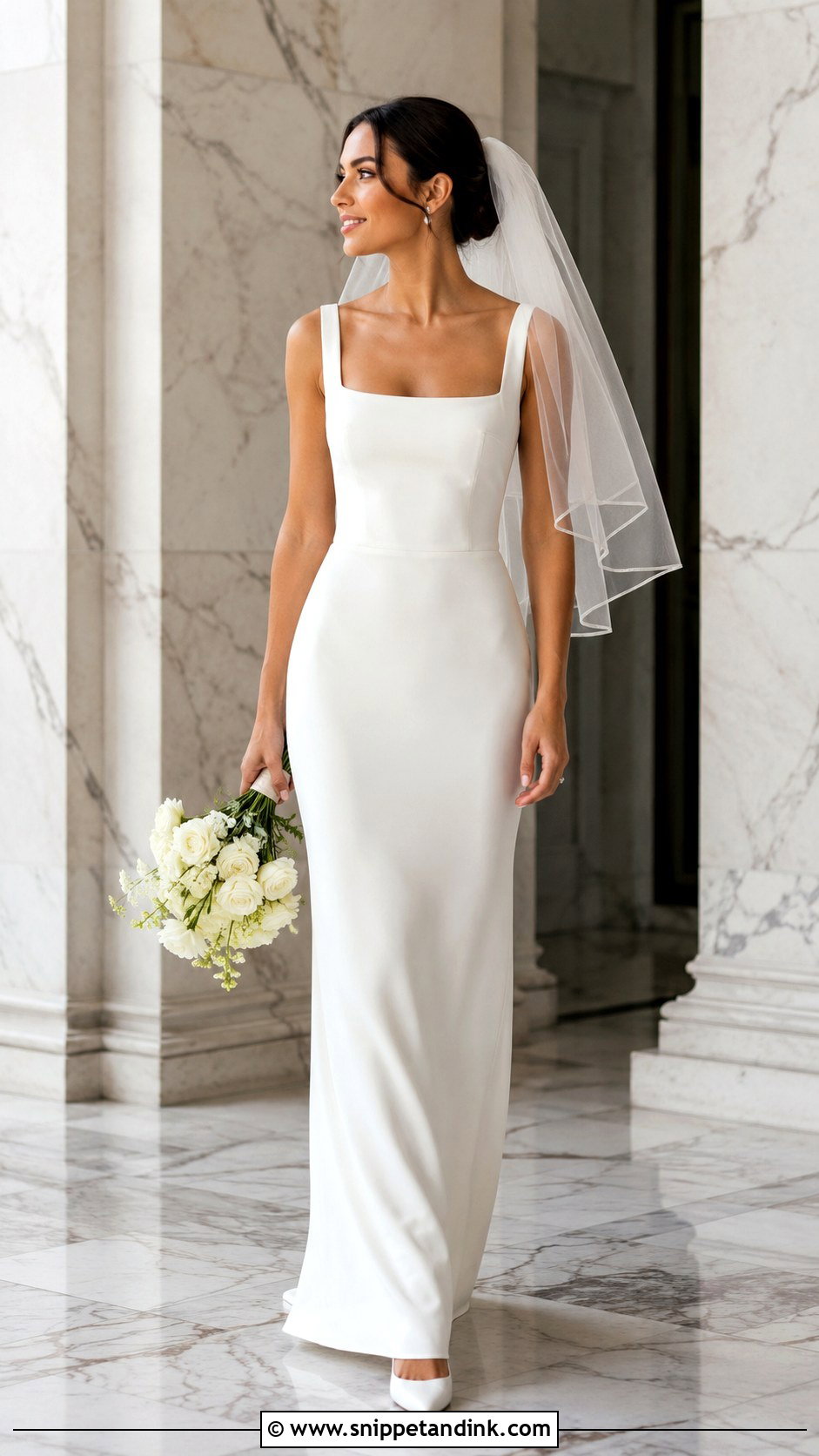
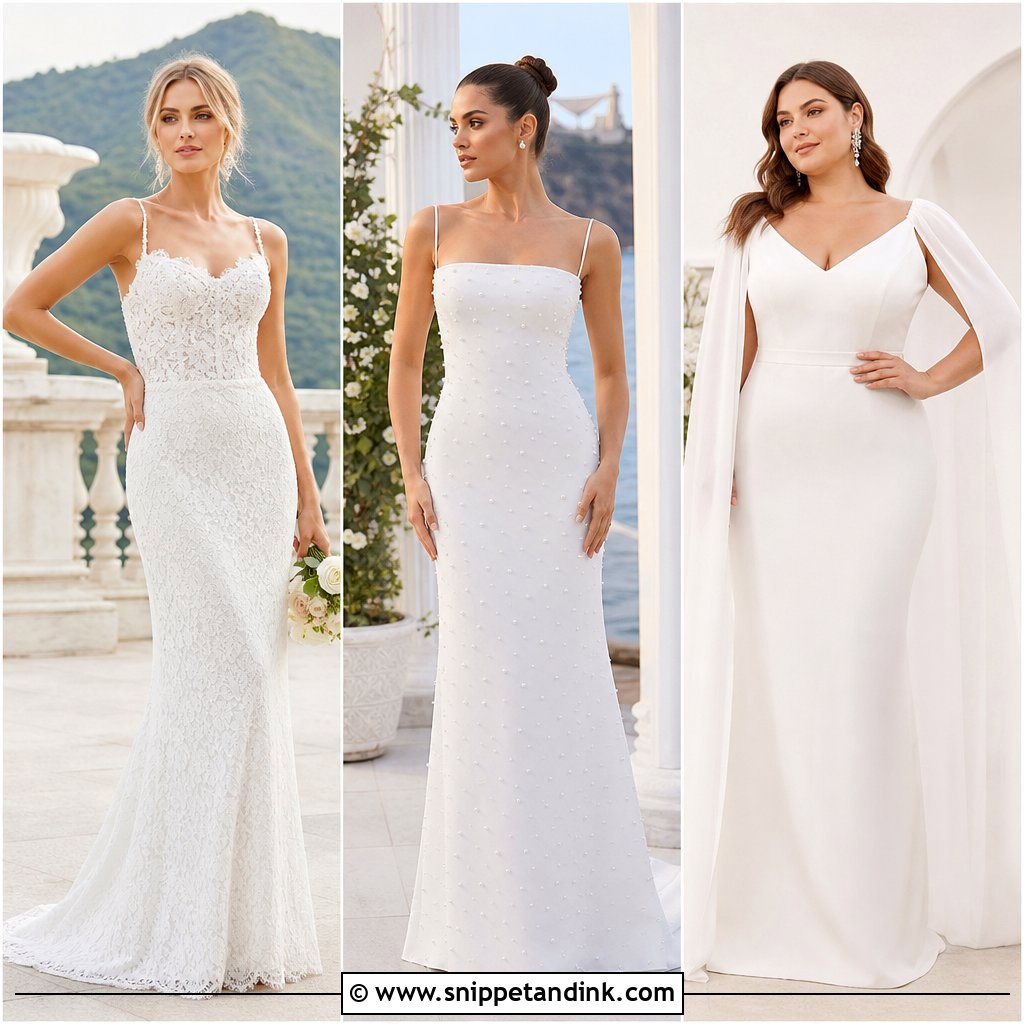
The sheath is the simplest slim shape: it follows the body loosely from neckline to hem with no flare, giving one long vertical line. Fabric decides the mood. Crepe looks modern, satin and silk look formal, and soft lace looks romantic. Because nothing hides the hips, I check the side seams hang straight when the bride stands naturally, not posed. A square neck reads modern, a bateau or V classic. Pointed heels, pearl studs and a fingertip veil suit a city or garden wedding.
2. Slim Mermaid Wedding Dress
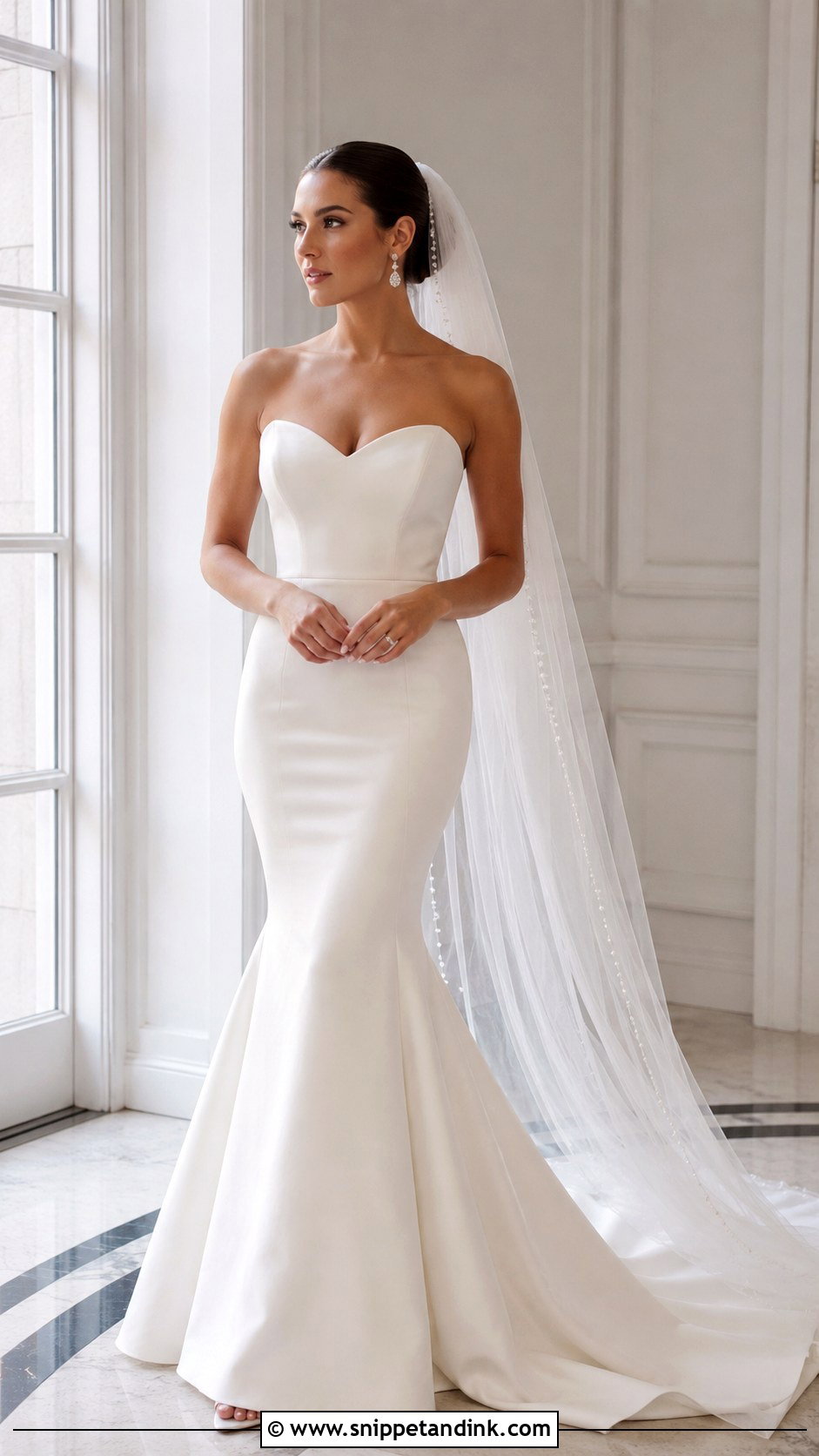
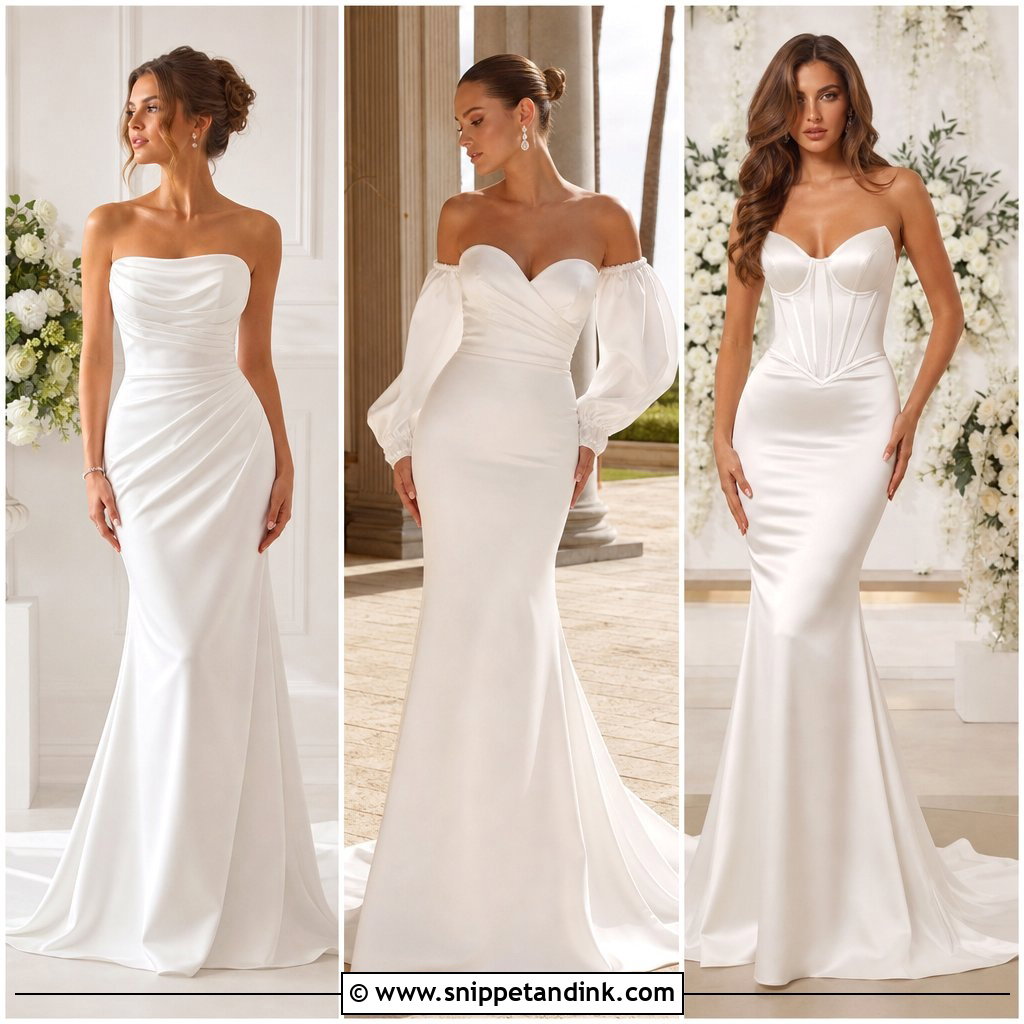
Mermaids are fitted through the bodice, waist, hips and thighs, then flare near the knee. That knee-level flare is the whole fitting conversation. Set too low, you’ll shuffle; set at the right height for your legs, you can walk properly. Stretch crepe, light satin or lace with some give moves far better than rigid fabric. Strapless adds drama, long sleeves make it more formal. I’d keep accessories sleek: a simple veil, crystal drops and slim heels for a formal or ballroom venue.
3. Slim Fit And Flare Wedding Dress
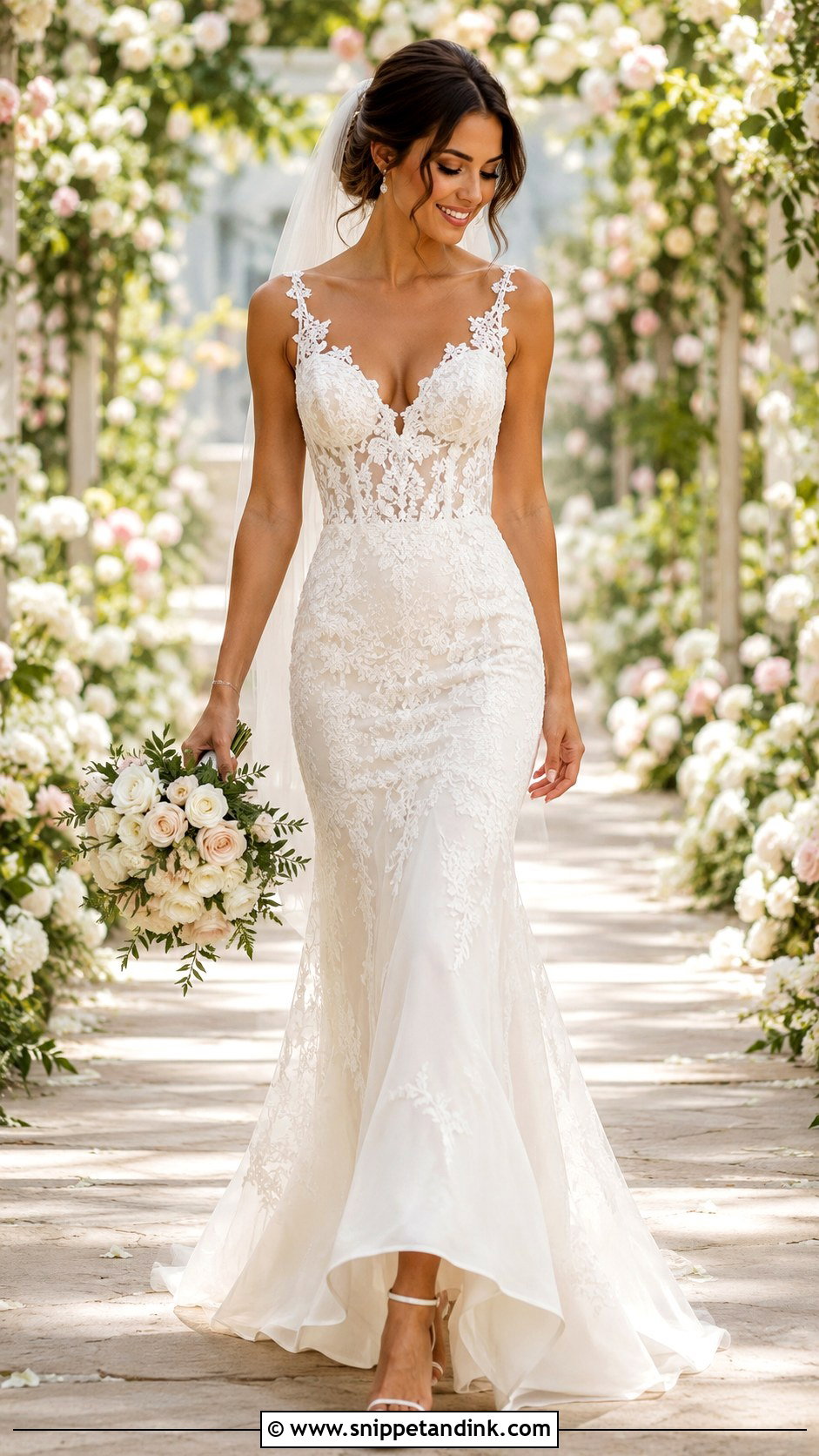
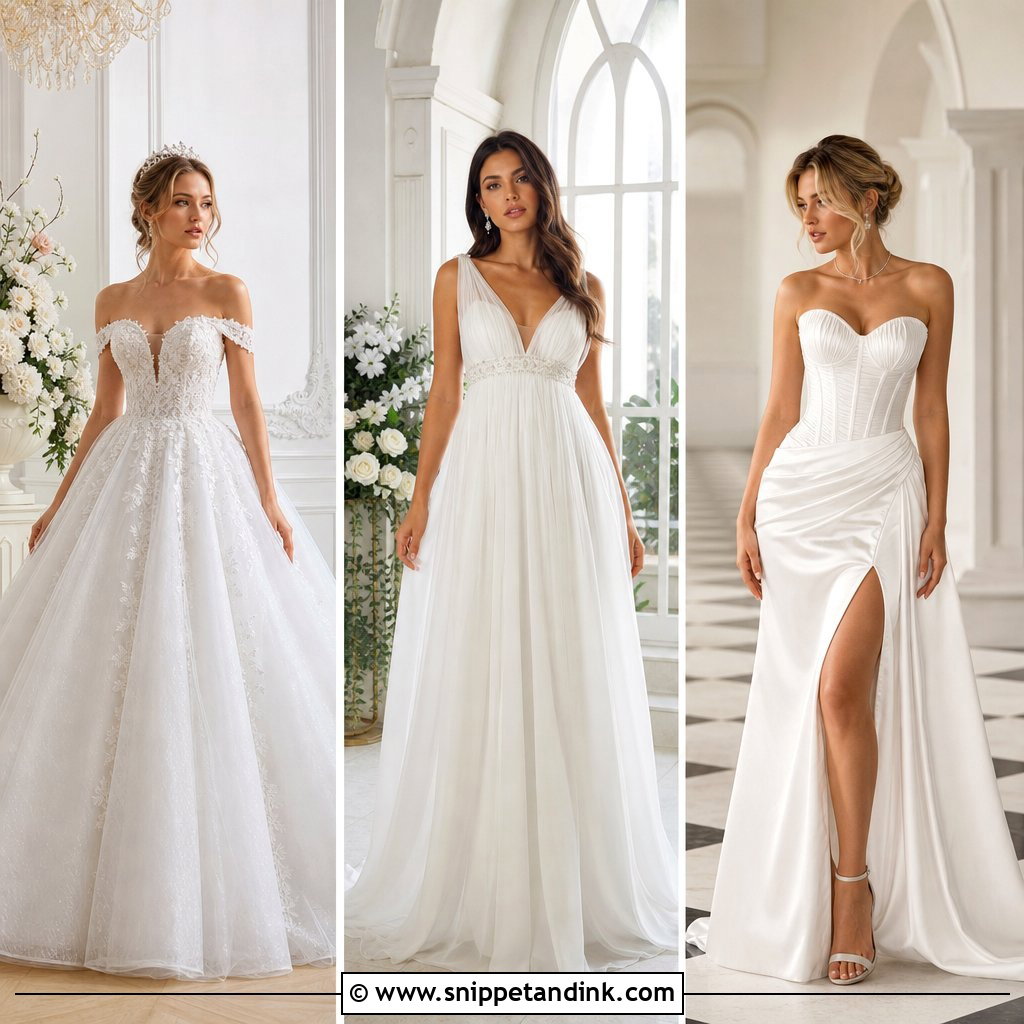
Think of fit-and-flare as the mermaid’s easier sister. It hugs the upper body and opens just below the hips, so your stride stays almost normal. It’s my usual answer when a bride wants a fitted look but needs to dance for hours. Lace appliqué gives romance; plain crepe keeps it modern. A sweetheart neckline, off-shoulder sleeve or delicate straps suit the shape, finished with ankle-strap heels, a soft veil and a small bouquet that doesn’t cover the waistline.
4. Slim Column Wedding Dress
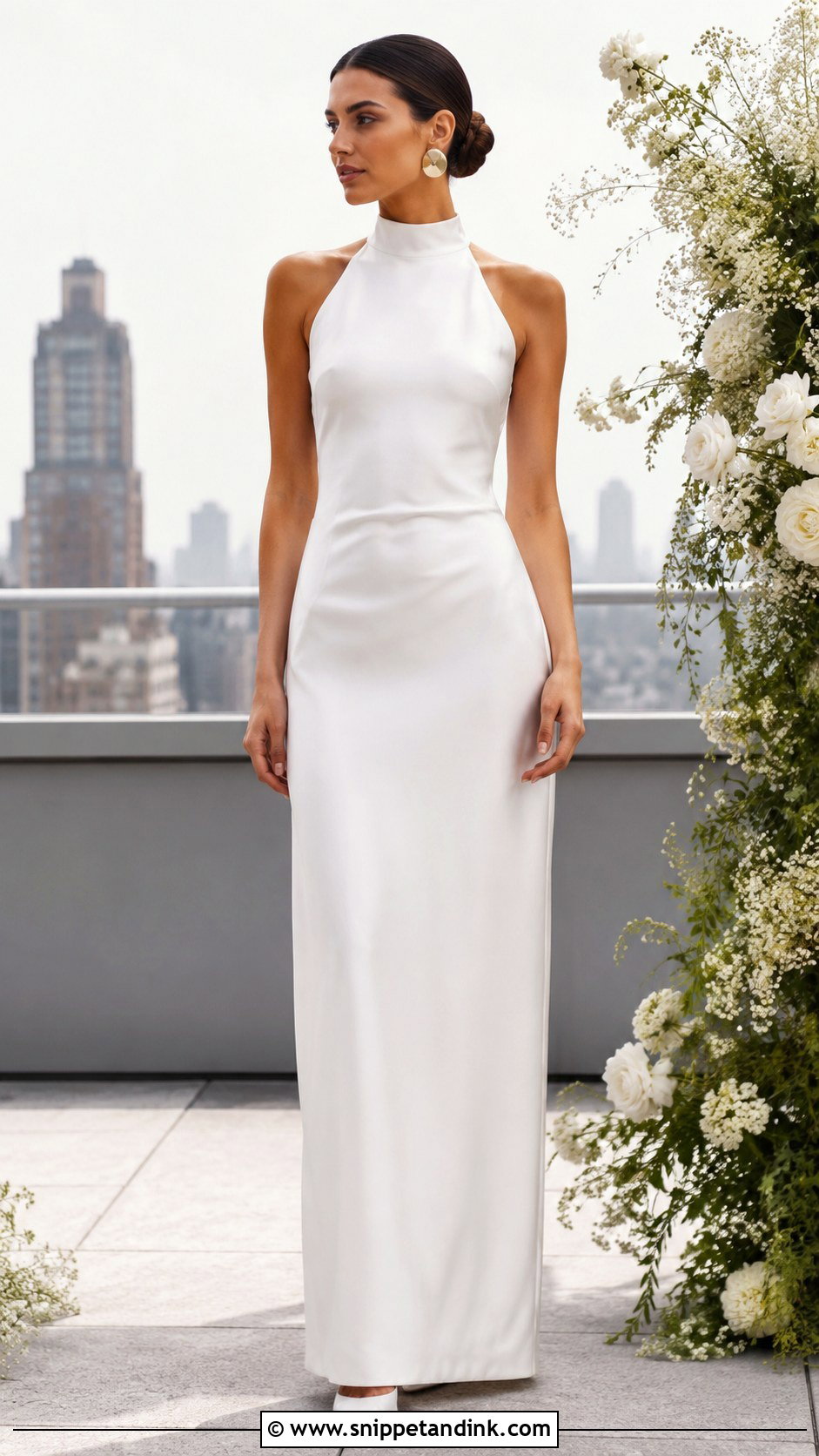
A slim column wedding dress differs from a sheath in its structure: it falls straighter from the body instead of following it, which gives that clean editorial look. Satin brings a soft shine and matte crepe stays understated. A column has no give at the hem, so I have brides climb a step in the sample; if the hem lifts the whole skirt, it needs a hidden kick pleat or slit. A high neck or strapless bodice, a sleek bun, sculptural earrings and pointed heels suit a rooftop, museum or courthouse.
5. Slim Satin Wedding Dress
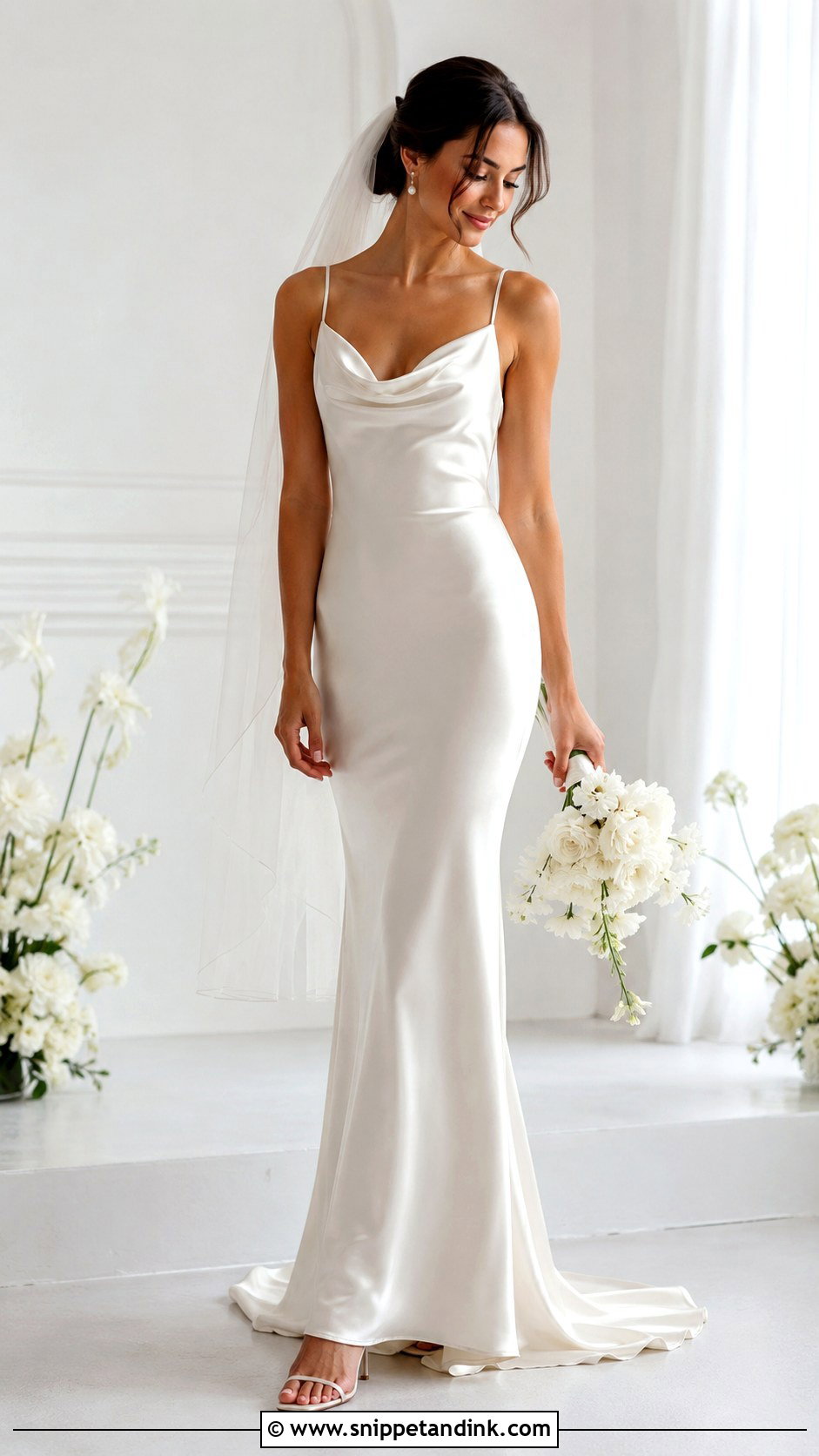
Satin carries a slim gown on its own, because the fabric’s sheen does what embellishment would otherwise do. Bias-cut satin drapes over the body; structured satin in a column looks more formal. Satin also shows every bump and line underneath, so the fitting needs the exact underwear you’ll wear. If bright white feels harsh on you, ivory or pearl satin is softer against the skin. A cowl, square neck or clean strapless bodice suits it, with satin pumps, pearl earrings and a delicate veil.
6. Slim Crepe Wedding Dress
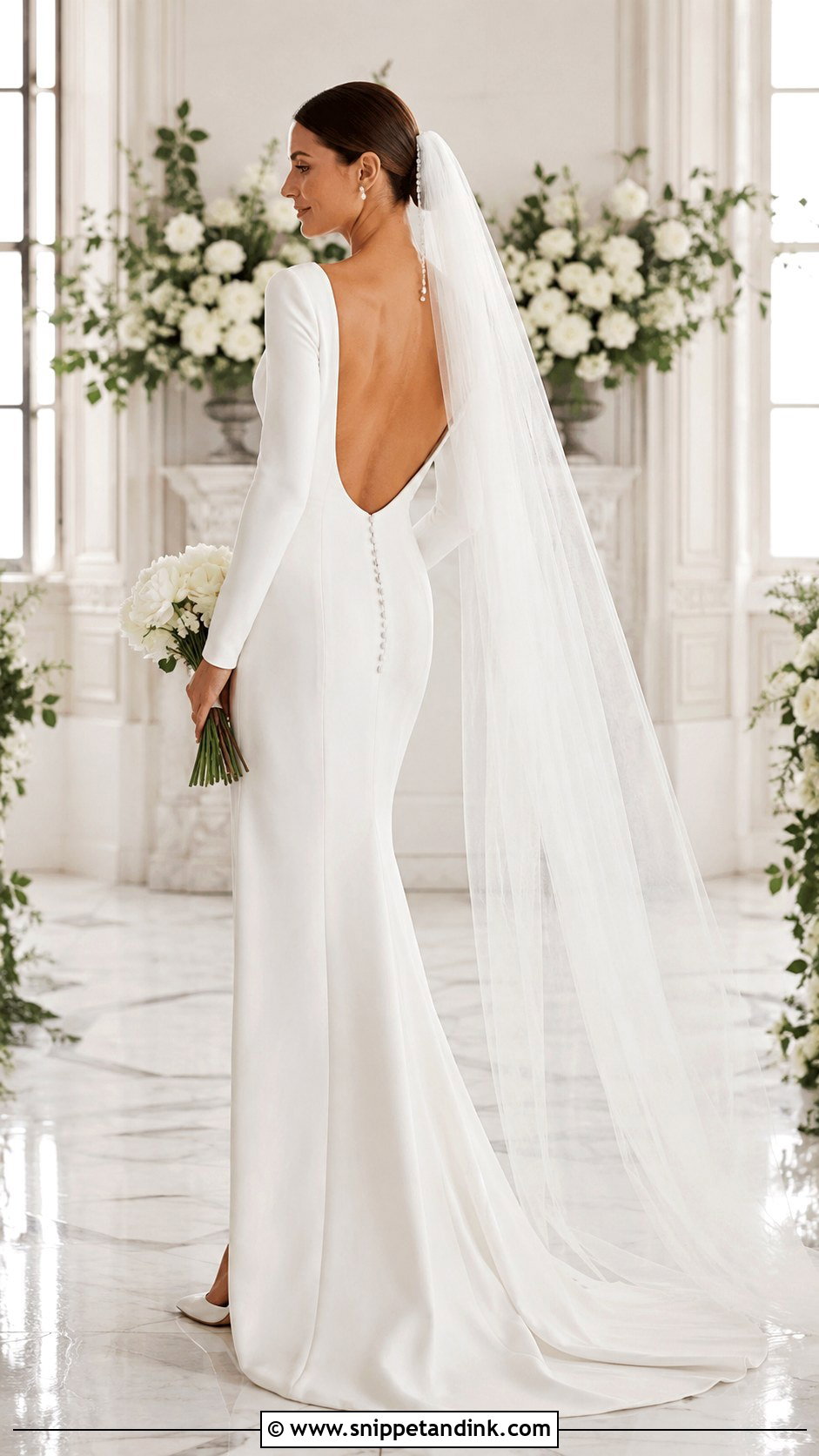
Crepe is the fabric I reach for most with slim gowns. It has the weight to skim instead of cling, a soft matte surface, and it doesn’t shine under flash. It suits long sleeves, cap sleeves, strapless bodices and deep V necks. If you need support, ask about internal boning or a lined bodice, because crepe alone won’t hold you in. A low back with covered buttons adds detail without fuss. Simple heels, a long veil and delicate jewelry. It works in almost any season.
7. Slim Lace Wedding Dress
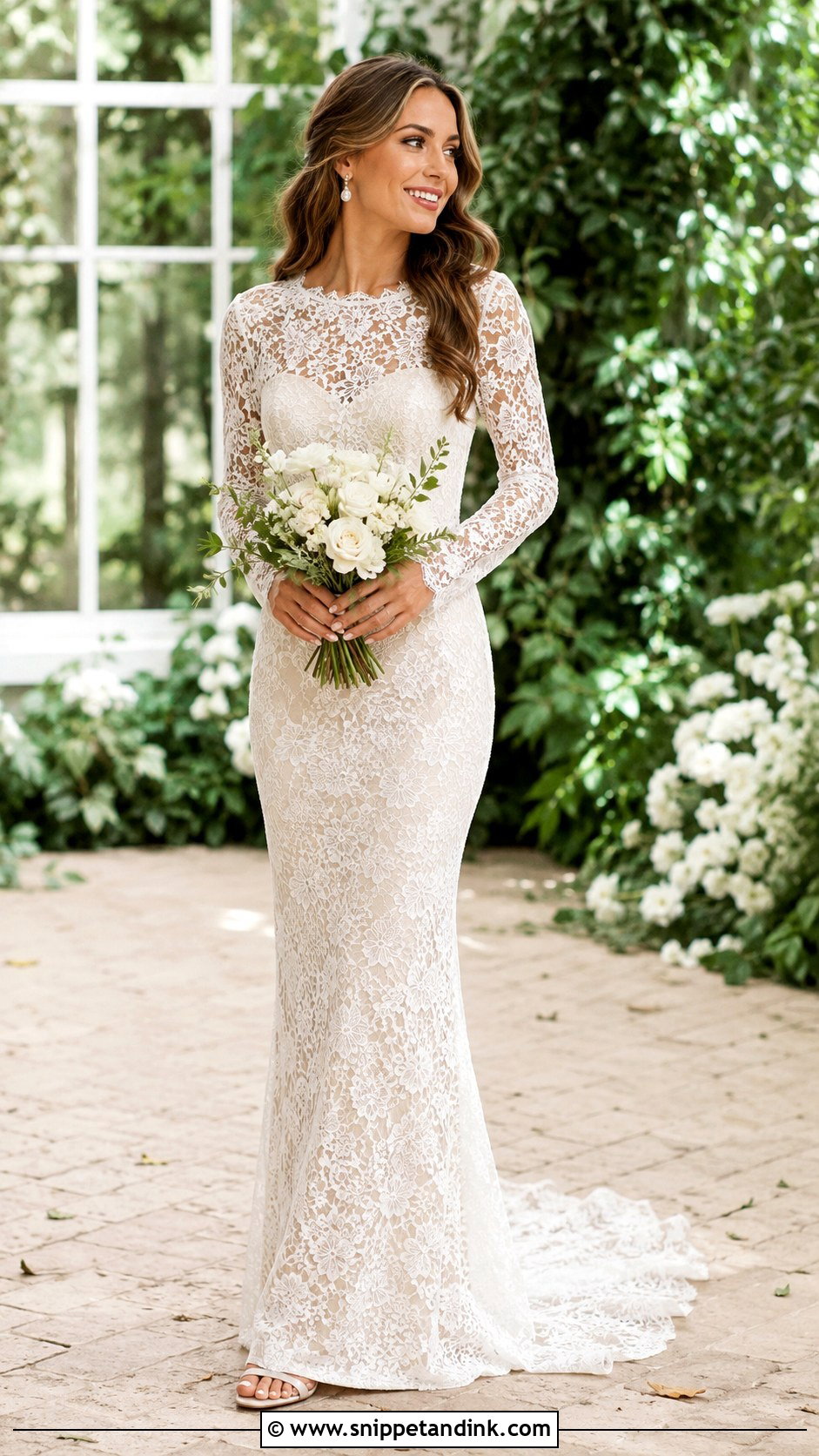
Lace on a slim gown should follow the body, not fight it. I look for a pattern that runs vertically, which lengthens the frame, rather than a large horizontal motif that cuts you across the hips. Chantilly is fine and delicate; floral appliqué has more texture. A nude or ivory lining changes how much the pattern stands out, so compare both in daylight. Long sleeves look graceful, thin straps keep it light for summer. Soft waves, pearl earrings and barely-there heels for a garden or estate.
8. Slim Strapless Wedding Dress
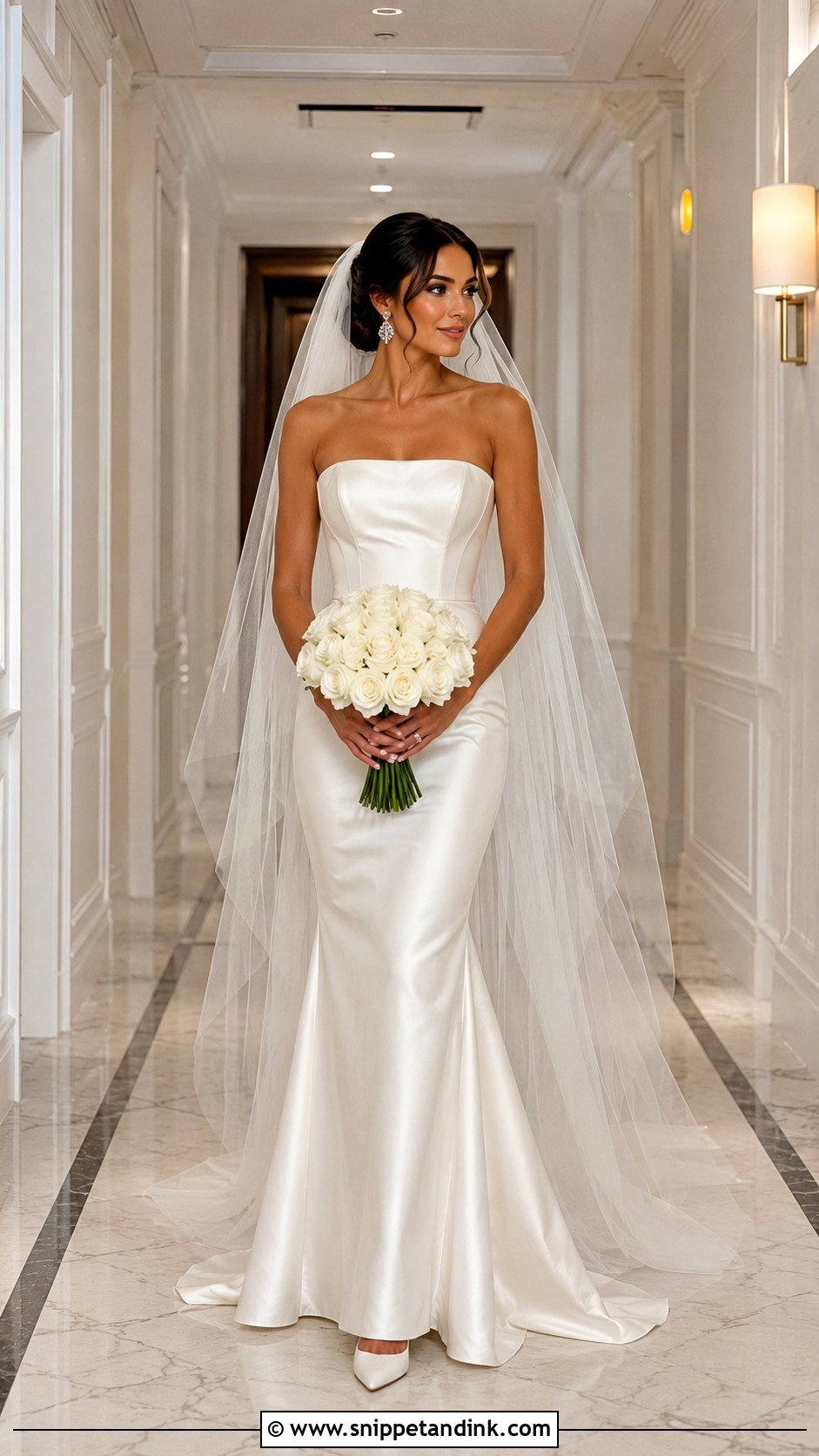
A strapless slim gown depends on its bodice. The neckline can be straight, curved, sweetheart or softly scooped, but whichever you pick, the boning and fit have to hold you up through the ceremony and the reception without hitching. I check by asking the bride to sit, bend and raise her arms. Satin feels classic and crepe modern; a slim fit-and-flare skirt softens a straight column. A short necklace or statement earrings (not both) and a long veil for drama.
9. Slim Long Sleeve Wedding Dress
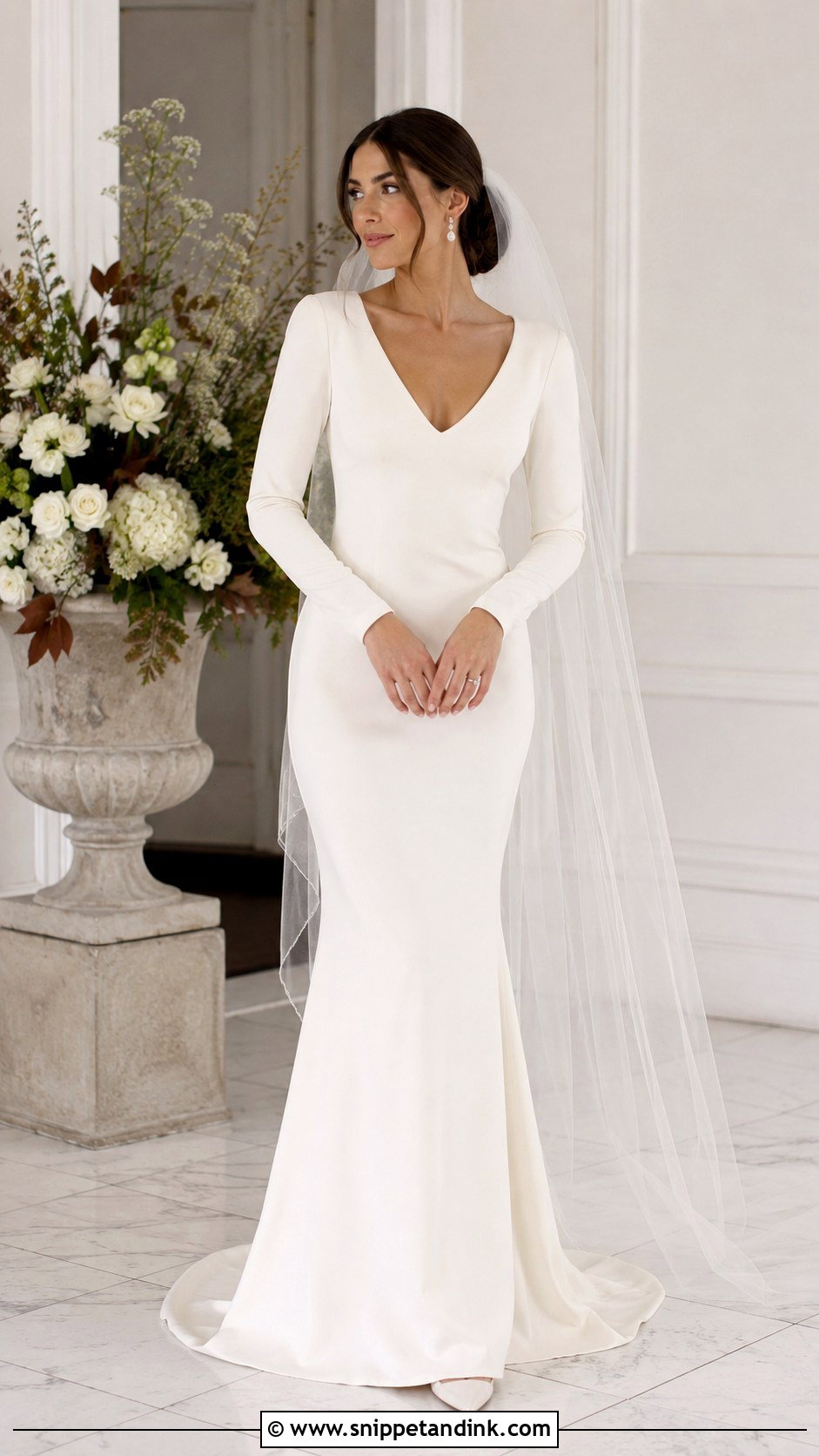
Long sleeves on a slim gown give coverage and a long, unbroken line. Crepe sleeves look clean, lace sleeves romantic, and illusion sleeves keep it light without going sleeveless. On a fitted dress the sleeves need movement at the armhole, or lifting your arms pulls the whole gown upward, so I ask brides to reach overhead in the sample. A high neck looks regal; a deep V balances the coverage. Fall, winter and formal indoor weddings suit it best, with a sleek updo, drop earrings and pointed heels.
10. Slim Off Shoulder Wedding Dress
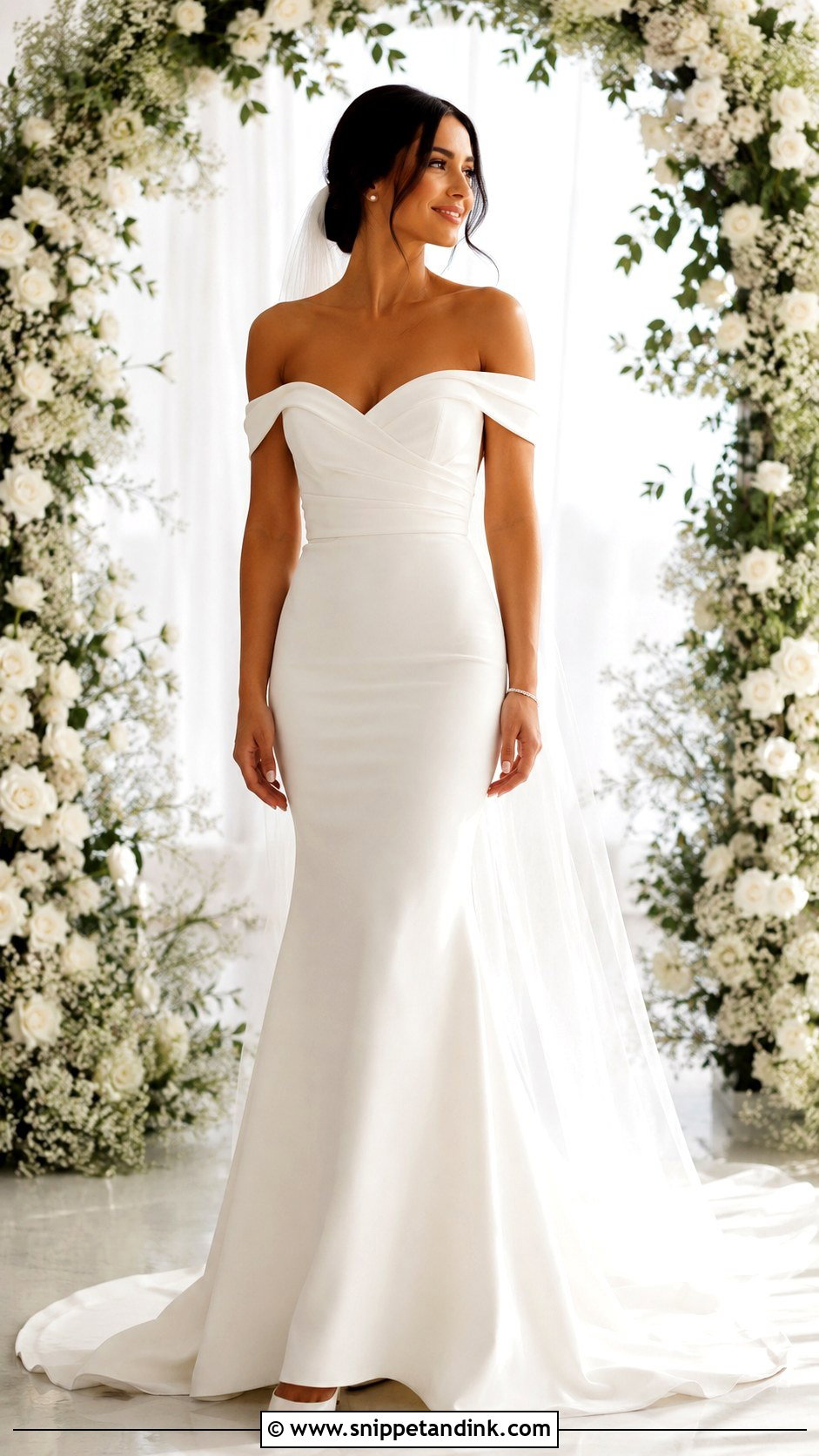
Off-shoulder necklines soften a fitted silhouette by framing the collarbones. The band can sit straight across or curve gently, and it needs to be snug, or it slides up as you move. A crepe fit-and-flare with off-shoulder sleeves looks modern; lace adds a traditional note. The neckline is already the feature, so I keep jewelry minimal: pearl studs, a bracelet and a smooth veil. You do lose some arm movement in this neckline, so try hugging in it.
11. Slim Square Neck Wedding Dress
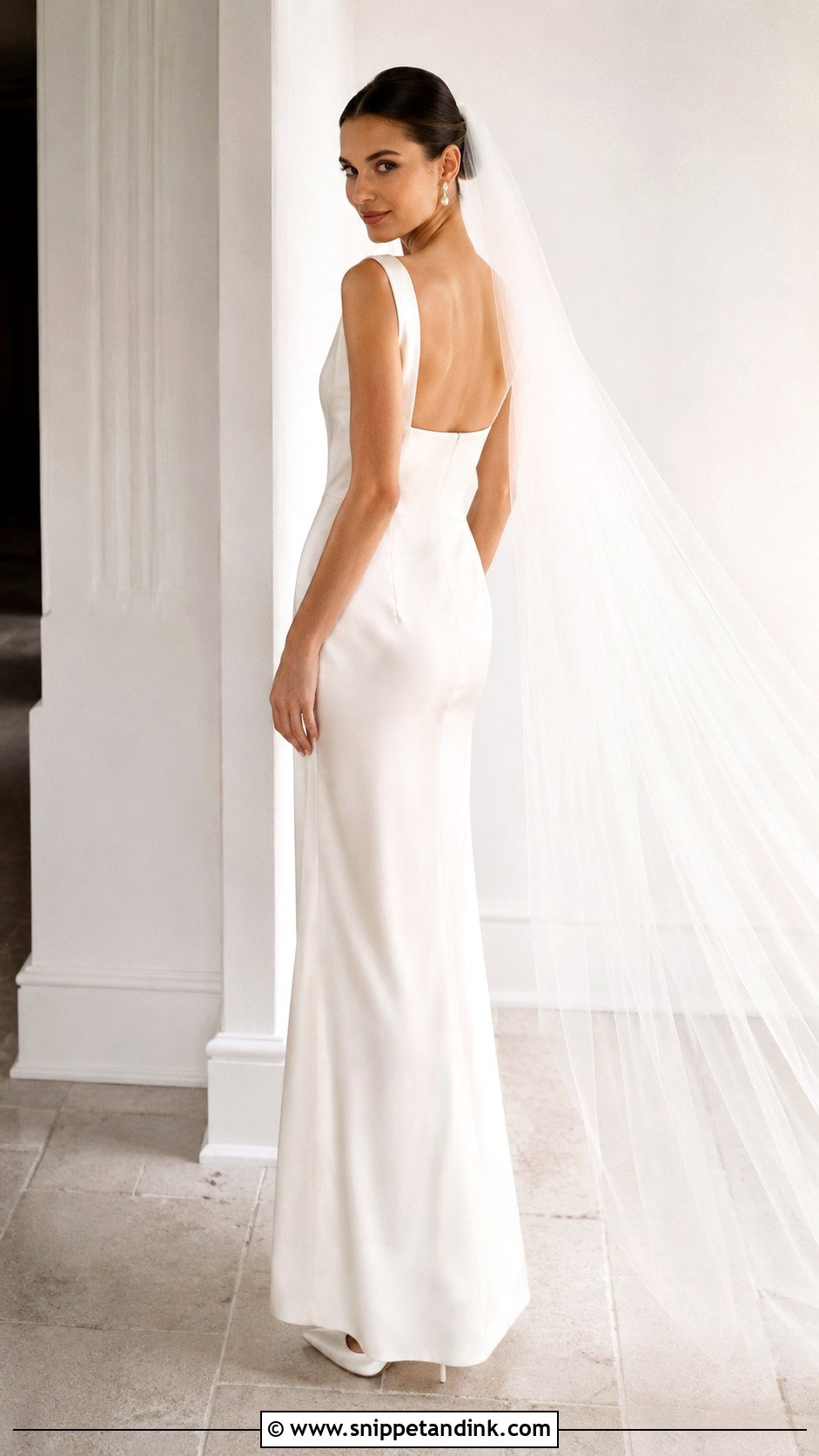
A square neckline adds a hint of vintage and a sense of design to a simple slim gown, especially in satin or crepe. It opens the chest neatly and works with wide straps or long sleeves. A fitted bodice over a column or sheath skirt keeps it balanced, and a low square back with covered buttons softens it. The corners must sit flat; I watch them as the bride leans forward. A smooth bun, small pearl earrings and classic pumps.
12. Slim V Neck Wedding Dress
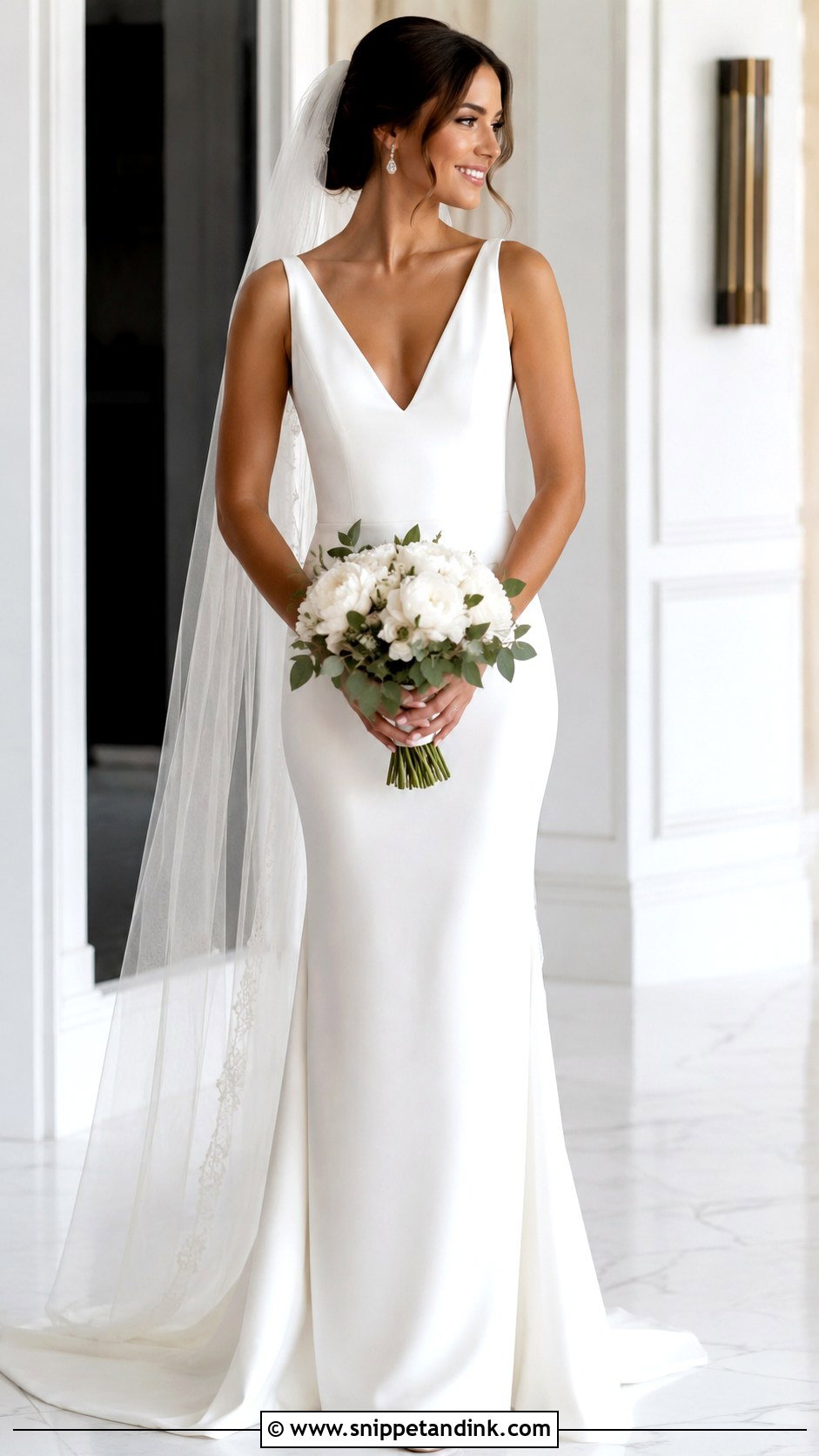
A V neck draws a line from shoulder to waist that lengthens the upper body, and its depth is entirely up to you. On a soft crepe sheath it reads understated; on a lace fit-and-flare, romantic. Deeper Vs need support, either wider straps or an illusion insert, and I’d sort that before ordering rather than at the last fitting. A matching V at the back finishes the gown from every side. Delicate earrings, a simple veil and slim heels.
13. Slim High Neck Wedding Dress
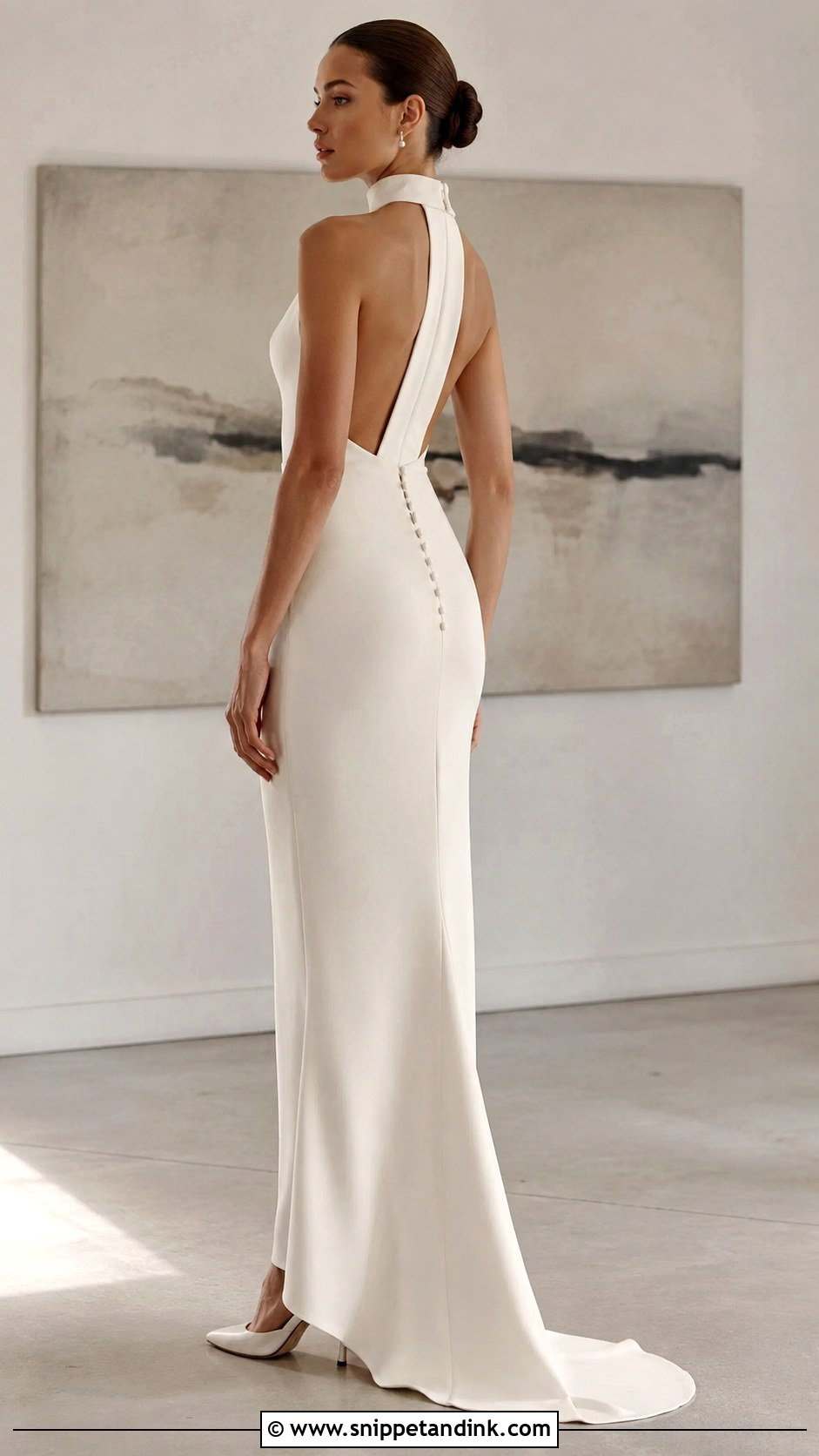
A high neck covers more skin while the silhouette stays sleek, which is a nice contrast to the fitted body below. Crepe, satin or lined lace all work; a column skirt keeps it modern, a slight flare adds movement. Pairing a high front with an open back gives one deliberate reveal. Hair needs to go up so the neckline shows. I check the collar at the throat, since too tight makes swallowing during vows uncomfortable. Small earrings or a slim bracelet instead of a necklace.
14. Slim Halter Wedding Dress
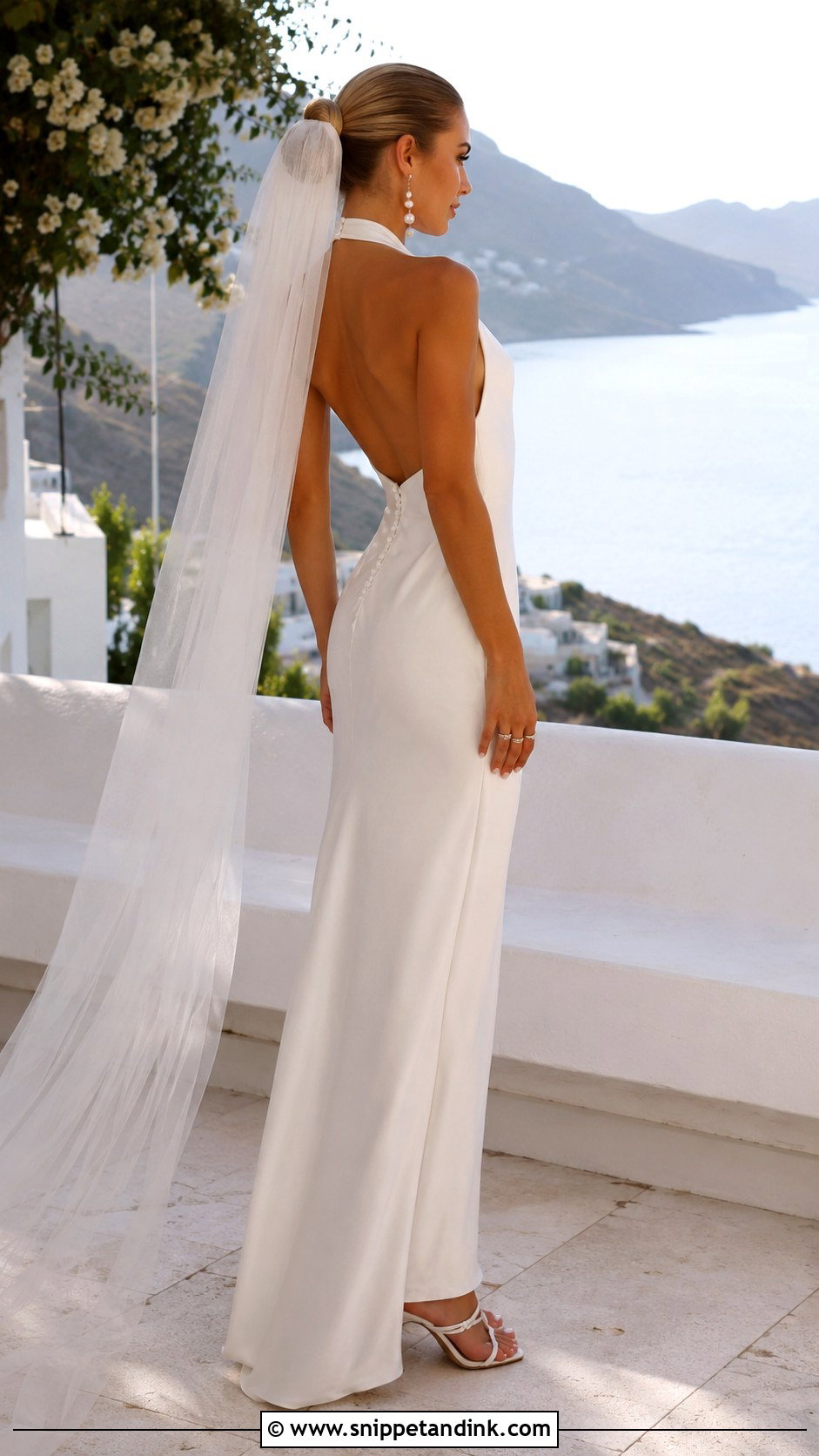
Halters suit slim gowns well because the straps run upward and draw a clean vertical line through the shoulders. Satin or crepe keeps it minimal; lace or light beading softens it. A column or sheath skirt stays streamlined, and a low back adds the memorable detail. A halter carries the dress from the neck, so on a heavy gown I check that the strap isn’t pulling by the end of a long fitting. Skip the necklace, choose earrings, strappy heels and a smooth veil for a summer or destination wedding.



15. Slim Slip Wedding Dress
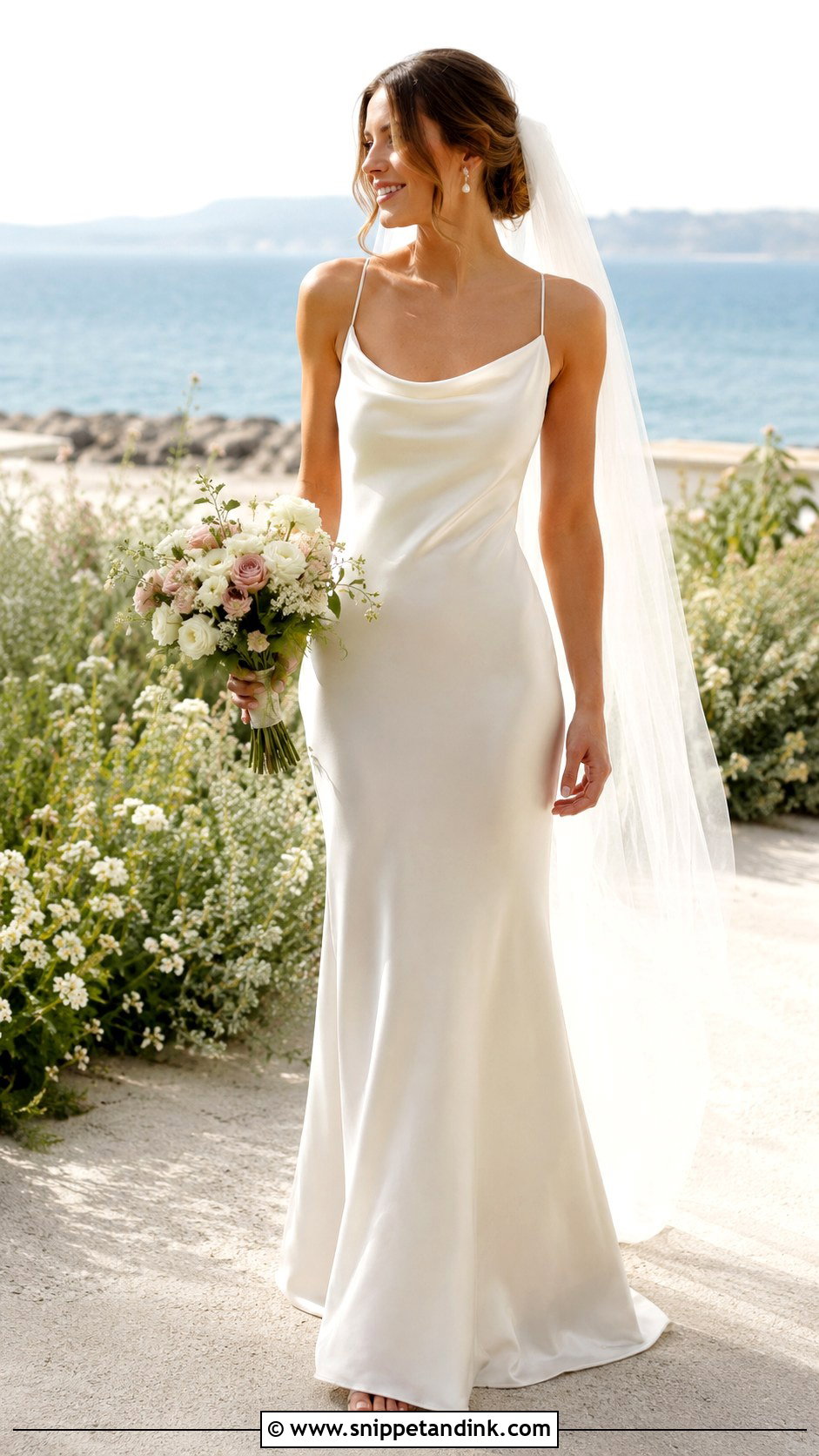
The slip dress is the least structured gown here: thin straps, a fluid skirt and a body-skimming shape with no boning at all. Silk or satin cut on the bias gives the best drape. That lack of structure is the point, but it also means no built-in support, so I talk through bras and underwear early. A cowl neck feels romantic; a straight neckline minimal. Wear a long veil for the ceremony, then swap to statement earrings for the party. Satin sandals for a beach, garden or city wedding.
16. Slim Corset Wedding Dress
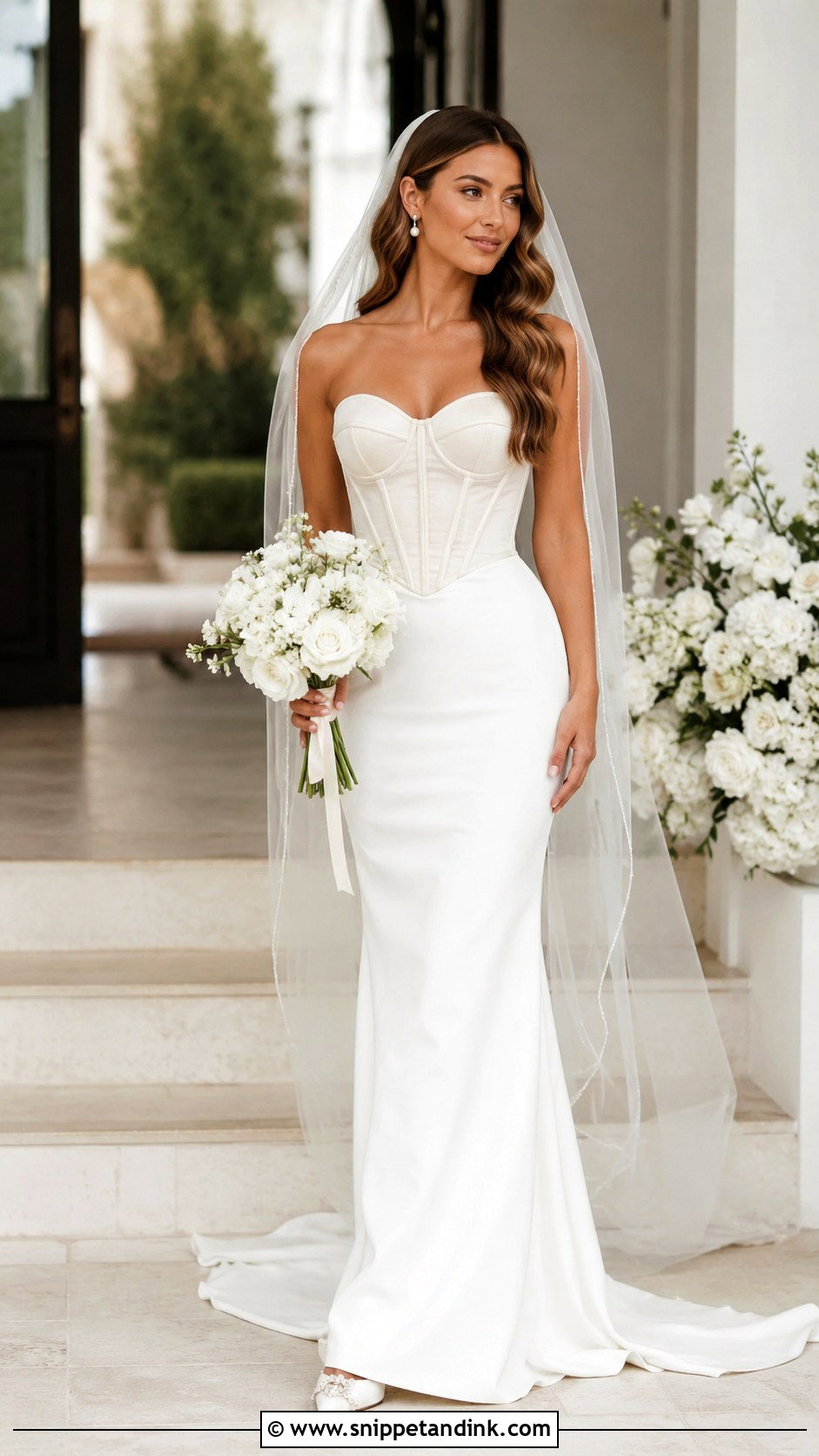
A corset gives shape while the overall silhouette stays narrow. The corset bodice defines the waist and supports the bust, over a slim fit-and-flare, column or soft sheath skirt. Exposed boning reads modern; hidden structure classic. I always have the bride sit in it for several minutes before committing, because boning that feels fine standing can dig in when seated. Lace over the corset for romance, satin or crepe for a cleaner look, with soft waves, pearl earrings and a simple veil.
17. Slim Basque Waist Wedding Dress
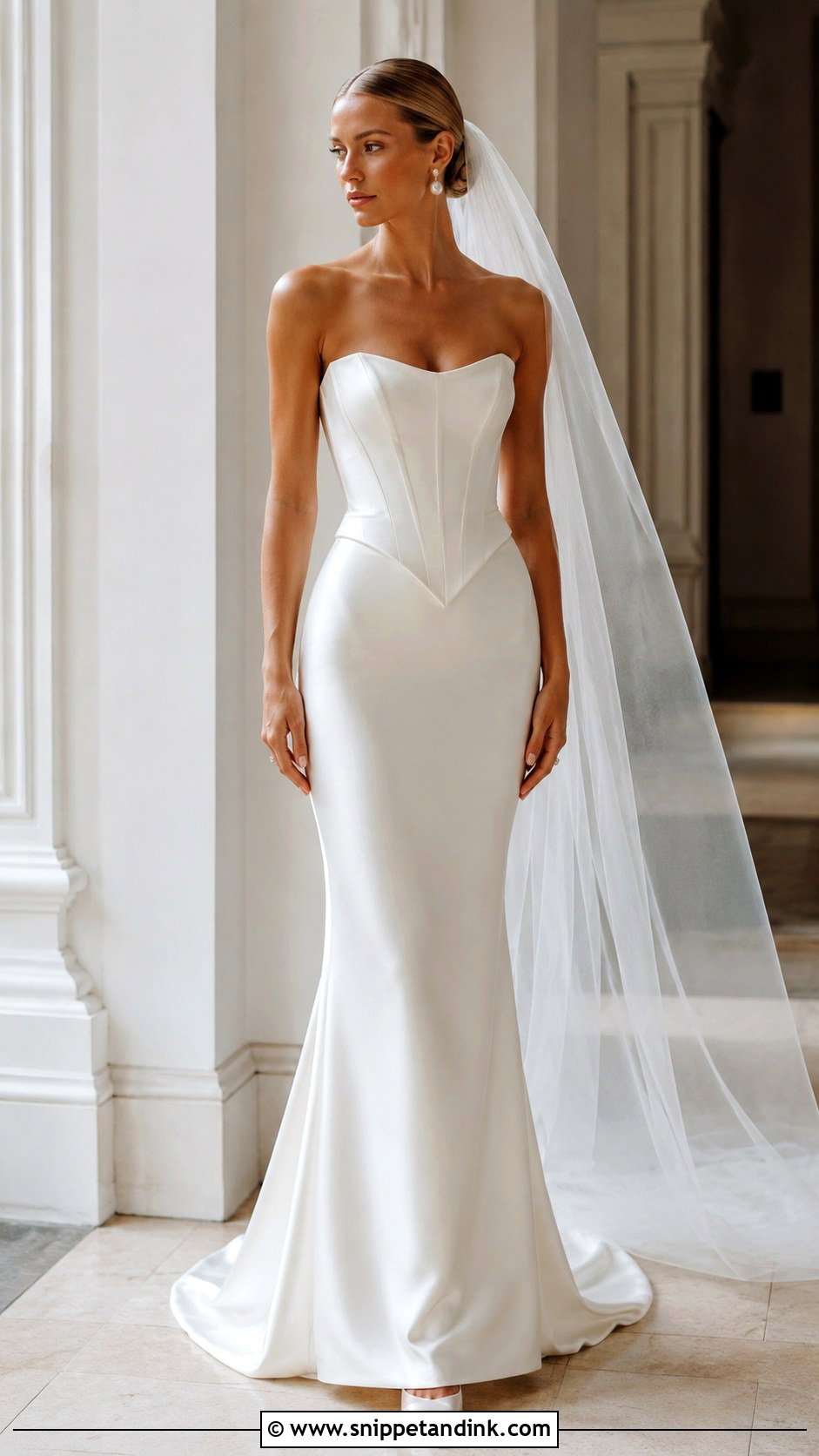
A basque waist dips into a V below the natural waistline, which visually lengthens the torso. It’s usually seen on big ball gowns, but on a slim skirt it gives a sculpted shape with no width. The point of the V has to sit at the right spot on your body, so I mark it during fittings with the bride standing straight. A structured bodice over a sheath or narrow A-line looks fresh. Satin polishes, lace romanticizes. Keep accessories classic: a simple veil, pointed heels and small earrings.
18. Slim Drop Waist Wedding Dress
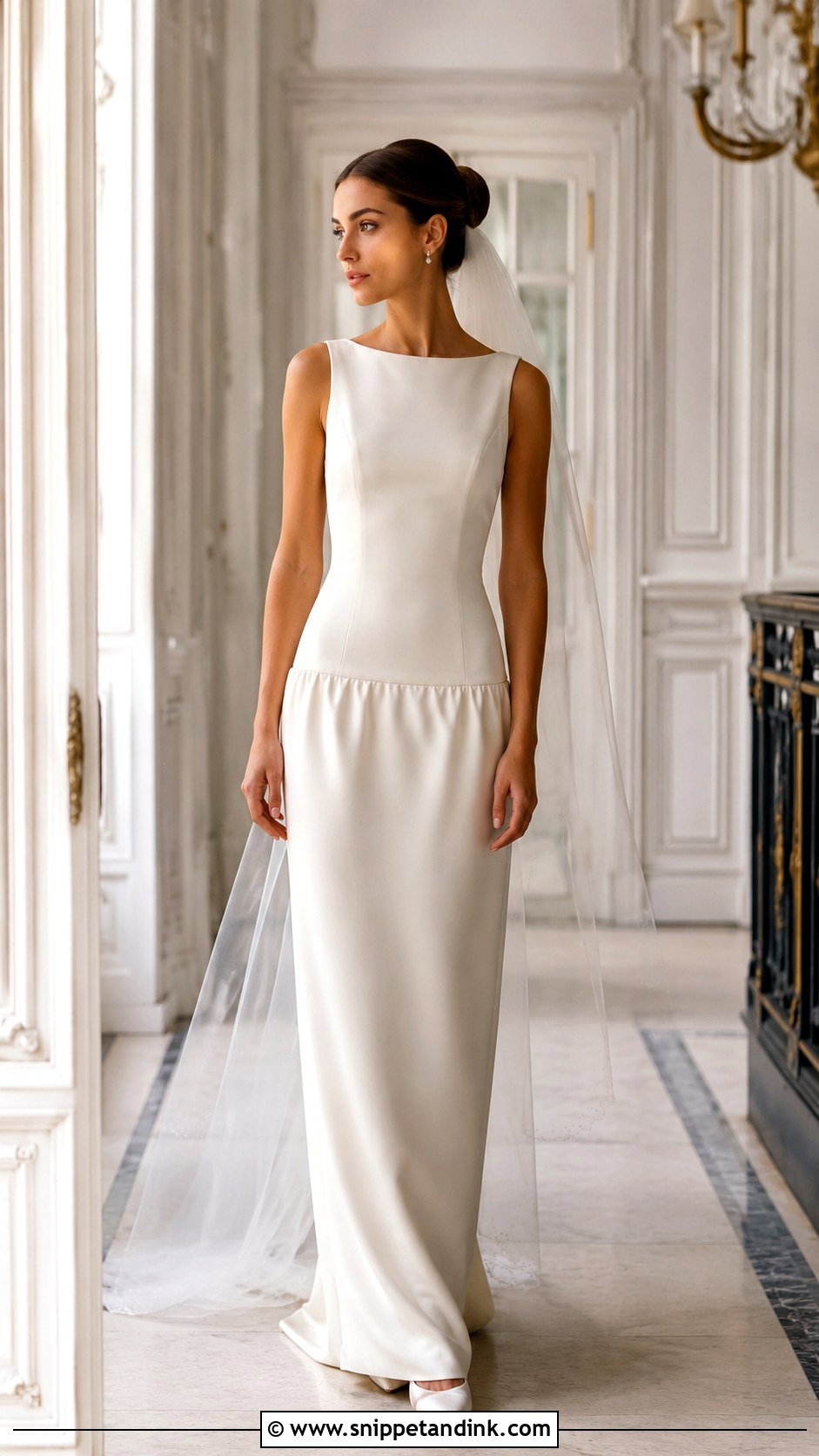
In a drop waist, the bodice runs past the natural waist before the skirt begins, creating a long, smooth torso and a slight vintage feel. Proportion is everything. If the seam lands at your widest point, it draws a line right there, so careful tailoring matters more here than with most shapes. A straight column skirt keeps it sleek; a gentle flare adds movement. Satin for formal, crepe for clean. Minimal jewelry, a sleek updo, pointed heels and a soft veil.
19. Slim A Line Wedding Dress
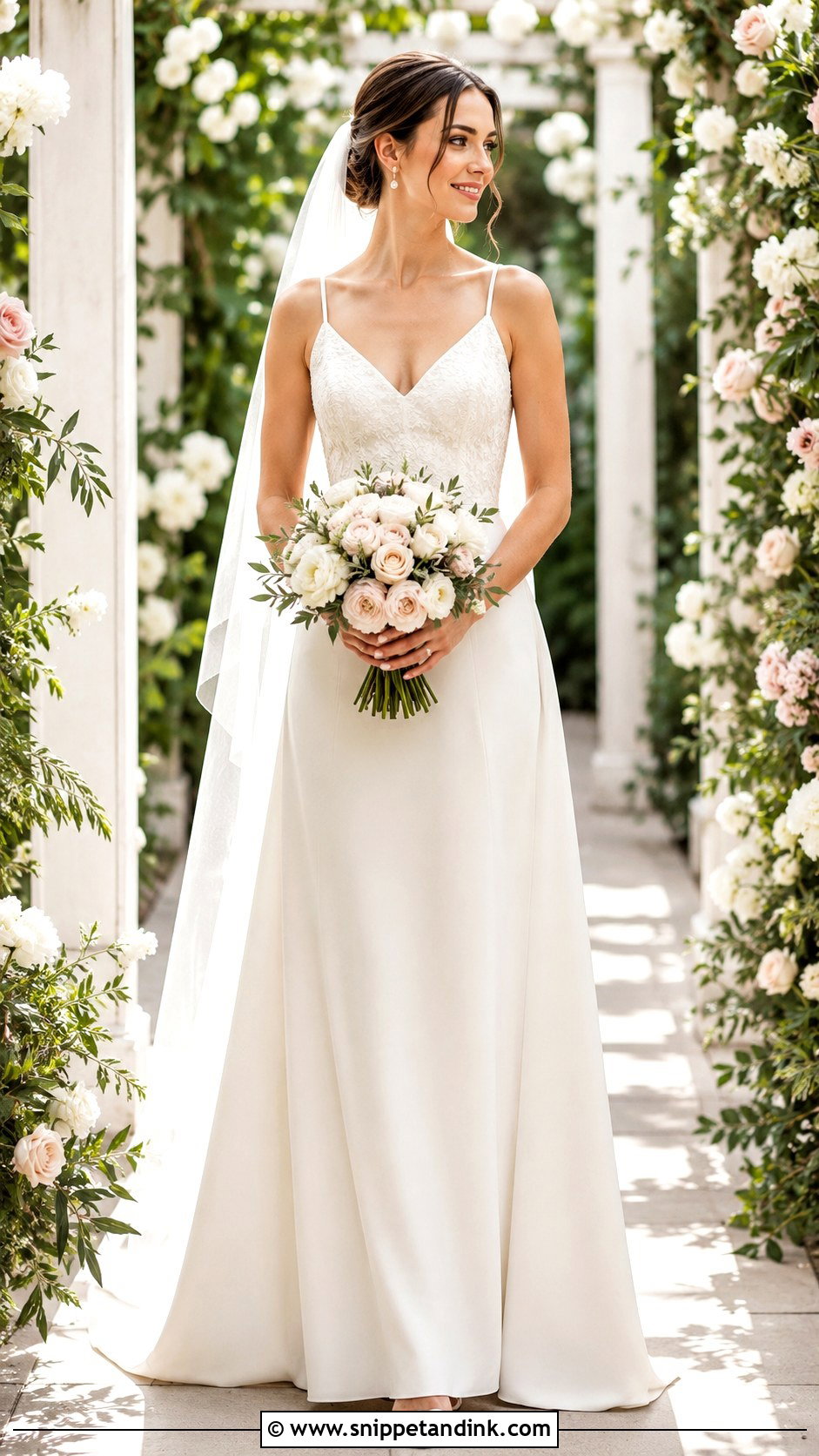
A slim A-line is narrow, but the skirt opens gently from the waist so nothing clings through the hips. Of all the slim shapes, it gives the most ease. A fitted bodice keeps the shape defined, and a lightweight fabric stops the skirt getting bulky: crepe, satin, chiffon or soft lace. I often pull this one when a bride loves the column look but hates the restriction. Block heels for comfort or pointed pumps for a sharper finish.

20. Slim Wedding Dress With Slit
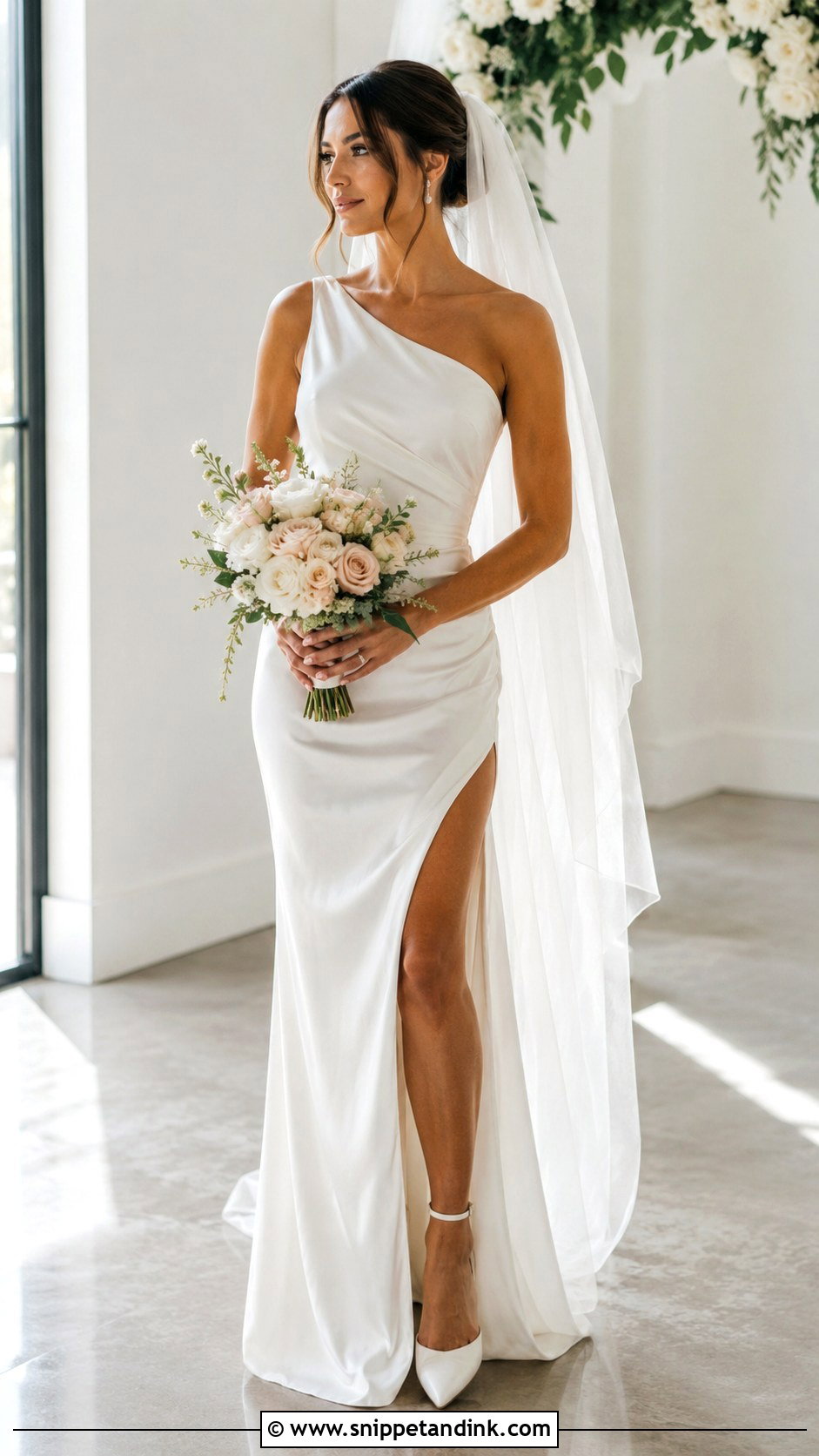
A slit solves the main problem with slim gowns, which is walking. On a sheath, column or fit-and-flare, a side slit lets the skirt move naturally and shows your shoes. Height matters: I mark the slit with the bride seated, because a slit that looks modest standing can open much higher when you sit. Choose shoes that look intentional, since they’ll be seen. Keep the rest refined with a clean bodice, soft veil and delicate earrings.
21. Slim Wedding Dress With Overskirt
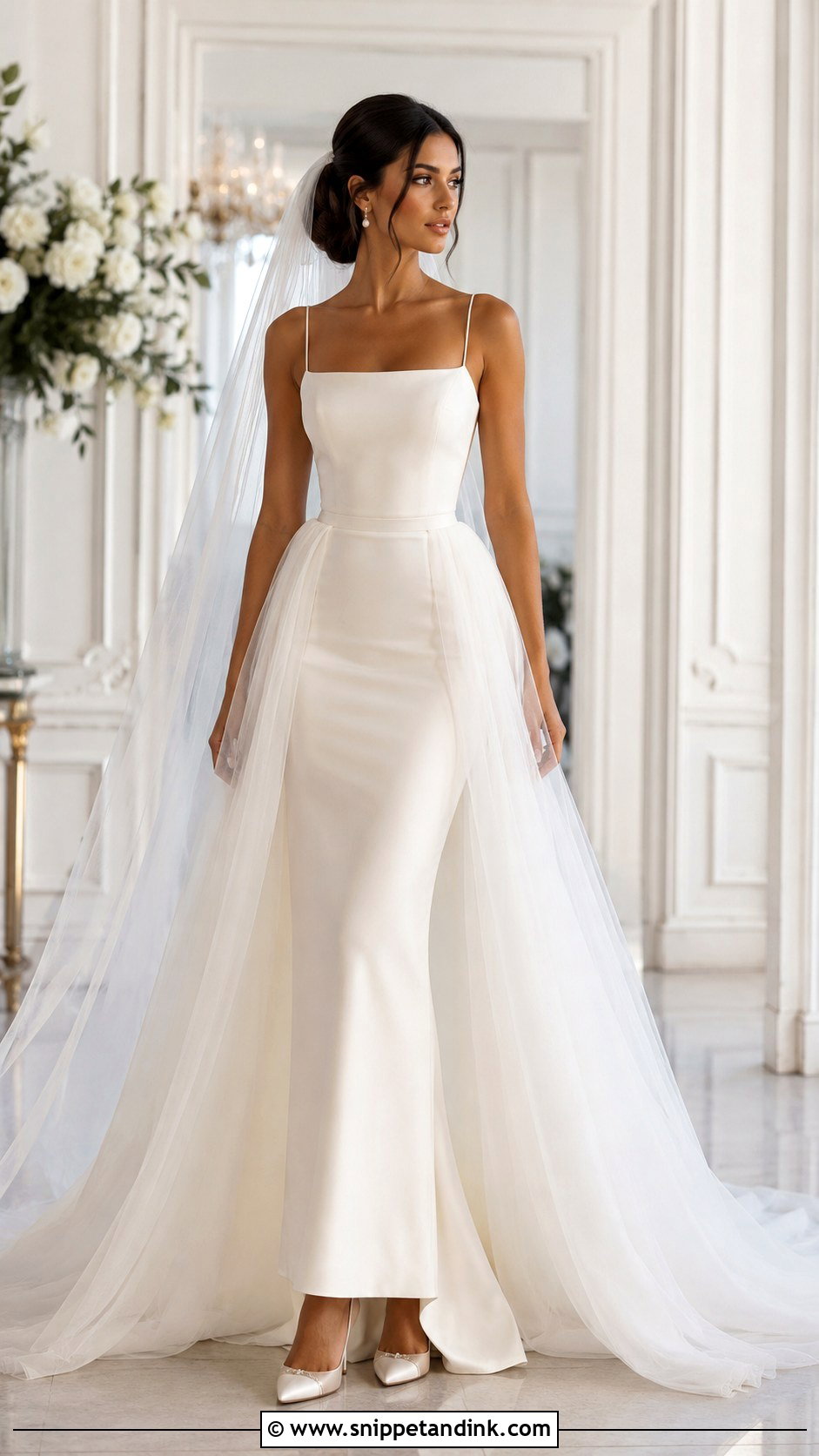
A slim wedding dress with an overskirt gives you a dramatic ceremony entrance and a sleek gown for the party. The overskirt adds volume and movement; once it’s off, a sheath, column or fit-and-flare is underneath. The attachment is what I check: it should fasten flat at the waist and match the gown’s fabric or tone exactly. Tulle feels airy, satin formal. Practice removing it with whoever will help you on the day, and pair it with a long veil and simple earrings.
22. Slim Wedding Dress With Cape
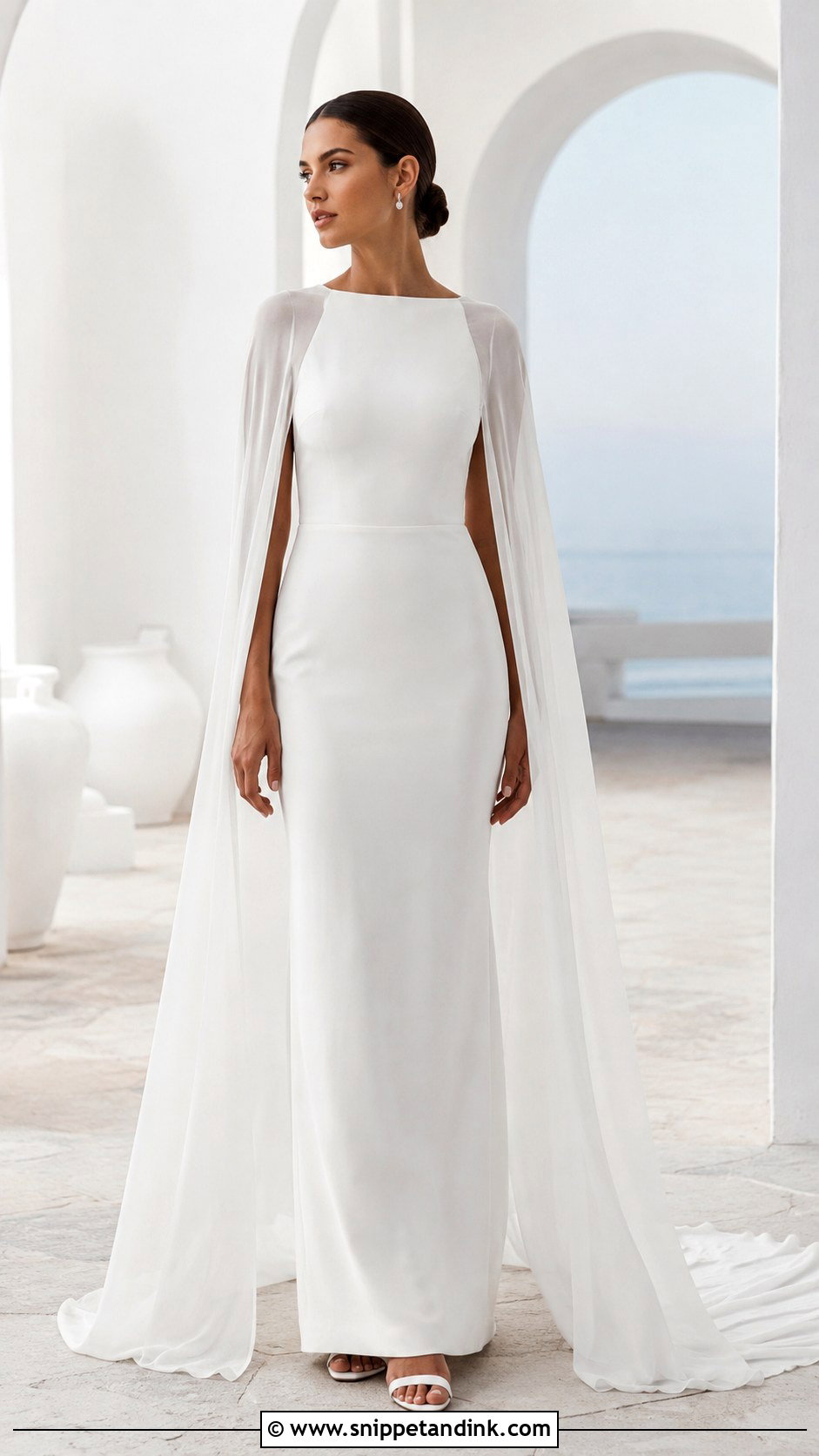
A cape adds drama to a slim gown without a heavy skirt. Sheer, lace, satin or tulle over a simple sheath or column. A shoulder cape moves softly; a full-length cape makes a striking entrance and can replace the veil entirely. Capes attach at the shoulders or neckline, so I check that the gown’s straps can take the weight without slipping. Keep the gown plain underneath, with sleek heels and minimal jewelry, and take the cape off later for a cleaner reception look.
23. Slim Beaded Wedding Dress
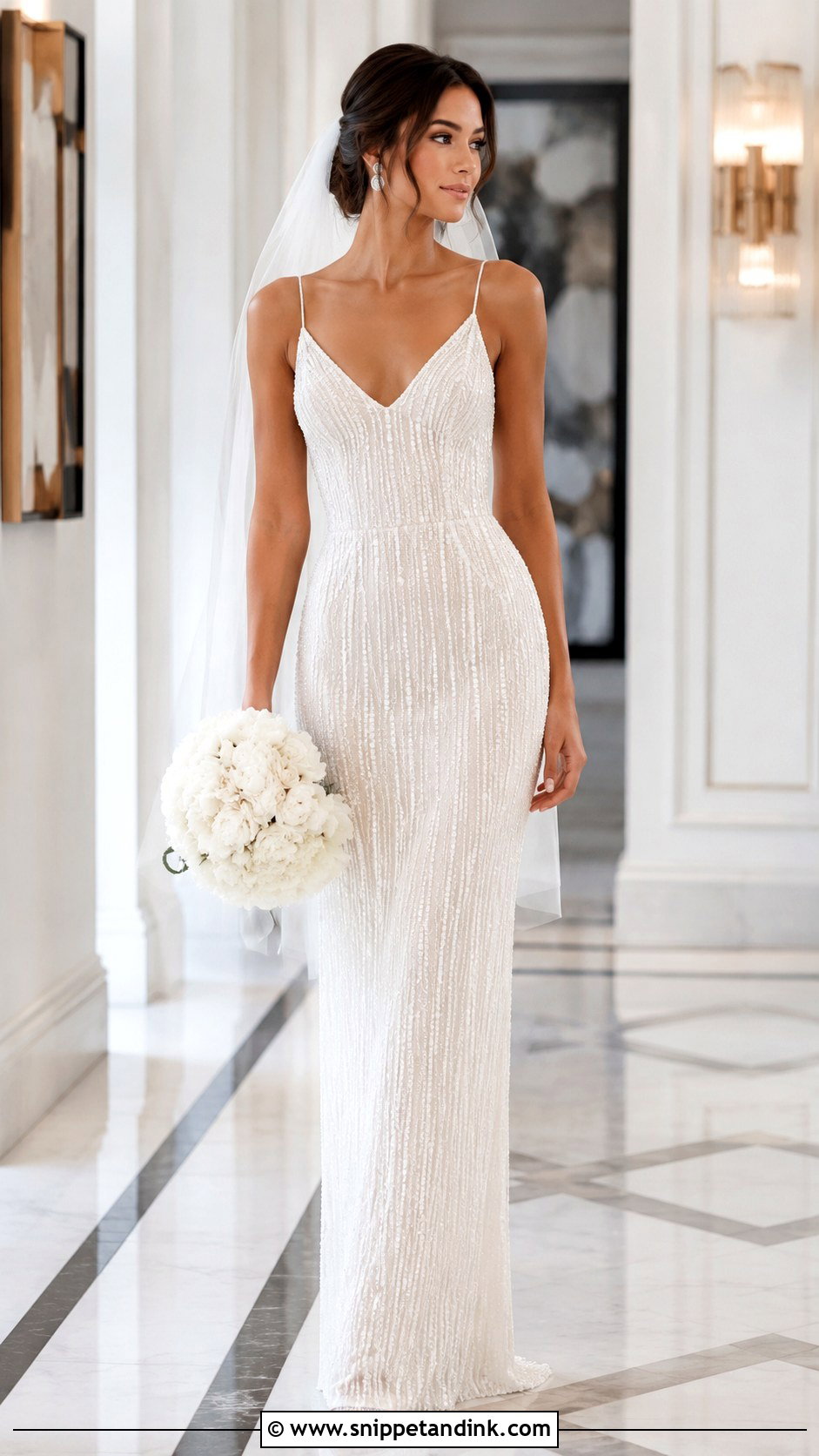
Beading on a slim gown gives texture and light instead of volume. It can cover the whole dress or sit only on the bodice, straps or waist. Vertical beaded lines lengthen the body. Heavy beading weighs a gown down and restricts movement, which matters more on a fitted dress than on a full one, so I lift the gown before a bride tries it and look for lighter beadwork if it’s heavy. A sheath or column keeps it refined. Simple heels, small earrings and a soft veil for an evening or hotel wedding.
24. Slim Floral Wedding Dress
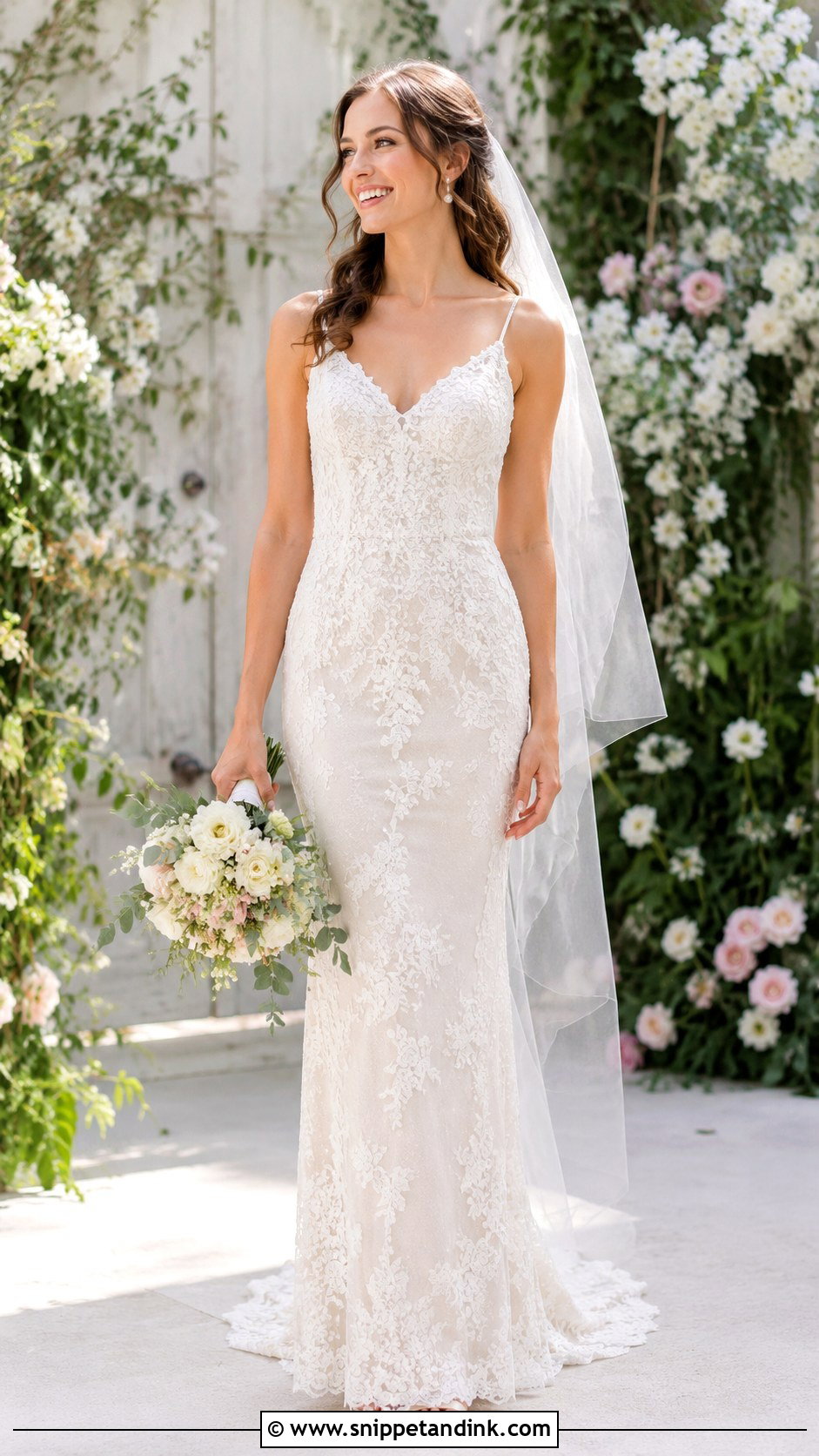
Floral lace, embroidery or appliqué brings detail to a narrow gown without adding volume. Small flowers look delicate; larger blooms make a bigger impression. A sheer overlay over ivory or nude lining gives the flowers dimension. Raised 3D flowers can catch on a veil, so I’d check how they sit at the back where the veil falls. Sheath, fit-and-flare and slim A-line all carry it. Pearl earrings, soft curls and a simple veil for a garden or spring wedding.
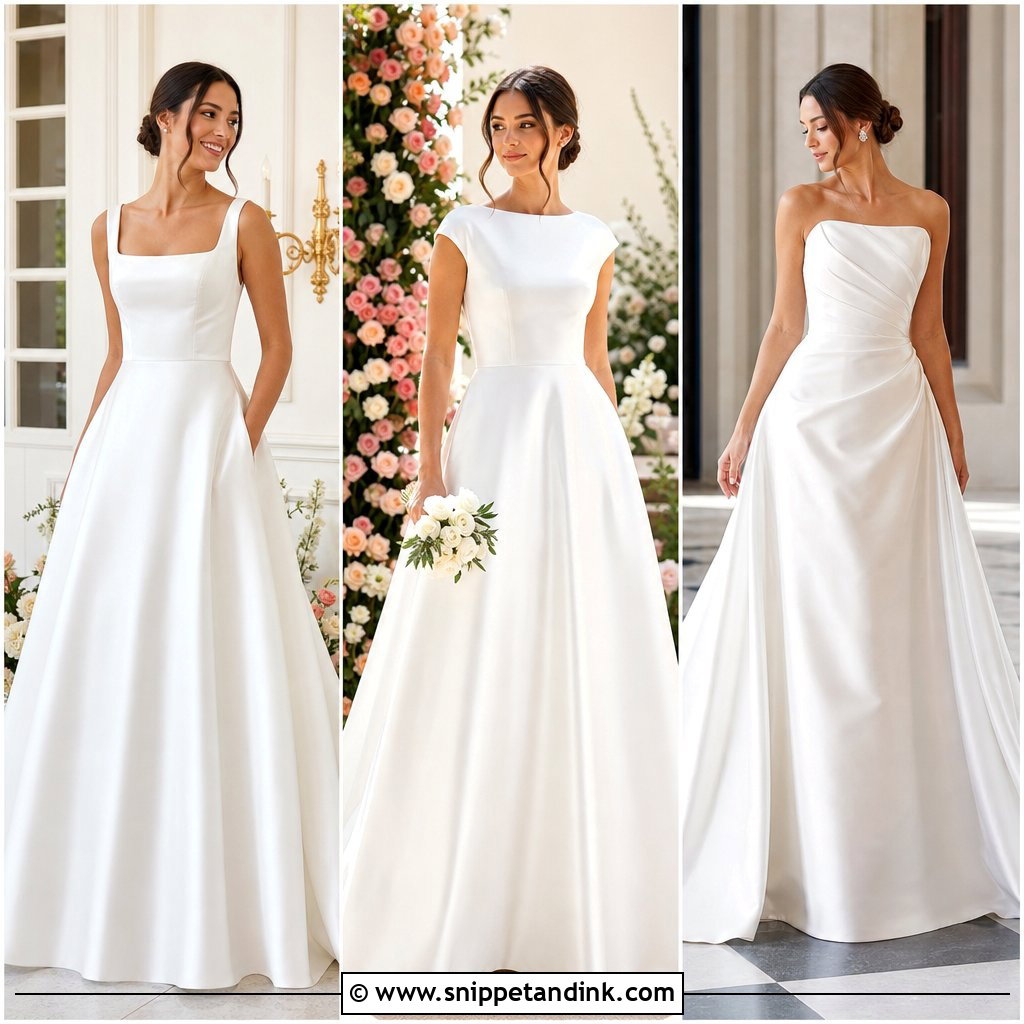
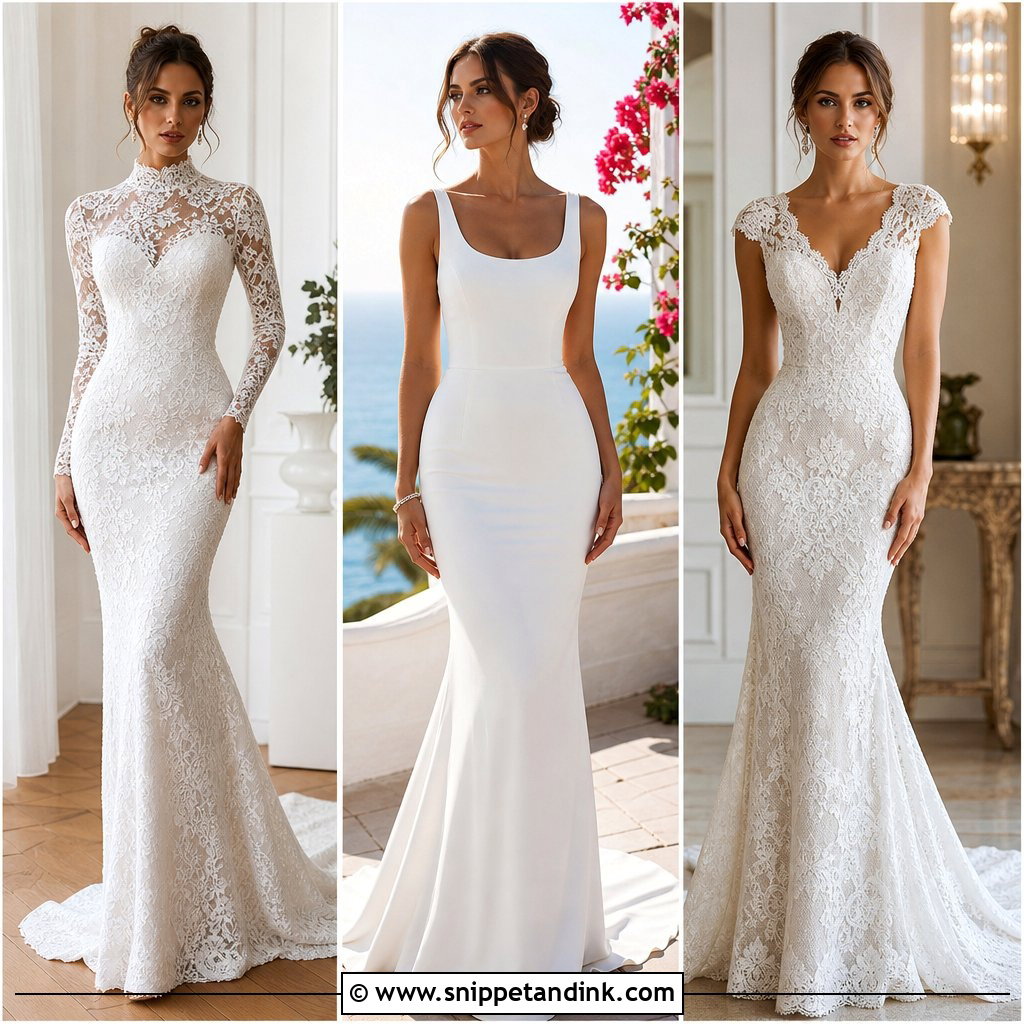
25. Slim Reception Wedding Dress
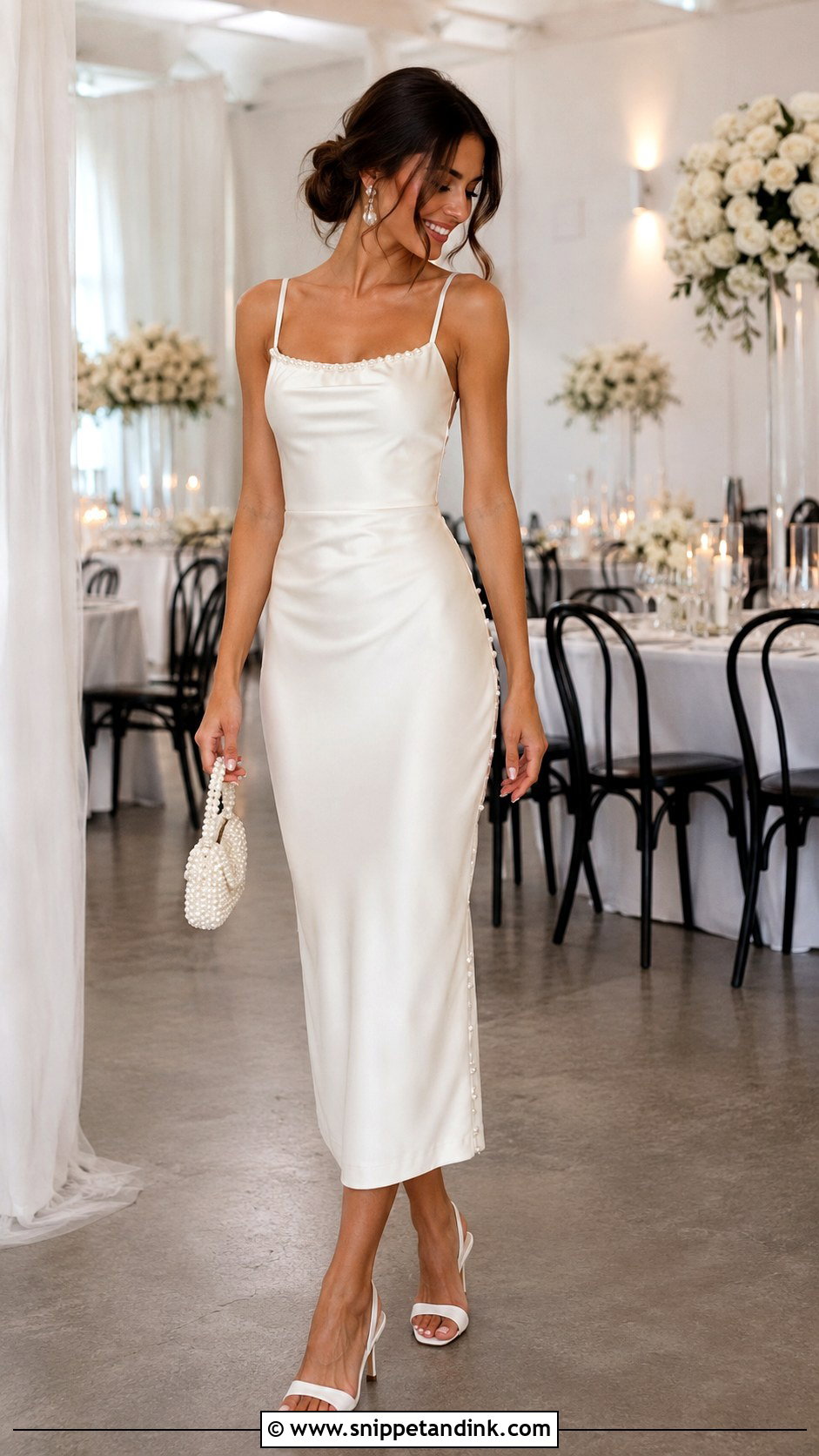
A slim reception dress is for dancing, so comfort decides it. A short column, sleek midi, satin slip or fitted crepe mini all work. If your ceremony gown is formal, this gives you a lighter second look that still reads bridal. Feathers, pearls, bows or subtle beading make it festive. I’d plan the change before the reception starts, ideally during the cocktail hour, so you don’t miss the entrance. Comfortable heels, a small bag and statement earrings.
What Goes Underneath a Fitted Gown
Slim gowns show everything beneath them, so underwear is part of the dress, not an afterthought. Bring it to every fitting, because the alterations are done around it.
- Laser-cut or bonded underwear with no stitched edges leaves no line under satin or crepe.
- Built-in cups sewn into the bodice usually beat a separate bra in a low-back or strapless gown; a seamstress can add them during alterations.
- Light shaping shorts help in two ways: they smooth the line and stop the thighs rubbing in a mermaid or column skirt, which matters after hours of standing.
- Under sheer lace, ask whether the lining reaches far enough. Some slim lace gowns have short linings that show a hard edge on the leg in bright light.
Sitting Down for Dinner
A fitted skirt pulls tight across the thighs when you sit, so perch on the front of the chair rather than sinking back, and lift the skirt slightly at the knees before you sit to give it room. If the gown has a bustle or train, have someone gather it to the side of the chair, not under you, or you’ll stand up to a creased train for the first dance.
Can You Walk, Sit and Dance in It?
Slim gowns aren’t one shape or one type of bride. They can be minimal, romantic, structured, sparkly or soft. Sheath and column gowns look clean, mermaid and fit-and-flare give more shape, and lace, satin, crepe, beading, capes, overskirts and slits each change the mood. Whatever you try, judge it on three things: can you walk, can you sit, and does the skirt release at the right point for your legs. A slim dress that passes those tests will feel like yours all day.
You'll Like These Ideas:



Leave a Reply