
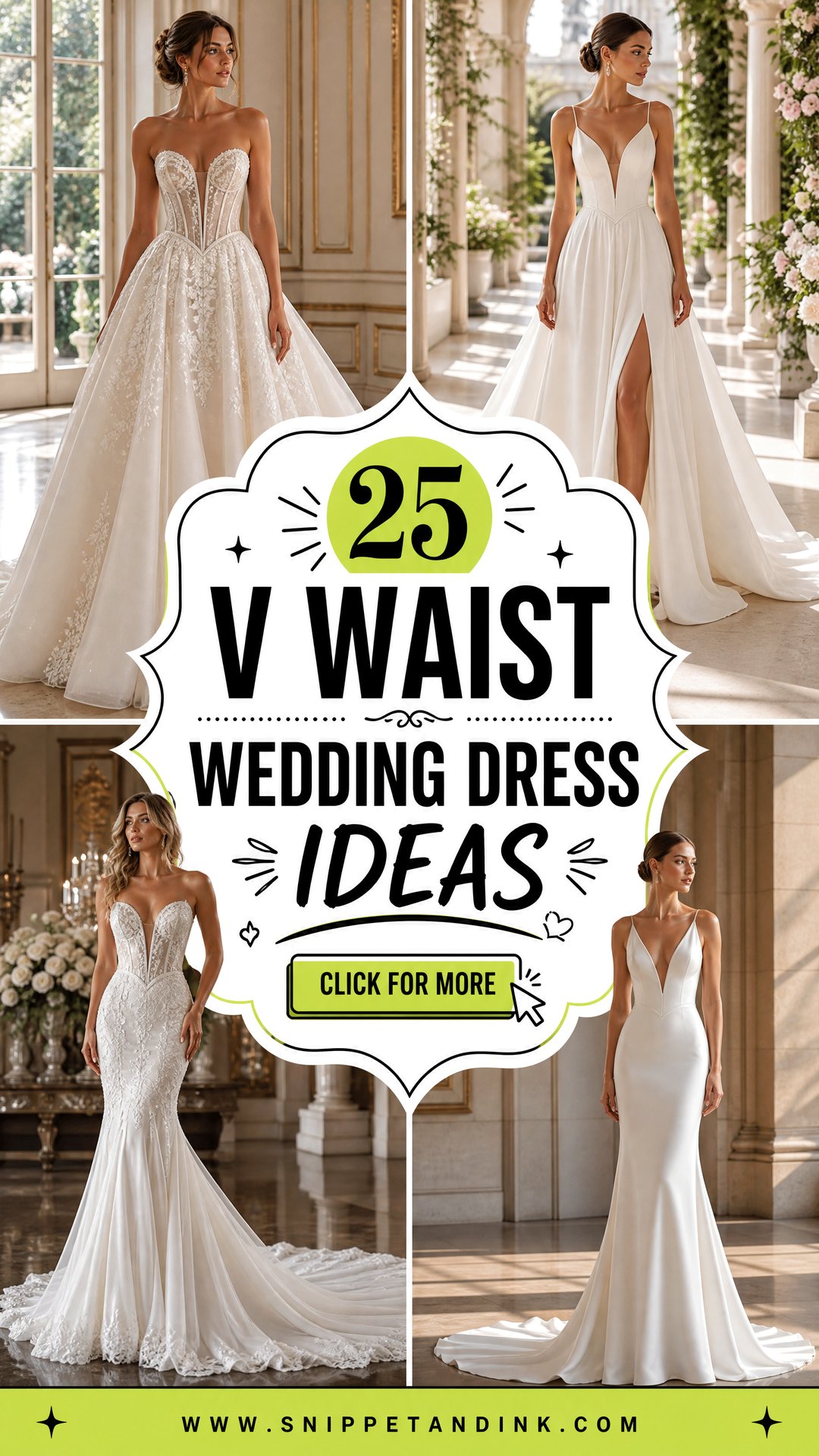
A V waist, often called a Basque waist, drops below the natural waistline to a point or a soft curve at the front. I like it because it does two jobs at once. The seams draw the eye down the centre of the body, which lengthens the torso, and the point gives a full skirt something to hang from so the volume doesn’t swallow you. The shape comes from old corsetry, yet I now see it on bare satin, on lace, on huge ball gowns and on slim fitted dresses. What changes the mood is the depth of the V, the neckline above it and the fabric. Below are 25 complete looks, each with a note on what I’d check in the fitting room.
How Low Should the Point Sit on Your Torso?
The depth of the V changes everything else, and it’s the decision brides think about least. A shallow point that ends an inch or two below the natural waist reads soft and romantic. A deep point running well down toward the hips reads dramatic and more historical, and it lengthens the body more. Neither is better. It depends on your torso.
Short-waisted brides
If your waist sits close under your ribs, the V gains you the most, because the point creates length your body doesn’t have. Keep it moderate, though. A very deep point on a short torso meets the tops of your thighs when you sit and pushes up into your stomach.
Long-waisted brides
A long torso doesn’t need more length. I’d go for a shallow, gently curved point and a fuller skirt, which keeps the top and bottom halves in proportion.
Whatever your shape, do this seated check on every sample:
- Sit on a firm chair with your back straight. The tip should rest just above the fold of your hips, not on it.
- Lean forward as if signing the register. If the point digs in or flips outward, it’s too deep or the boning is too stiff.
- Look at yourself side-on. The point should lie flat against your body, not stand away like a little shelf.
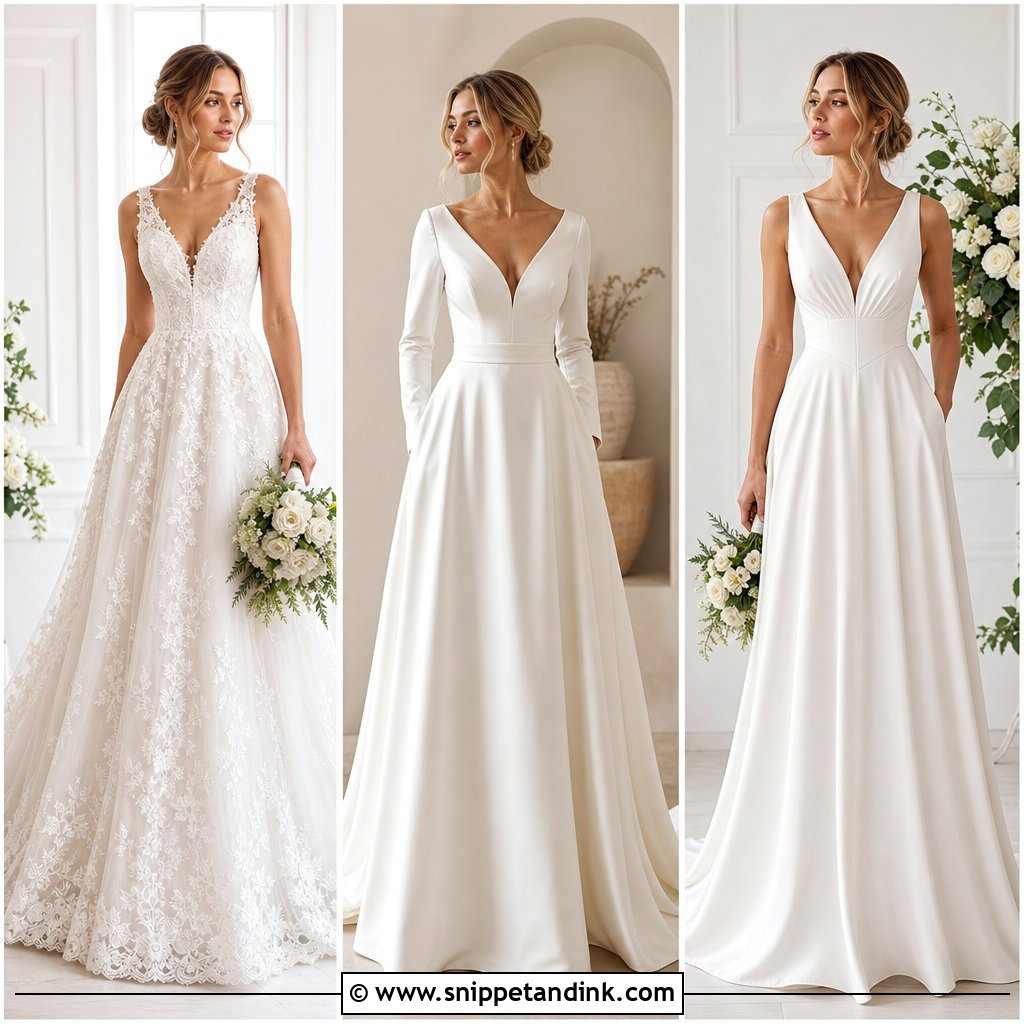
1. Satin V Waist Ball Gown Wedding Dress
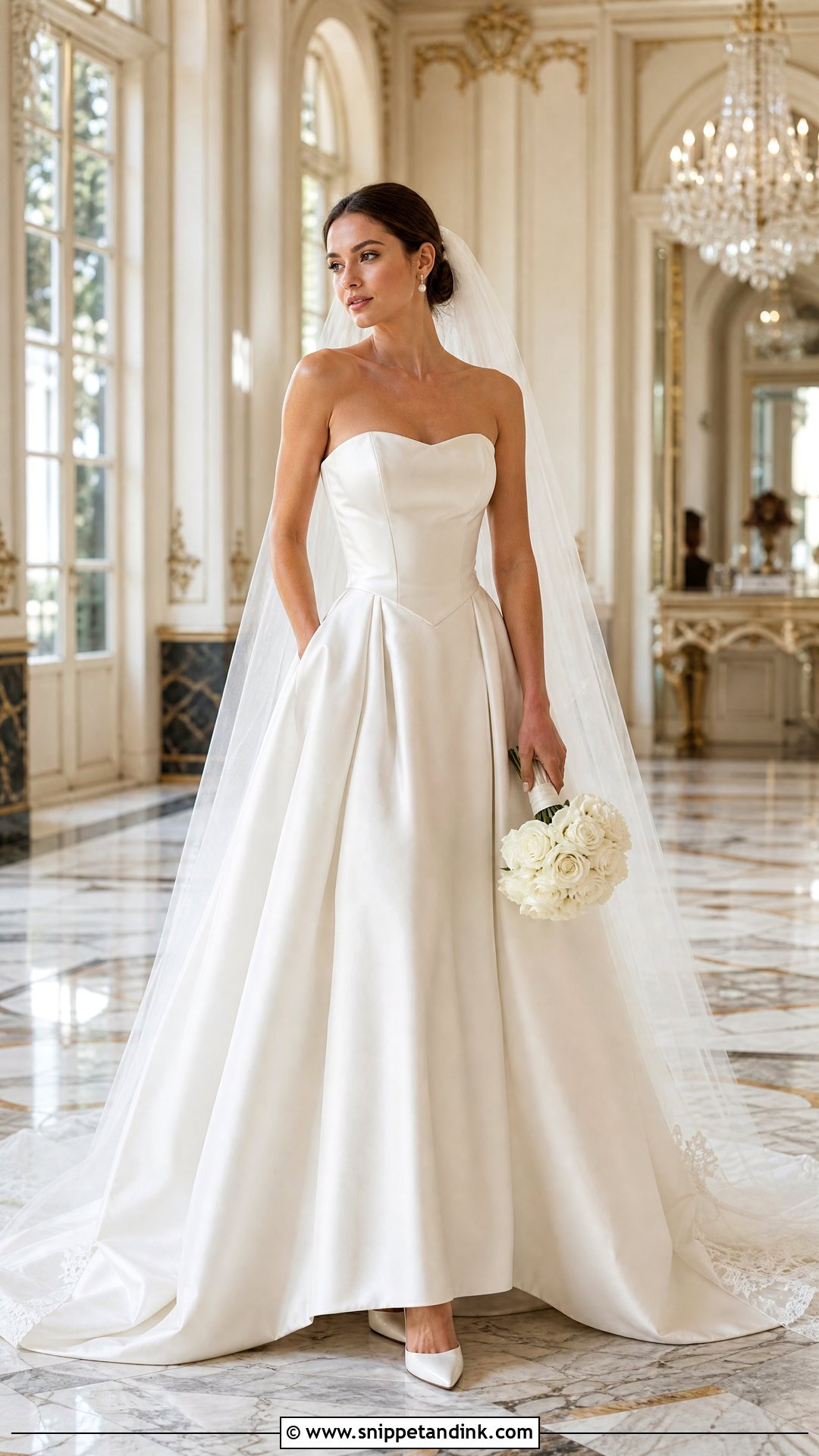
Satin shows a V waist more cleanly than almost any fabric, because there’s no texture to hide where the seams meet at the point. I’d look for internal boning and a moderate point; a very deep one on a heavy satin skirt tends to dig in when you sit. Strapless keeps the top quiet, and a chapel-length veil gives the back some movement against all that skirt. Pointed ivory pumps, pearl studs and a compact white rose bouquet finish it. Skip the oversized necklace, since the bodice already holds the eye. Hotel ballrooms and estates suit the scale of it.
2. Lace V Waist Wedding Dress With Long Sleeves
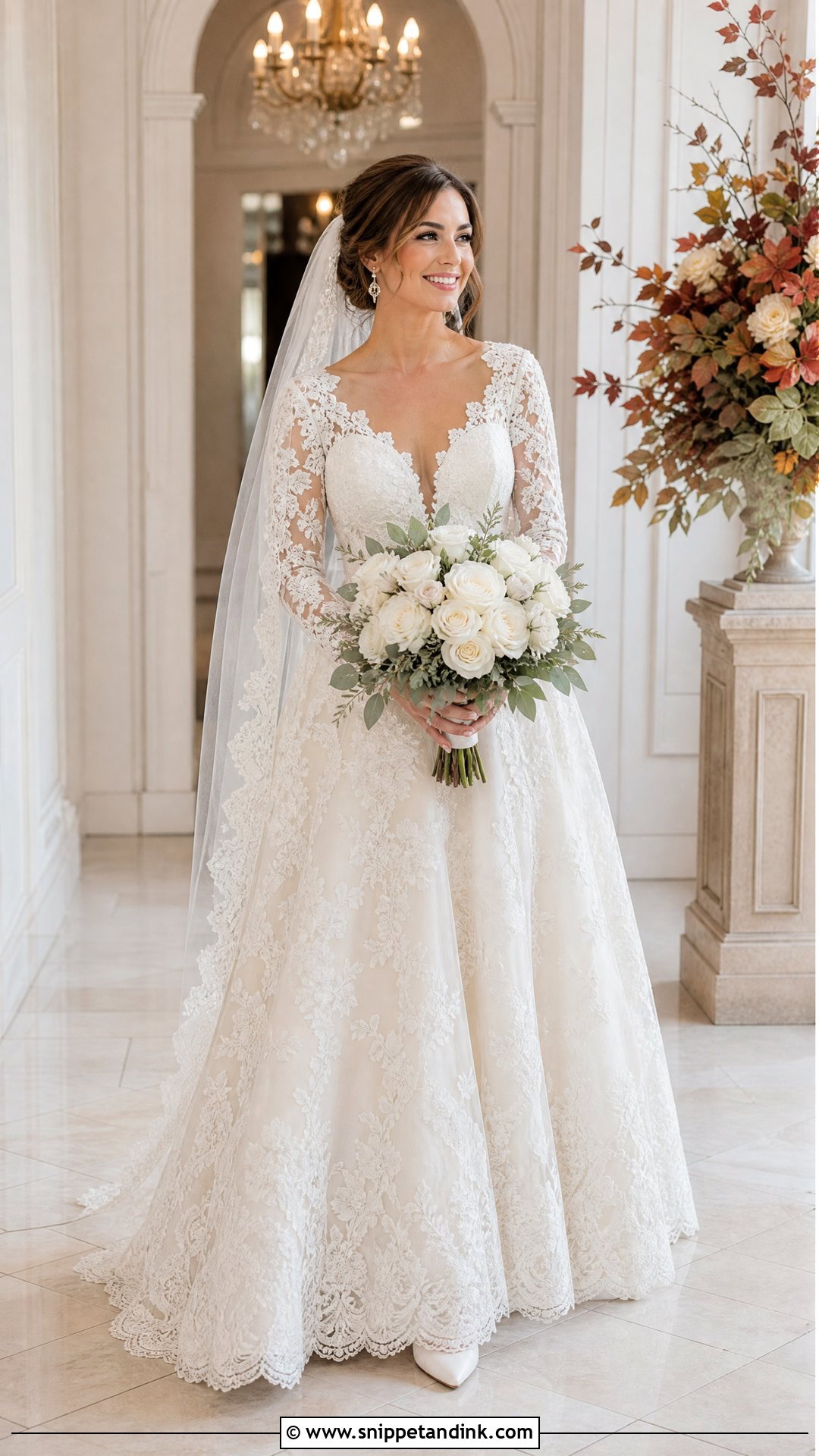
Lace softens the structure of a V waist, and the first thing I look at is how the motifs are cut around the point. A good maker places a whole motif across the waist instead of letting a seam chop a flower in half. Long illusion sleeves with covered buttons and an A-line or moderately full skirt keep it from feeling heavy. Add closed-toe ivory heels, small drop earrings and a fingertip veil edged in matching lace, with a loose bouquet of garden roses and greenery. It looks warmest in fall and winter, though a light lace carries into spring. Lace can scratch at the inner arm, so ask whether the sleeves can be lined with soft tulle.
3. Strapless Corset V Waist Wedding Dress
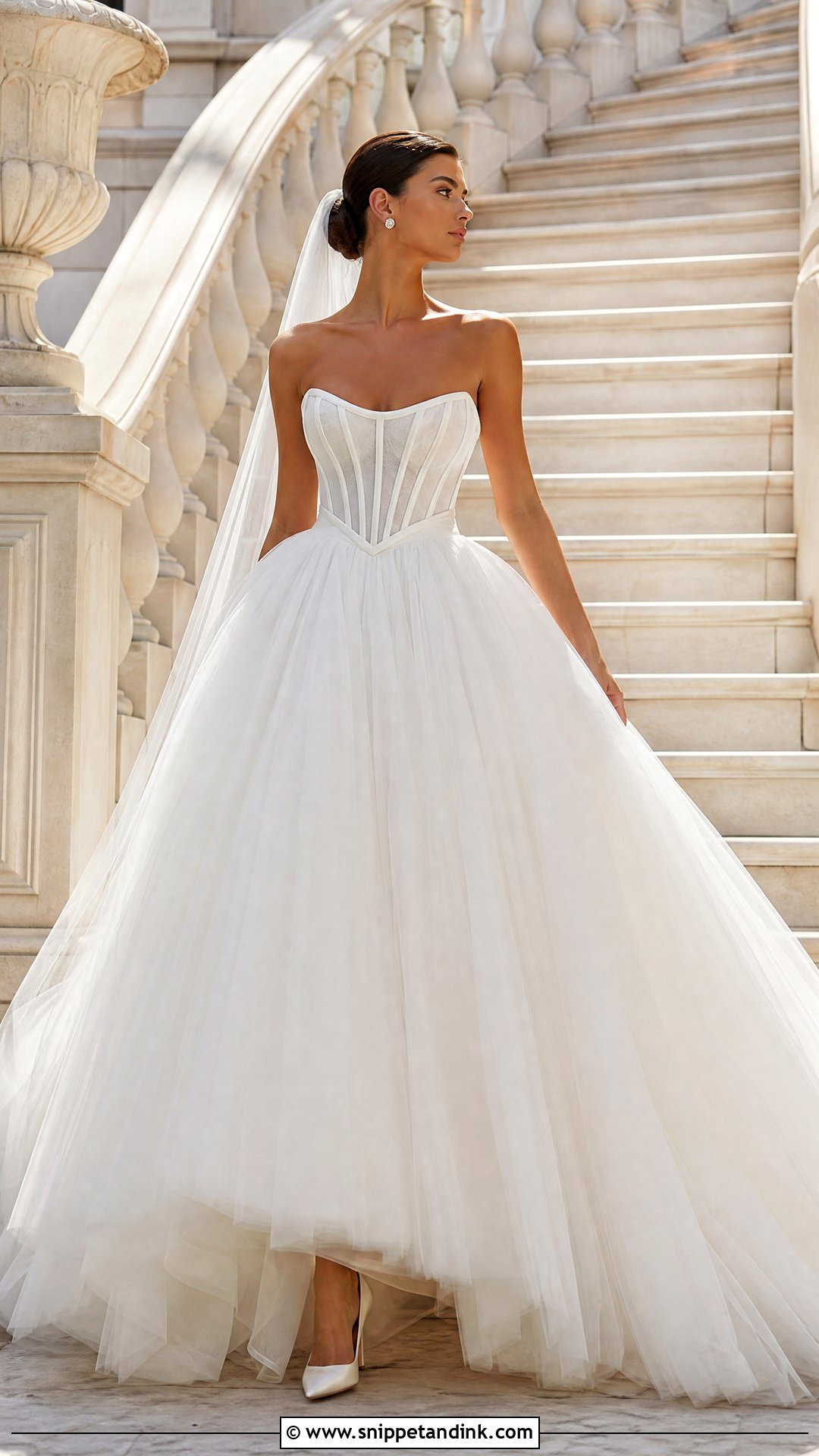
Visible corset seaming gives the V waist a couture edge and, more usefully, real support for a strapless top. The mistake I see most often is a point that runs too low for the bride’s torso, so it buckles every time she sits. Ask for the point to follow your own proportions, then add a voluminous tulle or satin skirt for balanced hourglass definition. A plain cathedral veil, crystal studs and sleek ivory heels are enough, and a low bun leaves the boning lines visible from behind. During alterations I’d add a nonslip inner band or a waist stay. Strapless bodices creep down over a long day, and a stay takes the pull of the skirt off the bodice.
4. Off The Shoulder V Waist Wedding Dress
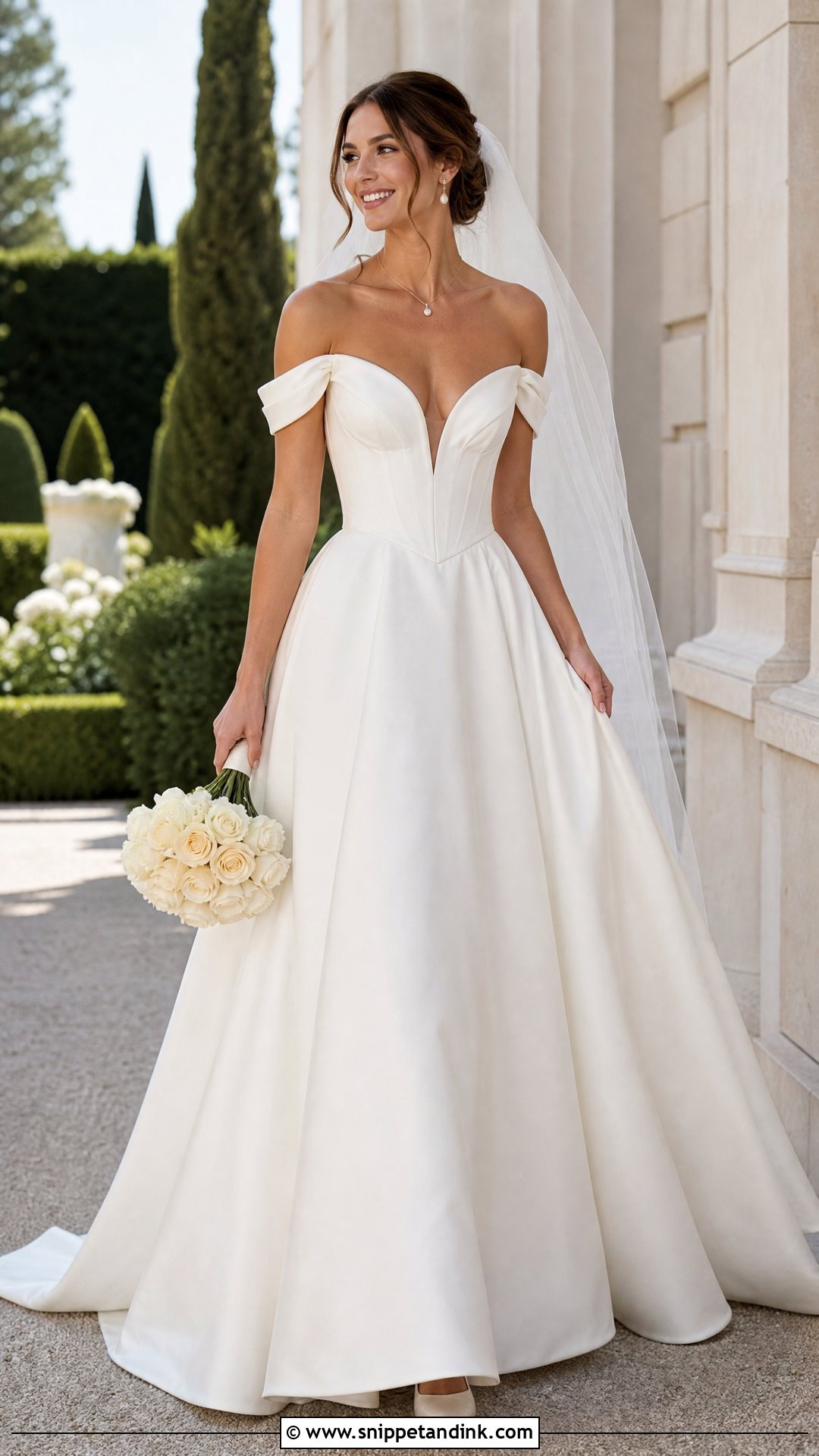
Off-the-shoulder sleeves soften the collarbone while the V gives definition lower down. The catch is arm movement: draped satin sleeves set into a structured bodice can stop you lifting your arms above shoulder height. At the fitting, raise both arms as if you’re hugging someone taller than you, then dance a few steps. If the bodice rides up, the sleeves need more ease. Style it with a full A-line skirt, a delicate pendant, pearl earrings and a veil tucked under a low chignon, plus pointed pumps and ivory roses with light greenery. Formal gardens, estates and classic ballrooms all suit it.
5. Square Neck V Waist Wedding Dress
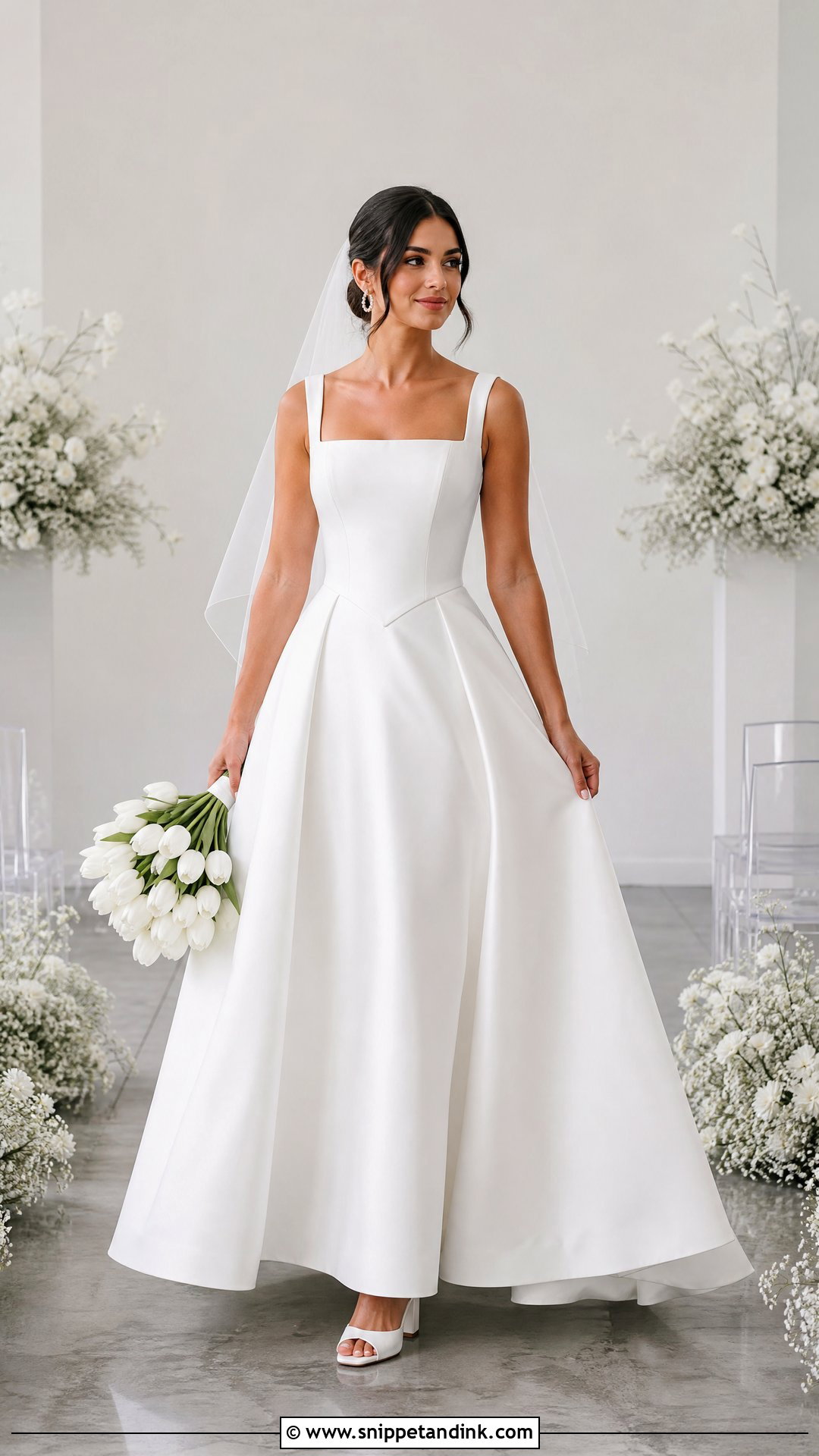
A square neckline and a V point are both hard geometric lines, so they echo each other well. Wide straps and supportive seaming in a structured Mikado or satin fabric keep the shape crisp, and an A-line skirt lets you move through the ceremony and reception. A neat bun, small pearl hoops, block heels and a mid-length veil are all it needs, with white tulips to match the clean lines. If you’d like more coverage, detachable fitted sleeves in matching fabric are an easy add. This is the one I’d suggest to a bride who’s nervous about strapless, because the straps do so much of the holding.
6. Sweetheart V Waist Wedding Dress
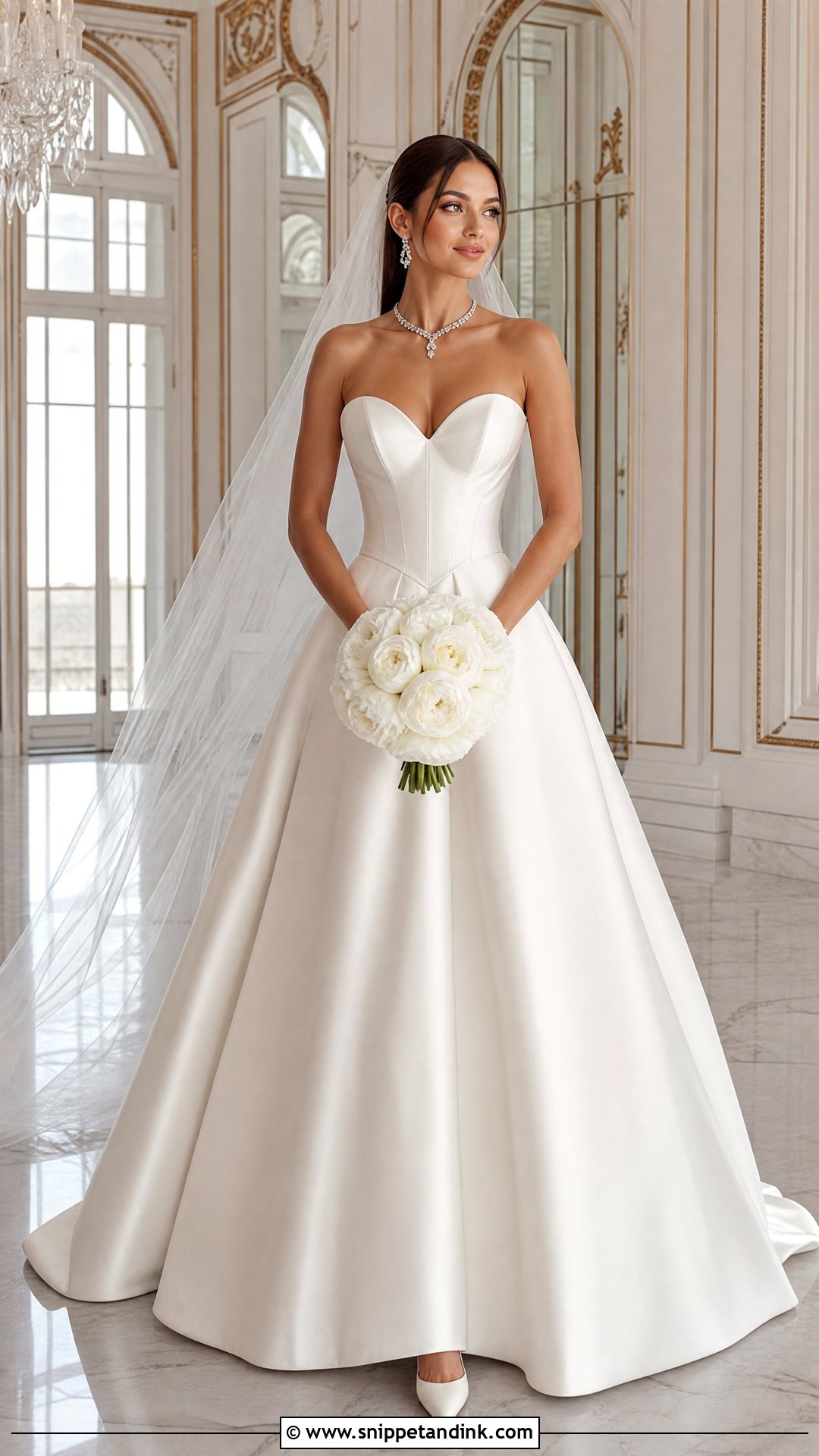
A sweetheart neckline dips toward the centre and the V waist points at the same line from below, so the whole bodice reads as one curve. Supportive cups and light boning matter more here than the fabric; lace and smooth satin both work. Go full in the skirt for drama or slimmer A-line for something lighter. A fine crystal necklace with matching earrings, ivory pumps, a soft cathedral veil and round peonies or roses complete it. My fitting check is simple. Sit, bend forward as if picking something up, and watch the neckline. If it gaps or pinches, the cups need adjusting before anything else is touched.
7. Cat Eye Neckline V Waist Wedding Dress
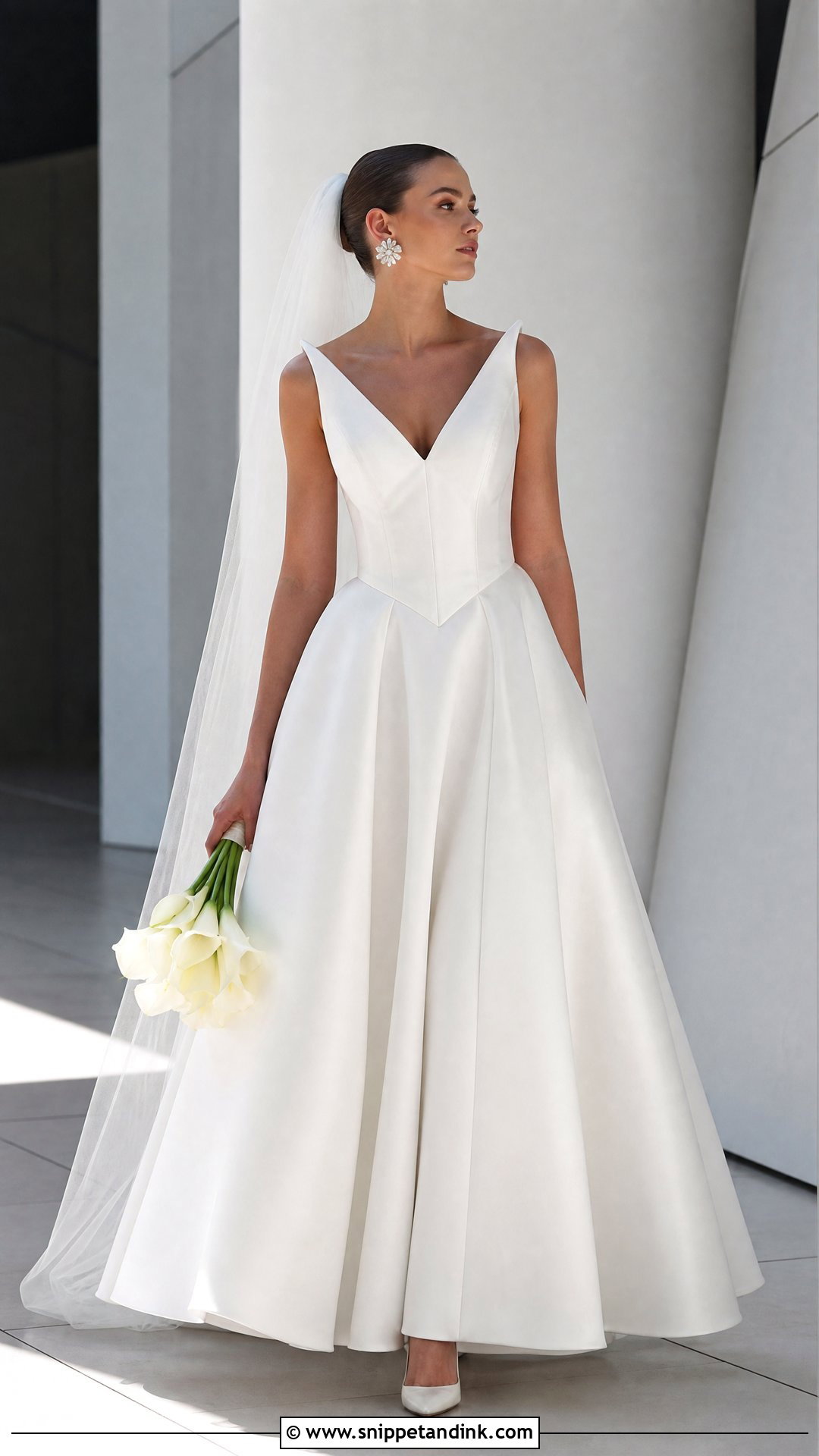
A cat-eye neckline lifts at the outer corners, so with a pointed waist below you get two sharp, architectural lines framing the bodice. That’s a lot of structure already, so I keep the fabric plain: matte satin, silk faille or Mikado. A full skirt gives the bodice enough weight to look intentional. Accessories should be quieter than usual, just an unembellished veil, sculptural earrings, pointed heels and a few calla lilies, with sleek hair. Heavy beading on top of this construction only fights it.
8. Scoop Neck V Waist Wedding Dress
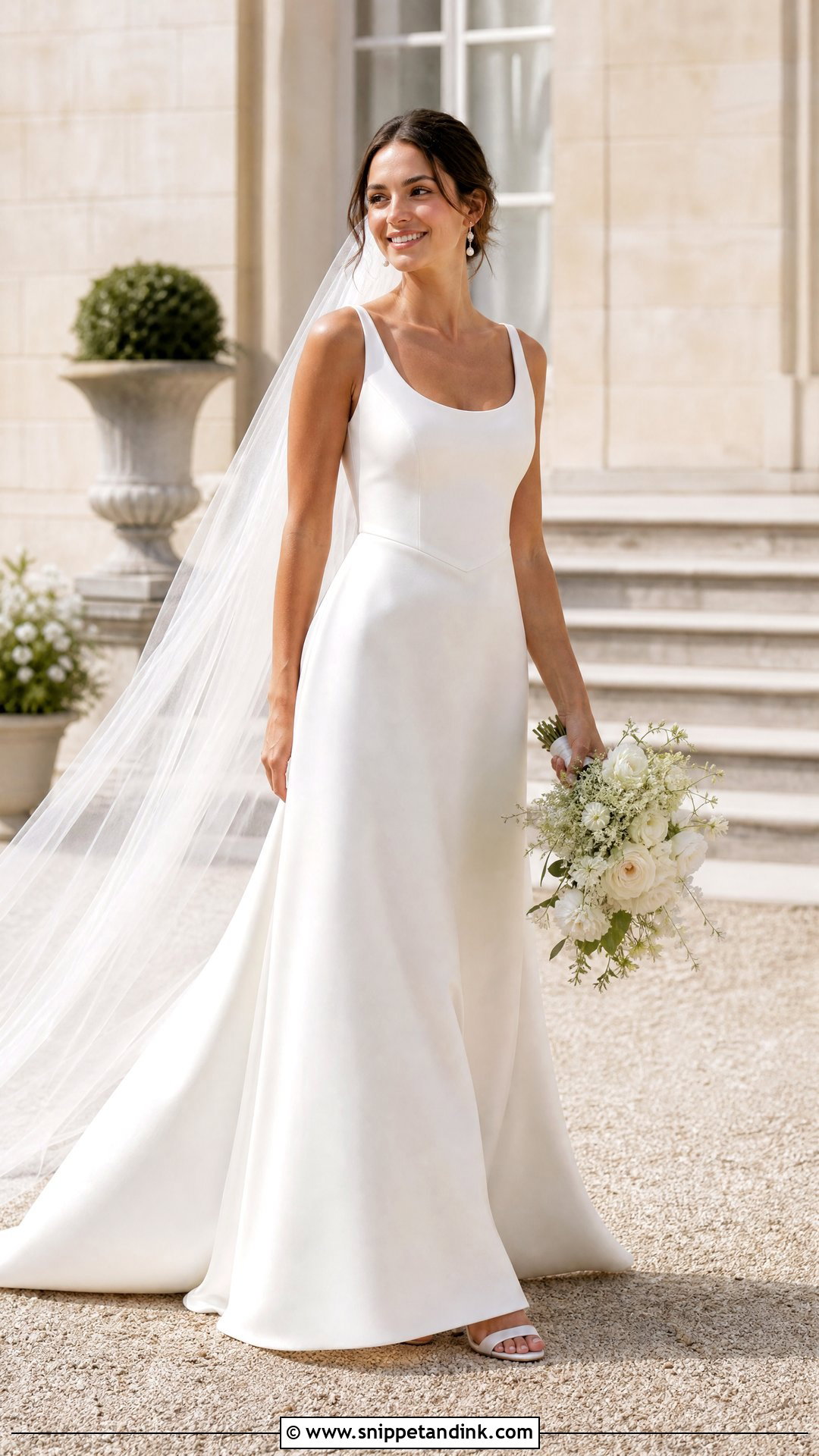
A scoop neck makes the V waist feel gentler and less formal. Wide straps or short sleeves add support, which matters to brides who’ve tried strapless and hated tugging at it all day. A silk satin bodice with a fluid A-line skirt moves well, and pearl drops, comfortable block heels and a light chapel veil with a narrow edge keep it simple. A loose bouquet of seasonal white flowers suits the softer mood, and the dress crosses from a daytime ceremony to an evening party without looking out of place. Ask for the point to end above the fullest part of your lower stomach so it doesn’t press when you’re seated.
9. Halter Neck V Waist Wedding Dress
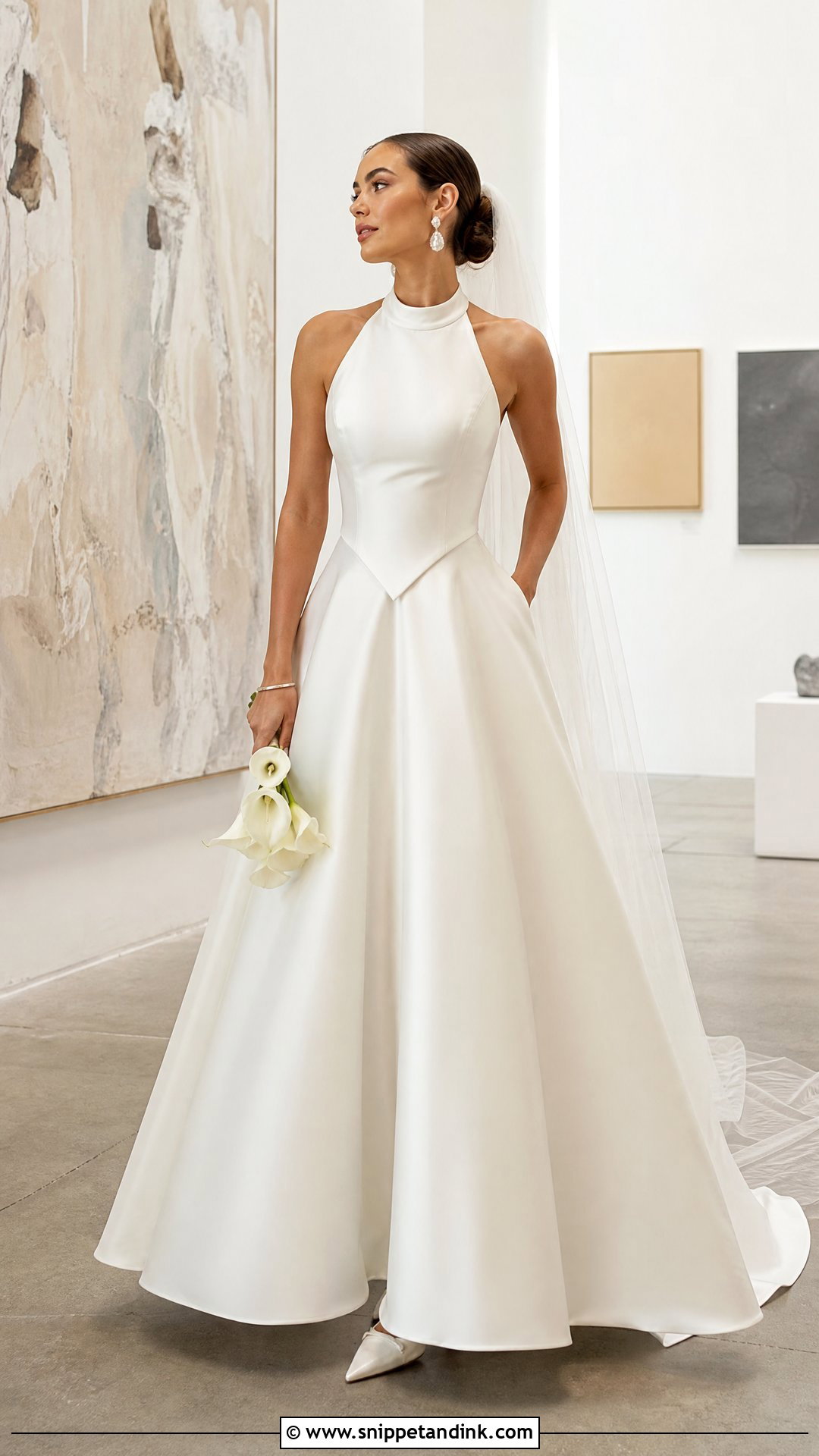
A halter pulls the eye up to the shoulders while the V pulls it down through the centre, and the overall effect is long and narrow. Choose a high halter in satin or crepe with real internal support and a modestly full skirt. Wear statement earrings and no necklace, plus slim heels, a simple bracelet and a veil fixed below an elegant bun; orchids or calla lilies suit the modern feel. What I watch at fittings is the neck strap. If the bodice isn’t carrying its own weight, the halter does, and after a few hours it rubs or gives you a headache. Galleries, sleek hotels and minimal venues are its natural setting.
10. Spaghetti Strap V Waist Wedding Dress
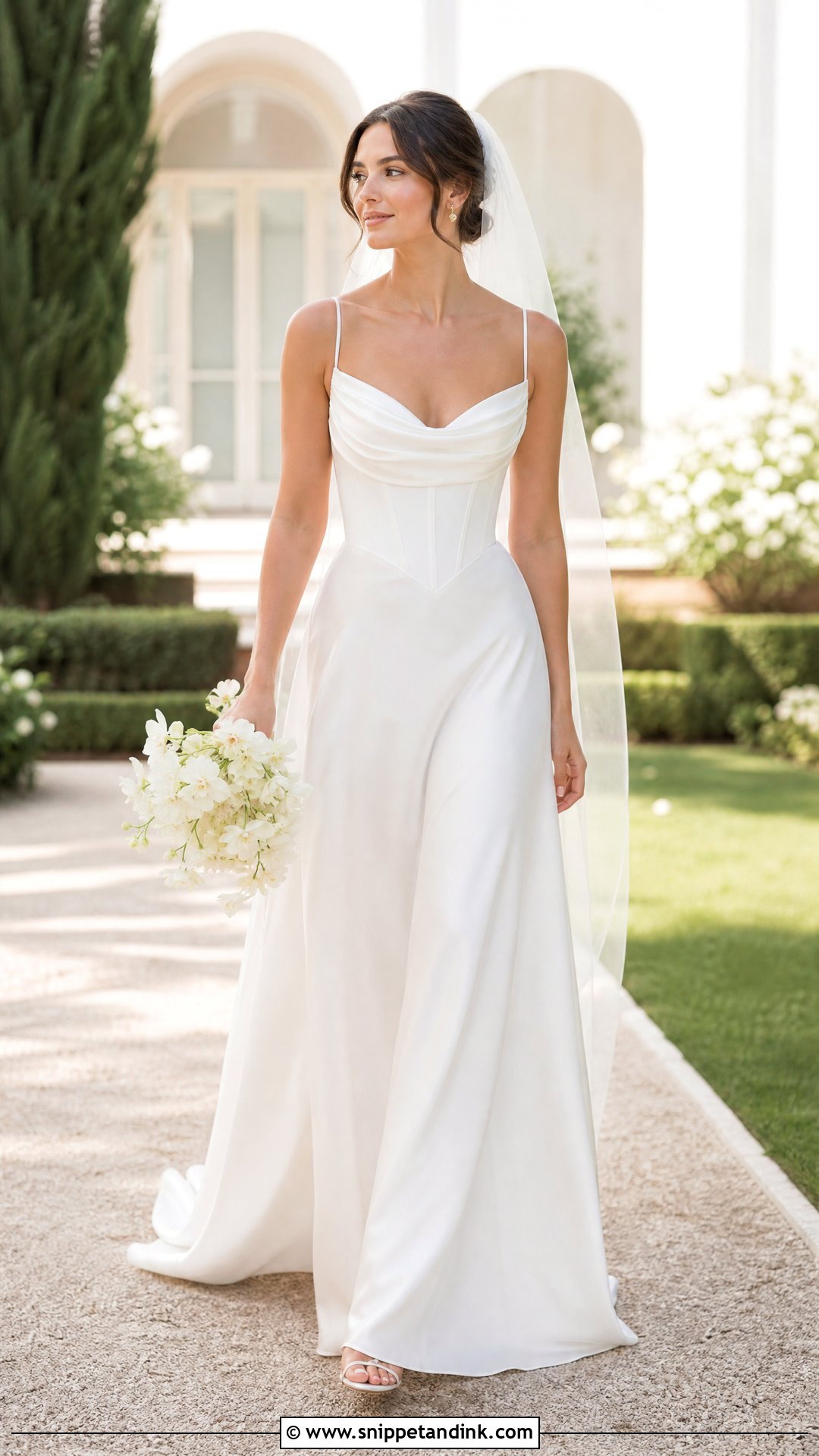
Thin straps make the V waist look lighter, but they can’t hold much. The support has to come from an inner corset layer, and I’d keep the point gentle rather than deep so it doesn’t fight the soft, draped neckline. A silk or satin A-line skirt stops the bodice feeling rigid. Add a sheer fingertip veil, crystal studs, barely visible ivory sandals and white sweet peas, with soft waves or a loose bun. If you need more lift, ask about reinforced straps or small strap cushions. Warm-weather weddings suit the open neckline best.
11. Pearl Beaded V Waist Wedding Dress
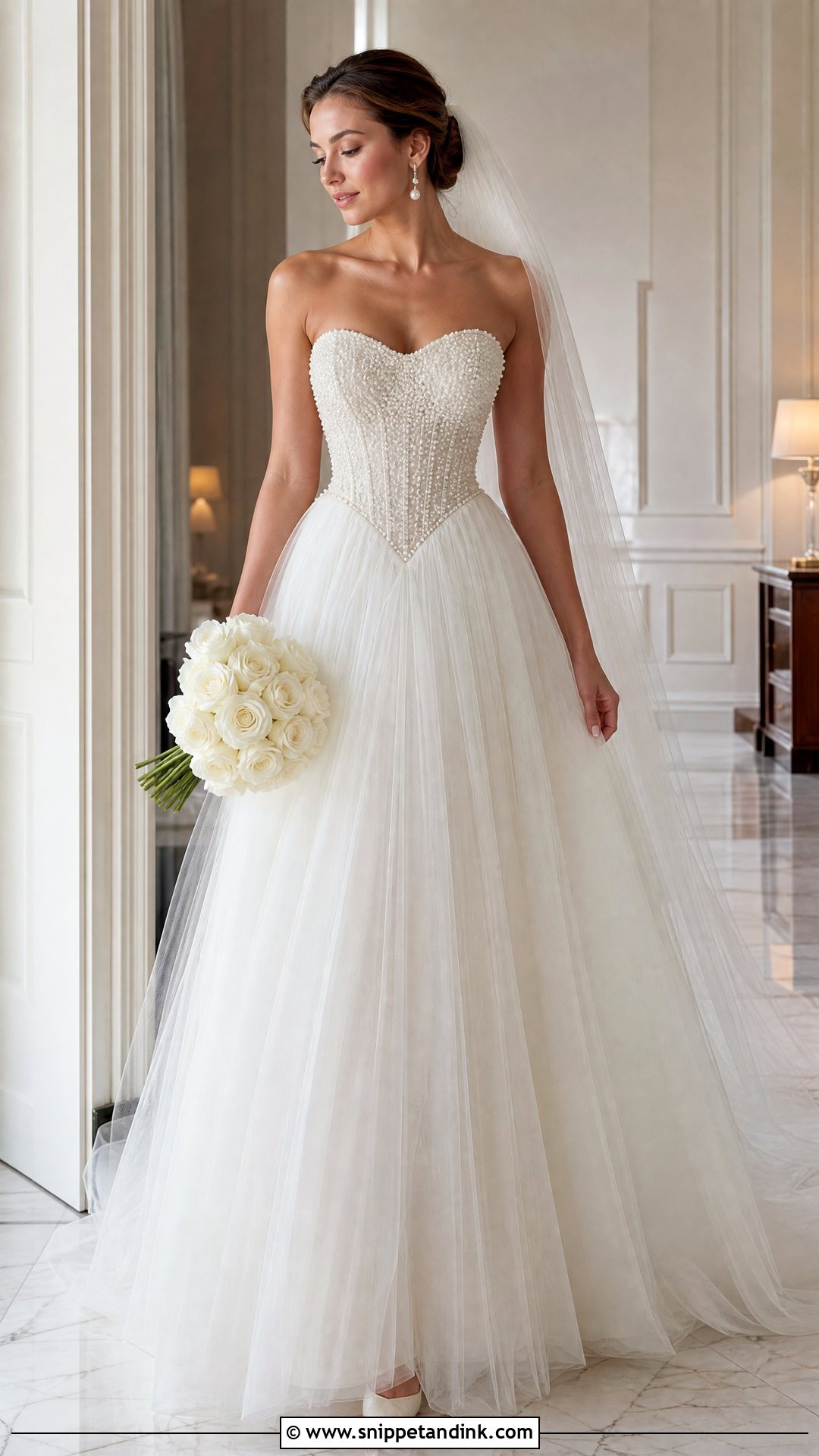
Pearls add texture to a V waist without the hard flash crystals give in photos. Scatter them across the corset bodice and keep the skirt plain satin or tulle so the point stays readable. Pearl earrings, ivory pumps and a sheer cathedral veil with minimal edging finish it. Skip a beaded necklace, because matching every piece makes the outfit busy. Before alterations, I ask the seamstress to check which pearls sit on seam lines and under the arms. Those have to come off and be re-sewn after taking in, and a loose pearl under the arm will rub the skin raw by evening.
12. Floral Applique V Waist Wedding Dress
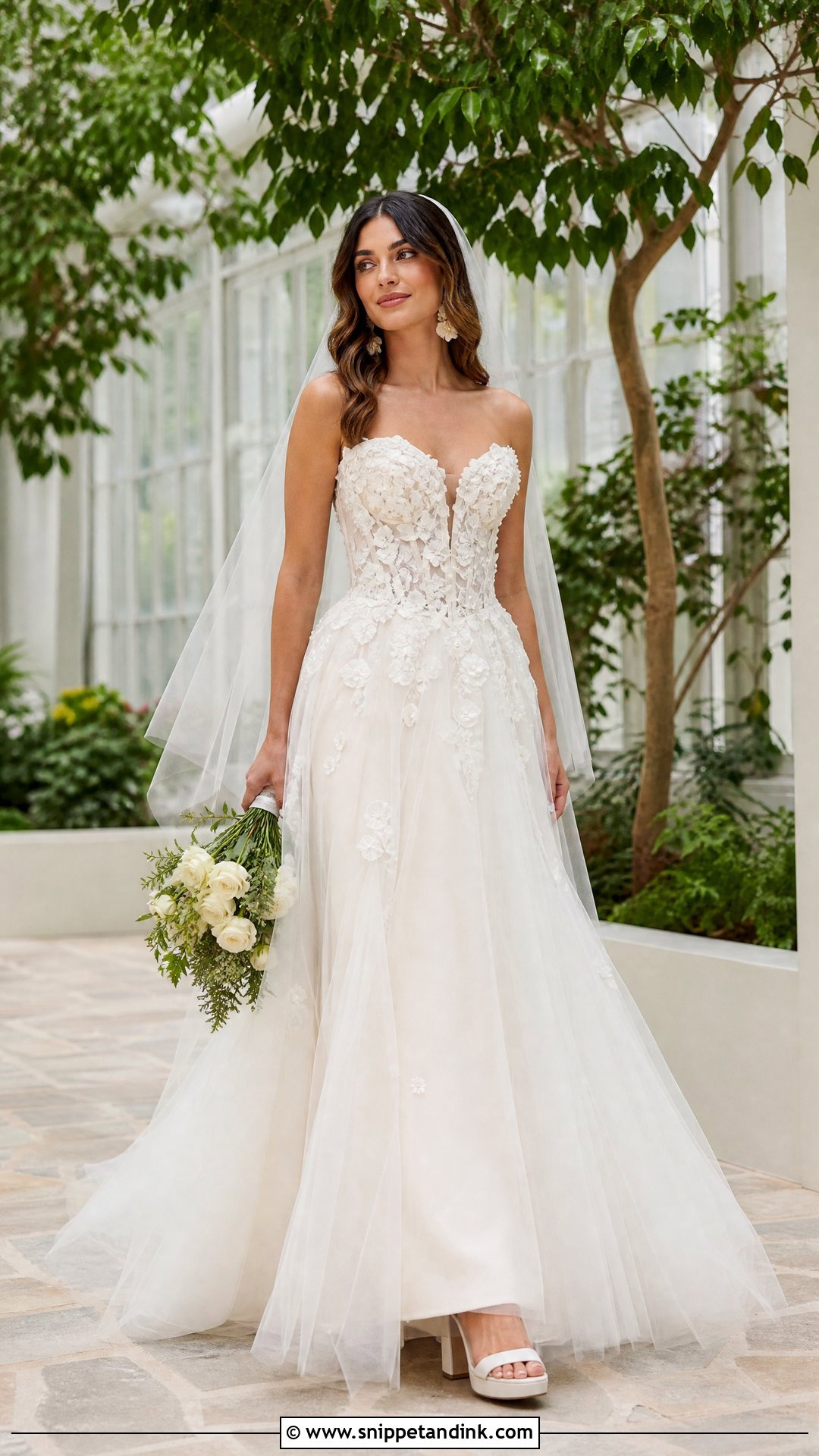
Raised floral appliqués work best when they’re densest on the bodice and thin out as they travel down a tulle A-line skirt. That fade keeps the V waist as the focal point and links the fitted top to the moving skirt. A plain veil matters here; a floral-edged veil over dense appliqués only works if the motifs genuinely match. Add delicate floral earrings, ivory block heels and white roses with soft green accents, and a low textured bun to keep the shoulders clear. In a spring garden or greenhouse, the botanical detail picks up the setting.
13. Embroidered Lace V Waist Wedding Dress
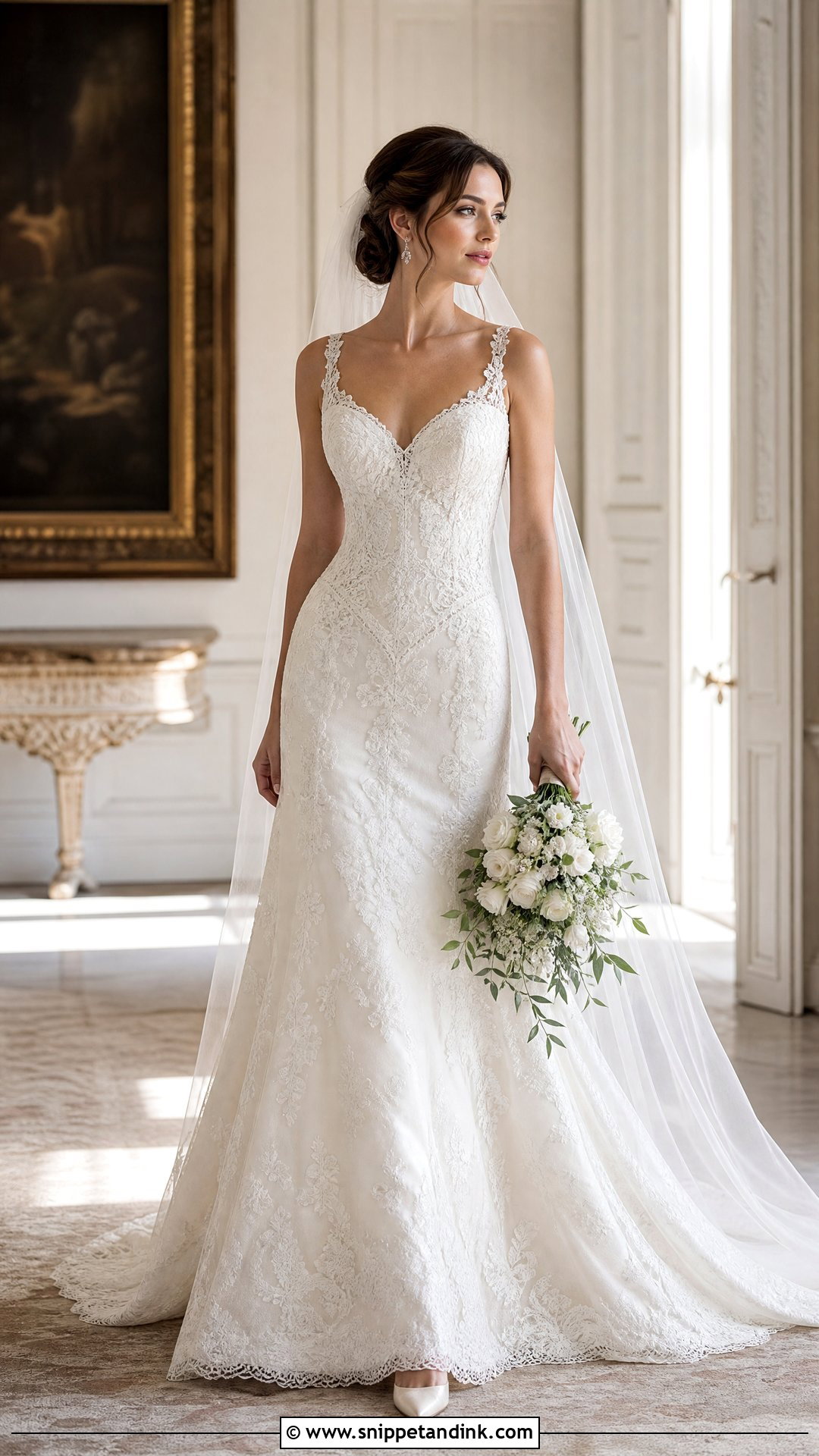
Embroidered lace that follows the V-shaped seam outlines the waist instead of covering it. Look for a lined corset bodice, narrow straps or fitted sleeves, and a softly flared skirt. Drop earrings, closed-toe heels, a lace-free chapel veil and a loosely structured bouquet keep the balance, while a low bun or polished ponytail shows the shoulder embroidery. Look at the dress by a window and again under indoor light. Dense thread work can go flat or slightly yellow on camera, and you want to know that before you order. Motif placement at the bust and alteration seams decides whether the embroidery helps the silhouette or breaks it.
14. Tulle V Waist Ball Gown Wedding Dress
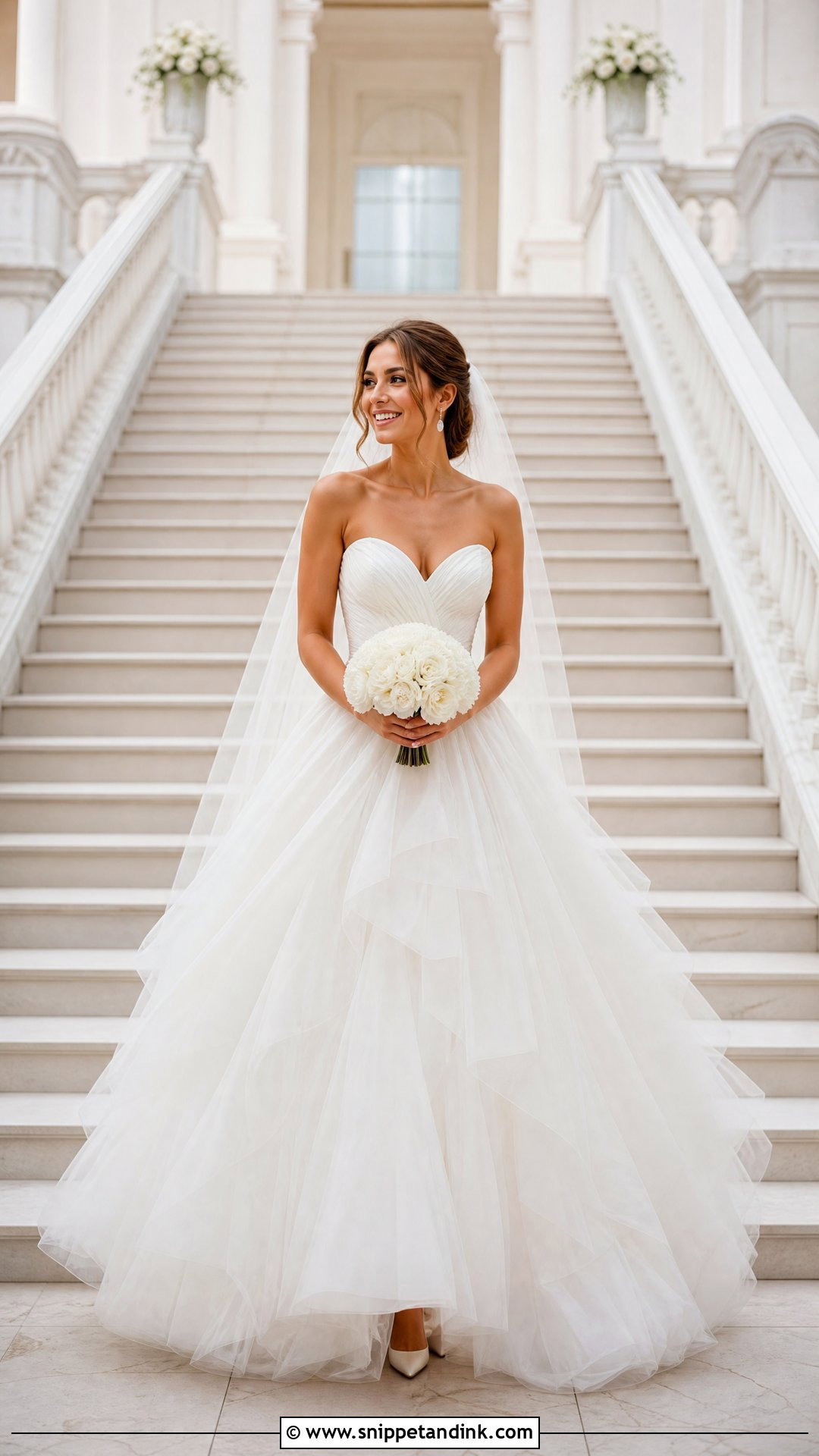
Tulle gives volume without satin’s weight, which you’ll be grateful for by hour eight. Pair the skirt with a fitted V bodice in matching tulle, lace or light drape, and a strapless or soft scoop neckline so the skirt carries the drama. A long plain veil, dainty earrings, ivory pumps and a compact bouquet that doesn’t hide the waist finish it, with a smooth updo against the soft skirt. Ask how many layers can come out if the gown feels too big for the room. Often one or two can go without changing the shape much. Ballrooms and grand staircases give it space to move.

15. Mikado V Waist Wedding Dress
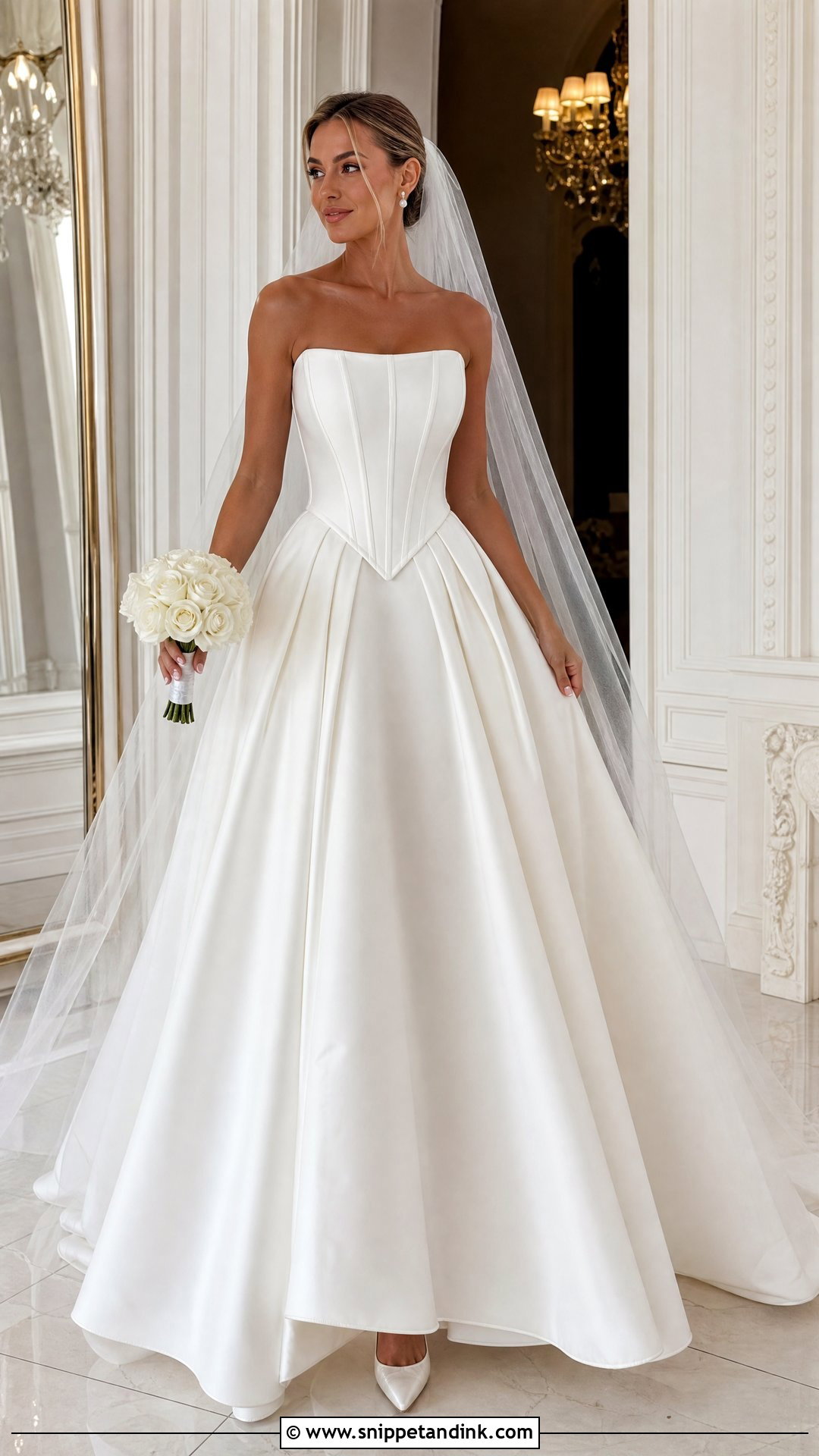
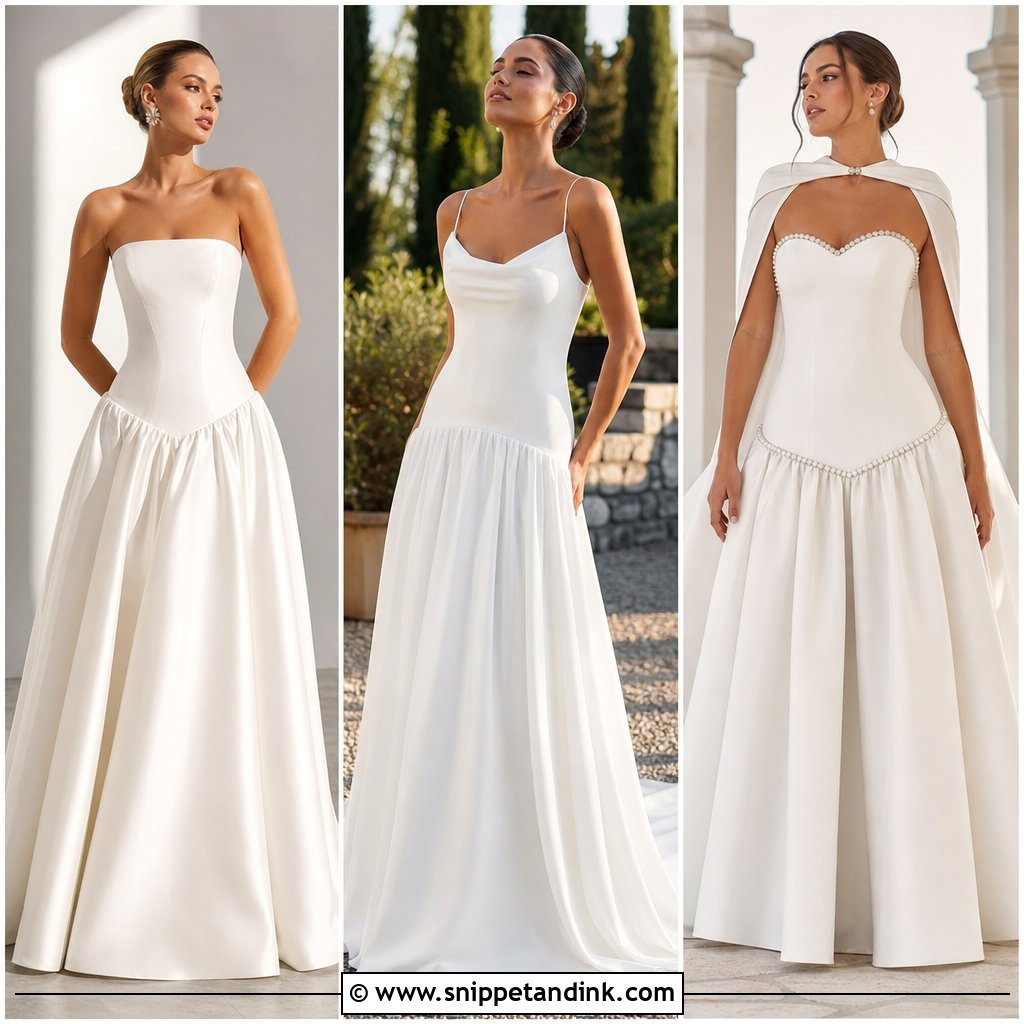
Mikado is stiff enough to show every seam, which is exactly what a sharply tailored V waist needs. A strapless or square-neck bodice with clean panels and a full, pleated skirt keeps it precise, and the low sheen looks calmer than glossy satin in photos. Pearl studs, a cathedral veil, pointed ivory heels and a few white roses are all it needs, with a sleek bun. Because Mikado holds its form so firmly, ask the salon early how the skirt will be bustled for the reception. A heavy Mikado train needs strong bustle points, or one stray heel on the dance floor will tear them out.
16. Organza V Waist Wedding Dress
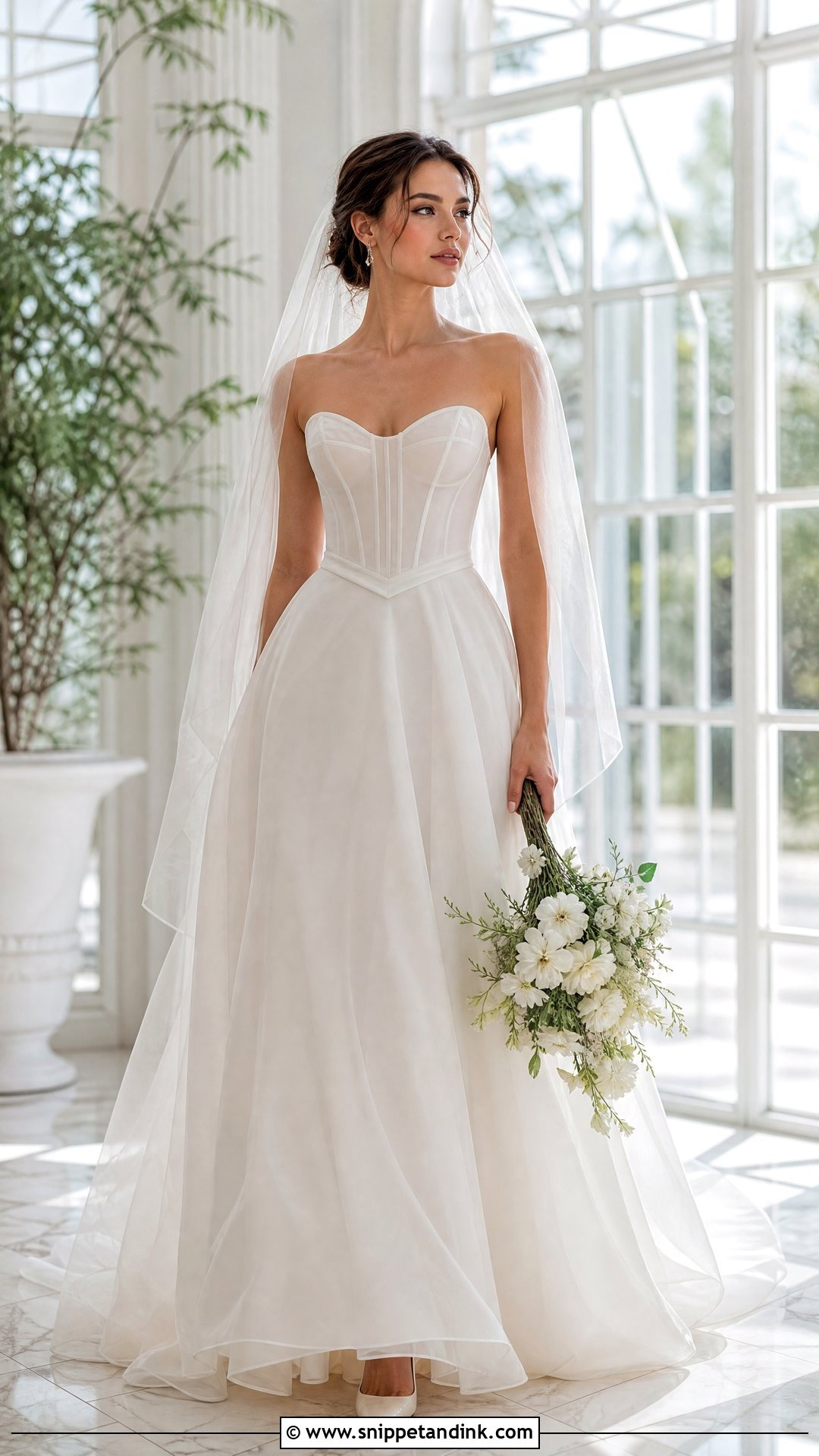
Organza catches light as you move, so a V waist gown in it looks dimensional with no beading at all. A structured corset bodice over a full organza skirt in soft layers or wide pleats gives volume at a fraction of a ball gown’s weight. Keep embellishment low, since the translucent layers already make texture. A fingertip veil, slim drop earrings, satin pumps and a gathered bouquet suit it, with a low bun or half-up style. Before you commit, stand near a window and then under overhead lights. Organza can turn sheer when backlit, and the fix is a proper lining, not another layer of organza.
17. Crepe V Waist Fit And Flare Wedding Dress
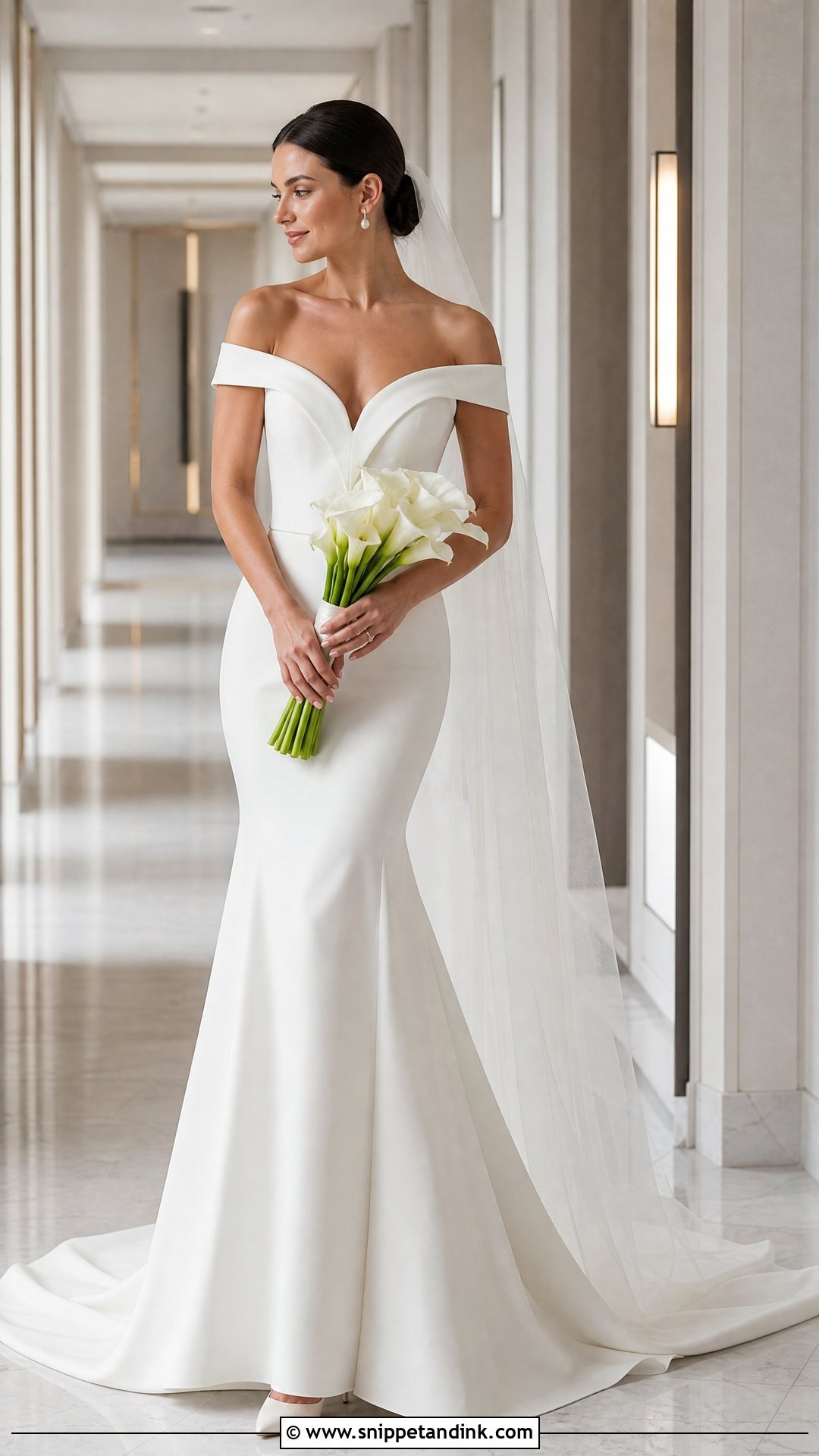
Crepe is matte and smooth, so on a fitted silhouette the V point does the defining with no help from decoration. A soft scoop or off-the-shoulder neckline and a skirt that follows the hips before widening below the thigh keep it clean. Ivory pumps, modern pearl earrings, a narrow cathedral veil, calla lilies and a low ponytail suit the plain fabric. Crepe shows every edge underneath it, so I ask brides to bring the exact underwear they’ll wear and to talk about built-in cups and smooth lining. Then sit, walk and climb a few steps. If the skirt hobbles your stride, the flare starts too low.
18. A Line V Waist Wedding Dress
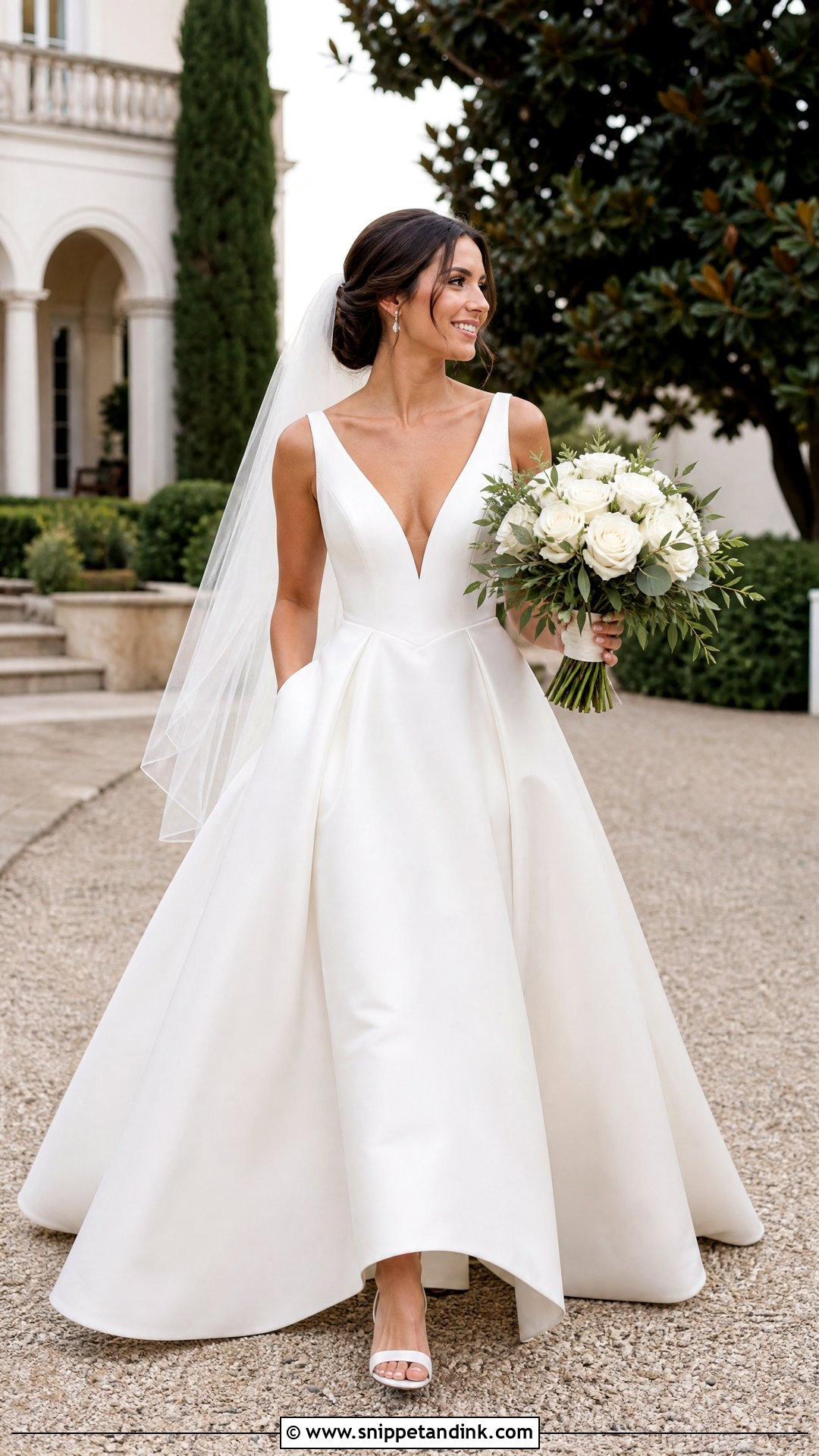
An A-line skirt gives a V waist shape without the bulk of a ball gown, which is why I suggest it to brides who can’t decide. The skirt widens gradually from the point, in satin, lace or tulle. Mid-height block heels, simple earrings, a chapel veil that follows the skirt and white roses with seasonal greenery keep it easy. Pockets are possible, but check they lie flat; an opening right at the hip can puff out and blur the line from the point. You’ll walk, greet guests and dance freely in it, indoors or out.
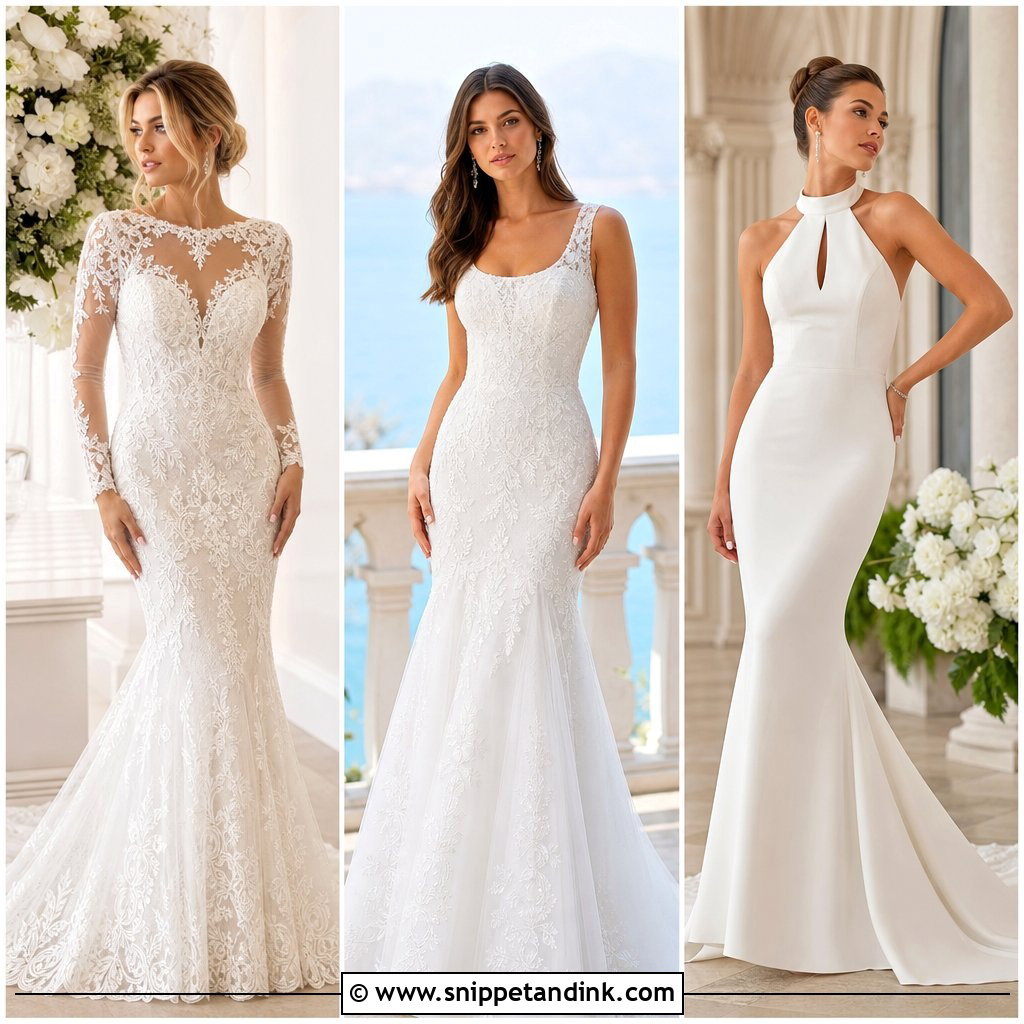
19. Mermaid V Waist Wedding Dress
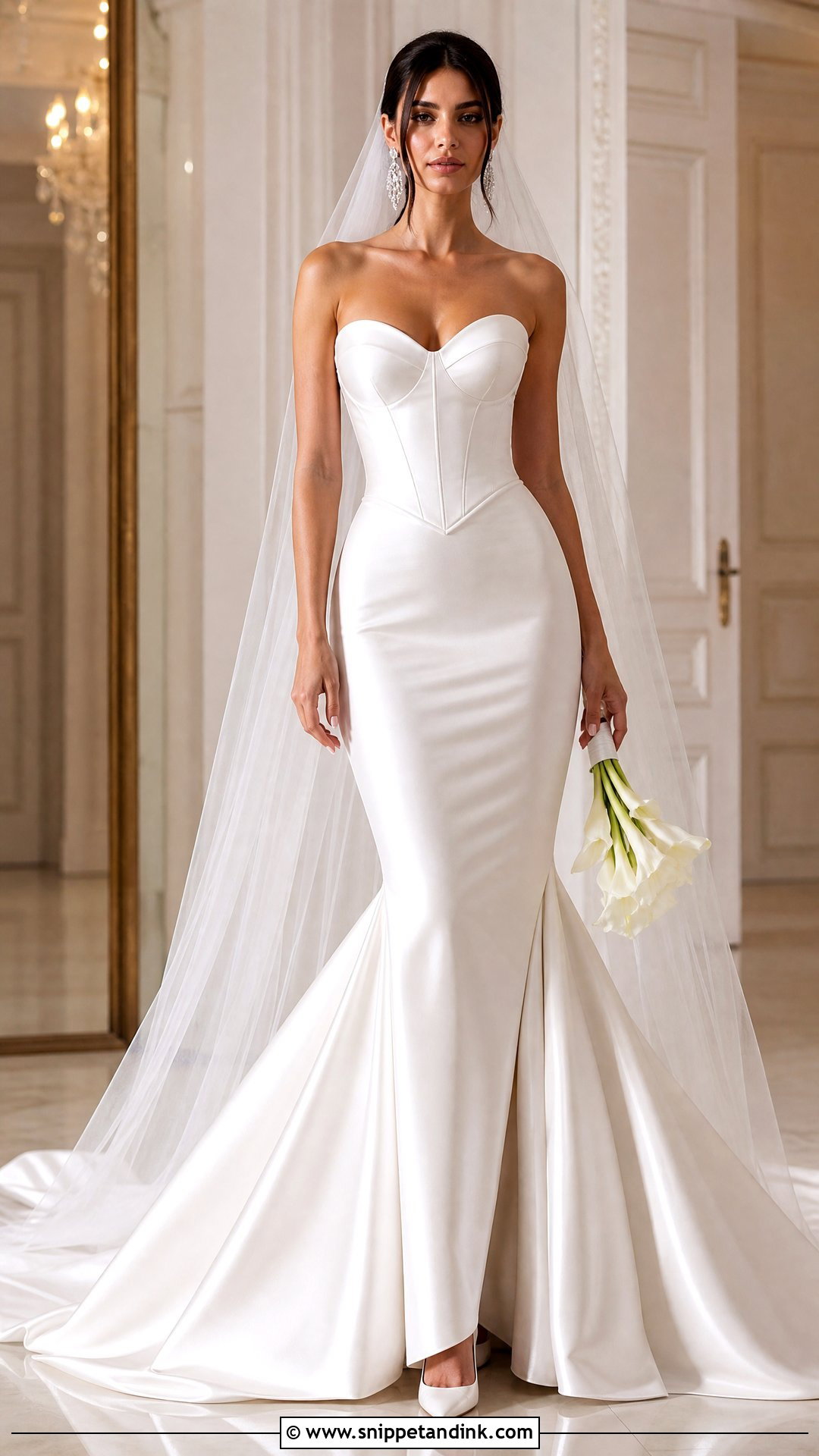
A mermaid skirt carries the V waist’s shaping down past the hips before it flares near the knees. The join between the point and the fitted hip panels needs firm internal support, or it wrinkles across the stomach. Satin looks sleek; lace looks softer and more traditional. Statement earrings, pointed pumps, a long plain veil and a narrow bouquet suit it, and the necklace can go. My test for any mermaid: sit on a chair, then walk the length of the room. Horizontal pull lines across the thighs mean it’s too tight, and you’ll feel that on the dance floor long before anyone sees it.
20. V Waist Wedding Dress With A Slit
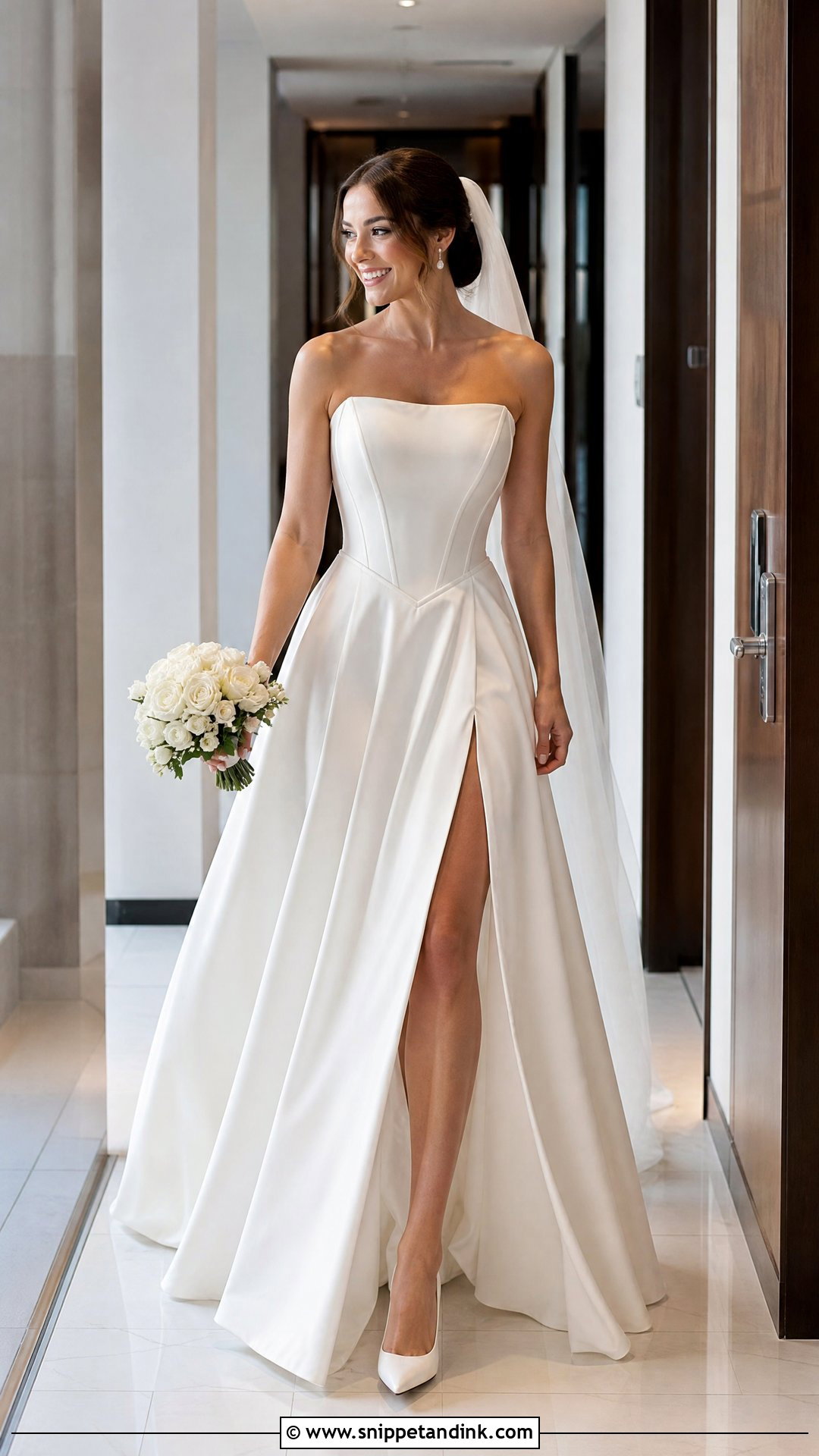
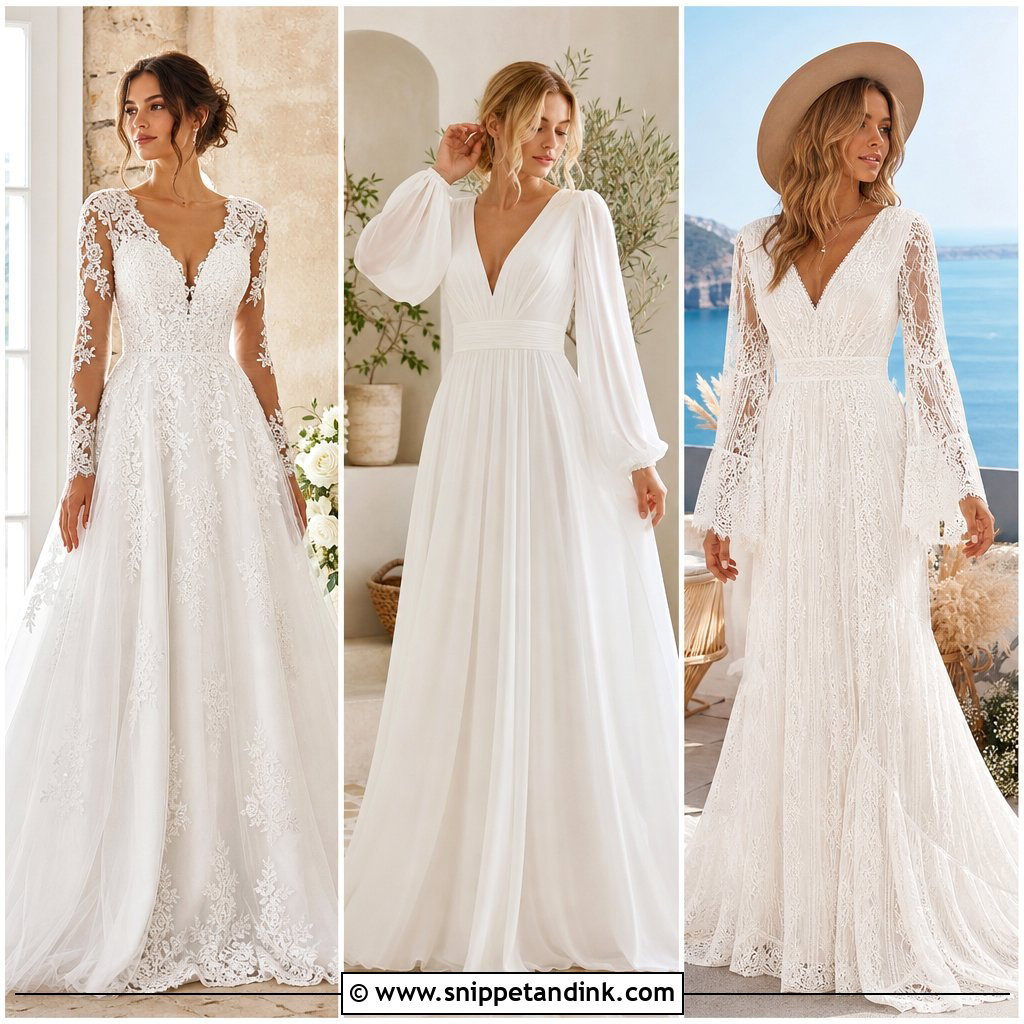
A slit adds movement to a structured V waist gown. Pick satin or Mikado with a secure corset bodice and a moderately full skirt, with the slit placed where it opens naturally as you walk, usually starting around the lower thigh. Your shoes will show, so pointed pumps or simple bridal sandals deserve real thought. A plain chapel veil, small earrings and a compact bouquet keep the waist in view. Do a stair test at fittings. Climbing is when a slit opens widest, and you want to see that before the aisle, not in the photos. Contemporary hotels and rooftops suit it.
21. V Waist Wedding Dress With Detachable Sleeves
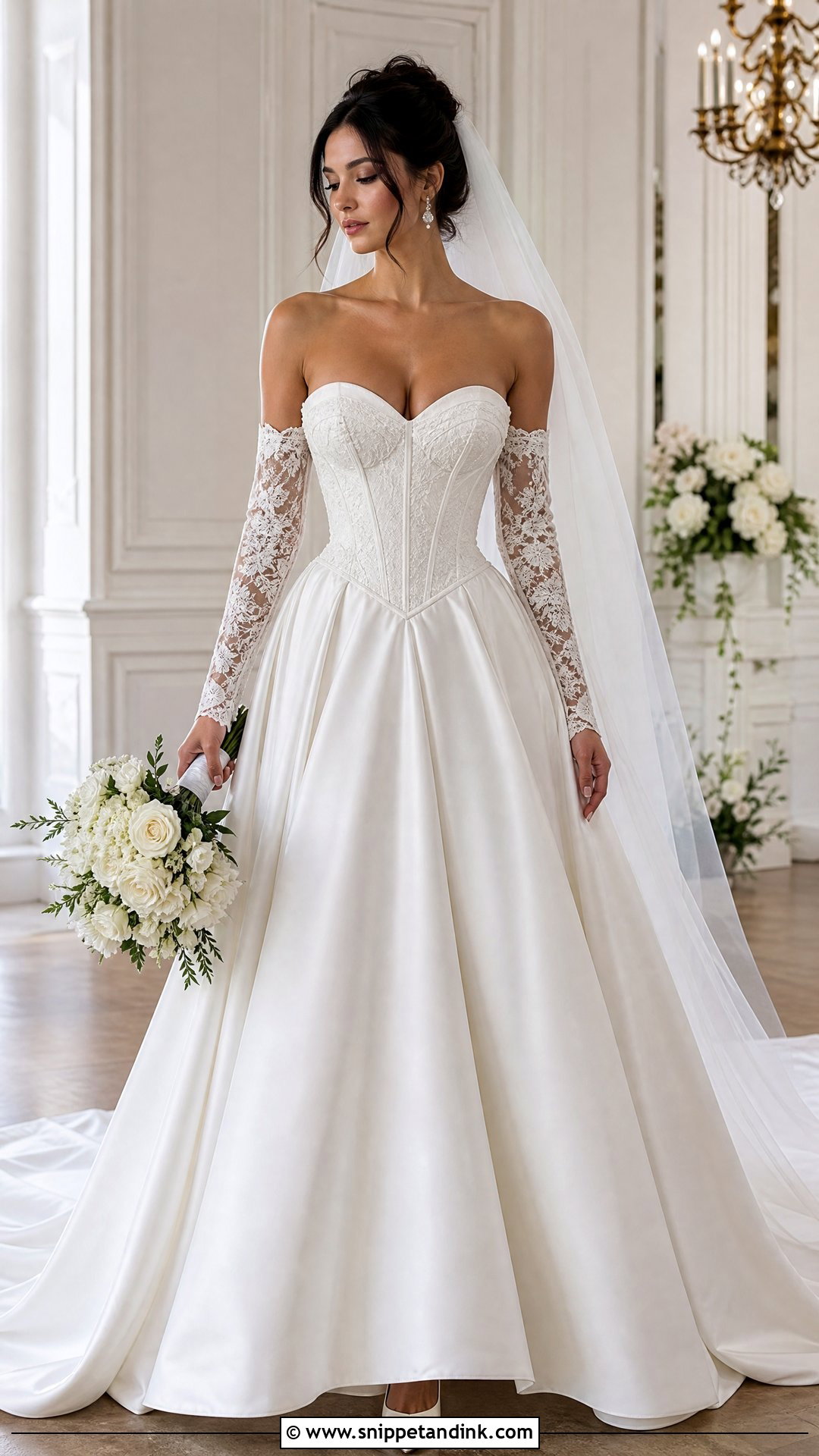
Detachable sleeves let you change the gown halfway through without changing outfits. Start with a strapless V waist bodice and a full skirt, wear fitted lace sleeves for the ceremony and take them off before the reception for a cleaner neckline. Pearl earrings, ivory heels, a chapel veil and a classic white bouquet complete it. I check two things. The attachment under the arm must lie flat with no bump, and the sleeve lace must match the gown’s ivory exactly, because two whites side by side rarely look the same in daylight. Transitional weather suits it well.
22. V Waist Wedding Dress With An Overskirt
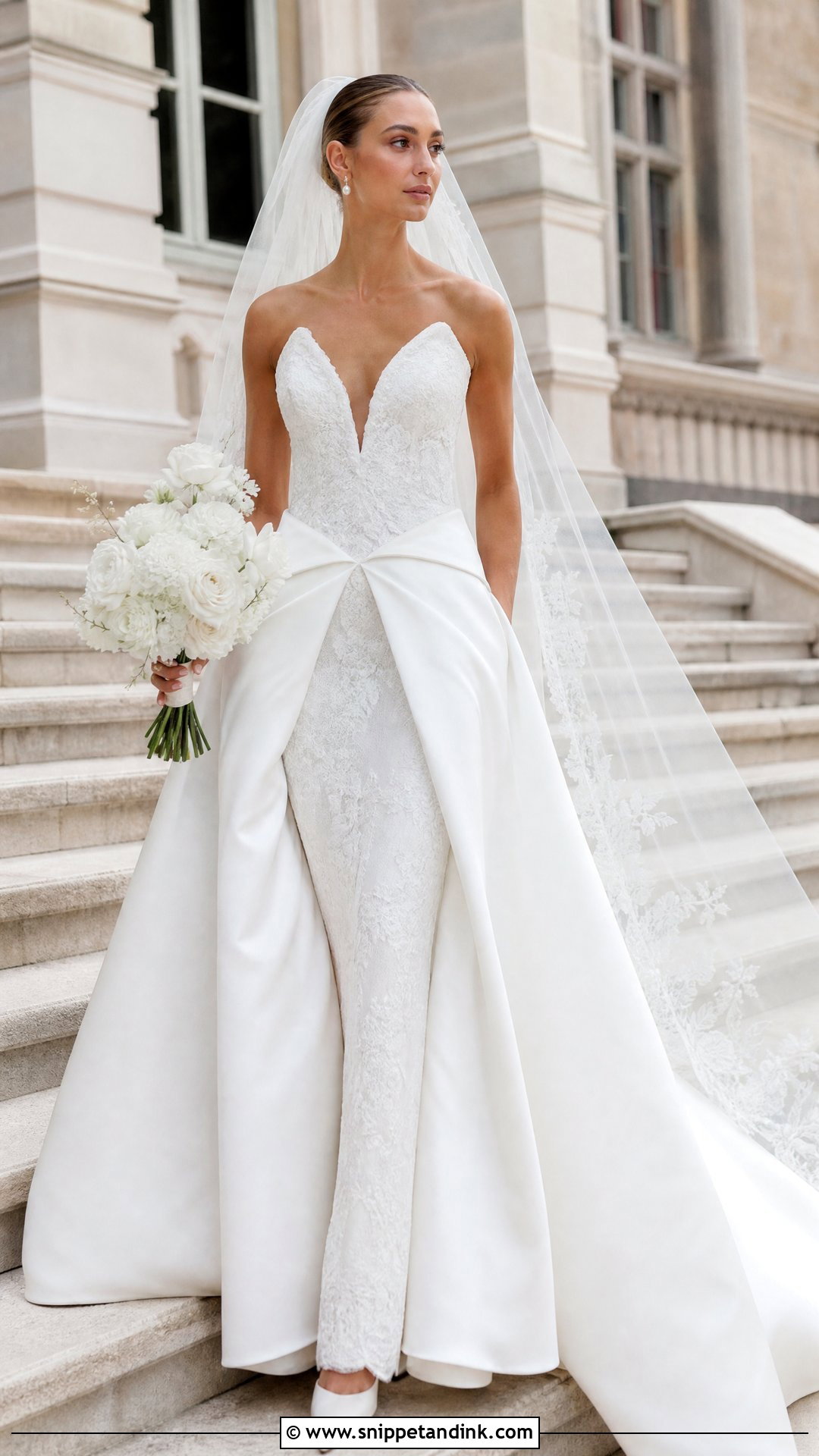
A detachable overskirt gives you a full ball gown for the ceremony and a slimmer dress underneath for dancing. The base is fitted satin or lace, and the overskirt attaches around or just below the point. Wear the full version with a cathedral veil, pearl earrings and pointed heels, then remove the overskirt and veil for the reception. The fastening must not distort the V once the outer layer is off, so try the base dress on its own at a fitting. Pick one person from your wedding party to practise removing it beforehand; hooks and snaps behind your back are fiddly in a crowded room.
23. V Waist Wedding Dress With A Cape Veil
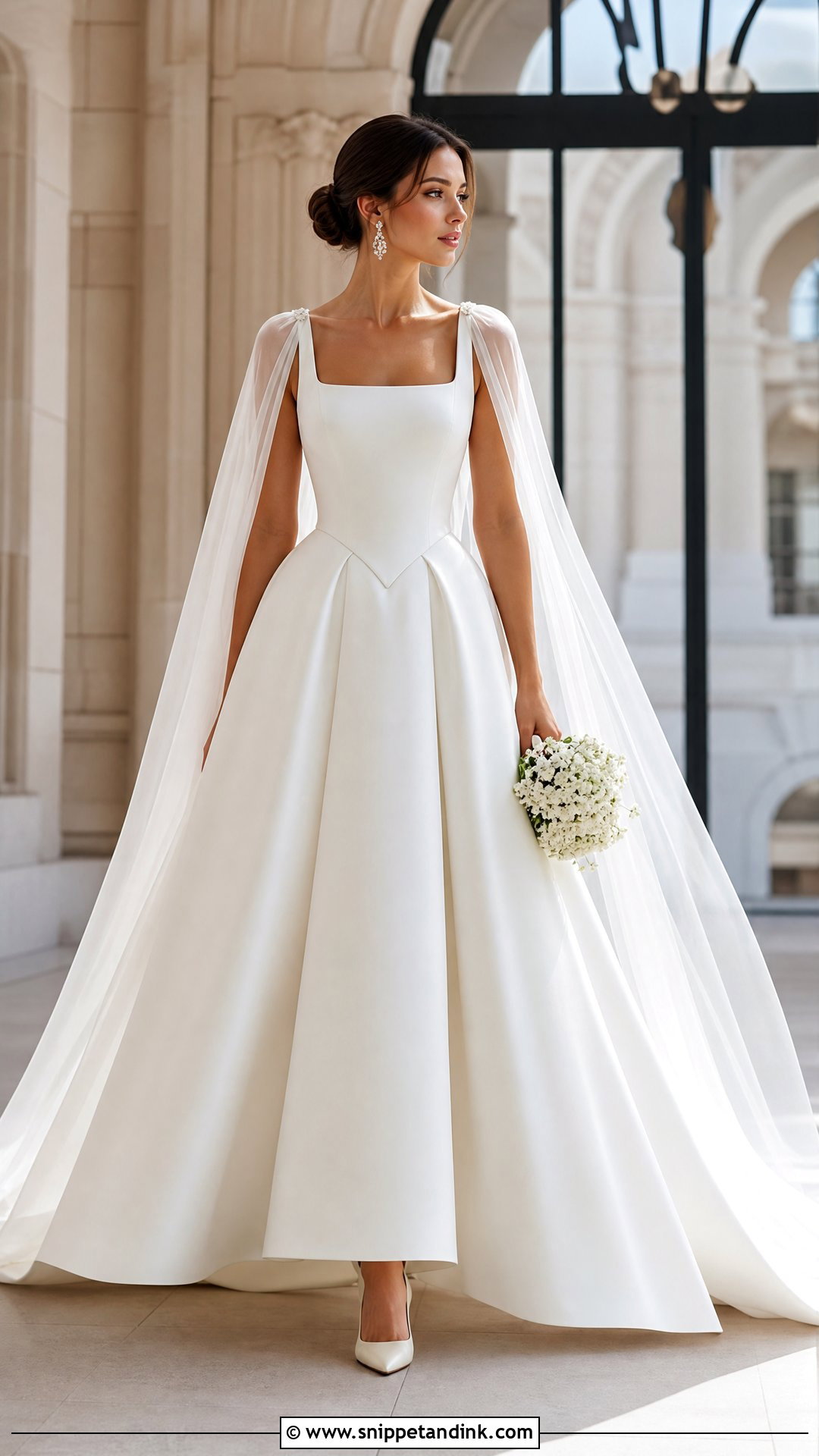
A cape veil frames the shoulders and falls behind you without covering the V at the front. On a minimalist strapless or square-neck dress in satin or Mikado, attach a sheer cape at the shoulders or upper back. Crystal earrings, ivory pumps and a small white bouquet are enough. Leave off lace edging when the gown has strong, clean seams; a plain cape suits the modern lines. I test the attachment by having the bride sit and turn her head, because a cape fixed too tightly pulls the neckline backward. Grand indoor rooms and long outdoor aisles give it space to move.
24. Minimalist V Waist Wedding Dress
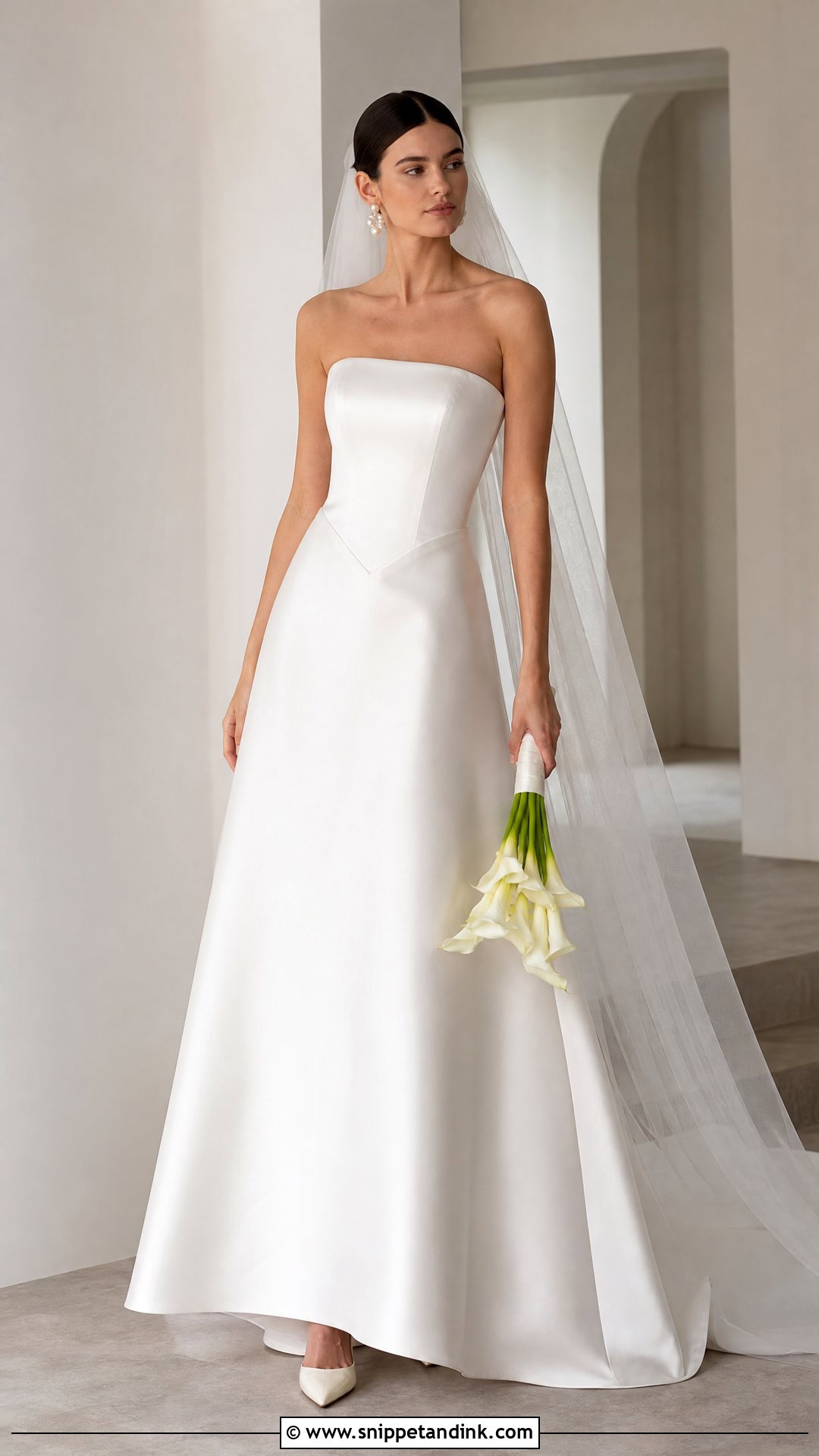
With no lace or beading, the construction is the decoration, so poor tailoring has nowhere to hide. Look for smooth satin, crepe or silk with precise paneling, a clean strapless neckline and an A-line or softly fitted skirt. Sculptural pearl earrings, sleek pumps, a long untrimmed veil and a single flower or a few calla lilies keep it uncluttered, with a low bun or polished ponytail. At the fitting, look hard for diagonal wrinkles running from the point toward the hips. On plain fabric they show in every photo, and they usually mean the side seams need adjusting.
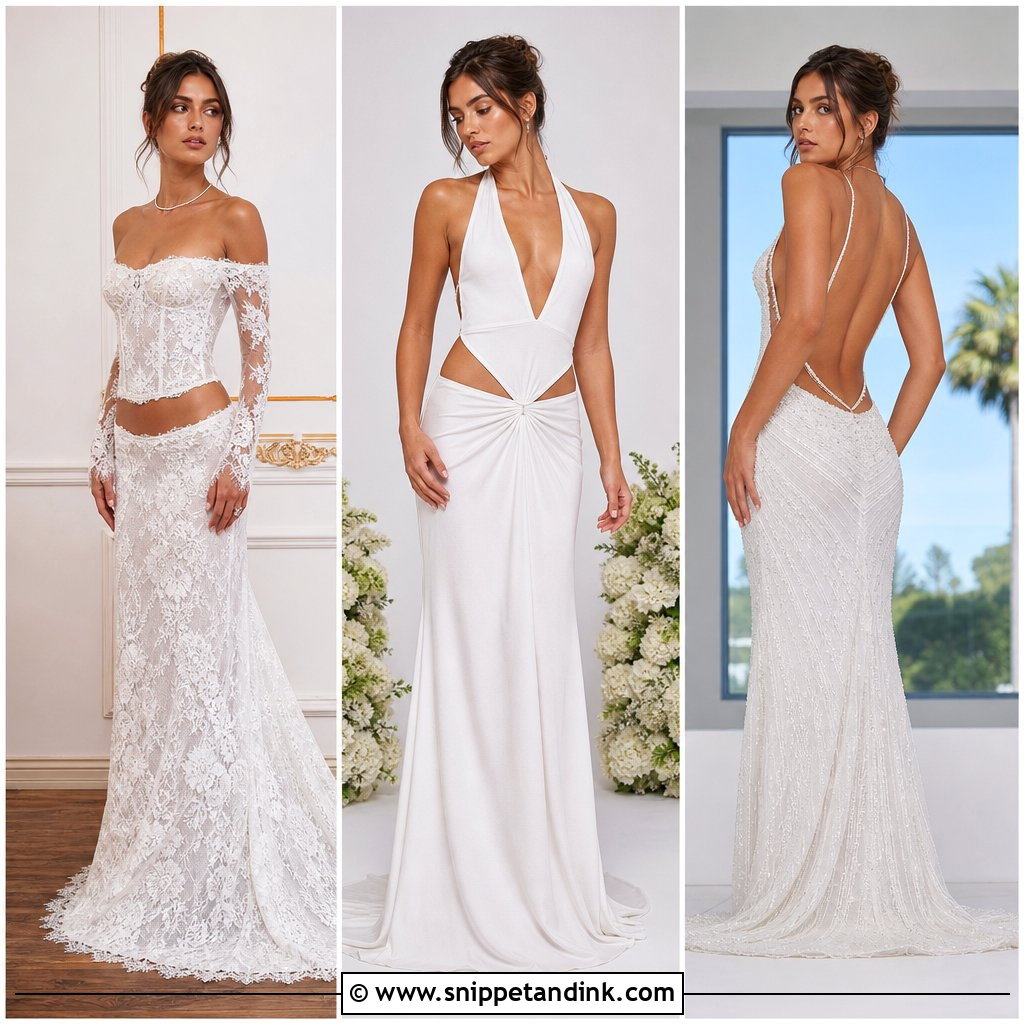
25. Plus Size V Waist Wedding Dress
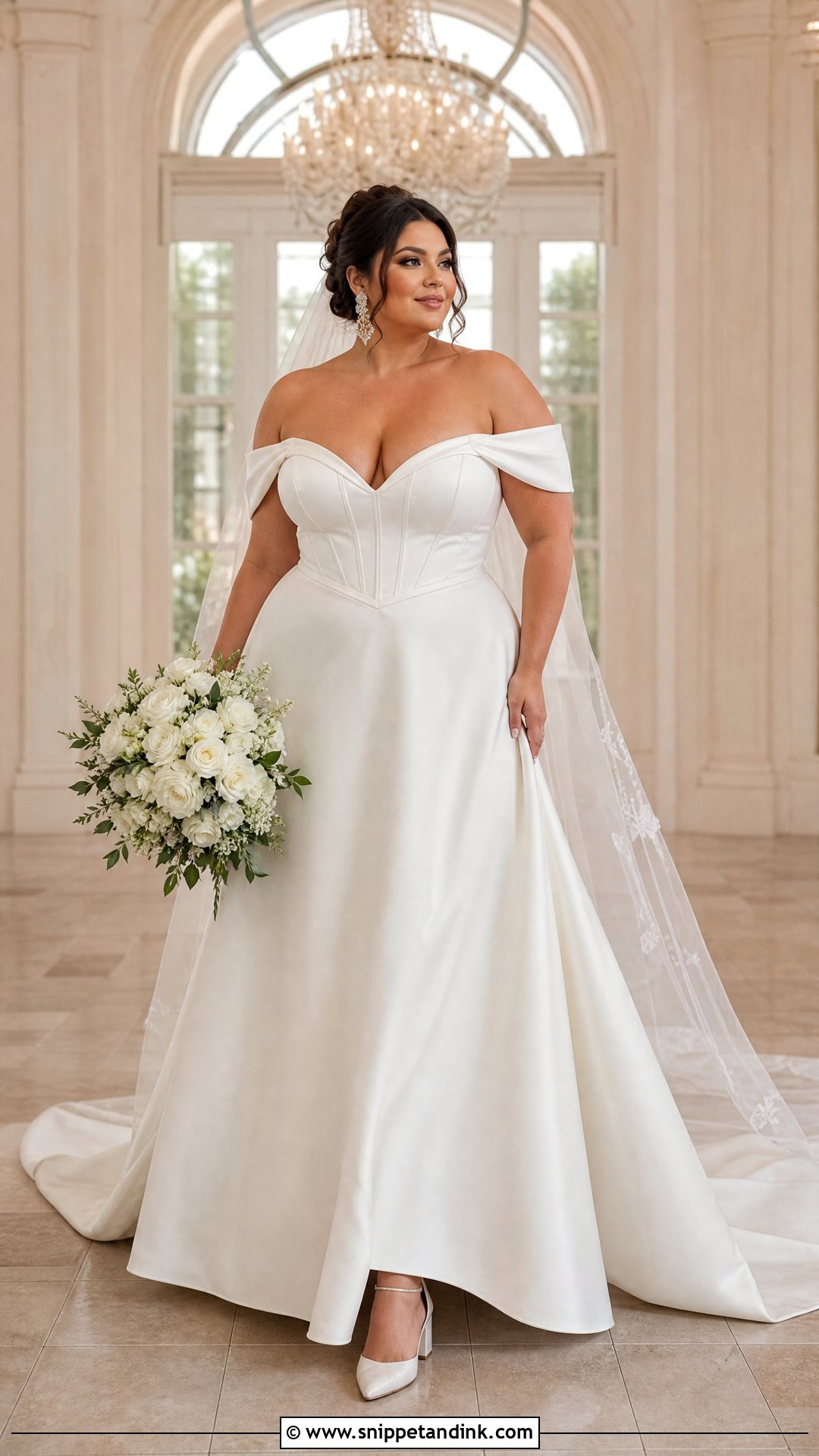
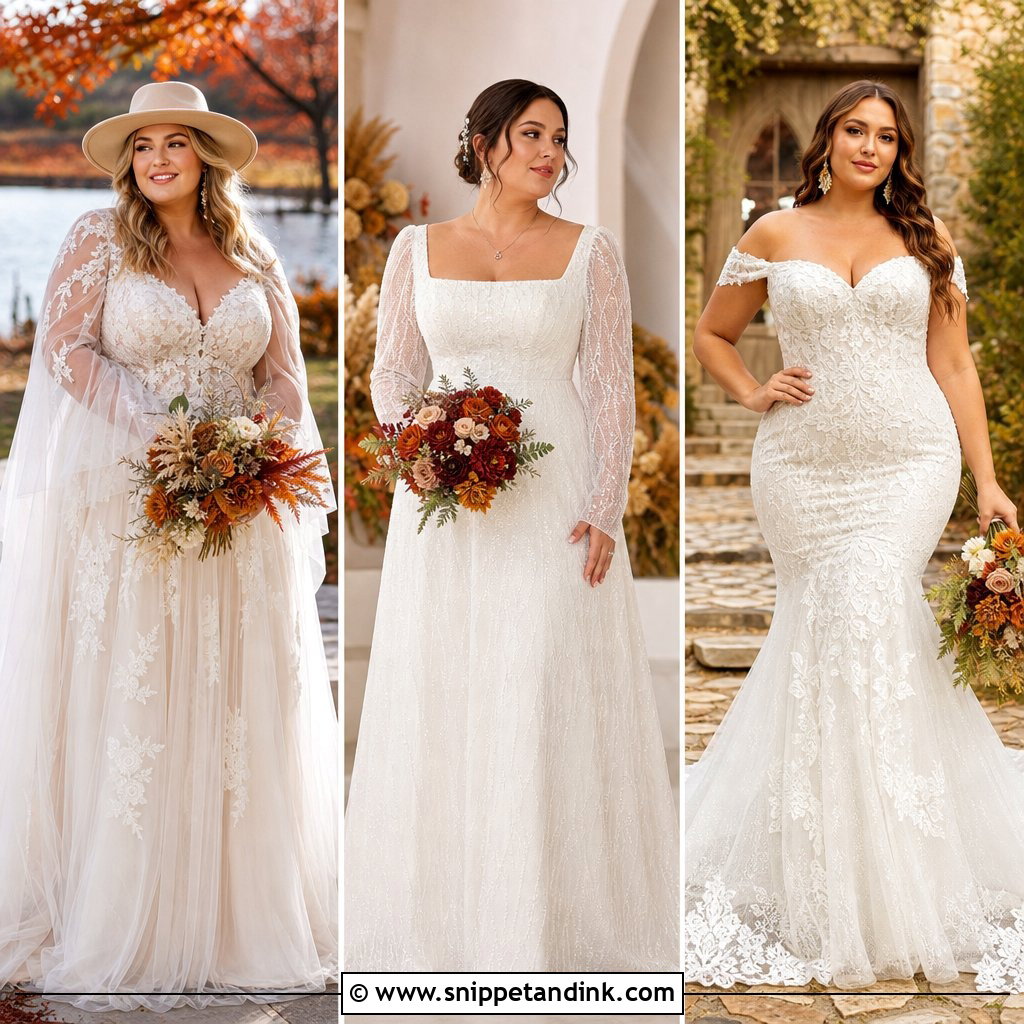
The best V waist is built on your measurements, not on a body-type rule. Supportive boning, secure cups, comfortable lining and a point scaled to your torso length matter more than any neckline. Square, sweetheart and off-the-shoulder necklines all frame the upper body, and an A-line or ball gown skirt balances below. Supportive block heels, statement earrings, a chapel veil and a bouquet in proportion to you complete it. Ask to try a sample close to your usual size, because a clipped, too-small sample changes where the point sits. Then tell the seamstress you want the waist shape kept, not the bodice pulled tighter, so you can still breathe, sit and eat dinner.
What a Seamstress Can and Can’t Change at the Waist Point
A V waist is harder to alter than a straight waist, because the skirt joins the bodice along two angled seams. Taking in at the side seams is routine. Moving the point itself up or down usually means unpicking the skirt along both diagonals, re-cutting and re-attaching it, which is a much bigger job, and on lace or beaded gowns it can mean moving motifs by hand. If the depth looks wrong on the sample, say so at the first appointment, not the last.
I plan three fittings for most gowns: the first roughly two to three months out, a second a few weeks later, and the last within the final two weeks. Even small weight changes show at the point first, since the boning sits so close to the body. Bring these every time:
- Your wedding shoes, already worn in, so the hem is set at the right height.
- The exact bra, bodysuit or shapewear you’ll wear, because each one changes the waist measurement slightly.
- Whoever will bustle you on the day, so they learn the hooks while the seamstress is there.
- A phone to film yourself walking and sitting, since mirrors only show you standing still.
Why a Crisp Point Goes Soft by Midnight
Body heat and hours of sitting are hard on boning. The flexible plastic boning used in many bodices can warp and bow at the point by late evening, while spiral steel bones hold their line far better and still bend with you. Ask which kind your gown uses. If it’s plastic and you’re planning a long day, a seamstress can often swap in steel at the front panels. Afterward, hang the gown by its inner waist loops rather than the straps, so the weight of the skirt doesn’t drag the point out of shape before it goes for cleaning.
Start With the Depth of the V, Then Build Around It
One waistline, 25 directions, from bare satin to dimensional floral lace. Decide first how deep and how structured you want the V. Then treat neckline, skirt volume, fabric and built-in support as one silhouette rather than separate choices, and keep accessories from covering the point. Bring your real shoes and underwear to every fitting, and sit, walk and raise your arms in each dress you try. The one to buy is the dress you stop adjusting after five minutes.
You'll Like These Ideas:




Leave a Reply