
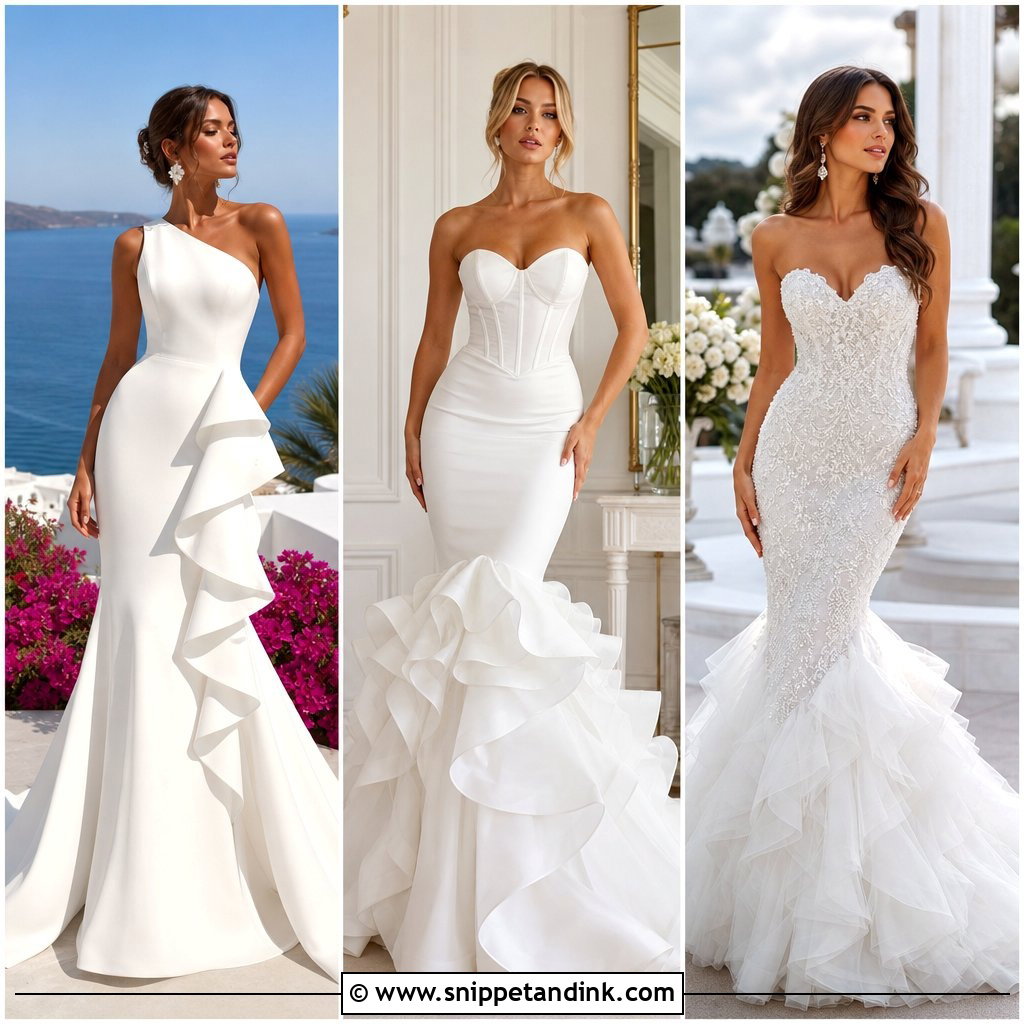
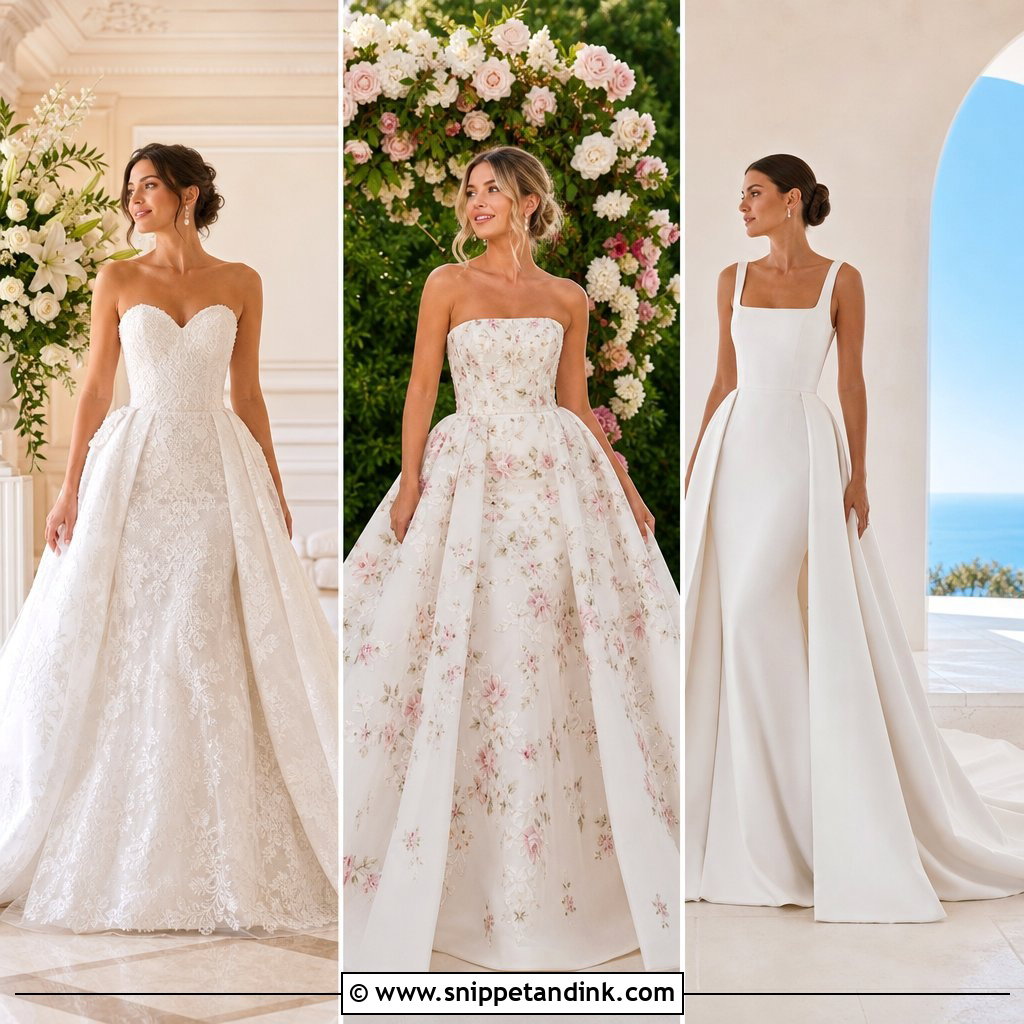
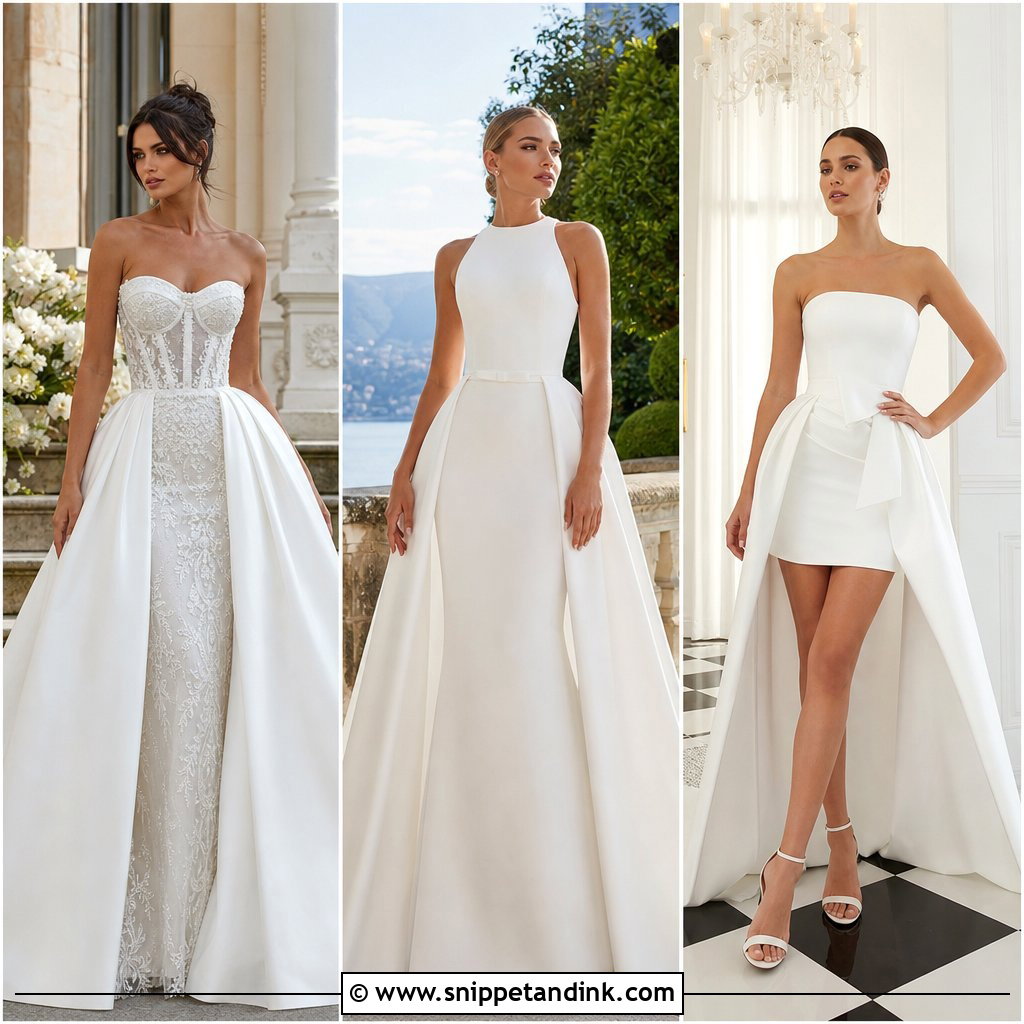
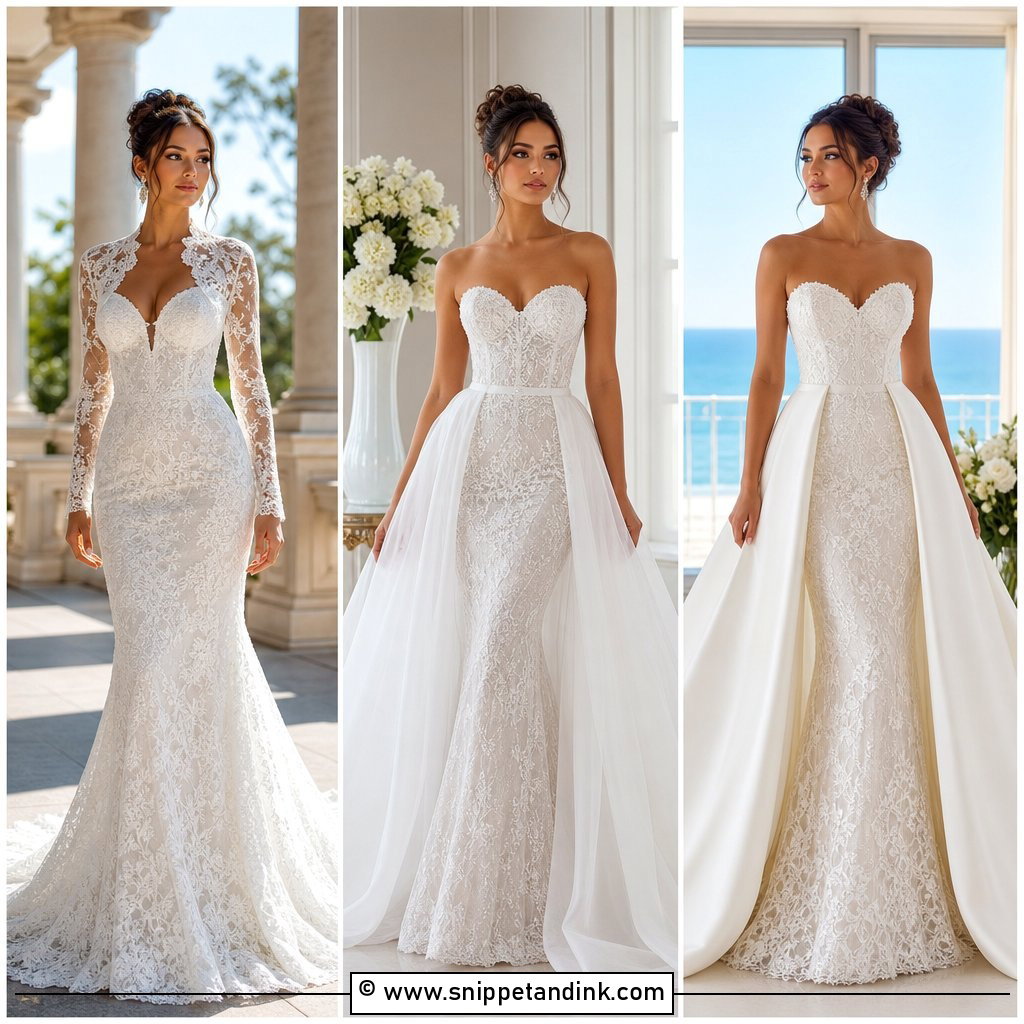
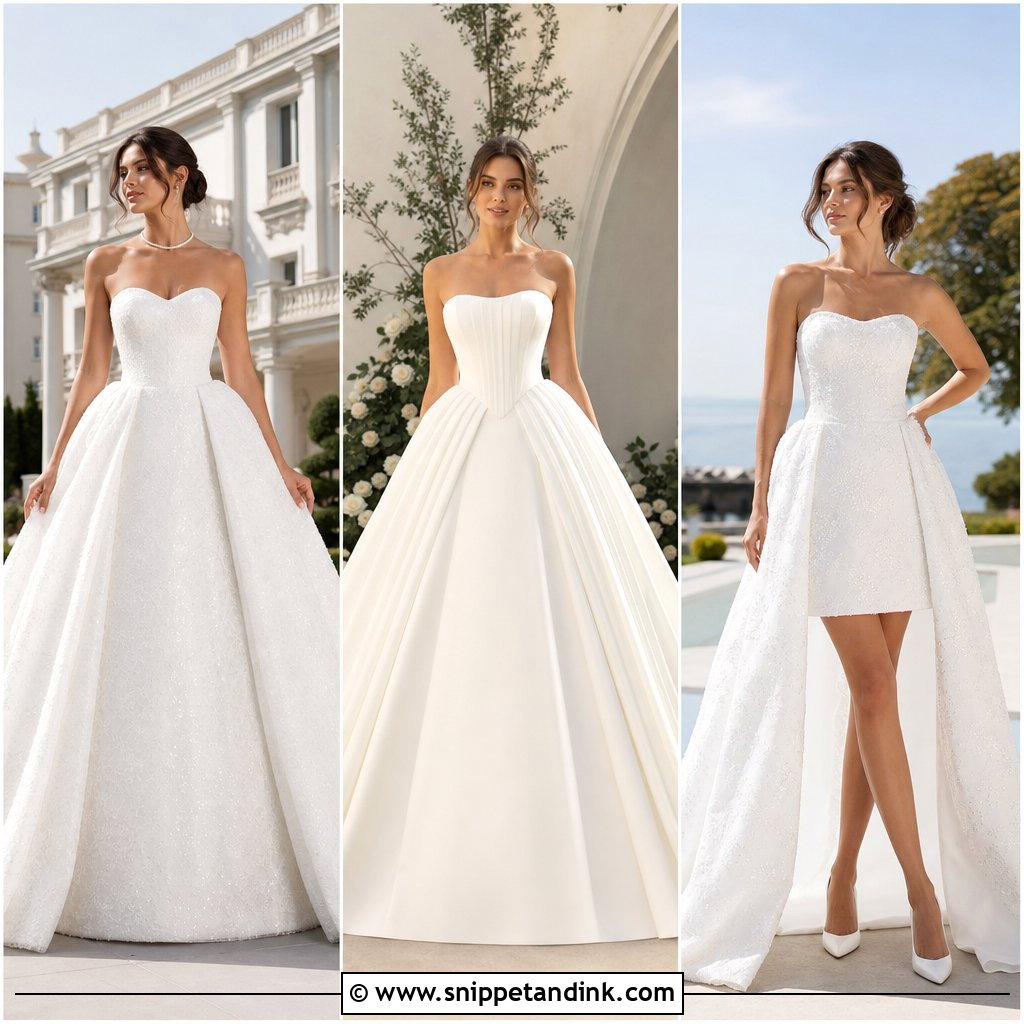
A fitted mermaid gown with a sweeping removable skirt gives you two brides in one day: a full, grand shape for the aisle and a sleek one for dancing. Once the overskirt comes off, walking, hugging guests and getting through a crowded room become far easier. The hard part, and the part most shoppers underestimate, is making both versions look finished. Fabric, neckline, embellishment and especially the way the skirt attaches decide whether the reveal looks planned or improvised. Below are twenty combinations, each with the shoes, veil, jewellery and flowers I would build around it, and notes on what to check at fittings.

How an Overskirt Fastens Matters More Than Its Fabric
When a bride brings me a convertible gown, the first thing I do is turn the overskirt inside out. The fastening decides how quickly it comes off, whether it shifts during the ceremony and what the waist looks like afterward. These are the systems you will meet most often.
- Hooks and eyes along a waistband: secure and flat, but slow, since there may be a dozen or more. Good for heavy satin or Mikado skirts.
- Snaps: fast to undo, though large snaps can pop under the weight of a full skirt. I prefer them combined with a couple of hooks.
- Buttons and loops: pretty when the overskirt is open at the back, but each loop has to be undone by hand.
- A separate belt or sash: the overskirt hangs from a band that wraps over the gown’s waist. Quick, though it hides part of the bodice.
- Ties or a ribbon closure: light and adjustable, and best suited to tulle or chiffon skirts.
Whatever the system, the gown underneath must have somewhere to attach it. Ask whether the fastening points are sewn into the gown, which is strongest, or rely on the overskirt gripping the waist. Weight matters too: a long satin train can be surprisingly heavy, and that weight hangs from the waistband all through the ceremony.
1. Strapless Satin Mermaid Wedding Dress With Detachable Overskirt
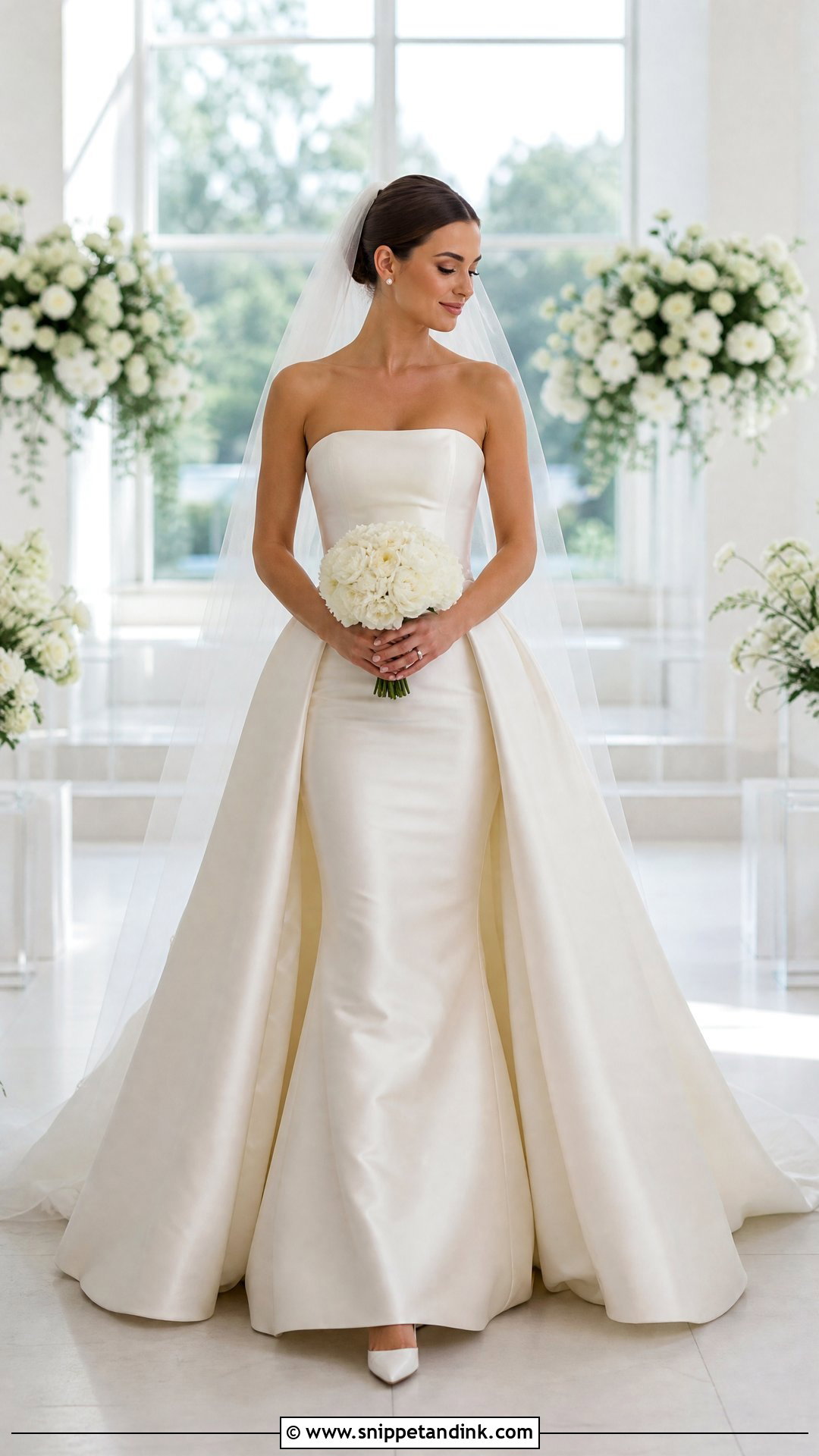
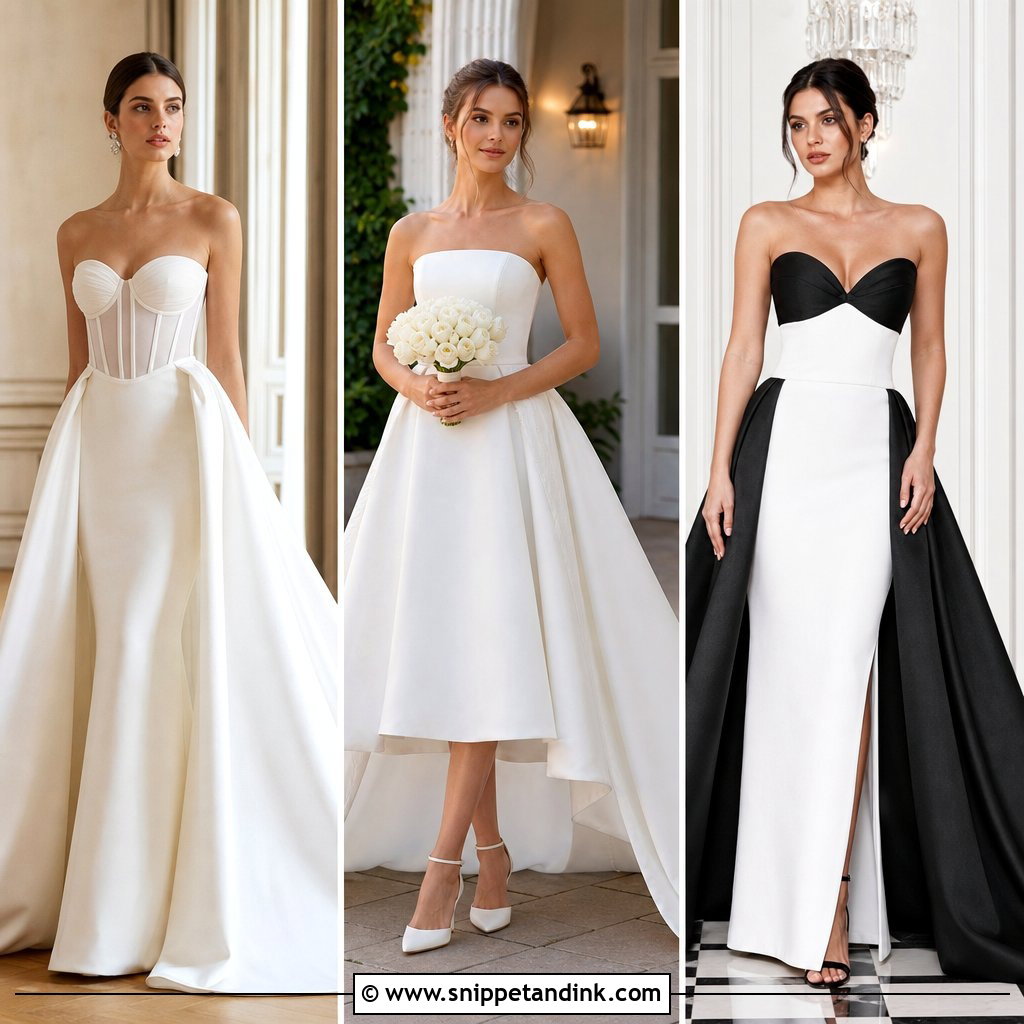
Satin on satin is the simplest pairing, and the one where a sloppy waist shows most. I like a structured strapless bodice with internal boning and a softly curved neckline, plus a matching satin overskirt that fastens at the natural waist and parts slightly at the front so the mermaid line still peeks through. For the ceremony, add a cathedral veil and pointed ivory pumps; take both off later and the gown underneath feels light. Pearl studs, a low bun and a compact bouquet keep it refined. Ask the seamstress to sink the attachment loops into the waist seam, because exposed loops on smooth satin are the first thing guests notice after the reveal.
2. Lace Mermaid Wedding Dress With Tulle Overskirt
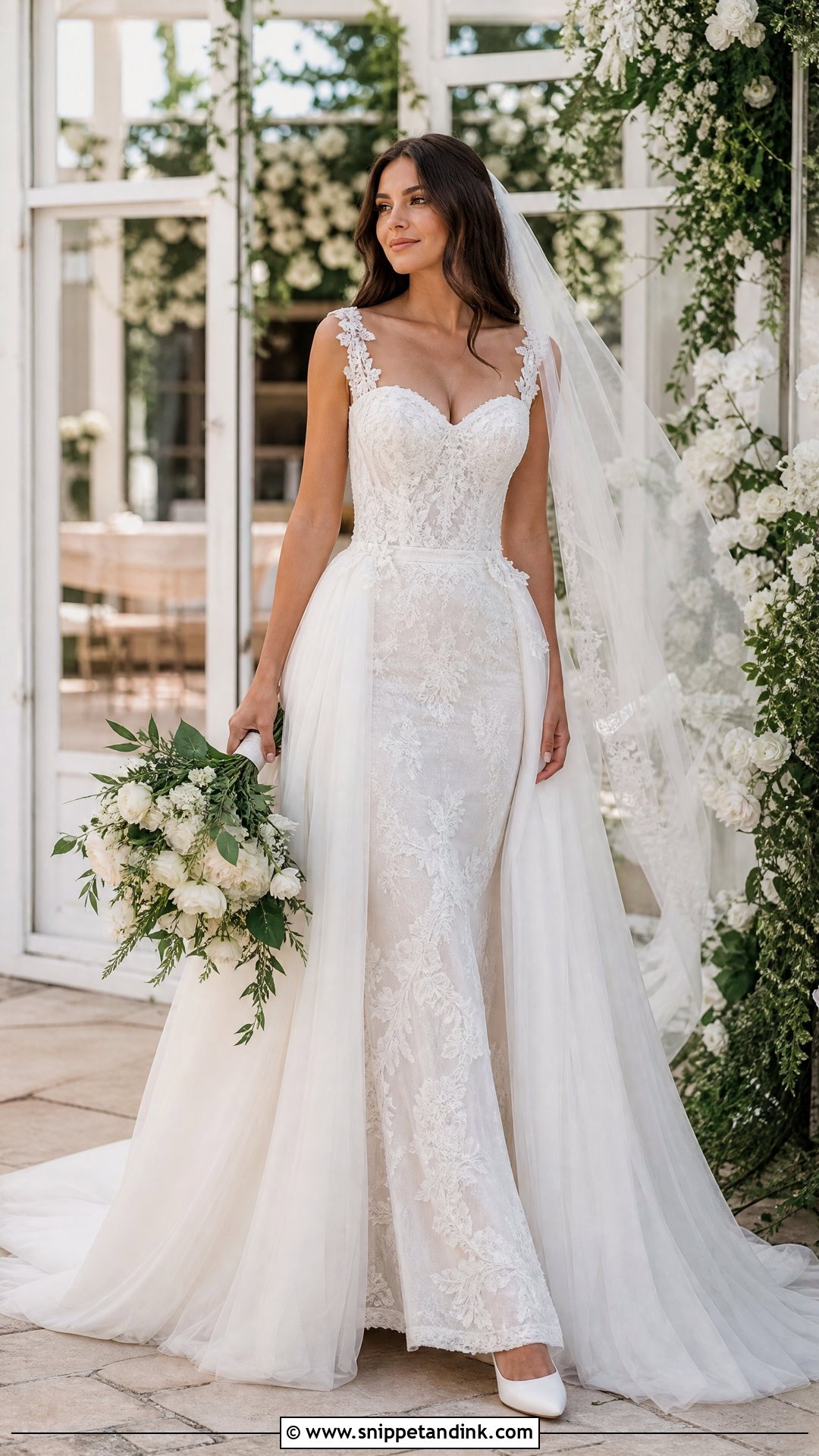
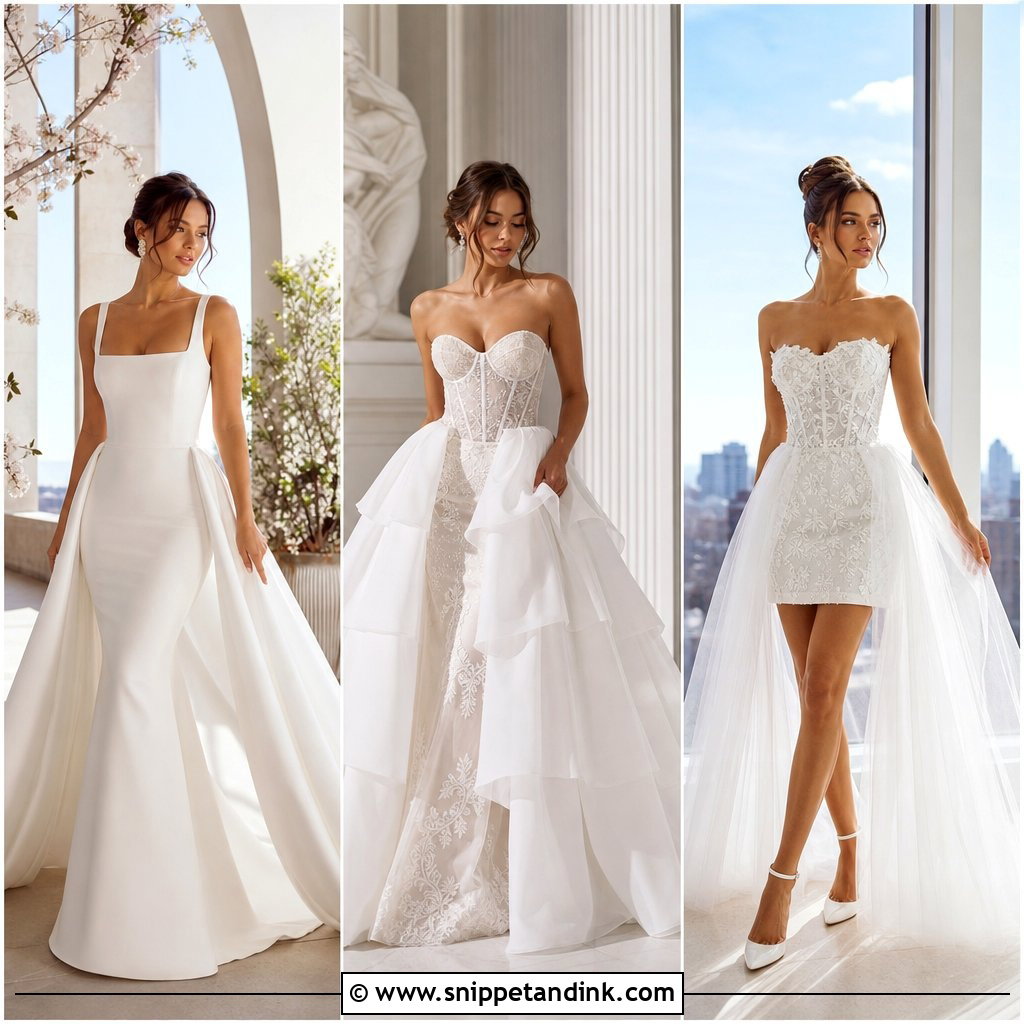
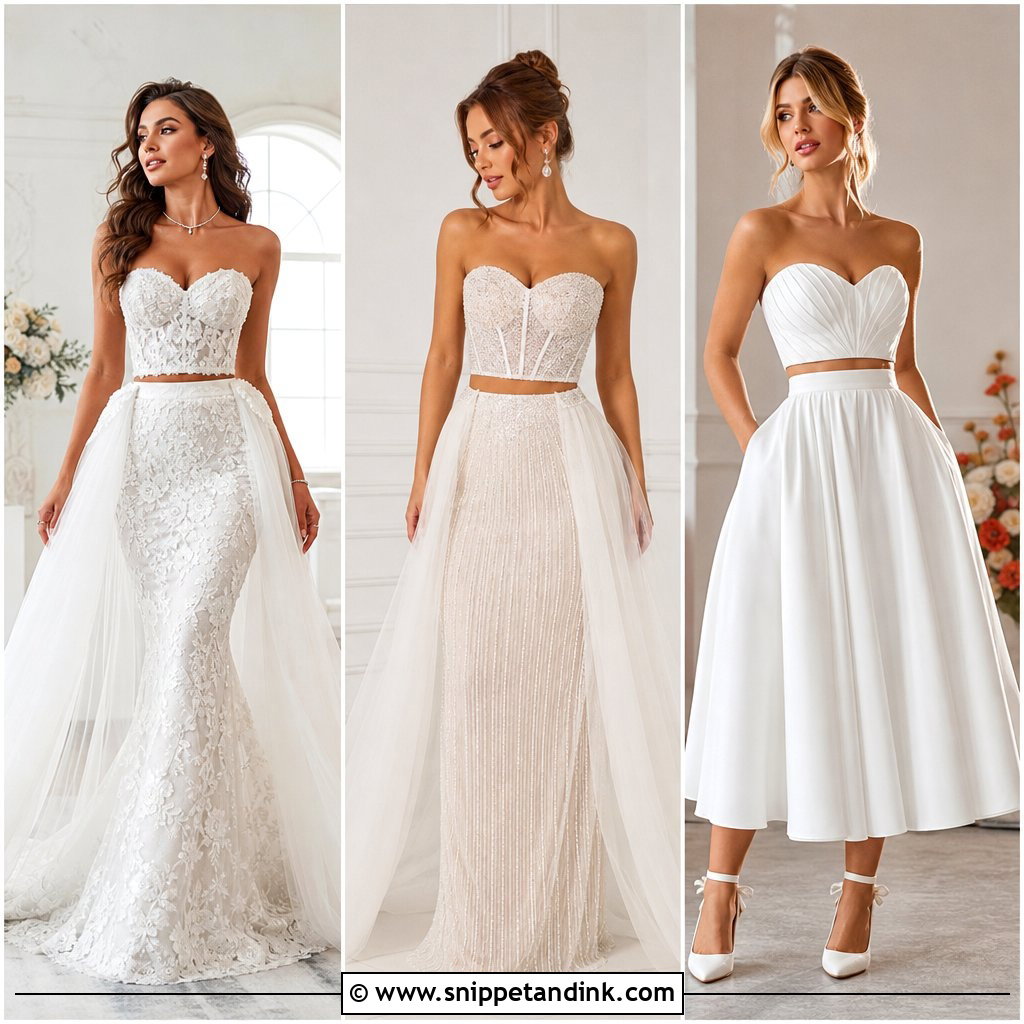
Floral lace under a cloud of tulle keeps the romance without the weight of a satin skirt. The trick that makes the two pieces belong together is repetition: a few appliqués cut from the same lace and stitched around the tulle waistband and train. A sweetheart neckline, soft illusion straps and a chapel veil complete the ceremony version. Wear closed-toe block heels, since balancing on a stiletto while kicking through tulle is hard work. After the reveal, sparkling drops or a slim crystal bracelet give the reception look a lift, and a loose bouquet of white flowers and greenery echoes the organic lace.
3. Corset Mermaid Wedding Dress With Basque Waist Overskirt
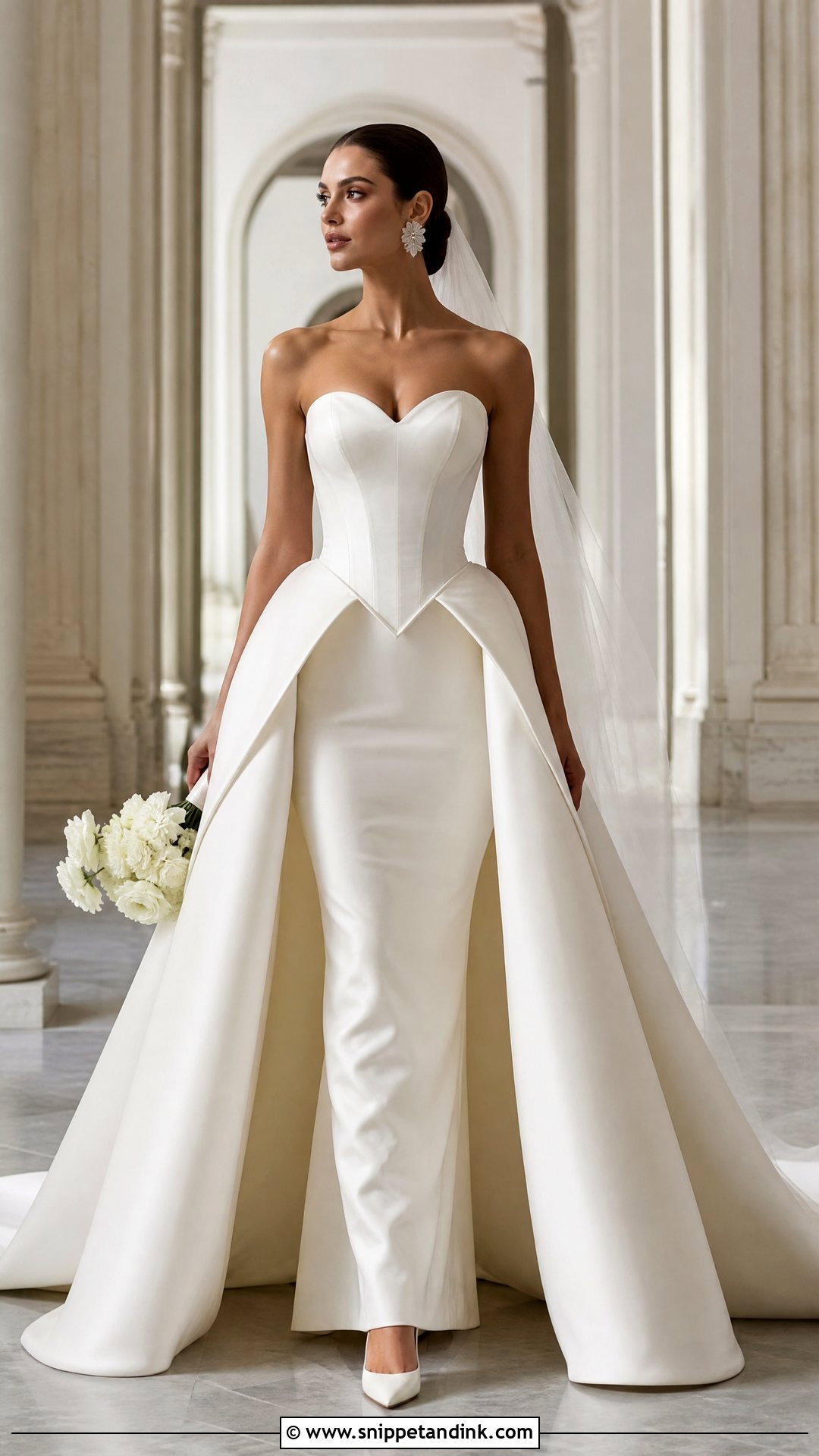
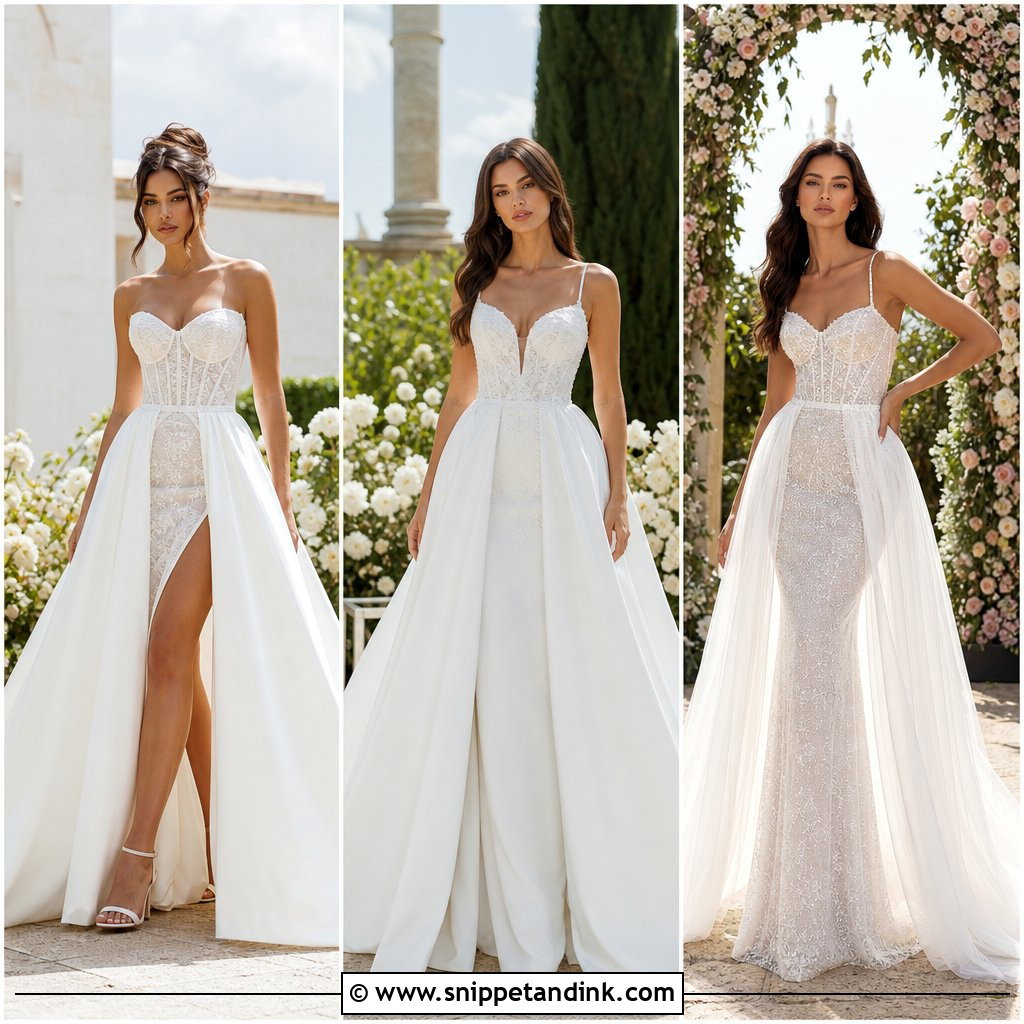
A corset bodice with a basque waist already says a lot, so the overskirt has to follow it rather than fight it. The bodice must fit firmly through the bust and torso before flowing into a skirt that flares below the knee. What I insist on is an overskirt waistband cut to the pointed basque line; a straight band across a V-shaped waist looks like a belt added afterward. In satin or Mikado, the full skirt adds aisle volume and leaves the corset front visible. Pair it with a simple veil, sculptural earrings and pointed pumps, then keep hair smooth and flowers restrained. A V-shaped waistband also tends to rotate, so extra fastening points at the point and sides keep it from shifting.
4. Long Sleeve Mermaid Wedding Dress With Lace Overskirt
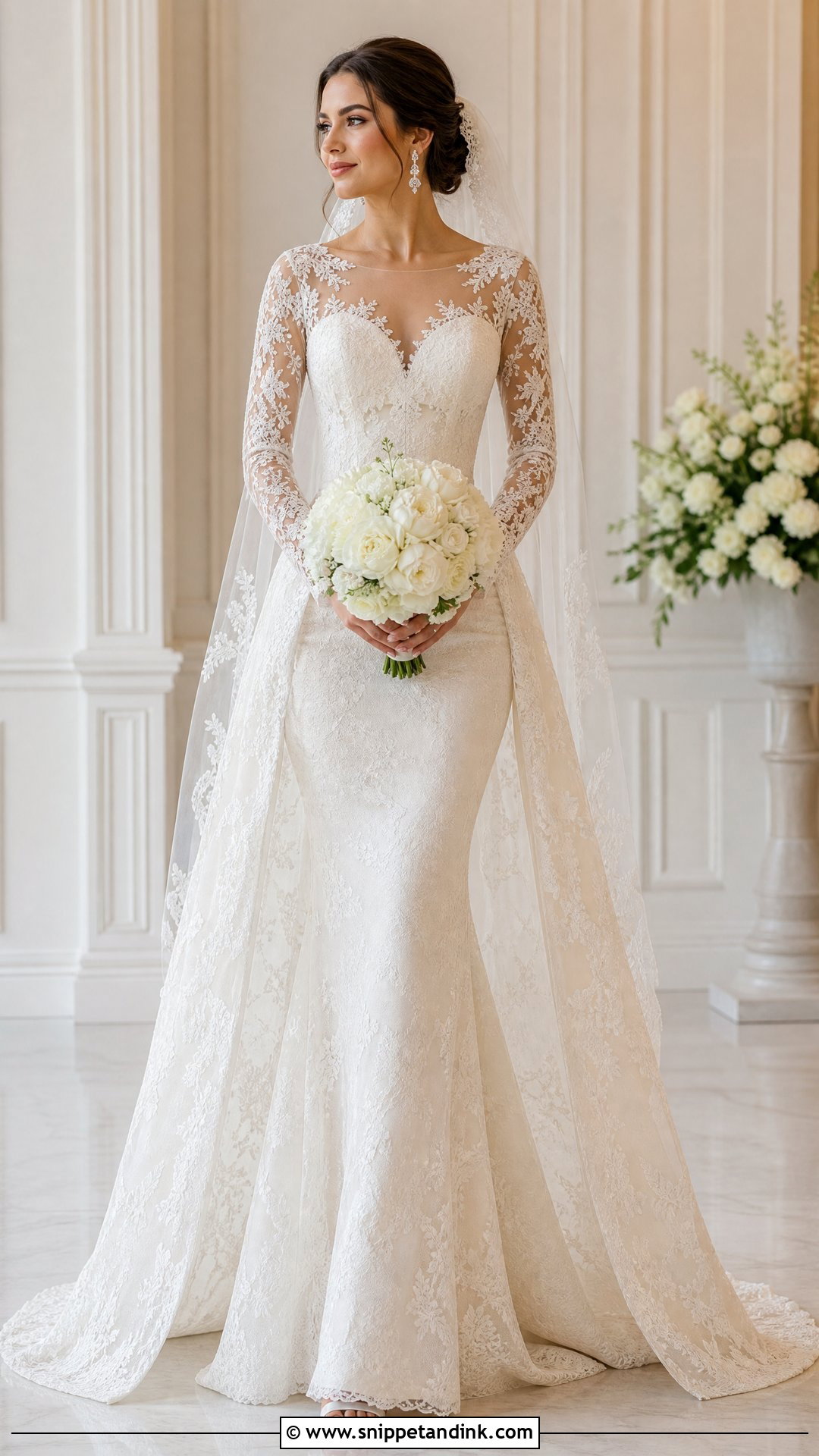
Long lace sleeves and a full overskirt can look heavy together unless the lace ties them up. I ask for the gown’s lace pattern to appear on the overskirt’s waistband, sides or hem, so the ceremony look reads as one design rather than layers piled on last minute. A high illusion neck or gentle V suits delicate earrings and a low chignon. Pointed block heels help under a formal train. Once the skirt is off, the fitted lace gown becomes a polished reception dress on its own. With coverage on the arms and a big skirt, a fingertip veil keeps things lighter than a cathedral would.
5. Off Shoulder Mermaid Wedding Dress With Satin Overskirt
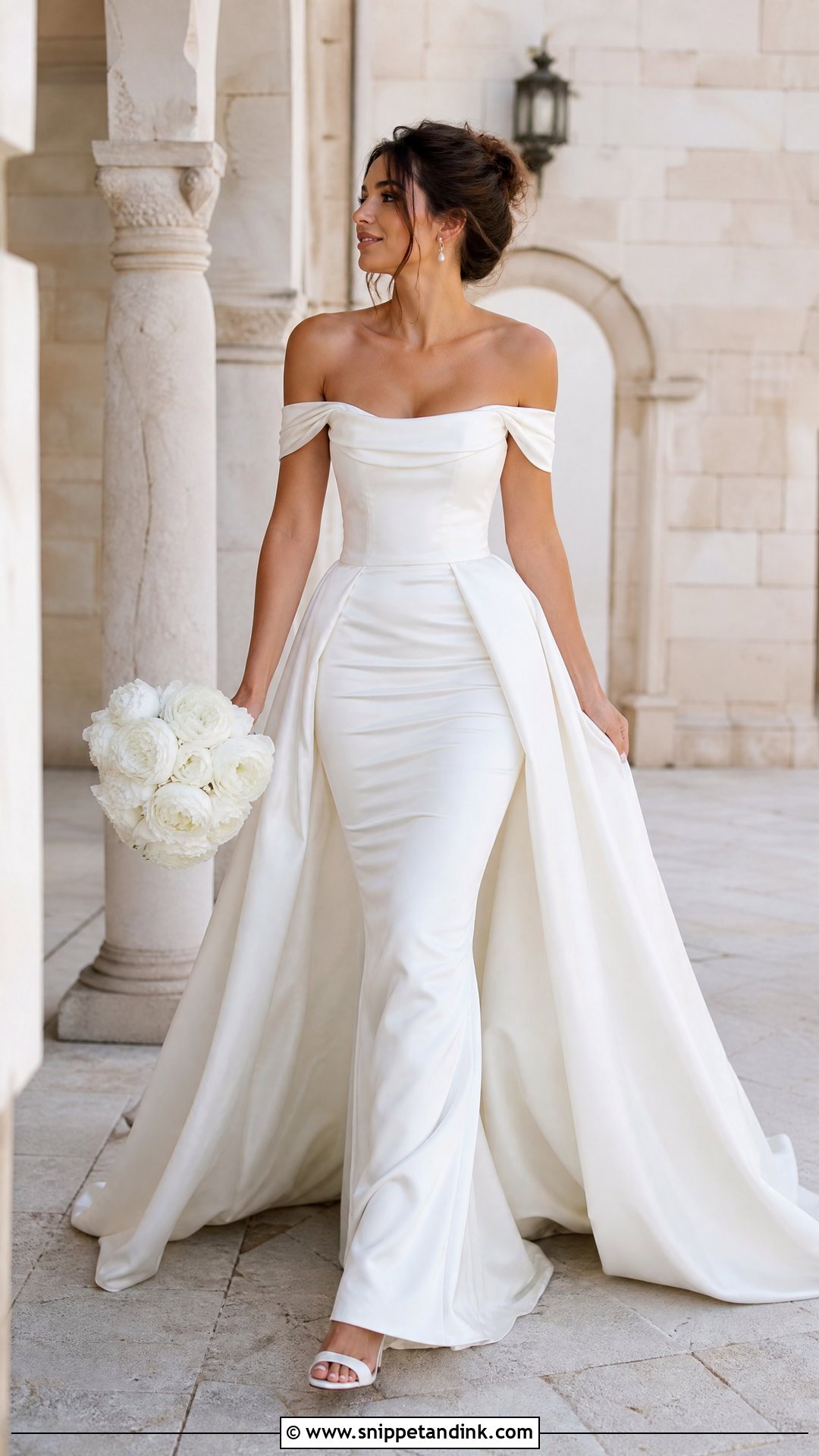
Off-shoulder draping softens the fitted line, and a lightly pleated satin bodice running into a smooth skirt gives a clean base. Choose an open-front overskirt with fullness at the sides and back, so the narrow mermaid silhouette still shows down the middle. Wear either a collarbone-length necklace or small drop earrings, not both, and an updo that leaves the neckline clear. Ivory slingbacks and a rounded white bouquet finish it. One fit point I always test: put the overskirt on, then lift your arms. A waistband that is too snug can drag the bodice down, which pulls the off-shoulder bands lower on the arms.
6. Square Neck Mermaid Wedding Dress With Minimal Overskirt
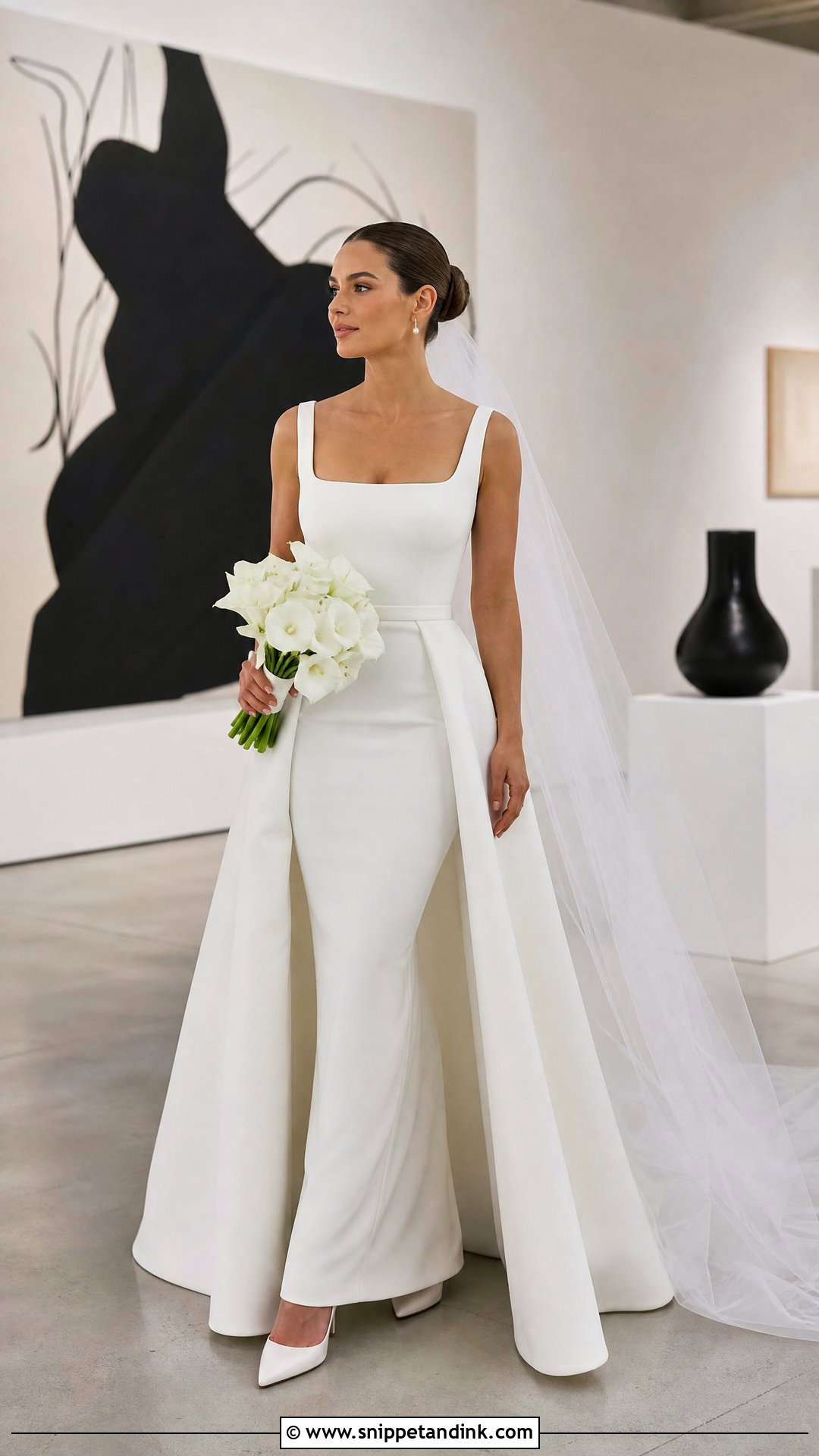
A square neck mermaid in crepe or satin, with wide straps and almost no decoration, suits a modern, quiet wedding. Closed fully around the waist, a matching overskirt reads as a clean A-line gown; with a narrow front opening, it hints at the fitted skirt beneath. Pearl earrings, a polished bun, a structured white bouquet, pointed pumps and a sheer cathedral veil keep the lines calm. Plain gowns benefit most from a small change at the reveal. A bold cuff or slightly brighter earrings put on with the overskirt removal tell guests the evening has started.
7. Halter Mermaid Wedding Dress With Chiffon Overskirt
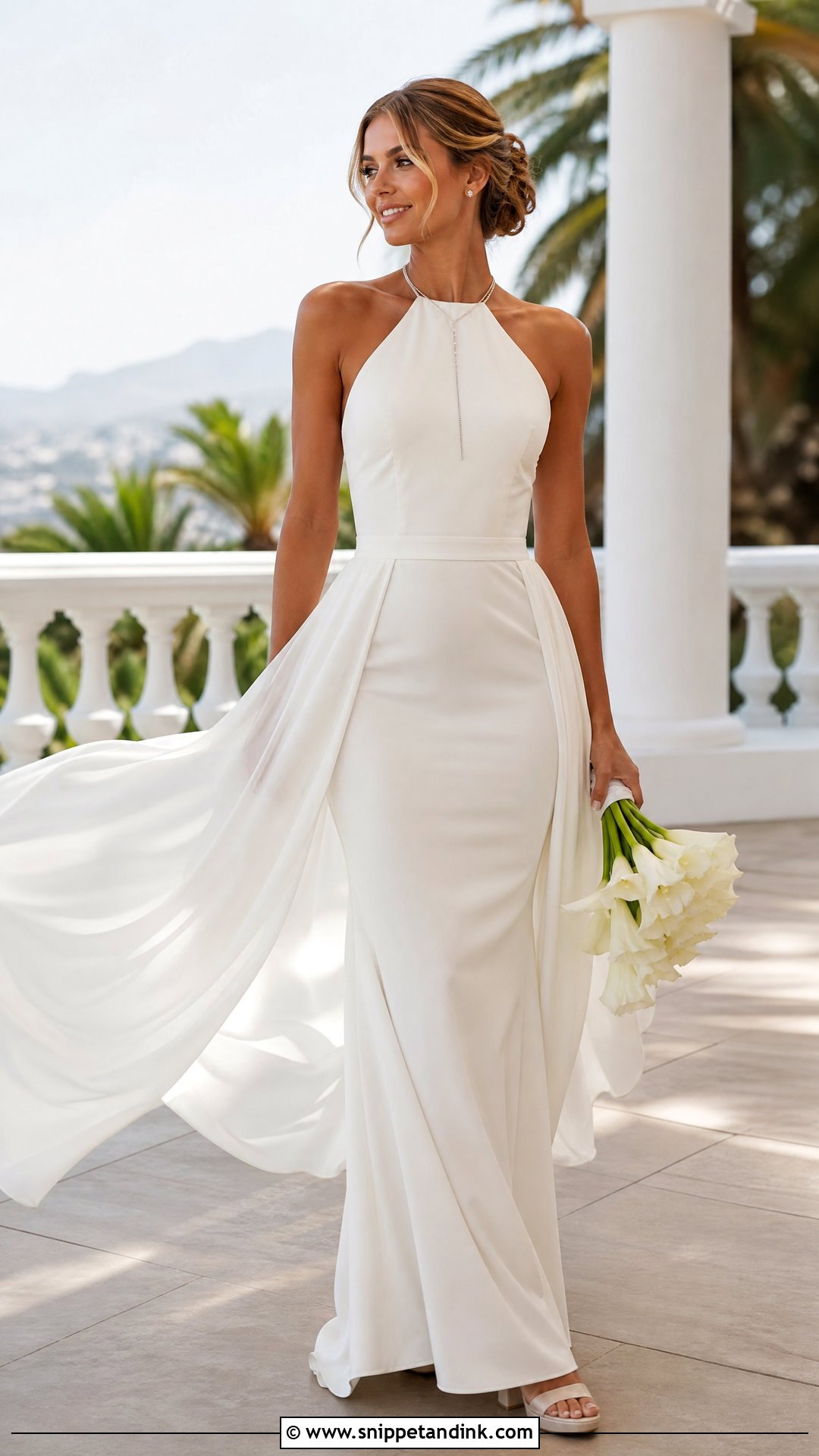
A halter neckline shows the shoulders and usually the back, so the overskirt should gather at the back without crowding it. Keep the base gown smooth through the torso, with a controlled flare that still lets you walk. Chiffon is my pick here because it moves with every step and adds almost no bulk at the hips. Sleek hair, small studs and a back-drop necklace draw attention to the open back, and a narrow, long-stemmed bouquet suits the vertical lines. Stable heeled sandals work on smooth floors; switch to block heels outdoors. Chiffon frays and catches, so have the overskirt hem finished properly so it does not tuck under the fitted skirt as you walk.
8. Illusion Bodice Mermaid Wedding Dress With Sheer Overskirt
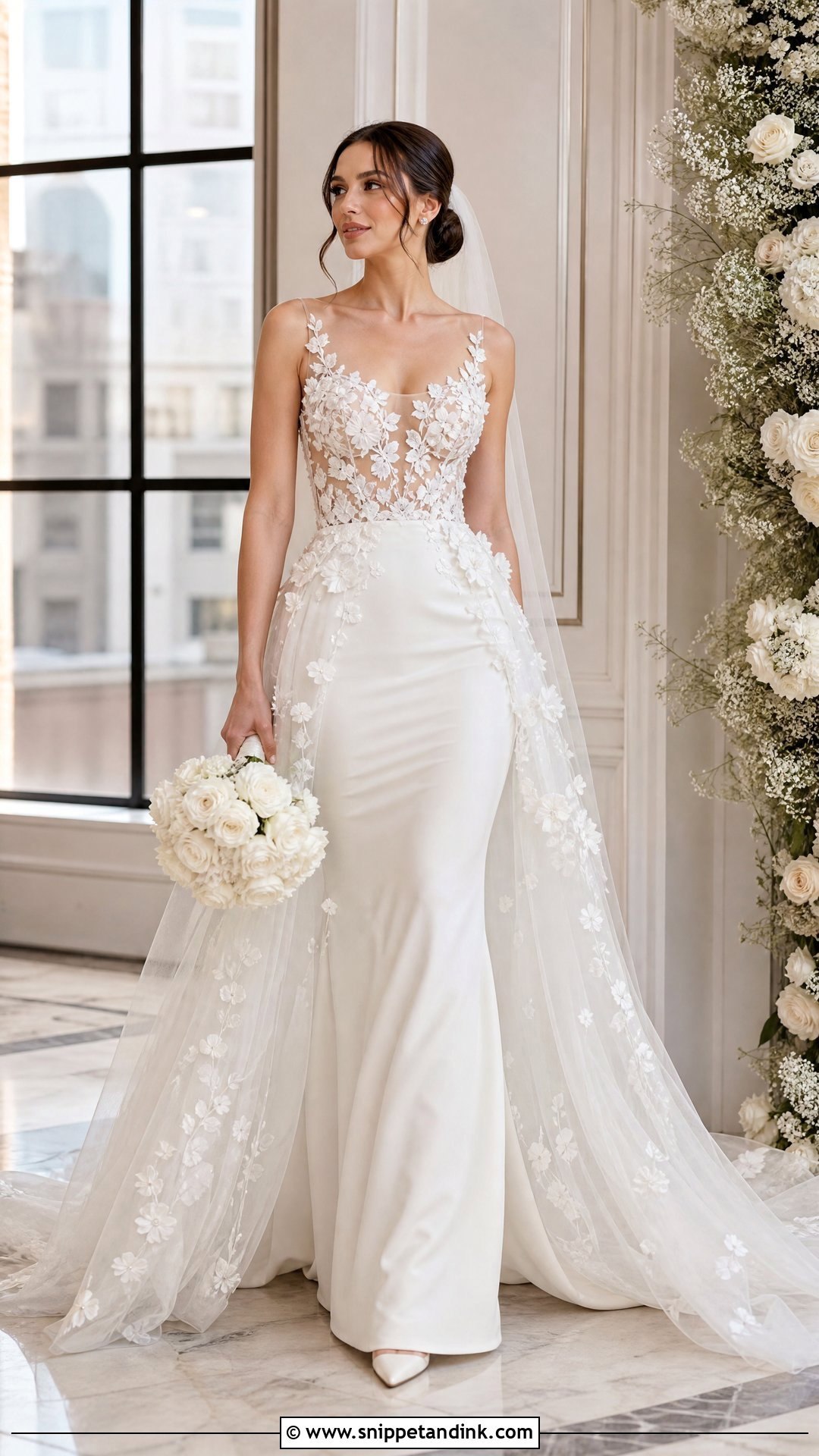
Illusion bodices make lace and beading look as if they sit on the skin, which only works if the mesh matches your skin tone closely. I hold mesh swatches against the wearer’s chest in daylight before ordering, because a mismatch shows clearly in photos. A fitted skirt in crepe, lace or soft satin balances the detail, and the overskirt should be sheer tulle or organza so the gown stays visible during the ceremony. Matching appliqués around the waistband, scattered lightly toward the train, connect the two. Choose a plain veil, crystal studs, a low textured bun and closed-toe heels; the bodice is already detailed enough.
9. Pearl Mermaid Wedding Dress With Detachable Overskirt
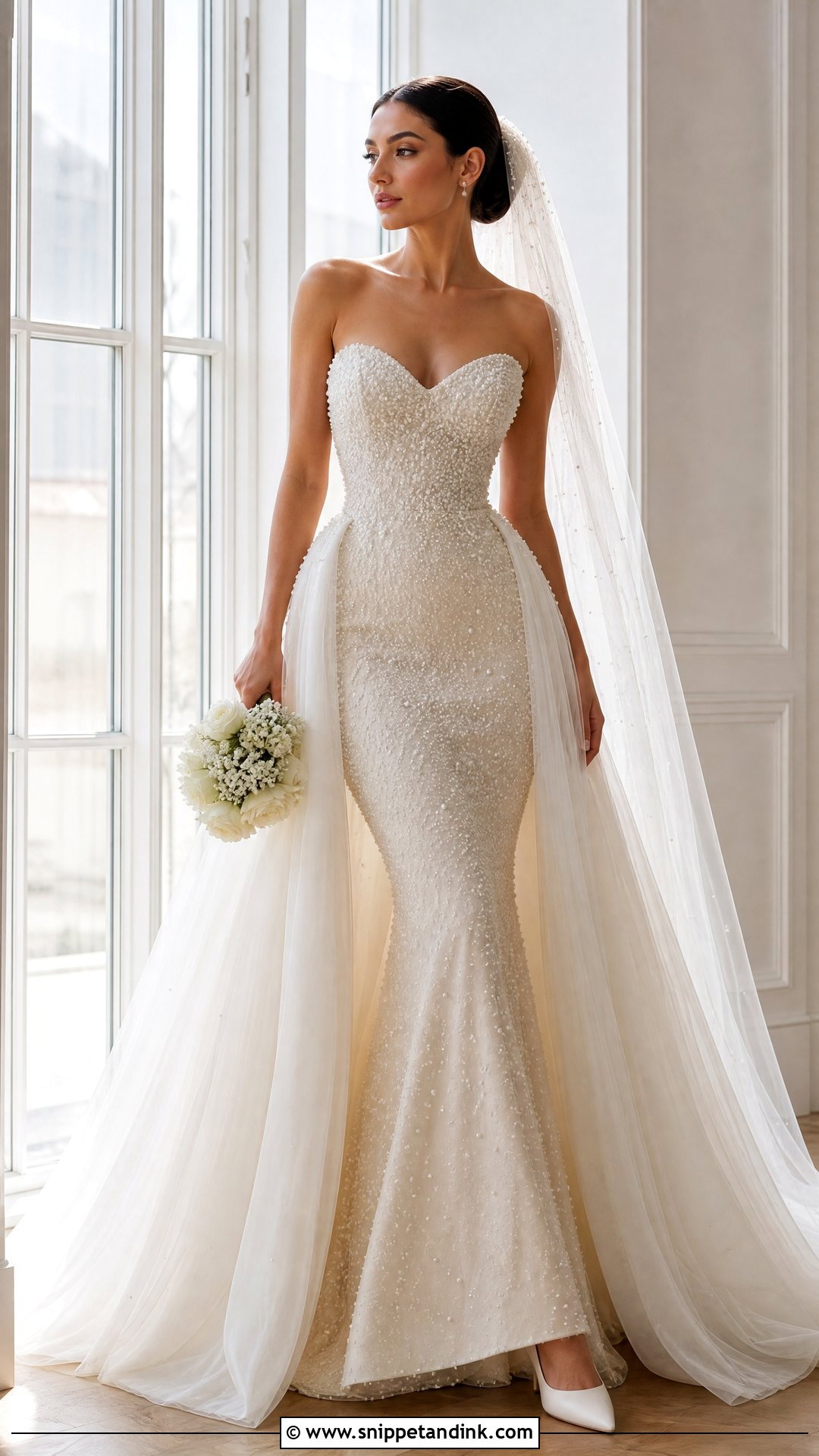
Pearls add soft dimension without heavy sparkle, and they add weight too. I steer brides toward gowns with pearls gathered along the neckline, bodice or side seams instead of covering everything. On the overskirt, scattered pearls near the waist that thin out toward the hem keep the skirt light enough to carry. Pearl earrings, a sheer veil and smooth ivory pumps are enough, so skip a heavy necklace. A sleek bun or soft waves tucked behind the ears suit it. Before buying, sit and walk in both pieces together: pearls on the gown can rub against the overskirt lining and snag delicate netting.
10. Floral Mermaid Wedding Dress With Organza Overskirt
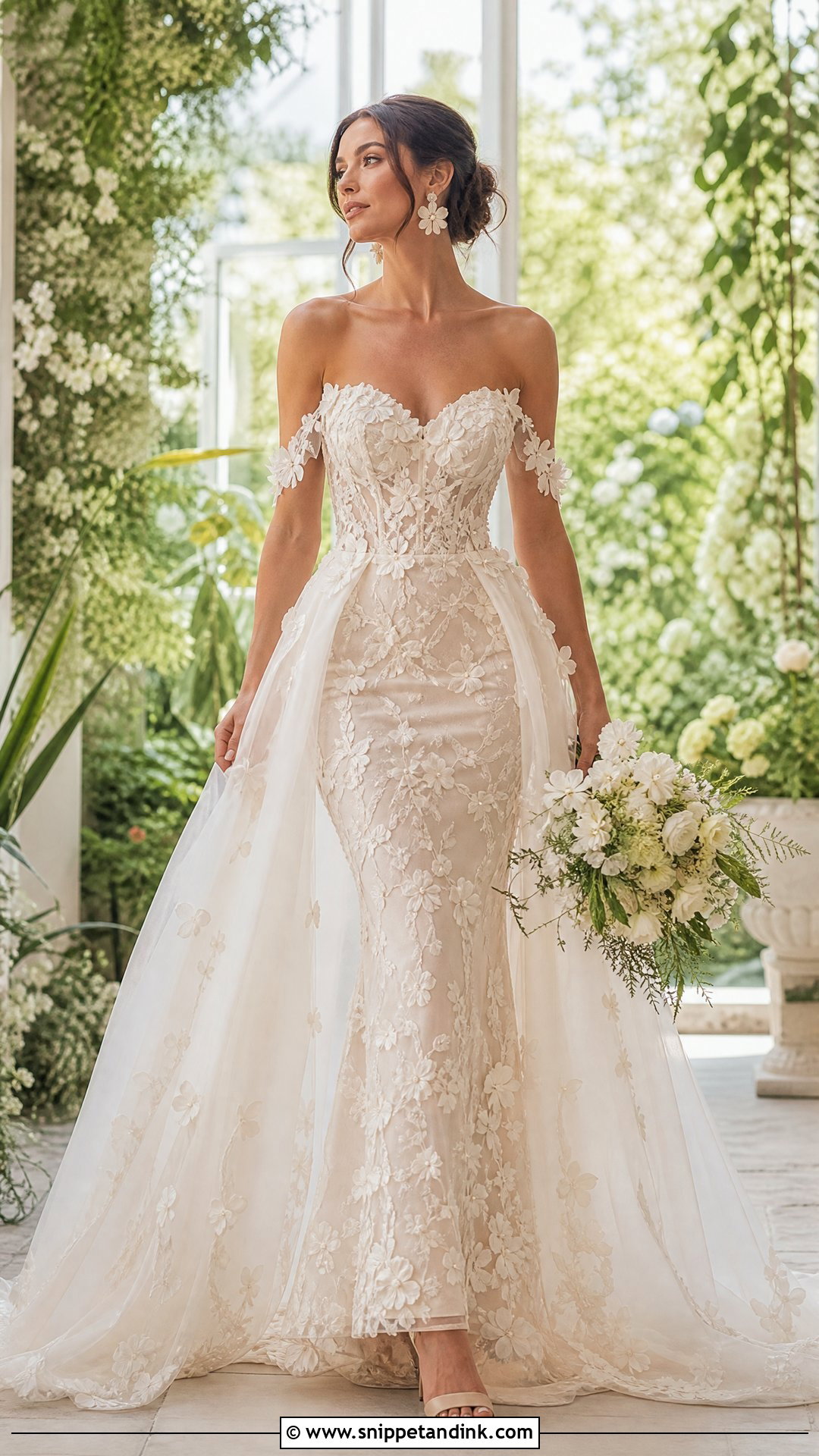
Raised floral appliqués on the bodice and hips, thinning across the flare, give a garden mood, and a transparent organza overskirt lets them show through while making the ceremony silhouette much bigger. Add matching flowers sparingly around the waist and along the train. Small floral earrings, a softly gathered updo and a bouquet that repeats one or two of the gown’s flower shapes tie it together, with neutral ivory heels. Three-dimensional petals and sheer fabric do not always get along. Walk, turn and sit in both layers at a fitting; if petals catch the organza, the reveal will be slow and could tear something.
11. Sparkly Mermaid Wedding Dress With Tulle Overskirt
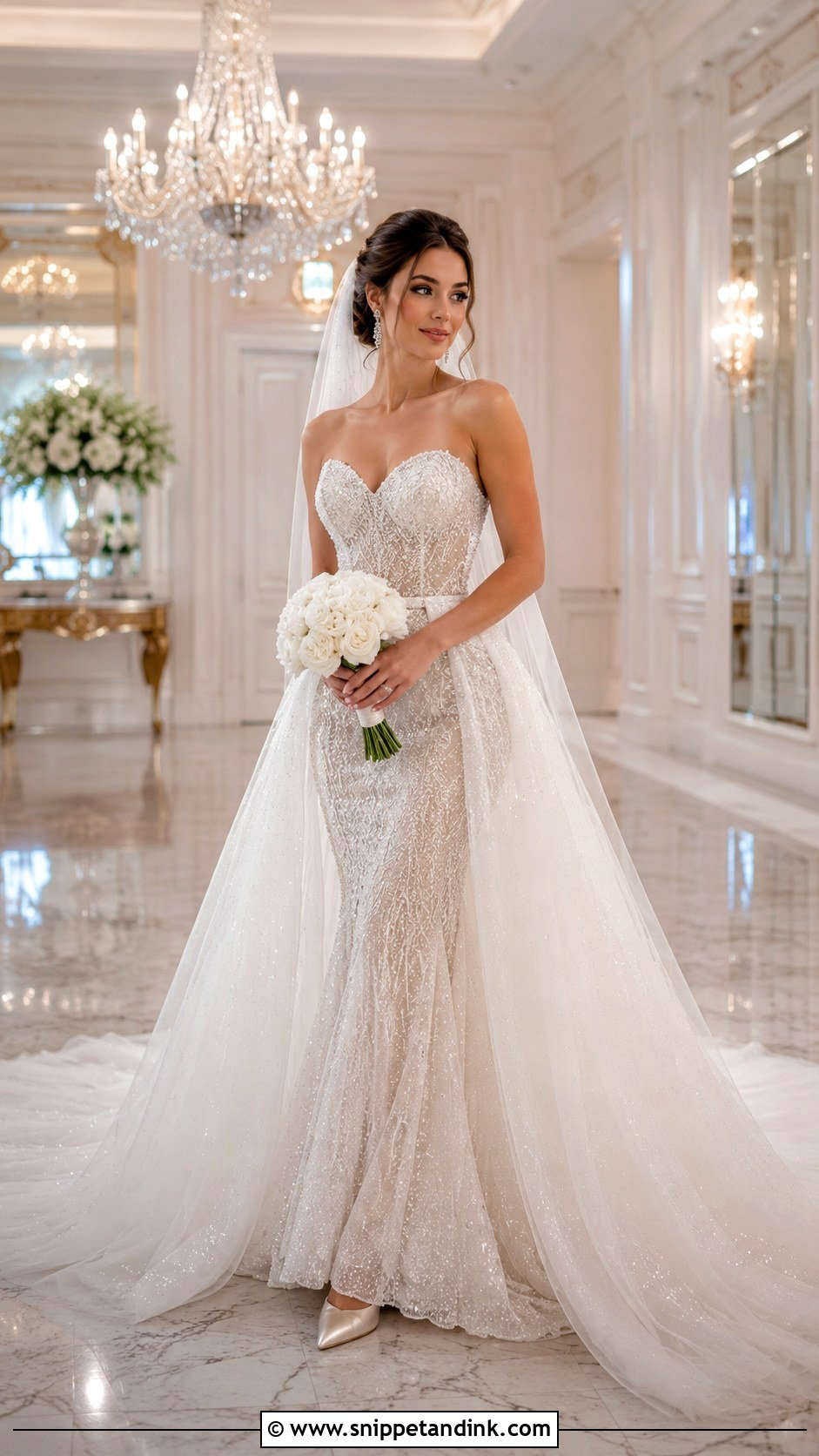
Under soft venue lighting, a sparkly mermaid gown catches light with every movement, so jewellery can stay minimal. I prefer fine sequins, crystal beading or glitter tulle over large reflective stones, which flare badly in flash photos. Make sure the base stays flexible at the knees where the flare begins. A plain tulle overskirt gives contrast; lightly glittered tulle turns up the glamour. Keep the waistband narrow so it hides little of the bodice. Crystal earrings, a quiet veil, metallic ivory pumps and a simple bouquet complete it. View it in daylight and indoors, because sparkle can photograph unevenly.
12. Mikado Mermaid Wedding Dress With Full Overskirt
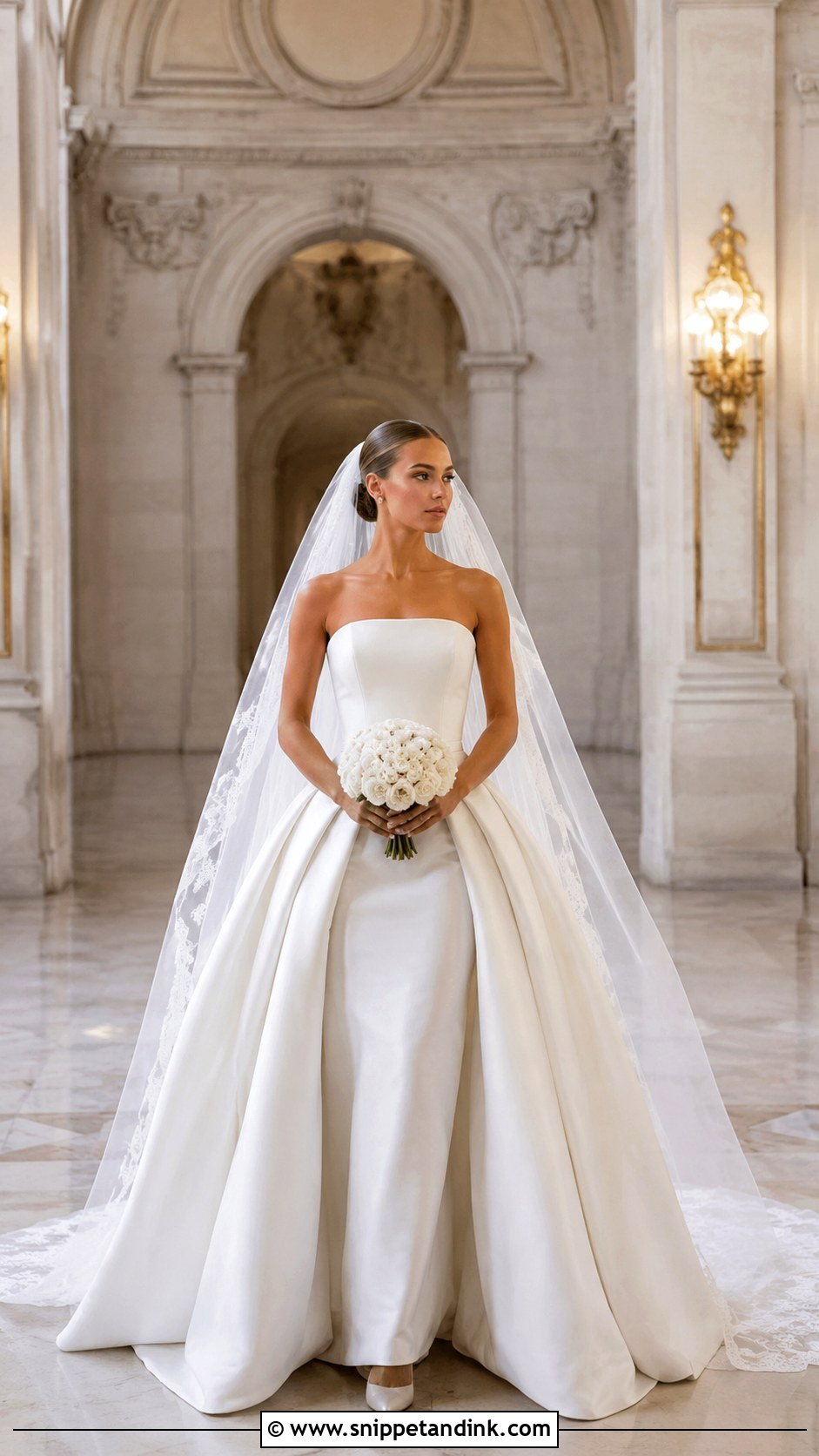
Mikado has enough body to stand away from the hips on its own, which makes this the most dramatic conversion on the list. The base can have a structured strapless bodice, a defined waist and a sculpted flare, while a full Mikado overskirt with box pleats or careful gathers creates a ball gown for the ceremony. Keep accessories formal and clean: a cathedral veil, polished studs and closed-toe pumps. A compact bouquet suits it better than a cascade, since the skirt already supplies volume. Mikado creases sharply if it is bunched up, so plan where the skirt will hang after the reveal and who will carry it there.
13. Crepe Mermaid Wedding Dress With Organza Overskirt
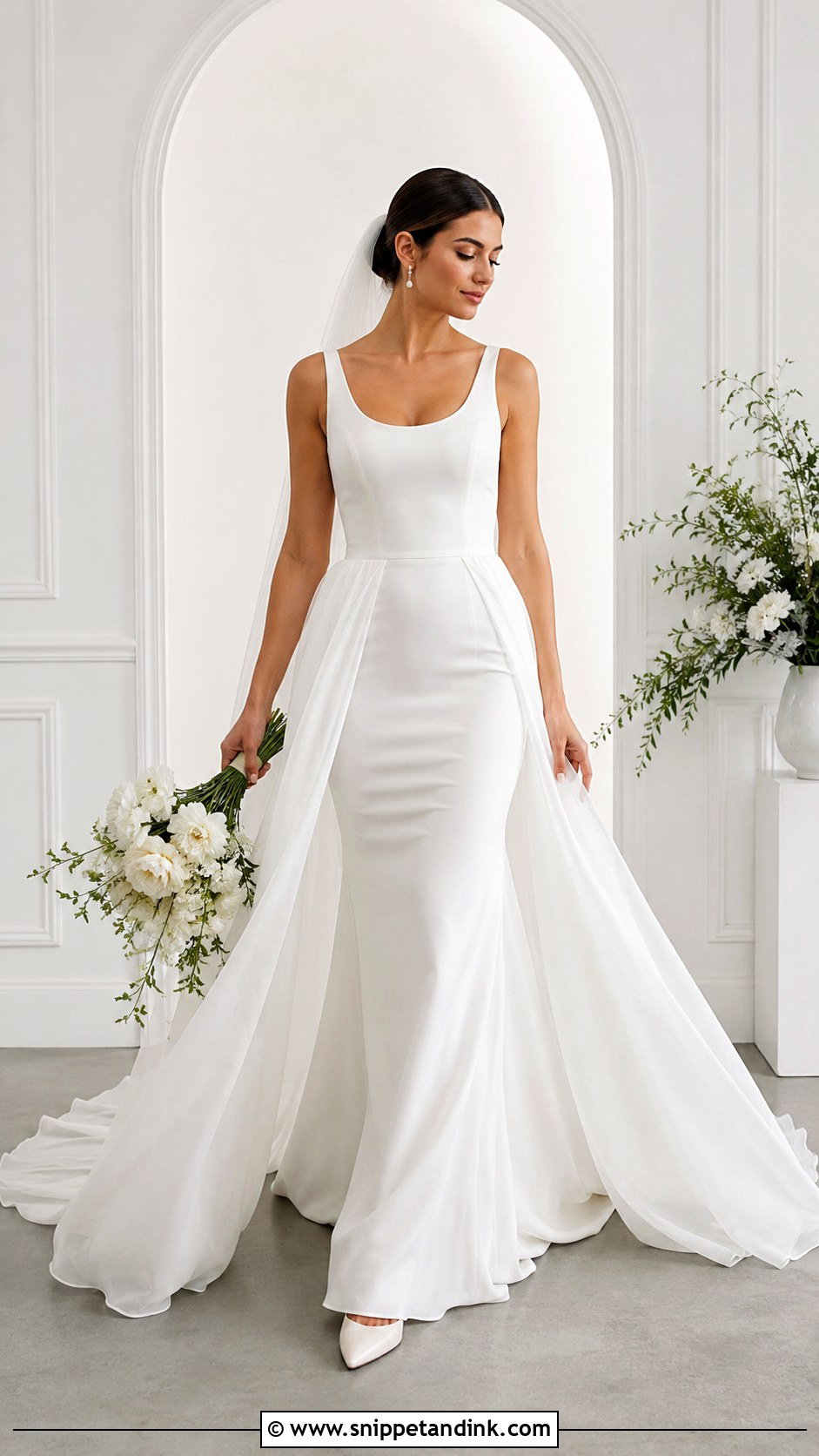
Crepe follows the body smoothly, but it shows pressure, and that is the issue I watch with this pairing. A heavy or tight overskirt waistband can leave a visible mark on crepe after a few hours, so the band needs to be light, smooth and fitted without squeezing. Choose a mermaid base with good lining and well-placed seams so the crepe does not cling unevenly. A sheer open-front organza skirt adds volume while the crepe silhouette stays visible from the front. Square, scoop or soft V necklines all work depending on how much coverage you want. A plain veil, modern pearl drops, comfortable pointed heels, a clean bun and a loose white bouquet finish it.
14. Sweetheart Mermaid Wedding Dress With Layered Tulle Overskirt
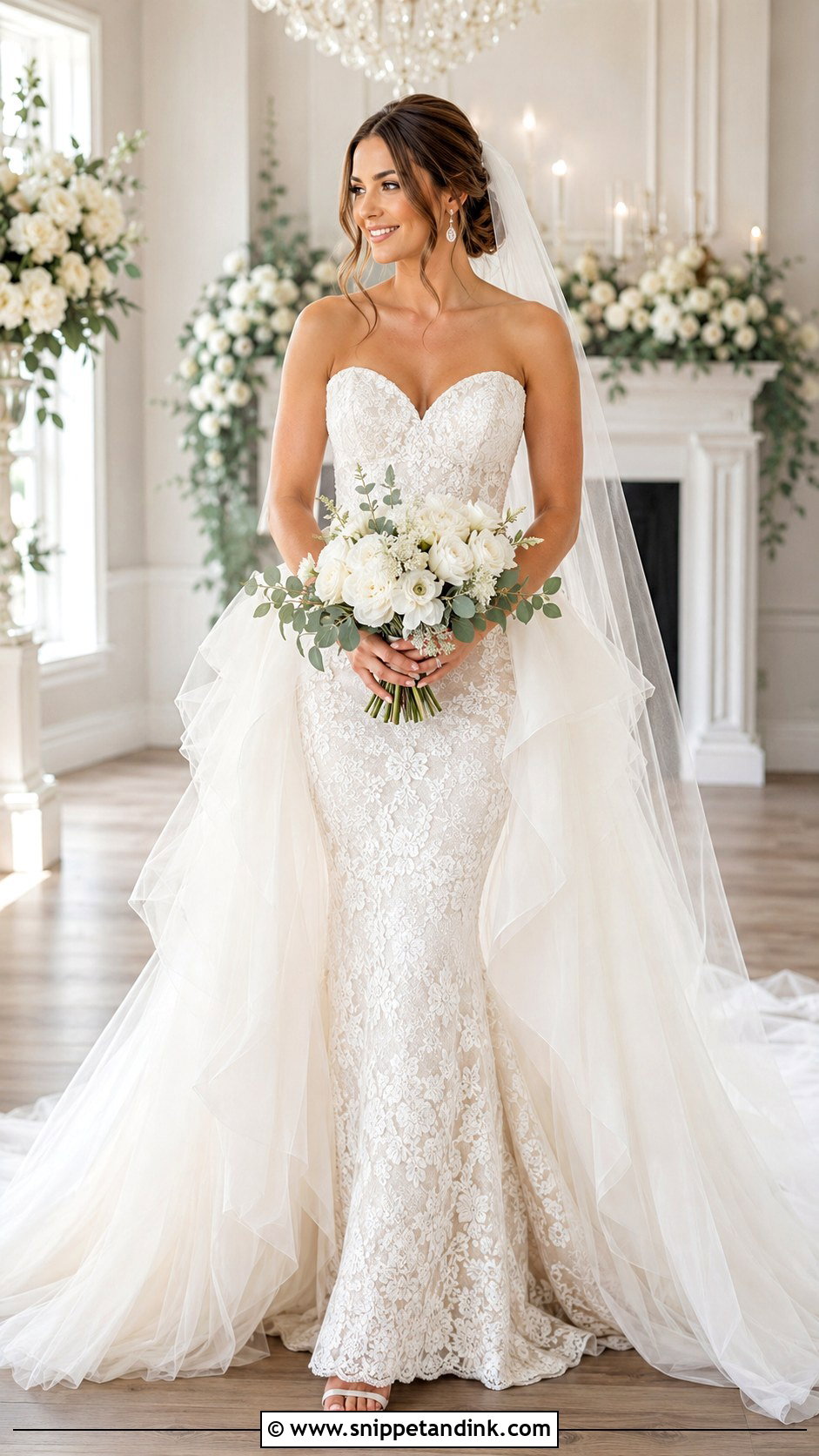
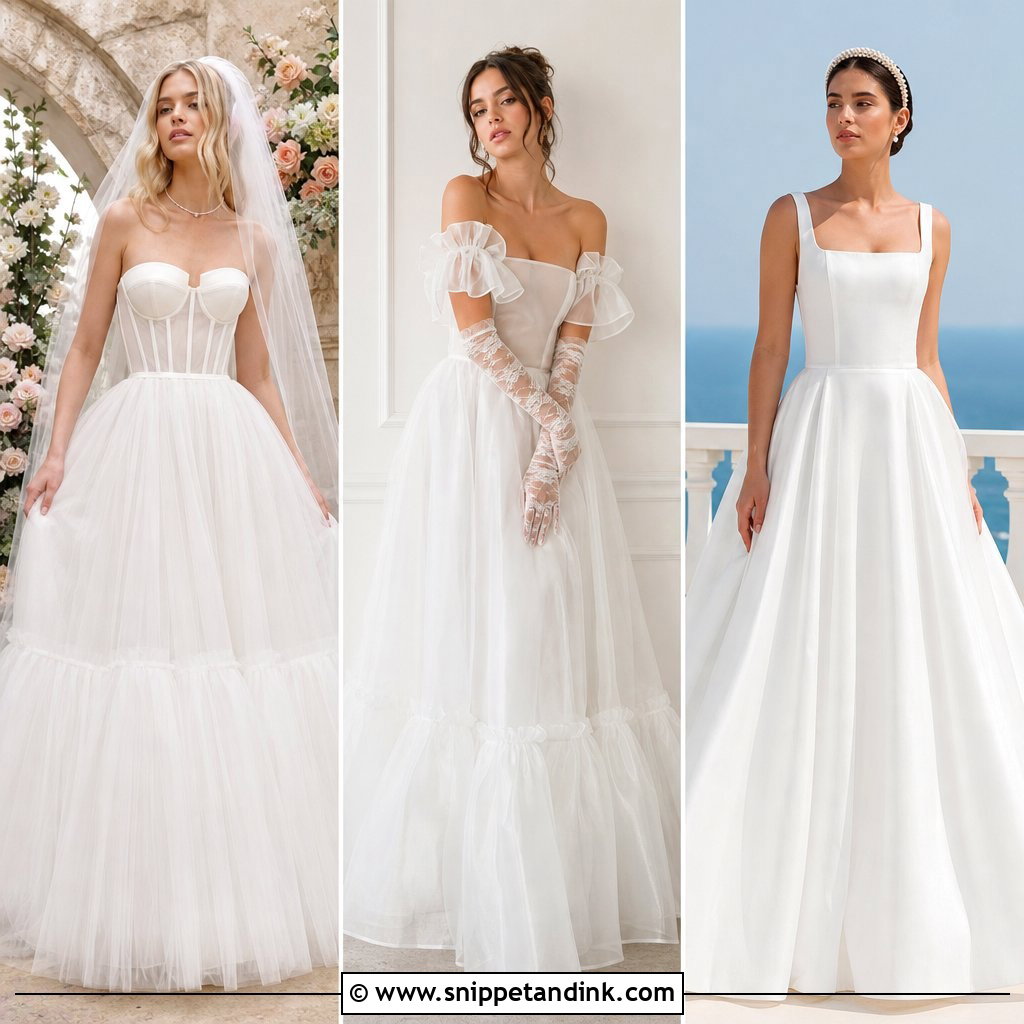
A sweetheart neckline repeats the curves of the mermaid skirt, which is why so many brides gravitate to it. The bodice needs boning, smooth cups and a secure back closure. Layered tulle builds fullness without satin’s stiffness; graduated tiers put the volume near the floor and keep the waist and hips smooth. A few lace appliqués on the waistband connect skirt and gown. Pair it with a fingertip or chapel veil, drop earrings and pointed block heels, plus soft waves or a low bun. Once the overskirt comes off, the sweetheart mermaid dress feels much sleeker. During fittings, watch whether the tulle bunches against the flare when you sit.



15. Mermaid Wedding Dress With Open Front Overskirt
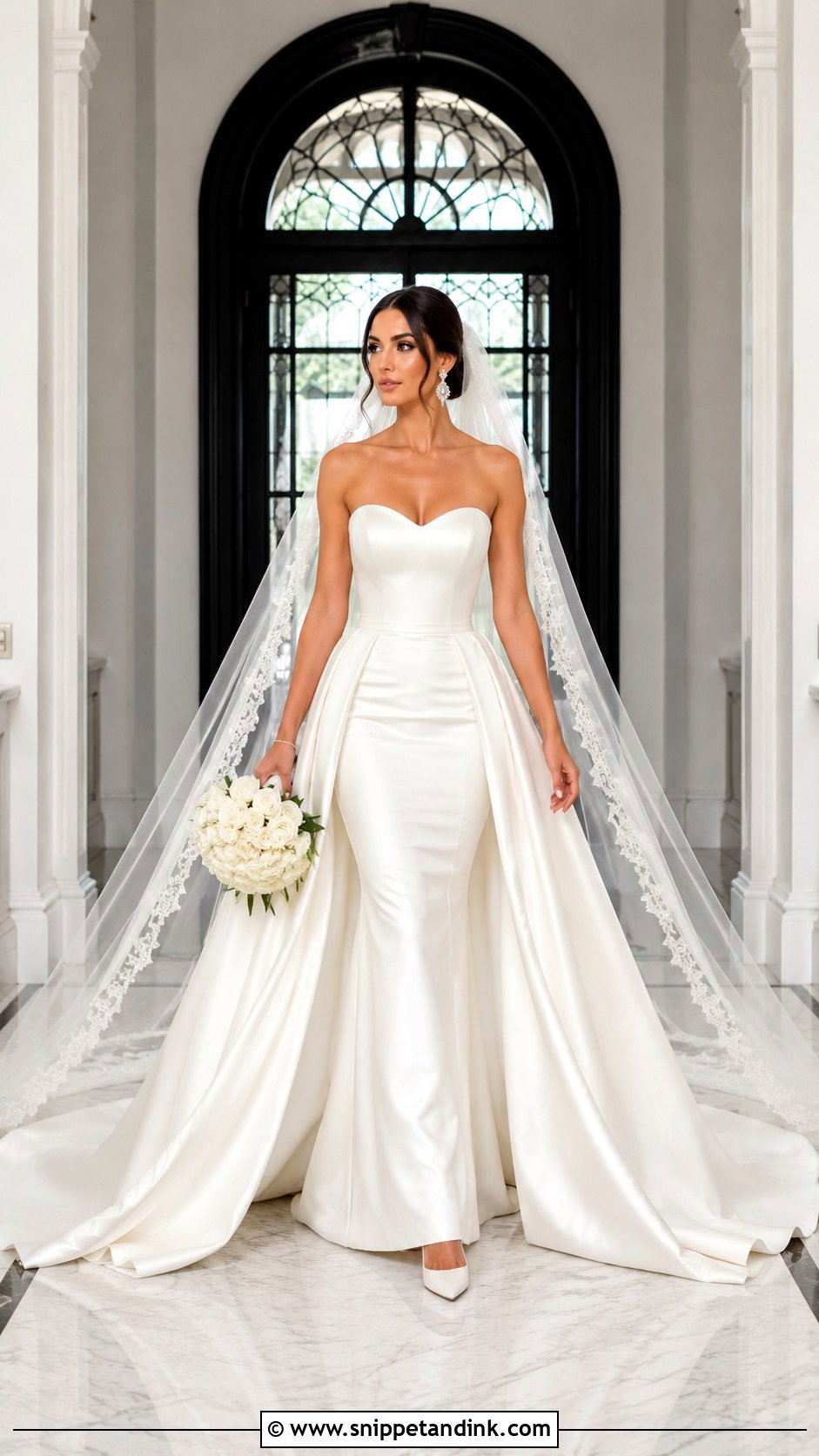
If you are torn between a mermaid and a full skirt, the open-front overskirt is the compromise I suggest most. The opening can start at the centre waist and curve out to the sides, framing the fitted dress. Matching satin gives a strong contrast in shape; sheer tulle makes the transition softer. Let the hem fall cleanly around the mermaid flare instead of colliding with it. A cathedral veil, small statement earrings and pointed pumps balance it. Hold the bouquet a little to one side in photos so the opening shows. The opening must be centred precisely; even a slight shift makes the skirt hang crooked, so have the seamstress mark it while you stand in your wedding shoes.
16. Mermaid Wedding Dress With Cathedral Train Overskirt
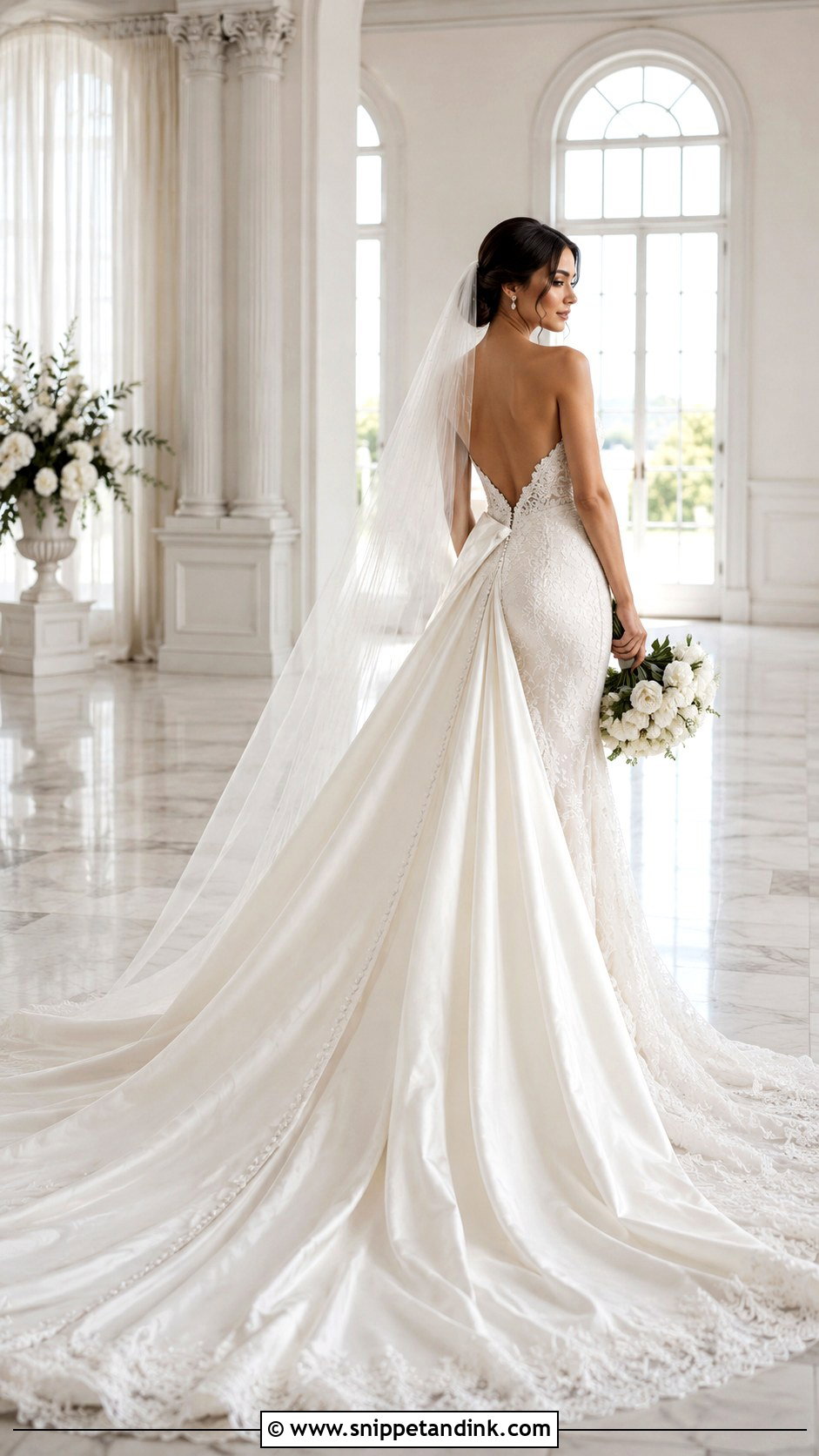
A cathedral train overskirt gives the biggest possible aisle moment while leaving a practical dress underneath. Pick a base gown with only a short sweep train, so it is easy to manage once the big train is gone. The overskirt can be satin, Mikado, organza or layered tulle depending on how much structure you want, but keep the front smooth to avoid bulk. If you layer a long veil over the train, end it at a clearly different length so the two do not blur together. Wear secure heels, understated jewellery and a medium bouquet. Rehearse walking, turning and the removal, and give one attendant the job of folding the train over a padded hanger.
17. Blush Mermaid Wedding Dress With Detachable Overskirt
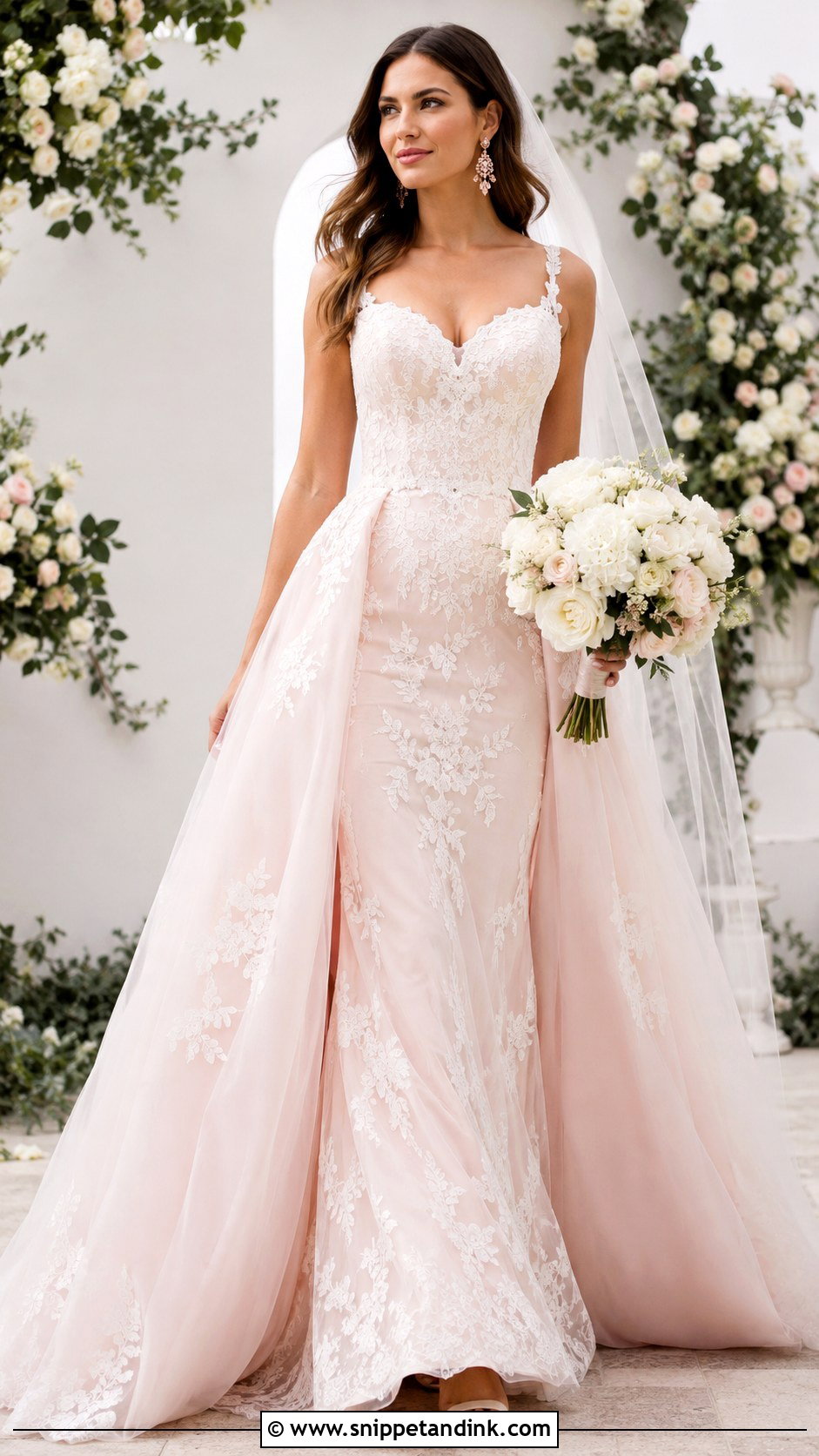
Blush lining makes white lace stand out and gives the gown gentle depth. I suggest a shade close to your skin tone or a muted pink that still reads as bridal. The overskirt can match the blush base for one unified colour or be ivory tulle for a lighter, layered effect, with floral lace on the waistband linking the two. Rose-toned crystal earrings, ivory heels and a bouquet of white flowers with a hint of pink suit it, and an ivory veil stops the whole thing turning too pink. Blush shifts noticeably between daylight, warm venue bulbs and flash, so look at fabric swatches in all three before deciding.
18. Champagne Mermaid Wedding Dress With Lace Overskirt
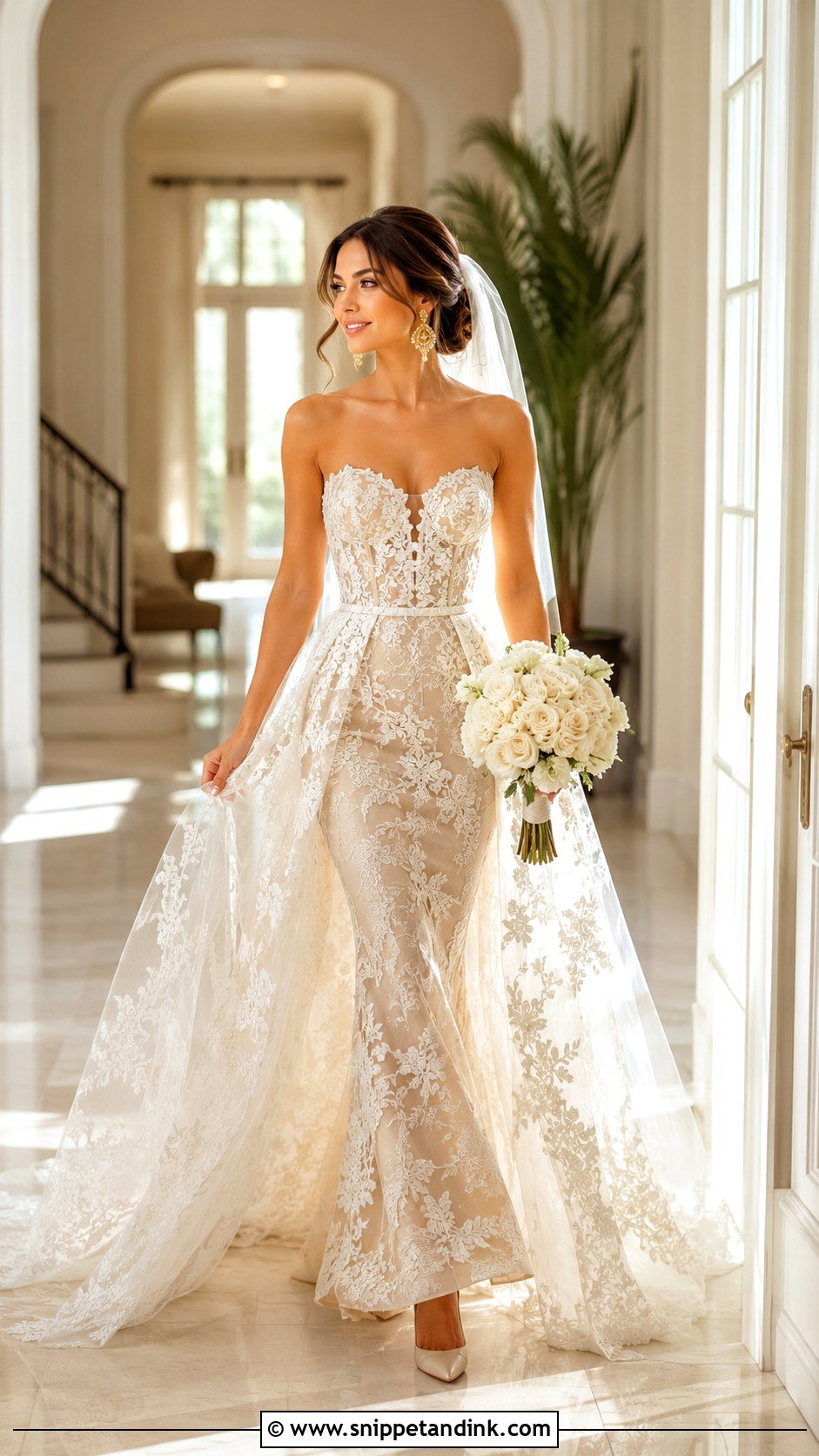
Champagne lining under ivory appliqués gives lace a rich, warm contrast. A lace overskirt lined in sheer neutral tulle keeps the fitted shape partly visible through it. Match the lace pattern to the gown or coordinate it very closely; two different laces next to each other look like a mistake. Gold-toned earrings, ivory pumps, a creamy white bouquet and an ivory veil that brightens the face complete it. In my experience, champagne looks best when it adds warmth to the skin without making ivory accessories look grey beside it. Compare it against your face in daylight and drop any shade that turns yellow.
19. Plus Size Mermaid Wedding Dress With Detachable Overskirt
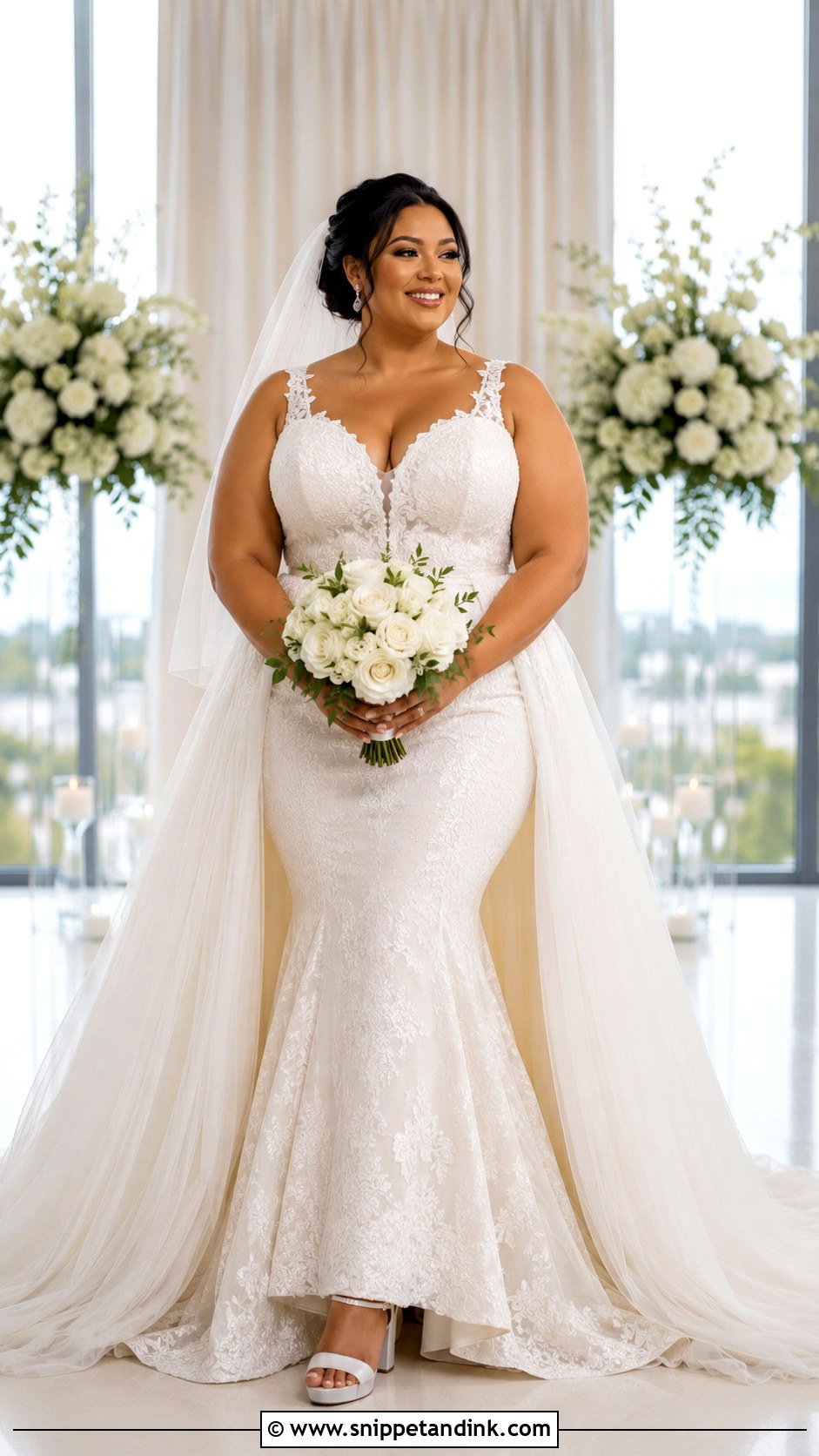
Support should come from construction, not compression. In a plus-size mermaid gown, I look for internal boning, secure cups, stretch lining and seams placed along your natural proportions. The flare can sit a little above or below the knee depending on how much walking room you want. The overskirt should fasten smoothly at the waist and fall into fullness without adding width at the sides; an open-front design keeps the fitted line visible and lengthens it. Supportive block heels, balanced earrings and a veil secured comfortably into your hair finish it. At fittings, walk and sit in both versions and check that the waistband does not dig in or roll.
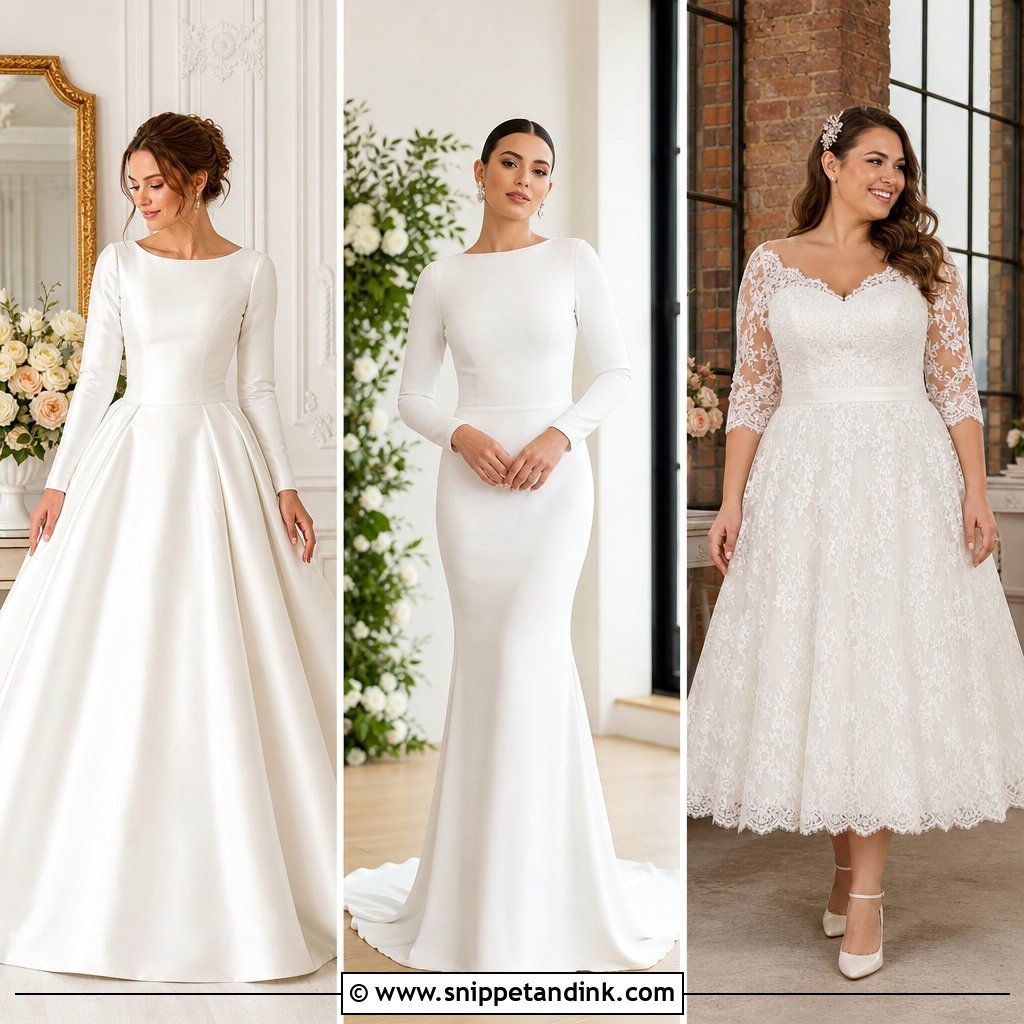
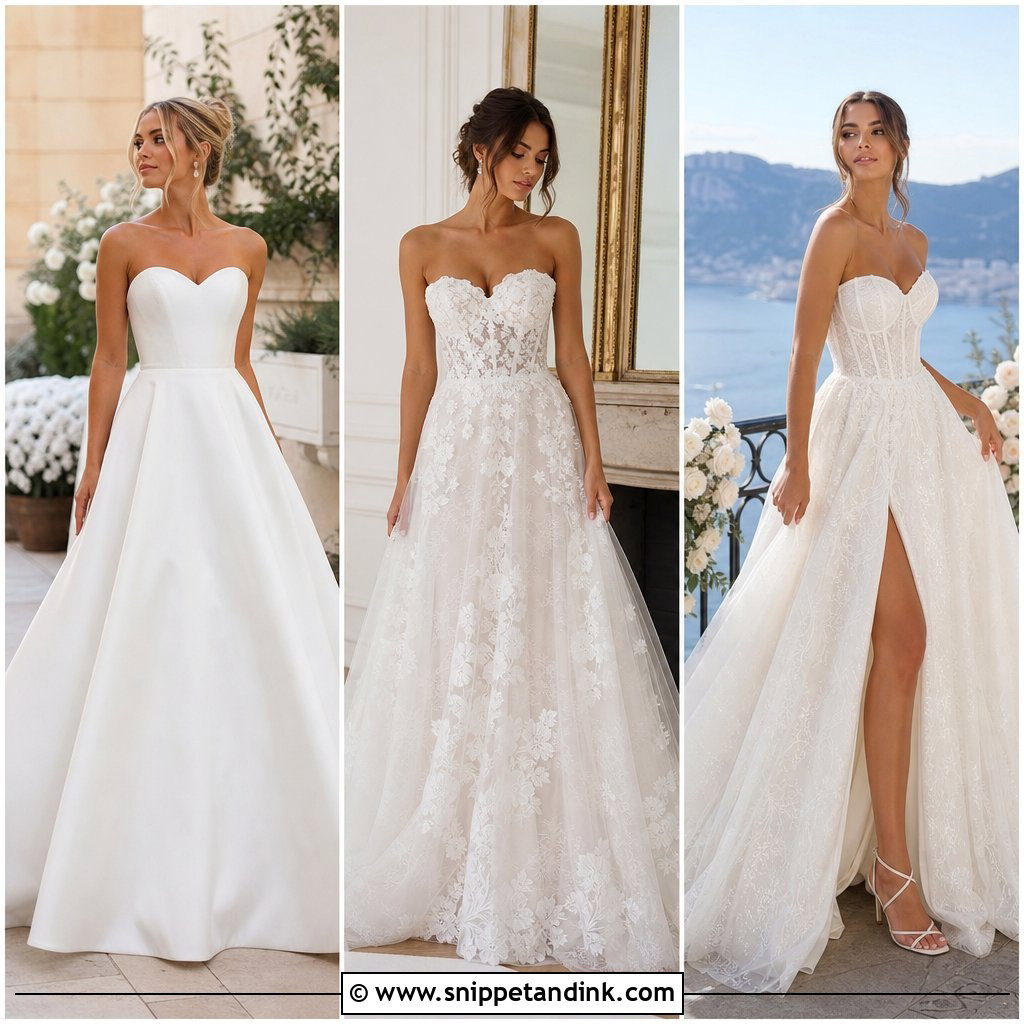
20. High Neck Mermaid Wedding Dress With Detachable Overskirt
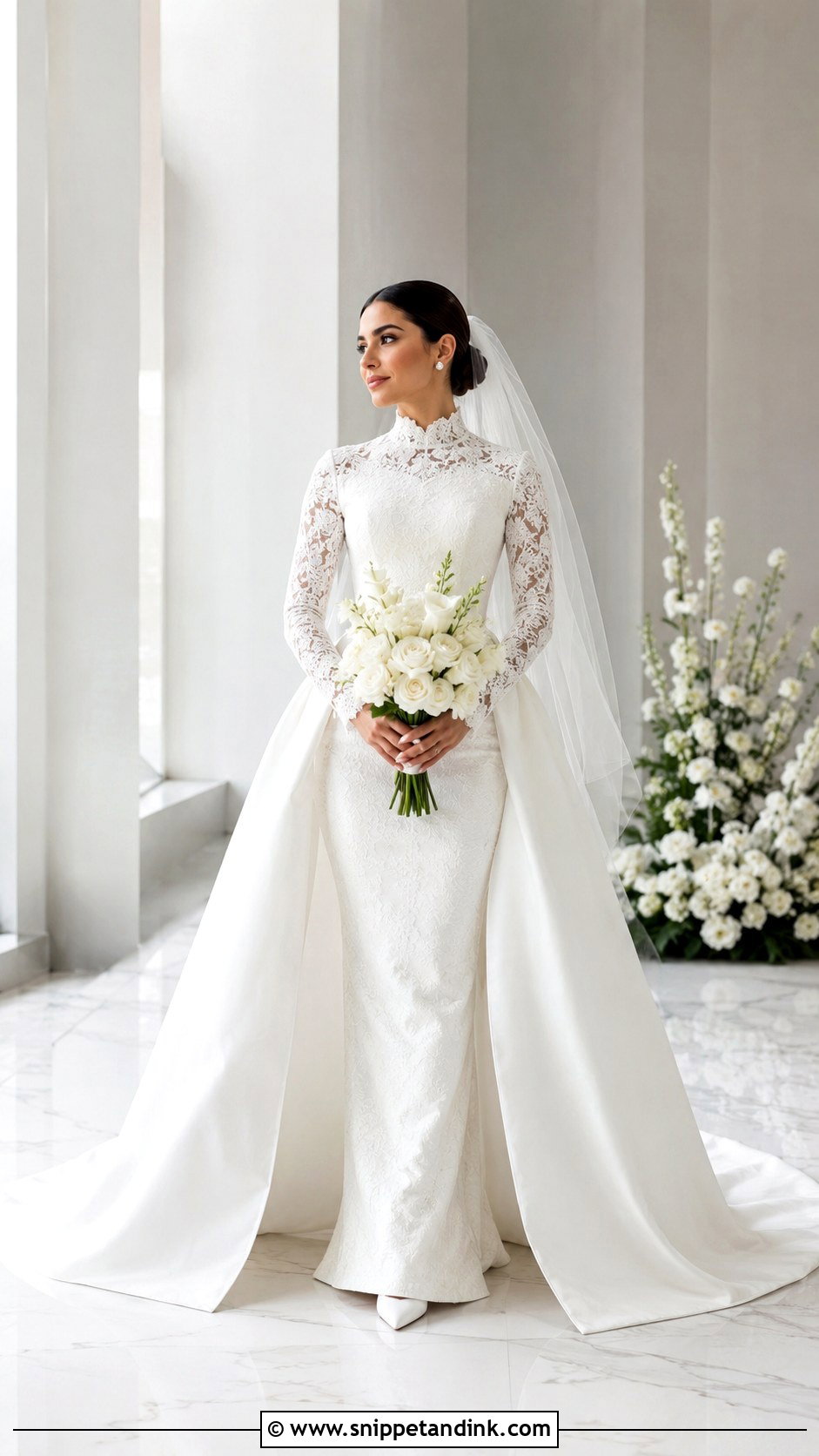
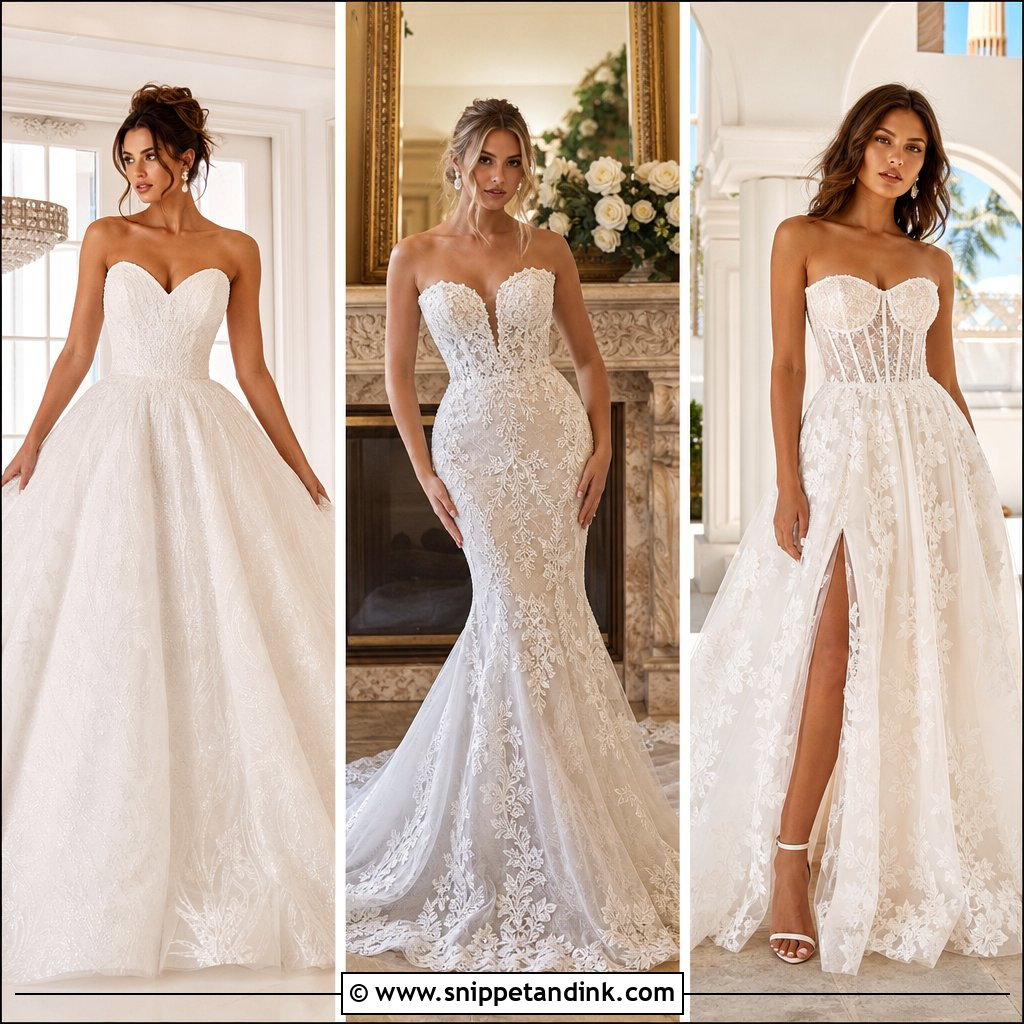
A high neck adds coverage across the chest and shoulders, so the skirt needs a clear flare below the knee to keep the silhouette from looking stiff. Sheer lace softens it; smooth crepe makes it modern. I usually prefer the sleeveless version, which feels lighter and is easier to accessorise, though long sleeves are possible. A satin or organza overskirt adds volume for the ceremony while the waist stays neat. Small earrings, a polished low bun, pointed closed-toe heels, a simple veil and a structured bouquet are all it needs; skip the necklace. After the skirt comes off, look at the waist in a mirror: closures should lie flat and disappear.
Planning the Reveal Between Ceremony and Reception
The change itself should take a couple of minutes, but it needs a plan. I usually suggest doing it after the family portraits and before the grand entrance, somewhere private with a full-length mirror and space to step out of the skirt.
- Remove the veil first if it is long, so it does not tangle in the fastenings.
- Have your helper undo the closures from the back, working from the centre outward.
- Step out of the skirt forward while your helper holds the waistband open behind you.
- Check the waist in the mirror for loose threads, stray hooks or marks on the fabric.
- Switch earrings or add the reception accessory, then fluff the base skirt’s flare.
Rehearse it once at the final fitting with the same person. Fingers fumble under pressure, and a helper who has practised is the difference between a calm two minutes and fifteen anxious ones.
Where the Overskirt Goes Once It Is Off
A metre or more of satin or tulle dumped on a chair will crush and pick up marks. Bring a large garment bag and a padded hanger, and hang the skirt by its waistband loops, letting the train fall straight. Ask the venue for a coat room or bridal suite where it can stay out of the way. After the wedding, send the overskirt to the cleaner with the gown so both pieces are treated together; small stains on a train usually come from the ceremony floor and are easier to lift when they are fresh.
Two Looks From One Dress, and Both Have to Work
A convertible gown should look complete before and after the removable layer comes off. Satin, lace, tulle, Mikado, crepe and organza each give a different ceremony and reception mood, as the ideas above show. Start with a mermaid base that supports you and fits comfortably, then choose an overskirt that suits its waistline, texture and train. Think about how the veil, shoes, jewellery, hair and bouquet work in both versions. Then test the attachment during alterations and rehearse taking it off, so the change happens in minutes and nobody is wrestling with hooks while your guests wait.
You'll Like These Ideas:



Leave a Reply