
Silhouette is the first thing I sort out with a bride, before lace or beading even comes up, because the shape decides how she walks down the aisle, how she sits through dinner and how much of the night she spends adjusting her skirt. The list below runs from the classic A-line and ball gown through mermaid, trumpet, sheath and empire shapes, then into shorter hemlines and convertible designs. Ignore the old body-type charts. In the fitting room I watch a bride move in a shape far more than I look at her measurements, and the dress she ends up loving is often the one she nearly refused to try.
Reading a Silhouette in the Fitting Room Mirror
Most brides try on a gown, stand still facing the mirror and decide. That tells you almost nothing about how the shape will behave on the day. When I run an appointment, the first five minutes in any new silhouette are spent moving, because a dress that only works standing still is a dress you’ll fight from the ceremony onward.
- Sit on a hard chair. Fitted bodices buckle at the waist, mermaids grip at the knee, and low waists fold. Whatever happens here happens at dinner.
- Raise both arms as if hugging someone taller. Strapless and sweetheart bodices slip down, and sleeves bind at the armhole.
- Walk away from the mirror and look back over your shoulder. The back view is what guests see for most of the ceremony.
- Climb a step. Narrow skirts and long fronts show their limits instantly.
- Stand in heels of roughly your wedding height. Sample gowns are long, so hem length changes the whole proportion.
Shop samples are usually made in one or two sizes and clipped onto you at the back. Ask the consultant to unclip and re-clip so the waist sits where yours actually is; a seam in the wrong place makes a flattering shape look wrong, and plenty of brides rule out the right silhouette because of it.
What the Underwear Changes
Bring a smooth, no-show nude bra or bodysuit to every appointment. A sheath, slip or column reads very differently over a lacy bra band than over smooth shapewear, and a ball gown with a built-in corset may need nothing at all underneath. Deciding the foundation early also saves a round of alterations later.
1. A-Line Wedding Dress
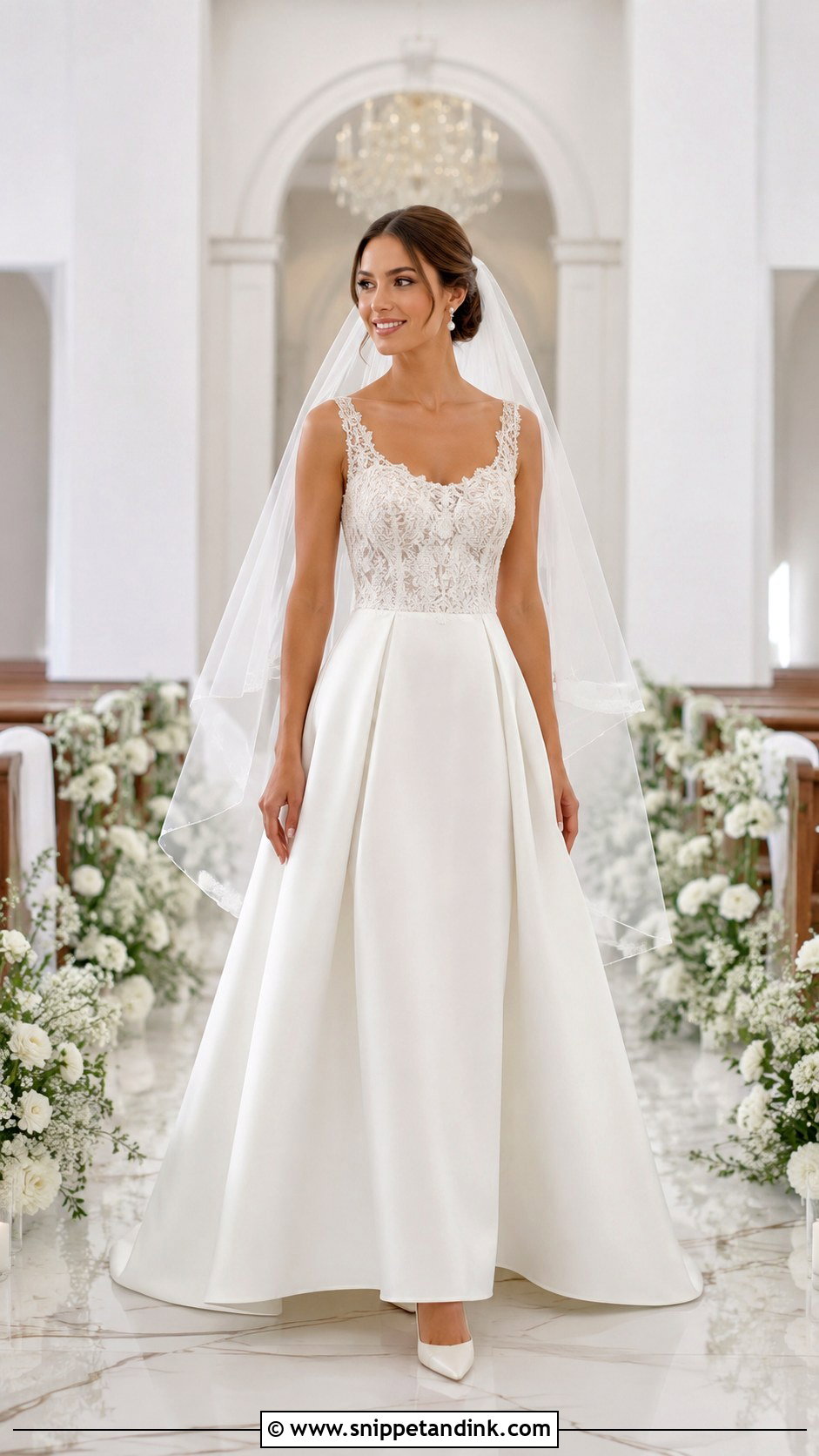
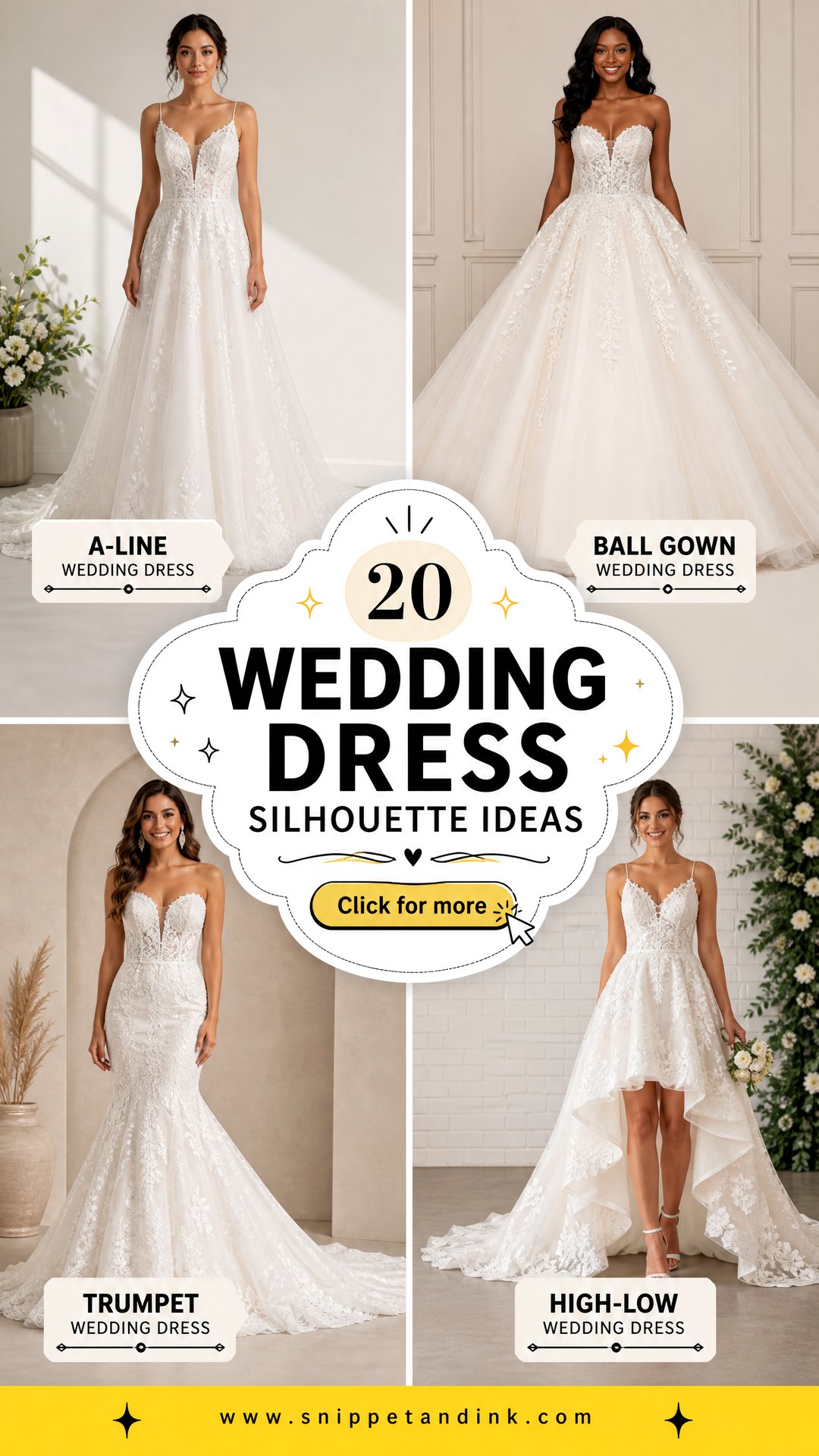
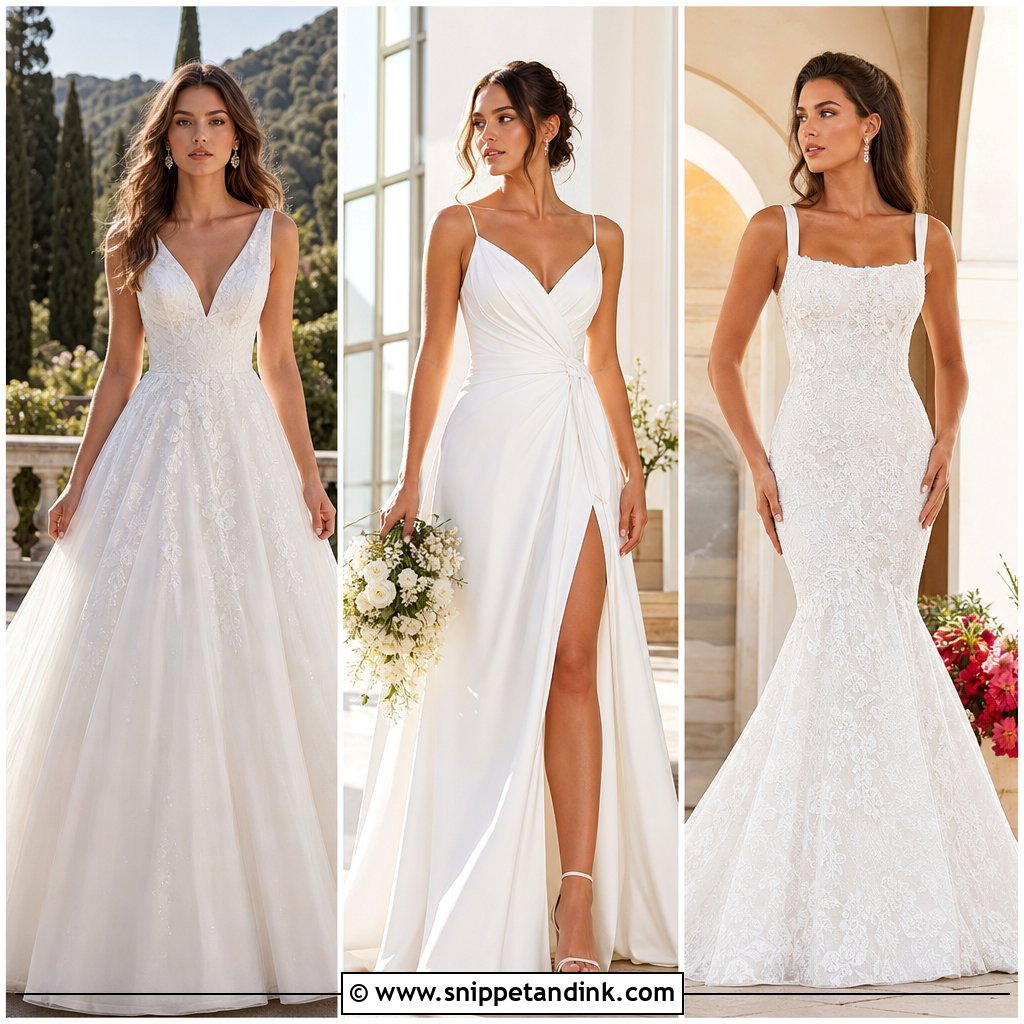
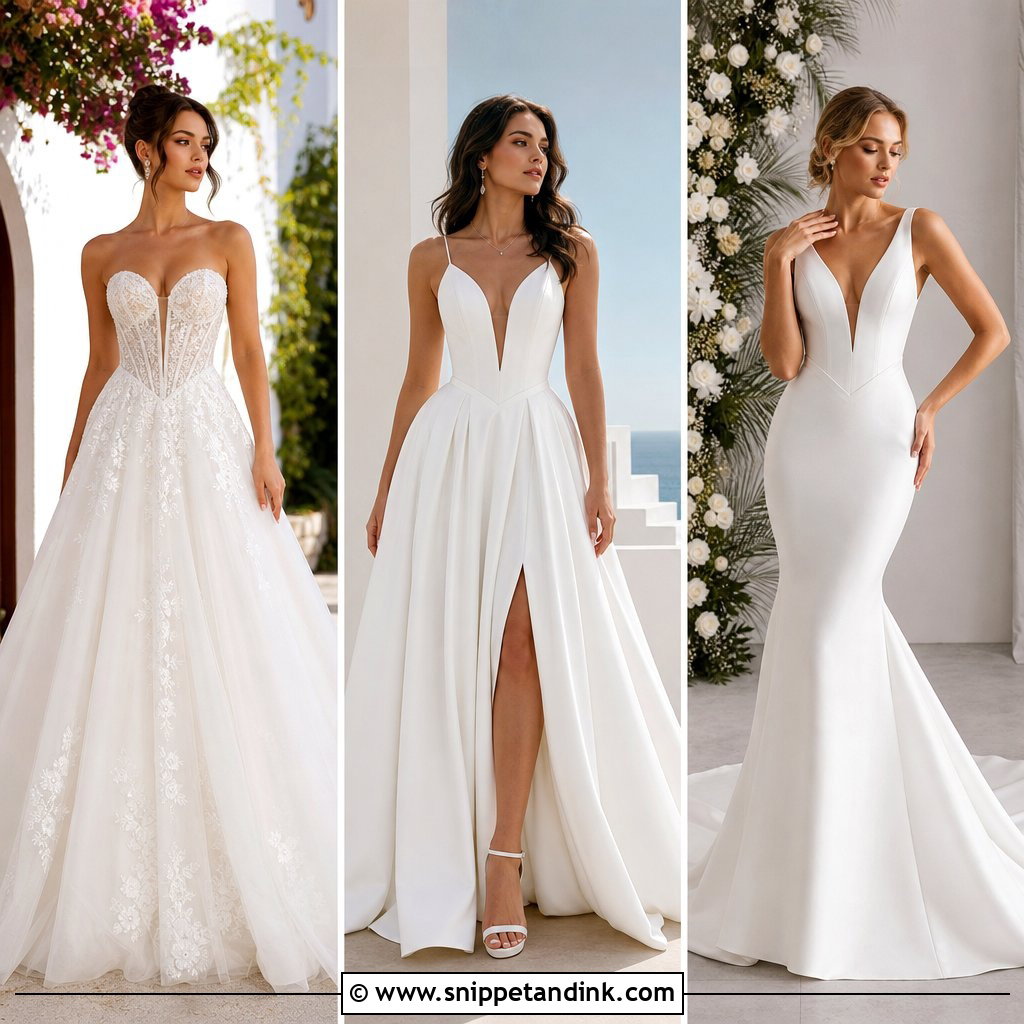
An A-line is the shape I pull first when a bride has no idea where to start. The bodice follows the upper body and the skirt widens gradually from the waist, so there’s room to walk and dance without the weight of a ball gown. Fabric changes its personality more than people expect: satin or mikado holds a crisp triangle, chiffon collapses into soft folds, floral lace adds texture. A continuous princess seam reads longer than a defined waist seam, which matters on shorter brides. I keep the accessories close to that clean line, so pointed pumps, pearl earrings and a fingertip veil that stops where the skirt starts to widen.
2. Ball Gown Wedding Dress
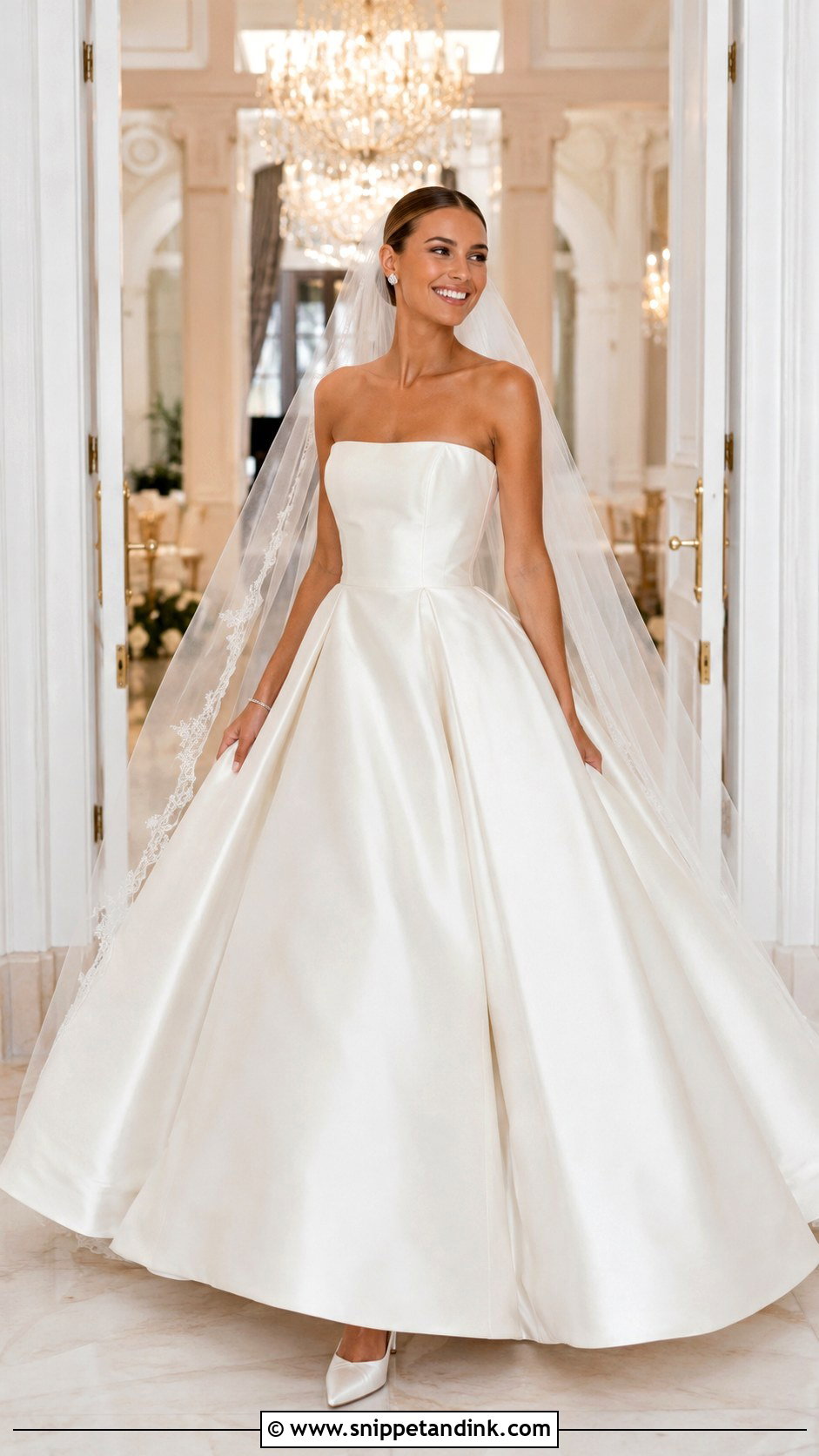
Few shapes make an entrance like a ball gown, and few demand as much planning. A fitted bodice over a full skirt reads clearly from the back of a large venue. Tulle layers give airy volume while satin or mikado builds a more architectural line, and a strapless scoop, square or off-the-shoulder neckline keeps the top half from disappearing under all that skirt. At fittings I make brides walk through a doorway and sit on a chair with arms, because that’s where a full skirt surprises people. Petite brides can wear one. I just control the fullness, raise the waist slightly and keep vertical details unbroken so the gown doesn’t swallow her.
3. Mermaid Wedding Dress
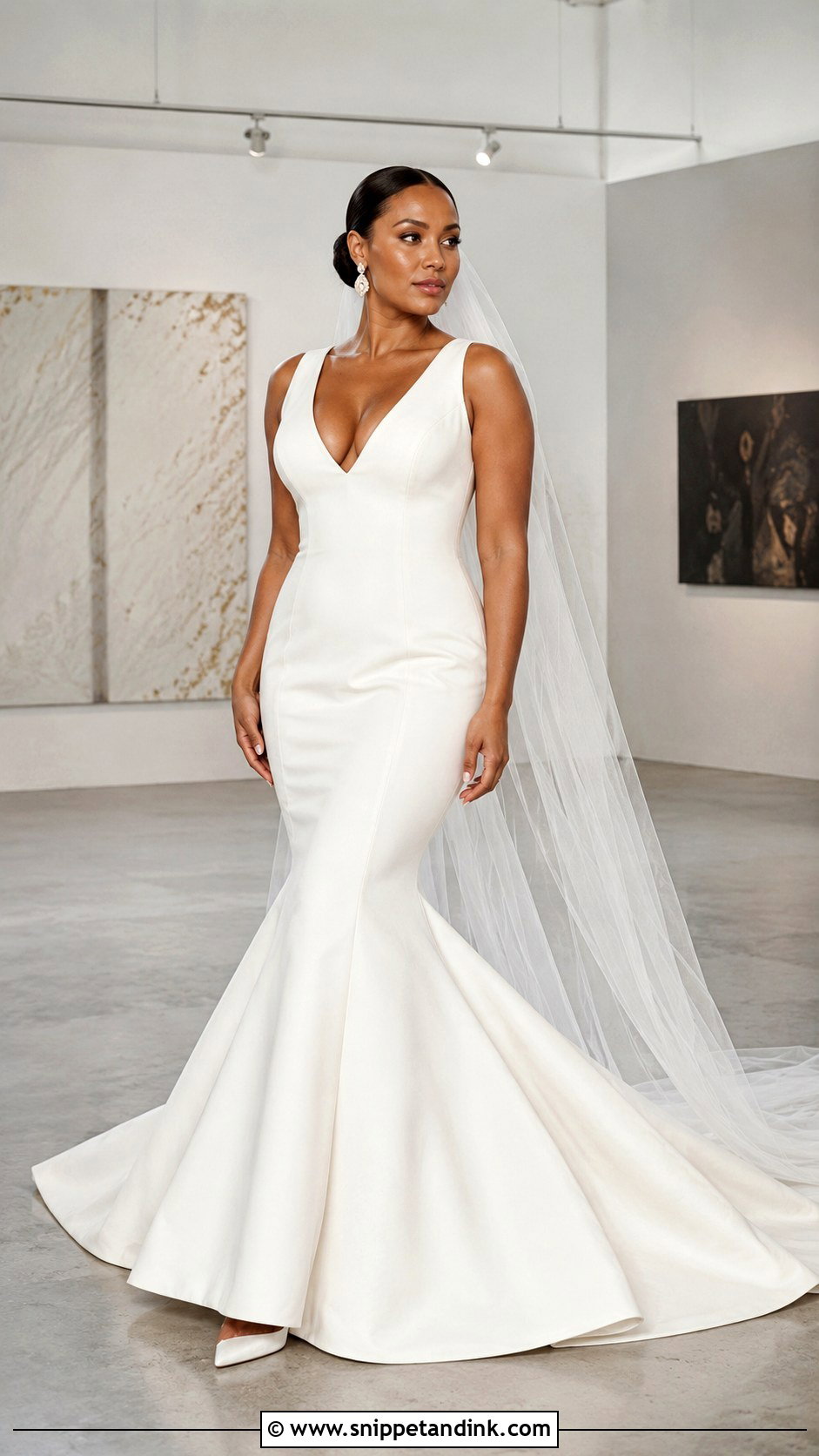
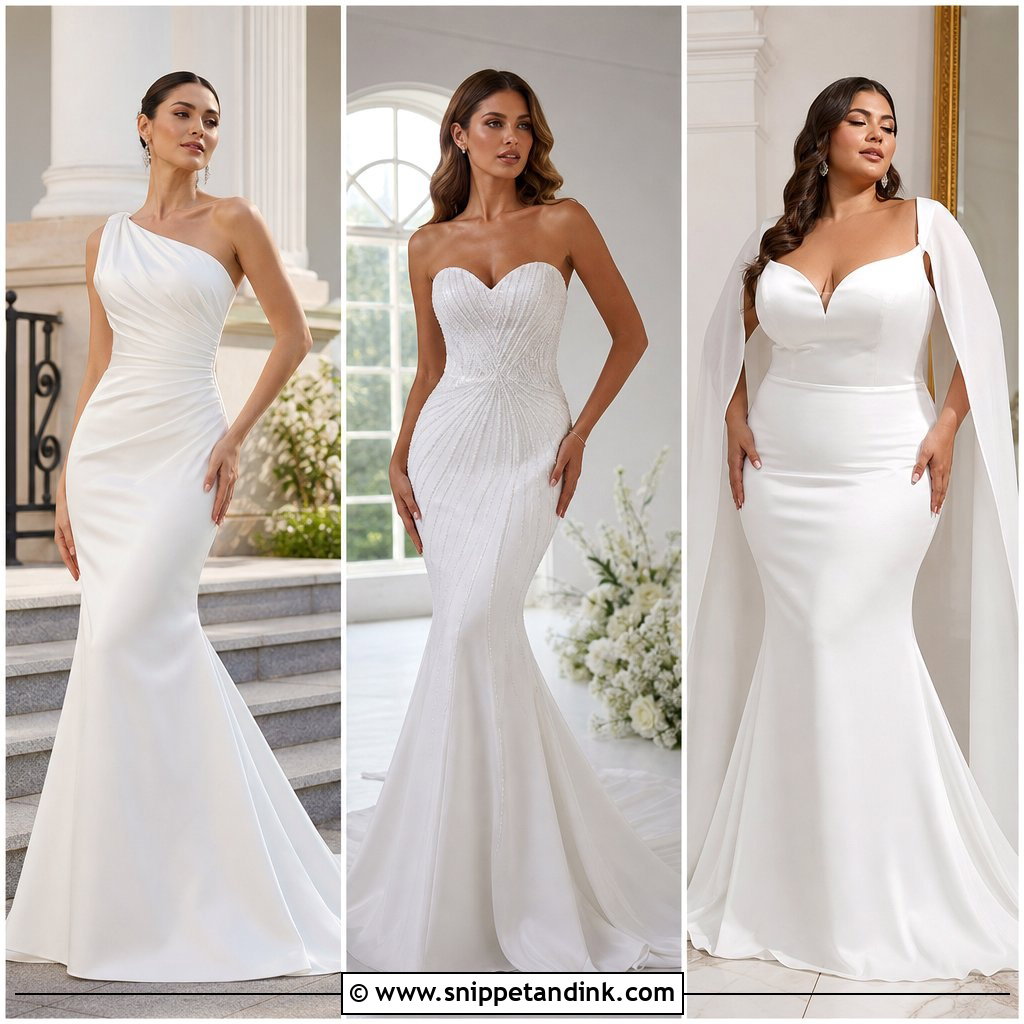
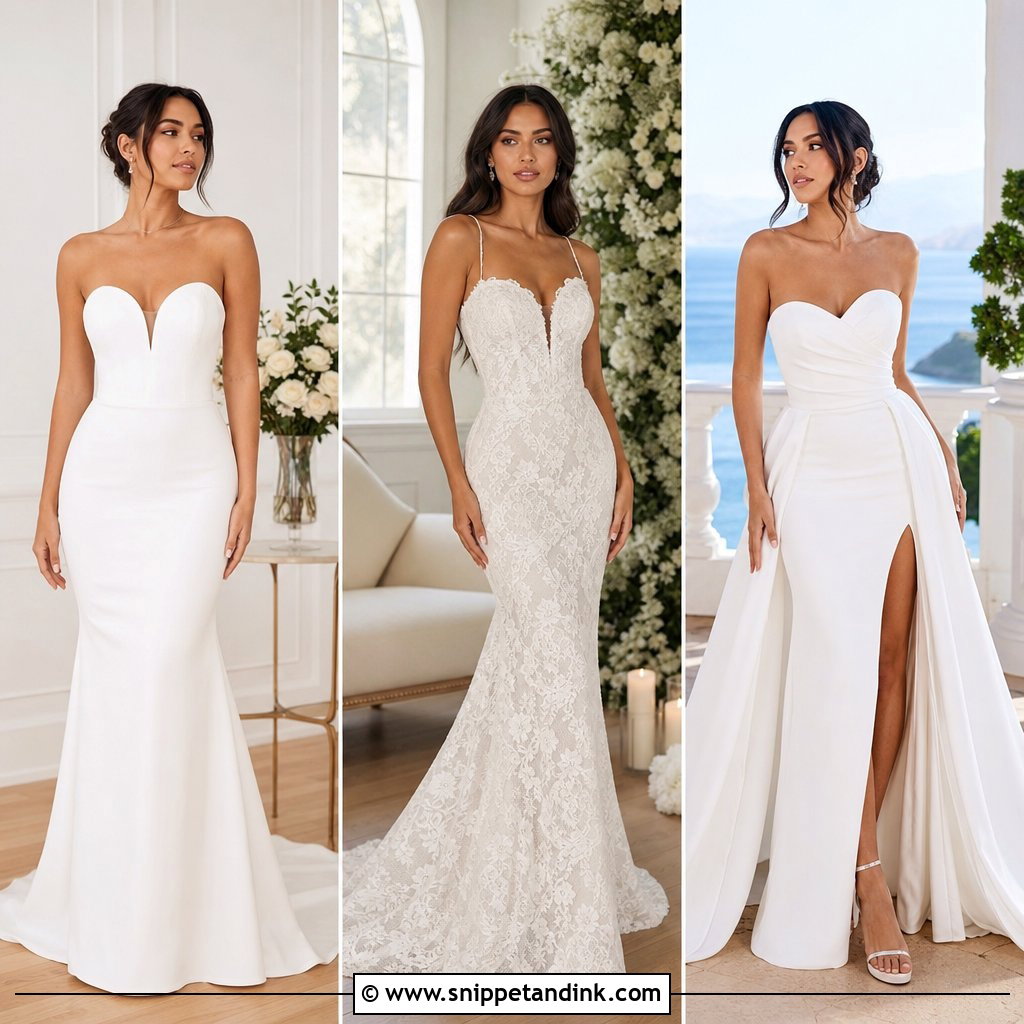
A mermaid hugs the torso, waist, hips and thighs, then opens into a pronounced flare at or just below the knee. It’s the most demanding shape on this list to wear for ten hours. Stretch crepe gives the smoothest finish and the most give; lace appliqués soften the fit and follow curves without adding bulk. Because the skirt narrows around the legs, I ask brides to take full strides, climb a step and sit down during alterations, and to try the dance-floor bustle before the final fitting. Good lining makes a real difference here. Sleek heels, drop earrings and a long veil set beneath a low bun keep the focus on the shape itself. If you dislike anything tight around your knees, skip straight to the trumpet.
4. Trumpet Wedding Dress
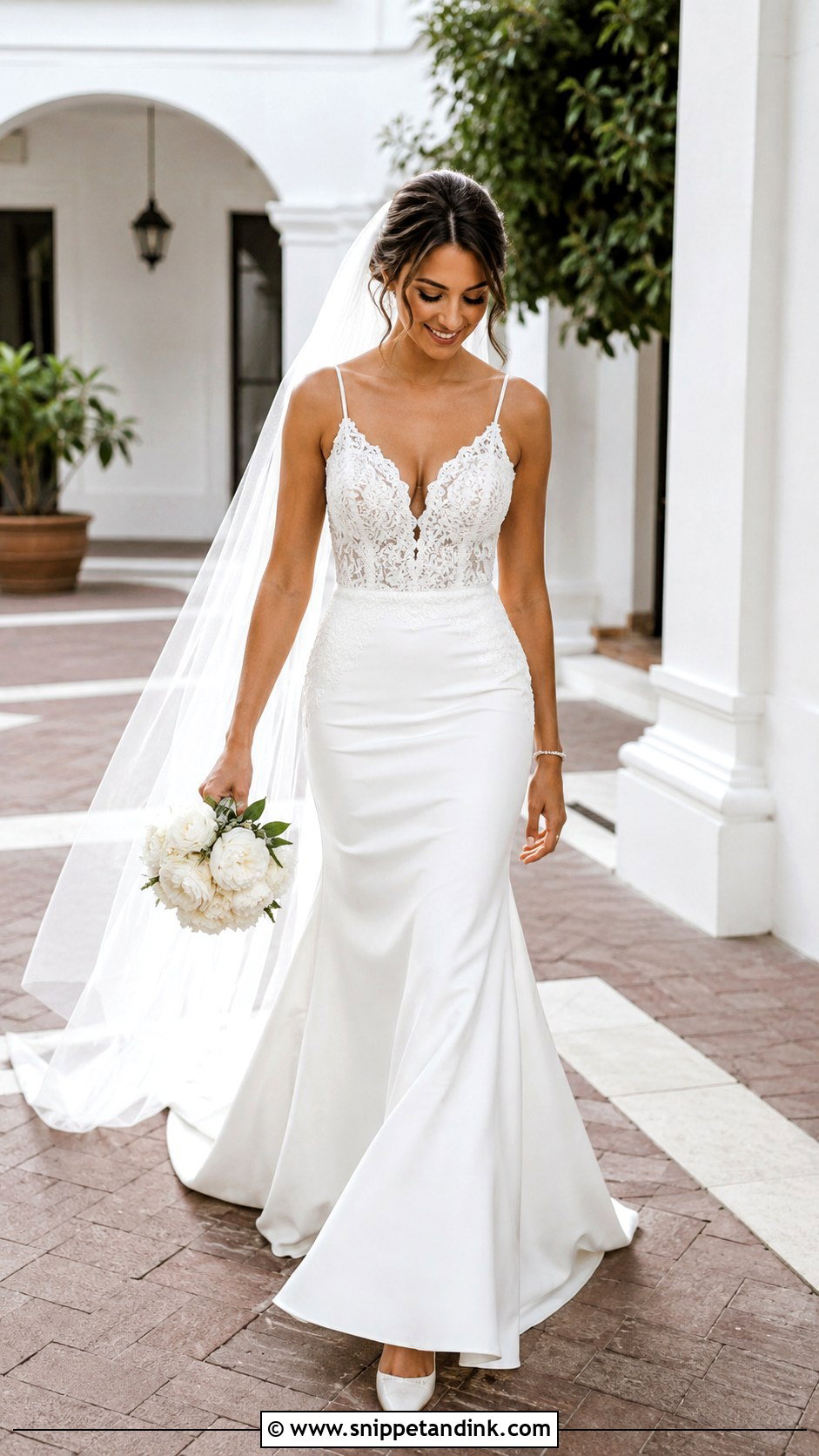
The trumpet is the mermaid’s more forgiving cousin. It fits through the hips and starts its flare around mid-thigh, so the transition into the skirt is softer and your natural stride comes back. Lightweight crepe moves fluidly, satin gives clean structure, and lace over a neutral lining adds dimension without bulk. I usually pair it with a sweetheart or V-neck bodice because the line from neckline to flare reads as one long gesture. Internal boning and a waist stay do most of the work keeping it in place. Pointed pumps, a slim bracelet and a chapel-length veil that echoes the long line are all it needs.
5. Fit-And-Flare Wedding Dress
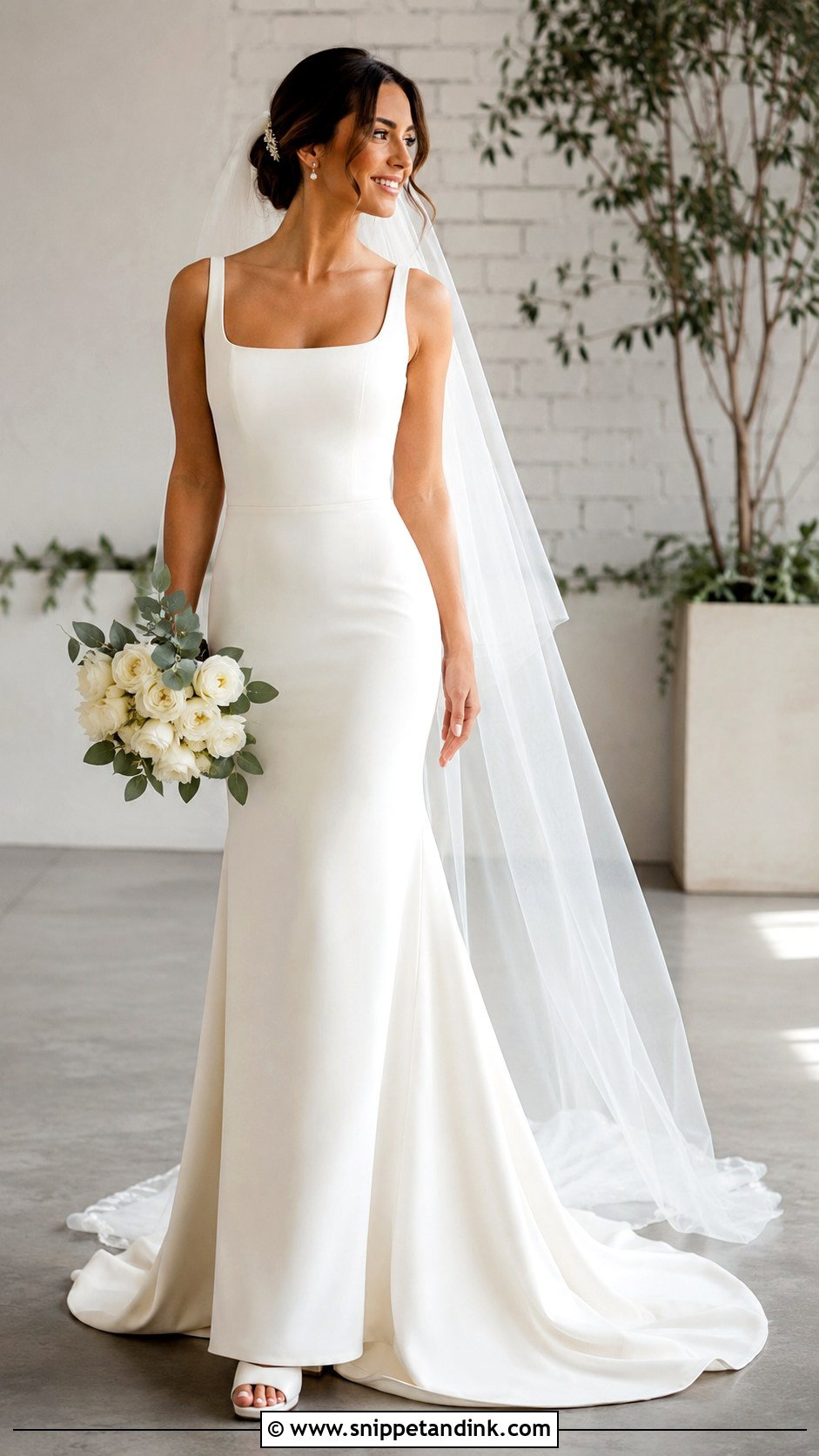
What if you want a fitted gown without the sculpted drama of a mermaid? Fit-and-flare is that middle ground. The bodice and upper skirt follow the body, then widen gradually rather than breaking sharply, which makes it far easier to move in over a long evening. Crepe keeps it minimal, beaded lace adds a soft shimmer, and organza panels give controlled volume. The thing I check most carefully at alterations is the lining across the hips when the bride sits; if it pulls there, it will pull all night. Block heels, a slim hair comb and small earrings suit the relaxed fit.
6. Sheath Wedding Dress
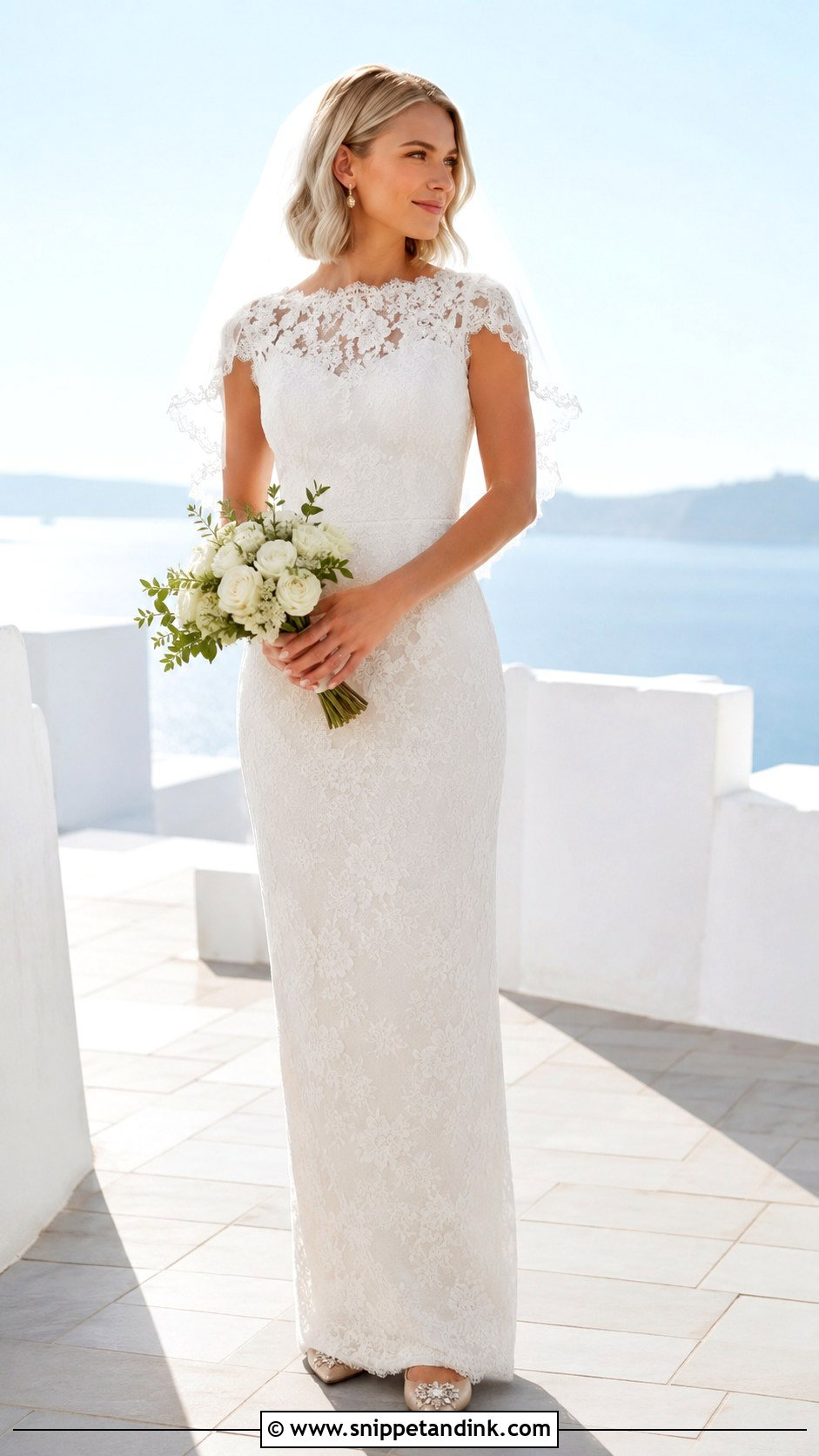
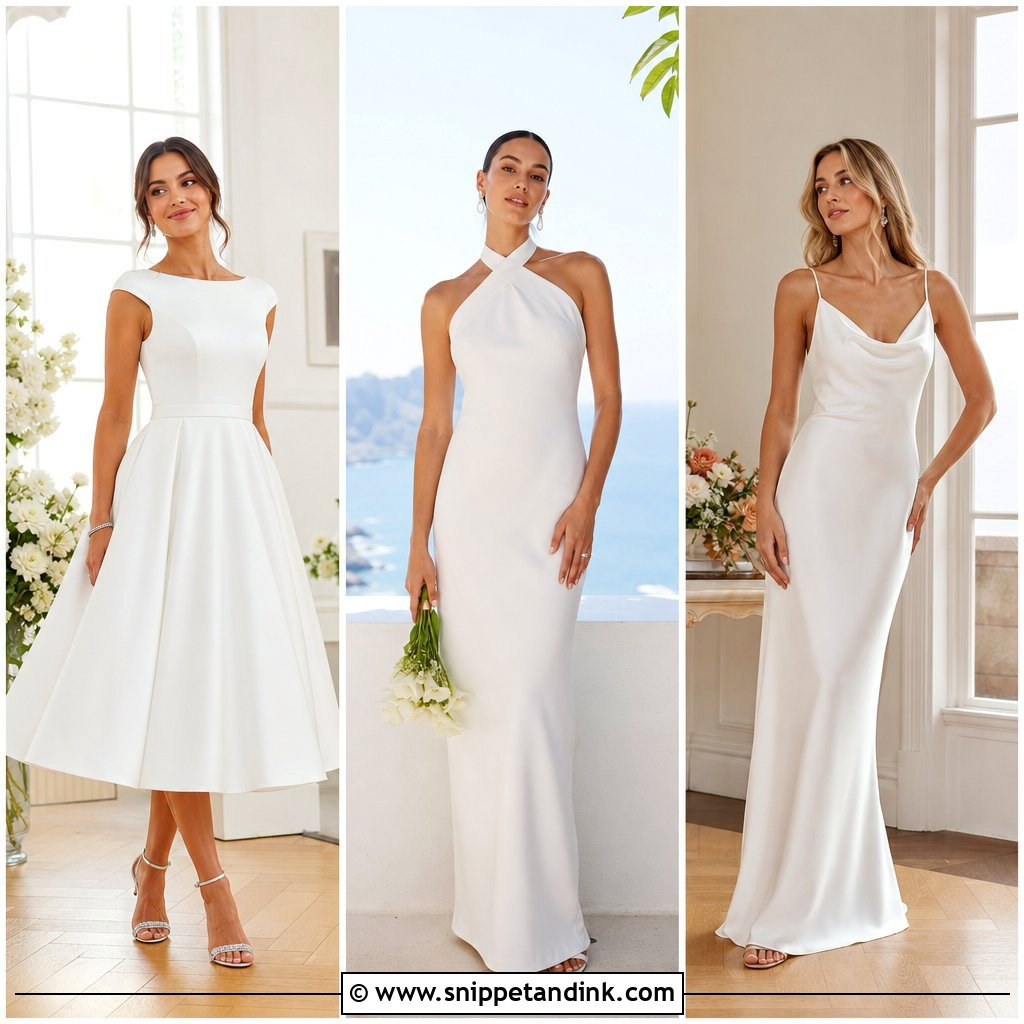
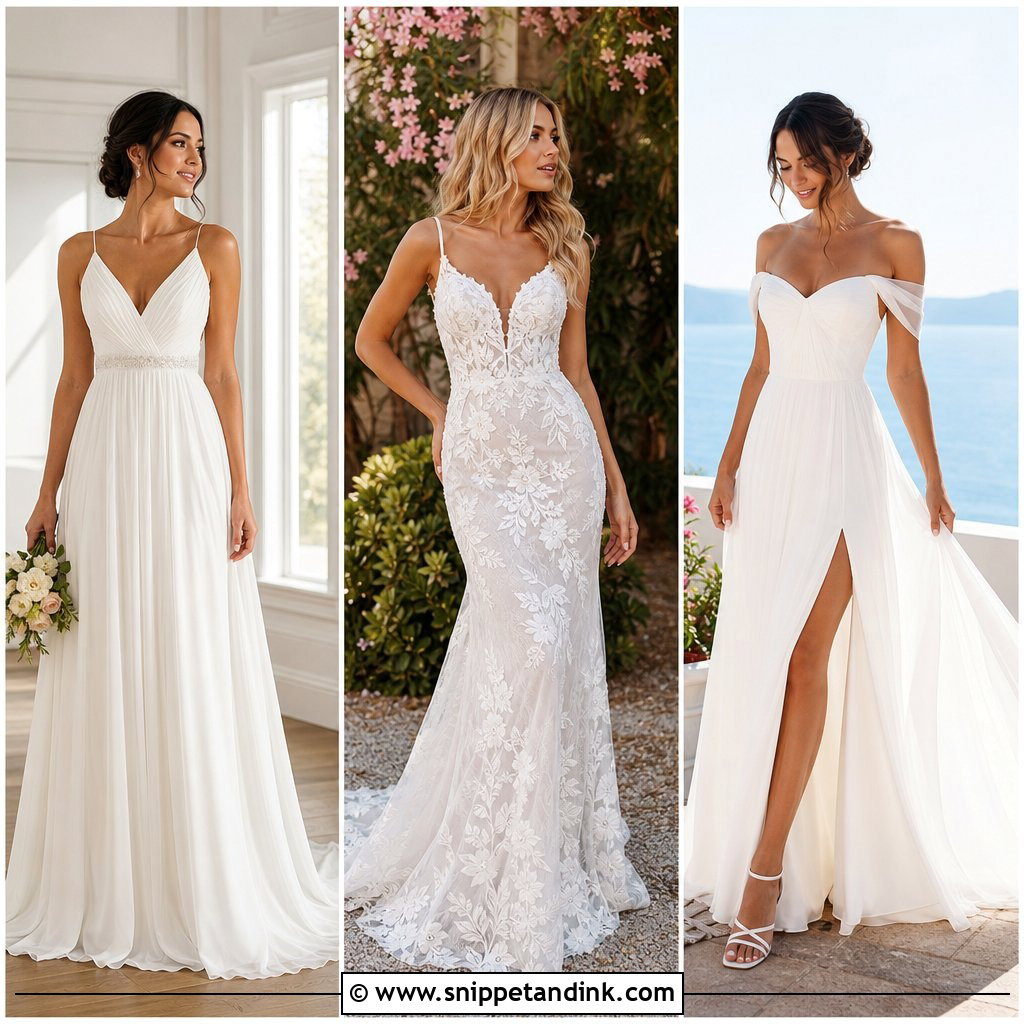
Clean and understated, a sheath wedding dress falls close to the body with no large skirt or flare. Crepe makes it modern, allover lace makes it romantic, lightweight chiffon relaxes it. With so little excess fabric, nothing hides poor tailoring, and I always fit a sheath over the exact underwear the bride will wear because a seam line shows through instantly. A bateau neckline adds restraint, while an open back gives interest without disturbing the narrow shape. It’s also the easiest gown to fold into a carry-on, which is why I suggest it for destination weddings. Slender heels or embellished flats, a structured clutch and a shoulder-length veil finish it.
7. Column Wedding Dress
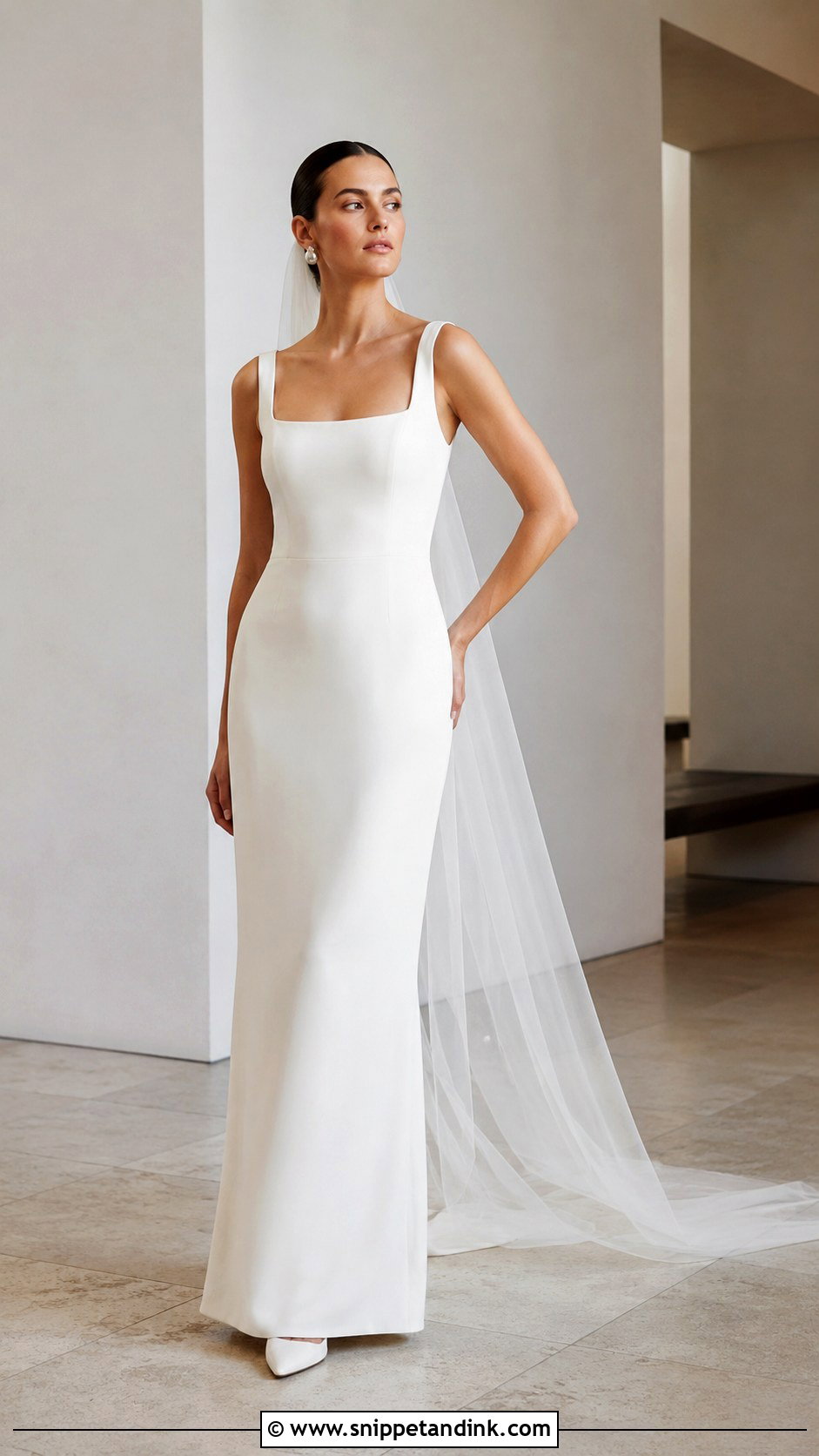
A column runs in one straight line from neckline to hem. The difference from a sheath is subtle: a sheath follows the body’s curves, while a column hangs with a more architectural, vertical effect. Structured crepe, silk faille or smooth satin hold that line best. Hem length is everything on this shape, because even a centimetre of excess fabric pooling at the floor breaks the uninterrupted line. I never pin a column hem unless the bride is standing in her actual wedding shoes. Pointed-toe shoes, sculptural earrings and a long, narrow veil keep the finish spare, and a square neckline or asymmetric draped bodice gives the eye somewhere to land.
8. Empire Waist Wedding Dress
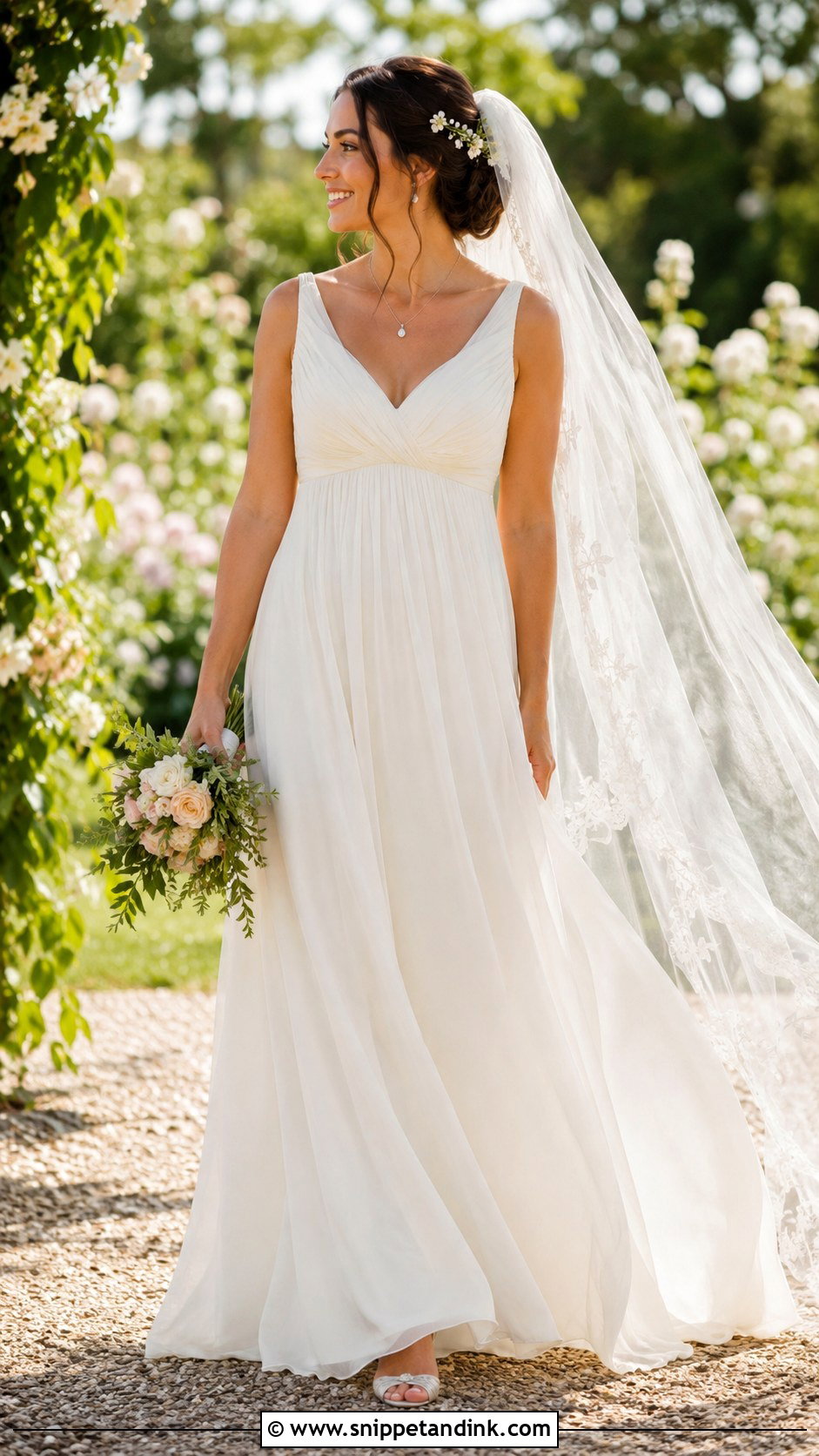
An empire waist puts its seam just below the bust and lets the skirt fall freely over the torso and hips. It’s one of the most comfortable shapes for a seated ceremony or a hot day, and it works well for pregnant brides too. Chiffon, silk georgette and lightweight lace move without bulking up under the seam; stiff fabrics tend to tent outward. Because the high waist draws the eye straight to the neckline, the bodice has to be properly supported, and I often add a built-in bra or cups during alterations. Low heels, a small pendant, floral pins and an airy veil suit the classical mood of this shape.
9. Princess Wedding Dress
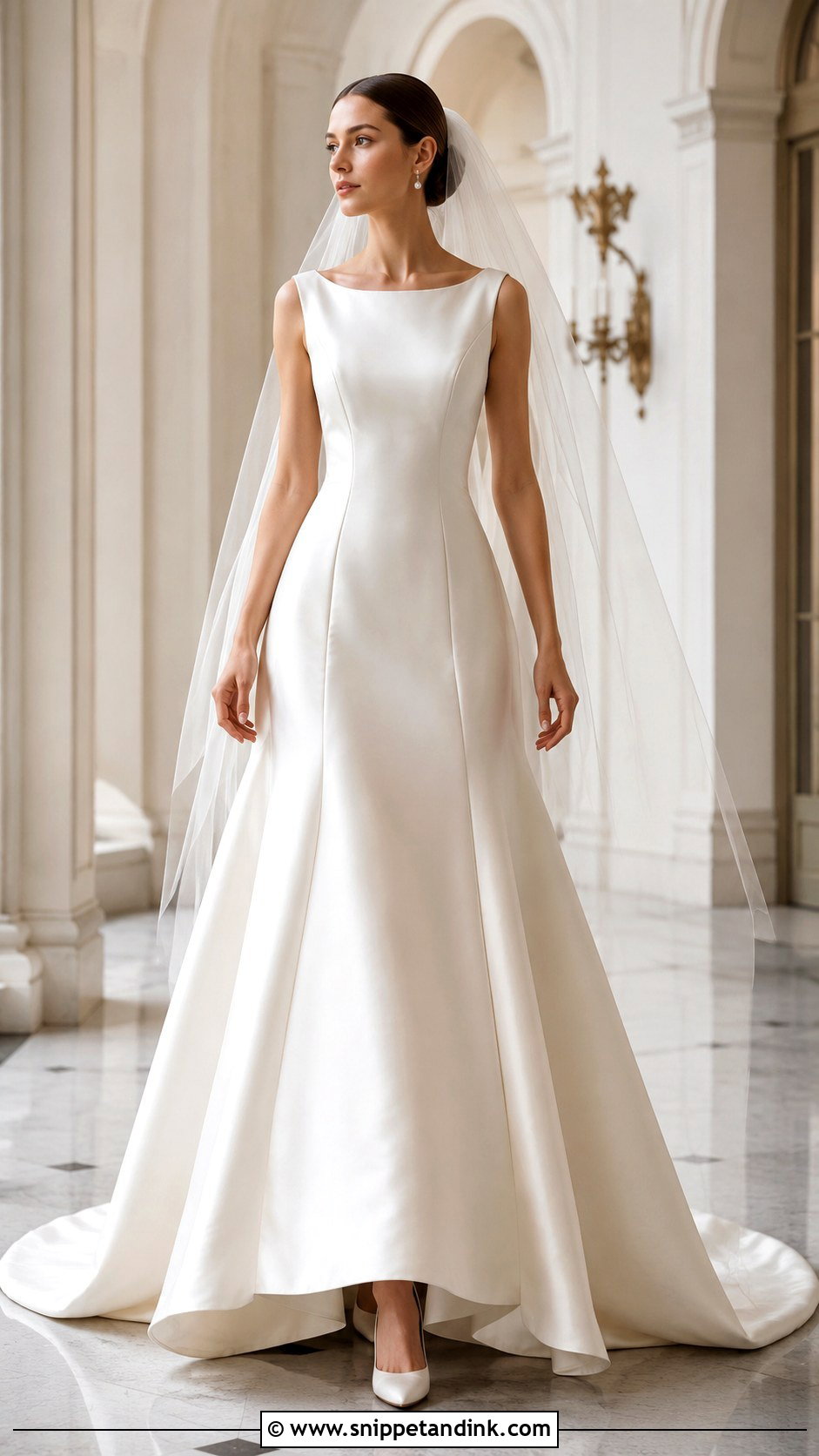
A princess gown shapes itself through long vertical seams instead of a strong horizontal waist seam. The panels usually start at the neckline or armholes and run through the bodice into a widening skirt, giving smooth length with tailored definition. Satin shows those seams crisply, lace softens them, mikado gives the most structure. It’s also the easiest shape for a seamstress to take in or let out, since every panel seam is an adjustment point. The construction appears on moderate A-lines and on fuller skirts alike, so I have brides try two volumes side by side. Classic pumps, pearl drops and a plain veil that leaves the panel work visible are all it wants.
10. Slip Wedding Dress
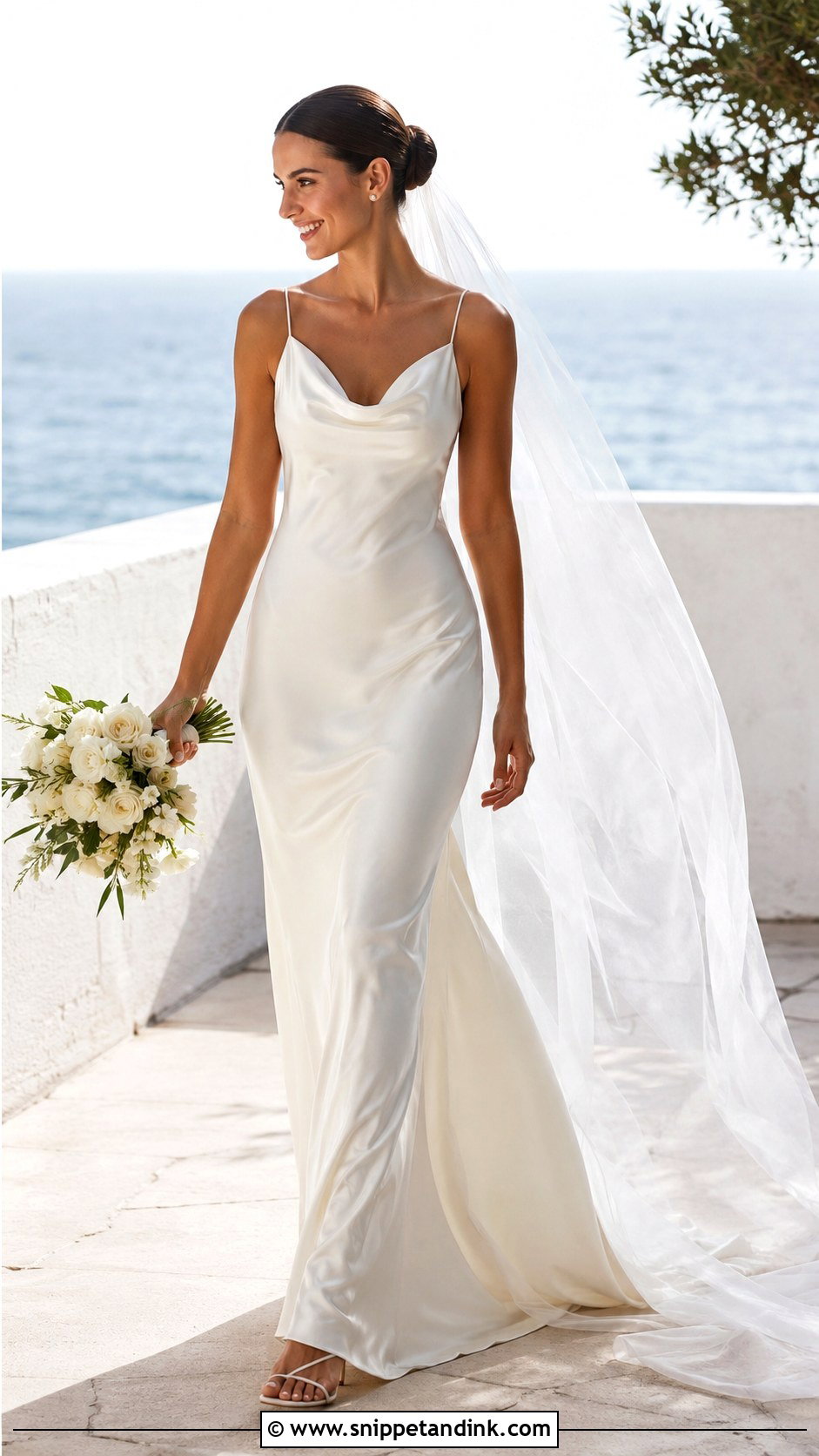
Silky fabric and a fluid line give the slip wedding dress its minimalist appeal. It skims the body with very little structure, which suits coastal, modern and intimate weddings. The catch is that bias-cut silk or satin shows everything: a seam allowance, a bra band, a slight twist in the lining. That’s why I rate professional alterations as essential on a slip, not optional. A cowl neckline relaxes it, a straight neckline sharpens it. Strappy heels, studs, a sleek bun and a sheer floor-length veil give contrast, and a tailored blazer or removable overskirt adds coverage for a formal ceremony.
11. Tea-Length Wedding Dress
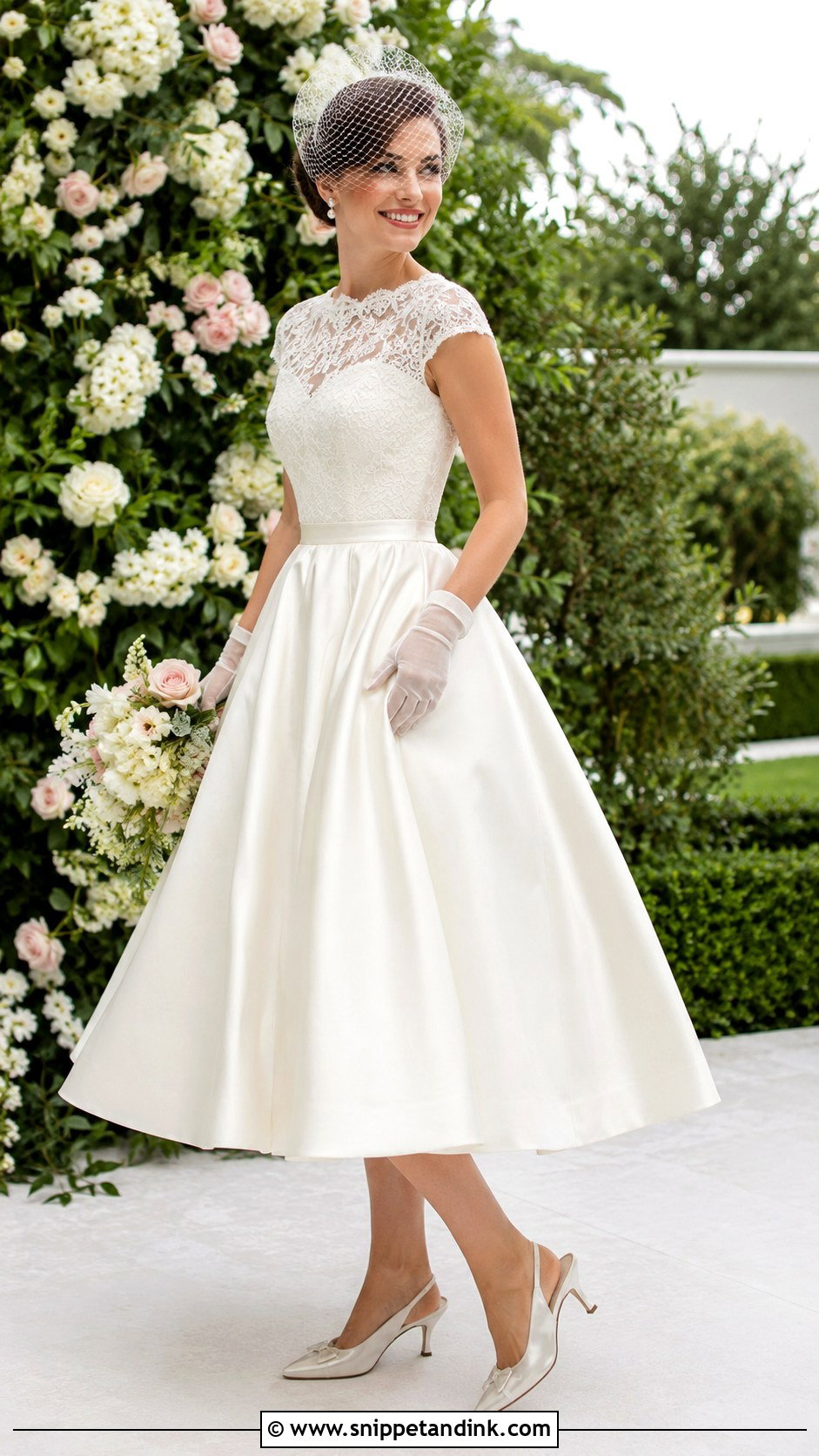
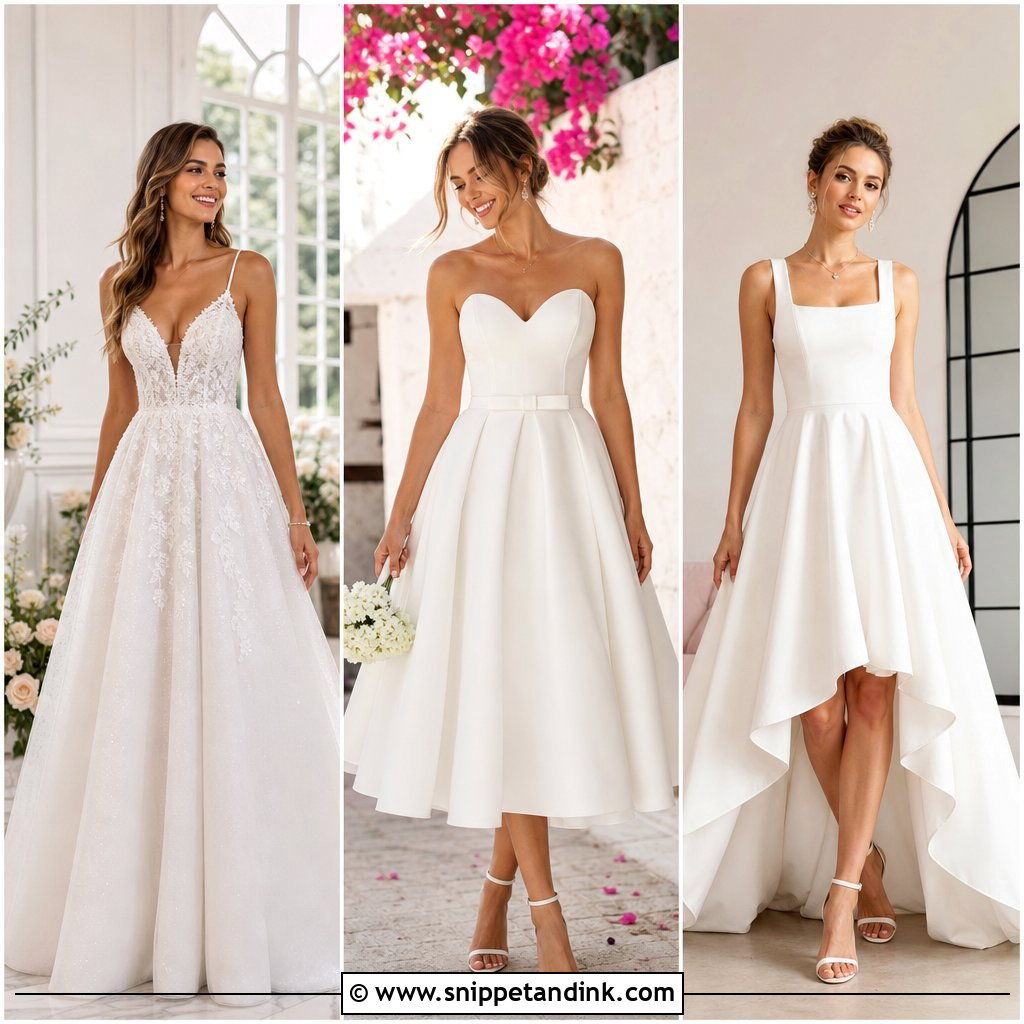
Tea length ends somewhere between the knee and ankle, so your shoes and lower legs become part of the outfit. The bodice can be fitted while the skirt ranges from a gentle A-line to a fuller 1950s shape. Crisp satin holds structure, while lace or organza keeps the skirt light. Shoes matter more here than anywhere else on this list, so pointed slingbacks or ankle-strap heels deserve real thought. Pearl earrings, short gloves or a birdcage veil keep it bridal without tipping into costume. I hem tea length while the bride stands in her shoes and look from the side, because the most comfortable point is usually just below the widest part of the calf.
12. Midi Wedding Dress
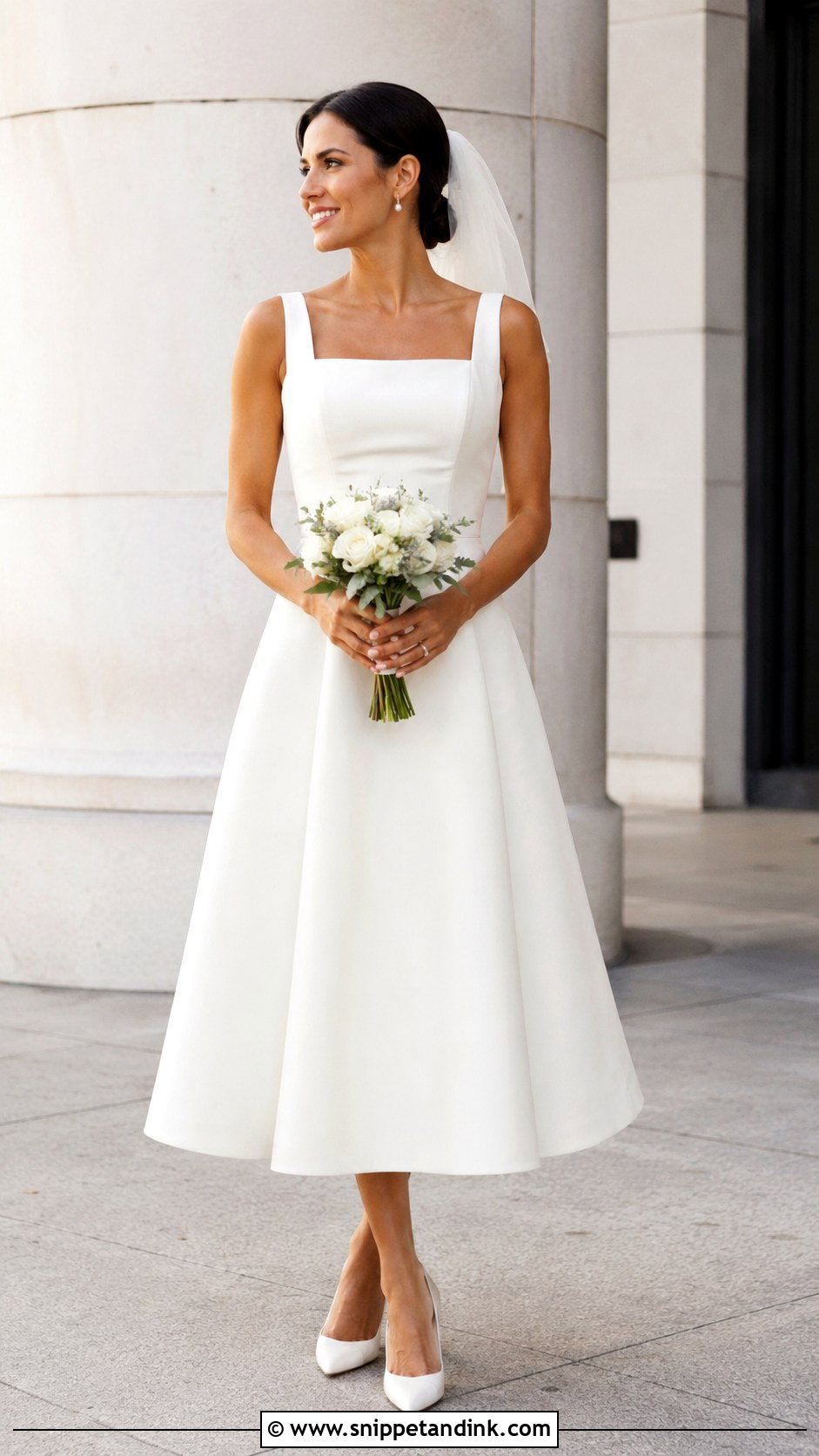
A midi wedding dress is a clean, contemporary alternative to a floor-length gown. The hem falls below the knee and above the ankle, formal enough for a ceremony while keeping shoes visible. A fitted crepe midi looks streamlined, a pleated skirt gives more movement. The hem creates a strong horizontal line, so I test two or three lengths against the bride’s shoes before cutting anything; a couple of centimetres changes the whole proportion. A square neck reads modern, a draped neckline softer. It anchors courthouse weddings and restaurant receptions and works as a second look. Pumps, a compact bouquet and a short veil or structured headband make it read as bridal.
13. Mini Wedding Dress
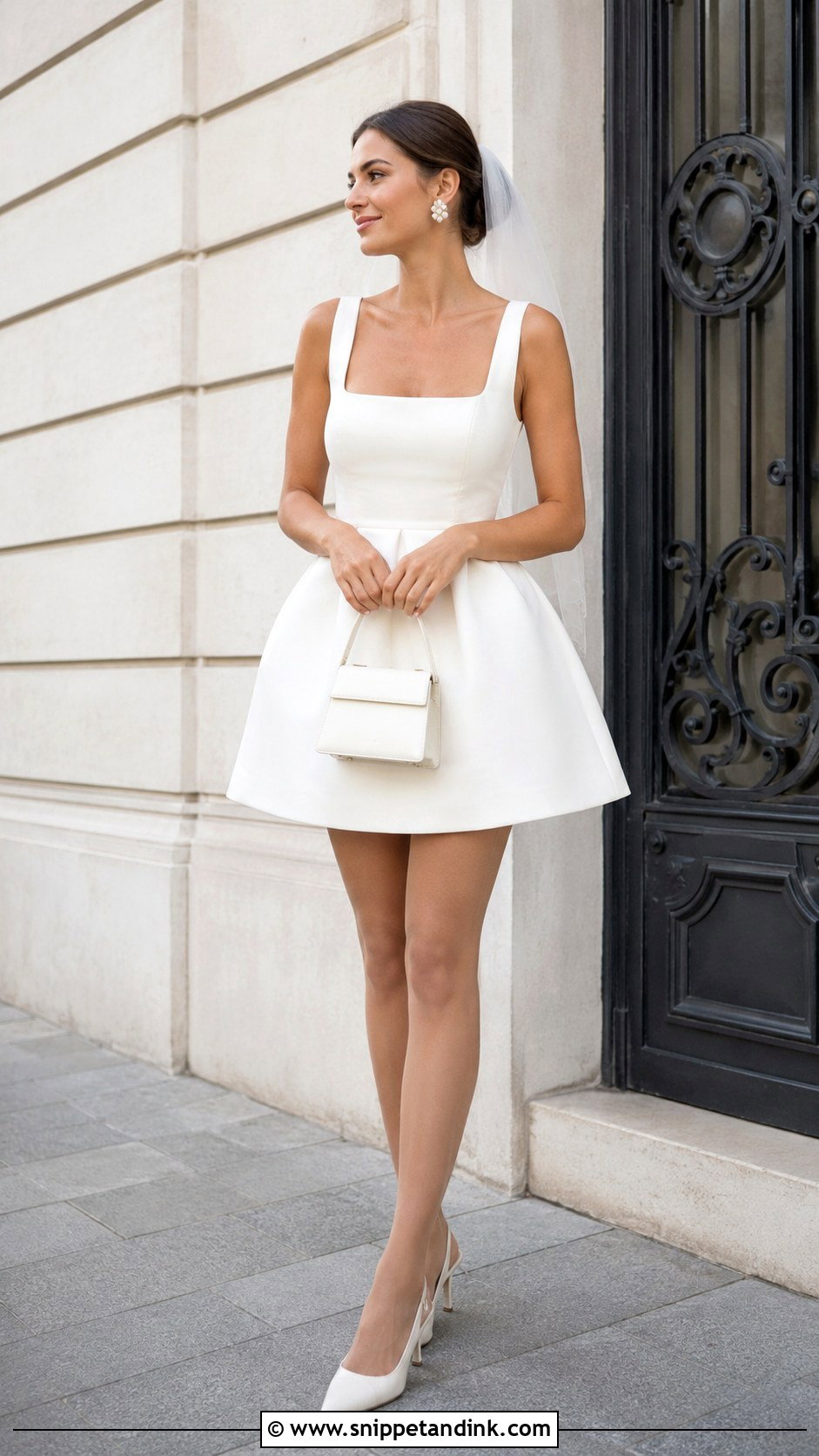
A mini is playful and fashion-forward, ideal for a civil ceremony or a reception change. Since the short hem shows more of the outfit, every visible piece has to coordinate. Look for internal boning, substantial fabric and properly tailored seams, because a thin mini can slide into looking casual very quickly. An A-line mini moves comfortably; a fitted shift gives a sharper line. My standard test is to sit, bend forward and do a quick twirl before approving alterations, since a hem that looks fine standing can ride up badly on a chair. Slingbacks, sheer tights where the setting suits them, statement earrings, a small top-handle bag and a short veil complete it.
14. High-Low Wedding Dress
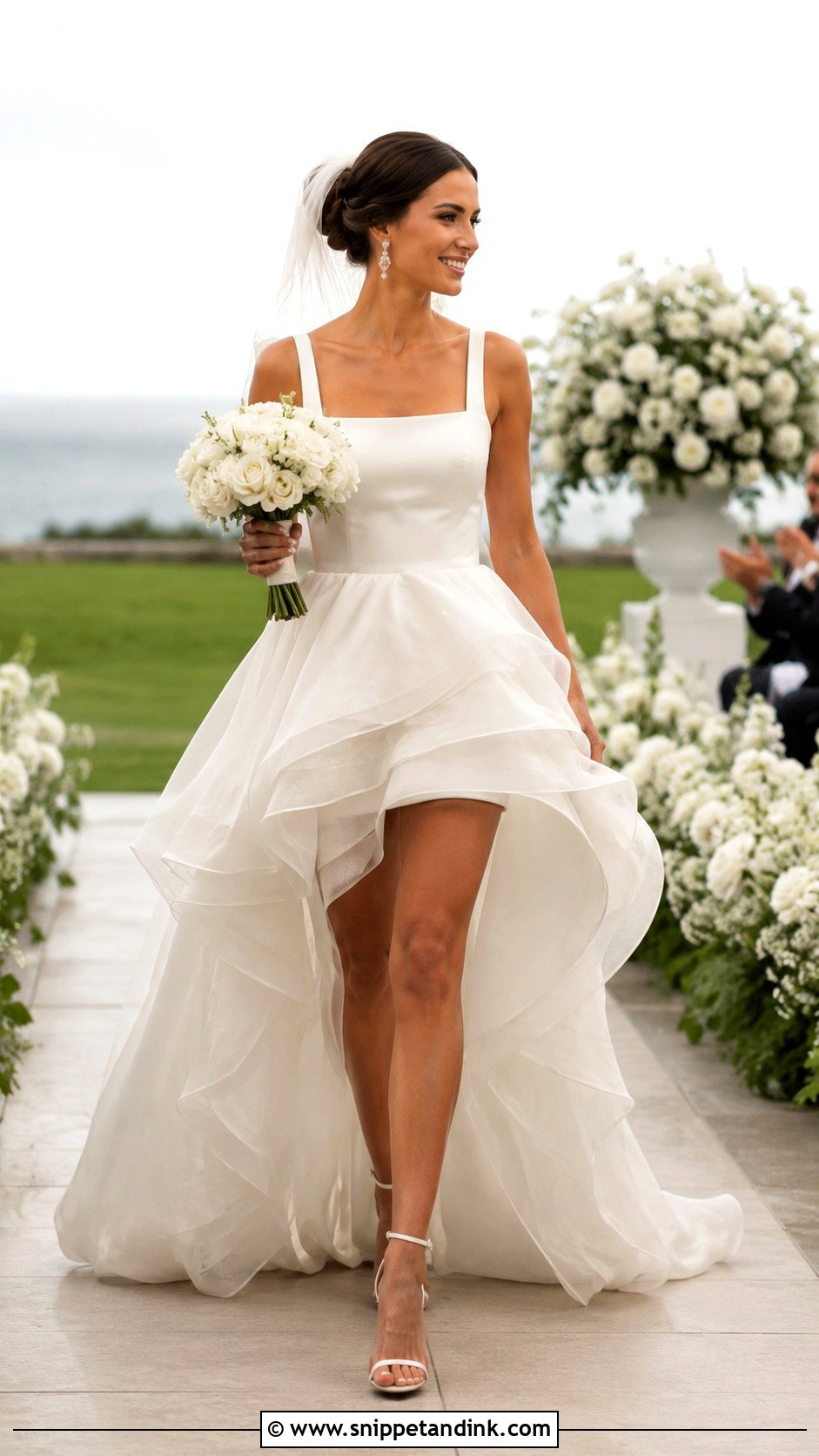
A high-low gown has a shorter front hem and a longer back, so you get visible shoes and still have a train behind you. The curve can be subtle or dramatic, with layers of organza and tulle. Shoes show from nearly every angle, so choose streamlined heels you’re happy to have photographed. Outdoors it’s practical: the front stays off wet grass while the back still gives a formal entrance. Two things to confirm at fittings are that the front length lets you take a full step and that the back bustles securely, since the longest point drags first. Small drop earrings, a fitted bodice and a short veil keep the descending hem as the main event.
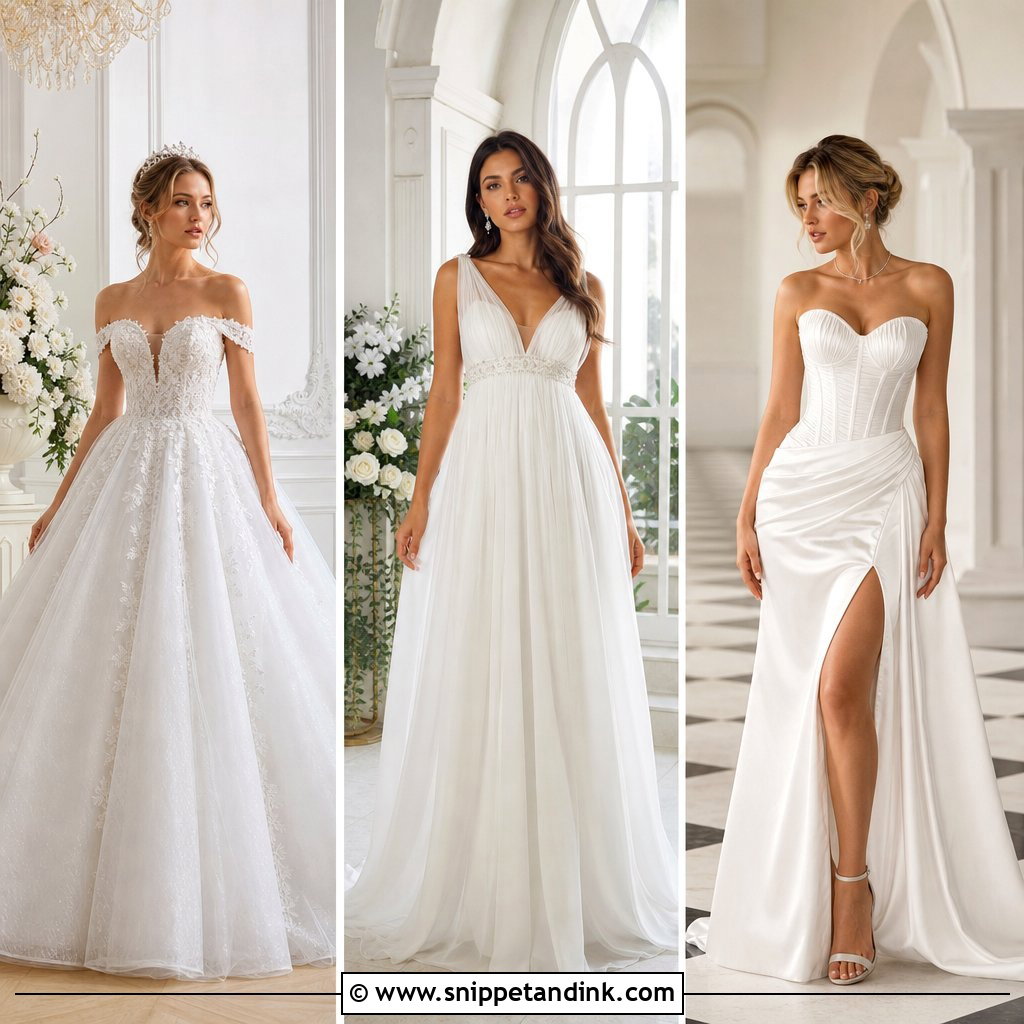
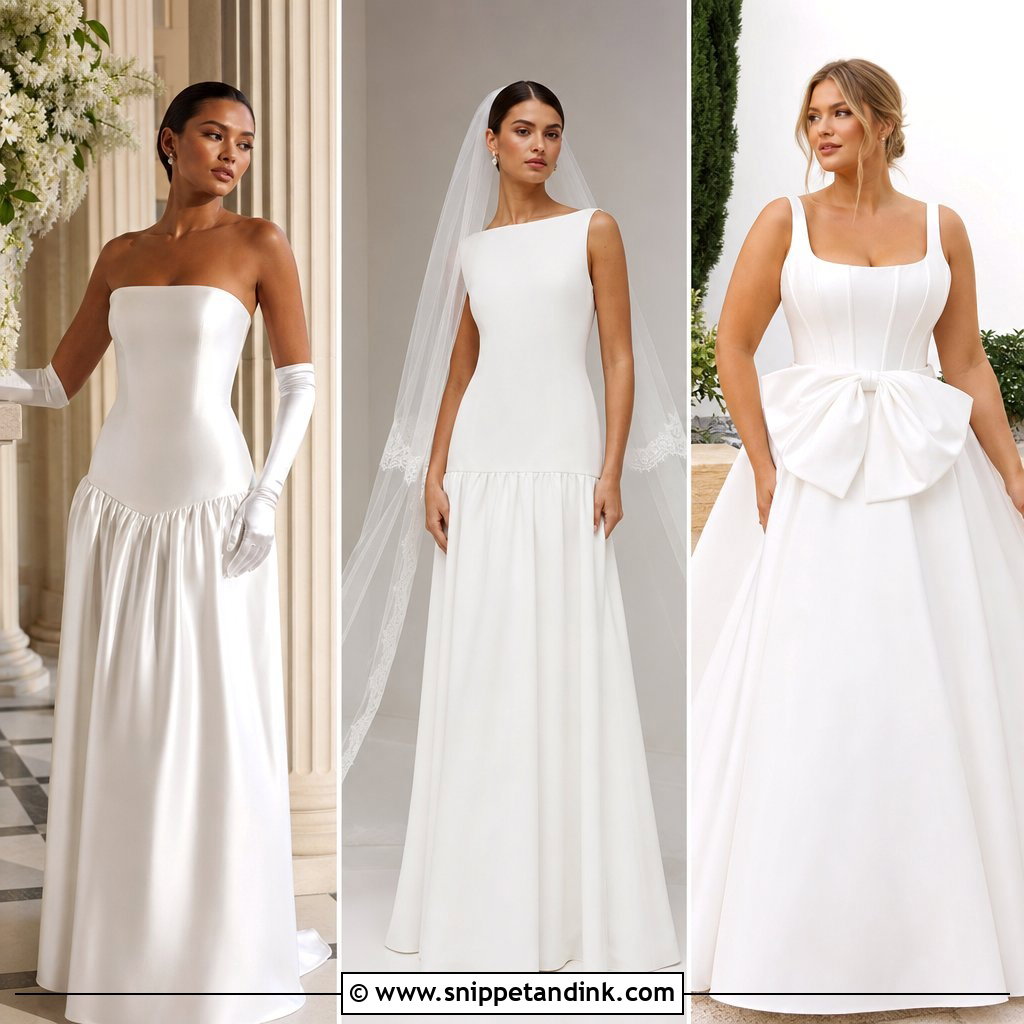
15. Drop Waist Wedding Dress
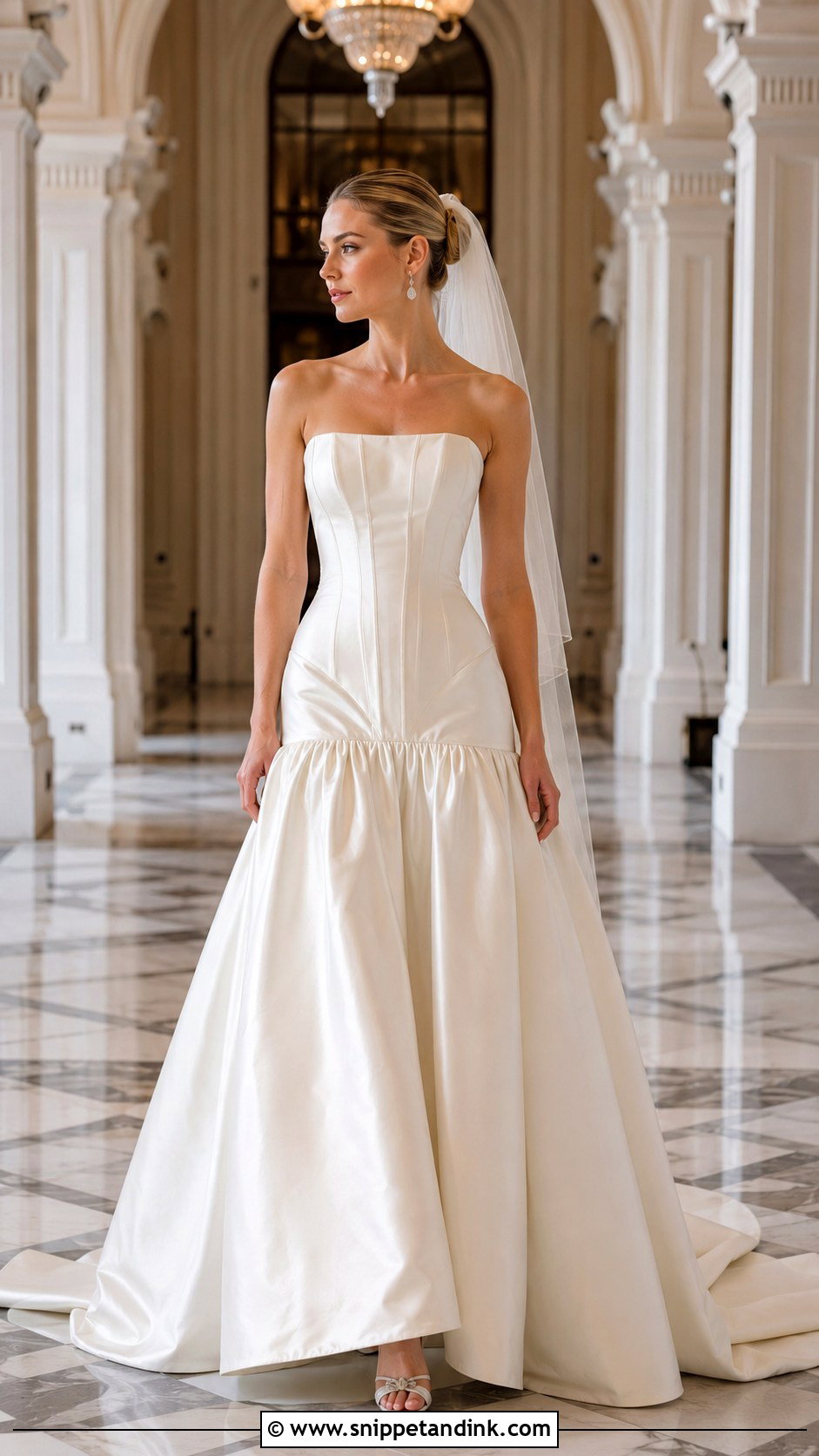
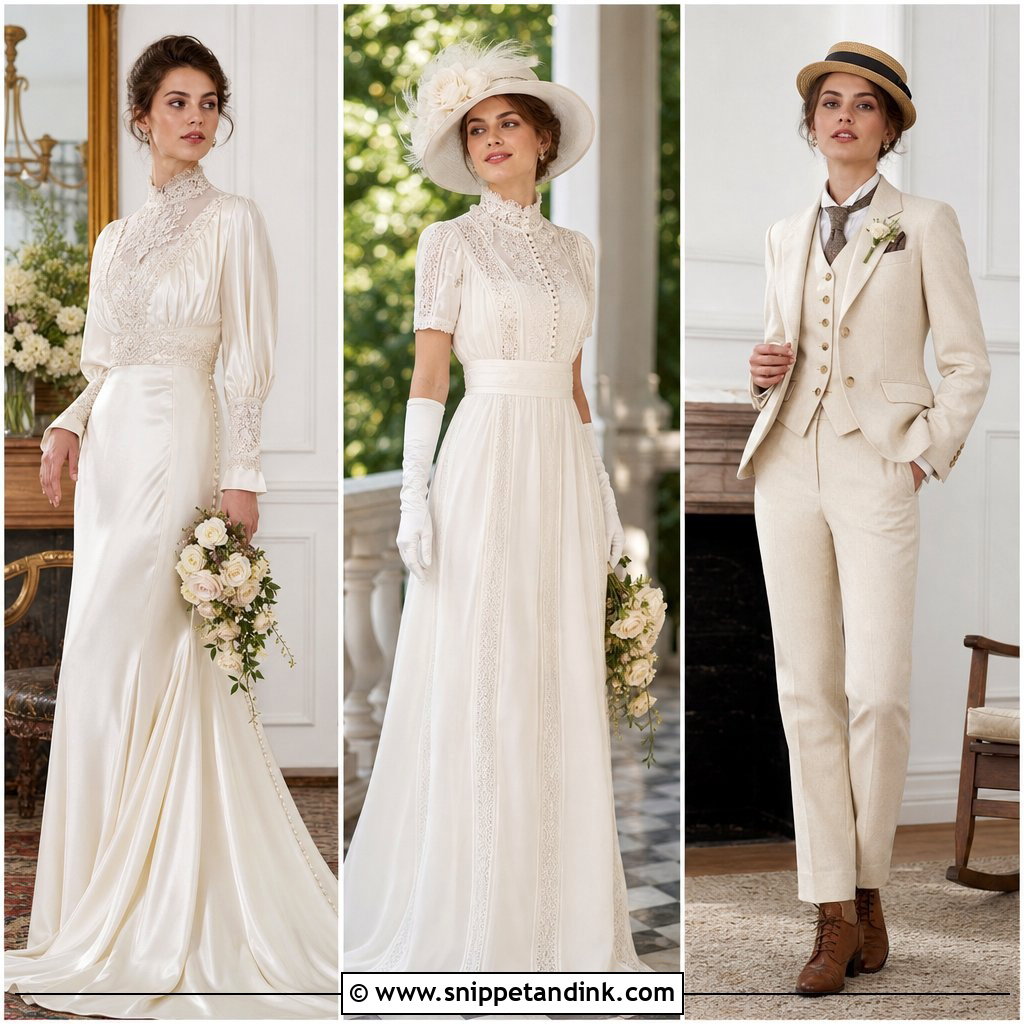
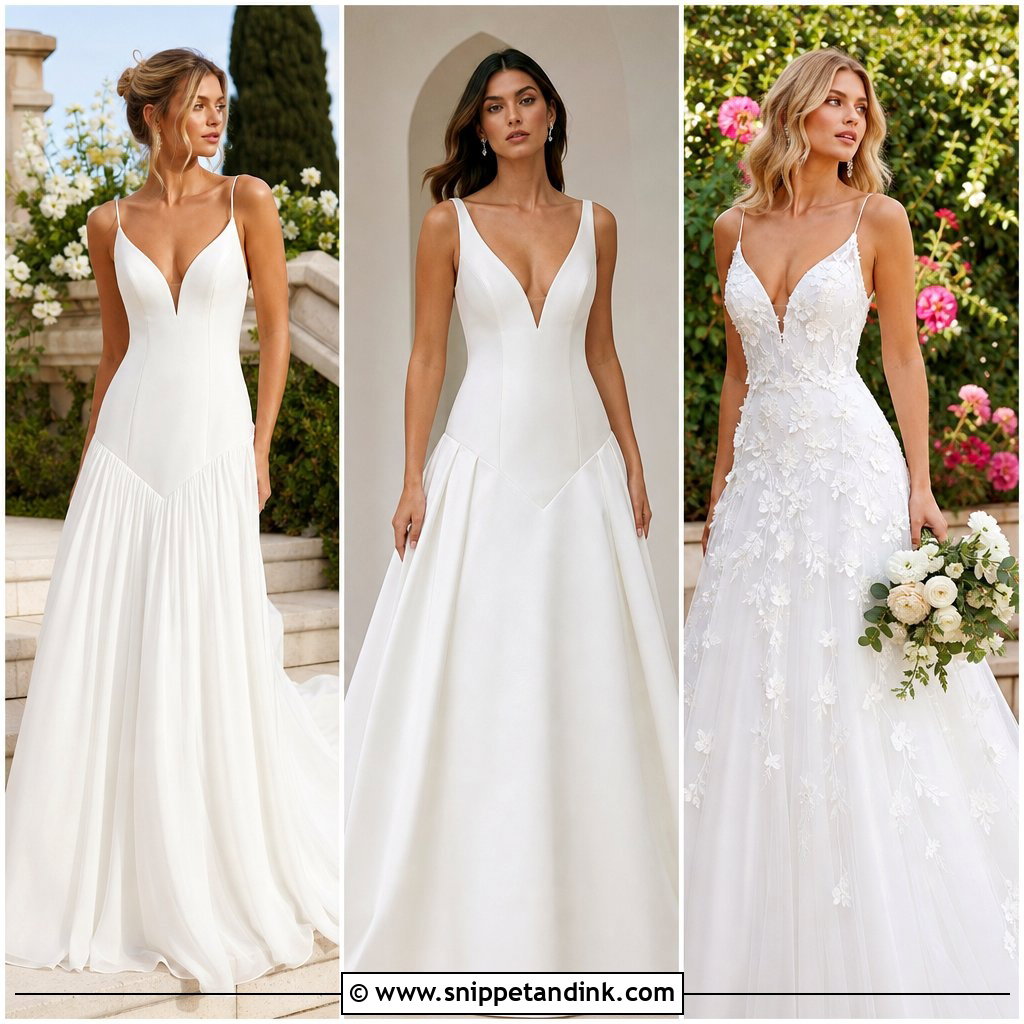
A drop waist carries the fitted bodice below the natural waist and releases into the skirt around the upper hip, giving a long torso and a vintage-influenced line. Structured satin, corseted tulle or embroidered fabric define the elongated bodice well. Because it fits through more of the torso, this is the shape most likely to buckle horizontally when you sit, and I check for that before anything else. Boning and a little ease at the hips prevent it. A clean neckline, elegant heels and a veil set behind the head keep the bodice visible. It can lead into a slim skirt or a big one, which makes it more versatile than its reputation.
16. Basque Waist Wedding Dress
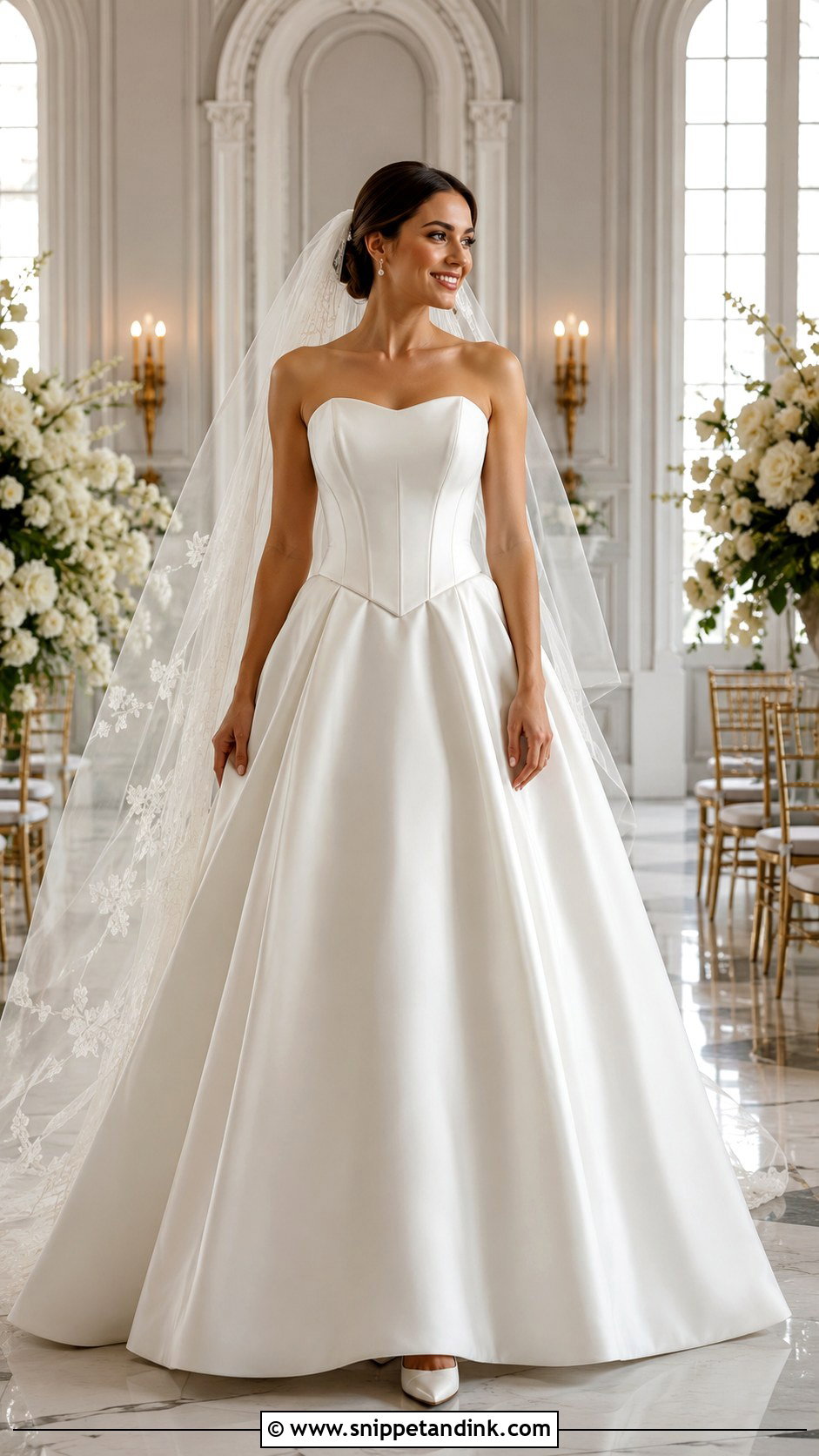
A basque waist wedding dress has a fitted bodice that dips into a V or U below the natural waist before flowing into a full or moderately flared skirt. The point draws the eye down the centre of the torso, and visible corsetry and sculpted bodices have brought this historic shape firmly back. Smooth mikado gives bold structure, lace softens the point. The fitting check I never skip is sitting the bride down: the lowest point of the V should stay centred and flat, not fold upward into the lap. Satin pumps, a cathedral or chapel veil and restrained jewellery let the waistline lead.
17. Peplum Wedding Dress
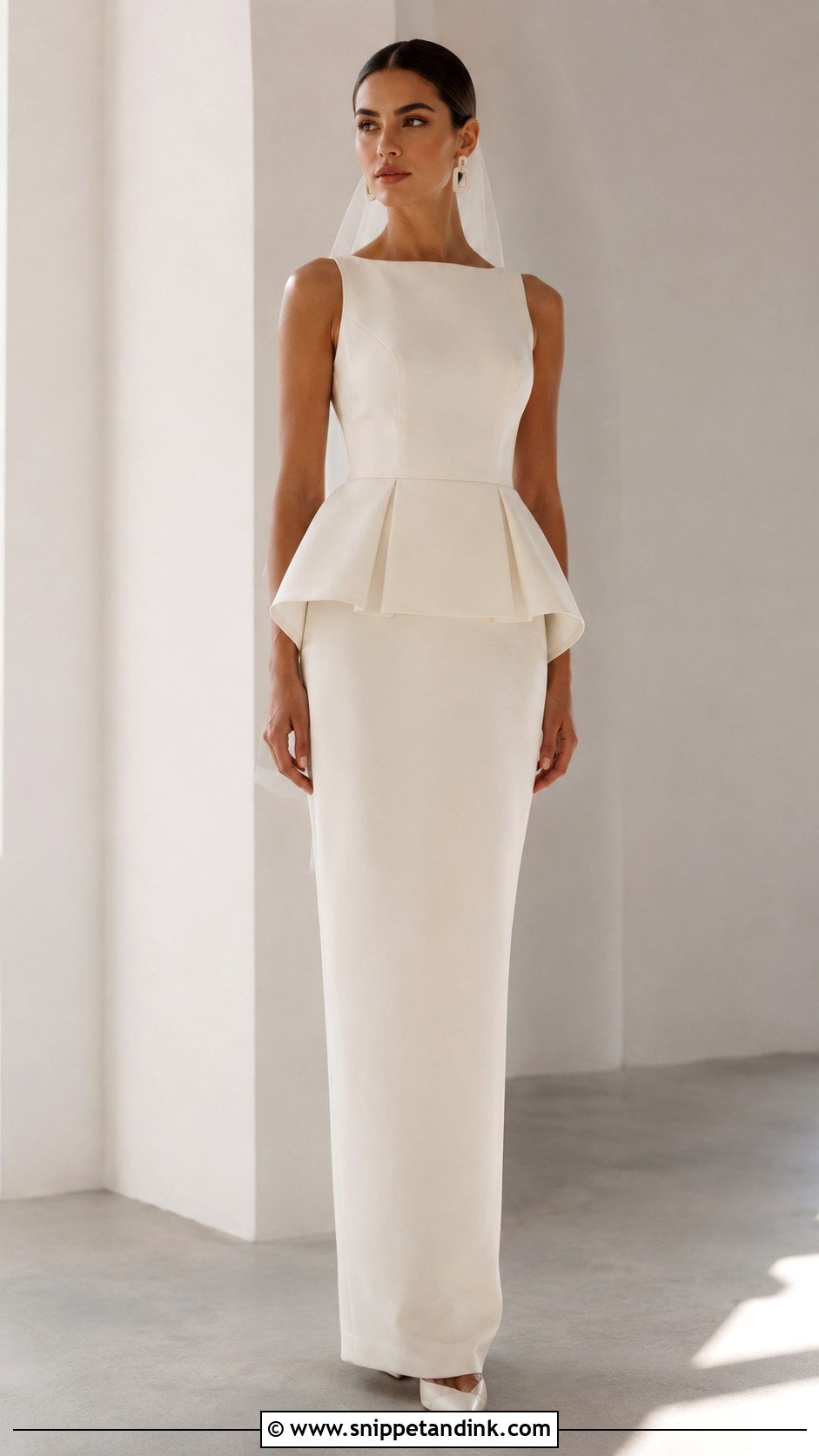
A peplum adds a short overskirt or flounce at the waist or upper hip, giving the silhouette a layered dimension. It can be crisp and architectural, softly draped, or detachable for a reception change, and fitted bridal jackets with peplums over A-line skirts are now a real option. Placement is the decision that matters. A peplum at the natural waist reads tailored; one at the lower hip widens the hipline, which some brides love and others don’t, so I have them try both. A smooth column or sheath skirt lets the peplum stand out. Simple pumps, geometric earrings and a narrow veil keep it sharp.
18. Tiered Wedding Dress
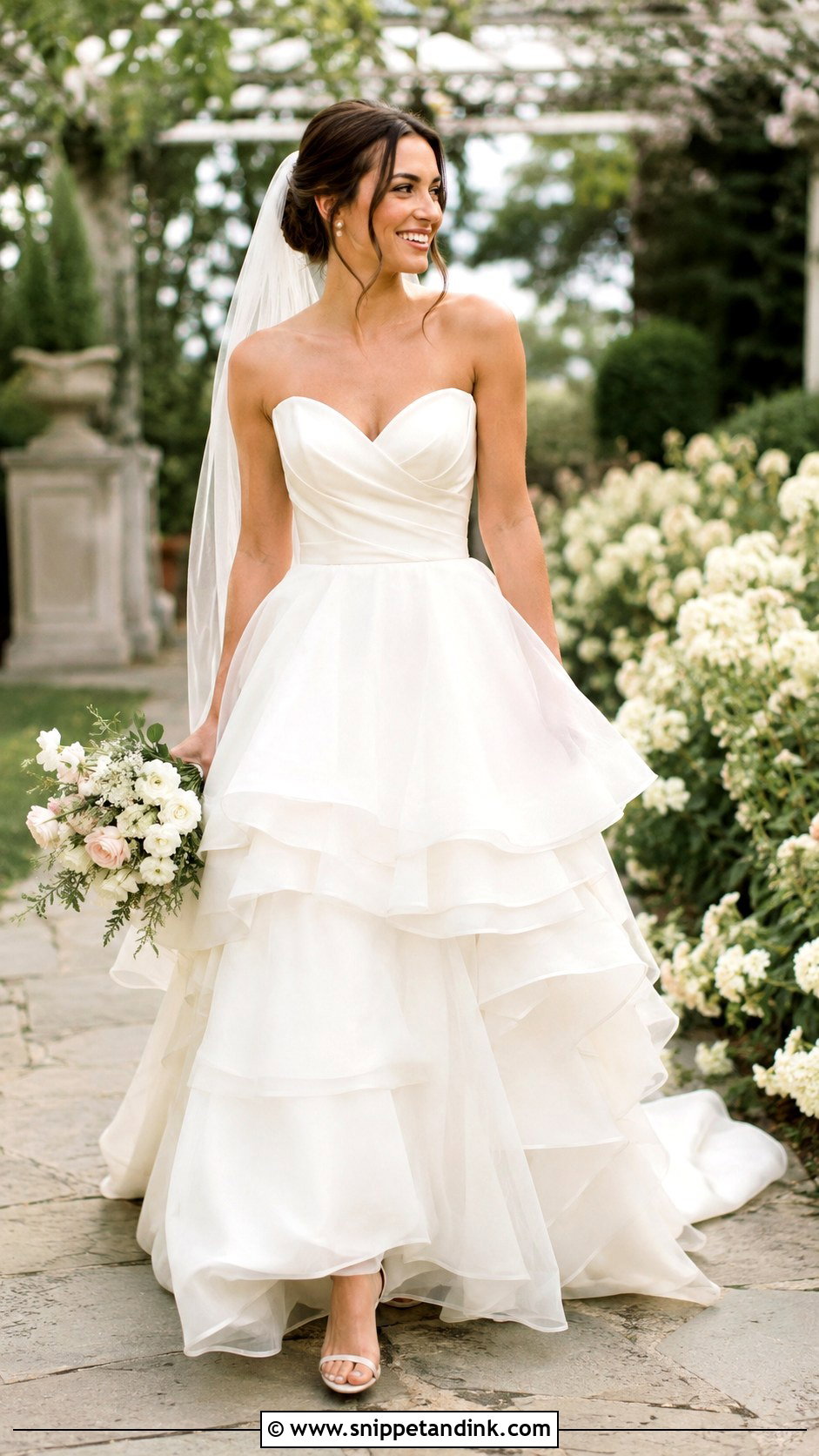
A tiered dress builds its shape from horizontal layers, which can be flowing, sharply gathered or graduated so they get fuller toward the hem. Chiffon and tulle give airy movement while organza holds a more sculptural tier. The risk is bulk: badly placed tiers make the skirt look heavy rather than light, so I walk a bride toward the mirror, away from it and side-on to watch how each layer swings and where it lands in photos. A fitted bodice keeps the top clean. Comfortable heels, small earrings and a plain veil avoid adding yet another layer to the picture.
19. Bubble Hem Wedding Dress
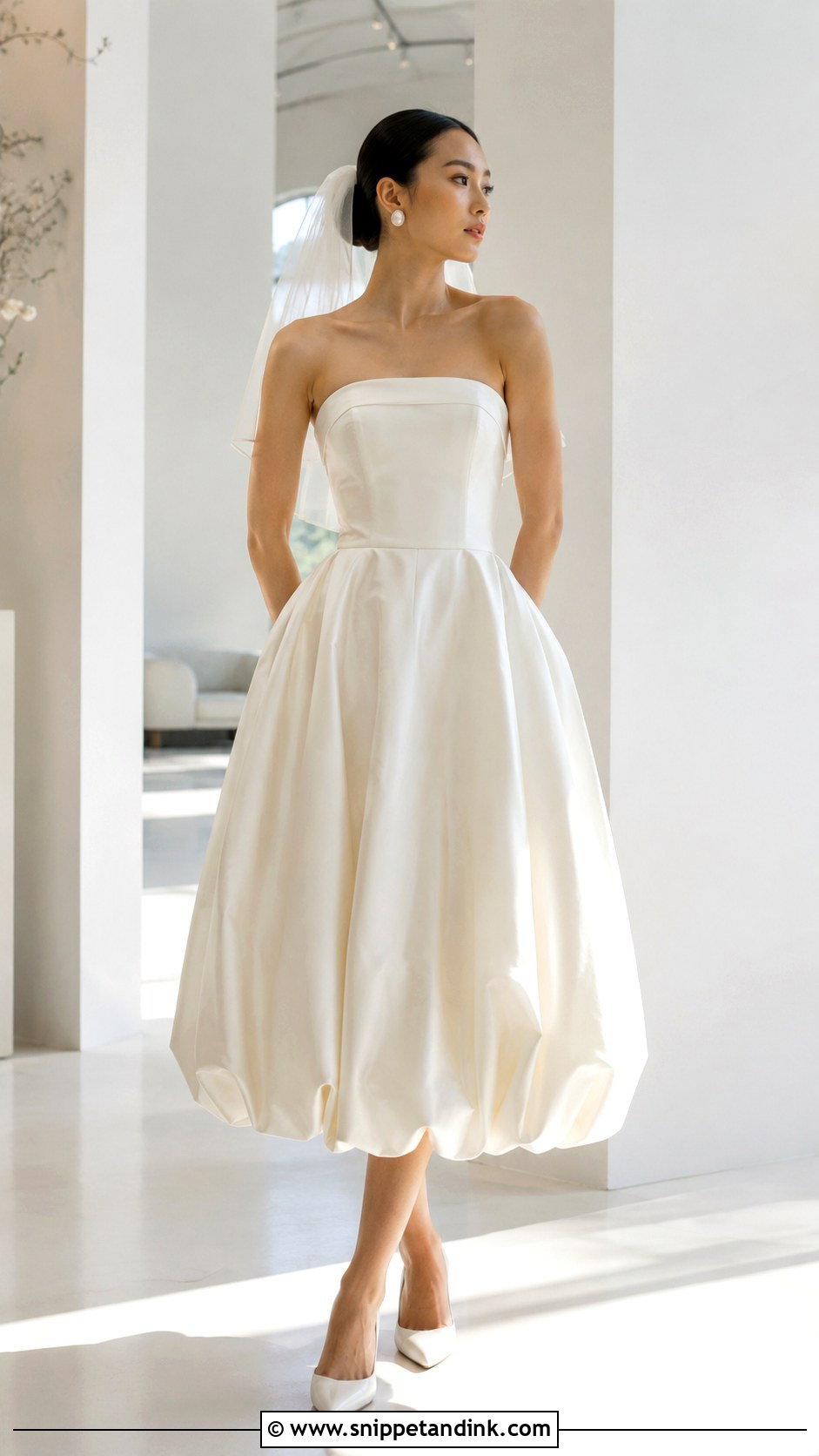
A bubble hem folds the lower edge inward to make a rounded, voluminous shape instead of a flat hem. It turns up on minis, modern midis and full-length sculptural gowns, part of the wider move toward softer, less traditional volume in bridal design. Crisp taffeta and organza hold the curve; softer fabrics flop. Inside, the hem is attached to a shorter lining, and I check that this hidden layer isn’t so tight it shortens your stride. The curved hem is already a strong focal point, so a detailed veil fights it. Sleek pumps, bold studs and a minimal hair accessory are enough.
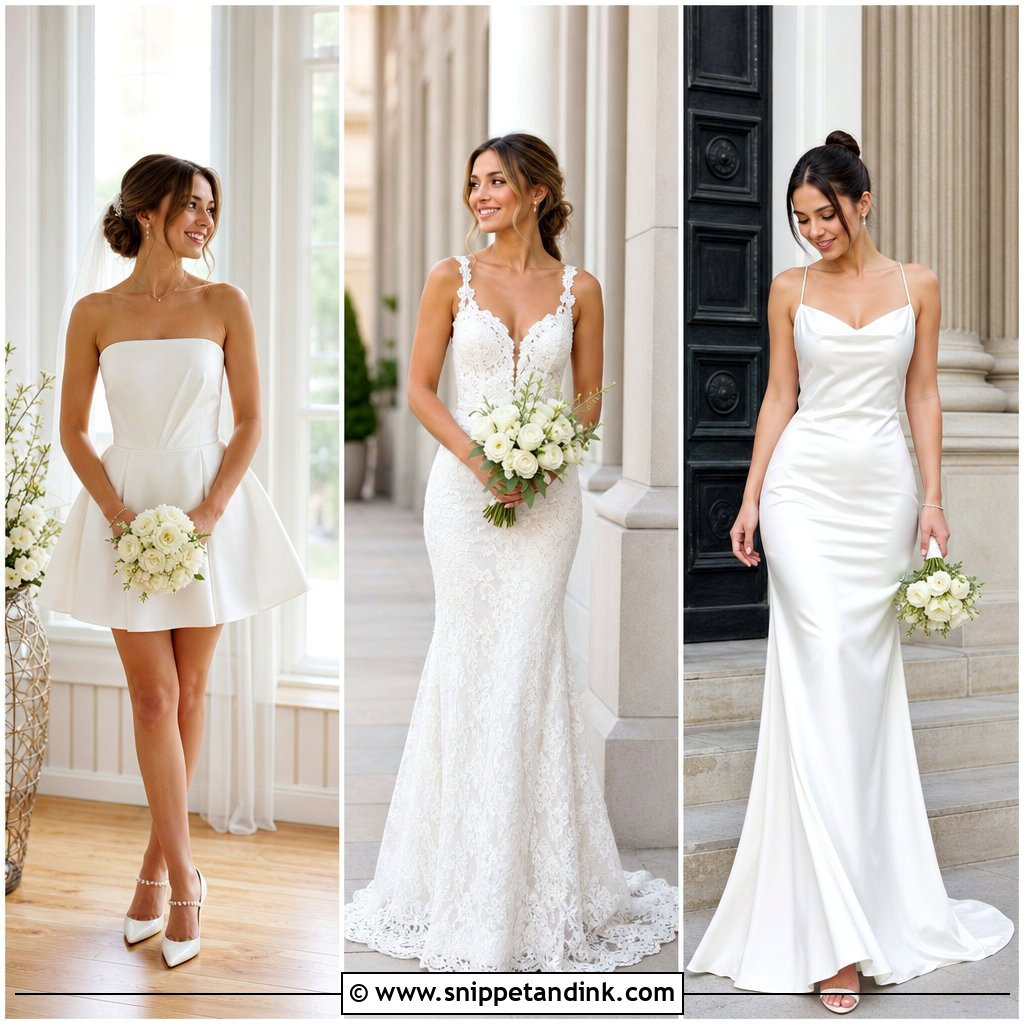
20. Detachable Overskirt Wedding Dress
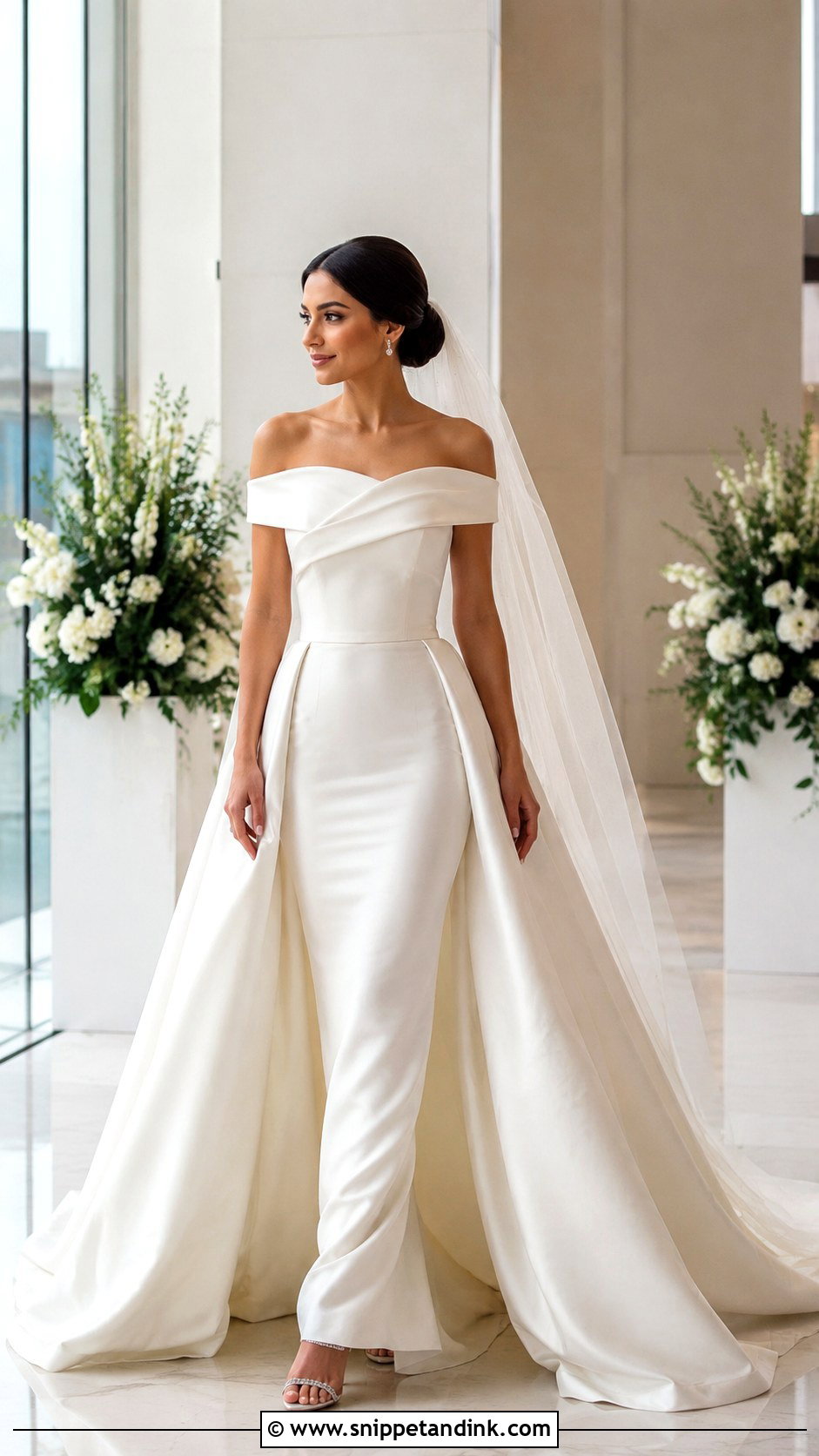
A detachable overskirt wedding dress gives you two silhouettes from one outfit. Wear the overskirt over a sheath, column, mermaid or fitted gown for a fuller ceremony entrance, then remove it for a streamlined reception look. Convertible pieces have stayed popular because they change the look without buying a second dress. Matching fabric gives a clean switch, contrasting lace makes the overskirt a feature in its own right. Practise taking it off with whoever will help you on the day; hooks, snaps and hidden buttons all behave differently, and a fiddly closure becomes a ten-minute delay in a crowded bathroom. Pick heels that suit both lengths and a veil sized for the ceremony shape.
How Much Altering Each Shape Usually Needs
Silhouette affects your timeline as much as your look. Most made-to-order bridal gowns take several months to arrive, so ordering eight to ten months ahead is still sensible, and alterations normally start six to ten weeks before the wedding across two or three fittings. Some shapes simply need more of that time.
Quick Fits
A-line, empire and princess gowns tend to need the least: a hem, a little take-in at the side seams, perhaps strap adjustment. Princess seams in particular give a seamstress plenty of places to adjust.
Slow Fits
Mermaid, trumpet and basque gowns need the knee or waist point placed exactly on your body, which can mean moving the flare or reshaping the bodice. Slip dresses cut on the bias are slow for a different reason: the fabric stretches and drops as it hangs, so a careful seamstress lets it rest before hemming. Ball gowns with layered tulle need every layer hemmed separately, which adds hours and cost.
Bustles by Shape
An over-bustle, where the train hooks up onto the back of the skirt, suits A-lines and ball gowns. A French or under-bustle tucks the train beneath and works well with fuller layered skirts. Mermaid and trumpet trains often take a ballroom bustle with several points so the flare stays even. Learn the bustle at your last fitting with the person who’ll do it for you, and photograph each step on your phone.
Ten Hours in One Shape Is the Real Test
Treat the shapes above as a starting point, not a set of rules about your body. Try the fitted, the flowing, the short and the convertible, even the ones that don’t match the picture in your head. At every appointment, walk, sit, raise your arms and have someone photograph you from the side and back. Fabric weight, hem length, internal support, shoe height and bustle placement all count before you commit. In the end, the gown that wins is the one you forget you’re wearing by the second hour of the reception.
You'll Like These Ideas:



Leave a Reply