
An Indian wedding is rarely one event. It is a haldi in the morning heat, a mehendi where you sit on the floor for hours, a sangeet where you dance until midnight and then the pheras or nikah the next day, so every outfit has to survive what its function asks of it. When I dress a client for a shadi, I start with the schedule and the venue before I look at a single colour swatch. The looks below run from light cotton for haldi to velvet for a winter reception, with notes on where each one holds up and where it lets you down, for sisters, bridesmaids, cousins and first-time guests alike.
A Weight Ladder From Haldi to the Reception
When a client brings me five functions to dress for, I sort them by how much the outfit has to do. The lightest clothes go to the events where you sit on the floor, get messy or stand in daylight heat, and the heaviest pieces wait for the evenings where you mostly stand, pose and dance under lights.
- Haldi: washable cotton, chanderi or georgette in yellow or orange, nothing you would mind losing to turmeric.
- Mehendi: shararas, palazzos or kurta skirts with short sleeves, so wet henna never touches fabric.
- Sangeet: mirror work, ruffles or a lightweight lehenga you can spin in for hours.
- Pheras or nikah: your most traditional silk, Banarasi or embroidered lehenga, worn with comfortable shoes for a long ceremony.
- Reception: sequins, velvet or a cape lehenga, the place for drama and shine.
Guests should also check colour expectations before buying. I tell clients to avoid bridal red and heavy gold at the main ceremony unless the family says otherwise, and to ask before wearing white or black to the pheras, since some families consider them unlucky for auspicious rites. When in doubt, ask the bride’s side; nobody minds the question, but plenty of people notice the wrong colour.
1. Pastel Lehenga For Indian Wedding
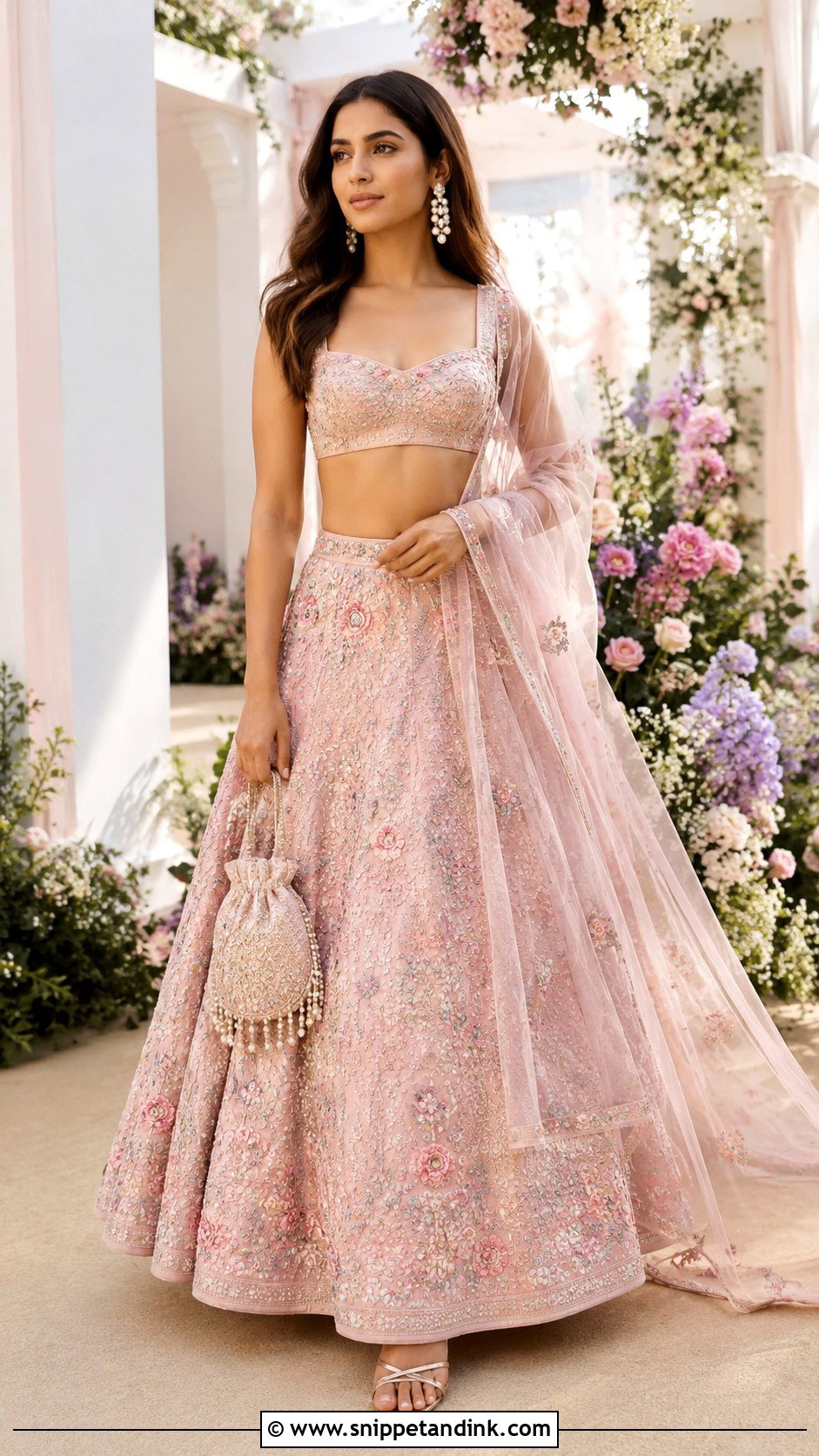
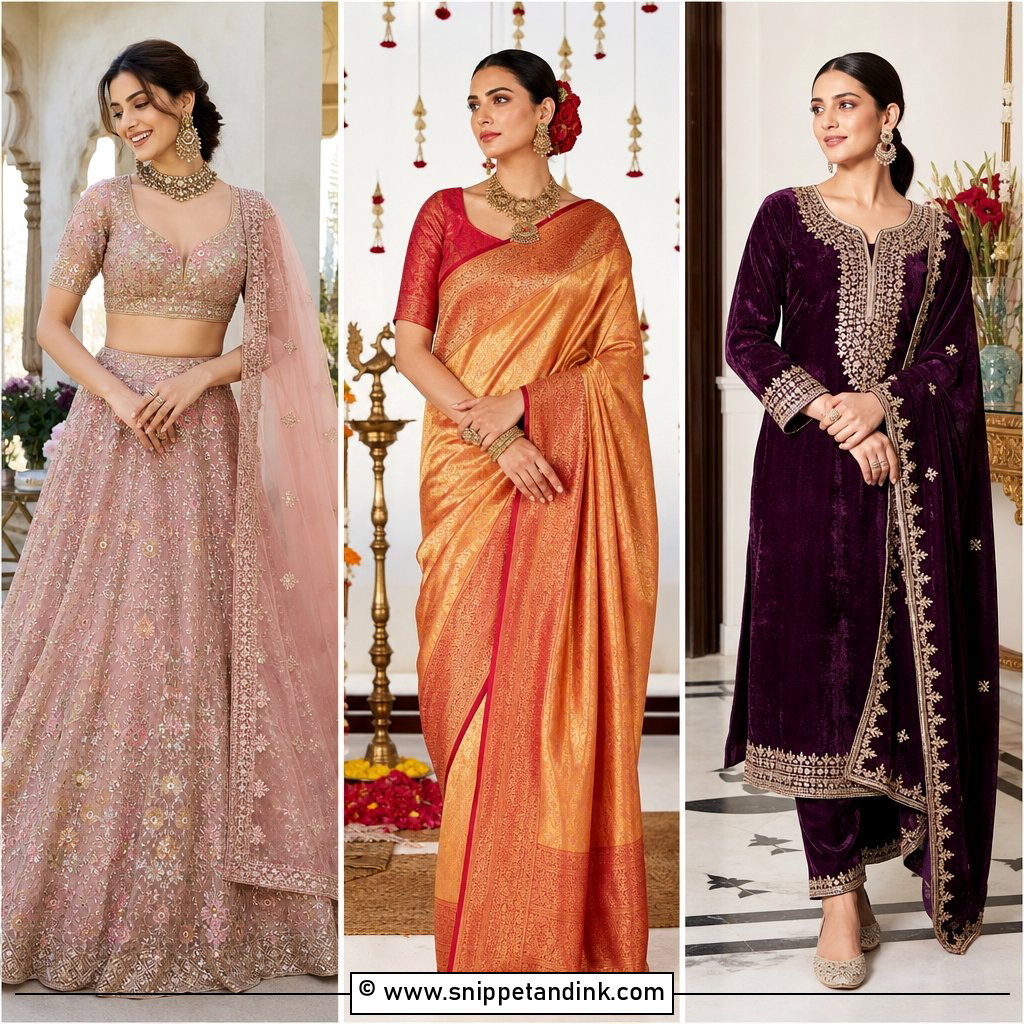
Blush, mint, powder blue, lavender and champagne all sit quietly in daylight, which is why I reach for pastels at a roka, engagement or garden ceremony. The catch is that pale georgette shows every mark, from a turmeric fingerprint to a smear of henna, so I keep pastels away from haldi and the mehendi itself. Look for thread embroidery or small mirror work rather than dense sequins; a light skirt keeps its swing, while a heavily beaded pastel skirt tends to drag and crush at the hem. Pearl earrings, soft curls, metallic sandals and a small potli are all it needs.
2. Red Bridal Lehenga For Shadi
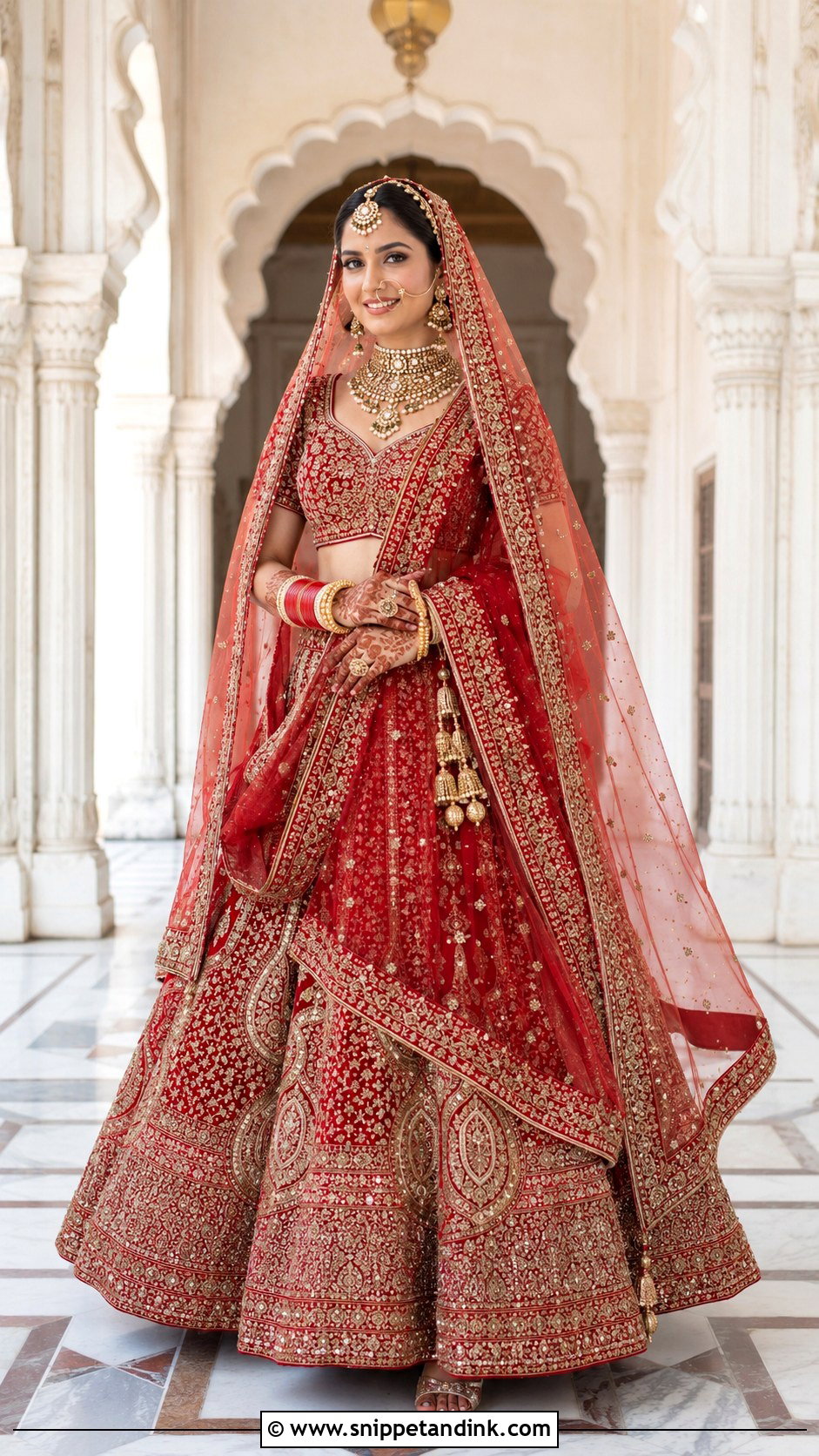
For the main ceremony, a red bridal lehenga in sindoor, ruby or maroon is still the outfit most families picture. Zari, zardozi and gota patti give that royal finish, but they also add real weight: a fully worked bridal skirt can be heavy enough that I always ask the bride to sit, stand and walk stairs in it at the final fitting. A double dupatta, one on the head and one across the shoulder, builds the bridal silhouette; if you want it modern, keep the second dupatta sheer and choose a cleaner blouse neckline. Gold jewellery, a matha patti and bangles finish it.
3. Banarasi Saree For Indian Wedding
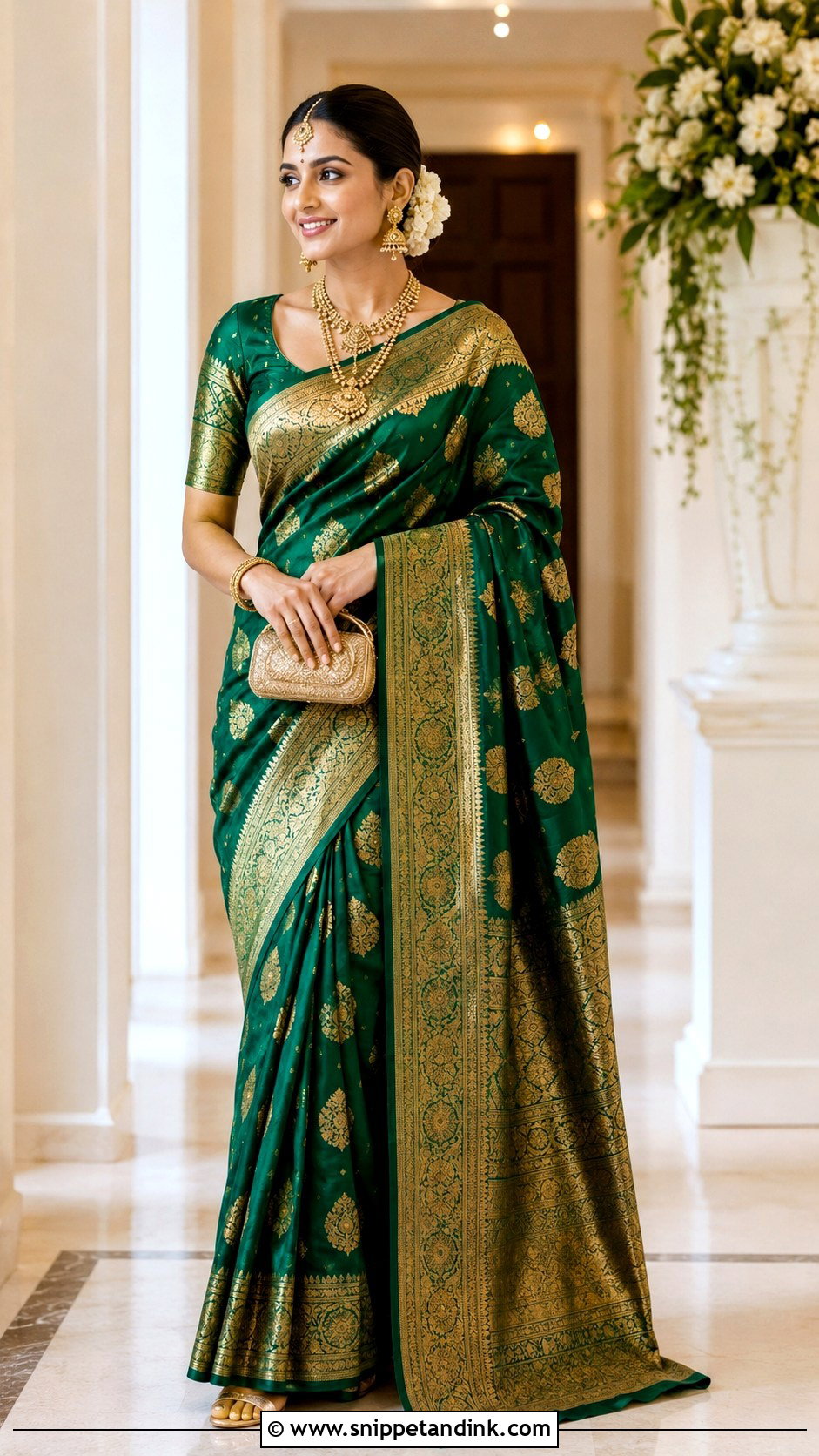
A woven Banarasi does most of the styling work for you, because the pattern is in the silk itself rather than stitched on. Emerald, rani pink, royal blue, purple and deep gold carry well at ceremonies and receptions. The one thing I check before a client commits is the drape: a stiff katan Banarasi holds sharp pleats but feels bulky at the waist on a petite frame, while a softer silk or georgette Banarasi falls closer to the body. Finish with a fitted blouse, temple jewellery, a sleek bun and a small bindi; mothers and aunts especially tend to love how little fuss it needs.
4. Sharara Suit For Mehendi
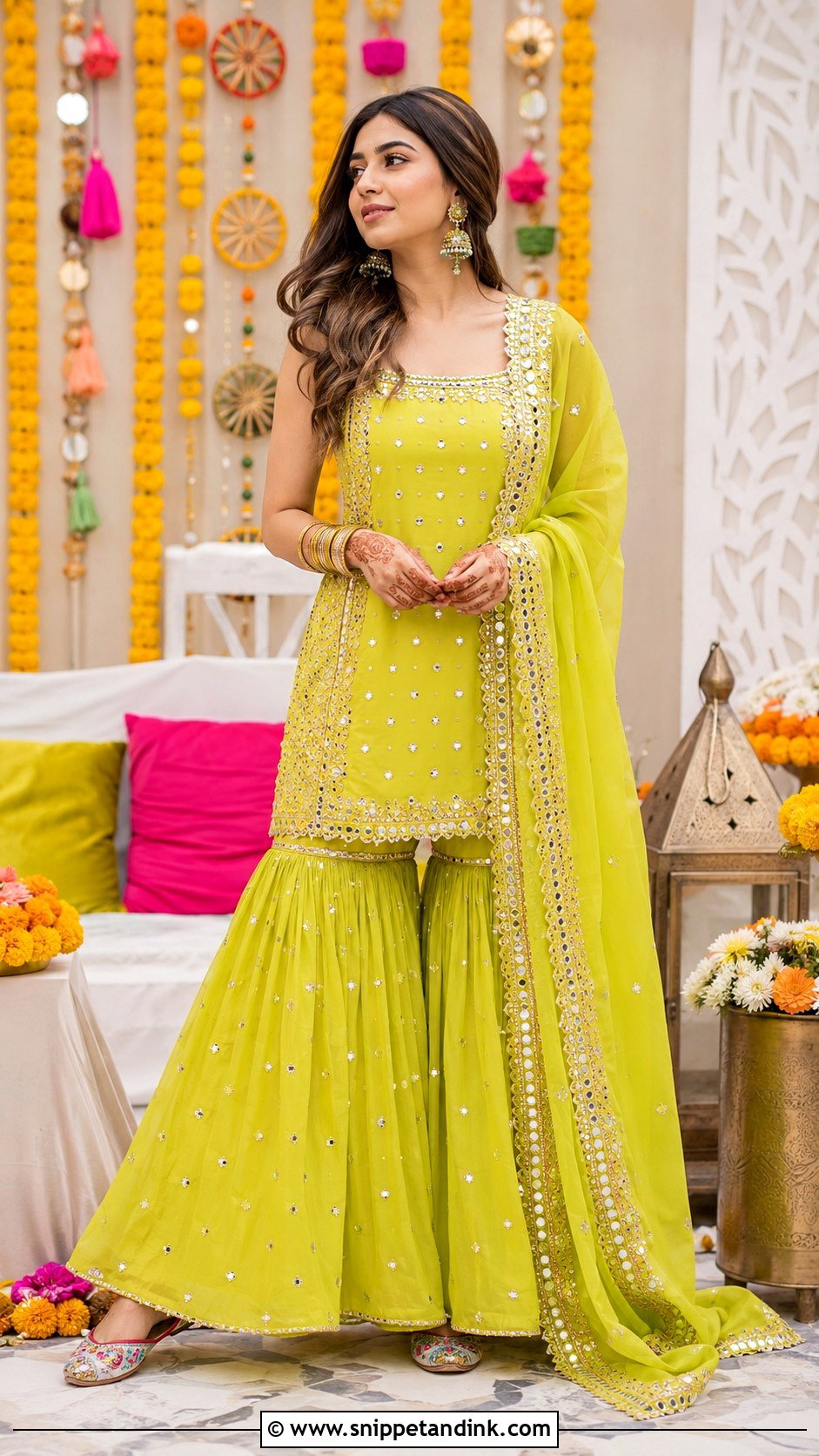
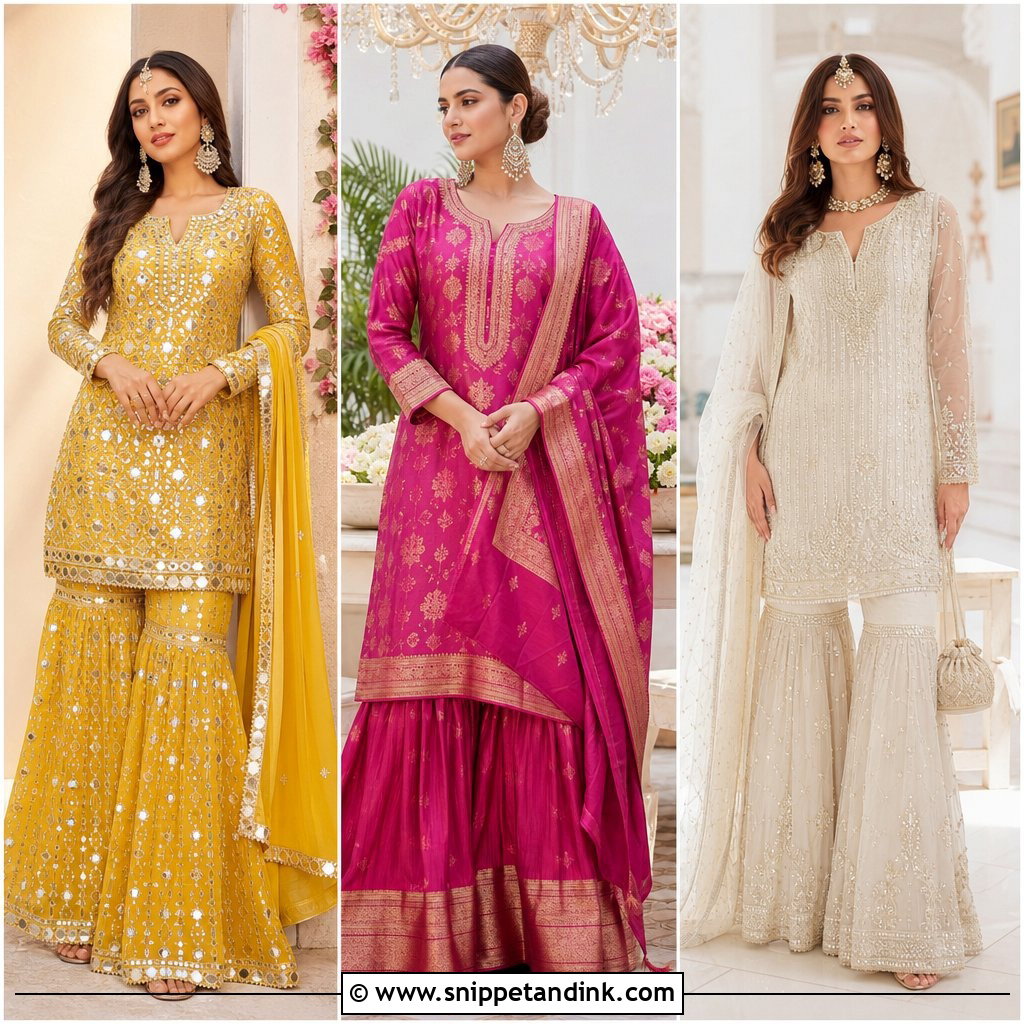
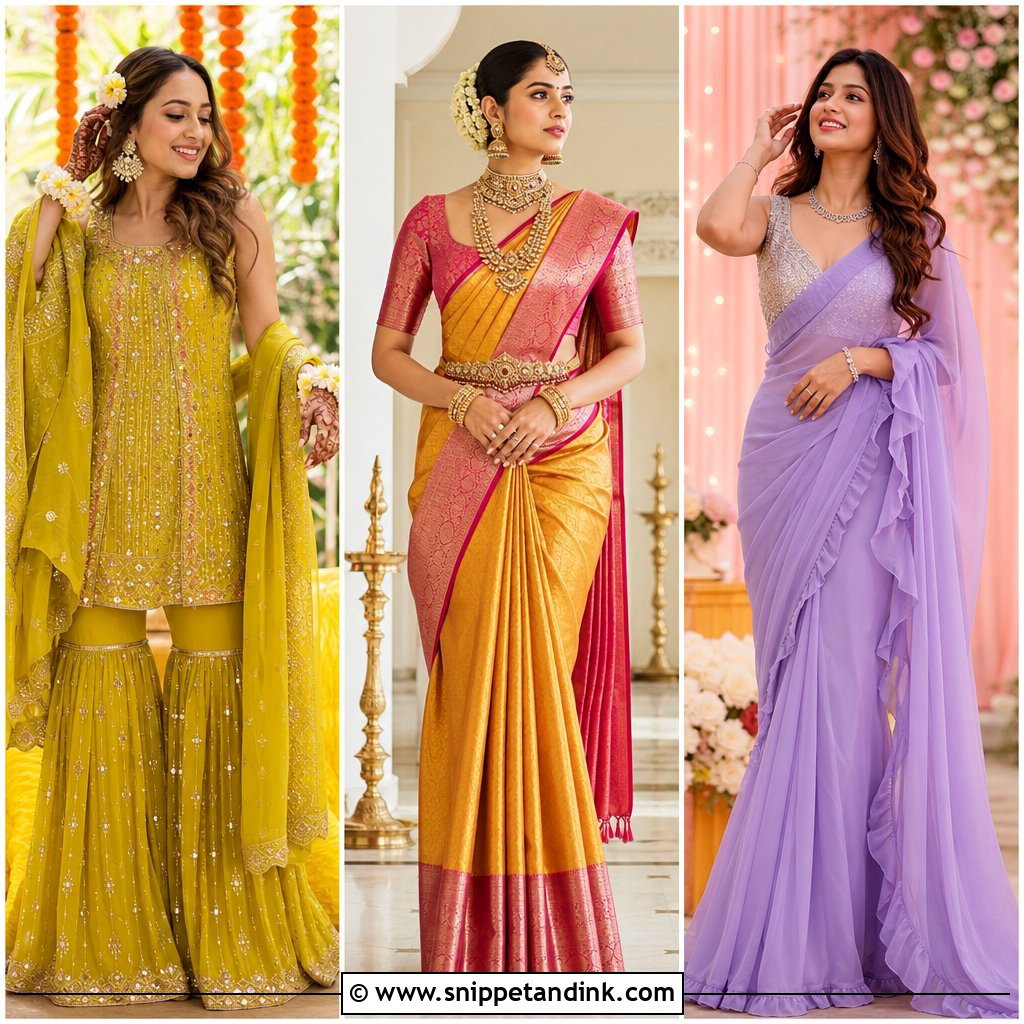
Mehendi means sitting cross-legged while the artist works, then trying to eat and dance without touching anything, so flared sharara pants under a short kurti make far more sense than a full skirt. Lime, mustard, coral, turquoise and fuchsia match the mood. I’d keep the sleeves elbow length or shorter so wet henna on your hands and forearms never brushes fabric, and skip tassels that dangle near the wrist. Jhumkas, juttis and a braid finish it.
5. Yellow Anarkali For Haldi
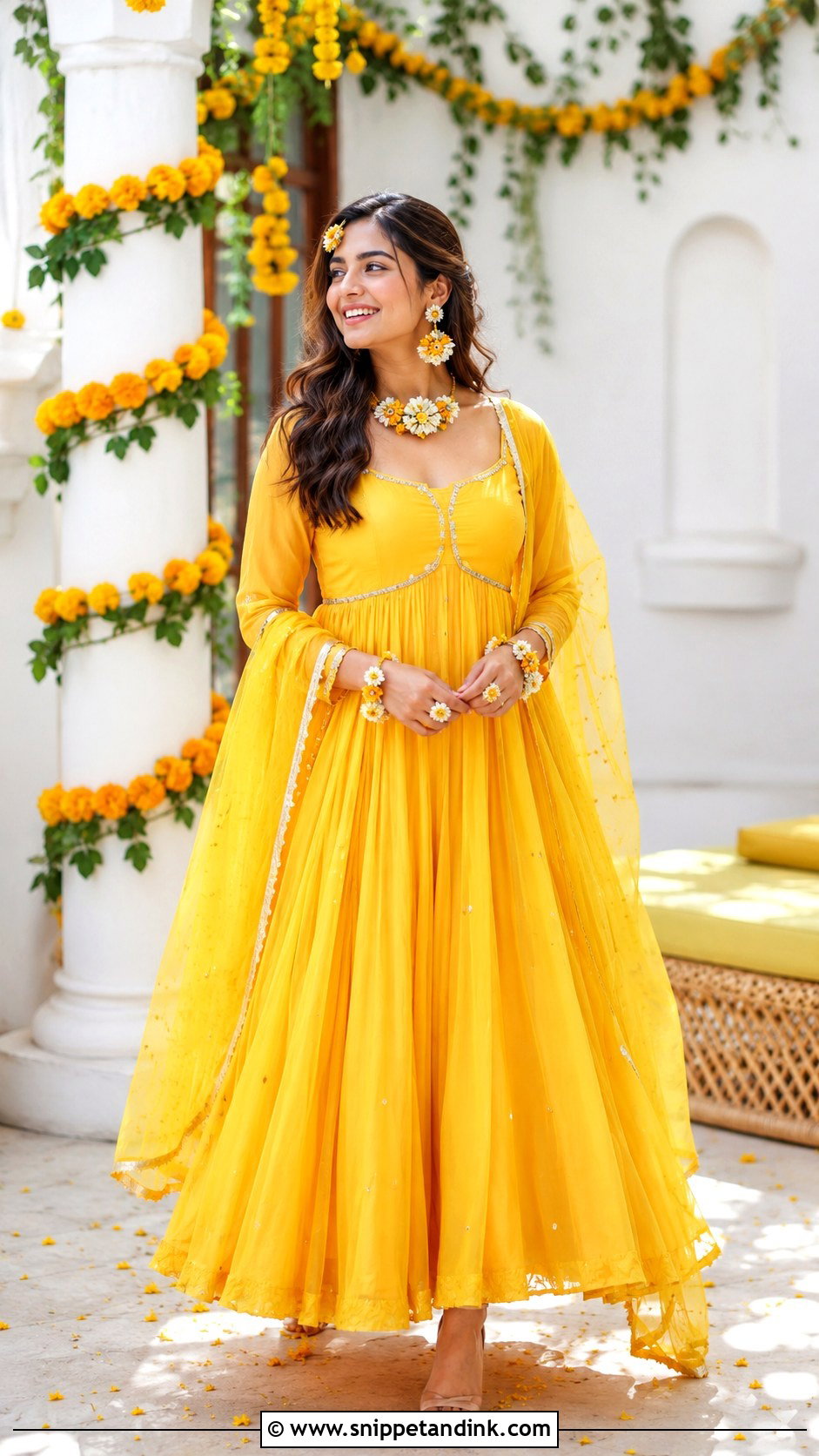
Turmeric paste stains, and it stains hardest on natural fibres, so I treat a haldi outfit as something that may never come clean. A yellow Anarkali in cotton silk, georgette or chiffon hides the splashes in turmeric, mango and marigold shades and stays breathable outdoors. Choose a flare that stops above the ankle so it doesn’t trail through the paste on the floor. Floral jewellery, nude sandals and very light makeup are enough, since everyone ends up wearing the haldi anyway.
6. Sequin Saree For Reception
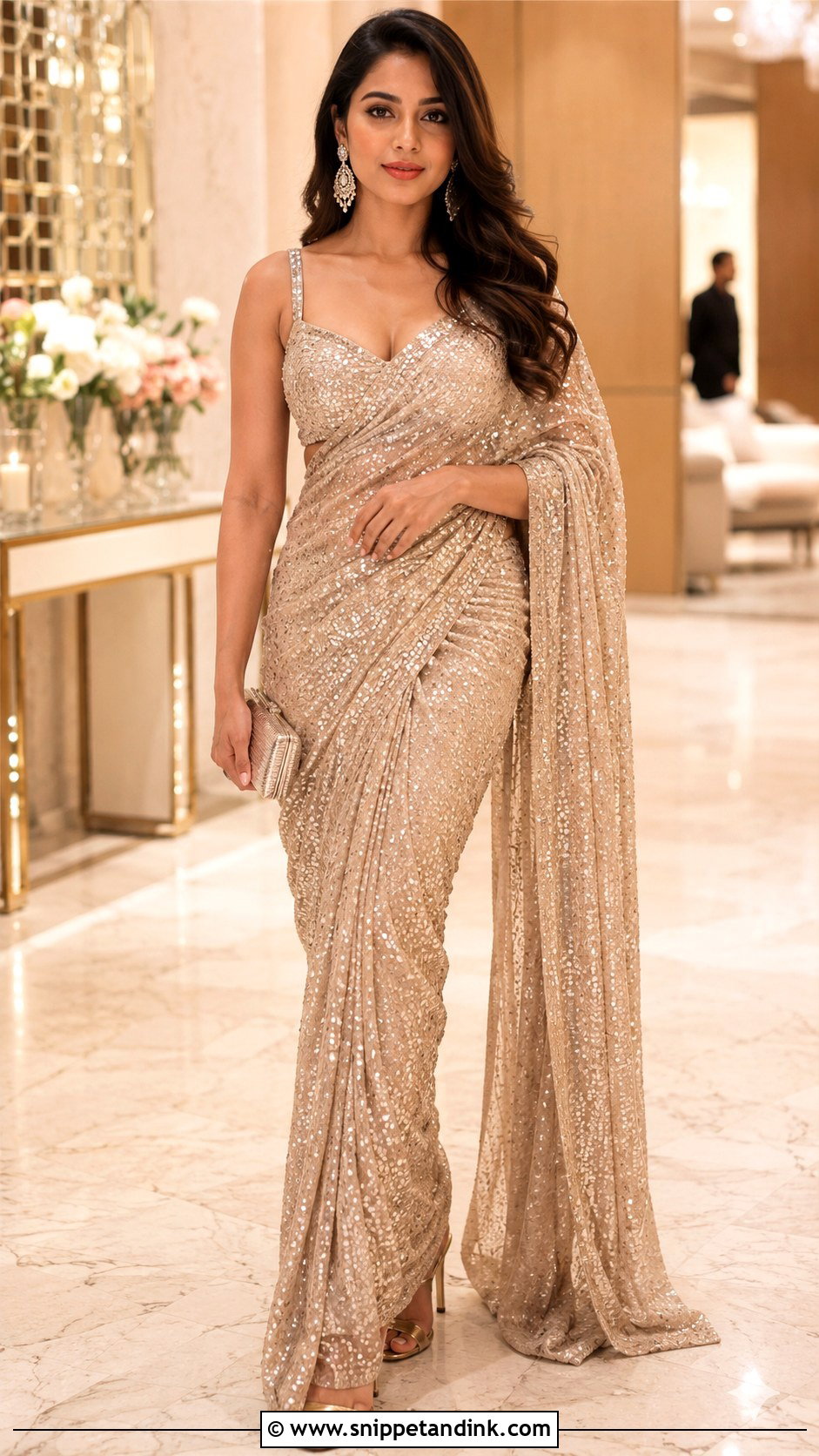
Sequins do the lighting for you at an evening reception, catching every flash and fairy light without any embroidery. Champagne, silver, rose gold, navy and emerald all read polished after dark. Two practical notes from fittings: sequin edges can scratch the inner arm on a sleeveless blouse, so I often line the blouse armhole, and sequins add surprising weight to the pallu, which pulls on the shoulder pin. Keep the blouse plain and the jewellery to crystal earrings and a clutch.
7. Velvet Lehenga For Winter Wedding
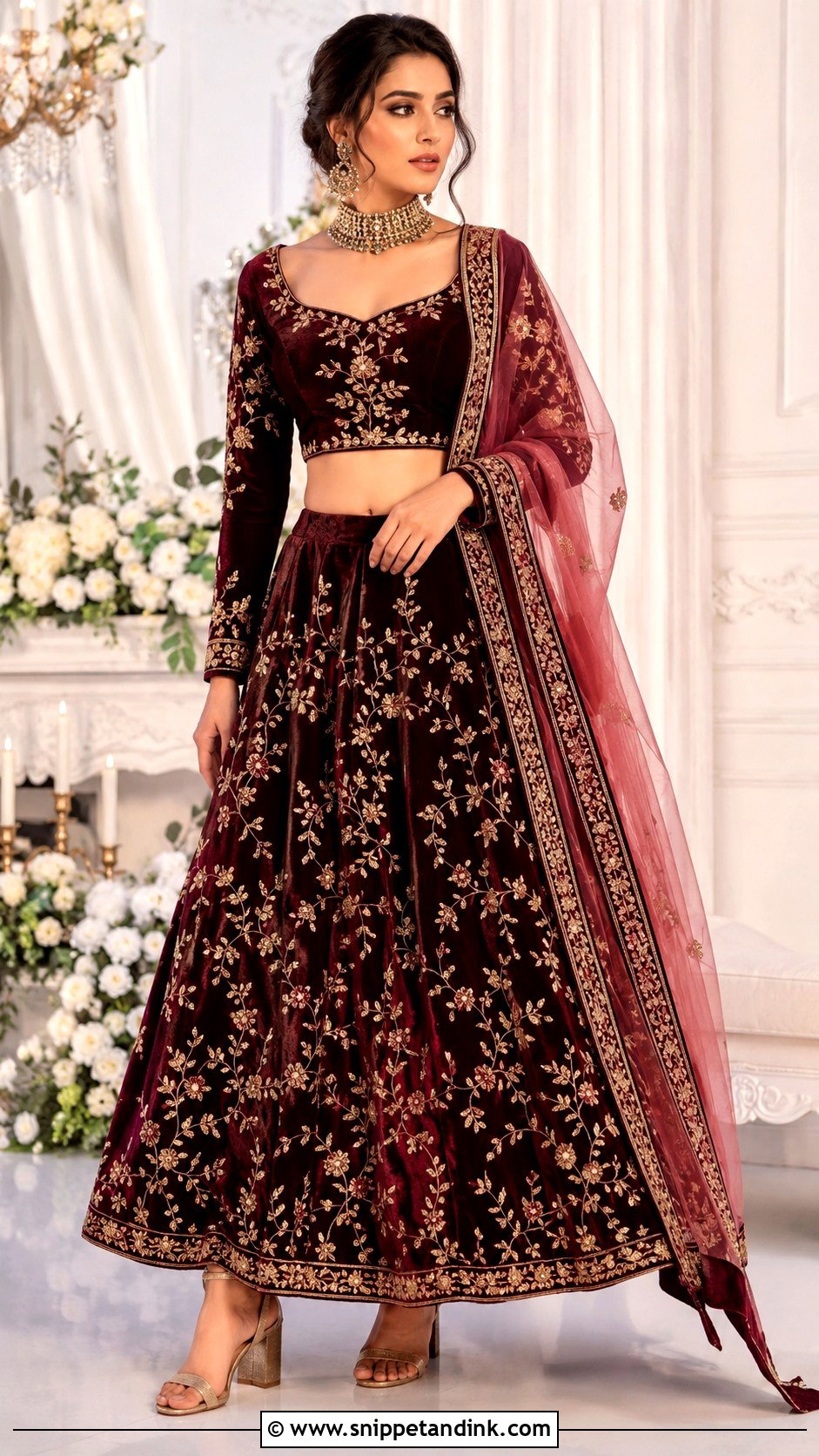
Velvet is the one fabric I steer clients toward for winter evenings, because it actually holds warmth at an outdoor mandap in December. Wine, navy, emerald, plum and maroon get a depth in velvet that silk can’t match. It is also heavy and it marks easily, so I avoid long trains and keep the dupatta in sheer net to lighten the top half. Indoors, under heaters and stage lights, velvet gets warm fast; that is why I’d skip it entirely for a summer or daytime function. A choker, statement earrings, block heels and sleek hair keep the outfit in charge.
8. Floral Lehenga For Day Wedding
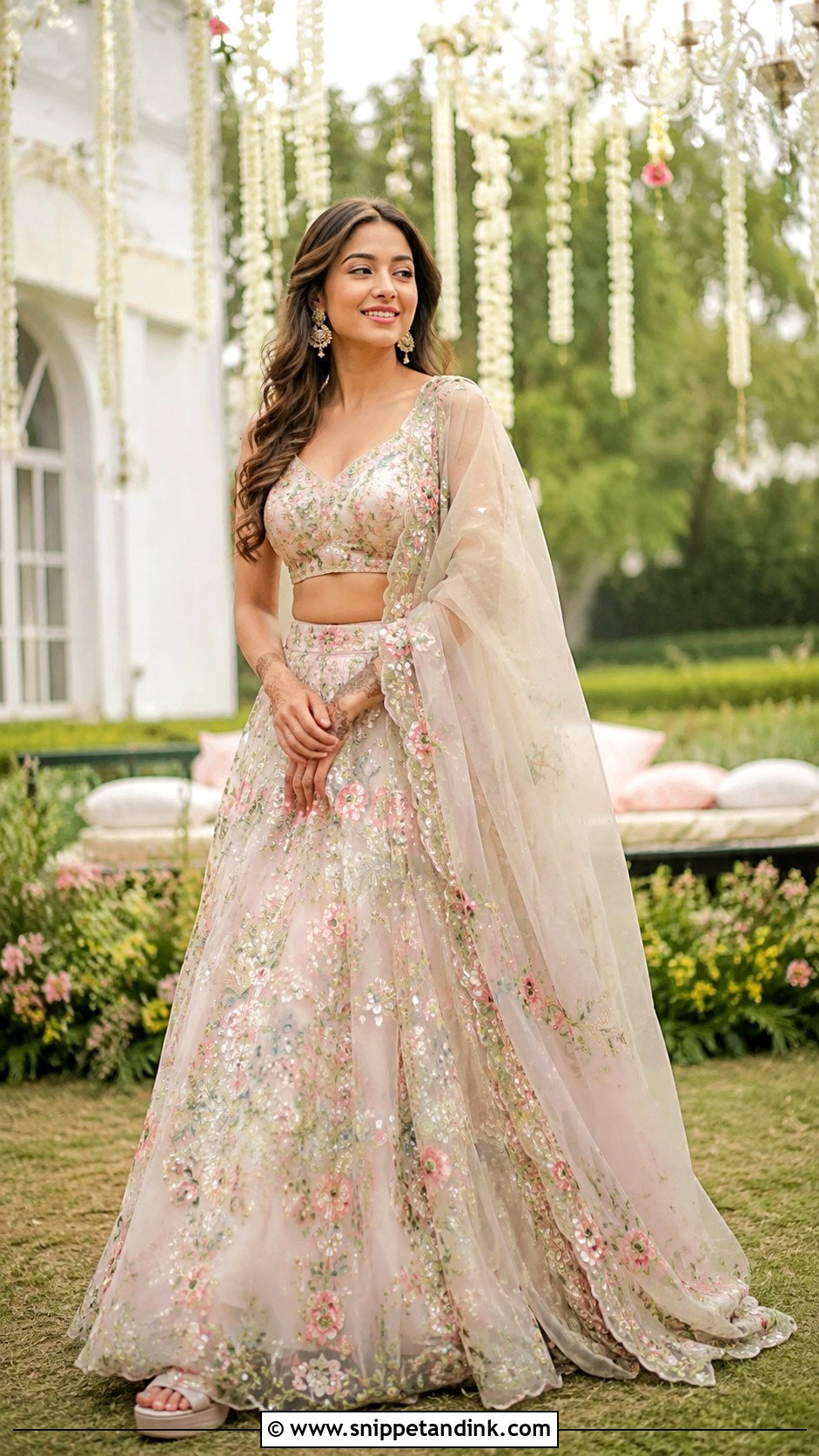
Floral prints are the easiest way to look festive at a daytime ceremony without heavy work, especially outdoors, at a spring wedding or on a beach. Organza, georgette and chiffon carry prints best. If the wedding is on grass or sand, I shorten the lehenga hem by an inch or two so it doesn’t collect dirt, and I pair it with wedges or block heels instead of stilettos that sink. A sheer dupatta, delicate earrings and rosy makeup keep it light.
9. Gharara Set For Shadi Function
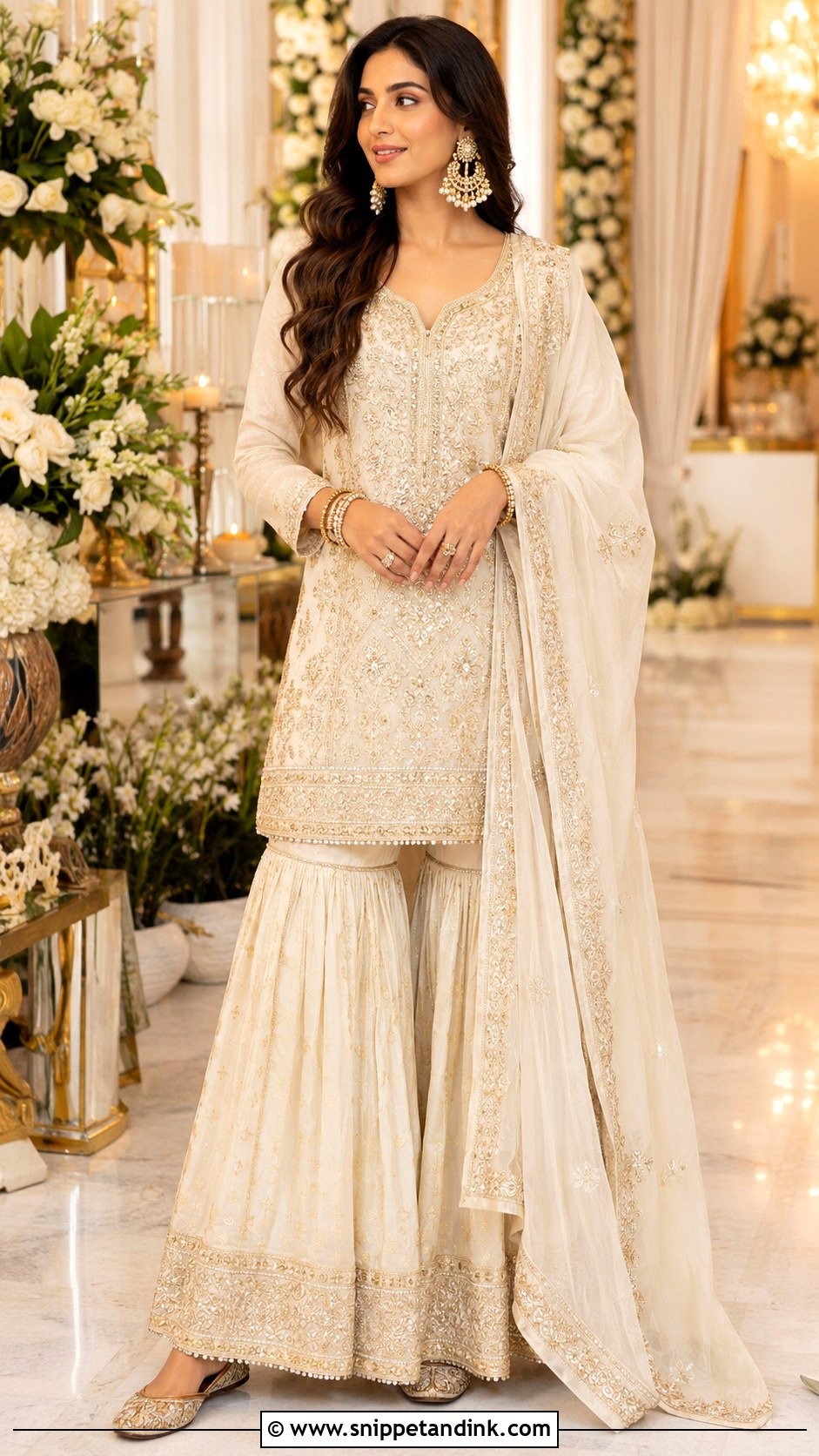
A gharara reads as more traditional than a sharara because of its shape: fitted to the knee, then a gathered joint (often hidden under a gota band) where the flare begins. That joint is where fittings matter most. If it sits too high, the pants look baggy; too low and you can’t take a full stride. Silk, brocade, georgette or tissue in ivory, rose, emerald or powder blue suit nikah ceremonies and family functions, finished with chandbalis and embroidered juttis.
10. Indo Western Saree Gown
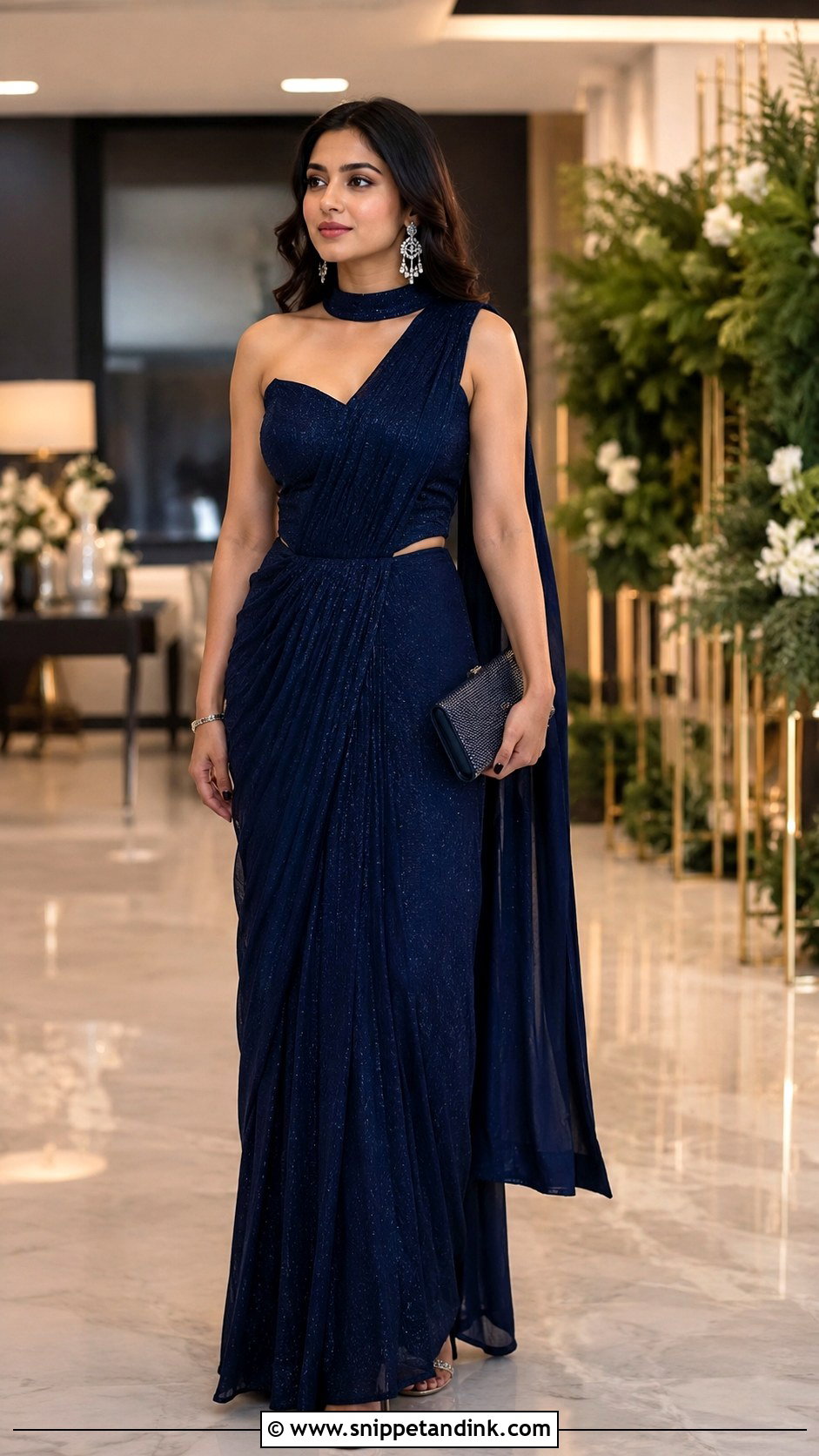
Not everyone can drape a saree, and not every venue has an auntie on hand to pin pleats, which is exactly the problem a pre-stitched saree gown solves. The pleats are sewn in and the pallu is attached to a structured blouse or gown base, so you step in and zip up. That makes it a strong pick for receptions, cocktail-style wedding events and sangeet nights. Satin, crepe or soft shimmer suits evening light; I keep the accessories to statement earrings and a sleek clutch. Do sit down in it at the fitting, because a fixed drape can pull across the hips once seated.
11. Chikankari Lehenga For Wedding Guest
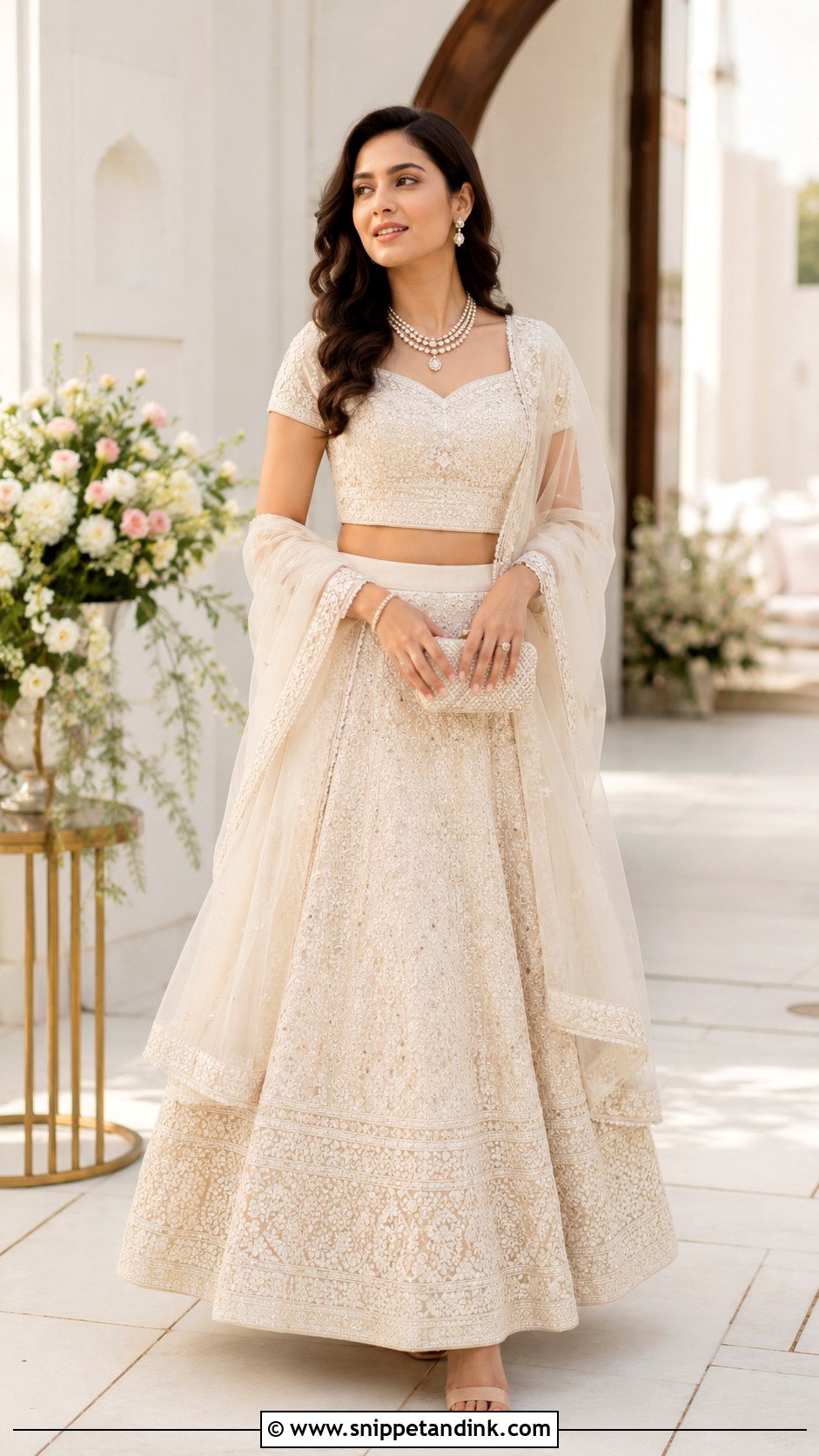
Chikankari is shadow work and fine white thread on light cotton or georgette, so the lehenga weighs very little and breathes well at daytime events. Ivory, blush, sage, powder blue and peach suit it, and mukaish or pearl accents add enough sparkle for an engagement. The downside I always mention: plain chikankari can look underdressed at an evening reception, and the fabric creases quickly if you sit for long. Pearl jewellery and nude heels keep it refined.
12. Mirror Work Lehenga For Sangeet
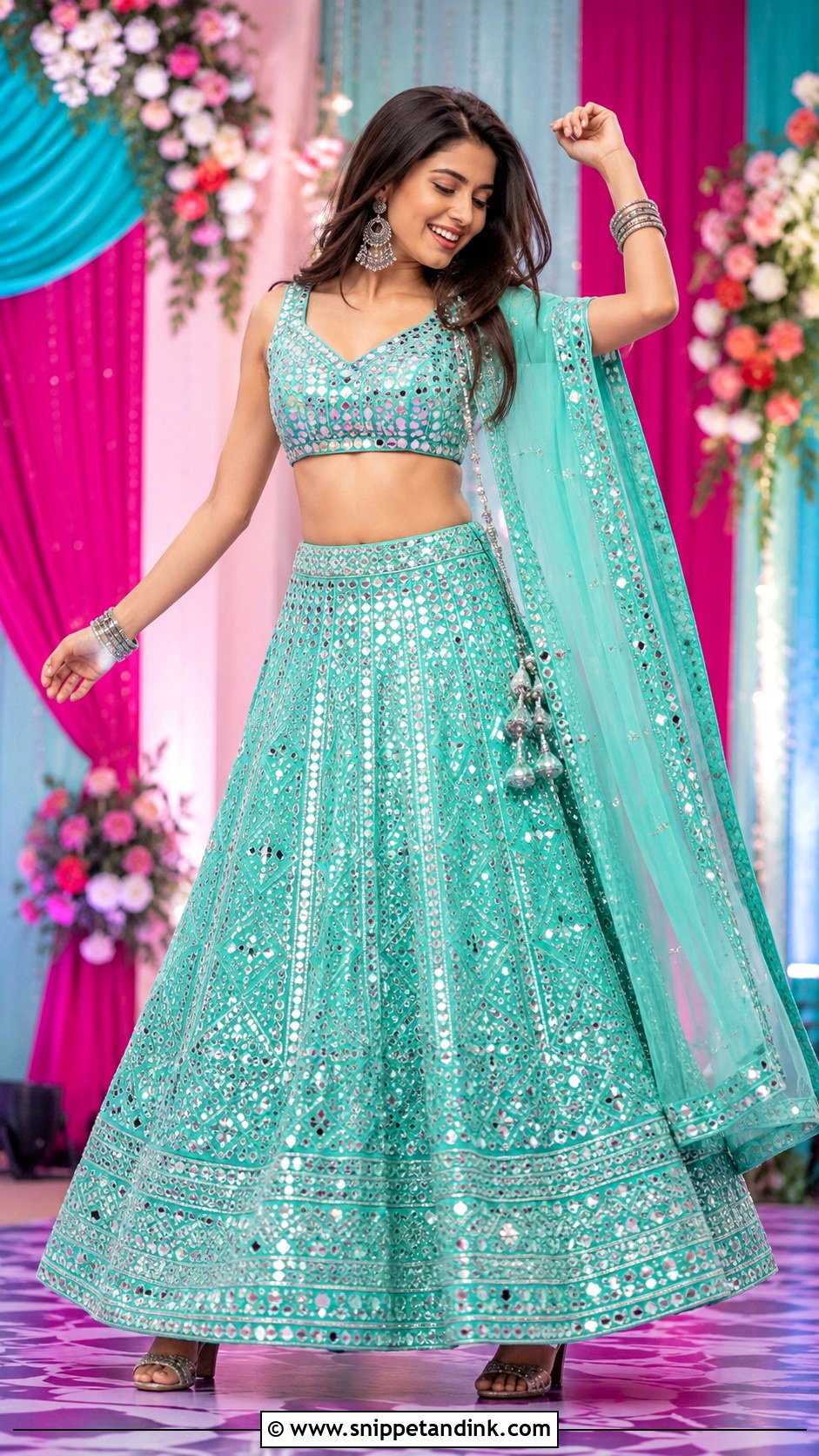
Real mirror work throws light back at every camera on the dance floor, which is why a mirror work lehenga earns its place at the sangeet. Keep the skirt lightweight, though, because glass mirrors add up quickly and you will be spinning for hours. Orange, pink, turquoise, green and yellow suit the energy. I’d check the mirror edges inside the blouse and dupatta for rough stitching, since they can catch hair and scratch skin. Oxidised jewellery, stacked bangles and embellished flats finish it, with loose waves or a half-up style.
13. Organza Saree For Wedding
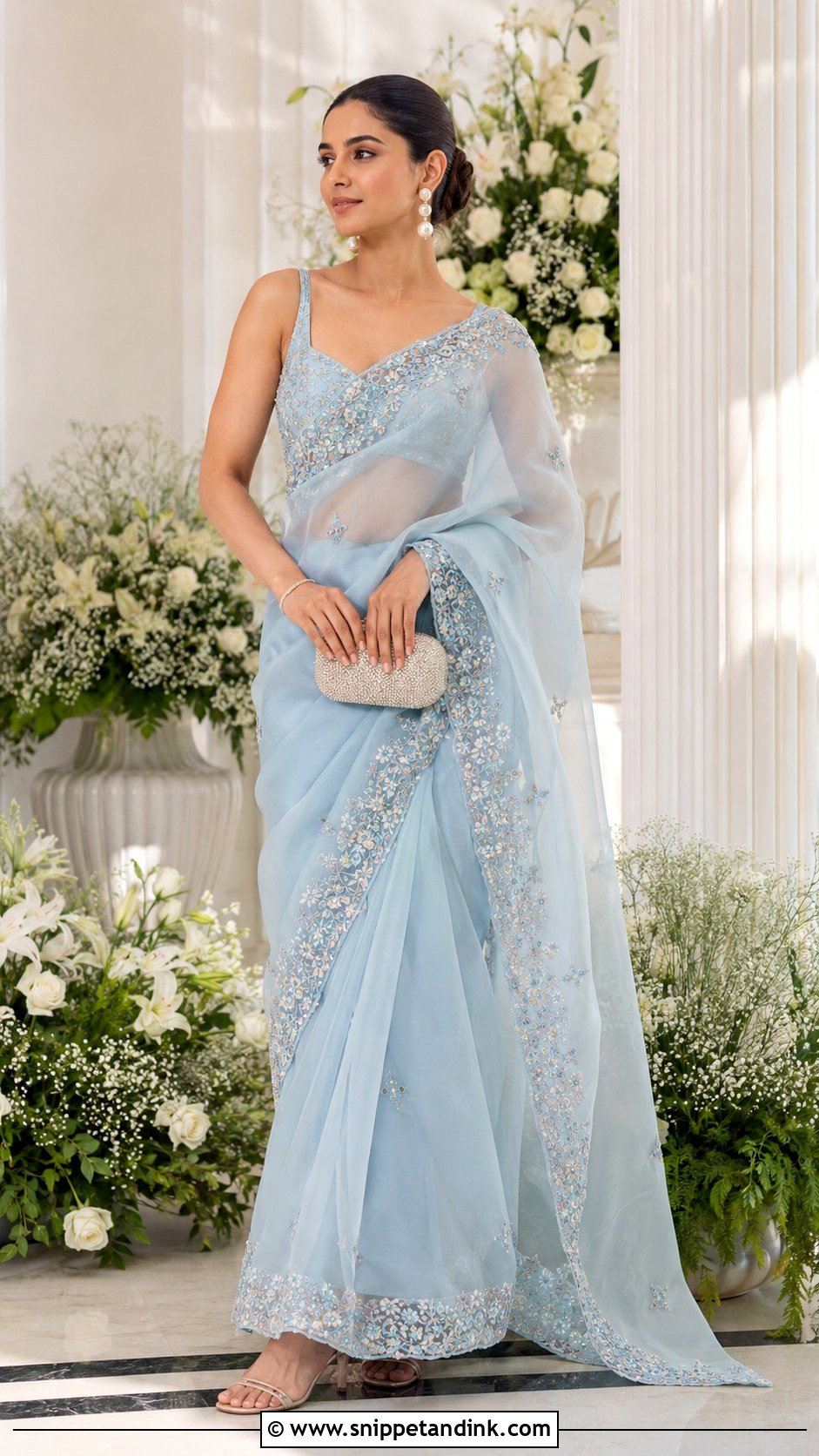
Organza is crisp and slightly transparent, so it stands away from the body and gives an airy volume that pastels and floral prints suit well. That same crispness is its weak point: it can puff out at the pleats and won’t fall flat the way georgette does. I steam the pleats, pin them firmly and keep jewellery small, usually pearl earrings and a neat bun, so the saree stays the focus. It sits well at engagements, daytime receptions and as guest dressing.
14. Cape Lehenga For Reception
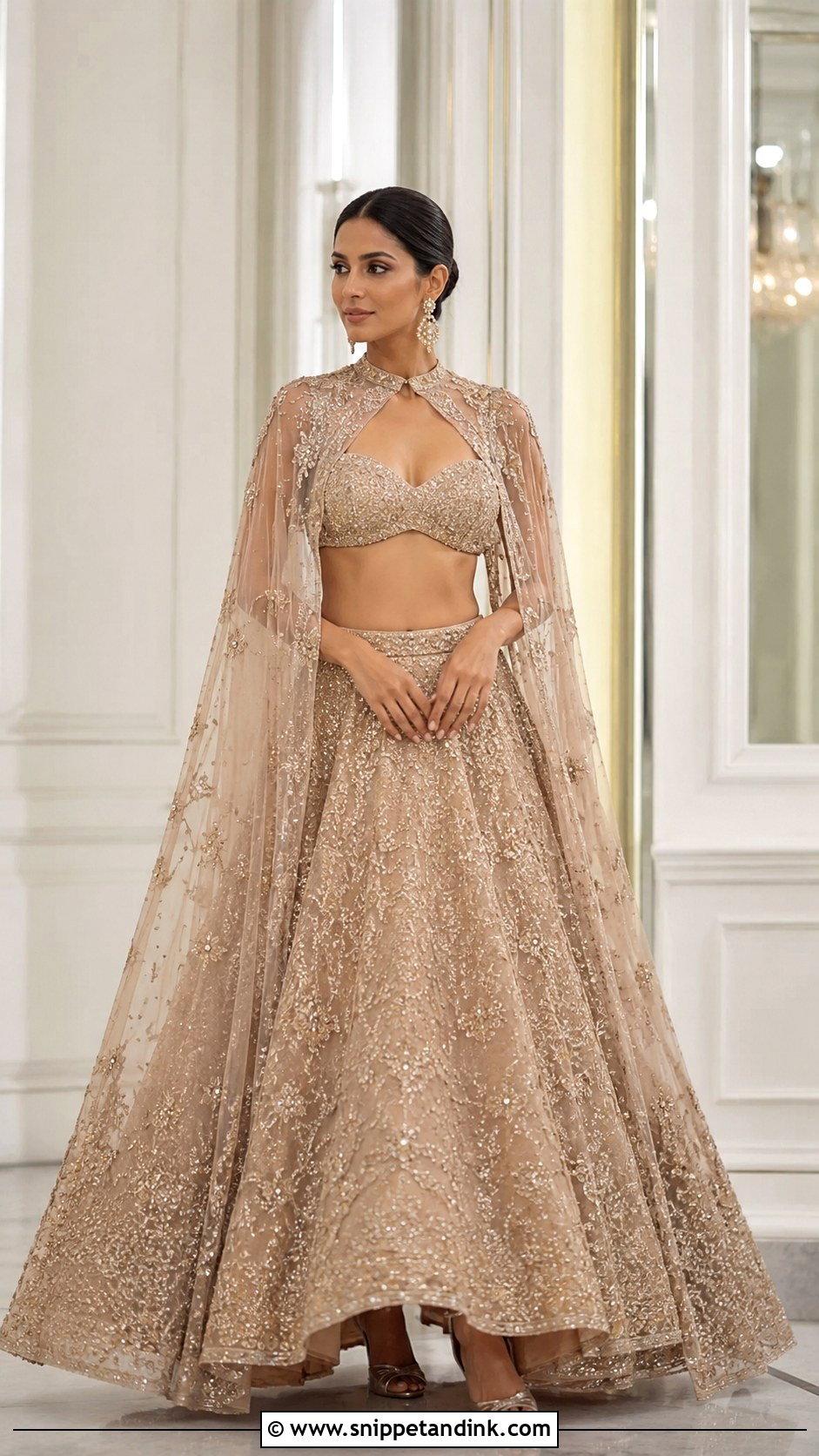
A cape replaces the dupatta, which is the real reason I suggest it to guests who hate pinning and re-pinning all evening. Your hands stay free to eat, hold a drink and dance. Choose a fitted blouse under a sheer embroidered cape in champagne, silver, navy, blush or emerald, and keep the hair sleek so the cape’s neckline shows. Watch the cape’s length: a floor-length one gets stepped on in a crowd, so for a busy reception I prefer it to stop at the knee or mid-calf.
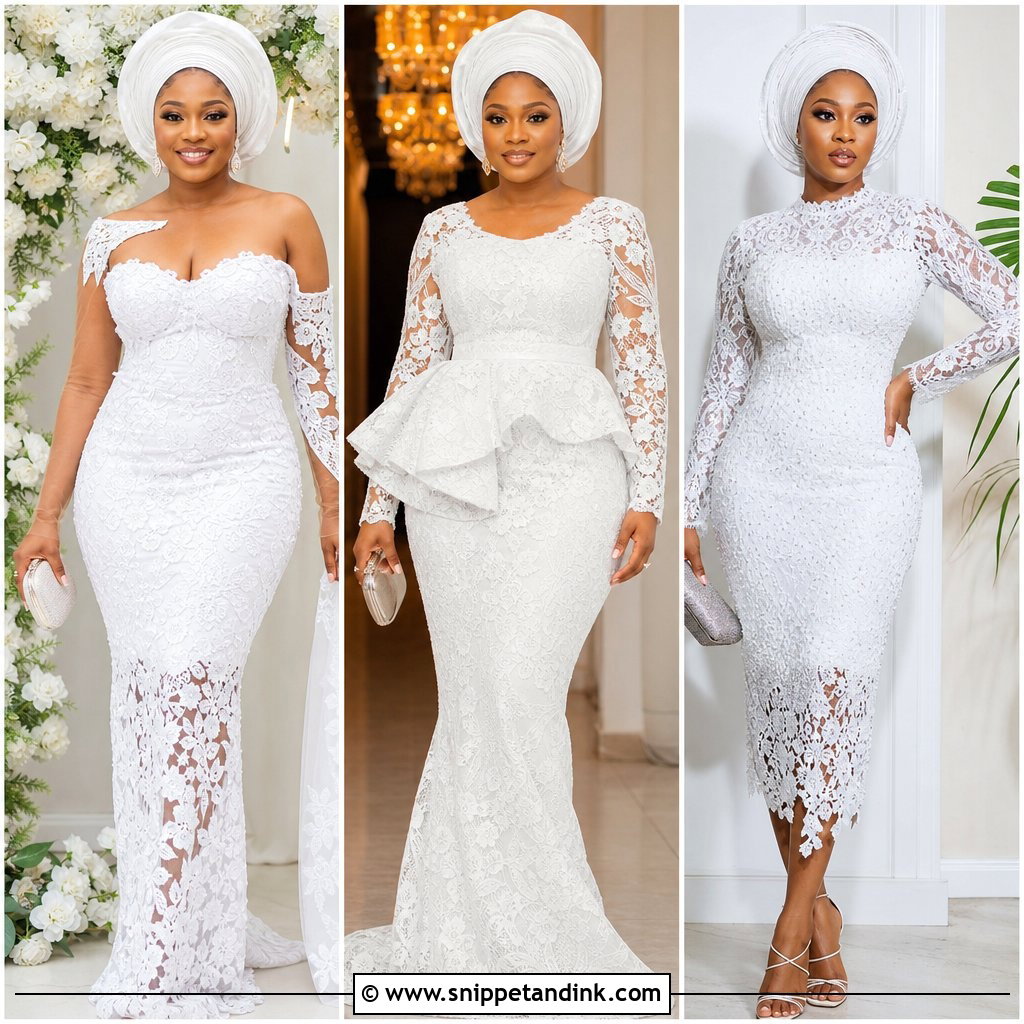
15. Silk Saree For South Indian Wedding
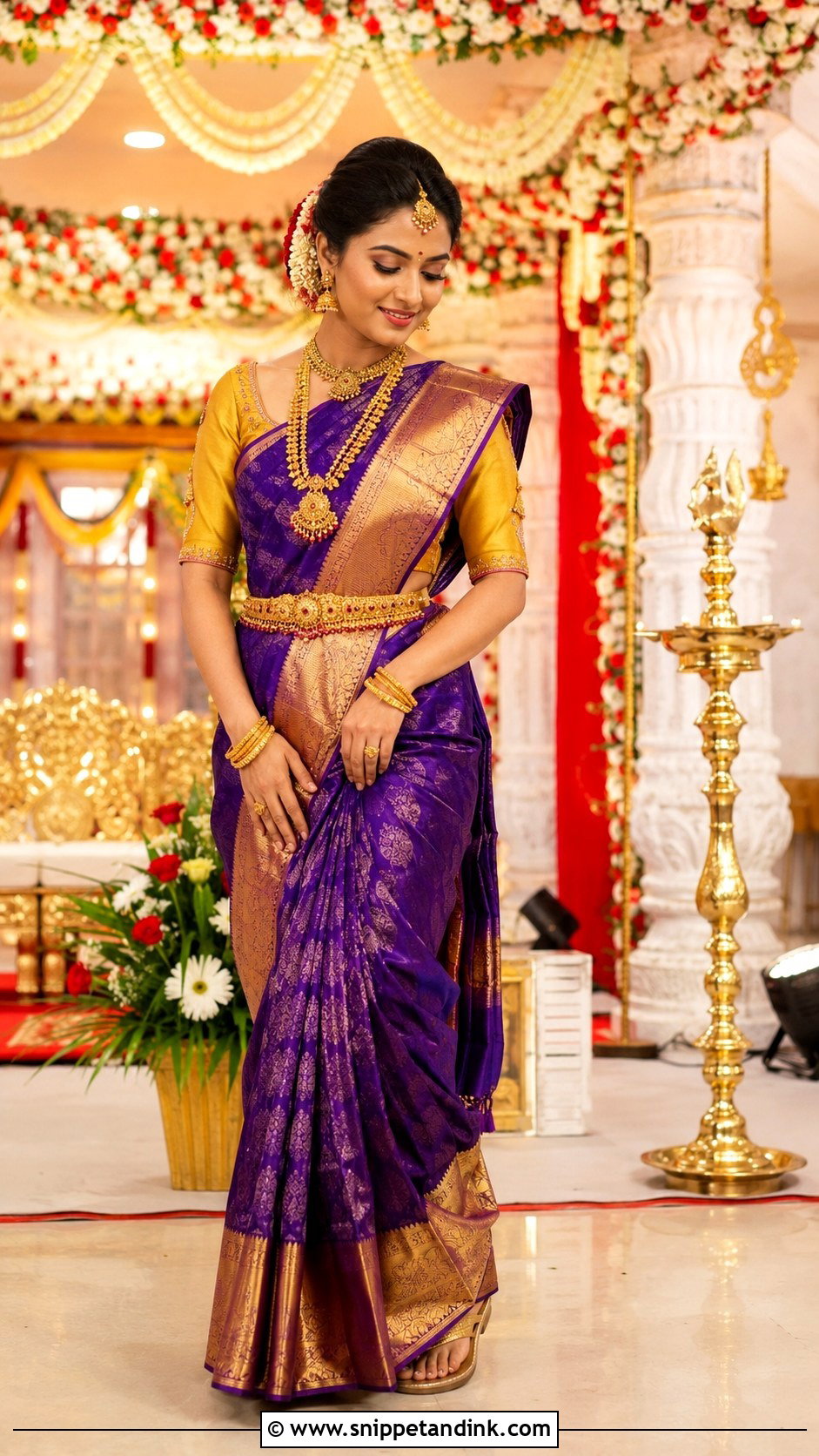
At a South Indian wedding or any traditional ceremony, a pure silk saree like a Kanjeevaram or Mysore silk is the respectful choice. Red, gold, green, orange and purple with a contrast blouse feel right. Kanjeevaram silk is heavy, so I use a gold waist belt (an oddiyanam) not only for the look but to keep the pleats secure through a long morning ceremony. Temple jewellery, flowers in the hair and gold sandals complete it.
16. White And Gold Lehenga For Wedding
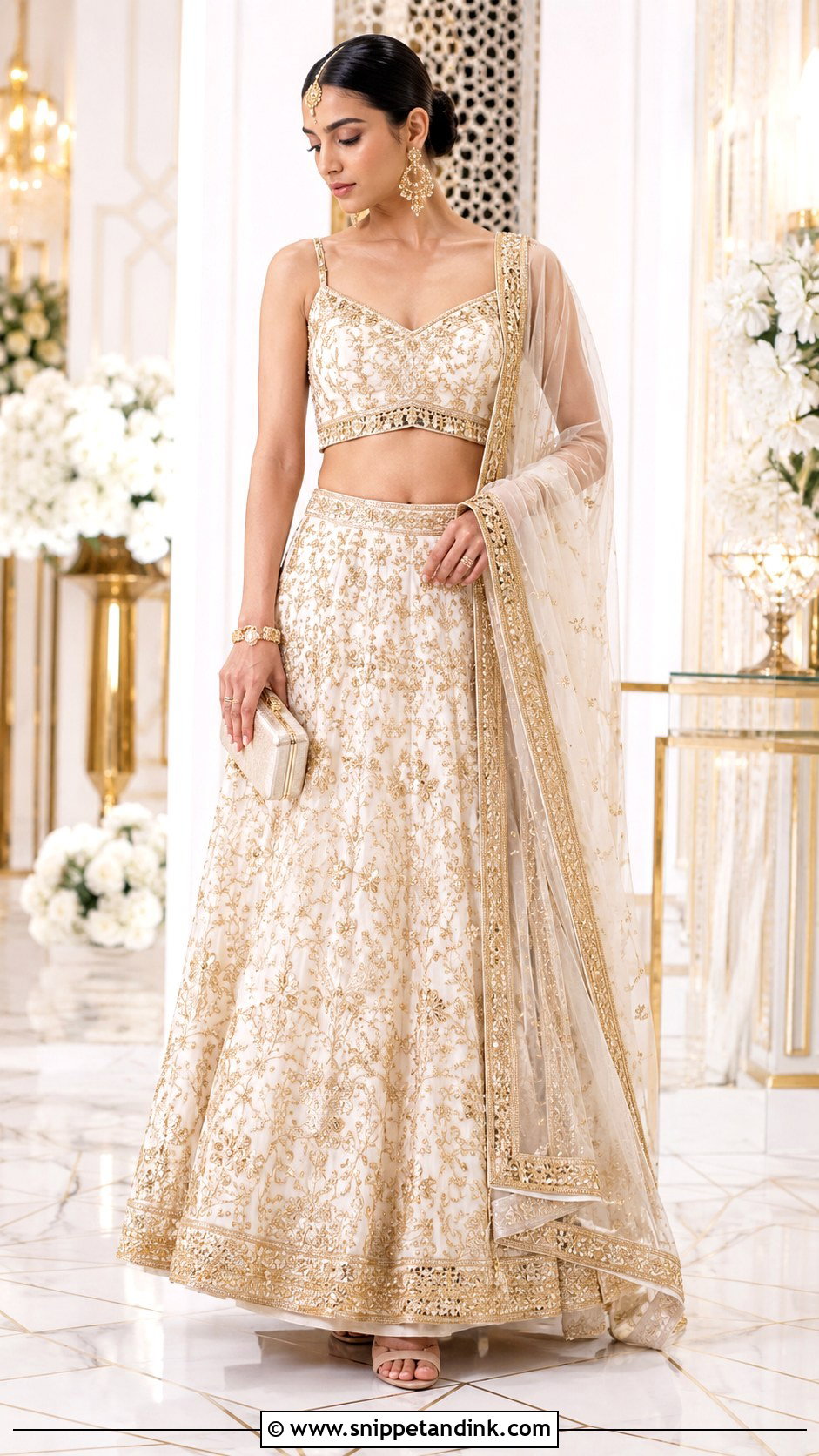
Ivory, cream or pearl white with gold zari looks crisp at an engagement, reception or destination wedding, but I’d check family customs first. In some communities white is linked with mourning and not worn to the main ceremony, while others wear it happily. Once that is settled, keep the blouse and dupatta matched and add emerald or ruby jewellery if you want contrast. Gold jewellery and nude heels finish it without stealing from the bride.
17. Palazzo Suit For Indian Wedding
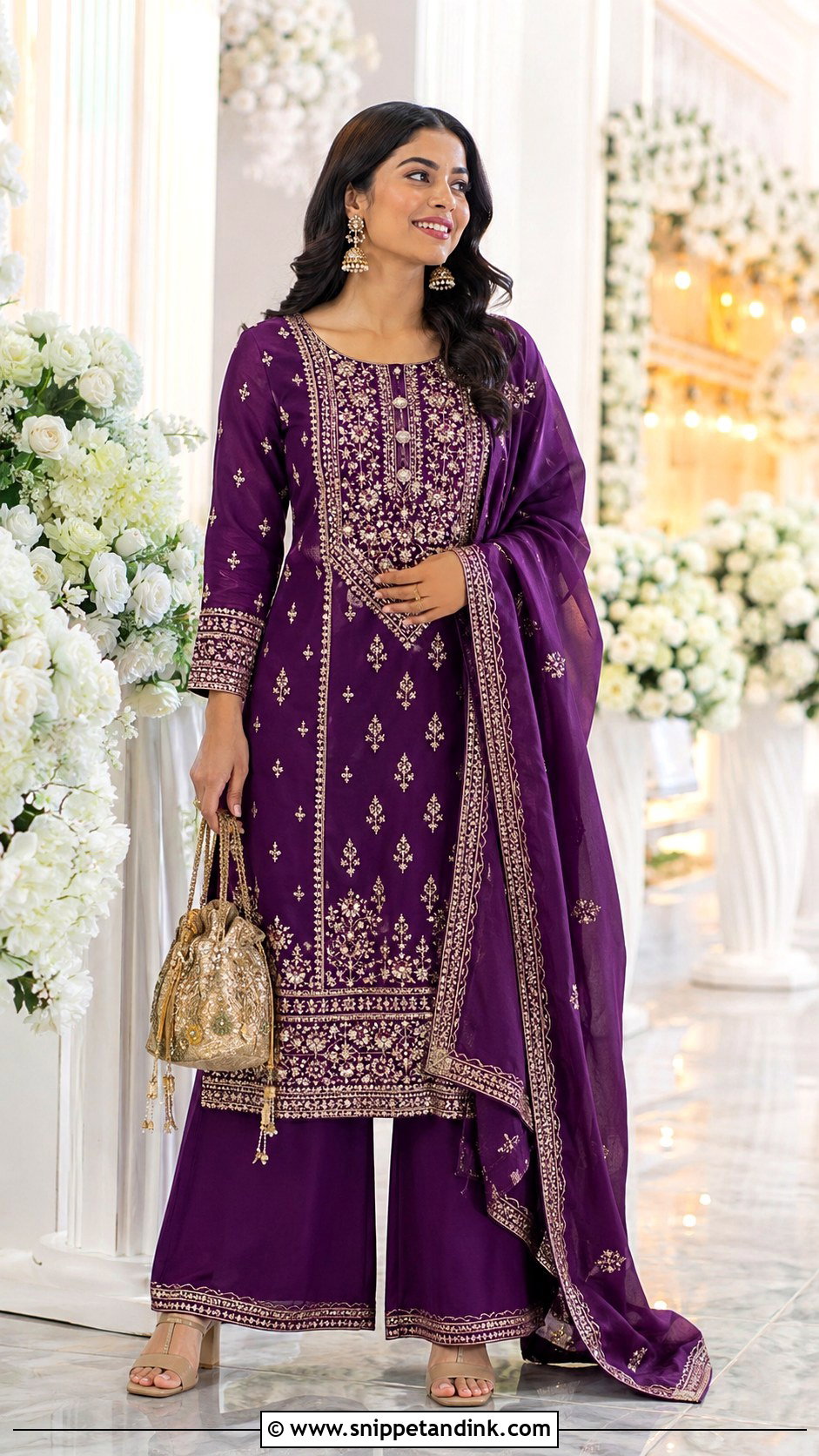
Wide-leg palazzos make walking, sitting and dancing easy, which is why I suggest them most to older guests, anyone travelling in for the wedding and anyone facing a long ceremony on the floor. Silk, georgette, brocade or crepe with embroidery at the neckline, sleeves or hem keeps the kurta festive. The fitting point people miss is palazzo length: hem them to the heel height you will actually wear, or they will either drag or flap at the ankle. Jhumkas, block heels and a potli finish the set.
18. Jacket Lehenga For Shadi
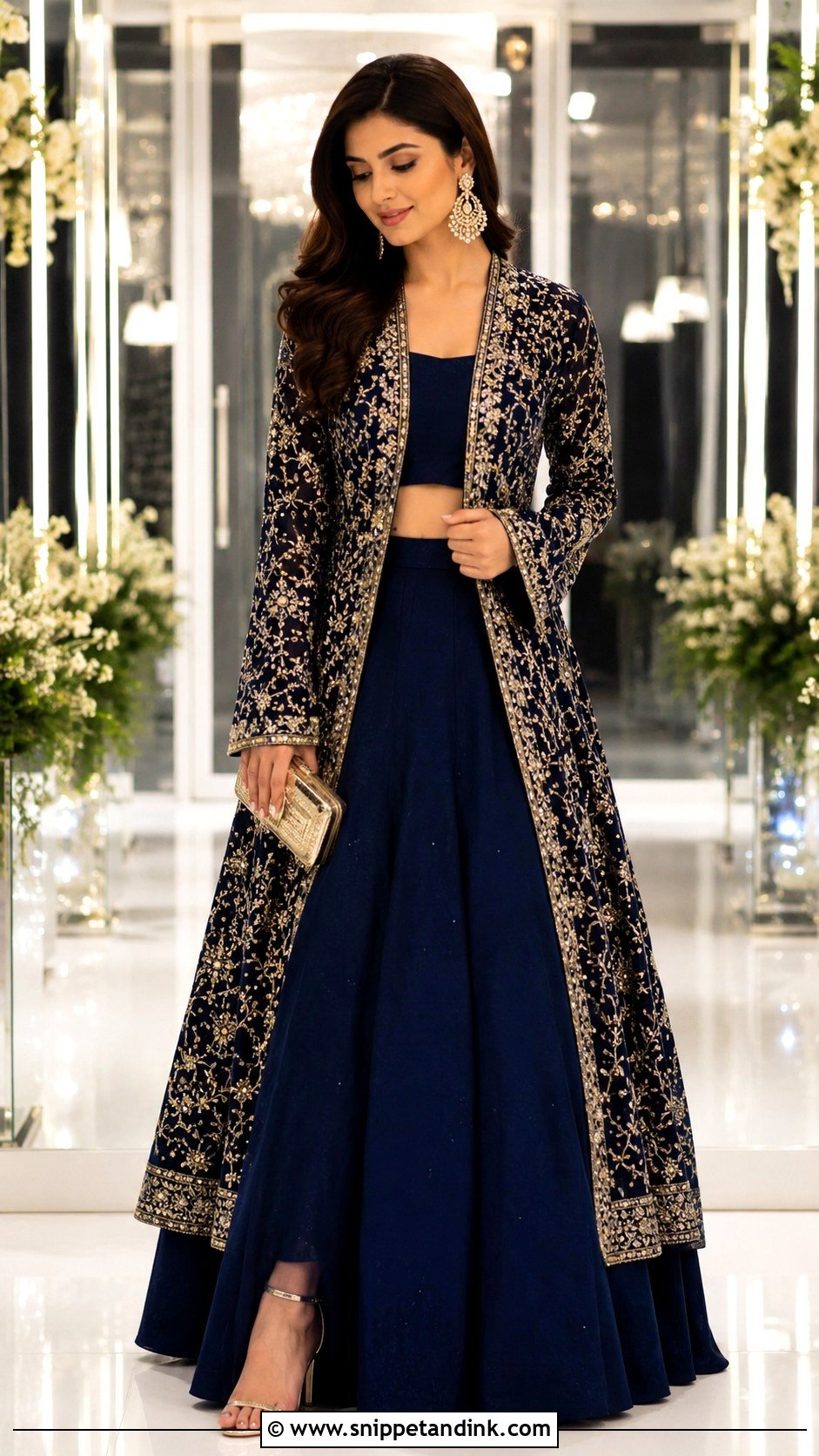
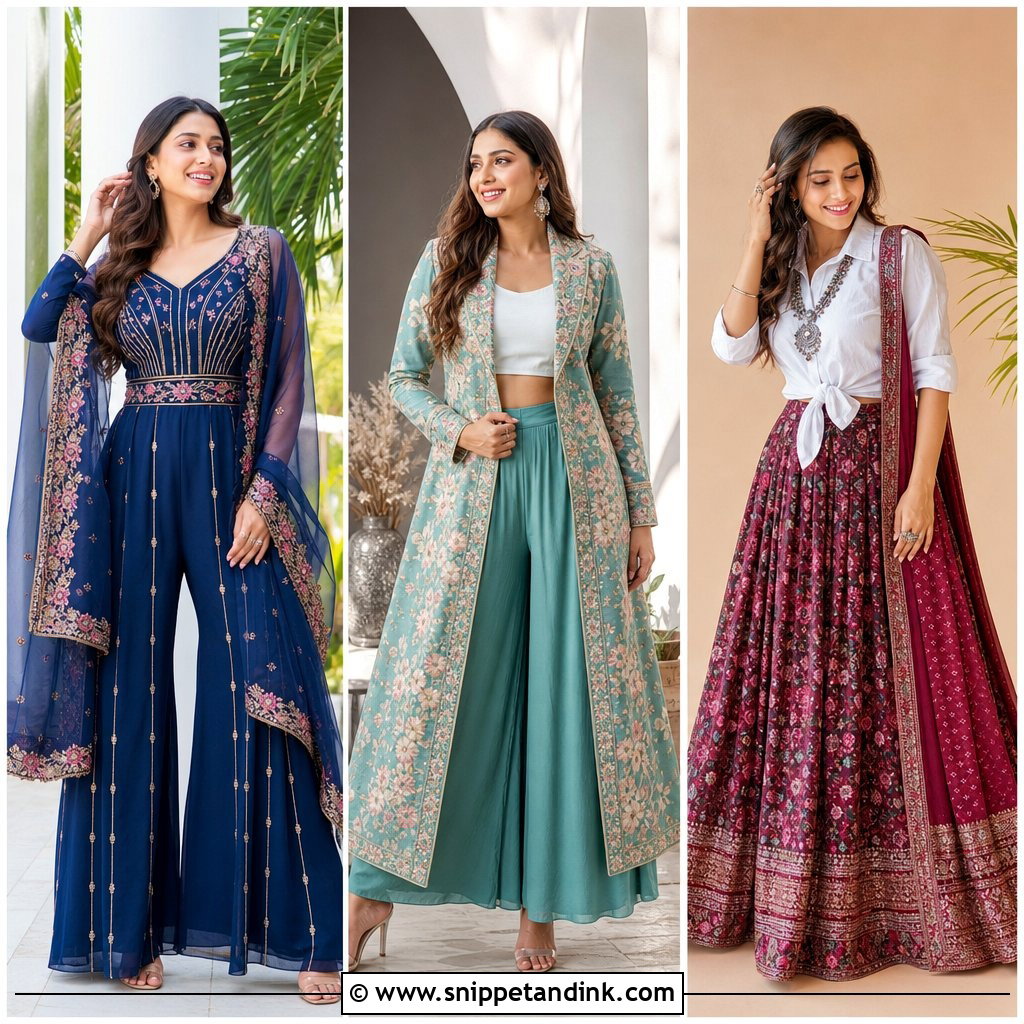
A jacket lehenga adds coverage and warmth, so it suits receptions, sangeet nights and winter weddings, and it lets you rewear the skirt later with a different top. The jacket can be long, cropped, sheer or structured; pair it with a simple skirt and blouse so it stays the main feature. Navy, wine, emerald and charcoal look sharp at night, pastels for day. My fitting rule is to button or close the jacket with your arms raised, since a jacket cut too narrow across the back will pull every time you dance.
19. Ruffle Saree For Sangeet
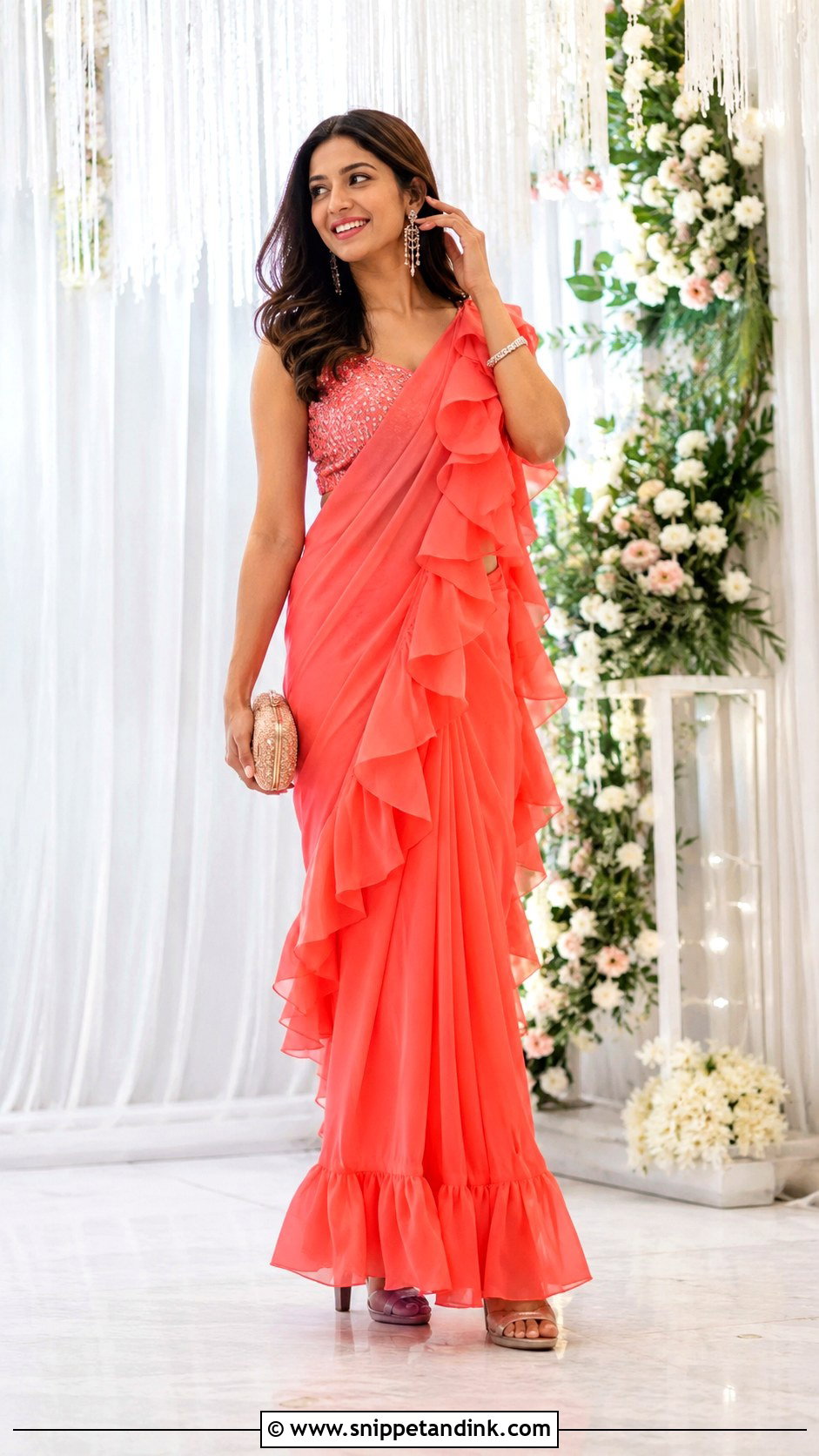
Ruffles add movement, which makes a ruffle saree fun for sangeet and reception nights. Georgette, chiffon and crepe let the frills fall softly; stiffer fabrics make them stand out and look busy. I usually keep the ruffle to the pallu and hem only, because ruffles along the pleats bulk up the waist. A statement blouse with sequins or mirror work, long earrings and a small clutch are enough. It suits younger guests and bridesmaids more than a formal family ceremony.
20. Black Lehenga For Reception
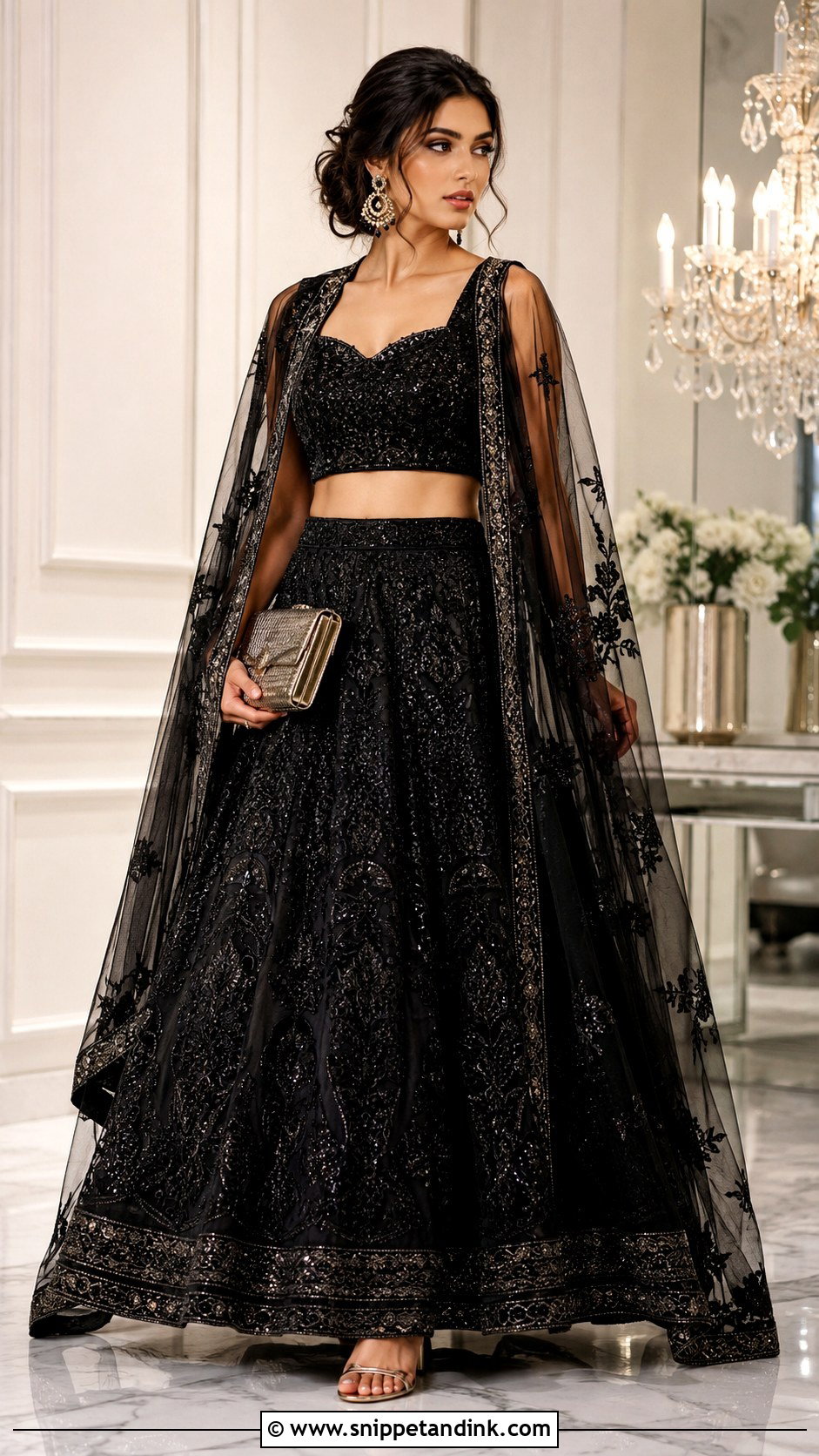
Black is a confident reception colour, and gold, silver or multicolour embroidery shows up sharply against it. Many families still avoid black at auspicious ceremonies like the pheras, so I keep it for the evening party and check with the hosts if unsure. Choose a flowing skirt, a fitted blouse and a sheer dupatta. Metallic heels, a sleek clutch, bold earrings and soft waves or a clean bun are all the styling it needs.
21. Kurta Skirt Set For Mehendi
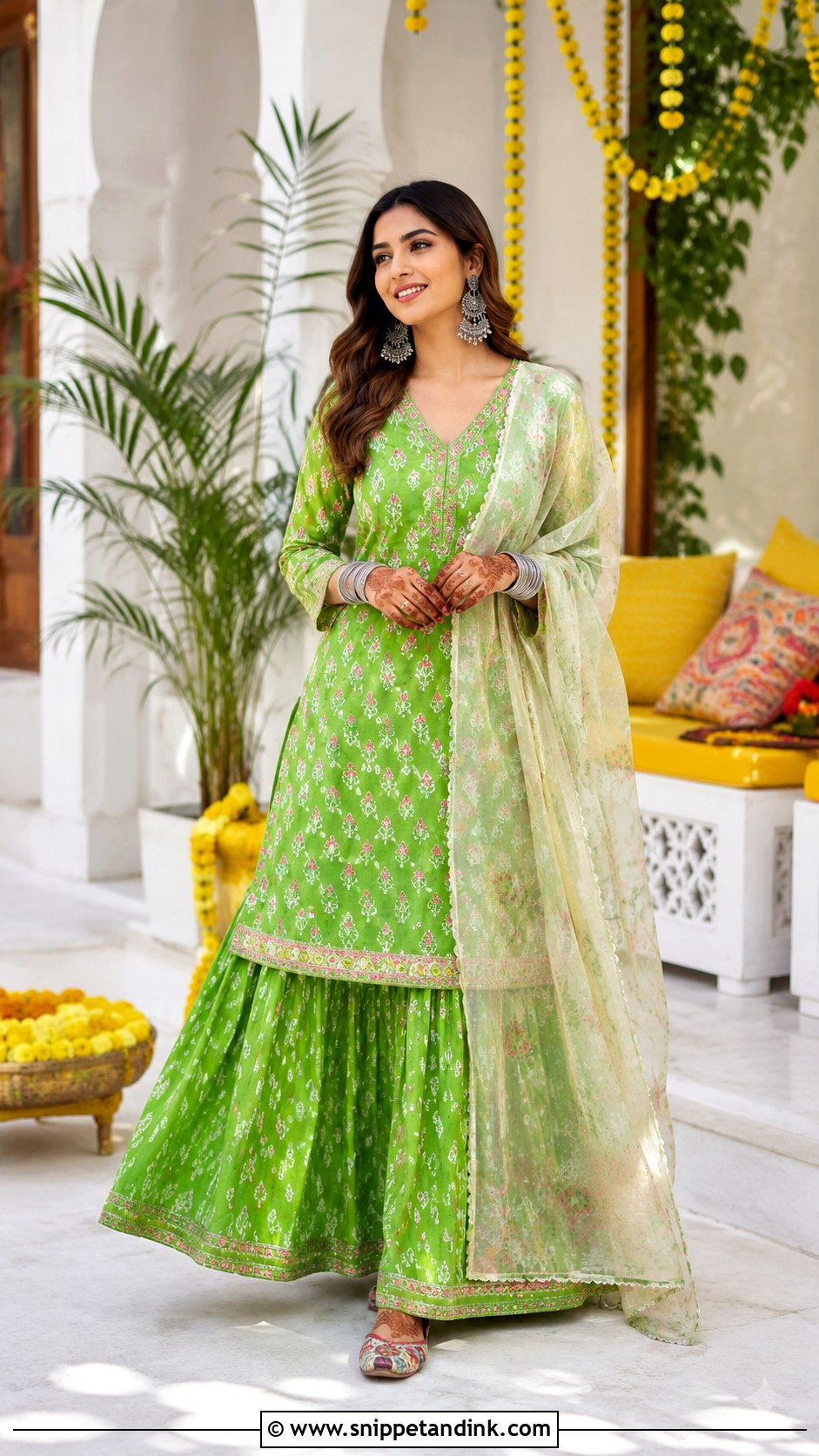
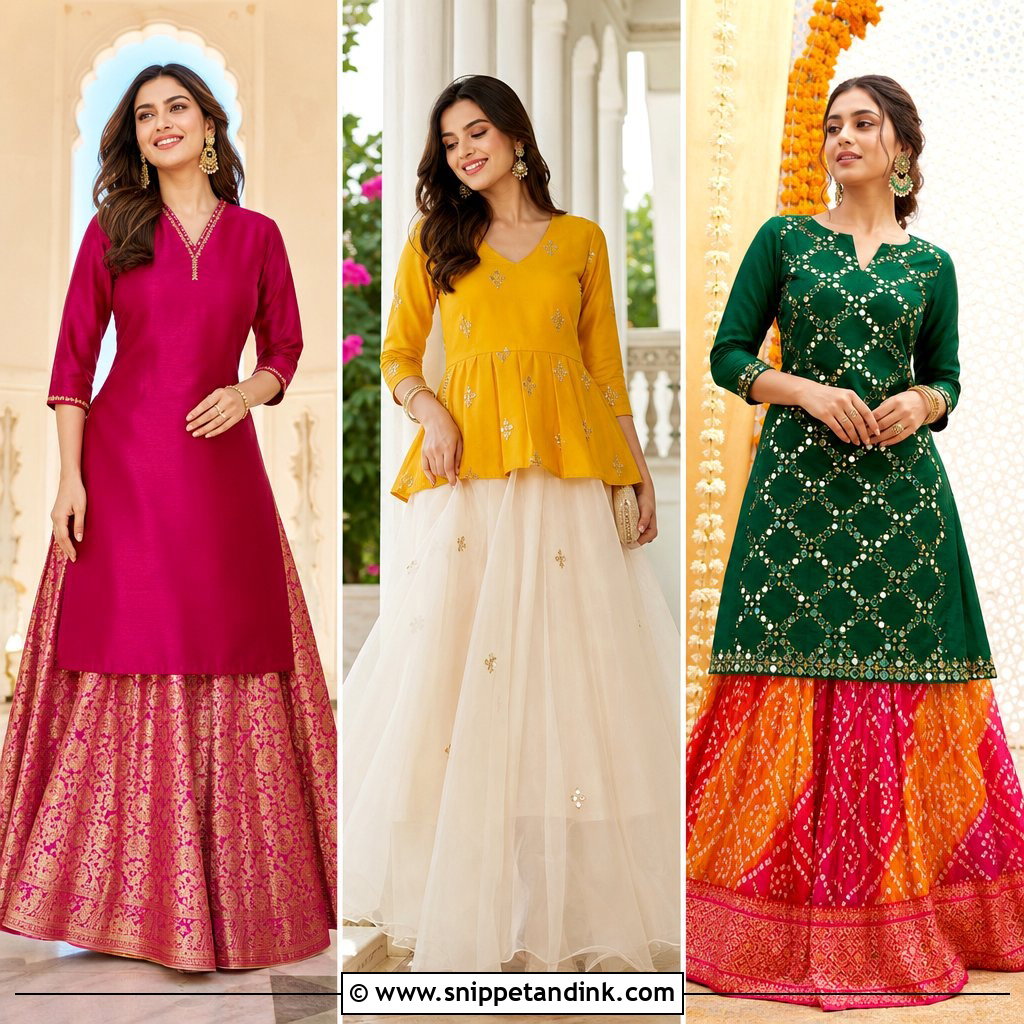
A kurta skirt set gives you the ease of a suit with the shape of a lehenga, so it suits mehendi, haldi and smaller pre-wedding functions. Printed cotton silk, chanderi, georgette or light brocade in green, yellow, pink or orange all feel festive. Two-piece sets also mean you can wear the kurta again with jeans later, which matters to guests building a wardrobe for several functions. Add juttis, oxidised earrings, bangles and a light dupatta.
22. Peplum Sharara For Wedding
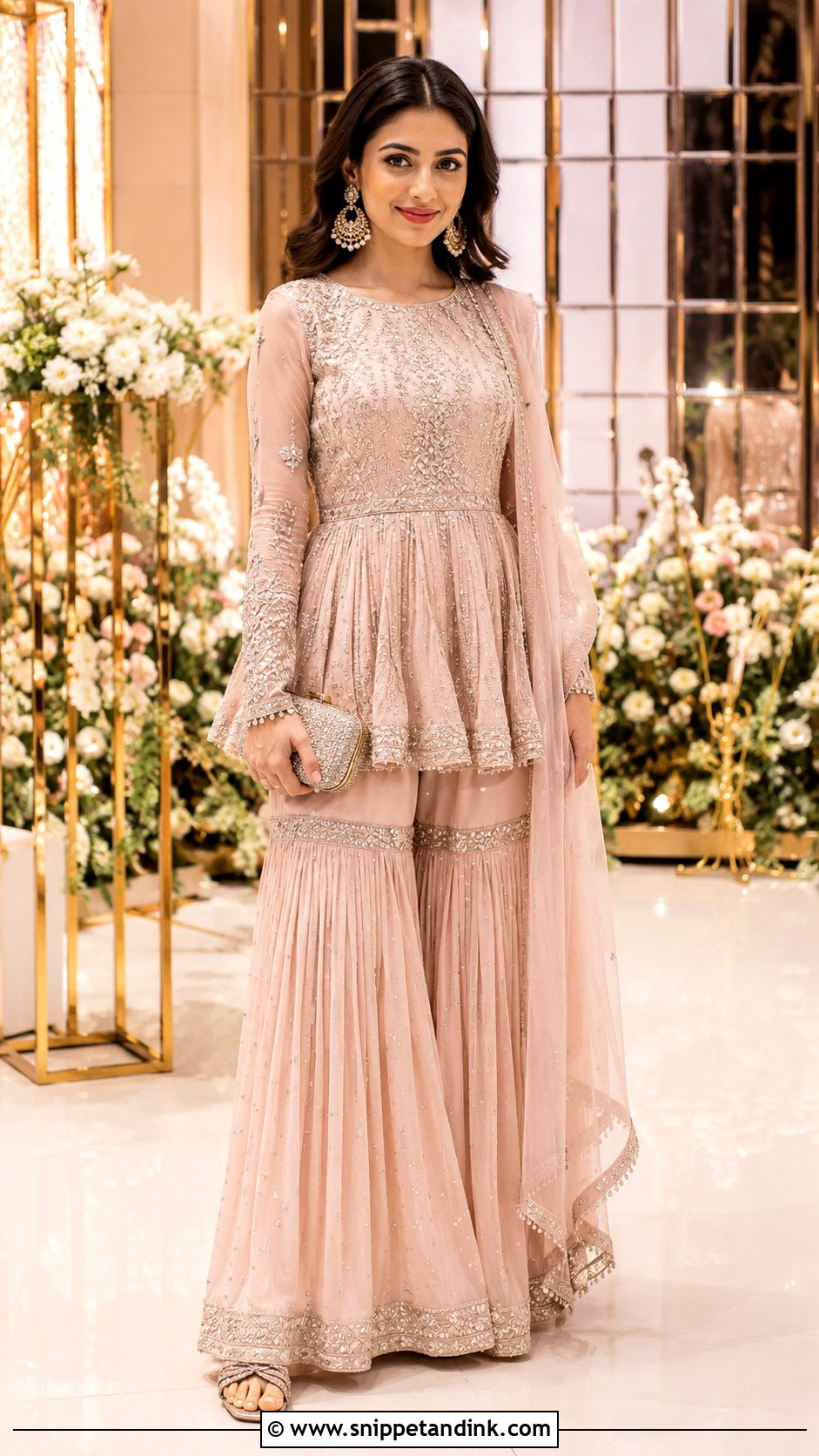
The peplum flares from the waist and the sharara flares from the knee, so this set defines your shape at the top and moves well below. It suits mehendi, sangeet, engagement and reception parties. Pick embroidery, sequins, mirror work or gota by the event, in teal, blush, mustard, ivory or wine. If the peplum is heavily worked, I drop the dupatta altogether; two busy layers fight each other. Statement earrings, embellished sandals and a neat clutch finish it, and you can dance in it all night.
23. Printed Saree For Day Wedding
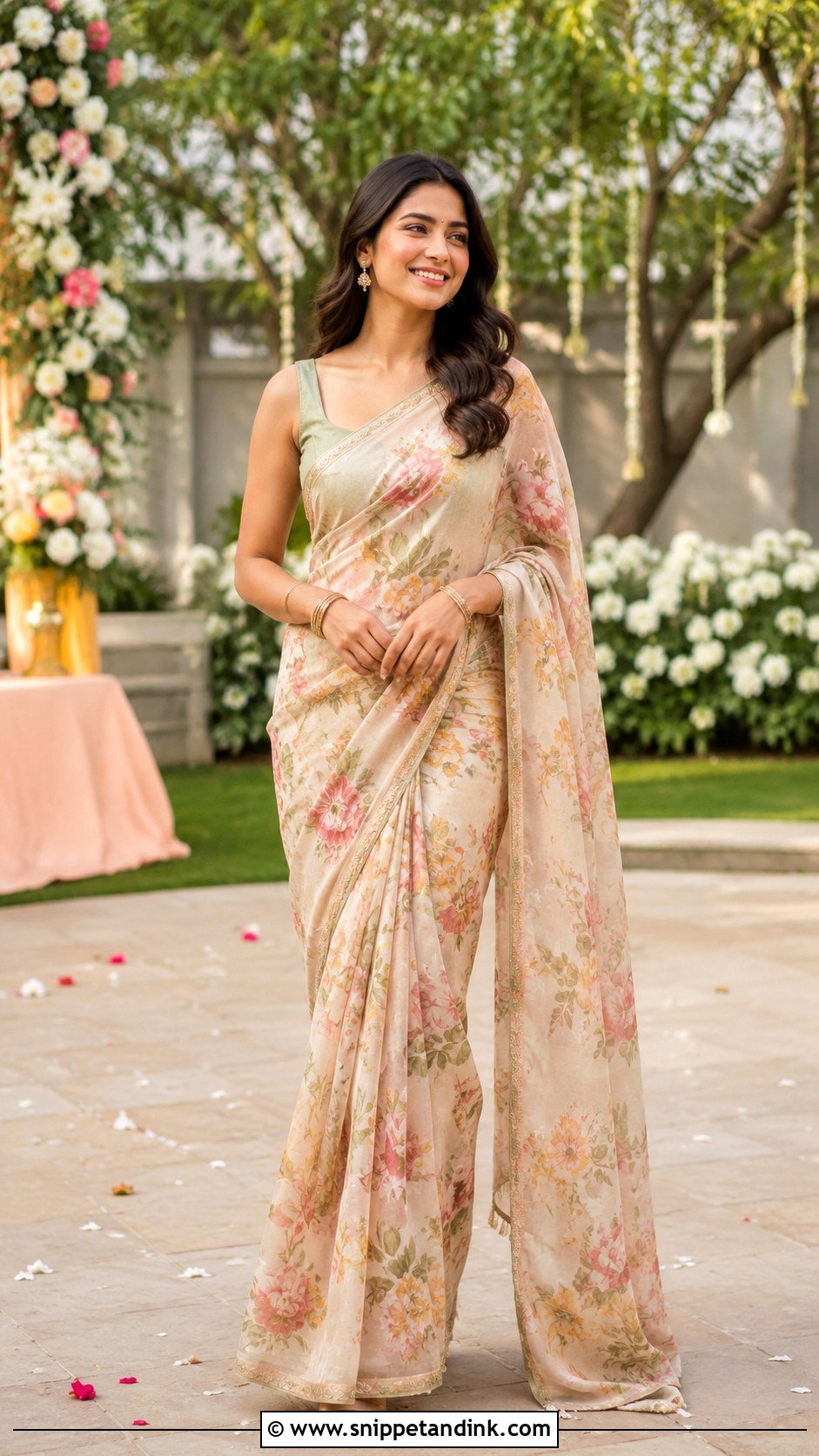
Prints let you skip heavy embroidery at a daytime wedding and still look dressed for the occasion. Florals, paisley, hand-block prints and soft abstracts suit outdoor or intimate ceremonies. Silk and crepe give a better fall than chiffon, which can cling in humidity. Pair it with a solid blouse in a colour pulled from the print, small earrings, bangles and comfortable heels, and keep the makeup fresh.
24. Bridal Anarkali For Shadi
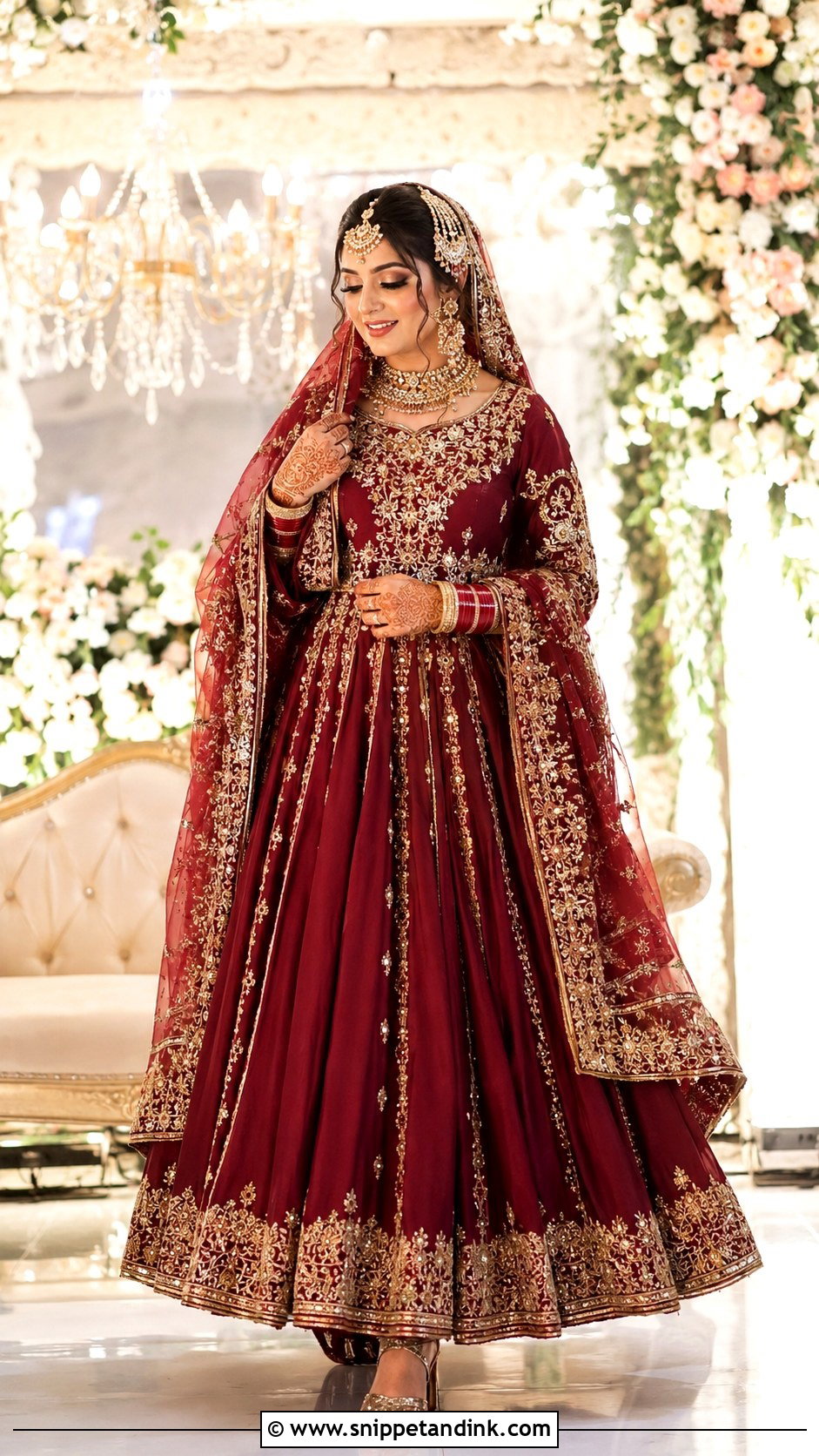
Some brides want coverage and freedom of movement more than a structured skirt, and a floor-length bridal Anarkali gives both. With heavy embroidery, layered kalis and a rich dupatta, it reads as grand as a lehenga in red, maroon, ivory, gold, emerald or blush. I check one thing closely at fittings: the bodice must fit snugly under the bust, because the whole flare hangs from that seam and a loose bodice makes the dress look dropped. Bridal jewellery, bangles and a dupatta over the head or shoulder suit a nikah, reception or intimate ceremony, and it is much easier to manage through a long day.

25. Co Ord Set For Indian Wedding
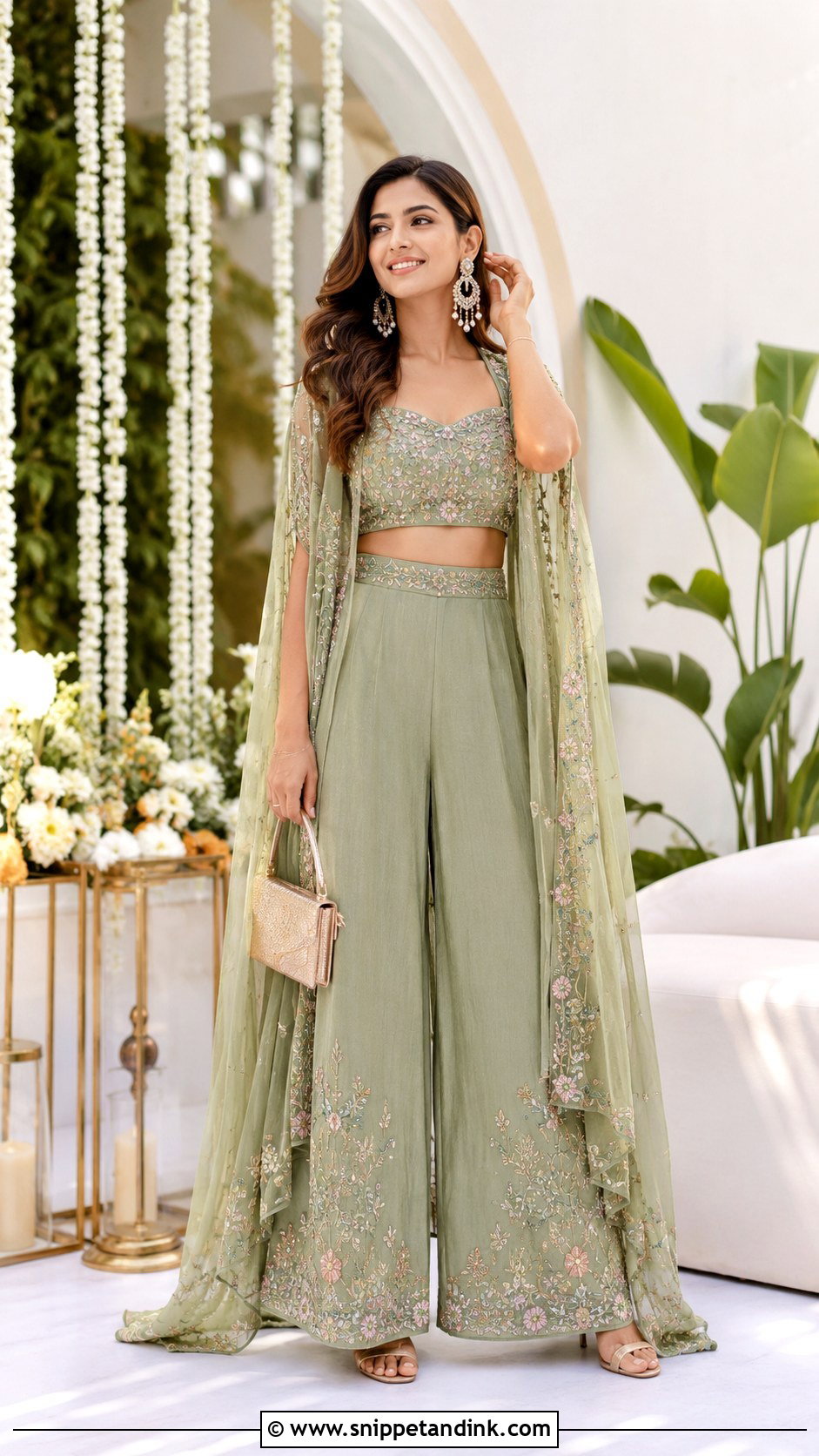
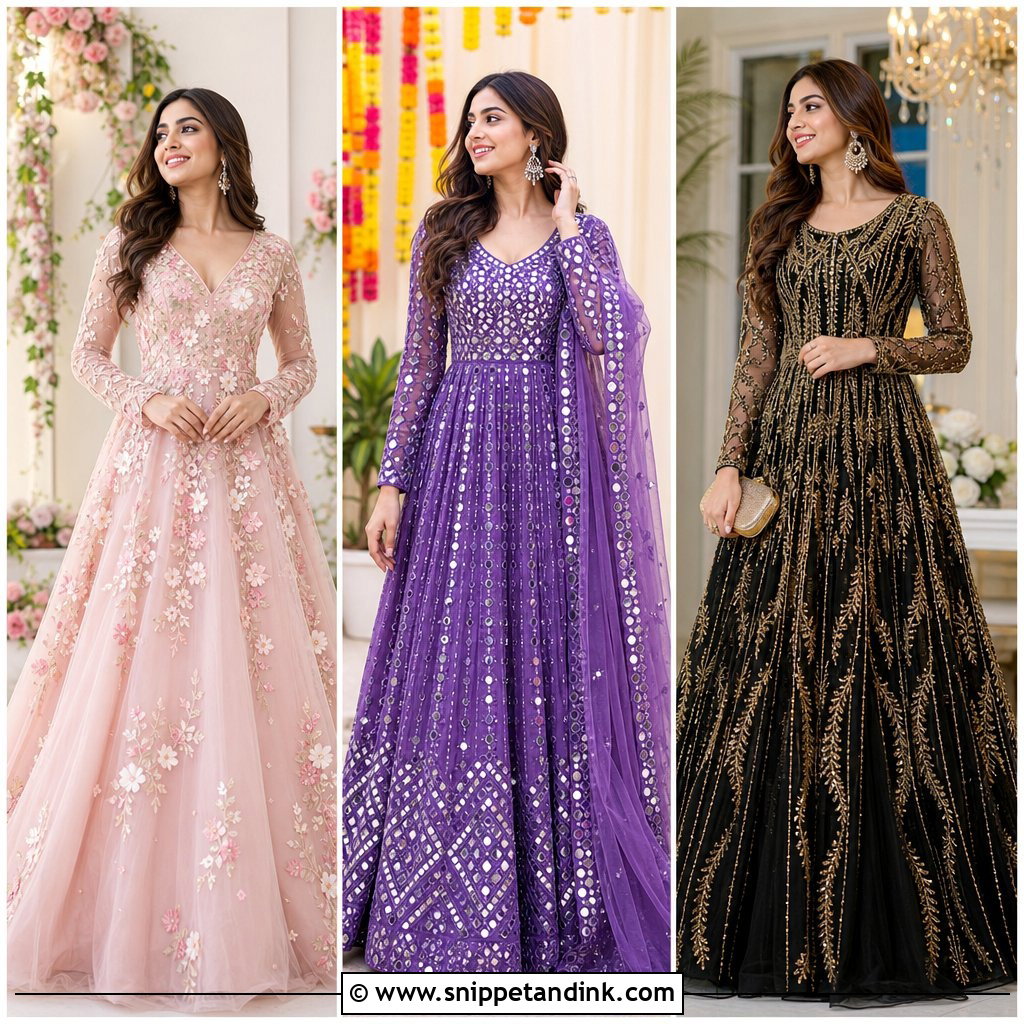
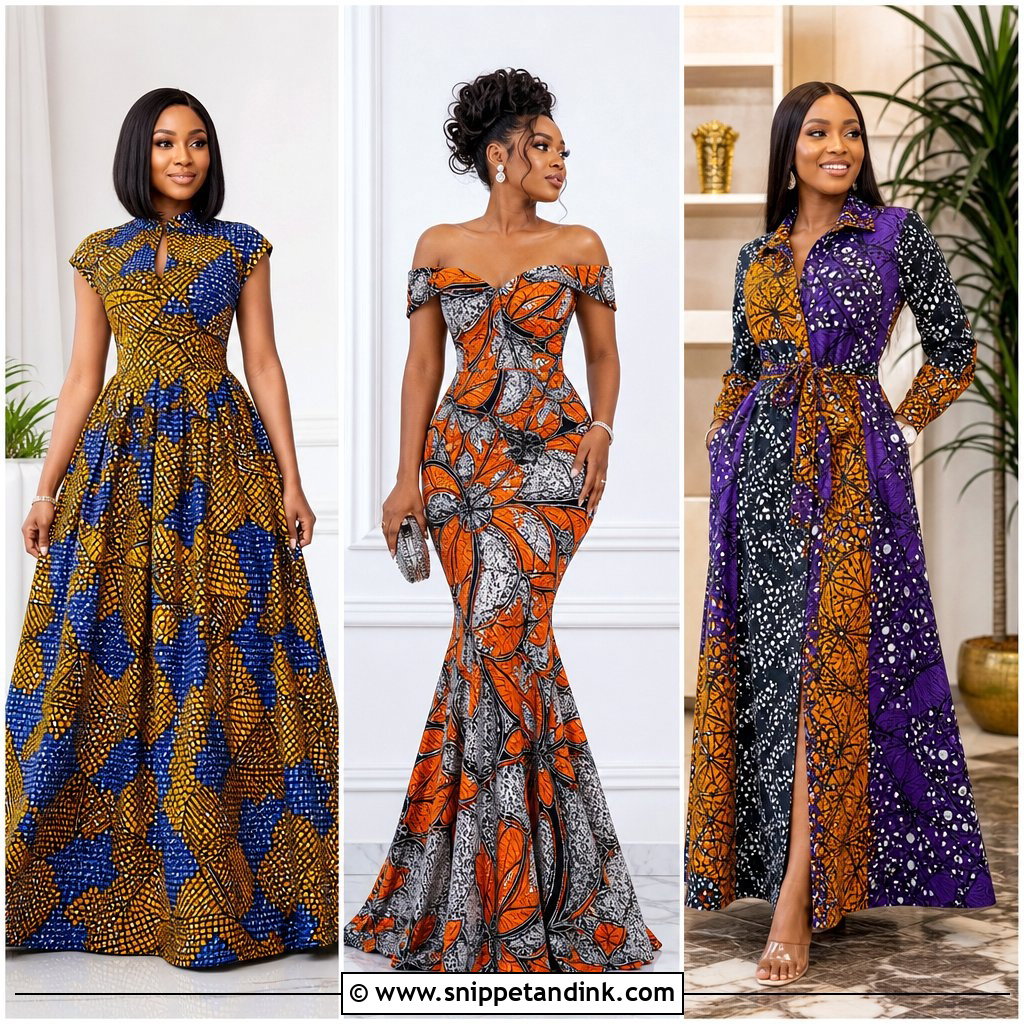
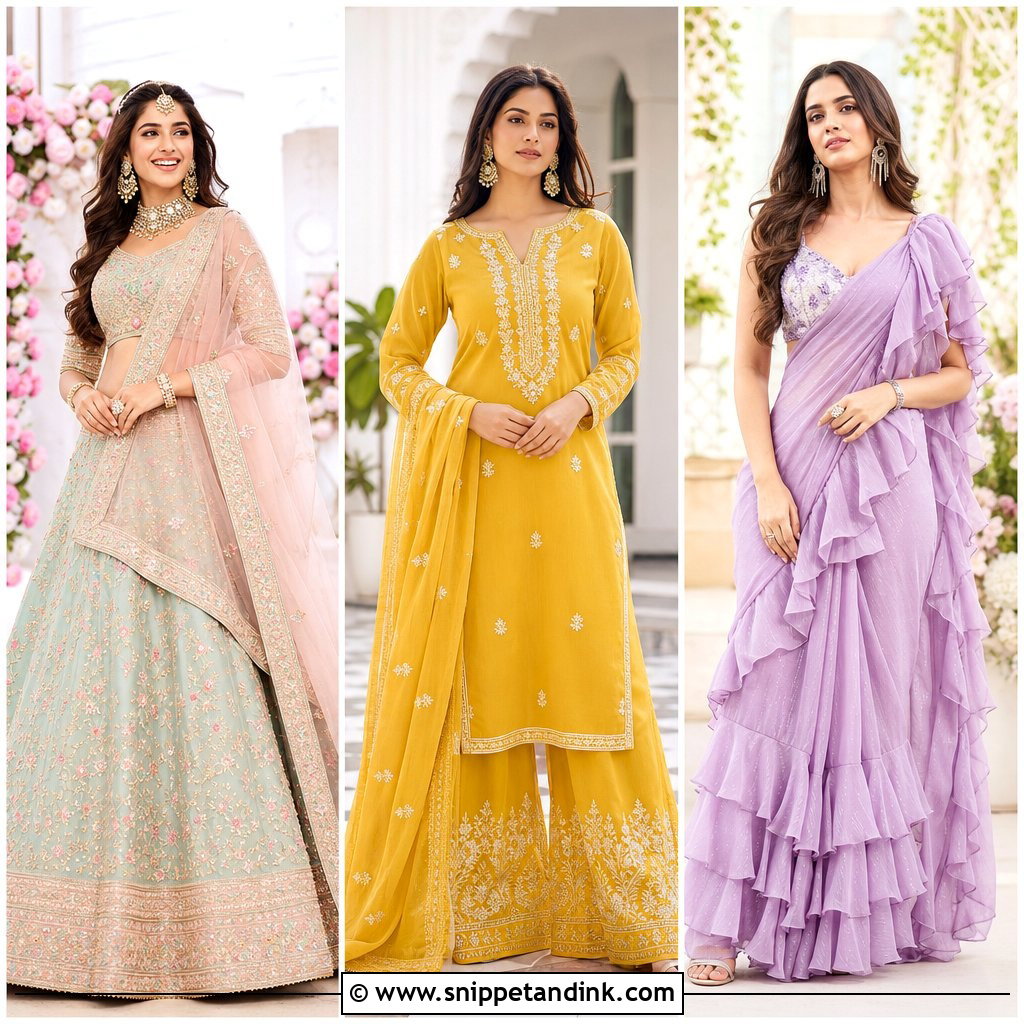
A co-ord set is the easiest outfit to pack for smaller Indian wedding functions, welcome parties, mehendi or a post-wedding brunch. Ethnic fabrics, brocade, printed silk or mirror work keep it occasion-appropriate; plain crepe looks too casual. A crop top with wide-leg pants and a cape, or a kurta top with matching trousers, both work. Statement earrings and a sleek bag are enough to finish it. I’d only skip it for the main ceremony, where most families still expect a lehenga, saree or suit.
The Tailoring Calendar Behind a Lehenga That Fits
Almost every outfit on this list involves a blouse stitched to measure, and that is where timelines slip. Embroidered blouses and heavy lehengas often need a few weeks of tailoring time plus at least one trial, and that stretches further in the busy wedding season, so I ask clients to lock in outfits well before the first function.
What I check at the final fitting
- Raise both arms and hug someone: the blouse should not ride up or cut into the underarm.
- Sit on a low chair, then on the floor, in the skirt or sharara you will wear for mehendi or the pheras.
- Wear the exact heels: skirt and saree hems are set to your shoe height, and flats under a heel-length hem will drag.
- Pin the dupatta the way you plan to wear it and walk for a few minutes to see where it slips.
Bring a small kit to every function: safety pins in two sizes, a few bobby pins, double-sided fashion tape and a needle with neutral thread. A dupatta pinned at the shoulder and at the waist band at the back stays put through dancing; pinned only once, it slides all night.
What Turmeric, Rain and Long Car Rides Do to Wedding Fabric
Heavy outfits suffer most between events, not during them. Turmeric on silk should be blotted, never rubbed, and sent to a dry cleaner who handles ethnic wear as soon as possible. If the lehenga gets damp from rain, hang it to dry fully before packing, because zari and sequins can tarnish when stored wet.
For travel and storage, I fold embroidered pieces with the work facing inward, wrap them in soft cotton or muslin instead of plastic, and keep a separate bag for each function’s jewellery. Steam rather than iron near zari or sequins; a hot iron can melt sequins and flatten the raised thread. If a full lehenga has to go in a car, lay it across the back seat in its garment bag instead of folding it into a suitcase.
Start With the Function List, Then the Fabric
Match each outfit to its function, the weather, the venue and how long you’ll wear it, in that order. Lehengas carry sangeet and receptions, sarees suit ceremonies, and shararas, ghararas, Anarkalis, palazzos and co-ords give you movement when the day is long. Before you buy, picture yourself sitting on the floor, eating with your hands and climbing into a car in it. If the answer is easy, you have found a wedding outfit you’ll enjoy wearing.
You'll Like These Ideas:




Leave a Reply