
Beading changes how a wedding dress behaves in light, and it changes how the dress feels on your body too. Scattered pearls give a soft glow, dense crystal embroidery throws sparkle across a room, and every level in between asks something different of the fabric underneath. The silhouette matters as much as the embellishment: an airy A-line carries beads lightly, while a fitted mermaid puts them right against you. Neckline, sleeves, fabric, venue and accessories all shape how the beadwork reads in person and on camera. Each of the twenty gowns below comes with the shoes, veil, jewelry and hair I’d pair with it, plus the fitting checks I wouldn’t skip.
Pearls, Crystals or Seed Beads? How Each One Handles Light
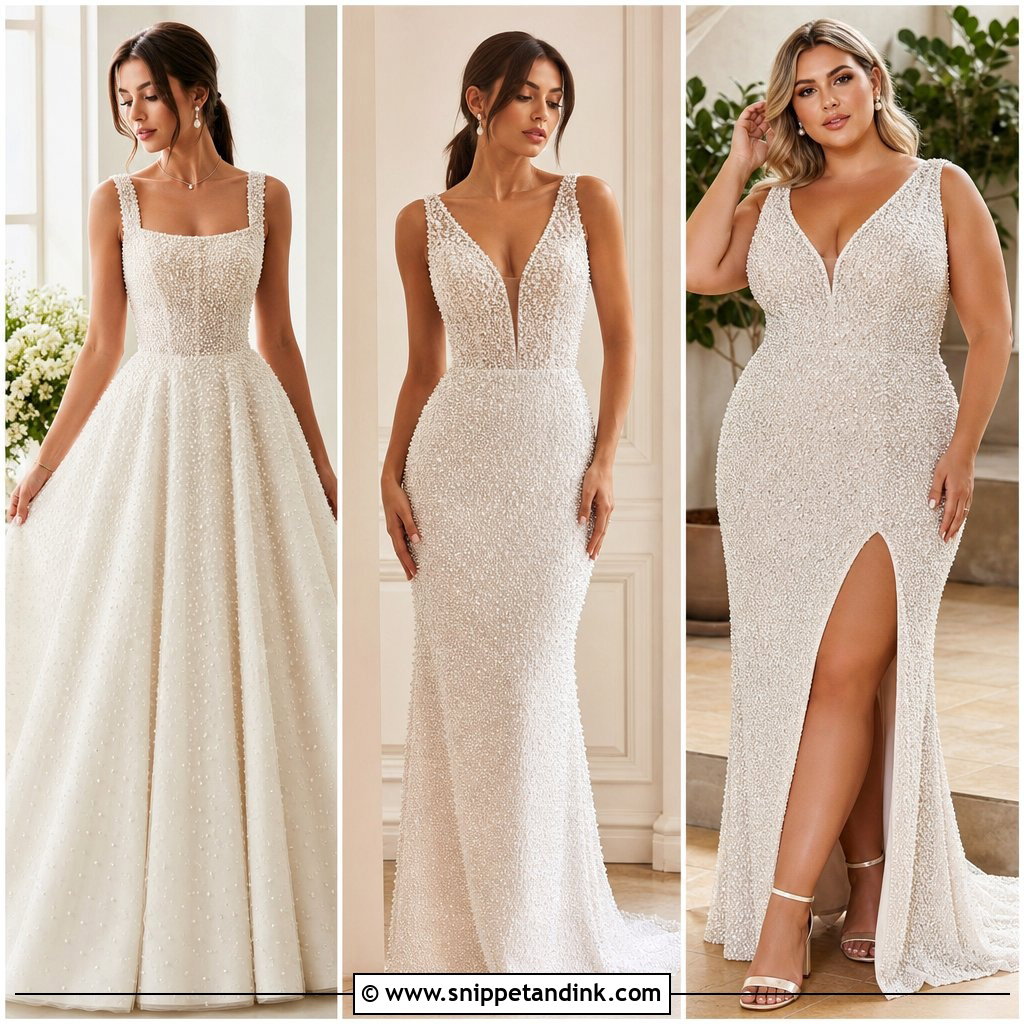
When a bride says she wants a beaded gown, my first question is what kind of shine she has in mind, because the bead type decides that more than the amount.
Pearls
Pearls glow rather than flash, which suits daylight ceremonies and close-up portraits. Most bridal pearls are glass or acrylic with a coated finish, and they’re heavier than seed beads, so a heavily pearled skirt adds noticeable weight.
Crystals
Faceted crystals throw pinpoints of light and come alive under candles, chandeliers and camera flash. In flat midday sun they can look busier, so I’d keep crystal-heavy gowns for evening or indoor weddings.
Seed beads and sequins
Tiny seed beads give texture and outline lace motifs without much glare. Tonal, matte versions read almost like embroidery, while small sequins add movement but can look shiny in flash photos.
1. Beaded A-Line Bridal Gown
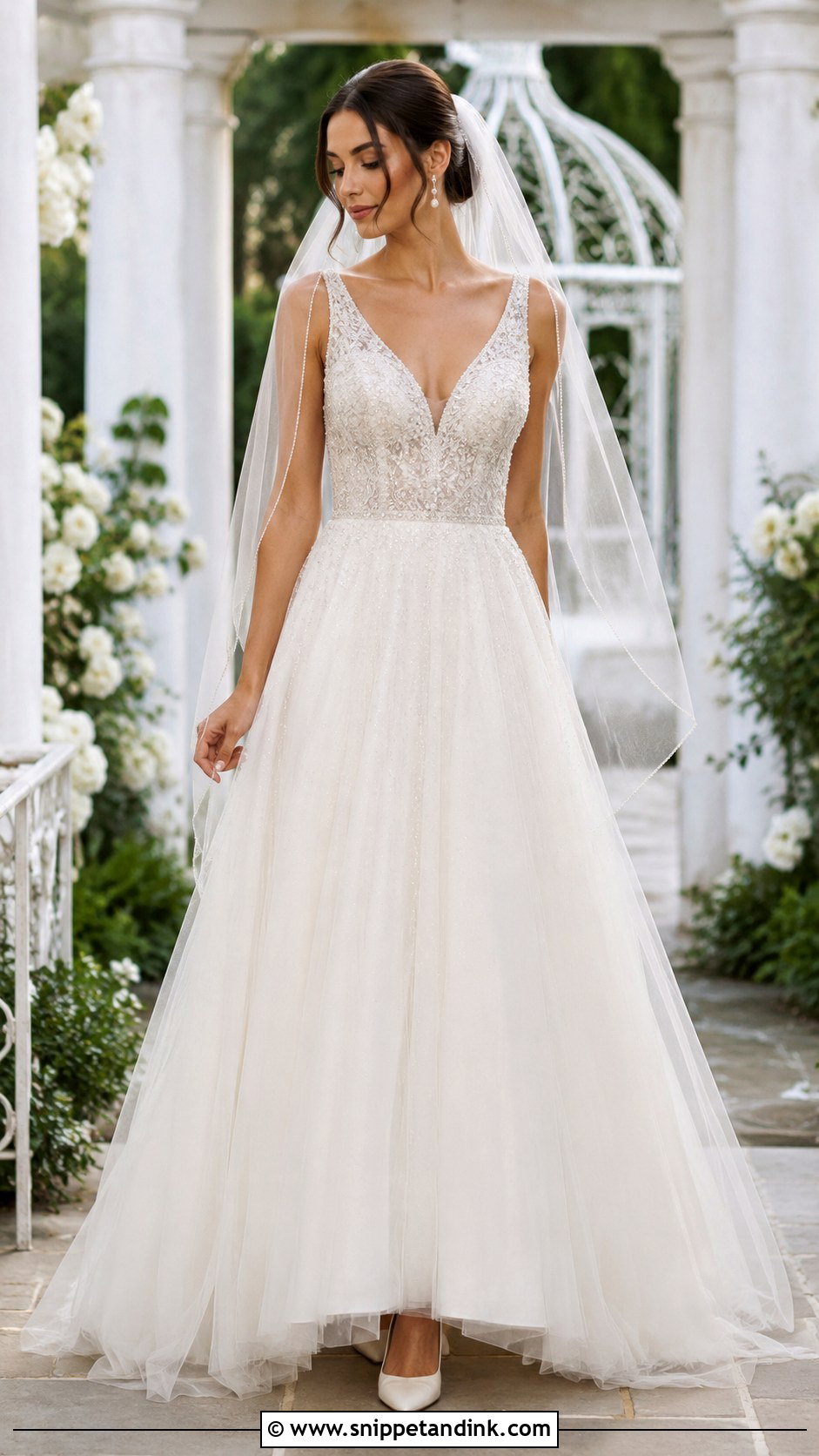
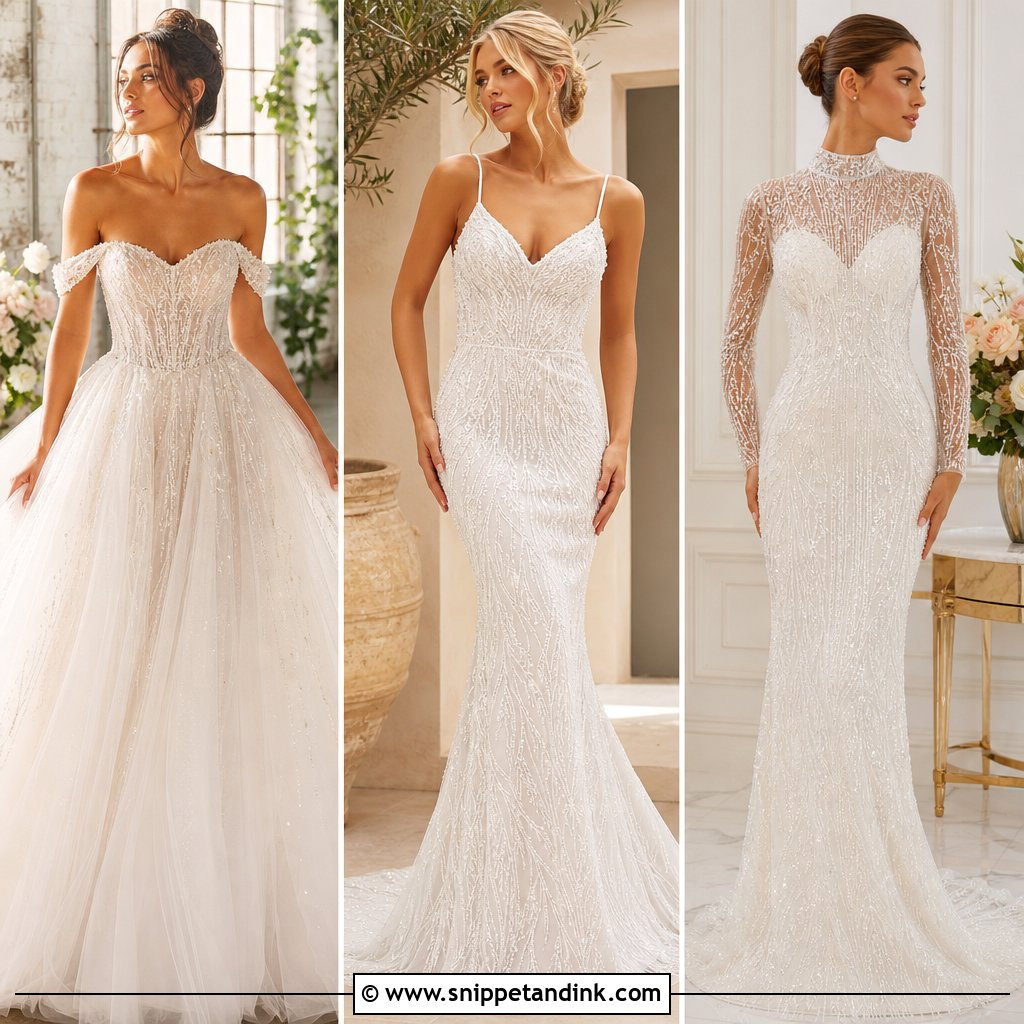
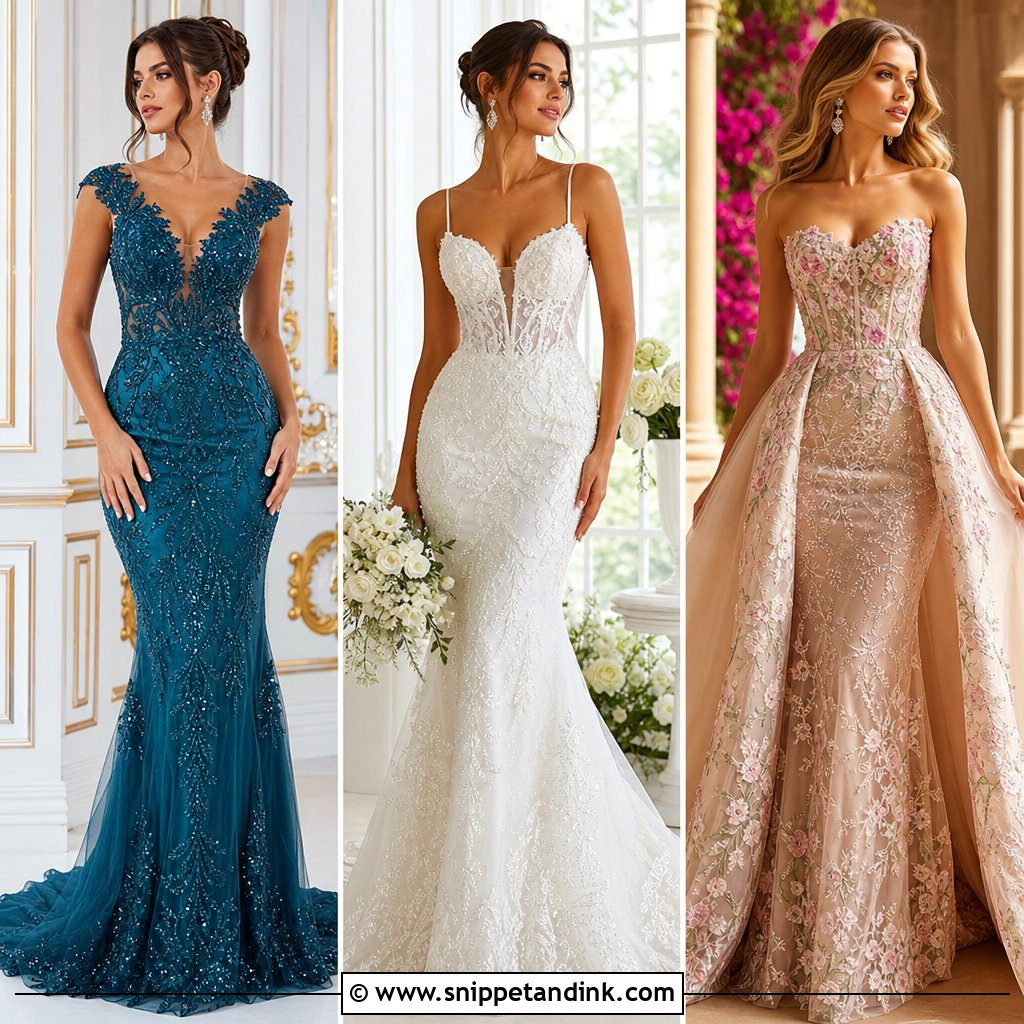
An A-line is the easiest way into beading, because the skirt takes almost none of it. A fitted V-neck bodice worked with tiny crystals or seed beads that thin out into a soft tulle skirt puts the sparkle at the waist without making the whole dress heavy. Lining color changes everything here: nude lining under ivory appliqués makes the pattern pop in photos, while full ivory lining softens it into a traditional look. I’d try both on if the salon has samples. Pointed satin pumps, pearl drops, a fingertip veil with a narrow beaded edge and a low chignon complete it. Gardens, ballrooms, hotels and estates all suit this gown, and it flatters a wide range of shapes.
2. Pearl Beaded Ball Gown
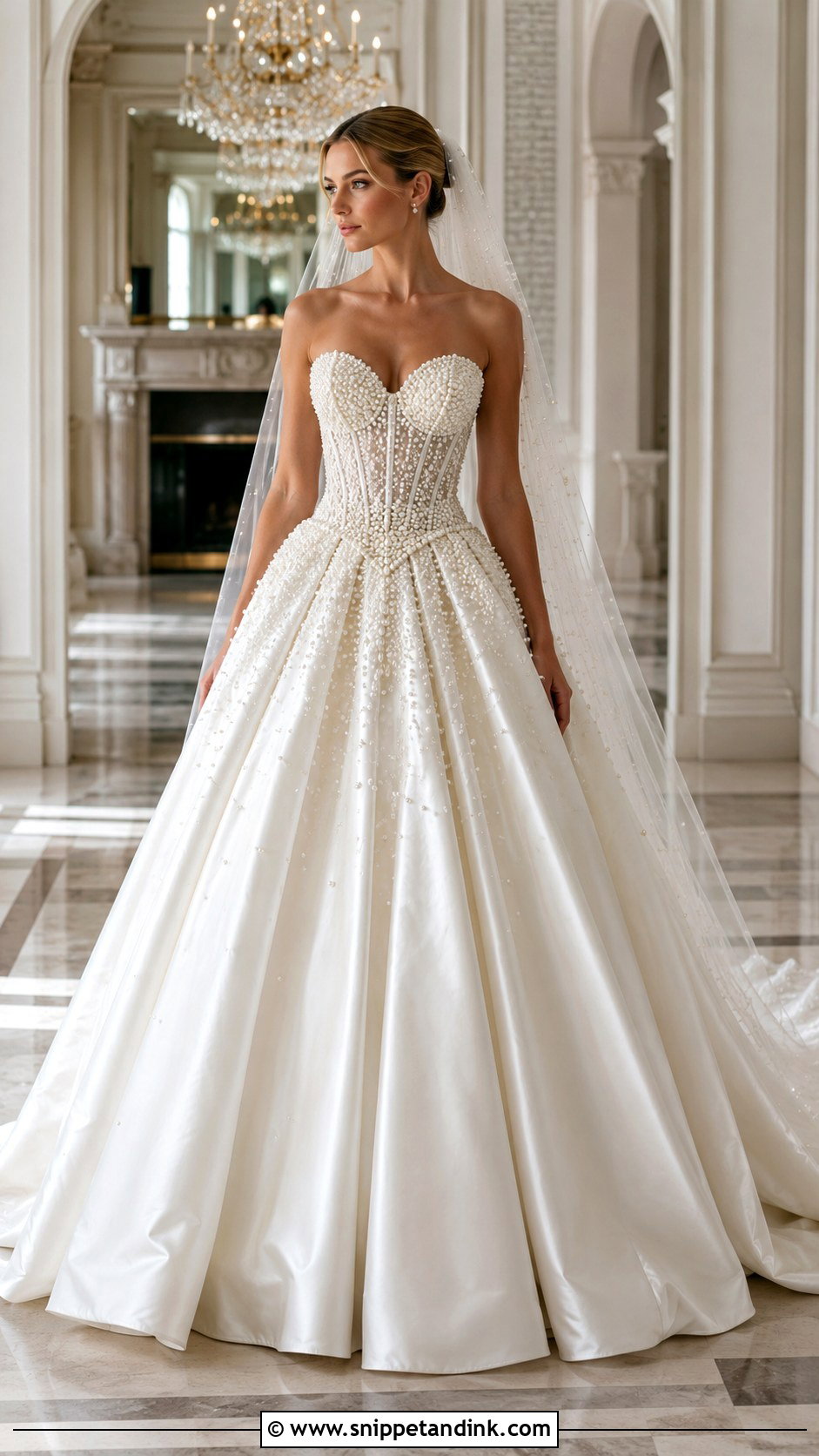
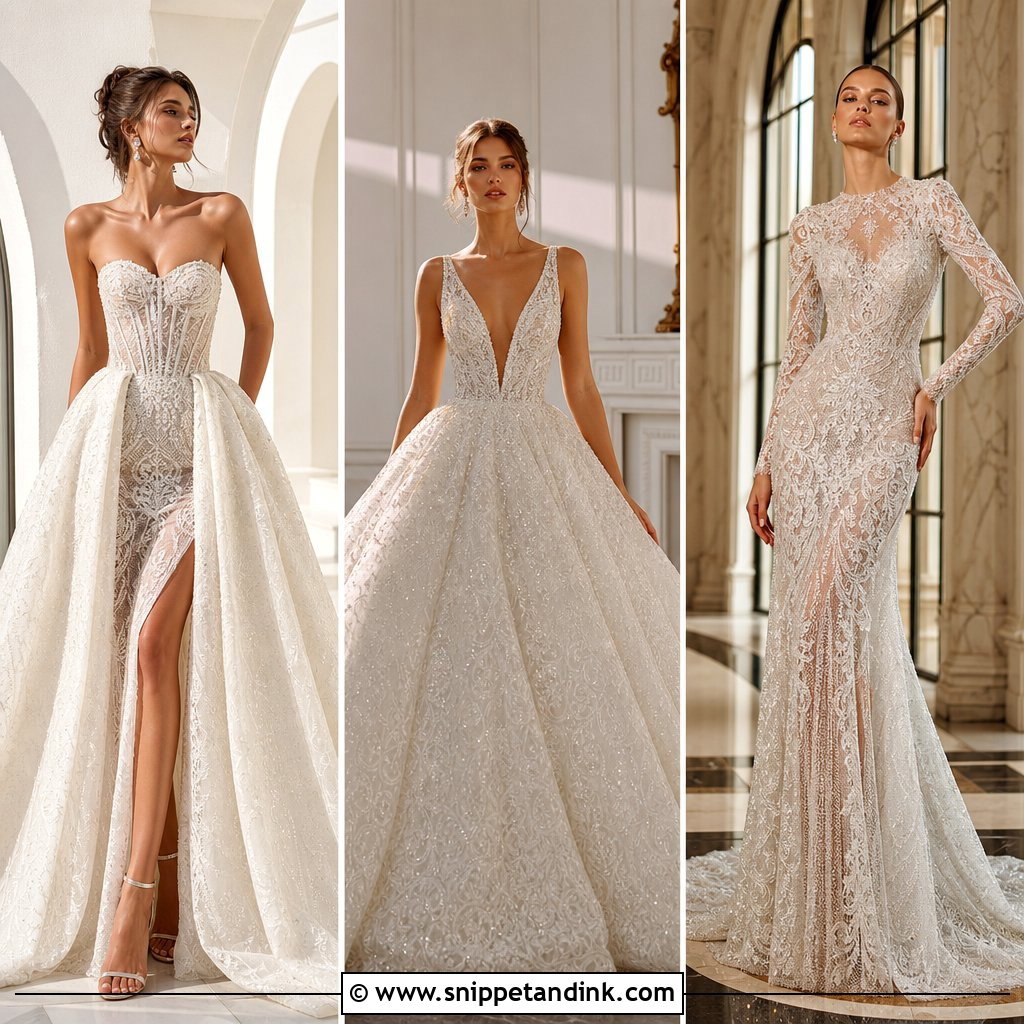
Pearls on a ball gown glow rather than sparkle, which is why this combination reads romantic rather than glitzy. Look for a structured corset bodice covered in mixed-size pearls over a clean satin or layered tulle skirt. Keeping the pearls above the waist matters for comfort as much as style, as pearls are heavier than seed beads, and a fully pearled skirt can add real weight to an already full gown. A sweetheart or softly curved neckline echoes their round shape. Ivory platform heels hidden under the skirt, pearl studs and a cathedral veil with a few matching pearls finish it, with no necklace competing with the bodice. A polished bun and luminous skin suit a formal ballroom or classic estate.
3. Crystal Beaded Mermaid Gown
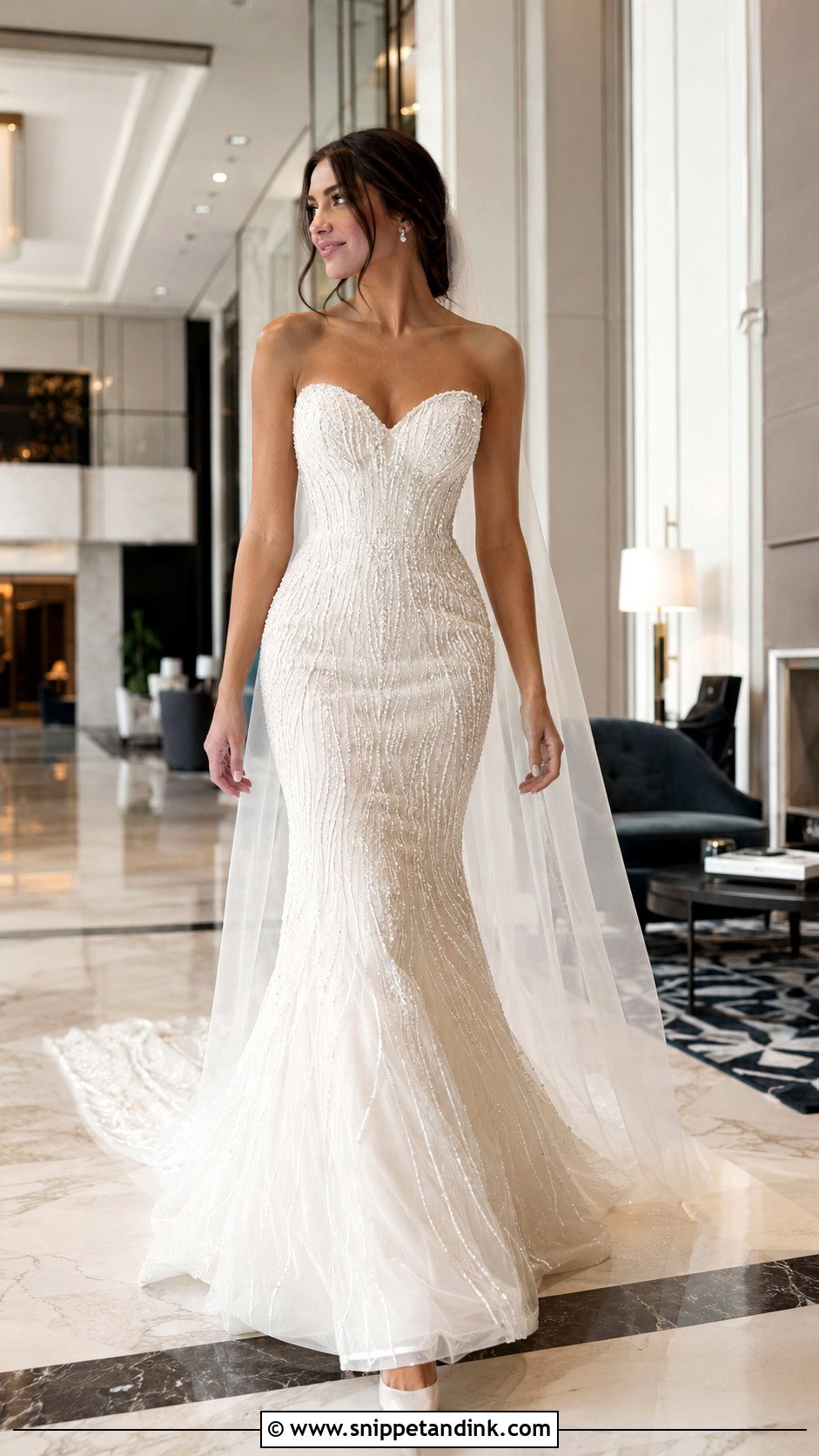
Vertical crystal lines on a mermaid draw the eye down the body, which makes the silhouette look longer before it opens into the flare. Supportive boning and a defined natural waist hold the shape. Crystals are where I’m strictest about seating, though: on a fitted skirt, beads at the back of the hips press into you every time you sit, so I ask brides to sit for several minutes at a fitting and see how it feels. A chapel train adds drama and still stays manageable. Comfortable pointed heels, small crystal studs and a plain single-layer veil keep the focus on the dress, with a side-parted low bun or smooth waves. Practice walking and sitting during alterations, not after.
4. Beaded Lace Fit-And-Flare Gown
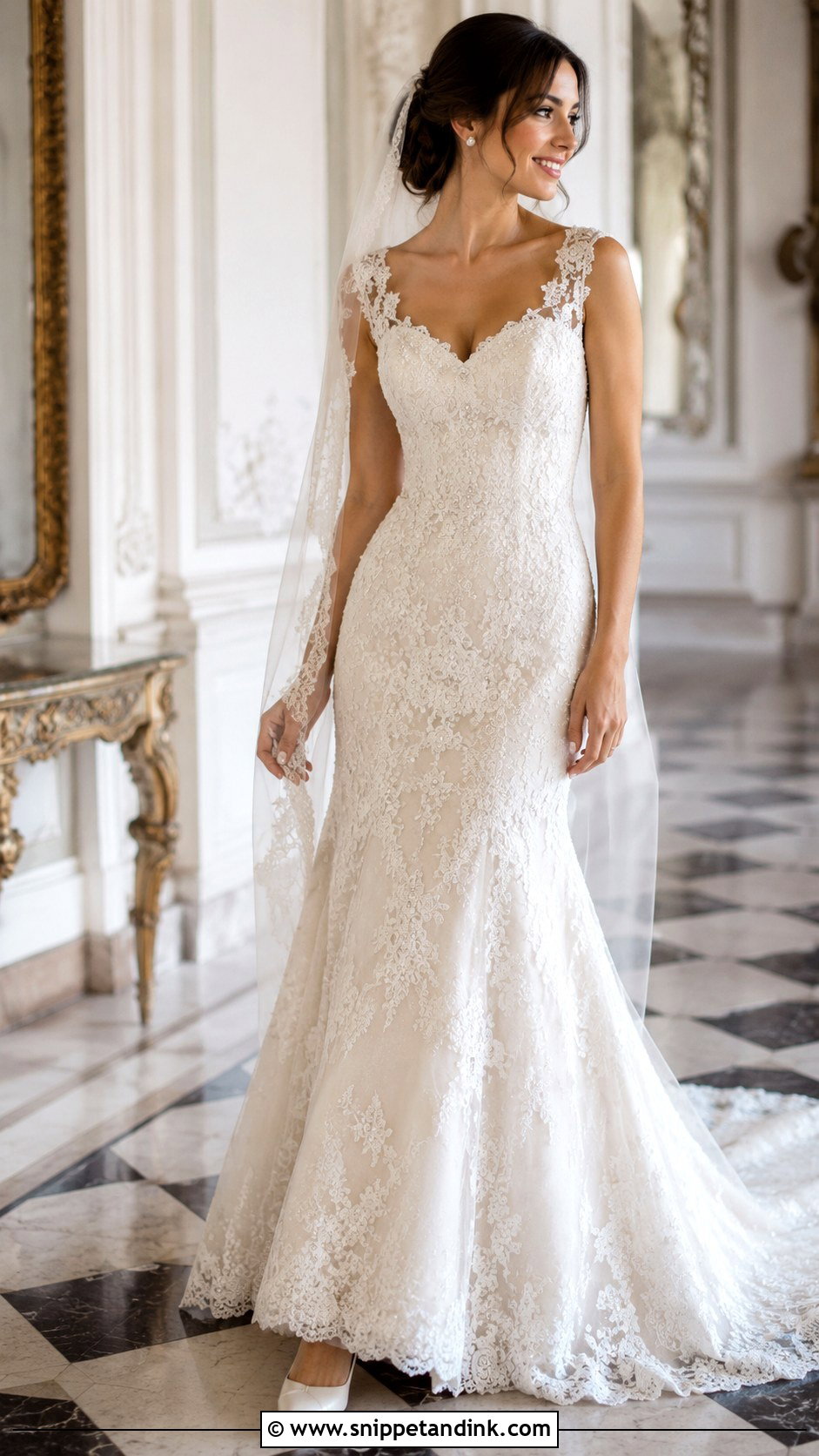
Fine beads tracing a lace pattern give it depth that plain lace doesn’t have. A fit-and-flare skims the bodice, waist and hips and widens gently around the thighs or knees, so you get shape with more movement than a sharp mermaid. Tonal beads add quiet texture; clear crystals add brighter sparkle. Closed-toe ivory heels, a lace-trimmed veil and pearl or diamond studs complete it. A soft updo keeps hair from catching on raised beadwork at the shoulders. The underarm is where beaded lace bothers brides most, since that’s where arms rub against it all day, so I ask the seamstress to check it and, if needed, move or remove a few beads there. Romantic indoor ceremonies, gardens and historic venues suit it.
5. Beaded Long Sleeve Wedding Gown
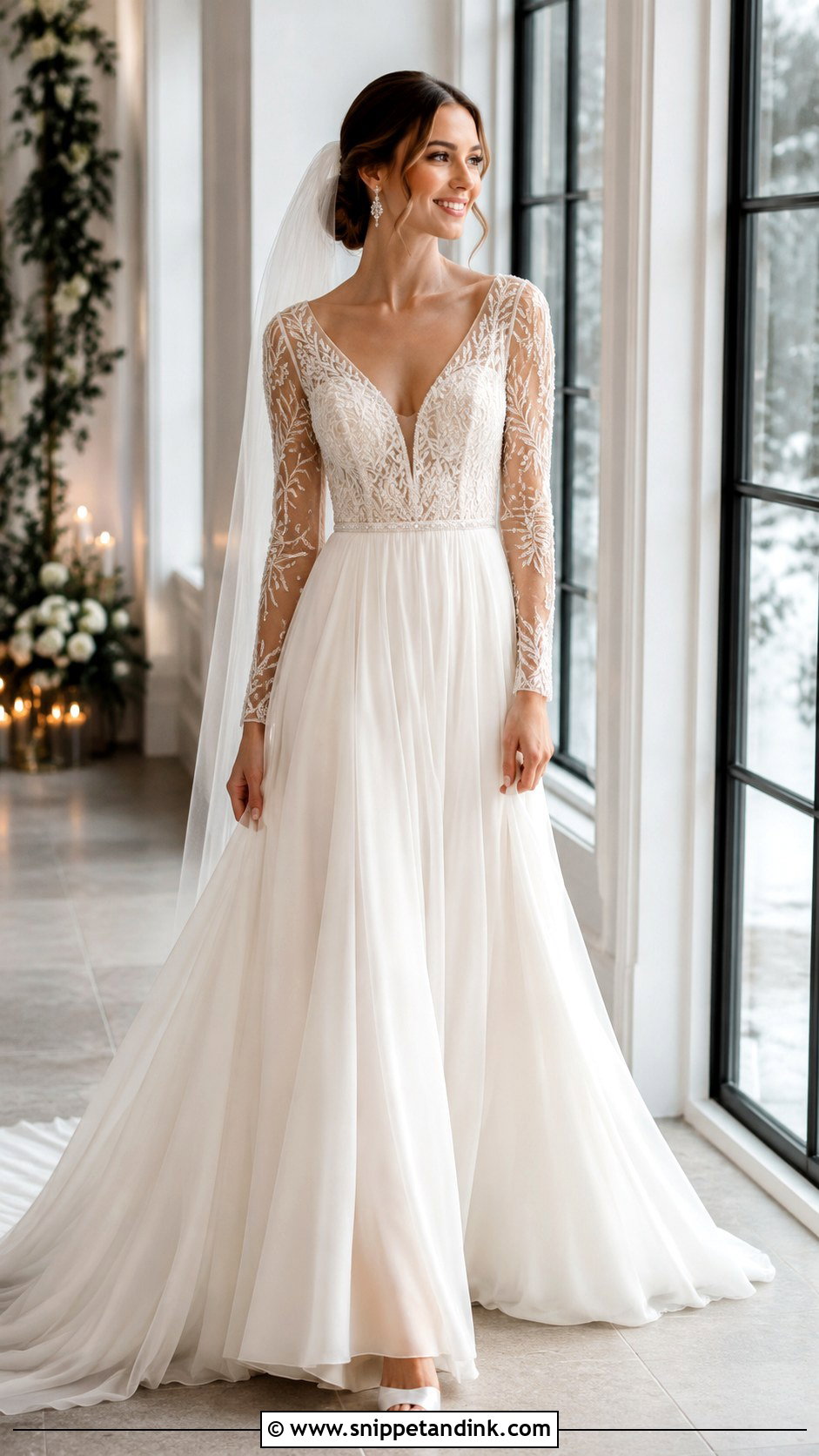
Illusion sleeves embroidered with pearls, crystals or beaded vines give coverage while still looking light, which is why I suggest them for fall and winter weddings and cold air-conditioned venues. Pair them with a lined bodice and a flowing chiffon, crepe or tulle skirt. A bateau neckline feels classic, while a gentle V opens up the upper body. Raise your arms fully at the fitting; beaded sleeves are less stretchy than plain mesh and can pull the bodice up when you hug. Satin block heels, small drop earrings and a chapel veil tucked under a textured low bun suit it. Leave bracelets off, since they snag beaded cuffs.
6. Strapless Beaded Corset Bridal Gown
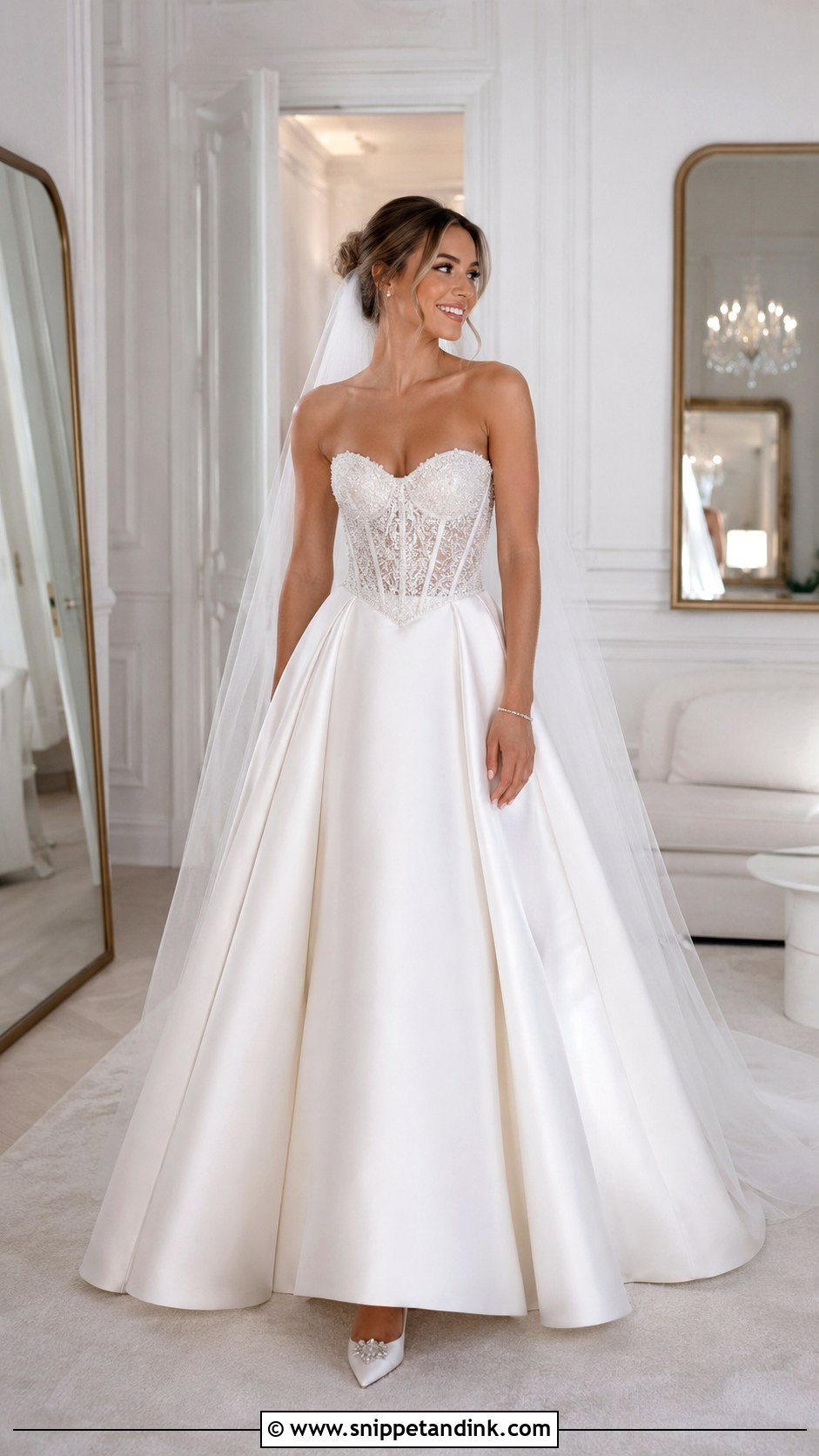
Structure is the whole point of a strapless corset, and the beading should follow it. Pearls set along the boning lines give a soft finish, crystal embroidery a sharper one. The bodice needs secure internal boning, supportive cups and a neckline that stays put without hitching. A clean satin A-line or lightly beaded tulle skirt balances it. Pointed pumps, a fine tennis bracelet and small earrings work better than a necklace, and a long plain veil frames the sparkle. A properly fitted corset feels firm, not painful; if you can’t take a full breath at the fitting, it’s too tight, and beading over the seams makes later adjustments harder. Sit, walk and lift your arms before you sign off.
7. Off-The-Shoulder Beaded Bridal Gown
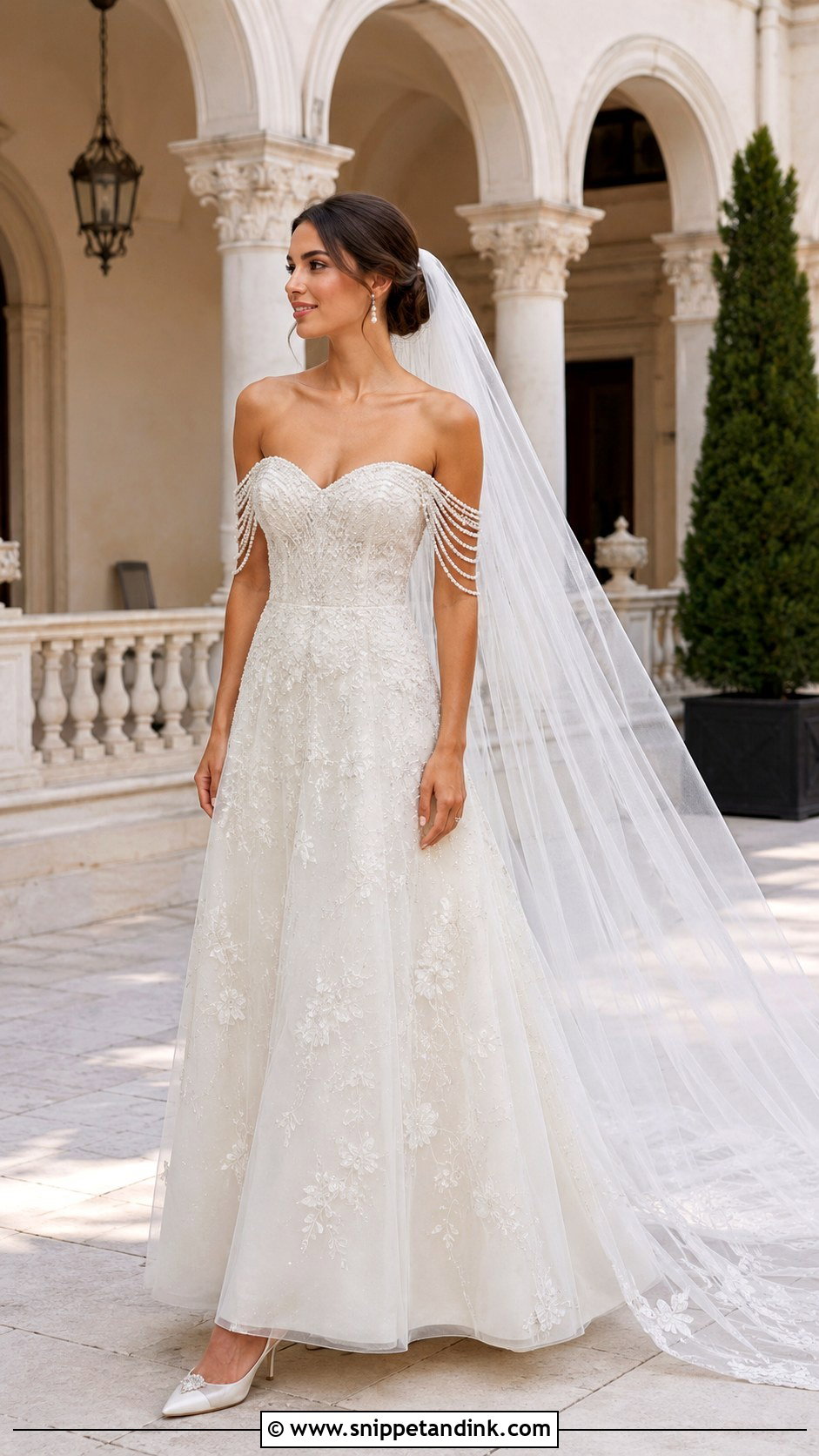
Off-the-shoulder beading frames the collarbones and looks lovely in portraits, but these sleeves often limit how high you can lift your arms. Supportive straps or draped sleeves covered in tiny pearls that run on across the bodice look best, with an A-line or softly fitted skirt balancing the horizontal line. Pearl drops, ivory slingbacks and a single-layer cathedral veil complete it; skip the heavy necklace. A low bun or swept-back waves keep the shoulders visible. At the fitting, I ask brides to hug someone, dance a little and lift the bouquet to face height. If the sleeves bite, hidden elastic or detachable straps fix it.
8. Beaded Square Neck Bridal Gown
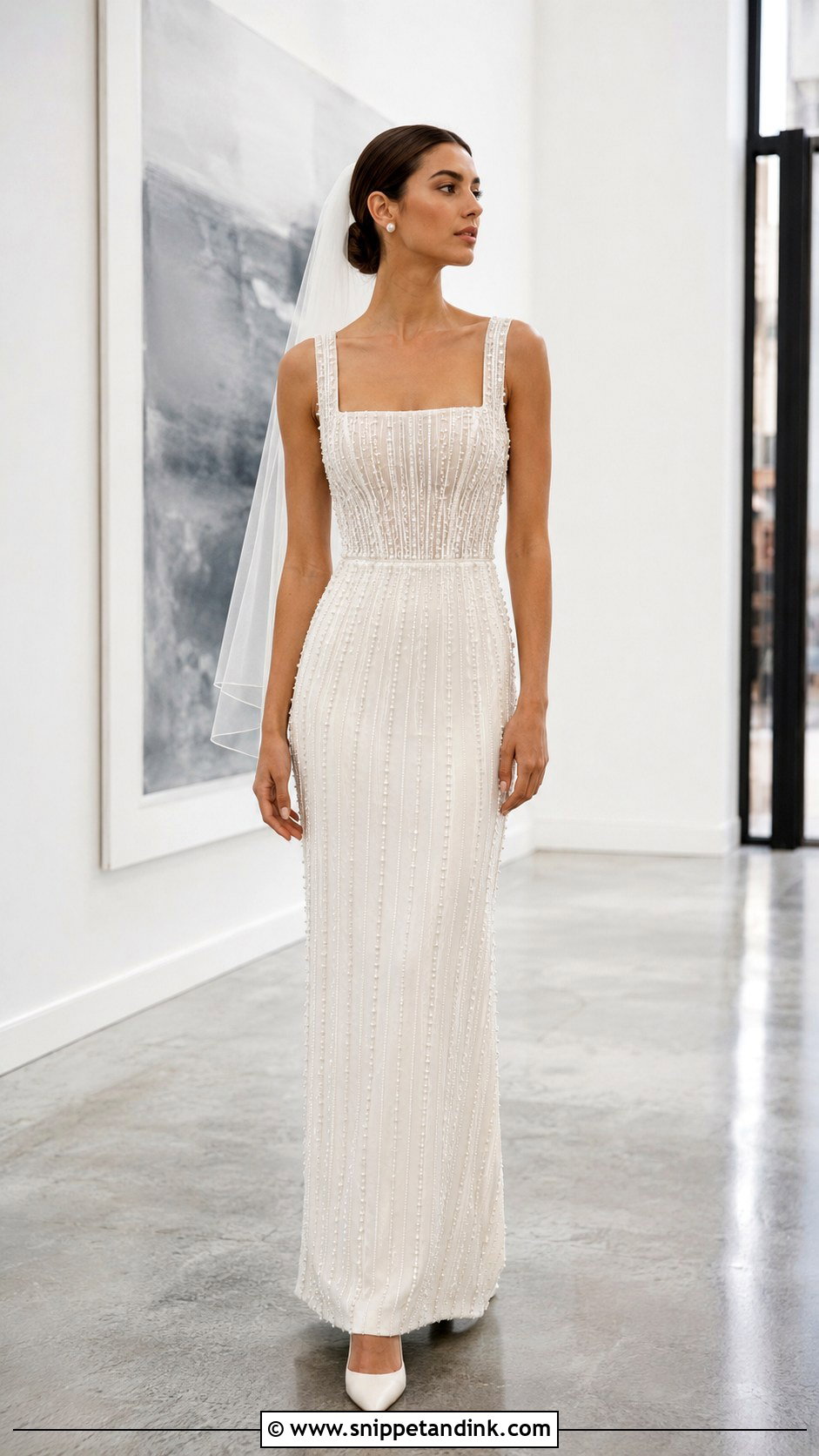
A square neck is all straight lines, so the beading has to respect them. Vertical pearl or crystal embroidery on a structured bodice with wide straps keeps the shape crisp, and a column, A-line or gently fitted skirt sets the formality. Pointed ivory pumps, sleek pearl studs, a plain fingertip veil and a smooth low bun suit the architectural feel. Sheer beaded sleeves add coverage without losing the square outline. Square necklines are prone to gaping at the corners when you sit or lean forward, and beading along the edge makes it more obvious, so I check it seated during alterations. Contemporary galleries, city venues and refined indoor ceremonies suit this gown.
9. Beaded Halter Wedding Gown
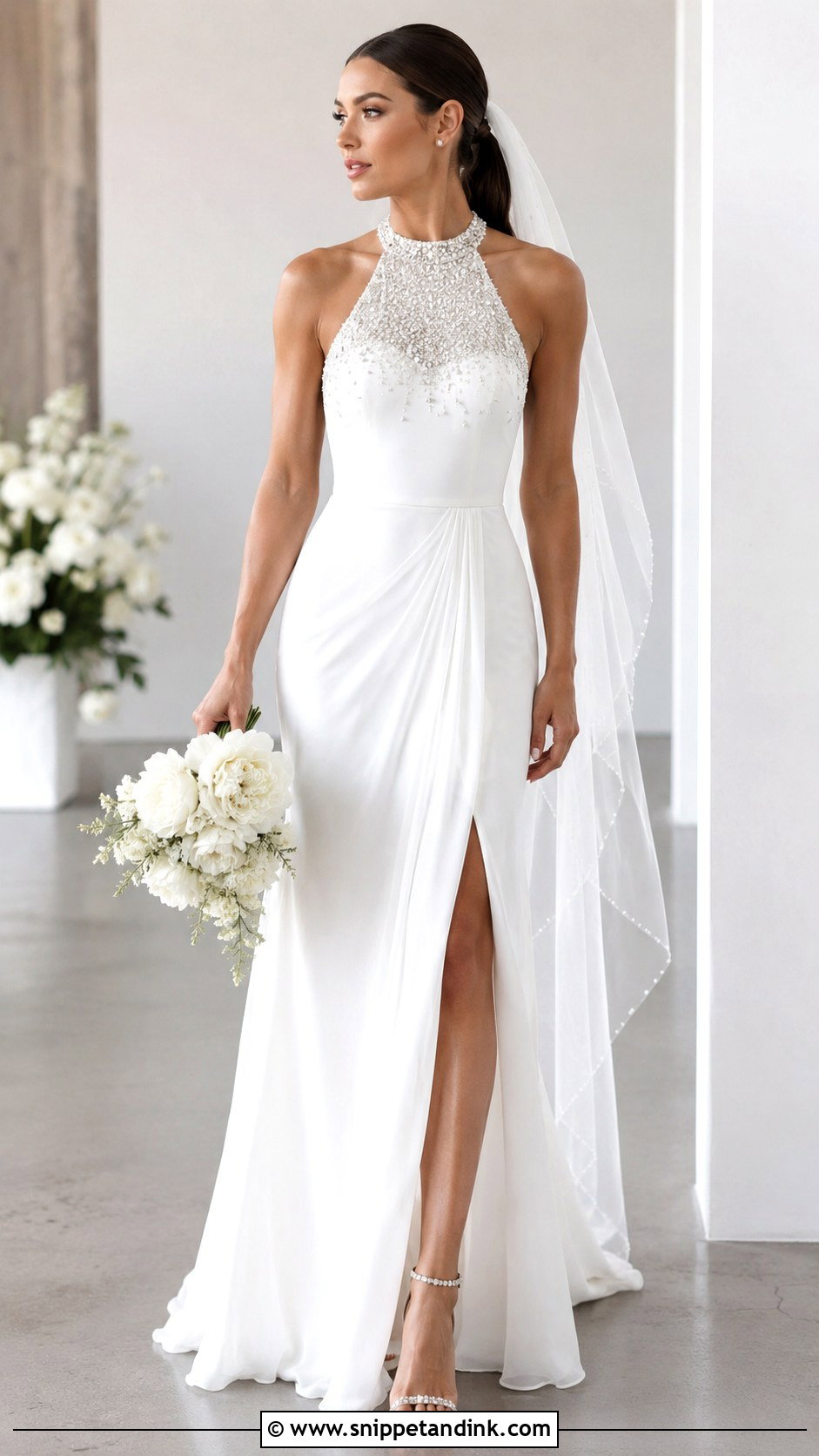
A high halter collar puts the beadwork right next to your face and draws attention up to the shoulders. Fine beading that’s heavy at the collar and lighter toward the waist looks best, over a flowing chiffon skirt for softness or a fitted crepe skirt for a cleaner effect. Keep earrings minimal, skip the necklace, and wear metallic silver or ivory sandals, with a low ponytail or bun and the veil attached below the hairstyle. Long hair is the issue I see most with beaded halters, because loose strands catch on the beads at the back of the neck all day. A smooth lining and a carefully finished collar edge make a big difference to comfort.
10. Beaded Slip Wedding Dress
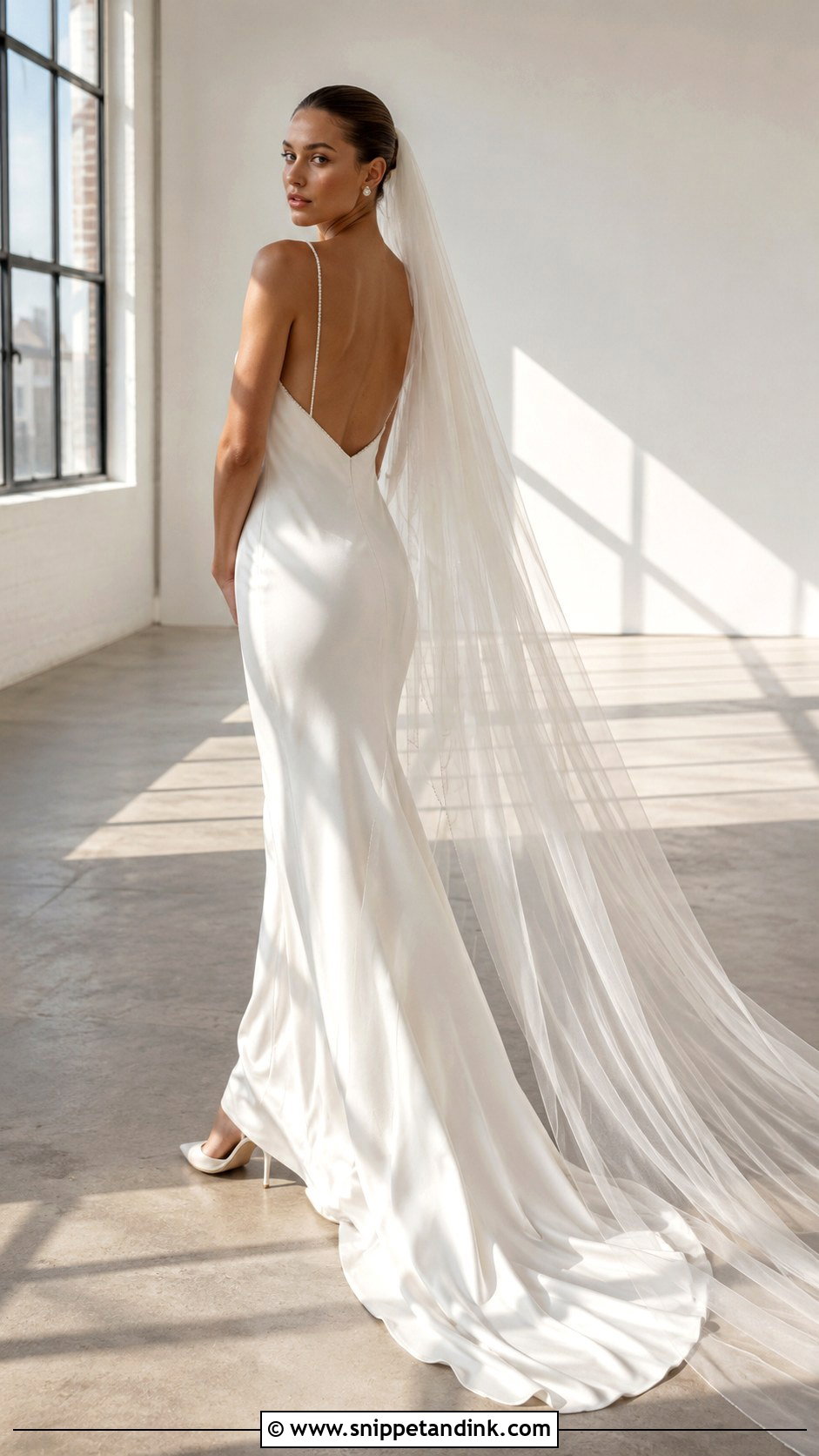
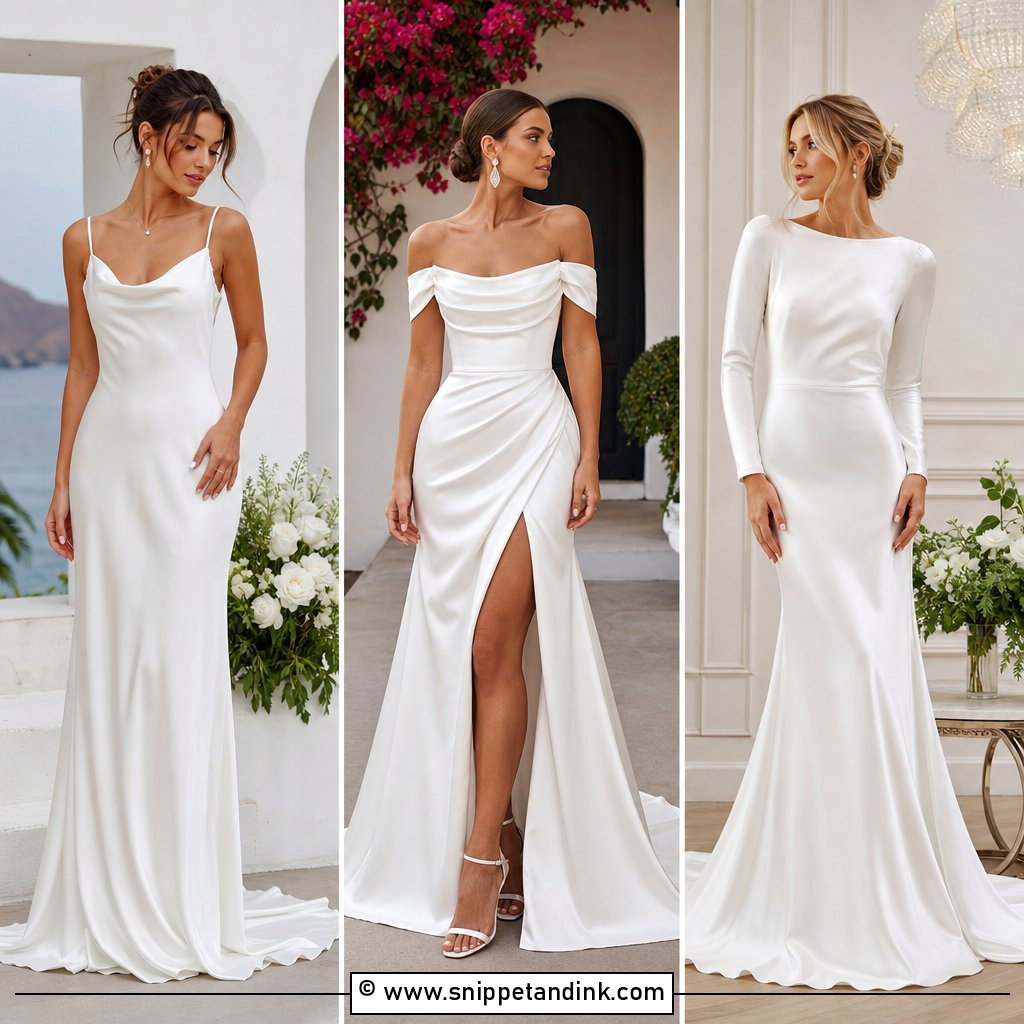
Micro-beads scattered over a bias-cut slip give the quietest kind of sparkle on this list. Choose bias-cut satin or light crepe with thin straps, and keep the beading at the neckline, waist or low back so it follows the line rather than covering it. Sleek pointed mules, crystal studs and a sheer cathedral veil without lace trim suit it, with soft waves or a polished bun. Add a removable beaded capelet for the ceremony if you want more coverage. Beads add weight to a fabric that relies on drape, and too many of them in one place pull the bias out of shape, so I prefer a light scattering. Bring your exact shapewear and shoes to every fitting; bias cuts show every seam and hem error.
11. Art Deco Beaded Bridal Gown
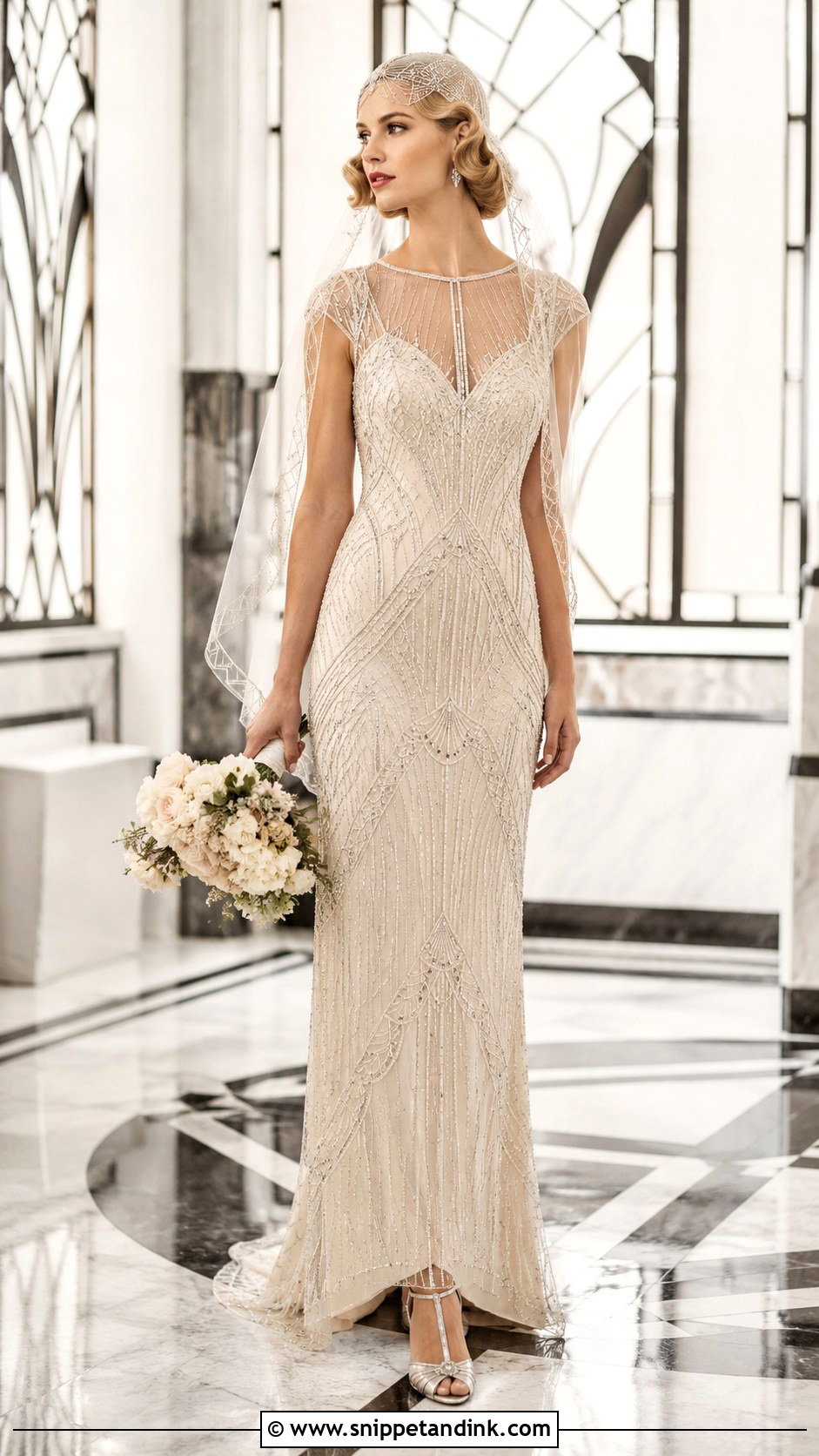
Geometric beadwork, with fan shapes, sunbursts and cascading crystal lines, gives an Art Deco beaded bridal gown its period character. A column or sheath shows the symmetry best, and ivory, soft silver and champagne beads give depth without color. T-strap heels, small drops and a simple fingertip veil or beaded Juliet cap suit it, with finger waves or a smooth side-parted bun. Keep the bouquet narrow so it doesn’t cover the pattern. Densely beaded sheaths are heavy, and all that weight hangs from the shoulders, so I check that the straps are reinforced and the lining is strong enough to carry it. Bring a comfortable reception shoe for dancing once the formal photos are done.
12. Floral Beaded Tulle Bridal Gown
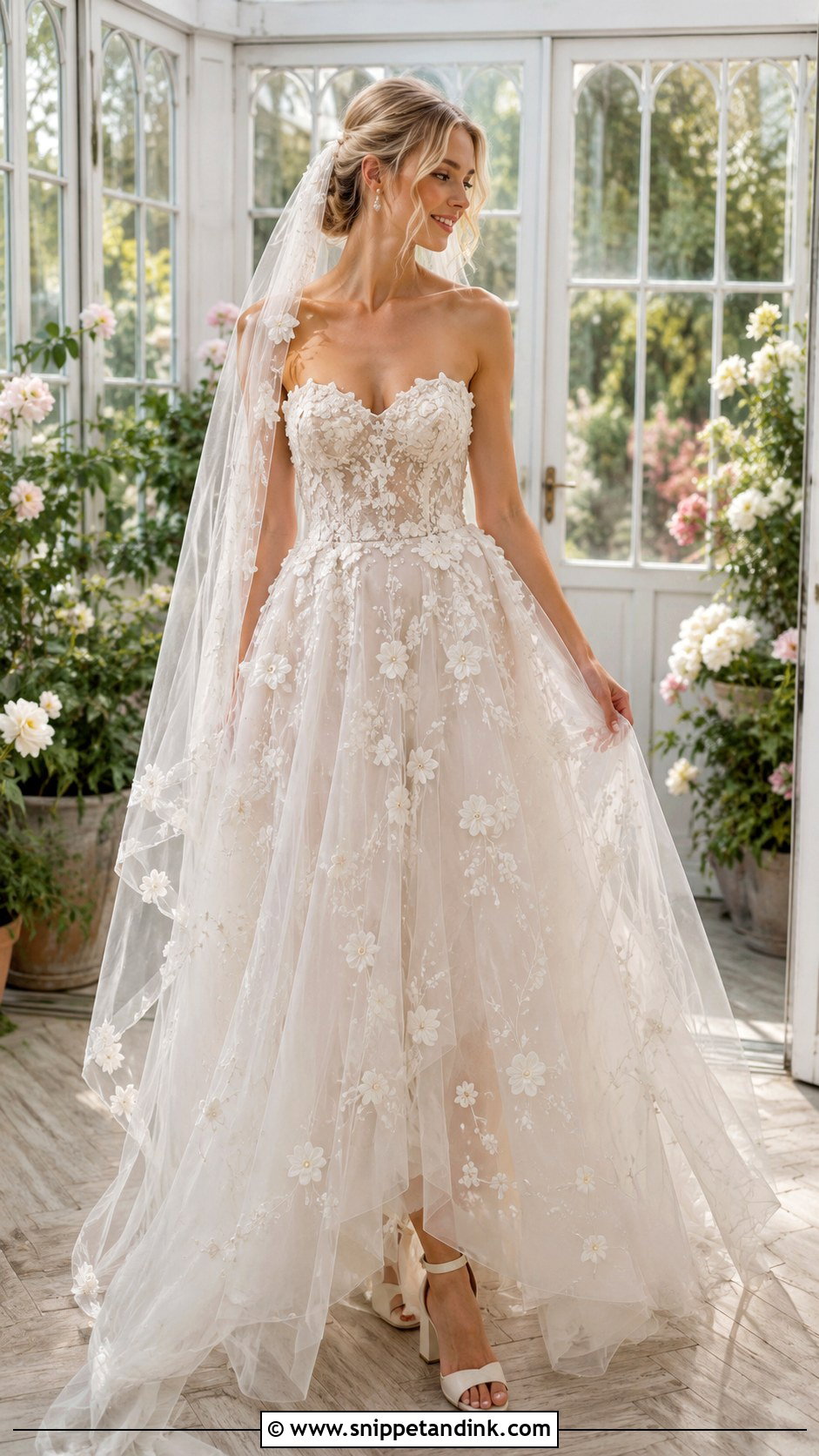
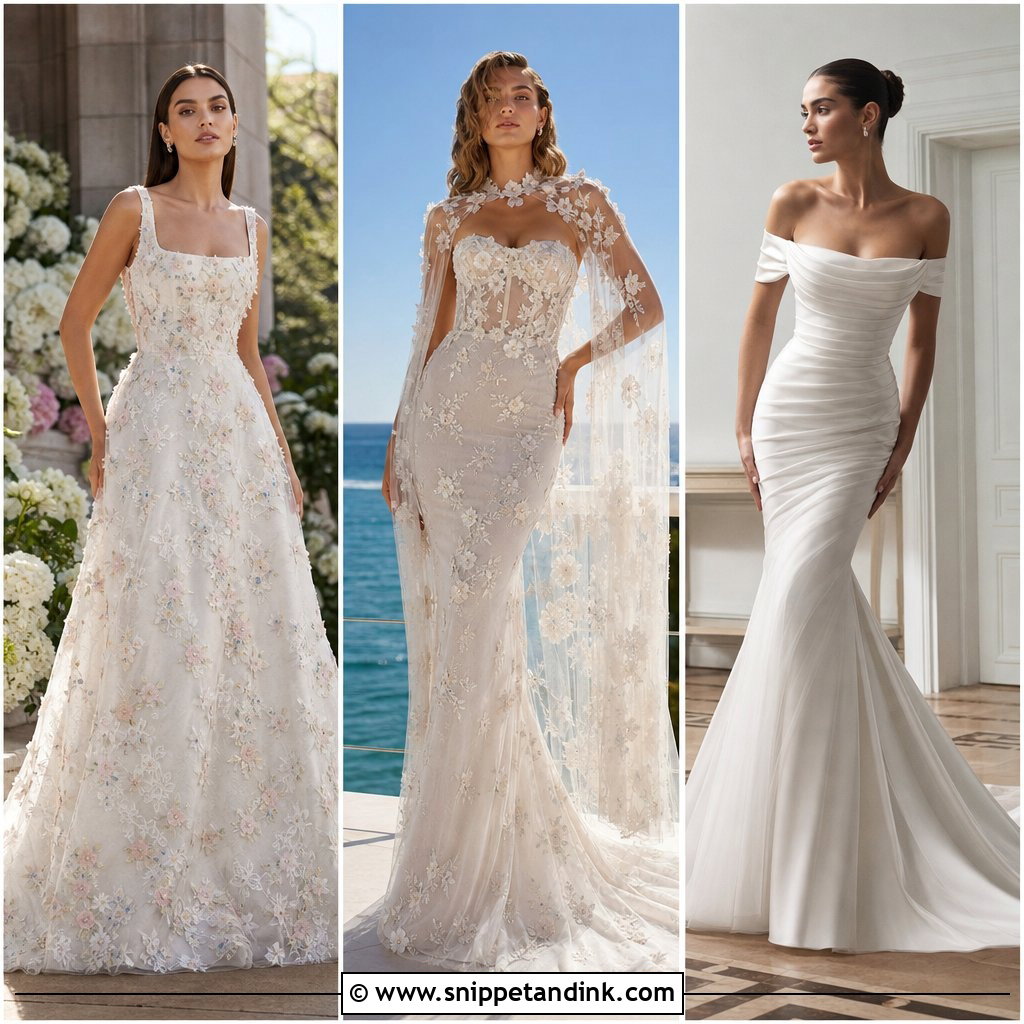
Embroidered flowers outlined in seed beads, pearls or tiny crystals trailing from bodice into skirt make floral tulle feel light and dimensional. Gradual placement, dense at the top and scattered toward the hem, looks softer than evenly spaced appliqués. A V-neck or sweetheart keeps the flowers from crowding the face. Ivory block heels, pearl earrings and a plain veil with a few matching appliqués near its hem finish it, with loose waves or a relaxed low bun. Gardens, conservatories and estates suit it well. Ask for a bustle that lifts every tulle layer securely, and walk with the veil on at a fitting, since raised 3D petals are exactly where fine veil tulle snags.
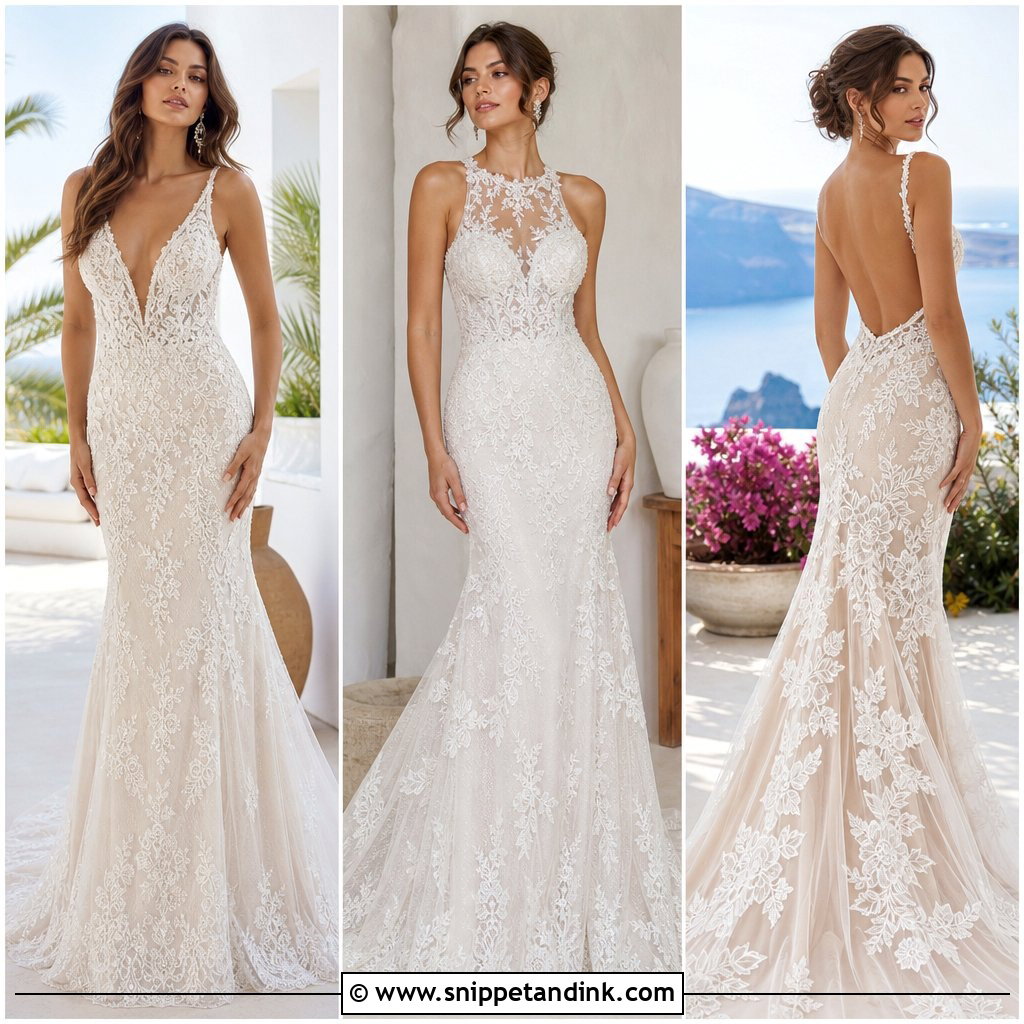
13. Champagne Beaded Wedding Gown
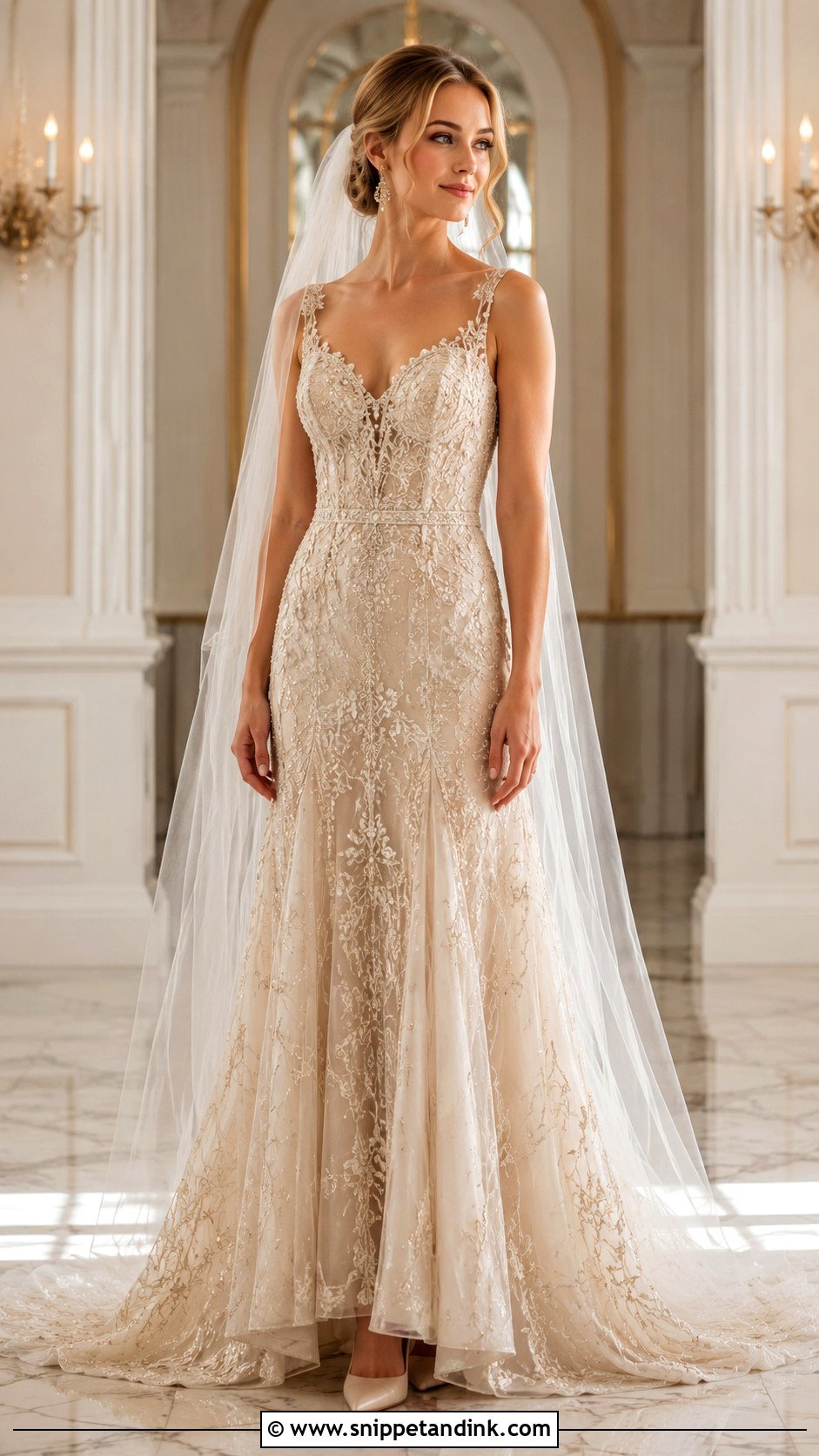
Champagne under the beading warms both crystal and pearl, and an ivory lace or tulle overlay keeps the gown from reading as obviously colored. Gold-toned beads add warmth, clear crystals more contrast. Neutral satin pumps, warm metallic earrings and an ivory veil matched to the overlay, not the lining, complete it, with a low textured bun and natural makeup. Champagne covers a wide range, from pale beige to deep gold, and it looks different under warm indoor bulbs than in daylight. I always photograph the gown in both lights with a phone before a bride commits, and hold the bridesmaid swatches beside it at the same time.
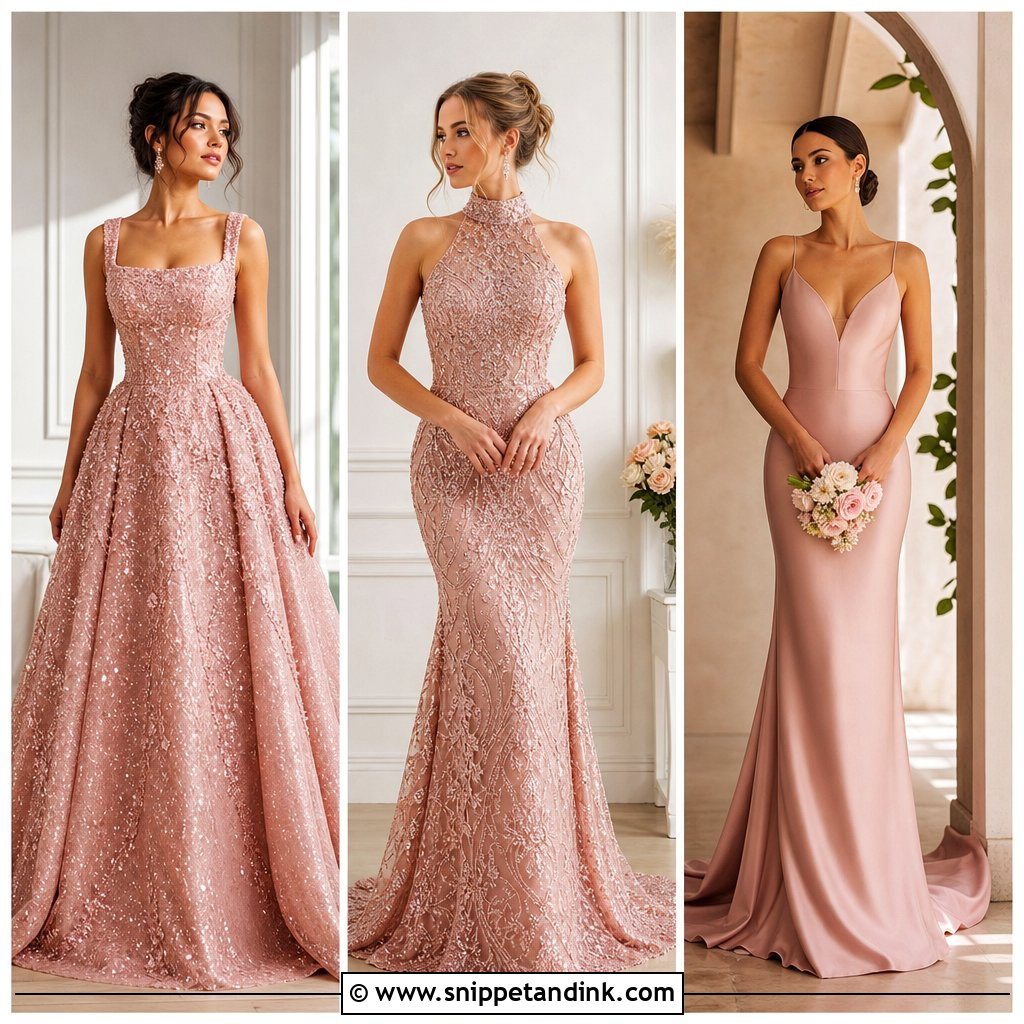
14. Blush Beaded Bridal Gown
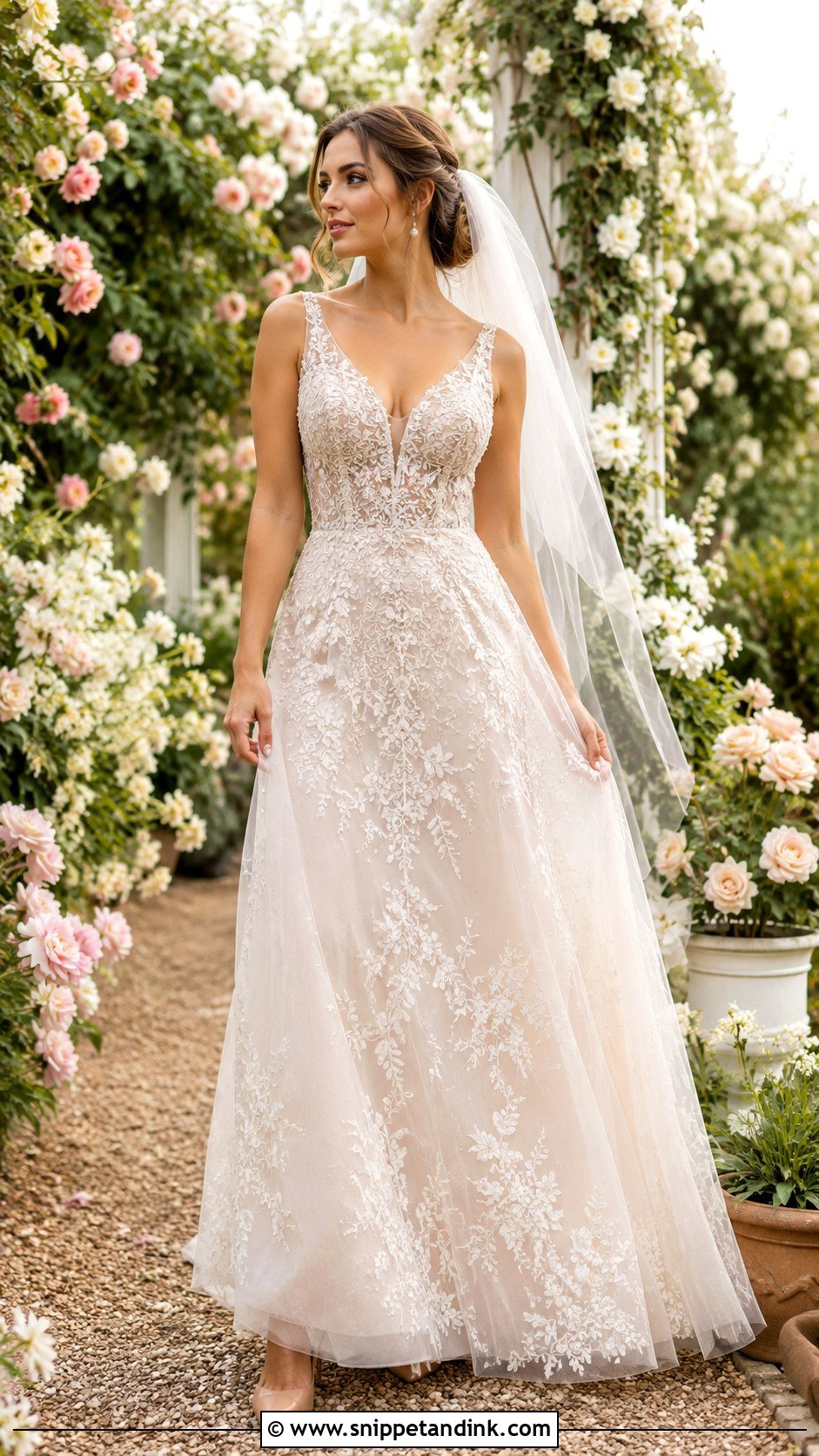
The prettiest blush gowns put the color in the lining and keep ivory on top. Pale blush under ivory tulle, lace or crystal embroidery gives a gentle flush and makes the appliqués stand out in photos, where a strong pink outer layer can look like a party dress. A fitted bodice with a soft A-line skirt suits most brides. Ivory or nude heels, rose-toned pearl earrings and a sheer ivory veil keep it bridal, with a soft twisted updo. Compare every accessory against the gown in person, because pink, peach and mauve undertones can clash in ways a screen won’t show. Gardens, bright ballrooms and airy venues let the color stay visible.


15. Beaded Satin Wedding Gown
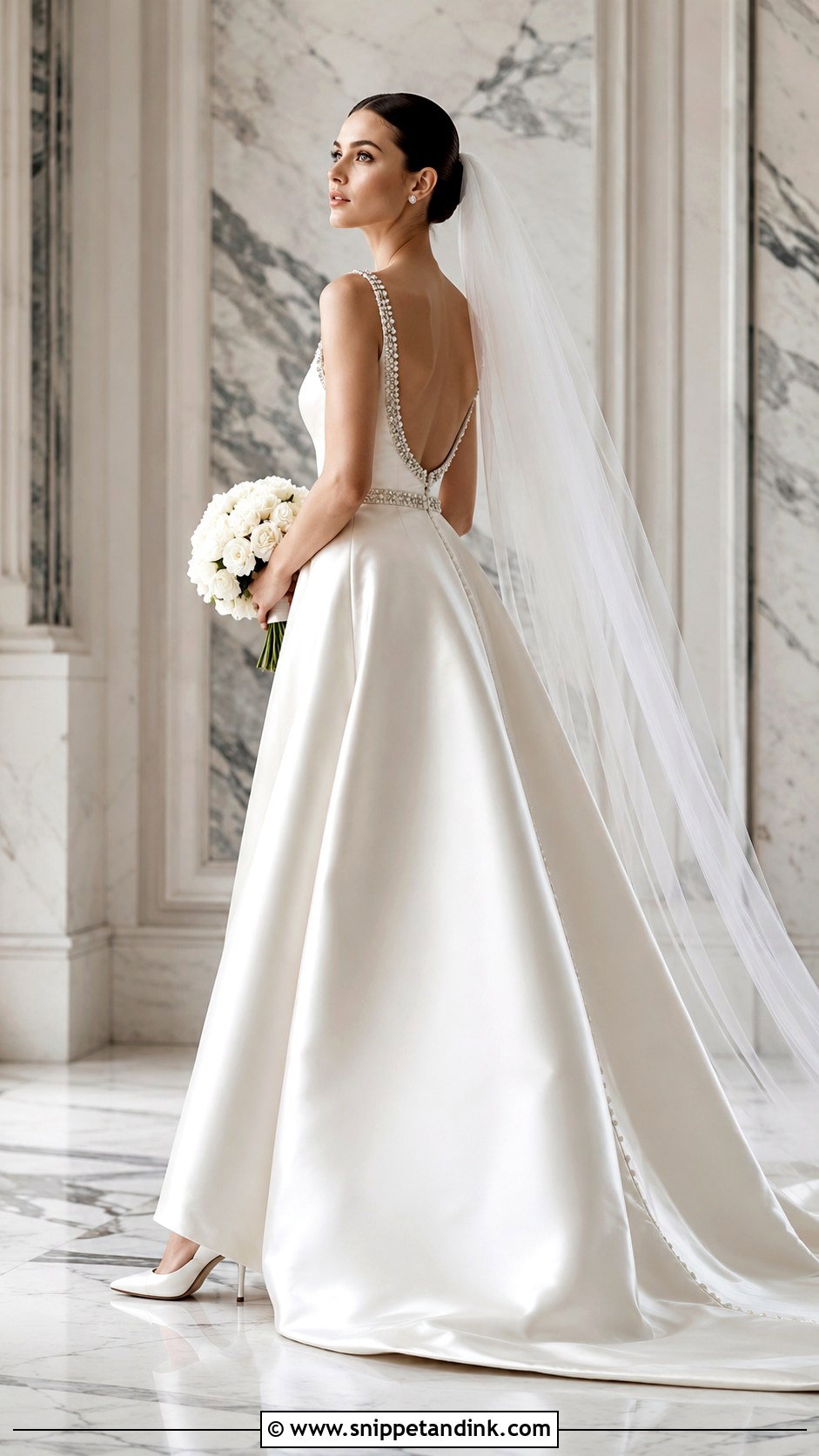
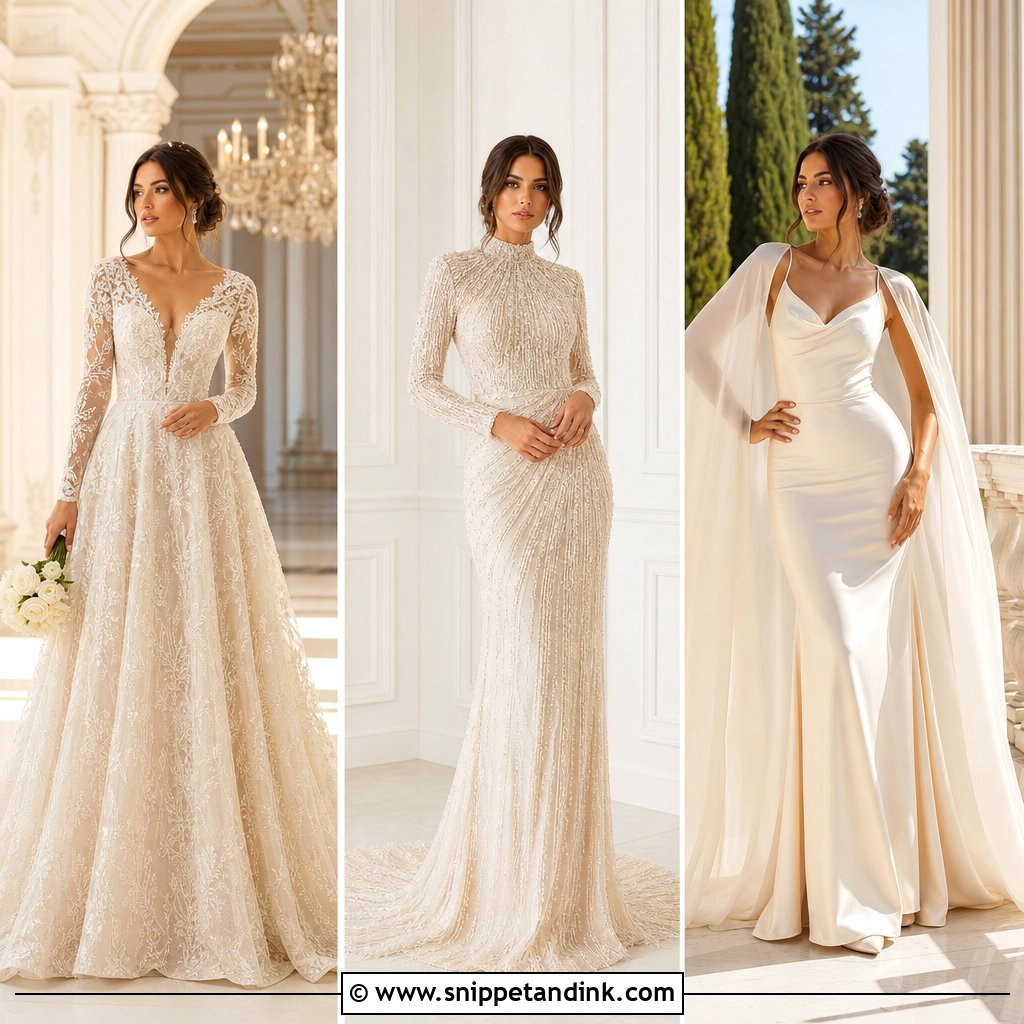
Satin and beading work as a contrast: smooth sheen against concentrated texture. Keep the beads at the neckline, waist, straps or back of a clean ball gown, A-line or fitted shape, so the satin’s structure stays the main feature. Pointed satin pumps, classic studs, a long plain veil and a sleek bun suit it. If there’s a beaded belt, set it at your natural waist and sit down in it, since a stiff beaded belt can buckle and dig in when seated. Satin is the fabric most likely to show puckering around heavy beads, because the weight pulls at the weave, so I ask the seamstress to inspect the fabric around each appliqué at the final fitting. Store it flat or well supported until the day.
16. Plus Size Beaded Bridal Gown
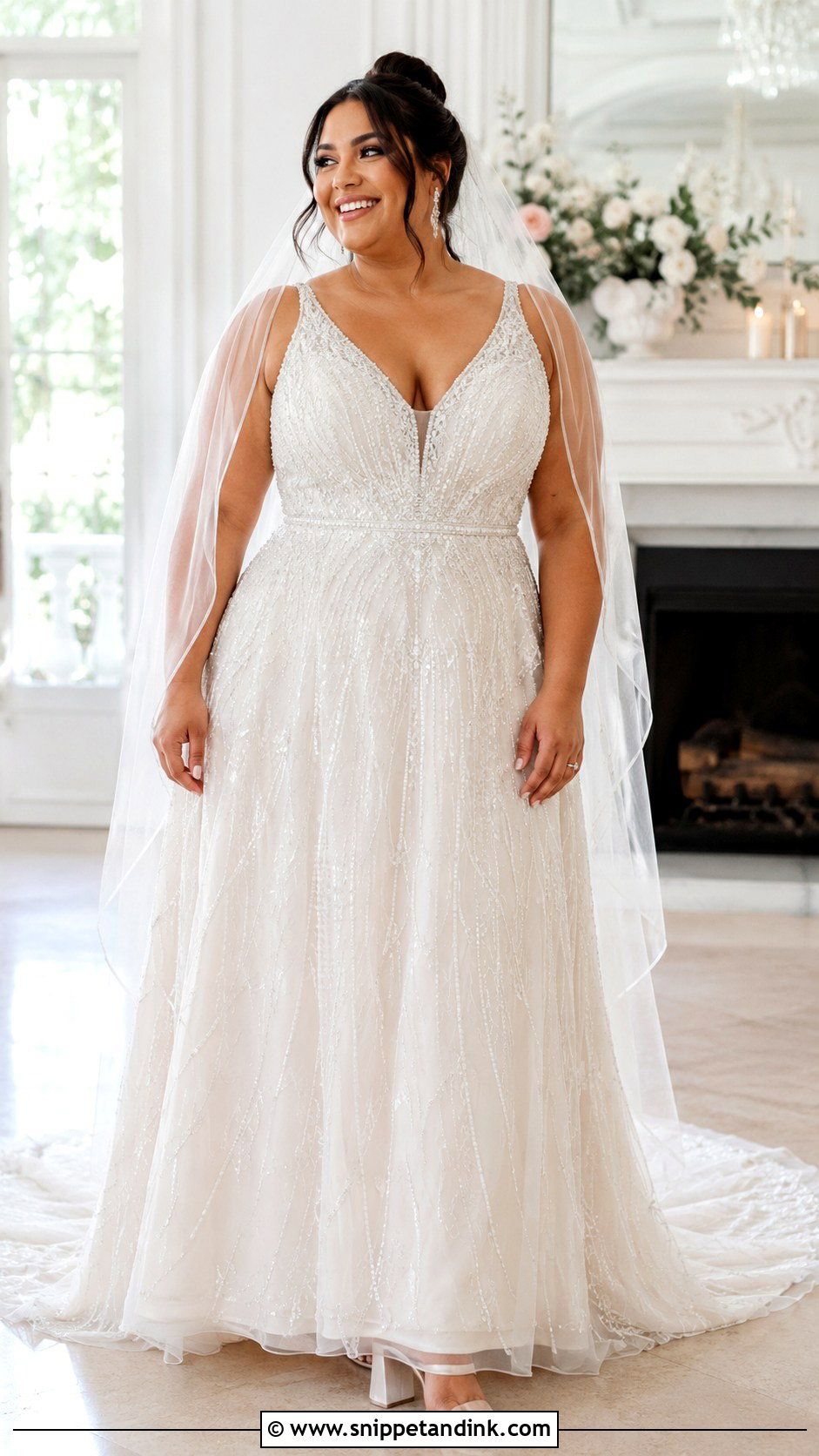
For curvier brides, support comes before sparkle, and the beading should go exactly where you want the eye. An A-line or fit-and-flare with internal boning, wider straps and a secure back gives a comfortable foundation. Vertical beading lengthens the line; concentrated waist beading adds definition. Soft lining under any illusion panels lets you decide how much coverage you want. Supportive block heels, medium drop earrings, a light chapel veil and a side-parted updo complete it. Ask the salon early about customization, such as raised necklines, added straps, fuller lining or extra matching appliqués placed after alterations, because beaded panels take longer to rework than plain fabric.
17. Modest Beaded Bridal Gown
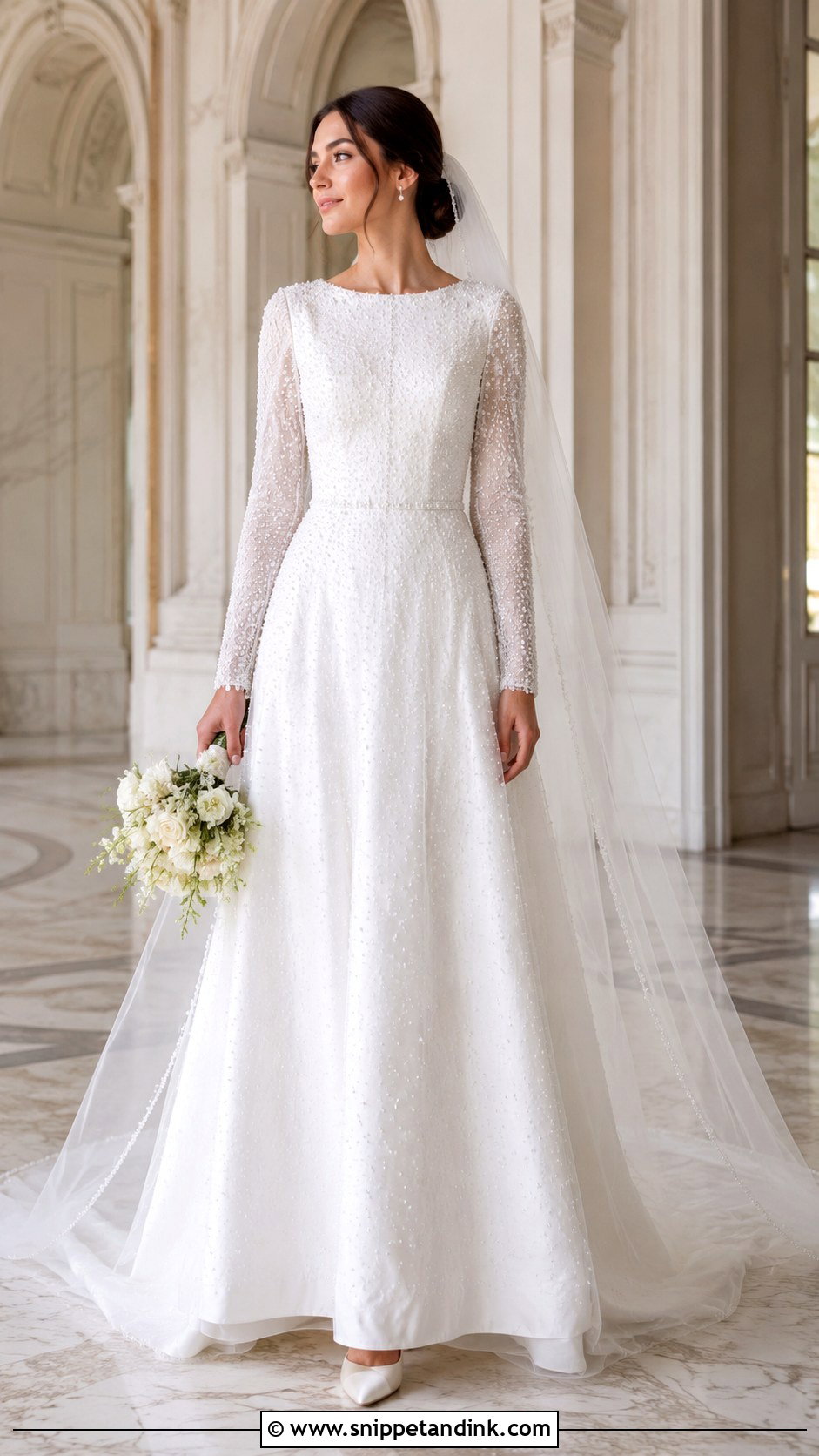
Coverage doesn’t have to mean plain. A high bateau or jewel neckline, a fully lined bodice, long sleeves and an A-line skirt with a graceful train give a modest frame, and fine pearls or tonal beads at the cuffs, shoulders and waist add detail without turning the whole dress reflective. Closed-toe satin pumps, pearl studs and a chapel veil with a narrow beaded border suit it, and a neat low bun helps the veil sit securely. If you need extra lining or a higher neckline, ask for fabric that matches the gown rather than an obvious insert. Tailoring through the shoulders and sleeves is what lets you sit, walk and raise your arms without pulling.
18. Boho Beaded Wedding Gown
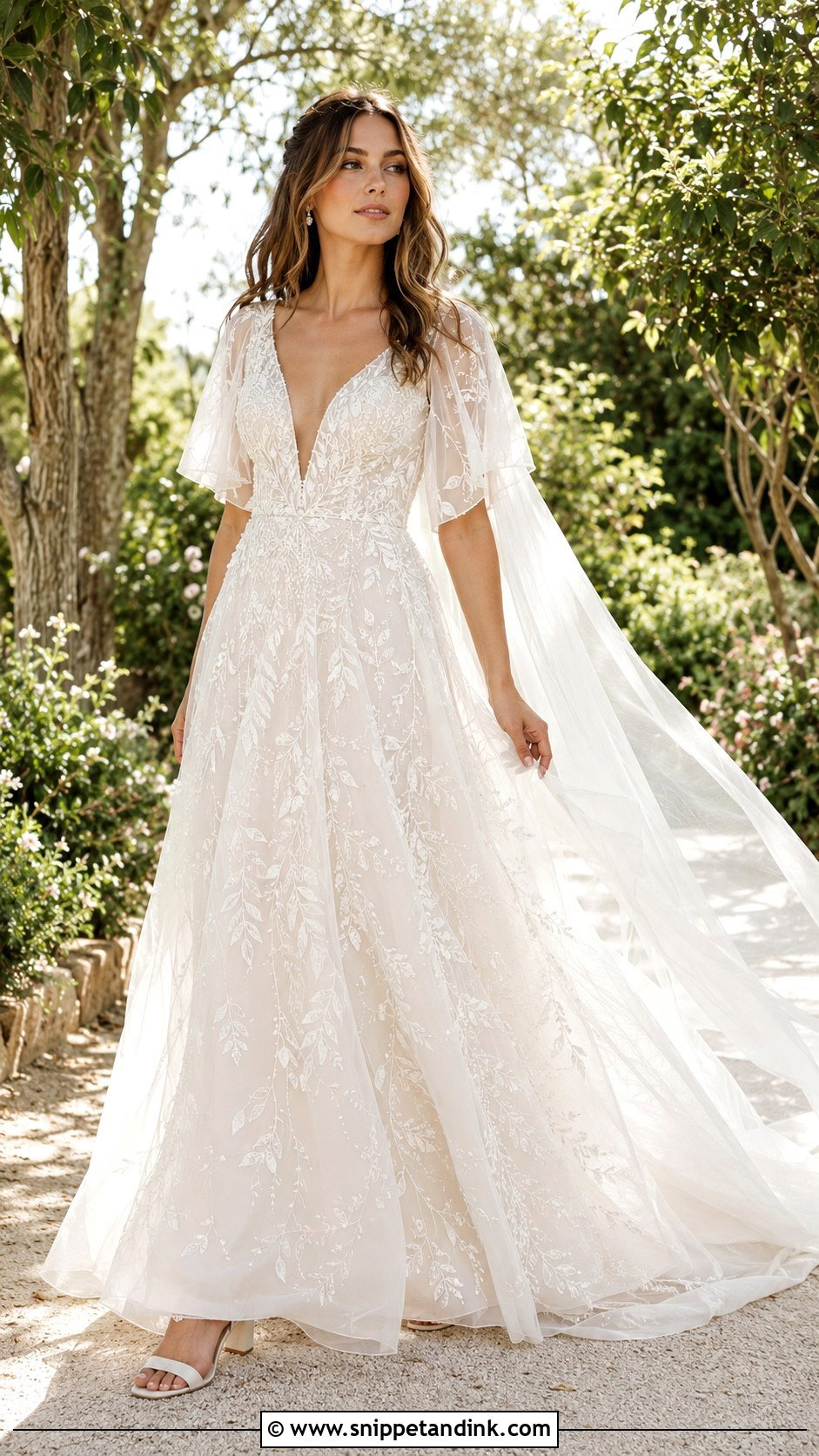
Boho beading looks handmade when the beads are matte. Leafy embroidery with matte seed beads and scattered pearls on light tulle or chiffon, in a soft A-line or sheath silhouette, keeps the look relaxed. A V-neck, flutter sleeve or open back adds air without more decoration. Ivory block-heel sandals, small pearl earrings and a simple flowing veil or sheer cape suit it, with loose waves, a low braid or a softly pinned bun. Keep accessories few. Outdoors, choose a manageable train with a wrist loop or a secure bustle, and test the hem on grass or rough flooring. Light hems on beaded gowns are what snag on twigs and gravel, and pulling a snag can loosen a whole row of beads.
19. Beaded Bridal Gown With Detachable Overskirt
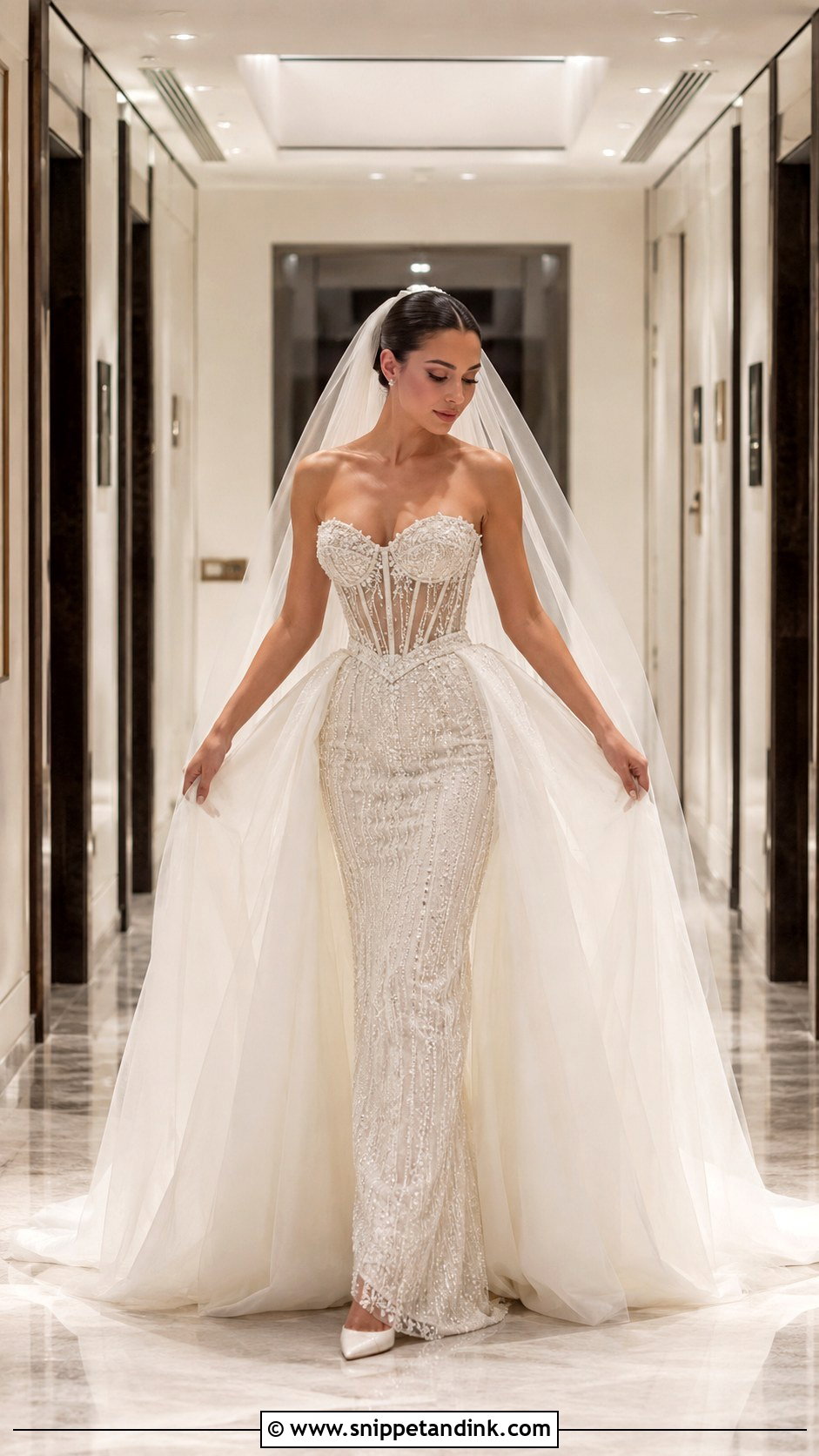
A detachable overskirt turns one gown into two. Start with a fitted beaded column, sheath or mermaid, then add a clean tulle or satin overskirt for the ceremony; the fuller layer adds drama and still lets the beaded bodice show. After formal photos, it comes off for a reception look that’s easier to move and dance in. Pointed heels, crystal studs, a plain cathedral veil and a sleek low bun suit it. The waistband join is my main concern on a beaded gown, as hooks and snaps can catch on beads around the waist, so I check that the fastening sits on a smooth band and is hidden from every angle, especially the back, where photos expose hooks and uneven fabric.



20. Beaded Bridal Gown With Cape
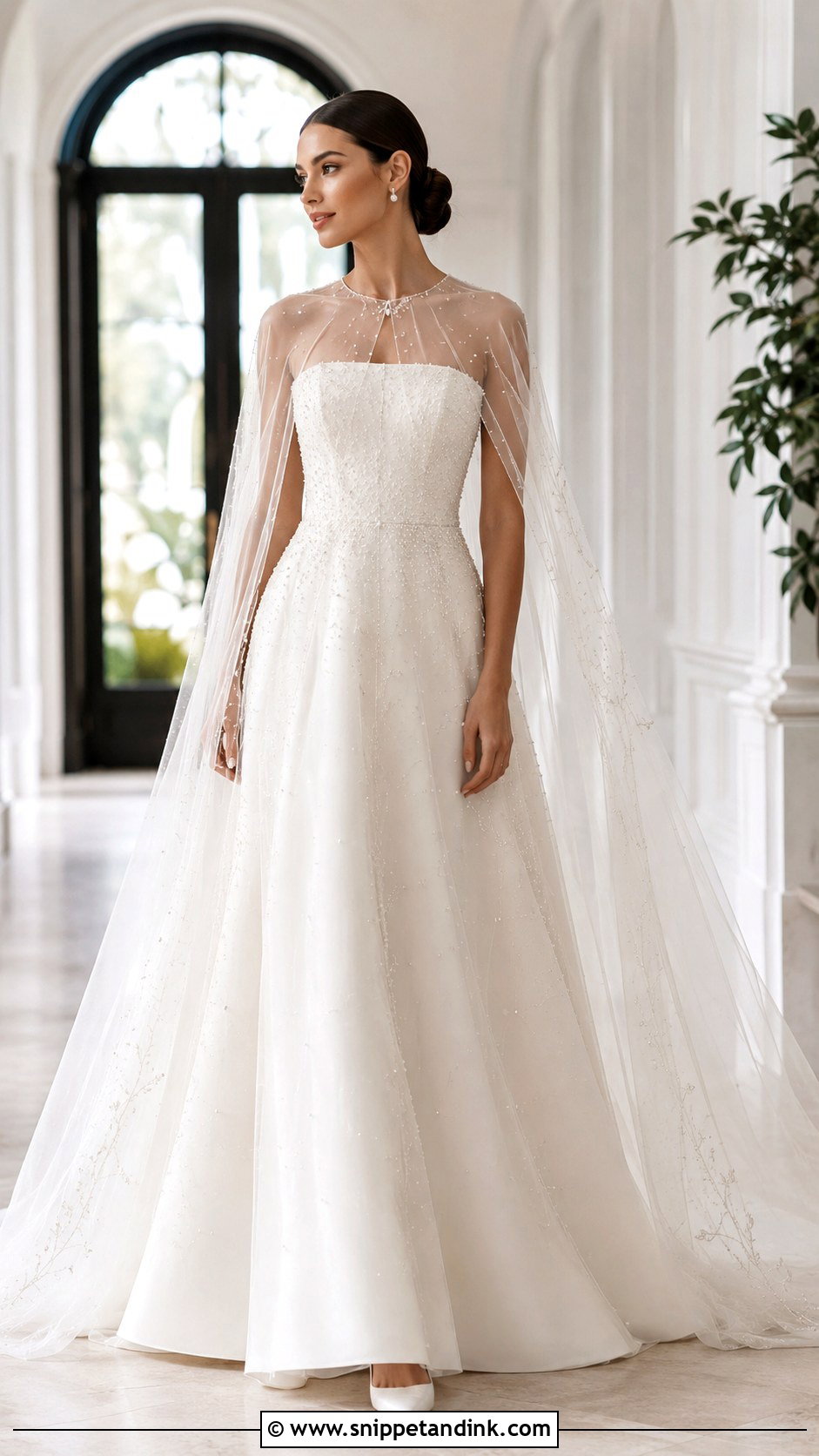
A beaded cape frames the dress the way a veil would, with a more modern outline. Pair a lightly embellished fitted or A-line gown with a sheer shoulder cape edged in beads, scattered pearls or crystal vines, and keep the gown beneath simpler so each layer can be seen. Simple ivory pumps, small earrings and a smooth bun or tucked-back waves are enough; skip a separate veil unless both pieces are very plain. Beaded capes are heavier at the hem than plain ones, which helps them hang well but also means they swing hard in wind, so test it outdoors and confirm the shoulder attachments hold. A removable cape lets you wear it for the ceremony and take it off before dinner.
Altering a Beaded Gown Takes Longer, and Here’s Why
A seamstress can’t simply take in a beaded seam. The beads along it have to be removed first, the seam adjusted, and then the beads sewn back by hand so the pattern still meets. That’s slower and usually costs more than altering a plain gown, so I tell brides to budget extra time for fittings and to book a seamstress who regularly works with beading. Ask whether the beads on your gown are sewn or glued; glued beads are harder to move cleanly. Keep any spare beads or appliqués the salon gives you, since they’re often needed to fill gaps after alterations.
A Loose Bead on the Morning, and Storing the Dress Afterward
Beads do come loose on the day, usually at the hem or under the arms. A small kit fixes most of it: a fine needle threaded in ivory, a few spare beads, small scissors and a pair of tweezers. If a thread starts to unravel, a tiny dab of clear nail polish on the knot stops a whole row from following it. Don’t pull a hanging thread.
- Take the gown to a cleaner who handles beaded bridal wear soon after the wedding, and point out every stain; some solvents can damage certain beads and glues, so a specialist checks first.
- Avoid long-term hanging by the shoulders. Heavy beading slowly stretches the fabric, so store it folded with acid-free tissue in an acid-free box, or hang it by its internal loops if it’s lightweight.
- Keep it somewhere cool, dark and dry, away from plastic covers that trap moisture.
Sparkle Should Follow the Fit, Not the Other Way Round
A beaded gown works when sparkle, shape and comfort all agree. Pearls give a soft glow, crystals a brighter shine, and tonal seed beads add texture without taking over. Think about where the beading sits, how much it adds to the weight and whether it gets in the way when you sit, walk or dance. Let the shoes, veil, hair and jewelry support the dress rather than compete with it. And look at every gown in more than one light, daylight, warm indoor bulbs and a phone flash, before you decide. From structured ball gowns to soft boho shapes, the right beaded dress feels as good at midnight as it did walking down the aisle.
You'll Like These Ideas:






Leave a Reply