
Red has stayed at the centre of Indian bridal dressing because it carries meaning before anyone notices the embroidery: it reads as auspicious, festive and unmistakably bridal. The same red can look royal in velvet, soft in georgette or crisp in Kanjeevaram silk, and the way it’s draped changes it again. When I style a red outfit, I think about the rituals before the photos. You may sit cross-legged for an hour, walk the pheras, bend for blessings and greet hundreds of relatives, so weight, drape and pinning matter as much as the colour. The thirty looks below cover lehengas, sarees, shararas, anarkalis and fusion pieces, each styled from head to toe.
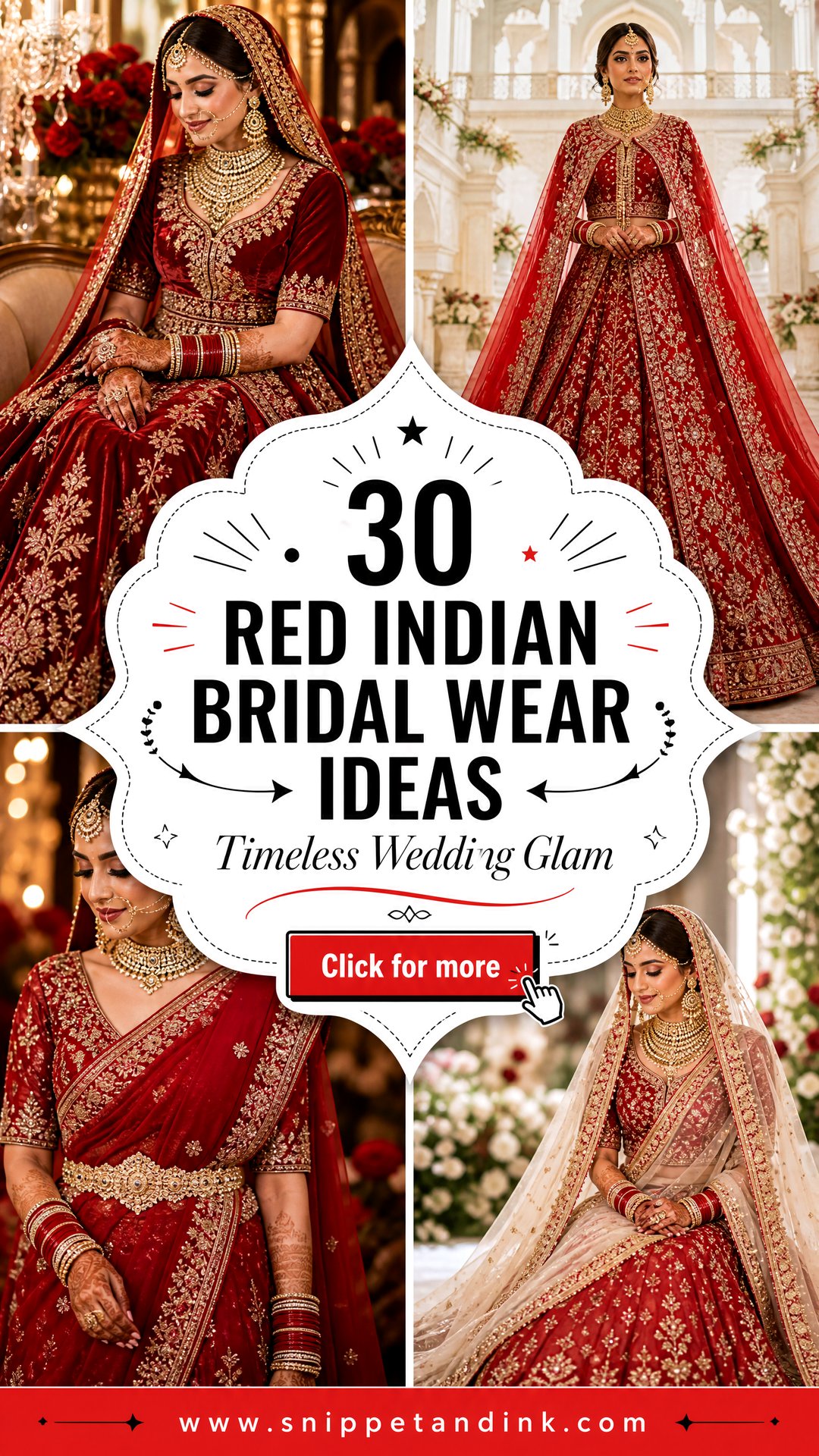
Vermilion, Crimson or Maroon Against Your Skin
Bridal red covers a wide range, and the wrong one can make skin look sallow in close-ups. Orange-leaning reds like vermilion and tomato red tend to flatter warm, golden undertones. Blue-leaning reds like crimson and cherry usually suit cooler or olive skin. Deep maroon and oxblood sit well on most complexions and read richer under evening lighting, while a bright true red is at its best in daylight.
I always drape the actual fabric over the shoulder in daylight before ordering, rather than judging from a photograph. Silk, velvet and georgette dyed in the same red look different from one another, and embroidery in gold or copper shifts the overall colour warmer. Bring your lipstick and a jewellery sample to that appointment, because the red on your lips should belong to the same family as the outfit.
1. Red Bridal Lehenga With Gold Jewelry
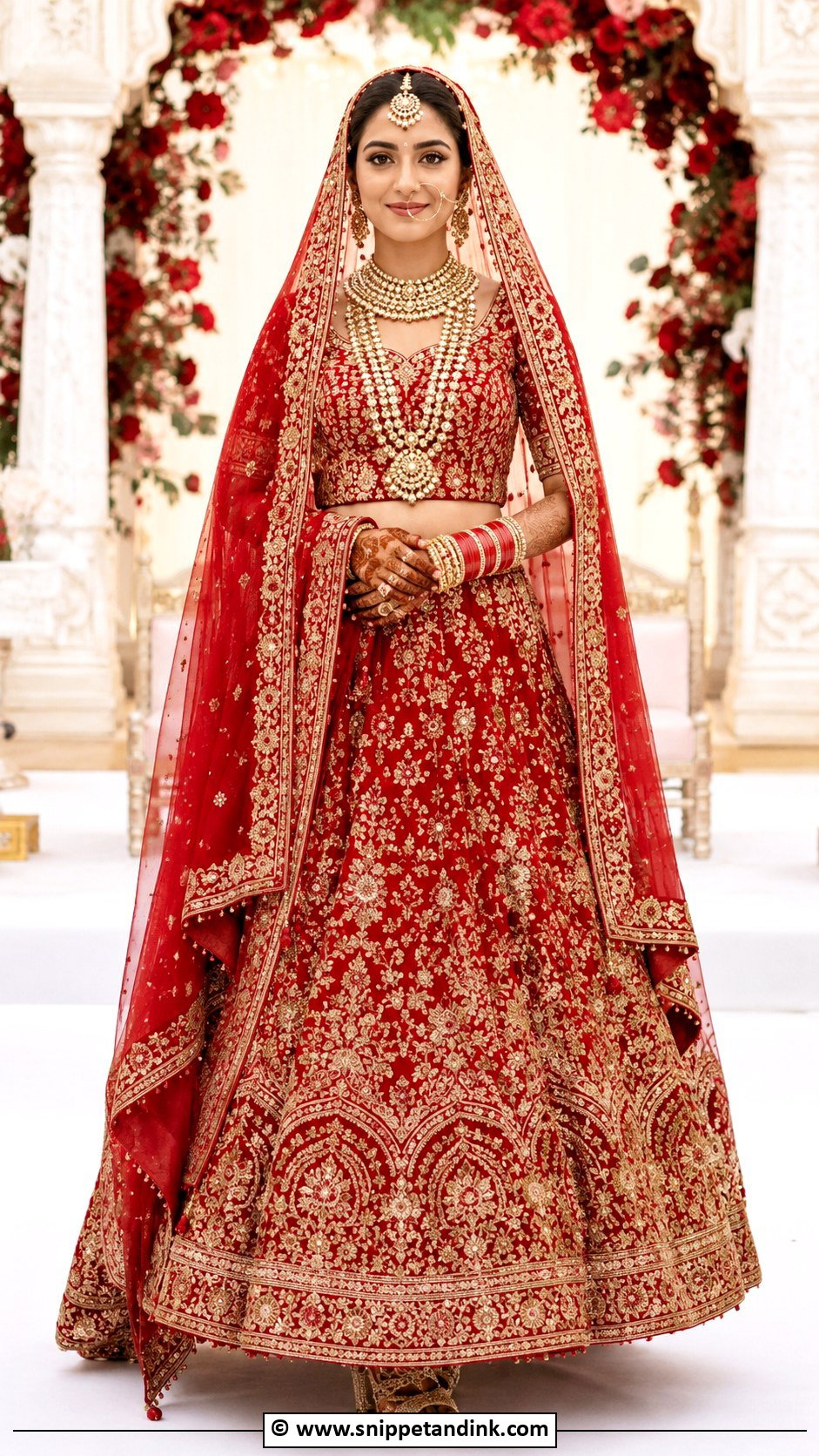
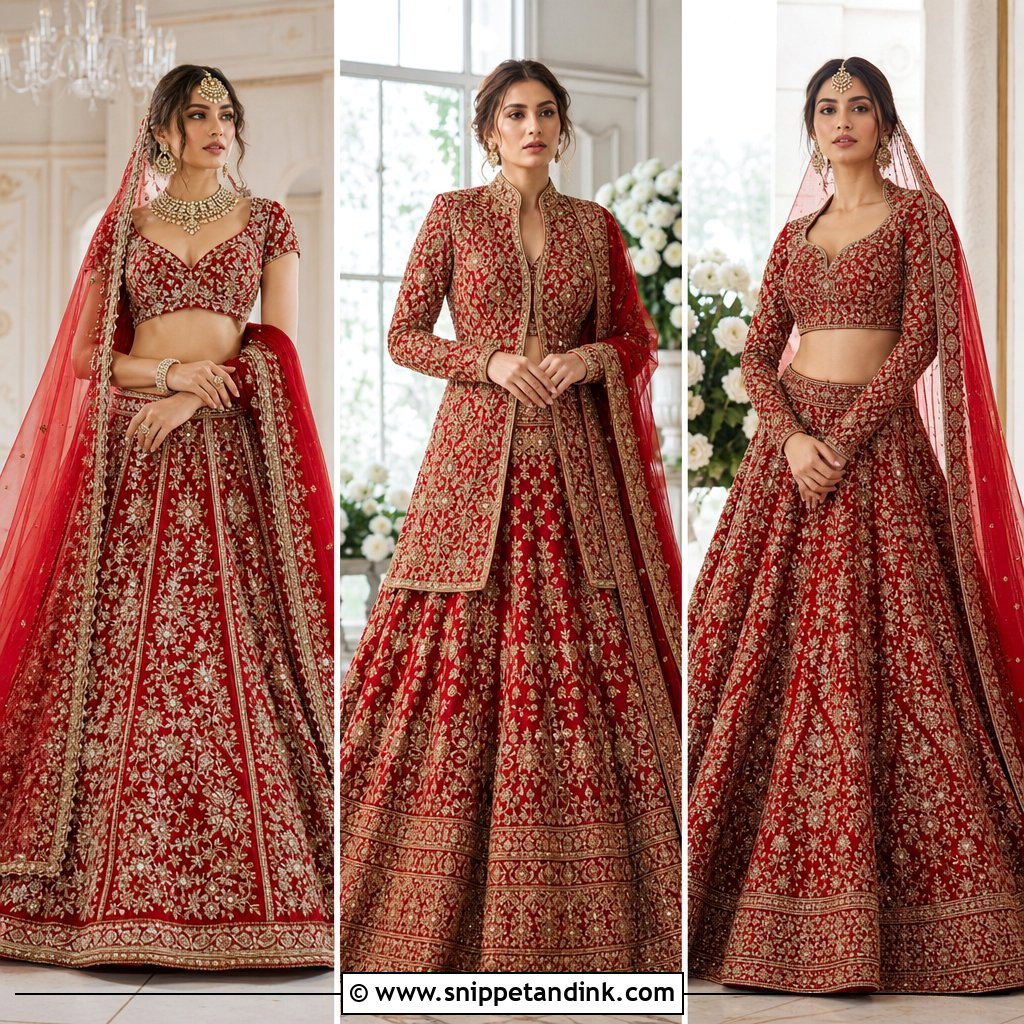
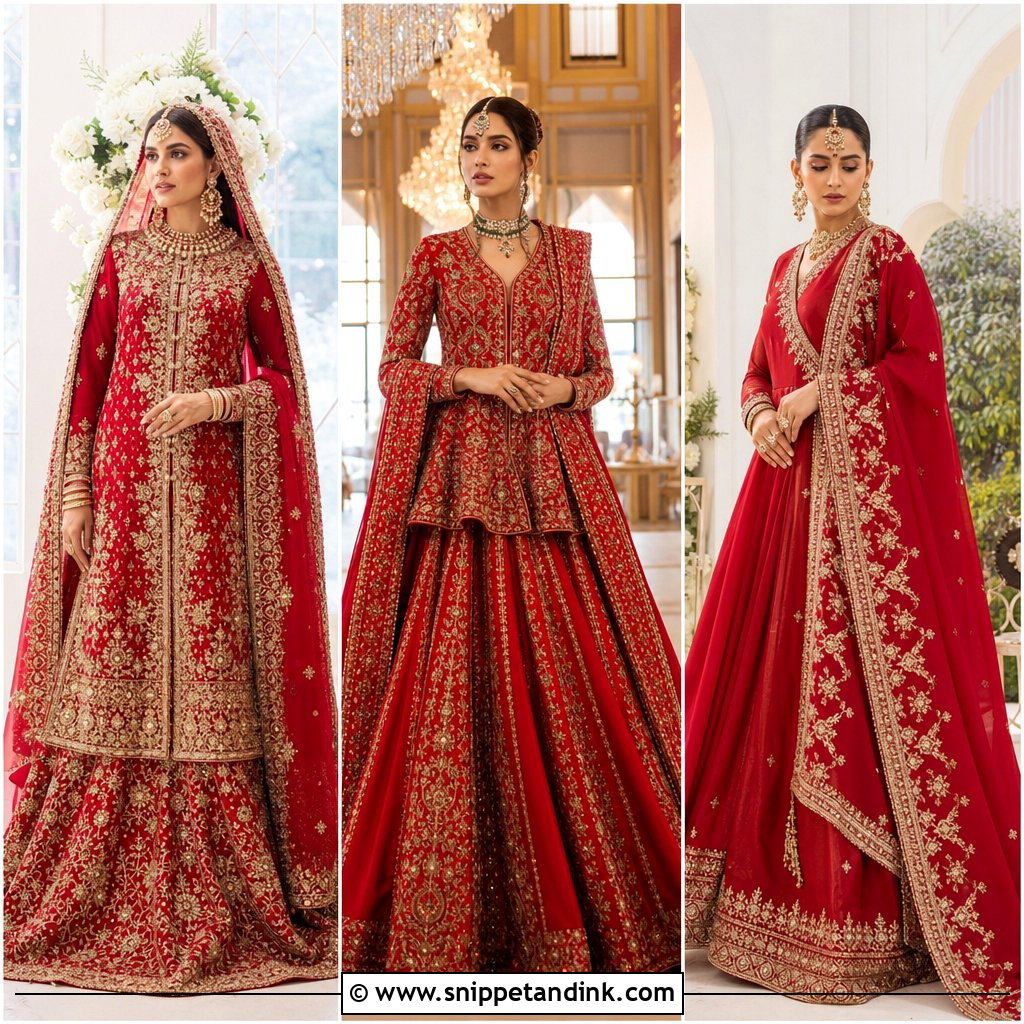
The red lehenga with gold jewellery is the picture most brides start from, and it endures because the warmth of gold and red belong together. Choose zari, zardozi or thread embroidery, a matching blouse, and a dupatta over the head or shoulder. A choker, a long haar, a maang tikka, bangles and a nath if you like traditional detail finish the jewellery. Under a full skirt, I always steer brides toward embellished wedges or block heels, since stilettos sink into mandap rugs. It suits North Indian weddings and grand indoor ceremonies.
2. Red Banarasi Saree Bridal Wear
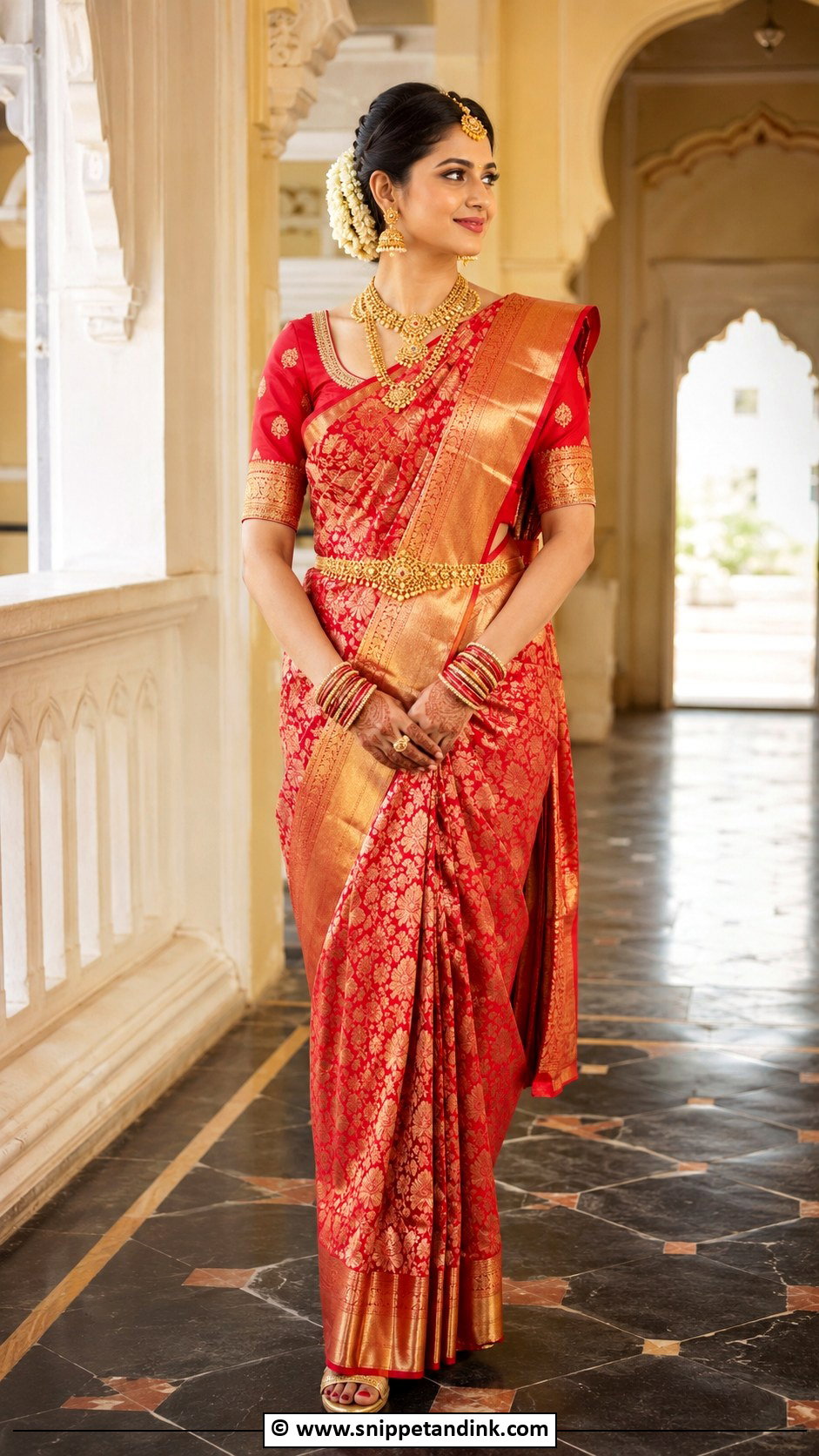
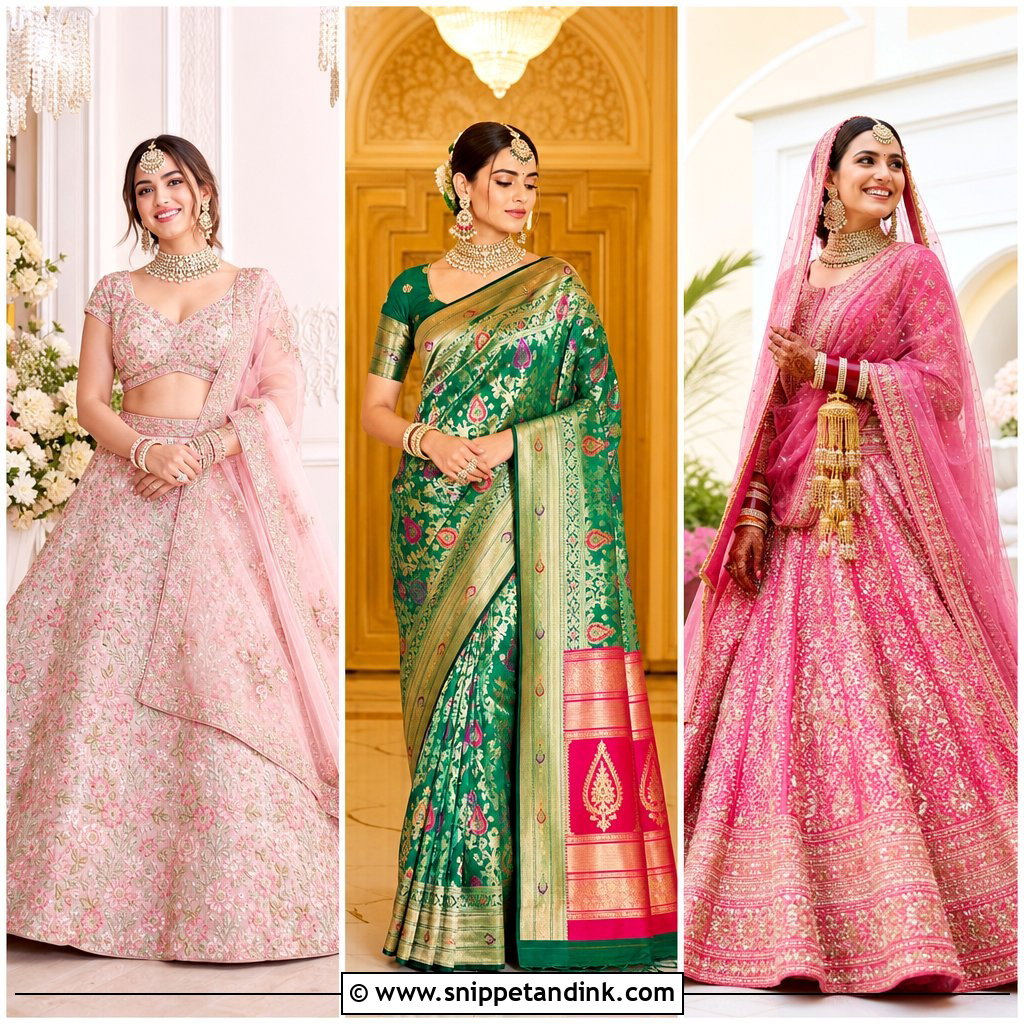
Banarasi silk carries its decoration in the weave, so the saree looks rich without heavy stonework. The woven motifs and metallic border do the work. Pair it with a fitted red or gold blouse, temple jewellery, stacked bangles and a neat bun with fresh flowers, and wear gold sandals or embroidered heels under the drape. Real Banarasi silk is slippery at the pleats, so I always ask the draper to use a few extra safety pins at the waist. Few drapes feel this rooted in heritage, and the silk glows gently under any light.
3. Red Velvet Bridal Lehenga
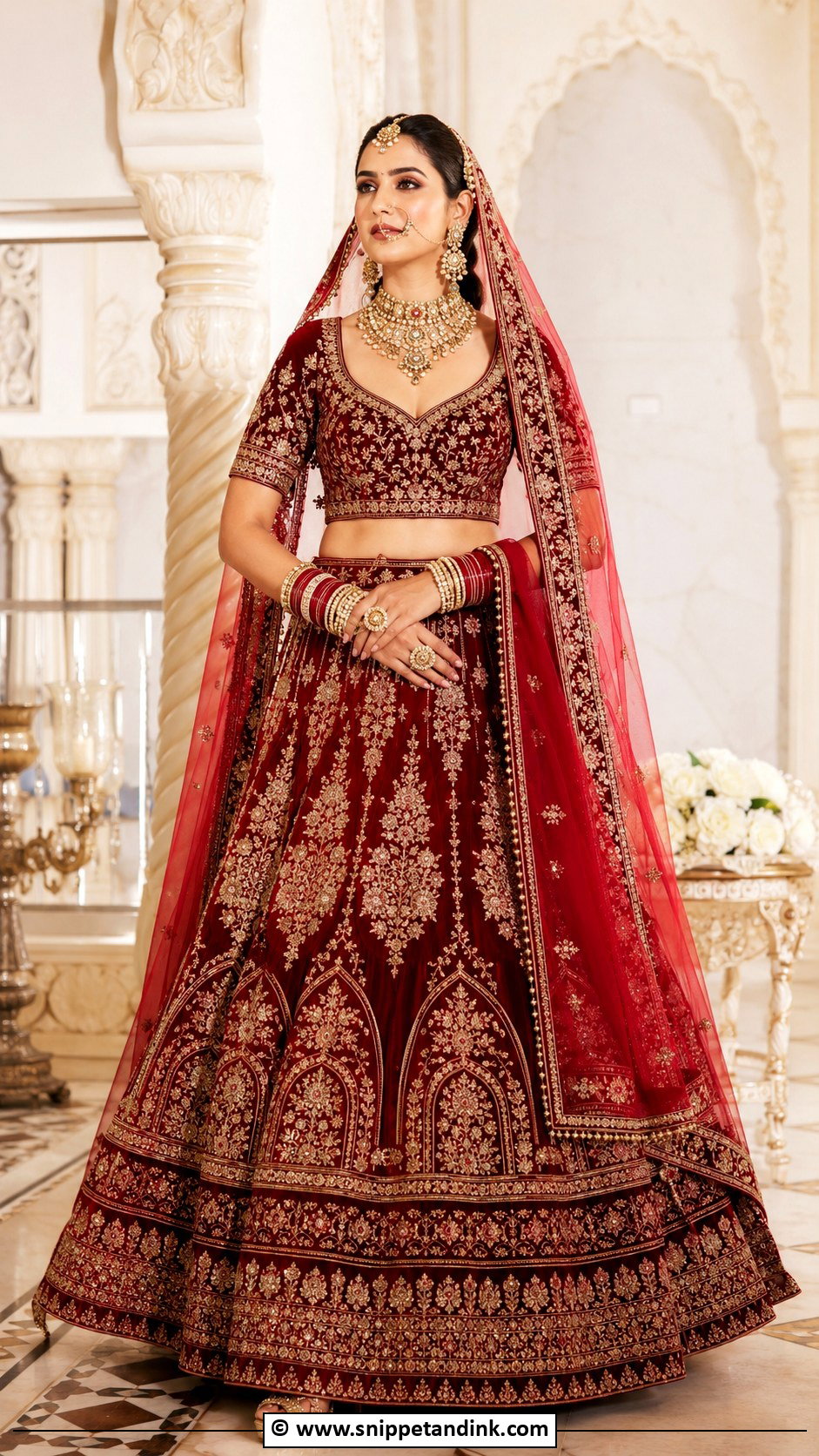
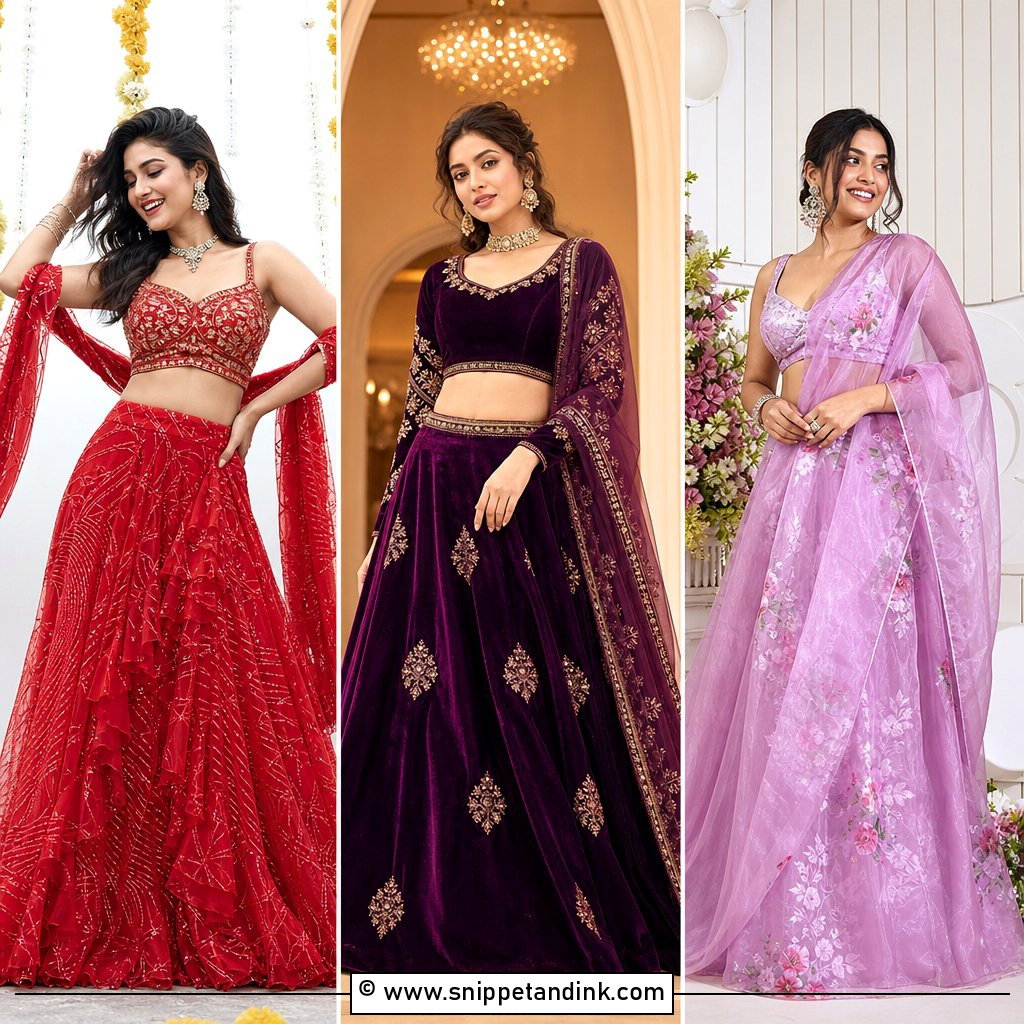
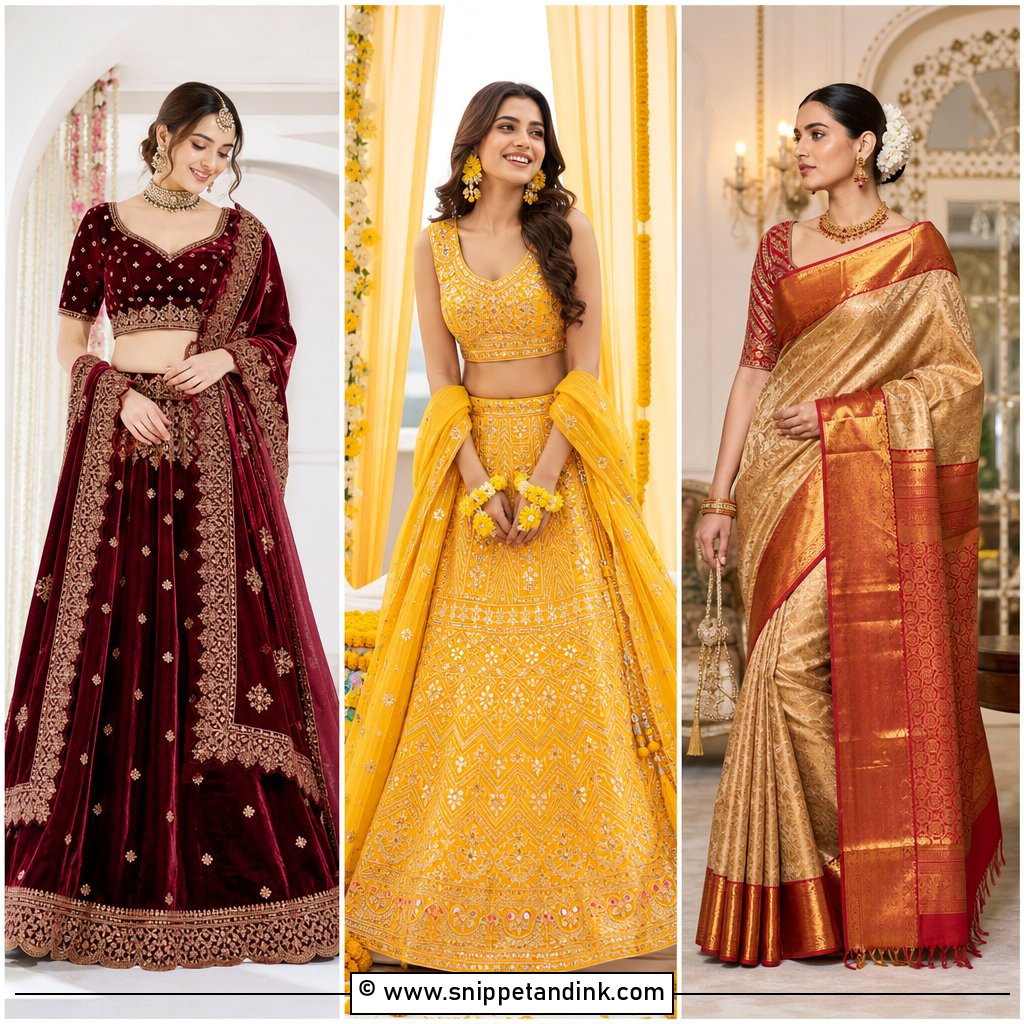
Velvet makes red deeper and warmer, which is why I reserve it for winter weddings and evening ceremonies. A deep red velvet lehenga with antique gold embroidery feels grand, but it’s heavy and hot, so balance it with a structured blouse, a light net dupatta and polki, kundan or antique gold that doesn’t fight the pile. Velvet crushes where you sit, so ask for a cotton lining in the skirt. Closed-toe heels or embellished platforms give support for palace venues and cooler celebrations.
4. Red Bridal Saree With Heavy Border
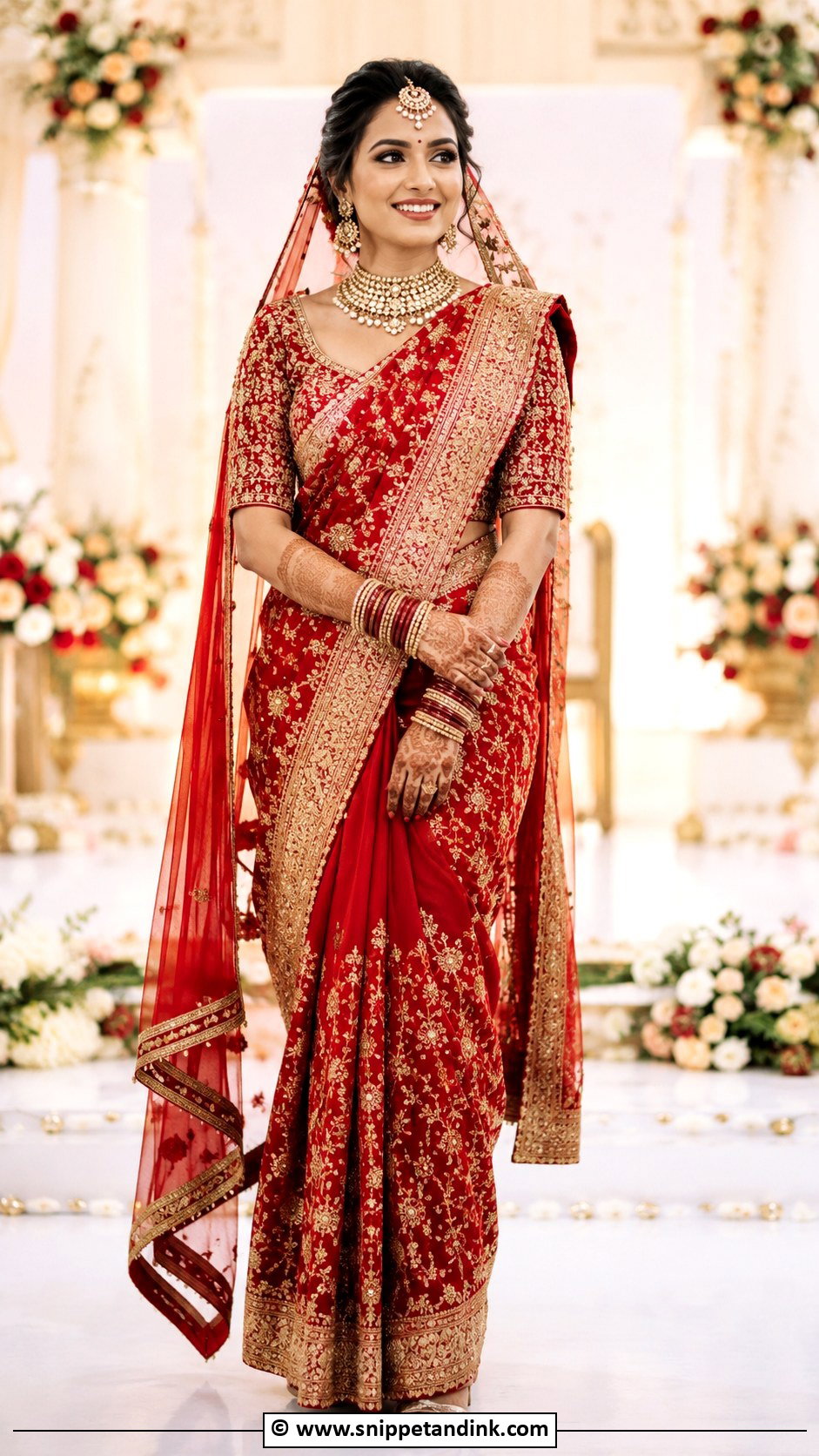
One strong border can be enough. A red saree with a heavy gold, copper or antique border gives the drape structure and outlines the body in every photo. A short-sleeve or elbow-length blouse, traditional bangles, a statement necklace and a centre-parted hairstyle suit it. A woven border keeps the saree lighter than an embellished one, which matters if you’ll be standing for long. I keep the rest of the styling polished so the border leads.
5. Red Zardozi Bridal Lehenga
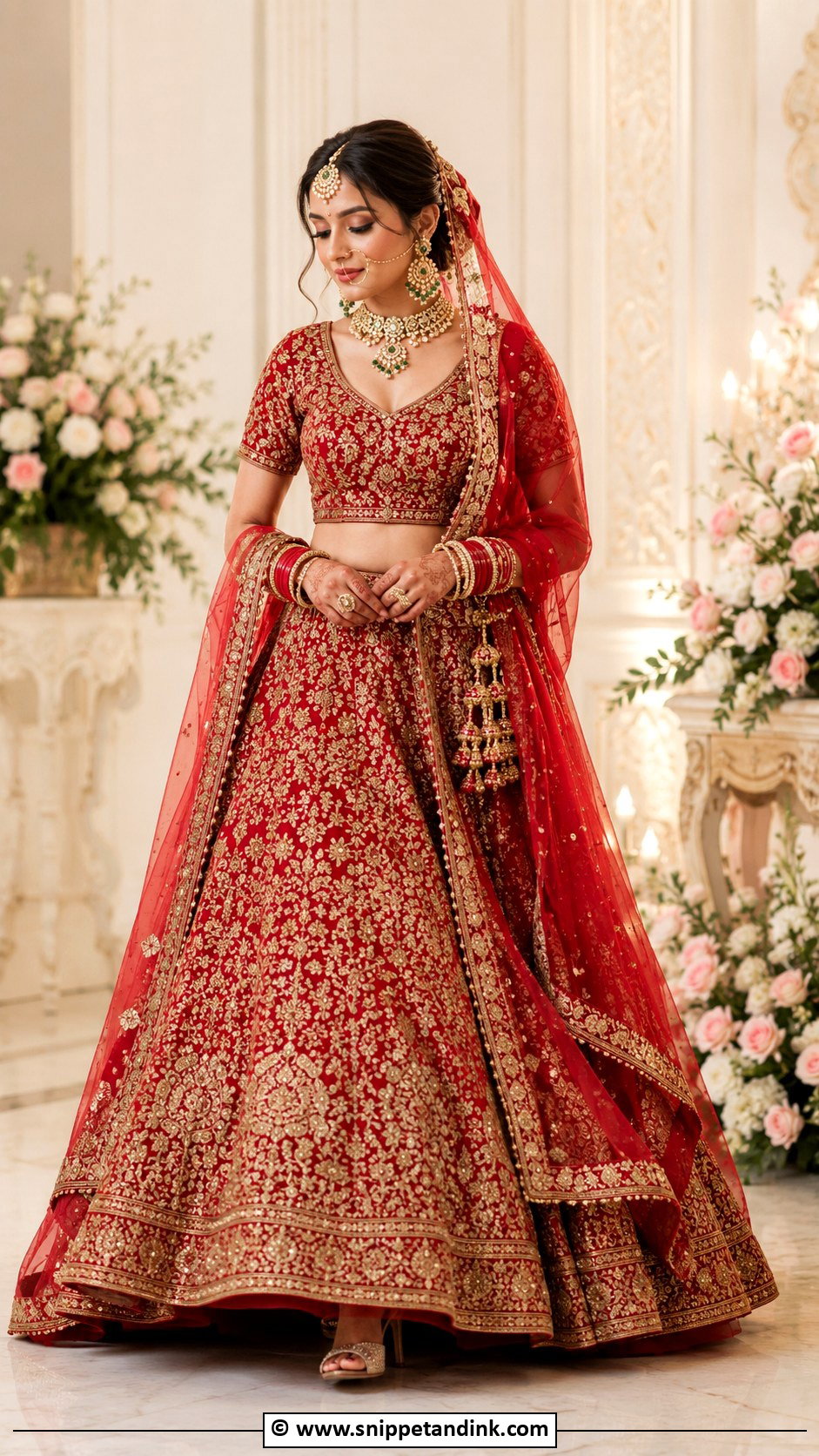
Zardozi is raised metallic embroidery worked by hand, so a red zardozi bridal lehenga has depth and shine that flat embroidery can’t match. It is also the heaviest work on this list. Pair it with a matching blouse, a sheer dupatta and kundan, polki or gold, and choose a blouse neckline and sleeve length that feel secure under that weight. I’d ask for broad blouse straps or a hidden bra cup, because heavy skirts and dupattas pull the blouse down over hours. Soft glam makeup, a sleek bun and embellished heels complete the main-ceremony look.
6. Red Kanjeevaram Saree Bridal Wear
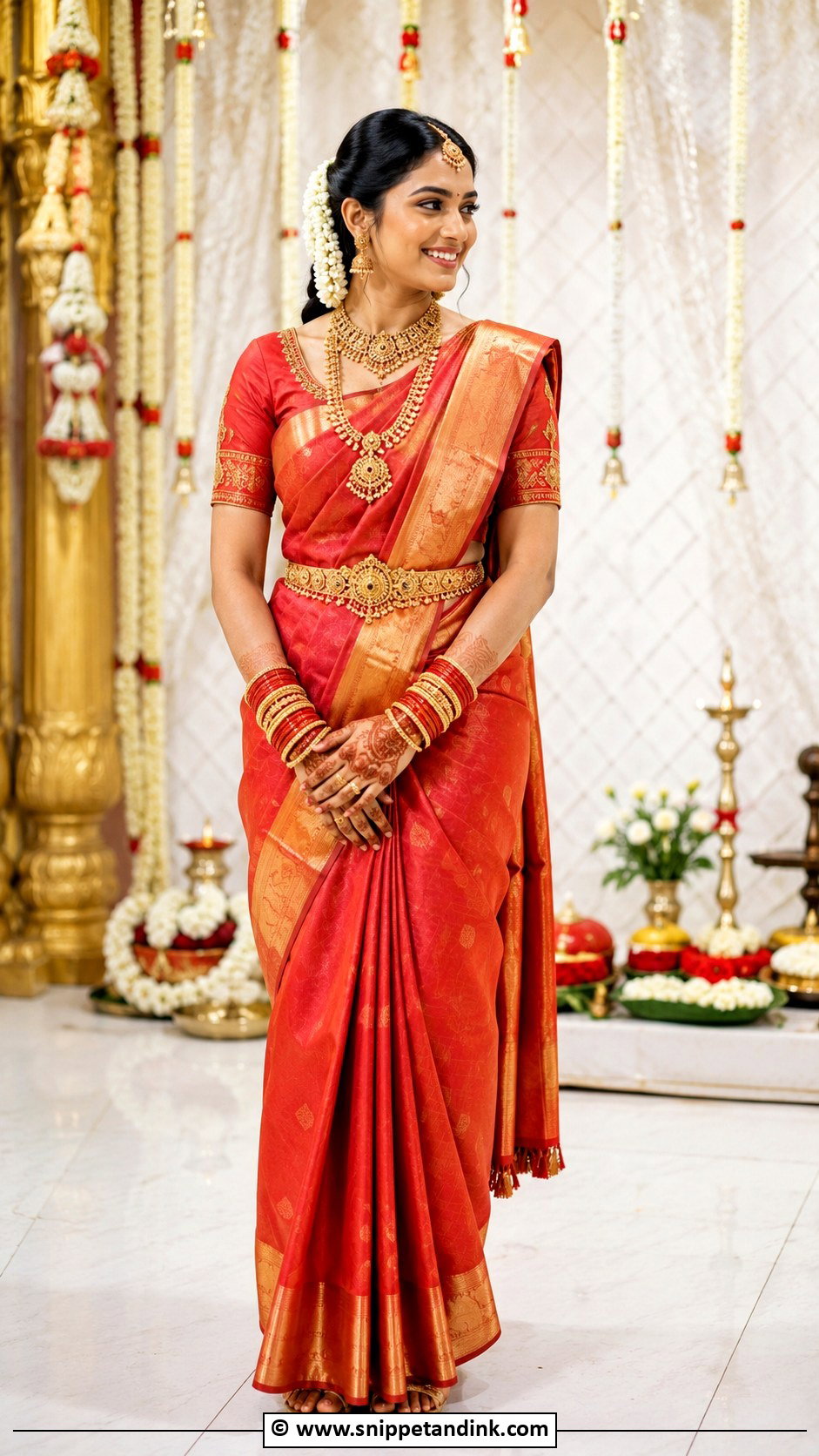
South Indian brides have worn the Kanjeevaram for generations, and the silk’s firm, structured fall is a big part of why. A red Kanjeevaram saree often has a contrast border in gold, green, orange or maroon. Temple jewellery, an odiyanam waist belt, bangles and a braid or bun with flowers suit it, with a matching silk blouse and gold sandals. The silk is thick, so pleats need to be pressed sharply and pinned at the waist or they puff out. In morning light the silk has a natural glow that looks graceful from every angle.
7. Red Bridal Lehenga With Double Dupatta
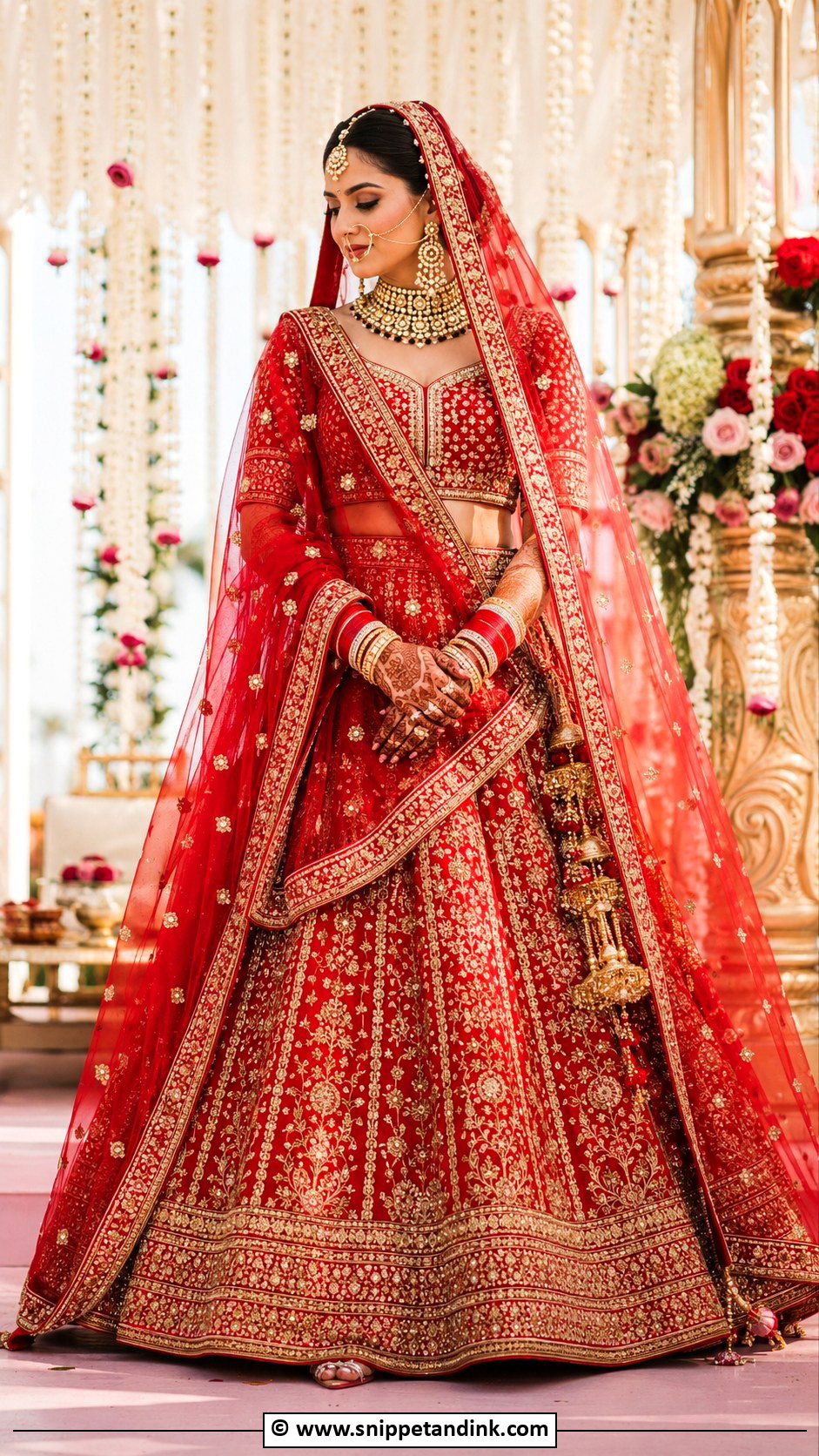
Two dupattas give a ceremonial look from every side: one pinned over the head for tradition, the other draped across the front or over a shoulder. The rule I follow is one heavy, one light; two heavy dupattas are exhausting by the end of the rituals. Coordinated jewellery, comfortable heels and secure hair accessories finish it. The head dupatta frames the face in close-ups, so plan how it will sit with the maang tikka at your hair trial.
8. Red Bridal Sharara Suit
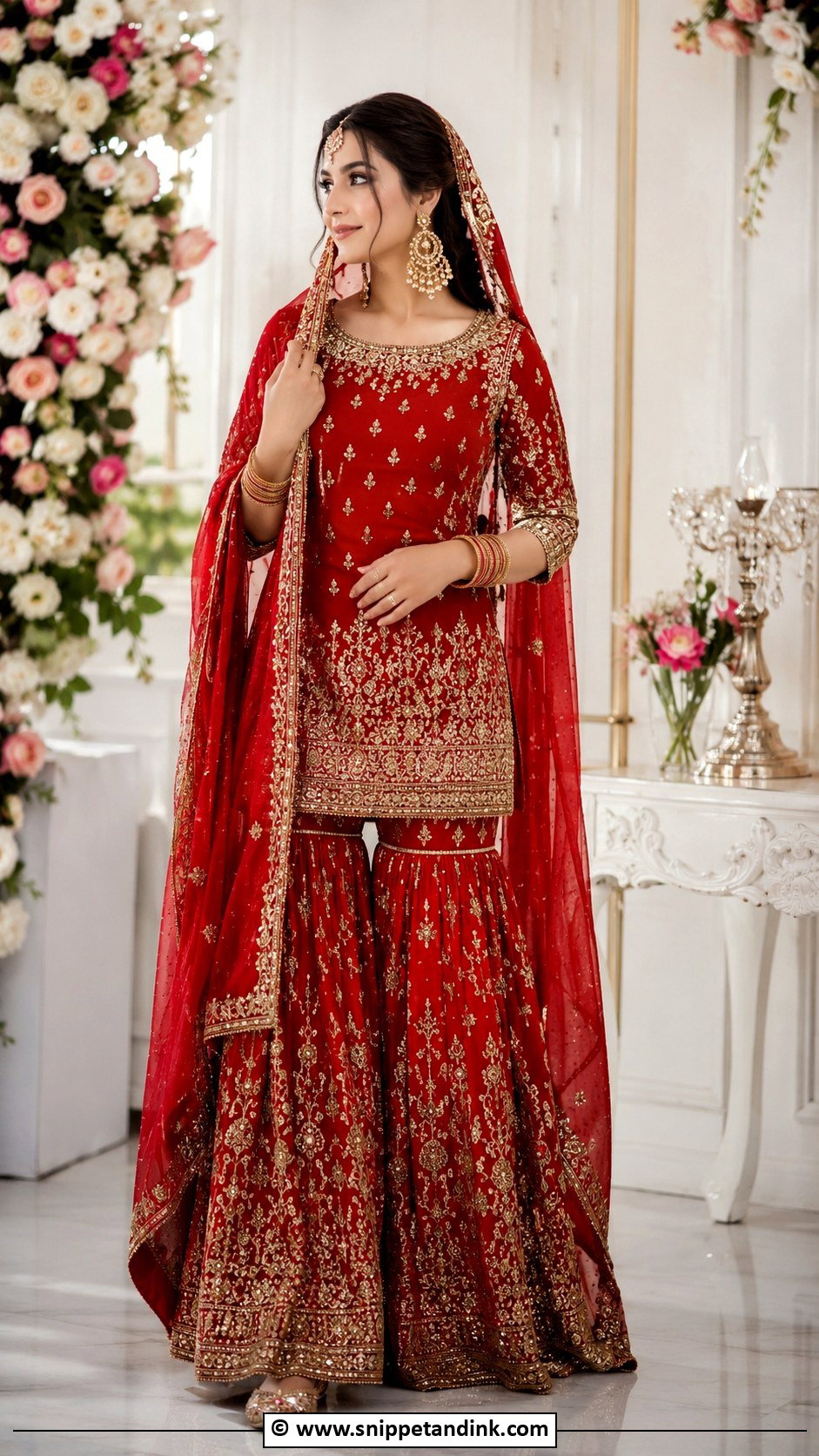
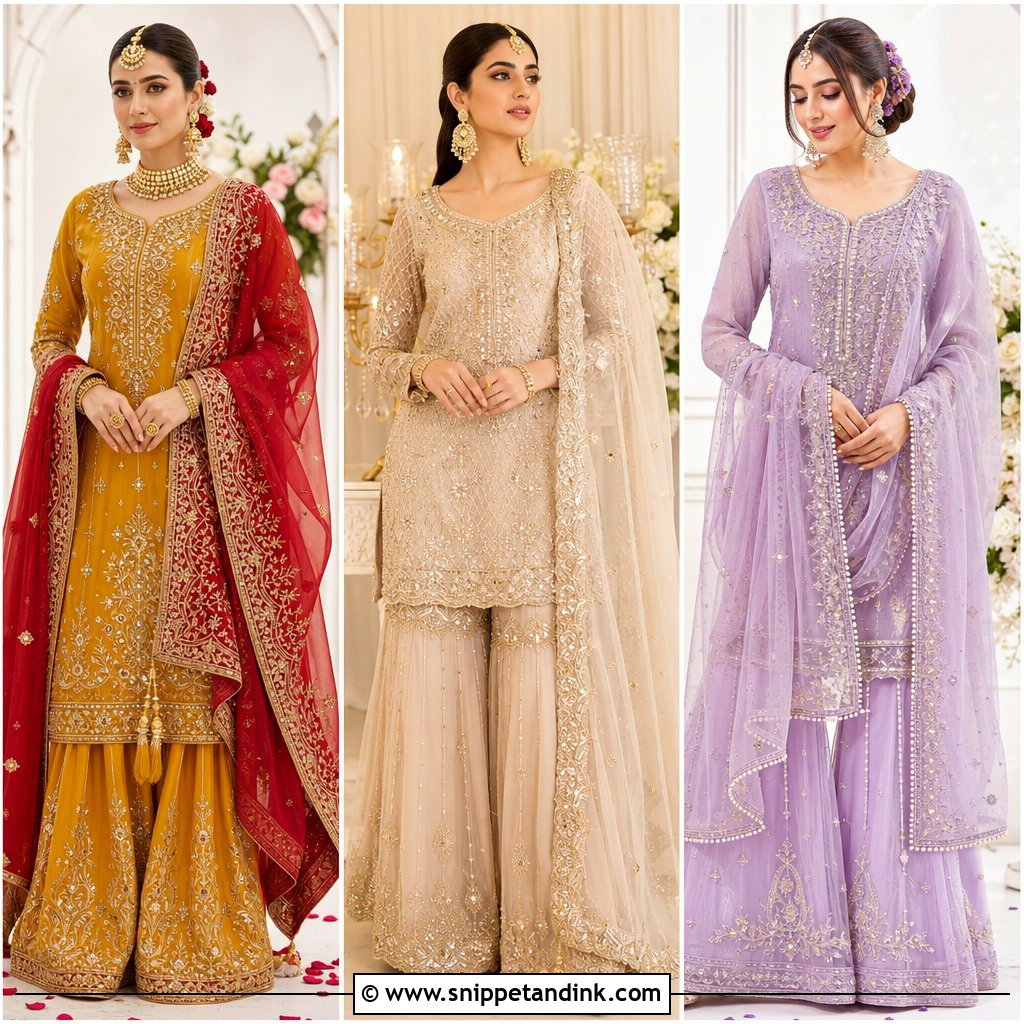
Flared sharara pants give drama and walk more easily than many heavy lehengas. A red bridal sharara suit pairs a short embroidered kurti with a matching dupatta, statement earrings, bangles and embellished juttis or heels. It suits nikah ceremonies, intimate weddings and pre-wedding events, and it can carry a main ceremony if the embroidery is rich. Silk, georgette, brocade or velvet decide the season. Check the sharara length in the footwear you’ll wear, since the flare catches under the heel if it is even slightly long.
9. Red Bridal Anarkali Suit
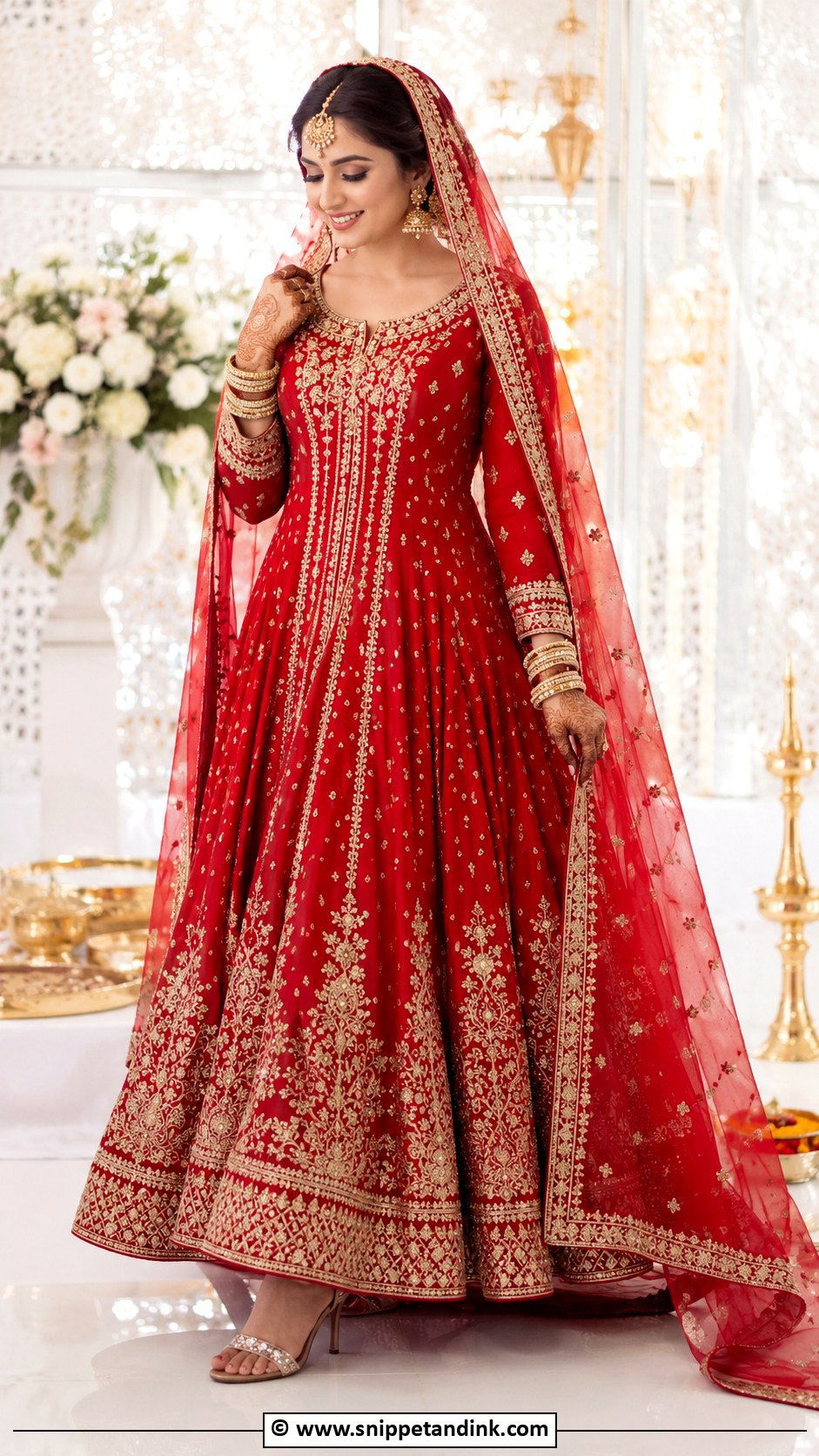
Anarkalis flow from a fitted bodice into a long flare, which makes them graceful and formal without the bulk of a lehenga. Look for embroidery at the neckline, sleeves, hem and dupatta border, then churidar or slim trousers and embroidered heels. A maang tikka, jhumkas and bangles push it bridal. Floor-length anarkalis can be heavy at the hem, so I make sure the bodice has good support at the shoulders. It suits smaller ceremonies, and the flare twirls well in photos.
10. Red Bridal Gown With Indian Embroidery
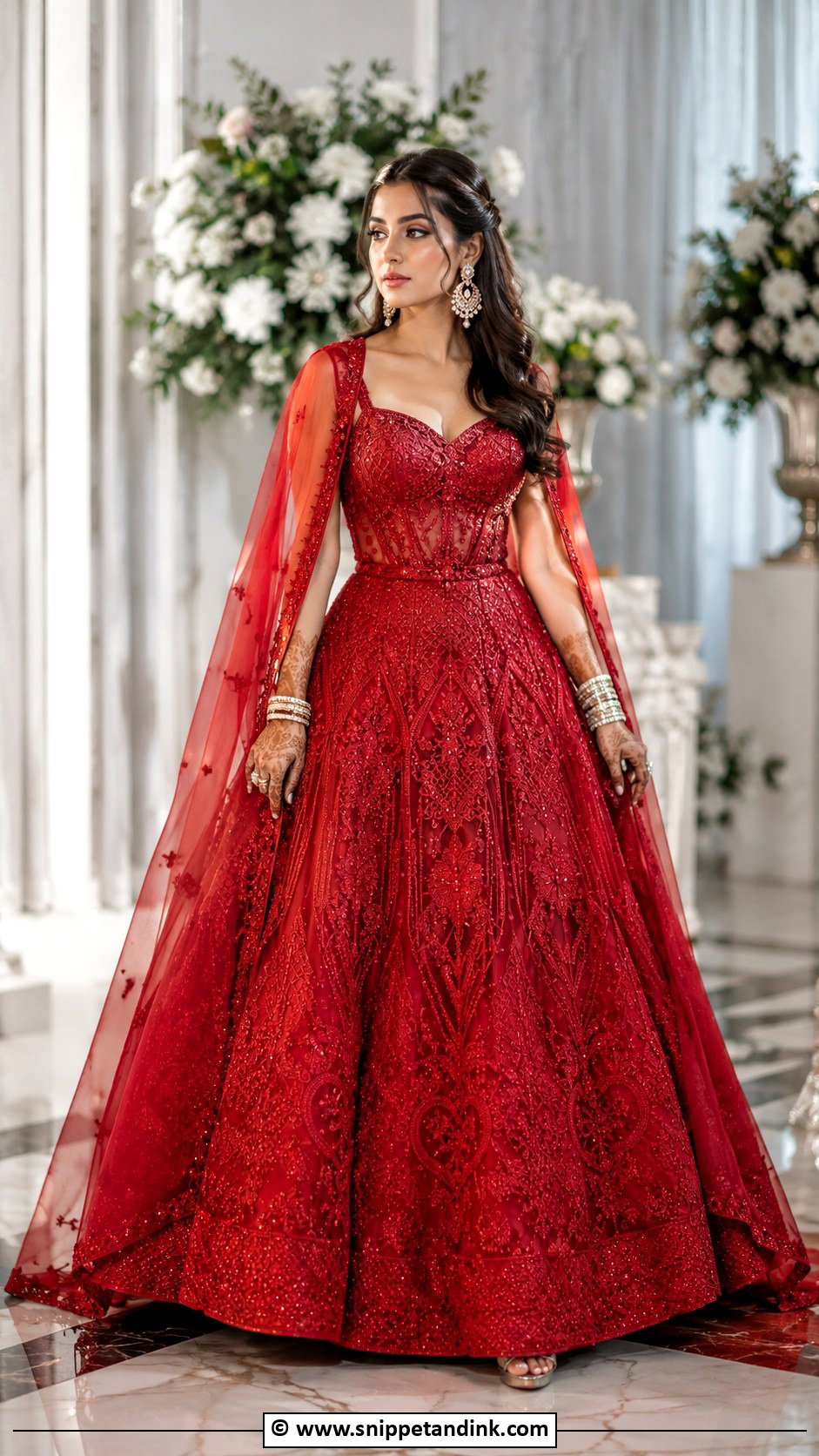
Fusion gowns suit brides who want something other than a lehenga or saree. A red bridal gown with Indian embroidery has a full skirt, a structured bodice and zardozi, mirror, sequin or threadwork drawn from traditional wear. A sheer dupatta or cape-style drape brings in the Indian wedding feel, with statement earrings, a bracelet stack and embellished heels. I’d keep the hair sleek so the gown’s shape stays clear. Receptions, modern ceremonies and destination weddings suit it.
11. Red Bridal Lehenga With Pastel Dupatta
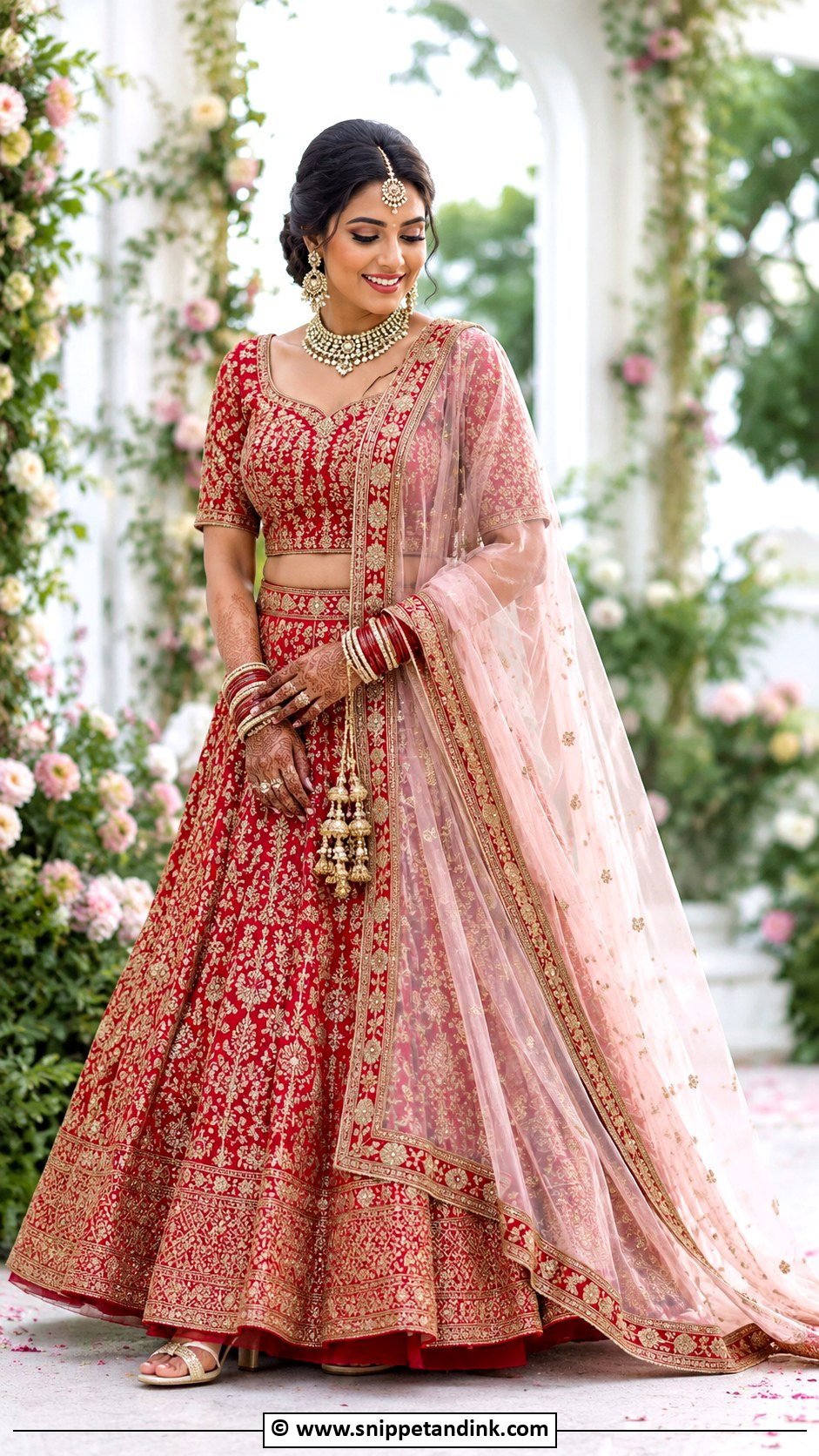
A pastel dupatta keeps the red skirt and blouse bridal while softening the colour right around your face. Blush, peach, ivory or soft pink all work if the embroidery links them, so gold, champagne or antique metallic thread is the key. Kundan, soft makeup and neutral embellished heels finish it. For daytime weddings, the lighter colour near the face is genuinely flattering. I’d check the two fabrics side by side in daylight, because some pinks clash with orange-leaning reds.
12. Red Bridal Lehenga With Green Jewelry
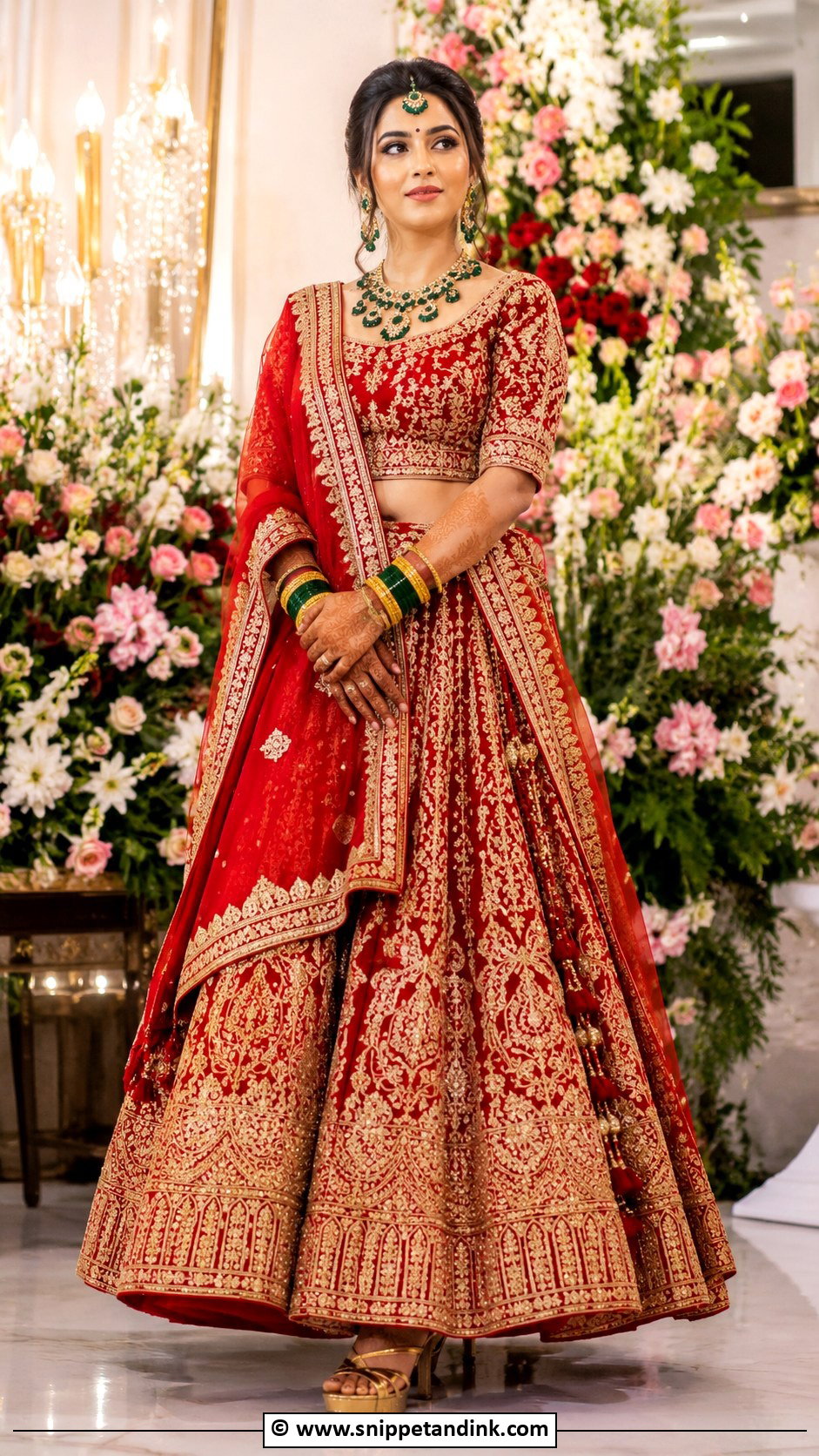
Red with green is one of the oldest bridal pairings, and green jewellery adds contrast and depth at the neckline. Emerald-style stones, green meenakari or a kundan set with green drops all suit it. Keep the lehenga embroidery gold or antique so the green stands out, then add a matching red dupatta, bangles with green accents and gold heels. Real or good-quality emerald-coloured stones look best against deep red; very bright green glass can look cheap in close-up photos.
13. Red Bridal Lehenga With Mirror Work
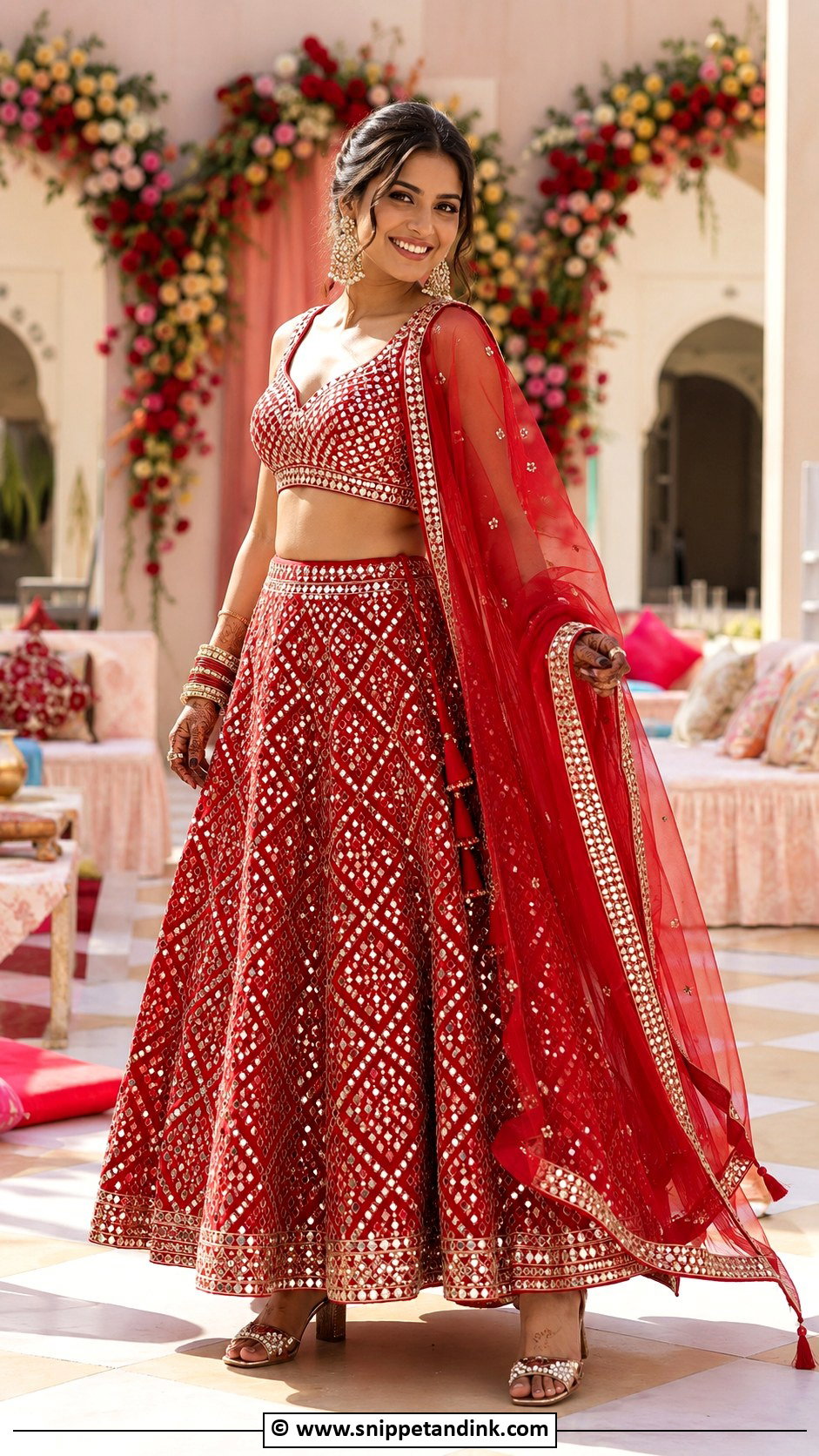
Mirror work catches light as you move, so it sparkles without being fully metallic. Lively ceremonies and outdoor celebrations suit it best, since sunlight brings out the reflections. Pair it with a matching choli, a light dupatta, oxidised or kundan jewellery and embellished juttis or block heels. Keep the hairstyle secure and simple. Hand-stitched mirrors can snag delicate dupattas, so I avoid pairing them with very fine net.
14. Red Bridal Lehenga With Long Blouse
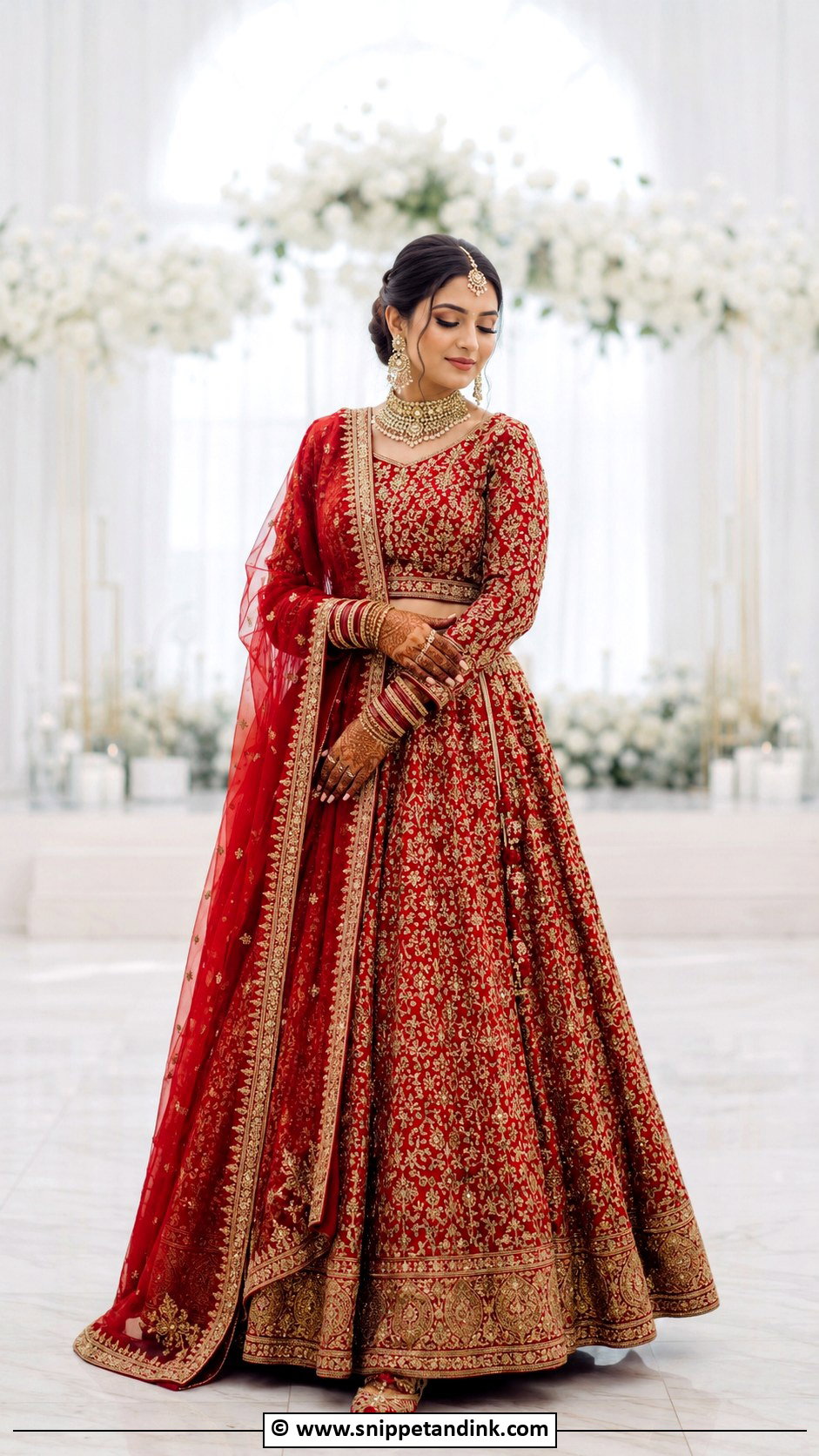
A long blouse, ending at the hip or upper thigh, gives more coverage and suits many body types. Pair it with a full lehenga skirt, a soft dupatta, embroidery at the neck, cuffs and hem, statement earrings, bangles and comfortable heels or juttis. The fit at the waist is critical: if the blouse is too loose there, it hides your shape; too tight and it rides up when you sit. Brides who want to feel covered through long ceremonies tend to love it.
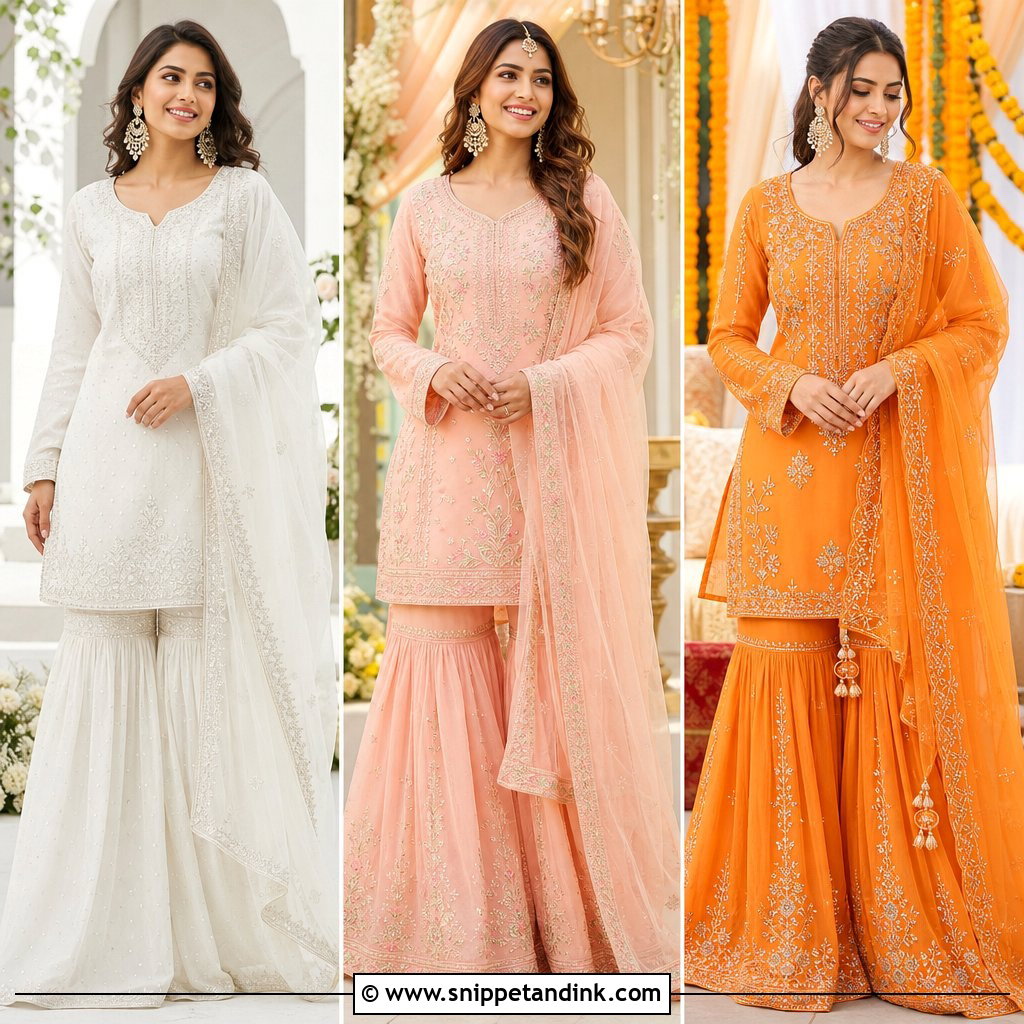


15. Red Bridal Lehenga With Jacket
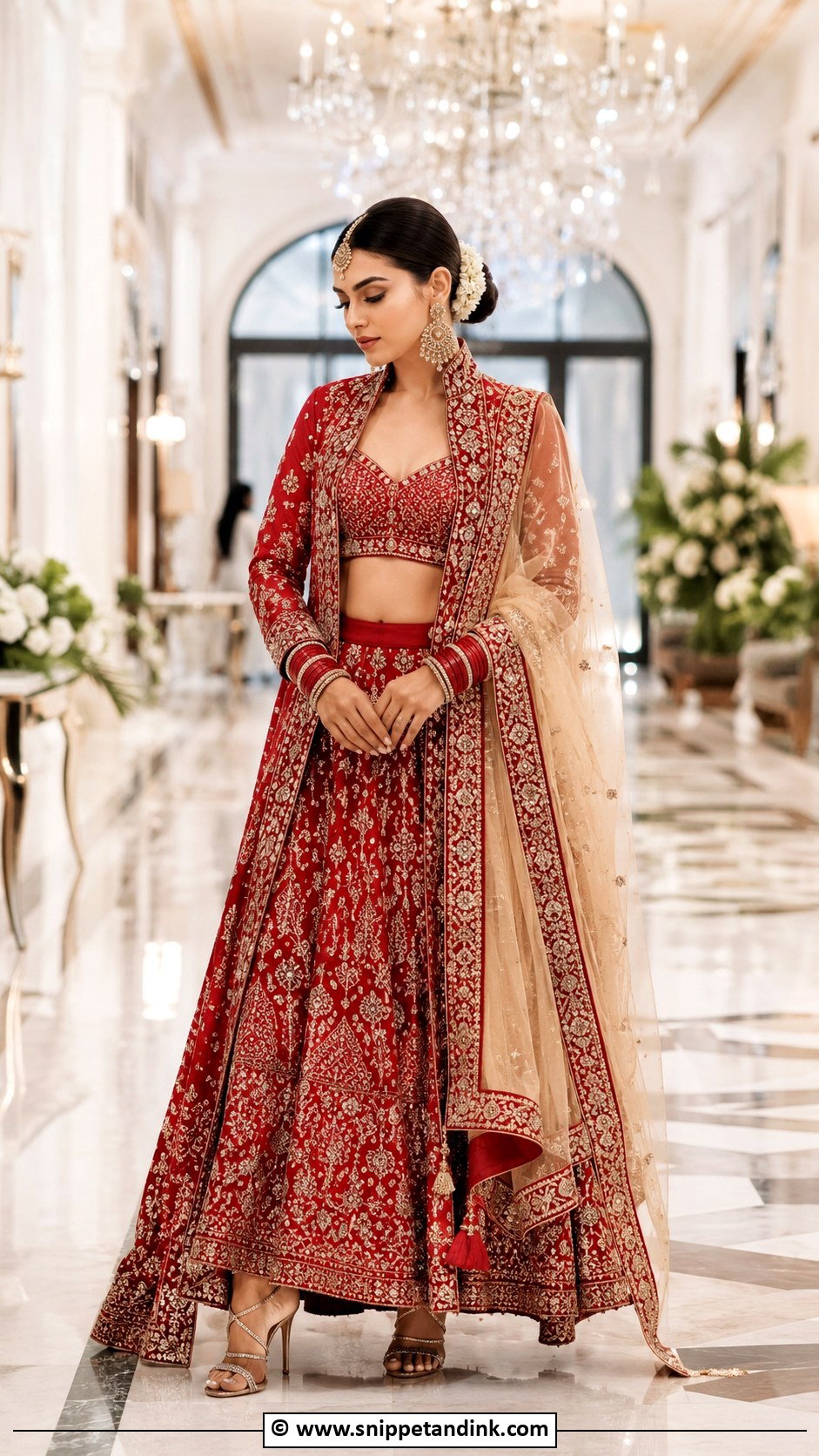
Jackets bring a modern line to a red lehenga. They can be short, waist-length or long and sheer, and an embroidered jacket gives extra coverage without bulk. Coordinate the blouse and skirt, keep the dupatta optional or very light, and add statement earrings, a sleek bun and heels in the lehenga tone. In winter, a velvet or brocade jacket also keeps you warm between outdoor rituals. Receptions suit it especially.
16. Red Bridal Saree With Gold Blouse
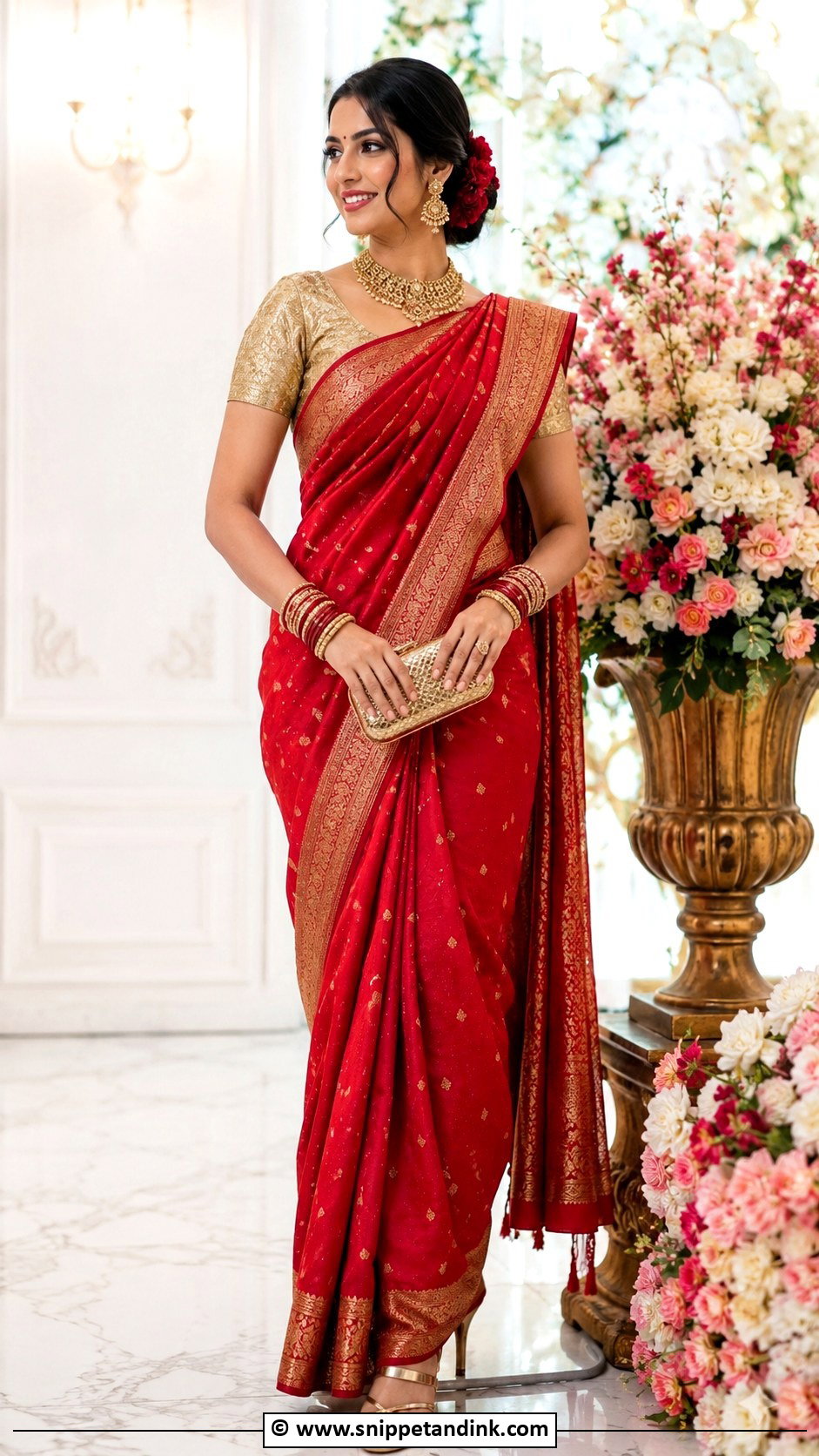
A gold blouse brightens a red drape and makes the outfit ceremonial straight away. Choose silk, brocade or embroidery depending on how heavy the saree is. Gold jewellery, bangles, a small clutch and comfortable sandals or heels finish it, with a bun, soft waves or a braid. I’d match the blouse gold to the jewellery gold, since a yellow blouse with rose-toned jewellery looks off in photographs. It keeps the layers to a minimum and lets the saree border show clearly.
17. Red Bridal Lehenga With Trail
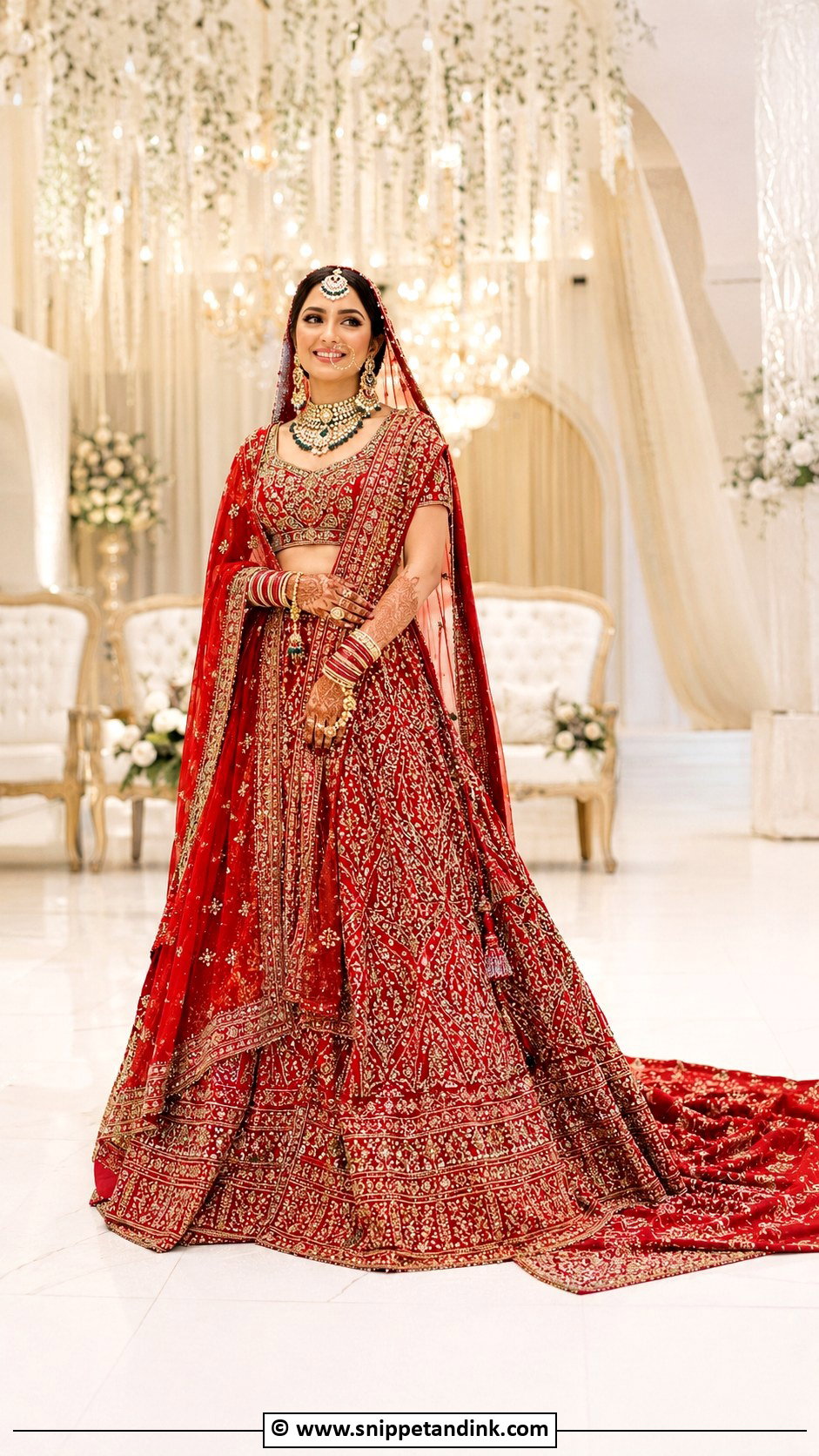
A trail at the back gives the lehenga a gown-like entrance while the choli and dupatta stay traditional. Pick a lightweight trail if your ceremony involves stairs, a long walk or the pheras around a fire, where a heavy trail can drag ash and petals. Balanced jewellery, a secure dupatta and supportive heels finish it. I always assign one person to manage the trail during rituals. Spacious venues and large mandaps suit it.
18. Red Bridal Lehenga With Floral Embroidery
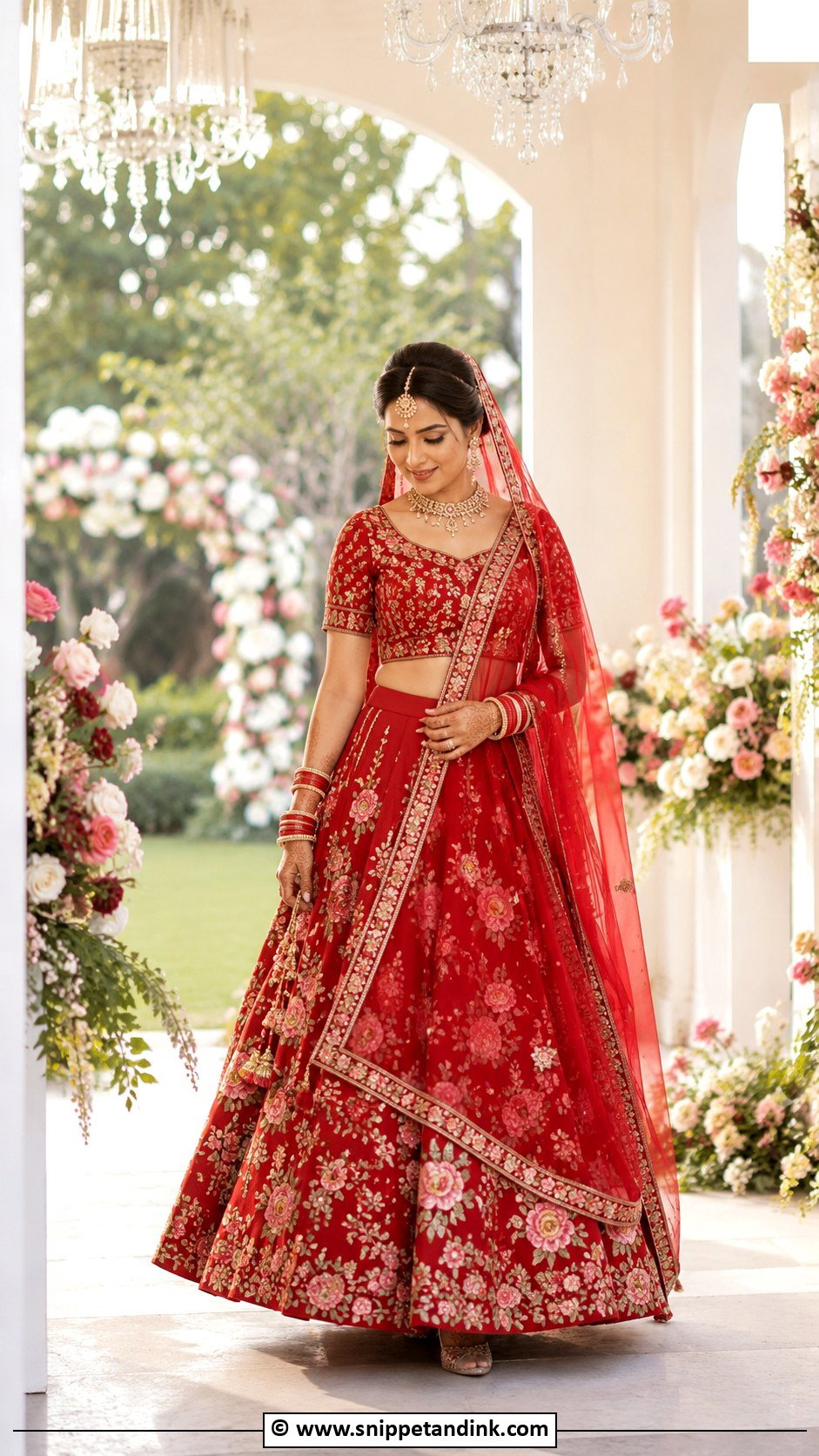
Floral embroidery softens red. The flowers can be woven, hand-embroidered, sequinned or appliquéd in gold, pink, green or ivory. A matching blouse, a soft dupatta, delicate jewellery and comfortable heels suit it, with glowing makeup and a soft hairstyle. It feels lighter than dense all-over zardozi, which makes it a good choice for daytime garden ceremonies and warmer months.
19. Red Bridal Lehenga With Peplum Top
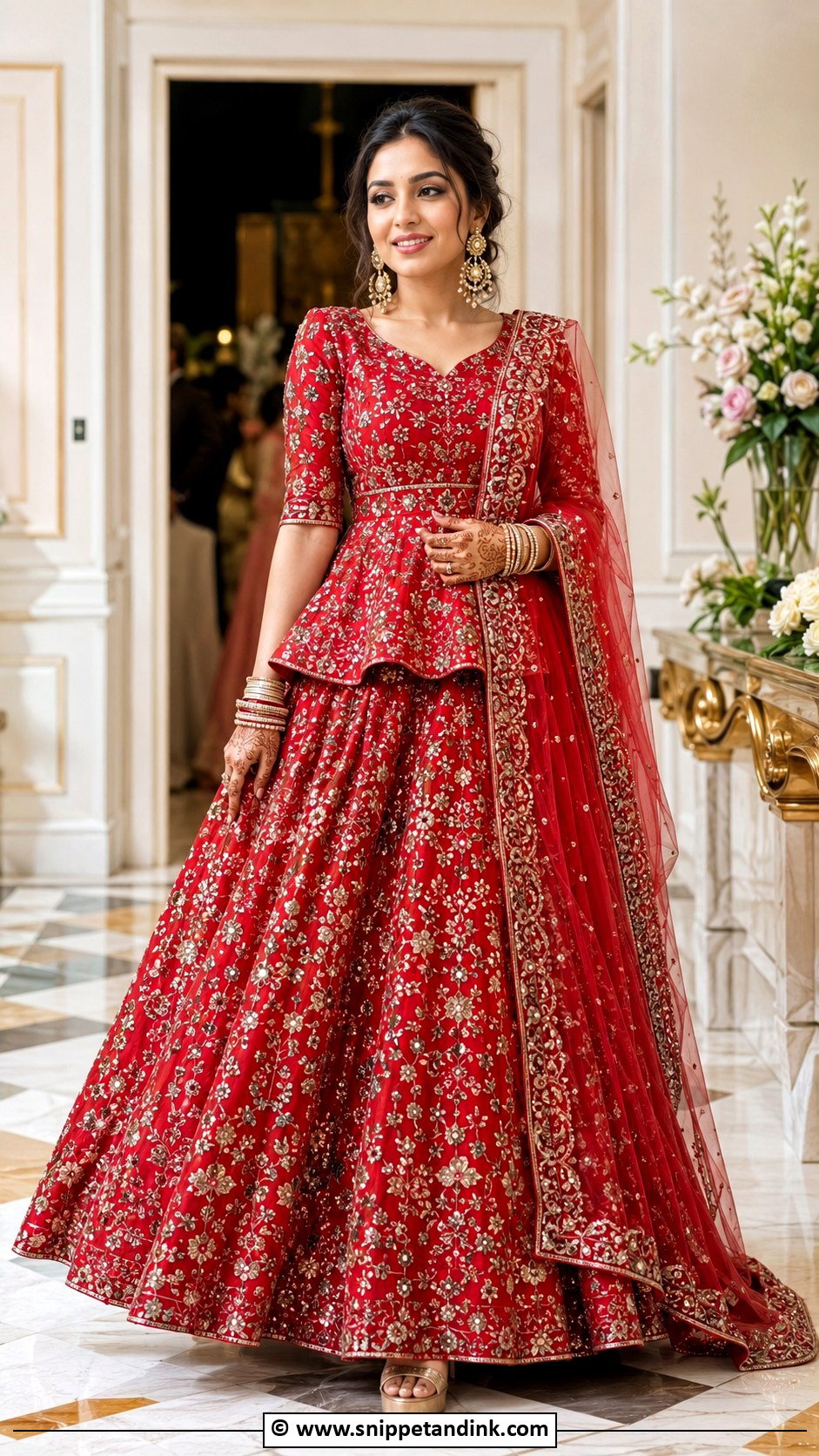
A peplum top defines the waist and flows gently over the midsection, giving shape and coverage together. Pair it with a full embroidered skirt, a light dupatta, statement earrings and supportive heels. The embroidery should continue from blouse to skirt so the outfit looks connected. Peplums can add bulk if the flare starts too high, so I’d have the tailor place it right at the natural waist. A sleek bun or soft curls both work.
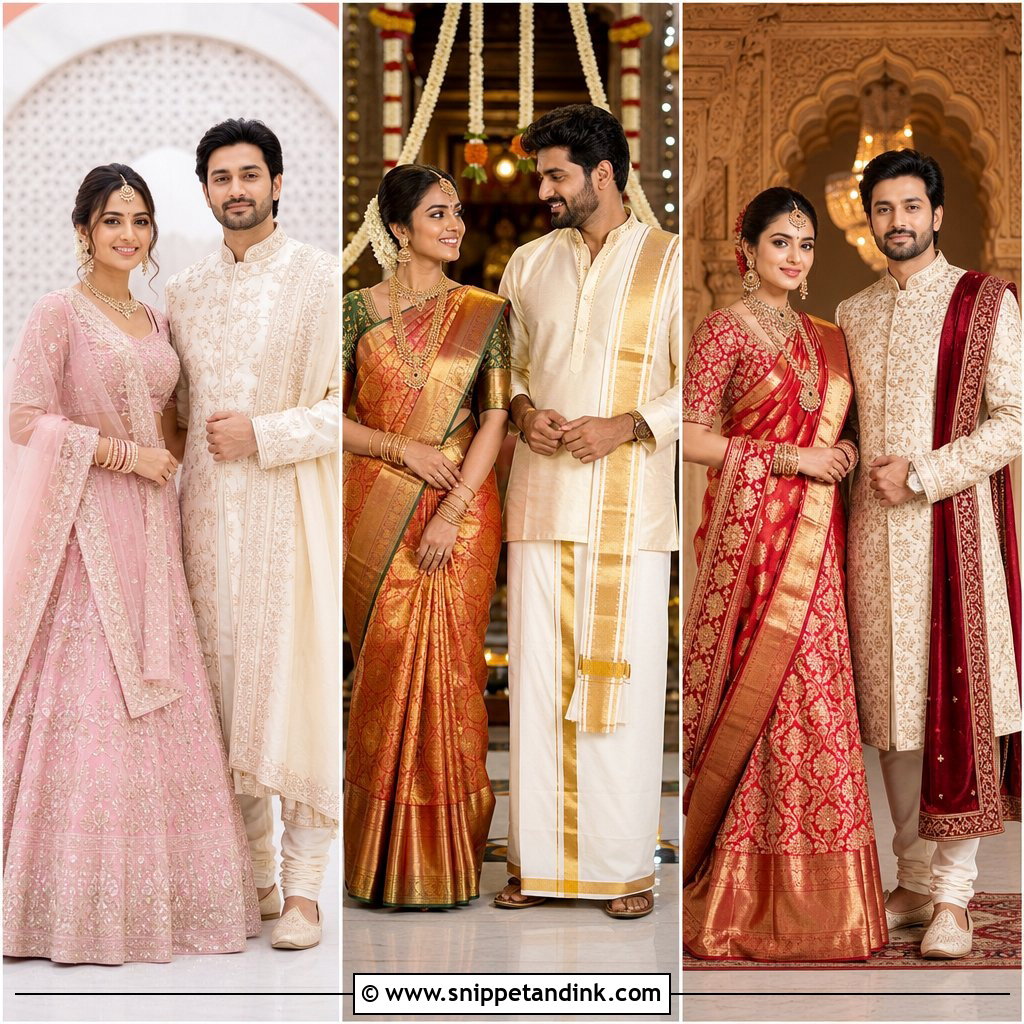
20. Red Bridal Lehenga With Cape Dupatta
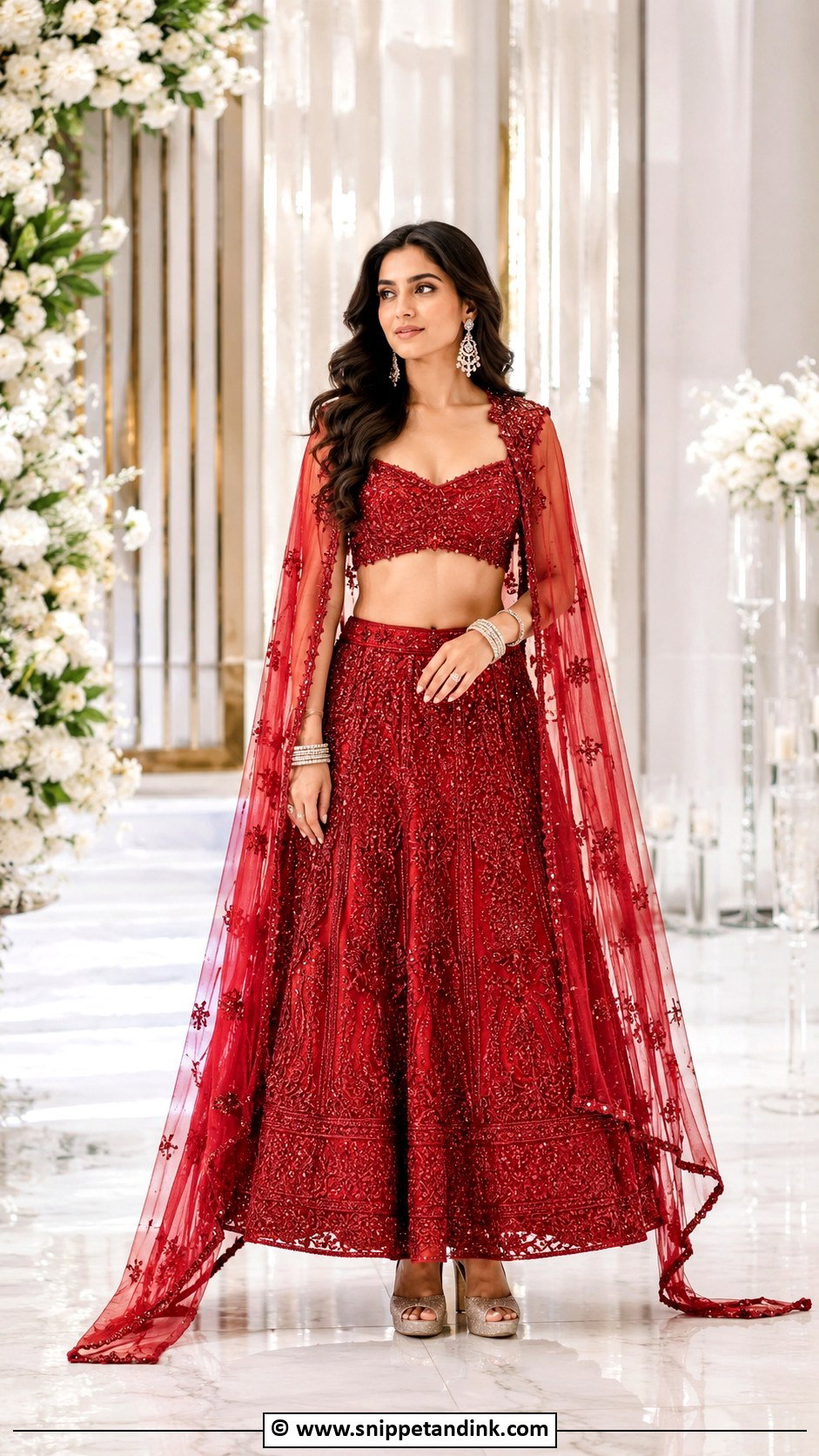
A cape dupatta gives coverage around the shoulders without the constant adjusting a long loose dupatta needs. Pair it with a fitted blouse, a full skirt, statement earrings and elegant heels. Sheer net, organza or embroidered tulle keeps the cape light. It suits receptions and destination weddings where you’ll be walking, greeting guests and posing for hours. If tradition calls for a head covering, keep a separate light dupatta for the ceremony itself.
21. Red Bridal Lehenga With Sequin Work
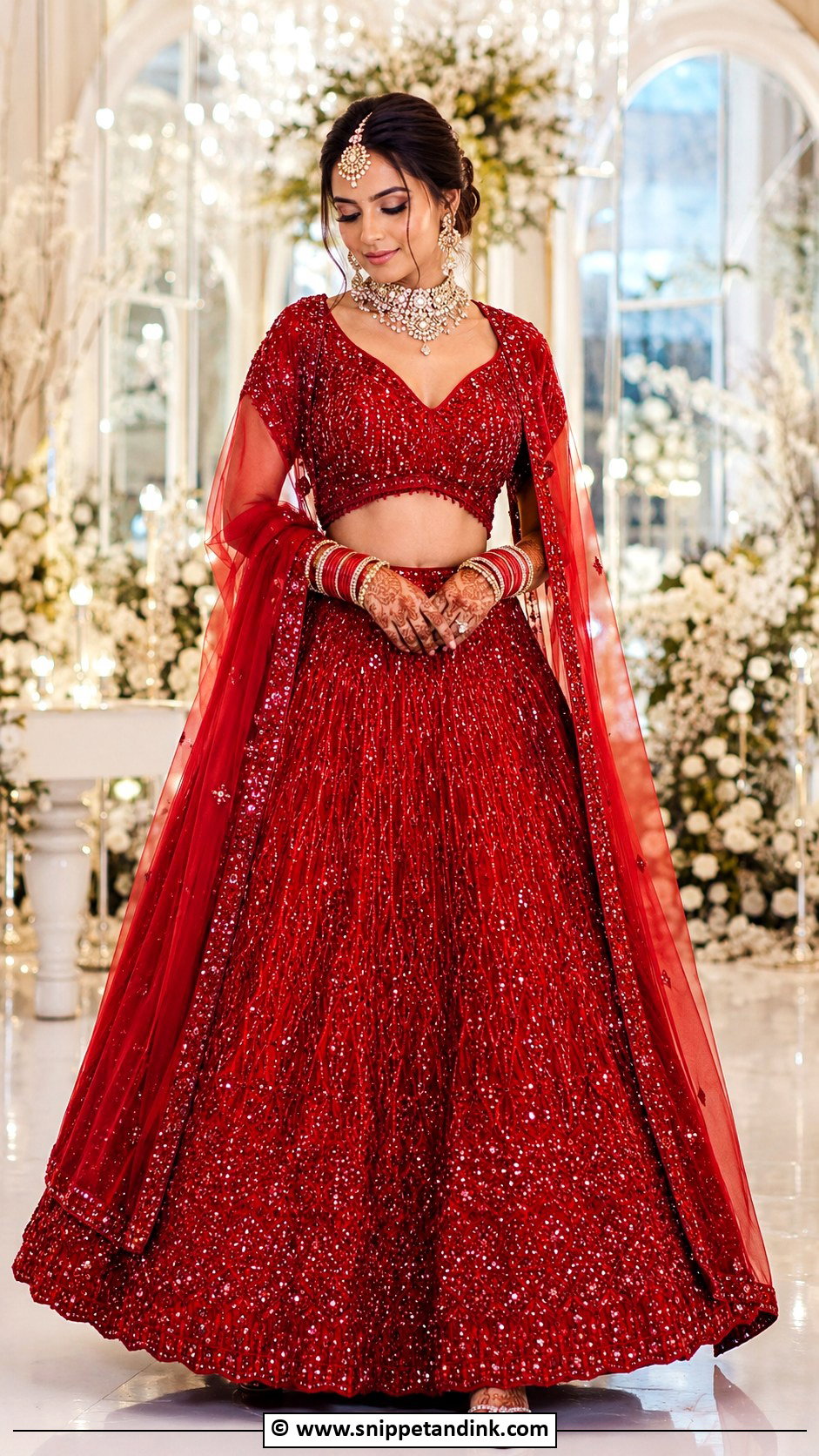
Sequins reflect light more softly than heavy metallic embroidery, so a sequinned red lehenga looks festive and modern for evening functions. A matching blouse, a light dupatta, crystal or kundan jewellery and embellished heels suit it, with polished makeup and sleek hair. Quality shows in the stitching: cheap sequin work sheds pieces and scratches the arms, so look for closely stitched sequins and a lined blouse. Receptions and cocktail-style functions suit it best.
22. Red Bridal Lehenga With Pearl Jewelry
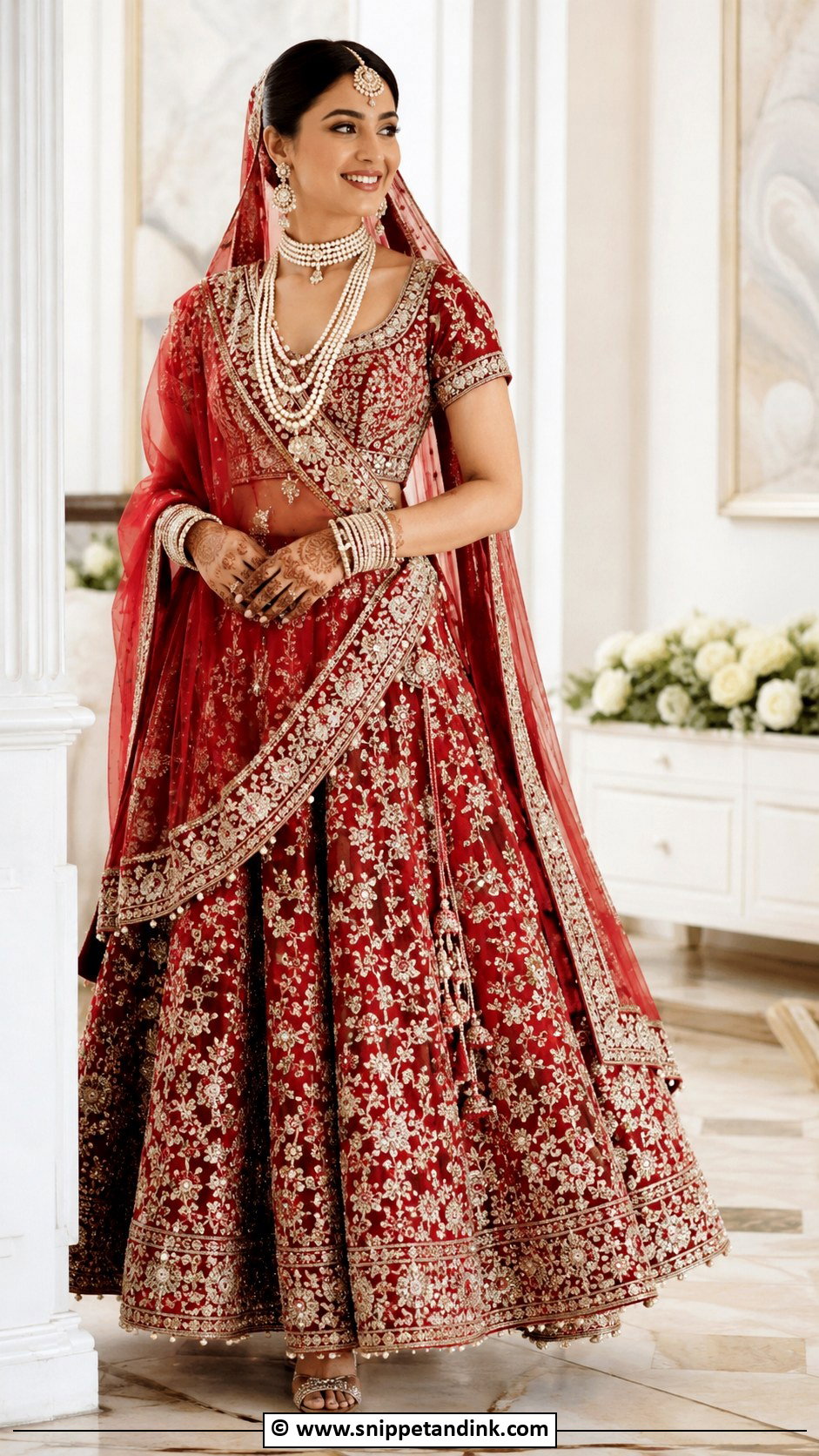
Pearls take the shine down a notch and soften red. Choose a lehenga with gold, champagne or ivory embroidery so the pearls blend, then a pearl choker, layered necklace, earrings and bangles. Pair it with a sheer dupatta, neutral heels and soft makeup. I like it for daytime ceremonies and elegant indoor venues. Keep perfume and hairspray away from real pearls, since both dull them.
23. Red Bridal Saree With Belt
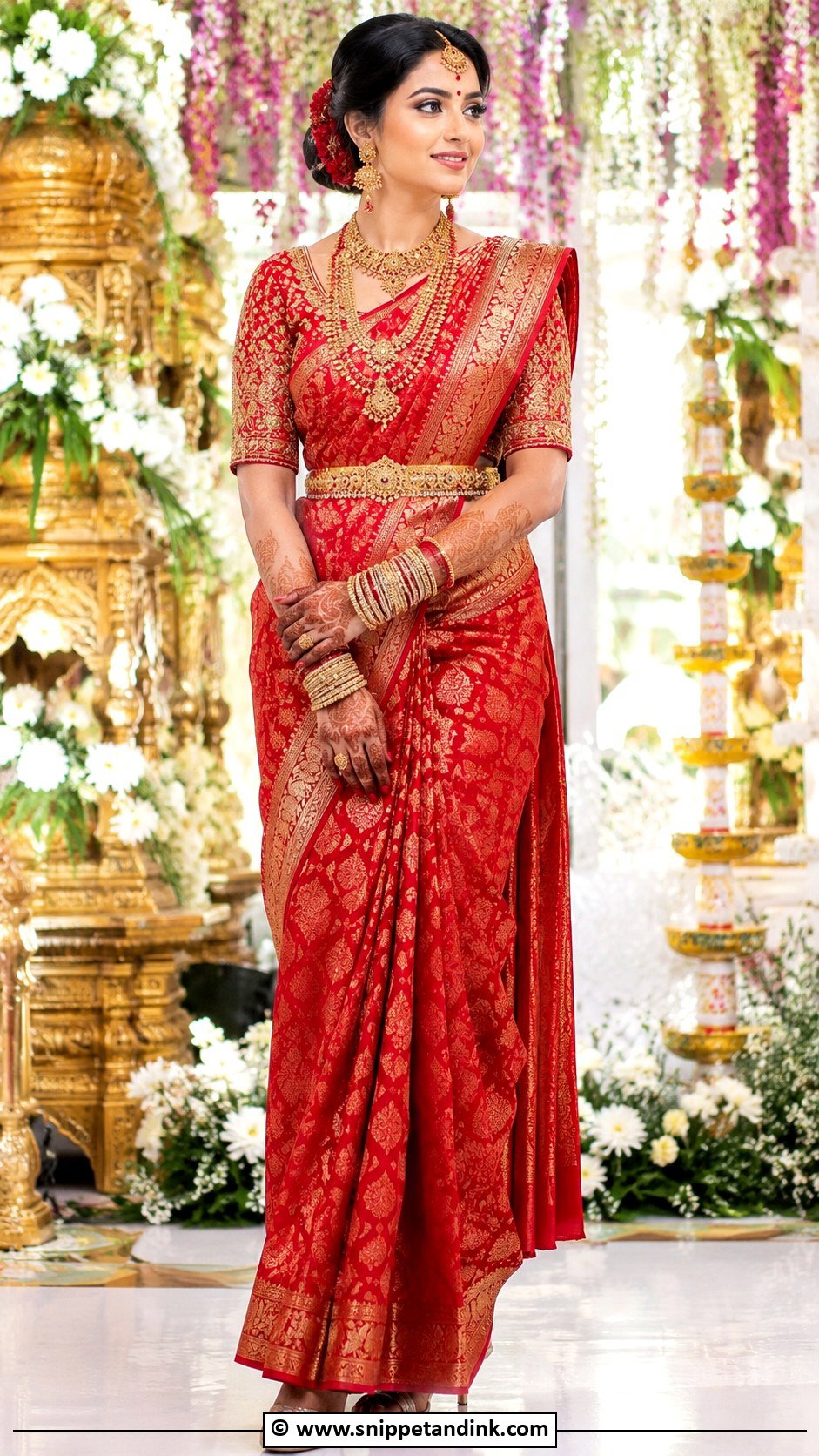
A belt gives the drape a neat, secure line. A red bridal saree with a belt keeps the pleats and pallu in place through long rituals and photos. Gold, embroidered, pearl-detailed or matching fabric all work. Pair it with a fitted blouse, statement earrings, bangles and comfortable heels. I have the belt fitted after the saree is draped, never before, because the pleats add width at the waist.
24. Red Bridal Lehenga With Off Shoulder Blouse
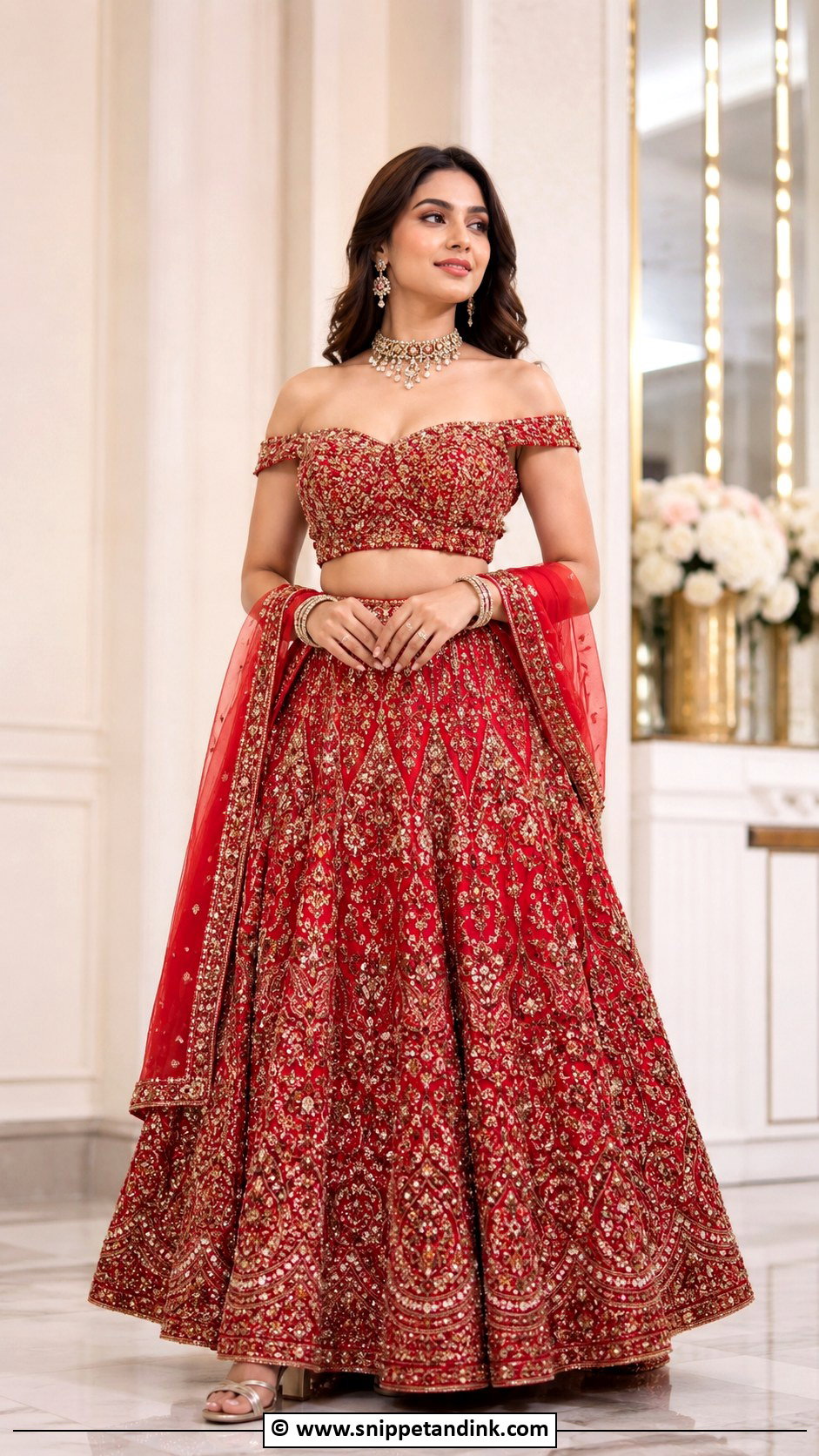
With an off-shoulder blouse, the neckline is the statement, so keep the dupatta light and pinned so it doesn’t cover the shoulders entirely. A choker, drop earrings, bangles and elegant heels suit it. Internal support is essential: boning and a firm elastic grip stop the neckline slipping during a long ceremony. A fuller skirt with traditional embroidery keeps it balanced for receptions and contemporary weddings.




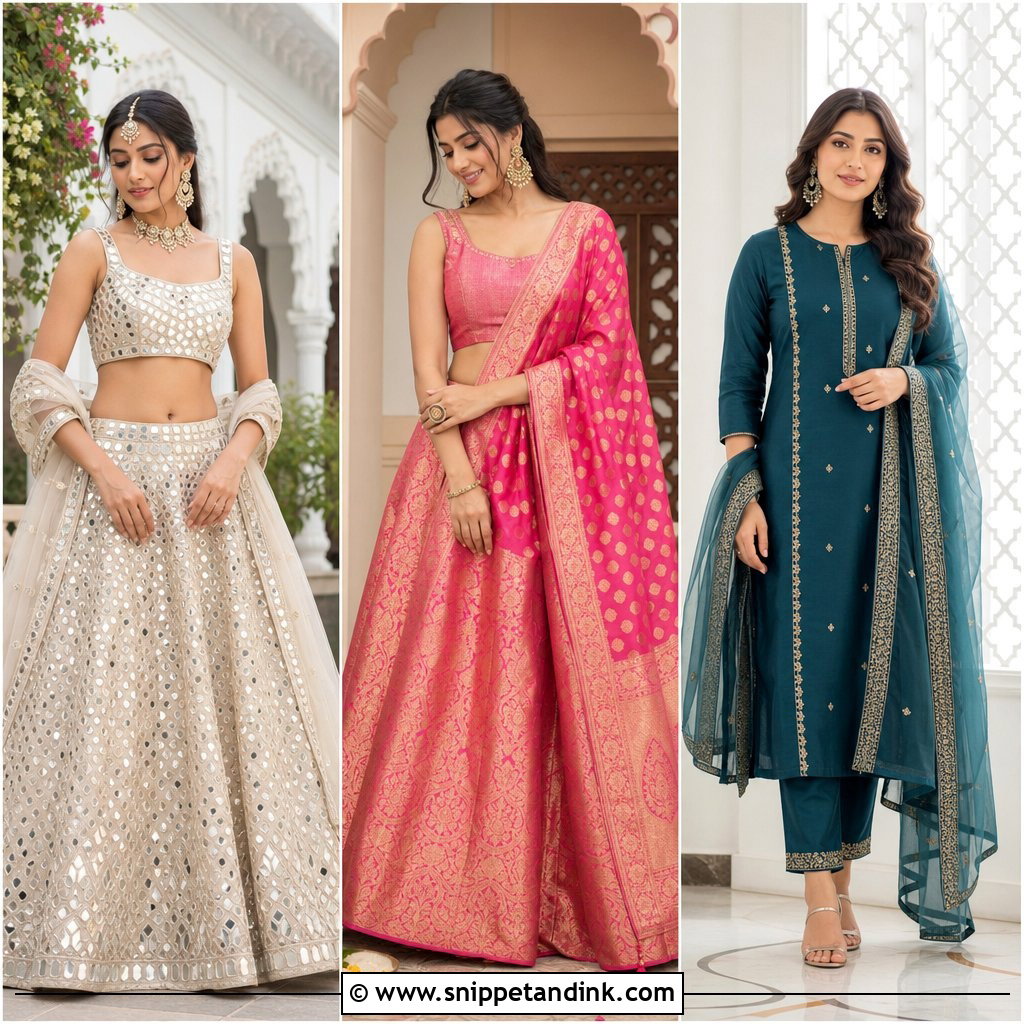
25. Red Bridal Lehenga With Full Sleeves
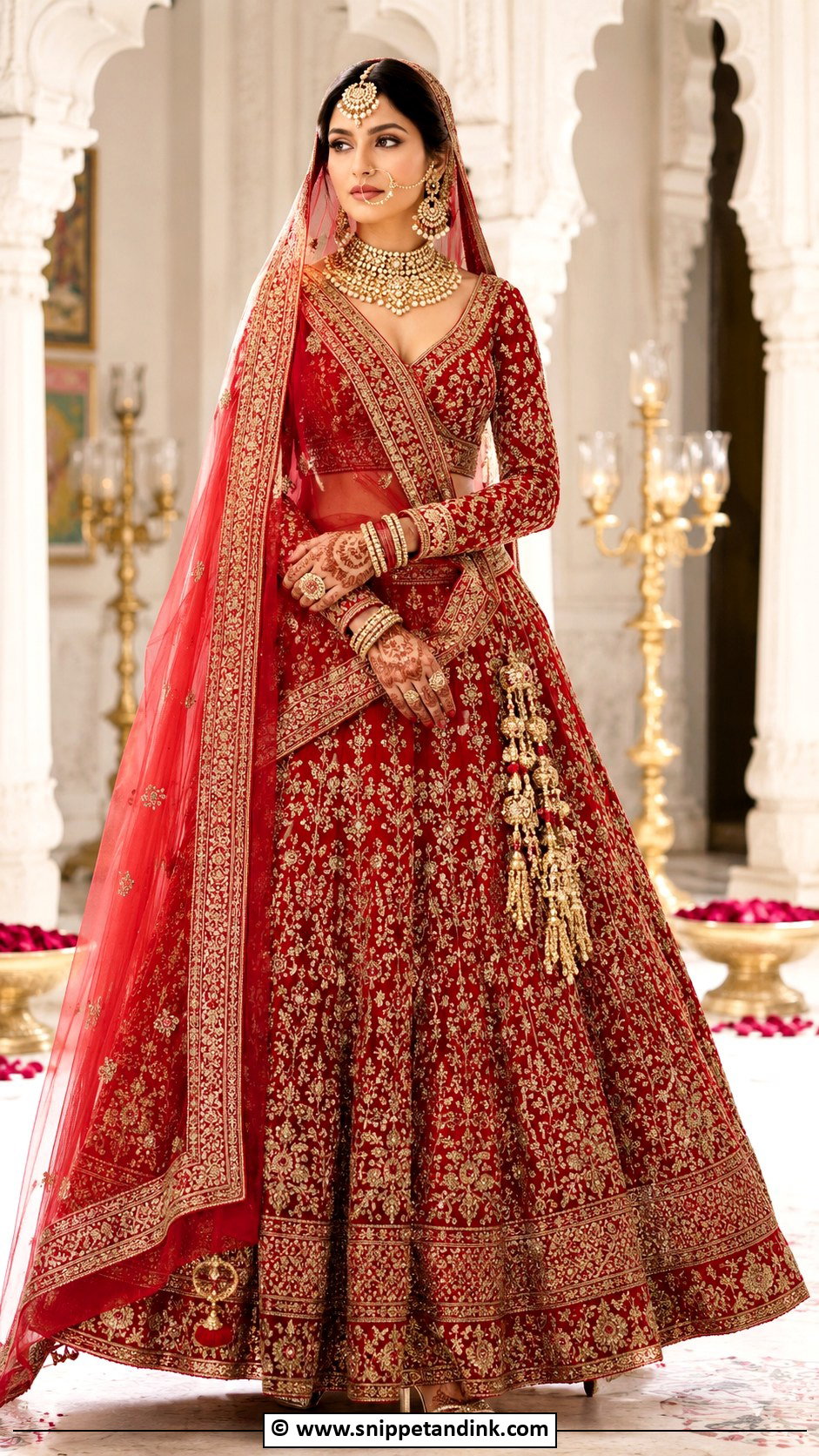
Full sleeves give coverage and balance a heavily embellished skirt. Sheer embroidered, velvet or brocade sleeves suit different seasons. A structured blouse, a matching dupatta, statement jewellery and comfortable heels finish it. Sleeves change how bangles sit, so try your chooda or bangle stack on at the fitting and leave enough ease at the wrist. It suits winter weddings and formal venues well.
26. Red Bridal Lehenga With Rani Pink Dupatta
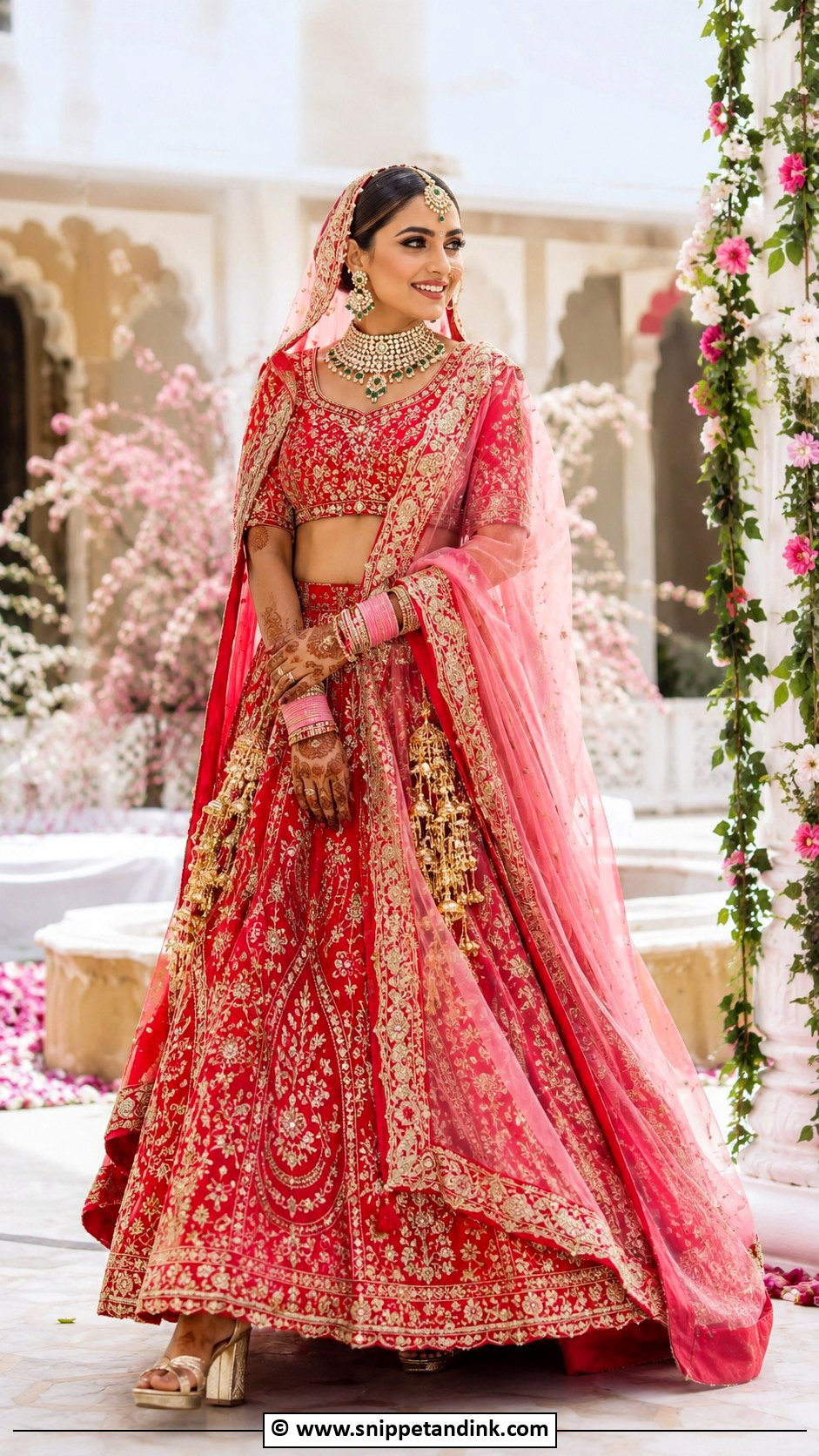
Rani pink and red together look festive and joyful, and the pink dupatta brightens the face. The combination works when both colours share embroidery, usually gold zari or sequins. Kundan, pink-toned bangles and gold heels complete it, while red stays the main bridal colour. I’d keep makeup balanced, with a lip that sits between the two shades, so neither colour fights the face. It suits outdoor and lively settings.
27. Red Bridal Lehenga With Ivory Dupatta
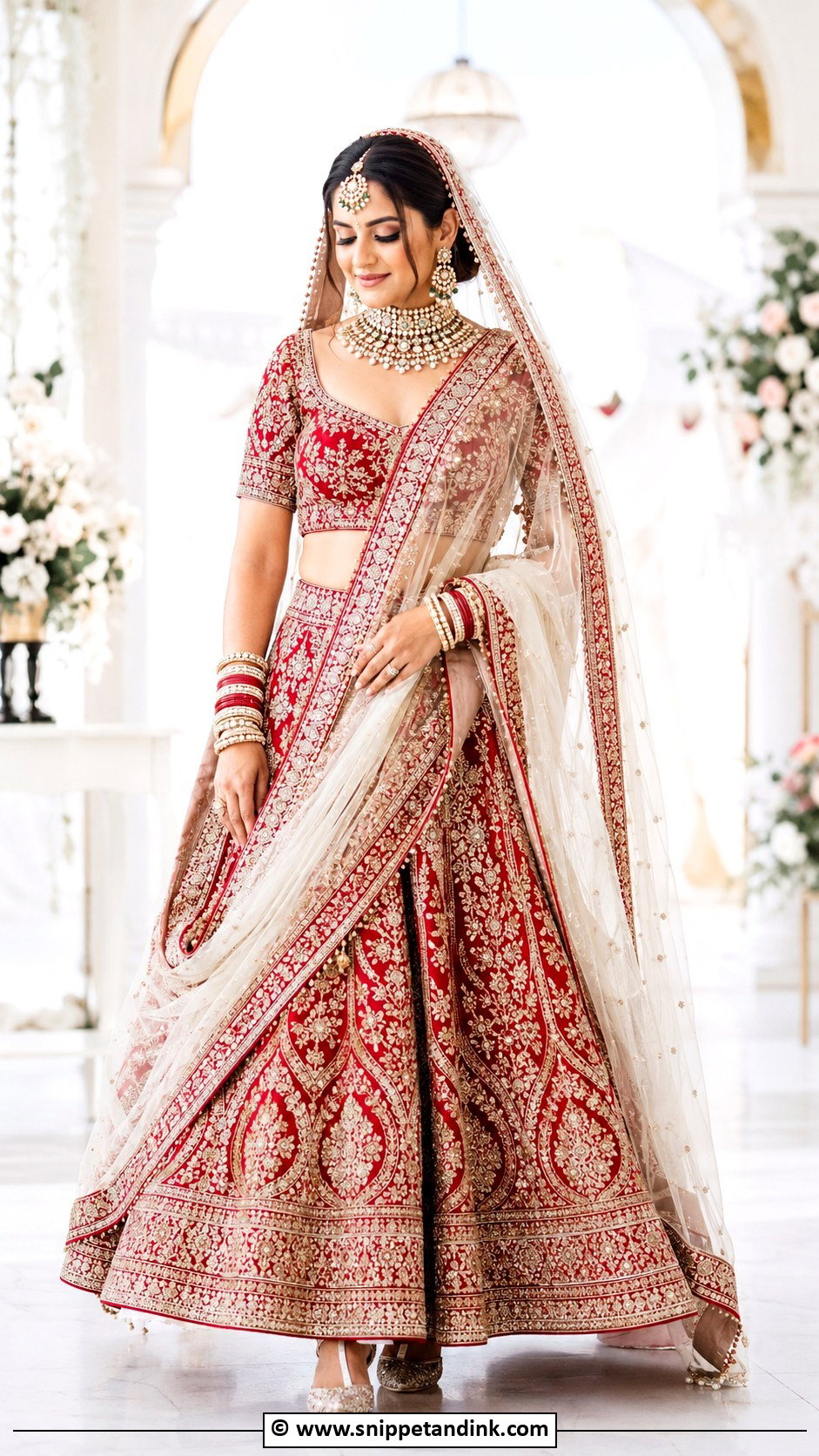
An ivory dupatta lightens the whole outfit and adds contrast without leaving traditional styling behind. Choose one with red, gold or champagne embroidery so it connects to the lehenga, then pearl, kundan or gold jewellery and neutral heels. Ivory marks easily, so keep it away from henna that’s still fresh and from turmeric at the haldi. Daytime weddings and minimal venues suit it.
28. Red Bridal Lehenga With Heavy Dupatta
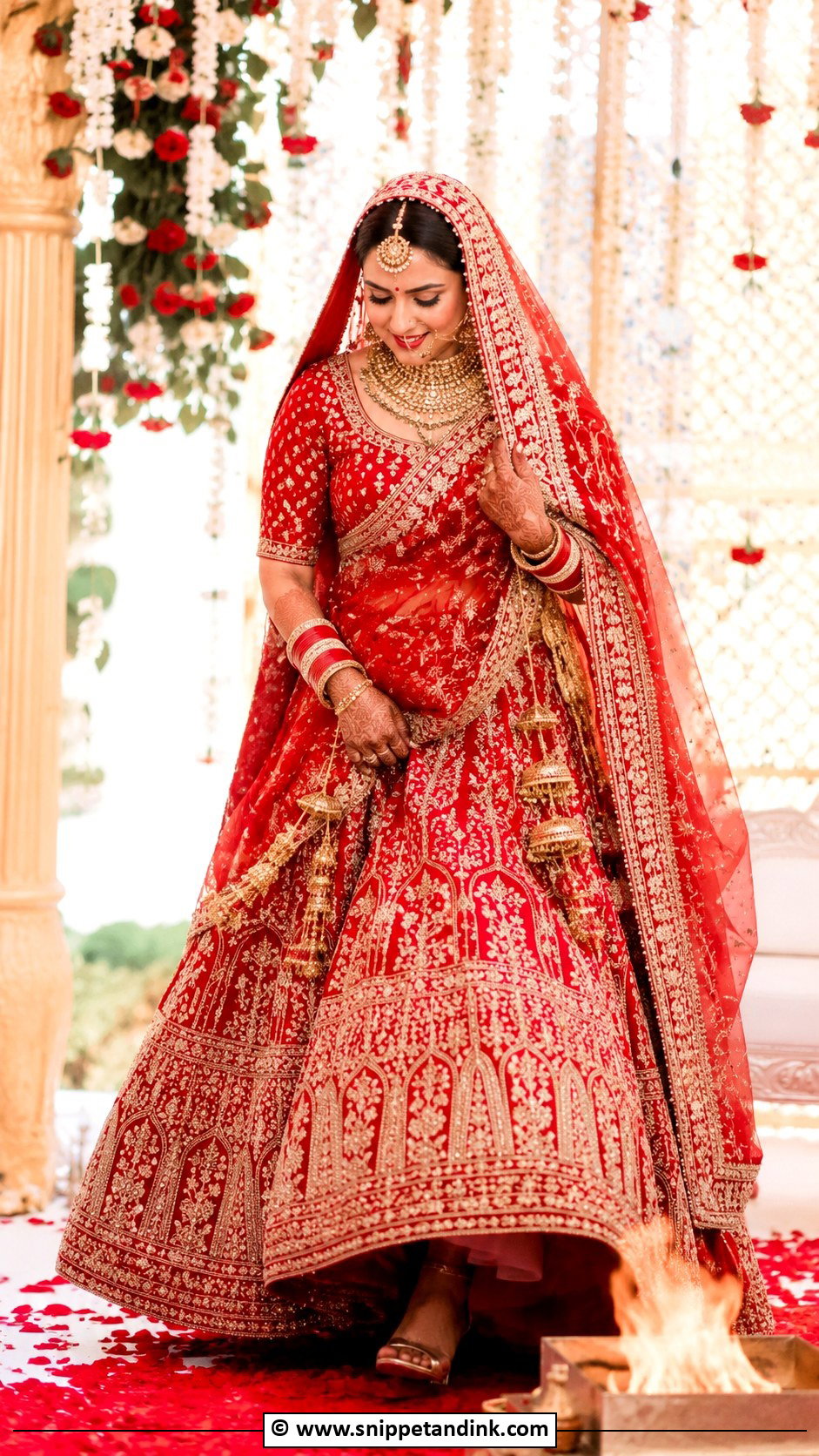
A heavy dupatta worn over the head frames the face with its embroidered border and gives close-up photos a ceremonial finish. Balance the outfit with a skirt and blouse that support it without adding more weight. Gold or kundan jewellery, bangles and secure footwear complete it. Pinning is everything here: I anchor heavy dupattas to the bun at the crown and again at the shoulder, so the weight isn’t pulling on the hairline.
29. Red Bridal Lehenga With Minimal Jewelry
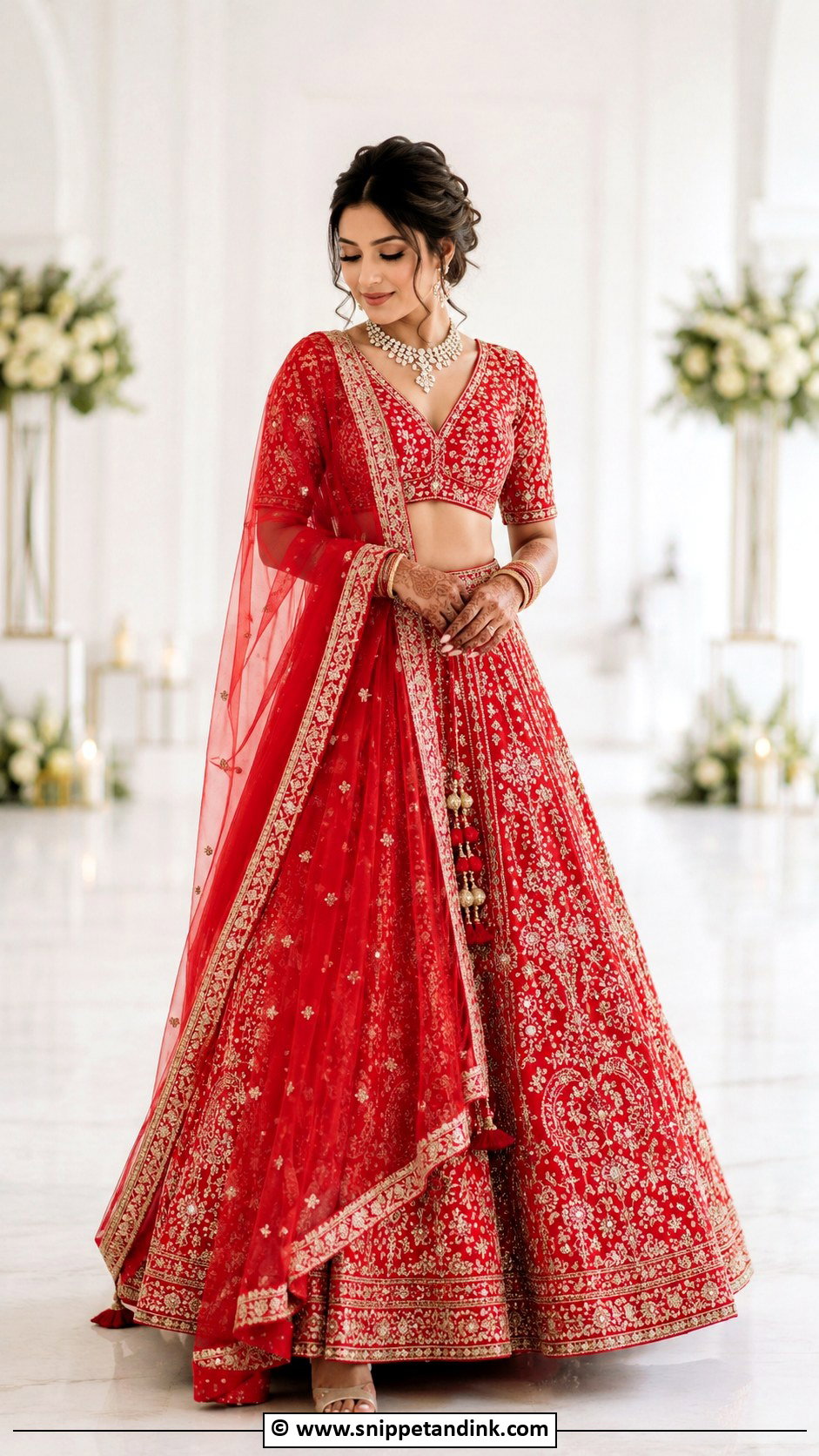
Minimal jewellery lets the lehenga lead, which only works if the lehenga is beautifully made: good fabric, clean embroidery and a precise fit. Then one strong necklace or earrings, simple bangles and a delicate maang tikka if you want one. A neat dupatta drape and elegant footwear finish it. Lighter jewellery is also more comfortable over a long day. It suits intimate ceremonies and modern brides.
30. Red Bridal Lehenga With Traditional Dupatta Draping
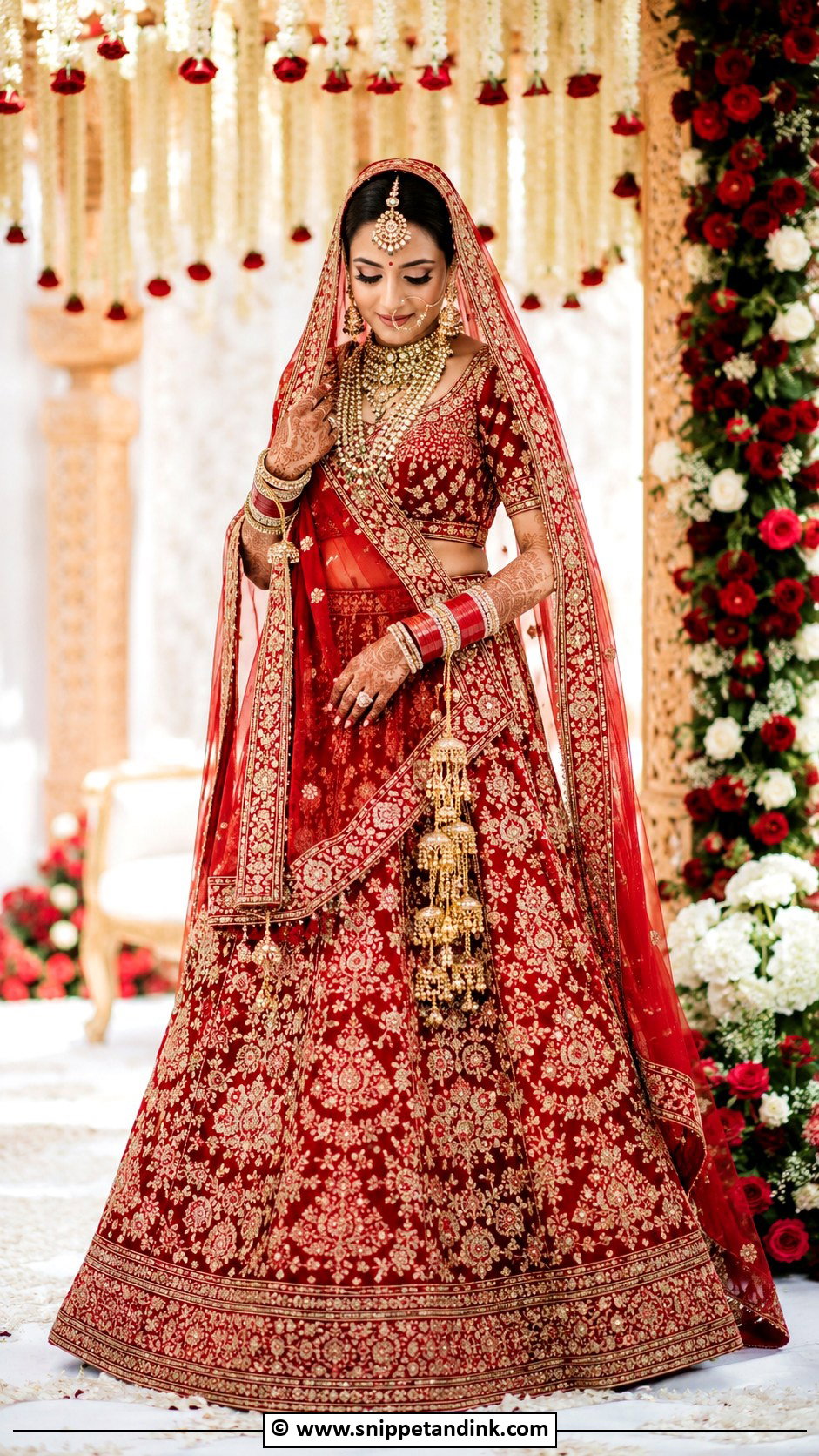
The traditional drape, with the dupatta over the head and brought across the shoulder or front, is the most recognisable Indian bridal silhouette. Pair it with a matching blouse, heritage jewellery, bangles and embellished heels or juttis. It suits almost any classic wedding and frames the face in rituals and family portraits. Use secure pins and a light inner layer so it stays comfortable through every ceremony.
Wearing Several Kilos of Zardozi Through the Pheras
A heavily embroidered lehenga with can-can and a worked dupatta can weigh a lot more than it looks, and you’ll carry that for hours. Most of the weight should hang from the hips, so ask the tailor to fit the skirt waistband securely with a drawstring or hook that doesn’t dig in. The blouse should hold itself up without help from the skirt.
- Do a full rehearsal at home: sit cross-legged on the floor for twenty minutes, stand without using your hands, and walk a slow circle as you would for the pheras.
- Keep the can-can only as stiff as you need; a softer one lets you sit and kneel more easily.
- Pin the dupatta to the hair, not just the blouse, so a tug from behind doesn’t drag the whole outfit.
- Break in your footwear for at least a week, and keep a flat pair for the later functions.
Storing it afterwards
Zari and zardozi tarnish in damp and sealed plastic. Wrap the lehenga in clean muslin or cotton, fold it with the embroidery facing inward and tissue between the folds, and refold it along different lines every few months so the metallic thread doesn’t crack at the creases. Keep it away from perfume and mothballs, which can discolour the metal work.
Red Holds Every Ritual, Whatever the Drape
Red bridal wear runs from deeply traditional to minimal and modern, and the right version is the one that fits your wedding, your culture and how you want to feel. A lehenga brings grandeur, a saree brings grace, and fusion pieces offer a fresh route. Weigh the fabric, embroidery, dupatta, jewellery and footwear together before deciding, and try the full outfit on at least once with everything pinned. Velvet, Banarasi, zardozi, sequins or a softer dupatta, red will carry the day.
You'll Like These Ideas:








Leave a Reply