
A white wedding dress used to mean one classic gown. Now the brides I fit walk in wanting satin columns, lace A-lines, sculpted ball gowns, slips, bows, corset bodices or a sharp courthouse dress. What looks right on the hanger is only half the story. The dress has to suit your venue, season and how much you need to move, and it has to work with the shoes, veil, jewelry and undergarments you’ll actually wear. So for each gown below, I’ve put together the full outfit and added the fitting details I’d check before you say yes.
A Realistic Timeline From Shop to Final Fitting
Most brides underestimate how long a gown takes. Many bridal designers make each dress to order, and production commonly runs several months; some quote four to eight months, though it varies a lot by designer and season. Alterations come on top of that.
- Start shopping about nine to twelve months out if you want full choice. Sample sales and off-the-rack gowns shorten this a lot.
- Order once you’ve decided, and ask the shop for the expected arrival date in writing.
- Book your seamstress early. Good ones fill up in peak season.
- Plan on two or three fittings, with the first roughly two to three months before the wedding.
- Bring your shoes and undergarments to every fitting from the first one on.
- Collect the dress a week or two before the wedding, and try it on once more at home.
If you’re short on time, tell the consultant at the start. Rush fees exist, but the better route is usually a gown in stock or a sample that already fits close to your size.
1. White Satin Ball Gown Wedding Dress
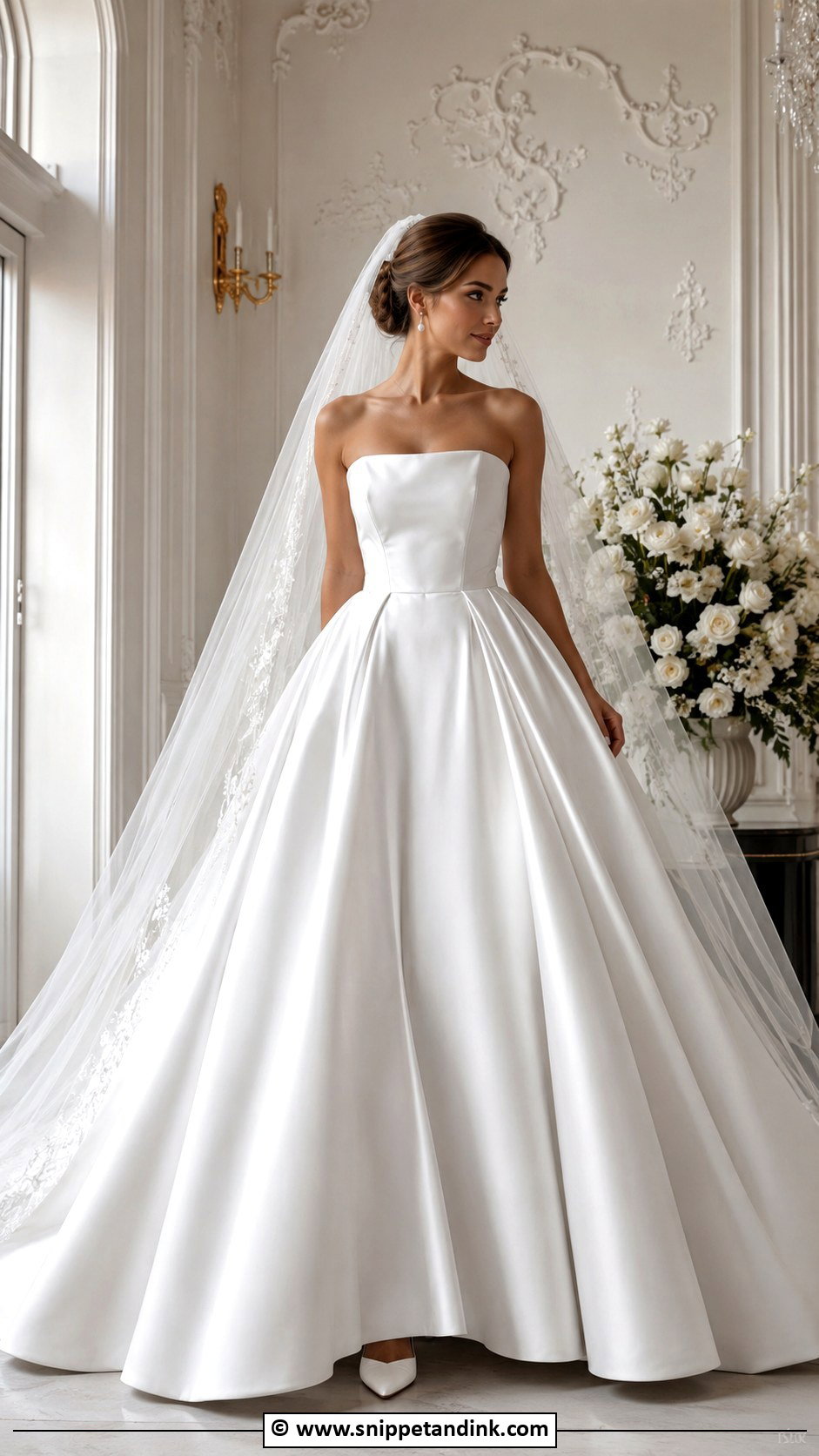
Satin and a full skirt give the most traditional entrance there is. The fitted bodice shapes the waist and the skirt does the drama. Ballrooms, estates and hotel spaces suit it, and satin takes indoor light with a smooth glow. A cathedral veil, pearl studs, pointed satin heels and a low bun are all it needs. Heavy satin ball gowns can weigh a lot, so I ask brides to wear theirs for a full hour at the final fitting. Some find that a lighter satin blend holds the shape nearly as well.
2. White Lace A Line Wedding Dress
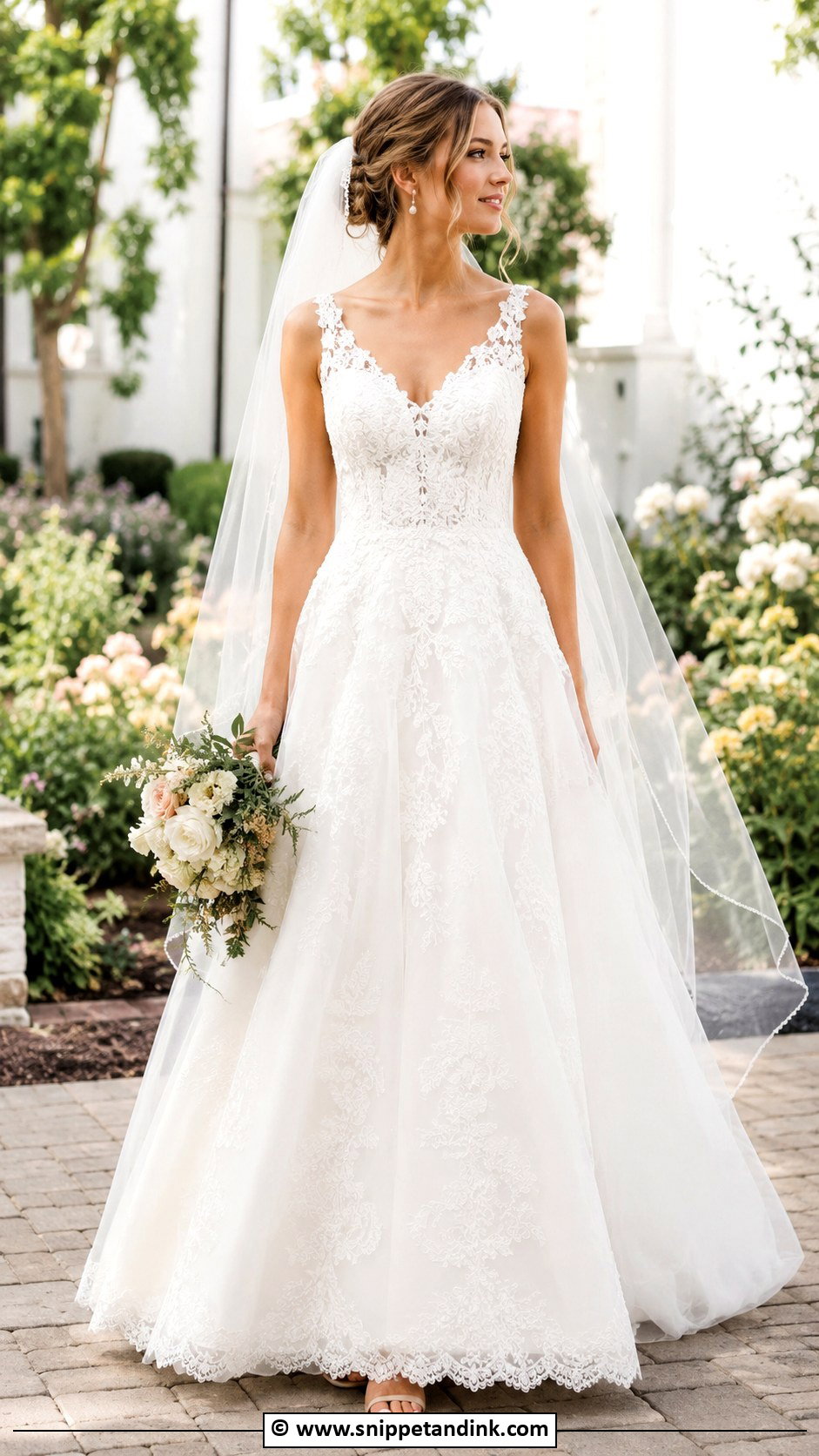
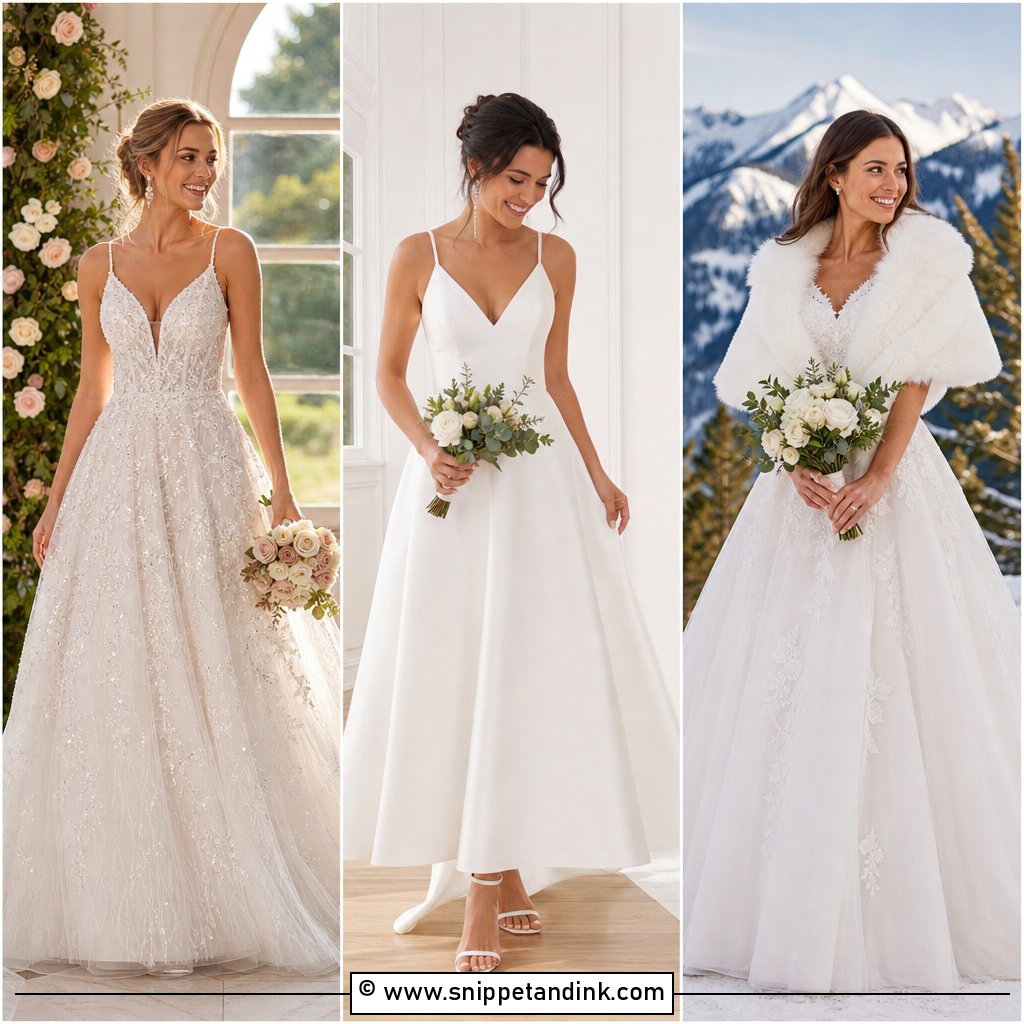
The lace A-line is the dress I see brides relax in. It skims the waist and floats off the hips, so walking, sitting and dancing all feel normal. Delicate floral lace reads soft; bolder patterns carry more impact. Garden and estate venues suit it especially. Drop earrings, a fingertip veil, nude or ivory heels and a loose updo complete it. Look at where the lace motifs land on the bodice during the fitting, because a good seamstress can shift appliqués so a flower doesn’t sit awkwardly over the bust.
3. White Strapless Wedding Dress
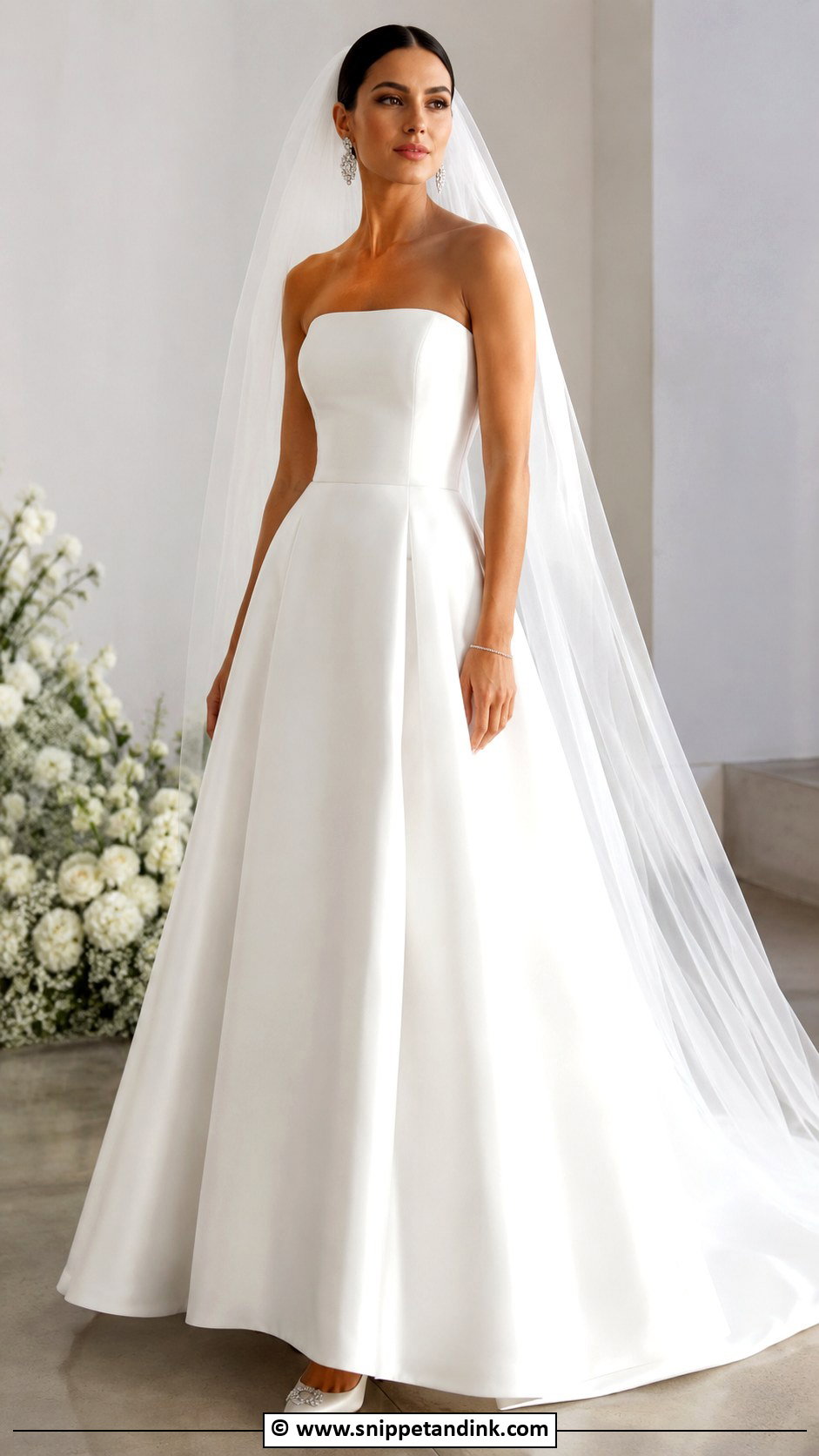
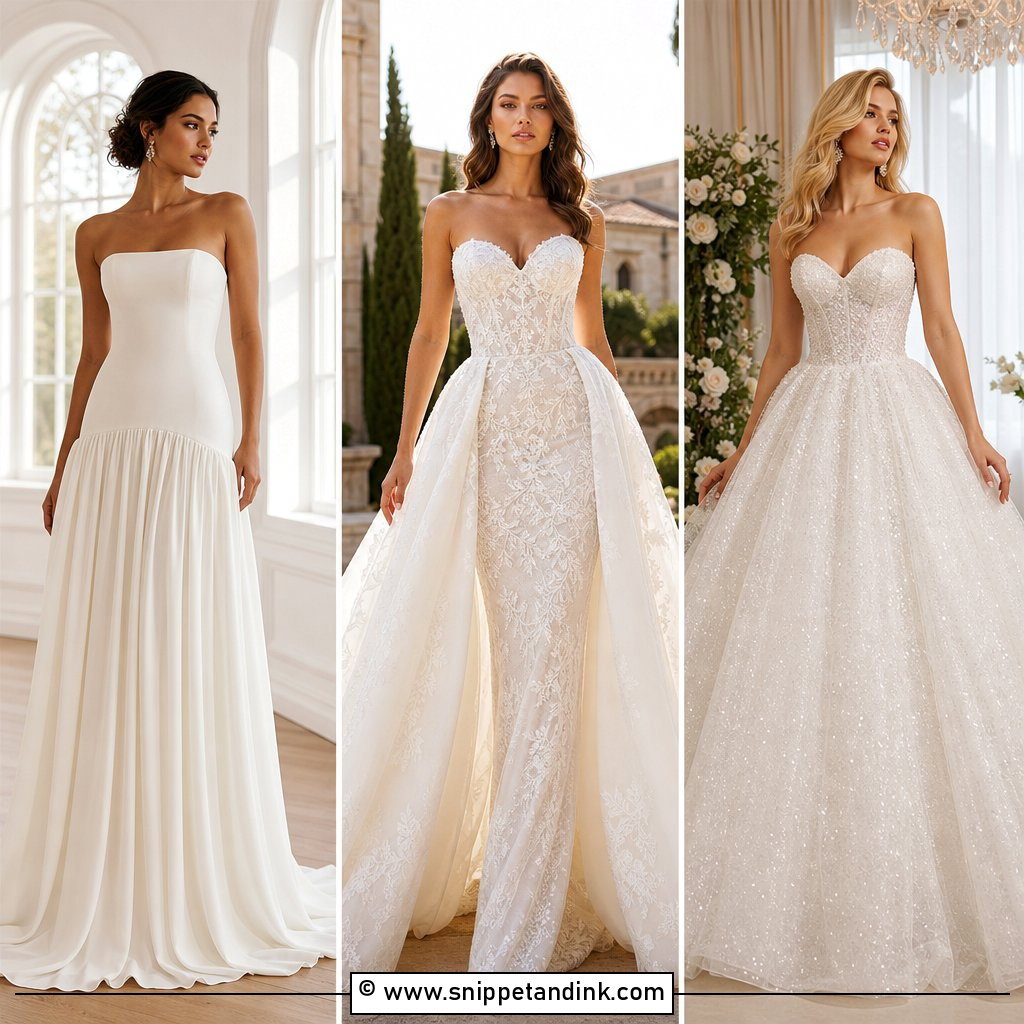
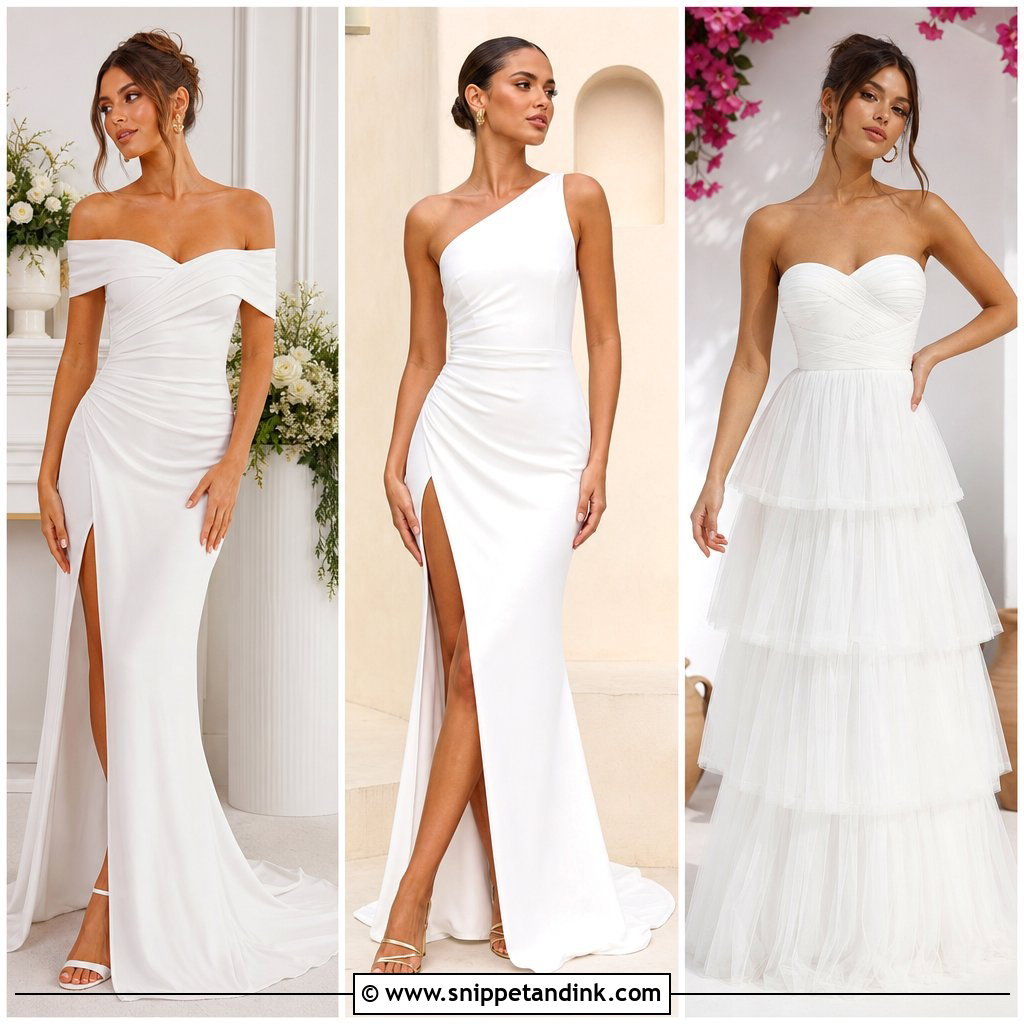
Strapless keeps attention on the shoulders and face, and it suits satin, crepe, mikado, lace or tulle. Structure is the non-negotiable. A boned bodice fitted snugly at the ribs, not the bust, is what stops you tugging it up all day. I fit strapless gowns with the bride’s arms raised and while she bends forward. A sleek chignon, statement earrings and a slim bracelet balance the open neckline; add pointed heels and a long veil for more ceremony presence.
4. White Long Sleeve Wedding Dress
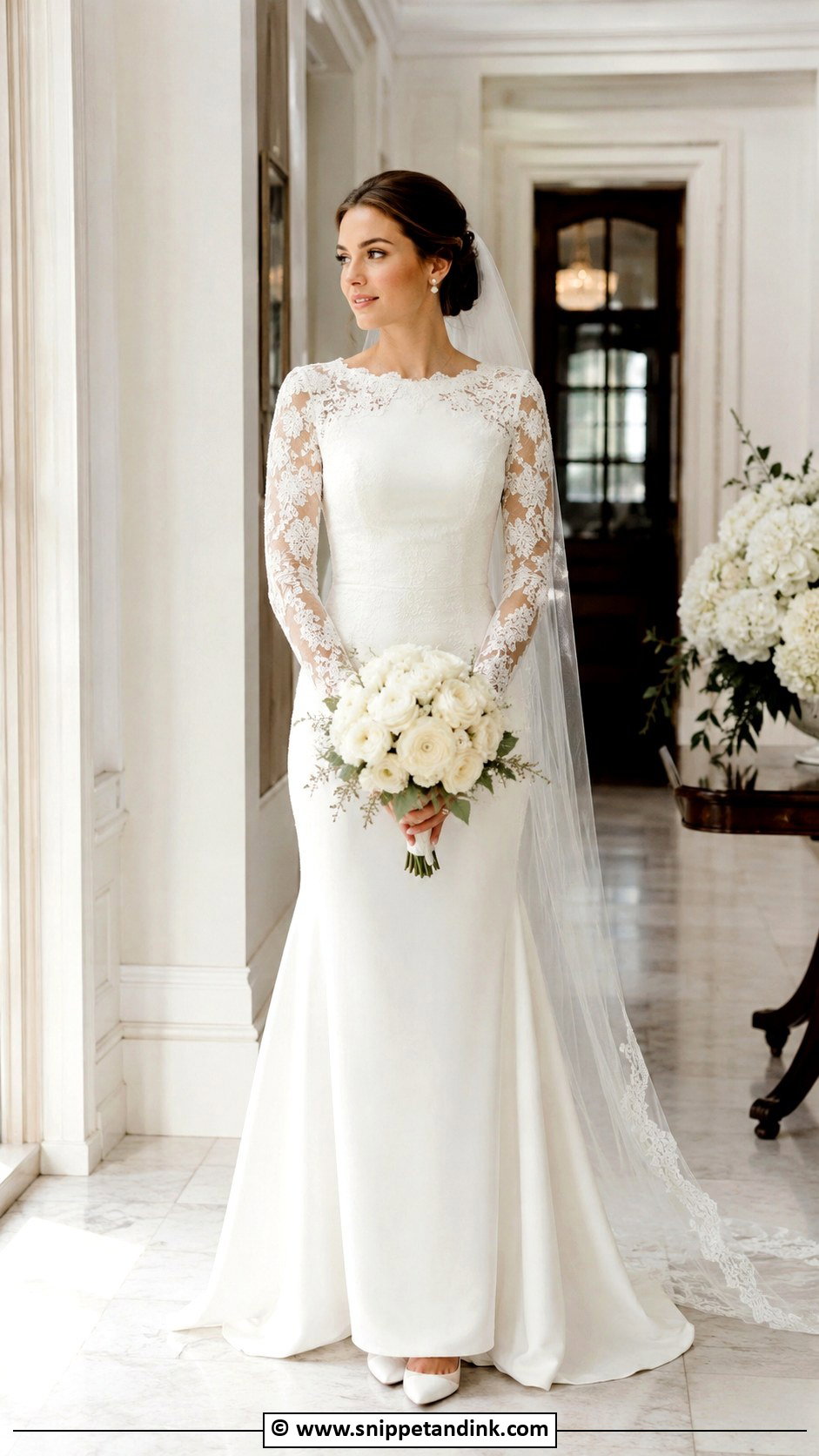
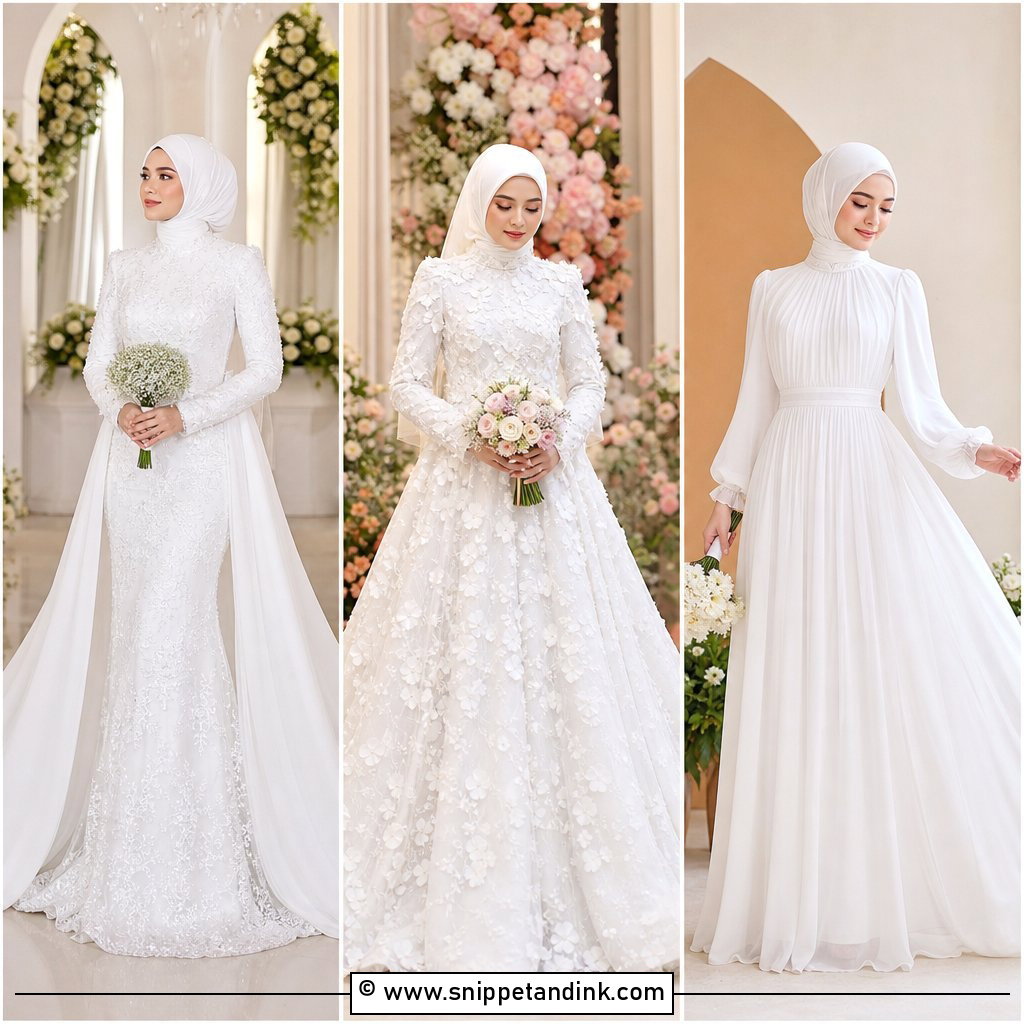
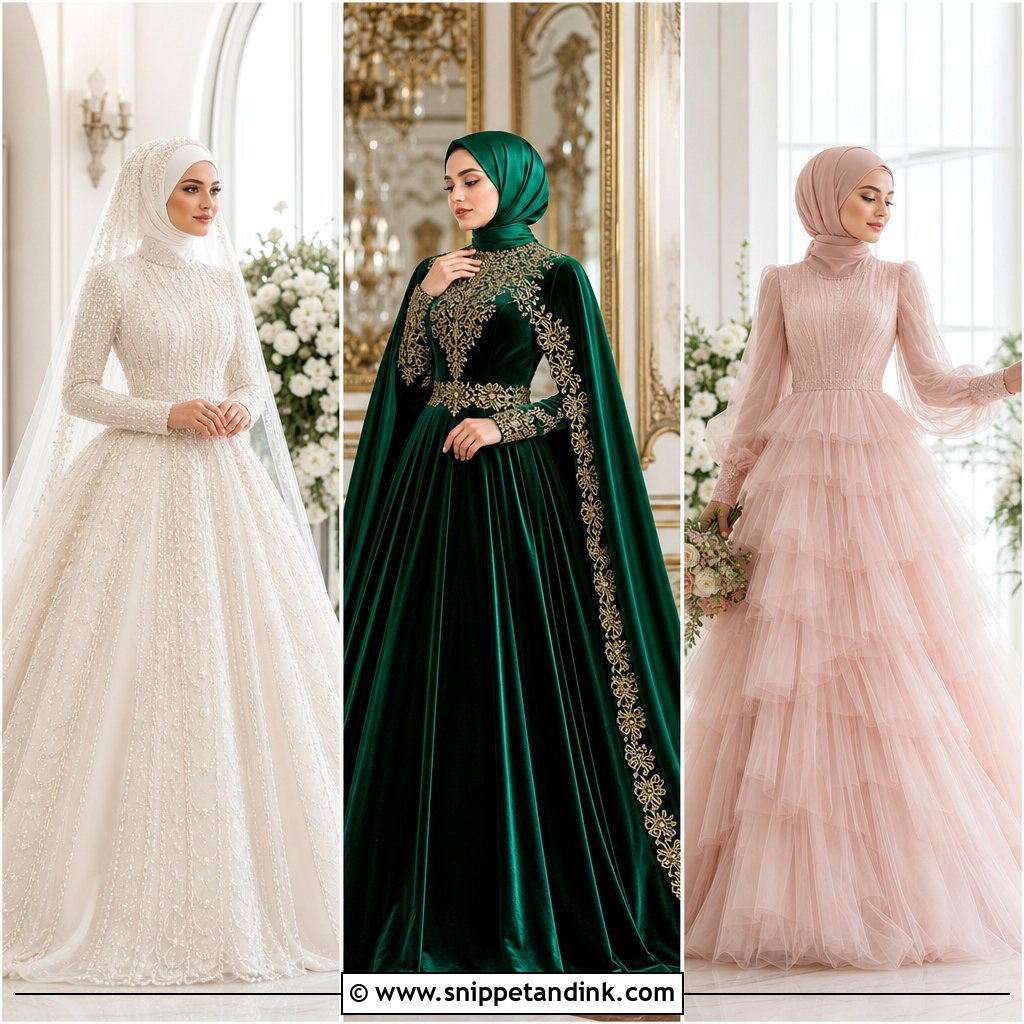
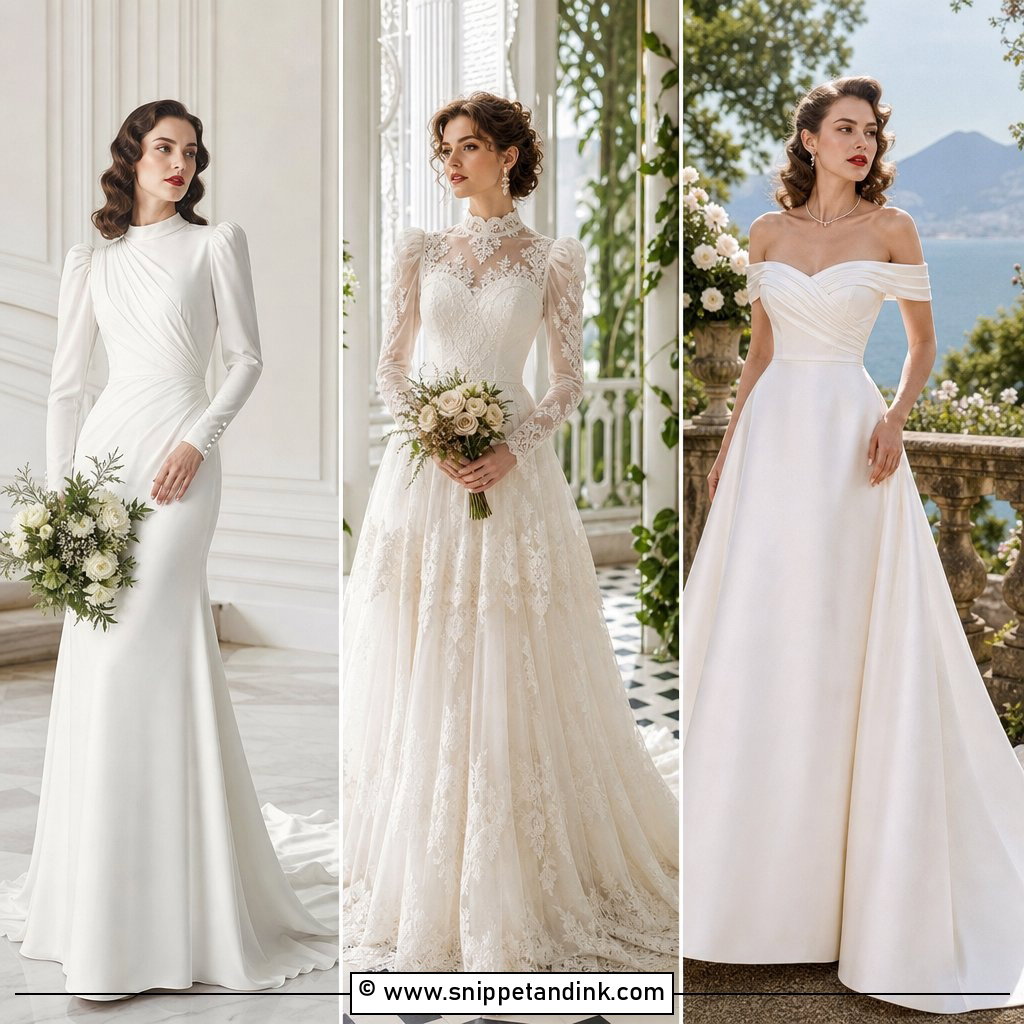
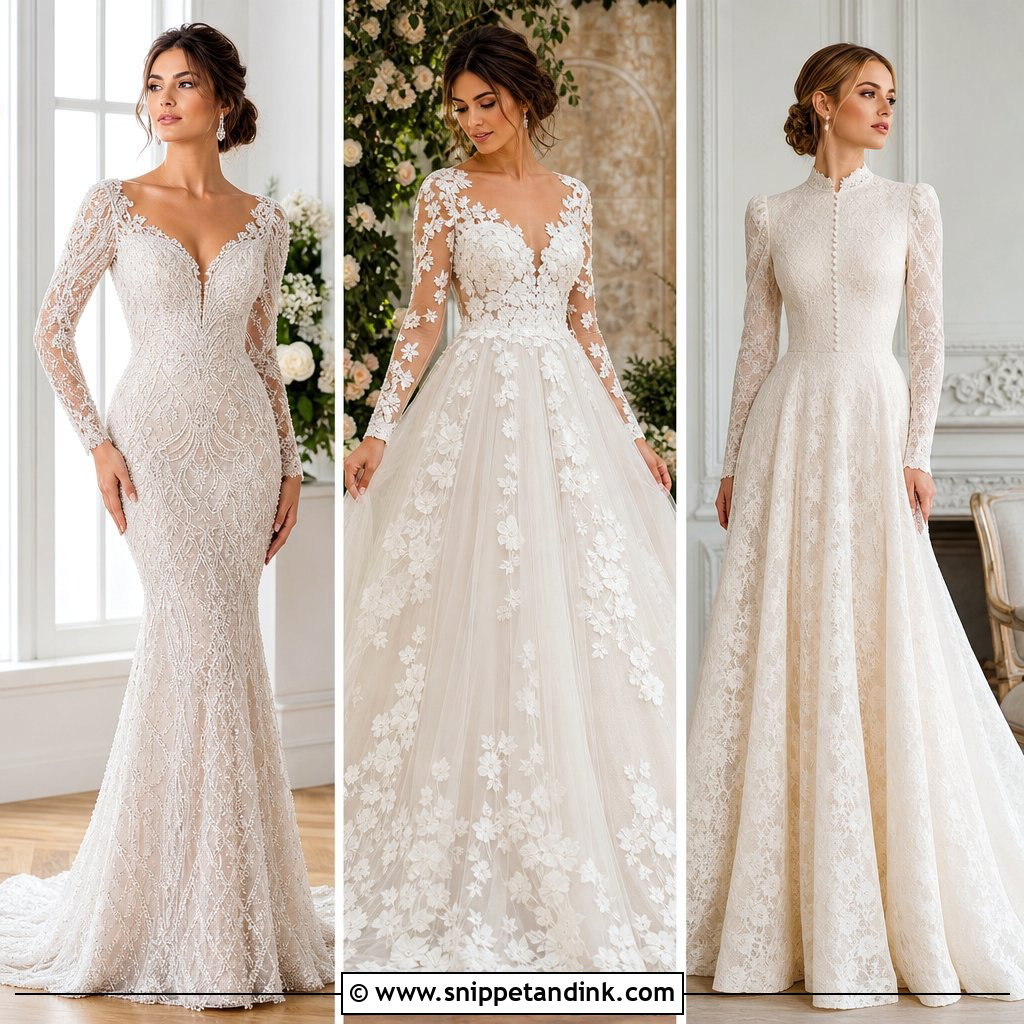
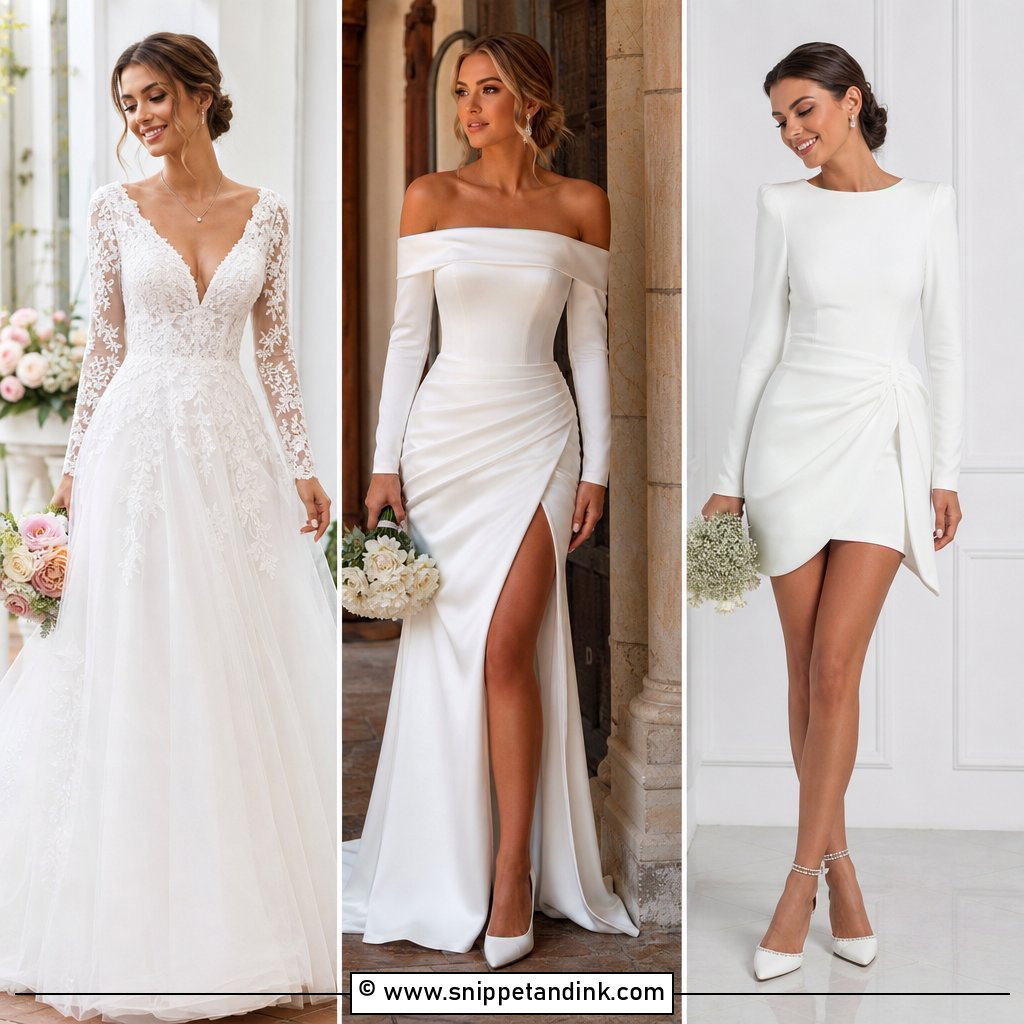
Long sleeves bring coverage and a slightly regal feel. Lace sleeves look classic; crepe or satin ones look cleaner. They’re most practical in fall and winter, though sheer sleeves work in spring. If the sleeves are ornate, keep jewelry minimal: pearl earrings, a smooth veil and closed-toe heels. Sleeves need movement room. Reach forward and hug at your fitting; a sleeve set too tight in the armhole lifts the whole waistline when you raise your arms.
5. White Mermaid Wedding Dress
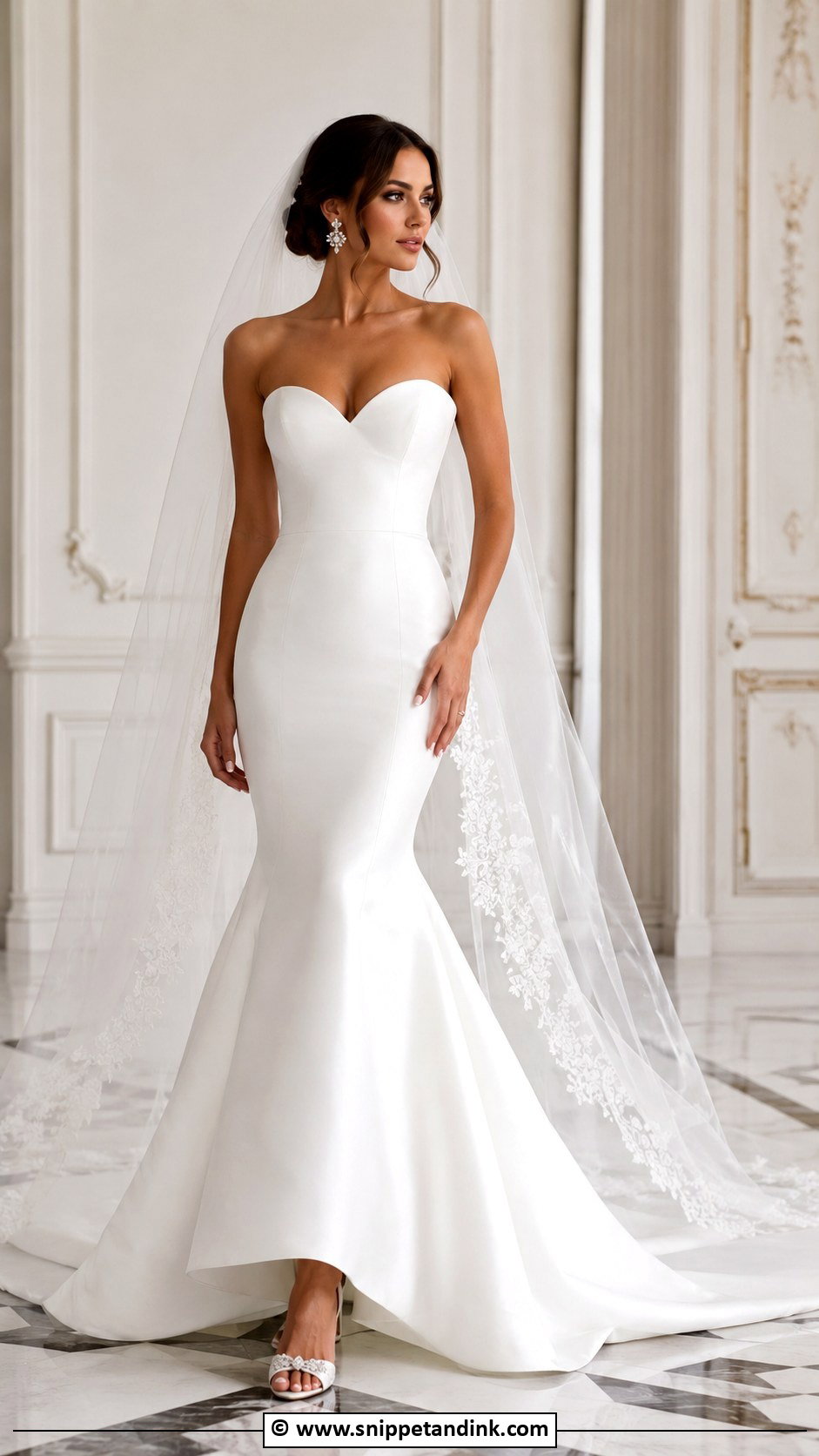
A mermaid hugs bodice, waist and hips, then flares near the knee or lower thigh. Lace appliqué, beading and smooth crepe all suit it. Movement is limited, so I always have brides sit on a low chair and walk up two steps in it before we finalize. If it fights you, the flare can sometimes be lowered a few inches for more stride. High heels lengthen the line; a fitted veil, sculptural earrings and a low bun or soft waves finish it.
6. White Minimalist Wedding Dress
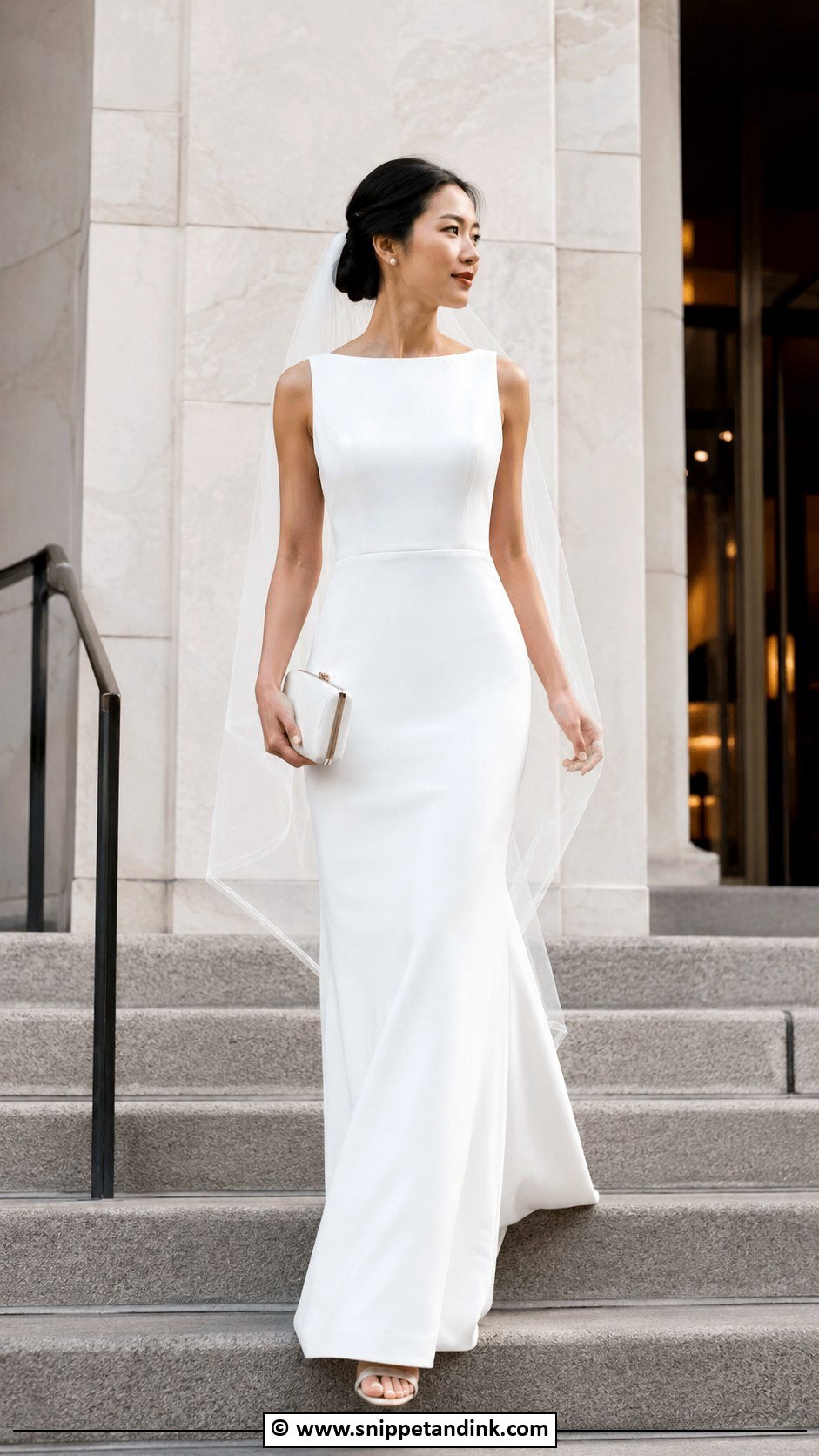
Minimal isn’t plain. Clean seams, good fabric and a strong silhouette carry it. Satin, crepe and mikado look polished without embellishment, so it suits modern venues, rooftops and galleries. All the effort goes into fit and accessories: sleek heels, small diamond or pearl studs, a structured clutch and a smooth veil, with a center-part bun or soft blowout. Pick one standout piece, like earrings or a veil with a fine edge, and leave everything else simple.
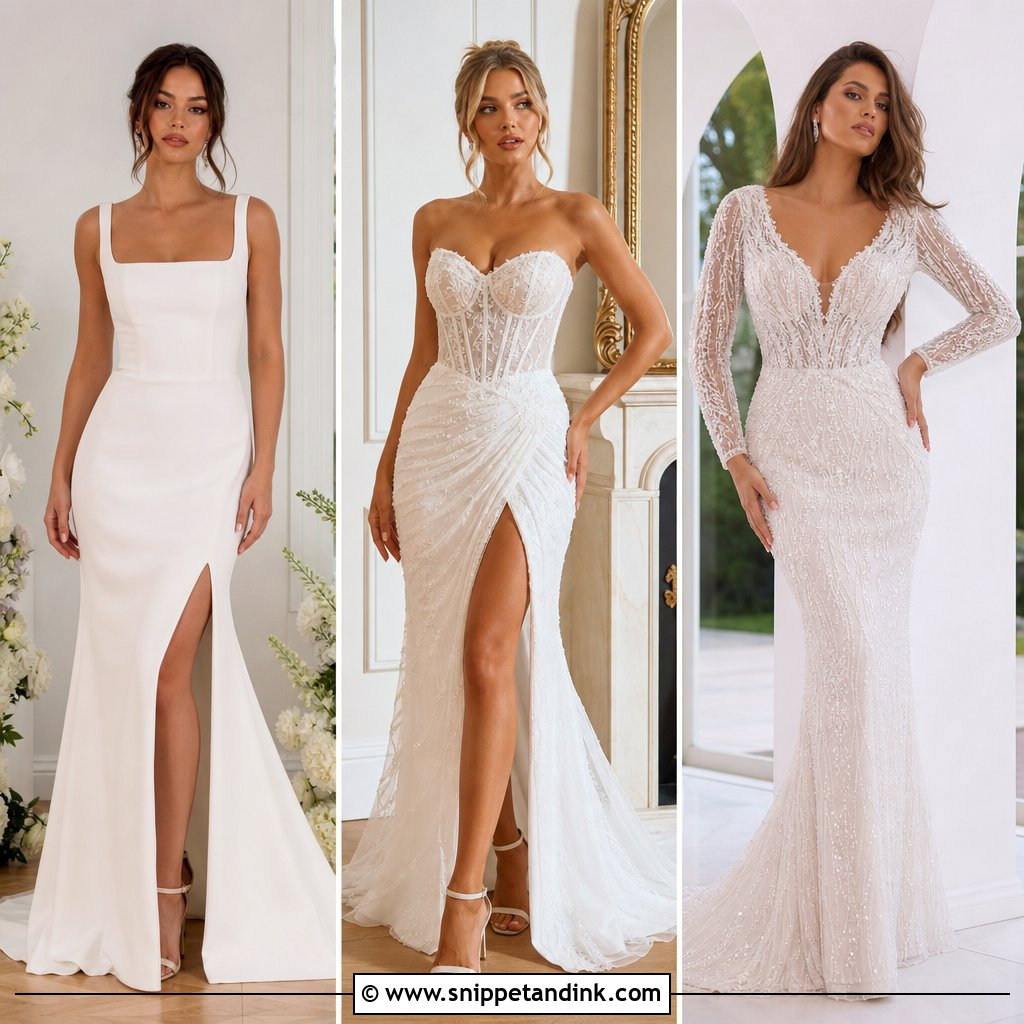
7. White Corset Wedding Dress
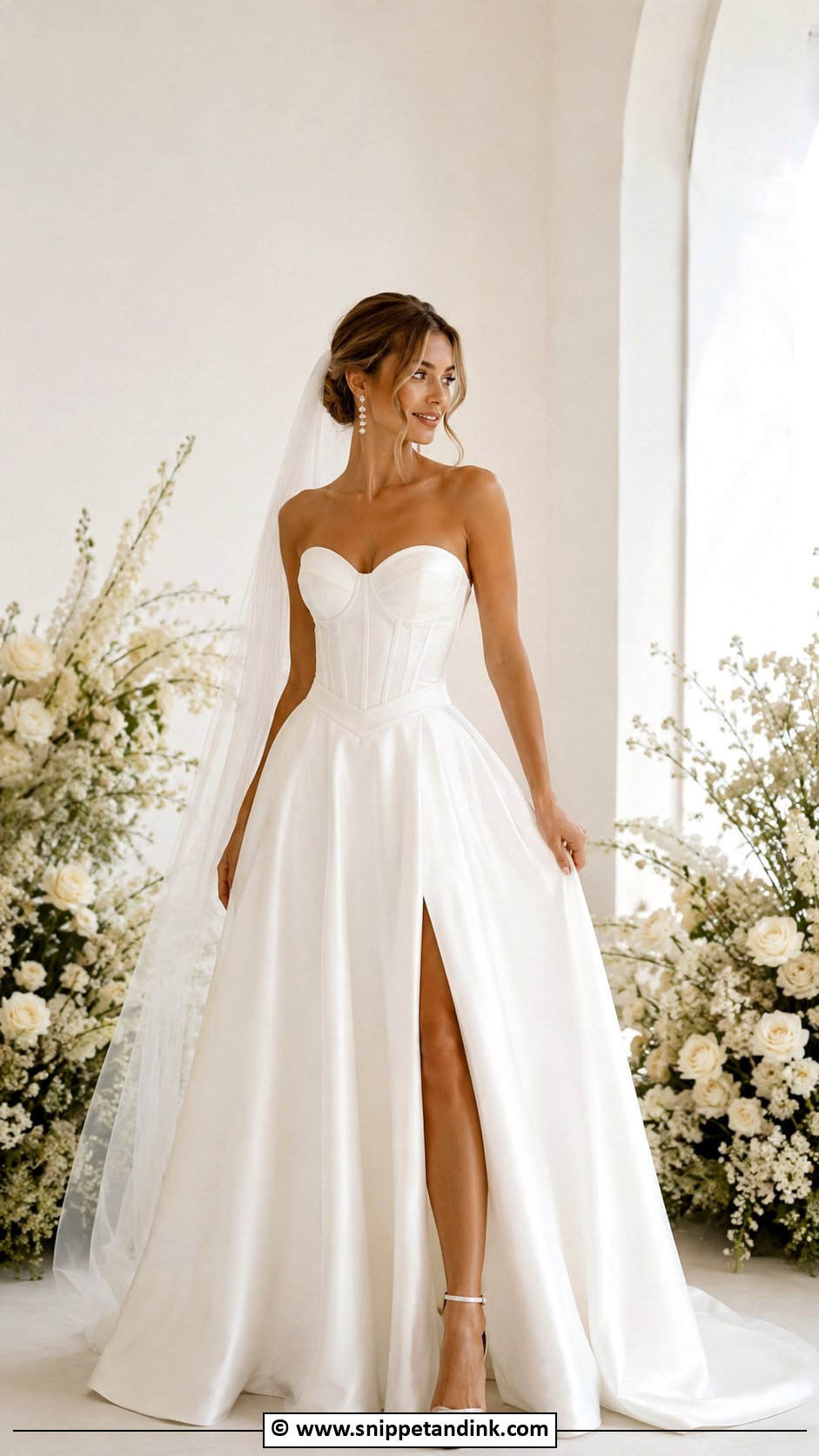
A corset bodice defines the waist and supports the bust, and the skirt can be full, slim or soft. Exposed boning looks fashion-forward; hidden corsetry looks classic. Satin, lace, tulle and organza all pair well. If the bodice is busy, keep earrings and veil understated; if it’s clean, a pearl choker or bold studs can join in. Lace-up backs are adjustable, which helps if your size changes in the months before the wedding.
8. White Off Shoulder Wedding Dress
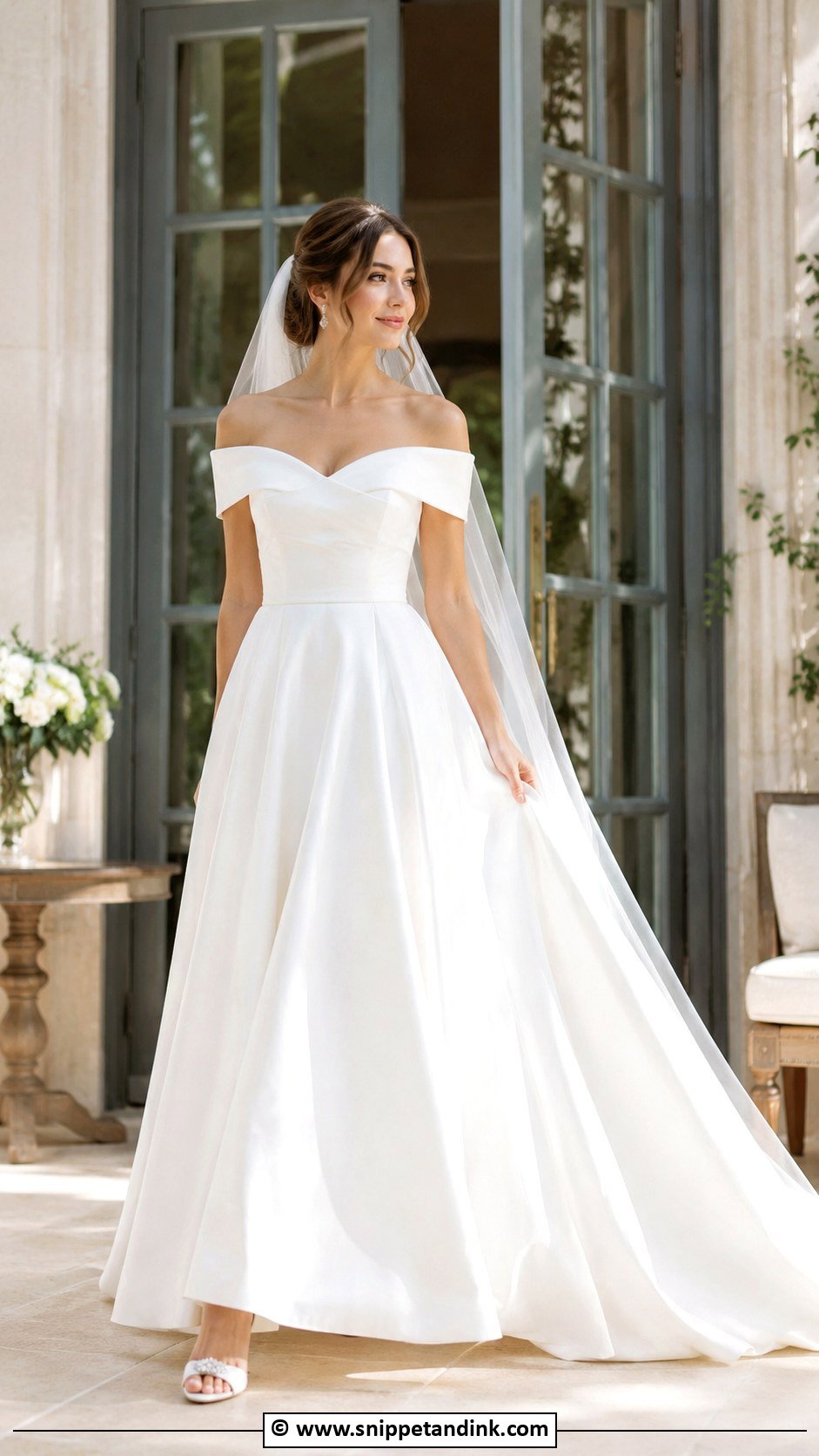
Off-shoulder frames the collarbones and still covers more than strapless. It works on fitted gowns, A-lines and ball gowns. Lace feels traditional, satin classic, crepe modern. Skip the necklace and choose earrings; soft waves, a low bun or half-up hair suits the shape. My first check is arm movement. Many off-shoulder bands pin the upper arm, so I ask brides to mime hugging guests and throwing a bouquet before we finalize the fit.
9. White Square Neck Wedding Dress
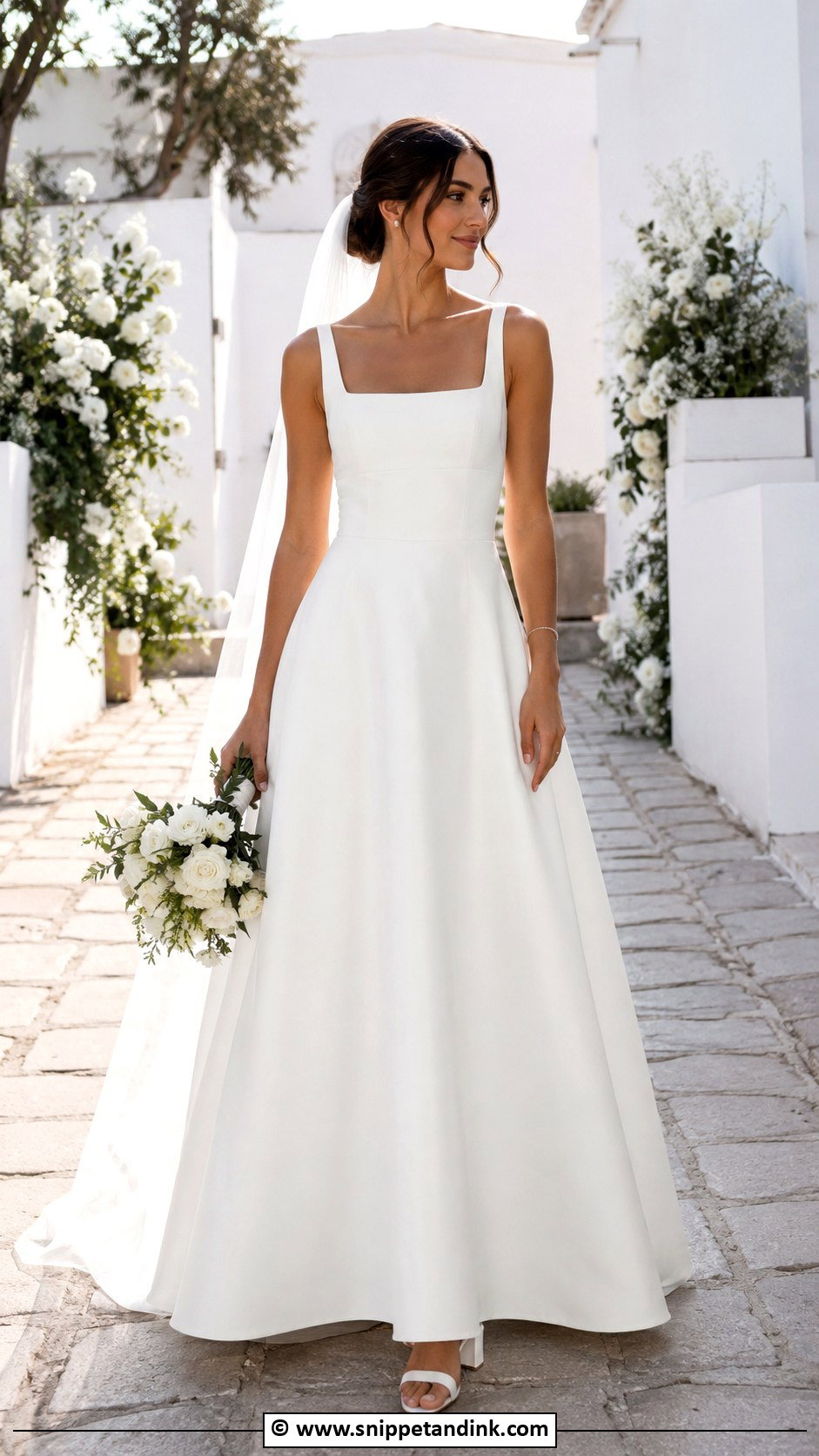
The square neck gives structure without harshness. It works with fitted bodices, A-lines and columns, and depending on the cut it can contain a fuller bust or add shape to a smaller one. Pearl studs, a slim bracelet and a smooth veil suit it, and sleek hair echoes its clean lines. Block heels outdoors, pointed pumps inside. The neckline width matters: a square cut too wide slides off the shoulders, so check the straps sit firmly at your fitting.
10. White V Neck Wedding Dress
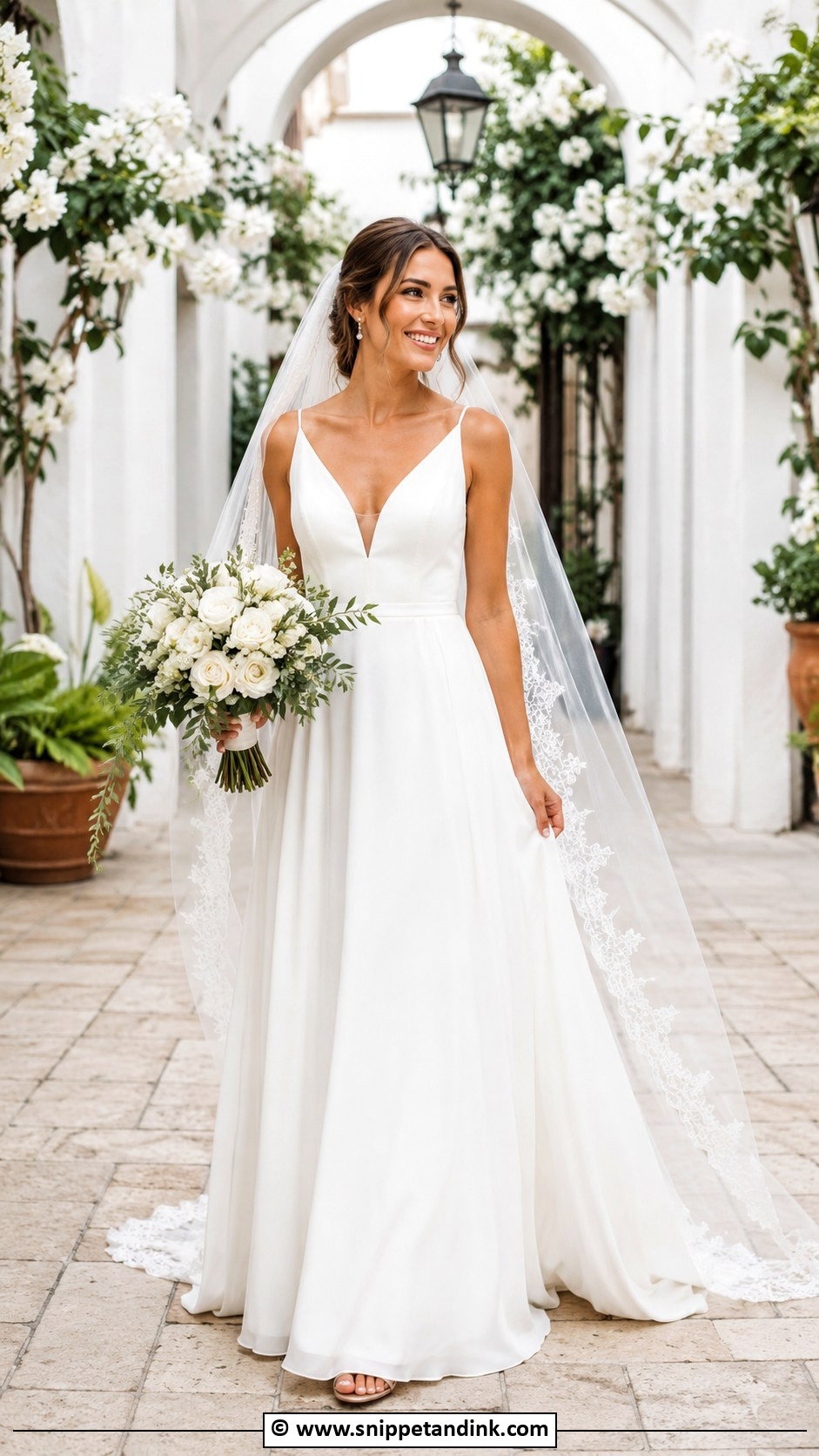
A V-neck lengthens the upper body. A shallow V is classic; a deep one is more dramatic. It works in lace, crepe, chiffon, satin and tulle, which makes it one of the most adaptable necklines. Deep Vs need fashion tape and careful alterations so they stay put. Drop earrings, a fine pendant if there’s space, simple heels and a lace-edged veil complete it. Warm-weather weddings suit it well, since the open neckline keeps you cooler.
11. White High Neck Wedding Dress
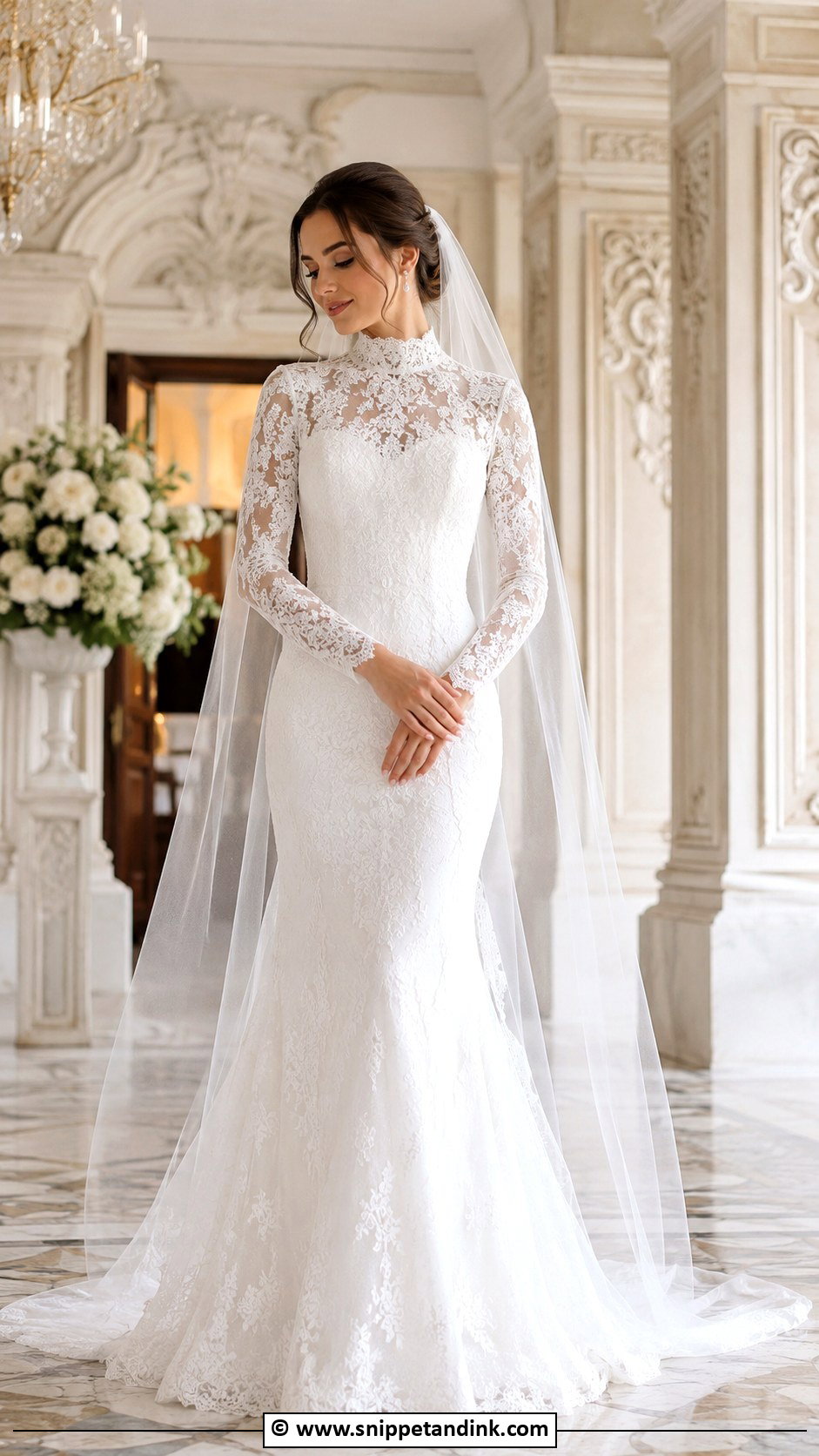
A high neck covers more while looking poised. Lace, illusion tulle or sleek crepe all suit it, and it fits formal ceremonies, historic venues and winter weddings. Earrings matter more than necklaces here: pearl drops, crystal studs or small sculptural pieces. Sweep hair up or tuck it back so the upper body doesn’t look crowded. Closed-toe heels and a soft veil balance it. Illusion tulle necklines can show a faint ring of makeup at the collar, so I set foundation well and keep a clean cloth handy.
12. White Halter Wedding Dress
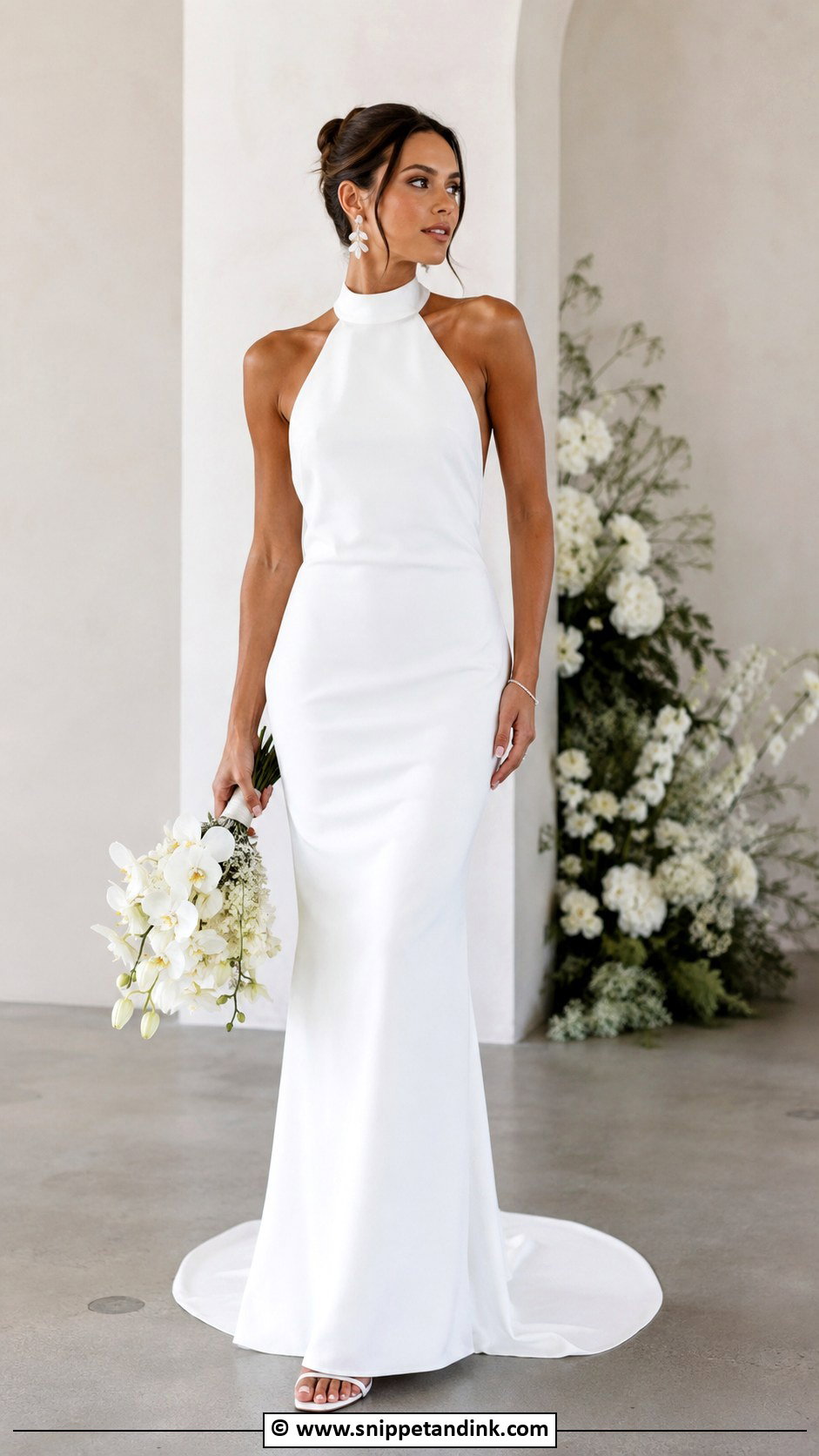
Halters draw the eye upward and feel secure. Column, sheath and fit-and-flare gowns pair best with them. Crepe and satin read modern; lace and chiffon read softer. No necklace needed, so spend on earrings. A high bun, low twist or polished ponytail shows the neckline. Strappy heels, a simple veil and a small bouquet complete it. A halter tie can press on the neck by evening, so look for one with a wide band or a hook closure.
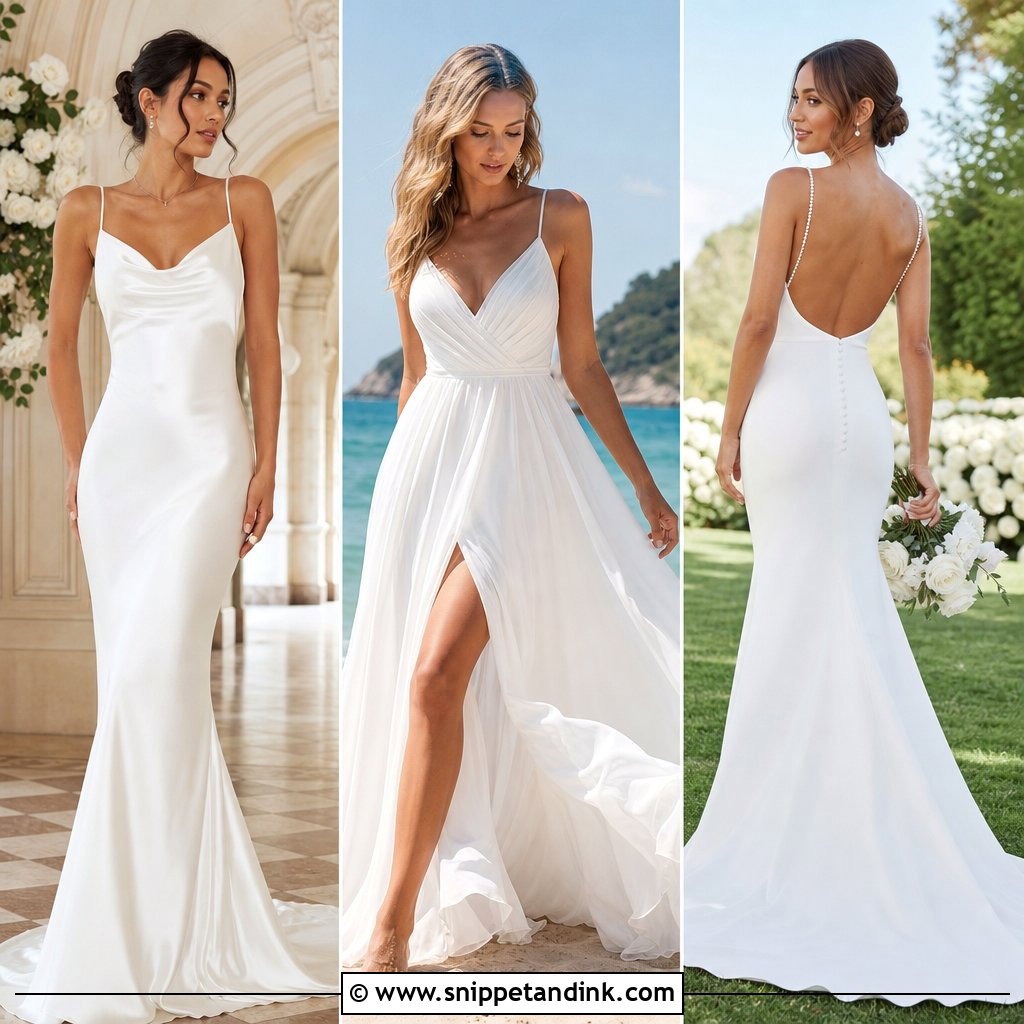
13. White Slip Wedding Dress
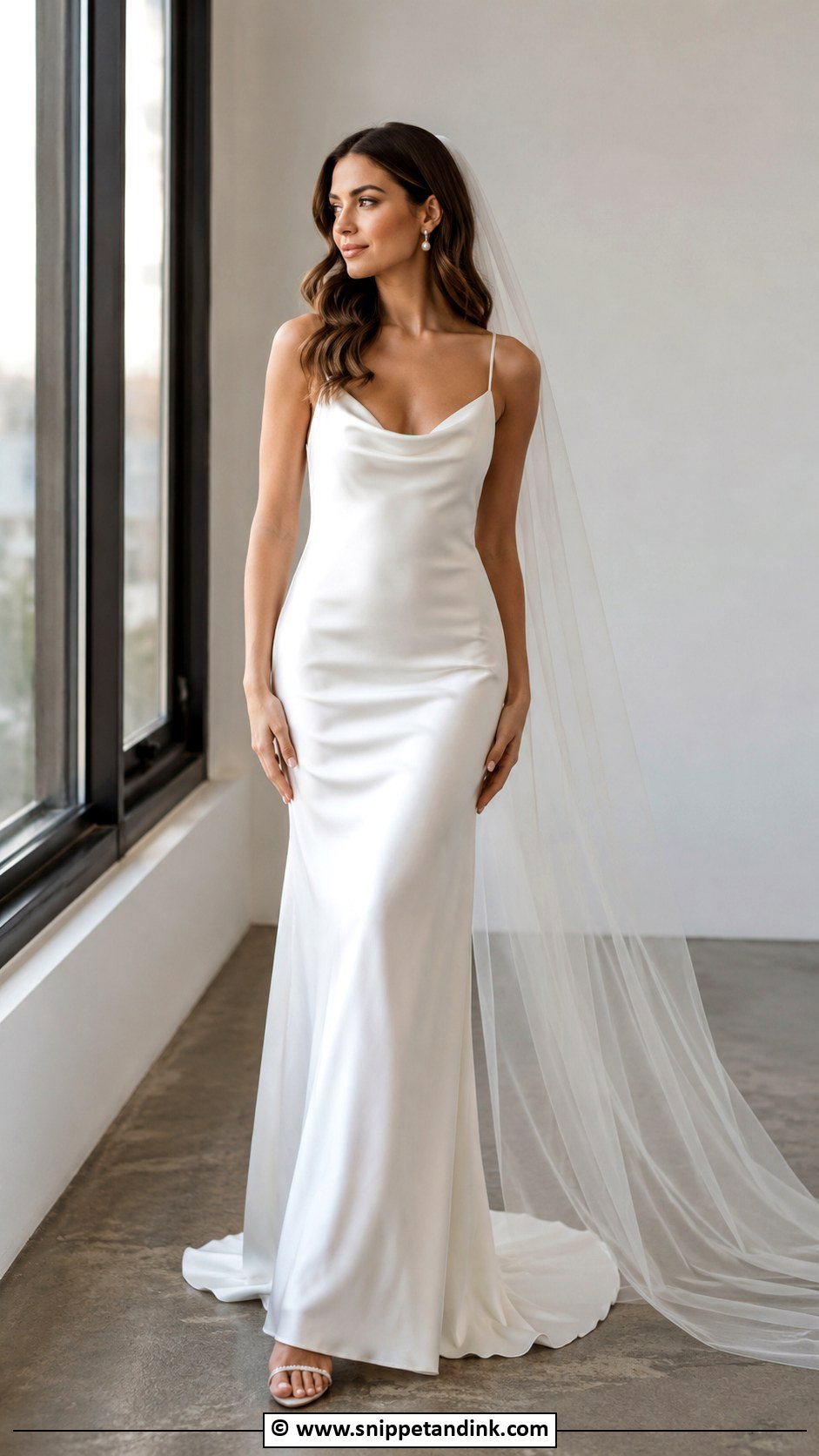
Slips borrow clean 90s lines: fluid fabric, slim straps and a body-skimming shape. City weddings, beaches and micro-weddings suit them. With a minimal silhouette, fabric and fit are everything, and bias-cut silk or satin moves the best. Barely-there heels, pearl earrings, a sleek veil and soft waves finish it; in cool weather, a tailored blazer or sheer wrap. Bias satin shows every line underneath, so I fit slips over smooth, skin-toned underwear from the very first appointment.
14. White Tea Length Wedding Dress
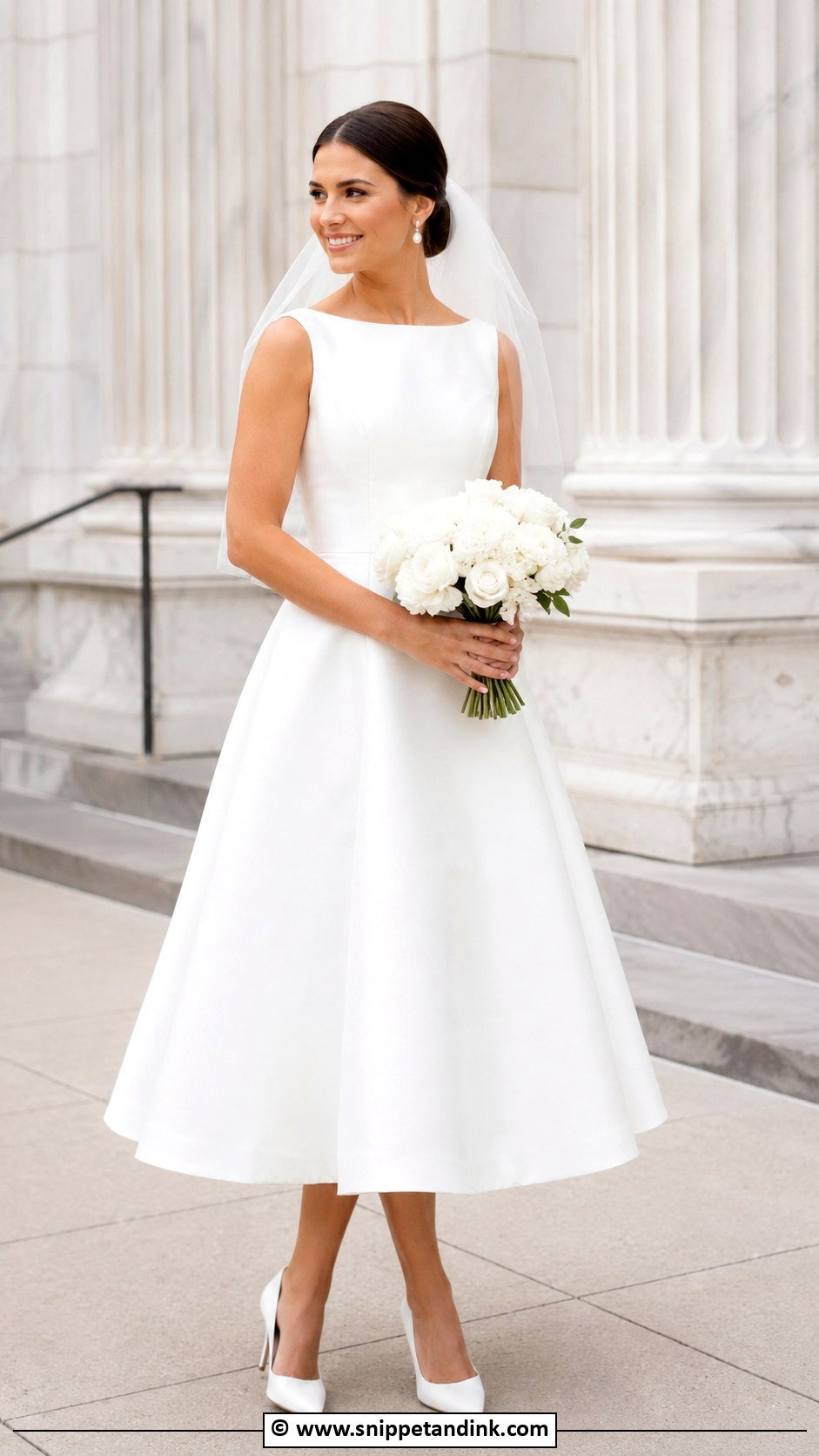
Tea length falls between knee and ankle, which makes walking, dancing and showing off shoes easy. It suits courthouse weddings, garden ceremonies, daytime receptions and vintage themes. A fitted bodice with a full skirt is classic; a slimmer cut is modern. Pointed pumps, slingbacks or embellished flats suit it, with pearl earrings and a short veil or bow clip. Because the shoes show, I’d plan them alongside the dress rather than as an afterthought.

15. White Mini Wedding Dress
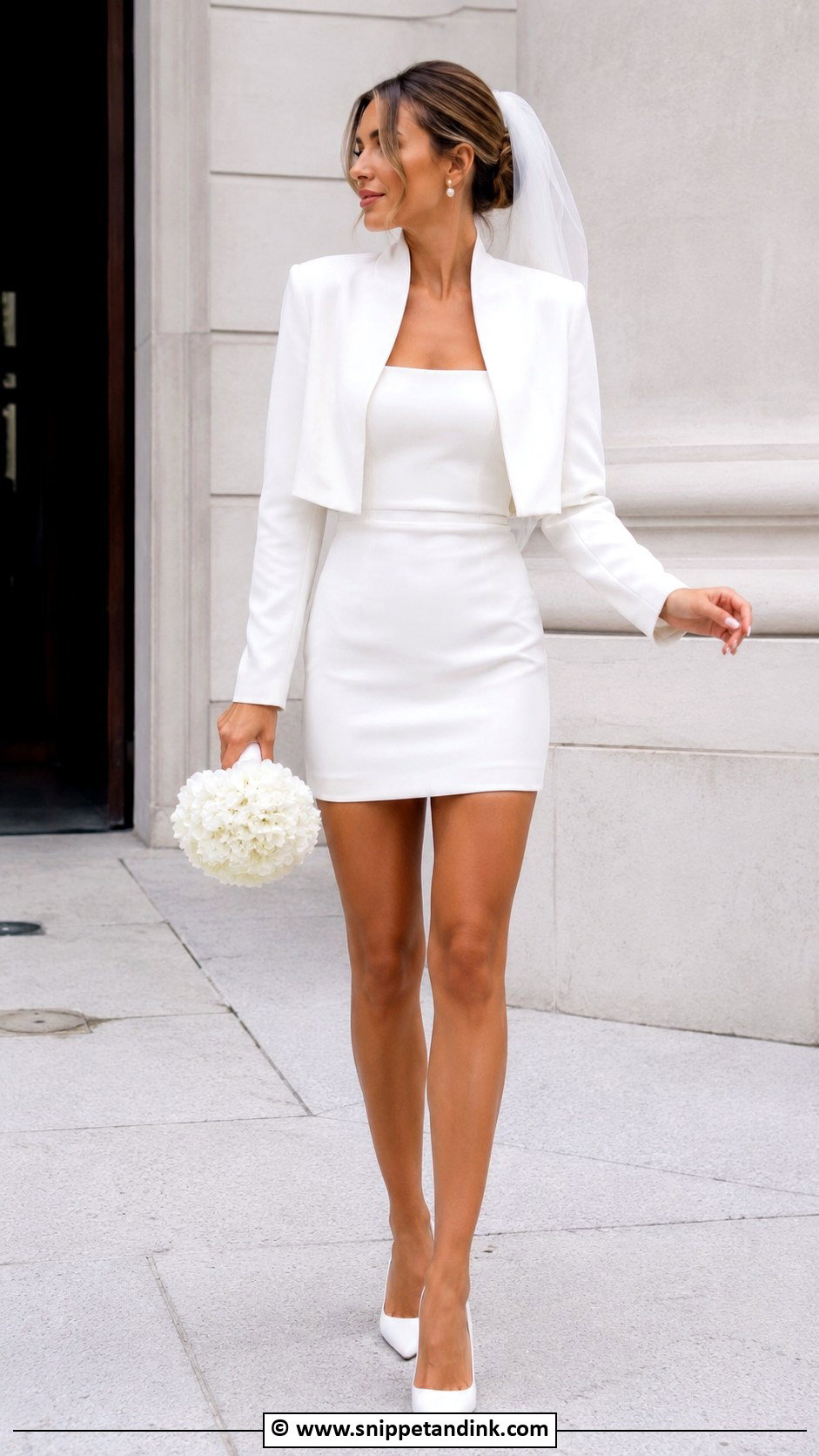
Minis suit civil ceremonies, after-parties, showers, elopements and reception changes. A structured mini looks modern, lace romantic, satin sleek. Balance the short hem with refined accessories: pointed pumps, pearl studs, sheer gloves or a short veil. For coverage, add a cropped blazer or capelet. Sit and dance in front of a mirror at the fitting; a fitted mini rides up more than you’d expect, and a tailor can add a little weight to the hem.
16. White Tulle Wedding Dress
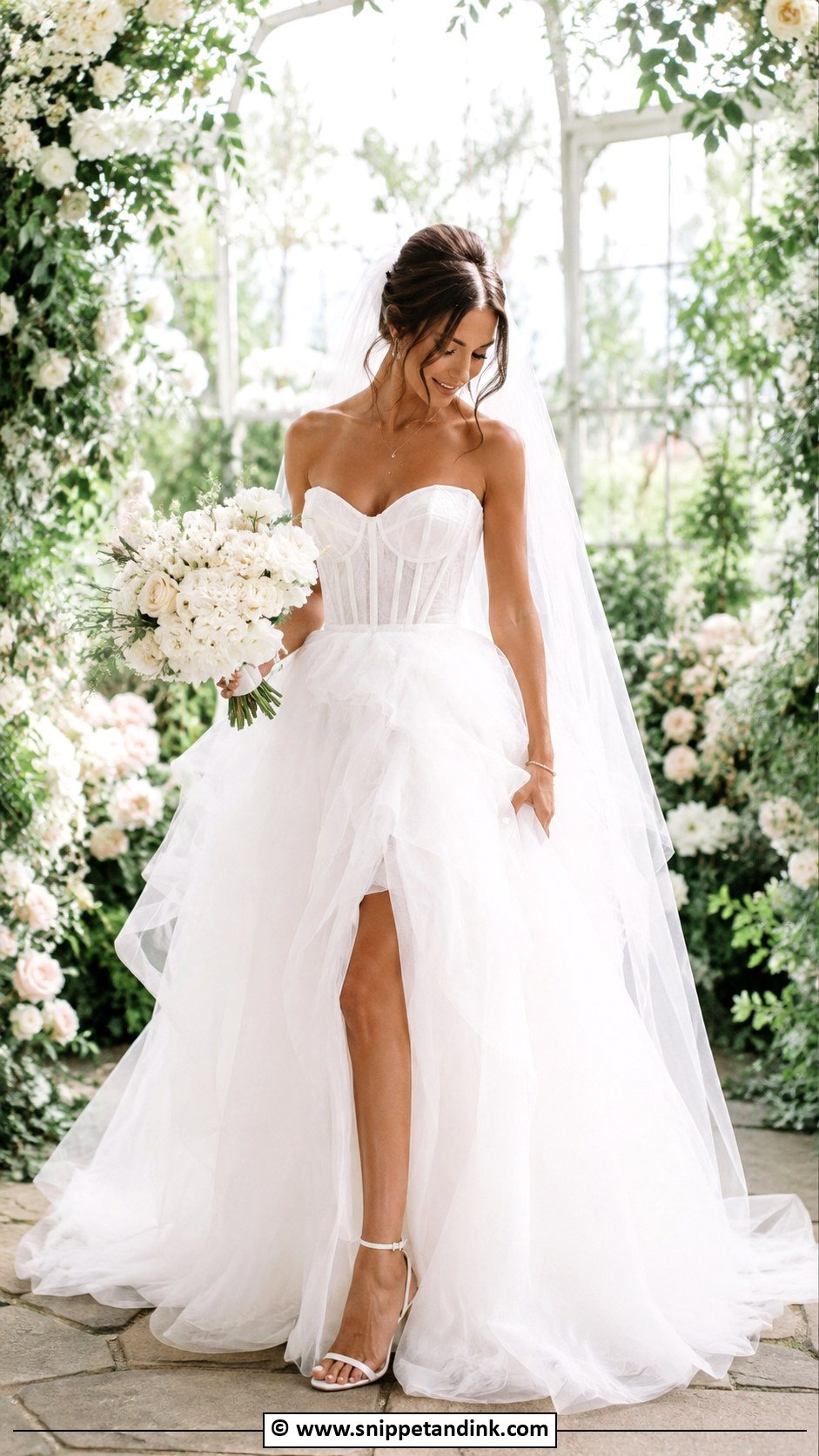
Tulle gives softness and volume. Layer it for a ball gown or use it lightly for an airy A-line. Garden weddings, grand venues and indoor ceremonies all suit it. A cleanly structured or lightly embellished bodice keeps it grown-up. Slim heels, a soft veil and simple jewelry stop the skirt from looking busy; a loose bun or soft waves matches the texture. Tulle snags on rings, bracelet clasps and bouquet wire, so I check all three before the bride walks out.
17. White Organza Wedding Dress
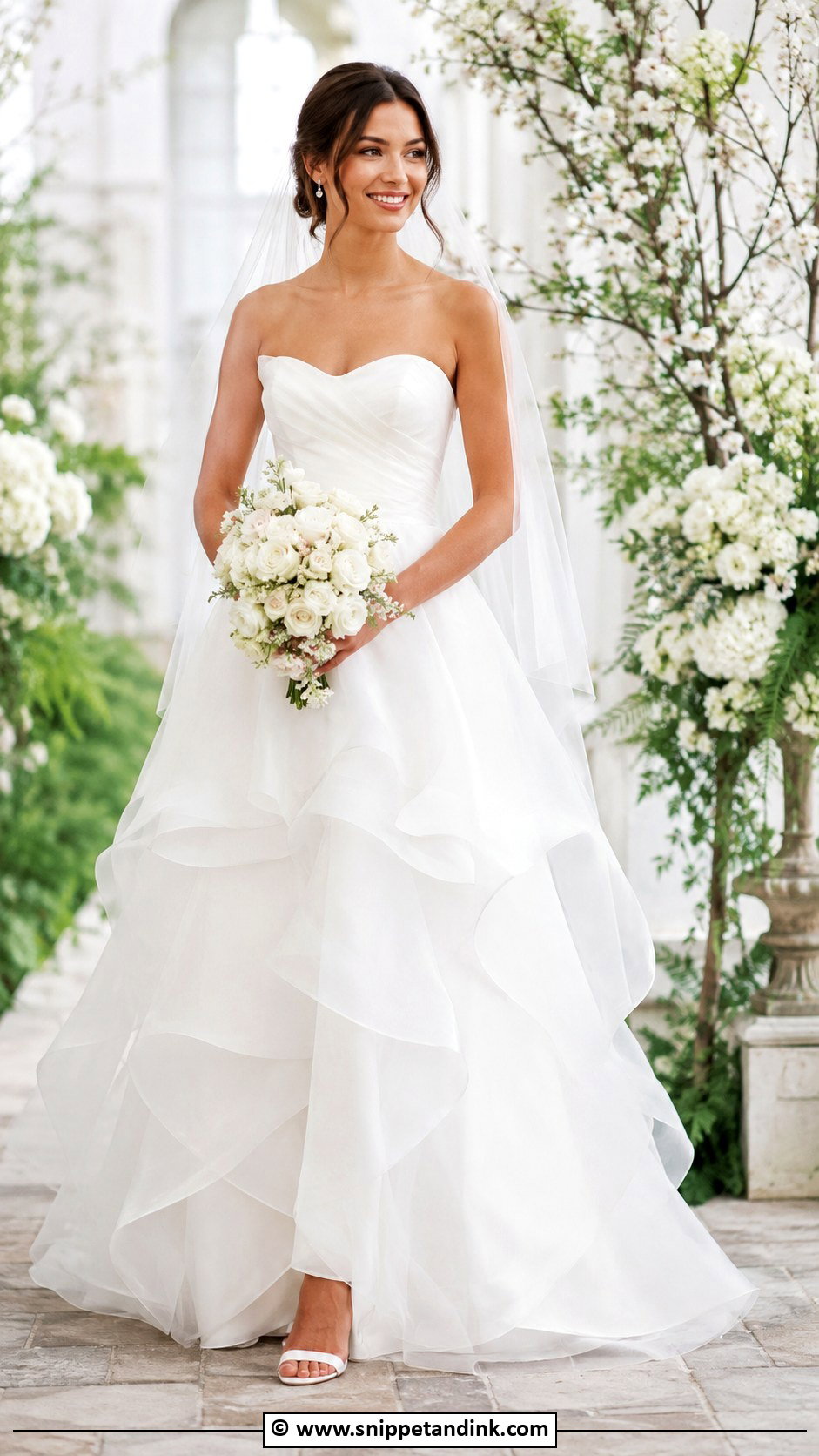
Organza holds more shape than tulle but still looks light, so it suits sculptural skirts and layered shapes. Bright spaces show it off because it keeps its form without heaviness. Spring and summer gardens are its natural setting. Clean heels, a delicate veil and small earrings let the fabric show. If the gown has oversized flowers, ruffles or panels, keep everything else plain. Organza creases where you sit, so I time portraits before dinner when the skirt is still crisp.
18. White Crepe Wedding Dress
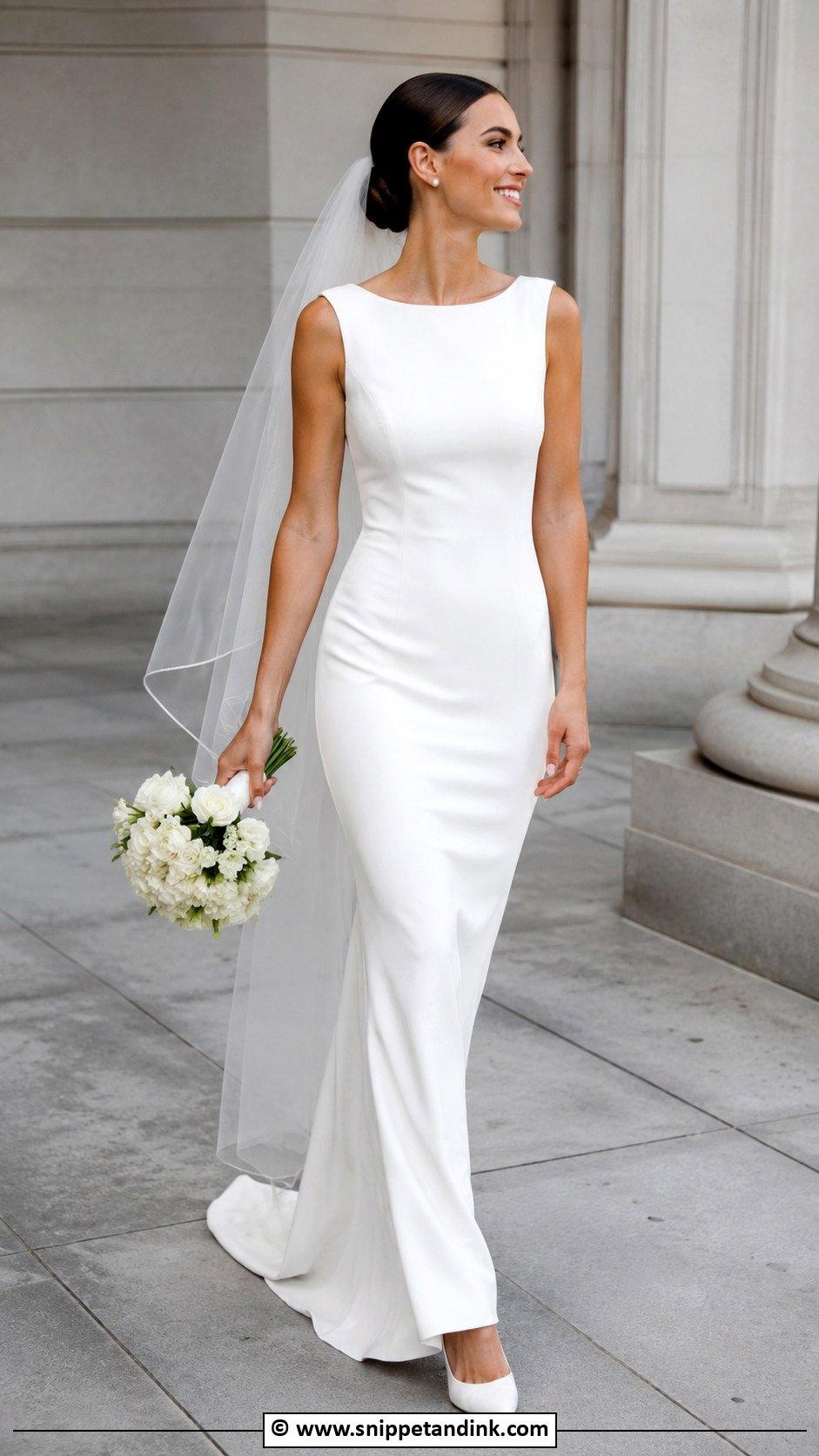
Crepe has a matte finish, so I hand it to brides who prefer clean lines over shine. Sheath, column, fit-and-flare and minimal A-line cuts all suit it. Because crepe follows the body, professional alterations make or break it. Wear smooth, no-line undergarments with sleek heels, pearl studs and a simple veil; a low bun or blowout keeps it refined. Modern weddings, courthouses and city venues suit it. Heavier crepes hide more than thin ones, which is worth knowing when you compare price points.
19. White Mikado Wedding Dress
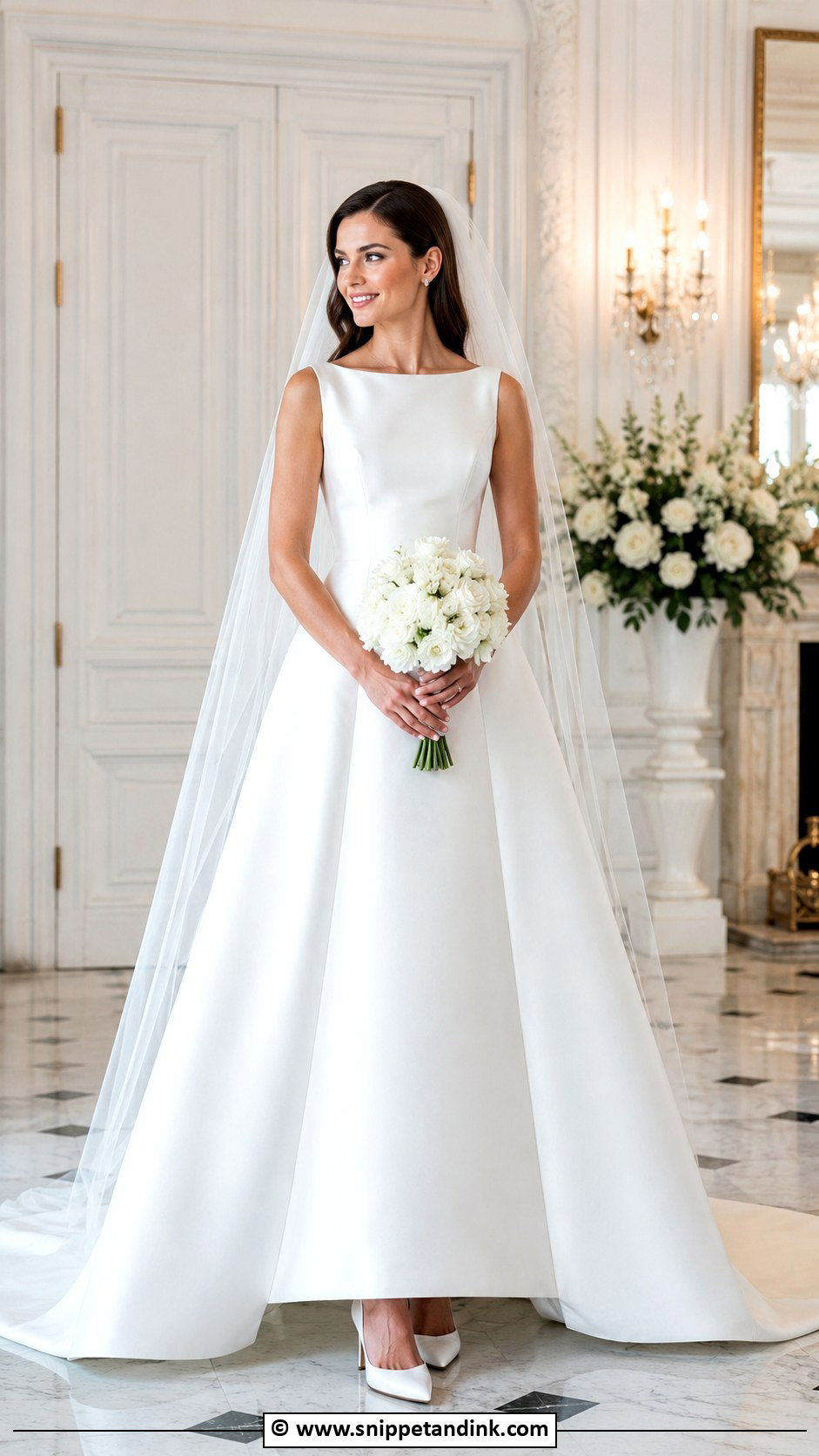
Mikado is heavier than most bridal fabrics, so it holds structure in ball gowns, A-lines and sculpted bodices. Its subtle sheen gives presence without embellishment. Polished pumps, a long veil and simple jewelry suit it, with a smooth bun or side part. Formal venues and cooler seasons are where it belongs; in summer heat, mikado gets warm fast. If you want the look in warm weather, ask about a lighter silk-blend mikado.


20. White Chiffon Wedding Dress
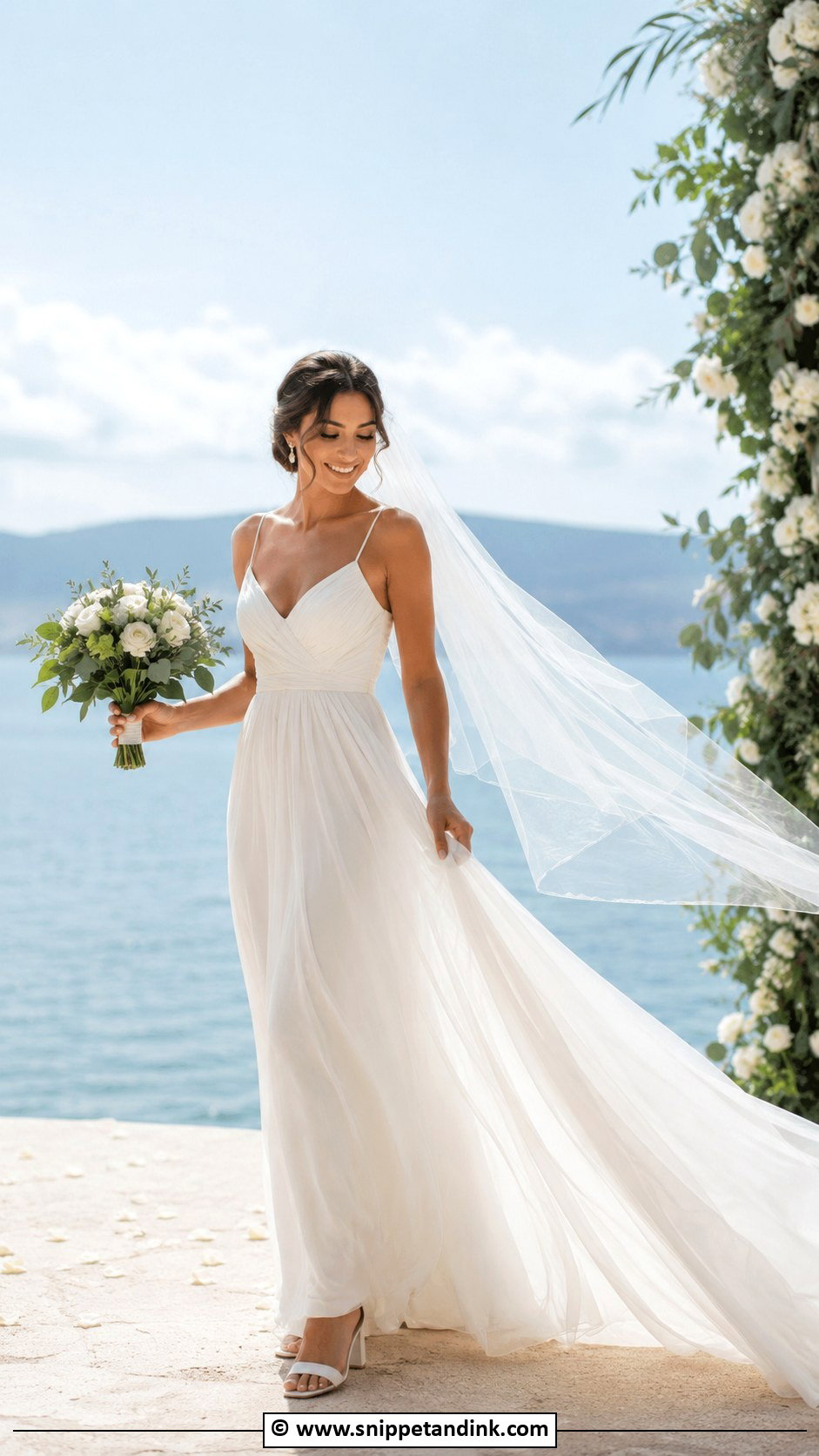
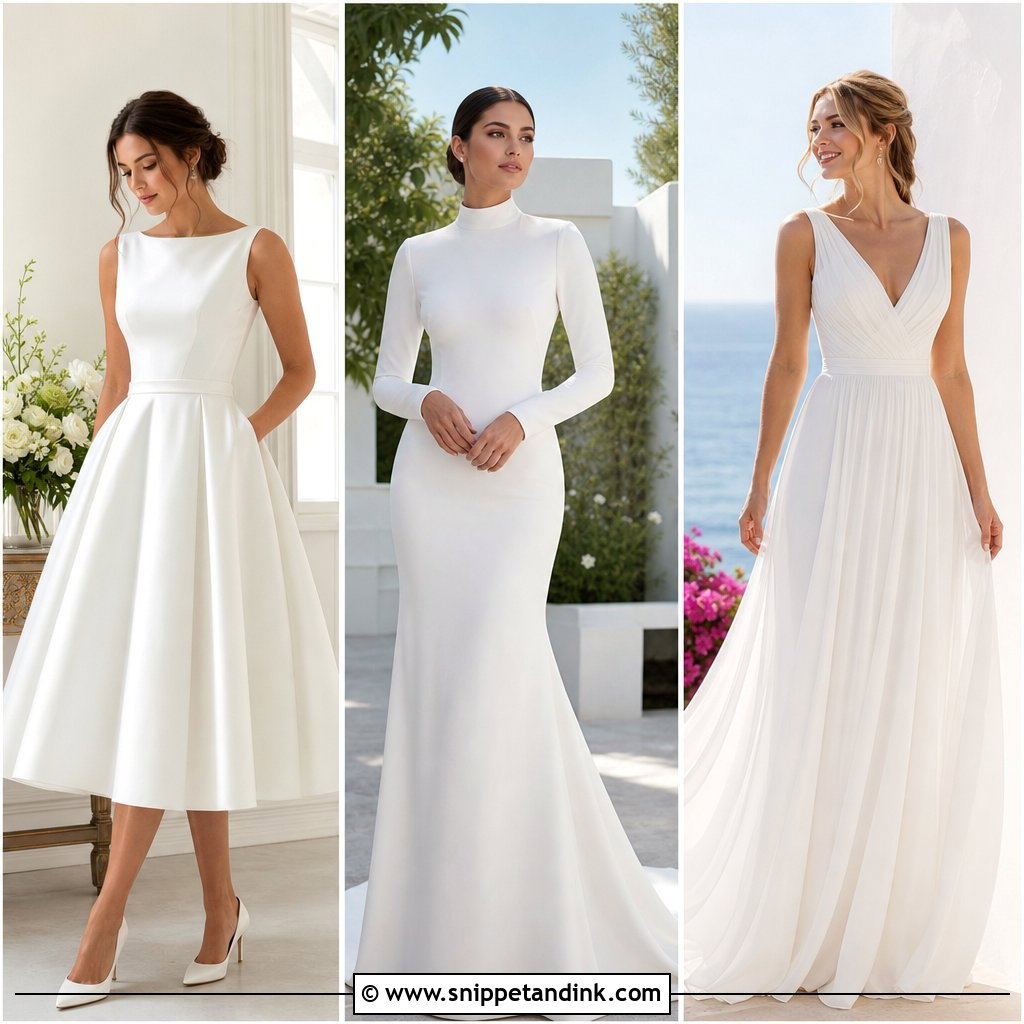
A white chiffon wedding dress is light and easy to wear. Beaches, destination ceremonies and outdoor venues suit its gentle movement. Chiffon drapes best in empire waist, A-line and flowy sheath shapes. Low block heels, flat sandals for sand, small earrings and a soft veil complete it, with a loose braided updo or natural waves. Chiffon frays at loose threads and shows water marks, so I bring a white cloth to blot rather than rub.
21. White Beaded Wedding Dress
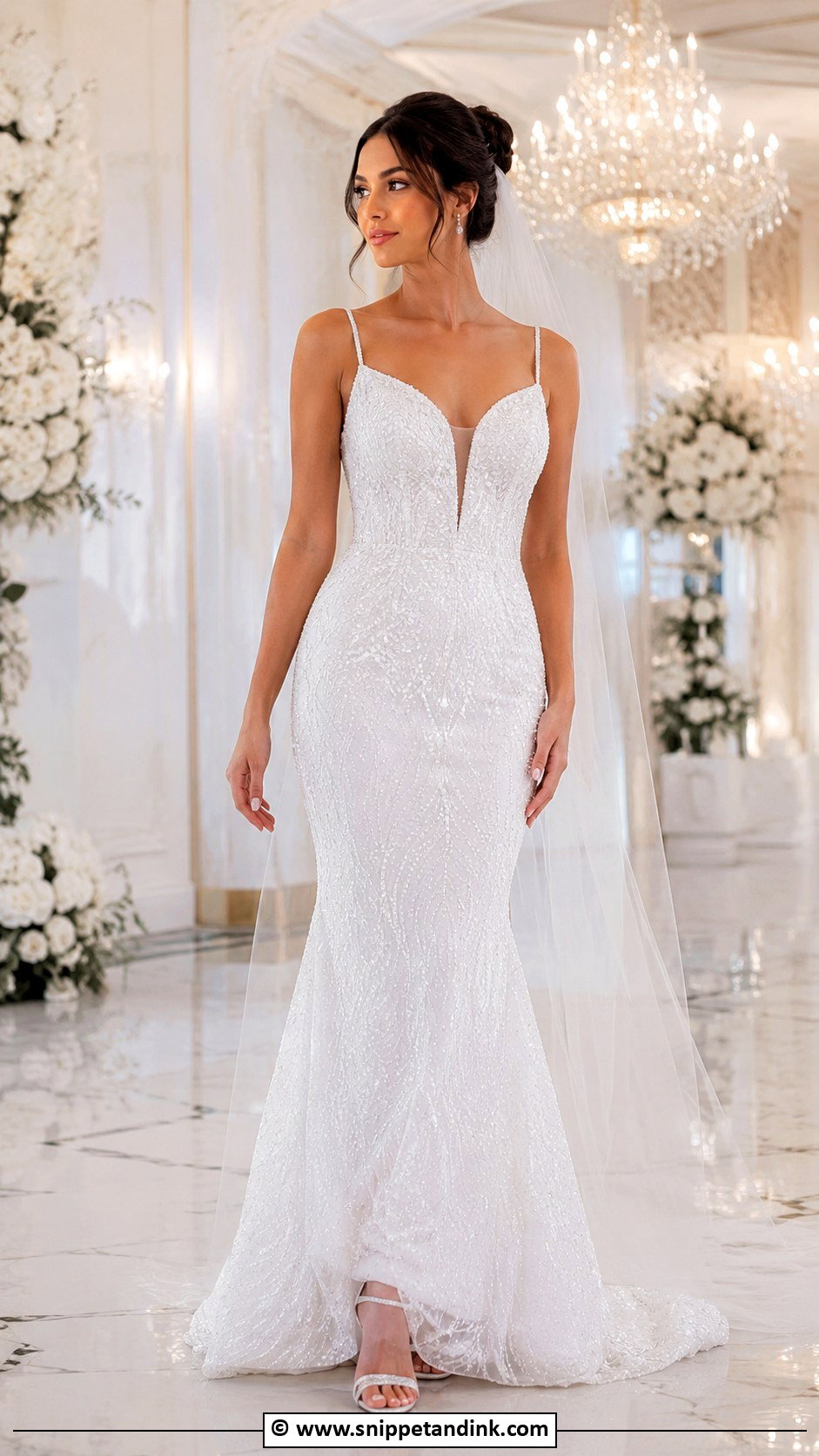
Beading brings sparkle and texture, subtle along the bodice or dramatic across the whole gown. Evening receptions, ballrooms and city weddings suit it. Since beads reflect light, keep the rest controlled: simple earrings, delicate heels and a plain veil. Weight is the trade-off. Heavily beaded gowns are warmer and less flexible, so lift the hanger before you try one on. A fitted beaded silhouette looks sleek; a beaded A-line feels softer.
22. White Pearl Wedding Dress
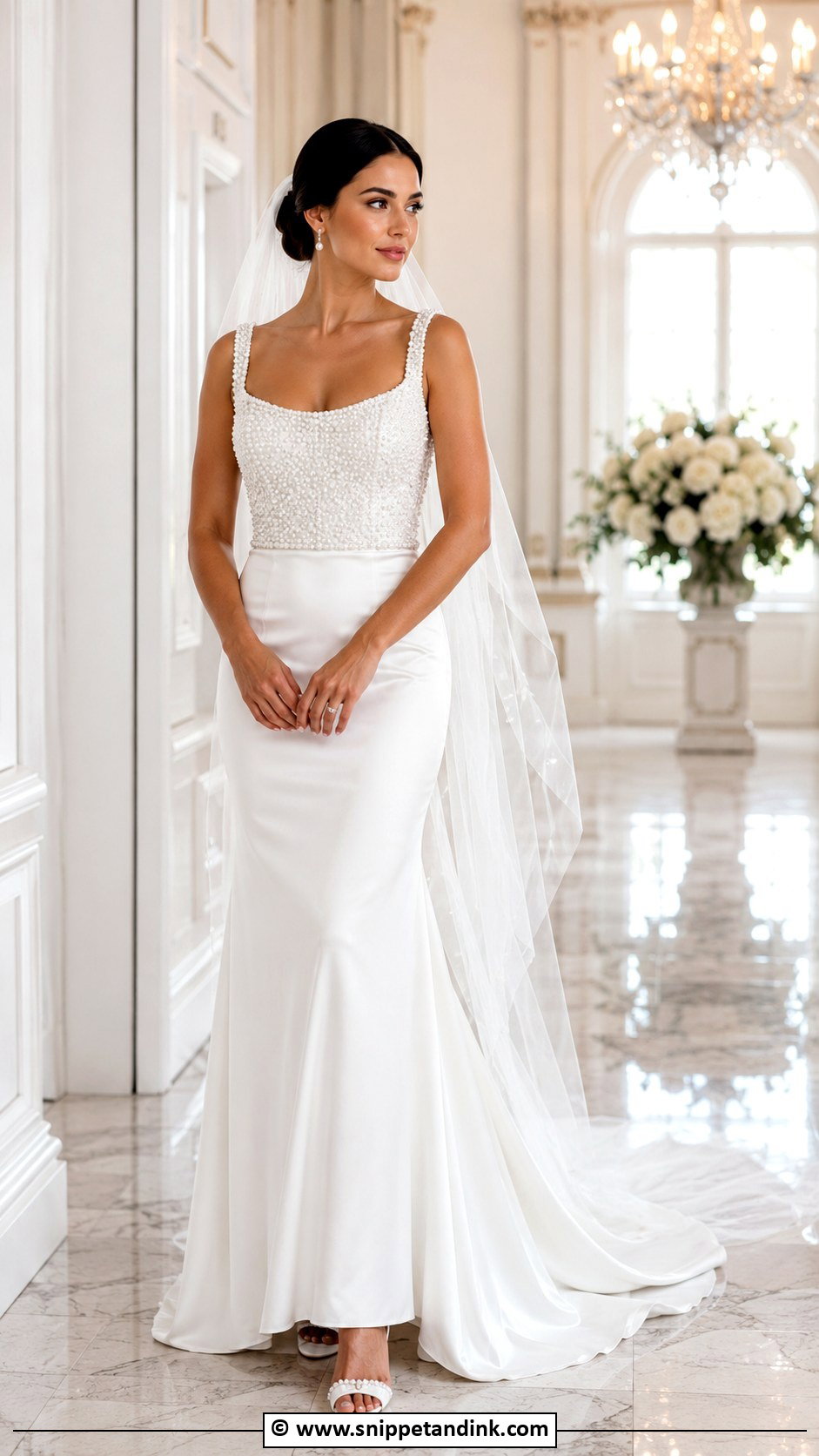
Pearls add dimension without the sharp sparkle of crystals. They appear on the bodice, sleeves, straps, veil or across the skirt. Classic ceremonies, coastal venues and indoor weddings suit them. Wear pearl earrings, but don’t stack pearl necklace, bracelet and hairpins on top of a pearl gown; let the dress set the accessory level. Satin heels, a soft veil and a neat bun finish it. Match pearl tones too: cream pearls beside bright white ones look off in close-ups.
23. White Floral Applique Wedding Dress
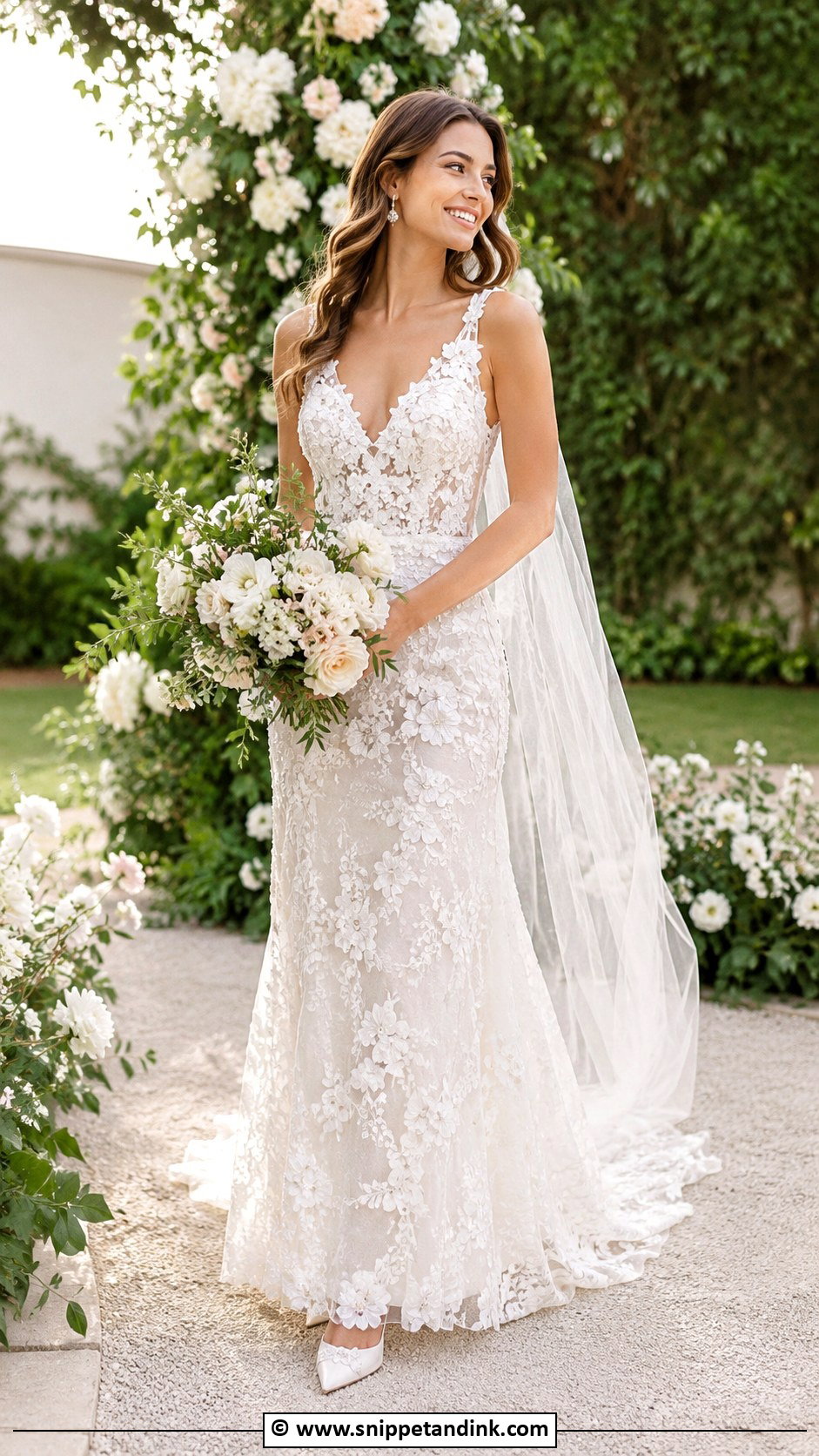
Raised floral appliqués make a simple silhouette special without sparkle. Gardens, spring ceremonies and outdoor portraits suit them. Large 3D appliqués mean a simple veil and jewelry; small scattered ones can take a lace veil or floral pins. Slim heels and soft makeup keep the balance. Run your hand over the appliqués at the appointment. Hand-sewn ones lie flat and survive cleaning; glued edges can lift after a long day.
24. White Bow Wedding Dress
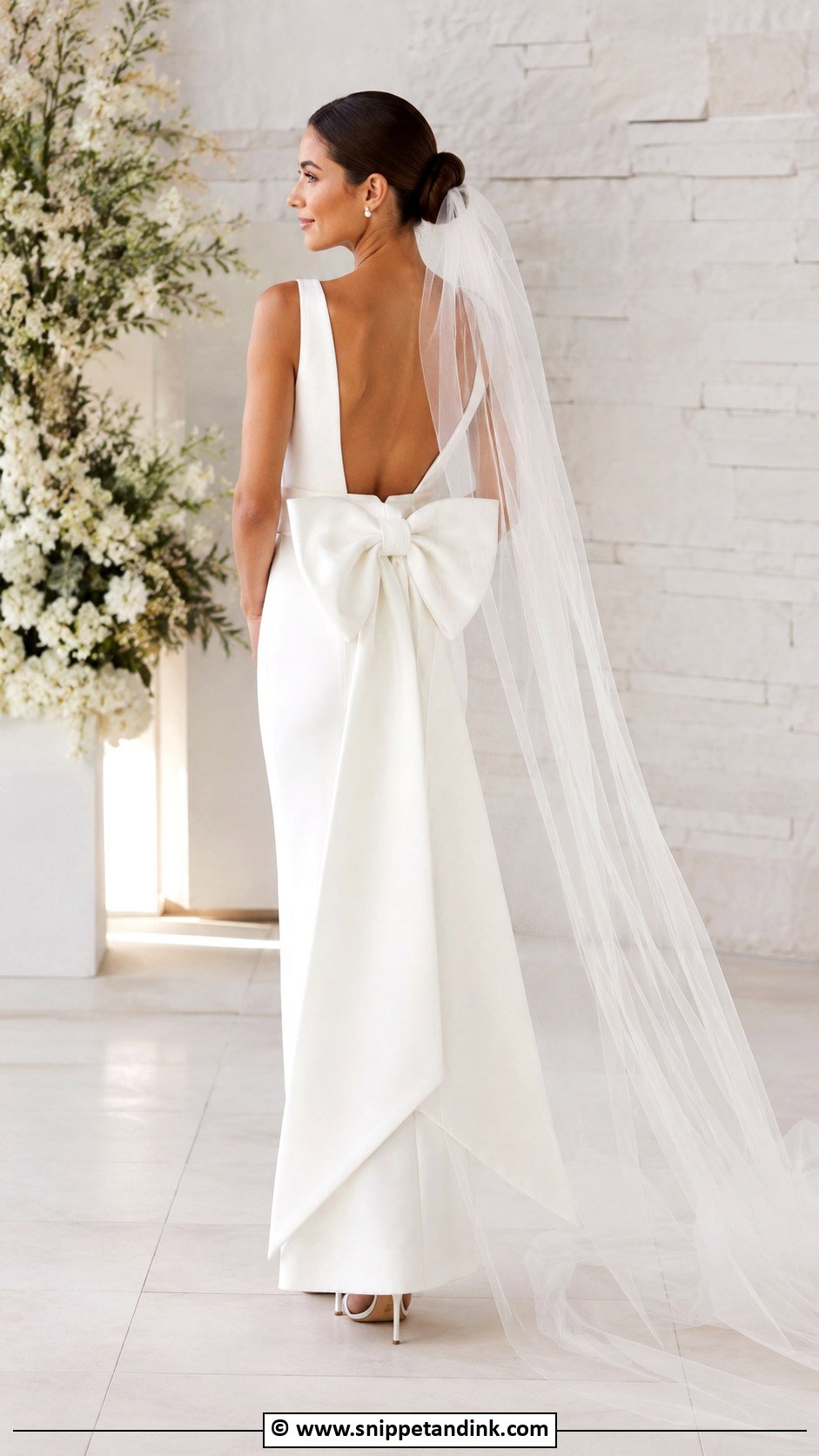
A bow can sit at the back, shoulder, waist, neckline or train. A big back bow is dramatic; a small waist bow is softer. It works best when the rest of the outfit is controlled: clean heels, minimal jewelry and a simple veil. A smooth bun or classic waves keep it refined. Back bows get crushed against chairs, so ask whether it can be lightly interfaced inside or made detachable for the reception.


25. White Drop Waist Wedding Dress
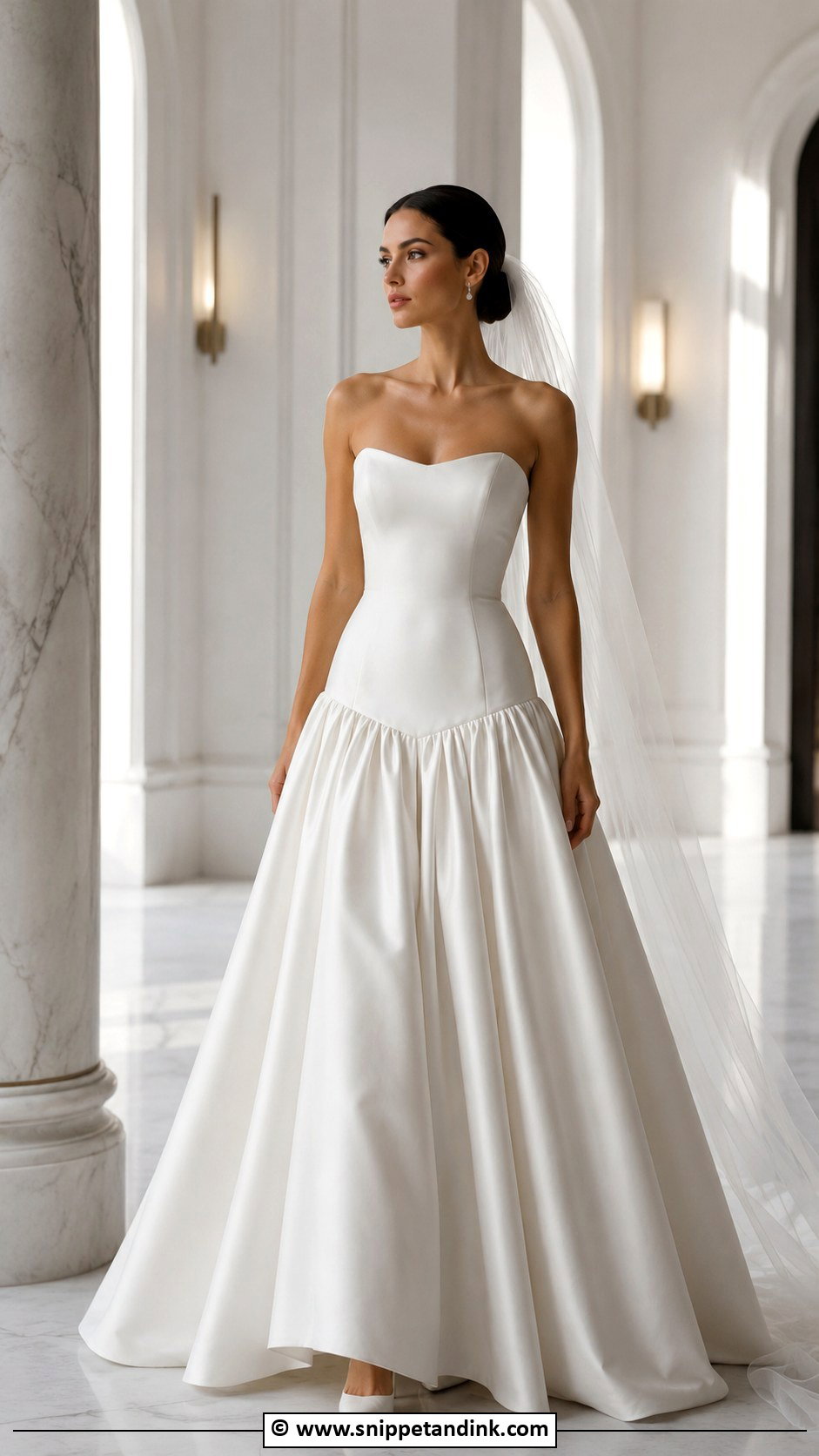
A drop waist creates a long torso and moves the skirt’s start lower. It has a vintage feel but looks current in satin, mikado or clean tulle. Alterations are essential since the waist sits lower than usual, and a seam an inch off changes the proportions completely. Pointed heels, a long veil and minimal earrings suit it. Skip bulky belts or heavy necklaces that break the line. This cut flatters long torsos most; shorter torsos can look compressed, so try it before committing.
26. White Basque Waist Wedding Dress
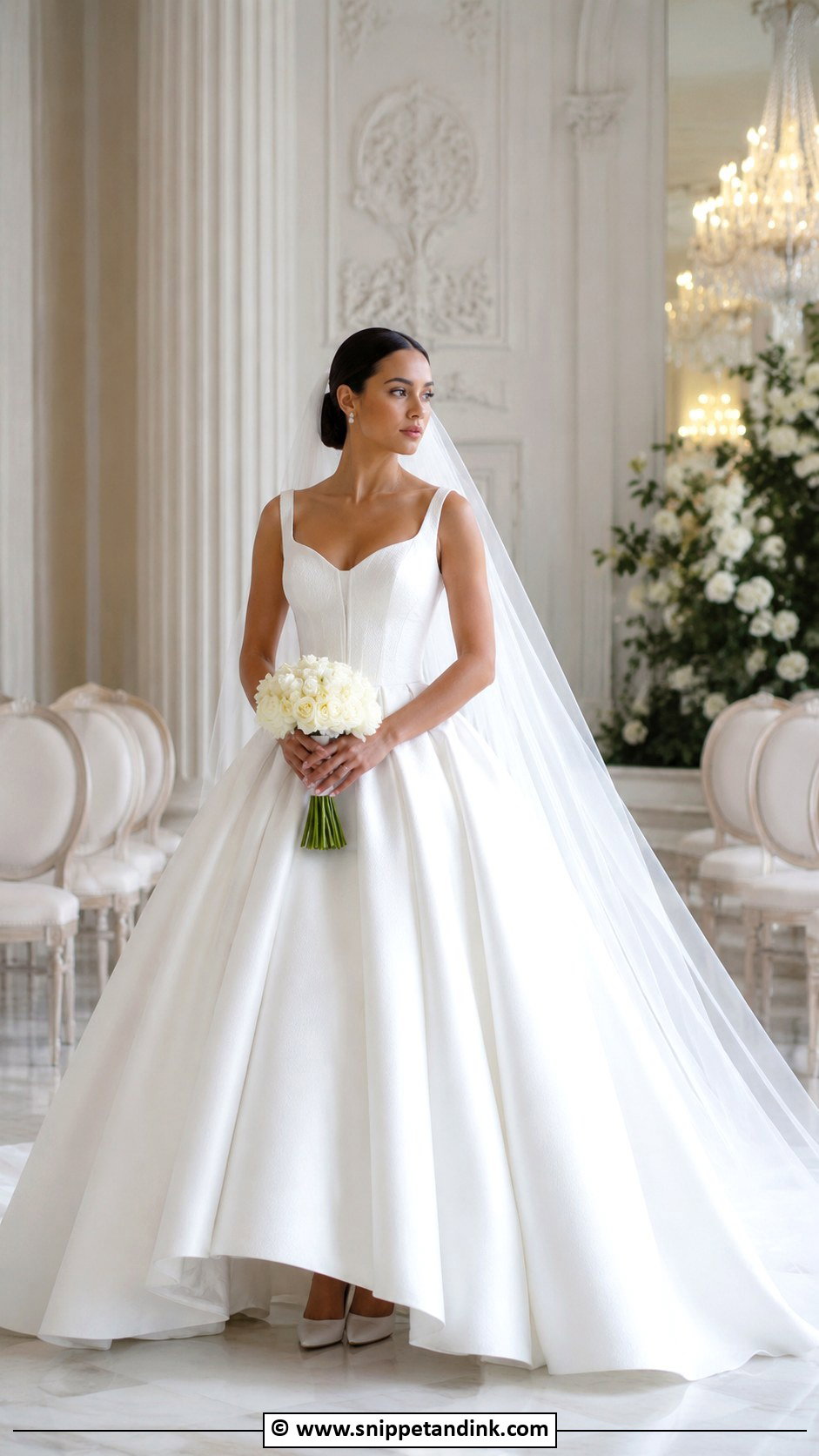
A white basque waist wedding dress has a pointed or dipped waistline that draws the eye in and then out toward the skirt. It gives a princess effect but looks modern in satin or mikado. Full, pleated or soft tulle skirts all suit it. A cathedral veil, pearl studs and graceful heels finish it, with hair swept up to show the bodice. The point must sit centered; I check it in a three-way mirror because a slightly off-center basque shows in every front-on photo.
27. White Sheath Wedding Dress
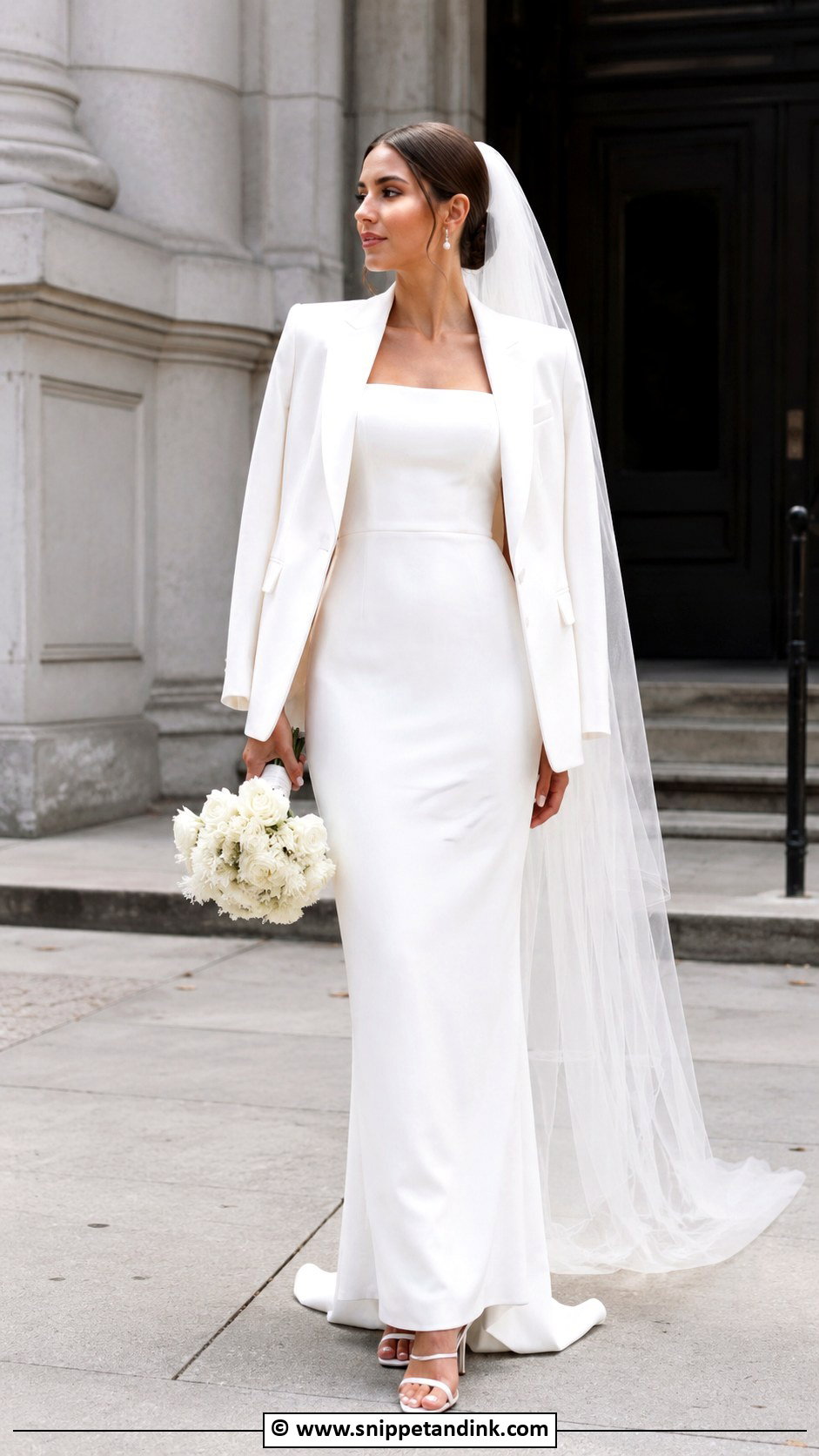
A sheath follows the body without a mermaid’s flare, which makes it comfortable for small ceremonies, destination weddings and modern venues. Crepe, satin, lace and chiffon all work. Lace looks romantic; plain crepe looks architectural. Elegant heels, small earrings and a veil matched to the venue’s formality finish it, and a fitted blazer adds polish at a courthouse. Check your stride at the fitting; a narrow sheath may need a small back slit to walk comfortably.
28. White Column Wedding Dress
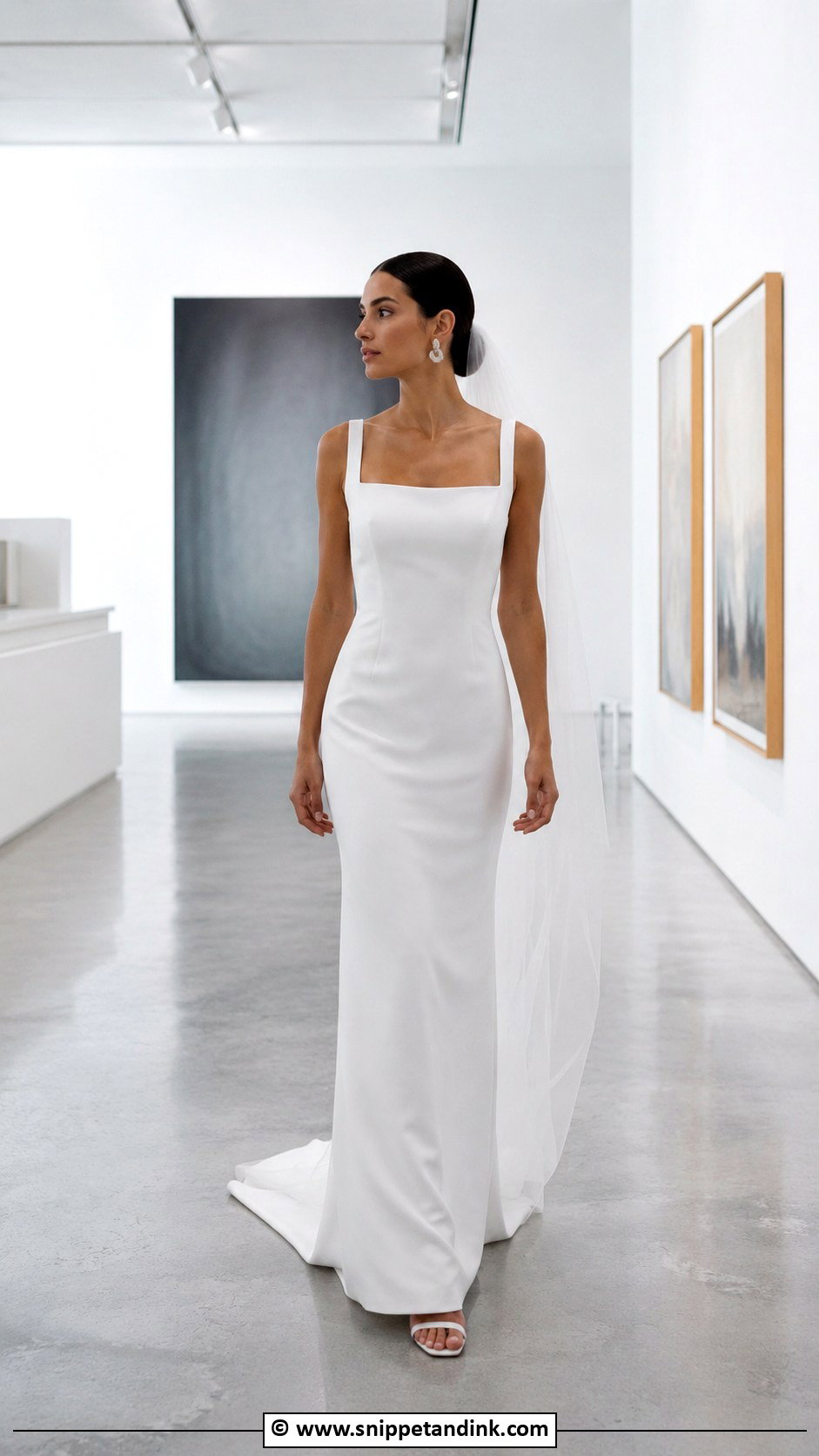
The column draws one long, straight line, with no extra volume. Satin, crepe and silk suit it, as do city venues and art spaces. Since the shape is simple, the neckline, seams and fabric quality carry it. Slim heels, sculptural earrings and a smooth veil complete the look. A cape or overskirt for the ceremony, removed later, adds drama without changing the dress. The hem has to be exact with your shoes; a column that pools or floats looks unfinished.
29. White Wedding Dress With Cape
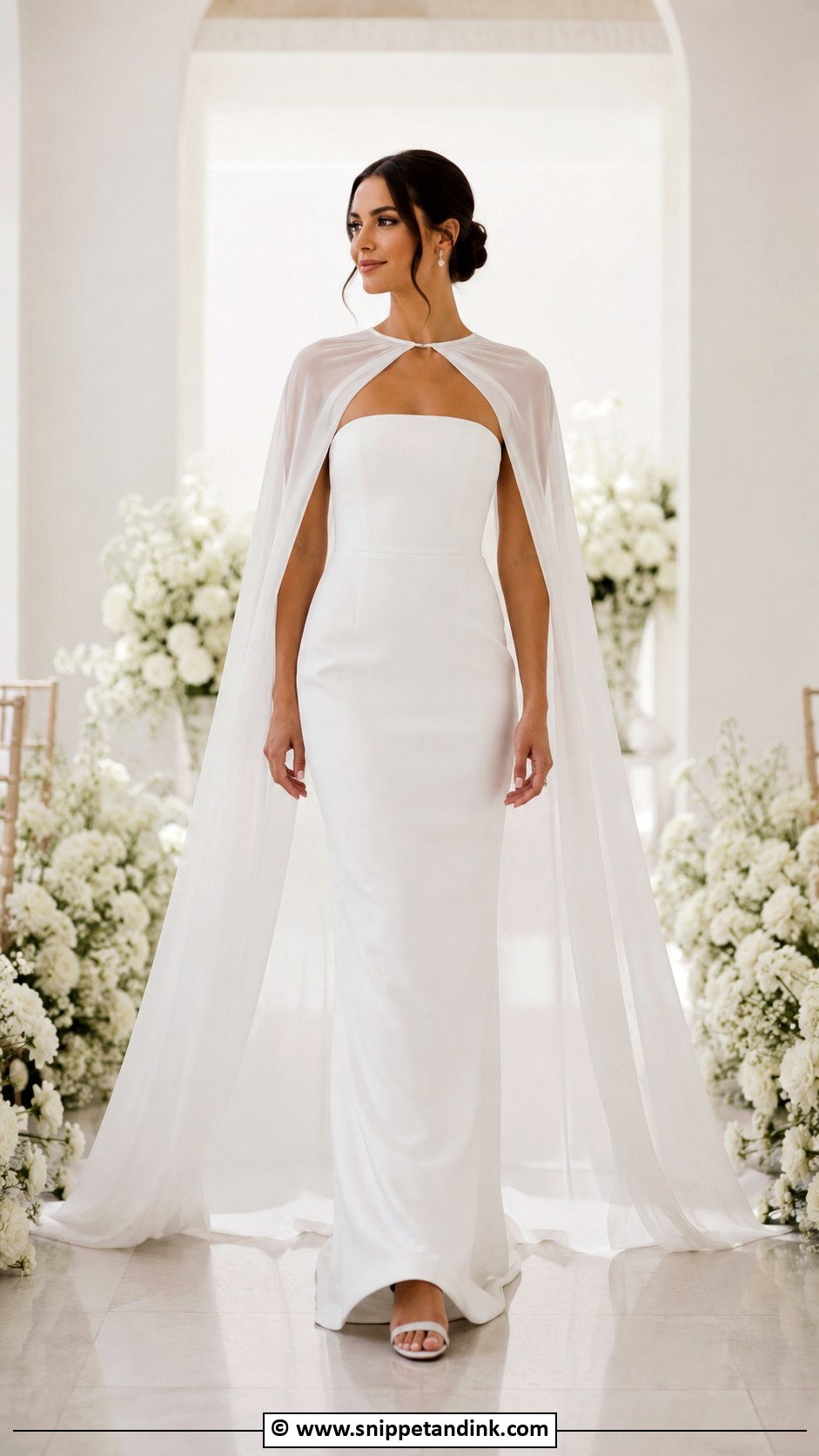
A white wedding dress with a cape gives drama without a traditional veil. Capes come sheer, lace-trimmed, satin, tulle or detachable, so you can change the look between ceremony and reception. Strapless, square, halter and minimal gowns pair best. Keep jewelry simple and avoid anything that snags delicate fabric. A clean hairstyle sits best under the neckline. I attach capes at the shoulders as well as the neck so they hang straight and don’t pull at the throat.
30. White Wedding Dress With Detachable Sleeves
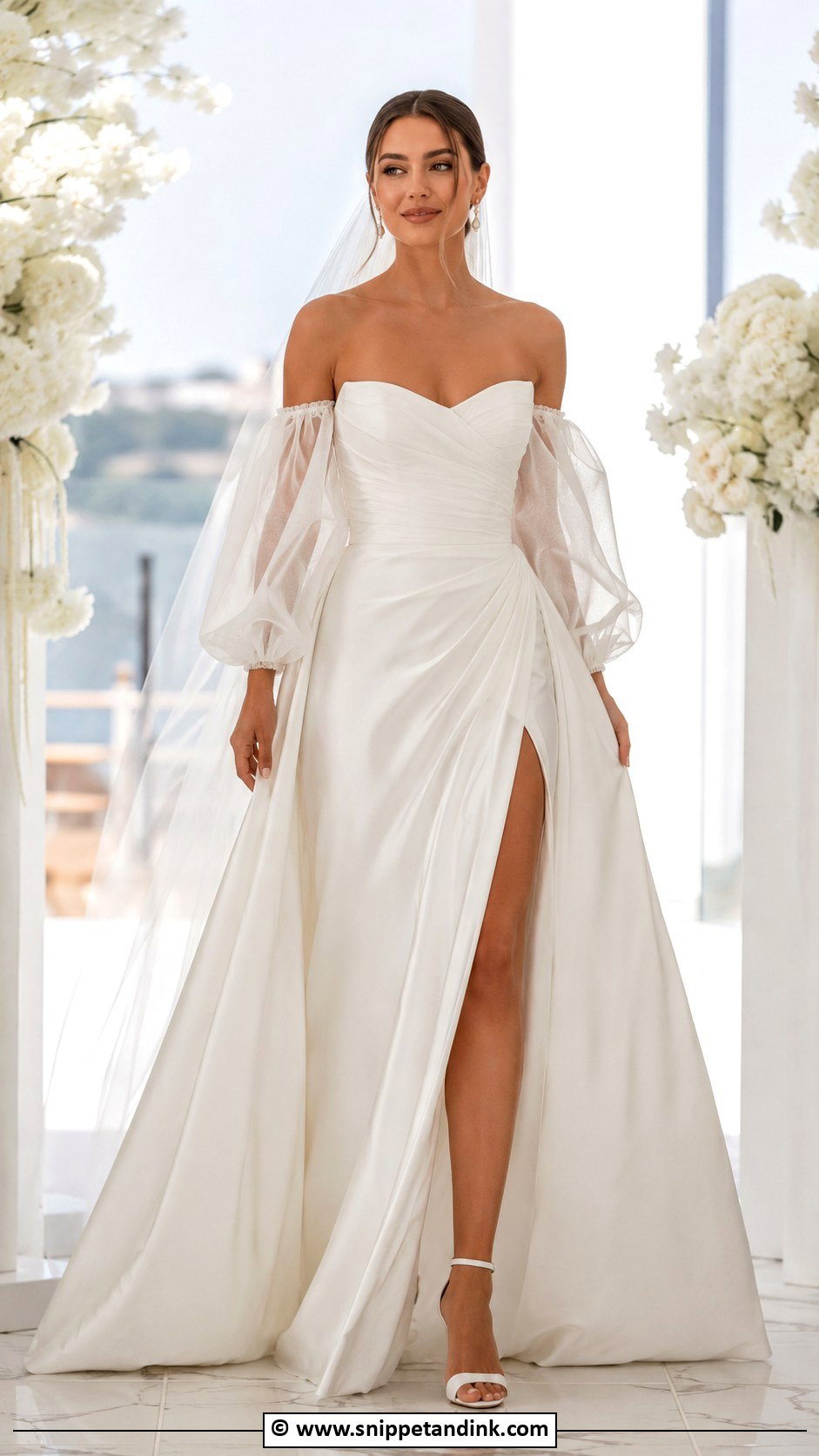
Detachable sleeves give you two looks: sleeves for the ceremony, bare for dancing. Puff sleeves read romantic, lace classic, fitted sleeves elegant. The attachment is what I scrutinize. Snaps and small hooks hidden under lace hold better than ties, and you should be able to remove them in under a minute with one helper. Simple heels, a veil and earrings that suit both versions complete the outfit.
31. White Wedding Dress With Overskirt
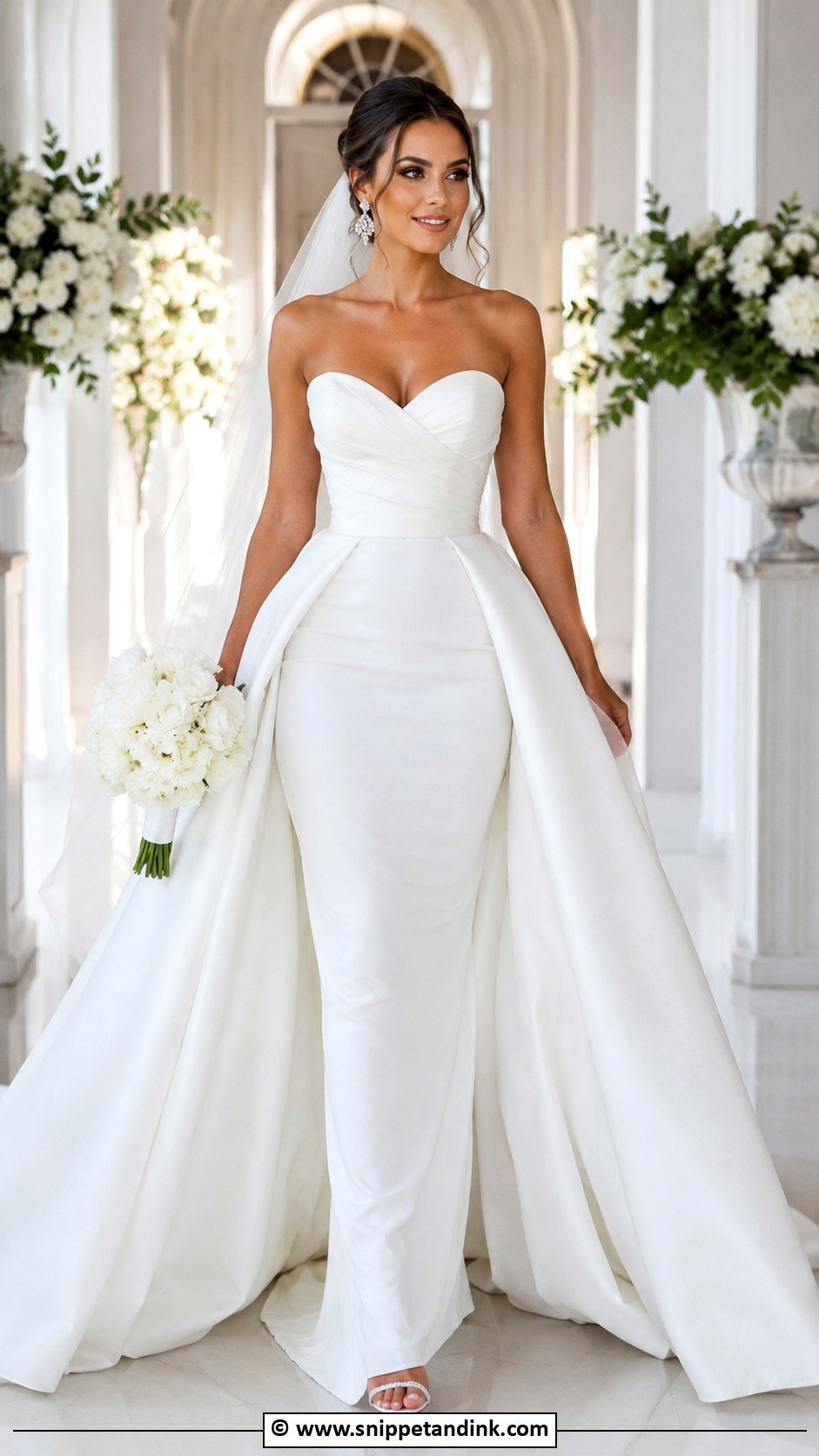
An overskirt gives ceremony volume and reception ease. The base can be a fitted sheath, mermaid, mini or column; the overskirt adds movement and comes off after photos. It’s my go-to suggestion for brides torn between fitted and full. Stable heels, a secure attachment and refined jewelry suit it, with a long veil for extra presence. Practice removing it at the last fitting with the person who’ll help you on the day.
32. White Courthouse Wedding Dress
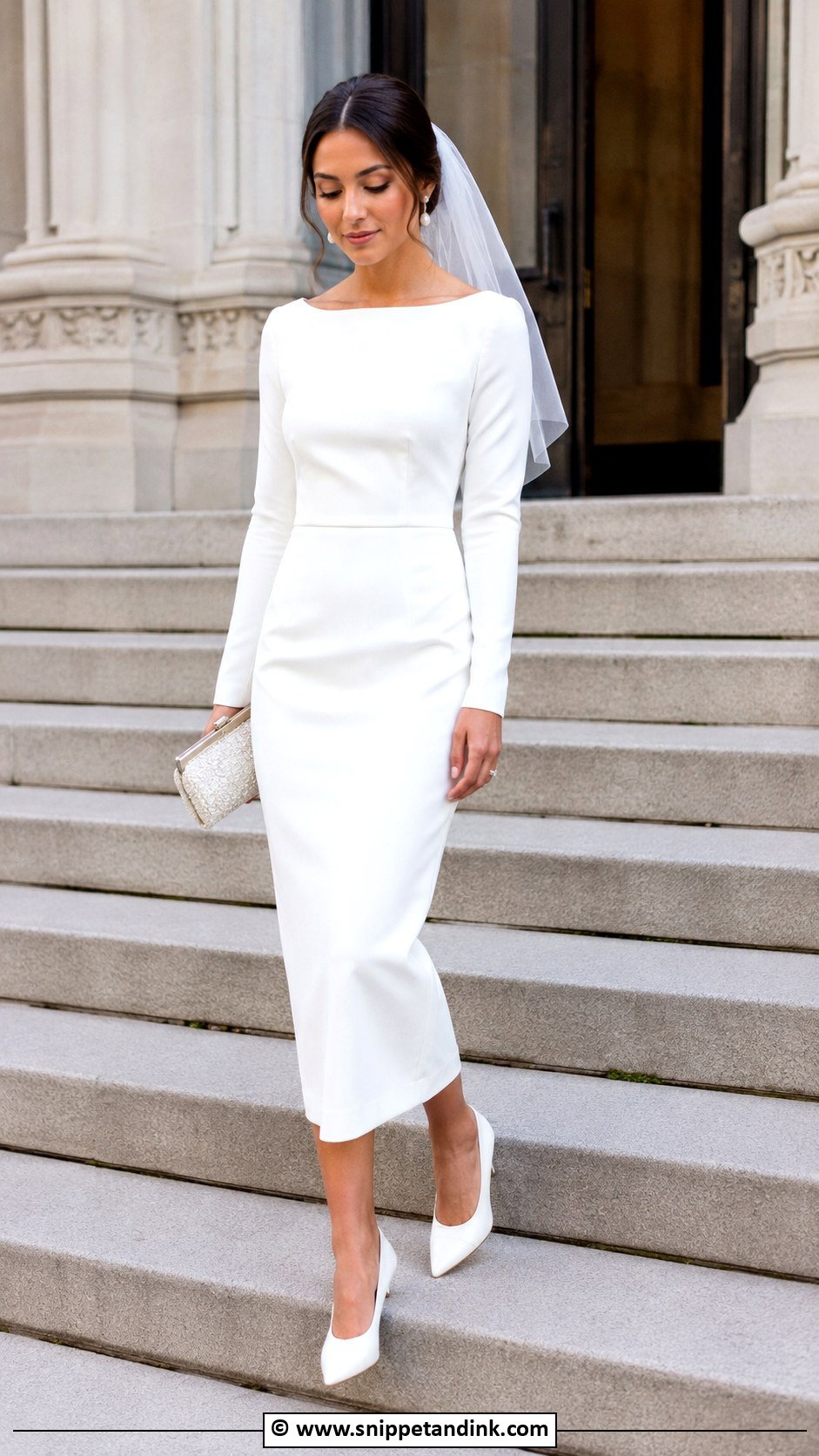
Courthouse dresses should look bridal without overdressing the room. Midis, tailored minis, sheaths, slips and blazer dresses all suit a civil ceremony. Pointed pumps, a small clutch, pearl earrings and a short veil or hair bow finish it; a tailored coat or blazer helps in cooler months. Check the building’s rules and timing; some offices run tight schedules and security, so skip anything that needs a lot of fussing before you go in.
33. White Beach Wedding Dress
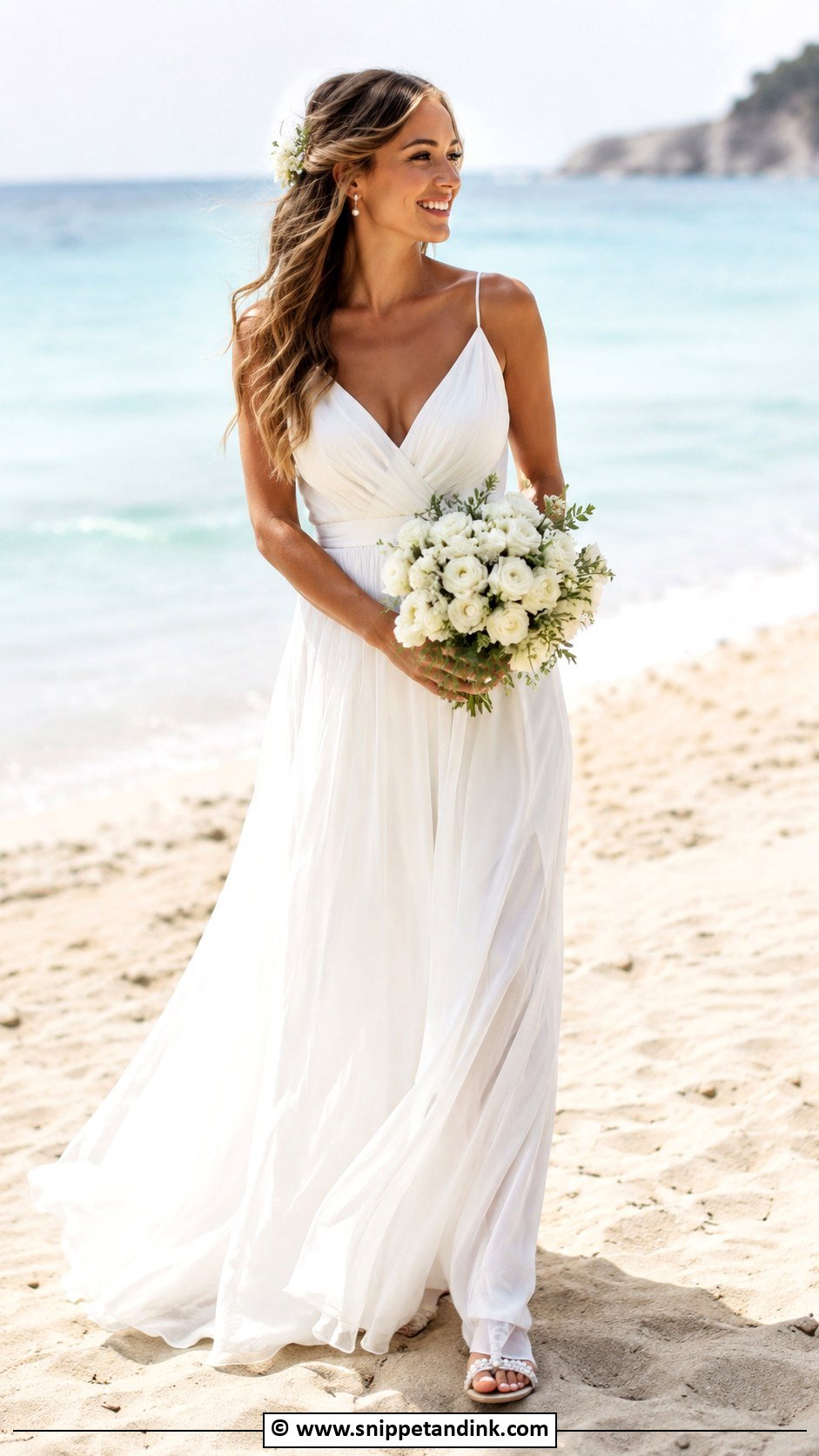
Beach dresses need to be light. Chiffon, soft tulle, lace and lightweight crepe beat heavy satin and big skirts. A simple A-line, slip, sheath or empire waist moves in the breeze. Flat sandals, low block heels or bare feet depending on the setup. Keep the veil short or swap it for a hair accessory if it’s windy. Pearl earrings and natural waves finish it. Shorten the hem a touch more than usual; sand clings to any fabric that drags.
34. White Garden Wedding Dress
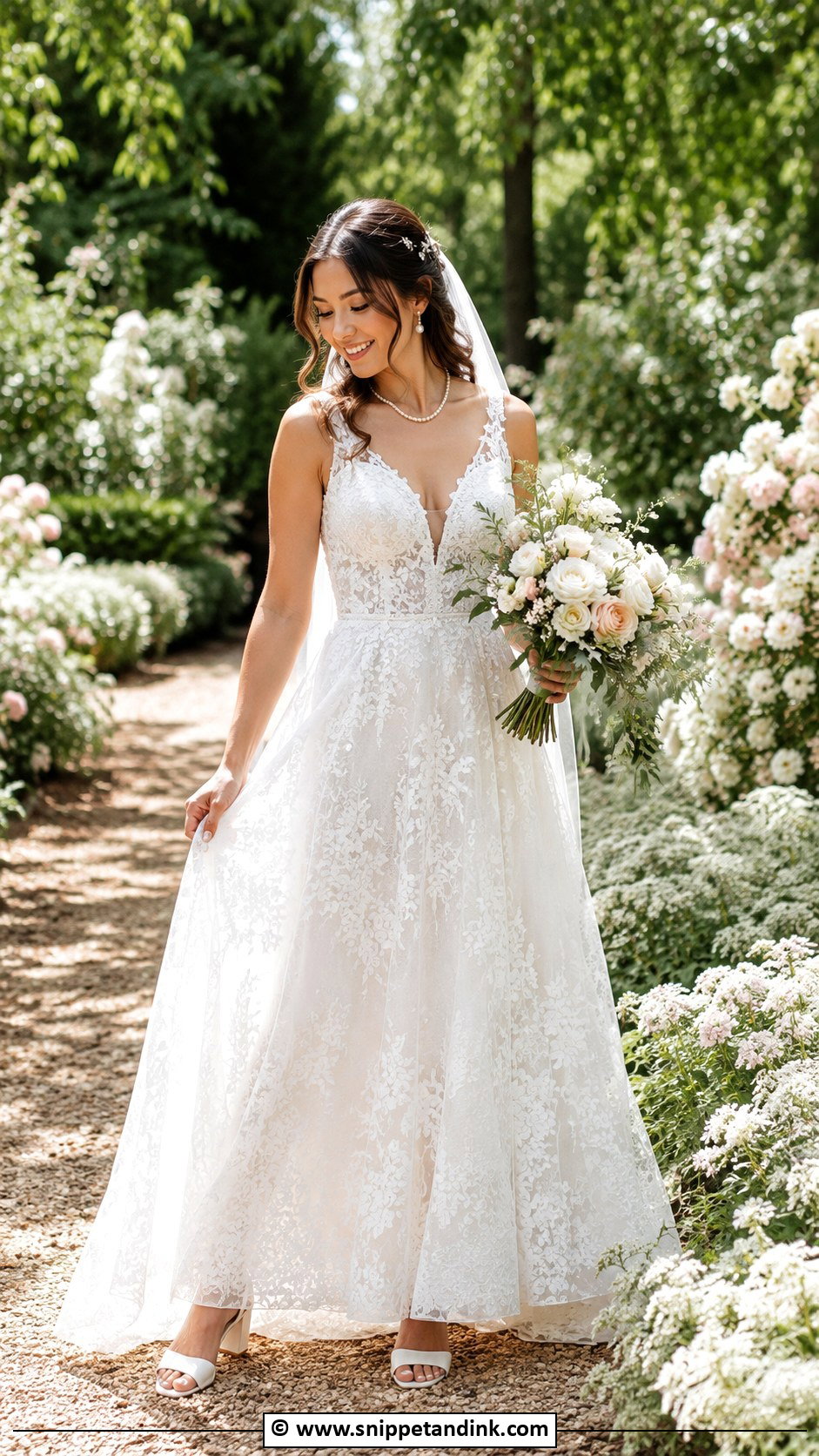
Gardens suit lace, floral appliqué, soft tulle, organza and chiffon. A-line and fit-and-flare shapes give form without weight. Grass and stone paths are hard on stilettos, so I’d pick block heels, wedges or flats. Add a veil, floral pins or soft pearl jewelry. A skirt with movement photographs well outdoors. Ask the venue whether the lawn will be watered that morning; damp grass soaks up a light hem in minutes.
35. White Reception Wedding Dress
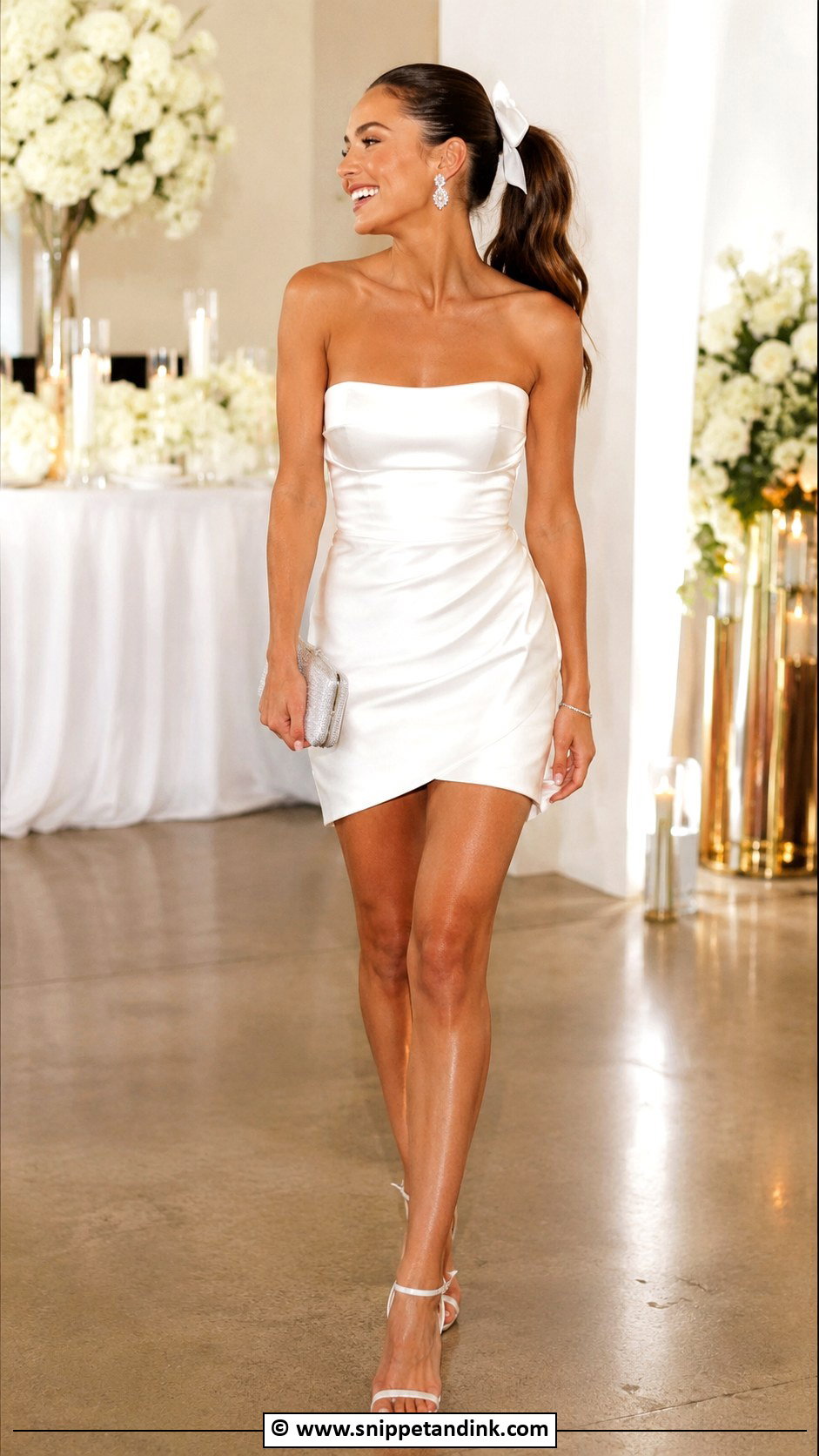
The reception dress is about dancing and mingling with less fabric. Shorter dresses, sleek slips, feather-trimmed minis, satin midis or simple fitted gowns all work. It should still read bridal. Comfortable heels, sparkly earrings and a small clutch suit it, and you can swap the long veil for a bow, headband or polished ponytail. Plan the change for about fifteen minutes with one helper, and have the second dress steamed and hanging at the venue before the ceremony starts.
Over, Under or Ballroom: Which Bustle Suits Your Train
Any gown with a train needs a bustle for the reception, and the type changes how the back of the dress looks all evening. Your seamstress will suggest one based on the fabric and train length, but it helps to know the options.
Over bustle
The train hooks up onto the back of the dress at one or several points, creating soft swags. It’s quick and suits lighter fabrics and shorter trains. Heavy satin can pull a single hook loose, so I ask for more points on weighty gowns.
Under or French bustle
The train is tied up underneath with ribbons, creating a puffed, layered look. It handles long and heavy trains well, but it takes longer and needs a helper who has practiced. Ribbons are color-coded or numbered so nobody guesses.
Ballroom bustle
The train folds up so the skirt hangs at one even length, as if it never had a train. It’s the neatest result on lace and structured gowns, and it takes the most ties.
Whatever you choose, have your helper bustle the dress at the last fitting, while you watch, and take a short video of the steps on their phone. Nerves on the night make even simple ties confusing.
Your Mood First, Then the Fabric
Choosing a white dress gets easier once you think about the whole outfit, not just the gown. Fabric, neckline, silhouette, shoes, veil, jewelry and venue all have to work together. A satin ball gown feels nothing like a chiffon beach dress, and a courthouse mini has a different mood from a long-sleeve lace gown. Decide how you want to feel, then pick the details that support it. Classic, minimal, romantic or playful, the right one will feel comfortable and like yours.
You'll Like These Ideas:








Leave a Reply