
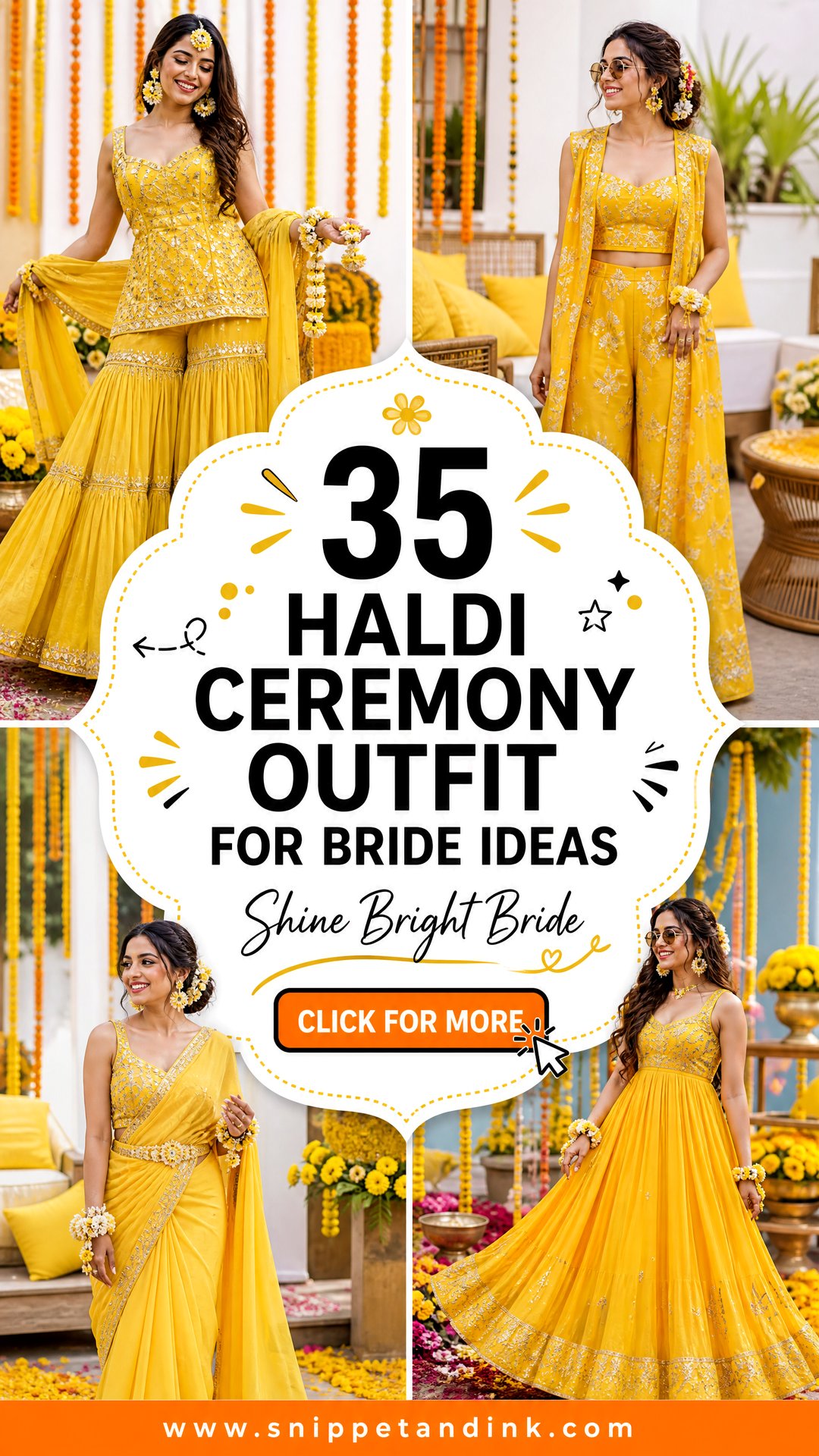
Haldi is the loudest, happiest event of the wedding week, and it is also the messiest. Aunts and cousins will smear turmeric paste on your face, arms and feet, someone will probably tip water over you, and you’ll spend half the morning sitting low on a patla or cushion. So when I dress a bride for haldi, the first question isn’t the colour. It’s what she can sit, dance and get stained in without worrying. Light fabrics such as cotton, organza, georgette, chanderi and silk blends breathe in the heat, and capes, jackets, pre-draped sarees and fresh flower jewelry let you go modern without adding fuss. The 35 outfits below run from classic yellow lehengas to fusion sets, with notes on how each one behaves once the paste starts flying.
Dressing for Turmeric, Water and Plenty of Hugs
Before we look at a single colour, I walk every bride through what will actually happen to her clothes at haldi. The paste goes on the face, neck, arms, hands and feet, often from a dozen people. Most families seat the bride low. Some finish with water or a full turmeric fight. Your outfit needs to cope with all of that and still look good in the portraits afterward.
Four questions I ask at the first fitting
- How far up the arms does the paste go in your family? That decides sleeve length. Sleeveless or elbow sleeves keep fabric out of the way.
- Will you sit on the floor, a low stool or a chair? Lehengas with stiff can-can and fitted ghararas are harder at floor level than shararas or pre-draped sarees.
- Is water part of the ritual? Organza, chanderi and thin georgette go sheer when wet, so line them or pick an opaque fabric.
- Do you want to keep the outfit? If so, avoid pure silk and heavy zari for the paste itself and save them for a change of outfit afterwards.
Jewelry needs the same thinking. Kundan and polki settings have small open backs where paste settles, and fine filigree is fiddly to clean, so I keep heirloom pieces out of haldi entirely. Fresh flower jewelry exists for exactly this. Order it for the morning, keep it cool and lightly misted until you dress, and it’ll hold its shape through the ceremony.
1. Yellow Lehenga For Haldi Ceremony
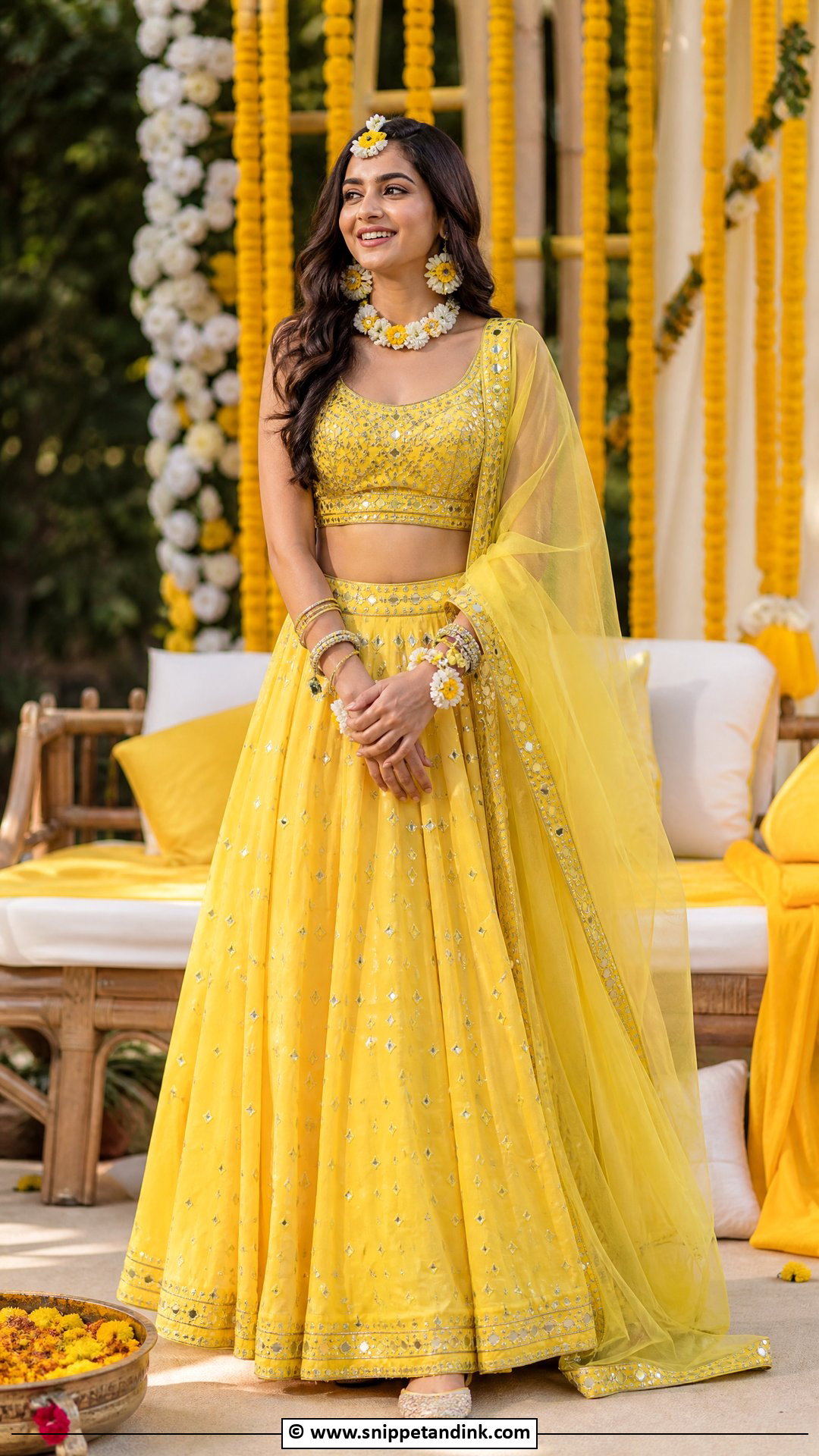
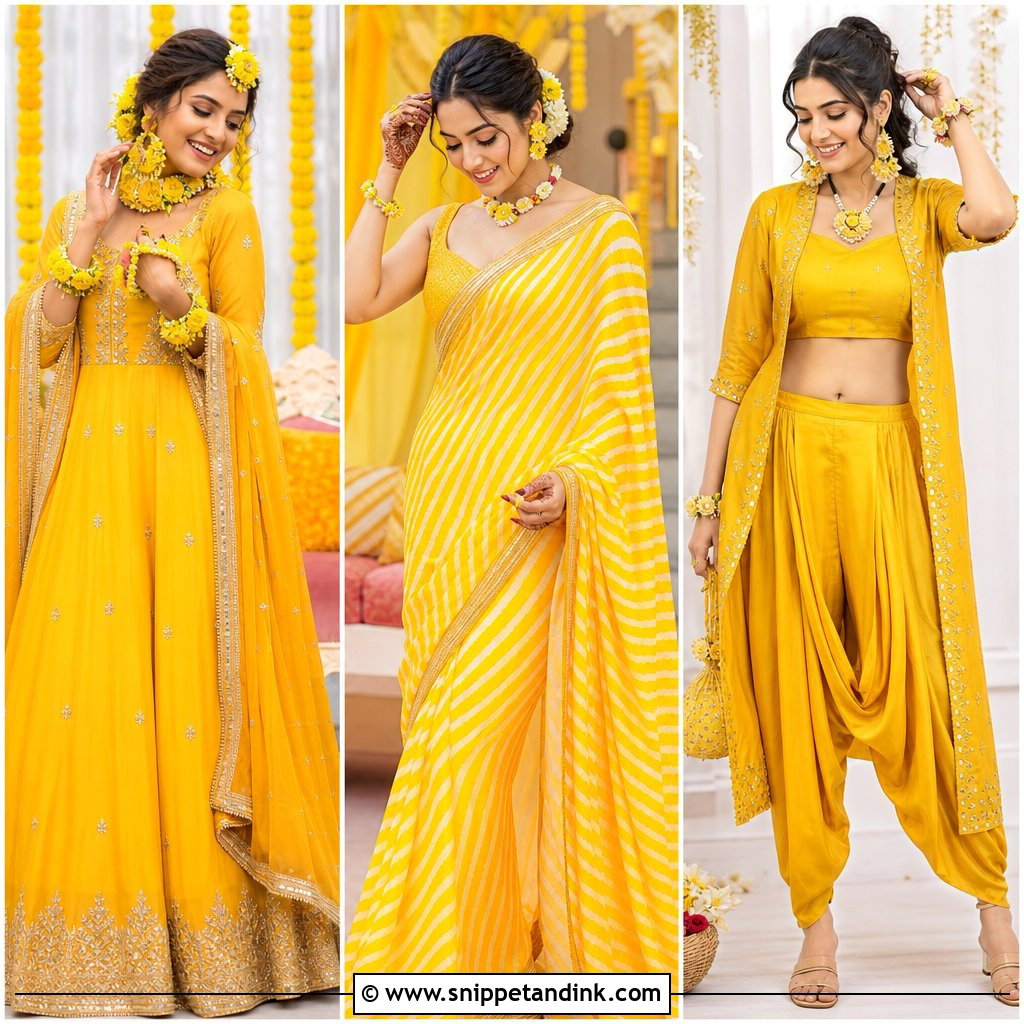
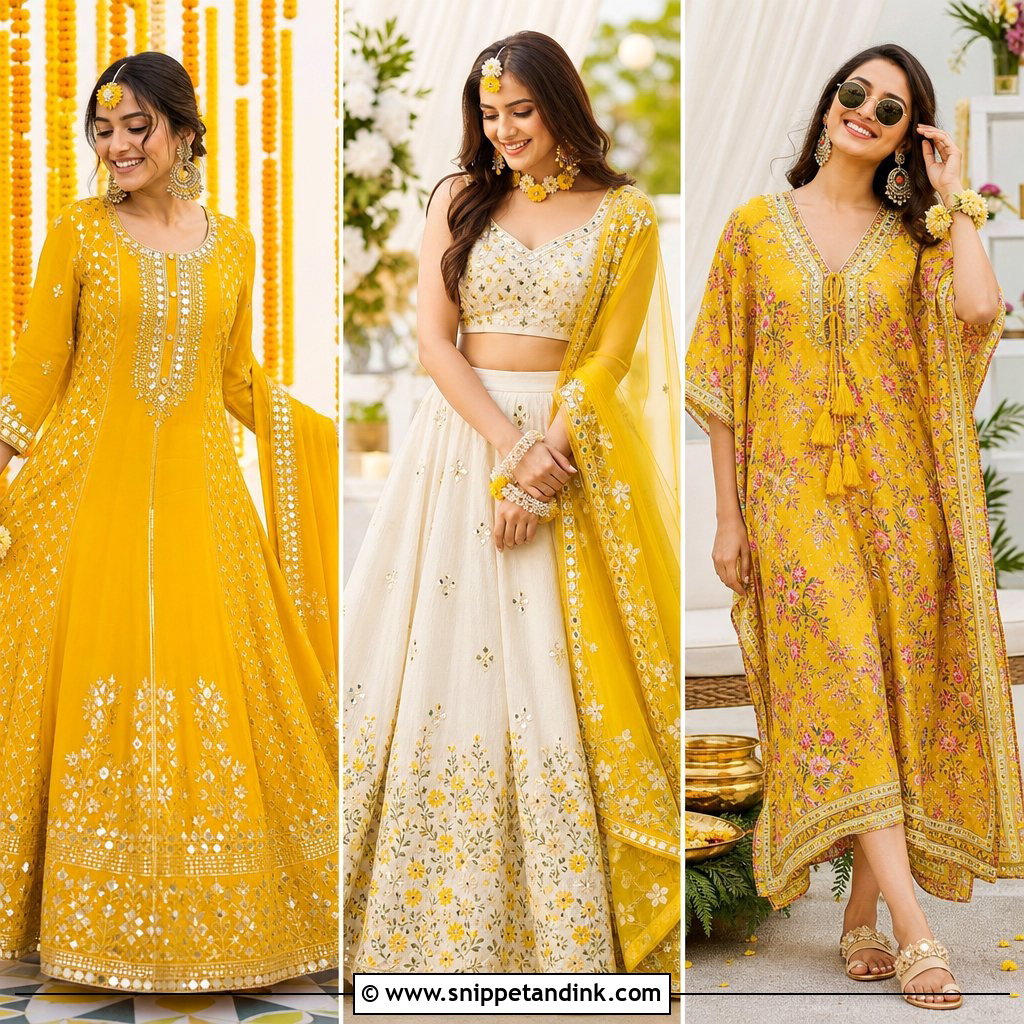
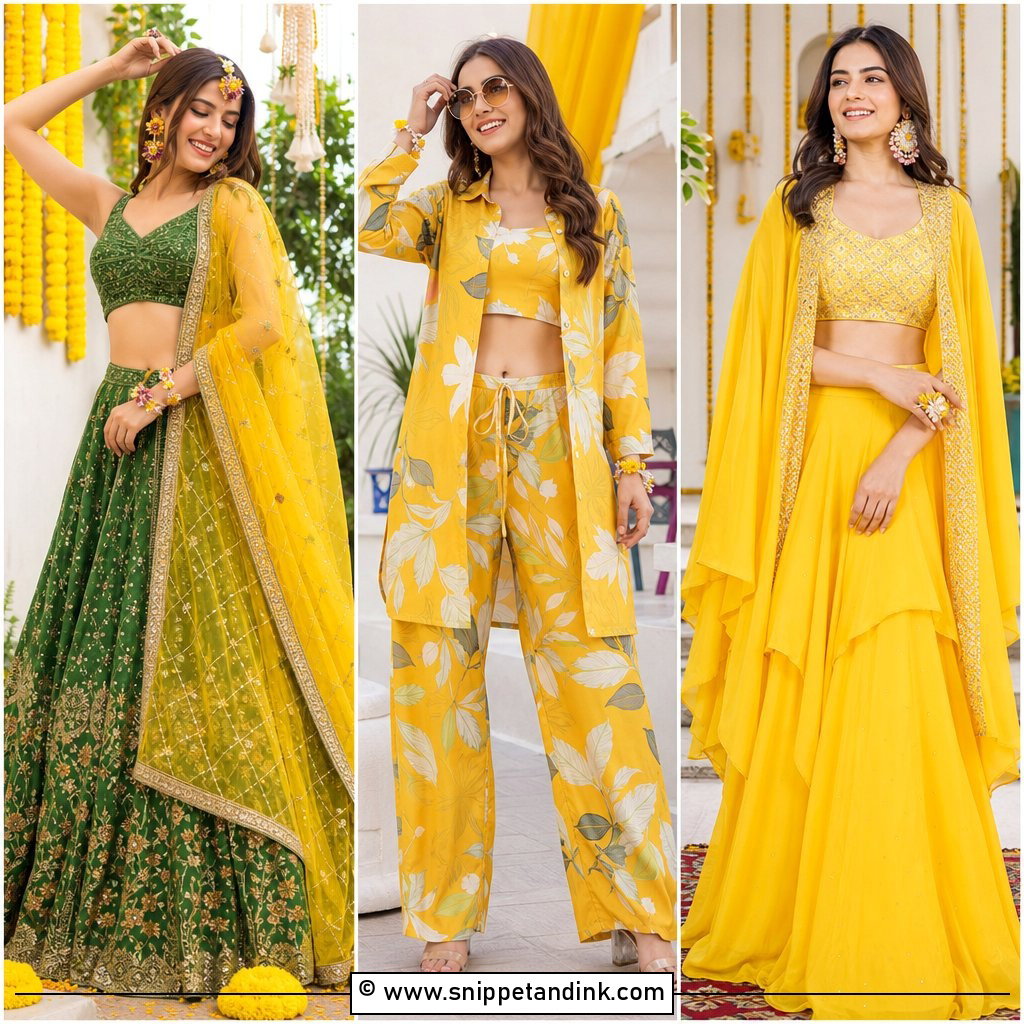
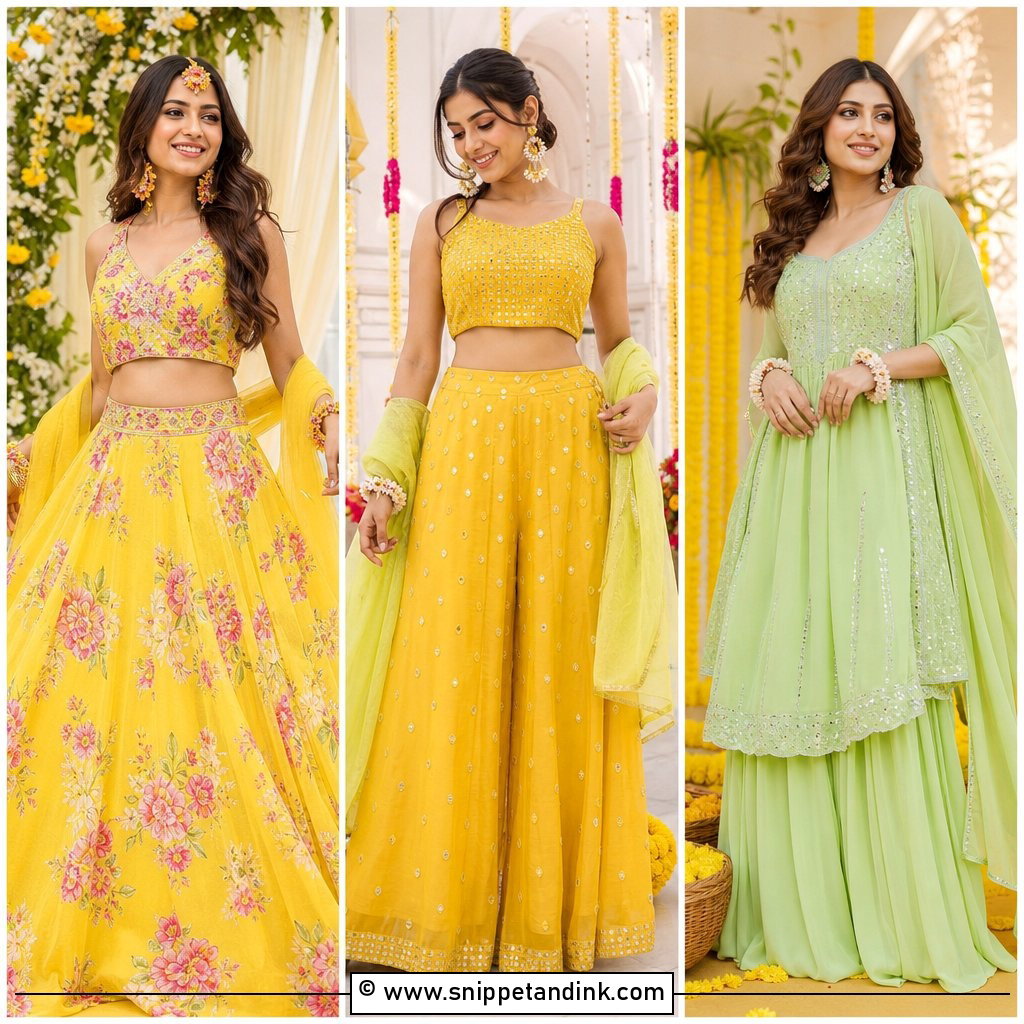
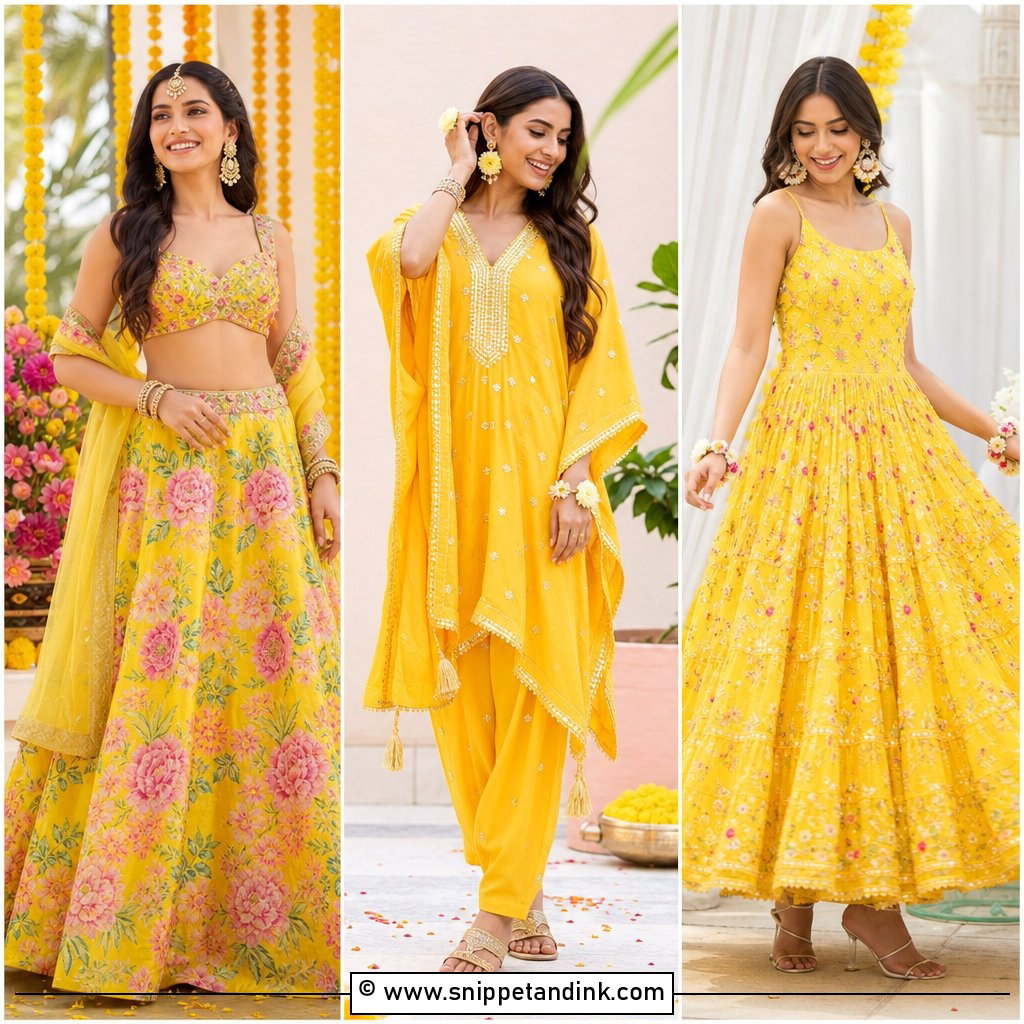
Yellow is the obvious haldi colour for a reason: turmeric that lands on it all but disappears. Keep the lehenga light, in georgette, cotton silk, chanderi or organza, so you can get up and down from the floor without help. A short blouse with mirror work, gota patti or thread embroidery gives enough bridal detail. I always ask brides to try sitting cross-legged in the skirt at the fitting, because a lehenga with too much can-can underneath rides up and bunches when you’re seated low. Floral jewelry, soft curls, dewy makeup and wedges finish it, and it sits naturally against marigold drapes and flower backdrops outdoors.
2. White Lehenga For Haldi Ceremony
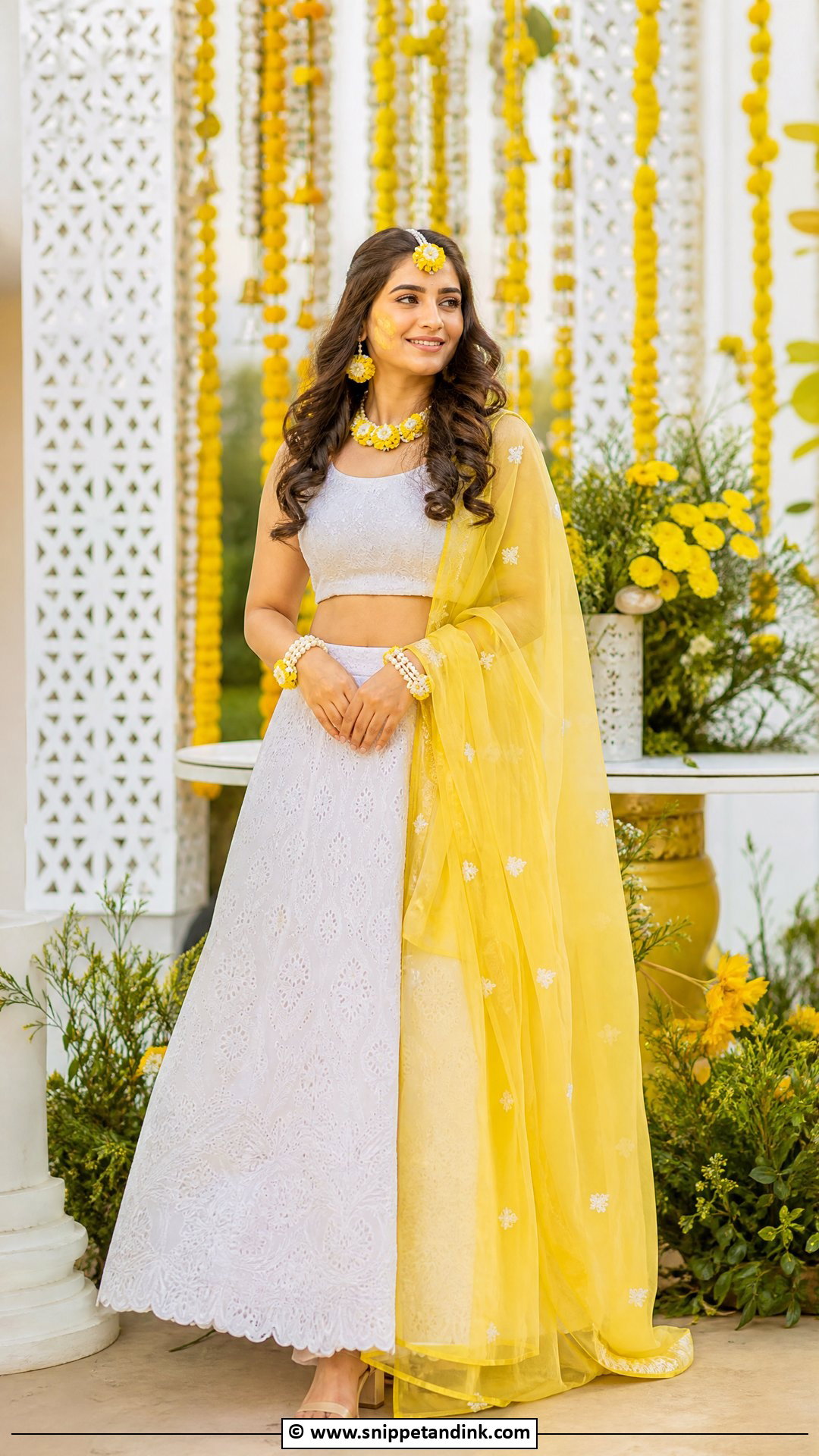
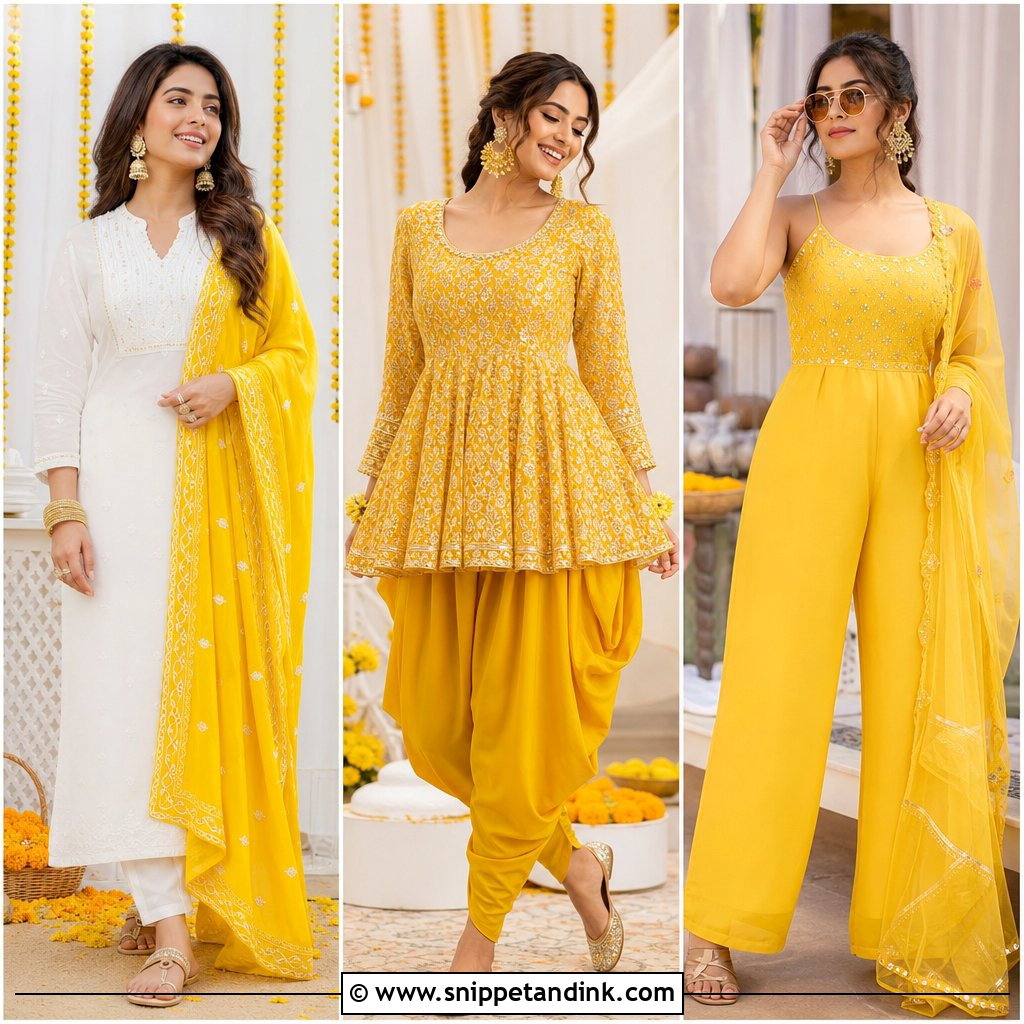
White against yellow florals looks fresh in pictures, and it lets the marigold decor and the turmeric itself do the colouring. Choose white cotton, organza or chikankari with a yellow dupatta. Be honest with yourself, though: turmeric stains white more visibly than anything else, so I only suggest this to brides whose families apply the paste gently and sparingly. If yours turns haldi into a free-for-all, save the white for the mehndi. Jasmine or marigold jewelry, a few bangles, nude sandals and a warm golden highlight are all it needs.
3. Yellow Saree For Haldi Ceremony
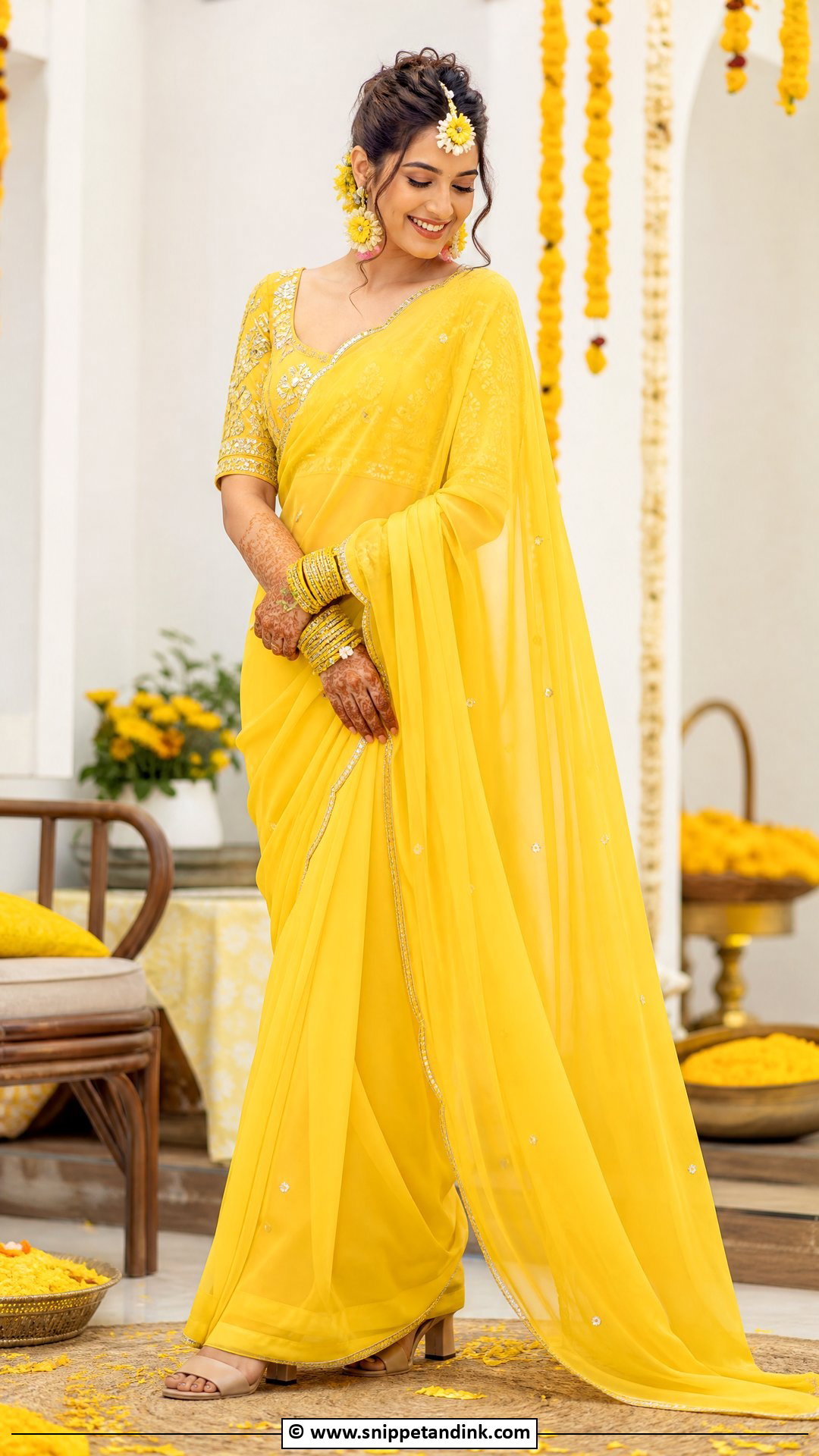
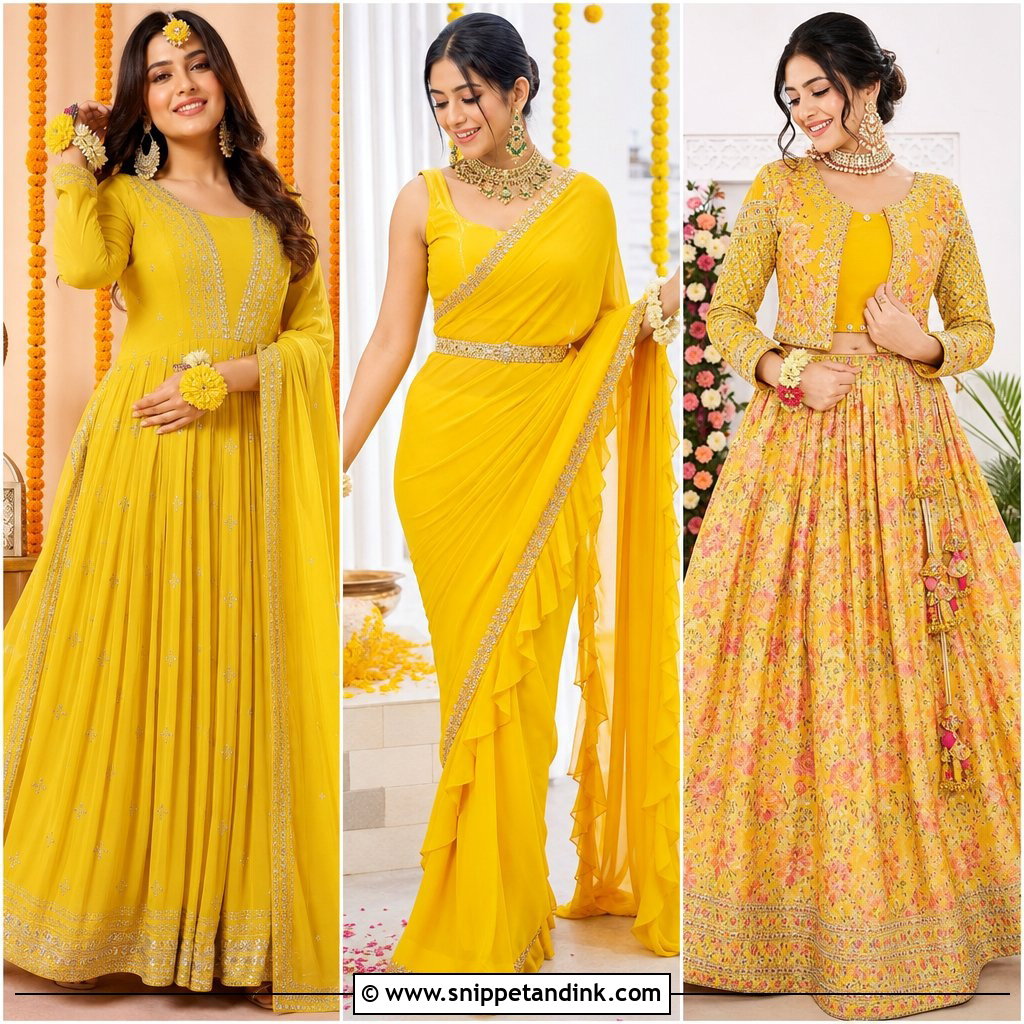
A yellow saree is easy to make your own. Chiffon, georgette, cotton silk and organza stay comfortable when you’re seated for a long ritual. A sleeveless or strappy blouse modernises it; a yellow silk saree with a gold border and temple jewelry keeps it traditional, and a plain one with flowers in the hair softens it. The pallu is the thing to plan. When relatives lean in to apply paste to your shoulders and arms, a loose pallu slides, so I pin it at the shoulder and again at the waist. Block heels or embellished flats keep you steady on wet floors.
4. Yellow Sharara For Haldi Ceremony
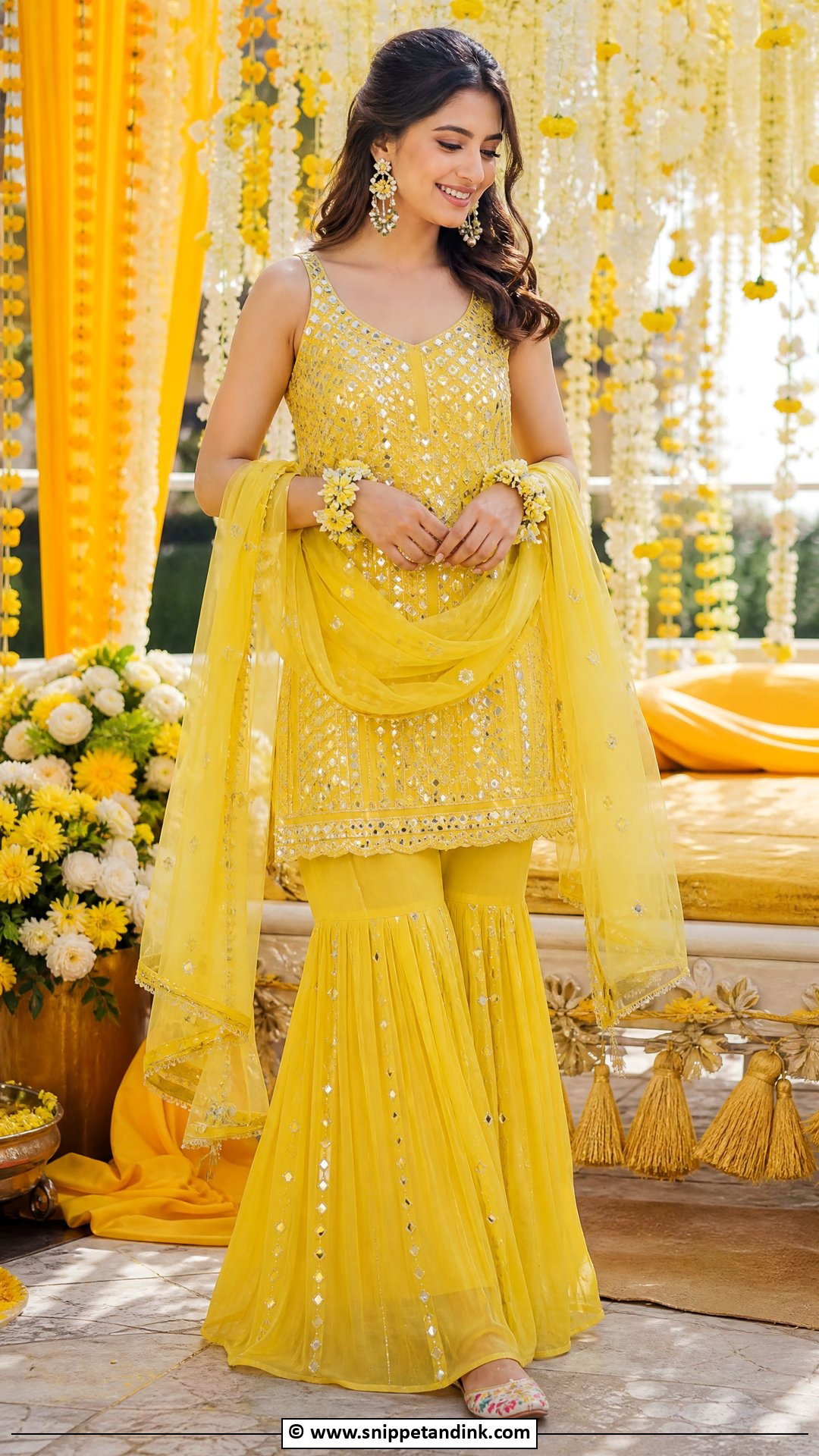
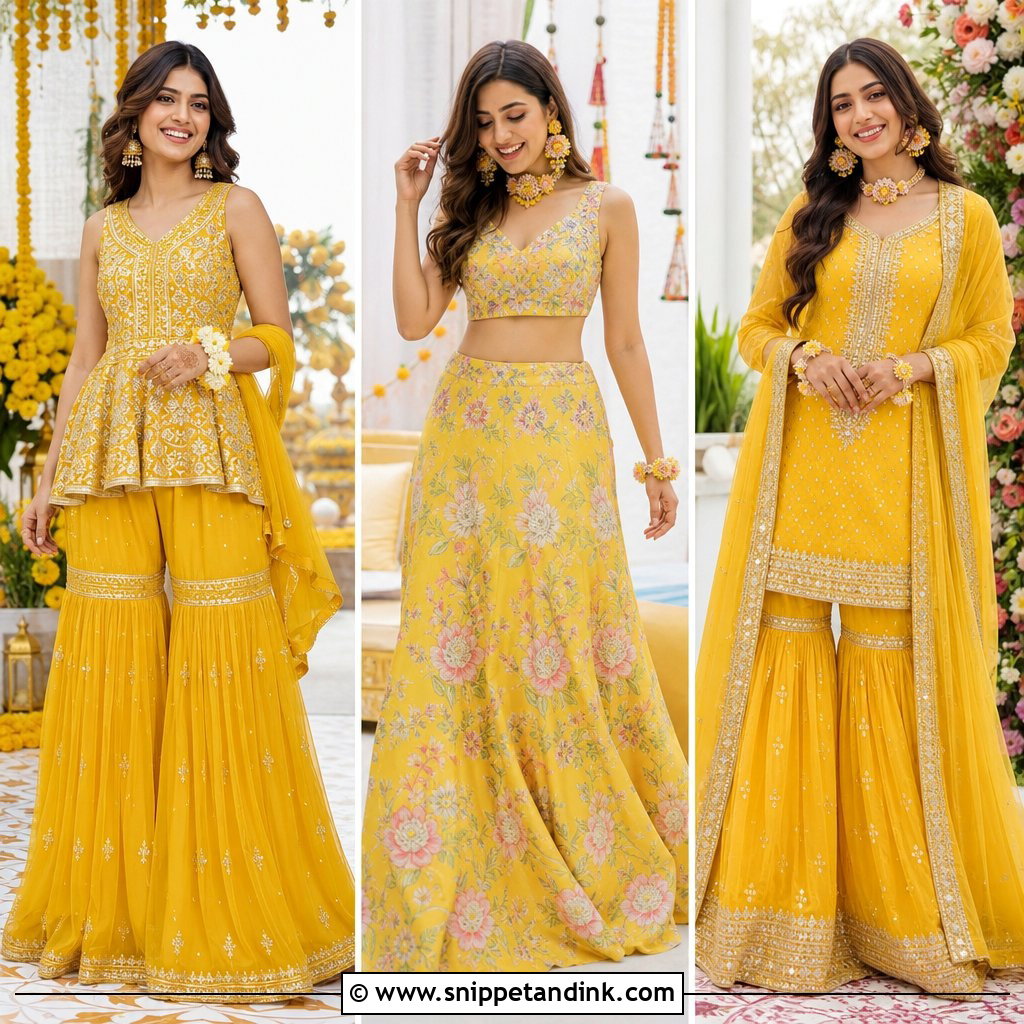
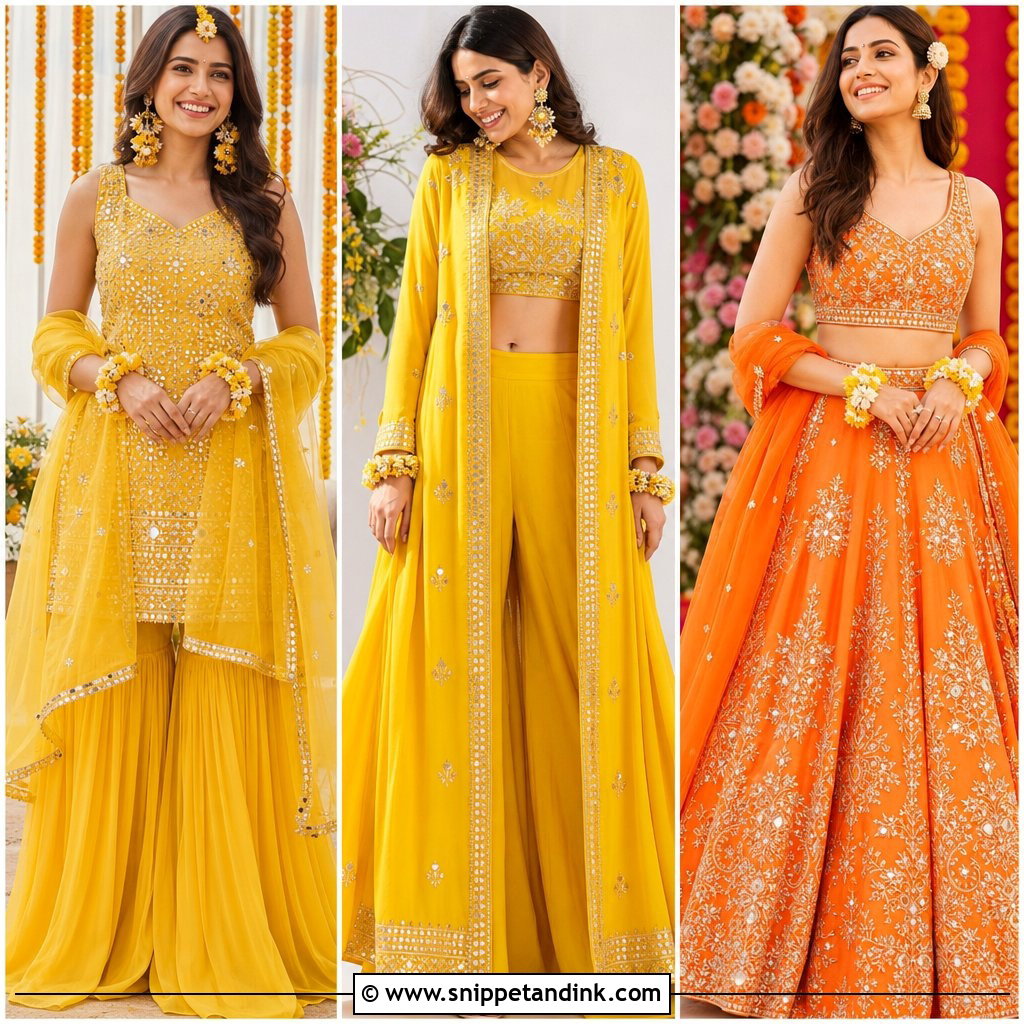
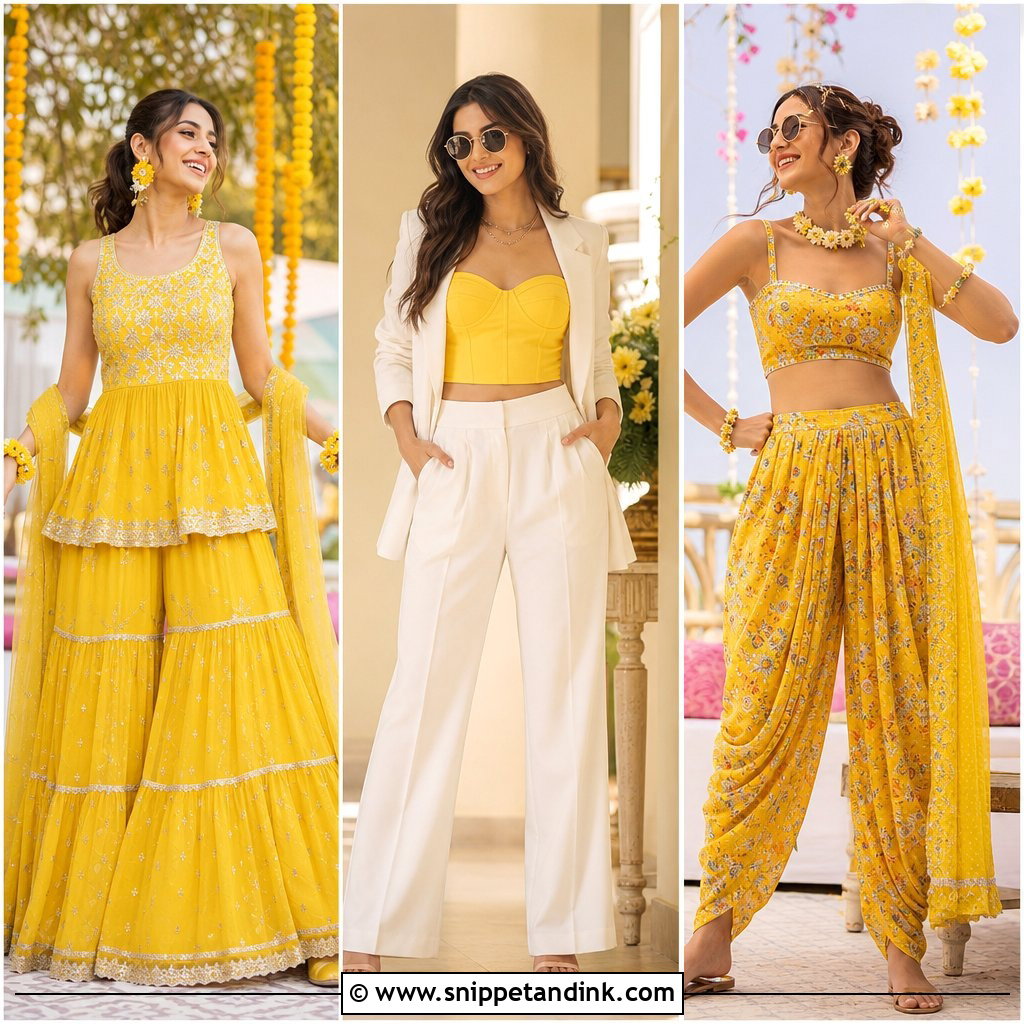
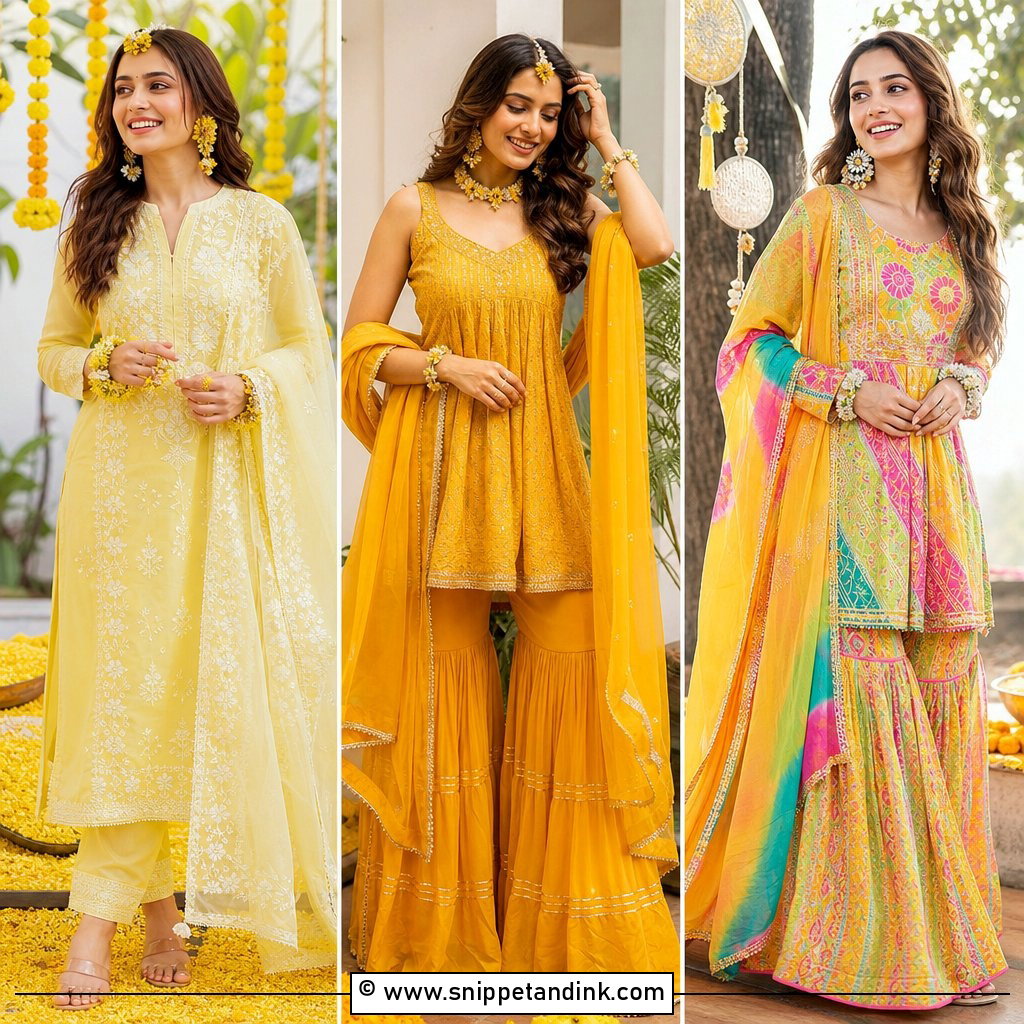
Shararas are what I recommend most often for floor seating. The flared trousers pool around you instead of riding up, and the kurti stays put when you bend forward. Choose a short kurti with gota patti, mirror work or floral embroidery, and an organza or net dupatta that adds softness without bulk. Add floral earrings, bangles, a maang tikka and soft juttis. When you’re moving between relatives for photos all morning, this is one outfit you won’t have to keep adjusting.
5. Yellow Gharara For Haldi Ceremony
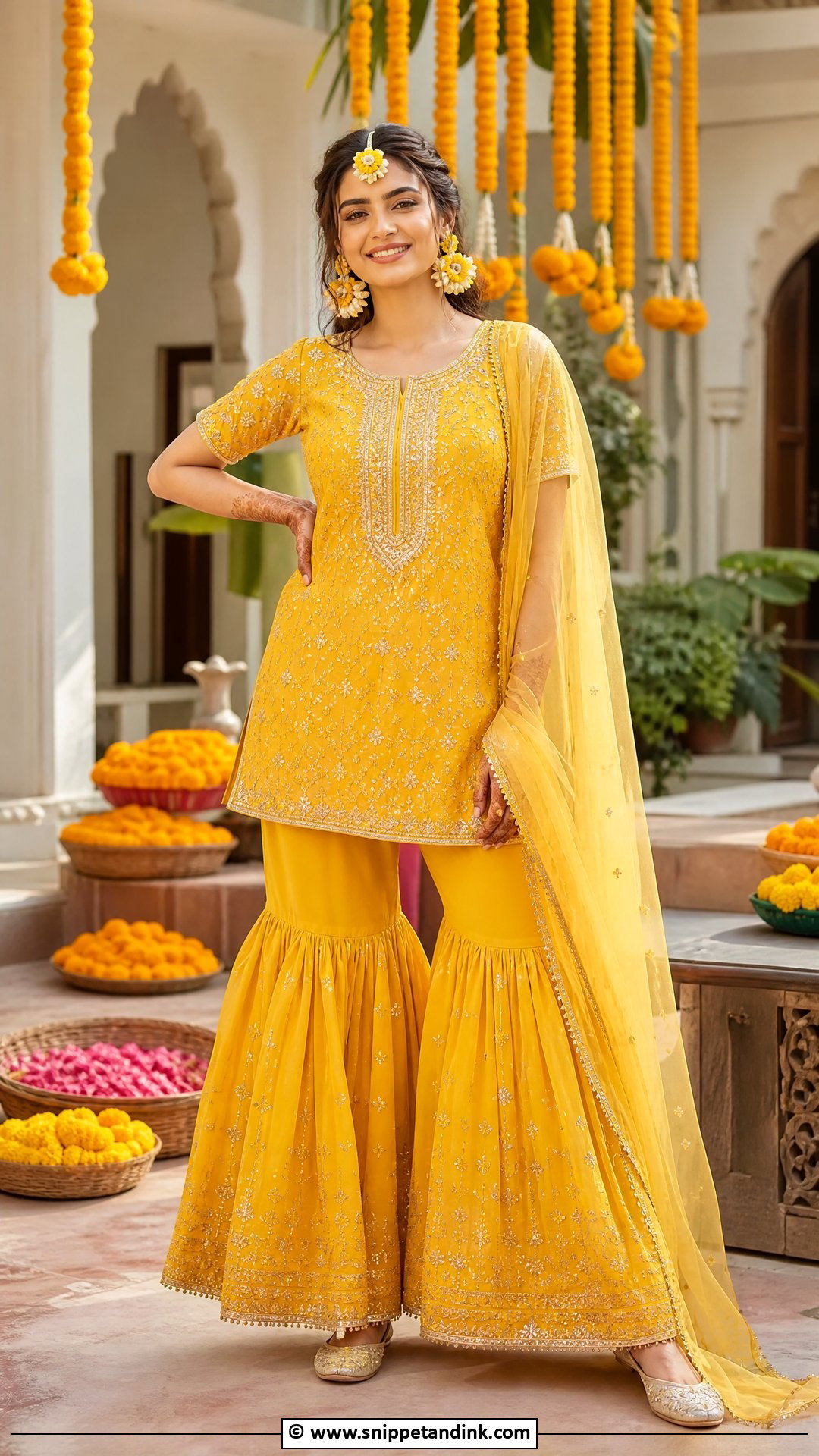
A gharara has an old-world shape that a sharara doesn’t: fitted to the knee, then gathered into a dramatic flare below it. That joint at the knee gives a distinct silhouette in photos, but it also restricts how you sit, so try kneeling and sitting cross-legged in it before you commit. Pair a short kurti with light embroidery, mirror work or scalloped edging. Pin the dupatta on one shoulder for the ritual and drape it around the arms for portraits. Finish with statement earrings, flower bangles, soft makeup and embroidered juttis.
6. Yellow Anarkali For Haldi Ceremony
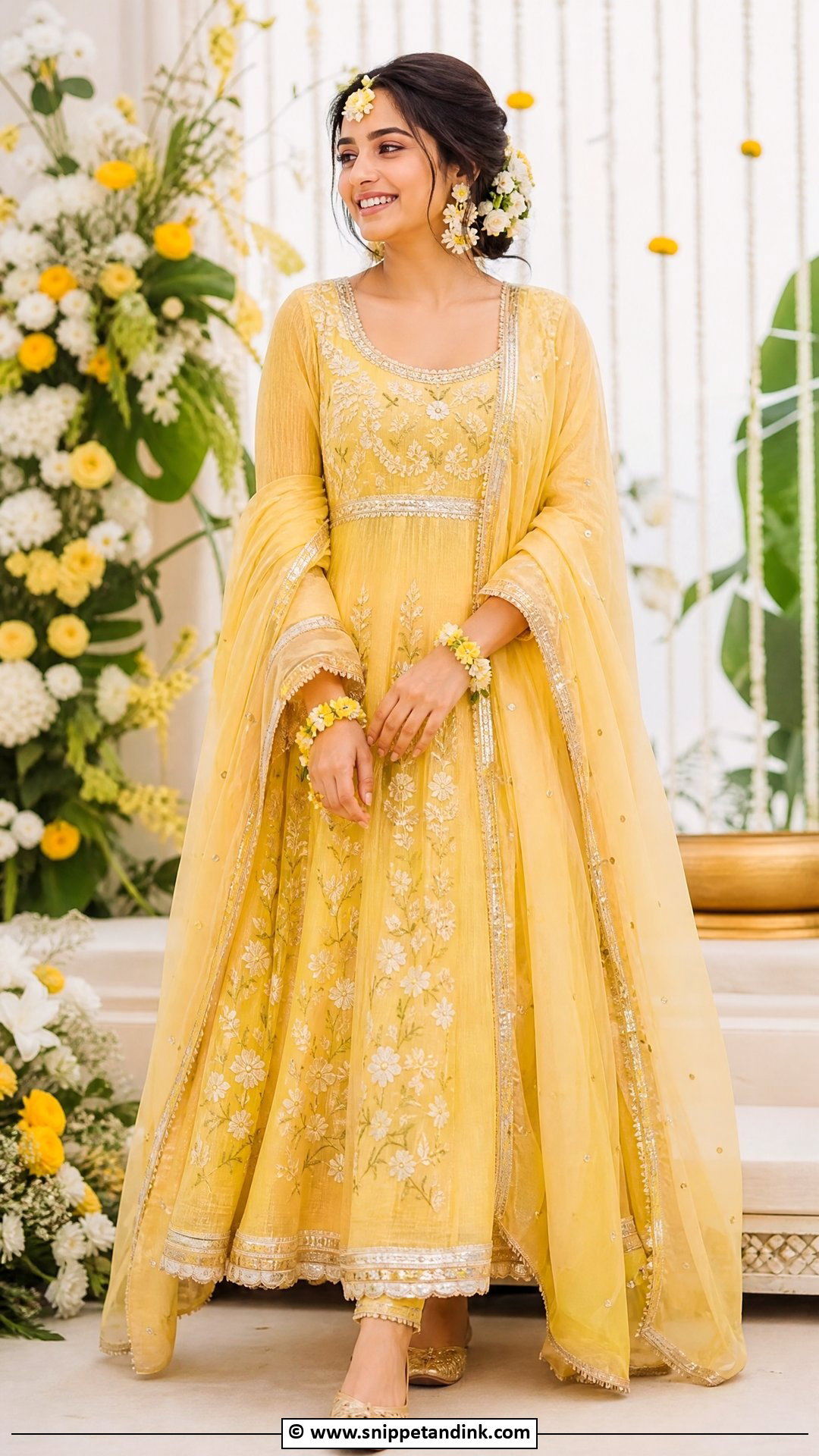
Anarkalis give you a flowing shape without a lehenga’s weight. Cotton silk, georgette, muslin or chanderi keeps it comfortable, and light mirror work, gota borders or thread embroidery is enough for a bride. Sitting down is where the cut matters: a very full anarkali spreads into a circle around you and soaks up any spilled paste, so I prefer a slightly narrower flare for a lively haldi. Wear the dupatta over one shoulder or skip it if the bodice is busy, then add floral jewelry, a low bun and embellished flats.
7. Yellow Kurta Palazzo For Haldi Ceremony
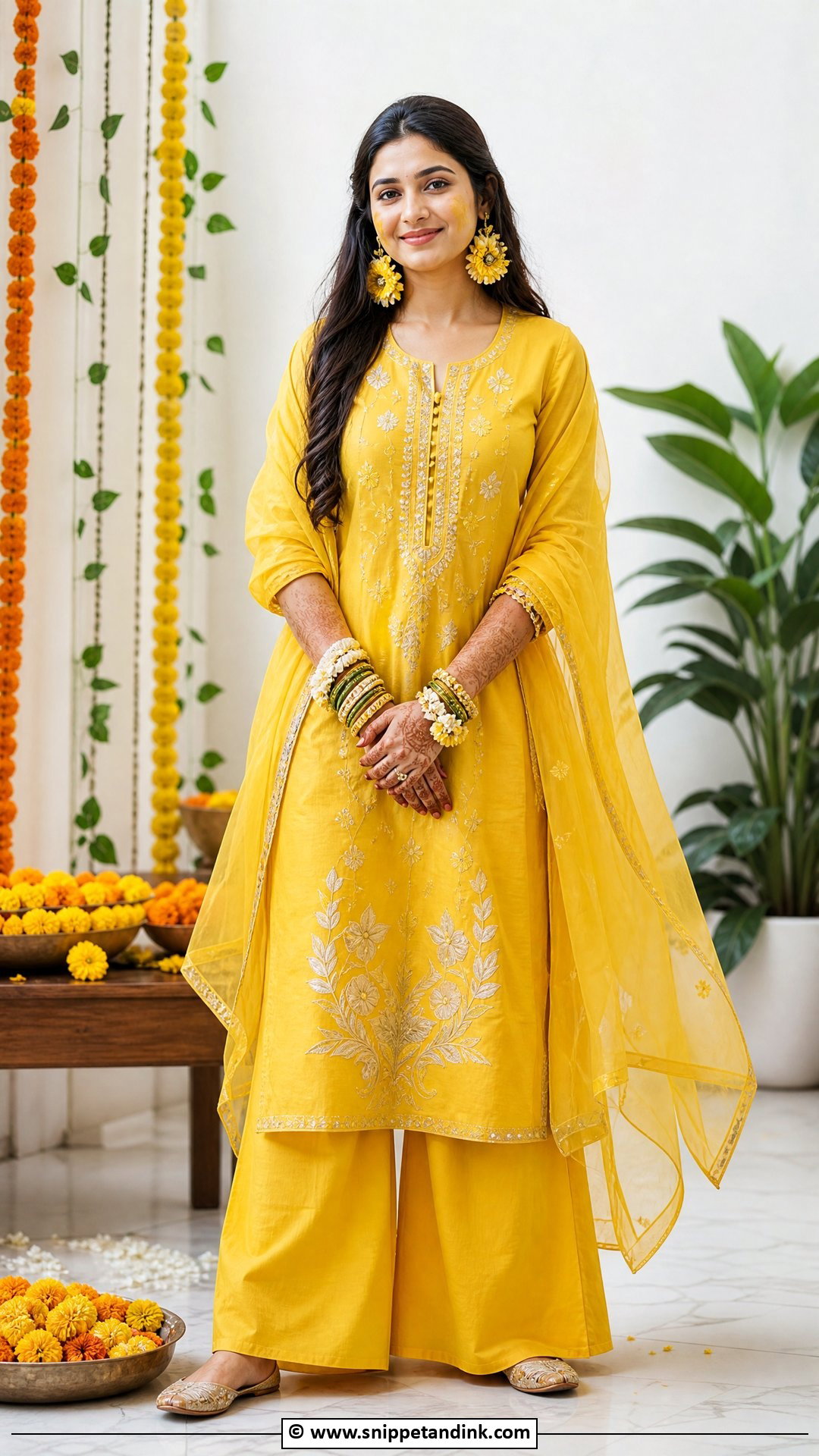
A yellow kurta palazzo outfit is the breeziest option here and suits a relaxed haldi at home or in the garden. Wide palazzos let you sit any way you like, and a straight kurta with mirror work, lace trim or floral embroidery keeps it polished. A light dupatta frames the face in photos. Add fresh flower earrings, stacked bangles, a small bindi and embroidered flats. If your family likes a proper turmeric fight at the end, this is the outfit I’d want you in, since cotton palazzos wash far more easily than a lehenga skirt.
8. Yellow Co Ord Set For Haldi Ceremony
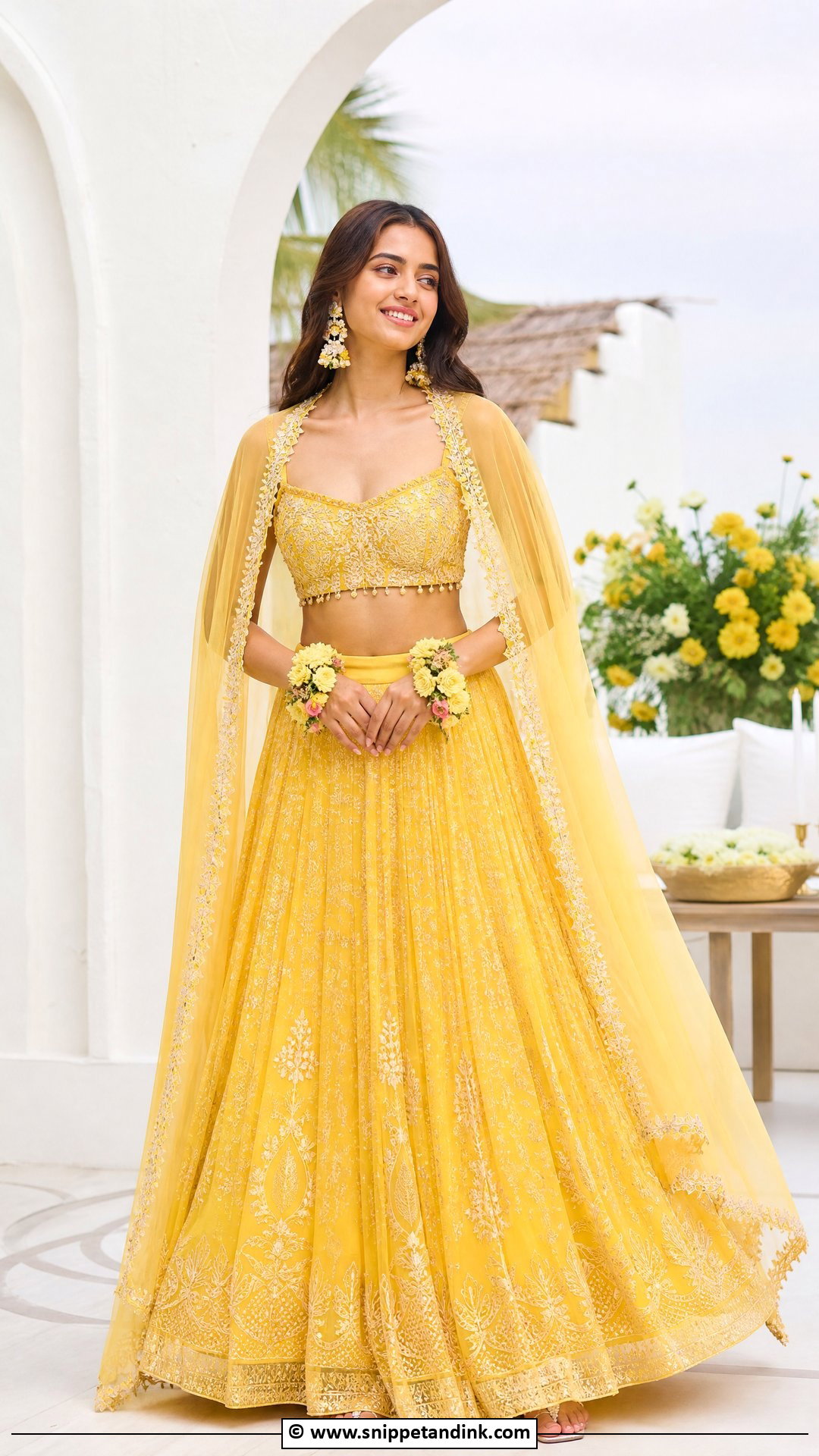
Co-ord sets suit the bride who’d rather not dress traditionally for every event. A crop top with a flared skirt, palazzos or dhoti pants gives a matched look; embroidered borders, mirror accents or floral prints keep it festive. A cape or light dupatta adds drama for photos. One thing to check with a crop top: paste goes on the midriff too in many families, so decide how you feel about that before you choose how much skin to show. Statement earrings, flower bangles, soft waves and sandals finish it for a poolside or daytime ceremony.
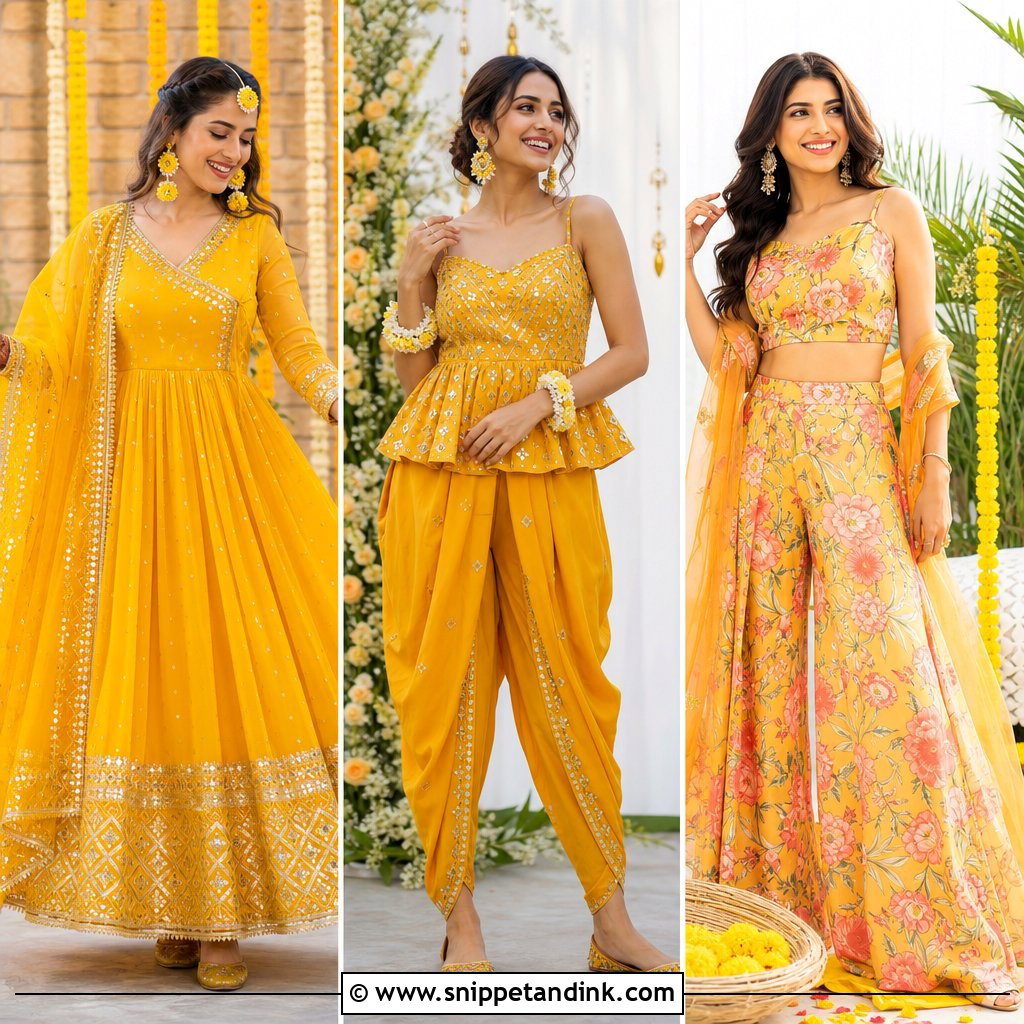
9. Yellow Indo Western Haldi Outfit
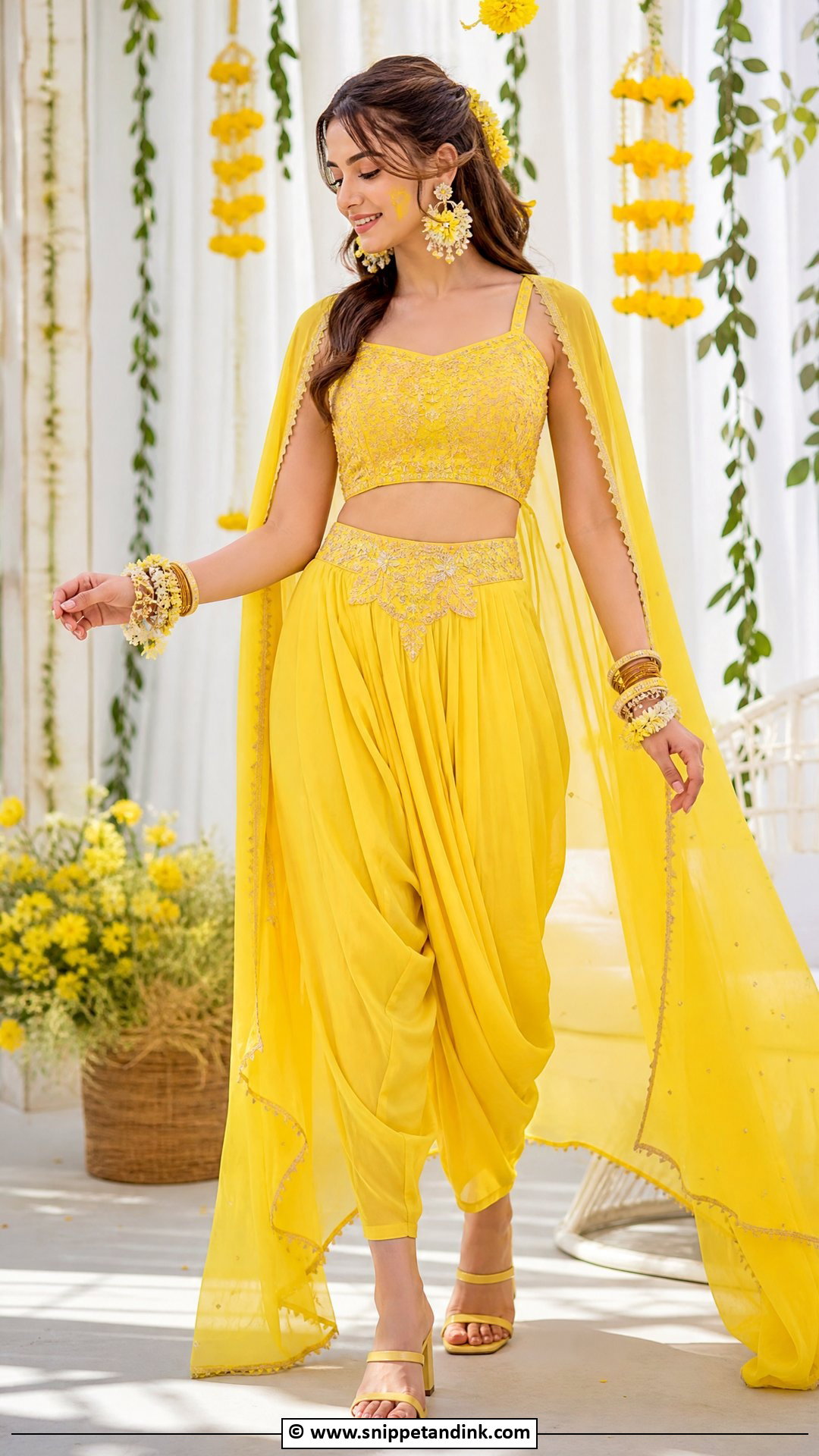
Indo-western pieces let your haldi look feel nothing like the wedding lehenga. A crop top with dhoti pants, a peplum with sharara pants, or a draped skirt with a structured blouse all work. Yellow leads, with white, orange, pink or lime as accents. Heavy embellishment is the mistake I see most with fusion outfits, because sequins scratch when relatives hug you and trap paste in every gap. Choose breathable fabric, keep the work light, and add floral jewelry, sleek hair and block heels.
10. Yellow Dhoti Saree For Haldi Ceremony
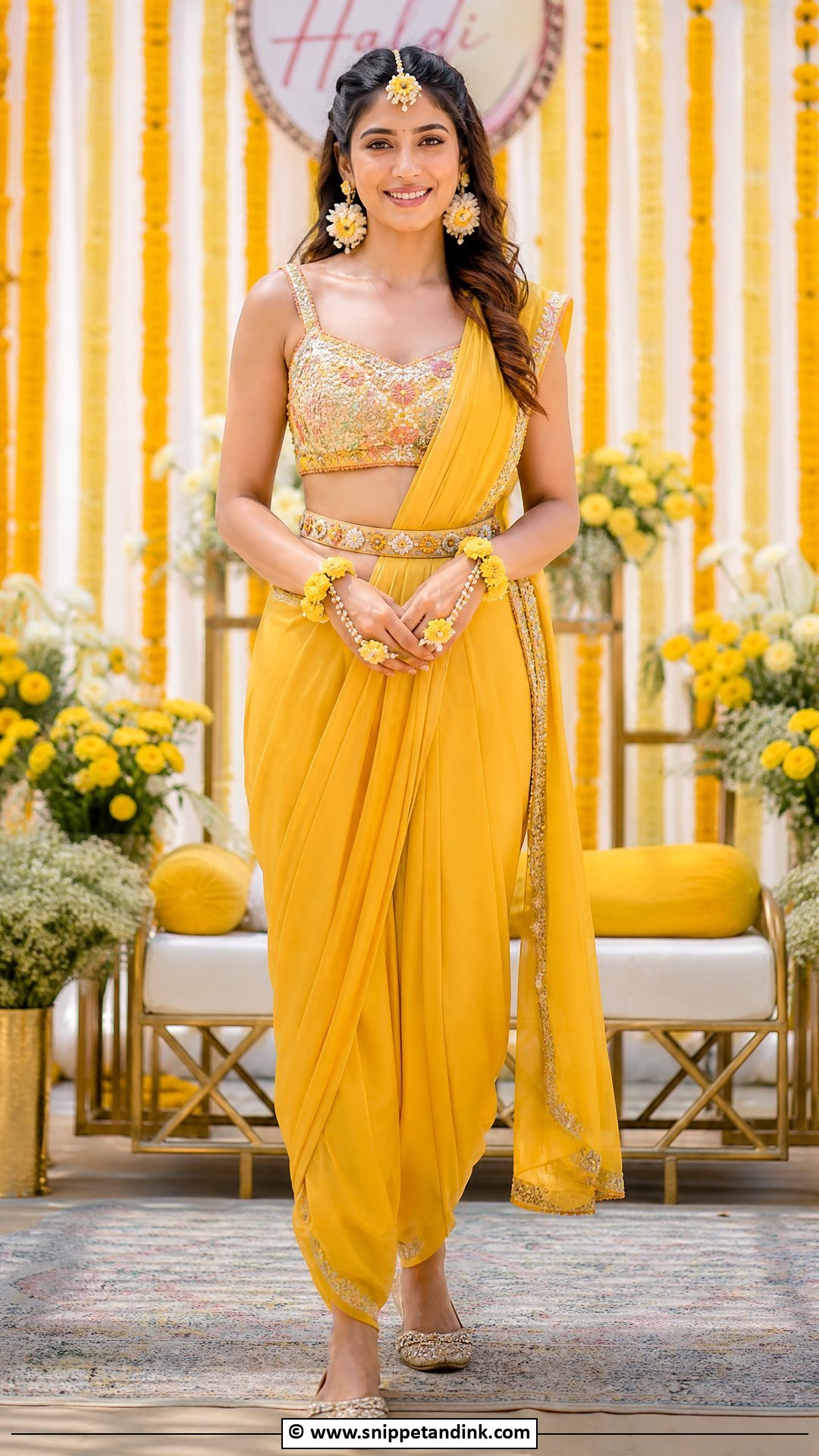
A yellow dhoti saree gives you a saree’s line with the freedom of trousers. Because the drape is pre-stitched, nothing comes undone while you sit and stand. Crepe, georgette or a satin blend falls smoothly; satin blends do show water marks, so I’d lean toward georgette if your haldi ends with a splash. A crop blouse, embroidered bustier or short kurti completes it, and a belt holds the drape at the waist. Add floral earrings, a maang tikka and metallic flats.
11. Yellow Pre Draped Saree For Haldi Ceremony
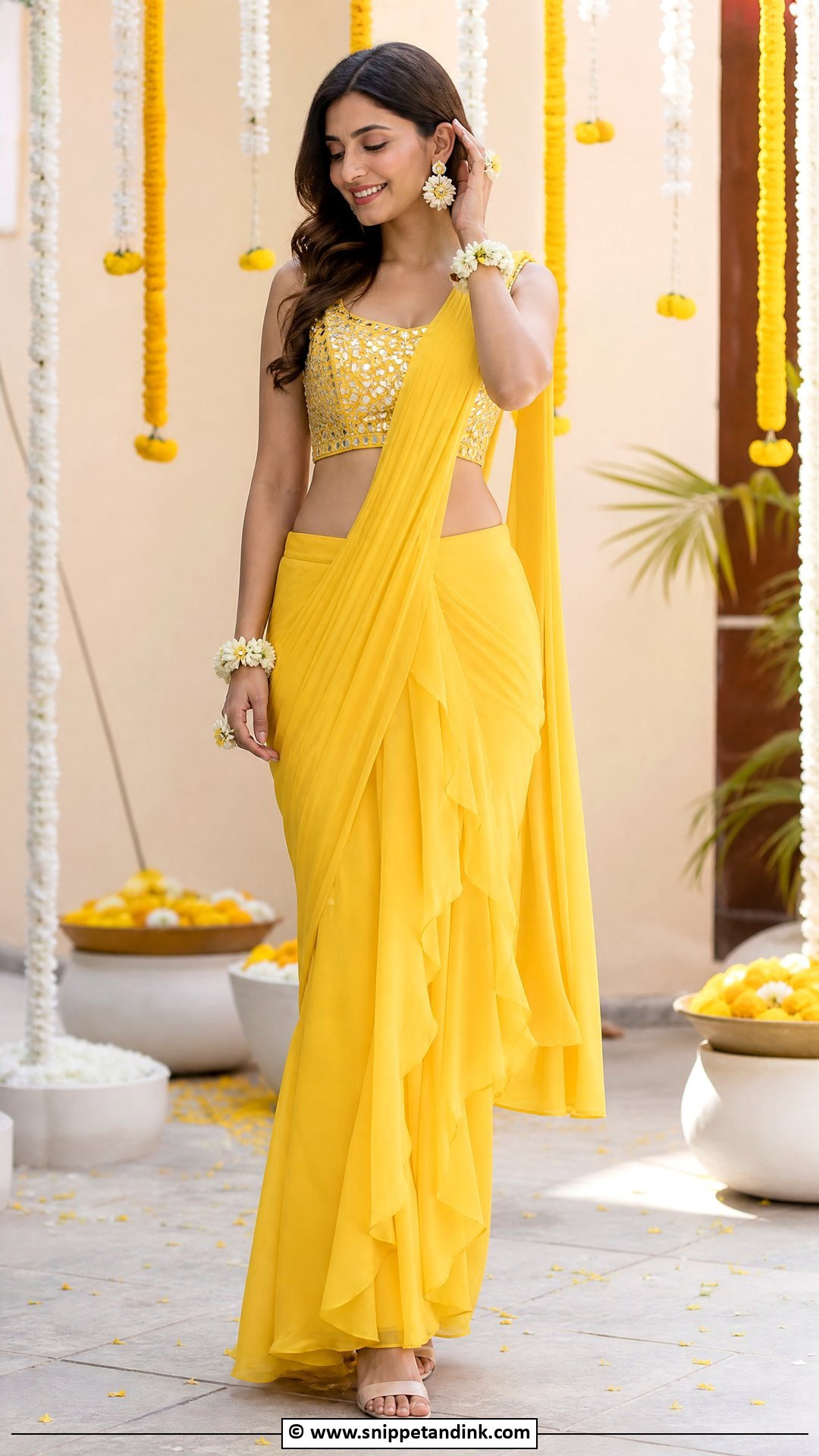
If you love sarees but dread re-pleating halfway through the ritual, go pre-draped. The stitched drape stays secure through sitting, dancing and photos. Lemon, marigold and mustard all suit haldi; hold each against your face in daylight, because lemon can wash out deeper skin tones while mustard can look muddy on very fair ones. A blouse with mirror work, tassels or floral embroidery adds the bridal note. Keep accessories light: floral jewelry, a sleek bun and comfortable heels.
12. Yellow Ruffle Saree For Haldi Ceremony
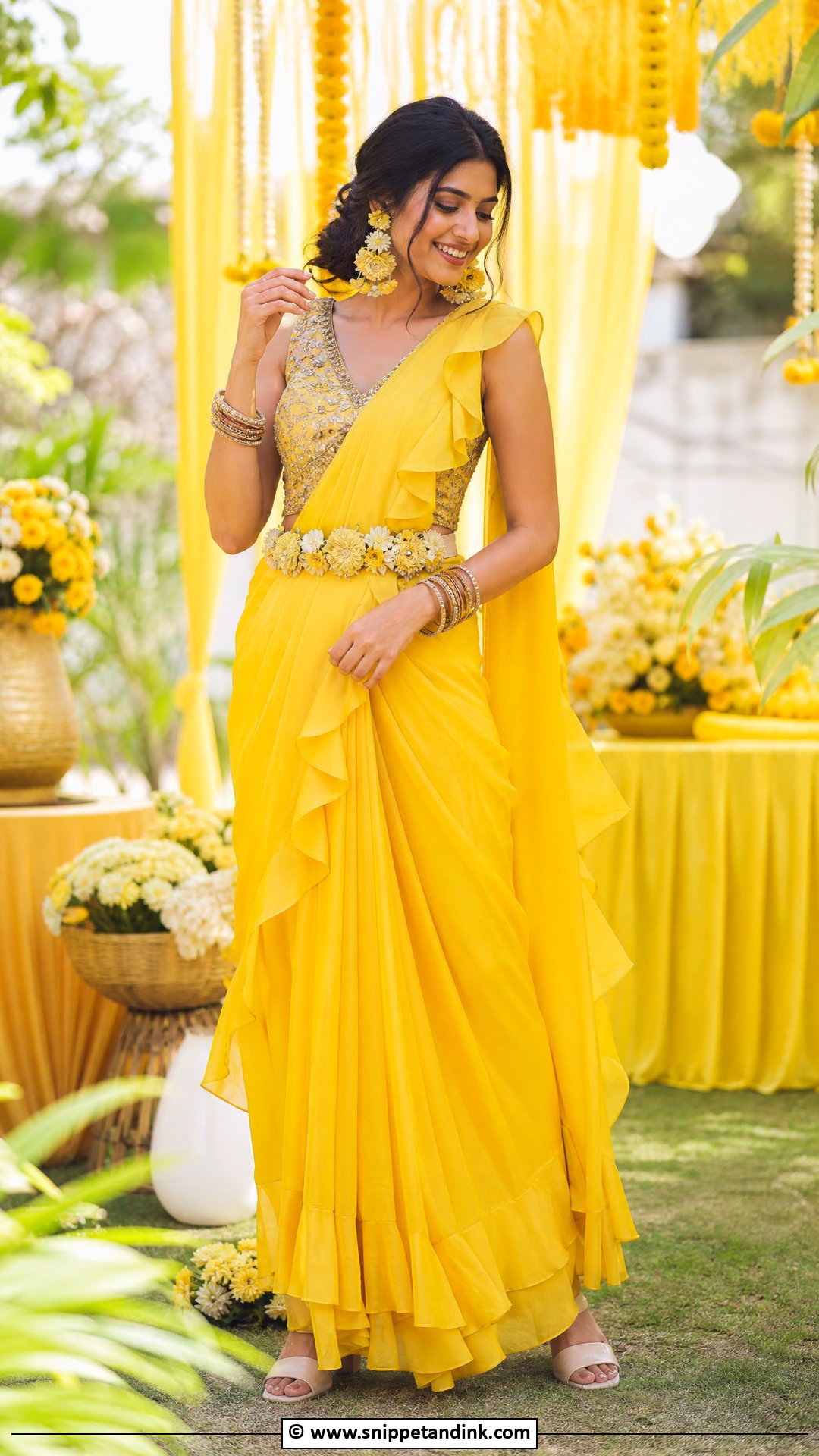
Ruffles move every time you do, which is why they come alive in candid shots of the dancing and the flower shower. Choose organza, chiffon or georgette so the frills stay airy. A plain blouse balances a voluminous saree; an embellished one makes it more bridal. In practice, ruffles collect paste in their folds, so I give the pallu a shake and a dab with a damp cloth before the posed portraits. A floral belt or pearl waist chain holds the drape. Flower earrings, loose waves and block heels finish it.
13. Yellow Organza Saree For Haldi Ceremony
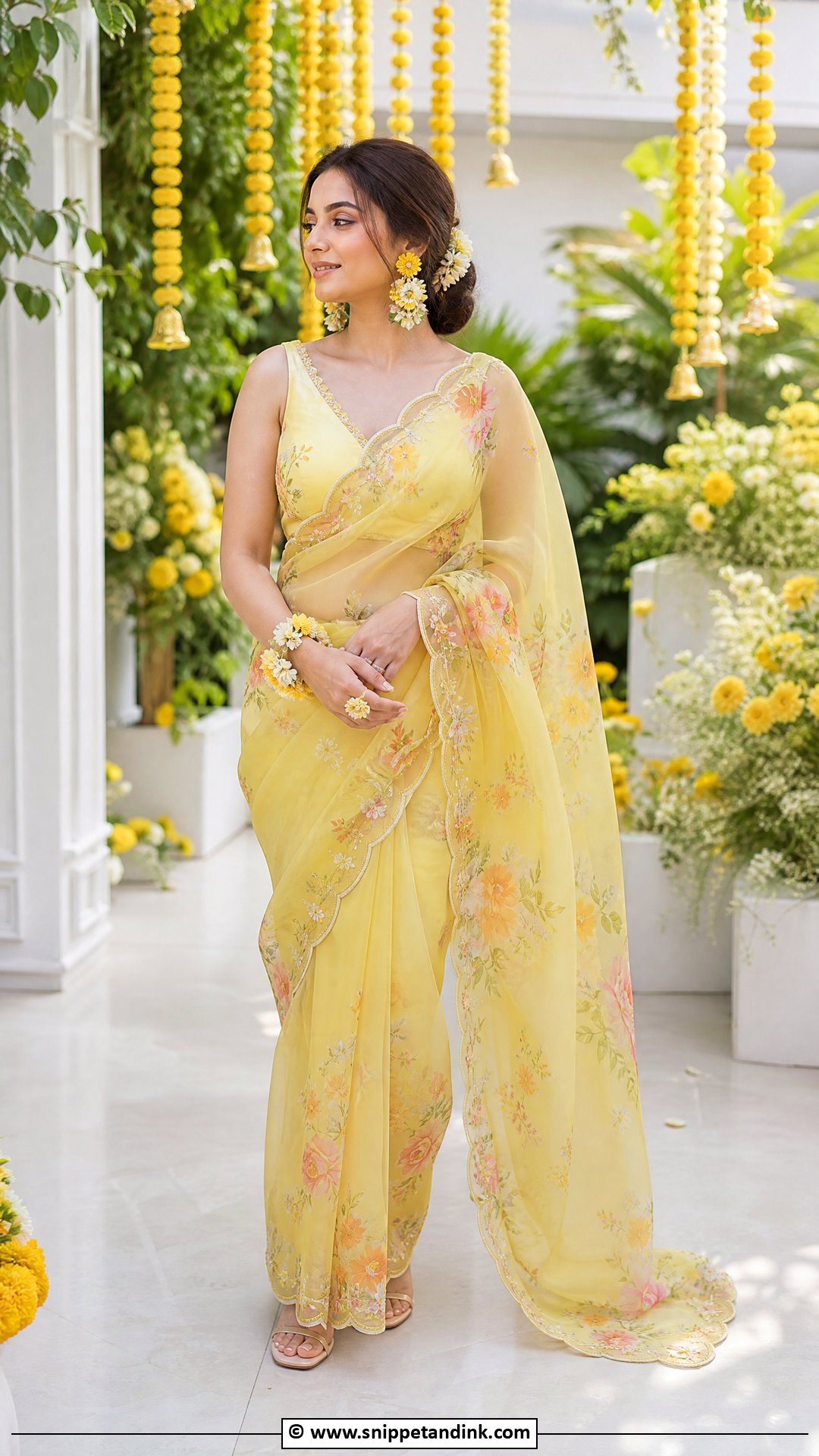
Organza holds its shape on its own, so a yellow organza saree looks crisp without heavy embroidery. Floral prints, scalloped borders or a little gota work are plenty, with a sleeveless or embroidered blouse. It is slightly stiff, so I pin the pleats more tightly than I would with chiffon and keep the pallu short enough to manage. Wet organza goes limp and slightly see-through, which is worth knowing if water is part of your ritual. Fresh flower jewelry, soft pink makeup and a low bun with small blooms suit a garden haldi.
14. Yellow Chikankari Lehenga For Haldi Ceremony
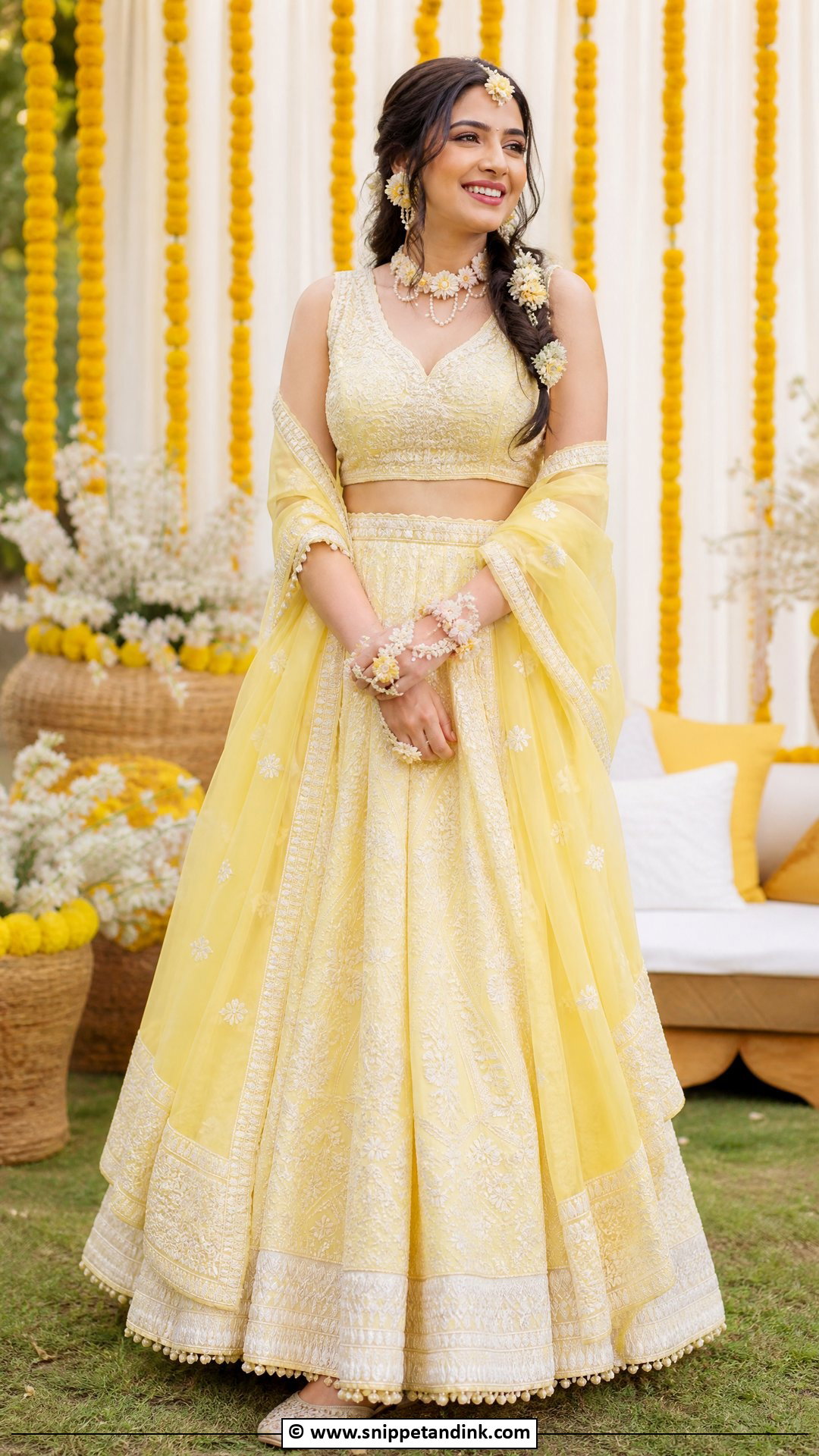
Chikankari is hand embroidery on fine cotton or georgette, so it brings texture without weight. Butter yellow gives a soft bridal feel; a white dupatta makes it fresher still. It pairs well with pearls, floral jewelry and natural makeup. The catch is care. Delicate shadow work can pull if paste is scrubbed off roughly, so I tell brides to let it dry and lift it gently, then hand-wash in cold water later. Embroidered flats or juttis keep you comfortable.

15. Yellow Mirror Work Lehenga For Haldi Ceremony
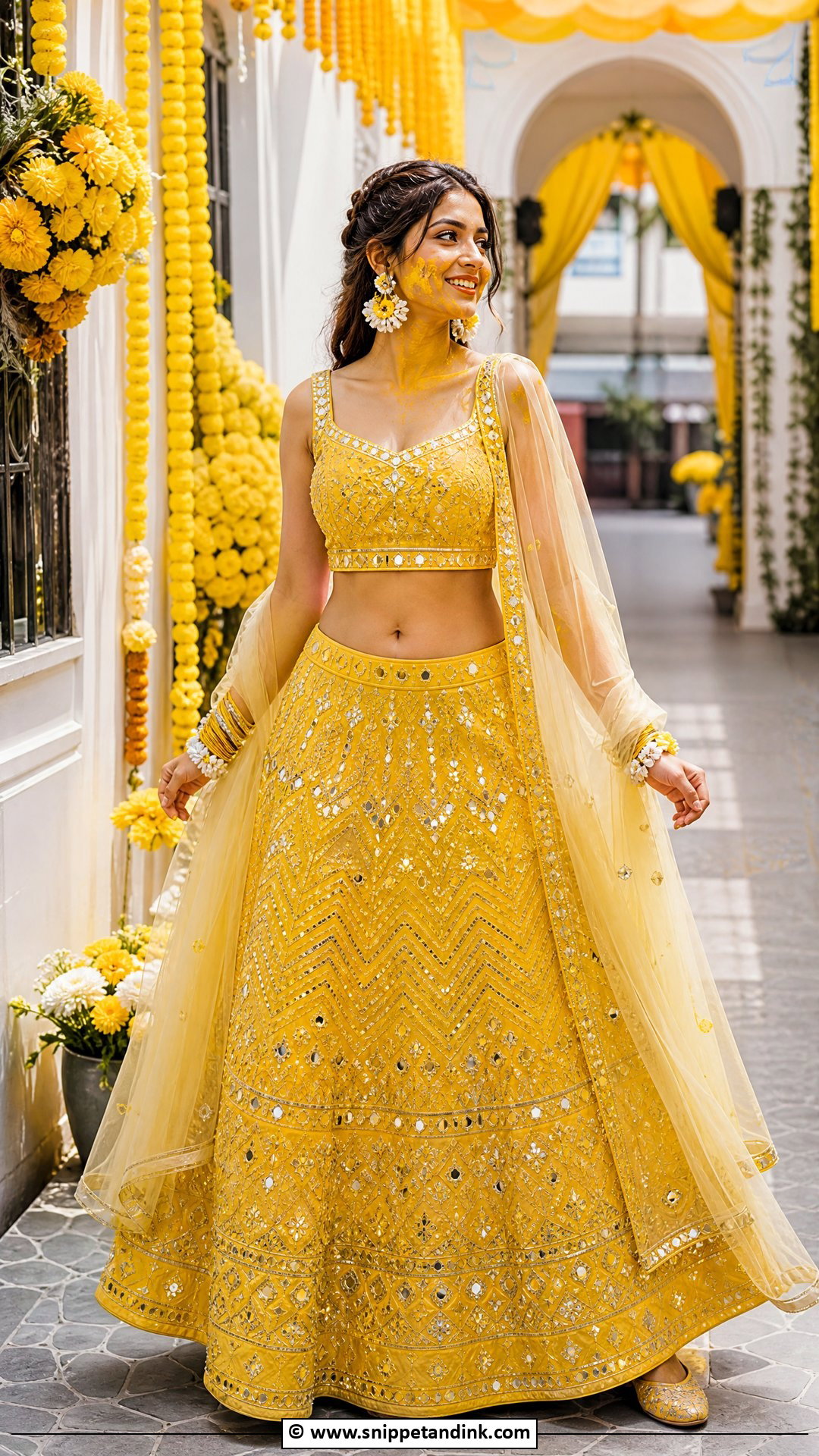
Mirror work sparkles in daylight in a way sequins don’t, since each small mirror catches the sun. Choose scattered mirrors on a light lehenga rather than a dense panel, which gets heavy and can scratch when people hug you. A short blouse and soft dupatta keep it youthful. Floral jewelry reads traditional; oxidised silver gives it a boho turn. Keep the makeup fresh, with glowing skin and a soft lip, because the outfit is already busy.
16. Yellow Gota Patti Lehenga For Haldi Ceremony
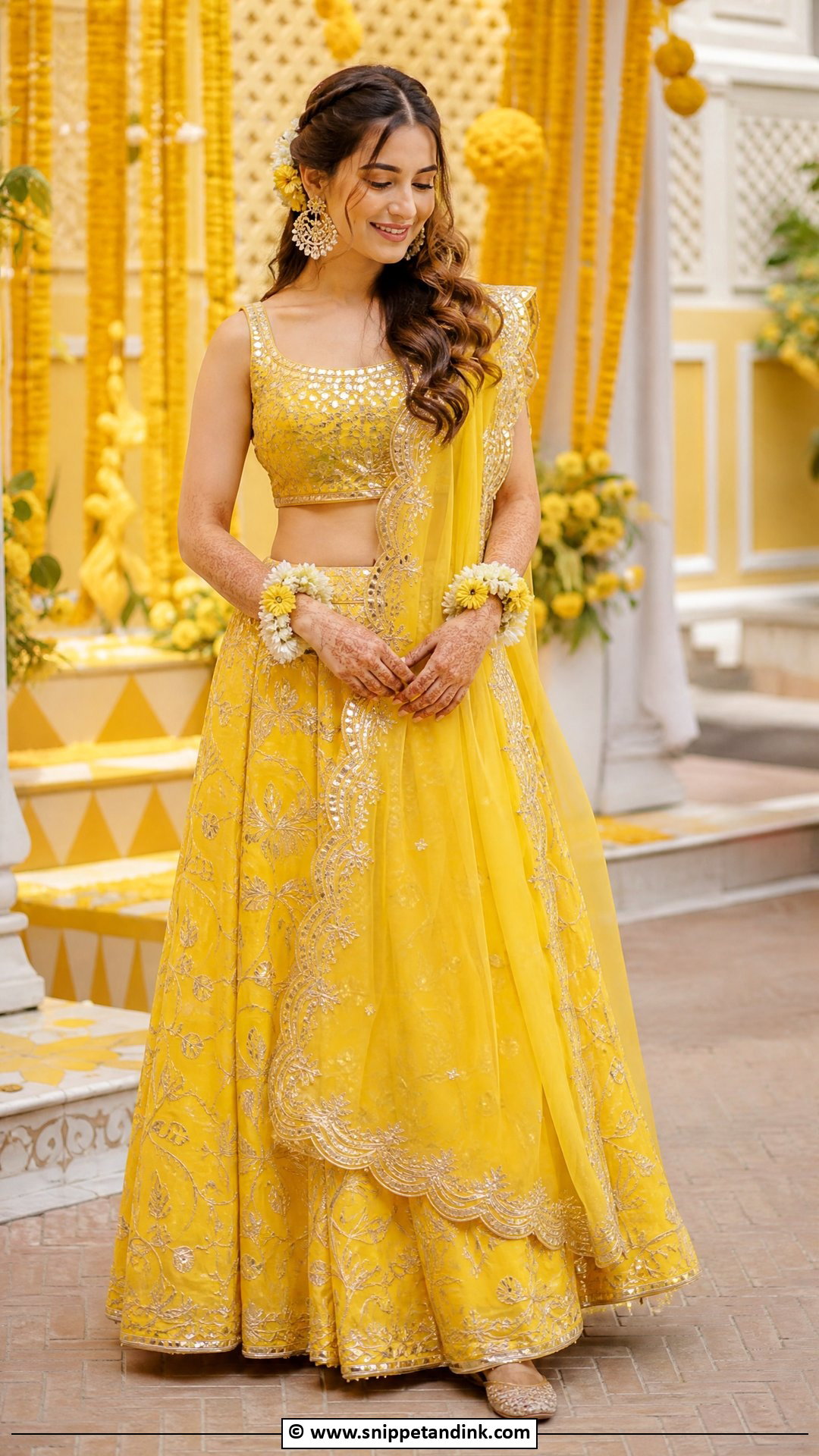
Gota patti is metallic ribbon appliqued onto fabric, so it looks rich without the weight of zardozi. The gold sits well with turmeric, marigold and daylight decor. Georgette, cotton silk or chanderi keeps it light. One practical note: older-style gota can tarnish when it gets wet and stays wet, so I ask brides to let the outfit air-dry fully before packing it. A blouse with gota borders, a light dupatta, kundan earrings, flower bangles and a small maang tikka finish it. Keep your hair secure in a braid or bun if the ceremony gets playful.
17. Yellow Floral Lehenga For Haldi Ceremony
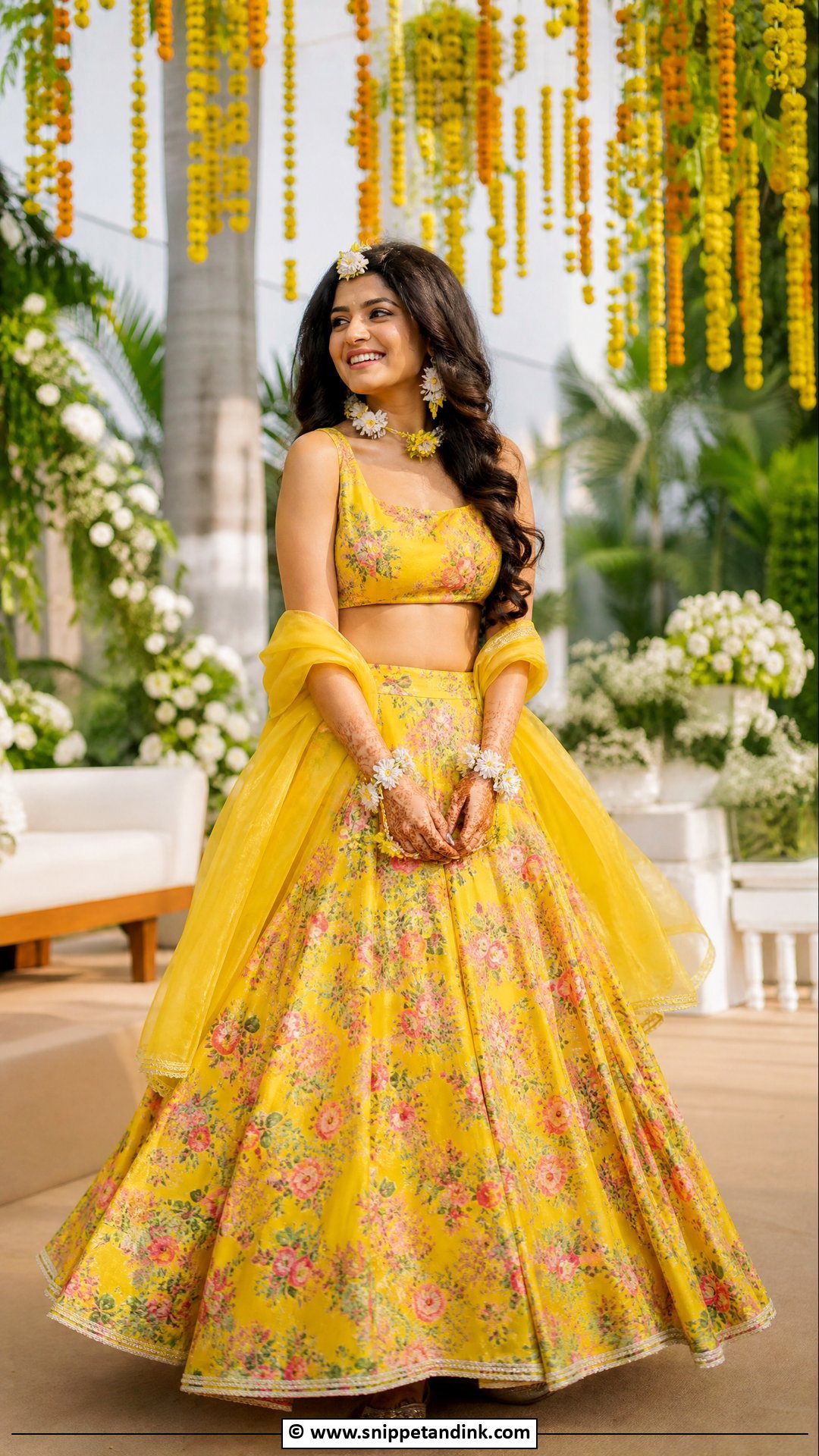
Florals keep a haldi lehenga cheerful without heavy work. A soft yellow base with pink, orange, green or white flowers balances bright and light. Keep the blouse simple and the dupatta flowing. I like printed or embroidered florals here for a practical reason: a busy pattern hides the odd turmeric smudge far better than a plain panel. Fresh flower jewelry, soft curls and minimal makeup are enough, and it sits naturally against marigold decor and garden settings.
18. Yellow Printed Lehenga For Haldi Ceremony
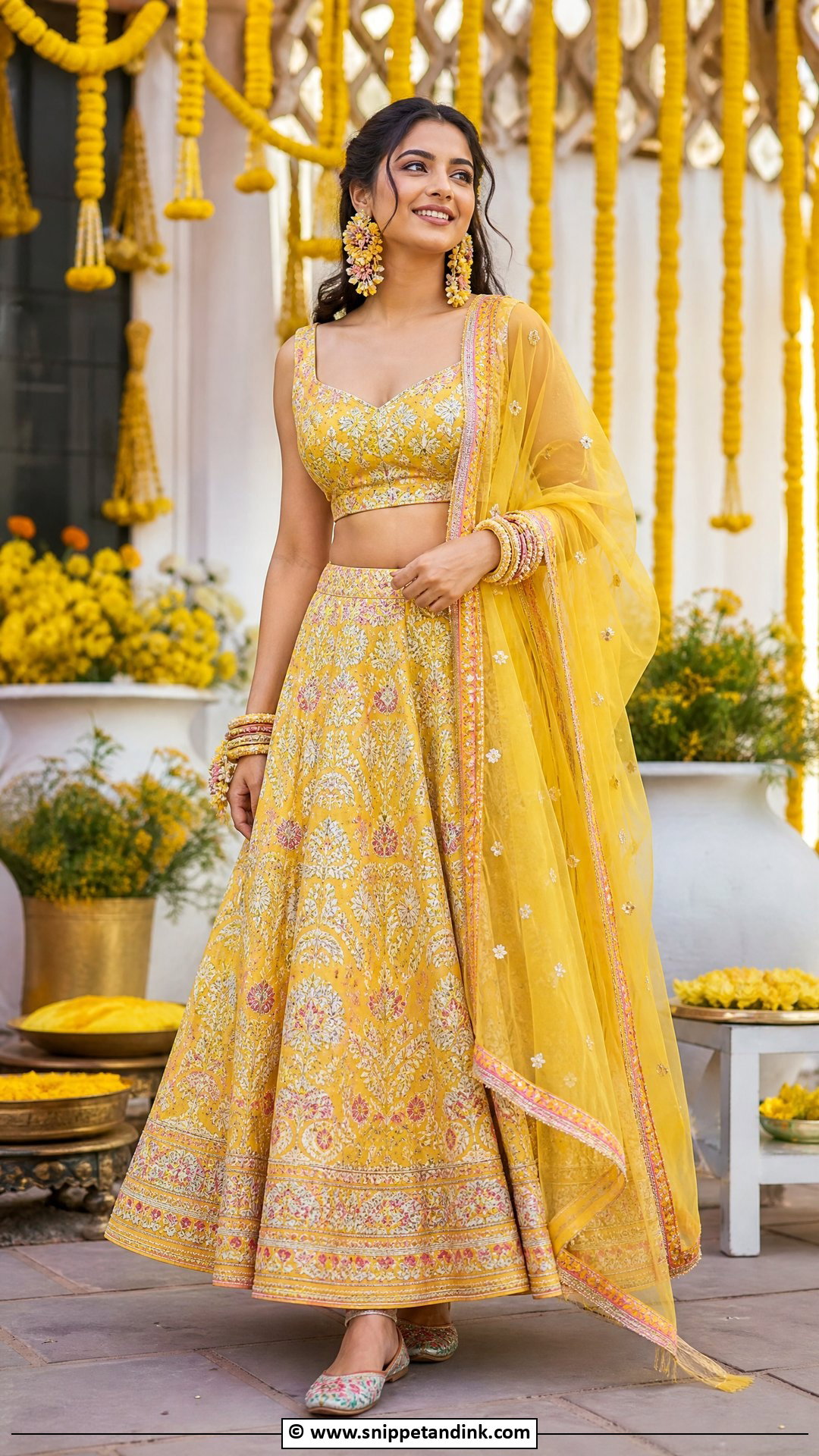
Printed lehengas cost less than embroidered ones and still look festive. Florals, block prints, paisley and leheriya give personality without weight, which helps in warm weather and outdoor functions. A fitted blouse and a light dupatta keep it polished, and a statement necklace, floral earrings or stacked bangles make it bridal. You’ll also wear it again for festivals and family functions. Just check whether the print is hand-blocked with natural dyes; those can bleed on the first wet wash, so cold water and a separate wash the first time.
19. Yellow Bandhani Lehenga For Haldi Ceremony
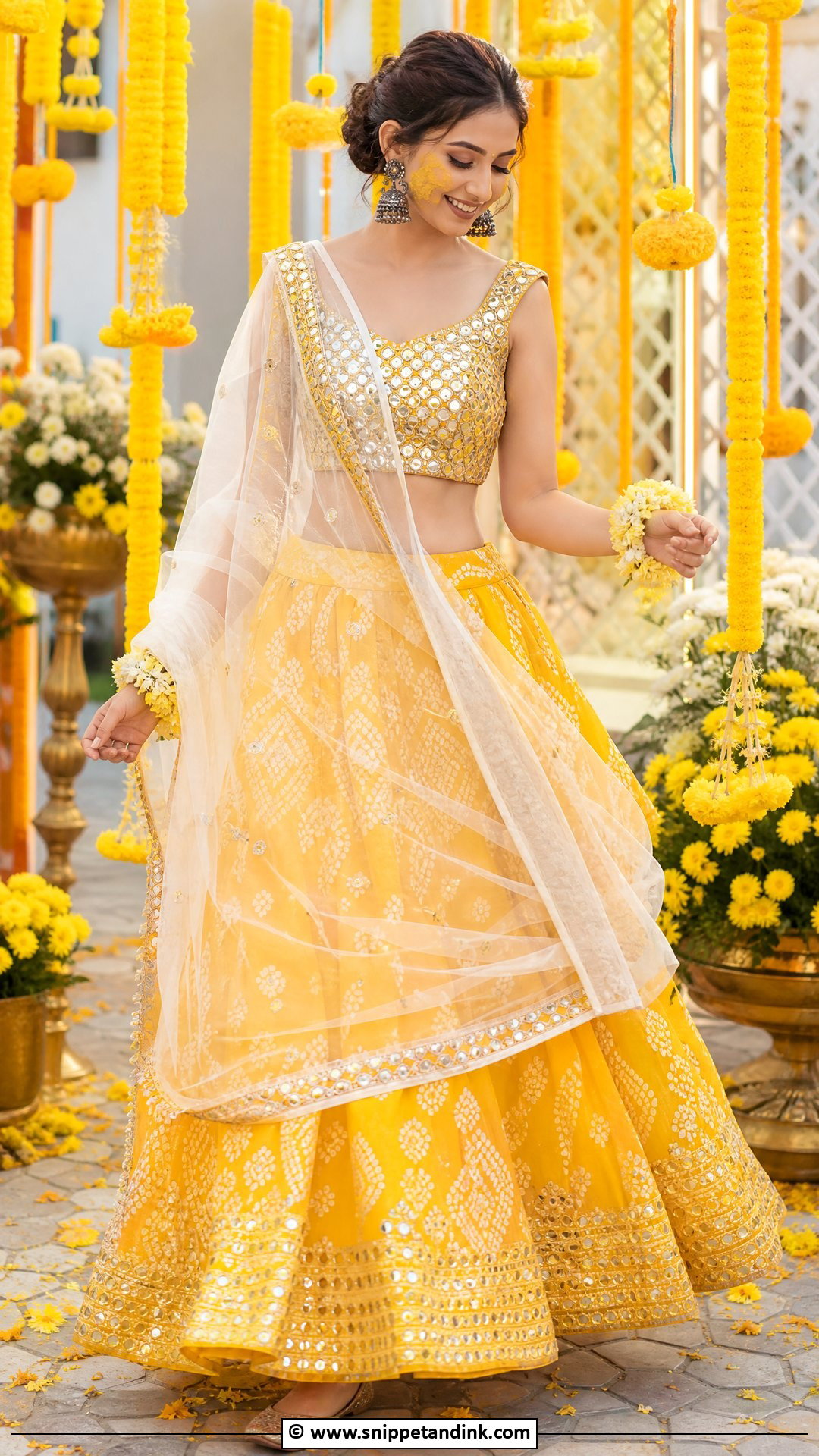
A yellow bandhani lehenga has a rooted, regional character that suits pre-wedding events. The tiny tie-dyed dots come in yellow with white, orange or pink. Add a simple blouse with mirror work or gota trim, and keep the dupatta light. Real bandhani arrives tightly crinkled and is meant to be stretched open, so ask your tailor to steam and set it before the final fitting or the skirt will look shorter than you expect. Oxidised jewelry, floral bangles or kundan earrings all suit it.

20. Yellow Leheriya Saree For Haldi Ceremony
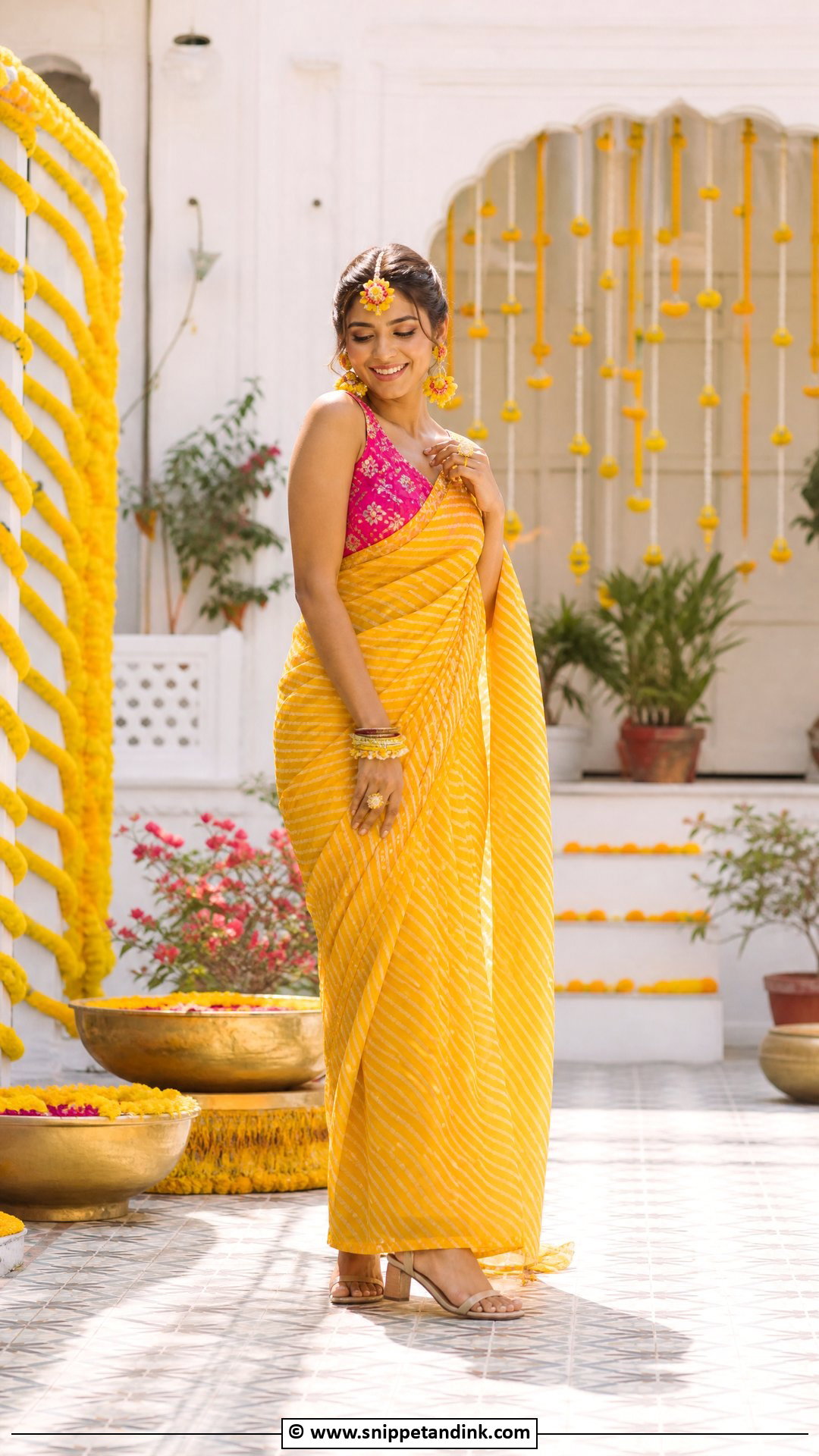
Leheriya is a resist-dye technique that creates diagonal waves, and those waves suit haldi’s energy. Chiffon, georgette or kota makes a breezy drape. A contrast blouse in pink, orange, green or white lifts it in photos. Keep jewelry festive but light: flower earrings, bangles, a simple maang tikka. I always secure the pallu with two pins on a leheriya saree, because these lightweight fabrics slip the moment someone tugs your arm to apply paste.
21. Yellow Tie Dye Saree For Haldi Ceremony
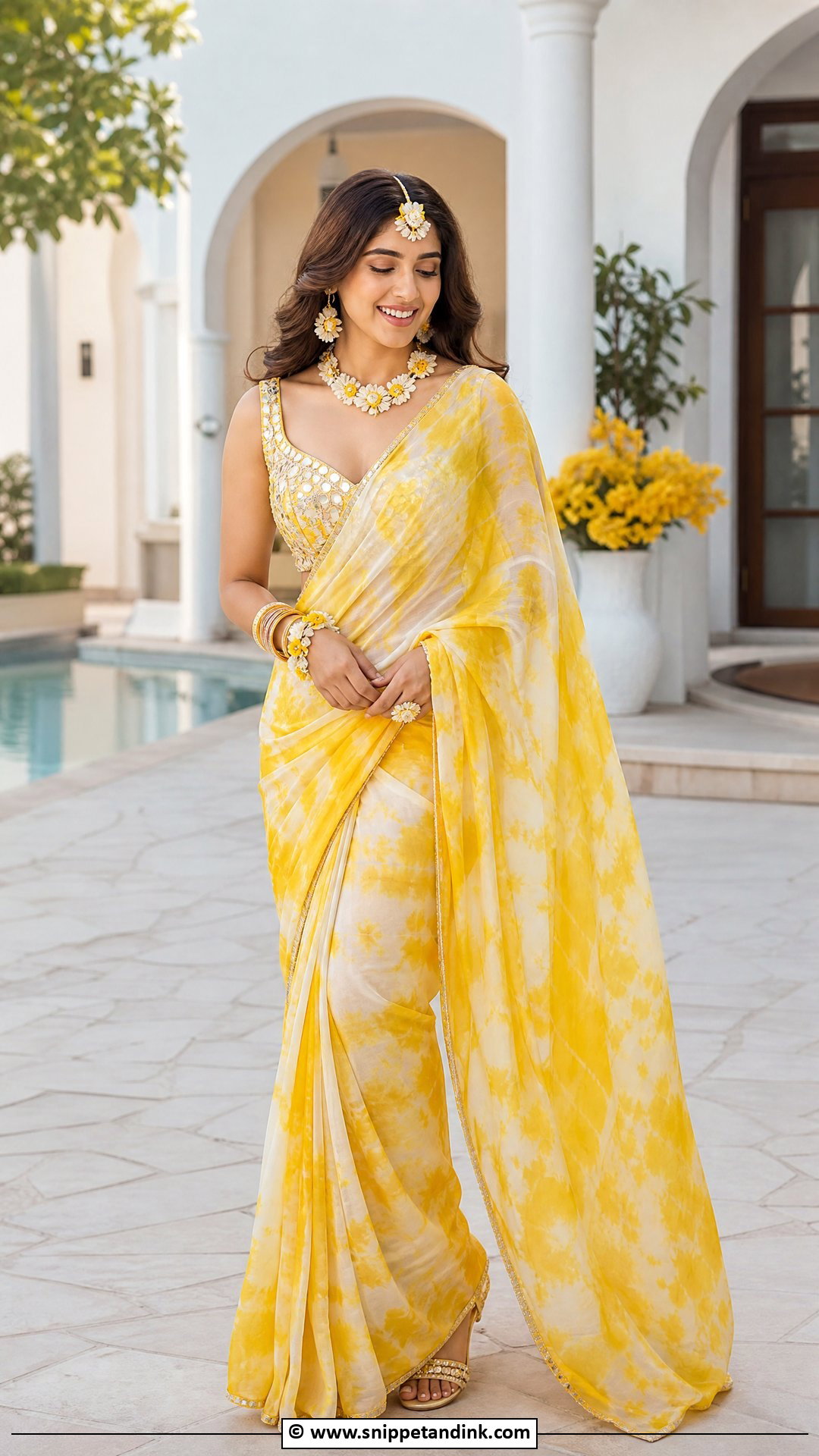
A tie-dye saree gives a relaxed, artsy look for a beach, resort or backyard haldi. Yellow with white, orange or green feels lively without being formal. Pair it with a plain blouse, or a mirror work one for sparkle, and keep accessories playful with fresh flowers, shell details or pearls. Soft waves and natural makeup suit it. It’s also a saree you’ll actually wear again, which most bridal outfits aren’t.
22. Yellow Silk Saree For Haldi Ceremony
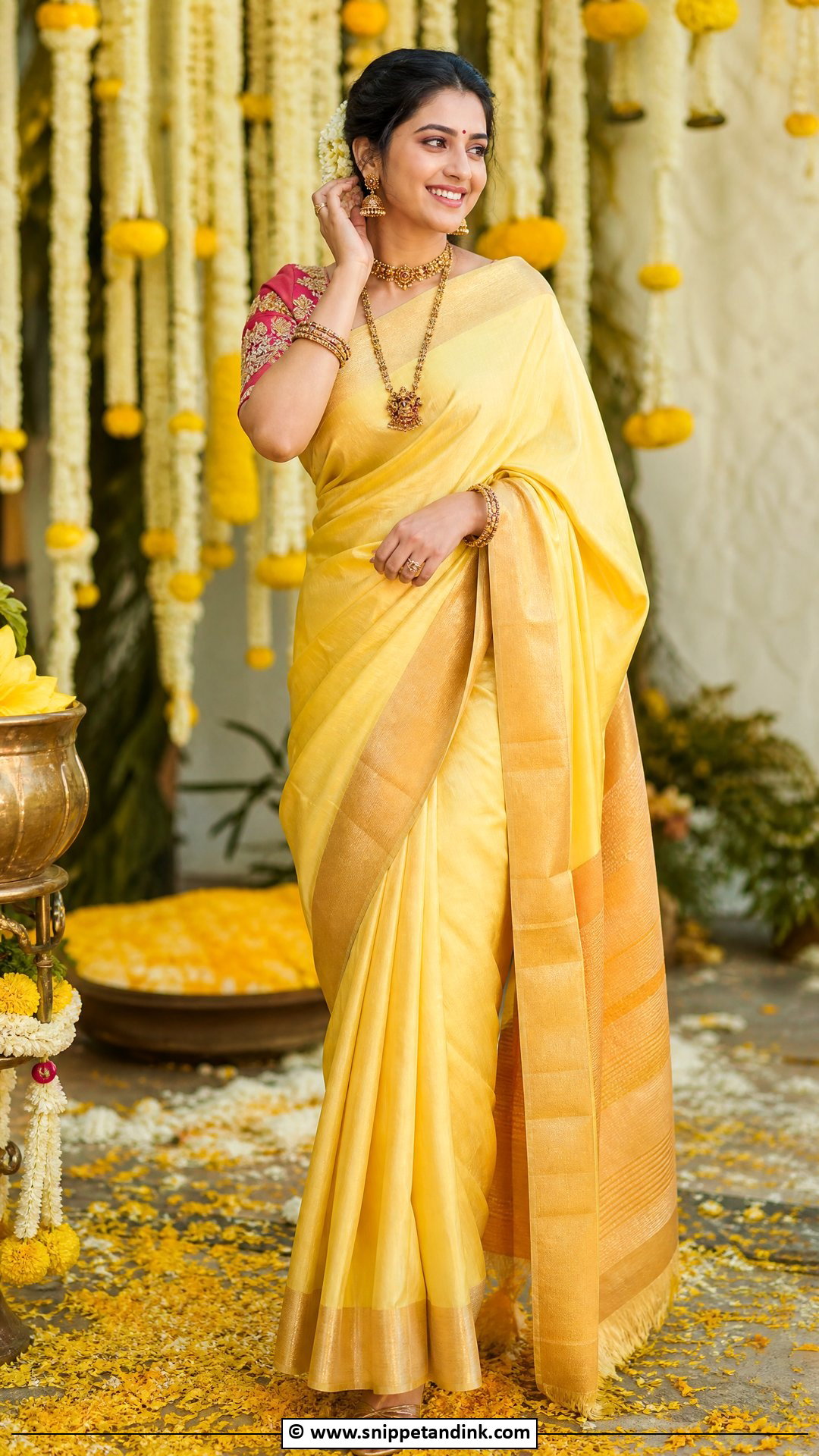
Silk gives a traditional haldi look a quiet richness. Choose a soft silk or silk cotton rather than a heavy Kanjeevaram, which is warm to sit in and hard to clean. A gold border, temple motif or woven pattern keeps it classic, with a matching blouse or a contrast in orange, pink or green. I’d be careful with heirloom silk here: turmeric on pure silk is very hard to shift, so wear an old dupatta over the shoulders while the paste goes on and remove it for portraits. Traditional jewelry, flowers in the hair and a small bindi complete it.
23. Yellow Cotton Saree For Haldi Ceremony
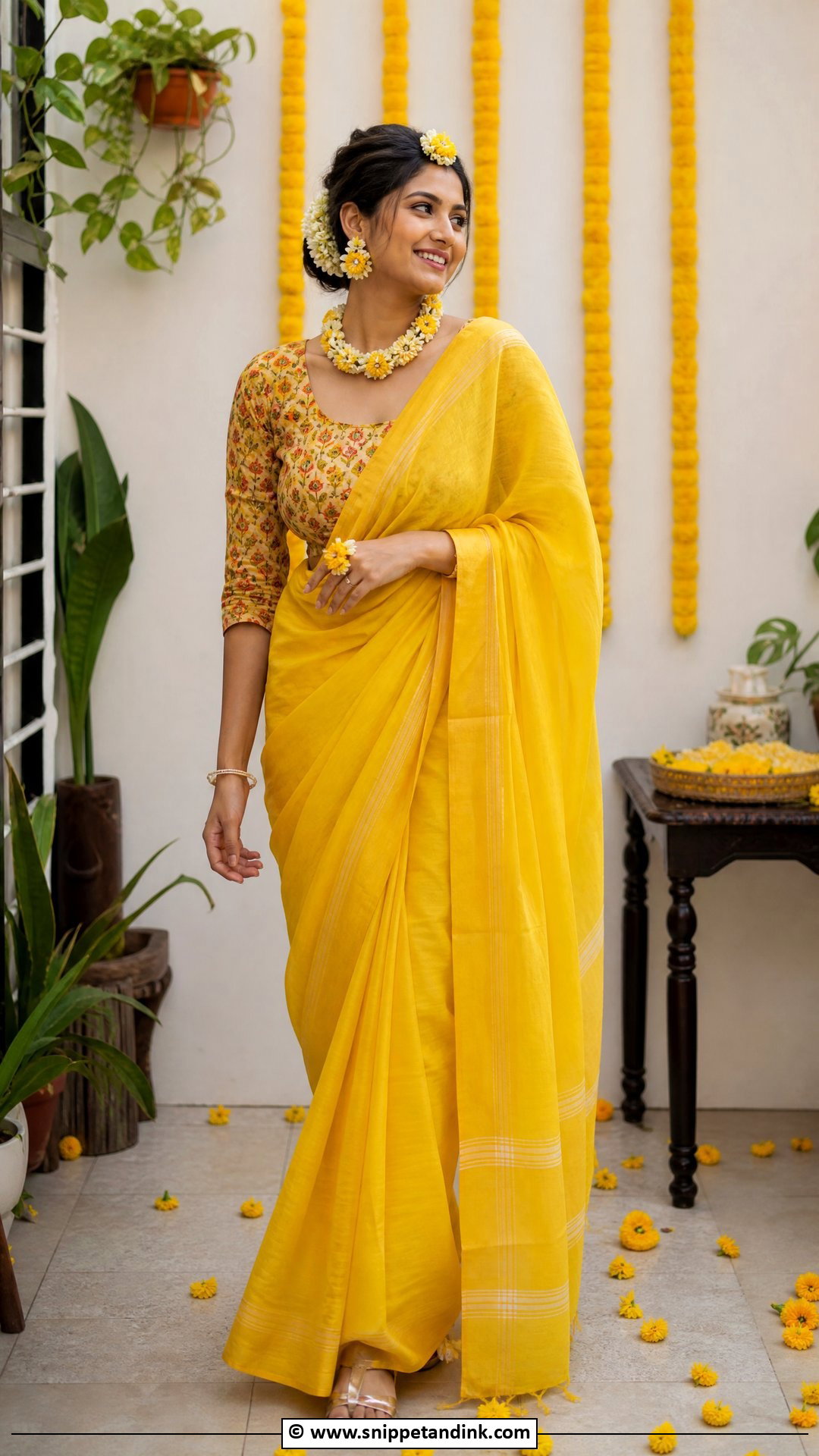
Cotton is the honest choice for an intimate haldi where turmeric, water and flowers will be used generously. It breathes in the heat and survives a proper wash. Handloom, mul or cotton silk with a small border looks clean; a printed or embroidered blouse adds personality. Keep the styling soft with floral jewelry, fresh jasmine and natural makeup. Candids are where it shines, because you’ll stop thinking about the outfit and just enjoy the ritual.
24. Yellow Chanderi Saree For Haldi Ceremony
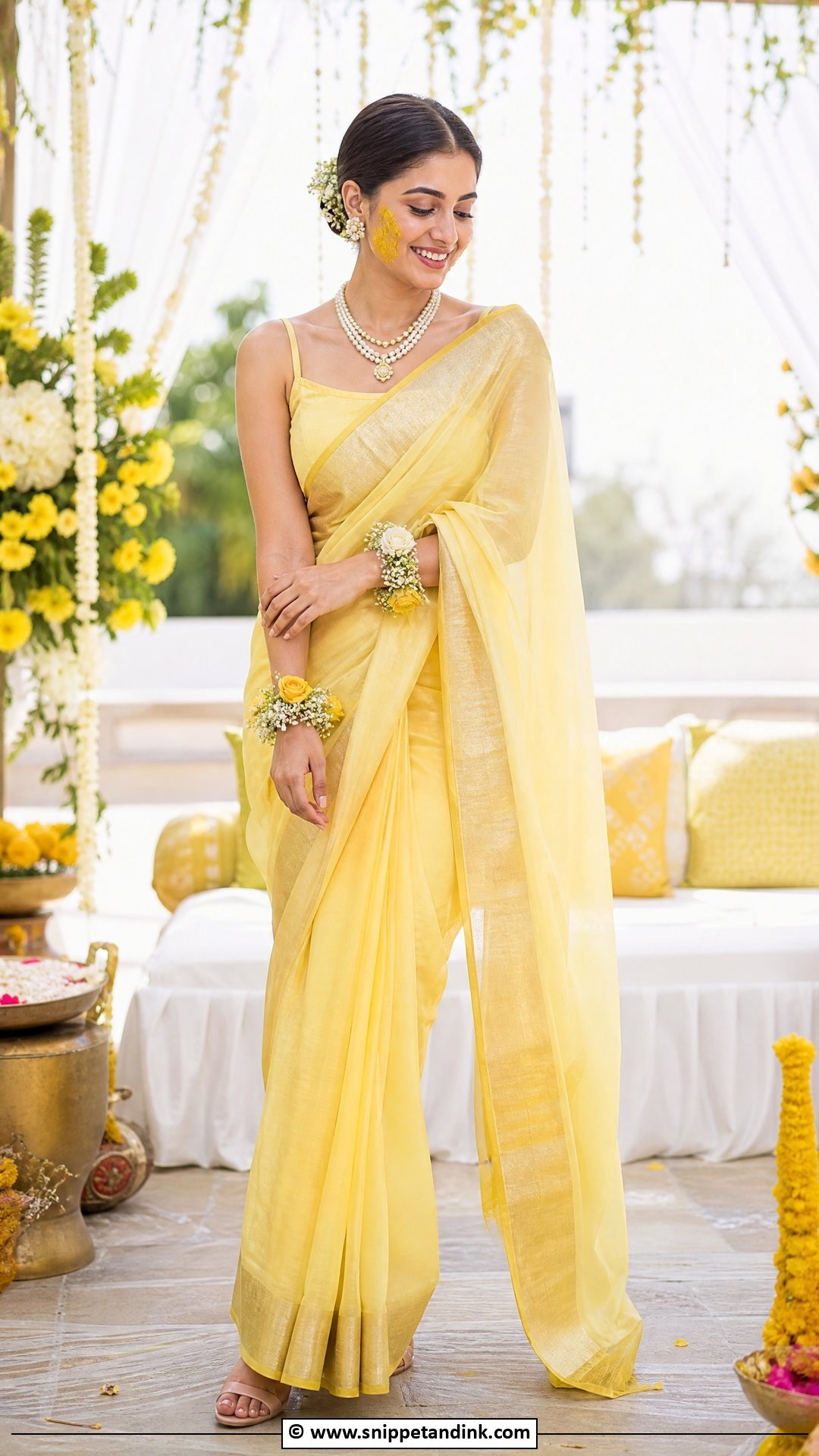
Chanderi is a light weave with a subtle sheen, so it looks festive without heavy work. A gold border, small buti pattern or delicate florals give a graceful finish, with a fitted blouse in yellow, ivory or pink. It’s airy enough for warm places and outdoor ceremonies. It’s also semi-sheer, so I check the petticoat shade in daylight before the day; a white petticoat under yellow chanderi can show through as a pale band. Pearl jewelry, floral bangles and a neat bun suit it.


25. Yellow Cape Lehenga For Haldi Ceremony
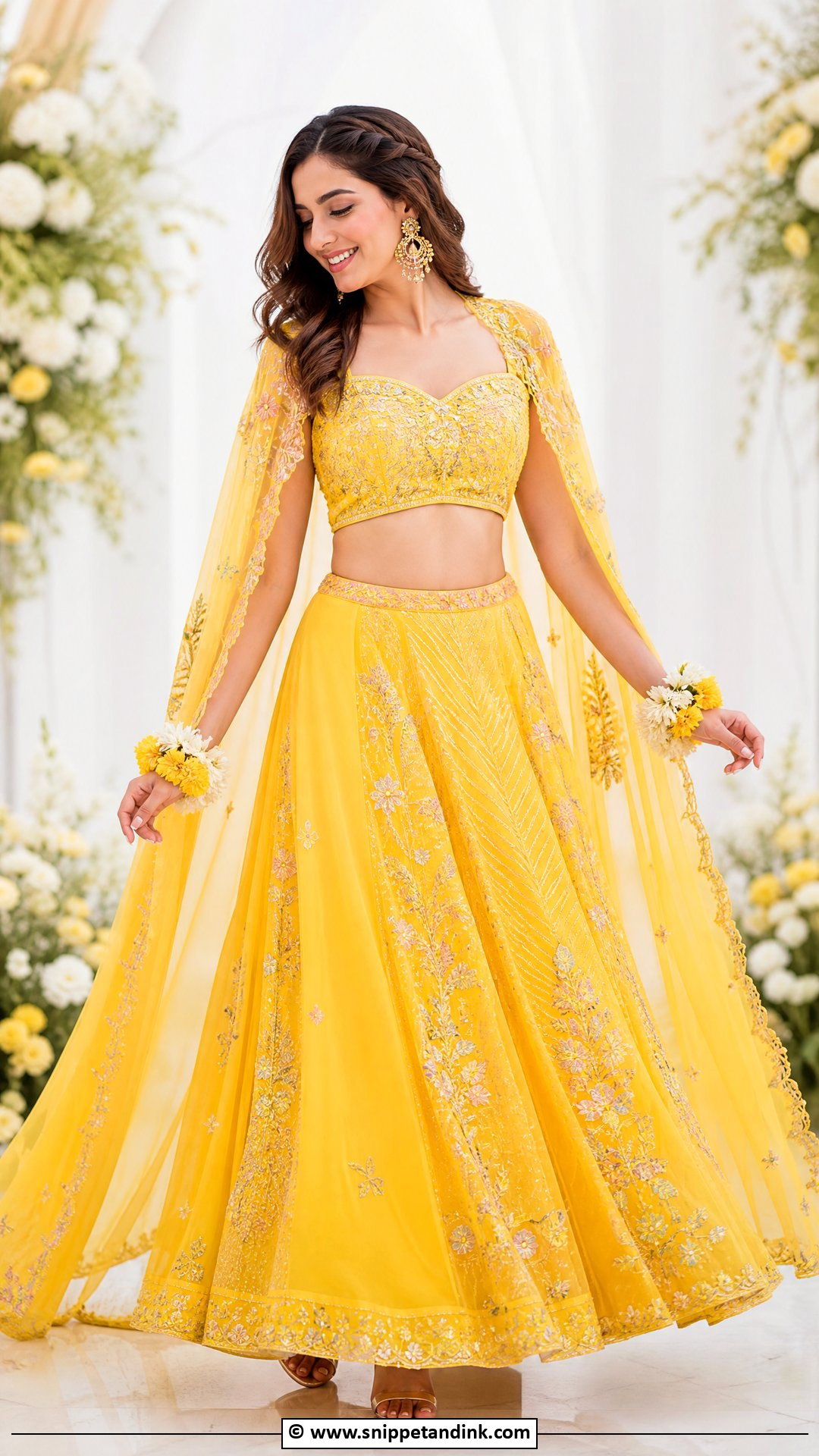
A cape replaces the dupatta, which is the main reason I suggest it for haldi: nothing slips off your shoulder while people apply paste. Choose a light lehenga with a crop top and a sheer cape in organza, net or chiffon, embroidered at the hem. Statement earrings work better than a heavy necklace, since the neckline needs to stay clear. Soft curls, floral bangles and comfortable heels finish it.
26. Yellow Jacket Lehenga For Haldi Ceremony
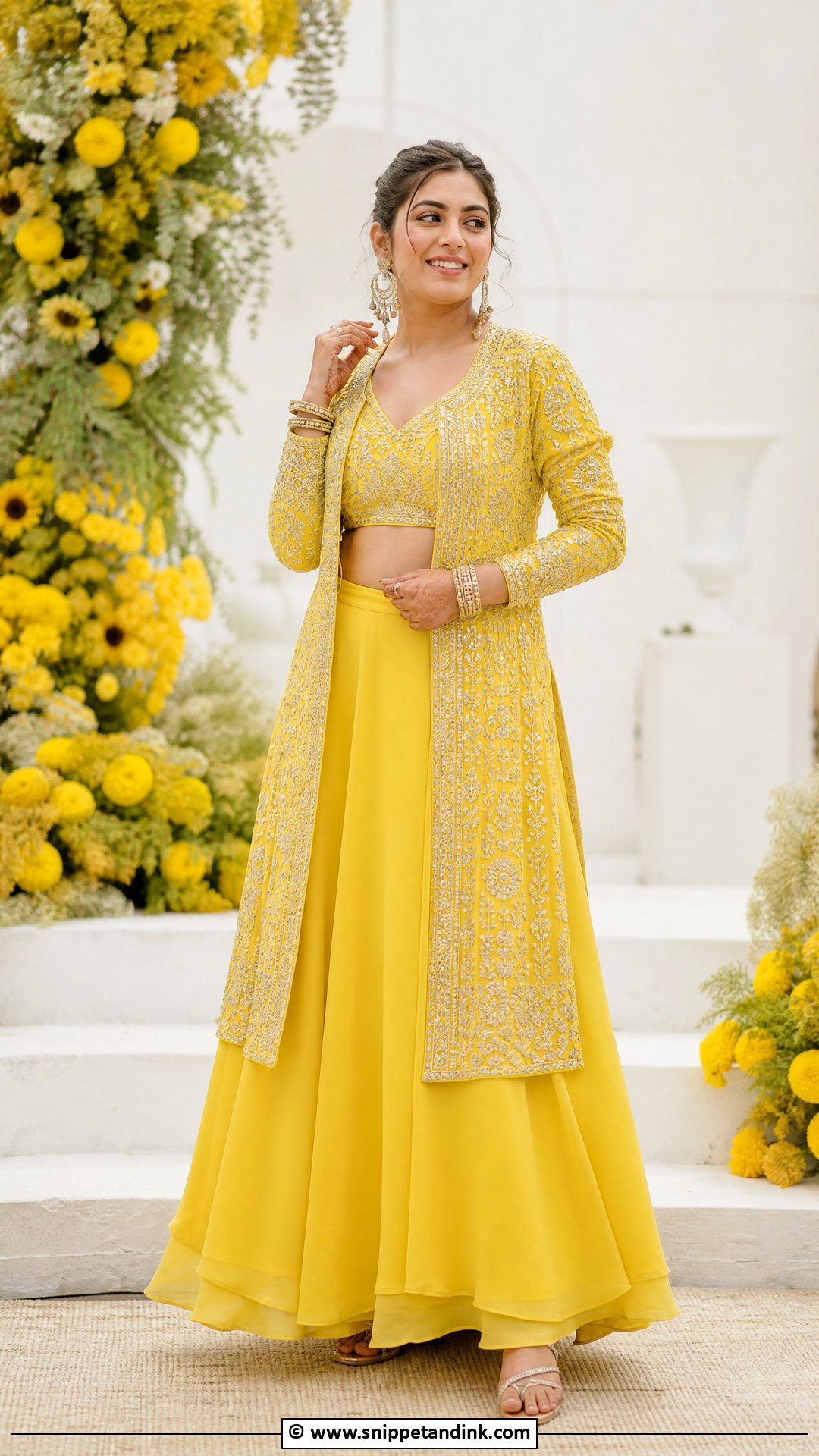
A jacket also does a dupatta’s job with less to manage. Short and embroidered reads youthful; long and flowing is more dramatic. Keep the lehenga underneath light, because three layers in the midday sun get hot fast. A crop blouse or bustier under the jacket modernises it. Because paste usually goes on the arms, choose a jacket with short or elbow sleeves, or plan to slip it off for the ritual and back on for photos. Earrings, bangles, soft glam makeup and sleek sandals finish the look.
27. Yellow Peplum Sharara For Haldi Ceremony
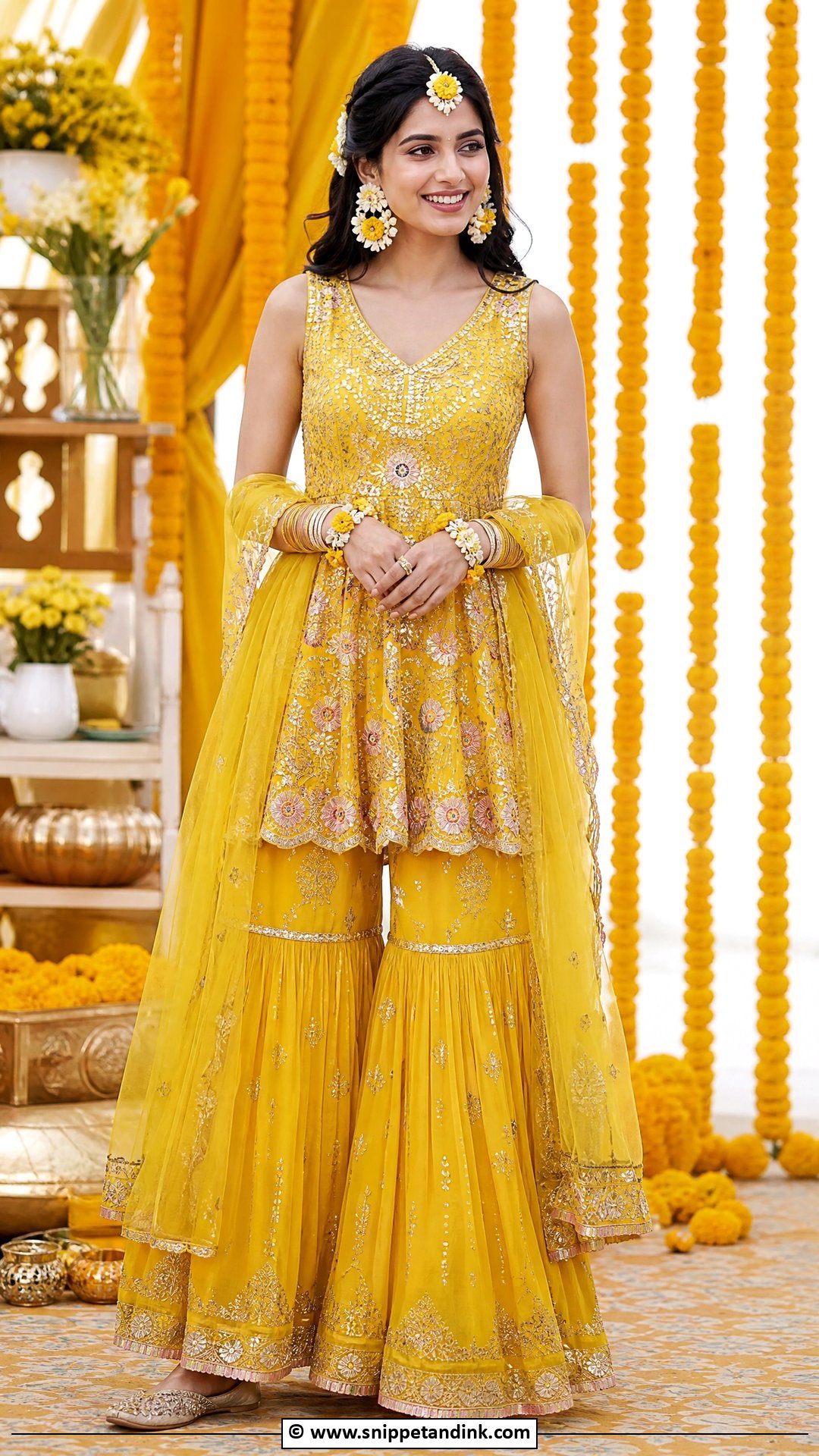
Peplum tops define the waist while the sharara below adds movement, and the flare over the hips gives coverage there without losing shape. Light embroidery, mirror work or floral prints keep it haldi-appropriate. A sheer dupatta adds tradition, but a detailed peplum can stand alone. Watch the peplum length when you sit: if it falls too low, it creases into the lap, so I usually ask for it to end at the high hip. Floral jewelry, soft curls and embellished juttis suit it, and it moves well when the dancing starts.
28. Yellow Short Kurti Sharara For Haldi Ceremony
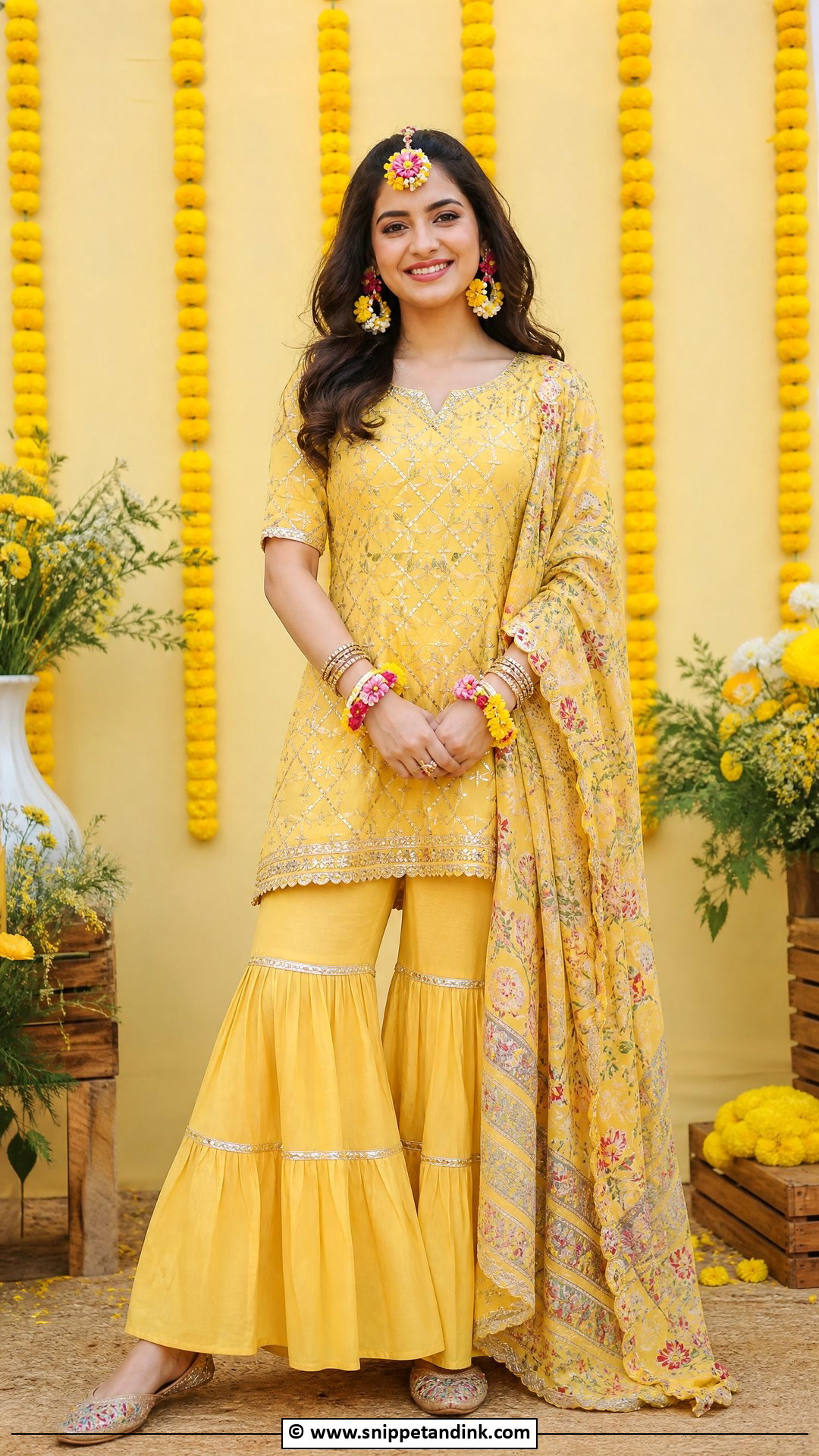
A yellow short kurti sharara outfit is light on top and full below, so it feels celebratory without weight. Gota patti, thread work or small mirror details give a bridal finish, and a printed or contrast dupatta adds colour if your decor is bright. Sitting is easy, which matters for a ritual that happens at floor level. Add a maang tikka, floral earrings, bangles and soft makeup. Choose the kurti length with the sharara on, because a kurti that hits mid-thigh can make the trousers look shorter than they are.
29. Yellow Palazzo Crop Top For Haldi Ceremony
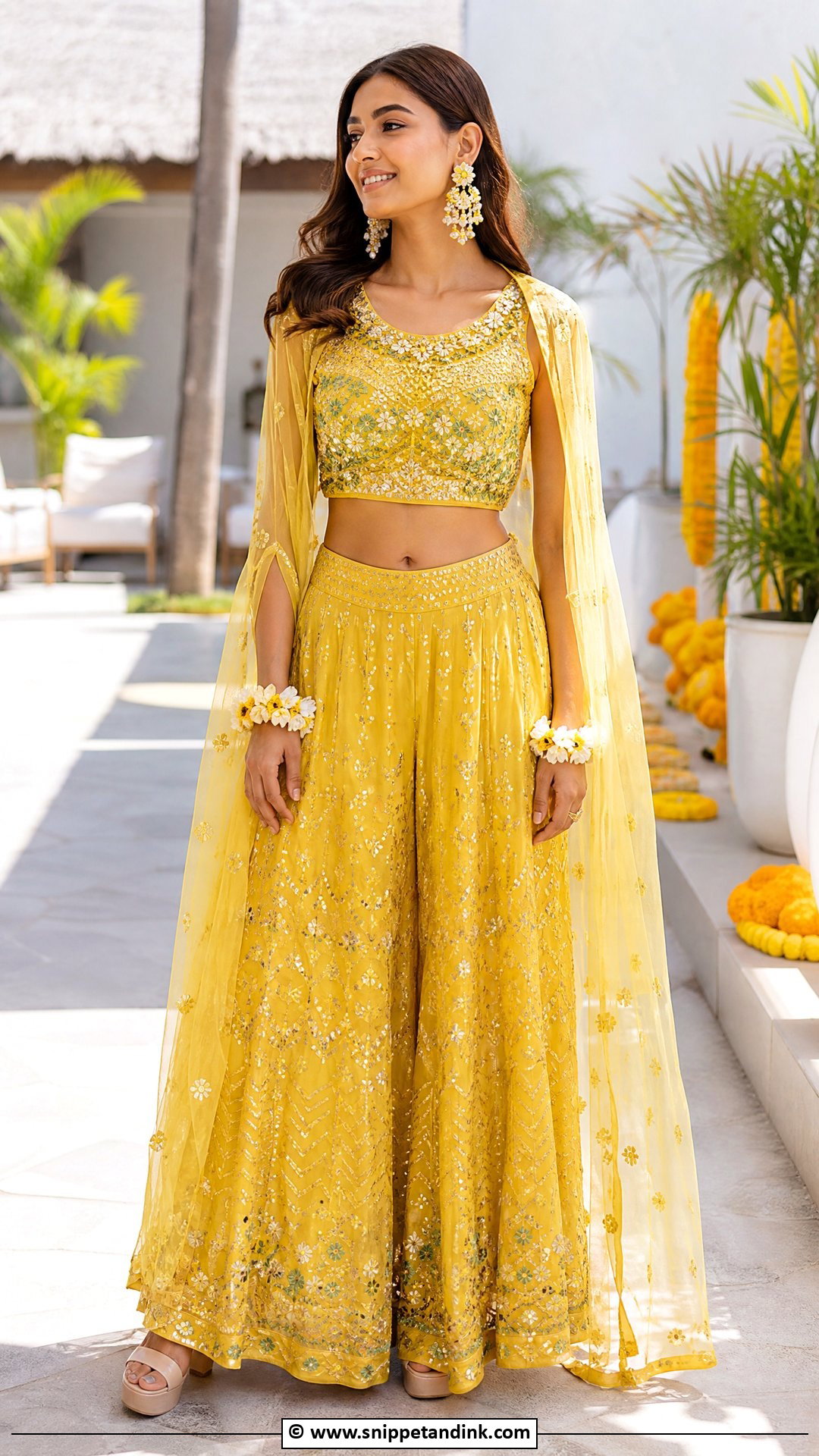
Palazzos with a crop top are as breezy as haldi dressing gets. Choose a top with embroidery, mirror work or tassels so it feels bridal, and keep a cape, dupatta or light shrug for coverage and movement in photos. It suits resort, poolside and garden ceremonies. Before you commit, check how the waistband sits when you’re seated low, since high-rise palazzos and short crop tops sometimes part company. Statement earrings, floral bangles and block heels or flats finish it.
30. Yellow Skirt And Blouse For Haldi Ceremony
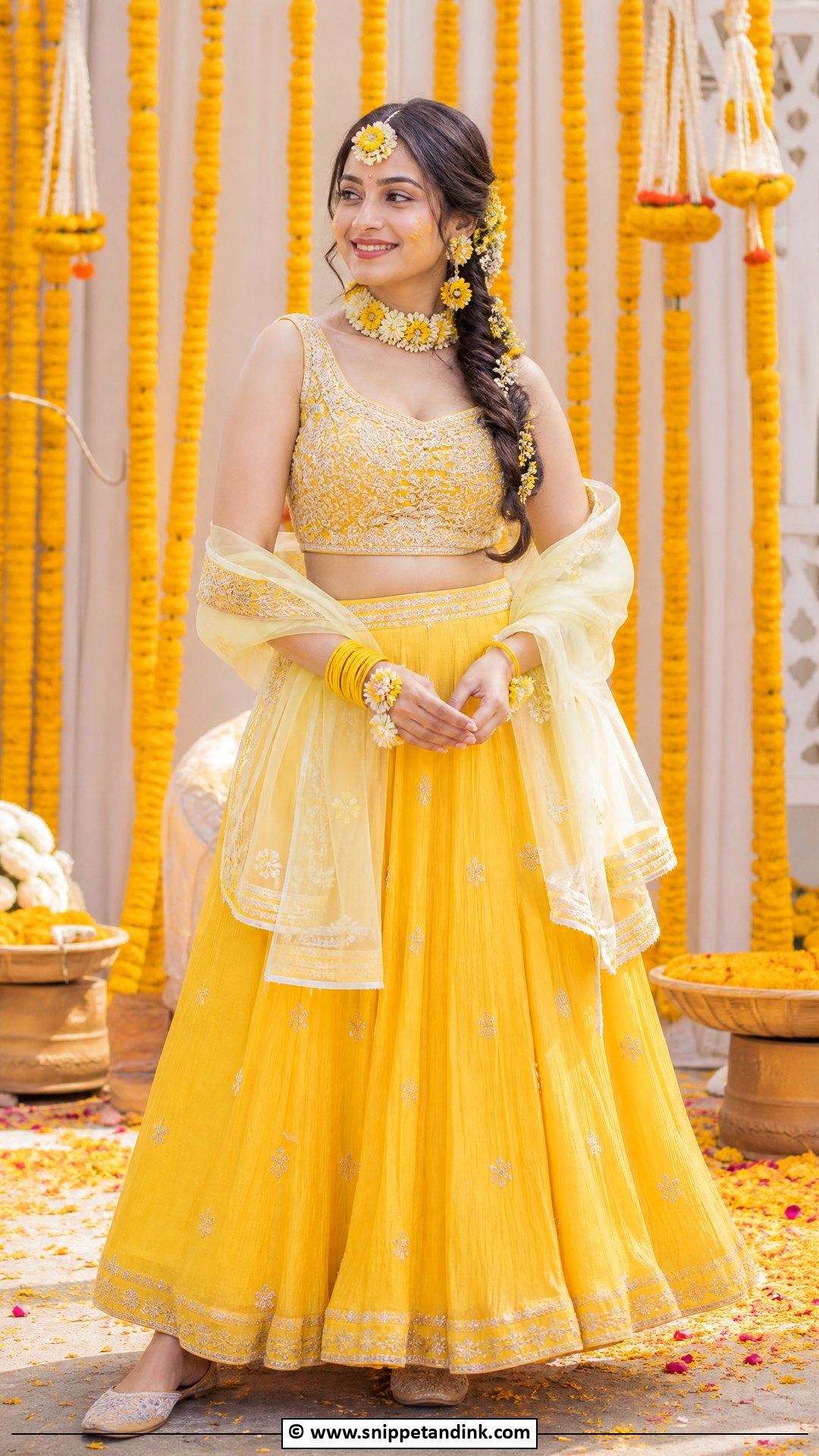
A skirt and blouse gives the feel of a lehenga with less weight and formality. Choose a flared skirt in cotton, georgette or organza with an embroidered blouse, and decide on the dupatta by how traditional you want to look. Floral jewelry, a soft braid and juttis keep it sweet. The separates are easy to wear again. I’d buy the skirt with a drawstring rather than a fixed zip waist if you want to wear it after the wedding, since it adjusts far more easily.
31. Yellow Maxi Dress For Haldi Ceremony
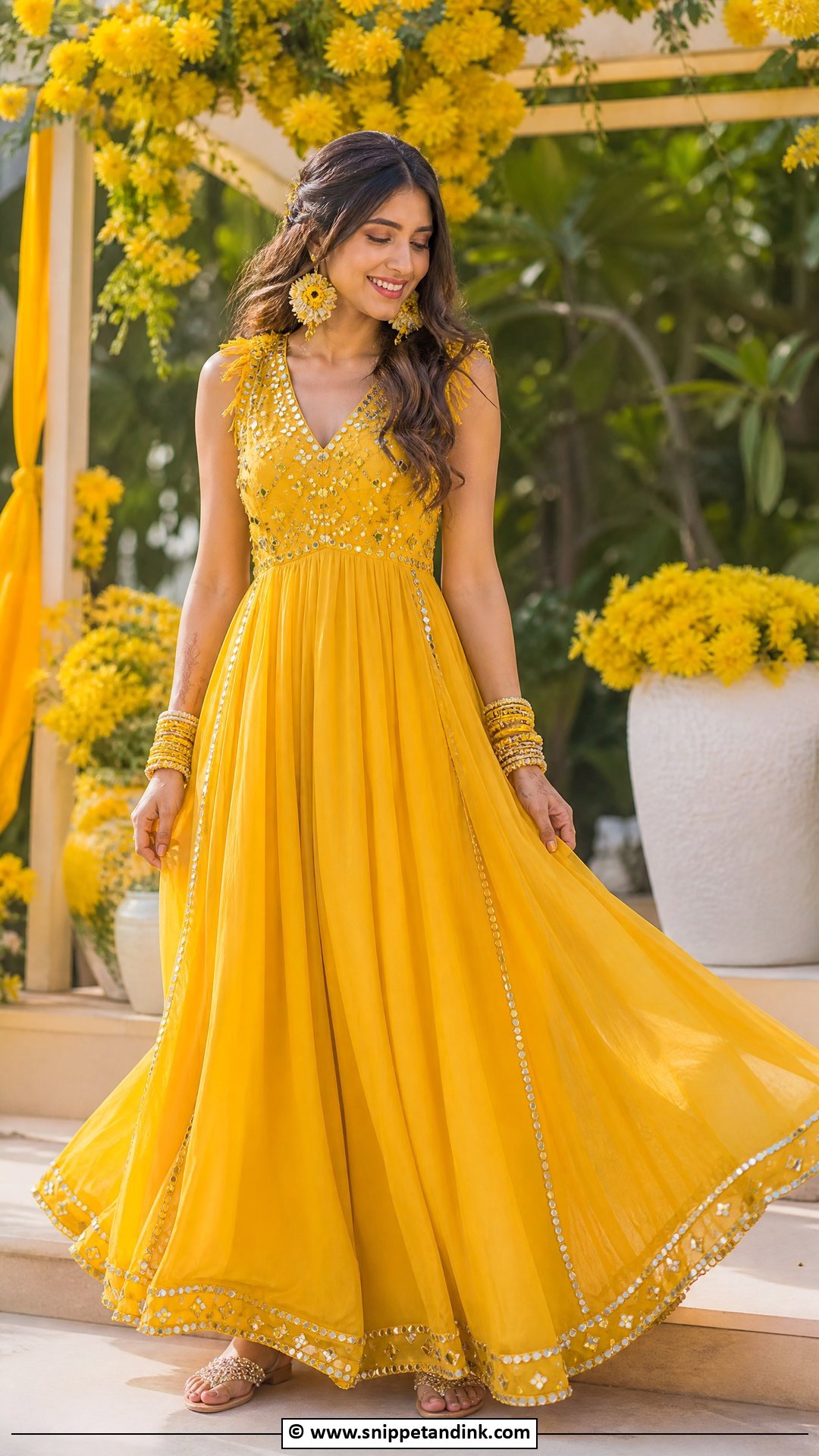
A yellow maxi dress gives a softer, fusion take on haldi. Look for Indian details such as mirror work, gota trim, block print or floral embroidery, in a flowing cut that moves well in photos. It suits destination weddings, beach haldis and intimate celebrations with a relaxed dress code. Add flower jewelry, bangles and embellished sandals, plus a light dupatta or cape if you’d like it to feel more traditional. Choose an opaque lining, because daylight and a splash of water make thin maxis surprisingly sheer.
32. Yellow Kaftan For Haldi Ceremony
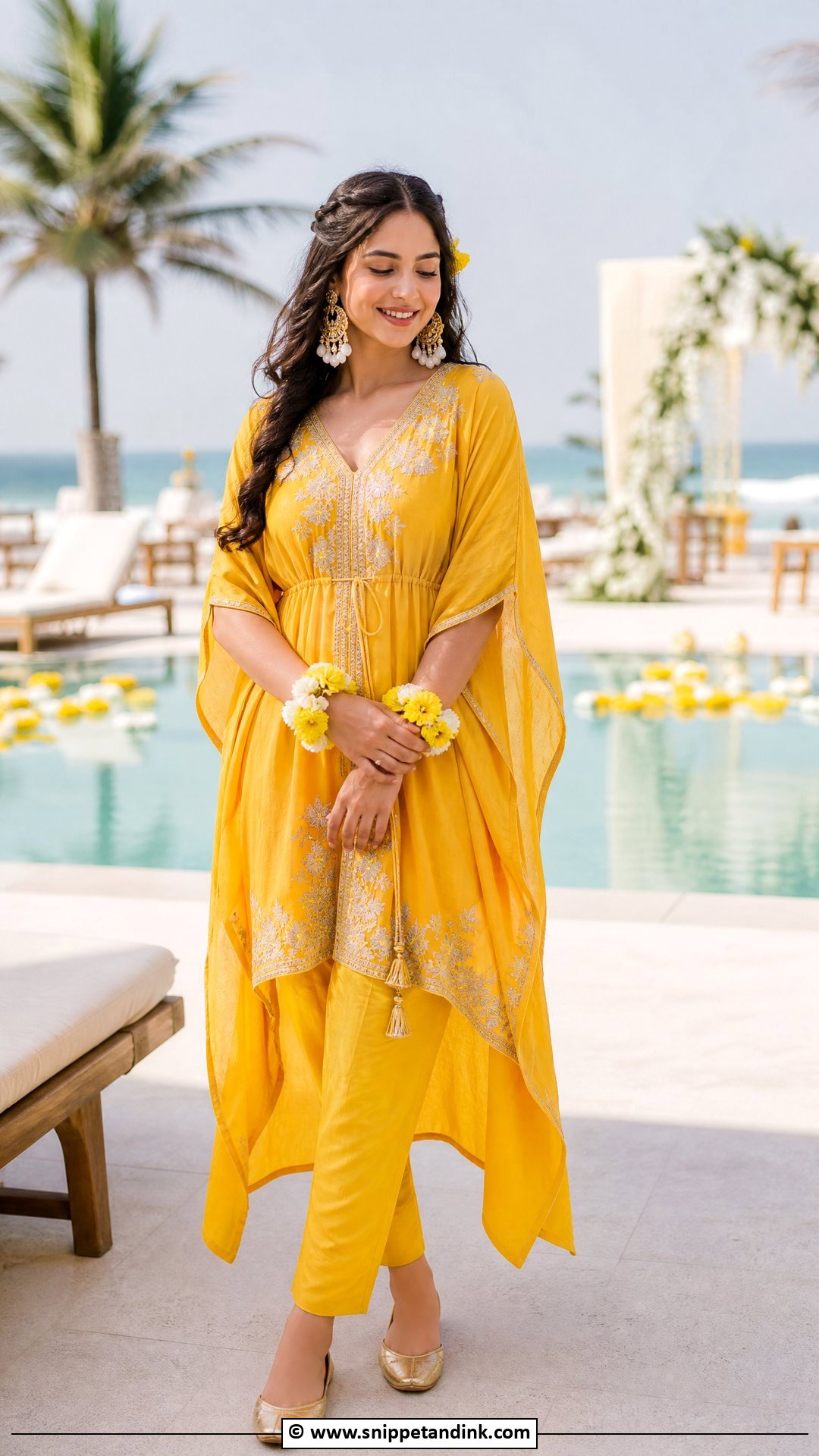
A kaftan is resort dressing at its easiest. The loose shape moves freely and stays cool in warm weather. Choose one with embroidery, mirror details, tassels or a defined waist so it looks deliberate, and wear slim pants, palazzos or a matching inner layer underneath for full coverage. Floral jewelry, statement earrings and metallic flats dress it up. Wide kaftan sleeves fall back when relatives lift your arms for paste, so I’d pick a three-quarter sleeve or one with a tie at the wrist.
33. Yellow Jumpsuit For Haldi Ceremony
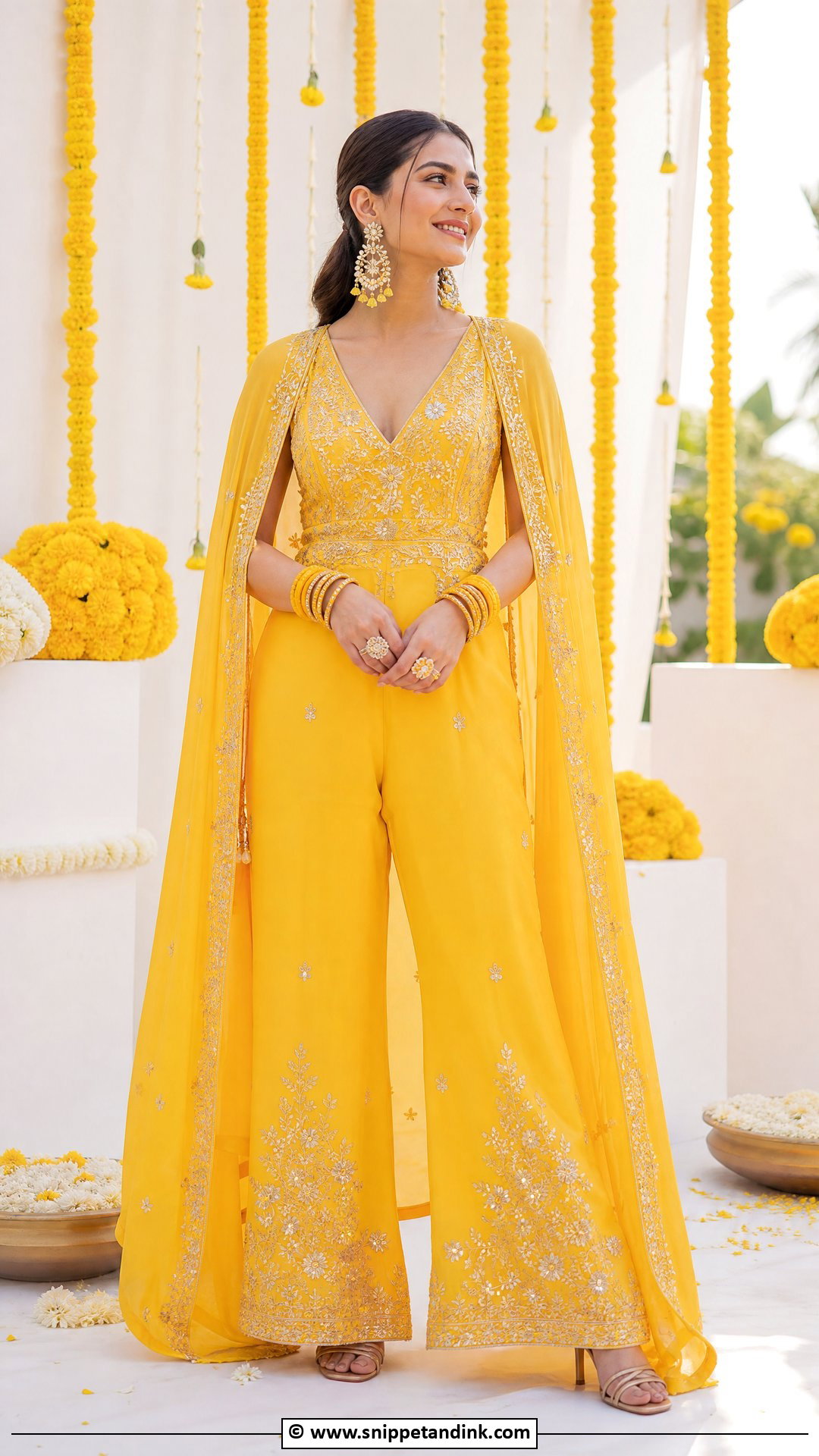
A jumpsuit is a bold fusion choice with a clean line. Look for Indian details such as a draped panel, cape sleeves, mirror work or an embroidered waistline, and add a detachable dupatta or long cape for the ritual. The practical drawback is the bathroom. Getting out of a jumpsuit covered in wet turmeric is awkward, so choose one with a front or side zip you can manage alone. Statement earrings, stacked bangles, sleek hair and comfortable heels suit contemporary venues.
34. Mustard Yellow Lehenga For Haldi Ceremony
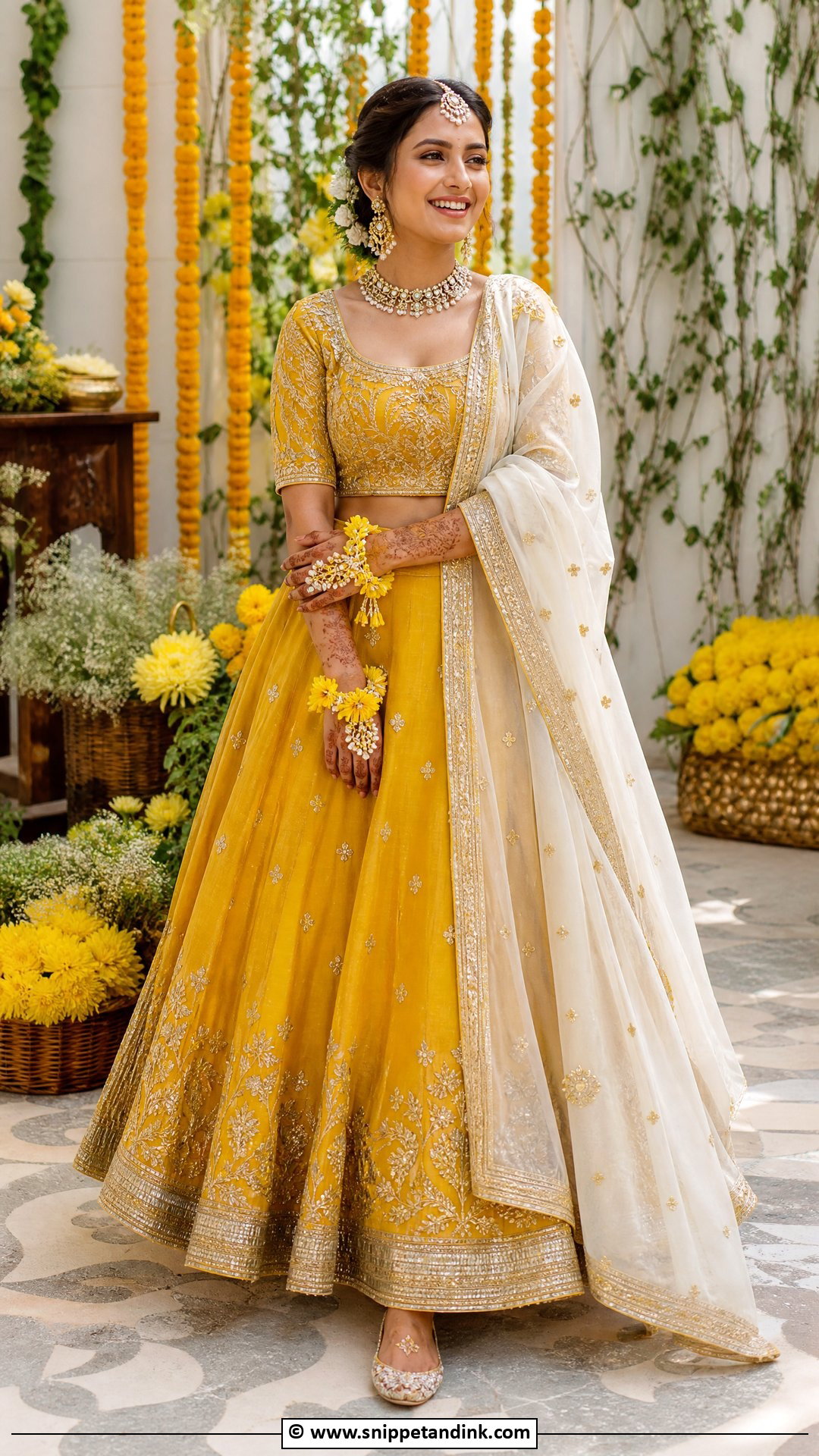
Mustard is warmer and slightly more grown-up than lemon, and it sits well on many skin tones against marigold, green and white decor. A light lehenga with mirror work, zari borders or floral embroidery keeps it festive, and an ivory, orange or pink dupatta adds layers. It’s the shade I suggest to brides who want the traditional colour in a deeper tone. Kundan jewelry, fresh flowers and soft brown eye makeup complete it. Darker yellows hide paste marks better too, which helps in the posed photos after the ritual.
35. Pastel Yellow Lehenga For Haldi Ceremony
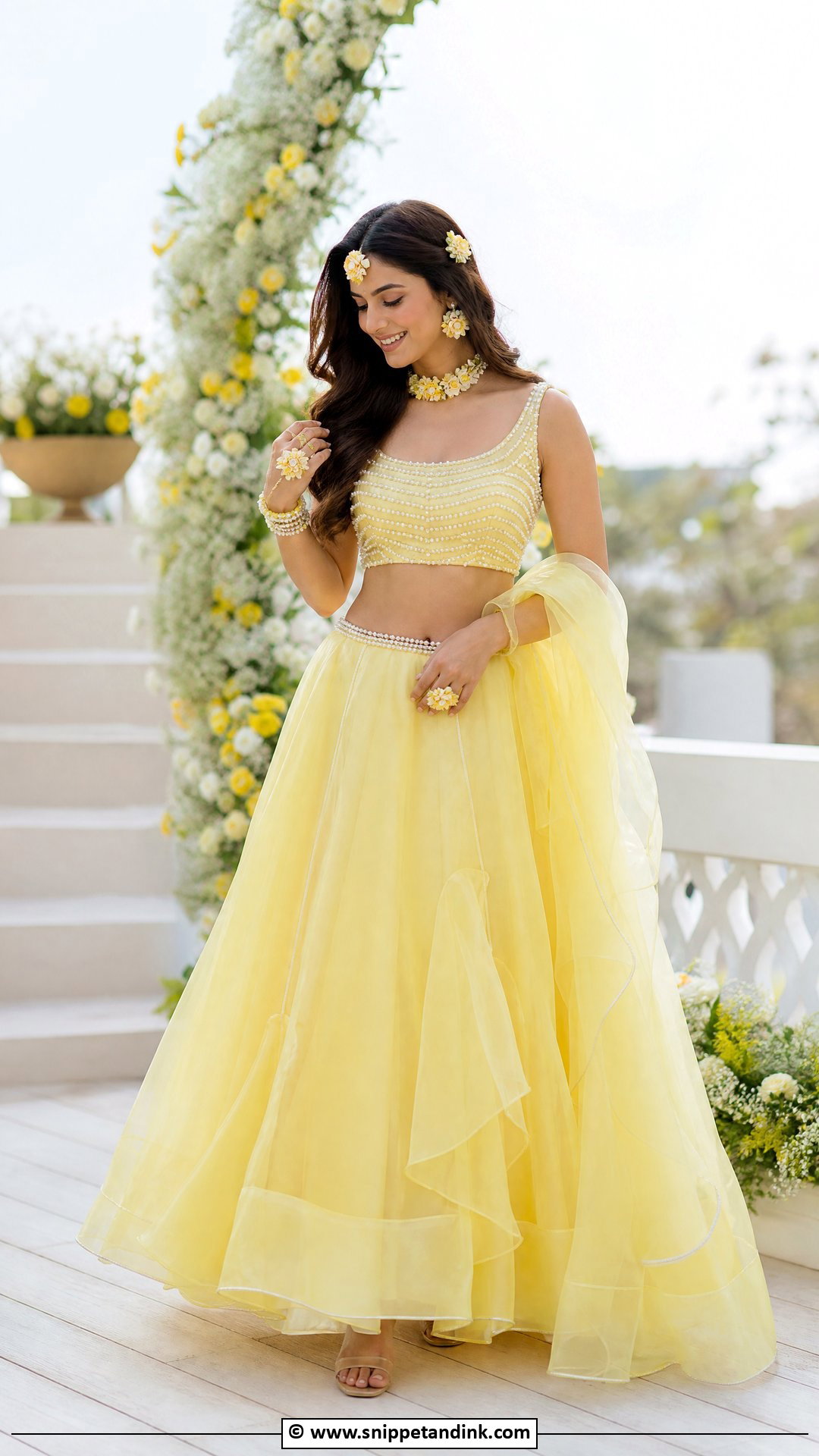
Pastel yellow suits brides who want the haldi theme in a quieter key. Butter yellow, lemon cream and pale marigold work in organza, chikankari, georgette or tulle, with light embroidery, pearl work or floral applique. Pastels can look washed out in strong midday sun, so I nudge brides toward a shade with a hint of warmth rather than an icy one. White, blush or yellow flower jewelry, soft curls, glowing makeup and dainty bangles finish a gentle, dreamy look for a daytime garden ceremony.
Getting Turmeric Out of Fabric the Day After
Turmeric stains are stubborn because the pigment binds quickly to fibres, but you can save most outfits if you act the same day. Here’s the order I follow.
- Let excess paste dry, then lift it off gently with a blunt knife or a soft brush. Rubbing wet paste pushes it deeper into the weave.
- Rinse the stain from the back with cold water. Hot water helps set the colour.
- Be careful with ordinary soap at first. Turmeric’s pigment reacts to alkaline soap and can turn a reddish brown, which alarms people. On cotton, a rinse with a little diluted white vinegar usually pulls it back toward yellow; test a hidden seam first.
- Dry cotton and linen in direct sun. Sunlight fades leftover turmeric remarkably well, often over a day or two.
- Take silk, zari, gota and embroidered pieces straight to a dry cleaner and point out every stain. Don’t scrub embroidery at home.
Skin is the easier part. A little oil or cream on a cotton pad lifts the yellow tint better than repeated scrubbing, and most of it fades on its own over a day or two, which is exactly what many families hope for before the wedding itself.
Which Yellow Are You Happy to Get Messy In?
Your haldi outfit has one job: let you be fully present for one of the happiest rituals of the wedding. The ideas above run from classic yellow lehengas and silk sarees to shararas, co-ords, kaftans, jumpsuits and fusion looks. Think about the venue, the weather, your family’s traditions and how wild the turmeric gets in your house, then choose fabric and drape to match. Light fabric, secure pinning, flat-ish shoes and fresh flowers do more for the day than any amount of embroidery.
You'll Like These Ideas:






Leave a Reply