
I spend the first hour of most bridal mehndi sessions looking at the bride’s outfit as much as her hands. Sleeves decide how far up the arm I can take a design. A loose dupatta decides how often I pause to tuck it out of the way. A heavy skirt decides how long she can sit before she needs to stand and stretch. So this list of bridal mehndi outfits is judged the way I see them from the cushion next to the bride: mirror-work lehengas, floral shararas, draped saris, a pishwas and even a jumpsuit, in greens and yellows as well as pink, orange, blue, ivory and jewel tones. Short or three-quarter sleeves and light, securely draped fabric come up again and again, for good reason.

How a Henna Stain Reads Against Each Outfit Colour
Brides often pick the outfit first and only think about the henna on the day. I’d do it the other way round, or at least side by side, because henna doesn’t stay one colour. The paste goes on dark green-brown. When it comes off, the stain underneath is bright orange. Over the next one to two days it oxidises and deepens toward a reddish brown or deep maroon, depending on your skin and how long the paste stayed on.
That means the outfit you wear at the mehndi itself sits next to wet paste, while the outfit you wear at the wedding sits next to the mature stain. Some practical consequences:
- Green, teal, blue, purple, ivory and pink all give strong contrast against both dark paste and a deep stain.
- Bright orange and some rust shades can swallow a fresh stain in photos taken the same day.
- Very pale fabrics show a deep stain beautifully but also show every accidental smudge.
- Palms stain darker than the backs of the hands, so a design that wraps the hand reads differently from each angle.
If your mehndi falls one or two days before the wedding, which is common for exactly this reason, the stain should be near its darkest when you put on the main bridal outfit.
1. Green Mirror Work Mehndi Dress
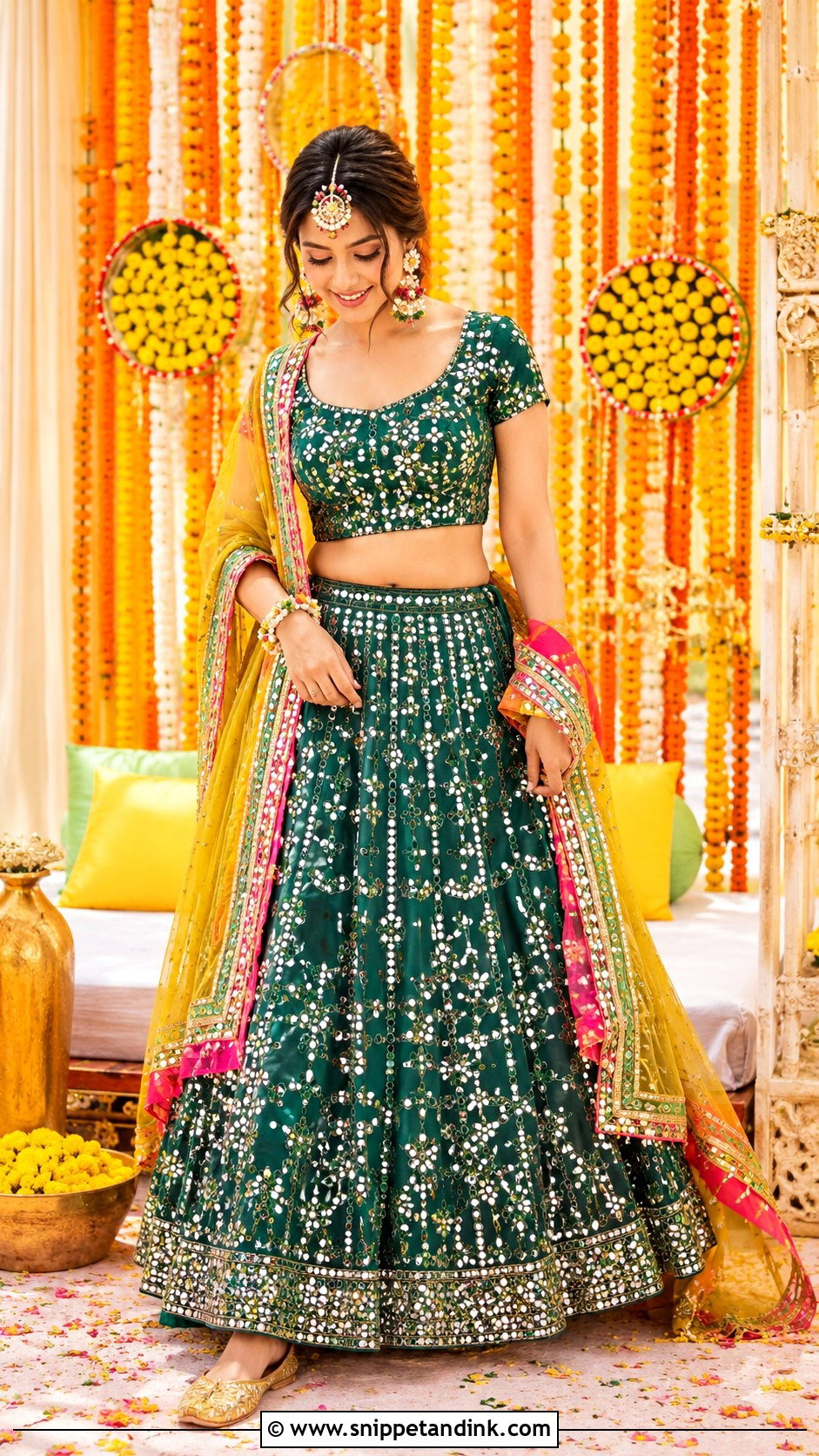
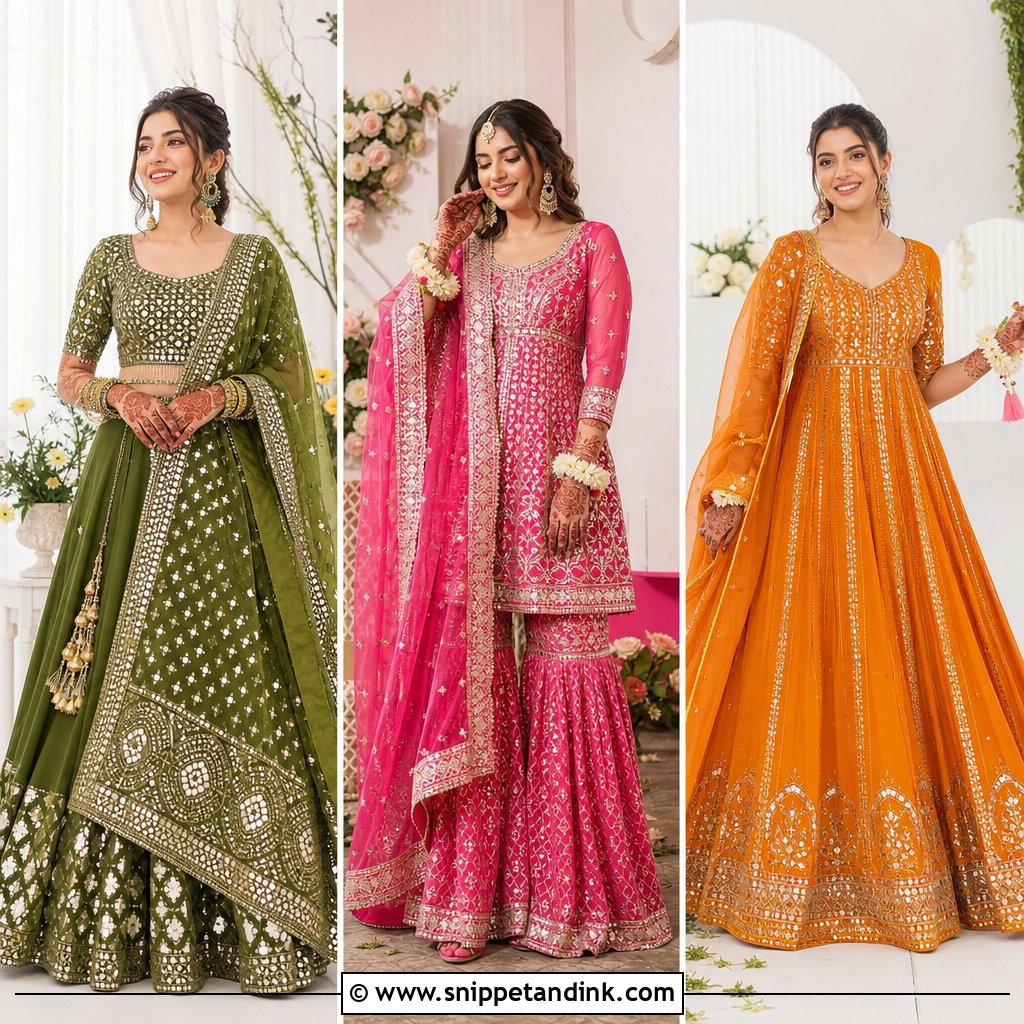
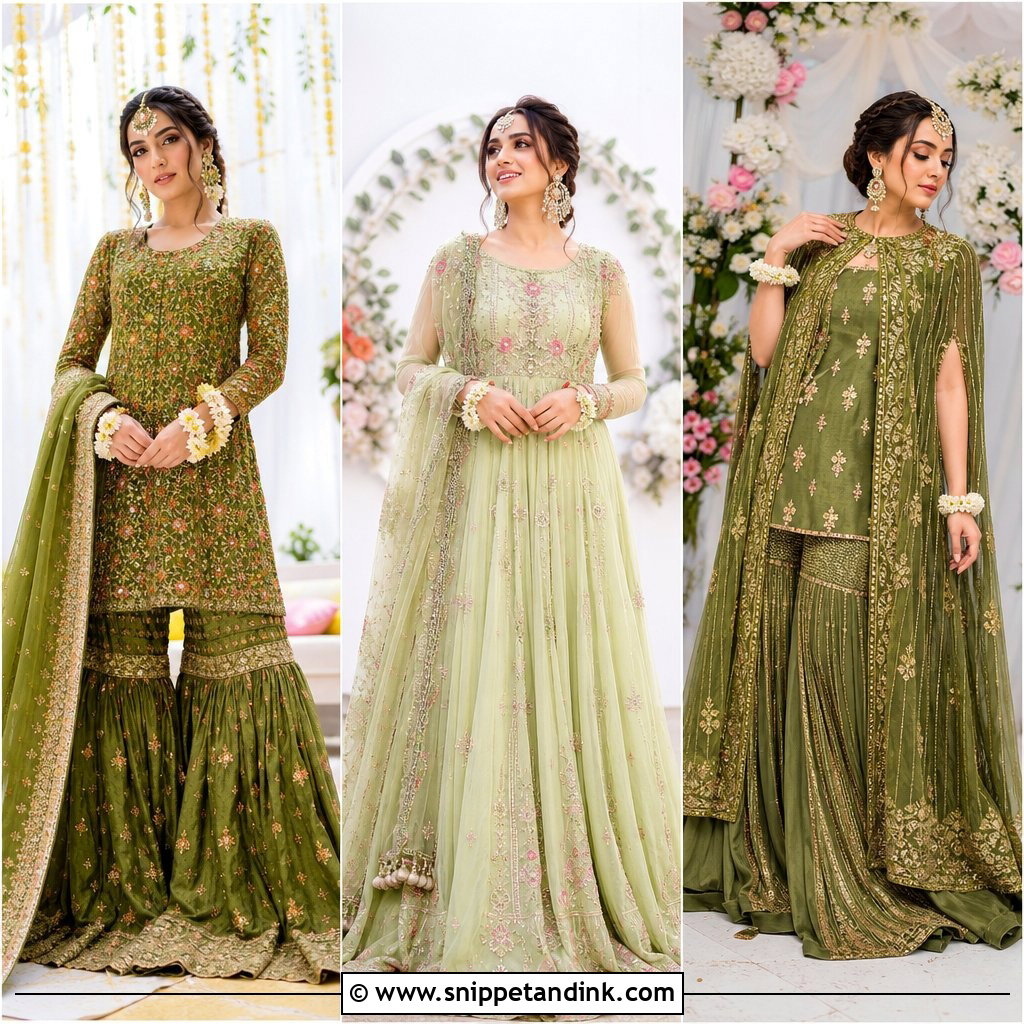
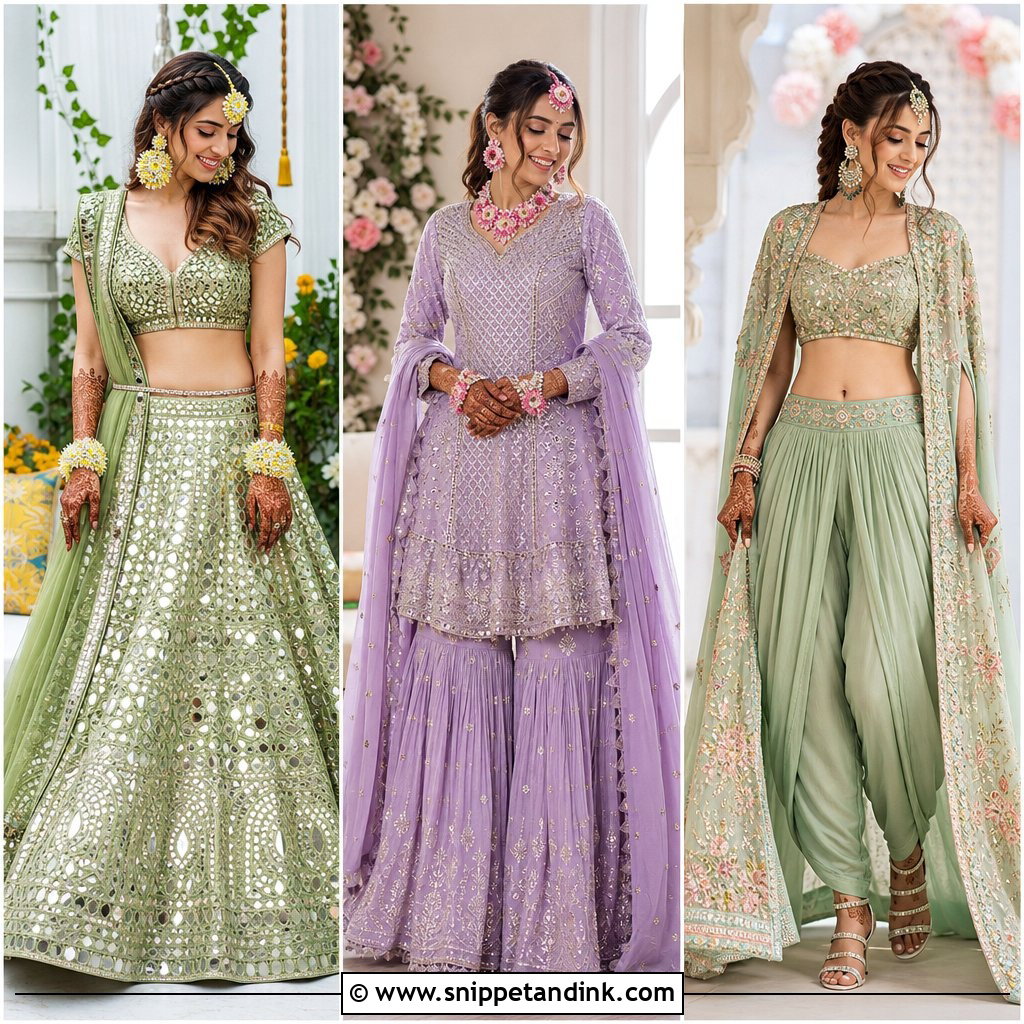
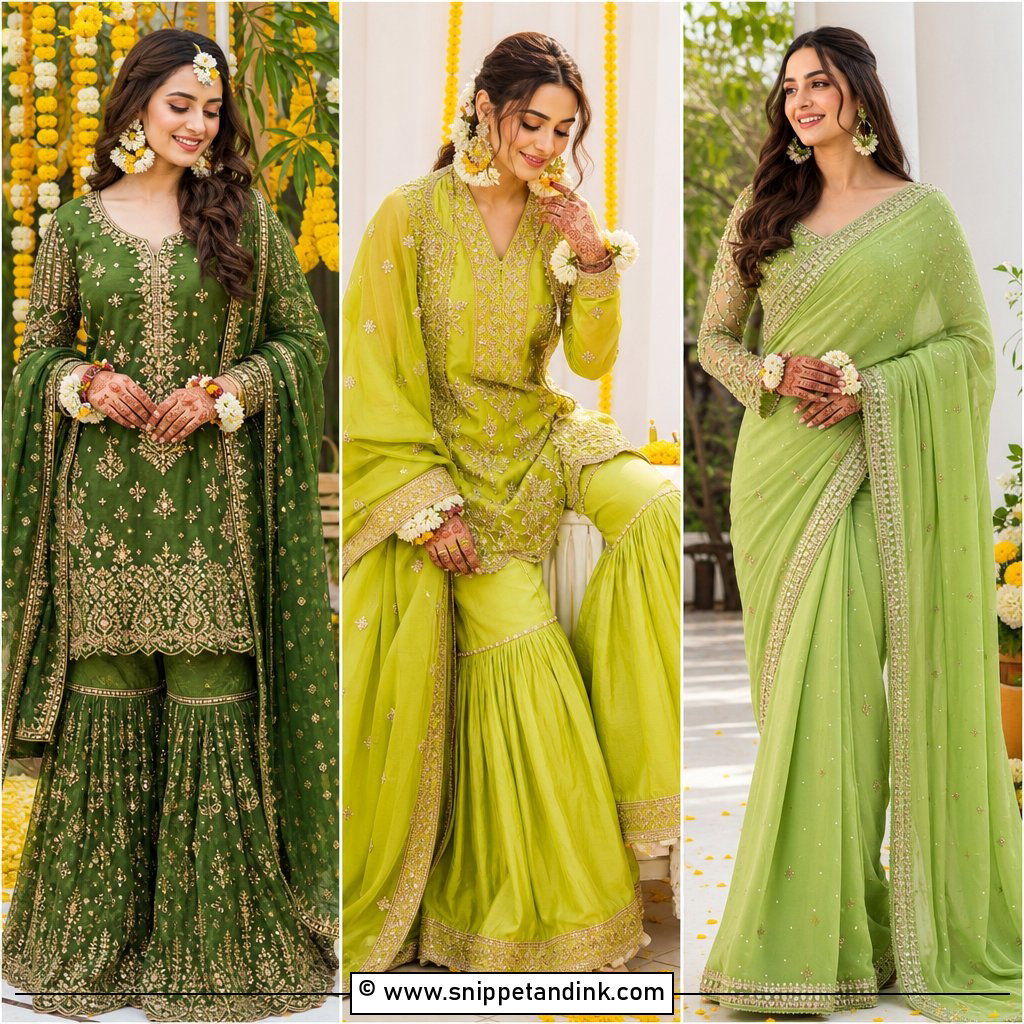
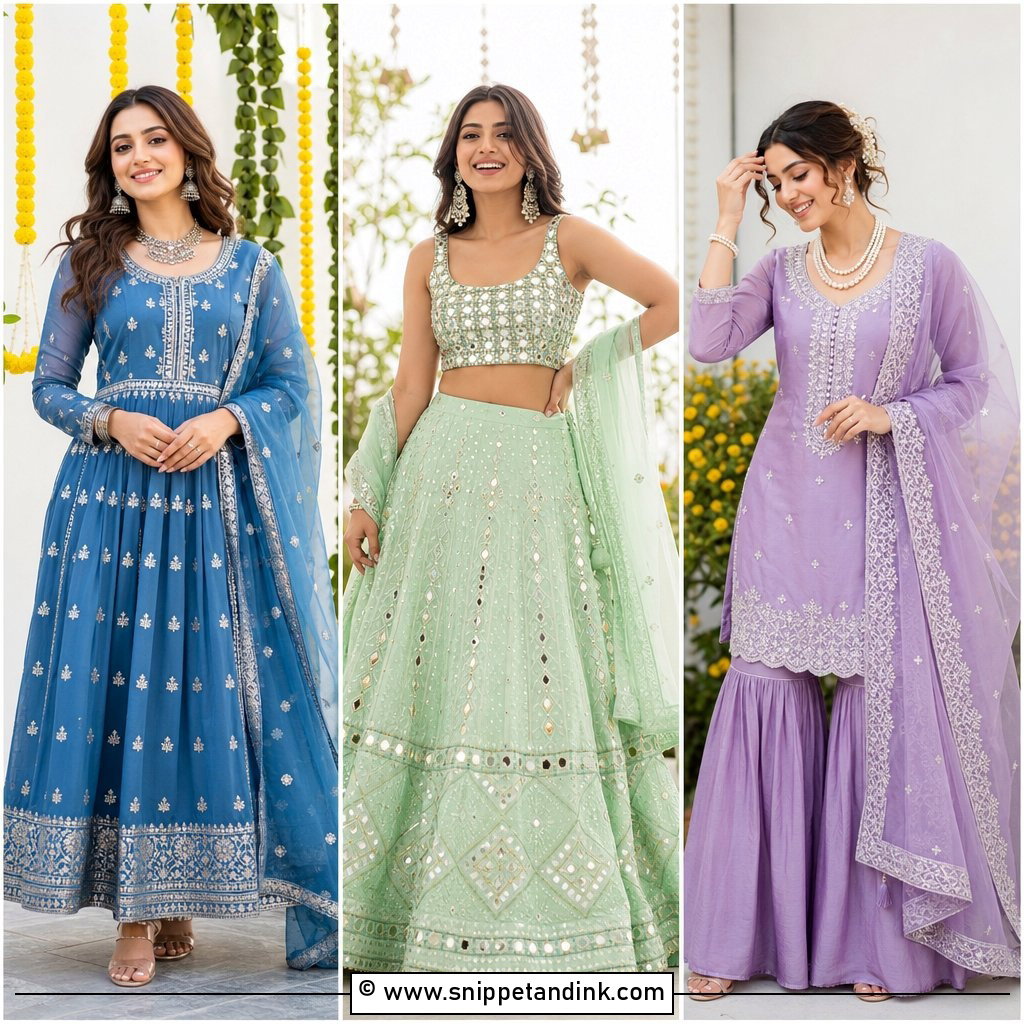
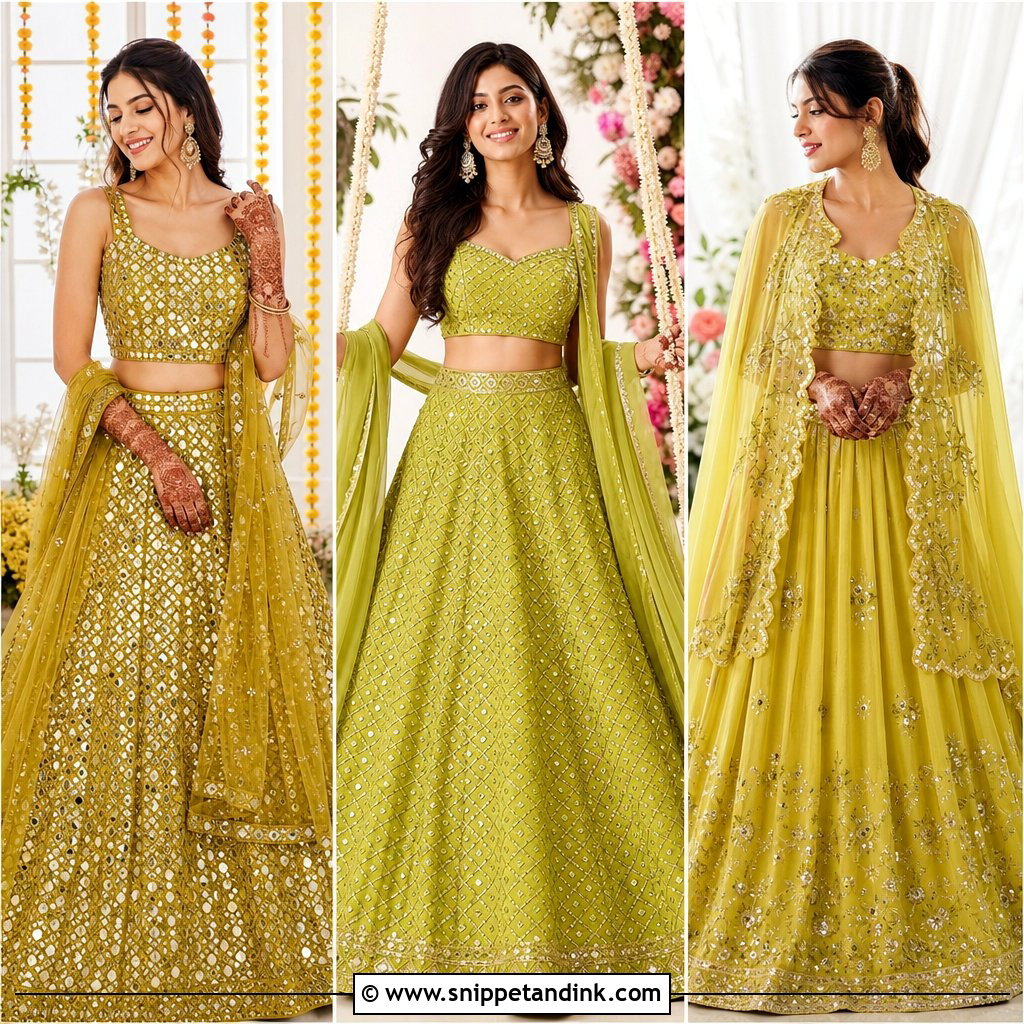
Green mirror work is the classic, and from where I sit it is also one of the friendliest. A short-sleeved fitted blouse leaves the forearms open, and scattered mirrors on the skirt are lighter than a fully worked panel. Choose emerald, leaf or parrot green, and keep the dupatta to one shoulder in yellow, pink or a mixed print. One small warning: mirrors have stitched edges that can catch the cone or my wrist if the bride leans forward, so dense mirror work on the blouse front isn’t ideal for the hours of application. Save the necklace if the blouse is already busy.
2. Yellow Floral Lehenga Mehndi Dress
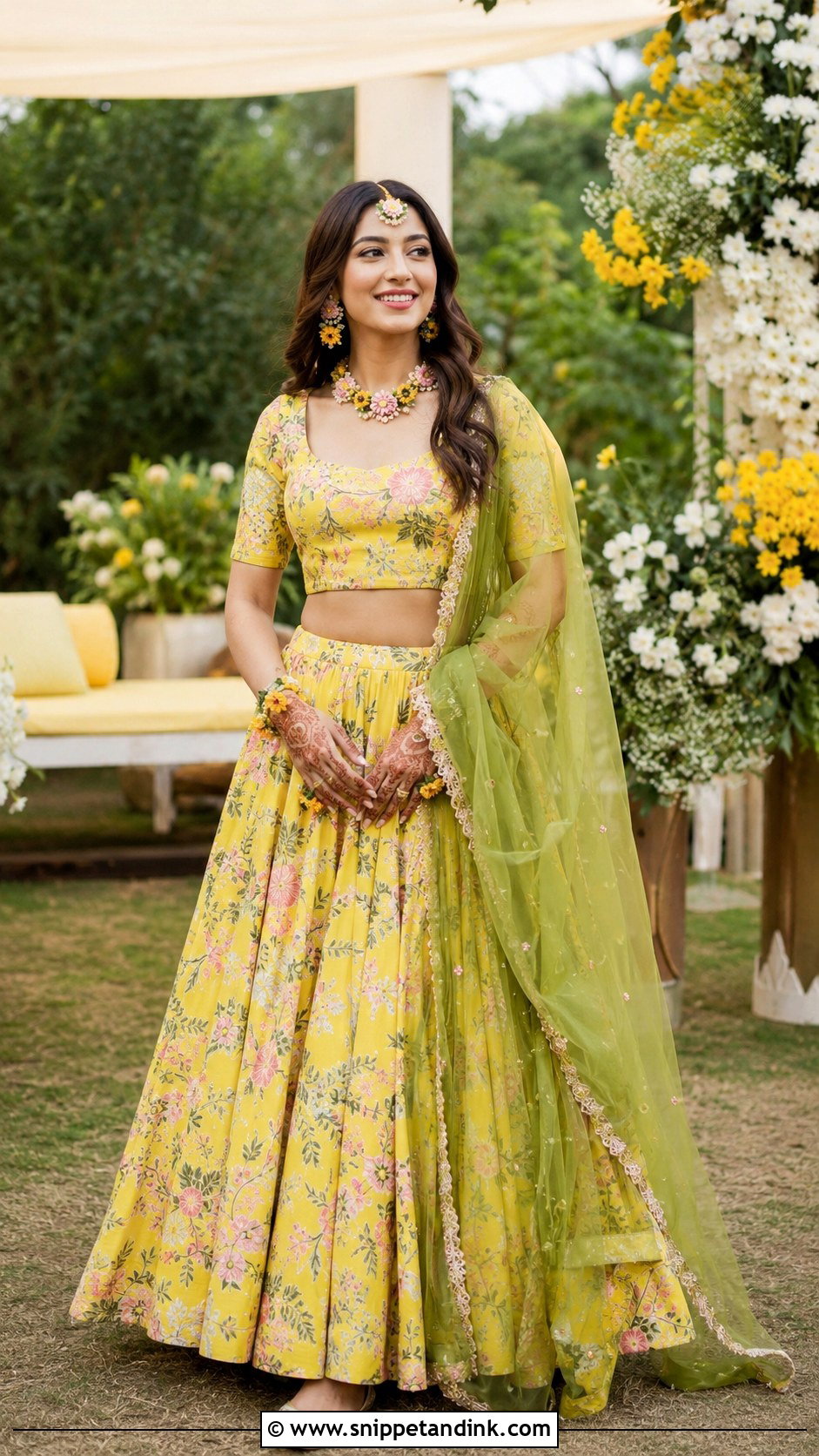
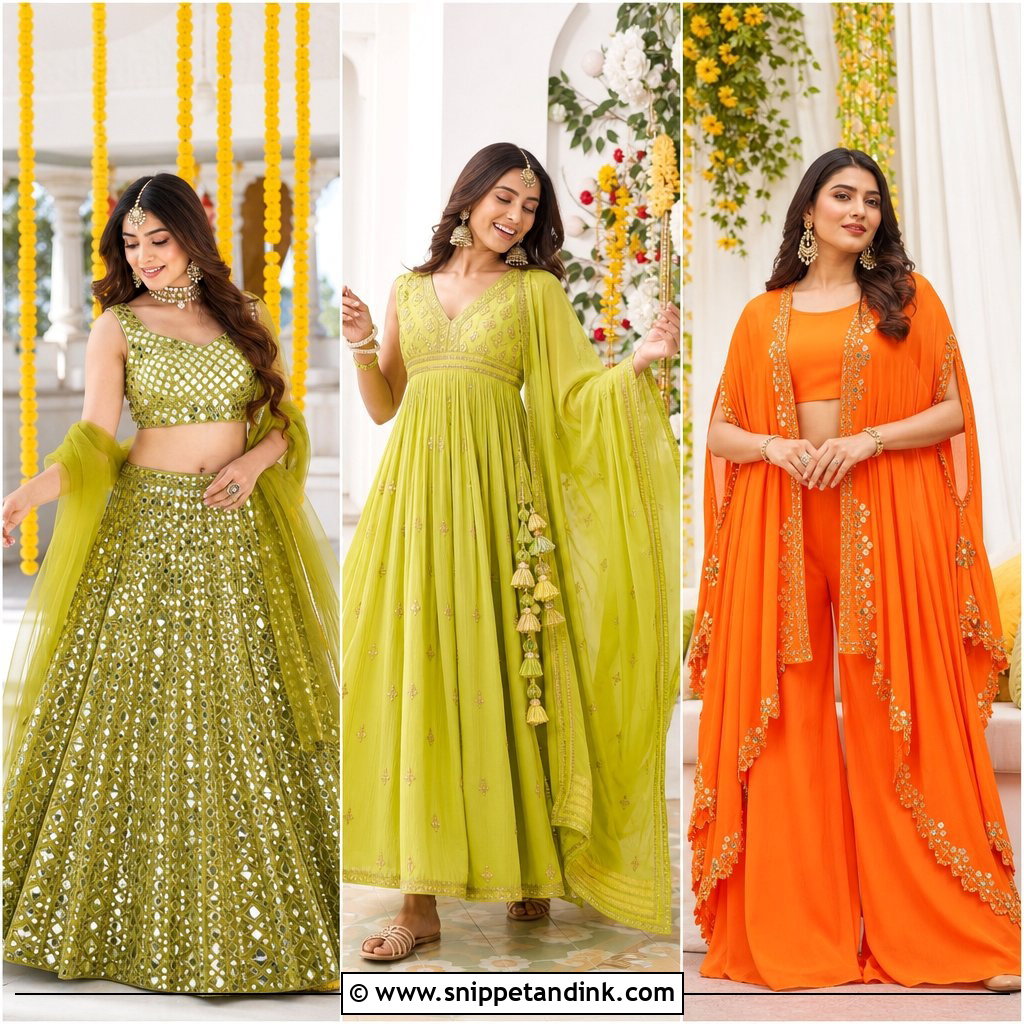
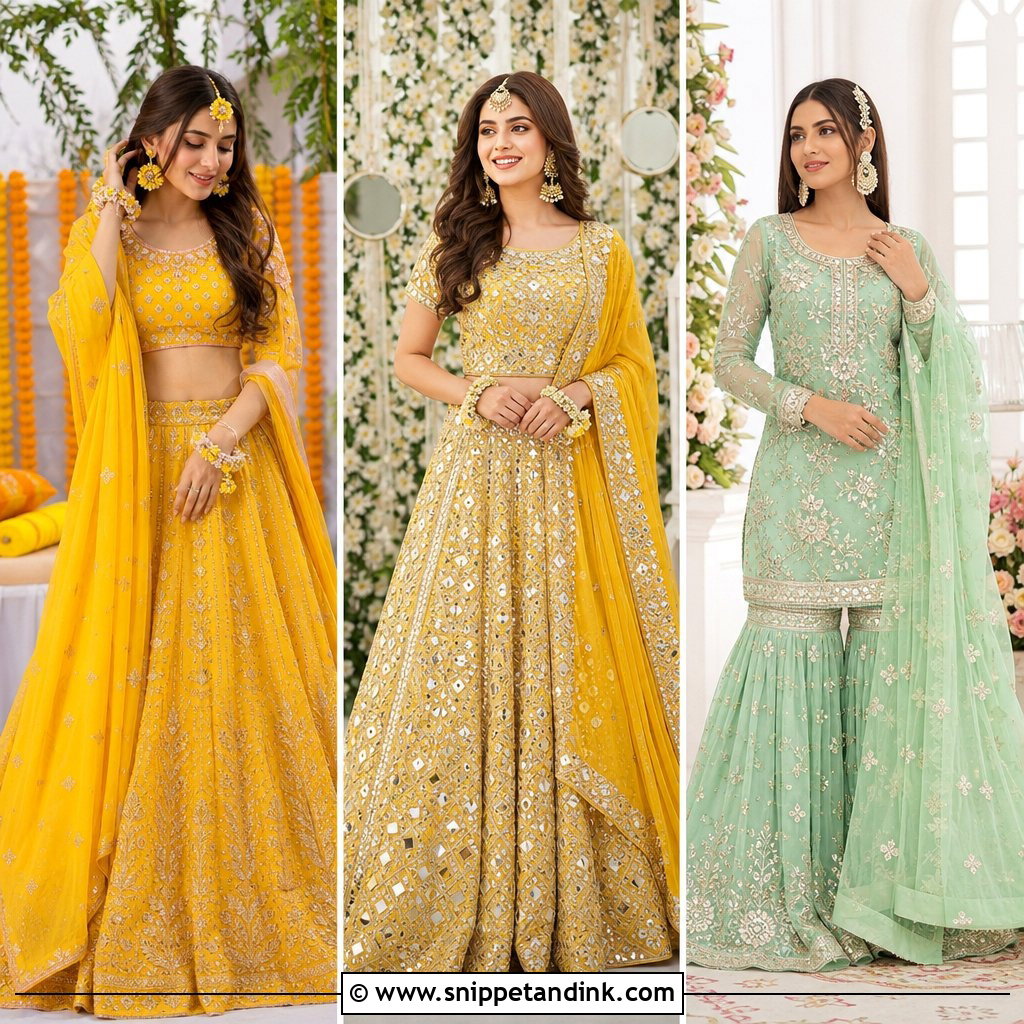
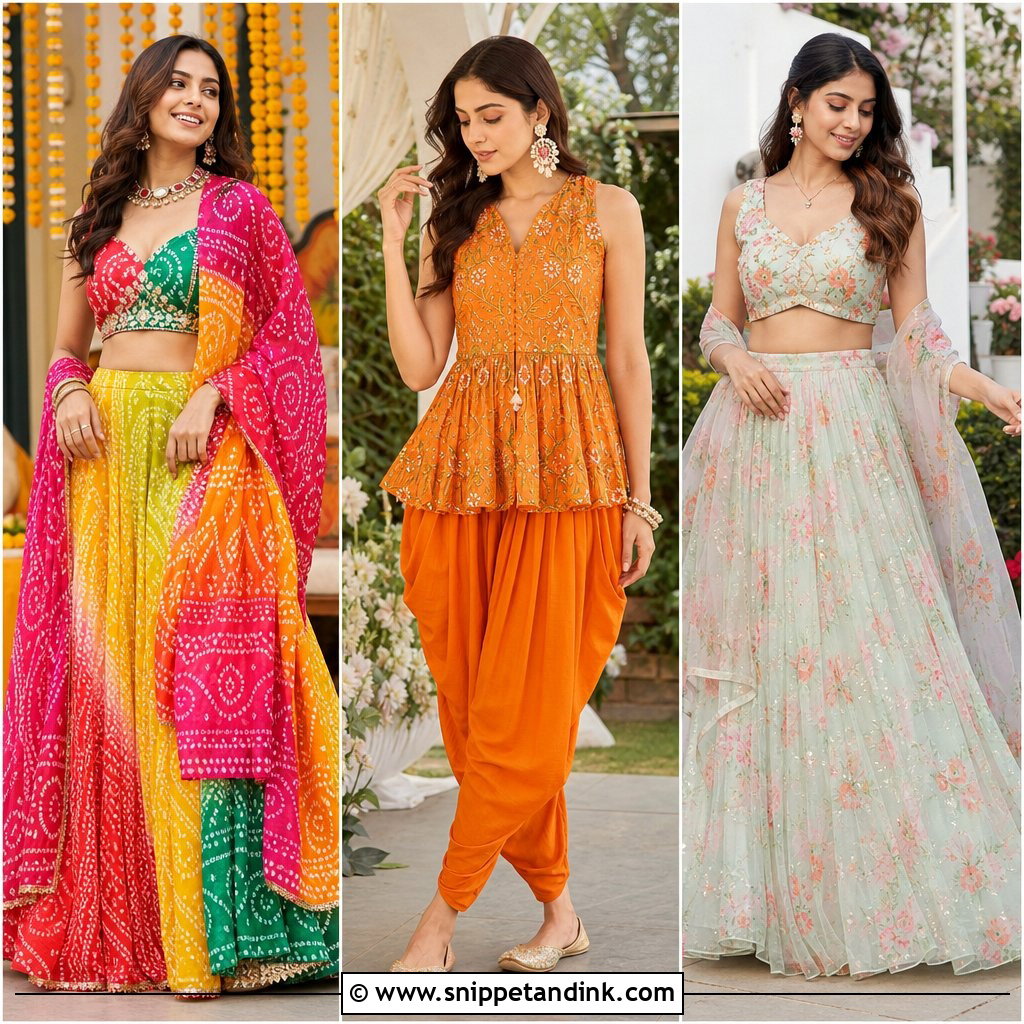
Yellow is lovely next to fresh henna paste, which goes on a deep green-brown. A light lehenga with small florals, thread embroidery or appliqué, a cropped short-sleeve blouse and a sheer green dupatta keep things simple. I’d repeat one floral colour in the jewelry rather than introduce three. Neutral juttis or a low block heel are easier when you have to walk to the stage with wet hands and can’t use the railing.
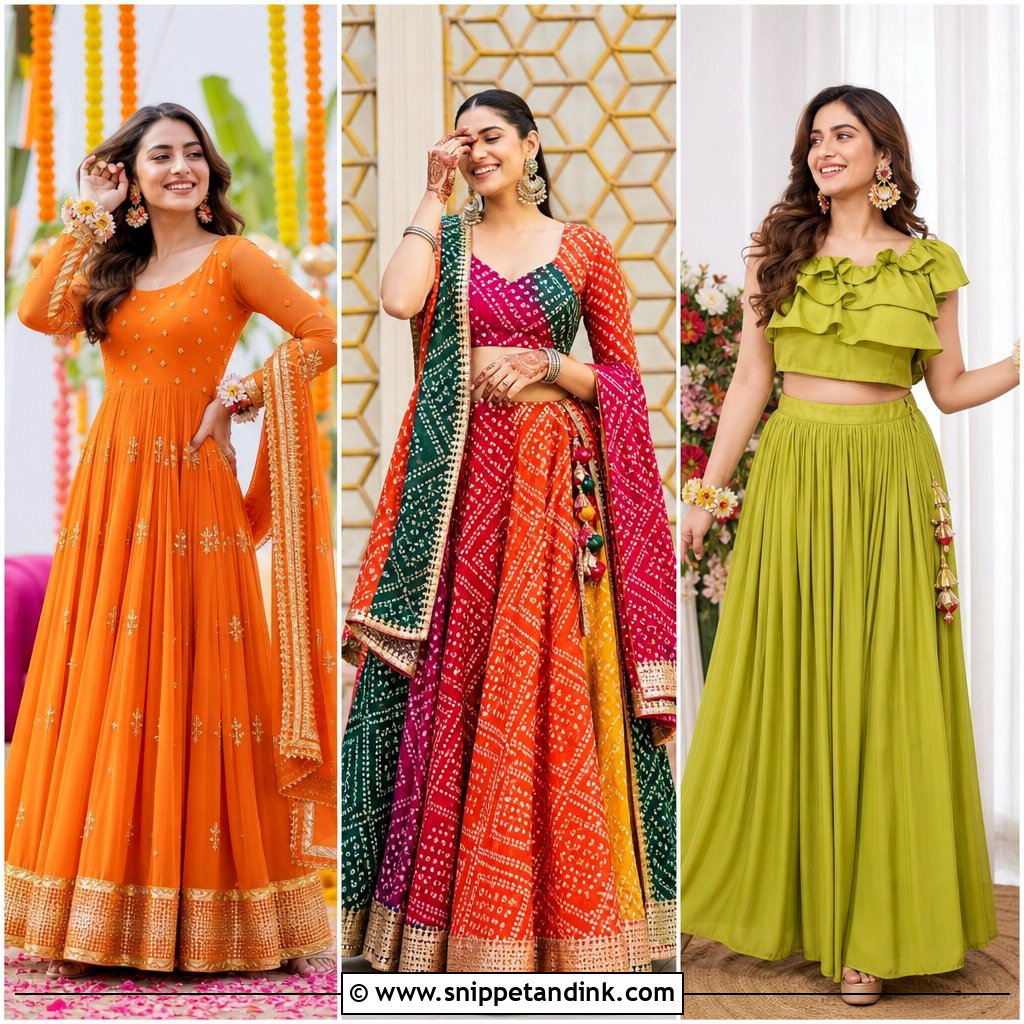
3. Multicolor Panel Lehnga Mehndi Dress
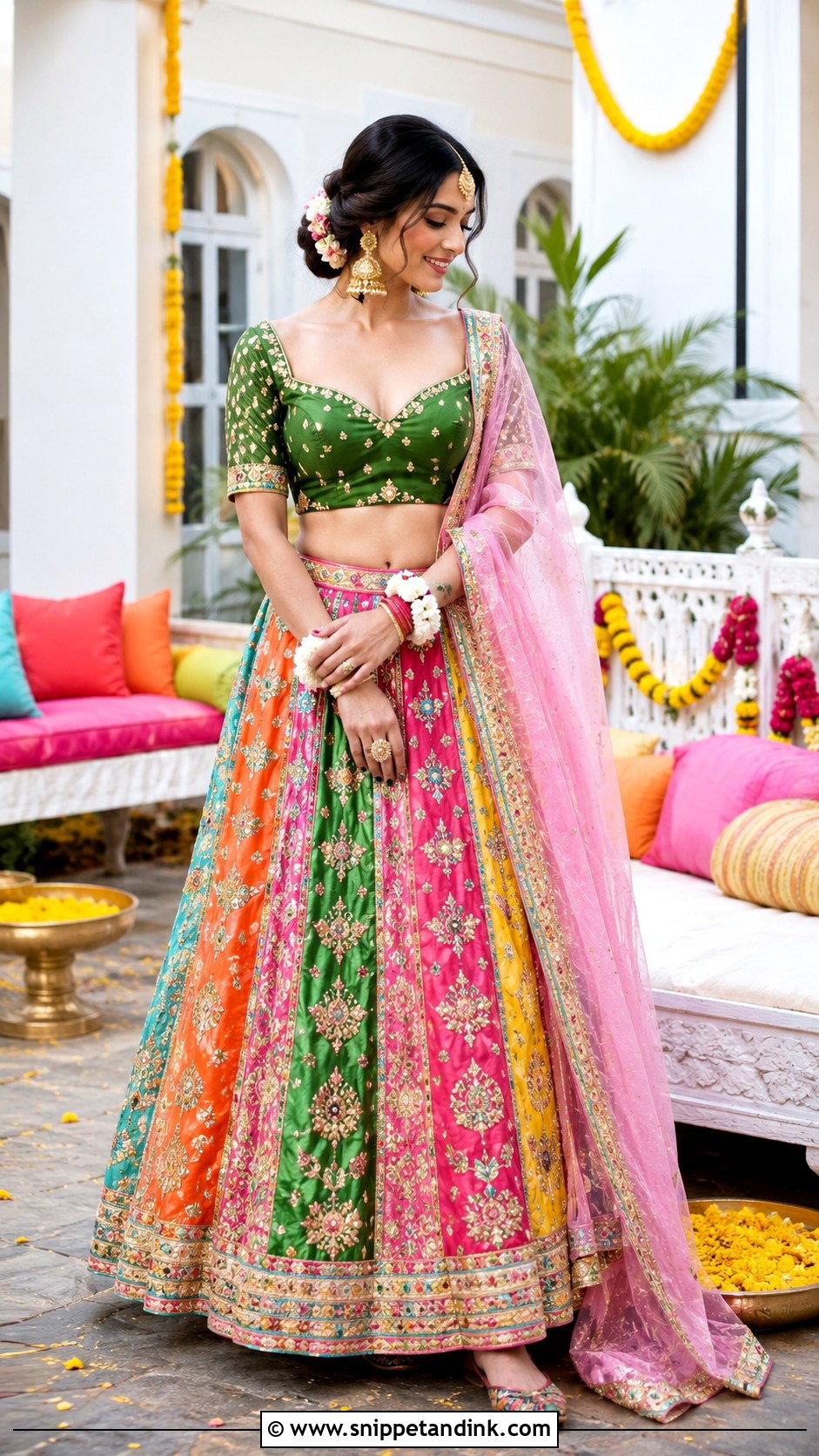
Can’t settle on one colour? A multicolor panel lehenga mixes green, pink, orange, turquoise and yellow in alternating sections, with gota or thread defining each panel. Keep the blouse solid and the dupatta in one of the quieter shades, pinned at shoulder and waist. Skip the big necklace; the skirt is already doing the talking. I like this one for a lively, cushion-filled event because small henna transfer marks disappear into the pattern far more than they would on a plain skirt.
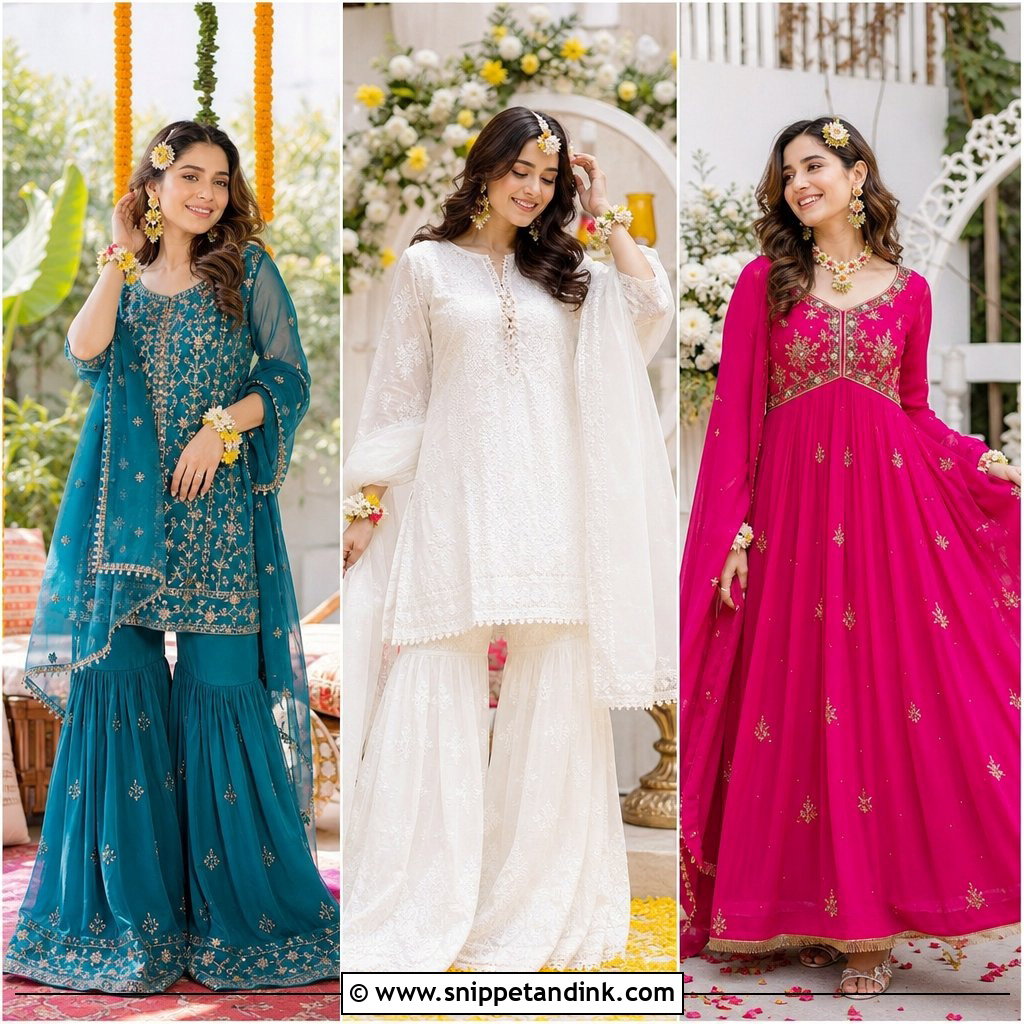
4. Pink Sharara Mehndi Dress
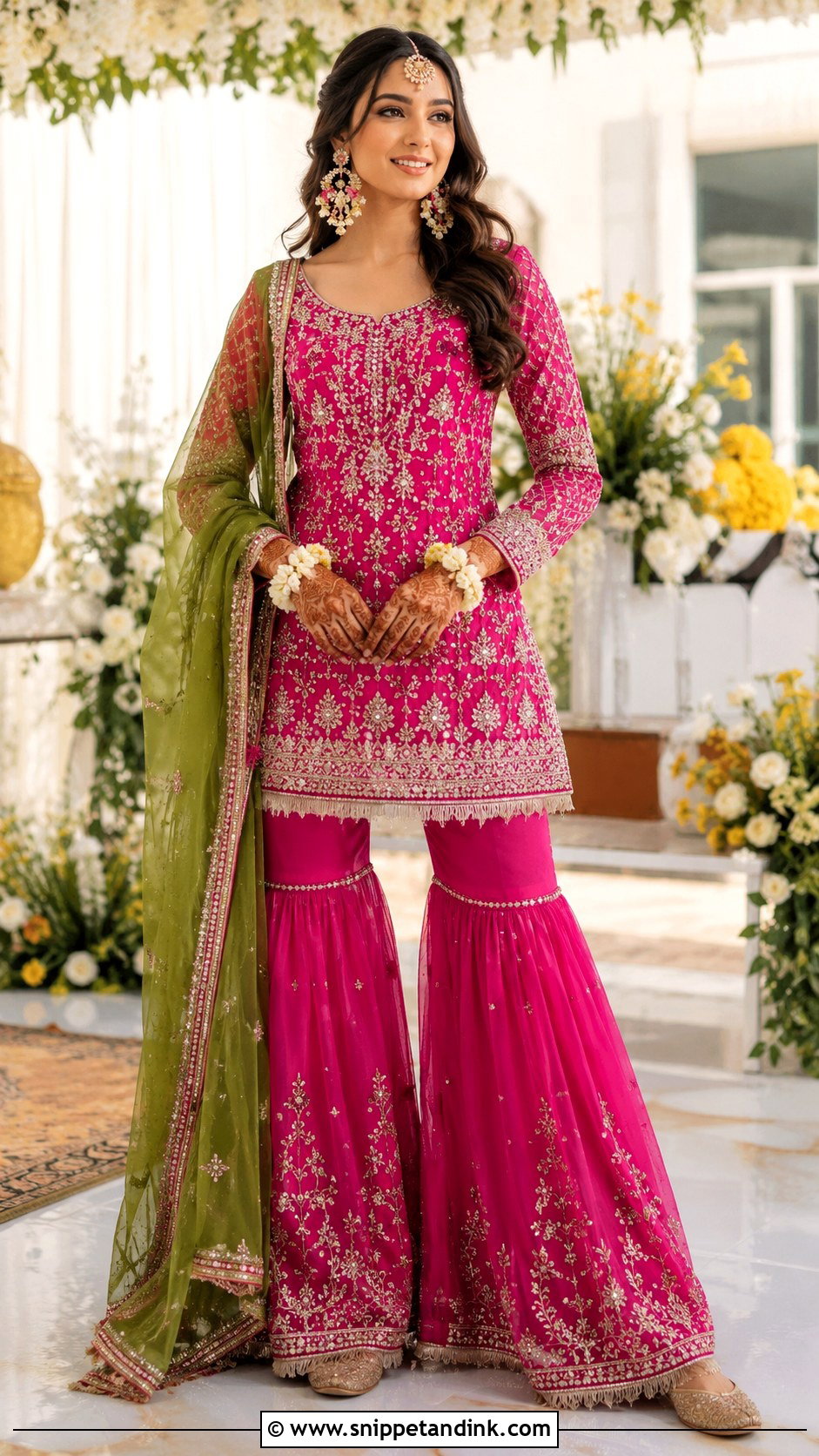
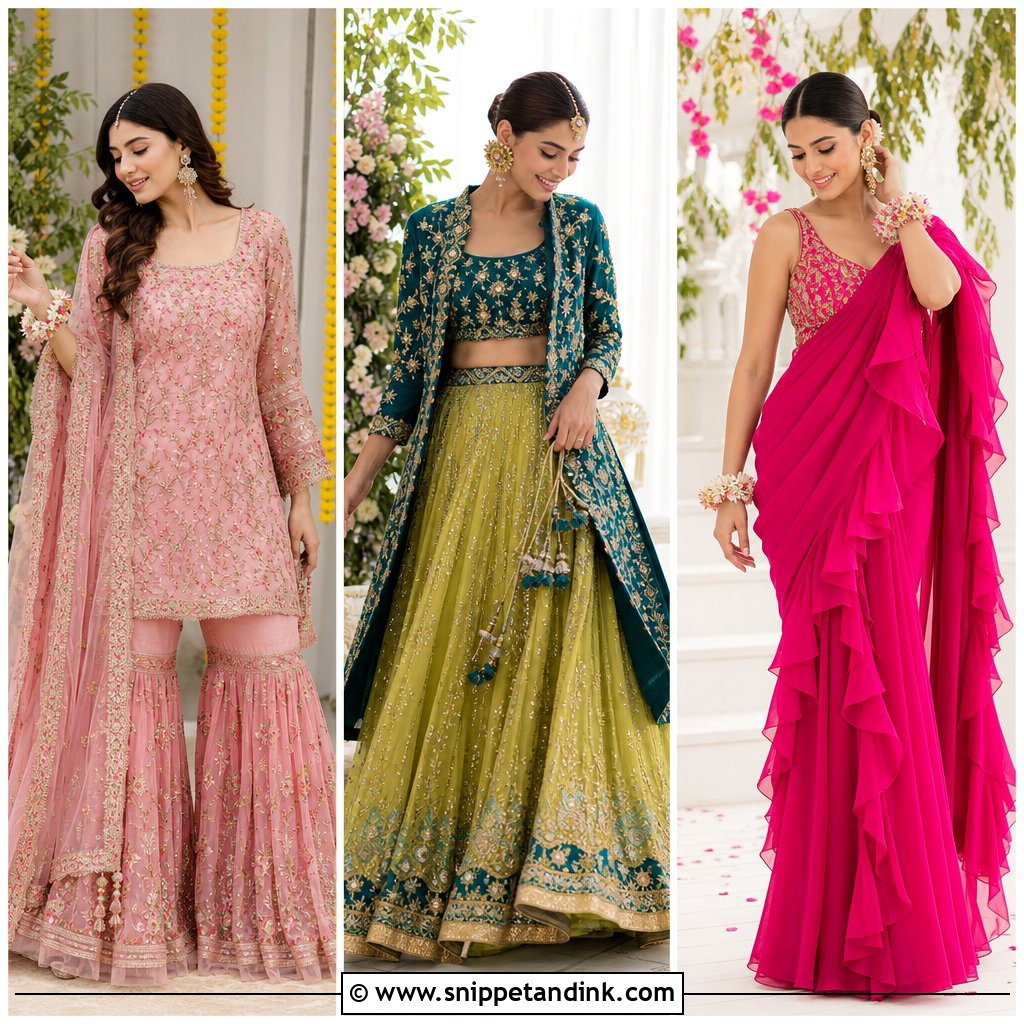
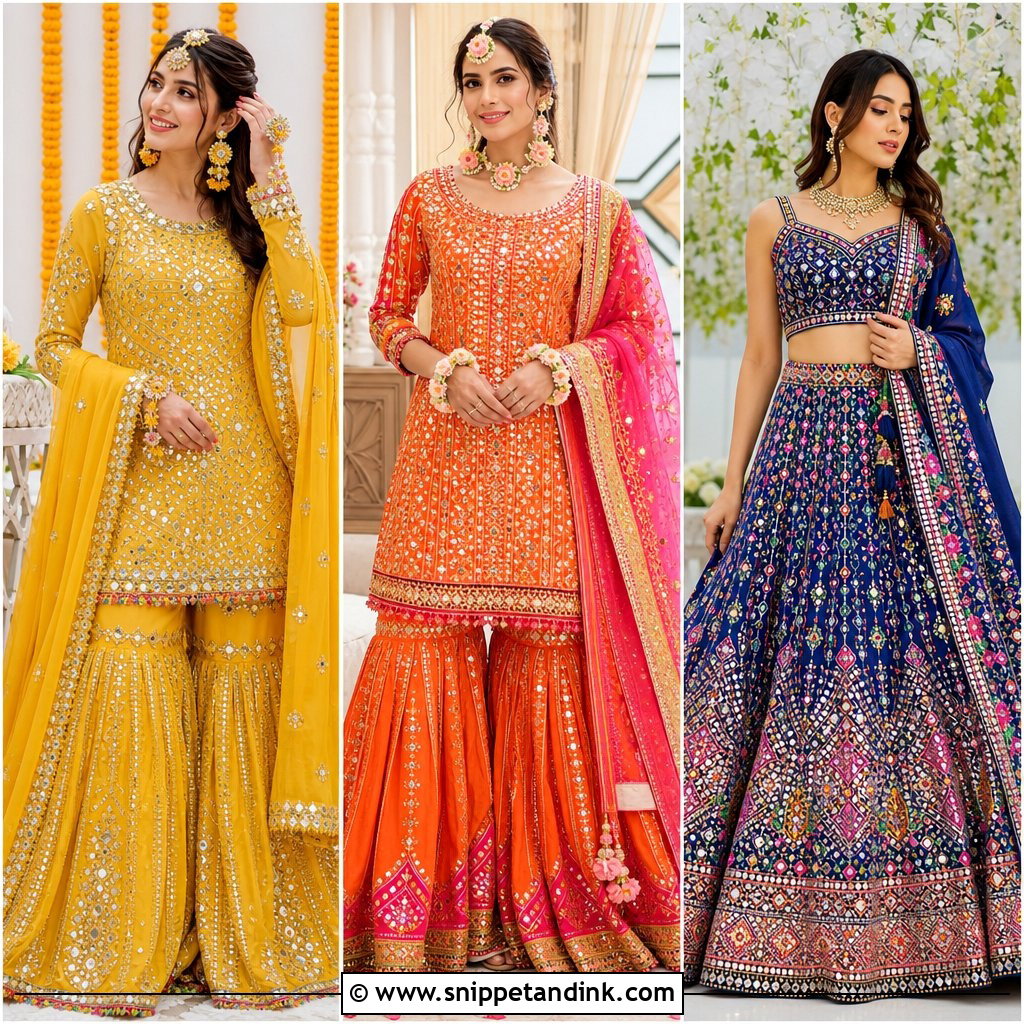
Shararas are my favourite thing to see a bride walk in on mehndi day. The divided bottom lets her sit cross-legged or with knees up, whichever keeps her hands steady for me, and nothing bunches. Pick fuchsia, rose or blush with gota, mirror or floral embroidery. Three-quarter sleeves are fine for a hands-to-wrist design; if we’re going up the forearm, short sleeves save us rolling fabric back and pinning it. A contrasting green dupatta over one shoulder, a small tikka and flat juttis are all you need before the music starts.
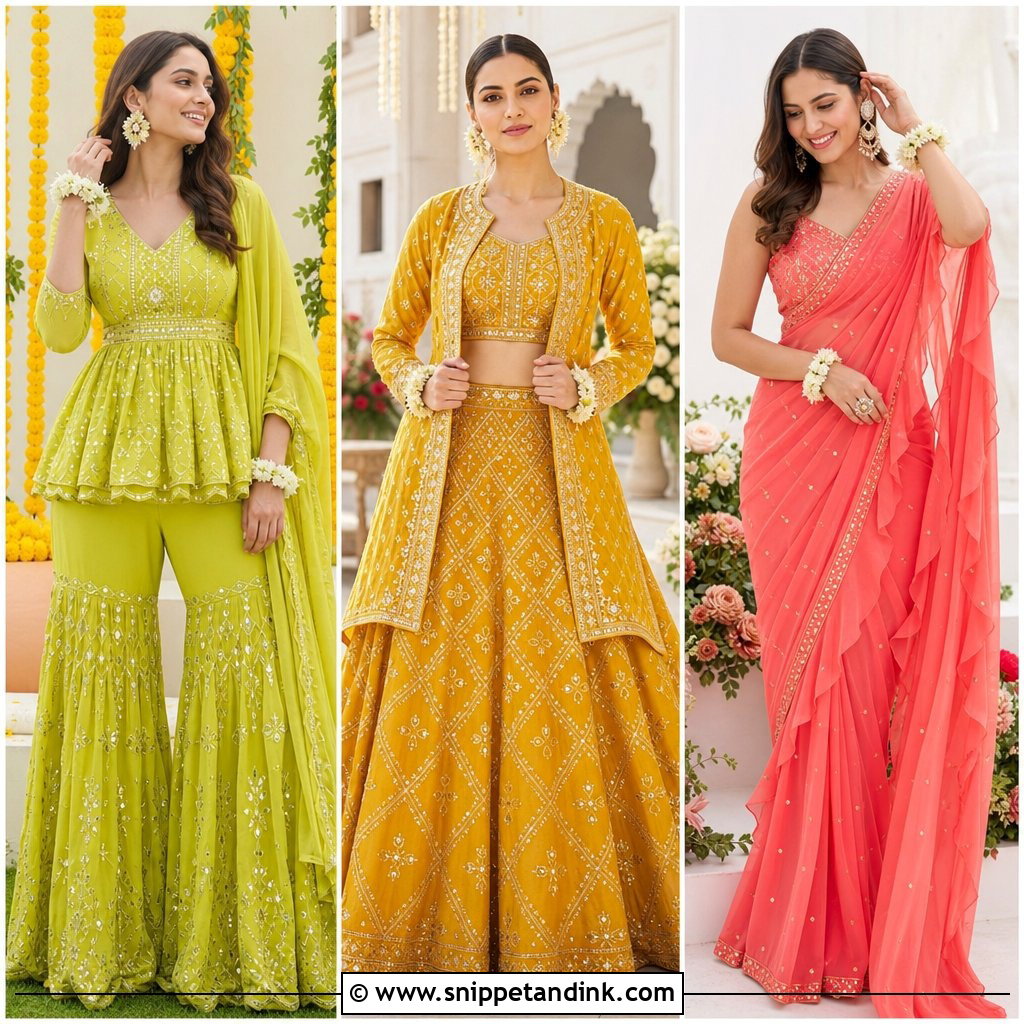
5. Lime Green Gharara Mehndi Dress
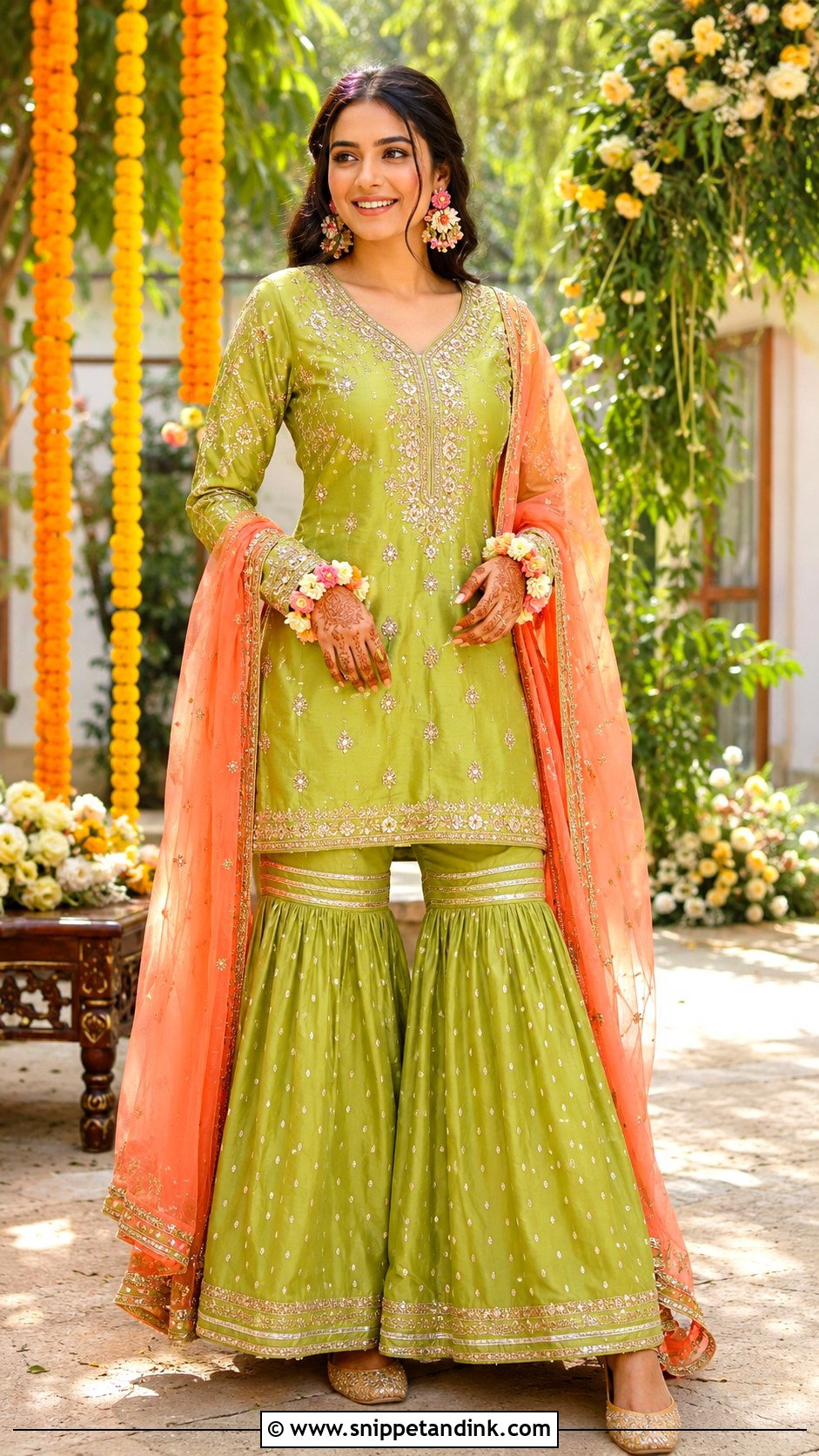
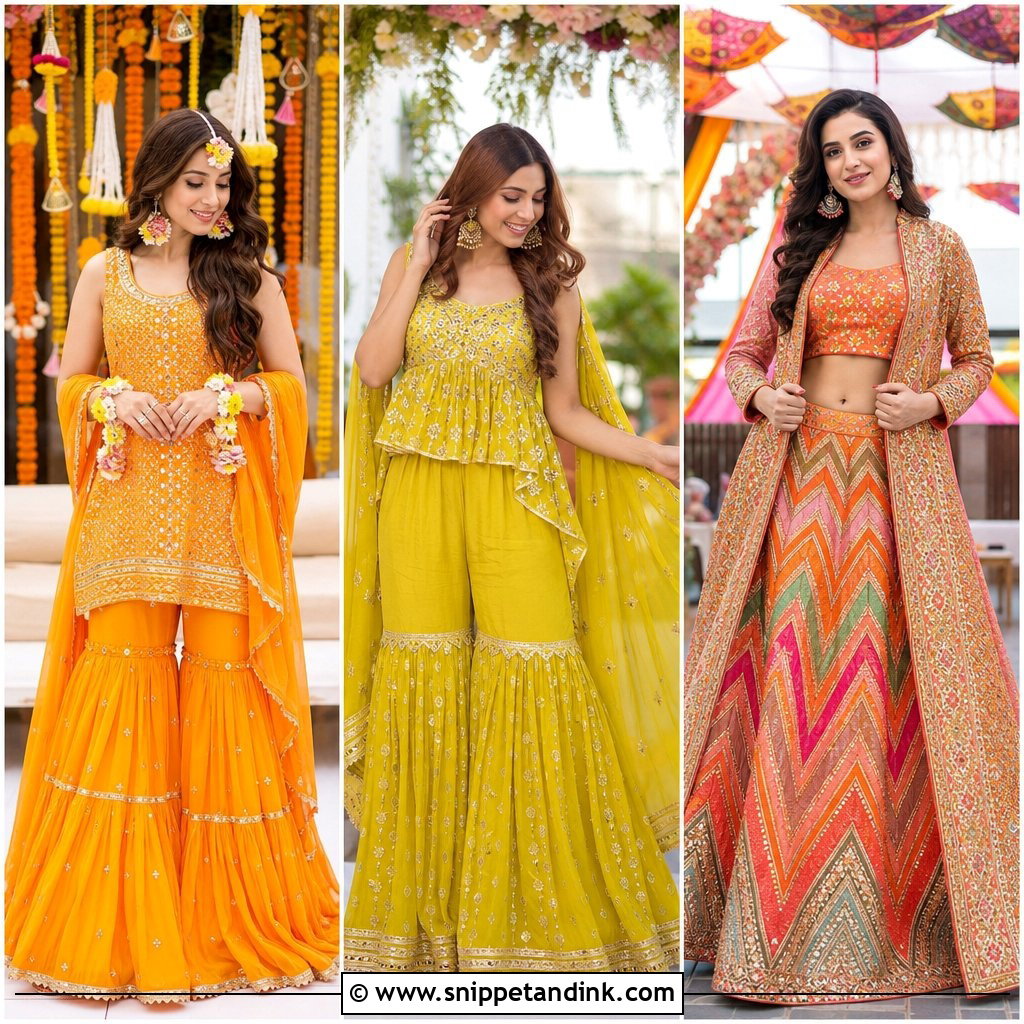
Lime green makes a gharara outfit look lively straight away. A fitted knee-length kurti with gota, gharara pants seamed at the knee, and a sleeveless or cap-sleeve top give me the whole arm to work with for a full bridal design. Coral, orange or pink in the dupatta adds warmth. Floral earrings and wrist flowers are lighter than metal, but I’d put the wrist flowers on after the paste has dried, not before. Keep the embroidery evenly spaced; lime doesn’t need help to stand out.
6. Orange Anarkali Mehndi Dress
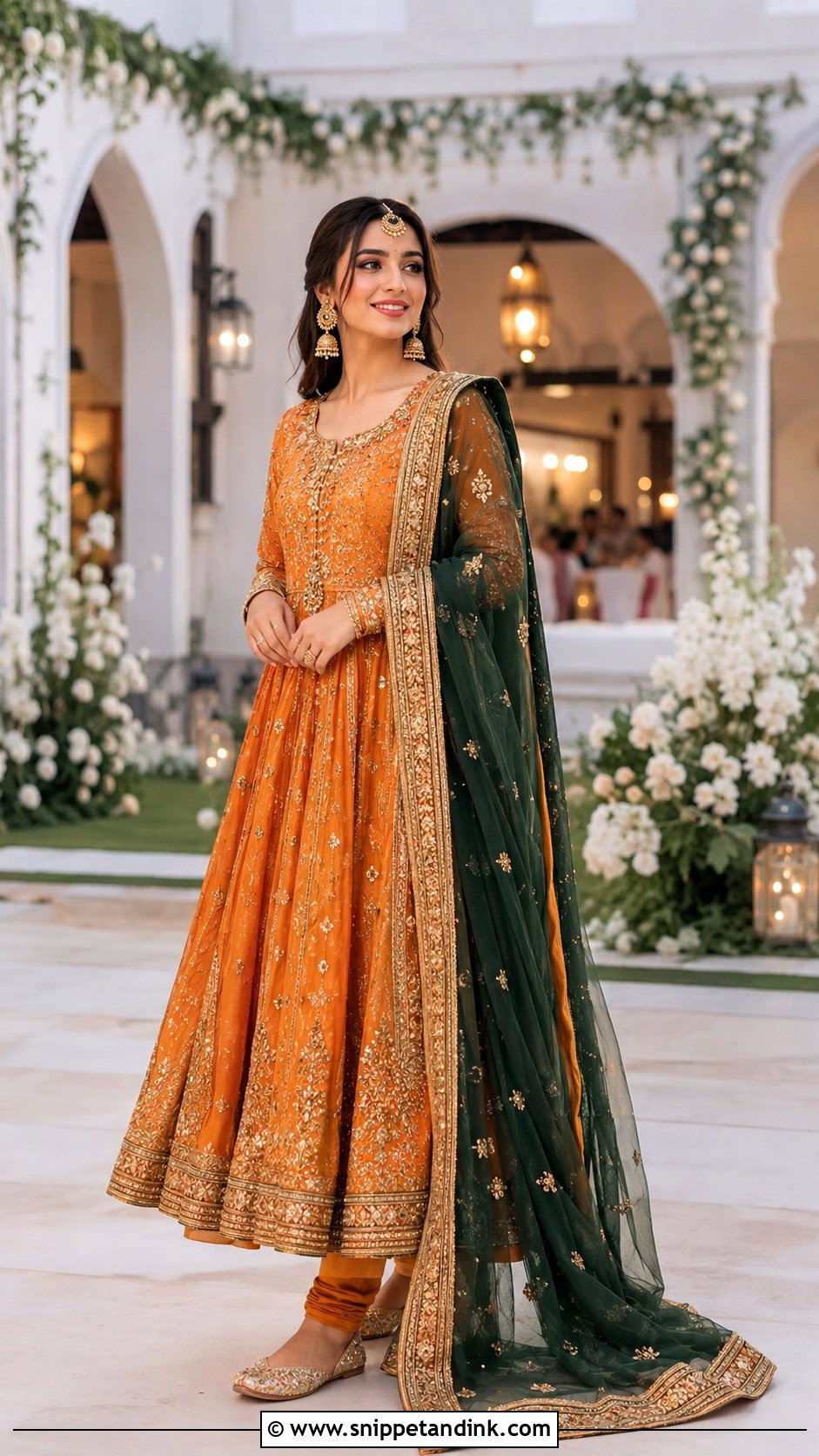
Orange is the one colour I gently question. A fresh henna stain starts bright orange before it deepens, so in photos taken that evening, the hands can blend into a tangerine sleeve. Mango or burnt orange gives more contrast than a bright tangerine. A calf or ankle-length Anarkali with a fitted bodice, gold embroidery at the neck and hem, and short sleeves is still a gracious choice. Churidars underneath and a green dupatta pinned at one shoulder finish it; skip the necklace if the bodice is heavily worked.
7. Ivory Floral Lehenga Mehndi Dress
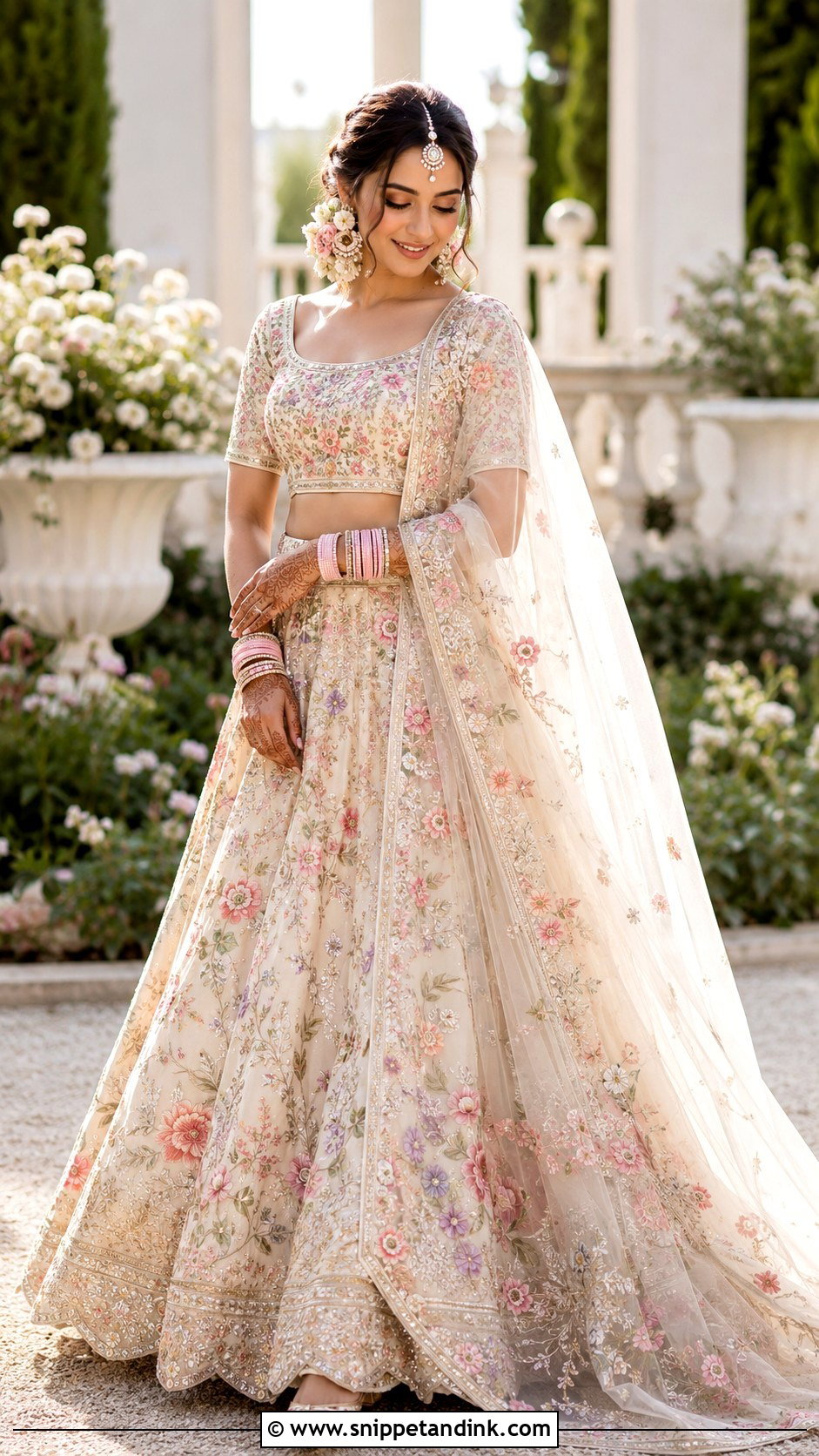
Ivory with colourful flowers is soft and fresh, but I always mention the risk honestly: wet paste on pale fabric leaves a brown mark that rarely washes out fully. If you choose this, short sleeves are a must, and I’ll lay a cloth across your lap while I work. A green border on the skirt ties it to the theme. Pick a skirt with real flare and clear motifs, since a plain pale lehenga can look flat in photos. Pearl tikka, fresh flower earrings and pastel bangles keep the palette gentle.
8. Teal Peplum Mehndi Dress
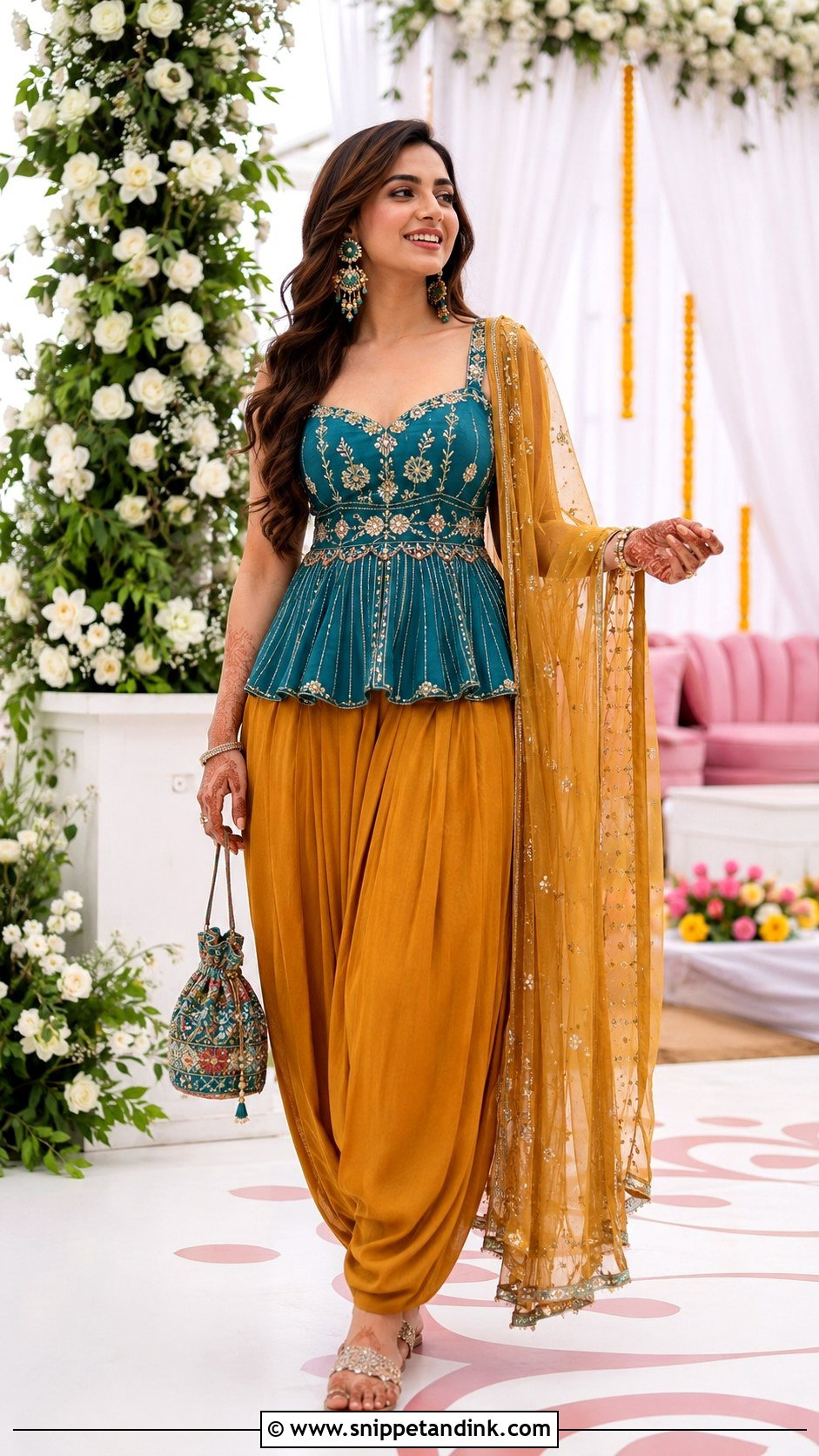
A teal peplum top with dhoti pants suits a bride who would rather wear separates than a lehenga. The structured peplum takes mirror work, sequins or threadwork, and mustard, ivory or matching teal dhoti pants move easily. Some sets attach the dupatta at both shoulder and wrist; if you’re having a full hand design, skip the wrist loop, because it sits exactly where I’ll be working. A compact potli and flat sandals keep you mobile, and a fine necklace won’t fight the peplum detail.
9. Mustard Kurta Palazzo Mehndi Dress
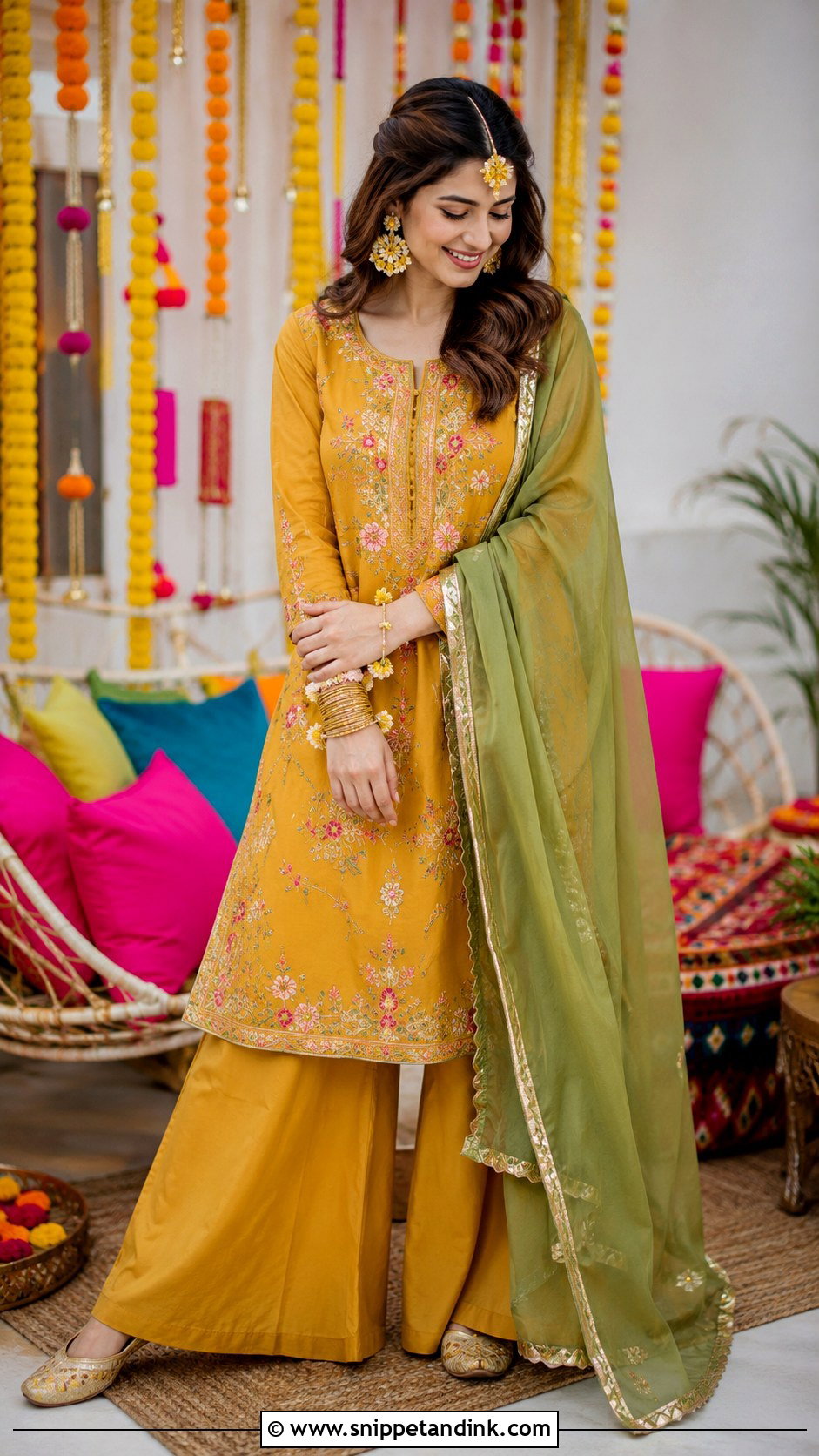
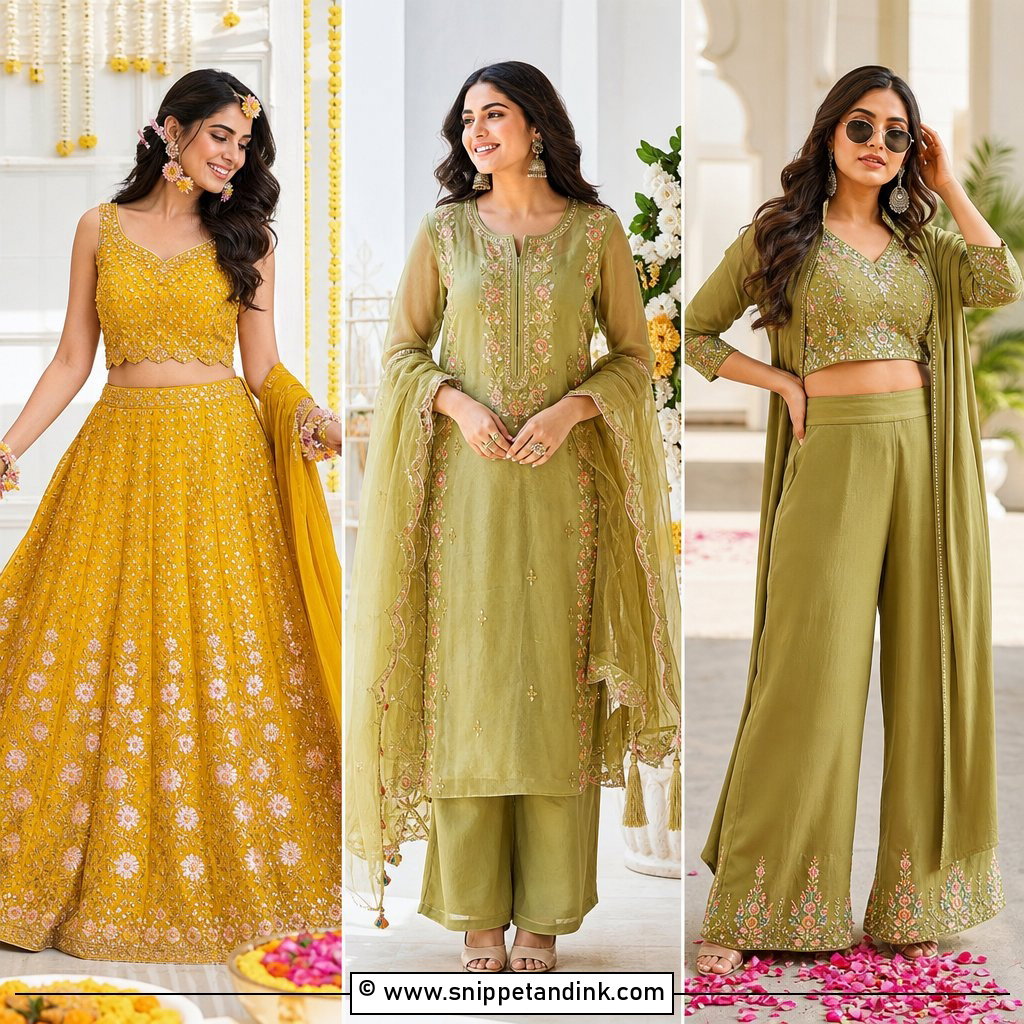
For a small mehndi at home, a mustard kurta-palazzo combination is about as comfortable as bridal dressing gets. Wide palazzos let you shift position through a long session, which matters more than people expect; sitting still for two or three hours is tiring. A knee-length kurta with side slits and three-quarter sleeves works for a hands-only design. Pin the green organza dupatta at the shoulder. Cotton silk and georgette move without bulk. A floral headpiece and stacked bangles, added after the henna, make it read as bridal.
10. Purple Cape Lehenga Mehndi Dress
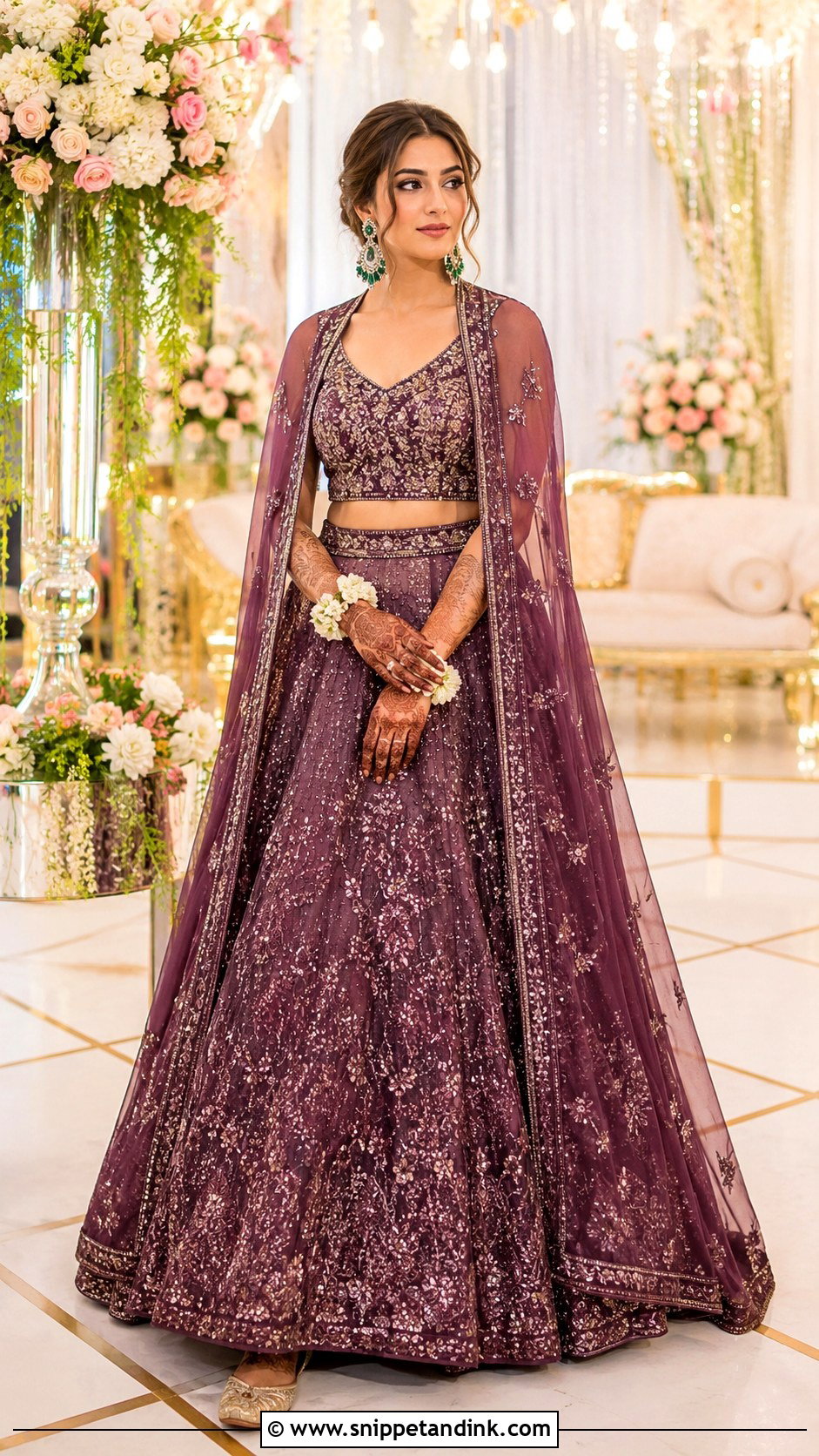
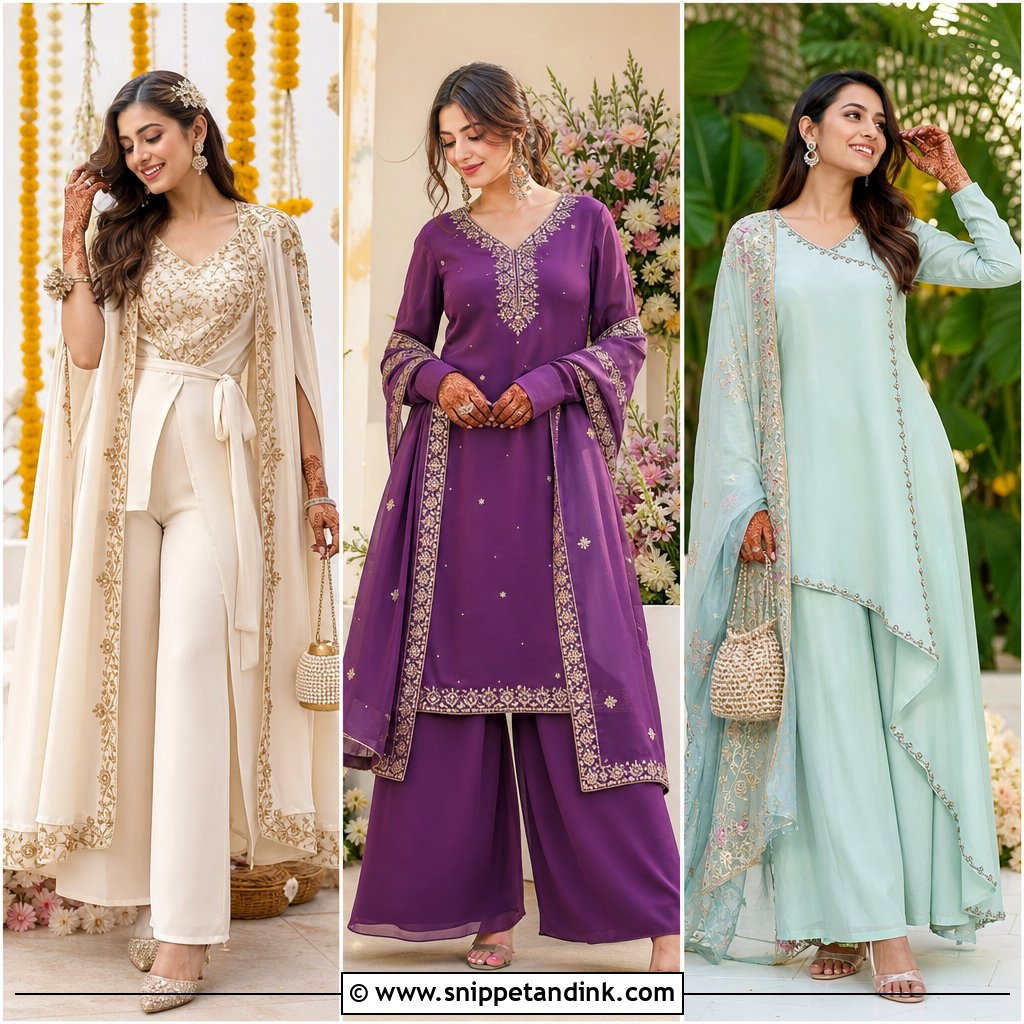
A purple cape lehenga skips the dupatta completely, and I’m grateful every time I see one. The open-front cape falls from the shoulders and stays out of the way, so the bride’s hands are free from the first line of the design to the last. Choose plum, grape or violet with restrained sequins or thread embroidery and a sleeveless blouse. Green stones or floral jewelry connect it to the mehndi setting. Deeper colours like this suit an evening event, and the dark henna stain reads clearly against purple once it develops.
11. Emerald Green Sari Mehndi Dress
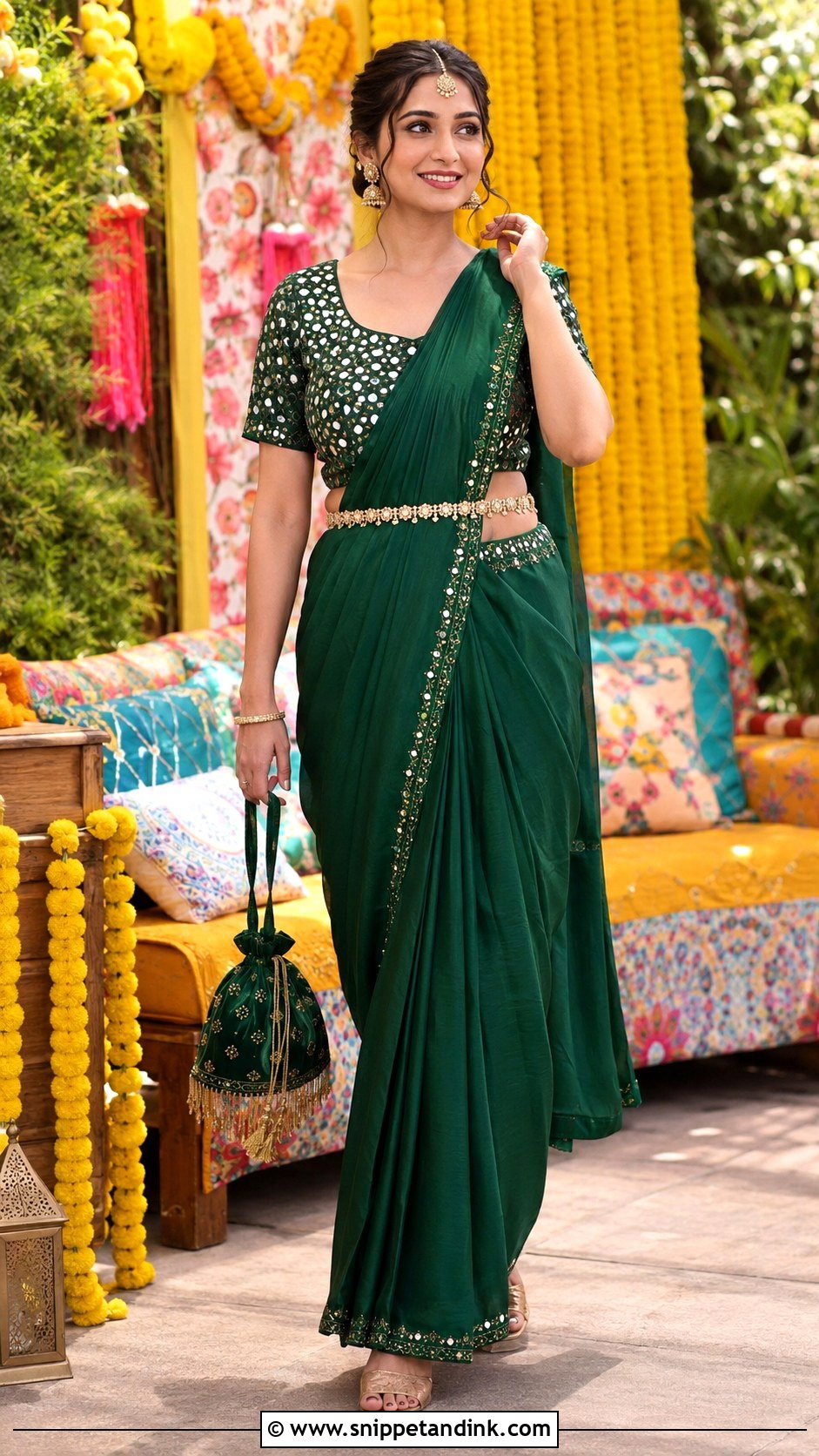
An emerald sari looks refined at a mehndi, as long as the drape is locked down. I’d suggest a pre-draped sari, or have a regular one pinned firmly so no pleat or pallu slides toward your hands. A slim embroidered belt helps keep the pleats in place. Pair a short-sleeve blouse with mirror work or a pink border. If your design goes far past the wrist, leave loose bangle stacks off until the paste is scraped, since they press into it. Gold jhumkas and a compact potli complete a sari look that still lets you sit comfortably.
12. Mint Draped Skirt Mehndi Dress
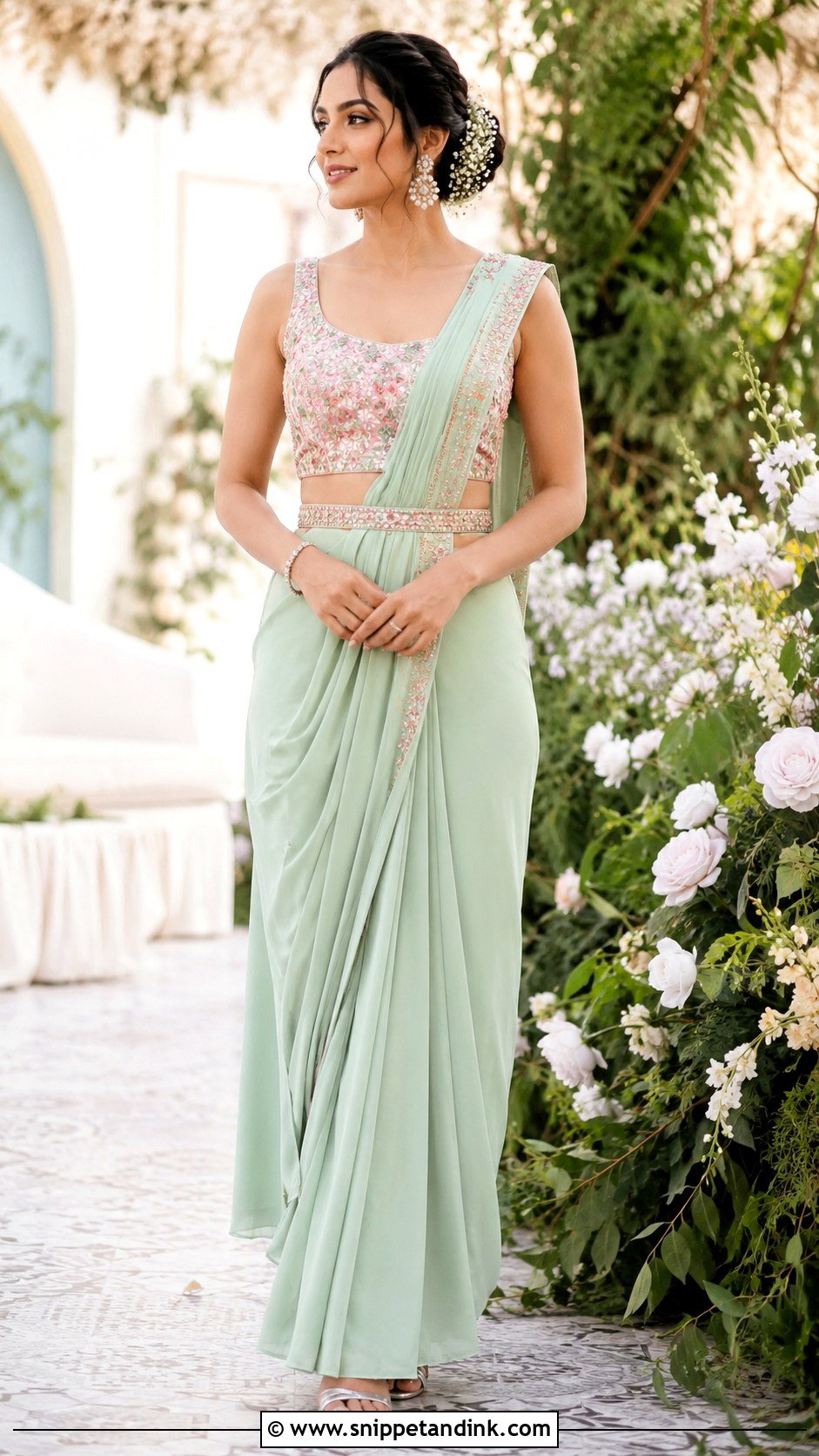
Mint feels fresh for a bright daytime function. A pre-draped skirt with soft pleats and a short attached drape gives the look of a sari without yards of loose fabric. Pair it with a fitted floral blouse in pink, peach or lavender. Check the inside seams: you’ll sit on them for a long time, and scratchy seam allowances become very noticeable around hour two. A slim belt holds the drape, and pearl-floral earrings keep it light.
13. Red Bandhani Lehenga Mehndi Dress
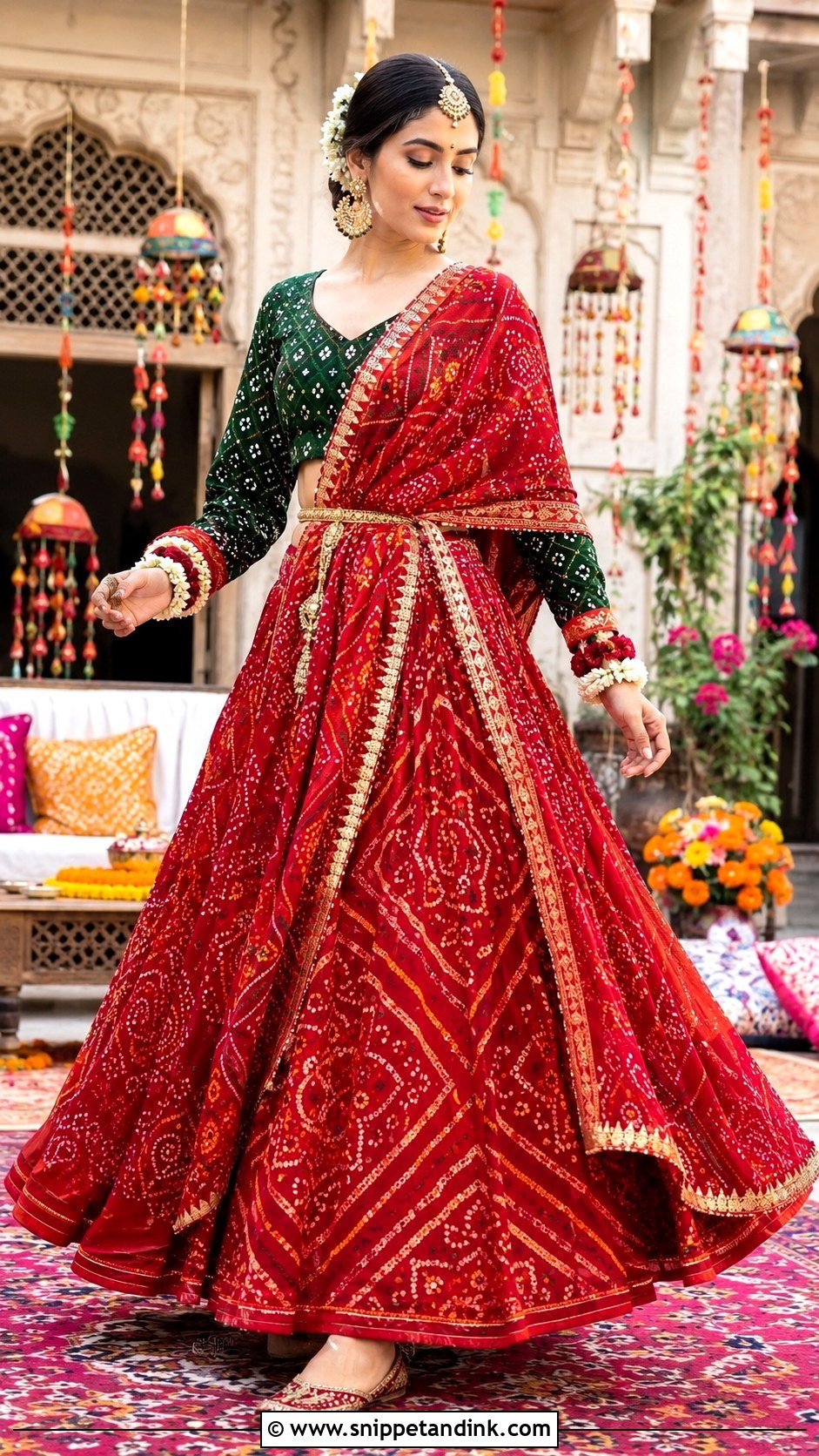
Red bandhani has deep roots in Rajasthani and Gujarati wedding dress, and it’s warm and joyful next to henna. A light lehenga with small tie-dye dots, a contrasting green, orange or magenta blouse and gota borders give it shimmer. Secure the bandhani dupatta at shoulder and waist so it stays clear of the fresh design. Antique gold earrings and a borla-style headpiece suit the textile. Keep the makeup fresh rather than matching everything to the red; the outfit already carries plenty of colour.
14. White Chikankari Sharara Mehndi Dress
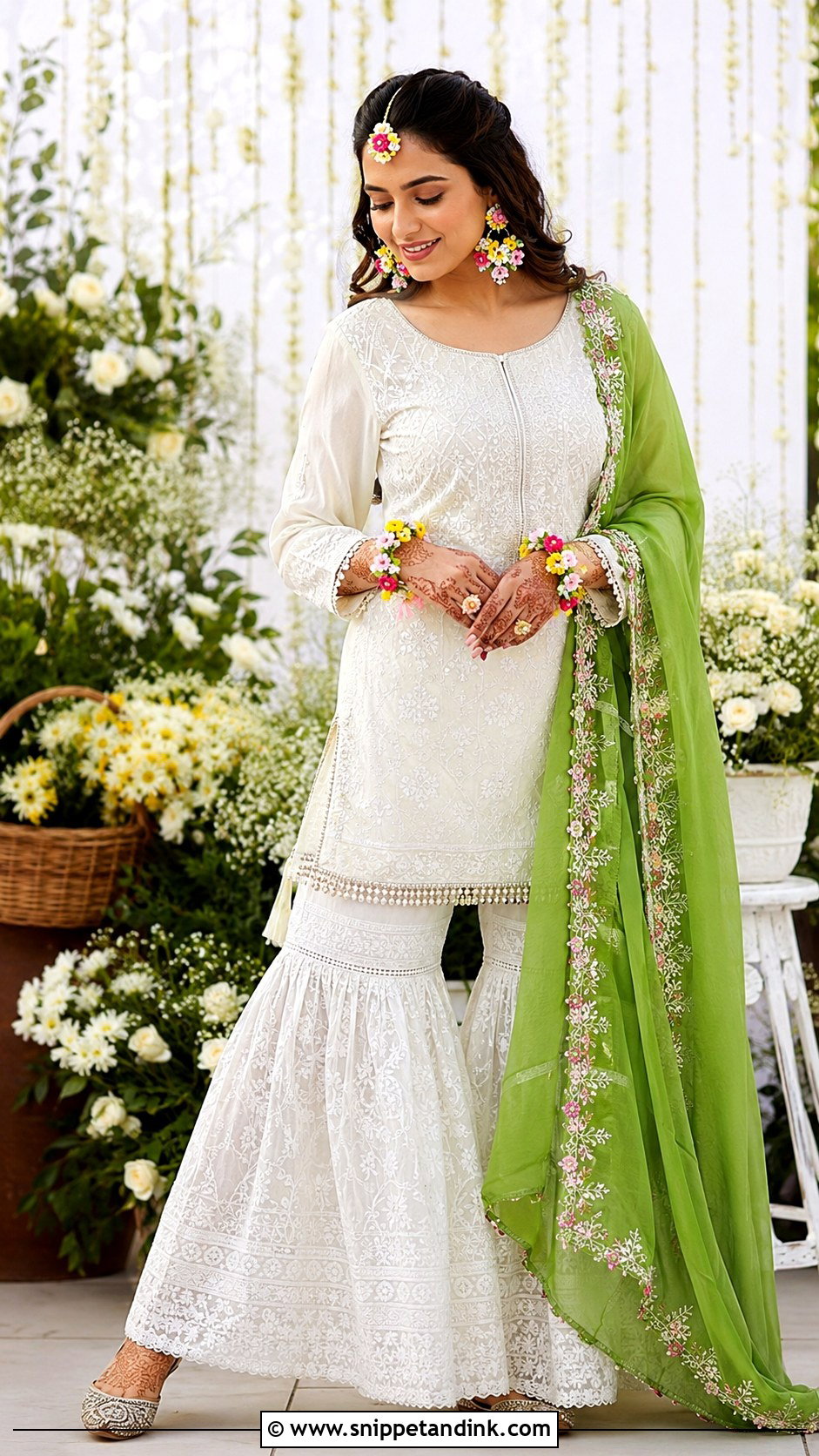
White chikankari is the outfit I’m most careful around. Pale tonal embroidery shows every speck of paste, so I ask the bride to wear elbow-length or shorter sleeves and I put a washable cloth over her lap and knees while I work. The payoff is real: bright flower earrings, a coloured maang tikka and a green, yellow or multicoloured dupatta stand out sharply against the white, and a dark finished stain looks striking against it. A lightweight matching sharara and metallic juttis keep it airy for a minimalist bride.
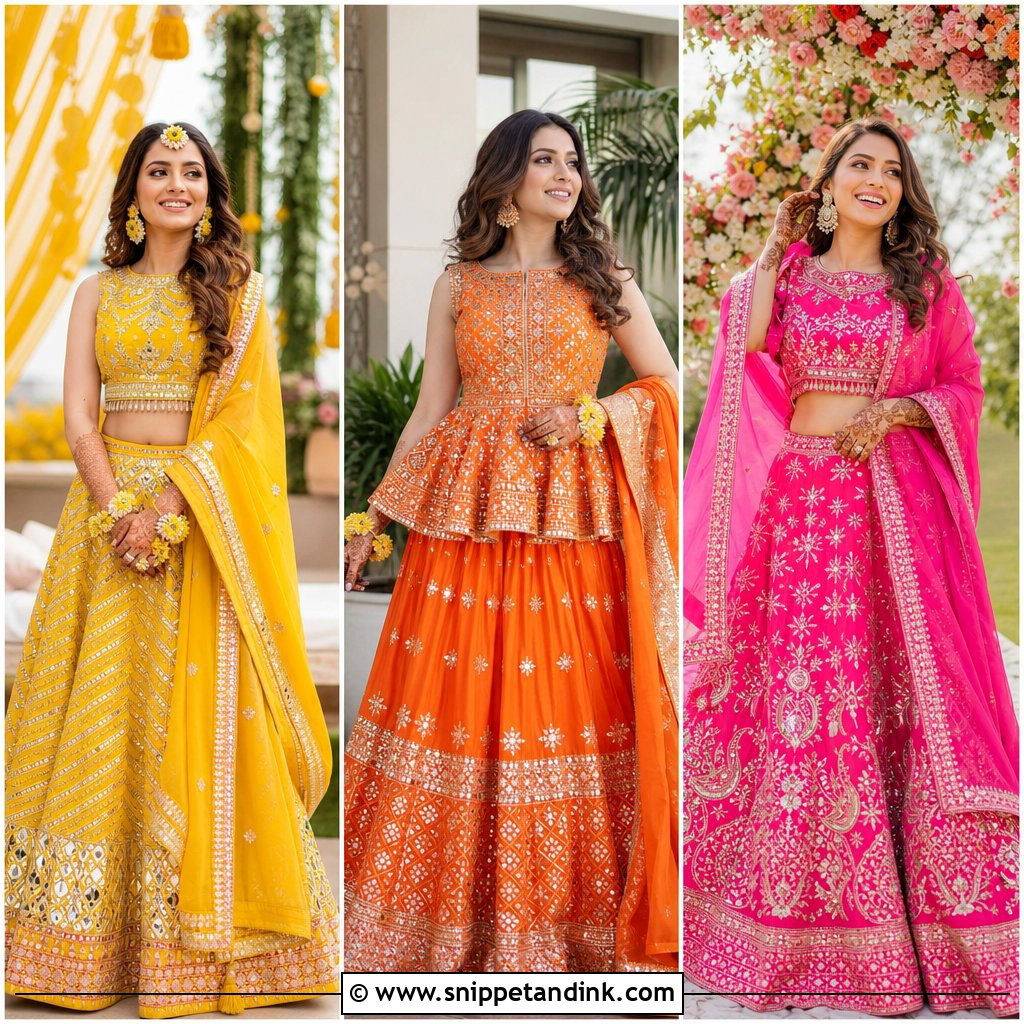
15. Blue Jacket Lehenga Mehndi Dress
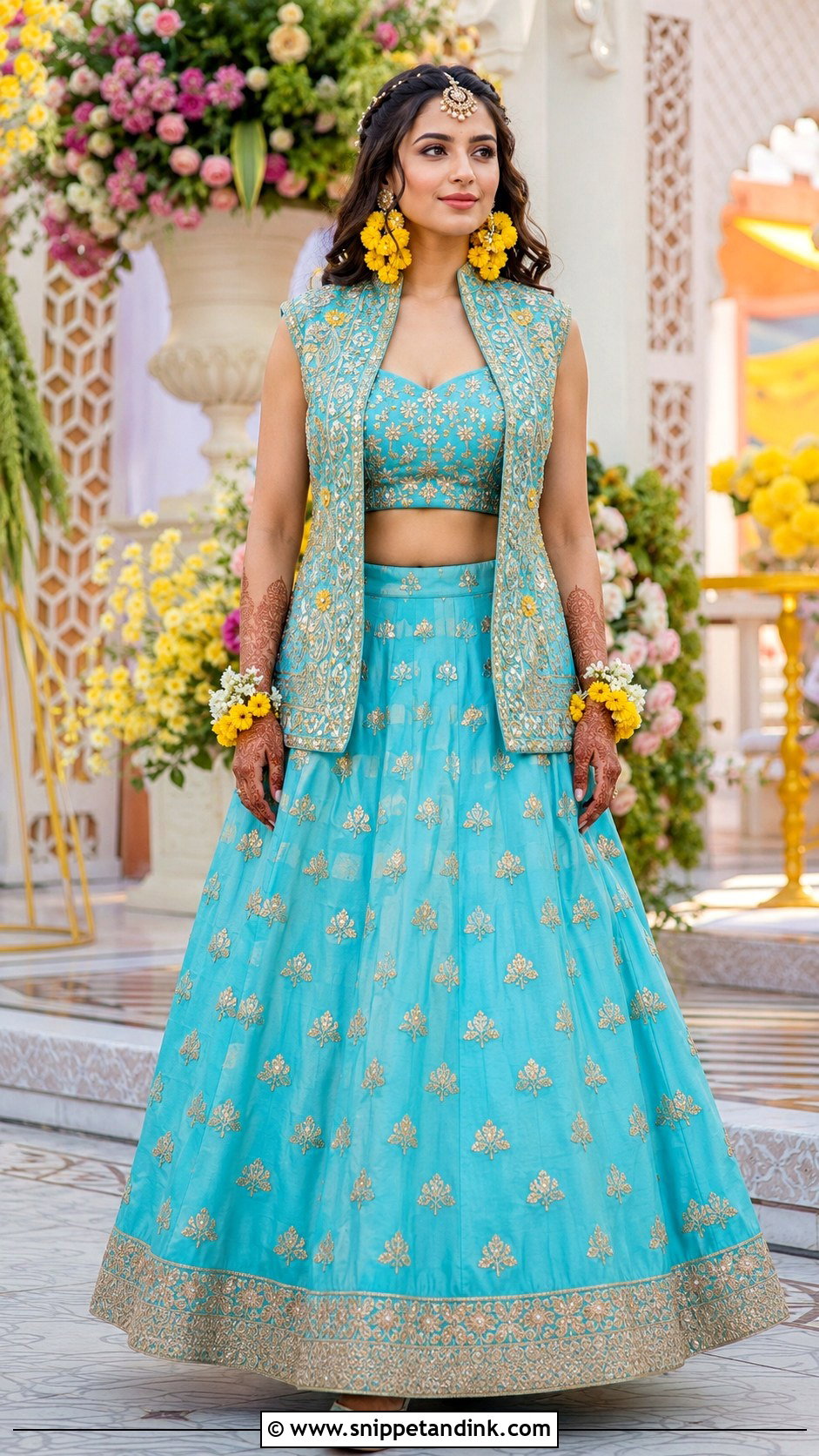
Blue isn’t traditional for mehndi, which is exactly why some brides want it. A turquoise or royal blue skirt with small gold motifs, a cropped blouse and a sleeveless embroidered jacket ending at the waist or mid-thigh give secure layers without a dupatta. Leave the jacket open so the arms stay free. Decorate either the skirt or the jacket, not both heavily. Yellow floral earrings bring in the warmth that blue on its own can lack.
16. Fuchsia Angrakha Mehndi Dress
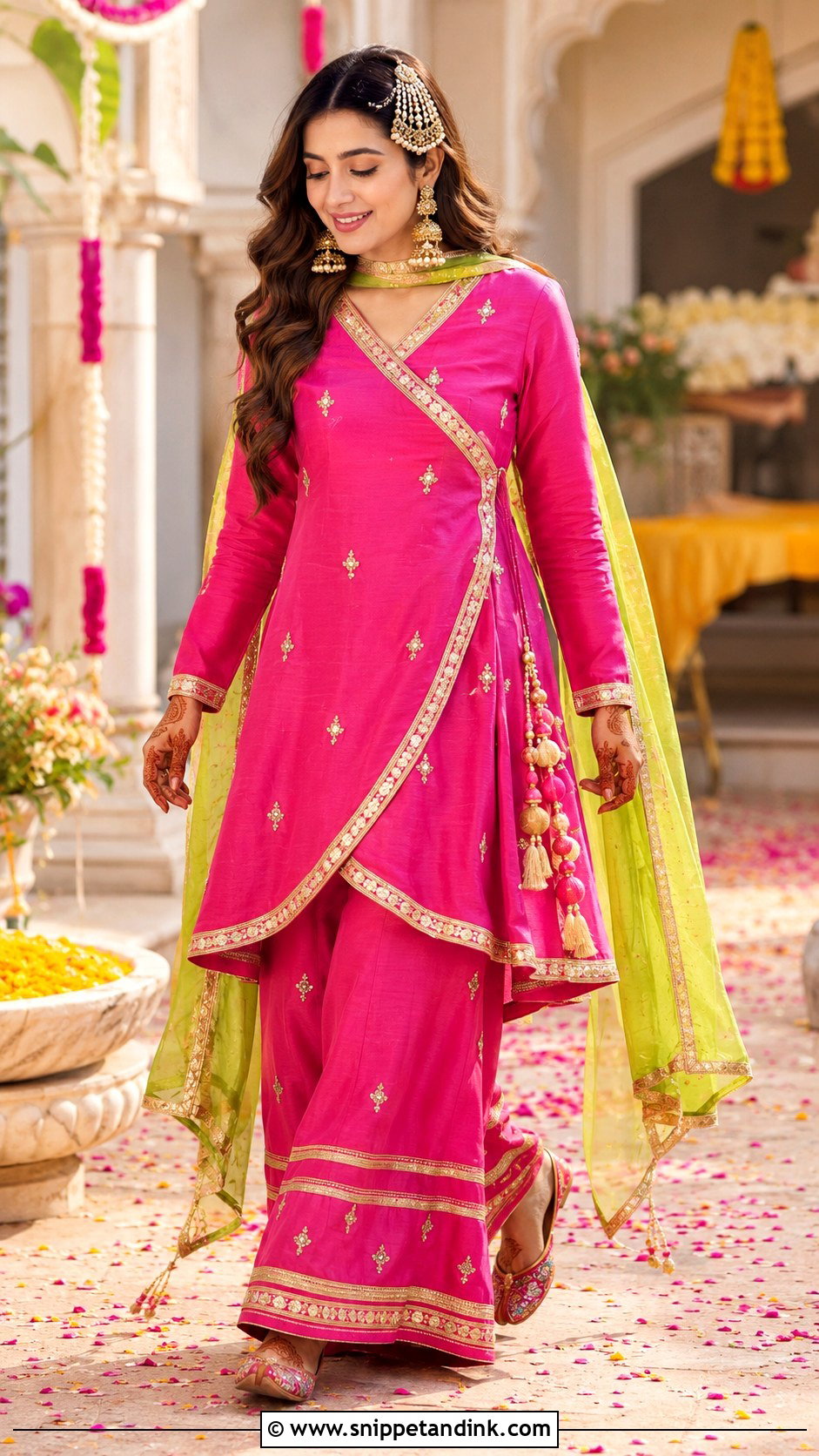
The overlapping shape of a fuchsia Angrakha moves well and flatters most figures. A knee-length top with side ties, gota borders and short or three-quarter sleeves pairs with slim pants or flared trousers. Pin the lime dupatta at the shoulder and let it fall behind you. Tassels on the ties are fun, but tie them back while I’m working on your hands; they swing right into the paste when you lean. Keep accessories to one metal or one floral palette, since fuchsia is already bold.
17. Pastel Organza Lehenga Mehndi Dress
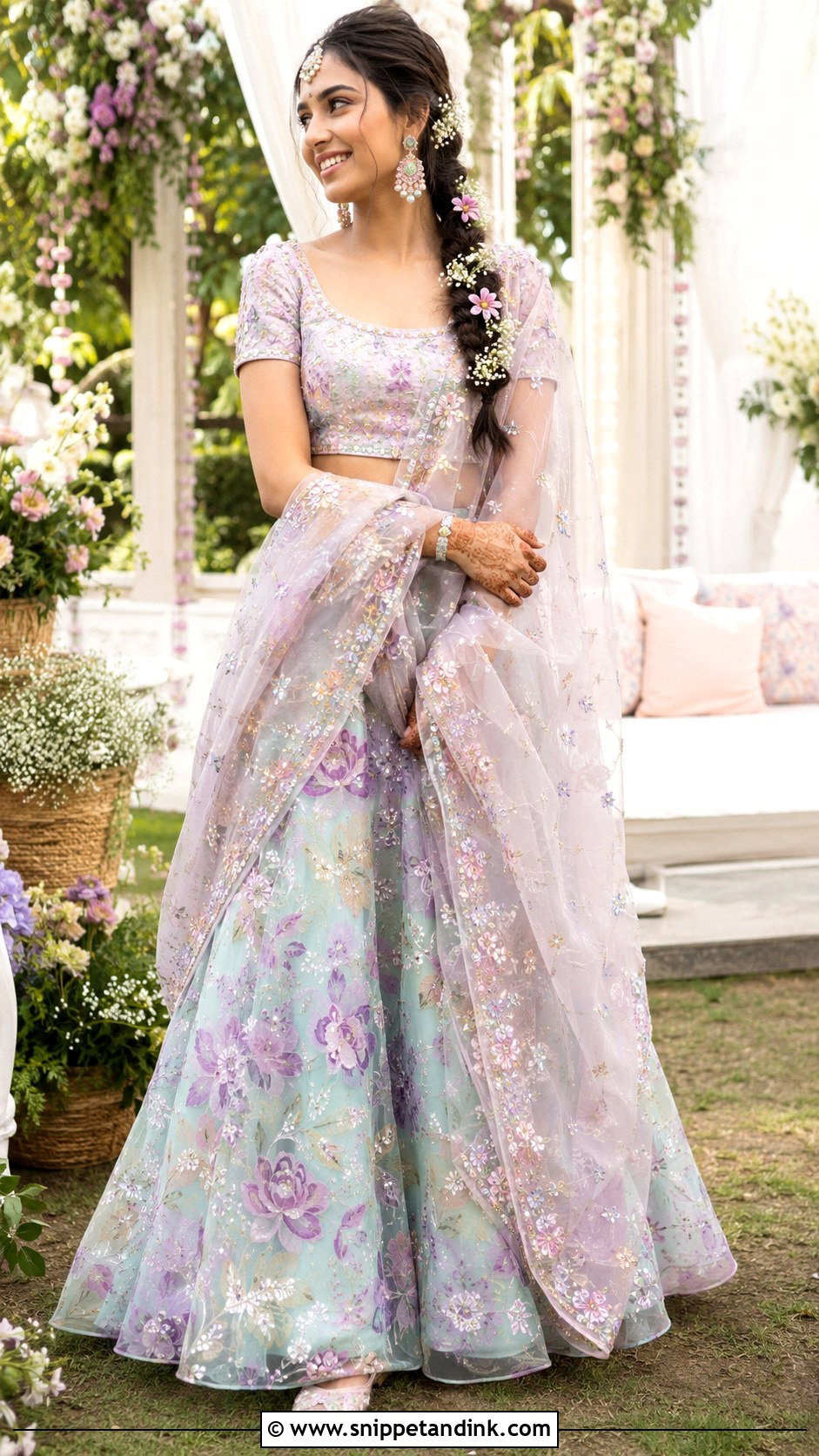
Organza gives a pastel lehenga shape without heaviness, but it is crisp, and an unlined organza skirt can scratch the backs of your legs over a long sit. Check the lining before you buy. Peach, mint, lilac or powder blue with scattered florals, a short-sleeve blouse and a sheer dupatta with a narrow border keep it light. Stick to two main pastel colours. A soft braid with small flowers suits a daytime garden mehndi.
18. Green Velvet Gharara Mehndi Dress
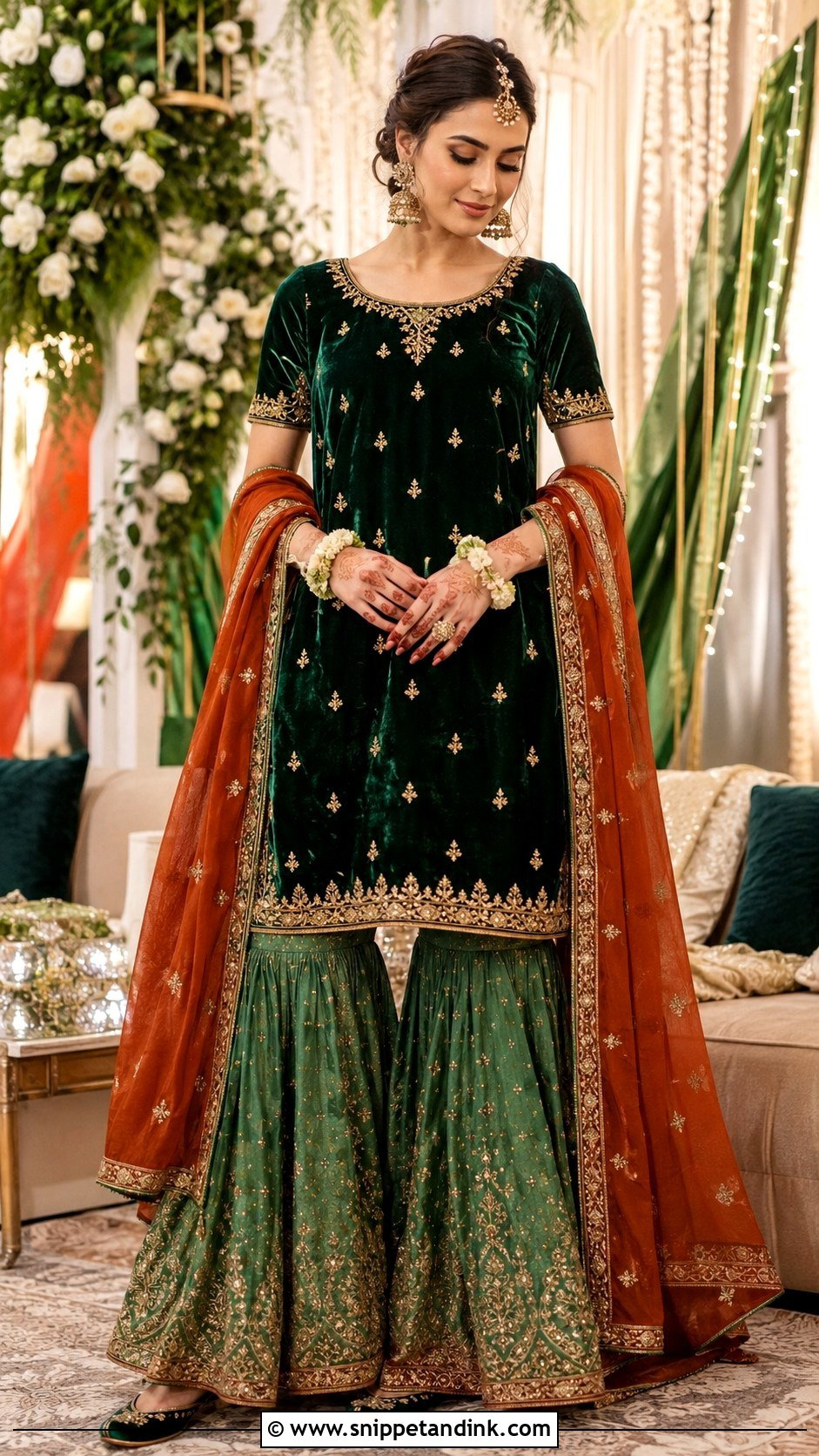
Velvet is warm, so I only recommend this bottle-green gharara for a cool-weather or indoor winter mehndi. Warmth actually helps a henna stain develop, which is a nice side benefit. Keep the kurti short-sleeved with antique gold embroidery, and make the gharara pants from a lighter coordinating fabric so the whole outfit doesn’t feel like a coat. A rust, mustard or deep pink dupatta adds contrast. Leave bracelets off if the design covers the wrists and forearms.
19. Green Bridal Jumpsuit Mehndi Dress
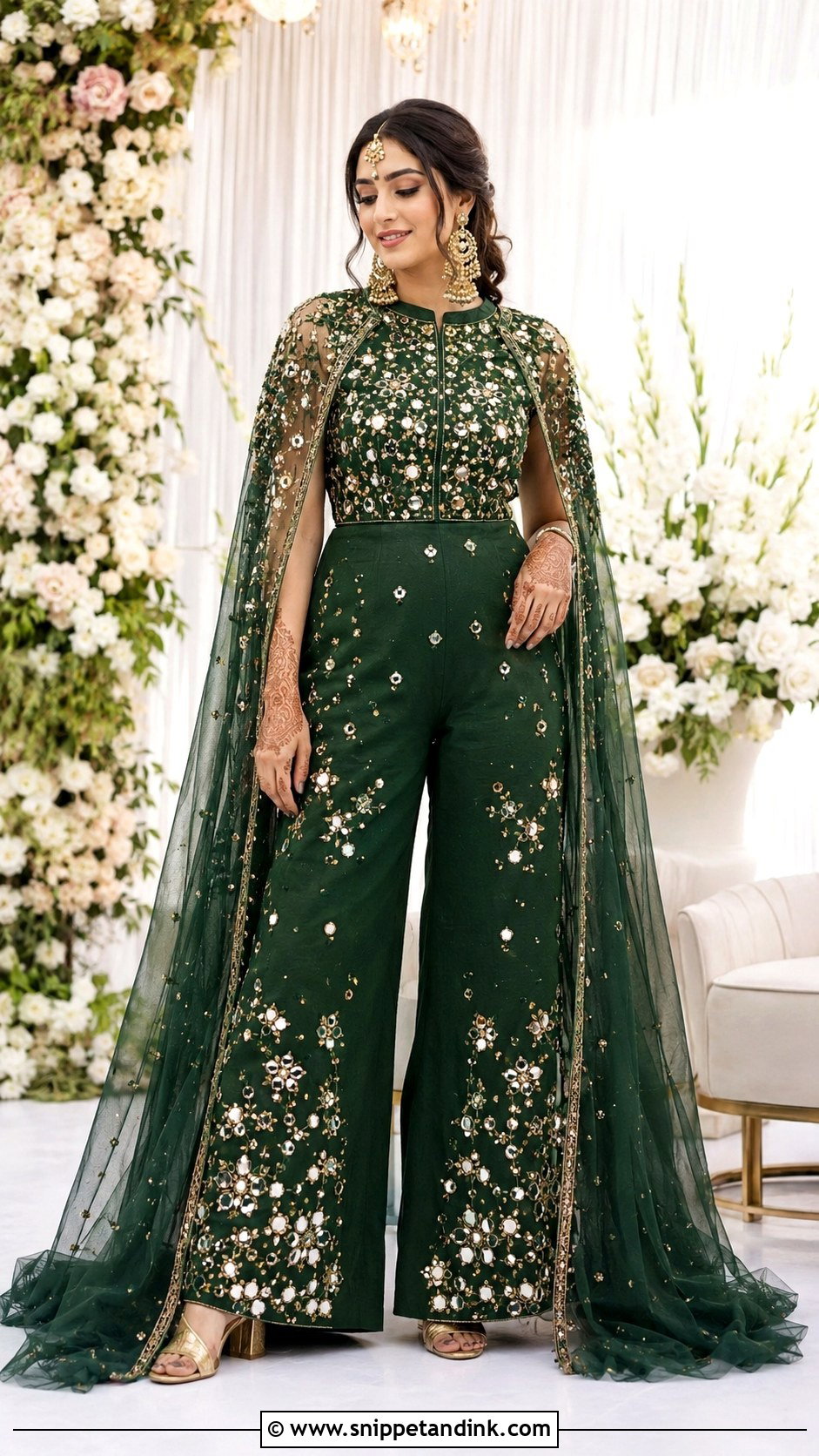
A green jumpsuit is a practical answer for a bride who plans to dance and mingle and doesn’t want to manage a dupatta. A wide-leg design with a fitted bodice, short sleeves and mirror or floral embroidery covers most needs, and a detachable cape or light overskirt adds ceremony drama. One thing to plan: avoid tricky back closures. Once your hands are covered in paste, someone else will be doing every zip and hook, including any bathroom trip. Jumpsuits and other Indo-Western shapes are now a familiar alternative to the lehenga at mehndi events.
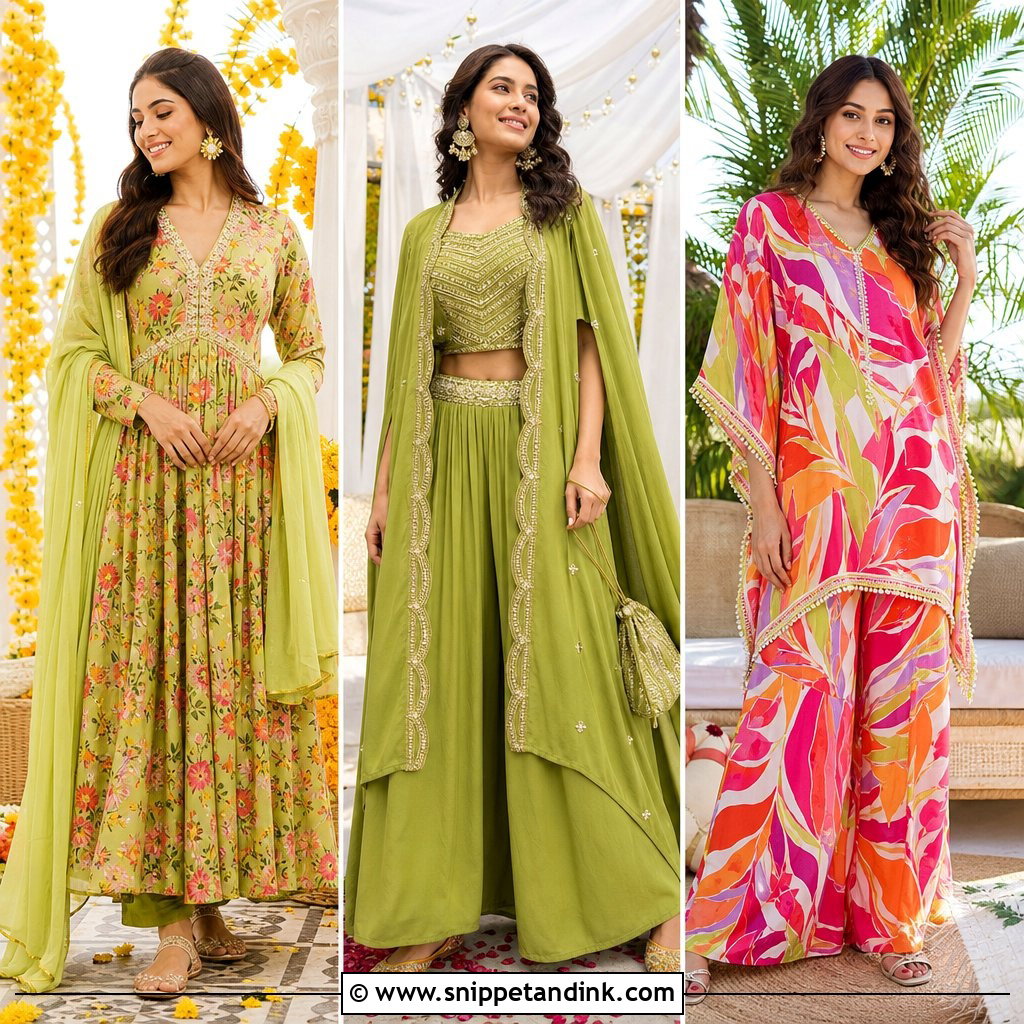
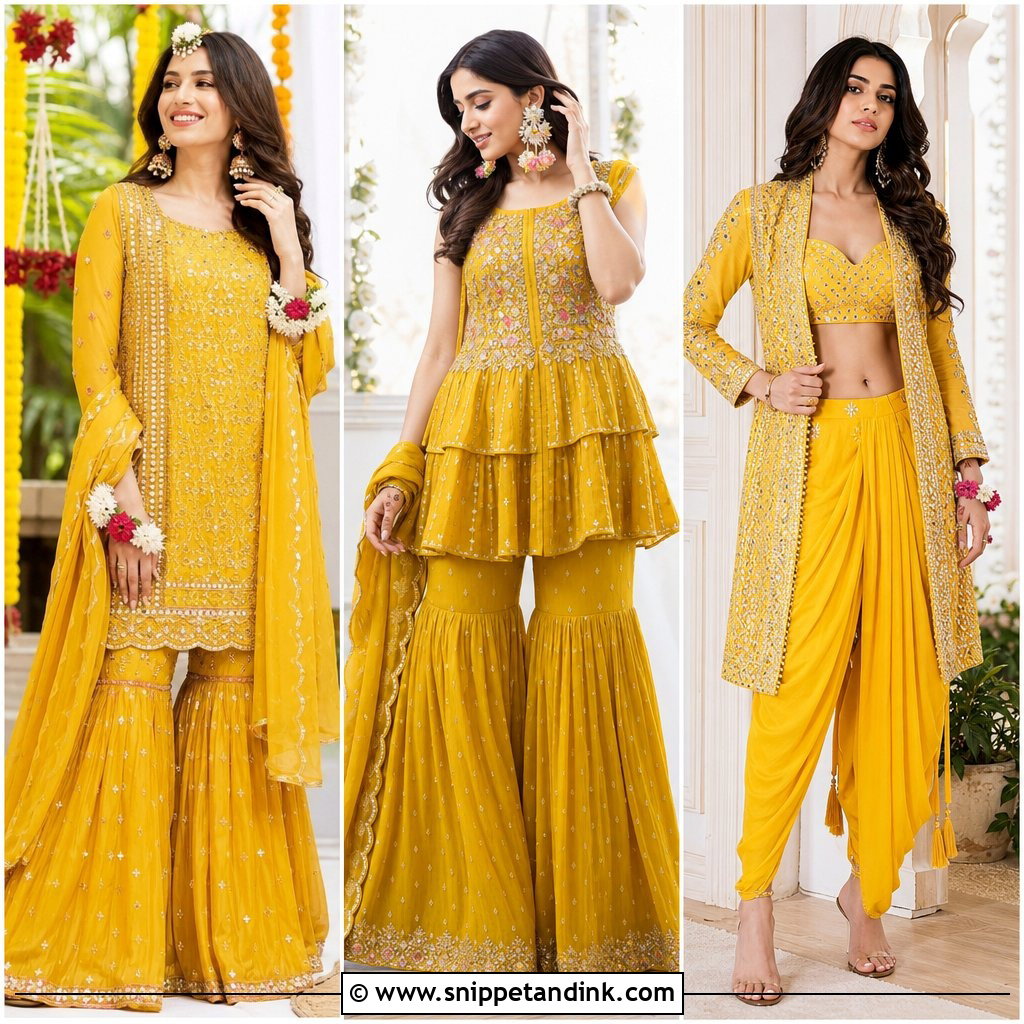
20. Yellow Pishwas Mehndi Dress
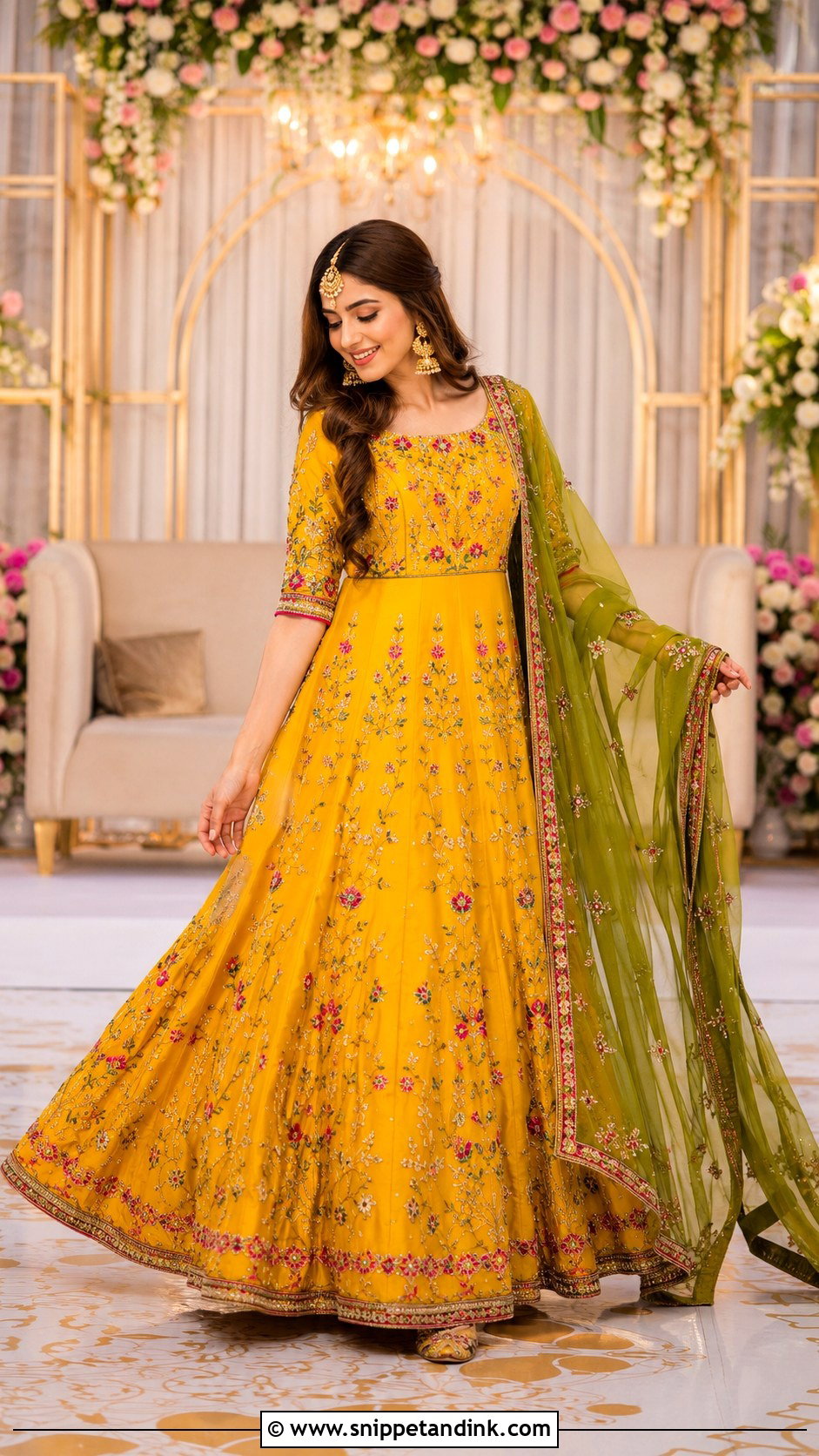
A yellow pishwas has a fitted bodice and a long, full flare that gives a bride real presence on a stage. Marigold, mustard or golden yellow with green and pink embroidery at the neck, sleeves and hem feels regal. Elbow-length sleeves give modest coverage while leaving room for a hands-and-wrists design; for anything higher, ask for a shorter sleeve. Secure the green dupatta over one shoulder, add a delicate jhoomar, and keep the necklace in proportion if the border is heavy.
The Night After: Getting Out of the Outfit Without Losing the Stain
Nobody talks about this part, and it causes more smudged designs than the party itself. For the darkest stain I’d like the paste to stay on for as long as you can manage, ideally six hours or more and often overnight. That means you will change out of your outfit with paste still on both hands.
Plan the changing
Have a sister or friend lined up to undo hooks, zips, dupatta pins and jewelry. Front-opening or loose comfortable clothes for the night, like a button-down kurta or an old oversized shirt, are much easier than anything you pull over your head. Wear something you don’t mind staining.
Protect the paste, then remove it dry
Many brides sleep with their hands loosely wrapped in tissue or a cotton cloth to stop the paste rubbing off on bedding. In the morning, scrape it away with the back of a butter knife or your fingers rather than washing it. Then keep water off the design for as long as you comfortably can, ideally most of the day. A little balm or oil helps protect it before your next shower.
If paste gets on the outfit
Let it dry and flick it off rather than rubbing it in while wet. Rubbing pushes the dye into the weave. Silks, velvets and embellished pieces should go to a dry cleaner who handles bridal wear; tell them it’s henna so they treat it as a dye mark.
Will Your Henna Still Show in the Photos?
In the end, a bridal mehndi outfit works when it lets you sit for hours, walk with your hands held out and dance once the paste is dry. Traditional green lehenga, sharara, pishwas, pre-draped sari or jumpsuit: test each one by sitting down, raising your hands and checking where the fabric falls. Keep the dupatta secured, choose shoes you can slip on without using your hands, and let jewelry support the embroidery rather than compete with your design. Then think about the stain: a deep colour against the outfit you chose is what people will see in your photos.
You'll Like These Ideas:


Leave a Reply