
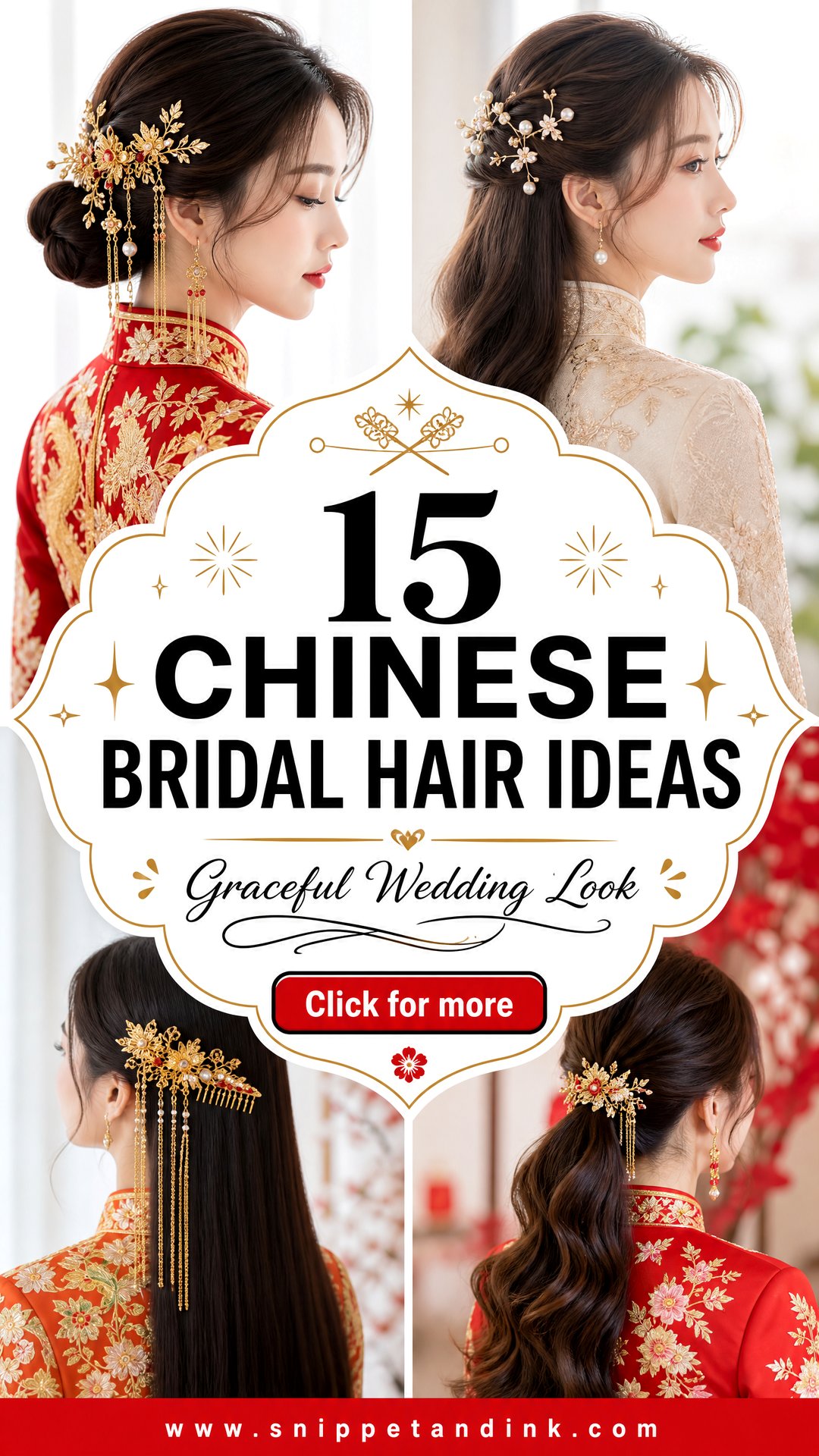
Good Chinese bridal hair is mostly about balance: enough polish to hold a heavy headpiece, enough softness that you still look like yourself. A lot of brides need one style to work with a red qipao, a xiuhefu or longfenggua, and sometimes a white gown later in the day, so the base shape matters as much as the gold pins on top. Smooth buns, glossy waves, pearl combs, phoenix details and a few face-framing strands all show up below, chosen because they hold their shape through the tea ceremony and reception. Some lean traditional, some lean modern. In my experience the right one is whichever still feels light on your head at the banquet.
Red Ornaments, White Flowers and the Night-Before Hair Combing
In many Cantonese and southern Chinese families, the wedding hair story begins the evening before, with the hair combing ritual. The bride sits in fresh pyjamas while an older woman, often her mother or a relative considered lucky because her own family is healthy and complete, combs her hair four times. Each stroke comes with a blessing: a marriage that lasts from beginning to end, harmony into old age, a home full of children and grandchildren, and long life with prosperity. The groom often has his own version at his family home.
It isn’t a styling session, so wash and dry your hair beforehand and keep it loose and tangle-free. Some brides tie a little red thread from that night into their wedding-day bun as a private keepsake. If I’m arriving early the next morning, I want to know the ritual happened, mainly so I know whether the hair was slept on damp.
Colour etiquette worth checking with family
Red and gold signal joy and good fortune, which is why they turn up in so many of the pins below. White on its own has long been tied to mourning, and some older relatives still feel uneasy about an all-white floral crown during the tea ceremony. White gowns are widely accepted now, but a red ribbon, a gold pin or a few pink blooms beside white flowers keeps everyone comfortable. A quick conversation with parents or grandparents before you order accessories saves awkwardness later.
1. Chinese Bridal Low Bun With Gold Hairpins
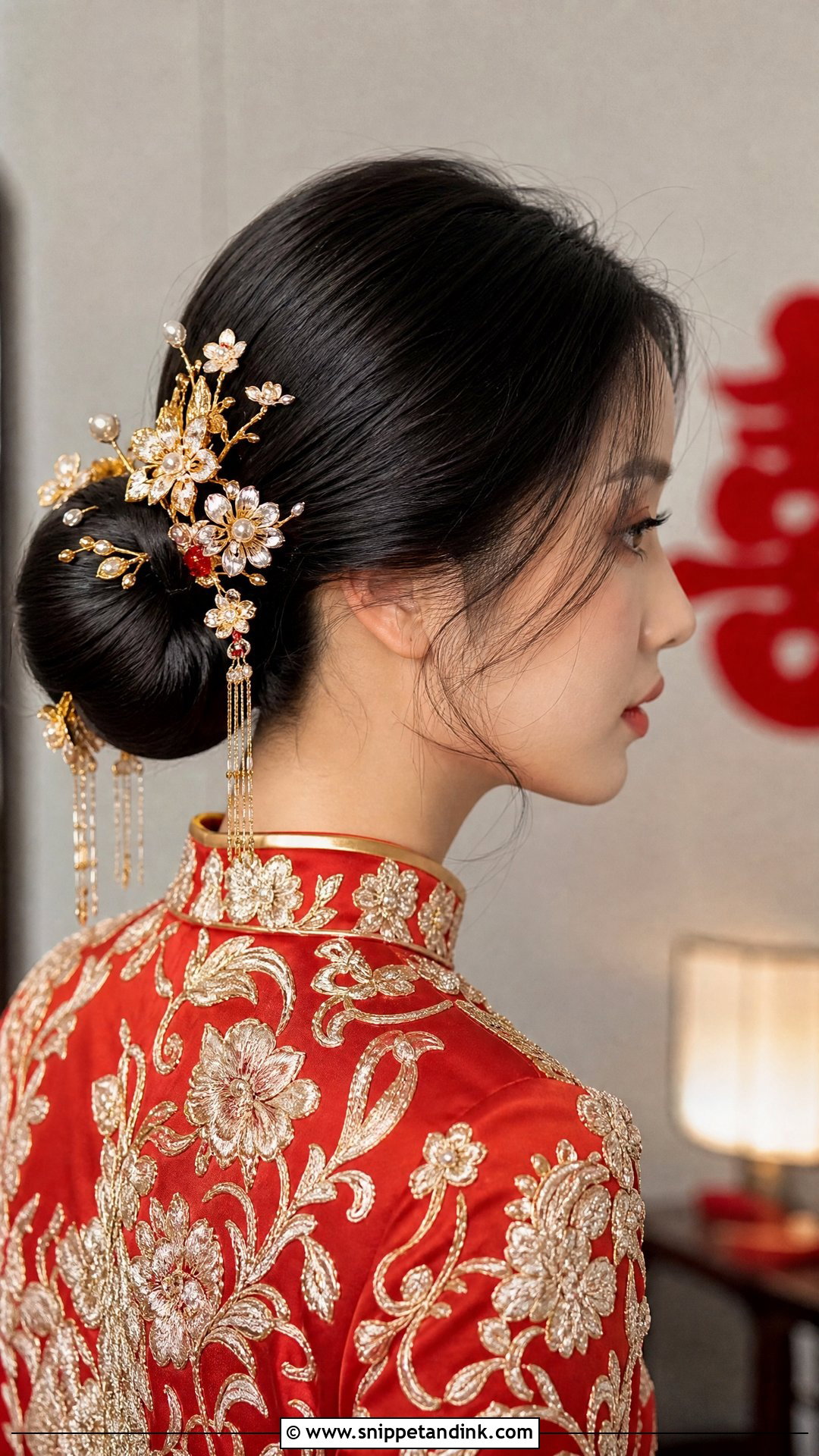
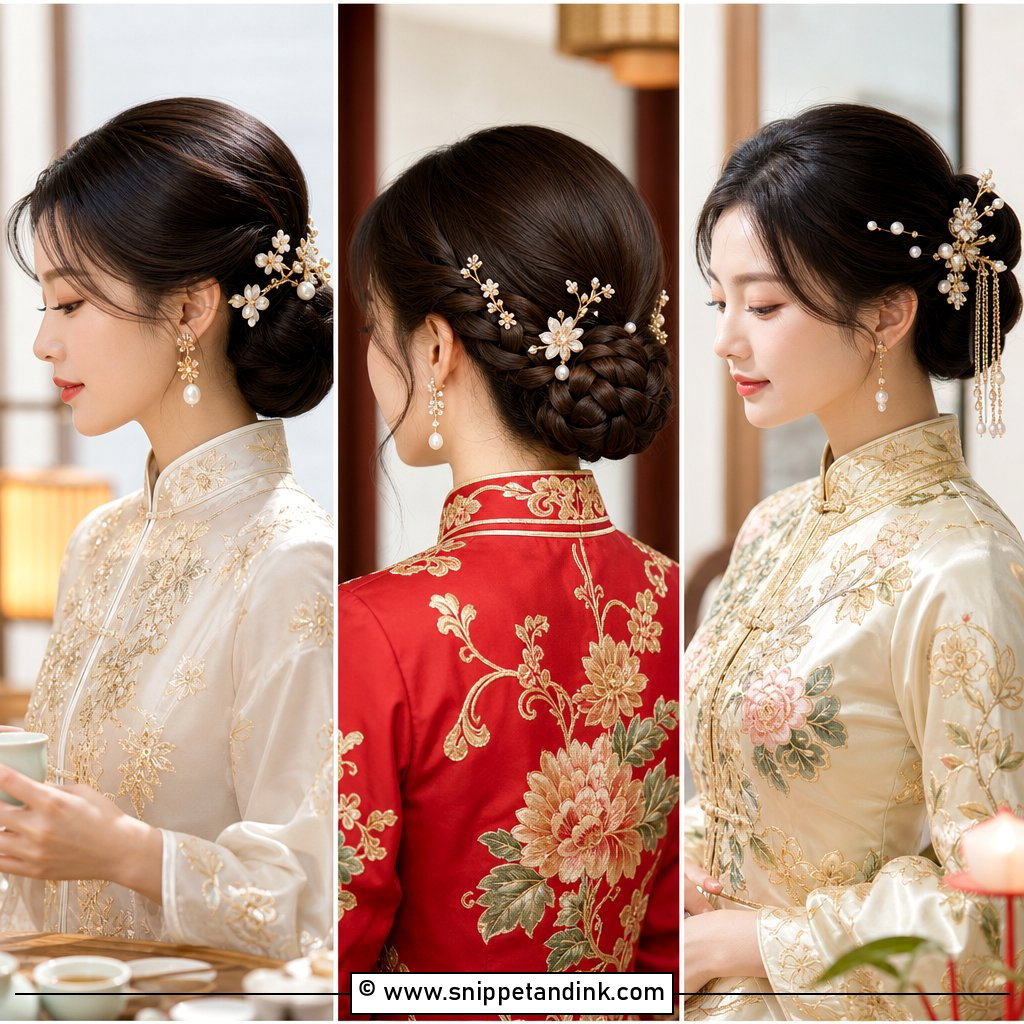
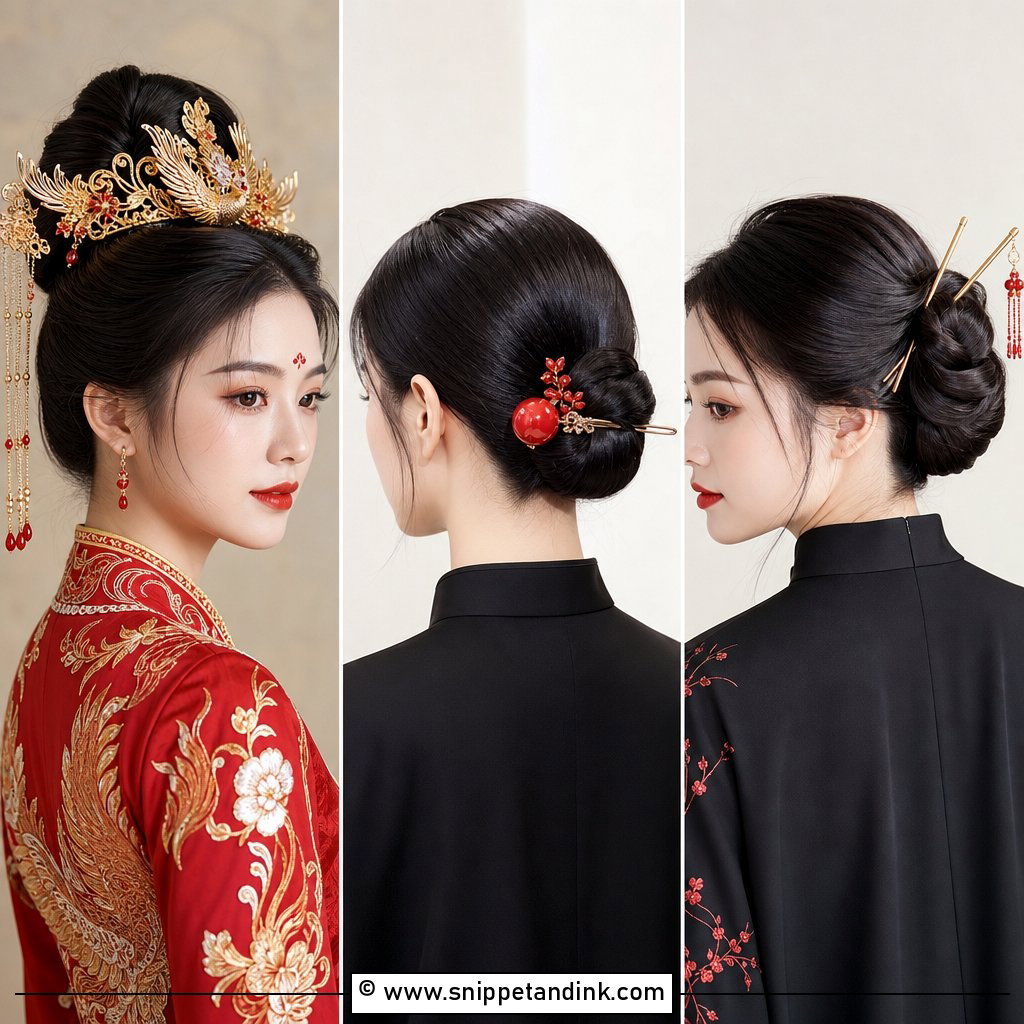
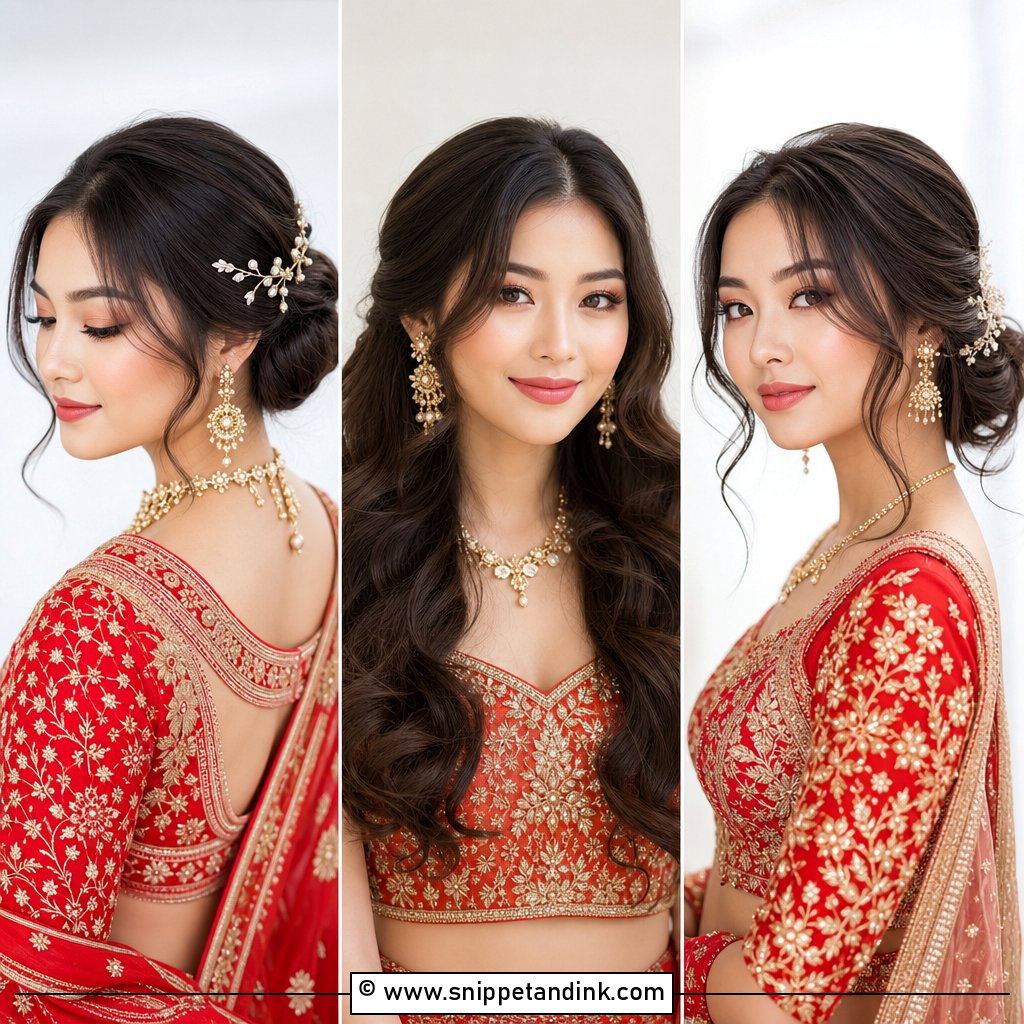
For a tea ceremony, I reach for the low bun more than anything else. Sitting at the nape, it keeps the weight off the crown, so it stays comfortable under detailed pins while you bow and kneel. Gold hairpins can pick up the embroidery on a red qipao, xiuhefu, or longfenggua without competing with your face. Keep the crown smoothed but not dragged tight; straight, heavy hair pulled hard leaves a visible ridge and aches by noon. Two fine strands at the face soften it. Through greetings, portraits and outfit changes, this shape barely moves.
2. Chinese Bridal Updo With Phoenix Crown
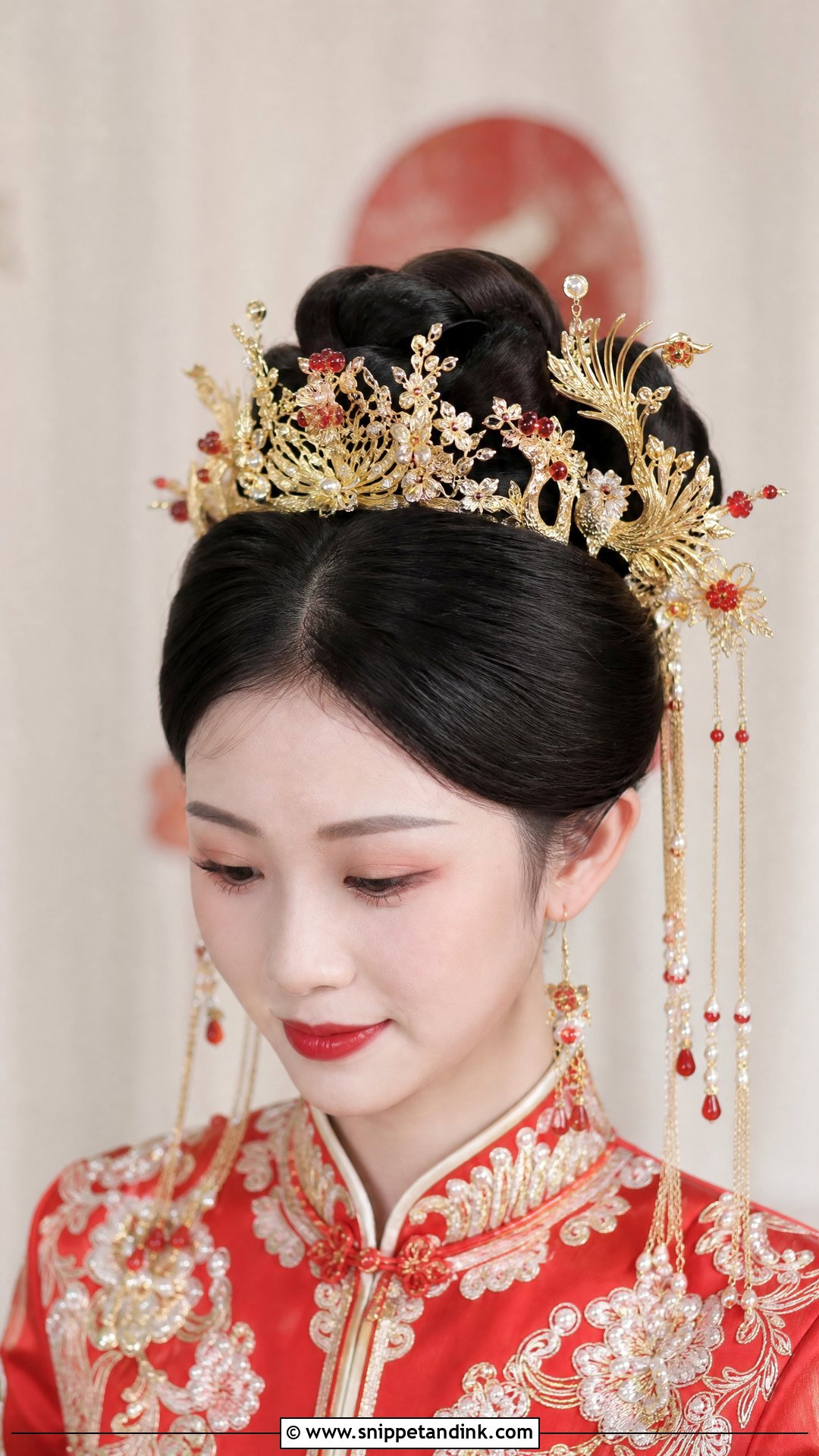
With a phoenix crown, the hair is the foundation, not the feature. I build a compact, structured updo first, usually with a small padding piece at the crown, because the crown needs something solid to rest on and pin into, or it slides back. Everything visible should look clean from the front and sides, with soft volume above the forehead to keep the profile from looking flat under the weight. Red and gold attire completes it. Before the day, wear the crown for a full half hour at the trial; that tells you more than any photo.
3. Chinese Bridal Half Up Hair With Pearl Pins
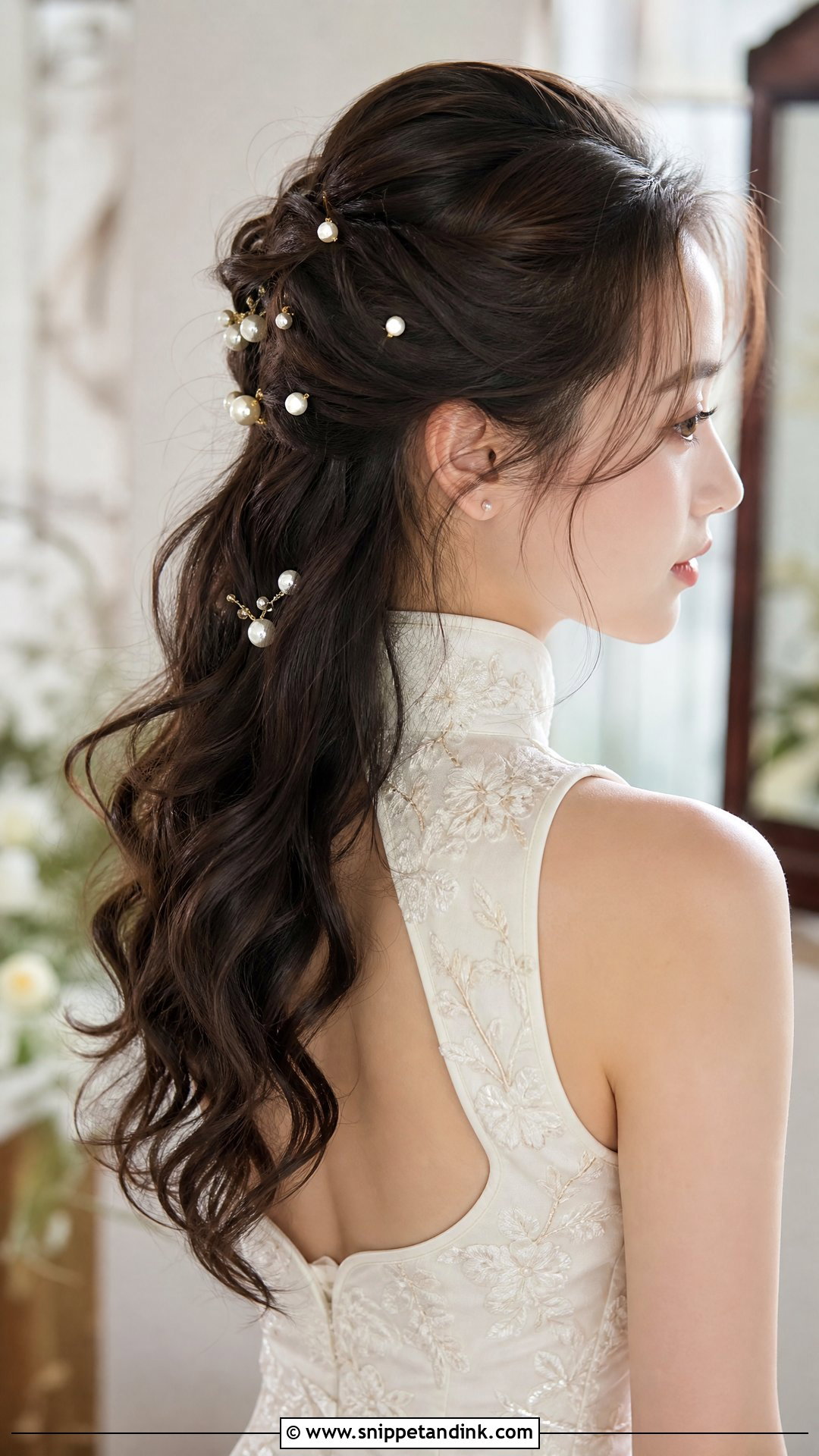
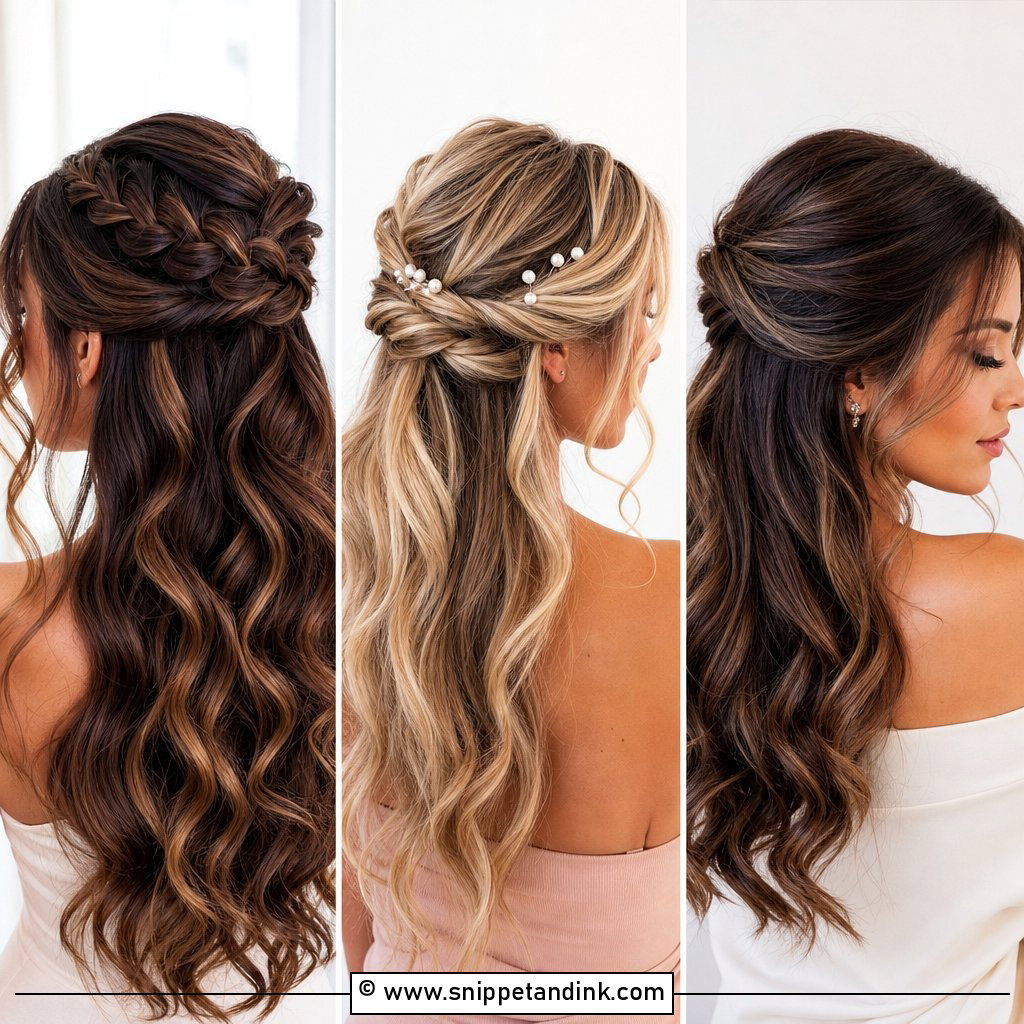
Half-up hair with pearl pins keeps length visible and the face clear. I pull the top section back gently and leave the rest in smooth waves or polished bends, which suits both a qipao and a Western gown. Fine, straight East Asian hair is often very slippery, so I’d add a small hidden braid or crossed pins under the pearls; set straight into smooth hair, they slide by the first photos. Keep the waves glossy and the pinned section neat. It reads sweet and modern at once.
4. Chinese Bridal Sleek Bun With Red Hair Accessories
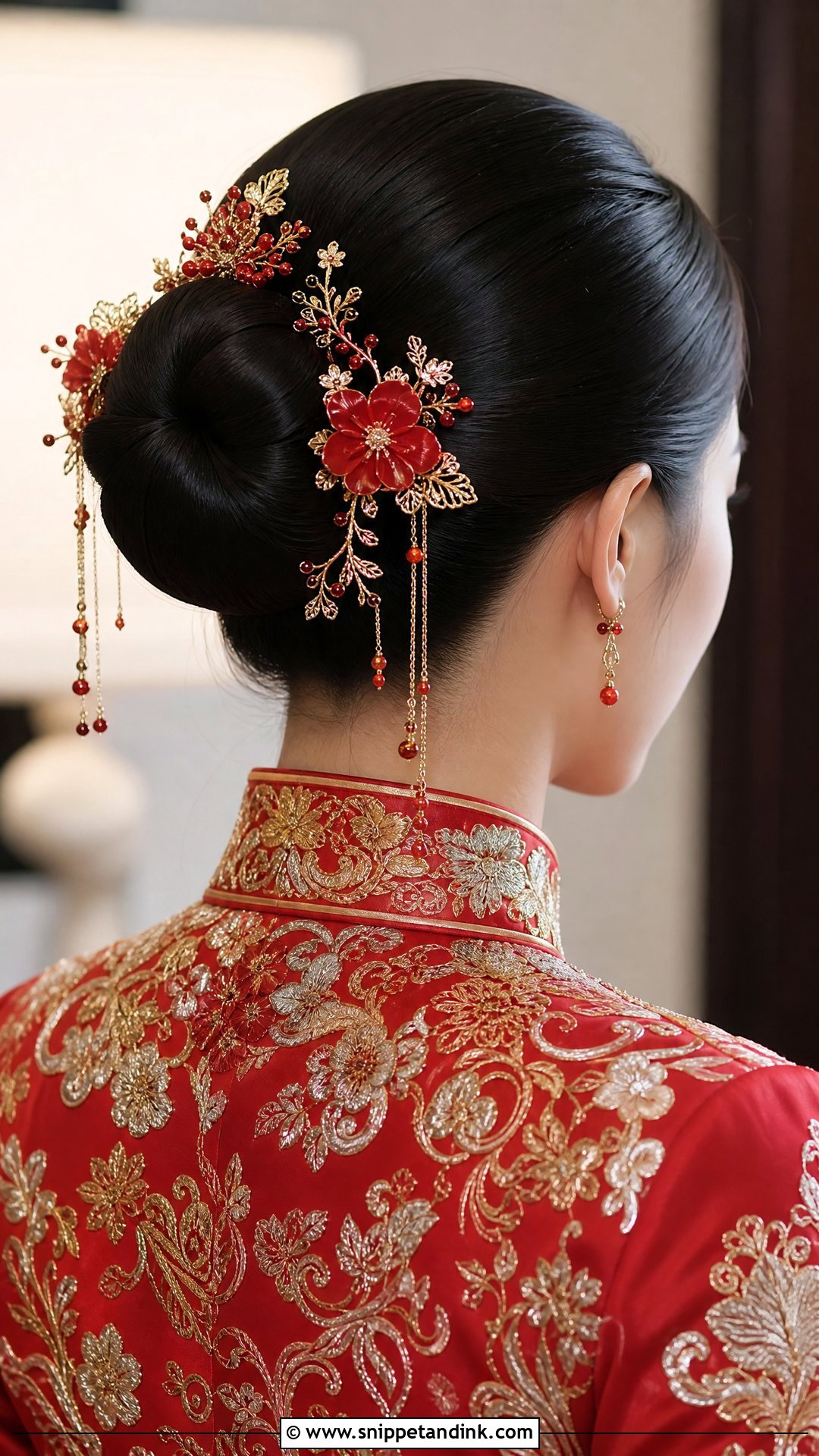
Red accessories on a sleek bun are pure celebration colour against a clean shape. With a high collar, embroidery and statement earrings, the clear neckline helps a lot. I place the bun low and centred for a light ornament, slightly higher if the headpiece needs height to balance it. Strong hold matters, but I avoid heavy gel on very dark hair, since it can photograph as a wet, flat patch under flash. A smoothing cream plus a fine-tooth comb and a light spray gives shine that still looks like hair in close-ups.
5. Chinese Bridal Braided Bun With Hair Comb
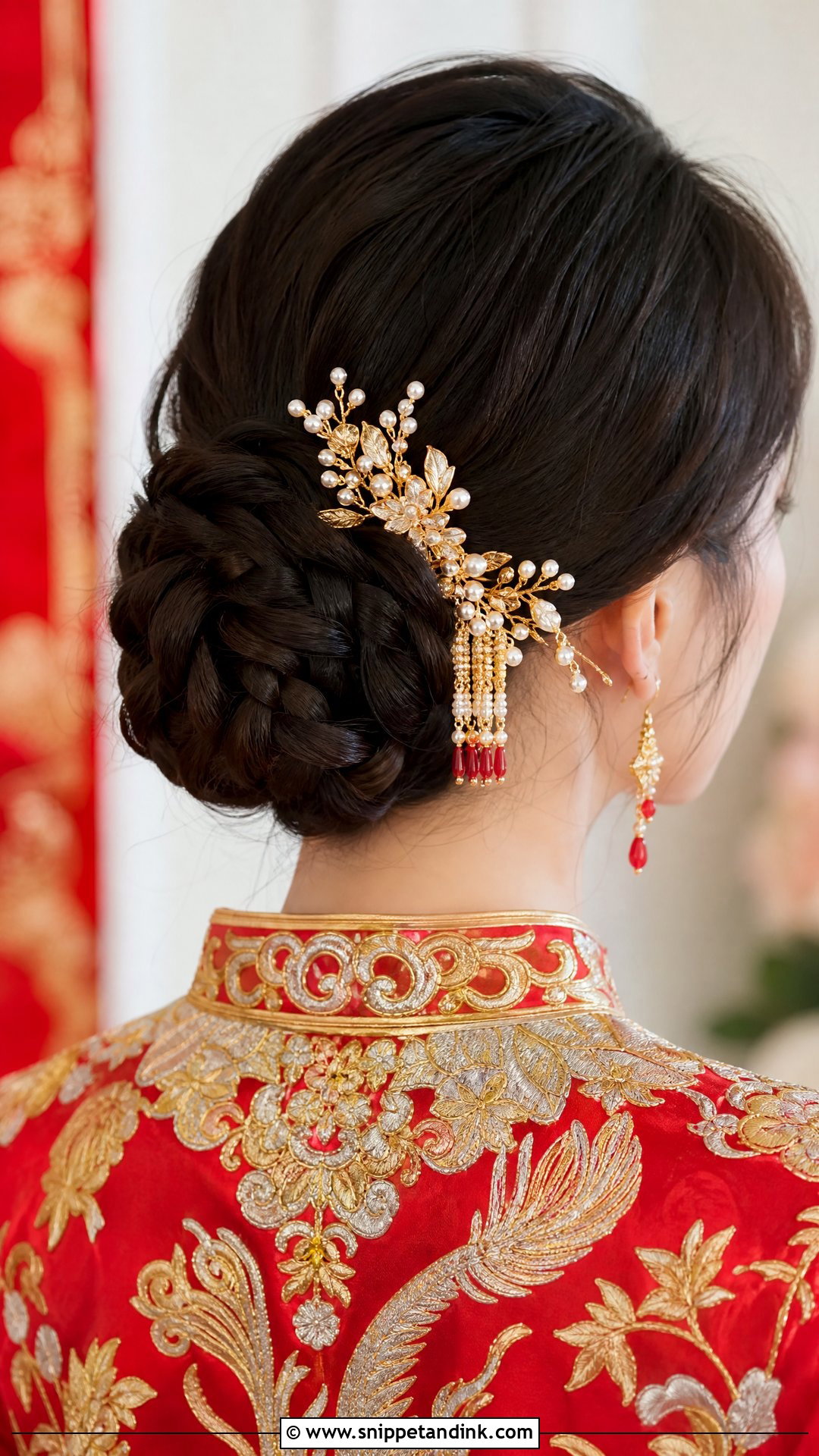
Braiding a bun adds texture and makes it far more secure. The braid can wrap around the bun or weave into it, and a decorative comb above or beside it gives a traditional finish without a full crown. Medium to long hair suits it best, since the braid adds fullness. Layered hair works too, though I braid it slightly damp with a little cream so short ends stay tucked. A good fit if you want tradition with a modern edge and want to stop thinking about your hair once the day starts.
6. Chinese Bridal Side Swept Waves With Hairpins
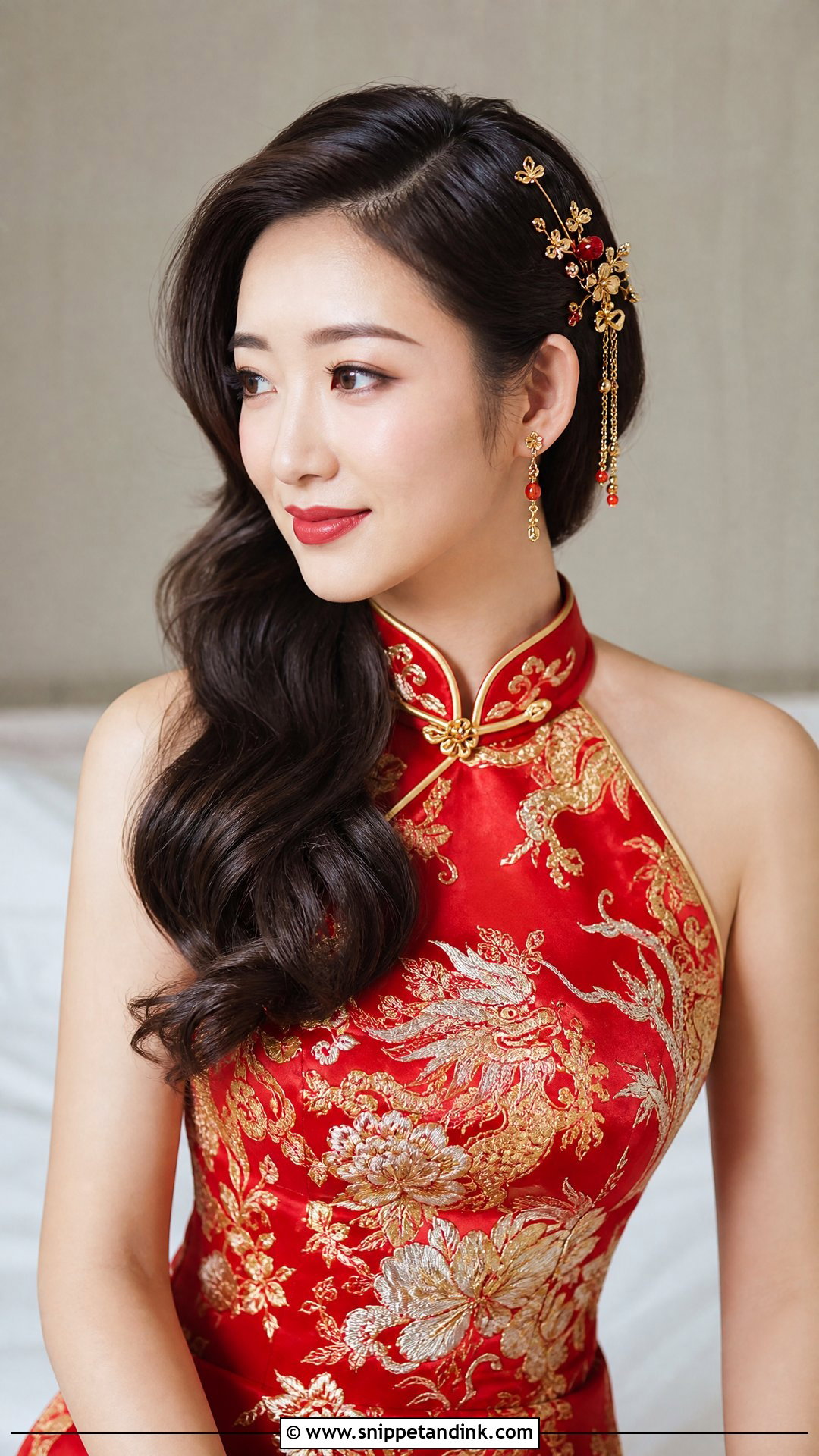
Side-swept waves soften a high-collared qipao better than any updo. I set the waves, brush them into one smooth shape over a shoulder, then hide a line of crossed bobby pins behind the ear on the opposite side to hold the sweep, with decorative pins over the top. The dress stays visible, and the face gets a frame. It also makes a good switch for the reception after a formal ceremony bun. Shine and control are everything here; frizz shows up immediately against a silk collar.
7. Chinese Bridal High Bun With Dangling Hair Ornaments
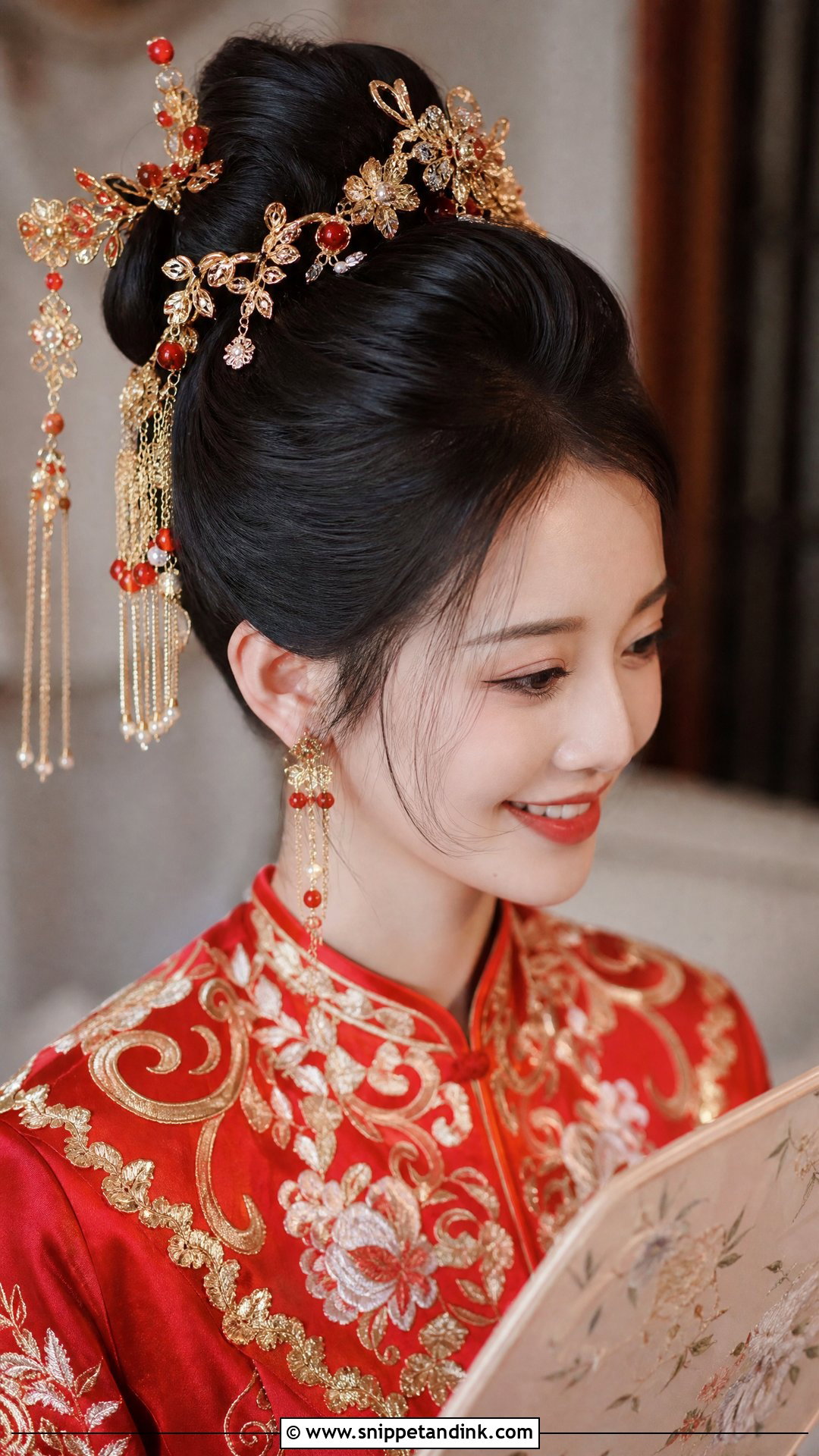
Dangling ornaments move every time you turn your head, which is half their charm and all of their risk. The high bun gives height and lifts the face, and gold, pearl and floral drops suit red bridal outfits. Anchor the bun firmly, because a dangling piece levers against it with each movement; I usually add a hidden elastic base and pin the ornaments into that rather than into loose hair. Lift the front slightly so the style isn’t severe. Test it by nodding and bowing a few times. If the drops tap your cheek, shorten or reposition them.
8. Chinese Bridal Loose Updo With Floral Pins
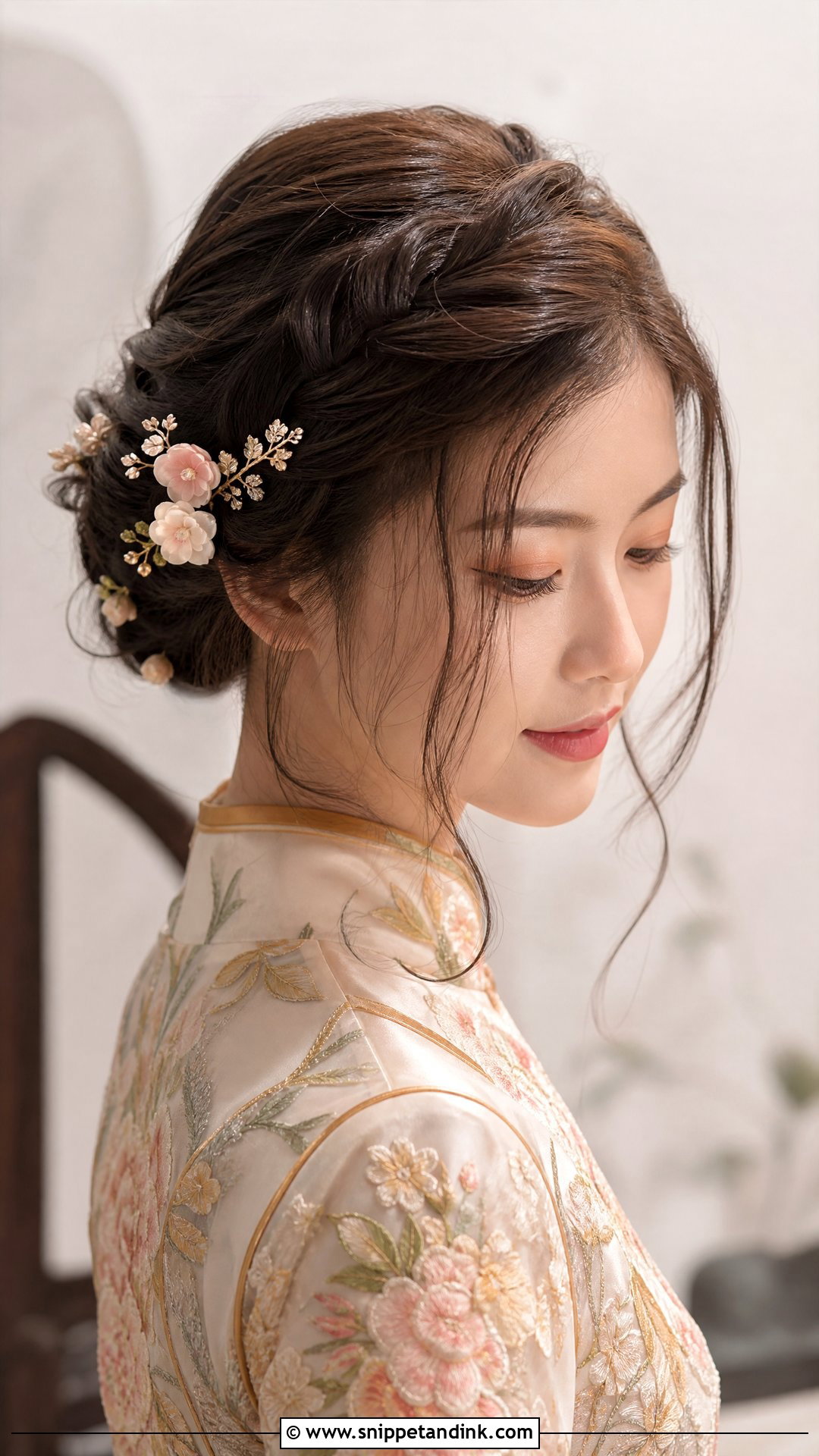
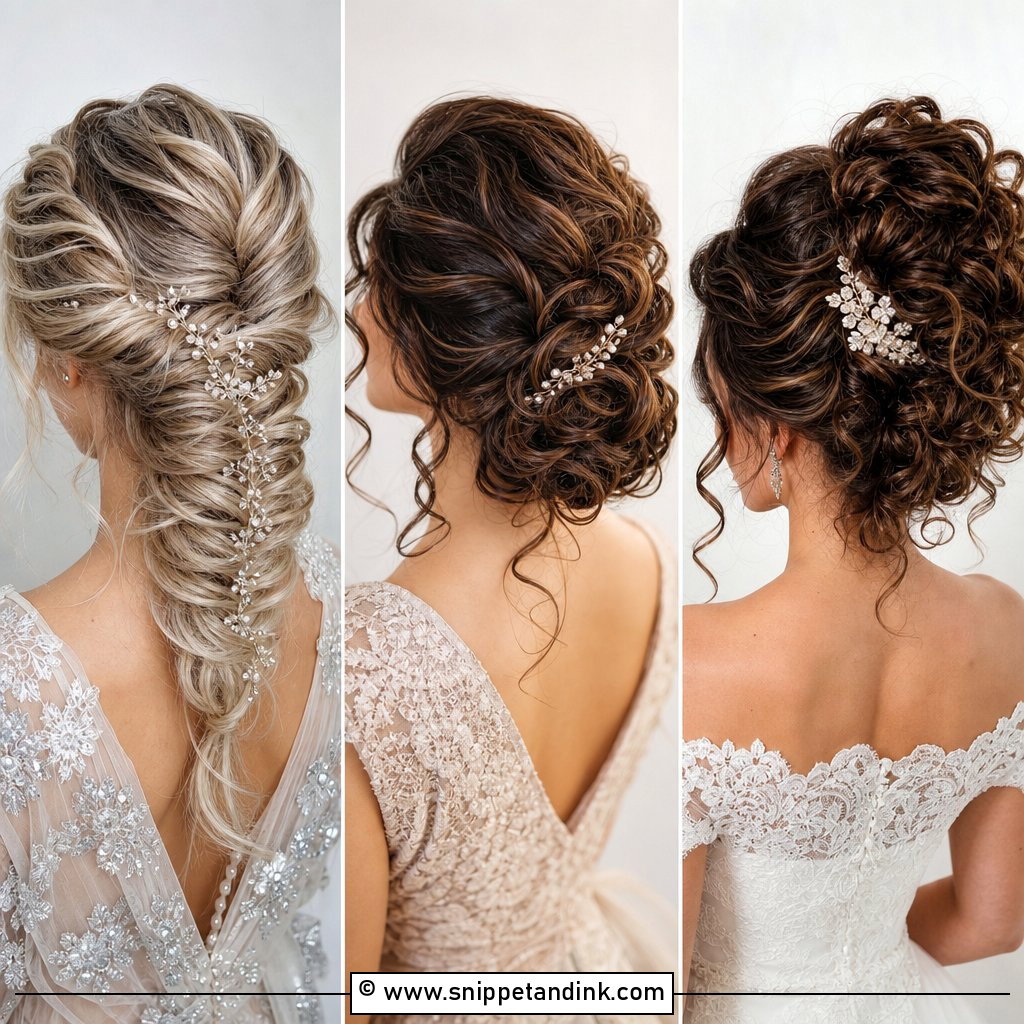
A Chinese bridal loose updo swaps the tight bun for gentle twists and airy pinned sections. Floral pins can circle the bun or run down one side. Pastel qipao designs, garden ceremonies and modern receptions suit it well. Loose doesn’t mean less pinned; it means the pins are hidden deeper. Very straight, fine hair can collapse into flat strands in this style, so I’d curl the whole head first to give it some grip and memory. A few pieces near the cheeks keep it fresh.
9. Chinese Bridal Long Straight Hair With Gold Comb
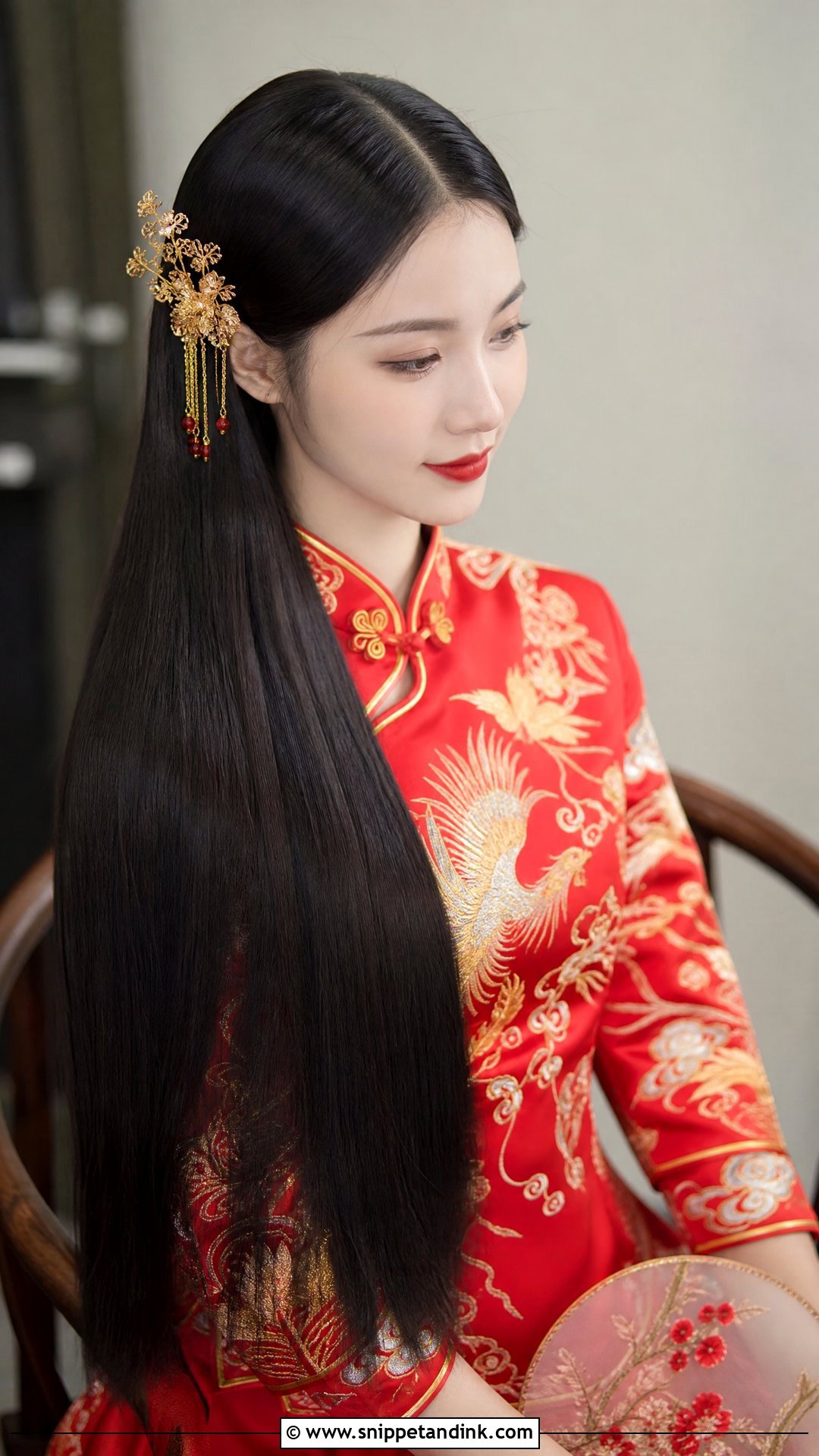
Long straight hair with a gold comb is the most minimal look here, and also the hardest to fake. Straight hair shows every kink, split end and dull patch, so the weeks before matter: a gloss or trim about two weeks out and gentle care after. On the day I smooth it with a flat iron at a moderate setting and finish with a light shine serum on the ends only. One gold comb at the side or back is enough. It pairs well with modern qipao dresses, slim gowns and simple jewellery.
10. Chinese Bridal Chignon With Pearl Hair Vine
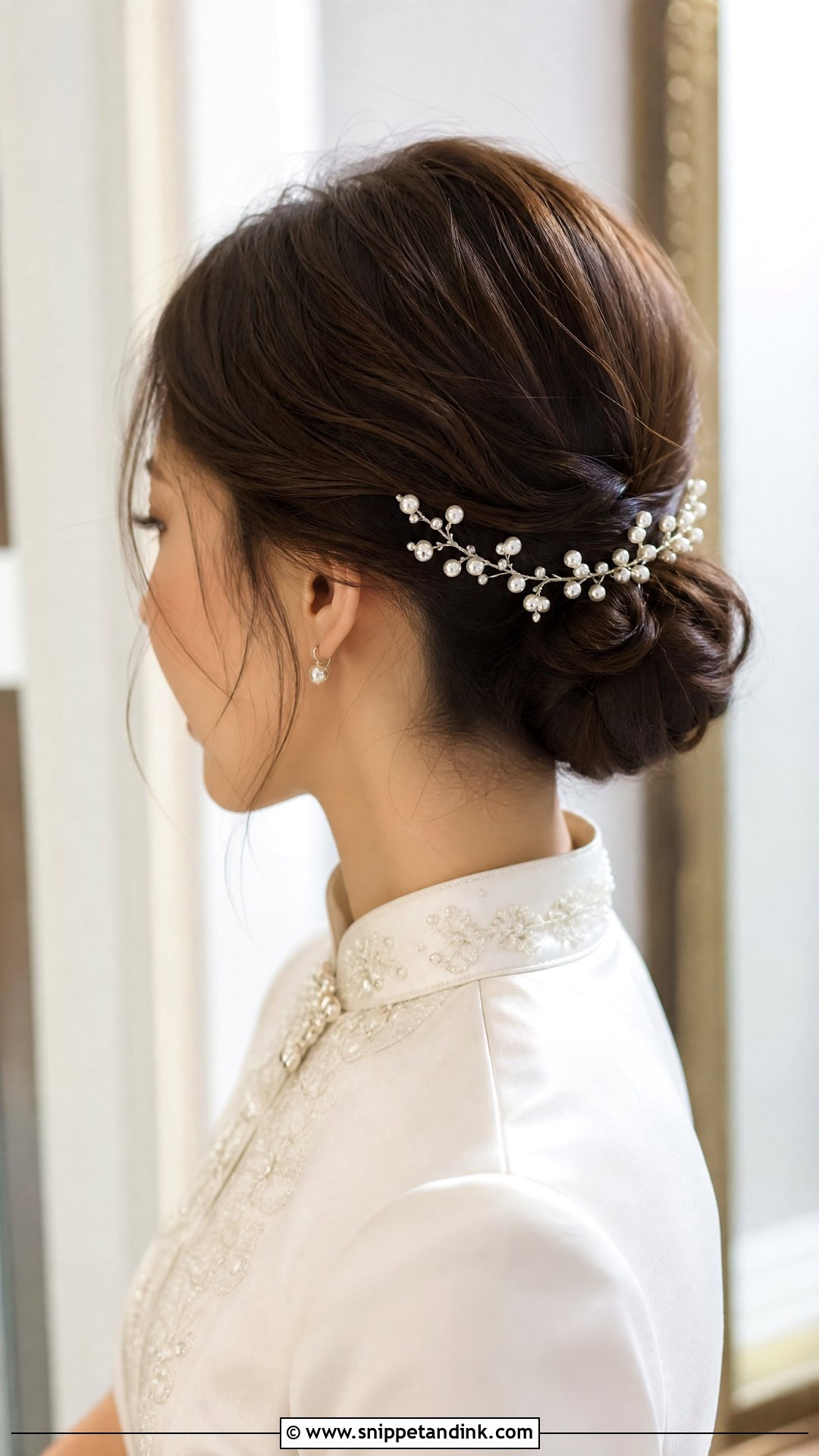
Brides mixing a Western gown or veil with Chinese traditions often land here. The chignon sits low and slightly rounded, and a pearl vine can curve around it, trail along one side or sit above it like a halo. It’s romantic without pulling focus from the dress. A pearl vine is flexible wire, so I stitch-pin it at several points with small bobby pins crossed over the wire; held at just the ends, it springs loose. Keep the base smooth and the vine placement balanced from front and back.
11. Chinese Bridal Twisted Updo With Jade Pins
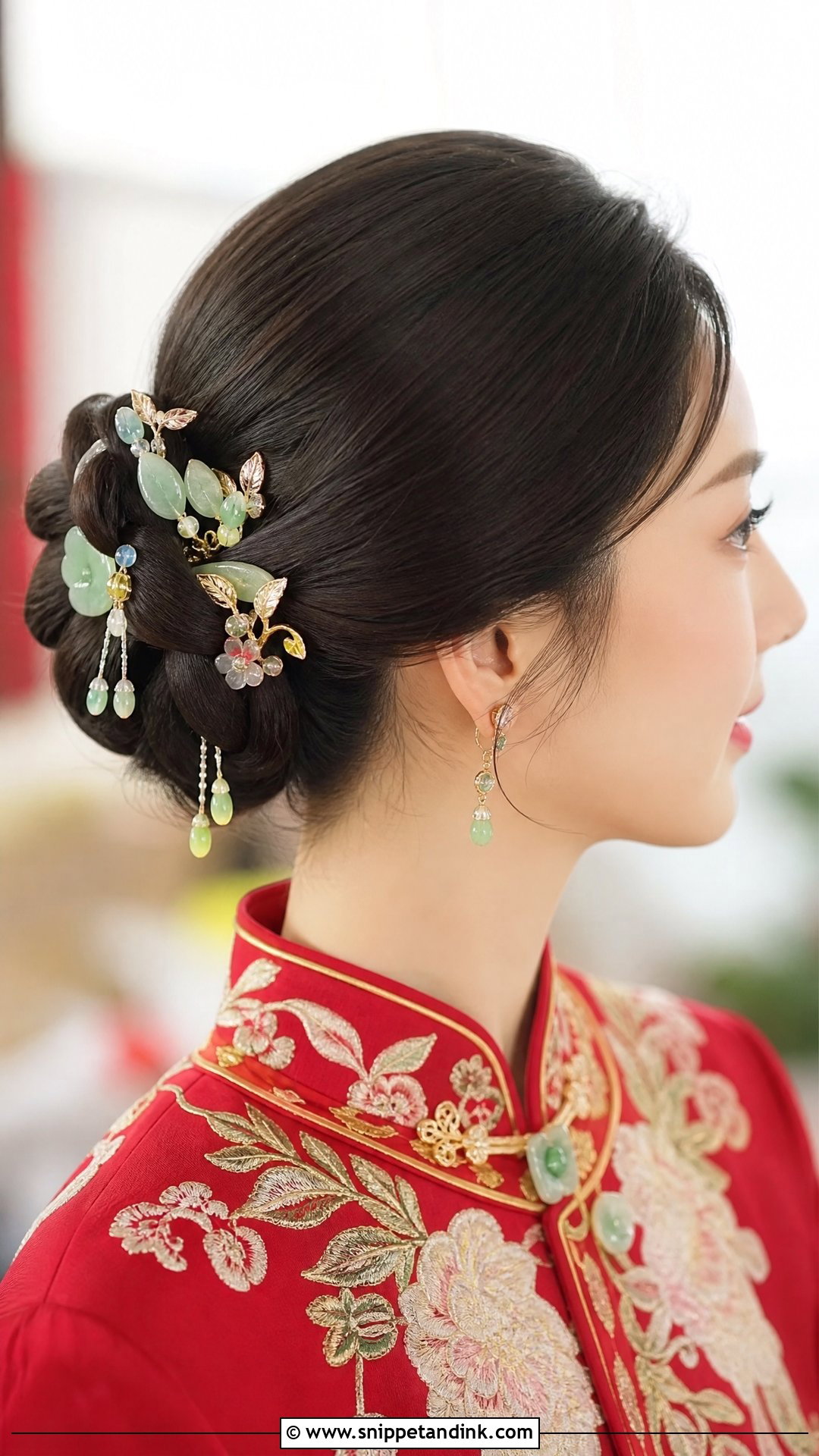
Jade is a quieter, more personal alternative to gold. The twists in this updo give soft movement while jade-toned pins add colour, and it sits well with red, ivory, champagne or green embroidery. I shape it low or mid-height depending on neckline and face shape. Real jade is heavier than it looks, so if you’re wearing family pieces, I’d place them where they rest on a twist rather than hanging from a single section. Keep the front smooth with a little softness at the temples.
12. Chinese Bridal Ponytail With Soft Waves
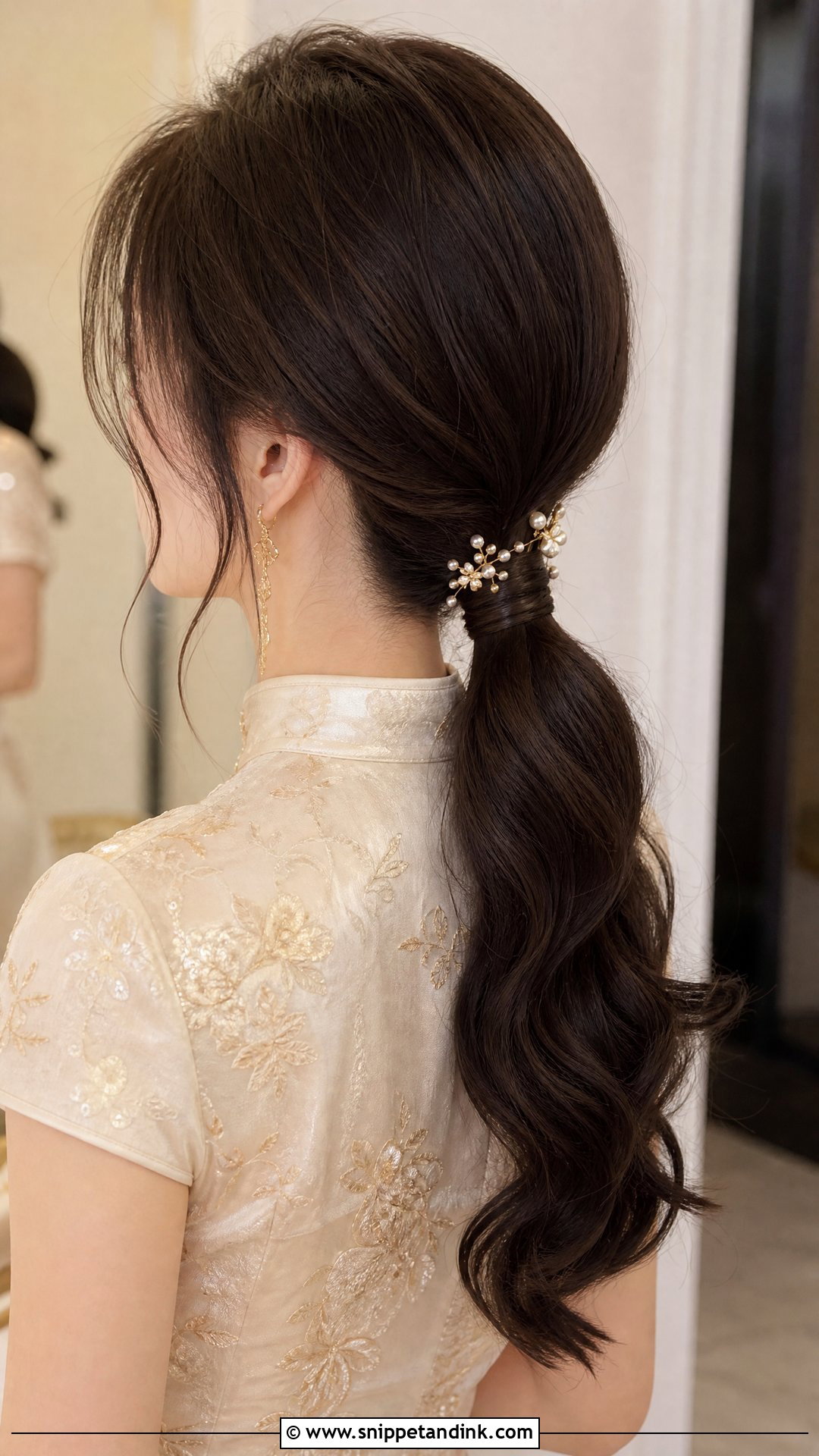
A ponytail is my answer for brides who plan to dance hard. It sits mid-height or at the nape, with polished waves down the back and a wrapped base to keep it formal; pearl pins, a gold cuff or a small comb finish it. It stays controlled with high-neck dresses and handles outfit changes well, since nothing needs to be rebuilt. Thick, heavy Asian hair can drag a ponytail down over a few hours, so I secure it with two elastics and pin the wrap through both. Brush the waves out softly for shine.
13. Chinese Bridal Bob With Side Hair Clip
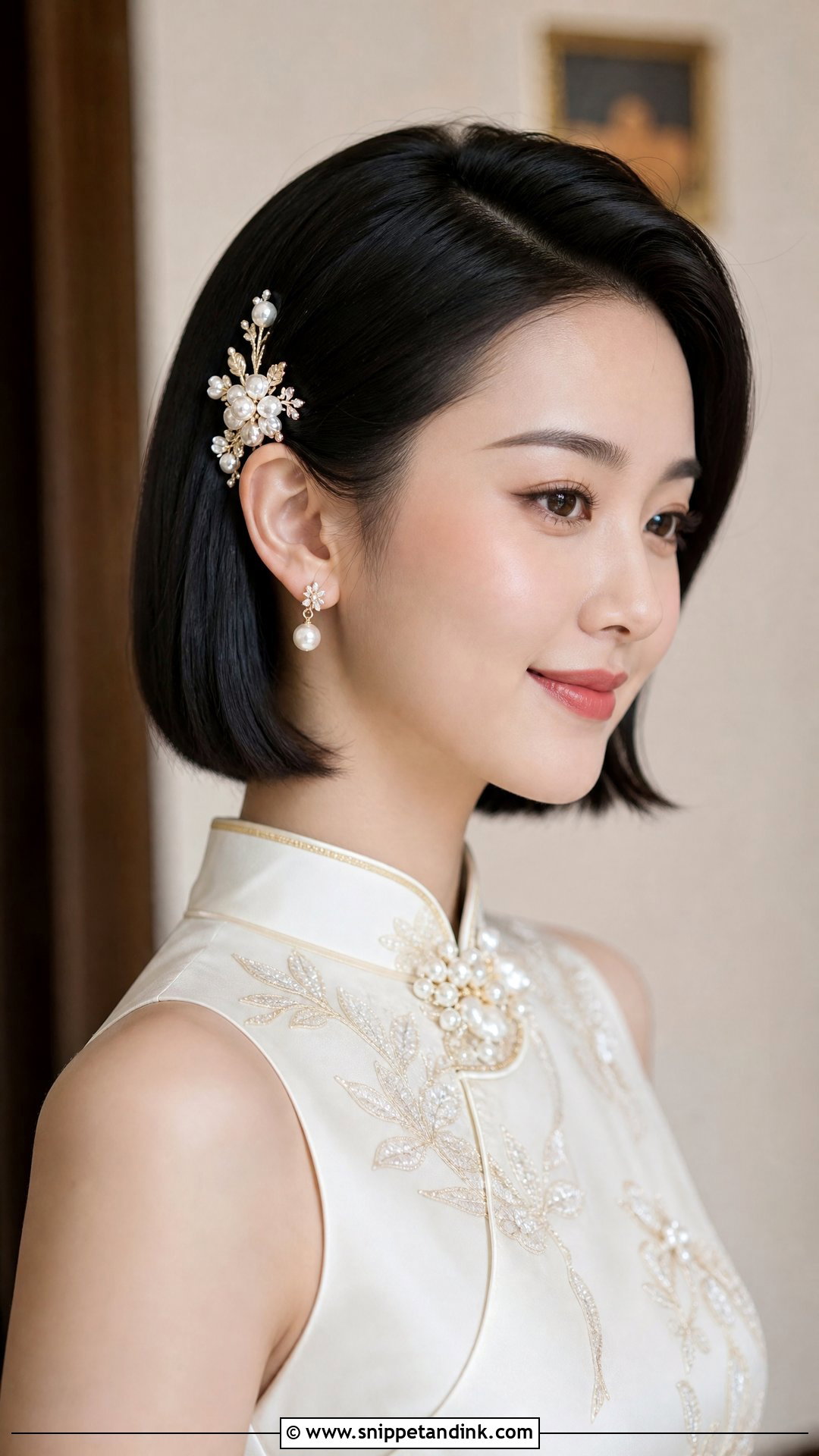
A smooth bob can look very elegant with a soft side part and one side tucked behind the ear, which is good news for short-haired brides who don’t want extensions. A decorative clip adds sparkle and makes the style look deliberate for the ceremony. Modern qipao dresses, minimal gowns and pearl earrings suit it. Choose a clip with a firm grip; short hair has less to hold onto, and I’ll often slide a bobby pin underneath as a hidden anchor. Long hair is not a requirement for a complete bridal look.
14. Chinese Bridal Vintage Waves With Pearl Comb
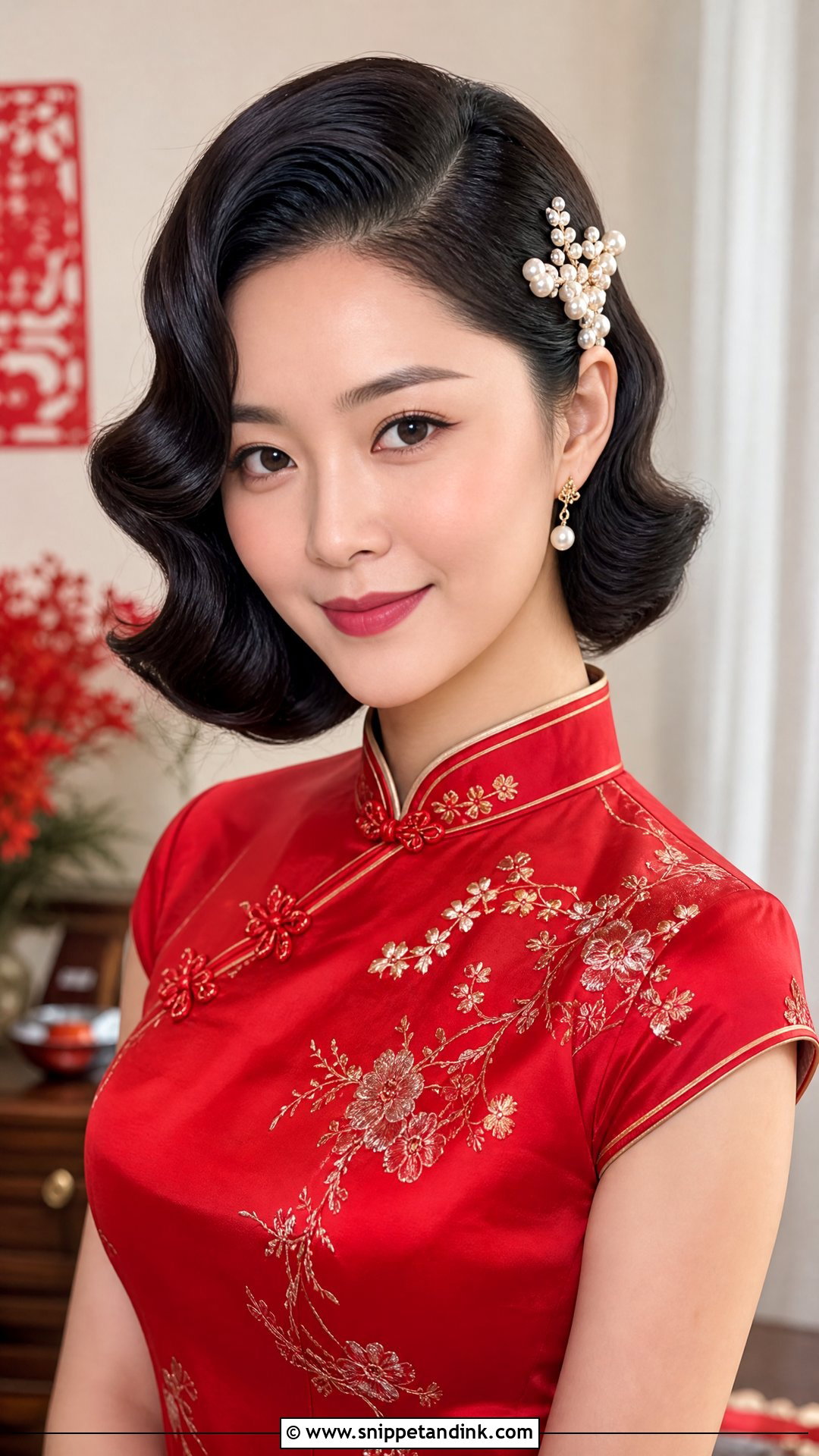
Vintage waves are sculpted and glossy, usually with a side part, and they open the face for a white gown, a fitted qipao or a reception change. A pearl comb above the ear or behind one side adds charm without clutter. Medium to long hair shows the pattern; short lengths turn into curls. These waves get their shape from setting, brushing out together and pressing the ridges with clips while the spray sets. That takes time, so I’d schedule them first in the hair rota rather than squeezing them in at the end.
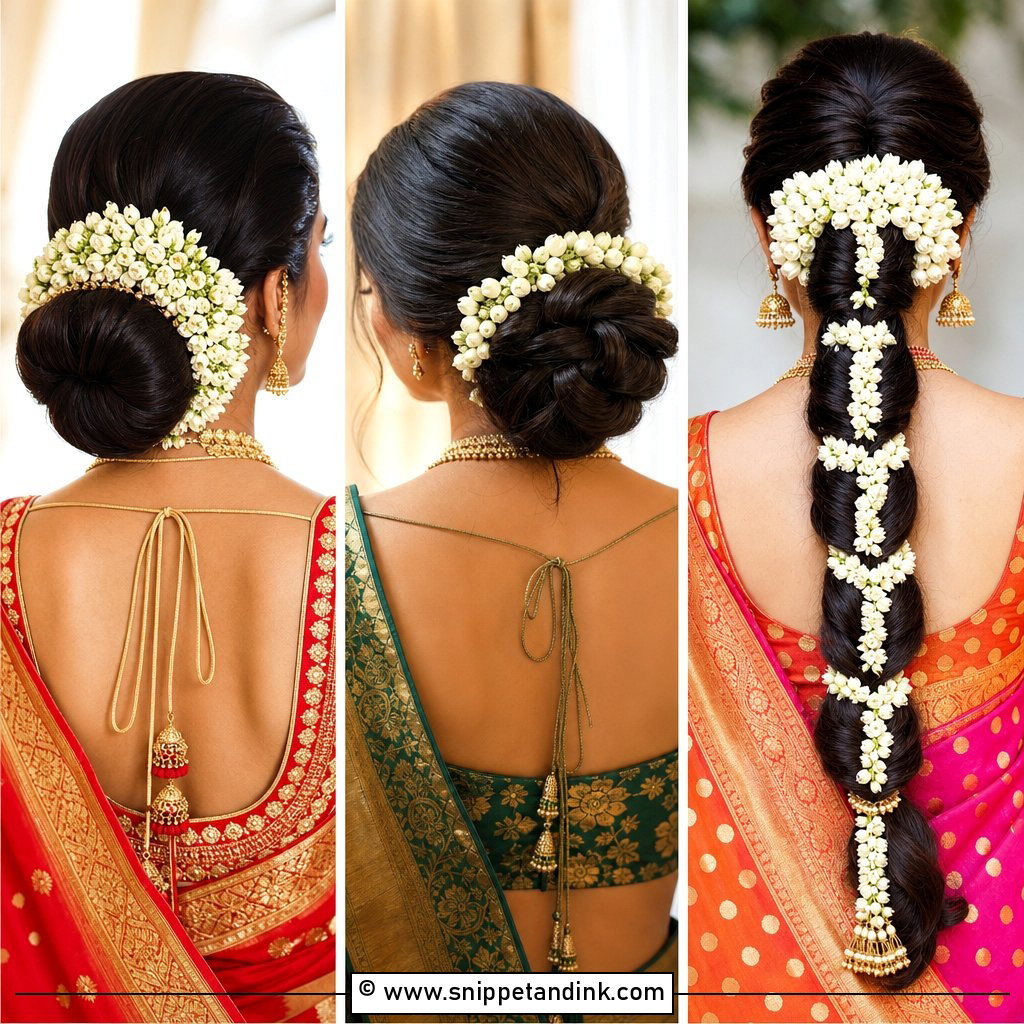
15. Chinese Bridal Crown Braid With Gold Pins
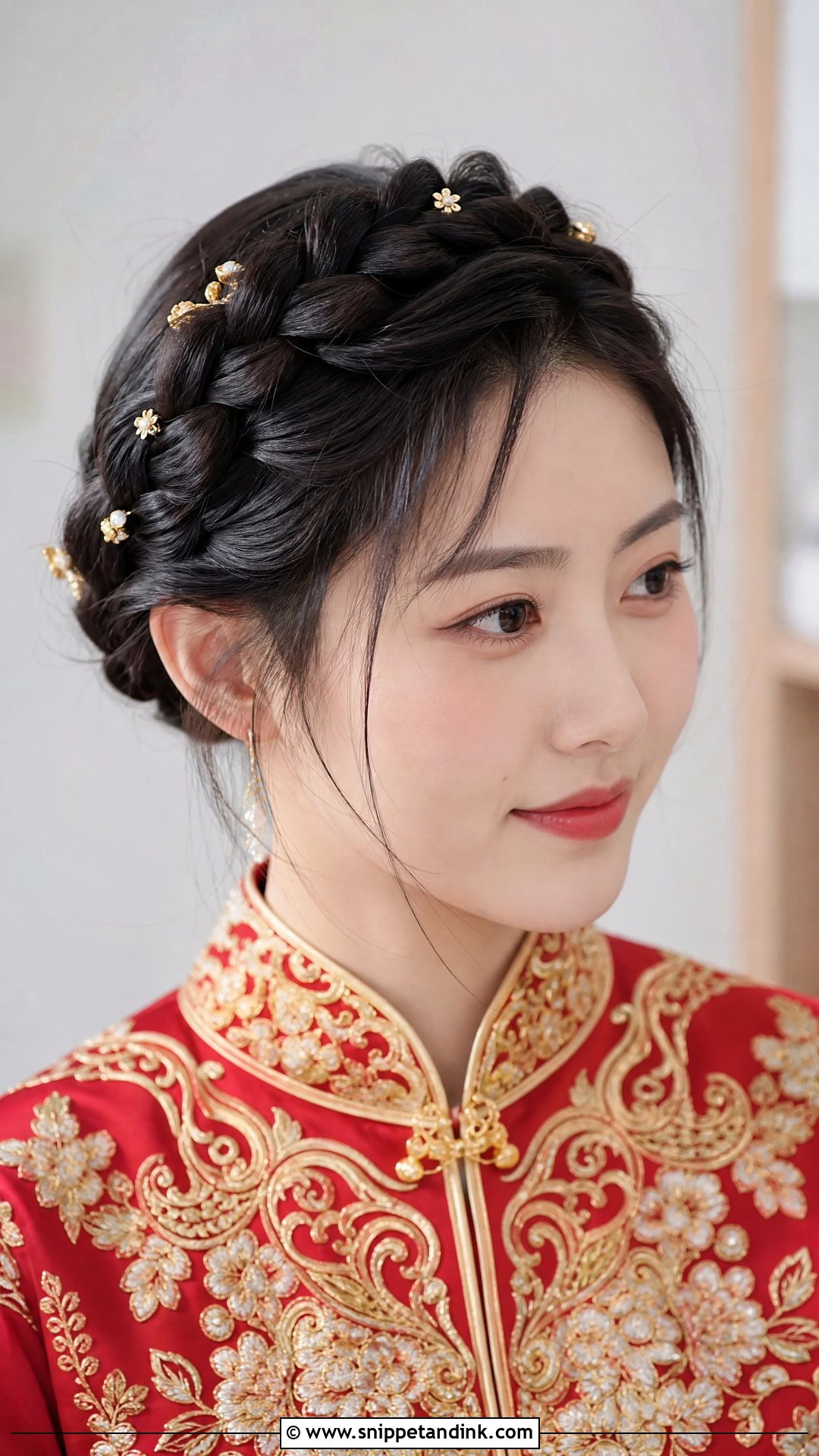
A crown braid frames the face and gives long hair somewhere to go, which suits outdoor ceremonies, tea ceremonies and intimate weddings. Gold pins along the braid add a traditional finish. I pin the crown to small anchor sections behind each ear, since a braid that is only pinned to itself creeps forward over the day. Keep it full but tidy and leave soft pieces near the face. If your hair is very straight and fine, I’d braid with a light texture spray first or the braid will look thin.
Three Outfits, One Hairstyle Underneath Them All
A Chinese wedding day might start with a xiuhefu or qipao for the door games and tea ceremony, switch to a white gown for photos or a church service, then end with an evening qipao for the banquet. Rebuilding hair from scratch for each look is unrealistic. What I build instead is a strong base that takes different accessories.
- Start with a low or mid-height bun or a structured half-up section. It anchors a heavy crown in the morning and a veil comb later.
- Plan the accessory swaps, not new hairstyles. Gold pins and dangling ornaments come out; a pearl vine or a single comb goes in. That usually takes ten or fifteen minutes.
- Rehearse the tea ceremony at the trial. You’ll bow, kneel and pour while wearing the headpiece. If it tips forward when you lean, it needs more support pins or a lighter crown.
- Ask about on-site cover. Many stylists offer to stay through the changes; if yours doesn’t, someone in the bridal party should learn the swap.
Phoenix crowns and full traditional headdresses can be genuinely heavy. With a sensitive scalp or a tendency to headaches, I’d wear the crown only for the ceremony and photos, then move to lighter pins for the banquet. Nobody at dinner will mind, and you’ll enjoy the evening far more.
The Headpiece Decides More Than You’d Expect
Look back over these and you’ll notice the hair usually follows the ornament. A phoenix crown needs a firm, structured updo. A pearl comb or a few gold pins can sit happily in waves, a half-up style or even a bob. Red and gold feel classic and celebratory; jade, pearls and soft florals feel quieter. So settle the headpiece first, then think about neckline, how many outfits you’re changing into and how many hours the style has to last. Go with the one that still feels comfortable after the last toast, and that carries some meaning for you and your family.
You'll Like These Ideas:


Leave a Reply