
In a Tamil wedding, the hair carries more weight than any other part of the bridal look, sometimes literally. Strung jasmine, jadai billalu, a jadai nagam and often an extension all sit on one braid, and it has to stay put through a long muhurtham, a lot of bending and a hot mandapam. Tamil bridal hair can be completely traditional or quietly modern, and the right choice depends on your saree, your jewelry, your face and how many functions you’re changing for. Below are 25 looks I’d do for a Tamil bride, from decorated plaits and buns to floral updos and open styles for the reception, with notes on what each one asks of your hair.
How Heavy a Jadai Gets, and How I Anchor It
A full jadai with an extension, billalu, a jadai nagam and strung jasmine can feel surprisingly heavy by the end of a long ceremony. Brides rarely complain at the trial. They feel it two hours into the muhurtham, sitting cross-legged, with the weight pulling at the nape.
So the braid is built in layers, not decorated in one go:
- A firm base at the crown or nape, made with a ponytail or a small pinned section, that everything else hangs from.
- The extension braided into your own hair along the length, so the weight is shared rather than hanging from one clip.
- Ornaments on a backing that is stitched or pinned to the braid at several points, so pieces don’t swing.
- Flowers last, because they’re the part that wilts and the part you might want to change between functions.
At the trial, I ask the bride to wear the full jadai for a while, sit down, bend forward and turn her head. If anything pulls or presses, we fix the base then, not on the wedding morning.
Extensions for the jadai
Buy the extension early and bring it to the trial. Shade matters less than you’d think under flowers and gold, but texture matters a lot: a silky extension next to coarser natural hair shows at the top of the braid. Human hair blends best and can be braided tightly without fraying.
1. Traditional Jadai Braid With Flowers
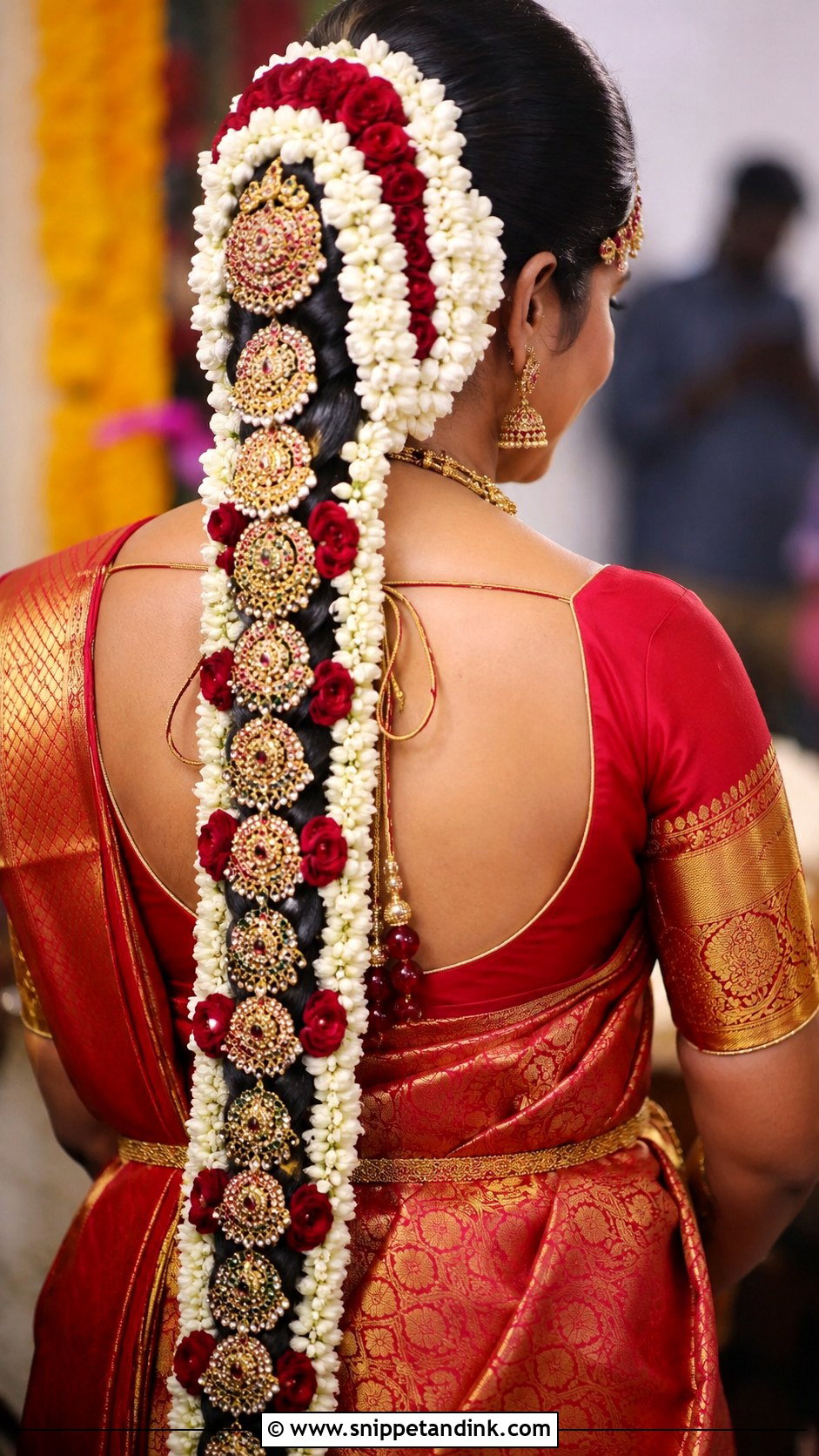
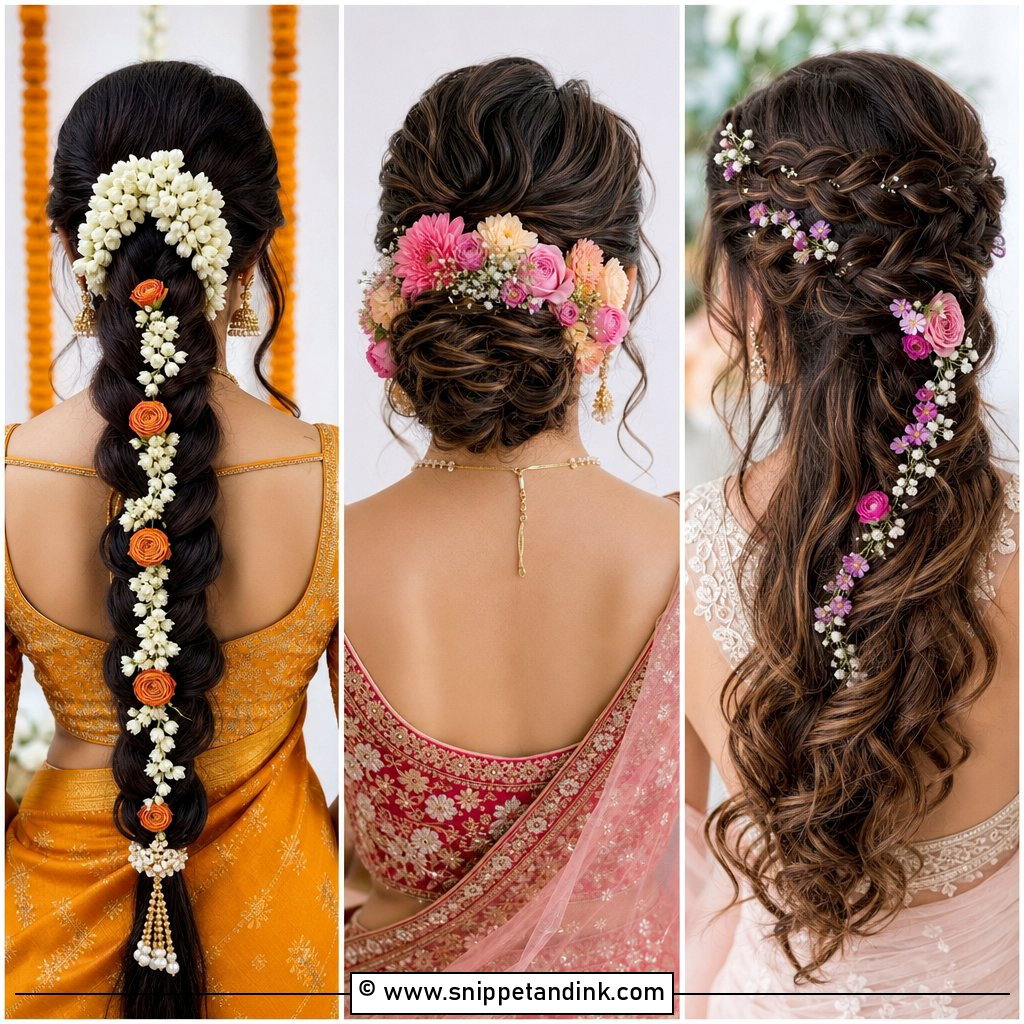
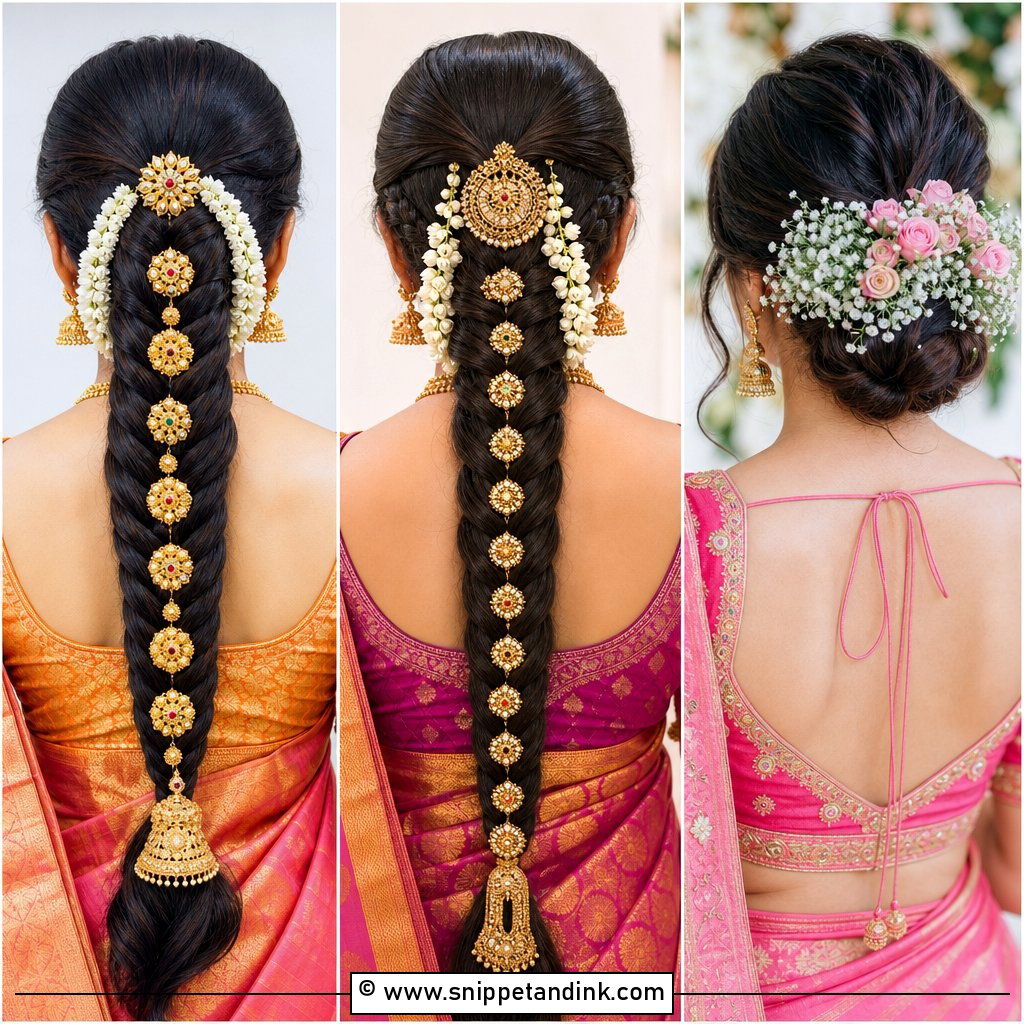
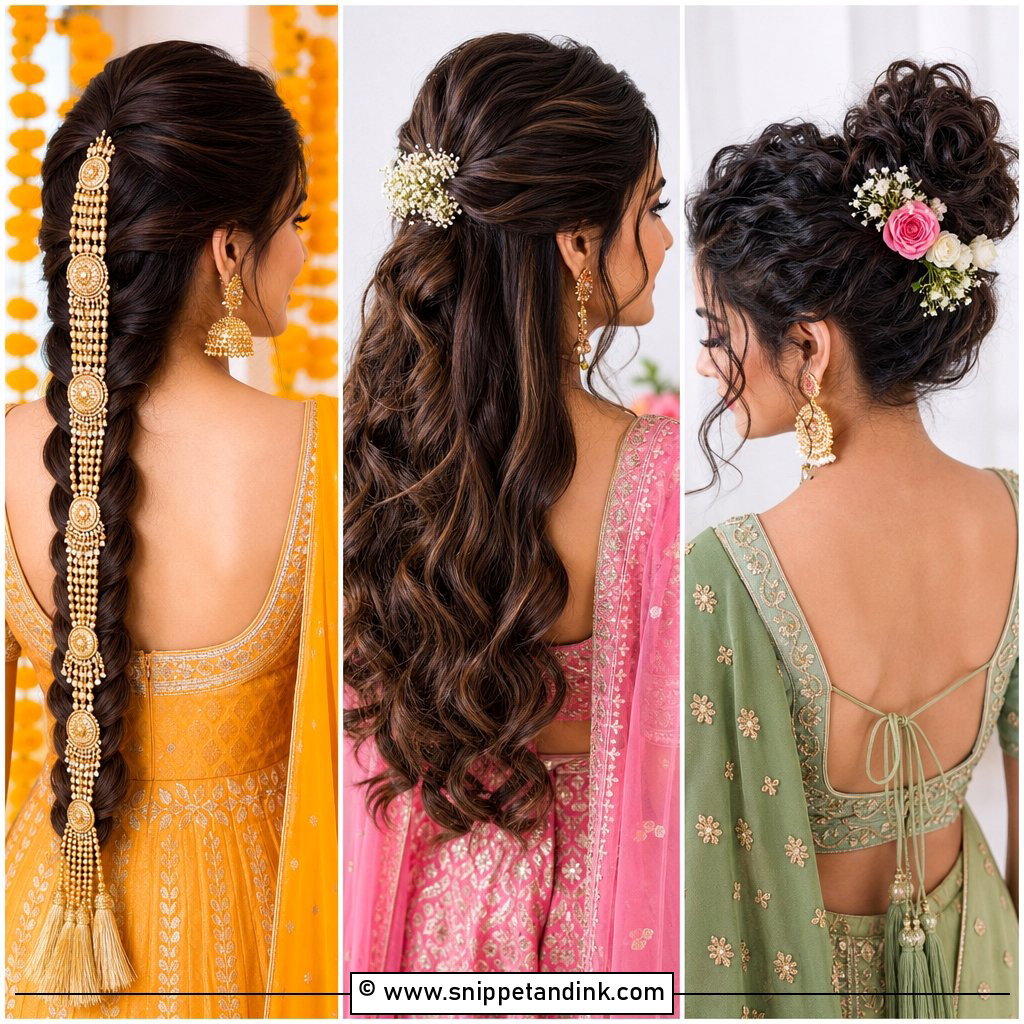
The long jadai is the heart of Tamil bridal hair. It’s a thick plait down the back, dressed with jasmine, roses and gold, and most brides I braid need an extension to get the length and fullness the decoration expects. Flowers go on in neat rows, wider at the top and narrowing toward the tip, with a jadai nagam crowning the braid. I braid it firmly but not tight at the nape, since a strained root starts to ache two hours into the rituals. With a Kanjeevaram silk, it’s hard to beat.
2. Poo Jadai With Jasmine and Roses
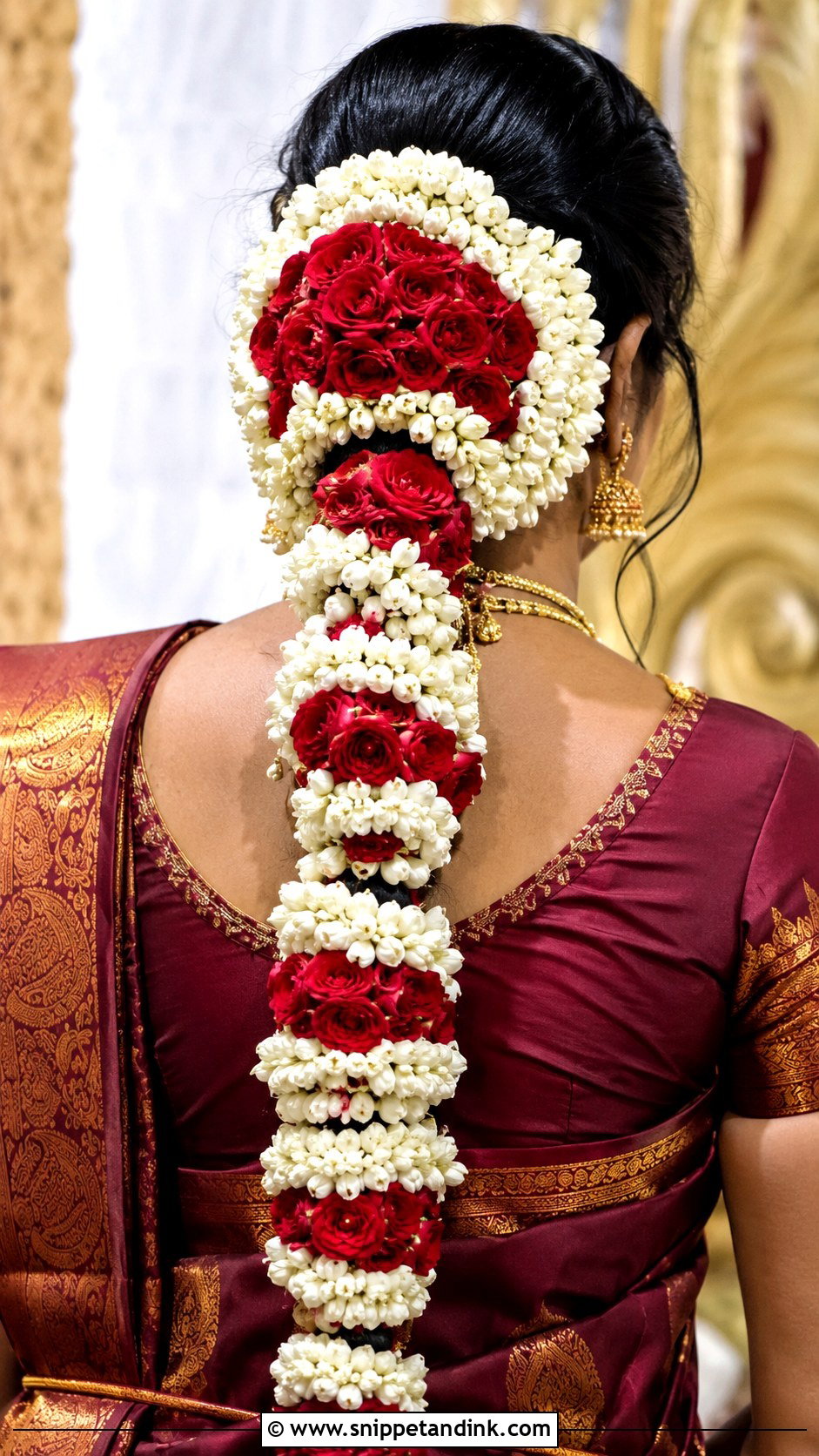
Poo jadai covers the braid in pre-stitched jasmine with rose petals laid in, white as the base and red or pink for contrast. You smell it before you see it. The dense flowers look rich against dark hair and sit happily beside temple jewelry. It’s also heavier than it looks, especially once the flowers are damp, so I build it on a firm braid and pin the top of the floral panel into the base of the plait rather than just tying it on. Many families have done it this way for generations, and it still feels fresh.
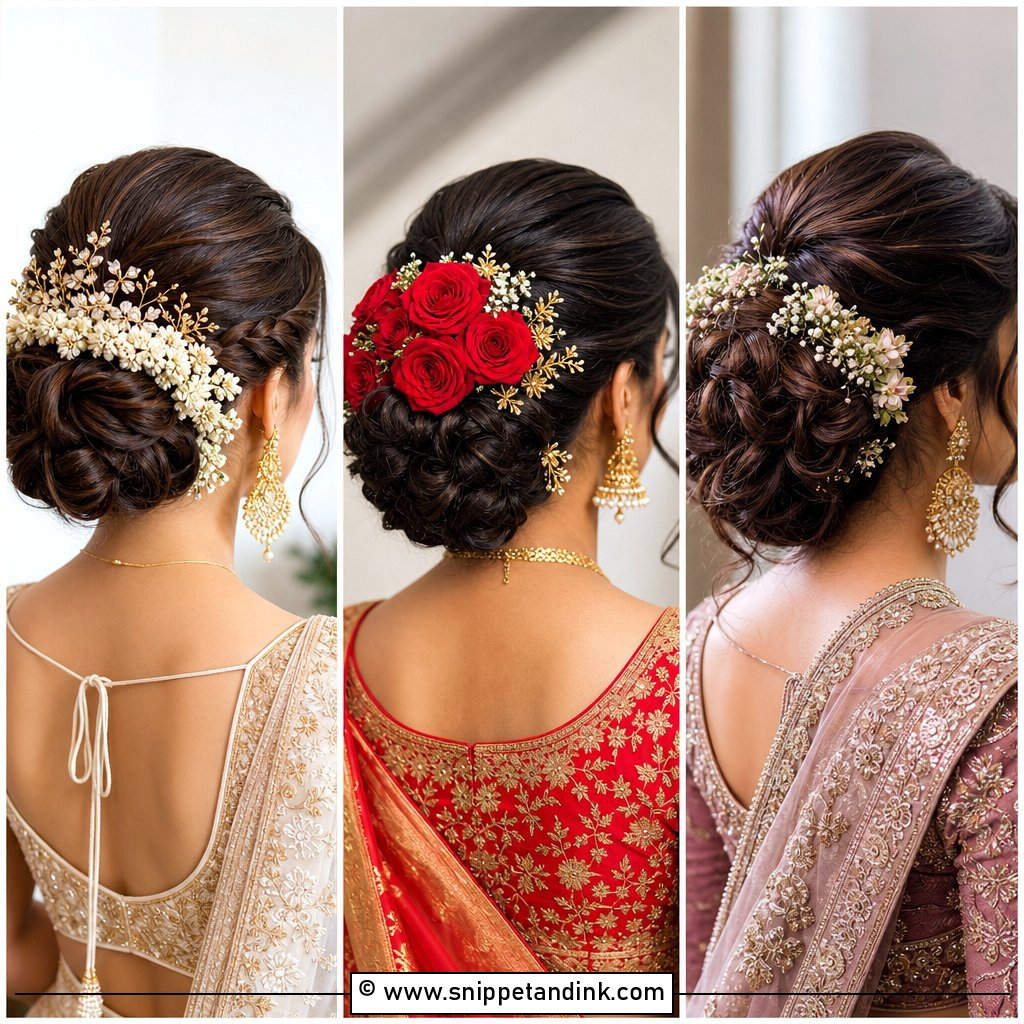
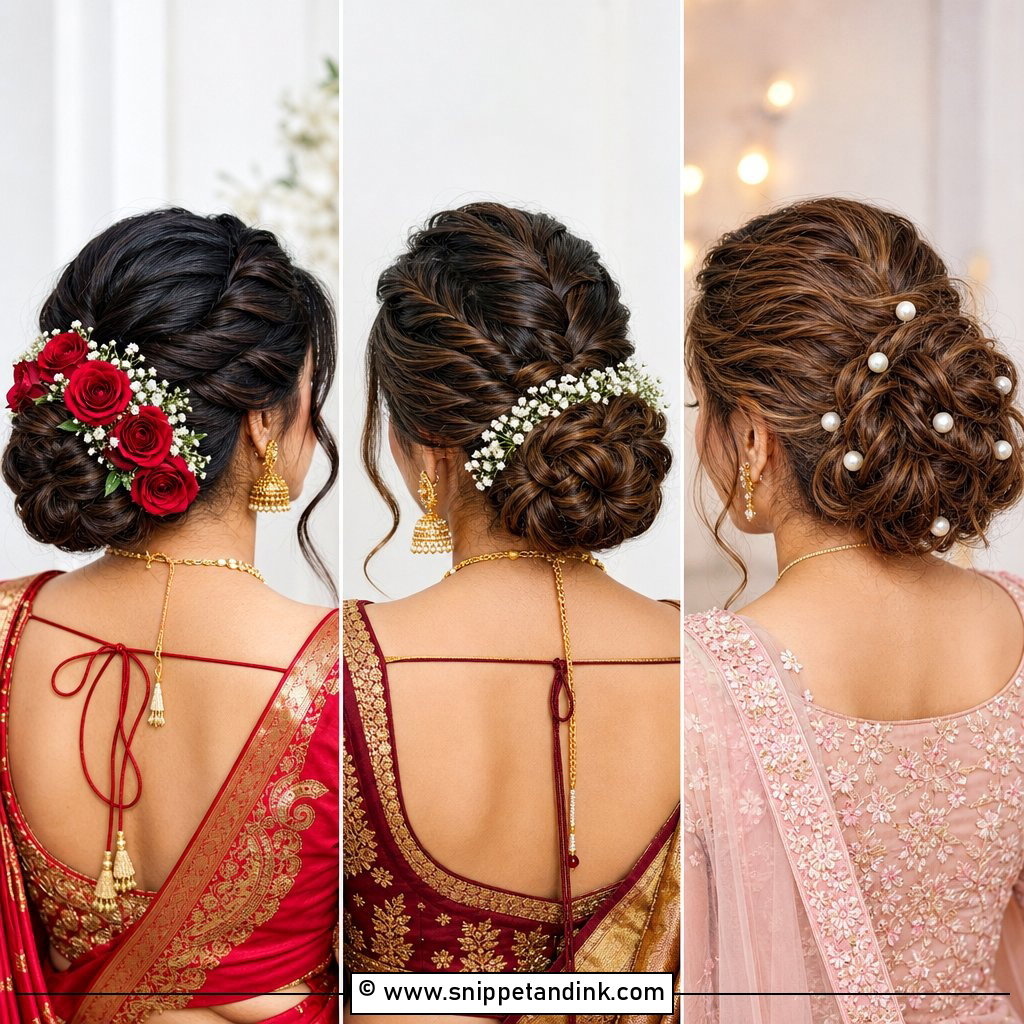
3. South Indian Bridal Bun With Gajra
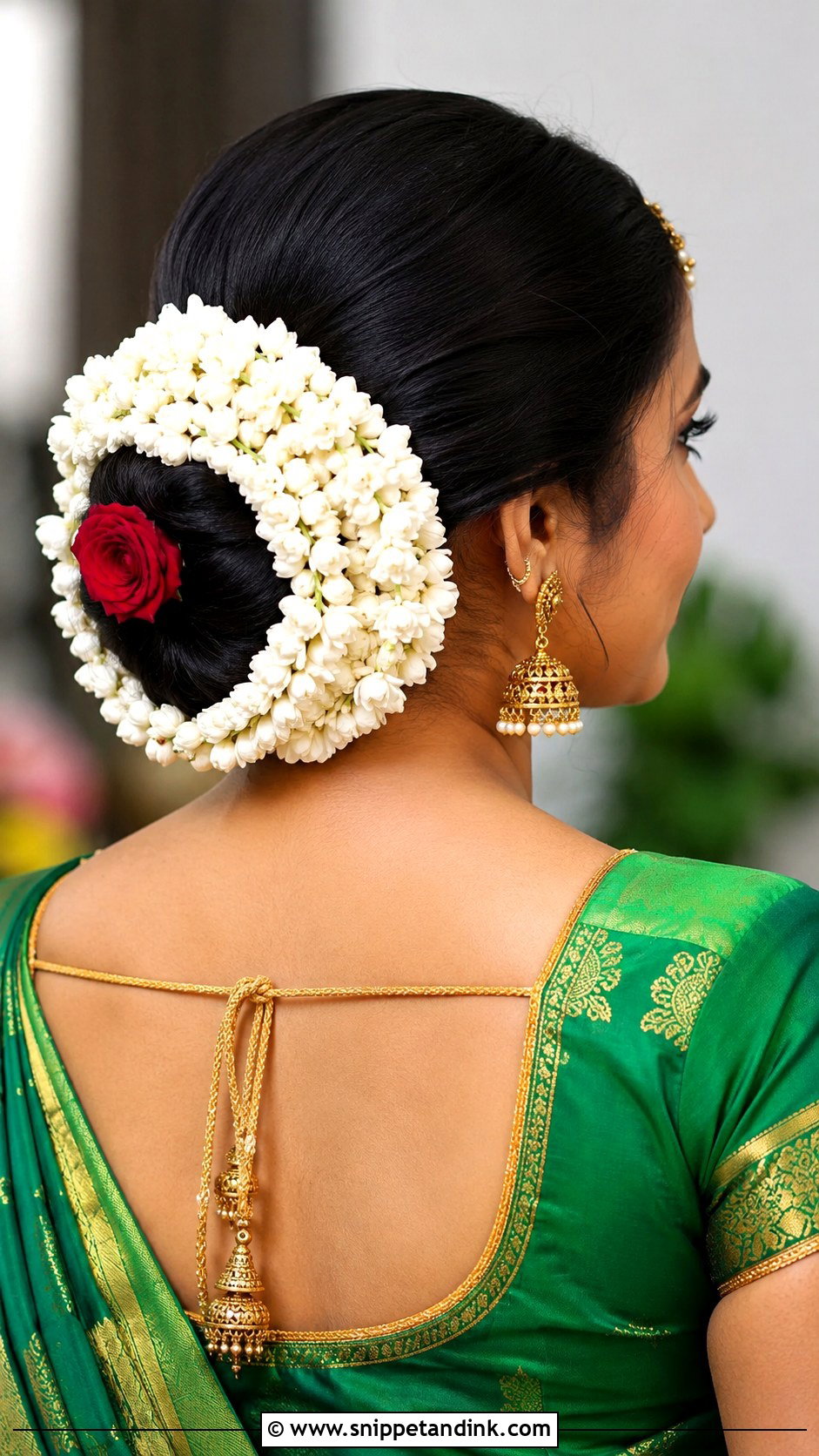
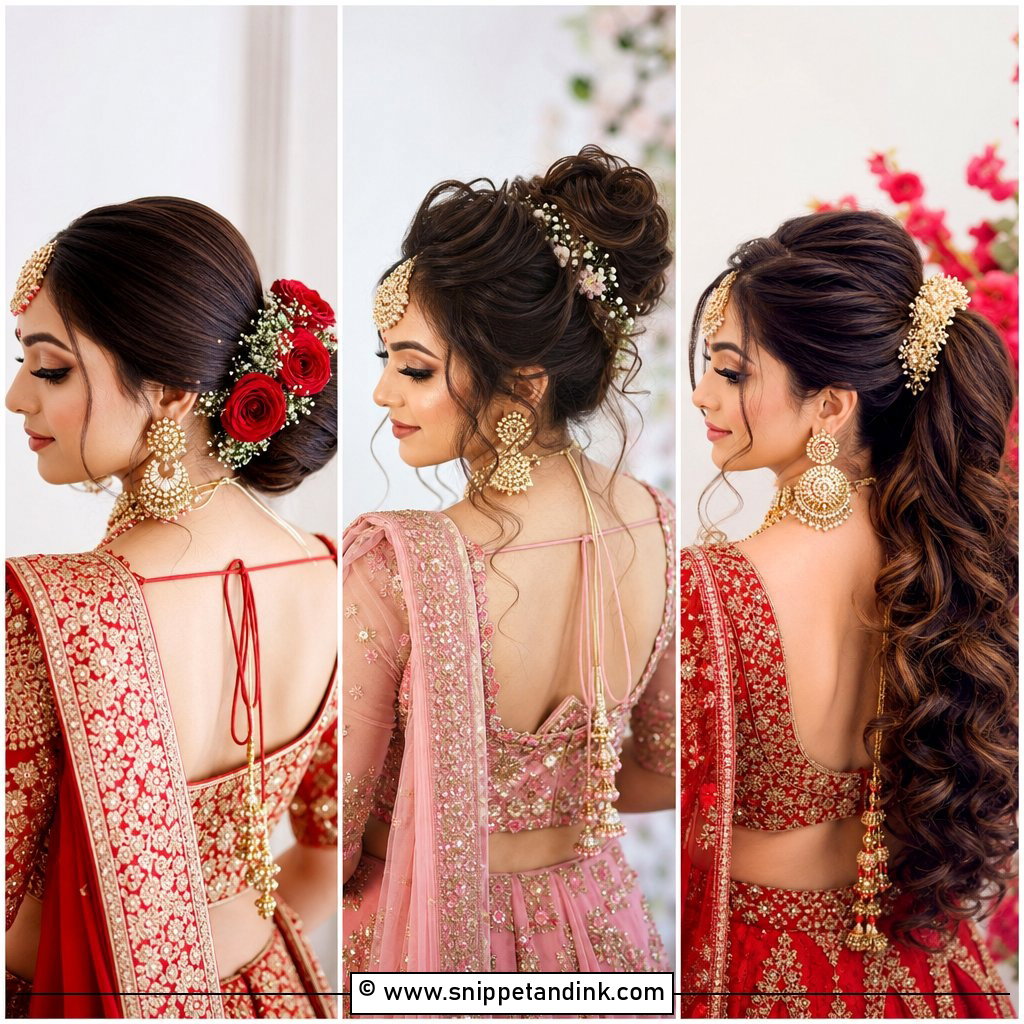
A smooth, rounded bun at the back of the head with a thick jasmine gajra around the base is the bun I’d suggest to brides who find a long braid too heavy. Some add a single rose or a gold pin. It keeps your face open for statement earrings and a maang tikka. I build it on a firm ponytail and a bun donut if the hair is fine, so it holds its shape through hours of sitting. It suits a bride who wants a neat, controlled look rather than drama.
4. Bun and Braid Combination
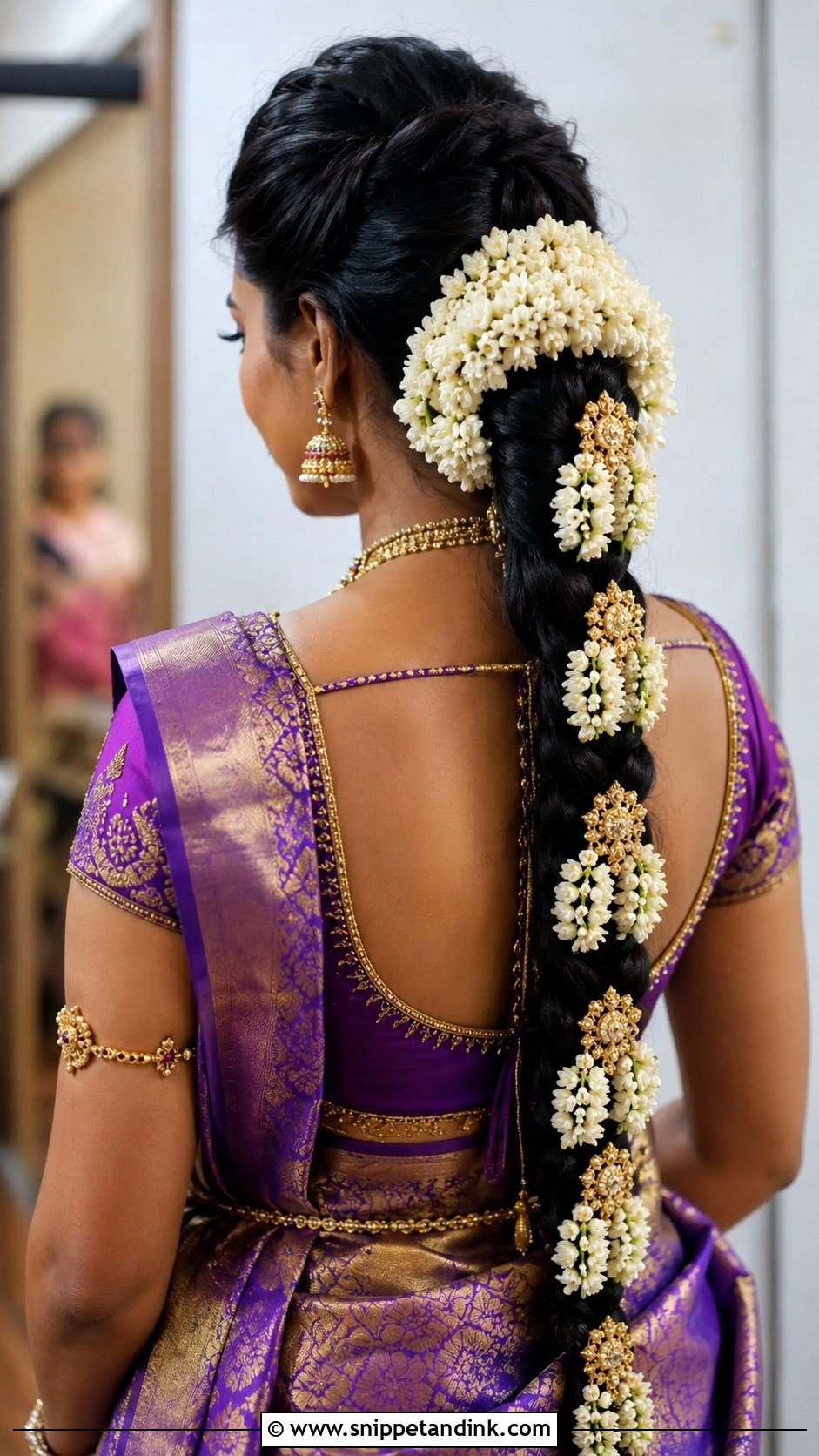
Here you get both: a structured bun at the crown for height and a long decorated plait below that keeps the traditional jadai charm. Flowers and gold jada billalu dress the plait, and a gajra circles the bun. It’s the fullest style in this list, which means it needs plenty of hair or an extension and careful pinning, because the bun has to carry part of the braid’s weight. It reads well from every angle, so it’s a common choice for big ceremonies.
5. Jada Billai Decorated Braid
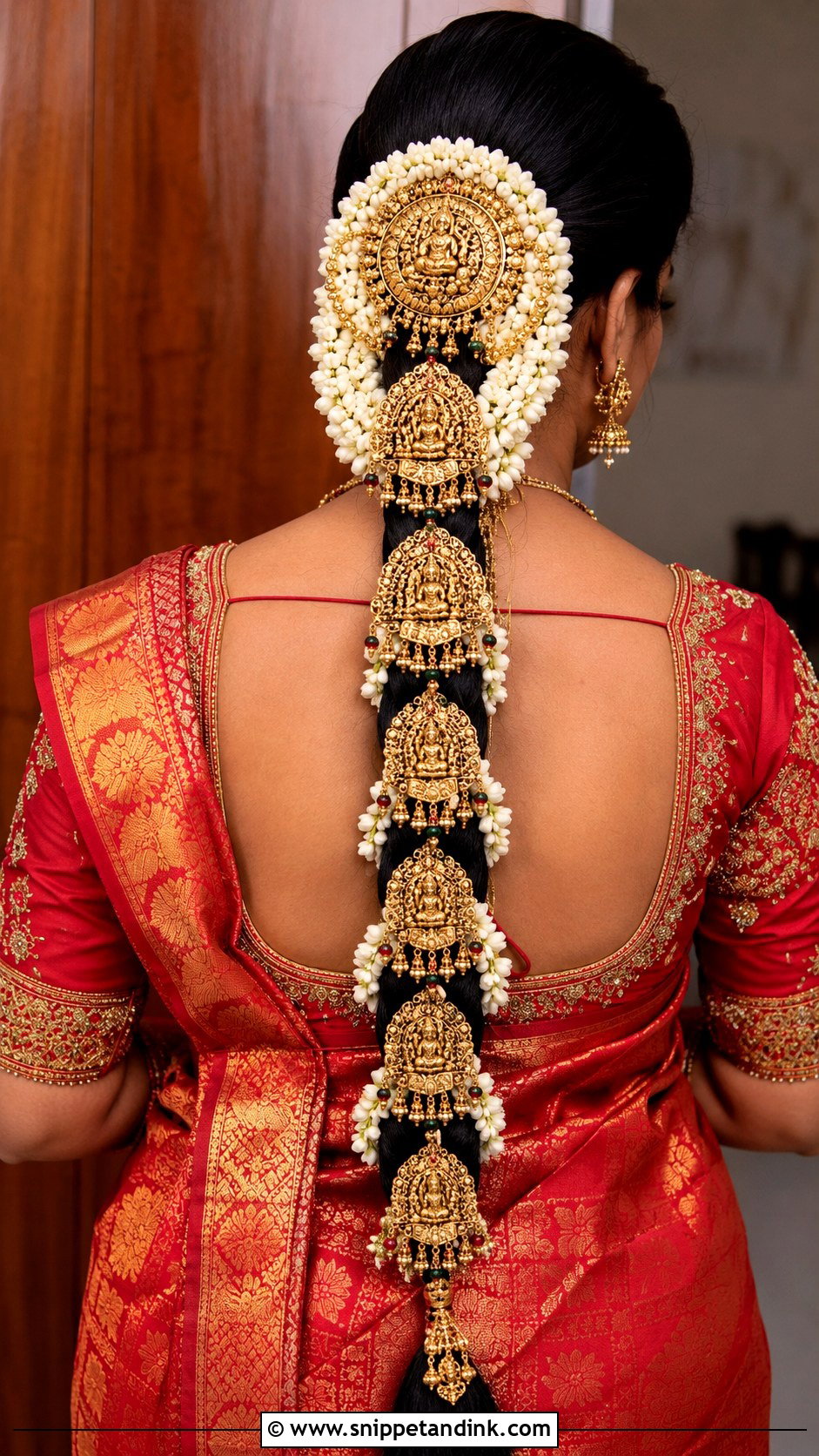
Many Tamil brides now dress the braid mainly in gold. The jada billai is a set of gold ornaments placed one after another down the plait, each smaller than the last, so the braid tapers to a point. Gold doesn’t wilt, which is why it’s popular for long days. A few jasmine strands soften it. The pieces are usually stitched or clipped onto a backing, and I attach that backing to the braid at several points so it doesn’t swing and tug at the scalp when you turn.
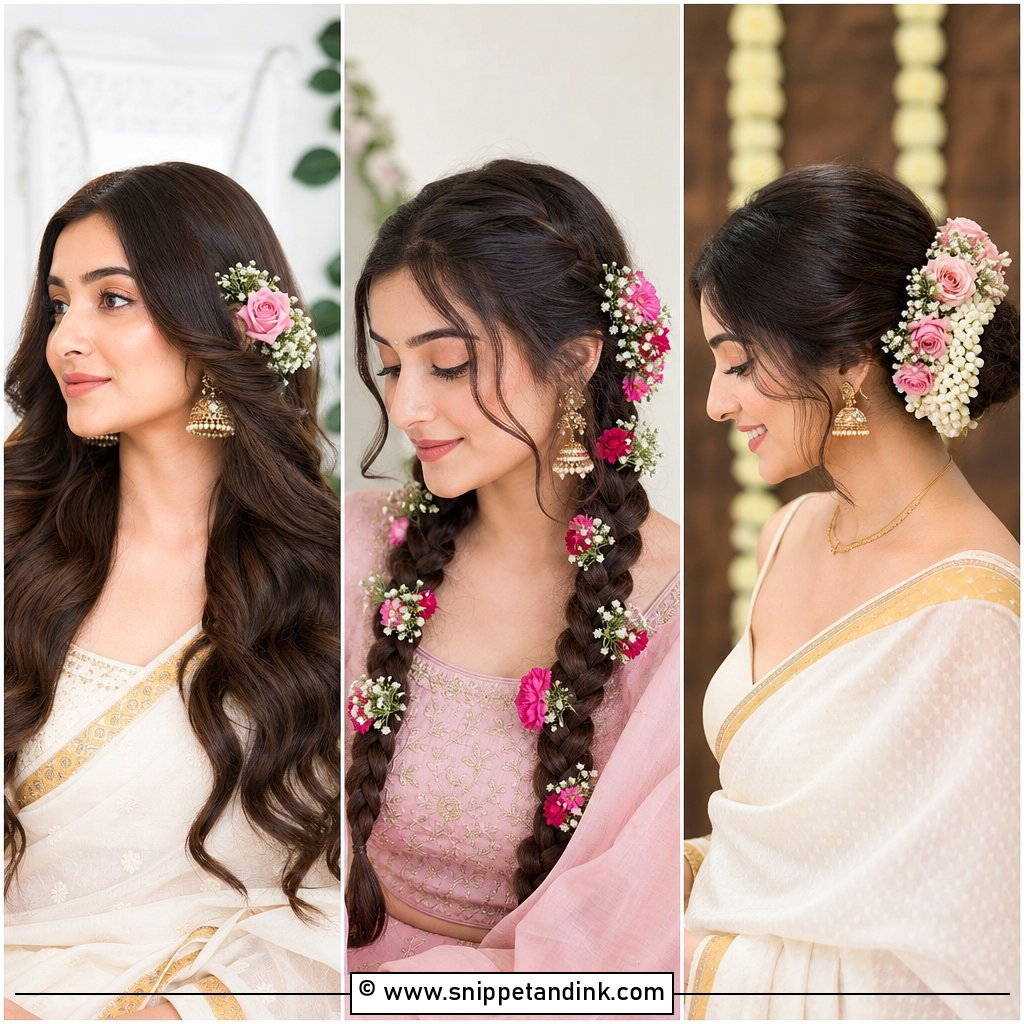
6. Loose Curls With Floral Accents
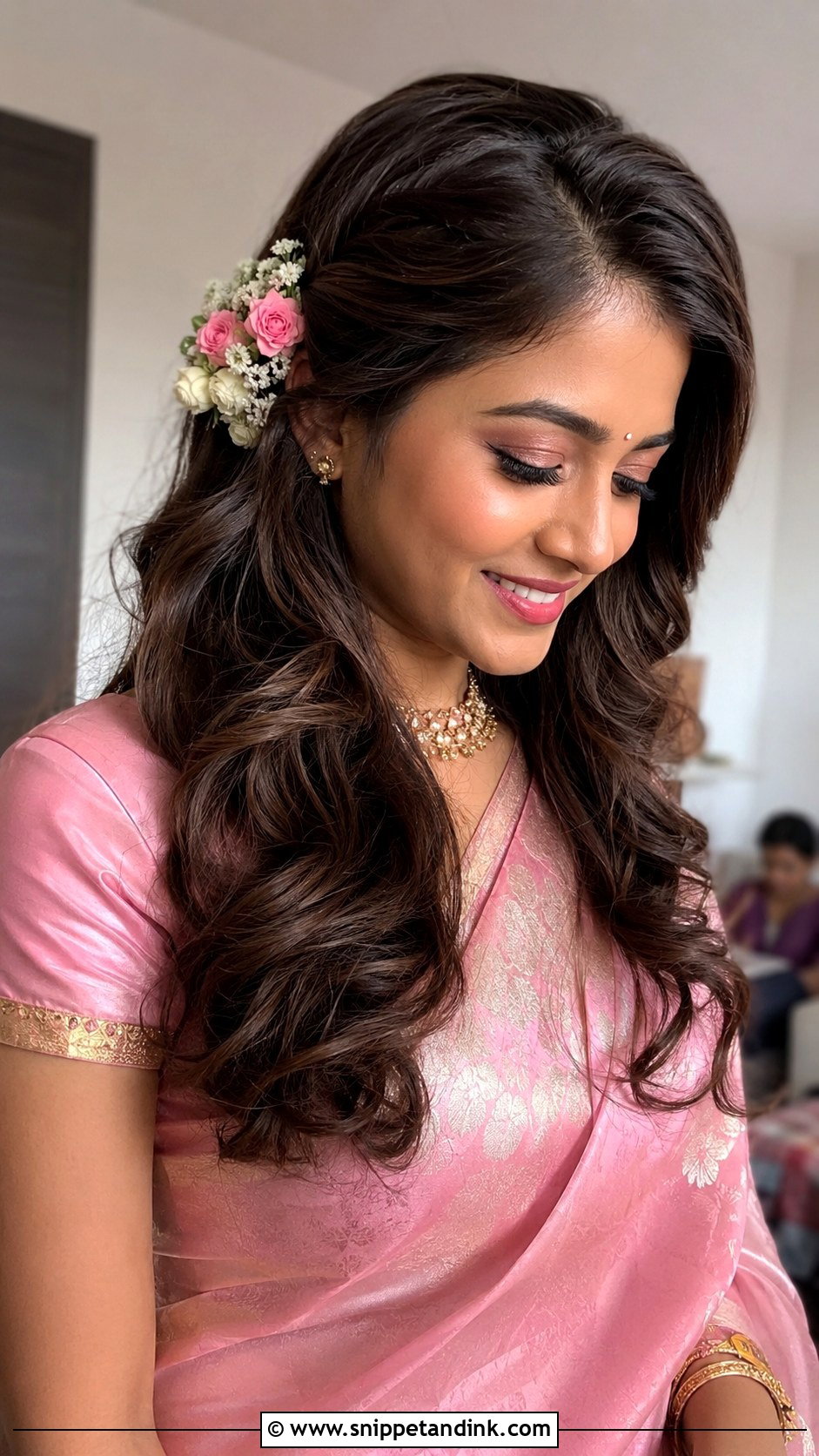
Loose curls are the open alternative, waves over the shoulders with small roses or jasmine tucked behind one ear. They suit receptions and lighter, modern ceremonies. The honest catch is humidity: curls in a warm hall drop within hours unless the hair is set properly. I curl in small sections, let each curl cool pinned in place, and only then brush them out. Thick, coarse hair holds this far better than fine hair.
7. Side Swept Braid With Jasmine
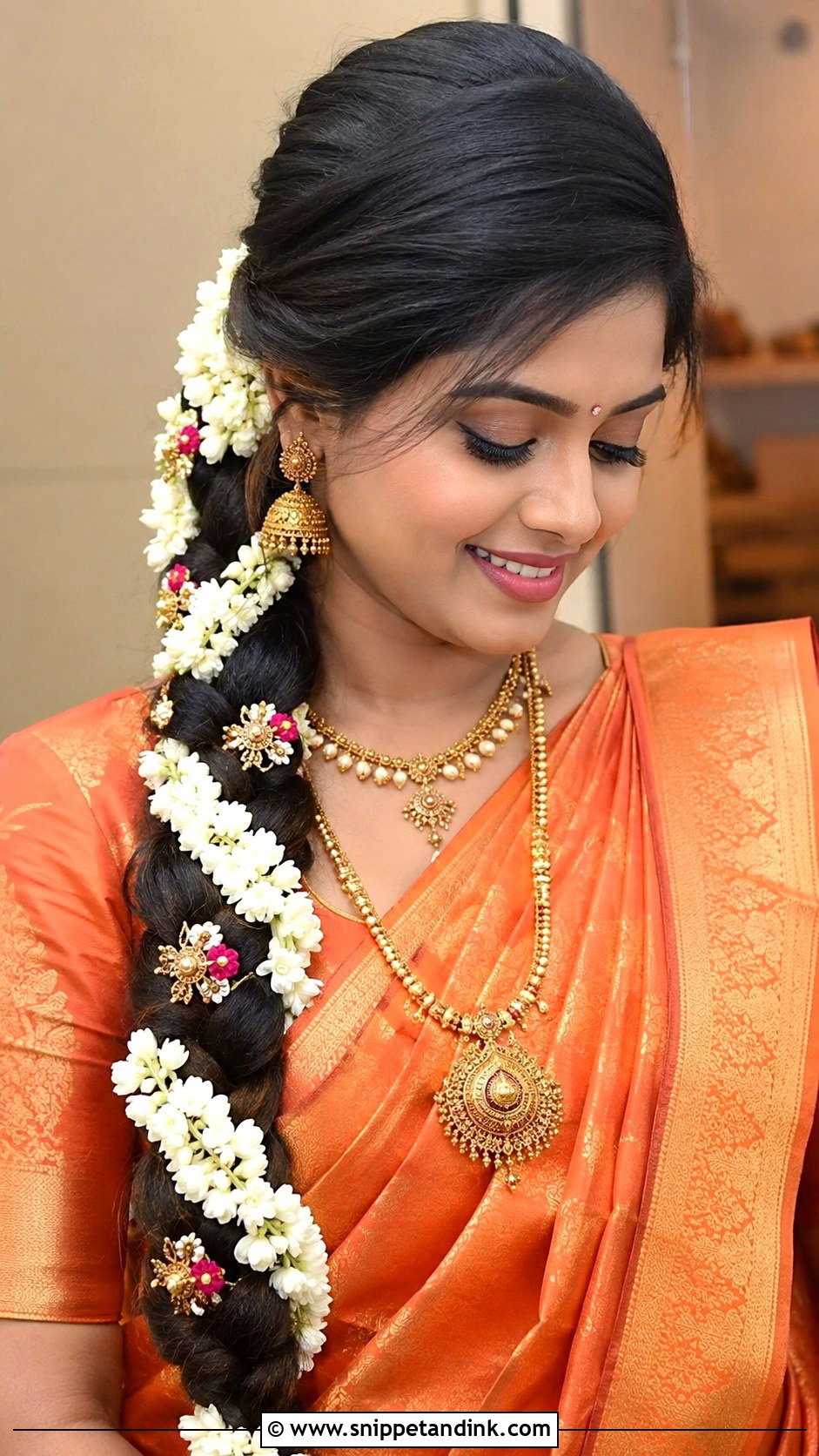
Draping the jadai over one shoulder makes the plait feel softer and lets the floral work be seen up close, both by guests and the camera. It also frames the neckline and shows off necklaces. I braid it slightly to the side from the start rather than pulling a center braid around, because a twisted base pulls on one side of the scalp all day. It’s a good option if you love the tradition but want something a little modern.
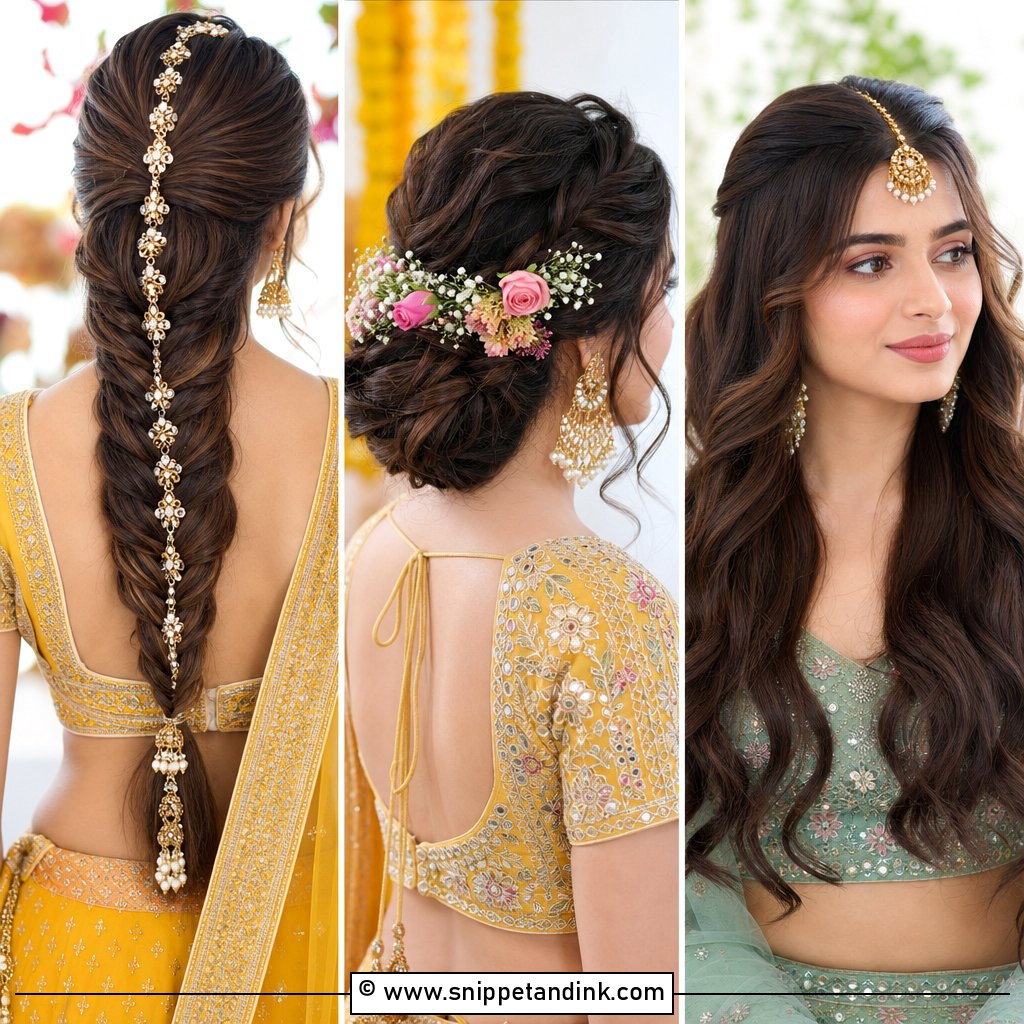
8. Maang Tikka Centered Open Hairstyle
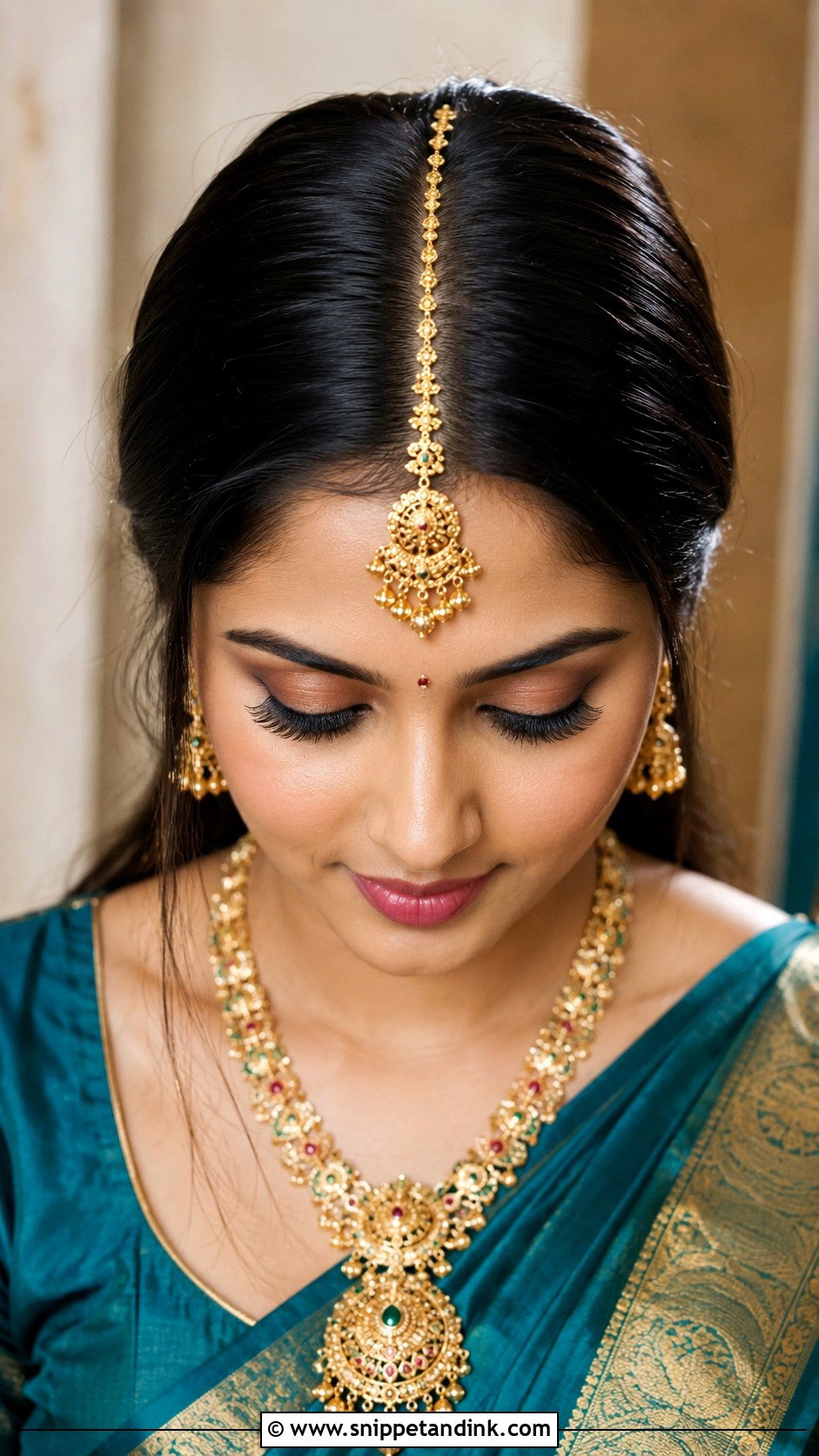
Open hair with a bold maang tikka puts the focus on your face and jewelry. The hair stays straight or lightly waved with a clean center part, and the tikka rests along the parting. A few flowers or a fine hair chain add interest. I secure the tikka with a small hidden pin at the parting and another behind it, since a loose tikka slides with every bow. It suits engagement functions and receptions, and brides who feel most themselves with their hair down.
9. Voluminous Braid With Hair Extensions
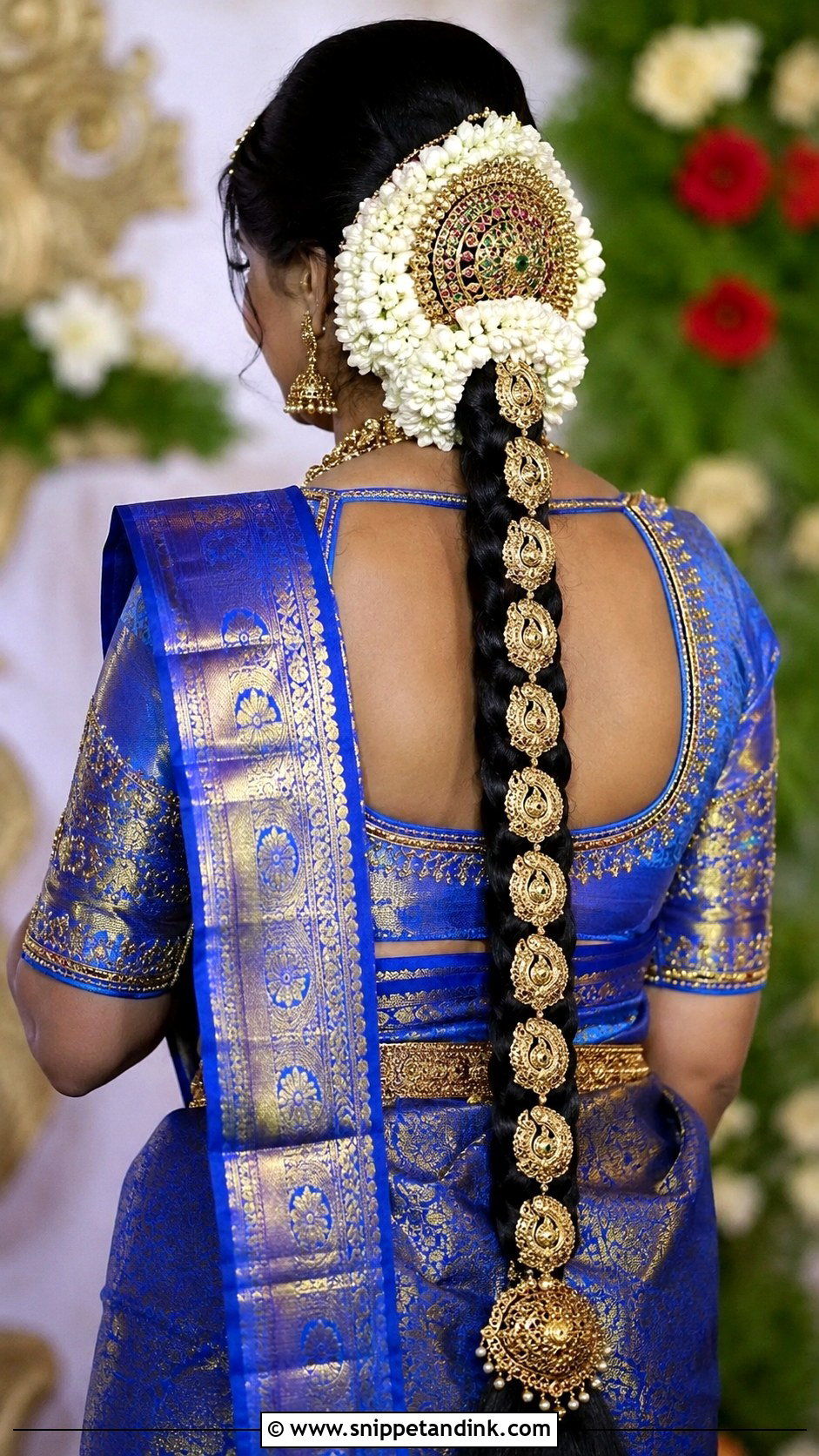
Finer hair can still get a thick, floor-length jadai. Extensions build the plait out so it can carry jasmine rows, billai pieces and a jadai nagam at the top. Match the extension to your natural shade and texture in daylight, and have it on hand at the trial, not the night before. I braid the extension into your own hair rather than clipping it only at the top, so the weight is shared along the braid. Against silk and temple jewelry it gives that grand jadai alangaram silhouette.
10. Pearl Studded Bridal Bun
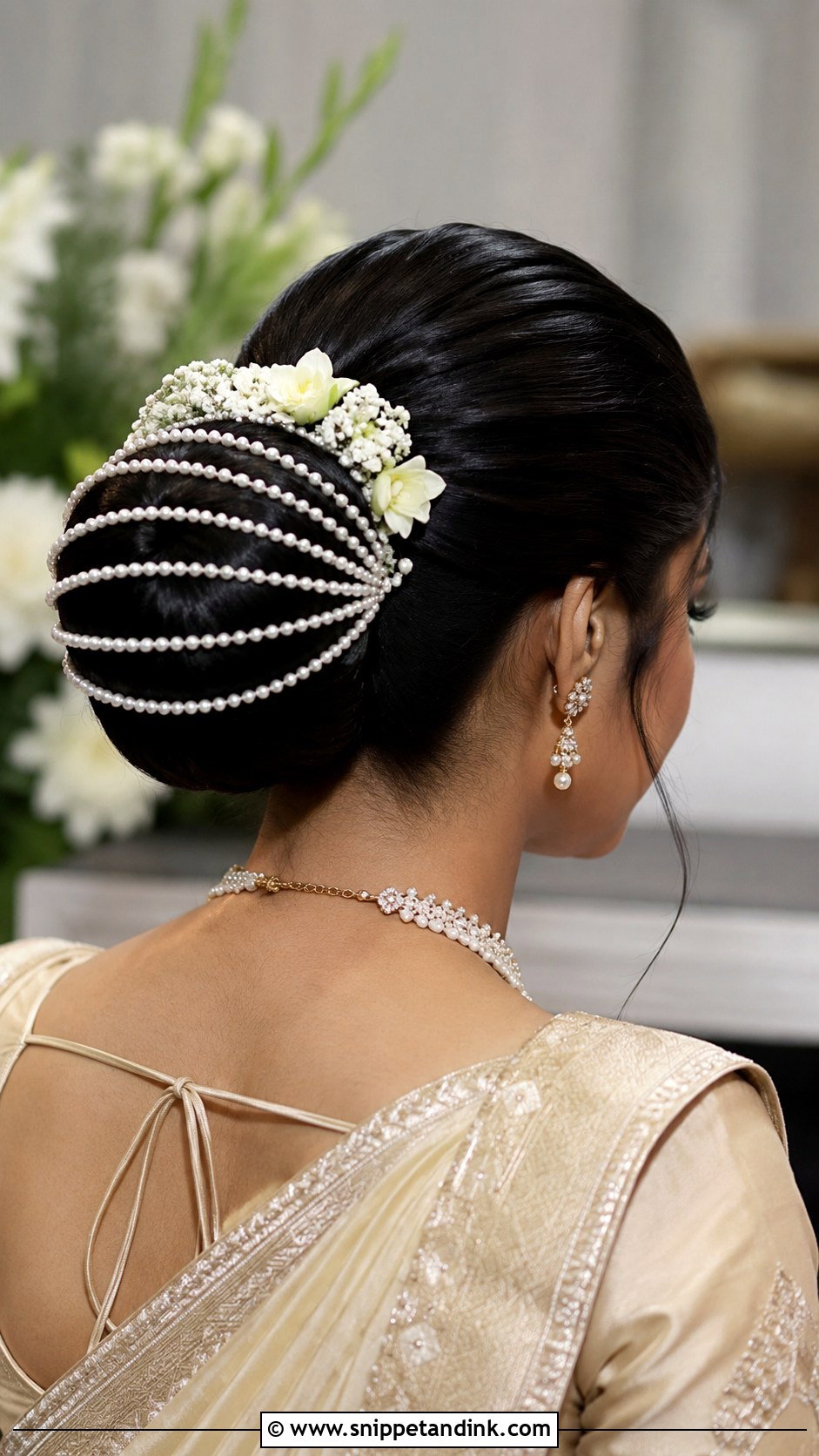
Pearl strands wrapped around a smooth bun give a softer glow than gold. A few white flowers keep it fresh. It pairs well with pastel or lighter sarees and pearl jewelry, and suits daytime ceremonies and receptions. Pearl strings slide on silky hair, so I pin them at regular intervals rather than relying on one wrap. It’s the one I’d suggest to a bride who wants sparkle but finds gold too heavy.
11. Half Up Half Down Bridal Style
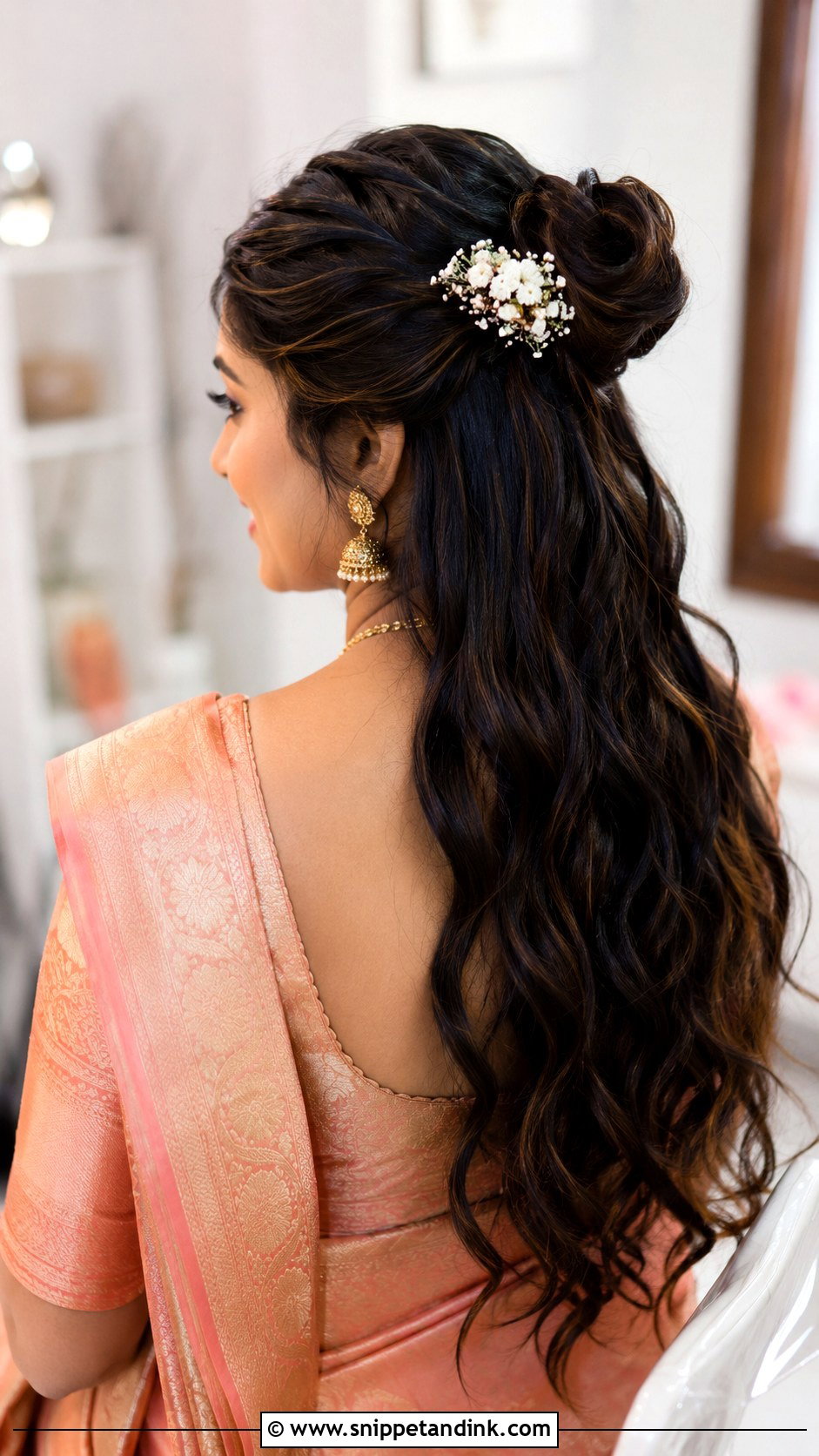
Half up, half down pulls the top section back into a small bun or twist and leaves the rest open in waves. A few flowers or a small ornament dress the pulled-back part. It’s youthful and keeps hair off the face. Many modern Tamil brides wear it for the engagement or reception. It flatters round and heart-shaped faces because the lift at the crown adds length. Fine hair needs some backcombing at the crown so the twist doesn’t flatten.
12. Floral Crown Bridal Look
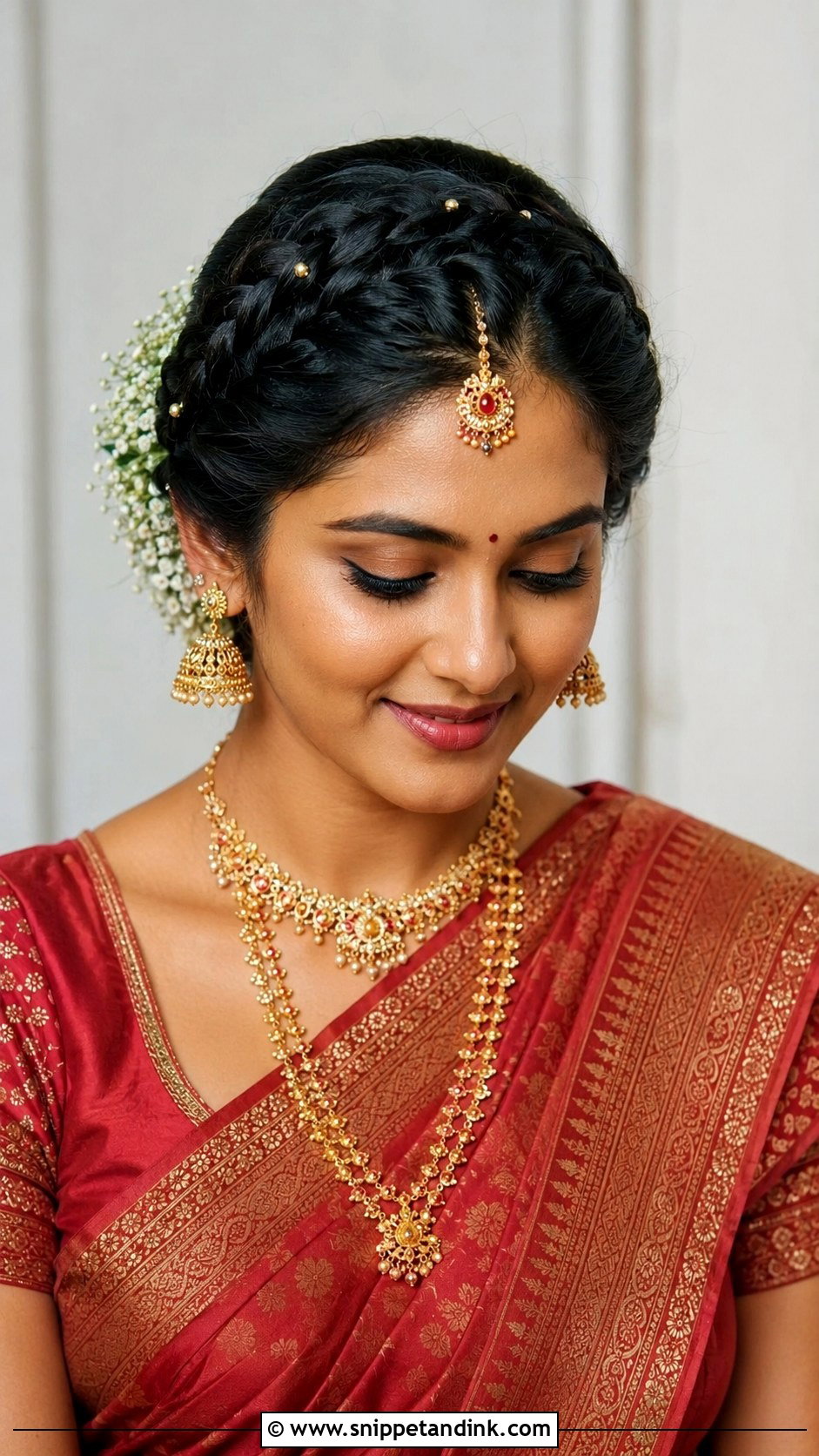
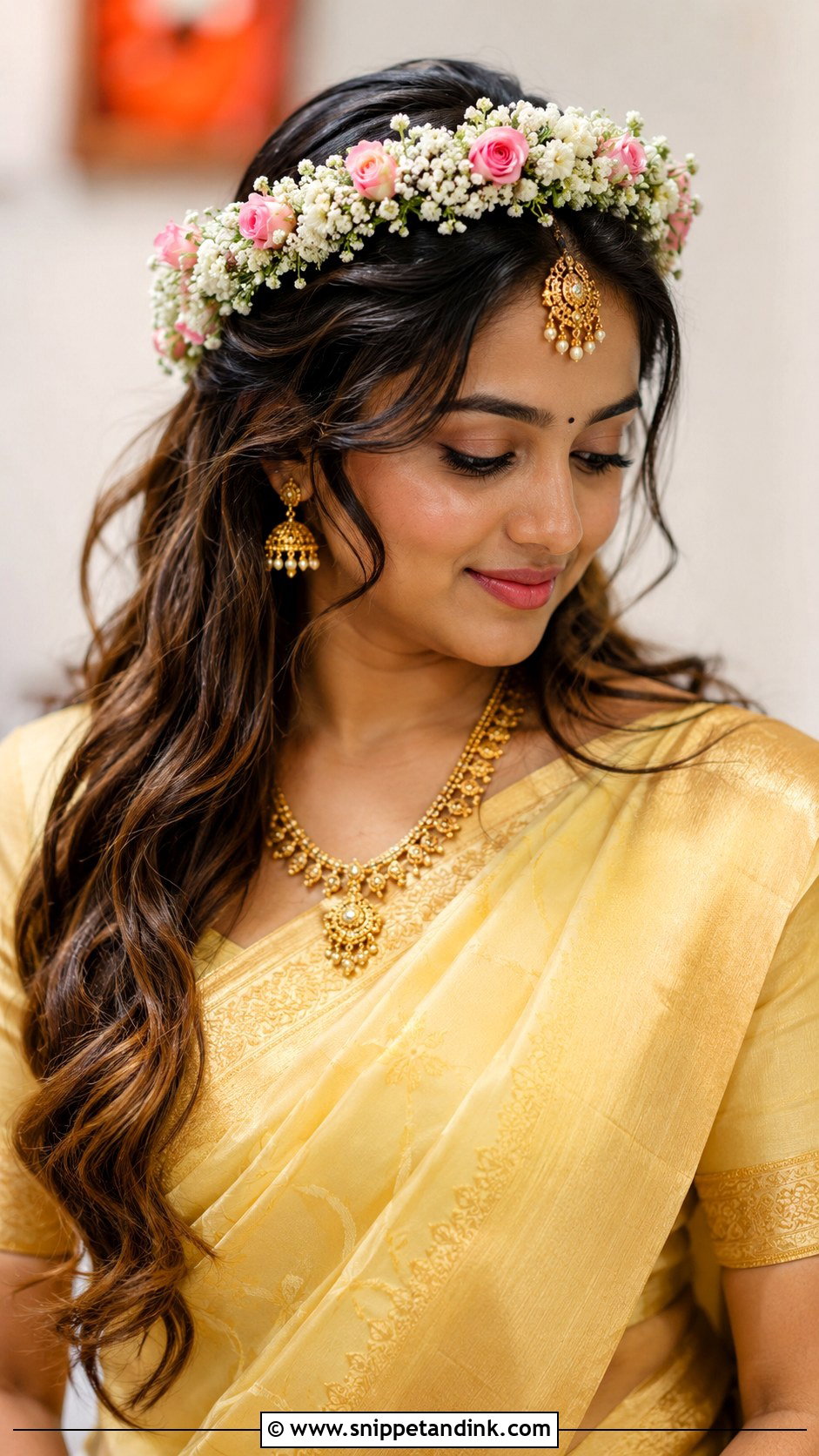
A ring of fresh jasmine, roses and buds at the crown, with hair open or in a loose braid below, gives a garden-inspired look that still respects the Tamil love of flowers. It suits outdoor functions and receptions. A floral crown has to be wired to the right size and pinned on in at least four places, or it rides up and tilts in photos. It frames the face like a halo, and for a bride who wants flowers at the front, it’s a standout.
13. Messy Bun With Loose Strands
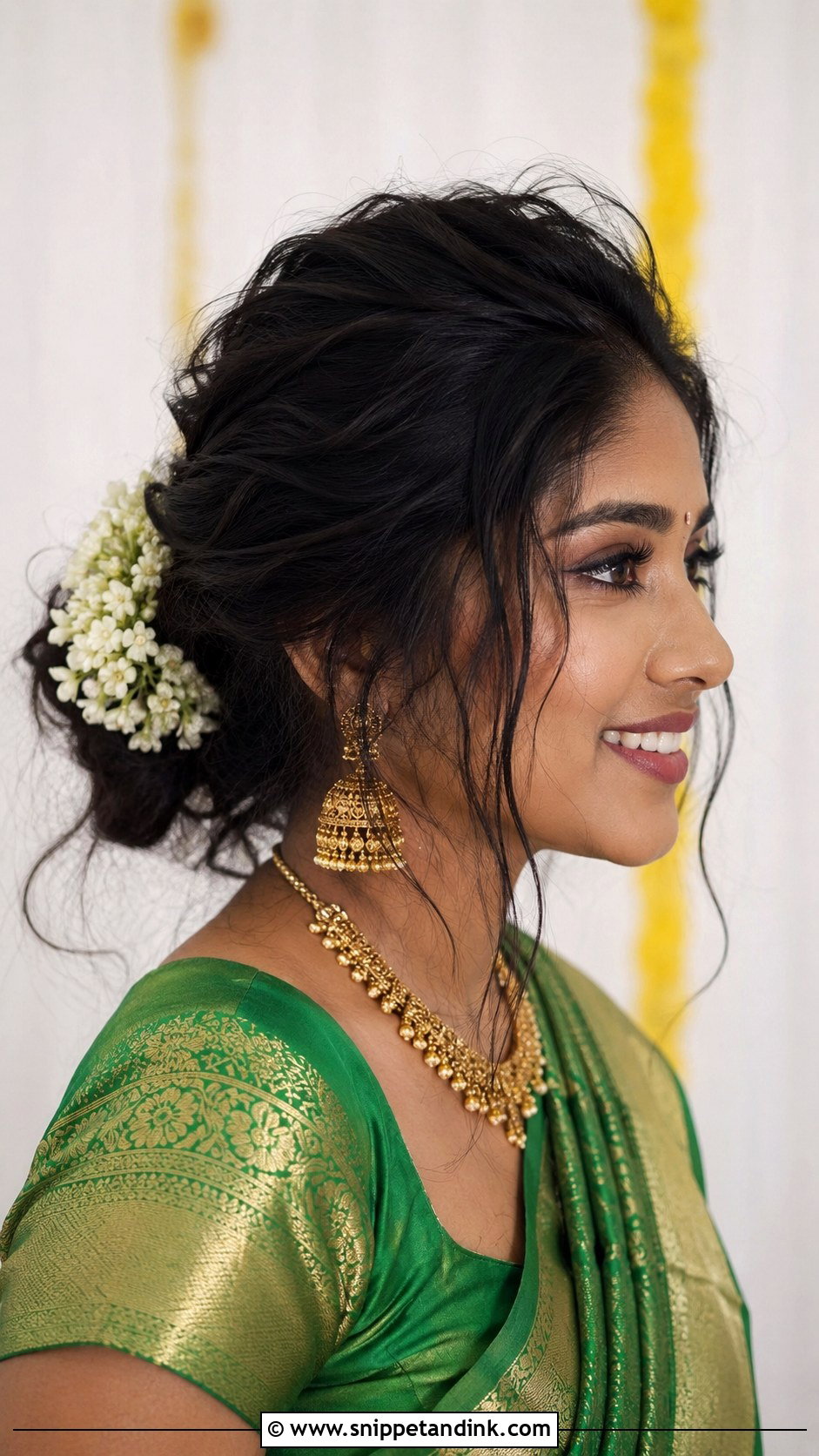
A loose, slightly undone bun with soft strands around the face reads relaxed and modern, with a small gajra, scattered flowers or a single ornamental pin. It’s my pick for mehndi and casual pre-wedding events. It looks casual but it’s built: the shape is pinned firmly, and only the surface is loosened. Very straight, silky hair needs texture spray first, or the loose strands just drop flat.
14. Rose Decorated Long Plait
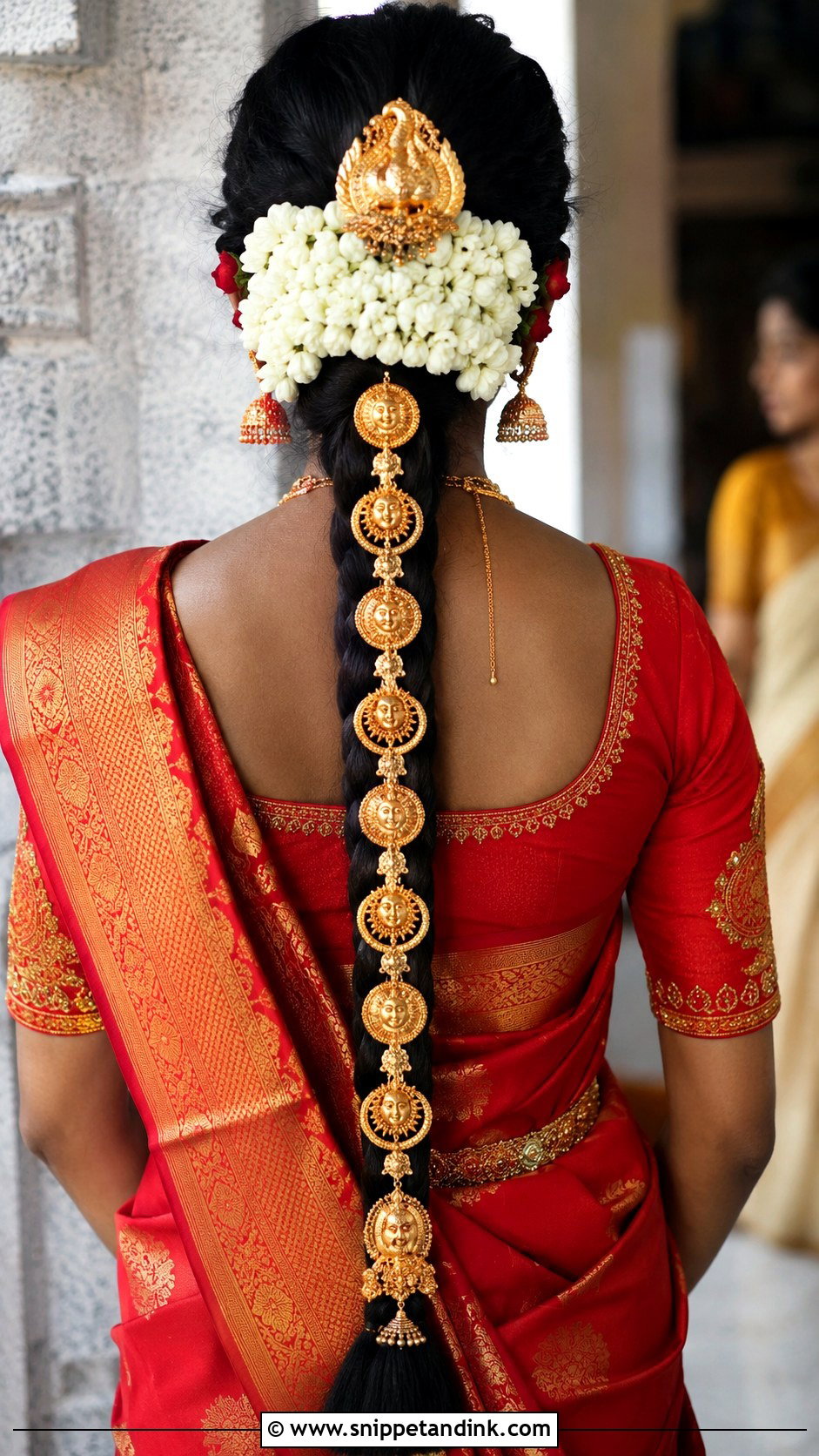
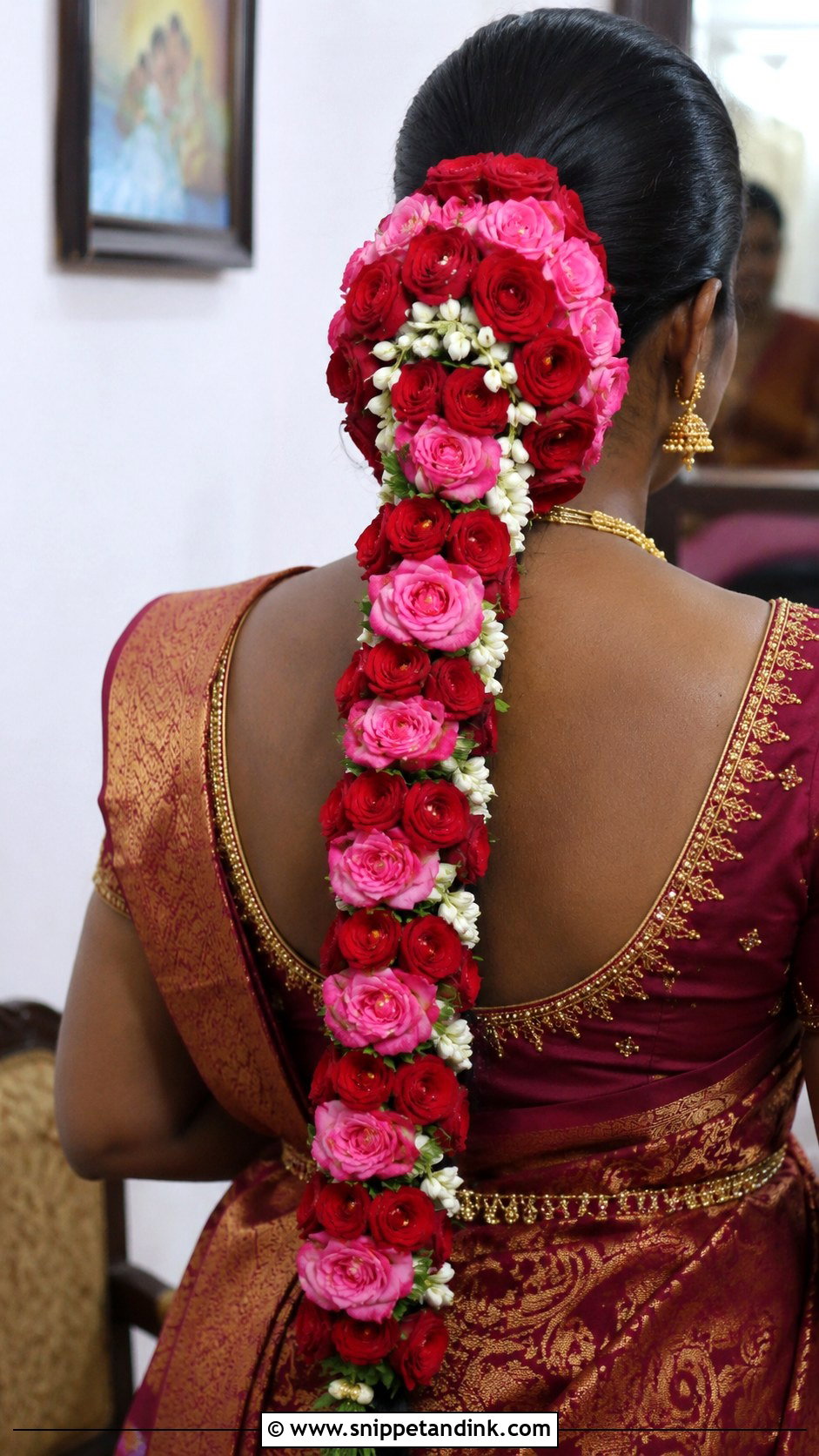
Rows of red, pink or peach roses down the plait swap jasmine’s white for strong color. Roses show up vividly against dark hair and tie in with red or maroon silk sarees. A few jasmine strands or green leaves add contrast. Roses bruise and brown at the edges quickly in heat, so I’d use tight buds and attach them as late as possible on the morning. It’s a colorful twist on the traditional jadai.

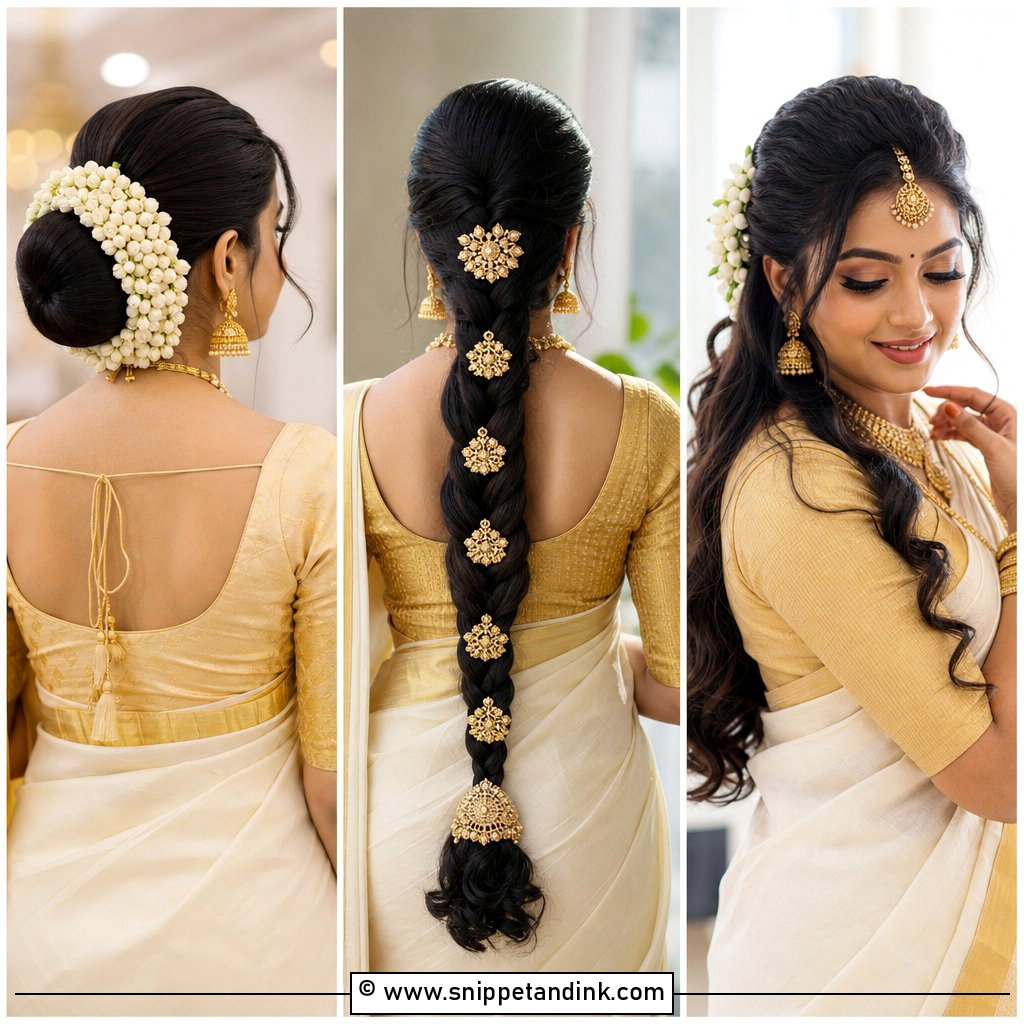

15. Braided Crown Updo
Braids wrapped around the head like a band keep everything neat and off the shoulders. Small flowers or gold pins tuck into the plait. It suits a bride who wants something sculptural and low-maintenance for long ceremonies, and it leaves the neck and ears clear for earrings and a maang tikka. Shoulder-length hair can manage this one, which isn’t true of most styles here. It looks good from every side.
16. Jasmine Veni Wrapped Bun
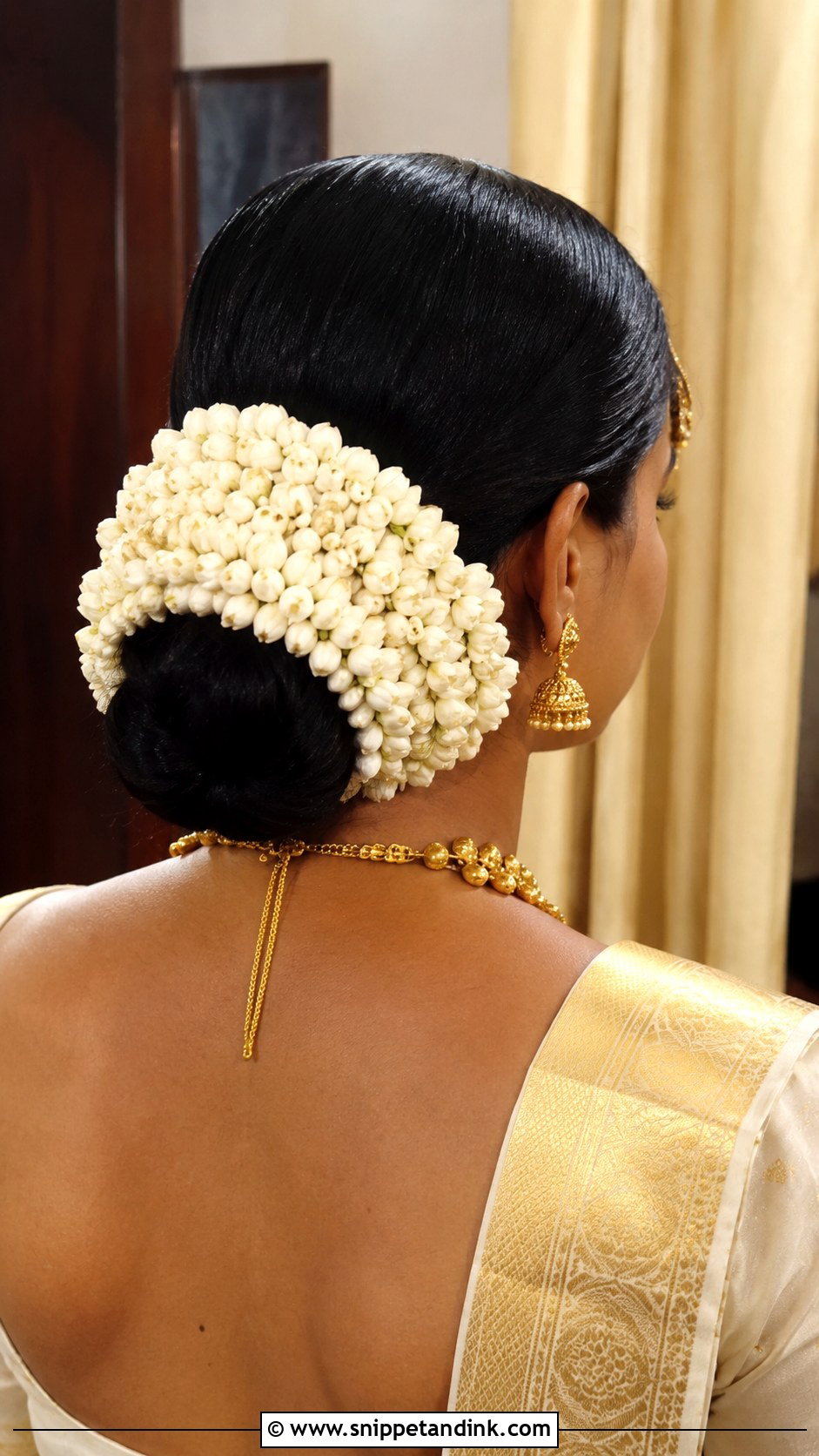
The jasmine veni is a long string of jasmine, and coiling it around a low bun at the nape is a classic South Indian bridal look. The white flowers glow against dark hair and gold jewelry. It’s comfortable and holds well through long rituals. I tuck the start and end of the veni under the bun and secure them with U-pins, since a loose end is the first thing to unravel. It’s a good choice if you want tradition without heavy ornaments.
17. Reception Hairstyle With Soft Waves
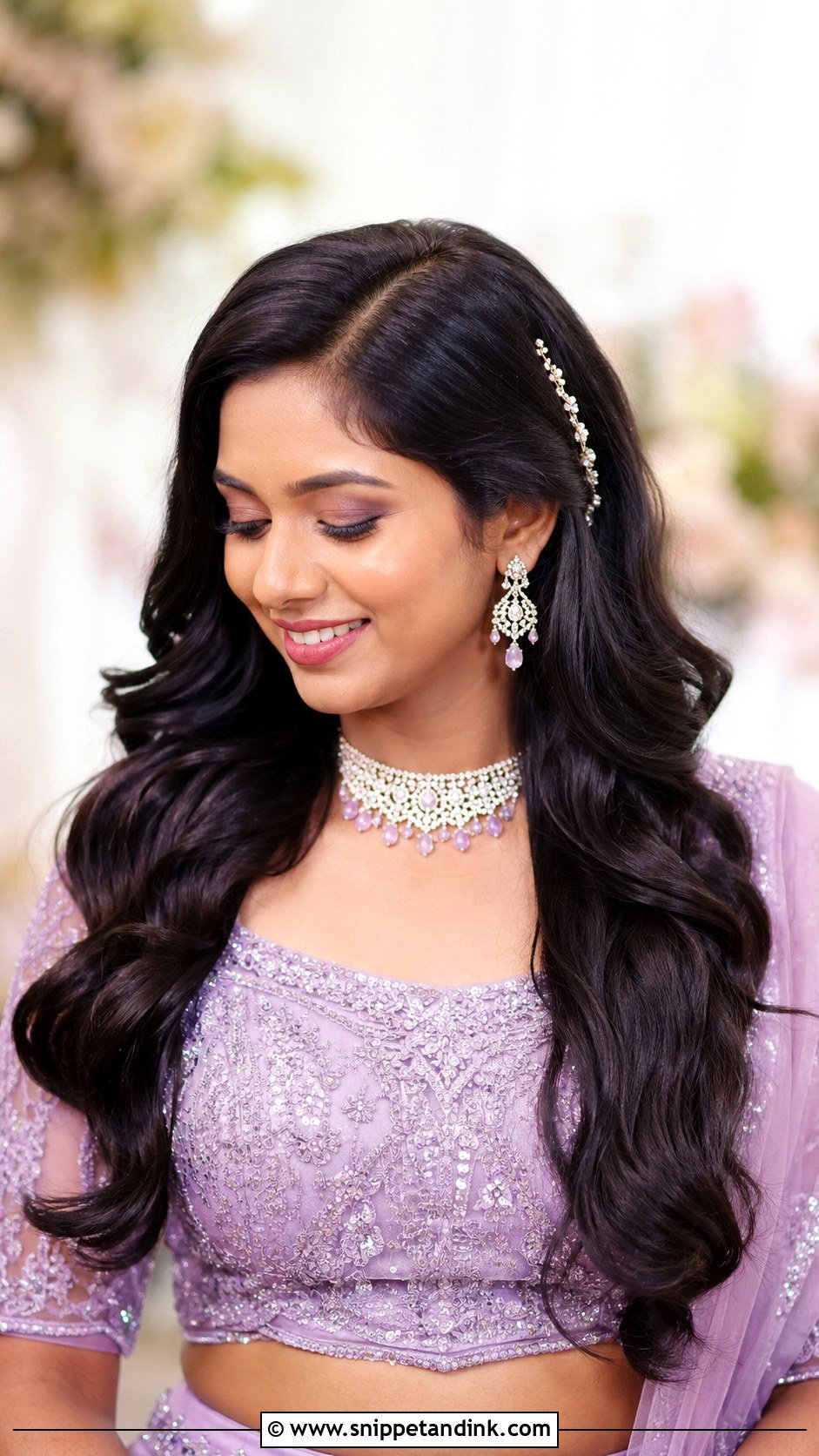
For the reception, soft waves over the shoulders feel more glamorous and modern. A center or side part with light curls, plus a fine hair chain, small flowers or a sparkling pin, is enough detail. It suits lighter reception sarees and lehengas. Many brides come to this after a morning in a tight jadai, and their hair is already crimped from the braid, which actually helps the waves hold. I’d still allow time for a proper restyle.
18. Gold Ornament Decorated Braid
A plait lined with gold jada billalu, a jadai nagam at the top and surya chandra pieces on either side of the parting gives full royal grandeur. Each piece catches light and matches temple jewelry and silk sarees. Gold stays perfect all day, which is why many brides pick it for the muhurtham. The weight is real, though. I anchor each piece to the braid, not just the top, and ask the bride to sit with it for ten minutes at the trial so we know it’s comfortable.
19. Low Bun With Maang Tikka
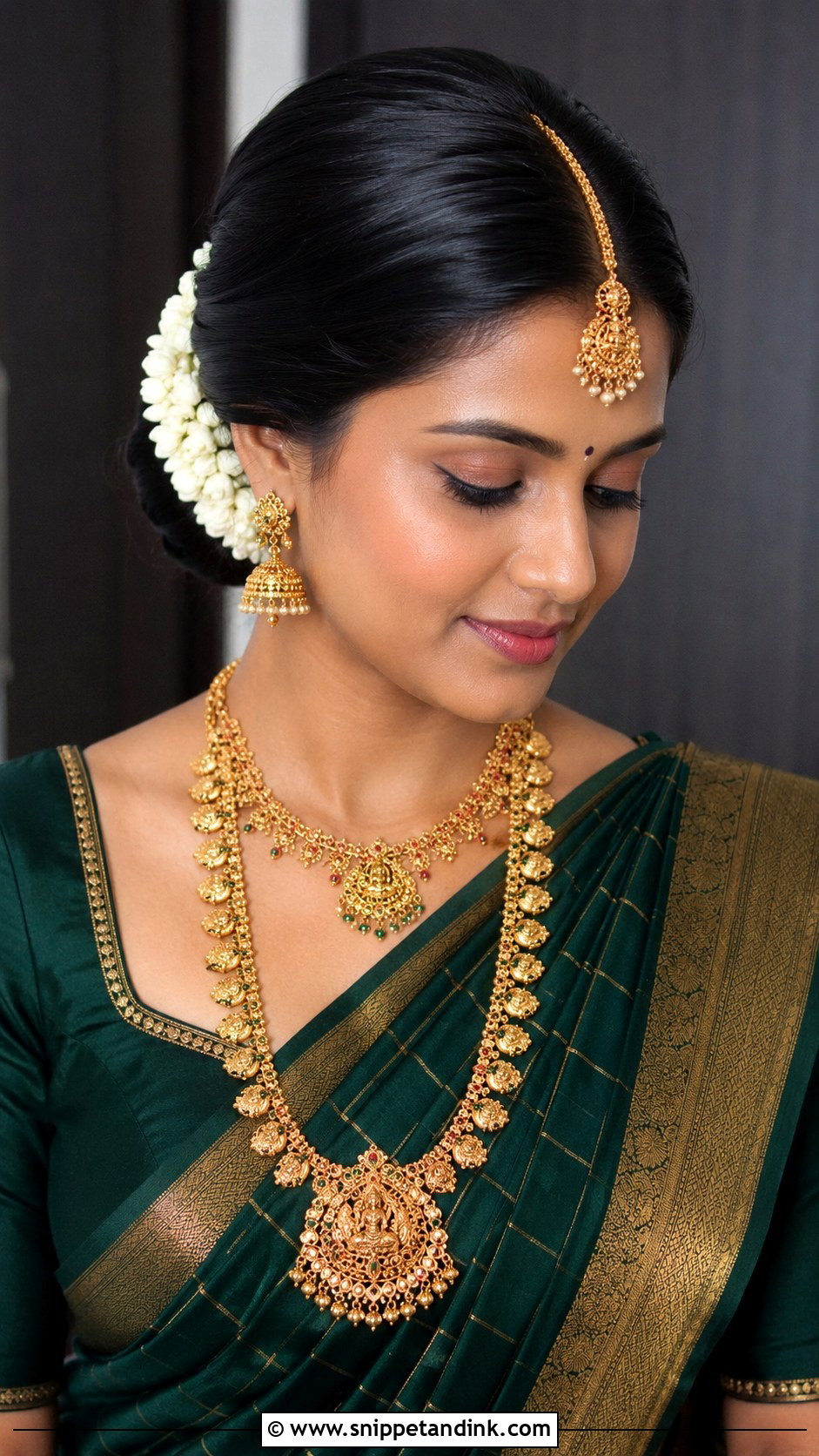
A smooth bun at the nape with a maang tikka along the parting is quiet, balanced and regal. A small gajra or a few flowers soften it. It flatters long and oval faces, holds through hours of rituals and photographs cleanly. Statement earrings and necklaces take center stage. I set the bun low but not resting on the blouse collar, so it doesn’t push forward every time you sit back against a chair.


20. Twisted Side Braid With Flowers
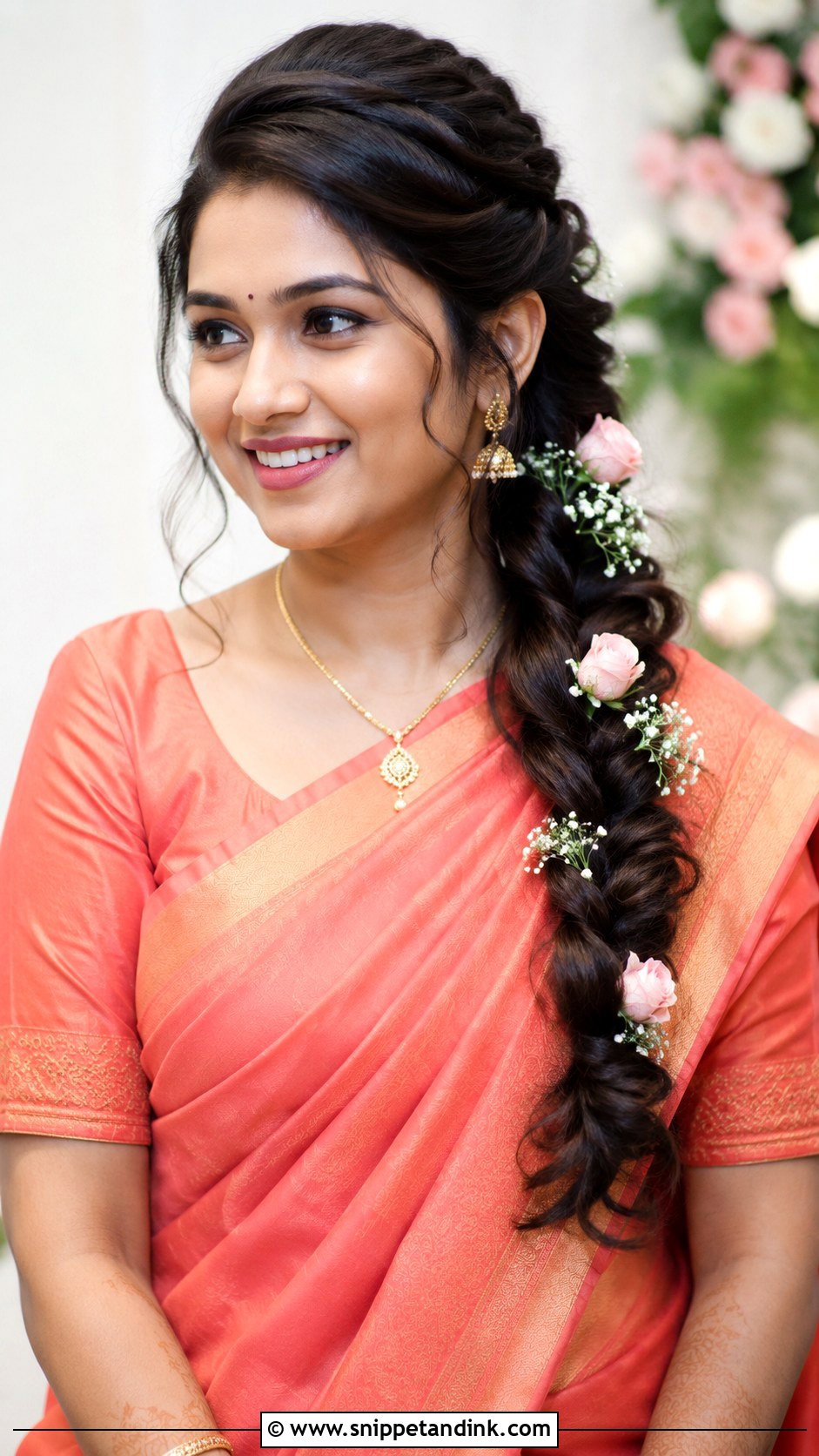
Rope twists instead of a three-strand plait give a softer, airier texture, draped over one shoulder with small flowers tucked in at intervals. It works for engagements and receptions and frames the neckline. Brides who find a traditional braid too heavy usually love it. Twists unwind if you don’t finish them well, so I band the end and hide it under a flower, then spray along the length.
21. Open Hair With Hair Jewelry
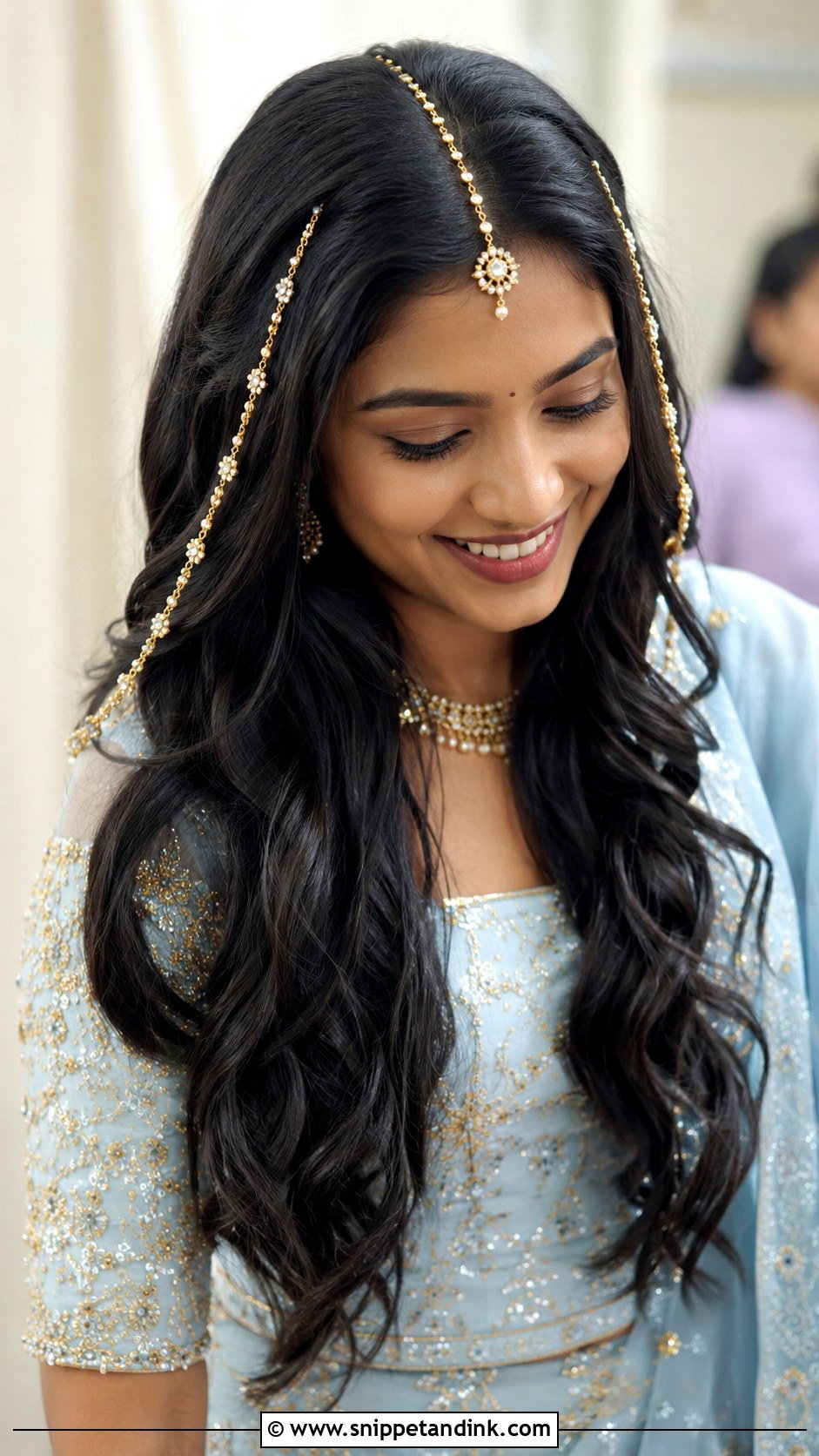
A fine gold or pearl chain draped along the parting and across open hair turns hair down into a bridal look without the weight of an updo. Light waves add movement. It suits receptions and modern ceremonies, and brides with long, healthy hair to show off. The chain is pinned at the parting and behind each ear, so it stays put when you hug guests.
22. Fishtail Braid With Jasmine
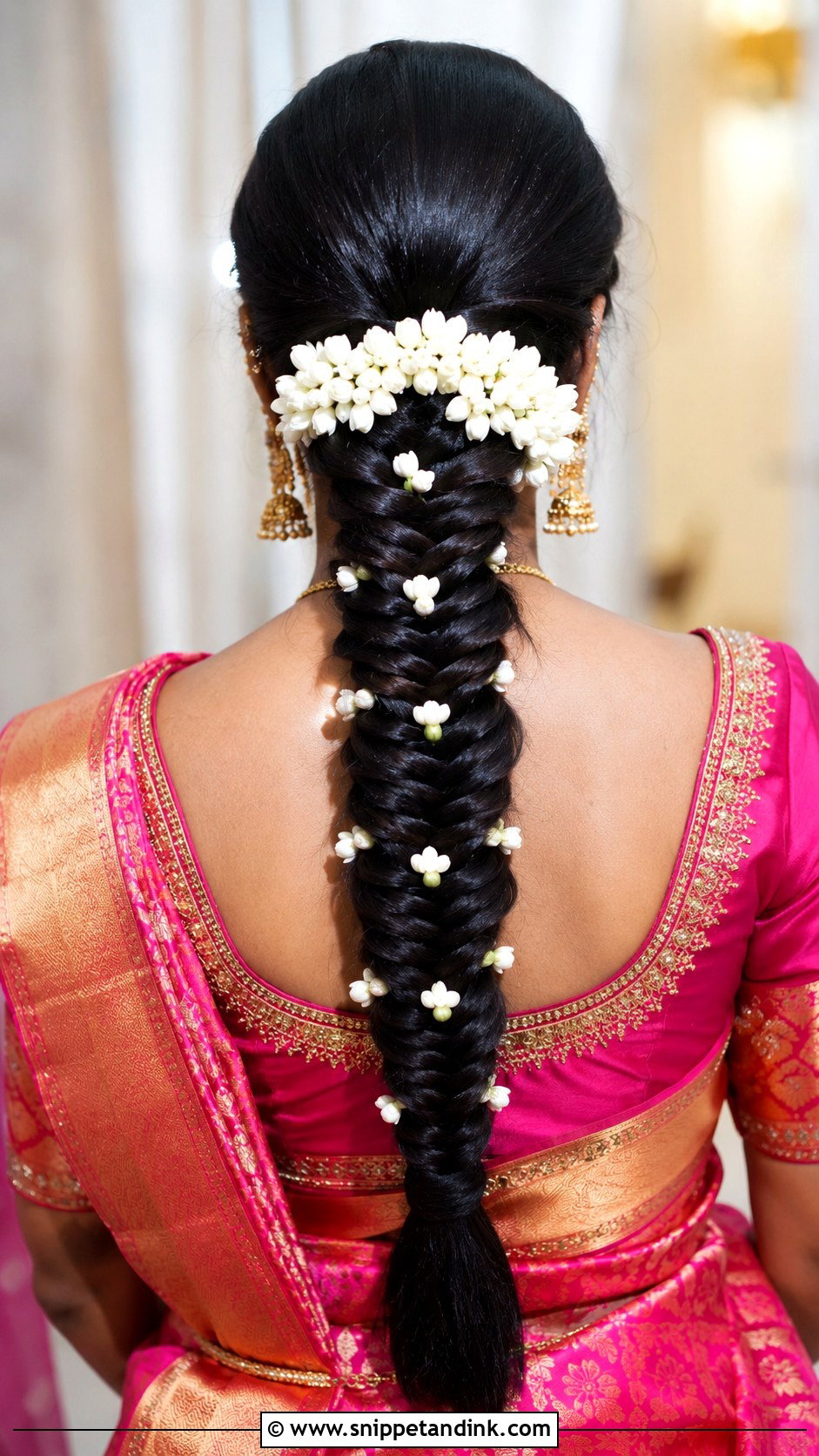
A fishtail braid has a woven, basket-like pattern that looks more detailed than a standard plait. Small jasmine buds tucked between the strands add fragrance. It works for ceremonies and receptions, and can be kept tight or pulled loose for a softer look. A fishtail takes time to braid on long hair, so allow for it on the morning. It suits a bride who wants something a little different from the standard jadai.
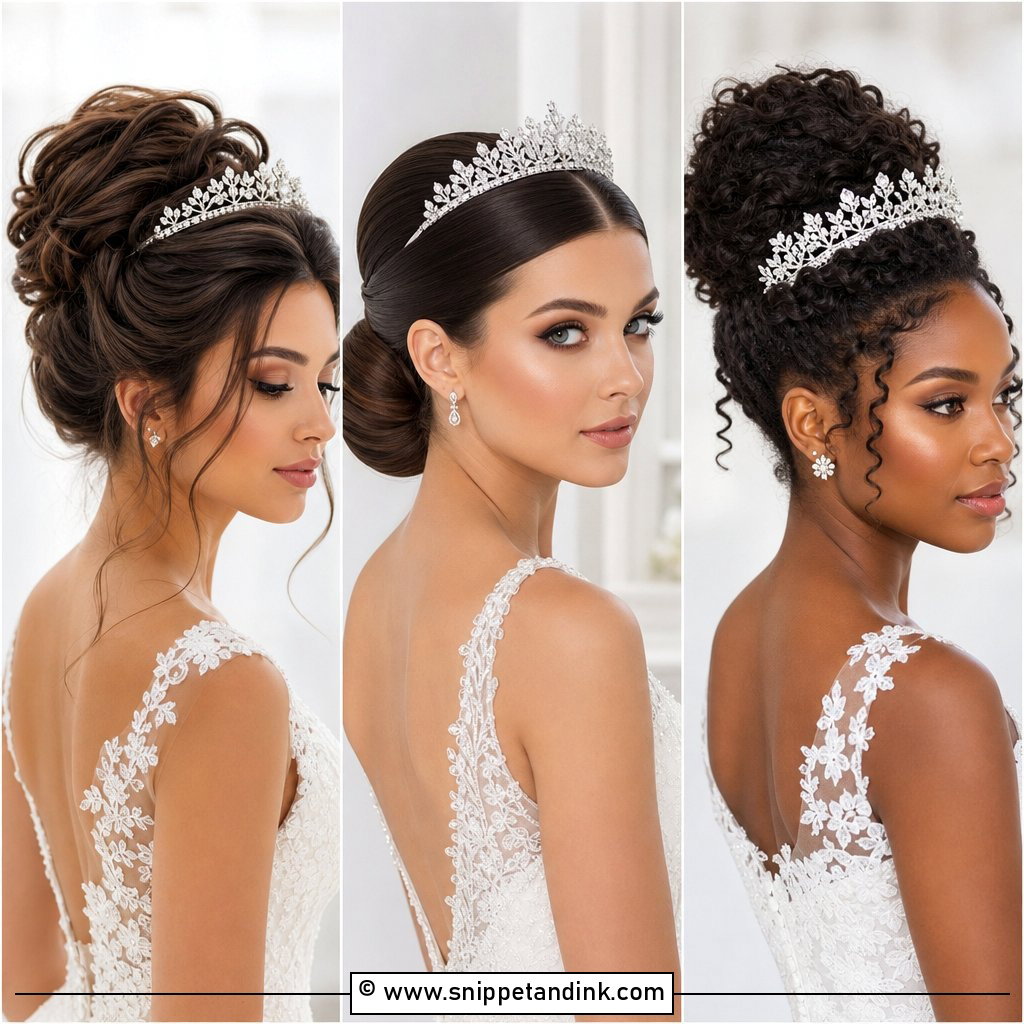
23. Bridal Updo With Temple Jewelry
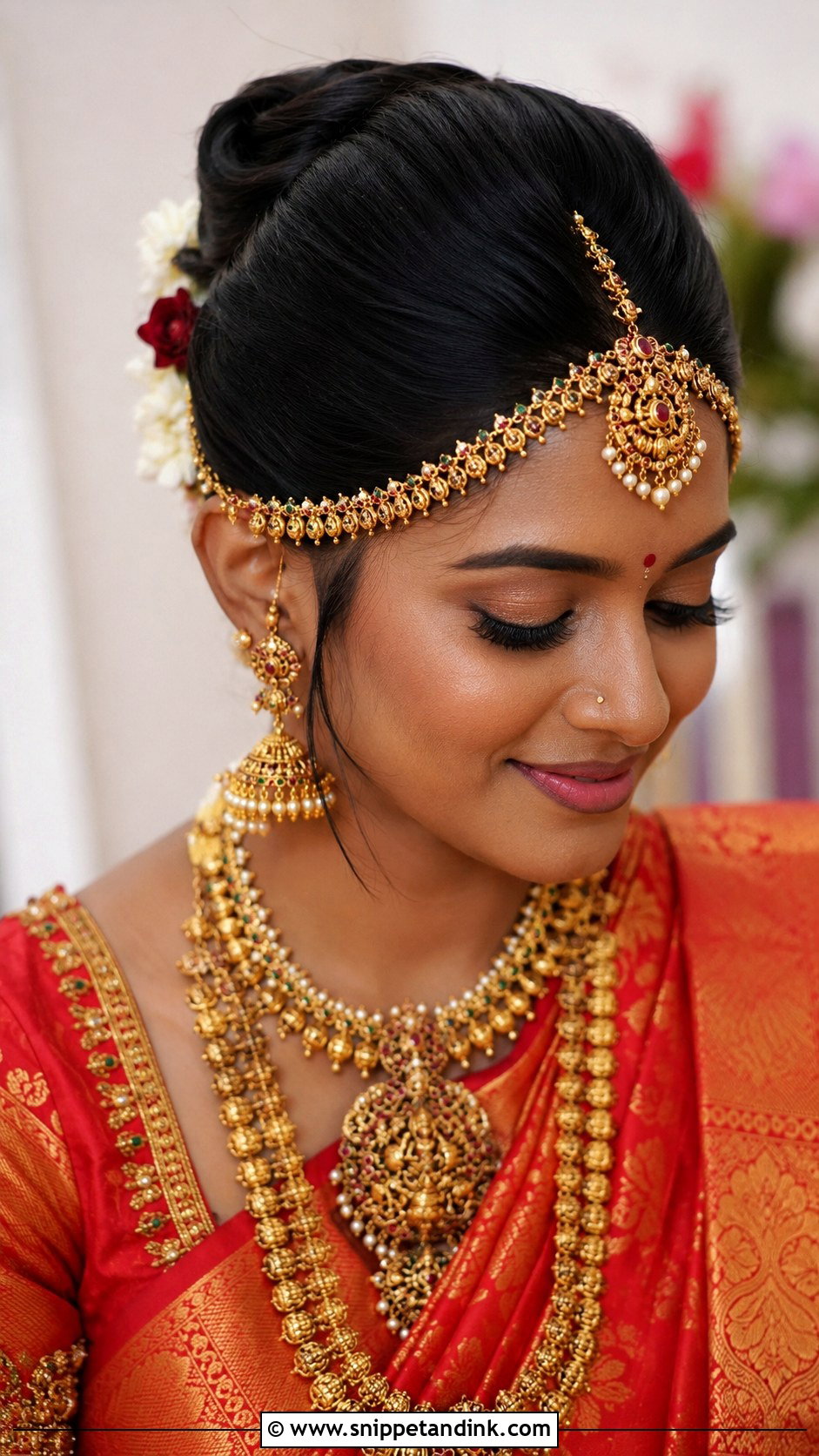
A sleek, structured bun or twist high on the head lets temple jewelry, especially the nethichutti and jhumkas, take over. A few flowers or gold pins add grandeur. It suits a bride who wants a polished, dramatic finish and frames the face completely. A high updo is more exposed to the weight of a nethichutti, so I place the jewelry pins into the base of the bun, not just loose hair. It holds firm through long ceremonies.
24. Curly Side Bun With Gajra
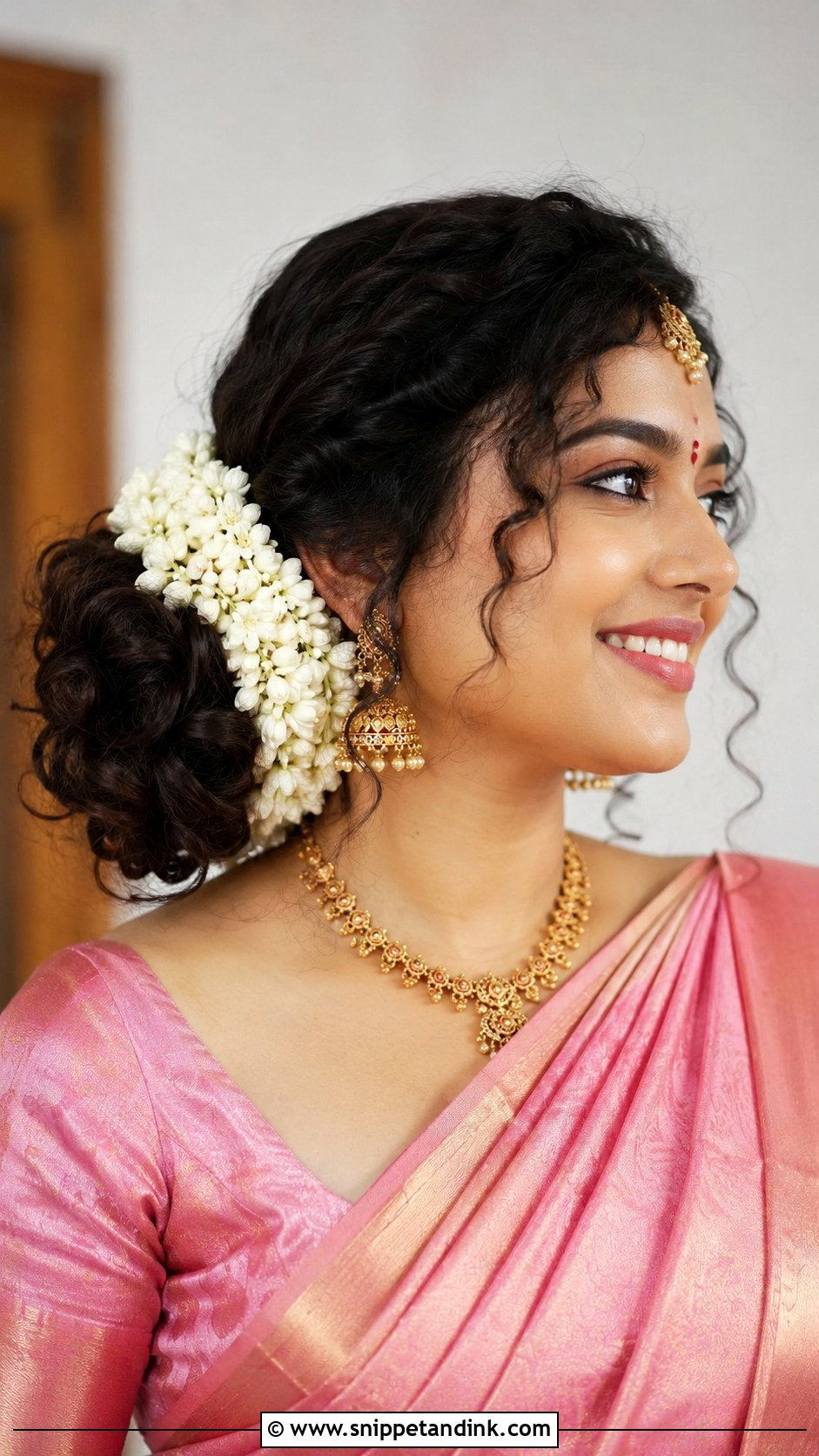
A low bun pinned to one side near the ear, with a few curls left out and a jasmine gajra around the base, is softer and a little playful. The off-center placement flatters round and square faces by breaking up the width. It suits engagement or reception events. Be aware that a side bun sits where a dupatta or saree pallu can catch it, so I check the drape at the trial. It’s a nice middle ground between a sleek bun and open hair.
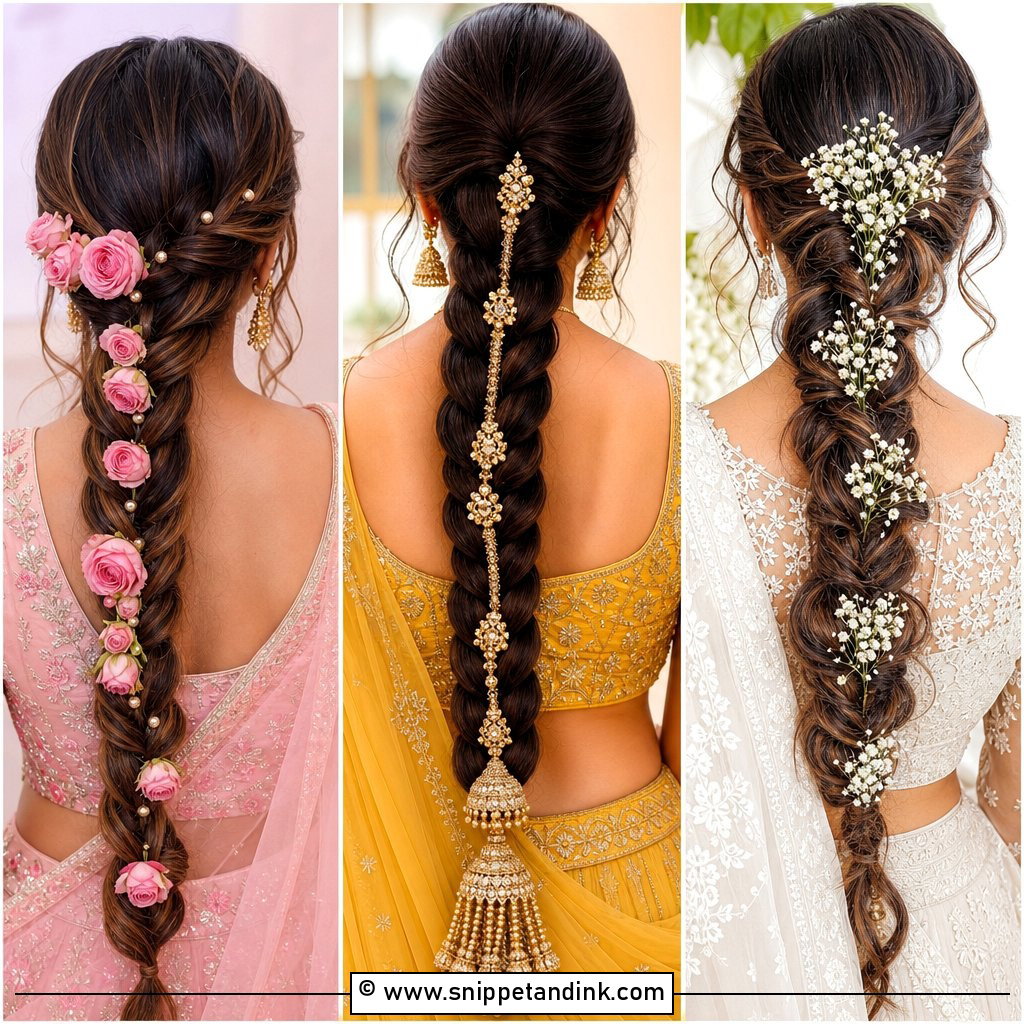
25. Modern Braided Ponytail With Flowers
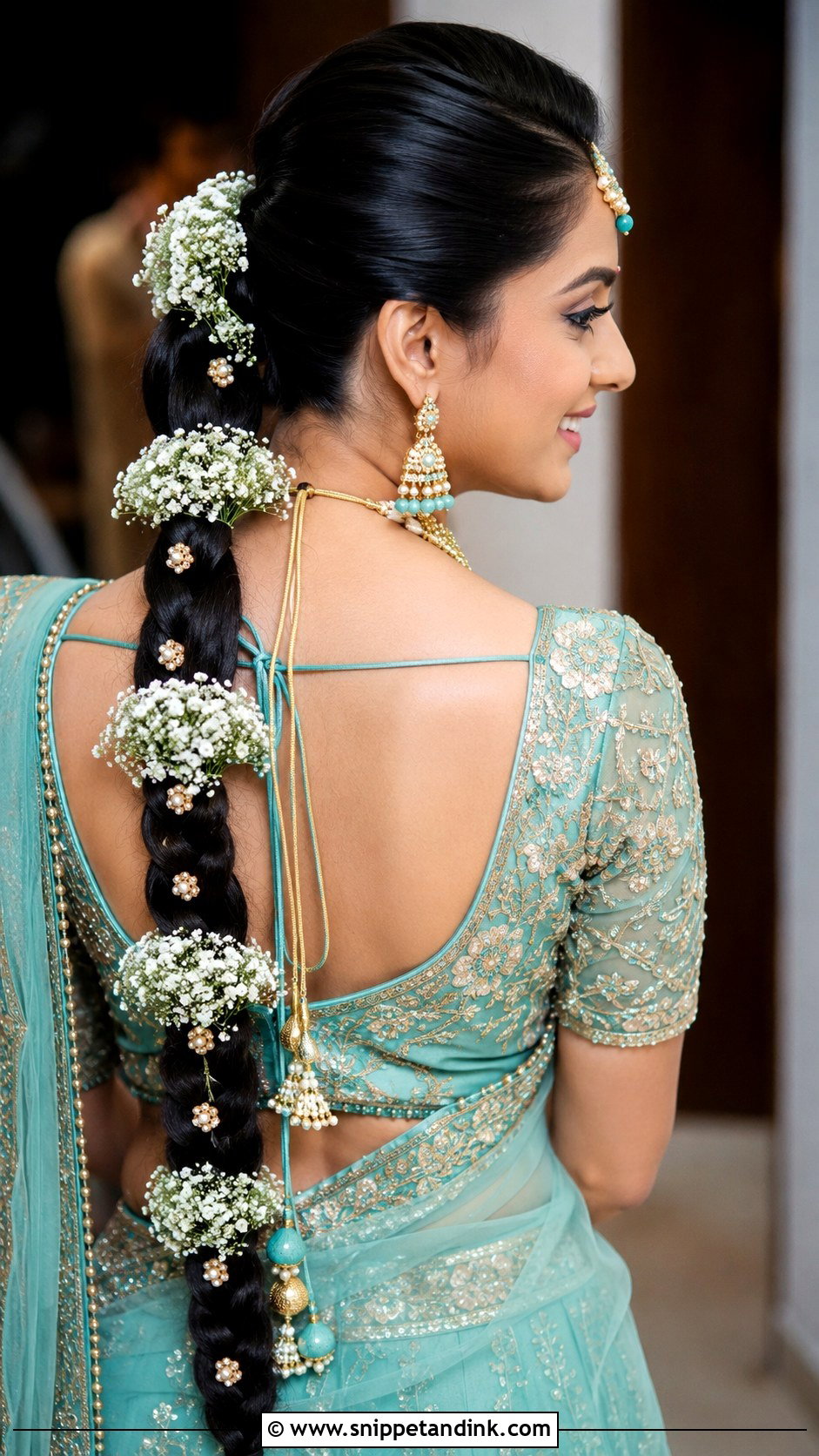
A high or mid ponytail running into a decorated braid is the most modern look here. Flowers and small ornaments dress the braided length while the top stays sleek. It suits receptions and sangeet events and is lighter to wear than a full jadai. A high ponytail with heavy decoration pulls at the hairline, so I keep the ornaments light or set the ponytail at mid-height.
Jasmine Keeps Opening After It’s in Your Hair
Jasmine is usually sold in bud form and opens over the following hours, which is exactly why it smells strongest during the ceremony. It also means flowers strung the night before can be fully open and browning by the time you reach the mandapam.
- Order strung jasmine and poo jadai panels for early on the wedding morning, and ask for tight buds.
- Until they go in, keep them wrapped in a damp cloth or paper in a cool spot. Not in a freezer, which turns them brown and limp.
- Avoid squeezing or rearranging them once attached. Bruised jasmine browns fast.
- If there’s a long gap between the muhurtham and later functions, have a second set of flowers ready rather than hoping the first will last.
Some brides react to strongly scented flowers, with sneezing or a headache. If that’s you, use more gold and a lighter veni, or ask your stylist to place the jasmine lower on the braid, away from the face.
Switching From the Muhurtham Braid to Reception Hair
Many Tamil brides change hair between the morning and evening, and the gap is often shorter than planned. Taking a decorated jadai down properly takes time. Flowers come off first, then each ornament, then the extension, and only then is the braid undone, gently and from the bottom up, so pins and knots don’t tear hair.
The good news is that a braid leaves hair with natural crimp. That texture makes reception waves or a soft side bun hold far better than freshly washed hair would. Keep the ornaments in a labeled box as they come off, because billalu pieces go missing easily in a crowded room.
Bringing Your Jewelry and Saree to the Hair Trial
Start with the things that are already decided: your saree, your jewelry and the shape of the day. The poo jadai, a jasmine bun and a braided ponytail ask very different things of your hair and of the hours you have in the chair. Traditional styles honor heritage, contemporary ones feel lighter, and many brides switch between the muhurtham and reception. Bring the actual jewelry, a blouse in the saree’s fabric and a few photos to your trial so your stylist can test weight, placement and comfort, not just the look.
You'll Like These Ideas:



Leave a Reply