
A flower girl’s hair has a harder job than the bride’s. It has to survive a car seat, a nap in the wrong place, a cartwheel on the lawn and a ring of grown-ups who want to touch it. When I do children’s hair for a wedding, I plan for the version of the style that’s still there at the cake cutting, not the one that looks best at eleven in the morning. Below are 20 wedding hairstyles for girls across lengths and textures, with notes on which ones hold, which ones pull, and which ones only work on a child who’ll sit still for a while.
Sitting Still Is the Hardest Part for a Flower Girl
Young children give you a short window of patience in the chair, and it gets shorter the younger they are. I plan the style around that window, not the other way round. A crown braid on a four-year-old who’s already wriggling turns into a lopsided crown braid, so being honest about her age and temperament is the first decision, before anyone looks at photos.
Getting her hair ready the day before
- Wash the night before, not the morning. Freshly washed fine hair is slippery and pins slide straight out.
- Detangle fully while the conditioner is still in, so the morning starts with no knots to brush through.
- For curly or coily hair, keep her usual wash day and products. A new routine the day before often brings dryness or frizz.
- Lay out the ribbons and clips ahead of time and test that each one actually grips her hair.
Fitting hair into the morning
I do children’s hair after they’ve eaten and before they’re dressed, so a collar never catches in a braid. Put her in a button-up top that comes off without going over her head. Then keep her out of the busy bridal suite until photos, because sofa cushions and car-seat headrests flatten the back of a style faster than anything else.
1. Half-Up Curls With Flower Crown
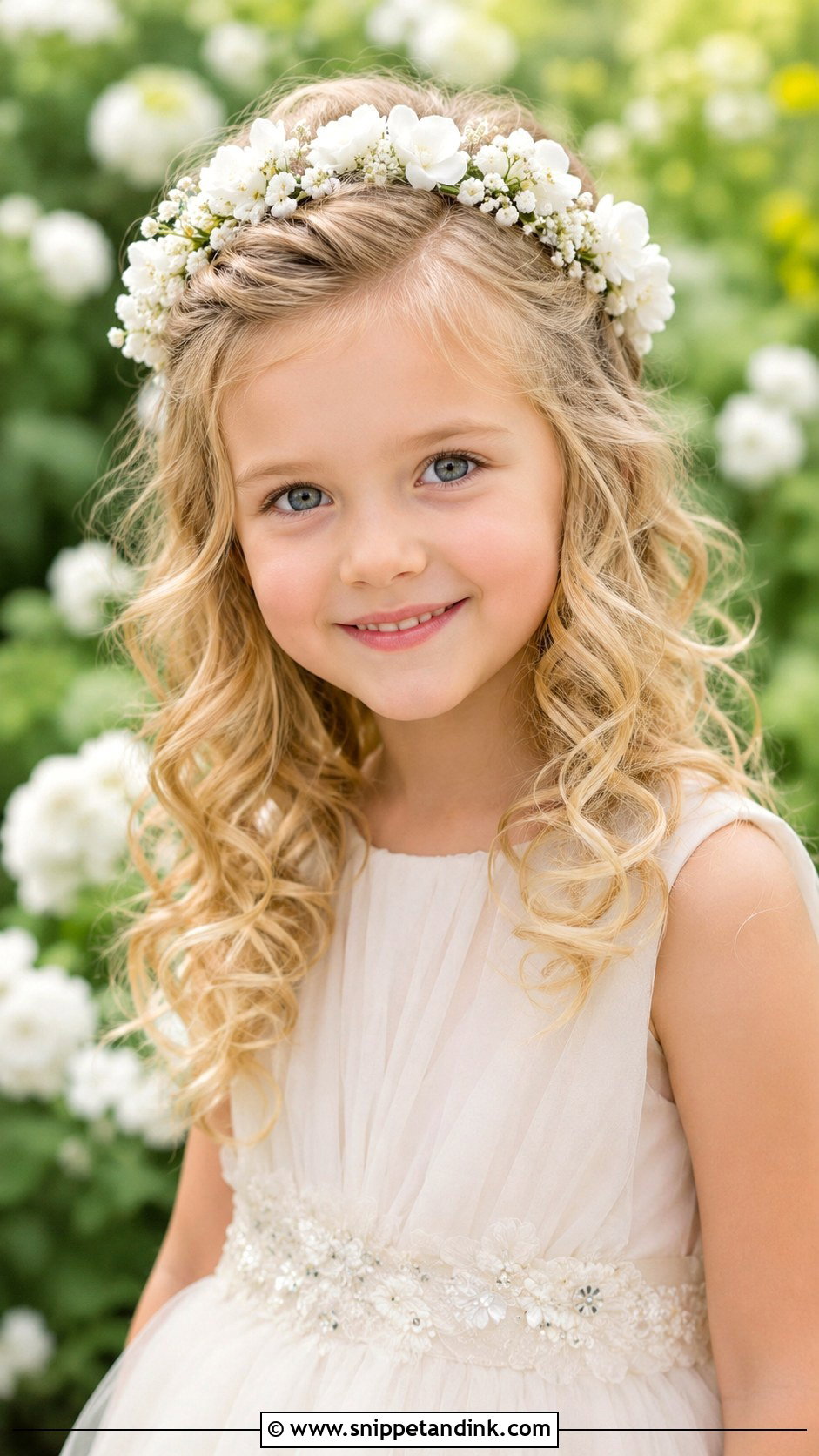
A flower crown sits on top of the hair, not in it, so the half-up section underneath does the anchoring. I clip the top section back first, then pin the crown’s wire through that clip from both sides, which stops it sliding over her eyes when she looks down at her petal basket. Curls on children drop faster than on adults because their hair is finer and not used to heat, so I set them with a light mist rather than trusting the iron alone. Fresh crowns wilt by evening in full sun. Silk ones don’t, and a child won’t know the difference.
2. Classic Low Bun With Ribbon
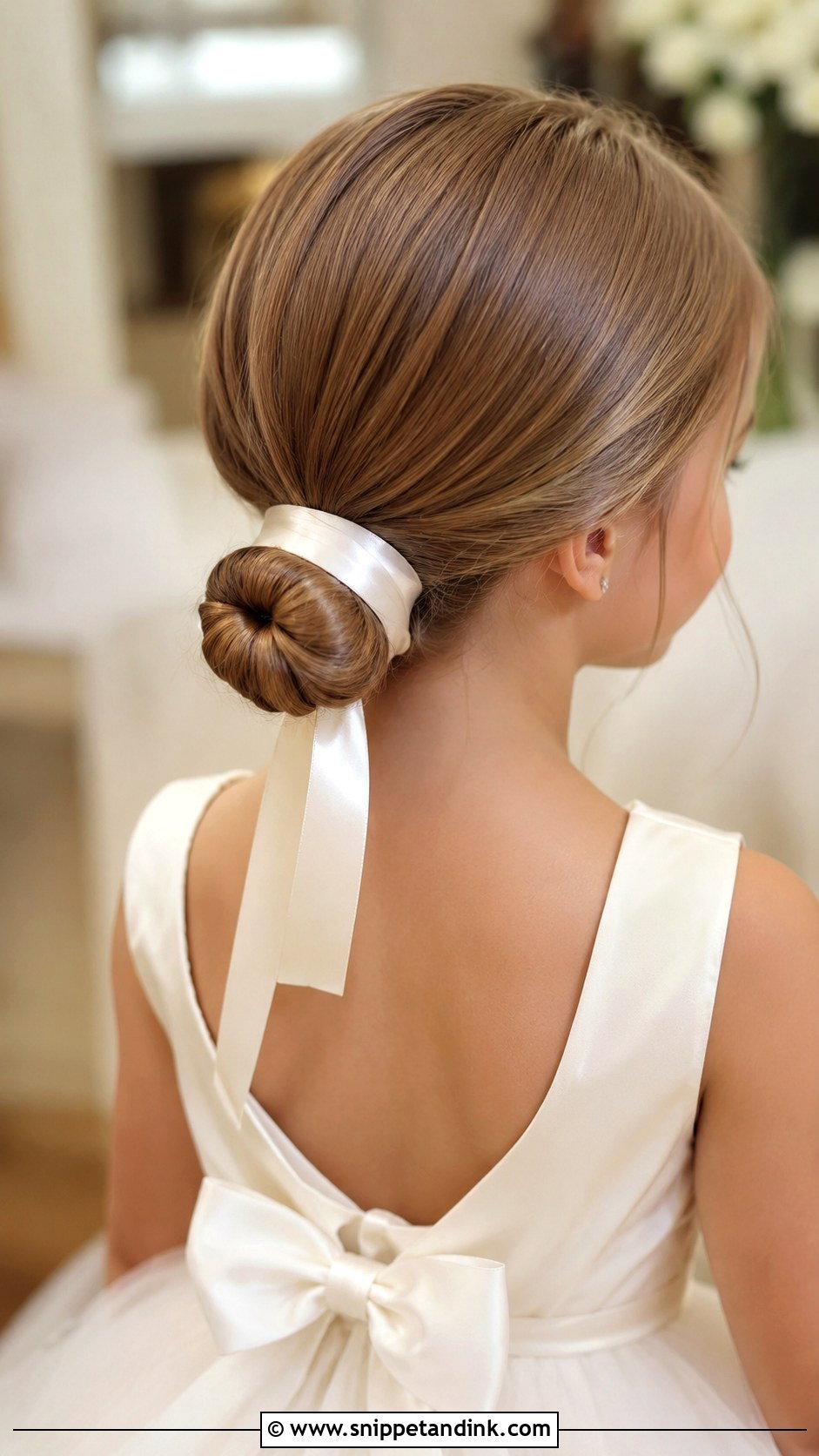
This is the one I reach for when a child has a sensitive scalp and a long ceremony ahead. Sitting at the nape, the bun puts no weight on the crown, so there’s nothing to drag or ache after an hour. Smooth the hair back with a soft brush and a little water rather than gel, coil it, and pin with two or three bobby pins crossed in an X. Then tie the satin ribbon around the base in a double knot; a single bow gets tugged loose by small fingers within the first hour. Pull the ribbon shade from the wedding palette and she’ll sit naturally with the bridesmaids in group photos.
3. French Braid With Floral Pins
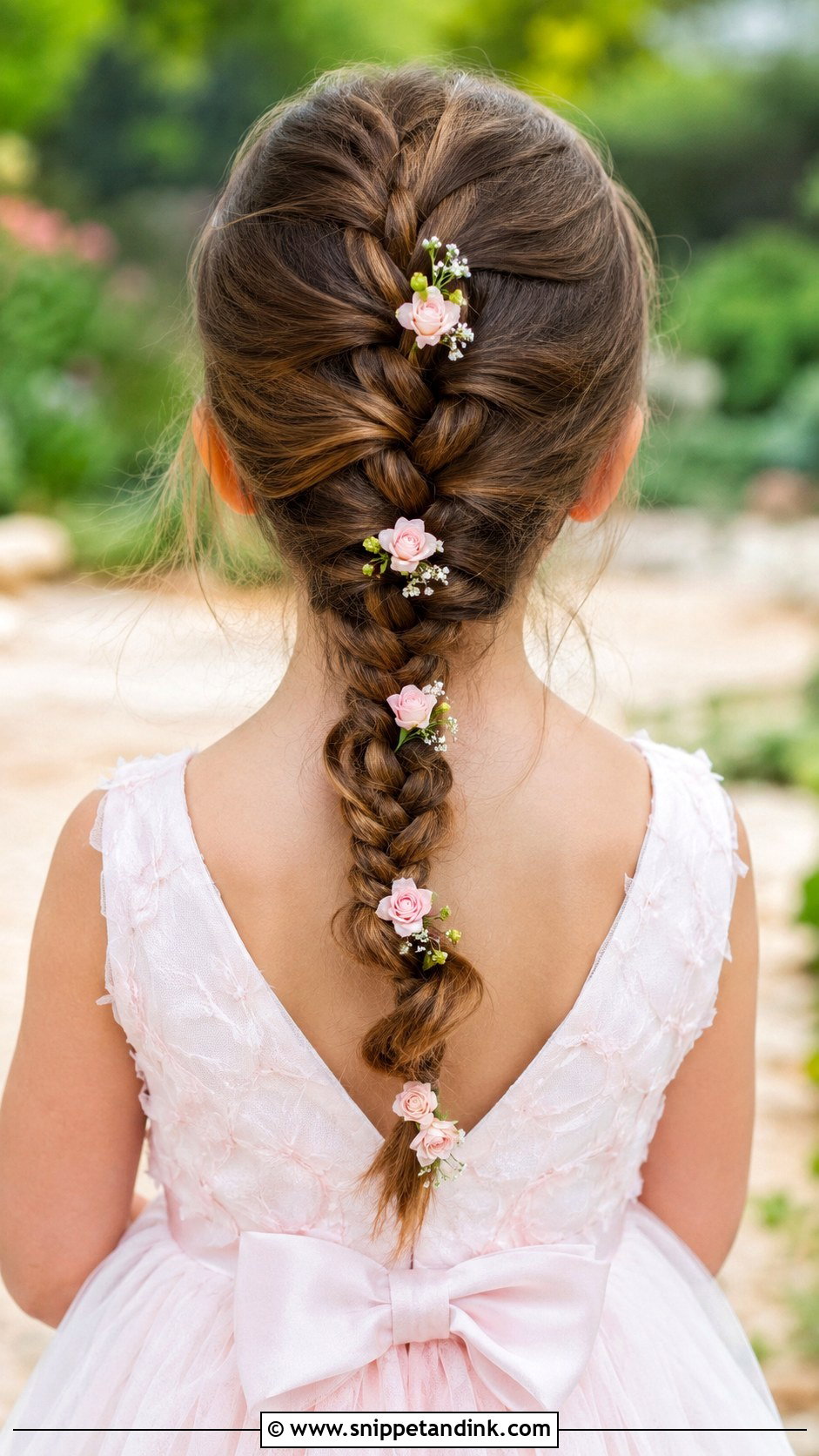
A French braid is about as secure as children’s hair gets, and it’s also the style I see unravel most when it’s braided too loosely in the name of comfort. The trick is firm tension at the crown, where the braid starts, and slightly softer tension as you work down so it doesn’t pull at the nape. Floral pins go in after the braid is finished, slid under a crossed section so they grip the braid itself rather than loose hair. On shoulder-length hair, the lower layers tend to pop out near the neck. A tiny clear elastic at the bottom and a little hairspray on your palms smooths them back.
4. Crown Braid Halo
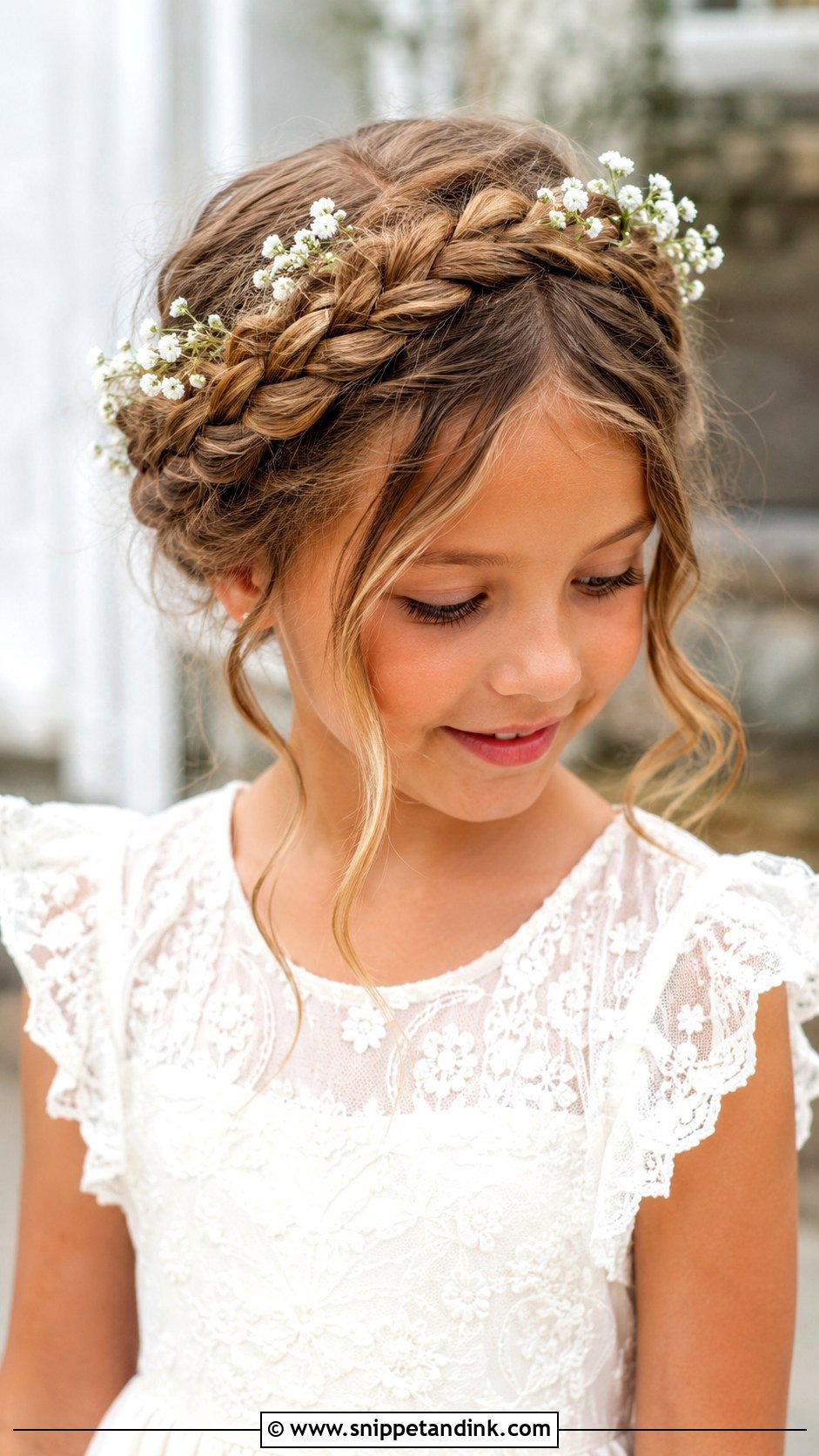
Also known as a milkmaid braid, the crown braid wraps over the head like a halo and keeps every strand off the neck, which matters at a summer wedding when she’ll be hot and cross by the reception. Two plaits are crossed over the top and pinned flat. The pinning is where it goes wrong: pins pushed straight in toward the scalp dig in the moment she rests her head on a car seat or a parent’s shoulder. I slide mine in parallel to the head, along the braid. It needs hair well past the shoulders to reach around, so for shorter lengths I’d go with the half-up braided crown further down instead.
5. Fishtail Braid With Bow
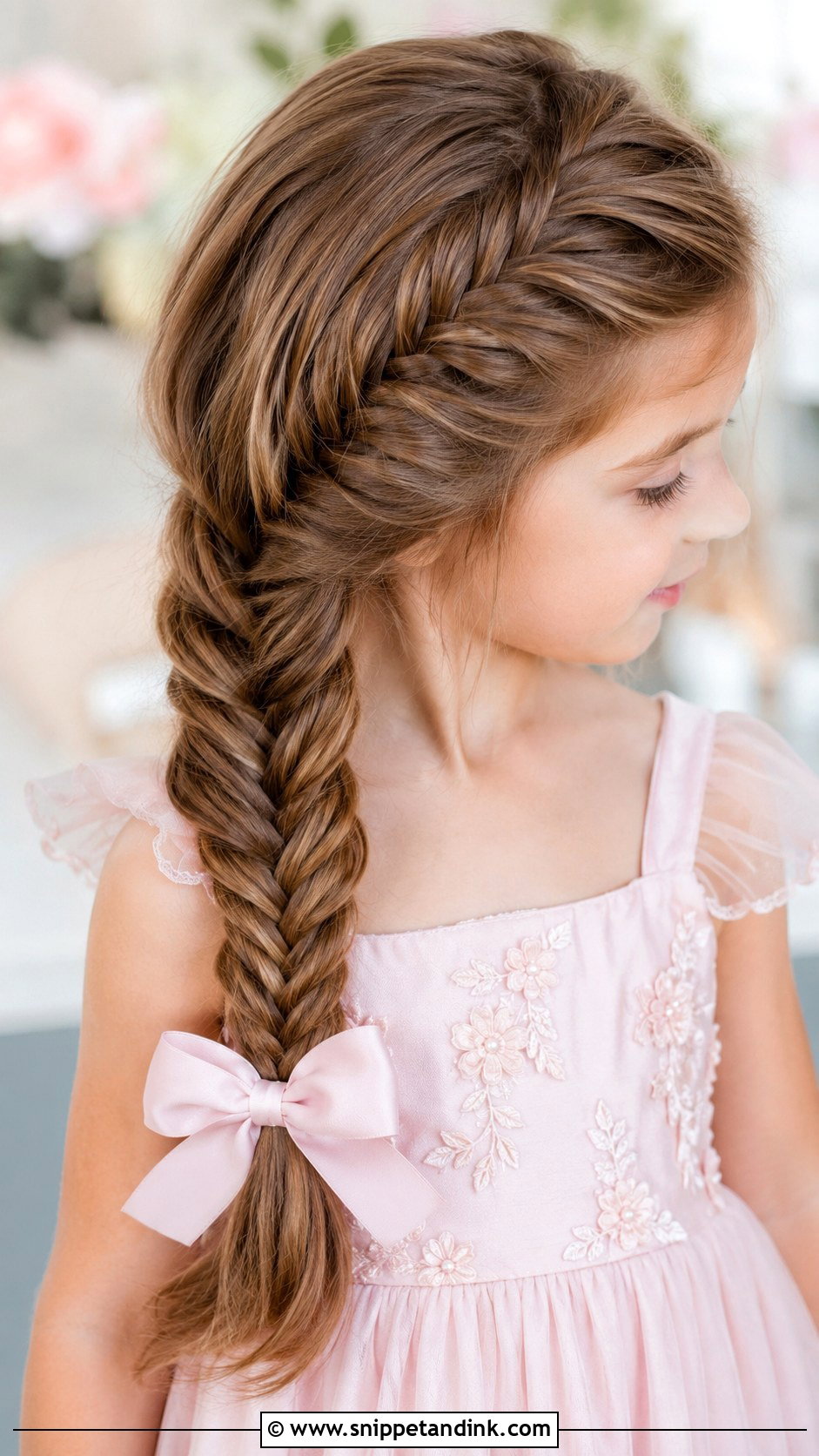
Fishtails look complicated, but they’re just two sections passing small pieces back and forth, and they forgive a fidgeting child because a dropped strand is easy to pick up again. They need long hair, roughly mid-back, or the pattern barely shows. I braid it snug, secure the end, then gently pull the edges wider once she’s dressed. Clip the bow just above the elastic rather than tying it over the end, so it can’t slide down and off during the processional.
6. Loose Waves With Side Part
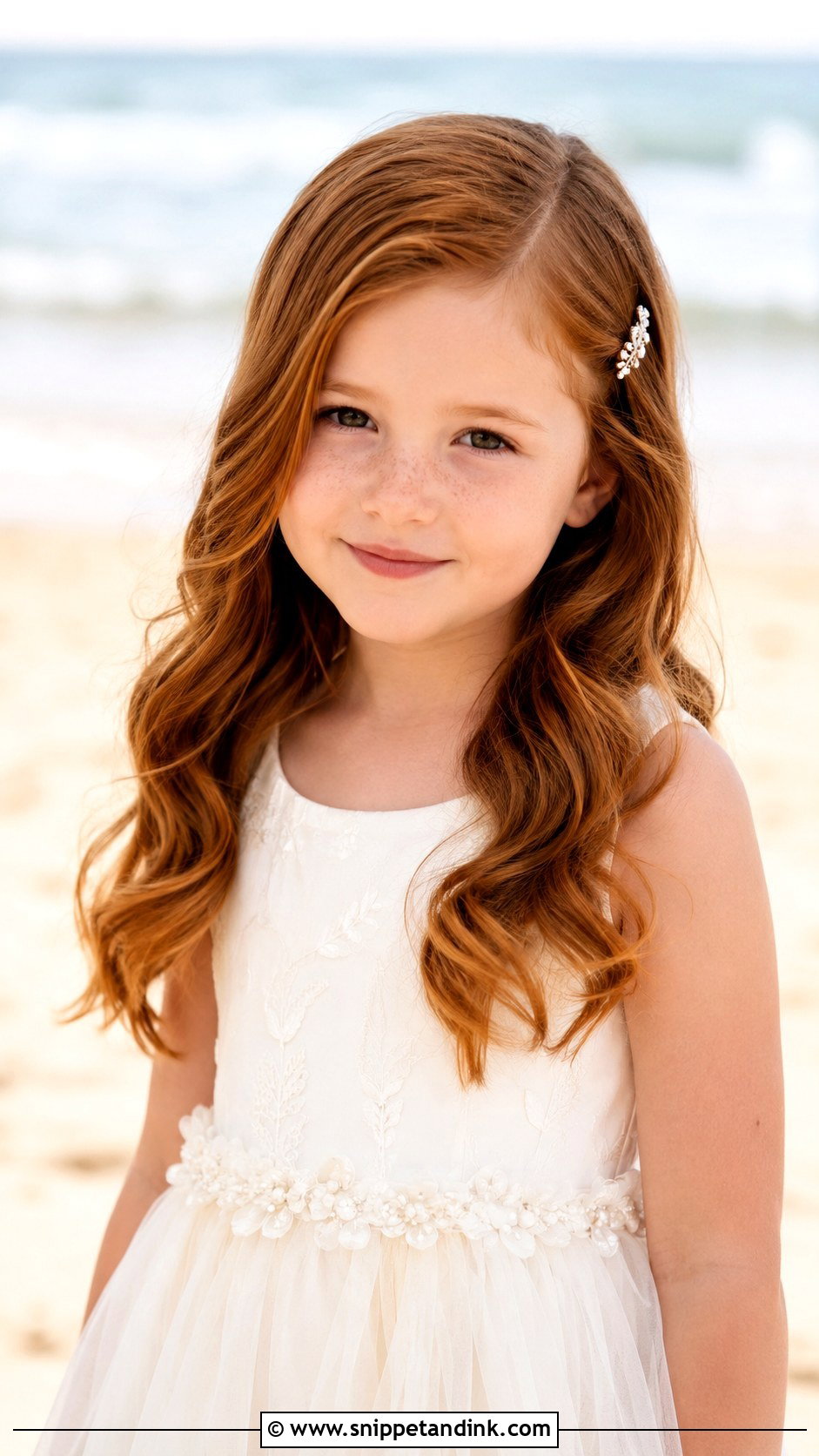
Loose waves suit a child who won’t tolerate pins at all. I use a small wand on low heat, wrap only the mid-lengths and ends, and brush through once the hair has cooled so the bends look natural rather than set. The honest trade-off is that this style changes most by evening, especially on straight, fine hair in humid air. A sparkly clip near the part gives it a fixed point, so even when the waves relax, something still looks finished.
7. Double Dutch Braids
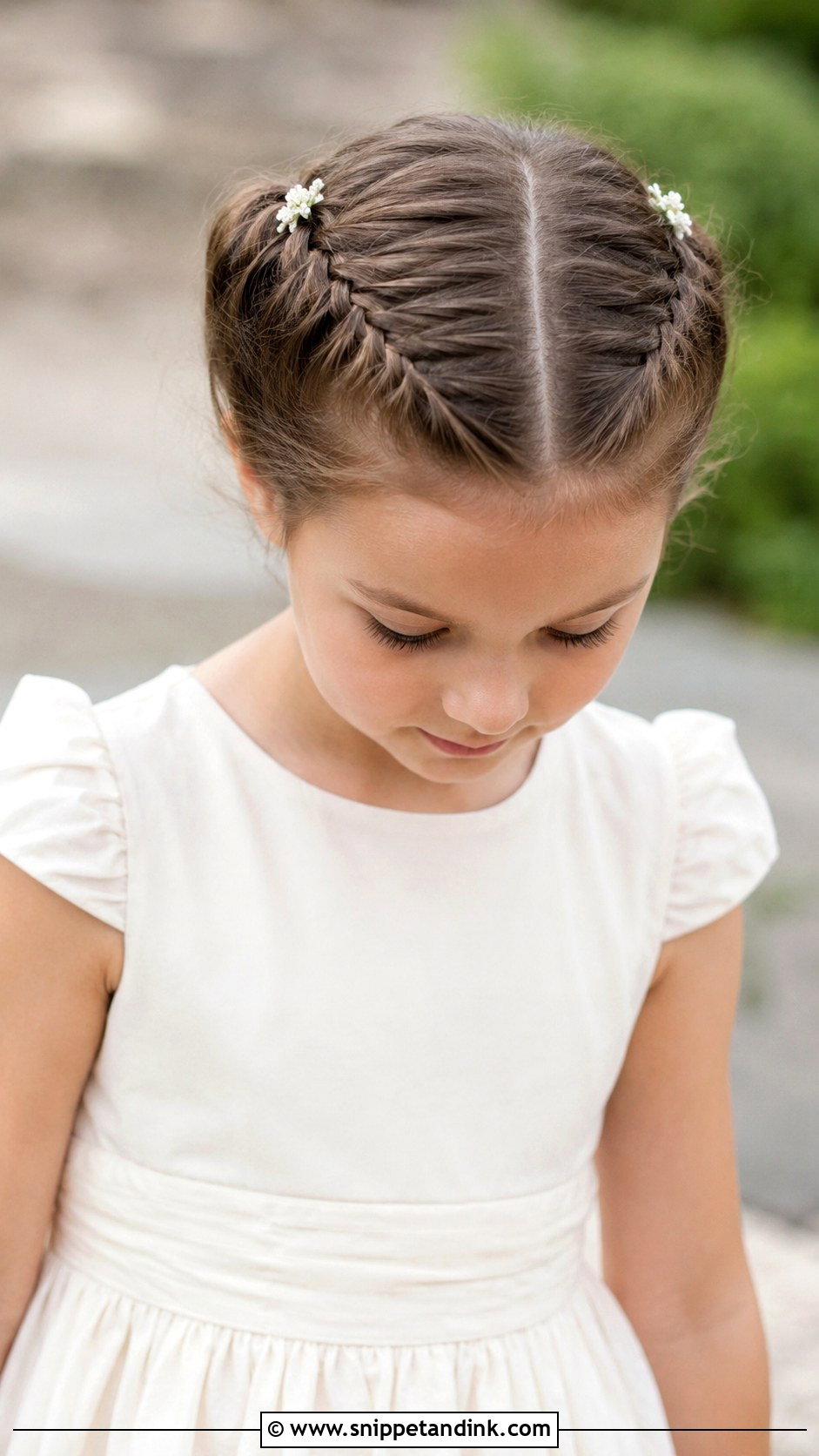
Two Dutch braids are my pick for the flower girl who fully intends to run. Because the strands cross under rather than over, the braids sit raised on the head and grip it from the hairline back, so nothing shakes loose. Start right at the front hairline, braid each side down to the ends and close with tiny elastics. Make the center part clean with the tail of a comb. In ceremony photos taken from behind, a wobbly part is the first thing anyone notices. Small bows or floral clips at the ends finish it.
8. High Bun With Tiara
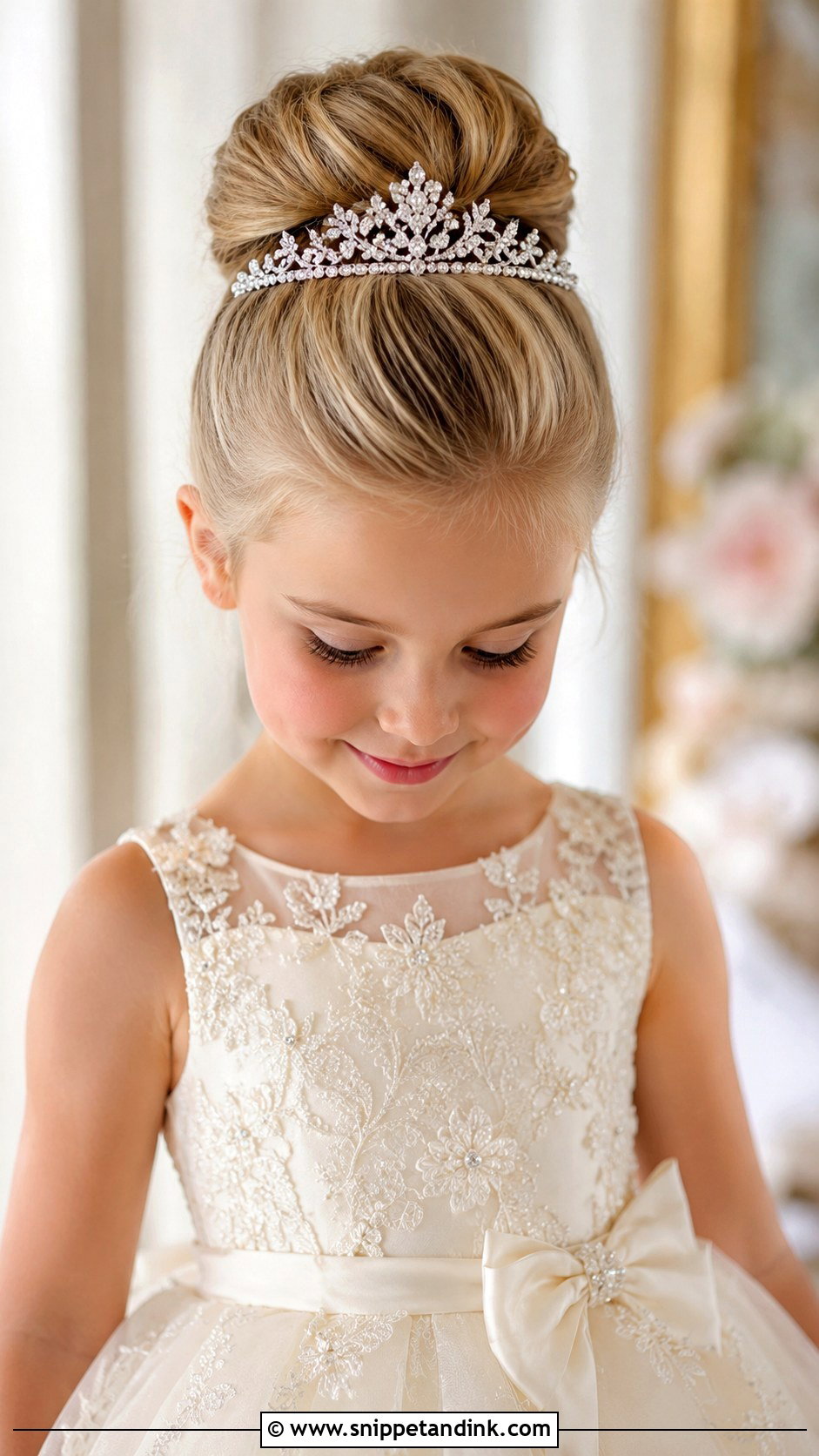
Children ask for a high bun with a tiara by name, and it’s the style I’m most careful with. A tightly pulled high ponytail can give a young child a headache within an hour, so I keep the base a fraction looser than I would on an adult and build the bun’s size by wrapping the hair rather than teasing it hard. The tiara’s combs go into the base of the bun, not into loose hair in front, or it tips forward every time she nods. Curly girls can wear the bun slightly undone, which is kinder to curls than brushing them sleek.
9. Half-Up Braided Crown
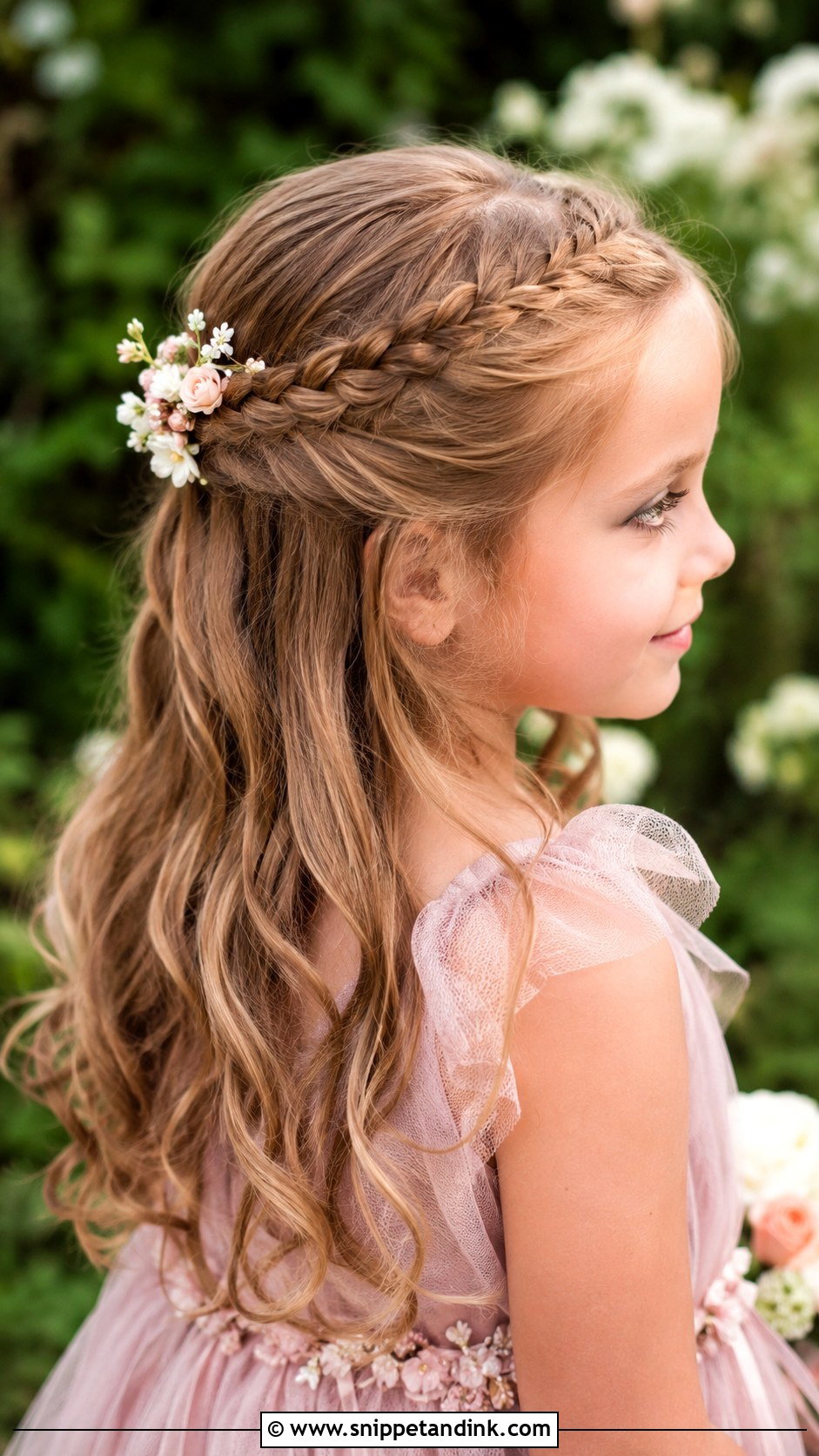
Two small braids from the temples, joined at the back of the head, give you a halo effect on hair too short for a full crown braid. The join is the weak point. I tie the braids together with one small elastic and hide it under a floral pin, rather than pinning each braid separately where they can work loose. It keeps her face clear and still leaves length down her back, and many children like that because it feels like their own hair rather than a costume.
10. Twisted Low Ponytail
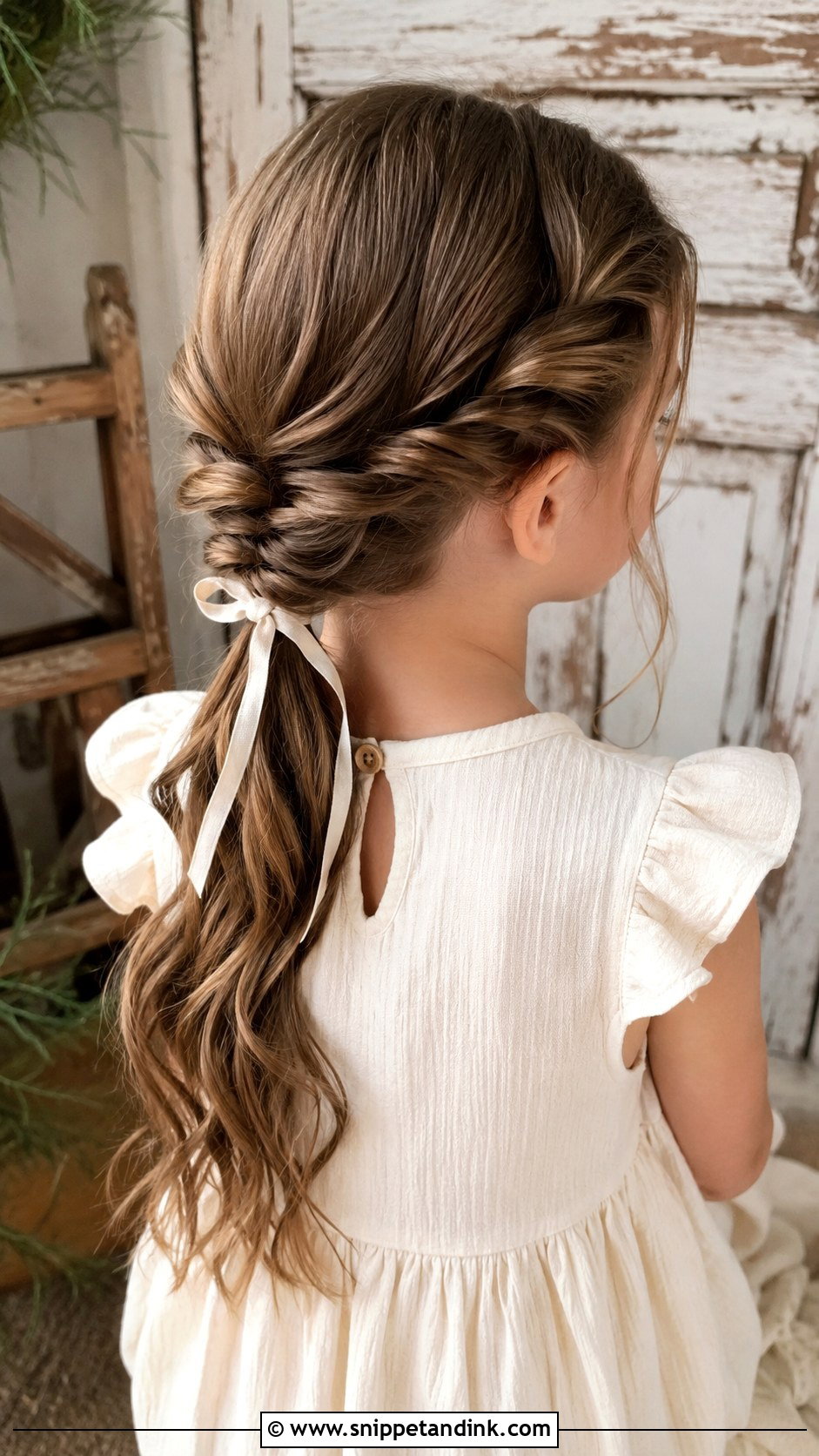
A twisted low ponytail is the quickest style on this list, a few minutes on most hair, which makes it a good backup when the first plan ends in tears. Twist two side sections back and fold them into the ponytail, then wrap a thin strand of her own hair around the elastic and pin it underneath. The low position doesn’t press on anything when she leans back in a chair. For a longer day, a second elastic halfway down stops the ponytail from fanning out.
11. Curly Half-Up With Bow
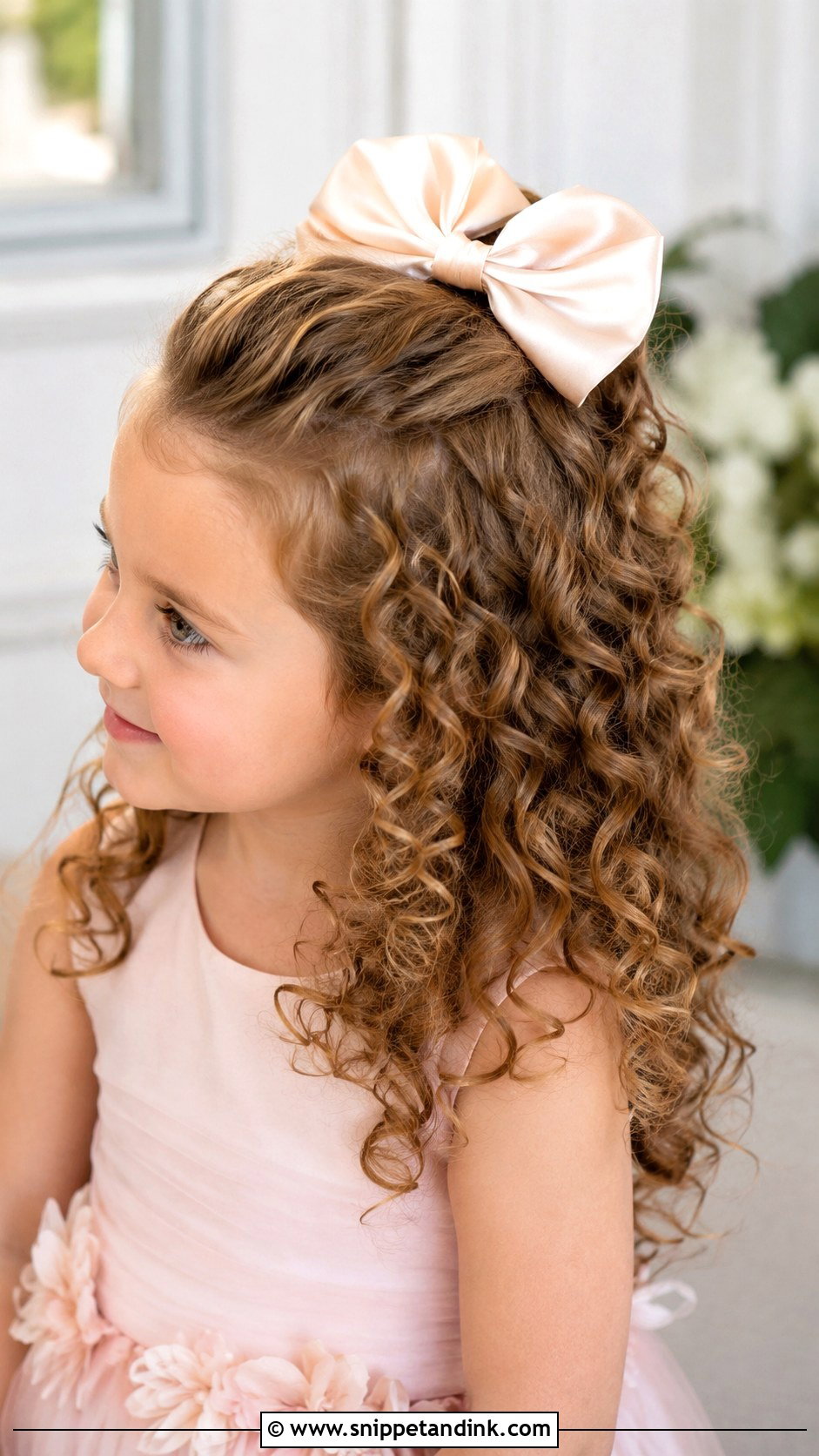
Naturally curly hair shouldn’t be brushed dry for this. I work with the curls as they are: refresh them with water and a little leave-in conditioner, gather the top section with my fingers, and secure it with a soft, snag-free tie. A brush would turn defined curls into a frizzy cloud, and parents of curly-haired girls are rightly wary of that. A large satin bow sits well against the volume, especially on younger girls, and natural curls keep their shape through the day far better than heat-set ones.
12. Braided Updo With Baby’s Breath
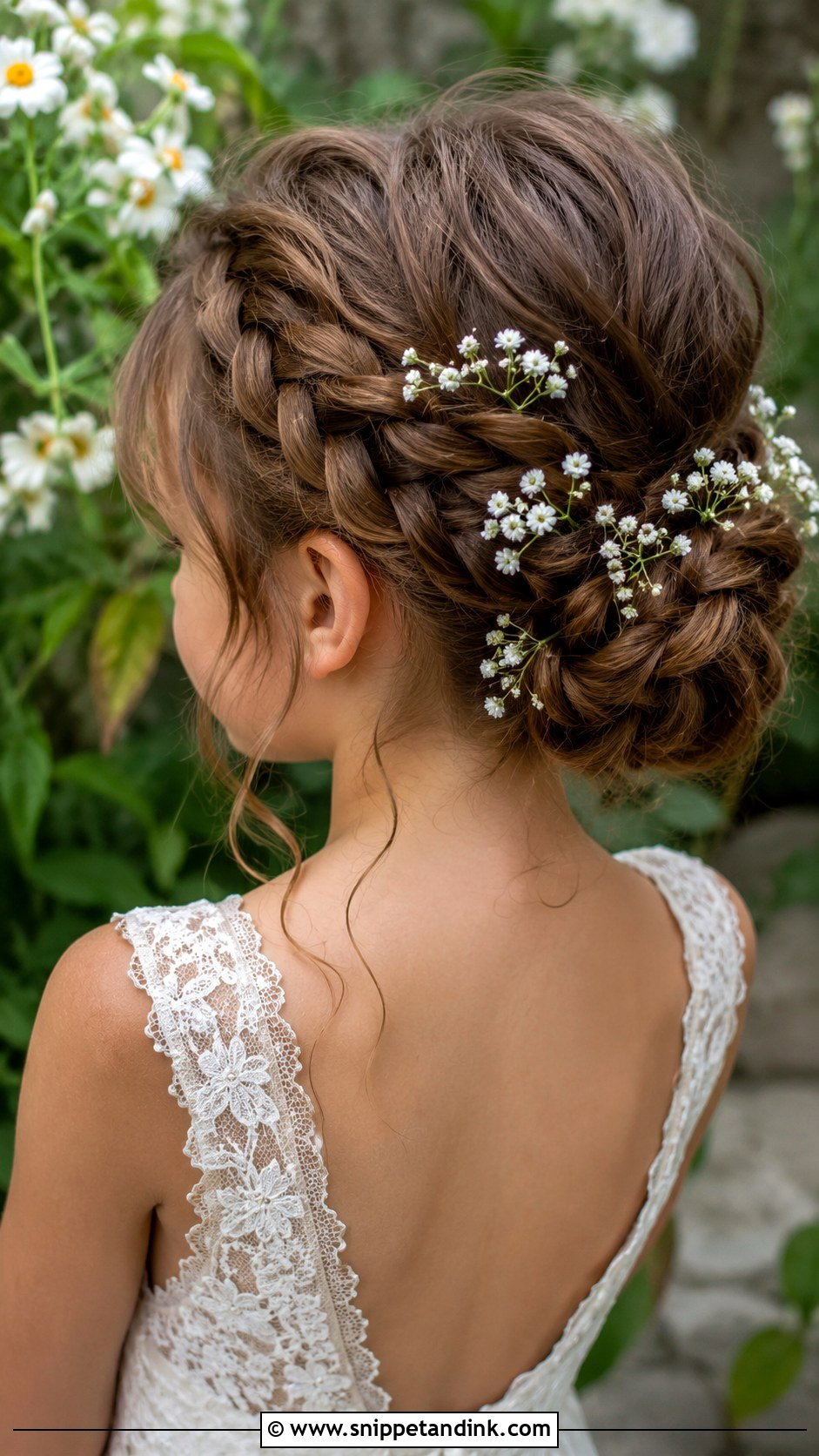
To weave baby’s breath through a braided updo, braid first, coil the braid into a bun at the back, and only then add the flowers. Each sprig needs its stem cut short so it can be tucked under a crossed section of braid; long stems poke the scalp and she’ll scratch at them. Baby’s breath holds up out of water better than most blooms, which is why it turns up in children’s hair so often, but it still browns at the edges in strong heat by late afternoon. Ask the florist for a few spare sprigs to swap in before the reception photos.
13. Long Curls With Headband
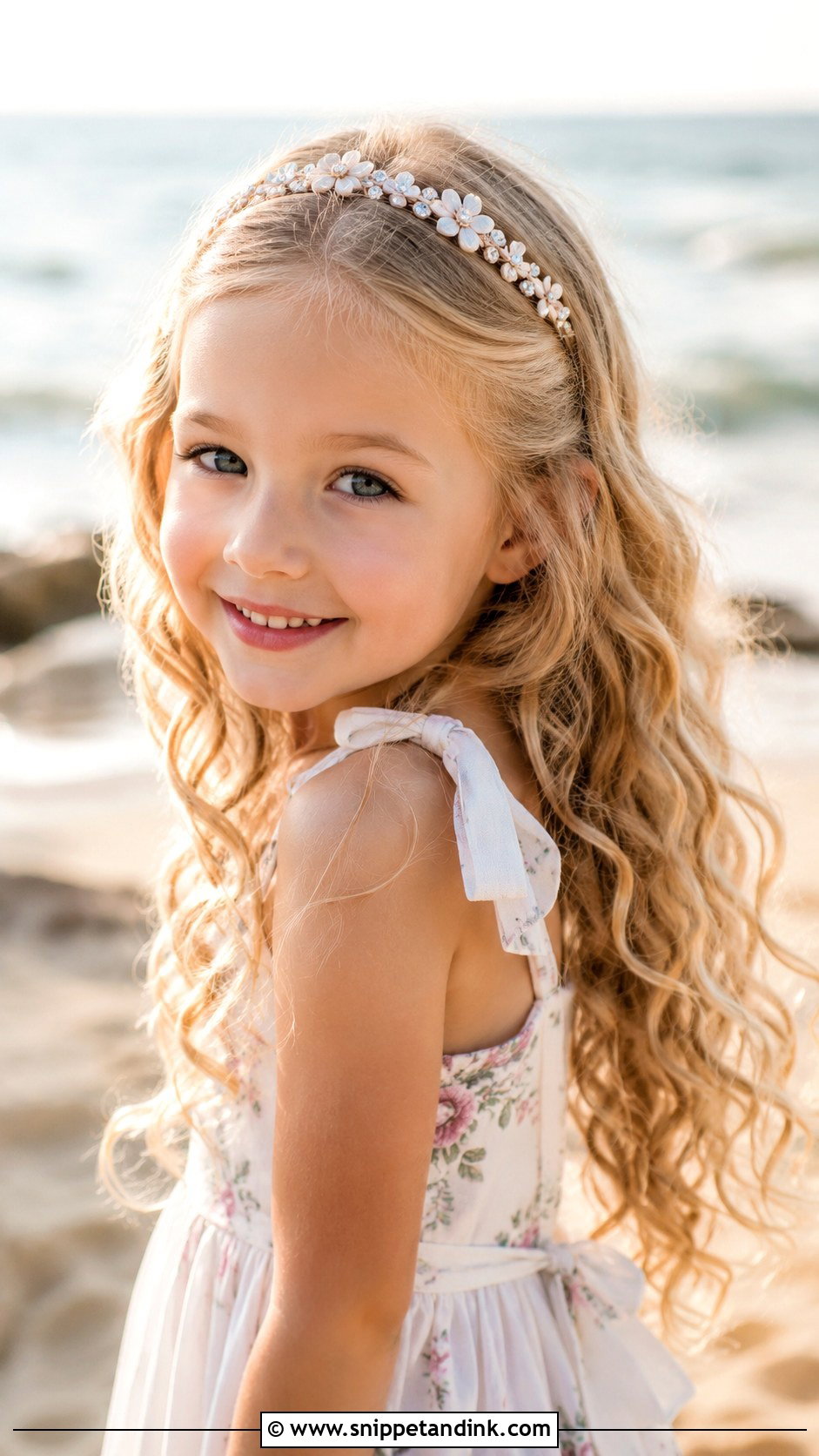
Letting long hair down is a fair choice, and the headband is what keeps it out of her face. I’d pick a fabric-covered or padded band over a thin plastic one with teeth. The toothed ones dig in behind the ears after a couple of hours, and that’s when children pull them off and leave them on a chair. Curl the hair gently, place the headband, then pin it discreetly behind each ear so it can’t slip back. Match it to the wedding colors and you’re done.
14. Side Braid With Curls
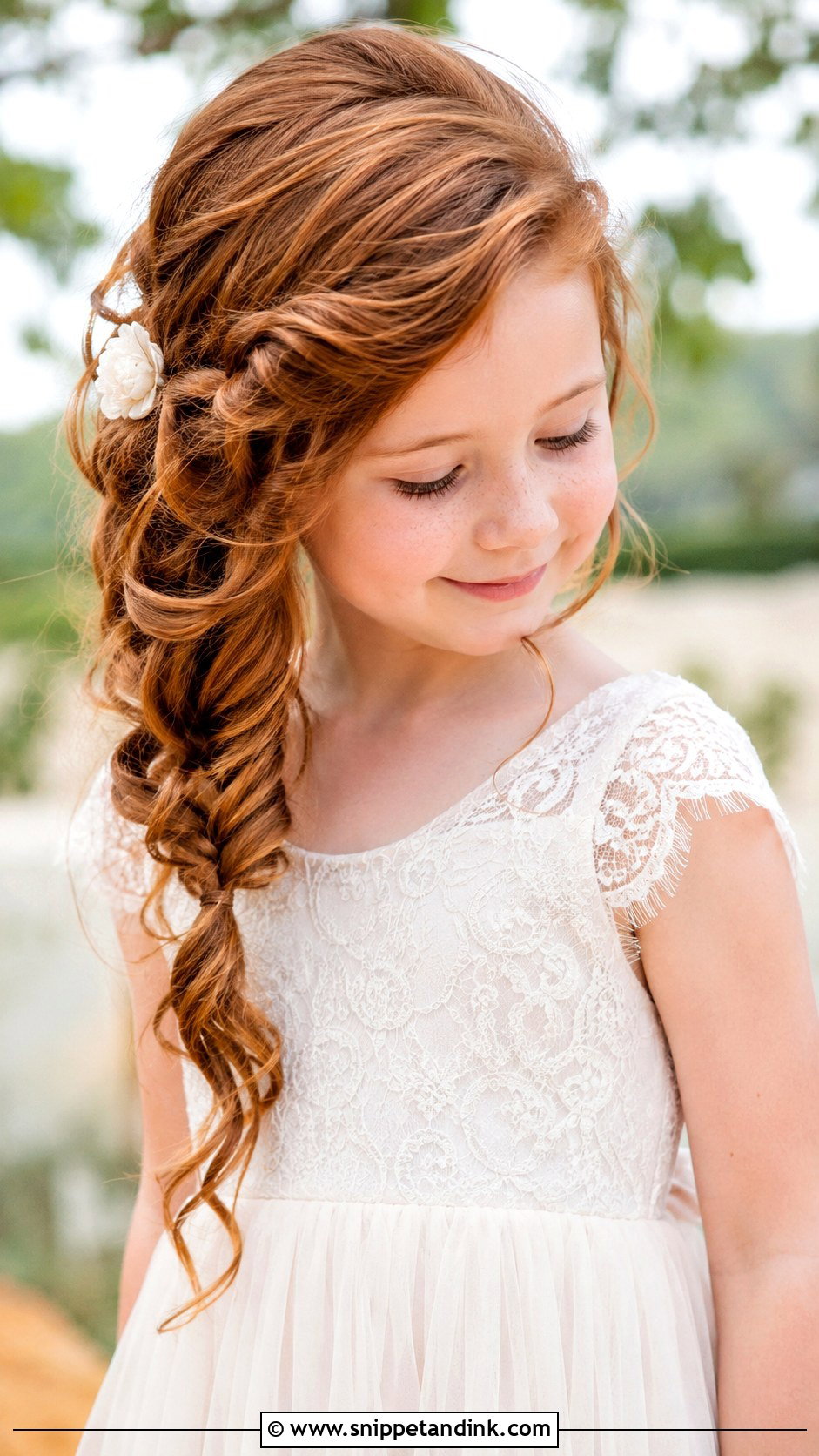
A side braid falls forward over one shoulder, so it reads clearly in front-on photos of her walking down the aisle. Braid to just below the ear and leave the ends curled. My one caution: a loose braid on fine hair looks fuzzy after an hour of play. If her hair is fine, braid it firmly and then gently pull the edges to fake the softness. A small flower tucked at the top of the braid hides where it begins.
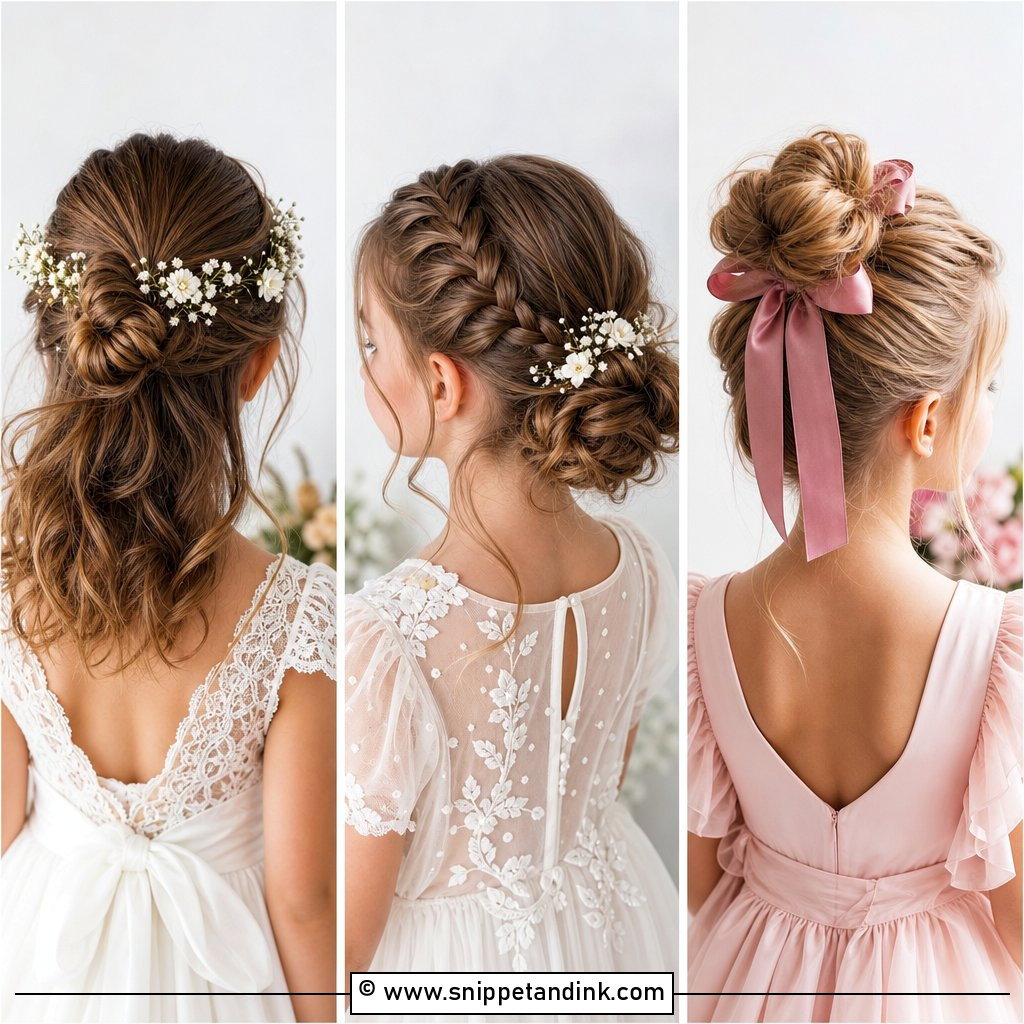
15. Top Knot With Curls
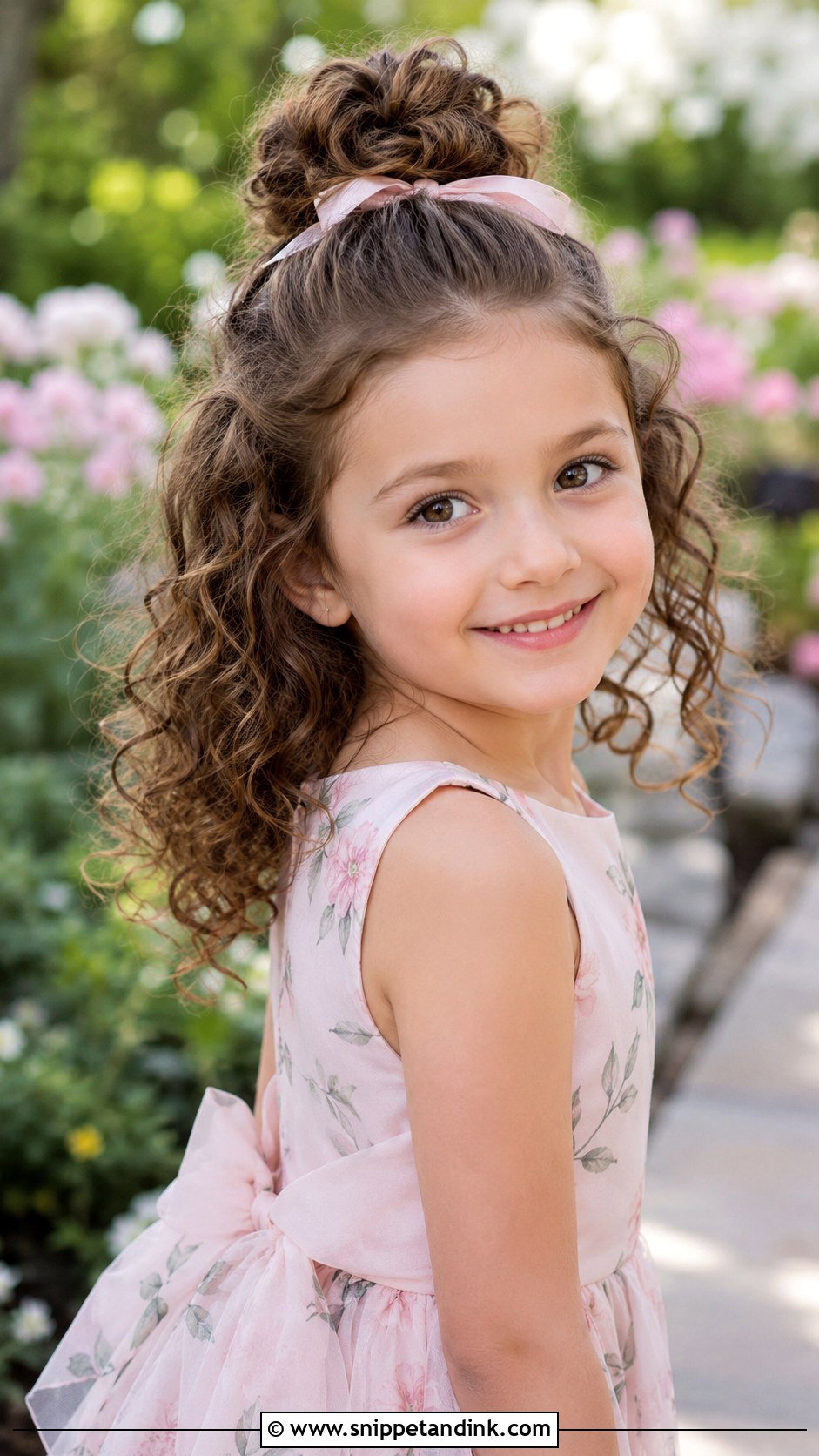
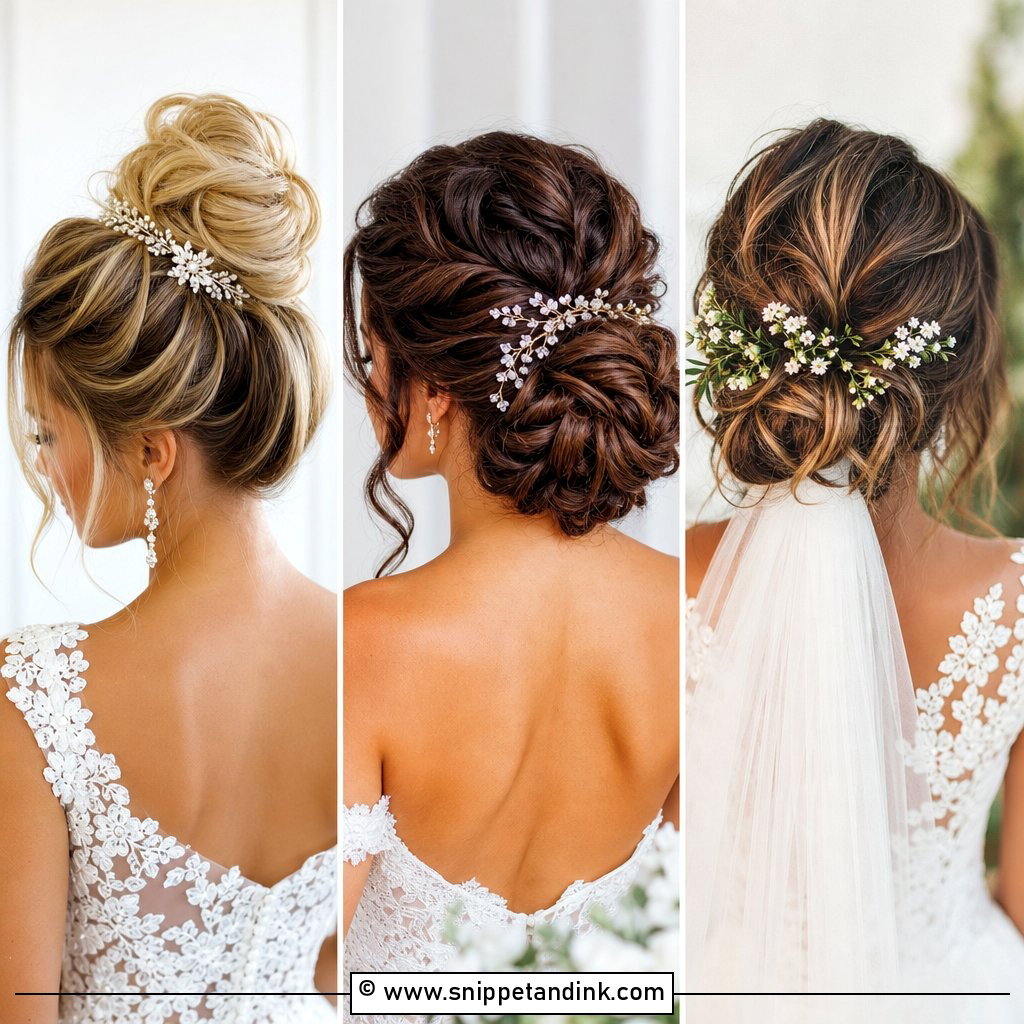
A top knot with curls below suits a child who doesn’t want anything fussy. I build it from a small top section only, so the knot stays light; a big knot on a small head flops sideways the minute she runs. Twist the section, coil it, and pin with two pins crossed through the coil into the base. A ribbon or tiny flower clip adds a bit of color. It survives plenty of movement, but I wouldn’t choose it if she’s also wearing a flower crown or a little veil, because there’s nowhere for either to sit.
16. Sleek Low Chignon
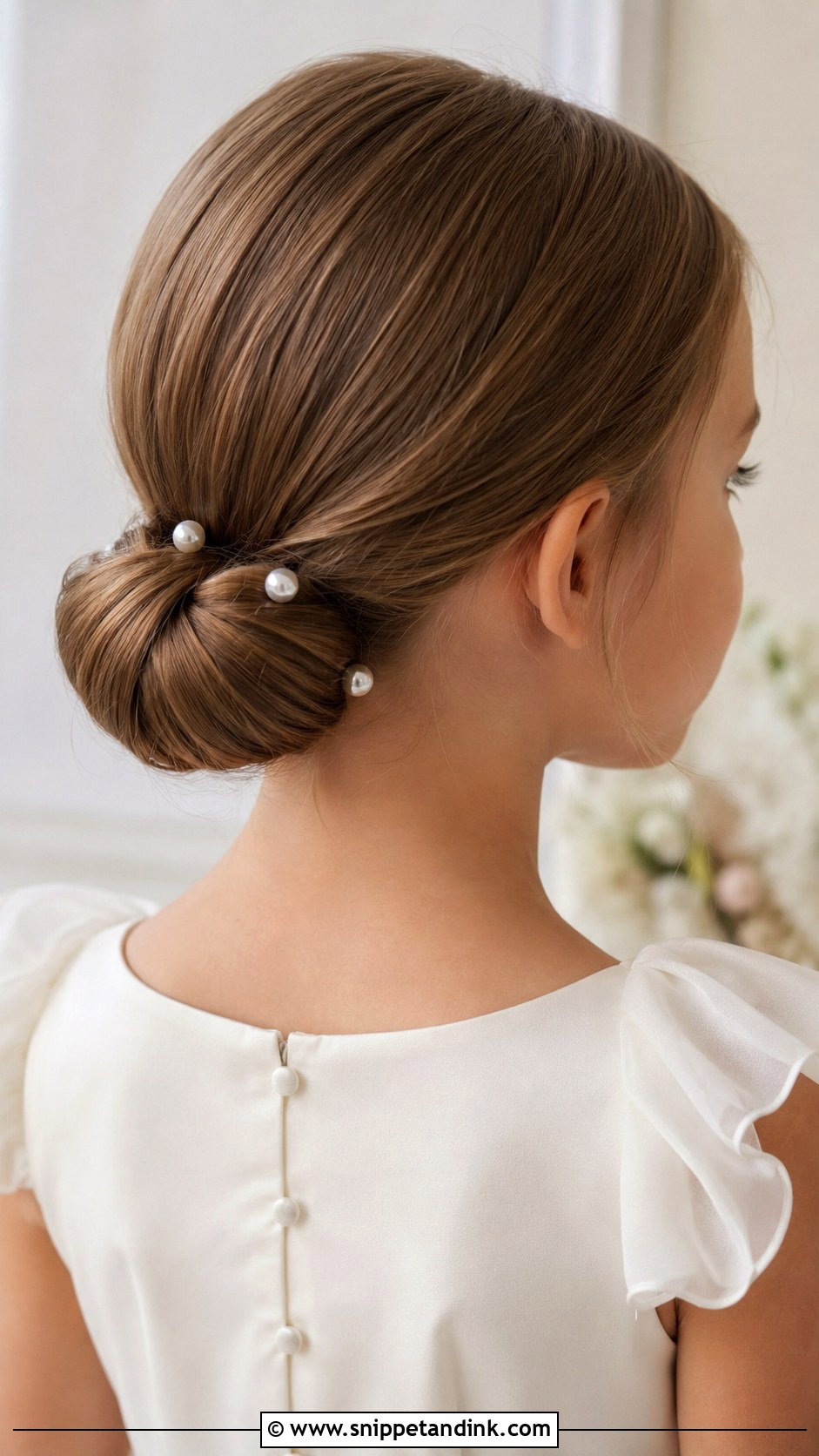
The low chignon works on flower girls and bridesmaids alike, which helps when you want the whole party to match. Smooth the hair back and twist it into a neat, rounded knot at the nape. On a child I avoid the slicked, glassy finish adults often want. It takes a lot of product, stiff hair feels strange to children, and they keep touching it. A little smoothing cream and a soft brush give a polished shape without the helmet, and pearl pins along the twist dress it up for a formal ceremony.
17. Boho Waves With Braided Detail
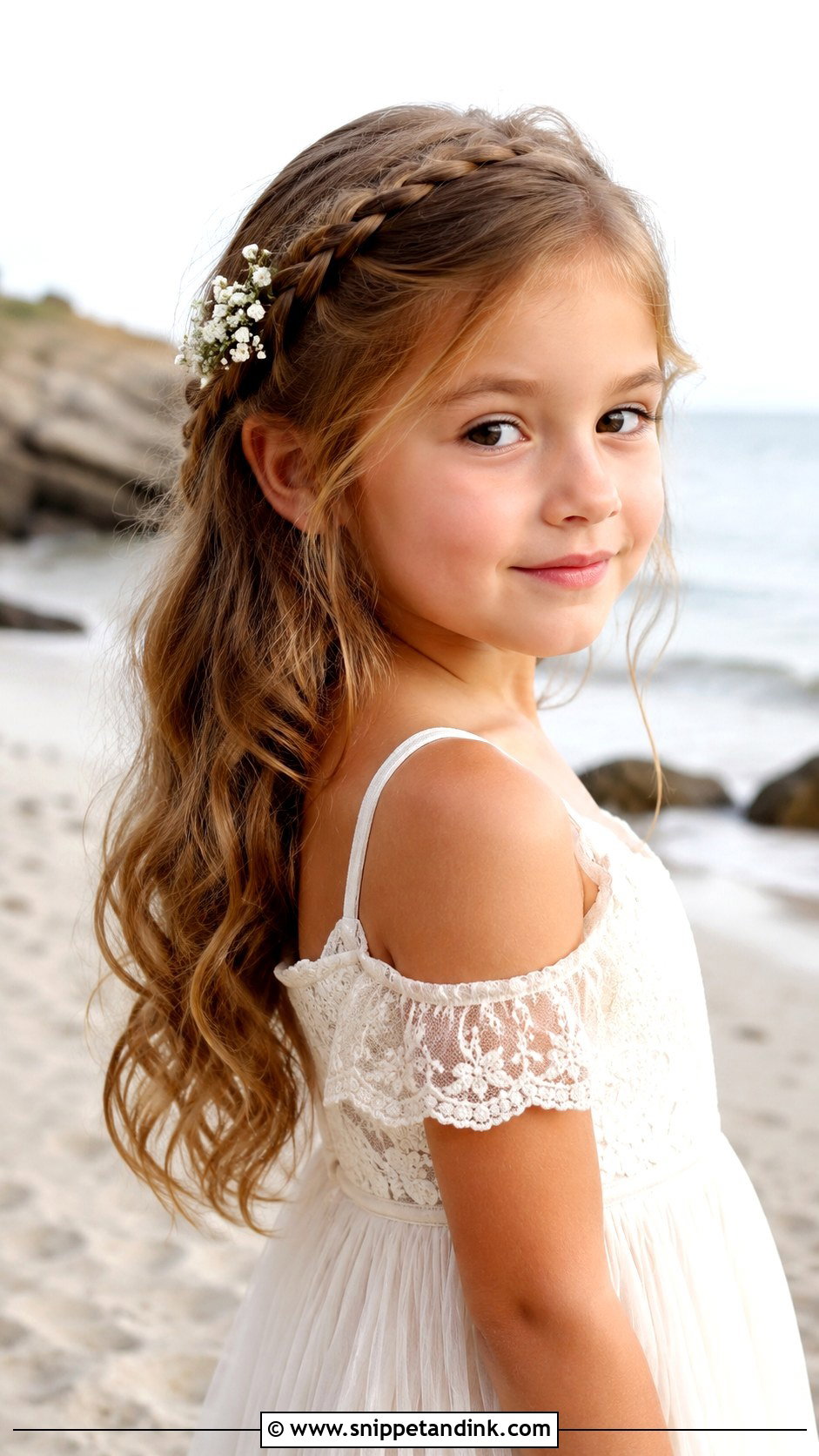
A thin braid along one side, or across the crown, gives loose waves something to anchor to. Waves on their own drift into a child’s eyes, and a braid running back from the temple keeps that side of her face clear. Curl the hair, braid a narrow section and pin it behind the opposite ear, then tuck tiny flowers into the braid. For a beach wedding I’d skip heat altogether and set the waves from damp braids the night before, since salt air flattens iron curls fast.
18. Pigtail Braids With Ribbons
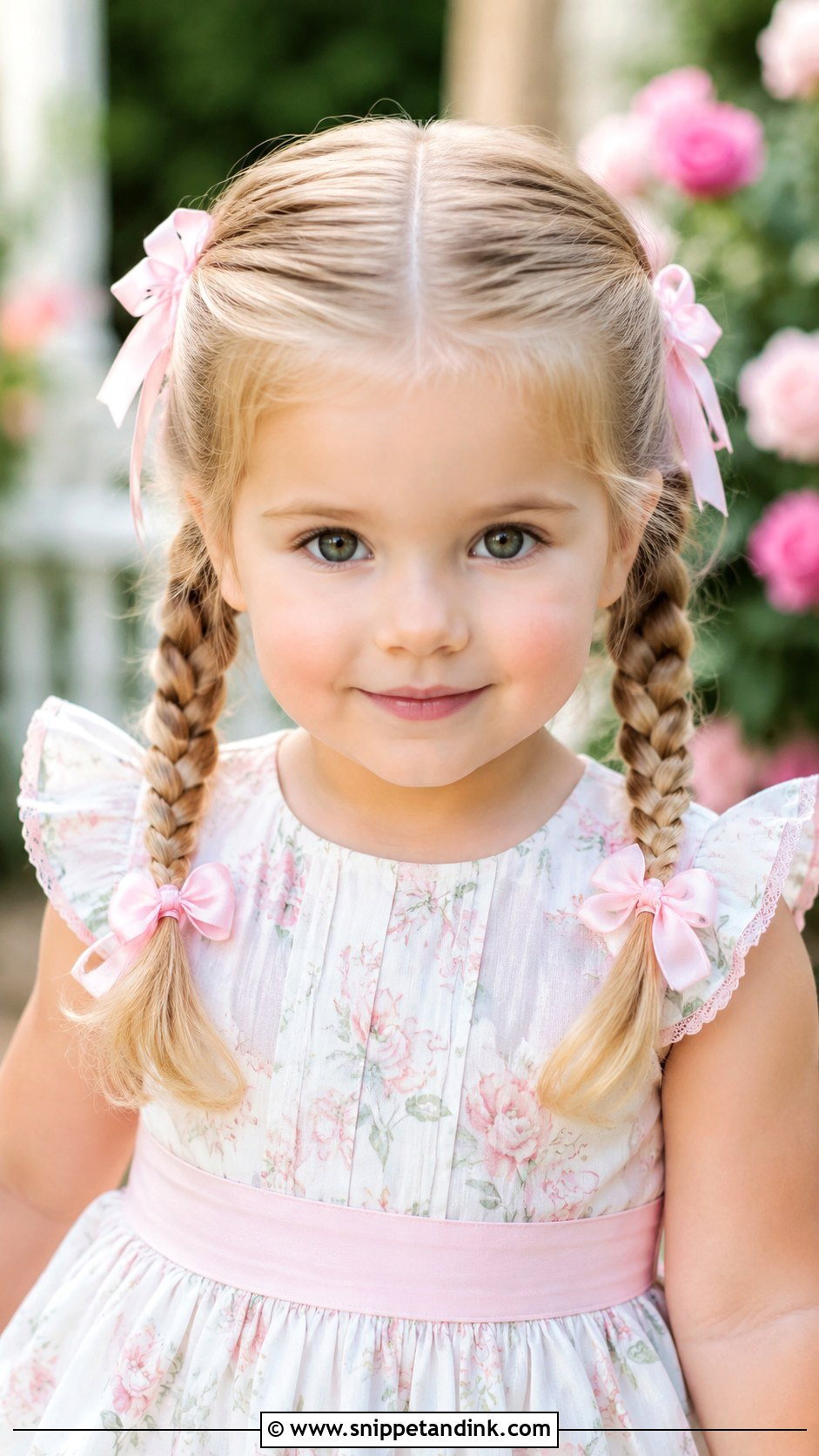
For toddlers, sweet pigtail braids are often the only style that lasts, because a two-year-old won’t sit for anything longer. Part down the middle, braid each side and tie ribbons over the elastics in the wedding colors. Do it while she’s busy with a snack or a cartoon; I work from behind and keep each braid quick. Very fine baby hair may only make a short stub of a braid, and that’s fine. With a bow on the end it still looks deliberate.
19. Half-Up Twisted Style
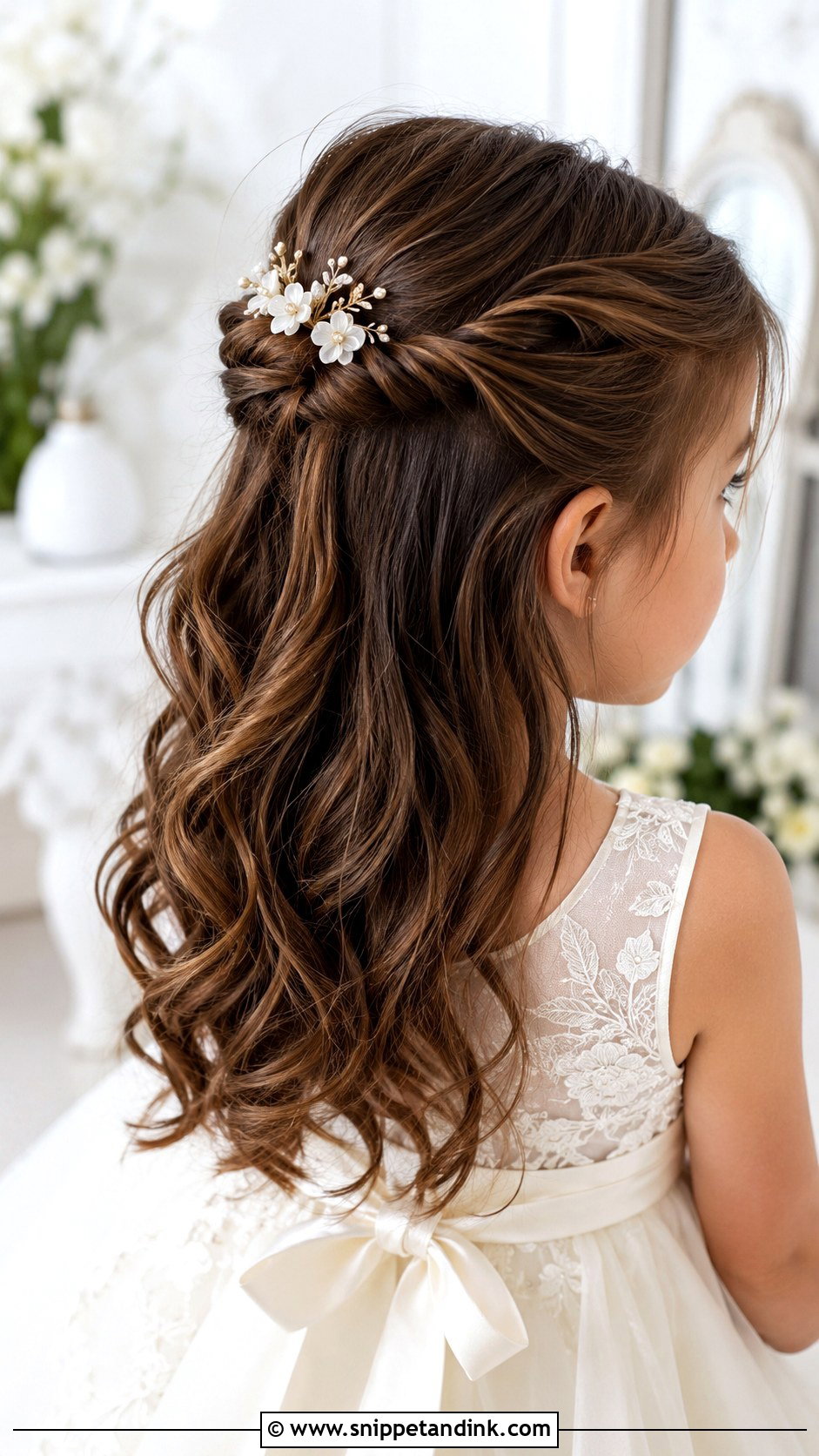
Twists are gentler than braids on a tender head, since there’s less tension at the hairline. Take a section from each side, twist it back toward the crown and pin the two together, leaving the rest loose. Twists unwind as they’re handled, so I turn each one away from the face and give the pinned point a light mist of spray. A floral pin or sparkly clip where they meet hides the join.
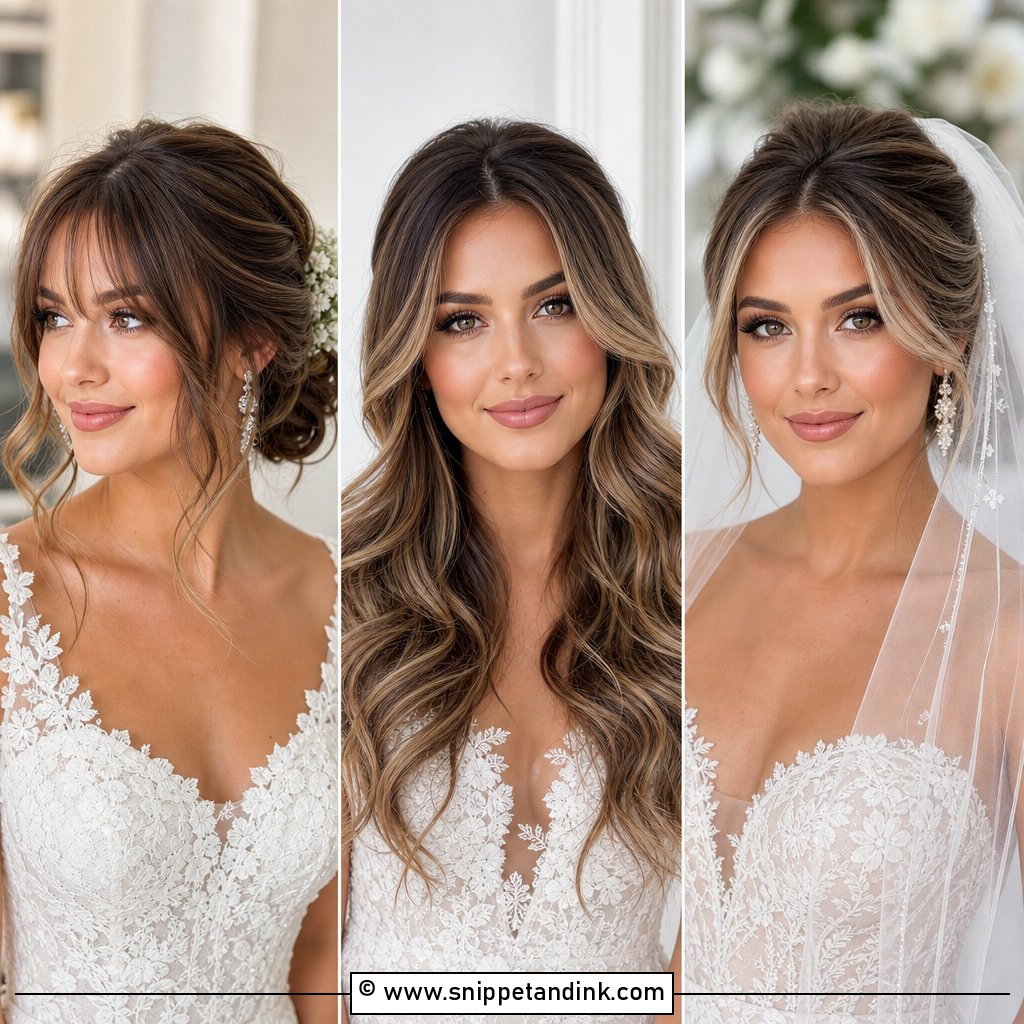
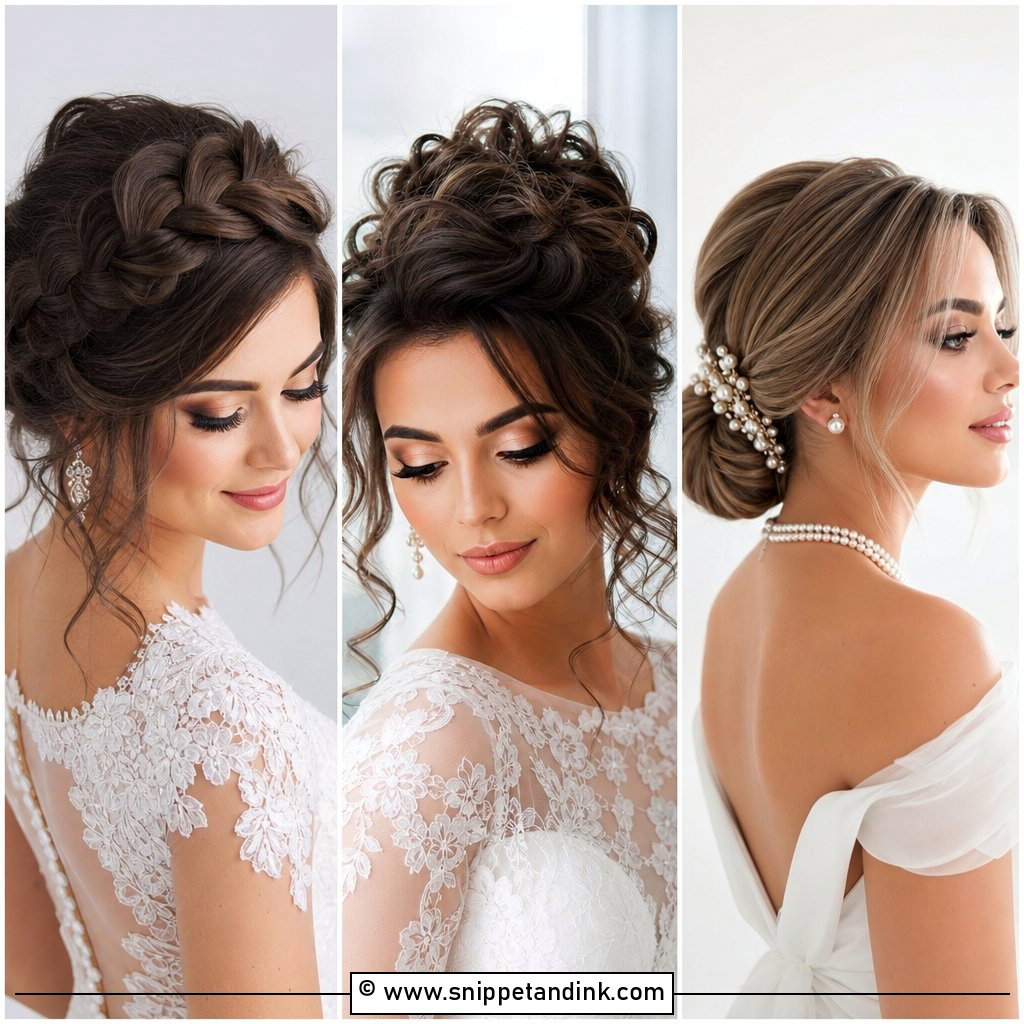
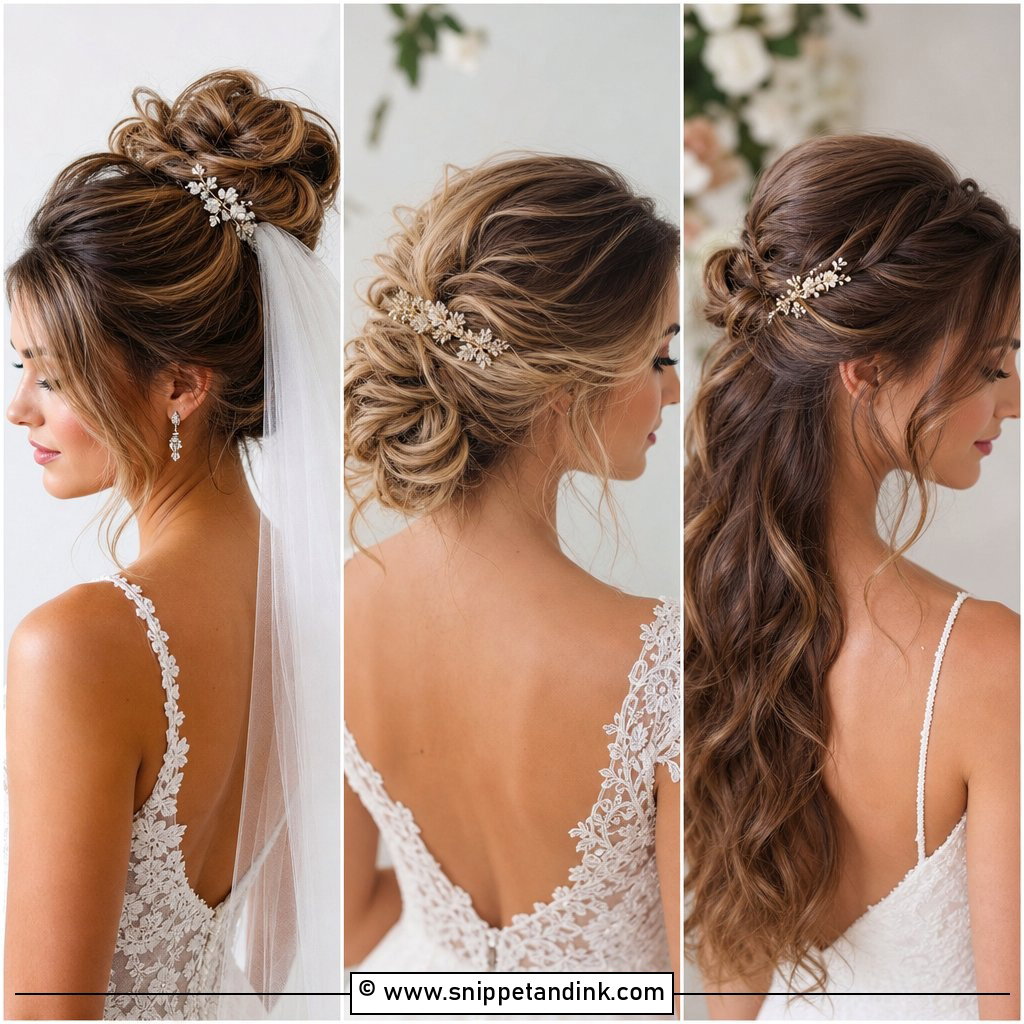
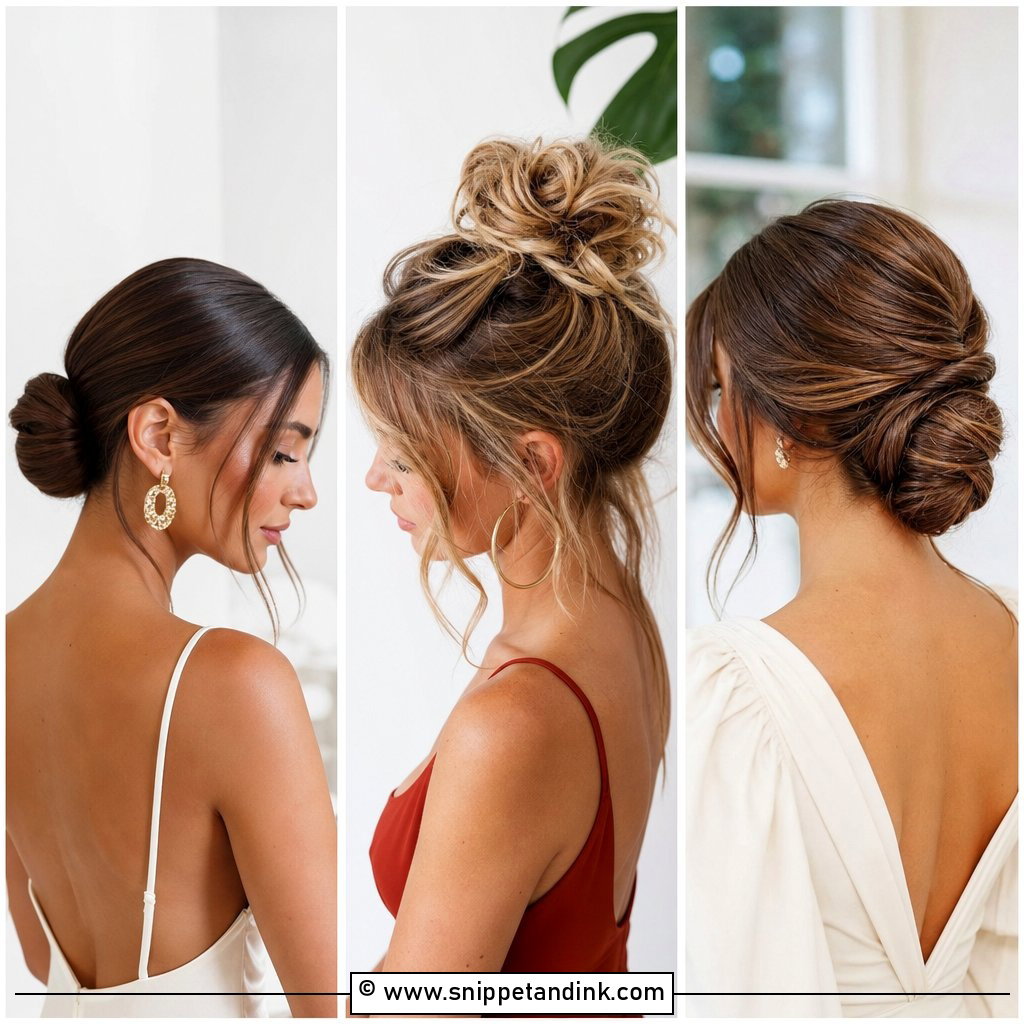
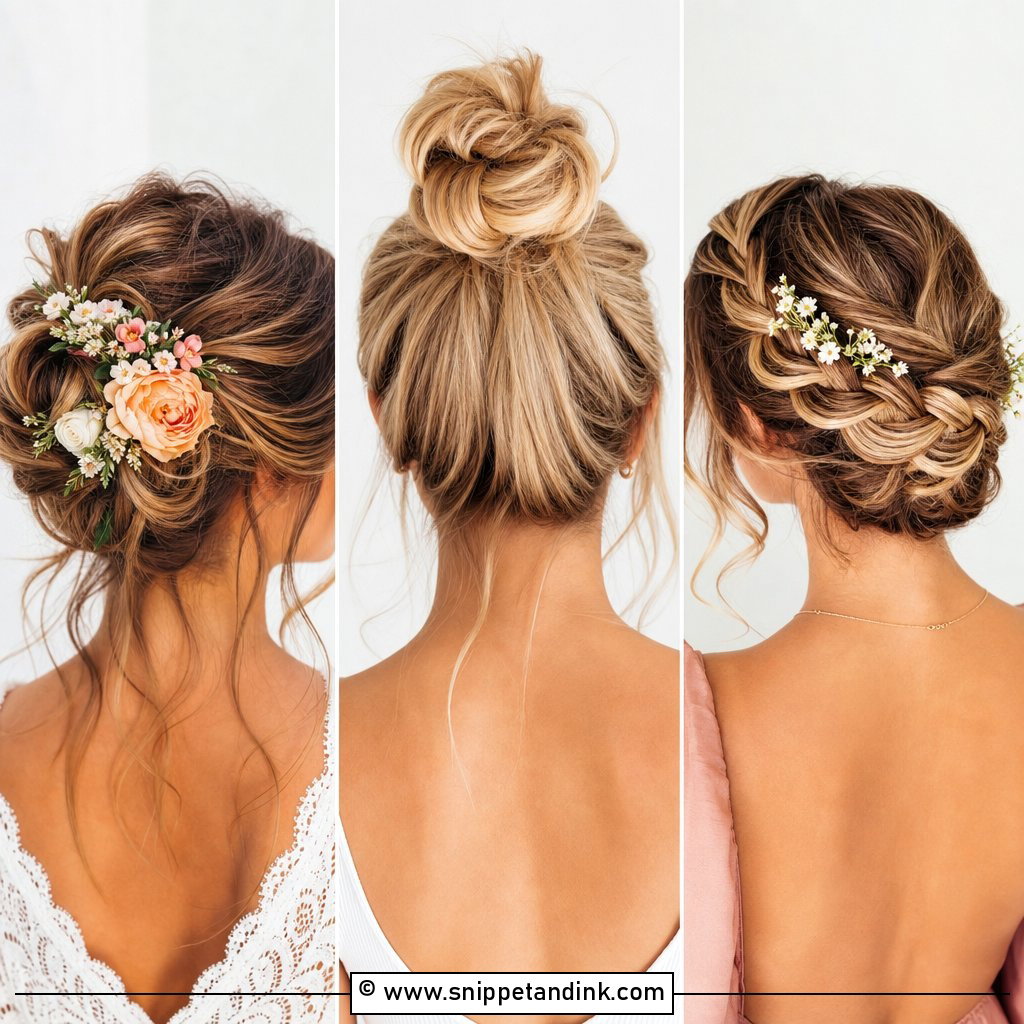
20. Soft Curls With Pearl Clips
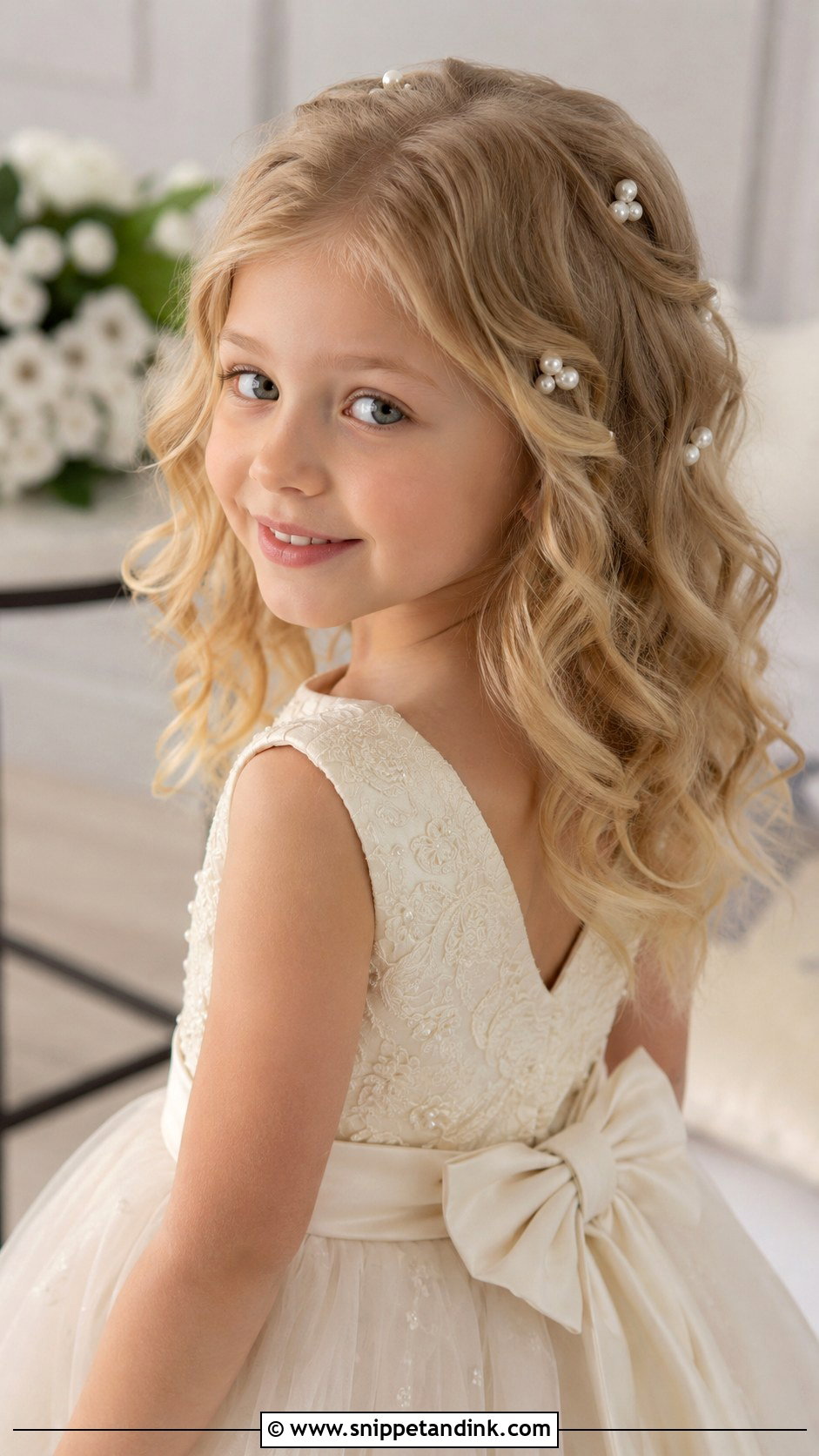
Small pearl clips scattered through soft curls give a child’s hair a formal finish without anything heavy on her head. Curl the hair gently, then place the clips in a loose line or a scattered pattern, each one gripping a small section close to the root so it doesn’t slide down the strand. Snap clips hold better than slide-in ones on slippery hair. Leave everything down, or pin one side back and let the clips do double duty. Count them before and after the day, because children like to hand them out to friends.
Gentler Hold for Young Scalps and Fine Hair
Adult wedding hair leans on strong hairspray, tight elastics and plenty of heat. Children’s hair is finer and their scalps are more sensitive, so I scale everything back and accept a little softness in exchange for a child who doesn’t spend the reception scratching her head.
- Use snag-free elastics with no metal joint; ordinary ones break hairs when you take them out.
- Use a light, flexible hairspray sparingly, sprayed onto your hands or a brush rather than misted near her face.
- Keep curling tools on a low setting and hold each section for less time. Many young children have never had heat on their hair.
- Place a few pins well rather than many. Every pin is one more point that can dig in.
- If she says it hurts, loosen it. A child who’s uncomfortable will pull the style out herself.
What goes in the parent’s pocket
Whoever is looking after her during the day should carry a few spare elastics, a handful of bobby pins, a small comb and a spare ribbon. Most repairs are a fallen pin or a lost bow, and both take a minute if the tools are there.
Taking it all down at night
Remove pins and elastics gently, and unpick braids from the bottom up. Work conditioner or a detangling spray through in the bath rather than brushing dry, especially if there’s hairspray or flower stems in the hair. Expect some knots after a long day; going slowly saves tears.
Let Her Pick the Ribbon
Flower girl hair usually goes wrong because it pulls, because it took too long to do, or because it depended on an accessory she took off by noon. Match the style to her hair length and to how long she’ll realistically sit, then let her choose the ribbon or clip herself; children leave alone what they picked. A trial at home a week or two before the wedding tells you more than any photo, since you’ll see how she feels about it after an afternoon of play. Get those things right and the hair lasts from the processional to the dance floor.
You'll Like These Ideas:


Leave a Reply