
A braid is the simplest way I know to give bridal hair structure without stiffness. It turns loose curls into something that survives hugs, gives a plain bun a pattern worth photographing from behind, and keeps natural texture secure through a humid afternoon. What it can’t do is rescue a mismatch with your dress or your hair type. So alongside each of the 20 looks below, I’ve noted how it’s built and what it asks of you.
The Dress Back Tells Me Where the Braid Should Sit
Before I look at anyone’s inspiration photos, I ask to see the back of the dress. The braid and the gown share the same few inches between the shoulders and the crown, and they either work together or fight for attention.
- Open or low back: keep the hair up or to one side. A long braid down the spine hides the very detail you chose the dress for.
- High neck or collar: the hair has to clear it, so a low bun only works if it sits above the collar line. A crown braid or a higher updo is safer.
- Buttons or lace down the back: an updo or chignon shows them off, while long hanging braids catch on lace and can pull threads.
- Strapless or off the shoulder: almost anything works, and a side braid fills the bare shoulder line nicely.
- Heavy beading at the shoulders: avoid loose braids resting on it all night, because they frizz from the friction and strands snag on the beads.
Torn between two braids? Ask for both at the trial and photograph each one from behind, wearing a top with a similar neckline to your dress.
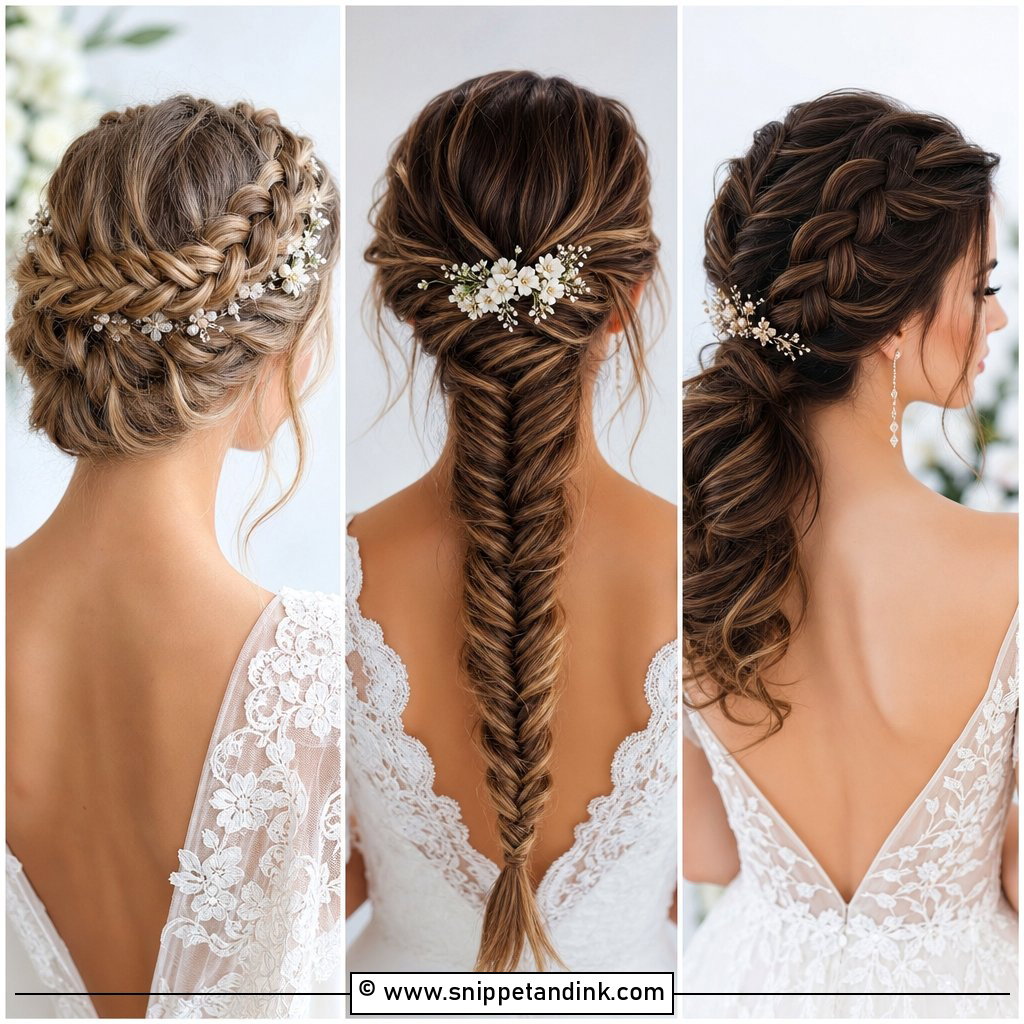
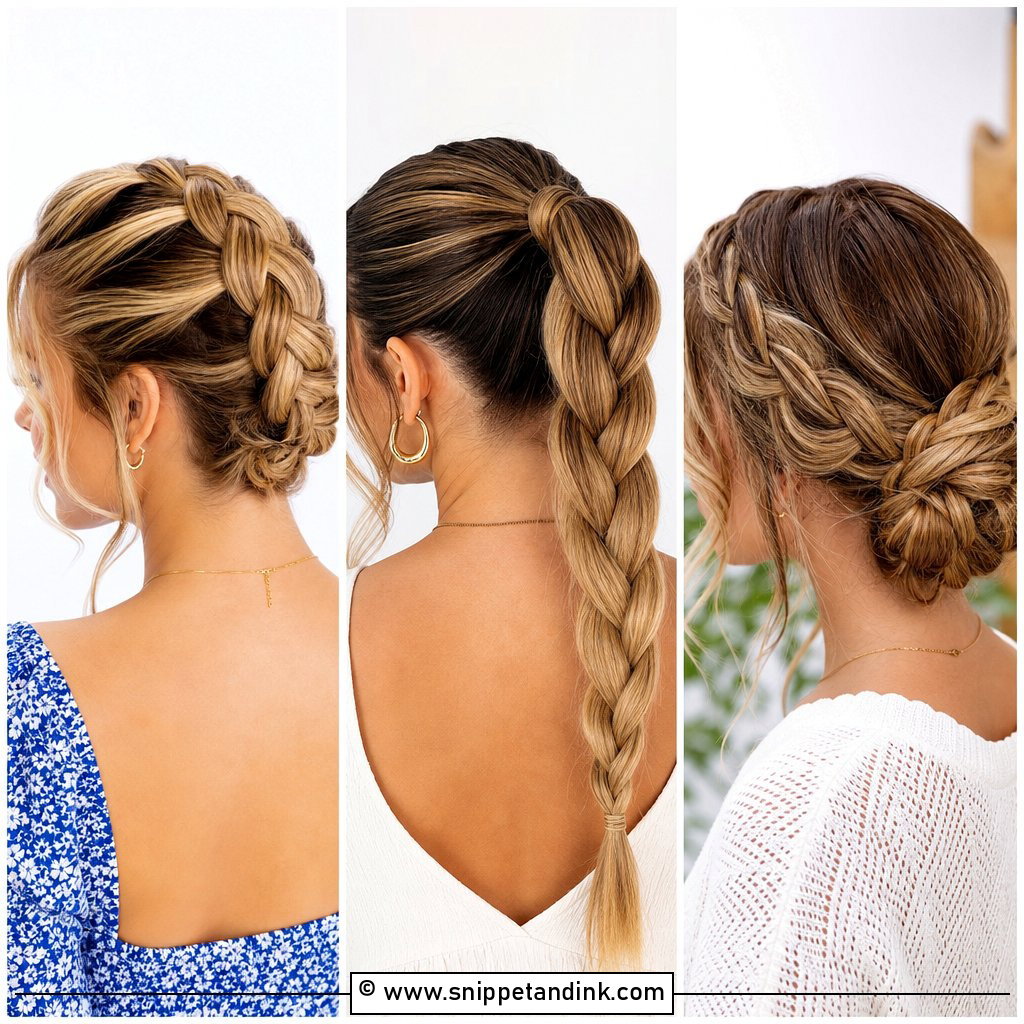
1. Braided Wedding Updo
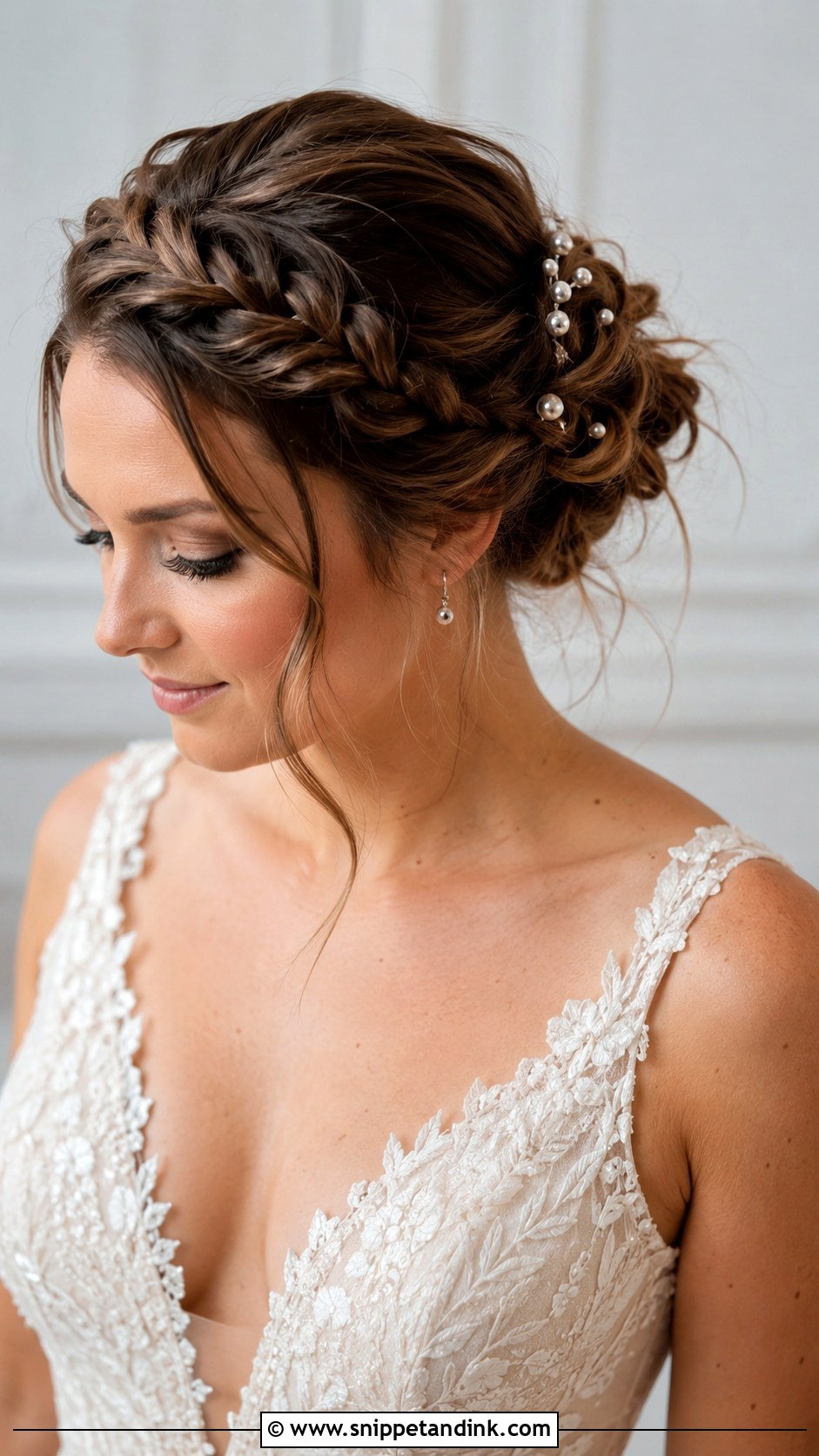
This is my default when a bride tells me she wants her hair up and never wants to think about it again. Braids around the crown or sides give the pins grip, and the pinned shape leaves the neckline clear for earrings, a veil and the back of the dress. Medium to long hair suits it best. At the trial, check it in a hand mirror from both sides. An updo that looks balanced from the front can still sit lopsided at the back, and the back is what guests watch through the whole ceremony.
2. Braided Low Bun Wedding Hair
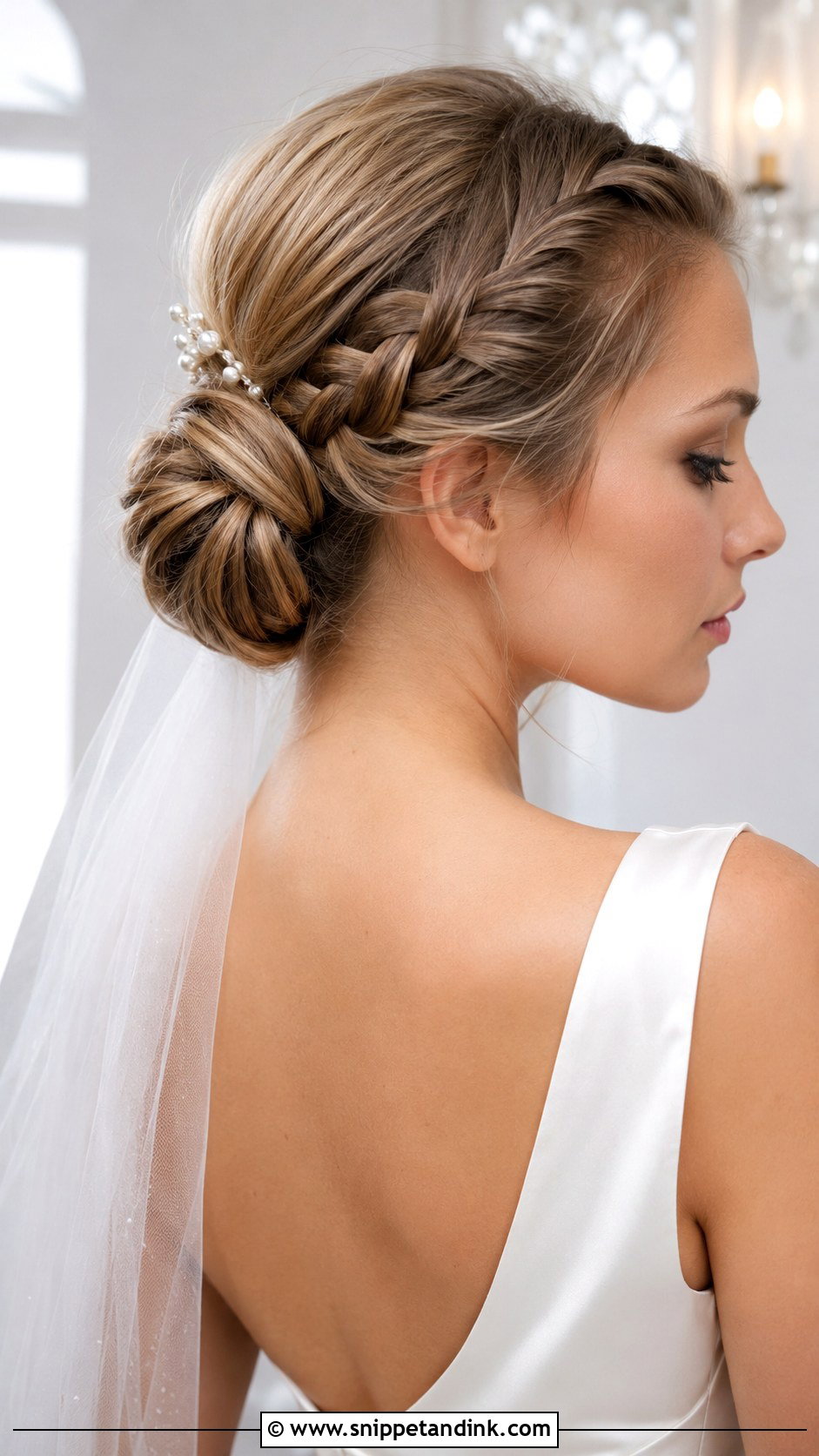
A braid feeding into a bun at the nape is about the steadiest base a veil can have, because the comb slides under the braid and the bun stops it moving. I’d point you here if your dress has a high neckline or lace across the shoulders, since the hair stays tucked away from all of it. The braid can wrap the bun, enter it from one side or form a woven base underneath. A smooth front reads classic. Two loosened strands make it feel younger.
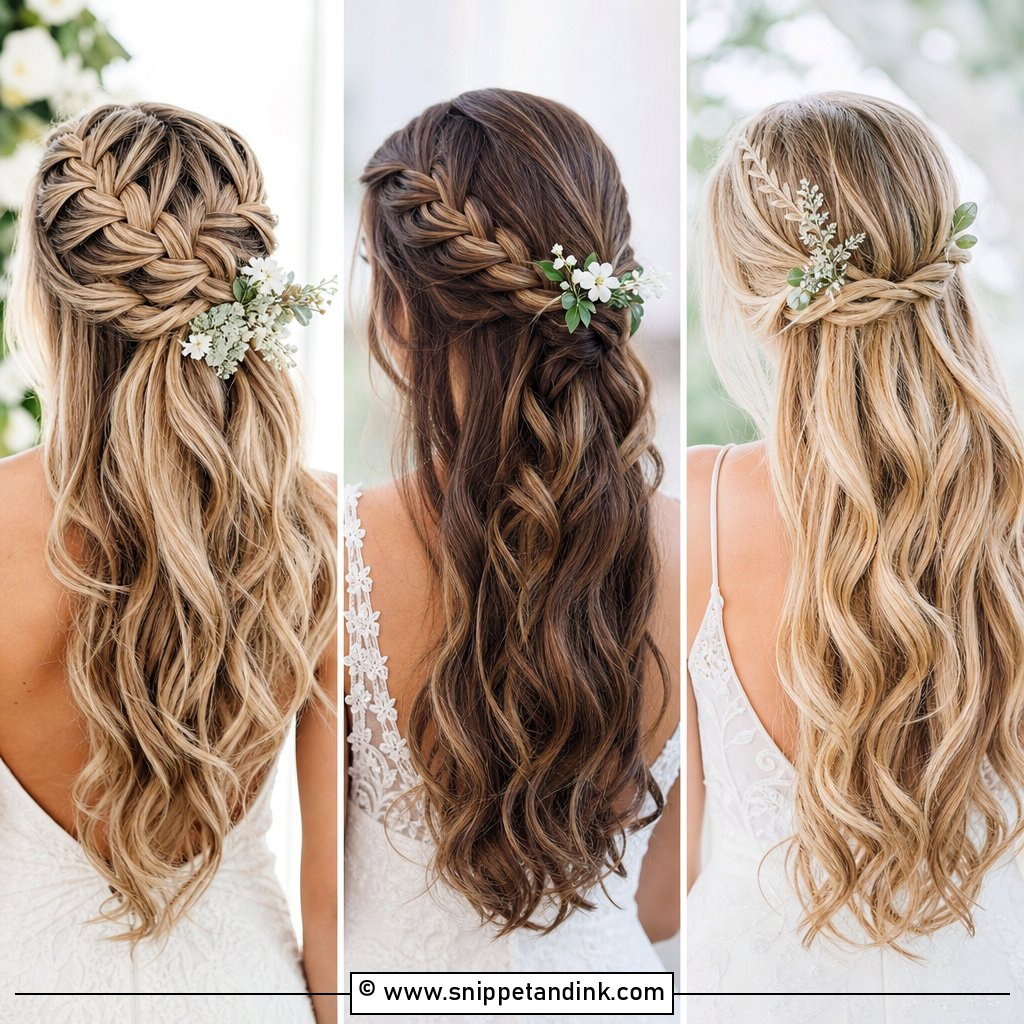
3. Half Up Braided Wedding Hair
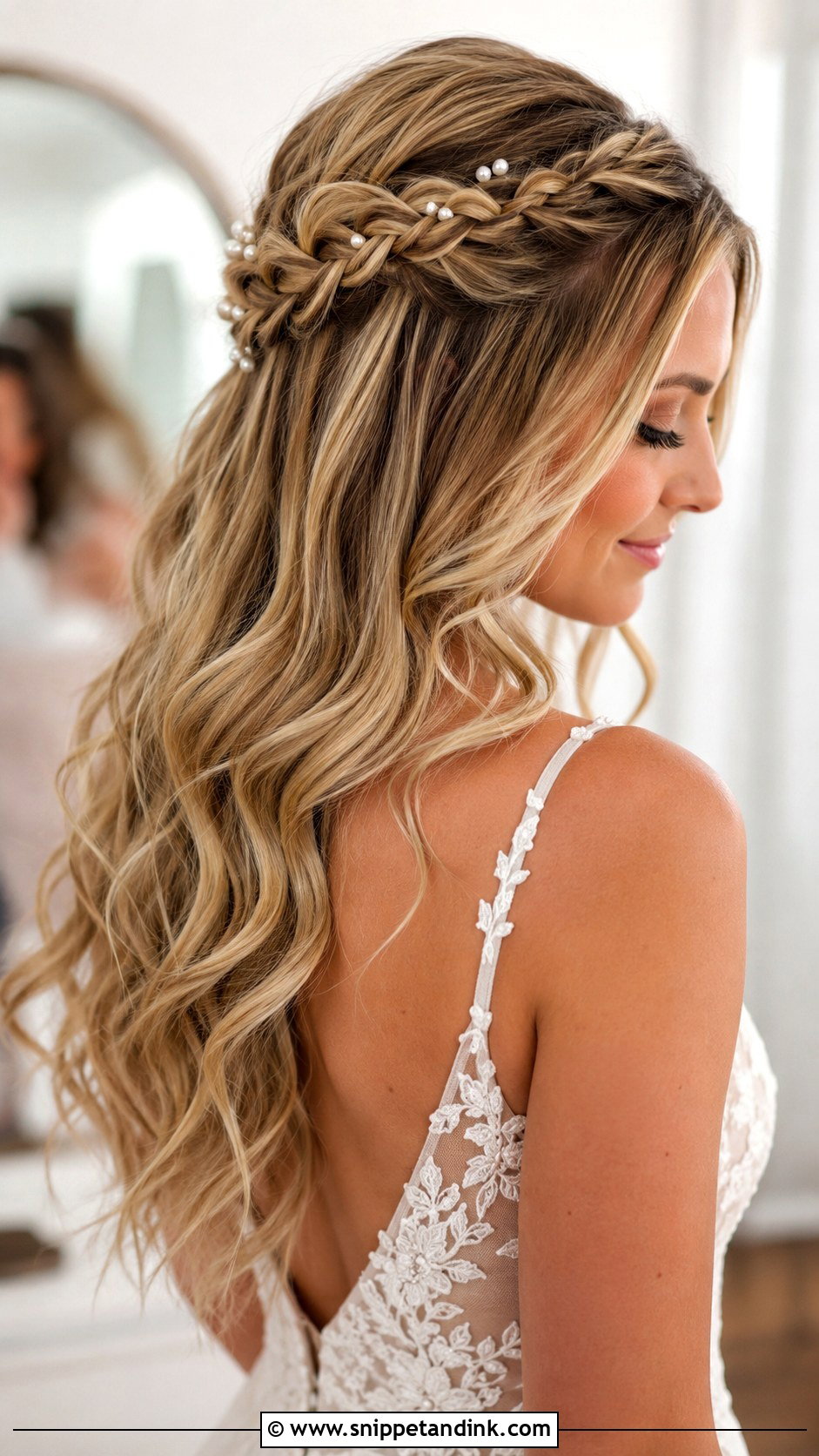
Half-up is the compromise most of my brides land on: hair off the face, length still on show. The braid holds the top section back, and the lower hair falls in curls, waves, or soft bends. Those lengths decide how it photographs, because dead-straight hair under a half-up braid tends to look unfinished in pictures. If your hair won’t hold a wave, I set it and pin each curl to cool before brushing it out. Pearl pins or a thin vine through the braid add the detail.
4. Boho Braided Wedding Hair
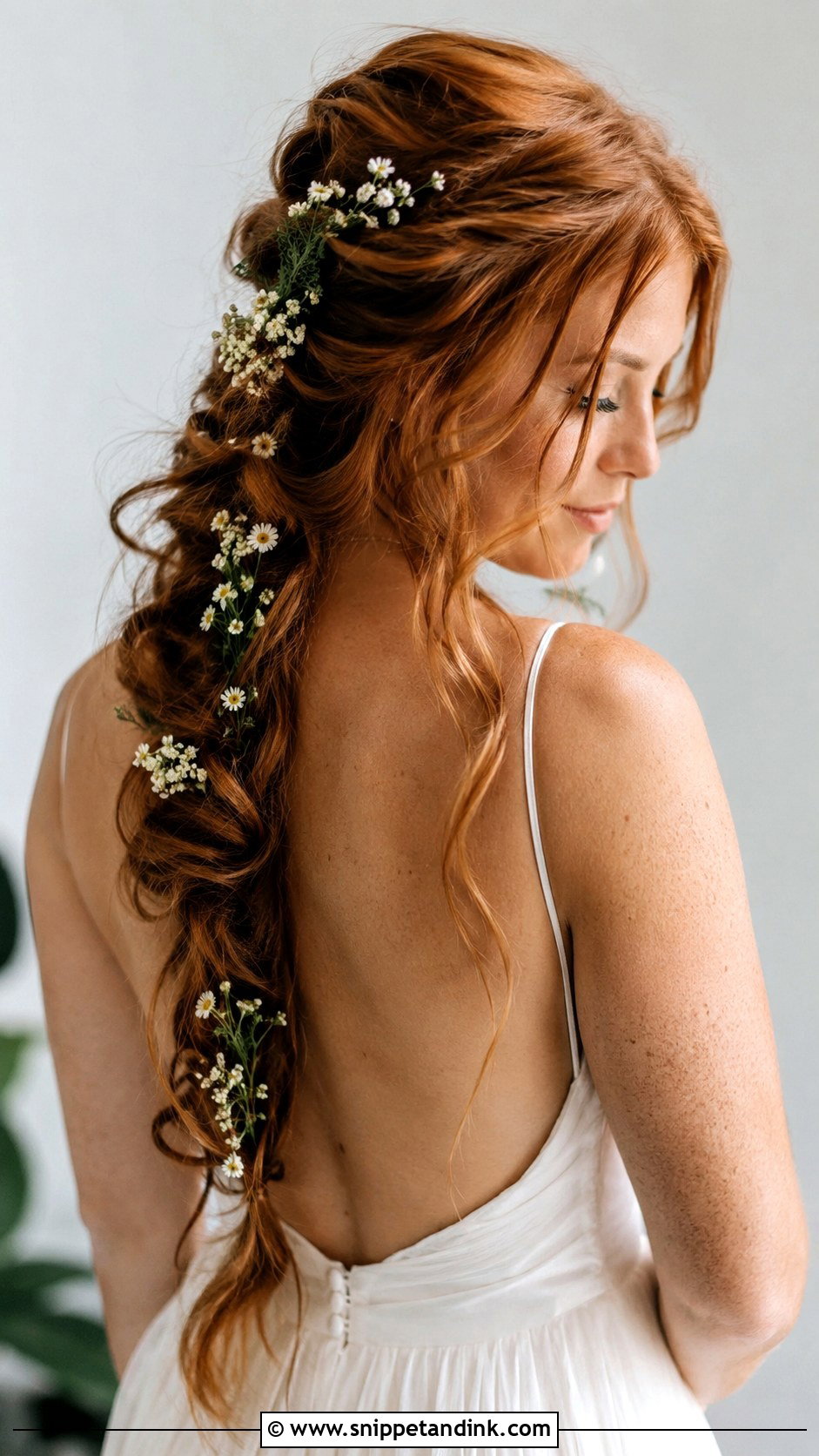
Undone is the hardest finish to keep. A boho braid looks relaxed, yet it’s built firm with volume powder, texture spray and hidden pins, and only then pulled loose at the edges. Skip that groundwork and it genuinely looks messy by the speeches. It sits naturally at a beach, barn or desert venue, next to lace, flowy sleeves, a flower crown or a plain veil. Very silky hair holds this better when it’s washed the day before rather than the morning of.
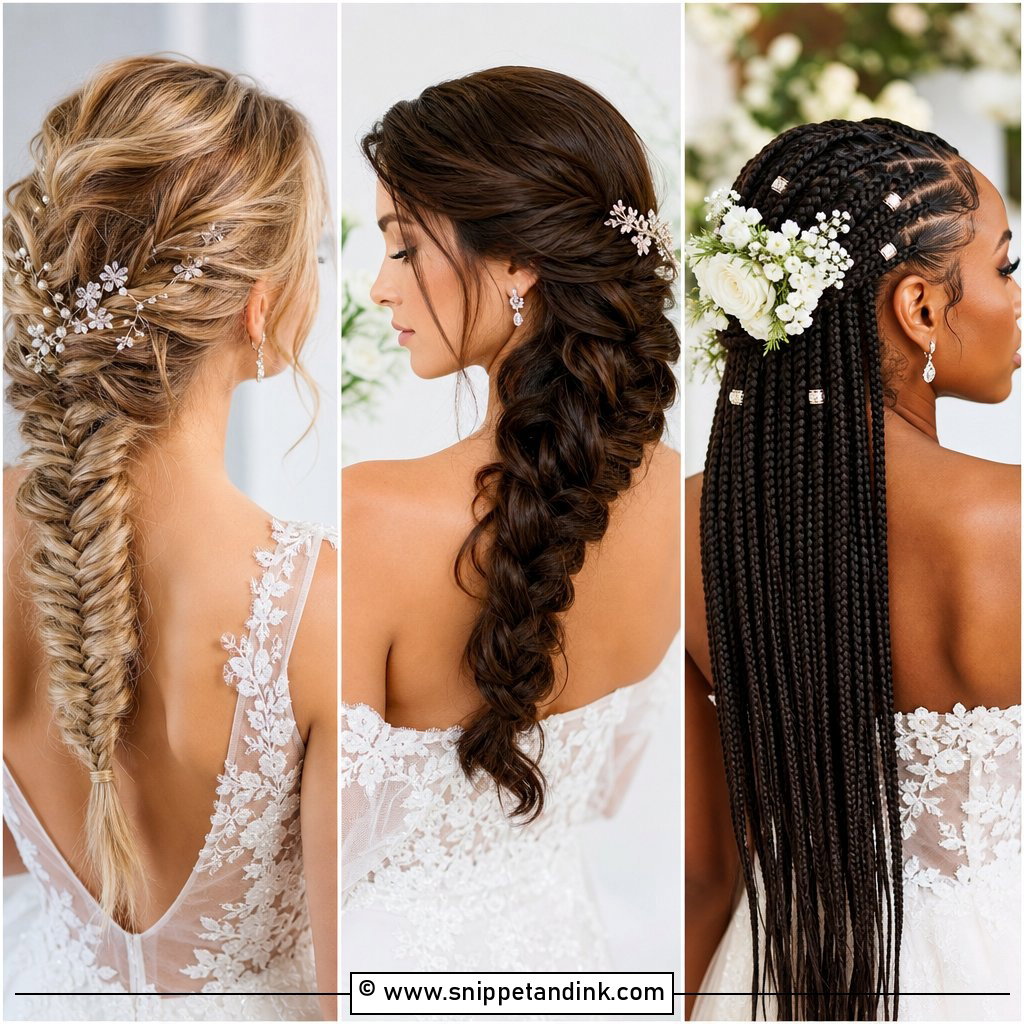
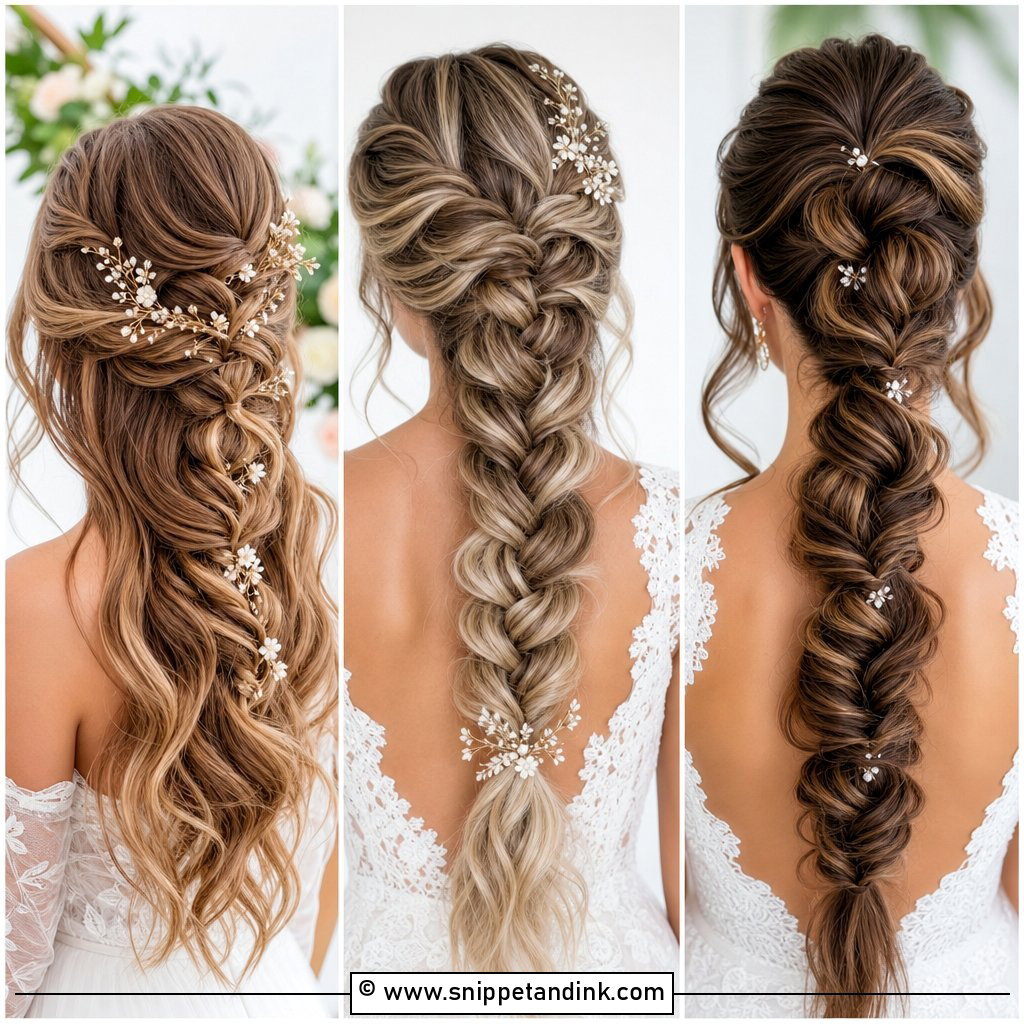
5. Fishtail Braid Wedding Hair
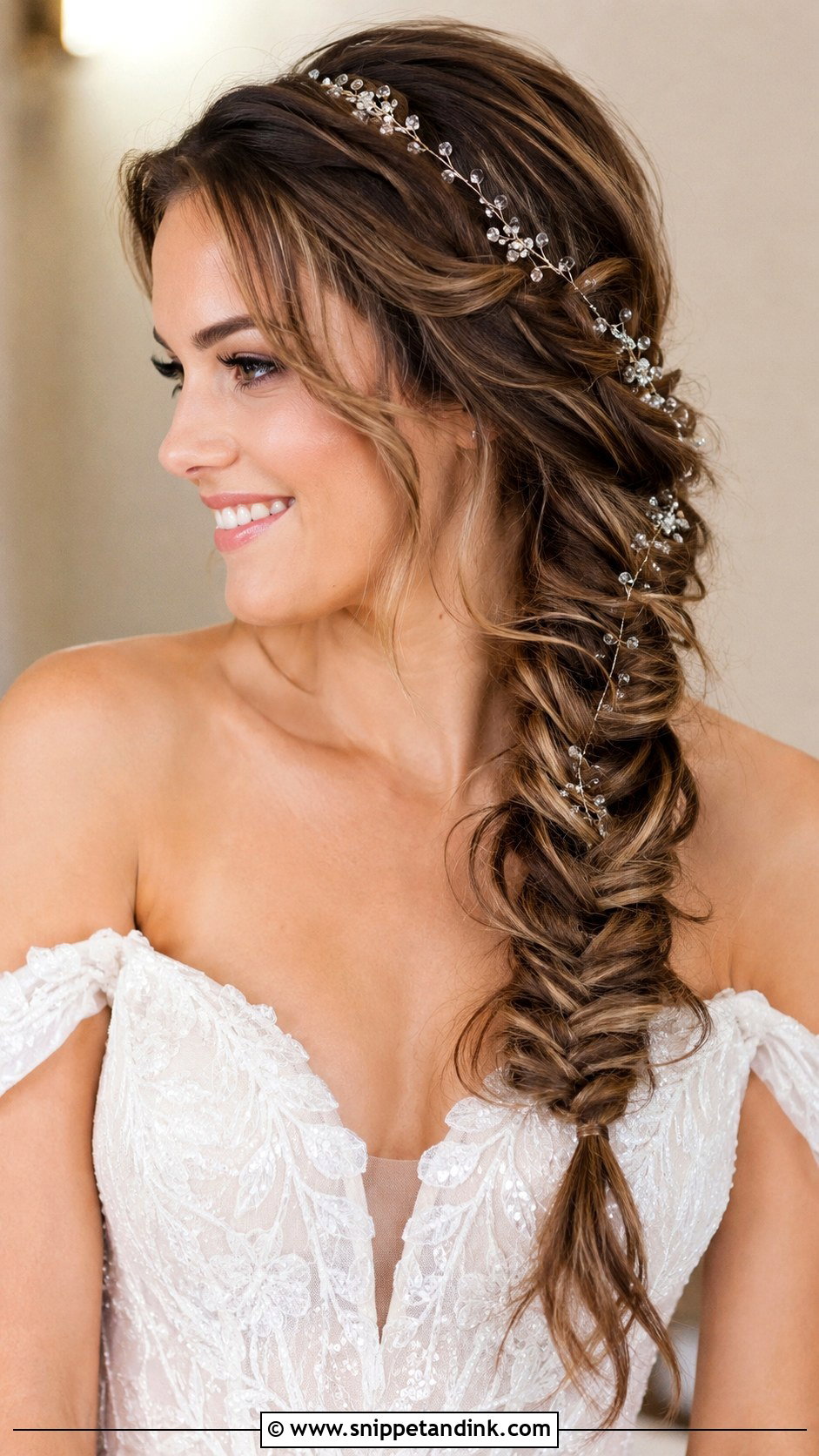
Highlighted or balayage hair is where a fishtail earns its place. Each tiny crossed section shows a different tone, so the weave reads as a pattern rather than just texture. Down the back it’s clean; over one shoulder it’s softer; combined with a half-up crown, it adds detail without bulk. Smooth fishtails look formal and pulled-open ones look younger. On solid dark hair, I loosen it more so the pattern can catch light.
6. Side Braid Wedding Hair
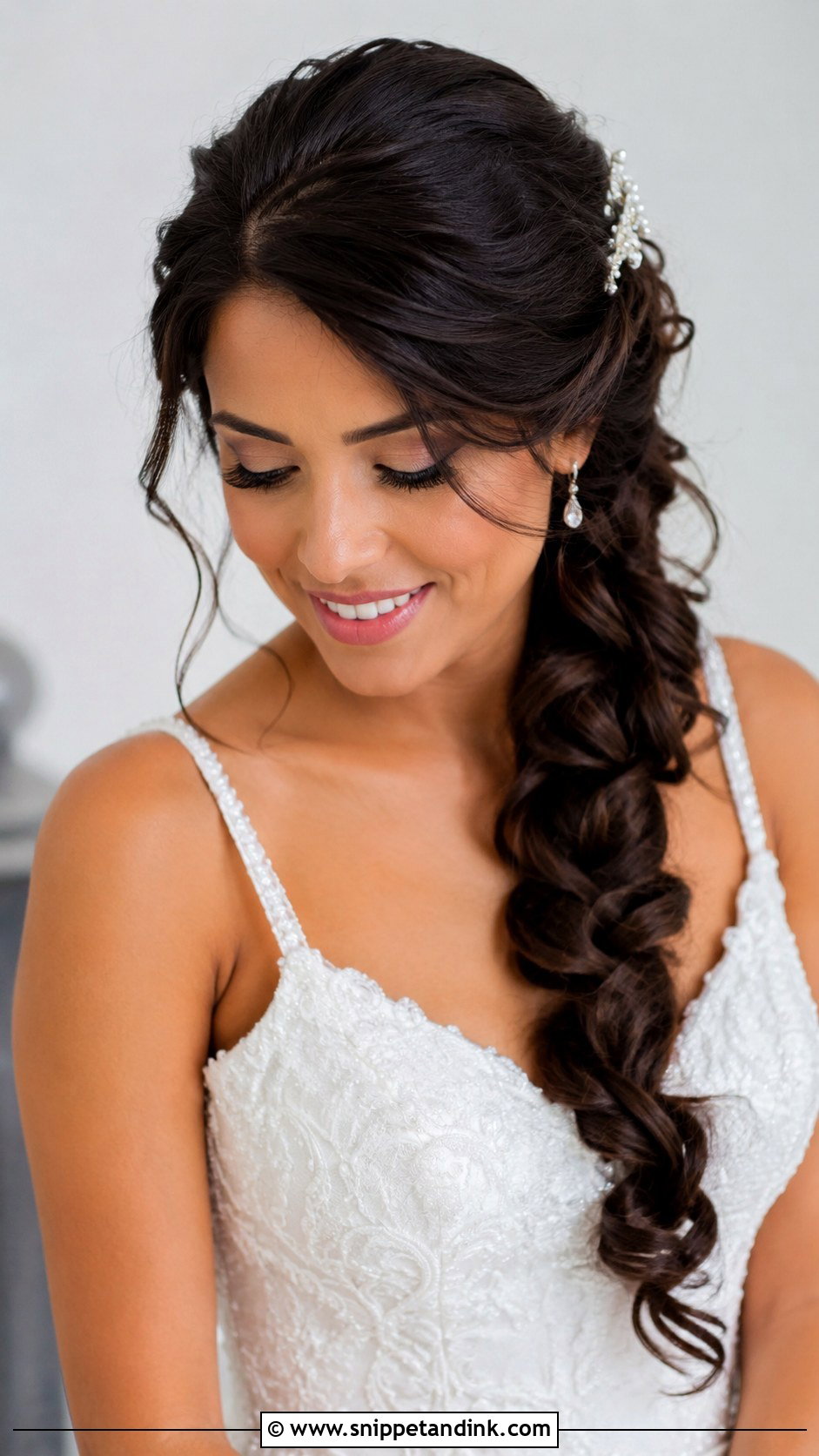
Strapless, one-shoulder and off-the-shoulder gowns leave a lot of bare skin, and a braid brought over one shoulder breaks that line up. The risk is the base. If it isn’t anchored firmly behind the ear, gravity drags the braid flat against the shoulder by the reception and the lift at the top disappears. I lock it with crossed pins under the first few stitches and spray it before bringing it forward. You need long hair for this, and it suits a bride who prefers one bold detail over lots of small ones.
7. Crown Braid Wedding Hair
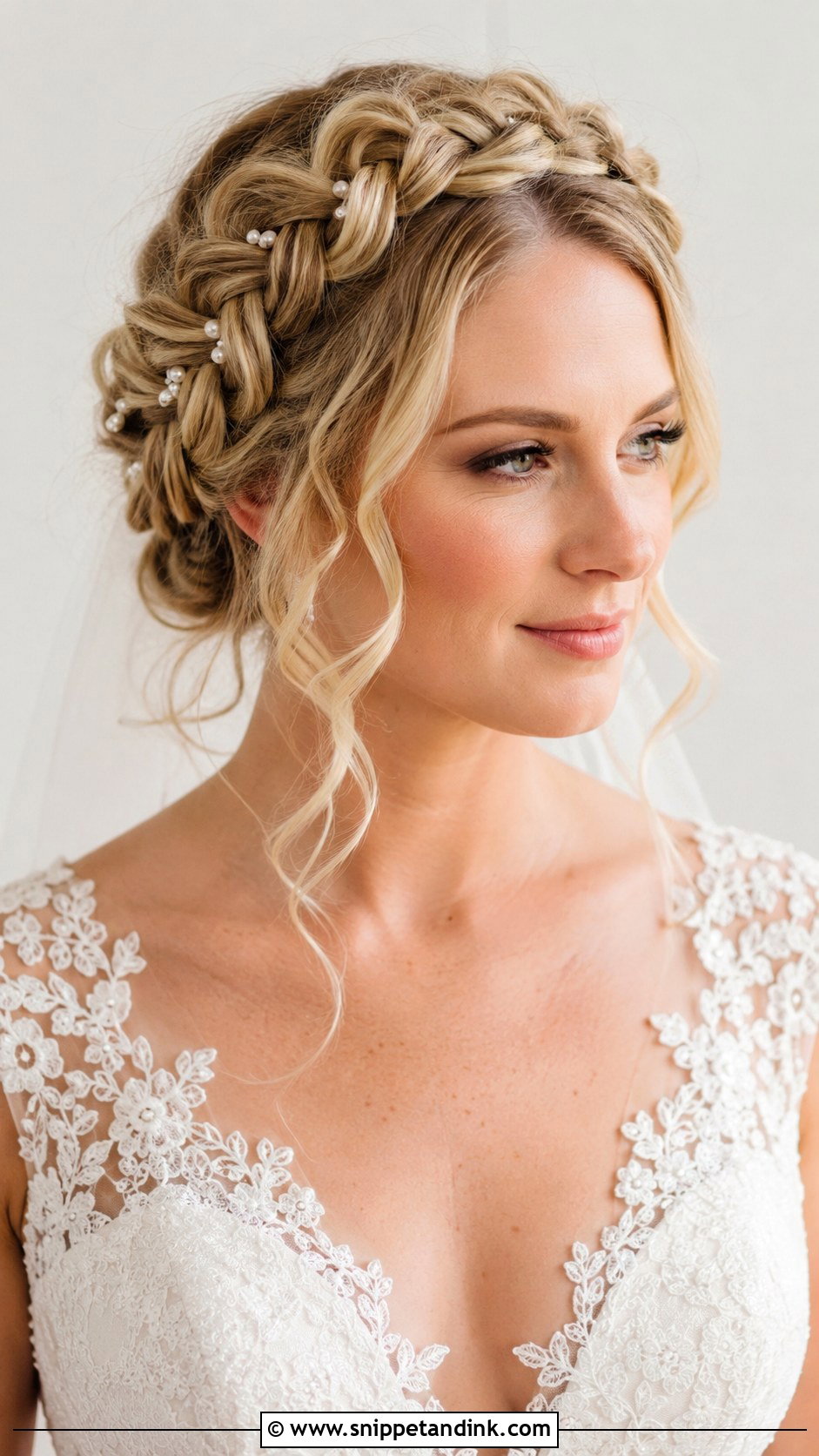
A full crown braid wraps all the way around the head; a partial crown runs from one side over the top and blends into a bun or waves. The partial version is kinder to short layers, which tend to poke out at the nape on a full wrap. I like it for a bride who wants her hair off her face without the tightness of a sleek updo. The veil goes lower at the back, under the braid, with small flowers or pearl pins along it. Smooth reads regal. Pulled open reads garden.
8. Waterfall Braid Wedding Hair
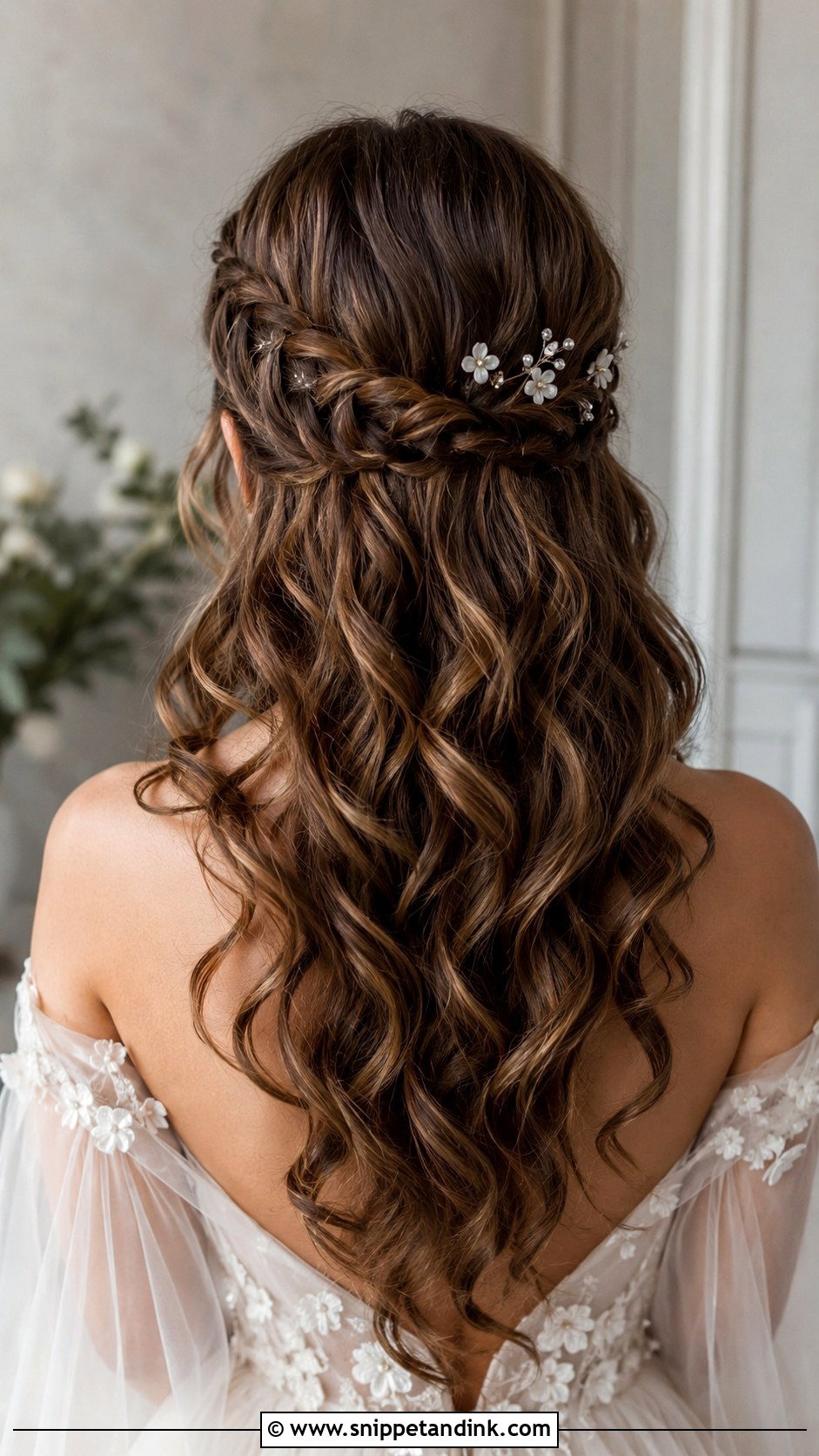
Waterfall braid wedding hair lets you keep almost all of your hair down while adding one line of detail along the side or back. Strands drop through the braid at each pass and join the curls underneath. Long, medium and layered cuts can all wear it, provided the layers reach the next pass of the braid; very short layers simply fall out. Keep accessories light. One small pin at the end is plenty, since anything heavier hides the drop-through effect that makes it worth doing.
9. Dutch Braid Wedding Hair
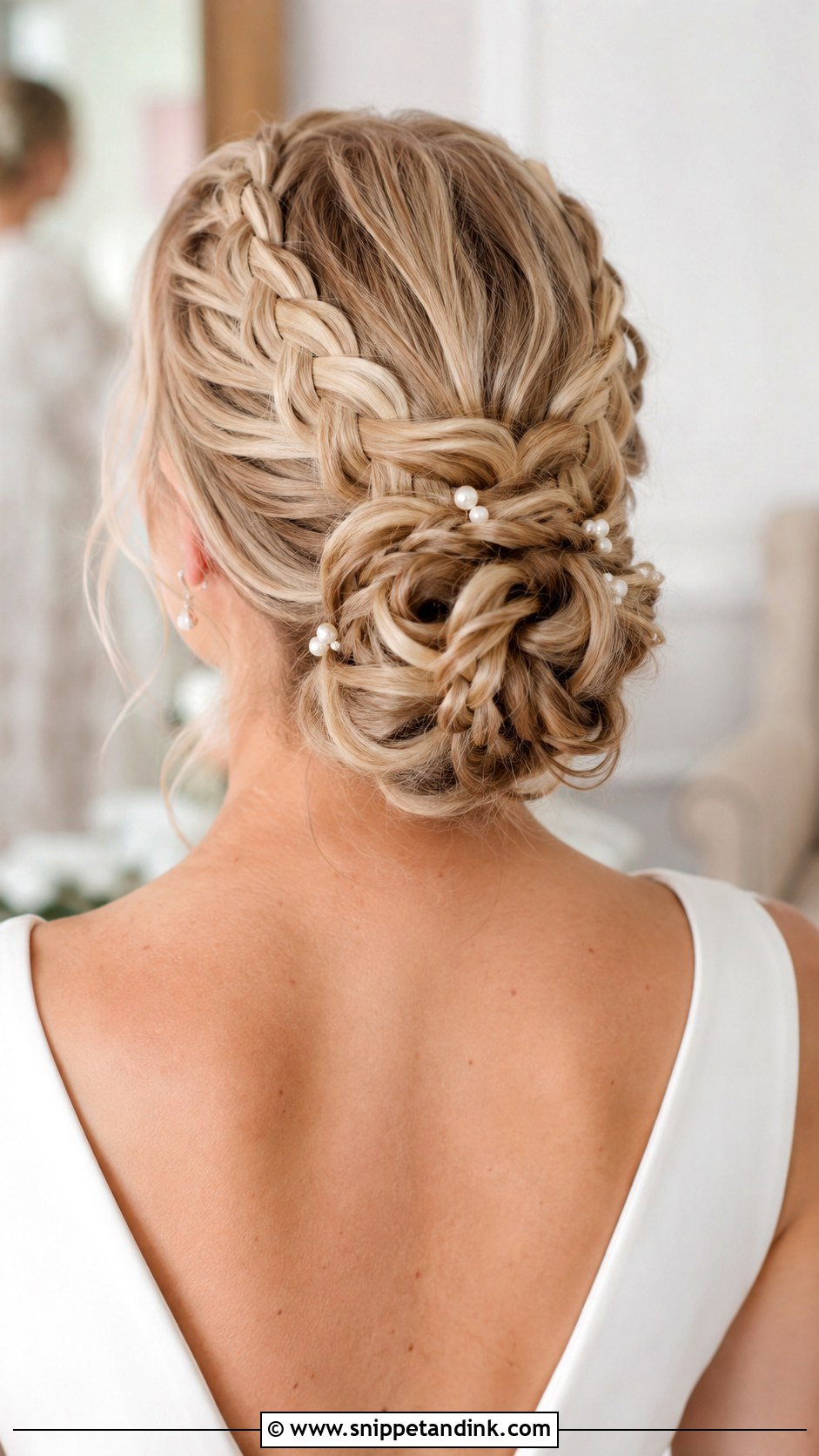
Thick hair is where a Dutch braid shines. Because the sections cross underneath, the braid sits raised on top and swallows a lot of volume, which tames dense hair instead of fighting it. One thick braid into a bun, two into a low updo or one to the side over curls all use the same structure. For a bridal finish I pull the edges wider, then add pins or florals in two or three spots only. Spread them along the whole braid and it looks crowded.
10. French Braid Wedding Hair
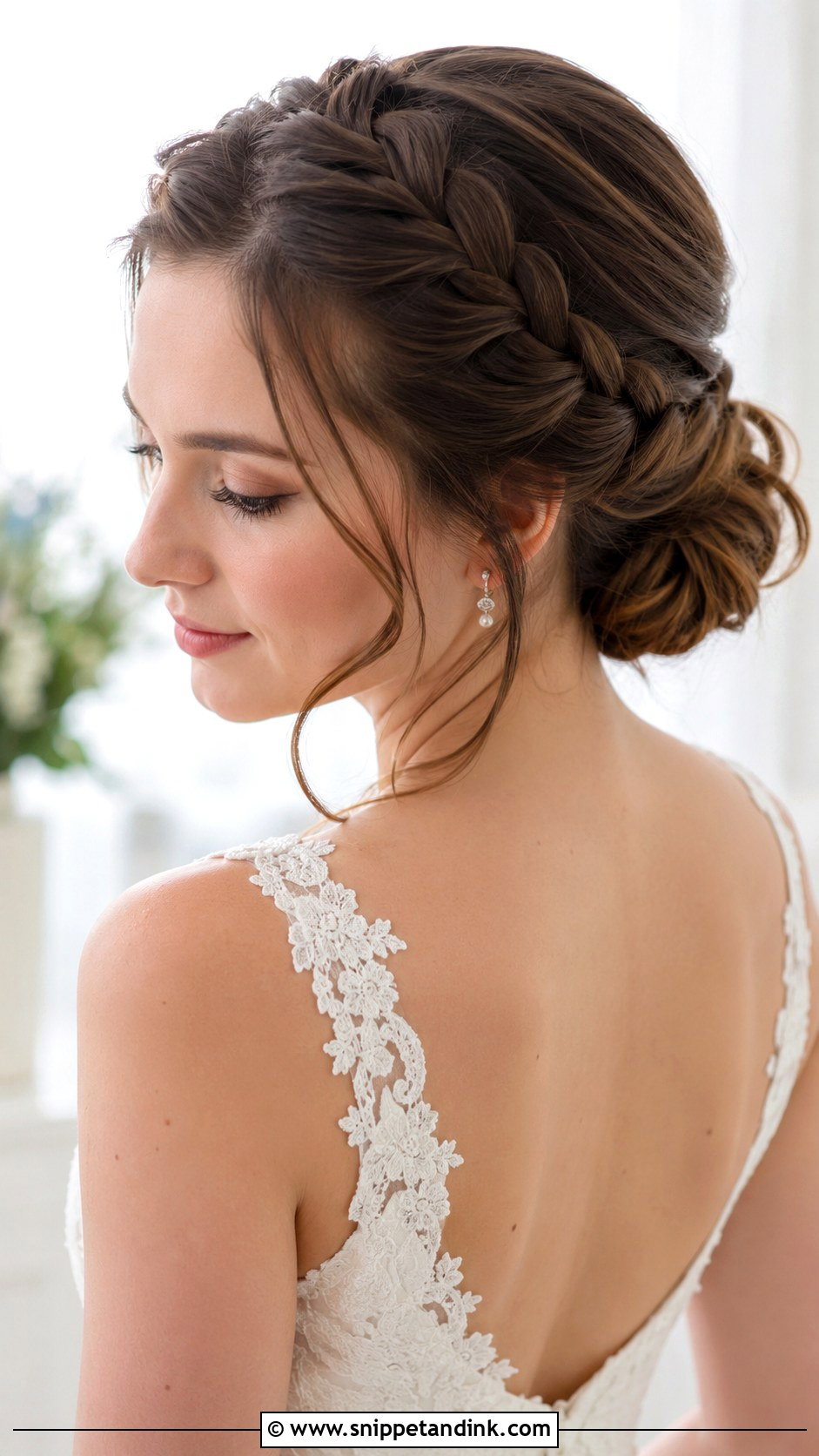
Nothing about a French braid will surprise you, and on a wedding day that’s a strength. It gathers hair smoothly against the head, so it suits the bride who already wears one at weekends and wants the dressed-up version. It can flow into a low bun, swing to the side or sit at the crown over loose curls. A very flat braid can look severe in photos, so I lift a little volume at the roots and leave two soft pieces at the temples.
11. Braided Ponytail Wedding Hair
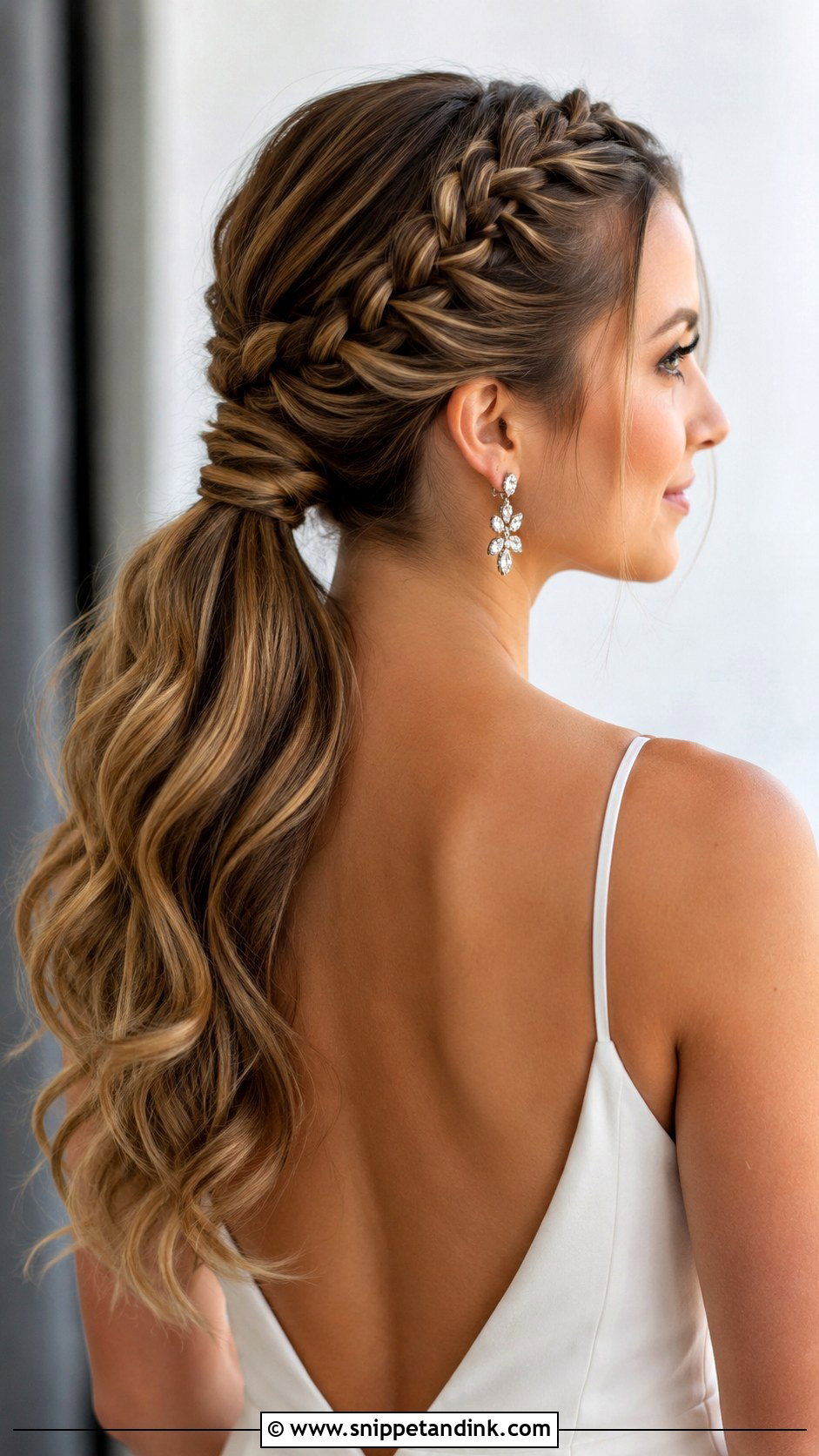
High and braided is glamorous; low and braided is softer. Either way, I set it a touch lower than you’d wear it to the gym, because a high pony pulls on the scalp after hours of wear and leaves the veil comb nowhere comfortable to sit. The braid can start at the crown and feed in, wrap the base to hide the elastic, or run the full length. Fitted and minimalist gowns suit it, with statement earrings doing the decorating. Two crossed pins under the base stop it drooping in the later photos.
12. Braided Bun Wedding Hair
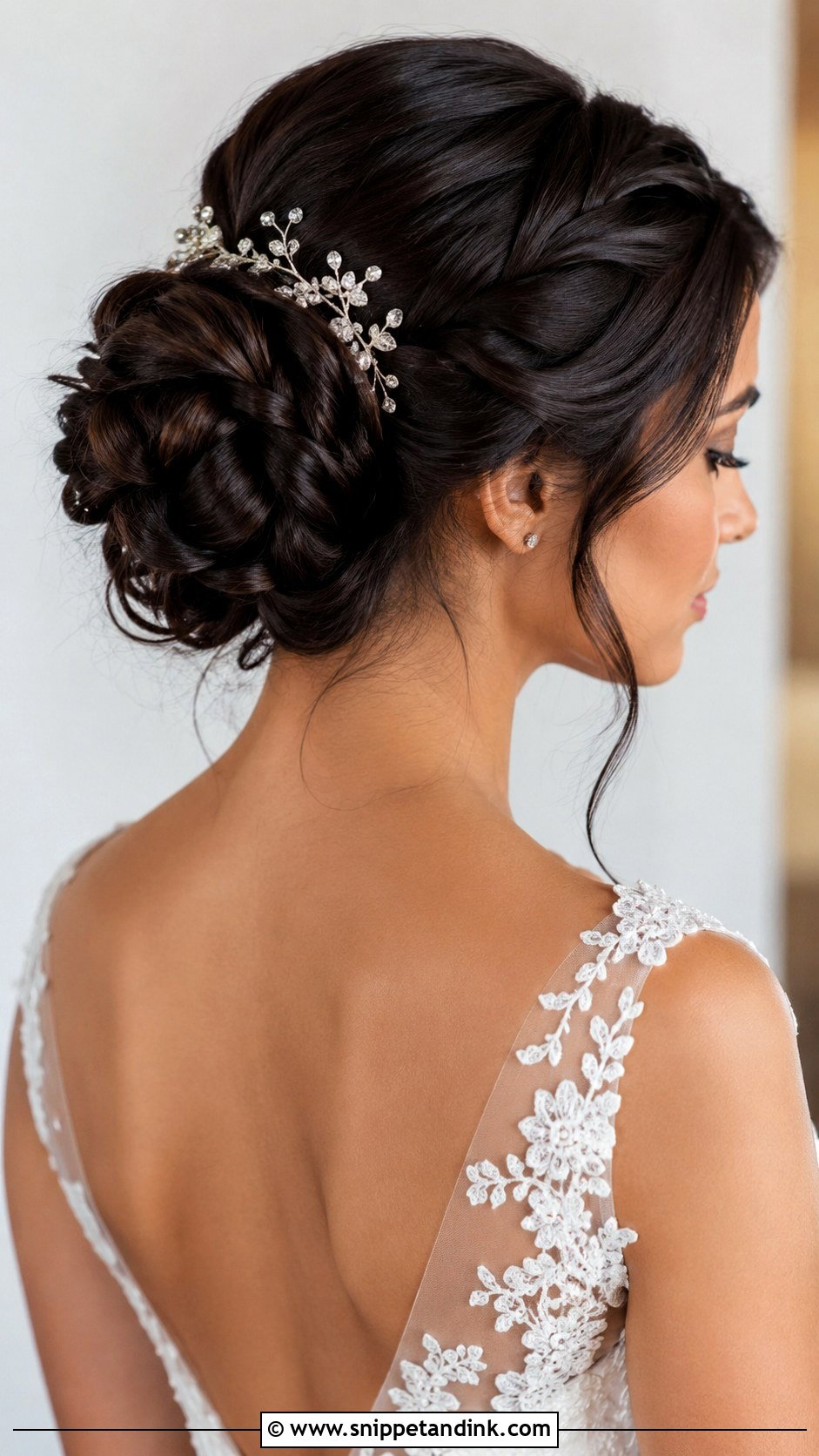
Fine hair benefits most from this one, which surprises people. Padding or a small clip-in piece hides inside the bun, and the braid wrapped around it makes the shape look fuller than your own hair could manage alone. Thick hair suits it too, because the braid packs the volume into a neat pattern. Centered is classic and slightly off to one side is softer. A crystal comb or a few small blooms finish it.
13. Loose Braid Wedding Hair
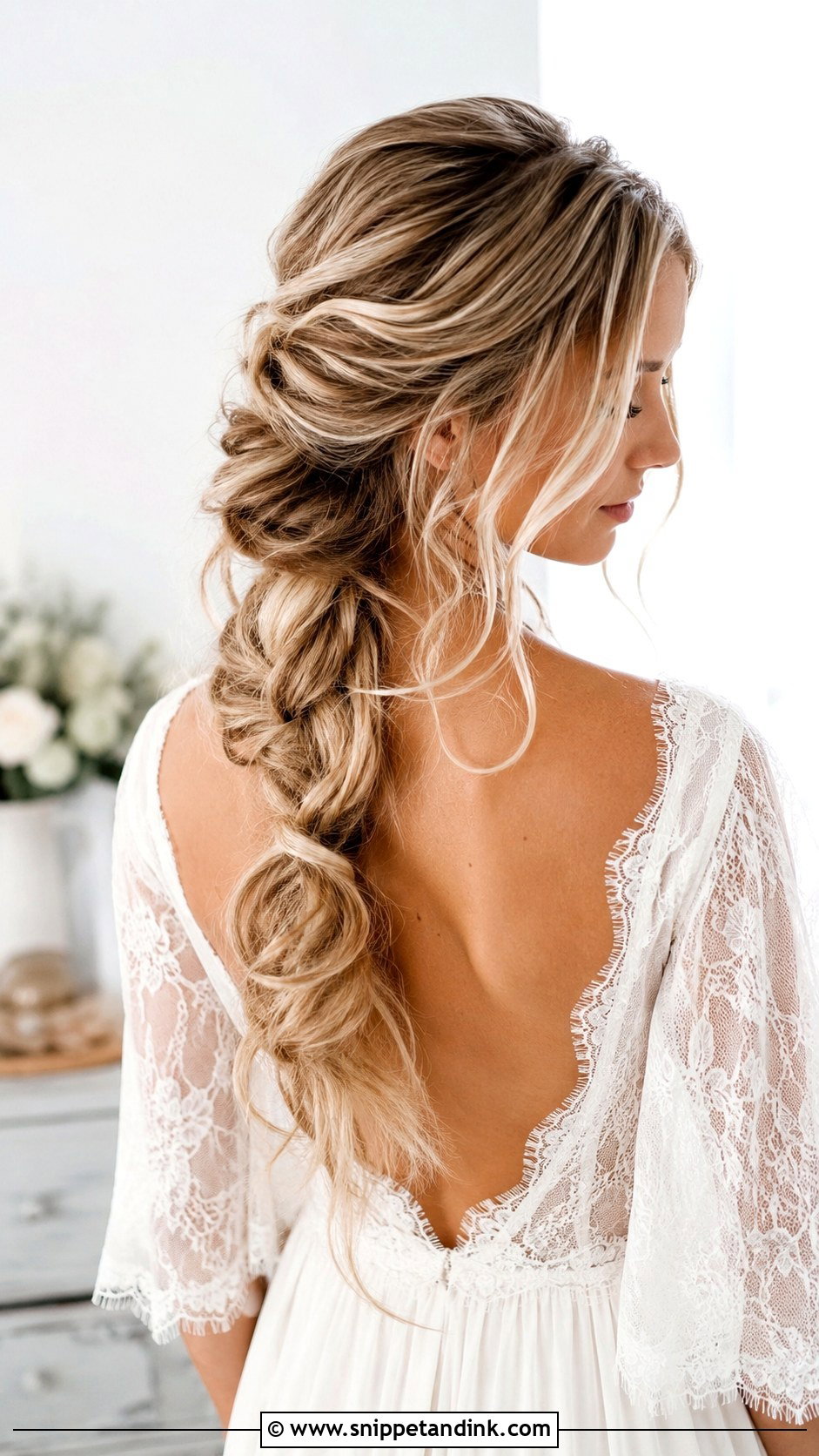
Loose braids need the most hold of any style here, not the least. Pulled-apart sections have nothing gripping them, so I use texture spray before braiding, hidden pins along the length and a flexible spray afterward. It moves naturally outdoors and suits a bride who doesn’t want anything polished. Highlights help, because each loosened piece catches the light differently and the braid looks fuller than it really is.
14. Braided Chignon Wedding Hair
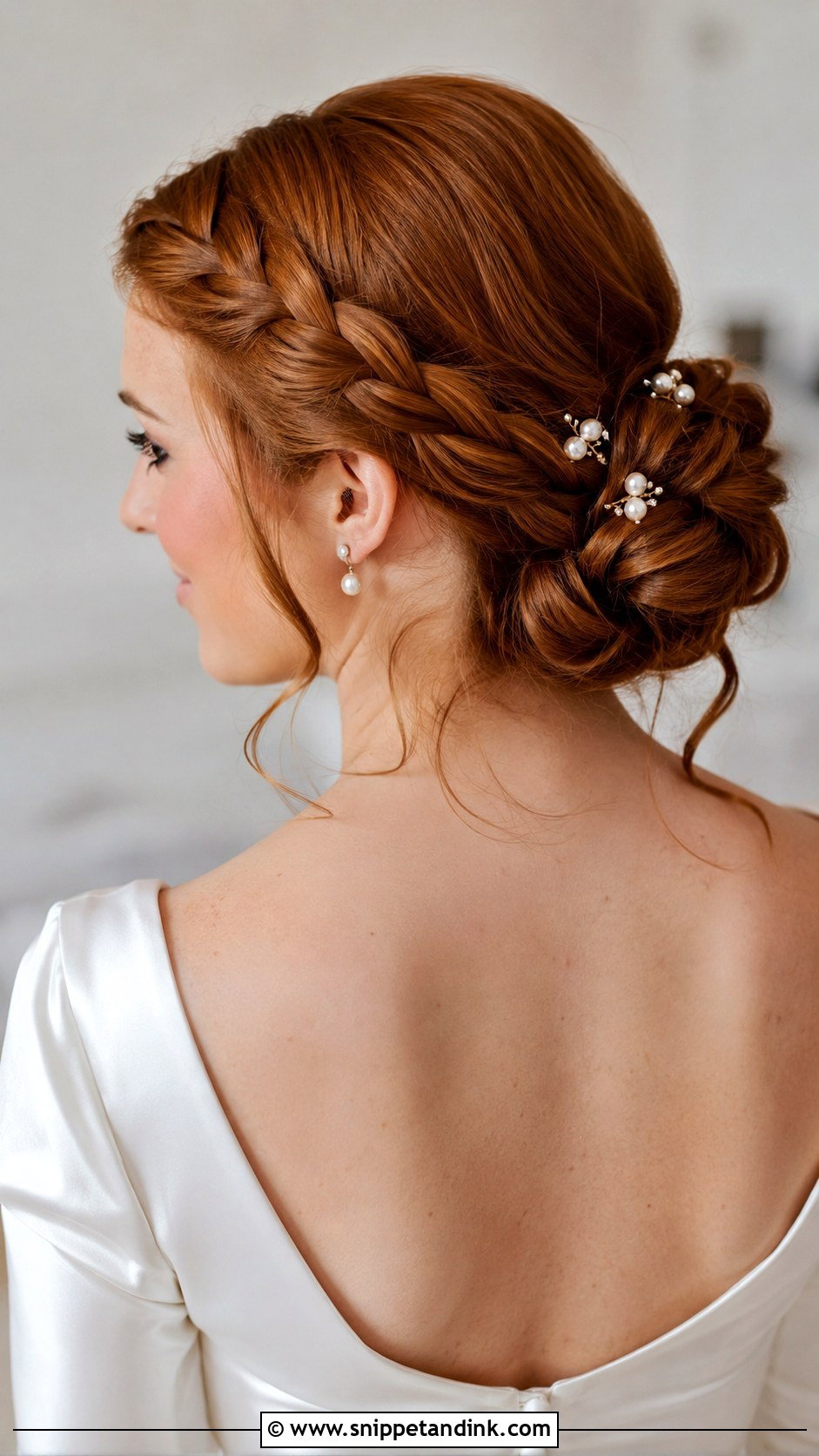
Here the braid either sweeps from one side into the chignon or wraps the bun like a frame. Sitting right at the nape, it stays clear of combs, veils and high collars, and it’s one of the most comfortable styles to wear seated through a long dinner. Think about the back view while we build it. Guests look at that angle for the entire ceremony. Leave the chignon slightly loose with soft makeup, or keep it smooth beside a sharper, more structured dress.
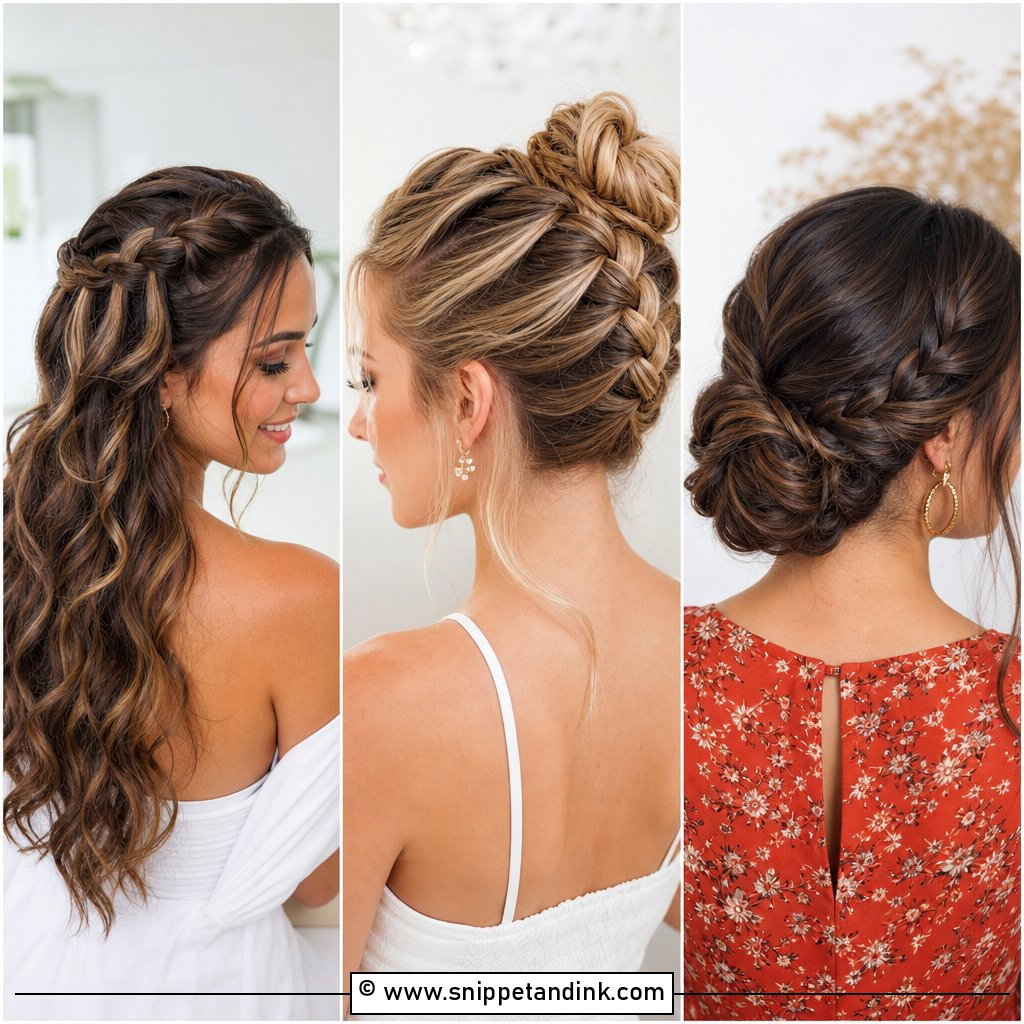
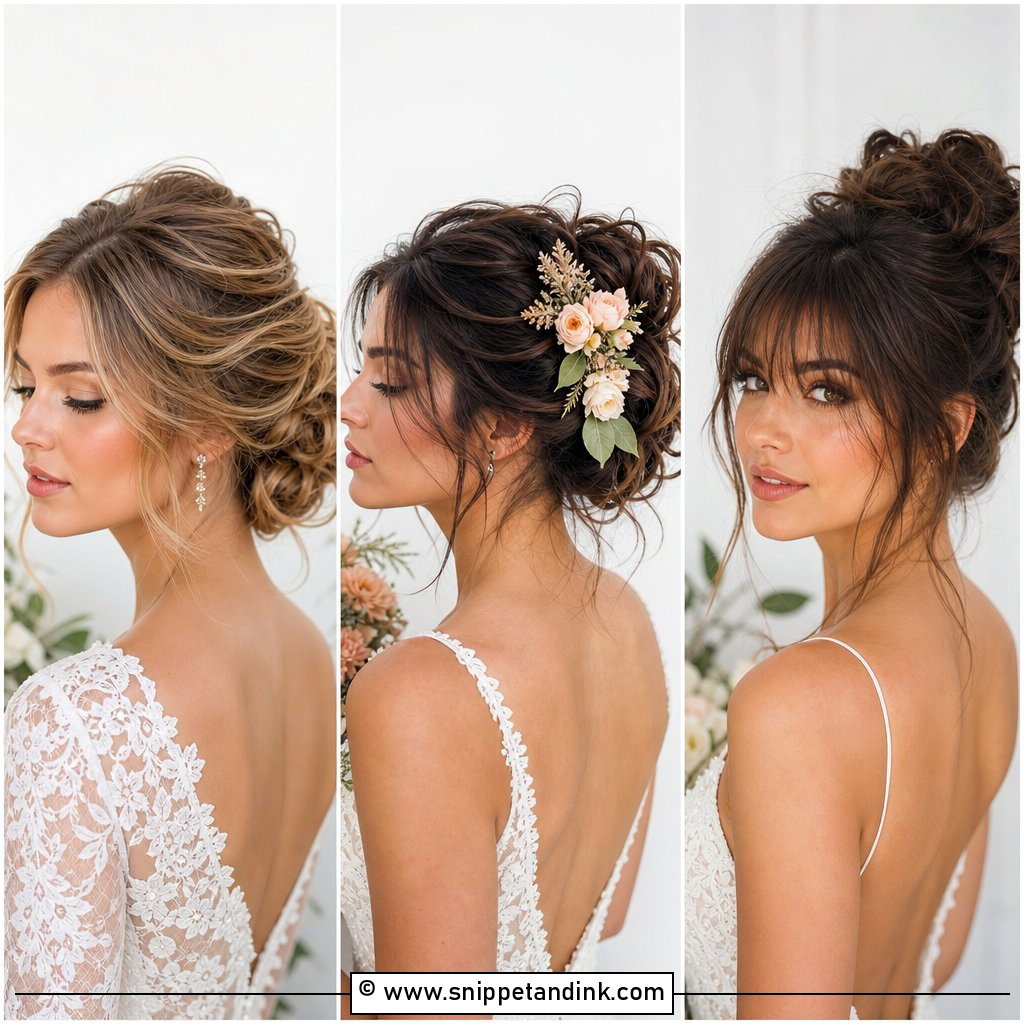
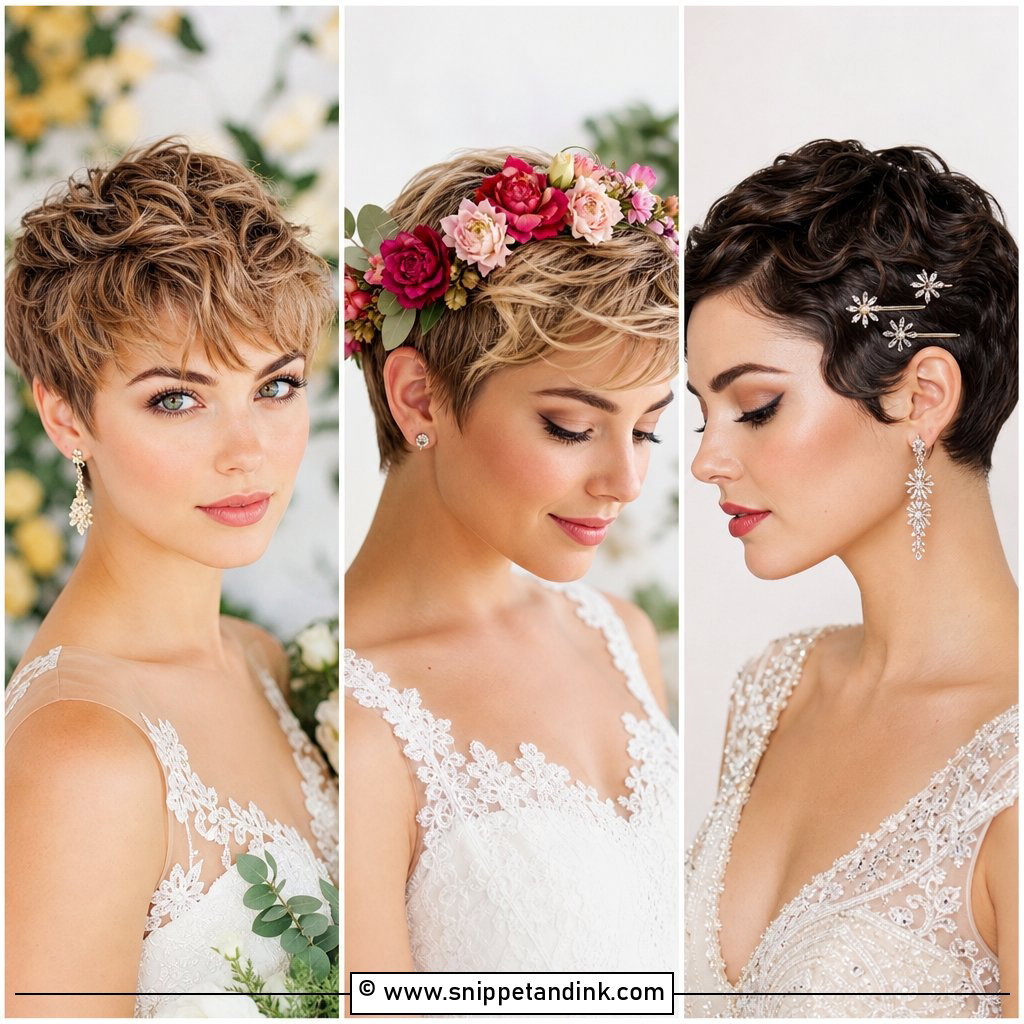
15. Box Braids Wedding Hair
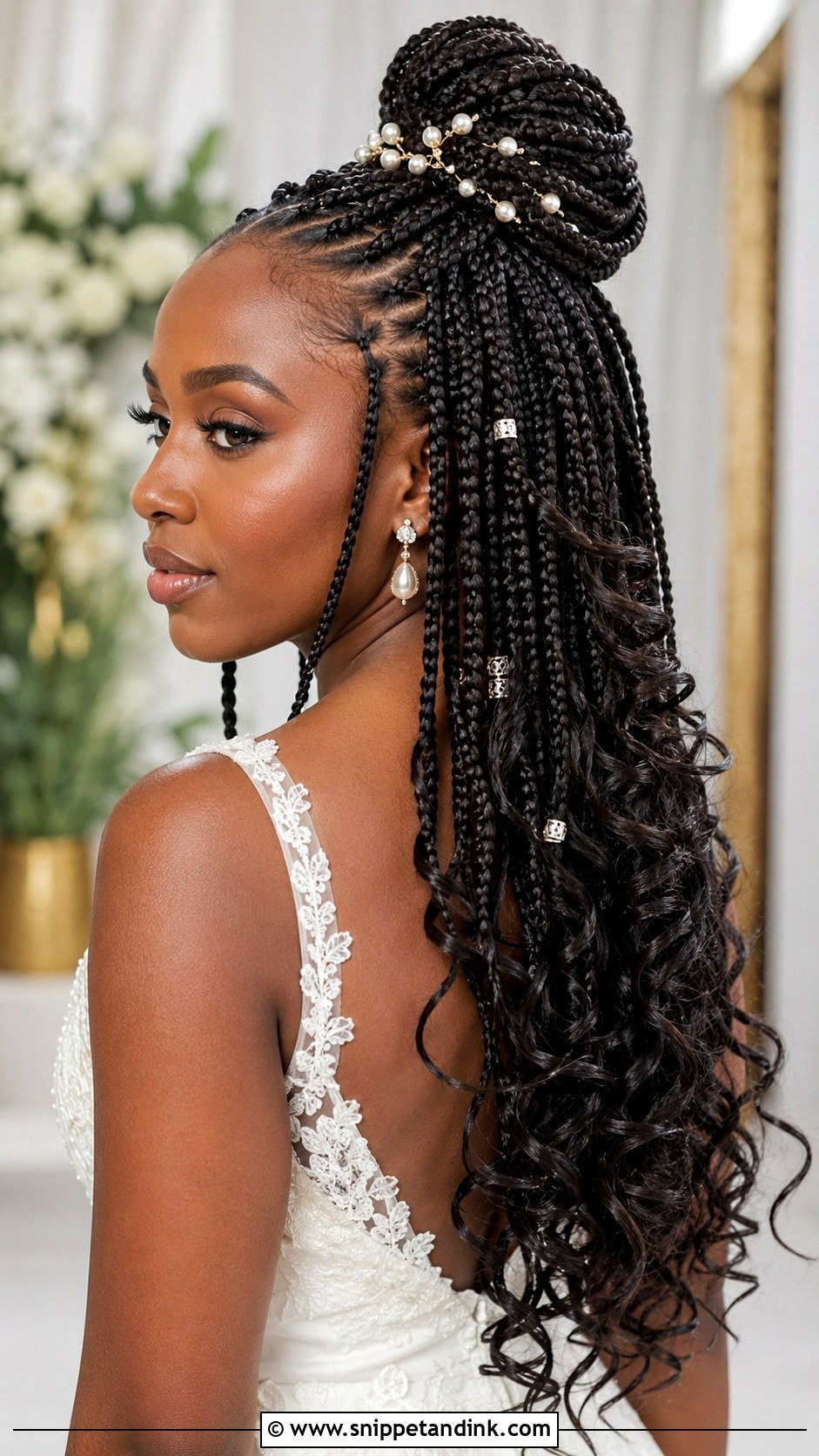
Box braids wedding hair lets a bride who wears braids every day stay completely herself at her wedding. Long box braids go into a high bun, a low bun, a half-up shape or over one shoulder. Because they’re protective and already set, there’s no heat styling and nothing to drop in humidity across a full wedding weekend. Pearl or gold cuffs, a thin headpiece or curled ends dress them up. Give your braider the exact date, so the install lands a few days before and the braids look settled but still crisp.
16. Goddess Braids Wedding Hair
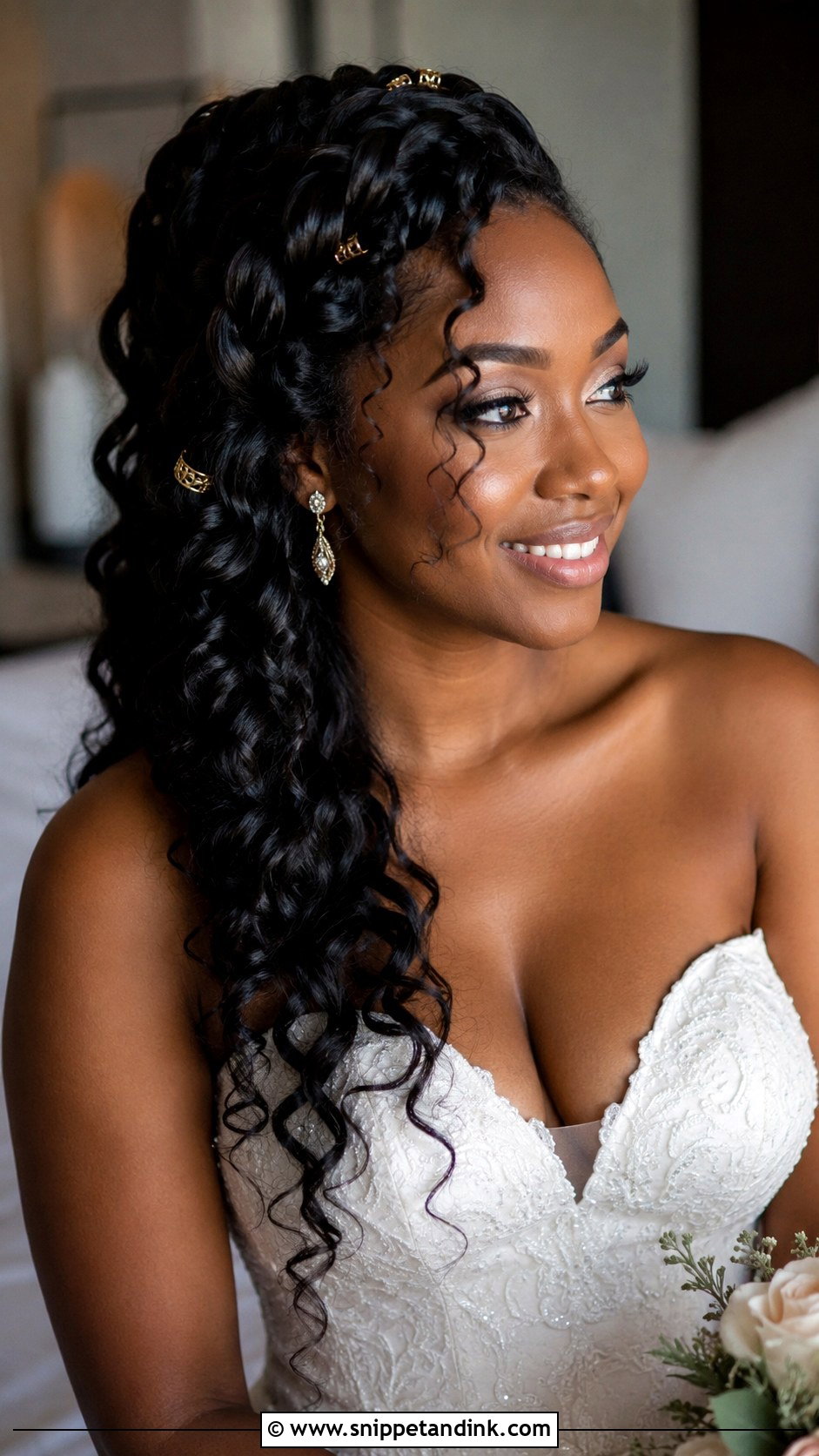
Goddess braids wedding hair threads loose curly pieces through larger braids, so it finishes softer and fuller than box braids. The curls are the part to watch. Human-hair curls frizz and tangle without a light leave-in, and synthetic curls can matte when they rub against a lace bodice all day. Down, half-up, in a bun or swept aside, the bridal version mostly comes down to a clean parting and soft, laid edges. Pearl pins or gold cuffs in a few places are enough.
17. Cornrow Wedding Hair
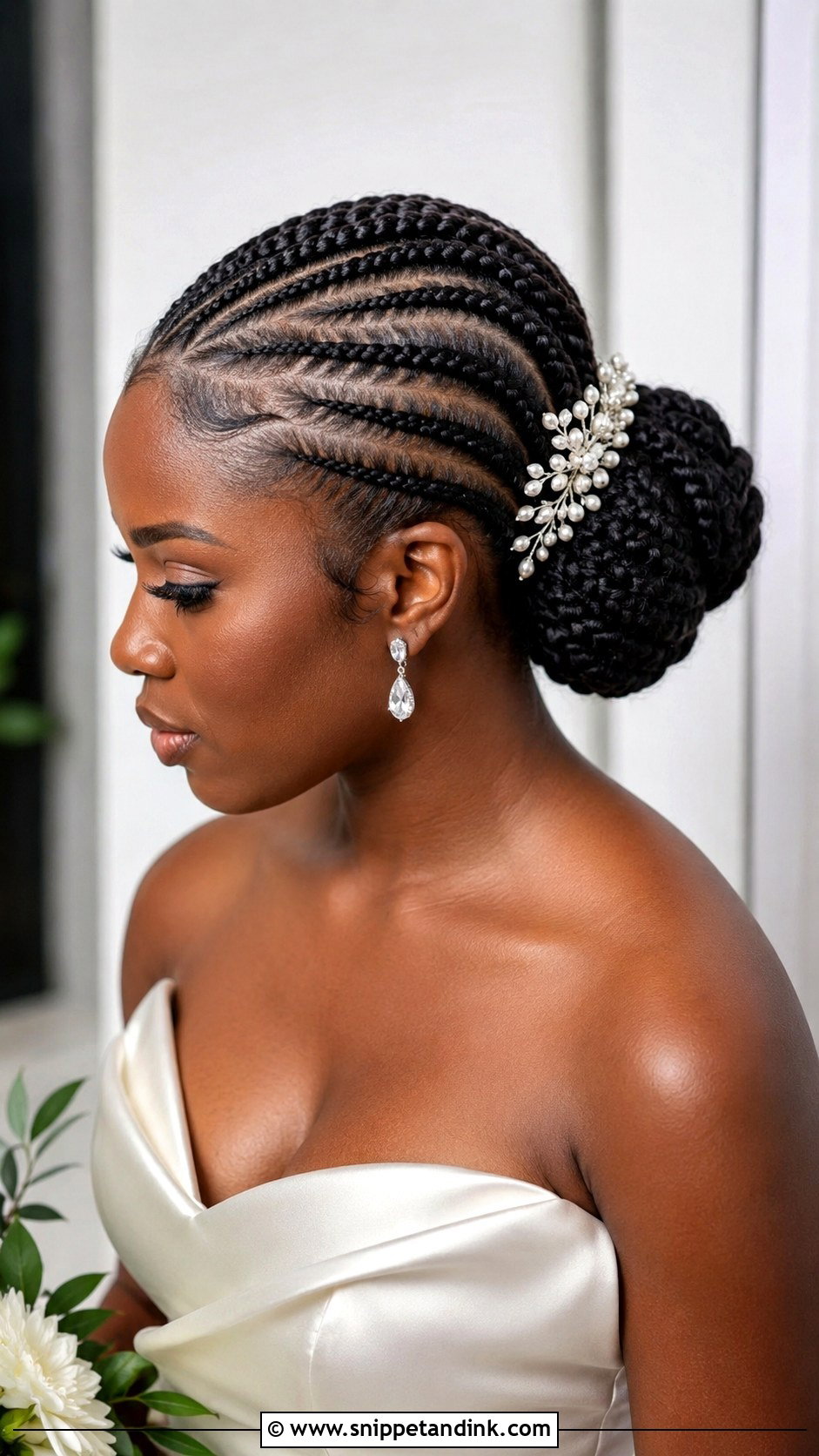
Cornrow wedding hair keeps every strand off the face and exactly in place from ceremony to reception, and the parting pattern is the design. Cornrows can curve into a low bun, feed into long braids or form a crown pattern. A veil needs planning, because a comb can’t sink into flat braids the way it sinks into loose hair. At the trial we usually anchor it into the bun, or across the base of two braids with crossed pins. Clean parts, a light shine product and one accessory finish it.
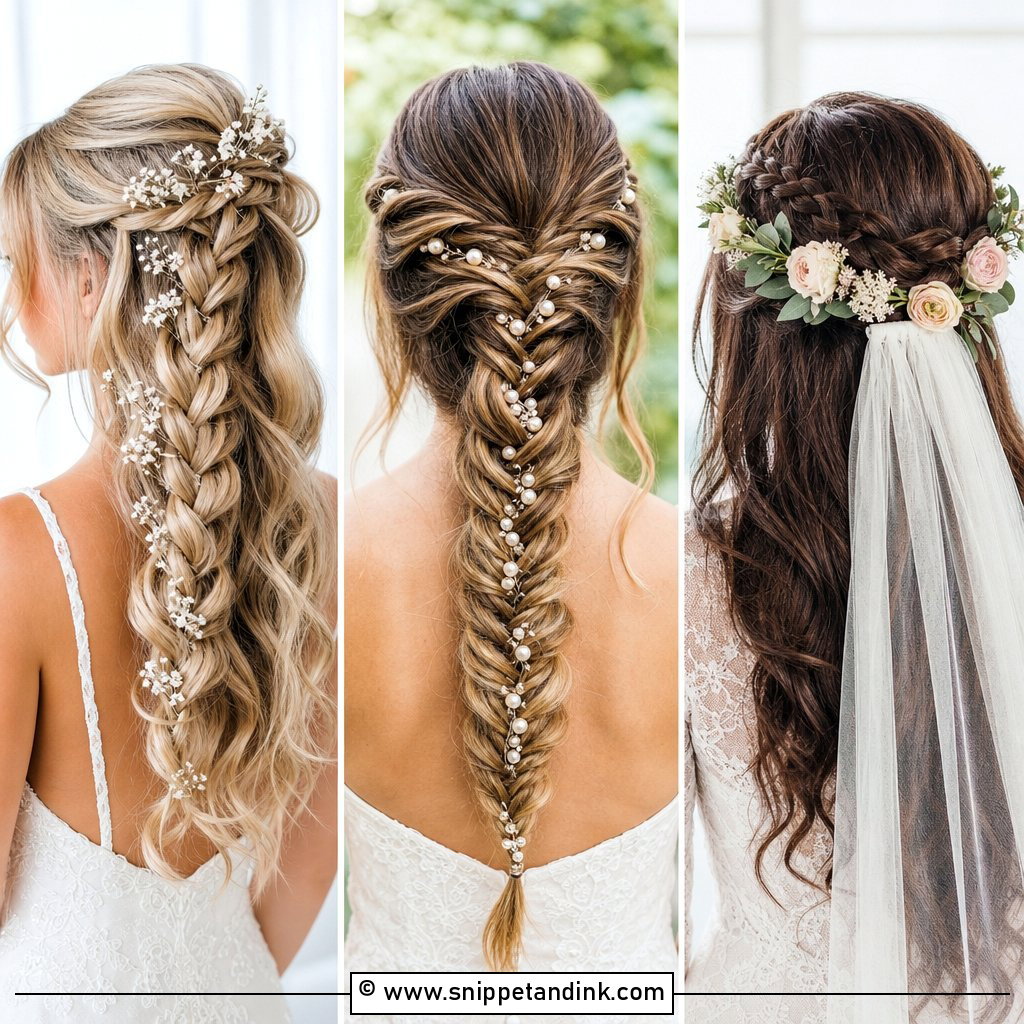
18. Braided Wedding Hair With Flowers
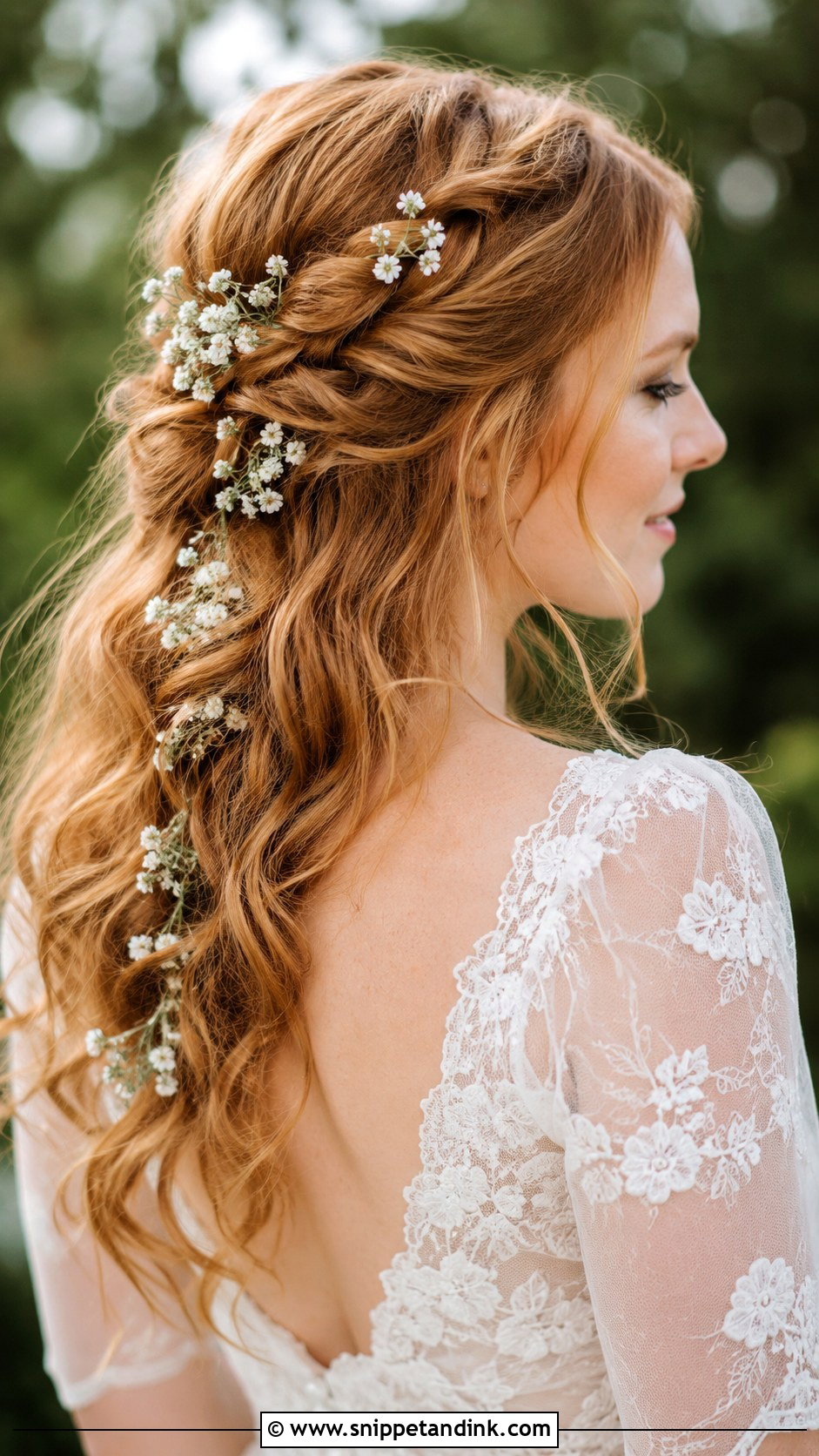
Scale matters more than which flower you pick. Tiny blooms suit a crown or half-up braid, and a few larger heads make a side braid more dramatic, but big flowers on a thin braid look stuck on. I ask the florist and stylist to talk directly, because the florist needs to wire and tape stems small enough to push through a braid. Sturdy stems survive a warm day, while delicate petals bruise where the pins touch them. Done well, the flowers look woven in, not set on top at the last minute.
19. Braided Wedding Hair With Veil
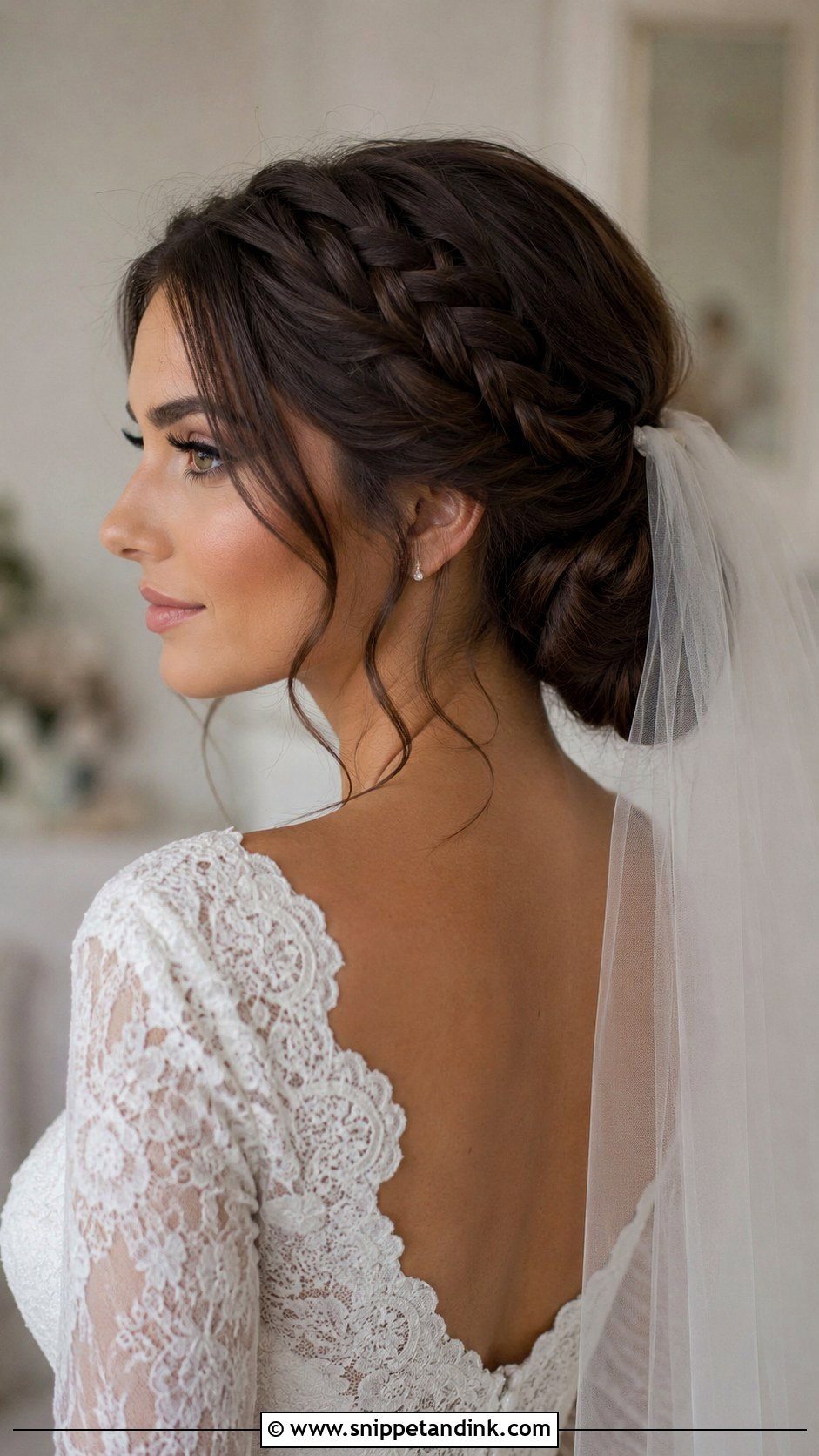
A braid gives veil pins more to grip, especially in a bun, a crown braid or a half-up section. Placement follows the style. A high veil needs crown volume to sit on; a low veil belongs with a braided chignon or low bun. Bring the actual veil to your trial, not a borrowed one, since weight and comb length vary a lot. Then walk, sit and turn your head quickly to see if anything shifts.
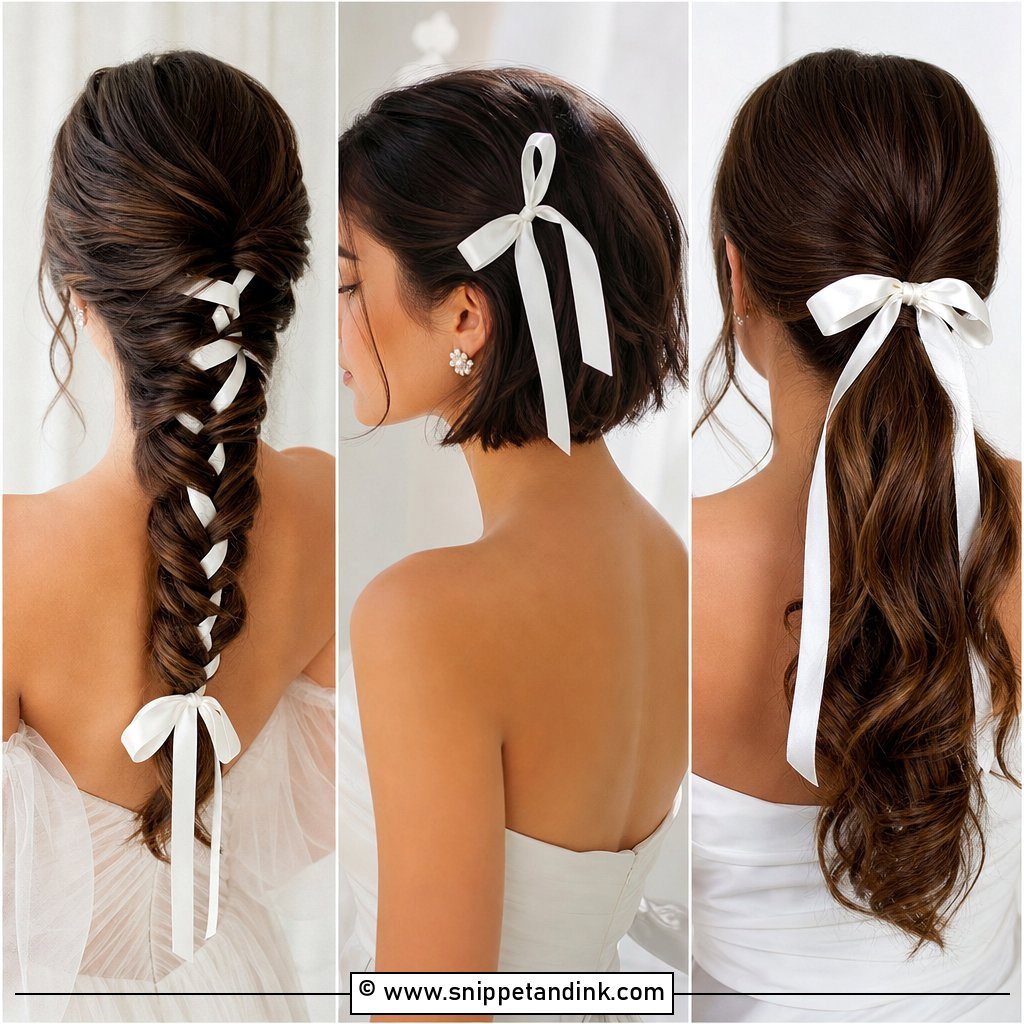
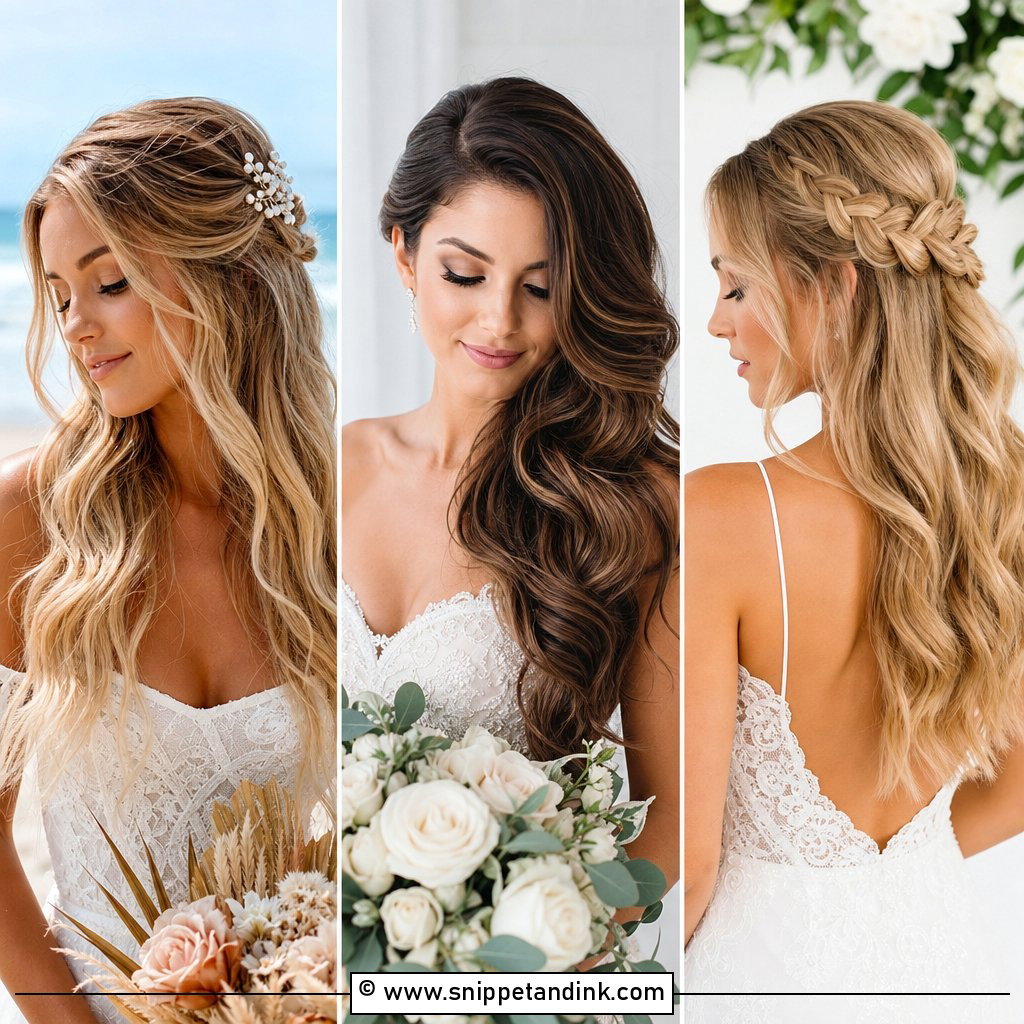
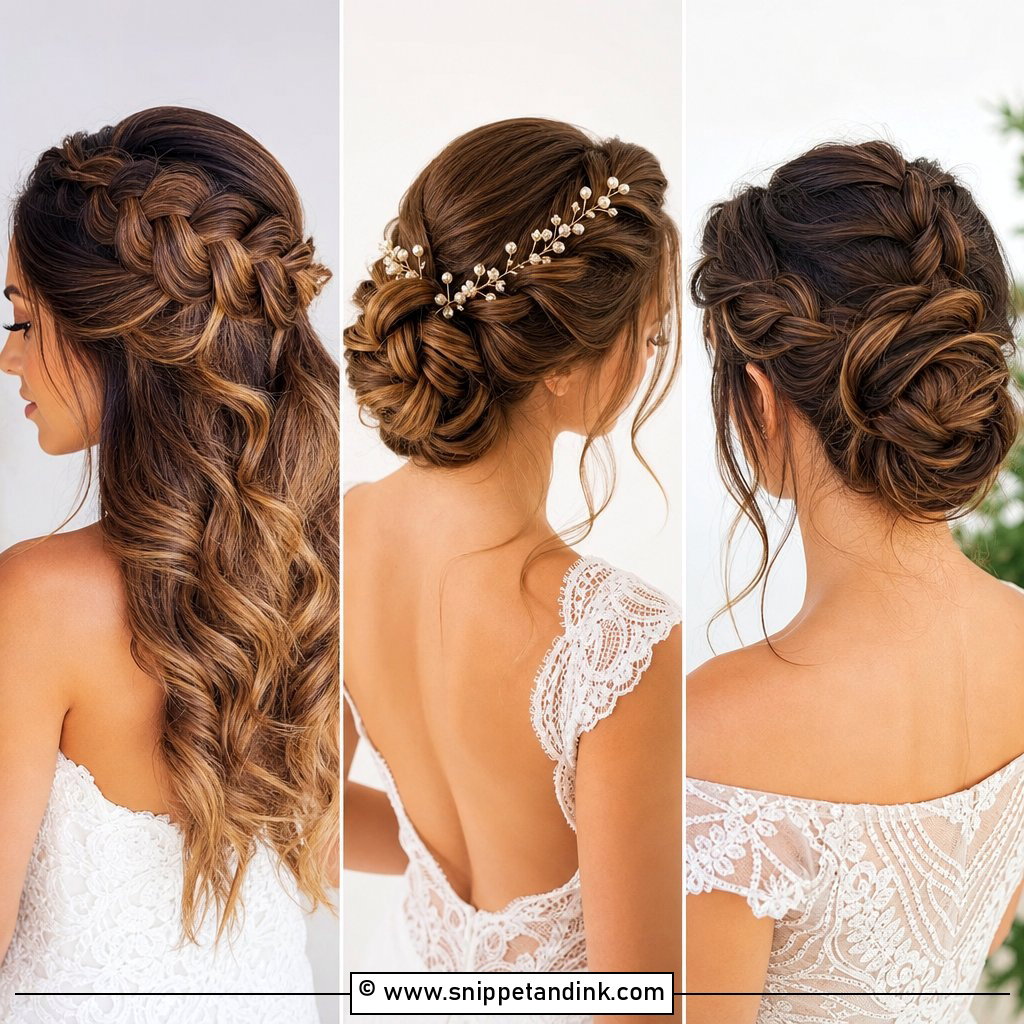
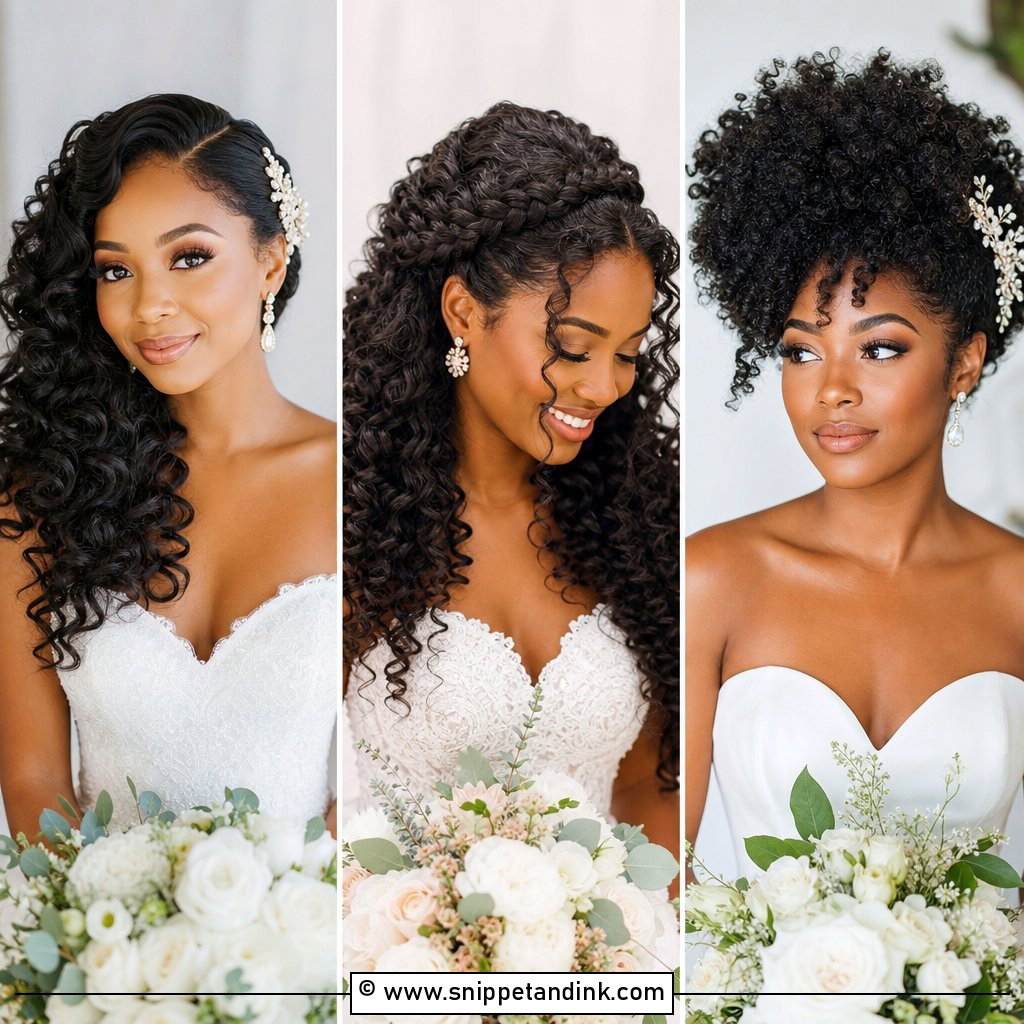
20. Braided Wedding Hair For Long Hair
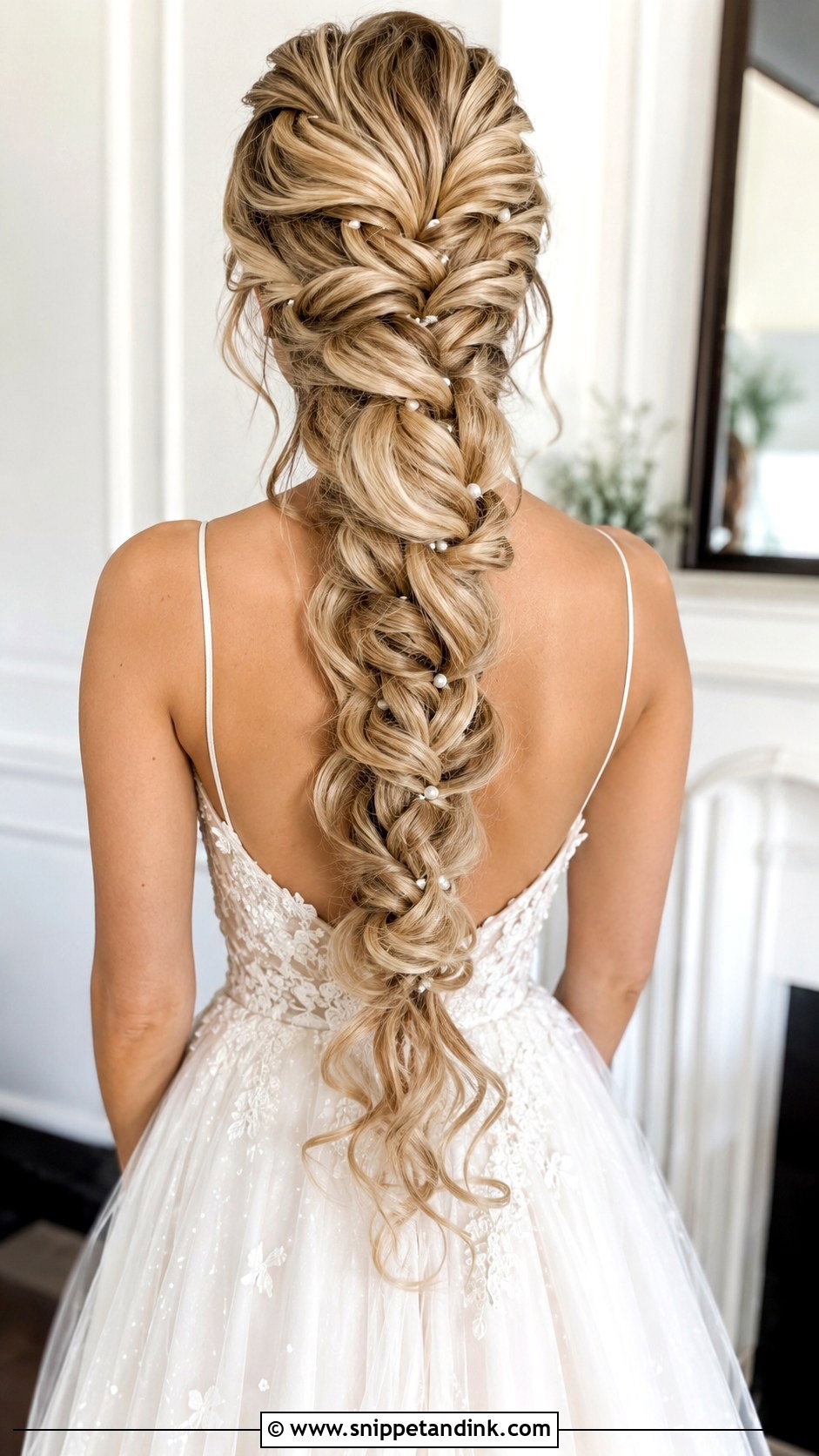
Long hair gives you the most choice and the most weight to manage. A thick side braid, a fishtail, a braided ponytail or a half-up braid over curls are all possible, but every extra inch is something the pins have to carry. Balance is the rule I work to. A very full braid wants a soft, simple front, and a detailed dress wants a cleaner braid with fewer accessories. Hidden pins along the base keep it comfortable. If your hair reaches your waist, a light trim a few weeks out keeps the tail of the braid looking healthy.
Protective Braids on a Wedding Timeline
Box braids, goddess braids and cornrows are usually installed by a braider days before your bridal stylist ever sees them. That handover only goes smoothly if the dates are planned backward from the wedding.
- Book the braider early. Long, small box braids can take most of a day, and good braiders fill up quickly in wedding season.
- Aim for the install three to five days before the wedding. Fresh braids can feel tight and look raw at the parts; a few days later the scalp has relaxed and the braids still look crisp.
- Ask for moderate tension, especially at the hairline. Tight edges ache by evening and can lead to breakage over time.
- Sleep in a satin scarf or bonnet every night of wedding week, and smooth a little mousse over the braids the night before to flatten flyaways.
- Plan the take-down too. Braiders generally advise against leaving braids in much longer than six to eight weeks, so if you’re travelling afterward, book the removal before you leave.
When a different stylist will be pinning the braids into an updo on the morning, send them a photo of the finished install a couple of days ahead. The weight and length of the added hair change how many pins they’ll bring and how high a bun can comfortably sit.
A Braid That Suits the Dress, the Venue and Your Hair
Braids cover nearly every bridal mood, from a crisp low bun to box braids dressed in gold cuffs. You can narrow the list with what you already know: the back of your dress, the venue, your length and texture, and whether a veil is coming. Bring clear photos and every accessory to the trial and test them together. A braid planned that way holds up in person and in pictures well past the last song.
You'll Like These Ideas:




Leave a Reply