
An Indian wedding rarely means one hairstyle. It means four or five, across haldi, mehndi, sangeet, the ceremony and the reception, each with different jewelry, a different dupatta and very different demands on your hair. The ideas below go from traditional South Indian plaits and jasmine buns to open curls, crowns and bubble braids. For each one I’ve noted what it needs from your hair and where it tends to struggle, because a picture never tells you that part.
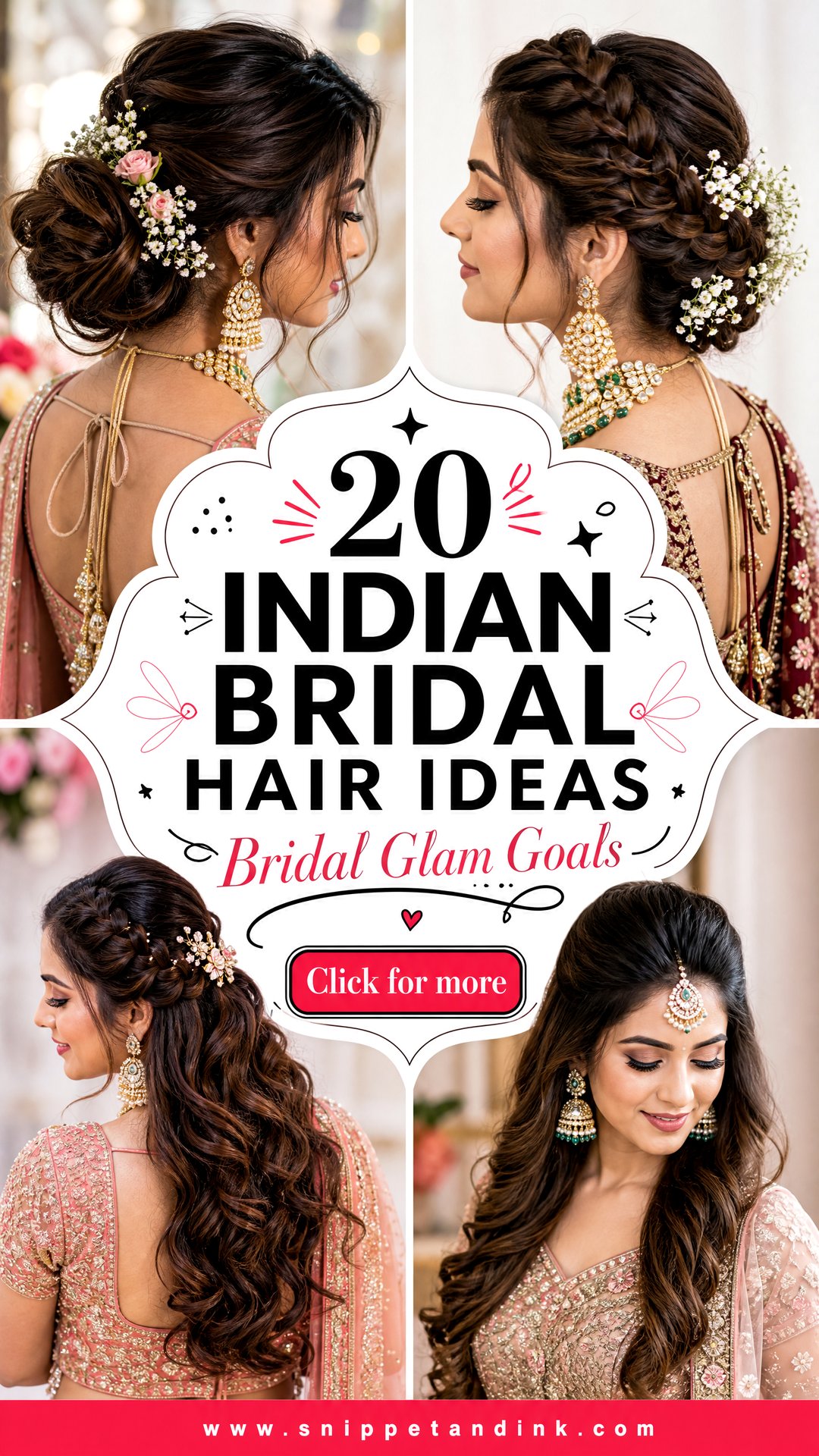
Five Functions, Five Hairstyles, One Head of Hair
When I plan hair for an Indian wedding week, I plan it as a sequence, because each function asks something different and your hair has to survive all of them.
Haldi and Mehndi
Turmeric paste gets everywhere and can tint light or highlighted hair yellow, so haldi is the day for a simple braid or a bun you don’t mind washing out. At mehndi you can’t touch your hair for hours once the paste is on, so choose something off the face: a side braid, a bubble braid or a floral crown.
Sangeet, Ceremony and Reception
Sangeet means dancing, so curls need to be well set and pinned at the sides. The ceremony is the longest day with the heaviest dupatta and jewelry, which is where I’d put your most secure style: a bun, braided bun or plait. The reception is the moment for open hair or a sleek look, since the dupatta often comes off and nobody is pulling at your hair.
Daily curling and heavy pinning across a whole week stress the hair. Space the heat styling where you can, sleep on a silk pillowcase, and keep at least one function in a braid that needs no hot tools at all.
1. Floral Bun With Gajra
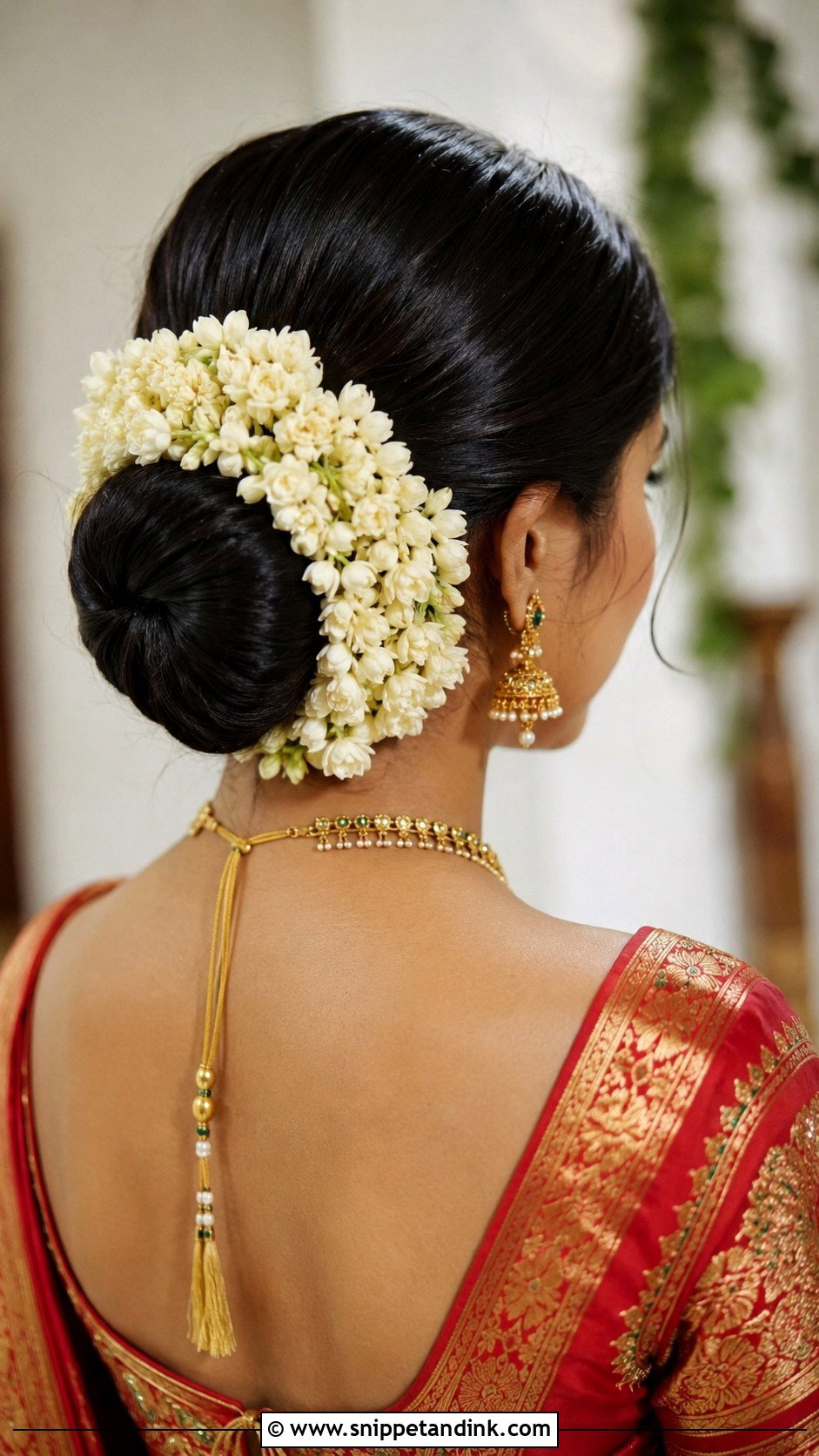
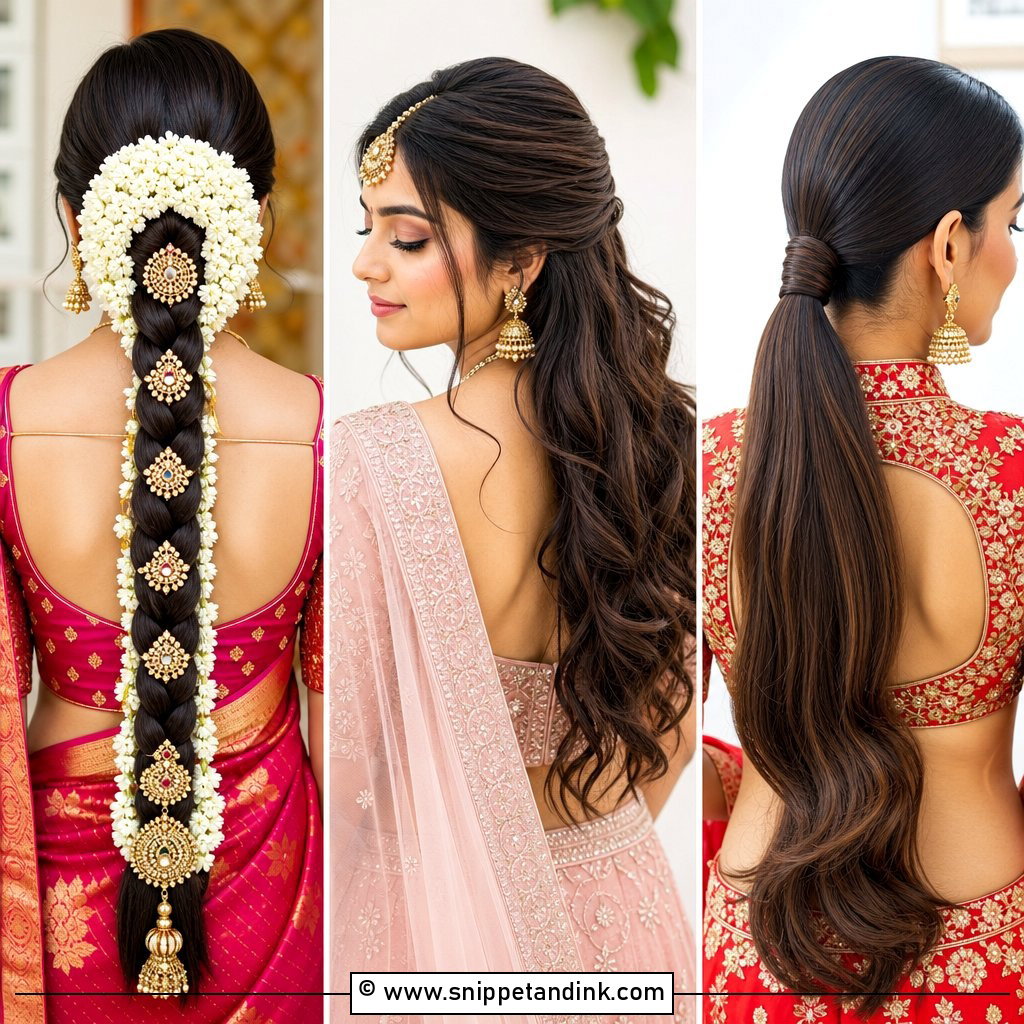
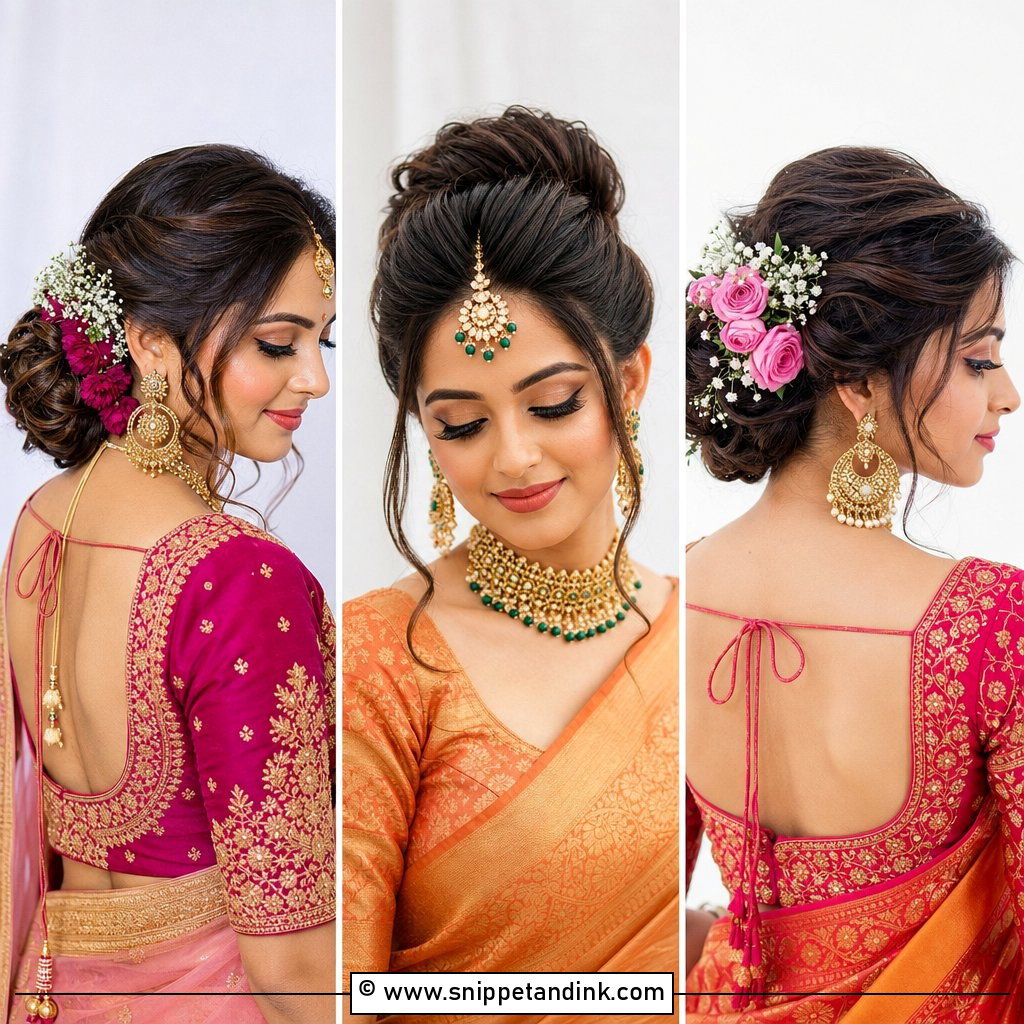
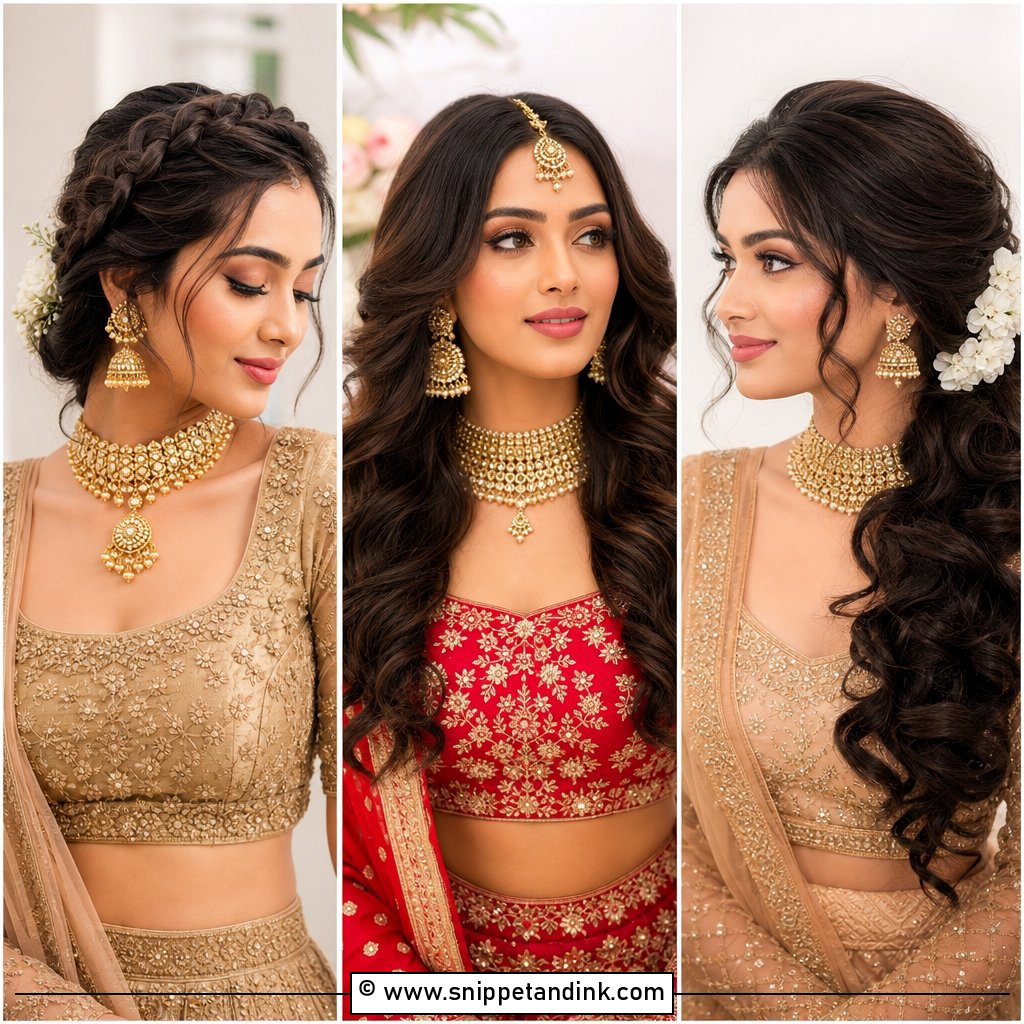
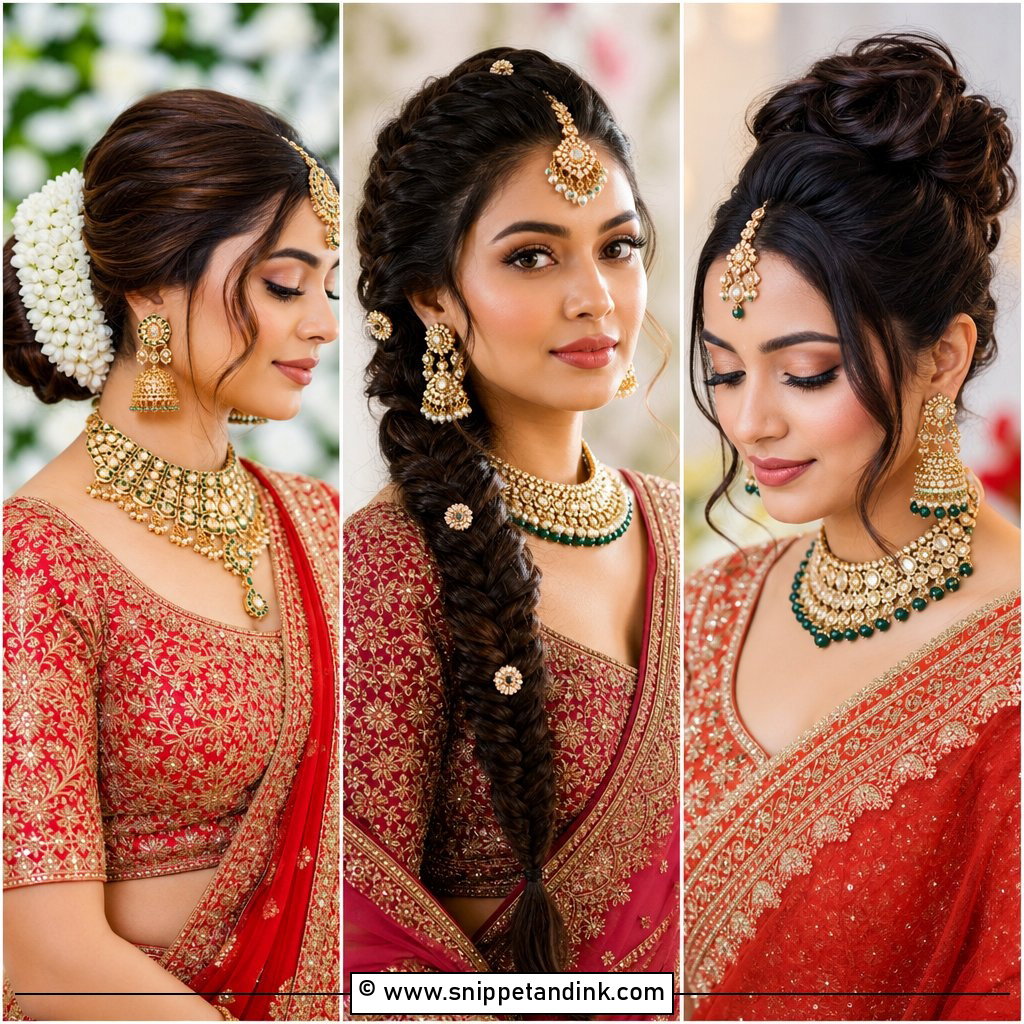
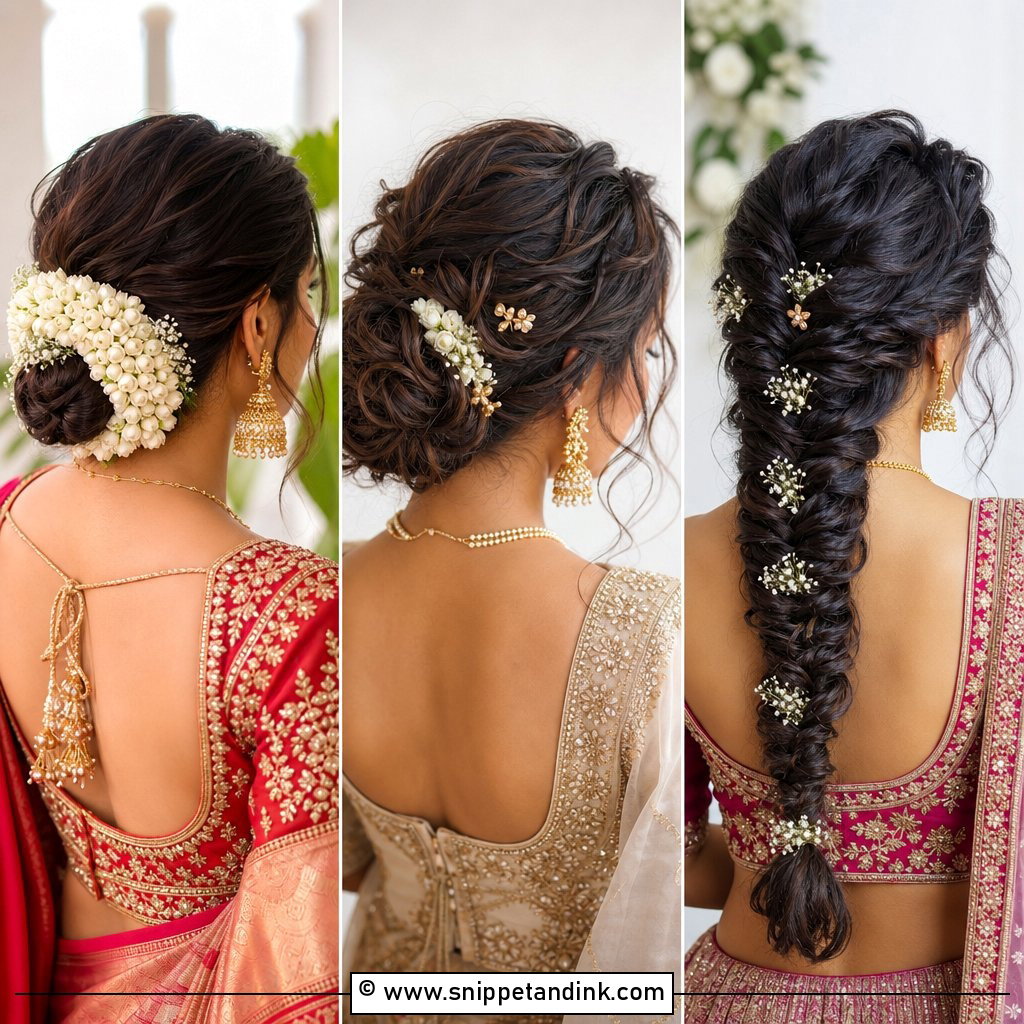
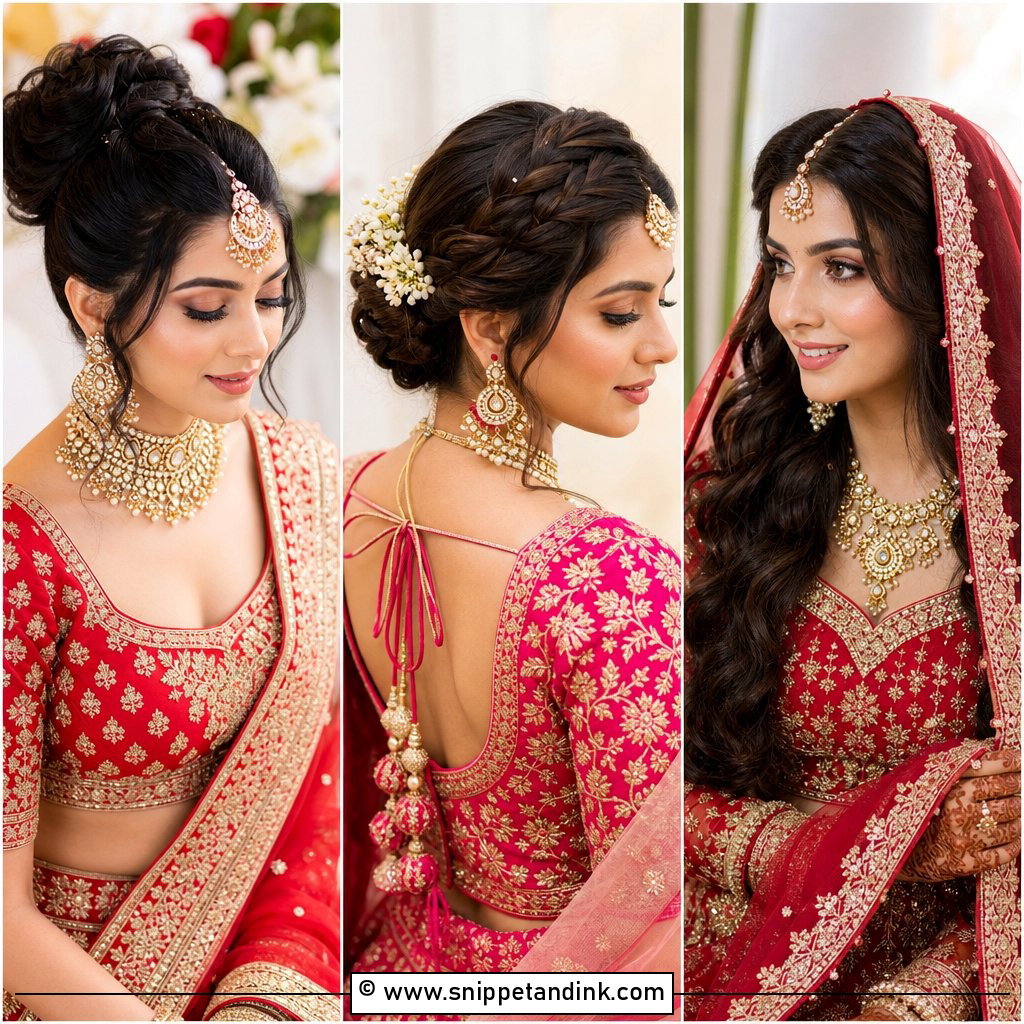
A low bun wrapped in fragrant gajra is still the look most people picture when they think of an Indian bride. The jasmine frames the nape and stands out sharply against dark hair, with a saree or a lehenga alike. Smooth, it reads formal; loosened slightly, it feels softer. The practical point is that jasmine is heavy once you have three strands of it, so the bun needs a firm anchor underneath. A tikka and jhumkas finish it.
2. Side Swept Curls
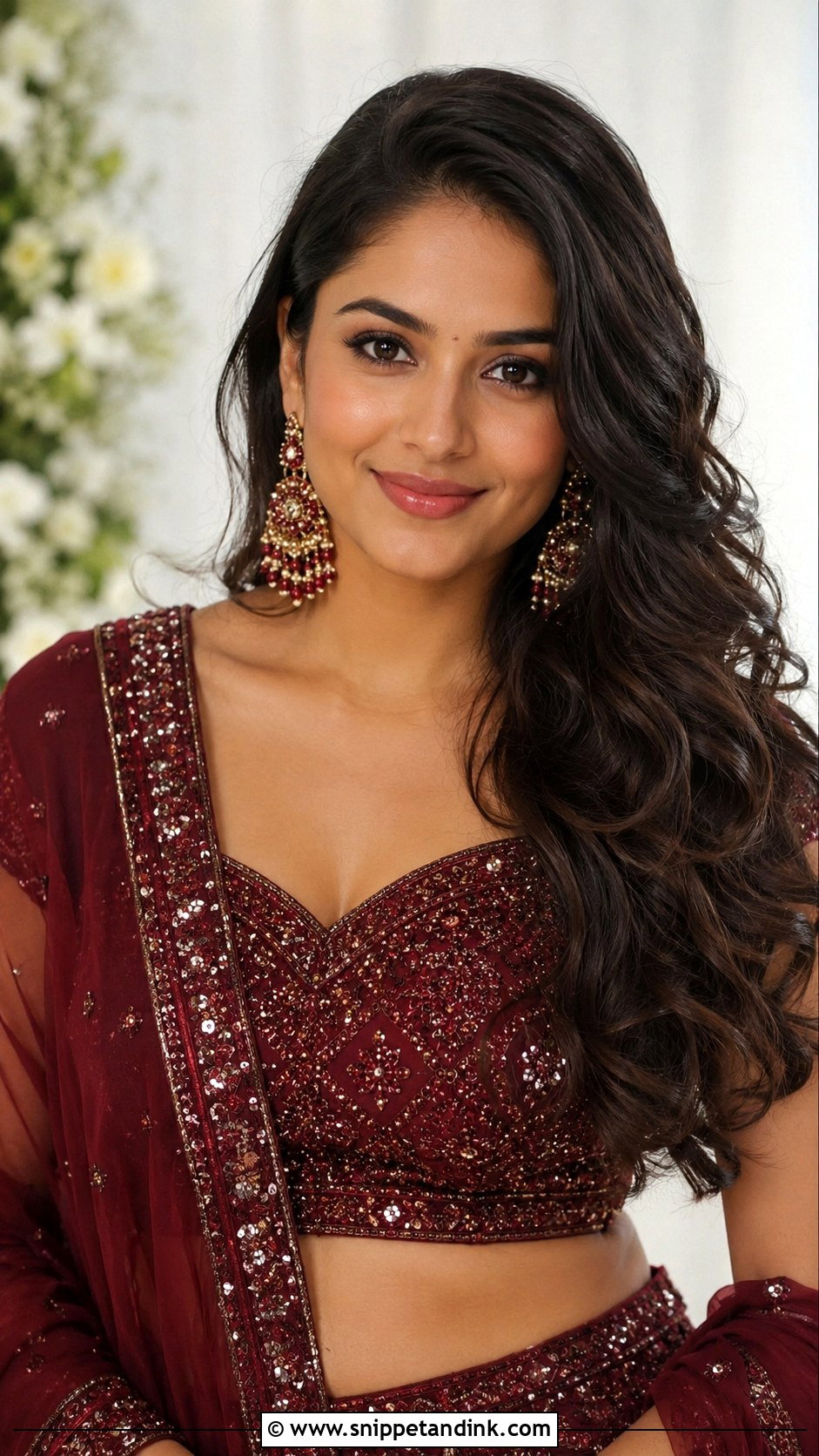
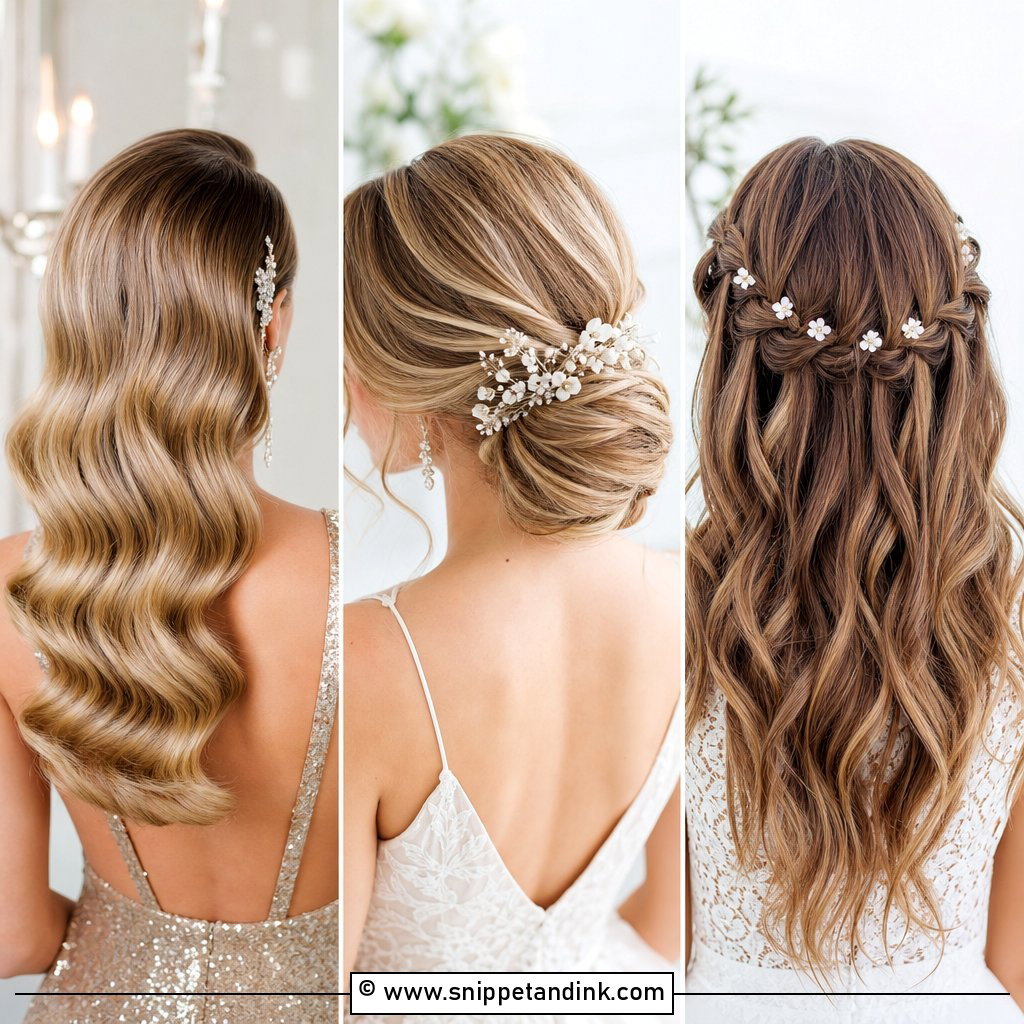
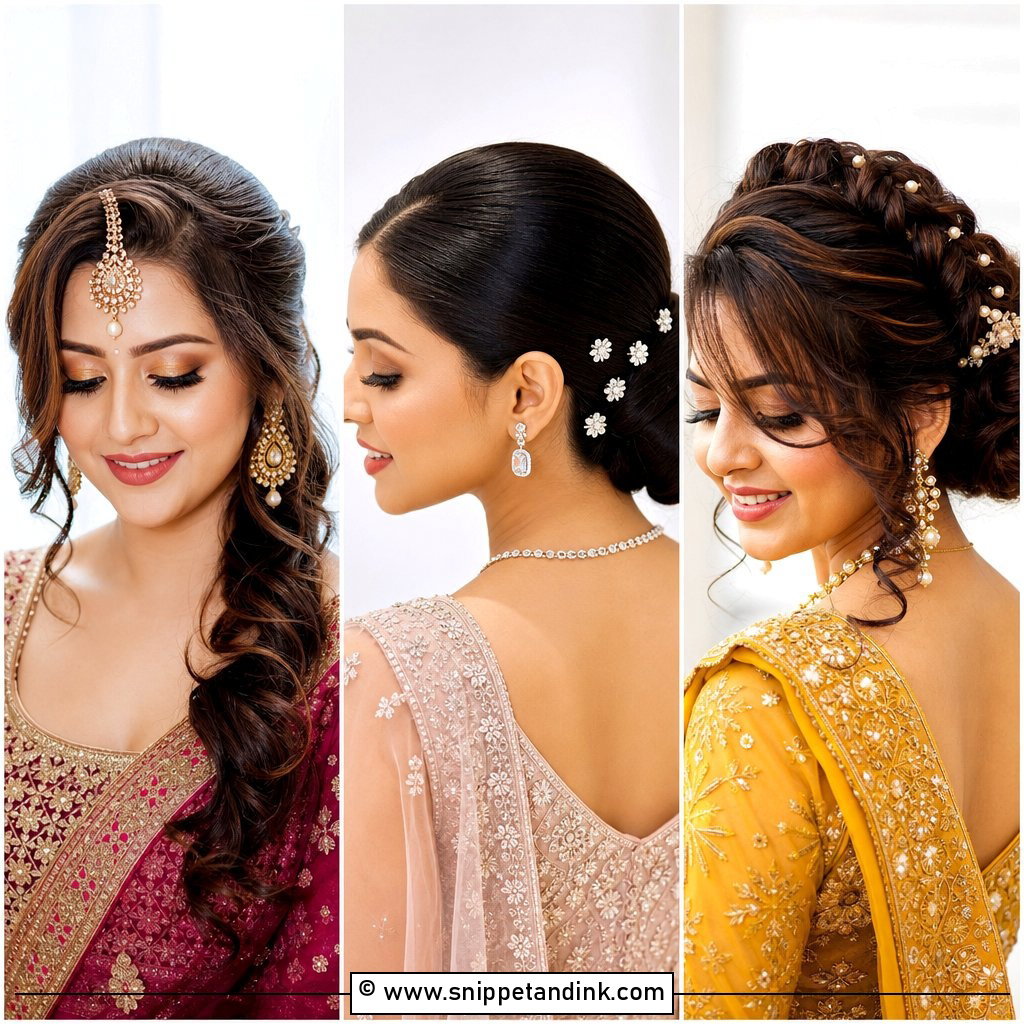
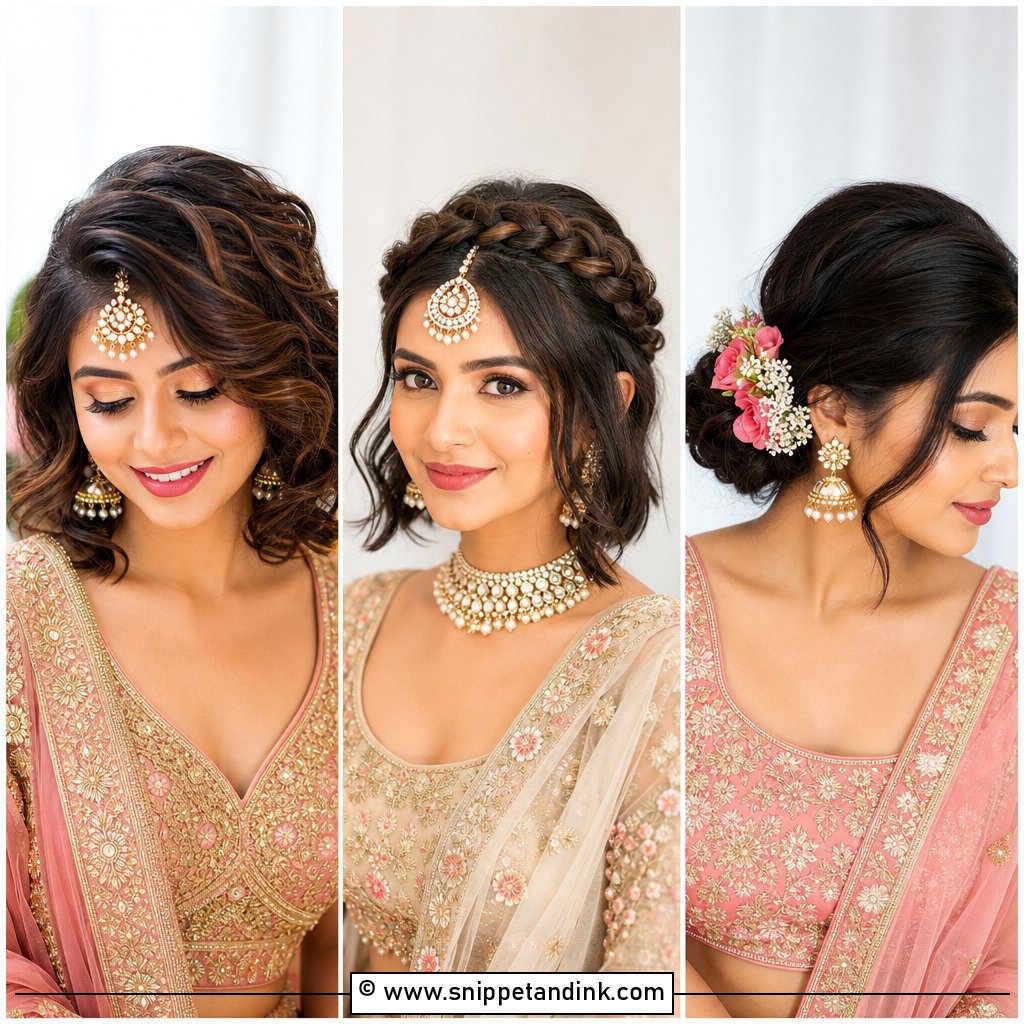
Curls brushed over one shoulder, leaving the other side of the neck and one statement earring fully on show. It’s a favourite for receptions and sangeet nights. The honest catch is that a side sweep needs real length and thickness to look full; on shoulder-length or fine hair it can look thin from the back. I pin the hair behind the ear on the open side with criss-crossed pins hidden under a layer, otherwise the sweep slowly migrates back to centre. A jewelled clip on the heavy side helps hold it.
3. Fishtail Braid With Pearls
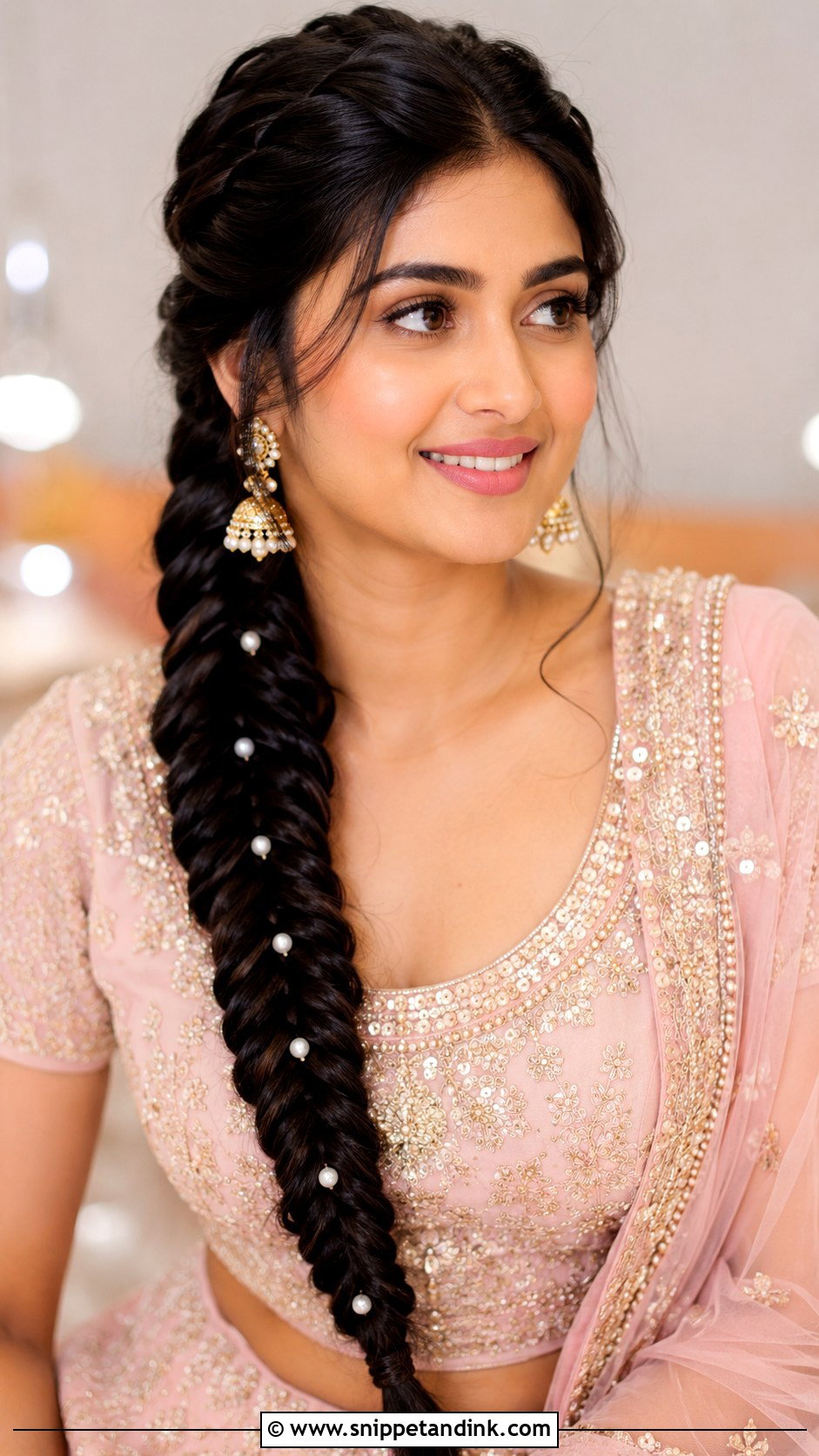
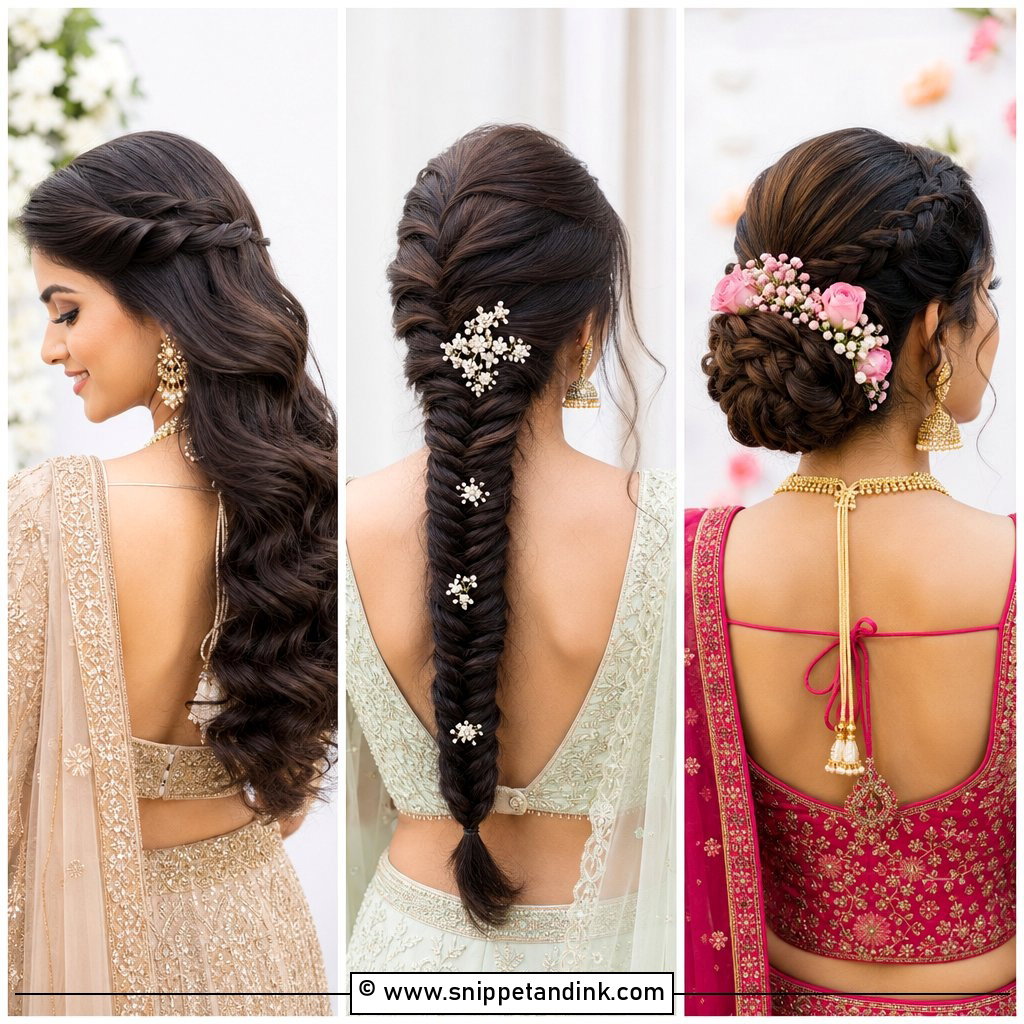
Fishtail braids look intricate but are actually quick to plait. Threading pearls through them is the slow part. Draped over one shoulder, the woven pattern catches light and every pearl shows. I’d pancake it slightly, pulling the edges loose for width, because a tight fishtail on Indian hair can look narrow next to heavy jewelry. Pearls go in after plaiting, on fine pins, so they can be moved if they bunch together.
4. Messy Low Bun
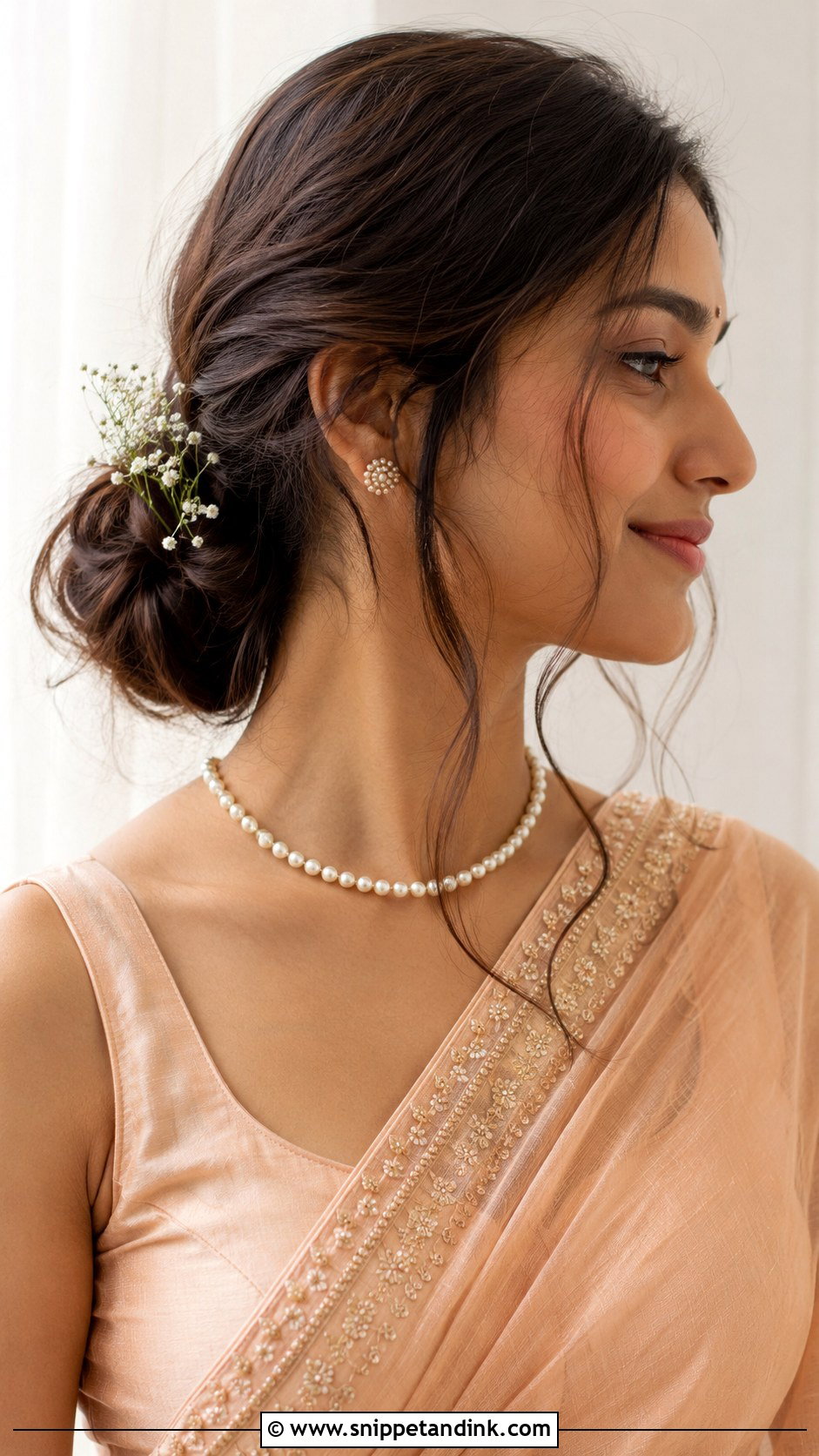
Messy low buns rely on texture and a few loose tendrils at the face. That makes them suit daytime and outdoor ceremonies, with baby’s breath, small roses or a single pearl pin. The texture has to be built: I curl the whole head first, rough it up and only then gather it, otherwise the bun just looks unfinished. Thick wavy hair is ideal. Very sleek, straight hair often refuses to stay undone without a lot of product.
5. Half Up Half Down
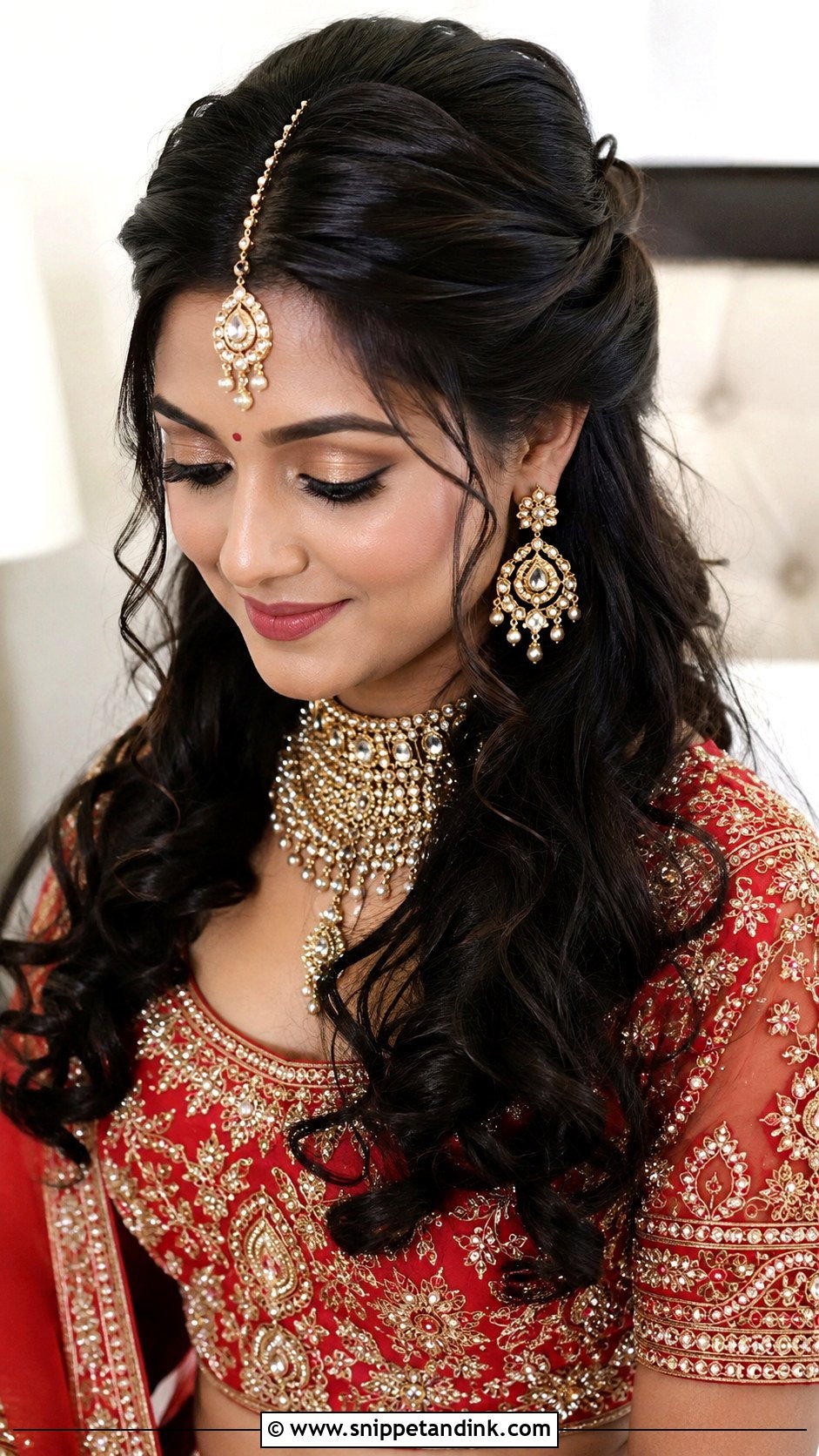
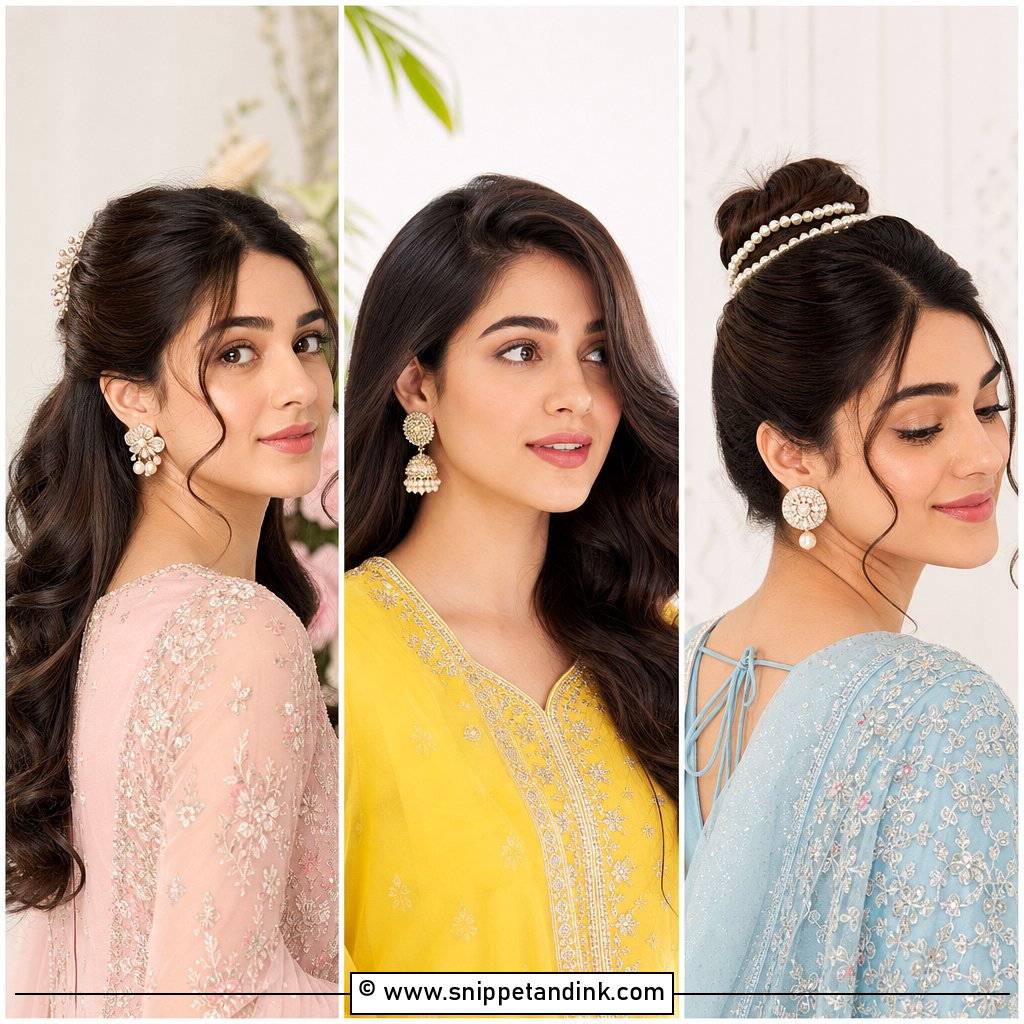
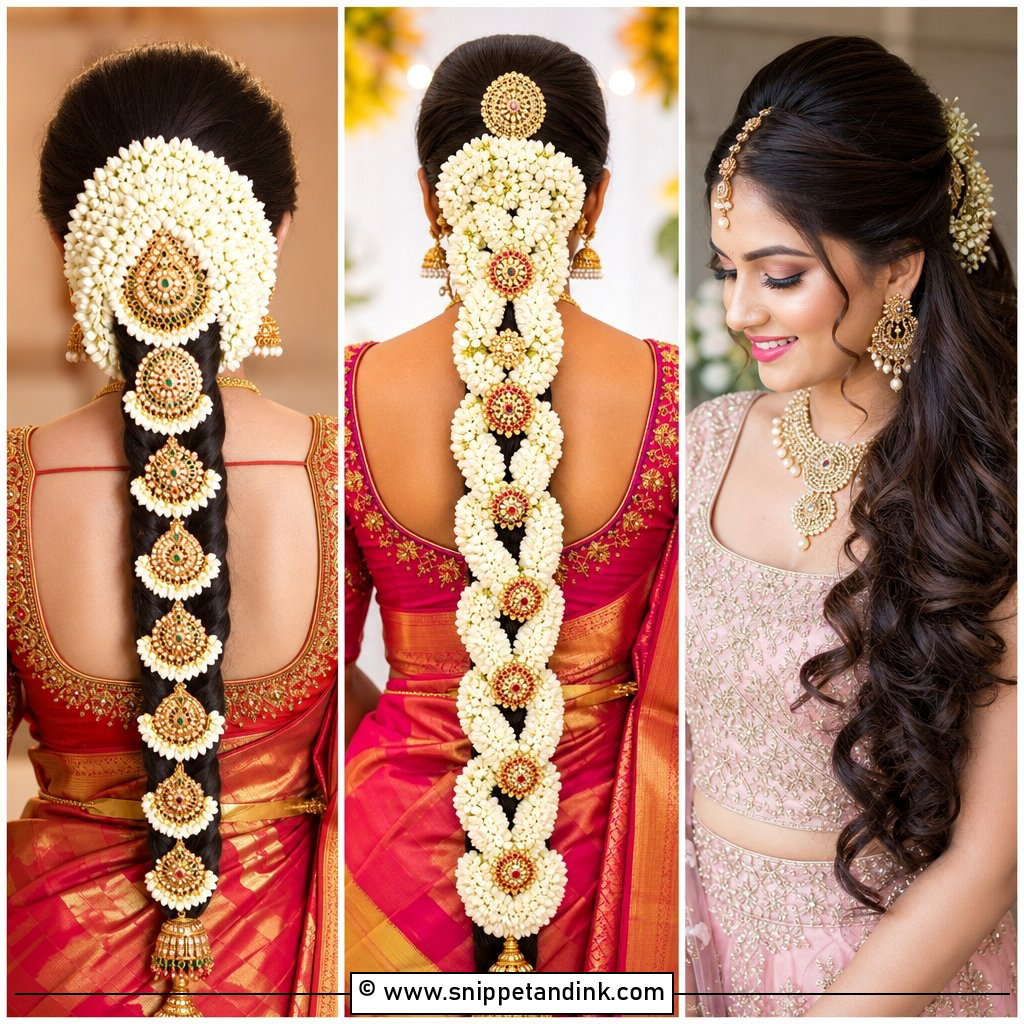
Can’t decide between up and down? A half-up style pins, braids or twists the top section back and leaves the rest in curls or waves. It keeps hair off the face while still showing length, and it lets a maang tikka or matha patti sit cleanly on a smooth crown. Flowers or jewelled pins sit where the sections meet. On very heavy hair, the loose half drags on the pinned part over a long day, so I anchor the top with a small hidden braid instead of pins alone.
6. Dutch Braid Crown
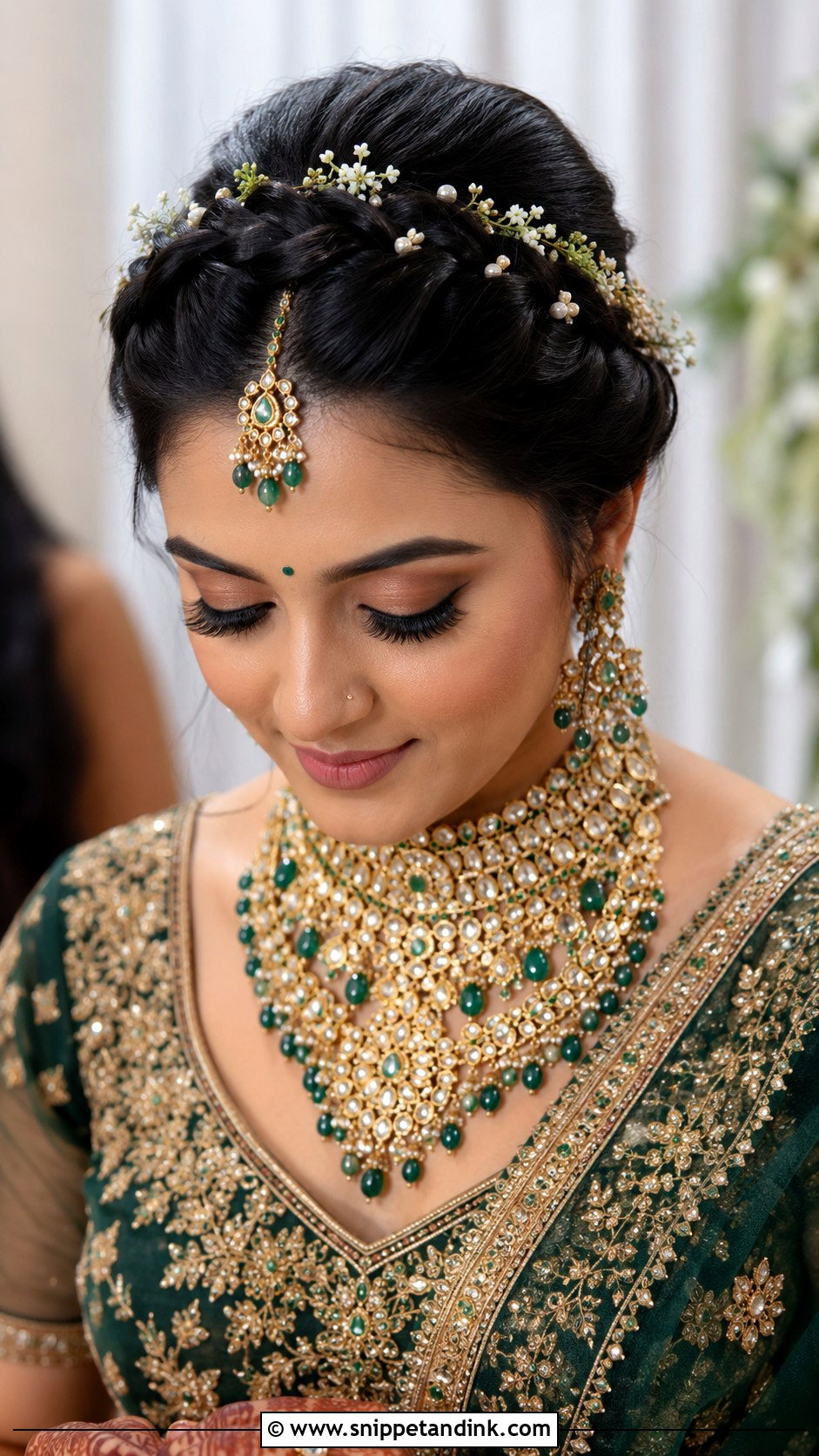
Braids wrapped right across the crown form a halo that frames the face like a tiara and keeps hair entirely off the neck. That makes the Dutch crown one of the most practical options for long ceremonies in the heat. Tiny flowers, gold beads or pearls tuck between the plaits. Thick hair makes a fat, bold crown; fine hair makes a thin one, and I’d add a braided hairpiece rather than pull fine hair so tight it shows scalp. It can sit with a dupatta, though very heavy dupattas flatten the top.
7. Open Hair With Maang Tikka
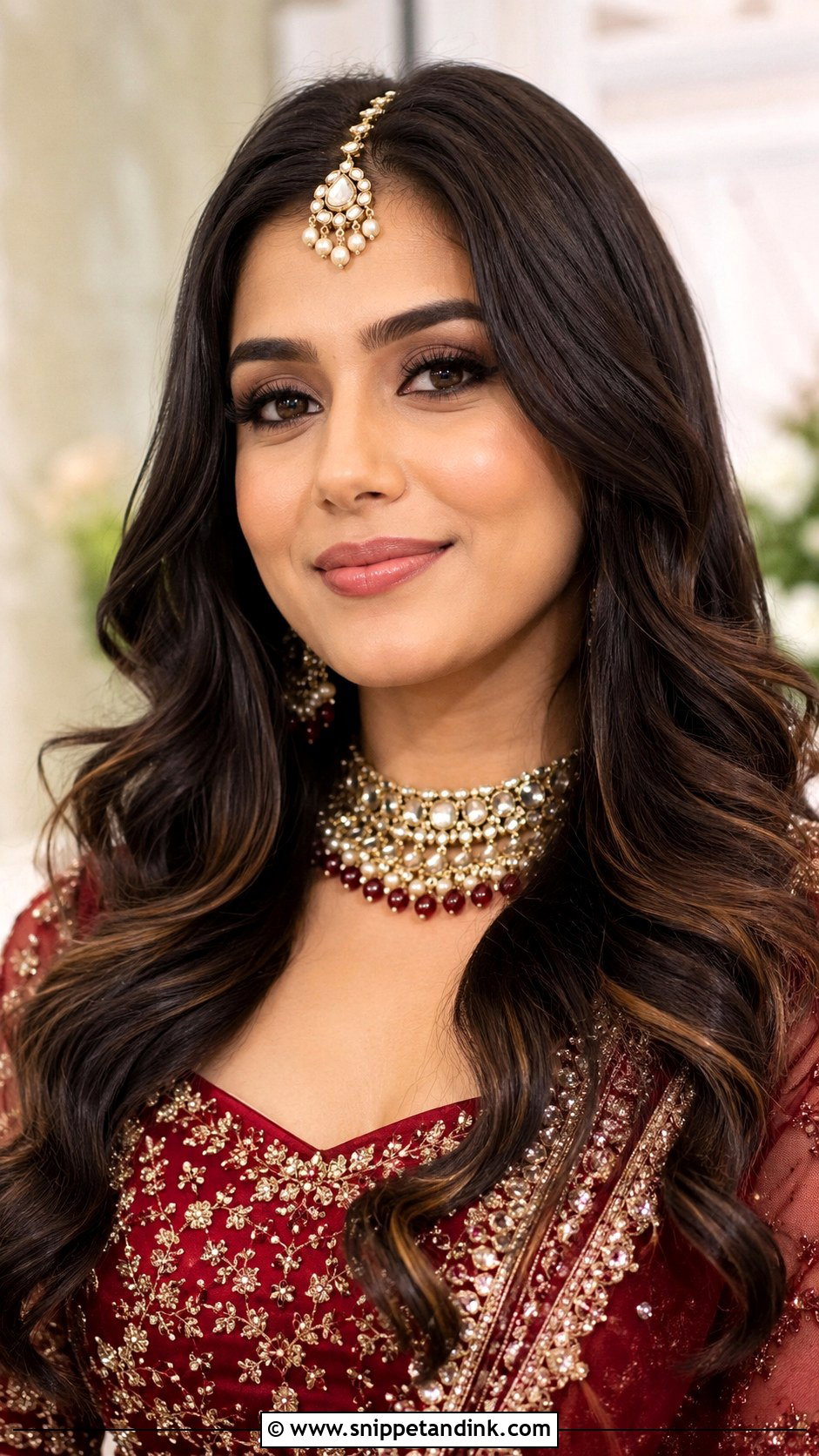
Open hair with a maang tikka has grown hugely popular, and it does look soft and modern. Glossy waves or loose curls fall freely while the tikka draws the eye to the centre of the face. It suits receptions and pre-wedding functions more than the main ceremony, for one reason: hair down under a dupatta tangles with jewelry and gets flattened when the fabric is adjusted. Pin the tikka into a small braid at the parting so it doesn’t slide.
8. Traditional South Indian Plait
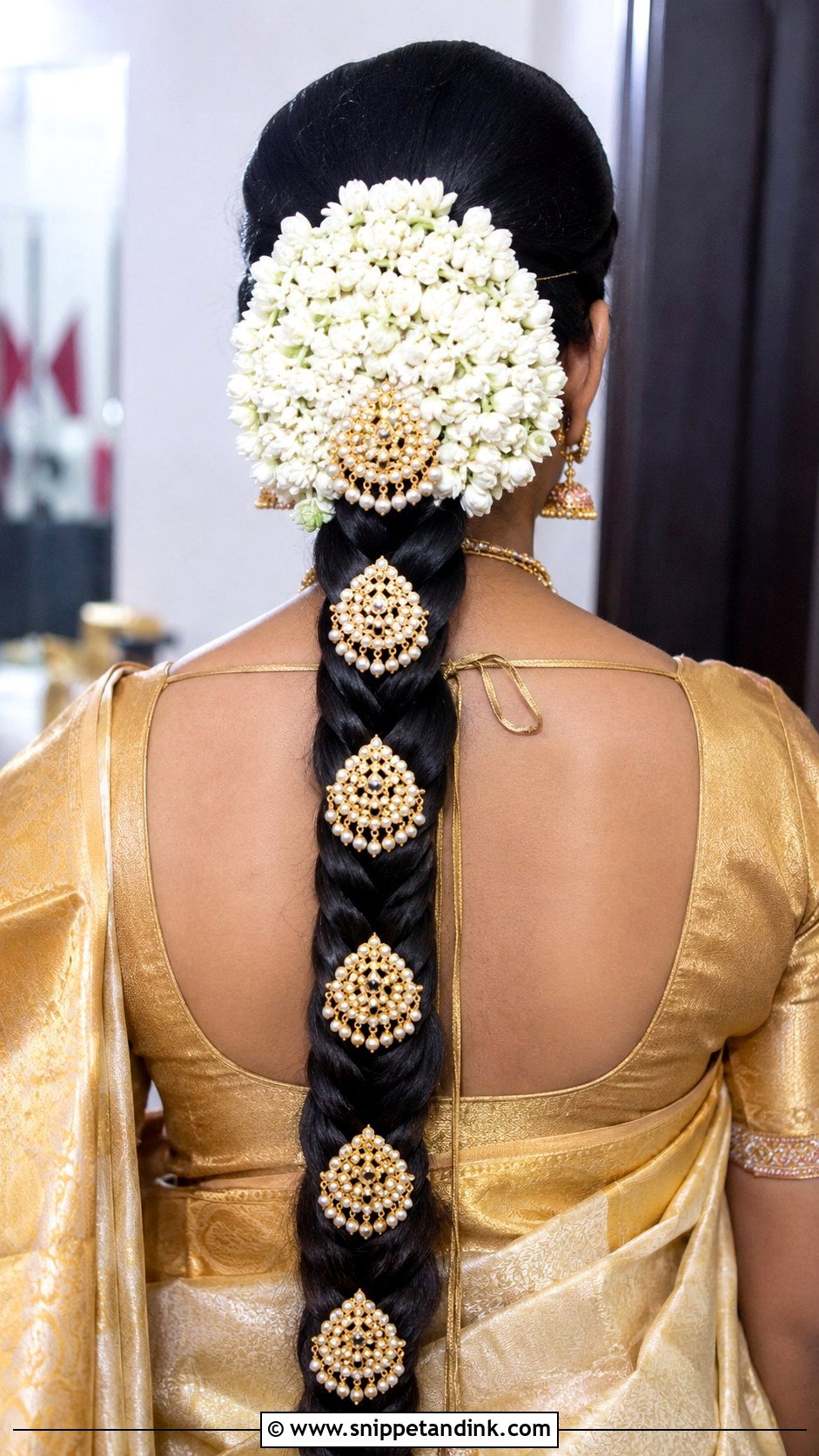
Long, thick and decorated from the nape down, the South Indian plait carries jadai billalu hair jewelry and rows of fresh jasmine or roses. It belongs to temple weddings and silk sarees. Few brides have hair long enough to reach the full traditional length, so a matched braid extension is common and nothing to hide. The jewelry is heavy; I attach it to a tightly plaited core, not the surface, so it doesn’t drag the braid sideways when you sit.
9. Braided Bun With Flowers
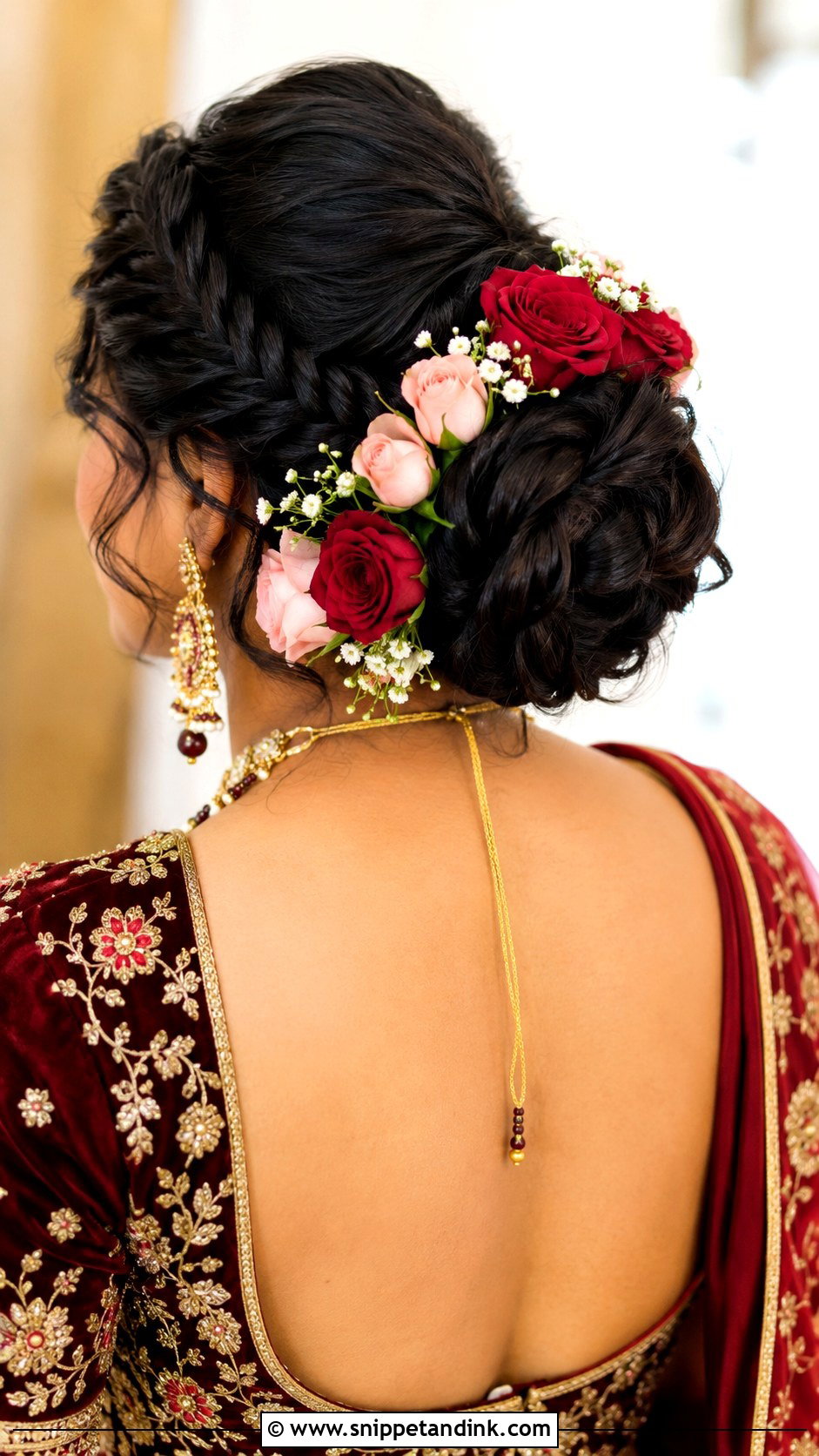
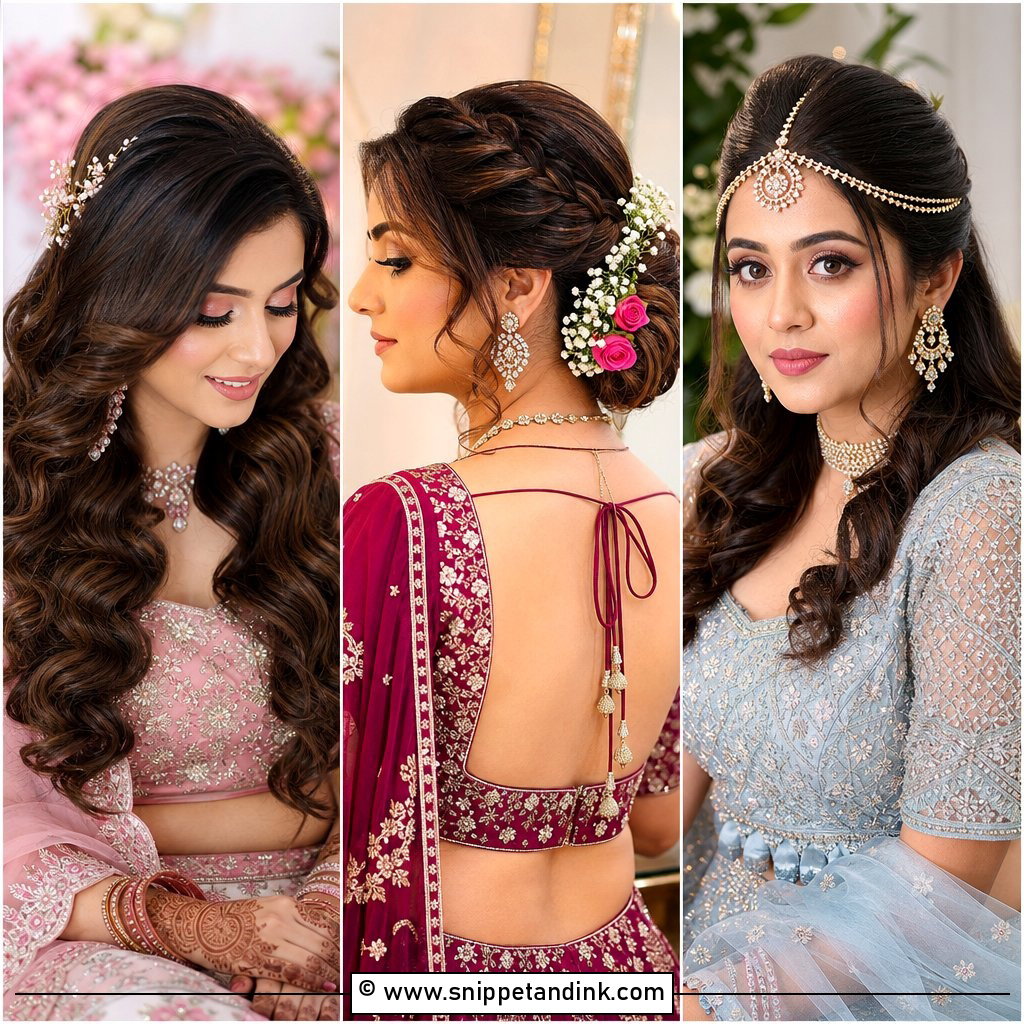
Here a French or fishtail braid runs into a coiled bun at the nape, with fresh flowers around it. It’s one of the most secure styles in this list, because the braid locks hair in place and the bun gives a firm base for the dupatta. It moves comfortably from a saree to a lehenga. If you only trust one style to survive a fourteen-hour day, this is the one I’d choose.
10. Soft Curls With Hair Accessories
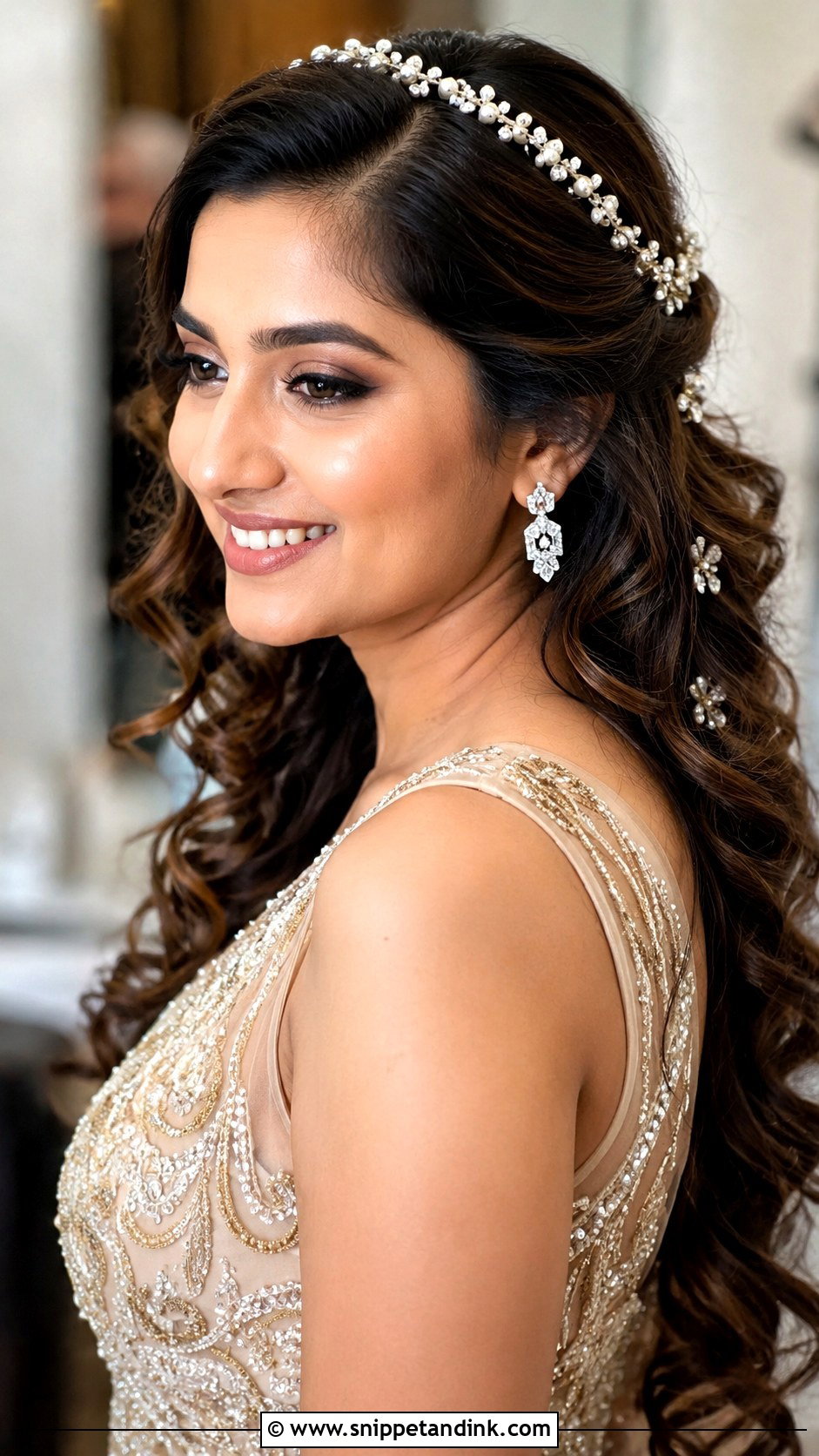
Loose, bouncy curls with jewelled butterflies, pearl pins or a sparkling headband swap flowers for shine. It’s a reception or cocktail look, since the curls frame the face and show off the earrings. The accessories need something to grip. Freshly curled hair is slippery, so I set a little backcomb or a thin hidden braid wherever a heavier piece goes. Without that, butterflies slide down by the first dance.
11. Sleek Low Bun With Maang Tikka
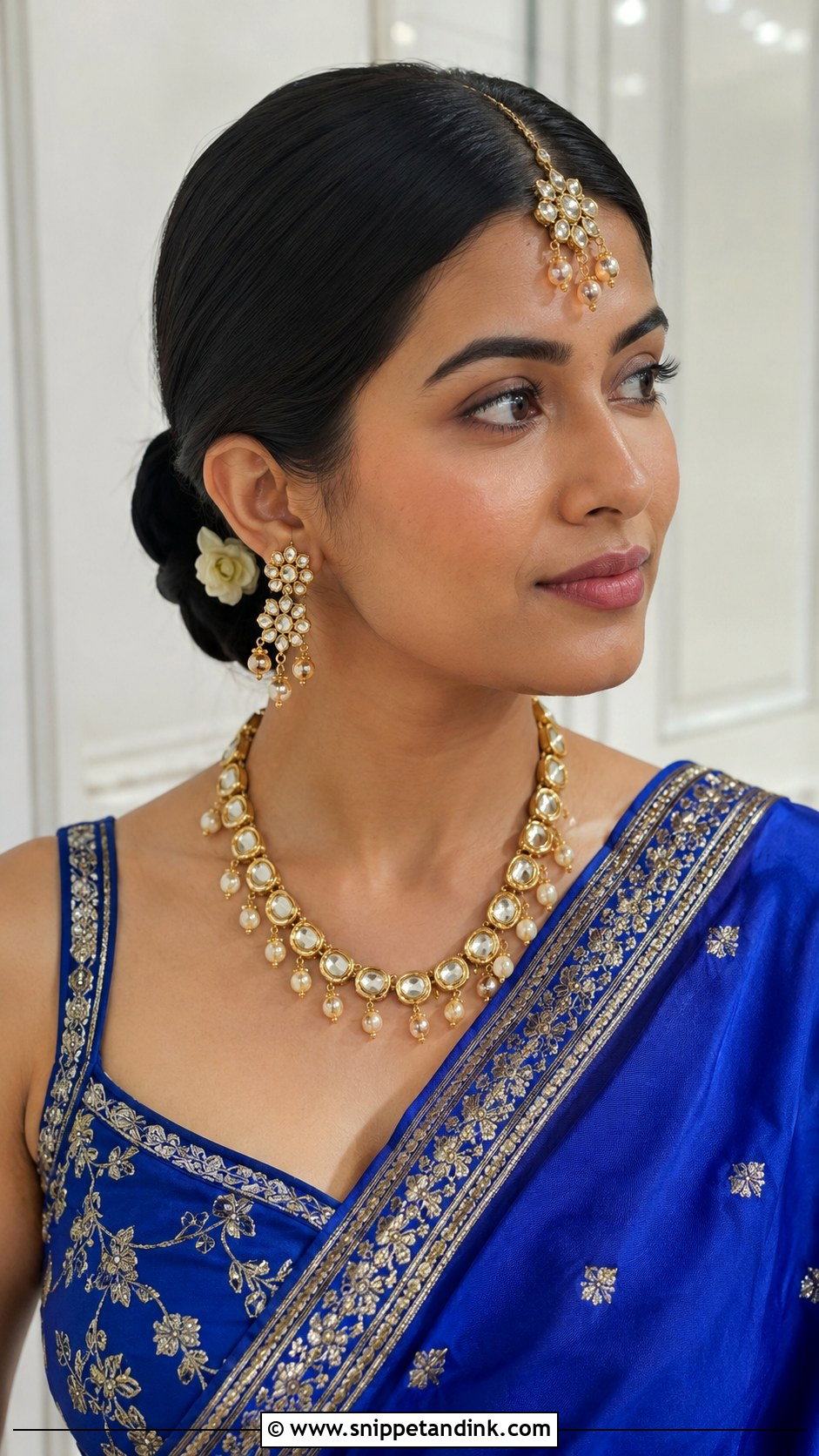
A sleek low bun pulls everything back into a tidy knot at the nape and lets the jewelry and outfit carry the look. A statement tikka or matha patti sits perfectly against it. I use a fine-toothed brush and a little gel to get the polish, and I always check the back in a hand mirror, because bumps at the crown show more in a sleek style than in any other. It’s comfortable, quick and lasts well into the night.
12. Boho Braids With Baby’s Breath
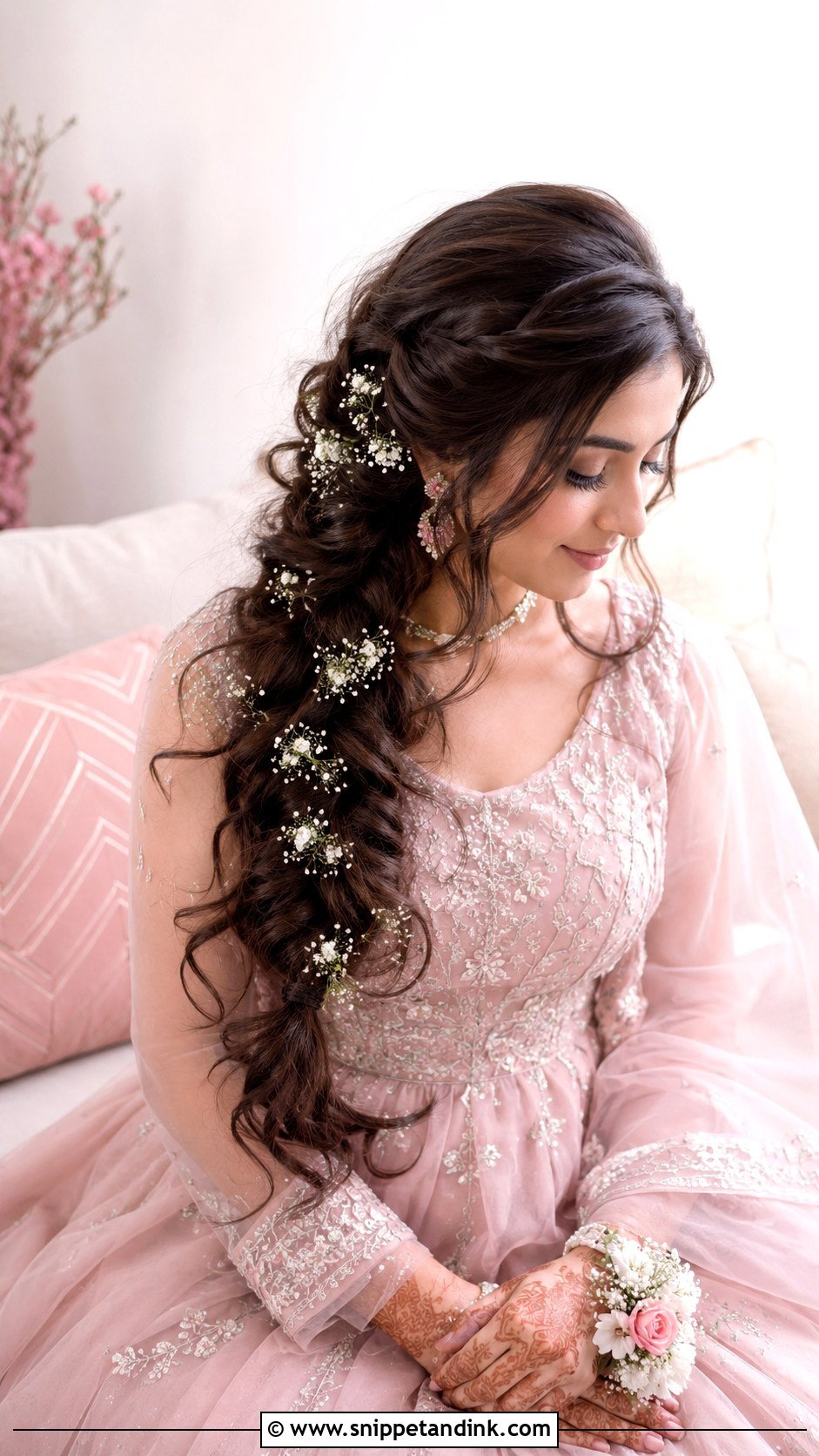
Textured braids with soft waves, dotted with tiny baby’s breath, give a relaxed garden feel for outdoor weddings, mehndi or a pastel outfit. Thin braids mixed through loose curls add detail without structure. Baby’s breath is a good flower for this, since it’s hardy in heat and light enough not to drag. It’s not the look I’d suggest under a heavy dupatta, which squashes the texture flat within minutes.
13. High Bun With Pearls
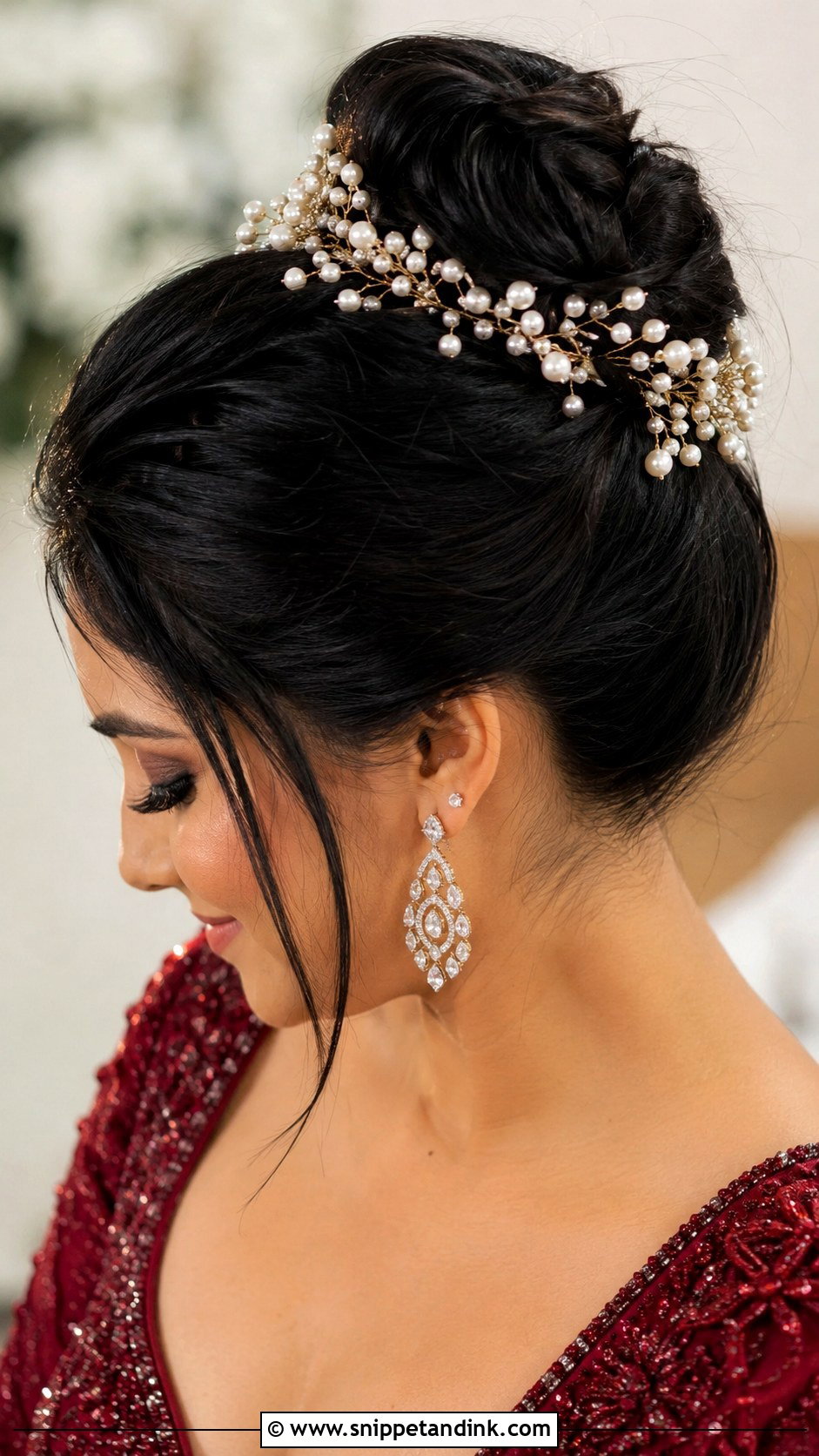
High on the crown, a pearl-studded bun adds height and opens up the neck for statement earrings and an embellished neckline. The pearls give a soft shimmer that suits heavy lehengas and grand reception outfits. It’s the most dramatic entrance on this list. It is also the hardest to keep comfortable, because the weight sits on a small anchor at the top of the head, so I cross-pin it firmly and keep the pearls to small, light pins.
14. Twisted Updo With Gota Ribbon
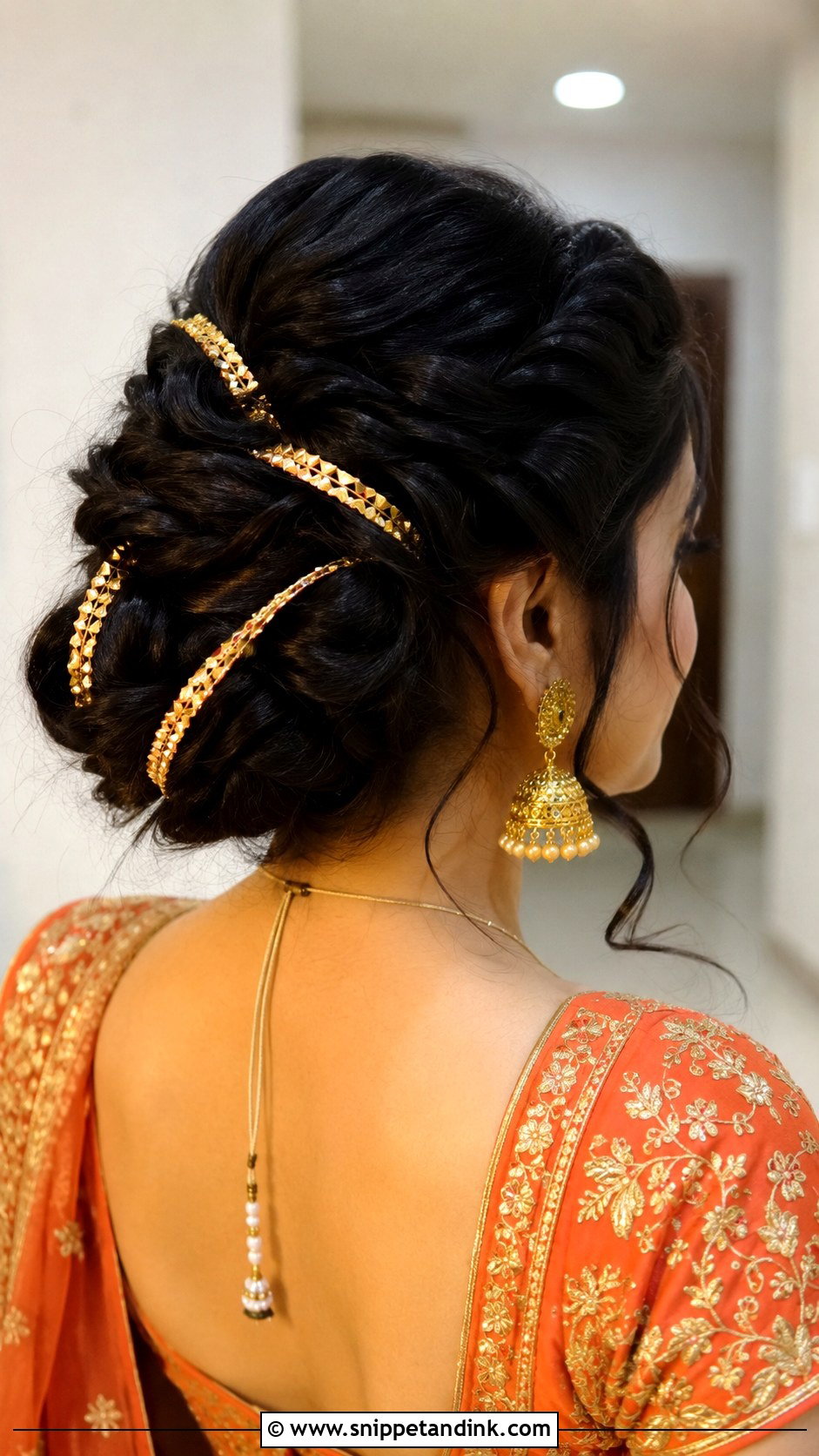
Gota ribbon is the gold or silver trim used on lehenga borders, and weaving it through a twisted updo ties the hair directly to the outfit. The metallic edge picks up gold jewelry and rich embroidery. I cut it from the same gota as the outfit where possible, so the shade matches exactly. Twisted sections pinned in a pattern give texture from every side, and with jhumkas and a tikka the look feels crafted rather than bought. Best for the main ceremony.
15. Loose Waves With Side Braid
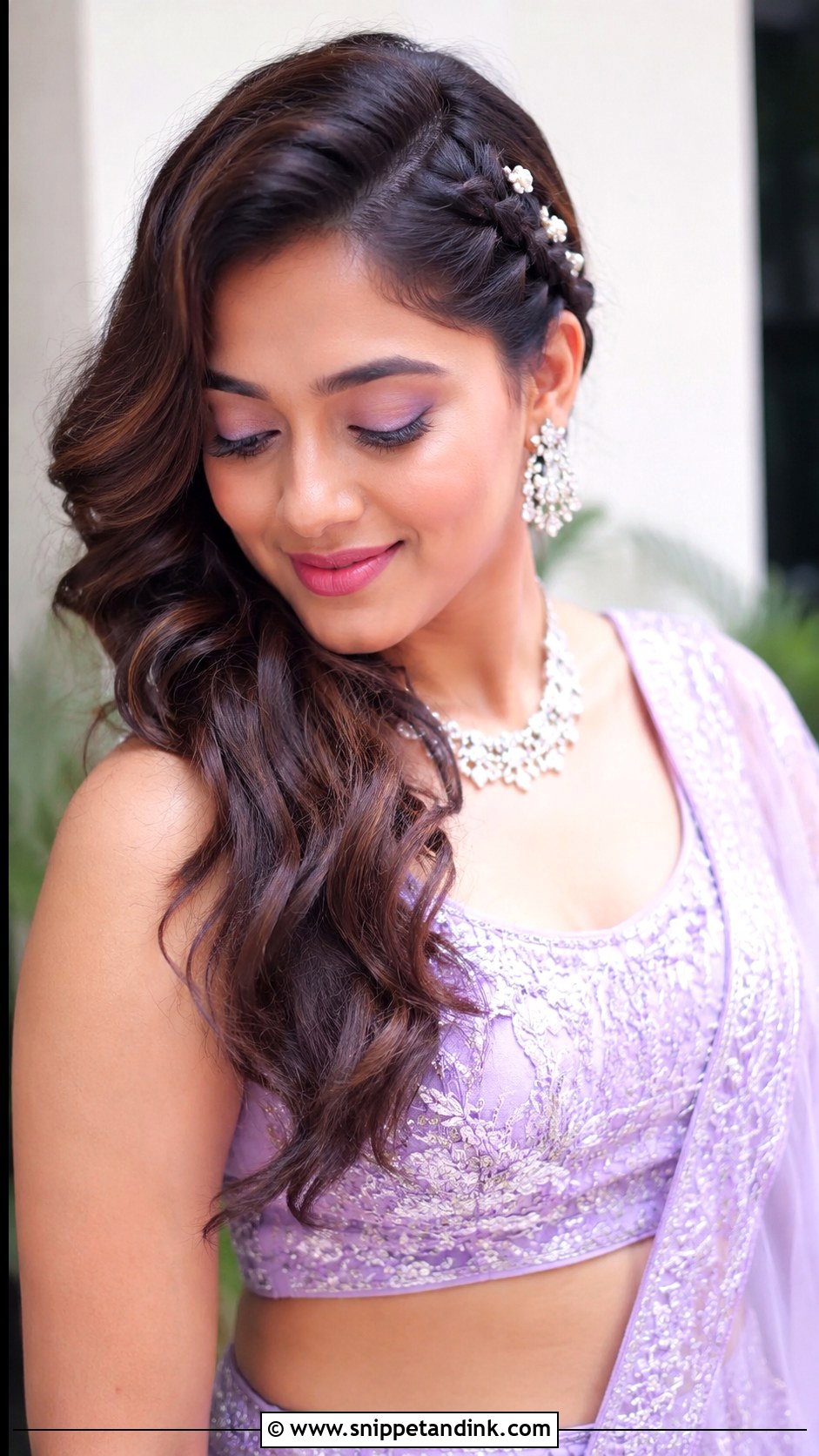
A thin braid running along one side of the head and melting into loose waves over the shoulder. It reads as open hair with one small detail, which is exactly why it works for sangeet nights, receptions and pre-wedding shoots. Small flowers or pearl pins along the braid add colour. The braid also does a job: it holds the hair off one side of the face, so you aren’t pushing it back all night.
16. Bubble Braid With Flowers
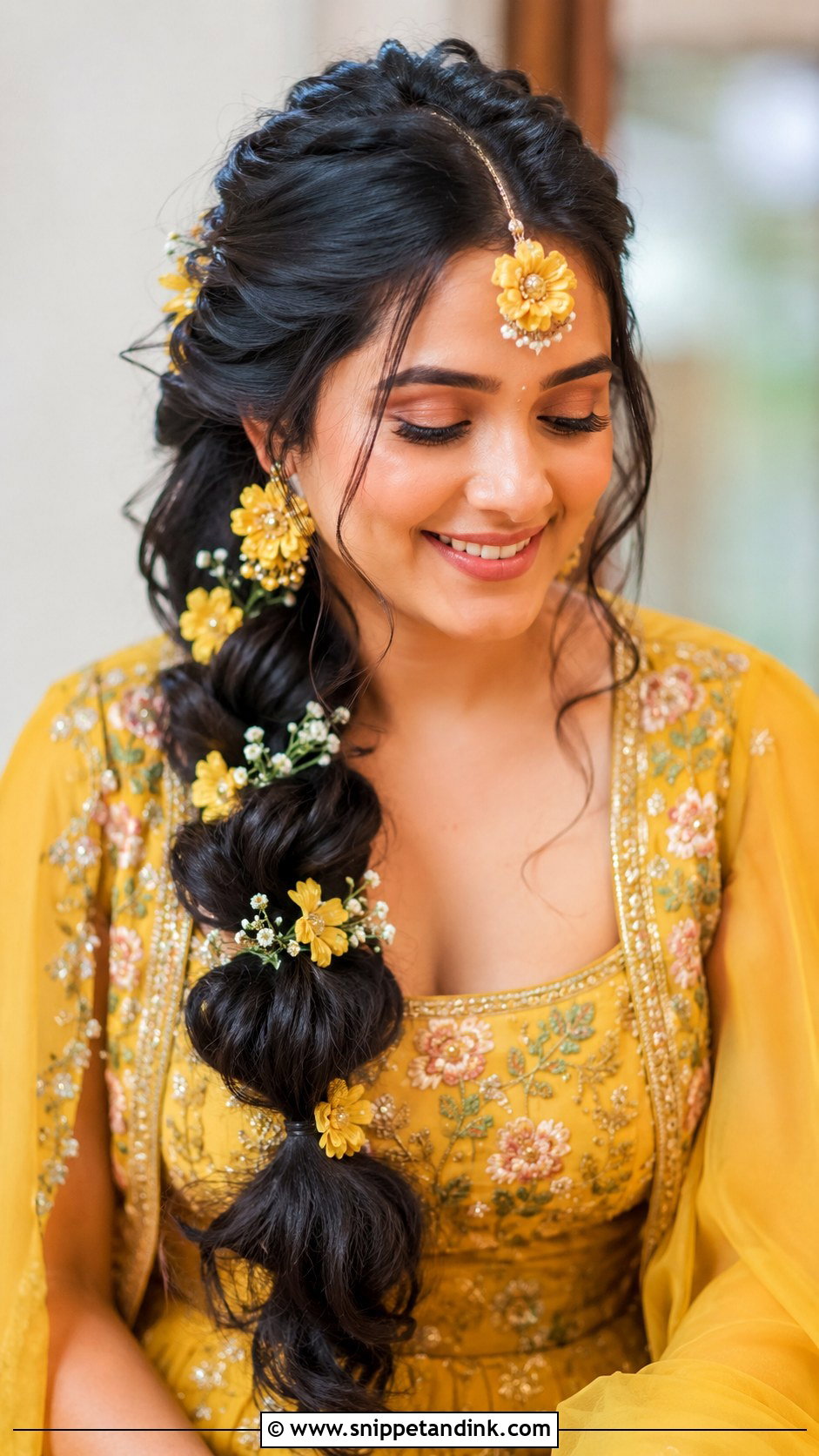
Bubble braids are just a ponytail divided by small elastics, with each section pulled outwards into a puff, so they’re quicker than they look. Flowers or pearls between segments make them feel festive for mehndi or haldi. I’d only do this on medium or long hair; on short hair you get two bubbles and a tail. Use clear elastics or ones matched to your hair colour, then wrap a small piece of hair over each band for a clean finish.
17. Front Puff With Open Hair
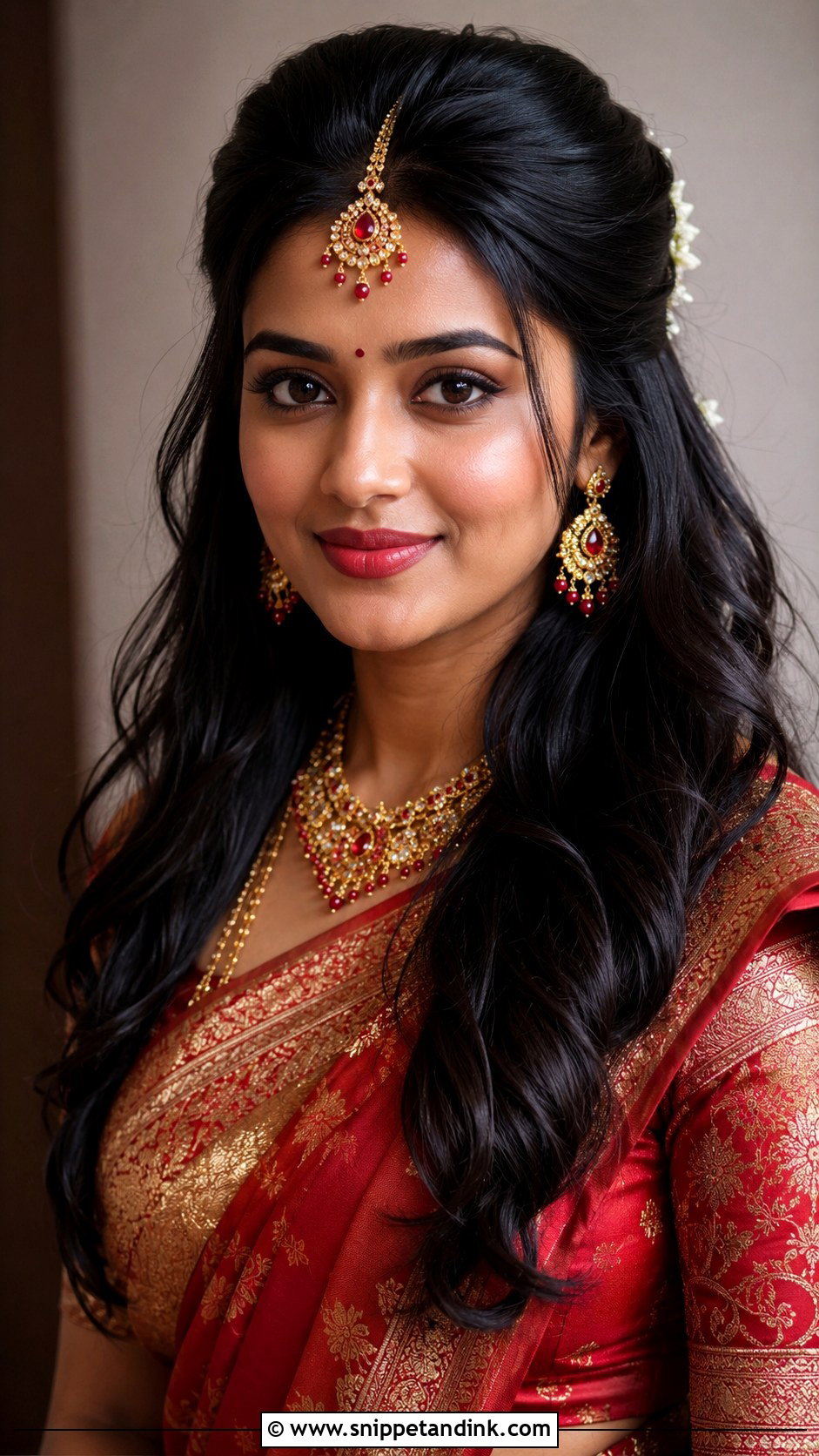
Lifting the crown into a soft puff with hair falling in waves below, as in the front puff paired with open hair, adds height and a bit of structure to open hair. It lengthens a round face and gives a tikka something to sit against. The puff should be modest. Big puffs looked very of their time in older wedding albums, and with a dupatta pinned over the top they can look like a lump. Light backcombing and a shine spray keep it smooth.
18. Floral Crown With Loose Hair
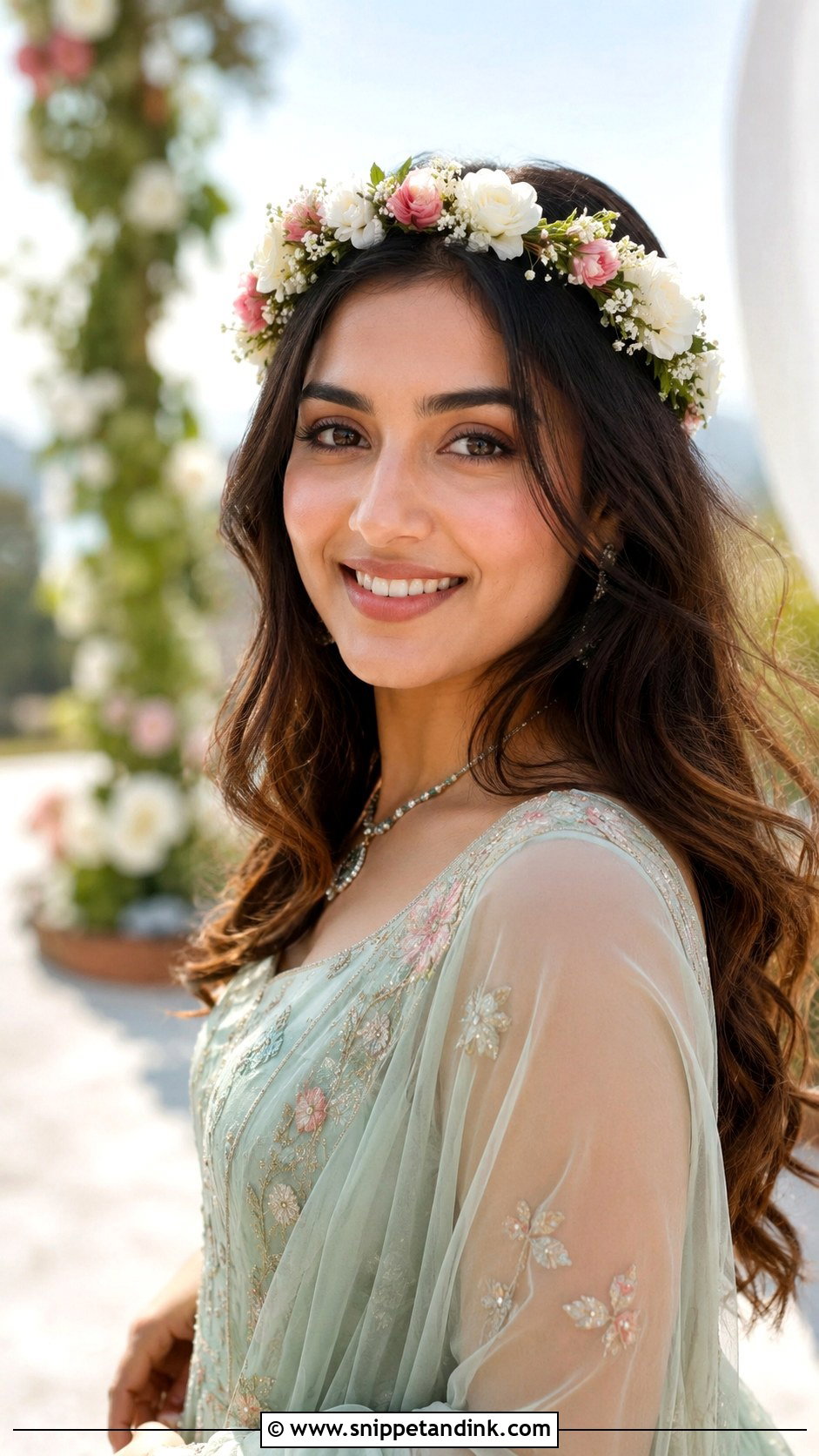
A band of fresh flowers over loose waves feels relaxed and garden-like, and suits outdoor weddings and mehndi. It needs no jewelry, and the flowers can echo the colours of your outfit. Floral crowns can be heavy and sometimes slip backwards, so I pin them at the temples and behind the ears with pins crossed into a small braid on each side. Ask your florist to build it on a flexible wire that can be bent to your head.
19. Fishtail Bun With Gold Accessories
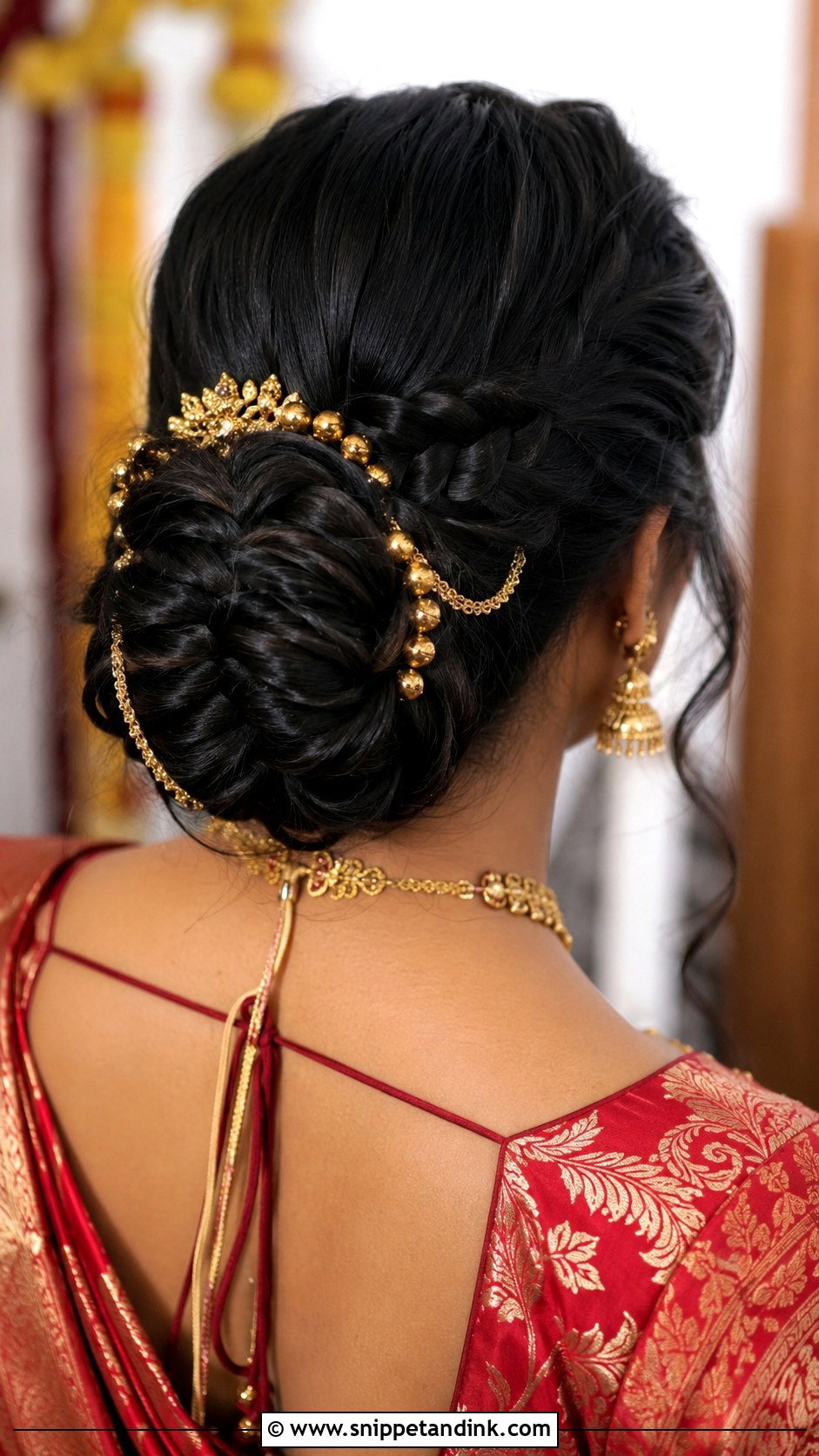
A fishtail braid coiled into a textured bun, then decorated with gold beads, pins or hair chains. The woven surface gives the gold something to sit in, so it looks richer than gold on a smooth bun. This is a long-wear style; braided and coiled hair barely moves. With jhumkas, a tikka and richly coloured outfits it holds together as one look, and it’s one I happily recommend for the main ceremony.
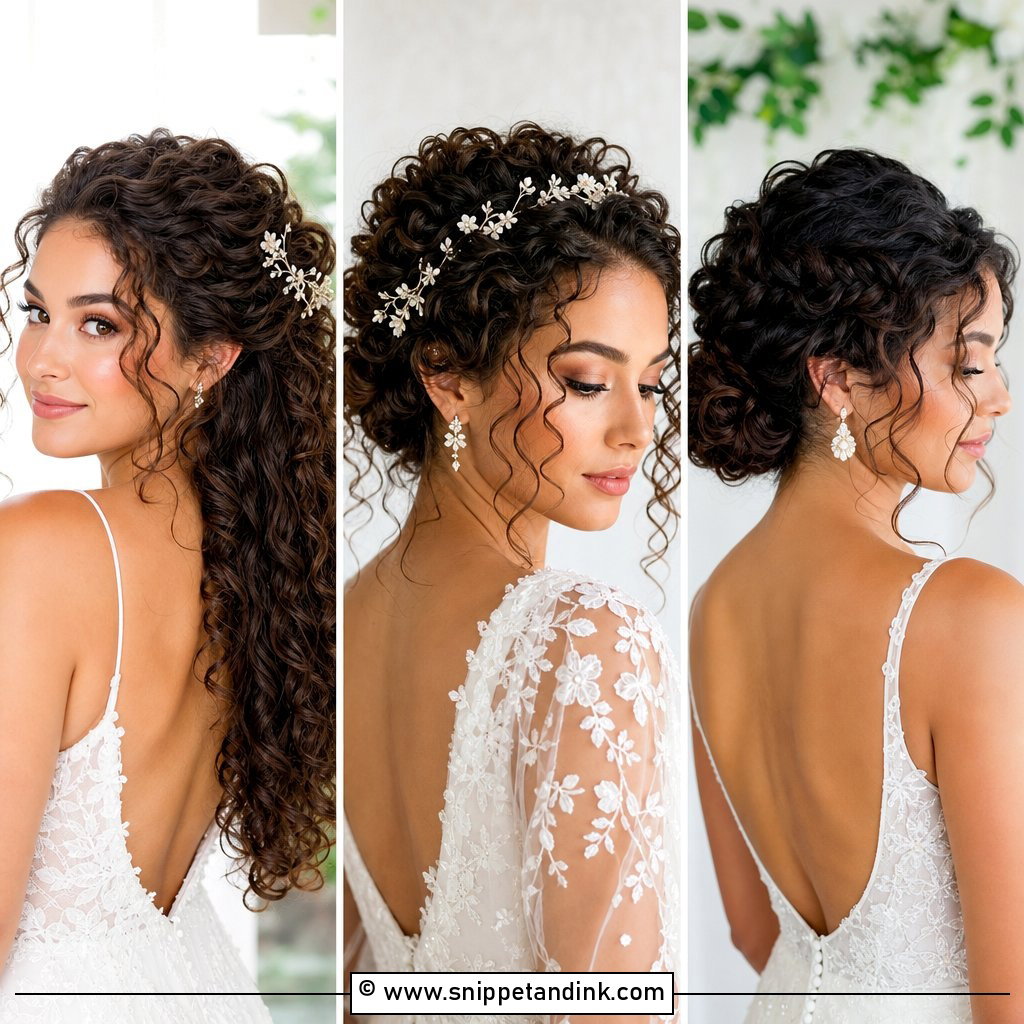
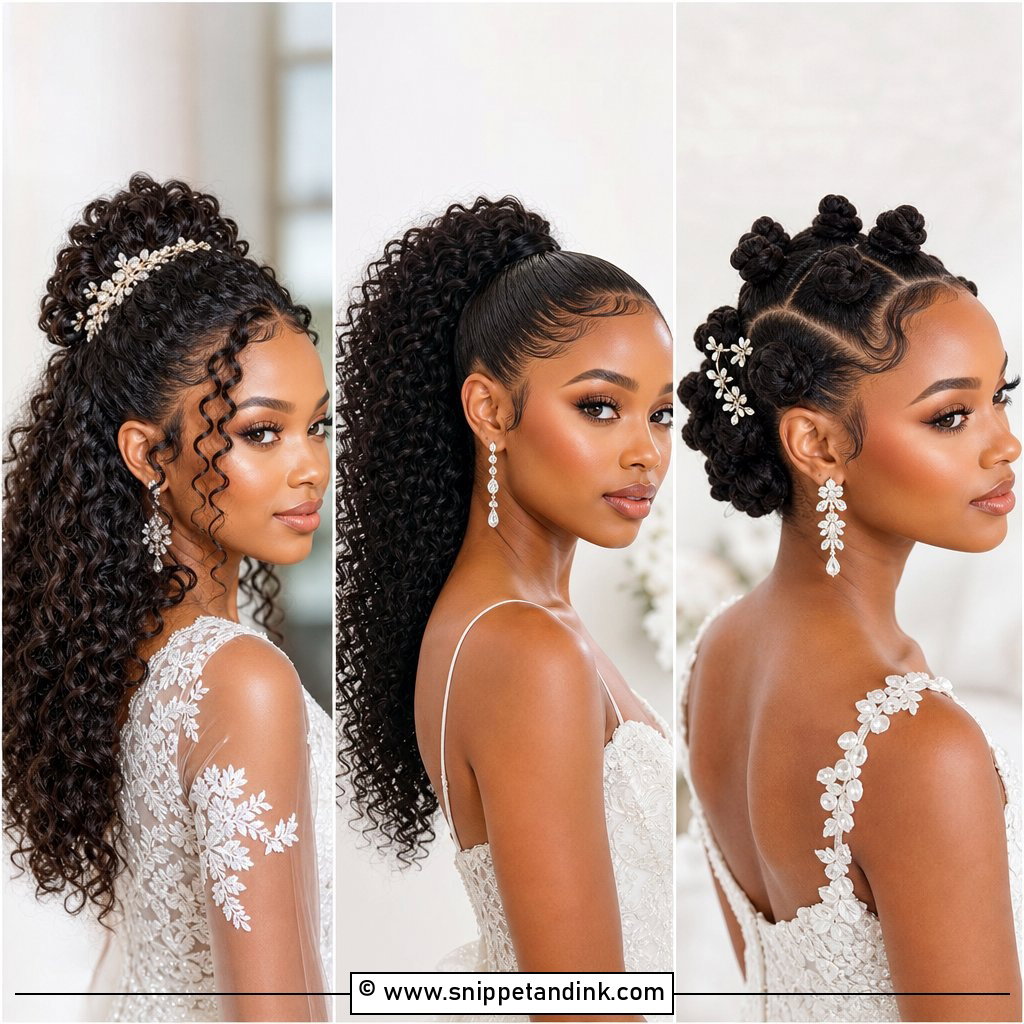
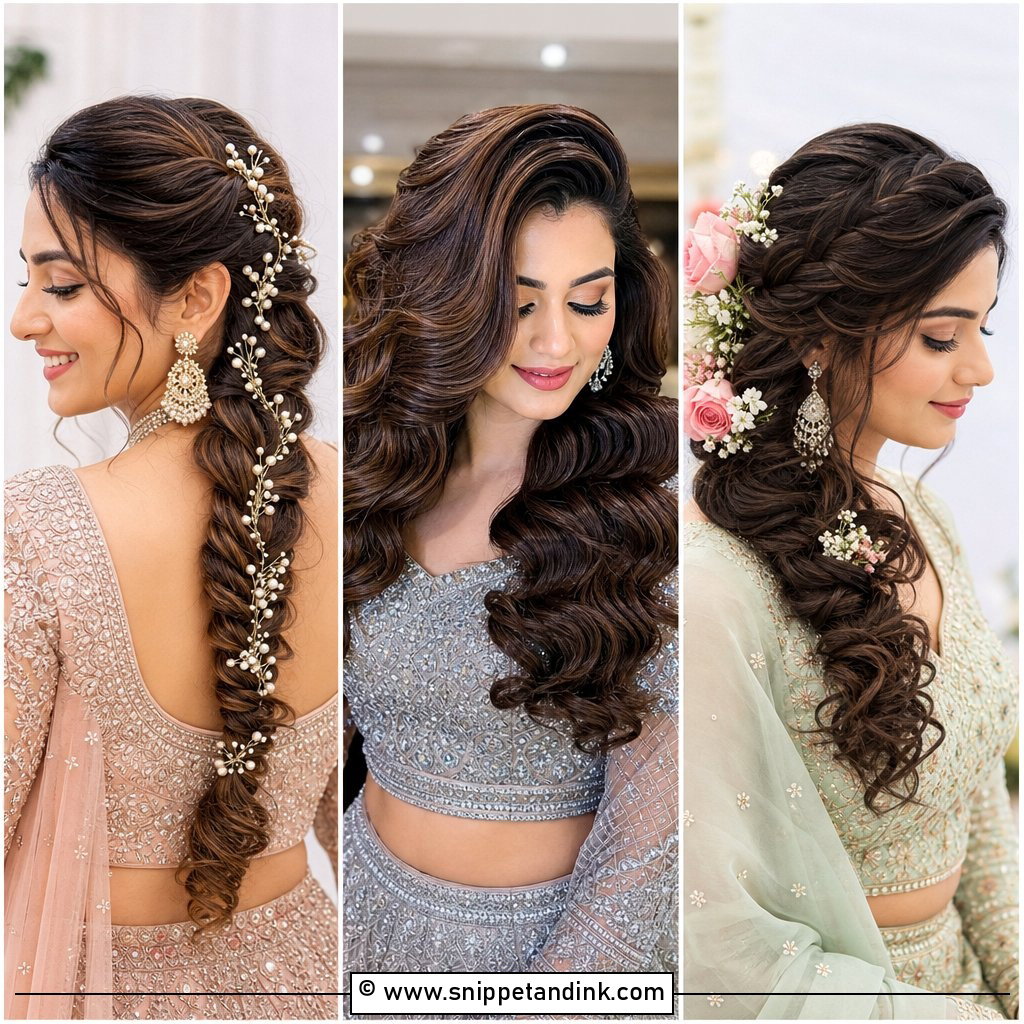
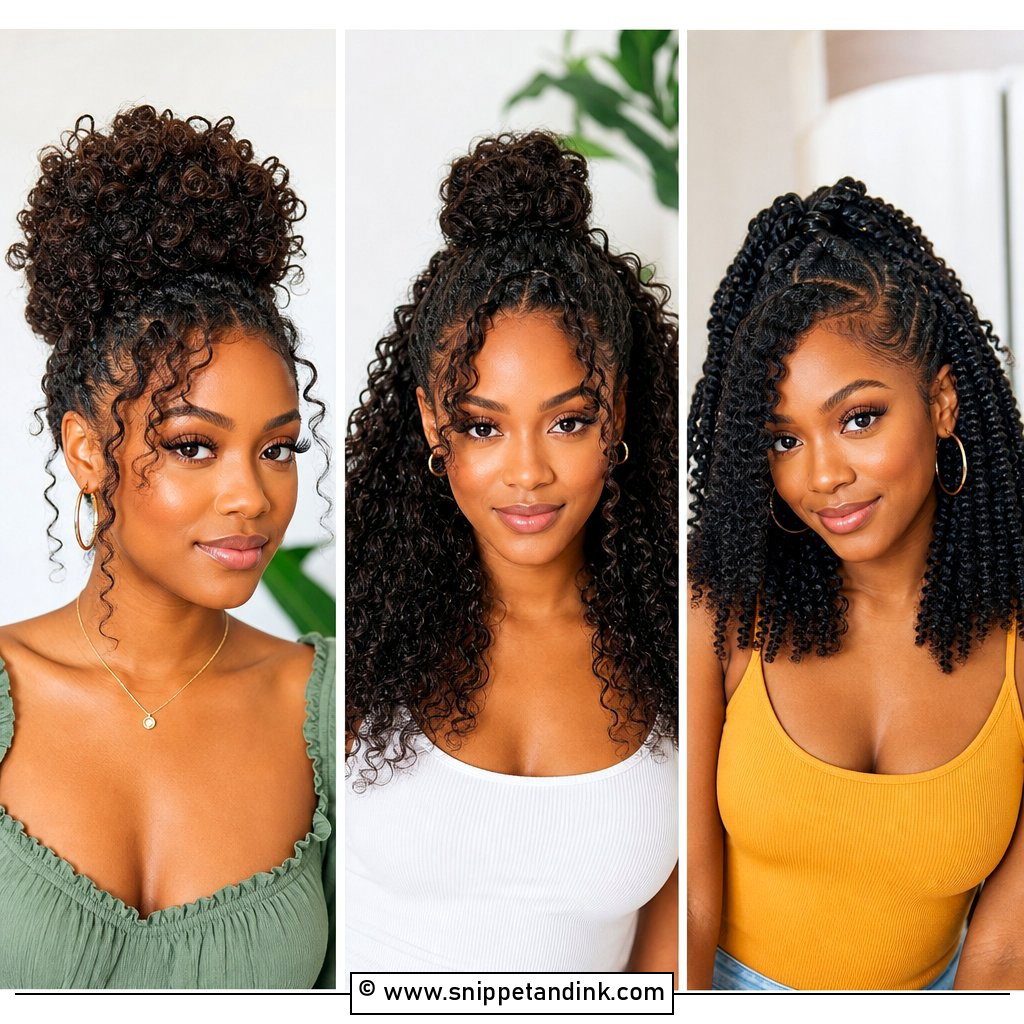
20. Curly Updo With Loose Tendrils
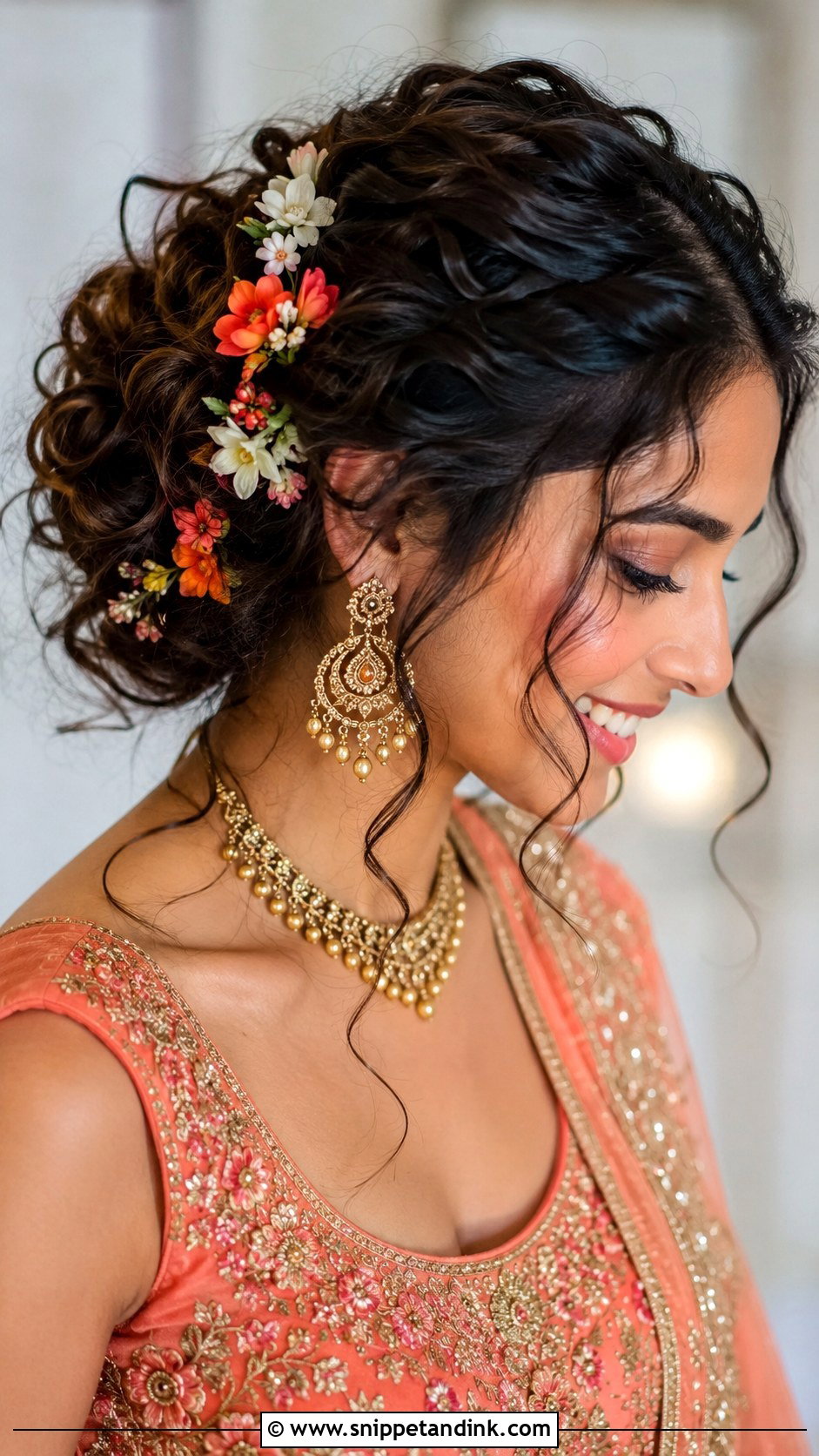
Naturally curly or wavy hair deserves to be worn as it is, gathered loosely into a knot with a few curls left at the face. Small flowers or pearls add a lighter accent. I work with the curl pattern instead of straightening and recurling, which damages hair and never looks as natural. A curl cream, a diffuser and a light hold spray are usually all it needs. It sits well with traditional or fusion outfits.
Why Open Curls Fall Flat in a Warm Hall
Thick, heavy Indian hair drops curls faster than most, and humidity, oil and the weight of the hair all pull them straight. Most of the curls I see falling by evening weren’t set properly in the morning.
- Skip hair oil for two days before the function. Oil on the lengths makes curls slide out and pins slip.
- Wash and blow-dry the day before, with a light mousse or texture spray at the roots.
- Let each curl cool pinned in a loop before brushing it out. Brushing hot curls kills them.
- Fine hair holds a curl better from a smaller barrel; thick hair looks more natural curled on a larger one.
- If the venue is humid, choose a half-up or a braid that keeps the crown secure, and let the ends do the curling.
Bring a small kit for the day with a few bobby pins, a travel hairspray and a wide-tooth comb. Twenty minutes before the reception, I’ll pin tired curls up for ten minutes and let them go just before you walk in.
Matching the Hair to the Function, Not Just the Outfit
A good wedding hairstyle reflects you, respects tradition where that matters to your family and works with everything else you’re wearing. Jasmine buns and South Indian plaits, open curls and bubble braids all have a place, often at different functions of the same wedding. Think about your outfit, face shape, hair length and what each function will ask of you physically. Mix in pearls, gold or fresh flowers to make a traditional style feel personal. Then trial the ones you love, wear them for a few hours and keep the ones that still feel good at the end.
You'll Like These Ideas:




Leave a Reply