
A braid is the hairstyle I am asked for most across a multi-day Indian wedding, because it survives garlands, dupatta pins and hours of sitting cross-legged at the mandap far better than open hair does. The range is wide. At one end sits the classic South Indian choti wrapped in jasmine; at the other, a fishtail threaded with pearls for the sangeet. Below are twenty braids I would consider for lehengas, silk sarees and fusion outfits, with notes on what each one asks of your hair and what tends to go wrong with it.
Where the Length and Weight of a Bridal Choti Come From
Very few brides arrive with a waist-length plait as thick as the ones in these photos. Most long South Indian and chand choti looks rely on added hair, and planning for that early saves a lot of stress later.
Extensions, parandas and hair pieces
Clip-in wefts placed under the top layer add thickness along the whole plait. A ready-made braided hair piece, or a traditional black paranda with tassels, attaches near the base and is woven into the last part of your own braid. I ask brides to buy hair in their exact shade and bring it to the trial, because color matching is the step that most often goes wrong. A reddish weft against black hair shows the moment a flash fires.
Anchoring heavy ornaments
Jadai, chand pieces and a full gajra add real weight to the back of the head, and clips alone loosen as a braid relaxes over several hours. I build a small hidden base at the crown, cross pins into it, and sew the largest ornaments onto the plait with thread in the hair color. If the ornaments feel heavy at the trial, they will feel heavier by the pheras, so that is the moment to take one off.
1. South Indian Bridal Braid With Gajra
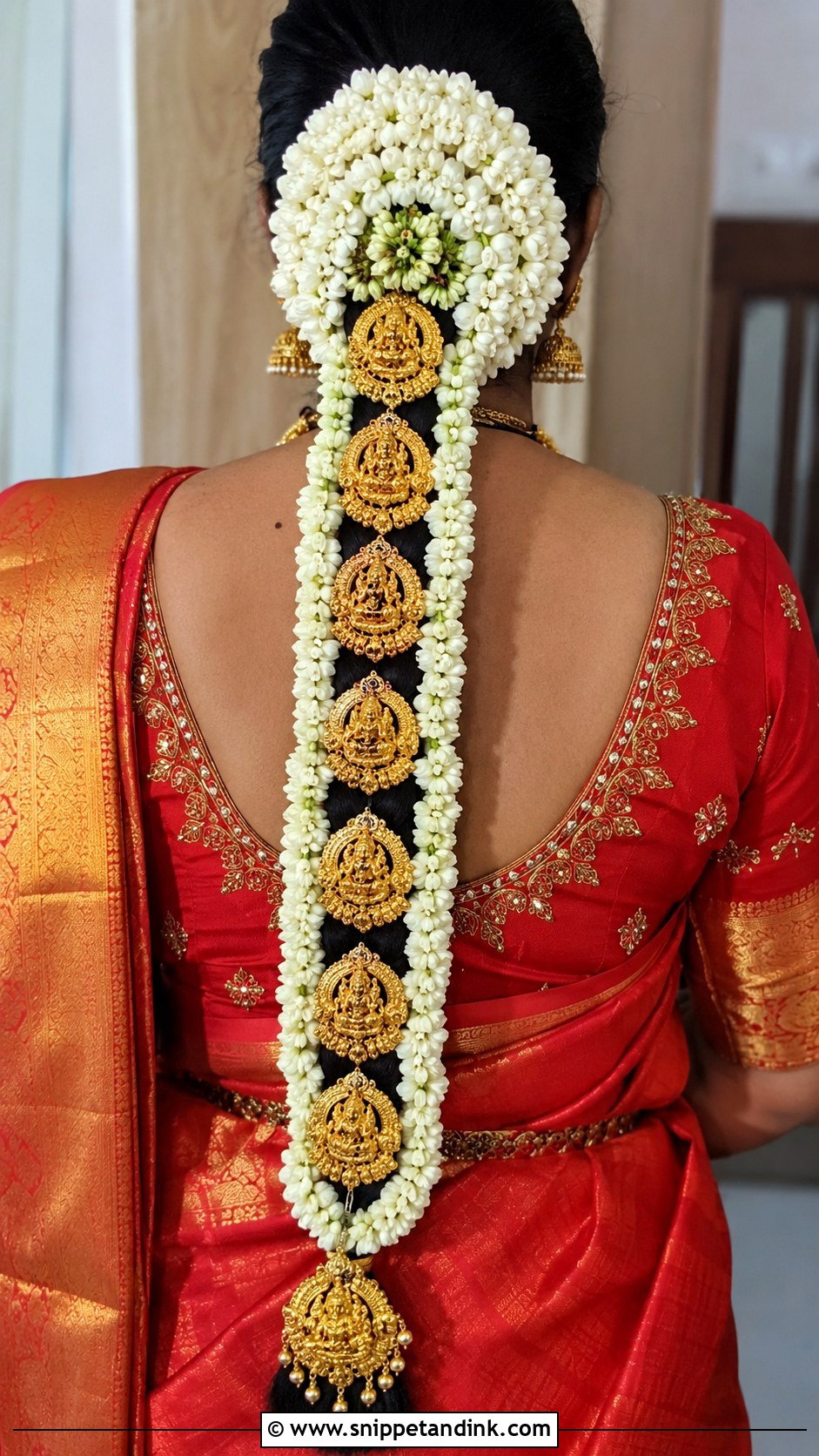
This is the braid most South Indian families picture first: one thick plait down the back, nearly always lengthened with extensions or a hair piece so it reaches the waist. A gajra of jasmine flowers runs the full length, and temple jewelry plus jadai billalu pins sit on top. The weight is what I plan around. Real jasmine and a full jadai pull hard on the scalp, so I anchor the top of the plait into a small hidden base at the crown with crossed pins instead of trusting the braid alone. With a Kanjeevaram silk it keeps the face completely open, which is exactly why it reads so traditional.
2. Fishtail Braid With Pearls
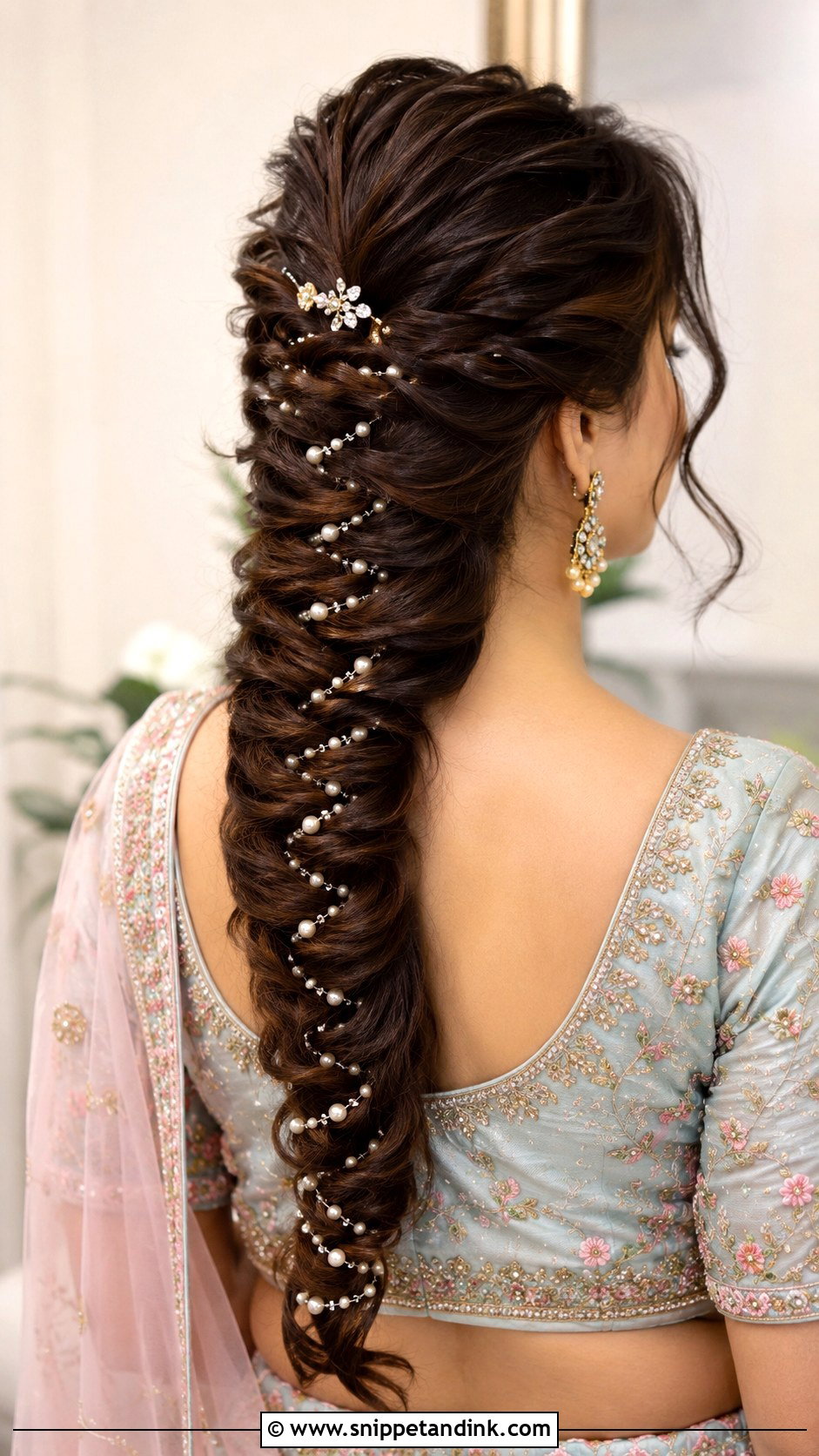
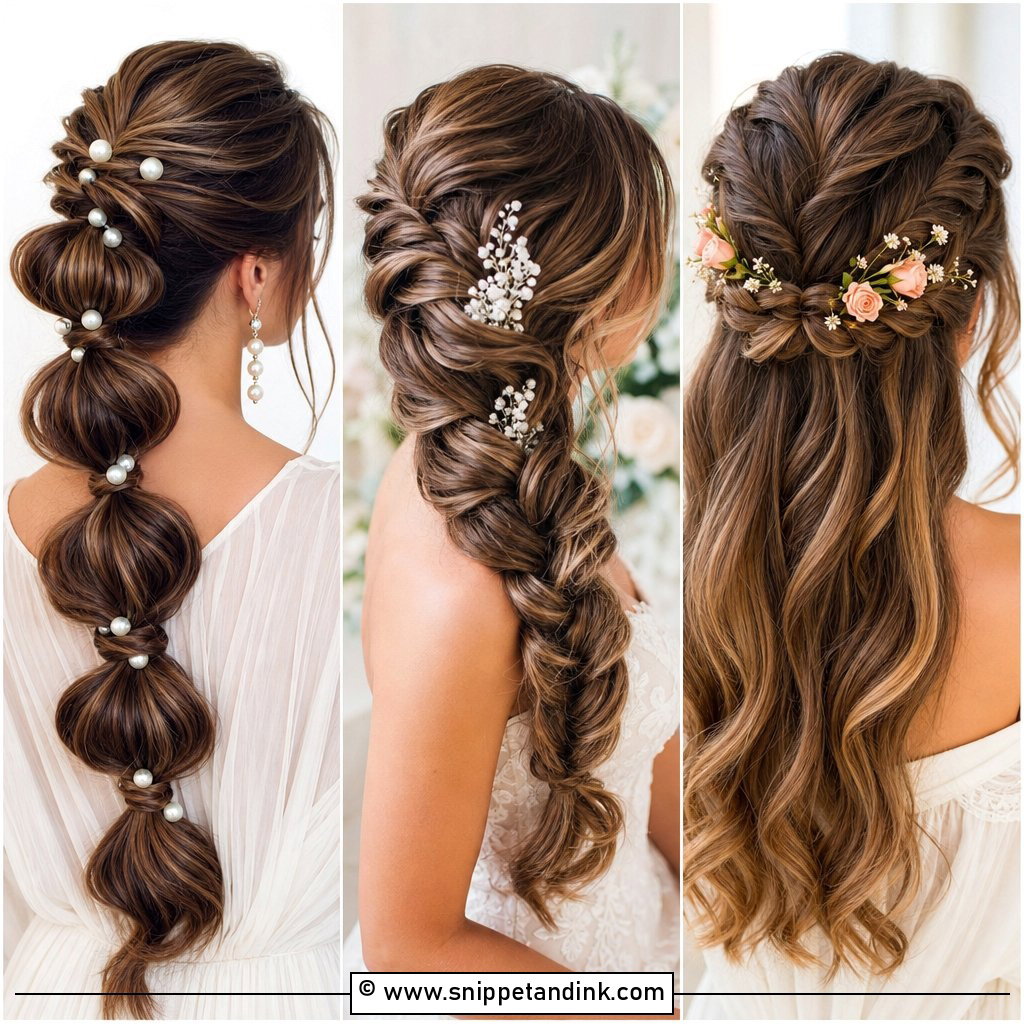
A fishtail passes tiny sections from the outside of one half to the inside of the other, and that is where the tight herringbone pattern comes from. On most Indian hair I add volume at the crown first and clip in extensions, because a fishtail looks thinner once it is pulled apart for texture. Pearls hold best on pins pushed between the woven sections; glued pearls pop off. Receptions and sangeet nights suit it, with a flowing lehenga or a contemporary saree drape. One honest caution: heavily layered hair pokes out of a fishtail, so short layers need a little wax or a tighter weave.
3. Braided Bun With Flowers
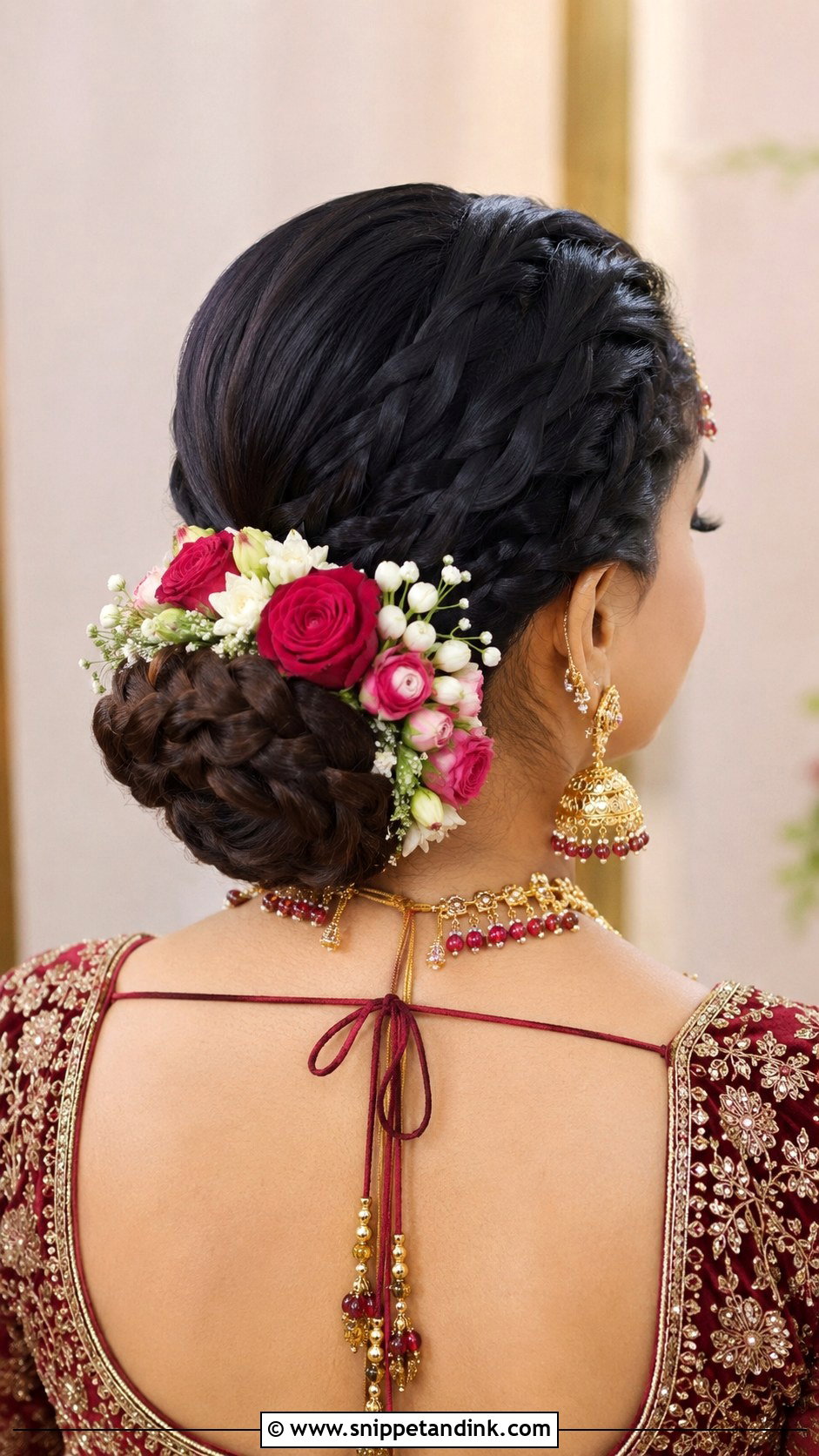
Here the braid is the building block. I plait one or two sections and coil them into a bun at the nape or the crown, neat or loosened, then tuck roses, marigolds or jasmine around the edge. Coiled braids grip each other, which gives the pins something to bite into, and that is why this bun survives rituals and dancing. A nape placement sits happily under a heavy dupatta; a crown placement fights with it. Round and oval faces both carry it well.
4. Crown Braid With Side Trail
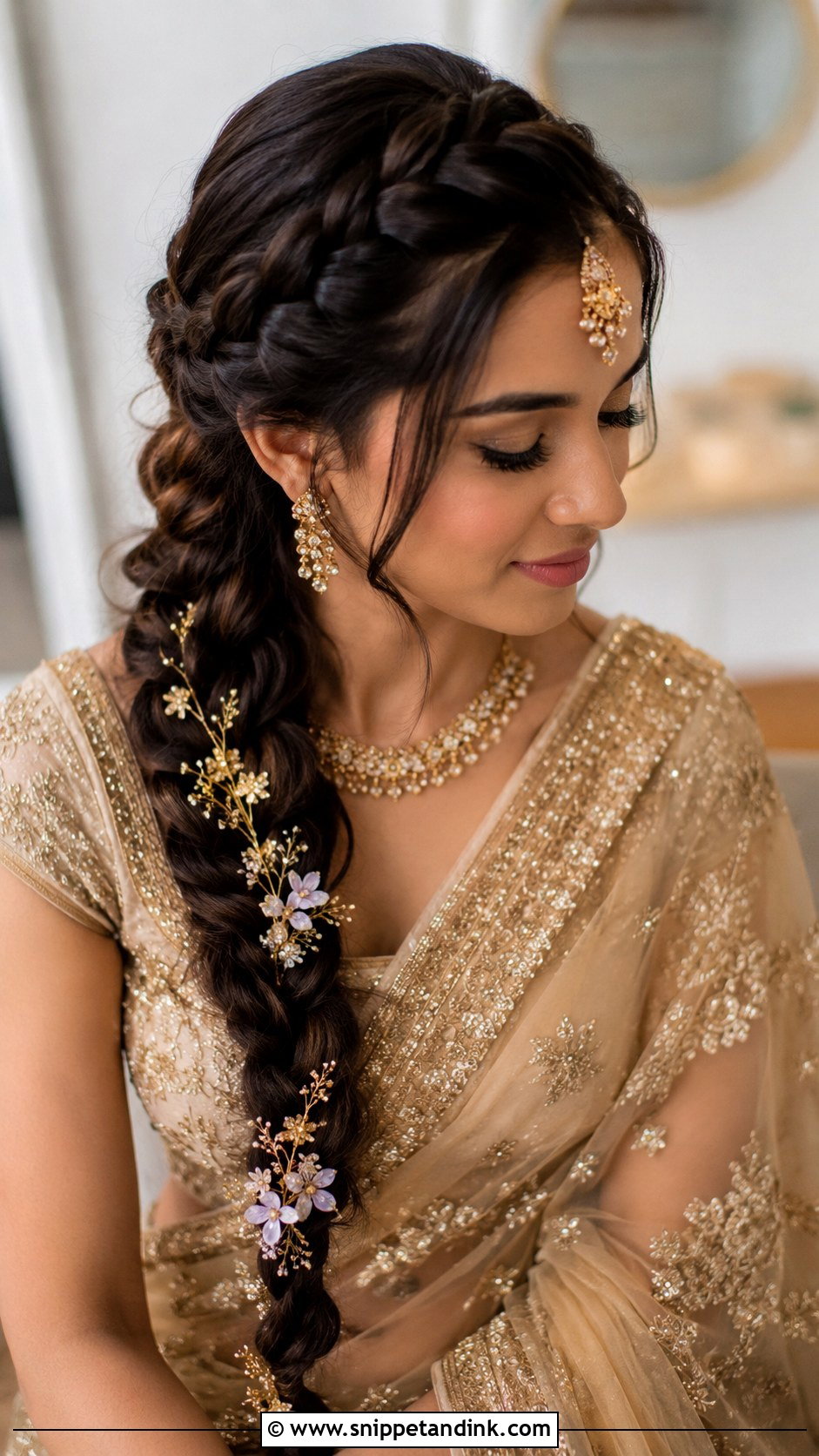
The crown portion wraps over the top of the head like a halo and the rest of the length drops into a braid over one shoulder. You get hair off the face plus movement on one side, which helps at the mandap where you are often photographed in profile. Gold pins, small flowers and gemstones go along the crown. Before I commit to it, I check where the maang tikka chain and any sahara will sit, because a crown braid crosses exactly that area and a heavy tikka can drag the front section down. Pinned at every crossover, it holds well through long events.
5. Dutch Braid With Gold Thread
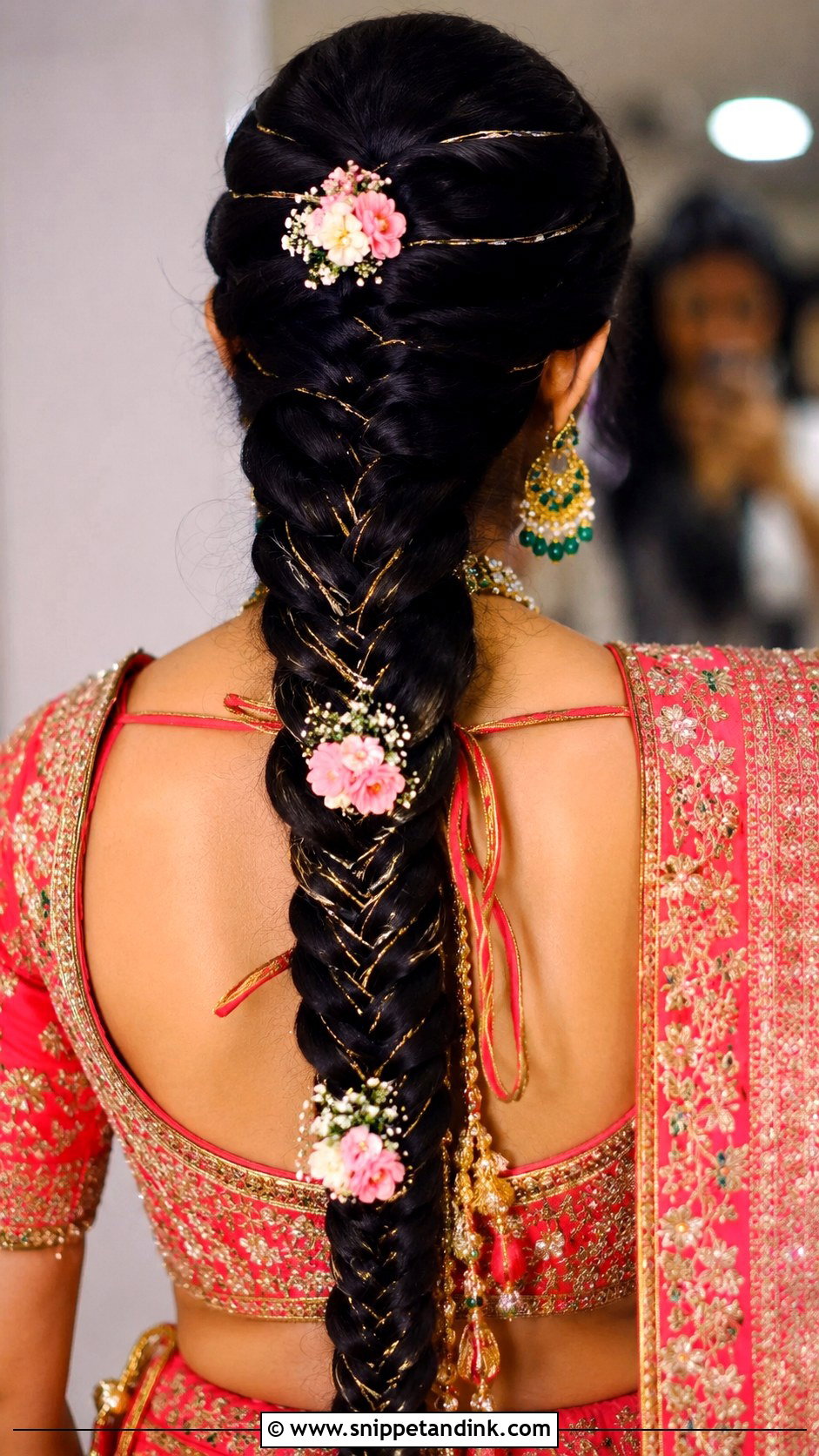
A Dutch braid is an inside-out French braid: the strands go under rather than over, so the plait sits raised on top of the hair. That raised ridge is why gold thread shows up so well on it. I usually lace the thread through after the braid is finished with a blunt bodkin, which is quicker and neater than braiding it in. One thick braid or twin braids both stay put through several ceremonies with almost no touch-ups. Match the thread to the zari in your outfit rather than to your jewelry; two slightly different golds look obvious up close.
6. Half-Up Half-Down Braided Look
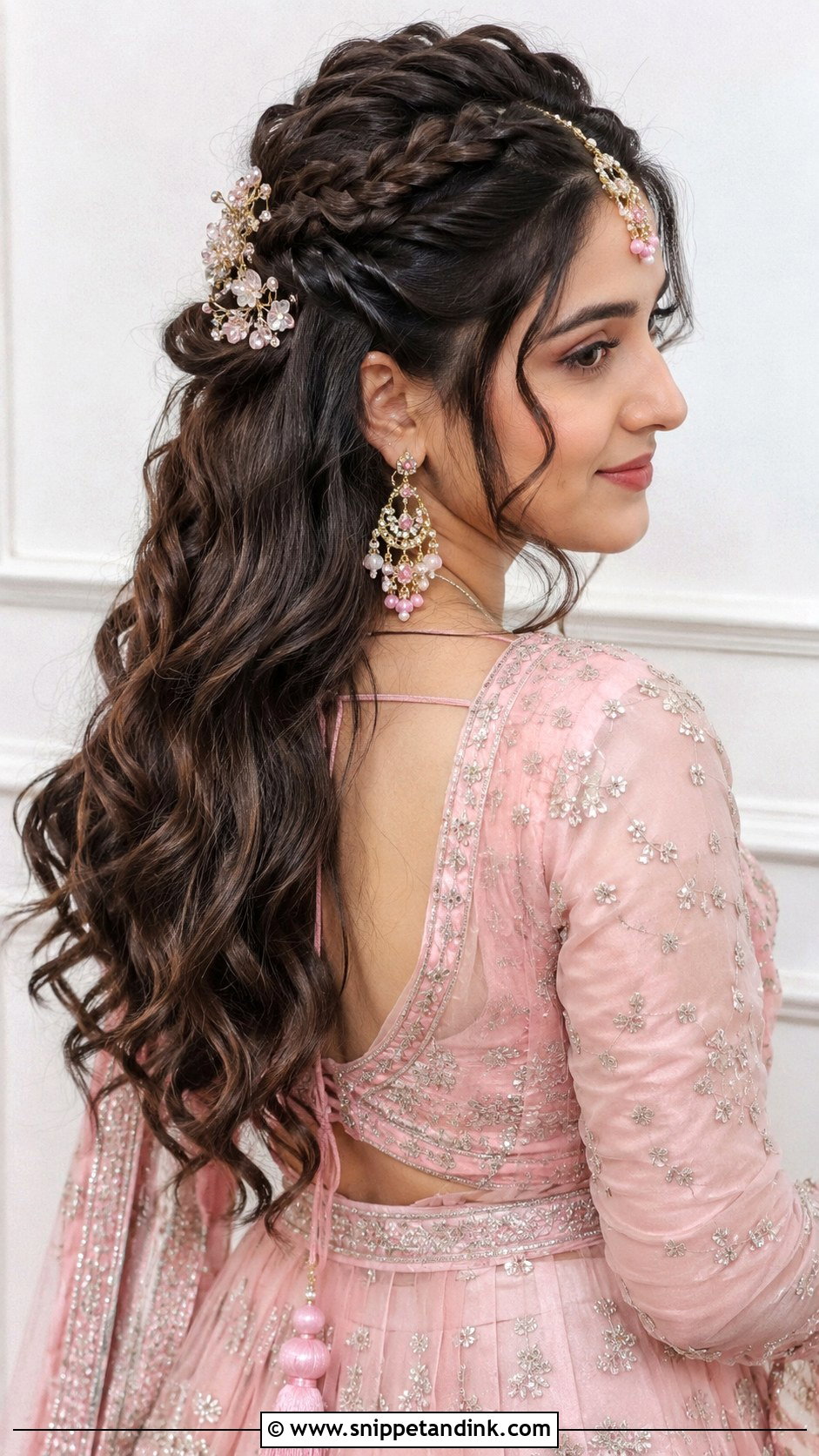
Half-up suits the bride who cannot bear to hide her length. I braid and pin back the top section, leave the rest in curls over the shoulders, and add small braids, jewels or flowers to the pinned part. The open half is the weak spot. Curls on straight, fine hair can drop within a few hours in a warm mehndi tent, so I set them with heat, let them cool fully in pin curls and finish with a light hold spray. Delicate earrings and a light maang tikka suit it better than heavy pieces, which tug at the pinned crown. I keep it for engagements, mehndi and sangeet.
7. Chand Choti Braid Hairstyle
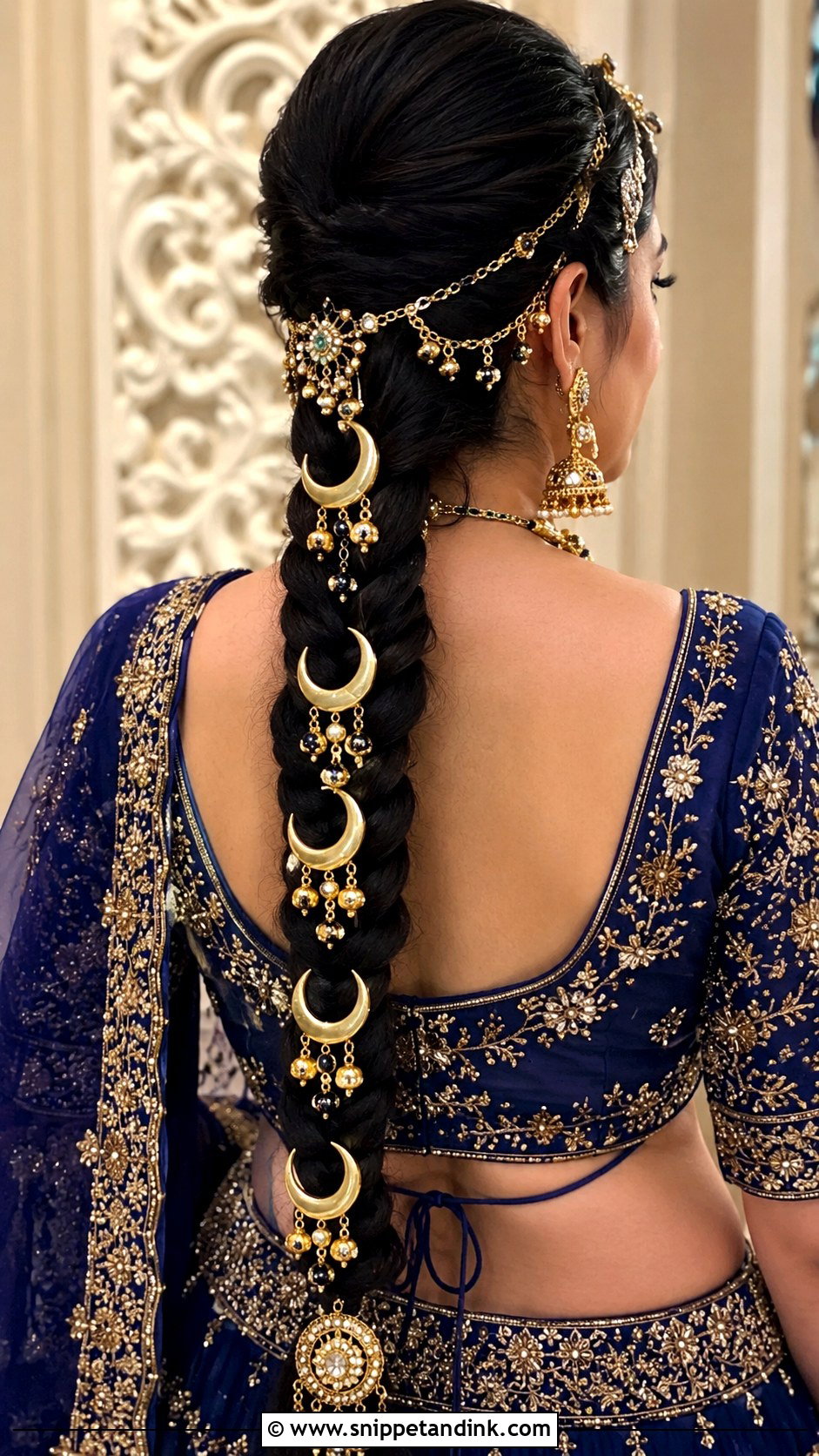
The chand choti braid takes its name from crescent moon ornaments fixed along a long plait, often layered with jewels until the braid becomes a piece of jewelry itself. Metal catches light in a way flowers do not, so it reads clearly in photos even from across a hall. Being flower-free, it is also my answer for a bride who reacts to jasmine. The ornaments pull, though. I braid tighter near the top and sew the heaviest pieces on with thread in the hair color instead of relying on clips. Match the metal to your bridal set and it looks deliberate rather than busy.
8. Bubble Braid For Brides
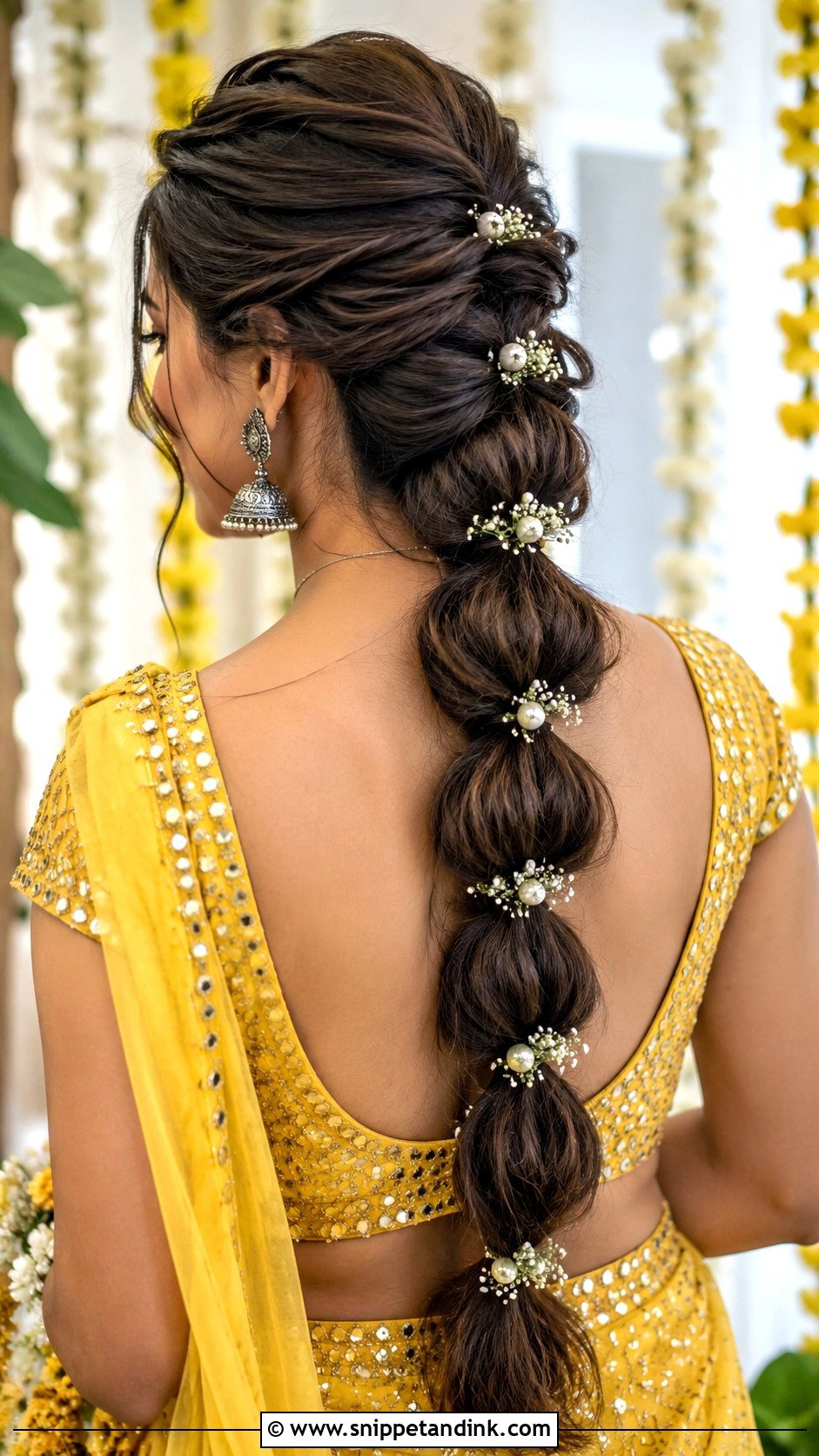
No weaving at all. A ponytail is tied off with small elastics at intervals and each section is eased wider into a bubble. It is quick and comfortable, which is why I reach for it at mehndi and haldi, where hair needs to be secure without feeling stiff. Tiny flowers, pearls or jeweled pins go over each elastic and hide it. Thin elastics in your own hair color disappear better than clear ones. It is a casual braid, so I would not put it with a heavy bridal lehenga.
9. French Braid Into Bun
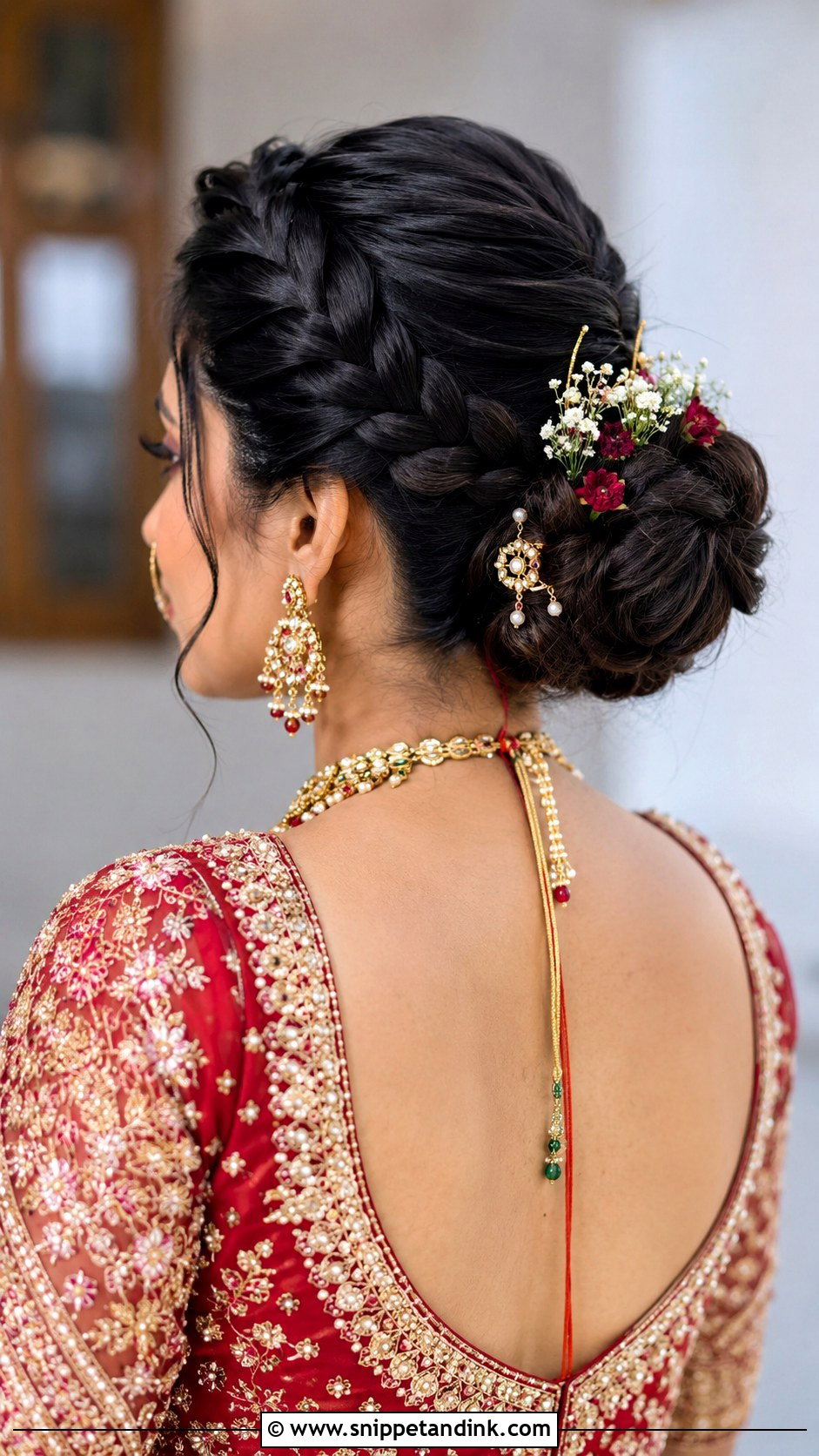
This is my workhorse for a long ceremony. The French braid starts at the hairline, gathers hair as it travels back and finishes in a sleek or textured bun, so nothing hangs loose to tangle with garlands or the dupatta. Gold pins, small flowers or pearls can follow the braid line, and it sits comfortably under heavy jewelry from the morning rituals to the reception. The real risk is a braid started too tight at the hairline, which gives a headache by the fourth hour. I keep the first few crossings relaxed and let the pins do the holding.
10. Side Swept Braid With Flowers
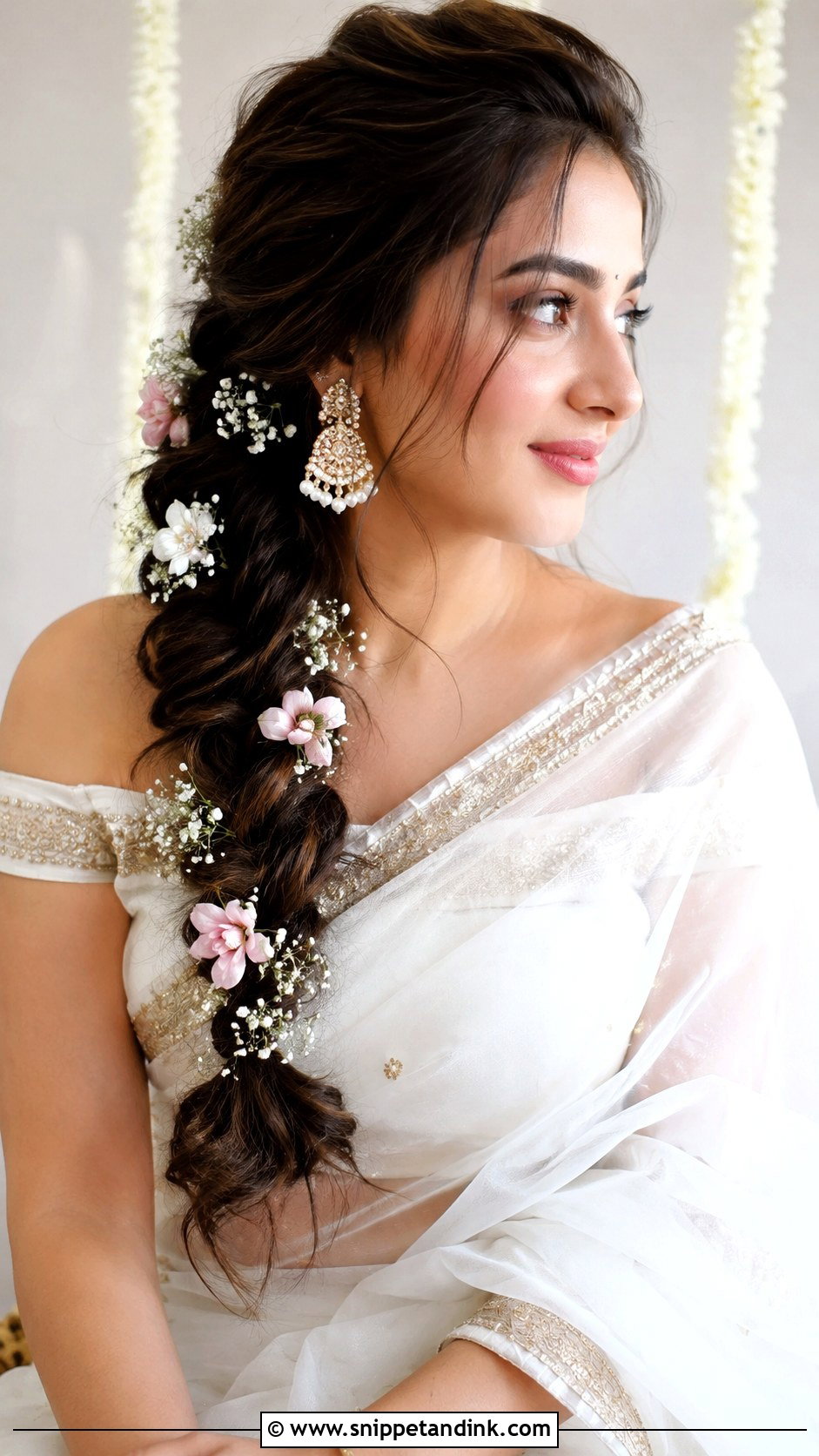
A side braid lies over one shoulder and leaves the other side of the neck bare, which is why necklaces and off-shoulder blouses look so good with it. I build it loose and wide, then dress it with fresh flowers, gajra or jeweled pins along the length. The weak point is the nape: hair pulled to one side wants to escape on the other, so I anchor it with a hidden row of pins behind the ear. Lightweight sarees, mehndi, sangeet and small ceremonies suit it. Put the braid on the side your photographer will shoot most, usually the side facing your partner.
11. Waterfall Braid Wedding Look
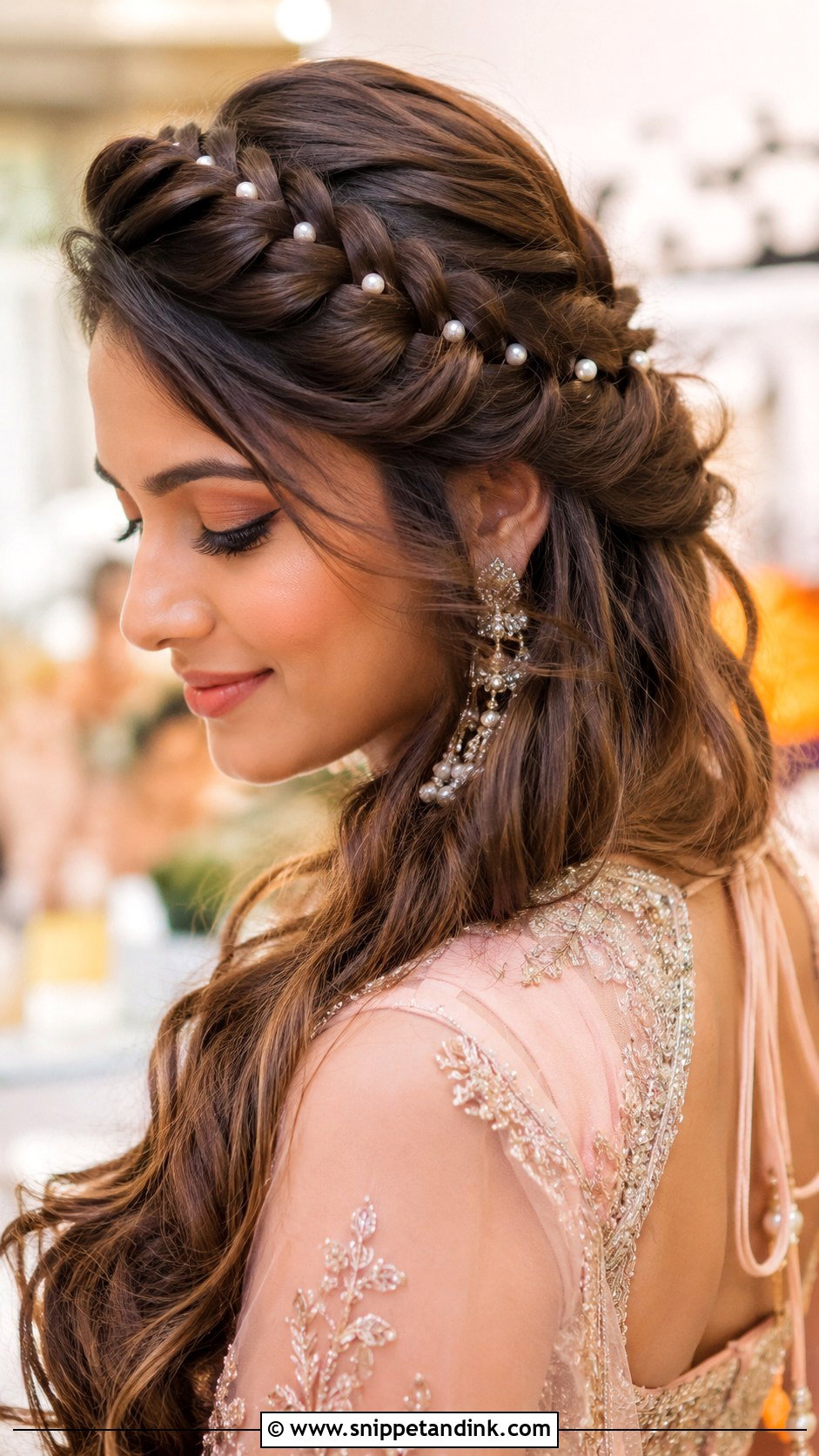
A waterfall braid runs across the crown like a normal French braid, except each top strand is dropped and replaced, so loose lengths fall through it. It needs length and some texture to show. On very straight hair I curl first, otherwise the dropped strands vanish into the hair below. Small flowers, pearls or tiny jewels sit in the horizontal braid. I use it for engagements, receptions and fusion weddings rather than a long religious ceremony, because the open hair underneath needs a brush-through halfway.
12. Maang Tikka Braided Updo
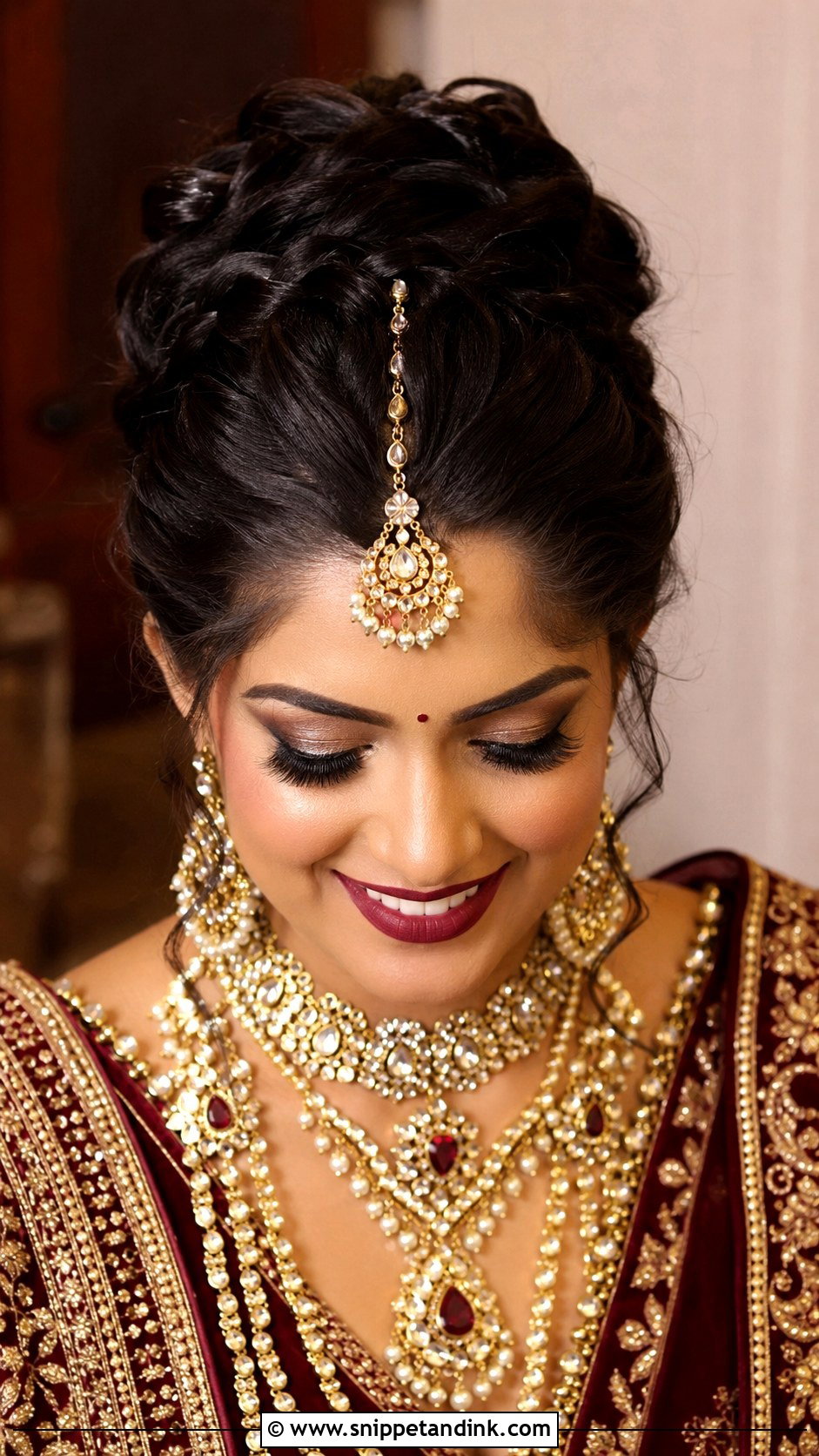
When the maang tikka is the centerpiece, the hair has one job: keep the forehead and parting clear. I sweep everything up into braided coils and twists, but I set the tikka first and build the updo around its chain, so the ornament never perches on bulky hair. Gold pins, small flowers or gemstones fill the gaps. It pairs naturally with heavy bridal jewelry and traditional lehengas, and the coils hold through dancing. If your tikka has a heavy side jhoomar, say so at the trial so the pinning on that side gets reinforced.
13. Rose Decorated Long Braid
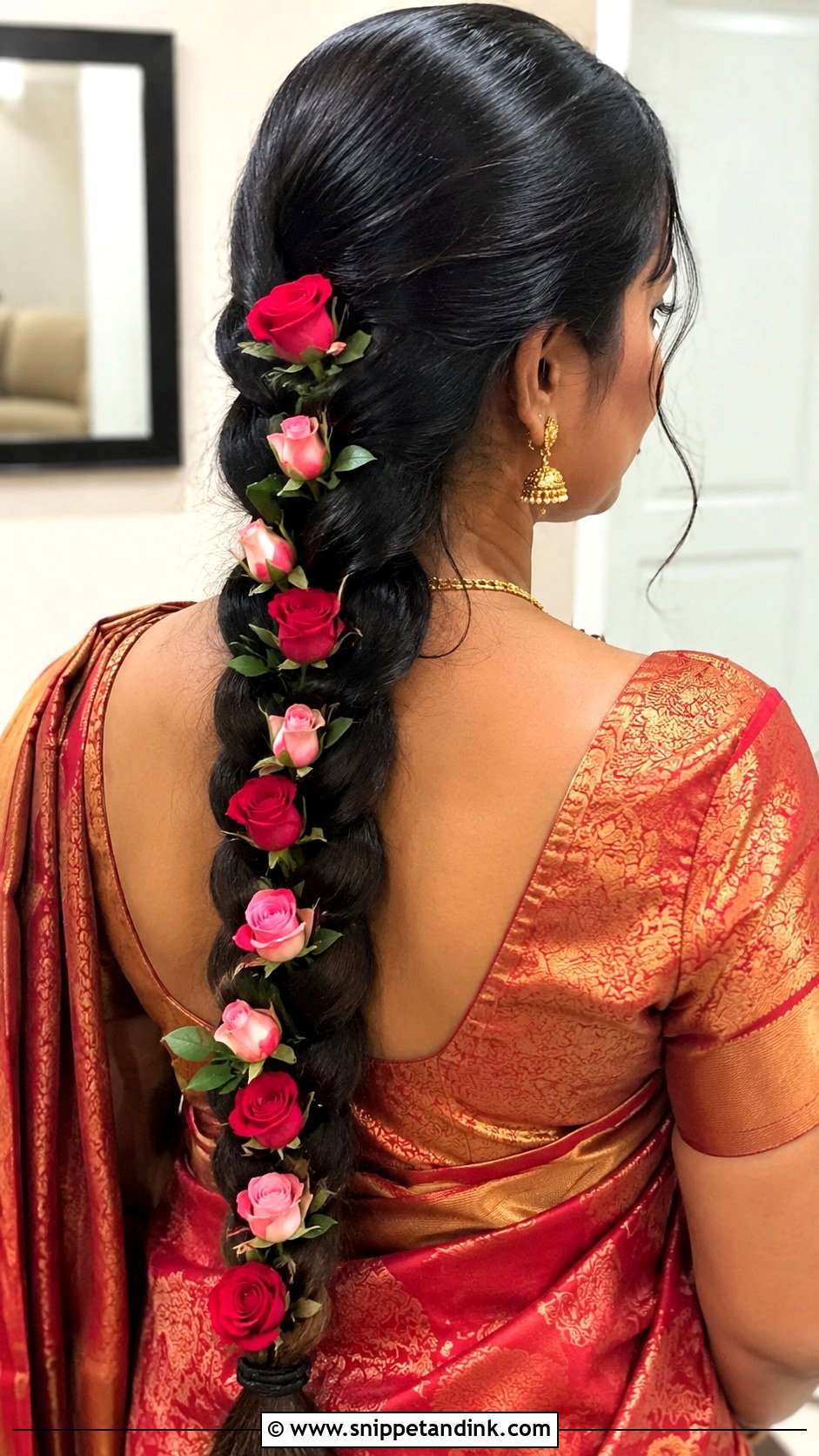
One thick braid with rose buds tucked along its length gives you color and fragrance with very little fuss. Red or pink roses with gold accessories keep it traditional, and it sits well with rich silk sarees or classic lehengas. Grading the flowers from small buds at the top to open blooms at the bottom creates that gradient down the plait. Roses bruise more easily than jasmine, especially under a dupatta, so I use firm buds, wire them through the braid and keep a few spares in a damp box for touch-ups.
14. Twin Braids For Mehndi
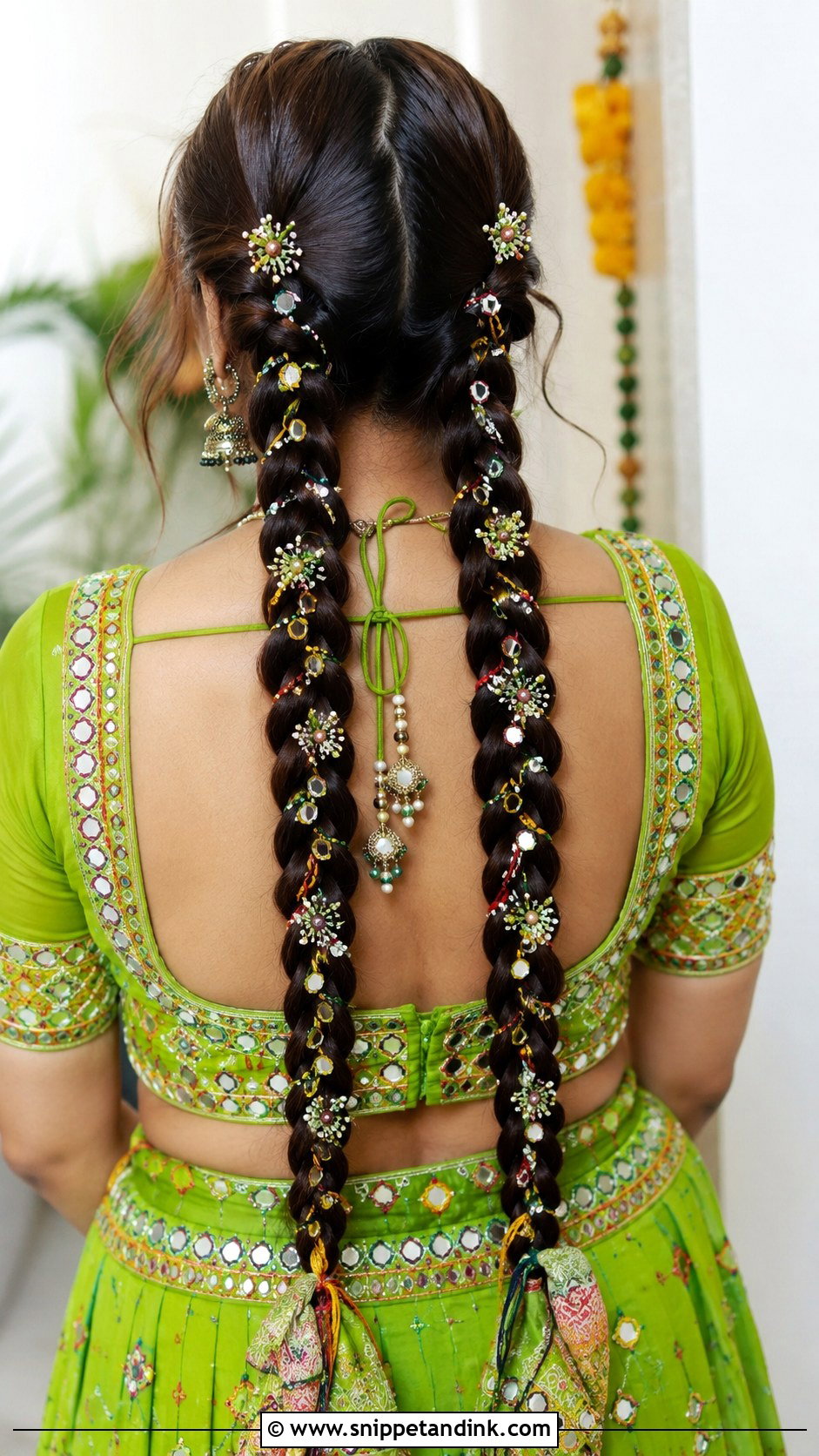
Twin braids split the hair in two and drop one plait on each side. At mehndi and haldi they are practical as much as festive, since your hair stays off your hands while the henna dries and away from the turmeric paste. Tiny flowers, mirrors, pom-poms or colored threads keep them playful, and bright lehengas with oxidized jewelry match the mood. Wrap the ends in a scarf during haldi if your hair is light or highlighted, because turmeric can leave a yellow tint.
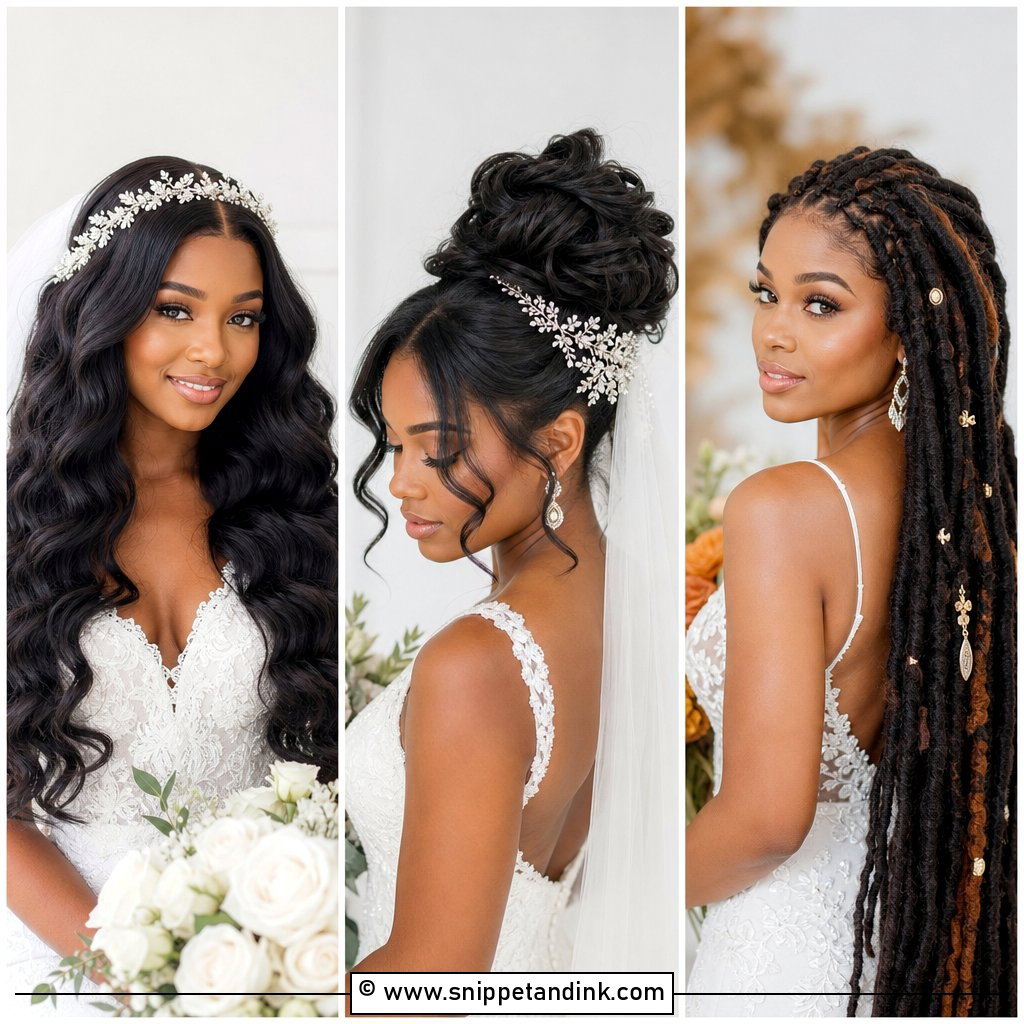
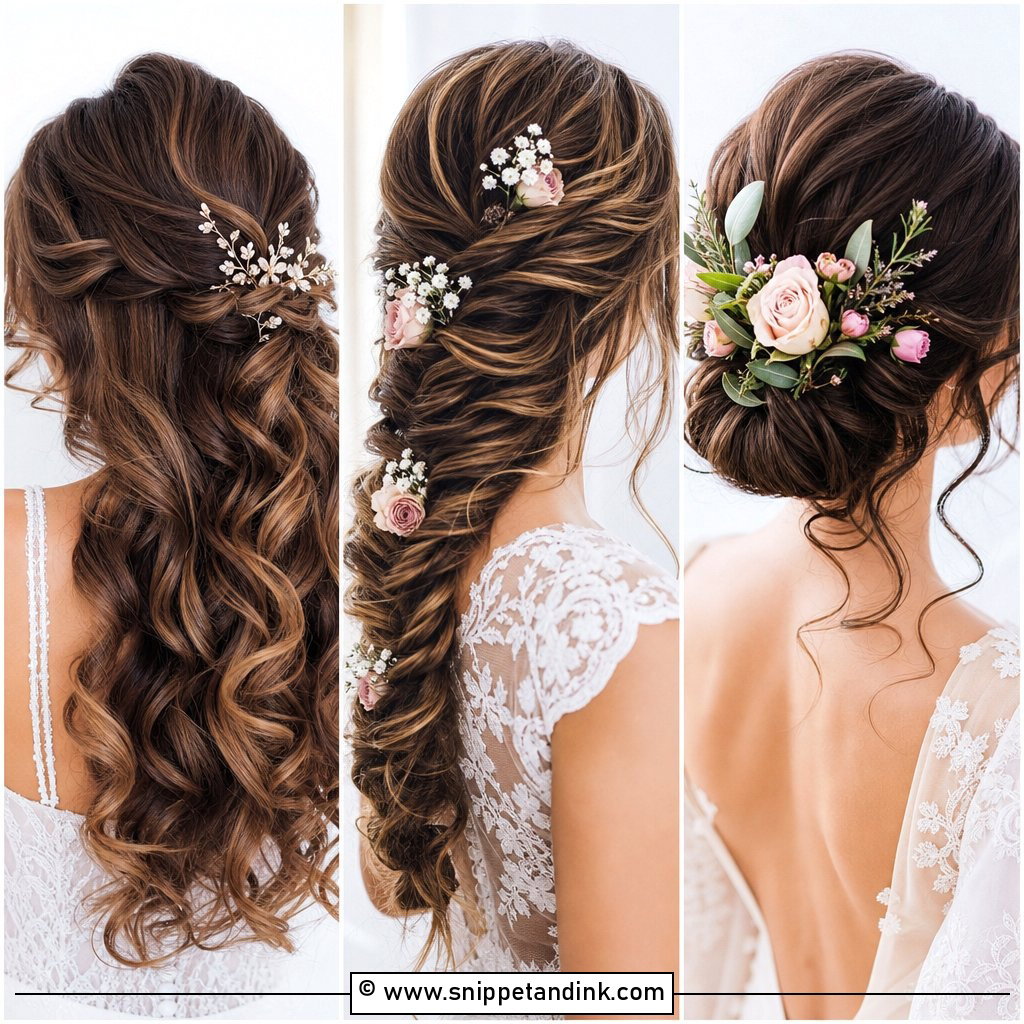
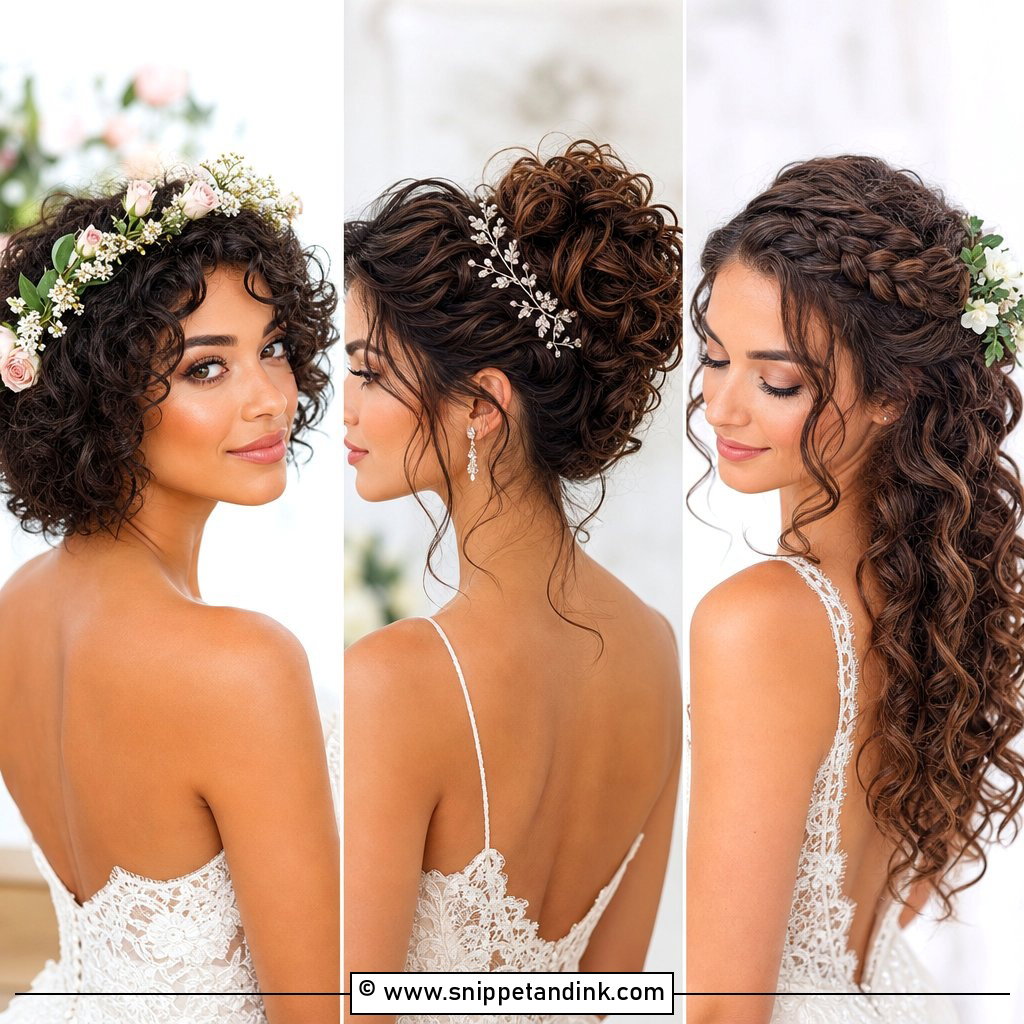
15. Sleek Braid With Temple Jewelry
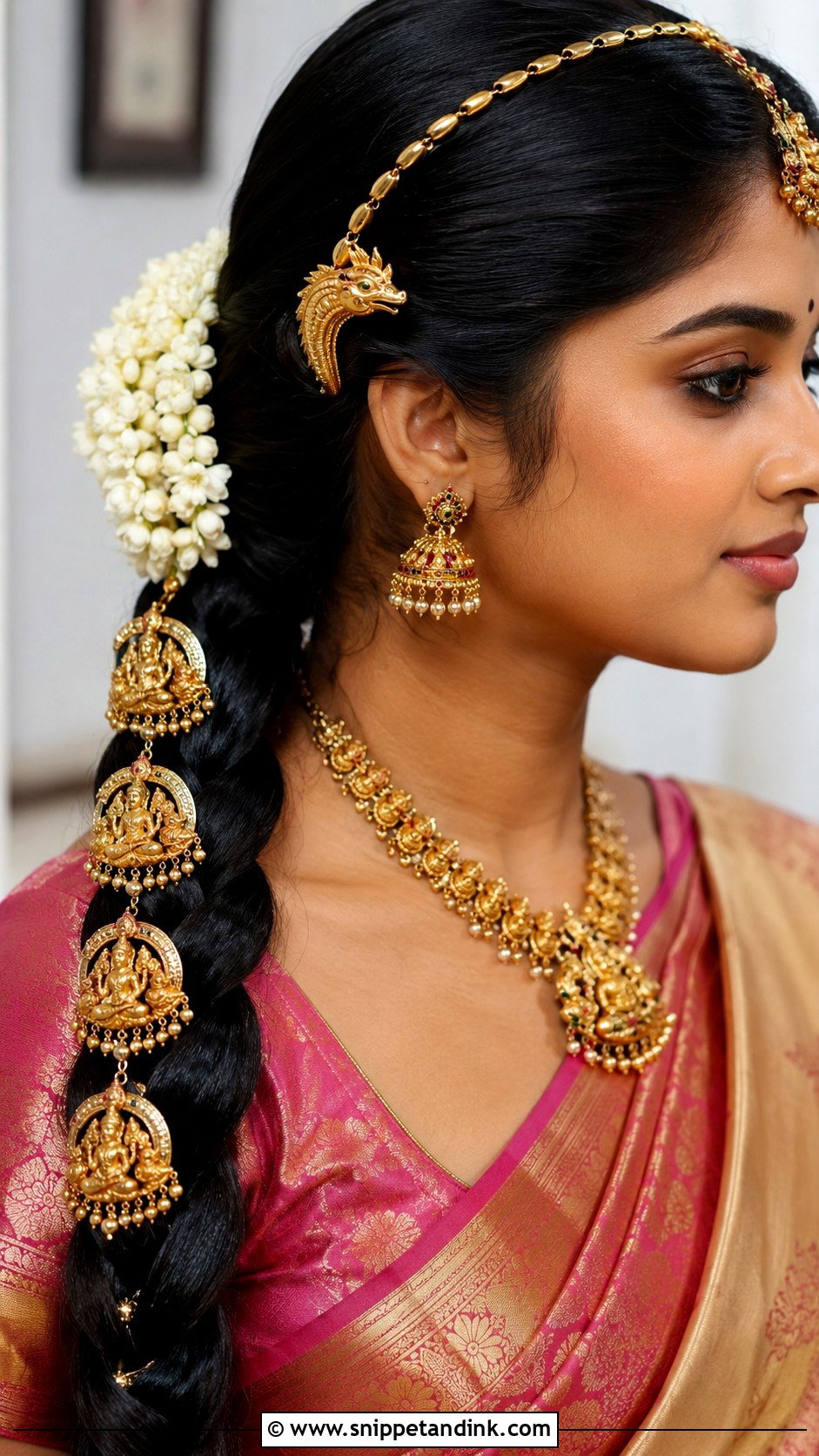
A sleek braid gives temple jewelry a smooth surface to sit on. I work a little serum through each section with a boar-bristle brush, braid it firmly with no flyaways, then add jadai nagam, gold temple ornaments and decorative pins down the length. With a Kanjeevaram silk and antique gold, it is the most ceremonial look in this list. Fine hair rarely gives a thick enough sleek plait by itself, so I nearly always add a matching extension at the nape. The sleek temple jewelry braid is my first suggestion for a muhurtham where tradition matters more than trend.
16. Messy Braid With Loose Curls
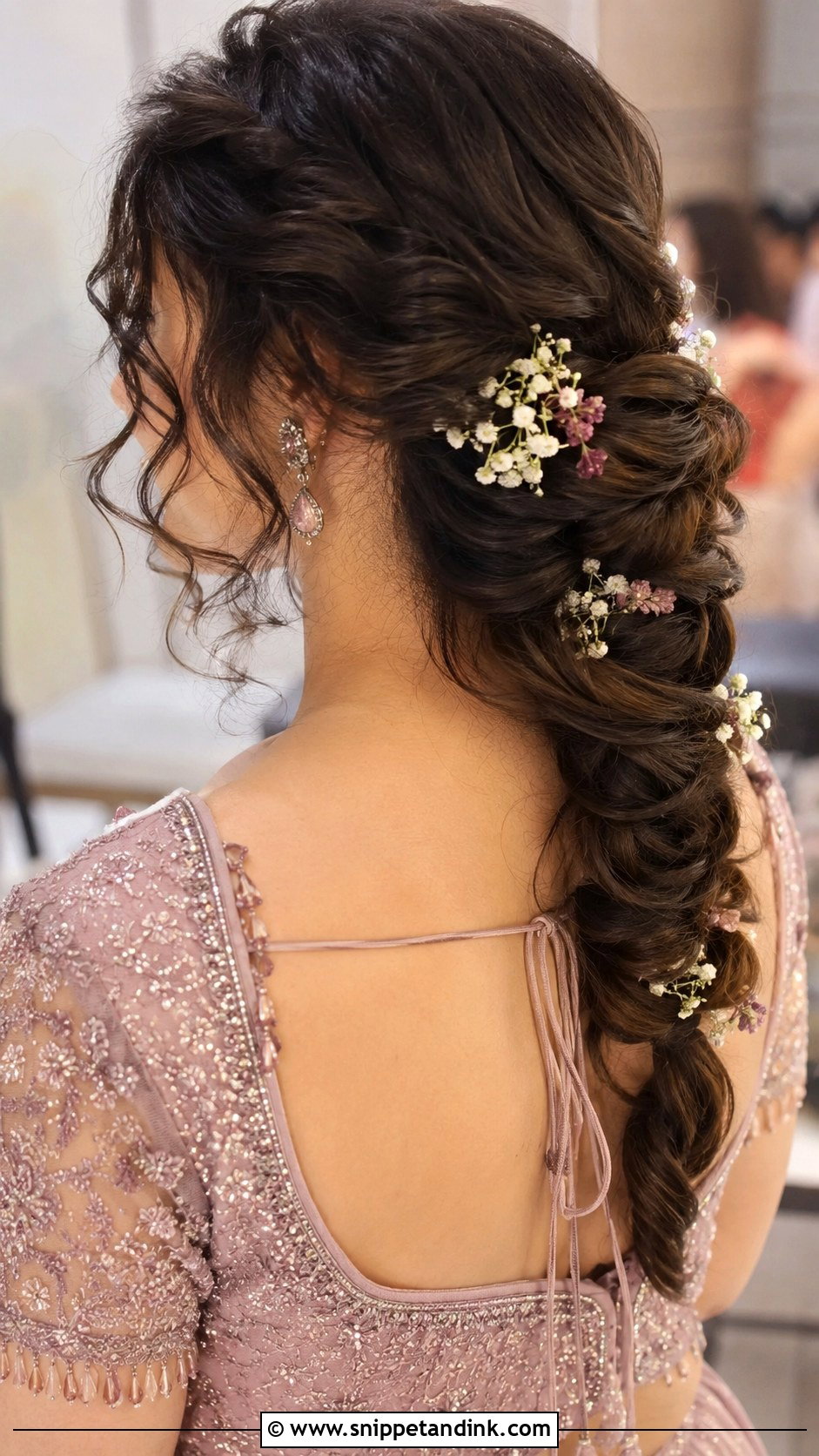
Loosened plaits with curls spilling from the sides make this the least formal braid here. Wavy and curly hair carry it best because the texture is already there. On straight hair I texturize first with a dry spray, or the loosened sections slide flat within the hour. A few flowers or pearls are plenty, and it suits receptions, sangeet and fusion weddings. The danger is that undone turns into unfinished by evening, so I pin the pulled-out pieces where they sit instead of leaving them free.
17. Braided Ponytail Bridal Style
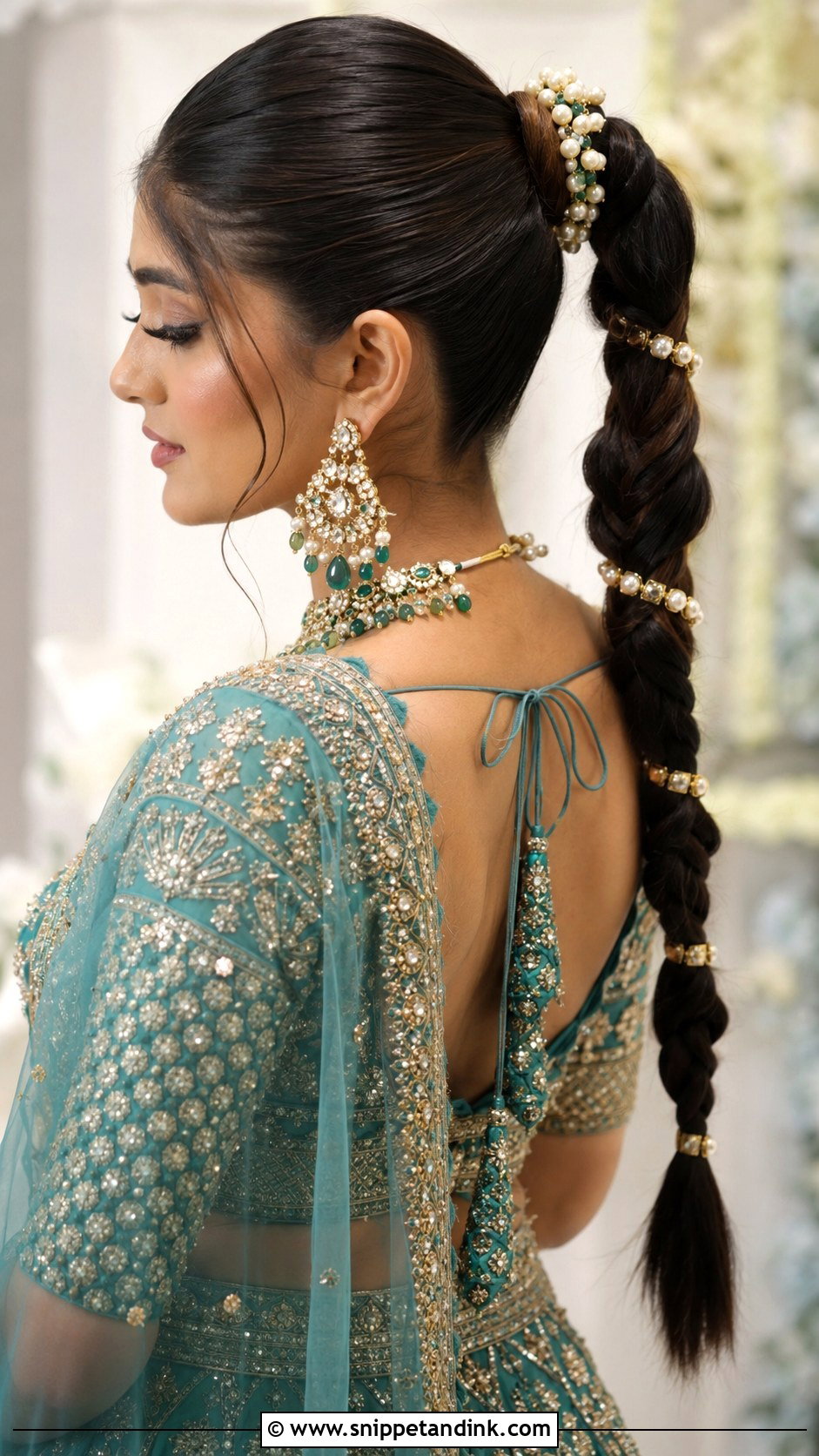
Gather the hair into a high or low ponytail, wrap a strand around the base, then braid the length. A high one swings while you dance; a low one sits calmer under a dupatta. Pearls, gold cuffs or small flowers dress it up, and it keeps hair off the shoulders when your blouse has back detail worth showing. I steer it toward cocktail receptions and sangeet nights with contemporary lehengas and statement earrings. A high ponytail pulls on the scalp over a long evening, so I build it on a small pinned base that spreads the weight.
18. Floral Crown Braid
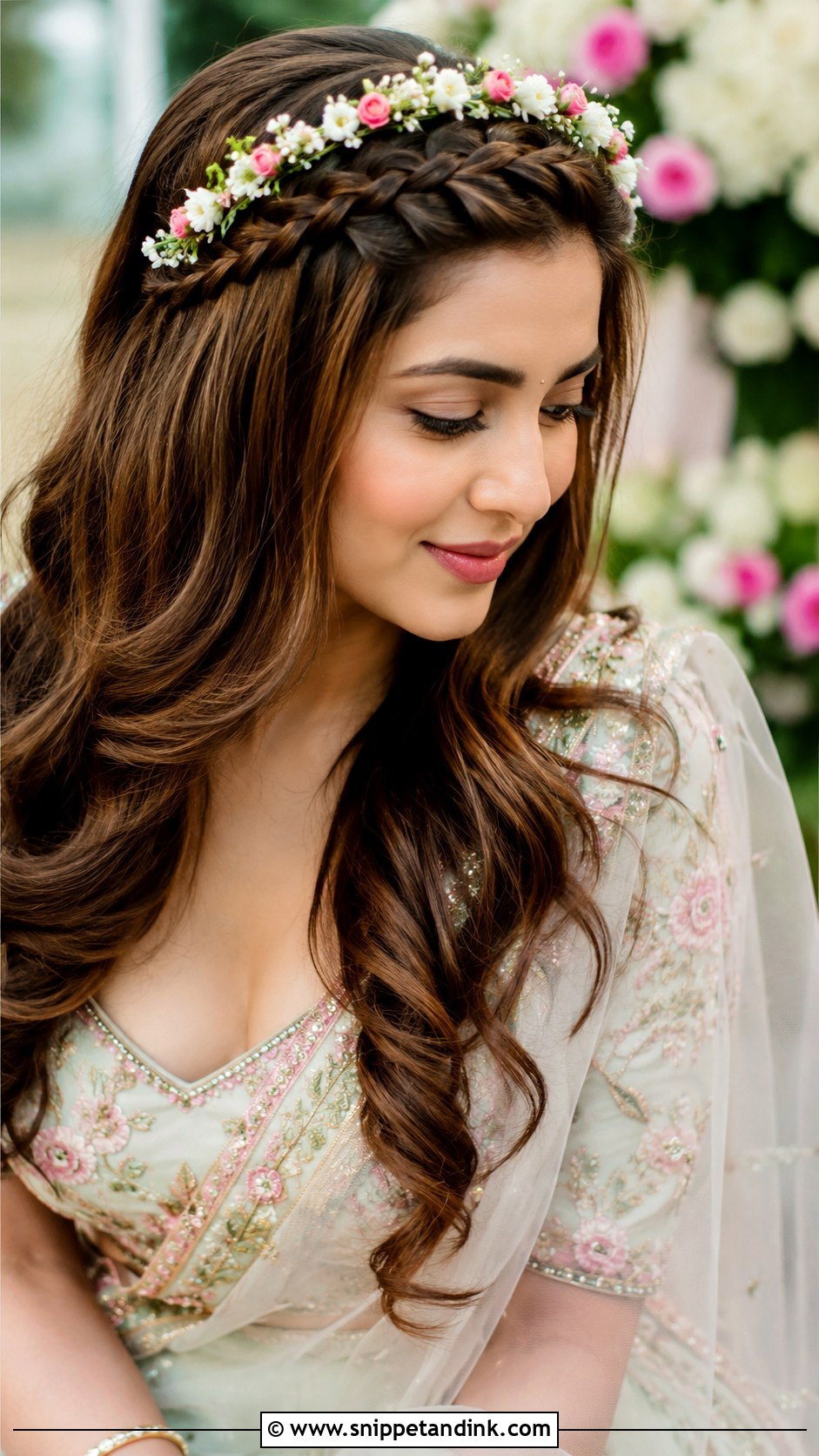
A band braided across the crown carries a continuous row of small flowers, like a tiara that grew there. Loose waves below keep it soft. Daytime and outdoor events, mehndi and garden ceremonies are its natural setting, and the flowers bring color without any heavy jewelry. Small sturdy blooms such as baby’s breath, spray roses or jasmine buds last longest; big soft petals wilt fastest when they sit against warm skin at the hairline.
19. Pearl Studded Braid
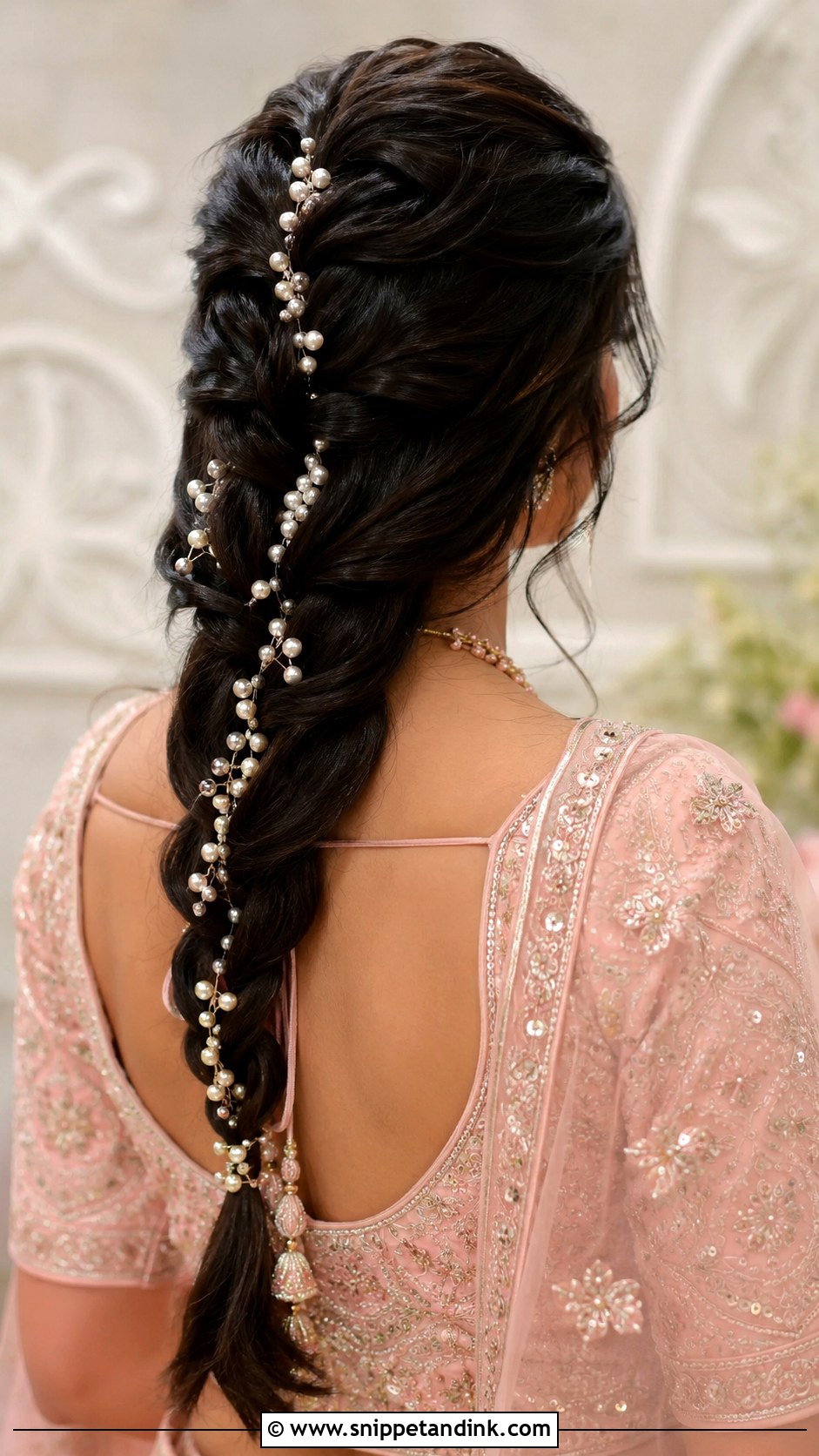
Strings of pearls woven through a thick braid give a quiet shine that picks up light without competing with the outfit. They flatter pastel lehengas and modern sarees, and the look carries from engagement to reception. I thread the strands in while braiding so the crossings lock them in place; strands laid on afterward slide down as the braid relaxes during the day. Go for an ivory or cream tone. Stark white plastic pearls look flat next to skin.
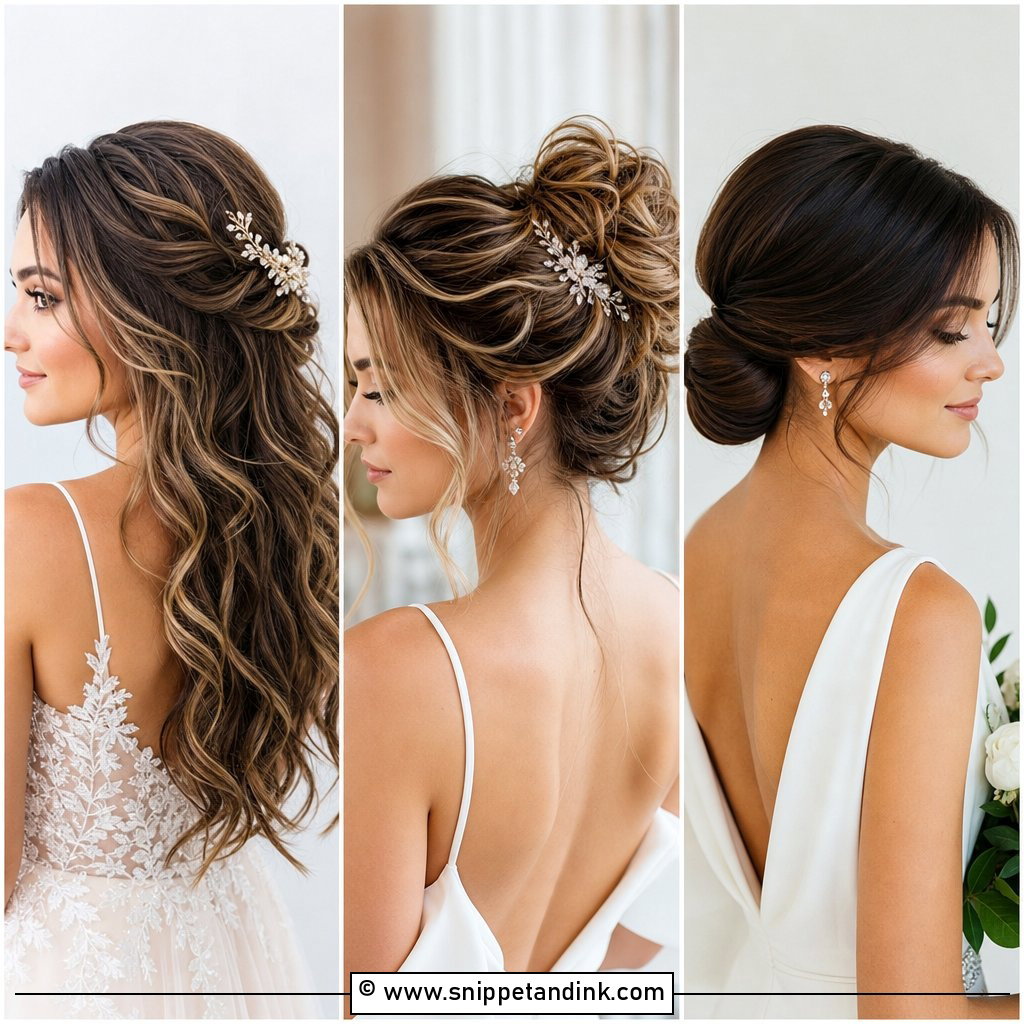
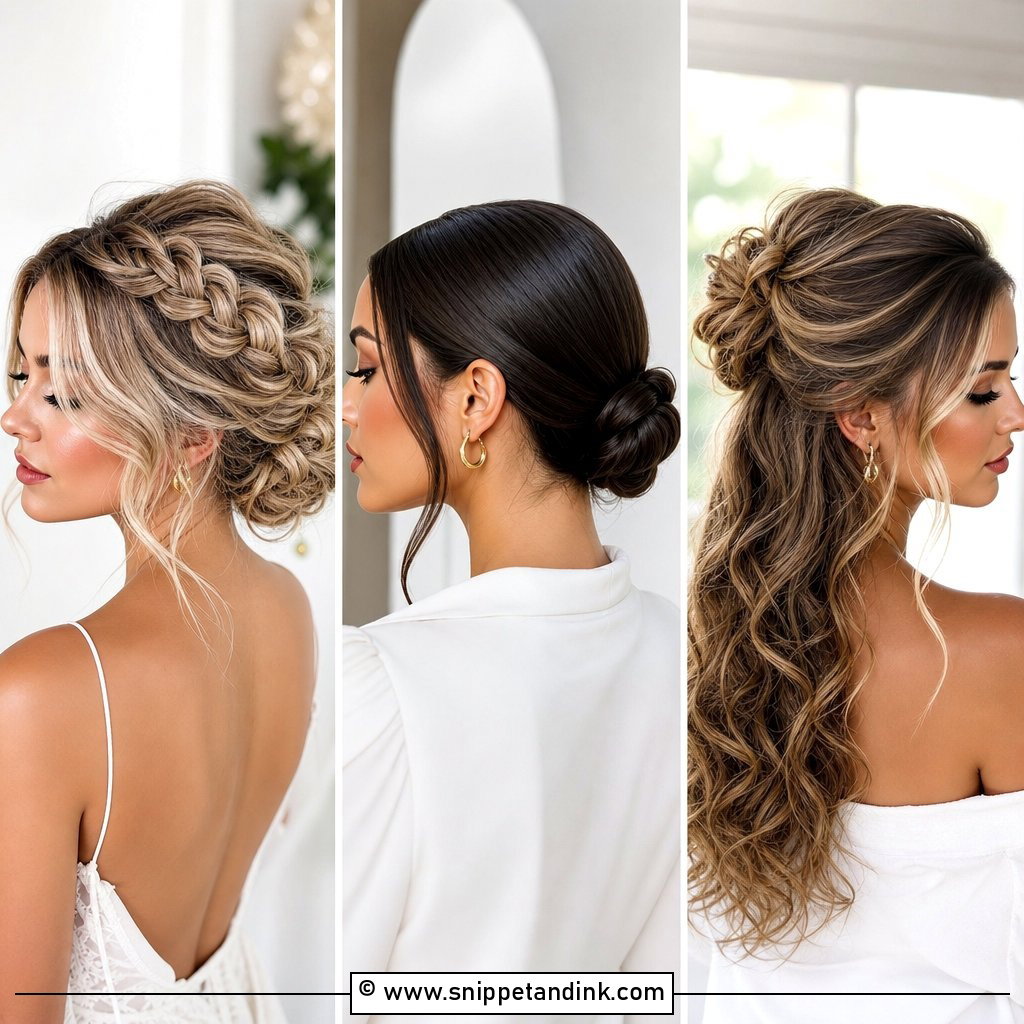
20. Boho Braided Wedding Hairstyle
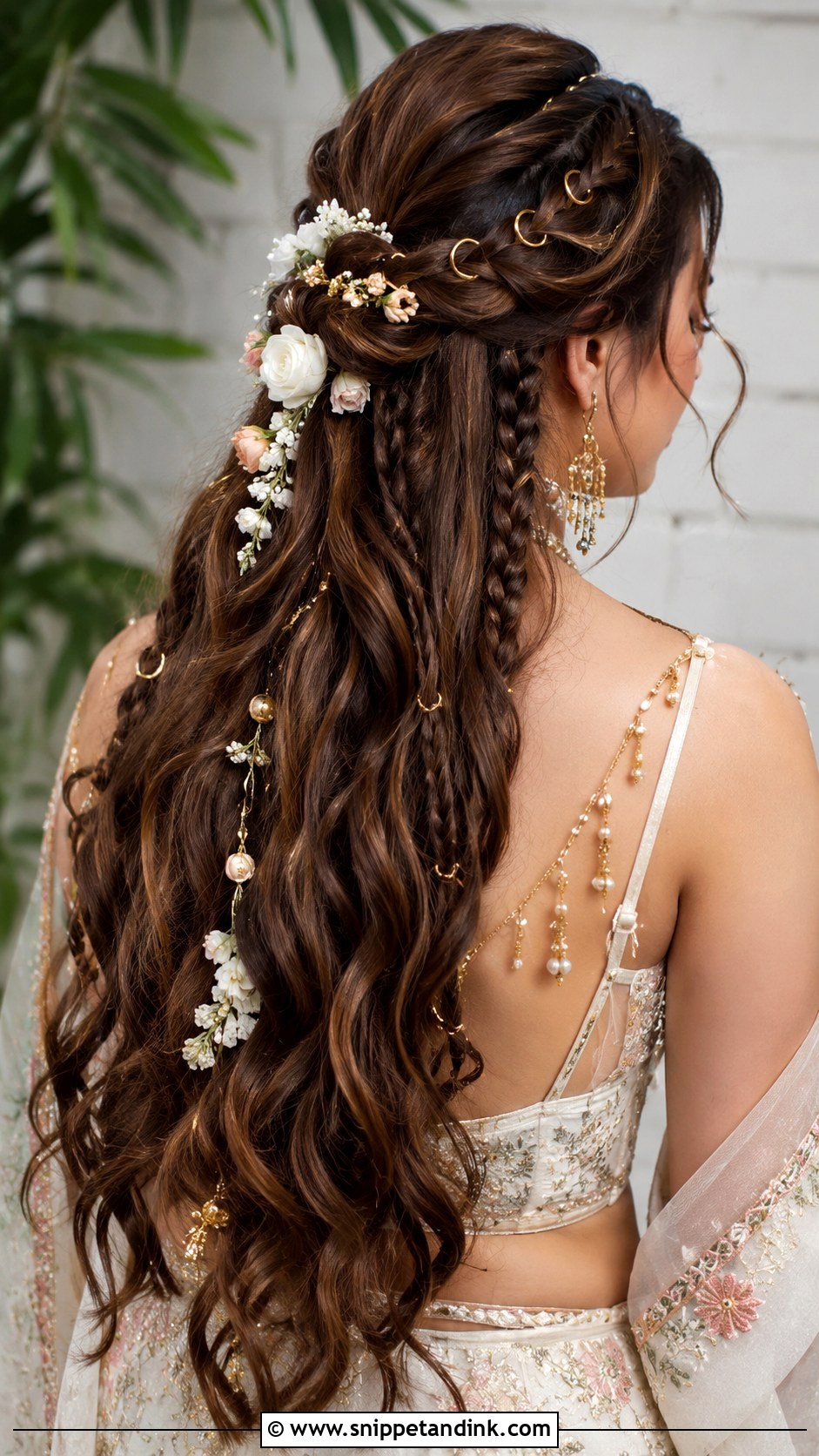
Several small braids, twists and loose strands mixed through waves make up the boho version, finished with flowers, beads, gold rings or fine chains. It is the most personal braid here and the hardest to reproduce, so I photograph the trial result from every side. Fusion weddings, beach ceremonies and outdoor celebrations with light outfits and minimal jewelry are where it belongs. Sea air and wind loosen it quickly, so for a beach event I lock each small braid with a tiny elastic before any accessory goes in.
Fresh Jasmine and Roses Through a Long Muhurtham
Flowers are the part of a bridal braid that changes most through the day. Jasmine buds open and brown within hours, roses bruise under a dupatta, and both drop petals onto the blouse if they are placed too loosely. A few habits help:
- Order the gajra for the morning of the ceremony, not the night before, and keep it wrapped in a damp muslin cloth in the fridge until it is pinned.
- Ask for tight buds. They open on the head and look fresh for longer.
- Have the strand wired or sewn to the braid at several points, not just at the top.
- Give a short spare length in a damp box to whoever holds your touch-up kit.
- Mention any pollen or fragrance sensitivity at the trial. Strong jasmine close to the face for hours gives some people a headache.
Moving From a Mehndi Plait to a Wedding Bun
Several ceremonies often mean several braids, sometimes on the same day. Undo a braid from the ends upward and work through it with a wide-tooth comb before restyling; dragging a brush straight through a tight plait snaps hair. The crimp left by a morning braid gives useful grip to an evening bun, but it ruins a sleek style, so keep sleek looks for the first event of any day.
For mehndi, get your hair braided before the artist starts, since you will not be able to touch it until the paste dries. And if your trial braid gave you a headache, tell your stylist. The fix is usually looser tension at the hairline, not a different hairstyle.
One Braid for the Mandap, Another for the Sangeet
Start from the ceremony, then the outfit, then your hair’s real length and texture. A gajra choti and a chand choti need the same strong base and some added hair; a bubble braid or a boho mix suits the lighter events around them. Many brides wear two or three of these Indian braided wedding hairstyles across the week. Bring the photos you like to your trial and ask your stylist plainly which ones your hair will hold for the full ceremony.
You'll Like These Ideas:


Leave a Reply