
Haldi is the most hands-on ceremony of the whole wedding. Relatives smear turmeric paste on your face, arms and feet, someone tips a bowl over your head, and before long the cousins start a water fight. So any outfit I put a bride in for haldi has to let her sit low for an hour, survive the paste, and still look like the bride in the candids. Yellow lehengas still lead, but I’m dressing more brides in ivory, shararas, cape sets and light sarees now. Organza, georgette, cotton silk and chiffon are the fabrics I keep coming back to for a daytime ceremony in the heat.
Will You Change Before the Paste Comes Out?
It’s the first question I ask at a haldi fitting, because it decides everything else. Some brides wear one outfit start to finish and accept it will be stained. Others wear a dressier piece for the family portraits and switch to something cheaper before the turmeric appears. Neither is wrong, but you need to know which bride you are before you spend money.
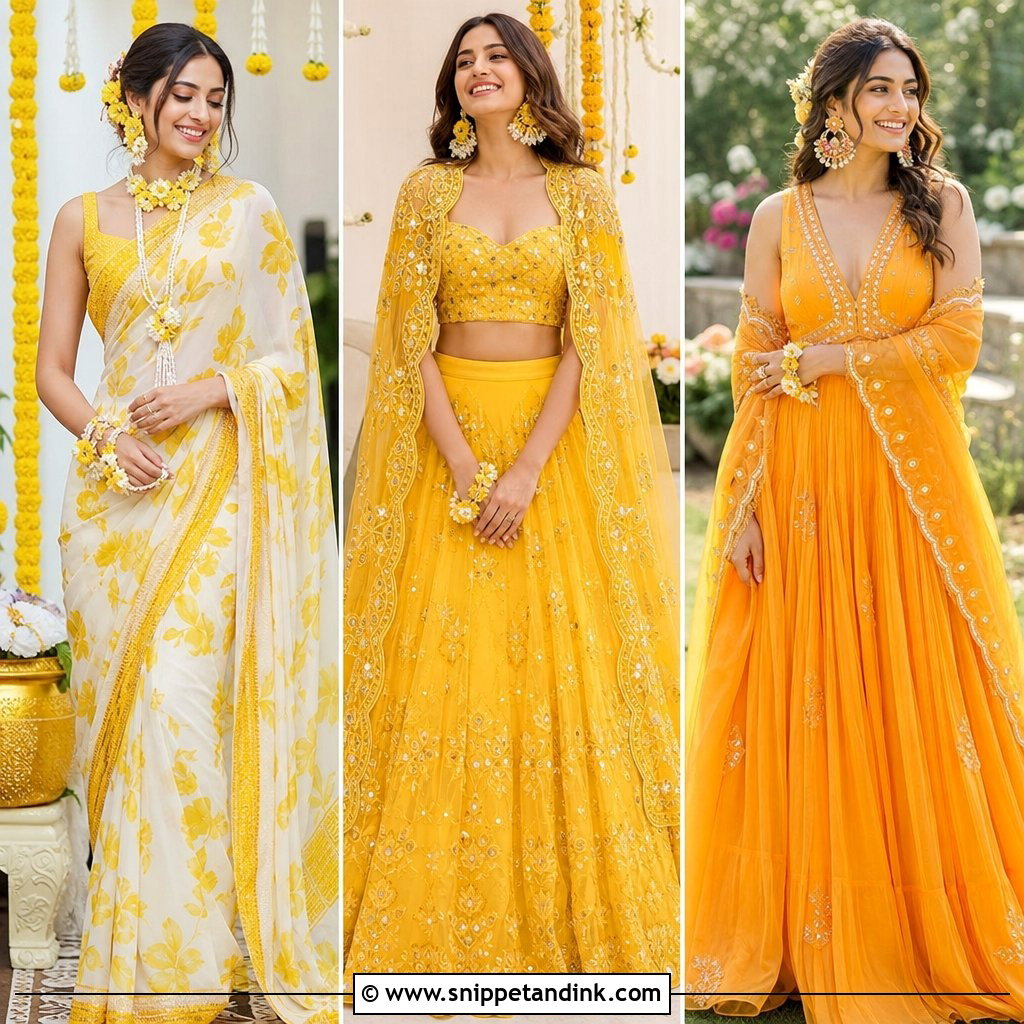
The sit test
Most haldi rituals happen with the bride on a low wooden stool or on the floor, often barefoot. Before you commit, sit in the outfit for ten minutes on something low, lean forward, and lift your arms as if someone is pasting them. Watch for blouse hooks digging in, a skirt that rides up, or a dupatta that won’t stay on your shoulder.
Shoes you won’t miss
Shoes usually come off for the ritual itself, so I pick juttis or flats that slip on and off without buckles, and that you won’t mind finding sticky and yellow afterward.
1. Yellow Haldi Lehenga For Bride
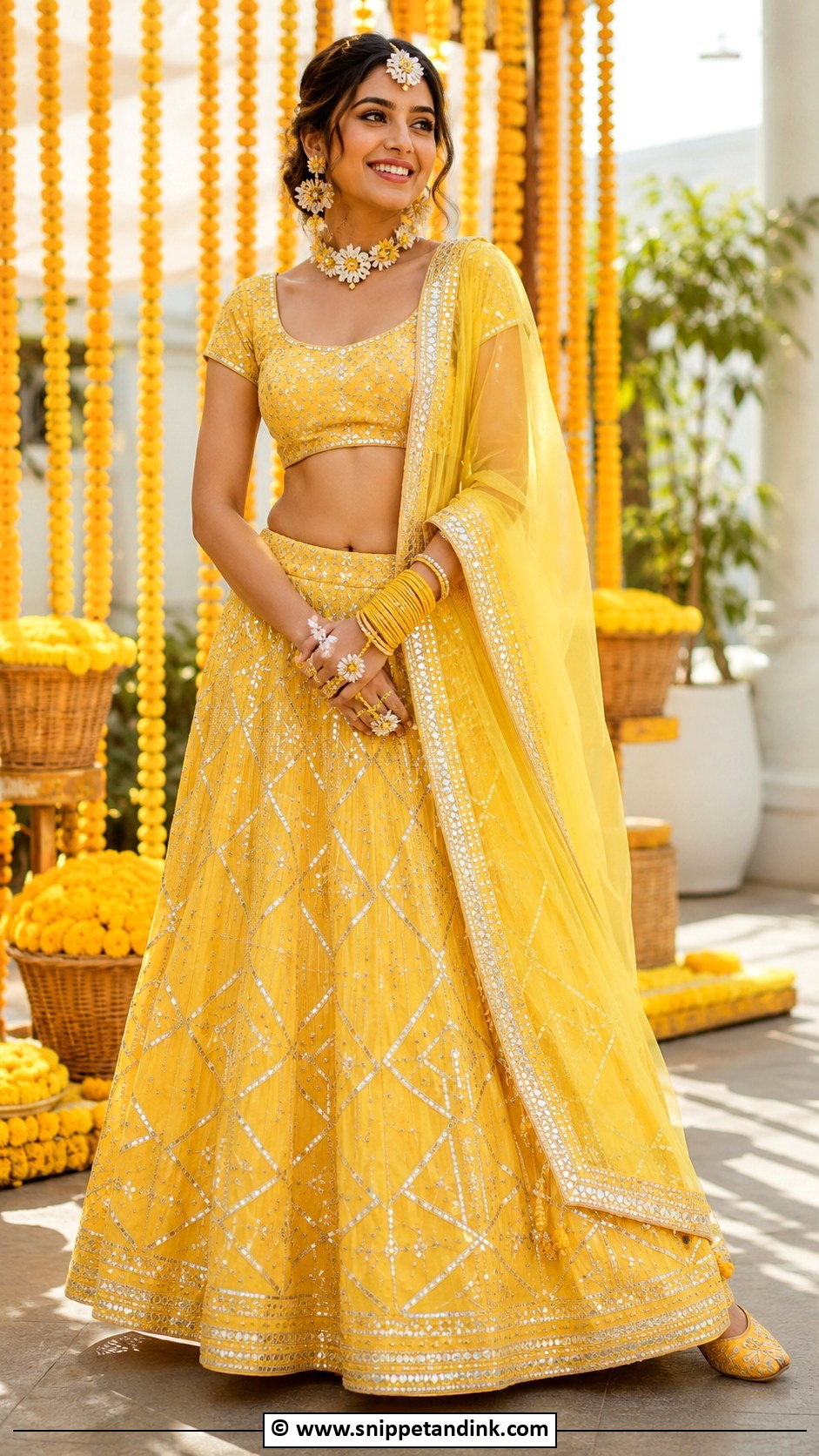
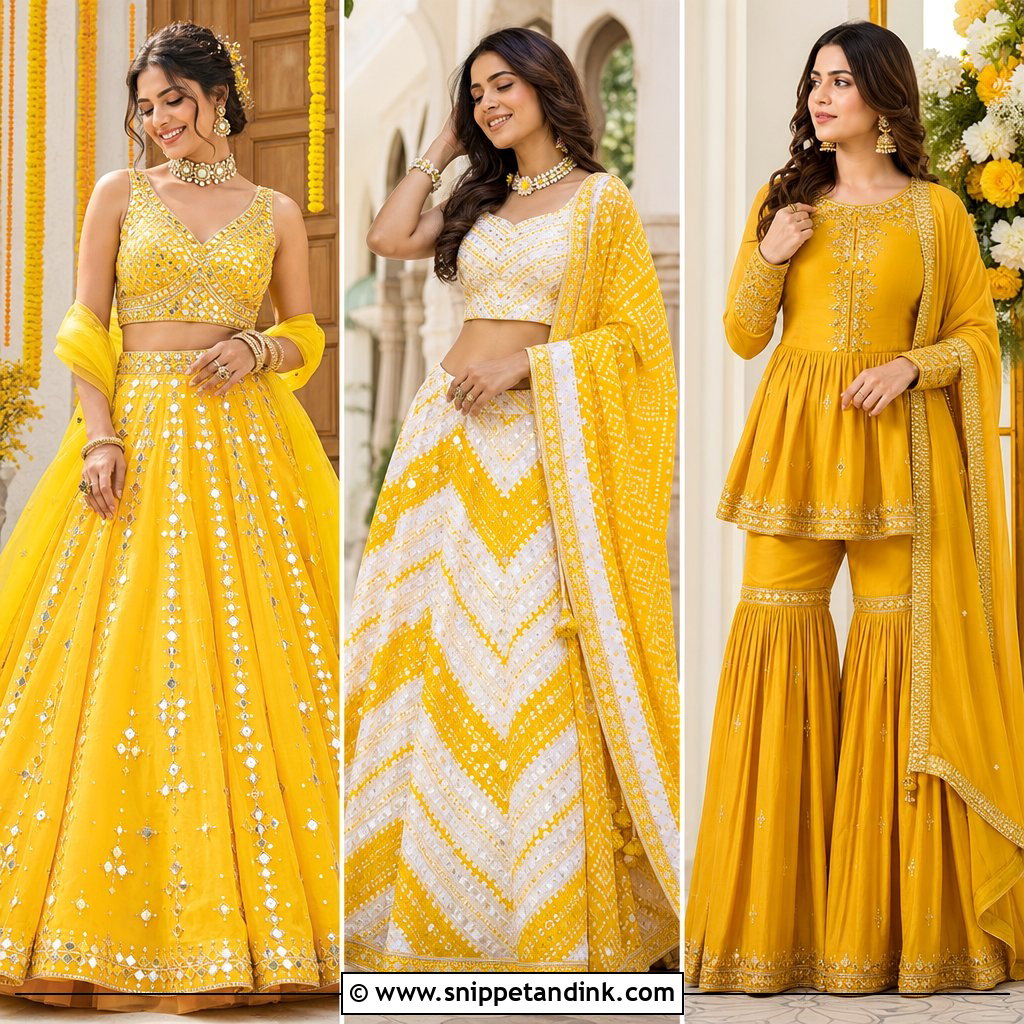
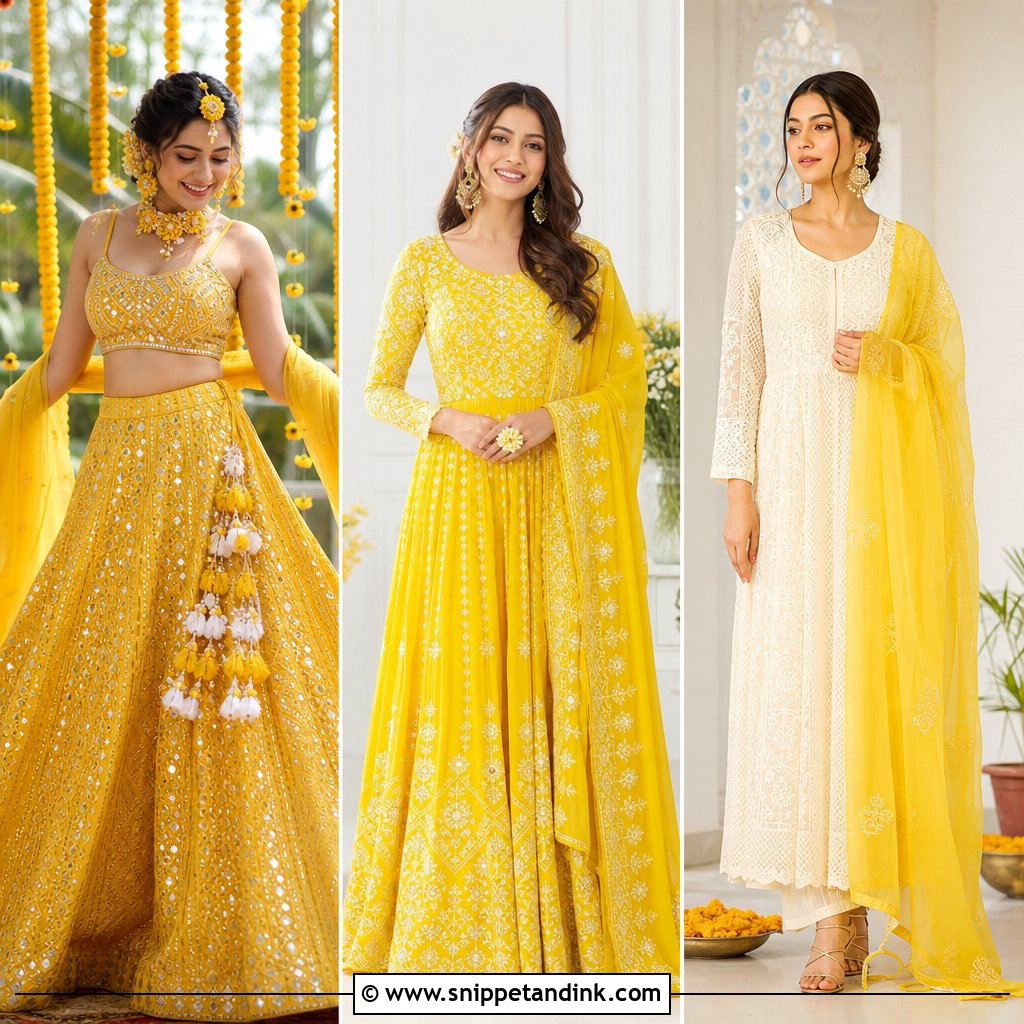
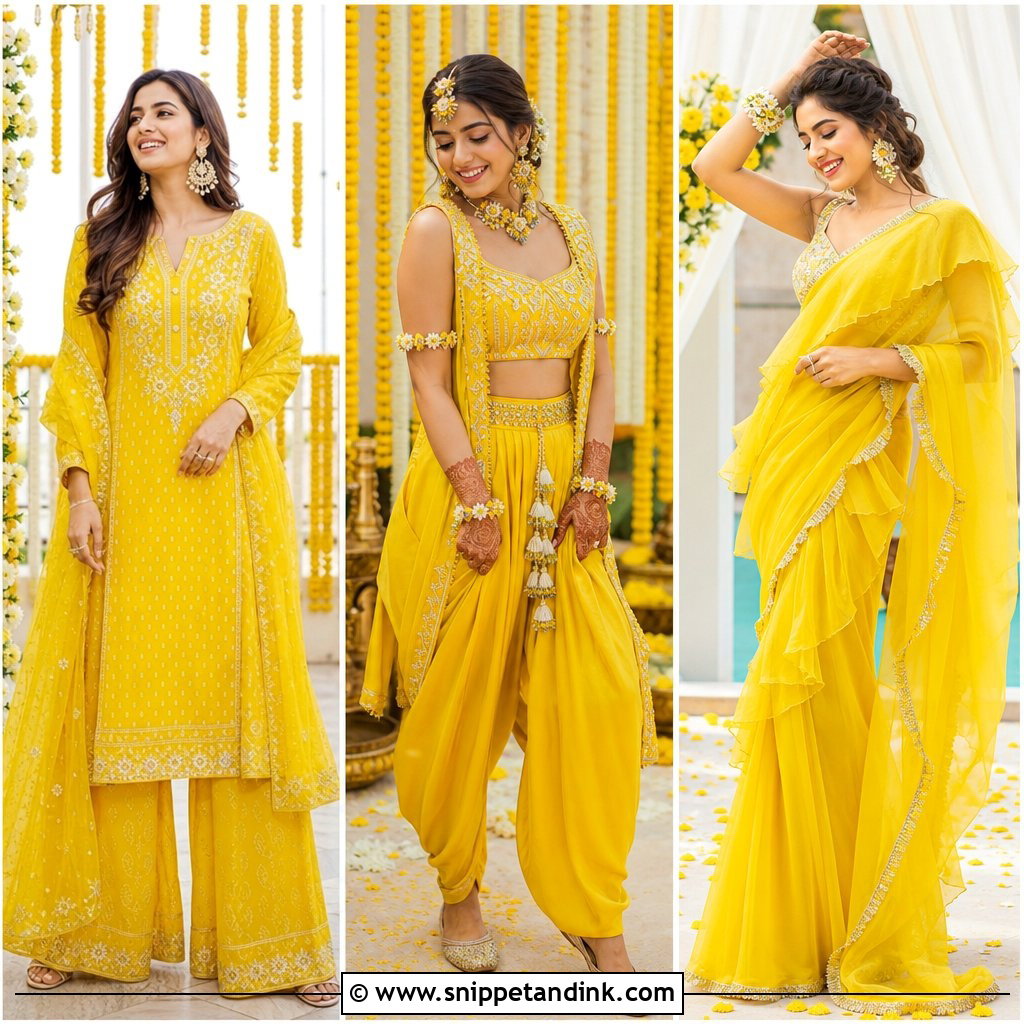
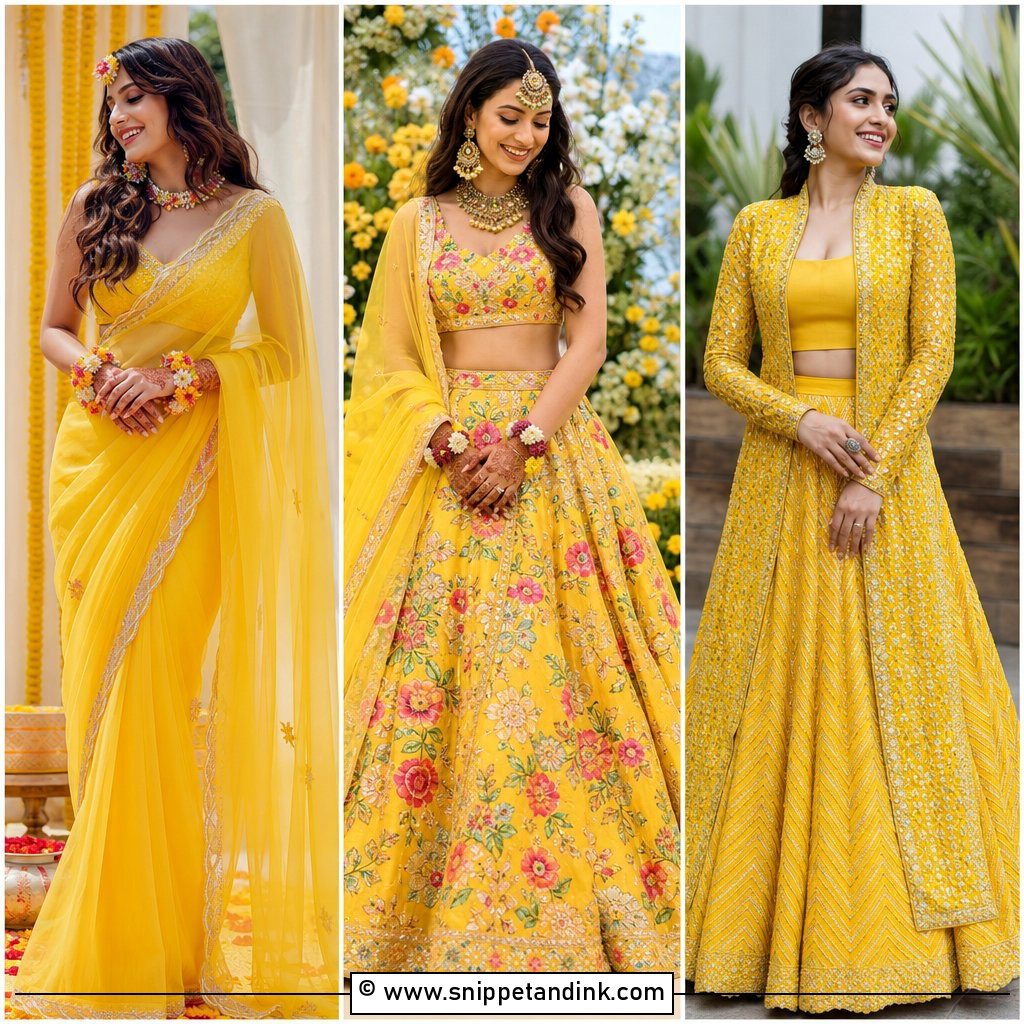
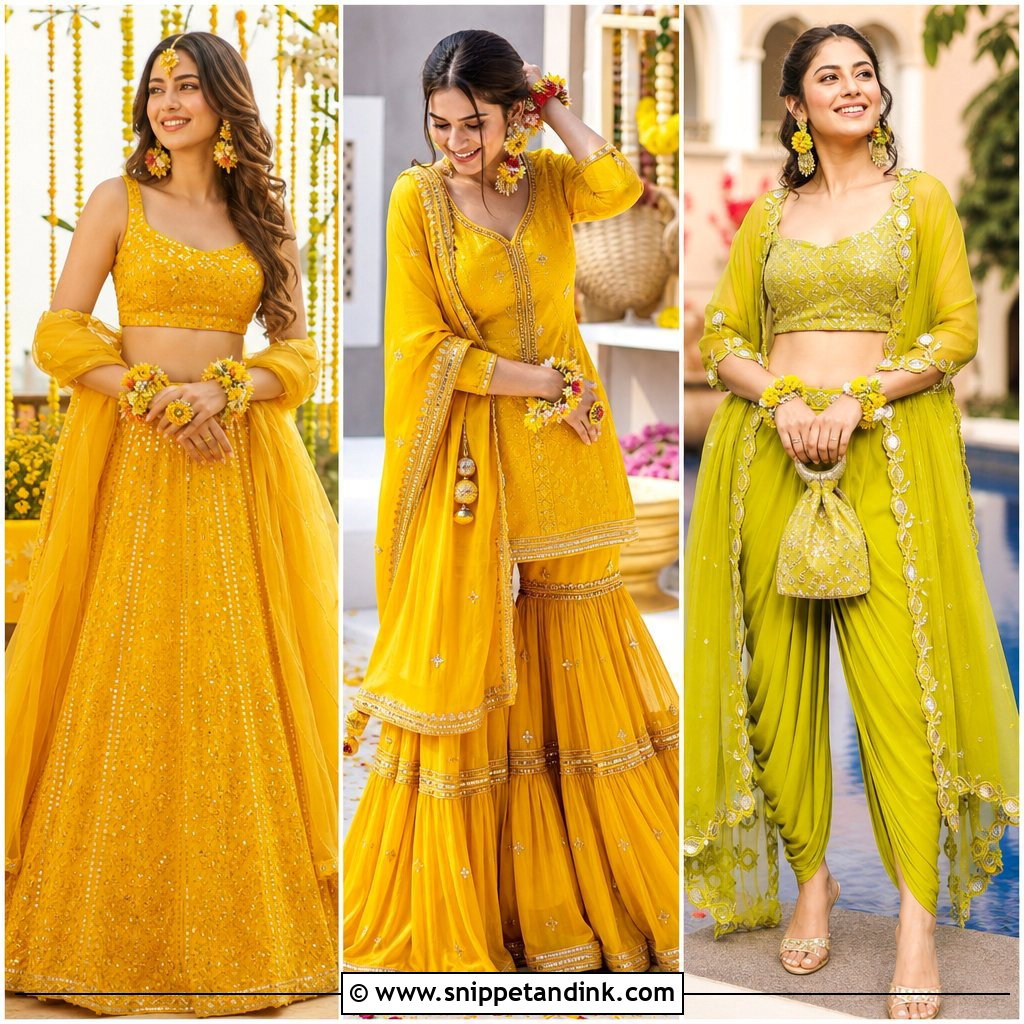
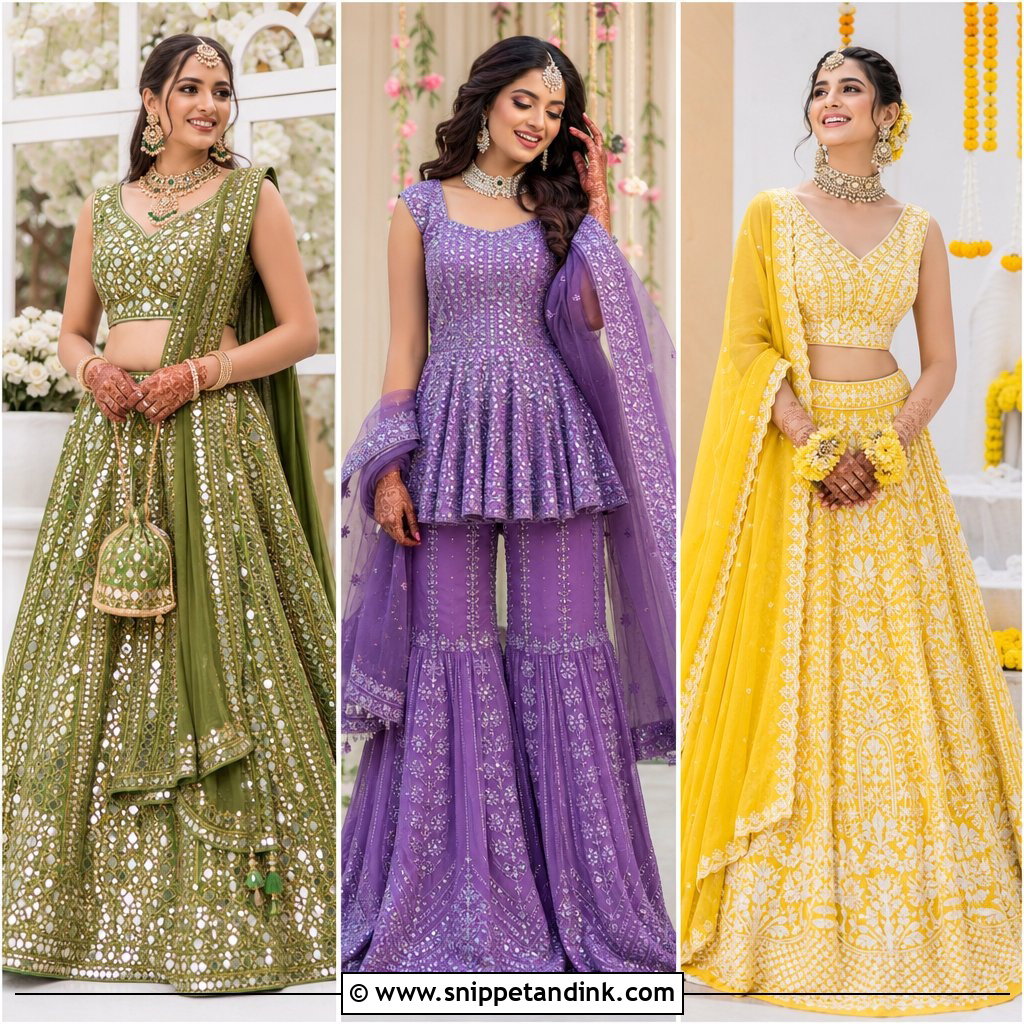
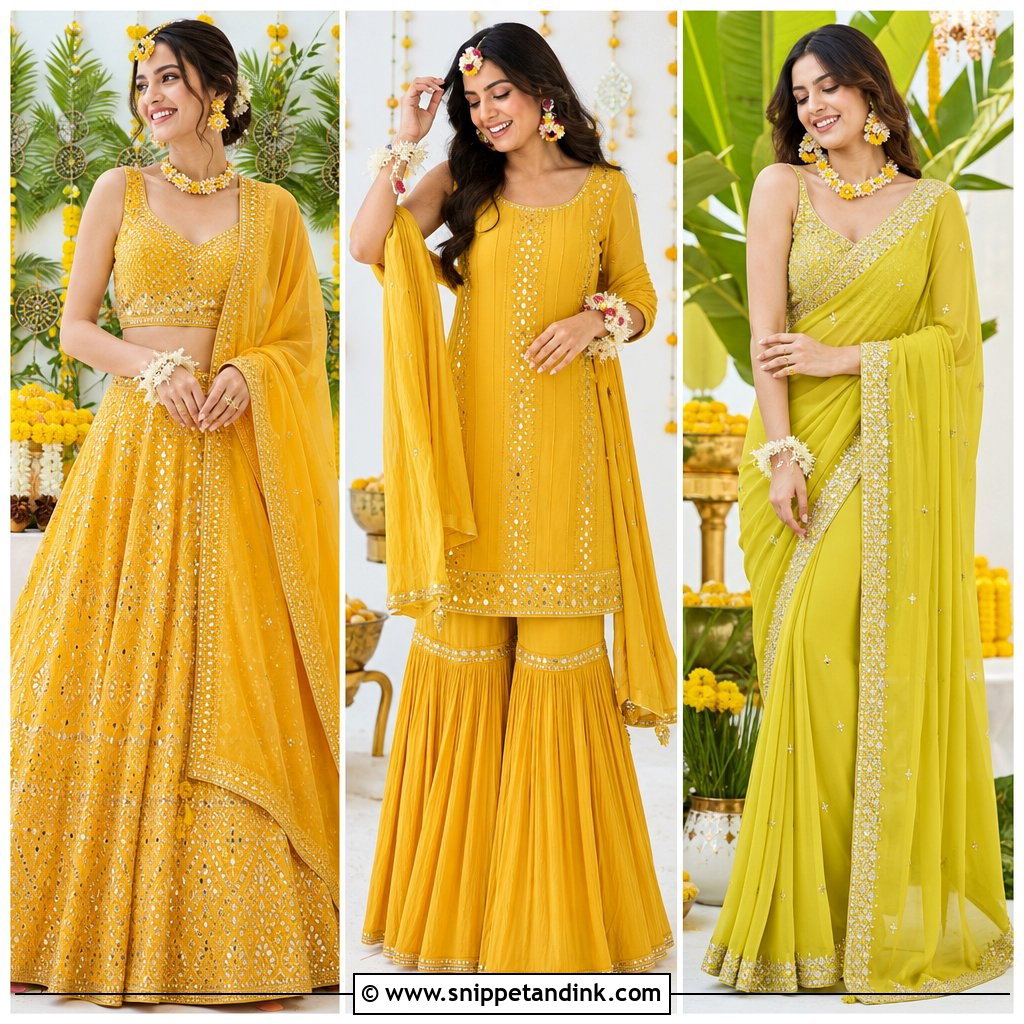
Yellow is the classic for a practical reason: it hides turmeric better than any other color, and against marigold decor it reads as the bride’s color rather than a guest’s. I keep the skirt light, in georgette, organza or soft silk, because a stiff can-can skirt fights you every time you sit on the low stool. Gota patti or small mirrors give enough shine for photos. A short blouse, a soft dupatta, floral jewelry and juttis finish it. If the decor is all yellow drapes, add a floral maang tikka and stacked bangles so you don’t melt into the backdrop.
2. Ivory Haldi Lehenga For Bride
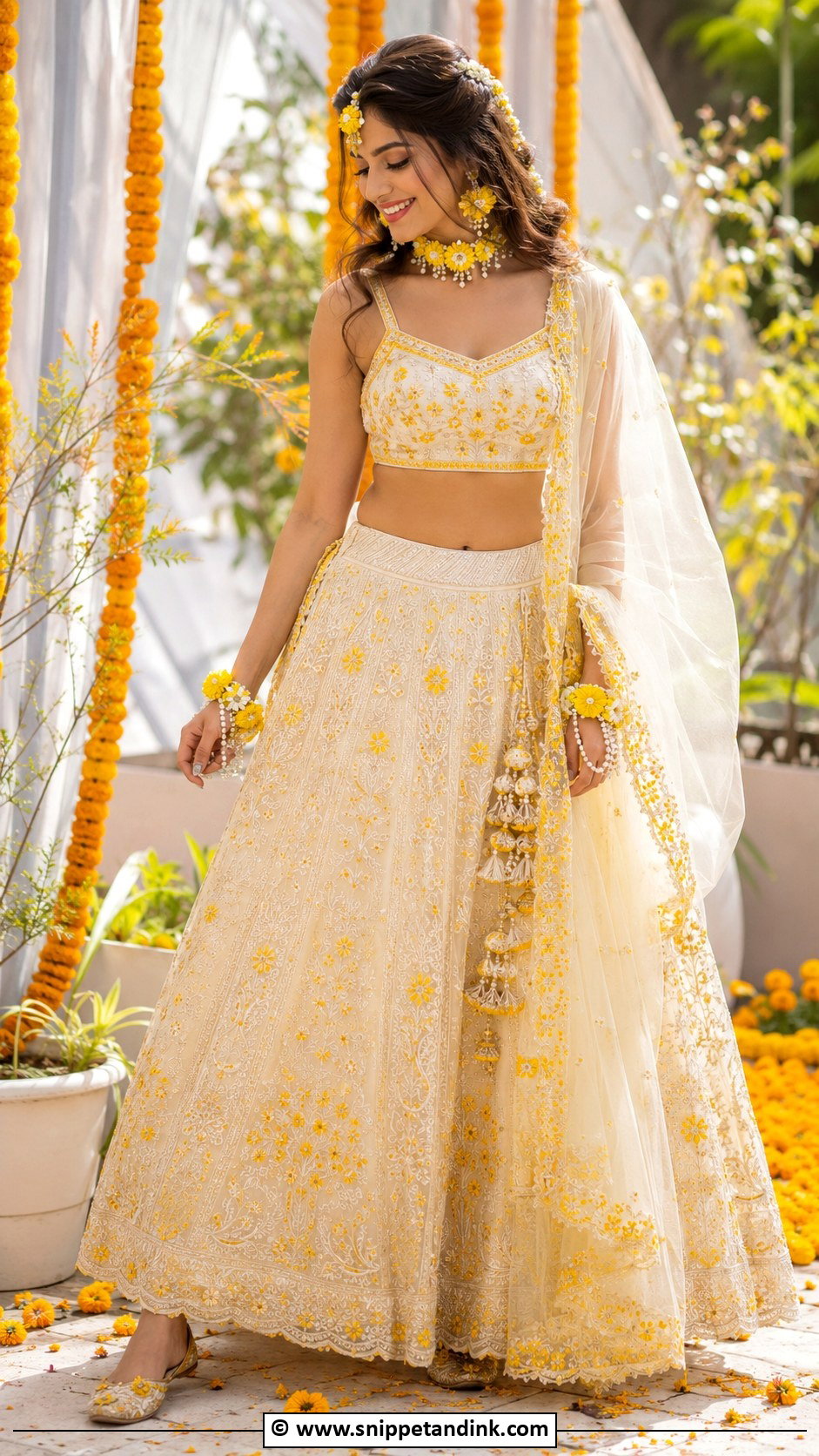
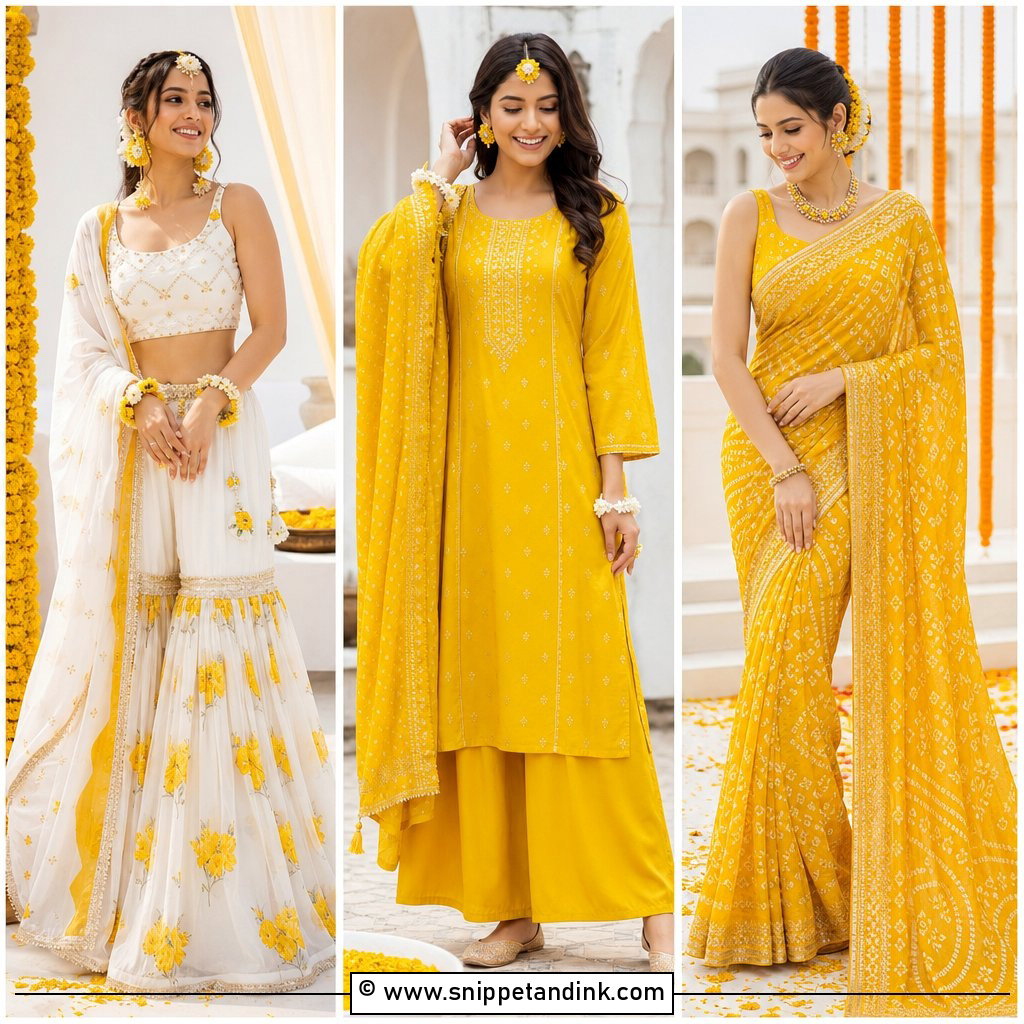
Ivory makes turmeric, marigolds and flower jewelry pop in pictures, which is exactly why it has caught on. The trade-off is obvious: it shows every smear. I only put a bride in ivory for haldi if she’s happy for it to be a one-wear outfit, or if she plans to change before the paste. Yellow embroidery, scalloped borders or small mirrors keep it tied to the ceremony. A sleeveless or sweetheart blouse looks current, and it also makes life easier for the aunts pasting your arms.
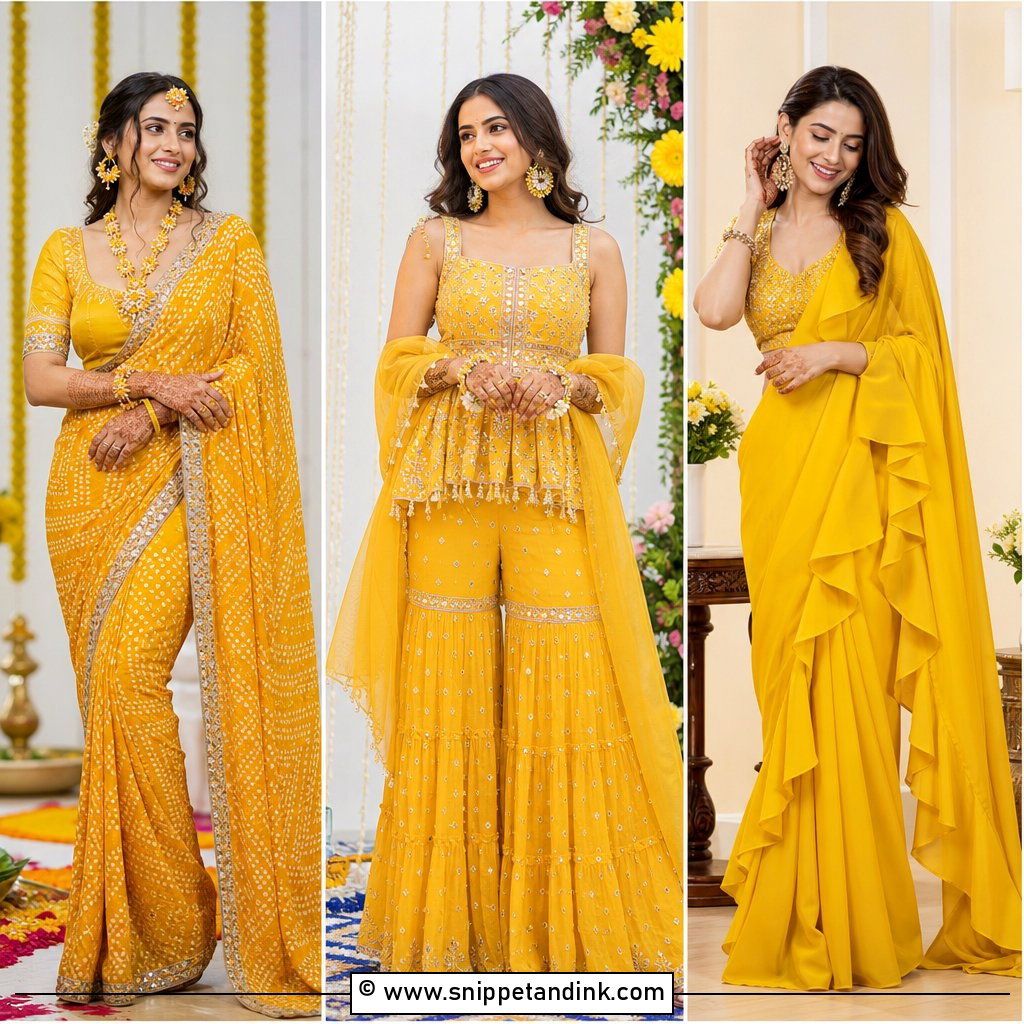
3. Yellow Saree Haldi Outfit For Bride
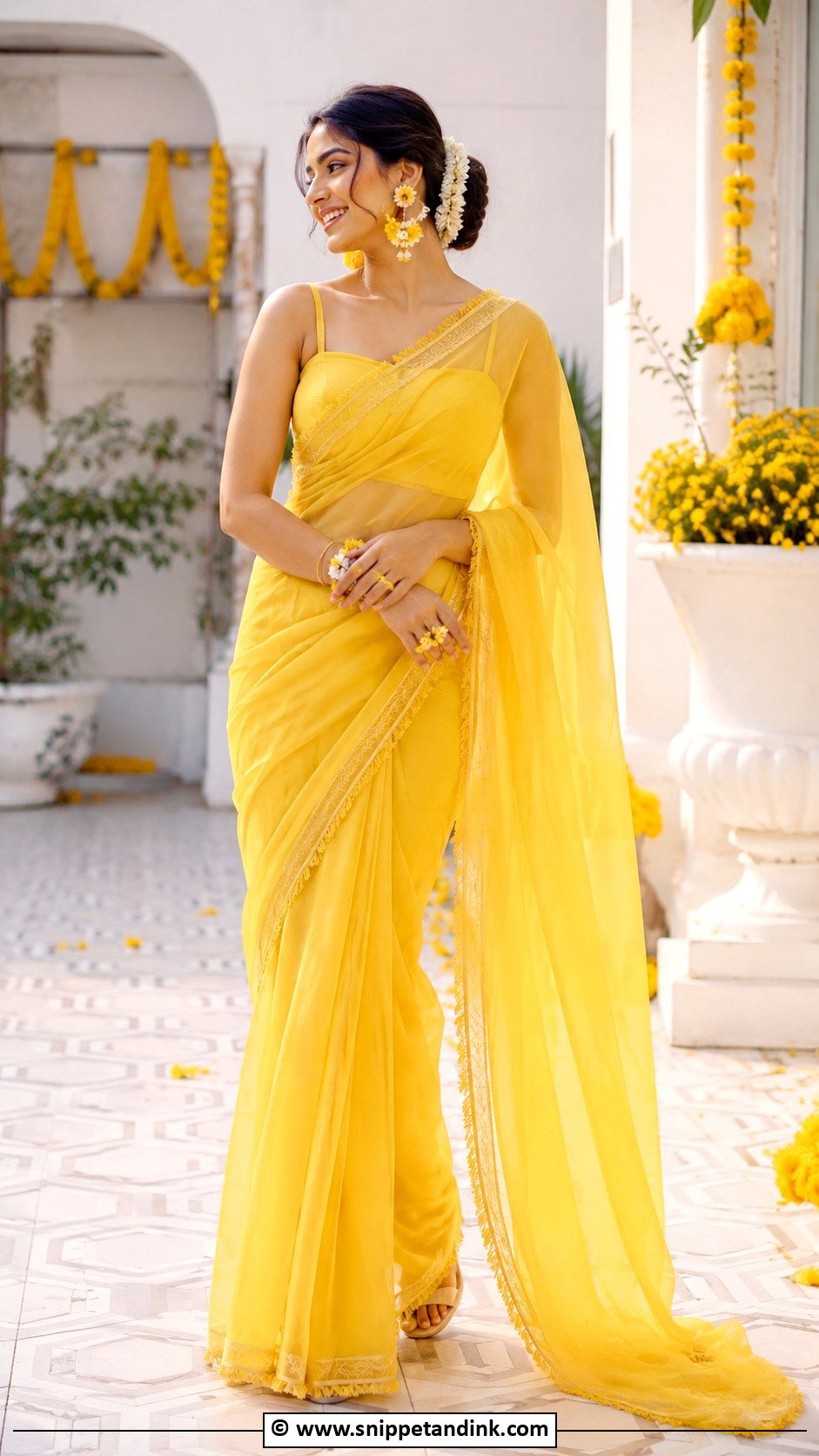
Sarees and haldi get along fine, as long as you leave the heavy bridal silk in the cupboard. Chiffon, georgette, linen silk or organza are easy to manage when you’re sitting low and getting doused. I usually suggest a pre-draped saree here, since nobody wants to re-pleat a wet saree with yellow hands. Wear it with a fitted blouse, floral earrings and soft bangles, plus a gajra bun or side braid. Outdoors, I pin the pallu at both shoulder and waist, because a wet pallu gets heavy fast and starts to drag.
4. Floral Haldi Lehenga For Bride
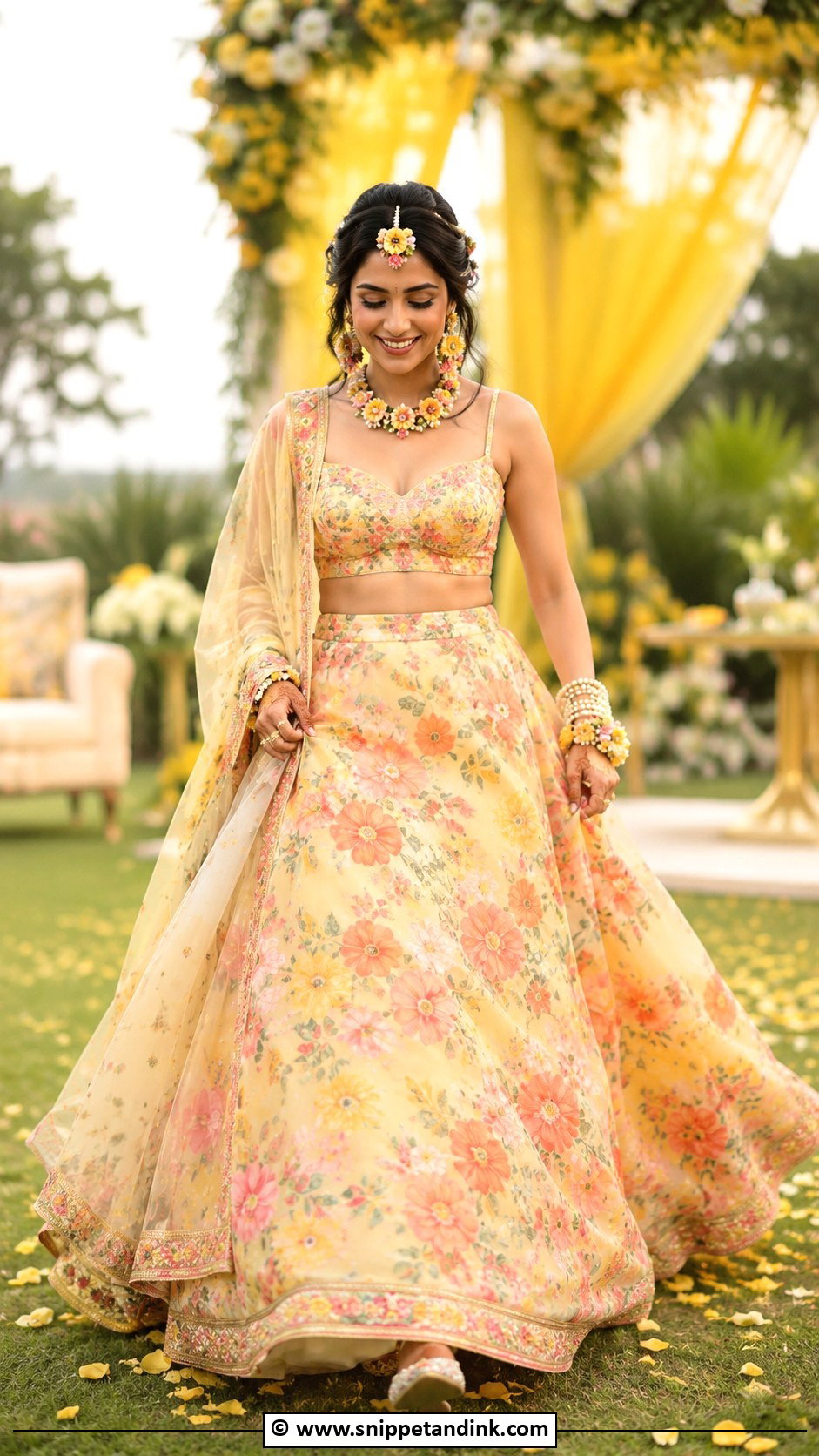
Printed or appliquéd florals give a garden-party feel without leaning on embroidery. Yellow, peach, ivory, pink or mint prints all suit the ceremony. Breezy organza, georgette or chiffon lets the skirt move in photos, and I always keep the blouse structured so the print doesn’t make the whole outline shapeless. Floral jewelry is the obvious match, though light kundan or pearl earrings also sit well. It’s my pick for poolside, garden or small home ceremonies.
5. Sharara Haldi Outfit For Bride
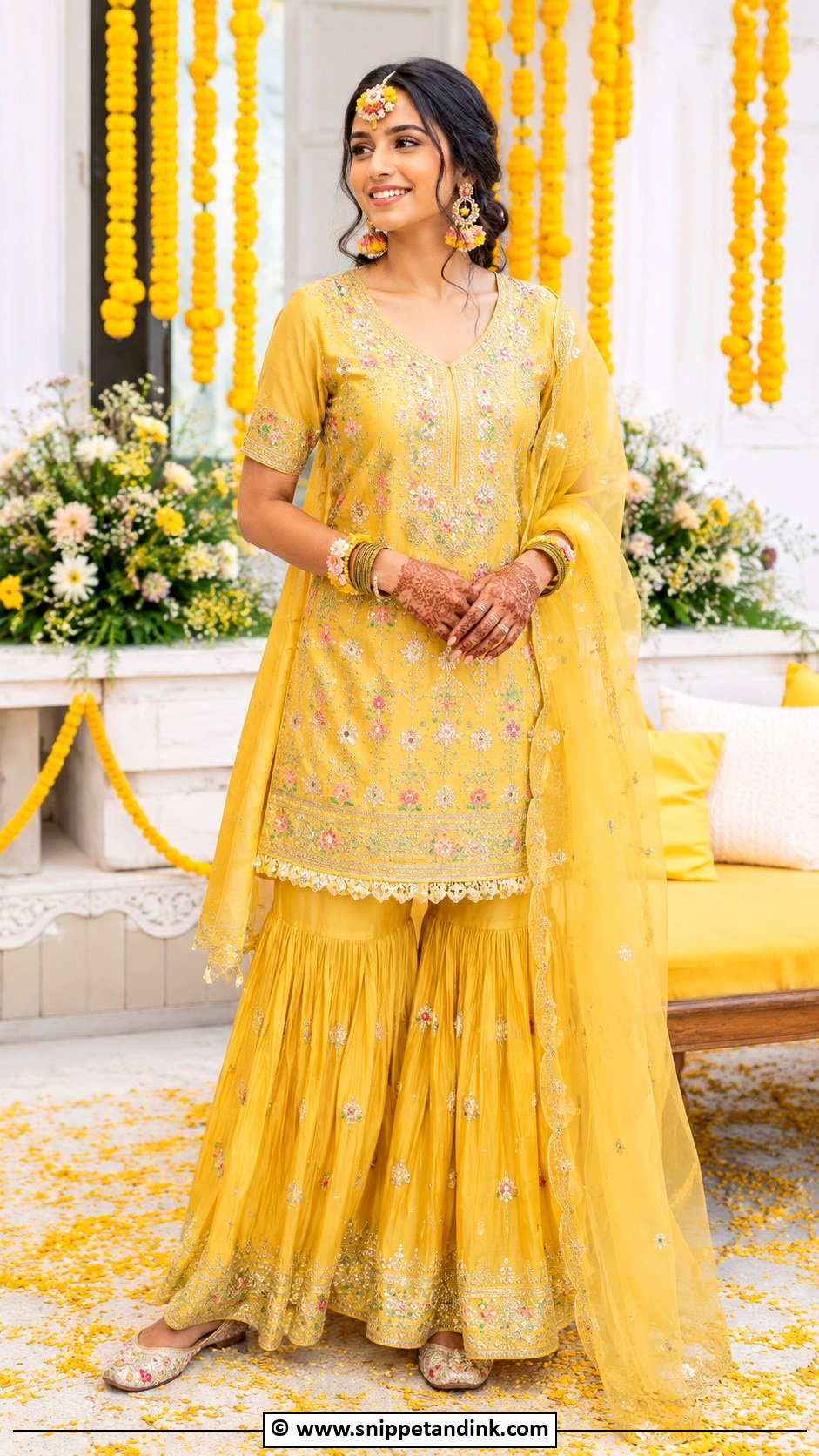
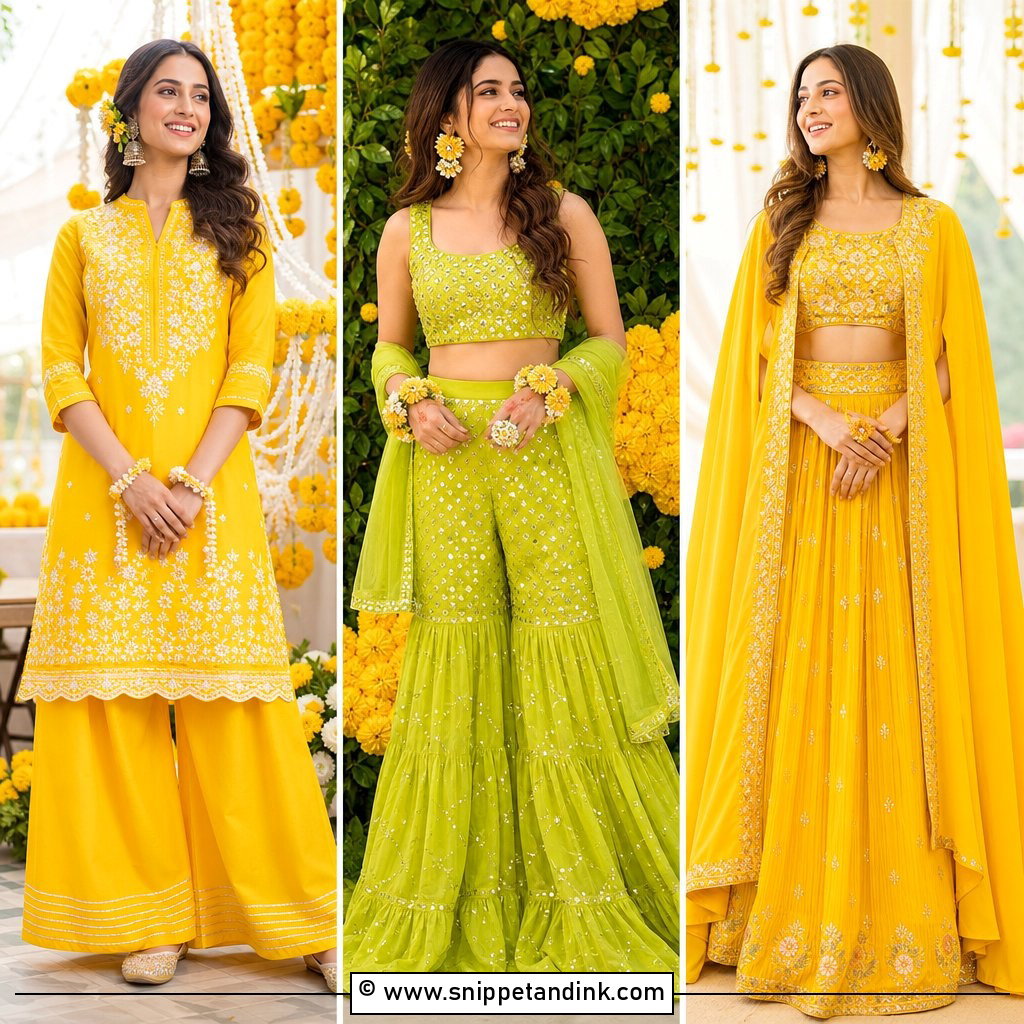
A sharara haldi outfit moves like a lehenga but sits like trousers, and that matters once you’re cross-legged on the floor. Pair a short kurti with a wide sharara in yellow, mustard, peach or lime green, with embroidery kept to the neckline or hem. I pin a light dupatta on one shoulder so both hands stay free for the rituals. Jhumkas, floral bangles and embroidered juttis complete it. If your haldi turns into a dance party, this is the outfit I’d want you in.
6. Gharara Haldi Outfit For Bride
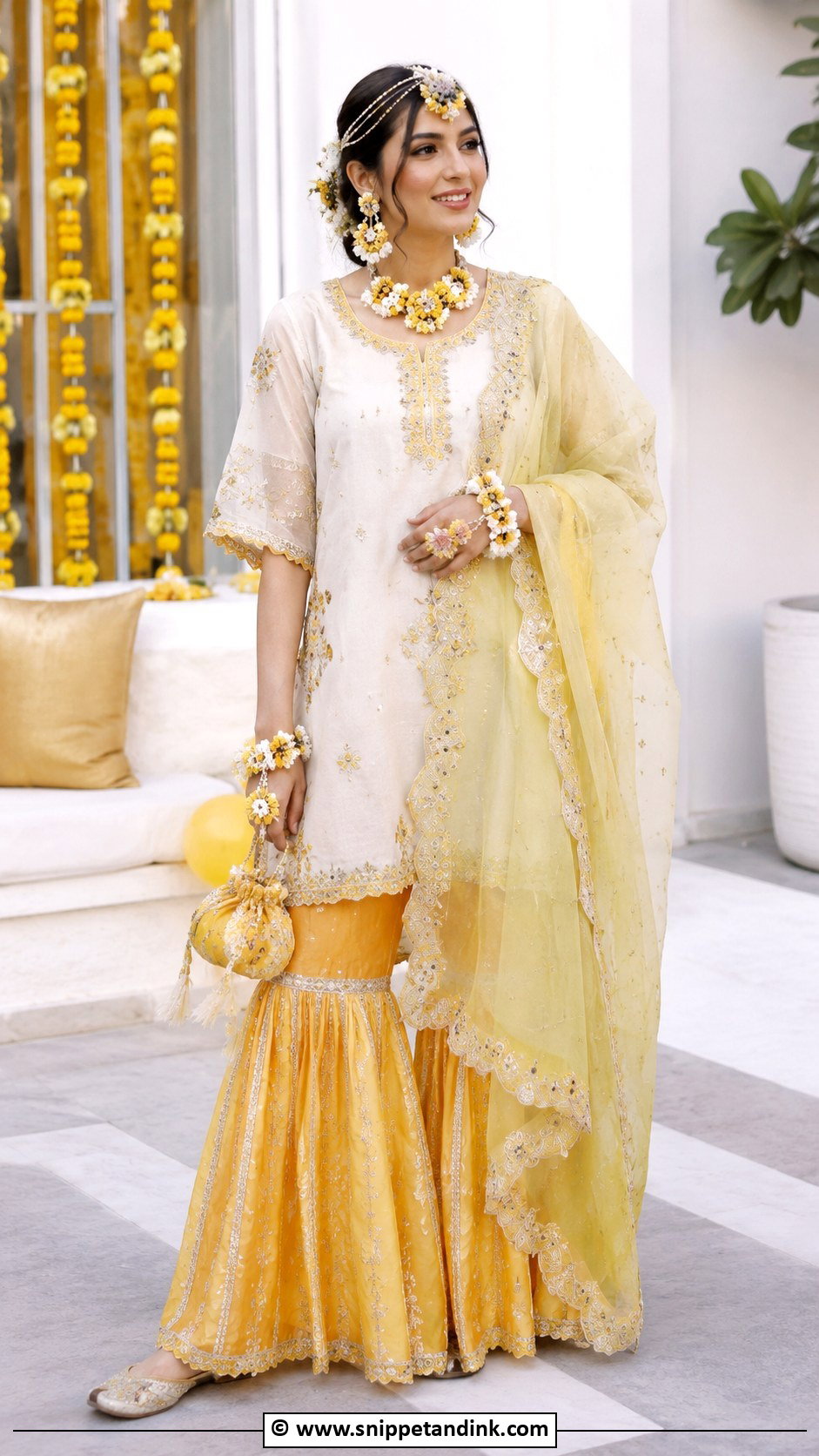
A gharara is fitted to the knee and then flares out from a gathered joint, often hidden under a band of gota. That shape is more regal than a sharara and comes from North Indian and Pakistani bridal dressing. For haldi I keep the fabric light and the embroidery soft, otherwise the knee joint gets heavy and pulls when you sit. Yellow, ivory, peach or pastel green suit daytime. A short kurta, scalloped dupatta and floral jewelry are the base; a passa or maang tikka makes it more bridal.
7. Anarkali Haldi Outfit For Bride
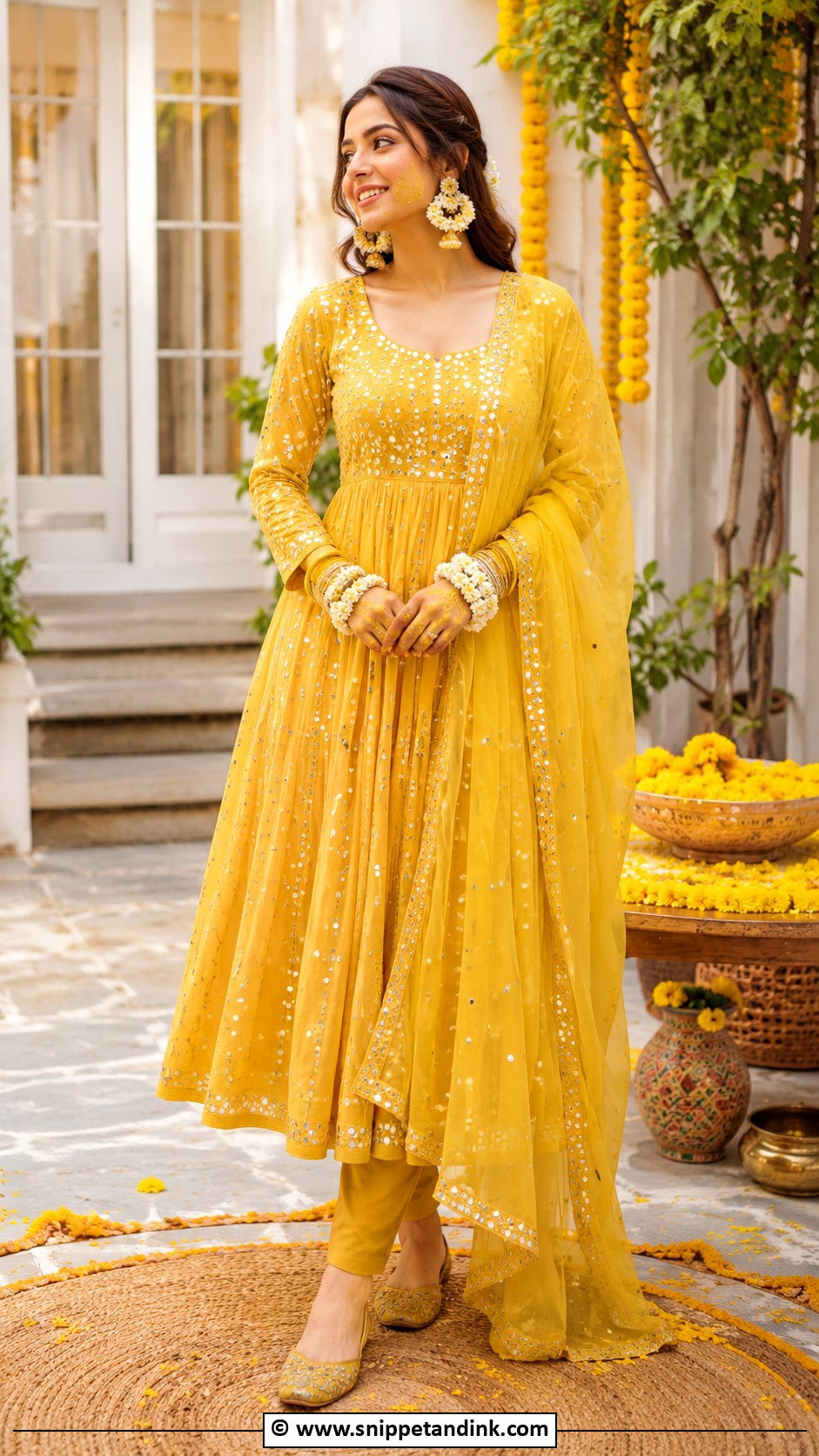
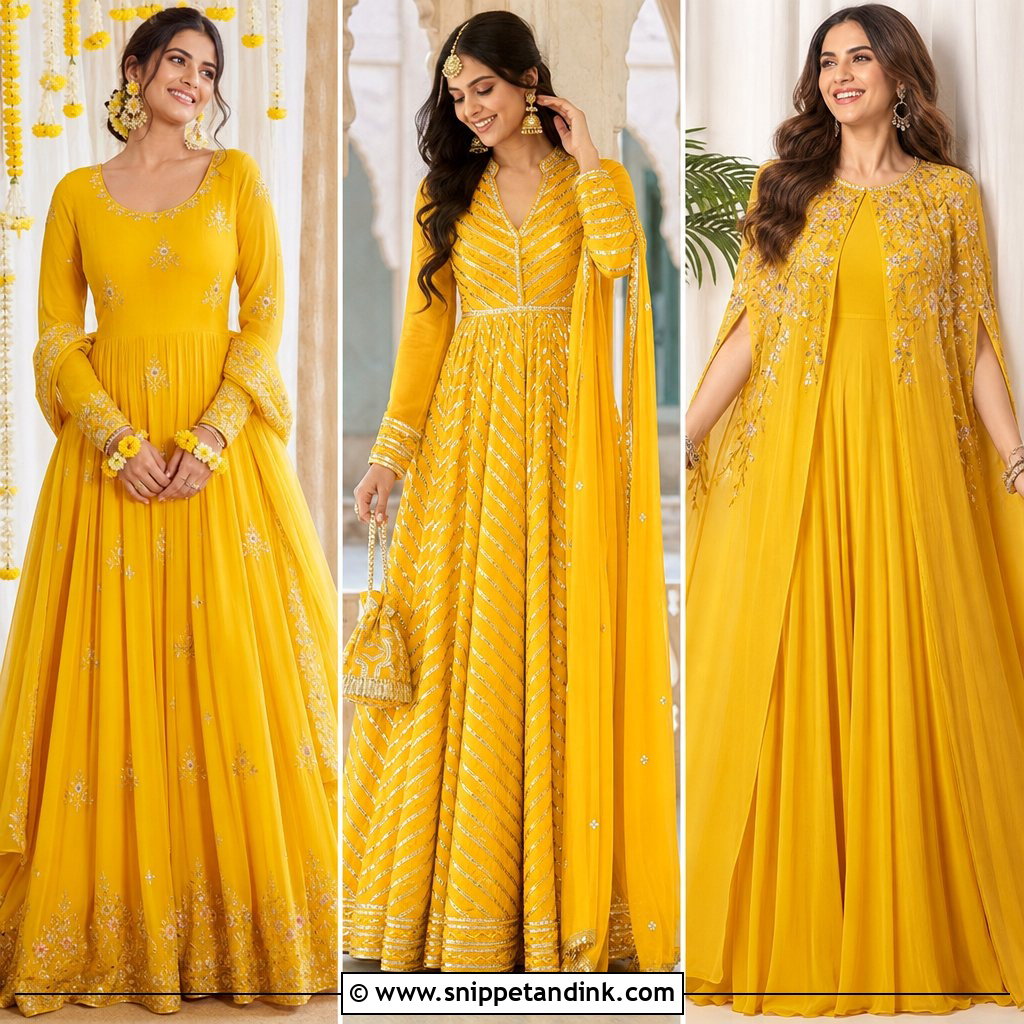
Of all the silhouettes, an Anarkali is the easiest to sit in, because the flare spreads around you instead of bunching at the waist. A yellow one with mirror work, gota trim or floral embroidery looks festive, while ivory, peach or lime go softer. Wear churidar, palazzos or slim trousers underneath depending on how much time you’ll spend on the floor. I’d skip a floor-length cut if buckets of water are planned, since a soaked hem gets very heavy. Add a sheer dupatta, floral earrings and juttis.
8. Cape Haldi Outfit For Bride
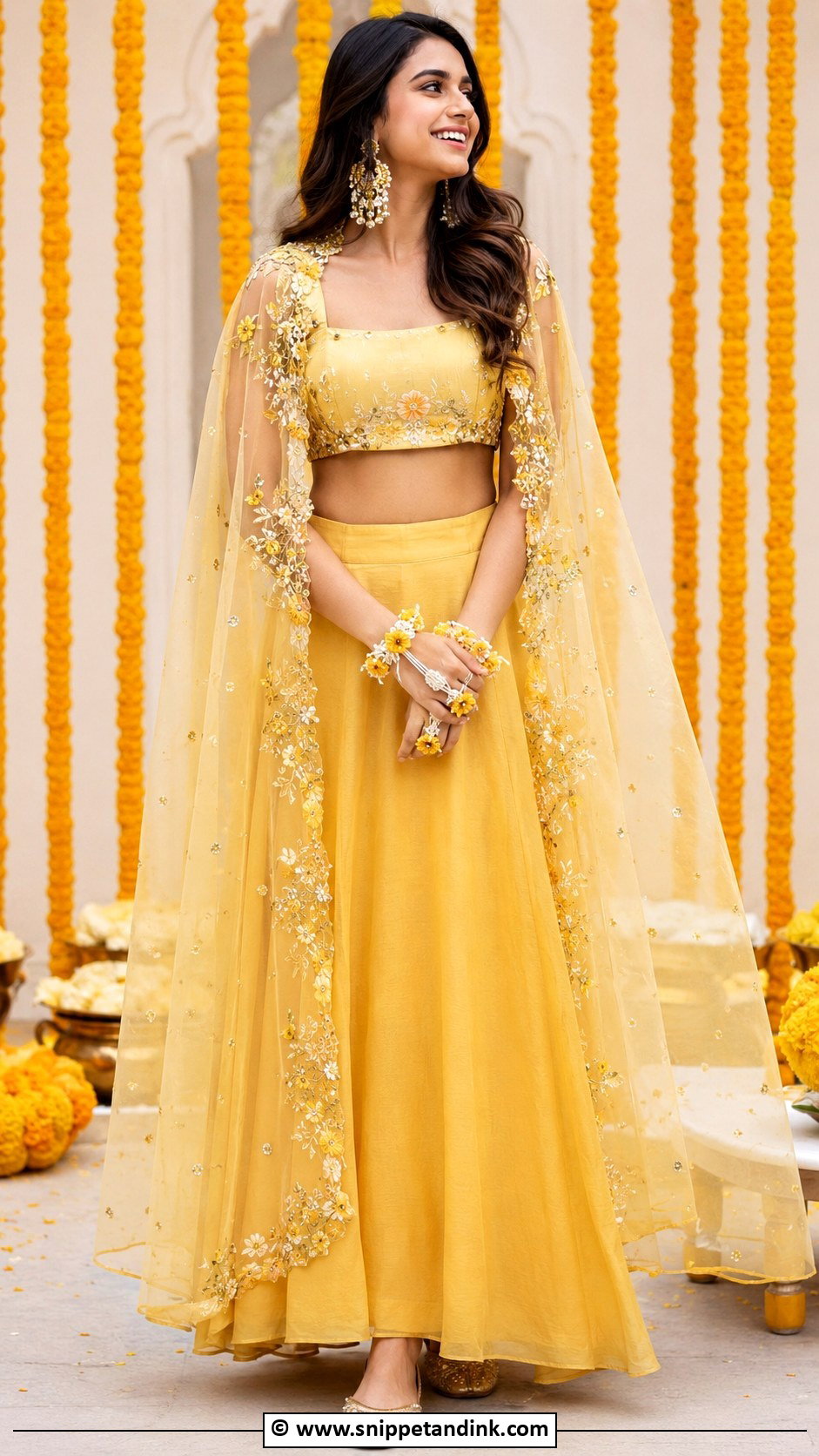
A cape replaces the dupatta, and I suggest it to any bride who hates adjusting fabric during rituals. Crop top, flared skirt and a sheer cape give you the lehenga outline while leaving your arms free for the paste. Yellow, ivory or pastel shades work, with light embroidery, mirror borders or floral appliqué on the cape itself. One fitting note: ask for the cape to be tacked to the blouse at the shoulder, or it slides back every time you lean forward. Statement earrings or floral haathphool keep the jewelry in proportion.
9. Peplum Haldi Outfit For Bride
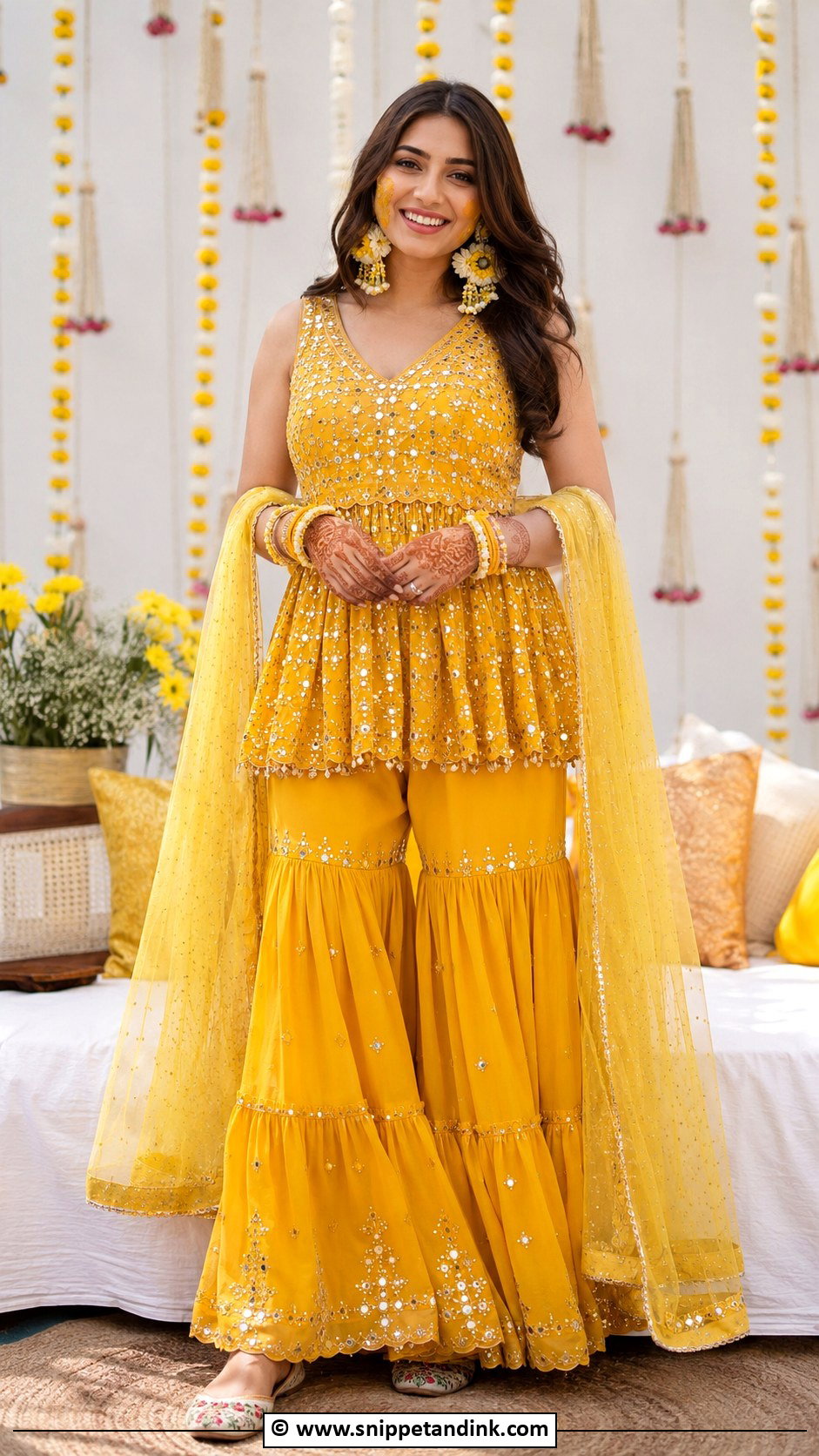
The peplum defines the waist while covering the midriff, which is why I offer it to brides who don’t want a fitted crop blouse. It pairs with shararas, ghararas, palazzos or a flared skirt. For haldi, pick a yellow or ivory set with mirror work, gota or soft floral embroidery. Floral earrings, stacked bangles and embellished flats finish it, and a center-parted bun with flowers pulls it firmly back toward bridal.
10. Chikankari Haldi Outfit For Bride
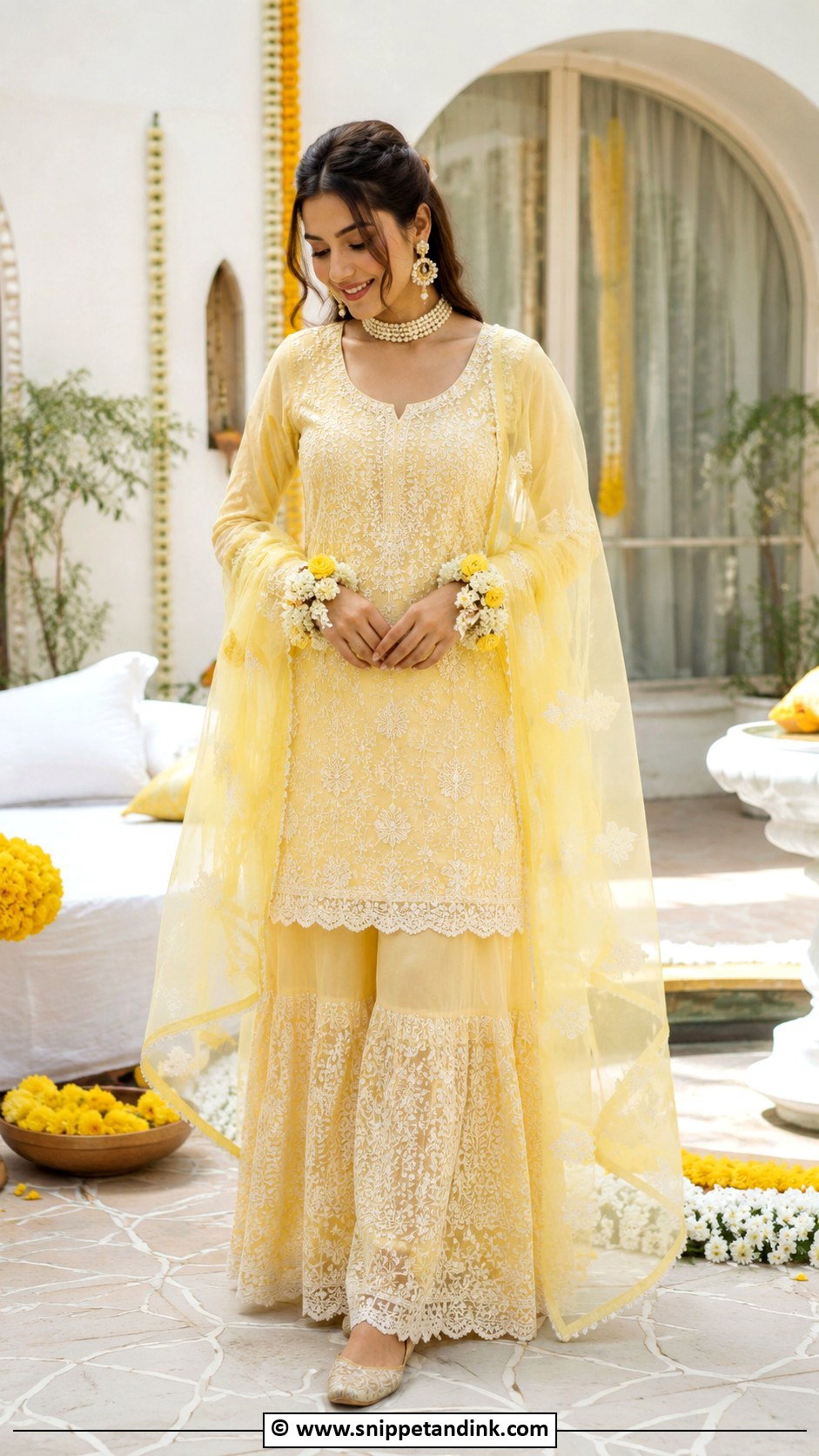
Chikankari is hand embroidery worked on light fabric, so it breathes better in the heat than almost anything else here. Yellow chikankari on georgette or cotton looks delicate; ivory with yellow accents feels newer. It comes as lehengas, kurta sets, shararas or Anarkalis. Since the charm is texture, I keep accessories quiet: pearls, floral bangles and a simple maang tikka. Turmeric settles into the fine stitches and is slow to lift, so treat it as a keep-for-memories outfit.
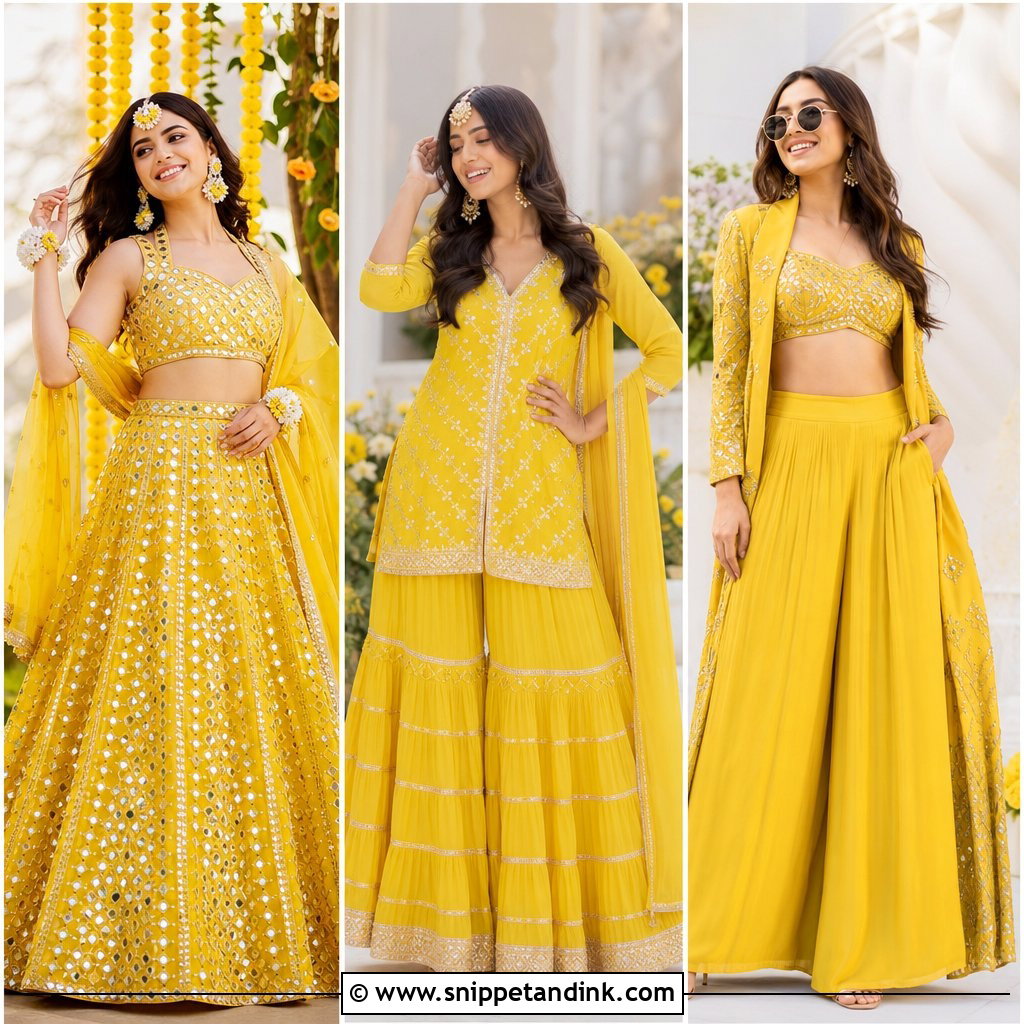
11. Mirror Work Haldi Lehenga For Bride
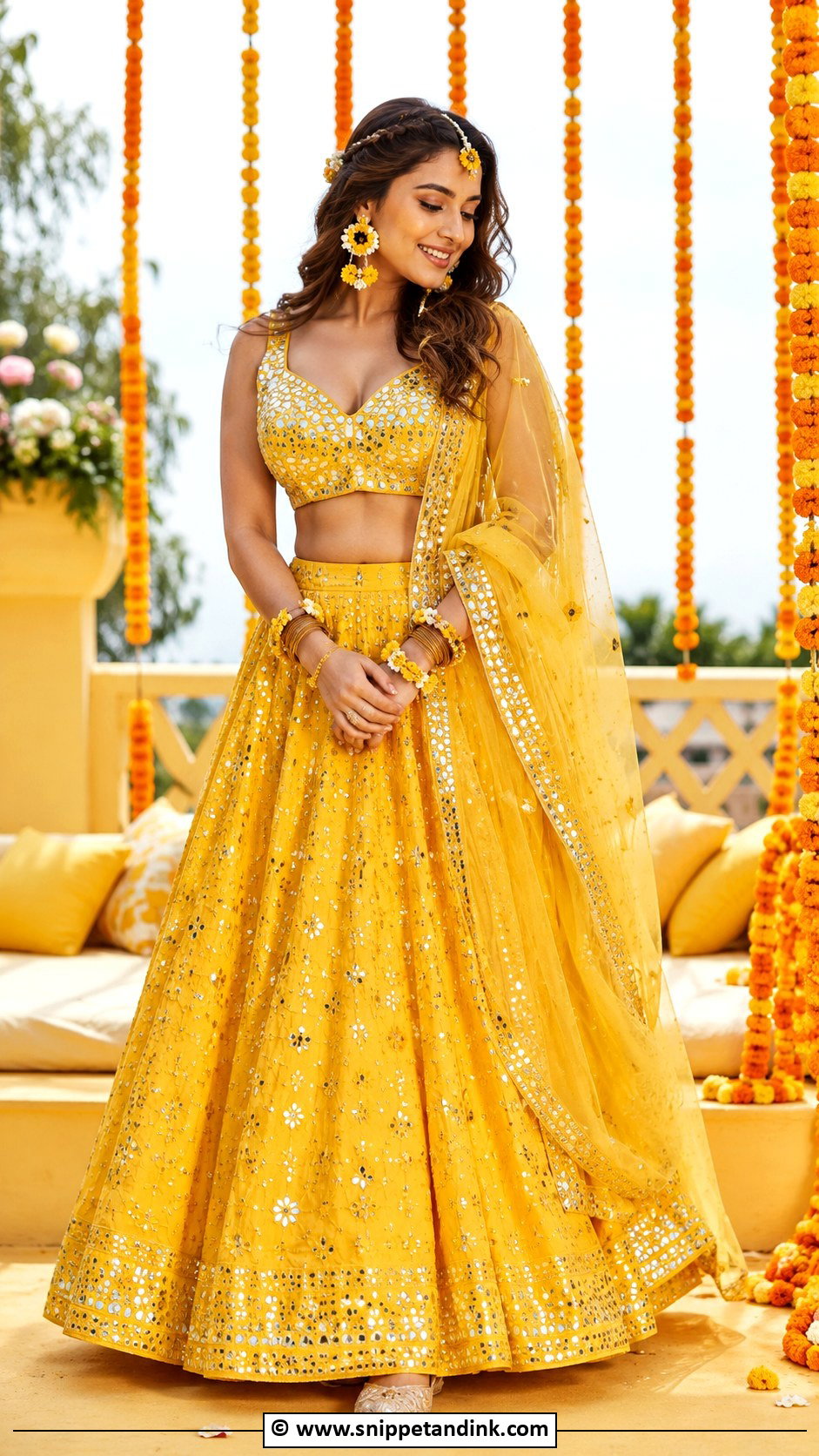
Small mirrors bounce natural light, and that’s why mirror work looks so alive in outdoor haldi photos. I prefer scattered mirrors to an all-over pattern; dense mirror work is heavy, and its edges can rub your inner arms raw by lunch. Go for yellow, mustard, lime or ivory with a matching blouse and a simple dupatta. Since the outfit already shines, keep jewelry to floral earrings, bangles or a single maang tikka, and wear juttis or block heels.
12. Gota Patti Haldi Outfit For Bride
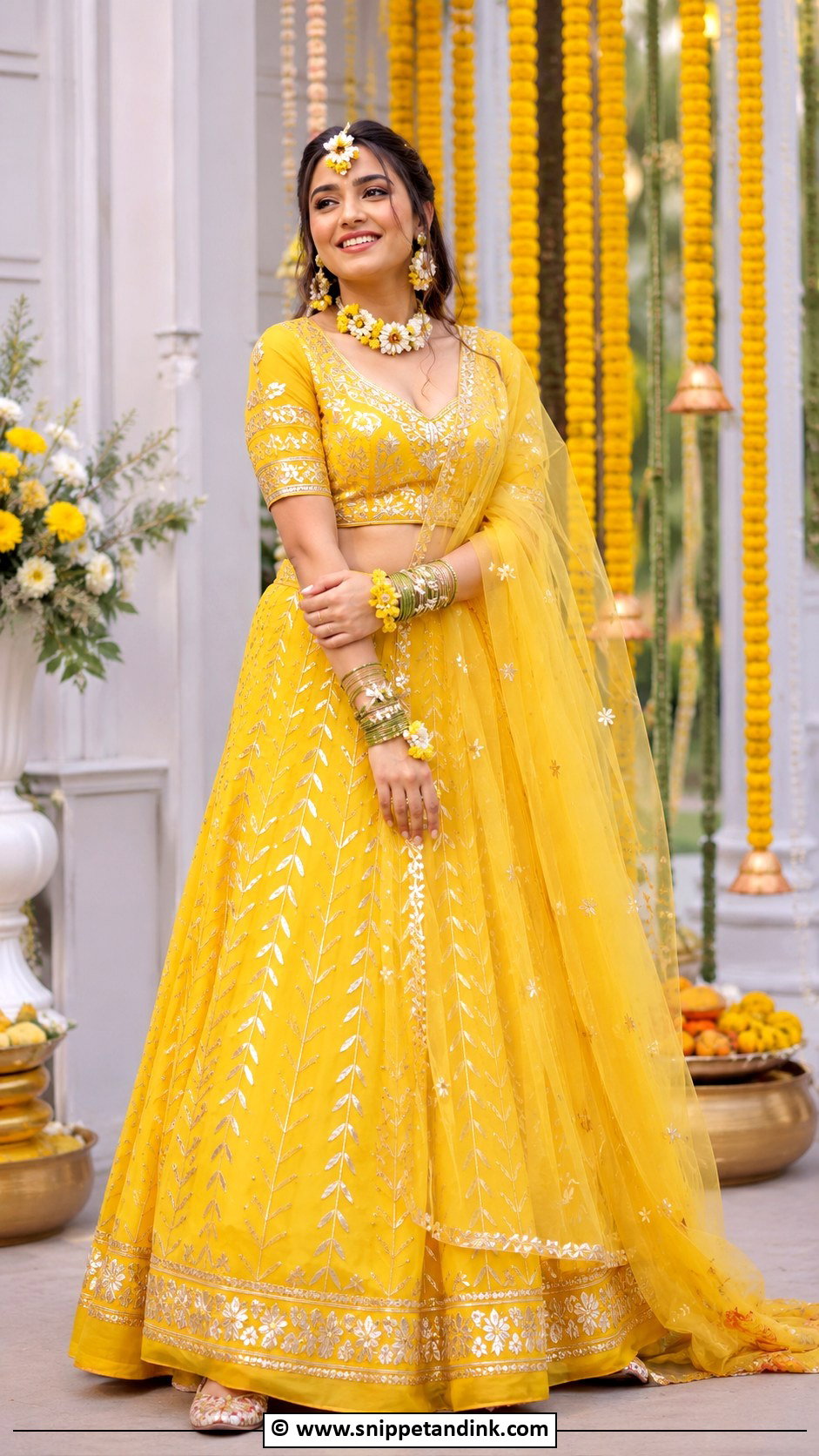
A gota patti haldi outfit uses metallic ribbon appliquéd onto the fabric, and it glints in sunlight in a way thread embroidery can’t. It suits yellow, ivory, peach or orange bases. A gota lehenga is the classic, but a gota sharara, Anarkali or saree moves more easily. Gota quality varies widely, and the cheaper ribbon can look plasticky up close, so I always inspect it in daylight before buying. Floral jewelry softens the shine; add juttis, glass bangles and fresh flowers in your hair.
13. Orange Haldi Lehenga For Bride
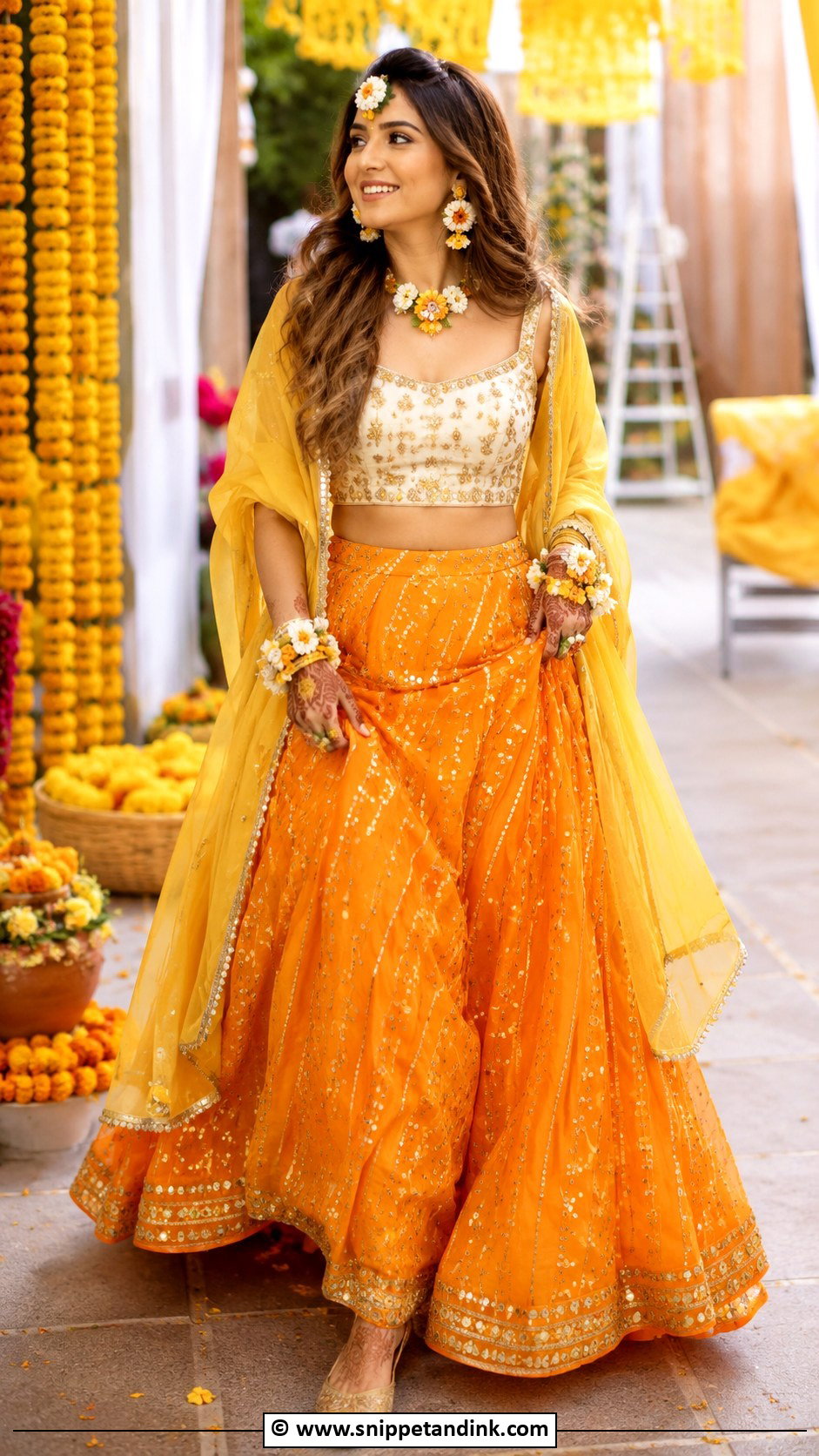
Orange is for the bride who wants to step past yellow without leaving the haldi palette. Marigold, tangerine and saffron glow in daylight; burnt orange is richer and a little more grown-up. I keep the embroidery minimal so the color does the work. A contrasting yellow dupatta or an ivory blouse adds a second layer. White or peach flower jewelry freshens it, and gold bangles with juttis keep it traditional. It holds its own against busy, colorful decor.
14. Peach Haldi Outfit For Bride
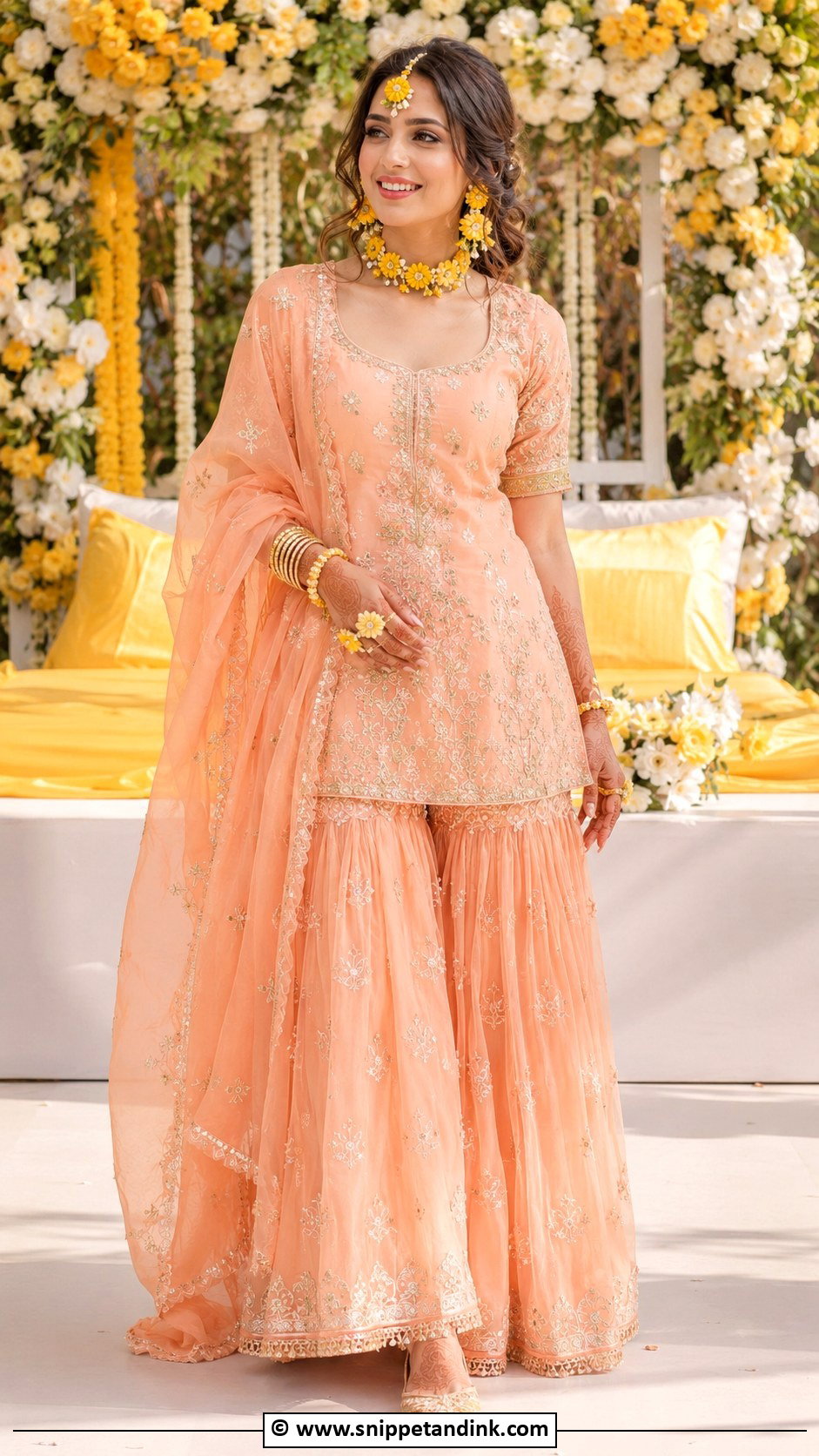
Peach is the gentle option, and on most skin tones it adds warmth without shouting. Peach lehengas, shararas, sarees and Anarkalis sit happily beside marigolds and gold. I keep the embroidery in ivory, gold or tonal thread. Its one weakness: very pale peach can photograph almost beige in harsh noon sun, so if your haldi is outdoors at midday, go a shade deeper. Yellow or white flower jewelry ties it to the ceremony, and soft curls or a loose braid finish it.

15. Lime Green Haldi Outfit For Bride
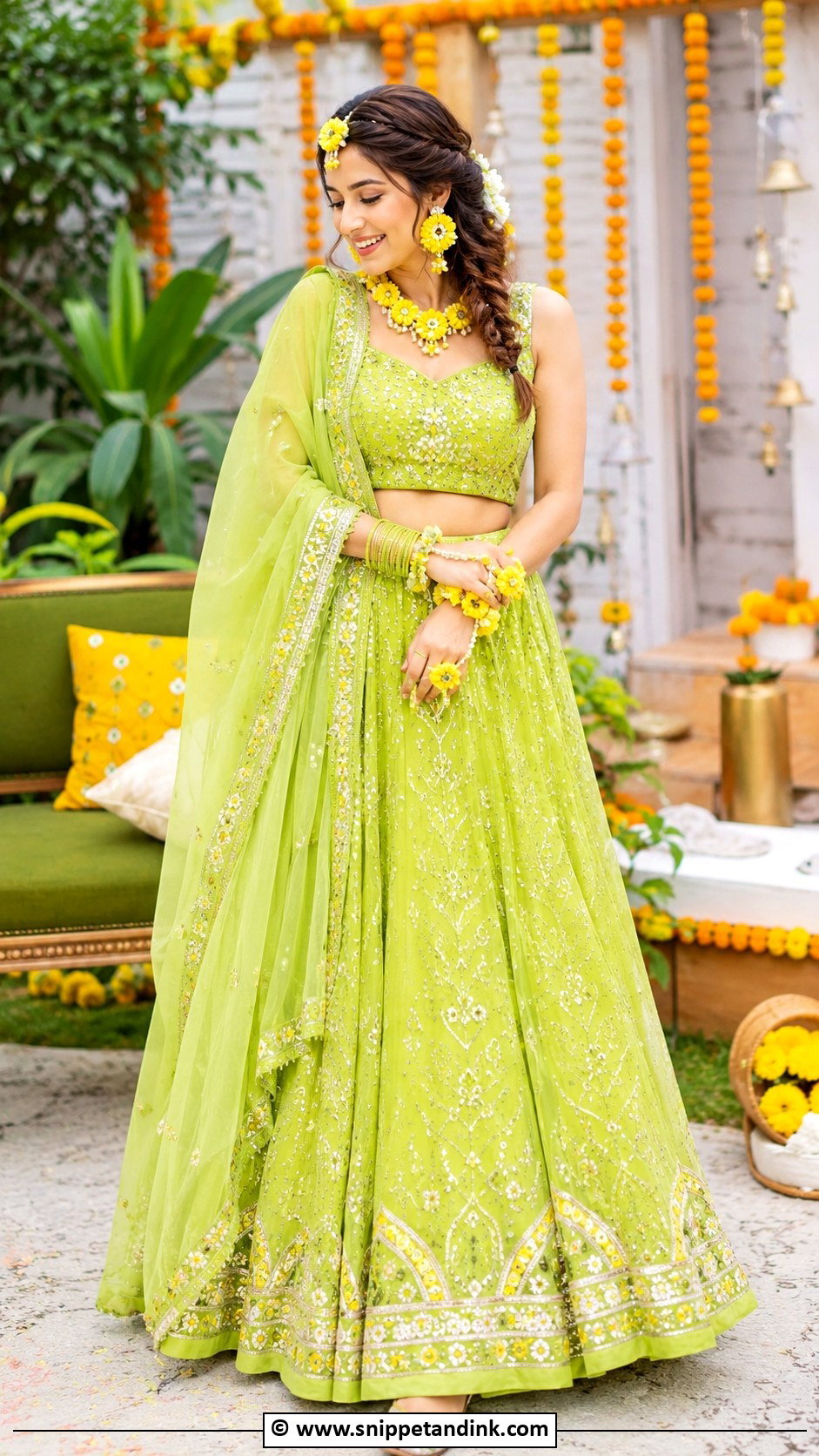
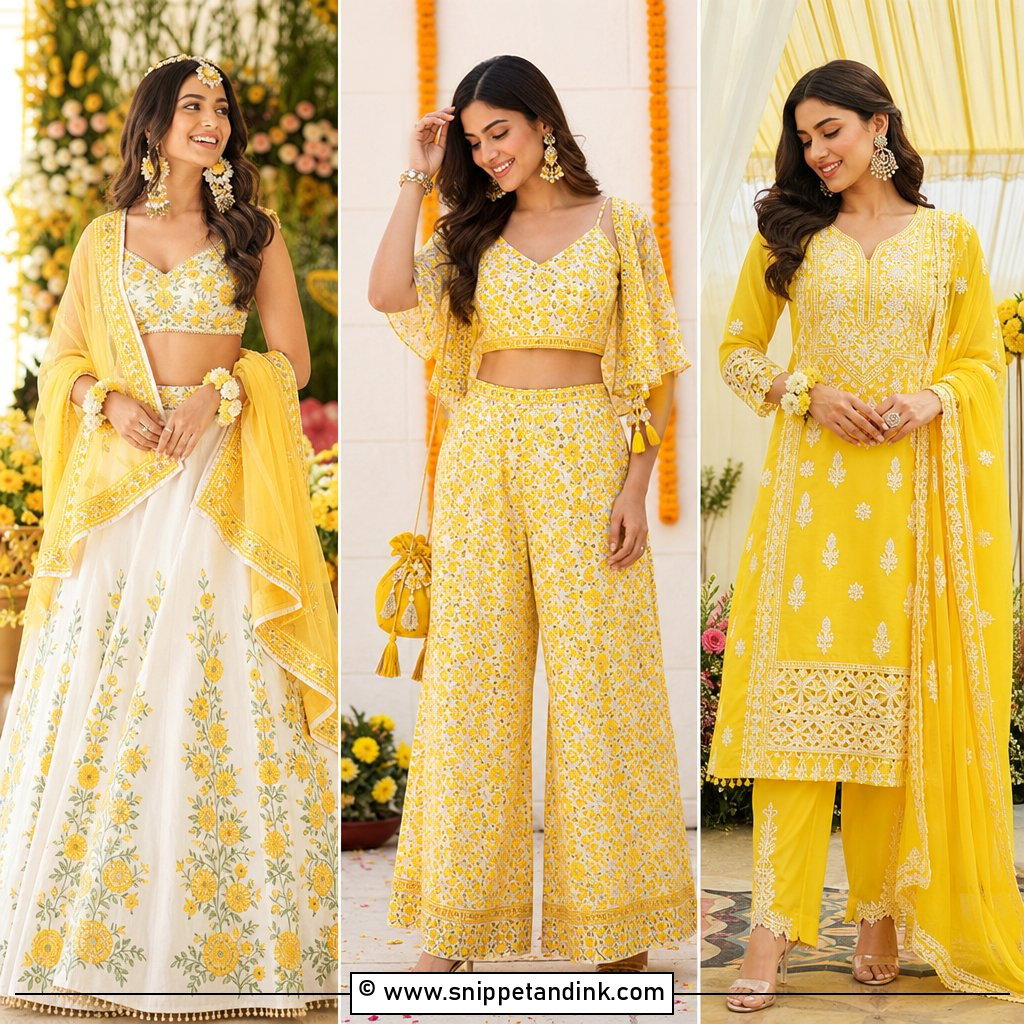
Lime stands out precisely because it isn’t yellow. It looks bright in lehengas, shararas, cape sets and sarees, especially with yellow flower jewelry. Pastel lime or mint-lime is the softer version. Keep accessories simple so the color leads. It’s my favorite for outdoor ceremonies with plenty of greenery, since green reads lively in natural light. Turmeric does show on pale lime, so choose a deeper shade if your family is generous with the paste.
16. White And Yellow Haldi Outfit For Bride
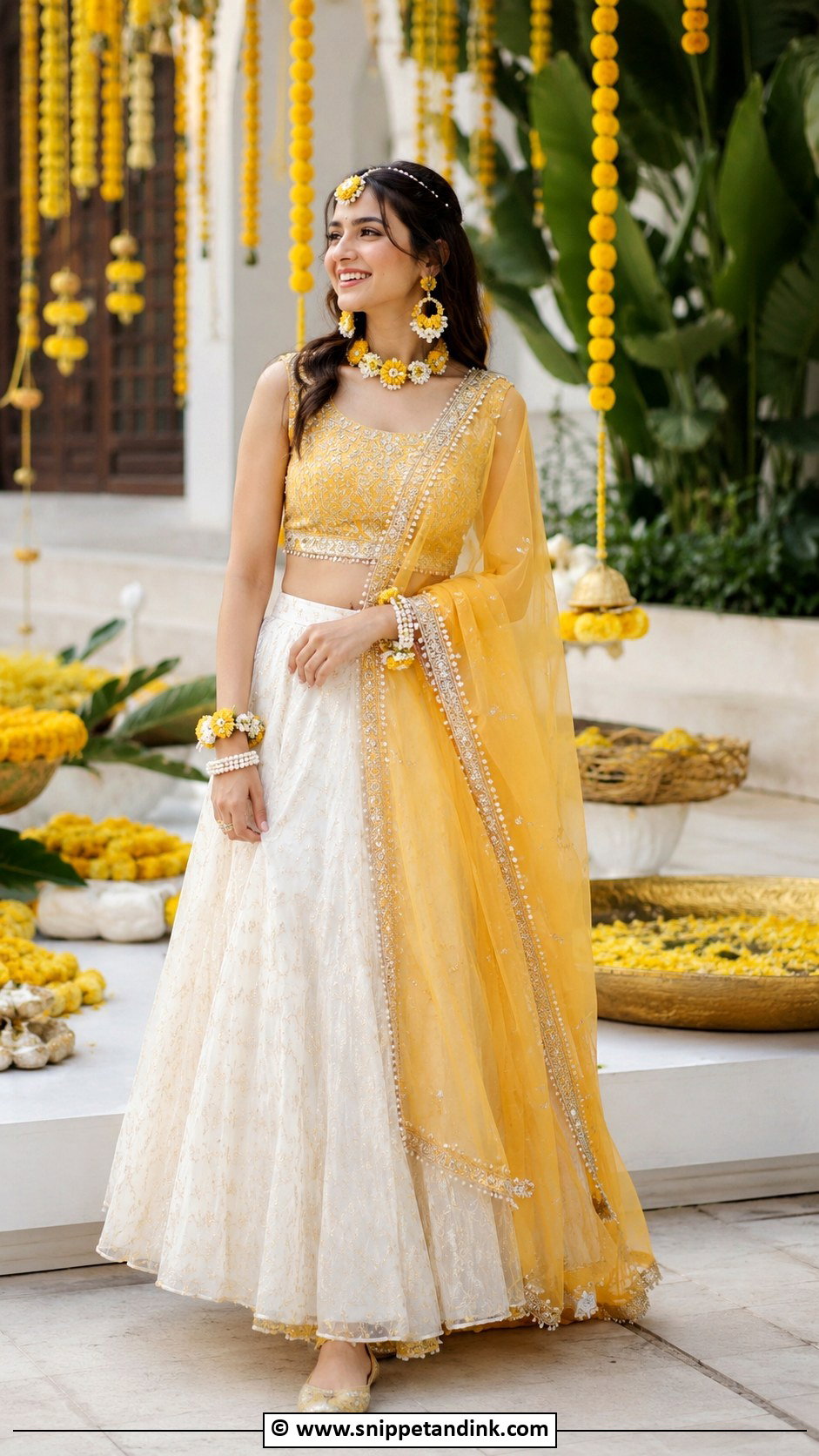
This pairing gives you contrast that isn’t loud: white keeps it clean, yellow keeps it tied to the ritual. Try a white lehenga with yellow embroidery, a yellow blouse over an ivory skirt, or a white sharara with a yellow dupatta. I put the yellow up top, near the face and arms where most of the paste lands, and keep the white lower down. Yellow floral jewelry, pearl bangles and embroidered flats finish it. A sleek flower bun reads refined; loose waves feel softer.
17. Bandhani Haldi Outfit For Bride
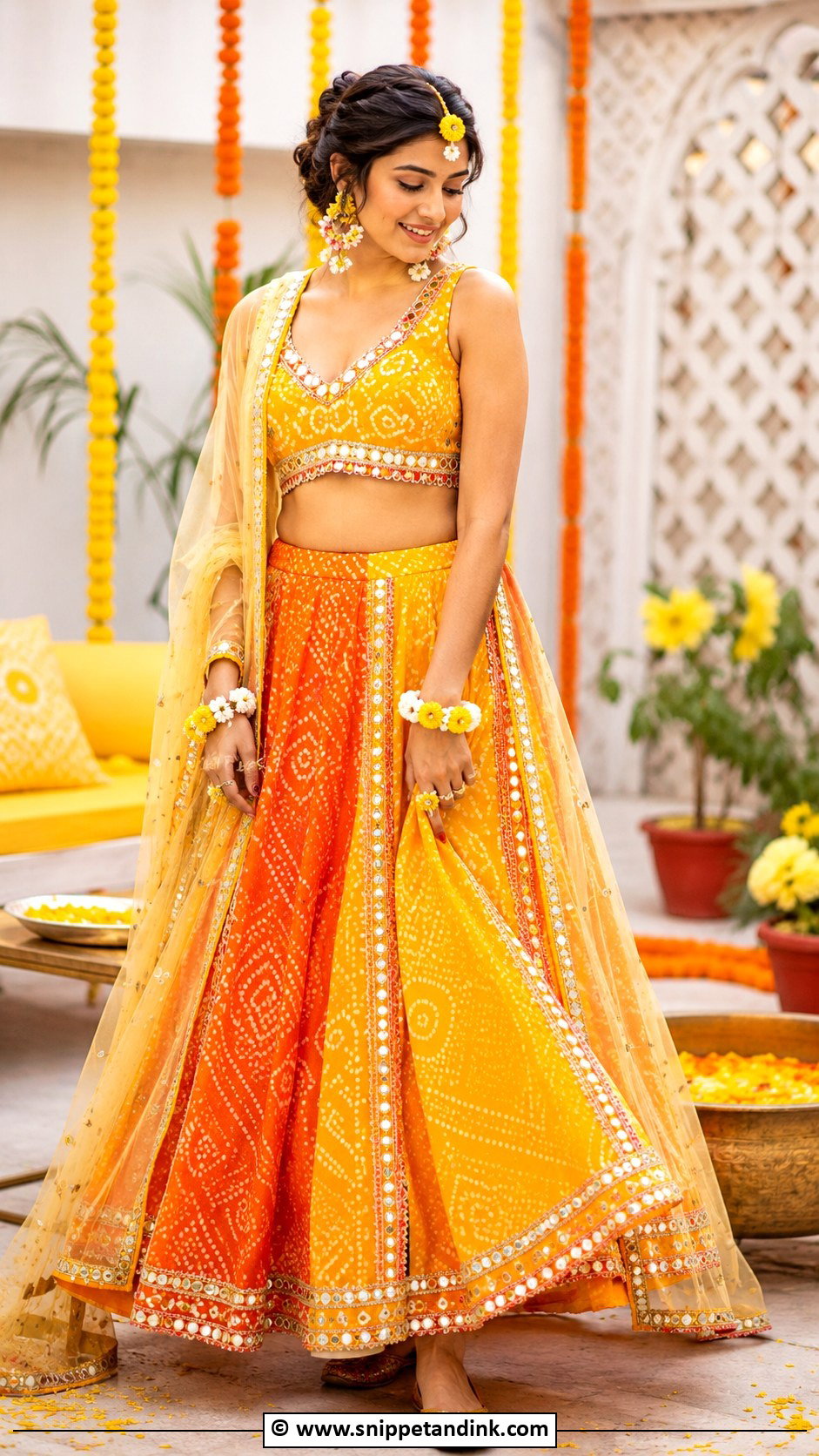
A bandhani haldi outfit carries the tie-dye dots of Rajasthan and Gujarat, where the cloth is pinched and bound in tiny knots before dyeing. Yellow is the classic, but orange, lime, pink and ivory combinations look joyful too. Bandhani needs very little embroidery; a mirror border or gota trim is enough. I do warn brides that real bandhani can bleed dye when soaked, so if water play is planned, wear it for the photos and change afterward. Traditional jewelry, floral bangles and juttis finish it.
18. Leheriya Haldi Saree For Bride
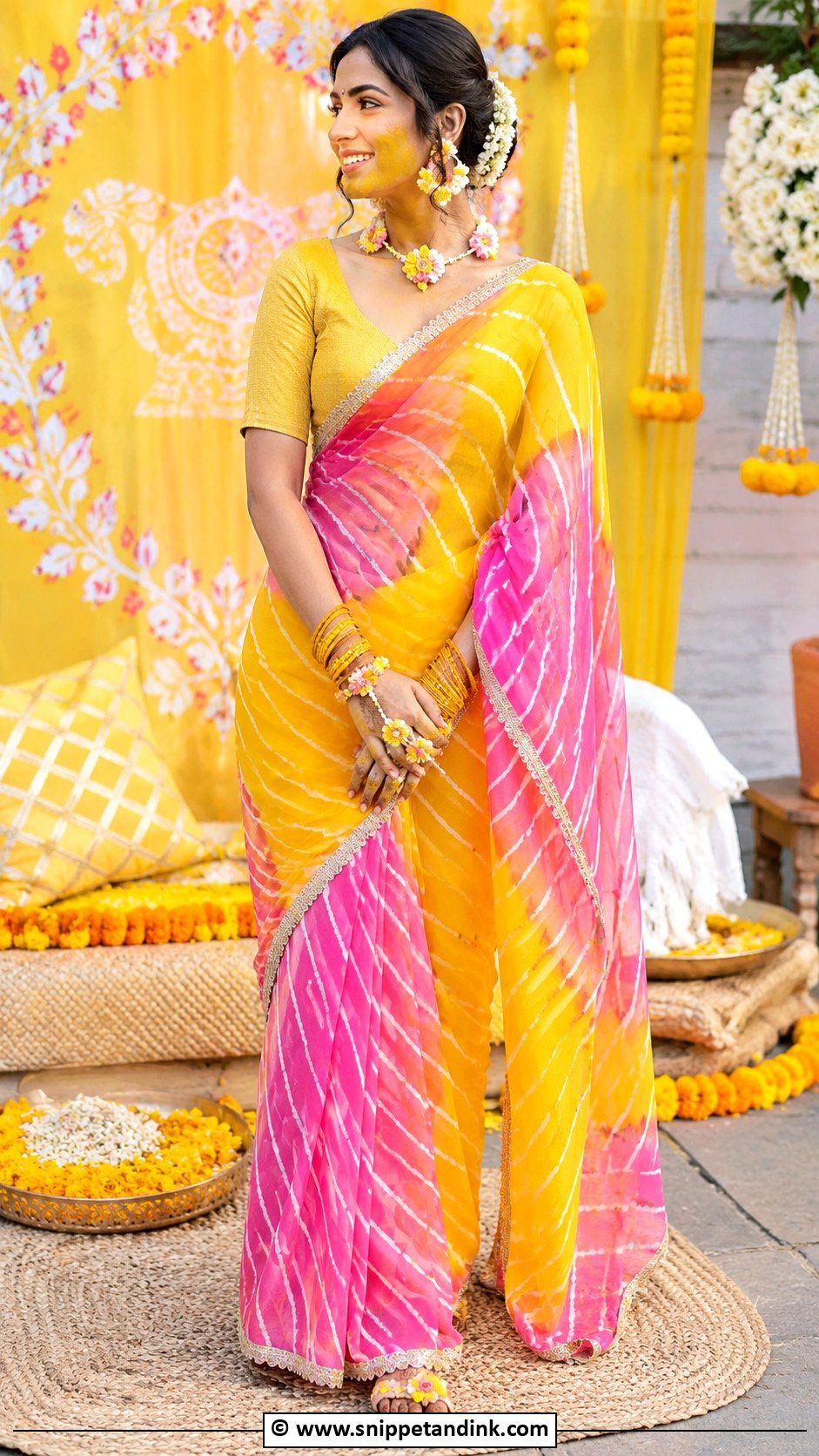
Leheriya is a Rajasthani resist-dye technique in diagonal waves, and it looks like movement even while you’re sitting still. Yellow is traditional; yellow-pink or lime-yellow feel more playful. Chiffon, georgette or light silk drapes easily. Add a matching or contrasting fitted blouse, floral jewelry, glass bangles and a neat bun or braid. If draping worries you, a pre-stitched leheriya saree gives the same effect in two minutes.
19. Kurta Palazzo Haldi Outfit For Bride
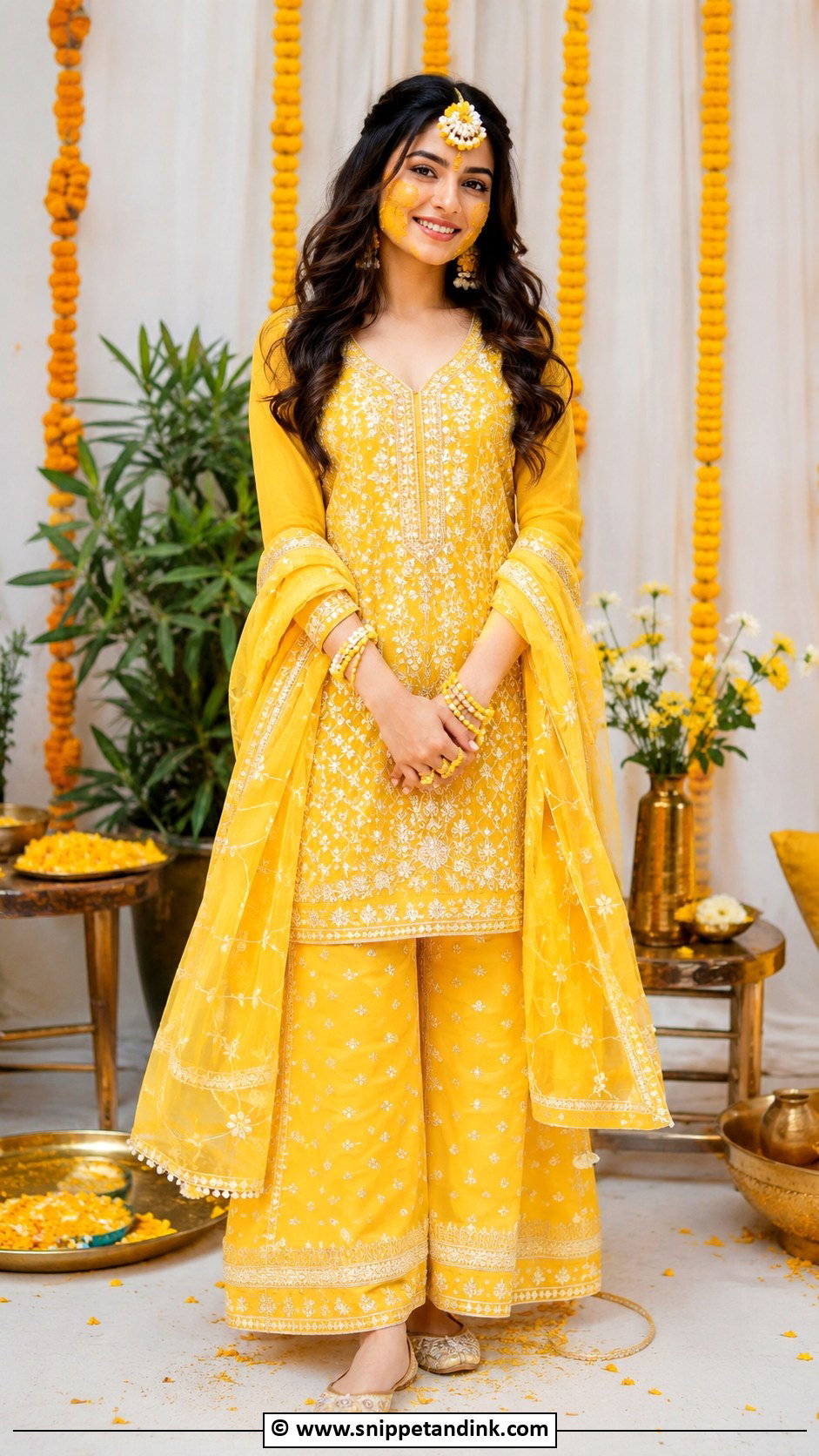
Of everything here, a kurta with palazzos is the most practical. You get coverage and easy movement, and you can sit on the floor without a second thought. Choose yellow, ivory, peach or lime with embroidery at the neckline, sleeves and hem. To make it feel bridal, I add the jewelry a guest wouldn’t wear: a floral maang tikka, haathphool and stacked bangles. It’s also the outfit you’re most likely to wear again after the wedding.
20. Dhoti Haldi Outfit For Bride
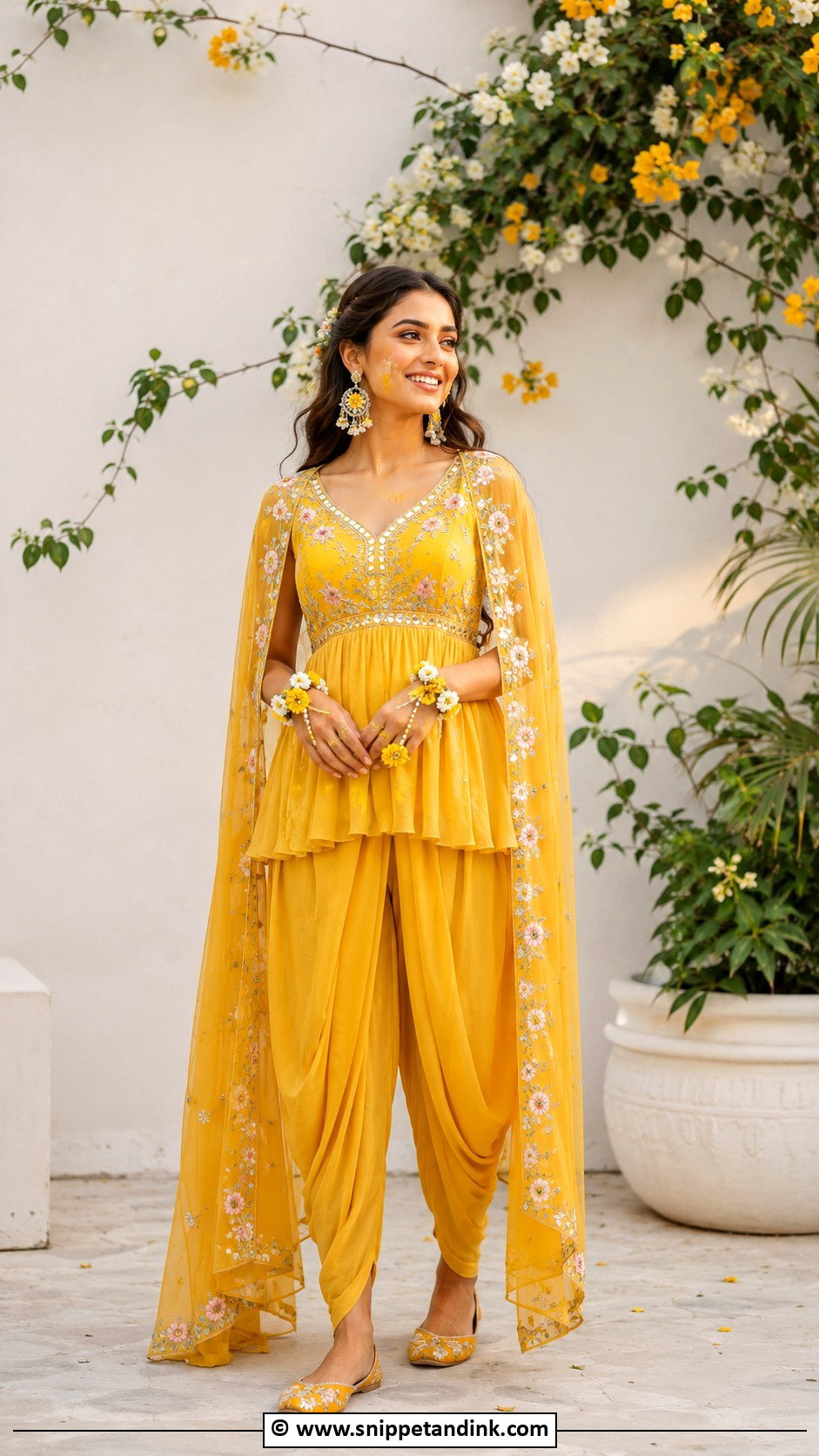
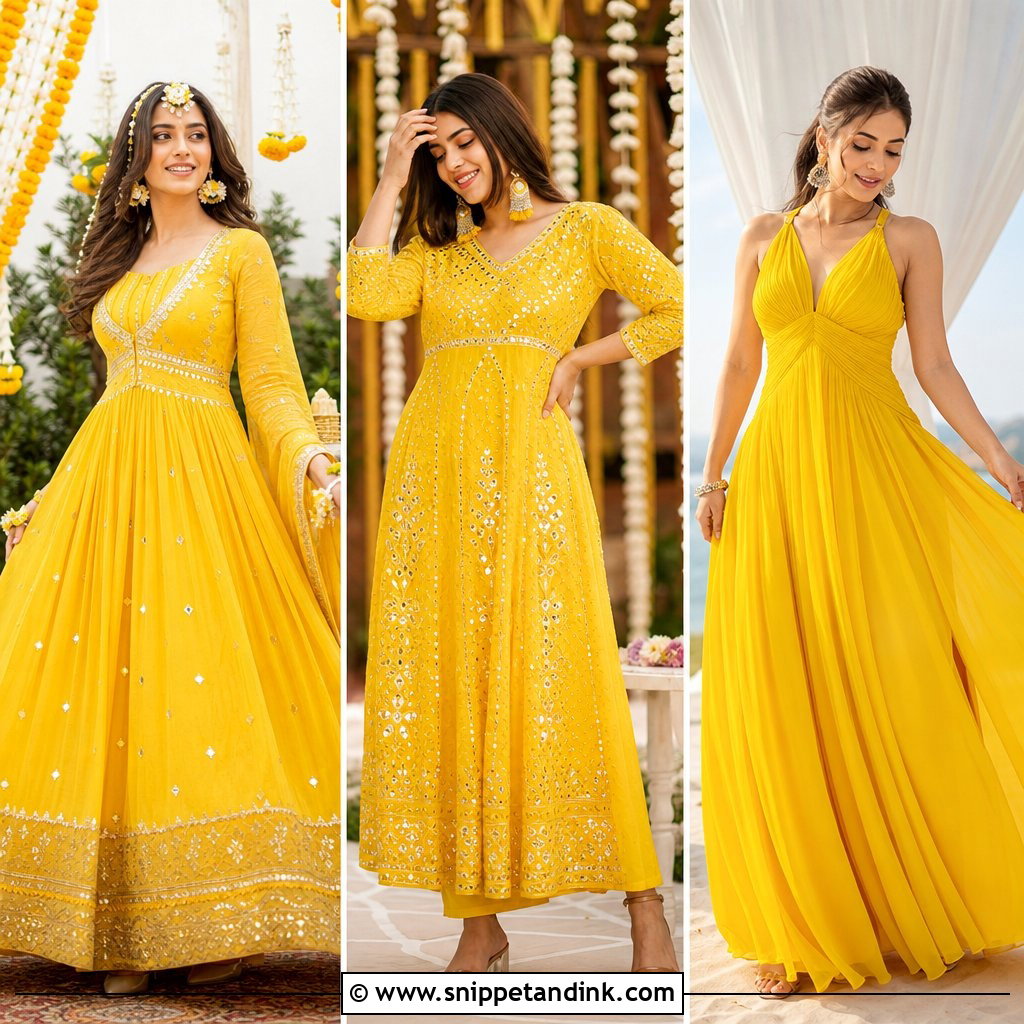
Dhoti pants are draped and gathered toward the ankle, so you can squat, kick and dance with no hem in the way. A short embroidered kurti, crop top or peplum over them makes a playful Indo-western look in yellow, ivory, orange or lime. Throw on a cape or light jacket for more drama. I’d only steer away from it if your family expects a very traditional ritual, where some elders may find it too casual. Statement earrings, floral haathphool and flats finish it.
21. Jacket Haldi Outfit For Bride
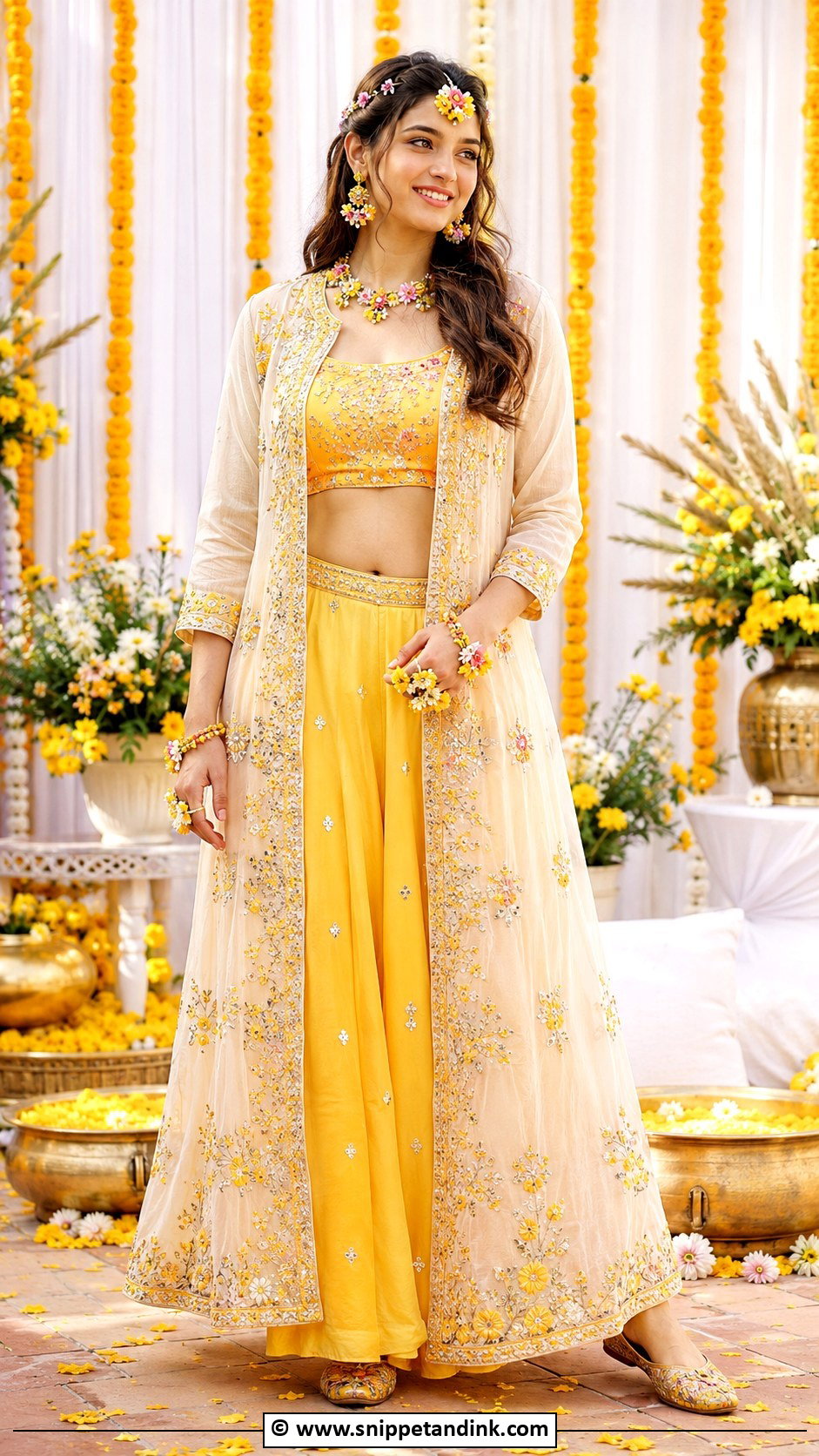
A jacket adds structure without weight: a crop top and skirt under a long embroidered jacket, or a kurta and pants with a light open one. Mirror work, gota, thread embroidery or floral prints all work on the jacket. Yellow with ivory is pretty; peach and lime feel fresher. I keep jewelry simple so the jacket stays the focus, and for a summer haldi I’d choose an unlined cotton or organza jacket, because a lined one traps heat. A sleek ponytail or soft waves suits anyone after a unique haldi look.
22. Indo Western Haldi Outfit For Bride
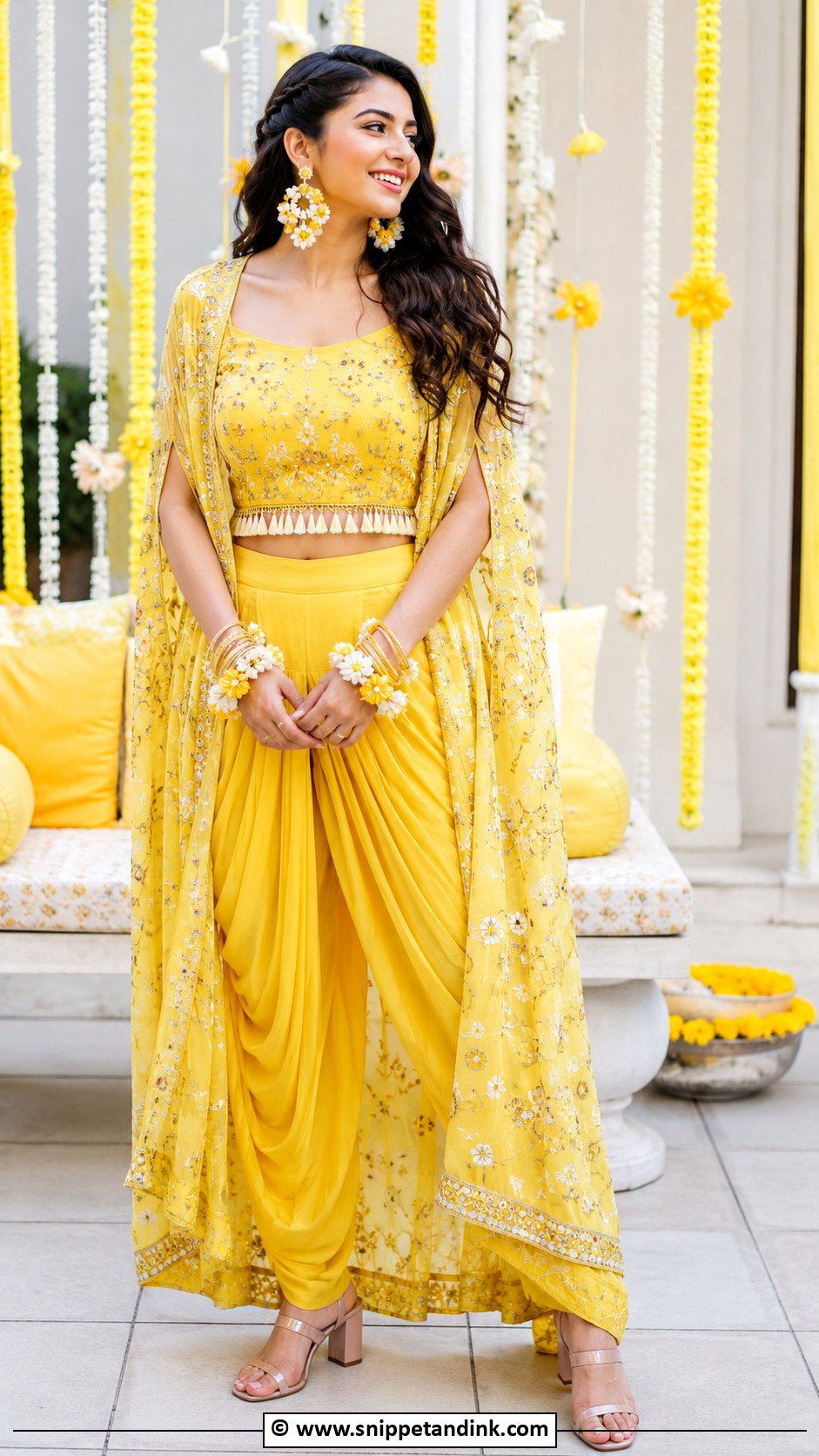
An Indo western haldi outfit can be a crop top with palazzos, a skirt with a cape, draped pants with a blouse, or a pre-draped saree gown. My rule is to keep the color firmly in the ceremony palette of yellow, ivory, peach, orange or lime, so a modern cut still reads as haldi. Light embroidery, mirror accents and flower jewelry make it bridal. Pick block heels or juttis depending on the floor, and keep the makeup fresh.
23. Silk Haldi Saree For Bride
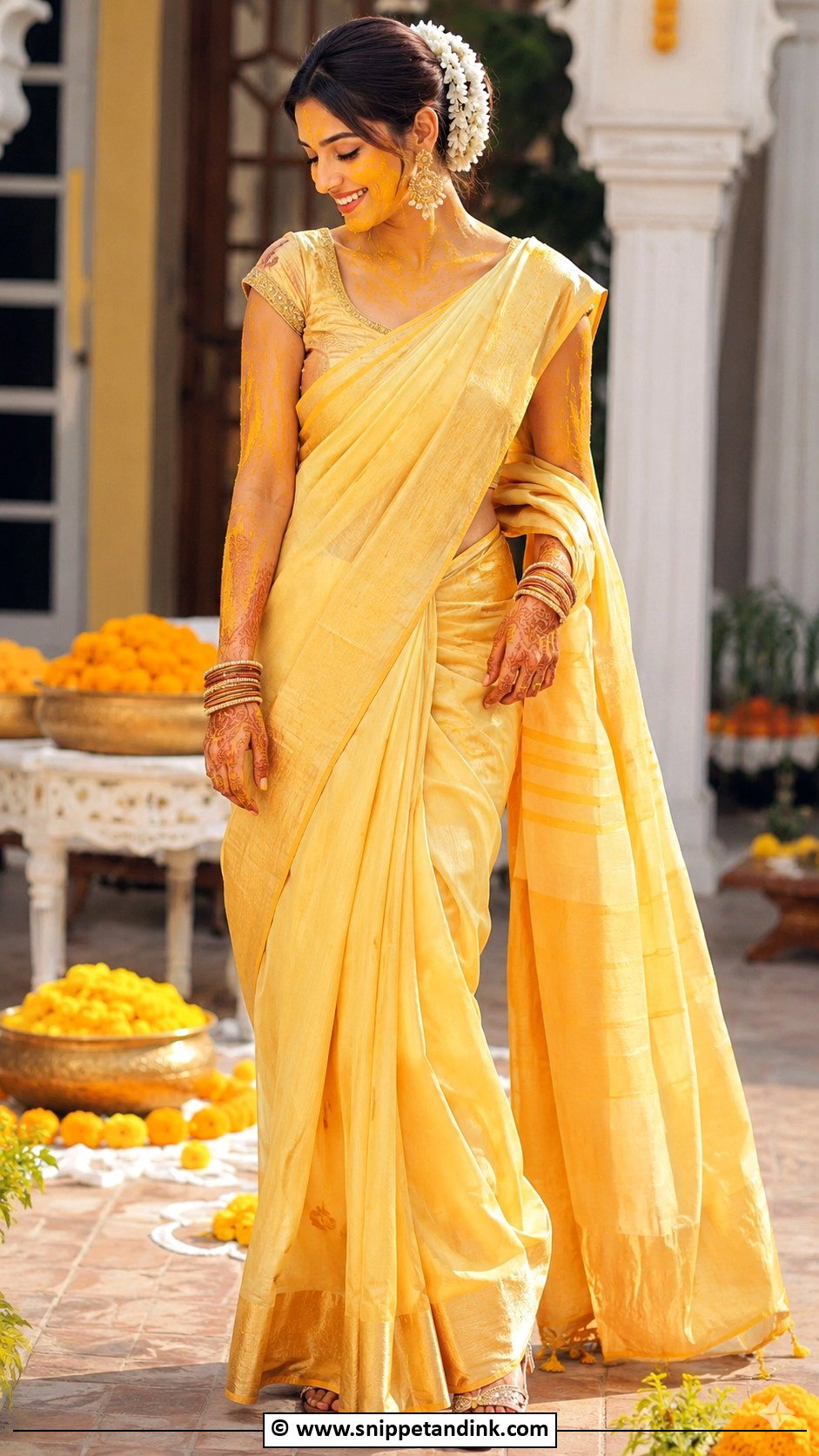
Silk gives haldi a more formal, classic feel, and some families prefer it for the ritual portraits. Choose a light silk, cotton silk or tissue silk rather than your wedding saree. Yellow with a gold border is traditional; mustard or orange silk is just as rooted. My honest advice: silk and turmeric don’t mix, so wear it for the portraits and change before the paste. A gajra bun, bangles and comfortable sandals complete it.
24. Organza Haldi Outfit For Bride
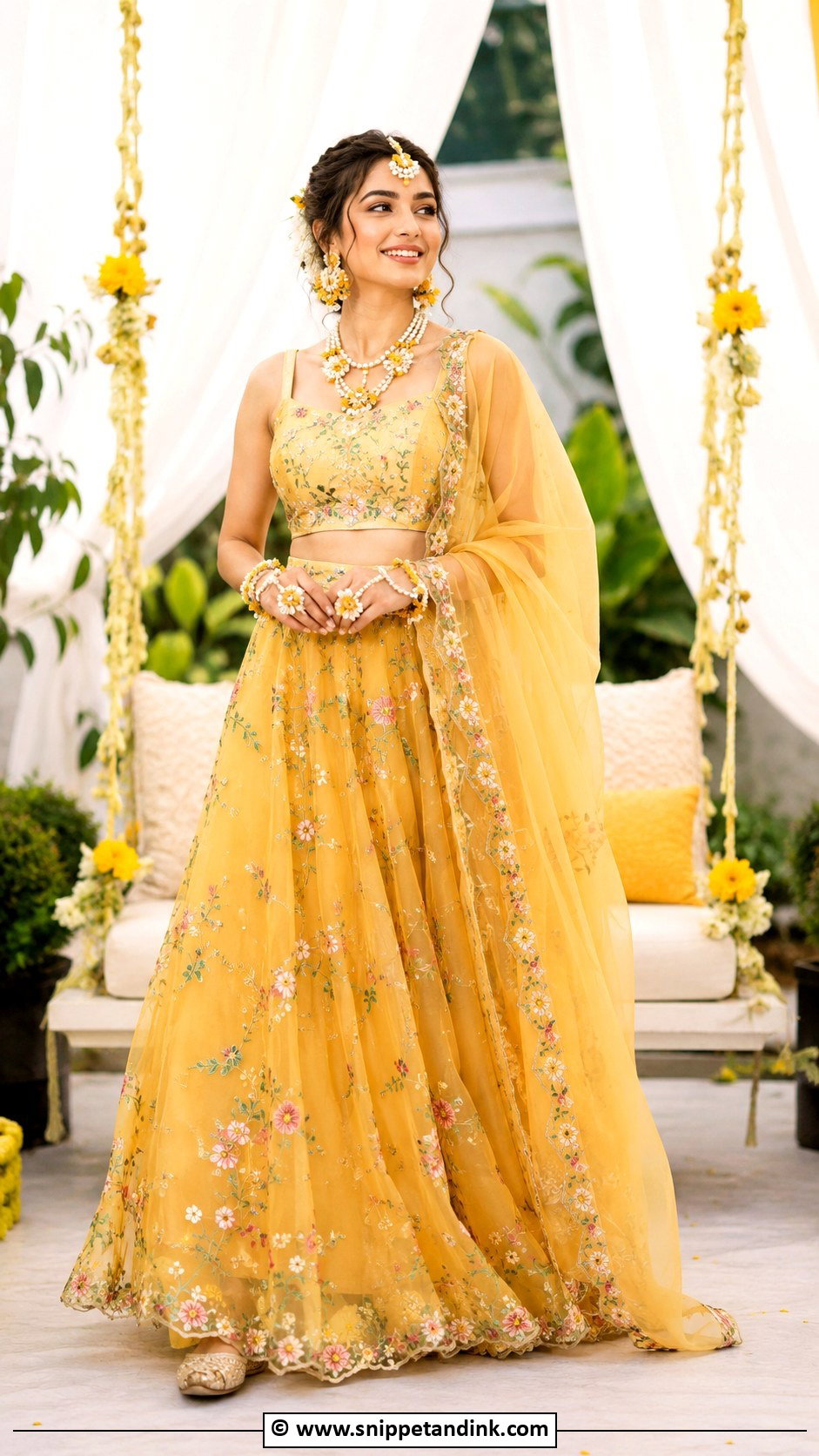
Organza has a crisp, floaty volume that looks dreamy in lehengas, sarees and cape sets. Yellow organza with floral embroidery is the popular route; ivory with yellow detailing feels newer. Because it’s sheer, I check the lining by holding the outfit up to a window. Organza also has no stretch, so the blouse needs a precise fit or it gapes when you lean forward. Keep styling light with flower jewelry, pearls and soft makeup. It suits a garden or resort morning ceremony.
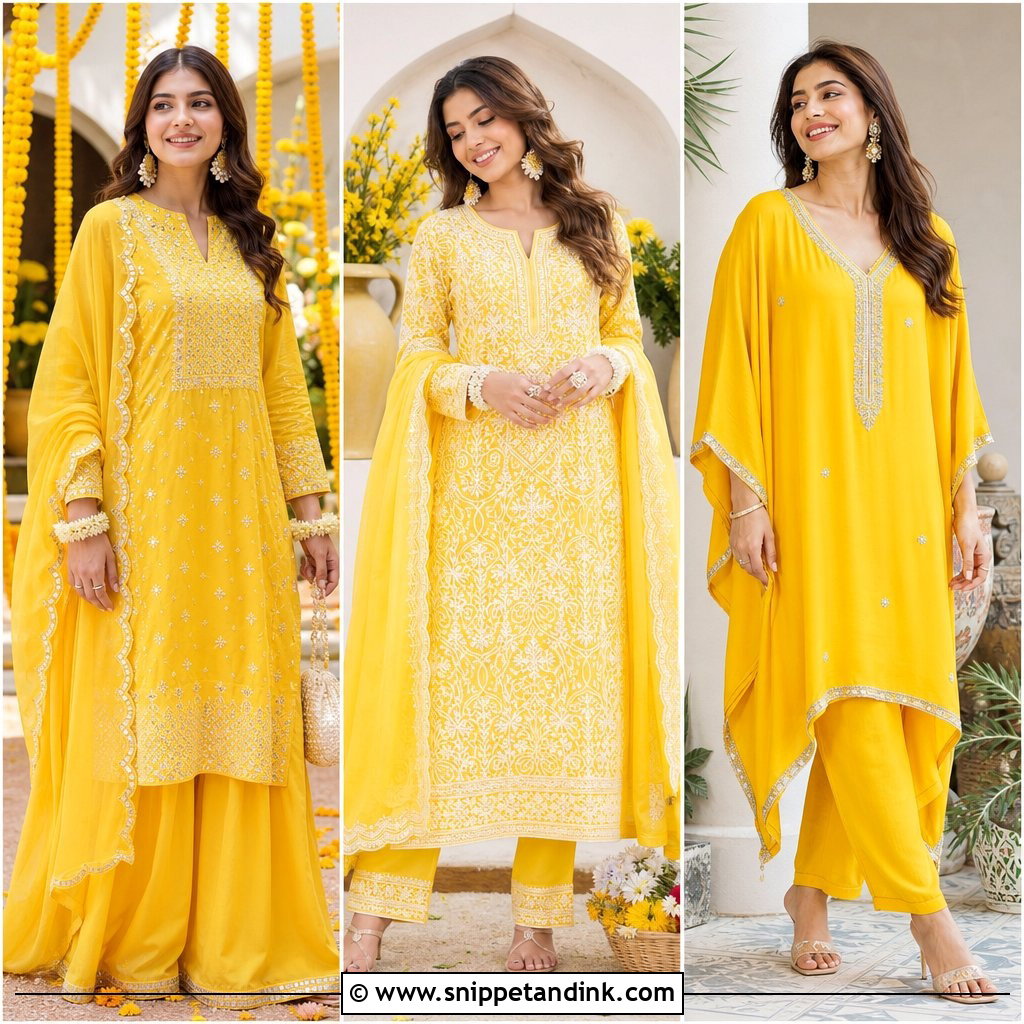
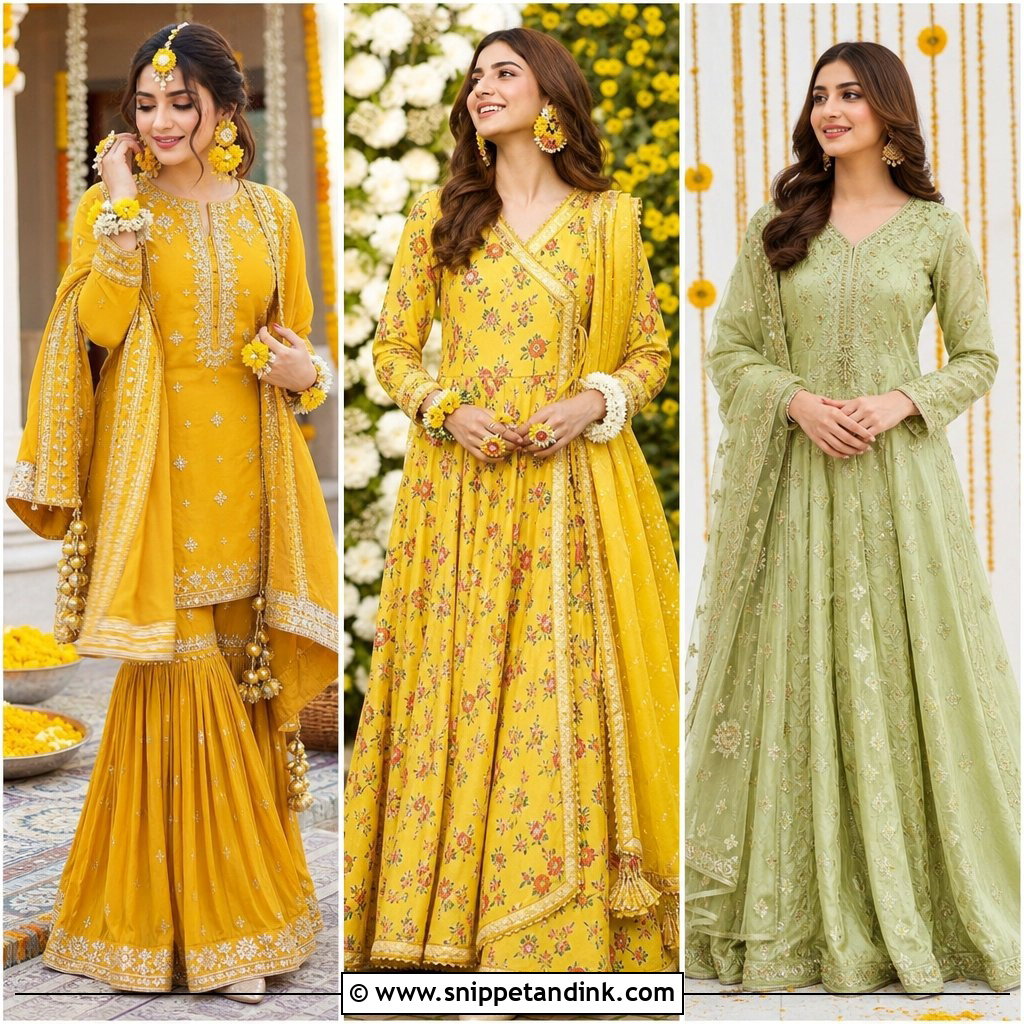
25. Cotton Haldi Outfit For Bride
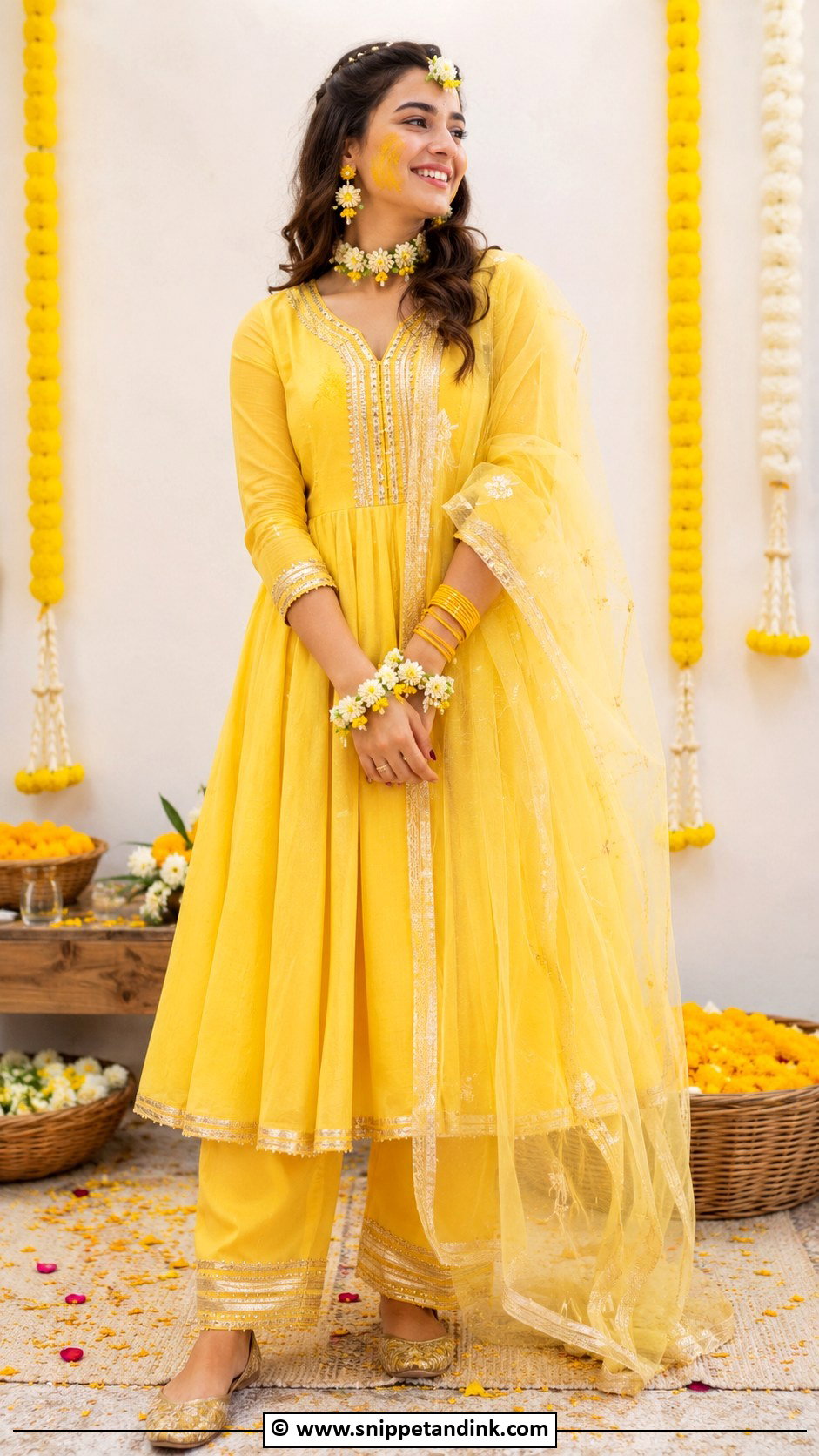
Cotton breathes, washes and doesn’t mind turmeric, which makes it the smartest choice when your family applies haldi generously. A yellow cotton Anarkali, kurta set, sharara or saree still looks bridal with block prints, lace borders, gota trim or mirrors. I’d wash any hand-block printed cotton once before the day, since some natural dyes run the first time they get wet. Floral jewelry, stacked bangles and fresh flowers in your hair do the rest.
26. Pastel Haldi Outfit For Bride
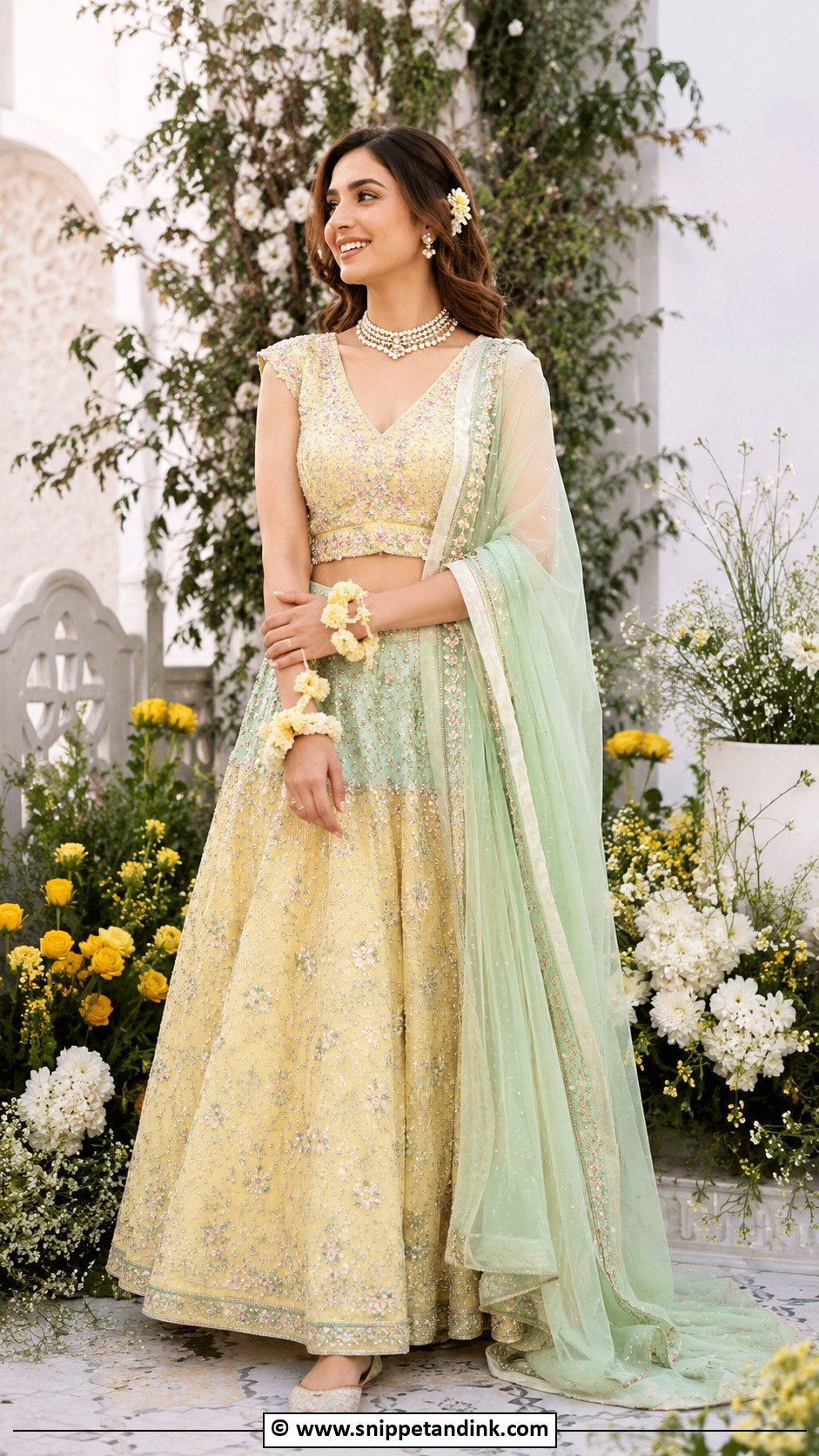
Pastel yellow, blush, mint, peach or powder blue can all work at haldi, as long as there are yellow flowers or marigolds nearby to anchor them. A lehenga, sharara, saree or Anarkali with delicate embroidery keeps it bridal. Pastels love daylight, but they also show turmeric more than any color except white, so plan on a change or accept the marks. Pair them with pearls, resin floral accessories or fresh flowers, and keep the makeup dewy.
27. Mustard Haldi Outfit For Bride
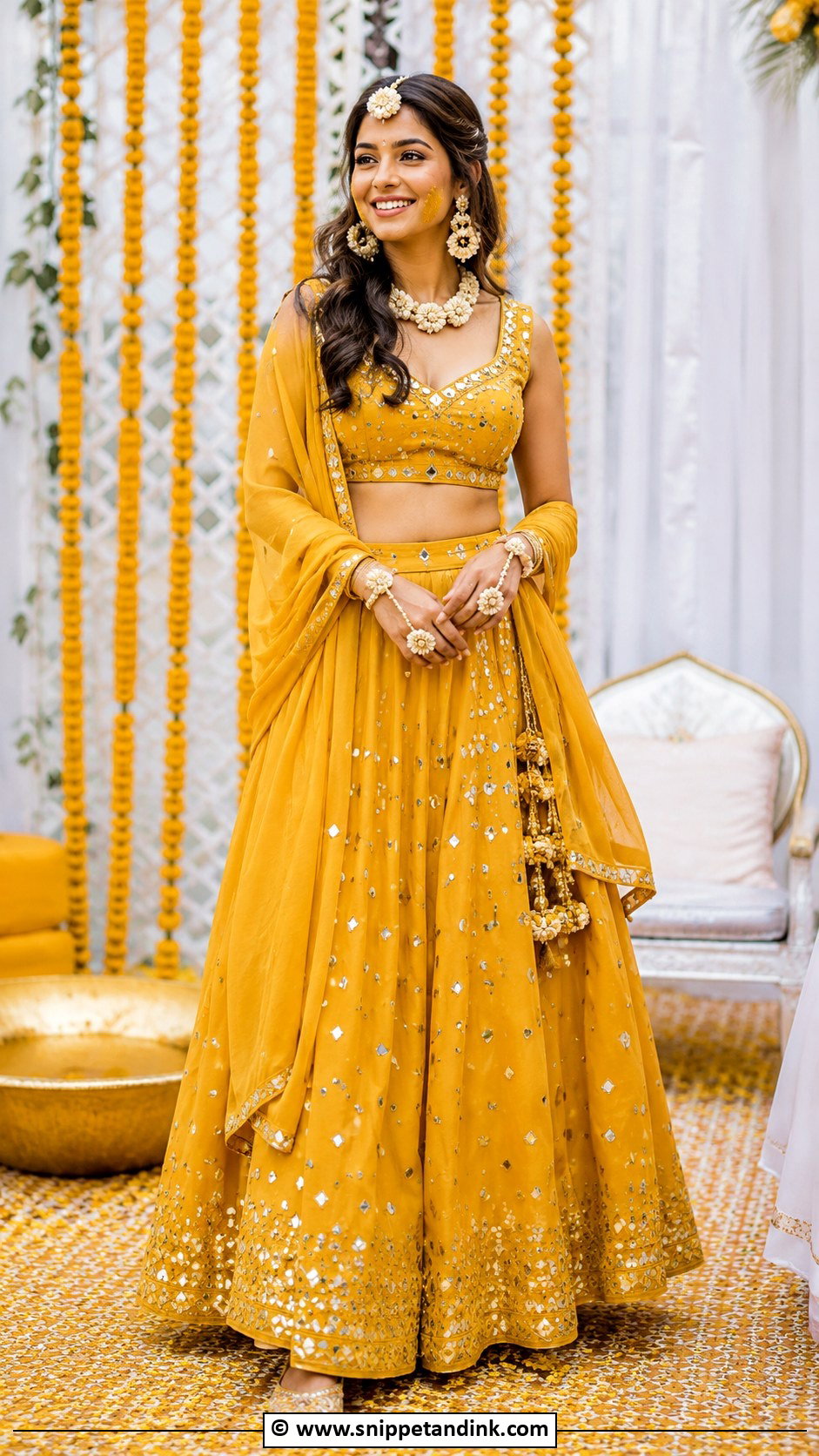
Mustard is yellow with more depth, and it suits brides who find neon yellow too young. It sits naturally with gold, ivory and marigold. A mustard lehenga, saree or sharara feels traditional yet current, with light embroidery, mirror details or gota borders keeping it festive. Mustard also holds its color in harsh midday sun, where pale yellow can wash out to cream. White flower jewelry gives it the contrast it needs, with gold bangles and embroidered juttis.
28. Ruffle Saree Haldi Outfit For Bride
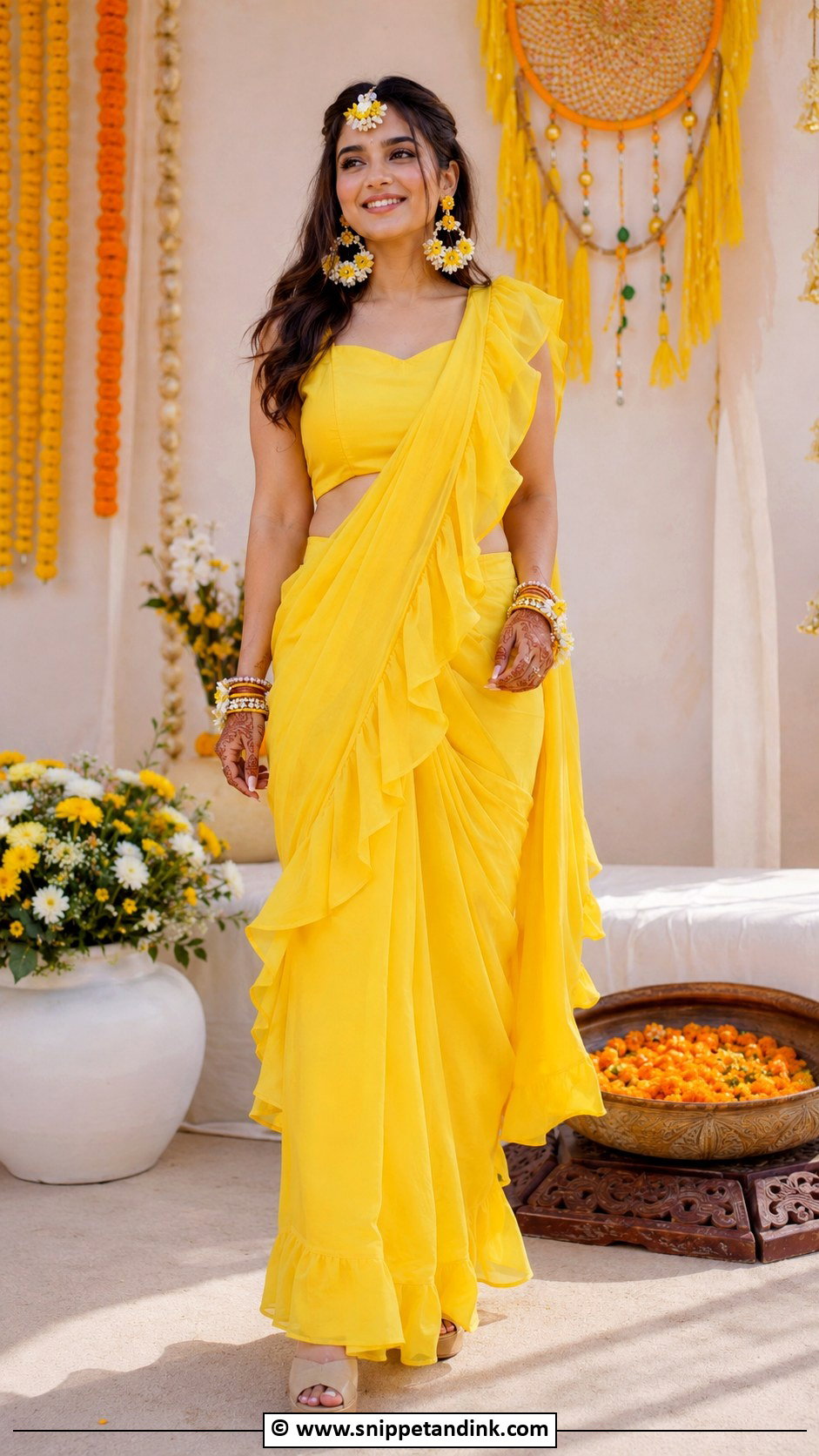
Ruffles add movement without embroidery, which keeps the saree light. Choose yellow, ivory, peach or lime in georgette or chiffon, and a pre-draped version is easier still. What I watch with ruffles is volume at the hip: if the ruffled section wraps the waist too, your shape disappears, so keep them to the hem and the pallu edge. A fitted blouse, floral earrings and a statement maang tikka finish it.
29. Co Ord Haldi Outfit For Bride
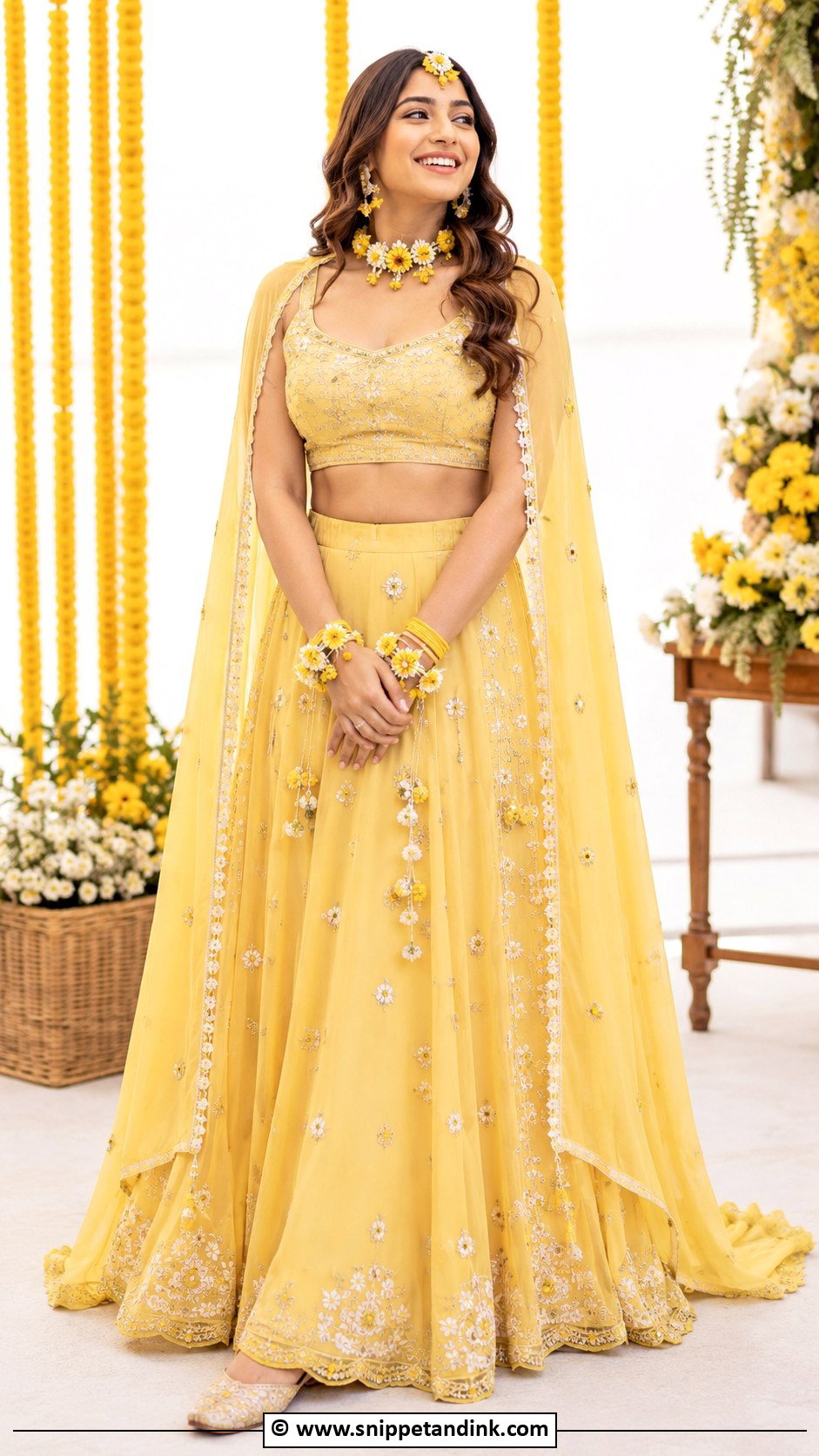
Co-ord sets arrive matched: crop top and skirt, kurta and pants, cape with palazzos, or blouse with sharara. That makes them the easiest thing on this list to style. Yellow is the classic; ivory-yellow, peach, lime and orange feel fresh. Light embroidery, mirror work or floral prints make it ceremony-ready. Before buying, I always check whether the pieces work separately afterward, because that’s the real value of a co-ord. Flower jewelry, bangles and a soft hairstyle add the bridal touch.
30. Minimal Haldi Outfit For Bride
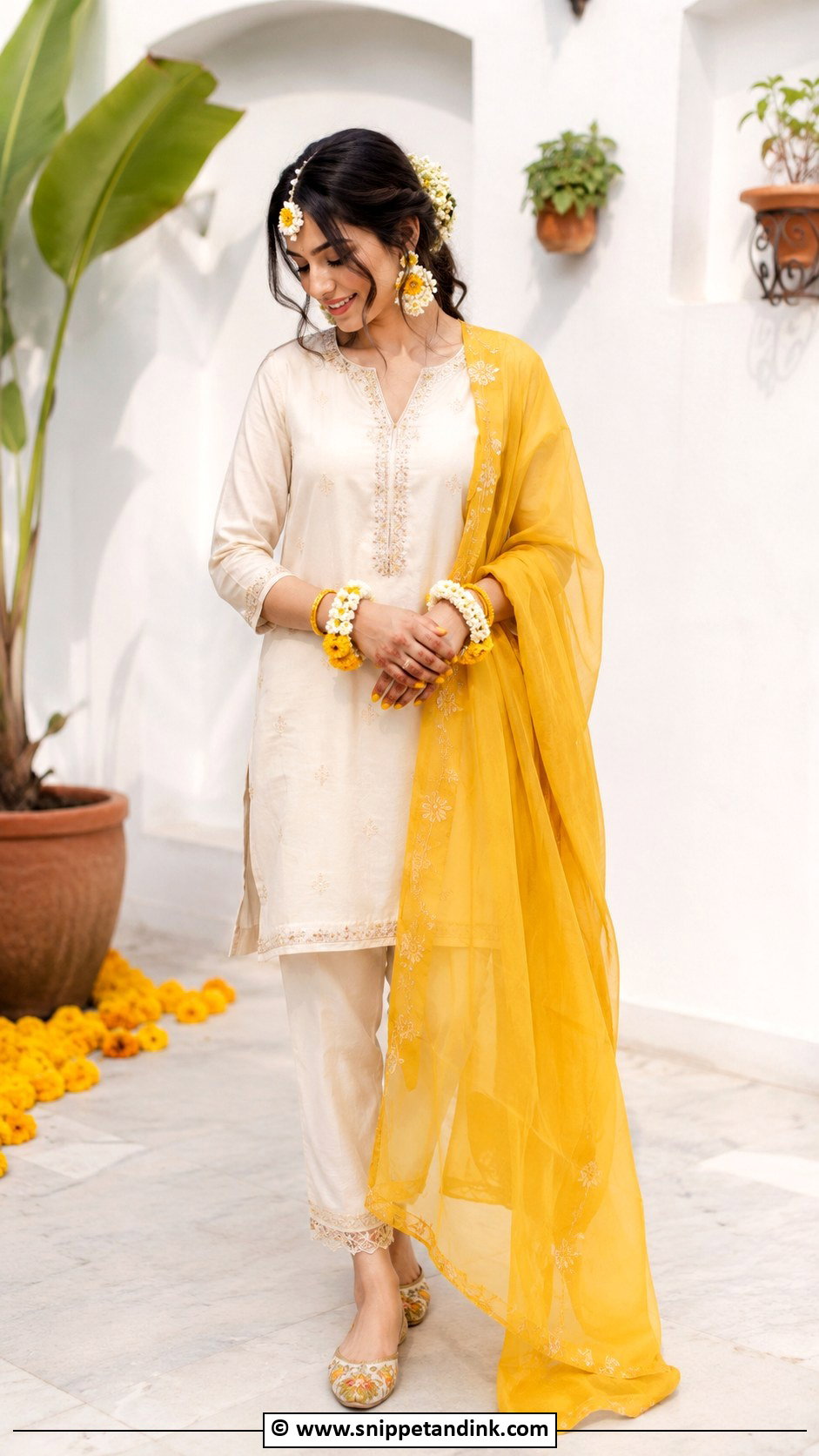
Minimal doesn’t mean underdressed. A plain yellow saree, an ivory kurta set, a cotton Anarkali or a lehenga with fine borders turns bridal through styling: flower jewelry, fresh hair, glowing skin and pretty juttis. I suggest it for messy, very traditional rituals, where you’ll spend the morning covered in paste anyway. It lets you enjoy the ceremony instead of guarding your clothes, and it suits intimate weddings and home ceremonies best.
Turmeric Stains Lift If You Act the Same Day
Turmeric is a strong natural dye, and the longer it sits, the harder it is to move. Here’s what I tell brides to do once the ceremony ends:
- Scrape off excess paste with a blunt knife. Don’t rub, which only pushes it deeper.
- Rinse from the back of the stain under cold water. Hot water helps it set.
- Don’t panic if ordinary soap turns the mark reddish. Turmeric changes color in alkaline conditions, and the shift isn’t the stain spreading.
- Dry washed cotton pieces in direct sun. Sunlight fades turmeric noticeably within a day or two.
- Hand silk, zari and embroidered pieces to a dry cleaner instead of treating them at home, and tell them it’s turmeric.
Flower Jewelry Wilts Faster Than You Think
Fresh flower jewelry is the signature of haldi, and it’s also the first thing to fail. Jasmine and rose petals droop quickly in sun, so I ask the florist to deliver as close to the ceremony as possible and keep the pieces in a cool box lined with damp paper towels until you put them on. Marigold holds up better than most. For an outdoor summer haldi, gota or fabric flower jewelry looks almost identical in photos and won’t brown by the time the cousins start dancing.
Let the Haldi Outfit Get Messy
The right haldi outfit balances the ritual, the weather and how enthusiastic your family is with the paste. A bride can look every bit the bride in a bright yellow lehenga, a cotton kurta set, an ivory sharara or a modern cape. What makes the bigger difference is the practical layer: light fabric, a secure drape, shoes you can kick off, jewelry that doesn’t wilt. Get those right and even a simple outfit looks special in the photos. And if it ends the day stained yellow, it did its job.
You'll Like These Ideas:




Leave a Reply