
Dressing a Sikh bride is different from dressing almost any other bride I work with, because the outfit has a job to do in the gurdwara. It has to sit gracefully on the floor through the Anand Karaj, keep the head covered without constant fixing, and still feel like the most special thing she has ever worn. Reds, soft pinks, ivory, phulkari, gota patti, zardozi, tissue and embroidered dupattas all belong in that wardrobe. Below are 25 bridal suits I’d put together, with the practical notes I’d give at a fitting, from the dupatta to the chooda, kaleere and shoes.
What the Four Laavan Ask of a Bridal Suit
At an Anand Karaj, the couple sits on the floor before the Guru Granth Sahib, then stands and walks around it four times during the laavan, with the bride holding the palla that connects her to the groom. Between each round you sit back down. Shoes come off before you enter the hall. Your head stays covered from arrival to the end.
Those few facts decide more about the suit than any trend. At every trial I ask the bride to do the following in the full outfit:
- Sit cross-legged on the floor and stay there for a few minutes. Check that the kameez doesn’t pull tight across the hips.
- Stand up without using your hands, then sit again. Do it four times; that’s the ceremony.
- Bow forward to touch the floor. The dupatta should stay put and the neckline shouldn’t gape.
- Walk barefoot on a carpet. Without heels, a long hem drags, so hem bottoms with bare feet in mind.
1. Red Punjabi Bridal Patiala Suit
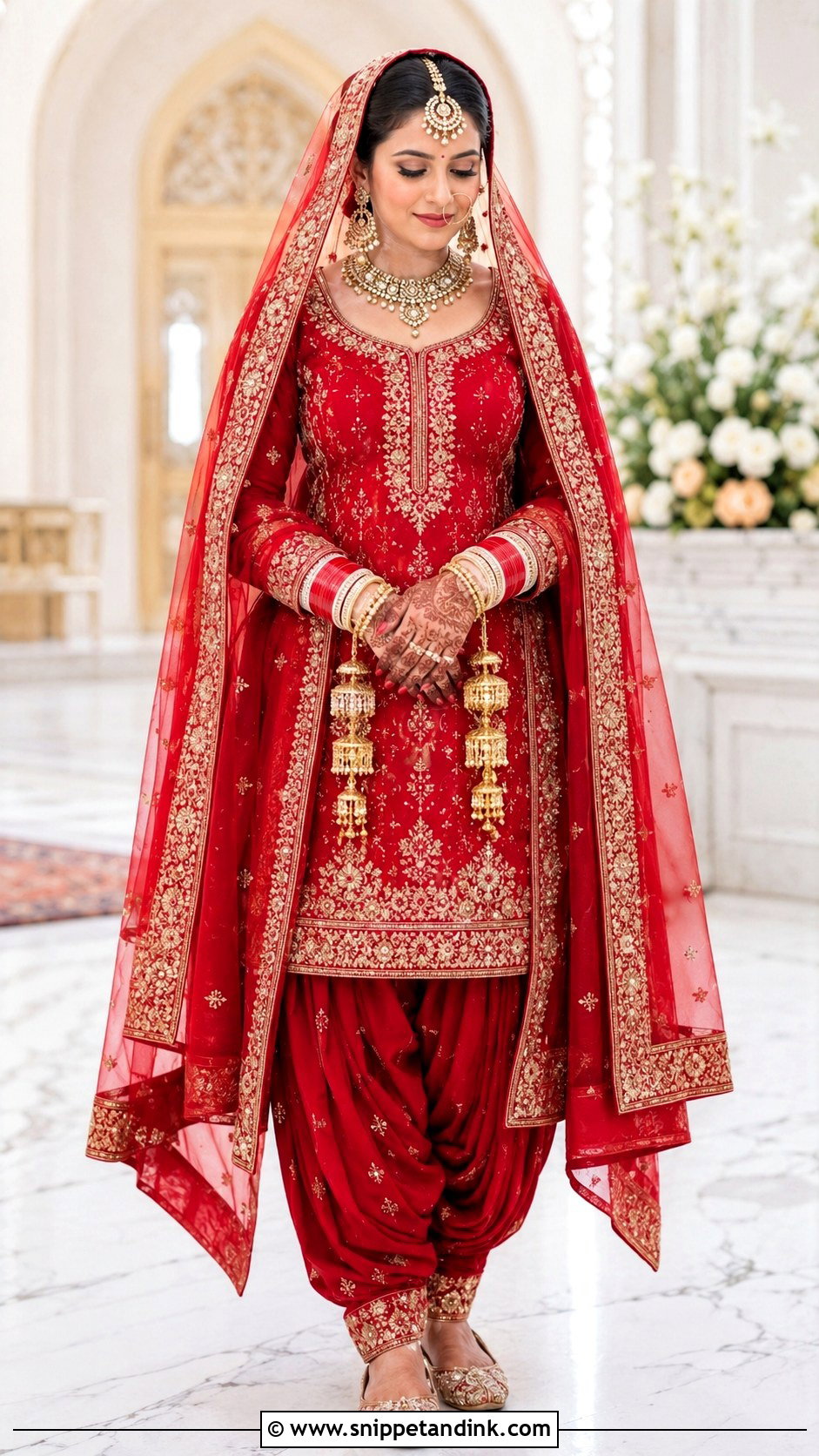
A red Punjabi bridal Patiala suit is where tradition starts for many families, and the Patiala salwar is honestly one of the easiest bottoms to sit cross-legged in, because the deep pleats give room at the knees. Go for a long embroidered kameez with a modest neckline and full or three-quarter sleeves, in red or deep maroon. The dupatta must be wide enough to cover the head neatly; a narrow one slides back the moment you bow. Zardozi, dabka or gota adds the bridal finish. Juttis, chooda, kaleere, a maang tikka, jhumkas and layered necklaces complete it.
2. Pink Punjabi Bridal Sharara Suit
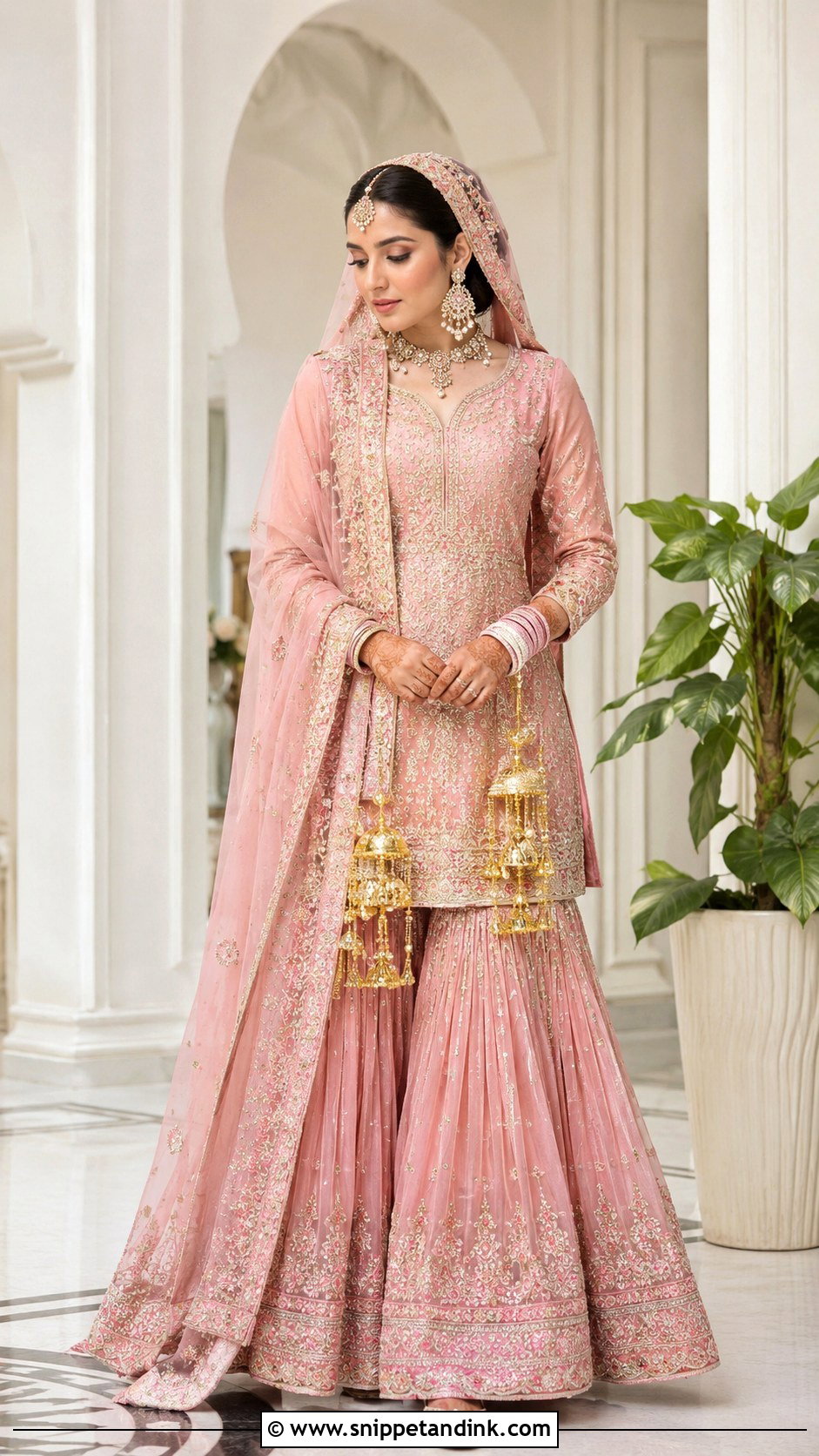
Pink sharara suits suit brides who want romance without heavy red. Blush, rose, rani and dusty pink all pair with gold or champagne embroidery. A short or mid-length kurti over a flared sharara gives movement. I’d warn that a very wide sharara needs gathering when you sit on the floor, so try sitting in it at the trial. Use a matching dupatta with a firm border that frames the face. Pearl jewelry, kundan earrings, a small nath and pastel touches on the chooda keep it soft.
3. Ivory Punjabi Wedding Salwar Suit
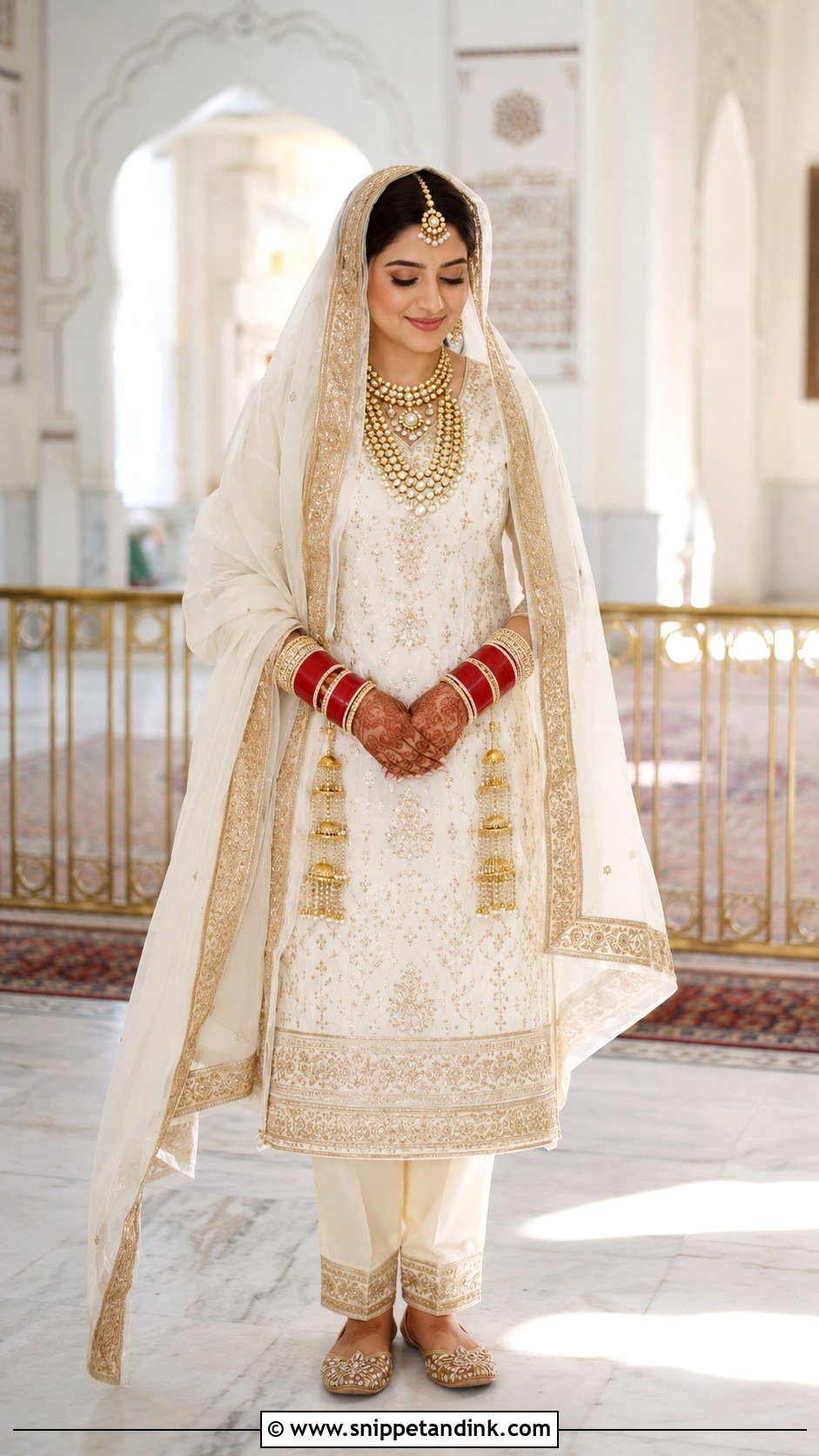
Ivory feels calm and modern, and it still reads bridal once the embroidery is rich. Choose an off-white kameez with gold, antique or champagne threadwork, and a straight salwar, Patiala or soft pleated pants. The dupatta matters more here than with any colored suit: a heavy embroidered border creates the bridal frame around the face that a plain ivory suit would otherwise lack. Red chooda and kaleere stand out sharply against the pale fabric. Gold juttis, kundan jewelry and soft glam finish it.
4. Maroon Punjabi Bridal Anarkali Suit
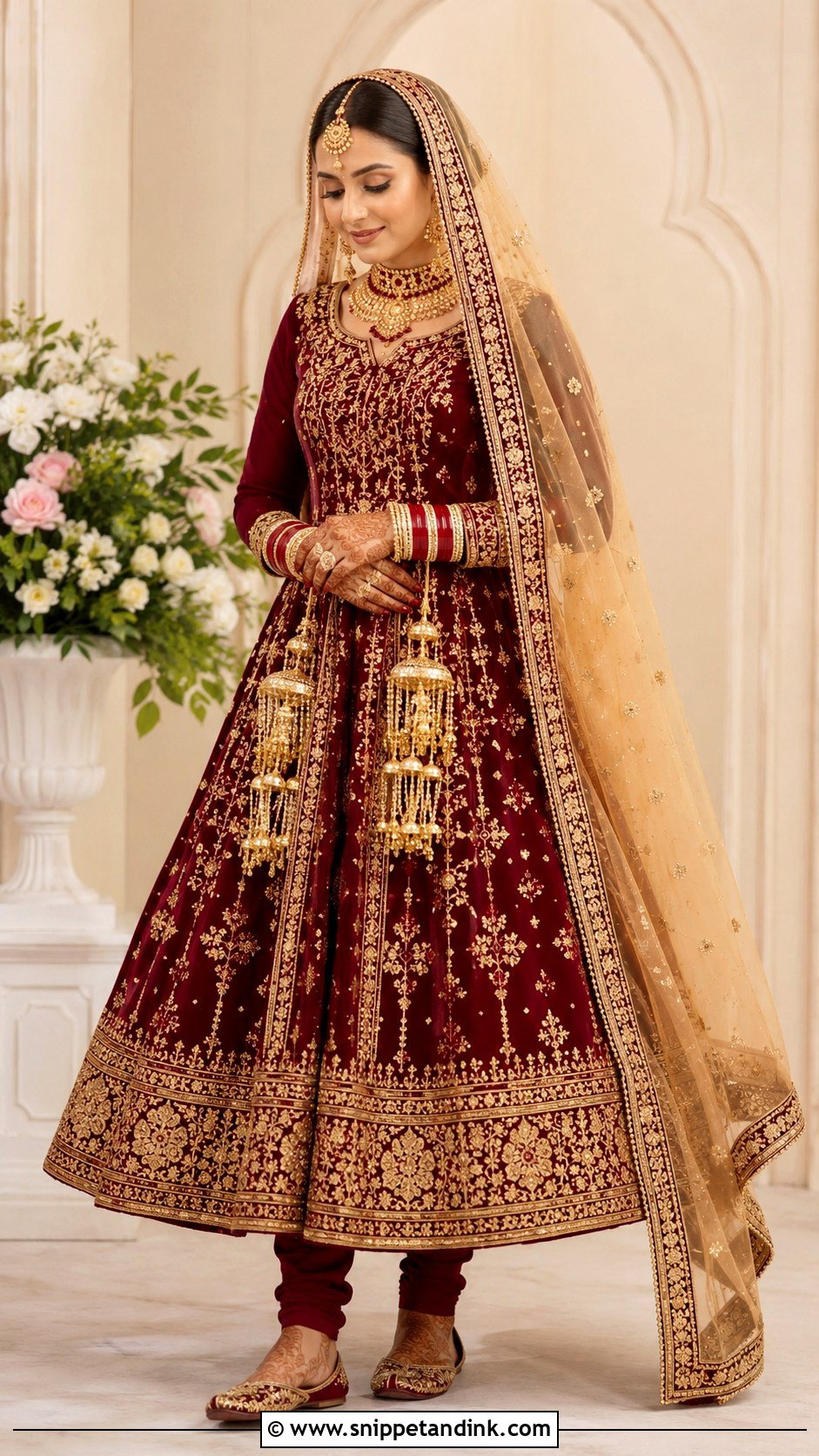
A maroon Punjabi bridal Anarkali suit gives a long, flowing line with a fitted bodice and flared hem. For the gurdwara, choose covered shoulders, a comfortable neckline and a dupatta that drapes securely over the head. Velvet, silk or brocade feels rich in winter; georgette or tissue is kinder in summer heat. The one thing I check on Anarkalis is the flare when seated: too much panel fabric bunches awkwardly on the floor, so a moderate flare works better than a full circle. Churidar and embroidered juttis complete it.
5. White And Gold Punjabi Bridal Suit
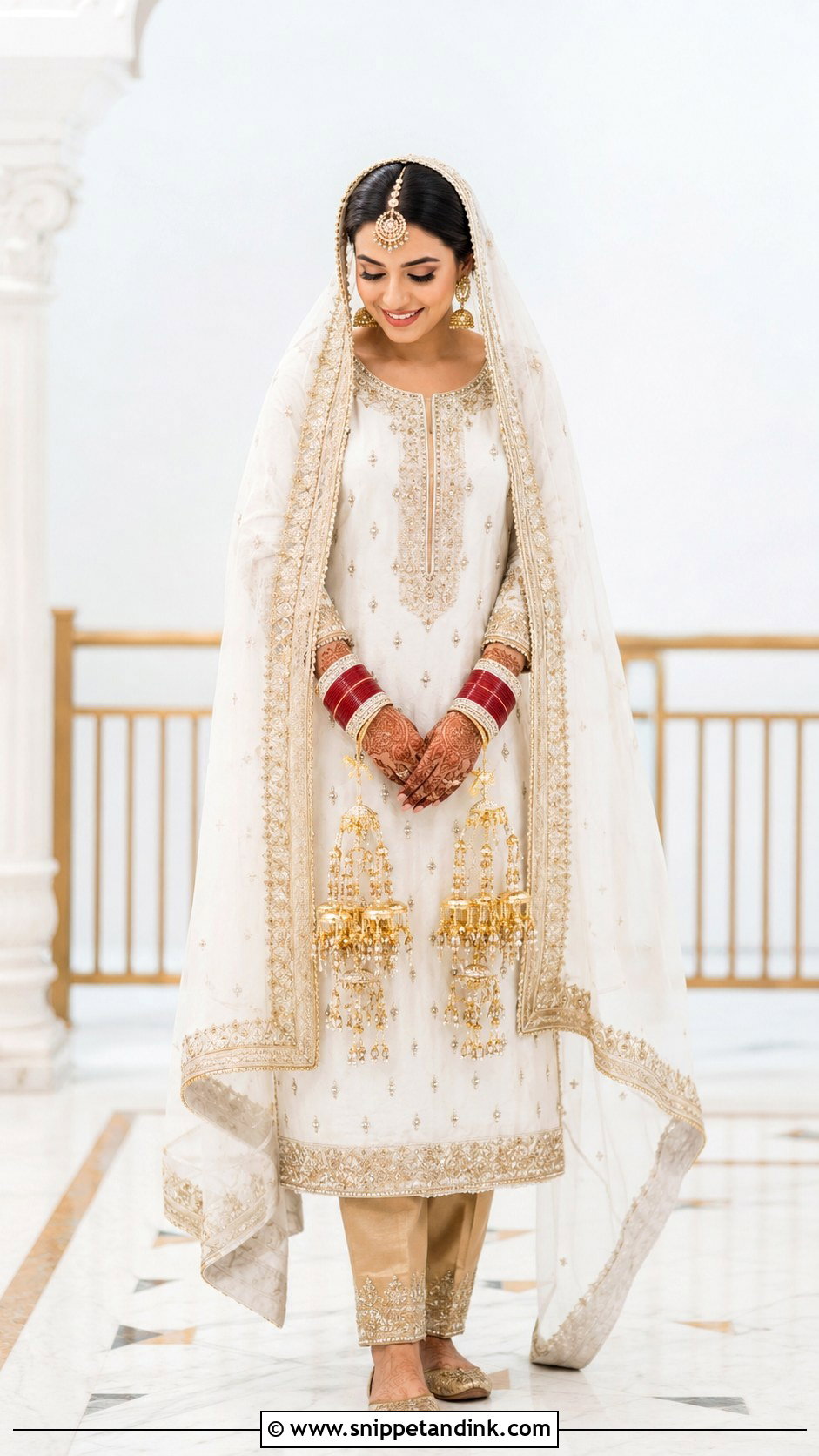
A white and gold Punjabi bridal suit looks peaceful and refined, but it needs bridal-level detail so it doesn’t look like a guest outfit. White silk or organza with gold embroidery, pearl accents or sequin highlights works for an Anand Karaj. Pair it with straight pants or a soft salwar, and a gold-bordered dupatta for head coverage. Red or ivory chooda both suit it. Gold juttis, a passa, maang tikka and layered necklaces finish the look, and it shines in bright morning light.
6. Peach Punjabi Bridal Gharara Suit
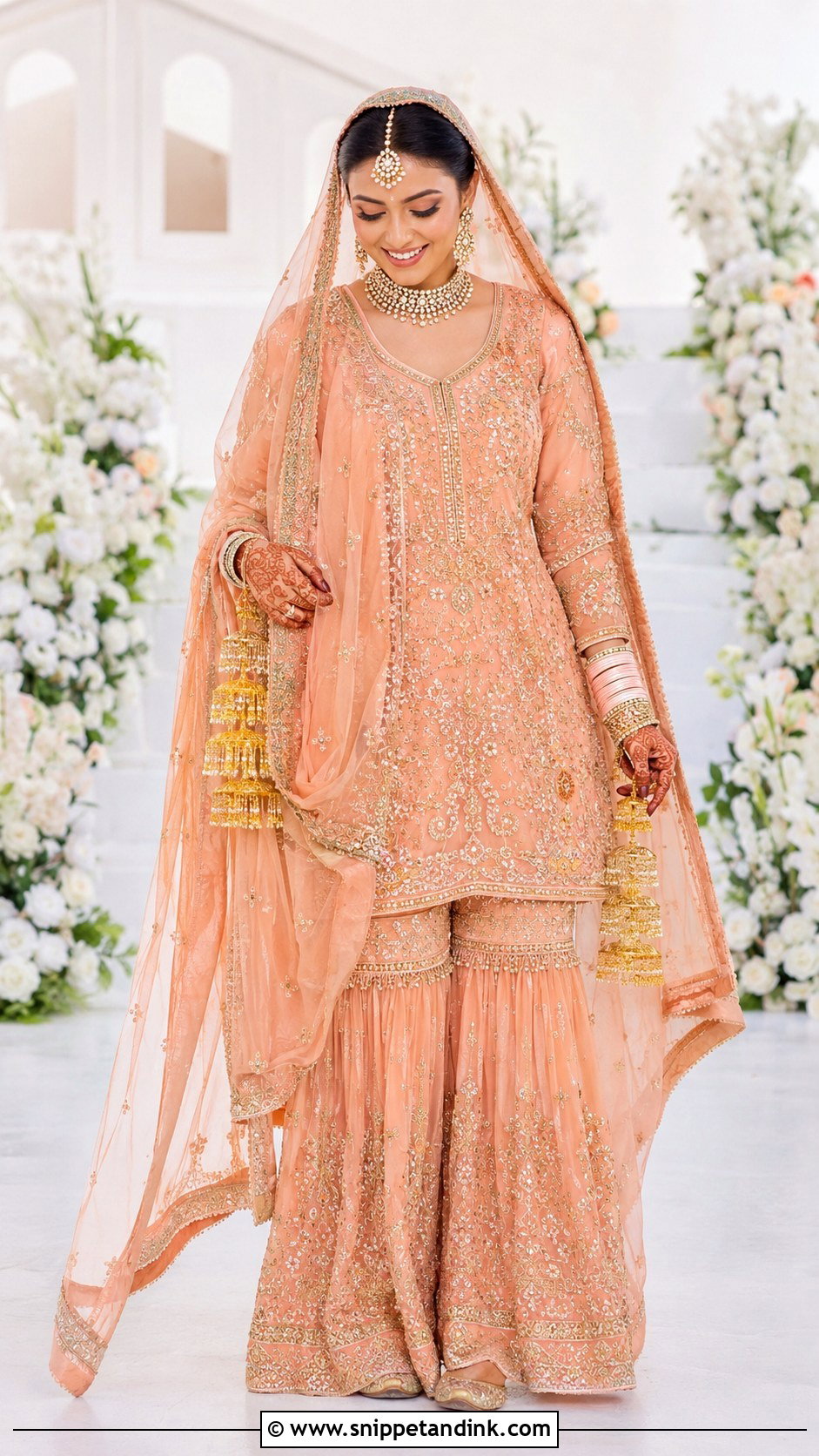
Peach gives color without boldness. The fitted kurti and full gharara create a festive shape, and peach keeps it soft. Gold, pearl or silver thread embroidery makes it bridal. Because the gharara joins at the knee, the gathers sit right where you fold your legs, so I always have brides practice sitting down and standing up gracefully in it. A sheer dupatta with a wide border keeps the head covered without weight. Kundan jewelry, soft pink makeup, chooda, kaleere and juttis suit a spring or daytime wedding.
7. Pastel Punjabi Wedding Suit With Phulkari Dupatta
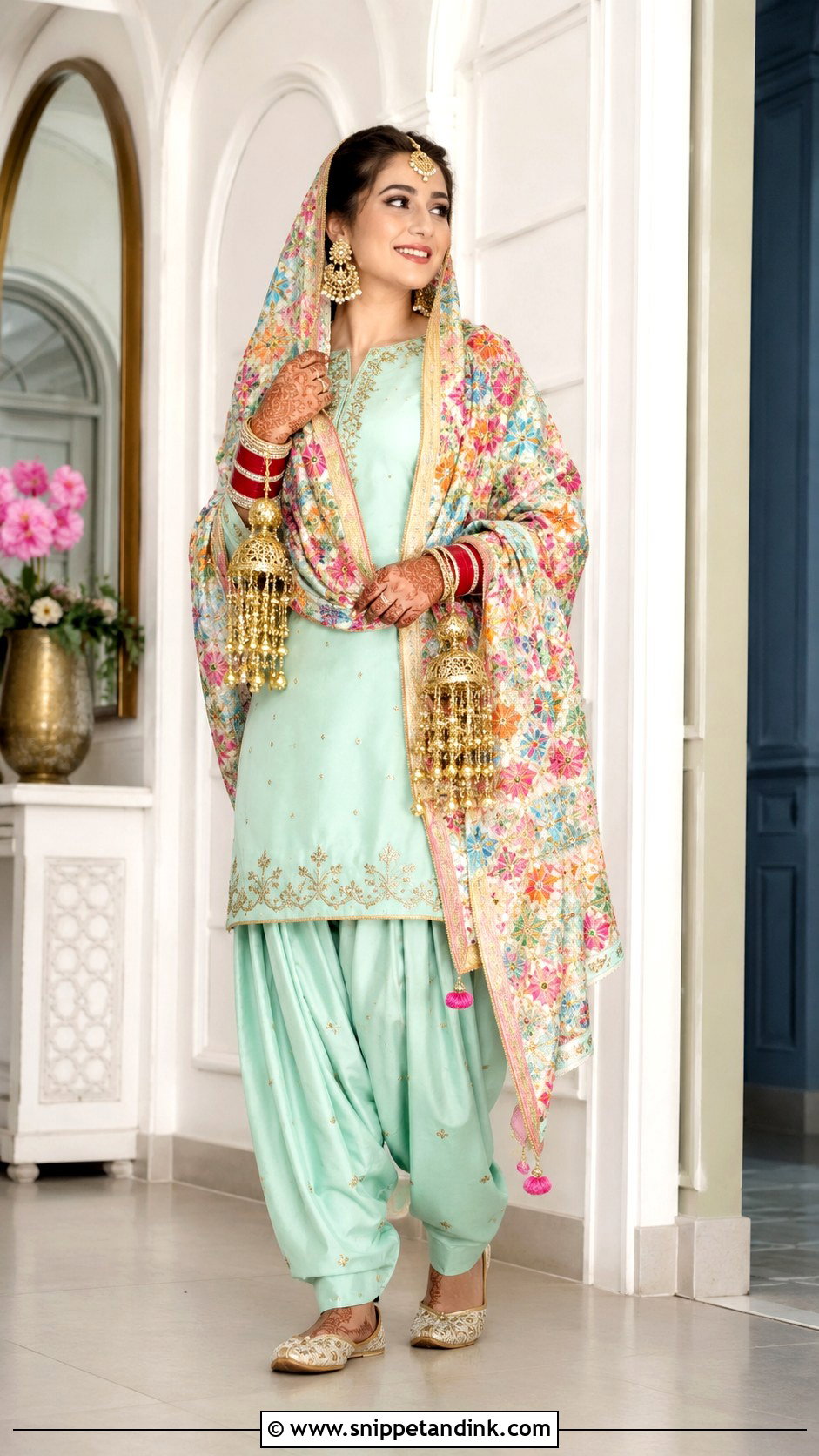
Pairing a pastel suit with a phulkari dupatta puts Punjabi heritage at the center of the look. Start with a simple suit in mint, powder blue, blush, lavender or ivory, then let the dupatta lead with its colorful embroidery. Real hand phulkari is dense and can be quite heavy, so I usually suggest wearing it across the shoulders or back and using a lighter chunni on the head for the ceremony. Keep the kameez modest and well cut. Patiala, straight pants or churidar all work, with juttis, chooda, kaleere and gold earrings.
8. Royal Blue Punjabi Bridal Salwar Suit
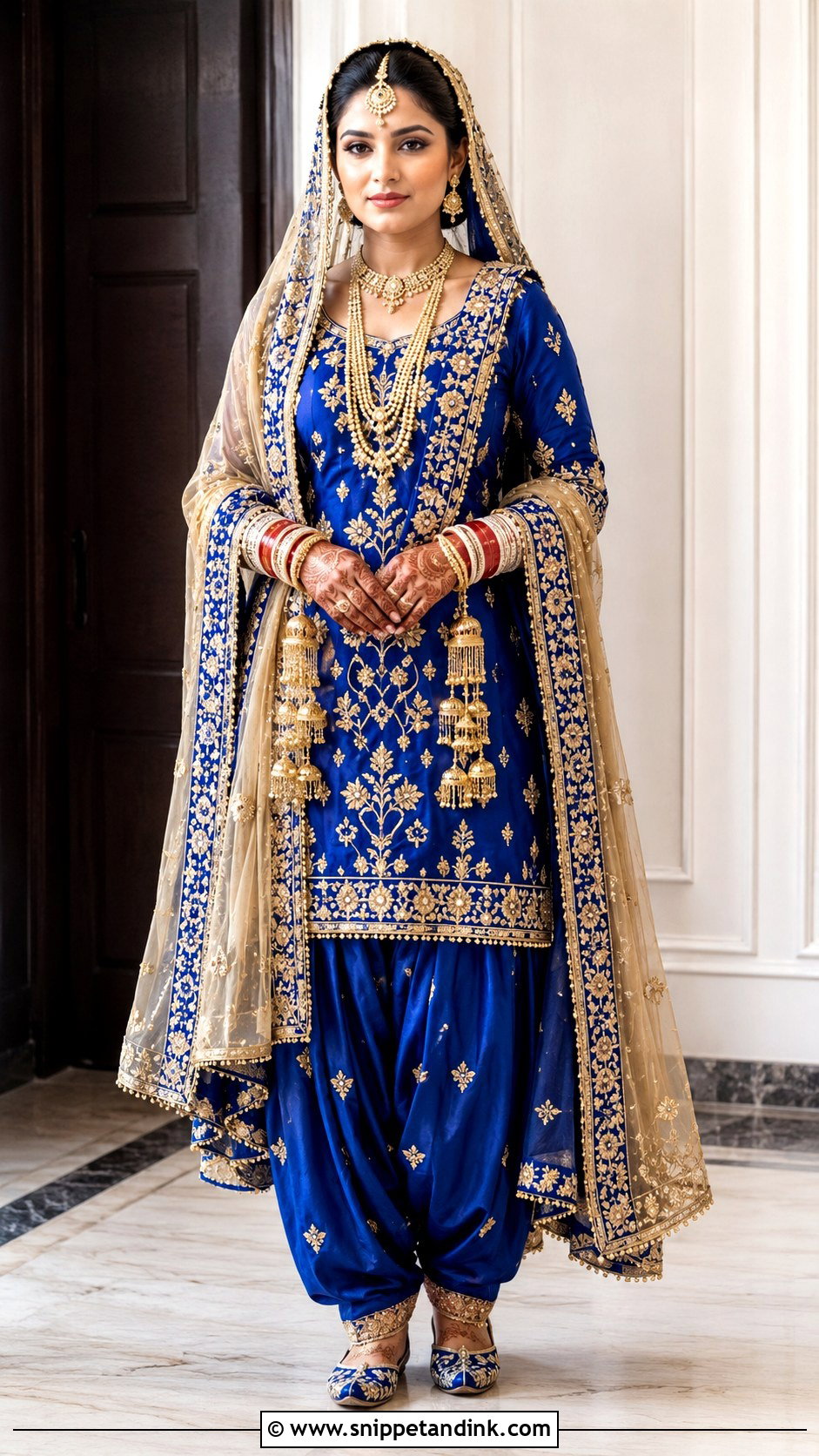
Royal blue is bold and memorable for brides moving away from red. Deep blue pairs with antique gold embroidery, mirror work or zardozi. A long kameez with a classic salwar or Patiala keeps it rooted in Punjabi style. Give the dupatta a weighted border so it stays secure through the laavan. I’d check the blue in daylight before buying, since some royal blues turn almost purple under gurdwara lighting. Gold jewelry, a statement tikka, chooda, kaleere and embroidered juttis complete it.
9. Green Punjabi Bridal Sharara Suit
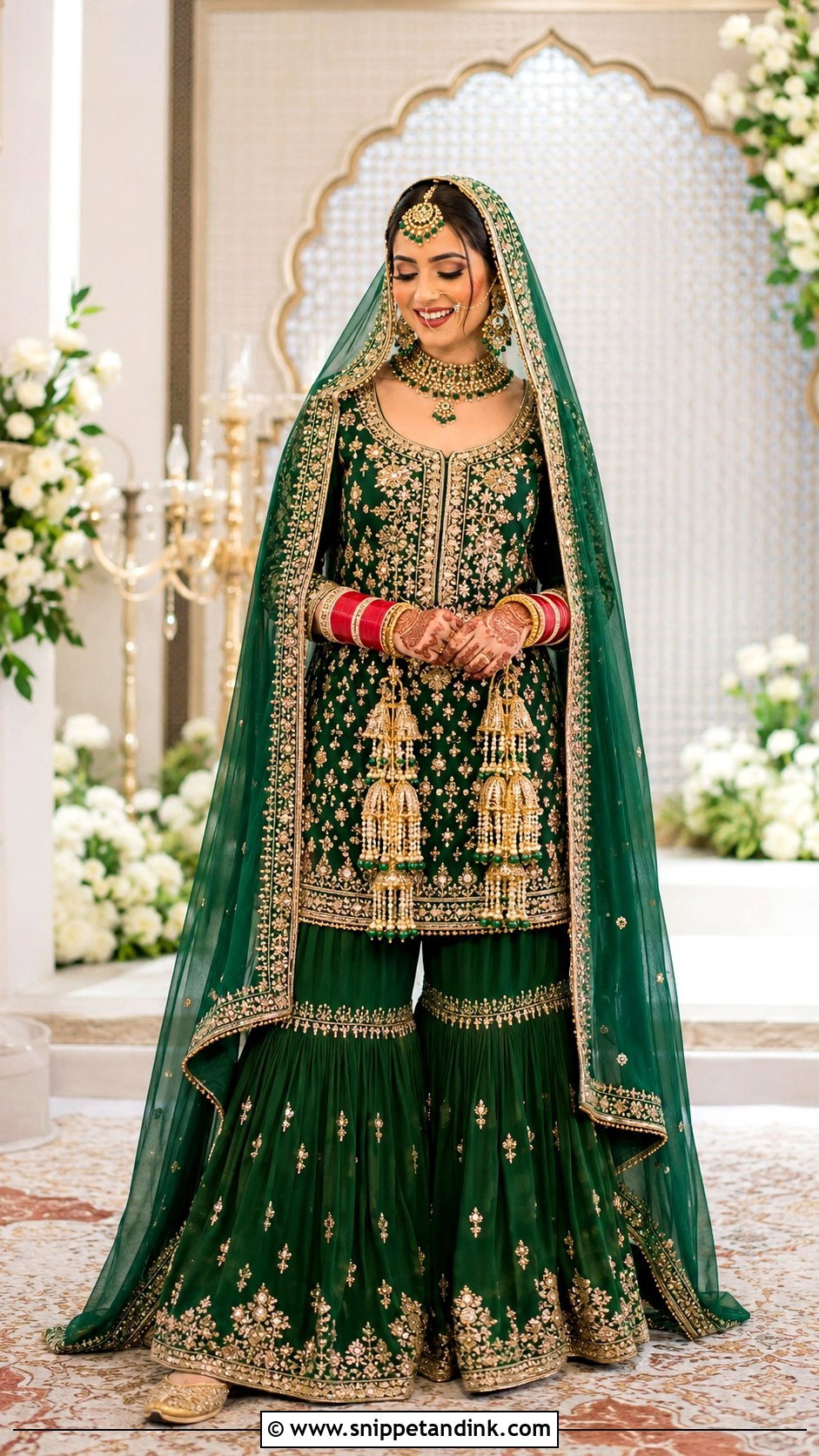
Green can be festive or calm depending on the shade. Emerald, bottle green, sage and mehndi green all feel different: emerald with gold embroidery looks rich, while sage feels softer and more modern. A short embroidered kurti with a flared sharara moves well without the weight of a lehenga. Use a matching or contrast dupatta with a strong border. Gold kundan jewelry with green stones, chooda, kaleere and comfortable juttis finish it.
10. Mustard Punjabi Bridal Suit With Red Dupatta
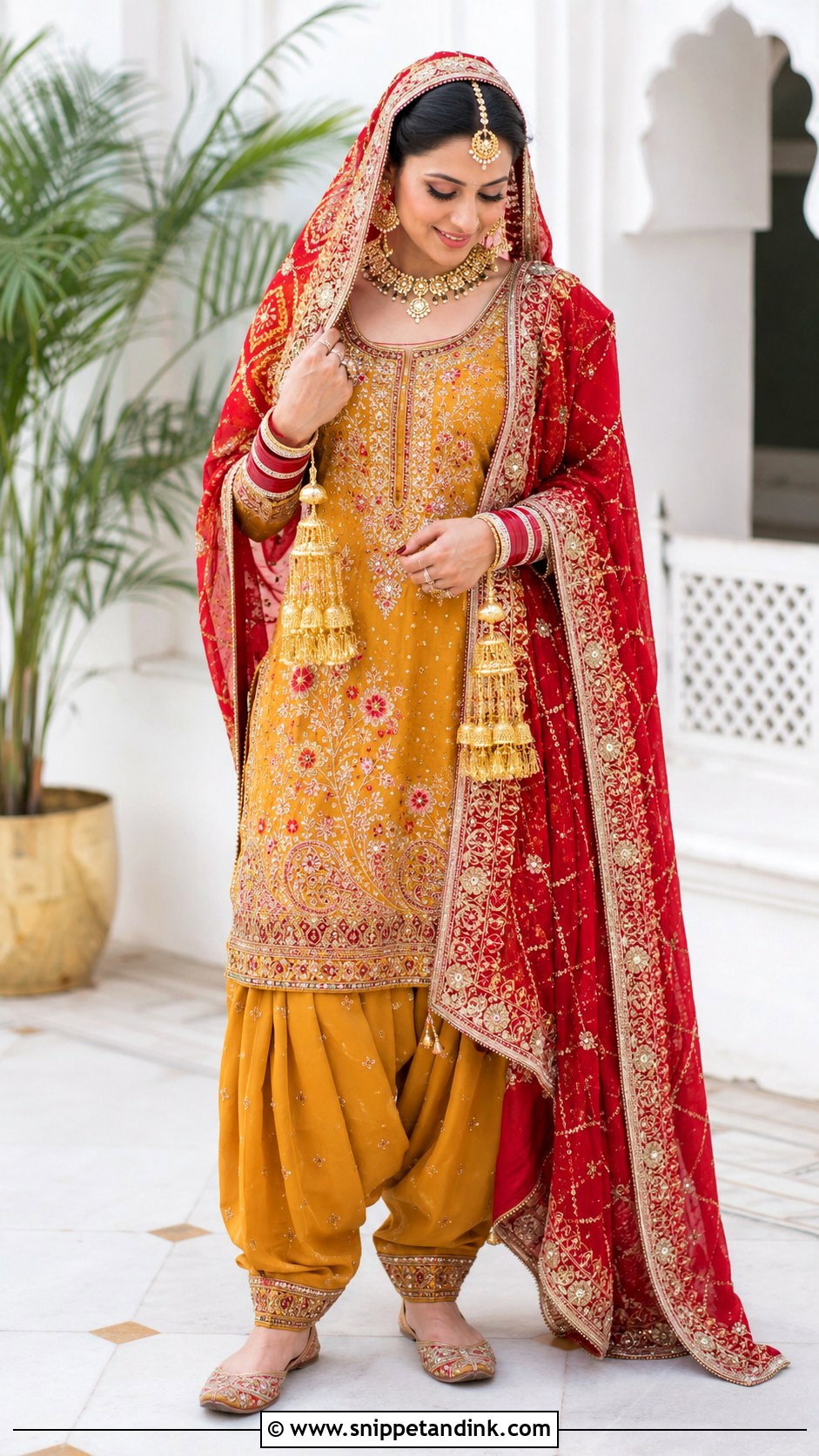
Mustard with a red dupatta is a classic Punjabi color pairing, warm and instantly festive. Choose a mustard kameez with gota patti, mirror work or thread embroidery, and a Patiala salwar or wide palazzo for comfort. The red dupatta adds bridal depth and frames the face on camera. Mustard can drain some complexions, so I’d keep the red close to the face and choose warm makeup. Gold jewelry, red chooda, kaleere and embroidered juttis bring it together.
11. Wine Punjabi Bridal Velvet Suit
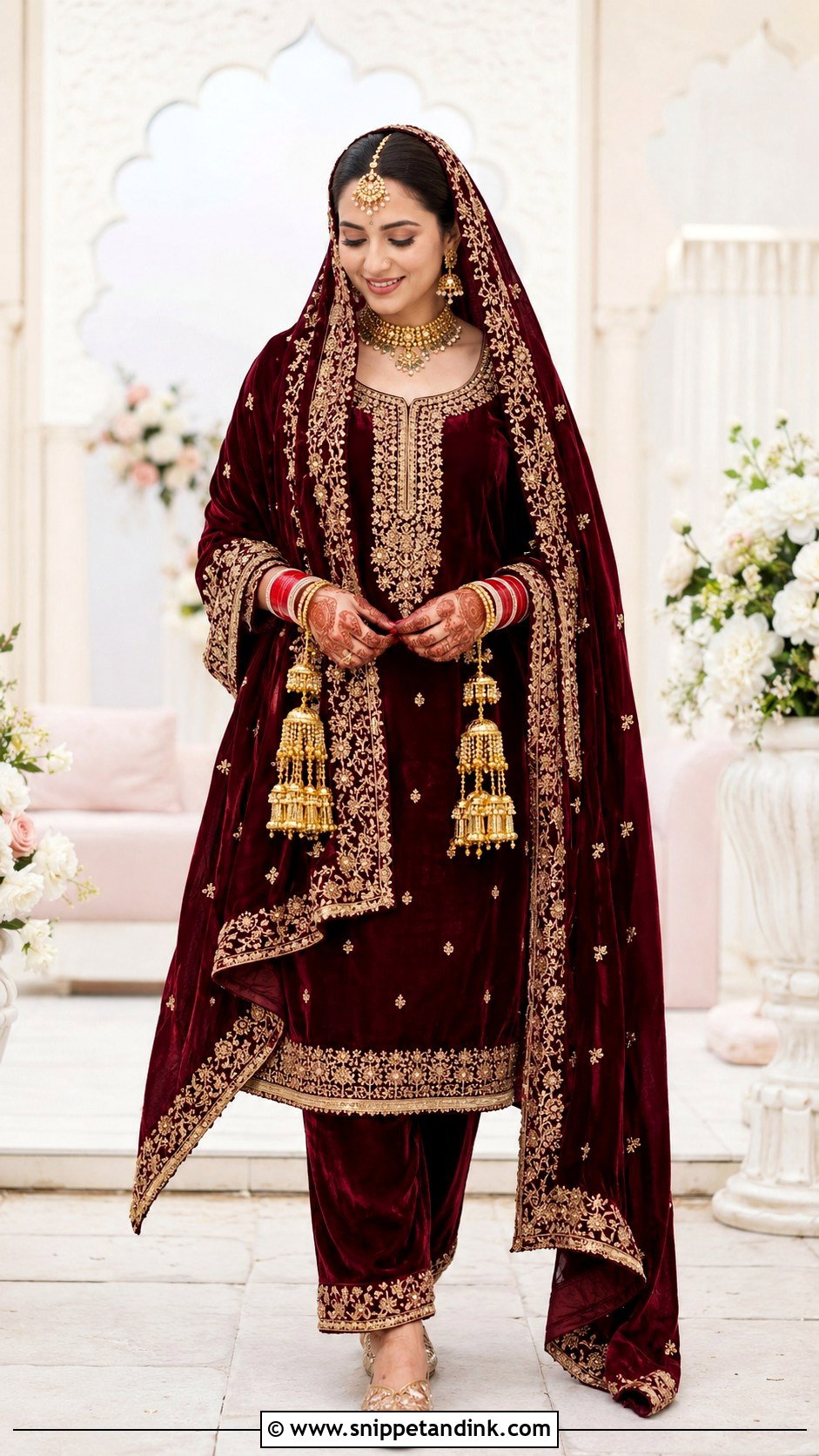
Velvet suits winter weddings, and its depth makes even a simple cut feel grand. Choose wine or deep burgundy with gold embroidery at the neckline, sleeves, hem and dupatta border, over a matching salwar, churidar or straight pants. Velvet gets warm fast in a packed hall, which is the trade-off. A full velvet dupatta on the head can be too heavy, so a tissue or net dupatta in a matching tone is often the smarter choice. Antique gold jewelry, red chooda, kaleere and cushioned juttis finish it.
12. Champagne Punjabi Bridal Palazzo Suit
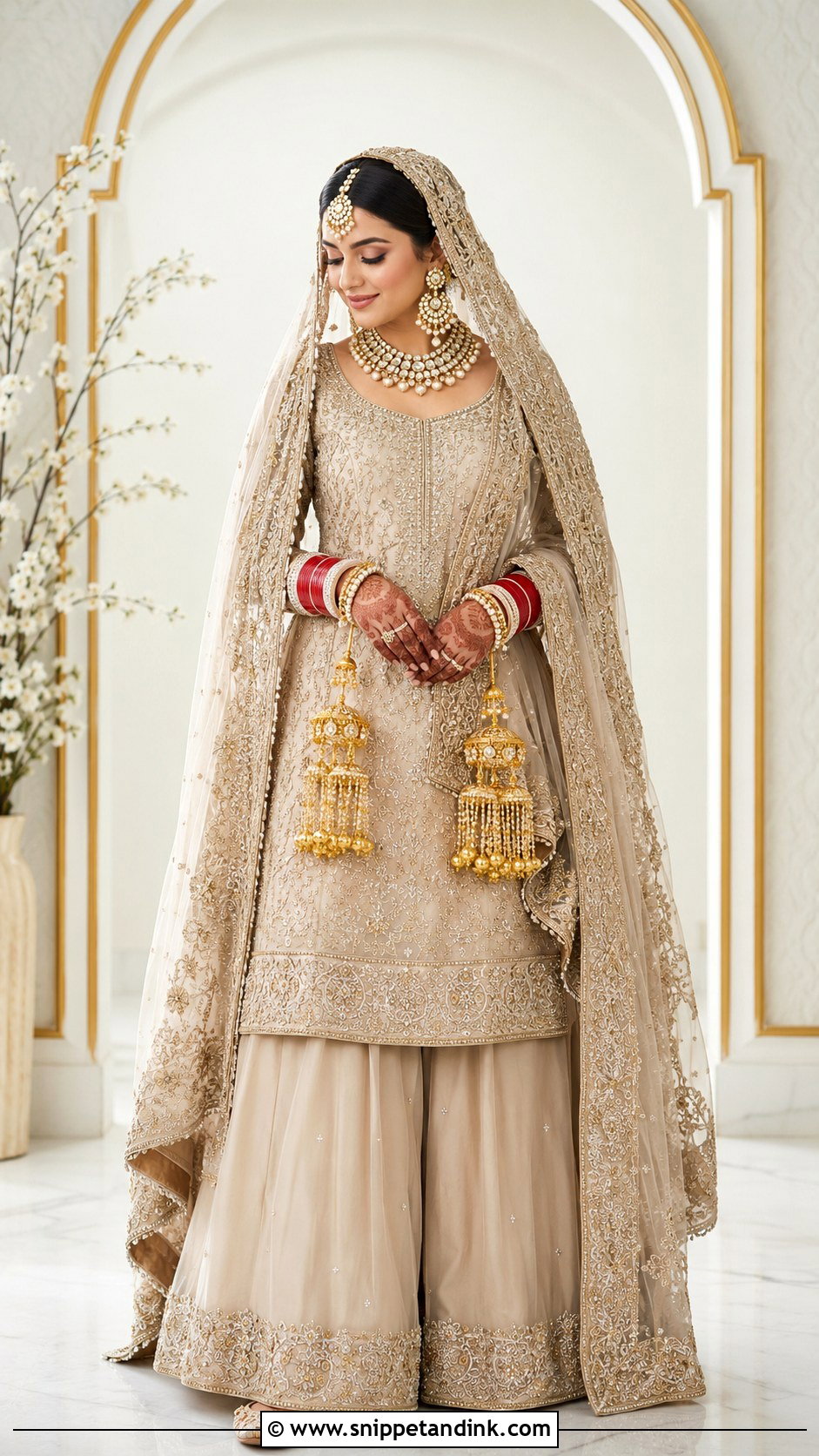
Champagne palazzo suits feel light and refined. The palazzo is comfortable for a long day, and the embroidered kameez keeps it formal. Champagne, beige or soft gold fabric with pearl, sequin or zari work suits a neutral palette. A matching dupatta with a wide border creates the head drape. Wide palazzos can catch under your feet when you stand up from the floor, so hem them to just touch the top of the foot. Kundan and pearl jewelry, ivory juttis and a red or pink chooda for contrast complete it.
13. Orange Punjabi Wedding Suit With Gota Patti
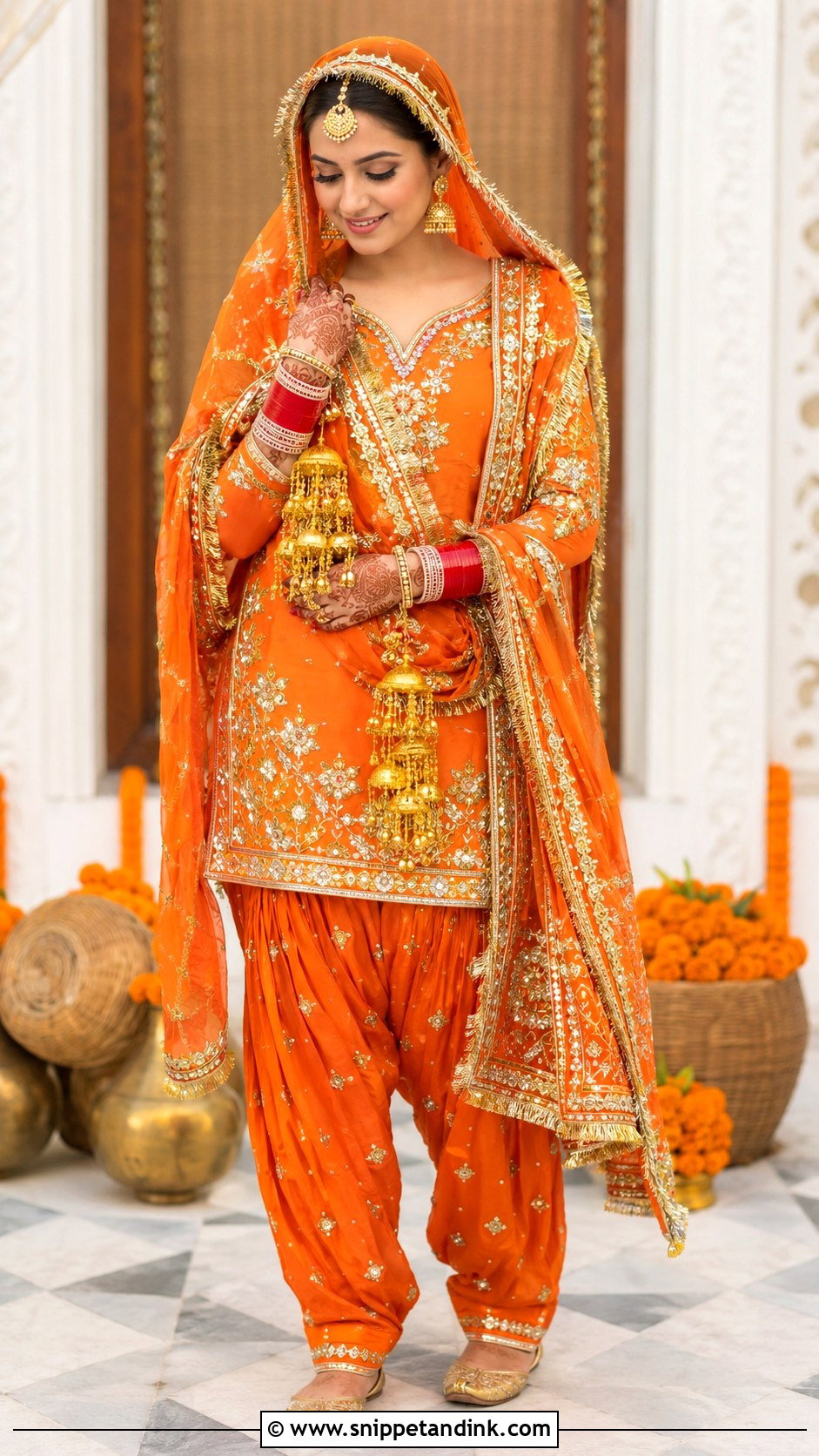
An orange Punjabi wedding suit with gota patti is bright and celebratory, and orange glows in daylight. A silk or georgette kameez with gota borders at the neckline, sleeves, hem and dupatta works well. Gota is metallic ribbon, so it’s light and catches light without the weight of zardozi, which makes it comfortable for a long ceremony. Patiala salwar for a traditional shape or straight pants for a cleaner one. A matching or red-orange dupatta, gold juttis, chooda, kaleere, jhumkas and a statement tikka finish it.
14. Lavender Punjabi Bridal Suit With Pearl Work
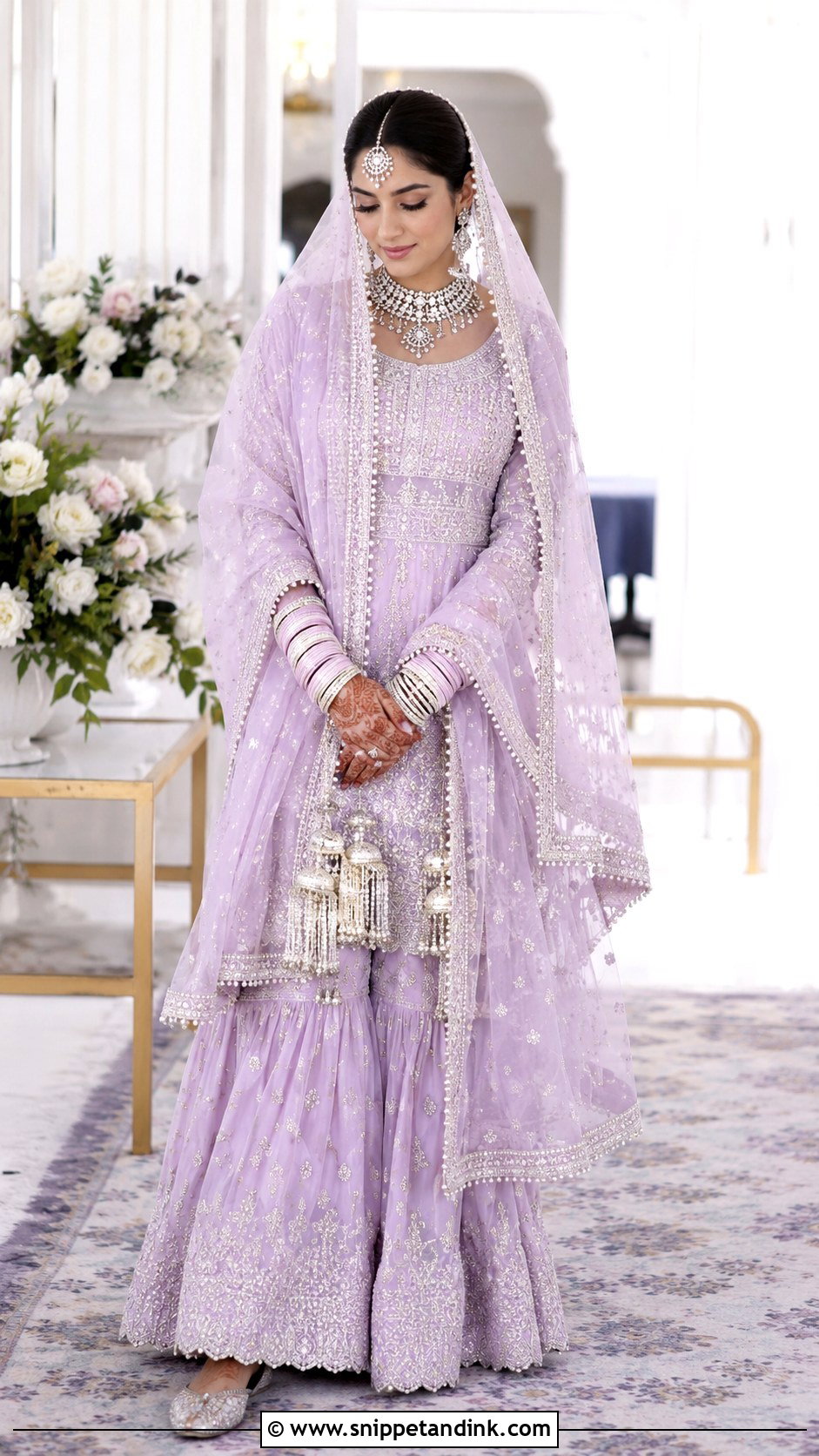
Lavender with pearl work is soft and modern. Choose a lavender kameez with pearl embroidery, silver threadwork or light sequins, and a sharara, palazzo or straight salwar depending on how much volume you want. A sheer dupatta edged in pearls looks delicate over the head. Pearl edging is heavier than it looks, though, and it pulls the dupatta backward, so I pin it more firmly at the crown. Silver-toned kundan, pearl earrings, chooda, kaleere and pastel juttis suit a morning ceremony.

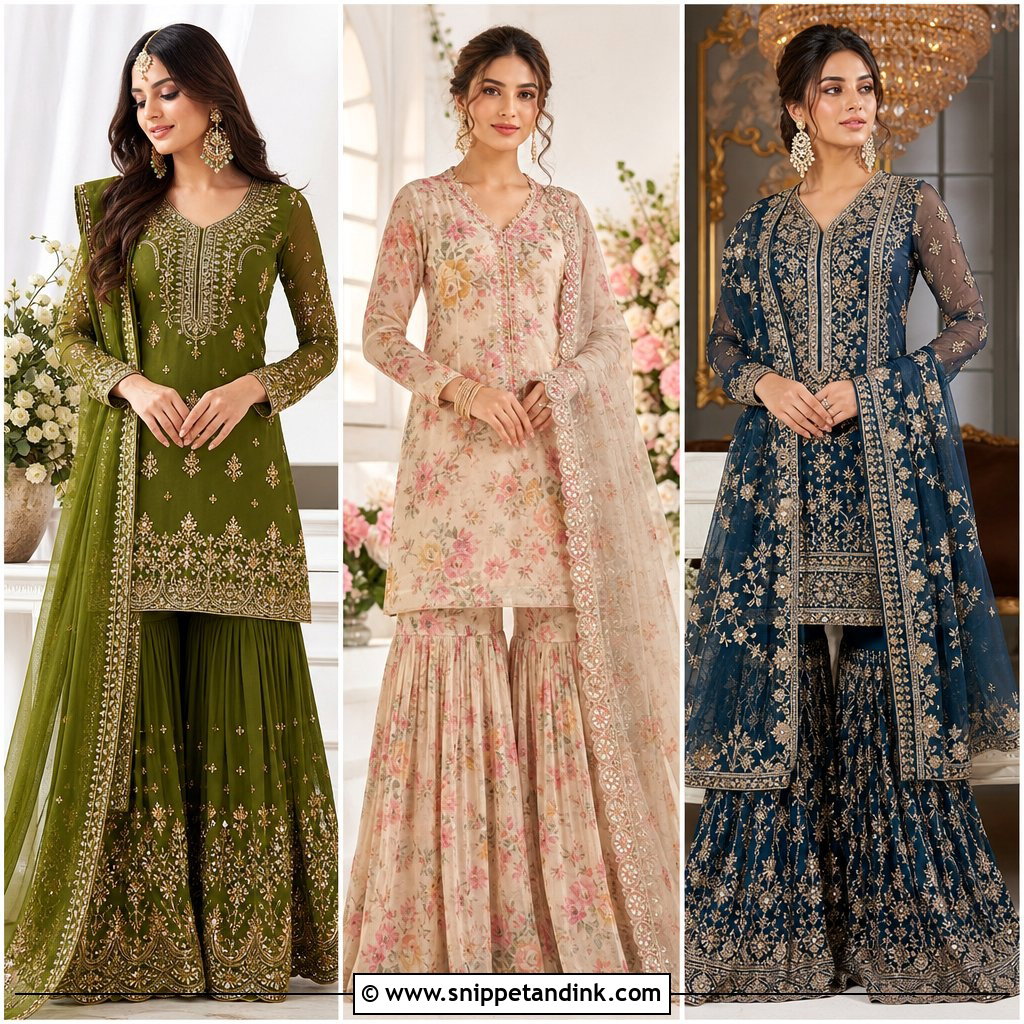
15. Cream Punjabi Bridal Suit With Red Chooda
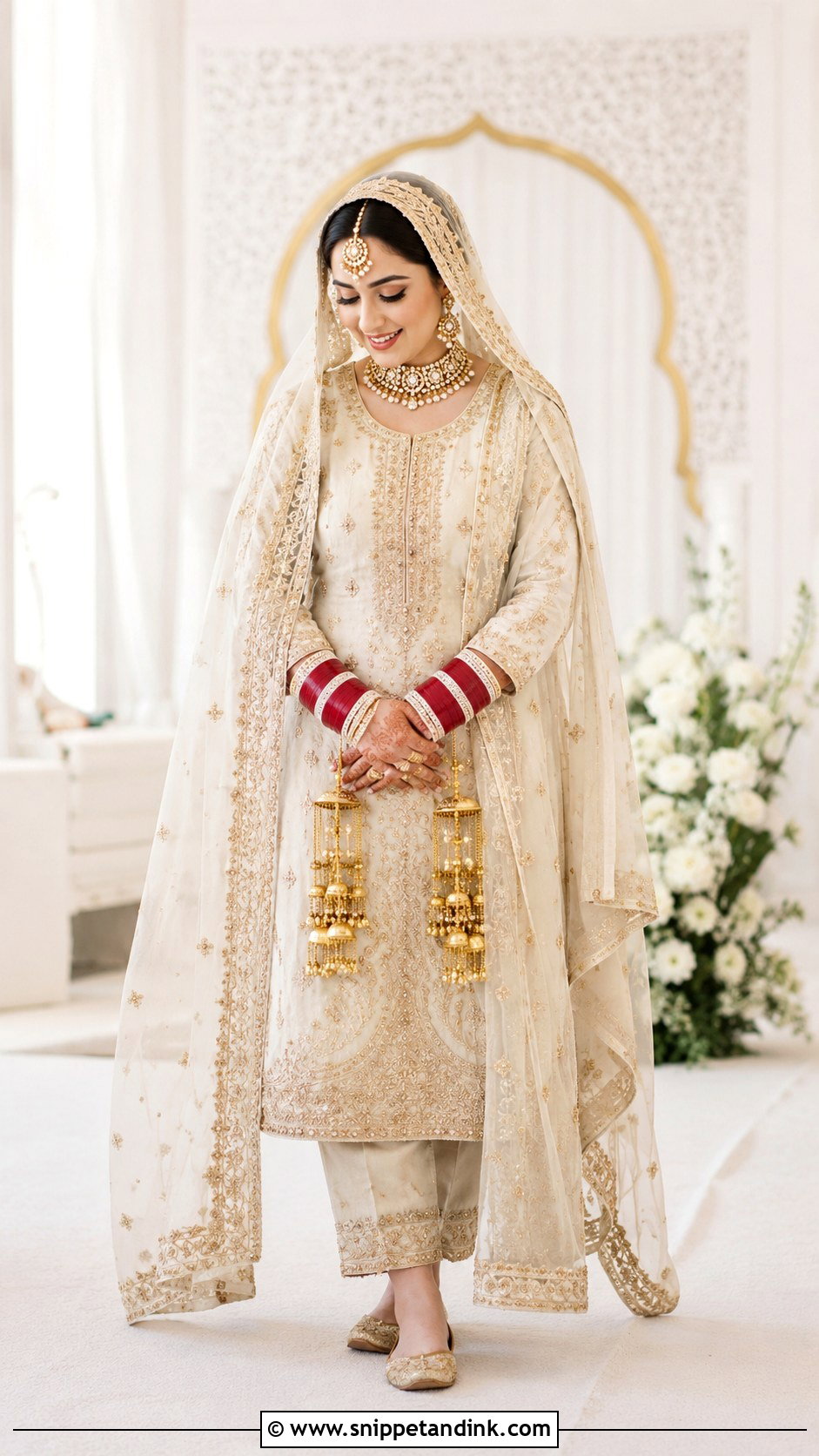
Cream with a red chooda balances calm with tradition. The cream base keeps the look soft, and the red chooda carries the unmistakable bridal identity. A cream silk, brocade or organza suit with gold embroidery feels ceremonial. A long kameez with straight pants or churidar gives a refined line. Add a matching dupatta with a detailed border. Cream marks easily, so keep a stain pen and a spare clean cloth with your bridesmaid. Gold jewelry, red kaleere and embroidered juttis complete the look.
16. Red And Gold Punjabi Bridal Sharara Suit
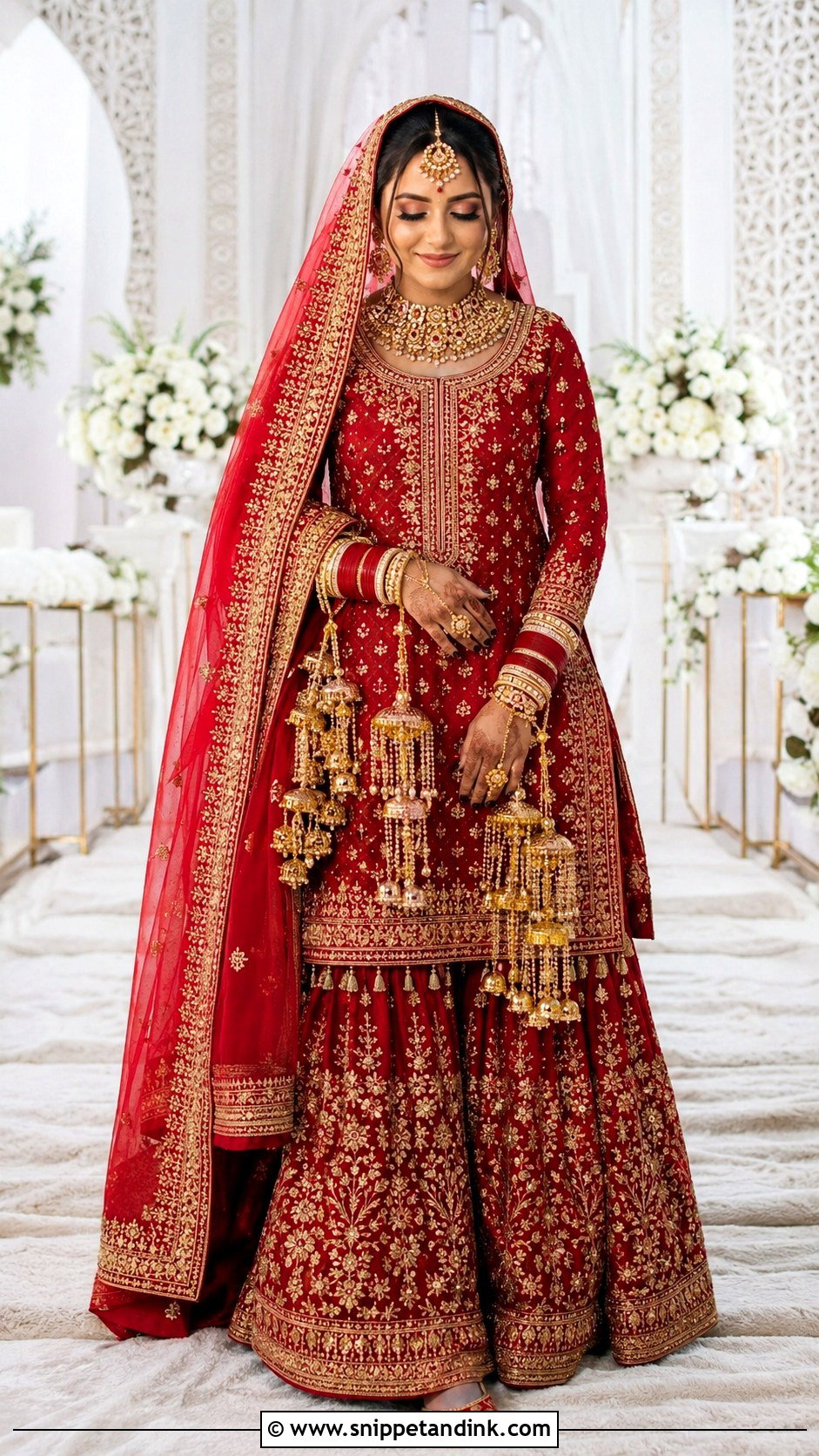
Red and gold with a sharara gives classic color plus extra movement. A short or mid-length kurti balances the wide sharara. For the Anand Karaj, the dupatta should be long enough to cover the head and fall past the shoulders, so it doesn’t lift when you walk the laavan. Kundan jewelry, a nath if you like, chooda, kaleere and detailed juttis finish it. It gives the grandeur many brides want from a lehenga in a suit silhouette, which some families prefer for the gurdwara.
17. Teal Punjabi Wedding Suit With Kundan Jewelry
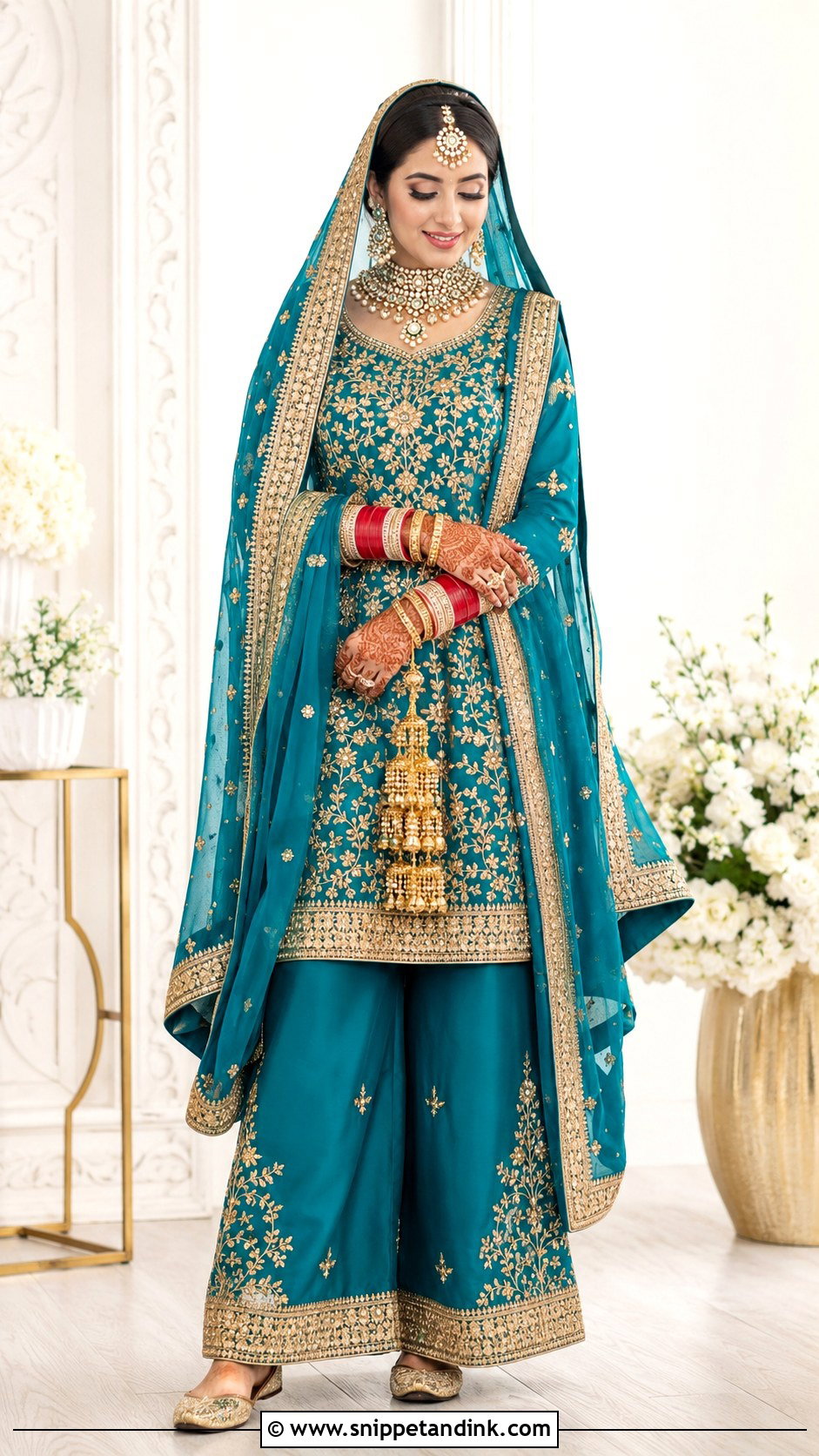
Teal sits between blue and green and feels rich without being expected. A teal kameez with antique gold embroidery over a salwar, palazzo or sharara looks polished. Kundan sits especially well against teal because the clear stones and gold add brightness and contrast to the deep color. A matching dupatta with a decorated border frames the face. Chooda, kaleere, gold juttis and soft glam makeup complete it.
18. Mint Punjabi Bridal Suit With Embroidered Dupatta
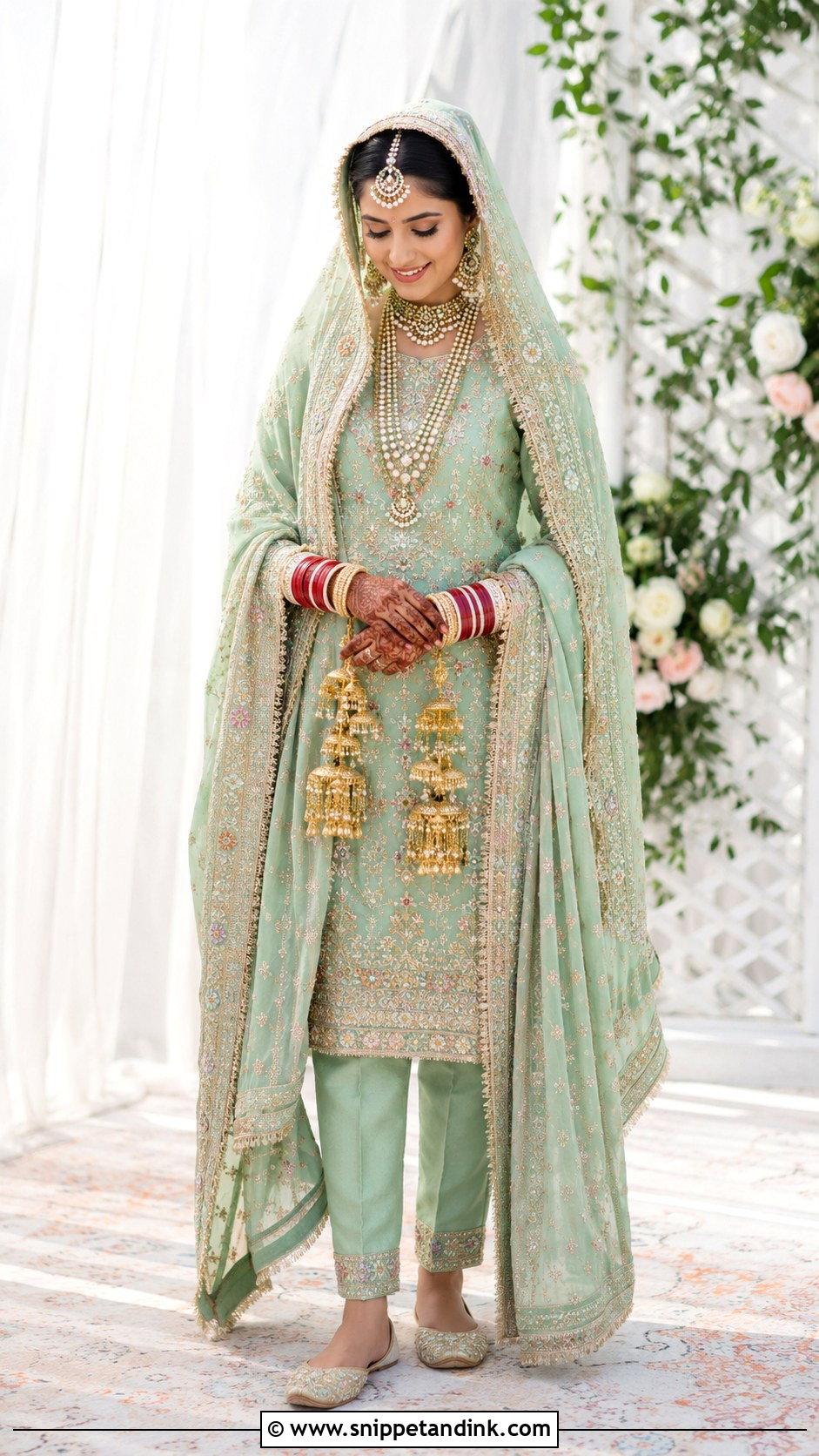
Mint is a peaceful pastel, and the dupatta is what makes it bridal. Pick a heavily embroidered dupatta in gold, silver, pearl or pastel threadwork, over a mint kameez with straight pants, Patiala or sharara. Pastels can look washed out in photos taken under warm indoor bulbs, so I’d make sure the jewelry has enough gold to give the face definition: pearl kundan earrings, a tikka and layered necklaces. Chooda, kaleere and pale gold juttis suit a daytime ceremony.
19. Beige Punjabi Bridal Anarkali Suit
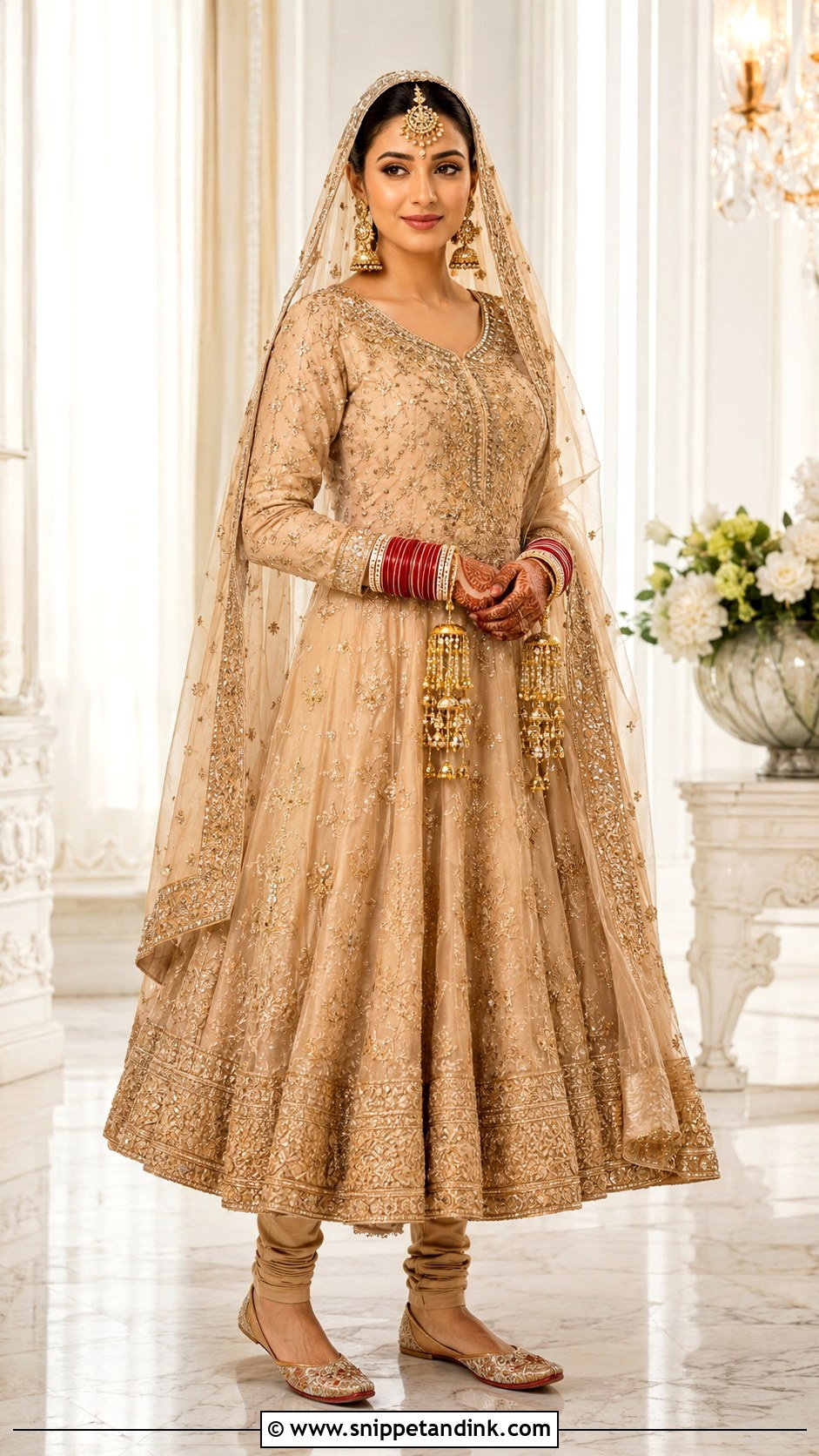
Beige Anarkalis are understated and easy to personalize with jewelry. Beige pairs with gold, copper, pearl and antique embroidery. Choose a comfortable flare, full lining and a dupatta that drapes securely. Churidar keeps the shape traditional under the flowing kameez. Lining is the detail I check closely here, because thin beige fabric can turn sheer under a photographer’s flash. A red chooda gives contrast; ivory and gold bangles look softer. Kundan, a maang tikka, jhumkas and embroidered juttis complete it.
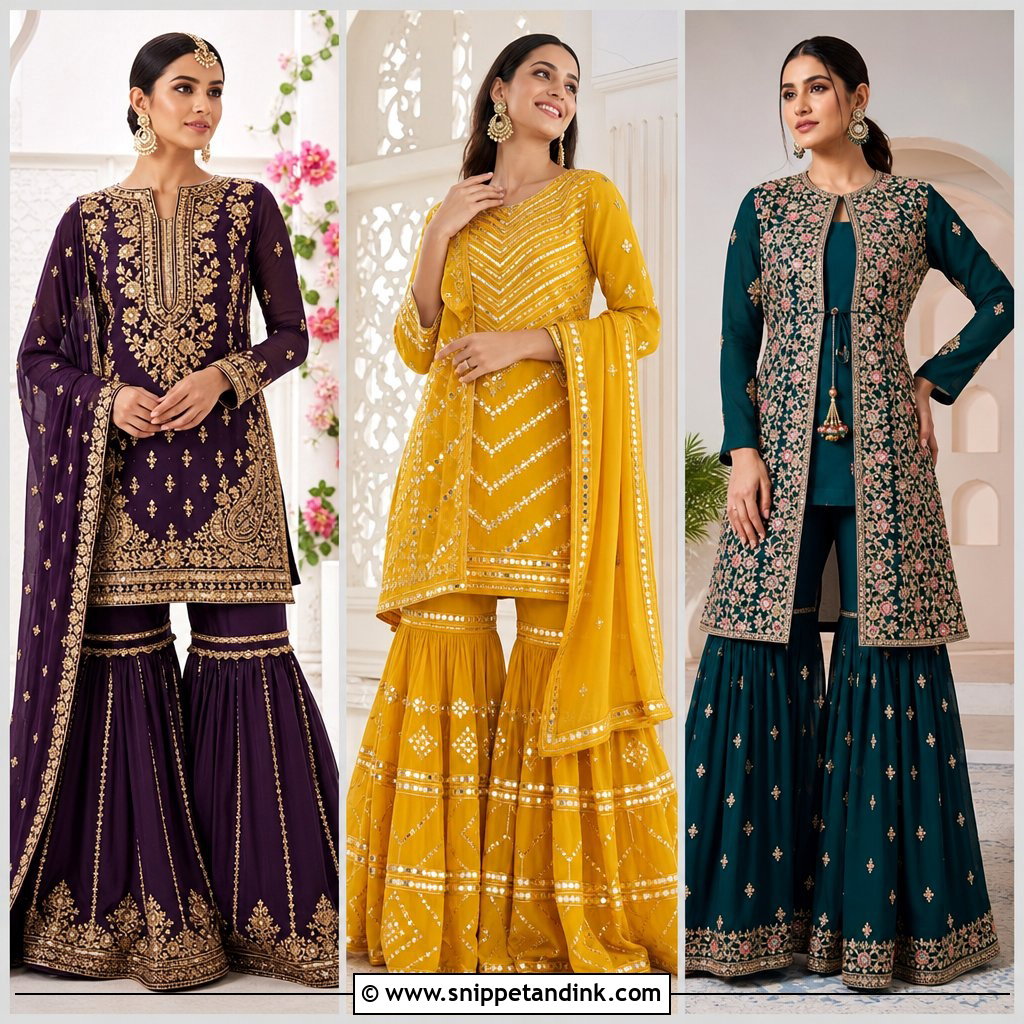


20. Coral Punjabi Bridal Salwar Suit
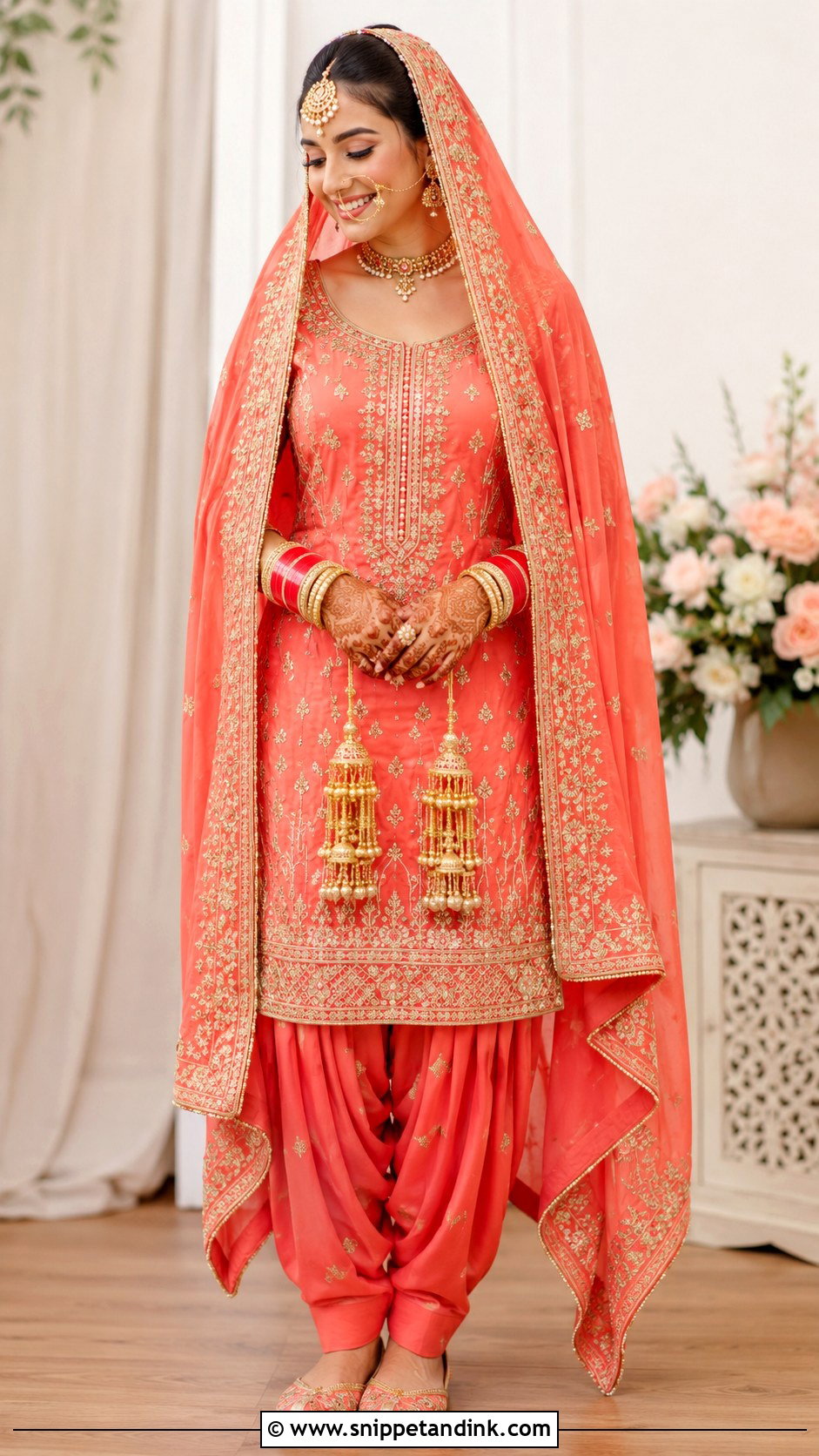
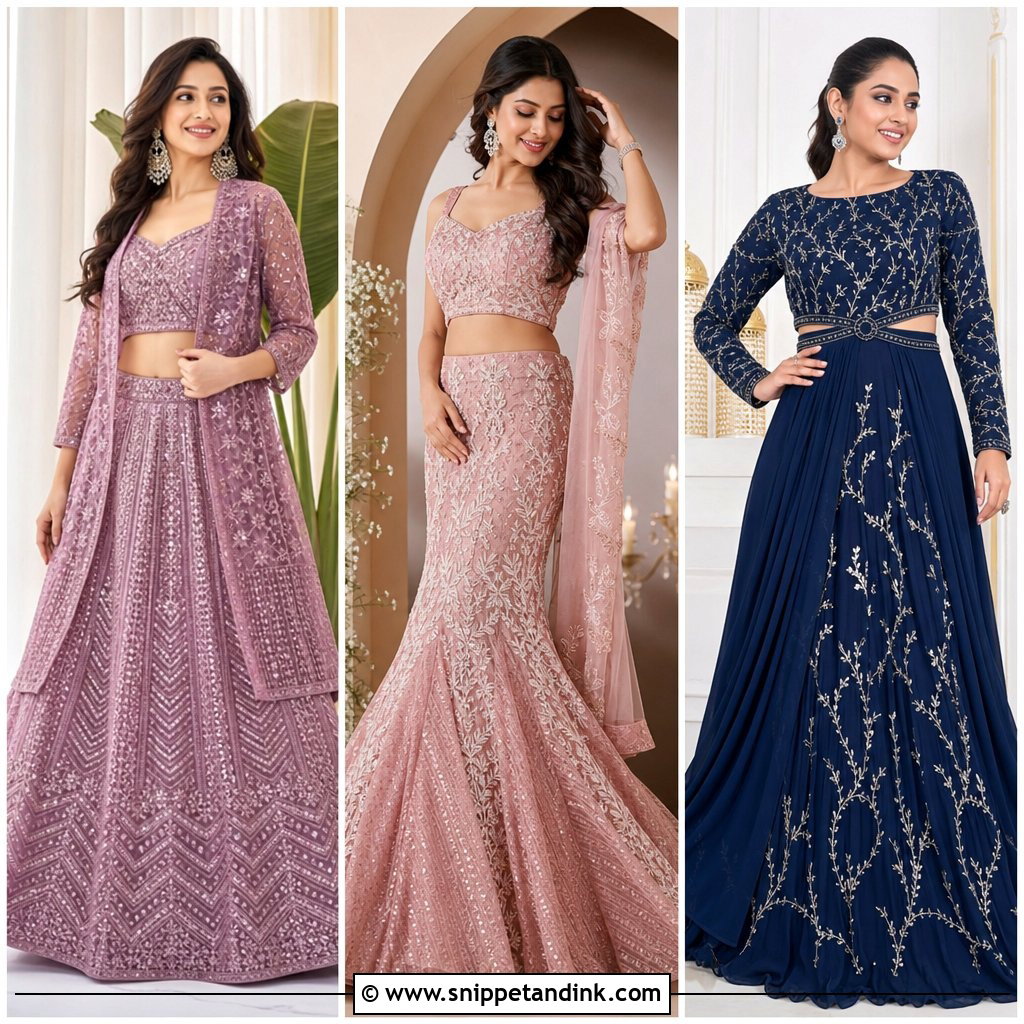
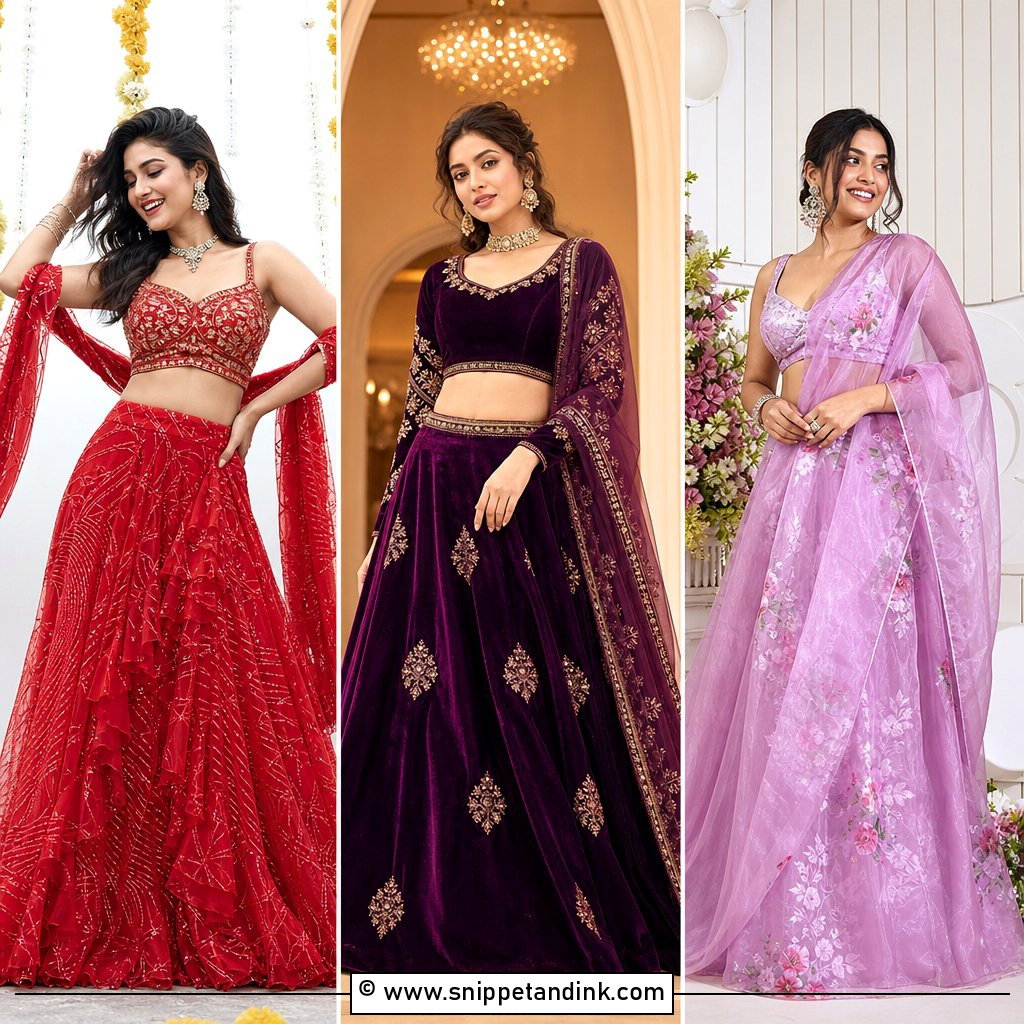
Coral is bright and cheerful without the intensity of red, and it flatters many skin tones. Gold or rose-gold embroidery suits it. Choose a long kameez with detailed borders over a matching salwar or Patiala, and a coral dupatta with a wide embroidered edge for head coverage. For makeup, soft peach, bronze and defined eyes harmonize with the color rather than fighting it. Gold jewelry, chooda, kaleere and matching juttis finish a youthful, warm look.
21. Yellow Punjabi Bridal Suit With Phulkari Details
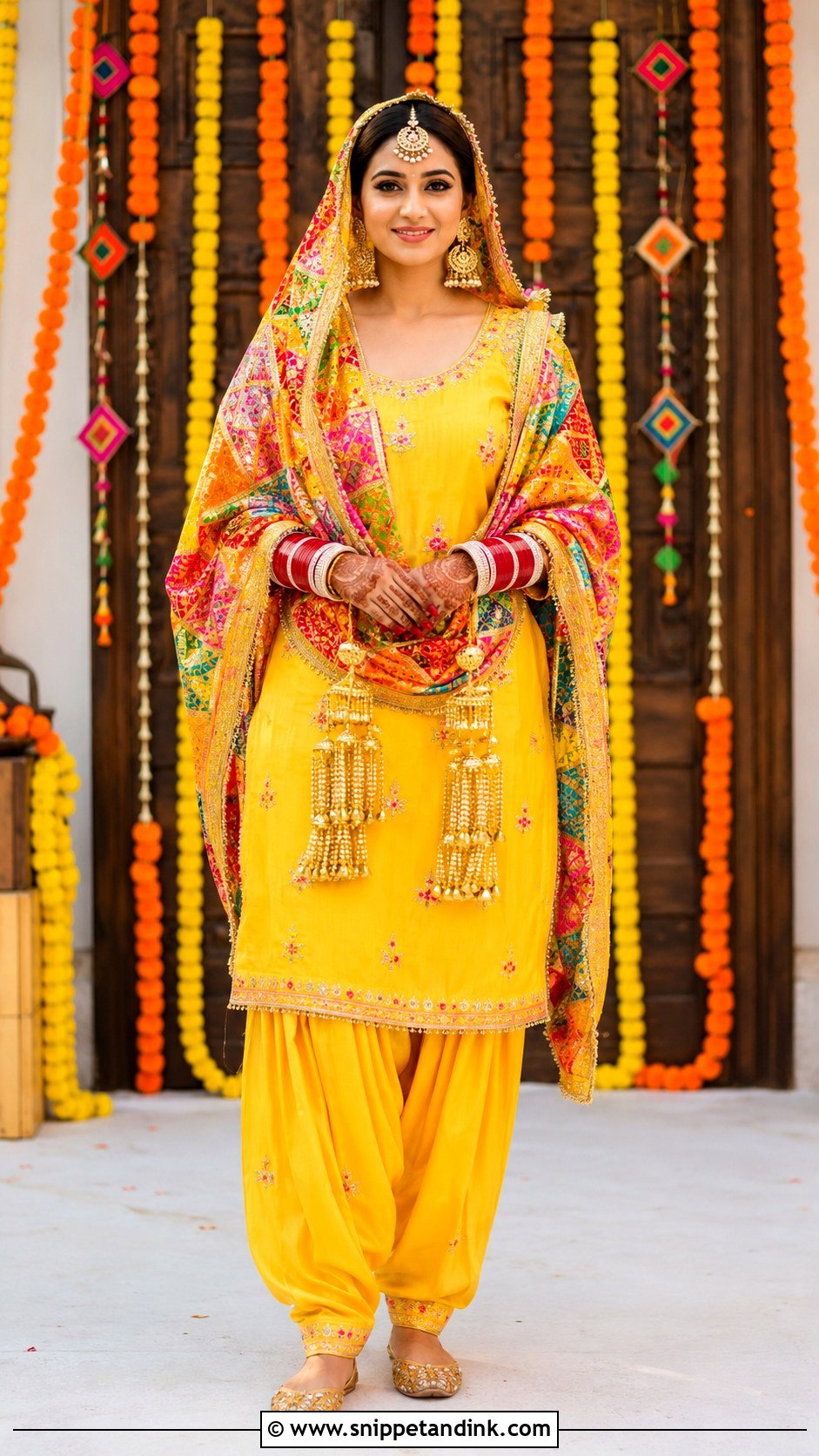
Yellow is often worn for maiyan and other pre-wedding events, which is the first thing I’d mention: some families may expect a different color for the Anand Karaj, so ask before committing. Styled with rich embroidery, it can still work. A yellow kameez with phulkari on the neckline, sleeves, hem or dupatta, over a Patiala salwar, looks classic. A red, pink or multicolor phulkari dupatta over the head adds bridal depth. Gold jhumkas, chooda, kaleere and traditional juttis complete it.
22. Dusty Rose Punjabi Bridal Gharara Suit
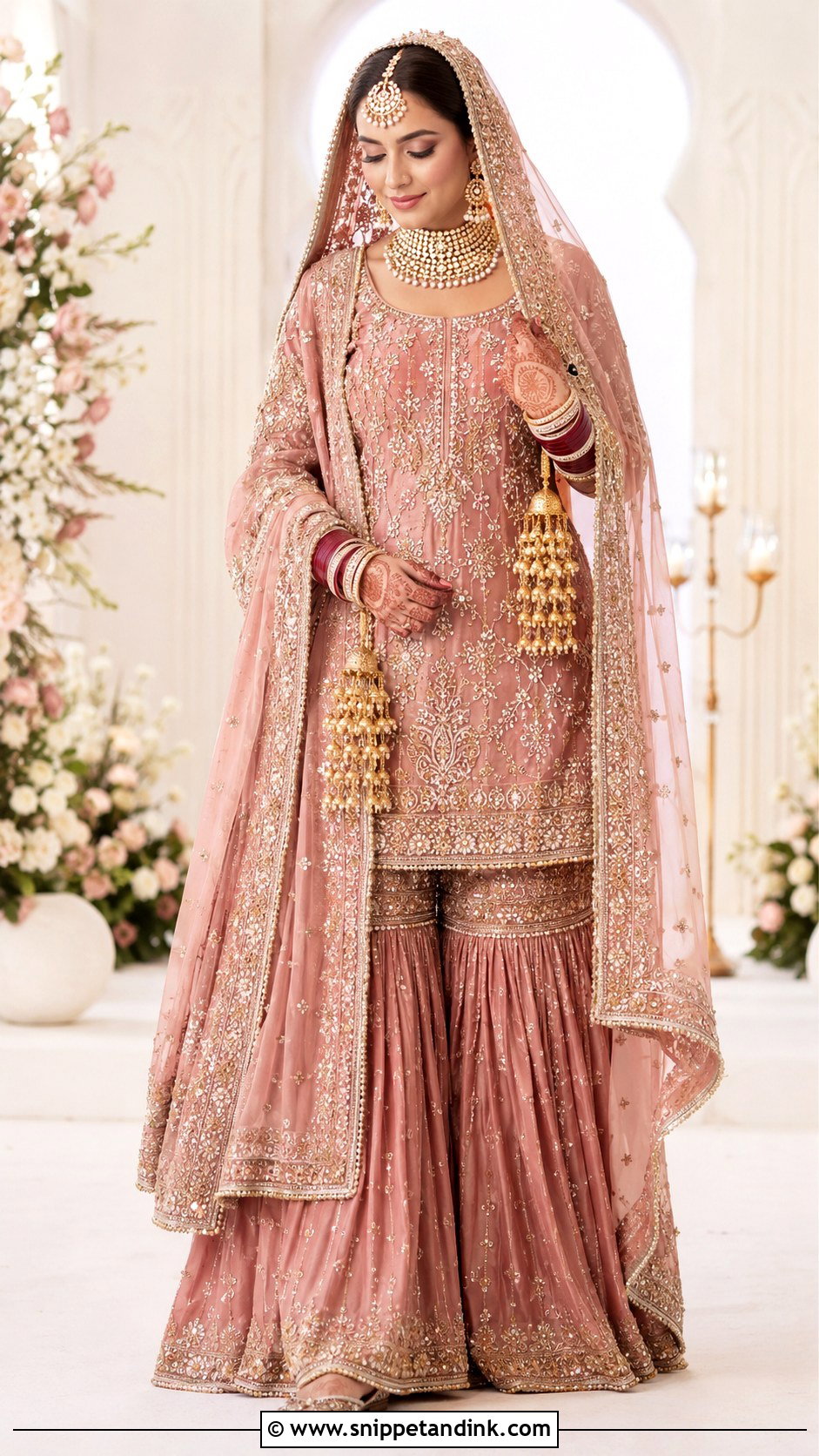
Dusty rose is muted and mature, and the gharara adds a festive shape. Choose a short kurti with zari, pearl or sequin work over a gharara with detailed knee panels. The dupatta should be light enough to sit comfortably on the head but finished with a firm border for structure. Kundan, pearl accents, chooda, kaleere and embellished juttis suit it. Muted pinks hold up well in both indoor and outdoor photos because they don’t clip to bright pink in sunlight.
23. Silver Punjabi Wedding Suit With Sequin Work
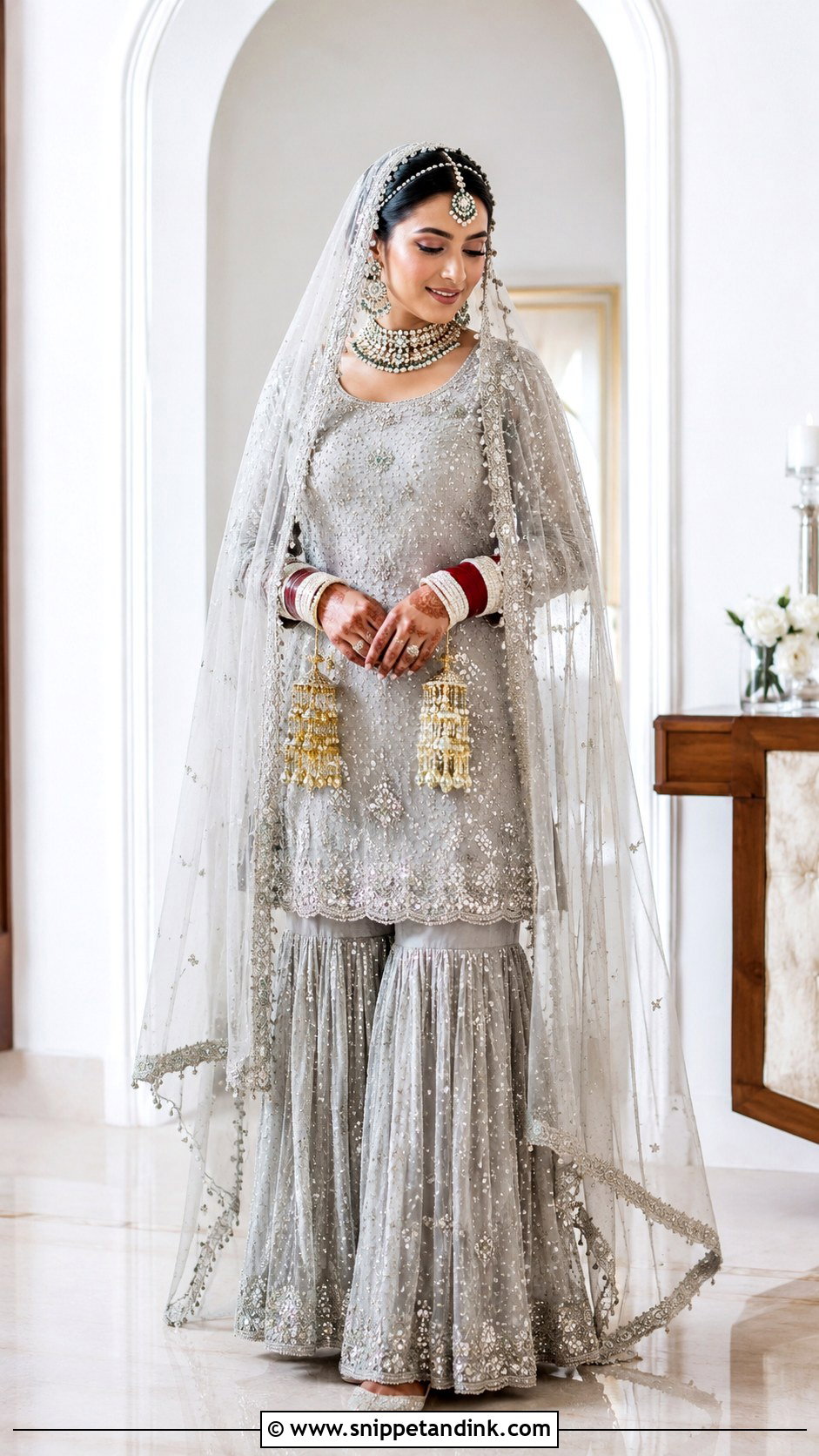
Silver with sequins is the most glamorous option here, and it needs careful handling for a gurdwara. Pick a silver or soft gray kameez with fine sequins, threadwork or crystals, a modest cut and a dupatta that fully covers the head. Straight pants, sharara or palazzo all work. Sequins can scratch the inside of the arms and catch on the dupatta edge, so I prefer fine sequins with a smooth lining. Pearl or kundan jewelry balances the shimmer, with chooda, kaleere, silver juttis and soft makeup.
24. Navy Punjabi Bridal Suit With Gold Dupatta
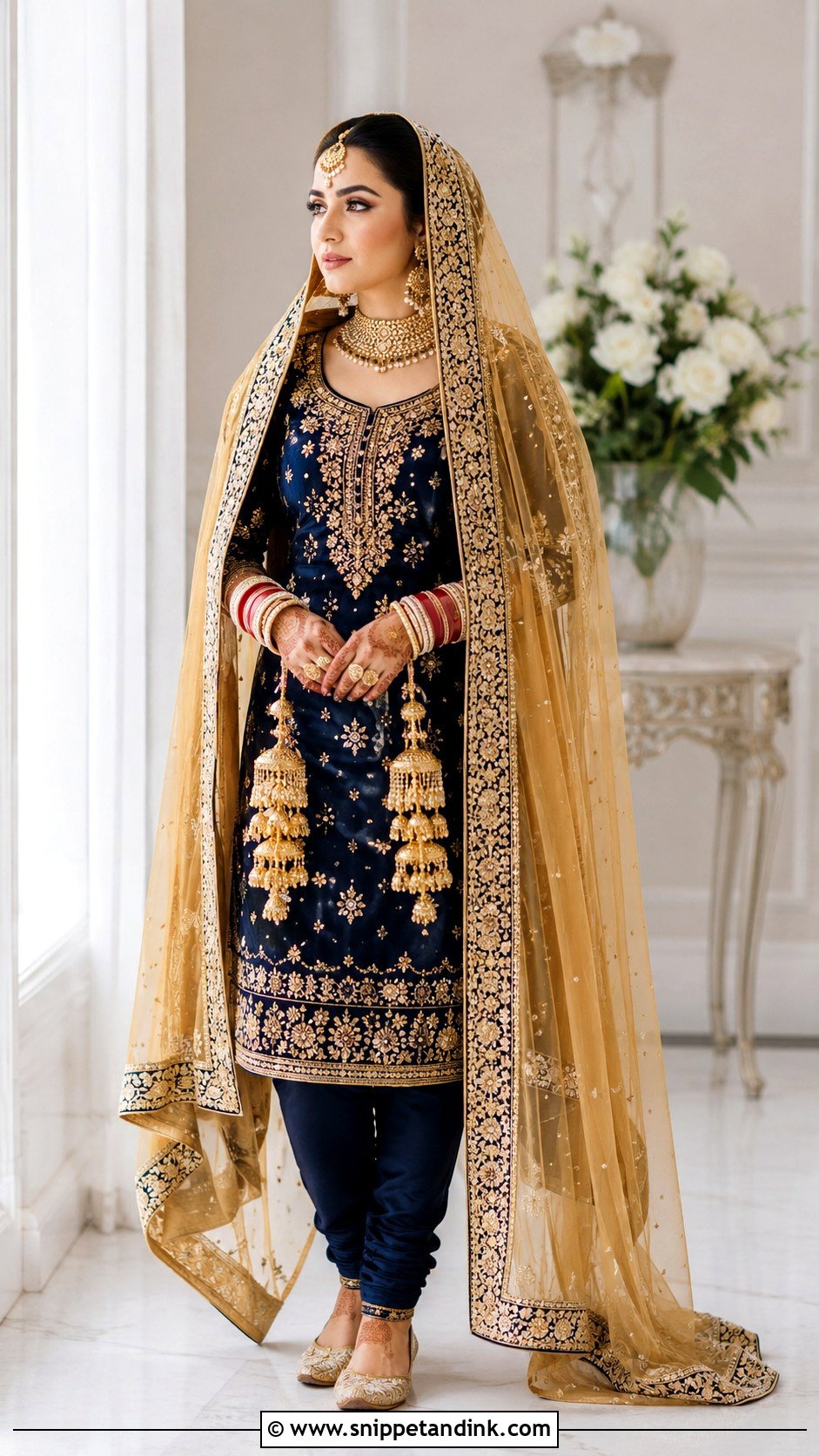
Navy with a gold dupatta feels royal and a little unexpected. Navy gives a deep base, and the gold dupatta adds bridal warmth right around the face. Choose a navy kameez with gold embroidery over a salwar, churidar or palazzo. The dupatta needs enough fabric and border to cover the head well during the Anand Karaj. Some families avoid very dark colors at weddings, so it’s worth a conversation first. Antique gold jewelry, a statement tikka, chooda, kaleere and gold juttis complete it.



25. Rose Gold Punjabi Bridal Palazzo Suit
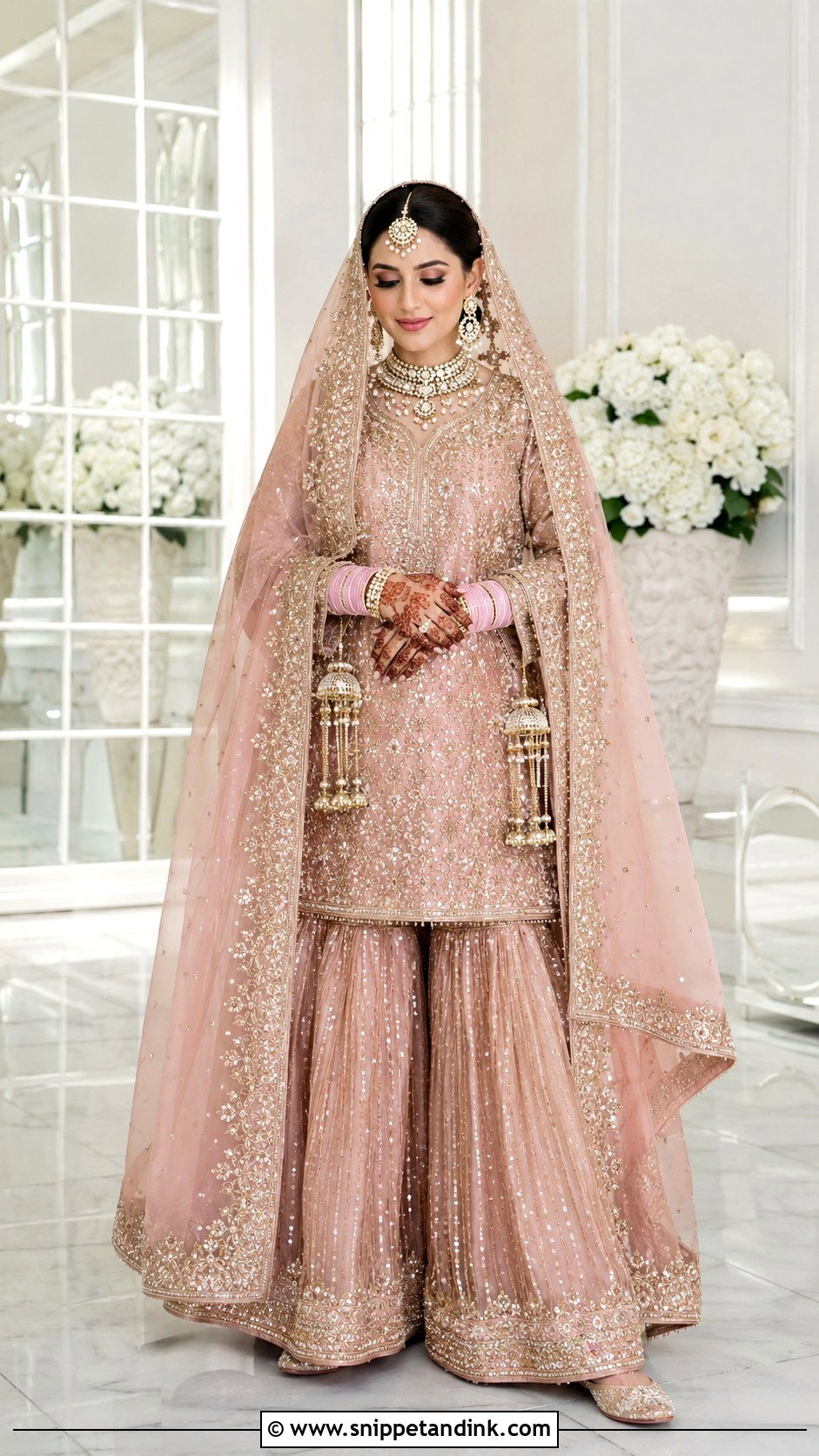
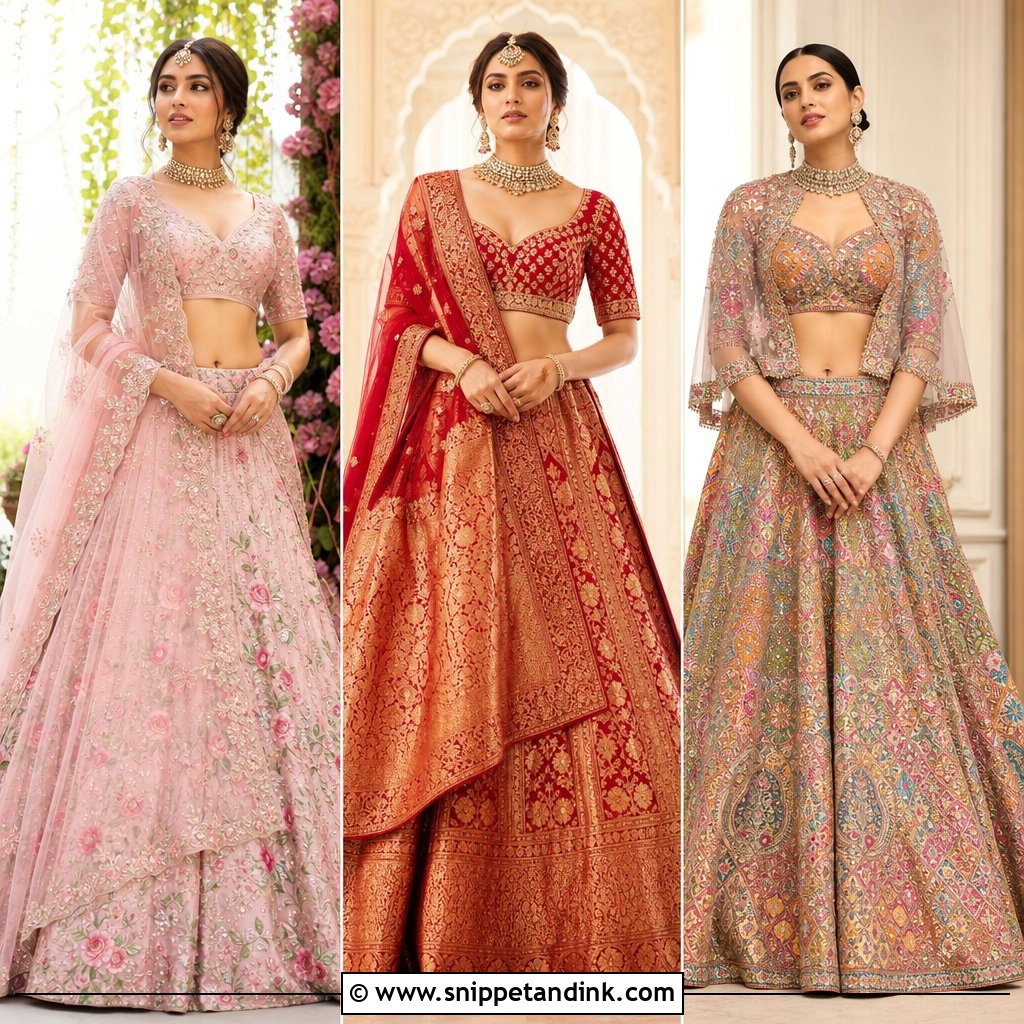
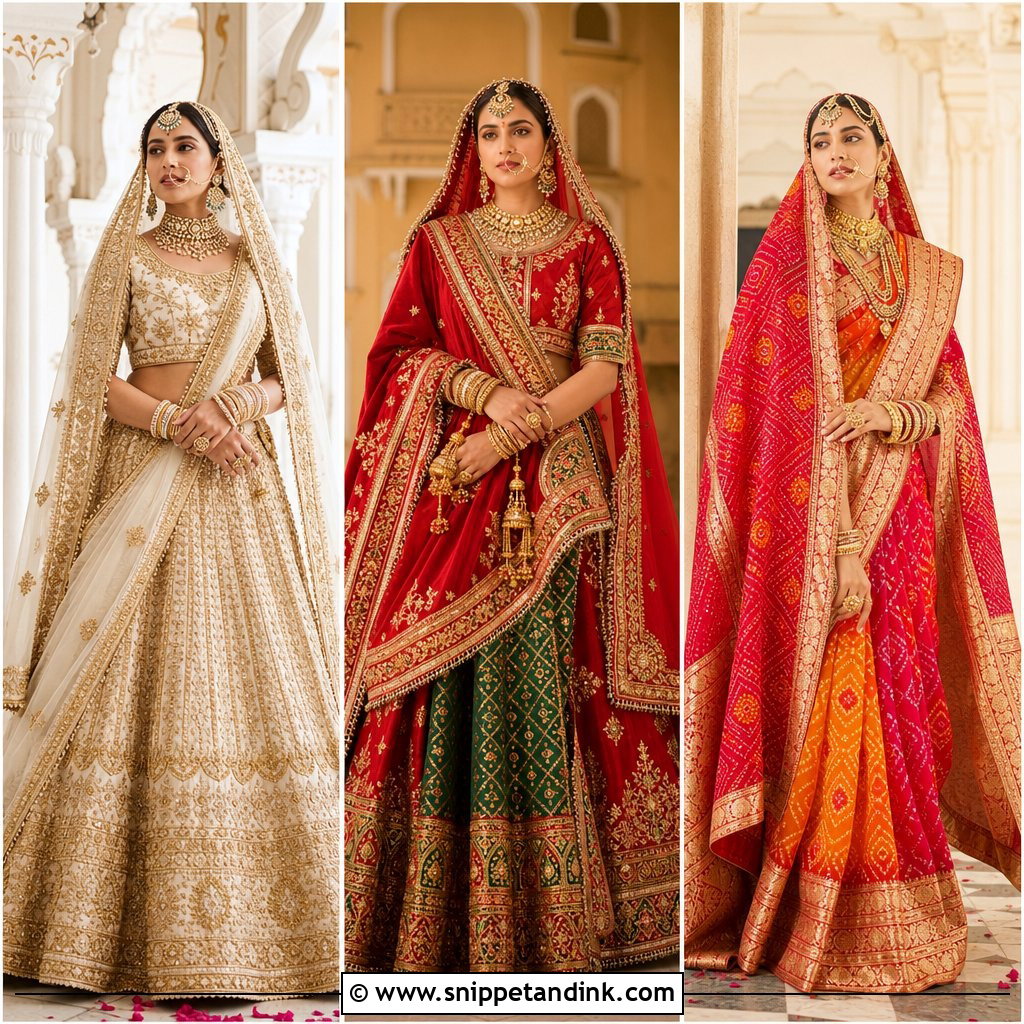
Rose gold palazzo suits are modern and light, and the palazzo is comfortable for a long morning of sitting and greeting. A rose gold kameez with delicate embroidery, sequins or pearls looks fresh. A matching dupatta with a defined border keeps it bridal and makes head coverage easy. Rose gold sits between pink and metallic, so I match the jewelry tone carefully; yellow gold can clash, while kundan or pearl usually blends. A soft pink chooda, kaleere and embellished juttis finish it.
Securing the Chunni Over a Bun and Maang Tikka
A slipping dupatta is the most common problem I fix on the morning. The order matters: hair first, with a bun placed at the crown or slightly lower so it gives the dupatta something to rest on. Then the maang tikka, then the dupatta, pinned on top of the bun with U-pins and at each side of the head with small bobby pins hidden under the border.
If your dupatta is heavy, from phulkari, velvet or dense zardozi, consider wearing two: a lighter net or georgette one on the head, and the heavy one across the shoulders or arms for the photos. Practice the whole drape once with your stylist or a cousin who will be in the room, so someone besides you knows how it goes back on.
Caring for Zardozi and Gota After the Wedding
Metallic embroidery tarnishes when it sits in damp or in plastic. After the wedding, air the suit for a day, then have it dry cleaned by someone who handles bridal embroidery. Store it folded in soft muslin or cotton, with tissue between the folds so the zardozi doesn’t press into the fabric. Avoid hanging heavy suits for months, because the weight stretches the shoulders. Refold along different lines every so often so the creases don’t set permanently.
A Suit You Can Sit, Bow and Celebrate In
Color and embroidery are only half of a Punjabi bridal suit. The other half is how it behaves through the Anand Karaj and the long day around it. Some brides feel most themselves in a red Patiala, others in ivory, pink, green, lavender or rose gold. Whatever you choose, get these right first: a secure head-covering dupatta, a bottom you can sit on the floor in, comfortable shoes for the rest of the day and jewelry that means something to you. With those in place, any of these suits can feel bridal, respectful and yours.
You'll Like These Ideas:






Leave a Reply