
Guest hair at an Indian wedding works harder than at most weddings. It has to sit under a dupatta, carry earrings that may be heavy, survive dancing at the sangeet and often last through a hot afternoon ceremony and an evening reception on the same day. Your outfit sets the starting point, whether it’s a saree, lehenga, sharara, anarkali or an Indo-Western gown. Below are twenty guest styles, from sleek buns and the juda to braids, ponytails and open curls, with notes from the styling chair on how each one holds, which outfit it suits and where it tends to slip.
One Wedding, Four Functions, Four Different Hair Days
Many Indian weddings run over two or three days, and each function asks something different of your hair. Planning across all of them saves you from redoing a full style from scratch each time.
- Haldi: wear a braid or a bun you don’t mind getting messy. Turmeric paste can tint light or bleached hair yellow, so a little oil through the lengths beforehand helps it rinse out.
- Mehendi: keep hair off your face and shoulders, because you can’t touch it for hours while the henna dries. A braid or a ponytail is easiest.
- Sangeet: this is where ponytails, bubble ponytails and messy buns earn their place. Choose whatever survives dancing.
- Wedding ceremony and reception: the ceremony often calls for a bun that sits under a dupatta, while the reception is the time for open curls or waves.
Order matters too. Curls from one night become good texture for a bun or braid the next day, but going from a tight bun to open curls usually means washing and starting again. Where you can, plan the open styles first and the updos after.
1. Low Bun Hairstyle For Indian Wedding Guest
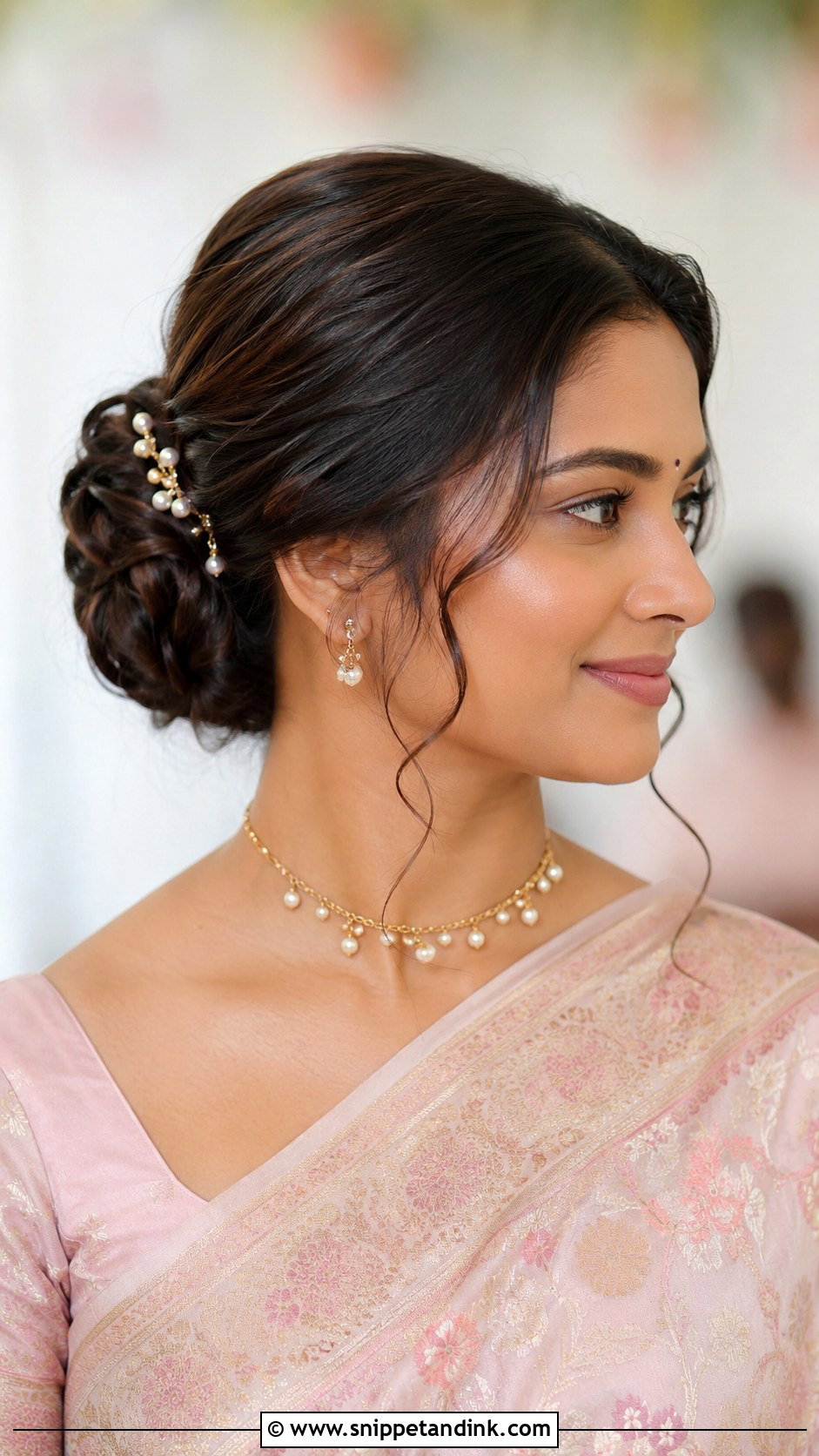
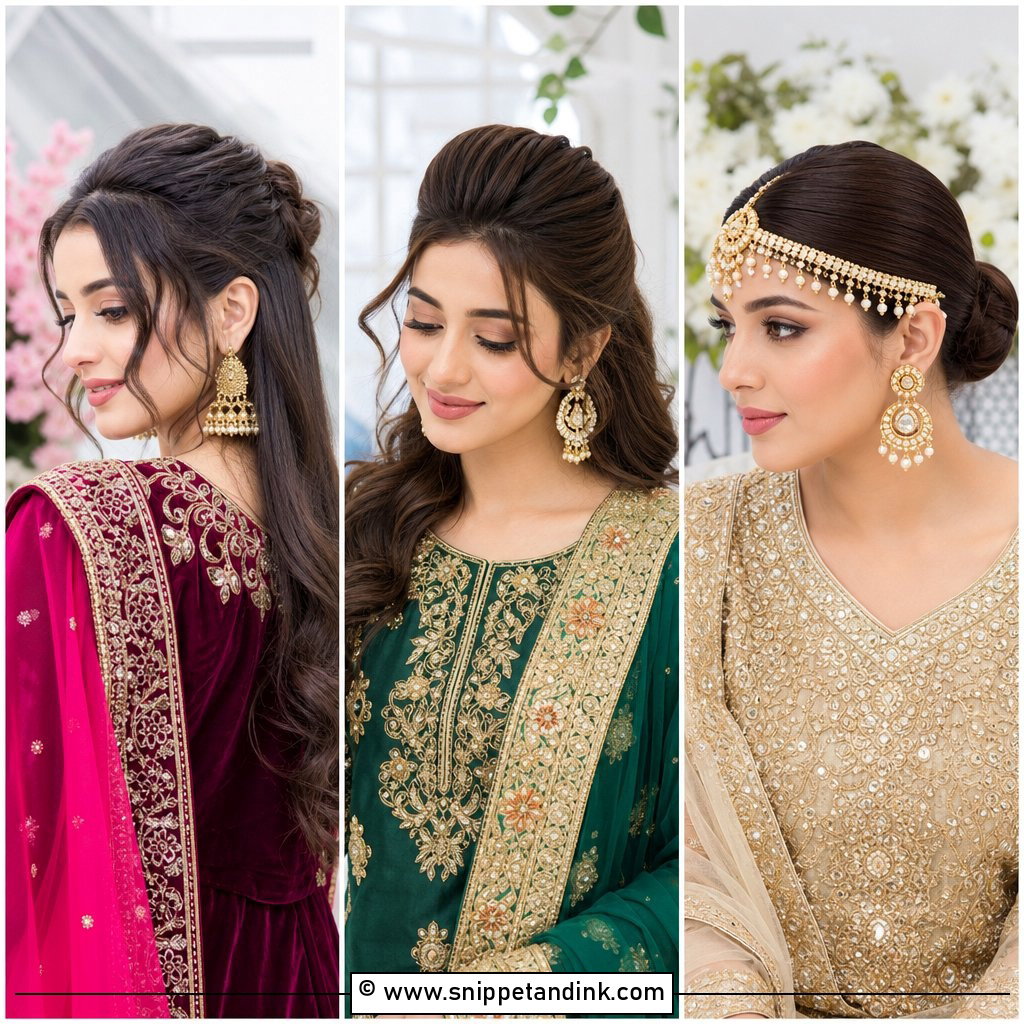
If I had to pick one guest style that suits every outfit, it would be the low bun. It sits at the nape, out of the way of a heavy dupatta, and it leaves the blouse back and the earrings on show. Keep the front sleek for a ceremony or pull out a few face-framing pieces for a reception. I anchor the ponytail with an elastic before forming the bun, then pin around it in a circle. A plain outfit can take jasmine, a few roses or a small jeweled pin; a heavily worked one usually needs nothing.
2. Sleek Bun Hairstyle For Saree
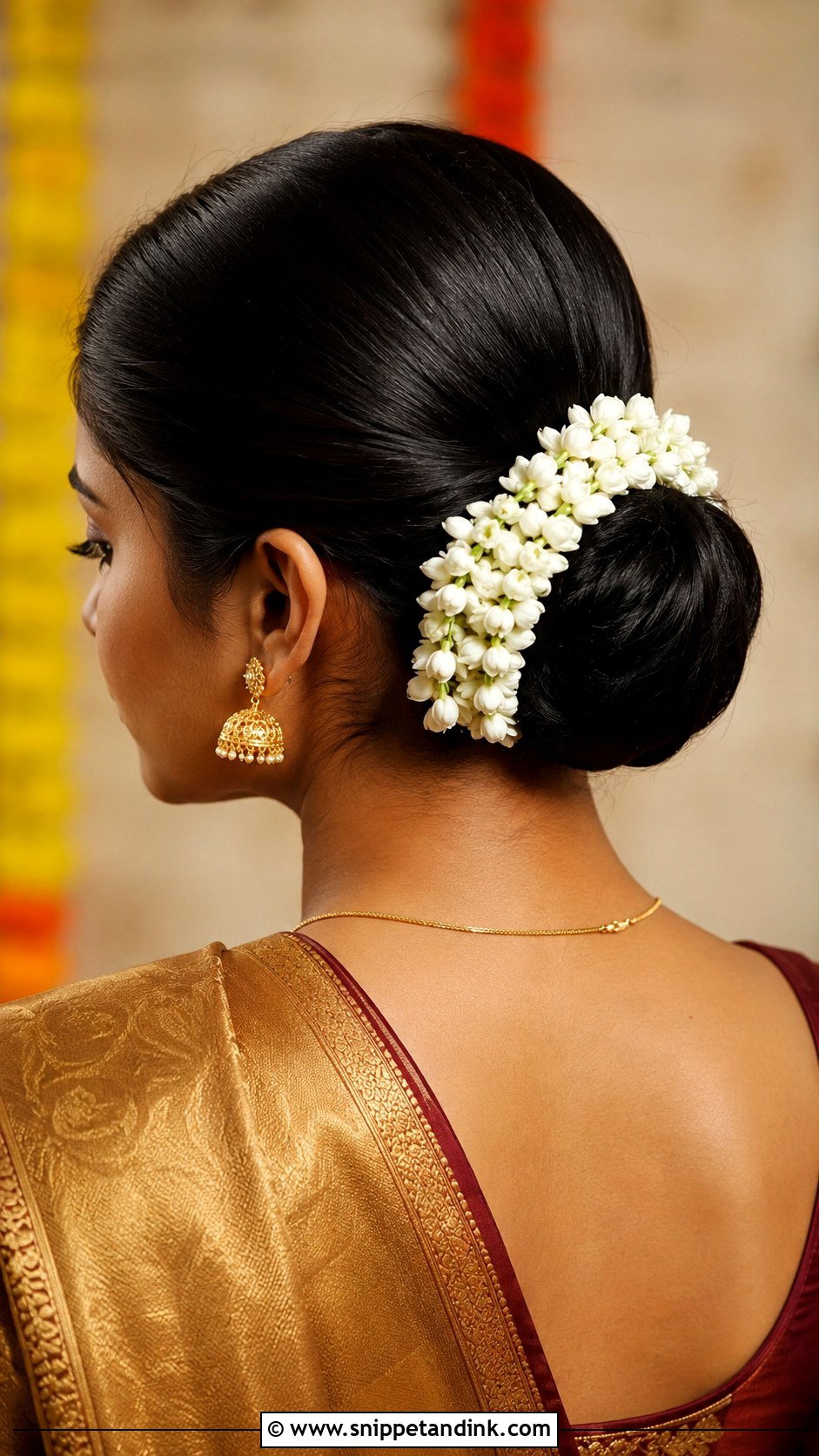
With a saree, a sleek bun keeps the line of the drape clean from the shoulder to the pallu. A middle part gives it symmetry. I smooth the hair with a little cream, brush it back with a boar bristle brush and pin the bun firmly, because silk and organza sarees catch on loose ends. It pairs well with statement jewelry. A small gajra around the bun reads guest-appropriate; covering the whole bun in flowers starts to look bridal. Check it in a side mirror, since the profile is what family portraits catch.
3. Messy Bun Hairstyle For Lehenga
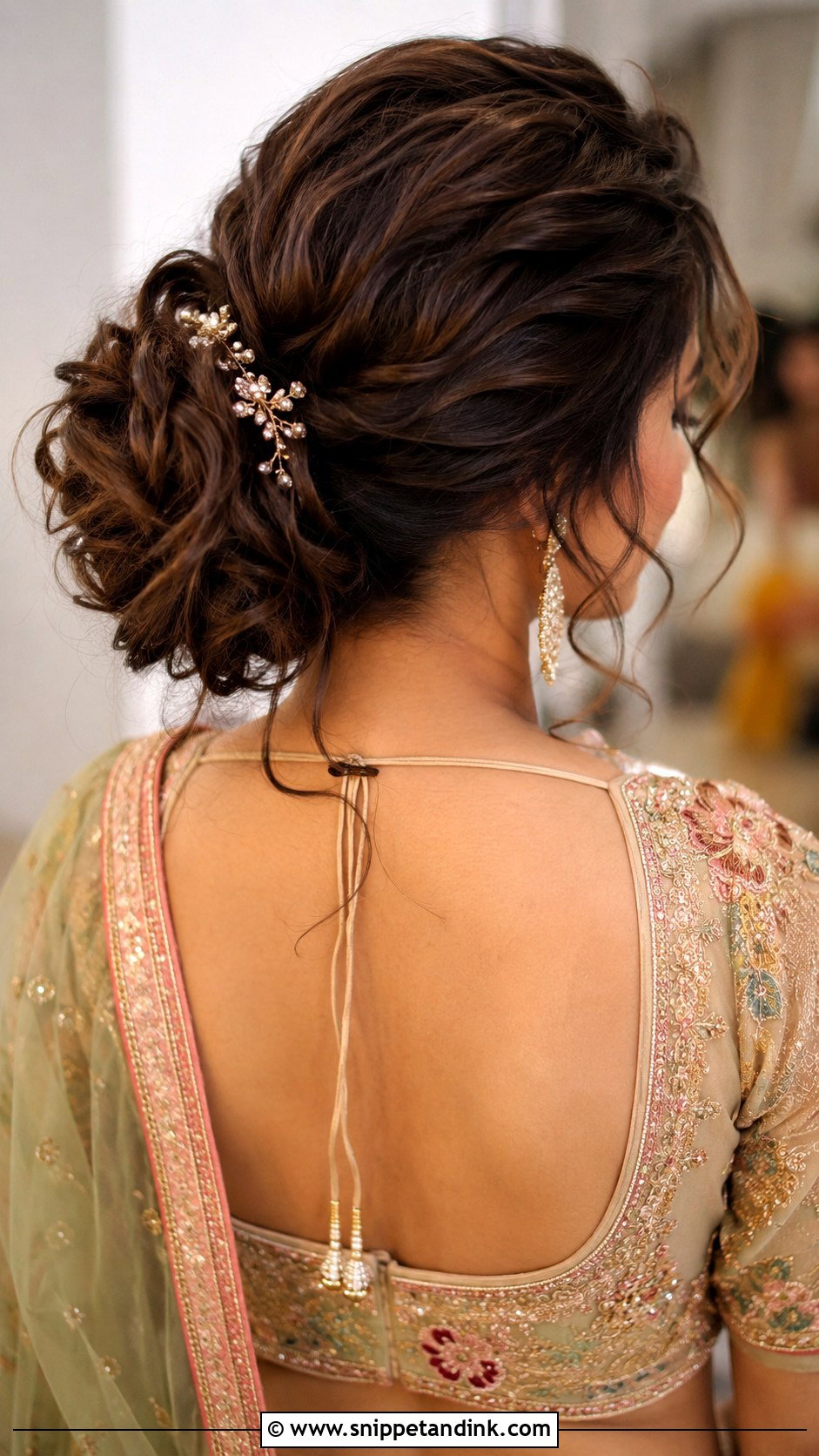
A messy bun with a lehenga gives height at the crown and a softer feel than a sleek knot, which suits a sangeet, mehendi or cocktail evening. The mess is controlled. I spray texture through the hair first, build the bun on a firm ponytail and only then loosen the outer pieces with my fingers. Without that base, it collapses on the dance floor. It sits nicely with deep necklines, embroidered blouses and chandelier earrings. Very silky, freshly washed hair is the one case where I’d choose a different style.
4. Half Up Half Down Hairstyle For Indian Wedding
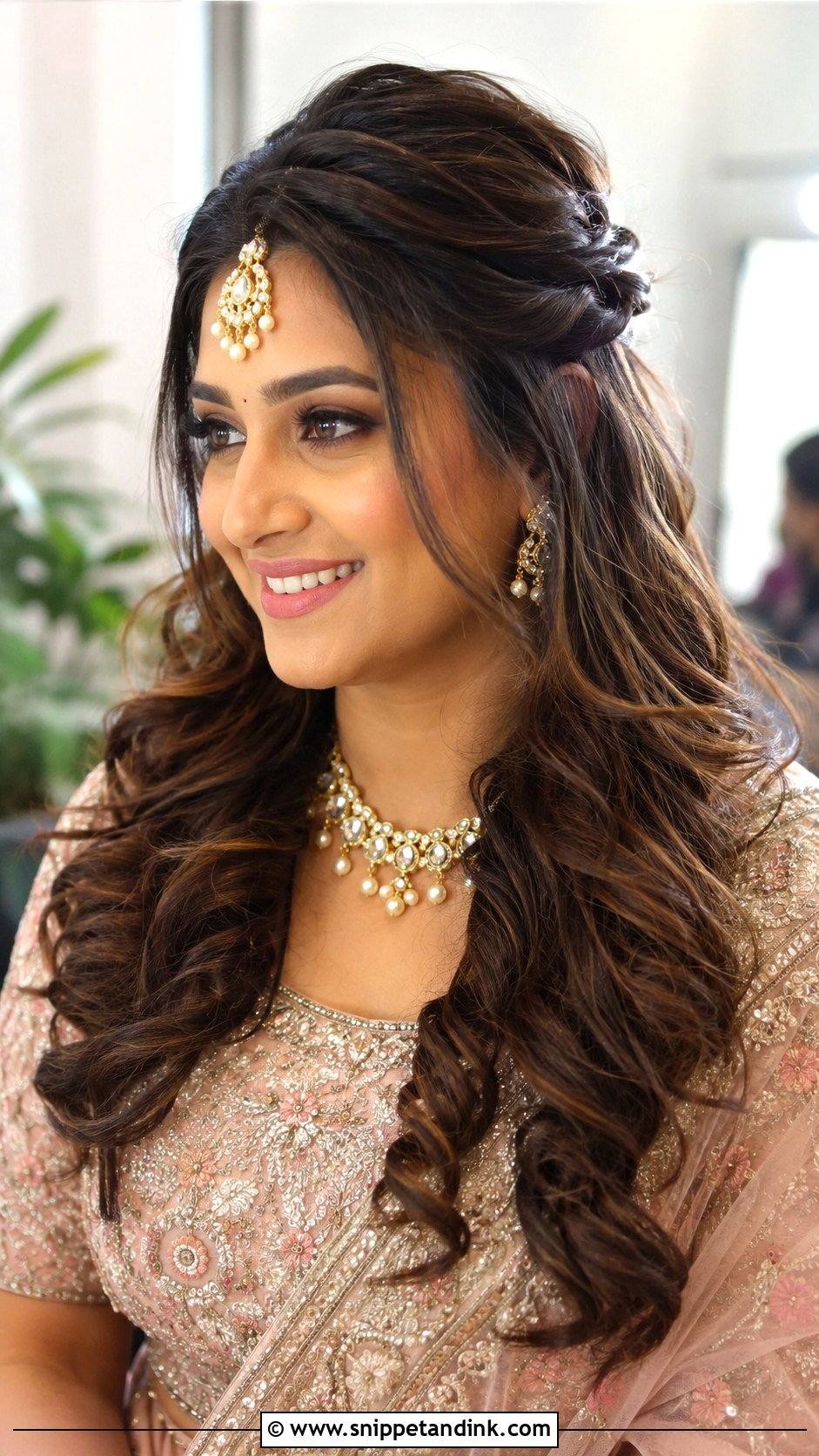
Half up, half down keeps the front tidy for rituals and photos while showing off length and curls. The top section can be twisted, braided or held with a decorative clip. With a lehenga, sharara or gown it adds volume without hiding the outfit. A dupatta worn over one shoulder sits comfortably over the loose lengths. For a guest, I keep the clip small: pearl pins or a single small flower. Oversized bridal hair pieces at a friend’s wedding can look like competition.
5. Open Curls Hairstyle For Indian Wedding Guest
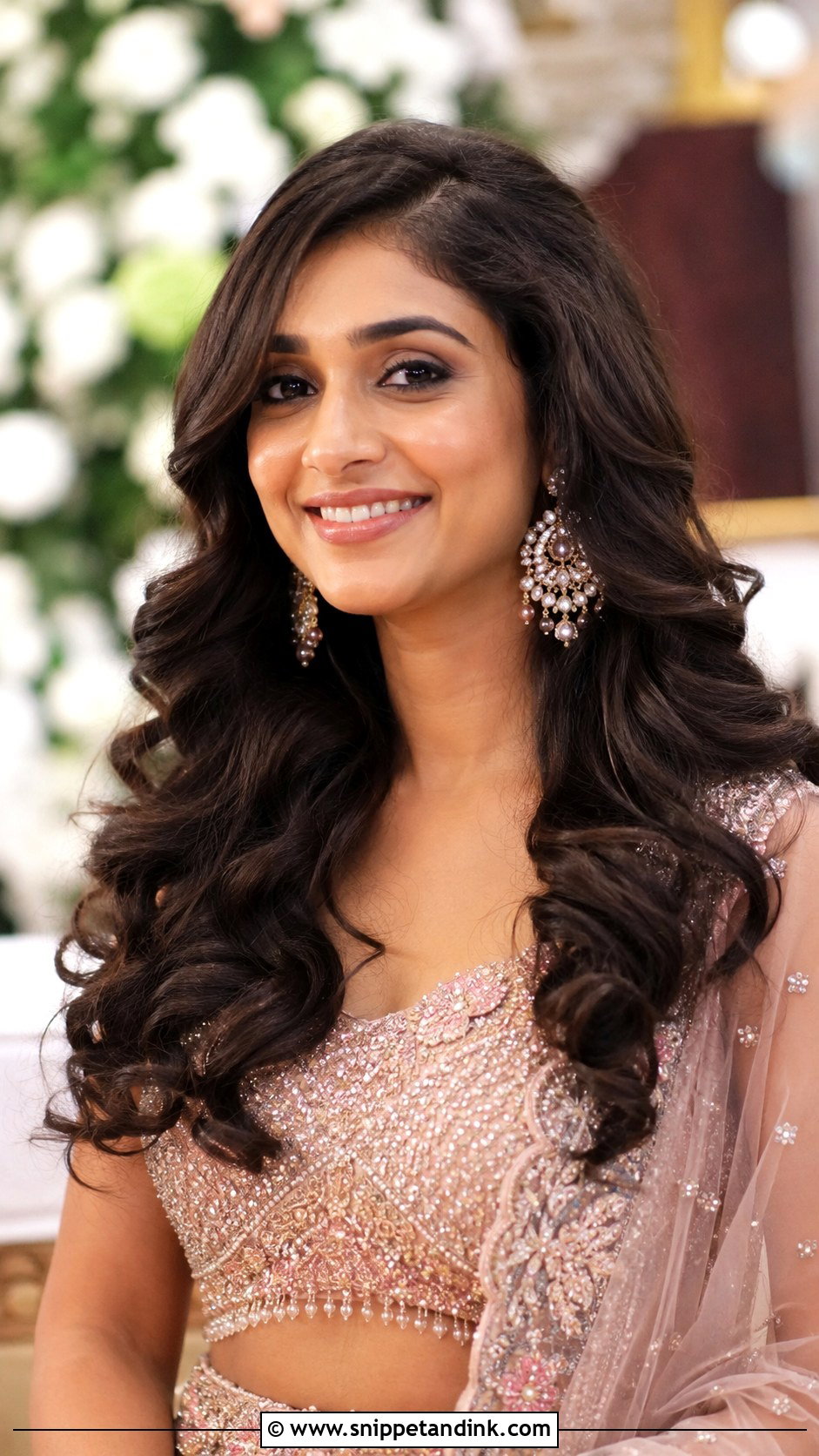
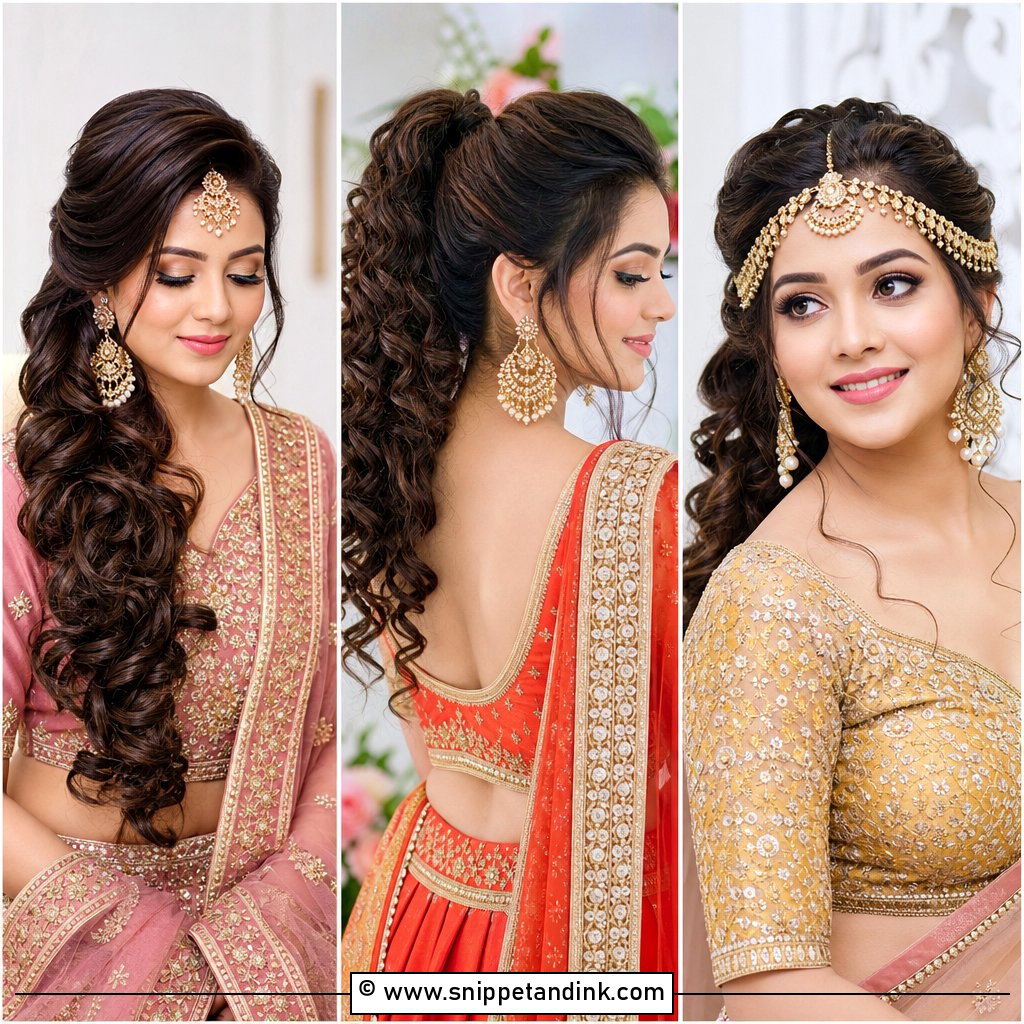
Open curls are the classic reception choice. They give movement and shine, and they look full in evening light. I prep with mousse at the roots, curl away from the face in medium sections and finish with a flexible spray. A side part dresses it up; a center part looks modern with a lehenga. Humidity is the catch. In a hot outdoor venue, open curls can drop within a couple of hours, so I’d keep a clip in your bag to turn them into a half up style later. A maang tikka works here only if the curls aren’t so heavy they swallow it.
6. Side Swept Curls Hairstyle For Wedding Guest
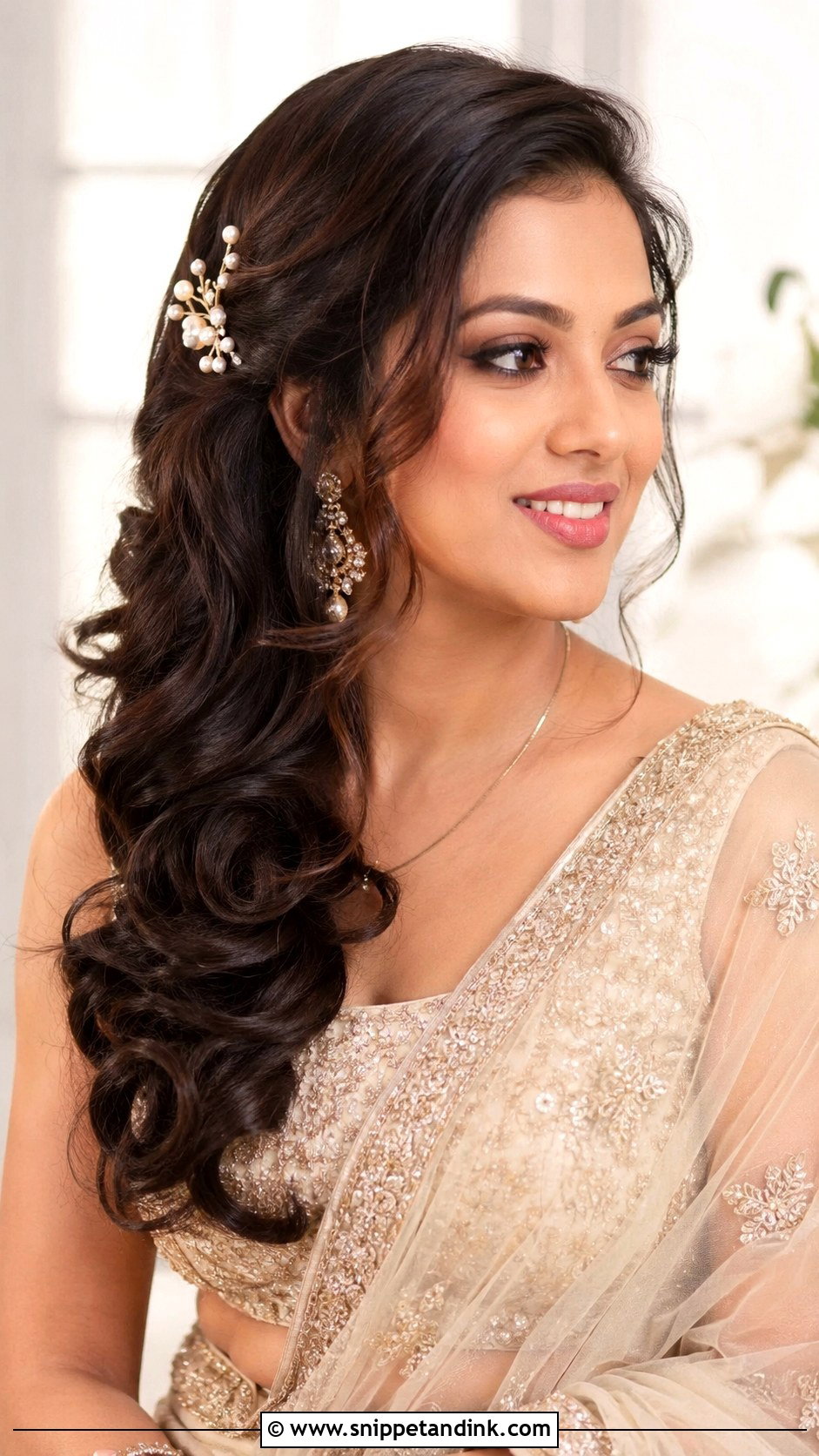
Side swept curls pull everything to one shoulder, which makes sense when the blouse has detailed embroidery, an off-shoulder neckline or a dupatta draped dramatically on the other side. They pair well with a lehenga or an embellished saree. I secure the clear side with a row of crossed pins behind the ear and cover it with a curl. Keep the curls soft so they move. A small comb or pearl clip on the swept side is plenty for a guest.
7. Braided Bun Hairstyle For Indian Wedding
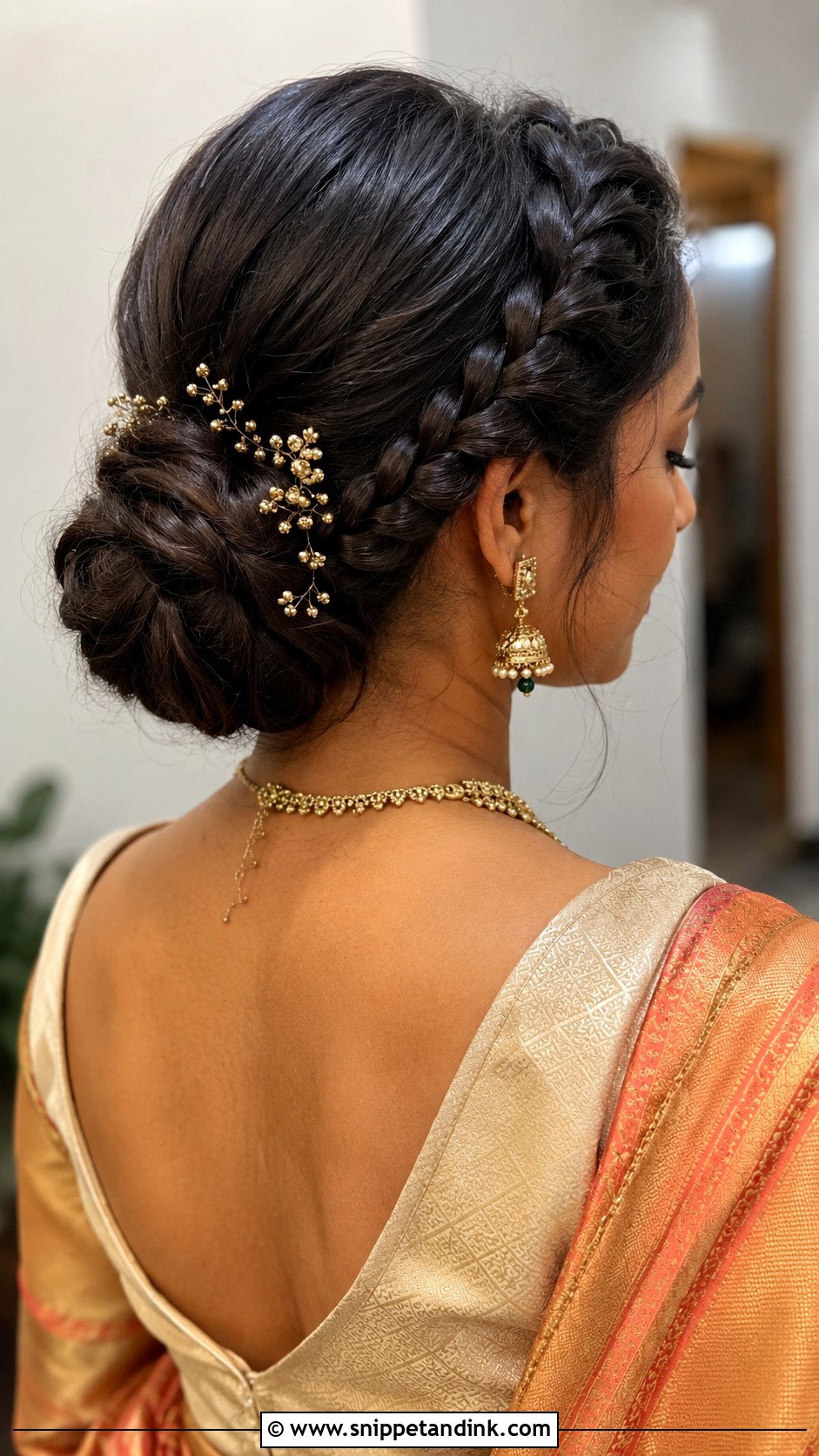
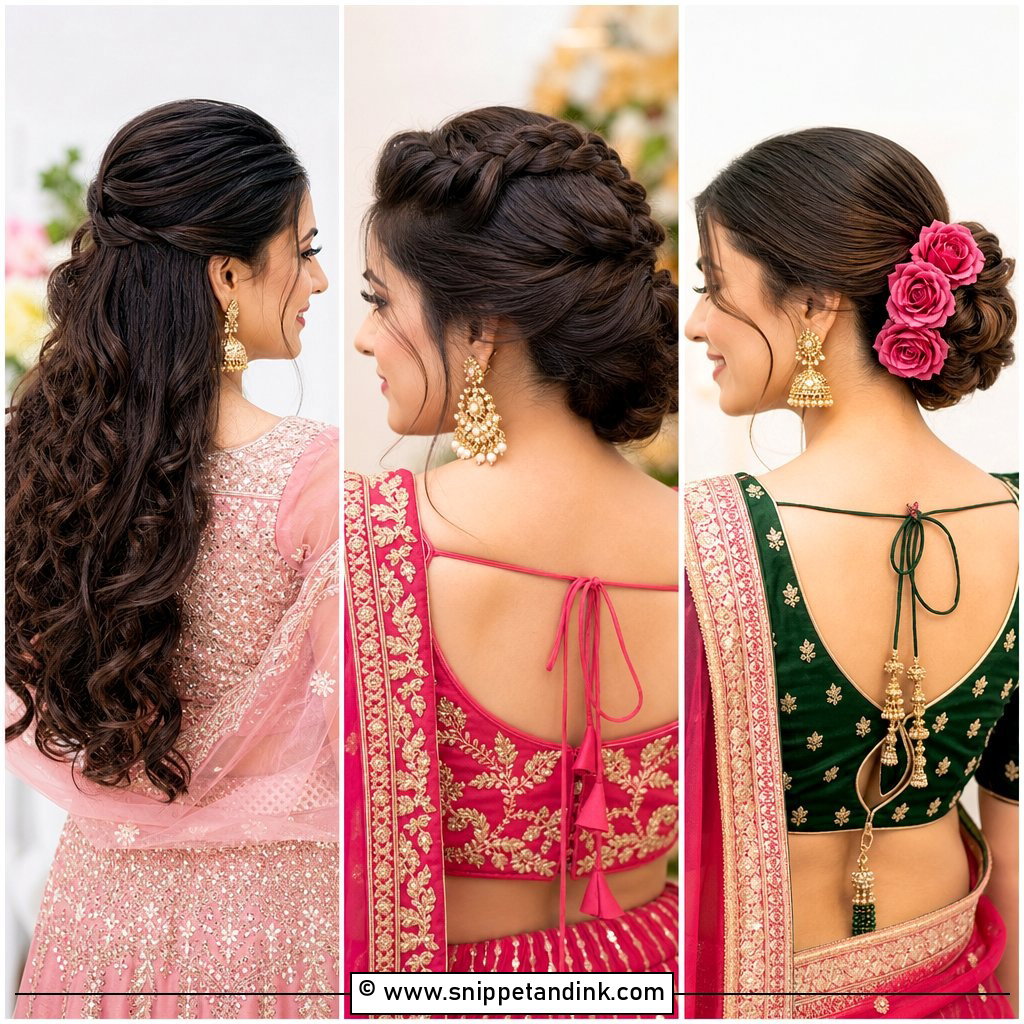
A braided bun is the one I suggest for guests who’ll be outdoors in humid weather. The braid locks the hair in before it’s coiled, so frizz has less room to spread and nothing drops. It can wrap around the bun, start at the crown or be woven into the base. It looks finished from every angle, which helps when you’re seated in a mandap or a long photo line. Sarees, lehengas and anarkalis all suit it. Match any accessory to your jewelry metal, gold with gold, rather than adding another color.
8. Fishtail Braid Hairstyle For Lehenga
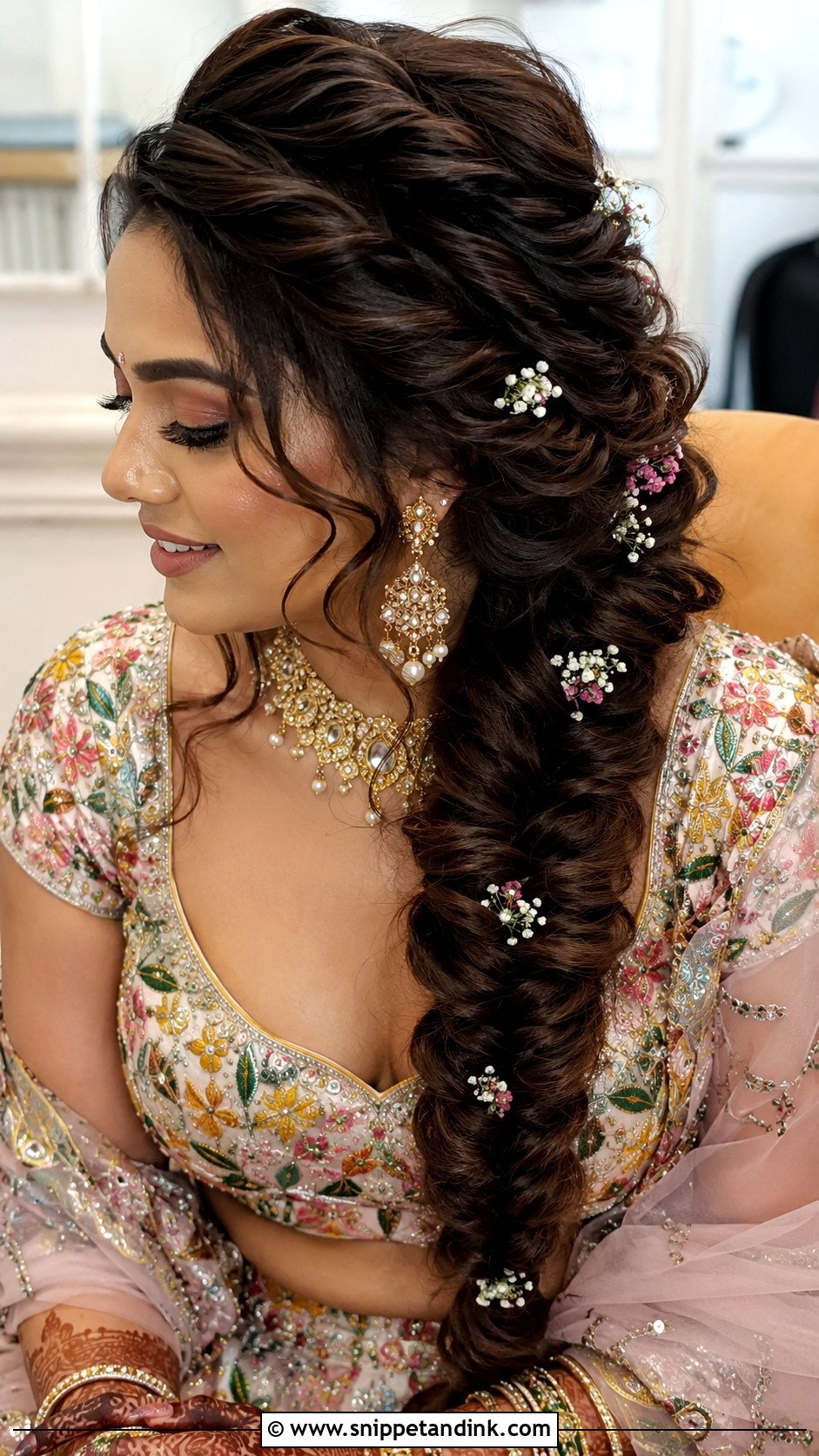
A fishtail worn over one shoulder shows up well in photos and gives a lehenga detail without accessories. I braid it fairly firm, secure the end, then pull the edges gently to widen it. Starting loose means it unravels. It’s a natural fit for mehendi, haldi, and daytime wedding events, partly because a braid keeps hair away from wet henna on your hands and from turmeric paste. Add tiny flowers along it if the outfit is plain; skip them if your jewelry is already heavy.
9. Loose Braid Hairstyle For Indian Wedding Guest
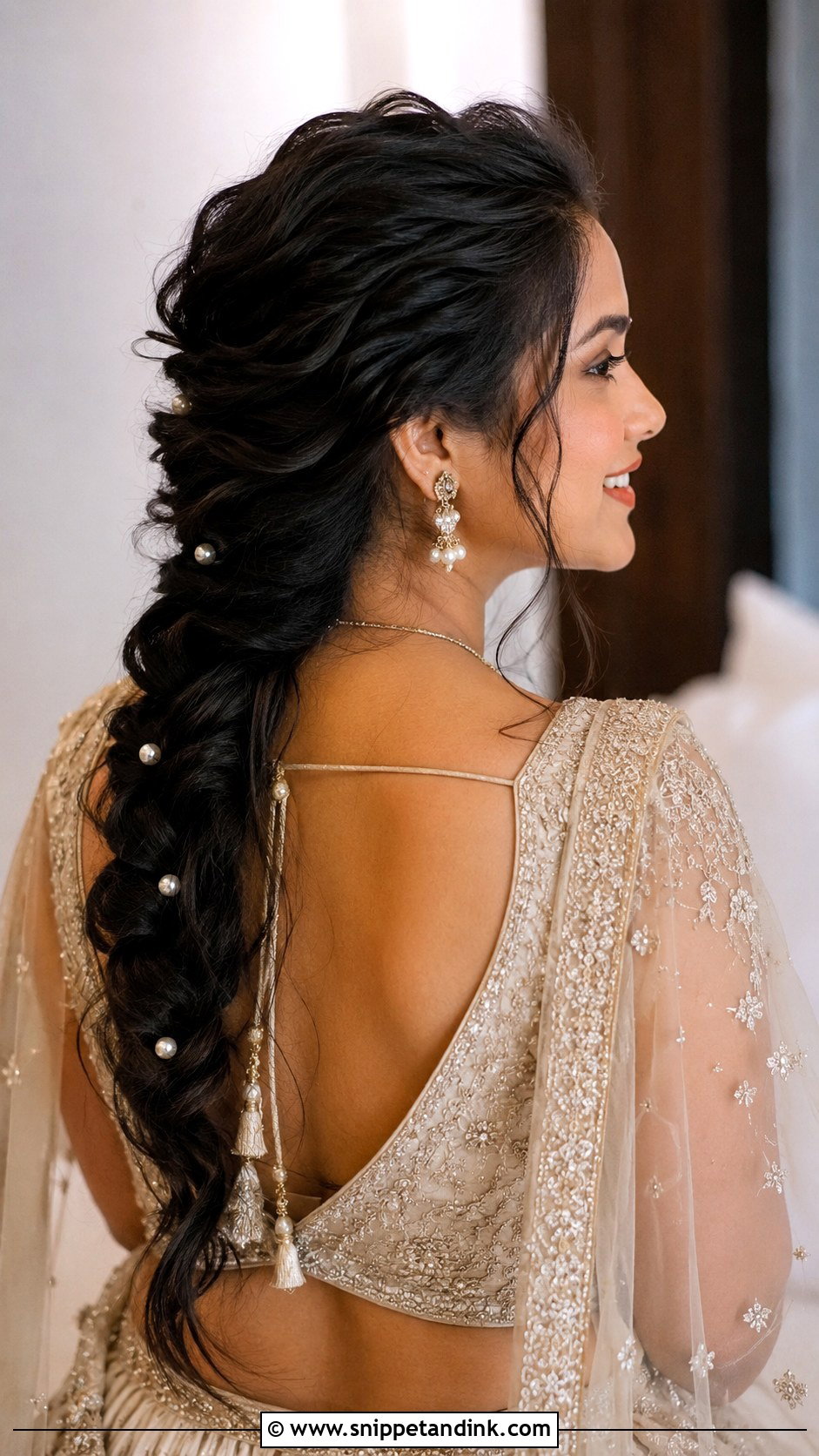
A loose braid is a softer, more traditional option for long or wavy hair. I start it low at the nape or begin with two twists from the crown, and I keep a bit of lift at the front so it doesn’t look flat under the lights. It’s comfortable at outdoor functions and sits well with sarees, shararas and lehengas. A ribbon matched to your outfit, a few pearl pins or fresh flowers all work. On very fine hair, the braid can look thin; texture spray before braiding helps it look fuller.
10. Crown Braid Hairstyle For Indian Wedding
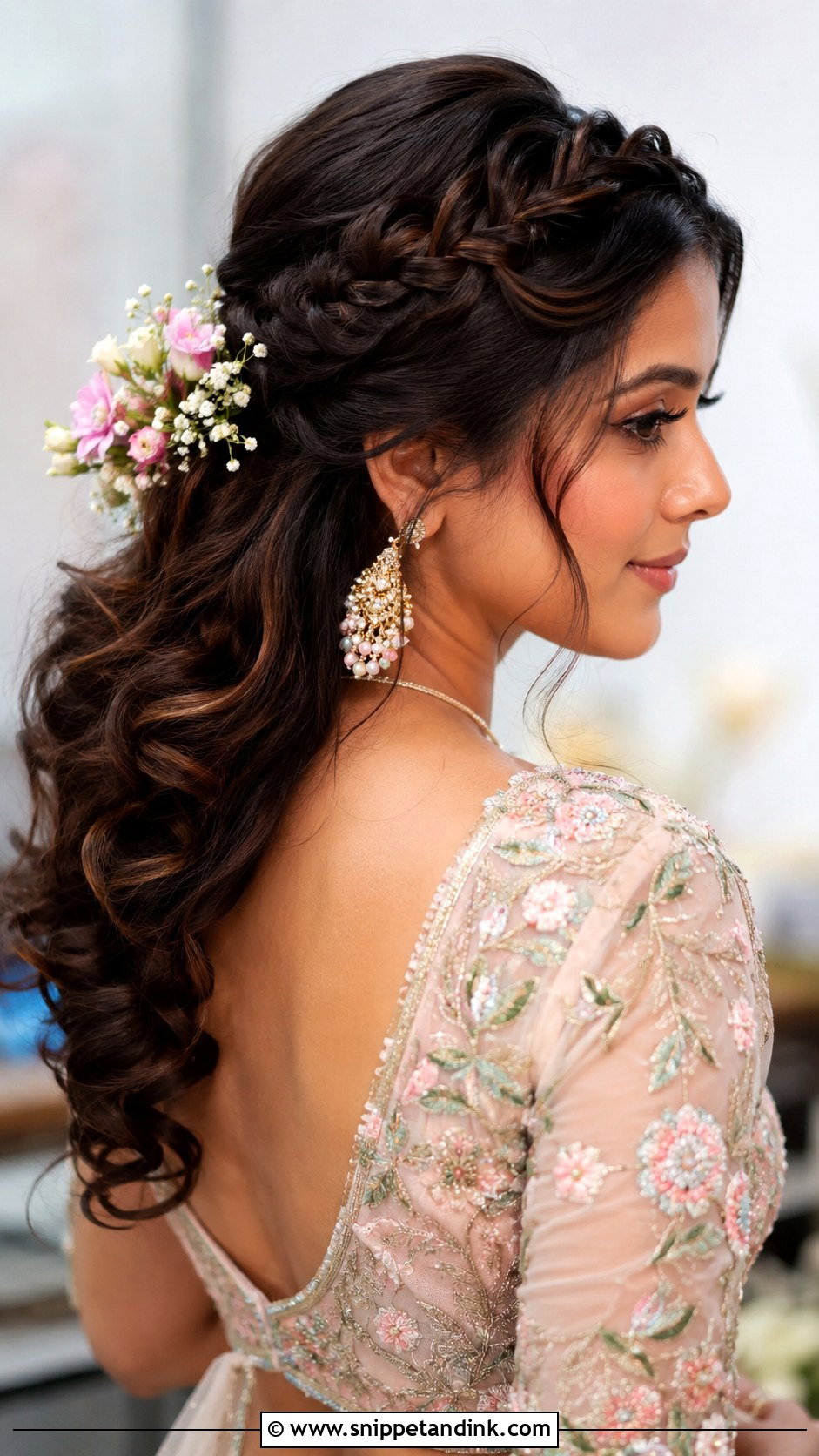
A crown braid frames the top of the head like a band, with the rest pinned into a bun or left in curls. It’s a good daytime choice for mehendi, haldi and garden events, and it sits well with floral lehengas, pastel suits and light sarees. I braid it tight at the start and then pancake the edges, so it holds without looking severe. Small flowers slot neatly into the weave. Be aware that a heavy tikka and a crown braid can compete for the same space at the hairline.
11. Ponytail Hairstyle For Indian Wedding Guest
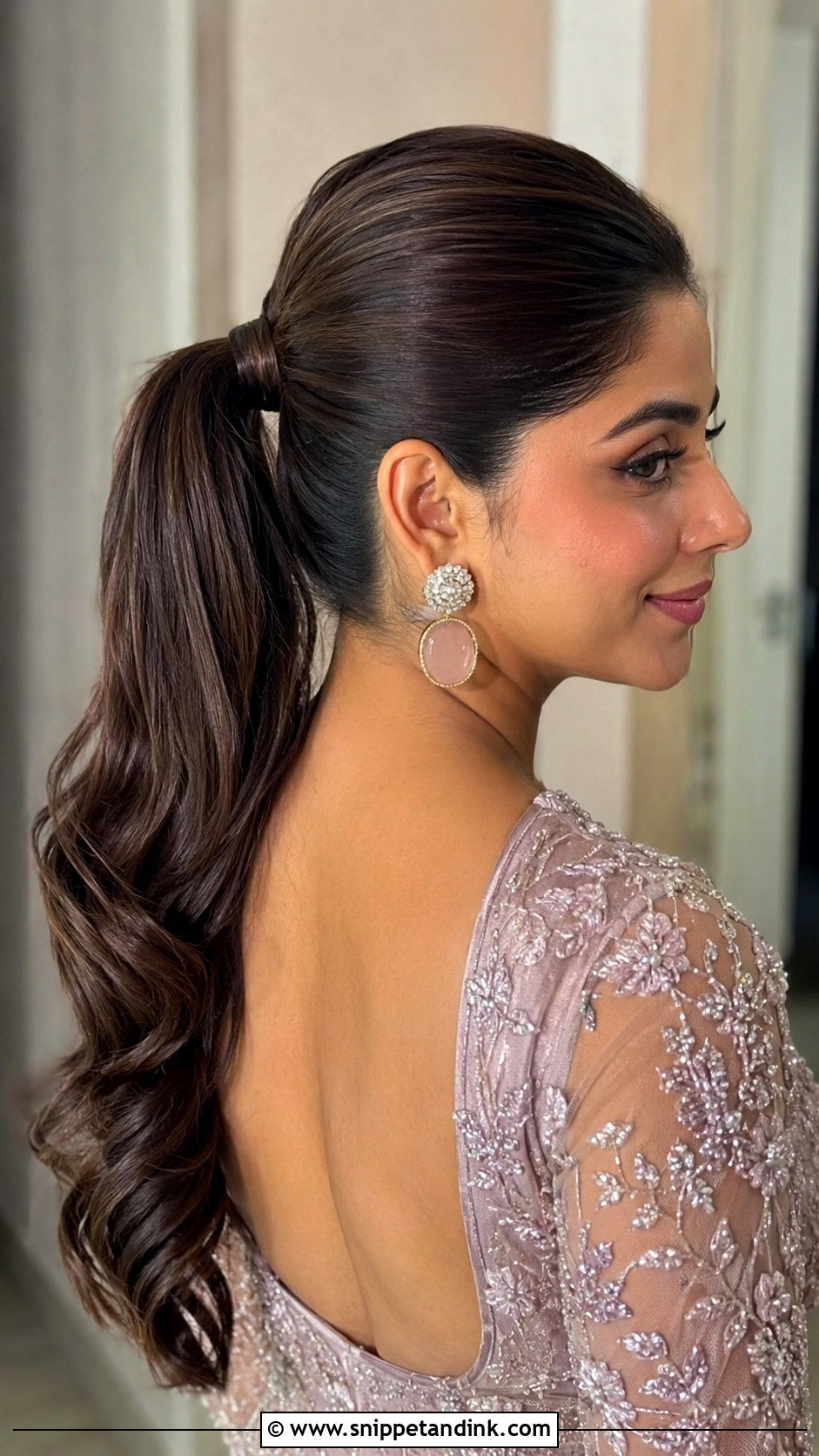
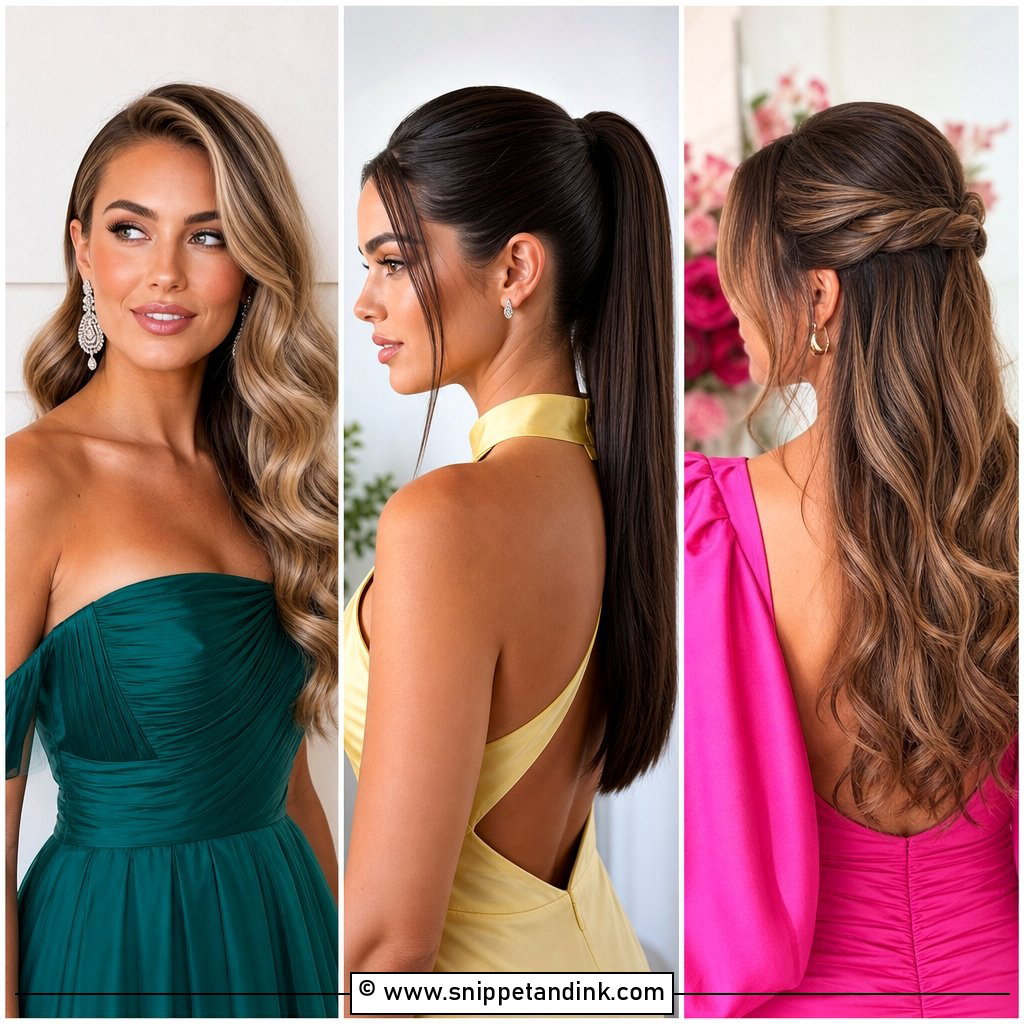
A polished ponytail is the guest style for dancing. It suits sangeet, cocktail, and reception outfits because it moves without falling into your face. A high ponytail adds drama; a mid or low one looks more formal. I curl the lengths for body and wrap a small section around the elastic to hide it. It goes with lehengas, gowns and Indo-Western looks. The hairline needs to be clean for this to look dressed up, so a little gel or a smoothing stick at the edges makes a real difference.
12. Bubble Ponytail Hairstyle For Indian Wedding
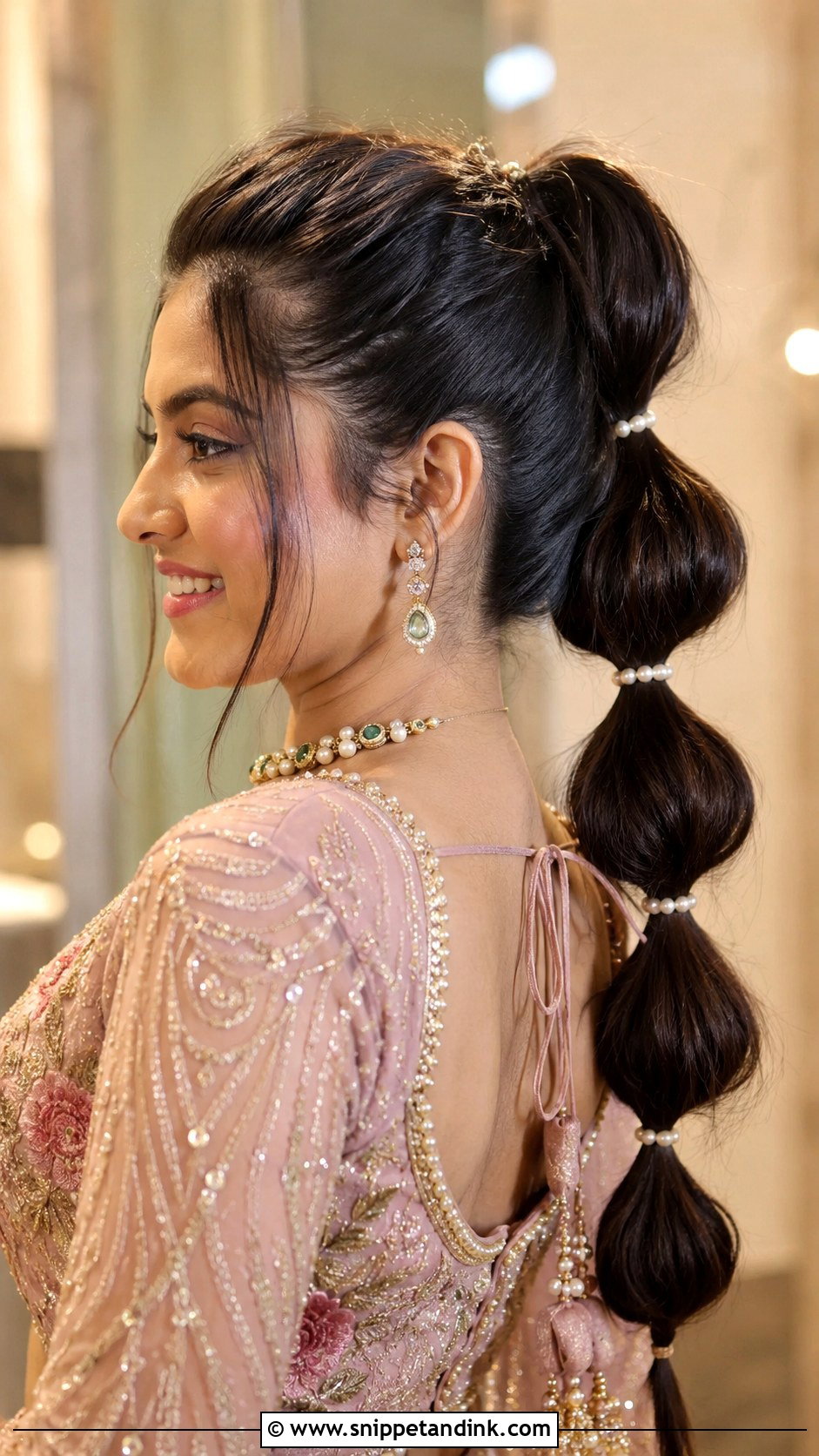
The bubble ponytail is the playful option on this list. The ponytail is divided with small clear elastics every few inches, and each section is pulled out gently into a rounded bubble. It’s best on medium to long hair and suits lehengas, fusion sets and sangeet outfits. Because every bubble is held by its own elastic, it stays put through hours of dancing. Pearl ties or tiny gold cuffs can replace the clear elastics. Remove those elastics carefully at the end of the night, by snipping them, to avoid breakage.
13. Gajra Bun Hairstyle For Indian Wedding Guest
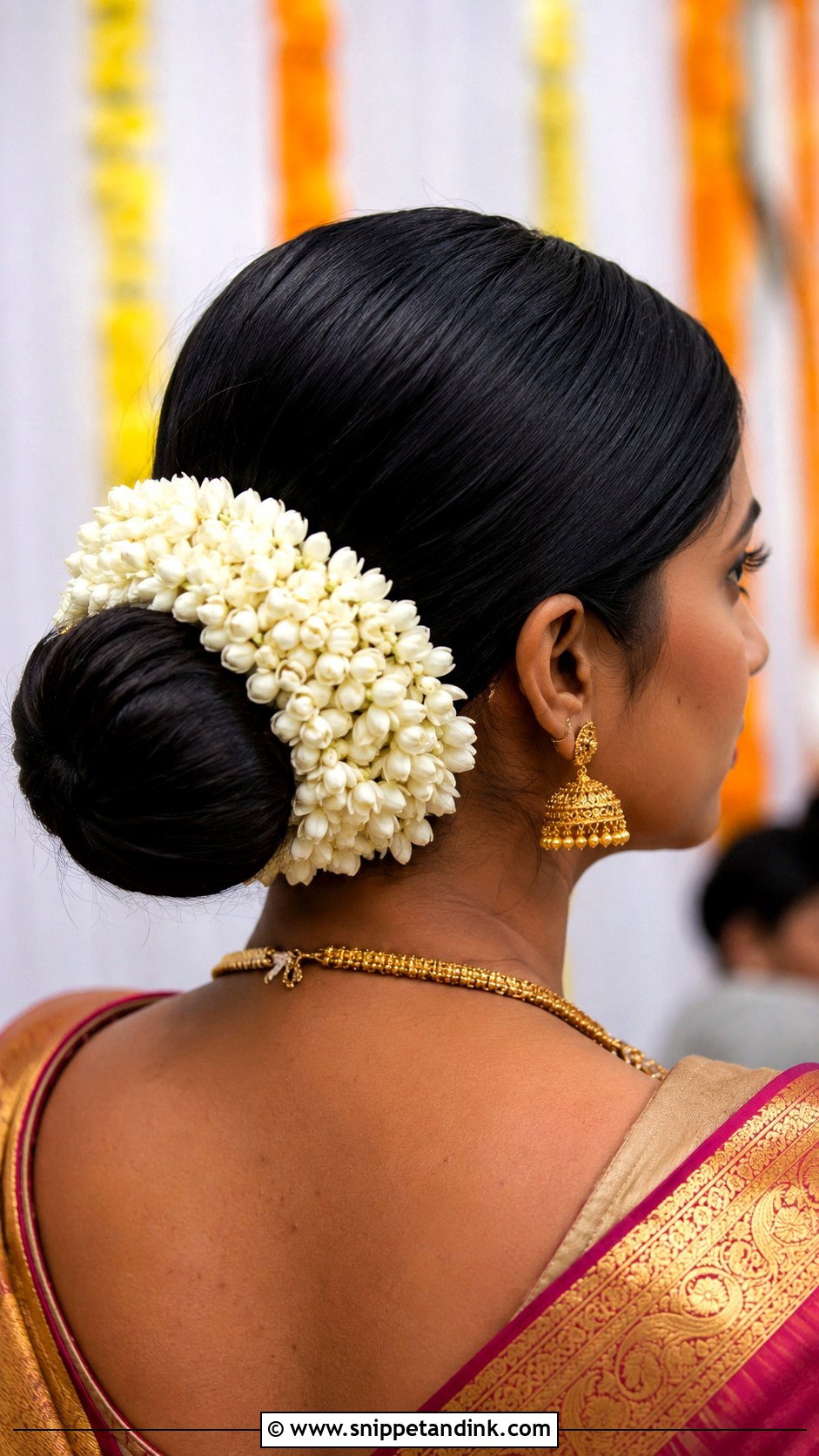
A gajra bun suits ceremonies, temple weddings and family events, and it is especially right with silk, Banarasi, Kanjivaram, and chiffon drapes. The bun can be sleek, low or full, with jasmine strings wrapped around it. Fresh jasmine is heavier than it looks, so I pin each string with U-pins pushed through to the base of the bun, not just through the flowers. A neat middle part keeps it from looking busy. For a guest, one or two strings are usually enough, unless the event is very traditional.
14. Maang Tikka Hairstyle For Wedding Guest
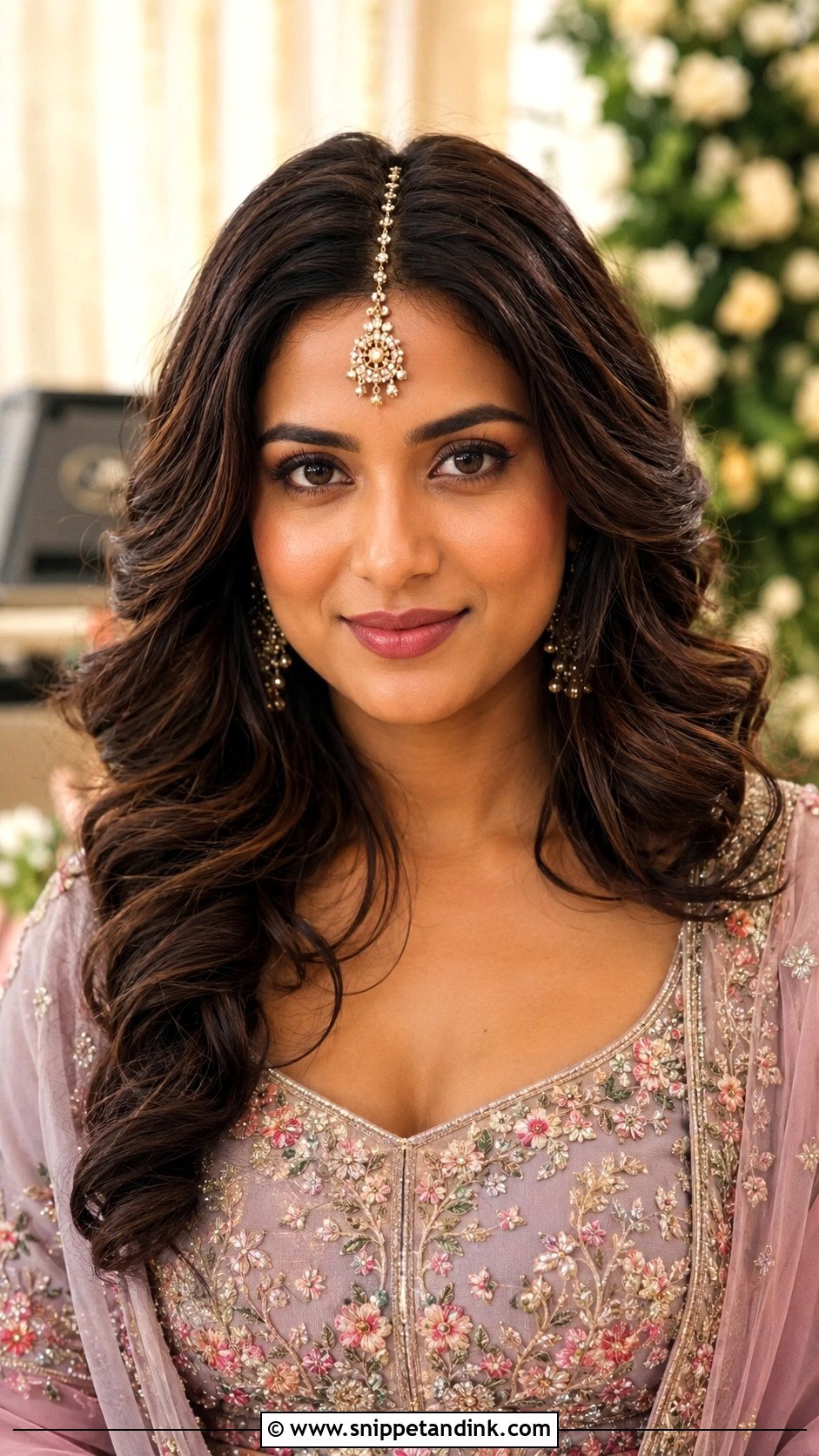
A maang tikka needs a clean center part to sit straight, so I plan the hair around it, not the other way round. A center-parted bun, soft waves or a half up style all work. I tuck a small anchor of crossed bobby pins under the hairline at the top of the part and hook the tikka chain through it, so it stays centered while you greet relatives and bend for blessings. For a guest, a lighter piece than a bridal tikka is the right scale. It suits lehengas, anarkalis and sarees.
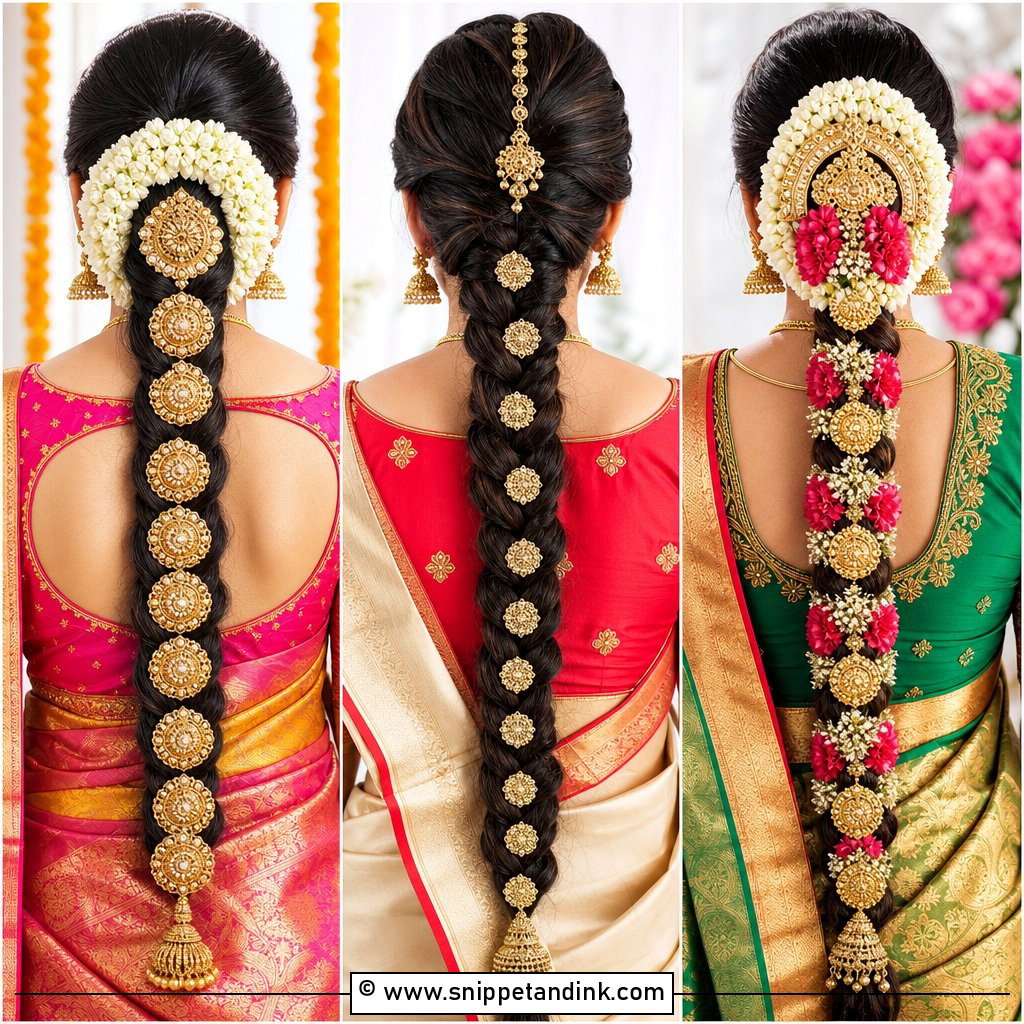
15. Front Twist Hairstyle For Indian Wedding
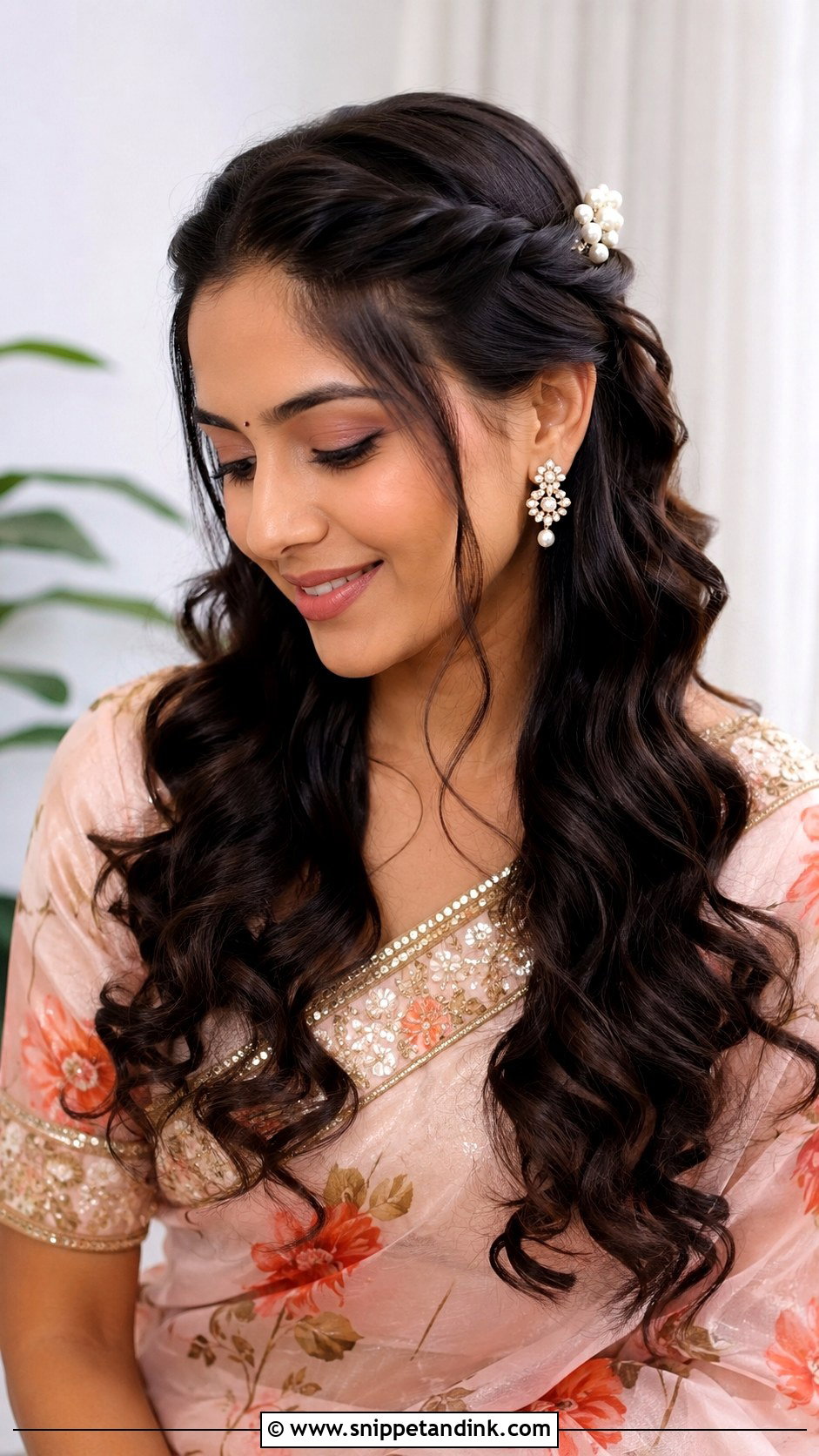
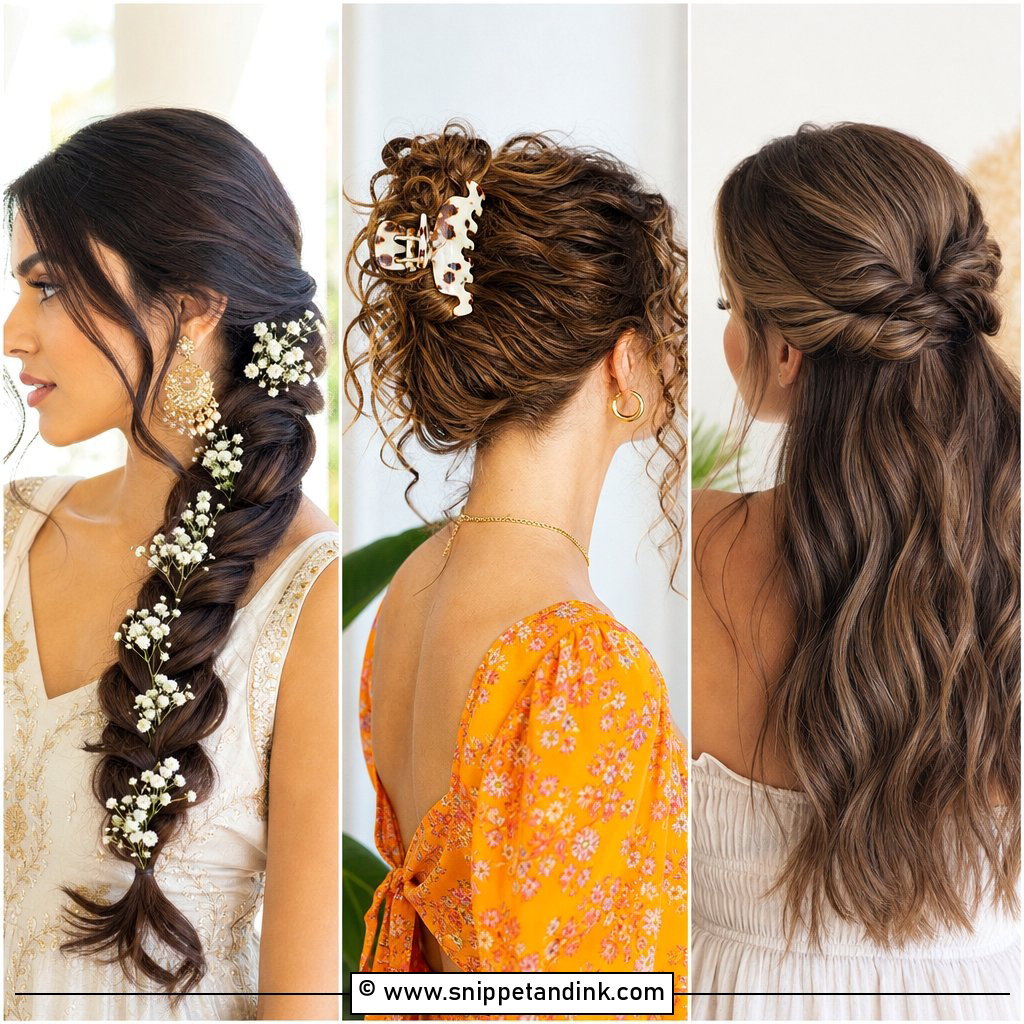
A front twist is the quickest way to keep open hair out of your face. Two small sections from the front are twisted back and pinned where they meet, while the rest stays open, curled or waved. It’s comfortable with light lehengas, printed sarees and shararas. A pearl pin or decorative clip covers the join. It’s also my go-to for second-day hair from the previous night’s function, because the twist lifts flat roots and hides any kinks from sleeping on curls.
16. Soft Waves Hairstyle For Indian Wedding Guest
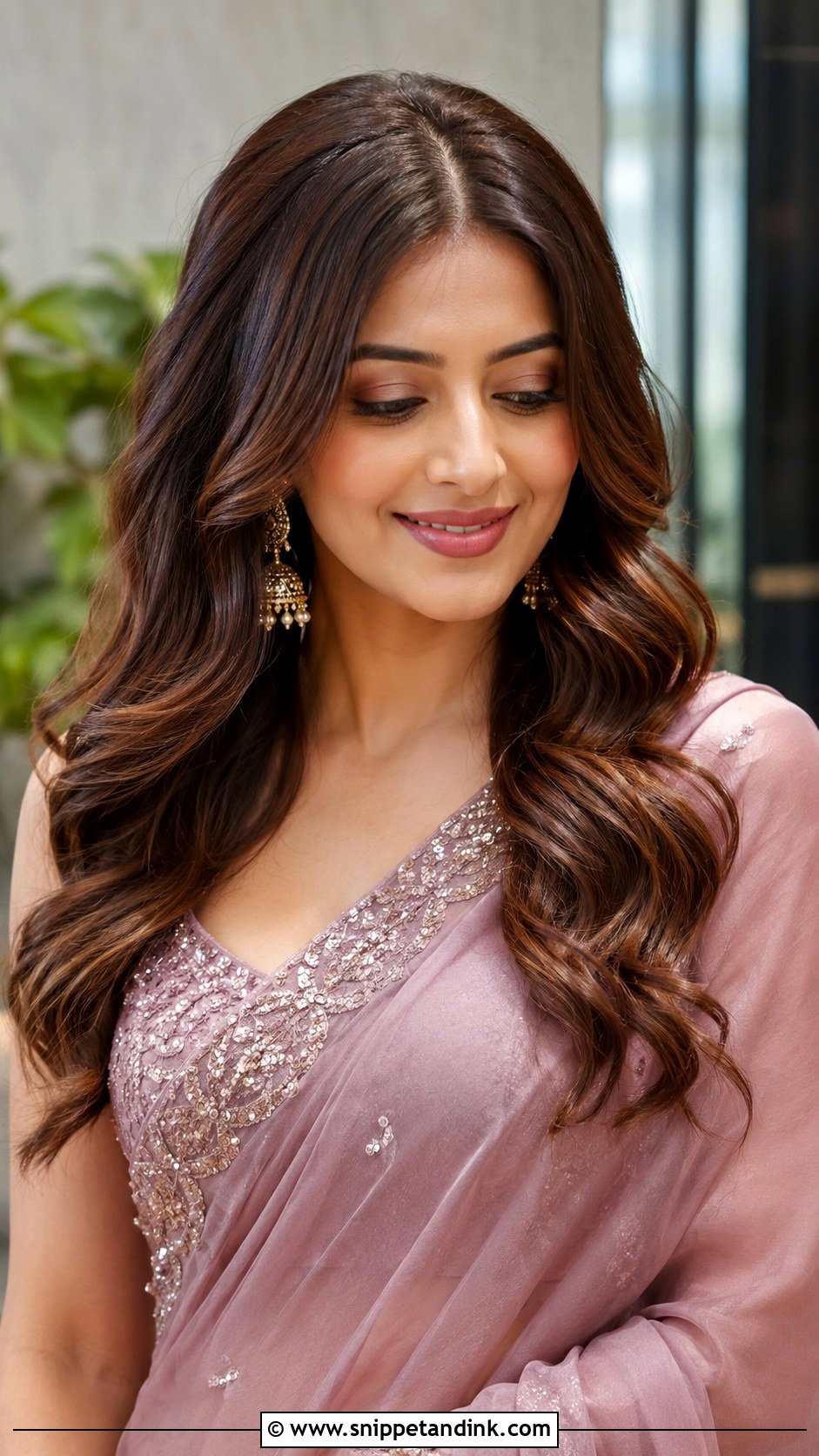
Soft waves suit medium and long hair with almost any outfit, from a saree to a festive suit or gown. They should stay smooth and glossy here, not beachy. I curl in large sections, let them cool, brush through gently and finish with shine spray at arm’s length. A center part looks modern; a side part reads more glamorous. Statement earrings and a bindi are enough to finish it. A dupatta worn over the head will flatten waves at the crown, so this is a better pick for a reception than for a ceremony where you’ll cover your head.
17. Side Braid Hairstyle For Indian Wedding Guest
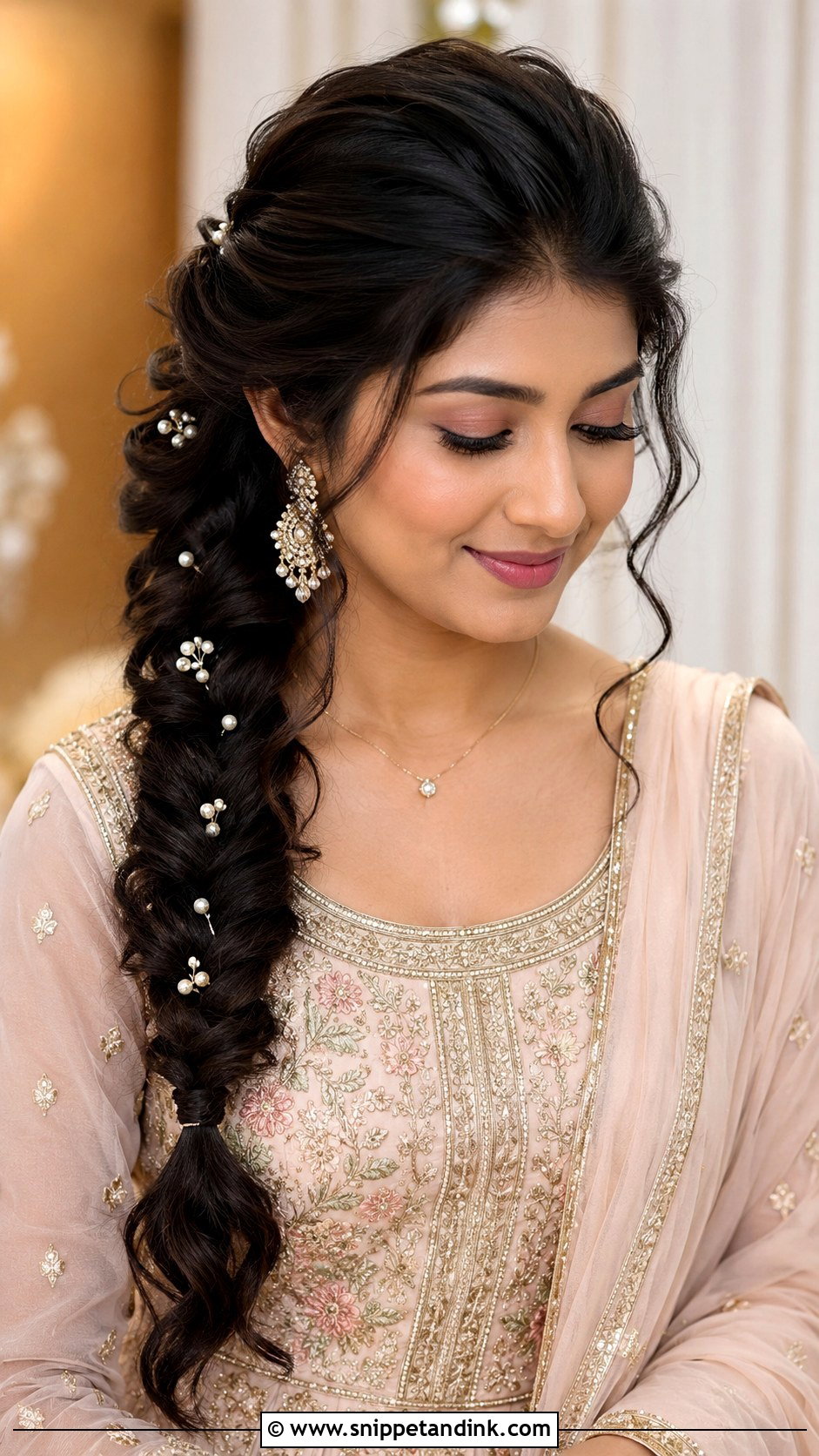
A side braid rests over one shoulder and leaves the back of the outfit on show. I find it the most practical choice when a day involves travel between venues, outdoor weather or a lot of dancing. It can be classic, fishtail, rope or loosely textured, depending on length. I lift the crown slightly before braiding so it looks dressed up. It pairs with lehengas, anarkalis and sarees draped lightly. A few small flowers or pearl pins along the braid keep it festive and still guest-appropriate.
18. Juda Hairstyle For Indian Wedding
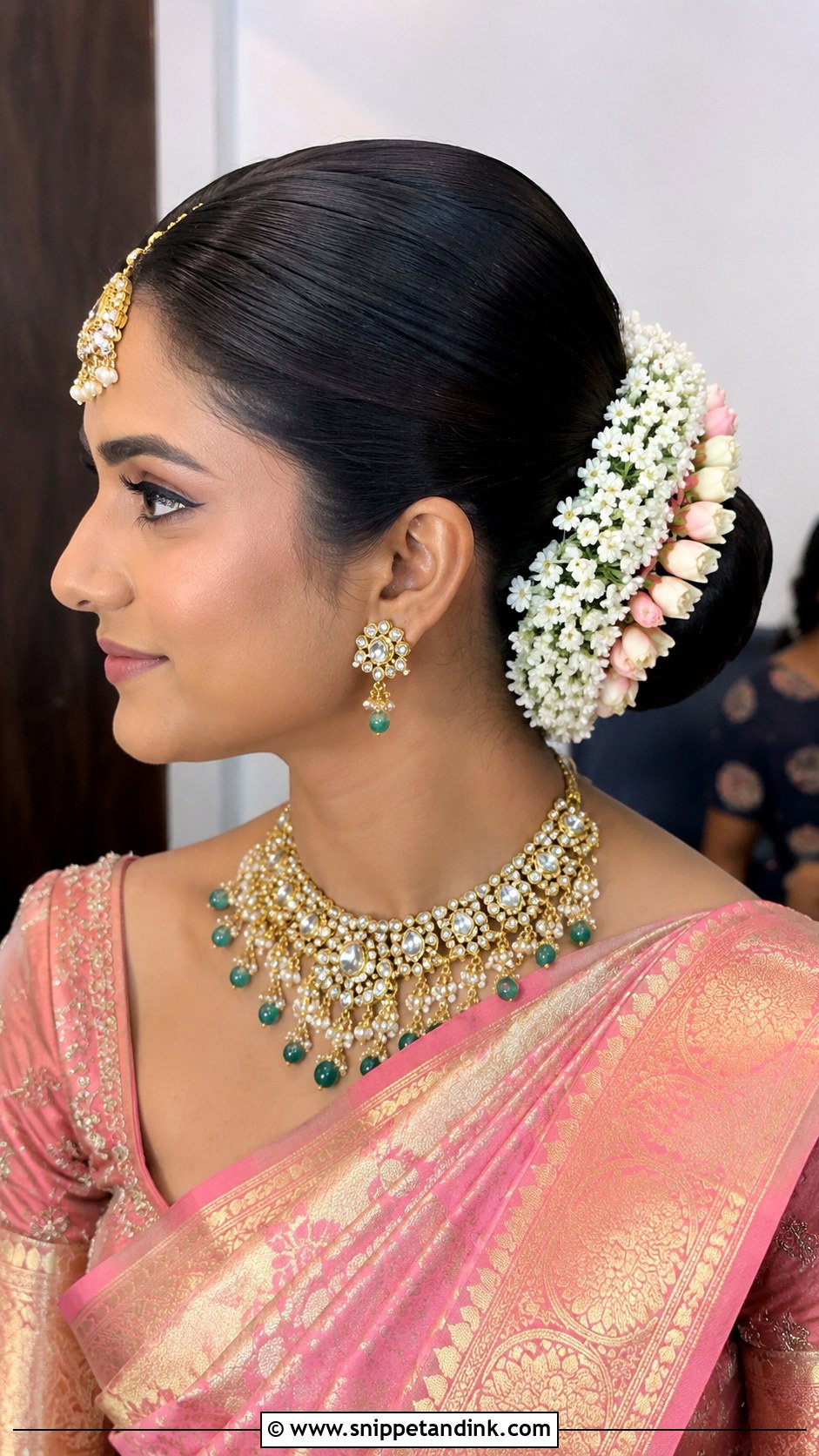
The juda hairstyle is the traditional Indian bun, sitting low or mid at the back. It can be sleek, braided, twisted or decorated with flowers, and it keeps a saree’s neckline clean so the jewelry shows. I often suggest it to older guests or anyone who doesn’t want to think about touch-ups, because a well-built juda barely moves. If your hair is thin, a bun padding gives fullness; cover it fully, as a peeking pad shows in flash photos. A floral ring, gold pin or pearl detail finishes it.
19. Short Hair Hairstyle For Indian Wedding Guest
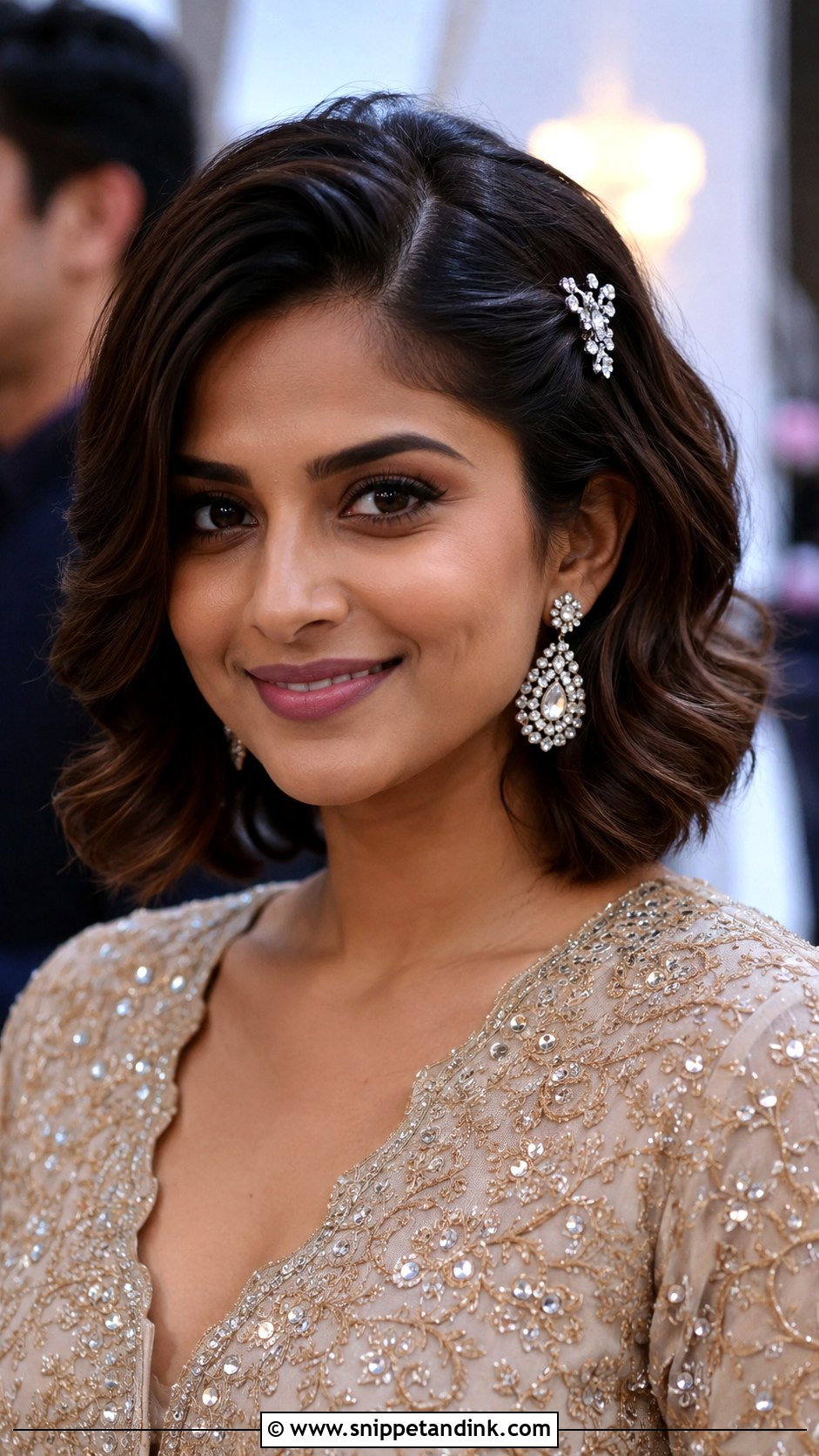
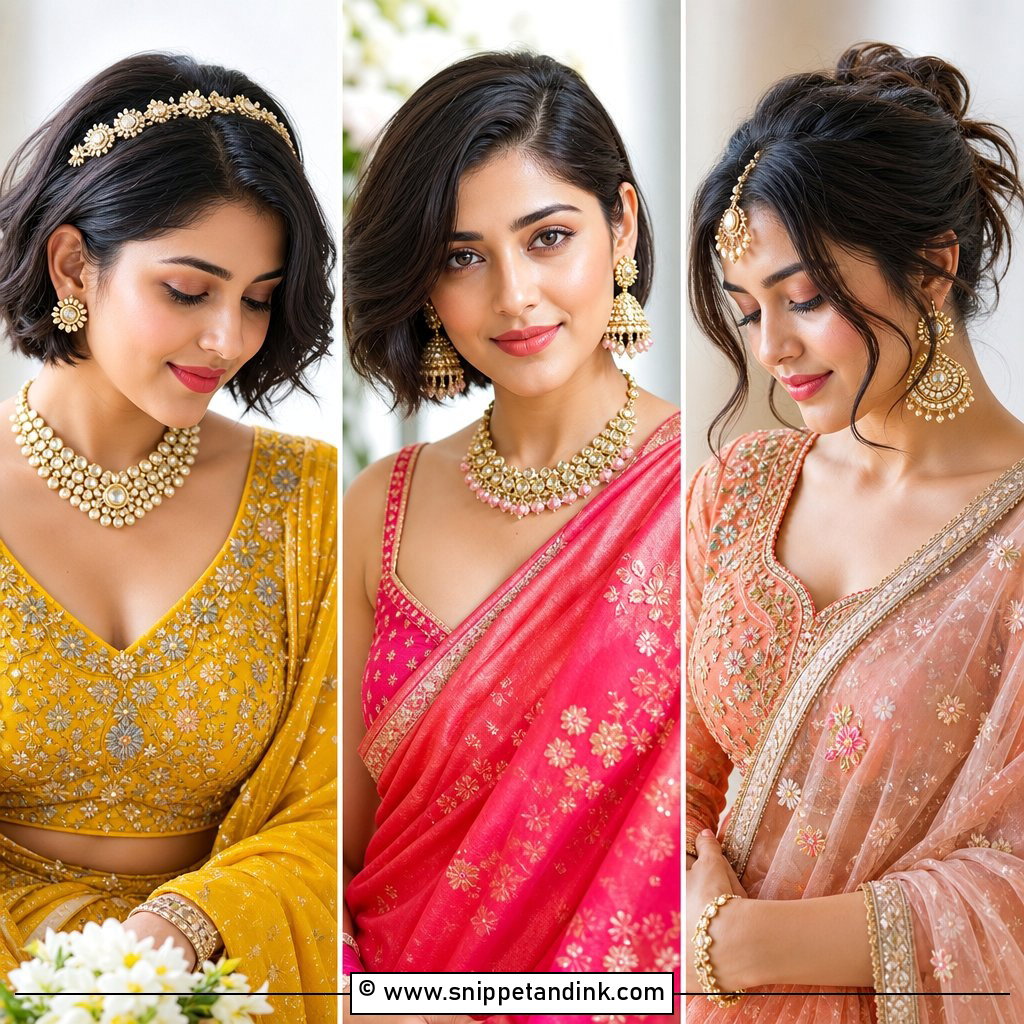
Short hair has plenty of festive options. A curled bob, tucked waves or a side-parted short cut can all look dressed for a function. I add volume at the crown, curl the ends away from the face and place a decorative clip on one side. It suits sarees, lehengas and Indo-Western outfits, and with a heavy outfit, short hair keeps the overall look light. Strong earrings and a bindi do the rest. If you’ll wear a dupatta on your head, ask for less volume at the crown so it sits flat.

20. Curly Bun Hairstyle For Indian Wedding Guest
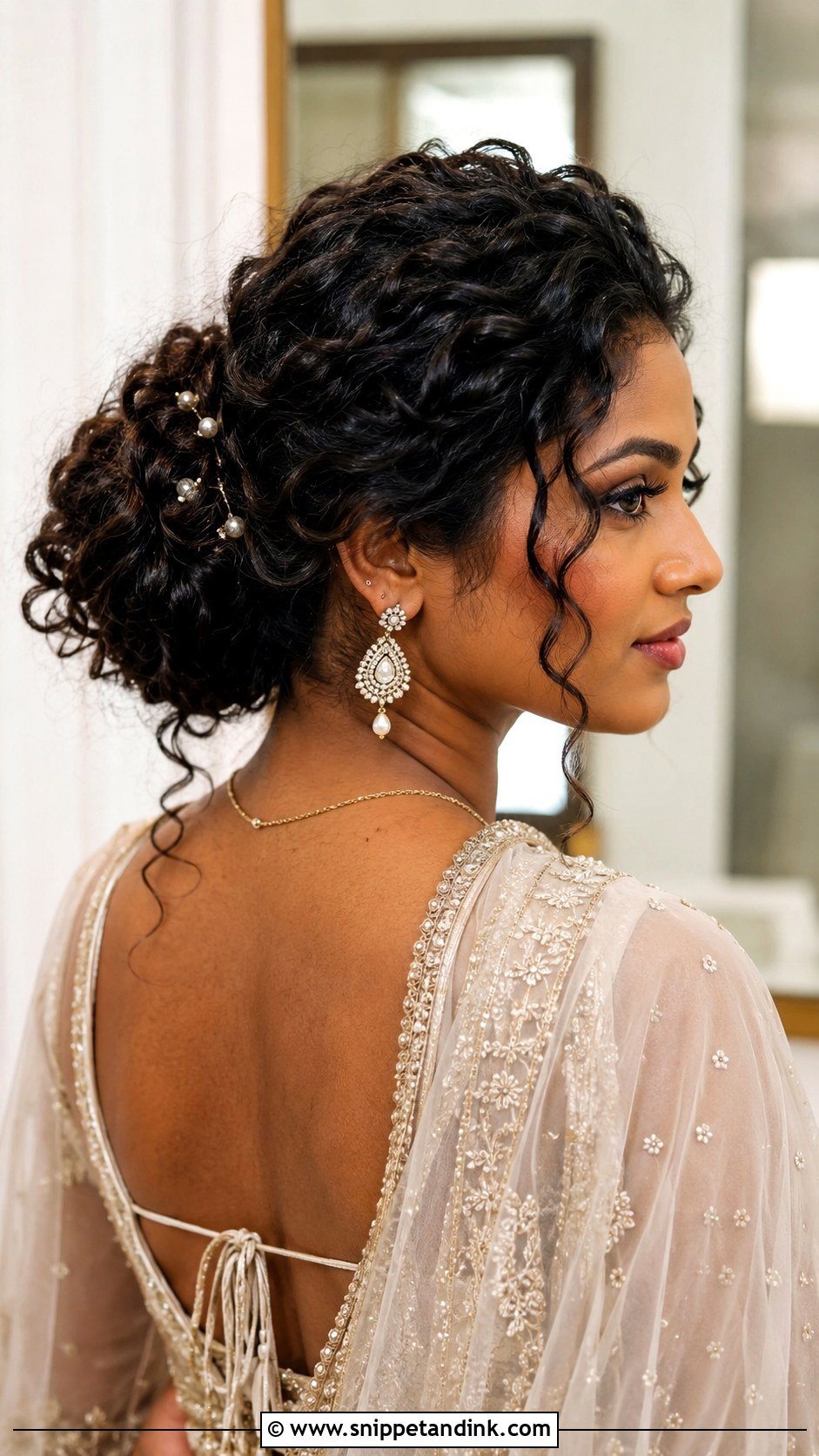
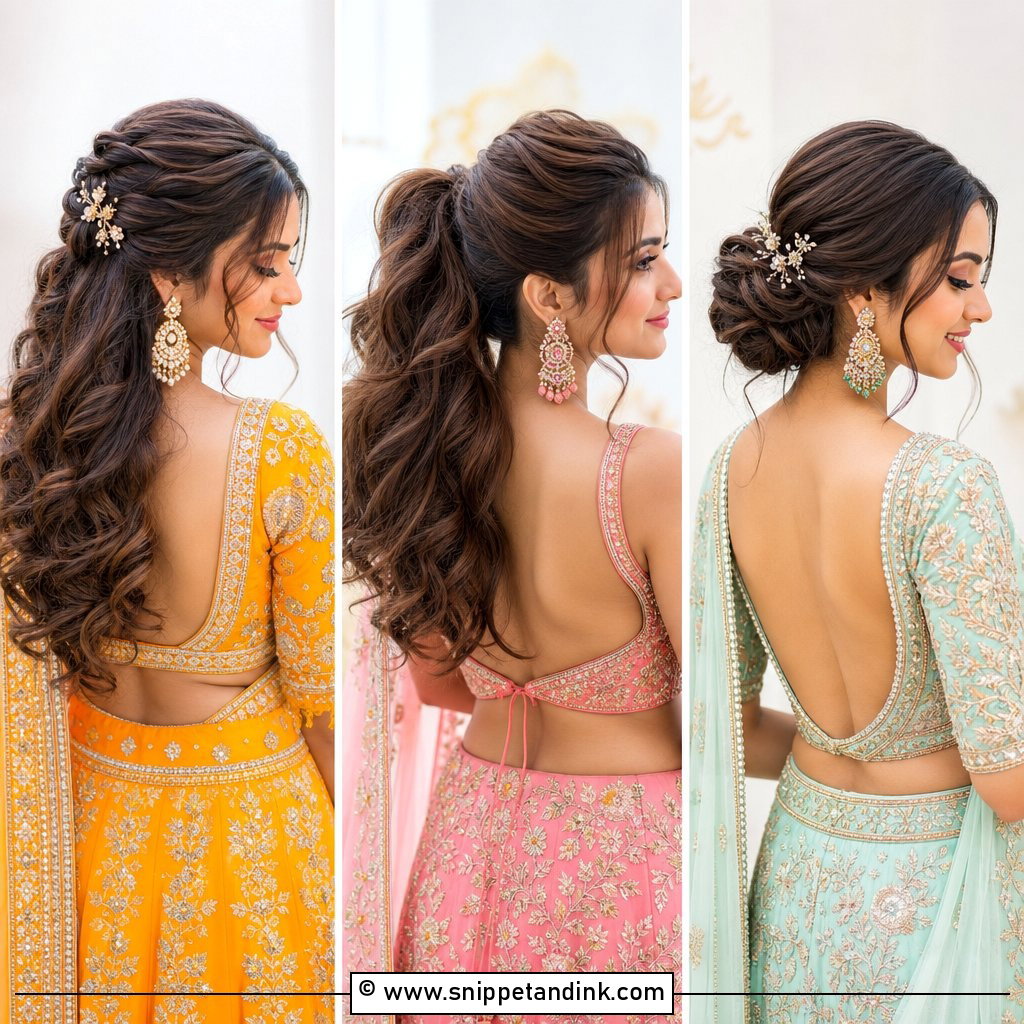
Naturally curly or wavy hair suits a curly bun, which keeps the volume and still holds securely. Define the curls with your usual cream first, then gather them low or mid, leaving a few out around the face. I pin it gently and avoid smoothing the bun too much, or the curls lose shape. It pairs with sarees, lehengas and festive gowns. Pearl pins or small flowers show up well against curls. It also handles humidity far better than heat-styled curls, which makes it a smart choice for summer weddings.
Gajra, Dupatta and Tikka Without Anything Slipping
Most guest hair problems at Indian weddings come from what sits on the hair, not the style itself.
Fresh jasmine
Buy gajra on the day if you can. If you have to buy it earlier, keep it wrapped in a damp cloth in a cool spot. Pin it after the bun is finished, with U-pins pushed right through to the base, and expect it to feel heavier as the evening goes on. The scent is strong, so check that whoever sits next to you at a long ceremony is fine with it.
A dupatta over the head
A low, flat bun gives a dupatta the best surface to rest on. High buns and volume at the crown push it backward. I pin the dupatta to the hair with two or three bobby pins hidden under the fabric at the crown and behind each ear, so it stays in place when you bow or move.
A tikka or passa
Anything hanging from the hairline needs an anchor of crossed pins under the hair. Clip the chain to that, not to loose strands, or it will drift sideways by the time photos start.
Dressing Your Hair for the Sangeet and the Pheras Alike
The right guest style depends on the outfit, the time of the function, your texture and whether you’ll cover your head. Sleek buns and the juda belong at traditional ceremonies. Open curls, soft waves and half up hair suit receptions and sangeet nights. Braids stay secure at mehendi and outdoor events. Keep accessories in proportion to your jewelry so they don’t compete. With proper prep, enough pins and a finishing spray, your hair should still look tidy at the end of the last dance.
You'll Like These Ideas:



Leave a Reply