
A chaniya choli already carries a lot: mirror work, colour, a flared skirt that moves every time you turn. So when I plan hair for one, I start from the outfit rather than from a photo of a hairstyle. The dupatta drape, the weight of the jewelry, the blouse neckline and how much dancing is ahead all decide what will last. Some looks below keep the parting clear for a maang tikka; others add crown height or use flowers to soften heavy embroidery. All of them are styles I would trust through a long function, from classic buns to braids, curls and easy looks for guests.
Your Dupatta Drape Decides Where the Detail Goes
With a chaniya choli, the dupatta covers part of your head, shoulder or back for much of the day, and that changes which hairstyles are worth the effort. I have seen brides fall for an intricate braided back and then realise the dupatta hides it in every photo. So I ask about the drape before anything else.
- Over one shoulder: the opposite side of your head and neck is what people see. That is where a side braid, a gajra or a cluster of pins belongs.
- Pallu brought to the front, Gujarati style: the back is mostly covered, so I keep it simple behind and put the effort into the crown, the parting and the face.
- Over the head for the ceremony: a low, flat bun lets the fabric sit evenly. A high bun or front puff pushes it into a peak, and it slides off far more often.
- Open or tucked at the waist for dancing: this is your chance for a decorated back, a waterfall braid or loose curls.
If you will change the drape between the pheras and the reception, tell me at the trial. I will build a bun that still looks finished once the dupatta comes off, rather than one made only to sit underneath it.
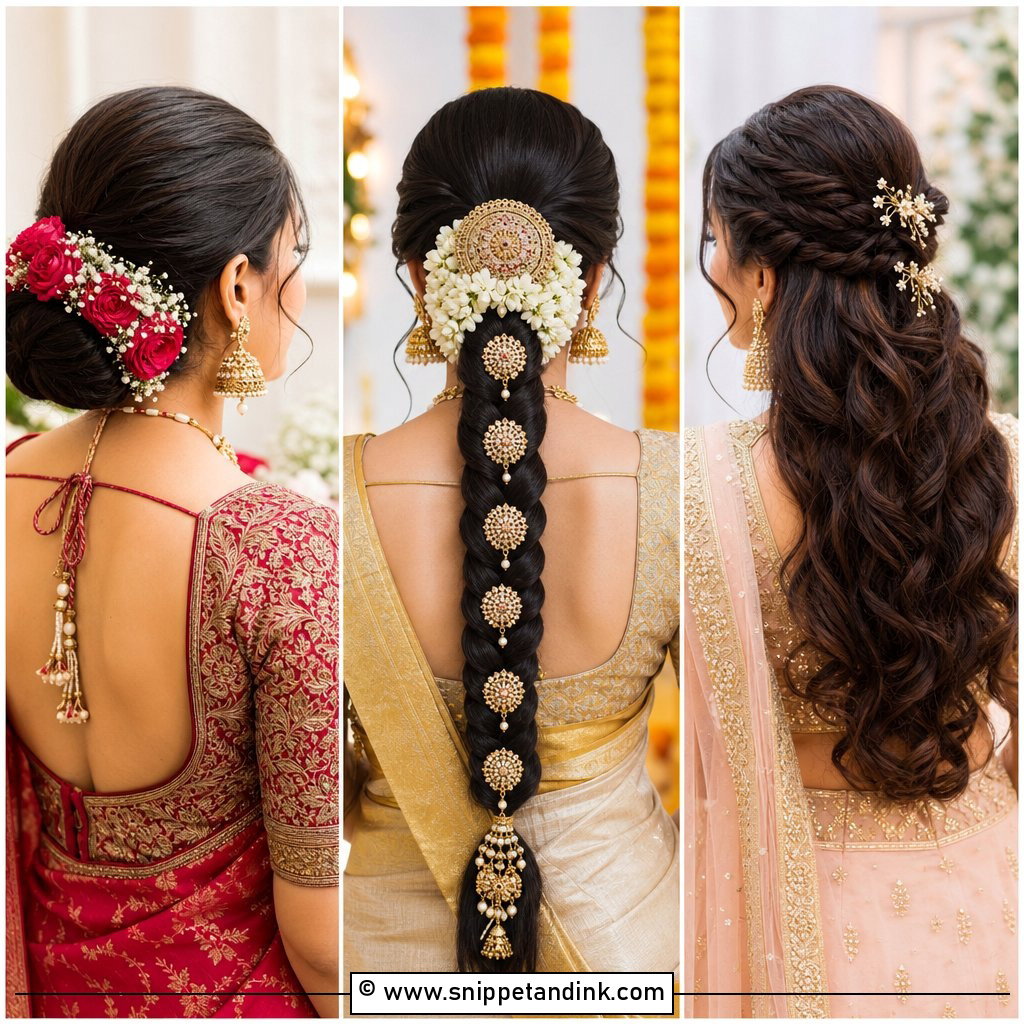
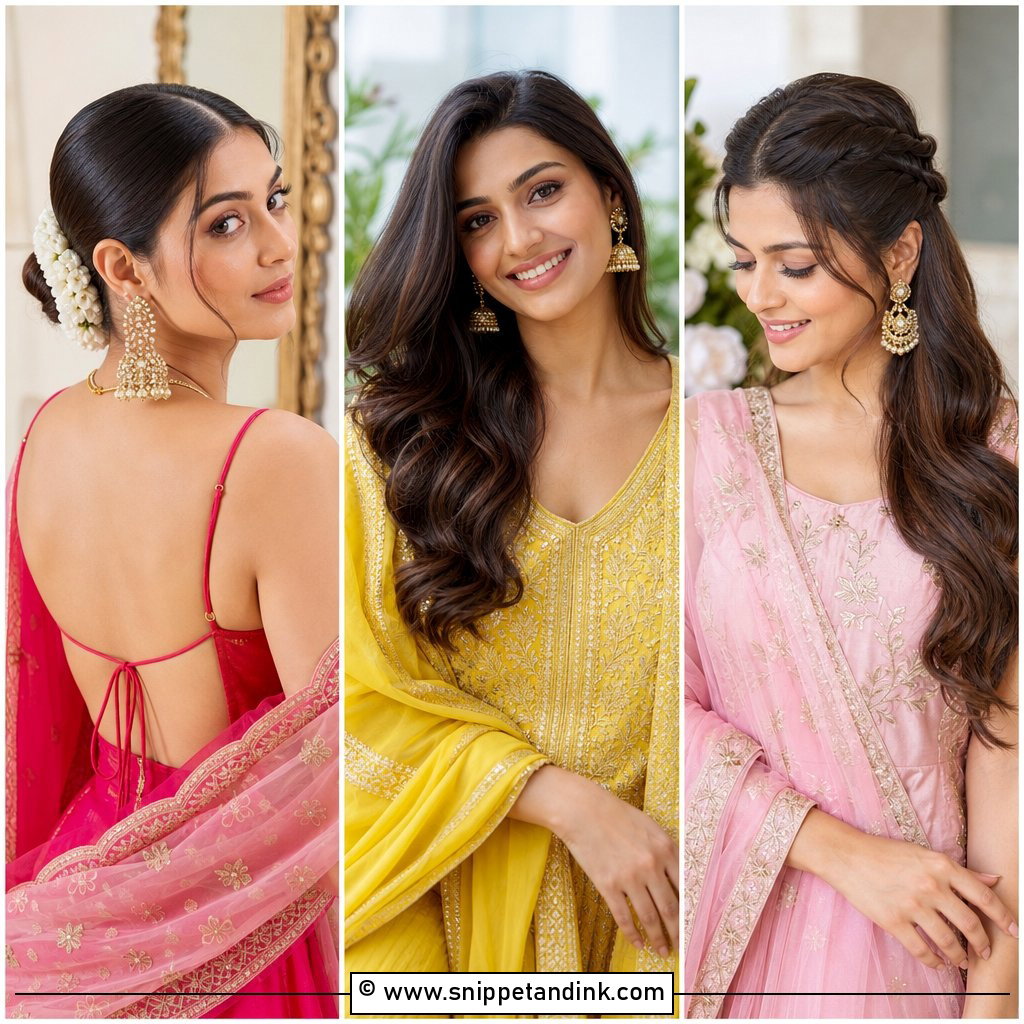
1. Floral Bun For Chaniya Choli Wedding
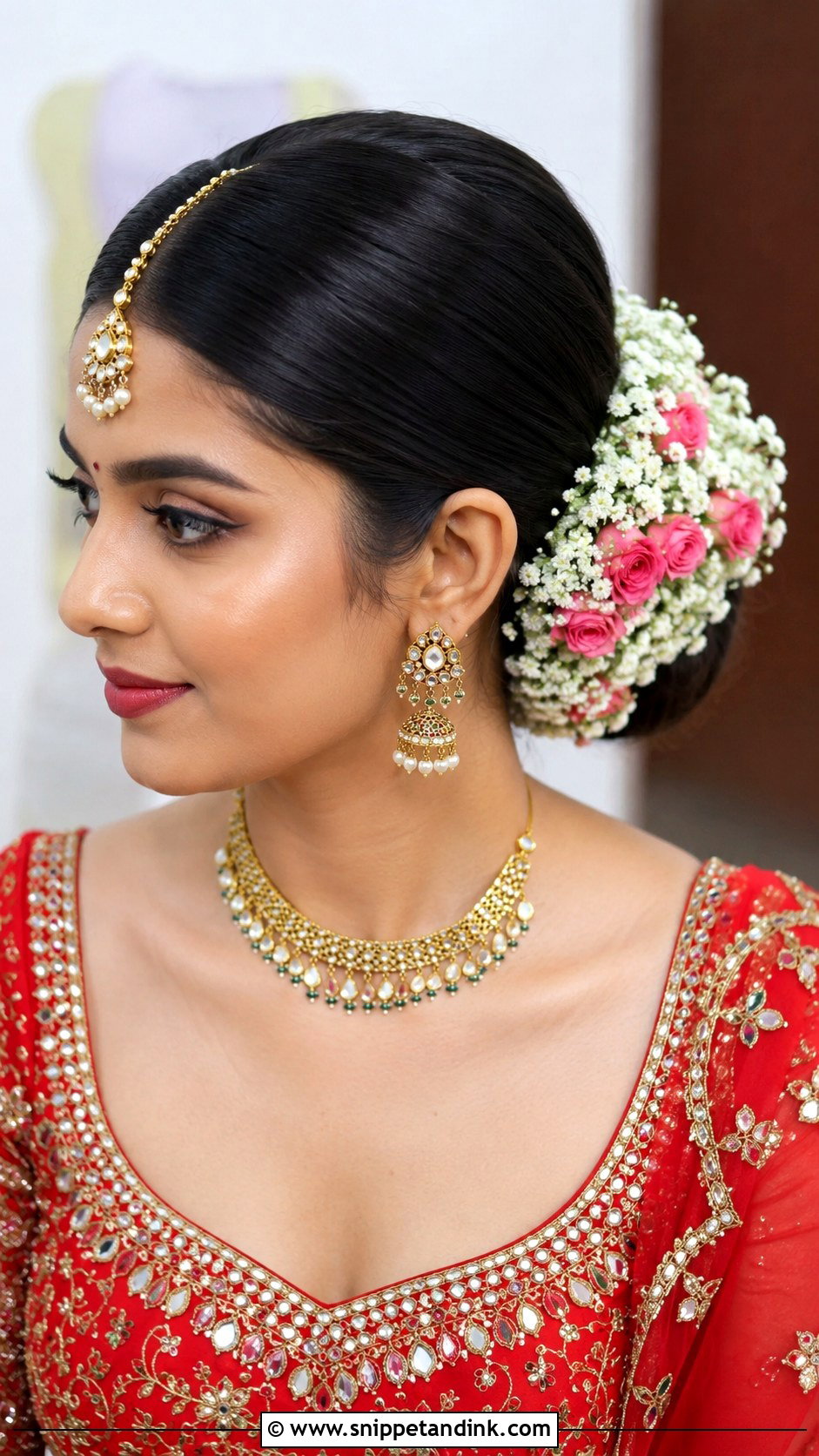
A floral bun keeps the earrings, neckline and blouse fully visible, which matters when the outfit has as much detail as most chaniya cholis do. It sits well with silk, bandhani, mirror work or heavy embroidery. Low at the nape reads traditional; a little higher gives more height to a softer face. If you choose fresh jasmine or roses, I pin them on last, after the bun is set and sprayed, because hairspray browns white petals quickly. Smooth the front with a centre part when a maang tikka is going on.
2. Side Braid For Chaniya Choli Wedding
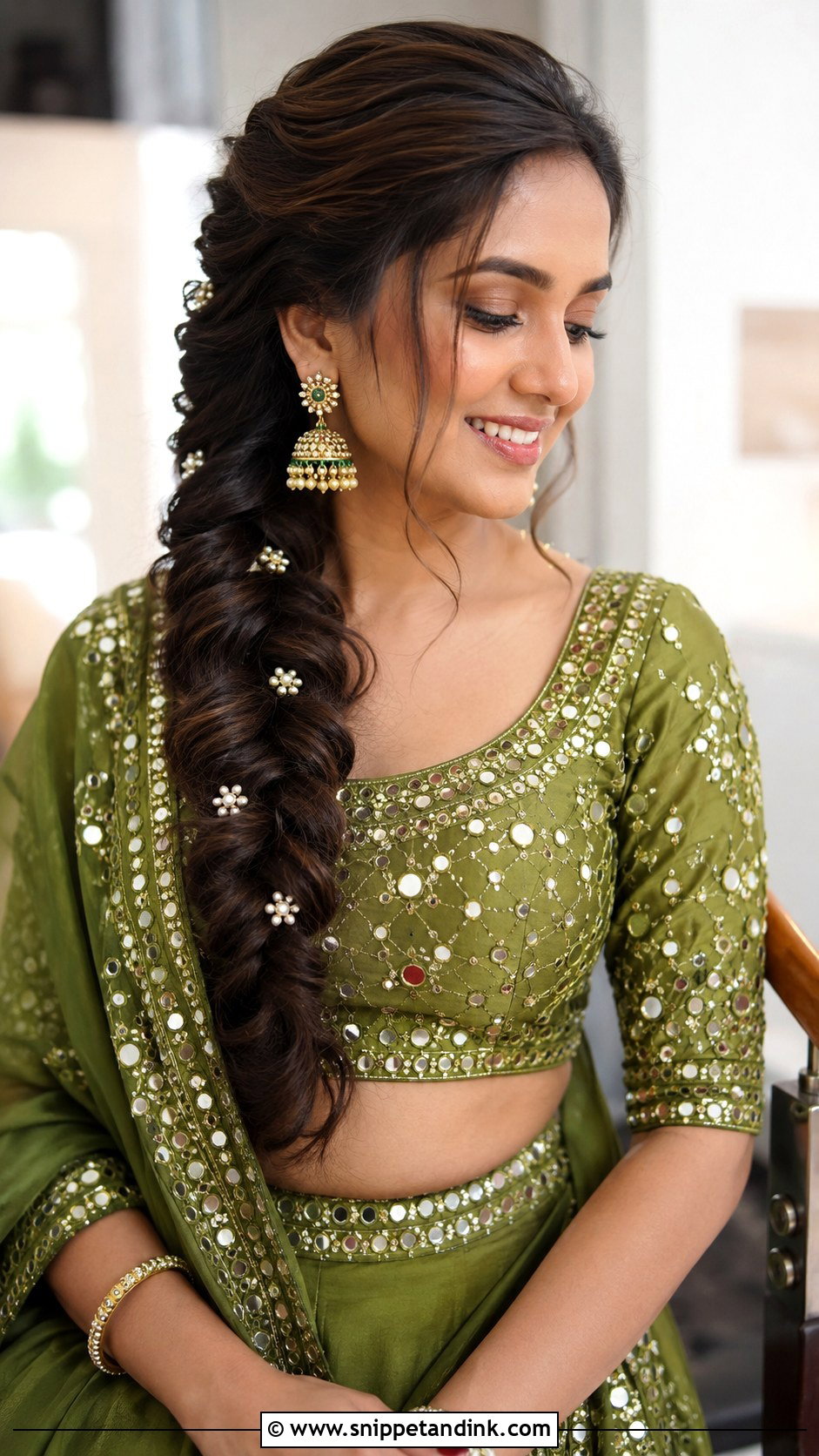
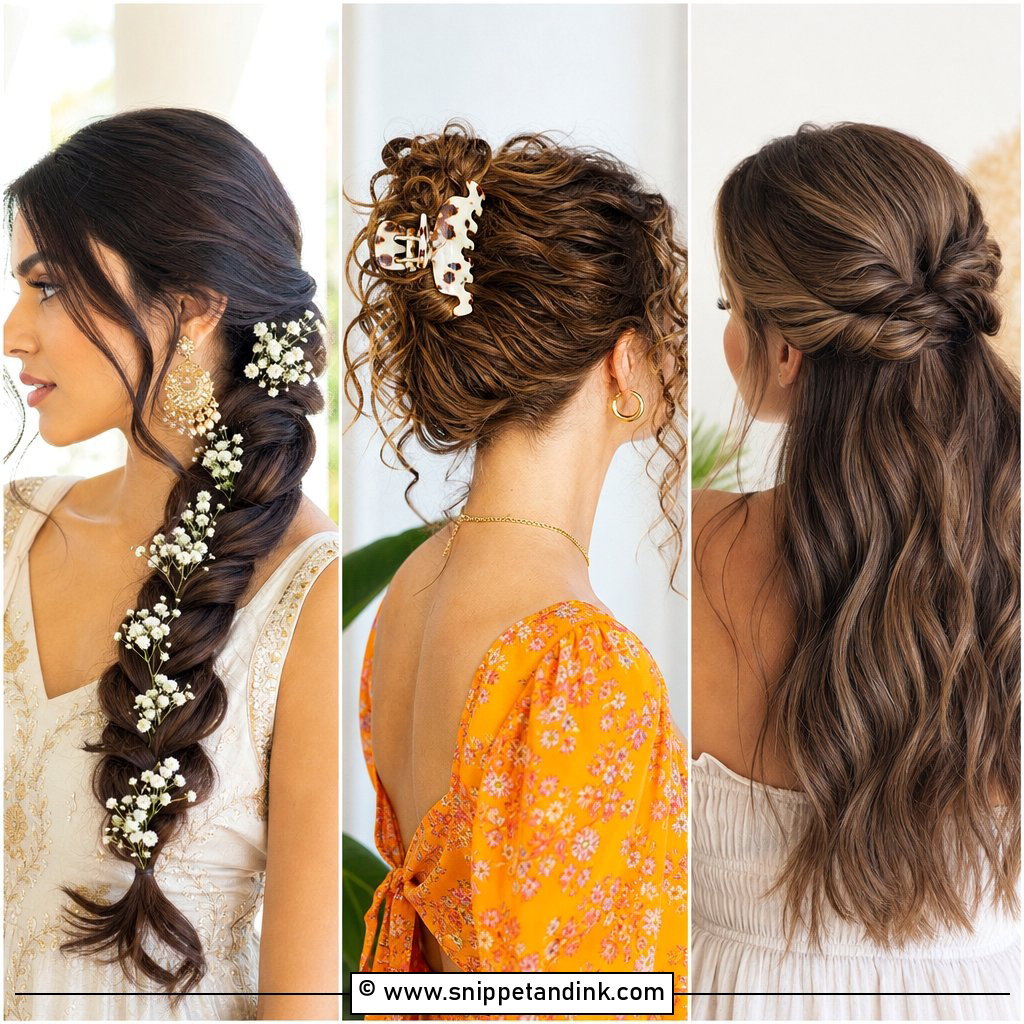
For mehendi, haldi or garba, a side braid is one of the safest styles I know. It stays put while you move, and it gives you somewhere to put decoration: pearls, flowers, gota ribbons or small mirror pins. I always ask which shoulder the dupatta will sit on, then braid toward the other side so the two never fight. Before I start the braid I tease the crown a little, otherwise the top of the head looks flat next to a heavy blouse and jewelry. Thick hair makes this look easy; fine hair benefits from a few clip-in wefts woven into the plait.
3. Open Curls For Chaniya Choli Wedding
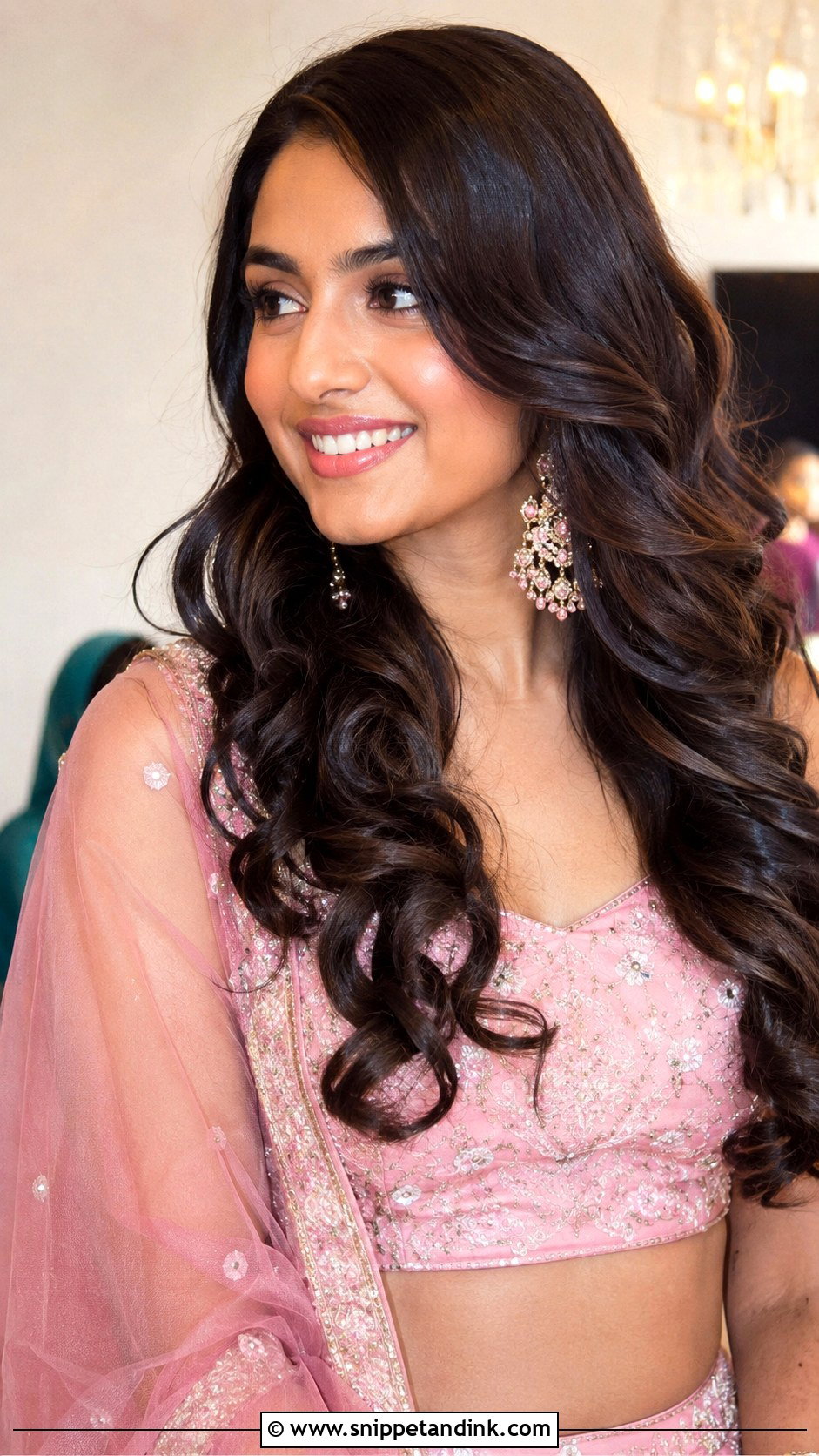
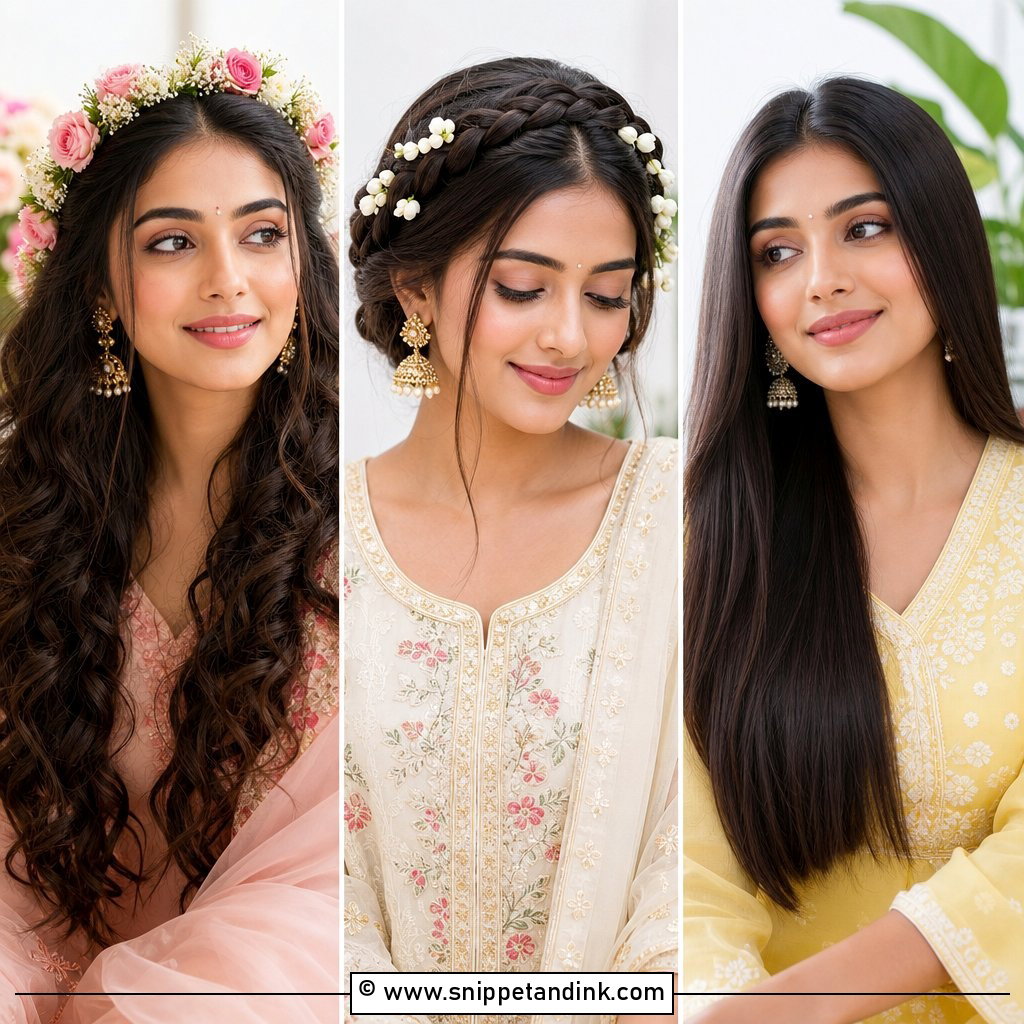
Open curls suit lighter, pastel chaniya cholis and evening functions like a sangeet, where you want movement in photos rather than a pinned finish. The problem is longevity. Curls in warm, crowded rooms drop faster than most people expect, so I curl in small sections, let each one cool fully in a pin curl, and brush out only at the end. A little serum on the ends controls frizz without weighing the curl down. With a deep-back blouse, open curls frame the back softly without covering all of it.
4. Half Up Hairstyle For Chaniya Choli Wedding
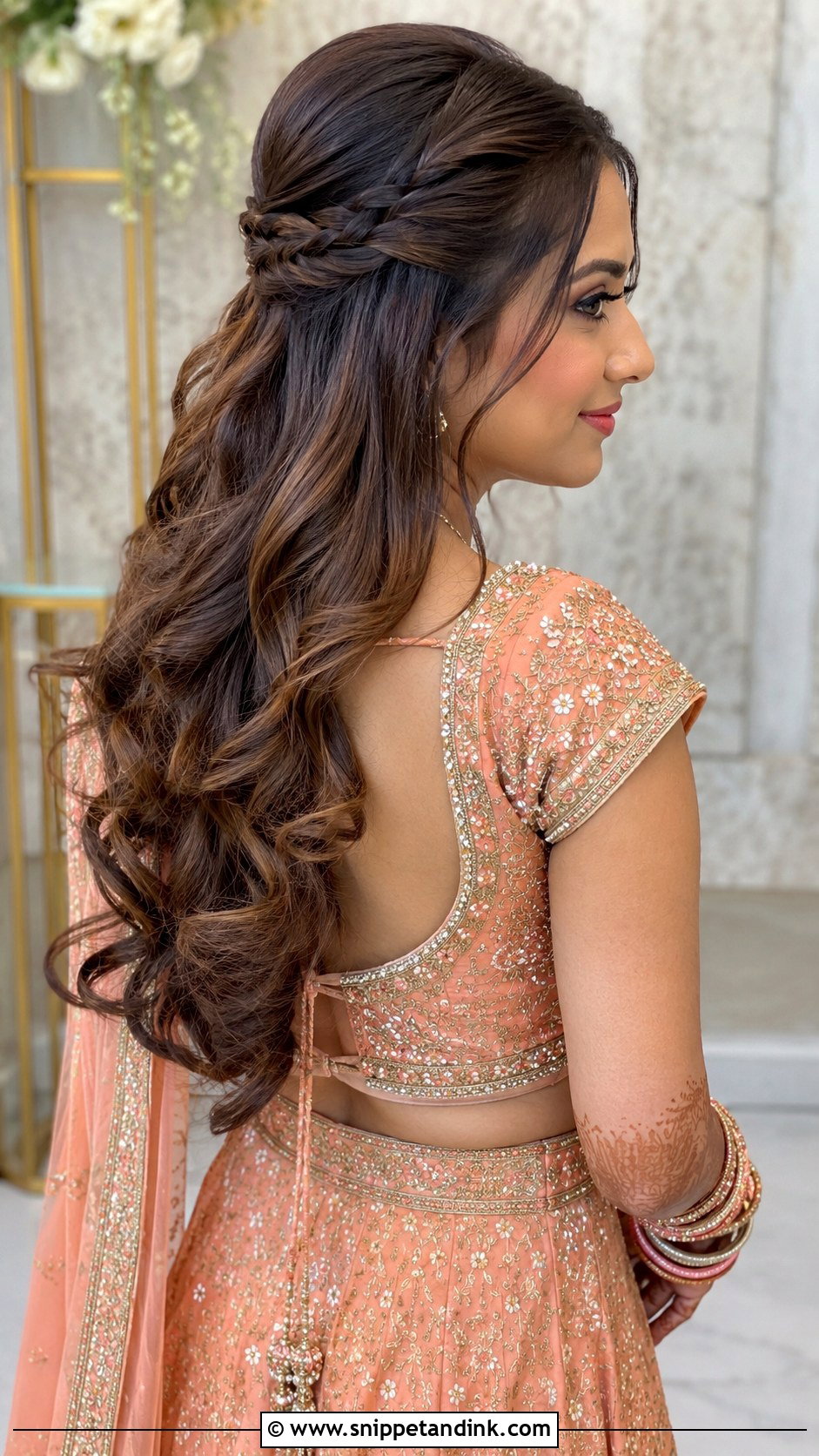
Half up is my compromise style: you get the softness of open hair, and the pinned top section keeps strands off your face and out of your lip colour. It needs medium to long hair and pairs well with lighter, lehenga-style chaniya cholis. I twist or braid the top section and pin it just behind the crown, where a small accessory can sit. Curls through the lower half finish it. Earrings stay visible, and if the hair starts to drop late in the evening it can be twisted up into a bun in a couple of minutes.
5. Sleek Low Bun For Chaniya Choli Wedding
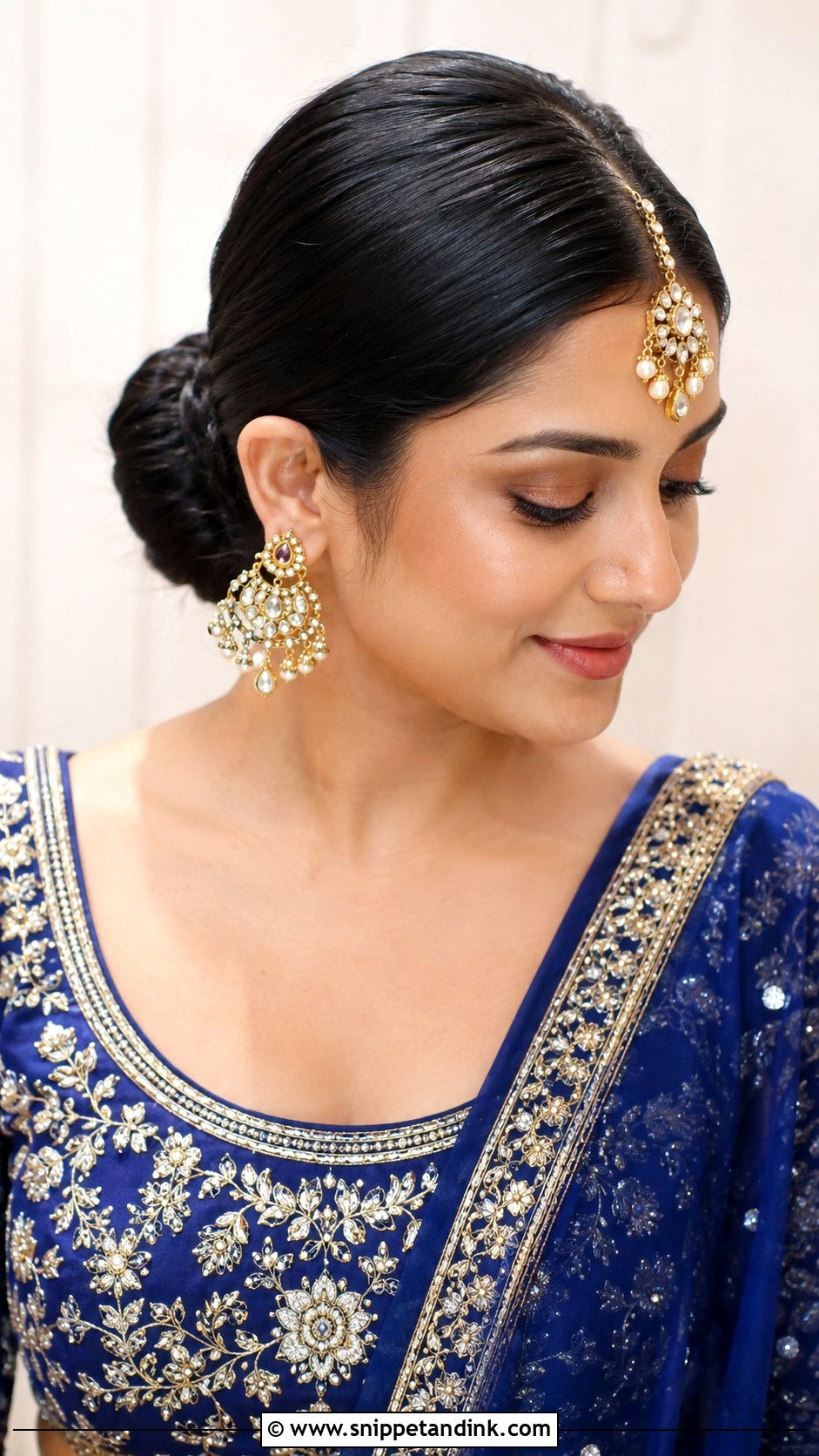
When the embroidery is heavy or the dupatta is dramatic, I usually suggest a sleek low bun, because it steps back and lets the outfit lead. It also gives a choker, layered necklace or bold maang tikka a clean background. A centre part looks classic; a side part a little more modern. The smooth surface is where the work goes: I brush each section flat, use a light gel at the hairline and finish with shine spray. Secure it with pins crossed into the base, since a slippery bun loosens quickly once you start greeting relatives and dancing.
6. Fishtail Braid For Chaniya Choli Wedding
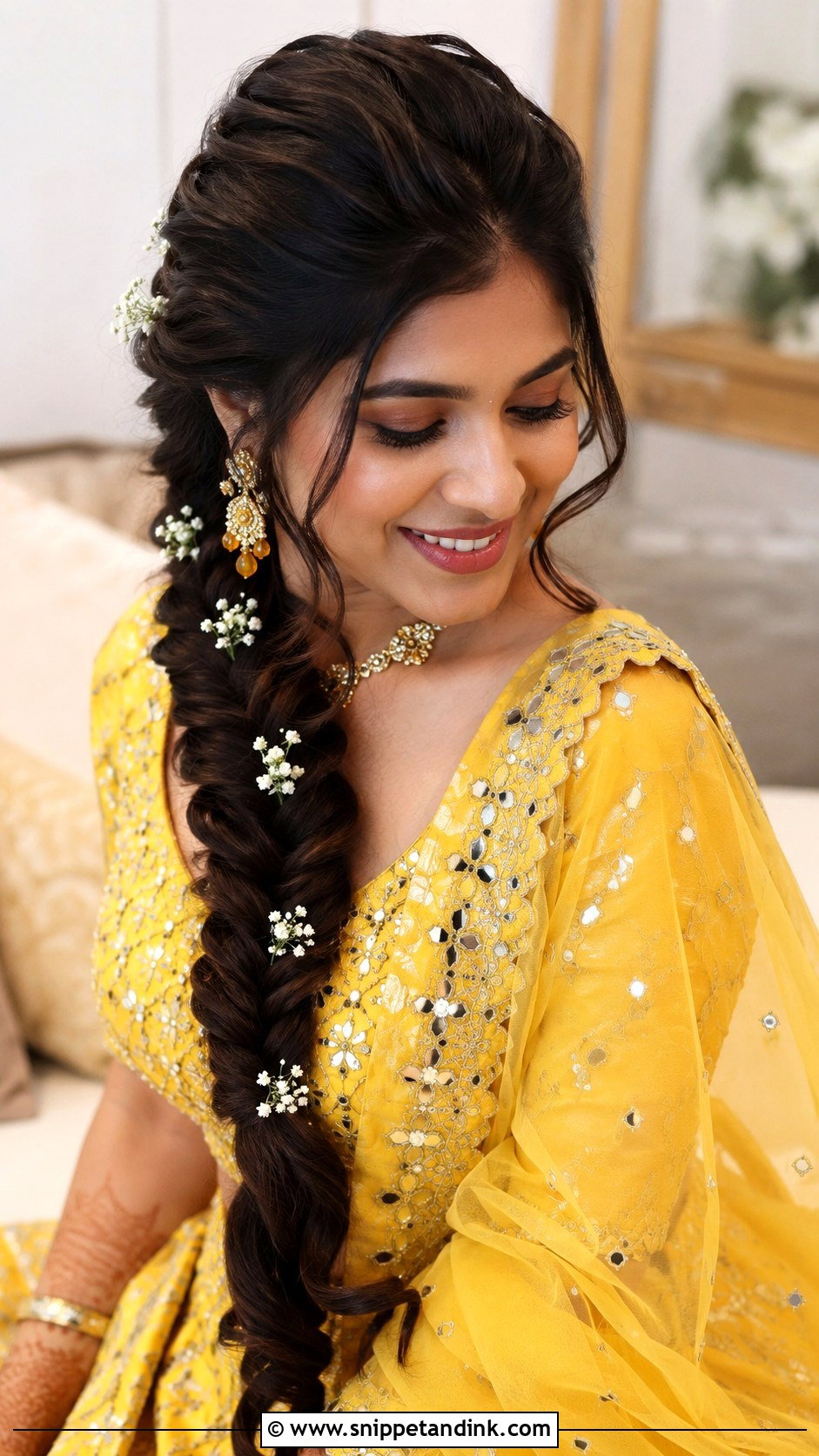
Fishtail braids give a lot of texture for very little weight, which is why I suggest them to bridesmaids and sisters of the bride who will be on their feet all day. Worn down the back, it looks neat; over one shoulder, it shows up more in photos. Once the braid is tied I gently pull the edges outward to make it look thicker, working from the bottom up so it does not loosen at the nape. Small flowers or coloured thread tie it to the outfit. It suits mirror work, a printed chaniya choli or a boho-themed function.
7. Messy Bun For Chaniya Choli Wedding
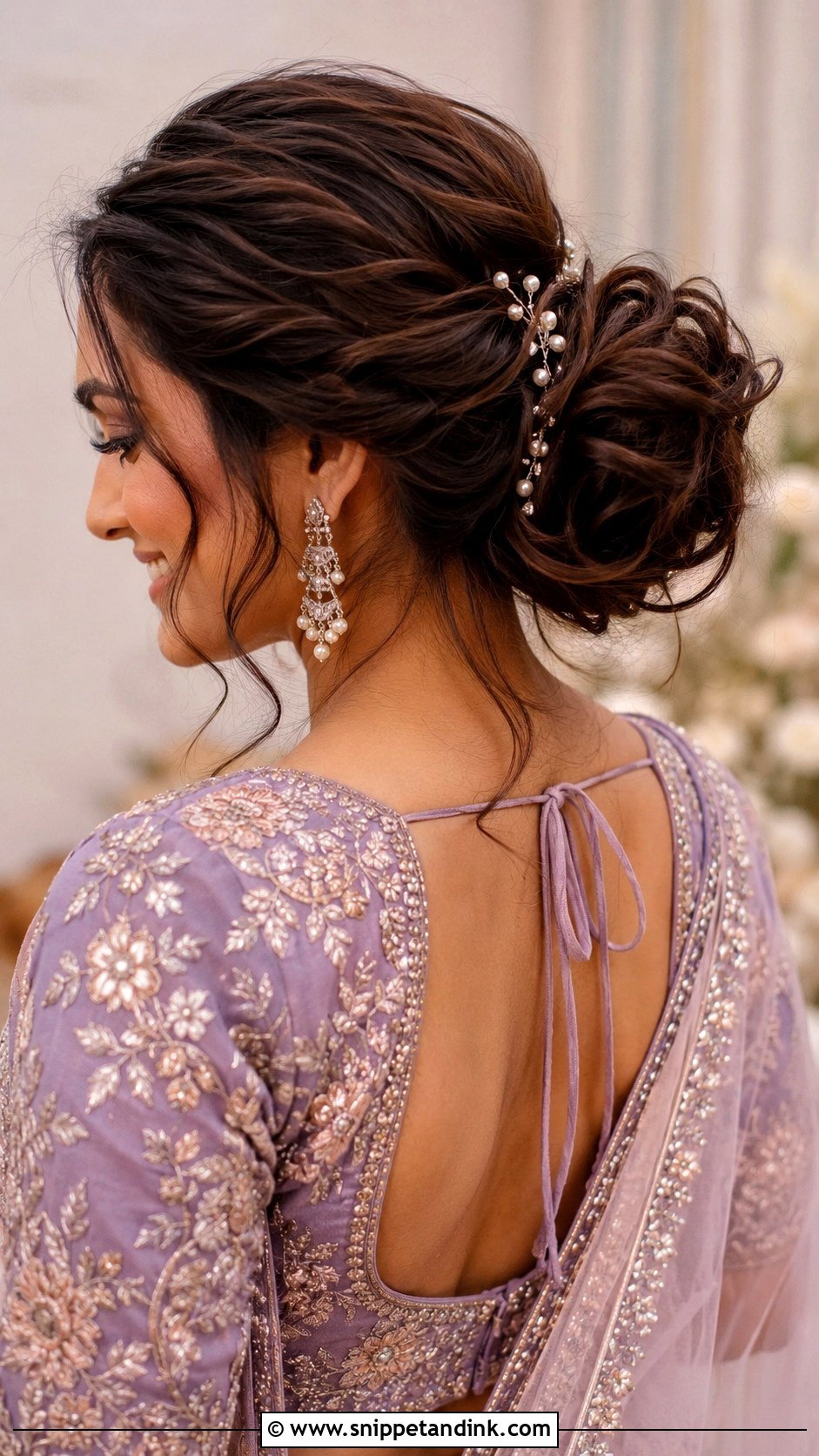
A messy bun has to be messy on purpose. I build it like a normal bun, pinned properly, and only pull out texture and tendrils at the end, so the looseness is controlled. A little crown volume and soft pieces near the cheeks flatter most faces. It suits sangeet, cocktail and daytime functions, and it pairs well with a light dupatta because the bun still looks full from the side. If you want extra detail, a fine hair chain or a few floral pins is enough; anything heavier starts to pull the loose texture down.
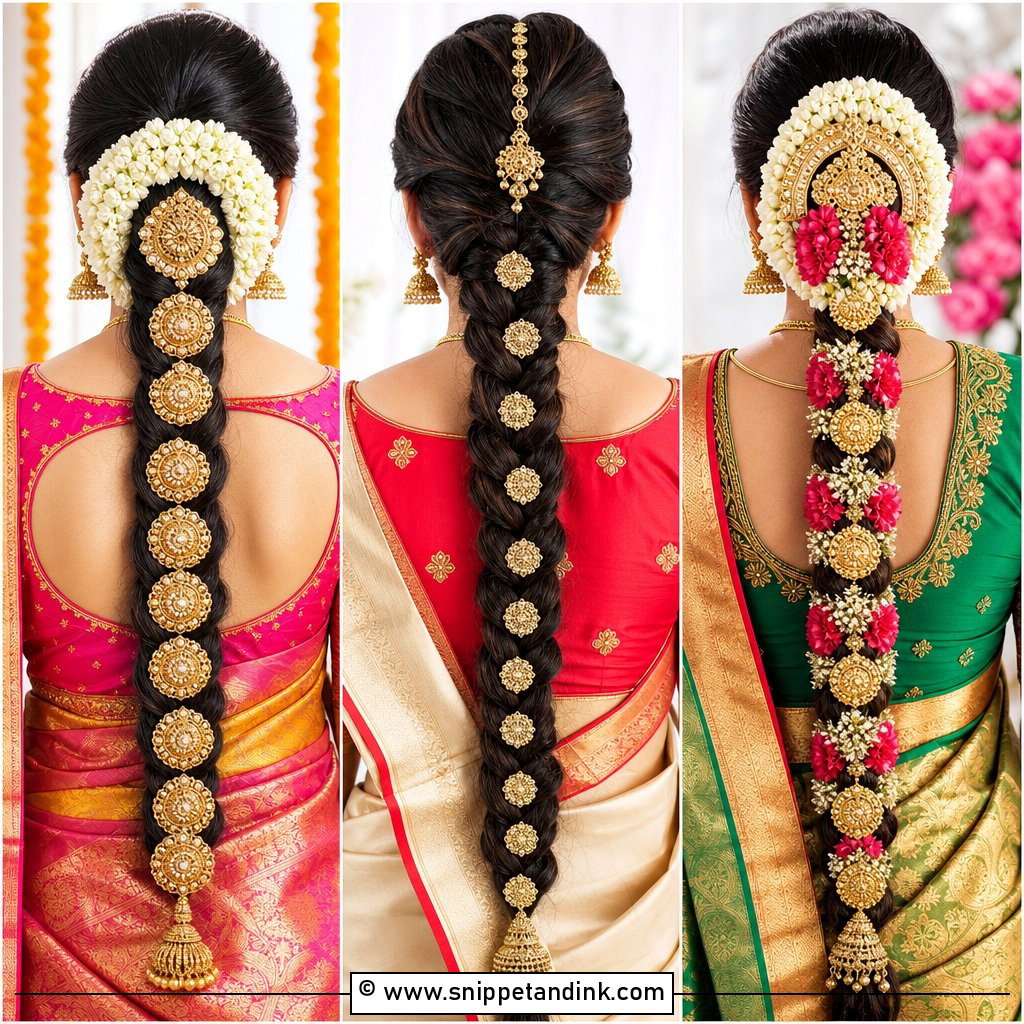
8. Maang Tikka Hairstyle For Chaniya Choli Wedding
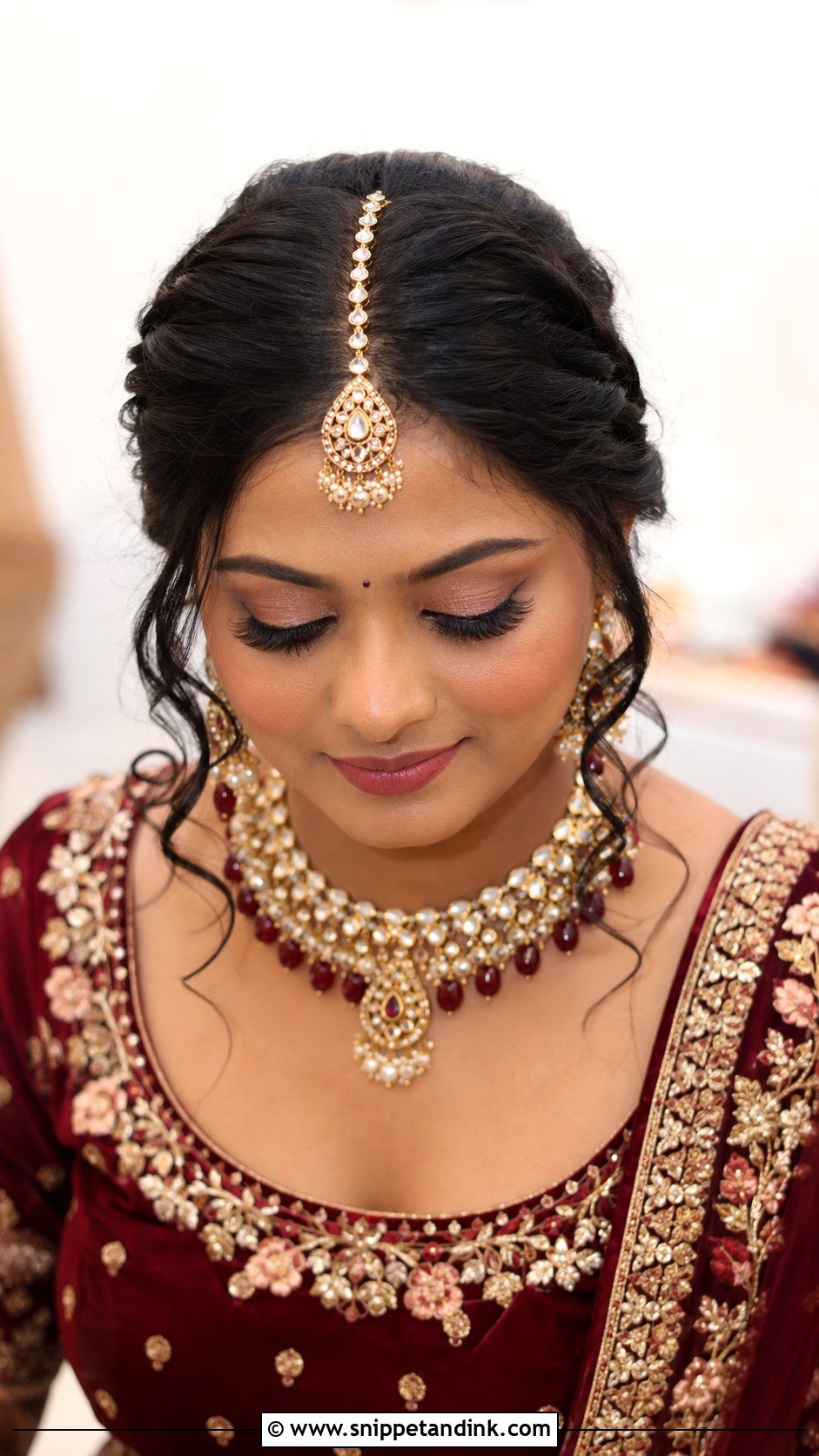
With a maang tikka, the parting comes first. I set a clean centre part, then build a bun, braid or curls behind it, and I hide a small pin or two under the chain so the tikka stays centred when you look down. On a round face I add gentle crown lift so the flat centre part does not widen the face. If the outfit is very colourful, keep the other accessories simple and let the tikka lead. This is the style I reach for most for bridal looks and traditional ceremonies, because the jewelry stays stable all day.
9. Braided Bun For Chaniya Choli Wedding
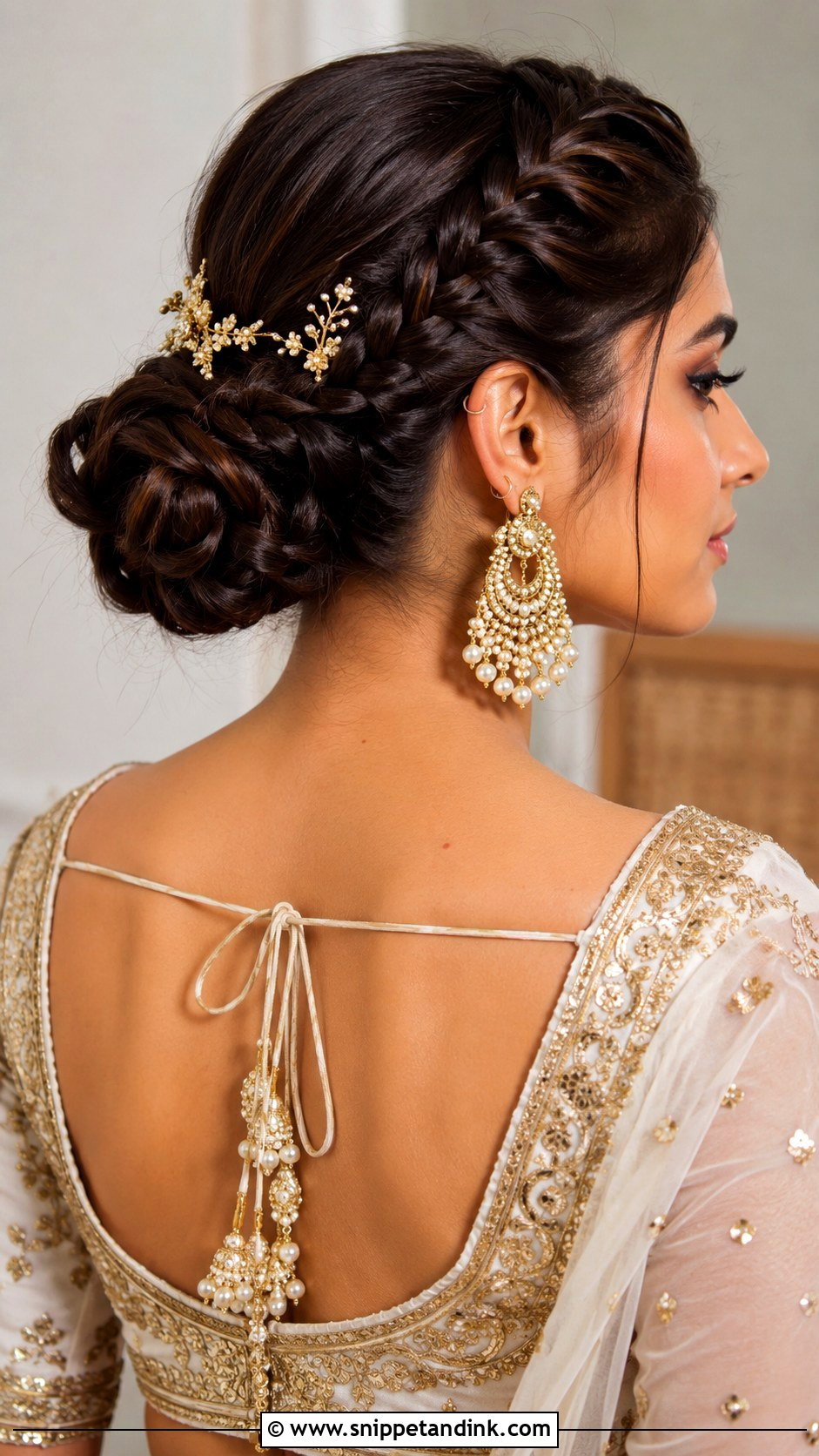
A braided bun is a plain bun with structure built into it. I make it by wrapping a braid into a low bun, running a crown braid back into one, or blending small side braids into the back. Because the braid locks the hair in place, it holds under a heavy dupatta better than a smooth bun does. It keeps the neck open for layered jewelry and backless blouses. Tuck flowers or gold pins into the braided sections; they grip the plaits far better than a smooth surface, which helps in back-view photos.
10. Ponytail Hairstyle For Chaniya Choli Wedding
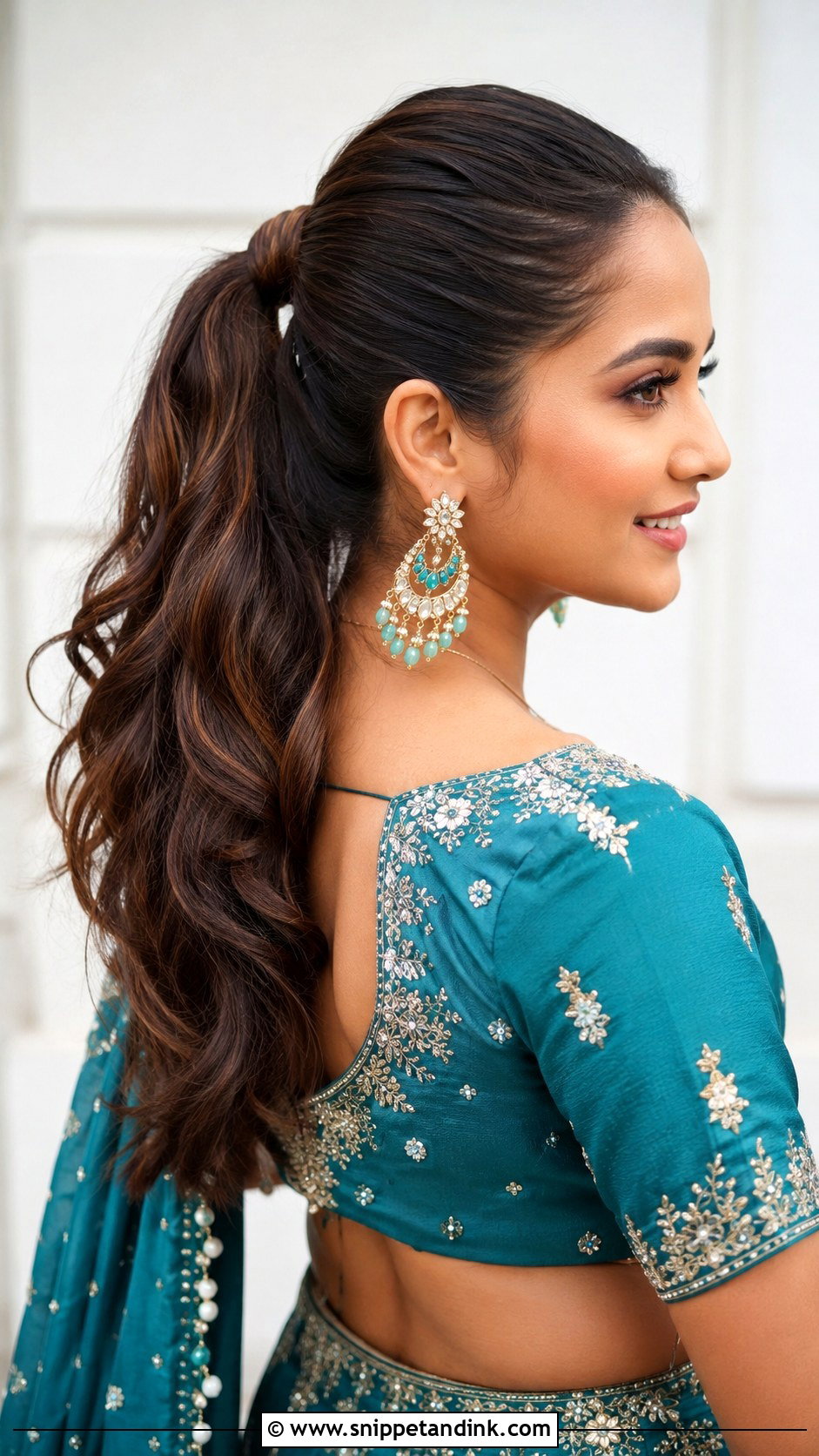
A ponytail can look formal with a chaniya choli, as long as it does not look like your everyday one. I add crown volume, smooth the sides, wrap a strand around the elastic and curl the length. A low ponytail feels traditional; mid or high adds energy. It works best with a high neckline or a detailed blouse back. For garba especially, I like it: nothing is pinned against the scalp, so it stays comfortable for hours, and if the curls drop, the ponytail still looks finished.
11. Gajra Bun For Chaniya Choli Wedding
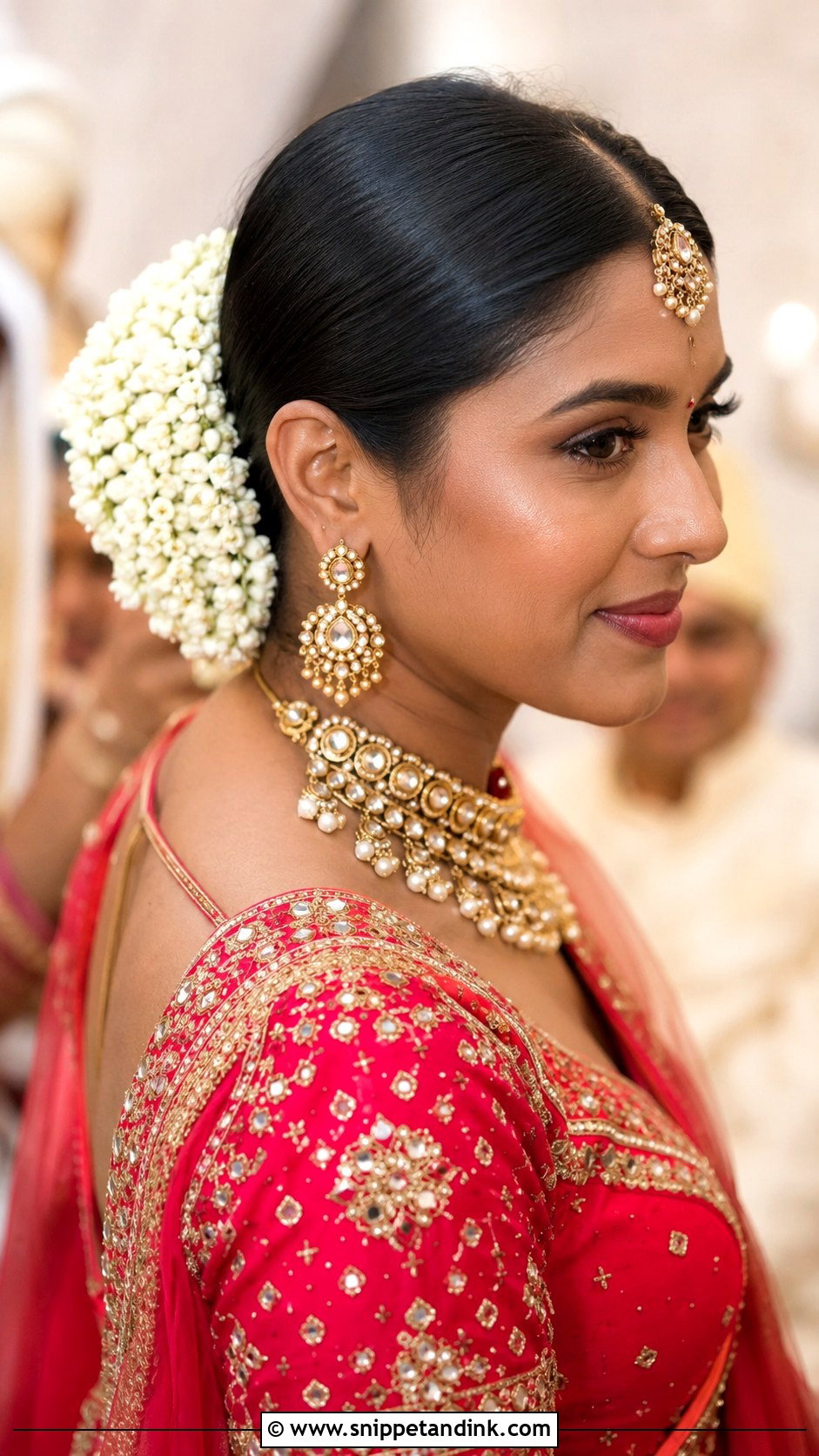
A gajra bun is the classic, and white flowers stand out against red, green, yellow, pink, orange and royal blue outfits. I make the bun first, either smooth and low or slightly fuller and round, then wrap the gajra around it and pin it every few centimetres so it does not slide. Fresh jasmine is heavy and wilts within hours in the heat, so I ask for it to be delivered as late as possible and kept cool and lightly misted until it goes in. Keep the front neat so the flowers look intentional. For pheras and traditional ceremonies, this is still the look many families expect.
12. Crown Braid For Chaniya Choli Wedding
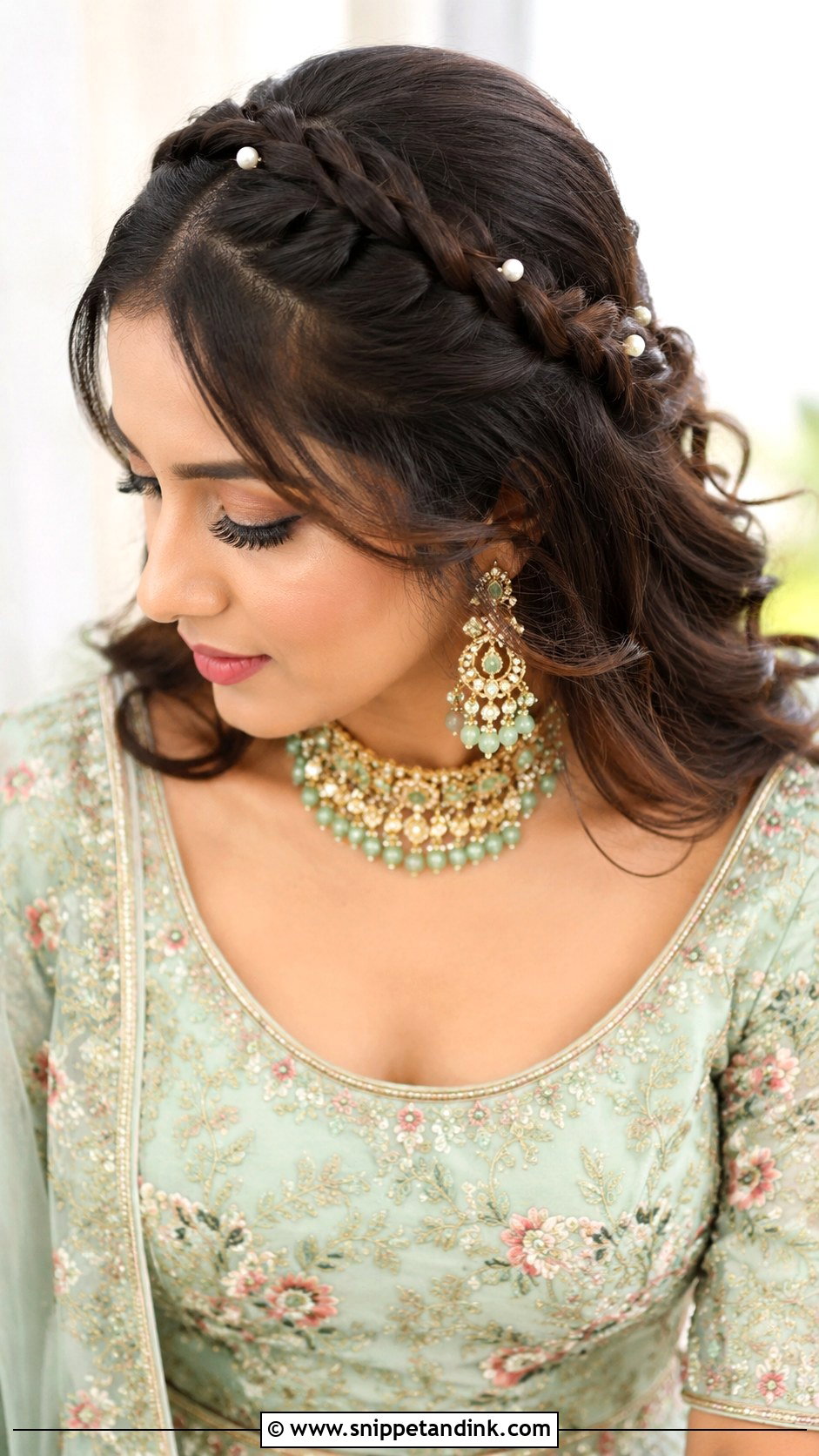
A crown braid works like a soft hairband and gives a chaniya choli a festive finish without adding weight. It suits daytime functions, outdoor events and colourful mehendi outfits. I take the braid across the front or right around the head, then finish the back with waves, a bun or a low braid. It is one of the most secure styles I do, because the braid anchors everything else. Small flowers or pearl pins are enough; large accessories cover the plait, which is the whole point of the style.
13. Loose Waves For Chaniya Choli Wedding
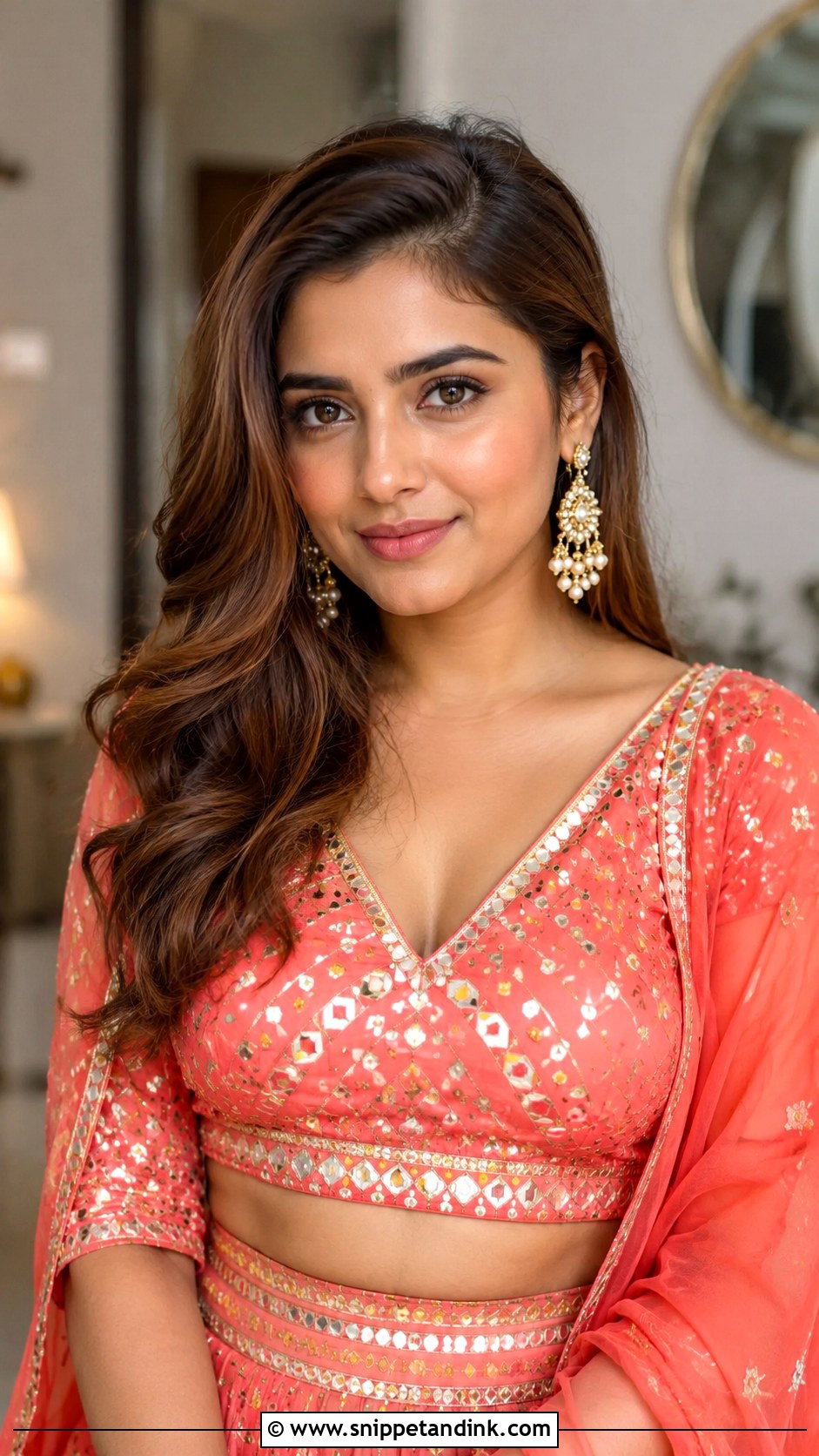
Loose waves are the relaxed option, and I usually suggest them to guests and bridesmaids rather than the bride. They need medium to long hair and look best with a simple blouse or lighter dupatta, so the hair is not competing with heavy work. A deep side part adds drama; a centre part looks more traditional. For a wedding I make the waves smooth and brushed, not beachy. Tuck one side behind the ear to show the earrings, or pin the front lightly so it stays out of your face while you eat and dance.
14. Front Puff Hairstyle For Chaniya Choli Wedding
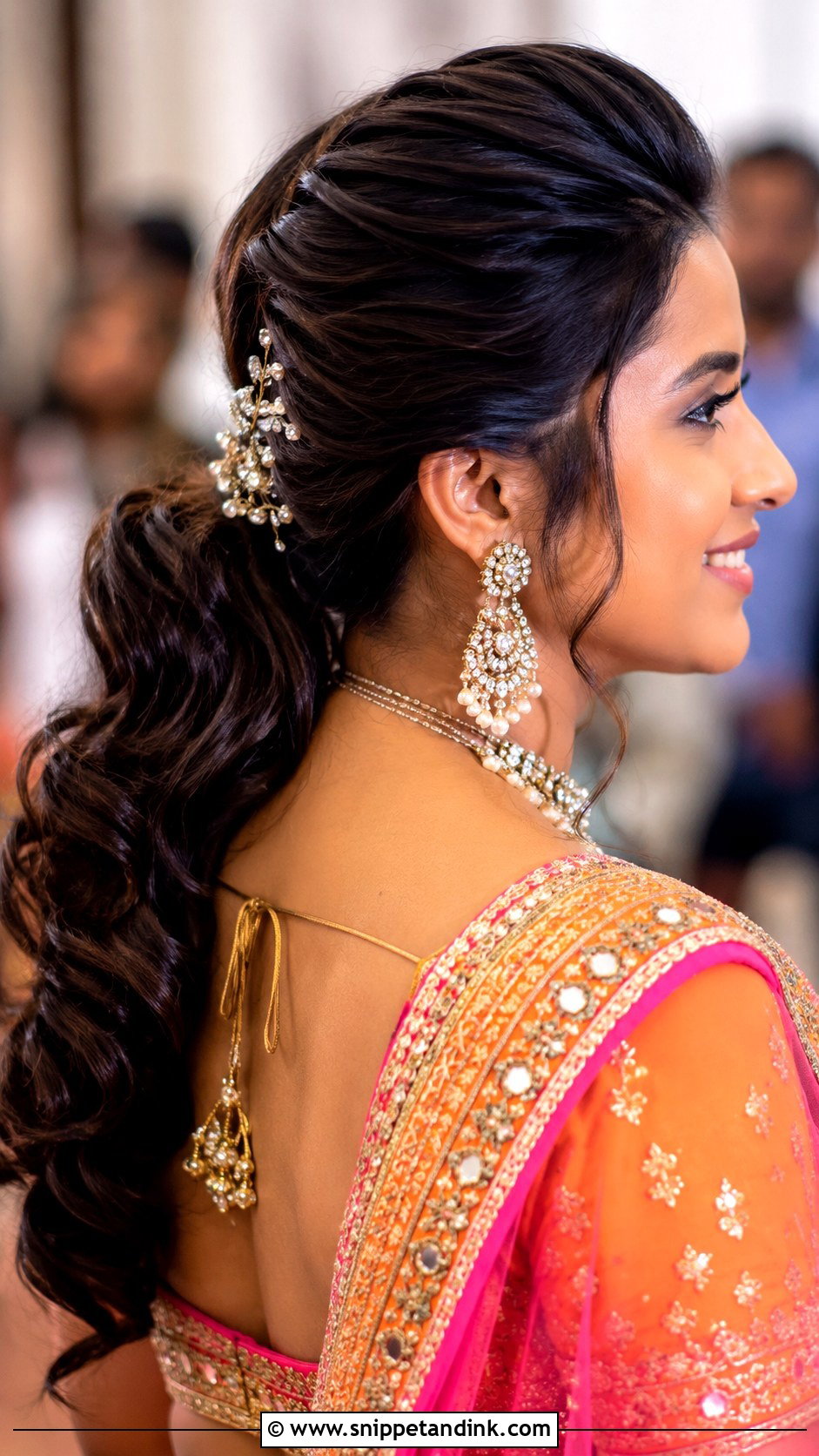
A front puff adds height that balances a full skirt and heavy jewelry. It can lead into a bun, braid, ponytail or open curls. Round, square and petite faces benefit most, since the lift lengthens the frame. I keep the puff low and smooth, teasing the underside rather than the top, because a tall, stiff puff looks dated and pushes a head-draped dupatta into a peak. For garba and sangeet it keeps the front secure while leaving the earrings and makeup in view.
15. Waterfall Braid For Chaniya Choli Wedding
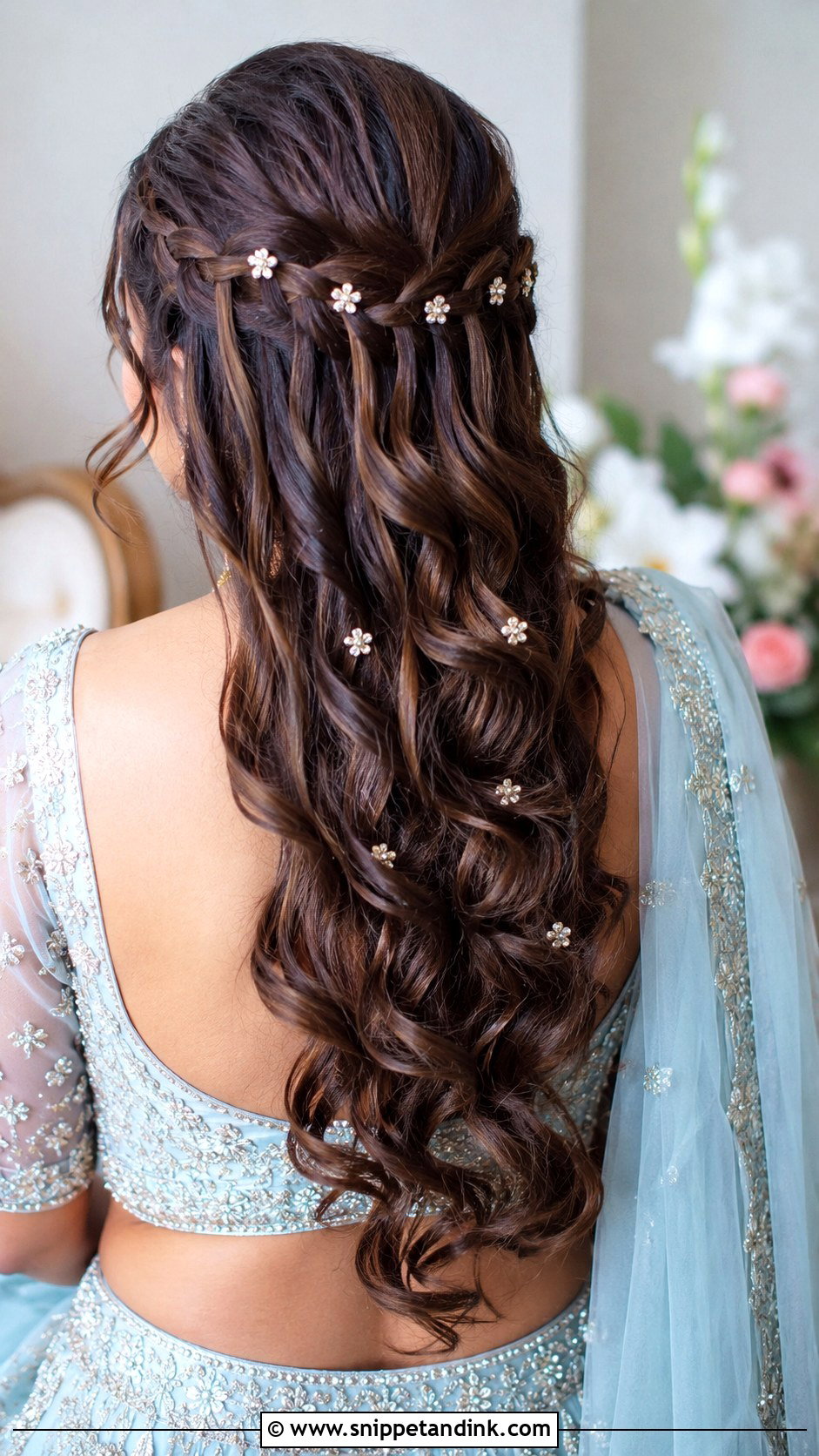
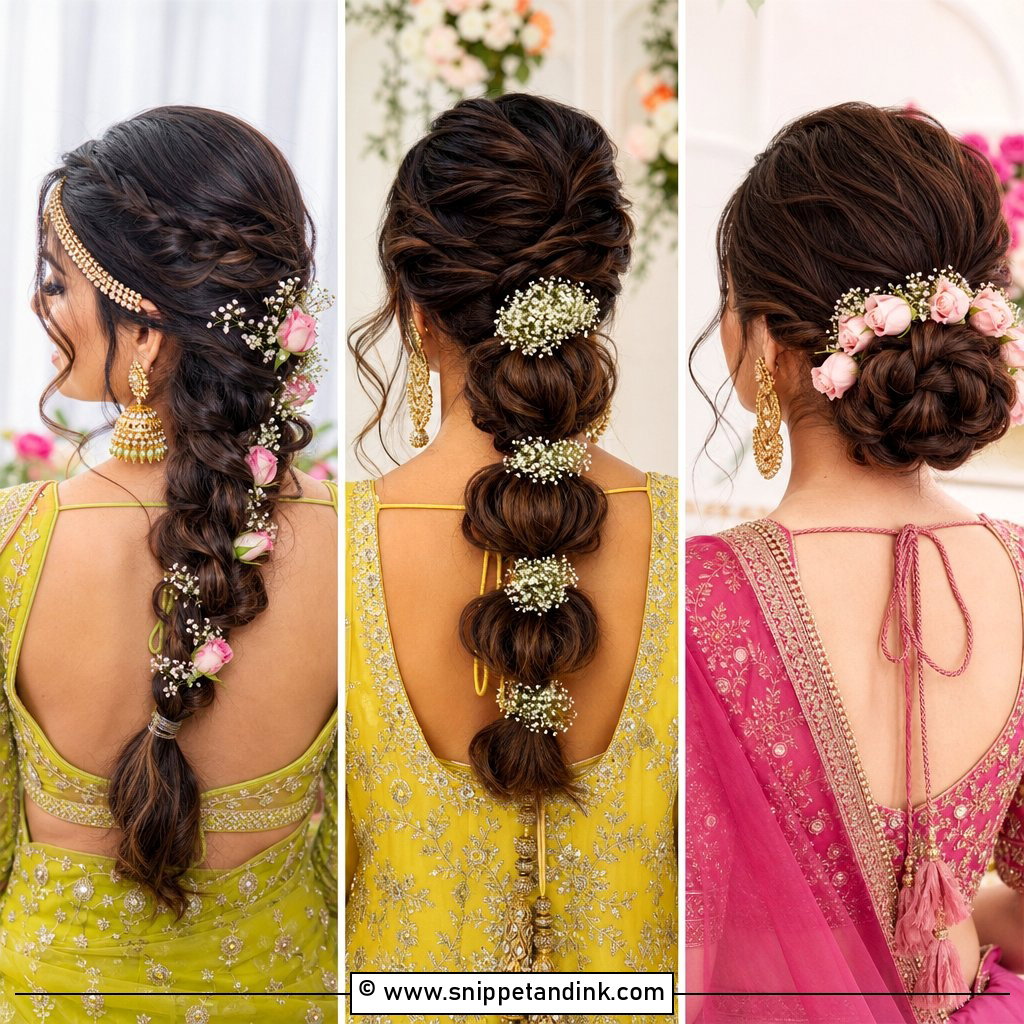
A waterfall braid gives open hair a decorative detail. I curl or wave the lengths first, because the falling sections need texture to blend into. It suits engagement functions, mehendi, bridesmaids and younger guests, especially with pastel, floral or lightweight outfits. The braid can start on one side and sweep across the back. Be honest about your hair: very fine or layered hair slips out of a waterfall braid within a few hours, so I add a clear elastic and hidden pins at each drop. Keep accessories small unless the outfit is very simple.
Garba Nights Are Where Pins Give Up
Garba and dandiya are where most chaniya choli hairstyles come apart. You are spinning, clapping overhead and sweating at the hairline, often outdoors in warm, humid air. Open curls drop in the first hour. Fresh flowers shed petals with every turn. And a bun that felt fine in the mirror starts to pull once a tikka and dupatta are hanging off it too.
What I pin differently for a dance night
- Braids and braided buns. Even if a few strands escape, the shape stays.
- A ponytail wrapped and pinned at the base, with the front section secured so it does not fall into your eyes.
- Hair washed the day before rather than that morning. Slightly lived-in hair grips pins far better than freshly blow-dried, slippery hair.
- Pins crossed in an X at every anchor point, especially wherever the dupatta or tikka chain is attached.
Give a cousin a small pouch: spare bobby pins, a fine-tooth comb, travel hairspray, two safety pins for the dupatta and blotting papers for the hairline. A two-minute fix between rounds saves a full restyle at midnight.
Three functions in three days
If mehendi, garba and the wedding fall back to back, I don’t plan three tight updos in a row. The scalp gets sore by day three, especially under heavy jewelry. Wear something looser for the mehendi, let one night’s curls soften into the next day’s bun, and save the most secure, most pinned style for the function with the longest dancing.
Start With the Function, Then the Jewelry
What I would plan first is the outfit’s weight, the jewelry, the dupatta drape and the type of function. Buns are classic and secure for ceremonies. Braids add festive detail for mehendi and garba. Open curls, waves and half up looks suit receptions and sangeet nights. With a maang tikka, set the parting before anything else; with a heavy dupatta, choose a bun or braid that will hold it. And choose a style you can dance, hug and eat in without reaching for a mirror every half hour.
You'll Like These Ideas:


Leave a Reply