
A juda is the workhorse of Indian bridal hair. It holds the dupatta, balances heavy earrings and a tikka, and gives the back of the head a finished shape for every photo taken from behind. The versions below go from sleek centre-parted buns with gajra to soft, textured ones dressed with roses. Some suit a matha patti and passa; others sit better with pastel lehengas, silk sarees or a reception gown. The right one depends on your outfit, your hair texture and face shape, and how many hours you’ll be wearing it.

What Goes Inside a Juda Before the Flowers Do
Most bridal buns you see in photos aren’t made from hair alone. Underneath there’s often a padding, a donut or a few wefts, and that hidden base is what lets the bun keep its shape for ten hours while carrying flowers and a dupatta.
This is roughly the order I work in for a low bridal juda:
- Prep the hair the day before or the morning of, dry and lightly textured. Freshly washed, silky hair is the hardest to pin.
- Tie a firm ponytail base where the bun will sit. Everything anchors to this, including the dupatta later.
- Pin a padding or donut over the base, matched to your hair colour, sized to the look you want and to your own volume.
- Wrap, twist or braid the lengths around it and pin with crossed pairs of U pins and bobby pins.
- Add flowers and ornaments last, wired or sewn onto the bun rather than balanced on top.
If your hair is thin or below the shoulder, ask your stylist which padding they plan to use and try it at the trial. A padding that’s too large shows through the hair at the edges, and that gap is very visible from behind.
1. Indian Bridal Low Juda Bun
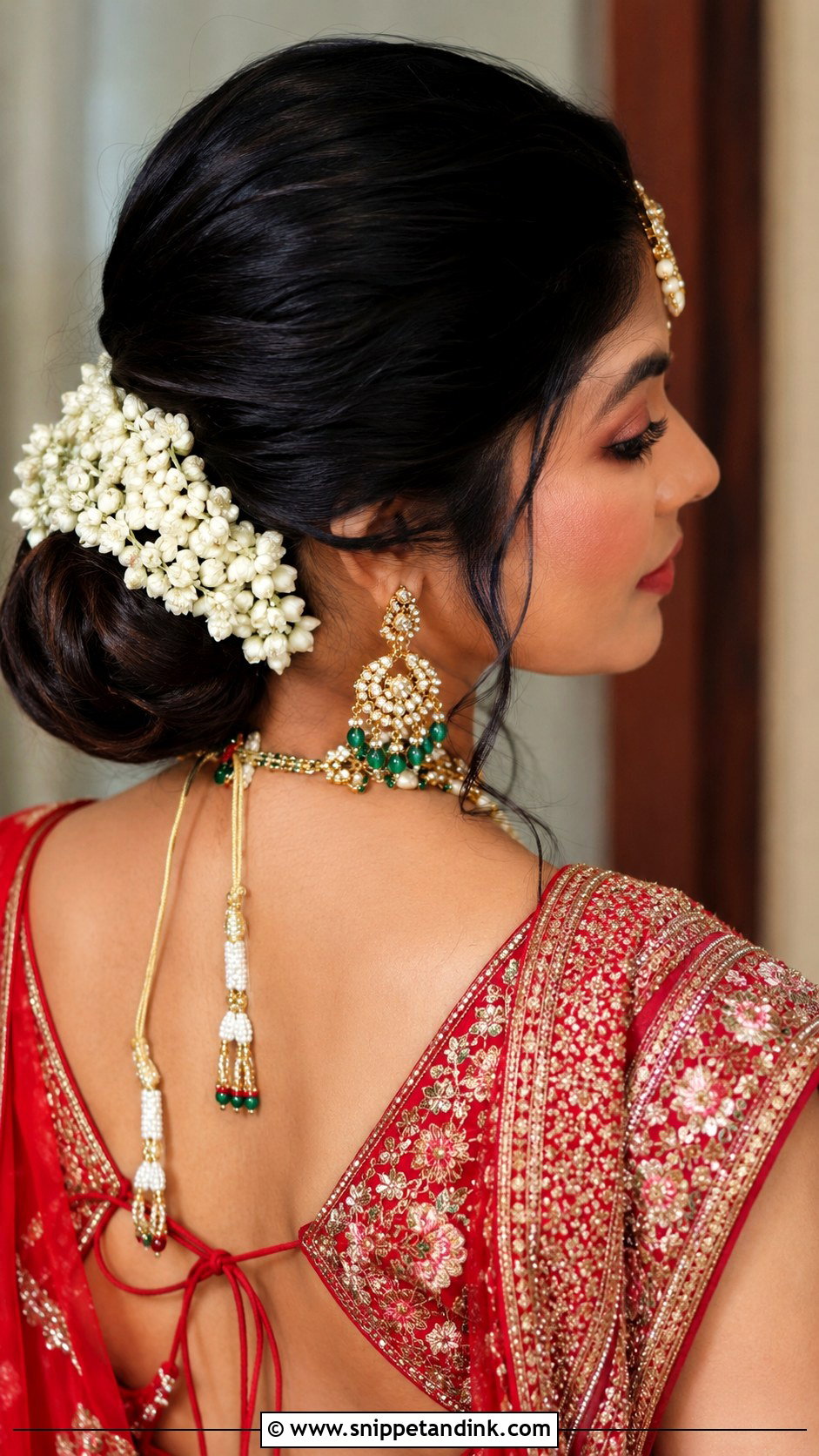
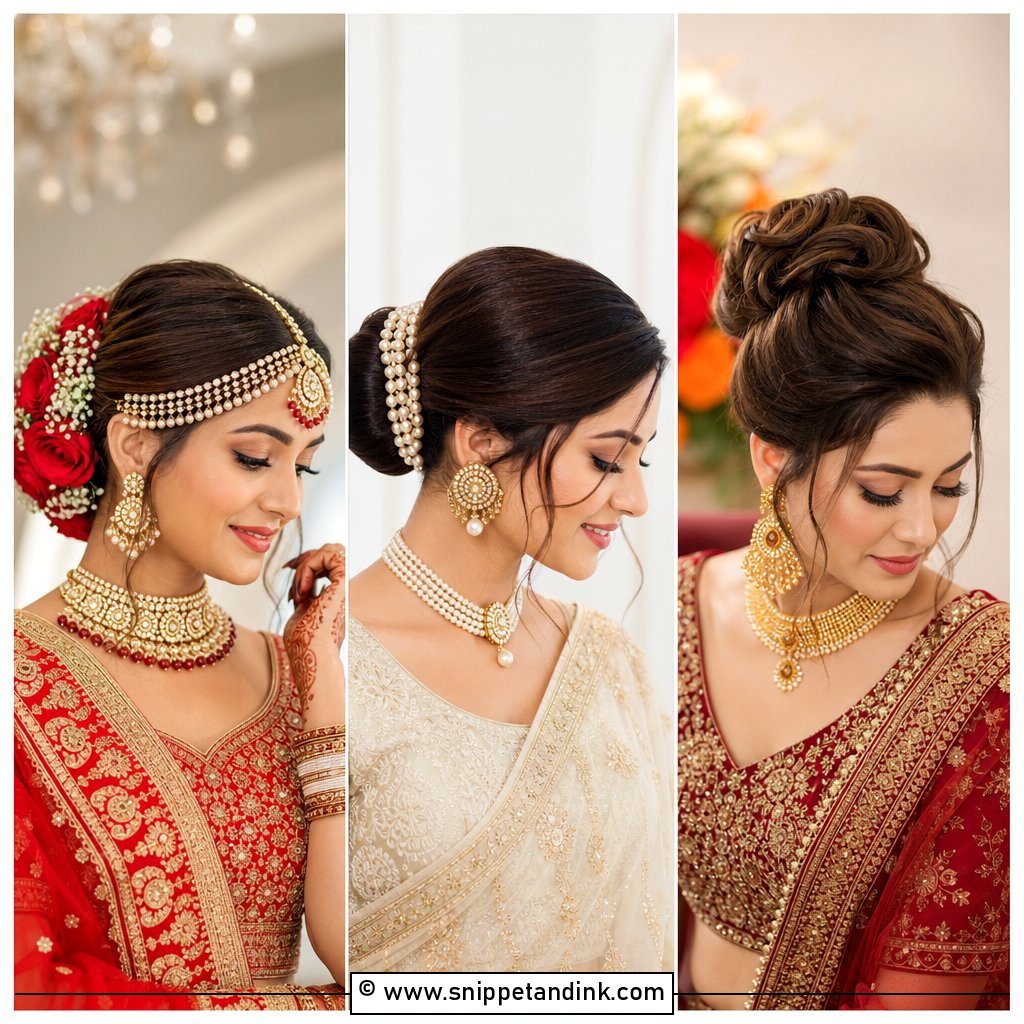
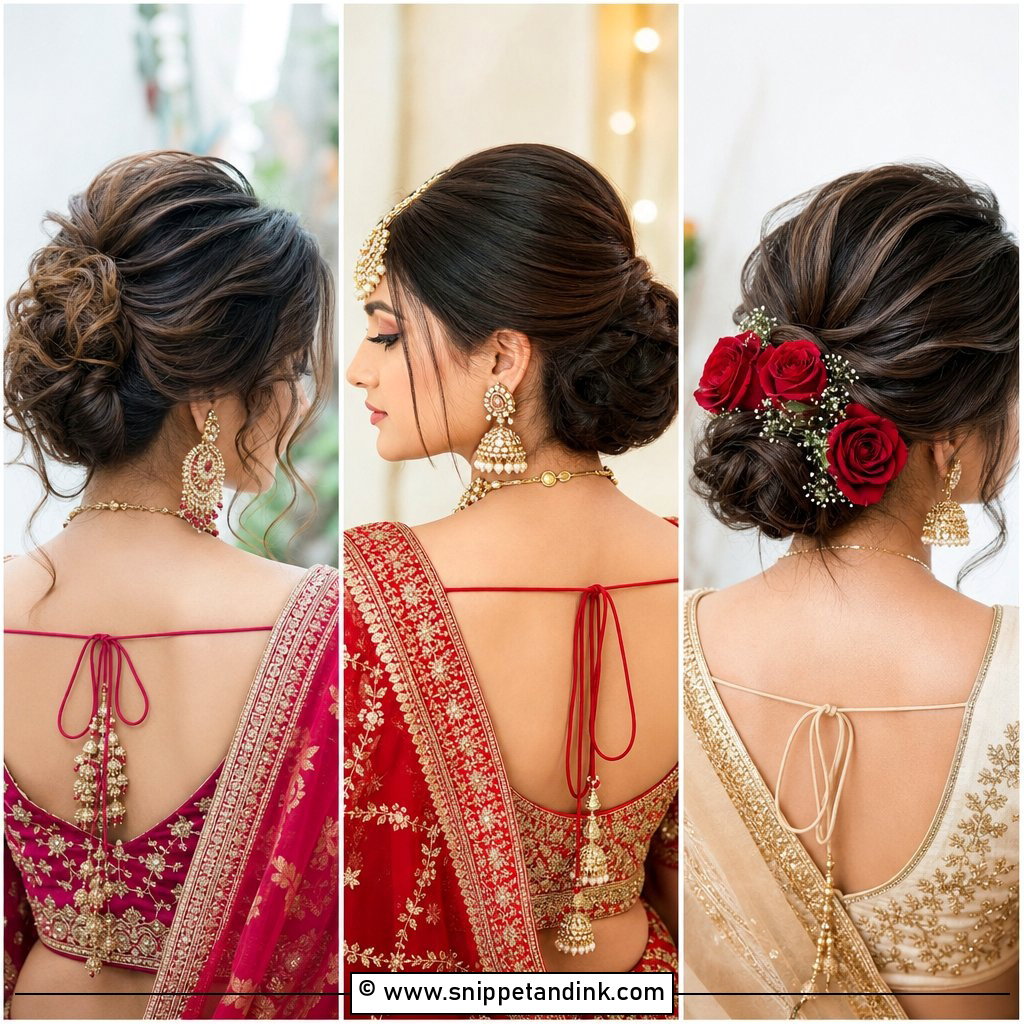
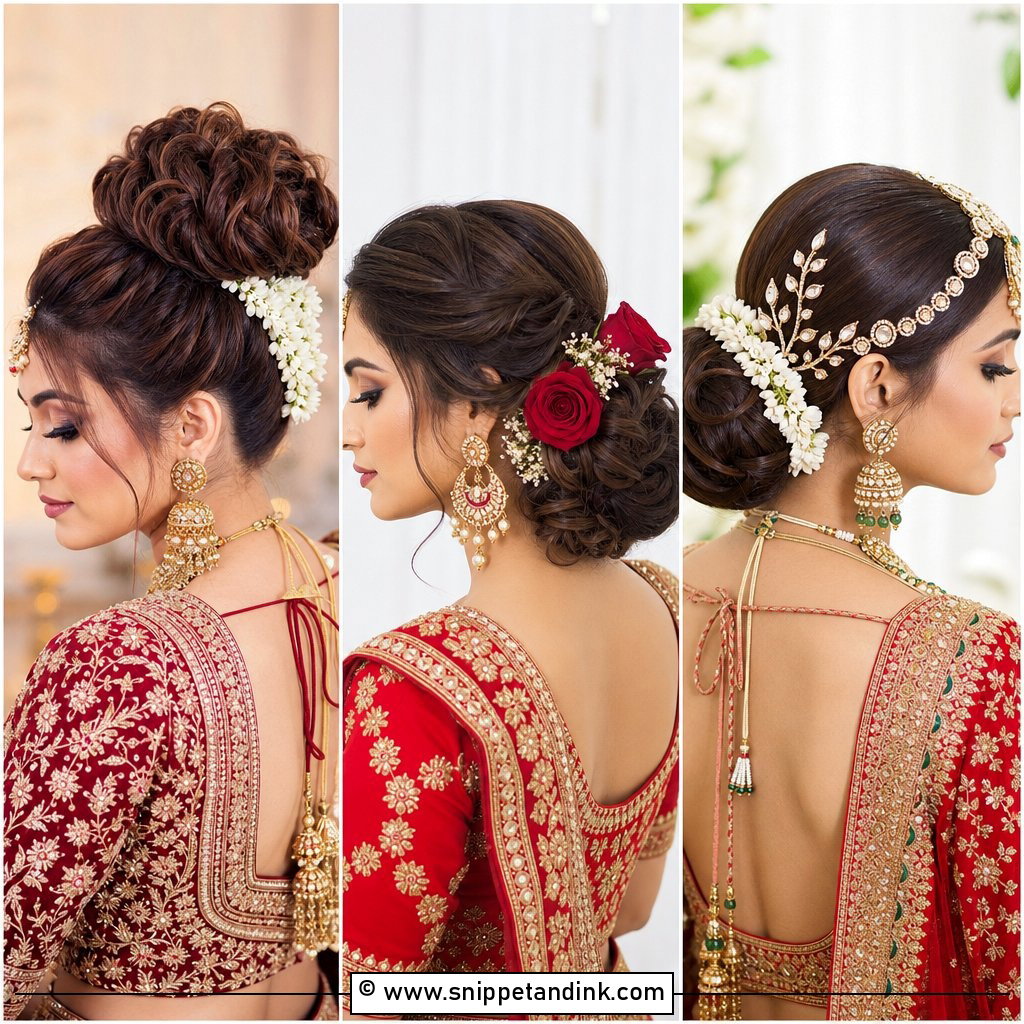
For the main ceremony I start from an Indian bridal low juda bun more often than anything else. Sitting near the nape, it gives the dupatta a firm base and stays comfortable through long rituals. Part the front in the centre for a classic look or sweep it back for something more modern. It clears space for heavy earrings, a choker and a maang tikka. Jasmine, roses or pearl pins around the bun make it bridal; keep the total weight modest, since low buns sag if they’re overloaded.
2. Indian Bridal Gajra Juda Bun
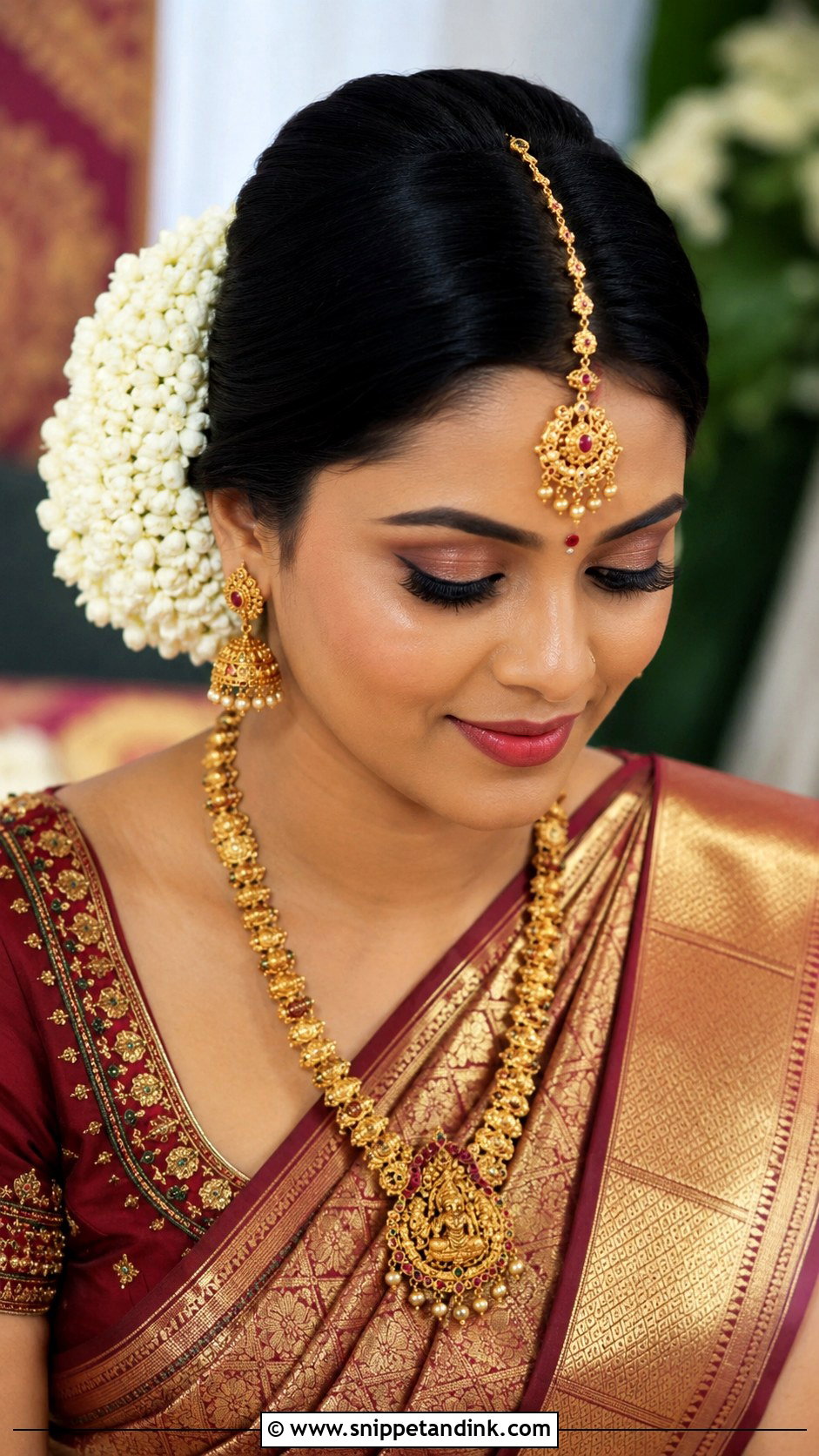
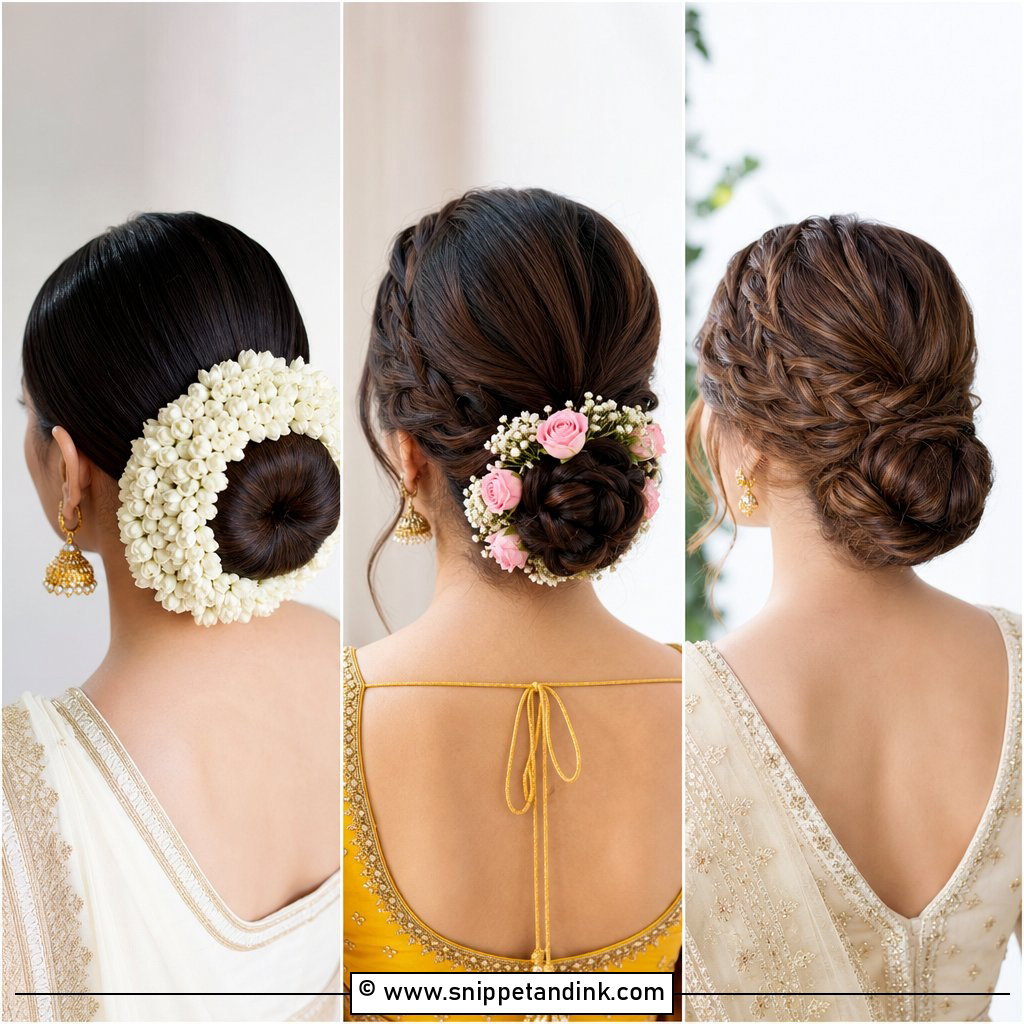
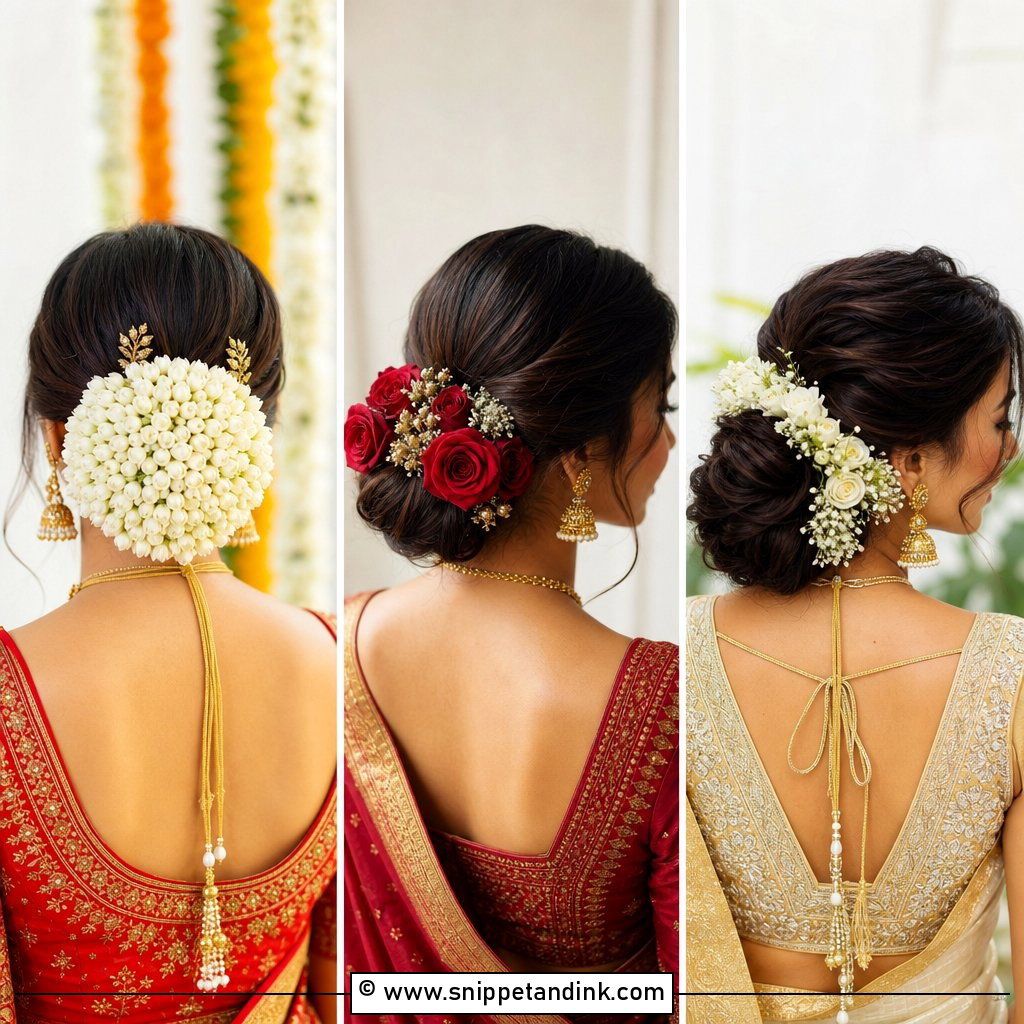
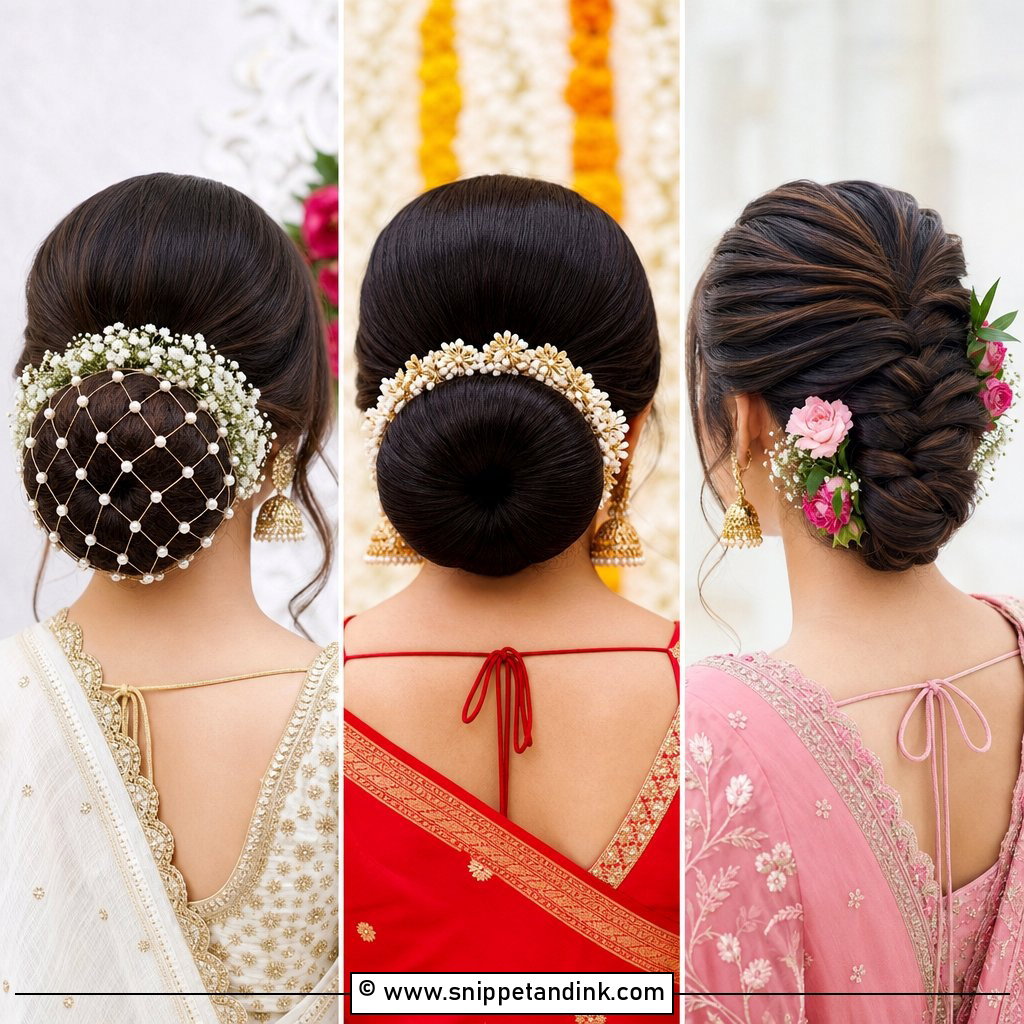
Nothing says wedding morning like the smell of jasmine. A gajra juda wraps fresh white strands around a neat or slightly textured bun. It’s the classic at Hindu and South Indian ceremonies, against red, gold, ivory or green outfits. A full circle bulks the bun out; a half gajra keeps things lighter. I wire or sew the strands in place, because pinned gajra slips the first time you bow your head. Keep the front smooth under heavy jewelry, or leave a few soft pieces for close-ups.
3. Indian Bridal Rose Juda Bun
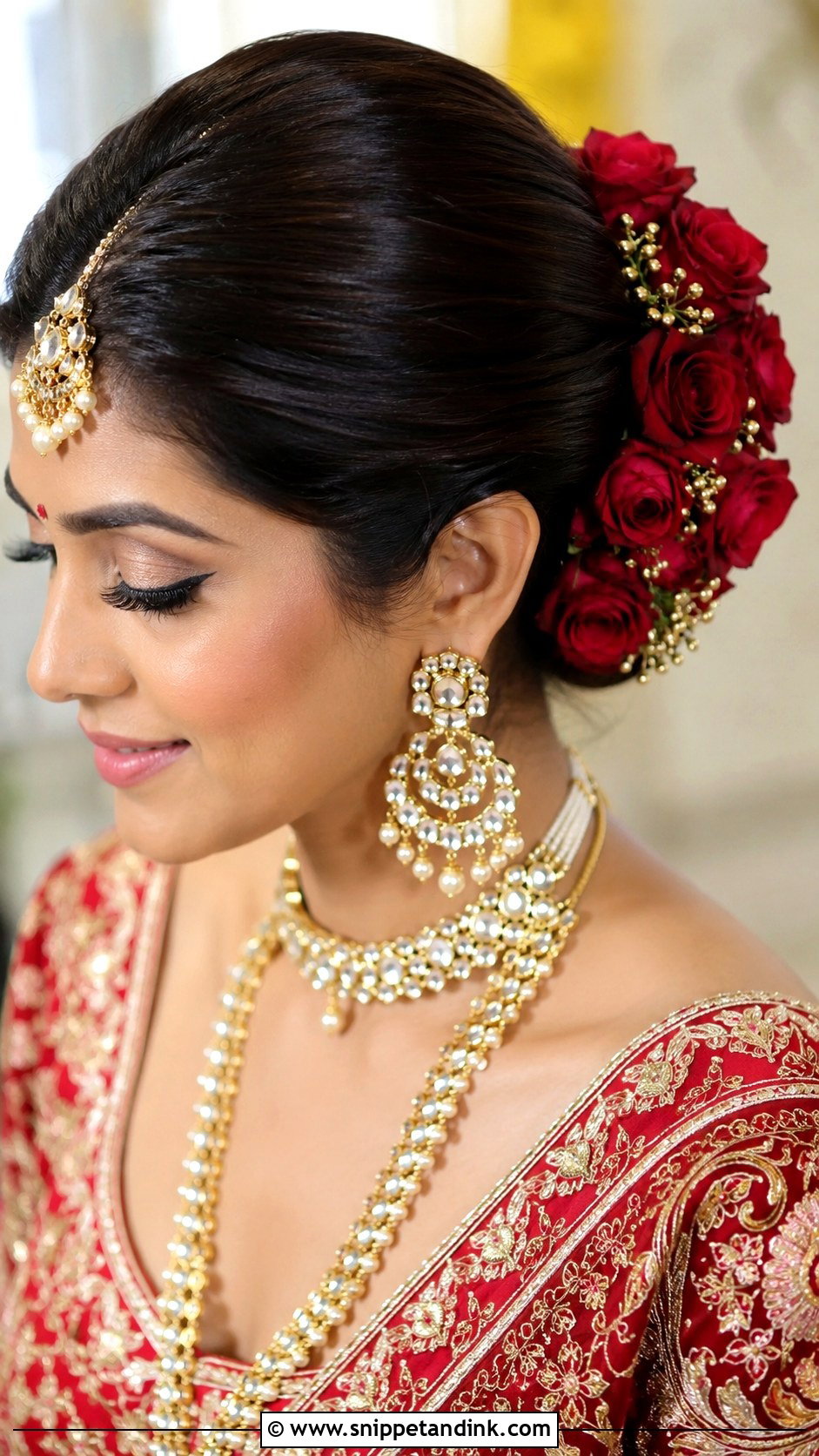
Roses give colour and size at the back of the head that jasmine can’t. Deep red stands out against a classic lehenga; blush, peach or ivory sit quietly with pastels. The bun underneath can be round and polished, low and textured, or twisted with roses down one side. Each stem is cut short and pinned tight to the bun. Roses that stick out look messy from the side and droop once they warm up, so ask for them to be tucked close.
4. Indian Bridal Messy Juda Bun
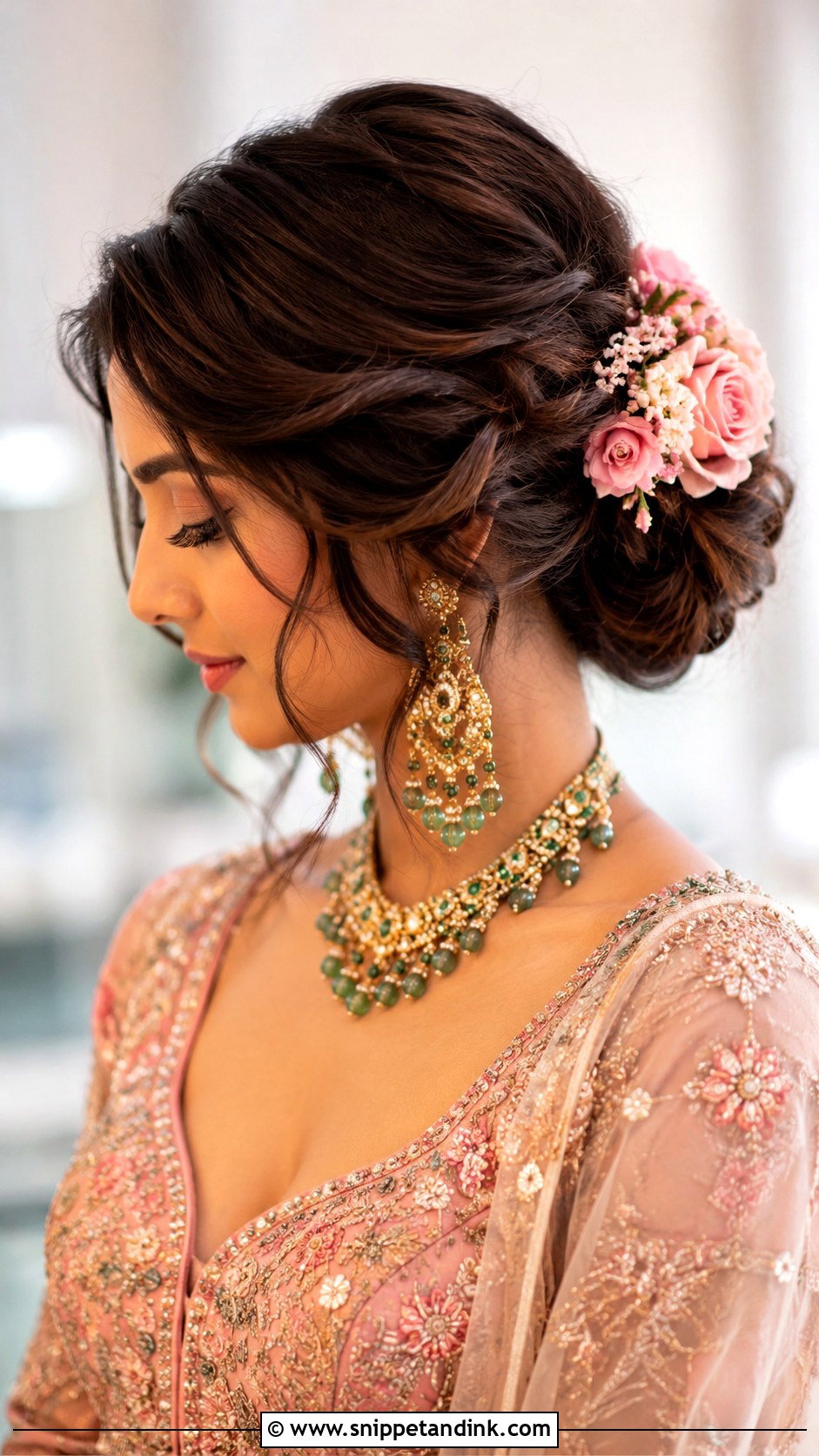
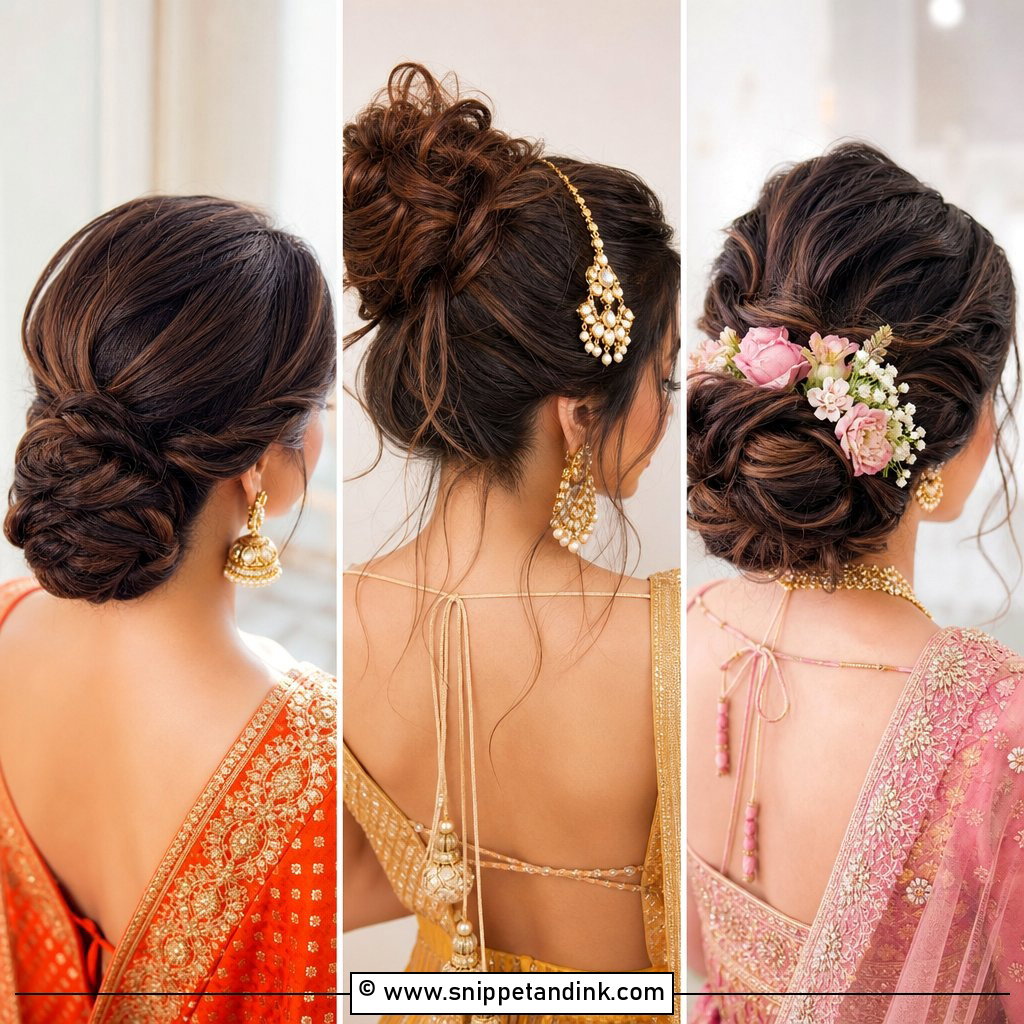
Messy is the hardest juda to get right, because the texture has to look loose while the structure underneath is fixed. I curl the hair, twist it in loose sections and pin each twist firmly into place, then pull a little out for softness. Light crown volume and a few face-framing curls soften the look with a maang tikka. It suits pastel lehengas, floral embroidery, mirror work and light dupattas. Try it at the trial and wear it for a couple of hours to see whether it holds.
5. Indian Bridal Braided Juda Bun
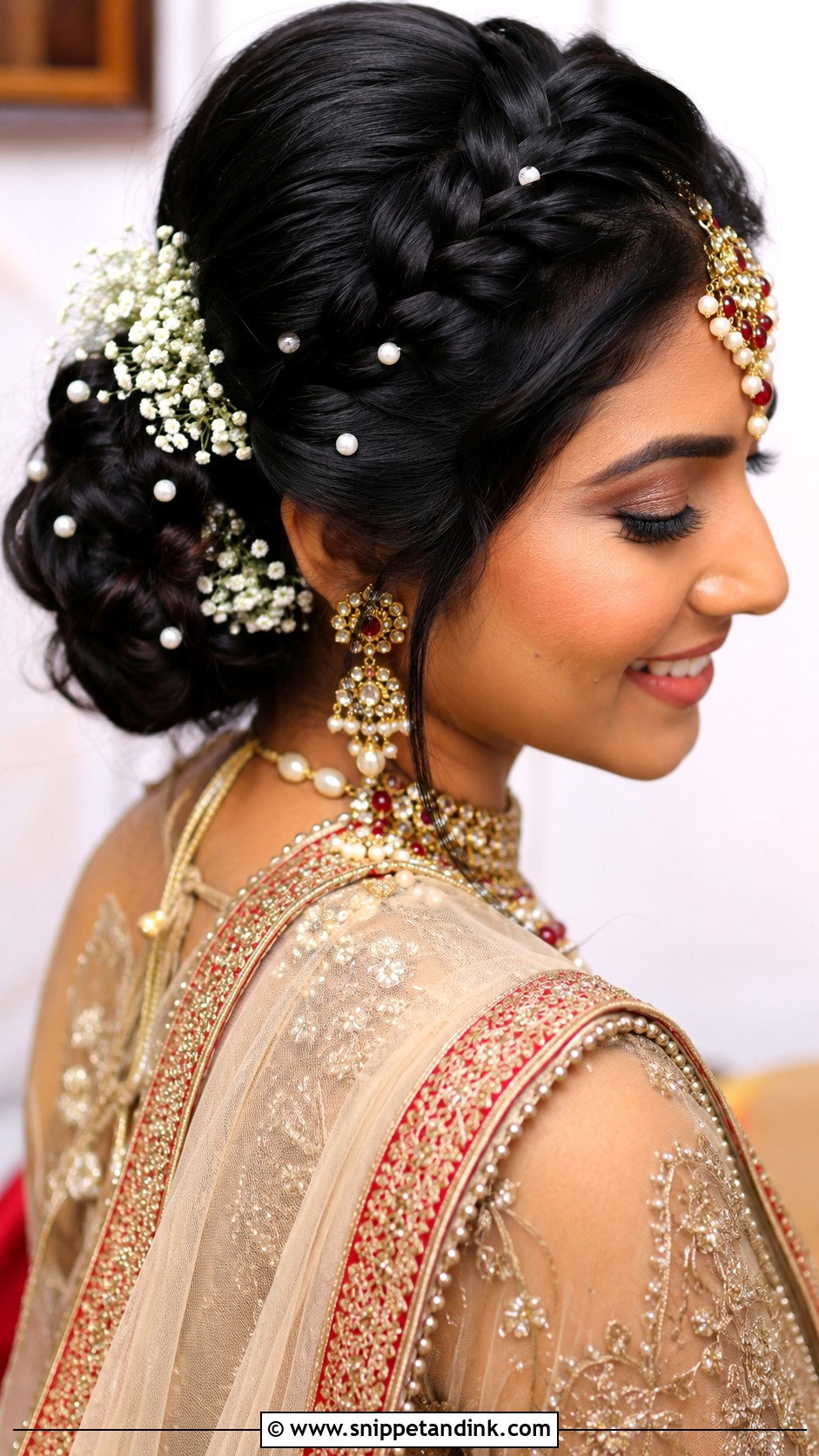
A braid does decorative work by itself, so a braided juda needs fewer accessories. It can start from one side, wrap round the crown or be folded into the bun. Braiding also catches shorter layers that would otherwise slip out of a plain bun, which makes this my usual answer for medium or layered hair. The texture grips a matha patti, passa or flowers well. Pull the braid apart slightly for softness, or keep it tight and defined for a traditional finish.
6. Indian Bridal Sleek Juda Bun
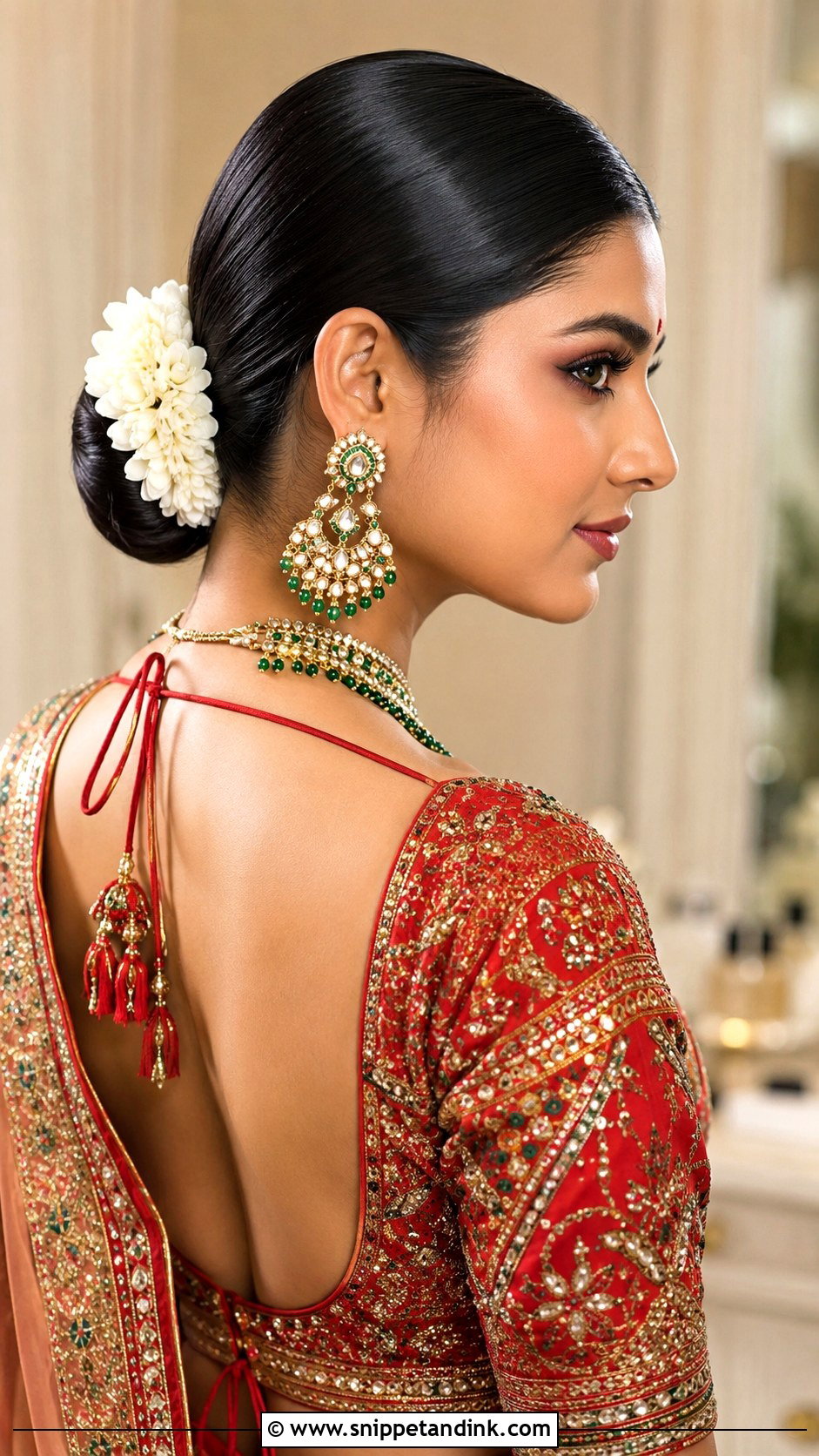
When the outfit, jewelry and makeup are already dramatic, a sleek juda keeps the hair quiet. The hair is smoothed back or parted cleanly, then set in a tight low bun so the eyes, neckline and ornaments carry the look. In humid weather it’s the most reliable option, since there are no curls to drop. I go easy on shine spray, which turns greasy under flash. One gajra, a few gold pins or a single flower is enough.
7. Indian Bridal Center Part Juda Bun
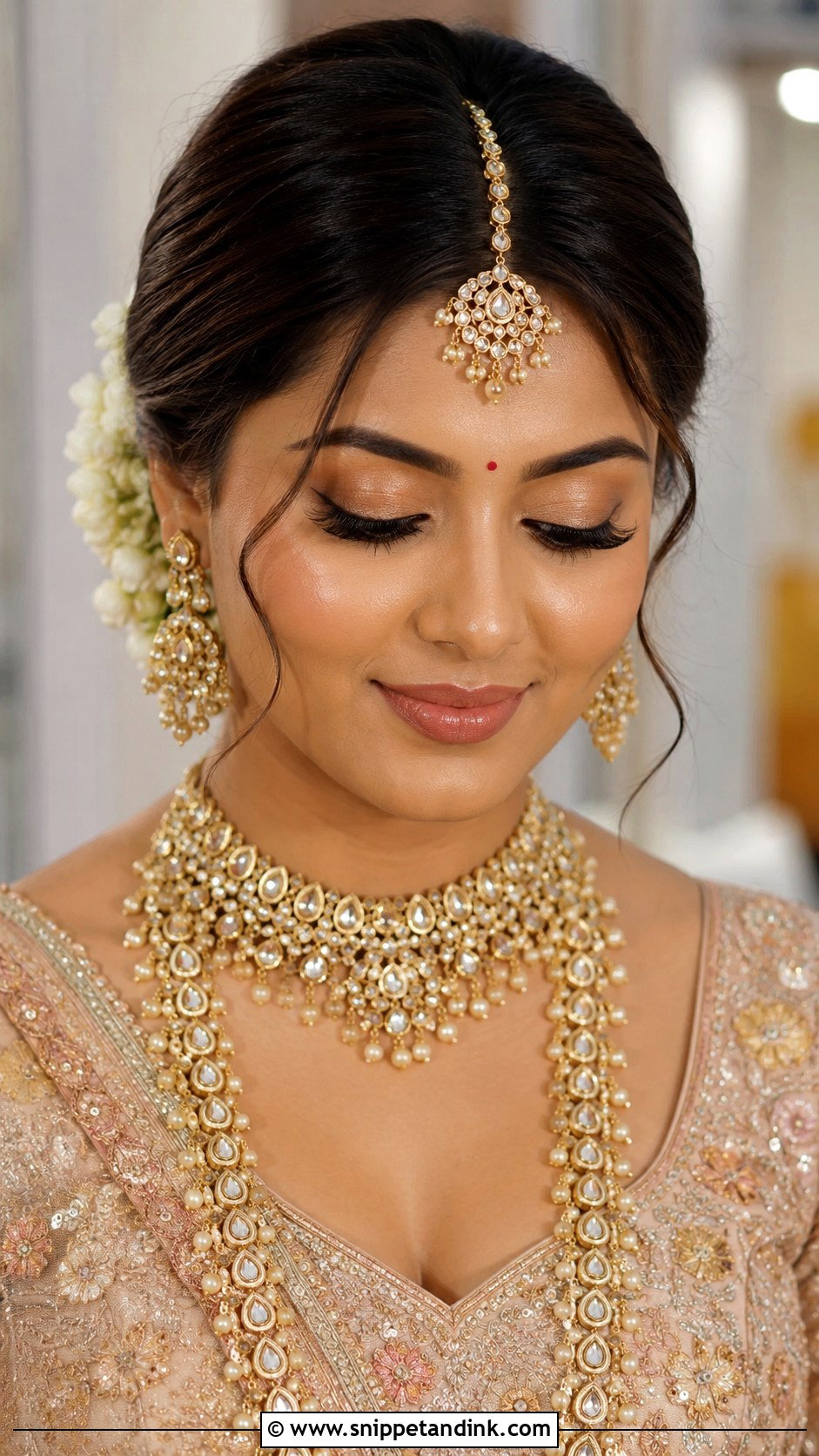
A centre part gives a maang tikka, matha patti or borla a straight line to sit on, and the symmetry reads as traditional straight away. Under a heavy dupatta, the flat front stays put. The bun itself can be sleek, floral, braided or textured. I lift the crown slightly before smoothing, otherwise the head looks flat in photos with layered jewelry. Small curled pieces near the ears soften a strong jawline.
8. Indian Bridal Side Part Juda Bun
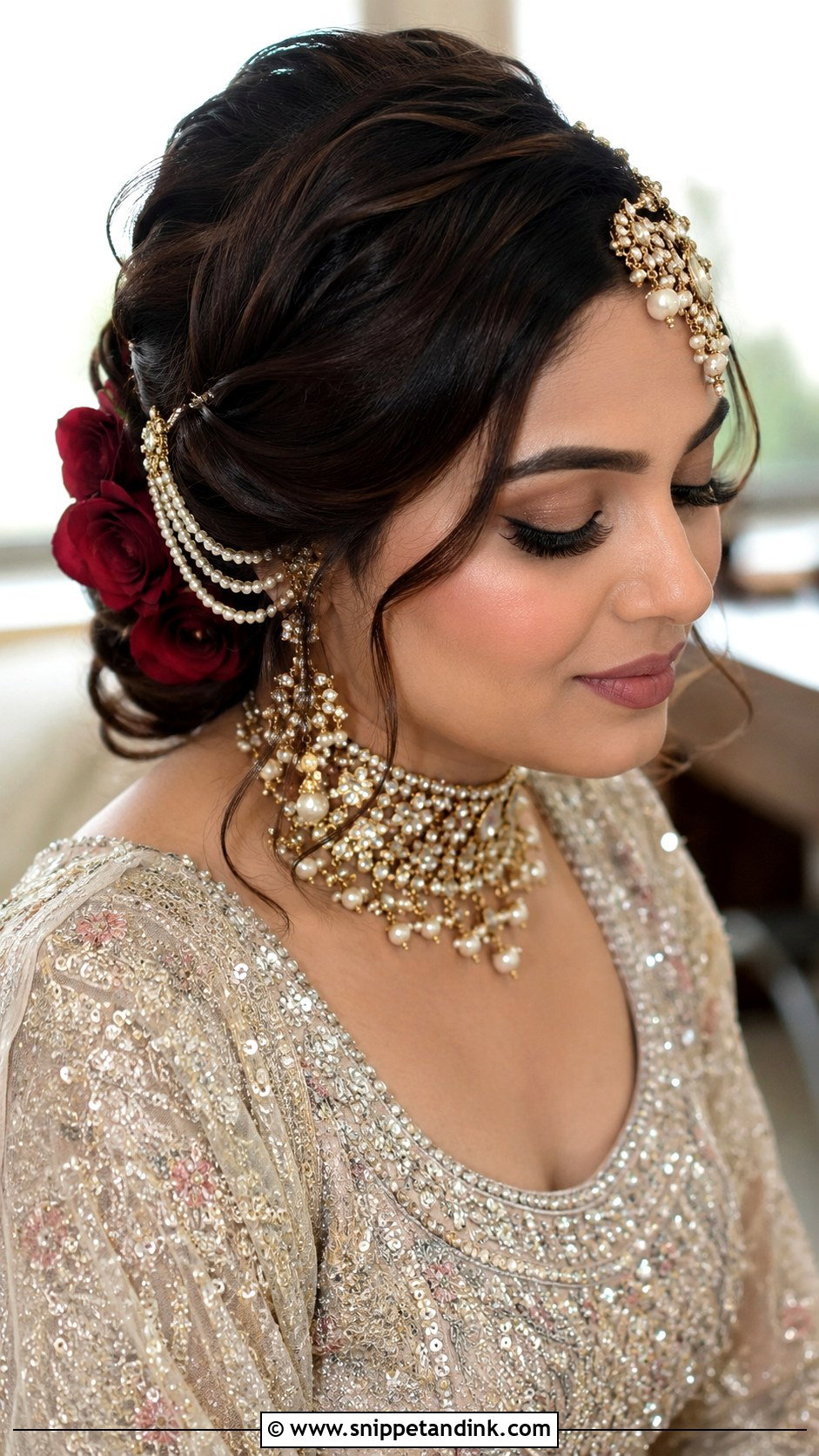
Moving the part to one side breaks the symmetry and gives the face a softer line. I keep the part smooth, or let it run into a gentle wave on its way to the bun. It flatters most face shapes and pairs well with a passa, jhumar, or side hair accessory worn on the heavier side. Roses, pearls or jasmine at the low bun finish it. I see it chosen often by Muslim brides and for receptions.
9. Indian Bridal Juda Bun With Matha Patti
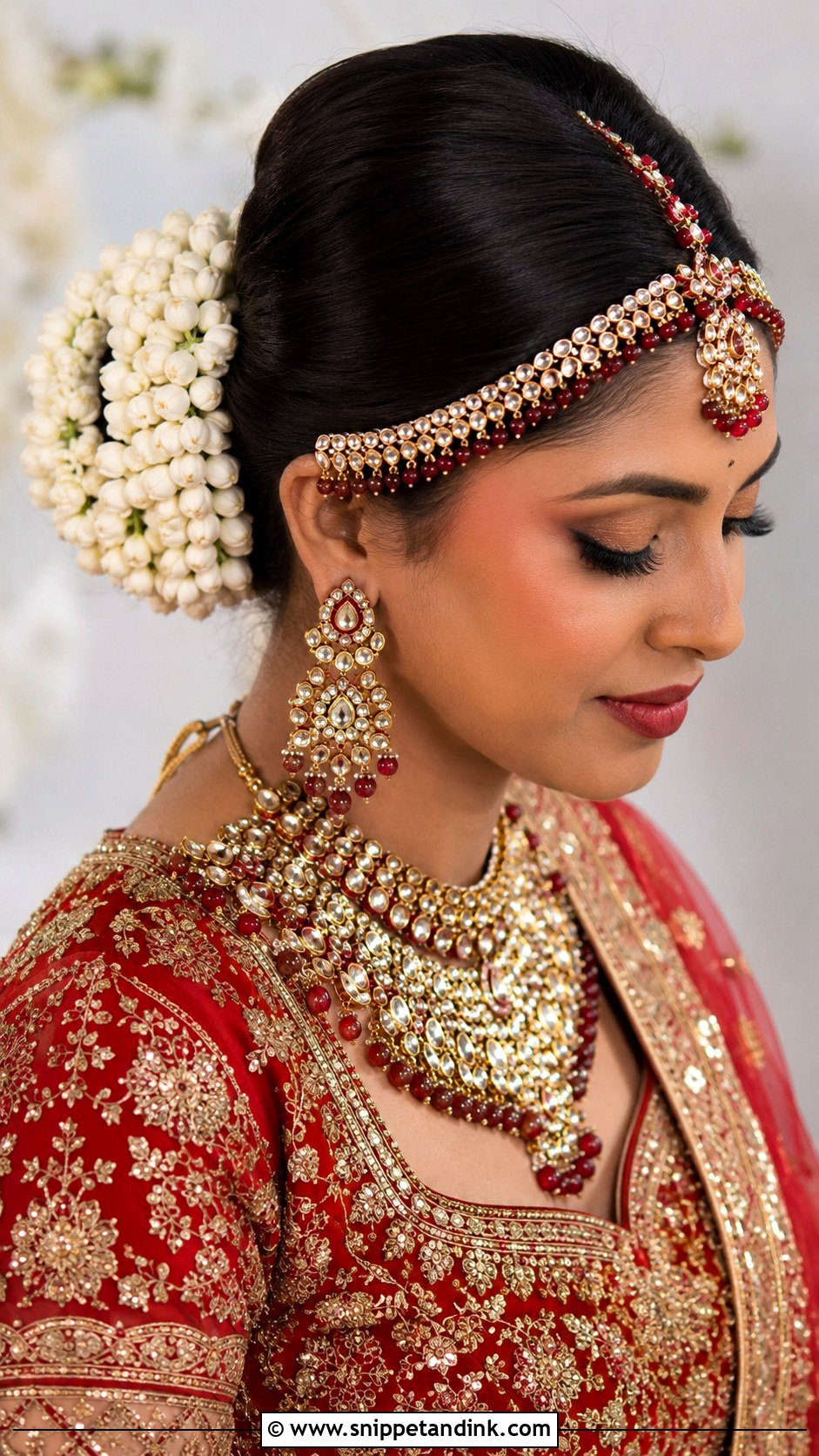
The matha patti frames the face at the front and the juda finishes the back, so the head looks complete from every angle. The hair along the hairline must be smooth and flat, or the chain sits unevenly and shifts as you move. A low bun balances the combined weight of headpiece, earrings and dupatta best. Keep it simple with a gajra, or fill it out with roses and pearl pins. Heavily embroidered lehengas, traditional red and heritage jewelry suit it.
10. Indian Bridal Juda Bun With Dupatta
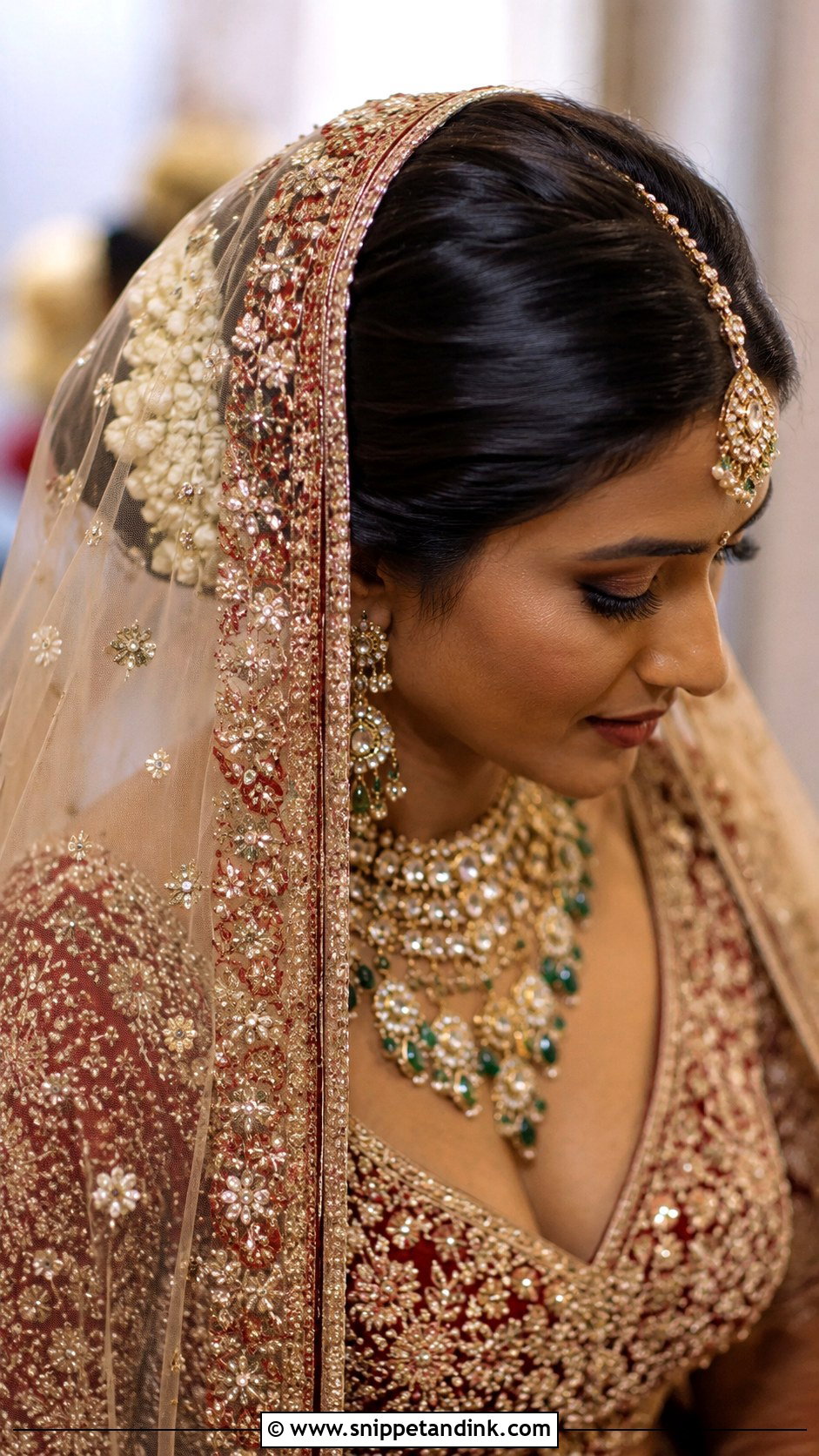
If the dupatta goes over your head, it shapes the juda, not the other way round. A low or mid-low bun gives the pins a firm base and keeps the fabric steady. The front can be centre-parted, side-parted or lifted softly at the crown. With a heavy dupatta, skip loose curls on top, since they get pressed flat within minutes. Put the flowers below or around the bun so they still show from behind. I plan this for pheras, nikah, Anand Karaj and any ceremony with a covered head.
11. South Indian Bridal Juda Bun
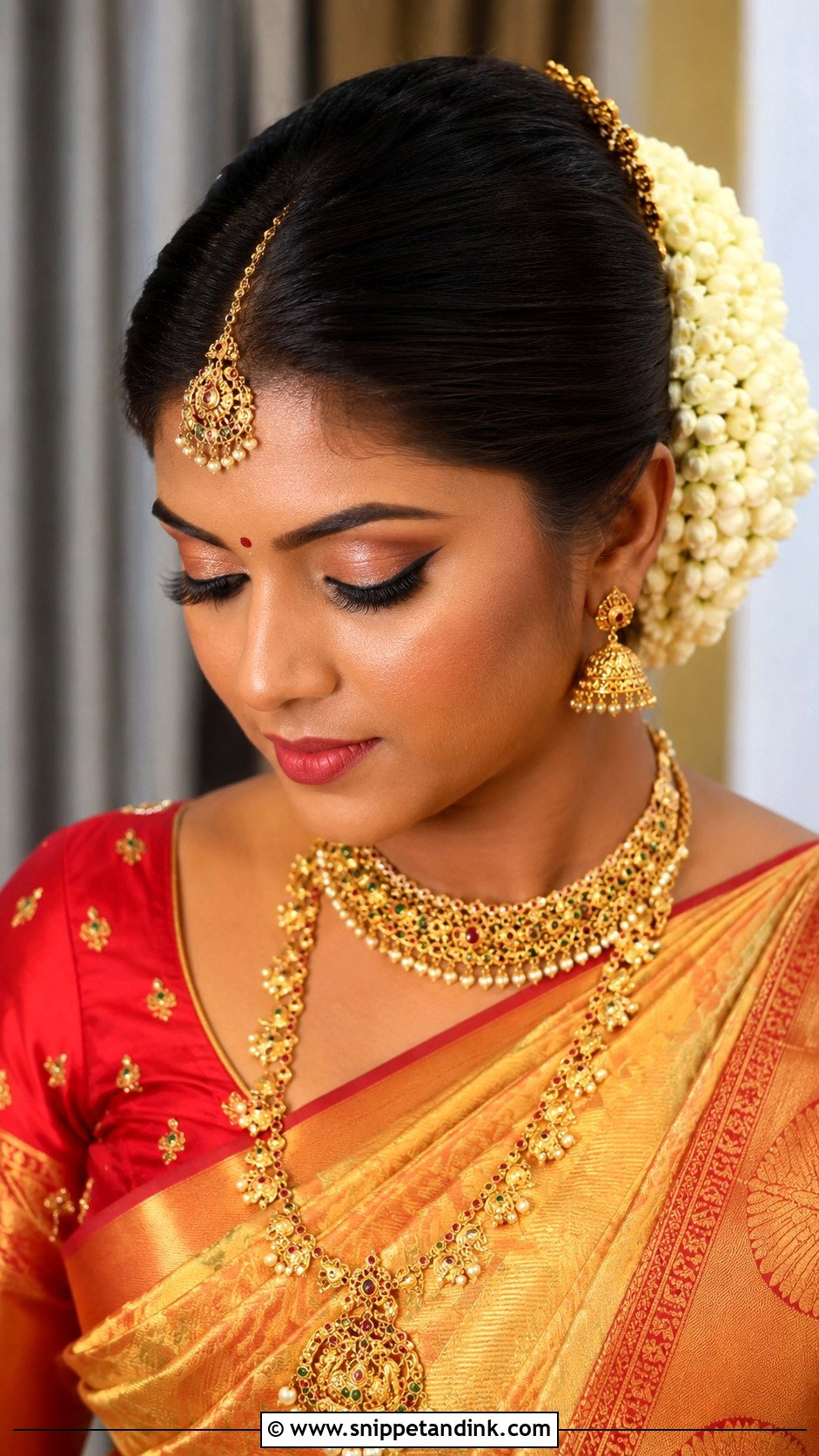
A South Indian bridal juda bun is usually dressed with silk sarees, temple jewelry, jasmine and gold hair ornaments. I set the height according to how the saree pallu or veil will drape, lower if fabric goes over the head. Jasmine is the iconic flower; roses and gold pins add richness. The bun leaves the neck clear, so earrings and layered necklaces show. Keep the front neat with a centre part or a soft lift, and pin it firmly for long rituals.
12. Indian Bridal High Juda Bun
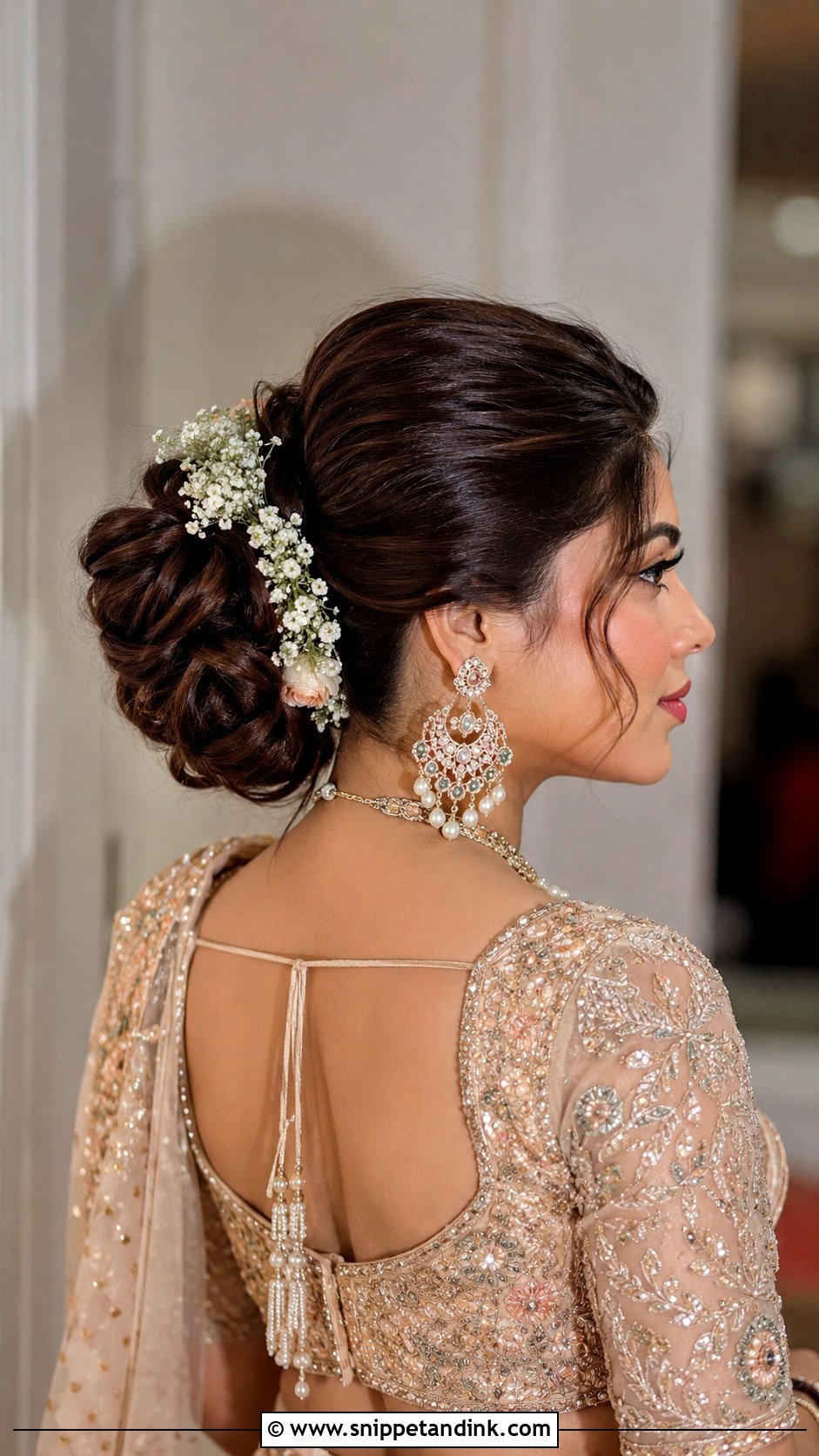
A high juda changes the silhouette more than any other bun here. It lengthens the neck and shows off heavy earrings, which is why I keep it for receptions, sangeet and portraits without a dupatta over the head. Smooth and round, twisted or ringed with flowers at the base all work. The placement is what can go wrong. Too far forward on the head, it looks harsh. I set it at the crown with a little soft volume in front.
13. Indian Bridal Curly Juda Bun
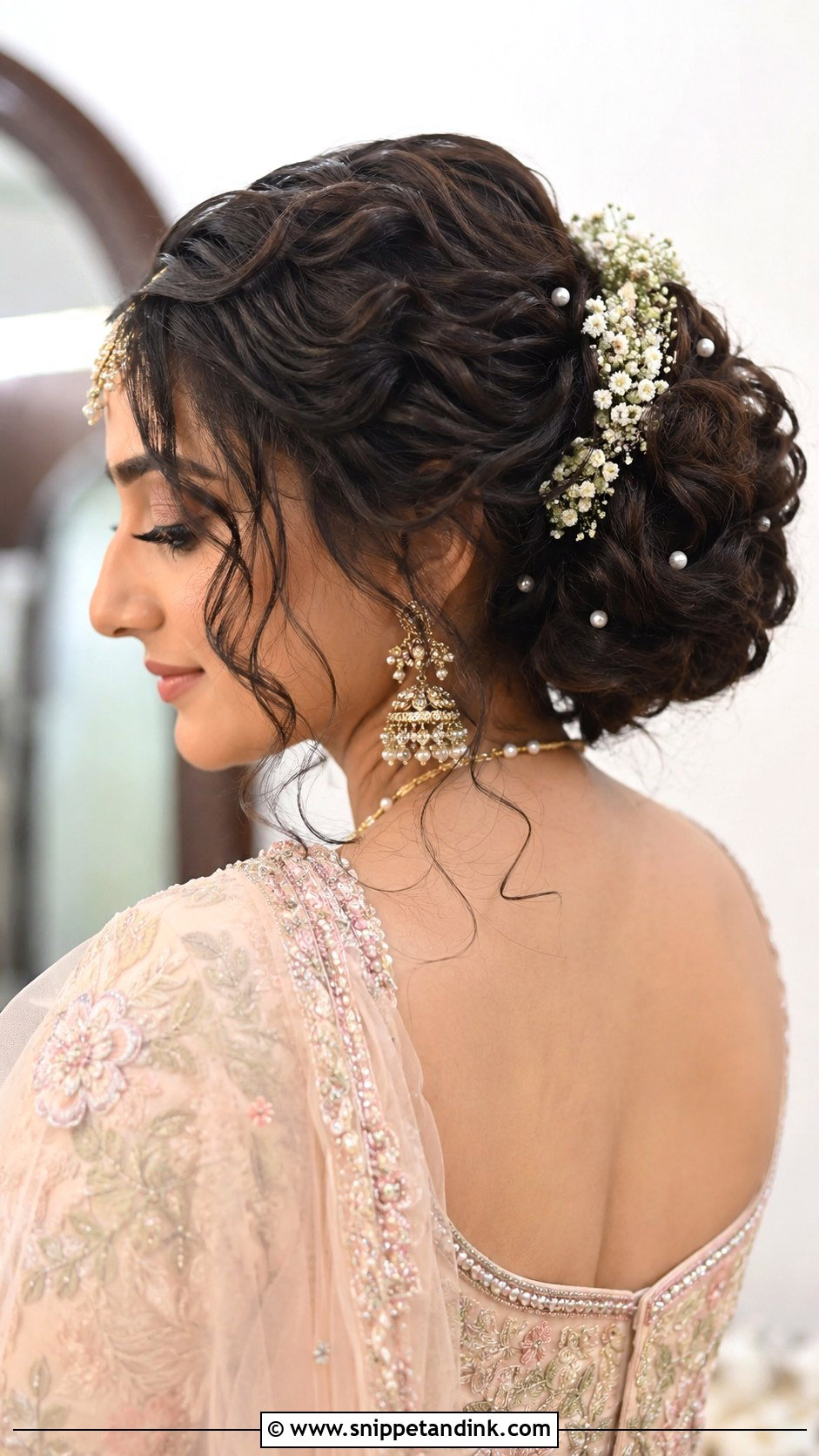
Curls pinned into a bun while keeping their shape give the most movement of any juda. Naturally wavy or curly hair is ideal here, since it holds the form far longer than heat-set curls; straight hair needs a proper set first. Pearl pins, tiny flowers or a light gajra suit the texture. Keep the front softly curled or swept back to match. A curl-friendly setting spray matters in warm weather and across outfit changes.
14. Indian Bridal Pearl Juda Bun
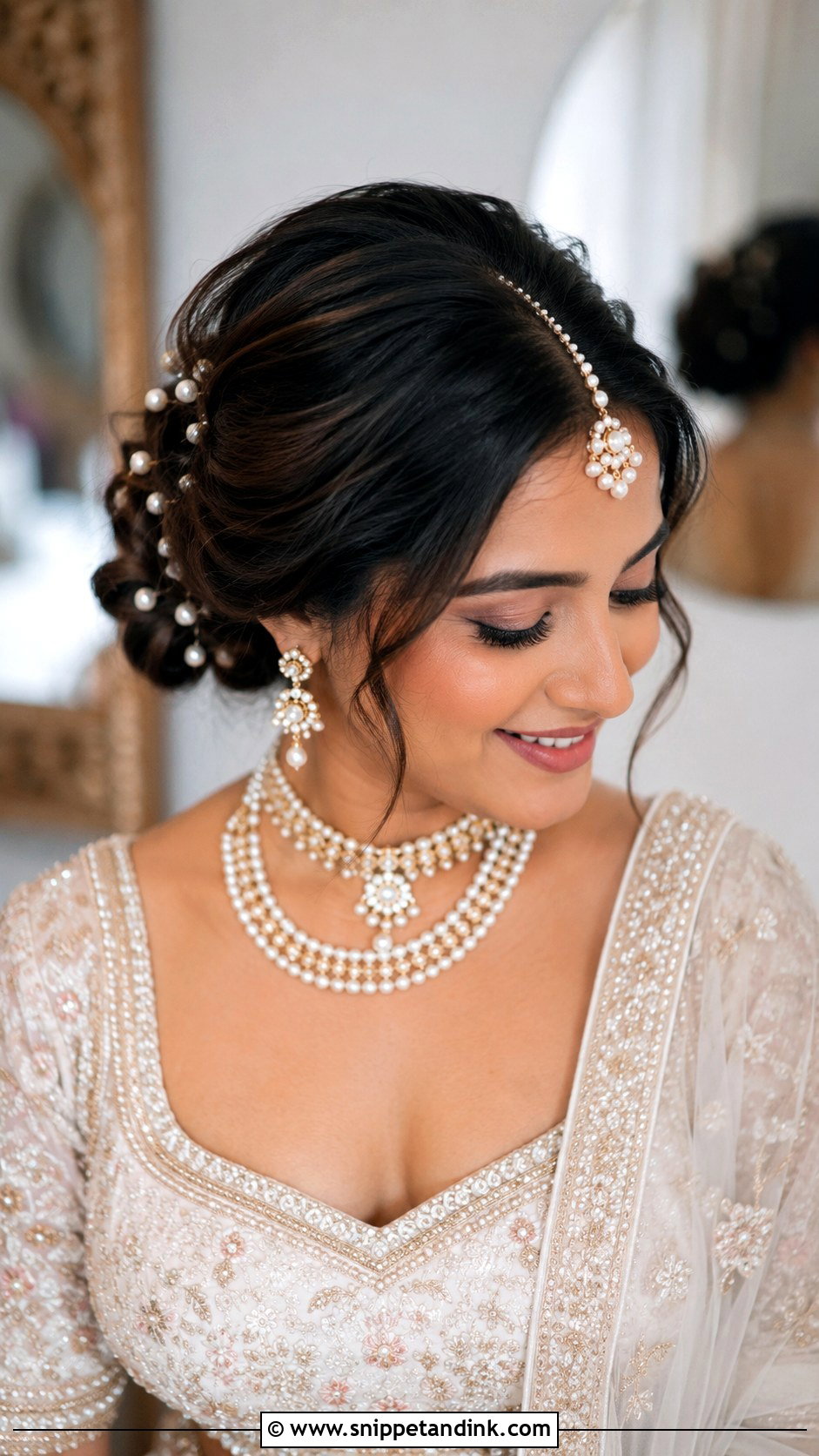
Pearls give a quieter finish than flowers and won’t wilt or brown by evening. Scatter small ones through a messy bun, run them along a braid or ring them around a sleek low bun. They look right with ivory, champagne, blush, silver and pastel outfits. On very textured hair the pearls get lost, so I keep the bun surface fairly smooth. With pearl jewelry, the hair and the necklace end up matching nicely, at the wedding or the reception.
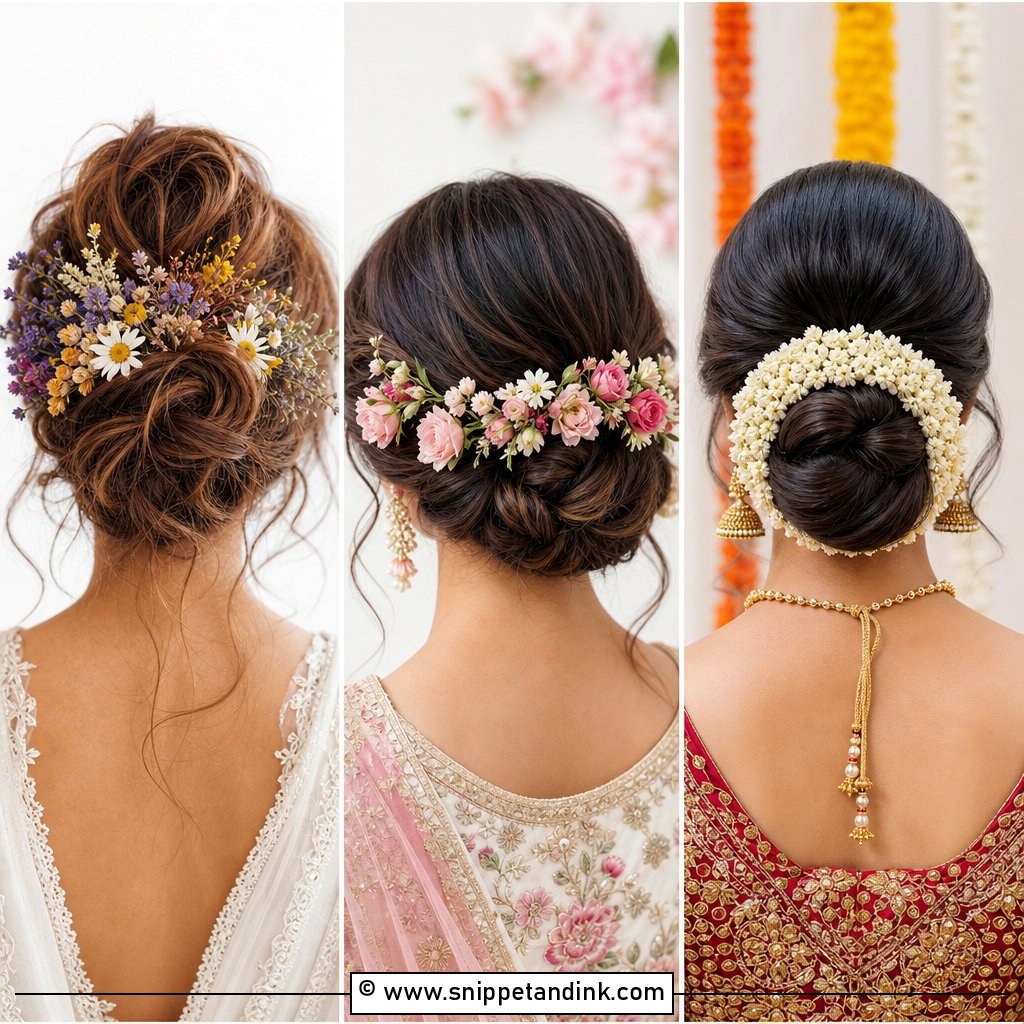
15. Indian Bridal Floral Juda Bun
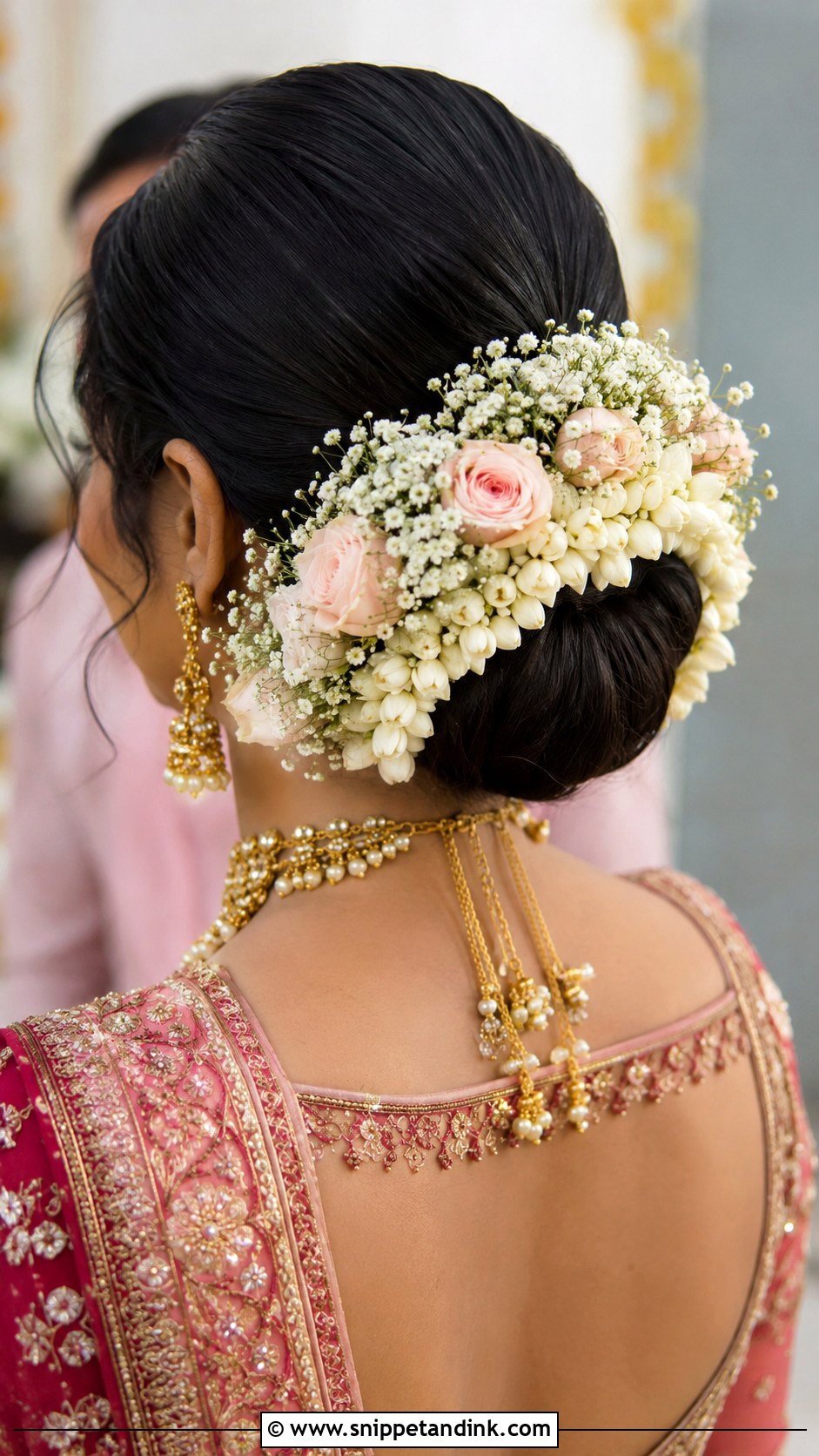
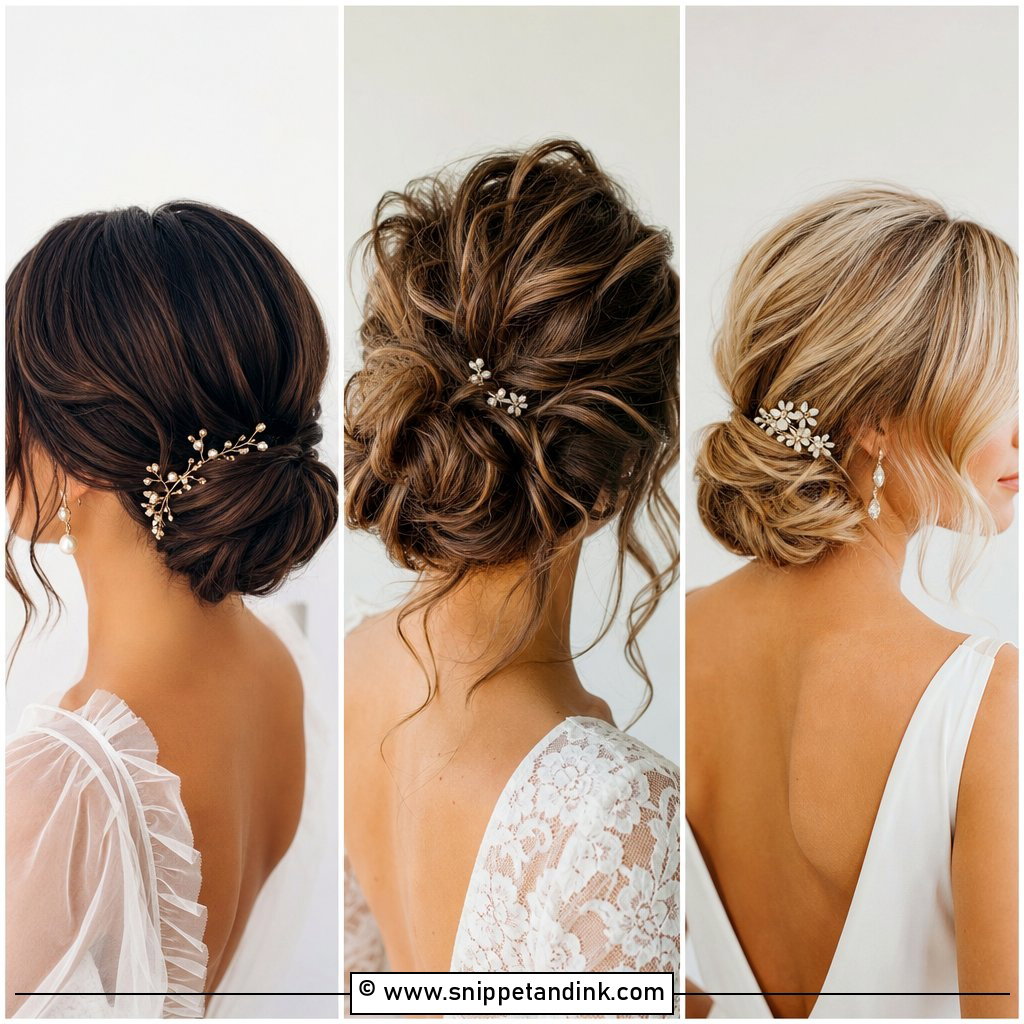
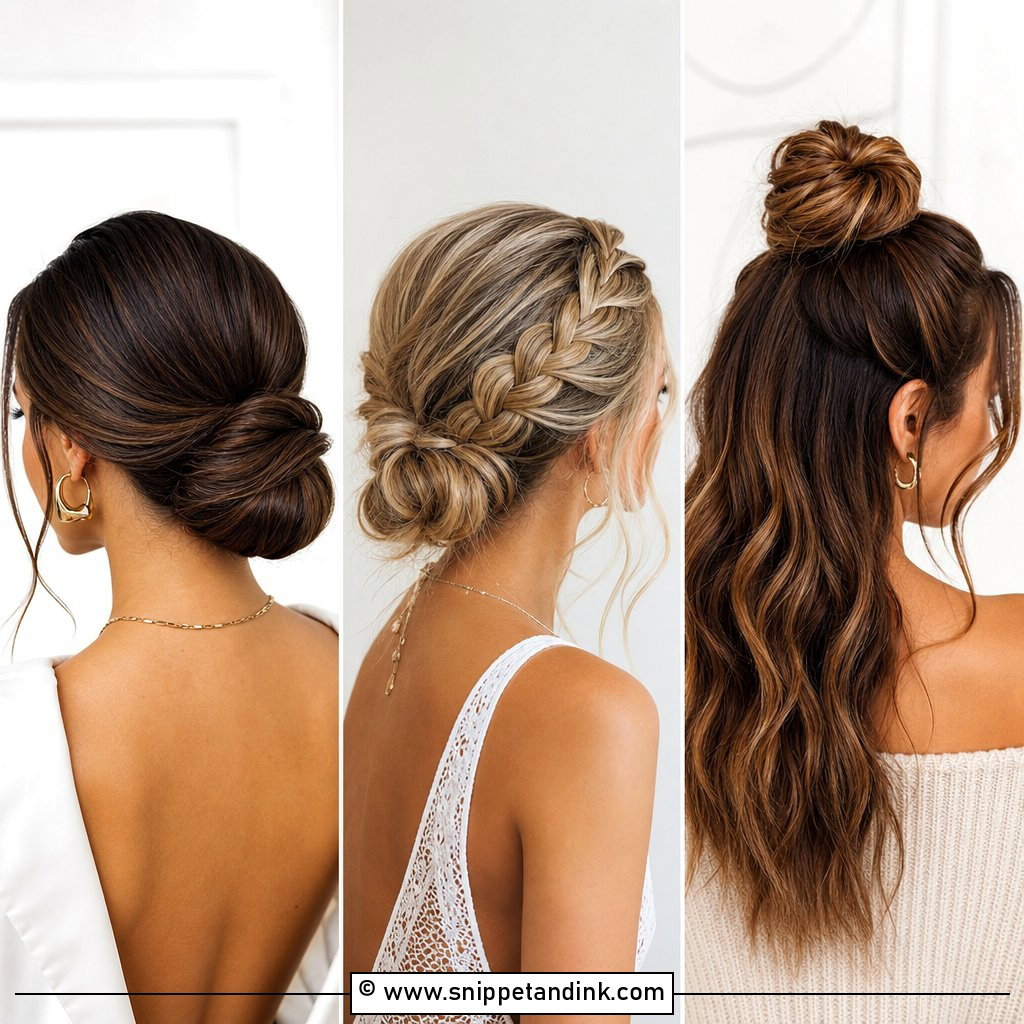
Flowers give an Indian bridal floral juda bun its character: jasmine for tradition, roses for colour, baby’s breath for softness, orchids for something modern. They can cover the whole bun, sit in a crescent or gather low on one side. Pick colours that match or contrast with the outfit so they show in photos. Fresh flowers are heavier than they look, so I pin them firmly but spread the load, or the bun gets dragged down by evening. Lehengas, sarees and fusion outfits all suit it.
Jasmine and Roses That Last From Styling to Pheras
Jasmine opens and starts to brown within hours in warm rooms, so timing matters more than the order itself. I ask for gajra to arrive tightly budded, an hour or two before styling, kept wrapped in a damp cloth in a cool spot until it goes on. Roses can come a little earlier but should stay in water until the last moment.
Tell your florist exactly how the flowers will be used. A gajra for a full circle around a bun needs a different length from a half crescent, and roses for hair need short stems and small heads, not bouquet blooms. Measure your trial bun so you can give real numbers.
- Order a spare strand of gajra for touch-ups between ceremony and reception.
- Avoid spraying perfume or hairspray directly onto fresh flowers; it marks the petals.
- For a long day outdoors, pearl pins or good silk flowers in the bun can stand in once the fresh ones tire.
A Juda Built Properly Stays Up Until the Vidaai
The juda has lasted because it does so much at once: it’s comfortable, it carries jewelry and a dupatta, and it suits nearly every ceremony. A sleek low bun, a jasmine gajra bun, a rose-filled juda or a soft messy one with pearls can each be the right choice. Your dupatta weight, jewelry, face shape and hair length decide which. Book a trial with all the accessories, because small changes in the part, the height or the flower placement change the result, and a bun built properly holds through the whole day.
You'll Like These Ideas:


Leave a Reply