
Kerala weddings ask a lot of a hairstyle. The bride may wear a Kasavu saree, rich Kanjeevaram silk, temple jewelry, a veil or a reception gown, often in the same day, and almost always in heat and humidity that flatten anything soft. Traditional buns, jasmine braids, poola jada, soft curls and modern half up looks can all work, but only when they’re planned around the outfit, the weight of the jewelry and the schedule. I’ve written each look below with the practical side in mind: what holds in Kerala weather, what needs extensions, and where flowers go wrong.
Matching a Braid Extension to Your Own Hair
Many of the braids and poola jada looks here rely on added length. That’s normal, and done well no one can tell. Done badly, the extension shows as a sudden change in color or texture halfway down the braid.
- Match the shade in daylight, holding the extension against the underside of your hair, which is usually darker than the top.
- Choose real hair over synthetic if you can. Synthetic fibre is shinier and can look plastic under flash.
- Pick a texture close to yours. Very silky extensions with coarse hair separate as soon as you move.
- Buy it before the trial, so it can be cut, blended and tested with the flowers.
Thin ends are where a natural braid looks weak, so the extension is usually woven in from a point higher up, not just tied at the bottom. If your hair is shoulder length, a clip-in base at the nape gives the braid a full start.
For a bun, the same idea applies with a padding roll or a small hair piece. Wrap your own hair around the outside, and jasmine will cover any joins.
1. Kerala Bridal Bun With Jasmine
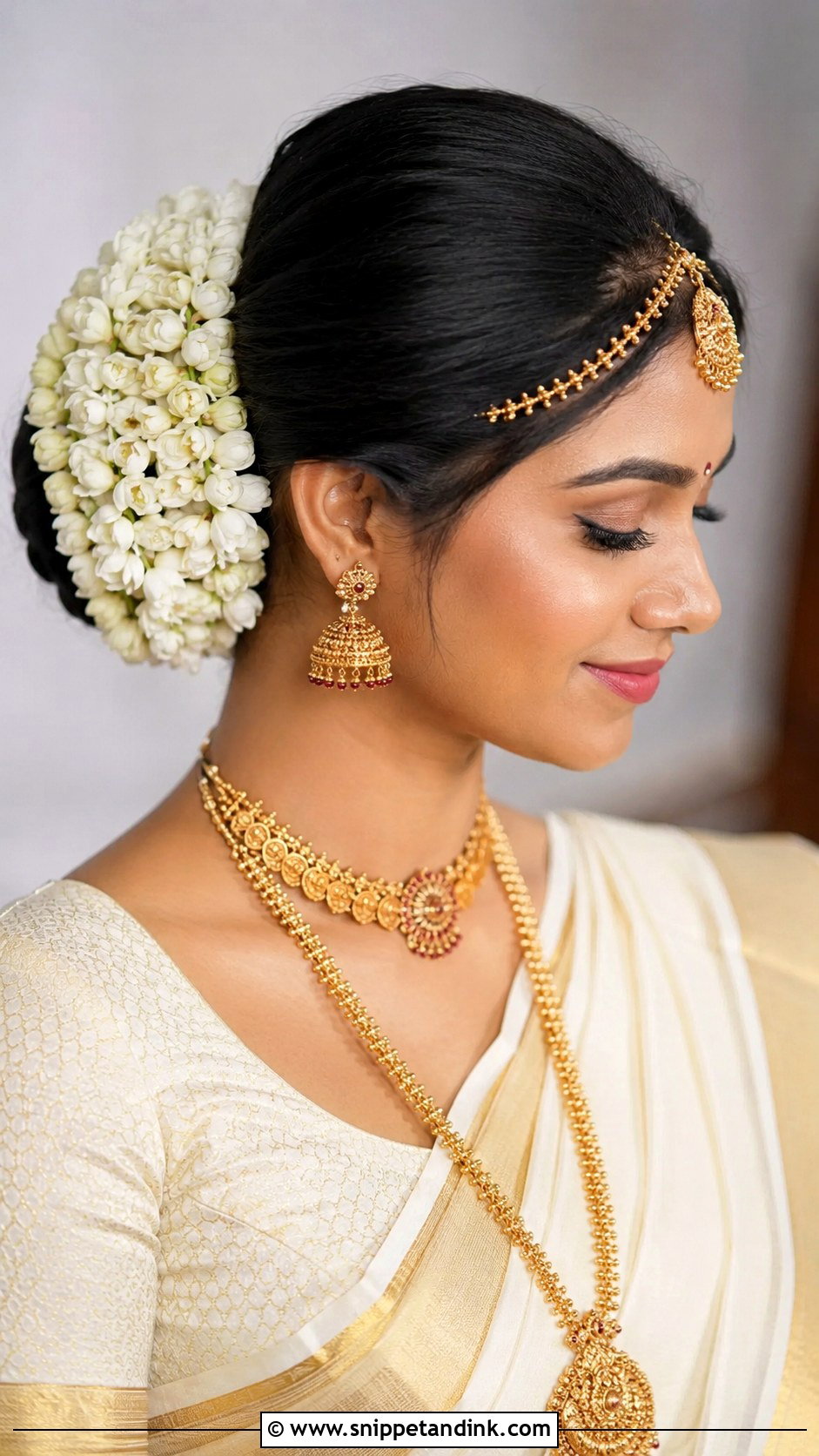
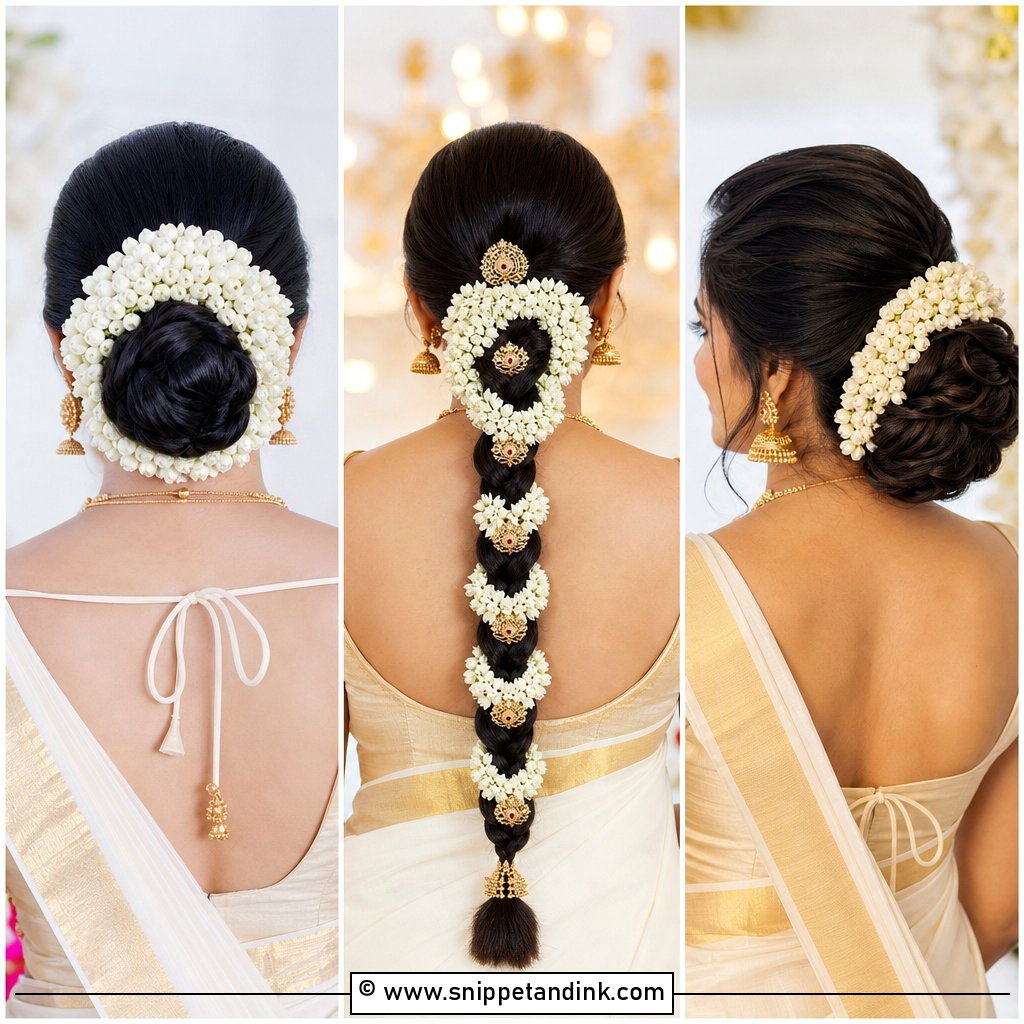
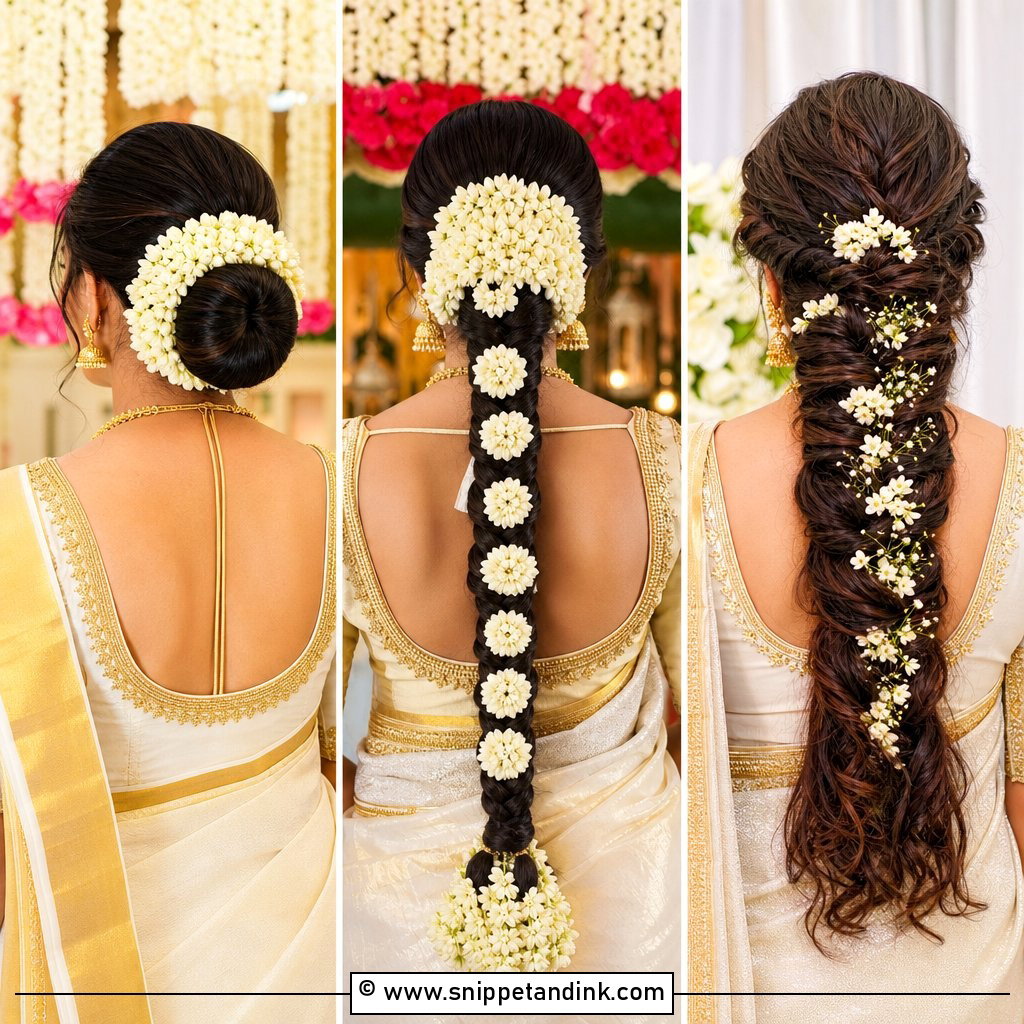
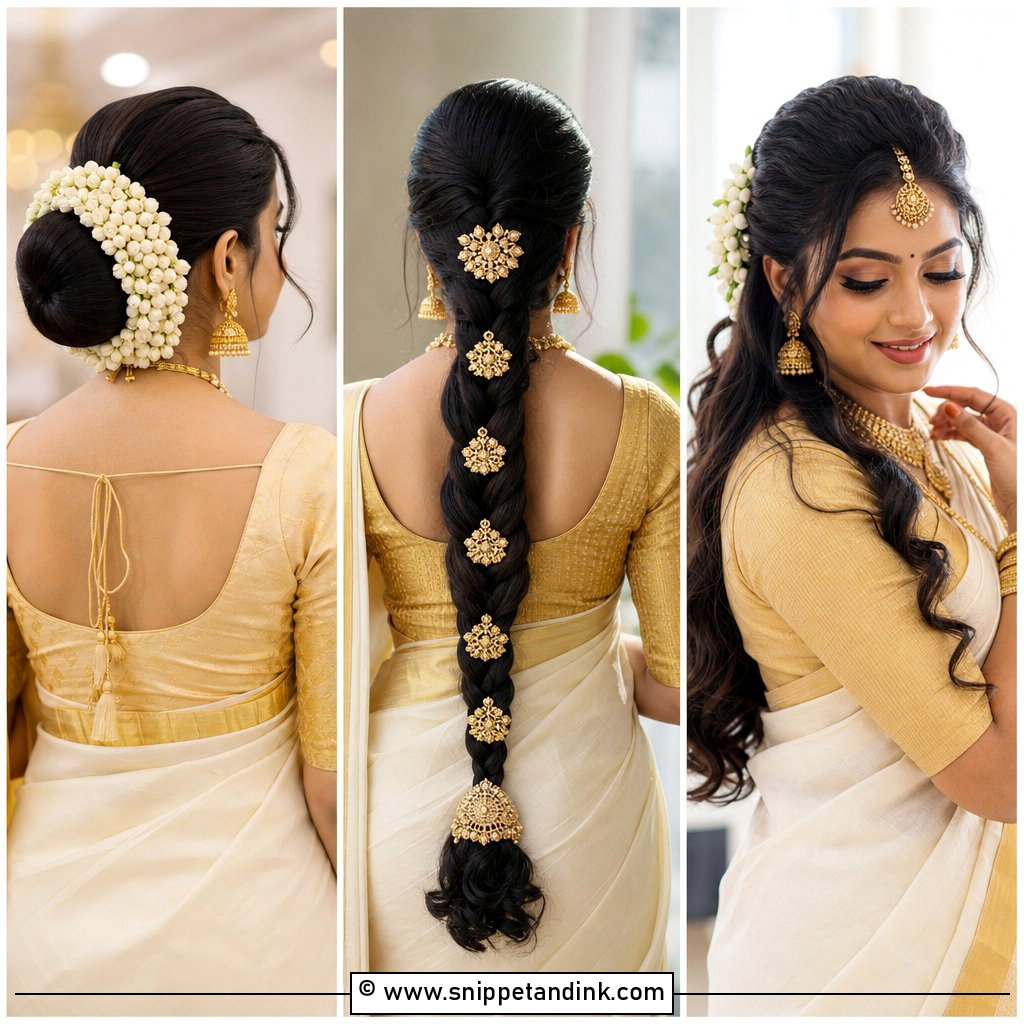
Jasmine around a low or mid-low bun is the look most Kerala brides picture first, and it earns its place. The bun leaves room for temple jewelry, a veil or a neatly placed dupatta, and the white flowers sit against gold and silk perfectly. It’s also comfortable through long ceremonies. Ask for smooth roots and a firm base. Face-framing pieces are optional; in humid weather they’re usually the first thing to go limp, so I only leave them out if the bride’s hair holds a curl well.
2. Kerala Bridal Long Braid With Flowers
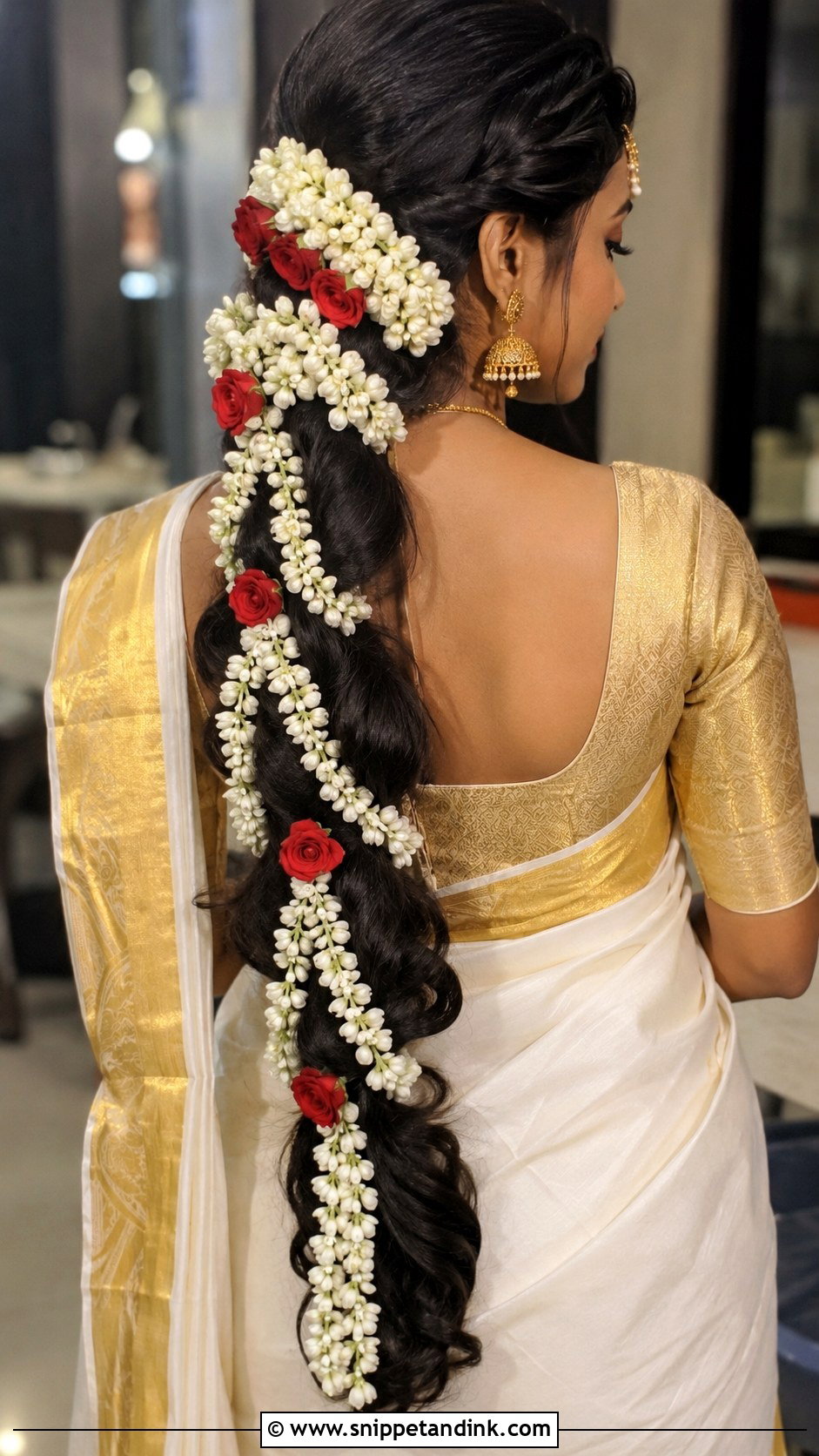
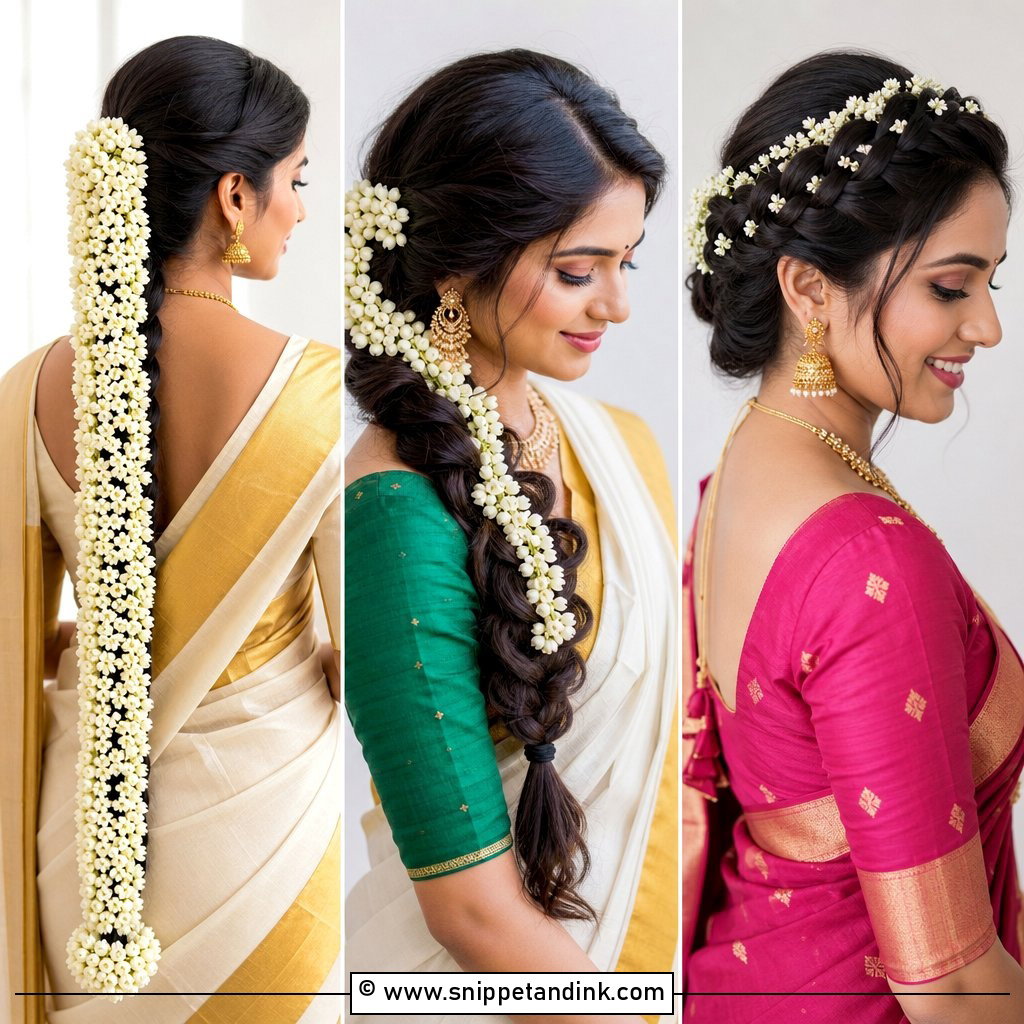
A Kerala bridal long braid with flowers is mostly seen from behind, during rituals and walks, so the back view is what you’re designing. The braid can be natural or lengthened with matching hair to get fullness all the way down. Jasmine, roses, kanakambaram or small mixed flowers go along it in neat layers. Build the crown with a little lift so the braid doesn’t look like it’s dragging the head back. Long gold necklaces and traditional earrings suit it well, since the neck and shoulders stay visible.
3. Kerala Bridal Poola Jada
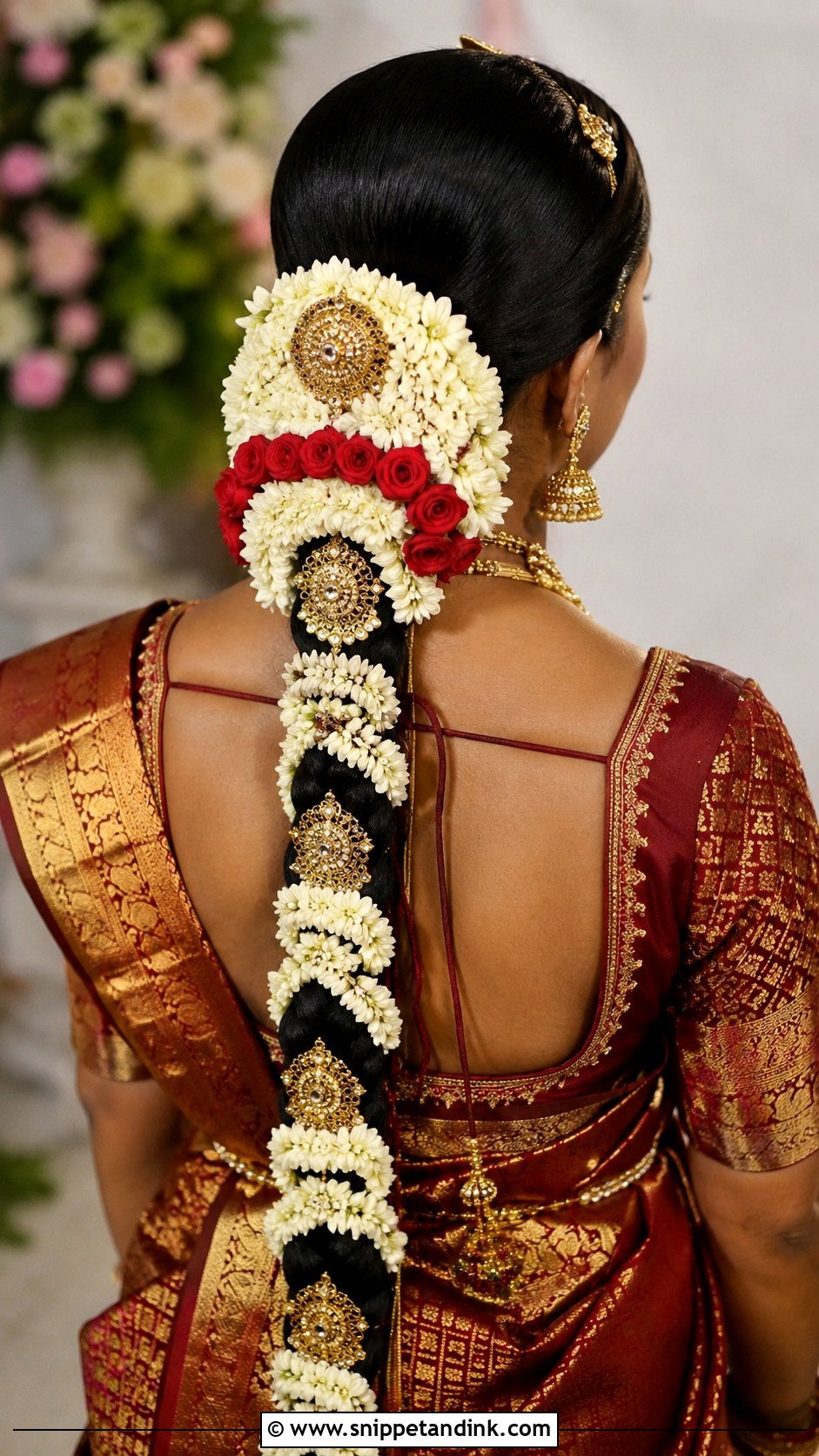
In a poola jada the braid itself becomes an ornament: a long plait covered with fresh flowers, floral strings and sometimes gold jada pieces. Proportion is everything. With a heavy saree and a lot of jewelry, I’d keep the floral pattern cleaner; with a simpler outfit, a full poola jada carries the grandeur. It is heavy, though. A dense jada pulls steadily on the crown for hours, so I fix the floral base onto a firm section at the top of the braid and spread the weight down the length rather than hanging it from loose hair. Every layer gets secured, not tucked.
4. Kerala Bridal Bun With Temple Jewelry
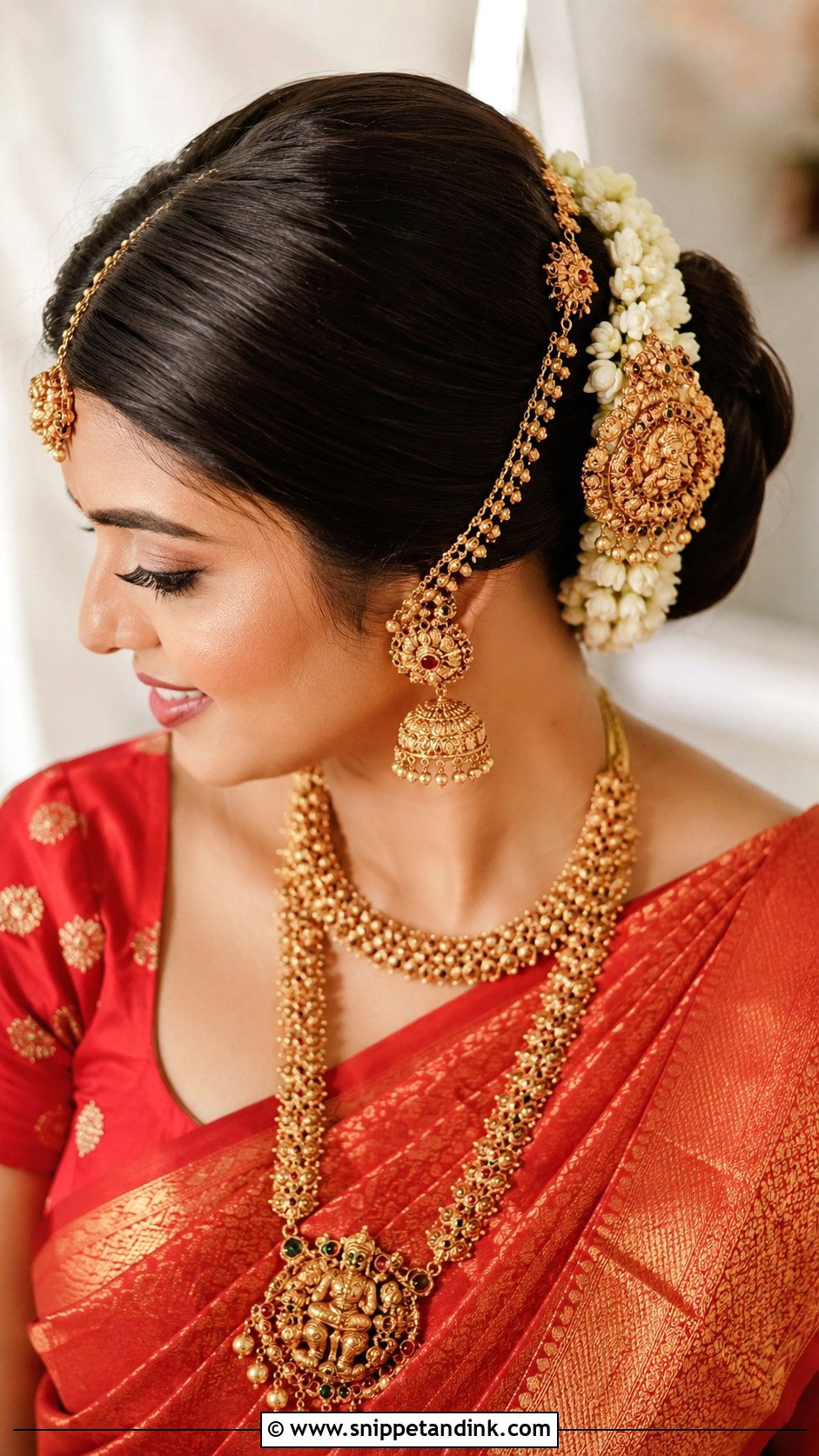
Gold hair chains, jada pins, crescent ornaments or small temple pieces can sit around the bun or along the parting, and the bun underneath can be sleek, softly textured or a little fuller depending on the face and the saree. The point is that the hair supports the jewelry. If you’re wearing a netti chutti or maang tikka, the front must be clean and the part precise, because the ornament follows that line exactly. I fit the netti chutti before the bun is finished, so the side hooks land on hair that can hold them.
5. Kerala Bridal Side Braid
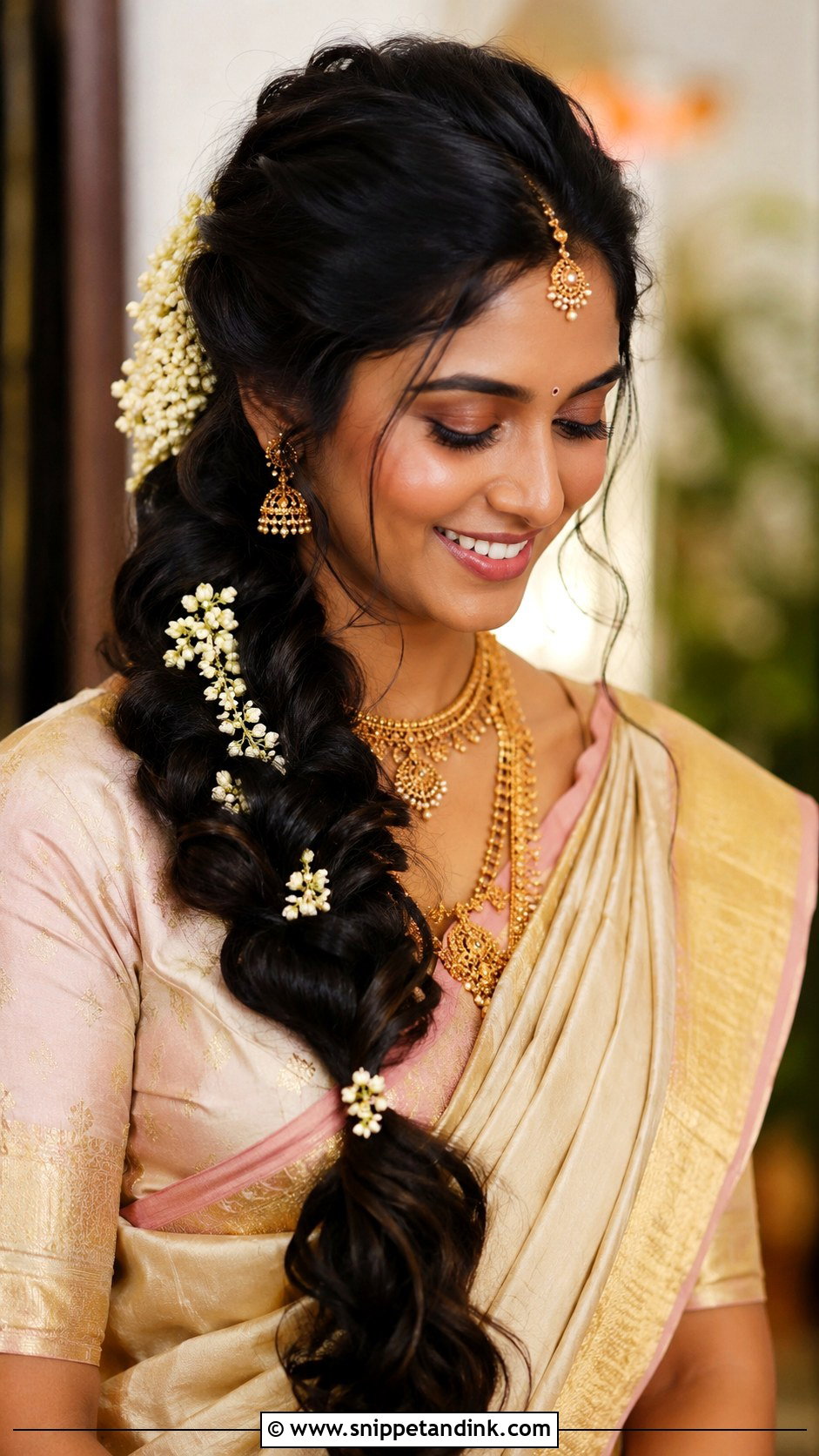
Swept to one side and braided with some volume through the crown and length, a side braid shows up in front-facing photos where a back braid disappears. Flowers can trail along the braid or gather near the shoulder. I suggest it mainly for engagements, receptions and smaller events. One thing to know: a side braid rests on the shoulder and rubs against the saree pallu, which loosens the braid and can snag delicate fabric, so it needs to be braided firmly underneath and only loosened at the surface.
6. Kerala Bridal Half Up Hairstyle
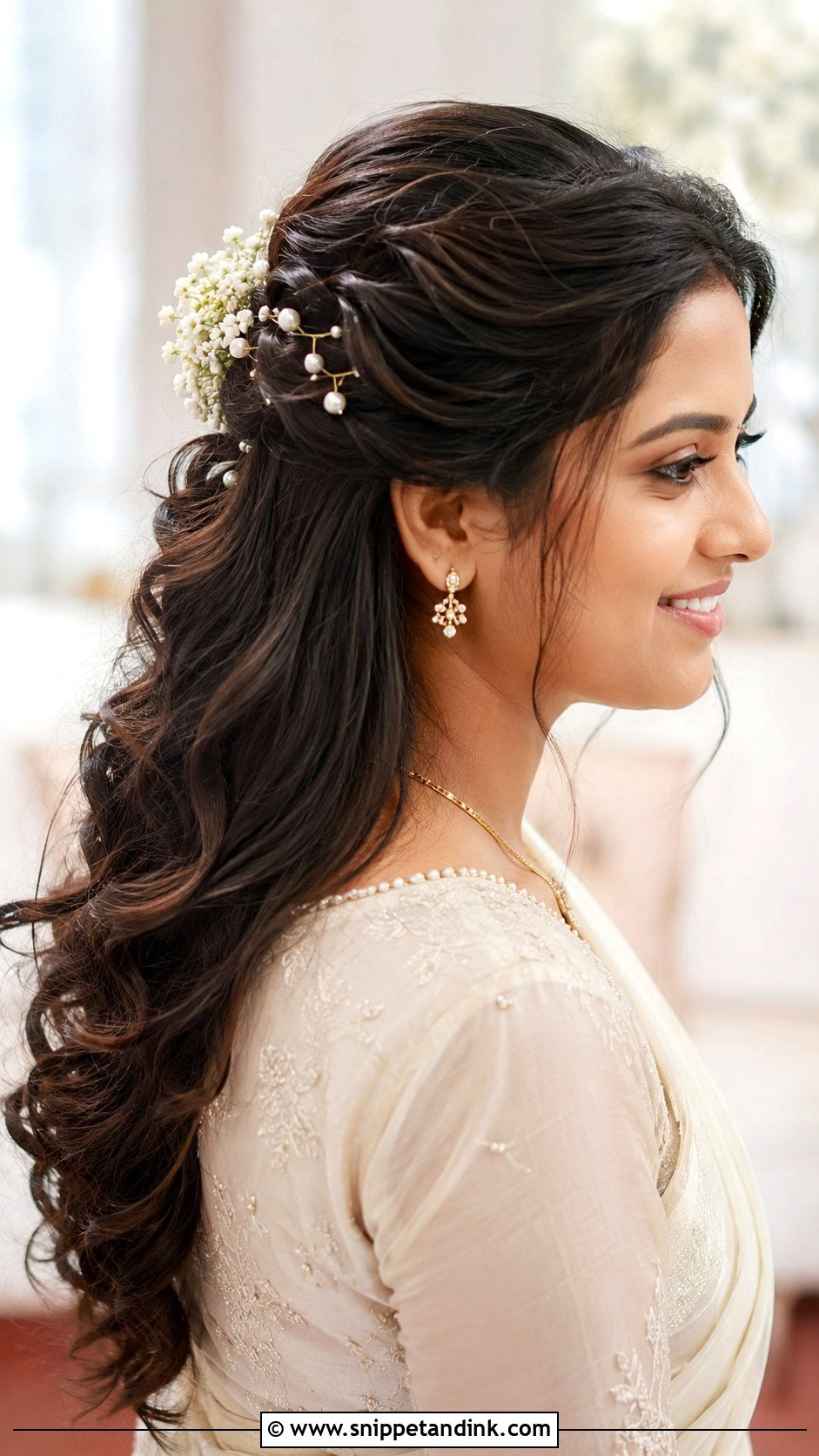
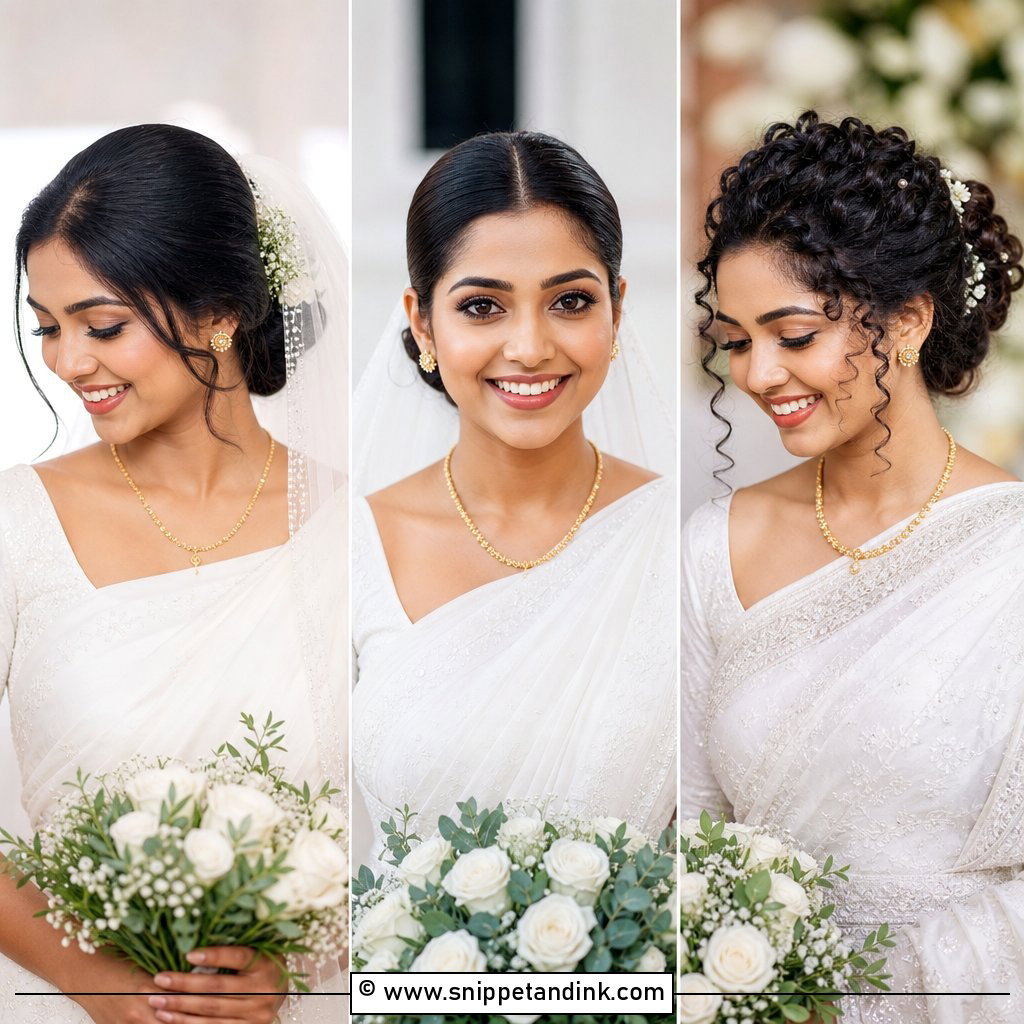
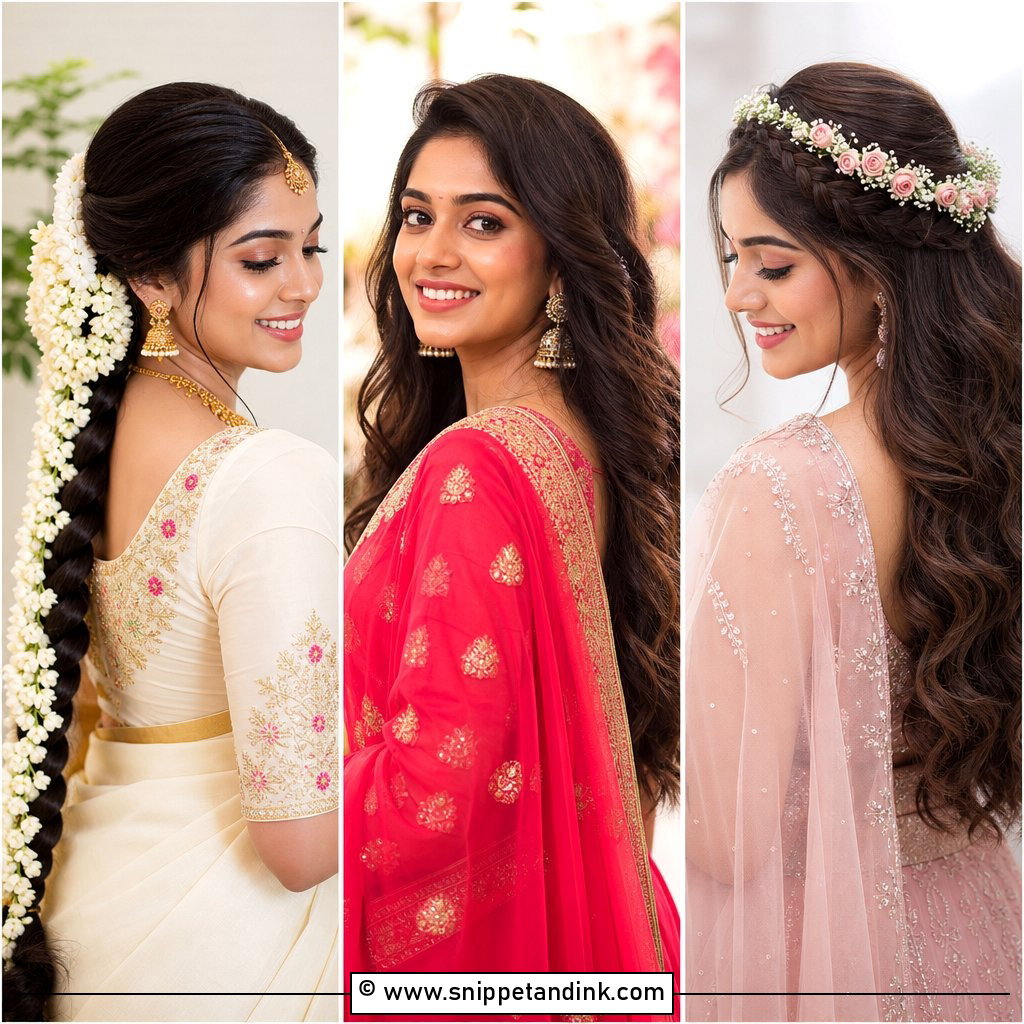
Open hair with structure underneath: the top section is pinned or twisted back and the rest falls in waves or soft curls. It suits Christian Kerala weddings, reception gowns, pastel sarees and anyone who wants a lighter style. Jasmine buds, pearl pins or a gold piece fit right at the pinned section. In Kerala heat, loose curls drop faster than almost anything else, so I set them on a smaller barrel than you’d expect, pin each one to cool, and release them as late as possible.
7. Kerala Bridal Low Bun With Veil
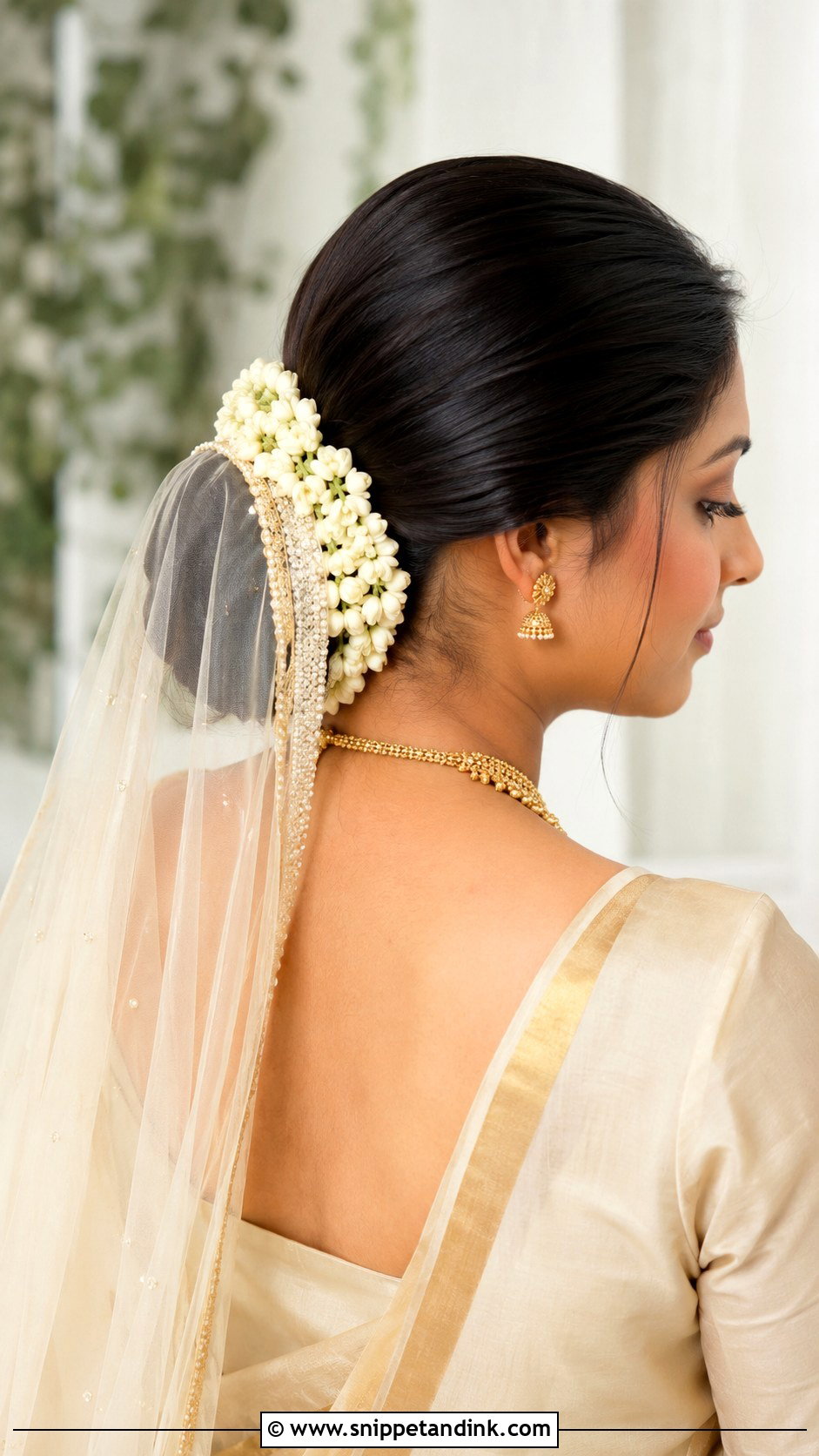
The bun sits close to the nape, which is the steadiest base for a veil, a dupatta or a head covering. Low height means the veil drapes cleanly instead of perching on a peak. It keeps the neckline open for jewelry and stays tidy from every side. Flowers can circle the bun, or you can keep it minimal with pearl or gold pins. I always fix the veil comb into a tight section of the bun base itself. If it’s pinned into the smooth outer hair, the weight of the veil slowly pulls the whole bun loose.
8. Kerala Bridal Curly Bun
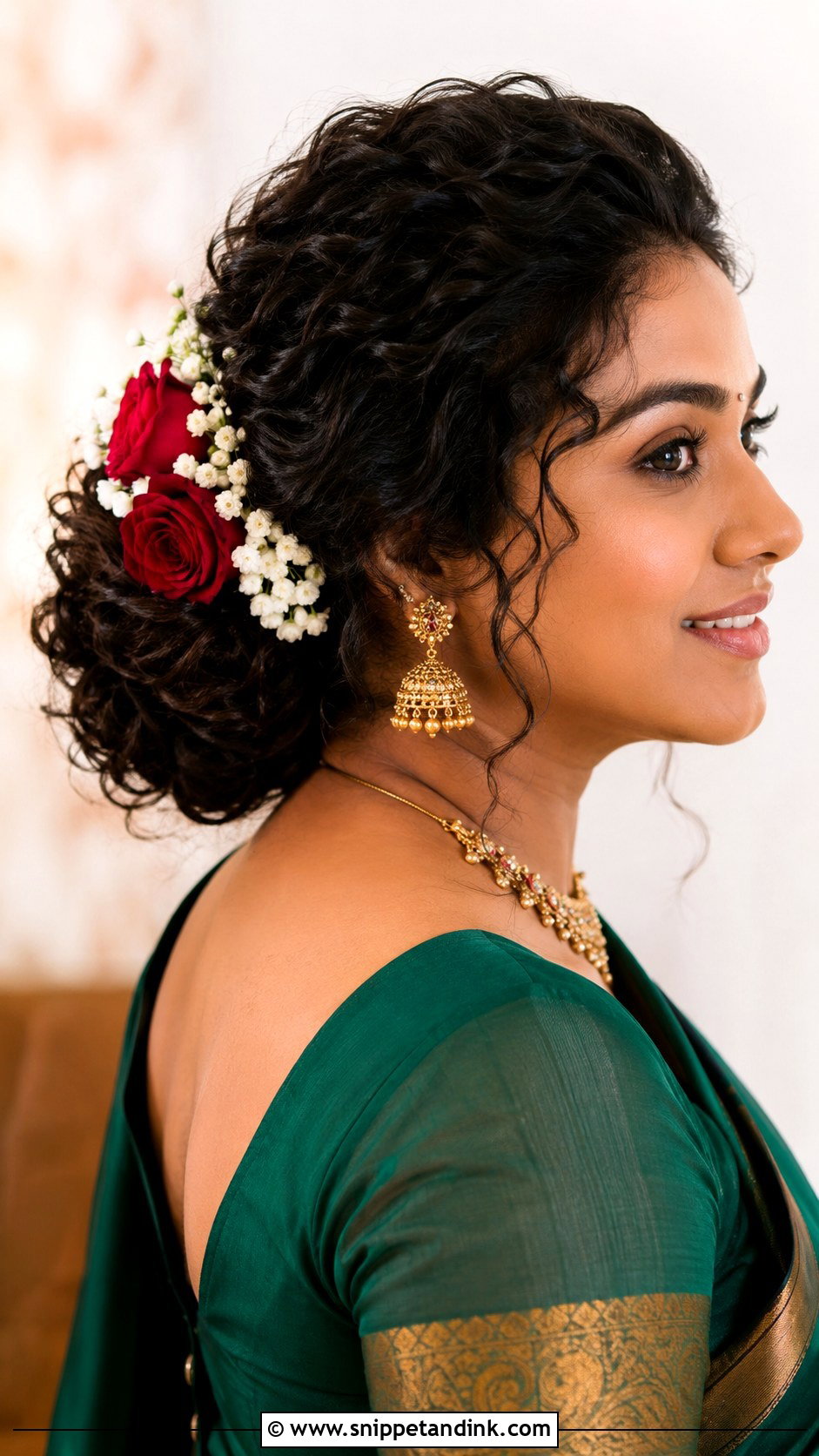
Naturally wavy or curly hair has a head start here, because the texture is already there to show. The bun is formed from pinned curls with soft tendrils and a little height at the crown, then finished with jasmine, roses or gold pins. It feels festive without looking rigid, so it moves well from a silk saree to a reception outfit. Use curl-friendly products from wash day, not just on the morning, so the curls are defined before the stylist starts. Over-brushed curls turn into frizz in humid air.
9. Kerala Bridal Fishtail Braid
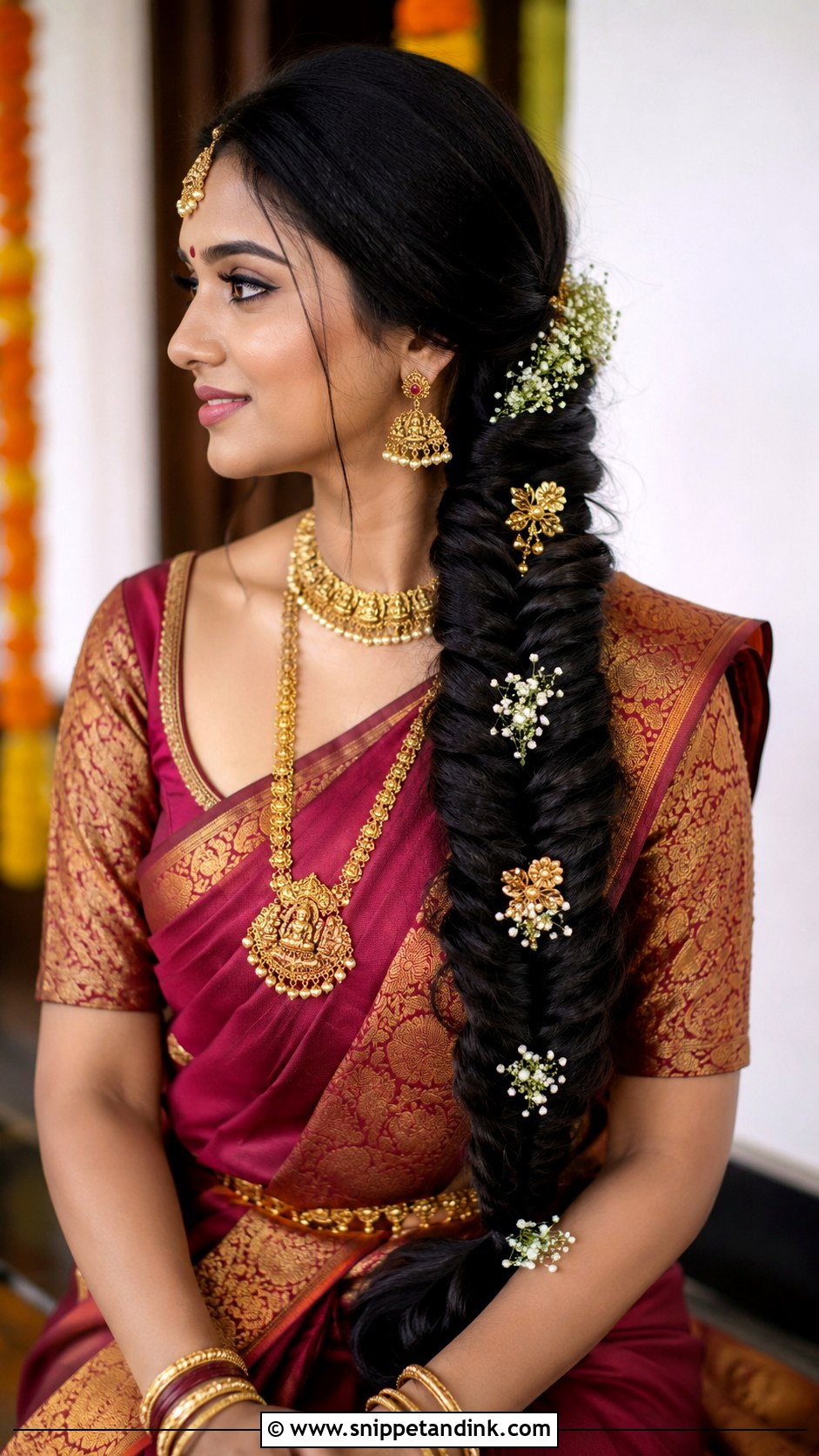
A fishtail’s fine woven pattern reads beautifully in close-ups and back views, which makes it a modern alternative to the standard three-strand bridal braid. I widen it slightly by gently pulling the edges after braiding, then tuck in small flowers or delicate gold pins. It can run straight down the back or sweep to one side. Fishtails take longer to braid and are harder to fix if a section slips, so budget the extra time and make sure the base at the nape is secure. Keep the crown smooth and let the braid hold the detail.
10. Kerala Bridal Bun With Roses
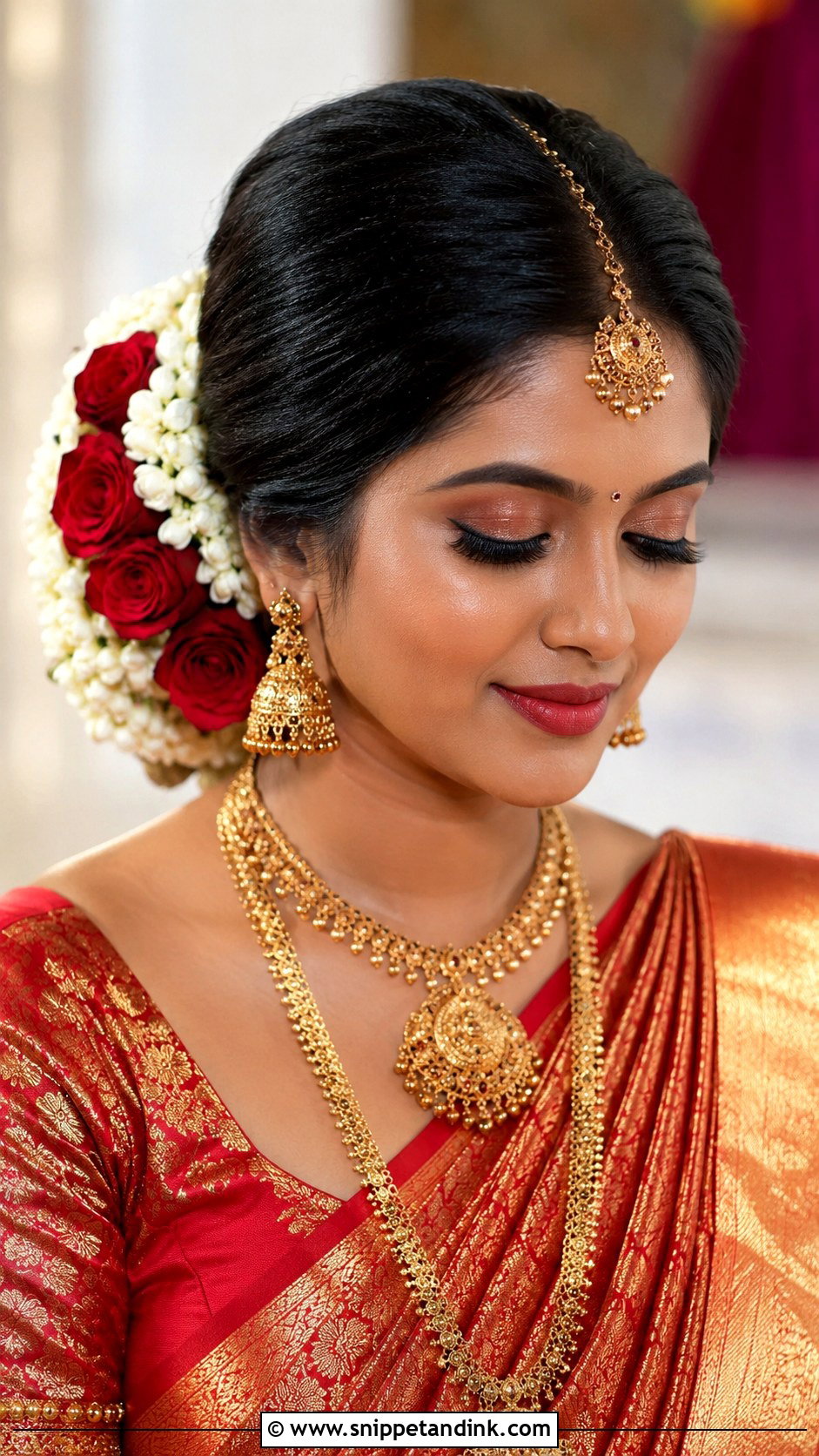
Roses bring color and fullness, which helps when you want the hair to stand out in photos. Red, pink, white or a mix with jasmine all work, and they sit well with red, maroon, ivory, gold and pastel sarees. Overloading is the common mistake. Too many big blooms hide the bun’s shape and add weight. I use fewer, tightly placed roses with short stems, and keep them cool until the last moment because the outer petals bruise from handling. Balance them with a smooth front.
11. Kerala Bridal Sleek Bun
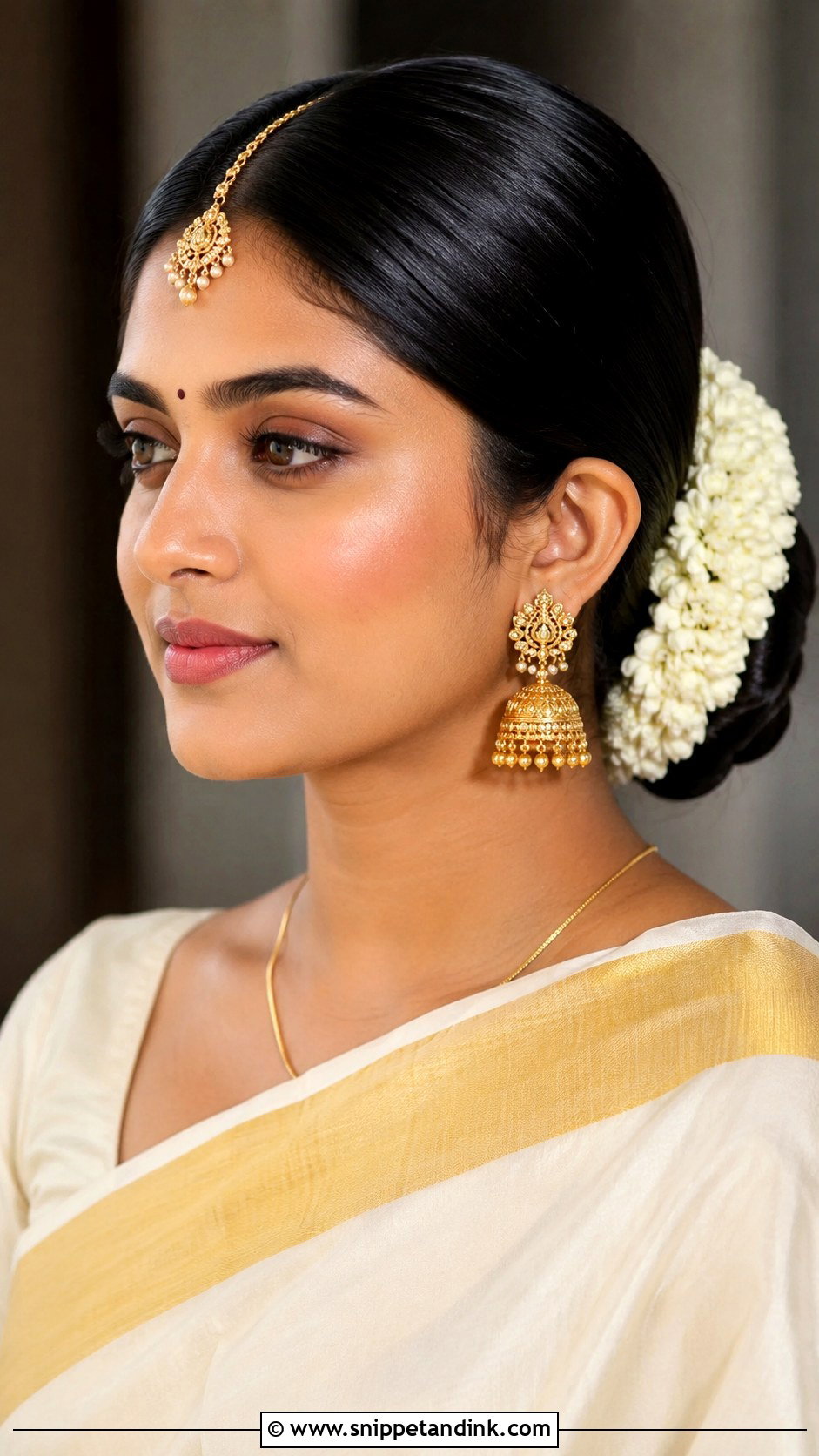
Smoothed back with a center or soft side part and gathered into a firm bun, this puts all the attention on your face, jewelry, saree border and makeup. Temple jewelry, bold earrings and a classic bindi look their best with it. Surprisingly, a sleek bun also copes with humidity better than most soft styles, as long as the hair is prepped with a smoothing cream and pinned tightly. Leave it plain or add a single jasmine ring for a traditional finish.
12. Kerala Bridal Open Curls
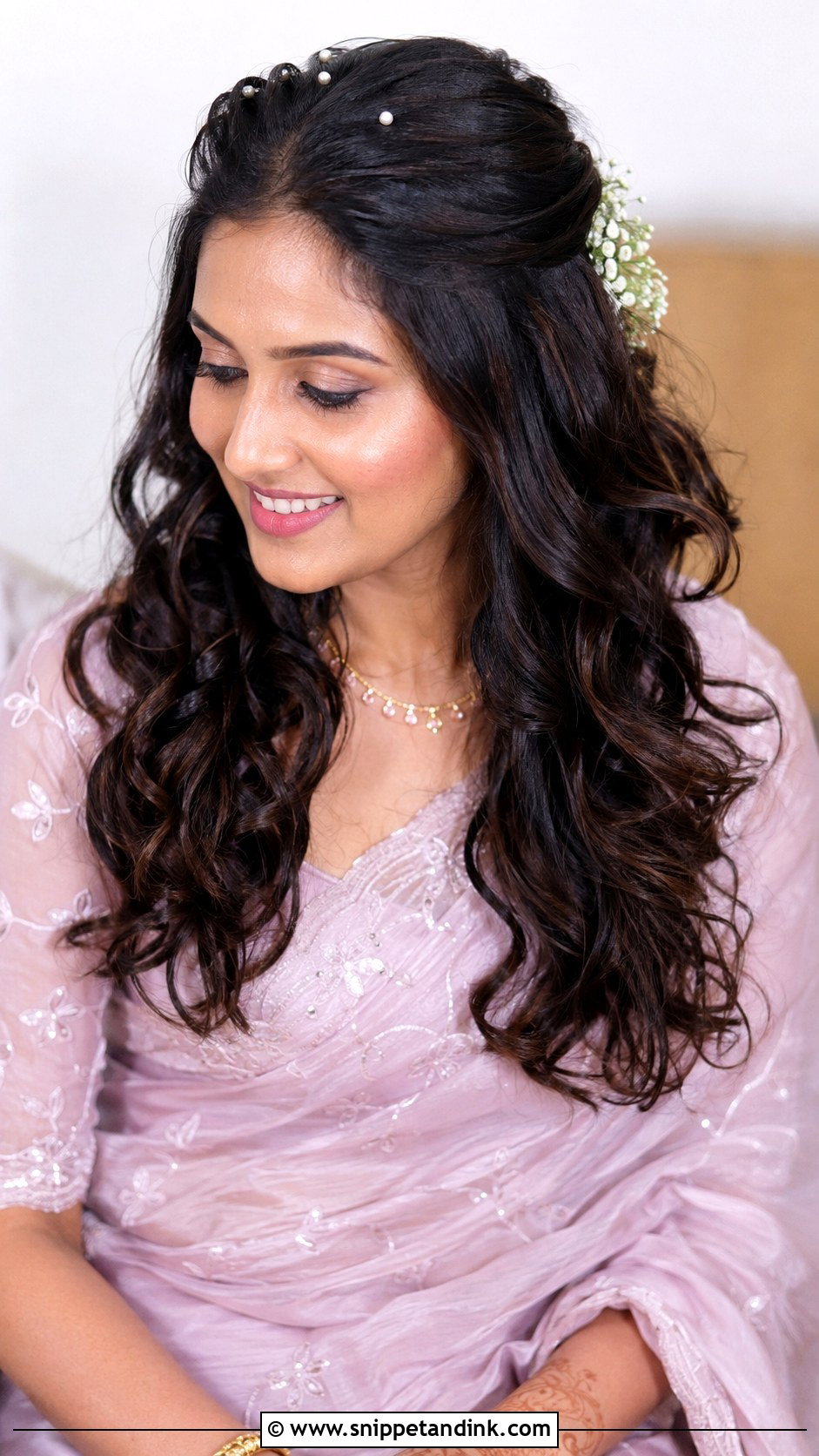
Kerala bridal open curls suit receptions, pre-wedding shoots, Christian ceremonies and modern saree styling. The curls can be brushed into waves or kept as defined ringlets, ideally with a hidden pinned base at the back for support. Open hair loses shape fastest in heat, so I build the curls in layers, set each section with hold, and keep the front pinned back off the face. That keeps makeup and earrings visible and stops sweat at the hairline from relaxing the curls. Pearl pins or a small jasmine cluster are enough decoration.
13. Kerala Bridal Braided Bun
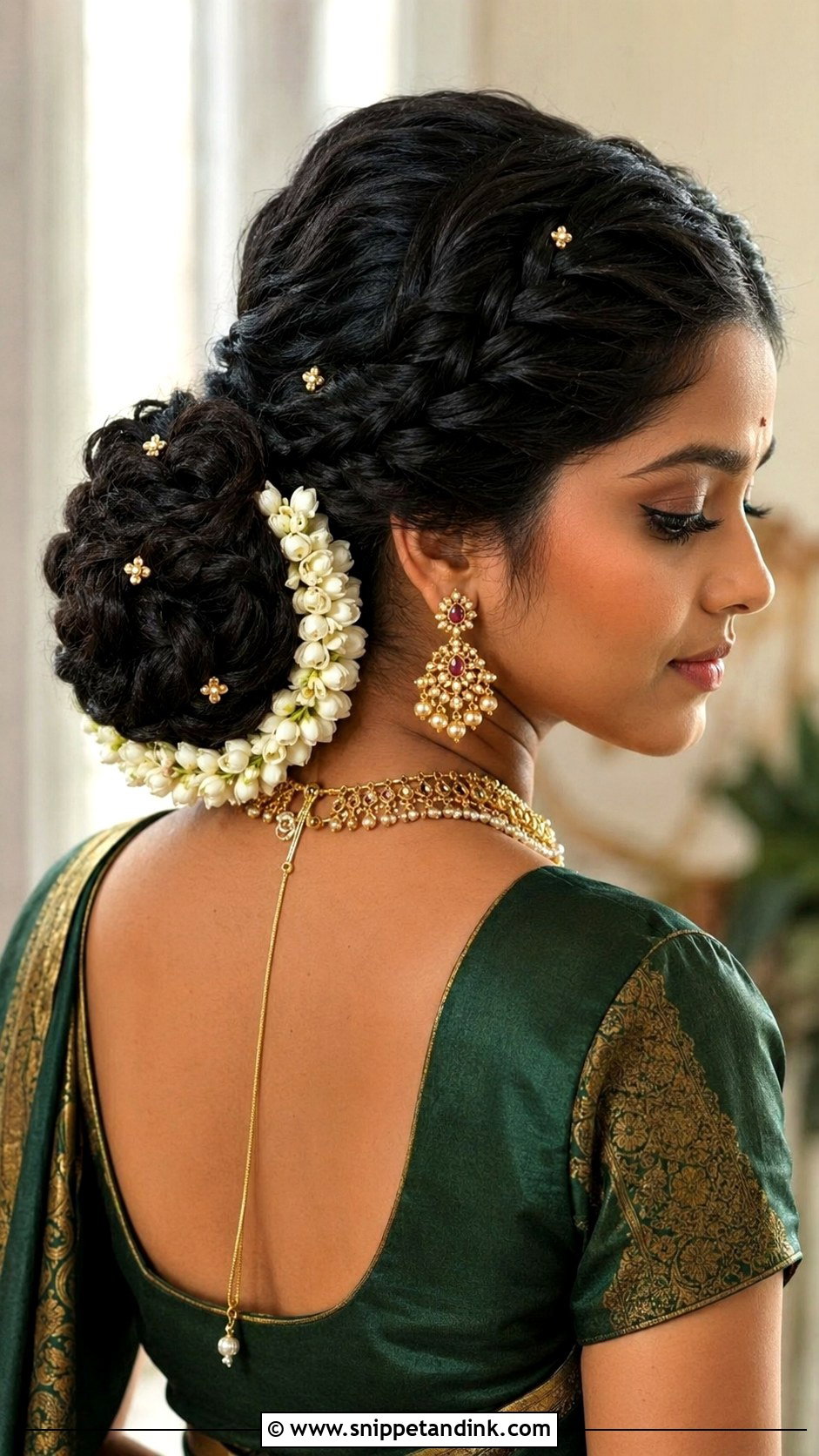
Braiding the side sections, crown or lower hair before wrapping everything into a bun gives depth without needing many accessories. It also gives pins something solid to bite into, which is why this one holds so well during long rituals. Jasmine, roses or small gold pins can be added around the bun to match the outfit. It looks neat from the front, side and back. If you want tradition with more detail than a smooth bun, this is the one I’d recommend first.
14. Kerala Bridal Crown Braid
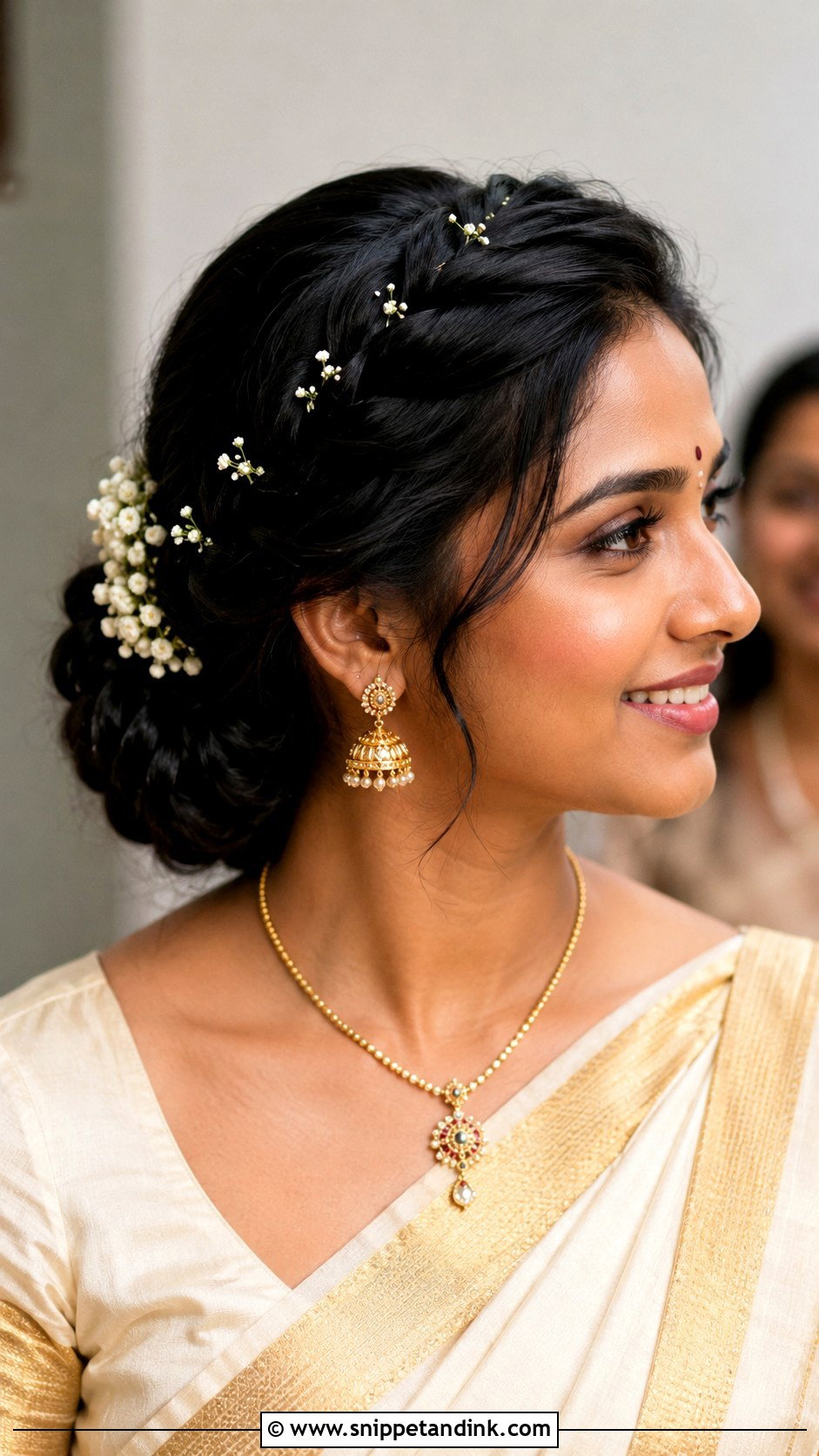
A crown braid runs around the head or across the front section, then joins a bun, braid or pinned curls at the back. It frames the face without loose strands, which is useful in humid weather where tendrils frizz. The braid should look smooth and deliberate, not bulky, so I braid it fairly tight and flatten it with pins along its length. It suits simple gold jewelry and floral accents. Note that a crown braid sits exactly where a netti chutti goes, so choose one or the other, or place the braid further back.
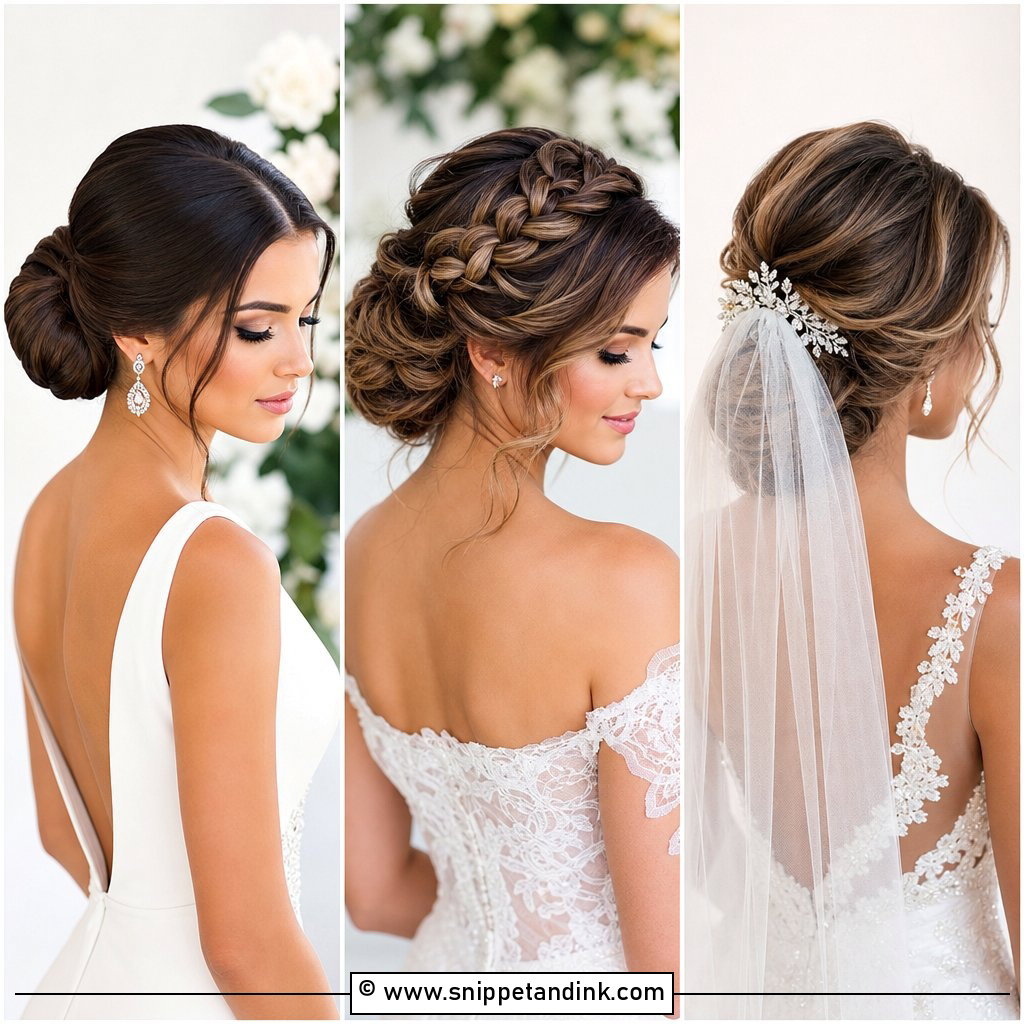
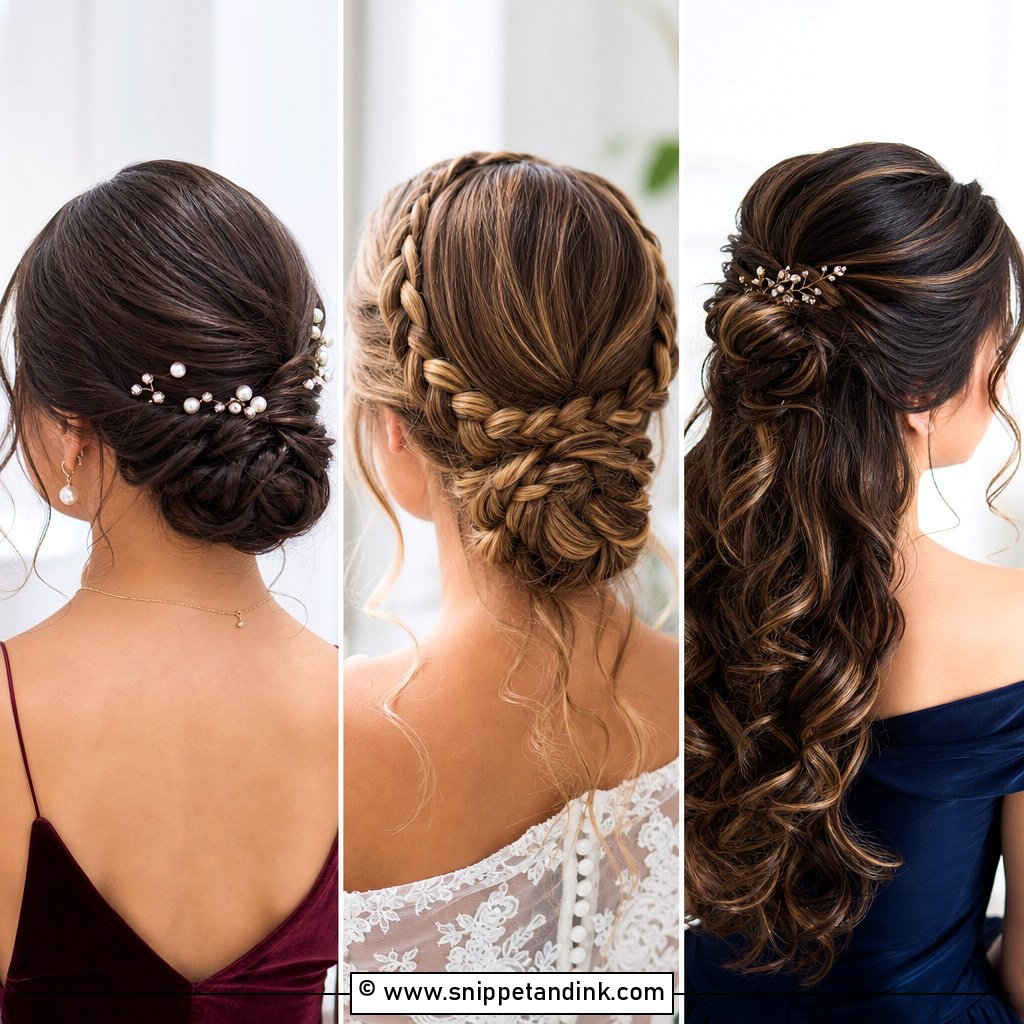
15. Kerala Bridal Reception Hairstyle
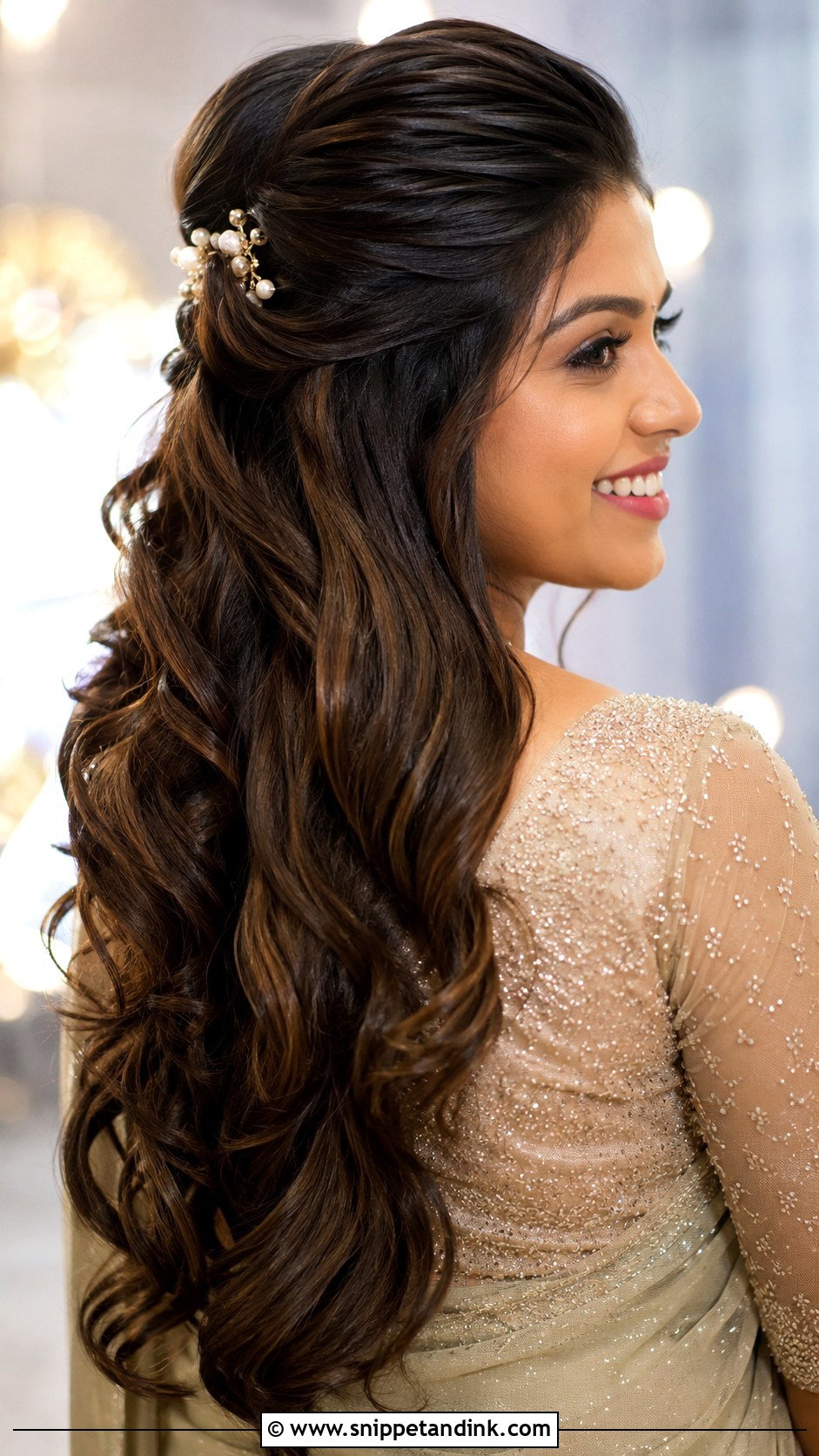
The reception is where most Kerala brides relax the look: soft waves, a half up, a textured bun or a polished side sweep, with lighter accessories, shimmer makeup and a gown or reception saree. Comfort matters more here than people expect, because you’ll greet guests and pose for hours. If your ceremony bun was very traditional, waves or curls make a real second look. If time between events is short, I’d simply loosen the ceremony bun into a softer textured one rather than taking everything down.
Morning Muhurtham to Evening Reception in One Day
A lot of Kerala Hindu weddings have an early morning muhurtham, and many brides then change for a lunch or an evening reception. That means hair starts very early, usually before sunrise, and has to survive a long, warm day. It also means the flowers need to arrive early.
Planning the flowers
Jasmine opens and softens as the day warms up, so order it to arrive just before styling, kept in a cool box with a damp cloth. For a poola jada, ask the florist to string it the same morning if they can. Have a separate, smaller order for the reception if you’re changing styles. The ceremony flowers will look tired by evening.
Handling the change
Taking down a heavily pinned bun and restyling takes time, and hair that’s been pinned all morning comes out creased. If the gap is short, choose a reception style that builds on the morning one: loosen the bun into a textured version, or take the jada off and turn the braid into a side sweep. If you have a few hours, a quick rinse at the roots and a fresh set of curls gives a cleaner second look.
Keep a small kit with you: matching pins, a comb, a small hairspray and some blotting papers for the hairline. Monsoon and summer weddings both need it.
Your Trial Should Include the Saree Blouse
A jasmine bun suits a traditional ceremony, and a long floral braid or poola jada gives a grand South Indian look. Half up curls, open waves, fishtail braids and reception styles bring in something more modern without losing the cultural feel. Whichever you lean toward, do a trial with your jewelry, veil, flowers and the saree blouse on. The neckline changes how high the bun should sit and how much of the back of the braid shows. With that tested, the style should hold from the first ritual to the last photograph.
You'll Like These Ideas:


Leave a Reply