
The front of your hair is what sits in every close-up: under the maang tikka, beside the earrings, framed by the dupatta. The back gets admired once, during the walk. So when I plan an Indian bridal look, I spend most of the trial on the first few inches from the hairline. Below are 25 Indian bridal front hairstyles, from puffs and sleek center parts to floral partings, braided crowns and curly fringes. With each, I’ve noted which hairline and face it suits, how I build it, and what makes it collapse before the photos are done.
Your Hairline Has Opinions About Which Front Will Work
Before I commit to a puff or a sleek part, I study the hairline. Every hairline has quirks, and a front style that fights them will look wrong by lunch. These are the ones I see most.
- A cowlick at the front: work with its direction. Parting against it means the hair springs back up within hours.
- A widow’s peak: a severe center part exaggerates it, so I’d soften with a slight side part or a smooth backswept front.
- A wide or thinning part: zigzag the part, or tint the scalp with a root powder matched to your hair color. A puff also hides it well.
- A high forehead: a soft side sweep or a fringe of curls balances it; a sleek pulled-back front does the opposite.
- Short baby hairs at the temples: smooth them with a gel or wax stick so they don’t frizz in photos.
1. Front Puff With Bun for Indian Bride
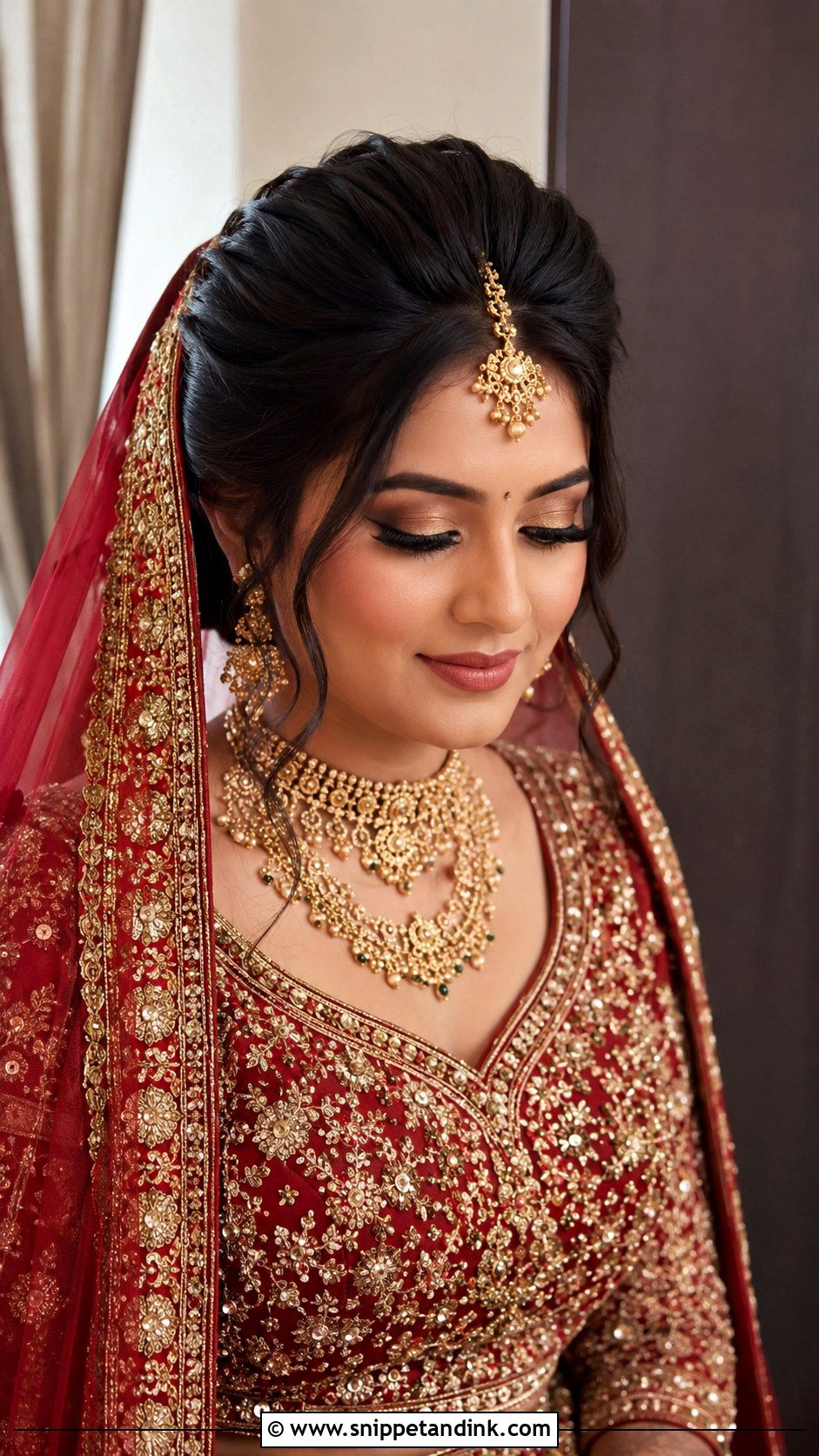
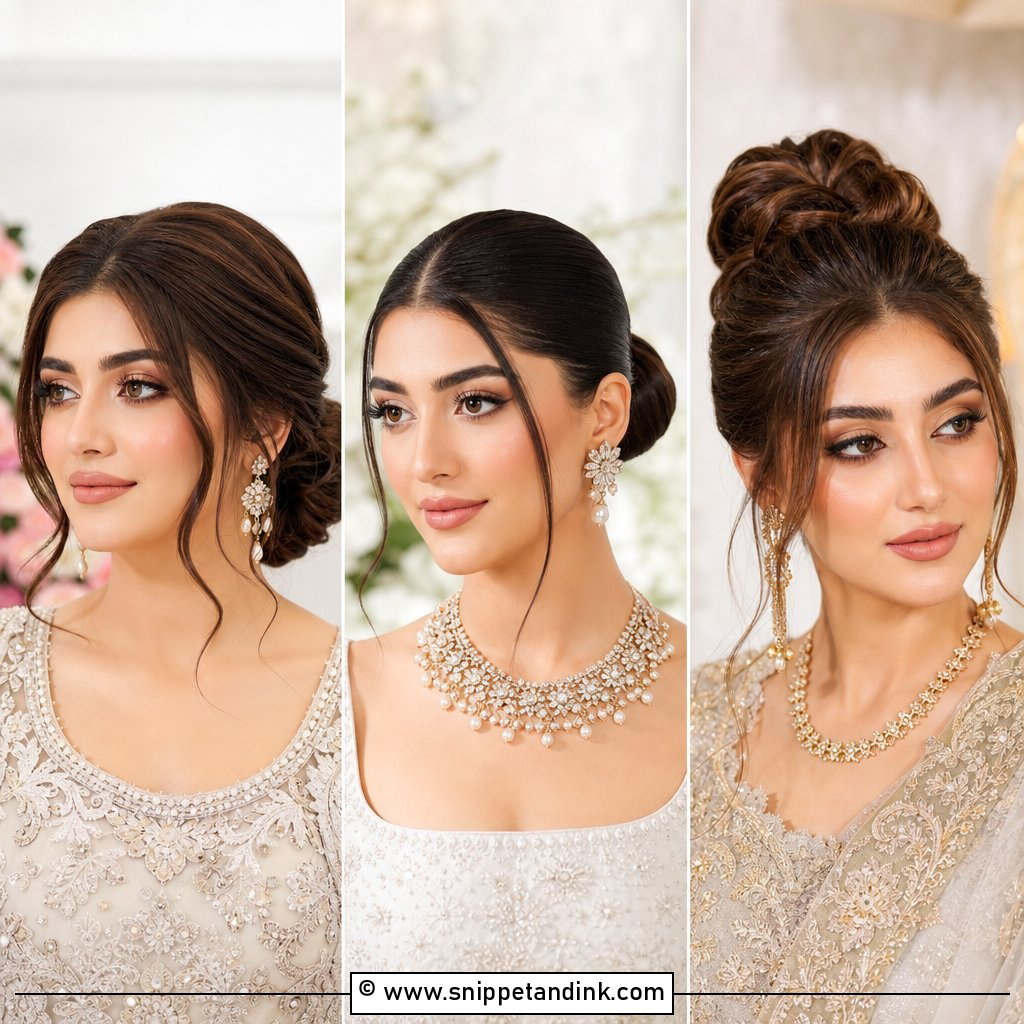
A front puff lifts the crown and gives height while the back sits in a neat bun. It keeps a heavy maang tikka steady on a clean center line. Round and oval faces benefit most from the extra height. The puff only stays up all day if the backcombing is done in thin sections right at the root and smoothed with a soft brush, then pinned from underneath with crossed pins. A loose puff flattens the moment a dupatta goes over it. I’d choose it for the main ceremony.
2. Side Swept Curls for Indian Wedding
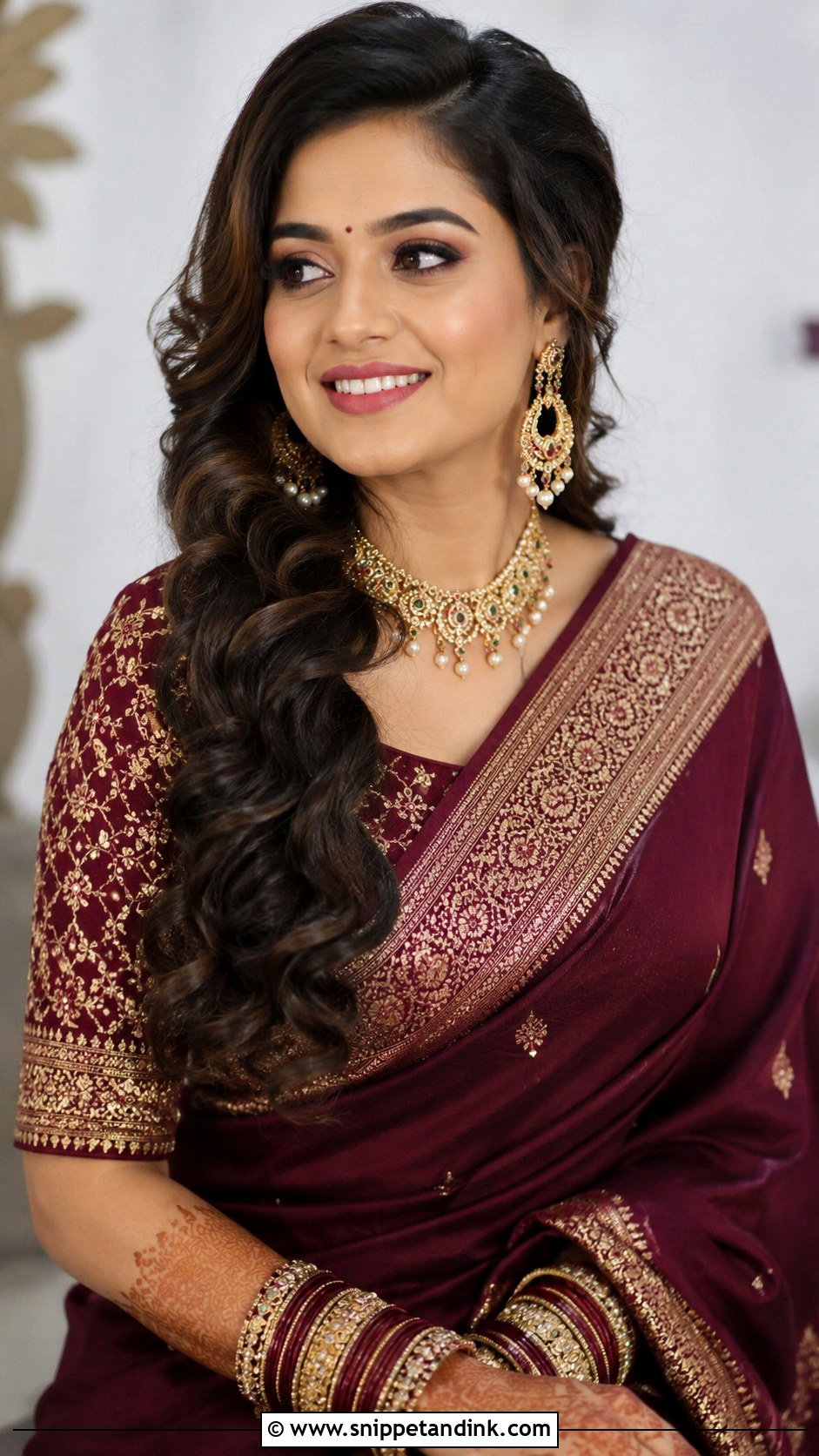
Swept curls fall across one side and over the shoulder, which keeps the opposite ear clear for a statement earring. I pin the front section just behind the ear with hidden crossed pins so the curls don’t slide back as you turn your head. It’s a reception or sangeet look rather than a ceremony one. A small accessory near the part adds sparkle. Curls set in pin curls and left to cool hold far longer than curls brushed out straight from the iron.
3. Center Parted Sleek Front for South Indian Bride
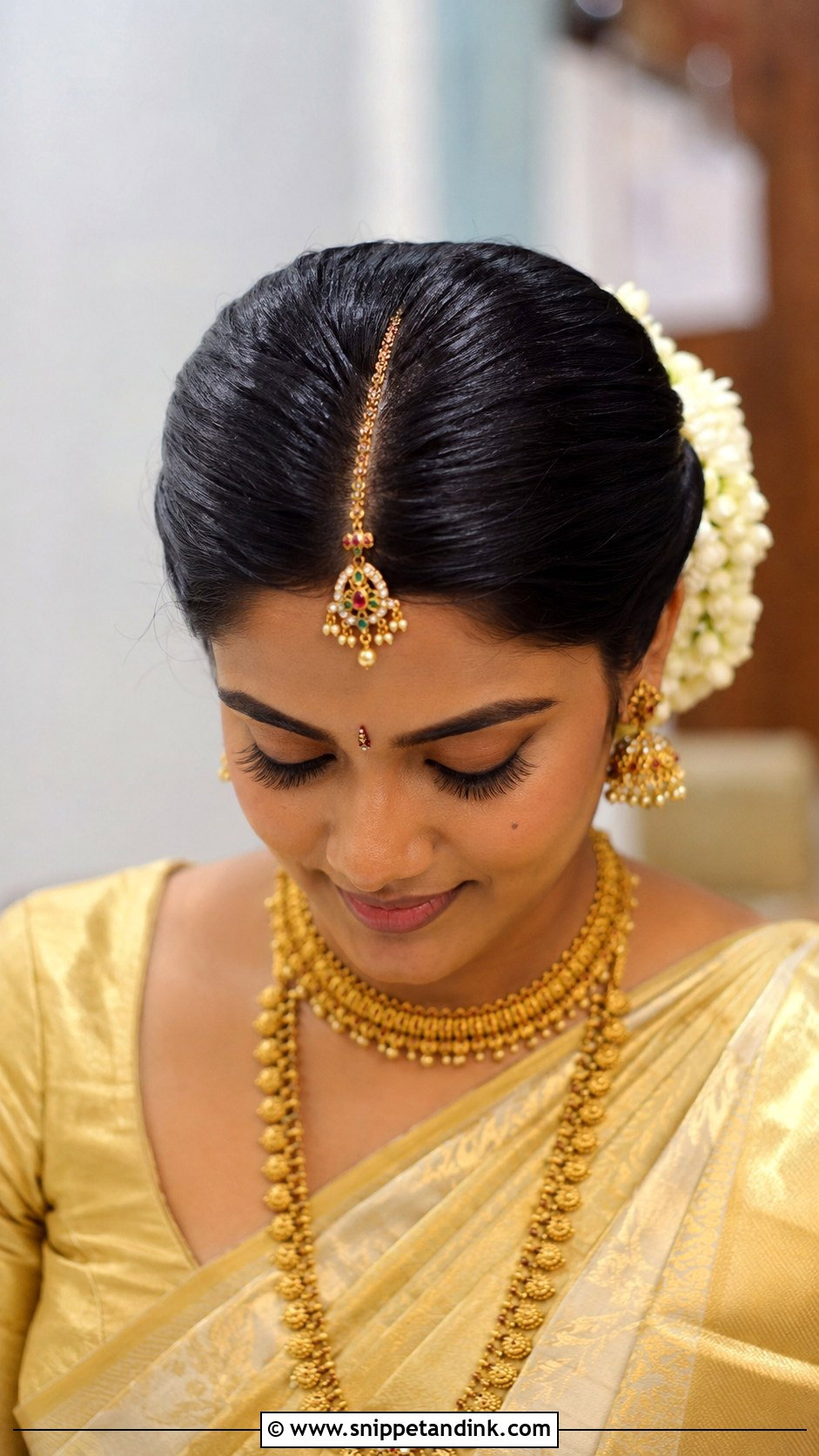
The neat center part defines classic South Indian bridal beauty. Hair is smoothed back from a sharp middle line so the nethichutti and maang tikka sit symmetrically. A low jasmine-covered bun usually finishes it. The part has to be truly straight, which sounds simple; I draw it with a tail comb from the tip of the nose to the crown and check it in the mirror from above. A drop of serum on the front gives shine. It suits muhurtham ceremonies and temple weddings.
4. Front Braid Crown for Indian Bride
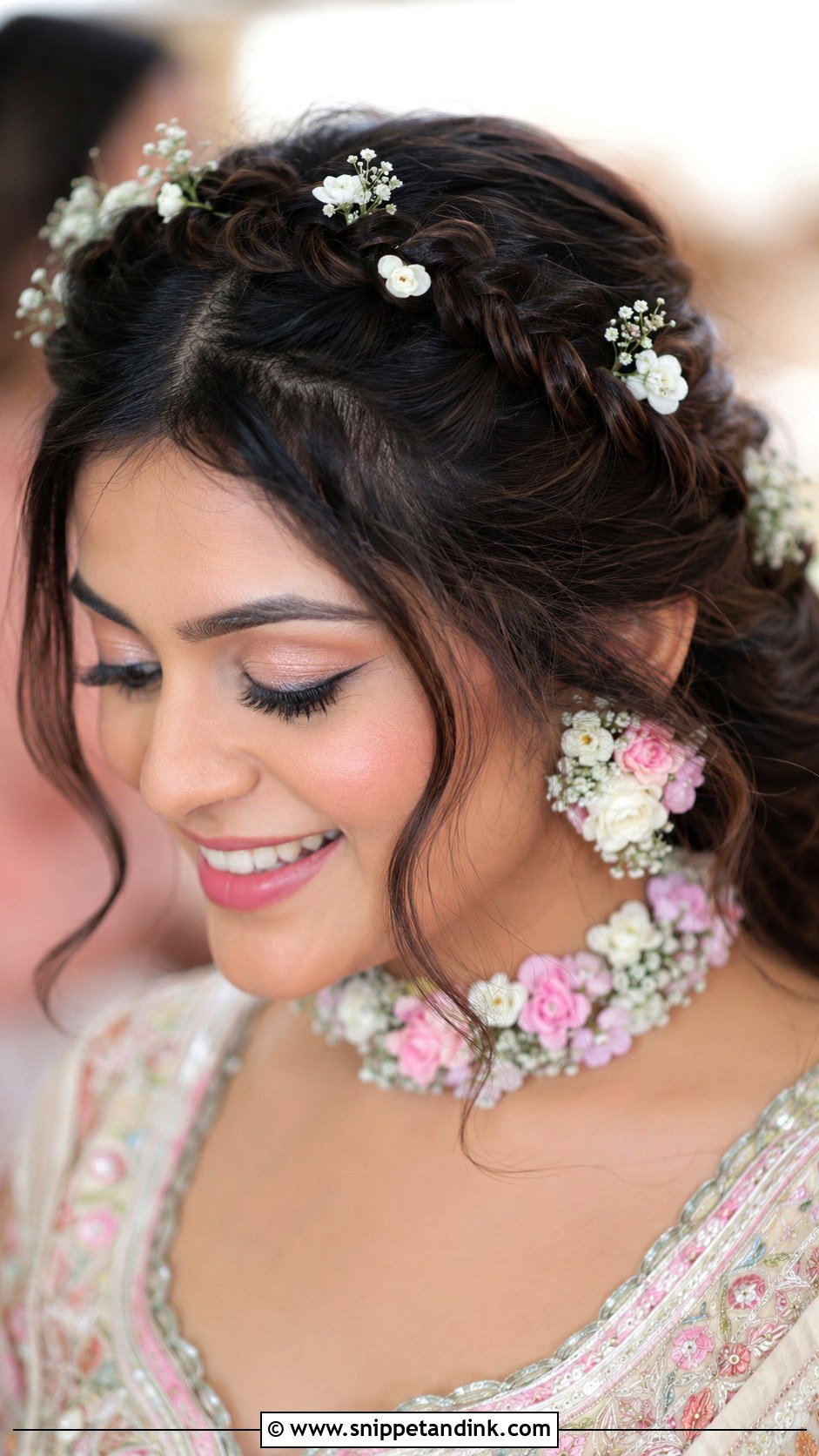
Thin braids woven across the front and pinned in a halo along the hairline give the front texture and keep it off the face. The rest of the hair can flow or sit in a bun. Small flowers tucked into the braid add color. It’s a playful choice for haldi or mehndi functions, and it pairs nicely with a maang tikka. Very fine baby hairs at the hairline won’t catch in a thin braid, so I smooth them with a little gel first.
5. Puffed Front With Open Curly Hair
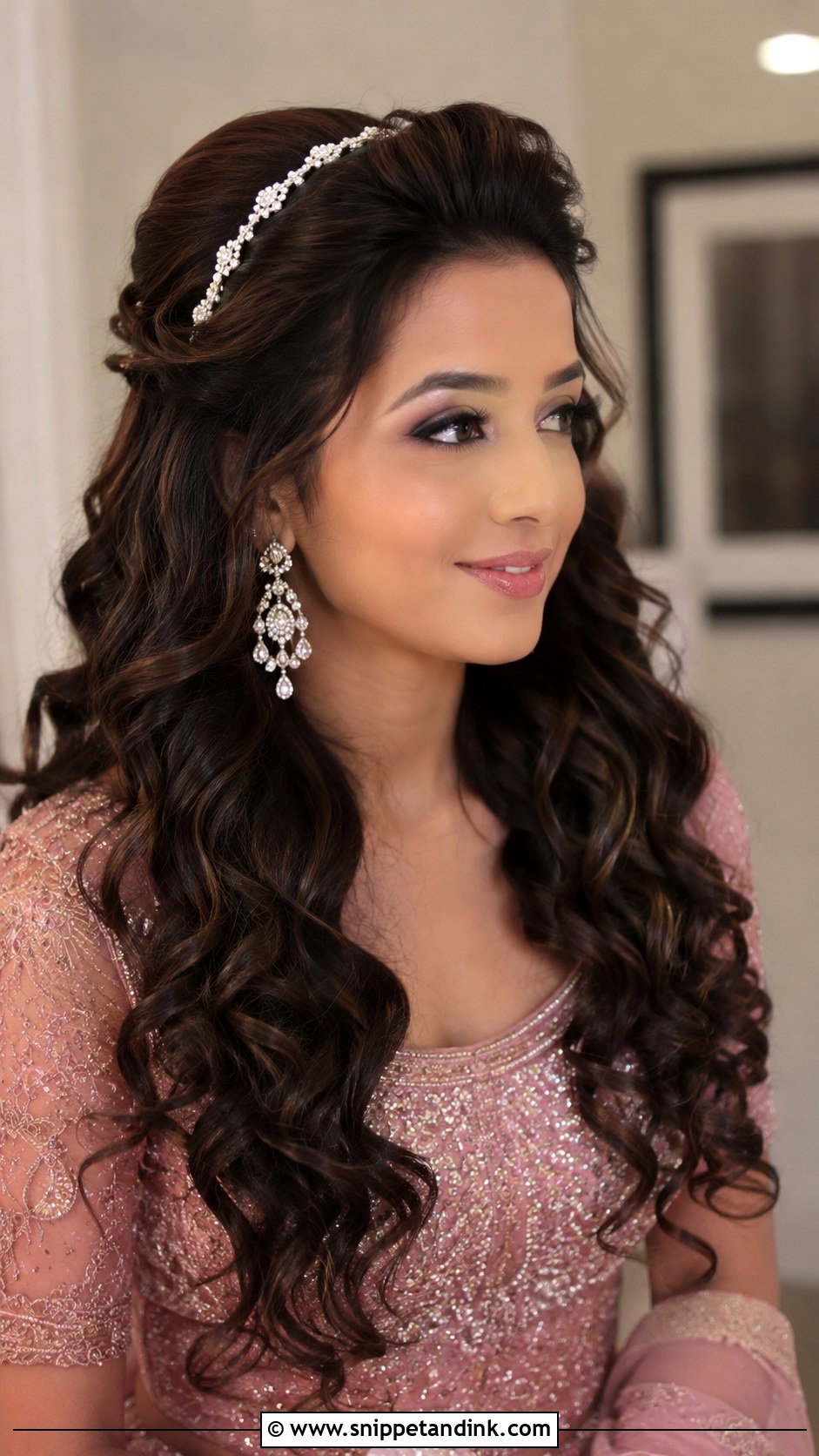
A soft puff at the front with open curls down the back mixes structure and movement. It’s for sangeet nights and cocktail receptions. The puff keeps the look dressed up rather than casual, while the open curls bounce as you dance. Thick hair does best here. On fine hair, I’d hide a small puff insert under the front section, because the curls below pull weight away from the crown over the evening. A slim jeweled hairband is an optional finish.
6. Low Bun With Front Maang Tikka Styling
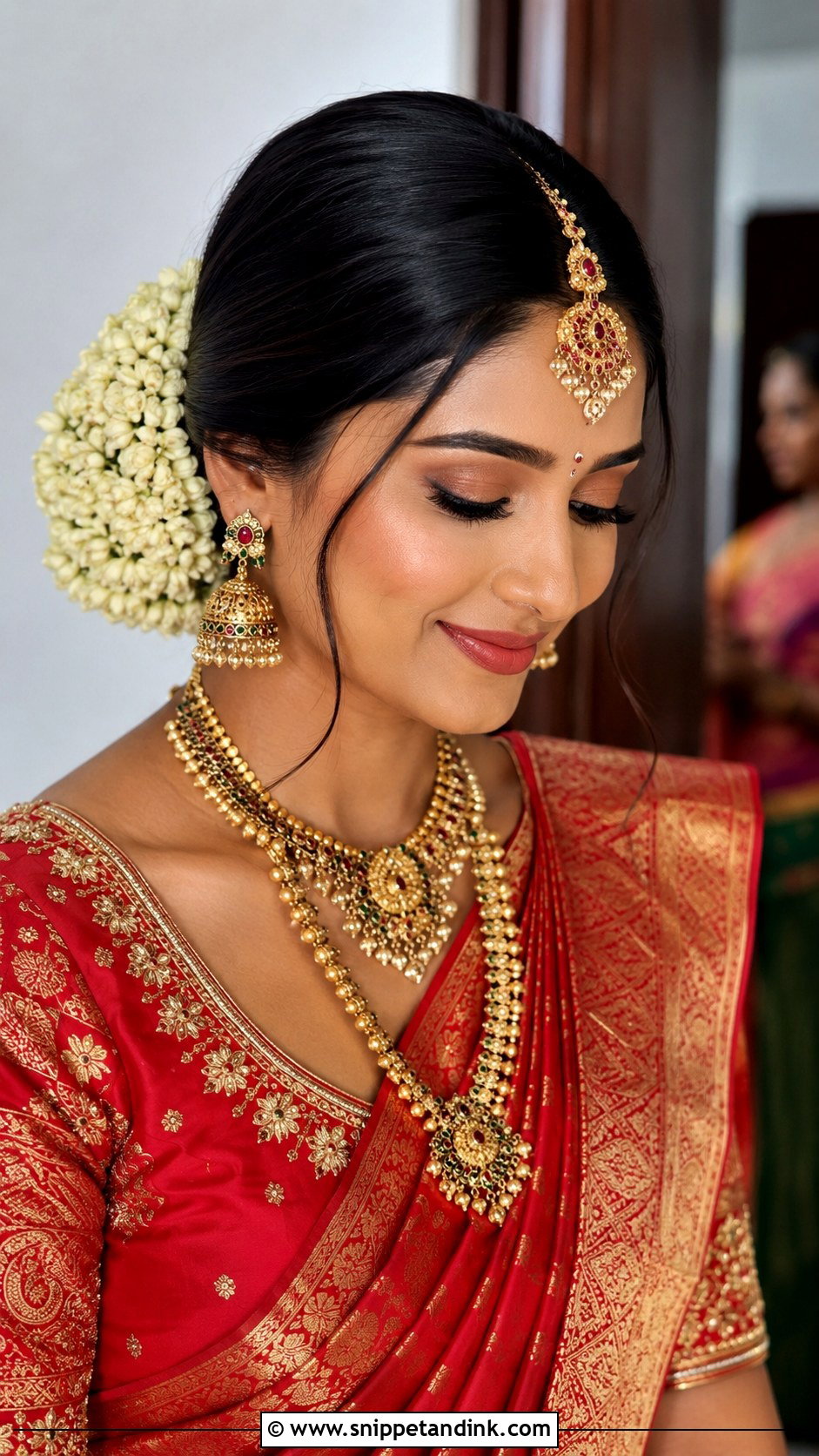
A low bun at the nape with thoughtful front styling is about letting the maang tikka lead. The front is smoothed back from a center or slight side part, and the bun is wrapped in gajra, flowers or pearls. It suits heavy bridal jewelry and works for every face shape. The tikka hook needs something to grip, so I place a tiny pinned anchor along the part where it will hang. Simple, and very hard to get wrong.
7. Front Pouf With Side Braid for Indian Bride
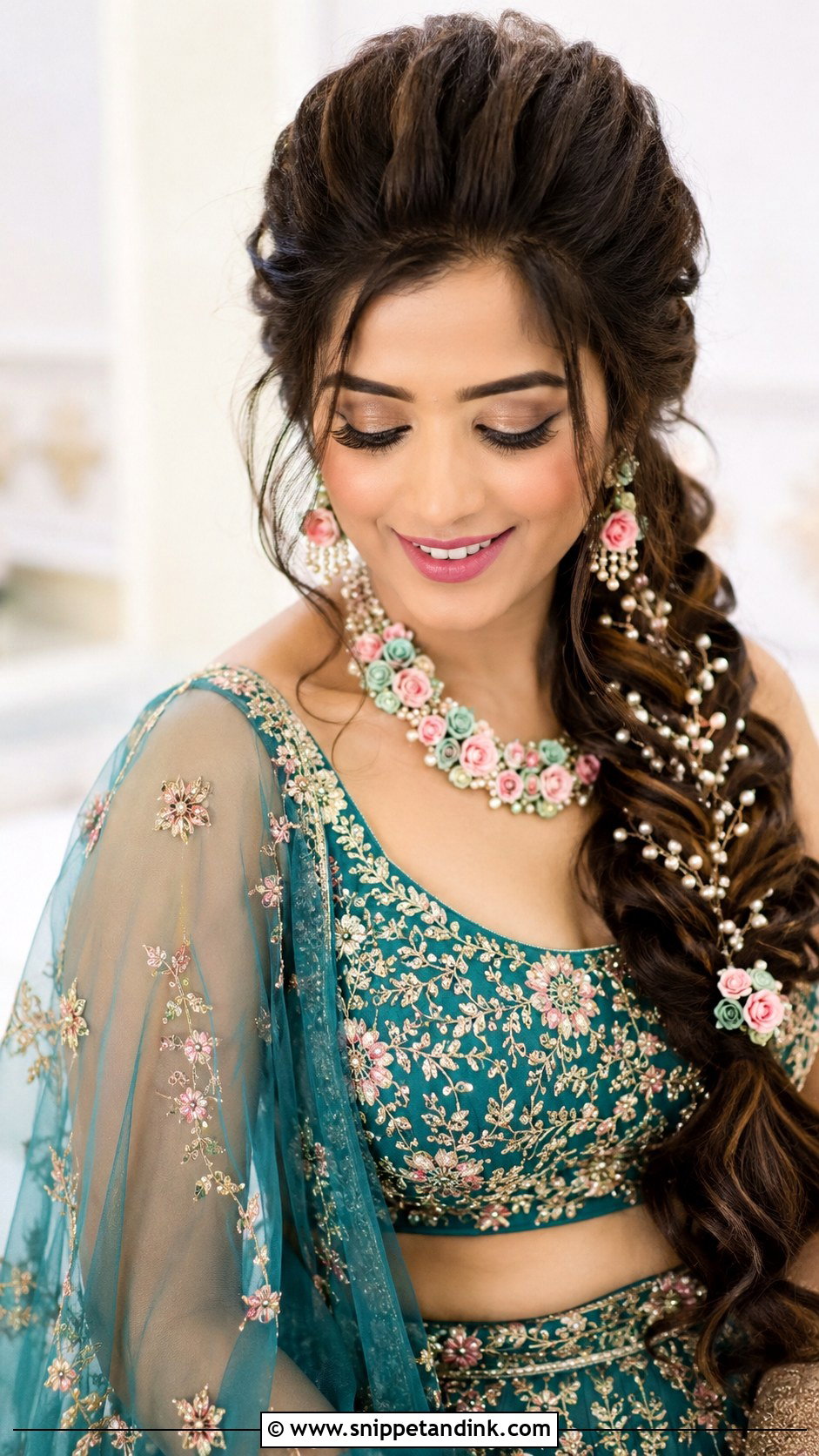
A lifted pouf at the front plus a braid over one shoulder balances height with length. Flowers or pearl strings woven into the braid add charm. It suits sangeet and mehndi. The pouf frames the forehead and holds a maang tikka well. Long, thick hair gives the fullest braid; otherwise I clip in a braid extension under the pouf. Loose tendrils by the face soften the structure.
8. Soft Waves With Center Part for Reception
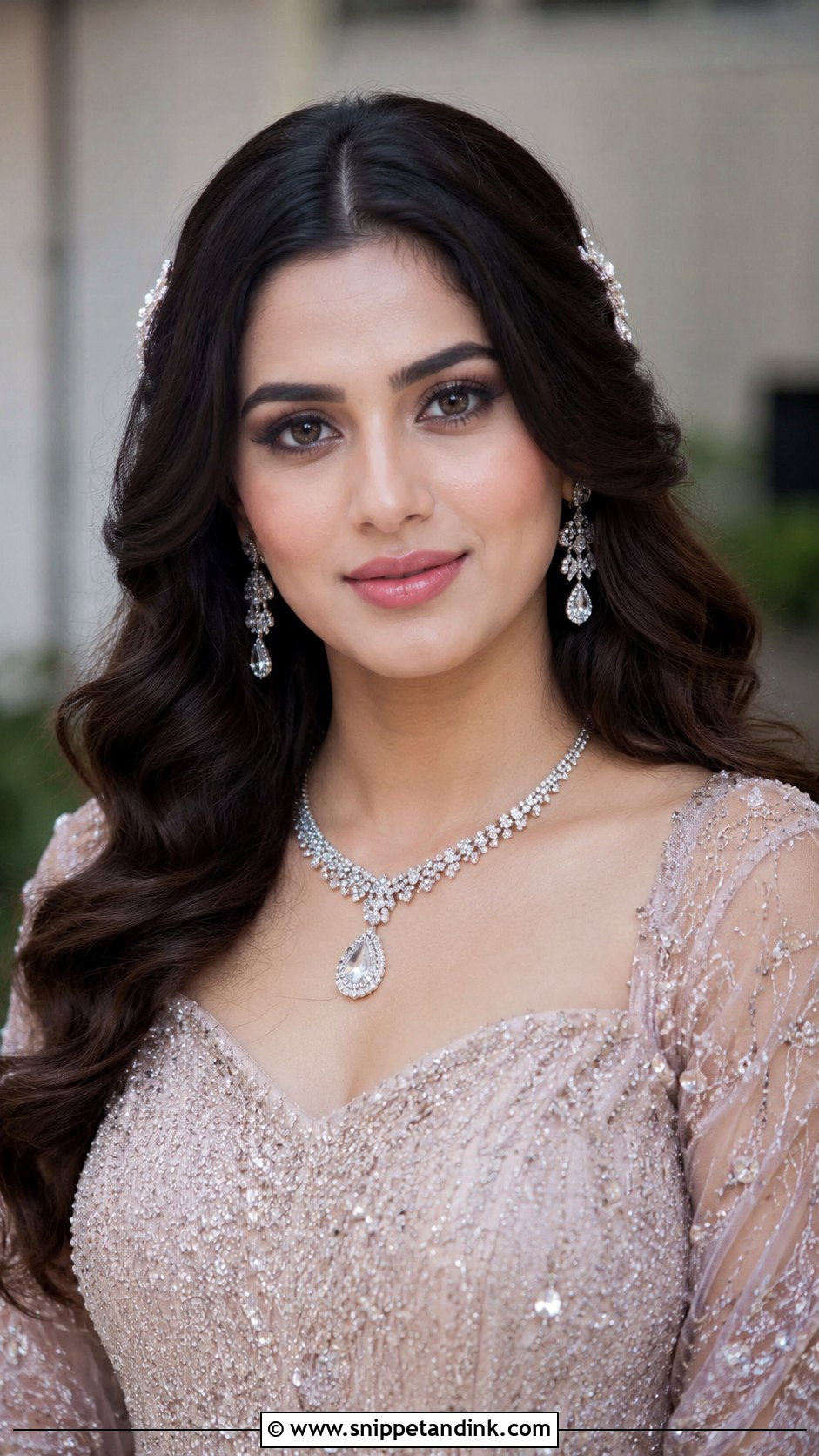
Center-parted waves falling around both sides of the face suit a reception with a gown or modern lehenga. The symmetry is flattering on oval and heart-shaped faces. Small pins tucked behind the ears stop strands falling forward. On a round face, I’d shift the part slightly off center, since a perfect middle part with waves framing both cheeks can make the face look wider. Spray the waves well; open hair is the first to drop in humidity.
9. Front Floral Parting for South Indian Bride
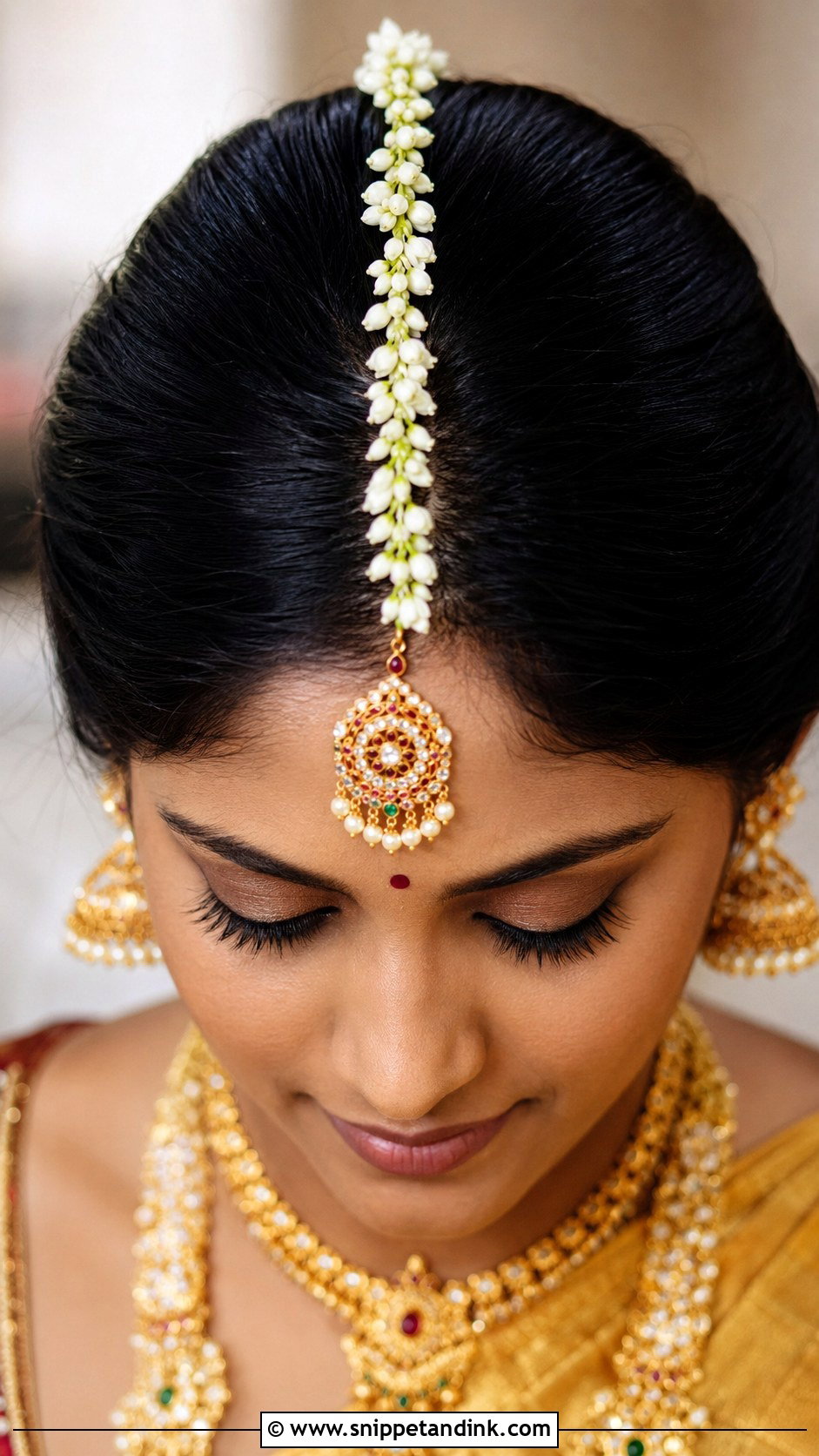
Lining a center parting with tiny flowers or jasmine brings fragrance and draws the eye to forehead jewelry. A long braid or bun completes the back. It’s a favorite for temple and muhurtham ceremonies, often with a maang tikka. I pin each small bloom through its stem along the part. Flowers press against the scalp here, so choose firm buds and skip anything that stains, like some deep-colored petals.
10. Bouffant Front With Long Curls
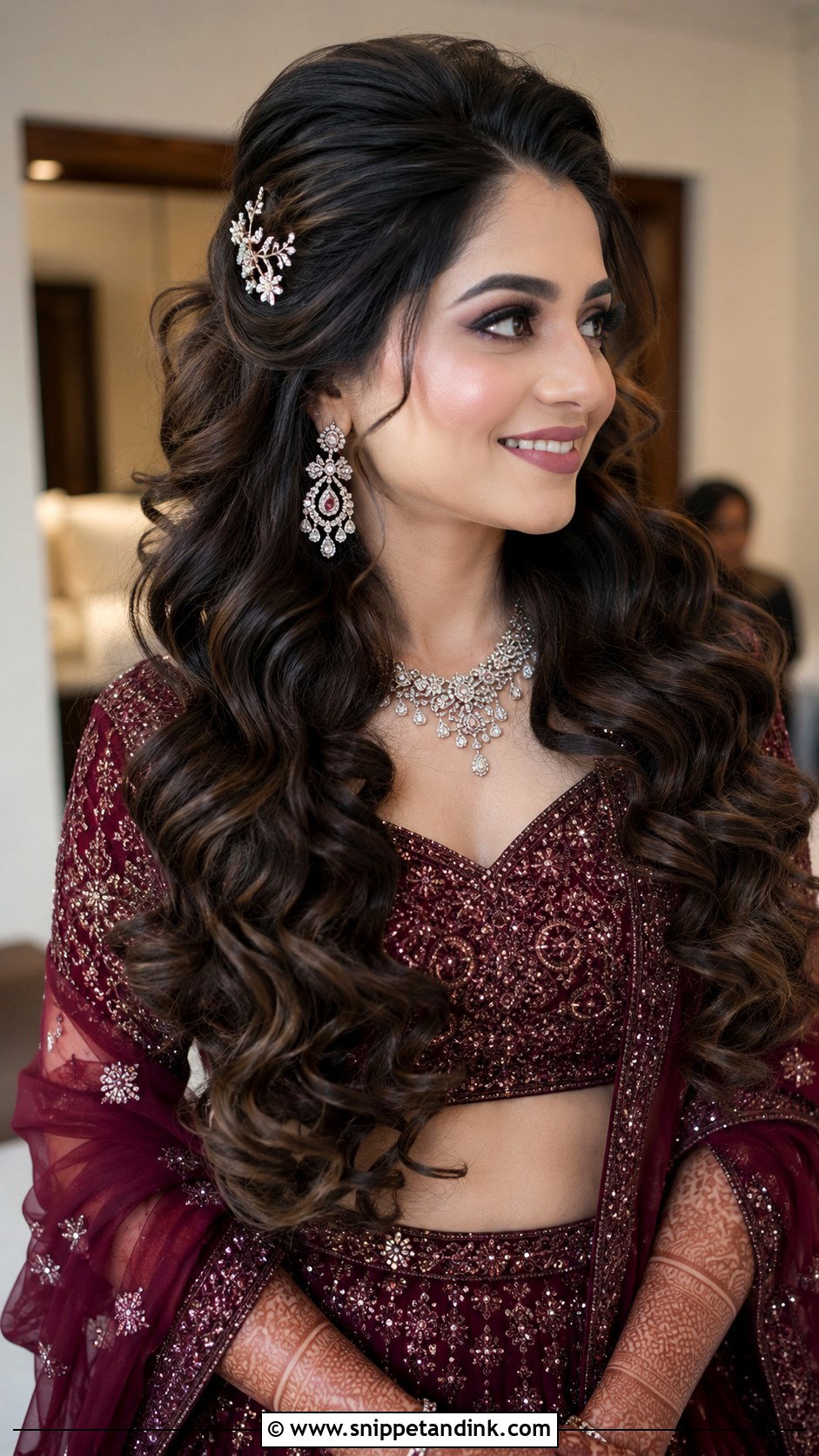
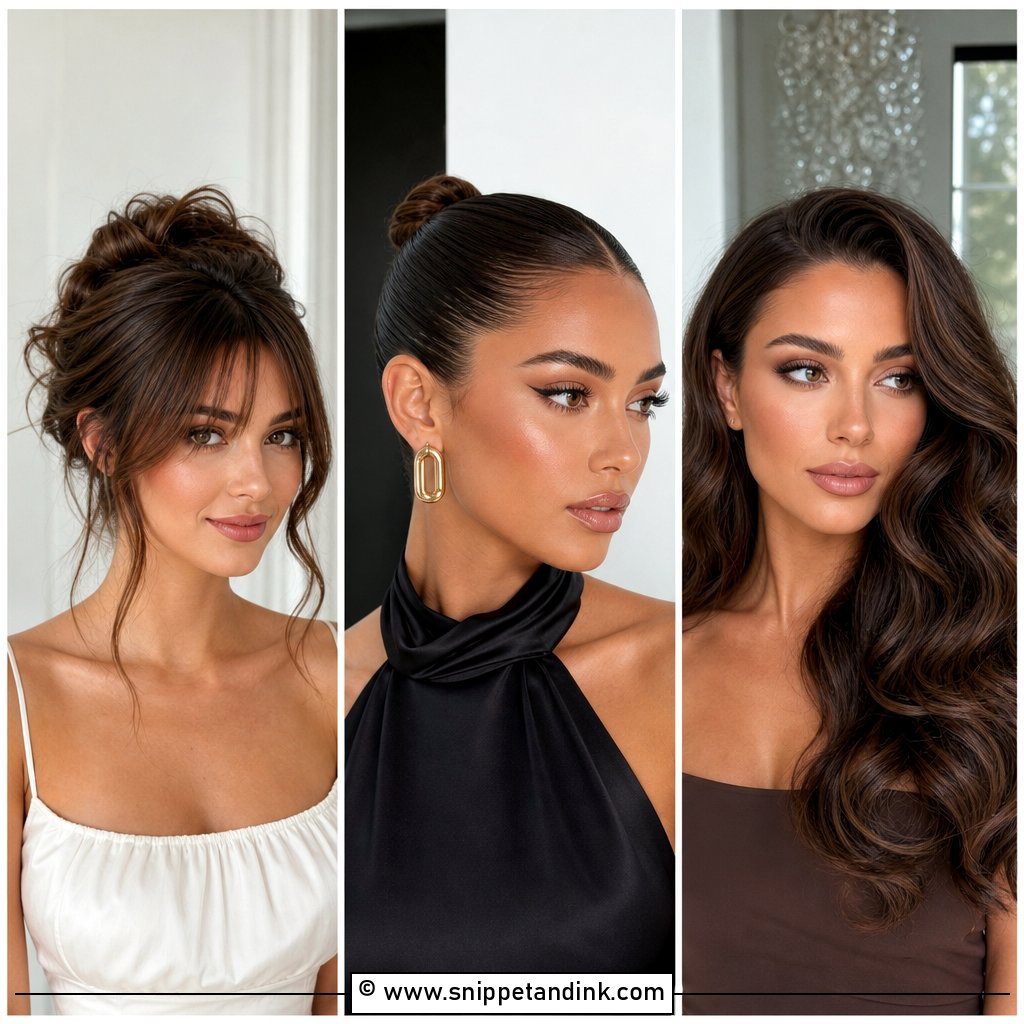
A teased bouffant at the crown that flows into long curls gives a dramatic reception entrance. The height balances strong features. Chandelier earrings and a jeweled pin near the bouffant suit it. Keep the bouffant proportional: on a long face, modest height looks elegant, while a tall bouffant lengthens the face further. Leave a few soft strands at the front if your features are sharp.
11. Side Part With Front Twist for Indian Bride
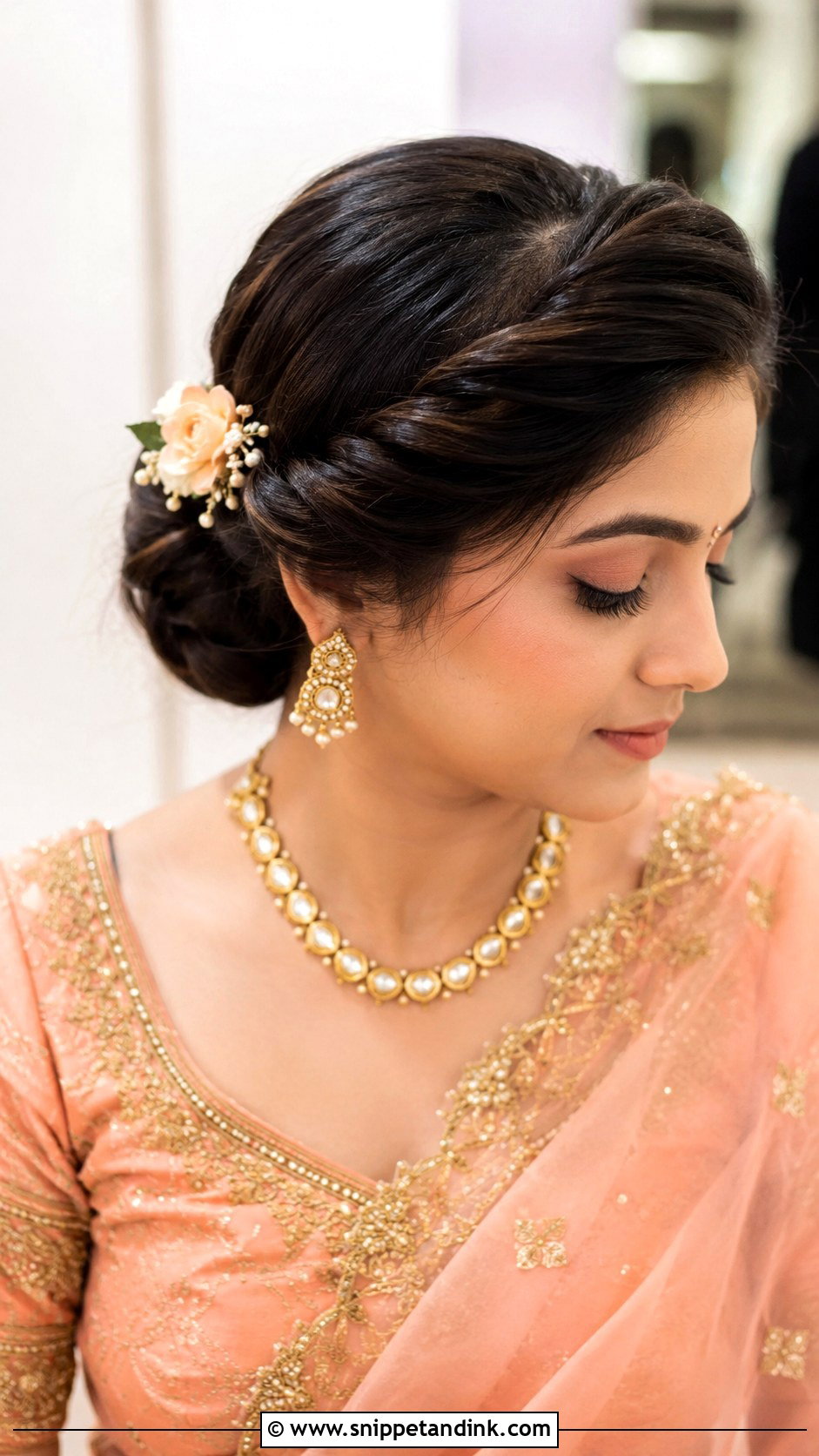
Twisting the front section from a deep side part and sweeping it back controls loose strands neatly. It works over an updo or open hair and shows off earrings on the open side. I twist toward the back of the head and pin each turn, so the twist doesn’t loosen. A small floral or jeweled clip at the end hides the pins. It’s a quiet detail that looks polished in profile shots.
12. Front Gajra Styling With Bun
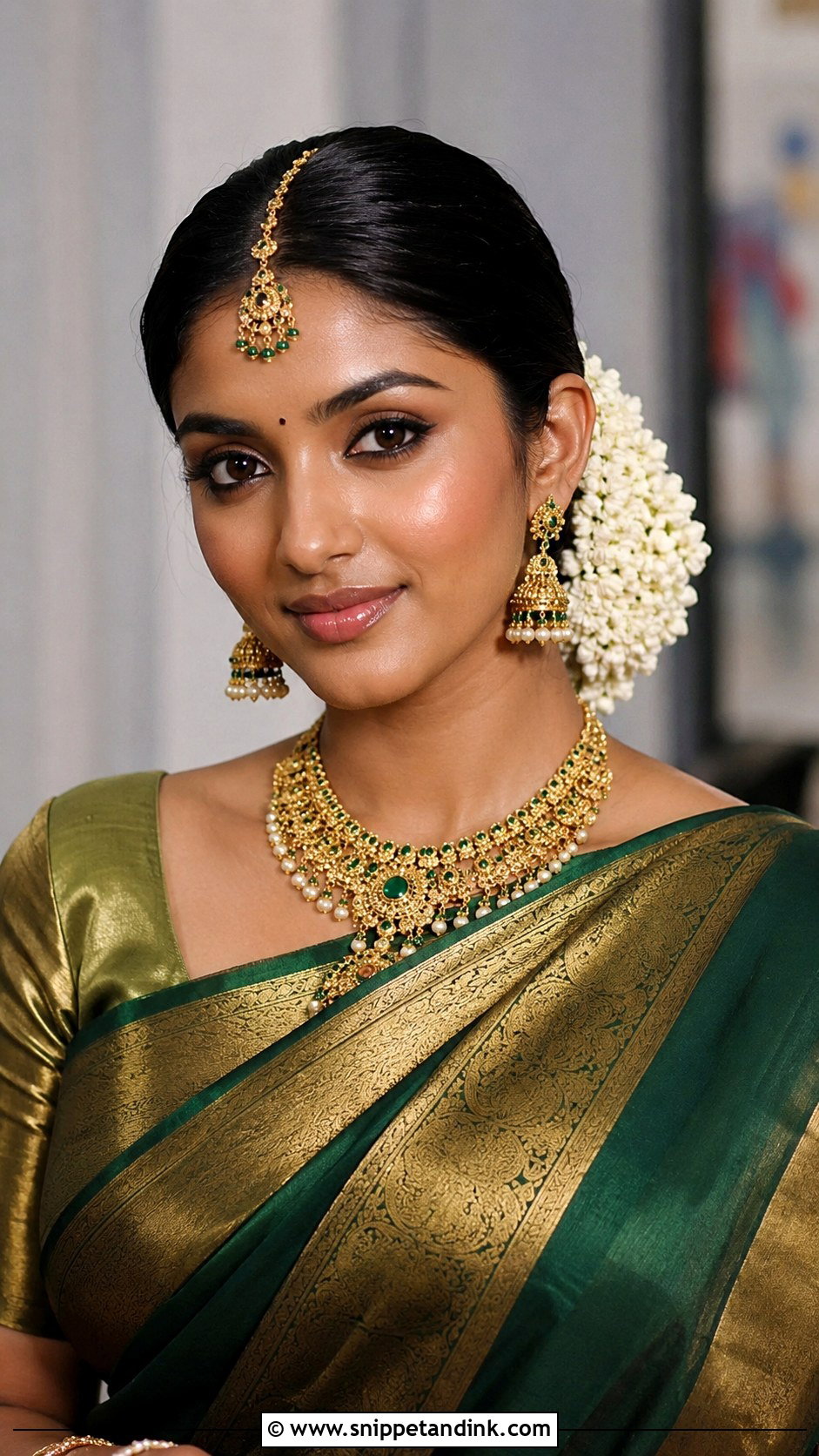
Threading fragrant gajra along the front and around a bun is classic Indian bridal styling. The white flowers stand out against dark hair. I keep the front sleek so the flowers sit cleanly, and pin the gajra along the side of the part instead of directly on it, where it would cover the tikka chain. Silk sarees and temple jewelry pair with it. A center or side part works.
13. Curly Front Fringe for Indian Wedding
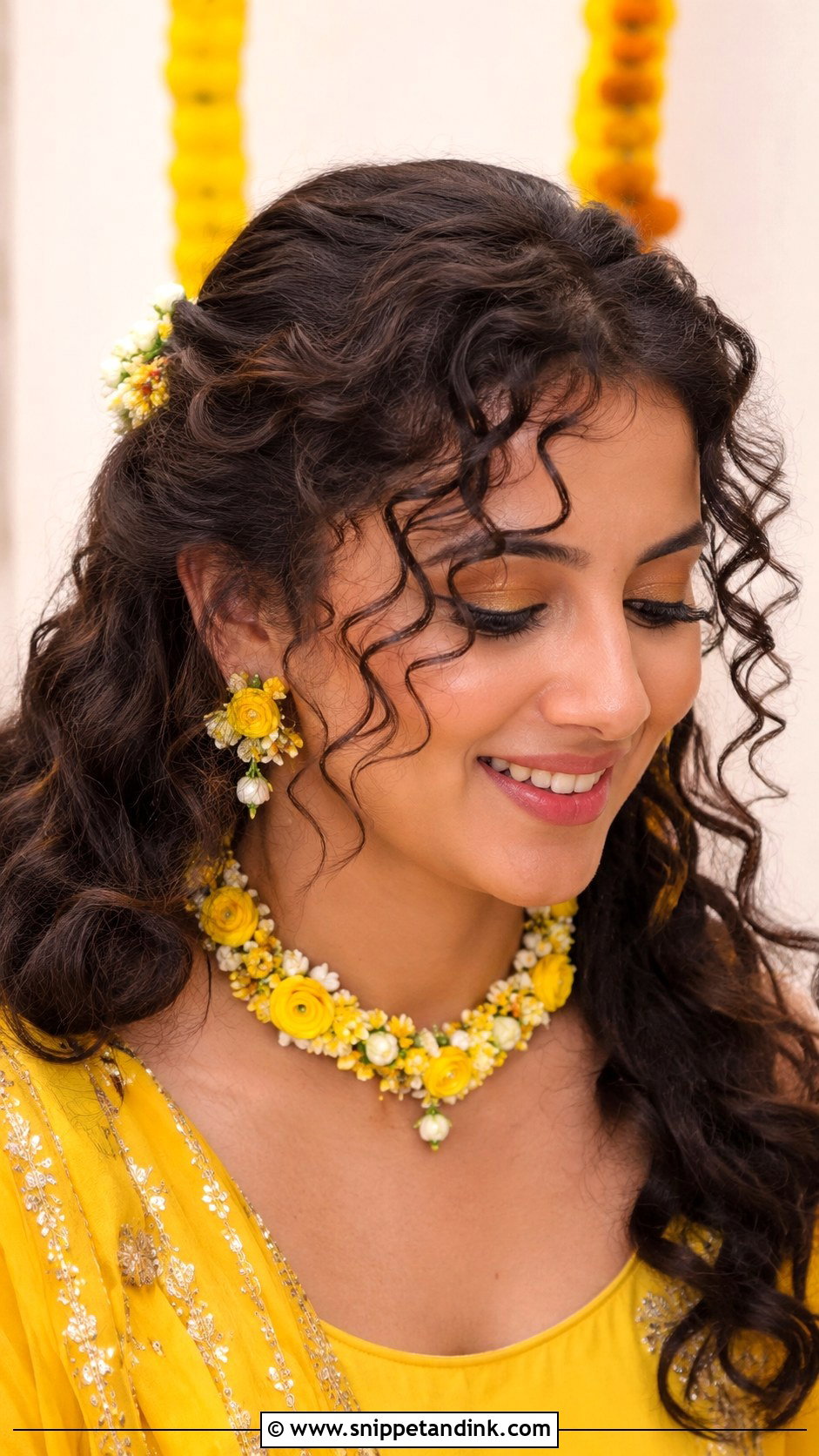
A soft curly fringe gives the forehead a youthful frame and draws attention to the eyes. It’s a mehndi or haldi look, with open curls or a loose bun. Naturally wavy hair makes it easier, since the fringe keeps its curl without much product. A heads-up: forehead sweat flattens fringe curls fast, so I set them with a light-hold spray and keep blotting papers for the forehead. A small flower near the fringe adds sweetness.
14. Sleek High Ponytail With Front Volume
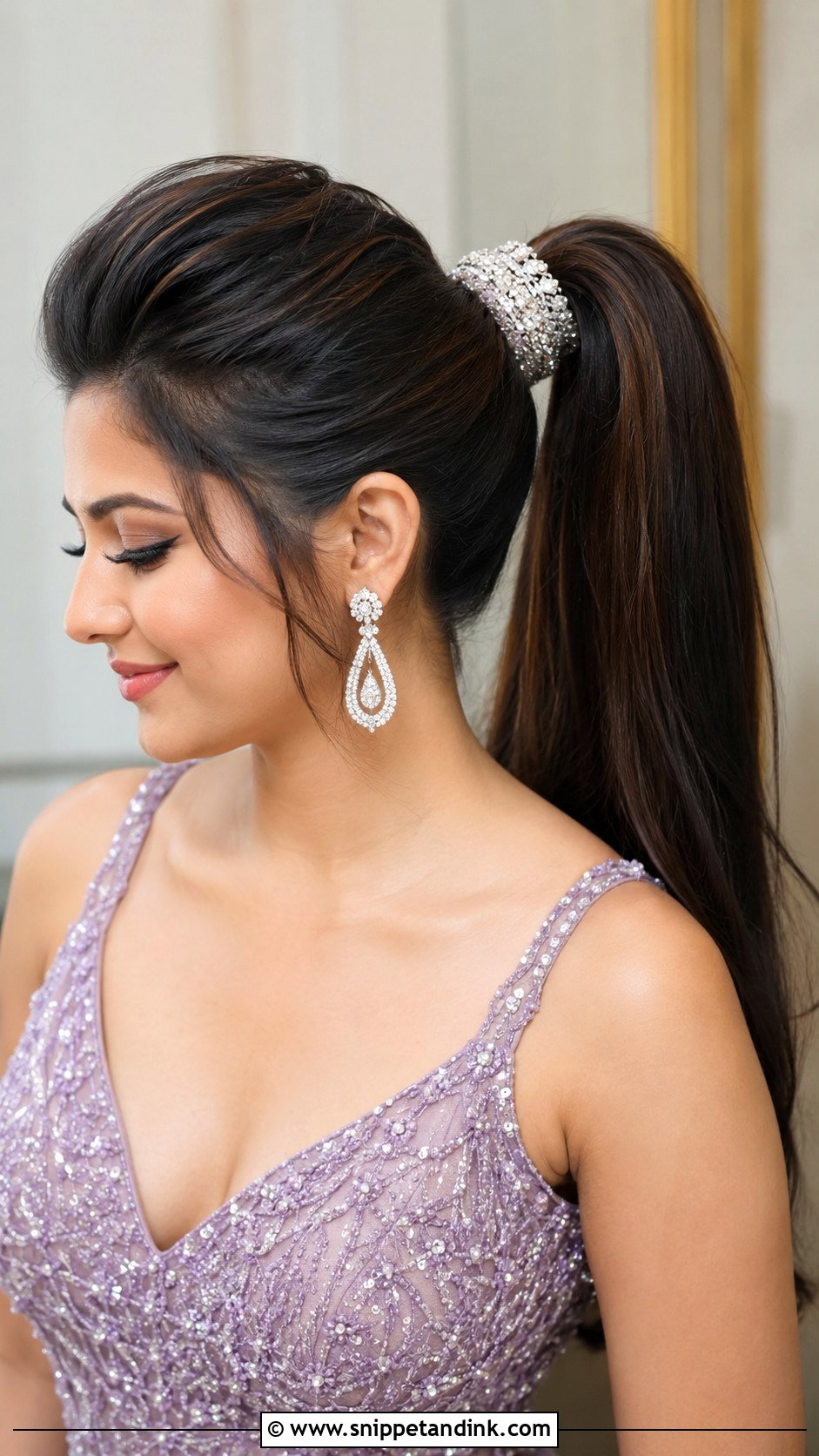
A sleek high ponytail with slight lift at the crown gives a modern sangeet or reception look. The face stays open, which shows off earrings and makeup. Wrap the base with a flower string or a jeweled cuff. Without the front volume, a high pony can look flat in profile, so I tease just under the top layer. It pairs with modern lehengas and gowns.
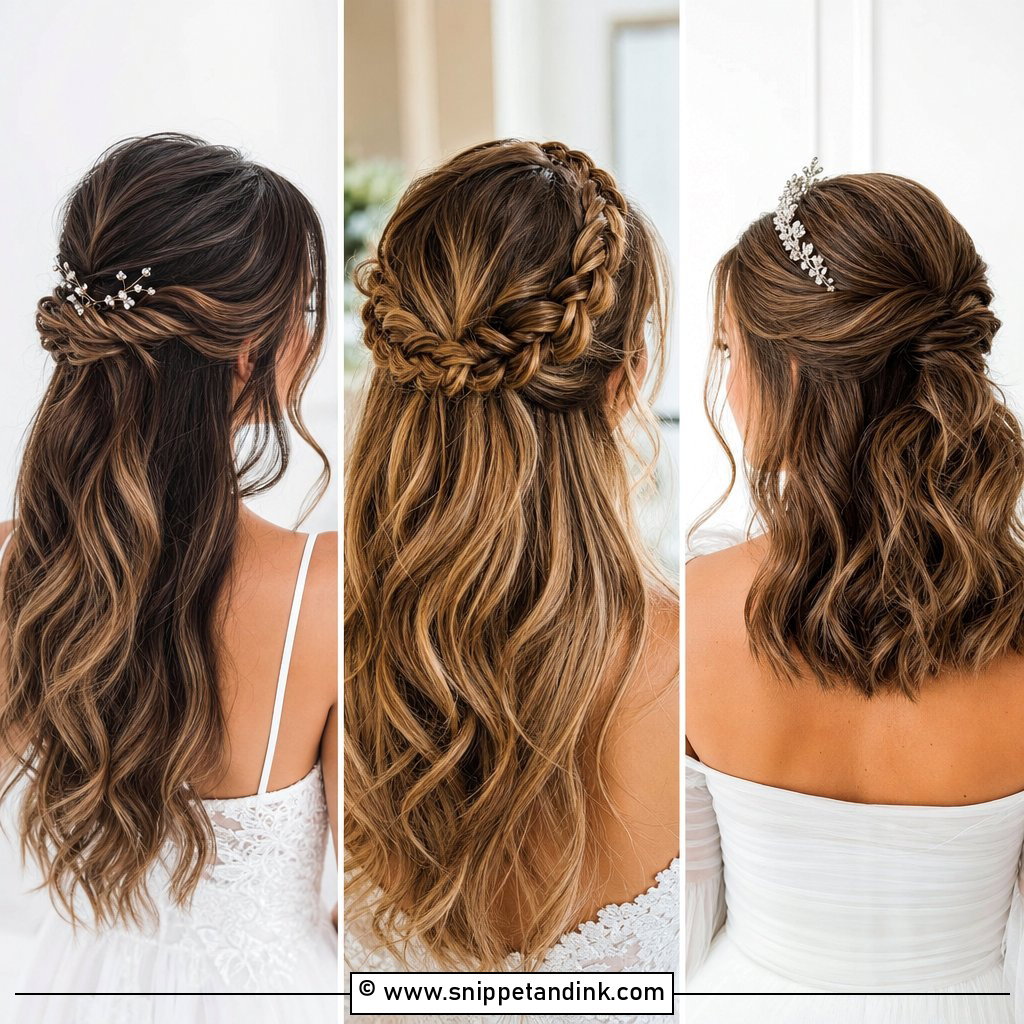
15. Front Waves With Maang Tikka
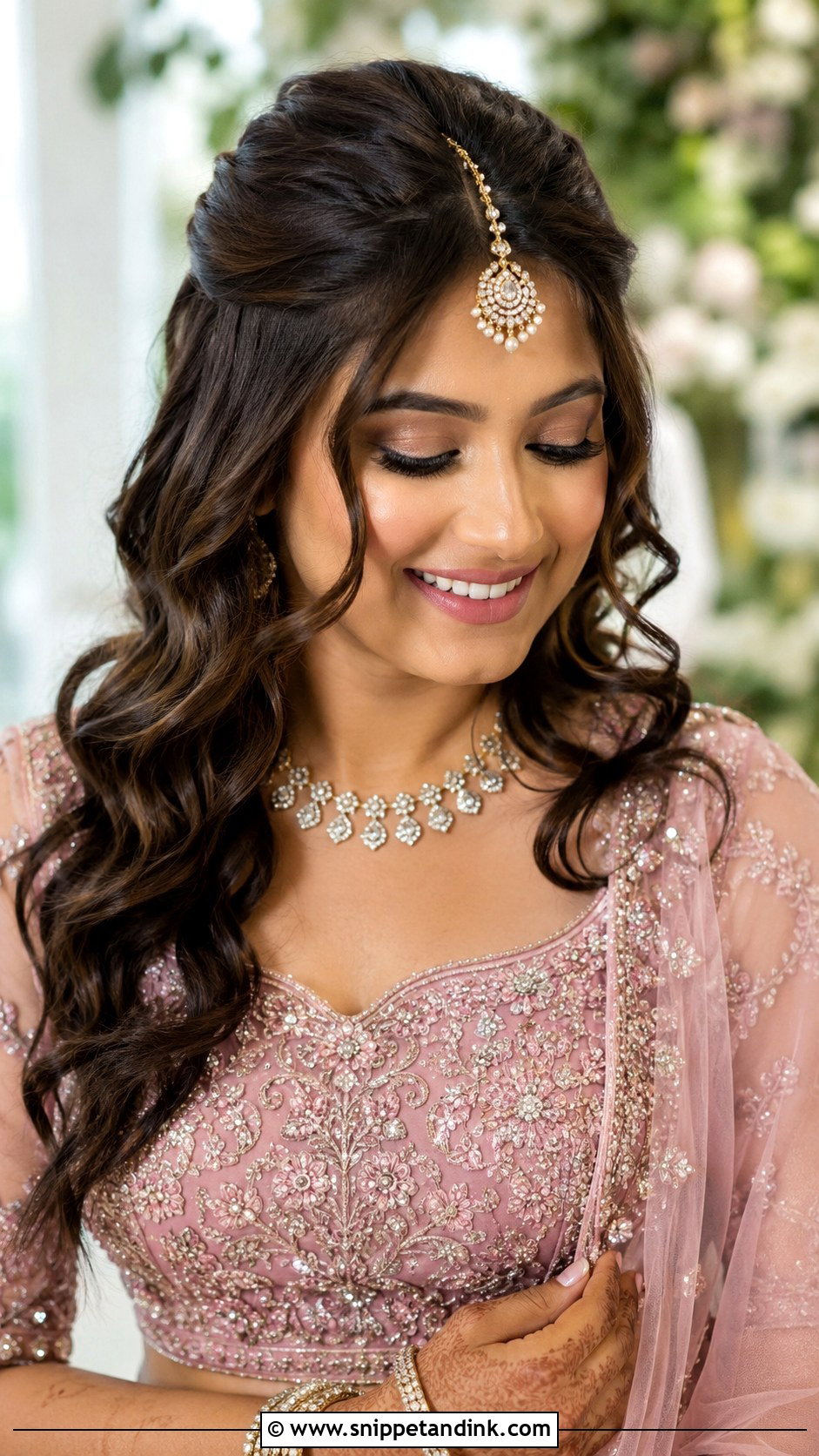
Gentle waves at the front with a centered maang tikka keep open hair feeling festive. The tikka rests on a clean part while the waves frame the cheeks. It suits receptions and sangeet nights, with loose curls or a half-up section behind. A light shine spray adds polish. I pin a small anchor at the part for the tikka, because a tikka hooked into loose waves drifts sideways within an hour.
16. Braided Front With Open Hair for Sangeet
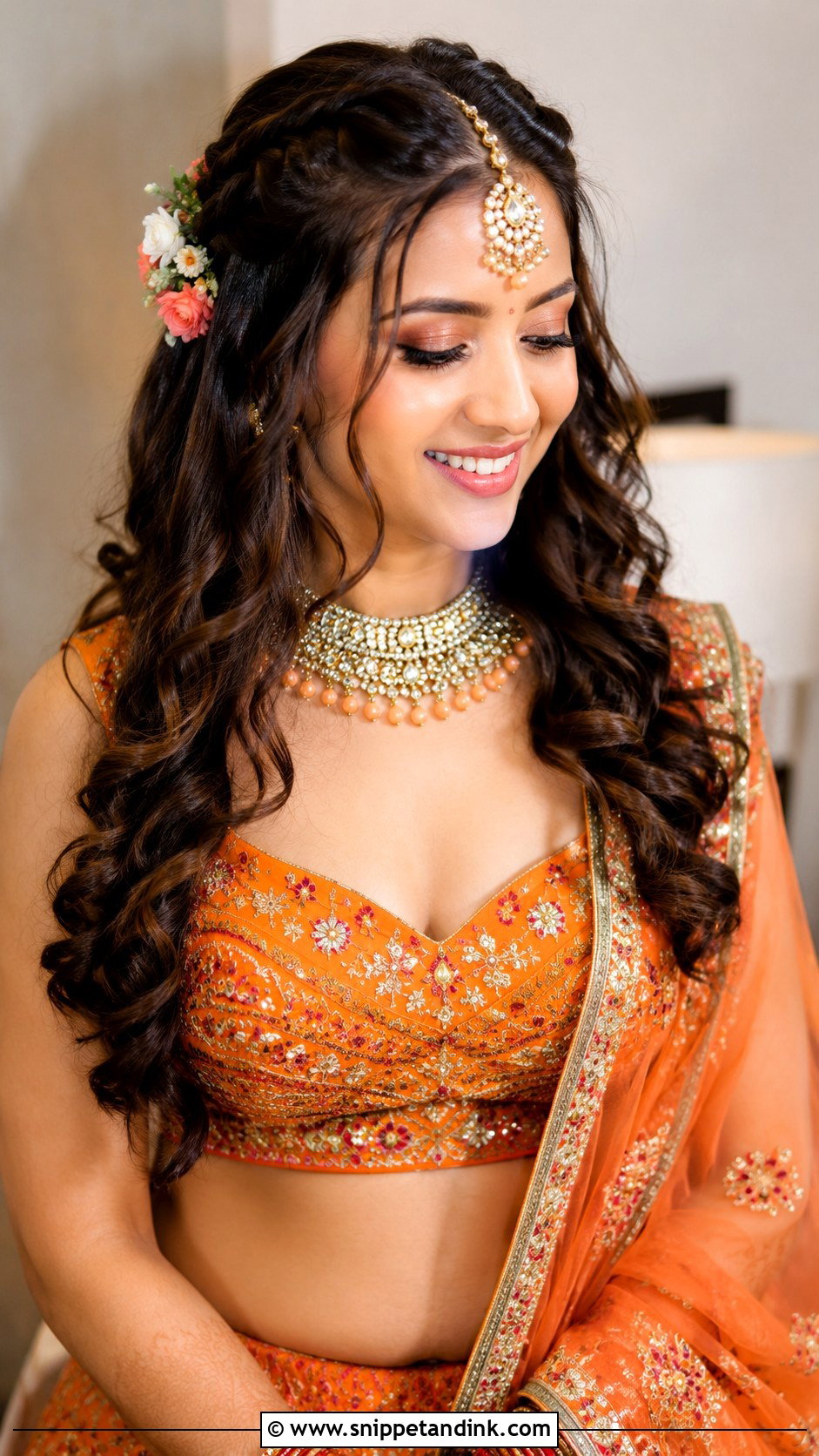
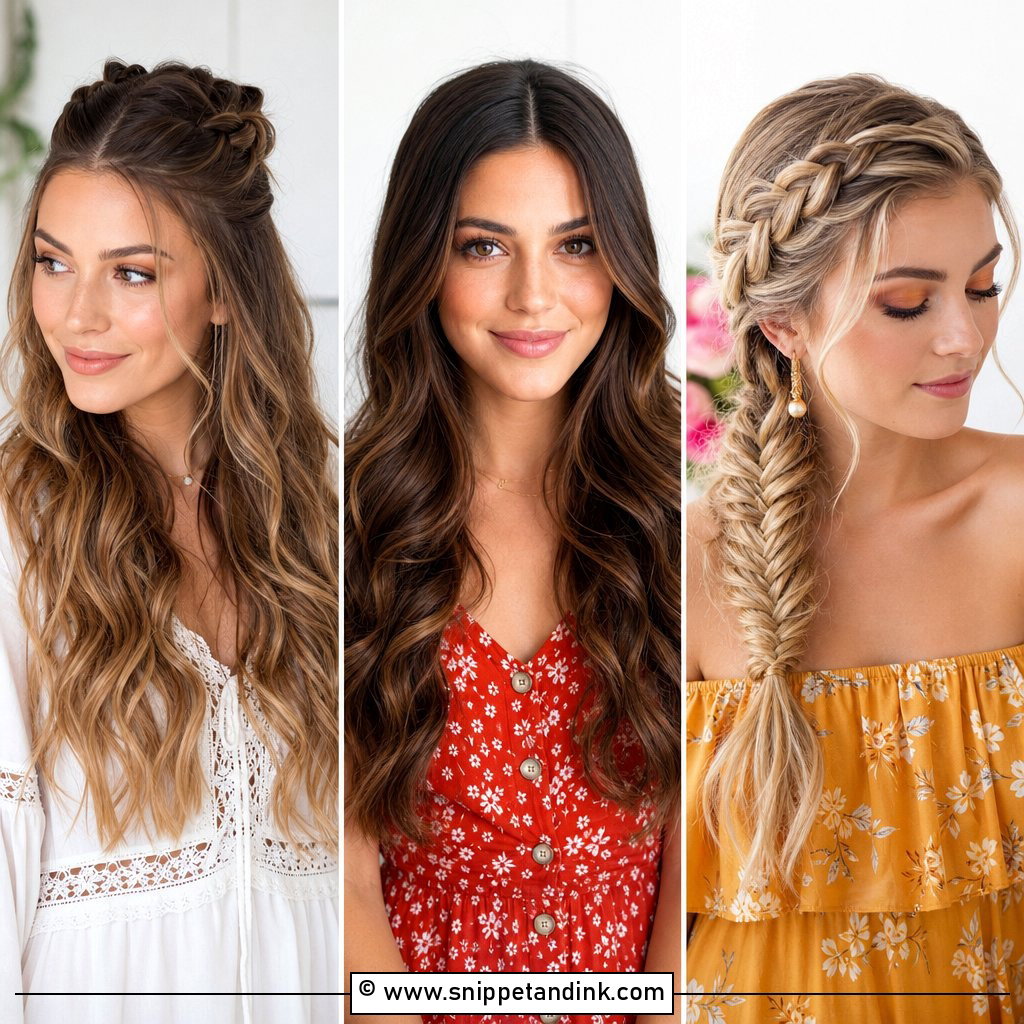
Thin braids along the front with loose curly hair behind make a festive sangeet look. Fresh flowers tucked into the braids add color. The braids keep hair off your face while you dance, and they pair with statement jewelry and bold makeup. A maang tikka can finish the front. For dancing, I secure the braid ends with small clear elastics and pin them under the curls.
17. Pulled Back Front With Loose Bun
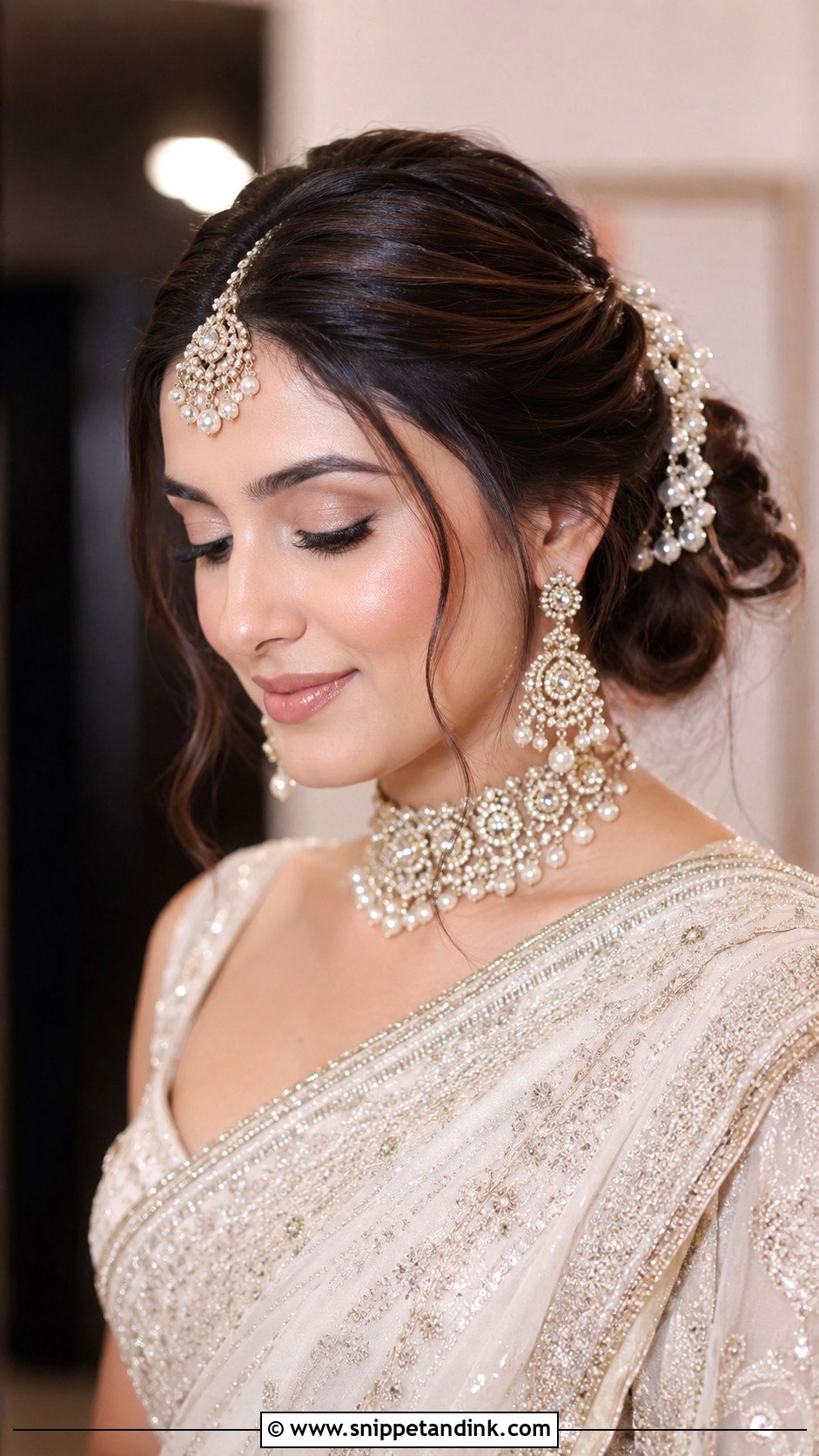
Smoothing the front straight back into a soft, loose bun keeps the face fully open. It shows bridal jewelry and makeup clearly, and suits intimate ceremonies and modern weddings. A few face-framing strands soften it. This look is less forgiving of a high forehead or a thinning hairline, both fully visible. If that bothers you, a slight side part or a soft fringe piece fixes it. Decorate the bun with flowers or pearls.
18. Front Puff With Side Curls
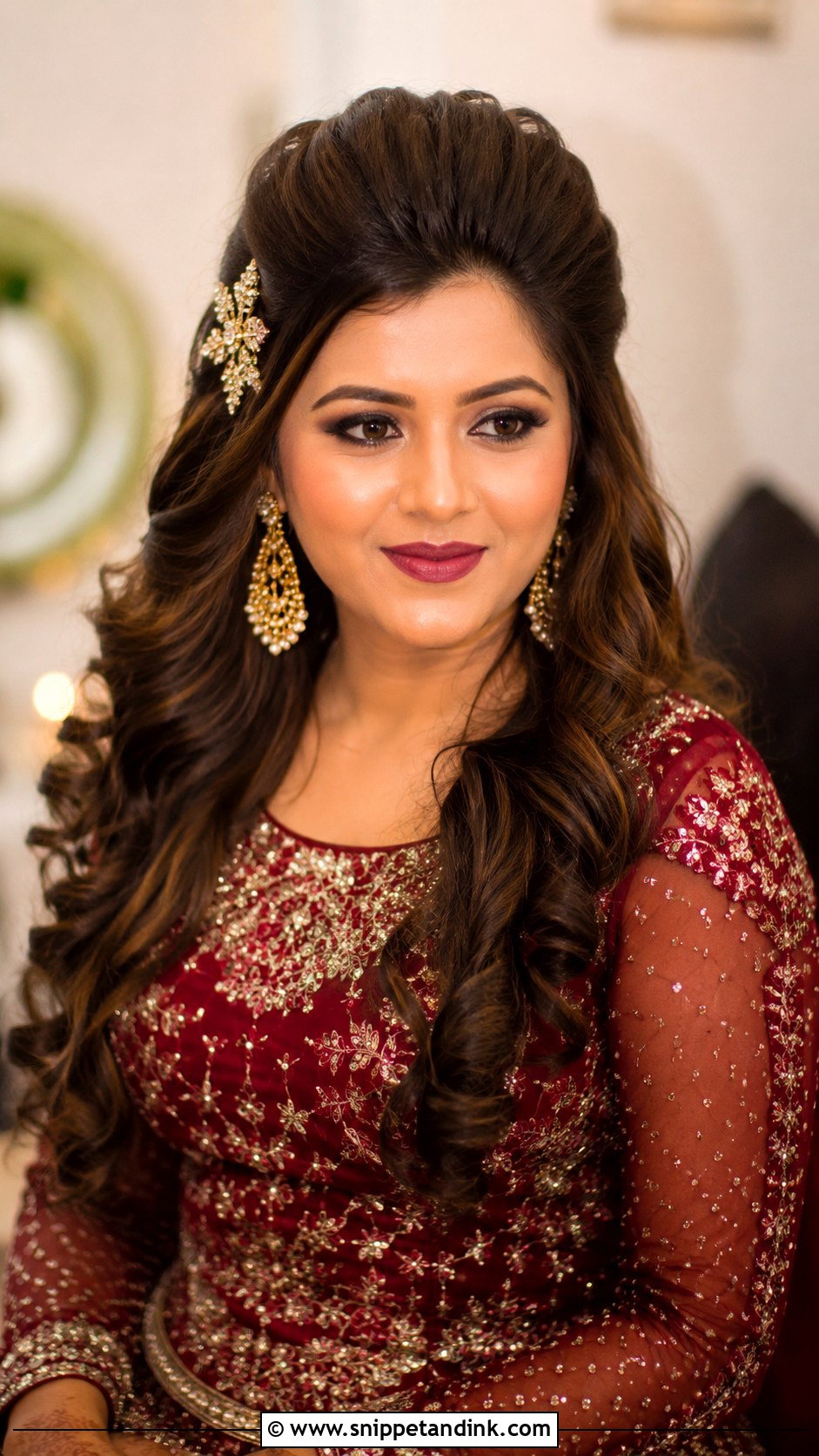
A neat front puff with curls cascading over one shoulder gives volume on top and softness at the side. It suits reception and sangeet. Leave the opposite side clear to show earrings, and add a jeweled pin near the puff. The puff holds for a long event if it’s backcombed in small sections and pinned from below. Curls fall to one side, so pin them firmly at the nape.
19. Center Part Braid for Traditional Bride
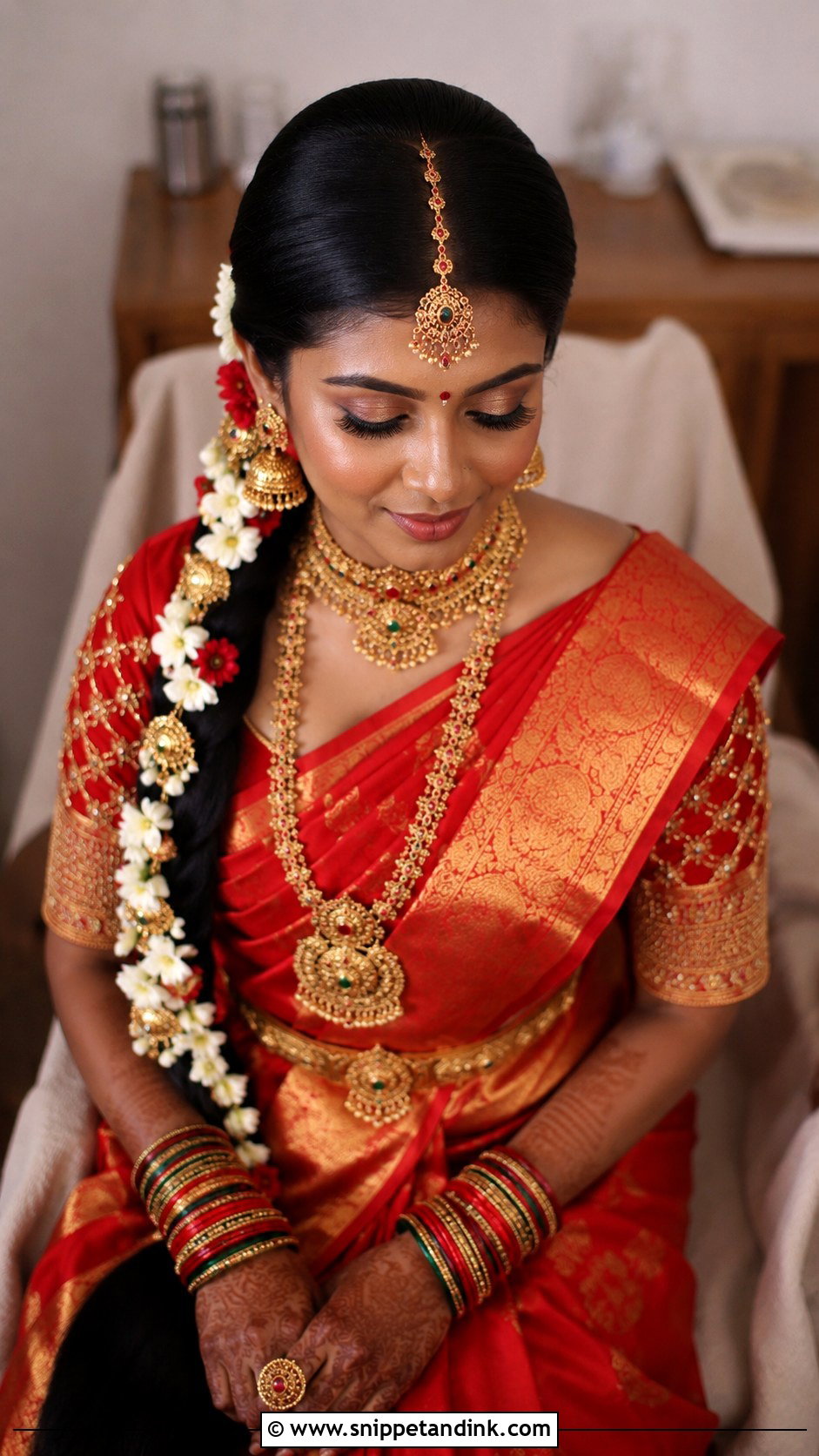
A neat center part flowing into a single long braid is classically Indian. The smooth front highlights forehead jewelry and a maang tikka, and the braid drapes down the back with flowers, pearls or gajra. It suits temple weddings and muhurtham ceremonies. Long hair gives the fullest braid; a braid extension helps if yours stops above the waist. Keep the front sleek, but not glued flat; a tiny lift at the crown stops it looking severe.
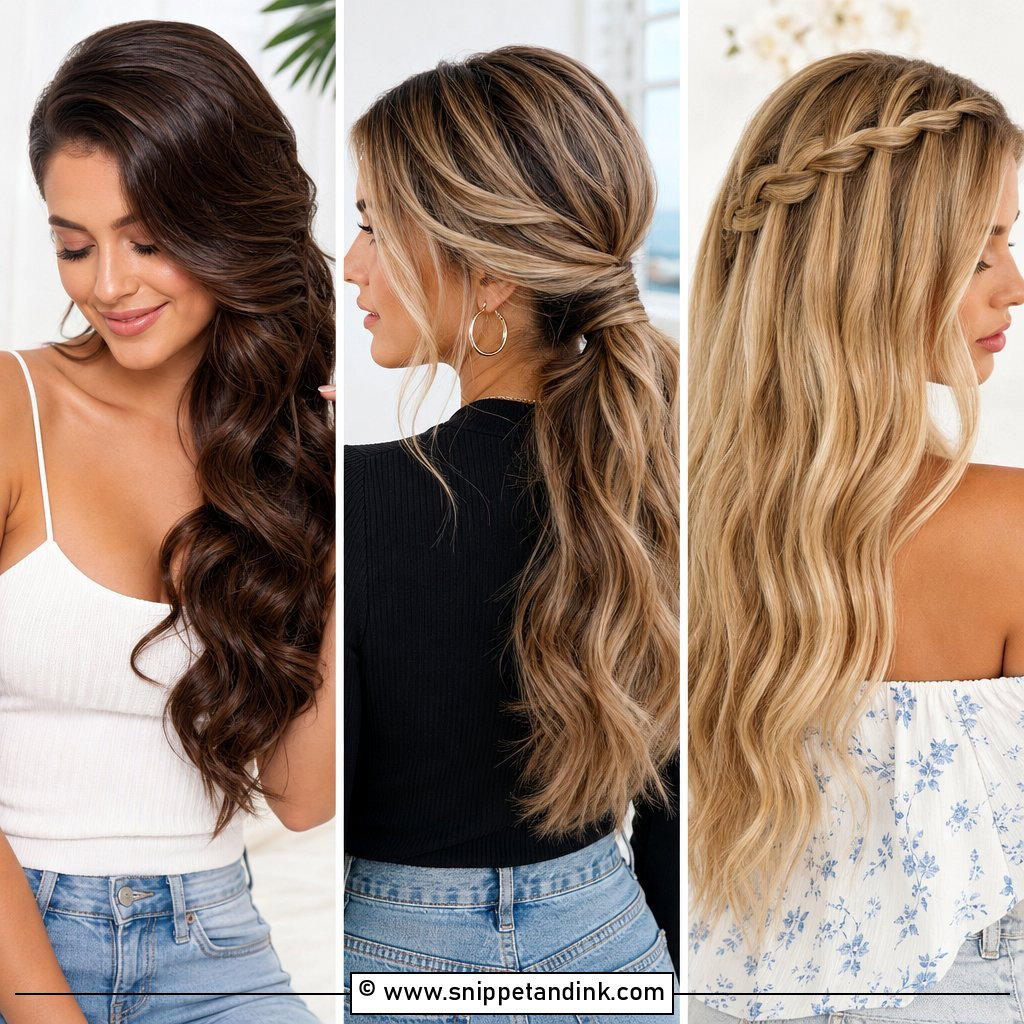
20. Soft Front Tendrils With Updo
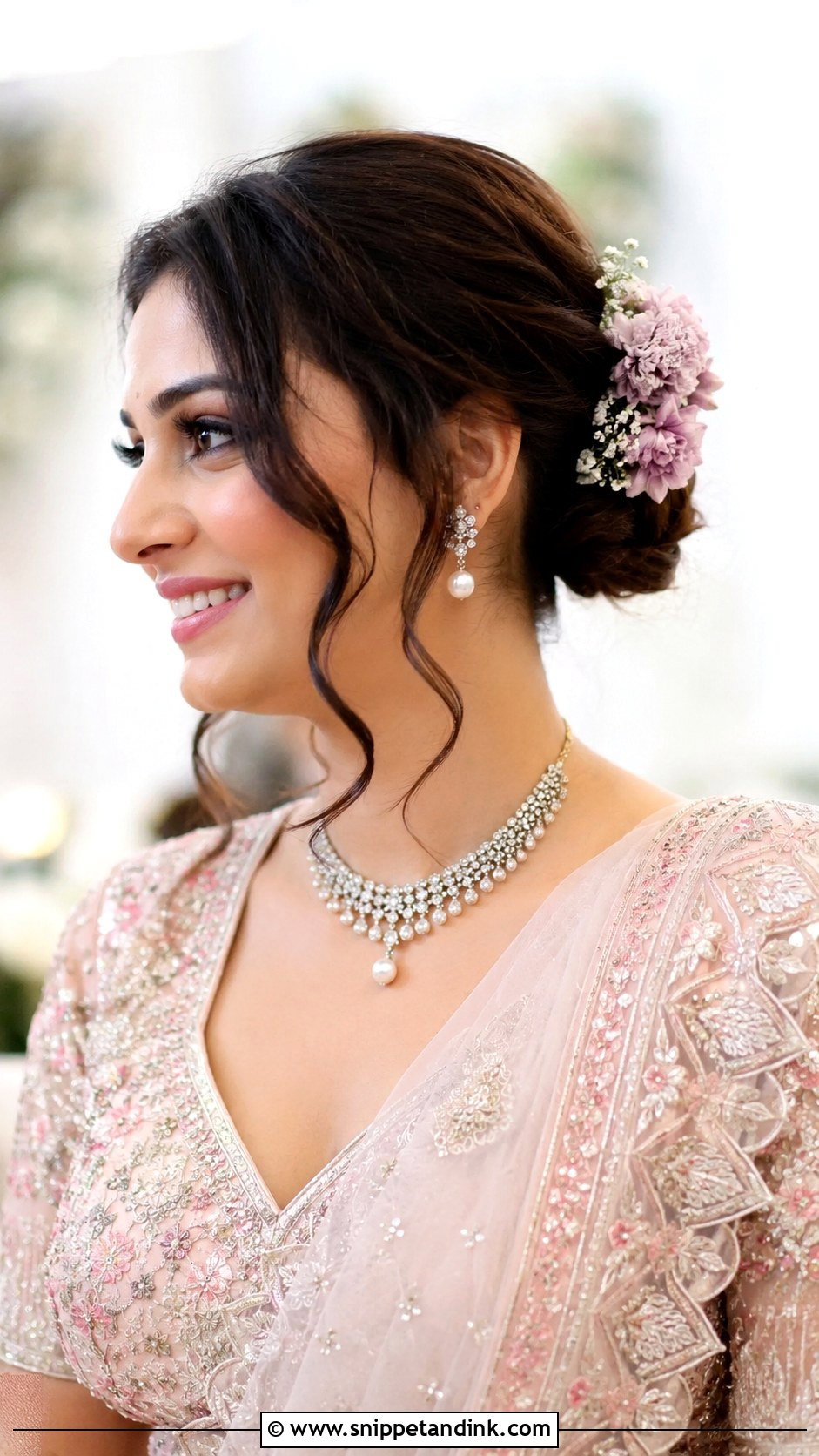
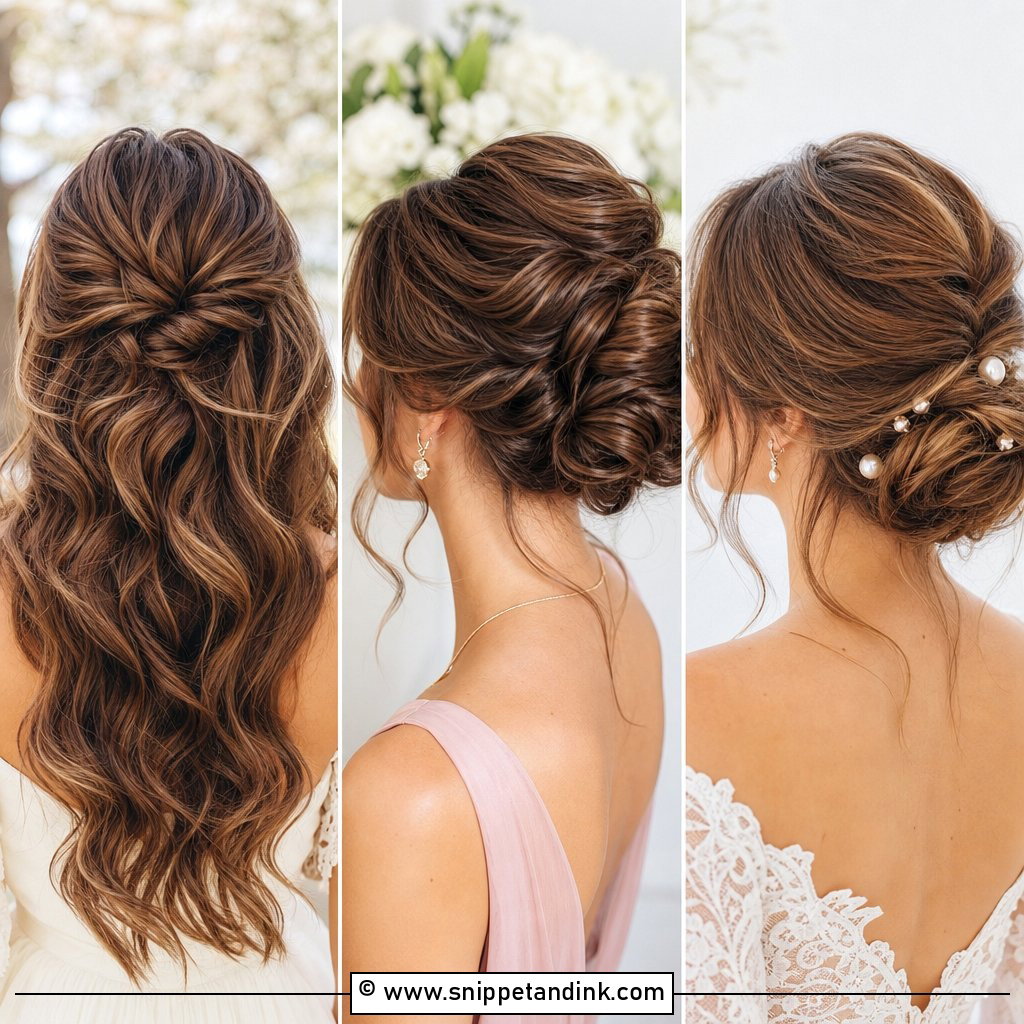
Soft curled tendrils left at the front of an updo add softness near the cheeks. The rest of the hair goes into a polished bun or twist. It suits receptions. I leave the tendrils out before building the updo, rather than pulling them out afterward, so they’re even. Small flowers or pins decorate the updo. Tendrils that are too long hang in the face, so I keep them around the jawline.
21. Front Pouf With Floral Bun
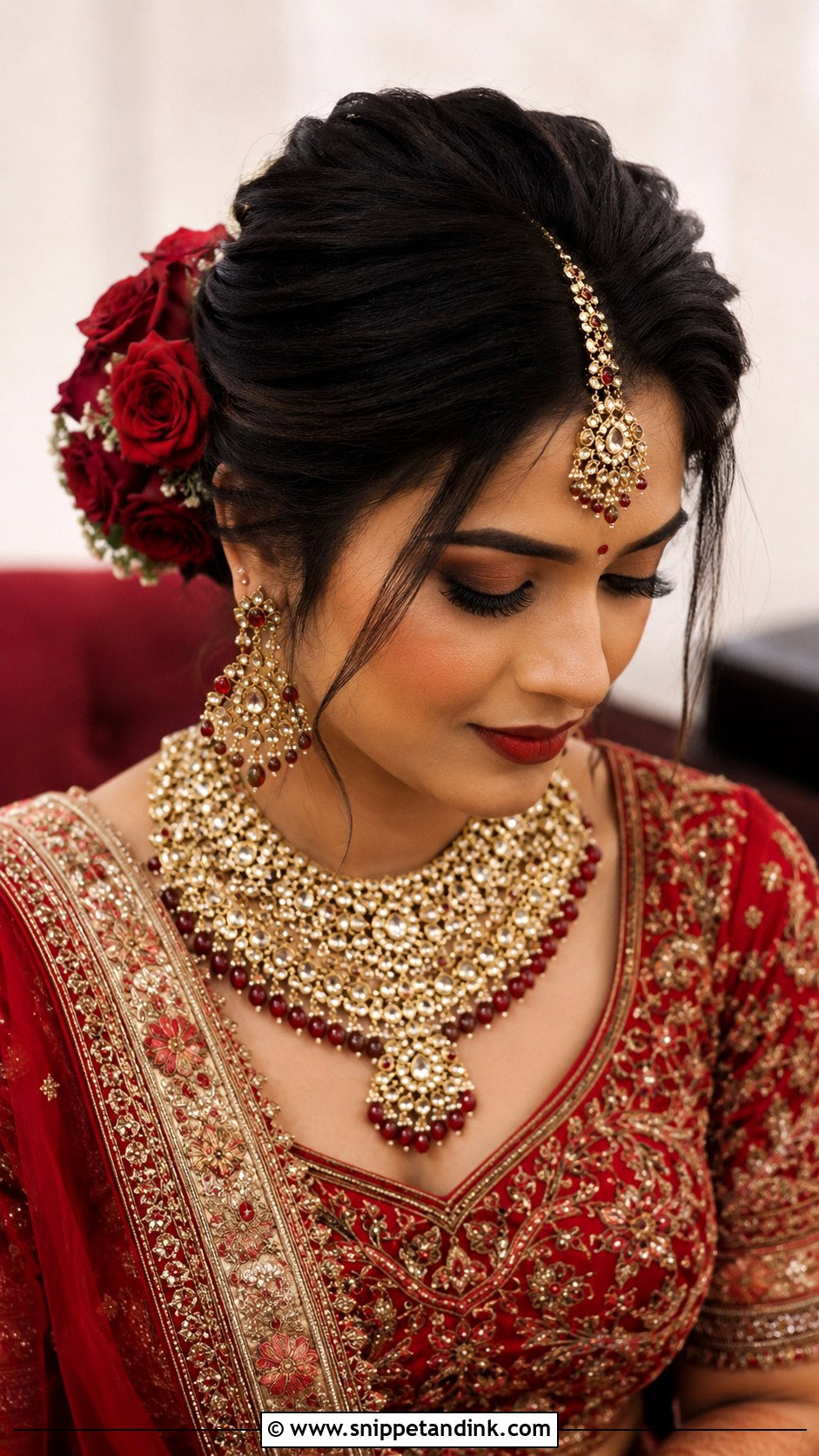
A lifted pouf with a flower-covered bun gives height at the front and fullness behind. It suits the main wedding ceremony, with a maang tikka on a smooth front. Fresh roses or jasmine cover the bun. The pouf must be pinned firmly enough to carry a dupatta, so I make it a little lower than a reception pouf. Leave soft strands near the face if you like.
22. Wavy Side Part for Reception Bride
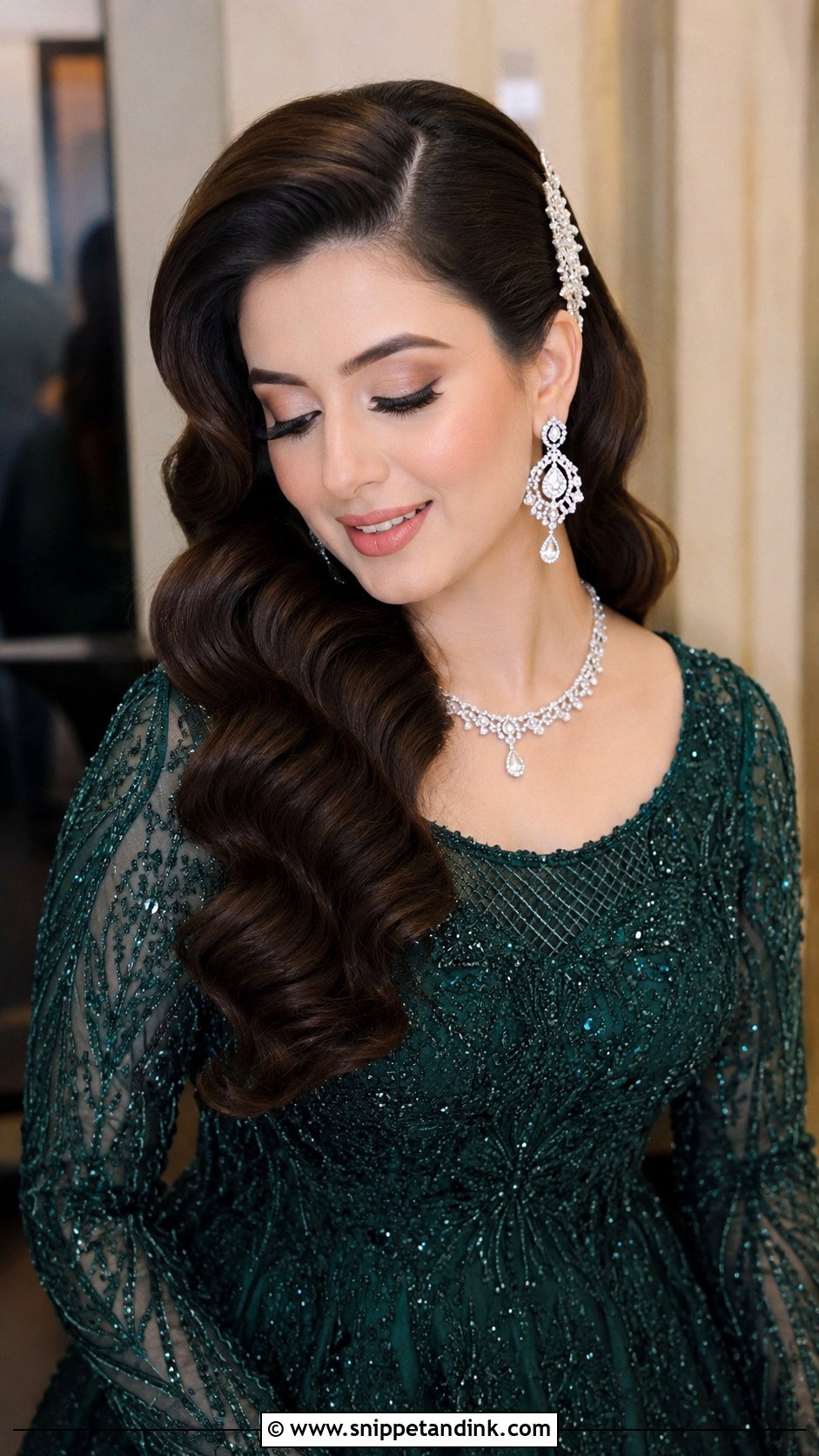
A deep side part with flowing waves on one side gives a Hollywood-inspired reception look. It suits gowns and modern lehengas. A sparkling clip near the part adds shine, and the clear side shows off earrings. Deep side parts love to flop forward. I set the part with a little root spray and pin the heavy side behind the ear. The waves catch light nicely in photos.
23. Front Braided Headband for Indian Bride
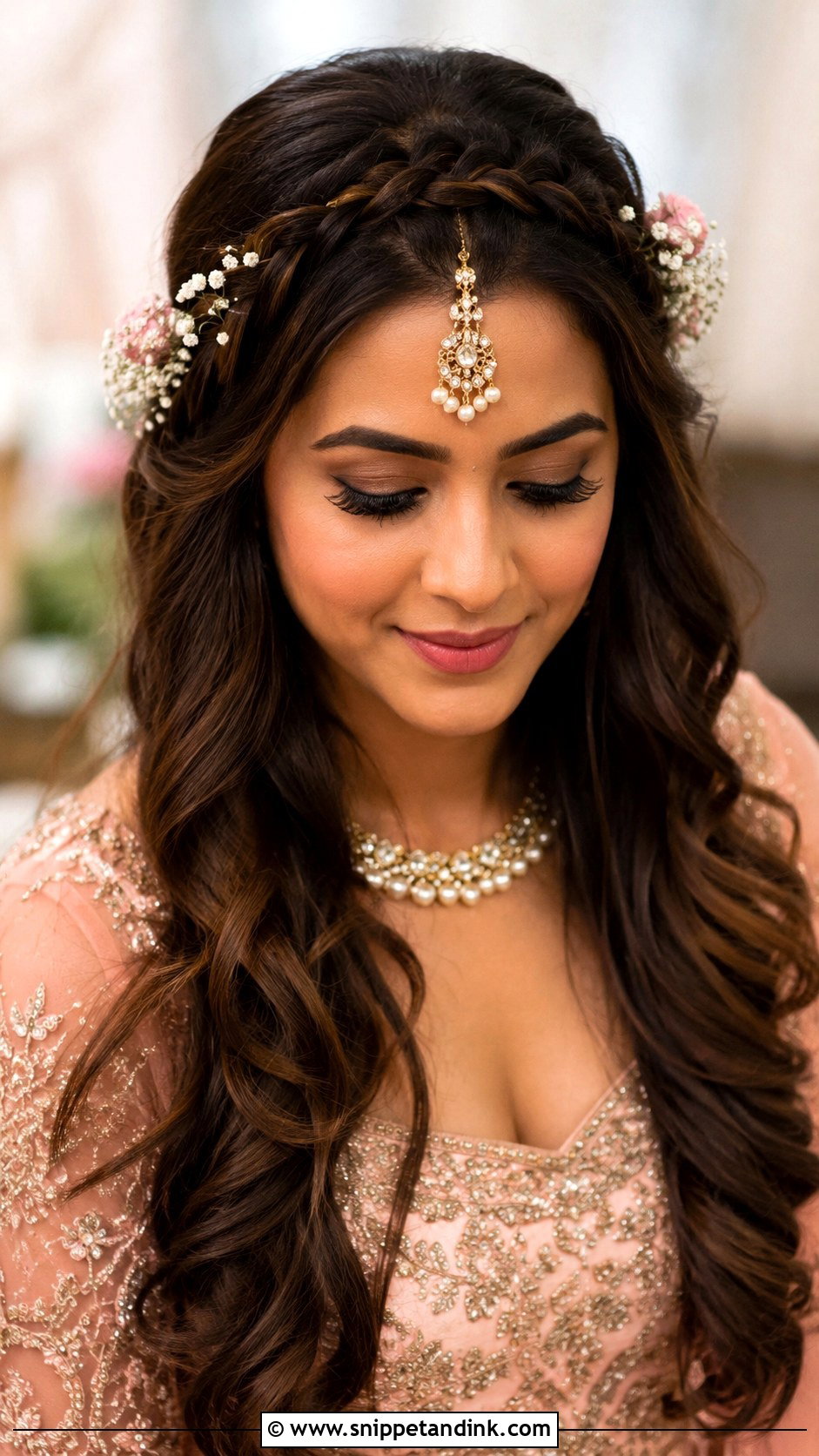
A thin braid wrapped across the crown like a headband frames the hairline, with the rest of the hair open or in a bun. Small flowers tucked in add charm. It suits mehndi and haldi. A maang tikka can sit in front of it. The braid needs to be pinned at both ends and once at the top, or it slides back toward the crown during the day.
24. Half Up Half Down With Front Volume
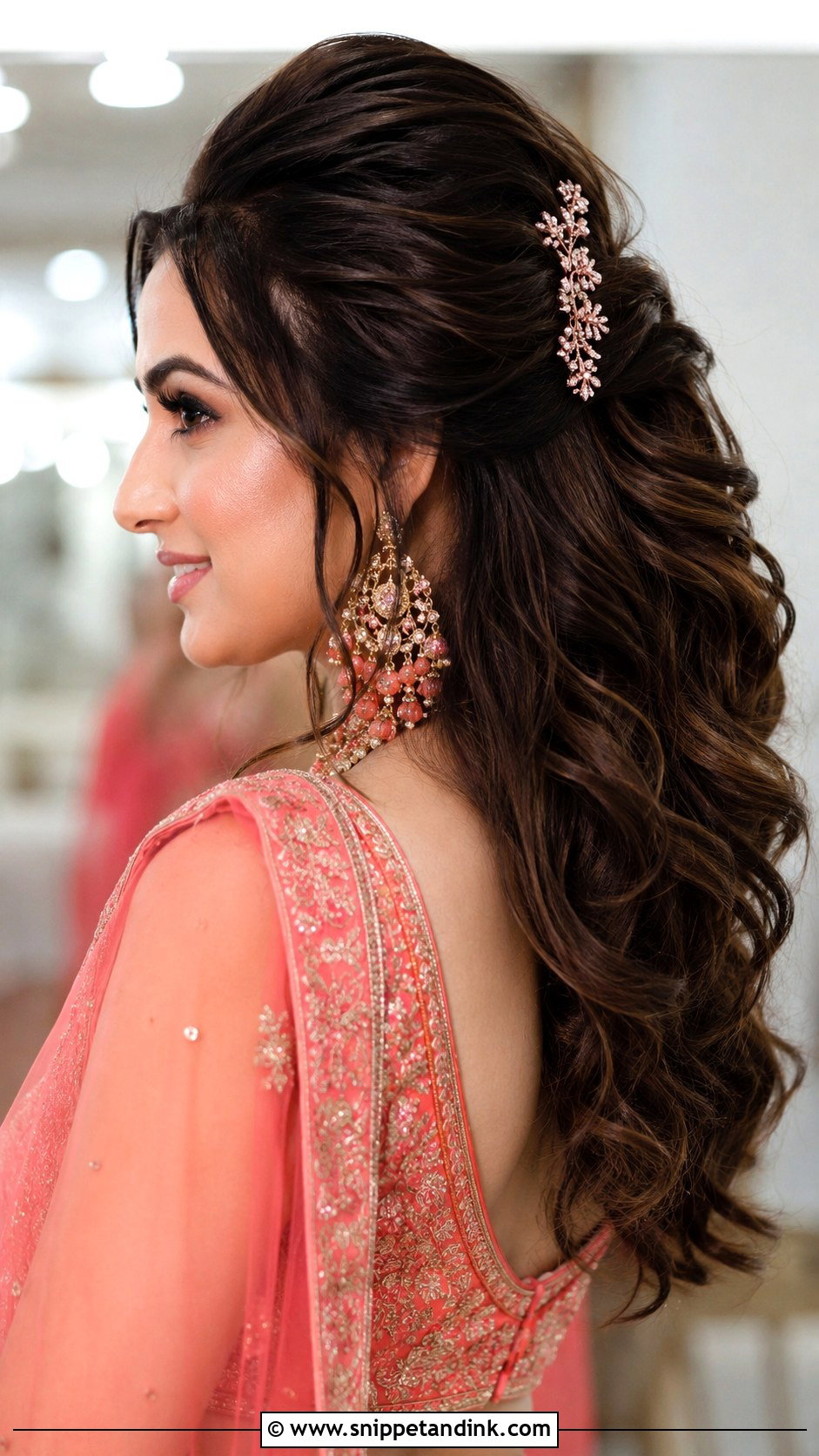
Half up, half down with lifted front volume gives height at the top while the rest flows. It suits sangeet and reception evenings. Soft strands at the cheeks frame the face, and a jeweled clip or flowers decorate the pinned section. The pinned top carries the volume, so I backcomb lightly underneath and lock it with crossed pins. Curls below add movement.
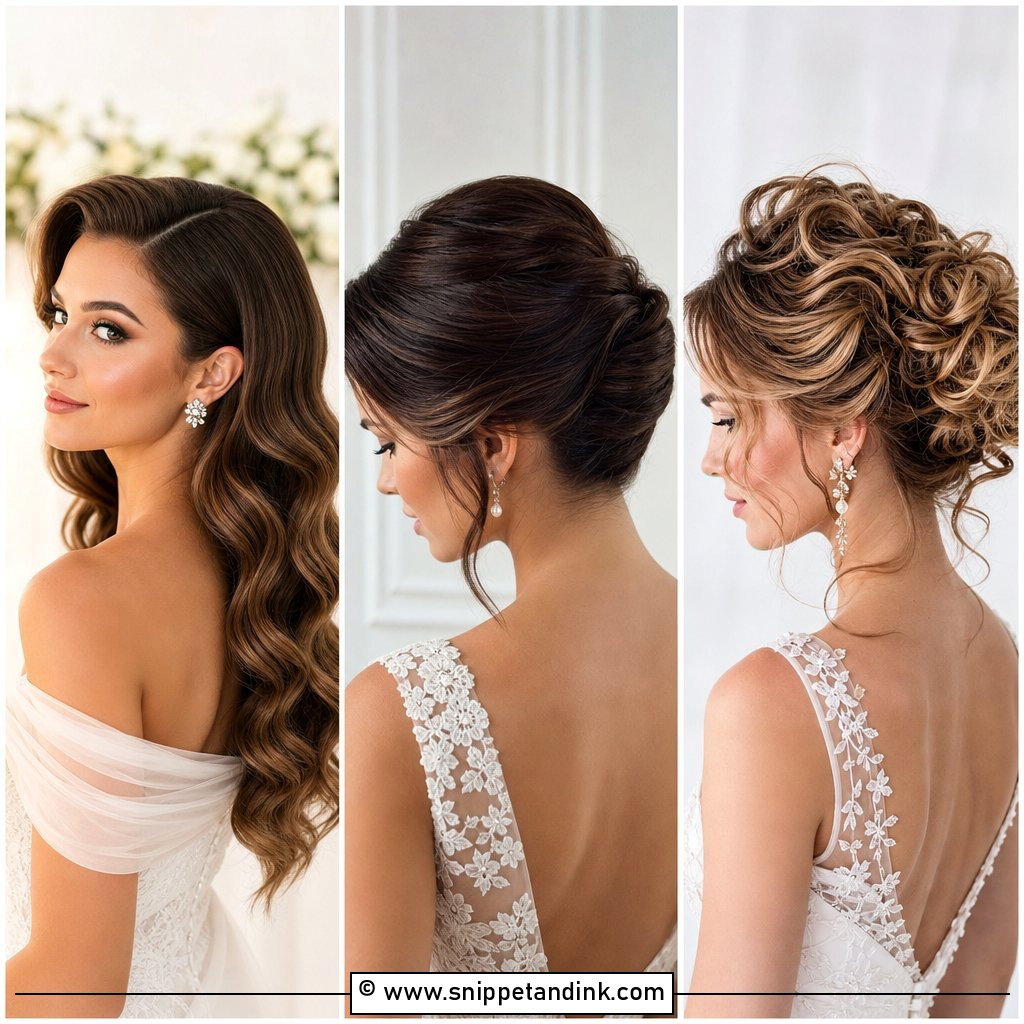

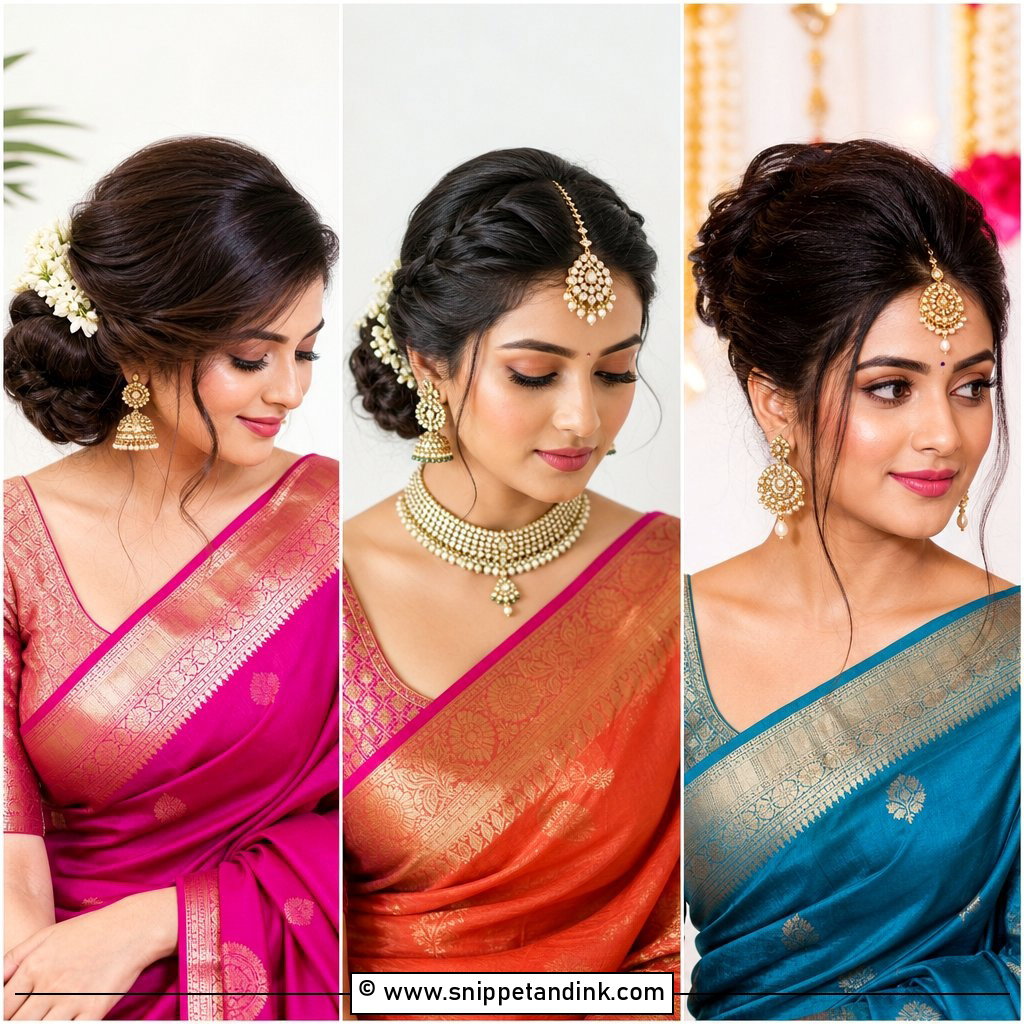
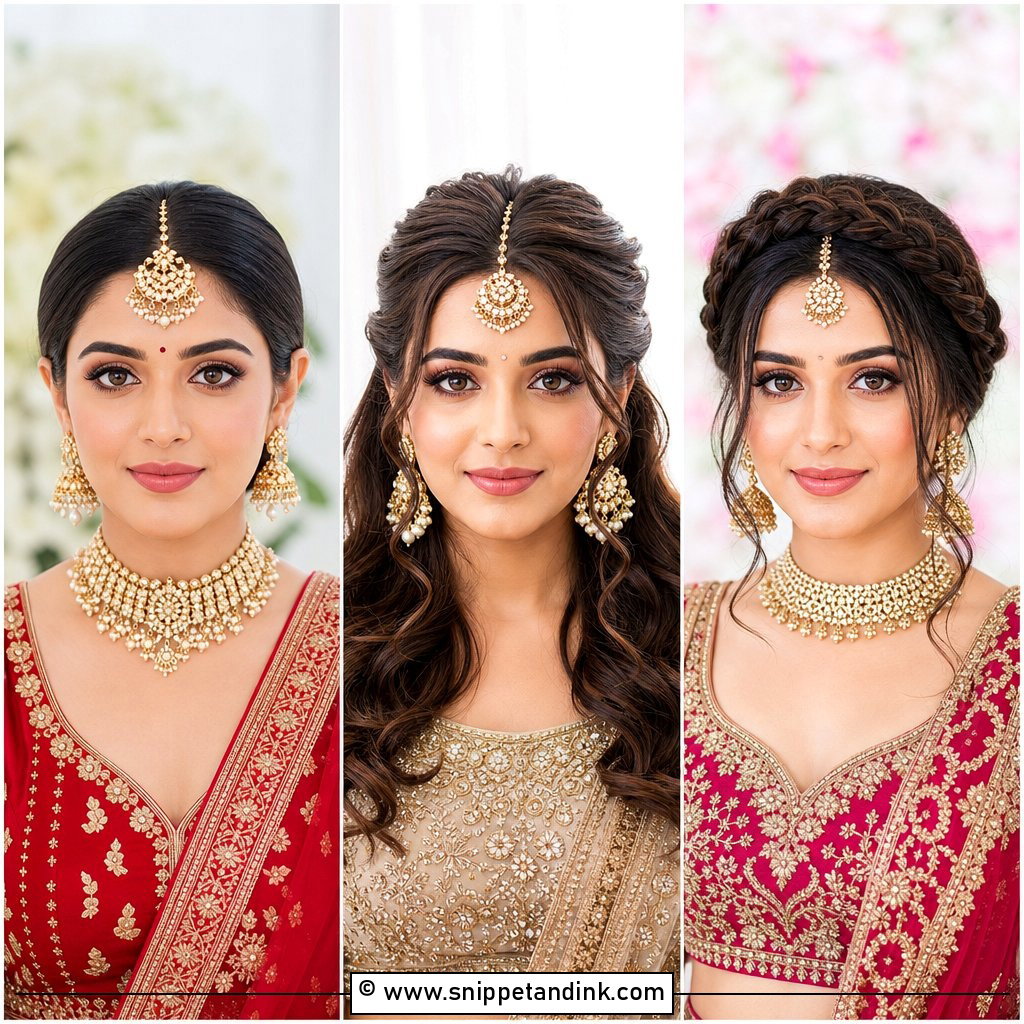
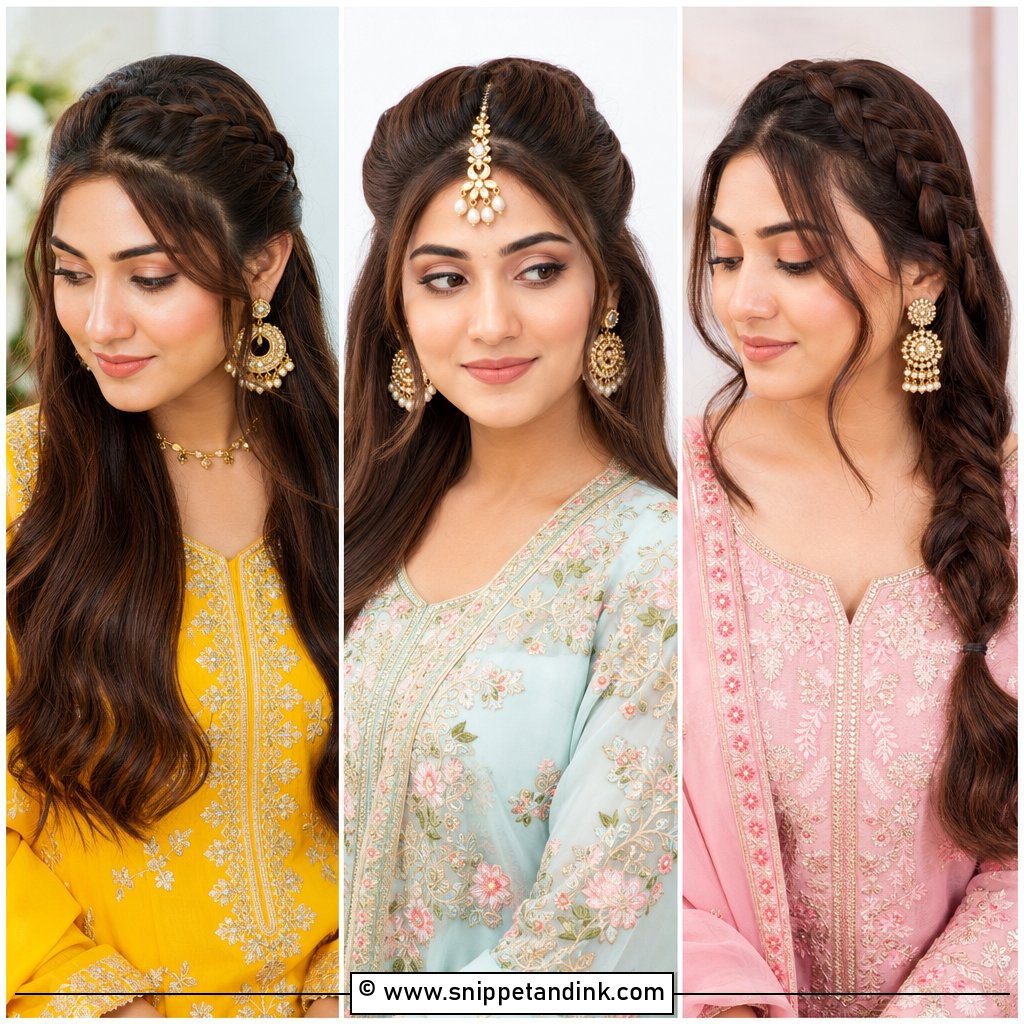
25. Sleek Front With Bun and Pearls
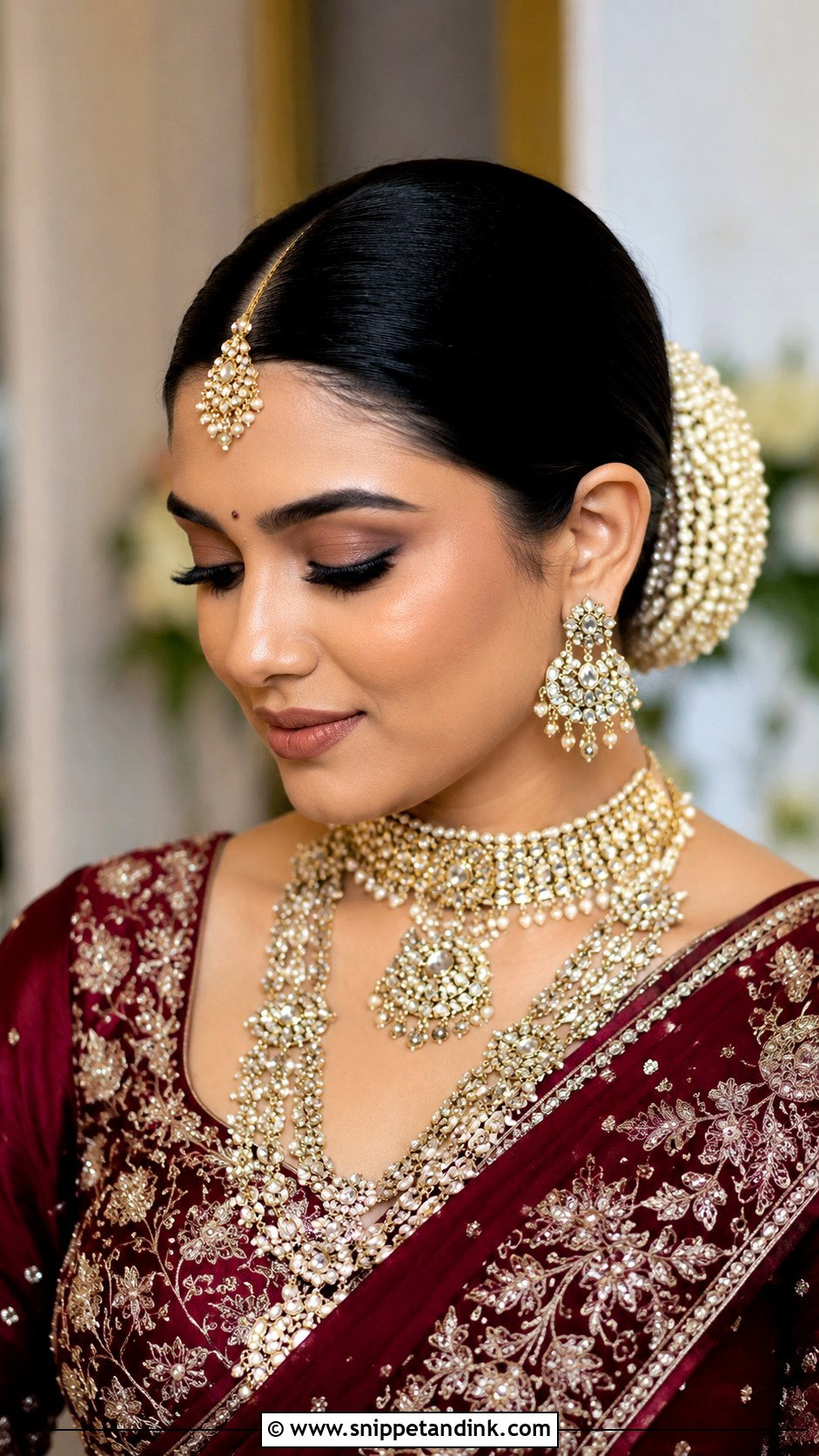
A smooth front polished back from a clean part, with a low bun wrapped in pearl strings, suits receptions and grand ceremonies. A maang tikka adds a traditional touch. The pearls add soft shine without competing with heavy gold jewelry. I pin the pearl strings at several points around the bun, since a single anchor lets them slip. It works well with heavy bridal jewelry and rich outfits.
How a Dupatta Changes a Puff, and Vice Versa
If your dupatta will be draped over your head, the front style and the dupatta must be planned together. A tall puff pushes the dupatta back and up, so it shows less of your face and keeps sliding. A low, firm puff gives the fabric a gentle ledge to sit on, and I pin the dupatta just behind it with U-pins inserted from behind.
Sleek center parts work differently: the dupatta lies flat on top and needs anchoring at the sides, near the ears, as well as at the bun. Either way, bring your dupatta to the trial. I adjust puff height by eye once I see how the fabric falls.
Rescuing a Flattened Front Between Ceremony and Reception
Heat, hugs and the dupatta all flatten the front by afternoon. It’s usually fixable in five minutes if someone has the right tools. Pack these for whoever is helping you.
- A tail comb: slide the tail under the puff and lift it gently, rather than teasing again.
- A few bobby pins in your hair color to re-lock the lifted section from underneath.
- A small travel hairspray for a quick mist.
- Blotting papers, because forehead sweat is often what collapsed the front.
- A spare pin for the maang tikka, in case its anchor has worked loose.
Frame the Face First, Then Decorate It
The front of your hair pulls the whole bridal look together. Sleek center parts, floral partings, puffs and side waves each frame the face differently, and each works best with certain jewelry and outfits. Try two or three at your trial with your actual maang tikka and dupatta, and look at them in photos, not only in the mirror. The right one should feel comfortable and look like you, from the haldi to the reception.
You'll Like These Ideas:


Leave a Reply