
A classic bridal look is not the plainest dress in the room. It’s a set of choices that still look right when you open the album decades later: the cut of the gown, the veil, shoes, jewelry, flowers, hair and makeup working as one outfit. Below are twenty-five complete looks, from satin gowns and lace sleeves to courthouse suits, garden dresses and reception changes. For each I’ve noted what I’d watch at a fitting and who the idea suits less well, because a look only stays classic if it fits you and lets you move.
What Dates a Bridal Photo, and What Never Does
When brides bring me their parents’ wedding pictures, the dress is rarely what looks old. It’s the makeup colours, the hair volume and the trend accessory of that year. That’s a useful lesson for planning a look that lasts.
- Ages quickly: heavy contour, very dark brows, trend veil shapes, novelty bows and accessories that were everywhere for one season.
- Ages slowly: good fit, a neckline that suits your shoulders, natural fabrics, pearls or plain metal, and hair that looks like your own hair on a good day.
- Ages not at all: posture and ease. A bride who can breathe and move looks right in any decade.
So I’d let one element carry personality, such as a bow, a sleeve or a colour of flower, and keep everything around it simple. It’s the competition between several fashionable details that makes a photo look dated.
1. Satin A Line Bride Look
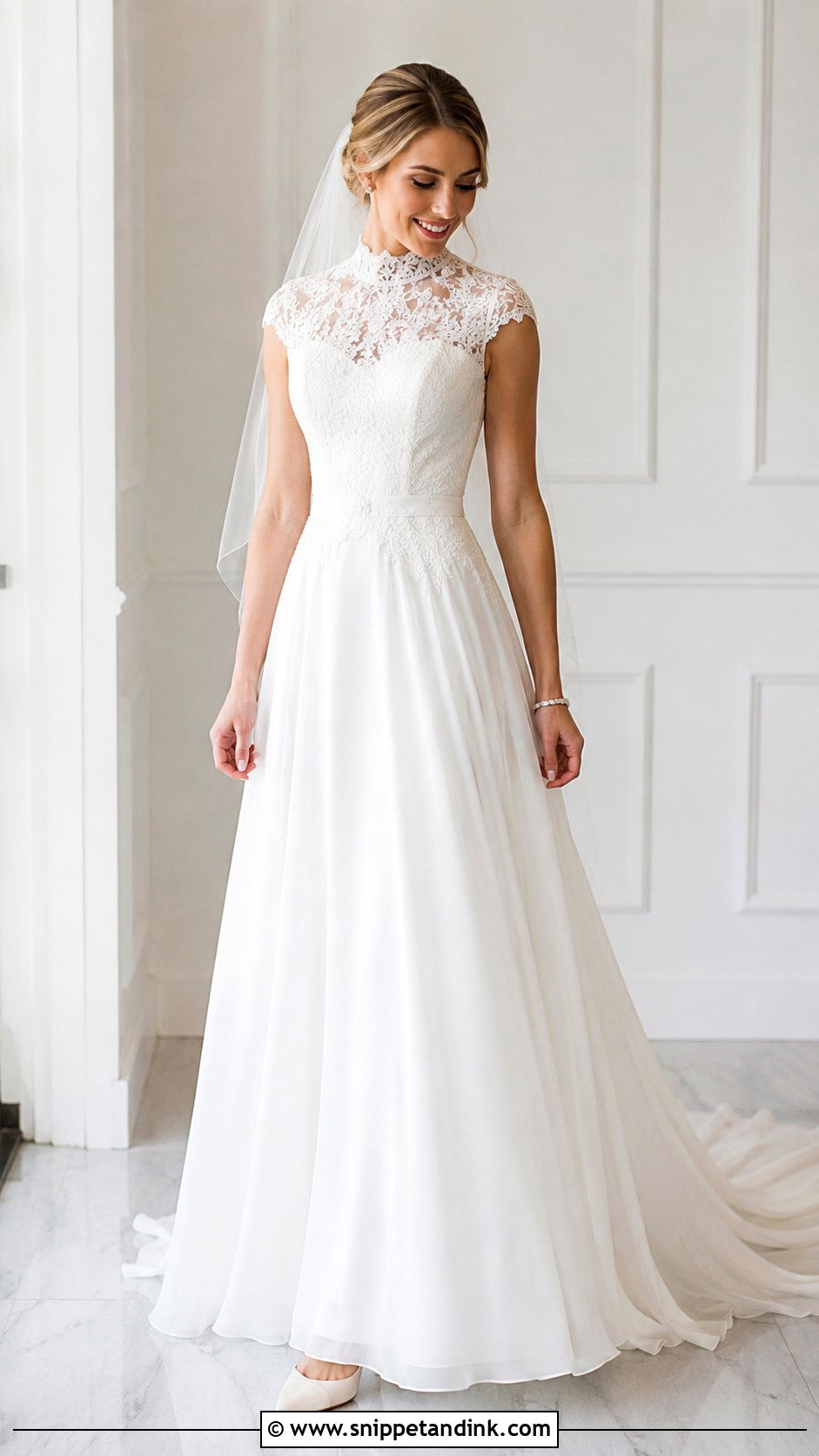
If a bride tells me she has no idea where to start, I put her in a satin A-line first. The fitted bodice gives shape and the skirt flares away from the hips, so it suits most figures and lets you walk, sit and dance. Ivory, pearl white and soft cream all read classic. Satin does show every pull, though, so the bodice has to be fitted precisely or you’ll see small diagonal creases at the waist in photos. Pointed satin heels, pearl studs and a fingertip veil keep it clean, with a low bun or smooth waves to leave the neckline open and a bouquet of white roses, ranunculus or calla lilies.
2. Long Sleeve Lace Bride Look
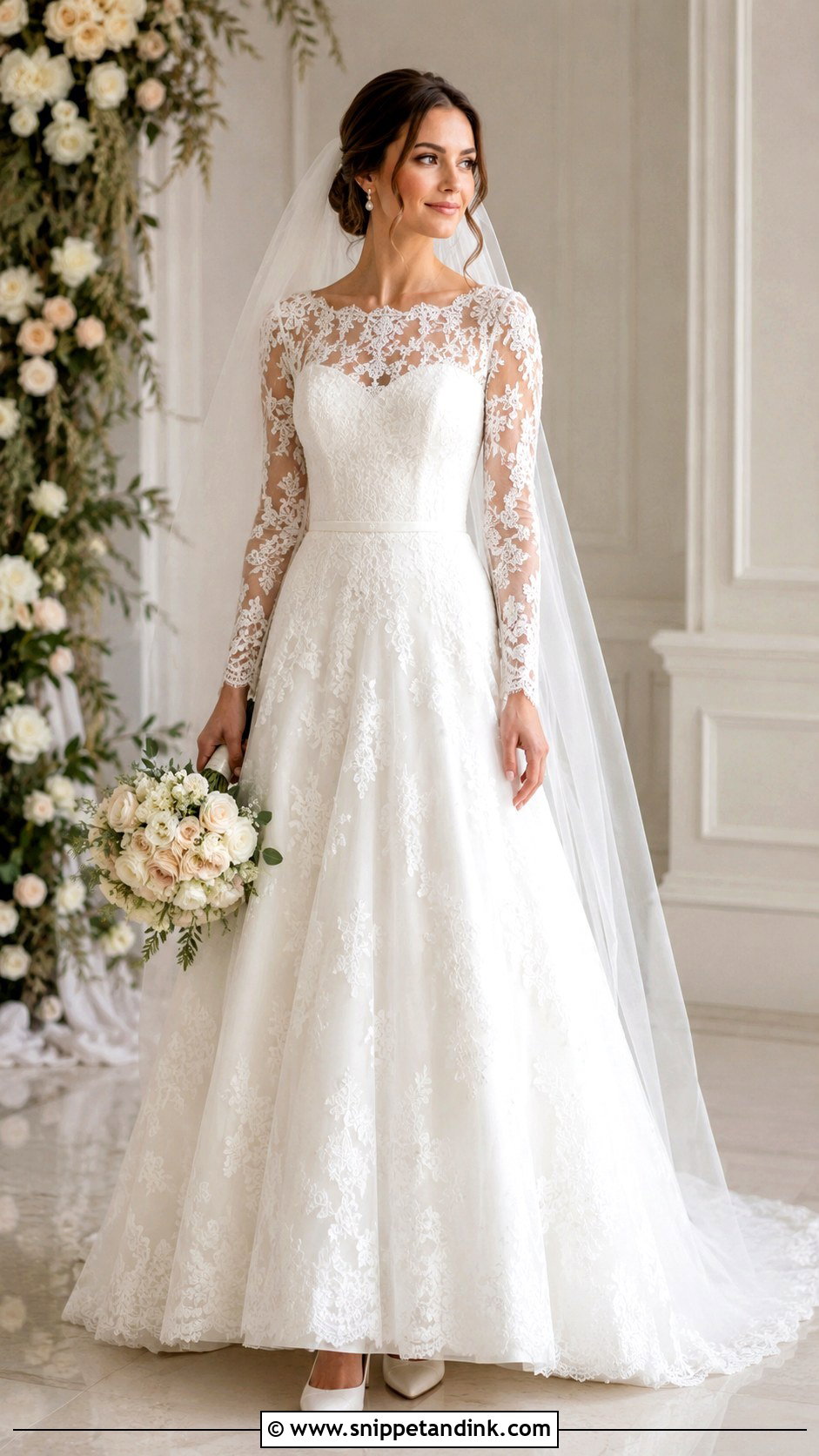
Lace sleeves give romance and coverage at once. They’re natural for autumn, winter and formal weddings, and an open floral lace keeps them light enough for warmer months. Look for a fitted bodice, a soft skirt and a subtle lining. Here’s my test for long sleeves: lift both arms as if you’re hugging someone. If the bodice rides up, the sleeve needs a gusset or a higher armhole. Pearl drop earrings, a plain veil and satin pumps finish it, and a chignon with a few soft face-framing pieces keeps it from looking stiff.
3. Off Shoulder Ball Gown Bride Look
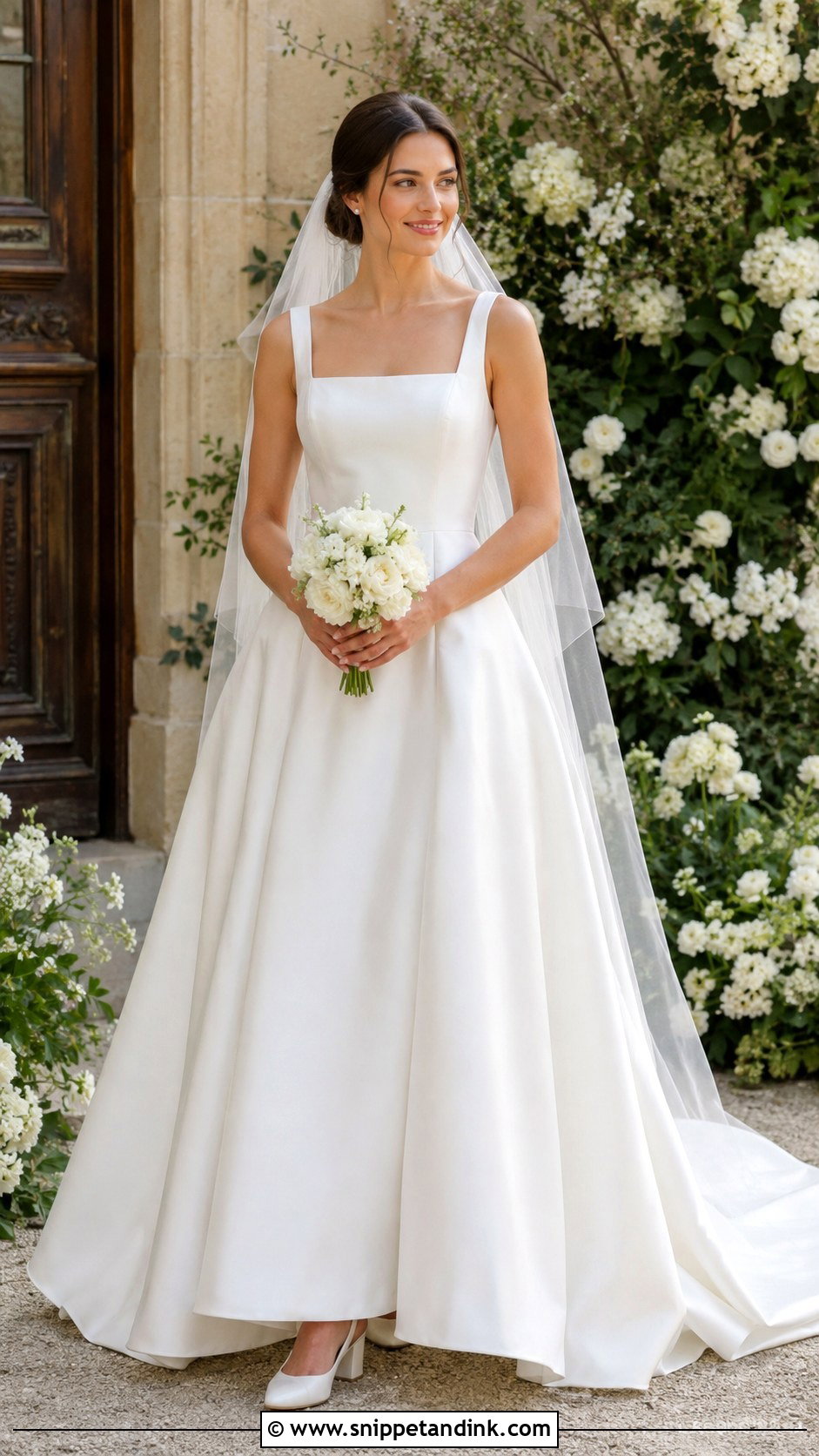
An off-shoulder ball gown gives the full princess shape and still reads grown-up. The open neckline shows the collarbone, and the skirt carries the drama, so the fabric should stay plain: satin, mikado or structured organza. Off-shoulder straps rely on a well-built bodice underneath; if the boning is weak you’ll spend the day pushing the straps back up. Add a cathedral veil, small diamond or pearl earrings and sleek ivory heels. A rounded white bouquet balances the skirt’s volume, and a low bun or soft waves keep the shoulders clear.
4. Simple Crepe Bride Look
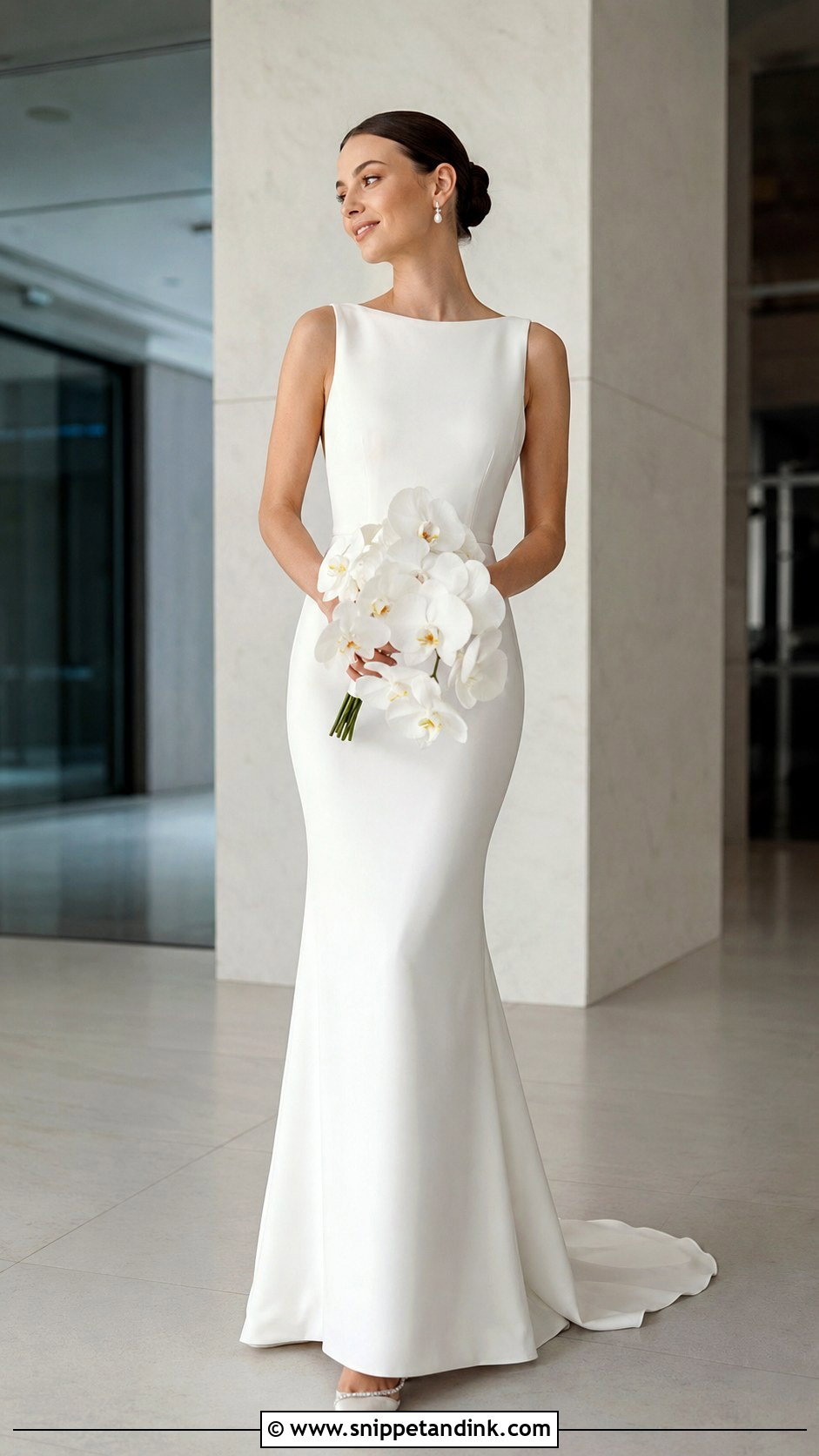
Crepe is the most honest fabric in bridal. It has no sparkle to hide behind, so the beauty of this look comes from fit and posture. A sheath or fit-and-flare in crepe with a bateau, square or V-neckline feels modern but still classic. I’d steer you away from it if you’d rather not wear shapewear, because heavy crepe follows the body closely and shows lines underneath. Slingback heels, a smooth veil and sculptural pearl earrings suit it, with a sleek bun or polished ponytail and a single white orchid or a small rose bouquet. City venues, rooftops and galleries suit it best.
5. Strapless Satin Bride Look
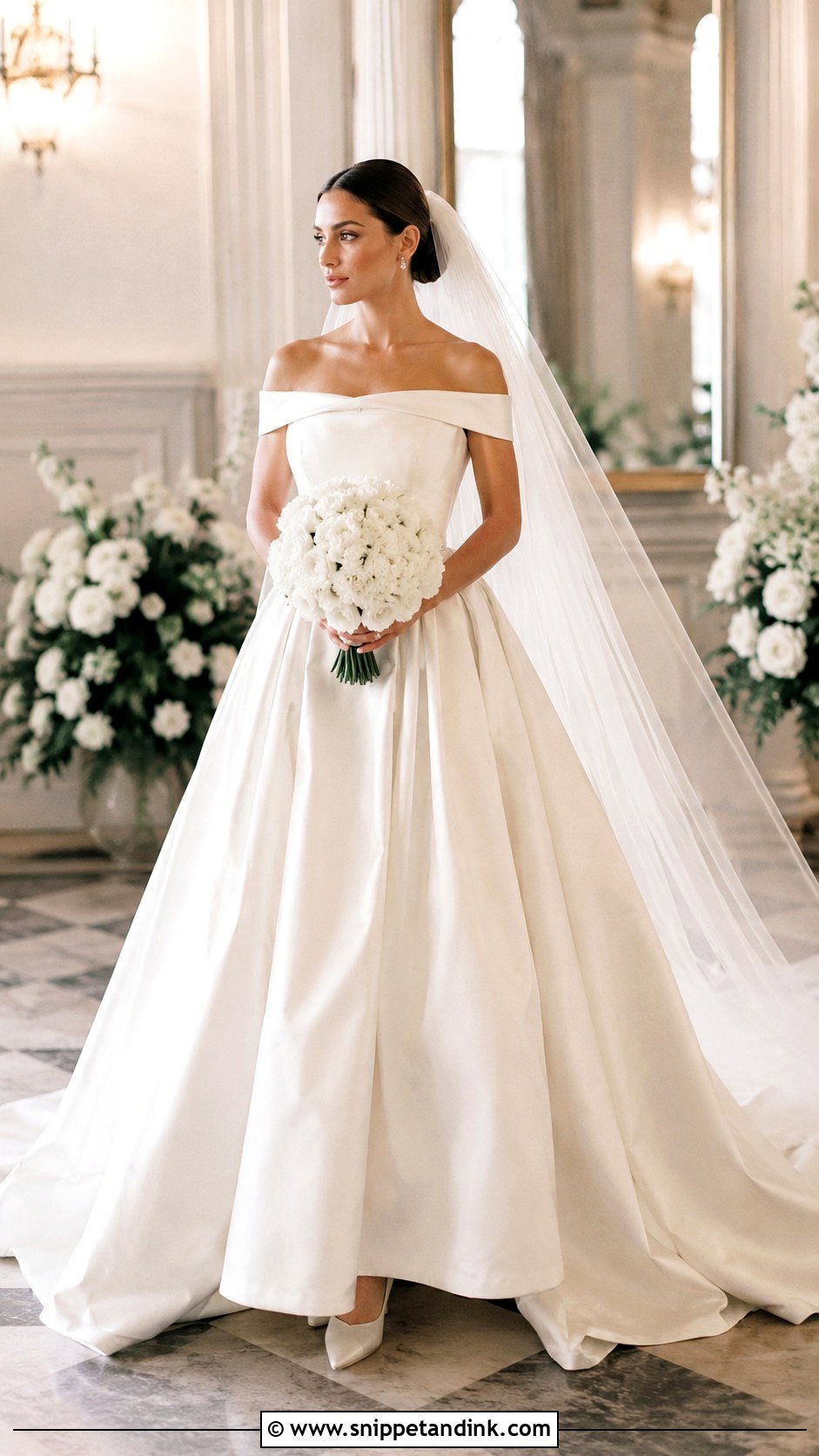
Strapless satin is a classic because it’s a blank canvas. The neckline leaves space for jewelry, but restraint usually wins: a pearl necklace or diamond studs, rarely both. Choose a structured bodice, gentle waist definition and a skirt that fits the venue, from slim column to full A-line. The fitting point I care most about is grip at the top edge. You should be able to raise your arms without the bodice slipping, and if you can’t, it needs more internal structure, not a tighter zip. Satin heels, a long veil, a smooth updo, soft brown liner and a pink lip complete it.
6. High Neck Bride Look
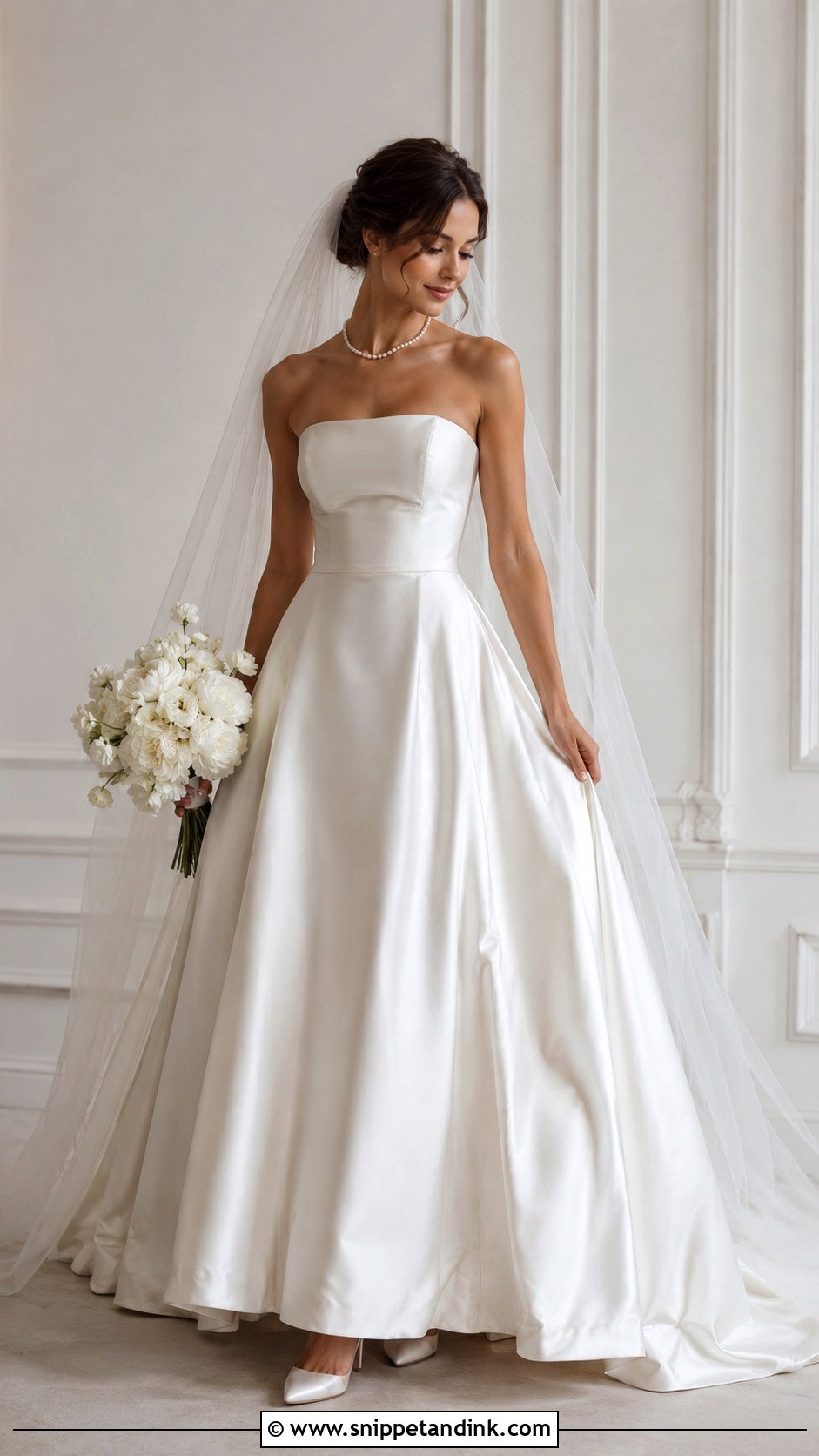
High necklines are regal and modest, and they work in lace, satin, crepe or chiffon. Skip the necklace entirely and put the interest into earrings, a bracelet or a small hair piece. Keep the upper body clean with a sleek bun, soft twist or low ponytail, and choose a veil that doesn’t add a second detail at the neck. One honest trade-off: a very high neck can shorten the look of a short neck or a full bust, so I’d try a slightly lower keyhole or illusion version alongside it. Pointed pumps keep the line long.
7. Square Neck Bride Look
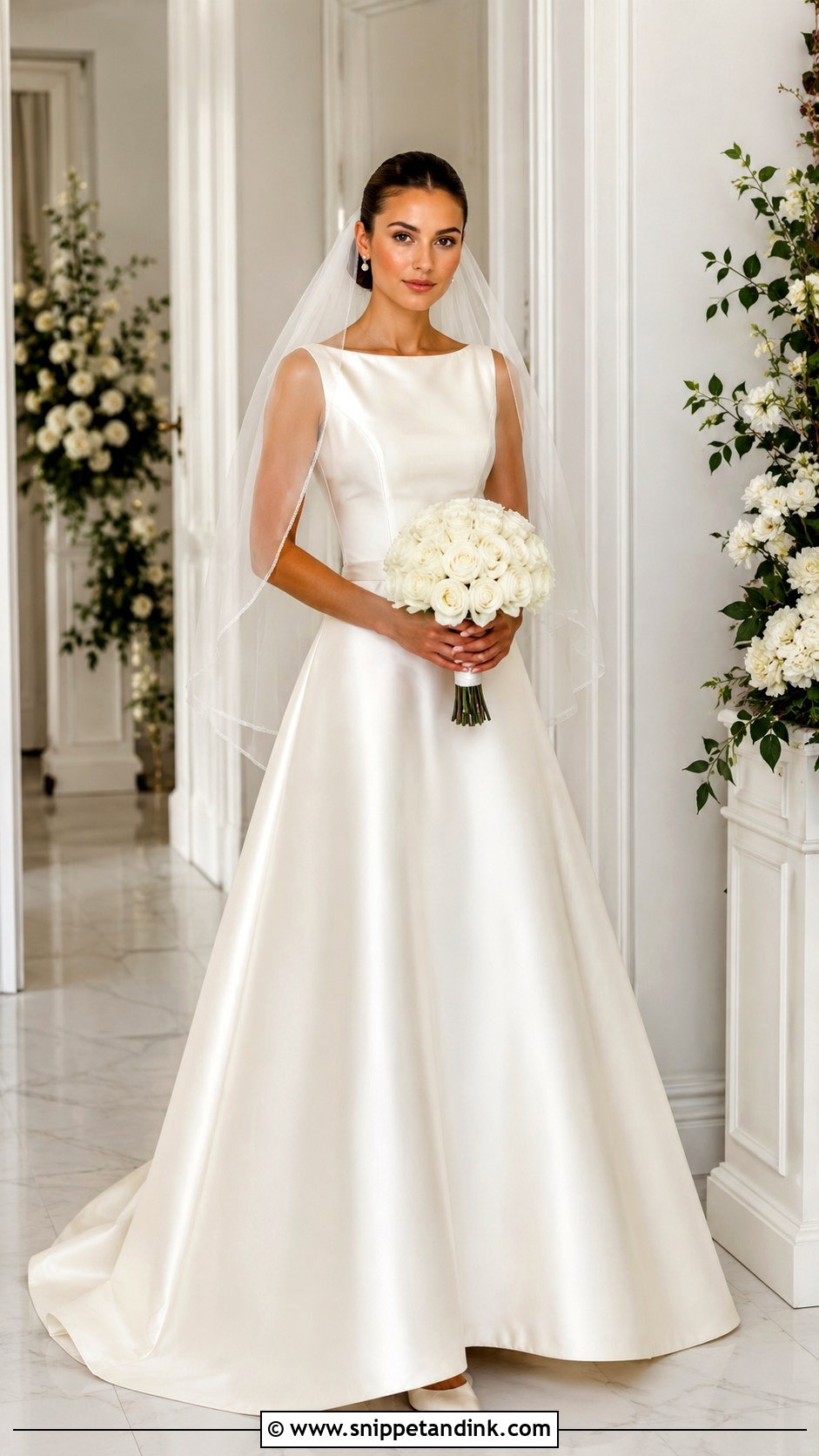
A square neck has a quiet vintage feel and still looks fresh. The straight line frames the face and shoulders and suits fitted gowns, A-lines and soft ball gowns. Satin and crepe make it crisp; lace makes it softer. I check where the corners sit: too wide and the straps slide off narrow shoulders, too narrow and the bust looks compressed. Pearl studs, a slim bracelet and a clean veil go with it, and ballet flats or low block heels keep it comfortable. Hair can fall in soft waves or tuck into a low bun.
8. Tea Length Bride Look
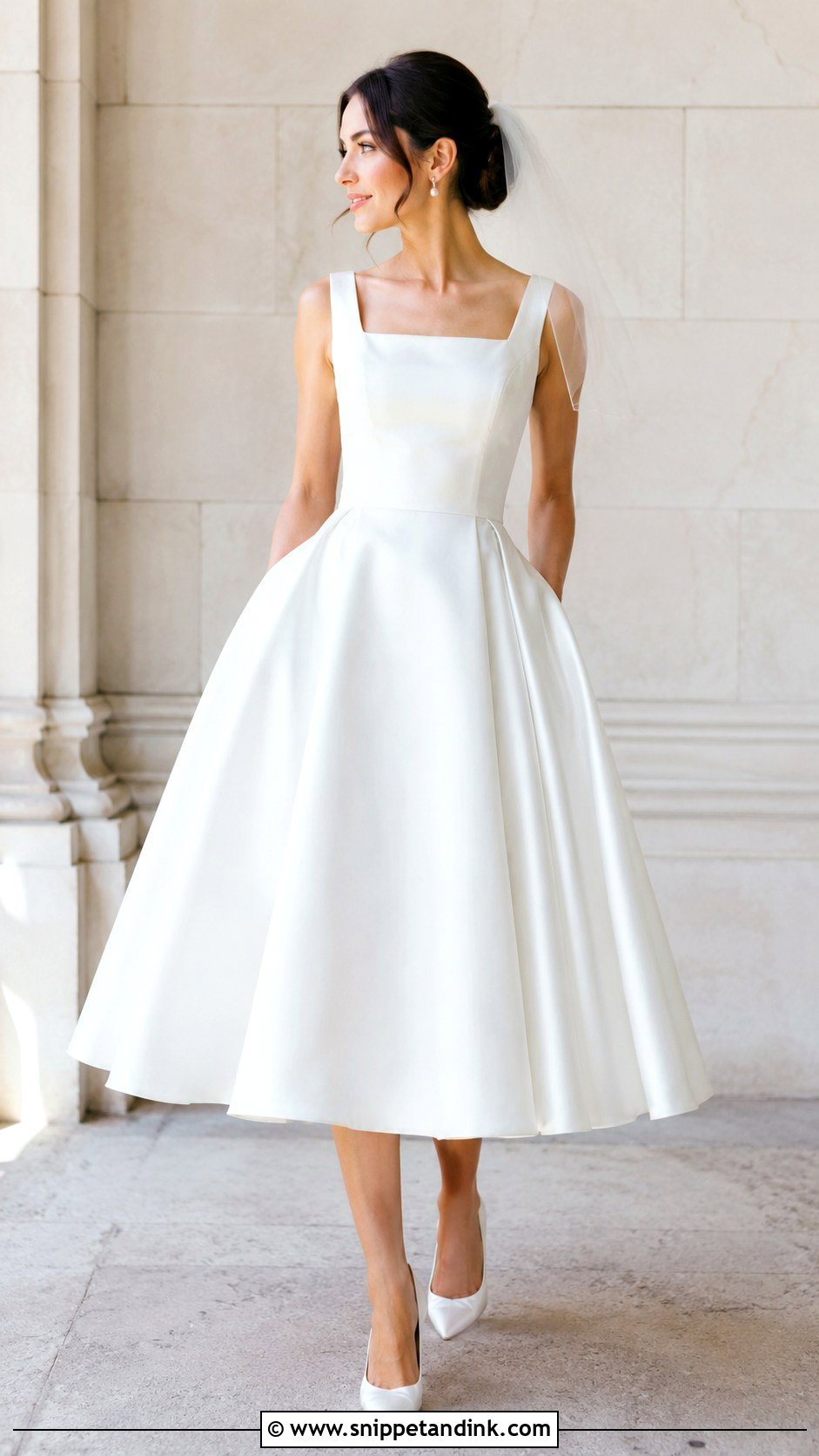
A tea-length wedding dress sits between knee and ankle, so your shoes become part of the outfit. A fitted bodice with a full skirt nods to the 1950s, while a softer A-line looks more current. The hem length is the whole decision here. Sitting just below the widest part of the calf flatters most legs; ending at the widest point shortens them. Satin pumps, pearl earrings and a short veil or bow clip suit it, with a small bouquet to keep proportions right. Courthouse ceremonies, brunch weddings and dance-heavy receptions are where it shines.
9. Courthouse Bride Suit Look
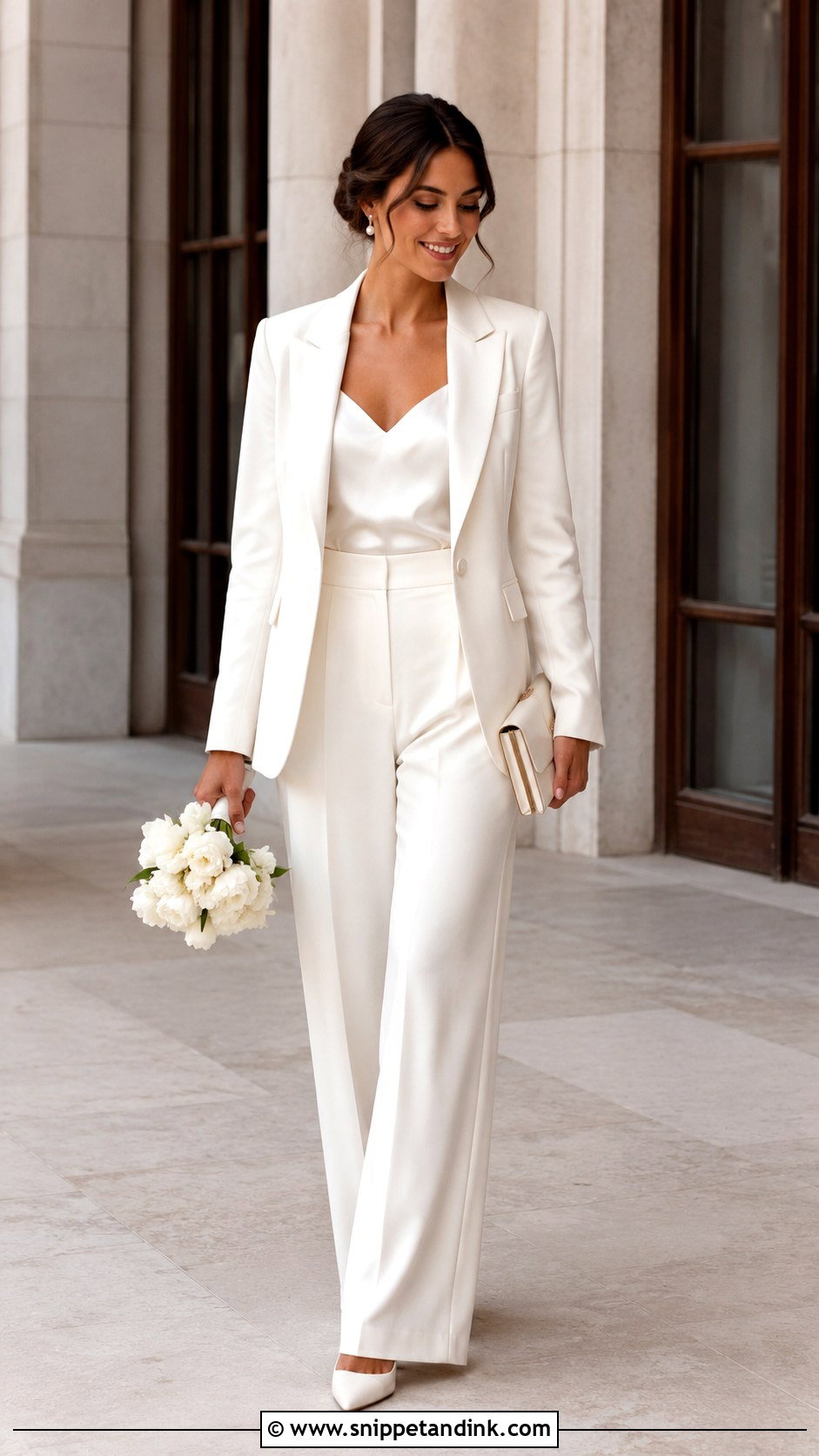
Tailoring doesn’t date, which is why a tailored white bridal suit works so well for a courthouse or civil ceremony. Choose wide-leg trousers or slim tailored pants with a sharp blazer in ivory, white or cream, and wear a silk camisole, corset top or simple shell underneath. White suiting shows pocket bags and the outline of lining through thin fabric, so I’d ask the tailor to use a skin-tone lining and stitch the pockets shut. Pointed heels, a structured clutch, pearl earrings and a small bouquet finish it, with a birdcage veil or sleek low bun for the bridal note.
10. Silk Slip Bride Look
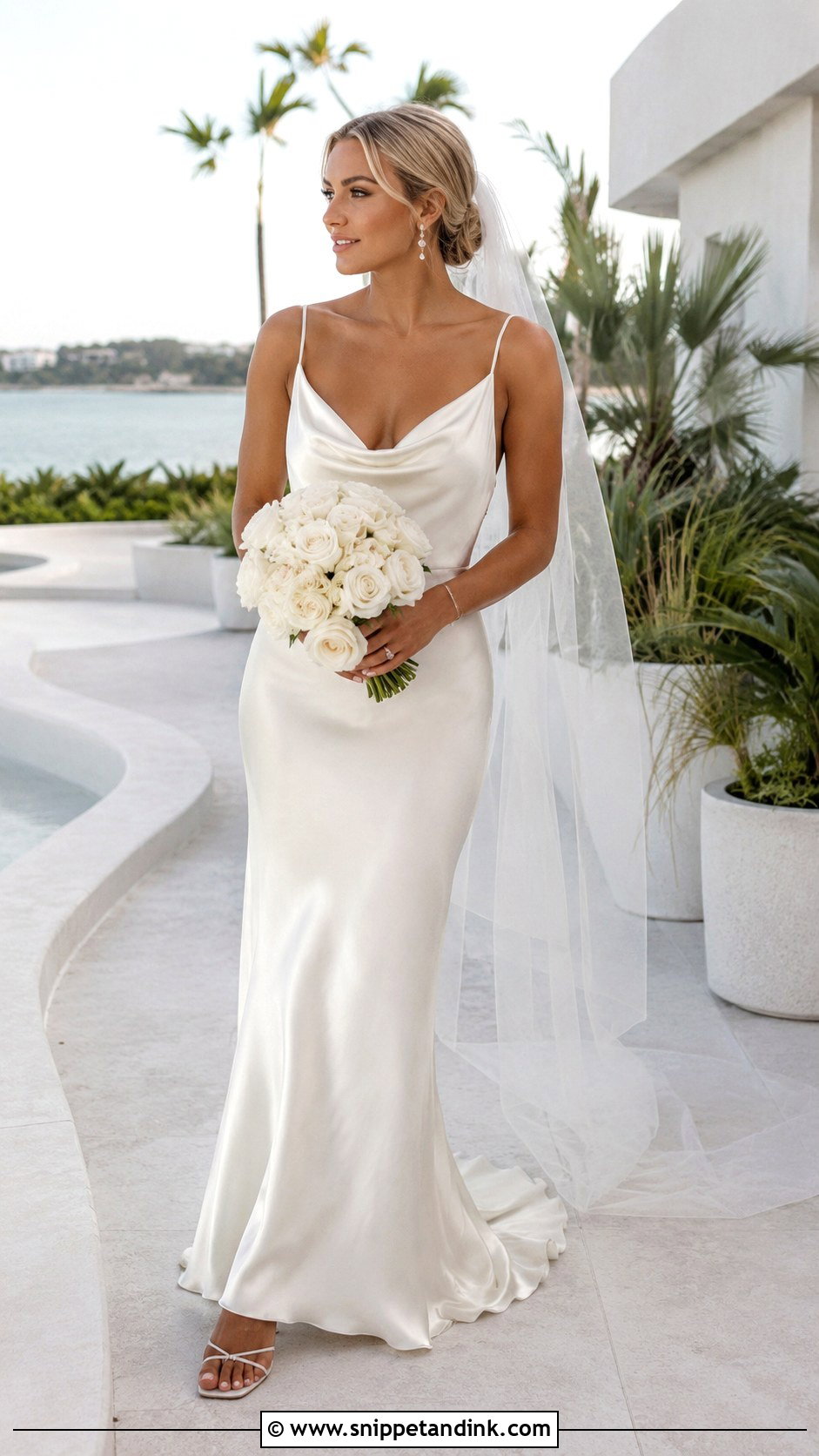
A silk slip is the simplest dress here and the least forgiving. Bias-cut silk drapes because it stretches on the diagonal, and that same stretch shows every seam and line underneath. Look for a heavier silk or a good satin-backed crepe rather than thin charmeuse. A cowl neck, bias cut or simple V reads soft and quiet. Strappy heels, pearl drop earrings and a sheer veil keep it light. Soft waves keep it romantic; a sleek bun makes it sharper. A loose bouquet of white flowers and greenery fits beach weddings, elopements and destination ceremonies.
11. Floral Lace Bride Look
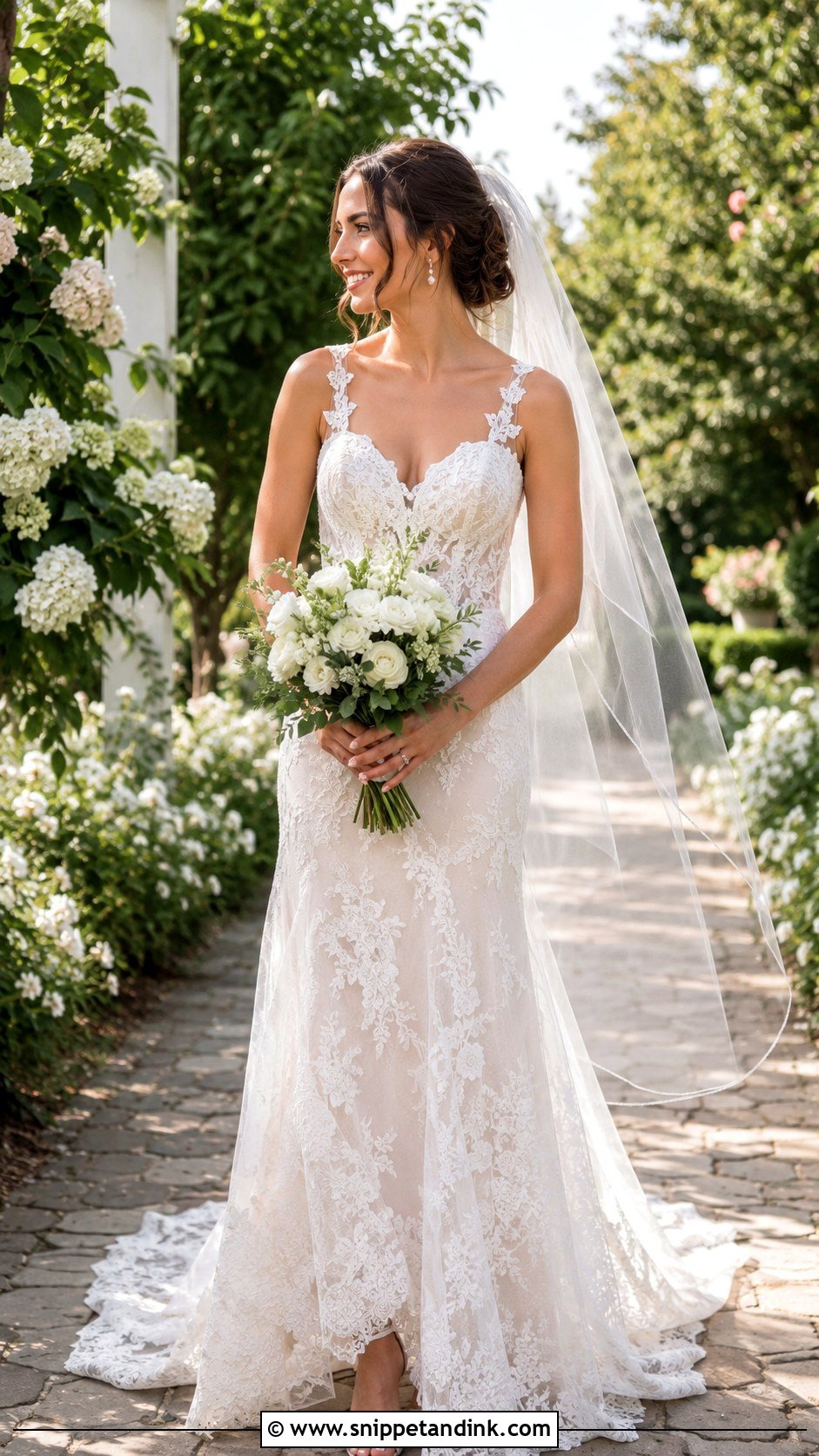
Lace can be romantic without being busy. What I look for is a balanced pattern with clean placement, especially where the lace meets the seams; well-made gowns cut the motifs and appliqué them across the join so you don’t see a line. A fitted bodice with an A-line or sheath skirt keeps it composed. Pearl earrings, satin heels and a sheer veil let the lace show through. Hair can go half-up, softly curled or into a loose bun, and the bouquet should stay simple. It suits garden weddings and estate ceremonies most naturally.
12. Pearl Detail Bride Look
Pearls give a soft shine that rhinestones can’t. Pearl buttons, pearl straps or scattered pearl embroidery all read delicate and heirloom. Keep the rest quiet so the pearls look deliberate. Do sit down in a beaded gown before you buy it: pearls sewn at the back of the skirt press into you on a chair and can catch on lace veils. Pearl studs or small drops, satin shoes and a clean veil fit the mood, and a pearl comb in a low bun works if the gown itself is plain. Natural makeup with glowing skin and a rose lip finishes it.
13. Cathedral Veil Bride Look
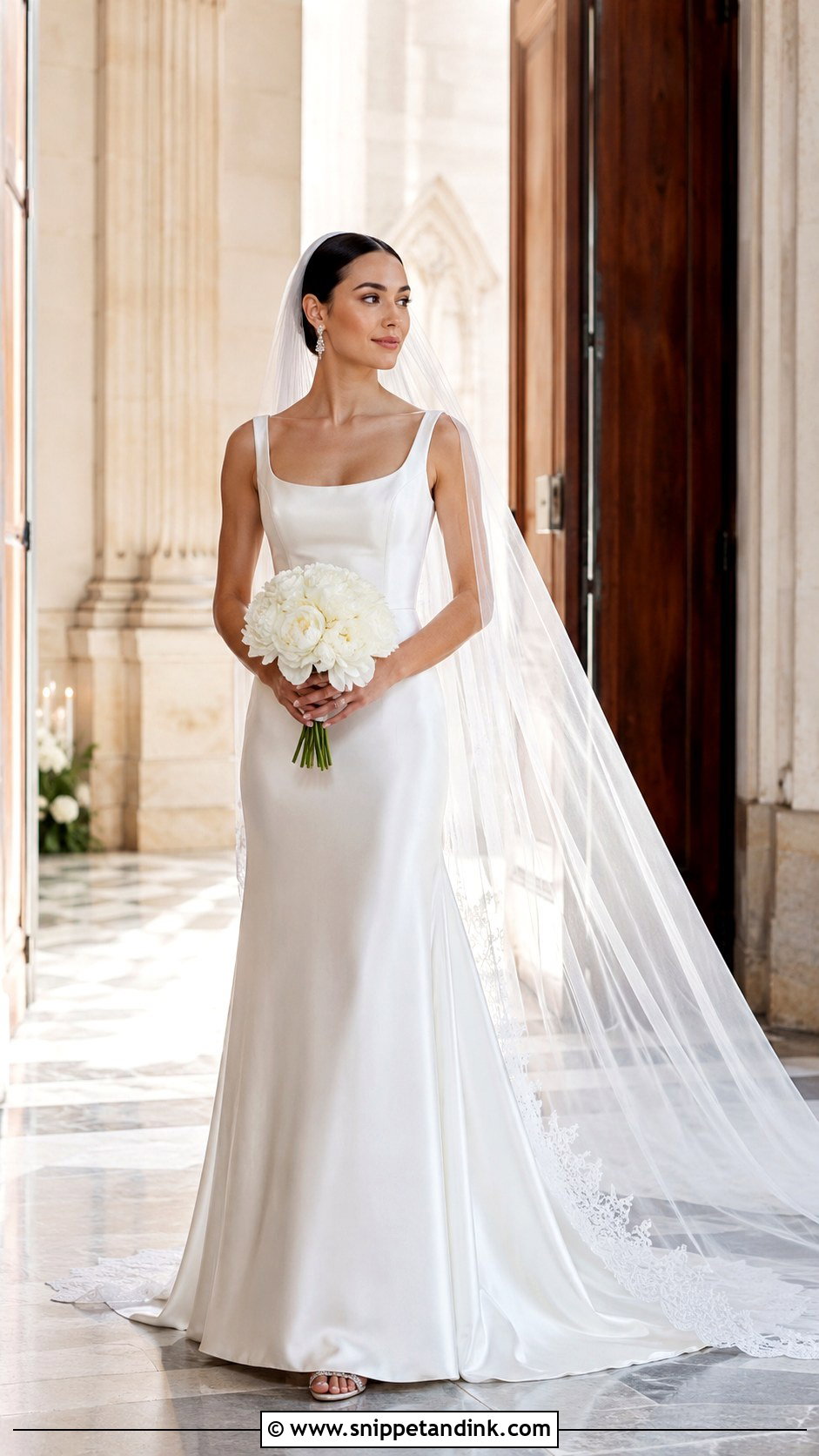
Add a cathedral veil and the simplest dress becomes ceremonial. It brings length and movement without changing the gown. Plain veils suit detailed dresses; a lace-trimmed edge adds romance to a simple one. The practical side matters more than people expect: a cathedral veil is heavy, so the comb needs to sit in a secure base of pinned hair, usually a bun or twist, and a light half-up style may not hold it. I’d also plan a moment to remove it before the reception. Classic heels, delicate earrings and a balanced bouquet finish the look.
14. Basque Waist Bride Look
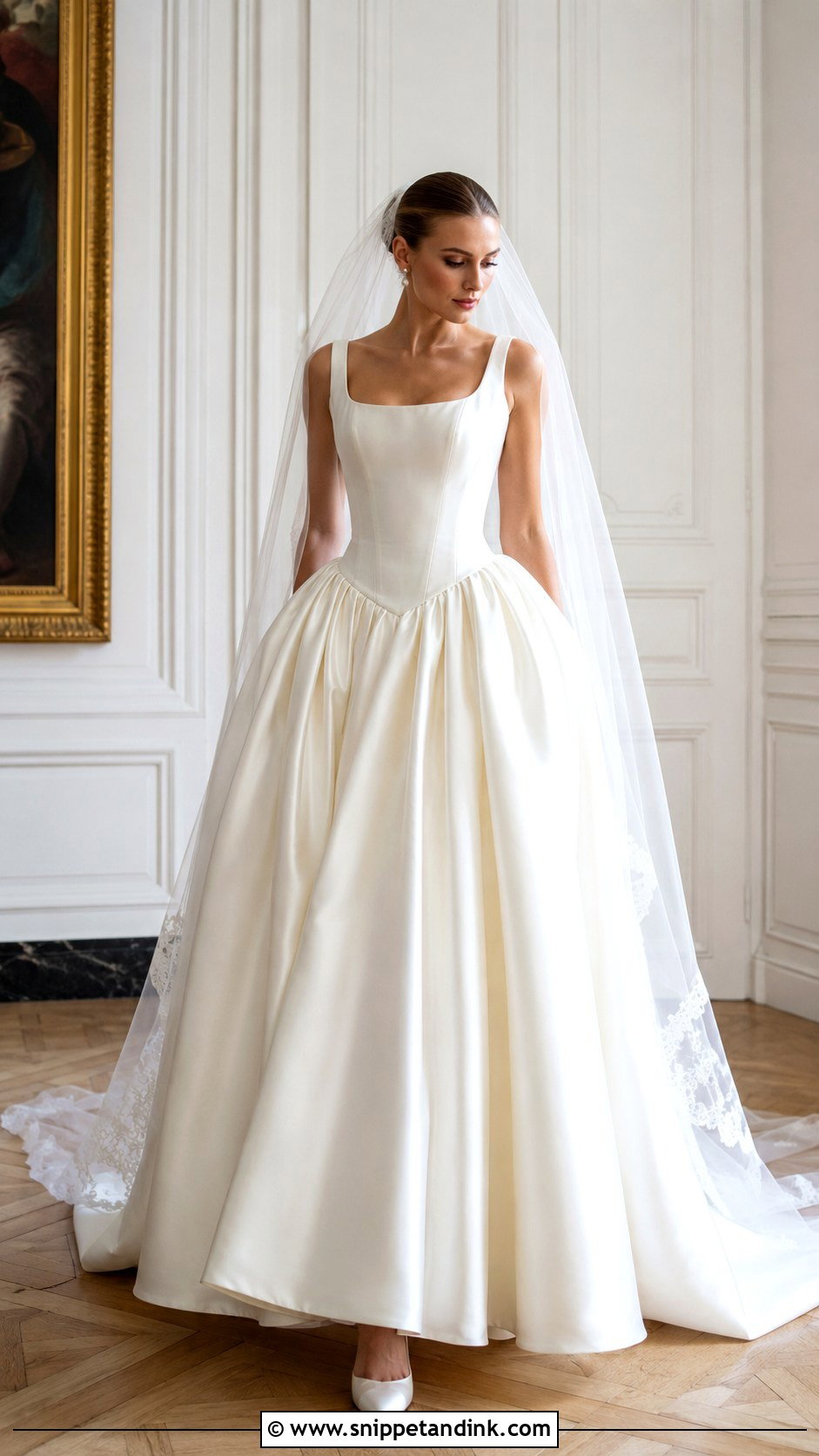
A basque waist dips below the natural waist into a soft V or U, which lengthens the torso and narrows the waist visually. It looks historic and flattering when the construction is right, and awkward when the point sits in the wrong place, so the dip has to be set to your body at the fitting rather than taken from the size chart. Pair it with a full skirt for a regal look or a softer A-line for romance. Pearl earrings, satin pumps, a long veil and a smooth updo keep the eye on the bodice.
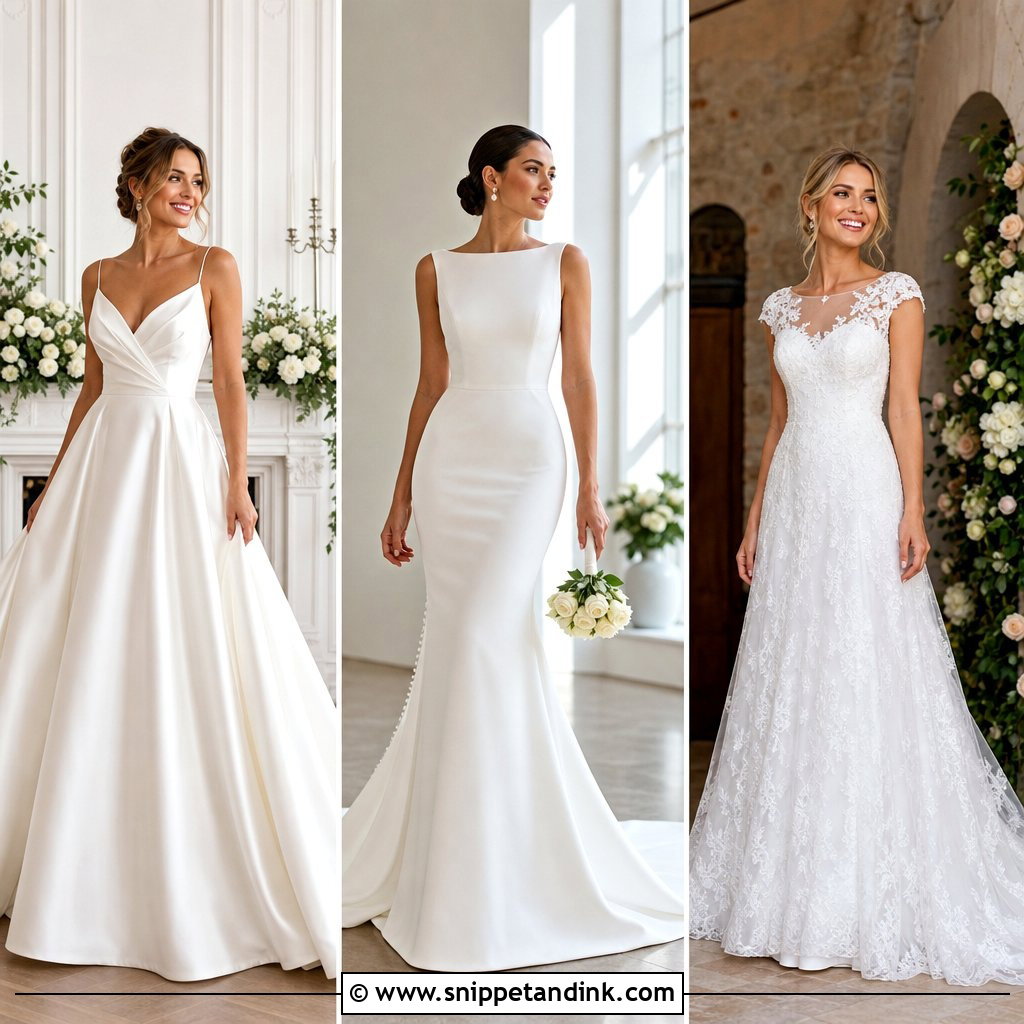
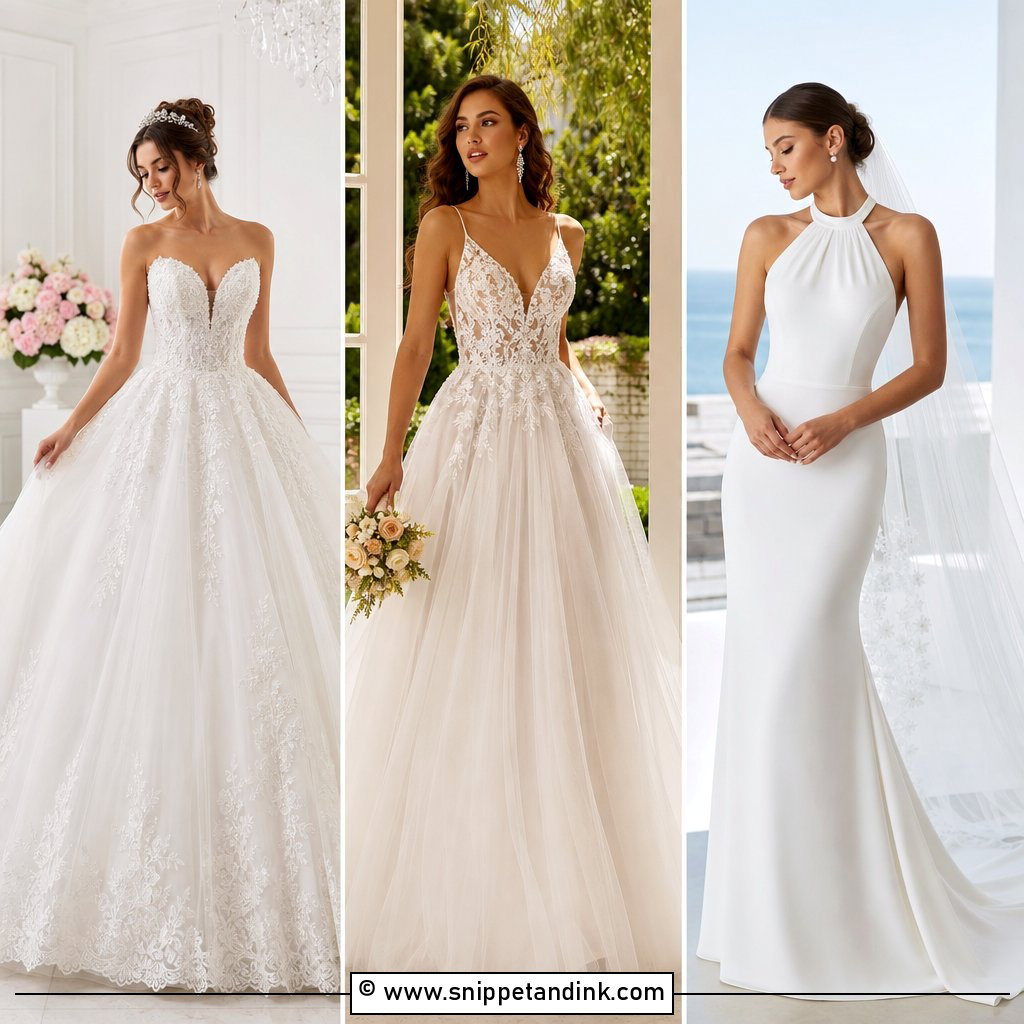

15. Boat Neck Bride Look
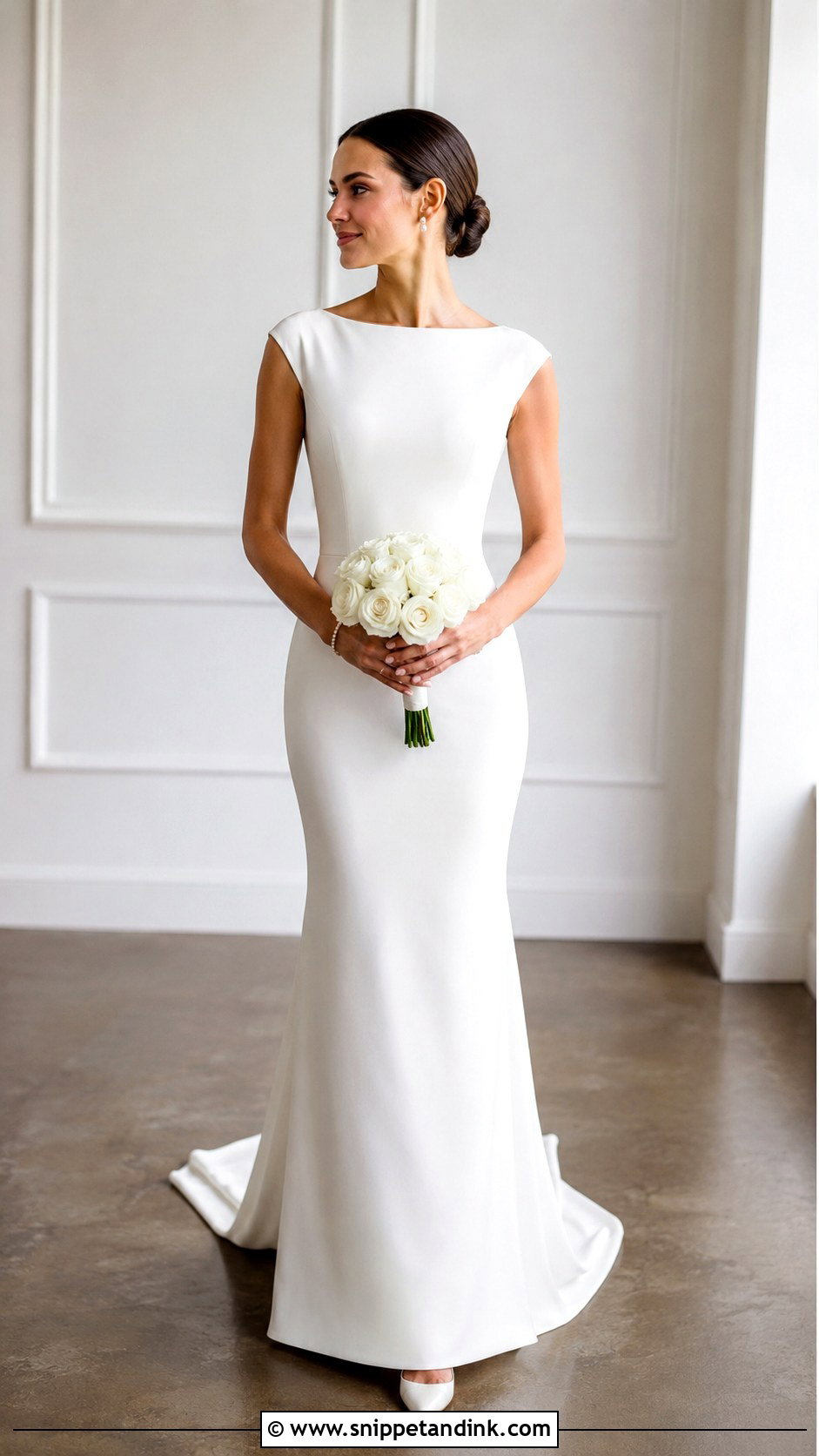
The boat neck runs straight across the collarbone from shoulder to shoulder. It gives clean coverage and a quietly regal line, especially in satin, crepe or mikado. It suits broad shoulders less well, since the horizontal line widens them further, but it balances narrow shoulders and a small bust very well. Wear a sleek bun, pearl studs and a bracelet instead of a necklace. Pointed ivory heels, a simple veil and a compact bouquet of white roses or peonies keep it uncluttered for formal venues and city weddings.
16. Cap Sleeve Bride Look
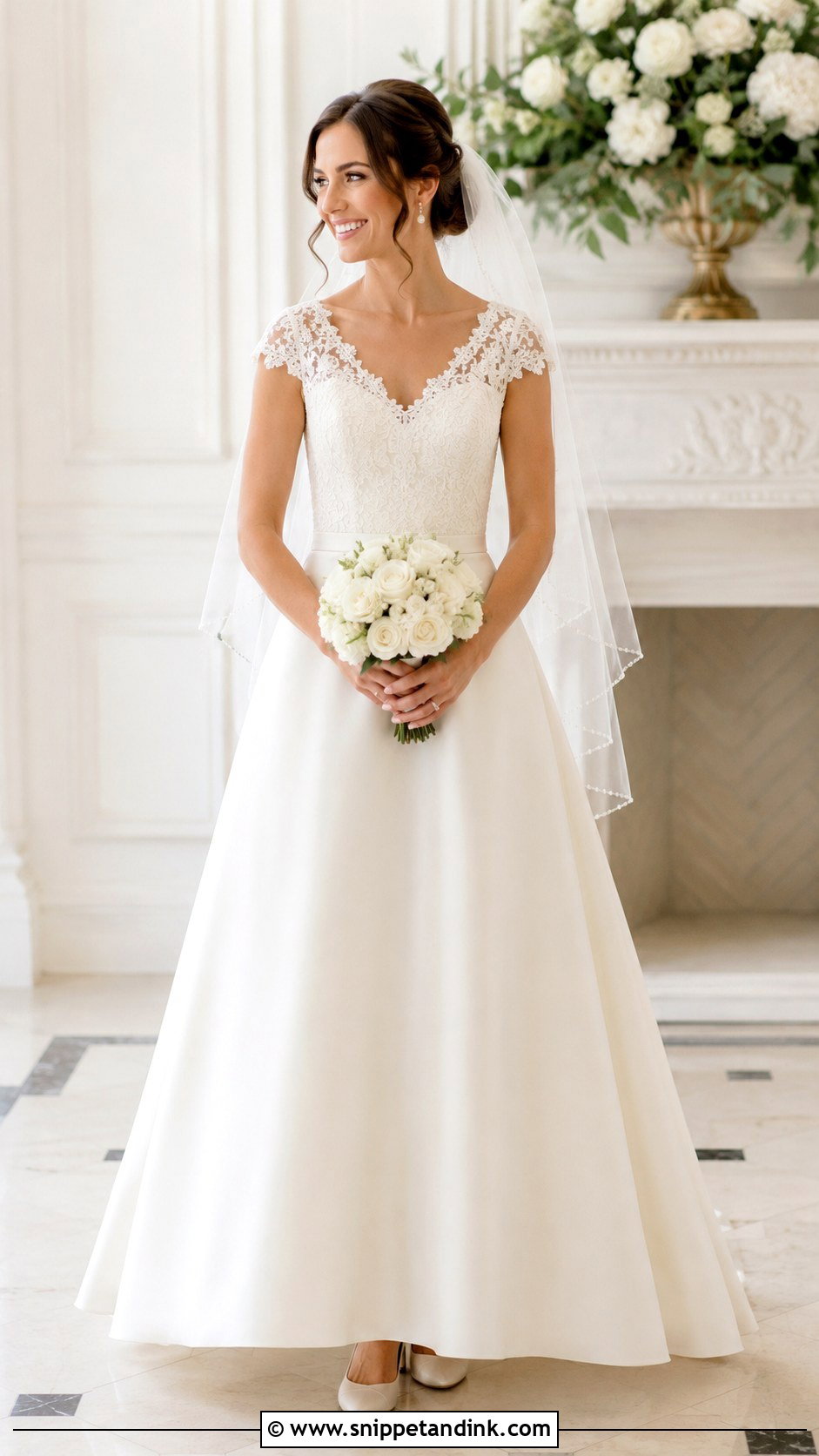
Cap sleeves give just enough coverage while keeping the arms free. They’re a soft middle ground between strapless and long sleeves. Lace caps look romantic; satin or crepe caps look clean. The fit point is the sleeve edge: too tight and it cuts into the upper arm when you lift your bouquet, too loose and it stands away from the shoulder. Pearl earrings, a fingertip veil and comfortable heels pair well, and a half-up hairstyle frames the face while leaving the sleeve visible. Fresh blush and defined lashes keep the face bright.
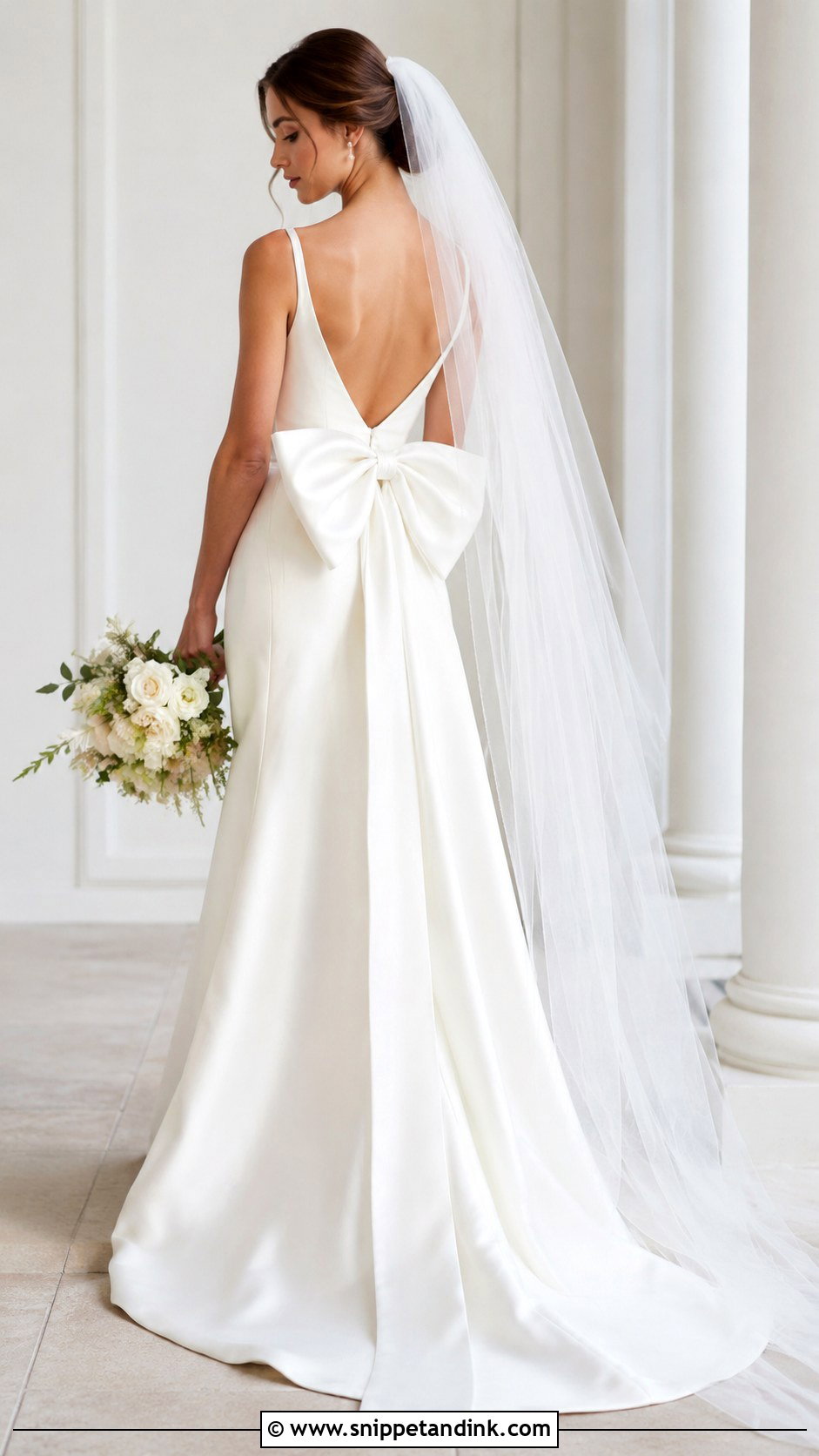
17. Bow Back Bride Look
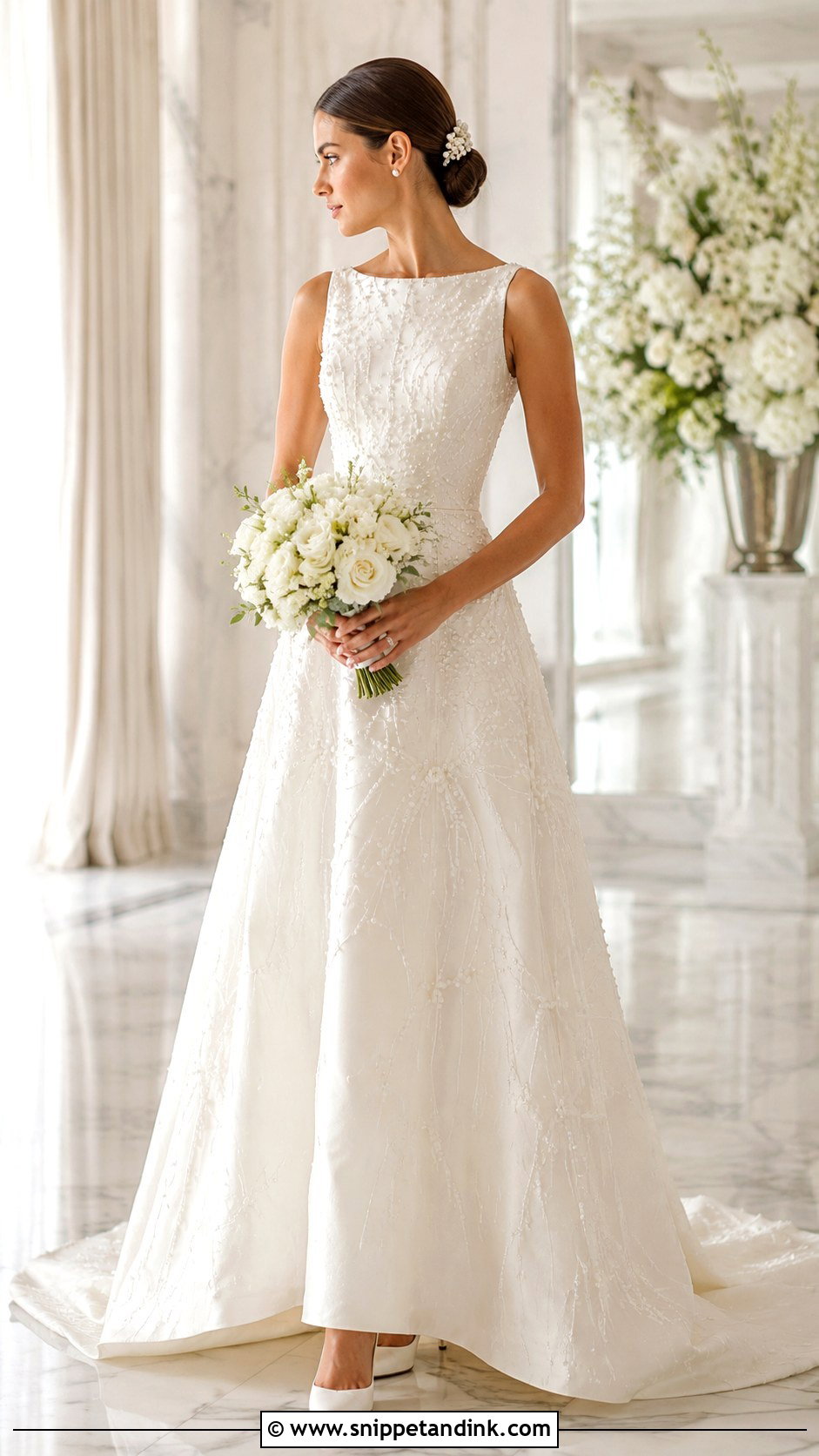
A bow looks classic only when it’s structured and placed with intent. I’d avoid oversized trend bows that collapse after an hour of sitting, and look instead for a soft waist bow, a shoulder bow or a back bow interfaced so it keeps its shape. A plain satin or crepe dress is the right base because the bow becomes the only detail. Pearl studs, a sleek veil and classic pumps keep things calm. A low bun or smooth waves leave the back clear for photos, which is where this dress earns its keep.
18. Bridal Midi Dress Look
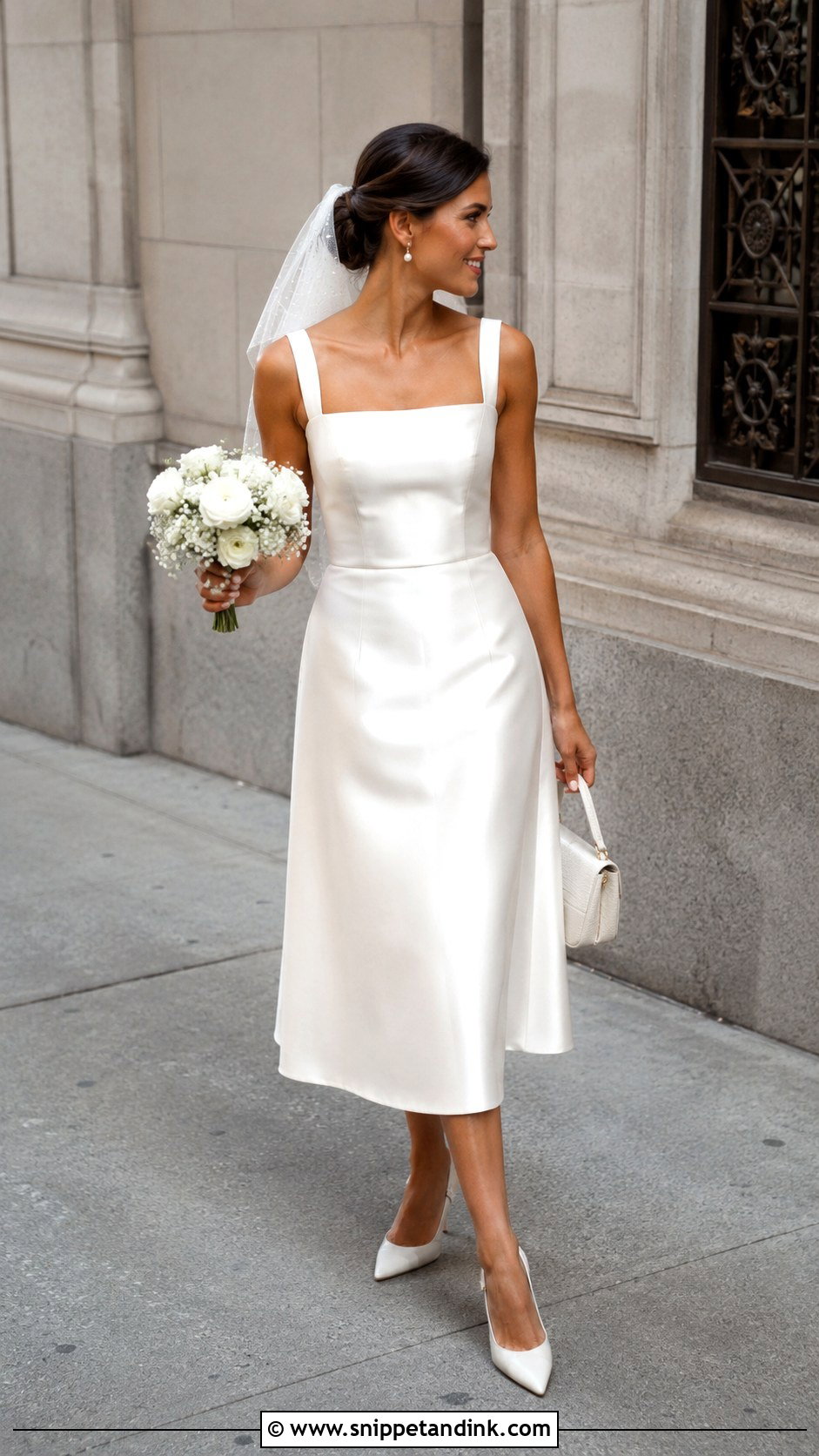
A midi dress is comfortable, moves freely and still looks polished. It’s less formal than a full gown, which makes it right for courthouse weddings, rehearsal dinners, smaller ceremonies and reception changes. Structured satin, lace or clean crepe with a defined waist all work. Midi hems hit mid-calf, so I usually pair them with a slightly pointed shoe to keep the leg long. Slingback heels, pearl earrings and a mini veil or headband suit it, with a small bouquet and structured handbag. Soft waves, a low bun or a smooth bob all fit.
19. Elegant Bridal Jumpsuit Look
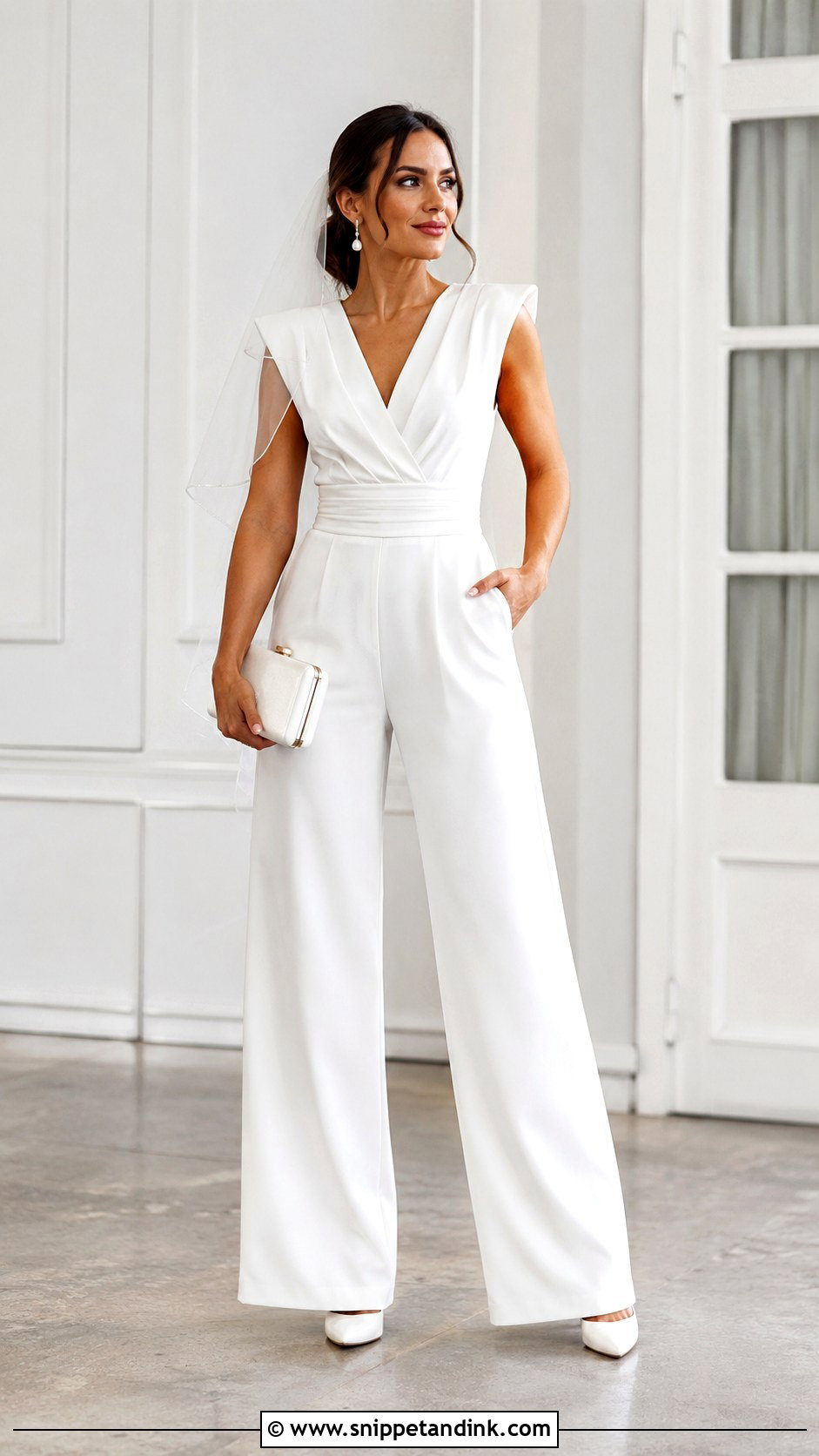
A white bridal jumpsuit gives clean tailoring and complete freedom to move. Look for wide-leg trousers, a defined waist and a polished neckline such as strapless, square or halter. Bathroom trips are the honest drawback, so a long back zip that you or a friend can manage quickly is worth asking for. Pointed heels lengthen the leg, and pearl earrings with a structured clutch keep it bridal. A short veil, cape or sleek blazer adds ceremony, with a high bun, low ponytail or soft waves for hair. It suits city celebrations and reception changes well.




20. Reception Mini Bride Look
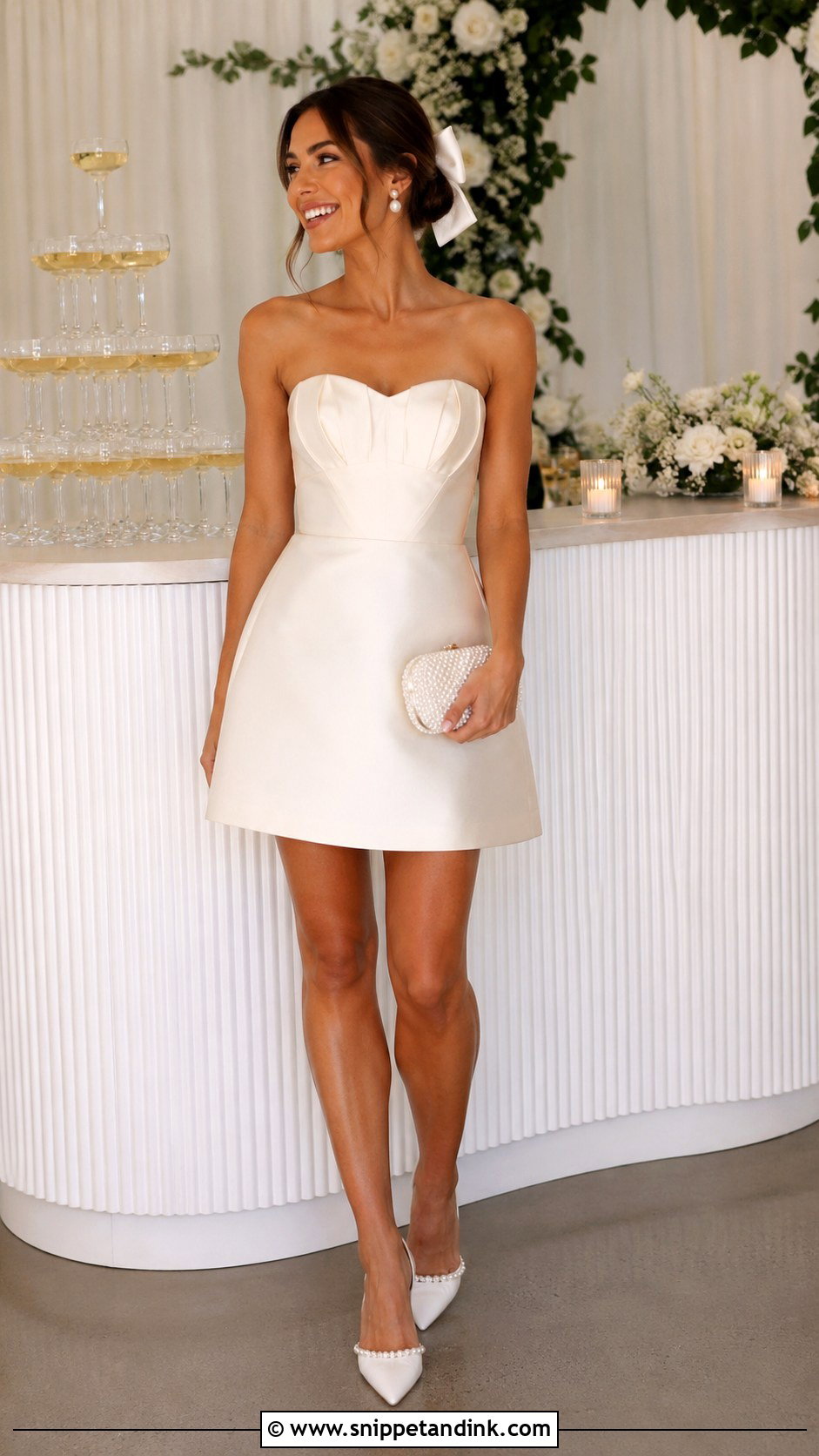
A short reception dress lets you dance without lifting a skirt all night. To keep it classic, choose a clean shape in satin, crepe, lace or structured mikado. A square neckline, strapless bodice or long sleeve mini can all look elegant. I’d always do a sit-down test in a mini, since many ride up further than you expect once you’re on a low chair. Comfortable block heels or pointed pumps, pearl earrings and a small clutch complete it, with a bow clip or short veil for a light bridal touch. Treat it as the second look after the ceremony.
21. Garden Bride Look
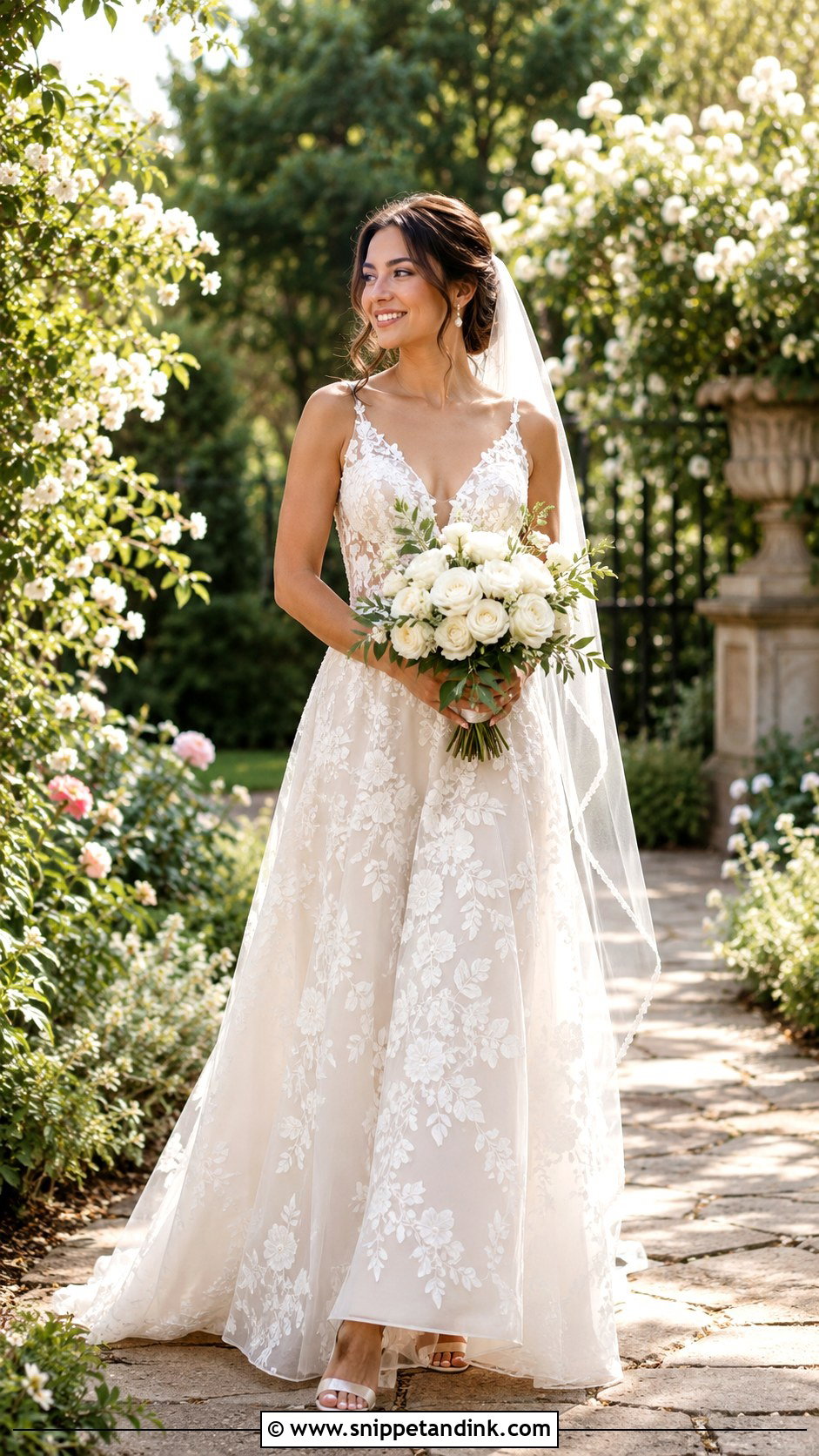
Outdoors, the ground decides more than the gown does. Floral lace, chiffon or organza moves easily and doesn’t look heavy in daylight, and A-line or sheath shapes stay graceful. Block heels or embellished flats won’t sink into lawn the way stilettos do. Light hems also pick up grass stains, so I’d ask for a slightly shorter front hem or plan to bustle early. Pearl earrings, a light veil and a bouquet of roses, sweet peas and greenery fit the setting. Hair can be loosely pinned, half-up or softly waved, with fresh glowing makeup.
22. Beach Bride Look
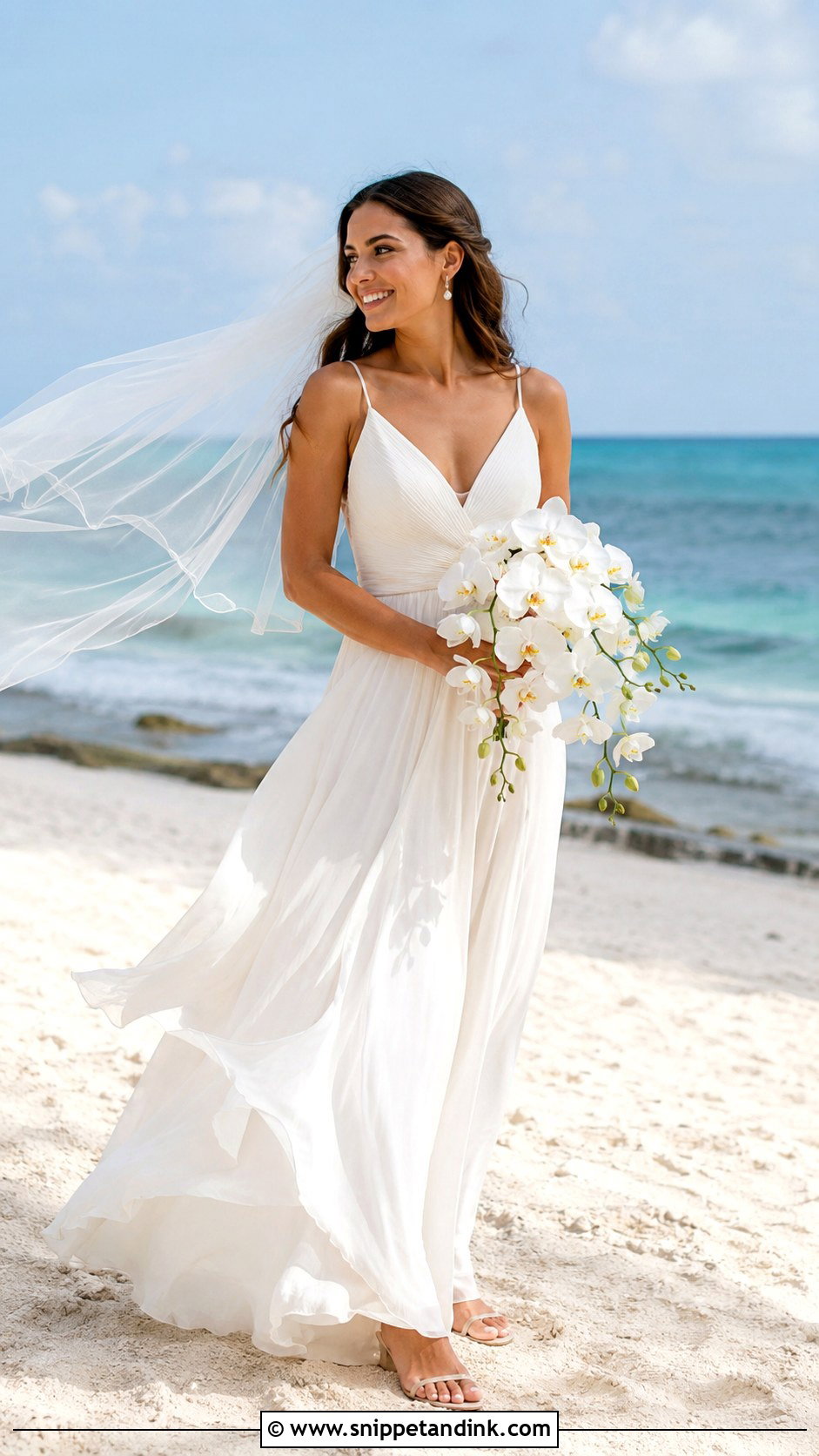
Sand and wind call for a light dress you can walk in. A silk slip, chiffon A-line, soft crepe or simple lace with a relaxed skirt all suit, and heavy trains don’t belong near sand or water. Flat sandals, pearl earrings and a sheer veil that can lift in the breeze keep it relaxed. Humidity and salt air flatten curls quickly, so loose waves set firmly or a low bun hold up better than a soft blow-out. White orchids, roses or tropical greenery make a polished bouquet. It looks right because it suits the setting.
23. Winter Bride Look
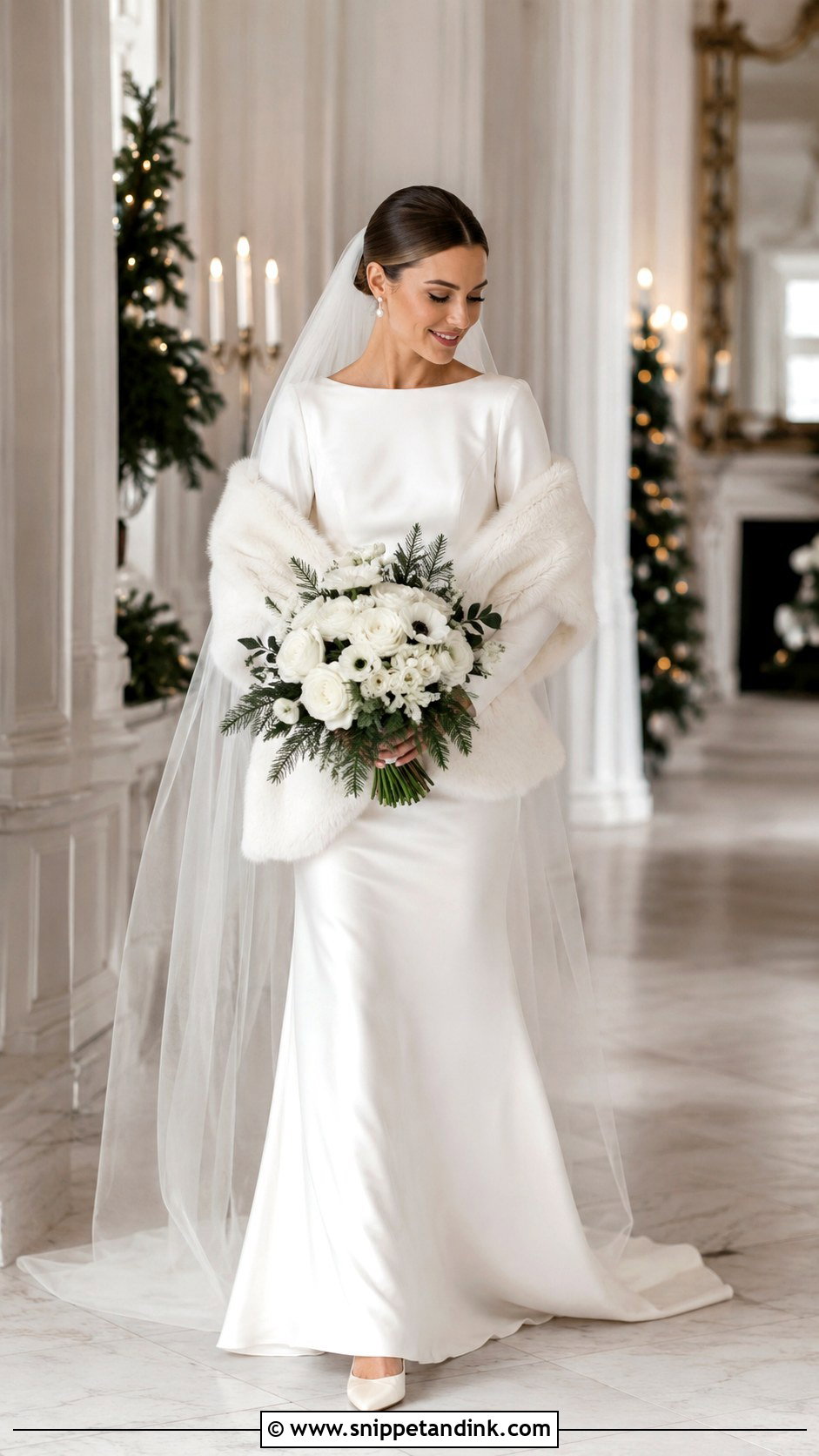
Cold weather lets you layer. Start with a satin, crepe or lace gown with long sleeves, a high neckline or a structured bodice, then add a faux fur wrap, tailored bridal coat or cashmere cape for outdoor portraits and walks between spaces. I’d try the coat over the gown at the fitting; a bulky collar crushes a veil and a tight sleeve creases lace sleeves underneath. Closed-toe heels, pearl earrings and a classic veil suit the season. A sleek bun or soft waves both work, with white flowers, deep greenery and some texture in the bouquet.
24. Vintage Inspired Bride Look
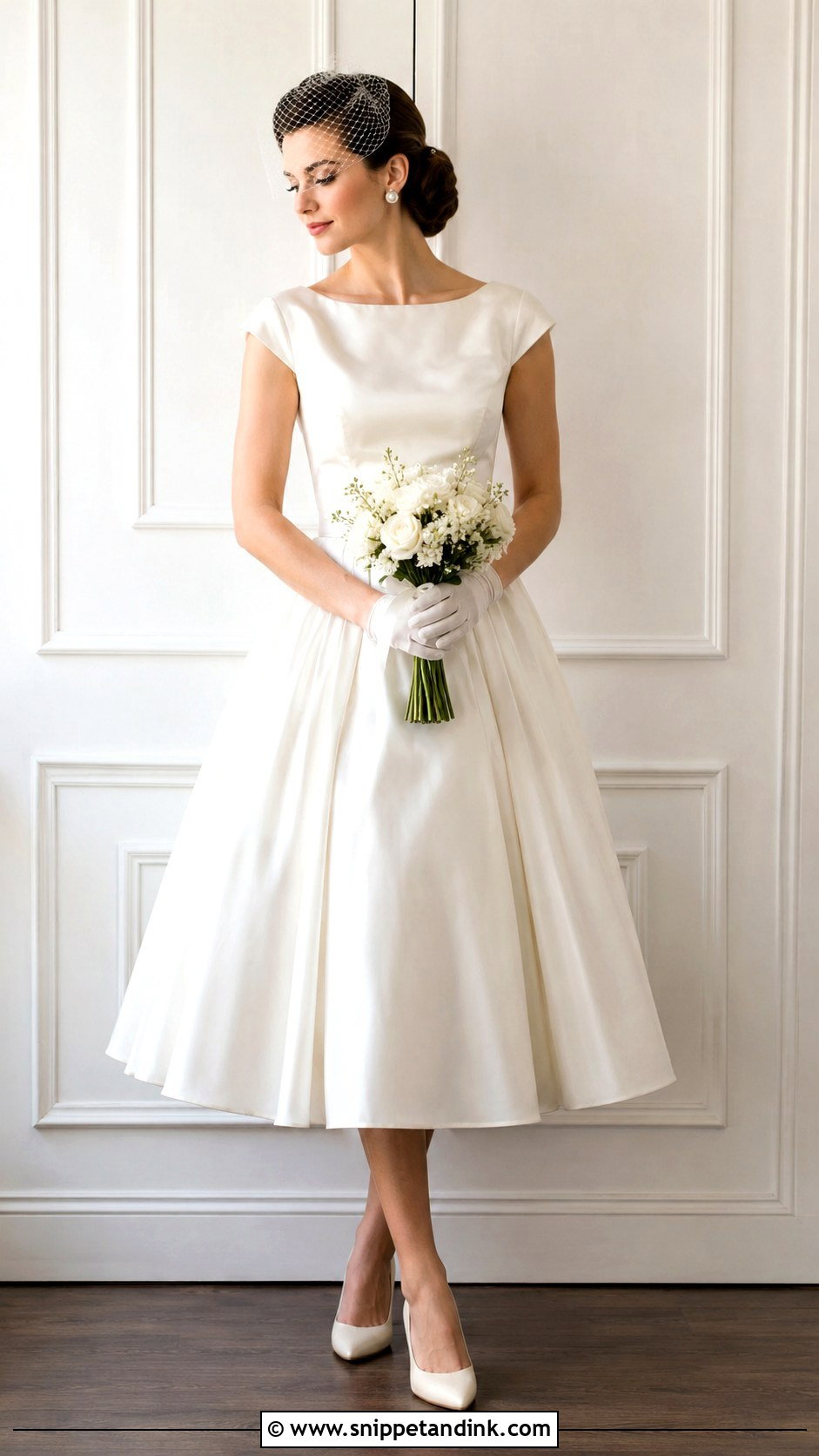
Vintage works when you borrow one clear reference and stop there. Choose a 1930s silk gown, a 1950s tea-length dress or a 1960s clean column, and let the accessories support that era: pearl earrings, satin gloves, a birdcage veil or classic pumps. Mixing decades is what tips a look into costume. Genuine vintage gowns also run small and fragile, so I’d budget for careful alteration by someone who works with old fabric. Keep hair and makeup polished but soft, and the bouquet simple.



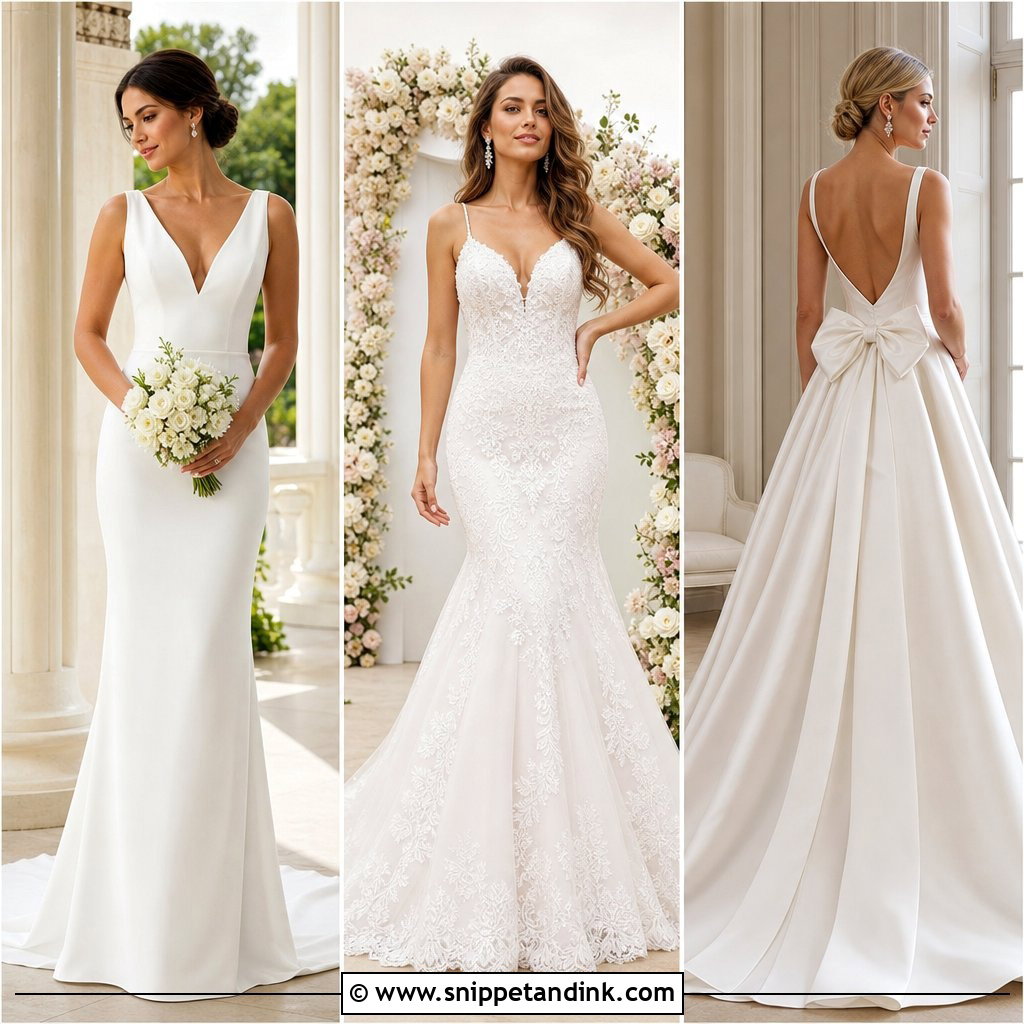
25. Minimalist Bride Look
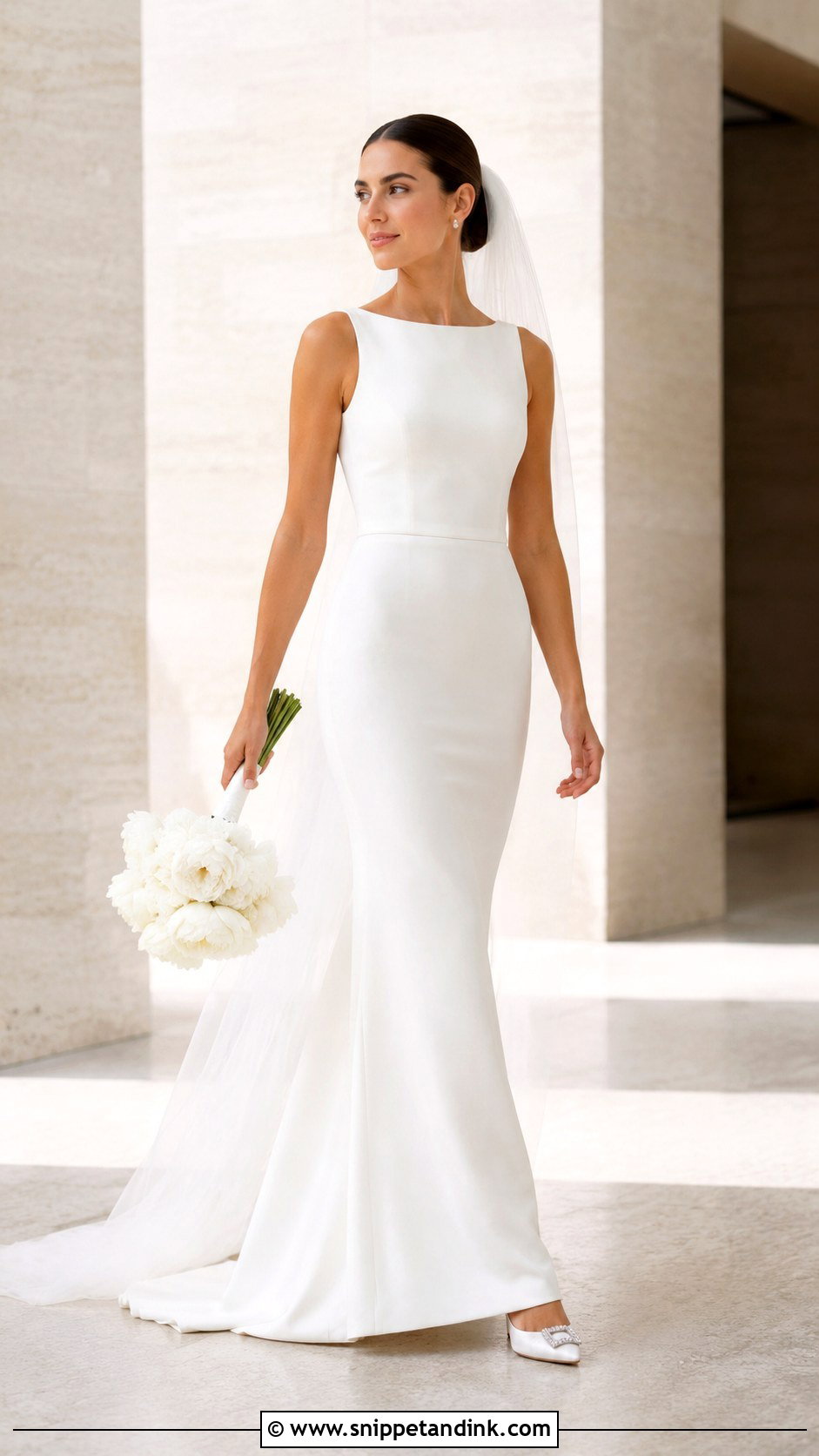
Minimal is not boring when every detail is chosen. Start with a gown that has a strong shape, good fabric and a flawless fit; crepe, satin and mikado hold clean lines well. Skip heavy embellishment and put the attention into tailoring, neckline and proportion. Because nothing distracts the eye, a minimal dress shows a wavering hem or a puckered zip immediately, so the final fitting matters more than with any other style here. Pointed heels, pearl or diamond studs, a simple veil, a sleek bun, natural makeup and a white bouquet keep the focus on your face and posture.
A Fitting Calendar That Gets the Gown Right on Time
Most of the ideas above depend on fit far more than on design, and fit takes time. Made-to-order gowns usually take several months to arrive, and alterations need their own window after that. Timings vary by designer and shop, so confirm them in writing, but this is the rhythm I plan around.
- Around nine to twelve months out: order the gown. Bring the shoes you’re likely to wear, or at least the heel height, so the hem is measured correctly.
- Two to three months out: first alteration fitting. This is where the bodice, straps and overall shape are set.
- Four to six weeks out: second fitting with your real shoes, underwear and any shapewear. Hem and bustle are finalised here.
- One to two weeks out: final fitting and collection. Bring the person who will bustle the dress and fasten you in, and have them practise twice.
Tests I run at every fitting
I ask the bride to sit on a low chair, raise both arms, hug me, walk up three stairs and dance for half a minute. If anything slips, gapes, creases or pinches during those tests, it will do the same thing on the day, only for eight hours instead of a few seconds. A seamstress can fix nearly all of it if she sees it early enough.
Thirty Years From Now, What Will You Notice?
When you look back at your wedding photos, you’ll notice whether the dress fit, whether you could move, and whether the outfit hung together from veil to shoes. Those are the things that keep a look classic. Satin gowns, lace sleeves, tailored suits, jumpsuits and garden dresses can all get there. Classic doesn’t have to mean plain, and current doesn’t have to mean trendy. Choose the shape that suits your body and the venue, keep the extras to one clear idea, and spend your time and money on the fit.
You'll Like These Ideas:












Leave a Reply